


Patient Medication Information: uses, side effects, how to take - Dymista
What is DYMISTA® used for?
DYMISTA® is used to treat symptoms of moderate to severe seasonal allergic rhinitis (allergy in the nose) and related eye symptoms in patients 6 years of age and older.
How does DYMISTA® work?
DYMISTA helps reduce the symptoms of seasonal allergic rhinitis (inflammation of the lining of the nose), such as:
- stuffy nose,
- runny nose,
- itching,
- sneezing,
- eye redness,
- itchy and watery eyes.
What are the ingredients in DYMISTA®?
Medicinal ingredients: azelastine hydrochloride and fluticasone propionate
Non-medicinal ingredients: benzalkonium chloride, carmellose sodium, disodium edetate, glycerol, microcrystalline cellulose, phenylethyl alcohol, polysorbate 80 and purified water.
DYMISTA® comes in the following dosage forms:
Suspension for metered spray; 137 micrograms of azelastine hydrochloride and 50 micrograms of fluticasone propionate per spray.
Do not use DYMISTA® if:
- You are allergic to any of the ingredients in DYMISTA.
- You have untreated fungal, bacterial, or tuberculosis infections of the respiratory tract.
To help avoid side effects and ensure proper use, talk to your healthcare professional before you take DYMISTA®. Talk about any health conditions or problems you may have, including if you:
are pregnant (or planning to become pregnant). It is not known if DYMISTA will harm your unborn baby.
- are breastfeeding or plan to breast-feed. It is not known if DYMISTA passes into your breast milk.
- are allergic to any other corticosteroid or medications.
- have green or yellow discharge from the nose.
- have eye or vision problems, such as cataracts or glaucoma (increased pressure in your eye).
- are taking other steroid medicine by mouth or as an injection.
- are recovering from recent nasal surgery, nasal trauma or nasal ulcers.
- have been near someone who has chickenpox or measles. You should avoid coming into contact with measles or chickenpox while taking DYMISTA. If you are exposed, tell your healthcare professional.
- have a problem with your thyroid.
- suffer from liver disease.
- are planning on drinking alcohol. Drinking alcohol while taking DYMISTA may decrease your alertness.
Other warnings you should know about:
Dymista contains benzalkonium chloride. Benzalkonium chloride may cause irritation or swelling inside the nose, especially if used for a long time.
Driving and using machines:
Before you perform tasks which may require alertness, wait until you know how you respond to DYMISTA, as it can cause:
- drowsiness
- dizziness, or
- light-headedness
Eye disorders:
Drugs like DYMISTA can cause eye disorders:
- Cataracts: clouding of the lens in the eye, blurry vision, eye pain;
- Glaucoma: an increased pressure in your eyes, eye pain. Untreated, it may lead to permanent vision loss.
- You should have regular eye exams.
Tell your healthcare professional about all the medicines you take, including any drugs, vitamins, minerals, natural supplements or alternative medicines.
DYMISTA may affect the way other medicines work, and other medicines may affect how DYMISTA works.
The following may interact with DYMISTA®:
- ritonavir or cobicistat-containing products (commonly used to treat HIV infection or AIDS). Your healthcare professional may wish to monitor you carefully if you are taking these medicines.
- ketoconazole (for fungal infections).
- cimetidine (inhibits stomach acid production).
- Acetylsalicylic acid (ASA) and you have a blood clotting problem.
- Alcohol, do not drink alcohol or take any other medicines that may cause you to feel sleepy while on DYMISTA.
How to take DYMISTA®:
Use DYMISTA Nasal Spray exactly as recommended by your healthcare professional. DYMISTA relieves the symptoms within 30 to 45 minutes. You will get the best results if you keep using DYMISTA regularly.
DYMISTA is for use in your nose only. Do not spray it into your eyes or mouth. If you spray DYMISTA Nasal Spray into your eye(s), flush your eye(s) with large amounts of water for 10 minutes and then call your doctor.
Do not poke or prick the spray pump tip if the spray does not come out. Clean the spray pump tip with warm tap water.
Usual dose:
Adults and Children (6 years of age and older): 1 spray in each nostril twice a day (morning and evening).
Preparing the spray
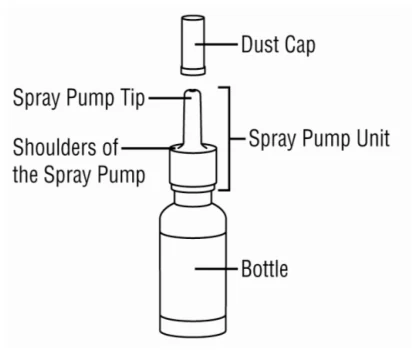
- 1. Shake the bottle gently until no residue is observed at the bottom of the bottle and then remove the protective cap (see Figure 1).
Figure 1
- 2.
The first time the nasal spray is used, you must prime the pump.
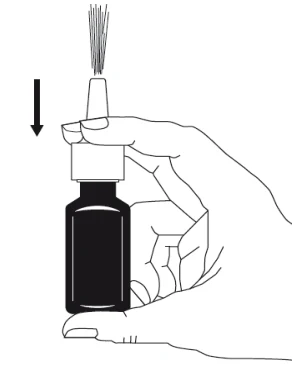
- Prime the pump by putting two fingers on either side of the spray pump and place your thumb on the bottom of the bottle.
- Press down and release the pump 6 times into the air away from your face until a fine mist appears (see Figure 2).
- Now your pump is primed and ready to use.
Figure 2
- 3. If the nasal spray has not been used for more than 7 days, you will need to prime the pump until a fine mist appears again.
Using the spray
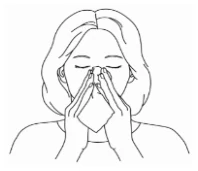
- 1. Blow your nose to clear your nostrils.
Figure 3
- 2. Keep your head tilted downwards towards your toes. Do not tilt head backwards.
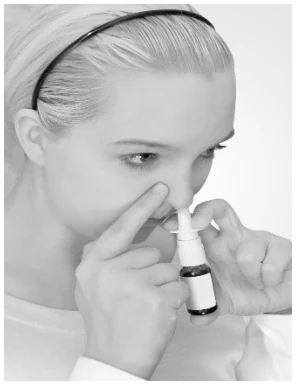
- 3. Hold the bottle upright and carefully insert the spray tip into one nostril.
- 4. Close other nostril with your finger, rapidly press down once on the spray pump and sniff gently at the same time (see Figure 4).
- 5. Breathe out through your mouth.
Figure 4
- 6. Repeat in your other nostril.
- 7. Breathe in gently, and do not tilt your head back after dosing. This will stop the medicine going into your throat and causing an unpleasant taste (see Figure 5).
Figure 5
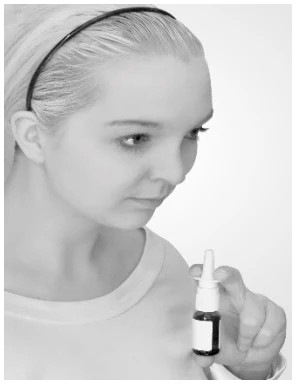
- 8. After each use wipe the spray tip with a clean tissue or cloth and then replace the protective cap.
It is important that you take your dose as advised by your doctor. You should use only as much as your doctor recommends.
You may experience a bitter taste in your mouth, especially if you tilt your head backwards when you are using the nasal spray. This is normal. This should go away if you have a soft drink a few minutes after using this medicine. Occasionally you may sneeze a little after using this spray but this soon stops. You may experience an unpleasant smell.
To Clean the Spray Pump Tip:
Your DYMISTA Nasal Spray should be cleaned at least 1 time each week.
- 1. Remove the dust cap and then gently pull upward on the spray pump unit to remove it from the bottle. (See Figure 6)
Figure 6
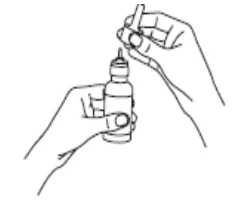
- 2. Wash the spray pump unit and dust cap in warm tap water. (See Figure 7)
Figure 7
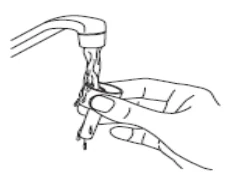
- 3. Allow to dry completely. When dry, place the spray pump unit and dust cap back on the bottle. (See Figure 8)
Figure 8
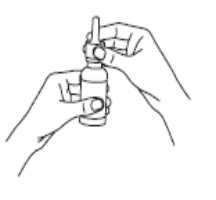
- 4. If the spray pump unit becomes blocked, it can be removed as instructed above in Step 1 and placed in warm water to soak.
Do not try to unblock the spray pump unit by inserting a pin or other sharp object. This will damage the spray pump unit and cause you not to get the right dose of medicine.
- 5. After the spray pump unit is unblocked, rinse the applicator and cap with cold water, and allow them to dry as in Step 3 above. When dry, place the spray pump unit back on the bottle and put the dust cap on the spray pump tip.
- 6. Reprime the bottle as in Preparing the spray above. Replace the dust cap and your DYMISTA Nasal Spray is ready for use.
Overdose:
With the nasal route of administration overdose reactions are not anticipated.
If a child accidentally swallows DYMISTA Nasal Spray or you use too much DYMISTA Nasal Spray, call your doctor or go to the nearest hospital emergency room right away.
| If you think you, or a person you are caring for, have taken too much DYMISTA®, contact a healthcare professional, hospital emergency department, or regional poison control centre immediately, even if there are no symptoms. |
|---|
Missed Dose:
If you forget to take a dose, take another dose as soon as you remember but if it is near to the time for the next dose, wait until it is due. Do not take a double dose.
What are possible side effects from using DYMISTA®?
These are not all the possible side effects you may have when taking DYMISTA®. If you experience any side effects not listed here, tell your healthcare professional.
Like any medication, DYMISTA may cause side effects in some people. Side effects that may occur with the use of antihistamine and corticosteroid nasal sprays, including DYMISTA, are:
- headache
- change in sense of taste and/or smell
- nose bleeds
- nasal ulcers; pain, burning, irritation
- crusting in the nose
- runny nose
- soreness or dryness in the inside of the nose
- sore throat, upper respiratory tract infection
- fever, cough, stuffy nose, chills, feeling tired
- sleepiness or drowsiness
If any of these affects you severely, tell your doctor, nurse or pharmacist.
Slower growth in children (6 years of age and older) has occurred with use of corticosteroid nasal spray. Your physician should monitor your growth regularly if you are in this age group.
Serious side effects and what to do about them
| Symptom / effect | Talk to your healthcare professional | Stop taking drug and get immediate medical help | |
|---|---|---|---|
| Only if severe | In all cases | ||
| VERY RARE | |||
| Allergic Reactions: chest pain or tightness, wheezing, coughing or having difficulty breathing, suddenly feeling weak or lightheaded (which may lead to collapse or loss of consciousness), swelling around the face, mouth or tongue, eyes or lips with difficulty swallowing, skin rashes (hives) or redness. | ✓ | ||
| Cataracts: glare, reduced vision. | ✓ | ||
Cushing’s Syndrome: rapid weight gain especially around the body and face; excess sweating; thinning of the skin with easy bruising and dryness; muscle and bone weakness. | ✓ | ||
| Decreased Adrenal Function: tiredness, weakness, nausea and vomiting. | ✓ | ||
| Glaucoma: increased pressure in your eyes, eye pain. | ✓ | ||
| Infections: if you have worsening of the symptoms of infections such as existing tuberculosis, fungal, bacterial or parasitic infections or herpes of the eye. | ✓ | ||
| Nasal Perforation: if you get a constant whistling sound when you breathe from your nose, it may be a symptom of nasal septal perforation. | ✓ | ||
| Nose bleed | ✓ | ||
Serious side effects and what to do about them
| Symptom / effect | Talk to your healthcare professional | Stop taking drug and get immediate medical help | |
|---|---|---|---|
| Only if severe | In all cases | ||
| Osteonecrosis (tiny breaks in a bone leading to eventual collapse): Progressive or persistent pain or limited range of motion in a joint or limb. | ✓ | ||
| UNKNOWN FREQUENCY | |||
| Vision Blurred | ✓ | ||
If you have a troublesome symptom or side effect that is not listed here or becomes bad enough to interfere with your daily activities, tell your healthcare professional.
Reporting Side Effects
You can report any suspected side effects associated with the use of health products to Health Canada by:
NOTE: Contact your health professional if you need information about how to manage your side effects. The Canada Vigilance Program does not provide medical advice. |
Storage:
Keep out of reach and sight of children. Your medicine may harm them.
Store between 15 and 30°C. Do not freeze or refrigerate DYMISTA.
If you want more information about DYMISTA®:
- Talk to your healthcare professional
- Find the full product monograph that is prepared for healthcare professionals and includes this Patient Medication Information by visiting the Health Canada website: (https://www.canada.ca/en/health-canada/services/drugs-health-products/drug-products/drug-product-database.html; the manufacturer’s website www.mylan.ca, or by calling 1-844-596-9526.
DYMISTA is a registered trademark of Meda AB; licensed use by BGP Pharma ULC (dba Mylan)