


Product Monograph - Endometrin
SUMMARY PRODUCT INFORMATION
| Route of Administration | Dosage Form / Strength | Clinically Relevant Nonmedicinal Ingredients |
| Vaginal | Effervescent vaginal tablets 100 mg | lactose monohydrate, polyvinylpyrrolidone, adipic acid, sodium bicarbonate, sodium lauryl sulfate, magnesium stearate, pregelatinized starch, and colloidal silicone dioxide For a complete listing see Dosage Forms, Composition and Packaging section. |
INDICATIONS AND CLINICAL USE
Endometrin® is indicated for progesterone supplementation in women undergoing in vitro fertilization.
Geriatrics:
No clinical data have been collected in patients over age 65.
Pediatrics:
This drug is not intended for pediatric use and no clinical data have been collected in children.
CONTRAINDICATIONS
Endometrin should not be used in individuals with any of the following conditions:
- Previous allergic reactions to progesterone or any of the ingredients of Endometrin [see Summary of Product Information]
- Known missed abortion or ectopic pregnancy
- Severe hepatic dysfunction or disease
- Known or suspected breast cancer or genital tract cancer
- Active arterial or venous thromboembolism or severe thrombophlebitis or cerebro-vascular disease, or a history of these events.
- Porphyria
- Undiagnosed Vaginal Bleeding
WARNINGS AND PRECAUTIONS
General
- Before starting treatment, the patient and her partner should be assessed by a doctor for causes of infertility.
- A pretreatment physical examination should include special reference to breasts, pelvic organs as well as Papanicolaou smear.
- In all cases of irregular vaginal bleeding adequate diagnostic measures should be undertaken.
- Progesterone may cause fluid retention and conditions which might be influenced by this (e.g., epilepsy, migraine, asthma, cardiac or renal dysfunction) require careful observation.
- The pathologist should be informed of progesterone therapy when relevant specimens are submitted.
- Endometrin should not be recommended for use with other vaginal products (such as antifungal products) as this may alter progesterone release and absorption from the vaginal insert [see Drug Interactions].
- Sex steroid use may also increase the risk of retinal vascular lesions. To prevent these latter complications, caution is to be taken in users >35 years, in smokers, and in those with risk factors for atherosclerosis. Use should be terminated in case of transient ischemic events, appearance of sudden severe headaches, or vision impairments related to papillary edema or retinal hemorrhage.
- Abrupt discontinuation of Endometrin may cause increased anxiety, moodiness, and increased sensibility to seizures.
Cardiovascular
The physician should be alert to earliest signs of myocardial infraction, cerebrovascular disorders, arterial or venous thromboembolism (venous thromboembolism or pulmonary embolism), thrombophlebitis or retinal thrombosis. Endometrin should be discontinued if any of these are suspected.
Hepatic/Biliary/Pancreatic
Cautious use in patients with mild to moderate hepatic dysfunction.
Immune
Burkholderia cepacia complex (BCC) is a diverse group of Gram-negative, non-spore-forming bacteria. BCC has the potential to cause serious infections, mainly respiratory infections, infrequently infections of bloodstreams (sepsis), urinary tract, and skin and soft tissue, in patients with cystic fibrosis, chronic granulomatous disease and immunocompromised status such as HIV.
While progesterone vaginal tablets are not expected to support bacterial growth and the risk of local infection is considered low, healthcare professionals should consider patient immune status and potential associated complications when prescribing and monitor as clinically appropriate.
Metabolic
Decrease in glucose tolerance has been noted in a few patients when taking oestrogen- progestin combination drugs. The mechanism for this is unknown. Diabetic patients should be carefully monitored while receiving progesterone therapy.
Psychiatric
Patients who have a history of depression should be carefully observed. Endometrin® should be discontinued if symptoms worsen.
Special Populations
Pregnancy
There is yet limited and inconclusive data on the risk of congenital anomalies, including genital abnormalities in male and female infants, following intrauterine exposure during pregnancy.
Endometrin has been used to support embryo implantation and maintain clinical pregnancy in one clinical study. The live birth outcomes of these pregnancies were as follows:
- Among the 404 subjects treated with Endometrin twice daily, 143 subjects had livebirths consisting of 85 singletons, 56 twins, and 2 triplets. In this treatment group, 13 subjects had a spontaneous abortion, 1 subject had an ectopic pregnancy, and 7 subjects reported fetal birth defects (3.4% based on 203 live births).
- Among the 404 subjects treated with Endometrin three times daily, 155 subjects had livebirths consisting of 91 singletons, 60 twins, and 4 triplets. In this treatment group, 22 subjects had a spontaneous abortion, 4 subjects had an ectopic pregnancy, and 7 subjects reported fetal birth defects (3.1% based on 223 live births).
Birth defects reported in the Endometrin twice daily group included: one fetus with a cleft palate and intrauterine growth retardation, one fetus with spina bifida, three fetuses with congenital heart defects, one fetus with an umbilical hernia, and one fetus with an intestinal anomaly.
Birth defects reported in the Endometrin three times daily group included: one fetus with an esophageal fistula, one fetus with hypospadias and an underdeveloped right ear, one fetus with Down’s and an atrial septal defect, one fetus with congenital heart anomalies, one fetus with DiGeorge’s syndrome, one fetus with a hand deformity, and one fetus with cleft palate.
Nursing Mothers
Detectable amounts of progesterone have been identified in the milk of mothers receiving oral progestins. The effect of this on the nursing infant has not been determined. Endometrin should not be used during lactation
Pediatrics
This drug is not intended for pediatric use and no clinical data have been collected in children.
Geriatrics
No clinical data have been collected in patients over age 65.
ADVERSE REACTIONS
Adverse Drug Reaction Overview
Endometrin was well tolerated after exposure in more than 860 subjects in clinical trials and in well over 6,000 cycles in clinical practice worldwide. No serious adverse events (SAEs) were assessed as being related to the Endometrin® treatment. No deaths were reported during any of the trials.
Clinical Trial Adverse Drug Reactions
Because clinical trials are conducted under very specific conditions the adverse reaction rates observed in the clinical trials may not reflect the rates observed in practice and should not be compared to the rates in the clinical trials of another drug. Adverse drug reaction information from clinical trials is useful for identifying drug-related adverse events and for approximating rates.
The safety data reflect exposure to Endometrin in 808 infertile women (74.9% White, 10.3% Hispanic, 5.4% Black, 5 % Asian, and 4.6% Other) in a single In Vitro Fertilization 10 week clinical study. Endometrin was studied at doses of 100 mg twice daily and 100 mg three times daily. The adverse reactions that occurred at a rate greater than or equal to 2% in either Endometrin group are summarized in Table 1.
Table 1: Number and Frequency of Reported Adverse Reactions in Women Treated with Endometrin in a study involving in vitro fertilization
Body System Preferred Term | Endometrin 100 mg twice Daily (N=404) | Endometrin 100 mg three times daily (N=404) |
|---|---|---|
Gastrointestinal Disorders Abdominal Pain Nausea Abdominal Distention Constipation Vomiting | 50 (12%) 32 (8%) 18 (4%) 9 (2%) 13 (3%) | 50 (12%) 29 (7%) 17 (4%) 14 (3%) 9 (2%) |
General disorders & Administration Site Conditions Fatigue | 7 (2%) | 12 (3%) |
Infections and Infestations Urinary tract infection | 9 (2%) | 4 (1%) |
Injury, Poisoning and Procedural Complications Post-oocyte retrieval pain | 115 (28%) | 102 (25%) |
Nervous System Disorder Headache | 15 (4%) | 13 (3%) |
Reproductive System and Breast Disorders Ovarian hyperstimulation syndrome Uterine spasm Vaginal bleeding | 30 (7%) 15 (4%) 13 (3%) | 27 (7%) 11 (3%) 14 (3%) |
Other less common reported adverse reactions included genital itching, vaginal burning sensation, and vaginal discomfort. These may, in part, be due to the excipient sodium lauryl sulfate. Urticaria was reported in 0.2% of the subjects in each Endometrin group and peripheral edema in 0.2% in Endometrin 100 mg three times daily group.
Endometrin is also expected to have adverse reactions similar to other drugs containing progesterone that may include breast tenderness, bloating, mood swings, irritability, drowsiness and fluid retention.
DRUG INTERACTIONS
Drug-Drug Interactions
No formal drug-drug interaction studies have been conducted for Endometrin. Drugs known to induce the hepatic cytochrome-P450-3A4 system (such as rifampin, carbamazepine and also herbal products containing St. John’s wort (Hypericum perforatum) may increase the elimination of progesterone. Ketoconazole and other inhibitors of cytochrome P450-3A4 may increase the bioavailability of progesterone.
The effect of concomitant vaginal products on the exposure of progesterone from Endometrin has not been assessed. Endometrin is not recommended for use with other vaginal products (such as antifungal products) as this may alter progesterone release and absorption from the vaginal insert [see Warnings and Precautions].
Drug- Food Interactions
Food can increase the bioavailability of progesterone administered orally. However, this is not relevant to Endometrin since it is administered vaginally.
DOSAGE AND ADMINISTRATION
Dosing Considerations
The dose of Endometrin is 100 mg administered vaginally two or three times daily starting at the day after oocyte retrieval and continuing for up to 10 weeks total duration.
Recommended Dose and Dosage Adjustment
Endometrin administered into the vagina twice daily (BID) and three times daily (TID) dosing have both been shown to be efficacious. However specific populations may derive greater benefits from BID or TID dosing regimen and the clinician can tailor treatment to the patient. For women <35 years of age and those patients with adequate ovarian reserve, Endometrin BID would be the appropriate dose. For patients aged 35 and older and those with diminished ovarian reserve, TID dosing would be the preferred regimen. Serum progesterone levels may be measured 7 days post fertilization and used to guide therapy.
Missed Dose
If a patient misses a dose, the patient should be instructed to take the dose as soon as she remembers. The patient should also be instructed not to use more than her daily dose and not to double dose.
Administration
The patient should also be instructed not to use any other vaginal products when using Endometrin and to follow the steps below.
- 1. Unwrap the applicator.
- 2. Put one insert in the space provided at the end of the applicator. The insert should fit snugly and not fall out.
- 3. Whilst you are standing, sitting, or when lying on your back with your knees bent, gently place the thin end of the applicator well into the vagina.
- 4. Push the plunger to release the insert.
- 5. Remove the applicator and throw it away in the trash.
OVERDOSAGE
High doses of progesterone may cause drowsiness.
Treatment of overdosage consists of discontinuation of Endometrin together with institution of appropriate symptomatic and supportive care.
ACTION AND CLINICAL PHARMACOLOGY
Mechanism of Action
Progesterone is a naturally occurring steroid that is secreted by the ovary, placenta, and adrenal gland. In the presence of adequate estrogen, progesterone transforms a proliferative endometrium into a secretory endometrium. Progesterone is necessary to increase endometrial receptivity for implantation of an embryo. Once an embryo is implanted, progesterone acts to maintain a pregnancy.
Pharmacokinetics
A pharmacokinetic study was performed to assess the pharmacokinetics of 2 dose regimen of Endometrin, 100 mg BID and 100 mg TID. A summary of the pharmacokinetic parameters results is presented in Table 2.
Table 2: Mean (±Standard Deviation) Serum Progesterone Pharmacokinetic Parameters
C max Maximum progesterone serum concentration.
T max Time to maximum progesterone concentration.
Cavg Average progesterone serum concentration.
AUC 0-24 Area under the drug concentration versus time curve from 0-24 hours post dose.
C min Minimum progesterone serum concentration.
Pharmacokinetic Parameter (unit) | Endometrin 100 mg twice daily (N=6) | Endometrin 100 mg three times daily (N=6) |
| Single Dosing | ||
| Cmax (nmol/L) | 54.06 ± 20.67 | 62.96 ± 22.89 |
| Tmax (hr) | 24.0 ± 0.0 | 17.3 ± 7.4 |
| AUC0-24 (nmol∙hr/L) | 690.06 ± 359.18 | 903.12 ± 454.74 |
| Day 5 of Multiple Dosing | ||
| Cmax (nmol/L) | 58.83 ± 17.49 | 76.64 ± 17.80 |
| Tmax (hr) | 18.0 ± 9.4 | 18.0 ± 9.4 |
| Cmin (nmol/L) | 28.30 ± 14.31 | 34.66 ± 21.30 |
| Cavg (nmol/L) | 44.52 ± 15.26 | 50.56 ± 13.64 |
| AUC0-24 (nmol·hr/L) | 1039.86 ± 403.86 | 1386 ± 337.08 |
Absorption:
Progesterone serum concentrations increased following the administration of the Endometrin Vaginal Insert in 12 healthy pre-menopausal females. On single dosing, the mean Cmax was 54.06 ± 20.67 nmol/L in the Endometrin twice daily group and 62.96 ± 22.89 nmol/L in the Endometrin three times daily group. On multiple dosing, steady-state concentrations were attained within approximately 1 day after initiation of treatment with Endometrin. Both Endometrin regimens provided average serum concentrations of progesterone exceeding 31.45 nmol/L on Day 5.
Distribution:
Progesterone is approximately 96 % to 99 % bound to serum proteins, primarily to serum albumin and corticosteroid binding globulin.
Metabolism:
Progesterone is metabolized primarily by the liver largely to pregnanediols and pregnanolones. Pregnanediols and pregnanolones are conjugated in the liver to glucuronide and sulfate metabolites. Progesterone metabolites that are excreted in the bile may be deconjugated and may be further metabolized in the gut via reduction, dehydroxylation, and epimerization.
Excretion:
Progesterone undergoes renal and biliary elimination. Following injection of labeled progesterone, 50-60% of the excretion of metabolites occurs via the kidney; approximately 10% occurs via the bile and feces. Overall recovery of the labeled material accounts for 70% of an administered dose. Only a small portion of unchanged progesterone is excreted in the bile.
STORAGE AND STABILITY
Endometrin (progesterone) is available as 100 mg effervescent vaginal tablets packed individually in a sealed foil pouch. Store Endometrin at 20-25 C. Excursions permitted to 15-30ºC.
DOSAGE FORMS, COMPOSITION AND PACKAGING
Endometrin (progesterone) effervescent vaginal tablets contain micronized progesterone. Each Endometrin effervescent vaginal tablet delivers 100 mg of progesterone in a base containing lactose monohydrate, polyvinylpyrrolidone, adipic acid, sodium bicarbonate, sodium lauryl sulfate, magnesium stearate, pregelatinized starch, and colloidial silicone dioxide.
Each Endometrin effervescent vaginal tablet is a white to off-white oblong-shaped tablet debossed with “FPI” on one side and “100” on the other side. Endometrin is supplied with polyethylene vaginal applicators. Endometrin is available as 100 mg effervescent vaginal tablets packed individually in a sealed foil pouch.
PART II: SCIENTIFIC INFORMATION
PHARMACEUTICAL INFORMATION
Drug Substance
Proper name: progesterone, USP
Chemical name: pregn-4-ene-3, 20-dione
Molecular formula: C21H30O2
Molecular weight: 314.5
Structural formula:
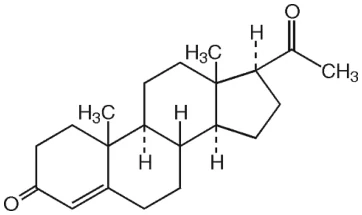
C21H30O2
Physicochemical properties:
Progesterone exists in two polymorphic forms. The form used in Endometrin, the alpha-form, has a melting point of 127-131°C.
Aqueous Solubility: <1mg/mL (insoluble) at 20º C in water pKa: 18-22
CLINICAL TRIALS
Luteal Supplementation during In Vitro Fertilization Study
A randomized, open-label, active-controlled study evaluated the efficacy of 10 weeks of treatment with two different daily dosing regimens of Endometrin (100 mg twice daily and 100 mg three times daily) and progesterone gel 90 mg applied vaginally once daily for support of implantation and early pregnancy in infertile women participating in an Assisted Reproductive Technology treatment program. Efficacy was assessed on the endpoint of ongoing pregnancies, defined as the presence of at least one fetal heartbeat seen on ultrasound at 6 weeks post-embryo transfer. The study randomized to Endometrin 808 infertile women (74.9% White; 10.3% Hispanic, 5.4% Black, 5 % Asian, and 4.6% Other) between 19 and 42 years of age (mean age 33) who had a body mass index < 34 kg/m2 at screening.
The ongoing pregnancy rates for subjects treated with both dosing regimens of Endometrin were non-inferior (lower bounds of the 95% confidence interval of the difference between Endometrin and the active comparator excluded a difference greater than 10%) to the ongoing pregnancy rate for subjects treated with the active comparator. The results of this study are shown in Table 3.
Table 3: Ongoing Pregnancy Rates* in Patients Receiving Endometrin for Luteal Supplementation and Early Pregnancy While in an In Vitro Fertilization program.
*Ongoing pregnancy defined as the presence of at least one fetal heartbeat seen on ultrasound at 6 weeks post-embryo transfer.
Subjects participating in the study were stratified at randomization by age and ovarian reserve (as measured by serum FSH levels). The ongoing pregnancy rates for these subgroups are shown in Table 4.
Endometrin 100 mg twice daily | Endometrin 100 mg three times daily | Progesterone gel 90 mg once daily | |
|---|---|---|---|
Number of subjects Ongoing pregnancy: n (%) 95% Confidence Interval of pregnancy rate Pregnancy rate percentage difference between Endometrin and comparator 95% Confidence Interval for difference vs. comparator | 404 156 (39%) [33.8,43.6] -3.6% [-10.3, 3.2] | 404 171 (42%) [37.5,47.3] 0.1% [-6.7, 6.9] | 403 170 (42%) [37.3, 47.2] NA NA |
Table 4: Ongoing Pregnancy Rates in Age- and Ovarian Reserve-Defined Subgroups Receiving Endometrin for Luteal Supplementation and Early Pregnancy while in an In Vitro Fertilization program.
In subjects under the age of 35 or with serum FSH levels less than 10 IU/L, results from both dosing regimens were non-inferior to the results from the comparator with respect to ongoing pregnancy rates. In women age 35 and older and in women with serum FSH levels between 10 and 15 IU/L, the results with respect to ongoing pregnancy rate for both dosing regimens of Endometrin did not reach the criteria for non-inferiority.
Endometrin 100 mg twice daily | Endometrin 100 mg three times daily | Progesterone gel 90 mg once daily | |
|---|---|---|---|
Subjects age < 35 years (N) Ongoing pregnancy: n (%) Pregnancy rate percentage difference between Endometrin and comparator 95% Confidence Interval for difference vs. comparator | 247 111 (45%) 0.5% [-8.3, 9.3] | 247 117 (47%) 2.9% [-5.9, 11.7] | 243 108 (44%) NA NA |
Subjects 35-42 years of age (N) Ongoing pregnancy: n (%) Pregnancy rate percentage difference between Endometrin and comparator 95% Confidence Interval for difference vs. comparator | 157 45 (28%) -10.1% [-20.3, 0.3] | 157 54 (34%) -4.4% [-14.9, 6.3] | 160 62 (38%) NA NA |
Subjects with FSH < 10 IU/L (N) Ongoing pregnancy: n (%) Pregnancy rate percentage difference between Endometrin and comparator 95% Confidence Interval for difference vs. comparator | 350 140 (40%) -2.0% [-9.3, 5.3] | 347 150 (43%) 1.2% [-6.1, 8.5] | 350 147 (42%) NA NA |
Subjects with FSH between 10 and 15 IU/L (N) Ongoing pregnancy: n (%) Pregnancy rate percentage difference between Endometrin and comparator 95% Confidence Interval for difference vs. comparator | 46 16 (35 %) -12.2% [-31.0, 7.7] | 51 20 (39%) -7.7% [-26.6, 11.6] | 49 23 (47%) NA NA |
Subjects who became pregnant received study medication for a total of 10 weeks. Patients over 34 kg/m2 were not studied. The efficacy of Endometrin in this patient group is unknown.
DETAILED PHARMACOLOGY
Clinical Pharmacology
Administered vaginally, progesterone may undergo a presumptive uterine pass effect as suggested by higher uterine tissue progesterone concentrations after vaginal administration than seen in intramuscular (IM) administration.
In blood, progesterone is largely (95- 98%) bound to plasma proteins. The 3 primary progesterone- binding proteins in plasma are albumin, cortisol-binding globulin (CBG), and sex hormone-binding globulin (SHBG), with albumin being predominant progesterone- binding protein. Progesterone is primarily metabolized through reduction processes. Progesterone is metabolized hepatically to pregnanediol and conjugated with glucuronic acid. Approximately 50-60% of metabolite excretion occurs via the kidney and an additional 10% of metabolites are excreted via the bile. Progesterone metabolites excreted in the bile may undergo enterohepatic recycling or may be excreted in the feces.
Because progesterone is primarily metabolized through reduction process, hydroxylation processes and therefore the potential role for CYP isoforms, which catalyze oxidative biotransformations, play a minor role. Drug interactions have not been identified with other progesterone vaginal products. There is no evidence that progesterone treatment, especially when given vaginally, will clinically significantly affect the metabolism of other drugs administered concomitantly. Other drugs administered concomitantly with Endometrin are not expected to affect Endometrin metabolism in a clinically significant way.
Pharmacokinetics
Endometrin pharmacokinetics was evaluated in 18 premenopausal cycling female subjects between 18 and 40 years of age with an intact uterus. The subjects were randomly assigned to Endometrim 100 mg BID, Endometrin 100 TID, or progesterone 8% gel (90 mg QD). Progesterone serum concentrations increased rapidly following the administration of the Endometrin vaginal tablets. The progesterone concentrations approximated steady-state concentration by the time the second dose was administered (12 hours after the first dose) in the BID regimen and by the time of the second dose on Day 2 (32 hours after the start of dosing) for Endometrin TID. Steady-state serum progesterone concentrations for both Endometrin regimens exceeded the physiologically significant level of 60.42 nmol/L for the entire 24 hours of Day 5 of treatment. Both Endometrin regimens produced higher peak serum concentrations (Cmax), higher minimum concentration (Cmin), and greater systemic exposure (AUC0-24) than did progesterone gel applied 90 mg vaginally once daily.
The results of a study comparing Endometrin (50 mg QD, 100 mg QD, 200 mg QD, 100 mg BID, and 200 mg BID) to progesterone IM (50 mg QD) indicted that the vaginal tablet formulation of micronized progesterone was rapidly absorbed and produced increases in systemic progesterone concentrations. Based on serum progesterone concentrations, steady-state pharmacokinetics was reached within 24 hours using vaginal tablets. Trough concentrations remained stable for 10 days with repeated dosing. The vaginal tablets resulted in substantially lower systemic concentrations of progesterone than equivalent progesterone doses administered IM. Results from three studies indicate that Endometrin 100 mg BID or 100 mg TID should be effective to develop and maintain secretory endometrim and to provide luteal support of pregnancy throughout the first trimester.
TOXICOLOGY
Carcinogenesis, Mutagenesis, Impairment of Fertility
Nonclinical toxicity studies to determine the potential of Endometrin to cause carcinogenicity or mutagenicity have not been performed. The effect of Endometrin on fertility has not been evaluated in animals.
REFERENCES
- 1. Wright CV, Schieve LA, Reynolds MA, Jeng G. Assisted reproductive technology surveillance United States, 2002. MMWR Surveil/Summ. 2005 Jun 3;54(2):1-24.
- 2. Pritts EA, Atwood AK. Luteal phase support in infertility treatment: a meta-analysis of the randomized trials. Human Reprod 2002; 17(9):2287-99.
- 3. Soliman S, Daya S, Collins J, Hughes EG. The role of luteal phase support in infertility treatment: a meta-analysis of randomized trials. Fertil Steril 1994;61(6):1068-76.
- 4. Penzias AS. Luteal phase support. Fertil Steril 2002;77 (2):318-23.
- 5. Bulletti C, de Ziegler D, Flamigni C, et al. Targeted drug delivery in gynaecology: the first uterine pass effect. Hum Reprod. 1997;12(5):1073-9.
- 6. Maymon R, Shulman A. Comparison on triple serum screening and pregnancy outcome in oocyte donation versus 1VF pregnancies. Human Reprod. 2001;16(4):691-5.
- 7. Shulman A, Frenkel Y, Dor J, Levran D, Shiff E, Maschiach S. The best donor. Human Reprod. 1999;14(10):2493-6.
- 8. Levy T, Gurevitch S, Bar-Hava 1, et al. Pharmacokinetics of natural progesterone administered in the form of a vaginal tablet. Hum Reprod. 1999;14(3):606-10.
- 9. Lewin A, Pisov G, Turgeman R. et al. Simplified artificial endometrial preparation, using oral estradiol and novel vaginal progesterone tablets: a prospective randomized study. Gynecol Endocrinol. 2002;16:131-136.
- 10. Centers for Disease Control and Prevention. 2003 Assisted Reproductive Technology (ART) Report. http://www.cdc.gov/ARTIART2003/index.htm.
- 11. Williams CL, Stancel GM. Estrogens and Progestins. in: Hardman JG, Gilman AG, Limbird LE (eds). Goodman & Gilman's The Pharmacological Basis of Therapeutics, 9th Edition. New York, NY: McGraw-Hill; 1996:1411-1439.