


Product Monograph - Enflonsia
Recent Major Label Changes
Not applicable.
Table of Contents
Sections or subsections that are not applicable at the time of authorization are not listed.
Recent Major Label Changes .................................................................................................... 2
Table of Contents .................................................................................................................... 2
Part 1: Healthcare Professional Information ............................................................................ 4
1 Indications ................................................................................................................... 4
1.1 Pediatrics ............................................................................................................... 4
1.2 Geriatrics ............................................................................................................... 4
2 Contraindications ......................................................................................................... 4
4 Dosage and Administration .......................................................................................... 4
4.2 Recommended Dose and Dosage Adjustment ...................................................... 4
4.4 Administration ....................................................................................................... 5
5 Overdose...................................................................................................................... 6
6 Dosage Forms, Strengths, Composition, and Packaging ................................................ 6
7 Warnings and Precautions ............................................................................................ 7
7.1 Special Populations ................................................................................................ 7
7.1.1 Pregnancy .......................................................................................................... 7
7.1.2 Breastfeeding .................................................................................................... 7
7.1.3 Pediatrics ........................................................................................................... 7
7.1.4 Geriatrics ........................................................................................................... 7
8 Adverse Reactions ........................................................................................................ 7
8.1 Adverse Reaction Overview ................................................................................... 7
8.2 Clinical Trial Adverse Reactions ............................................................................. 8
8.2.1 Clinical Trial Adverse Reactions – Pediatrics ...................................................... 9
9 Drug Interactions ......................................................................................................... 9
9.2 Drug Interactions Overview ................................................................................... 9
9.4 Drug-Drug Interactions .......................................................................................... 9
9.7 Drug-Laboratory Test Interactions ......................................................................... 9
10 Clinical Pharmacology ................................................................................................ 10
10.1 Mechanism of Action ........................................................................................... 10
10.2 Pharmacodynamics ............................................................................................. 10
10.3 Pharmacokinetics ................................................................................................ 10
10.4 Immunogenicity ................................................................................................... 12
11 Storage, Stability, and Disposal .................................................................................. 12
12 Special Handling Instructions ..................................................................................... 12
Part 2: Scientific Information ................................................................................................. 13
13 Pharmaceutical Information ....................................................................................... 13
14 Clinical Trials .............................................................................................................. 13
14.1 Clinical Trials by Indication .................................................................................. 13
15 Microbiology .............................................................................................................. 17
16 Non-Clinical Toxicology .............................................................................................. 19
Patient Medication Information ............................................................................................ 20
Part 1: Healthcare Professional Information
1 Indications
ENFLONSIA® (clesrovimab) is indicated for the prevention of respiratory syncytial virus (RSV) lower respiratory tract disease in neonates and infants who are born during or entering their first RSV season.
1.1 Pediatrics
The safety and efficacy of ENFLONSIA® have been established for the prevention of RSV lower respiratory tract disease in neonates and infants born during or entering their first RSV season.
Use of ENFLONSIA® for this indication is supported by evidence from adequate and well-controlled studies in neonates and infants from birth up to 12 months of age [see 8 Adverse Reactions, 10 Clinical Pharmacology, and 14 Clinical Trials].
The safety and efficacy of ENFLONSIA® have not yet been established in children older than 12 months of age. No direct clinical safety and efficacy data are available in infants with body weight <1.1 kg. Dosing in infants with a body weight <1.1 kg is based on extrapolation.
1.2 Geriatrics
ENFLONSIA® is not indicated for use in adult populations.
2 Contraindications
ENFLONSIA® is contraindicated in infants with a history of serious hypersensitivity reactions, including anaphylaxis, to any component of ENFLONSIA® [see 6 Dosage Forms, Strengths, Composition, and Packaging and 7 Warnings and Precautions].
4 Dosage and Administration
4.2 Recommended Dose and Dosage Adjustment
Neonates and Infants: First RSV Season
The recommended dose is 105 mg administered as a 0.7 mL single intramuscular (IM) injection.
For neonates and infants born during the RSV season, administer ENFLONSIA® starting from birth. For infants born outside the RSV season, administer ENFLONSIA® once prior to the start of their first RSV season considering the duration of protection provided by ENFLONSIA® [see 10 Clinical Pharmacology].
Infants Undergoing Cardiac Surgery with Cardiopulmonary Bypass
For infants undergoing cardiac surgery with cardiopulmonary bypass during the first RSV season, an additional 105 mg dose is recommended as soon as the infant is stable after surgery to ensure adequate clesrovimab serum levels.
4.4 Administration
For intramuscular use only.
ENFLONSIA® must be administered by a healthcare provider.
Before injection, remove ENFLONSIA® from the refrigerator and allow the prefilled syringe to come to room temperature for approximately 15 minutes. Parenteral drug products should be inspected visually for particulate matter and discoloration prior to administration. ENFLONSIA® is a clear to slightly opalescent, colorless to slightly yellow solution. This product should not be used if particulate matter or discoloration is found. Do not use if the prefilled syringe has been dropped or damaged, the security seal on the carton has been broken, or the expiration date has passed. Refer to Figure 1 for prefilled syringe components.
Figure 1: Prefilled Syringe Components
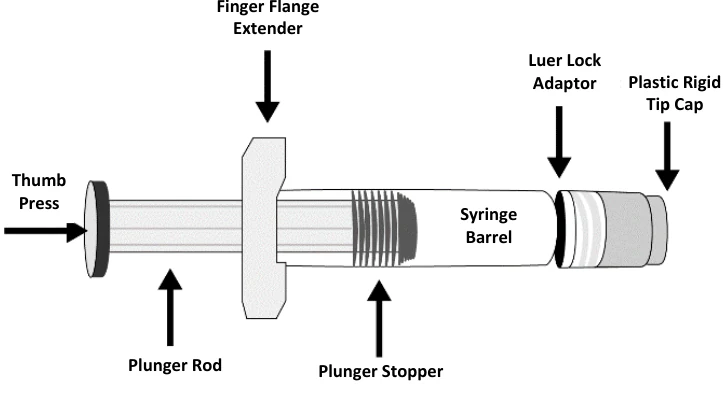
Step 1: Hold the syringe barrel in one hand and unscrew the tip cap by twisting it counterclockwise with the other hand. Do not remove the Luer Lock adaptor and the finger flange extender.
Step 2: Attach a sterile Luer Lock needle by twisting in a clockwise direction until the needle fits securely on the syringe. Due to the viscosity of the product, use a 25-gauge or larger needle.
Step 3: Inject the entire contents of the ENFLONSIA® prefilled syringe intramuscularly, in the anterolateral aspect of the thigh. ENFLONSIA® should not be injected in the gluteal area or areas where there may be a major nerve trunk and/or blood vessel.
Thumb Press
Plunger Rod
Plunger Stopper
Luer Lock Adaptor
Plastic Rigid Tip Cap
Finger Flange Extender
Syringe Barrel
Co-administration with Childhood Vaccines and Immunoglobulin Products
ENFLONSIA® can be given concomitantly with childhood vaccines [see 10 Clinical Pharmacology]. When ENFLONSIA® is administered concomitantly with injectable vaccines, it should be given using a separate syringe and at a different injection site. Do not mix ENFLONSIA® with any vaccines or medications in the same syringe or vial.
There are no data regarding substitution of ENFLONSIA® for palivizumab once prophylaxis treatment is initiated with palivizumab for the RSV season.
5 Overdose
There is limited experience of overdose with ENFLONSIA®. There is no specific treatment for an overdose with ENFLONSIA®. In the event of an overdose, the individual should be monitored for the occurrence of adverse reactions and provided with symptomatic treatment as appropriate.
For the most recent information in the management of a suspected drug overdose, contact your regional poison control centre or Health Canada’s toll-free number, 1-844 POISON-X (1-844-764-7669).
6 Dosage Forms, Strengths, Composition, and Packaging
To help ensure the traceability of biologic products, including biosimilars, health professionals should recognize the importance of recording both the brand name and the non-proprietary (active ingredient) name as well as other product-specific identifiers such as the Drug Identification Number (DIN) and the batch/lot number of the product supplied.
Table 1: Dosage Forms, Strengths, and Composition
Description
ENFLONSIA® (clesrovimab injection) is a sterile, preservative-free, clear to slightly opalescent, colorless to slightly yellow solution for intramuscular injection. It is available as a 0.7 mL solution in a single-use prefilled syringe with a plunger stopper (latex-free rubber) and a tip cap (synthetic rubber; not made with natural latex).
Available in 1 or 10 prefilled syringe(s) packages.
| Route of Administration | Dosage Form / Strength/Composition | Non-medicinal Ingredients |
| Intramuscular | Solution / 150 mg/mL 105 mg/0.7 mL injection | L-arginine hydrochloride, L-histidine, L-histidine monohydrochloride monohydrate, polysorbate 80, sucrose, and water for injection. |
7 Warnings and Precautions
Hematologic
Use in individuals with clinically significant bleeding disorders
As with any intramuscular (IM) injection, ENFLONSIA® should be given with caution to individuals with clinically significant bleeding disorders, thrombocytopenia, any coagulation disorder or to individuals on anticoagulation therapy because bleeding or bruising may occur following an intramuscular administration in these individuals.
Sensitivity/Resistance
Hypersensitivity Including Anaphylaxis
Serious hypersensitivity reactions, including anaphylaxis, have been observed with other human immunoglobulin G1 (IgG1) monoclonal antibodies. If signs and symptoms of a clinically significant hypersensitivity reaction or anaphylaxis occur, initiate appropriate medications and/or supportive therapy.
7.1 Special Populations
7.1.1 Pregnancy
ENFLONSIA® is not indicated for use in females of child-bearing age.
7.1.2 Breastfeeding
ENFLONSIA® is not indicated for use in females of child-bearing age.
7.1.3 Pediatrics
The safety and efficacy of ENFLONSIA® have been established for the prevention of RSV lower respiratory tract disease in neonates and infants born during or entering their first RSV season.
Use of ENFLONSIA® for this indication is supported by evidence from adequate and well-controlled studies in neonates and infants from birth up to 12 months of age [see 8 Adverse Reactions, 10 Clinical Pharmacology, and 14 Clinical Trials].
The safety and efficacy of ENFLONSIA® have not yet been established in children older than 12 months of age. The exposure in neonates with body weight <1.1 kg is expected to be higher than in patients with a higher body weight. The efficacy and safety of clesrovimab in infants <1.1 kg have not been directly established and are based on extrapolation.
7.1.4 Geriatrics
ENFLONSIA® is not indicated for use in adult populations.
8 Adverse Reactions
8.1 Adverse Reaction Overview
The most frequent adverse reaction was injection-site erythema, reported in 4.4% subjects receiving ENFLONSIA® and 3.6% in placebo occurring within 5 days post-dose. The majority of cases were mild to moderate in intensity. Additionally, injection-site swelling and rash were reported at a rate of 3.2% (3.2% in placebo) and 2.3% (1.9% in placebo) within 5 days and 14 days post-dose, respectively.
8.2 Clinical Trial Adverse Reactions
Clinical trials are conducted under very specific conditions. Therefore, the frequencies of adverse reactions observed in the clinical trials may not reflect frequencies observed in clinical practice and should not be compared to frequencies reported in clinical trials of another drug.
The safety of ENFLONSIA® was evaluated in 2,858 infants who received ENFLONSIA® in Phase 2b/3 and Phase 3 clinical trials (Protocol 004 and Protocol 007).
Neonates and Infants Entering Their First RSV Season (Protocol 004)
Protocol 004 was a Phase 2b/3, randomized, double-blind, placebo controlled, multisite trial conducted in early and moderate preterm infants (≥29 to <35 weeks gestational age (GA)) and late preterm and full-term infants (≥35 weeks GA). Participants were randomized 2:1 and received a single 105 mg dose of ENFLONSIA® (N=2,412, including 422 early and moderate preterm infants) or saline placebo (N=1,202, including 209 early and moderate preterm infants) by IM injection. Participants were monitored for 30 minutes post-dose. Safety was assessed using an electronic diary device from Days 1 through 42 post-dose. Participants were monitored for serious adverse events (SAEs) through the duration of their participation for up to 365 days post-dose. A subset of participants was monitored for SAEs for up to 515 days post-dose.
Table 2 summarizes the adverse reactions in participants who received ENFLONSIA®. Most (>96%) of the adverse reactions were toxicity grade 1 (mild) or grade 2 (moderate).
Table 2: Adverse Reactions Reported at an Incidence Greater Than or Equal to Placebo (Protocol 004)
| Adverse Reaction | ENFLONSIA® N=2,409¥ % | Placebo N=1,202¥ % |
|---|---|---|
| Injection-site erythema† (occurring within 5 days post-dose) | 4.4 | 3.6 |
| Injection-site swelling† (occurring within 5 days post-dose) | 3.2 | 3.2 |
| Rash‡ (occurring within 14 days post-dose) | 2.3 | 1.9 |
¥ Sample size reflects the number of participants included in the safety analysis population. † Solicited on Day 1 through Day 5 post-dose using an electronic diary device. ‡ Defined by the following grouped preferred terms: rash, rash erythematous, rash macular, rash papular, rash maculo-papular, rash vesicular, rash exfoliative, dermatitis allergic, drug eruption and toxic skin eruption. | ||
Infants at Increased Risk of Severe RSV Disease Entering Their First RSV Season (Protocol 007)
Protocol 007 was a Phase 3, randomized, partially blind, palivizumab controlled, multisite trial conducted in infants at increased risk of severe RSV disease. Participants were randomized and received a single 105 mg dose of ENFLONSIA® (N=446) followed by a dose of placebo one month later or 3 to 5 monthly doses of 15 mg/kg palivizumab (N=450) by IM injection. Of the 446 participants who received ENFLONSIA®, 176 had chronic lung disease (CLD) of prematurity or hemodynamically significant congenital heart disease (CHD), and 270 were early or moderate preterm infants (≤35 weeks GA) without CLD of prematurity or CHD. Participants were monitored for 30 minutes post-dose. Safety was assessed using an electronic diary device from Day 1 through 14 days post-dose 2 and 14 days after each subsequent dose. Participants were monitored for serious adverse events in the first RSV season for up to 365 days.
The safety profile of ENFLONSIA® in infants at increased risk of severe RSV disease entering their first season is generally comparable to palivizumab and consistent with the safety profile of ENFLONSIA® in infants in Protocol 004.
8.2.1 Clinical Trial Adverse Reactions – Pediatrics
See 8.2 Clinical Trial Adverse Reactions
9 Drug Interactions
9.2 Drug Interactions Overview
Since clesrovimab is eliminated by catabolism, no metabolic drug-drug interactions are expected. However, no formal drug interaction studies have been performed with ENFLONSIA®.
9.4 Drug-Drug Interactions
Concomitant Administration with Vaccines
Since ENFLONSIA® is a monoclonal antibody, a passive immunization specific for RSV, it is not expected to interfere with the active immune response to co-administered vaccines.
In clinical trials, when ENFLONSIA® was given concomitantly with routine childhood vaccines, the safety profile of the co-administered regimen was generally comparable to the safety profile when ENFLONSIA® and childhood vaccines were administered alone.
9.7 Drug-Laboratory Test Interactions
Interference with RT-PCR or Rapid Antigen Detection RSV Diagnostic Assays
ENFLONSIA® does not interfere with reverse transcriptase polymerase chain reaction (RT-PCR) or rapid antigen detection RSV diagnostic assays that employ commercially available antibodies targeting antigenic site 0, I, II, III, or V on the RSV fusion (F) protein diagnostic assays. For rapid antigen detection RSV diagnostic assay results which are negative when clinical observations are consistent with RSV infection, it is recommended to confirm using an RT PCR-based assay.
10 Clinical Pharmacology
10.1 Mechanism of Action
Clesrovimab is a fully human immunoglobulin G1 kappa (IgG1κ) neutralizing monoclonal antibody with a triple amino acid substitution (YTE) in the Fc region which increases binding to the neonatal Fc receptor leading to an extended serum half-life. Clesrovimab provides passive immunity by targeting the RSV outer membrane fusion (F) protein to prevent viral entry into cells.
Clesrovimab binds to a conserved epitope on antigenic site IV on the fusion F protein. Clesrovimab binds to RSV pre-fusion F glycoprotein and post-fusion F glycoprotein with equilibrium dissociation constant values (KD) of 71 pM and 480 pM, respectively.
10.2 Pharmacodynamics
RSV serum neutralizing antibody titer correlates with clesrovimab serum concentration. Following IM administration of clesrovimab in infants, the RSV neutralizing antibody titers in serum were estimated to be approximately 7 times higher than baseline at 4 hours after clesrovimab dosing, and maximum titers were estimated to be approximately 78 times higher than baseline at approximately 7 days, for a typical infant weighing 5 kg.
10.3 Pharmacokinetics
The PK of clesrovimab is approximately dose proportional following a single IM administration of doses ranging from 20 mg to 210 mg in infants.
Table 3: Summary of Clesrovimab Pharmacokinetic Parameters Following a Single IM Injection
| Pharmacokinetic parameter | Value |
|---|---|
| CL/F (mL/day) | 19.7 |
| Vc/F (mL) | 514 |
| Vp/F (mL) | 316 |
| t1/2 (days) | 44.0 |
| tmax (days) | 6.5 |
| Pharmacokinetic parameters for a typical infant of 5 kg based on population pharmacokinetic analysis; CL/F=apparent clearance, Vc/F=apparent central volume of distribution, Vp/F=apparent peripheral volume of distribution, t1/2=terminal half-life, tmax=time to maximum observed concentration | |
Absorption
The estimated clesrovimab absolute bioavailability is 77.8% and the median time to maximum concentration is 6.5 days.
Distribution
The estimated apparent volume of distribution for clesrovimab is 830 mL, for a typical infant weighing 5 kg.
Clesrovimab was readily detected in the nasal mucosa of sampled adult participants. The concentration of clesrovimab measured in the epithelial lining fluid of the nasal mucosa was 1.4% to 3.3% of the concentration measured in the serum.
Elimination
The clesrovimab terminal half life is approximately 44.0 days and the estimated apparent clearance is 19.7 mL/day for a typical infant weighing 5 kg.
Metabolism
Clesrovimab is degraded into small peptides by catabolic pathways.
Duration of effect
Based on clinical data, the duration of protection offered by a single dose of ENFLONSIA® extends through 5 months [see 14 Clinical Trials].
Pharmacokinetic extrapolation approach
Following the recommended dose in the first RSV season, the clesrovimab serum exposures were similar in neonates and infants in Protocol 004, in preterm neonates and infants born at less than or equal to 35 weeks GA (including less than 29 weeks GA) in Protocol 007, and in neonates and infants with CLD or CHD in Protocol 007.
Special populations and conditions
Pediatrics (≤ 12 months of age): No clinically significant differences in the pharmacokinetics of clesrovimab were observed based on vulnerability to severe RSV disease (i.e., CLD, CHD, or GA <29 weeks).
Table 4: Clesrovimab Single IM Dose Exposures
| Protocol 004 | Protocol 007 | |
|---|---|---|
| AUC0-150d (µg*day/mL) | 6,260 (21.2) | 7,740 (20.4) |
| Cmax (µg/mL) | 115 (23.3) | 150 (24.0) |
Geometric mean (% geometric coefficient of variation) exposures for infants using individual predicted clesrovimab pharmacokinetic parameters from the population pharmacokinetic model Cmax=maximum concentration, AUC0-150d=area under the concentration time curve from 0-150 days post dose | ||
- Geriatrics (≥65 years of age): Clesrovimab is not indicated for adult usage.
- Ethnic origin: Based on population PK analysis there was no clinically meaningful effect of race and ethnicity on the PK of clesrovimab.
Hepatic Insufficiency: IgG monoclonal antibodies are not primarily cleared via the hepatic pathway. An effect of hepatic impairment on clesrovimab pharmacokinetics is
- not expected, but certain conditions associated with protein loss may increase clearance.
- Renal Insufficiency: IgG monoclonal antibodies are not primarily cleared via the renal pathway. An effect of renal impairment on clesrovimab pharmacokinetics is not expected, but certain conditions associated with protein loss may increase clearance.
- Body weight: Clesrovimab clearance and volumes of distribution increase with increasing body weight.
10.4 Immunogenicity
The observed incidence of anti-drug antibodies (ADA) is highly dependent on the sensitivity and specificity of the assay. Differences in assay methods preclude meaningful comparisons of the incidence of ADA in the studies described below with the incidence of ADA in other studies.
In Protocol 004 and Protocol 007, 12.0% (124/1033) and 13.0% (34/261) of participants were ADA positive through Day 240, respectively.
There was no identified impact of ADA on pharmacokinetics, RSV serum neutralizing activity, efficacy, or safety of ENFLONSIA® during RSV season 1, following a single dose administration (105 mg) and follow up through Day 240.
11 Storage, Stability, and Disposal
Store refrigerated at 2°C to 8°C.
Keep the prefilled syringe in the original carton to protect from light until time of use.
ENFLONSIA® may be kept at room temperature between 20°C to 25°C for a maximum of 48 hours. After removal from the refrigerator, ENFLONSIA® must be used within 48 hours or discarded.
Do not freeze. Do not shake.
12 Special Handling Instructions
Any unused medicinal product or waste material should be disposed of in accordance with local requirements.
Part 2: Scientific Information
13 Pharmaceutical Information
Drug Substance
Proper name: clesrovimab
Product Characteristics
ENFLONSIA® (clesrovimab) is a respiratory syncytial virus F protein-directed fusion inhibitor. Clesrovimab is a fully human immunoglobulin G1 kappa (IgG1κ) monoclonal antibody produced in recombinant Chinese hamster ovary (CHO) cells. The molecular weight is approximately 149 kDa.
14 Clinical Trials
14.1 Clinical Trials by Indication
The efficacy and safety of ENFLONSIA® were evaluated in preterm and full-term infants in the trials summarized in Table 5 Error! Reference source not found..
Table 5: Summary of Clinical Trials for the Prevention of Medically Attended RSV Lower Respiratory Tract Disease
| Study # | Study design | Dosage, route of administration and duration | Study subjects (N) ¥ | Median age (range) | Sex | ||
| Study # | Study design | Dosage, route of administration and duration | Study subjects (N) ¥ | Median age (range) | Sex | ||
| Protocol 004 | Phase 2b/3, double-blind, randomized, placebo controlled, multi-site study to evaluate the efficacy and safety of ENFLONSIA® in healthy preterm and full term infants | ENFLONSIA®: single 105 mg IM dose Placebo: single IM dose | ENFLONSIA®: 2,411 Placebo: 1,203† | 3.1 months (range: 0 to 12 months) | Males: 1,845 Females: 1,769 | ||
| Protocol 007 | Phase 3, partially blinded, randomized, palivizumab controlled, multi-site study to evaluate the safety, efficacy and pharmacokinetics of ENFLONSIA® in infants ≤35 weeks gestational age or infants with CLD of prematurity or hemodynamically significant CHD from birth to 1 year | ENFLONSIA®: single 105 mg IM dose on day 1 followed by a dose of IM placebo one month later Palivizumab: 15mg/kg IM dose on day 1 and every month thereafter for a total of 3 to 5 doses | ENFLONSIA®: 446 Palivizumab: 450 | 2.5 months (range: 0 to 12 months) | Males: 446 Females: 450 | ||
¥ Participants randomized and treated. † 1 participant was randomized to receive placebo but received ENFLONSIA®. GA=gestational age; CLD=chronic lung disease; CHD=hemodynamically significant congenital heart disease. | |||||||
Key demographics and baseline characteristics for Protocol 004 and Protocol 007 are summarized in Table 6.
Table 6: Select Demographic and Baseline Characteristics – Protocol 004 and Protocol 007 (RSV Season 1)
| Statistic | Protocol 004 | Protocol 007 | |||||||
|---|---|---|---|---|---|---|---|---|---|
| Statistic | Protocol 004 | Protocol 007 | |||||||
Total (N=3,614) | Total (N=896) | ||||||||
Total (N=3,614) | Total (N=896) | ||||||||
| Age at Randomization in months, n (%) | |||||||||
| <6 | 2,887 (79.9) | 799 (89.2) | |||||||
| ≥6 to <9 | 575 (15.9) | 84 (9.4) | |||||||
| ≥9 | 152 (4.2) | 13 (1.5) | |||||||
| Race, n (%) | |||||||||
| American Indian or Alaska Native | 68 (1.9) | 12 (1.3) | |||||||
| Asian | 961 (26.6) | 162 (18.1) | |||||||
| Black or African American | 497 (13.8) | 138 (15.4) | |||||||
| Multiple | 440 (12.2) | 109 (12.2) | |||||||
| Native Hawaiian or Other Pacific Islander | 2 (0.1) | 7 (0.8) | |||||||
| White | 1,632 (45.2) | 468 (52.2) | |||||||
| Ethnicity, n (%) | |||||||||
| Hispanic or Latino | 1,017 (28.1) | 284 (31.7) | |||||||
| Not Hispanic or Latino | 2,494 (69.0) | 592 (66.1) | |||||||
| Body Weight at Randomization in kg, n (%) | |||||||||
| <5 kg | 1,291 (35.7) | 715 (79.8) | |||||||
| ≥5 kg | 2,323 (64.3) | 181 (20.2) | |||||||
| Median body weight in kg, (range) | |||||||||
| 5.8 (1.6 to 11.9) | 3.3 (1.1 to 9.6) | ||||||||
Efficacy Against RSV-Associated MALRI, Hospitalization and Severe MALRI in Neonates and Infants Entering Their First RSV Season (Protocol 004)
Protocol 004 was a Phase 2b/3, randomized, double-blind, placebo-controlled, multi-site trial conducted in 22 countries from the Northern and Southern Hemispheres to evaluate the efficacy of ENFLONSIA® in early and moderate preterm infants (≥29 to <35 weeks GA) and late preterm and full-term infants (≥35 weeks GA). Of these participants, 17.5% had a GA greater than or equal to 29 weeks and less than 35 weeks and 82.5% had a GA greater than or equal to 35 weeks. The study assessed the efficacy of ENFLONSIA® in the prevention of RSV-associated disease across a spectrum of severity. Participants were randomized 2:1 to receive a 105 mg dose of ENFLONSIA® or saline placebo by IM injection.
The primary endpoint was the incidence of RSV-associated Medically Attended Lower Respiratory Infection (MALRI) characterized as cough or difficulty breathing and requiring ≥1 indicator of LRI (wheezing, rales/crackles) or severity (chest wall in-drawing/retractions, hypoxemia, tachypnea, dehydration due to respiratory symptoms) through 150 days after dosing. Medically Attended (MA) includes all healthcare provider visits in settings such as outpatient clinic, clinical study site, emergency department, urgent care center, and/or hospital. The statistical criterion for success required the lower bound of the 95% CI of efficacy to be greater than 25%.
RSV-associated hospitalization through 150 days after dosing and RSV-associated MALRI through 180 days after dosing were also evaluated as secondary endpoints. For RSV-associated hospitalization through 150 days, the statistical criterion for success required the lower bound of the 95% CI of efficacy to be greater than 0%.
RSV-associated severe MALRI, a prespecified exploratory endpoint, characterized by 1) cough or difficulty breathing and 2) severe hypoxemia or the need for supplemental oxygen or mechanical ventilatory support, was evaluated through 150 days after dosing. Efficacy for all endpoints through 180 days after dosing was also a prespecified exploratory analysis.
All efficacy endpoints evaluated required an RSV positive RT-PCR nasopharyngeal (NP) sample.
Table 7 displays the efficacy results for RSV-associated disease endpoints, in order of increasing severity, in preterm and full-term infants from days 1 through 150 post-dose.
Table 7 Primary, Secondary, and Exploratory Efficacy Analyses of RSV-Associated Disease Endpoints in Preterm and Full-Term Infants Days 1 through 150 Post-Dose (Full Analysis Set, Protocol 004).
| RSV-Associated Efficacy Endpoint | ENFLONSIA® (N=2,398) Incidence Rate %∥ (n) | Placebo (N=1,201) Incidence Rate % (n) | Estimated Efficacy (%) (95% CI) ¥ (1-sided p-value) | |||
|---|---|---|---|---|---|---|
| MALRI (requiring ≥1 indicator of LRI or severity)† | 2.6 (60) | 6.5 (74) | 60.4 (44.1, 71.9) (p <0.001) | |||
| Hospitalization‡ | 0.4 (9) | 2.4 (28) | 84.2(66.6, 92.6) (p <0.001) | |||
| Severe MALRI§ | 0.1 (2) | 1.0 (12) | 91.7 (62.9, 98.1) | |||
N=Number of participants in the full analysis set. n=Number of cases. CI=Confidence Interval. ∥ Calculated as ((number of cases)/ (total follow-up time in months)) x 5, expressed as a percentage. The resulting unit is incidence rate over 5 months. ¥The efficacy was defined as 100 x (1 - relative risk (ENFLONSIA® vs. placebo)). Efficacy estimates and corresponding 95% CIs of efficacy were obtained using the modified Poisson regression model with robust variance. The models were adjusted for hemisphere, gestational age group, and age group at randomization for RSV-associated MALRI and hospitalization. Only the treatment group was included in the model for RSV-associated severe MALRI. † The primary endpoint. The lower bound of the 95% CI of 44.1% was above 25%, the predefined statistical criterion for success. A post-hoc analysis evaluated RSV-associated MALRI requiring ≥2 indicators of LRI/severity (at least 1 indicator of LRI, including rhonchi, and at least 1 indicator of severity) and an RSV positive RT-PCR NP sample. The estimated efficacy was 88.0% (95% CI: 76.1%, 94.0%). ‡ The secondary endpoint. An additional exploratory analysis evaluated RSV-associated LRI hospitalization characterized by cough or difficulty breathing and requiring ≥1 indicator of LRI or severity in a hospitalized infant with an RSV positive RT-PCR NP sample. The estimated efficacy was 90.9% (95% CI: 76.2%, 96.5%). § Exploratory efficacy endpoint. | ||||||
Subgroup analyses of both RSV-associated MALRI and hospitalization by gestational age, chronological age, body weight, sex, race, and region showed results consistent with the overall population.
When analyzed through 180 days after dosing, the efficacy estimate for RSV-associated MALRI (requiring ≥1 indicator of LRI or severity) was 59.5% (95% CI: 43.3, 71.1). Efficacy for all endpoints was maintained through 180 days after dosing.
In the second season (Days 365 through 515 after dosing), the incidence rates of RSV-associated MALRI (requiring ≥1 indicator of LRI or severity) and RSV-associated hospitalization were generally comparable between recipients of ENFLONSIA® or placebo.
Efficacy Against RSV-Associated MALRI and Hospitalization in Infants at Increased Risk of Severe RSV Disease Entering Their First RSV Season (Protocol 007)
Protocol 007 is a Phase 3, randomized, partially-blind, palivizumab-controlled, multisite trial conducted in 27 countries from the Northern and Southern Hemispheres to evaluate the efficacy of ENFLONSIA® in early (<29 weeks GA) or moderate preterm infants (≥29 to ≤35 weeks GA), and infants with chronic lung disease of prematurity or congenital heart disease of any GA, who are at increased risk for severe RSV disease. Of these participants, 27.9% had CLD, 11.3% had CHD, 5.6% had a GA less than 29 weeks with neither CLD nor CHD and 55.2% had a GA greater than or equal to 29 weeks with neither CLD nor CHD. Participants were randomized to receive ENFLONSIA® or palivizumab by IM injection. Participants randomized to ENFLONSIA® received a single 105 mg dose on Day 1 followed by a dose of placebo one month later; palivizumab was administered on Day 1 and every month thereafter for a total of 3 to 5 doses.
The efficacy of ENFLONSIA® in infants at increased risk for severe RSV disease, including preterm infants and infants with chronic lung disease of prematurity or congenital heart disease, was established by extrapolation of efficacy of ENFLONSIA® from Protocol 004 to Protocol 007 based on similar pharmacokinetic exposure [see 10 Clinical Pharmacology ]. In Protocol 007, the incidence rate of RSV-associated MALRI (requiring ≥1 indicator of LRI or severity) through 150 days after dosing was generally comparable between ENFLONSIA® (incidence rate=3.6%, 95% CI: 2.0, 6.0) and palivizumab (incidence rate=3.0%, 95% CI: 1.6, 5.3). The incidence rate of RSV-associated hospitalization through 150 days after dosing was generally comparable between ENFLONSIA® (incidence rate=1.3%, 95% CI: 0.4, 3.0) and palivizumab (incidence rate=1.5%, 95% CI: 0.6, 3.3).
15 Microbiology
Antiviral Activity
An in vitro infection neutralization assay was used to determine clesrovimab potency against RSV strains A and B using HEp-2 cells. In the laboratory, clesrovimab neutralized RSV strain A and B with an IC50 ± SD of 6.0 ± 4.3 and 3.0 ± 2.0 ng/mL, respectively. Clesrovimab was assessed for its ability to neutralize 47 RSV clinical isolates using a similar in vitro assay, with IC50 values ranging from 0.18 ng/mL to 11.11 ng/mL for RSV A and 0.58 ng/mL to 29.65 ng/mL for RSV B. The clinical isolate panel consisted of a broad range of clinical RSV isolated between years 1987 and 2016. Recent clinical isolates (RSV A and RSV B) from 2016 through 2021 were equipotently neutralized by clesrovimab as compared to the reference RSV strains.
Antiviral Resistance
In Cell Culture
Monoclonal antibody-resistant viral mutants (MARMs) were identified after serial infection in cell culture of RSV A or RSV B. Four RSV strain A MARMs for clesrovimab were generated after 6 rounds of serial infection. The 4 MARM viruses were subjected to an additional 3 rounds of serial infection prior to being processed for characterization. The four RSV A MARMs were sequenced and found to have mutations located in the binding epitope region reported for clesrovimab, G446E, S443P and K445N, S443P and G446E, or S443P. An in vitro assay confirmed that clesrovimab was not able to neutralize the 4 MARMs. One RSV B MARM was identified after 9 rounds of serial infection. The RSV B MARM was found to have a mutation located in the binding epitope region reported for clesrovimab, S443P.
In Surveillance Trials
In sequences reported in the GenBank database, the RSV binding epitope for clesrovimab was highly conserved (99.8%). Thirteen (13) clesrovimab epitope variants were identified, including 1 variant, I432T, identified in 5 RSV A and 1 RSV B samples (0.04%). This variant was shown to reduce clesrovimab neutralizing activities by 4 times (RSV A) and 1.6 times (RSV B). Two RSV A MARMs were identified with a mutation at position 446 (G446E). This mutation was found in 3 GenBank variant RSV A F sequences (0.02%) in the database. Viral growth kinetics were assessed on HEp-2 cells for the RSV A MARM virus containing the G446E mutation and the data suggest slower in vitro growth kinetics compared to the wild type RSV A laboratory strain.
In a global surveillance study conducted between 2019 and 2023 in 8 countries, which included both the Northern and Southern Hemispheres, the clesrovimab binding site was highly conserved (100%). There were 652 RSV positive clinical samples collected from individuals of various ages. Of these, the 555 RSV positive sequenced clinical samples consisted of 300 RSV A (54%) and 255 RSV B (46%). There were no sequence variants identified in the clesrovimab binding site.
In Clinical Trials
Resistance substitutions were not associated with the development of RSV associated disease in Protocol 004 and Protocol 007. Viral phenotypic testing of RSV positive nasal swabs demonstrated that the majority of the clesrovimab binding site (IV) substitutions affected residue G446, resulting in the following substitutions: G446E, G446R or G446W (RSV A) and G446E or G446R (RSV B). The G446E substitution was previously found in the GenBank database and RSV MARM study. In Protocol 004, there were no cases of RSV associated MALRI and 1 case of RSV associated hospitalization (RSV A) associated with the G446W substitution. In Protocol 007, 1 case of RSV associated MALRI (RSV A) and 1 case of RSV associated severe MALRI (RSV B) in ENFLONSIA® participants within 2 weeks of dosing carried the G446R substitution. Overall, the G446 substitutions were rare in Protocol 004 and Protocol 007.
Cross-Resistance
Clesrovimab retained activity against recombinant RSV variants harbouring palivizumab (N262Y) and nirsevimab (N208S, I64T + K68E, I64T + K68E + I206M + Q209R) resistance-associated substitutions identified in cell culture and clinical studies. Both nirsevimab and palivizumab neutralized RSV variants harboring clesrovimab resistance-associated substitutions G446E or G446W in cell culture.
16 Non-Clinical Toxicology
General toxicology
Safety was evaluated in a 2 week repeat-dose toxicity study in which rats received ENFLONSIA® intravenously (IV) up to 300 mg/kg/dose on study days 1, 4, 7, 10 and 13 or intramuscularly at 25 mg/dose on study days 1 and 13, followed by a 4-week treatment free period. No findings of toxicological significance were observed, and the overall no adverse effect level (NOAEL) was ≥300 mg/kg/dose IV, which is 44-fold over the exposure in humans at the clinically recommended dose of 105 mg/dose.
In tissue cross reactivity studies using human adult, juvenile, and neonatal tissues no binding was detected.
Carcinogenicity
Carcinogenesis studies have not been performed with ENFLONSIA®.
Genotoxicity
Genotoxicity studies have not been performed with ENFLONSIA®.
Reproductive and developmental toxicology
Reproductive and developmental toxicity studies have not been performed with ENFLONSIA®.