


Product Monograph - Evusheld
RECENT MAJOR LABEL CHANGES
| 1 INDICATIONS | 11/2022 |
|---|---|
| 1 INDICATIONS, 1.2 Geriatrics | 09/2023 |
| 4 DOSAGE AND ADMINISTRATION, 4.2 Recommended Dose and Dosage Adjustment | 11/2022 |
| 4 DOSAGE AND ADMINISTRATION, 4.4 Administration | 11/2022 |
| 7 WARNINGS AND PRECAUTIONS, Sensitivity/Resistance | 11/2022 |
| 7 WARNINGS AND PRECAUTIONS, Immune | 03/2023 |
| 7 WARNINGS AND PRECAUTIONS, Cardiovascular | 09/2023 |
TABLE OF CONTENTS
Sections or subsections that are not applicable at the time of authorization are not listed.
RECENT MAJOR LABEL CHANGES ........................................................................................ 2
TABLE OF CONTENTS ............................................................................................................. 2
PART I: HEALTH PROFESSIONAL INFORMATION ................................................................. 4
1 INDICATIONS ................................................................................................................. 4
1.1 Pediatrics ............................................................................................................... 4
1.2 Geriatrics ............................................................................................................... 4
2 CONTRAINDICATIONS .................................................................................................. 5
4 DOSAGE AND ADMINISTRATION ................................................................................ 5
4.2 Recommended Dose and Dosage Adjustment ....................................................... 5
4.4 Administration ........................................................................................................ 6
5 OVERDOSAGE ............................................................................................................... 7
6 DOSAGE FORMS, STRENGTHS, COMPOSITION AND PACKAGING ......................... 7
7 WARNINGS AND PRECAUTIONS ................................................................................. 7
7.1 Special Populations ............................................................................................... 9
7.1.1 Pregnant Women ............................................................................................ 9
7.1.2 Breast-feeding ................................................................................................. 9
7.1.3 Pediatrics ........................................................................................................ 9
7.1.4 Geriatrics ........................................................................................................ 9
8 ADVERSE REACTIONS ................................................................................................. 9
8.1 Adverse Reaction Overview ................................................................................... 9
8.2 Clinical Trial Adverse Reactions........................................................................... 10
8.2.1 Clinical Trials adverse reactions: Pediatrics ...................................................11
8.3 Less Common Clinical Trial Adverse Reactions ................................................... 11
8.5 Post-Market Adverse Reactions ........................................................................... 11
9 DRUG INTERACTIONS ................................................................................................ 12
9.2 Drug Interactions Overview .................................................................................. 12
9.4 Drug-Drug Interactions ......................................................................................... 12
9.5 Drug-Food Interactions ........................................................................................ 12
9.6 Drug-Herb Interactions ......................................................................................... 12
9.7 Drug-Laboratory Test Interactions ........................................................................ 12
10 CLINICAL PHARMACOLOGY ...................................................................................... 12
10.1 Mechanism of Action ...................................................................................... 12
10.2 Pharmacodynamics ........................................................................................ 13
10.3 Pharmacokinetics ........................................................................................... 13
11 STORAGE, STABILITY AND DISPOSAL ..................................................................... 15
PART II: SCIENTIFIC INFORMATION ..................................................................................... 16
13 PHARMACEUTICAL INFORMATION ........................................................................... 16
14 CLINICAL TRIALS ........................................................................................................ 16
14.1 Clinical Trials by Indication ............................................................................. 16
Pre-Exposure Prophylaxis of COVID-19 ........................................................................ 16
Treatment of mild to moderate COVID-19 ..................................................................... 19
14.4 Immunogenicity .............................................................................................. 20
15 MICROBIOLOGY .......................................................................................................... 21
16 NON-CLINICAL TOXICOLOGY .................................................................................... 26
PATIENT MEDICATION INFORMATION ................................................................................. 27
PART I: HEALTH PROFESSIONAL INFORMATION
1 INDICATIONS
Pre-exposure Prophylaxis of Coronavirus Disease 2019 (COVID-19)
EVUSHELD (tixagevimab and cilgavimab) is indicated for the pre-exposure prophylaxis of coronavirus disease 2019 (COVID-19) in adults and adolescents (≥12 years of age weighing at least 40 kg), who have not had a known recent exposure to an individual infected with SARS-CoV-2 and:
- Who are immune compromised and unlikely to mount an adequate immune response to COVID‐19 vaccination or
- For whom COVID-19 vaccination is not recommended.
Pre-exposure prophylaxis with EVUSHELD is not a substitute for vaccination in individuals for whom COVID-19 vaccination is recommended.
Circulating SARS-CoV-2 viral variants may be associated with resistance to monoclonal antibodies. Healthcare professionals should routinely review the Antiviral Resistance information in 15 MICROBIOLOGY, in conjunction with literature and local guidelines, for details regarding specific variants and resistance, which may be updated regularly.
Treatment of Mild to Moderate COVID-19
EVUSHELD is indicated for the treatment of mild to moderate COVID-19 in adults and adolescents (≥12 years of age weighing at least 40 kg) [see also 14.1 Clinical Trials by Indication, TACKLE].
Circulating SARS-CoV-2 viral variants may be associated with resistance to monoclonal antibodies. Healthcare professionals should routinely review the Antiviral Resistance information in 15 MICROBIOLOGY, in conjunction with literature and local guidelines, for details regarding specific variants and resistance, which may be updated regularly.
1.1 Pediatrics
Pediatrics (<18 years of age): The safety and efficacy of EVUSHELD in children <18 years of age has not been established. No data are available. See 4.2 Recommended Dose and Dosage Adjustment. However, the recommended dose (see 4.2 Recommended Dose and Dosage Adjustment) is expected to result in comparable serum exposures of tixagevimab and cilgavimab in adolescents ≥12 years of age and weighing at least 40 kg as observed in adults based on an allometric scaling approach (which accounted for the effect of body weight changes associated with age on clearance and volume of distribution). See 10.2 Pharmacodynamics and 10.3 Pharmacokinetics. Close observation in adolescents is highly recommended.
1.2 Geriatrics
Geriatrics (≥65 years of age): Of the participants in the pooled pharmacokinetic (PK) analysis, 17.6% (N=871) were ≥65 years of age and 3.2% (N=156) were ≥75 years of age. There is no clinically meaningful difference in the PK of tixagevimab and cilgavimab in geriatric subjects
(≥65 years) compared to younger individuals. See 10.2 Pharmacodynamics and 10.3 Pharmacokinetics.
2 CONTRAINDICATIONS
EVUSHELD is contraindicated in individuals who have a history of severe hypersensitivity reactions, including anaphylaxis, to this drug or to any ingredient in the formulation, including any non-medicinal ingredient, or component of the container. For a complete listing, see 6 DOSAGE FORMS, STRENGTHS, COMPOSITION AND PACKAGING.
4 DOSAGE AND ADMINISTRATION
4.2 Recommended Dose and Dosage Adjustment
Prophylaxis
The recommended dose is 600 mg of EVUSHELD, administered as two separate 3.0 mL, sequential, injections of:
- 300 mg of tixagevimab
- 300 mg of cilgavimab
For individuals who require repeat dosing for ongoing prevention of COVID-19, subsequent doses of 600 mg of EVUSHELD (300 mg of tixagevimab and 300 mg of cilgavimab) should be given once every 6 months.
The dose recommendations for prophylaxis are based on the totality of the available data including clinical pharmacology, pharmacokinetics (PK), antiviral activity, and clinical trial data (see 8 ADVERSE REACTIONS, 10.2 Pharmacodynamics, and 10.3 Pharmacokinetics). EVUSHELD has been studied for the prophylaxis of COVID-19 at the 300 mg dose. The clinical safety of 600 mg EVUSHELD for prophylaxis use is supported by safety data from the Phase III multicentre study TACKLE in patients with mild to moderate COVID-19 (see 8 ADVERSE REACTIONS).
Treatment
The recommended dose is 600 mg of EVUSHELD, administered as two separate 3.0 mL, sequential, injections of:
- 300 mg of tixagevimab
- 300 mg of cilgavimab
EVUSHELD should be given as soon as possible after a positive viral test for SARS-CoV-2 and within 7 days after the onset of symptoms (see 14.1 Clinical Trials by Indication, Treatment of mild to moderate COVID-19).
Pediatrics (<18 years of age): The safety and efficacy of EVUSHELD in children <18 years of age have not been established.
4.4 Administration
For intramuscular injection
Tixagevimab and cilgavimab must be administered by a qualified healthcare provider using aseptic technique.
Visually inspect the vials for particulate matter and discolouration. Both tixagevimab and cilgavimab are clear to opalescent, colourless to slightly yellow solutions. Discard the vials if the solution is cloudy, discoloured or visible particles are observed. Do not shake the vials.
Withdraw the appropriate amount of tixagevimab solution and the appropriate amount of cilgavimab solution into separate syringes. Discard unused portion in vials.
Administer tixagevimab and cilgavimab as two separate, sequential intramuscular injections at different injection sites, preferably one in each of the gluteal muscles.
Each carton of EVUSHELD contains two vials:
- tixagevimab solution for injection (dark grey vial cap)
- cilgavimab solution for injection (white vial cap)
a Each vial contains an overfill to allow the withdrawal of 150 mg (1.5 mL)
The tixagevimab and cilgavimab solutions for injection are preservative-free and therefore, the prepared syringes should be administered immediately.
If immediate administration is not possible, and the prepared tixagevimab and cilgavimab syringes need to be stored, the total time from vial puncture to administration should not exceed 4 hours, either:
- in a refrigerator at 2ºC to 8ºC or
- at room temperature up to 25ºC.
Any unused solution should be discarded.
| Indication | EVUSHELD dose (tixagevimab and cilgavimab) | Antibody dose | Number of vials neededa | Volume to withdraw from vial |
|---|---|---|---|---|
| Pre-exposure prophylaxis of COVID-19 | 600 mg (2 cartons) | tixagevimab 300 mg | 2 vials | 3.0 mL |
| cilgavimab 300 mg | 2 vials | 3.0 mL | ||
| Treatment of mild to moderate COVID-19 | 600 mg (2 cartons) | tixagevimab 300 mg | 2 vials | 3.0 mL |
| cilgavimab 300 mg | 2 vials | 3.0 mL |
5 OVERDOSAGE
There is no specific treatment for overdose with EVUSHELD. Treatment of overdose should consist of general supportive measures, including monitoring of vital signs and observation of the clinical status of the patient.
In clinical trials, doses up to 600 mg intramuscular (300 mg each of tixagevimab and cilgavimab) and 3000 mg intravenously (1500 mg each of tixagevimab and cilgavimab) have been administered without dose-limiting toxicity.
6 DOSAGE FORMS, STRENGTHS, COMPOSITION AND PACKAGING
To help ensure the traceability of biologic products, health professionals should recognise the importance of recording both the brand name and the non-proprietary (active ingredient) name as well as other product-specific identifiers such as the Drug Identification Number (DIN) and the batch/lot number of the product supplied.
Table 1 – Dosage Forms, Strengths, and Composition
Each carton of EVUSHELD contains two vials:
Tixagevimab
1.5 mL of solution for injection in a clear glass vial closed by chlorobutyl elastomeric stopper sealed with a dark-grey aluminium flip-off top.
Cilgavimab
1.5 mL of solution for injection in a clear glass vial closed by chlorobutyl elastomeric stopper sealed with a white aluminium flip-off top.
7 WARNINGS AND PRECAUTIONS
Cardiovascular
Cardiac adverse events
In PROVENT, a higher proportion of subjects who received EVUSHELD versus placebo reported serious cardiac or thromboembolic events (1.6% versus 0.9%). Most subjects had
| For management of a suspected drug overdose, contact your regional poison control centre. |
|---|
| Route of Administration | Dosage Form / Strength / Composition | Non-medicinal Ingredients |
| Intramuscular use | Solution for injection
| L-Histidine L-Histidine hydrochloride monohydrate Polysorbate 80 Sucrose Water for injection |
cardiac risk factors and/or a prior history of cardiovascular disease, and there was no clear temporal pattern. A causal relationship between EVUSHELD and these events has not been established.
In the TACKLE study there was no imbalance between the number of participants who experienced serious cardiac or thromboembolic adverse events in the EVUSHELD arm as compared to the placebo arm (1.5% versus 1.6%).
Consider the risks and benefits prior to initiating EVUSHELD in individuals at high risk for cardiovascular or thromboembolic events, and advise individuals to seek immediate medical attention if they experience any signs or symptoms suggestive of a cardiovascular or thromboembolic event.
Hematologic
Clinically significant bleeding disorders
As with any other intramuscular injections, EVUSHELD should be given with caution to patients with thrombocytopenia or any coagulation disorder.
Immune
Hypersensitivity and Anaphylaxis
Serious hypersensitivity reactions, including anaphylaxis, have been reported following administration of EVUSHELD (see 8.5 Post-Market Adverse Reactions). If signs and symptoms of a clinically significant hypersensitivity reaction or anaphylaxis occur, immediately discontinue administration and initiate appropriate medicinal products and/or supportive therapy.
Reproductive Health: Female and Male Potential
Fertility
There are no data on the effects of tixagevimab and cilgavimab on human fertility.
Sensitivity/Resistance
Potential Risk of Prophylaxis or Treatment Failure due to Antiviral Resistance
Circulating SARS-CoV-2 viral variants may be associated with resistance to monoclonal antibodies such as EVUSHELD. Healthcare professionals should routinely review the Antiviral Resistance information in 15 MICROBIOLOGY, in conjunction with literature and local guidelines, for details regarding specific variants and resistance, which may be updated regularly.
Patients who receive EVUSHELD prophylactically should be informed of the potential for breakthrough infections to occur. Patients should be instructed to promptly seek medical advice if signs or symptoms of COVID-19 occur (the most common symptoms include fever, cough, tiredness and loss of taste or smell; the most serious symptoms include difficulty breathing or shortness of breath, loss of speech or mobility, or confusion and chest pain).
Decisions regarding the use of EVUSHELD for the treatment of COVID-19 should take into consideration what is known about the characteristics of the circulating SARS-CoV-2 viral variants, including geographical prevalence.
7.1 Special Populations
7.1.1 Pregnant Women
There are insufficient data from the use of tixagevimab and cilgavimab in pregnant women. Non-clinical reproductive toxicity studies have not been performed with tixagevimab and cilgavimab. In a tissue cross reactivity study with tixagevimab and cilgavimab using human fetal tissues, no binding of clinical concern was detected. Human immunoglobulin G1 (IgG1) antibodies are known to cross the placental barrier; therefore, tixagevimab and cilgavimab have the potential to be transferred from the mother to the developing fetus.
EVUSHELD should only be used during pregnancy if the potential benefit outweighs the potential risk for the mother and the fetus.
7.1.2 Breast-feeding
There are no data available on whether tixagevimab and cilgavimab are excreted in human milk. Exposure to the breast-fed child cannot be excluded.
The developmental and health benefits of breast-feeding should be considered along with the mother’s clinical need for EVUSHELD and any potential adverse effects on the breast-fed child from EVUSHELD or from the underlying maternal condition.
7.1.3 Pediatrics
Pediatrics (<18 years of age): The safety and efficacy of EVUSHELD in children <18 years of age has not been established. No data are available. However, the recommended adult dose is expected to result in comparable serum exposures of tixagevimab and cilgavimab in children ≥12 years of age and weighing at least 40 kg. EVUSHELD is not authorized for use in pediatrics under 12 years of age or weighing less than 40 kg. See 10.2 Pharmacodynamics and 10.3 Pharmacokinetics.
7.1.4 Geriatrics
Geriatrics (≥65 years of age): Of the participants in the pooled PK analysis, 17.6% (N=871) were ≥65 years of age and 3.2% (N=156) were ≥75 years of age. There is no clinically meaningful difference in the PK of tixagevimab and cilgavimab in geriatric subjects (≥65 years) compared to younger individuals. See 10.2 Pharmacodynamics and 10.3 Pharmacokinetics.
8 ADVERSE REACTIONS
8.1 Adverse Reaction Overview
A total of 4210 adult participants received 300 mg of EVUSHELD (150 mg of tixagevimab and 150 mg of cilgavimab) via intramuscular injection, in the Phase III prophylaxis studies PROVENT, D8850C00002 (a double-blind, placebo-controlled clinical trial for the pre-exposure prophylaxis of COVID-19) and STORM CHASER, D8850C00003 (a double-blind, placebo-controlled clinical trial for the post-exposure prophylaxis of COVID-19, an indication for which EVUSHELD is not approved). The median duration for safety follow-up was 456 days for PROVENT and 455 days for STORM CHASER.
The most frequently reported adverse reaction in the pooled analysis of PROVENT and STORM CHASER was injection site reaction (1.6%).
In PROVENT, adverse events were reported in 2016 (58%) subjects receiving EVUSHELD and 1007 (58%) receiving placebo. Serious adverse events were reported in 215 (6%) subjects receiving EVUSHELD and 97 (6%) receiving placebo. Of the participants with at least one adverse event, the majority were mild (24%) or moderate (27%) in intensity and balanced between treatment arms.
In STORM CHASER, adverse events were reported in 348 (46%) subjects receiving EVUSHELD and 193 (52%) receiving placebo. Serious Adverse Events (SAEs) were reported in 20 (3%) subjects receiving EVUSHELD and 16 (4%) receiving placebo. Of the participants with at least one adverse event, the majority were mild (EVUSHELD 26% versus placebo 28%) or moderate (EVUSHELD 17% versus placebo 16%) in intensity.
A total of 452 non-hospitalized adult patients with mild to moderate COVID-19 received 600 mg of EVUSHELD (300 mg of tixagevimab and 300 mg of cilgavimab) via intramuscular injection within ≤7 days of symptom onset, in the Phase III treatment study, TACKLE (D8851C00001). TACKLE was a Phase III, double-blind, placebo-controlled multicentre study for the treatment of adult patients with mild to moderate COVID-19. The median duration for safety follow-up for patients who received EVUSHELD was 458.5 days.
The most frequently reported adverse reaction in TACKLE was injection site reaction (2.4%).
In TACKLE, during a median follow-up of 458.5 days, adverse events were reported in 251 (55.5%) subjects receiving EVUSHELD and 252 (55.9%) receiving placebo.
Serious adverse events were reported in 46 (10.2%) subjects receiving EVUSHELD and 65 (14.4%) receiving placebo. Of the participants who received EVUSHELD and experienced at least one adverse event, the majority were mild (27.0%) or moderate (19.9%) in intensity and balanced between treatment arms. Cardiac disorder or thromboembolic SAEs were reported in 7 (1.5%) participants in the EVUSHELD group, and 7 (1.6%) participants in the placebo group. The cardiac and thromboembolic SAEs were scattered across different types of events with no clear pattern indicative of mechanism or time to onset. All subjects who experienced cardiac disorder, embolic, and/or thrombotic SAEs had cardiac risk factors and/or a prior history of cardiovascular disease at baseline. There were no reports of anaphylaxis or serious hypersensitivity reactions.
The overall safety profile in patients who received 600 mg IM EVUSHELD was generally similar to that reported in participants who received 300 mg IM EVUSHELD.
8.2 Clinical Trial Adverse Reactions
Clinical trials are conducted under very specific conditions. The adverse reaction rates observed in the clinical trials; therefore, may not reflect the rates observed in practice and should not be compared to the rates in the clinical trials of another drug. Adverse reaction information from clinical trials may be useful in identifying and approximating rates of adverse drug reactions in real-world use.
Adverse Reactions organized by MedDRA System Organ Class (SOC) is summarized in Table 2 below.
Table 2 – Adverse Reactions (Pooled PROVENT and STORM CHASER studies, Safety Analysis Set, and TACKLE)
| MedDRA SOC | Preferred Term | EVUSHELD 300 mg (PROVENT and STORM CHASER) | EVUSHELD 600 mg (TACKLE) | ||
|---|---|---|---|---|---|
EVUSHELD (N = 4210) | Placebo (N = 2108) | EVUSHELD (N = 452) | Placebo (N = 451) | ||
| Immune system disorders | Hypersensitivitya | 1.4% | 1.4% | 1.1% | 0.9% |
| Injury, poisoning and procedural complications | Injection site reactiona | 1.6% | 1.4% | 2.4% | 2.7% |
a Grouped terms: Hypersensitivity (including Rash and Urticaria); Injection site reaction (including Injection site pain, Injection site erythema, Injection site pruritus, Injection site reaction and Injection site induration).
Repeat dosing
There are limited safety data available with repeat dosing.
In an open-label sub-study, 305 participants who had received an initial dose of 300 mg EVUSHELD in PROVENT received a second dose of 300 mg EVUSHELD 10 to 14 months after administration of the initial dose. The median duration of follow-up after administration of the second dose was 17 days. The overall adverse event profile for participants who received a second EVUSHELD dose remained similar when compared to the initial dose.
8.2.1 Clinical Trials adverse reactions: Pediatrics
No data are available for pediatric individuals <18 years old. See 4.2 Recommended Dose and Dosage Adjustment and 10.3 Pharmacokinetics.
8.3 Less Common Clinical Trial Adverse Reactions
Less common clinical trial adverse reactions organized by MedDRA System Organ Class (SOC) are summarized below:
General disorders and administration site conditions: injection-related reaction
8.5 Post-Market Adverse Reactions
The following adverse reaction has been identified during post-marketing use of EVUSHELD. It is generally not possible to reliably determine the frequency because such reactions have been reported spontaneously from a population of uncertain size. The frequency of these adverse reactions is therefore ‘not known’ (cannot be estimated from available data).
Immune system disorders:
- Serious hypersensitivity including anaphylaxis (see Hypersensitivity and Anaphylaxis)
9 DRUG INTERACTIONS
9.2 Drug Interactions Overview
No interaction studies have been conducted with EVUSHELD.
EVUSHELD is not expected to undergo metabolism by hepatic enzymes or renal elimination. See 10.3 Pharmacokinetics.
An interaction with COVID-19 vaccinations has not been studied and can therefore not be excluded. Healthcare professionals should refer to local guidance regarding the timing of COVID-19 vaccination prior to or following administration of EVUSHELD.
9.4 Drug-Drug Interactions
Tixagevimab and cilgavimab are not renally excreted or metabolised by cytochrome P450 enzymes; therefore, interactions with concomitant medications that are renally excreted or that are substrates, inducers, or inhibitors of cytochrome P450 enzymes are unlikely.
Based on PK modelling, COVID-19 vaccination following EVUSHELD administration had no clinically relevant impact on the clearance of EVUSHELD.
In the absence of compatibility studies, EVUSHELD should not be mixed with other medicinal products.
9.5 Drug-Food Interactions
Interactions with food have not been established.
9.6 Drug-Herb Interactions
Interactions with herbal products have not been established.
9.7 Drug-Laboratory Test Interactions
Interactions with laboratory tests have not been established.
10 CLINICAL PHARMACOLOGY
10.1 Mechanism of Action
Tixagevimab and cilgavimab, two SARS-CoV-2 spike protein-directed attachment inhibitors, are two recombinant human IgG1κ monoclonal antibodies, with amino acid substitutions to extend antibody half-life (YTE) and to reduce antibody effector function and potential risk of antibody-dependent enhancement of disease (TM). Tixagevimab and cilgavimab bind to non-overlapping regions of the spike protein receptor binding domain (RBD) of SARS-CoV-2. Tixagevimab, cilgavimab and their combination bind to the spike protein RBD with equilibrium dissociation constants of KD = 2.76 pM, 13.0 pM and 13.7 pM, respectively, blocking its interaction with the human ACE2 receptor, the SARS-CoV-2 receptor, required for virus attachment. Tixagevimab, cilgavimab and their combination blocked RBD binding to the human ACE2 receptor with IC50 values of 0.32 nM (48 ng/mL), 0.53 nM (80 ng/mL) and 0.43 nM (65 ng/mL), respectively.
10.2 Pharmacodynamics
See 15 MICROBIOLOGY.
In a Phase I study, following a single 300 mg IM dose of EVUSHELD in healthy volunteers (N= 10) neutralizing antibodies geometric mean titers (GMT) were evaluated using an authentic virus neutralization assay (PRNT80) at 7, 30, 60, 90, 150, 210 and 270 days post-dose. GMT results were 689.2, 852.8, 656.8, 533.7, 290.1, 297.5 and 98.6 respectively.
In PROVENT, following a single 300 mg IM dose of EVUSHELD, at Day 8, 29, 58, 92, 183 and 366, the neutralizing antibody GMTs were 19, 23, 18, 14, 6, and 3-fold greater, respectively, than the GMT measured in convalescent plasma from COVID-19 patients (GMT= 30.8).
In TACKLE, following a single 600 mg IM dose of EVUSHELD, greater than 5-fold increase in neutralizing antibody GMTs were observed in the EVUSHELD group through Day 169 versus the placebo group: 15.6, 14.0, 21.8, 17.5, and 5.3-fold over placebo at Day 6, 15, 29, 85, and 169, respectively.
10.3 Pharmacokinetics
The pharmacokinetics of tixagevimab and cilgavimab are comparable, linear, and dose-proportional between 300 to 600 mg following a single IM administration.
Absorption:
Based on population PK modelling, following a single 300 mg IM dose (150 mg each antibody) the predicted median (90% prediction interval [PI]) maximum serum concentration (Cmax) of EVUSHELD was 26.9 µg/mL (90% PI: 12.6, 53.7), the median time to Cmax (Tmax) was 19 days (90% PI: 5, 45). After a single 600 mg IM dose (300 mg each antibody) the predicted Cmax of EVUSHELD was 53.9 μg/mL (90% PI: 25.2,107.3), which was reached at a median Tmax of 19 days (90% PI: 5, 46).
The estimated absolute bioavailability was 67.1% for EVUSHELD, 61.5% for tixagevimab and 65.8% for cilgavimab.
Distribution:
Based on PK modelling, the central volume of distribution was 3.17 L for tixagevimab and 3.52 L for cilgavimab. The peripheral volume of distribution was 1.77 L for tixagevimab and 1.82 L for cilgavimab.
Metabolism:
Tixagevimab and cilgavimab are expected to be degraded into small peptides and component amino acids via catabolic pathways in the same manner as endogenous IgG antibodies.
Elimination:
The clearance (CL) was 0.0457 L/day for tixagevimab and 0.0516 L/day for cilgavimab with between subject variability of 40.8% and 44.1% respectively. The estimated population median terminal elimination half-life was 78.6 days for EVUSHELD, 81.3 days for tixagevimab and 78 days for cilgavimab.
Following a single 300 mg IM dose of EVUSHELD, the predicted median serum concentration was 24.5 µg/mL (90% PI: 11.8, 44.8) on Day 29 and 6.2 µg/mL (90% PI: 1.8, 14.7) on Day 183.
Following a single 600 mg IM dose of EVUSHELD, the predicted median serum concentration was 49.1 µg/mL (90% PI: 23.6, 89.5) on Day 29 and 12.5 µg/mL (90% PI: 3.6, 29.3) on Day 183.
In the PROVENT sub-study, following a second IM dose of 300 mg EVUSHELD administered 10 to 14 months after the initial dose, the geometric mean serum concentration was 26.4 µg/mL (geoSD: 1.5) on Day 29. The PK of the total antibodies following a second dose of EVUSHELD are similar to the first dose.
There was no clinically relevant difference in the clearance of tixagevimab or cilgavimab between participants with COVID-19 enrolled in TACKLE and those enrolled in the prophylaxis studies.
Special Populations and Conditions
- Pediatrics (12 years of age and older weighing at least 40 kg): The recommended dosing regimen is expected to result in comparable serum exposures of tixagevimab and cilgavimab in adolescents 12 years of age and older and weighing at least 40 kg as observed in adults, since adults with similar body weight have been included in Trial D8850C00002 (PROVENT) and D8851C00001 (TACKLE).
- Geriatrics: Of the participants in the pooled PK analysis, 17.6% (N= 871) were 65 years of age or older and 3.2% (N= 156) were 75 years of age or older. There is no clinically meaningful difference in the PK of tixagevimab and cilgavimab in geriatric subjects (≥65 years) compared to younger individuals.
- Hepatic Insufficiency: No specific studies have been conducted to examine the effects of hepatic impairment on the PK of tixagevimab and cilgavimab. The impact of hepatic impairment on the PK of tixagevimab and cilgavimab has not been established and it is unknown whether a dose adjustment is needed in these individuals.
Renal Insufficiency: No specific studies have been conducted to examine the effects of renal impairment on the pharmacokinetics of tixagevimab and cilgavimab.
Tixagevimab and cilgavimab are not eliminated intact in the urine, since monoclonal antibodies with molecular weight >69 kDa do not undergo renal elimination, thus renal impairment is not expected to significantly affect the exposure of tixagevimab and cilgavimab. Similarly, dialysis is not expected to impact the PK of tixagevimab and cilgavimab.
Based on population PK analysis, there is no difference in the clearance of tixagevimab and cilgavimab in patients with renal impairment (assessed via baseline eGFR and creatine clearance) compared to patients with normal renal function. In the population PK model there were insufficient participants with severe renal impairment to draw conclusions.
- Other Special Populations: Based on a population PK analysis, sex, age, BMI (range 14-73), weight (range 36-216 kg), race, ethnicity, cardiovascular disease, diabetes and immunocompromise had no clinically relevant effect on the PK of tixagevimab and cilgavimab.
11 STORAGE, STABILITY AND DISPOSAL
Store in a refrigerator (2°C to 8°C). See 4.4 Administration.
Do not freeze. Do not shake.
Keep the vials in the original carton to protect from light.
Any unused product or waste material should be disposed of in accordance with local requirements.
PART II: SCIENTIFIC INFORMATION
13 PHARMACEUTICAL INFORMATION
Drug Substance
Proper name: tixagevimab and cilgavimab injection
Chemical name: tixagevimab and cilgavimab
Molecular formula and molecular mass: tixagevimab: 149 kDa, cilgavimab: 152 kDa
Physicochemical properties: Both tixagevimab and cilgavimab are clear to opalescent, colourless to slightly yellow, pH 6.0 solutions.
Product Characteristics: Tixagevimab and cilgavimab are produced in Chinese hamster ovary (CHO) cells by recombinant DNA technology.
14 CLINICAL TRIALS
14.1 Clinical Trials by Indication
Pre-Exposure Prophylaxis of COVID-19
Trial Design and Study Demographics
Table 3 – Summary of patient demographics: PROVENT for pre-exposure prophylaxis of COVID-19
| Study # | Study design | Dosage, route of administration and duration | Study subjects (n) | Mean age (Range) | Sex |
D8850C00002 (PROVENT) | Phase III randomized (2:1), double-blind, placebo-controlled, multicentre study to determine the safety and efficacy of EVUSHELD for the pre-exposure prophylaxis of COVID-19 in adults ≥18 years of age | Single dose (administered as two intramuscular injections) of EVUSHELD 300 mg (150 mg of tixagevimab and 150 mg of cilgavimab administered separately) or saline placebo | EVUSHELD: 3441 Placebo: 1731 | 53.5 (18-99) years | Male: 54% Female: 46% |
PROVENT
In PROVENT, all participants were individuals considered to be at increased risk for inadequate response to active immunization (due to age ≥60 years, co-morbidity, pre-existing chronic illness, immunocompromised, or intolerant of vaccination) or at increased risk of SARS-CoV-2 infection (due to their location or circumstances at time of enrolment). Subjects could not have previously received a COVID-19 vaccine. Participants received either a single dose (administered as two intramuscular injections) of EVUSHELD 300 mg (150 mg of tixagevimab and 150 mg of cilgavimab administered separately) or placebo. The study excluded participants with a history of laboratory-confirmed SARS-CoV-2 infection or SARS-CoV-2 antibody positivity at screening. Once COVID-19 vaccines were locally available, subjects were permitted on request to unblind to make an informed decision on vaccine timing and to receive COVID-19 vaccination.
The baseline demographics were well balanced across the EVUSHELD and placebo arms (Table 3). The median age was 57 years (with 43% of participants aged 60 years or older), 46% of participants were female, 73% were White, 3.3% were Asian, 17% were Black/African American, and 15% were Hispanic/Latino. Of the 5197 participants, 78% had baseline co-morbidities or characteristics associated with an increased risk for severe COVID-19, including obesity (42%), diabetes (14%), cardiovascular disease (8%), cancer, including a history of cancer (7%), chronic obstructive pulmonary disease (5%), chronic kidney disease (5%), chronic liver disease (5%), immunosuppressive medications (3%) and immunosuppressive disease (<1%).
Study Results
PROVENT
The primary endpoint was a COVID-19 case defined as SARS-CoV-2 RT-PCR-positive symptomatic illness occurring between EVUSHELD administration and Day 183. The primary analysis included 5172 participants who were SARS-CoV2 RT-PCR-negative at baseline, of which 3441 received EVUSHELD and 1731 received placebo. Only events that occurred prior to unblinding or vaccine receipt were included. The results of the primary endpoint are shown in Table 4. The median follow-up time post-administration was 83 days.
Table 4 – Incidence of COVID-19 (Full Pre-Exposure Analysis Set)
| N | Number of eventsa, n (%) | Relative Risk Reduction, % (95% CI) | |
|---|---|---|---|
| EVUSHELD 300 mgb | 3441 | 8 (0.2%) | 77% (46 - 90) p-value <0.001 |
| Placebo | 1731 | 17 (1.0%) | |
CI = Confidence Interval, N = number of participants in analysis.
a Primary endpoint, a participant was defined as a COVID-19 case if their first case of SARS-CoV-2 RT-PCR-positive symptomatic illness occurred after administration and prior to Day 183.
b 300 mg (150 mg tixagevimab and 150 mg cilgavimab).
In a supportive analysis of the incidence of SARS-CoV-2 RT-PCR-positive symptomatic illness or death from any cause for participants who had received EVUSHELD (12/3441) compared with placebo (19/1731), the relative risk reduction was 69% (95% CI: 36, 85).
Among participants who received EVUSHELD there were no severe/critical COVID-19 events (defined as SARS-CoV-2 RT-PCR-positive symptomatic illness characterised by a minimum of either pneumonia [fever, cough, tachypnea or dyspnea, and lung infiltrates] or hypoxemia [SpO2 <90% in room air and/or severe respiratory distress] and a WHO Clinical Progression Scale score of 5 or higher) compared to one event (0.1%) among participants who received placebo.
An additional data cut-off was conducted to provide post-hoc updated safety and efficacy analyses; the median follow-up was 6.5 months for participants in both the EVUSHELD and placebo arms. The relative risk reduction of SARS-CoV-2 RT-PCR-positive symptomatic illness was 83% (95% CI 66-91), with 11/3441 [0.3%] events in the EVUSHELD arm and 31/1731 [1.8%] events in the placebo arm (see Figure 1).
Figure 1 – Kaplan Meier: Cumulative Incidence of Symptomatic COVID-19
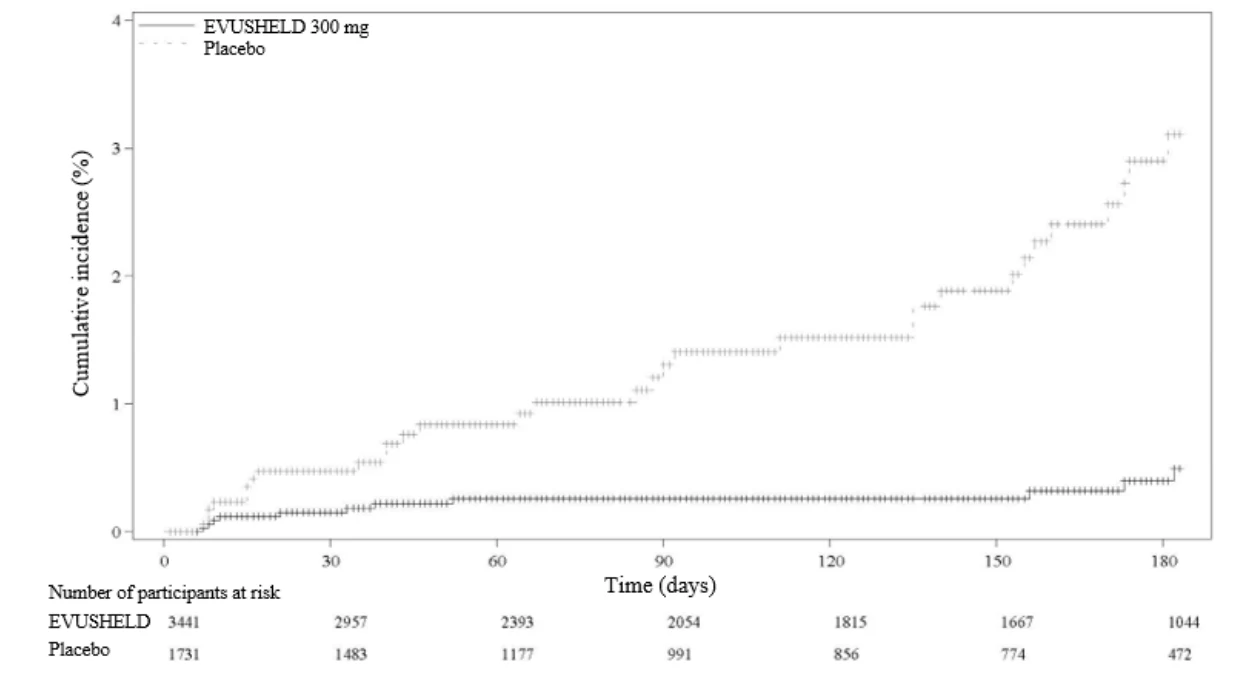
The predominant SARS-CoV-2 variants in circulation for the time period represented in Figure 1 were Alpha, Beta, Gamma, Epsilon and Delta. Based on the incidence of primary endpoint events, the duration of efficacy was 6 months.
Treatment of mild to moderate COVID-19
Study Design and Demographics
Table 5 – Summary of patient demographics: TACKLE for treatment of mild to moderate COVID-19
| Study # | Study design | Dosage, route of administration and duration | Study subjects (n) | Mean age (Range) | Sex |
D8851C00001 (TACKLE) | Phase III, randomized (1:1), double-blind, placebo-controlled, multicentre study assessing EVUSHELD for the treatment of adult patients with mild to moderate COVID-19 | Single dose (administered as two separate, sequential intramuscular injections) of EVUSHELD 600 mg (300 mg of tixagevimab and 300 mg of cilgavimab administered separately) or saline placebo | Modified Full Analysis Set: EVUSHELD: 413 Placebo: 421 | 46 (18-86) | Male: 50% Female: 50% |
TACKLE
TACKLE was a Phase III, randomized (1:1), double-blind, placebo-controlled, multicentre study assessing EVUSHELD for the treatment of adult patients with mild to moderate COVID-19.
The study enrolled individuals who had not received COVID-19 vaccination, were not hospitalized for COVID-19 treatment, and had at least 1 or more COVID-19 symptom that was at least mild in severity. The majority of participants (84%) were seronegative at baseline, and 90% were considered at higher risk of progressing to severe COVID-19, defined as either individuals aged 65 years and older at randomization or individuals aged <65 years and having at least one medical condition or other factor that placed them at higher risk for progression to severe COVID-19. High risk co-morbidities included: obesity (BMI ≥30) (43%), smoking (current or former) (40%), hypertension (28%), chronic lung disease or moderate to severe asthma (12%), diabetes (12%), cardiovascular disease (including history of stroke) (9%), immunocompromised state (from solid organ transplant, blood or bone marrow transplant, immune deficiencies, HIV, use of corticosteroids, or use of other immunosuppressive medicines) (5%), cancer (4%), chronic kidney disease (2%), chronic liver disease (2%), sickle cell disease (0%). At baseline, 88% of patients had a WHO Clinical Progression Scale score of 2 and 12% had a score of 3. The median duration of symptoms prior to treatment was 5 days.
Demographics and disease characteristics were well balanced across the treatment and placebo groups. At baseline, 13% of subjects were aged 65 years or older, 50% of the subjects were female, 62% were White, 5.6% were Asian, 4.0% were Black and 52% were Hispanic/Latino.
Treatment was initiated within 3 days of obtaining the sample for a positive SARS-CoV-2 viral infection and within ≤7 days of COVID-19 symptom onset. Patients received standard of care treatment and a single dose of either EVUSHELD 600 mg (N=413) or placebo (N=421).
Participants were stratified by time from symptom onset (≤5 days versus >5 days) and risk of progression to severe COVID-19 (high risk versus low risk).
Study Results
TACKLE
The primary efficacy endpoint was a composite of either severe COVID-19 or death from any cause by Day 29, in subjects who received treatment within 7 days from symptom onset and were not hospitalized at baseline. Severe COVID-19 was defined as characterized by either pneumonia or hypoxemia (SpO2 <90% and/or severe respiratory distress) and a WHO Clinical Progression Scale score of 5 or higher.
The results of the primary endpoint are shown in Table 6 and demonstrate a statistically significant reduction in severe COVID-19 or death from any cause compared to placebo. The results of the primary composite endpoint were driven by the incidence of severe COVID-19. Up to Day 29, 7 deaths had been reported, 3 in the EVUSHELD arm and 4 in the placebo arm. Of the 7 deaths, 2 were not COVID-19 related. Both of these were in the EVUSHELD arm and contributed to the primary composite endpoint.
Table 6 – Incidence of Severe COVID-19 or death from any cause (Modified Full Analysis Set)
| N | Number of eventsa, n (%) | Relative Risk Reduction, % (95% CI) | |
|---|---|---|---|
| EVUSHELD 600 mgb | 407 | 18 (4.4%) | 50% (15 - 71) p-value = 0.010 |
| Placebo | 415 | 37 (8.9%) | |
CI = Confidence Interval, N = number of participants in analysis.
a Primary endpoint, severe COVID-19 or death from any cause through Day 29.
b 600 mg (300 mg tixagevimab and 300 mg cilgavimab).
The relative risk reduction in the incidence of severe COVID-19 or death from any cause was 67% (95% CI of 31, 84) in non-hospitalised patients dosed within 5 days of symptom onset.
Viral load was measured as the change from baseline for SARS-CoV-2 RNA (Log10 copies/mL) from nasal swabs specimens through Day 29. Treatment with EVUSHELD in comparison with placebo resulted in reductions in viral load at Day 3 (LS mean difference -0.28 [95% CI: -0.64, 0.09]) and Day 6 (LS mean difference -0.48 [95% CI: -0.76, -0.20]).
14.4 Immunogenicity
In PROVENT, following a single 300 mg EVUSHELD dose, treatment-emergent anti-tixagevimab, anti-cilgavimab and anti-EVUSHELD antibodies were detected in 7.6% (234/3085), 11.3% (341/3024), and 13.1% (403/3086) of anti-drug antibody (ADA)-evaluable participants, respectively. In the PROVENT repeat dose sub-study, participants received a second dose of 300 mg EVUSHELD 10 to 14 months after administration of the initial dose. Up to Day 29 post-administration of the second dose, treatment-emergent anti-tixagevimab, anti-cilgavimab and anti-EVUSHELD antibodies were detected in 0% (0/49), 10.2% (5/49) and 10.2% (5/49) of ADA-evaluable participants, respectively.
No evidence of an association of ADA with any impact on efficacy or safety has been observed.
In TACKLE, following a single 600 mg EVUSHELD dose, treatment-emergent anti-tixagevimab, anti-cilgavimab and anti-EVUSHELD antibodies were detected in 7.3% (27/372), 12.7% (46/363), and 14.5% (54/373) of ADA-evaluable participants, respectively.
15 MICROBIOLOGY
Viral variants are a potential risk for treatment failure of monoclonal antibodies used for the prevention or treatment of coronavirus disease 2019 (COVID-19) caused by the severe acute respiratory syndrome coronavirus 2 (SARS-CoV-2). The marketing authorization for this product is based on the review of clinical or neutralization data supporting efficacy against the variants of concern listed in Table 7. In the absence of data against other variants, the efficacy of the product for these other variants cannot be confirmed.
Antiviral activity
In a SARS-CoV-2 virus neutralization assay on Vero E6 cells, tixagevimab, cilgavimab and their combination neutralized SARS-CoV-2 (USA-WA1/2020 isolate) with EC50 values of 60.7 pM (9 ng/mL), 211.5 pM (32 ng/mL) and 65.9 pM (10 ng/mL), respectively.
Tixagevimab, cilgavimab and the tixagevimab and cilgavimab combination showed reduced or no antibody-dependent cellular phagocytosis (ADCP) antibody-dependent cell-mediated cytotoxicity (ADCC) or antibody-dependent natural killer cell activation (ADNKA) in cell culture studies. Tixagevimab, cilgavimab and the tixagevimab and cilgavimab combination did not mediate ADCD activity with guinea pig complement proteins.
Antibody dependent enhancement (ADE) of infection
The potential of tixagevimab and cilgavimab to mediate antibody-dependent viral entry was assessed in FcγRII-expressing Raji cells co-incubated with recombinant virus pseudotyped with SARS-CoV-2 spike protein, with antibody concentrations at a range of 6.6 nM (1 µg/mL) to 824 pM (125 ng/mL). Tixagevimab, cilgavimab and their combination did not mediate entry of pseudovirus into these cells.
The potential for ADE was also evaluated in a non-human primate model of SARS-CoV-2 using EVUSHELD. Intravascular administration prior to virus inoculation resulted in a dose-dependent improvement in all measured outcomes (total viral RNA in the lungs or nasal mucosae, infectious virus levels in the lungs based on TCID50 measurements, and lung injury and pathology based on histology measurements). No evidence of enhancement of disease was observed at any dose evaluated, including sub-neutralizing doses down to 0.04 mg/kg.
Antiviral resistance
There is a risk of resistance to monoclonal antibodies such as EVUSHELD due to the development of viral variants that are resistant to tixagevimab and cilgavimab. Prescribing healthcare professionals should consider the prevalence of SARS-CoV-2 variants in their area, in combination with antiviral resistance information, literature, and local guidelines when considering pre-exposure prophylaxis with EVUSHELD.
SARS-CoV-2 or recombinant vesicular stomatitis virus encoding SARS-CoV-2 spike protein were serially passaged in cell cultures in the presence of cilgavimab or tixagevimab individually, or tixagevimab and cilgavimab in combination. Escape variants were identified following passage with cilgavimab, but not with tixagevimab or tixagevimab and cilgavimab in combination. Variants which showed reduced susceptibility to cilgavimab alone included spike protein amino acid substitutions R346I (>200-fold), K444E (>200-fold), and K444R (>200-fold). All variants maintained susceptibility to tixagevimab alone, and tixagevimab and cilgavimab in combination.
Evaluation of neutralization susceptibility of variants identified through global surveillance and in participants who received tixagevimab and cilgavimab is ongoing.
In neutralization assays using recombinant SARS-CoV-2 pseudoviruses harbouring individual spike substitutions identified in circulating SARS-CoV-2, variants with reduced susceptibility to tixagevimab alone included those with F486S (>600-fold) and F486V (121- to 149-fold); variants with reduced susceptibility to cilgavimab alone included those with R346I (>200-fold), K444E (>200-fold), K444Q (>200-fold), K444R (>200-fold), and V445A (21- to 51-fold).
Pseudovirus SARS-CoV-2 spike variant strains with moderate reduced susceptibility to tixagevimab alone included those harbouring E484K (Alpha, 18.5-fold; Beta, 3.5- to 15-fold) and variants with moderate reduced susceptibility to cilgavimab alone included those with R346K:E484K:N501Y (Mu, 21-fold), as indicated above. Similar results were observed, where data was available, in neutralization assays using authentic SARS-CoV-2 variants strains.
Neutralization activity of EVUSHELD against pseudovirus and/or live virus SARS-CoV-2 variant strains are shown in Table 7. Data collection is ongoing to better understand how small reductions in activity seen in authentic SARS-CoV-2 or pseudotyped VLP assays may correlate with clinical outcomes.
Table 7 – Pseudovirus and Authentic SARS-CoV-2 Neutralization Data for SARS-CoV-2 Variant Substitutions with Tixagevimab and Cilgavimab Together
| Lineage with Spike Protein Substitutions | Characteristic RBD Substitutions Tested | Fold Reduction in Susceptibilitya | IC50 (ng/mL) | |||||||||||||||||
|---|---|---|---|---|---|---|---|---|---|---|---|---|---|---|---|---|---|---|---|---|
| Pango Lineage | WHO Label | Pseudo virusb | Authentic SARS-CoV-2c | Pseudo virusb | Authentic SARS-CoV-2c | |||||||||||||||
| Variants of Concern | ||||||||||||||||||||
| B.1.1.7 | Alpha | N501Y | 1.0-5.2 | 0.5-1.4 | 1.1-9.0 | 4-39.5 | ||||||||||||||
| B.1.351 | Beta | K417N:E484K: N501Y | 2.5-5.5 | 0.9-3.8 | 5.6-11.4 | 6.5-256 | ||||||||||||||
| P.1 | Gamma | K417T:E484K: N501Y | 0.8-1.7 | 0.4-2.0 | 1.8-2.7 | 3.2-8 | ||||||||||||||
| B.1.617.2 | Delta | L452R:T478K | 1.0-1.2 | 0.6-1.0 | 1.9-2.2 | 3-7.5 | ||||||||||||||
| AY.1/AY.2 | Delta [+K417N] | K417N:L452R: T478K | 1.0 | ND | 1.9 | ND | ||||||||||||||
| B.1.1.529 | Omicron BA.1 | A67V, H69-, V70-, T95I, G142D, V143-, Y144-, Y145-, N211-, L212I, ins214EPE, G339D, S371L, S373P, S375F, K417N, N440K, G446S, S477N, | 132- to 183-fold | 12- to 30-fold | 51-277 | 147–278 | ||||||||||||||
| Lineage with Spike Protein Substitutions | Characteristic RBD Substitutions Tested | Fold Reduction in Susceptibilitya | IC50 (ng/mL) | |||||||||||||||||
|---|---|---|---|---|---|---|---|---|---|---|---|---|---|---|---|---|---|---|---|---|
| Pango Lineage | WHO Label | Pseudo virusb | Authentic SARS-CoV-2c | Pseudo virusb | Authentic SARS-CoV-2c | |||||||||||||||
| T478K, E484A, Q493R, G496S, Q498R, N501Y, Y505H, T547K, D614G, H655Y, N679K, P681H, N764K, D796Y, N856K, Q954H, N969K, L981F. | ||||||||||||||||||||
| BA.1.1 | Omicron BA.1.1 | G339D:R346K: S371L:S373P: S375F:K417N: N440K:G446S: S477N:T478K: E484A:Q493R: G496S:Q489R: N501Y:Y505H | 424-fold | 176-fold | 466 | 1147 | ||||||||||||||
| BA.2 | Omicron BA.2 | G339D:S371F: S373P:S375F: T376A:D405N: R408S:K417N: N440K:S477N: T478K:E484A: Q493R:Q498R: N501Y:Y505H: | 3.2 | 5.4 | 9.8 | 35 | ||||||||||||||
| BA.2.12.1 | Omicron BA.2.12. 1 | G339D:S371F:S373P: S375F:T376A:D405N: R408S:K417N:N440K: L452Q:S477N:T478K: E484A:Q493R:Q498R :N501Y:Y505H | 5-fold | ND | 10.7 | ND | ||||||||||||||
| BA.2.75 | Omicron BA.2.75 | G339H:S371F:S373P: S375F:T376A:D405N: R408S:K417N:N440K: G446S:N460K:S477N: T478K:E484A:Q498R: N501Y:Y505H | 2.4- to 15-fold | ND | 1.2-14 | ND | ||||||||||||||
| BA.2.75.2 | Omicron BA.2.75.2 | BA.2.75+ R346T:F486S | >5000-foldd | ND | >10000d | ND | ||||||||||||||
| BA.3 | Omicron BA.3 | G339D: S371F:S373P: S375F:D405N:K417N: N440K:G446S:S477N: T478K:E484A:Q493R: Q498R:N501Y:Y505H | 16-fold | ND | 34.5 | ND | ||||||||||||||
| BA.4 | Omicron BA.4 | G339D:S371F:S373P: S375F:T376A:D405N: | 33- to 65-fold | ND | 65-69.4 | ND | ||||||||||||||
| Lineage with Spike Protein Substitutions | Characteristic RBD Substitutions Tested | Fold Reduction in Susceptibilitya | IC50 (ng/mL) | ||||||||||||
|---|---|---|---|---|---|---|---|---|---|---|---|---|---|---|---|
| Pango Lineage | WHO Label | Pseudo virusb | Authentic SARS-CoV-2c | Pseudo virusb | Authentic SARS-CoV-2c | ||||||||||
| R408S:K417N:N440K: L452R:S477N:T478K: E484A:F486V:Q498R: N501Y:Y505H | |||||||||||||||
| BA.4.6 | Omicron BA.4.6 | G339D:R346T:S371F: S373P:S375F:T376A: D405N:R408S:K417N: N440K:L452R:S477N: T478K:E484A:F486V: Q498R:N501Y:Y505H | >1000-foldd | ND | >1000d | ND | |||||||||
| BA.5 | Omicron BA.5 | G339D:S371F:S373P: S375F:T376A:D405N: R408S:K417N:N440K: L452R:S477N:T478K: E484A:F486V:Q498R: N501Y:Y505H | 33- to 65-fold | 2.8- to 16-fold | 65-69.4 | 56.6-229 | |||||||||
| BF.7 | Omicron BF.7 | BA.4+ R346T | >5000-foldd | ND | >10000d | ND | |||||||||
| BJ.1 | Omicron BJ.1 | G339H:R346T:L368I: S371F:S373P:S375F: T376A:D405N:R408S: K417N:N440K:V445P: G446S:S477N:T478K: V483A:E484A:F490V: Q493R:Q498R:N501Y: Y505H | 228 to 424-fold | ND | 228-848 | ND | |||||||||
| BN.1 | Omicron BN.1 | G339D:R346T:K356T: S371F:S373P:S375F: D405N:R408S:K417N: N440K:G446S:N460K: S477N:T478K:E484A: F490S:Q493R:Q498R: Y505H | 68-fold | ND | 61-68 | ND | |||||||||
| BQ.1 | Omicron BQ.1 | BA.5+ K444T:N460K | >2000-foldd | ND | >10000d | ND | |||||||||
| BQ.1.1 | Omicron BQ.1.1 | BA.5+ R346T:K444T:N460K | >2000-foldd | ND | >10000d | ND | |||||||||
| XBB | Omicron XBB | G339H:R346T:L368I: S371F: S373P:S375F: T376A:D405N:R408S: K417N:N440K:V445P: G446S:N460K:S477N: T478K:E484A:F486S: F490S:Q498R:N501Y: Y505H | >1400-foldd | ND | >1600d | ND | |||||||||
| Lineage with Spike Protein Substitutions | Characteristic RBD Substitutions Tested | Fold Reduction in Susceptibilitya | IC50 (ng/mL) | |||||||||||||||||||
|---|---|---|---|---|---|---|---|---|---|---|---|---|---|---|---|---|---|---|---|---|---|---|
| Pango Lineage | WHO Label | Pseudo virusb | Authentic SARS-CoV-2c | Pseudo virusb | Authentic SARS-CoV-2c | |||||||||||||||||
| XBB.1.5 | Omicron XBB.1.5 | G339H+R346T+ L368I+S371F+S373+ S375F+T376A+ D405N+R408S+ K417N+N440K+ V445P+G446S+ N460K+S477N+ T478K+E484A+ F486P+F490S+ Q498R+N501Y +Y505H | >5000 foldd | ND | >10000d | ND | ||||||||||||||||
| Variants of Interest | ||||||||||||||||||||||
| B.1.525 | Eta | E484K | 1.8-3.1 | ND | 5-9.5 | ND | ||||||||||||||||
| B.1.526 | Iota | E484K | 0.8-3.4 | 0.3-1.8 | 1.9-5.2 | 1.0-7.0 | ||||||||||||||||
| B.1.617.1 | Kappa | L452R:E484Q | 0.9-3.4 | 0.5-1.3 | 2.5-5.1 | 2.0-5.0 | ||||||||||||||||
| C.37 | Lambda | L452Q:F490S | 0.7 | ND | 1.1 | ND | ||||||||||||||||
| B.1.621 | Mu | R346K:E484K: N501Y | 7.5 | ND | 17.3 | ND | ||||||||||||||||
| B.1.427 / B.1.429 | Epsilon | L452R | 0.8-2.9 | 1.3-3.5 | 1.0-4.5 | 5.0-14.0 | ||||||||||||||||
| P.2 | Zeta | E484K | 2.9 | ND | 10.4 | ND | ||||||||||||||||
| Additional SARS-CoV-2 Variants | ||||||||||||||||||||||
| R.1 | - | E484K | 3.5 | ND | 4.6 | ND | ||||||||||||||||
| B.1.1.519 | - | T478K | 1.0-1.4 | ND | 2.3 | ND | ||||||||||||||||
| C.36.3 | - | R346S:L452R | 2.3 | ND | 3.9 | ND | ||||||||||||||||
| B.1.214.2 | - | Q414K:N450K | 0.8 | ND | 1.6 | ND | ||||||||||||||||
| B.1.619.1 | - | N440K:E484K | 3.3 | ND | 7.6 | ND | ||||||||||||||||
| B.1.616 | - | V483A | 0.4-0.5 | ND | 1.1-1.2 | ND | ||||||||||||||||
| A.23.1 | - | V367F | 0.4 | ND | 0.5 | ND | ||||||||||||||||
| A.27 | - | L452R:N501Y | 0.8 | ND | 1.8 | ND | ||||||||||||||||
| AV.1 | - | N439K:E484K | 5.9 | ND | 13.0 | ND | ||||||||||||||||
- a Range of reduced in vitro potency across multiple sets of co-occurring substitutions and/or testing labs using research-grade assays; mean fold change in half maximal inhibitory concentration (IC50) of monoclonal antibody required for a 50% reduction in infection compared to wild type reference strain.
- b Pseudoviruses expressing the entire SARS-CoV-2 spike variant protein and individual characteristic spike substitutions except L452Q were tested including Alpha (+L455F, E484K, F490S, Q493R, and/or S494P),and Delta (+K417N) harbouring additional indicated RBD substitutions that are no longer detected or detected at extremely low levels within these lineages.
- c Authentic SARS-CoV-2 expressing the entire variant spike protein were tested including Alpha (+E484K or S494P) harbouring additional indicated RBD substitutions that are no longer detected or detected at extremely low levels within these lineages.
- d Tixagevimab and cilgavimab together are unlikely to be active against this variant.
ND, not determined; RBD, receptor binding domain.
It is not known how pseudovirus or authentic SARS-CoV-2 neutralization susceptibility data correlate with clinical outcome.
16 NON-CLINICAL TOXICOLOGY
General Toxicology: In a single-dose toxicology study in cynomolgus monkeys, EVUSHELD administered via an intramuscular injection of 150 mg/kg (75 mg/kg of each antibody) had no adverse effects.
In tissue cross-reactivity studies using human adult and fetal tissues no specific binding was detected.
Carcinogenicity: studies have not been conducted.
Genotoxicity: studies have not been conducted.
Reproductive and Developmental Toxicology: studies have not been conducted.