


Product Monograph - Ertapenem for Injection (Mantra Pharma)
1 INDICATIONS
Treatment
Ertapenem for Injection (ertapenem sodium) is indicated for the treatment of patients with the following moderate to severe infections caused by susceptible strains of the designated microorganisms (see DOSAGE AND ADMINISTRATION).
Complicated intra-abdominal infections due to Escherichia coli, Clostridium clostridioforme, Eubacterium lentum, Peptostreptococcus species, Bacteroides fragilis, Bacteroides distasonis, Bacteroides ovatus, Bacteroides uniformis, or Bacteroides thetaiotaomicron.
Complicated skin and skin-structure infections due to Staphylococcus aureus (methicillin-susceptible strain only), Streptococcus pyogenes, Escherichia coli and Peptostreptococcus species, as well as diabetic foot infections due to Staphylococcus aureus (methicillin-susceptible strain only) and Peptostreptococcus species. Ertapenem for injection has not been studied in diabetic foot infections with concomitant osteomyelitis or severe ischemia (see CLINICAL TRIALS).
Community-acquired pneumonia due to Streptococcus pneumoniae (penicillin-susceptible strain only), Haemophilus influenzae (β-lactamase negative strain only), or Moraxella catarrhalis.
Complicated urinary tract infections including pyelonephritis due to Escherichia coli, Klebsiella pneumoniae or Proteus mirabilis.
Acute pelvic infections including postpartum endomyometritis, septic abortion and post-surgical gynecologic infections due to Streptococcus agalactiae, Escherichia coli, Peptostreptococcus species, Bacteroides fragilis, Porphyromonas asaccharolytica, or Prevotella species.
To reduce the development of drug-resistant bacteria and maintain the effectiveness of Ertapenem for Injection and other antibacterial drugs, Ertapenem for Injection should be used only to treat infections that are proven or strongly suspected to be caused by susceptible bacteria. When culture and susceptibility information are available, they should be considered in selecting or modifying antibacterial therapy. In the absence of such data, local epidemiology and susceptibility patterns may contribute to the empiric selection of therapy.
Appropriate specimens for bacteriological examination should be obtained in order to isolate and identify the causative organisms and to determine their susceptibility to ertapenem. Initial therapy with Ertapenem for Injection may be instituted empirically for the treatment of bacterial infections, including mixed infections, while awaiting the results of these tests. Once these results become available, antimicrobial therapy should be adjusted accordingly.
Prevention
Ertapenem for Injection is indicated in adults for the prophylaxis of surgical site infection following elective colorectal surgery.
1.1 Pediatrics
Safety and effectiveness of ertapenem for injection in pediatric patients 3 months to 17 years of age are supported by evidence from adequate and well-controlled studies in adults, pharmacokinetic data in pediatric patients, and additional data from comparator-controlled studies in pediatric patients 3 months to 17 years of age with the following infections (see WARNINGS AND CLINICAL TRIALS, Pediatric Patients).
- Complicated Intra-Abdominal Infections
- Complicated Skin and Skin Structure Infections
- Community Acquired Pneumonia
- Complicated Urinary Tract Infections
- Acute Pelvic Infections
Ertapenem for Injection is not recommended in infants under 3 months of age as no data are available. Ertapenem for Injection is not recommended in the treatment of meningitis in the pediatric population due to lack of sufficient CSF penetration.
1.2 Geriatrics
In clinical studies, the efficacy and safety of ertapenem for injection in the elderly (≥ 65 years) was comparable to that seen in younger patients (< 65 years).
This drug is known to be substantially excreted by the kidney, and the risk of toxic reactions to this drug may be greater in patients with impaired renal function. Because elderly patients are more likely to have decreased renal function, care should be taken in dose selection, and it may be useful to monitor renal function (see WARNINGS and DOSAGE AND ADMINISTRATION).
2 CONTRAINDICATIONS
Ertapenem for Injection (ertapenem sodium) is contraindicated in patients who are hypersensitive to this drug or to any ingredient in the formulation, including any non-medicinal ingredient, or component of the container or to other drugs in the same class or in patients who have demonstrated anaphylactic reactions to beta-lactams. For a complete listing of components, see the Dosage Forms, Strengths, Composition and Packaging section of the Product Monograph.
Due to the use of lidocaine HCl as a diluent, Ertapenem for Injection administered intramuscularly is contraindicated in patients with a known hypersensitivity to local anesthetics of the amide type and in patients with severe shock or heart block (refer to the Product
Monograph for lidocaine HCl).
3 SERIOUS WARNINGS AND PRECAUTIONS BOX
Serious Warnings and Precautions
SERIOUS AND OCCASIONALLY FATAL HYPERSENSITIVITY (ANAPHYLACTIC) AND OTHER SERIOUS SKIN REACTIONS HAVE BEEN REPORTED IN PATIENTS RECEIVING THERAPY WITH BETA-LACTAMS, INCLUDING ertapenem for injection (see WARNINGS AND PRECAUTIONS, Hypersensitivity and ADVERSE REACTIONS, Post-Market Adverse Drug Reactions). Seizures and other CNS (Central Nervous System) adverse experiences have been reported during treatment with ertapenem for injection. These experiences have occurred most commonly in patients with CNS disorders (e.g., brain lesions or history of seizures) and/or compromised renal function (see WARNINGS AND PRECAUTIONS, Neurologic, Renal and ADVERSE REACTIONS). Case reports in the literature have shown that co-administration of carbapenems, including ertapenem, to patients receiving valproic acid or divalproex sodium results in a reduction in serum valproic acid concentrations. The valproic acid concentrations may drop below the therapeutic range as a result of this interaction, therefore increasing the risk of breakthrough seizures. In some cases of co-administration of ertapenem with valproic acid, breakthrough seizures have occurred. Increasing the dose of valproic acid or divalproex sodium may not be sufficient to overcome this interaction. The concomitant use of ertapenem and valproic acid/divalproex sodium is generally not recommended. Anti-bacterials other than carbapenems should be considered to treat infections in patients whose seizures are well controlled on valproic acid or divalproex sodium. If administration of Ertapenem for Injection is necessary, supplemental anti-convulsant therapy should be considered (see DRUG INTERACTIONS). |
|---|
4 DOSAGE AND ADMINISTRATION
4.1 Dosing Considerations
Not applicable
4.2 Recommended Dose and Dosage Adjustment
The recommended dose of Ertapenem for Injection (ertapenem sodium) in patients 13 years of age and older is 1 gram (g) given once a day.
The recommended dose of Ertapenem for Injection in patients 3 months to 12 years of age is 15 mg/kg twice daily (not to exceed 1 g/day).
Table 1 presents treatment guidelines for Ertapenem for Injection.
Table 1: Daily Treatment Guidelines for Adult and Pediatric Patients with Normal Renal Function*
Special Populations
Patients with Renal Insufficiency
Ertapenem for Injection may be used for the treatment of infections in adult patients with renal insufficiency. In patients whose creatinine clearance is > 30 mL/min/1.73 m2 (SI = > 0.5 mL/s/1.73 m2), no dosage adjustment is necessary. Adult patients with advanced renal insufficiency (creatinine clearance ≤ 30 mL/min/1.73 m2 (SI = ≤ 0.5 mL/s/1.73 m2)), and end-stage renal insufficiency on hemodialysis (creatinine clearance ≤ 10 mL/min/1.73 m2 (SI = ≤ 0.17 mL/s /1.73 m2)) should receive 500 mg daily. There are no data in pediatric patients with renal insufficiency. This recommended dosage reduction is based on pharmacokinetic
| Infection† | Patients 13 years of age and older | Patients 3 months to 12 years of age | Recommended Duration of Total Antimicrobial Treatment |
|---|---|---|---|
| Complicated Intra-abdominal Infections | 1 g daily | 15 mg/kg/dose to a maximum of 500 mg twice daily§ | 5 to 14 days |
| Complicated Skin and Skin-Structure Infections | 1 g daily | 15 mg/kg/dose to a maximum of 500 mg twice daily§ | 7 to 14 days |
| Diabetic foot infections | 1 g daily (patients ≥ 18 years old only) | not applicable | 5 to 28 days‡ |
| Community-Acquired Pneumonia | 1 g daily | 15 mg/kg/dose to a maximum of 500 mg twice daily§ | 10 to 14 days‡ |
| Complicated Urinary Tract Infections including pyelonephritis | 1 g daily | 15 mg/kg/dose to a maximum of 500 mg twice daily§ | 10 to 14 days‡ |
| Acute Pelvic Infections including postpartum endomyometritis, septic abortion and post-surgical gynecologic infections | 1 g daily | 15 mg/kg/dose to a maximum of 500 mg twice daily§ | 3 to 10 days |
* Defined as creatinine clearance > 90 mL/min/1.73 m2. † Due to the designated pathogens (see INDICATIONS). ‡ Duration includes a possible switch to an appropriate oral therapy once clinical improvement has been demonstrated. § Not to exceed 1 g/day. | |||
modeling of data collected from a clinical safety and pharmacokinetic study in adult patients with varying degrees of renal insufficiency (including those with creatinine clearance < 30 mL/min/1.73 m2 (SI = < 0.5 mL/s/1.73 m2)) receiving a single 1 g intravenous dose of ertapenem (see ACTION AND CLINICAL PHARMACOLOGY, Renal Insufficiency). The efficacy of the recommended adjusted dose (500 mg) for adult patients with advanced or end-stage renal insufficiency has not been established.
Patients on Hemodialysis
When adult patients on hemodialysis are given the recommended daily dose of 500 mg of Ertapenem for Injection within 6 hours prior to hemodialysis, a supplementary dose of 150 mg is recommended following the hemodialysis session. If Ertapenem for Injection is given at least 6 hours prior to hemodialysis, no supplementary dose is recommended. There are no data in patients undergoing peritoneal dialysis or hemofiltration. There are no data in pediatric patients on hemodialysis.
When only the serum creatinine is available, the following formula** may be used to estimate creatinine clearance (mL/min). The serum creatinine should represent a steady state of renal function.
Males : (weight in kg) x (140-age in years) (72)x serum creatine (mg/100 mL)
Females: (0.85) x (value calculated for males)
When using the International System of units (SI), the estimated creatinine clearance (mL/s) can be calculated as follows:
Males : (weight in kg) x (140-age in years) x 1.4736 (72) x serum creatine (mcmol/L)
Females: (0.85) x (value calculated for males)
Patients with Hepatic Impairment
No dosage adjustment recommendation can be made in patients with impaired hepatic function (see ACTION AND CLINICAL PHARMACOLOGY, Special Population and WARNINGS AND PRECAUTIONS, Hepatic Insufficiency).
Age/Gender
No dosage adjustment is recommended based on age (13 years of age and older) or gender. Dosing adjustment is needed based on age 3 months to 12 years of age (ACTION AND CLINICAL PHARMACOLOGY, Special Population and WARNINGS AND PRECAUTIONS, Pediatrics).
** Cockcroft and Gault equation: Cockcroft DW, Gault MH. Prediction of creatinine clearance from serum creatinine. Nephron. 1976.
Prevention
Table 2 presents prophylaxis guidelines for Ertapenem for Injection.
Table 2: Prophylaxis Guidelines for Adults
| Indication | Daily Dose (IV) Adults | Recommended Duration of Total Antimicrobial Treatment |
|---|---|---|
| Prophylaxis of surgical site infection following elective colorectal surgery* | 1 g | Single intravenous dose given 1 hour prior to the surgical incision |
| *Limited data are available in patients with advanced renal insufficiency (creatinine clearance ≤ 30 mL/min/1.73 m2 [SI = ≤ 0.5 mL/s/1.73 m2]) (see ADVERSE REACTIONS, Prevention, Patients with Renal Insufficiency). | ||
4.3 Administration
Ertapenem for Injection may be administered by intravenous infusion or intramuscular injection. When administered intravenously, Ertapenem for Injection should be infused over a period of 30 minutes.
Intramuscular administration of Ertapenem for Injection may be used as an alternative to intravenous administration in the treatment of those infections for which intramuscular therapy is appropriate.
4.4 Reconstitution
Patients 13 years of age and older
Preparation for Intravenous Administration:
DO NOT MIX OR CO-INFUSE ERTAPENEM FOR INJECTION WITH OTHER MEDICATIONS. DO NOT USE DILUENTS CONTAINING DEXTROSE (α D-GLUCOSE).
ERTAPENEM FOR INJECTION MUST BE RECONSTITUTED AND THEN DILUTED PRIOR TO ADMINISTRATION.
- I. Reconstitute the contents of a 1 g vial of Ertapenem for Injection with 10 mL Water for Injection, 0.9% Sodium Chloride Injection or Bacteriostatic Water for Injection to yield a reconstituted solution of approximately 100 mg/mL. Shake well to dissolve.
- II. To withdraw a 1 gram dose, immediately withdraw 9.8 mL of the reconstituted vial and transfer to 50 mL of 0.9% Sodium Chloride Injection.
- III. The reconstituted IV solution should be used within 6 hours after preparation.
Preparation for Intramuscular Administration:
ERTAPENEM FOR INJECTION MUST BE RECONSTITUTED PRIOR TO ADMINISTRATION.
I. Reconstitute the contents of a 1 g vial of Ertapenem for Injection with 3.2 mL of 1.0%
- lidocaine HCl injection*** (without epinephrine) to yield a reconstituted solution of approximately 280 mg/mL. Shake vial thoroughly to form solution. To withdraw a 1 gram dose, the contents of the reconstituted vial should be withdrawn as completely as possible.
- II. Immediately withdraw the contents of the vial and administer by deep intramuscular injection into a large muscle mass (such as the gluteal muscles or lateral part of the thigh).
III. The reconstituted IM solution should be used within 1 hour after preparation.
Note: The reconstituted solution should not be administered intravenously.
Pediatric patients 3 months to 12 years of age
Preparation for Intravenous Administration:
DO NOT MIX OR CO-INFUSE ERTAPENEM FOR INJECTION WITH OTHER MEDICATIONS. DO NOT USE DILUENTS CONTAINING DEXTROSE (α D-GLUCOSE).
ERTAPENEM FOR INJECTION MUST BE RECONSTITUTED AND THEN DILUTED PRIOR TO ADMINISTRATION.
- I. Reconstitute the contents of a 1 g vial of Ertapenem for Injection with 10 mL Water for Injection, 0.9% Sodium Chloride Injection or Bacteriostatic Water for Injection to yield a reconstituted solution of approximately 100 mg/mL. Shake well to dissolve.
- II. Immediately withdraw a volume equal to 15 mg/kg of body weight (not to exceed 500 mg per dose) and dilute in 0.9% Sodium Chloride Injection to a final concentration of 20 mg/mL or less (not to exceed 1 g/day).
- III. The reconstituted IV solution should be used within 6 hours after preparation. Discard unused portion of the vial.
Preparation for Intramuscular Administration:
ERTAPENEM FOR INJECTION MUST BE RECONSTITUTED PRIOR TO ADMINISTRATION.
- I. Reconstitute the contents of a 1 g vial of Ertapenem for Injection with 3.2 mL of 1.0% lidocaine HCl injection*** (without epinephrine) to yield a reconstituted solution of approximately 280 mg/mL. Shake vial thoroughly to form solution.
- II. Immediately withdraw a volume equal to 15 mg/kg of body weight (not to exceed 500 mg per dose and 1 g/day) and administer by deep intramuscular injection into a large muscle mass (such as the gluteal muscles or lateral part of the thigh).
III. The reconstituted IM solution should be used within 1 hour after preparation.
Note: The reconstituted solution should not be administered intravenously. Discard unused portion of the vial.
Parenteral drug products should be inspected visually for particulate matter and discoloration prior to use, whenever solution and container permit. As with all parenteral drug products, intravenous admixtures should be inspected visually for clarity, particulate matter, precipitate,
*** Refer to the prescribing information for lidocaine HCl.
discoloration and leakage prior to administration, whenever solution and container permit. Solutions showing haziness, particulate matter, precipitate, discoloration or leakage should not be used. Discard unused portion. Solutions of Ertapenem for Injection range from colorless to pale yellow. Variations of color within this range do not affect the potency of the product. The vials are for single use only. Unused portions should be discarded.
4.5 Missed Dose
The injection schedule will be set by the physician, who will monitor the response and condition to determine what treatment is needed.
5 OVERDOSAGE
| For management of a suspected drug overdose, contact your regional poison control centre. |
|---|
No specific information is available on the treatment of overdosage with ertapenem for injection (ertapenem sodium). Intentional overdosing of ertapenem for injection is unlikely. Intravenous administration of ertapenem for injection at a 3 g daily dose for 8 days to healthy adult volunteers did not result in significant toxicity. In clinical studies in adults, inadvertent administration of up to 3 g in a day did not result in clinically important adverse experiences. In pediatric clinical studies, a single IV dose of 40 mg/kg up to a maximum of 2 g did not result in toxicity.
In the event of an overdose, Ertapenem for Injection should be discontinued and general supportive treatment given until renal elimination takes place.
Ertapenem for Injection can be removed by hemodialysis; however, no information is available on the use of hemodialysis to treat overdosage.
6 DOSAGE FORMS, STRENGTHS, COMPOSITION AND PACKAGING
Table 3: Dosage Forms, Strengths, Composition and Packaging
| Route of Administration | Dosage Form / Strength / Composition | Non-medicinal Ingredients |
|---|---|---|
Intravenous Intramuscular | 1 g ertapenem/vial (as ertapenem sodium) | sodium bicarbonate and sodium hydroxide (This is a complete listing of nonmedicinal ingredients). |
Ertapenem for Injection (ertapenem sodium) is supplied as a sterile lyophilized white to yellowish powder in single dose glass vials containing 1 g of ertapenem as free acid for intravenous infusion or for intramuscular injection. Ertapenem for Injection is supplied in cartons of 10 vials.
Each vial of Ertapenem for Injection contains the following inactive ingredients: sodium bicarbonate and sodium hydroxide to adjust pH to 7.5. The sodium content is approximately 137 mg (approximately 6.0 mEq).
7 WARNINGS AND PRECAUTIONS
General
As with other antibiotics, prolonged use of ertapenem for injection may result in overgrowth of non-susceptible organisms. Repeated evaluation of the patient’s condition is essential. If superinfection occurs during therapy, appropriate measures should be taken.
Caution should be taken when administering Ertapenem for Injection intramuscularly to avoid inadvertent injection into a blood vessel (see DOSAGE AND ADMINISTRATION, Administration).
Lidocaine HCl is the diluent for intramuscular administration of Ertapenem for Injection. Refer to the Product Monograph for lidocaine HCl for additional precautions.
Gastrointestinal
Clostridium difficile-associated disease
Clostridium difficile-associated disease (CDAD) has been reported with use of many antibacterial agents, including ertapenem. CDAD may range in severity from mild diarrhea to fatal colitis. It is important to consider this diagnosis in patients who present with diarrhea, or symptoms of colitis, pseudomembranous colitis, toxic megacolon, or perforation of colon subsequent to the administration of any antibacterial agent. CDAD has been reported to occur over 2 months after the administration of antibacterial agents.
Treatment with antibacterial agents may alter the normal flora of the colon and may permit overgrowth of Clostridium difficile. Clostridium difficile produces toxins A and B, which contribute to the development of CDAD. CDAD may cause significant morbidity and mortality. CDAD can be refractory to antimicrobial therapy.
If the diagnosis of CDAD is suspected or confirmed, appropriate therapeutic measures should be initiated. Mild cases of CDAD usually respond to discontinuation of antibacterial agents not directed against Clostridium difficile. In moderate to severe cases, consideration should be given to management with fluids and electrolytes, protein supplementation, and treatment with an antibacterial agent clinically effective against Clostridium difficile. Surgical evaluation should be instituted as clinically indicated; as surgical intervention may be required in certain severe cases (see ADVERSE REACTIONS).
Hepatic/Biliary/Pancreatic
The pharmacokinetics of ertapenem in patients with hepatic insufficiency have not been established. Of the total number of patients in clinical studies, 37 patients receiving ertapenem
1 g daily and 36 patients receiving comparator drugs were considered to have Child-Pugh Class A, B or C liver impairment. The incidence of adverse experiences in patients with hepatic impairment was similar between the ertapenem group and the comparator groups.
Hypersensitivity
SERIOUS AND OCCASIONALLY FATAL HYPERSENSITIVITY (ANAPHYLACTIC) AND OTHER SERIOUS SKIN REACTIONS HAVE BEEN REPORTED IN PATIENTS RECEIVING BETA-LACTAM ANTIBIOTICS, INCLUDING ertapenem for injection. HYPERSENSITIVITY (ANAPHYLACTIC) REACTIONS ARE MORE LIKELY TO OCCUR IN INDIVIDUALS WITH A HISTORY OF SENSITIVITY TO MULTIPLE ALLERGENS. THERE HAVE BEEN REPORTS OF INDIVIDUALS WITH A HISTORY OF PENICILLIN HYPERSENSITIVITY WHO HAVE EXPERIENCED SEVERE HYPERSENSITIVITY REACTIONS WHEN TREATED WITH ANOTHER BETA-LACTAM. CROSS-REACTIVITIES BETWEEN BETA-LACTAM ANTIBIOTICS HAVE BEEN CLEARLY DOCUMENTED. BEFORE INITIATING THERAPY WITH Ertapenem for Injection (ERTAPENEM SODIUM), CAREFUL INQUIRY SHOULD BE MADE CONCERNING PREVIOUS HYPERSENSITIVITY REACTIONS TO PENICILLINS, CEPHALOSPORINS, OTHER BETA-LACTAMS AND OTHER ALLERGENS. IF AN ALLERGIC REACTION TO Ertapenem for Injection OCCURS, DISCONTINUE THE DRUG IMMEDIATELY. SERIOUS ANAPHYLACTIC REACTIONS REQUIRE IMMEDIATE EMERGENCY TREATMENT WITH EPINEPHRINE, OXYGEN, INTRAVENOUS STEROIDS, AND AIRWAY MANAGEMENT, INCLUDING INTUBATION. OTHER THERAPY MAY ALSO BE ADMINISTERED AS INDICATED (see CONTRAINDICATIONS and ADVERSE REACTIONS, Post-Market Adverse Drug Reactions).
Monitoring and Laboratory Tests
While ertapenem for injection possesses toxicity similar to the beta-lactam group of antibiotics, periodic assessment of organ system function, including renal, hepatic, and hematopoietic, is advisable during prolonged therapy.
Neurologic
During clinical investigations in adult patients treated with ertapenem for injection (1 g once a day), seizures, irrespective of drug relationship, occurred in 0.5% of patients during study therapy plus 14-day follow-up period (see ADVERSE REACTIONS). These experiences have occurred most commonly in patients with CNS disorders (e.g., brain lesions or history of seizures) and/or compromised renal function. Close adherence to the recommended dosage regimen is urged, especially in patients with known factors that predispose to convulsive activity. Anticonvulsant therapy should be continued in patients with known seizure disorders. If focal tremors, myoclonus, or seizures occur, patients should be evaluated neurologically, placed on anticonvulsant therapy if not already instituted, and the dosage of Ertapenem for Injection re-examined to determine whether it should be decreased or the antibiotic discontinued (see ADVERSE REACTIONS).
Renal
Dosage adjustment of Ertapenem for Injection is recommended in patients with reduced renal function (see DOSAGE AND ADMINISTRATION). A supplementary dose may be recommended in patients following hemodialysis (see DOSAGE AND ADMINISTRATION, Patients on
Hemodialysis).
Sensitivity/Resistance
Development of Drug Resistant Bacteria
Prescribing Ertapenem for Injection in the absence of a proven or strongly suspected bacterial infection is unlikely to provide benefit to the patient and risks the development of drug-resistant bacteria.
Skin
Severe Cutaneous Adverse Reactions
Severe cutaneous adverse reactions (SCAR) such as acute generalized exanthematous pustulosis (AGEP), drug reaction with eosinophilia and systemic symptoms (DRESS), Stevens-Johnson syndrome (SJS), and toxic epidermal necrolysis (TEN) have been reported in association with beta-lactam treatment. When SCAR is suspected, Ertapenem for Injection should be discontinued and appropriate therapy and/or measures should be taken.
7.1 Special Populations
7.1.1 Pregnant Women
There are no adequate and well-controlled studies in pregnant women. Ertapenem for Injection should be used during pregnancy only if the potential benefit justifies the potential risk to the mother and fetus.
7.1.2 Breast-feeding
Ertapenem is excreted in human milk. Ertapenem for Injection should be administered to nursing mothers only when the potential benefit outweighs the potential risk (see ACTION AND CLINICAL PHARMACOLOGY, Pharmacokinetics).
7.1.3 Pediatrics
Safety and effectiveness of ertapenem for injection in pediatric patients 3 months to 17 years of age are supported by evidence from adequate and well-controlled studies in adults, pharmacokinetic data in pediatric patients, and additional data from comparator-controlled studies in pediatric patients 3 months to 17 years of age with the following infections (see INDICATIONS and CLINICAL TRIALS, Pediatric Patients).
- Complicated Intra-Abdominal Infections
- Complicated Skin and Skin Structure Infections
- Community Acquired Pneumonia
- Complicated Urinary Tract Infections
- Acute Pelvic Infections
Ertapenem for injection is not recommended in infants under 3 months of age as no data are available. Ertapenem for Injection is not recommended in the treatment of meningitis in the pediatric population due to lack of sufficient CSF penetration.
7.1.4 Geriatrics
In clinical studies, the efficacy and safety of ertapenem for injection in the elderly (≥ 65 years) was comparable to that seen in younger patients (< 65 years).
This drug is known to be substantially excreted by the kidney, and the risk of toxic reactions to this drug may be greater in patients with impaired renal function. Because elderly patients are more likely to have decreased renal function, care should be taken in dose selection, and it may be useful to monitor renal function (see DOSAGE AND ADMINISTRATION).
8 ADVERSE REACTIONS
8.1 Adverse Reaction Overview
Adult Patients
The total number of patients treated with ertapenem in clinical studies was over 1900 of which over 1850 received a 1 g dose of ertapenem for injection (ertapenem sodium). Most adverse experiences reported in these clinical studies were described as mild to moderate in severity. Drug-related adverse experiences were reported in approximately 20% of patients treated with ertapenem. Ertapenem was discontinued due to adverse experiences thought to be drug-related in 1.3% of patients.
8.2 Clinical Trial Adverse Drug Reactions
Because clinical trials are conducted under very specific conditions the adverse reaction rates observed in the clinical trials may not reflect the rates observed in practice and should not be compared to the rates in the clinical trials of another drug. Adverse reaction information from clinical trials is useful for identifying drug-related adverse events and for approximating rates.
Adult Patients
Table 4 shows the incidence of drug-related adverse experiences reported during parenteral therapy.
Table 4: Incidence (%) of Drug-Related Adverse Experiences* Reported During Parenteral Therapy in ≥ 1.0% of Adult Patients Treated with ertapenem for injection in Clinical Studies
Adverse Events
| Ertapenem for injection 1 g daily (N=1866) | Piperacillin/ Tazobactam 3.375 g q6h (N=775) | Ceftriaxone 1 or 2 g daily (N=912) | |||
|---|---|---|---|---|---|
Gastrointestinal disorders: Diarrhea Nausea Vomiting | 4.3 2.9 1.0 | 6.6 3.2 1.5 | 3.7 2.6 0.9 | ||
General disorders and administration site conditions: Infused vein complication | 3.9 | 5.5 | 4.3 | ||
Nervous system disorders: Headache | 2.1 | 1.0 | 2.2 | ||
Vascular disorders: Phlebitis/thrombophlebitis | 1.3 | 1.3 | 1.4 | ||
| * Determined by the investigator to be possibly, probably, or definitely drug-related. | |||||
In clinical studies, seizure was reported during parenteral therapy in 0.2% of patients treated with ertapenem, 0.3% of patients treated with piperacillin/tazobactam and 0% of patients treated with ceftriaxone.
Prevention (prophylaxis of surgical site infection following elective colorectal surgery)
In a clinical study for the prophylaxis of surgical site infections following elective colorectal surgery in which 476 adult patients received a 1 g dose of ertapenem and 476 adult patients received a 2 g dose of cefotetan prior to surgery, the following additional (i.e., in addition to Adverse Experiences listed in Table 4) drug-related adverse experience was reported with an incidence of ≥ 1.0% (common): wound infection (1.7% for patients treated with ertapenem and 2.1% for patients treated with cefotetan).
Patients with Renal Insufficiency
There are limited data in adult patients with renal insufficiency from the study of prophylaxis of surgical site infection following elective colorectal surgery. In a clinical study in which 476 treated patients received a 1 g dose of ertapenem 1 hour prior to surgery, the AE profile observed in five patients with creatinine clearance ≤ 30 mL/min./1.73 m2 is consistent with their underlying renal condition and/or having just undergone major elective colorectal surgery.
8.3 Less Common Clinical Trial Adverse Reactions
Less Common Clinical Trial Adverse Drug Reactions (< 1%)
Table 5 lists the less common drug-related adverse experiences that were reported during parenteral therapy with ertapenem for injection within each body system.
Table 5: Less Common Clinical Trial Adverse Drug Reactions (< 1%) in Adult Patients
| System Organ Class | Uncommon Clinical Trial Adverse Drug Reactions (≥ 0.1% but < 1.0%) Ertapenem (N=1866) | Rare Clinical Trial Adverse Drug Reactions (< 0.1%) Ertapenem (N=1866) |
|---|---|---|
| Blood and lymphatic system disorders | Eosinophilia, neutropenia, thrombocytopenia | |
| Cardiac disorders | Arrhythmia, tachycardia | |
| Gastrointestinal disorders | Acid regurgitation, constipation, C. difficile-associated diarrhea, dry mouth, dyspepsia | Colitis, dysphagia, tongue edema, flatulence, gastritis, gastric ulcer, fecal incontinence, mouth ulcer, pelvic peritonitis |
| General disorders and administration site conditions | Asthenia/fatigue, edema/swelling, fever, pain, abdominal pain, chest pain, extravasation, candidiasis, taste perversion. | Chills, cold extremities, facial edema, injection site induration, injection site stinging, malaise, thirst, warm sensation |
| Hepatobiliary disorders | Cholecystitis, jaundice, liver disorder | |
| Immune system disorders | Allergy | |
| Infections and infestations | Oral candidiasis | Cellulitis, dermatomycosis, fungal infection, herpes simplex, postoperative wound infection, urinary tract infection |
| Injury, poisoning and procedural complications | Drug overdose | |
| Investigations | Increased blood pressure | |
| Metabolism and nutrition disorders | Anorexia | Hypoglycemia |
| Musculoskeletal and connective tissue | Muscle cramps, elbow pain, shoulder pain | |
| Nervous system disorders | Confusion, dizziness, insomnia, somnolence, seizures | Restless leg syndrome, grand mal seizure, parasthesia, tremor |
| Pregnancy, puerperium and perinatal conditions | Abortion | |
| Psychiatric disorders | Agitation, anxiety, depression, hallucinations, syncope | |
| Renal and urinary disorders | Acute renal insufficiency, renal insufficiency | |
| Reproductive system and breast disorders | Vaginal pruritus | Genital bleeding, vaginal dryness |
| System Organ Class | Uncommon Clinical Trial Adverse Drug Reactions (≥ 0.1% but < 1.0%) Ertapenem (N=1866) | Rare Clinical Trial Adverse Drug Reactions (< 0.1%) Ertapenem (N=1866) |
|---|---|---|
| Respiratory, thoracic and mediastinal disorders | Dyspnea | Nasal congestion, cough, epistaxis, pharyngeal discomfort, pneumonia, rales/rhonchi, wheezing |
| Skin and subcutaneous tissue disorders | Erythema, pruritus | Dermatitis, desquamation |
| Vascular disorders | Hypotension | Flushing, hot flashes, vasculitis |
Prevention (prophylaxis of surgical site infection following elective colorectal surgery)
The following additional (i.e., in addition to Adverse Experiences listed in Table 5) drug-related adverse experiences were reported with an incidence of < 1.0% (uncommon) as listed below:
Cardiac disorders: Sinus bradycardia
Infections and infestations: Cellulitis, clostridial infection, Clostridium colitis, postoperative infection
Injury and poisoning: Wound complication
Skin and subcutaneous tissue disorders: Erythematous rash, urticaria
8.4 Abnormal Laboratory Findings: Hematologic, Clinical Chemistry and Other Quantitative Data
Adult Patients
Table 6 shows the most frequently observed drug-related laboratory abnormalities during parenteral therapy in patients receiving ertapenem for injection.
Table 6: Incidence* (%) of Specific Drug-Related Laboratory Adverse Experiences Reported During Parenteral Therapy in ≥ 1.0% of Adult Patients Treated with Ertapenem for Injection in Clinical Studies
| Laboratory adverse experiences | Ertapenem for injection 1 g daily n†=1766 | Piperacillin/Tazobactam 3.375 g q6h n†=750 | Ceftriaxone 1 or 2 g daily n†=870 |
|---|---|---|---|
| Chemistry: | |||
| ALT ↑ | 5.5 | 4.4 | 4.9 |
| AST ↑ | 4.8 | 4.5 | 4.2 |
| Alkaline phosphatase ↑ | 2.9 | 3.9 | 1.4 |
| Hematology: | |||
| Laboratory adverse experiences | Ertapenem for injection 1 g daily n†=1766 | Piperacillin/Tazobactam 3.375 g q6h n†=750 | Ceftriaxone 1 or 2 g daily n†=870 |
|---|---|---|---|
| Platelet count ↑ | 2.0 | 3.9 | 0.4 |
* Number of patients with laboratory adverse experiences/Number of patients with the laboratory test; where at least 1516 patients had the test. † Number of patients with one or more laboratory tests. | |||
Other drug-related laboratory abnormalities that were reported during parenteral therapy in > 0.1% but < 1.0% of patients treated with ertapenem for injection in clinical studies included the following:
Chemistry: Increases in direct serum bilirubin, total serum bilirubin, indirect serum bilirubin, BUN, serum creatinine, serum glucose
Hematology: Increases in eosinophils, PTT, monocytes; decreases in segmented neutrophils, white blood cells, hematocrit, hemoglobin and platelet count
Urinalysis: Increases in urine bacteria, urine epithelial cells, urine red blood cells
In the majority of clinical studies, parenteral therapy was followed by a switch to an appropriate oral antimicrobial (see CLINICAL TRIALS). During the entire treatment period and a 14-day post-treatment follow-up period, drug-related laboratory abnormalities in patients treated with ertapenem for injection were no different than those listed in Table 6.
Prevention (prophylaxis of surgical site infection following elective colorectal surgery)
The following additional (i.e., in addition to adverse experiences listed in the Laboratory Test Findings Section) drug related laboratory adverse experiences were reported with an incidence of < 1.0% (uncommon): Increases in white blood cells and prothrombin time (PT).
8.5 Clinical Trial Adverse Reactions (Pediatrics)
The total number of pediatric patients treated with ertapenem in clinical studies was 384. The overall safety profile is comparable to that in adult patients. In clinical trials, the most common drug-related clinical adverse experiences reported during parenteral therapy were diarrhea (5.5%), infusion site pain (5.5%) and infusion site erythema (2.6%).
Table 7 shows the incidence of drug-related adverse experiences reported during parenteral therapy.
Table 7: Incidence (%) of Drug-Related Adverse Experiences* Reported During Parenteral Therapy in ≥ 1.0% of Pediatric Patients Treated with Ertapenem for Injection in Clinical Studies
| Adverse Events | Ertapenem for injection (N=384) | Ceftriaxone (N=100) | Ticarcillin/clavulanate (N=24) |
|---|---|---|---|
| Gastrointestinal disorders: | |||
| Diarrhea | 5.5 | 10.0 | 4.2 |
| Vomiting | 1.6 | 2.0 | 0.0 |
| General disorders and administration site conditions: | |||
| Infusion site erythema | 2.6 | 2.0 | 0.0 |
| Infusion site pain | 5.5 | 1.0 | 12.5 |
| Infusion site phlebitis | 1.8 | 3.0 | 0.0 |
| Infusion site swelling | 1.0 | 0.0 | 0.0 |
| Skin and subcutaneous tissue disorders: | |||
| Rash | 1.3 | 1.0 | 4.2 |
| * Determined by the investigator to be possibly, probably or definitely drug-related. | |||
In the pediatric clinical studies, the majority of the patients had parenteral therapy followed by a switch to an appropriate oral antimicrobial (see CLINICAL TRIALS). During the entire treatment period and a 14-day post-treatment follow-up period, drug-related adverse experiences reported with an incidence of ≥ 1.0% in patients treated with ertapenem for injection were no different than those listed in Table 7.
Less Common Clinical Trial Adverse Drug Reactions (< 1%)
Additional drug-related adverse experiences that were reported during parenteral therapy with ertapenem for injection with an incidence of > 0.2% but < 1% in pediatric studies within each body system are listed below in Table 8:
Table 8: Less Common Clinical Trial Adverse Drug Reactions (> 0.2% but < 1%) in Pediatric Patients
| System Organ Class | Ertapenem (N=384) |
|---|---|
| Gastrointestinal | Abdominal pain, enteritis, flatulence, loose stools, nausea, toothache |
| General disorders and administration site conditions | Chest pain, hypothermia, infusion site burning, infusion site induration, infusion site oedema, infusion site pruritus, infusion site reaction, infusion site warmth, injection site bruising, injection site erythema |
| Infections and infestations | Oral candidiasis |
| Metabolism and nutritional | Decreased appetite |
| Nervous system | Headache |
| System Organ Class | Ertapenem (N=384) |
|---|---|
| Reproductive system and breast disorders | Genital rash |
| Respiratory, thoracic and mediastinal Disorders | Wheezing |
| Skin and subcutaneous tissue disorders | Dermatitis diaper, erythema, petechiae, pruritus, rash erythematous, rash macular |
| Vascular disorders | Hot flash, hypertension, phlebitis |
Table 9 shows the most frequently observed drug-related laboratory abnormality during parenteral therapy in patients receiving ertapenem for injection.
Table 9: Incidence* (%) of Specific Drug-Related Laboratory Adverse Experiences Reported During Parenteral Therapy in ≥ 1.0% of Pediatric Patients Treated with Ertapenem for Injection in Clinical Studies
| Laboratory adverse experiences | Ertapenem for injection (N†=384) | Ceftriaxone (N†=100) | Ticarcillin/clavulanate (N†=24) |
|---|---|---|---|
| Chemistry: | |||
| ALT ↑ | 1.9 | 0.0 | 4.3 |
| AST ↑ | 1.9 | 0.0 | 4.3 |
| Hematology: | |||
| Neutrophil count ↓ | 2.5 | 1.1 | 0.0 |
* Number of patients with laboratory adverse experiences/Number of patients with the laboratory test; where at least 300 patients had the test. † Number of patients with one or more laboratory tests. | |||
8.6 Post-Market Adverse Reactions
The following post-marketing adverse experiences have been reported:
Gastrointestinal Disorders: Teeth staining
Immune System: Anaphylaxis including anaphylactoid reactions
Musculoskeletal and Connective Tissue Disorders: Muscular weakness
Nervous System Disorders: Depressed level of consciousness, dyskinesia, gait disturbance, myoclonus, tremor
Psychiatric Disorders: Altered mental status (e.g., aggression, agitation, confusion/confusional state, delirium, disorientation, mental status changes), hallucinations
Skin and Subcutaneous Tissue Disorders: Acute Generalized Exanthematous Pustulosis (AGEP), Drug Rash with Eosinophilia and Systemic Symptoms (DRESS syndrome), hypersensitivity vasculitis
9 DRUG INTERACTIONS
9.1Overview
In vitro studies indicate that ertapenem does not inhibit P-glycoprotein-mediated transport of digoxin or vinblastine and that ertapenem is not a substrate for P-glycoprotein-mediated transport. In vitro studies in human liver microsomes indicate that ertapenem does not inhibit metabolism mediated by any of the following six cytochrome P450 (CYP) isoforms: 1A2, 2C9, 2C19, 2D6, 2E1 and 3A4. Drug interactions caused by inhibition of P-glycoprotein-mediated drug clearance or CYP-mediated drug clearance with the listed isoforms are unlikely (see ACTION AND CLINICAL PHARMACOLOGY, Pharmacokinetics). In vitro studies indicate that ertapenem, over its therapeutic concentration range, has little effect on the unbound fraction of warfarin in human plasma.
9.2 Drug-Drug Interactions
Probenecid
When ertapenem is administered with probenecid (500 mg of probenecid every 6 hours), probenecid competes for active tubular secretion and reduces the renal excretion of ertapenem. This leads to small but statistically significant increases in the elimination half-life (19%, mean half-life with probenecid is 4.8 hours and mean half-life without probenecid is 4.0 hours) and in the extent of systemic exposure (25%, mean AUC0-∞ of total ertapenem with probenecid is 767.6 mcg hr/mL and mean AUC0-∞ of total ertapenem without probenecid is 616.2 mcg hr/mL). The coadministration of ertapenem with probenecid is not recommended, unless clinically necessary, due to the small effect on half-life. No dosage adjustment is recommended when patients receive probenecid concomitantly with ertapenem.
Valproic Acid
Case reports in the literature have shown that co-administration of carbapenems, including ertapenem, to patients receiving valproic acid or divalproex sodium results in a reduction of serum valproic acid concentrations. The valproic acid concentrations may drop below the therapeutic range as a result of this interaction, therefore increasing the risk of breakthrough seizures. In some cases of co-administration of ertapenem with valproic acid, breakthrough seizures have occurred. The mechanism of this interaction is unknown (see WARNINGS AND PRECAUTIONS).
9.3 Drug-Food Interactions
Not applicable.
9.4 Drug-Herb Interactions
Not applicable.
9.5 Drug-Laboratory Test Interactions
Not applicable.
9.6 Drug-Lifestyle Interactions
Not applicable.
10 ACTION AND CLINICAL PHARMACOLOGY
10.1 Mechanism of Action
Ertapenem for injection (ertapenem sodium) is a sterile, synthetic, parenteral, 1-β methyl-carbapenem that is structurally related to beta-lactam antibiotics, such as penicillins and cephalosporins, with in vitro activity against a range of gram-positive and gram-negative aerobic and anaerobic bacteria.
The bactericidal activity of ertapenem results from the inhibition of cell wall synthesis and is mediated through ertapenem binding to penicillin binding proteins (PBPs). In Escherichia coli, it has strong affinity toward PBPs 1a, 1b, 2, 3, 4 and 5 with preference for PBPs 2 and 3.
Ertapenem is stable against hydrolysis by a variety of beta-lactamases, including penicillinases, and cephalosporinases and extended spectrum beta-lactamases. Ertapenem is hydrolyzed by metallo-beta-lactamases (see MICROBIOLOGY).
10.2 Pharmacodynamics
Not applicable
10.3 Pharmacokinetics
Overall, ertapenem pharmacokinetics were approximately linear. The plasma concentration of total ertapenem declines in a poly-exponential fashion following single 30-minute intravenous infusion. Area under the plasma concentration curve (AUC) of ertapenem increased slightly less than dose-proportionally based on total ertapenem concentrations over the 0.5 to 2 g dose range and that the AUC increased slightly greater than dose proportionally based on unbound ertapenem concentrations over the 0.5 to 2 g dose range. The slight deviations from strict dose proportionality are thought to be due to concentration-dependent plasma protein binding at the proposed therapeutic dose. The departure from dose-proportionality is very slight and, given the apparent wide therapeutic index of ertapenem, is not considered clinically relevant. The apparent volume of distribution of ertapenem at steady state is approximately 8.2 liters. The major metabolite of ertapenem is the bacteriologically inactive ring-opened derivative formed predominantly by the kidney by hydrolysis of the beta-lactam ring.
Ertapenem is eliminated primarily by the kidneys. Plasma radioactivity consists predominantly (94%) of ertapenem. The mean plasma half-life of ertapenem in healthy young adults and patients 13 to 17 years of age is approximately 4 hours and approximately 2.5 hours in pediatric patients 3 months to 12 years of age. The mean bioavailability of 1 g IM dose is approximately 92%. There is no accumulation of ertapenem following multiple IV doses ranging from 0.5 to 2 g daily or IM doses of 1 g daily.
Average plasma concentrations (mcg/mL) and mean AUC0-∞ of total ertapenem following a single 30-minute IV infusion of a 1 or 2 g dose and IM administration of a single 1 g dose in healthy young adults are presented in Table 10.
Table 10: Plasma Concentrations and Mean AUC0-∞ of Total Ertapenem After Single Dose Administration in Healthy Young Adults
| Route/Dose | Average Plasma Concentrations (mcg/mL) | AUC0-∞ (mcg·hr/mL | ||||||||
|---|---|---|---|---|---|---|---|---|---|---|
| 0.5 hr | 1 hr | 2 hr | 4 hr | 6 hr | 8 hr | 12 hr | 18 hr | 24 hr | ||
| IV 1 g* | 155 | 115 | 83 | 48 | 31 | 20 | 9 | 3 | 1 | 572 |
| IV 2 g* | 283 | 202 | 145 | 86 | 58 | 36 | 16 | 5 | 2 | 1011 |
| IM 1 g | 33 | 53 | 67 | 57 | 40 | 27 | 13 | 4 | 2 | 555 |
| * IV doses were infused at a constant rate over 30 minutes. | ||||||||||
Mean AUC0-∞ values (mcg·hr/mL) of unbound ertapenem for intravenous doses of 1 g and 2 g are 33.2 and 76.6, respectively.
Average plasma concentrations (mcg/mL) of ertapenem in pediatric patients are presented in Table 11.
Table 11: Plasma Concentrations of Ertapenem in Pediatric Patients After Single IV* Dose Administration
| Age Group (Dose) | Average Plasma Concentrations (mcg/mL) | |||||||
|---|---|---|---|---|---|---|---|---|
| 0.5 hr | 1 hr | 2 hr | 4 hr | 6 hr | 8 hr | 12 hr | 24 hr | |
3 to 23 months (15 mg/kg)† (20 mg/kg)† (40 mg/kg)‡ | 103.8 126.8 199.1 | 57.3 87.6 144.1 | 43.6 58.7 95.7 | 23.7 28.4 58.0 | 13.5 - - | 8.2 12.0 20.2 | 2.5 3.4 7.7 | - 0.4 0.6 |
2 to 12 years (15 mg/kg)† (20 mg/kg)† (40 mg/kg)‡ | 113.2 147.6 241.7 | 63.9 97.6 152.7 | 42.1 63.2 96.3 | 21.9 34.5 55.6 | 12.8 - - | 7.6 12.3 18.8 | 3.0 4.9 7.2 | - 0.5 0.6 |
13 to 17 years (20 mg/kg)† (1 g)§ (40 mg/kg)‡ | 170.4 155.9 255.0 | 98.3 110.9 188.7 | 67.8 74.8 127.9 | 40.4 - 76.2 | - 24.0 - | 16.0 - 31.0 | 7.0 6.2 15.3 | 1.1 - 2.1 |
| Age Group (Dose) | Average Plasma Concentrations (mcg/mL) | ||||||
|---|---|---|---|---|---|---|---|
| 0.5 hr | 1 hr | 2 hr | 4 hr | 6 hr | 8 hr | 12 hr | 24 hr |
* IV doses were infused at a constant rate over 30 minutes † up to a maximum dose of 1g/day ‡ up to a maximum dose of 2 g/day § Based on three patients receiving 1 g ertapenem who volunteered for pharmacokinetic assessment in one of the two safety and efficacy studies | |||||||
Absorption: Ertapenem, reconstituted with 1% lidocaine HCl injection, USP (in saline without epinephrine), is well absorbed following IM administration at the recommended dose of 1 g. The mean bioavailability is approximately 92%. Following 1 g daily IM administration, mean peak plasma concentrations (mean Cmax = 70.6 mcg/mL) are reached in approximately 2 hours (mean Tmax = 2.2 hours) [see Table 10].
Distribution: Ertapenem is highly bound to human plasma proteins. In healthy young adults, the proportion of protein binding of ertapenem decreases as plasma concentrations of total ertapenem increase, from approximately 95% bound at an approximate plasma concentration of < 100 micrograms (mcg)/mL to approximately 85% protein bound at an approximate plasma concentration of 300 mcg/mL.
The apparent volume of distribution (Vdss) of ertapenem in adults at steady state is approximately 8.2 liters (0.12 liter/kg), approximately 0.2 liter/kg in pediatric patients 3 months to 12 years of age and approximately 0.16 liter/kg in pediatric patients 13 to 17 years of age.
Concentrations of ertapenem achieved in skin blister fluid at each sampling point on the third day of 1 g once daily IV doses are presented in Table 12. The ratio of AUC0-24hr of total ertapenem in skin blister fluid to AUC0-24hr of total ertapenem in plasma is 0.61.
Table 12: Concentrations (mcg/mL) of Total Ertapenem in Adult Skin Blister Fluid at Each Sampling Point on the Third Day of 1 g Once Daily intravenous Doses
| 0.5 hr | 1 hr | 2 hr | 4 hr | 8 hr | 12 hr | 24 hr |
|---|---|---|---|---|---|---|
| 7 | 12 | 17 | 24 | 24 | 21 | 8 |
The concentration of ertapenem in breast milk of 5 lactating women was measured at random time points daily for 5 consecutive days following the last 1 g dose of a 3- to 6-day, once daily intravenous therapy. The measured concentration of ertapenem in breast milk on the last day of therapy (5 to 14 days postpartum) in all 5 women was < 0.38 mcg/mL; peak concentrations were not assessed. By Day 5 after discontinuation of therapy, the level of ertapenem was undetectable in the breast milk of 4 women and was detected at trace levels (< 0.13 mcg/mL) in 1 woman.
In vitro studies indicate that ertapenem does not inhibit P-glycoprotein-mediated transport of digoxin or vinblastine and that ertapenem is not a substrate for P-glycoprotein-mediated transport (see DRUG INTERACTIONS).
Metabolism:
In healthy young adults, after IV infusion of radiolabeled 1 g ertapenem, the plasma radioactivity consists predominantly (94%) of ertapenem. The major metabolite of ertapenem is the bacteriologically inactive ring-opened derivative formed predominantly by the kidney by hydrolysis of the beta-lactam ring. This metabolite is found in urine (approximately 37% of the administered dose).
In vitro studies in human liver microsomes indicate that ertapenem does not inhibit metabolism mediated by any of the six major cytochrome P450 (CYP) isoforms: 1A2, 2C9, 2C19, 2D6, 2E1 and 3A4 (see DRUG INTERACTIONS). In vitro studies in human liver microsomes indicate that ertapenem is a poor substrate of cytochrome P450 (CYP) isoforms.
Coadministration of cilastatin (renal dehydropeptidase-1 inhibitor) significantly reduced the plasma clearance of ertapenem and increased the urinary excretion of ertapenem in rats and mice consistent with the view that dehydropeptidase-1 catalyzed the metabolism of ertapenem.
Elimination:
Ertapenem is eliminated primarily by the kidneys. The mean plasma half-life in healthy young adults and patients 13 to 17 years of age is approximately 4 hours and approximately 2.5 hours in pediatric patients 3 months to 12 years of age.
Following administration of a 1 g radiolabeled intravenous dose of ertapenem to healthy young adults, approximately 80% is recovered in urine and 10% in feces. Of the 80% recovered in urine, approximately 38% is excreted as unchanged drug and approximately 37% as the bacteriologically inactive ring-opened metabolite.
In healthy young adults given a 1 g IV dose, average concentrations of ertapenem in urine exceed 984 mcg/mL during the period 0 to 2 hours postdose and exceed 52 mcg/mL during the period 12 to 24 hours postdose.
Special Populations and Conditions
Pediatrics:
Plasma concentrations of ertapenem are comparable in pediatric patients 13 to 17 years of age and adults following a 1 g once daily IV dose.
Following the 20 mg/kg dose (up to a maximum dose of 1 g), the pharmacokinetic parameter values in patients 13 to 17 years of age were generally comparable to those in healthy young adults. Three out of six patients 13 to 17 years of age received less than a 1 g dose. To provide an estimate of the pharmacokinetic data if all patients in this age group were to receive a 1 g dose, the pharmacokinetic data were calculated adjusting for a 1 g dose, assuming linearity. A comparison of results shows that a 1 g once daily dose of ertapenem achieves a pharmacokinetic profile in patients 13 to 17 years of age comparable to that of adults. The ratios (13 to 17 years/Adults) for AUC, the end of infusion concentration and the concentration at the midpoint of the dosing interval were 0.99, 1.20, and 0.84 respectively.
Plasma concentrations at the midpoint of the dosing interval following a single 15 mg/kg IV dose of ertapenem in patients 3 months to 12 years of age are comparable to plasma concentrations at the midpoint of the dosing interval following a 1 g once daily IV dose in adults (see ACTION AND CLINICAL PHARMACOLOGY, Pharmacokinetics Distribution). The plasma clearance (mL/min/kg) of ertapenem in patients 3 months to 12 years of age is approximately 2-fold higher as compared to that in adults. At the 15 mg/kg dose, the AUC value (doubled to model a twice daily dosing regimen, i.e., 30 mg/kg/day exposure) in patients 3 months to 12 years of age was comparable to the AUC value in young healthy adults receiving a 1g IV dose of ertapenem.
Geriatrics:
Plasma concentrations (AUC) following a 1 g and 2 g IV dose of ertapenem are slightly higher (approximately 39% and 22% for total ertapenem, respectively, and approximately 71% and 65% for unbound ertapenem, respectively) in elderly adults (≥ 65 years) relative to young adults (< 65 years). These differences could be attributed partly to age-related changes in renal function. No dosage adjustment is necessary for elderly patients with normal (for their age) renal function.
Sex:
The plasma concentration profiles of ertapenem are comparable in healthy men and women when body weight differences are taken into consideration. No dosage adjustment is recommended based on gender.
Hepatic Insufficiency:
The pharmacokinetics of ertapenem in patients with hepatic insufficiency have not been established. In vitro studies indicate that ertapenem is metabolically stable in human liver microsomes. Following administration of a 1 g radiolabeled IV dose of ertapenem to healthy young adults, only 10% of 14C-ertapenem was recovered in feces (see ACTION AND CLINICAL PHARMACOLOGY, Pharmacokinetics, Metabolism and Excretion). Due to the limited extent of hepatic metabolism of ertapenem, its pharmacokinetics are not expected to be affected by hepatic impairment. No dosage adjustment recommendations can be made in patients with hepatic impairment.
Renal Insufficiency:
Single 1 g IV doses of ertapenem were administered to 26 adult subjects with varying degrees of renal impairment, AUC was similar in patients with mild renal insufficiency (Clcr 60-90 mL/min/1.73 m2 (when using International System of Units (SI), SI = 1.0-1.5 mL/s/1.73 m2)) compared with healthy subjects (ages 25 to 82 years). AUC was increased in patients with moderate renal insufficiency (Clcr 31–59 mL/min/1.73 m2 (SI = 0.52-0.98 mL/s/1.73 m2)) approximately 1.5-fold compared with healthy subjects. AUC was increased in patients with advanced renal insufficiency (Clcr 5–30 mL/min/1.73 m2 (SI = 0.08-0.50 mL/s/1.73 m2)) approximately 2.6-fold compared with healthy subjects. AUC was increased in patients with end-stage renal insufficiency (Clcr < 10 mL/min/1.73 m2
(SI = < 0.17 mL/s/1.73 m2)) approximately 2.9- fold compared with healthy subjects. There are no data in pediatric patients with renal insufficiency.
A dosage adjustment (500 mg once daily) is recommended for adult patients with advanced or end-stage renal insufficiency (see DOSAGE AND ADMINISTRATION). The recommended dosage reduction is based on pharmacokinetic modeling of data collected from the clinical safety and pharmacokinetic study in patients with varying degrees of renal insufficiency (including those with creatinine clearance < 30 mL/min/1.73 m2 (SI = < 0.5 mL/s/1.73 m2)) receiving a single 1 g IV dose of ertapenem. Pharmacokinetic modeling was used to determine a dosing regimen, which would provide equivalent drug exposure for which clinical efficacy has been demonstrated.
Following a single 1 g IV dose in 5 patients with end-stage renal insufficiency given immediately prior to a 4-hour hemodialysis session, approximately 30% of the dose was recovered in the dialysate. When patients on hemodialysis are given the recommended daily dose of 500 mg of Ertapenem for Injection (ertapenem sodium) within 6 hours prior to hemodialysis, a supplementary dose of 150 mg is recommended following the hemodialysis session (see DOSAGE AND ADMINISTRATION).
Table 13 displays the mean plasma AUCs and the geometric mean AUC ratios (RI/Pooled Control) for total and unbound ertapenem in adult patients with varying degrees of renal insufficiency (RI).
Table 13: Mean Plasma AUCs and Geometric Mean Ratios (GMR) for Total and Unbound Ertapenem Following a 1 g Intravenous Dose of Ertapenem in Adult Patients with Varying Degrees of Renal Insufficiency (RI) Versus the Pooled Control Group
| Pharmacokinetic Parameter | Pooled Control* | Mild RI† | Moderate RI† | Advanced RI† | End-Stage RI† |
|---|---|---|---|---|---|
| Total drug | |||||
AUC0-∞ (mcg.hr/mL) | 665.9 | 712.2 | 1016.5 | 1719.9 | 1941.5 |
| GMR‡ | -- | 1.1 | 1.5 | 2.6 | 2.9 |
| Unbound drug | |||||
AUC0-∞ (mcg.hr/mL) | 42.5 | 44.2 | 76.1 | 144.6 | 252.7 |
| GMR | -- | 1.0 | 1.8 | 3.4 | 6.0 |
* Pooled Control: Healthy young adult and healthy elderly subjects. † Mild RI = Clcr 60–90 mL/min/1.73 m2; Moderate RI = Clcr 31–59 mL/min/1.73 m2; Advanced RI=Clcr 5–30 mL/min/1.73 m2; End-Stage RI = Clcr < 10 mL/min/1.73 m2. ‡ GMR = Geometric Mean Ratio of RI/Pooled Control. | |||||
Human Pharmacology
In Vivo Pharmacokinetics
Table 14: Clinical Pharmacology and Biopharmaceutics Studies
| Study | Dose (n Analyzed) | Number Entered†/ Analyzed (Gender/Race)‡ | Results and Conclusions |
|---|---|---|---|
A 2-part, double-blind, placebo-controlled study in healthy men and women to determine the safety, tolerability, and preliminary pharmacokinetic profile of ertapenem after single (Part I) and multiple (Part II) dose intravenous (IV) infusions. Part I was a 2-panel, 4-period, single-rising IV dose study. Part II was a sequential 5-panel, multiple IV dose study. | Part I Panel A (n=6 M) 0.04, 0.25, 1, and 2 g (n=6 F) 1 g Panel B 0.1, 0.5, 1.5, and 3 g Part II Panel A (n=6) 0.25 g Panel B (n=6) 0.5 g Panel C (n=6) 1 g Panel D (n=6) 2 g Panel E (n=6) 3 g | 50/49 S (6F, 43M/1A, 6B, 42C) | The mean plasma concentration of total ertapenem at 12 hours following a 1g IV dose is sufficient to suggest once-daily dosing in clinical trials with patients. No accumulation of ertapenem is observed with multiple daily doses up to 3 g. Intact drug accounts for the biological activity of ertapenem and no active metabolites are present. Following a 1 g IV dose, the pharmacokinetics of ertapenem are generally similar between men and women based on area under the curve (AUC). |
| An open-label, randomized, 4-period, crossover study in healthy subjects to investigate single-dose pharmacokinetics and dose proportionality of ertapenem at 0.5, 1, 2, and 3 g doses. | 0.5, 1, 2, and 3 g (n=16) | 16/16 S (8F, 8M/16C) | Ertapenem, based upon AUC0-∞ of total and unbound drug, is nearly dose proportional over the 0.5 to 2 g dose range, with a slight deviation from dose proportionality at the 3 g dose. No clinically meaningful difference in the pharmacokinetics of ertapenem is observed between men and women. |
| Study | Dose (n Analyzed) | Number Entered†/ Analyzed (Gender/Race)‡ | Results and Conclusions |
|---|---|---|---|
| An open-label, 2-period, fixed-sequence study in healthy elderly subjects who received ertapenem 1 g IV once daily for 7 days in Period 1 and a single IV dose of 2 g in Period 2. | Period 1 1 g (n=14) Period 2 2 g (n=14) | 15/14 S (6F, 8M/14C) | Plasma concentrations of total ertapenem are somewhat higher following a 1 g single IV dose (AUC0-∞ approximately 39% higher) and following a 2 g single IV dose (AUC0-∞ approximately 22% higher) in elderly relative to young adults. Renal clearance of ertapenem at the 1 g and 2 g doses is moderately lower in the elderly than in young adults, but this does not fully account for the increases in AUC in the elderly. Ertapenem does not accumulate with multiple dosing in elderly adults. Plasma concentrations of total and unbound ertapenem (based on AUC0-∞ are similar in elderly men and women). No dosage adjustment is recommended for elderly adults. |
| Study | Dose (n Analyzed) | Number Entered†/ Analyzed (Gender/Race)‡ | Results and Conclusions |
|---|---|---|---|
| A randomized, placebo-controlled, single-ascending-dose study to investigate the safety, tolerability, and single-dose pharmacokinetics of intramuscular (IM) ertapenem at the 0.25, 0.5, and 1 g doses. Subjects in Panel A received a single dose of 0.25 g (or placebo) in Period 1 and a 1 g dose (or placebo) in Period 2. Subjects in Panel B received a single dose of 0.5 g (or placebo) in Period 1 and a 1 g dose (or placebo) in Period 2. | 0.25, 0.5, and 1 g (n=8) | 11/8 S (4F, 4 M/2A, 5C, 1H) | Compared with historical data, the plasma profiles following a 1 g dose of ertapenem are similar after 3 hours postdose whether administered intramuscularly or intravenously and the bioavailability for the IM dose appears to be nearly 100%. |
| An open-label, single IV dose study in healthy male and female subjects. Subjects received 1 g 14C-ertapenem IV, followed by the collection of blood samples for up to 48 hours postdose and urine samples for up to 168 hours postdose, for the measurement of ertapenem and radioactivity. Stool samples were also collected at specified times up to 168 hours postdose for the recovery of radioactivity. | 1g 14C-ertapenem Approximately 104 mcCi of radioactivity per dose 20 mg/mL 14C-ertapenem (n=7) | 7/7 S (3F, 4 M/4B, 2C, 1H) | The plasma radioactivity consists predominantly of ertapenem (approximately 94%) after IV infusion of radiolabeled 1 g ertapenem. The recovery of total radioactivity in urine and feces indicates that the majority (approximately 80%) of the dose is excreted in urine and only a small percent (approximately 10%) is eliminated by biliary/fecal excretion. Mass balance is achieved after a single IV dose. Ertapenem and its ring-opened metabolite, L-774183, together account for about 95% of the radioactivity excreted in urine, each in turn |
| Study | Dose (n Analyzed) | Number Entered†/ Analyzed (Gender/Race)‡ | Results and Conclusions |
|---|---|---|---|
| accounting for about half of this. Several other minor radioactive components are detected in urine, each of which accounts for approximately 1% or less of the administered dose. | |||
An open-label, 2-period study to evaluate the pharmacokinetics, safety, and tolerability of ertapenem in patients with defined degrees of renal function. In Period 1, ertapenem was administered as a single 30-minute IV dose of 1 g in 4 groups of patients. The 4 groups of renal insufficiency (RI) were: mild, moderate, advanced, and end stage. For end-stage RI patients, Period 1 was defined as a nondialysis day. In Period 2, patients with end-stage RI received a single 1 g dose of ertapenem immediately prior to the initiation of hemodialysis. | 1 g (n=6 mild; n=7 moderate; n=6 advanced; n=7 end-stage RI) RI based on creatinine clearances in the following ranges: 60 to 90 mL/min/1.73 m2 (mild RI), 31 to 59 mL/min/1.73 m2 (moderate RI), 5 to 30 mL/min/1.73 m2 (advanced RI), and < 10 mL/min/1.73 m2 (for patients with end-stage RI who were on hemodialysis). | 26/24 P§ (13F, 11M/11B, 11C, 1H, 1NA) | Plasma concentrations of ertapenem are increased in patients with end-stage RI following a single 1 g IV dose as reflected by an AUC increase of approximately 2.9-fold relative to the pooled control group of healthy young adult and elderly subjects. A dosage adjustment to 0.5 g once daily is recommended for the standard dose (instead of 1 g). Plasma concentrations of ertapenem are increased in patients with advanced RI following a single 1 g IV dose as reflected by an AUC increase of approximately 2.6-fold relative to the pooled control group. A dosage adjustment to 0.5 g daily is recommended for the standard dose (1 g). Plasma concentrations of ertapenem are similar (approximately 1.5-fold increase for AUC0-∞) in patients with moderate RI relative to the pooled control group following a single 1 g IV dose. No dosage adjustment is recommended for the |
| Study | Dose (n Analyzed) | Number Entered†/ Analyzed (Gender/Race)‡ | Results and Conclusions | |
|---|---|---|---|---|
| standard dose. Plasma concentrations of ertapenem following a single 1 g IV dose are similar in patients with mild RI relative to the pooled control group. No dosage adjustment is recommended for the standard dose. Plasma concentrations of total ertapenem are decreased in patients with end- stage RI following a single 1 g IV dose given immediately prior to a hemodialysis session relative to the dose given on a nondialysis day and approximately 30% of the dose is recovered in the dialysate. If the ertapenem dose is given at least 6 hours prior to hemodialysis, a supplementary dose of ertapenem is not needed. If the dose is given within 6 hours prior to hemodialysis, a supplementary dose of 30% of the daily dose is recommended following the hemodialysis session. | ||||
| Study | Dose (n Analyzed) | Number Entered†/ Analyzed (Gender/Race)‡ | Results and Conclusions |
|---|---|---|---|
| A 2-part, randomized, placebo-controlled, single-dose, 3-period, crossover (Part A) and multiple-dose (Part B) study to investigate the pharmacokinetics, safety, and tolerability of the IM formulation of ertapenem in healthy subjects. Part A was a 3-period, crossover, single-dose investigation. Fasted subjects received 3 single 1 g doses of ertapenem (or placebo) administered intramuscularly, infused intravenously over 30 minutes, and infused intravenously over 2 hours in a randomized, balanced order in Periods 1 through 3. In Part B, fasted subjects received a 1 g IM dose of ertapenem (or placebo) administered once daily for 7 days. | Part A (n=18) 1 g -administered IM -infused IV over 30 minutes -infused IV over 2 hours Part B (n=17) 1 g administered IM | Part A 22/18 S (6F, 12M/1A, 9B, 6C, 2H) Part B 22/17 S (6F, 11M/1A, 7B, 7C, 2H) | The AUC0-∞ is similar following a 1 g IM and IV dose of ertapenem. The bioavailability of the IM dose is 92%; thus, the IM route of administration may be used interchangeably with IV administration because both IV and IM routes of administration are anticipated to give comparable results. Ertapenem administered as 1 g IM daily for 7 days does not accumulate. Following a 1 g IM dose, the time over which plasma concentrations of total ertapenem exceeds 4 mcg/mL is slightly longer than with IV administration (18.1 versus 16.9 hours, respectively). Urine concentrations of ertapenem are high (above 16 mcg/mL in all postdose collections) following administration of a 1 g dose by either the IM or IV route. |
| Study | Dose (n Analyzed) | Number Entered†/ Analyzed (Gender/Race)‡ | Results and Conclusions |
|---|---|---|---|
| An open-label, multiple-dose study investigating the penetration of ertapenem into suction-induced skin blisters on the third day of 1 g once-daily IV dosing. Subjects had 1 blister formed on Day 1 as a predose blank and 10 uniform blisters formed 12 hours prior to drug administration on Day 3. On Day 3, the IV dose of ertapenem was administered 12 hours following blister formation. Following IV administration, blister fluid and plasma were sampled for ertapenem concentrations. | 1 g (n=12) | 13/12 S (2F, 10M/12C) | On the third day of 1 g once-daily IV dosing, the concentration of total ertapenem in suction-induced skin blister fluid exceeds 4 mcg/mL (MIC90 of generally susceptible organisms) over virtually the entire 24-hour interval. Peak blister fluid concentrations are much higher than this MIC90 value (approximately 6-fold). The mean ratio of AUC in blister fluid to AUC in plasma (0.61) indicates that ertapenem penetrates well into suction-induced skin blisters. On the third day of 1 g once-daily IV dosing, ertapenem concentrations in skin blister fluid appear adequate to treat generally susceptible organisms in complicated skin infections. |
| Study | Dose (n Analyzed) | Number Entered†/ Analyzed (Gender/Race)‡ | Results and Conclusions |
|---|---|---|---|
A randomized, open-label, 2-period, crossover study. Treatment A was probenecid 500 mg every 6 hours for 5 doses (one 500 mg tablet) prior to a single 1 g IV dose of ertapenem and 4 additional 500 mg doses of probenecid every 6 hours starting 6 hours after the fifth dose of probenecid. Treatment B was a single dose of 1 g IV ertapenem. | Treatment A 1 g MK-0826 500 mg probenecid (n=14) Treatment B 1 g MK-0826 (n=14) | 14/14 S (7F, 7M/4B, 10C) | Renal clearance of unbound ertapenem decreases by approximately 54% with probenecid an inhibitor or renal tubular secretion, consistent with inhibition of tubular secretion of ertapenem by probenecid. Probenecid slightly increases total plasma concentrations of ertapenem (AUC0-∞ increases 25%), and slightly increases half- life of total ertapenem (from 4.03 to 4.80 hours). Coadministration of ertapenem and probenecid to extend the half-life of ertapenem is not recommended. |
† Active treatment only (subjects on placebo not included in number entered). ‡ Gender and race provided for analyzed subjects/patients: S = healthy subjects, P = patients, M = male, F = female, A = Asian, B = Black, C = Caucasian, CB = Cuban, H = Hispanic, I = South Pacific Islander, MZ = Mestizo, NA = Native American, O = Other. § Counted as patients due to organ dysfunction, not due to bacterial infection. | |||
Renal Elimination/Hemodialysis
Renal clearance of unbound ertapenem was reduced by approximately 54% in the presence of probenecid (mean renal clearance = 203.7 mL/min without probenecid and 94.5 mL/min with probenecid), an inhibitor of renal tubular secretion. The results suggest that tubular secretion and passive glomerular filtration are significant pathways of the renal clearance of ertapenem.
In a clinical study, following a single 1 g IV dose of ertapenem given immediately prior to a hemodialysis session, approximately 30% of the dose was recovered in the dialysate.
In Vitro Pharmacokinetics
Ertapenem penetrated poorly into erythrocytes. This may be due to the extensive plasma protein binding and polarity of the compound (log10 p<-2) that limit the ability of the drug to cross the erythrocyte cell membrane.
11 STORAGE, STABILITY AND DISPOSAL
Before Reconstitution
Store lyophilized powder between 15°C and 25°C. Excursions to 30°C.
Reconstituted and Infusion Solutions
The reconstituted solution, immediately diluted in 0.9% Sodium Chloride Injection (see DOSAGE AND ADMINISTRATION, Administration), may be stored at room temperature (25°C) and used within 6 hours or stored for 24 hours under refrigeration (5°C) and used within 4 hours after removal from refrigeration. Solutions of Ertapenem for Injection (ertapenem sodium) should not be frozen (see DOSAGE AND ADMINISTRATION, Reconstitution).
12 SPECIAL HANDLING INSTRUCTIONS
Not applicable
PART II: SCIENTIFIC INFORMATION
13 PHARMACEUTICAL INFORMATION
Drug Substance
| Proper name: | Ertapenem sodium |
|---|---|
| Chemical name: | [4R, 5S, 6S]-3-[[(3S, 5S)-5-[[(3-Carboxyphenil)amino]carbonil]-3-pyrrolidinyl]thio]-6-[(1R)-1-hydroxyethyl]-4-methyl-7-oxo-1-azabicyclo[3.2.0]hept-2-ene-2-carboxylic acid monosodium salt. |
| Molecular formula: | C22H24N3O7SNa |
| Molecular mass: | 497.50 g/mol (sodium salt) 475.52 g/mol (acid form) |
| Structural formula: | 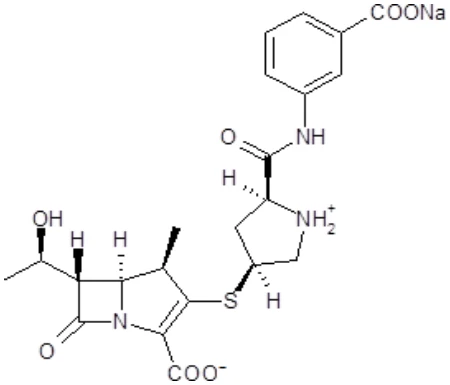 |
| Physicochemical properties: | Ertapenem sodium is a white to off-white hygroscopic, amorphous powder. It is soluble in water and 0.9% sodium chloride solution, practically insoluble in ethanol, and insoluble in isopropyl acetate and tetrahydrofuran. |
14 CLINICAL TRIALS
14.1 Trial Design and Study Demographics
Adult Patients
Complicated Intra-Abdominal Infections
Table 15: Summary of Patient Demographics for the Pivotal Trial in Complicated Intra-Abdominal Infections
| Study # | Trial design | Treatments: Dosage, route of administration and duration | Study subjects (number randomized) | Age range | Gender (males/ females) |
|---|---|---|---|---|---|
| 017 | randomized, multicenter, double-blind, controlled clinical trial. Patients were stratified at baseline into two groups: localized complicated appendicitis (stratum 1) and any other complicated intra-abdominal infection including colonic, small intestinal, and biliary infections and generalized peritonitis (stratum 2) | ertapenem (1 g IV once a day) for 5 to 14 days versus | 665 patients | 17–92 | 140/255 |
piperacillin/tazobactam (3.375 g intravenous every 6 hours) for 5 to 14 days |
Complicated Skin and Skin Structure-Infections
Table 16: Summary of Patient Demographics for the Pivotal Trial in Complicated Skin and Skin- Structure Infections
| Study # | Trial design | Treatments: Dosage, route of administration and duration | Number of patients | Age range | Gender (males/ females) |
|---|---|---|---|---|---|
| 016 | randomized, multicenter, double-blind, controlled clinical trial. | ertapenem (1 g IV once a day) for 7 to 14 days versus | 540 patients* | 18–99 | 351/189 |
piperacillin/tazobactam (3.375 g IV every 6 hours) for 7 to 14 days | |||||
| * Including patients with deep soft tissue abscess, posttraumatic wound infection and cellulitis with purulent drainage. | |||||
Diabetic Foot Infections
Table 17: Summary of Patient Demographics for the Clinical Trial in Diabetic Foot Infections
| Study # | Trial design | Treatments: Dosage, route of administration and duration* | Number of patients | Mean age (Range) | Gender (males/ females) | |
|---|---|---|---|---|---|---|
| 034 | multicenter, randomized, double-blind, clinical trial conducted in the US. Ertapenem was evaluated in adults treated for 28 days or less for diabetic foot infections without concomitant osteomyelitis. The large majority of patients had non-ischemic grade 1 and 2 diabetic foot infections graded according to the Texas Health Sciences Centre classification system (see BIBLIOGRAPHY for reference). | ertapenem (1 g intravenously once a day) versus | 586 patients** | Mean: 59.2 (22–94) | 370/206 | |
| piperacillin/ tazobactam (3.375 g intravenously every 6 hours). | ||||||
| Study # | Trial design | Treatments: Dosage, route of administration and duration* | Number of patients | Mean age (Range) | Gender (males/ females) |
|---|---|---|---|---|---|
* Both regimens allowed the option to switch to oral amoxicillin/clavulanate beyond day 5 of the maximal 28-day treatment (parenteral and oral). Most patients received appropriate adjunctive treatments such as debridement, wound off-loading and saline compresses as is typically required in the treatment of diabetic foot infections. Patients with suspected osteomyelitis could be enrolled if all the infected bone was removed within 2 days of initiation of study therapy, and preferably within the prestudy period. Investigators had the option to add open-label vancomycin if enterococci or methicillin-resistant Staphylococcus aureus (MRSA) were among the pathogens isolated in polymicrobial infections or if patients had a history of MRSA infection and, such additional therapy was indicated in the opinion of the investigator. **Five hundred and eighty-six (586) patients were randomized into 1 of 2 treatment groups: 289 patients received ertapenem and 287 patients received piperacillin/tazobactam. Ten (10) patients were randomized to 1 of the 2 treatment arms (6 to ertapenem and 4 to piperacillin/tazobactam) but received no parenteral study therapy. | |||||
Community-Acquired Pneumonia
Table 18: Summary of Patient Demographics for the Clinical Trials in Community Acquired Pneumonia
| Study # | Trial design | Treatments: Dosage, route of administration and duration* | Number of patients | Age range | Gender (males/ females) |
|---|---|---|---|---|---|
| 018 | pivotal randomized, multicenter, double- blind, controlled clinical study | ertapenem (1 g parenterally once a day) versus | 502 patients | 17–96 | 287/215 |
| ceftriaxone (1 g parenterally once a day) | |||||
| 020 | supportive randomized, multicenter, double- blind, controlled clinical study | ertapenem (1 g parenterally once a day) versus | 364 patients | 18–97 | 223/141 |
| ceftriaxone (1 g parenterally once a day) | |||||
| * Both regimens allowed the option to switch to oral amoxicillin/clavulanate for a total of 10 to 14 days of treatment (parenteral and oral). | |||||
Complicated Urinary Tract Infections Including Pyelonephritis
Table 19: Summary of Patient Demographics for the Clinical Trials in Complicated Urinary Tract Infections Including Pyelonephritis
| Study # | Trial design | Treatments: Dosage, route of administration and duration* | Number of patients | Age range | Gender (males/ females) |
|---|---|---|---|---|---|
| 014 | pivotal randomized, multicenter, double- blind, controlled clinical study; Patients were stratified at baseline into two groups: pyelonephritis and any other complicated urinary tract infections. | ertapenem (1 g parenterally once a day) versus | 592 patients | 17–98 | 189/403 |
| ceftriaxone (1 g parenterally once a day) | |||||
| 021 | supportive randomized, multicenter, double- blind, controlled clinical study; Patients were stratified at baseline into two groups: pyelonephritis and any other complicated urinary tract infections. | ertapenem (1 g parenterally once a day) versus | 258 patients | 18–90 | 109/149 |
| ceftriaxone (1 g parenterally once a day) | |||||
| * Both regimens allowed the option to switch to oral ciprofloxacin (500 mg twice daily) for a total of 10 to 14 days of treatment (parenteral and oral). | |||||
Acute Pelvic Infections Including Postpartum Endomyometritis, Septic Abortion and Post-surgical Gynecologic Infections
Table 20: Summary of Patient Demographics for the Pivotal Clinical Trial in Acute Pelvic Infections Including Postpartum Endomyometritis, Septic Abortion and Post-Surgical Gynecologic Infections
| Study # | Trial design | Treatments: Dosage, route of administration and duration | Number of patients | Age range |
|---|---|---|---|---|
| 023 | randomized, multicenter, double-blind, controlled clinical trial | ertapenem (1 g IV once a day) for 3 to 10 days versus | 412 patients Including 350 patients with obstetric/postpartum infections and 45 patients with septic abortion. | 15–68 |
| piperacillin/tazobactam (3.375 g IV every 6 hours) for 3 to 10 days | ||||
Prophylaxis of Surgical Site Infections Following Elective Colorectal Surgery
Table 21: Summary of Patient Demographics for the Clinical Trial in Colorectal Surgical Prophylaxis (Evaluable Population)
| Study# | Trial Design† | Treatment Groups/Doses/Duration | Age Range (Mean Age) | Number of Patients | Gender (males/females) |
|---|---|---|---|---|---|
| 039 | Double-blind, multicenter (with in-house blind), prospective, randomized, comparative study to evaluate the safety, efficacy and tolerability of ertapenem sodium versus cefotetan for the prophylaxis of surgical site infection following elective colorectal surgery | One time administration of Intravenous (IV) study therapy given 60 minutes prior to the planned initial surgical incision as a single IV dose infused over 30 min Ertapenem treatment group: 1 g | 23–92 Avg: 63 | 338 | 190/148 |
| Cefotetan treatment group: 2 g | 21–94 Avg: 62 | 334 | 176/158 |
| Study# | Trial Design† | Treatment Groups/Doses/Duration | Age Range (Mean Age) | Number of Patients | Gender (males/females) |
|---|---|---|---|---|---|
| † This study included 500 patients randomized to ertapenem and 502 patients randomized to cefotetan. To be in the evaluable cohort, a patient must have received a complete dose of study therapy infused over 30 minutes within 2 hours prior to incision and within 6 hours of surgical closure with adequate time for completion of bowel preparation prior to surgery. Adequate bowel preparations included: osmotic oral bowel preparations containing polyethylene glycol solutions or oral sodium phosphate preparations. For the primary analysis, patients with documented surgical site infections, in addition to those with post-operative anastomotic leak or unexplained antibiotic use, were considered to have failed prophylaxis. | |||||
Pediatric Patients
Ertapenem was evaluated primarily for pediatric safety and secondarily for efficacy in randomized comparative, multicenter studies in patients 3 months to 17 years of age with community acquired pneumonia (CAP), urinary tract infections (UTI), skin and soft tissue infections (SSTI), intraabdominal infections (IAI) and acute pelvic infections (API).
Table 22: Summary of Patient Demographics For Clinical Trials in Pediatric Patients
| Study # | Trial Design | Treatment Groups/Doses† | Age Range‡ (Mean Age) | Number of Patients‡ | Gender‡ (boys/girls) |
|---|---|---|---|---|---|
| 036 | Double-blind, multicenter (United States and internationally) study in pediatric patients with UTI, SSTI, and CAP | Ertapenem treatment group: 3 months to 12 years (15 mg/kg IV every 12 hours; maximum of 1 g daily) 13 to 17 years (1 g IV once a day) | 3 to 23 months (12.3 months) 2 to 12 years (5.1 years) 13 to 17 years (14.5 years) | 152 225 25 | (161/241) |
Ceftriaxone treatment group: 3 months to 12 years (50 mg/kg/day IV in two divided doses; maximum of 2 g daily) | |||||
| 13 years to 17 years (50 mg/kg/day IV as a single daily dose; maximum of 2 g daily) | |||||
| 038 | Open-label, multicenter (United States and internationally) | Ertapenem treatment group: 3 months to 12 years (15 mg/kg IV every 12 hours; maximum of 1 g daily) | 3 to 23 months | 0 | (40/65) |
| Study # | Trial Design | Treatment Groups/Doses† | Age Range‡ (Mean Age) | Number of Patients‡ | Gender‡ (boys/girls) | |||
|---|---|---|---|---|---|---|---|---|
| study in pediatric patients with IAI and API | 13 to 17 years (1 g IV once a day) | 2 to 12 years (7.8 years) 13 to 17 years (15.2 years) | 47 58 | |||||
Ticarcillin/clavulanate treatment group: < 60 kg (50 mg/kg); 4 or 6 times a day > 60 kg (3.0 g); 4 or 6 times a day | ||||||||
† Study 036 allowed the option to switch to oral amoxicillin/clavulanate after at least 3 days of parenteral therapy if clinical response criteria were met, for a total of up to 14 days of treatment (parenteral and oral). Study 038 did not allow for an oral switch; suggested parenteral treatment duration was 3–14 days for API and 5–14 days for IAI. ‡ Number of patients that received at least 1 dose of parenteral study therapy. | ||||||||
14.2 Study Results
Adult Patients
Complicated Intra-Abdominal Infections
Table 23: Clinical and Microbiological Success Rates in Complicated Intra-Abdominal Infections for Study 017
| Ertapenem n/N (%) | Comparator n/N (%) | 95% CI for the difference | |||||||
|---|---|---|---|---|---|---|---|---|---|
| At 1 to 2 weeks post therapy | 190/212 (89.6%) | 162/196 (82.7%) | -- | ||||||
| 4 to 6 weeks post therapy (Test of Cure)† | 176/203 (86.7%) | 157/193 (81.2%) | (-2.2, 13.1) | ||||||
| Test of Cure (Stratum 1) | 85/94 (90.4%) | 82/91 (90.1%) | -- | ||||||
| Test of Cure (Stratum 2) | 91/109 (83.5%) | 75/102 (73.5%) | -- | ||||||
| † Percentages and the 95% CI for study 017 (Test of Cure) were computed from a statistical model adjusting for strata. | |||||||||
Table 24: Clinical Success Rates at the Test of Cure by Pathogen for Microbiologically Evaluable Adult Patients with Complicated Intra-Abdominal Infections for Study 017
| Pathogen | Ertapenem % (n/N)* | Comparator % (n/N)* |
|---|---|---|
| Escherichia coli | 86.7 (137/158) | 80.0 (108/135) |
| Pathogen | Ertapenem % (n/N)* | Comparator % (n/N)* |
|---|---|---|
| Clostridium clostridioforme | 89.5 (17/19) | 90.5 (19/21) |
| Eubacterium lentum | 90.5 (19/21) | 83.3 (10/12) |
| Peptostreptococcus species | 80.6 (29/36) | 88.5 (23/26) |
| Bacteroides fragilis | 82.9 (63/76) | 82.4 (56/68) |
| Bacteroides distasonis | 78.9 (15/19) | 96.0 (24/25) |
| Bacteroides ovatus | 95.2 (20/21) | 90.9 (20/22) |
| Bacteroides uniformis | 95.5 (21/22) | 90.5 (19/21) |
| Bacteroides thetaiotaomicron | 87.2 (41/47) | 85.3 (29/34) |
| * Number of isolates with favorable response assessment/Total number of isolates | ||
Complicated Skin and Skin Structure-Infections
Table 25: Clinical Success Rates at the Test of Cure in Complicated Skin and Skin-Structure Infections for Study 016
| Ertapenem n/N (%) | Comparator n/N (%) | 95% CI for the difference | ||
|---|---|---|---|---|
| 10 to 21 days posttherapy (Test of Cure)† | 152/185 (82.4%) | 147/174 (84.4%) | (-10.2, 6.2) | |
| Deep soft tissue abscess | 29/30 (96.7%) | 34/36 (94.4%) | -- | |
| Posttraumatic wound infection | 25/30 (83.3%) | 22/26 (84.6%) | -- | |
| Cellulitis with purulent drainage | 27/29 (93.1%) | 21/24 (87.5%) | -- | |
| † Percentages and the 95% CI for study 016 (Test of Cure) were computed from a statistical model adjusting for strata. | ||||
Table 26: Clinical Success Rates at the Test of Cure by Pathogen for Clinically Evaluable Adult Patients with Complicated Skin and Skin-Structure Infections for Study 016
| Pathogen | Ertapenem % (n/N)* | Comparator % (n/N)* |
|---|---|---|
| Staphylococcus aureus | 76.1 (54/71) | 78.9 (56/71) |
| Streptococcus pyogenes | 81.3 (13/16) | 93.8 (15/16) |
| Escherichia coli | 94.1 (16/17) | 80.0 (12/15) |
| Peptostreptococcus species | 87.1 (27/31) | 90.9 (20/22) |
| * Number of isolates with favorable response assessment/Total number of isolates | ||
Diabetic Foot Infections
Table 27: Clinical Success Rates at the Test of Cure* in Diabetic Foot Infections for Study 034
| Ertapenem n/N (%) | Comparator n/N (%) | 95 % CI | ||||
|---|---|---|---|---|---|---|
| 10 days posttherapy (Test of Cure) | 153/204 (75.0%) | 143/202 (70.8%) | (-4.5, 12.8) | |||
| * Test-of-cure was defined as a favorable clinical response (resolution of all or most of the signs and symptoms of the index infection) in the clinically evaluable population at a follow-up visit 10-days posttherapy. | ||||||
Table 28: Clinical Success Rates at the Posttherapy Visit by Pathogen for Clinically Evaluable Adult Patients With Diabetic Foot Infections for Study 034
| Pathogen | Ertapenem % (n/N)* | Comparator % (n/N)* |
|---|---|---|
| Staphylococcus aureus (MSSA)** | 70.8 (51/72) | 71.0 (49/69) |
| Peptostreptococcus species | 78.7 (48/61) | 68.5 (37/54) |
* n/N = Number of pathogens with associated favorable assessment/number of pathogens with an assessment. ** MSSA = Methicillin sensitive Staphylococcus aureus. | ||
Community-Acquired Pneumonia
Table 29: Clinical Success Rates at the Test of Cure in Community Acquired Pneumonia for Combined Studies 018 and 020
Ertapenem n/N (%) | Comparator n/N (%) | 95% CI for the difference | ||||
|---|---|---|---|---|---|---|
| 7 to 14 days posttherapy (Test of Cure)† | 335/364 (91.9%) | 270/294 (92.0%) | (-4.5, 4.4) | |||
| † Percentages and the 95% confidence interval for the combined studies 018 and 020 (Test of Cure) were calculated from a statistical model adjusting for strata. | ||||||
Table 30: Clinical Success Rates at the Test of Cure by Pathogen for Microbiologically Evaluable Adult Patients with Community-Acquired Pneumonia for Combined Studies 018 and 020
| Pathogen | Ertapenem % (n/N)* | Comparator % (n/N)* |
|---|---|---|
| Streptococcus pneumoniae | 89.6 (86/96) | 93.7 (74/79) |
| Haemophilus influenzae | 87.9 (29/33) | 93.5 (29/31) |
| Moraxella catarrhalis | 90.0 (27/30) | 88.9(24/27) |
| * Number of isolates with favorable response assessment/Total number of isolates | ||
Complicated Urinary Tract Infections Including Pyelonephritis
Table 31: Microbiological Success Rates in Complicated Urinary Tract Infections Including Pyelonephritis for Combined Studies 014 and 021
Ertapenem n/N (%) | Comparator n/N (%) | 95 % CI for the difference | ||||
|---|---|---|---|---|---|---|
| 5 to 9 days posttherapy (Test of Cure)† | 229/256 (89.4%) | 204/224 (91.1%) | (-7.4, 4.0) | |||
| Pyelonephritis Stratum | 116/127 (91.3%) | 99/106 (93.4%) | -- | |||
| † Percentages and the 95% confidence interval for the combined studies 014 and 021 (Test of Cure) were calculated from a statistical model adjusting for strata. | ||||||
Table 32: Eradication Rates at the Test of Cure by Pathogen for Microbiologically Evaluable Adult Patients with Complicated Urinary Tract Infections for Combined Studies 014 and 021
| Pathogen | Ertapenem % (n/N)* | Comparator % (n/N)* |
|---|---|---|
| Escherichia coli | 92.1 (176/191) | 92.3 (143/155) |
| Klebsiella pneumoniae | 85.7 (24/28) | 96.0 (24/25) |
| Proteus mirabilis | 75.0 (9/12) | 87.5 (7/8) |
| * Number of isolates with favorable response assessment/Total number of isolates | ||
Acute Pelvic Infections Including Postpartum Endomyometritis, Septic Abortion and Post surgical Gynecologic Infections
Table 33: Clinical Success Rate at the Test of Cure in Acute Pelvic Infections Including Postpartum Endomyometritis, Septic Abortion and Post-Surgical Gynecologic Infections for Study 023
Ertapenem n/N (%) | Comparator n/N (%) | 95 % CI for the difference | ||||
|---|---|---|---|---|---|---|
| 2 to 4 weeks posttherapy (Test of Cure)† | 153/163 (93.9%) | 140/153 (91.5%) | (-4.0, 8.8) | |||
| † Percentages and the 95% confidence interval for Study 023 (Test of Cure) were calculated from a statistical model adjusting for strata. | ||||||
Table 34: Clinical Success Rates at the Test of Cure by Pathogen for Microbiologically Evaluable Adult Patients with Acute Pelvic Infections for Study 023
| Pathogen | Ertapenem % (n/N)* | Comparator % (n/N)* |
|---|---|---|
| Streptococcus agalactiae | 90.9 (10/11) | 93.8 (15/16) |
| Escherichia coli | 87.8 (36/41) | 92.3 (36/39) |
| Peptostreptococcus species | 96.4 (80/83) | 92.7 (76/82) |
| Bacteroides fragilis | 100 (15/15) | 95.0 (19/20) |
| Porphyromonas asaccharolytica | 92.9 (13/14) | 92.3 (12/13) |
| Prevotella species | 96.3 (52/54) | 92.0 (46/50) |
| * Number of isolates with favorable response assessment/Total number of isolates | ||
Prophylaxis of Surgical Site Infections Following Elective Colorectal Surgery
Table 35: Proportion of Patients with Favorable Clinical Response Assessment at 4-Weeks Post-Treatment (Evaluable Population) (Estimated†) for Study 039
| Treatment Group | Estimated† Difference (A-B) |
|---|---|
| Ertapenem (A) (N=338) | Comparator (B) (N=334) |
| N | |
| Estimated† Response | |
| n | |
| Estimated† Response | |
| % | |
| (95% CI) | |
| % | (95% CI) |
| % | |
| (95% CI) p-value | |
| 243 | |
| 72.0 | |
| (67.2, 76.8) | |
| 191 | |
| 57.2 | (51.9, 62.6) |
| 14.8 | |
| (7.5, 21.9) p<0.001 | |
† Percents, confidence intervals and p-values were calculated from a methodology proposed by Miettinen and Nurminen, accounting for the surgical procedure performed (intraperitoneal procedure or abdominoperineal resection) using Cochran-Mantel-Haenszel weights. The treatment by surgical procedure interaction was not significant (p>0.10). N = Number of evaluable patients in each treatment group. n = Number of evaluable patients with a favorable clinical response assessment in each treatment group. | |
Table 36: Proportion of Patients with Favorable Clinical Response Assessment at 4-Weeks Post-Treatment Displayed by Surgical Procedure (Evaluable Population) for Study 039
| Surgical Procedure | Treatment Group | Observed Differences (A-B) | ||||||
|---|---|---|---|---|---|---|---|---|
Ertapenem (A) (N=338) | Comparator (B) (N=334) | |||||||
| Observed Response | Observed Response | % | (95% CI) | |||||
| n/m | % | (95% CI) | n/m | % | (95% CI) | |||
| Intraperitoneal | 185/253 | 73.1 | (67.2, 78.5) | 150/265 | 56.6 | (50.4, 62.7) | 16.5 | (8.3, 24.5) |
| Abdominoperineal | 58/85 | 68.2 | (57.2, 77.9) | 41/69 | 59.4 | (46.9, 71.1) | 8.8 | (-6.4, 23.9) |
| Surgical Procedure | Treatment Group | Observed Differences (A-B) |
|---|---|---|
Ertapenem (A) (N=338) | Comparator (B) (N=334) | |
| Observed Response | Observed Response | % |
| (95% CI) | ||
| n/m | ||
| % | ||
| (95% CI) | n/m | |
| % | ||
| (95% CI) | ||
N = Number of evaluable patients in each treatment group. n/m = Number of evaluable patients with favorable assessment / number of evaluable patients with assessment. CI = Confidence Interval. | ||
Table 37: Proportion of Patients with Favorable Clinical Response Assessment at 4-Weeks Post Treatment (MITT Population) (Estimated†) for Study 039
| Treatment Group | Estimated† Difference (A-B) |
|---|---|
| Ertapenem (A) (N=451) | Comparator (B) (N=450) |
| n | |
| Estimated† Response | |
| n | |
| Estimated† Response | |
| % | |
| (95% CI) | |
| % | (95% CI) |
| % | |
| (95% CI) p-value | |
| 269 | |
| 59.8 | |
| (55.2, 64.3) | |
| 221 | |
| 49.1 | (44.4, 53.7) |
| 10.7 | |
| (4.2, 17.1) p<0.001 | |
† Percents, confidence intervals and p-values were calculated from a methodology proposed by Miettinen and Nurminen, accounting for the surgical procedure performed (intraperitoneal procedure or abdominoperineal resection) using Cochran-Mantel-Haenszel weights. The treatment by surgical procedure interaction was not significant (p>0.10). MITT = Modified Intent To Treat N = Number of MITT qualified patients in each treatment group. n = Number of MITT qualified patients with a favorable clinical response assessment in each treatment group. CI = Confidence interval. | |
Table 38: Proportion of Patients who Failed Prophylaxis at 4-Weeks Post-Treatment Displayed by Reason for Failure (Evaluable Population) for Study 039
| Reason for Failure | Treatment Group | Estimated† Difference (A-B) % (95% CI) | |||
|---|---|---|---|---|---|
Ertapenem (A) (N=338) | Comparator (B) (N=334) | ||||
| Estimated† Response | Estimated† Response | ||||
| n | % | (95% CI) | n | % | (95% CI) |
| Any Failure | 95 | 28.0 (23.2, 32.8) | 143 | 42.8 (37.4, 48.1) | -14.8 (-21.9, -7.5)‡ |
| Surgical Site Infection | 62 | 18.1 (14.0, 22.2) | 104 | 31.1 (26.1, 36.1) | -13.0 (-19.5, -6.5)‡ |
| Organ/Space Deep | 4 | 1.2 (0.0, 2.3) | 12 | 3.7 (1.7, 5.7) | -2.5 (-5.2, -0.2) |
| Incisional Superficial | 13 | 3.7 (1.7, 5.8) | 17 | 5.1 (2.7, 7.4) | -1.3 (-4.7, 1.9) |
| Incisional | 45 | 13.1 (9.5, 16.8) | 75 | 22.4 (17.9, 26.8) | -9.2 (-15.0, -3.5) |
| Reason for Failure | Treatment Group | Estimated† Difference (A-B) % (95% CI) | |||
|---|---|---|---|---|---|
Ertapenem (A) (N=338) | Comparator (B) (N=334) | ||||
| Estimated† Response | Estimated† Response | ||||
| n | % | (95% CI) | n | % | (95% CI) |
| Unexplained Antibiotic | 23 | 6.9 (4.2, 9.6) | 25 | 7.5 (4.7, 10.3) | -0.6 (-4.6, 3.4) |
| Use | |||||
| Anastomotic Leak | 10 | 3.0 (1.2, 4.8) | 14 | 4.2 (2.0, 6.3) | -1.1 (-4.2, 1.8) |
† Percents, confidence intervals and p-values were calculated from a methodology proposed by Miettinen and Nurminen, accounting for the surgical procedure performed (intraperitoneal procedure or abdominoperineal resection) using Cochran-Mantel-Haenszel weights. The treatment by surgical procedure interaction was not significant (p>0.10). ‡ Statistical test for treatment difference was significant (p<0.001). N = Number of evaluable patients in each treatment group. n = Number of evaluable patients within failure category. CI = Confidence interval. | |||||
Pediatric Patients
Table 39: The Proportion of Pediatric Patients in the Evaluable Per Protocol (EPP) Analysis with a Favorable Assessment† at the Test-of-cure Visit for Studies 036 (CAP, UTI, SSTI) and 038 (IAI, API)
| Disease Stratum | Ertapenem % (n/N) | Comparator % (n/N) |
|---|---|---|
| CAP | 96.1 (74/77) | 96.4 (27/28) |
| UTI | 87.0 (40/46) | 90.0 (18/20) |
| SSTI | 95.5 (64/67) | 100 (26/26) |
| IAI‡ | 83.7 (36/43) | 63.6 (7/11) |
| API§ | 100 (23/23) | 100 (4/4) |
† A favorable clinical response rate is displayed for SSTI, CAP, IAI, and API. A favorable microbiological response rate is displayed for UTI. ‡ Included patients with perforated or complicated appendicitis. § Included patients with post-operative or spontaneous obstetrical endomyometritis, or septic abortion. | ||
14.3 Comparative Bioavailability Studies
Not applicable.
15 MICROBIOLOGY
The antibacterial spectrum of ertapenem was evaluated using standard in vitro microbiological procedures. Table 40 displays the in vitro antibacterial activity of ertapenem against 9911 isolates from surveillance studies and from the clinical studies. The ratios of MBC to MIC in broth (inoculum 105 CFU/mL) are shown in Table 41. Ertapenem was found to have limited activity against Corynebacterium jeikeium, Pseudomonas spp., Burkholderia cepacia, Stenotrophomonas maltophilia, Acinetobacter spp., Bacteroides distasonis, and Clostridium difficile. Enterococci and methicillin-resistant staphylococci are resistant to ertapenem.
Table 40: Summation of in Vitro Activity of Ertapenem Including Aerobic and Anaerobic Isolates Obtained in the Phase II to Phase III Clinical Efficacy Trials (North American Isolates Only)
| Ertapenem MIC, mcg/mL | ||||||||||||||
|---|---|---|---|---|---|---|---|---|---|---|---|---|---|---|
| Organism | N | Range | MIC50 | MIC90 | ||||||||||
| Aerobic Gram-positive | ||||||||||||||
| Corynebacterium spp. | 34 | 0.008 to 32 | 0.5 | 32 | ||||||||||
| Enterococcus faecalis | 595 | 0.06 to > 64 | 8 | 16 | ||||||||||
| Enterococcus faecium | 211 | 0.125 to 64 | 32 | 32 | ||||||||||
| Enterococcus gallinarum | 16 | 8 to > 64 | 16 | 32 | ||||||||||
| Enterococcus spp. | 32 | 0.125 to 32 | 16 | 16 | ||||||||||
| Staphylococcus aureus (Methicillin-Susceptible*) | 618 | ≤ 0.008 to 4 | 0.125 | 0.25 | ||||||||||
| Staphylococcus aureus (Methicillin-Resistant*) | 210 | 0.125 to > 32 | 16 | 32 | ||||||||||
| Staphylococcus spp. | 75 | ≤ 0.016 to 4 | 0.5 | 2 | ||||||||||
| Staphylococcus, coagulase-negative (Methicillin- | 373 | 0.03 to > 32 | 0.25 | 2 | ||||||||||
| Staphylococcus, coagulase-negative (Methicillin-Resistant*) | 404 | 0.06 to > 32 | 8 | 32 | ||||||||||
| Streptococcus agalactiae | 269 | 0.008 to > 16 | 0.06 | 0.06 | ||||||||||
| Streptococcus beta-hemolytic | 82 | 0.008 to 0.5 | 0.03 | 0.25 | ||||||||||
| Streptococcus milleri group | 36 | 0.008 to 4 | 0.125 | 0.25 | ||||||||||
| Streptococcus pneumoniae (Penicillin-Sensitive†) | 475 | 0.004 to 0.125 | 0.016 | 0.03 | ||||||||||
| Streptococcus pneumoniae (Penicillin-Intermediate†) | 132 | 0.008 to 1 | 0.25 | 0.5 | ||||||||||
| Streptococcus pneumoniae (Penicillin-Resistant†) | 149 | 0.12 to 4 | 1 | 2 | ||||||||||
| Streptococcus pyogenes | 317 | 0.004 to 2 | 0.008 | 0.016 | ||||||||||
| Streptococcus viridans | 42 | ≤ 0.016 to 8 | 0.125 | 1 | ||||||||||
| Streptococcus viridans group | 66 | ≤ 0.016 to 4 | 0.25 | 2 | ||||||||||
| Streptococcus spp. | 37 | ≤ 0.008 to 4 | 0.06 | 2 | ||||||||||
| Aerobic Gram-negative | ||||||||||||||
| Achromobacter xylosoxidans | 15 | 0.06 to 0.5 | 0.125 | 0.5 | ||||||||||
| Acinetobacter anitratus | 12 | 2 to 8 | 4 | 8 | ||||||||||
| Acinetobacter baumannii | 104 | 0.5 to > 32 | 8 | 16 | ||||||||||
| Acinetobacter spp. | 26 | ≤ 0.016 to > 16 | 4 | 8 | ||||||||||
| Aeromonas hydrophila | 11 | 0.03 to 0.5 | 0.06 | 0.25 | ||||||||||
| Burkholderia cepacia | 18 | 4 to 32 | 16 | 32 | ||||||||||
| Ertapenem MIC, mcg/mL | ||||||||||||||
|---|---|---|---|---|---|---|---|---|---|---|---|---|---|---|
| Organism | N | Range | MIC50 | MIC90 | ||||||||||
| Citrobacter diversus | 33 | 0.008 to 0.125 | 0.008 | 0.016 | ||||||||||
| Citrobacter freundii | 190 | 0.008 to > 8 | 0.016 | 0.25 | ||||||||||
| Citrobacter koserii | 72 | ≤ 0.008 to 2 | 0.008 | 0.016 | ||||||||||
| Enterobacter aerogenes | 168 | ≤ 0.008 to > 32 | 0.06 | 0.25 | ||||||||||
| Enterobacter cloacae | 245 | ≤ 0.008 to 32 | 0.06 | 1 | ||||||||||
| Escherichia coli | 741 | 0.008 to 0.5 | 0.016 | 0.016 | ||||||||||
| Haemophilus influenzae | 493 | ≤ 0.008 to 0.5 | 0.03 | 0.06 | ||||||||||
| Haemophilus parainfluenzae | 76 | ≤ 0.008 to 1 | 0.03 | 0.125 | ||||||||||
| Haemophilus species (not influenzae) | 40 | 0.008 to 0.5 | 0.016 | 0.25 | ||||||||||
| Klebsiella oxytoca | 169 | ≤ 0.008 to 4 | 0.008 | 0.03 | ||||||||||
| Klebsiella pneumoniae | 460 | 0.008 to 32 | 0.016 | 0.03 | ||||||||||
| Morganella morganii | 142 | ≤ 0.008 to 2 | 0.03 | 0.06 | ||||||||||
| Moraxella catarrhalis | 221 | 0.004 to 0.25 | 0.008 | 0.016 | ||||||||||
| Neisseria gonorrhoeae | 20 | 0.004 to 0.03 | 0.008 | 0.03 | ||||||||||
| Neisseria meningitidis | 42 | 0.008 to 0.03 | 0.008 | 0.03 | ||||||||||
| Pasteurella multocida | 24 | 0.008 to 0.03 | 0.016 | 0.03 | ||||||||||
| Proteus mirabilis | 192 | 0.008 to 0.25 | 0.016 | 0.03 | ||||||||||
| Proteus vulgaris | 52 | 0.008 to 0.06 | 0.016 | 0.03 | ||||||||||
| Providencia rettgeri | 36 | 0.008 to 0.125 | 0.03 | 0.06 | ||||||||||
| Providencia stuartii | 50 | 0.016 to 8 | 0.06 | 0.125 | ||||||||||
| Pseudomonas aeruginosa (IPM-Sensitive) | 233 | 0.125 to > 32 | 4 | 16 | ||||||||||
| Pseudomonas aeruginosa (IPM-Resistant) | 131 | 0.5 to > 32 | 16 | 32 | ||||||||||
| Pseudomonas spp. | 41 | 0.008 to 32 | 8 | 32 | ||||||||||
| Salmonella group A | 48 | 0.008 to 0.06 | 0.008 | 0.008 | ||||||||||
| Salmonella typhimurium (B) | 23 | 0.008 to 0.03 | 0.008 | 0.008 | ||||||||||
| Salmonella spp. | 71 | 0.008 to 0.120 | 0.008 | 0.03 | ||||||||||
| Serratia marcescens | 132 | 0.008 to 32 | 0.03 | 0.125 | ||||||||||
| Serratia spp. | 43 | 0.016 to 0.25 | 0.03 | 0.125 | ||||||||||
| Shigella sonnei | 27 | 0.008 | 0.008 | 0.008 | ||||||||||
| Shigella spp. | 35 | 0.008 to 0.5 | 0.008 | 0.016 | ||||||||||
| Stenotrophomonas maltophilia | 66 | 1 to 32 | 32 | 32 | ||||||||||
| Anaerobes | ||||||||||||||
| Actinomyces israelii | 11 | 0.06 to 2 | 0.125 | 1 | ||||||||||
| Actinomyces odontolyticus | 36 | 0.06 to 4 | 0.5 | 0.5 | ||||||||||
| Actinomyces viscosus | 15 | 0.06 to 1 | 0.125 | 0.5 | ||||||||||
| Actinomyces spp. | 15 | 0.008 to 2 | 0.25 | 1 | ||||||||||
| Anaerobiospirillum thomasii | 15 | 0.016 to 0.03 | 0.016 | 0.016 | ||||||||||
| Bacteroides caccae | 13 | 0.125 to 2 | 1 | 1 | ||||||||||
| Bacteroides capillosus | 12 | 0.03 to 0.25 | 0.06 | 0.25 | ||||||||||
| Bacteroides distasonis | 39 | 0.125 to 8 | 1 | 8 | ||||||||||
| Ertapenem MIC, mcg/mL | ||||||||||||
|---|---|---|---|---|---|---|---|---|---|---|---|---|
| Organism | N | Range | MIC50 | MIC90 | ||||||||
| Bacteroides fragilis | 206 | 0.016 to > 16 | 0.25 | 2 | ||||||||
| Bacteroides ovatus | 55 | 0.25 to 8 | 1 | 2 | ||||||||
| Bacteroides tectum | 17 | 0.016 to 0.25 | 0.03 | 0.125 | ||||||||
| Bacteroides thetaiotaomicron | 92 | 0.06 to 4 | 1 | 2 | ||||||||
| Bacteroides uniformis | 23 | 0.12 to 2 | 1 | 2 | ||||||||
| Bacteroides vulgatus | 35 | 0.03 to 8 | 0.25 | 1 | ||||||||
| Bacteroides spp. | 69 | 0.016 to > 16 | 0.125 | 1 | ||||||||
| Bilophila wadsworthia | 22 | 0.016 to > 32 | 0.125 | 16 | ||||||||
| Campylobacter gracilis | 11 | 0.016 to 0.25 | 0.06 | 0.125 | ||||||||
| Clostridium bifermentans | 12 | 0.016 to 0.125 | 0.06 | 0.06 | ||||||||
| Clostridium butyricum | 12 | 0.125 to 1 | 0.25 | 0.25 | ||||||||
| Clostridium cadaveris | 11 | 0.008 to 0.016 | 0.016 | 0.0158 | ||||||||
| Clostridium clostridioforme | 13 | 0.125 to 4 | 1 | 2 | ||||||||
| Clostridium difficile | 39 | 0.004 to 8 | 1 | 4 | ||||||||
| Clostridium innocuum | 20 | 0.008 to 8 | 2 | 4 | ||||||||
| Clostridium perfringens | 57 | 0.004 to 0.125 | 0.03 | 0.125 | ||||||||
| Clostridium ramosum | 18 | 0.25 to 2 | 1 | 2 | ||||||||
| Clostridium spp. | 27 | 0.016 to 1 | 0.125 | 0.5 | ||||||||
| Eubacterium lentum | 28 | 0.25 to 2 | 1 | 1 | ||||||||
| Fusobacterium mortiferum | 11 | 0.06 to 0.125 | 0.06 | 0.125 | ||||||||
| Fusobacterium naviforme | 10 | 0.016 | 0.016 | 0.016 | ||||||||
| Fusobacterium russii | 12 | 0.016 to 0.03 | 0.016 | 0.0158 | ||||||||
| Fusobacterium varium | 15 | 0.016 to 0.06 | 0.06 | 0.06 | ||||||||
| Fusobacterium spp. | 14 | 0.008 to 2 | 0.25 | 0.5 | ||||||||
| Gardnerella vaginalis | 11 | 0.06 to 2 | 0.125 | 2 | ||||||||
| Lactobacillus spp. | 29 | 0.03 to > 32 | 1 | 16 | ||||||||
| Peptostreptococcus micros | 12 | 0.016 to 0.06 | 0.03 | 0.06 | ||||||||
| Peptostreptococcus tetradius | 30 | ≤ 0.004 to 4 | 0.04 | 1 | ||||||||
| Porphyromonas canoris | 10 | 0.016 | 0.016 | 0.016 | ||||||||
| Porphyromonas gingivalis | 14 | 0.016 | 0.016 | 0.016 | ||||||||
| Porphyromonas macacae | 15 | 0.016 to 0.03 | 0.016 | 0.03 | ||||||||
| Prevotella bivia (Bacteroides bivus) | 14 | 0.016 to 0.5 | 0.125 | 0.25 | ||||||||
| Prevotella heparinolytica | 14 | 0.06 to 0.25 | 0.125 | 0.125 | ||||||||
| Prevotella melaninogenica | 12 | 0.03 to 0.5 | 0.125 | 0.5 | ||||||||
| Prevotella oralis | 12 | 0.06 to 1 | 0.125 | 1 | ||||||||
| Prevotella oris | 13 | 0.03 to 0.5 | 0.125 | 0.25 | ||||||||
| Prevotella spp. | 19 | 0.016 to 1 | 0.06 | 0.25 | ||||||||
| Propionobacterium acnes | 25 | 0.03 to 4 | 0.125 | 0.25 | ||||||||
| Veillonella spp. | 21 | 0.016 to 4 | 0.125 | 1 | ||||||||
| Ertapenem MIC, mcg/mL | ||||||
|---|---|---|---|---|---|---|
| Organism | N | Range | MIC50 | MIC90 | ||
| Total | 9911 | |||||
| Aerobic Gram-positive | 4173 | |||||
| Aerobic Gram-negative | 4502 | |||||
| Anaerobes | 1236 | |||||
As per the NCCLS the term “methicillin-resistant” when applied to the staphylococci has referred to resistance to the antistaphylococcal β-lactamase stable penicillins while “methicillin-sensitive” meant susceptibility to these agents. Oxacillin, and not methicillin, is currently the agent of choice for screening for these organisms but the term “methicillin-resistant” is still commonly used to describe them. Staphylococcus aureus strains with oxacillin MICs ≤ 2 mcg/mL and coagulase-negative staphylococci with oxacillin MICs ≤ 0.25 mcg/mL can be considered methicillin-susceptible staphylococci (MSS) while S. aureus strains with oxacillin MICs ≥ 4 mcg/mL and coagulase-negative staphylococci ≥ 5 mcg/mL can be considered methicillin-resistant staphylococci (MRS). † As per the NCCLS Streptococcus pneumoniae strains are considered penicillin-susceptible if their MICs to penicillin are ≤ 0.06 mcg/mL; they are considered penicillin-intermediate if the penicillin MICs are between 0.12 and 1 mcg/mL and penicillin-resistant if their penicillin MICs are ≥ 2 mcg/mL. | ||||||
Table 41: Ratios of MBC to MIC in Broth (Inoculum 105 CFU/mL)
| Ertapenem for injection | ||||
|---|---|---|---|---|
| Bacteria | Strain Number | MIC mcg/mL | MBC mcg/mL | MBC:MIC |
Streptococcus pneumoniae Staphylococcus aureus Staphylococcus aureus Escherichia coli Pseudomonas aeruginosa Pseudomonas aeruginosa Haemophilus influenzae Morganella morganii Serratia marcescens | ATCC 49619 ATCC 29213 MB 210 ATCC 25922 ATCC 27853 MB 3286 ATCC 49247 MB 2834 MB 2855 | 0.125 2 0.06 0.016 8 16 0.06 ≤ 0.03 ≤ 0.03 | 0.125 2 0.06 0.016 8 32 0.06 ≤ 0.03 ≤ 0.03 | 1 1 1 1 1 2 1 ~1 ~1 |
| Susceptibility Distribution with Multiple Isolates | No. | MIC90 mcg/mL | MBC90 mcg/mL | MBC90:MIC90 |
Acinetobacter baumannii Pseudomonas aeruginosa Citrobacter freundii Enterobacter cloacae Escherichia coli | 32 25 16 16 18 | 16 32 0.5 4 0.125 | 16 32 0.5 4 0.06 | 1 1 1 1 0.5 |
| Ertapenem for injection | ||||
|---|---|---|---|---|
Klebsiella oxytoca Klebsiella pneumoniae Morganella morganii Proteus mirabilis Proteus vulgaris Serratia marcescens Neisseria meningitidis Enterococcus faecalis | 15 15 15 15 15 14 14 20 | ≤ 0.03 0.25 0.06 ≤ 0.03 ≤ 0.03 8 ≤ 0.03 32 | ≤ 0.03 0.25 0.06 ≤ 0.03 0.06 8 ≤ 0.03 32 | ~1 1 1 ~1 ~2 1 ~1 1 |
Resistance to Ertapenem
In vitro studies, which have focused on gram-negative pathogens, have partially elucidated the mechanisms of resistance to ertapenem. These studies suggest that the main forms of resistance to ertapenem in gram-negative bacilli, involve combinations of reduced accumulation (due to decreased influx and/or increased efflux) and β-lactamase hydrolysis.
In vitro development of resistance to ertapenem has been studied in Pseudomonas aeruginosa and in Escherichia coli strains. In a P. aeruginosa strain, resistance rates ranged from 2x10⁻⁷ at 2 times MIC to 2.2x10⁻⁹ at 8 times the MIC. In E. coli strains expressing either low levels of AmpC β-lactamase or significant amounts of β-lactamases TEM-1 or SHV-1, frequencies at 4 to 8 times MIC were in the range of 4x10⁻⁸ to 3x10⁻⁹. Frequencies obtained with E. coli clinical strains containing eSβLs ranged from 3.3x10⁻⁷ to 8x10⁻⁸ (Table 42).
Although cross-resistance between ertapenem and other carbapenems is possible, in vitro studies and surveillance studies indicate that cross-resistance between ertapenem and other carbapenems is not complete. Target-based cross-resistance with non-β-lactam antimicrobials is not anticipated as β-lactams do not share common mechanisms of actions with these agents.
Stability of Ertapenem to Beta-Lactamases
Ertapenem is stable against hydrolysis by a variety of beta-lactamases, including penicillinases, cephalosporinases, and extended spectrum beta-lactamases. Ertapenem is hydrolyzed by metallo-beta-lactamases. Table 42 shows in vitro activity of ertapenem against strains producing extended spectrum β-lactamase (eSβLs) and AmpC β-lactamase.
Table 42: In Vitro Activity of Ertapenem Against Strains Producing Extended Spectrum Beta-Lactamases (eSβLs) and AmpC beta-Lactamases
| Strains (n) | Wild-type | Resistant/Mutant Organisms | ||||
|---|---|---|---|---|---|---|
| MIC Range mcg/mL | MIC50 mcg/mL | MIC90 mcg/mL | MIC Range mcg/mL | MIC50 mcg/mL | MIC90 mcg/mL | |
Escherichia coli wild-type† (47) and eSβL-resistant (32) Klebsiella pneumoniae wild-type† (38) and eSβL-resistant (61) Enterobacteriaceae‡ wild-type† (20) and SD AmpC§-resistant (93) | ≤ 0.015 to 0.06 ≤ 0.015 to 0.5 ≤ 0.015 to 8 | ≤ 0.015 ≤ 0.015 ≤ 0.015 | ≤ 0.015 ≤ 0.015 0.12 | ≤ 0.015 to 1 ≤ 0.015 to 16 ≤ 0.015 to 32 | 0.06 0.06 0.25 | 0.5 0.5 1 |
| Enterobacteriaceae (76)% | NA | ≤ 0.015 to 16 | 0.06 | 0.5 | ||
Klebsiella pneumoniae wild-type (25) Klebsiella oxytoca wild-type (25) Klebsiella spp. eSβL¶ (181) Klebsiella spp. AmpC (7) Klebsiella oxytoca HP K1 (19) Enterobacteriaceae Isogenic strains wild-type AmpC (18) Constitutive AmpC (14) Defective AmpC (18) | 0.007 to 0.06 0.007 to 0.015 0.007 to 0.25 | 0.007 0.007 0.015 | 0.007 0.007 0.06 | 0.007 to 8 0.015 to 0.06 0.007 to 0.125 0.007 to 0.5 0.004 to 0.015 | 0.03 0.03 0.015 0.015 0.007 | 0.06 0.015 0.25 0.015 |
| Escherichia coli eSβL (47) | NA | 0.004 to 0.5 | 0.015 | 0.03 | ||
| Klebsiella pneumoniae eSβL (101) | 0.004 to 0.25 | 0.015 | 0.06 | |||
Enterobacter aerogenes eSβL (24) Enterobacter aerogenes AmpC wild-type (6) | 0.007 to 0.25 | 0.06 | # | 0.015 to 8 | 0.03 | 0.5 |
Enterobacter aerogenes AmpC mutant (13) Enterobacter cloacae AmpC wild-type (9) | 0.06 to 0.5 | 0.06 | # | 0.12 to 8 | 0.12 | 1.0 |
| Enterobacter cloacae AmpC mutant derepressed (12) | 0.12 to 2 | 0.25 | 1.0 | |||
| Morganella morganii AmpC wild-type (11) | 0.007 to 0.015 | 0.007 | 0.015 | |||
| Morganella morganii AmpC mutant (9) | 0.007 to 0.12 | 0.015 | # | |||
| Strains (n) | Wild-type | Resistant/Mutant Organisms | ||||
|---|---|---|---|---|---|---|
| MIC Range mcg/mL | MIC50 mcg/mL | MIC90 mcg/mL | MIC Range mcg/mL | MIC50 mcg/mL | MIC90 mcg/mL | |
Serratia marcescens AmpC wild-type (15) Serratia marcescens AmpC mutant (5) | 0.007 to 0.5 | 0.03 | 0.12 | 0.06 to 0.25 | 0.12 | # |
| Serratia marcescens AmpC +porin mutant (1) | 8 | # | # | |||
† Wild-type = susceptible to ceftazidime and many other 3rd generation cephems. ‡ Includes C. freundii (30) and Enterobacter spp. (83). § SD AmpC = stably derepressed, expression of AmpC cephalosporinase. % Data includes: eSβL TEM (19) SHV (33) Chromosomal constitutive AmpC (12), Plasmid-borne AmpC (12). ¶ EsβL = ceftazidime: ceftazidime + clavulanate MIC ratio ≥ 16 by agar dilution. # Not determined sample size < 10. MIC = Minimal inhibitory concentration. NA = Not applicable. | ||||||
Parameters of in Vitro Susceptibility Testing
MIC values of ertapenem against Staphylococcus aureus increased 4- to 8-fold in the presence of 50% human serum while they increased 2- to 4-fold against Klebsiella pneumoniae. Heat inactivation of human serum did not alter the serum effects on MIC values, suggesting that increases were most likely attributable to the effects of plasma protein binding. The low serum effect on the susceptibility of K. pneumoniae against ertapenem is consistent with the concept of reversible serum protein binding of ertapenem. Although the presence of serum increased the MIC of ertapenem by 2- to 8-fold, the bactericidal effect as demonstrated by the MBC/MIC ratio was unaffected by serum (equal to 2-fold).
The activity of ertapenem was not affected by the addition of the standard 5% sheep blood or 3% horse blood. A significant decrease in the activity of ertapenem was observed in thioglycollate broth and in brain heart infusion broth containing L-cysteine.
Sets of trays containing serial dilutions of ertapenem in cation-adjusted Mueller-Hinton broth (MHB) (pH 7.3) were stored in sealed plastic bags at various temperatures and for various periods of time and thereafter assayed for activity by the broth microdilution method. The activity of ertapenem was unchanged following storage for at least 3 months at -70 °C, for at least 4 weeks at -20 °C, for at least 7 days at 4 °C and at 23° to 25 °C and for at least 2 to 3 days at 37 °C. The effects of incubation in MHB at 37 °C on the stability of ertapenem were determined. Over 80% of intact ertapenem remained after 7 hours of incubation, which decreased to about 67.3% by 24 hours.
The effect of inoculum on in vitro susceptibility was studied against a variety of organisms including Staphylococcus aureus, members of the Enterobacteriaceae (including those producing eSβLs and/or AmpC β-lactamases), Pseudomonas aeruginosa, and Acinetobacter species. The inocula evaluated varied in different studies with the highest inoculum tested being 1000-fold greater than the control inoculum. No inoculum effect was demonstrated for S. aureus. For Enterobacteriaceae, an inoculum effect was demonstrated against some, but not all, organisms studied, but in all cases the ertapenem MIC90 values remained ≤ 2 mcg/mL at the higher inocula. The greatest increase in MIC values was observed in Enterobacteriaceae expressing one or more extended-spectrum and/or broad-spectrum β-lactamase. For example, in one study the inocula tested ranged from 6x10⁵ to 6x10⁶ cfu/mL to 1.8x10⁶ to 1.8x10⁷ cfu/mL. In each case, the higher inoculum was 10-fold higher than the lower inoculum. In a study of a panel including E. coli clinical isolates containing broad-spectrum β-lactamases (BDSβLs) TEM-1 and SHV-1, and the eSβLs TEM-7, TEM-12, and TAZ-25 and K. pneumoniae isolates containing the ESβLs TEM-5, TEM-10, TAZ-3 and TAZ-10, as well as 1 unidentified β-lactamase, ertapenem MICs at the lower inoculum ranged from ≤ 0.03 mcg/mL to 0.12 mcg/mL. At 10-fold higher inocula, increased MICs for ertapenem were noted against many of the strains containing BDSβLs and eSβLs; however, in all cases the ertapenem MIC values remained ≤ 2 mcg/mL. In another study, the activity of ertapenem was evaluated in routine MIC tests and at 100 times the standard inocula against 100 well characterized clinical and laboratory strains of Enterobacteriaceae expressing the following enzymes: TEM-1, 3-10, 12, 16, 24, 26, 50, SHV-1, 2-5, 7, Toho-1 and 2, OXA-2, K1, inducible AmpC, MIR-1, LAT-2, ACT-1, FOX-3 and several unidentified plasmid-borne AmpC enzymes and TEM-derived eSβLs. The MIC90 of ertapenem against these strains was 0.5 mcg/mL at the lower inoculum; at the higher inocula, the MIC90 of ertapenem increased to 1 mcg/mL.
A broth microdilution checkerboard study of synergy was carried out for combinations of ertapenem and ciprofloxacin, and of ertapenem and gentamicin against methicillin-sensitive S. aureus, methicillin-sensitive coagulase-negative staphylococci, E. coli, and K. pneumoniae. No antagonism was demonstrated. Synergy, complete or partial, was seen with < 50% of the strains for either combination.
Dilution Techniques
Quantitative methods are used to determine antimicrobial minimum inhibitory concentrations (MICs). These MICs provide estimates of the susceptibility of bacteria to antimicrobial compounds. The MICs should be determined using a standardized procedure. Standardized procedures are based on a dilution method(a) (broth or agar) or equivalent with standardized inoculum concentrations and standardized concentrations of ertapenem powder. The MIC values should be interpreted according to criteria provided in Table 43.
Diffusion Techniques
Quantitative methods that require measurement of zone diameters also provide reproducible estimates of the susceptibility of bacteria to antimicrobial compounds. One such standardized procedure(b) requires the use of standardized inoculum concentrations. This procedure uses paper disks impregnated with 10 mcg ertapenem to test the susceptibility of microorganisms to ertapenem. The disk diffusion interpretive criteria are provided in Table 43.
Anaerobic Techniques
For anaerobic bacteria, susceptibility to ertapenem as MICs can be determined by standardized test methods(c)(d). The MIC values obtained should be interpreted according to the criteria provided in Table 43.
Table 43: NCCLS Interpretive Susceptibility Criteria for Ertapenem
| Dilution Test (MICs in mcg/mL) | Disk Diffusion Test (zone diameters in mm) | |||||||||||
|---|---|---|---|---|---|---|---|---|---|---|---|---|
| Pathogen | S | I | R | S | I | R | ||||||
| Enterobacteriaceae | ≤ 2 | 4 | ≥ 8 | ≥ 19 | 16–18 | ≤ 15 | ||||||
| Staphylococcus spp. | ≤ 2 | 4 | ≥ 8 | ≥ 19 | 16–18 | ≤ 15 | ||||||
| Streptococcus pneumoniae (penicillin-susceptible non-meningitis strains only)b | ≤ 1c | 2 | ≥ 4 | – | – | – | ||||||
| Streptococcus spp. (beta-hemolytic only)a,d | ≤ 1c | – | – | -– | – | – | ||||||
| Haemophilus spp.a | 0.5e | – | – | ≥ 19f | – | – | ||||||
| Dilution Test (MICs in mcg/mL) | Disk Diffusion Test (zone diameters in mm) | |||||||||
|---|---|---|---|---|---|---|---|---|---|---|
| Pathogen | S | I | R | S | I | R | ||||
| Anaerobes | ≤ 4g | 8 | ≥ 16 | – | – | – | ||||
a The current absence of data on resistant strains precludes defining any category other than “susceptible”. If strains yield MIC results other than susceptible, they should be submitted to a reference laboratory for further testing. b Isolates of Streptococcus pneumoniae should be tested against a 1 mcg oxacillin disk. Isolates with oxacillin zone sizes of ≥ 20 mm are susceptible to penicillin and can be considered susceptible to ertapenem. c Streptococcus pneumoniae that are susceptible to penicillin (MIC ≤ 0.06 mcg/mL) and Streptococcus spp. other than S. pneumoniae that are susceptible to penicillin (MIC ≤ 0.12 mcg/mL), can be considered susceptible to ertapenem. Testing of ertapenem against penicillin-intermediate or penicillin-resistant isolates is not recommended since reliable interpretive criteria for ertapenem are not available. d Streptococcus spp. should be tested with a 10-unit penicillin disk. Isolates with penicillin zone sizes of ≥ 24 mm are susceptible to penicillin and can be considered susceptible to ertapenem. e These interpretive standards are applicable to the broth microdilution procedure using Haemophilus Test Medium (HTM) inoculated with a direct colony suspension and incubated in ambient air at 35 °C for 20–24 hrs. f These zone diameters are applicable to tests performed by disk diffusion using Haemophilus Test Medium (HTM) agar inoculated with a direct colony suspension and incubated in 5% CO2 at 35 °C for 16–18 hrs. g These interpretative standards are applicable only to agar dilution using Brucella agar supplemented with hemin, vitamin K1 and 5% defibrinated or laked sheep blood inoculated with a direct colony suspension or a 6- to 24-hour fresh culture in enriched thioglycolate medium and incubated in an anaerobic jar or chamber at 35–37 °C for 42–48 hrs. | ||||||||||
A report of “Susceptible” indicates that the pathogen is likely to be inhibited if the antimicrobial compound in blood reaches the concentrations usually achievable. A report of “Intermediate” indicates that the result should be considered equivocal, and, if the microorganism is not fully susceptible to alternative, clinically feasible drugs, the test should be repeated. This category implies possible clinical applicability in body sites where the drug is physiologically concentrated or in situations where high dosage of drug can be used. This category also provides a buffer zone which prevents small uncontrolled technical factors from causing major discrepancies in interpretation. A report of “Resistant” indicates that the pathogen is not likely to be inhibited if the antimicrobial compound in the blood reaches the concentrations usually achievable; other therapy should be selected.
Quality Control (QC)
Standardized susceptibility test procedures require the use of quality control microorganisms to control the technical aspects of the test procedures. Standard ertapenem powder should provide the following range of values noted in Table 44. Quality control microorganisms are specific strains of organisms with intrinsic biological properties. QC strains are very stable strains which will give a standard and repeatable susceptibility pattern. The specific strains used for microbiological quality control are not clinically significant.
Table 44: Acceptable Quality Control (QC) Ranges for Ertapenem
| QC Strain | ATCC® | Dilution Test (MICs in mcg/mL) | Disk Diffusion Test (zone diameters in mm) |
|---|---|---|---|
| Enterococcus faecalis | 29212 | 4–16 | Not Applicable |
| Staphylococcus aureus | 29213 | 0.06–0.25 | Not Applicable |
| Staphylococcus aureus | 25923 | Not Applicable | 24–31 |
| Streptococcus pneumoniaeh | 49619 | 0.03–0.25i | 28–35j |
| Escherichia coli | 25922 | 0.004–0.016 | 29–36 |
| Haemophilus influenzae | 49766 | 0.016–0.06k | 27–33l |
| Pseudomonas aeruginosa | 27853 | 2–8 | 13–21 |
| Bacteroides fragilis | 25285 | 0.06–0.25m (0.06–0.5)n | Not Applicable |
| Bacteroides thetaiotaomicron | 29741 | 0.25–1.0m (0.5–2.0)n | Not Applicable |
| Eubacterium lentum | 43055 | 0.5–2.0m (0.5–4.0)n | Not Applicable |
h This organism is used for quality control of susceptibility testing of Streptococcus pneumoniae and Streptococcus sIp. i These quality control ranges are applicable to tests performed by broth microdilution using cation-adjusted Mueller- Hinton broth with 2 to 5% lysed horse blood inoculated with a direct colony suspension and incubated in ambient air at 35°C for 20–24 hrs. j These quality control ranges are applicable to tests performed by disk diffusion using Mueller-Hinton agar supplemented with 5% sheep blood inoculated with a direct colony suspension and incubated in 5% CO2 at 35°C for 20–24 hrs. k These quality control ranges are applicable to the broth microdilution procedure using Haemophilus Test Medium (HTM) inoculated with a direct colony suspension and incubated in ambient air at 35°C for 20–24 hrs. l These quality control ranges are applicable to tests performed by disk diffusion using Haemophilus Test Medium (HTM) agar inoculated with a direct colony suspension and incubated in 5% CO2 at 35°C for 16–18 hrs. m These quality control ranges are applicable only to agar dilution using Brucella agar supplemented with hemin, vitamin K1 and 5% defibrinated or laked sheep blood inoculated with a direct colony suspension or a 6- to 24-hour fresh culture in enriched thioglycollate medium and incubated in an anaerobic jar or chamber at 35–37°C for 42–48 hrs. n Quality control ranges applicable for broth microdilution method. ATCC® is a registered trademark of the American Type Culture Collection. | |||
16 NON-CLINICAL TOXICOLOGY
Animal Pharmacology
The pharmacologic assays were part of a screening effort to assess potential liabilities of the compound.
In Vivo
Pharmacokinetics
Ertapenem showed no interaction with the cardiovascular system, respiratory system, or gastrointestinal function.
Tissue distribution was assessed in rats by measuring the concentration of total radioactivity in various tissues after single dose administration of radiolabeled ertapenem. Following administration of a single 15 mg/kg IV dose of [14C] ertapenem, concentrations declined with time in all tissues (Table 45). At 0.5 hr postdose, the concentrations (radioequivalents) were highest in the liver, kidneys, small intestine, and plasma. The kidneys consistently contained the highest concentrations, which occurred most likely because ertapenem radioequivalents are eliminated primarily by renal excretion. With the exception of the kidney (~6 mcg/g), ertapenem radioequivalent concentrations at 72 hr postdose had declined to less than 0.7 mcg/g in all tissues.
Table 45: Tissue Concentrations of Radioactivity in Rats After IV Administration of 15 mg/kg [14C] Ertapenem
| Tissue | Ertapenem Radioequivalents (mcg/g) | |||||||
|---|---|---|---|---|---|---|---|---|
| 0.5 hr | 3 hr | 24 hr | 72 hr | |||||
| Mean | S.D. | Mean | S.D. | Mean | S.D. | Mean | S.D. | |
| Heart | 4.99 | 1.66 | 0.525 | 0.299 | 0.176 | 0.015 | 0.07 | 0.01 |
| Lungs | 5.80 | 2.31 | 1.19 | 0.09 | 0.211 | 0.048 | 0.15 | 0.01 |
| Liver | 18.2 | 3.67 | 55.4 | 12.7 | 11.9 | 1.8 | 0.36 | 0.05 |
| Kidneys | 71.7 | 25.0 | 81.9 | 25.6 | 7.82 | 0.39 | 5.55 | 0.74 |
| Spleen | 3.31 | 1.04 | 2.10 | 2.47 | 0.163 | 0.054 | 0.65 | 0.15 |
| Testes | 4.54 | 0.60 | 1.04 | 0.41 | 0.102 | 0.008 | 0.08 | 0.01 |
| Stomach | 4.72 | 1.10 | 0.68 | 0.18 | 1.59 | 0.92 | 0.08 | 0.01 |
| Small Intestine | 31.5 | 7.3 | 22.1 | 13.3 | 1.99 | 0.92 | 0.08 | 0.01 |
| Large Intestine | 4.16 | 3.60 | 0.801 | 0.377 | 7.58 | 2.15 | 0.12 | 0.04 |
| Cecum | 6.31 | 0.73 | 2.61 | 1.60 | 15.4 | 6.5 | 0.13 | 0.03 |
| Fat | 3.94 | 2.00 | 1.53 | 1.19 | 0.063 | 0.028 | 0.08 | 0.02 |
| Pancreas | 6.04 | 1.64 | 0.444 | 0.19 | 0.289 | 0.146 | 0.11 | 0.03 |
| Muscle | 5.95 | 1.47 | 0.280 | 0.14 | 0.131 | 0.011 | 0.04 | 0.00 |
| Skin | 18.4 | 6.7 | 0.787 | 0.13 | 0.585 | 0.093 | 0.37 | 0.04 |
| Mesenteric Lymph Nodes | 7.03 | 0.93 | 0.780 | 0.24 | 0.154 | 0.012 | 0.11 | 0.03 |
| Adrenals | 12.6 | 2.8 | 1.24 | 0.74 | 0.393 | 0.057 | 0.16 | 0.04 |
| Tissue | Ertapenem Radioequivalents (mcg/g) | |||||||
|---|---|---|---|---|---|---|---|---|
| 0.5 hr | 3 hr | 24 hr | 72 hr | |||||
| Mean | S.D. | Mean | S.D. | Mean | S.D. | Mean | S.D. | |
| Brain | 0.622 | 0.123 | 0.062 | 0.02 | 0.005 | 0.007 | 0.00 | 0.00 |
| Plasma | 54.1 | 9.8 | 4.06 | 0.20 | 0.571 | 0.049 | 0.16 | 0.01 |
Shown as the mean and S.D. of three animals per time point.
Ertapenem was transferred from the maternal to the fetal circulation (3% and 174% of maternal plasma concentrations at 5 and 240 minutes after dosing, respectively), when administered at 700 mg/kg/day to pregnant rats.
Cardiovascular and Respiratory System
Ertapenem was evaluated for cardiovascular response in the conscious, remote monitored dog. Measurements of blood pressure (BP) and heart rate (HR) were conducted to determine indicators of potential cardiovascular effects outside the normal sphere of the test compound’s actions. Ertapenem administered at 10 mg/kg IV had no effect on BP and/or HR when compared to the placebo controls. Arterial BP and HR responses to ertapenem (100 mg/kg IV) were also determined in the hypertensive rat. No significant effects on either systolic or diastolic BP or HR were detected when compared to vehicle controls.
Furthermore, BP, HR, electrocardiogram (ECG), air flow, and respiratory rate were also measured in the anesthetized cat as indicators of potential cardiovascular and respiratory effects in response to ertapenem. A 100 mg/kg IV dose showed no effect on either systolic or diastolic BP. At 1 minute postdose, a transitory increase in HR was detected but was not considered significant. No effects on respiratory parameters were observed in the cat. Respiratory parameters measured in anesthetized guinea pigs also were not statistically different in baseline values between groups following a 100 mg/kg IV dose of ertapenem.
Central Nervous System
To assess any behavioral changes brought on by ertapenem (100 mg/kg IV dose), parameters including locomotor activity, muscle tone, stereotypy, straub tail, salivation, ptosis, tremors, righting reflex, mydriasis, convulsions, lethality, body temperature circulation, respiration, and other measurements were evaluated and showed no significant changes over vehicle-treated mice. Central nervous system (CNS) stimulation or depression due to ertapenem was assessed by measuring decrease or increase in barbiturate-induced sleep time in mice. Ertapenem was reported inactive in all instances.
Gastrointestinal System
A direct measure of intestinal motility and gastrointestinal function was explored in mice with the use of the charcoal meal test. This analysis determines the possible side effects of ertapenem on intestinal transit. No changes at a dose of 100 mg/kg IV of ertapenem were observed when compared to the (water) control animals.
The influence of ertapenem on gastric acid secretion was evaluated in anesthetized rats. No significant activity over normal was detected based on acid secretion over time in response to the 100 mg/kg IV dose of ertapenem.
Urinary Tract
The diuretic evaluation of ertapenem administered IV at 100 mg/kg body weight was conducted in conscious Wistar rats. Compared to the control group, ertapenem demonstrated no change in water, sodium, potassium, and chloride excretion and osmolality over a period of up to 6 hours after IV administration.
Other Systems
To determine the sedative liability or muscle relaxant properties of ertapenem, 8 trained male Wistar rats were administered 100 mg/kg IV and then placed on a rotating rod for a 1-minute period at 15, 30, 60, 90, and 120 minutes after dosing to assess motor coordination. All rats were able to perform this coordinated locomotor task and, thus, ertapenem was inactive in this study.
To evaluate its effect on acute inflammatory edema, ertapenem was administered at 100 mg/kg IV 1 hour prior to injection of edema-producing carrageenin into the right hind paw of male Wistar rats. Edema was inhibited 14% by ertapenem; this level of inhibition was not significant compared to vehicle-treated animals (student’s t-test, p<0.05).
The dose rate of 100 mg/kg ertapenem was evaluated in 10 Swiss Webster male mice for local anesthetic activity following intramuscular injection in the area of the sciatic nerve. All animals were able to use the injected limb to walk normally both upright and inverted on a wire mesh screen. Therefore, ertapenem was devoid of effects in this assay.
No significant activities were observed in a variety of in vitro tissue preparations to assess potential antagonist and agonist effects. Biochemical assays further demonstrate the specificity of ertapenem as an antibacterial agent. Specifically, ertapenem (100 mcM) did not demonstrate lipoxygenase or cyclooxygenase activity as evidenced by a lack of effect on LTB4 and TXB2 generation in human whole blood. Ertapenem (100 mcM) also did not alter ADP-induced aggregation of human citrated platelet rich plasma.
Growth rates of tumor cells (KB nasopharyngeal carcinoma cell line and HeLa cells) were not influenced by 10 and 100 mcM ertapenem, and no significant inhibition of microsomal squalene synthetase was observed at 25 mcM ertapenem. Ertapenem exhibited no cytotoxicity in COLO 205 cells at concentrations from 10-8 to 10-3 M.
The effect of ertapenem on the intrinsic and extrinsic coagulation pathways was determined using the plasma from male Sprague Dawley (SD) or Alderly Park (AP) rats administered 100 mg/kg IV and measured by the activated partial thromboplastin time (APTT) and prothrombin time (PT) assays, respectively. In these tests, the ertapenem-treated group was not significantly different from vehicle control.
The effect of ertapenem on the fibrinolytic system was determined using the plasma from male SD or AP rats dosed with 100 mg/kg IV and measured by the Euglobulin Clot Lysis (ECLT) assay. The ertapenem-treated group was not significantly different from vehicle control and, therefore, no profibrinolytic or antifibrinolytic activity was detected.
Animal Toxicology Acute Toxicity
In rats and mice, the approximate LD50 was greater than 700 mg/kg IV of ertapenem for both species since all animals survived until the end of the 14-day observation period. In an additional study in mice conducted as a range-finding study, the approximate 3-day LD50 was > 2000 mg/kg. In mice that received a single oral dose of 500 mg/kg ertapenem, all mice survived through the 7-day observation period, and therefore the approximate LD50 was > 500 mg/kg. An acute nephrotoxicity study in rabbits indicated that the drug was not nephrotoxic at a dose of 225 mg/kg.
A treatment-related decrease in absolute neutrophil count was first observed in a 5-week intravenous toxicity study in rats at doses of 30, 60, and 180 mg/kg/day. The lowest dose in repeat-dose studies in rats in which a treatment-related decrease in neutrophils occurred was 2 mg/kg/day. The decrease in neutrophil count did not progress with continued dosing, and for most groups, the magnitude of the change diminished over the course of the study. Similar changes occurred in the 14-week and 27-week studies in rats. In each study, there was no evidence of a compensatory left shift, and there were no histopathologic changes in any organ, including the bone marrow. Furthermore, this change occurred in the absence of any treatment-related physical signs (except for slight injection site irritation at 675 mg/kg/day) or changes in body weight gain.
This change in neutrophil count was shown to require at least 2 doses of ertapenem and to be reversible after discontinuation of treatment. It was not accompanied by changes in the bones, bone marrows, or bone marrow smears.
Rats that had an ertapenem-induced decrease in neutrophils had this change reversed by subcutaneous injections of granulocyte colony stimulating factor (G-CSF; NEUPOGEN®). Following a 6-day treatment with G-CSF, the neutrophil counts returned to the levels of controls, and remained in that range following cessation of the G-CSF treatment.
Studies in rhesus monkeys were inconclusive with regard to the effect on neutrophil counts. Table 46 reports long term (repeat-dose) studies in several species.
® NEUPOGEN (filgrastim), Registered Trademark of Amgen Canada Inc.
Table 46: Long-Term Toxicity
| Species/Sex/ No. per Group | Duration/Route | Dosage Levels mg/kg/day | Parameters Evaluated | Findings |
|---|---|---|---|---|
| General Toxicology | ||||
Rabbit New Zealand White 2 females 1 male | 15 days/IV | 100 | Physical examination, body weight, hematology, urinalysis (occult blood, erythrocytes), clinical chemistry (urea nitrogen and creatinine), gross and histomorphologic examination of kidneys. | No treatment-related changes; no-effect level ≥ 100 mg/kg/day. |
Rabbit New Zealand White 8 females/group 8 males/group | 15 days/IV | 60 | Physical examination, body weight, clinical chemistry, gross and histomorphologic examination of liver. | Mortality, diarrhea, body weight loss, decreased food consumption, reddish urine, increased ALT, triglycerides, and/or AST in 1 rabbit/sex, increased serum cholesterol. No treatment-related gross or histomorphologic changes in the livers. Changes similar to meropenem effects in rabbits. |
Monkey Macaca mulatta 2 males 2 females | 15 days/IV | 200 | Physical examination, body weight, food consumption, hematology, clinical chemistry, urinalysis, necropsy, histopathology. | Unformed stools, increased serum ALT. No treatment-related gross or histomorphologic changes. |
| Species/Sex/ No. per Group | Duration/Route | Dosage Levels mg/kg/day | Parameters Evaluated | Findings |
|---|---|---|---|---|
Rat Crl:CD® (SD) BR 15 males/group 15 females/group | 5 weeks/IV | 30, 60, 180 | Physical examination, body weight, food consumption, ophthalmology, hematology, clinical chemistry, urinalysis, plasma drug levels, necropsy, organ weights, histopathology. | Decreased neutrophil counts at all doses, increased urinary urobilinogen in high dose. No treatment- related gross, organ weight, or histomorphology changes. Toxicokinetic parameters similar in female and males. Systemic exposure (AUC) (mcg·hr/mL) for females/males was 142/130, 148/168, and 264/240 for the low, mid, and high doses, respectively. Terminal half-life was approximately 42 minutes. |
| Subacute Toxicity Studies | ||||
Rat Crl:CD® (SD)BR 15 males/group 15 females/group | 11 weeks/IV | 2, 10, 60 | Physical examination, body weight, food consumption, hematology (differential leukocyte count). | Treatment-related decrease in neutrophil counts that increased during the recovery period to levels similar to the concurrent controls and generally within the normal range. |
Rat Crl:CD® (SD)BR 15 females | 15 days/IV | 60 | Physical examination, body weight, food consumption, hematology (differential leukocyte count), necropsy, histopathology. | Decreases in absolute neutrophil counts that were not accompanied by any histomorphologic changes in the bone or bone marrow. |
Rat Crl:CD® (SD)BR 10 or 20 females/group | 21 days/IV | MK-0826: 60 G-CSF: 25 mcg/kg/day | Physical examination, body weight, hematology (differential leukocyte count). | Decreases in absolute neutrophil counts that were ameliorated by G-CSF treatment. |
| Species/Sex/ No. per Group | Duration/Route | Dosage Levels mg/kg/day | Parameters Evaluated | Findings |
|---|---|---|---|---|
Rat Crl:CD® (SD)BR 15 females/group 15 males/group | 14 weeks/IV | 75, 225, 675 | Physical examination, body weight, food consumption, ophthalmology, hematology, clinical chemistry, urinalysis, plasma drug levels, necropsy, organ weights, histopathology. | Decreases in absolute neutrophil counts at all doses. Injection site irritation at the high dose. One mid-dose and 2 high-dose rats had a thrombocytopenia associated with decreases in erythroid parameters, decreases in erythrocytes, hemoglobin, hematocrit, decreases in serum protein, and ALT, increases in A/G ratio, urinary bilirubin and ketones at all doses. Mean AUC (mcg·min/mL) for female/males was 11,134/9333, 16,401/13,592, and 34,897/36,022 at 75, 225, and 675 mg/kg/day, respectively. Terminal half-life was approximately 50 to 55 minutes. |
Monkey Macaca mulatta 4 males/group 4 females/group | 5 weeks/IV | 30, 60, 180 | Physical examination, body weight, food consumption, ophthalmology, hematology, clinical chemistry, urinalysis, plasma drug levels, necropsy, organ weights, histopathology. | Unformed stools, increases in ALT at all doses. Systemic exposure (AUC) (mcg·min/mL) for females/males was 78,870/83,438; 76,520/73,423; and 124,954/136,588 for the low, mid, and high doses, respectively. Terminal half-life was approximately 300 minutes. |
| Species/Sex/ No. per Group | Duration/Route | Dosage Levels mg/kg/day | Parameters Evaluated | Findings |
|---|---|---|---|---|
Monkey Macaca mulatta 4 males/group 4 females/group | 14 weeks/IV | 40, 120, 360 | Physical examination, body weight, food consumption, ophthalmology, hematology, clinical chemistry, urinalysis, plasma drug levels, necropsy, organ weights, histopathology. | Unformed stools, increases in ALT at all doses. Salivation at the high dose. No organ weight, gross, or histomorphologic changes at any dose. Systemic exposure (AUC) (mcg·min/mL) for females/males was 66,087/66,446; 91,939/101,172; and 186,341/193,475 for the low, mid, and high doses, respectively. Terminal half-life was approximately 280 minutes. |
Monkey Macaca mulatta 4 males/group 4 females/group | 5 weeks/IV | 500, 750, 1250 | Physical examination, body weight, food consumption, ophthalmology, hematology, clinical chemistry, urinalysis, plasma drug levels, necropsy, organ weights, histopathology. | Salivation, liquid/unformed stools, and emesis at all doses; decreased activity, crouching at mid and high doses, increases in serum ALT, phosphorus, triglycerides, urinary bilirubin at all doses; decreases in serum chloride in high dose only; kidney pallor at all doses; increases in kidney and liver weights at all doses; cytoplasmic rarefaction and vacuolation in cortical tubular epithelial cells of kidneys at all doses; in liver, hepatocellular swelling at all doses and single cell necrosis of hepatocytes at the mid and high doses. Plasma AUC0-24hr (mcg.min/mL) for females/males: 210,000/236,190; 294,375/246,900 ; 378,480/382,590 at 500, 750, and 1250 mg/kg/day, respectively, in Drug Week 1. Terminal half-life of 4.55 to 5.32 hours. Similar values in Drug Week 4/5 |
| Species/Sex/ No. per Group | Duration/Route | Dosage Levels mg/kg/day | Parameters Evaluated | Findings |
|---|---|---|---|---|
| Chronic Toxicology Studies | ||||
Rat Crl:CD® (SD)BR 15 females/group 15 males/group | 27 weeks/IV | 60, 180, 540 | Physical examination, body weight, food consumption, ophthalmology, hematology, clinical chemistry, urinalysis, plasma drug levels, necropsy, organ weights, histopathology. | Decreases in neutrophils at all doses, decreases in serum protein in females at all doses, increases in A/G ratio at all doses in males and mid and high doses in females, increases in urinary bilirubin at all doses in males. Plasma AUC0-5 hr (mcg.min/mL) for females/males: 10,298/7705; 14,001/11,007; 24,692/20,311, respectively, for the low, mid, and high doses. Mean terminal half-life of approximately 50 minutes. |
Monkey Macaca mulatta 4 males/group 4 females/group | 27 weeks/IV | 40, 120, 360 | Physical examination, body weight, food consumption, ophthalmology, hematology, clinical chemistry, urinalysis, necropsy, organ weights, histopathology. | Loose/unformed stools, low incidence of rectal prolapse at all doses, low incidence of emesis at mid and high doses, transient salivation at high dose, increases in ALT at all doses, increases in kidney weights at all doses, tubular cytoplasmic rarefaction and luminal eosinophilic granularity at all doses. |
| Reproductive Toxicology Studies | ||||
Rat Crl:CD® (SD)BR 24 females/group | 2 weeks prior to cohabitation – GD 7/IV | 70, 350, 700 | Physical examination, food consumption, necropsy, reproductive parameters, C-section, counting of implants (live fetus, dead fetus, or resorption). | No treatment-related changes. |
| Species/Sex/ No. per Group | Duration/Route | Dosage Levels mg/kg/day | Parameters Evaluated | Findings |
|---|---|---|---|---|
Rat Crl:CD® (SD)BR 25 males/group | 29 days prior to cohabitation through GD 15/IV | 175, 350, 700 | Physical examination, food consumption, mating performance including fertility indices, embryonic/fetal survival, sperm count and motility, and testicular/ epididymal organ weights and histology. | No treatment-related changes. |
| Embryo-Fetal & Perinatal Toxicology Studies | ||||
Rat, pregnan t Crl:CD® (SD)BR 10 females/group | GD 6 through LD 20/IV | 75, 150, 350, 700 | Physical examination, body weight, hematology, clinical chemistry, necropsy, reproductive parameters, fetal weight, fetal sex, fetal external examination, pup survival, pup weights. | Transient, soft feces at 700 mg/kg/day, increase in body weight gain at 700 mg/kg/day during lactation. No treatment-related effects on reproductive performance. In F1 generation, no effects on physical signs, pup weights, or external morphology. |
Rat Crl:CD® (SD)BR 22 females/group | GD 6 through 20/IV | 70, 350, 700 | Physical examination, body weight, food consumption, necropsy, reproductive parameters, C-section, counting of implants (live fetus, dead fetus, or resorption), fetal weight, fetal sex, fetal external, visceral, and skeletal examination. | No treatment-related effects. No-effect level ≥ 700 mg/kg/day. |
| Species/Sex/ No. per Group | Duration/Route | Dosage Levels mg/kg/day | Parameters Evaluated | Findings |
|---|---|---|---|---|
Rat Crl:CD® (SD)BR 22 females/group | GD 6 through LD 20/IV | 70, 350, 700 | Physical examination, body weight, food consumption, necropsy, reproductive parameters, pup evaluation including development and behavior. | During lactation, increases in maternal body weight gain at all doses. No treatment-related effects in either F1 or F2 generations. No-effect level for developmental toxicity ≥ 700 mg/kg/day. |
Rabbit New Zealand White 6 females/group | 14-days/IV | 30, 150, 300, 700 | Physical examination, body weight, food consumption, hematology, clinical chemistry. | Mortality ≥ 150 mg/kg/day, diarrhea, decreased food consumption, soft feces, no feces, and/or no urine, reddish brown urine. Increases in serum AST, ALT, cholesterol, and triglycerides in 30 and 150 mg/kg/day groups. No-effect level was < 30 mg/kg/day. |
| Rabbit, pregnant 10 females/group | GD 7 through 20/IV | 20, 60, 120 | Physical examination, body weight, food consumption. | Mortality ≥ 60 mg/kg/day. Increases in ALT. Rabbits considered unacceptable species for developmental toxicity evaluation. |
Mouse, pregnant Crl:CD-1® (ICR) BR 10 females/group | GD 6 through 15/IV | 75, 150, 350, 700 | Physical examination, body weight, food consumption, C-section, fetal survival, fetal weight, fetal external examination. | No treatment-related changes. |
Mouse Crl:CD-1® (ICR) BR 25 females/group | GD 6 through 15/IV | 70, 350, 700 | Physical examination, body weight, food consumption, necropsy, fetal external, visceral, and skeletal examination. | Decrease in fetal weight at high dose only with an associated decrease in average number of ossified sacrocaudal vertebrae. No-effect level: 350 mg/kg/day. |
| Species/Sex/ No. per Group | Duration/Route | Dosage Levels mg/kg/day | Parameters Evaluated | Findings |
|---|---|---|---|---|
Rat Crl:CD® (SD) IGS BR 26 females | GD 6 through 20 GD 6 through LD 14/IV | 700 | Maternal plasma and milk concentrations of MK-0826, maternal and fetal plasma concentrations of MK-0826. | Mean maternal plasma concentrations were 1468 mcg/mL and 2.85 mcg/mL at 5 and 240 minutes postdosing, respectively. Fetal plasma concentrations at these times were 3% and 174% of the maternal concentrations. Maternal plasma concentration of MK-0826 in lactating rats was 138 mcg/mL at 30 minutes postdosing, and MK-0826 milk concentration was 9.69 mcg/mL. |
GD = Gestation Day
LD = Lactation Day
IV = Intravenous
In a 14-week rat study, 2 of 15 males that received 675 mg/kg/day and 1 of 15 females that received 225 mg/kg/day had a thrombocytopenia, usually associated with decreases in the erythron in Drug Weeks 4, 8, and/or 12. The no-effect level for this change was 75 mg/kg/day. Similar changes were not observed in rats that received 30, 60, and 180 mg/kg/day for 5 weeks, or in rats that received doses as high as 540 mg/kg/day for 27 weeks. There were no microscopic changes in any tissues, including the bone marrow, of the rats on study, including the ones that had the thrombocytopenias (except for slight injection site irritation in some rats at 675 mg/kg/day).
Slight increases in serum ALT were observed both in monkeys and in female rabbits. There was a slight, non-dose-related increase in mean serum ALT in monkeys that received 30, 60, or 180 mg/kg/day in a 5-week study, and 40, 120, or 360 mg/kg/day in 14- and 27-week studies. These increases were not progressive and not accompanied by any histopathologic change in the livers. In a 27-week study in monkeys at doses of 40, 120, and 360 mg/kg/day, and in a 5-week study in monkeys at doses of 500, 750, and 1250 mg/kg/day, similar increases in serum ALT also occurred, as well as increases in serum triglycerides and phosphorus. There were treatment-related liver weight increases at doses of 500, 750 and 1250 mg/kg/day in monkeys in a 5-week study. The 5-week study also showed decreases in chloride in the high-dose group. There were increases in kidney weights and renal tubular cytoplasmic rarefaction in both the 27-week and higher dose 5-week study. The 27-week study also had luminal eosinophilic granularity observed, whereas the higher dose 5-week study had renal cortical tubular vacuolation. This slight difference may be due to a more severe change in the 5-week study resulting from the same process. Furthermore, in the higher dose 5-week study the kidneys were removed from the body cavity first because of the expectation that there were treatment-related renal changes. The higher dose 5-week study also had hepatocellular swelling at all doses and hepatocellular single cell necrosis at doses ≥ 750 mg/kg/day.
Carcinogenesis
No long-term studies in animals have been performed to evaluate the carcinogenic potential of ertapenem.
Mutagenesis
Ertapenem was neither mutagenic nor genotoxic in the following in vitro assays: alkaline elution/rat hepatocyte assay, chromosomal aberration assay in Chinese hamster ovary cells, and TK6 human lymphoblastoid cell mutagenesis assay; and in the in vivo mouse micronucleus assay.
Reproduction
In the female fertility study in rats, ertapenem was administered at dosages of 70, 350, 700 mg/kg/day. There were no deaths or treatment-related physical signs. There were no treatment-related effects on mating, fertility, or fecundity indices, or embryonic/fetal survival. The no-effect level of ertapenem for effects on female fertility was ≥ 700 mg/kg/day.
In the male fertility study in rats, ertapenem was administered at dosages of 175, 350, and
700 mg/kg/day. There were no treatment-related effects on mating index, fertility index, fecundity index, embryonic/fetal survival, sperm count and motility, and testicular/epididymal organ weights or histology. The no-effect level of ertapenem for effects on male fertility was ≥ 700 mg/kg/day.
Development
A developmental toxicity study was conducted in rats at doses of 70, 350, and 700 mg/kg/day to assess the effects of ertapenem on fetal survival, growth, and development. There were no treatment-related changes at any dose. An additional developmental toxicity study was conducted at the same doses in rats to assess ertapenem on reproductive performance of F0 females and to evaluate the effects on development, growth, behavior, reproductive performance and fertility of the F1 generation. During lactation there were significant treatment-related increases in mean maternal body weight gain at all doses (63 to 111% above controls). There were no treatment-related changes, including on reproductive performance, and effects on the F1 or F2 generations. A toxicokinetic study was conducted in rats to determine concentrations of ertapenem in maternal and fetal plasma and in maternal milk following intravenous administration of 700 mg/kg/day of ertapenem to pregnant rats from Gestation Day 6 through 20 or through Lactation Day 14. Ertapenem was transferred from the maternal to the fetal circulation (3% and 174% of maternal plasma concentrations at 5 and 240 minutes after dosing, respectively).
Doses of 70, 350, and 700 mg/kg/day of ertapenem were used in the mouse developmental toxicity study. There was no maternal toxicity up to the highest dose. Developmental toxicity was observed only in the 700-mg/kg/day group in the form of slight decreases in average fetal weight and an associated decrease in the number of ossified sacrocaudal vertebrae. There were no effects on embryo survival or fetal morphology. Based on these results, the no-effect level in mice for maternal toxicity was ≥ 700 mg/kg/day and for developmental toxicity was 350 mg/kg/day (approximately 1.5-fold the typical human dose based on body surface area).