


Patient Medication Information: uses, side effects, how to take - Estring
Serious warnings and precautions box
What ESTRING is used for:
ESTRING is used to relieve menopausal vaginal and urinary symptoms caused by low estrogen. Symptoms include vaginal dryness, genital itching, burning and pain during intercourse, sensation of urinary urgency and pain on urination.
If you still have your uterus, you should discuss progestin therapy with your healthcare professional. The purpose of adding progestin therapy is to reduce the risk of endometrial hyperplasia (overgrowth of the lining of the uterus).
The maximum recommended time you should be taking ESTRING continuously is 2 years.
How ESTRING works:
In postmenopausal women taking estrogen with progestin (another female hormone), there is an increased risk of:
- breast cancer
- heart attack
- stroke
- blood clots in both lungs and large veins
In postmenopausal women taking estrogen-alone who had prior surgery to remove the uterus (called a hysterectomy), there is an increased risk of:
- stroke
- blood clots in the deep veins of the leg or arm
Estrogens, like that in ESTRING, should:
- not be used for the prevention of heart disease or stroke.
- be used at the lowest effective dose and for the shortest period of time possible. You should have regular medical check-ups.
ESTRING is a vaginal ring that contains estradiol, which is a type of estrogen. At menopause, the body stops making estrogens. The declining estrogen levels associated with menopause may result in thinning and drying of the tissue of the urinary tract and vagina. ESTRING releases estradiol into the vagina in a consistent, stable manner.
ESTRING restores levels of estrogen to relieve the symptoms of menopausal women.
The ingredients in ESTRING are:
Medicinal ingredient(s): 17 β-Estradiol
Non-medicinal ingredients: Silicone elastomer, silicone fluid and barium sulfate.
ESTRING comes in the following dosage form(s):
Ring: 2 mg
Do not use ESTRING if you:
- have (or have had) a history of known or suspected estrogen-dependency cancer. An example is cancer of the uterus (endometrial cancer).
- have excessive thickening of the womb lining (endometrial hyperplasia)
- have (or have had) a history of known or suspected breast cancer
- have experienced undiagnosed or abnormal vaginal bleeding
- have liver disease
- have (or have had) blood clot disorders. This including blood clots in the legs, lungs or veins.
- have partial or complete loss of vision due to blood vessel disease in the eye
are pregnant or think you may be pregnant
- are breast feeding
- are allergic to any of the ingredients of ESTRING or its container
- have or have had a stroke, heart attack, or coronary artery disease
- have or had been diagnosed with a rare disorder where you have a deficiency of enzymes involved in the production of heme known as porphyria
- have known blood disorders that may give you a greater risk of blood clots (e.g. protein C, protein S, or antithrombin deficiency)
To help avoid side effects and ensure proper use, talk to your healthcare professional before you take ESTRING. Talk about any health conditions or problems you may have, including if you:
- have a history of allergy or intolerance to any medications or other substances
- are taking thyroid hormone replacement therapy
- have a short or narrow vagina, vaginal stenosis, vaginal prolapse
- have a history of uterine fibroids or endometriosis
- have a history of jaundice (yellowing of the eyes and/or skin) or itching related to estrogen use
- have a history of migraine headache
- have a history of high blood pressure
- have a personal or family history of blood clots
- have a history of kidney disease, asthma or epilepsy (seizures)
- have been diagnosed with diabetes
- think you may have a vaginal infection
- smoke
- have a history of high cholesterol or high levels of other fats (such as triglycerides) in the blood
- have a history of bone disease. This includes certain metabolic conditions or cancers that can affect blood levels of calcium and phosphorus.
- have had a hysterectomy (surgical removal of the uterus)
- have family history of angioedema
Other warnings you should know about:
Overgrowth of the lining of the uterus and cancer of the uterus: Taking estrogen-only HRT (hormone replacement therapy) will increase your risk of excessive thickening of the lining of the womb (endometrial hyperplasia) and cancer of the womb (endometrial cancer). If you still have your uterus, your healthcare professional will prescribe a progestin (another hormone drug) for a certain number of days of each month to reduce the risk of endometrial hyperplasia (abnormal growth of the lining of the uterus). This will reduce the risk of developing these side effects. You should discuss progestin therapy and risk factors for endometrial hyperplasia and endometrial cancer with your healthcare professional. You should also report any unexpected or unusual vaginal bleeding to your healthcare professional.
- If you have had your uterus removed, you are not at risk of developing endometrial hyperplasia or endometrial cancer. Progestin therapy is not generally required in women who have had a hysterectomy (surgical removal of the uterus).
- Ovarian Cancer: Taking hormone replacement therapy [HRT] for five years or more may increase your risk of developing ovarian cancer.
Abnormal Blood Clotting: Taking estrogen can increase your risk of developing blood clots. You should discuss risk factors for blood clots with your healthcare professional since blood clots can be life threatening or cause serious disability. Consult your healthcare professional if:
- you or a family member have a history of blood clots
- you smoke
- you are severely overweight
The risk of blood clots also can temporarily increase:
- if you are inactive for long periods of time
- following major surgery.
- Dementia: Your risk of developing dementia (memory loss) is increased if you are a woman aged 65 and over taking estrogen with progestin.
- Gallbladder Disease: Your risk of developing gallbladder disease that requires surgery is increased when taking estrogens.
- Breast Cancer:
- Estrogens should not be taken by women who have a personal history of breast cancer.
- Talk to your healthcare professional before starting hormone therapy if you have a personally history, family history of breast cancer or have had breast lumps, breast biopsies or abnormal mammograms (breast x-rays)
- There is an increased risk for breast cancer in women taking menopausal hormone therapy (MHT) for many years. The risk increases the longer you take MHT and persists for more than 10 years after stopping treatment with both estrogen plus progestin therapy and estrogen-alone therapy.
- Check-ups and testing: You will have regular visits with your healthcare profession, before and during your treatment. They will:
- Complete a physical examination on you before you begin treatment. Your visit may include a blood pressure check, a breast exam, a Pap smear and pelvic exam. You should have a mammogram before starting treatment and at regular intervals as recommended by your healthcare professional. Your healthcare professional may recommend some blood tests
- Conduct regular follow-up examinations at least once a year to identify side effects associated with the use of ESTRING. Your first follow-up visit should be within 3 to 6 months of starting treatment.
- Advise you to regularly check your own breasts. Speak to your healthcare professional if you are uncertain on the technique to perform a breast self-examination
- X-rays: You should remove ESTRING before any x-ray procedures of the lower abdominal tract. The barium sulphate containing core is visible on x-ray and could disturb the procedure or evaluation of x-rays.
- During treatment for vaginal infection with vaginal therapy: It is recommended that you speak to your healthcare professional about stopping your ESTRING treatment while using other medications to treat a vaginal infection. Use of ESTRING can continue after ending your treatment with other vaginal medication and after first speaking with your healthcare professional.
Tell your healthcare professional about all the medicines you take, including any drugs, vitamins, minerals, natural supplements or alternative medicines.
The following may interact with ESTRING:
- Antimicrobial vaginal medications
- Anticonvulsants used in the treatment of epilepsy such as hydantoins, phenobarbital or carbamazepine
- Antibiotic medications such rifampicin, rifampin, erythromycin, clarithromycin
- Medications used to treat HIV such as ritonavir and nelfinavir
- Antifungal medications such as ketoconazole, itraconazole
- Blood thinner medications
- Diabetic medications
- High blood pressure medications
- Meprobamate, a medication used to treat anxiety disorders
- Barbiturates, a sedative-hypnotic medication
How to use ESTRING:
- Read these instructions about the right way to insert, remove, clean, and dispose of (throw away) ESTRING.
- Use ESTRING exactly as your healthcare professional tells you to use it. Speak to your healthcare professional if you have any questions on how to use ESTRING.
- ESTRING can be inserted or removed by you or your doctor.
- The maximum recommended time to continuously use ESTRING is 2 years.
Usual dose:
ESTRING vaginal ring is to be worn continuously for 90 days. After 90 days there will no longer be enough estradiol in the ring to maintain its full effect in relieving your vaginal or urinary symptoms. ESTRING should be removed at that time and replaced with a new ESTRING, if your doctor determines that you need to continue your therapy.
A Guide to ESTRING Insertion and Removal:
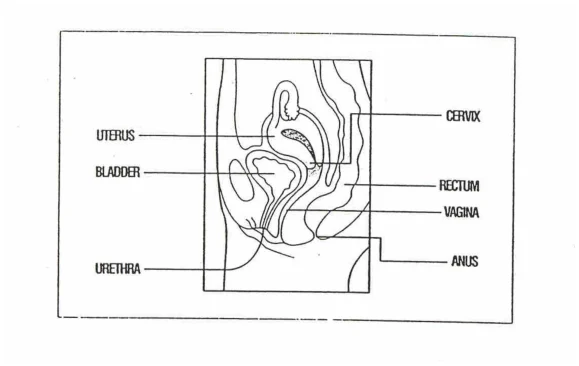
FEMALE ANATOMY
How to insert ESTRING
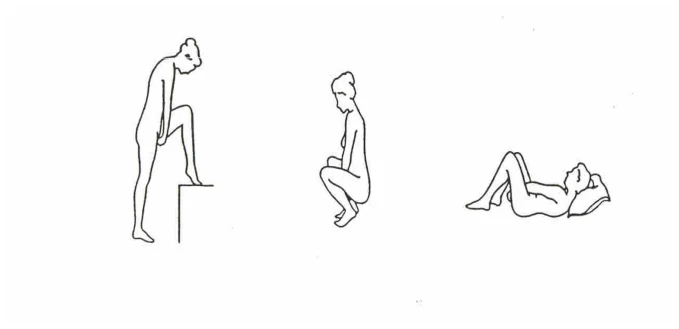
To insert ESTRING yourself, choose the position that is most comfortable for you: standing with one leg up, squatting, or lying down.
- 1. After washing and drying your hands, remove ESTRING from its pouch using the tear-off notch on the side. Since the ring becomes slippery when wet, be sure your hands are dry before handling it.
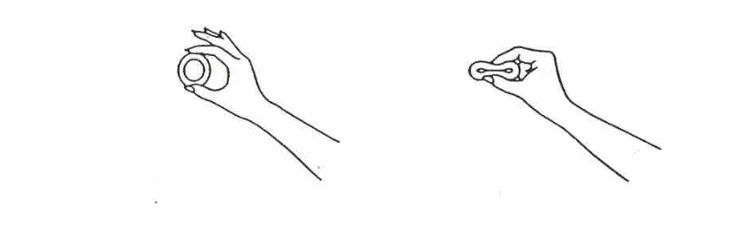
- 2. Hold ESTRING between your thumb and index finger and press the opposite sides of the ring together as shown.
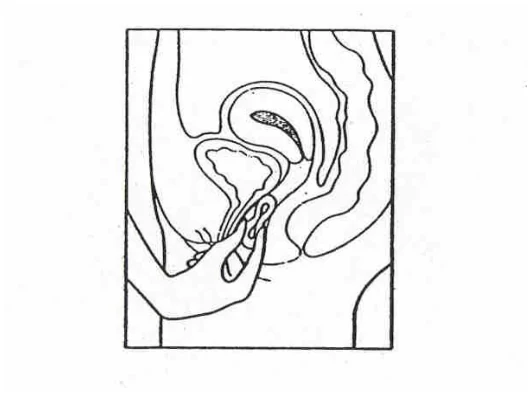
- 3. Gently push the compressed ring into your vagina as far as you can.
Placement of ESTRING
- The exact position of ESTRING is not critical, as long as it is placed in the upper third of the vagina.
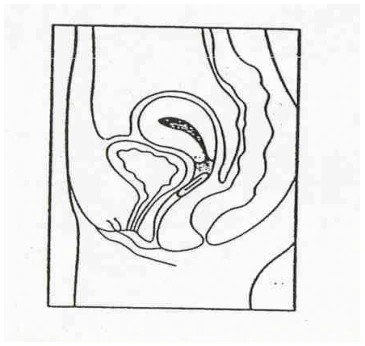
- When ESTRING is in place, you should not feel anything. If you feel uncomfortable, ESTRING is probably not far enough inside. Use your finger to gently push ESTRING further into your vagina.
- There is no danger of ESTRING being pushed too far up in the vagina or getting lost. ESTRING can only be inserted as far as the end of the vagina, where the cervix (the narrow, lower end of the uterus) will block ESTRING from going any further (see diagram of FEMALE ANATOMY).
Using ESTRING
- It is NOT necessary to remove ESTRING during intercourse as most women and their partners experience no discomfort. You may remove ESTRING before sex if it causes you or your partner any discomfort. Be sure to reinsert ESTRING as soon as possible afterwards (See How to remove ESTRING below).
- ESTRING may slide down into the lower part of the vagina as a result of the abdominal pressure or straining that sometimes accompanies constipation. If this should happen, gently guide ESTRING back into place with your finger.
- ESTRING may fall out following intense straining or coughing. If this should occur, simply wash ESTRING with lukewarm (NOT hot) water and reinsert it.
How to remove ESTRING
- 1. Wash and dry your hands thoroughly.
- 2. Assume a comfortable position, either standing with one leg up, squatting, or lying down (See figure under How to insert ESTRING).
- 3.
Loop your finger through the ring and gently pull it out.
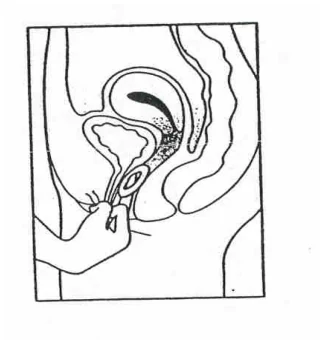
- 4. Discard the used ring in a waste receptacle. Do not flush ESTRING.
Overdose:
In general excessive doses of estrogen may result in nausea, vomiting, abdominal cramps, headache, dizziness, breast tenderness, drowsiness/fatigue, withdrawal bleeding and general ill feeling.
If you think that you or a person you are caring for have taken too much ESTRING, contact your healthcare professional, hospital emergency department, regional poison control centre or Health Canada's toll-free number, 1-844 POISON-X (1-844-764-7669) immediately, even if there are no signs or symptoms.
Missed dose:
ESTRING may be reintroduced at any time following a period without treatment (missed dose), as long as your healthcare professional considers treatment with ESTRING is still appropriate for you.
Possible side effects from using ESTRING:
These are not all the possible side effects you may have when taking ESTRING. If you experience any side effects not listed here, tell your healthcare professional.
- Breast pain
- Feeling bloated
- Hair loss
- Headache
- Nausea
- Vomiting
Serious side effects and what to do about them
| Side Effect/Symptom | Talk to your healthcare professional | Remove the ring and call your healthcare professional | |
|---|---|---|---|
| Side Effect/Symptom | Talk to your healthcare professional | Remove the ring and call your healthcare professional | |
| Side Effect/Symptom | Talk to your healthcare professional | Remove the ring and call your healthcare professional | |
| Side Effect/Symptom | Talk to your healthcare professional | Remove the ring and call your healthcare professional | |
| Only if severe | In all cases | ||
| Only if severe | In all cases | ||
| Only if severe | In all cases | ||
| Only if severe | In all cases | ||
| Vaginal hemorrhage (Vaginal bleeding): Abnormal bleeding or spotting from the vagina | √ | ||
| Venous thromboembolism (blood clots in veins): Pain in the calves or chest, sudden shortness of breath or coughing blood | √ | ||
| Migraine with visual disturbances: Severe headache or vomiting, dizziness, seizures, faintness, changes in vision or speech, visual disturbances | √ | ||
| Stroke (bleeding or blood clot in the brain): sudden numbness, weakness or tingling of the face, arm, or leg, particularly on one side of the body, sudden headache, blurry vision, difficulty swallowing or speaking, or lethargy, dizziness, fainting, vomiting, trouble understanding, trouble with walking and loss of balance | √ | ||
| Abdominal pain: Pain, swelling or tenderness in the abdomen | √ | ||
| Liver problems: yellowing of your skin and eyes (jaundice), right upper stomach area pain or swelling, nausea or vomiting, unusual dark urine, unusual | √ | ||
| tiredness, unexplained loss of appetite | |||
| Toxic Shock Syndrome (life threatening infection): fever, nausea, vomiting, diarrhea, muscle pain, dizziness, faintness, or a sunburn-rash on face and body | √ | ||
| Depression (Persistent sad mood): difficulty sleeping or sleeping too much, changes in appetite or weight, feelings of worthlessness, guilt, regret, helplessness or hopelessness, withdrawal from social situations | √ | ||
| Vaginal yeast infection (inflammation of the vagina): itching, burning, or discharge from the vagina | √ | ||
| Hyperglycemia: (high blood sugar): increased thirst, frequent urination, dry skin, headache, blurred vision and fatigue | √ | ||
| Hypertension (high blood pressure): shortness of breath, fatigue, dizziness or fainting, chest pain or pressure, swelling in your ankles and legs, bluish colour to your lips and skin, racing pulse or heart palpitations | √ | ||
| Ovarian cancer: Abdominal bloating or swelling, quickly feeling full when eating, weight loss, discomfort in the pelvic area, fatigue, back pain, changes in bowel habits, frequent need to urinate | √ | ||
| Gallbladder disease: abdominal pain, nausea and vomiting, fever, and yellowing of the skin (jaundice) | √ | ||
| Dementia: memory loss, problems communicating or finding words, | √ | ||
| confusion, personality changes, anxiety, agitation, paranoia, hallucinations | |||
| Endometrial hyperplasia/cancer (abnormal growth or cancer of the lining of the uterus): vaginal bleeding not associated with a period or after menopause; menstrual bleeding that is heavier or lasts longer than normal; abnormal blood-tinged discharge from the vagina; pain in the pelvis | √ | ||
| Heart Attack: Crushing chest pain or chest heaviness | √ | ||
| Hypersensitivity (allergic reaction): Itching, hives, swelling, vaginal discomfort/irritation, redness | √ | ||
| Peripheral edema (swelling of the legs or hands caused by fluid retention): swollen or puffy legs or hands, feeling heavy, achy or stiff | √ | ||
| Difficulty removing ring: Ring attaches to vaginal wall or is difficult to remove | √ | ||
| Intestinal obstruction (blockage that stops or impairs passage of contents of intestines): cramping pain in abdomen that may begin suddenly, bloating, loss of appetite, pain that comes and goes but will then last, nausea and vomiting, constipation or diarrhea | √ | ||
| Vaginal mucosal erosion/ulceration (small wounds that can form on your vagina): burning sensation, fever, itchiness, painful urination, vaginal discharge | √ | ||
| Breast abnormalities (including breast cancer): Lumps or discharge from the breast, changes in the nipple, breast enlargement or tenderness | √ | ||
| Edema (fluid retention): unusual swelling of the arms, hands, legs, feet and ankles, face or airway passages | √ | ||
| Skin Hyperpigmentation (areas of the skin darker than others): brown, black, gray, red or pink spots or patches on skin | √ | ||
If you have a troublesome symptom or side effect that is not listed here or becomes bad enough to interfere with your daily activities, tell your healthcare professional.
Reporting side effects
You can report any suspected side effects associated with the use of health products to Health Canada by:
- Visiting the Web page on Adverse Reaction Reporting (canada.ca/drug-device-reporting) for information on how to report online, by mail or by fax; or
- Calling toll-free at 1-866-234-2345.
NOTE: Contact your healthcare professional if you need information about how to manage your side effects. The Canada Vigilance Program does not provide medical advice.
Storage:
Store at controlled room temperature 15° to 30°C. Keep out of reach and sight of children and pets.
If you want more information about ESTRING:
- Talk to your healthcare professional
- Find the full product monograph that is prepared for healthcare professionals and includes the Patient Medication Information by visiting the Health Canada Drug Product Database website (https://www.canada.ca/en/health-canada/services/drugs-health-products/drug-products/drug-product-database.html); the manufacturer’s website www.pfizer.ca ; or by calling the distributor Paladin Pharma Inc., at 1-888-867-7426.
Date of Authorization: 2026-01-08