


Patient Medication Information: uses, side effects, how to take - Fraxiparine Forte
What is FRAXIPARINE® and FRAXIPARINE® FORTE used for?
EMLA Patch is used to temporarily numb small areas of skin that are slightly larger than a two FRAXIPARINE® is used to prevent the blood from clotting in the wrong places after having surgery, during hemodialysis, if you are immobilized and are at risk of developing clots and to treat existing blood clots that are blocking blood vessels. FRAXIPARINE® is indicated for use to treat chest pain and related heart injury.
FRAXIPARINE® FORTE is the higher strength injection than FRAXIPARINE® and is used for the treatment of blood clots within a deep blood vein (blood vessel that carries blood towards the heart).
How does FRAXIPARINE® work?
FRAXIPARINE® is a type of medicine called low molecular weight heparin (LMWH). FRAXIPARINE® works by delaying the action by which blood clots. This results in the blood remaining thin and prevents formation of clots which may become lodged in blood vessels. FRAXIPARINE® works by inhibiting the formation of thrombin in the body. Thrombin is a naturally occurring component of your blood that contributes to blood clotting.
What are the ingredients in FRAXIPARINE®?
Medicinal ingredients: Nadroparin calcium
Non-medicinal ingredients: Hydrochloric acid and/or Calcium hydroxide for pH adjustment, water for injection
FRAXIPARINE® and FRAXIPARINE® FORTE comes in the following dosage forms:
FRAXIPARINE® (nadroparin calcium, 9,500 anti-Xa IU/mL) is available in single dose, disposable prefilled glass syringes of:
0.2 mL (ungraduated syringe)* 1,900 anti-Xa IU Yellow
0.3 mL (ungraduated syringe) 2,850 anti-Xa IU Green
0.4 mL (ungraduated syringe) 3,800 anti-Xa IU Orange
0.6 mL (graduated syringe) 5,700 anti-Xa IU Brown
1.0 mL (graduated syringe) 9,500 anti-Xa IU Violet
FRAXIPARINE® FORTE (nadroparin calcium, 19,000 anti-Xa IU/mL) is available in single dose, disposable prefilled glass syringes of:
0.6 mL (graduated syringe) 11,400 anti-Xa lU Process Blue
0.8 mL (graduated syringe) 15,200 anti-Xa IU Magenta
1.0 mL (graduated syringe) 19,000 anti-Xa IU Reflex Blue
*0.2 mL syringe not available in Canada
Do not use FRAXIPARINE® if you:
- are allergic to FRAXIPARINE® or any of its ingredients or to other low molecular weight heparins and/or heparin.
- have a history of thrombocytopenia (decrease in the number of platelets).
- have a bacterial infection of the heart (bacterial endocarditis).
- have an active bleeding or any other diseases that could involve an increased risk of bleeding.
- have a severe blood clotting disorder (hemorrhagic diathesis, hemophilia).
- have bleeding due to acute gastroduodenal ulcer (stomach or intestinal bleed/ulcer).
- have a history of cerebral hemorrhage (bleeding in or against the brain).
- have high blood pressure.
- have disorders of the retina of the eye due to diabetes or bleeding.
- have injuries and/or operations on the central nervous system (brain or spine), eyes or ears.
- have severe kidney problems, unless you are receiving FRAXIPARINE® to prevent clots forming.
- are given high doses of FRAXIPARINE®, your doctor will assess whether certain types of anaesthesia (spinal or epidural painkillers) are right for you.
To help avoid side effects and ensure proper use, talk to your healthcare professional before you take FRAXIPARINE®. Talk about any health conditions or problems you may have, including if you:
- have previously had an allergic reaction to heparins.
- are taking certain medications that may increase the effect of FRAXIPARINE® on bleeding. Therefore, it is important for you to advise your doctor of all drugs that you are presently taking. Do not take any drugs other than those prescribed by your doctor while you are taking FRAXIPARINE®.
- are prescribed FRAXIPARINE®, it is necessary that you follow the instructions of your doctor or nurse carefully when using the drug. Only give yourself the injections prescribed and do so for the entire time period specified by your doctor. FRAXIPARINE® should not be administered intramuscularly.
- need to consult with another doctor or see your dentist, be absolutely sure to tell them that you are being treated with FRAXIPARINE®.
- have artificial heart valves.
- have a heart disease, including angina and recent heart attack.
- are taking any medications such as ASA (e.g. ASPIRIN®), or other drugs to reduce blood clotting such as warfarin or non-steroidal anti-inflammatory drugs (NSAIDS: drugs used to treat painful and/or inflammatory conditions of muscles or joints), including those that you buy without a prescription (see INTERACTIONS WITH THIS MEDICATION).
- have any medical condition that increases your risk of bleeding (such as recent surgery or stomach ulcer).
- have liver or kidney problems.
- have an allergy to latex.
are pregnant or breast feeding, you should tell your doctor so that the possible risks to you and your child can be assessed.
Tell your healthcare professional about all the medicines you take, including any drugs, vitamins, minerals, natural supplements or alternative medicines.
The following may interact with FRAXIPARINE®:
- other blood thinners (oral anticoagulants),
- systemic (gluco-) corticosteroids,
- platelet inhibitors,
- thrombolytic agents or ASA (e.g. ASPIRIN®).
How to take FRAXIPARINE®:
Usual dose:
How FRAXIPARINE® is Given:
FRAXIPARINE® is a prescription drug and must be used as directed. It is administered as a subcutaneous (s.c.) injection, which means the injection is made just under the surface of the skin. While you are in the hospital, your doctor or nurse will give your first injection of FRAXIPARINE® within 24 hours of your operation.
It is possible that after you go home, you may need to continue your injections of FRAXIPARINE®.
Instructions for self-injection of FRAXIPARINE®:
Your doctor may want you to continue your FRAXIPARINE® injections at home for a few days. If so, a health professional will show you how to administer your FRAXIPARINE® injections before you are released from hospital. It is essential that you follow these instructions exactly. If you have questions, be sure you ask your doctor or nurse to provide the explanations you require.
Removal of Packaging
To avoid damaging the syringe presentation it is recommended that the following steps are followed.
- To separate the packaged syringes, carefully fold the twin pack several times so that the syringes are back to back, then slowly, using even pressure, separate the two packaged syringes starting from the plunger end of the pack.
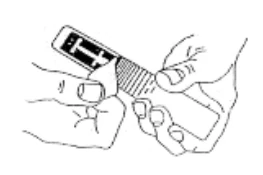
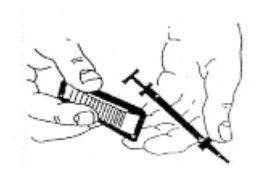
- To remove the syringe from its plastic packaging, gently tear the top backing paper completely from the plastic tray (starting at the plunger end), then allow the syringe to roll onto the palm of your other hand (Figures 1 and 2).
| Figure 1. Removal of backing strip from syringes |
| Figure 2. Removal of syringe from packaging |
FRAXIPARINE® and FRAXIPARINE® FORTE solution for injections should be visually inspected for any particles and discoloration before use. If any visual change is noted, the solution must be discarded.
Preparation of the Syringe for Subcutaneous Injection
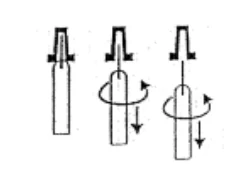
Removal of the cap from the syringe needle (Figure 3)
- Hold the syringe vertically (grey cap uppermost).
Hold the grey cap by its collar, and the syringe barrel in
your other hand, then slowly rotate the syringe barrel, gently pulling downwards at the same time, until the needle is fully withdrawn from the cap.
- Do not pull the cap upwards from the syringe as this could bend the needle.
 |
 |
| Figure 3. Removal of cap from syringe needle |
FRAXIPARINE® 0.2 mL, 0.3 mL and 0.4 mL prefilled syringes are intended for administration of unit dosages only. There may be a small air bubble in the syringe but this does not have to be removed.
FRAXIPARINE® and FRAXIPARINE® FORTE 0.6 mL, 0.8 mL and 1.0 mL prefilled graduated syringes may be used to administer adjusted dosages.
Hold the syringes vertically with the needle uppermost and ensure the air bubble is at the top of the syringe.
Advance the plunger to the volume/dosage required, expelling air and any excess.
Pay special attention to the instructions for the product you are using. Always ask your doctor’s advice.
Injection Technique
Always use FRAXIPARINE® exactly as your doctor or nurse has instructed you. You should ask their advice if you are having any difficulties injecting FRAXIPARINE®.
- 1. Wash your hands thoroughly with soap and water. Towel dry.
- 2.
Sit or lie down in a comfortable position.
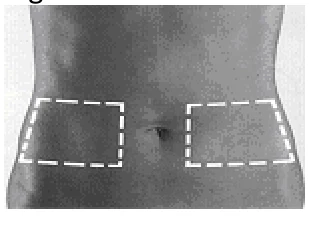
The injection is given in the side of the lower stomach area (Figure 4). Alternate the left and right side of the stomach at each injection.
| Figure 4 |
- 3.
Clean the injection area with an alcohol swab.
 |
 |
- 4. Pull off the cap that protects the needle. Discard the cap.
Important note:
- Do not touch the needle or allow it to come in contact with any surface before the injection
- The presence of a small air bubble in the syringe is normal. Do not try to remove this air bubble before making the injection.
- Gently pinch the skin that has been cleaned to make a fold (
- Figure 5). Hold the fold between the thumb and the forefinger during the entire injection.
- Hold the syringe firmly by the finger hold. Insert the full length of the needle straight (at an angle of 90˚) into the skin fold (Error! Reference source not found.) over a period of 10 to 15 seconds.
| Figure 6 |
- 8. Inject the contents of the syringe by pressing down on the plunger as far as it goes.
- 9. Remove the syringe from the skin at the same angle it was inserted (Figure 6). The injection site should not be rubbed.
 |
| Figure 5 |
 |
| Figure 6 |
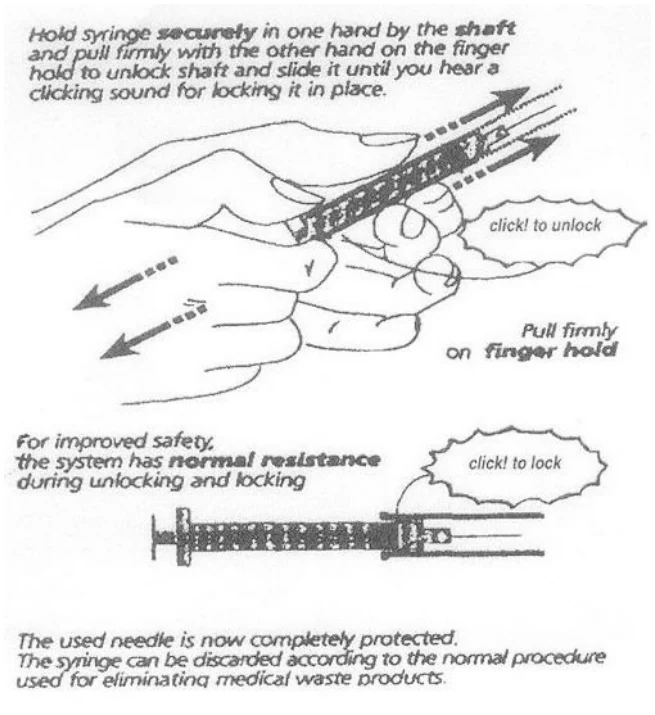
- 10. After injection use the safety shield to protect from needle injuries. To do this, hold the syringe in one hand by gripping the safety shield, then use the other hand to pull firmly on the finger hold. This unlocks the shield. Slide the shield up the body of the syringe until it locks into position over the needle (Figures 7 & 8).
How to Safely Dispose of FRAXIPARINE®:
As with all medications, keep out of reach of children. For safe disposal after injection, a safety system of protection for the needle has been designed as outlined below:
| Figure 7. FRAXIPARINE® safety system |
 |
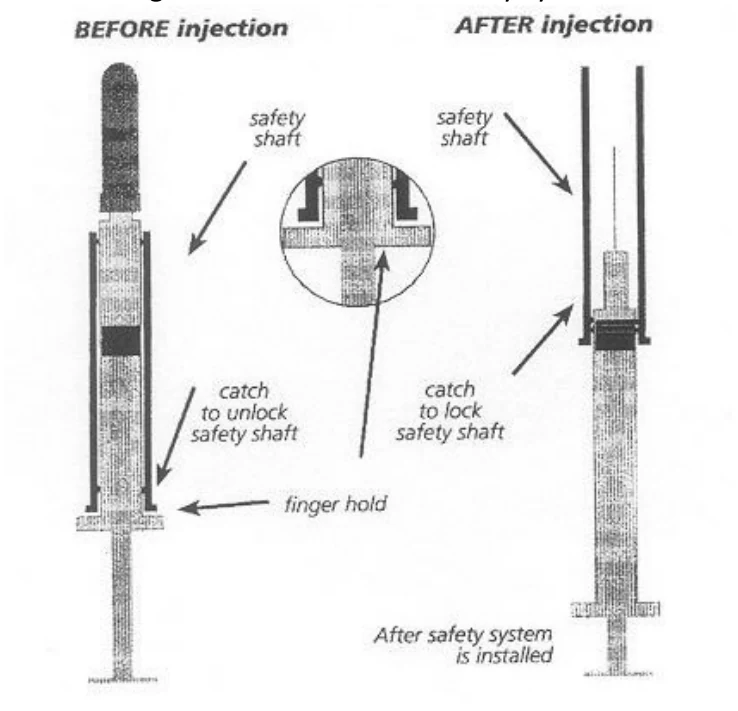 |
Figure 8. Installing safety system on FRAXIPARINE® syringe after injection. |
Return used needles in their safety devices to a licensed healthcare facility for safe disposal.
Overdose:
Accidental overdosage may result in hemorrhaging (internal or external bleeding) which cannot be treated at home.
| If you think that you have used too much FRAXIPARINE®, call your doctor immediately even if you do not yet observe any unusual symptoms. Your doctor can then make arrangements to admit you to hospital for observation and/or treatment. |
Missed Dose:
Do not inject a double dose to make up for forgotten individual doses. If you are not sure what to do, ask your doctor or pharmacist.
What are possible side effects from using FRAXIPARINE®?
These are not all the possible side effects you may feel when taking FRAXIPARINE® or FRAXIPARINE® FORTE. If you experience any side effects not listed here, contact your healthcare professional.
FRAXIPARINE® is generally well tolerated when used according to directions of use. Stroke caused by bleeding into the brain and serious bleeding within the abdomen have been reported. You
 |
should alert your doctor immediately if you notice an erection that lasts unusually long (in men). Your doctor may review your lab test results also.
The following side effects can happen to the skin where the patch was applied:
- whitening or redness
- slight swelling or puffiness
- initial burning or itching
- small red dots or purple spots
Serious side effects and what to do about them
| Symptom / effect | Talk to your healthcare professional | Stop taking drug and get immediate medical help | |
|---|---|---|---|
| Only if severe | In all cases | ||
Common Bleeding Purplish or reddish discolouration, or pain and bruising around the injection site Bleeding at the injection site and/or from surgical site | ✓ ✓ ✓ | ||
Uncommon Bleeding gums while brushing teeth | ✓ | ||
Rare Allergic reactions: Skin rash, itchy skin, swelling of the face (mouth, lips and/or tongue) or throat, accompanied by difficulty in breathing, speaking or swallowing (signs of angioedema) Breakdown of skin at the injection site. | ✓ ✓ | ||
Frequency not known (cannot be estimated from the available data) Headache, migraine | ✓ | ||
*If you think you have these side effects, it is important that you seek medical advice from your doctor immediately.
If you have a troublesome symptom or side effect that is not listed here or becomes bad enough to interfere with your daily activities, talk to your healthcare professional.
Reporting Side Effects
You can report any suspected side effects associated with the use of health products to Health Canada by:
NOTE: Contact your health professional if you need information about how to manage your side effects. The Canada Vigilance Program does not provide medical advice. |
Storage:
- FRAXIPARINE® should be stored between 15°-30°C.
- FRAXIPARINE® FORTE should be stored 15°-25°C.
- Do not refrigerate as cold injections may be painful. Do not freeze.
- Do not throw away any medicines via wastewater or household waste. Return used needles in their safety devices to a licensed healthcare facility for safe disposal. These measures will help protect the environment.
- Keep out of reach and sight of children.
If you want more information about FRAXIPARINE® and FRAXIPARINE® FORTE:
- Talk to your healthcare professional
- Find the full product monograph that is prepared for healthcare professionals and includes this Patient Medication Information by visiting the Health Canada website: (https://www.canada.ca/en/health-canada/services/drugs-health-products/drug-products/drug-product-database.html; the manufacturer’s website www.aspenpharma.ca, or by calling 1-844-330-1213.
Aspen Pharmacare Canada Inc.
8 – 1155 North Service Road West
Oakville, ON
L6M 3E3
Trademarks are owned by or licensed to the Aspen Group of companies.
© 2021 Aspen Group of companies or its licensor. All rights reserved
® ASPIRIN is a registered trademark of BAYER AKTIENGESELLSCHAFT