


Product Monograph - Gamunex
SUMMARY PRODUCT INFORMATION
| Table 1 – Product Information Summary | |||||
| Route of Administration | Dosage Form, Strength | Clinically Relevant Nonmedicinal Ingredients | |||
| Intravenous or Subcutaneous | Injectable solution, 10% | Glycine For a complete list see DOSAGE FORMS, COMPOSITION AND PACKAGING section. | |||
DESCRIPTION
GAMUNEX® (Immunoglobulin Intravenous [Human], 10%) manufactured by a patented chromatography process is a ready-to-use sterile solution of human immunoglobulin protein for intravenous or subcutaneous administration. GAMUNEX® consists of 9%–11% protein in 0.16–0.24 M glycine. GAMUNEX® contains no preservative.
GAMUNEX® is made from large pools of human plasma by a combination of cold ethanol fractionation, caprylate precipitation and filtration, and anion-exchange chromatography. The protein is stabilized during the process by adjusting the pH of the solution to 4.0-4.5. Isotonicity is achieved by the addition of glycine.
INDICATIONS AND CLINICAL USE
GAMUNEX® (Immunoglobulin Intravenous [Human], 10%) is indicated in:
Primary Immune Deficiency Syndromes (PID), including (Intravenous or Subcutaneous Administration):
- Congenital agammaglobulinaemia and hypogammaglobulinaemia
- Common variable immunodeficiency
- X-linked immunodeficiency with hyper IgM
- Severe combined immunodeficiency
- Wiskott Aldrich syndrome
Secondary Immune Deficiency Syndromes (SID), including (Intravenous or Subcutaneous Administration):
- Allogeneic bone marrow transplantation
- Pediatric HIV infection.
Neurological and/or Autoimmune Conditions:
- Chronic inflammatory demyelinating polyneuropathy (CIDP) in adults, 18 years of age or older
- Moderate to severe cases of Guillain-Barré Syndrome (GBS) in adults (see CLINICAL TRIALS section)
- Idiopathic Thrombocytopenic Purpura (ITP)
Primary Immune Deficiency Syndromes (PID)
GAMUNEX® is indicated as replacement therapy of primary humoral immunodeficiency states in which severe impairment of antibody forming capacity has been shown, such as congenital agammaglobulinemia, common variable immunodeficiency, X-linked immunodeficiency with hyper IgM, Wiskott-Aldrich syndrome, and severe combined immunodeficiencies (1-8).
Secondary Immune Deficiency Syndromes (SID)
Allogeneic Bone Marrow Transplantation:
GAMUNEX® is indicated for the reduction of septicemia and other infections, interstitial pneumonia and acute graft versus host disease in the first 100 days post-transplant in Allogeneic Bone Marrow Transplantation (BMT) patients of at least 20 years of age.
Shortly before, and for varying times after bone marrow transplantation, patients are immunosuppressed. The benefit of Immunoglobulin Intravenous [Human] in these patients during the recovery period is similar to that of replacement therapy in PID. The utility of Immunoglobulin Intravenous [Human] in BMT had been confirmed by long-term experience and in peer-reviewed published reports (15-18).
Graft-versus-host-disease (GvHD) is a frequent complication of BMT. Immunoglobulin Intravenous (Human) has been demonstrated to significantly reduce the incidence of acute GvHD (15,16) (see ACTION AND CLINICAL PHARMACOLOGY).
Pediatric HIV Infection
GAMUNEX® is indicated for the reduction of recurrent serious bacterial infections in those children who do not respond to or cannot tolerate antiretroviral combination therapy. Children with HIV infections, particularly when acquired through vertical transmission, are prone to recurrent serious bacterial infections, although they have apparently normal or supranormal IgG levels.
Neurological and/or Autoimmune conditions
Chronic Inflammatory Demyelinating Polyneuropathy (CIDP):
GAMUNEX® is indicated for the treatment of CIDP to improve neuromuscular disability and impairment, and for maintenance therapy to prevent relapse. Patients treated in the pivotal trial with GAMUNEX® for up to 48 weeks had improvements in neuromuscular disability scores and grip strength compared to placebo (47) (See CLINICAL TRIALS – Chronic Inflammatory Demyelinating Polyneuropathy).
Guillain-Barré Syndrome (GBS):
The efficacy of IGIV products including GAMUNEX® has been demonstrated in moderate to severe cases of GBS in adults, if treatment is initiated during the first two weeks following onset of symptoms, based on a systematic review of IGIV in the treatment of GBS (48).
Idiopathic Thrombocytopenic Purpura (ITP)
GAMUNEX® is indicated in ITP to rapidly raise platelet counts to prevent bleeding or to allow a patient with ITP to undergo surgery (9-14).
Geriatrics (>65 years of age)
No specific studies in elderly patients have been conducted. However, no evidence of a higher incidence of adverse events was observed in elderly patients.
Pediatrics (1-18 years of age)
GAMUNEX® is indicated for pediatric HIV infection. Pediatric patients were enrolled in the pivotal studies for primary humoral immunodeficiency and for idiopathic thrombocytopenic purpura. The clinical trial evaluating subcutaneous GAMUNEX® in primary immune deficiency included three pediatric subjects (age range 13-15). Allogeneic bone marrow transplantation is not recommended for patients less than 20 years of age.
CONTRAINDICATIONS
- GAMUNEX® (Immunoglobulin Intravenous [Human], 10%) is contraindicated in patients who are hypersensitive to this drug or to any ingredient in the formulation or component of the container. For a complete listing, see the DOSAGE FORMS, COMPOSITION AND PACKAGING section.
- GAMUNEX® (Immunoglobulin Intravenous [Human], 10%) is contraindicated in individuals with known anaphylactic or severe systemic response to human immunoglobulin. Individuals with severe, selective IgA deficiencies (serum IgA <0.05 g/L) who have known antibody against IgA (anti-IgA antibody) should only receive GAMUNEX® with utmost cautionary measures. GAMUNEX® contains trace amounts of not more than 0.084 mg/mL of IgA. However, no experience is available on tolerability of GAMUNEX® in patients with selective IgA deficiency since they were excluded from participation in clinical trials with GAMUNEX®.
WARNINGS AND PRECAUTIONS
Serious Warnings and Precautions
|
|---|
General
On rare occasions, treatment with an immunoglobulin preparation may cause a precipitous fall in blood pressure and a clinical picture of anaphylaxis, even when the patient is not known to be sensitive to immunoglobulin preparations. Epinephrine should be available for the treatment of an acute anaphylactic reaction.
Any vial that has been punctured should be used promptly. Partially used vials should be discarded. Visually inspect each bottle before use. Do not use if turbid. If the solution has been frozen, it must not be used.
GAMUNEX® is made from human plasma. Products made from human plasma may contain infectious agents, such as viruses, and theoretically, the Creutzfeldt-Jakob (CJD) agent that can cause disease. The risk that such products will transmit an infectious agent has been reduced by screening plasma donors for prior exposure to certain viruses, by testing for the presence of certain current virus infections, and by inactivating and/or removing certain viruses. Despite these measures, such products can still potentially transmit disease. There is also the possibility that unknown infectious agents may be present in such products. Individuals who receive infusions of blood or plasma products may develop signs and/or symptoms of some viral infections.
All infections thought by a physician possibly to have been transmitted by this product should be reported by the physician or other healthcare provider to Grifols Canada Ltd. [1-866-482-5226]. The physician should discuss the risks and benefits of this product with the patient, before prescribing or administering it to the patient.
Thromboembolic events
There is clinical evidence of an association between the administration of all immunoglobulins and thromboembolic events such as myocardial infarction, stroke, pulmonary embolism and deep vein thrombosis.
Since thrombosis may occur in the absence of known risk factors, caution should be exercised in prescribing and administering immunoglobulins. The drug product should be administered at the minimum concentration available and at the minimum rate of infusion practicable. Patients should be adequately hydrated before administration.
Baseline assessment of blood viscosity should be considered in patients at risk for hyperviscosity, including those with cryoglobulins, fasting chylomicronemia / markedly high triacylglycerols (triglycerides), or monoclonal gammopathies. Patients at risk of hyperviscosity should be monitored for signs and symptoms of thrombosis and blood viscosity assessed.
Risk factors for thromboembolic adverse events include: obesity, advanced age, hypertension, diabetes mellitus, history of vascular disease or thrombotic episodes, acquired or inherited thrombophilic disorders, prolonged periods of immobilisation, severely hypovolemic patients, diseases which increase blood viscosity, hypercoagulable conditions, use of estrogens, indwelling central vascular catheters, and cardiovascular risk factors.
Hematologic
Immunoglobulin Intravenous (Human) (IGIV) products can contain blood group antibodies which may act as hemolysins and induce in vivo coating of red blood cells with immunoglobulin, causing a positive direct antiglobulin reaction and, rarely, hemolysis (23-25) (see Post-Market Adverse Drug Reactions). Hemolytic anemia can develop subsequent to IGIV therapy due to enhanced RBC sequestration (see DRUG INTERACTIONS: Drug-Laboratory Interactions). Risk factors for hemolytic anemia include use of certain antibiotics, renal transplant rejection, multiple or incompatible blood transfusions, and history of certain blood disorders. IGIV recipients should be monitored for clinical signs and symptoms of hemolysis (26) (see Monitoring and Laboratory Tests).
Neurologic
An aseptic meningitis syndrome (AMS) has been reported to occur infrequently in association with Immunoglobulin Intravenous (Human) treatment. The syndrome usually begins within several hours to two days following Immunoglobulin Intravenous (Human) treatment. It is characterized by symptoms and signs including severe headache, nuchal rigidity, drowsiness, fever, photophobia, painful eye movements, nausea and vomiting. AMS may occur more frequently in association with high dose (2000 mg/kg) Immunoglobulin Intravenous (Human) treatment. Discontinuation of Immunoglobulin Intravenous (Human) treatment has resulted in remission of AMS within several days without sequelae (19-21).
Renal
Immunoglobulin Intravenous (Human) (IGIV) products have been reported to be associated with renal dysfunction, acute renal failure, osmotic nephrosis and death (22). Patients predisposed to acute renal failure include patients with any degree of pre-existing renal insufficiency, diabetes mellitus, age greater than 65, volume depletion, sepsis, paraproteinemia, or patients receiving known nephrotoxic drugs. Especially in such patients, human immunoglobulin products should be administered at the minimum concentration available and the minimum rate of infusion practicable. While these reports of renal dysfunction and acute renal failure have been associated with the use of many of the licensed human immunoglobulin products, those containing sucrose as a stabilizer accounted for a disproportionate share of the total number. GAMUNEX® (Immunoglobulin Intravenous [Human], 10%) does not contain sucrose.
Respiratory
There have been reports of noncardiogenic pulmonary edema (Transfusion-Related Acute Lung Injury [TRALI]) in patients administered IGIV (27). TRALI is characterized by severe respiratory distress, pulmonary edema, hypoxemia, normal left ventricular function, and fever and typically occurs within 1-6 hrs after transfusion. Patients with TRALI may be managed using oxygen therapy with adequate ventilatory support.
IGIV recipients should be monitored for pulmonary adverse reactions. If TRALI is suspected, appropriate tests should be performed for the presence of anti-neutrophil antibodies in both the product and patient serum (see Monitoring and Laboratory Tests).
Special Populations
Pregnant Women
There is no experience of GAMUNEX® in pregnancy during clinical trials. Animal reproduction studies have not been conducted with GAMUNEX®. It is not known whether GAMUNEX® can cause fetal harm when administered to a pregnant woman or can affect reproduction capacity. GAMUNEX® should be given to a pregnant woman only if clearly needed.
Nursing Women
Immunoglobulins are excreted into the milk and may contribute to the transfer of protective antibodies to the neonate.
Pediatrics (1-18 years of age)
GAMUNEX® is indicated for pediatric patients in the treatment of primary humoral immunodeficiency, idiopathic thrombocytopenic purpura and pediatric HIV infection. The clinical trial evaluating subcutaneous GAMUNEX® in primary immune deficiency included three pediatric subjects (age range 13-15). There is limited data and low quality evidence from studies in GBS for the use of IGIV products in children.
Geriatrics (>65 years of age)
See Renal Section. The clinical trial evaluating subcutaneous GAMUNEX® in primary immune deficiency included four elderly subjects (age range 65-68).
Monitoring and Laboratory Tests
In some patients, administration of GAMUNEX® results in a transitory rise of passively transferred antibodies which may produce misleading serological findings such as positive direct anti-globulin and anti-HBc results in the absence of viral transmission.
Periodic monitoring of renal function and urine output is particularly important in patients judged to have a potential increased risk for developing acute renal failure. Renal function, including measurements of blood urea nitrogen (BUN)/serum creatinine, should be assessed prior to the initial infusion of GAMUNEX® and again at appropriate intervals thereafter.
If signs or symptoms of hemolysis are present after GAMUNEX® infusion, appropriate confirmatory laboratory testing, such as unconjugated serum bilirubin, serum haptoglobulin, Direct Antiglobulin test (DAT) and serum LDH, should be done.
If TRALI is suspected, appropriate tests should be performed for the presence of anti-neutrophil antibodies in both the product and patient serum.
ADVERSE REACTIONS
Adverse Drug Reaction Overview
Increases in creatinine and blood urea nitrogen (BUN) have been observed as soon as one to two days following infusion, predominantly with other human immunoglobulin products, stabilized with sucrose. Progression to oliguria and anuria requiring dialysis has been observed, although some patients have improved spontaneously following cessation of treatment (28). GAMUNEX® (Immunoglobulin Intravenous [Human], 10%) does not contain sucrose. Glycine, a natural amino acid, is used as a stabilizer. In the studies undertaken to date with GAMUNEX®, no increase in creatinine and blood urea nitrogen was observed.
Although not all adverse effects previously reported with intravenous and intramuscular immunoglobulin administration have been observed for GAMUNEX®, adverse effects may be expected to be similar to those reported with these products. Potential reactions may include anxiety, flushing, wheezing, abdominal cramps, myalgias, arthralgia, dizziness, and rash. In addition, rare cases of hemolytic anemia/hemolysis which were moderate to severe in intensity have been reported with human immunoglobulins, including GAMUNEX® (see WARNINGS AND PRECAUTIONS).
True allergic/anaphylactic reactions to GAMUNEX® may occur in recipients with documented prior histories of severe allergic reactions to intramuscular immunoglobulin, but some patients may tolerate cautiously administered intravenous immunoglobulin without adverse effects (29). Very rarely an anaphylactic reaction may occur in patients with no prior history of severe allergic reactions to either intramuscular or intravenous immunoglobulin.
Clinical Trial Adverse Drug Reactions
Because clinical trials are conducted under very specific conditions the adverse reaction rates observed in the clinical trials may not reflect the rates observed in practice and should not be compared to the rates in the clinical trials of another drug. Adverse drug reaction information from clinical trials is useful for identifying drug-related adverse events and for approximating rates.
Primary Immune Deficiency (PID)
Intravenous Administration: Adverse events were monitored in three randomized clinical trials, involving more than 200 primary immune deficiency patients receiving intravenous administration. In two trials, involving 18-20 patients each, patients received 100-600 mg/kg GAMUNEX® or a solvent/detergent treated immunoglobulin intravenous 10% product previously manufactured by the same company (IGIV S/D, 10%) for three subsequent infusions on a 3 or 4 week infusion interval and were then crossed over to three infusions of the alternate product. In the third trial, 172 patients were randomized to GAMUNEX®or IGIV S/D, 10% for a nine-month double-blinded treatment with either of the two products at a dose between 100 and 600 mg/kg on a 3 or 4 week infusion interval. In a pooled analysis across the three studies, the infusion rate (0.08 mL/kg/min) was reduced for 11 of 210 exposed patients (7 GAMUNEX®, 4 IGIV S/D, 10%) at 17 occasions. In most instances, mild to moderate hives/urticaria, itching, pain or reaction at infusion site, anxiety or headache was the main reason for reduction in infusion rate. There was one case of severe chills. There were no anaphylactic or anaphylactoid reactions.
In the pivotal clinical trial, the most frequently recorded drug related adverse events (≥0.5%) normalized per patient and infusion are given in Table 2.
| Table 2 – Most Frequently Recorded Drug Related Adverse Events (≥0.5%) Normalized per Patient and Infusion | |||||
| Drug Related Adverse Events | GAMUNEX® No. of Infusions: 825 n (%) | IGIV S/D, 10% No. of Infusions: 865 n (%) | |||
| Cough increased | 14 (1.7%) | 11 (1.3%) | |||
| Headache | 7 (0.8%) | 11 (1.3%) | |||
| Fever | 1 (0.1%) | 9 (1.0%) | |||
| Pharyngitis | 7 (0.8%) | 9 (1.0%) | |||
| Nausea | 4 (0.5%) | 4 (0.5%) | |||
| Table 2 – Most Frequently Recorded Drug Related Adverse Events (≥0.5%) Normalized per Patient and Infusion | ||
| Urticaria | 4 (0.5%) | 5 (0.6%) |
At various time points after the infusion of Immunoglobulin Intravenous (Human), 10%, serum samples were drawn to monitor the viral safety of the PID patients. Viral markers of hepatitis C, hepatitis B, HIV-1, and parvovirus B19 were monitored by nucleic acid testing (NAT), Polymerase Chain Reaction (PCR), and serological testing. There were no treatment related emergent findings of viral transmission (30-32).
Similar adverse reactions as for PID are expected for the Immunoglobulin Intravenous (Human), 10% treatment of patients with pediatric HIV infection or allogeneic bone marrow transplantation due to the similar mechanism of action and dose schedule.
Subcutaneous Administration: Adverse events occurring in study 060001 (investigating subcutaneous infusion of GAMUNEX®) were divided into 2 types: 1) Local infusion site reactions, and 2) Non-infusion site adverse events. Table 3 below displays the most common drug-related adverse events, normalized per infusion, occurring with ≥0.5% of infusions during the subcutaneous phase of the study.
Table 3: Most Frequent Drug-Related Adverse Events, per Infusion (≥0.5%) by Subjects in the Subcutaneous Phase (study 060001)
Drug-related Adverse Event (≥0.5% of subjects) | Rate of Adverse Events Number of infusions: 725 n (%) |
|---|---|
| Local Infusion Site Reactions | 427 (58.9%) |
| Non-infusion site adverse events | |
| Headache | 21 (2.9%) |
| Arthralgia | 4 (0.6%) |
The most common drug-related adverse reactions with subcutaneous administration of GAMUNEX® were infusion site reactions, consisting primarily of mild to moderate erythema, pain and swelling. The majority of local infusion site reactions resolved within 3 days. Among these local site reactions, 91.1% were classified as mild, 6.8% were moderate, and just 2.1% considered severe. No serious local infusion site reactions were observed. The number of subjects reporting these local infusion site reactions decreased substantially over time as subjects received continued weekly infusions (see figure below).
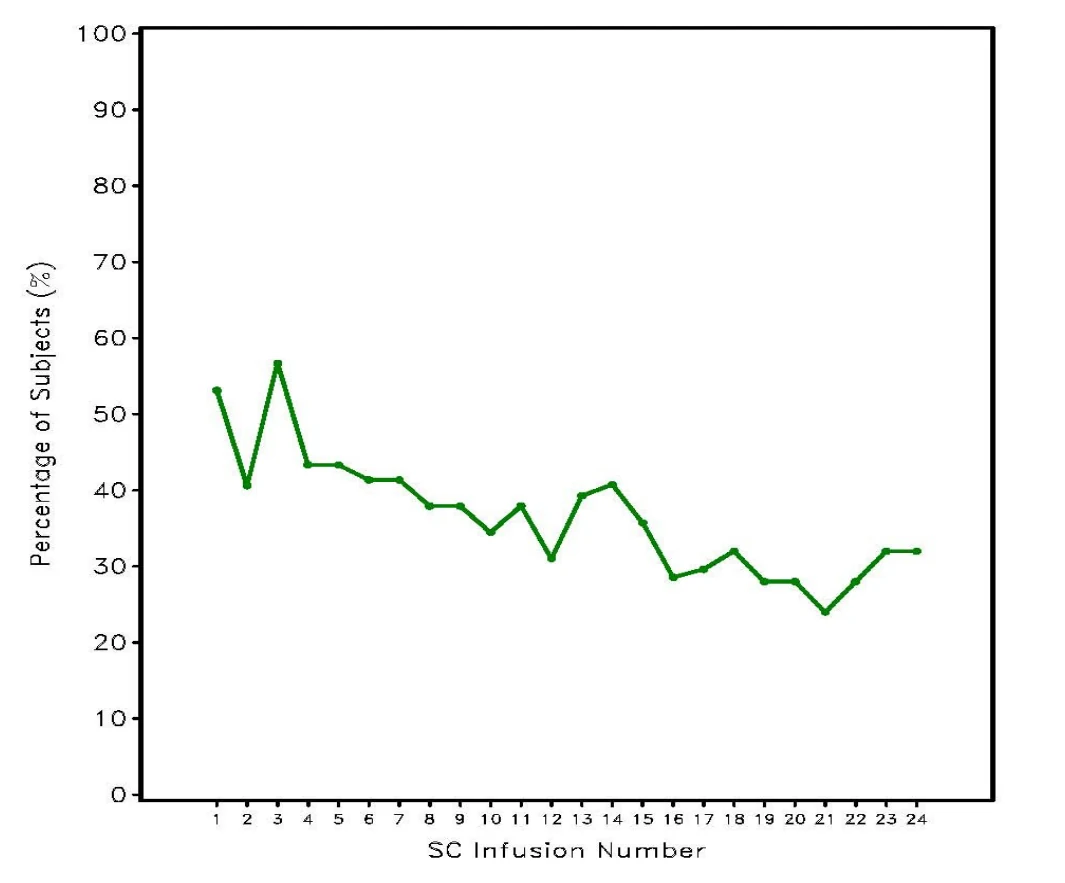
Figure: Percentages of subjects reporting local infusion site reactions after repeated
infusions during the SC phase (safety population)
Idiopathic Thrombocytopenic Purpura (ITP)
Adverse reactions were monitored in two randomized clinical trials with more than 100 patients with acute or chronic ITP.
In the first study (randomized and double-blind), 97 ITP patients were randomized to a single dose of 2000 mg/kg of GAMUNEX® or a solvent/detergent treated immunoglobulin intravenous 10% product previously manufactured by the same company (IGIV S/D, 10%). The total dose was divided into two 1000 mg/kg doses given on two consecutive days at a maximum infusion rate of 0.08 mL/kg/min.
As expected, the adverse event rate for Immunoglobulin Intravenous (Human), 10% in this ITP trial was higher than observed in the replacement therapy for Primary Immune Deficiencies (PID), but was within the range reported earlier for Immunoglobulin Intravenous (Human) (33). It should be noted that the dose is 4-5 fold higher than in PID and that the total dose was given on two consecutive days rather than on five consecutive days, which is associated with a higher adverse event rate (9). Finally, no pre-medication with corticosteroids was permitted in the study protocol.
More than 90% of the observed drug related adverse events were of mild to moderate severity and of transient nature.
The most frequently recorded drug related adverse events (≥2.0%) are given in Table 4:
| Table 4 – Most Frequently Recorded Drug Related Adverse Events (≥2.0%) | |||||||||
GAMUNEX® No. of Patients: 48 n (%) | IGIV S/D 10% No. of Patients: 49 n (%) | ||||||||
| Headache | 24 (50%) | 24 (49%) | |||||||
| Mild | 25% | 18% | |||||||
| Moderate | 21% | 20% | |||||||
| Severe | 4% | 12% | |||||||
| < Day 3 | 46% | 49% | |||||||
| > Day 3 | 4% | 0% | |||||||
| Vomiting | 6 (13%) | 8 (16%) | |||||||
| Mild | 10% | 10% | |||||||
| Moderate | 2% | 6% | |||||||
| Severe | 0% | 0% | |||||||
| < Day 3 | 10% | 16% | |||||||
| > Day 3 | 2% | 0% | |||||||
| Fever | 5 (10%) | 5 (10%) | |||||||
| Nausea | 5 (10%) | 4 (8%) | |||||||
| Rash | 3 (6%) | 0 (0%) | |||||||
| Back Pain | 3 (6%) | 2 (4%) | |||||||
| Asthenia | 2 (4%) | 3 (6%) | |||||||
| Arthralgia | 2 (4%) | 0 (0%) | |||||||
| Pruritus | 2 (4%) | 0 (0%) | |||||||
| Dizziness | 1 (2%) | 3 (6%) | |||||||
| Neck Pain | 0 (0%) | 2 (4%) | |||||||
The infusion rate was reduced for only 4 of the 97 treated patients (1 GAMUNEX®, 3 IGIV S/D, 10%) on 4 occasions. Mild to moderate headache, nausea, and fever were the reported reasons. There were no anaphylactic or anaphylactoid reactions.
At various time points after the infusion of Immunoglobulin Intravenous (Human), 10%, serum samples were drawn to monitor the viral safety of the ITP patients. Viral markers of hepatitis C, hepatitis B, HIV-1, and parvovirus B19 were monitored by nucleic acid testing (NAT), Polymerase Chain Reaction (PCR), and serological testing. There were no treatment related emergent findings of viral transmission (34).
A second trial was carried out in 28 chronic ITP patients who received 1000 mg/kg GAMUNEX® on three occasions for treatment of relapses to determine tolerability of various infusion rates. The maximum infusion rate on the three occasions was randomly assigned to 0.08, 0.11, or 0.14 mL/kg/min (8, 11 or 14 mg/kg/min) in which each patient was to receive Immunoglobulin Intravenous (Human), 10%, at all 3 rates. No pre-medication with corticosteroids to alleviate infusion-related intolerability was permitted. Seven patients did not complete the study for the following reasons: one adverse event (hives) at the 0.08 mL/kg/min level, one patient withdrew due to unwillingness to adhere to study protocol (use of disallowed concomitant medication -prednisone), and five patients did not require additional treatment.
The number of patients who experienced at least one adverse event for the 0.08, 0.11, and 0.14 mL/kg/min infusion rates was 12 (46%), 13 (59%), and 11 (46%), respectively. The most commonly reported adverse event was headache, which occurred more frequently during the higher infusion rates (4% in 0.08 mL/kg/min patients vs. 23% in 0.11 mL/kg/min patients vs. 13% in 0.14 mL/kg/min patients). Importantly, all of the headaches were mild except for one severe headache at the 0.08 mL/kg/min rate. Otherwise, the incidence rates of adverse events and drug-related adverse events generally appeared to be similar among the three infusion groups. No patients experienced a drug related serious adverse event. There were no other abnormal safety results except for slightly decreased heart rates following all infusion rates (35).
Chronic Inflammatory Demyelinating Polyneuropathy (CIDP)
In study 100538, 113 subjects were exposed to GAMUNEX® and 95 were exposed to placebo. As a result of the study design, the drug exposure with GAMUNEX® was almost twice that of placebo, with 1096 GAMUNEX® infusions versus 575 placebo infusions. Therefore, adverse reactions are reported per infusion (represented as frequency) to correct for differences in drug exposure between the 2 groups. The majority of loading-dose infusions (2 g/kg), were administered over 2 days in both the GAMUNEX® group (90 [87%] of 104 infusions) and placebo group (67 [83%] of 81 infusions). The majority of maintenance-dose infusions (1 g/kg) were administered over 1 day in both the GAMUNEX® (698 [89%] of 783 infusions) and placebo (327 [91%] of 359 infusions) groups, and study drug infusions were administered in the mean over 2.7 hours among the two treatment groups.
Discontinuations due to adverse events during the Efficacy Period occurred in 1 subject in the GAMUNEX® group (2%; urticaria) and 1 subject in the placebo group (2%; cerebrovascular accident). Two subjects (4%) treated with GAMUNEX® discontinued due to adverse events (dyspnea, bronchopneumonia) during the rescue phase, and 1 subject (3%) treated with placebo discontinued due to an adverse event (deep vein thrombosis) during the Randomized Withdrawal Period.
The most frequently reported drug related adverse events (≥5%) are provided in Table 5.
| Table 5 Most frequent drug-related treatment emergent adverse events (TEAE) for all study periods combined (safety population) | ||||||||||||||||||||
MedDRA preferred term a | GAMUNEX® (N=113) - 1096 infusions | Placebo (N=95) – 575 infusions | ||||||||||||||||||
| No. of Subjects (%) | No. of Adverse Events | Incidence density b | No. of Subjects (%) | No. of Adverse Events | Incidence density b | |||||||||||||||
| Any drug-related TEAE | 62 (55) | 194 | 0.177 | 16 (17) | 25 | 0.043 | ||||||||||||||
| Headache | 31 (27) | 44 | 0.040 | 6 (6) | 7 | 0.012 | ||||||||||||||
| Pyrexia | 15 (13) | 26 | 0.024 | 0 | 0 | 0 | ||||||||||||||
| Hypertension | 7 ( 6) | 16 | 0.015 | 3 (3) | 3 | 0.005 | ||||||||||||||
| Influenza like illness | 5 ( 4) | 13 | 0.012 | 0 | 0 | 0 | ||||||||||||||
| Chills | 8 ( 7) | 9 | 0.008 | 0 | 0 | 0 | ||||||||||||||
| Rash | 6 ( 5) | 8 | 0.007 | 1 (1) | 1 | 0.002 | ||||||||||||||
| Nausea | 6 ( 5) | 7 | 0.006 | 3 (3) | 3 | 0.005 | ||||||||||||||
| Asthenia | 6 ( 5) | 6 | 0.005 | 0 | 0 | 0 | ||||||||||||||
a Reported in ≥5% of subjects in either treatment group b Calculated by the total number of TEAEs divided by the number of infusions received (1096 for GAMUNEX® and 575 for placebo). | ||||||||||||||||||||
Guillain-Barré Syndrome (GBS)
There is limited information from clinical trials for GAMUNEX® in GBS. However, adverse reactions in GBS are expected to be comparable to those observed in CIDP patients, due to the similar mechanism of action for Immunoglobulin Intravenous, 10%, in these conditions and because the recommended dose for GBS is the same as the initial loading dose in CIDP (2 g/kg).
Abnormal Hematologic and Clinical Chemistry Findings
In some patients in the clinical trial program, administration with GAMUNEX® resulted in a transitory decrease in RBC, hematocrit and hemoglobin with no evidence of hemolysis or significant clinical outcome.
Post-Market Adverse Drug Reactions
The following adverse reactions have been identified and reported during post-marketing use of GAMUNEX®.
Very rare adverse events (<0.01%): aseptic meningitis
Rare adverse events (<0.1%): hemolytic anemia. Some cases of hemolysis/hemolytic anemia, especially in association with pre-existing renal impairment, were severe and required blood component transfusion.
DRUG INTERACTIONS
Drug-Drug Interactions
Antibodies in GAMUNEX® may interfere with the response to live viral vaccines such as measles, mumps and rubella. Therefore, use of such vaccines should be deferred until approximately 6 months after GAMUNEX® administration.
Do not dilute with saline. If dilution is required, GAMUNEX® may be diluted with 5% dextrose in water (D5W) (see DOSAGE AND ADMINISTRATION: Administration).
It is recommended to infuse GAMUNEX® using a separate line by itself, without mixing with other intravenous fluids or medications the patient might be receiving. GAMUNEX® should not be mixed with any other Immunoglobulin Intravenous (Human) formulation.
The infusion line may be flushed before and after administration of GAMUNEX® with 5% dextrose in water (D5/W) or 0.9% sodium chloride for injection.
Simultaneous administration of GAMUNEX® and Heparin through a single lumen delivery device should be avoided due to incompatibilities noted between Heparin and immunoglobulin intravenous products (including GAMUNEX®). Heparin Lock (Hep-Lock) through which GAMUNEX® was administered should be flushed with 5% dextrose in water (D5/W) or 0.9% sodium chloride for injection and should not be flushed with Heparin. No other drug interactions or compatibilities have been evaluated.
Drug-Food Interactions
Interactions with food have not been established.
Drug-Herb Interactions
Interactions with herbal products have not been established.
Drug-Laboratory Interactions
Direct antiglobulin tests (DAT or direct Coombs tests), which are carried out in some centers as a safety check prior to red blood cell transfusions may show a positive result following treatment with GAMUNEX® (Immunoglobulin Intravenous [Human], 10%). This may be due to the fact that GAMUNEX® may contain low levels of anti Blood Group A and B antibodies primarily of the IgG4 class. However, there was no evidence of hemolysis or significant clinical effect in association with positive DAT findings in clinical trials (30-32,34,35).
DOSAGE AND ADMINISTRATION
Recommended Dose and Dosage Adjustment
Clinical investigations indicate that Immunoglobulin Intravenous (Human), 10% is well-tolerated and less likely to produce side effects when infused at the recommended rate. If side effects occur, the rate may be reduced, or the infusion interrupted until symptoms subside. The infusion may then be resumed at the rate which is comfortable for the patient.
Periodic monitoring of renal function and urine output is particularly important in patients judged to have a potential increased risk for developing acute renal failure. Renal function, including measurement of blood urea nitrogen (BUN)/serum creatinine, should be assessed prior to the initial infusion of GAMUNEX® and again at appropriate intervals thereafter. If renal function deteriorates, discontinuation of the product should be considered.
For patients judged to be at increased risk for developing renal dysfunction, it may be prudent to reduce the amount of product infused per unit time by infusing GAMUNEX®, (Immunoglobulin Intravenous [Human], 10%) at a rate less than 8 mg/kg/min (0.08 mL/kg/min). No prospective data are presently available to identify a maximum safe dose, concentration, and rate of infusion in patients determined to be at increased risk of acute renal failure. In the absence of prospective data, recommended doses should not be exceeded and the concentration and infusion rate should be the minimum level practicable. Reduction in dose, concentration, and/or rate of administration in patients at risk of acute renal failure is suggested in order to reduce the risk of acute renal failure (36).
Assure that all patients are not volume depleted prior to the initiation of the infusion of Immunoglobulin Intravenous (Human), 10%.
Intravenous Dosing:
Primary Immune Deficiency: GAMUNEX® doses between 100 and 600 mg/kg (1 and 6 mL/kg administered every 3 or 4 weeks) may be used for infection prophylaxis. The dose should be individualized taking into account dosing intervals (e.g., 3 or 4 weeks) and GAMUNEX® dose (between 100 and 600 mg/kg). The goal should be to achieve serum IgG levels at trough (i.e., prior to the next infusion) of at least 5 g/L (6).
Idiopathic Thrombocytopenic Purpura: GAMUNEX® may be administered at a total dose of 2000 mg/kg, divided into two doses of 1000 mg/kg (10 mL/kg) given on two consecutive days, or into five doses of 400 mg/kg (4 mL/kg) given on five consecutive days. If after administration of the first of two daily 1000 mg/kg (10 mL/kg) doses, an adequate increase in the platelet count is observed at 24 hours, the second dose of 1000 mg/kg body weight may be withheld.
The high dose regimen (1000 mg/kg × 1-2 days) is not recommended for individuals with expanded fluid volumes or where fluid volume may be a concern.
Allogeneic Bone Marrow Transplantation (BMT): An equivalent dosage of 500 mg/kg GAMUNEX® (5 mL/kg) is recommended beginning on days 7 and 2 prior to transplantation (or at the time conditioning therapy for transplantation begins), then weekly through 90 days after transplantation. GAMUNEX® should be administered by itself through a Hickman line while it is in place, and thereafter through a peripheral vein.
Pediatric HIV Infection: An equivalent dosage of GAMUNEX® is recommended in doses of 400 mg/kg (4 mL/kg) body weight every 28 days.
Chronic Inflammatory Demyelinating Polyneuropathy (CIDP): GAMUNEX® may be initially administered as a total loading dose of 2 g/kg (20 mL/kg) given in divided doses over two to four consecutive days. GAMUNEX® may be administered as a maintenance infusion of 1 g/kg administered over 1 day (10 mL/kg) or divided into two doses of 0.5 g/kg (5 mL/kg) given on two consecutive days, every 3 weeks.
Guillain-Barré Syndrome (GBS): Information on the dose and duration of use of GAMUNEX® in GBS is limited. Based on data from a systematic review for IGIV (48), GAMUNEX® may be administered as a total dose of 2 g/kg (20 mL/kg) given in divided doses over two to five consecutive days.
Subcutaneous Dosing:
Primary Immune Deficiency: GAMUNEX® may be administered via subcutaneous infusion for replacement therapy in primary immune deficiency. The initial weekly subcutaneous GAMUNEX® dose can be calculated by multiplying the previous intravenous dose by 1.37, then dividing this dose into weekly doses based on the patient’s previous IGIV treatment interval; for example, if IGIV was administered every three weeks, divide by 3. This dose of GAMUNEX® will provide a systemic IgG exposure (AUC) comparable to that of the previous IGIV treatment.
Secondary Immune Deficiencies GAMUNEX® may also be administered subcutaneously for the treatment of patients with secondary immune deficiencies. This approval is based on data collected in patients with Primary Immune Deficiency, and mechanistic similarities between Primary and Secondary Immune Deficiencies. Where applicable, the initial weekly subcutaneous GAMUNEX® dose can be calculated by multiplying the previous intravenous dose by 1.37, then dividing this dose into weekly doses based on the patient’s previous IGIV treatment interval; for example, if IGIV was administered every three weeks, divide by 3. This dose of GAMUNEX® will provide a systemic IgG exposure (AUC) comparable to that of the previous IGIV treatment.
Administration
General: Prior to use, allow the solution to reach ambient room temperature. As with all parenteral drug products, GAMUNEX® should be inspected visually for discoloration and particulate matter prior to administration. DO NOT SHAKE. Do not use if the solution is cloudy or has particulates. Check the product expiration date on the vial. Do not use beyond the expiration date.
For intravenous use only. It is recommended that intravenously administered GAMUNEX® should initially be infused at a rate of 0.01 to 0.02 mL/kg per minute (1 to 2 mg/kg per minute) for the first 30 minutes. If well-tolerated, the rate may be gradually increased to a maximum of 0.14 mL/kg per minute (14 mg/kg per minute). If side effects occur, the rate may be reduced, or the infusion interrupted until symptoms subside. The infusion may then be resumed at the rate, which is comfortable for the patient. In a clinical trial with 28 chronic adult ITP patients receiving 1000 mg/kg GAMUNEX® to treat relapses, the infusion rate could be safely increased up to 0.14 mL/kg per minute (14 mg/kg per minute) (28). Caution should be exercised when an infusion rate higher than 0.08 mL/kg per minute (8 mg/kg per minute) is administered for the first time.
For subcutaneous use: Dosages for specific indications are provided above, but in general, it is recommended that subcutaneously administered GAMUNEX® be infused by itself at a rate of 20 mL/hr per infusion site. In clinical study 060001, the mean volume administered per infusion site was 34 mL (17-69 mL) and the majority of infusions were administered at a rate of 20 mL/hr per site. Multiple simultaneous infusion sites were enabled by administration tubing and Y-site connection tubing. Most administrations (95.9%) involved 4 or more infusion sites with abdomen and thighs being the most commonly used sites.
- 1. Use aseptic technique when preparing and administering GAMUNEX® for injection.
- 2. Remove the protective cap from the vial to expose the central portion of the rubber stopper.
- 3. Wipe the rubber stopper with alcohol and allow to dry.
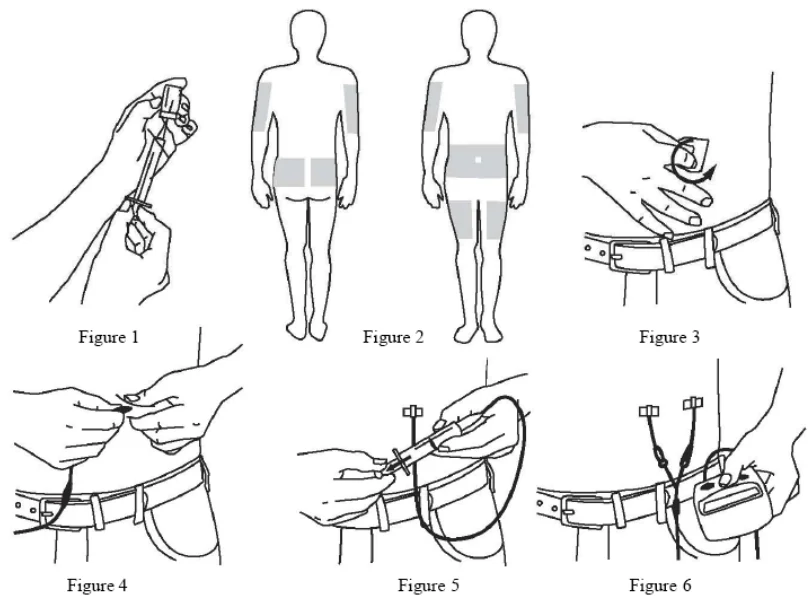
- 4. Using a sterile syringe and needle, prepare to withdraw GAMUNEX® by first injecting air into the vial that is equivalent to the amount of GAMUNEX® to be withdrawn. Then withdraw the desired volume of GAMUNEX®. If multiple vials are required to achieve the desired dose, repeat this step. (Figure 1)
- 5. If using a pump, follow the manufacturer’s instructions for filling the pump reservoir and preparing the pump, administration tubing and Y-site connection tubing, if needed. Be sure to prime the administration tubing to ensure that no air is left in the tubing or needle by filling the tubing/needle with GAMUNEX®
- 6. Select the number and location of injection sites. (Figure 2)
- 7. Cleanse the injection site(s) with antiseptic solution using a circular motion working from the center of the site and moving to the outside. Sites should be clean, dry, and at least two inches apart. (Figure 3)
- 8. Grasp the skin between two fingers and insert the needle into the subcutaneous tissue. (Figure 4)
- 9. Repeat priming and needle insertion steps using a new needle, administration tubing and a new infusion site. Secure the needle in place by applying sterile gauze or transparent dressing over the site. (Figure 5)
- 10. If using multiple, simultaneous injection sites, use Y-site connection tubing and secure to the administration tubing.
- 11. If a pump is being used, infuse GAMUNEX® following the manufacturer’s instructions for the pump. (Figure 6)
Only 18 gauge needles should be used to penetrate the stopper for dispensing product from 10 mL vial sizes; 16 gauge needles or dispensing pins should only be used with 20 mL vial sizes and larger. Needles or dispensing pins should only be inserted within the stopper area delineated by the raised ring. The stopper should be penetrated perpendicular to the plane of the stopper within the ring.
Content of vials may be pooled under aseptic conditions into sterile infusion bags and infused within 8 hours after pooling.
Do not dilute with saline. If dilution is required, GAMUNEX® may be diluted with 5% dextrose in water (D5W). It is recommended to infuse GAMUNEX® using a separate line by itself, without mixing with other intravenous fluids or medications the patient might be receiving. GAMUNEX® should not be mixed with any other Immunoglobulin Intravenous (Human) formulation.
A number of factors beyond our control could reduce the efficacy of this product or even result in an ill effect following its use. These include improper storage and handling of the product after it leaves our hands, diagnosis, dosage, method of administration, and biological differences in individual patients. Because of these factors, it is important that this product be stored properly and that the directions be followed carefully during use.
OVERDOSAGE
Overdosage may lead to fluid overload and hyperviscosity, particularly in the elderly and in patients with renal impairment.
ACTION AND CLINICAL PHARMACOLOGY
Mechanism of Action
Primary Immune Deficiency
Immunoglobulin Intravenous (Human), 10% supplies a broad spectrum of opsonic and neutralizing IgG antibodies against bacteria, viruses or their toxins that have been demonstrated to be effective in the prevention or attenuation of lethal infections in animal models. Immunoglobulin Intravenous (Human), 10% has proven to be effective in preventing infections in patients with Primary Immune Deficiency (PID). In randomized pharmacokinetic trials, GAMUNEX® has demonstrated bioequivalence to a solvent/detergent treated immunoglobulin intravenous 10% product previously manufactured by the same company (see CLINICAL TRIALS section).
Idiopathic Thrombocytopenic Purpura
The mechanism of action of high doses of immunoglobulins in the treatment of Idiopathic Thrombocytopenic Purpura (ITP) has not been fully elucidated. It is postulated that the mechanisms of action may be the Fc-receptor blockade of phagocytes as well as the down regulation of auto-reactive B-cells by antiidiotypic antibodies provided by human immunoglobulin (9-14).
Allogeneic Bone Marrow Transplantation
The mechanism of action of Immunoglobulin Intravenous (Human), 10% in protecting immune-compromised patients with Allogenic Bone Marrow Transplantation (BMT) from serious bacterial infections is similar to the anti-infective mechanism of action in PID (15). The immunomodulatory mechanism of action of Immunoglobulin Intravenous (Human), 10% in suppressing acute graft versus host reaction in patients with immune cells involving Fab and Fc functions of the immunoglobulin molecules is similar to the discussed mode of action in ITP (10,11,14,16,37).
Pediatric HIV Infection
Children with HIV infections, particularly when acquired through vertical transmission, are prone to recurrent serious bacterial infections. Types of infection seen in these children are similar to those with primary hypogammaglobulinemia. The replacement of opsonic and neutralizing IgG antibodies has been shown to be effective in pediatric HIV infections. The anti-infective mechanism of action of Immunoglobulin Intravenous (Human), 10% in the Pediatric HIV is comparable to that in PID.
For management of a suspected drug overdose, contact your regional Poison Control Centre.
Chronic Inflammatory Demyelinating Polyneuropathy (CIDP) and Guillain-Barré Syndrome (GBS)
The mechanism of action of GAMUNEX® in the treatment of CIDP and GBS has not been fully elucidated. Immunoglobulins have multiple actions, which often operate in concert with each other. The main mechanisms of action which are likely relevant to the efficacy of the GAMUNEX® in autoimmune neuromuscular disorders include effects on autoantibodies, inhibition of complement binding and prevention of membraneolytic attack complex formation, modulation or blockade of Fc receptors on macrophages, and suppression of pathogenic cytokines and other immunoregulatory molecules (46).
Pharmacodynamics
GAMUNEX® is a passive immunizing agent, and by replacing IgG in immunosuppressed patients, prevents and treats infections in this population. GAMUNEX® also raises platelet counts in patients with idiopathic thrombocytopenic purpura.
Pharmacokinetics
Intravenous:
The pharmacokinetic parameters AUC and Cmax of intravenous GAMUNEX® in a randomized clinical trial involving Primary Immune Deficiency (PID) patients were determined to be approximately 6746 mg*h/mL and 19 mg/mL respectively.
| Table 6 – Summary of the Pharmacokinetic Parameters for intravenous GAMUNEX® in Primary Immune Deficiency | ||||||
Cmax (mg/mL) | t½ (days) | AUC 0 – tn, partial (mg*h/mL) | ||||
| Study 100152 | 19.04 | 35.74 | 6746.48 | |||
Absorption: The IgG concentration time curve follows a biphasic slope.
Distribution: The distribution phase of about 5 days is characterized by a fall in serum IgG levels to about 65-75% of the peak levels achieved immediately post-infusion.
Excretion: The elimination phase has a half-life of approximately 35 days (30,31).
Subcutaneous:
The Cmax of subcutaneous GAMUNEX® in a randomized clinical trial involving Primary Immune Deficiency (PID) patients dosed at 137% of their previous intravenous dose, was determined to be approximately 12 mg/mL. Mean AUC for the weekly subcutaneous infusions was 1947 mg*h/mL. When this was adjusted to reflect the previous 3 or 4 week IV dosing schedules of the subjects, the AUC was calculated to be 6858 mg*h/mL.
Table 7: Summary of the Pharmacokinetic Parameters for GAMUNEX® in Primary Immune Deficiency (Study 060001)
| Route of Administration | Cmax (mg/mL) | AUC0-τ,IV (mg*h/mL) | AUC0-τ,SC (mg*h/mL) | Adj._AUC0-τ,SCa (mg*h/mL) |
|---|---|---|---|---|
| Intravenous | 21.2 | 7640 | NA | NA |
| Subcutaneous | 12.2 | NA | 1947 | 6858 |
NA, not applicable.
- a Adj._ AUC0-τ,SC: Adjusted steady-state area under the concentration vs. time curve following SC administration based on IV dosing schedule, calculated as AUC0-τ,SC multiplied by 3 or 4 for subjects on every-3-week or every-4-week IV dosing schedule, respectively.
Special Populations and Conditions
No specific studies were performed for the following: Gender, Race, Hepatic Insufficiency, Renal Insufficiency.
STORAGE AND STABILITY
GAMUNEX® may be stored for 36 months at 2-8°C (36-46°F), AND product may be stored at temperatures not to exceed 25°C (77°F) for up to 6 months anytime during the 36 month shelf life, after which the product must be immediately used or discarded. Do not freeze. Do not use after expiration date.
DOSAGE FORMS, COMPOSITION AND PACKAGING
GAMUNEX® (Immunoglobulin Intravenous [Human], 10%) manufactured by a patented Chromatography Process is a ready-to-use sterile solution of human immunoglobulin protein for intravenous administration. GAMUNEX® consists of 9%–11% protein in 0.16–0.24 M glycine. Not less than 98% of the protein has the electrophoretic mobility of gamma globulin. GAMUNEX® typically has low levels of IgA (average of 0.046 g/L) and trace levels of IgM. The distribution of IgG subclasses is similar to that found in normal serum. The measured buffer capacity is 35 mEq/L and the osmolality is 258 mOsmol/kg solvent, which is close to physiological osmolality (285-295 mOsmol/kg). GAMUNEX® contains no preservative.
GAMUNEX® (Immunoglobulin Intravenous [Human], 10%) is supplied in the sizes listed in Table 8.
| Table 8 – Available Dosage Forms for GAMUNEX® | |||
|---|---|---|---|
| Protein (g) | |||
| 25 mL | 2.5 | ||
| 50 mL | 5.0 | ||
| 100 mL | 10.0 | ||
| 200 mL | 20.0 | ||
| 400 mL | 40.0 | ||
PART II: SCIENTIFIC INFORMATION
PHARMACEUTICAL INFORMATION
Drug Product
| Proper name: | GAMUNEX® |
|---|---|
| Common name: | Immunoglobulin Intravenous (Human), 10% |
Product Characteristics
GAMUNEX® is made from large pools of human plasma by a combination of cold ethanol fractionation, caprylate precipitation and filtration, and anion-exchange chromatography. Part of the fractionation may be performed by another licensed manufacturer. Two ethanol fractionation steps of the classical Cohn-Oncley process have been replaced by tandem anion-exchange chromatography. The IgG proteins are not subjected to heating or chemical or enzymatic modification steps. Fc and Fab functions of the IgG molecule are retained, but do not activate complement or pre-Kallikrein activity in an unspecific manner. The protein is stabilized during the process by adjusting the pH of the solution to 4.0-4.5. Isotonicity is achieved by the addition of glycine. GAMUNEX® is incubated in the final container (at the low pH of 4.0-4.3), for a minimum of 14 days at 23°C to 27°C. The product is intended for intravenous administration.
Glycine (aminoacetic acid) is a nonessential amino acid normally present in the body. Glycine is a major ingredient in amino acid solutions employed in intravenous alimentation (38). While toxic effects of glycine administration have been reported (39), the doses and rates of administration were 3-4 fold greater than those for GAMUNEX®. In another study it was demonstrated that intravenous bolus doses of 0.44 g/kg glycine were not associated with serious adverse effects (40). GAMUNEX® doses of 1000 mg/kg, usually infused over 2-3 hours, amount to corresponding glycine concentrations of 0.15 g/kg. 0.2M Glycine stabilizer has been used safely in other Immunoglobulin Intravenous (Human), 10% preparations marketed by the same manufacturer since 1992.
The buffering capacity of GAMUNEX® is 35.0 mEq/L (0.35 mEq/g protein). A dose of 1000 mg/kg body weight therefore represents an acid load of 0.35 mEq/kg body weight. The total buffering capacity of whole blood in a normal individual is 45-50 mEq/L of blood, or 3.6 mEq/kg body weight (41). Thus, the acid load delivered with a dose of 1000 mg/kg of GAMUNEX® would be neutralized by the buffering capacity of whole blood alone, even if the dose was infused instantaneously.
In patients with limited or compromised acid-base compensatory mechanisms, and in patients in whom there is already an expanded fluid volume (e.g. during pregnancy) consideration should be given to the effect the additional acid and/or protein load that may occur.
Virus Inactivation/Removal
The capacity of the manufacturing process to inactivate and/or remove enveloped and non-enveloped viruses has been validated by laboratory spiking studies on a scaled down process model, using the viruses listed in Table 9.
| Table 9 – Viruses used for Validation of Virus Inactivation/Removal | |||
| Virus Used in Spiking Studies | As a Model For: | ||
| Human immunodeficiency virus, type 1 (HIV-1) | HIV-1 and HIV-2 | ||
| Bovine viral diarrhea virus (BVDV) | Hepatitis C virus | ||
| Pseudorabies virus (PRV) | Large enveloped DNA viruses (e.g., herpes viruses) | ||
| Reovirus type 3 (Reo3) | Non-enveloped virus | ||
| Hepatitis A virus (HAV) | HAV | ||
| Porcine parvovirus (PPV) | Human parvovirus B19 | ||
The following process steps contribute to virus inactivation and/or removal: caprylate precipitation and depth filtration, caprylate incubation, column chromatography, nanofiltration, and low pH final container incubation. Table 10 indicates how the viruses are affected by the different steps. A number of virus removal steps were evaluated independently and in combination to identify those steps which are mechanistically distinct. Overall virus reduction was calculated only from steps that are mechanistically independent from each other and truly additive. In addition, each step was verified to provide robust virus reduction across the production range for key operating parameters.
| Table 10 – Effects of Virus Inactivation/Removal Steps | |||||
| Process Step | Enveloped Viruses | Non-Enveloped Viruses | |||
| Caprylate precipitation and MIC-1 depth filtration | Robust removal of BVDV; not claimed for other enveloped virusesa | Robust removal | |||
| Caprylate incubation | Dedicated step, robust inactivationb | No effect | |||
| MIC-2 depth filtration | Not claimedc | Not claimedd | |||
| Column chromatography | Robust removalb | Robust removalb | |||
| Nanofiltration | Dedicated step, robust removalb | Dedicated step, removal | |||
| Low pH final container incubation | Dedicated step, robust inactivationb | No effect | |||
a Although removal of all viruses is likely to occur at this step, BVDV is the only enveloped virus for which reduction is claimed. The presence of caprylate prevents detection of other, less resistant enveloped viruses and therefore their removal cannot be assessed. b The step fulfills the criteria of an effective reduction step, i.e. removal is in the order of magnitude of 4 log10 or greater and/or the spiked virus is removed to the detection limit. c The presence of caprylate in the process at this step prevents detection of enveloped viruses, and their removal cannot be assessed. d Some mechanistic overlap occurs between MIC-2 depth filtration and other steps. Therefore we have chosen to exclude this step from our overall virus reduction calculations. | |||||
Data derived from prion spiking studies have shown that the GAMUNEX® process has the potential to remove animal model prions (42,43).
CLINICAL TRIALS
Primary Immune Deficiency
Study Demographics and Trial Design
The efficacy of GAMUNEX® in Primary Immune Deficiency was investigated in a pivotal, double blind, active controlled North American study (Study No. 100175). An overview of the trial design is shown in Table 11.
| Table 11 – Summary of Study Design for Primary Immune Deficiency (PID) Clinical Trials | |||||||
| Study No. (Study Design) | Primary Efficacy Parameter | Treatment Regimen (Number of Patients Valid for Efficacy) | Gender | Mean Age (Years) | |||
| Study 100175 (randomized, double-blind, parallel-group, active control, multi-centre) | Proportion of patients with at least one validated sinopulmonary infection. | GAMUNEX®, 10% 100-600 mg/kg/infusion intravenously every 3-4 weeks for 9 months (n=73) | Female – 30 (%) Male – 70 (%) | 35.1 (1-75) | |||
GAMIMUNE® N, 10% S/D 100-600 mg/kg/infusion intravenously x circa 10 infusions for 9 months (n=73) | Female – 41 (%) Male – 59 (%) | 29.5 (2-71) | |||||
Demographics and disease characteristics were similar for patients in both treatment groups. The study population in both treatment groups was primarily Caucasian. Mean height and weight were quite similar between the two groups. The percentage of patients in each group with a prior history of bronchiectasis was similar (21% for GAMUNEX® vs. 22% for GAMIMUNE® N, 10%). The majority of patients in each group (63 vs. 68%) had prior exposure to GAMIMUNE® N, 10%.
Study Results
GAMUNEX® was demonstrated to be at least as efficacious as GAMIMUNE® N, 10% in the prevention of infections during a nine month treatment period (see Table). The annual rate of validated infections was 0.18 and rate for any infection was 2.76 in the group treated with GAMUNEX® compared to 0.43 (p=0.023) and 3.26 (p=0.287) respectively with the control group.
| Table 12 – Efficacy of GAMUNEX® in the Prevention of Infections in PID Patients | |||||||
| Infection Type | GAMUNEX® (n=73) | GAMIMUNE® N, 10% (n=73) | |||||
| Validated Infections | 9 (12%) | 17 (23%) | |||||
| Acute Sinusitis | 4 (5%) | 10 (14%) | |||||
| Exacerbation of Chronic Sinusitis | 5 (7%) | 6 (8%) | |||||
| Pneumonia | 0 (0%) | 2 (3%) | |||||
| Any Infection | 56 (77%) | 56 (77%) | |||||
The infection rate for validated infections was 0.123 and 0.233 for patients treated with GAMUNEX® and GAMIMUNE® N, 10%, respectively (mean difference -0.117, 90% C.I. -0.220, -0.015). The infection rate for any infection was 0.767 for both treatments (mean difference -0.005, 90% C.I. -0.123, 0.113).
In this clinical trial, in patients (n=73) treated for nine months with GAMUNEX®, the relationship of validated infections and serum IgG levels at trough are shown in Table 13.
| Table 13 – Relationship of Validated Infections and Serum IgG Levels | |||||||
| Average serum IgG levels [g/L] before next GAMUNEX® infusion (at trough) | Number of patients with validated infections | Number of patients with any infection | |||||
| <7 | 3/22 (14%) | 19/22 (86%) | |||||
| >7 and <9 | 5/33 (15%) | 24/33 (73%) | |||||
| >9 | 1/18 (6%) | 13/18 (73%) | |||||
The annual rate of validated infections was 0.18 in the group treated with GAMUNEX® and 0.43 in the group treated with GAMIMUNE® N, 10% (p=0.023). The rates for any infection were 2.76 and 3.26, respectively (p=0.287) (32).
Primary Immune Deficiency – subcutaneous administration
Study Demographics and Trial Design
Study 060001 evaluated the pharmacokinetics, safety, and tolerability of subcutaneously administered GAMUNEX® in subjects with primary immune deficiency in a single sequence, open-label, crossover trial. The objectives of the study were to determine a dose of weekly subcutaneously administered GAMUNEX® that produces steady-state AUC of plasma total IgG that is non-inferior to that of the regularly administered intravenous (IV) dose of GAMUNEX®.
Subjects were required to have been receiving GAMUNEX® 200-600 mg/kg IV every 3-4 weeks for at least 3 months, at which time they entered the IV phase of the study. Following PK profiling of the IV dose, subjects were crossed over to weekly subcutaneous (SC) infusions. The weekly SC dose was determined by multiplying the total IV dose by 1.37 and dividing the resultant new total dose by 3 or 4 depending on the previous IV interval.
| Table 14 – Summary of Study Design for Primary Immune Deficiency (PID): Subcutaneous Trial | |||||||
| Study No. (Study Design) | Primary Efficacy Parameter | Treatment Regimen (Number of Patients Valid for PK Assessment) | Gender | Mean Age (range) | |||
| Study 060001 (single sequence, open-label, crossover, multi-centre trial) | Non-inferiority of AUC for weekly SC administration vs. AUC for IV administration every 3-4 weeks | GAMUNEX®, 10% 200-600 mg/kg/infusion IV every 3-4 weeks; total of 2 doses/subject (n=32) | Female – 78 (%) Male – 22 (%) | 42.5 years (13-68) | |||
GAMUNEX®, 10% 69-274 mg/kg/infusion SC every week – (IV dose x 1.37) / 3 or 4, depending on IV regimen; total of 24 doses/subject (n=26) | Female – 81 (%) Male – 19 (%) | 45.2 years (13-68) | |||||
Study Results
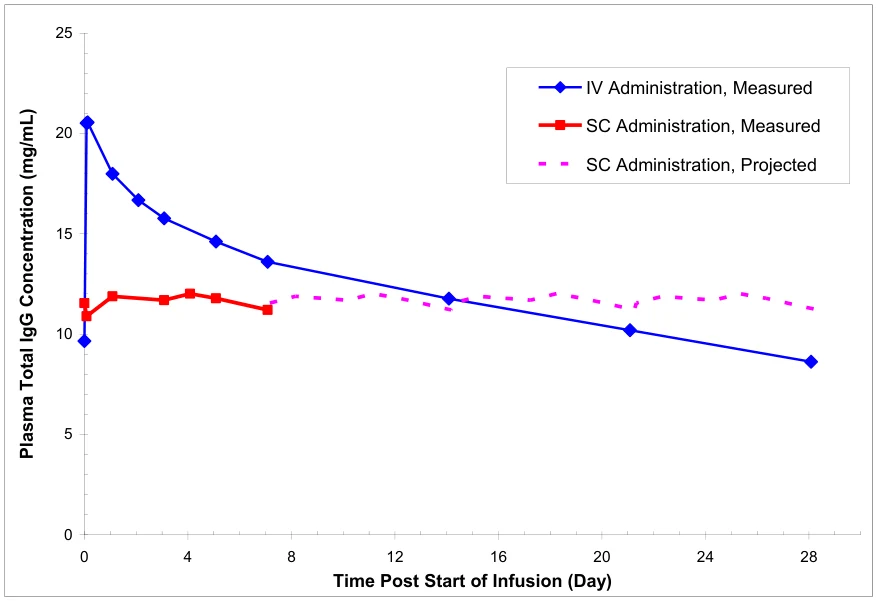
A total of 32 and 26 subjects had plasma IgG concentration vs. time profiles for assessment of steady-state PK parameters after IV and SC administration respectively. In contrast to plasma total IgG levels observed with previous IV GAMUNEX® treatment (rapid peaks followed by a slow decline over 3 or 4 weeks), the plasma IgG levels in subjects receiving weekly SC GAMUNEX® therapy were relatively stable. See Figure below.
Figure: Mean steady-state plasma total IgG concentration vs. time curves
following IV administration or weekly SC administration
The primary PK endpoint (AUC of plasma total IgG) following IV and SC administration is summarized below in Table 15. In order to test non-inferiority, the geometric least squares mean
(LSM) ratio, SC vs. IV administration, was analyzed using ANOVA. The result showed that the point estimate for the geometric LSM ratio of AUCSC vs. AUCIV was 0.888, with a 90% confidence interval (CI) of 0.861-0.917. The lower bound of the 90% confidence interval is above 0.80 indicating that the SC dose is non-inferior to the IV dose. In addition, the 90% CI is within the limit of 0.80-1.25, a criterion for concluding equivalence between the two treatments (SC and IV doses).
Table 15: Summary of Primary PK Endpoint of AUC
| Route of Administration | Statistics | AUC0-τ,IV (mg*h/mL) | AUC0-τ,SC (mg*h/mL) | Adj._AUC0-τ,SC1 (mg*h/mL) | ||||||
|---|---|---|---|---|---|---|---|---|---|---|
IV (n = 32) | Mean | 7640 | NA | NA | ||||||
| %CV | 15.9 | |||||||||
| Range | 5616-10400 | |||||||||
SC (n = 26) | Mean | NA | 1947 | 6858 | ||||||
| %CV | 20.4 | 18.1 | ||||||||
| Range | 1300-2758 | 5169-10364 | ||||||||
CV, coefficient of variation; NA, not applicable
1Adj._ AUC0-τ,SC: Adjusted steady-state area under the concentration vs. time curve following SC administration based on IV dosing schedule, calculated as AUC0-τ,SC multiplied by 3 or 4 for subjects on every-3-week or every-4-week IV dosing schedule, respectively.
The mean trough concentration (mean Ctrough) of plasma total IgG following IV and SC administration are presented below in Table 16.
Table 16: Mean Plasma Trough Concentrations of Total IgG (mg/mL) in plasma
IVa (n=32) Mean Ctrough | SCb (n=28) Mean Ctrough | |
|---|---|---|
| Mean (mg/mL) | 9.58 | 11.4 |
| %CV | 22.3 | 20.4 |
| Range | 6.66-14.0 | 8.10-16.2 |
- a IV mean Ctrough was calculated as the average Ctrough (predose concentration) from IV dose #1 and IV dose #2.
- b SC mean Ctrough was calculated as the average Ctrough (predose concentration) from SC doses #13, #17, #18, #19 and #21.
Chronic Inflammatory Demyelinating Polyneuropathy (CIDP)
Study Demographics and Trial Design
The efficacy of GAMUNEX® in CIDP was evaluated in a pivotal, double blind, placebo controlled study (Study No. 100538, The Immune Globulin Intravenous (Human), 10% Caprylate/ Chromatography Purified CIDP Efficacy or ICE study) (47). An overview of the trial design is shown in Table 17. This study included two separately randomized study periods to assess whether GAMUNEX® was more effective than placebo for the treatment of CIDP (assessed in the Efficacy Period for up to 24 weeks) and whether long-term administration of GAMUNEX® could maintain long-term benefit (assessed in the 24 week Randomized Withdrawal Period).
In the Efficacy Period, there was a requirement for Rescue (crossover) to the alternate study drug if the subject did not improve and maintain this improvement until the end of the 24 week treatment period. Any subject who was Rescued (crossed over) and did not improve and maintain this improvement was withdrawn from the study. Subjects who completed 24 weeks treatment in the Efficacy Period or Rescue phase and responded to therapy were eligible for entry into a subsequent double-blind Randomized Withdrawal Period. Eligible subjects were re-randomized to GAMUNEX® or Placebo. Any subject who relapsed was withdrawn from the study.
| Table 17 – Summary of Study Design for Chronic Inflammatory Demyelinating Polyneuropathy (CIDP) Clinical Trial | ||||||||
| Study No. (Study Design) | Primary Efficacy Parameter | Treatment Regimen (Number of Patients ) | Gender | Mean Age (Years) | ||||
| Study #100538 (randomized, double-blind, placebo-control, conditional cross-over, multi-centre ) | INCAT (neuropathy disability score) | GAMUNEX®, 10% load dose 2g/kg over 2-4 days; then 1g/kg every 3 weeks (n=59) | Female: 28 (47%) Male: 31 (53%) | 50 (19-79 ) | ||||
| Placebo (albumin, 0.1%) (n=58) | Female: 12 (21%) Male: 46 (79%) | 53 (18-83) | ||||||
Study Results
Primary Efficacy Analysis: For the primary efficacy analysis, significantly more subjects with CIDP responded to GAMUNEX®: 32 of 59 (54%), compared with 12 of 58 (21%) subjects for Placebo, in the Efficacy Period (33.5% difference, 95% CI: 15.4% - 51.7%; p=0.0002; Chi- Square Test). There were also three pre-specified secondary efficacy endpoints:
Grip Strength: During the Efficacy Period, the point estimate for the difference in grip strength in the dominant hand was 10.9 kPa higher for GAMUNEX® than for placebo (95% CI: 4.6–17.2); a statistically significant improvement in favour of GAMUNEX® (P=0.0008; ANCOVA). For the non-dominant hand the point estimate for the difference in grip strength was 8.6 kPa higher for GAMUNEX® (95% CI: 2.6 – 14.6), which was also statistically significant (P=0.005; ANCOVA).
Amplitude of Most Severely Affected Motor Nerve: For the change in amplitude analysis in the most severely affected motor nerve during the Efficacy Period, the point estimate for the difference of 0.24 mV (95% CI: -0.53–1.00) was in favour of GAMUNEX® treatment, but did not reach statistical significance (P=0.542; ANCOVA). Certain assessments of nerve conduction did reach statistical significance, and in general the neurophysiological results trended in favour of GAMUNEX® over placebo.
Time to Relapse: For the analysis of time-to-relapse during the Randomized Withdrawal Period, data for the subset of 57 subjects who previously responded to GAMUNEX® were evaluated: 31 were re-randomized to receive GAMUNEX® and 26 subjects were randomly assigned to receive placebo. Subjects re-randomized to GAMUNEX® experienced a significantly longer time to relapse compared to those receiving Placebo (see Kaplan Meier curve below; P=0.01; Log Rank Test). The probability of relapse was 13% with GAMUNEX® compared to 45% with Placebo (hazard ratio, 0.19 [95% CI, 0.05, 0.70]).
There were also numerous exploratory outcome measures included in this study, including change from baseline to endpoint in the Medical Research Council (MRC) sum score and the INCAT sensory sum (ISS) score. A significantly larger mean improvement from baseline was observed in the MRC sum score with GAMUNEX® (3.3 ± 5.6) compared with placebo (0.2 ± 4.5; treatment difference, 3.1; 95% CI, 1.3-4.9; p=0.001). Also, during the Efficacy Period, a significantly greater mean improvement from baseline was observed in the ISS score with GAMUNEX® (–1.2 ± 3.4) compared with placebo (0.2 ± 3.9; treatment difference, –1.5; 95% CI, –2.7- –0.2; p=0.021). Among CIDP patients treated with GAMUNEX®, about 56% demonstrated an improvement over baseline. In about 20% of CIDP patients treated in this study, previously administered systemic steroids (at doses ≤10 mg prednisolone/day; or equivalent) were continued during the trial. Patients taking steroids were balanced evenly between placebo and IGIV treatment groups.
Idiopathic Thrombocytopenic Purpura
Study Demographics and Trial Design
The efficacy of GAMUNEX® in Idiopathic Thrombocytopenic Purpura was evaluated in a pivotal, double blind, active controlled study (Study No. 100176). An overview of the trial design is shown in Table 18.
| Table 18 – Summary of Study Design for Idiopathic Thrombocytopenic Purpura (ITP) Clinical Trials | |||||||
| Study No. (Study Design) | Primary Efficacy Parameter | Treatment Regimen (Number of Patients Valid for Efficacy) | Gender | Mean Age (Years) | |||
| Study #100176 (randomized, double-blind, parallel-group, active control, multi-centre) | Increase in platelet count from ≤20 giga/L to ≥50 giga/L by Day 7. | GAMUNEX®, 10% 1000 mg/kg/day for 2 days (n=40) | Female – 75 (%) Male – 25 (%) | 33.7 (4-73 ) | |||
| GAMIMUNE® N, 10% S/D 1000 mg/kg/day for 2 days (n=41) | Female – 68 (%) Male – 32 (%) | 37.3 ( 1-80) | |||||
Demographics and disease characteristics were similar for patients in both treatment groups. There were no notable differences between the two treatment groups. Fifteen percent of the patients were less than 11 years of age, 9% were between 11 and 18, and 75% were adults.
Study Results
GAMUNEX® was at least as effective as GAMIMUNE® N, 10% in increasing platelet counts from less than or equal to 20*109/L to more than 50*109/L within 7 days after treatment (see Table 19). A 2000 mg/kg dose of GAMUNEX® (two 1 g/kg doses (10 mL/kg) given on two successive days) successfully raised platelet counts in 90% of ITP patients by Day 7 and Day 23 compared to 83% and 86% respectively, in the control group. A sustained 7-day response was observed in 74% of patients treated with GAMUNEX® compared to 60% in the control group.
| Table 19 – Platelet Response Following GAMUNEX® Treatment in ITP Patients | ||||||||
|---|---|---|---|---|---|---|---|---|
| Platelet Response (Per Protocol Analysis) | GAMUNEX® (n=39) | GAMIMUNE® N, 10% (n=42) | Mean Difference (90% Confidence Interval) | |||||
| By Day 7 | 35 (90%) | 35 (83%) | 0.075 (-0.037, 0.186) | |||||
| By Day 23 | 35 (90%) | 36 (86%) | 0.051 (-0.058, 0.16) | |||||
| Sustained for 7 days | 29 (74%) | 25 (60%) | 0.164 (-0.003, 0.33) | |||||
GAMUNEX® has been demonstrated to be least as effective as GAMIMUNE® N, 10% in the treatment of adults and children with acute or chronic Idiopathic Thrombocytopenic Purpura (ITP) (34).
Pediatric HIV Infection
In well controlled clinical trials, Immunoglobulin Intravenous (Human) has been shown to significantly decrease serious and minor bacterial infections and to decrease the number of acute care hospitalizations in children with CD4 counts greater than or equal to 0.2*109/L (200 cells/mm3) at entry (44). The benefit of Immunoglobulin Intravenous (Human) is still present for children who cannot be treated with trimethoprim-sulfamethoxazole and are receiving zidovudine (45).
In a randomized, double-blind, placebo-controlled, multicenter study, 383 HIV-infected, non-hemophilic children less than 13 years of age were randomized. Of the children randomized, 369 were included in the efficacy analysis and 376 in the safety analysis. The study population had 1) a mean age of 40 months (range 2.4 - 136.8 months), 2) acquired HIV primarily through vertical transmission (91%), 3) a majority (82%) of CDC Class P-2 (symptomatic), and 4) had a median CD4+ count of 937 cells/mm3 (range 0 - 6660 cells/mm3). At the time of study entry, 14% (52 of 369) were receiving Pneumocystis carinii pneumonia (PCP) prophylaxis. During the course of the study, 51% (189 of 369) received PCP prophylaxis and 44% (154 of 359) received zidovudine (ZDV). Children with HIV-1 infection were initially stratified into two groups based upon CD4+ count (<200 cells/mm3 versus ≥200 cells/mm3) and CDC classification of pediatric HIV disease (history of opportunistic infections [P-2-D-1] and recurrent serious bacterial infections [P-2-D-2] versus others). Subjects received Immunoglobulin Intravenous (Human) (400 mg/kg = 8 mL/kg) (n=185) or an equivalent volume of placebo (0.1% Albumin [Human]) (n=184) every 28 days. The mean follow-up for subjects receiving Immunoglobulin Intravenous (Human) was 17.9 months and 17.6 months for patients on placebo.
The number of subjects who had at least one serious bacterial infection was 86 of 184 (47%) in the placebo group and 55 of 185 (30%) in the Immunoglobulin Intravenous (Human) group (p=0.0009). All p-values reported are two-sided. Treatment with Immunoglobulin Intravenous (Human), compared to placebo was also associated with a significant reduction in both the number of subjects with at least one laboratory-proven infection (36 of 184 vs. 18 of 185, p=0.0081), and the number of subjects with at least one clinically diagnosed infection (71 of 184 vs. 45 of 185, p=0.0036). Efficacy in patients with CD4+ counts <200/mm3 was not established, possibly because of the small number of subjects in this category.
Allogeneic Bone Marrow Transplantation
Posttransplant complications were evaluated in a controlled study of 369 evaluable bone marrow transplant patients (185 untreated and 184 treated with Immunoglobulin Intravenous (Human) with doses of 500 mg/kg body weight on days -7 and -2 pretransplant then weekly through day 90 posttransplant). Analysis of the study group as a whole and of those <20 and ≥20 years of age showed significant reductions in posttransplant complications in the first 100 days. This was most evident in patients 20 years of age and over. For patients ≥20 years of age (128 patients in the control group and 119 patients in the treated group), there was a statistically significant reduction in interstitial pneumonia from 21% in the control group to 9% in the treated group (p=0.0032) during the first 100 days posttransplant. Also significantly reduced in this age group were: overall septicemia from 41% in the control group to 22% in the treated group (relative risk [RR] 2.36, p=0.0025); gram-negative septicemia from 19% in the control group to 7% in the treated group (RR 2.53, p=0.015); and Grade II to IV acute GVHD from 53% (58 of 110) in the control group to 35% in the treated group (38 of 108, p=0.0051 (15,16).
In patients below age 20, there appeared to be no benefit from treatment with Immunoglobulin Intravenous (Human) in reducing the incidence of infections or the incidence of acute GVHD.
Guillain-Barré Syndrome (GBS)
Information to support the use of GAMUNEX® in the treatment of moderate to severe cases of GBS in adults when used in the first two weeks of disease onset, comes from a systematic review of clinical trials providing moderate quality of evidence (48).
Comparative Bioavailability Studies
See CLINICAL TRIALS section.
DETAILED PHARMACOLOGY
Human Studies
Pharmacokinetics
A randomized pharmacokinetic crossover trials was carried out with GAMUNEX® (Immunoglobulin Intravenous [Human], 10%) in 18 patients with Primary Immune Deficiencies.
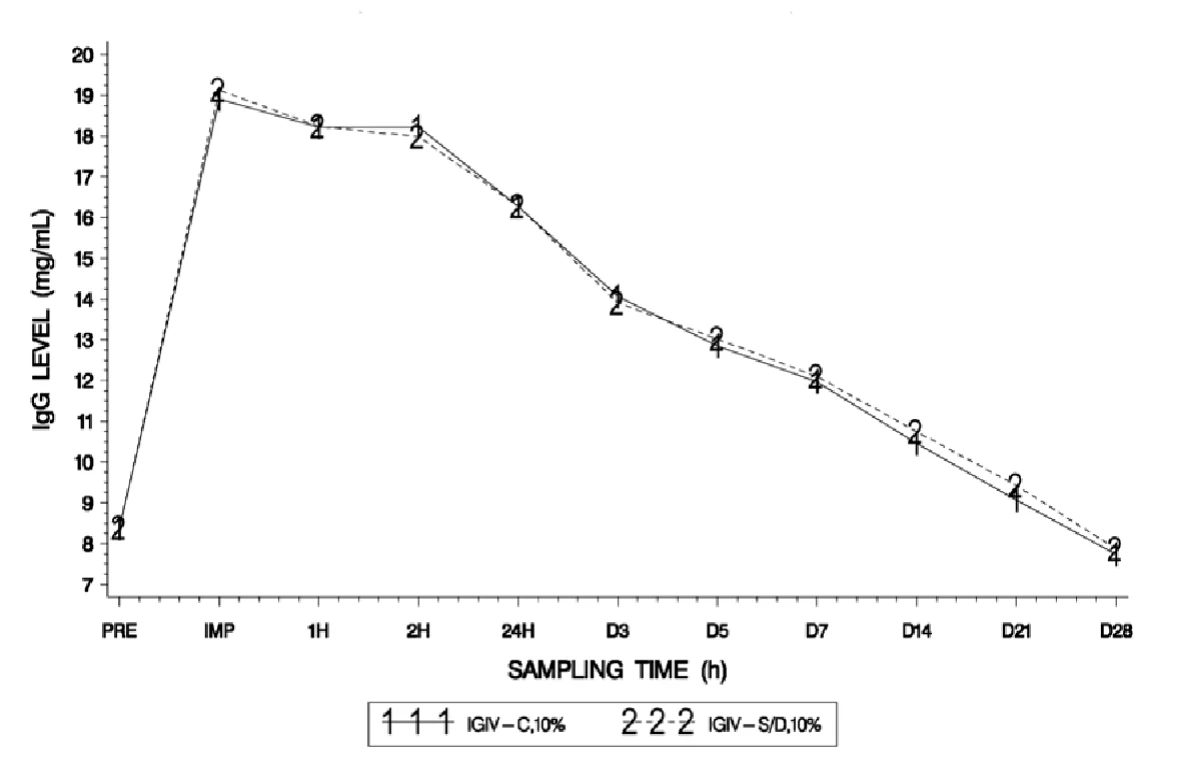
The trial compared the pharmacokinetic characteristics of GAMUNEX® to GAMIMUNE® N 10% (Immunoglobulin Intravenous [Human], 10% - Solvent/Detergent Treated). Bioequivalence between the two products was demonstrated and is shown in the figure below. The ratio of the geometric least square means for dose-normalized IgG peak levels of GAMUNEX® and GAMIMUNE® N, 10% was 0.996. The corresponding value for the dose-normalized area under the curve (AUC) of IgG levels was 0.990 (30).
| Figure 1 – Mean IgG Level (mg/mL) Versus Sampling Time (Patients Valid for PK Analysis) |
|---|
| Note: results are from 3rd and 6th infusions. |
Pharmacodynamics
See CLINICAL TRIALS section.
In Vitro Animal Studies
In a variety of in vitro and animal models of infection, GAMUNEX® was found to be indistinguishable from GAMIMUNE® N, 10%, in the protection of animals from mortality due to bacterial infection and as potent complement dependent opsonins against various bacterial strains tested. The results of studies in the in vivo murine models of bacterial pneumonia and peritonitis indicate no difference in function or efficacy between GAMUNEX® and GAMIMUNE® N, 10%.
Major decreases in platelets, RBCs and hematocrit levels were observed in the rat and rabbit studies, however, factors other than study drug may account for these observations.
 |
|---|
TOXICOLOGY
The acute toxicity of Immunoglobulin Intravenous (Human), 10% determined in mice and rats, demonstrated a very low order of toxicity. The estimated LD50 for Immunoglobulin Intravenous (Human), 10% is greater than 80 mL/kg for both mice and rats. Repeated administration in guinea pigs, daily for a five day period resulted in no unexpected untoward adverse effects. Furthermore, based on previous experience, the levels of glycine and caprylate present in the final formulation are not of clinical concern.
REFERENCES
- 1. Ammann AJ, Ashman RF, Buckley RH, Hardie WR, Krantmann HJ, Nelson J, et al. Use of intravenous gamma-globulin in antibody immunodeficiency: results of a multicenter controlled trial. Clin Immunol Immunopathol 1982;22(1):60-7.
- 2. Buckley RH, Schiff RI. The use of intravenous immune globulin in immunodeficiency diseases. N Engl J Med 1991;325(2):110-7.
- 3. Cunningham-Rundles C, Bodian C. Common variable immunodeficiency: clinical and immunological features of 248 patients. Clin Immunol 1999;92(1):34-48.
- 4. Nolte MT, Pirofsky B, Gerritz GA, Golding B. Intravenous immunoglobulin therapy for antibody deficiency. Clin Exp Immunol 1979;36(2):237-43.
- 5. Pruzanski W, Sussman G, Dorian W, Van T, Ibanez D, Redelmeier D. Relationship of the dose of intravenous gammaglobulin to the prevention of infections in adults with common variable immunodeficiency. Inflammation 1996;20(4):353-9.
- 6. Roifman CM, Levison H, Gelfand EW. High-dose versus low-dose intravenous immunoglobulin in hypogammaglobulinaemia and chronic lung disease. Lancet 1987;1(8541):1075-7.
- 7. Sorensen RU, Polmar SH. Efficacy and safety of high-dose intravenous immune globulin therapy for antibody deficiency syndromes. Am J Med 1984;76(3A):83-90.
- 8. Stephan JL, Vlekova V, Le Deist F, Blanche S, Donadieu J, De Saint-Basile G, et al. Severe combined immunodeficiency: a retrospective single-center study of clinical presentation and outcome in 117 patients. J Pediatr 1993;123(4):564-72.
- 9. Blanchette VS, Kirby MA, Turner C. Role of intravenous immunoglobulin G in autoimmune hematologic disorders. Semin Hematol 1992;29(3 Suppl 2):72-82.
- 10. Lazarus AH, Freedman J, Semple JW. Intravenous immunoglobulin and anti-D in idiopathic thrombocytopenic purpura (ITP): mechanisms of action. Transfus Sci 1998;19(3):289-94.
- 11. Semple JW, Lazarus AH, Freedman J. The cellular immunology associated with autoimmune thrombocytopenic purpura: an update. Transfus Sci 1998;19(3):245-51.
- 12. Imbach PA. Harmful and beneficial antibodies in immune thrombocytopenic purpura. Clin Exp Immunol 1994;97 Suppl 1:25-30.
- 13. Bussel JB. Fc receptor blockade and immune thrombocytopenic purpura. Semin Hematol 2000;37(3):261-6.
- 14. Imbach P, Akatsuka J, Blanchette V, Burek-Kozlowska A, Bussel J, Gaedicke G, et al. Immunthrombocytopenic purpura as a model for pathogenesis and treatment of autoimmunity. Eur J Pediatr 1995;154(9 Suppl 4):S60-4.
- 15. Sullivan KM, Kopecky KJ, Jocom J, Fisher L, Buckner CD, Meyers JD, et al. Immunomodulatory and antimicrobial efficacy of intravenous immunoglobulin in bone marrow transplantation. N Engl J Med 1990;323(11):705-12.
- 16. Sullivan KM. Immunomodulation in allogeneic marrow transplantation: use of intravenous immune globulin to suppress acute graft-versus-host disease. Clin Exp Immunol 1996;104 Suppl 1:43-8.
- 17. Spitzer TR, Cottler-Fox M, Sullivan P, Lynch M, Tefft MC, Pickle LW, et al. Continuous infusion intravenous immunoglobulin is associated with a reduced incidence of infection and achieves higher serum immunoglobulin G levels than intermittent infusion following bone marrow transplantation. Semin Hematol 1992;29(3 Suppl 2):123-6.
- 18. Bass EB, Powe NR, Goodman SN, Graziano SL, Griffiths RI, Kickler TS, et al. Efficacy of immune globulin in preventing complications of bone marrow transplantation: a meta-analysis. Bone Marrow Transplant 1993;12(3):273-82.
- 19. Casteels-Van Daele M, Wijndaele L, Hanninck K, Gillis P. Intravenous immune globulin and acute aseptic meningitis. N Engl J Med 1990;323(9):614-5.
- 20. Kato E, Shindo S, Eto Y, Hashimoto N, Yamamoto M, Sakata Y, et al. Administration of immune globulin associated with aseptic meningitis. JAMA 1988;259(22):3269-71.
- 21. Scribner CL, Kapit RM, Phillips ET, Rickles NM. Aseptic meningitis and intravenous immunoglobulin therapy. Ann Intern Med 1994;121(4):305-6.
- 22. Cayco AV, Perazella MA, Hayslett JP. Renal insufficiency after intravenous immune globulin therapy: a report of two cases and an analysis of the literature. J Am Soc Nephrol 1997;8(11):1788-94.
- 23. Copelan EA, Strohm PL, Kennedy MS, Tutschka PJ. Hemolysis following intravenous immune globulin therapy. Transfusion 1986;26(5):410-2.
- 24. Thomas MJ, Misbah SA, Chapel HM, Jones M, Elrington G, Newsom-Davis J. Hemolysis after high-dose intravenous Ig. Blood 1993;82(12):3789.
- 25. Wilson JR, Bhoopalam H, Fisher M. Hemolytic anemia associated with intravenous immunoglobulin. Muscle Nerve 1997;20(9):1142-5.
- 26. Kessary-Shoham H, Levy Y, Shoenfeld Y, Lorber M, Gershon H. In vivo administration of intravenous immunoglobulin (IVIg) can lead to enhanced erythrocyte sequestration. J Autoimmun 1999;13(1):129-35.
- 27. Rizk A, Gorson KC, Kenney L, Weinstein R. Transfusion-related acute lung injury after the infusion of IVIG. Transfusion 2001;41(2):264-8.
- 28. Winward DB, Brophy MT. Acute renal failure after administration of intravenous immunoglobulin: review of the literature and case report. Pharmacotherapy 1995;15(6):765-72.
- 29. Peerless AG, Stiehm ER. Intravenous gammaglobulin for reaction to intramuscular preparation. Lancet 1983;2(8347):461.
- 30. Bayever E, Monteagudo F, Sundaresan P, Collins S. A randomized, double-blind, multicenter, repeat dosing, cross-over trial comparing the safety, pharmacokinetics, and clinical outcomes of IGIV-Chromatography, 10% (experimental) with IGIV-Solvent Detergent Treated, 10% (control) in patients with primary humoral immune deficiency. Report No. MMRR-1512, ISRN: 100152, February 14, 2001.
- 31. Lathia C, Emir B, Schwartz L. A randomized, open-label, multicenter, repeat dosing, cross-over trial comparing the safety, pharmacokinetics, and clinical outcomes of IGIV-Chromatography, 5% with IGIV-Chromatography 10% in patients with primary humoral immune deficiency. Report No. MMRR-1546, ISRN: 100174, March 12, 2001.
- 32. Kelleher J, Faith G, Cyrus C, Schwartz L. A randomized, double-blind, multicenter, parallel group trial comparing the safety and efficacy of IGIV-chromatography, 10% (experimental) with IGIV-solvent detergent treated, 10% (control) in patients with primary immune deficiency (PID). 2000. Report on file.
- 33. George JN, Woolf SH, Raskob GE, Wasser JS, Aledort LM, Ballem PJ, et al. Idiopathic thrombocytopenic purpura: a practice guideline developed by explicit methods for the American Society of Hematology. Blood 1996;88(1):3-40.
- 34. Cyrus P, Faith G, Kelleher J, Schwartz L. A randomized, double-blind, multicenter, parallel group trial comparing the safety, and efficacy of IGIV-chromatography, 10% (experimental) with IGIV-solvent detergent treated, 10% (control) in patients with idiopathic (immune) thrombocytopenic purpura (ITP). 2000. Report on file.
- 35. Kelleher J, Schwartz L. IGIV-C 10% rapid infusion trial in idiopathic (immune) thrombocytopenic purpura (ITP). 2001. Report on file.
- 36. Tan E, Hajinazarian M, Bay W, Neff J, Mendell JR. Acute renal failure resulting from intravenous immunoglobulin therapy. Arch Neurol 1993;50(2):137-9.
- 37. Kazatchkine MD, Kaveri SV. Immunomodulation of autoimmune and inflammatory diseases with intravenous immune globulin. N Engl J Med 2001;345(10):747-55.
- 38. Wretlind A. Complete intravenous nutrition. Theoretical and experimental background. Nutr Metab 1972;14:Suppl:1-57.
- 39. Hahn RG, Stalberg HP, Gustafsson SA. Intravenous infusion of irrigating fluids containing glycine or mannitol with and without ethanol. J Urol 1989;142(4):1102-5.
- 40. Tai VM, Mitchell EJ, Lee-Brotherton V, Manley JJ, Nestmann ER, Daniels JM. Safety evaluation of intravenous glycine in formulation development [Abstract]. J Pharm Pharmaceut Sci 2000;3(1):198.
- 41. Guyton AC. Clinical measurements for study of acid-base abnormalities. In: Textbook of Medical Physiology. 5th ed. Toronto: W. B. Saunders Company; 1976. pp. 499-500.
- 42. Lee DC, Stenland CJ, Hartwell RC, Ford EK, Cai K, Miller JL, et al. Monitoring plasma processing steps with a sensitive Western blot assay for the detection of the prion protein. J Virol Methods 2000;84(1):77-89.
- 43. Lee DC, Stenland CJ, Miller JL, Cai K, Ford EK, Gilligan KJ, et al. A direct relationship between the partitioning of the pathogenic prion protein and transmissible spongiform encephalopathy infectivity during the purification of plasma proteins. Transfusion 2001;41(4):449-55.
- 44. Intravenous immune globulin for the prevention of bacterial infections in children with symptomatic human immunodeficiency virus infection. The National Institute of Child Health and Human Developments Intravenous Immunoglobulin Study Group. N Engl J Med 1991;325(2):73-80.
- 45. Spector SA, Gelber RD, McGrath N, Wara D, Barzilai A, Abrams E, et al. A controlled trial of intravenous immune globulin for the prevention of serious bacterial infections in children receiving zidovudine for advanced human immunodeficiency virus infection. Pediatric AIDS Clinical Trials Group. N Engl J Med 1994;331(18):1181-7.
- 46. Dalakas MC. Intravenous Immunoglobulin in Autoimmune Neuromuscular Diseases. JAMA 2004; 291:2367-2375.
- 47. Hughes RAC, Donofrio P, Bril V, Dalakas MC, et al. Intravenous immune globulin (10% caprylate-chromatography purified) for the treatment of chronic inflammatory demyelinating polyradiculoneuropathy (ICE Study): a randomized placebo-controlled trial. Lancet Neurology 2008; 7:136-144.
- 48. Hughes RAC, Swan AV, van Doorn PA. Intravenous immunoglobulin for Guillain-Barré syndrome (review). The Cochrane Library 2012;7: CD002063