


Product Monograph - Humulin R (Kwikpen)
SUMMARY PRODUCT INFORMATION
| Route of Administration | Dosage Form / Strength | Nonmedicinal Ingredients |
| Parenteral | Solution for Injection/ 100 units/mL Suspension for Injection/ 100 units/mL | HUMULIN R (Regular): Glycerol, m-cresol, water for injection, hydrochloric acid and sodium hydroxide. HUMULIN-N (NPH) and HUMULIN 30/70 also contain phenol, zinc oxide, protamine sulfate and dibasic sodium phosphate. |
INDICATIONS AND CLINICAL USE
HUMULIN (insulin, human biosynthetic) is indicated for the treatment of insulin requiring diabetic patients.
HUMULIN-R only should be used for the treatment of emergencies such as diabetic coma and pre-coma and in diabetics undergoing surgery, but not HUMULIN-N, or HUMULIN MIXTURES.
In switching patients from animal source insulins to HUMULIN, it is possible that the patients will require a change in dosage; the adjustment may be made with the first dose or over a period of several weeks. Any change of insulin should be made cautiously and only under medical supervision.
Changes in refinement, purity, strength, brand, type and/or method of manufacture (recombinant DNA versus animal source insulin) may result in the need for a change in dosage.
CONTRAINDICATIONS
HUMULIN (insulin, human biosynthetic) is contraindicated during episodes of hypoglycemia.
HUMULIN is contraindicated in patients with hypersensitivity to human insulin or any of its excipients contained in the formulation (unless used as part of a desensitization program).
HUMULIN-N, HUMULIN MIXTURES, should not be given intravenously or used for treatment of diabetic coma.
WARNINGS AND PRECAUTIONS
General
Serious Warnings and Precautions Hypoglycemia is the most common adverse effect of insulin products. Glucose monitoring should be performed for all patients with diabetes mellitus treated with insulins. Uncorrected hypoglycemic or hyperglycemic reactions can cause loss of consciousness, coma or even death (see OVERDOSAGE, Symptoms and Treatment). Any transfer of HUMULIN or HUMULIN MIXTURES should be made cautiously and only under medical supervision (see DOSAGE AND ADMINISTRATION). Fast-acting insulins should be combined with a longer-acting insulin or insulin infusion pump therapy to maintain adequate glucose control (see DOSAGE AND ADMINISTRATION). HUMULIN and HUMULIN MIXTURES should not be mixed with any other insulin unless clearly indicated and done under medical supervision (see DOSAGE AND ADMINISTRATION). Under no circumstances should any HUMULIN MIXTURE be given intravenously. Do not use the HUMULIN-N or HUMULIN MIXTURES if you see lumps that float or that stick to the sides of the vial, or if the contents of the vial are clear and remain clear after the bottle is shaken or rotated. NOTE: The contents of the vial or cartridge of HUMULIN-R should be clear. Do not use if cloudy. A few patients who experienced hypoglycemic reactions after being transferred to HUMULIN (insulin, human biosynthetic) have reported that these early warning symptoms were less pronounced than they were with animal-source insulin. |
As with all insulin therapies, the duration of action of HUMULIN and HUMULIN MIXTURES may vary in different individuals or in the same individual according to dose, injection site, blood flow, temperature and level of physical activity.
Hypokalemia is among the potential clinical adverse effects associated with the use of HUMULIN and all other insulin therapies. This potential clinical adverse effect may be relevant in patients who are on potassium lowering drugs or losing potassium through other means (e.g. diarrhea).
Stress or concomitant illness, especially infectious and febrile conditions may change insulin requirements. In these instances, patients should contact their physician and carefully control their blood glucose (see Part III – Consumer Information).
To avoid transmission of disease, a cartridge or prefilled syringe should not be used by more than one person.
The number and size of daily doses and the time of administration, as well as diet and exercise, are problems that require direct and continuous medical supervision. Usually, the most satisfactory injection time is before breakfast.
Insulin plus Thiazolidinediones (TZDs): TZDs, alone or in combination with other antidiabetic agents (including insulin), can cause heart failure and edema. The combination of insulin with a TZD is not indicated for the treatment of type 2 diabetes mellitus. Please refer to the respective TZD product monograph Warnings and Precautions information when the use of these drugs in combination with any insulin, including HUMULIN R, HUMULIN N or HUMULIN 30/70, is contemplated.
Changes in Insulin Regimen / Transferring Patients from Other Insulins
When patients are transferred between different types of insulin products, including animal insulins, the early warning symptoms of hypoglycemia may change or become less pronounced than those experienced with their previous insulin. Transferring a patient to a new type or brand of insulin should be done only under strict medical supervision.
Changes in insulin regimen, strength, timing of administration, manufacturer, type (e.g., regular, NPH, or insulin analogs), or method of manufacture (recombinant DNA versus animal source insulin) may affect glycemic control and predispose to hypoglycemia or hyperglycemia. Make any changes to a patient's insulin regimen under close medical supervision with increased frequency of glucose monitoring. Changes in insulin dose or an adjustment in concomitant oral antidiabetic treatment may be needed. If an adjustment is needed, it may be done with the first doses or during the first few weeks or months and under medical supervision (see WARNINGS AND PRECAUTIONS).
Carcinogenesis and Mutagenesis
Human insulin is produced by recombinant technology. No serious events have been reported in subchronic toxicology studies. Human insulin was not mutagenic in a battery of in vitro and in vivo genetic toxicity assays (see TOXICOLOGY).
Endocrine and Metabolism
Hypoglycemia
Hypoglycemia is the most frequently occurring undesirable effect of insulin therapies, including HUMULIN. Severe hypoglycemia can result in temporary or permanent impairment of brain function and death (see ADVERSE REACTIONS).
Hypoglycemia may occur if the insulin dose is too high in relation to the insulin requirement (see OVERDOSAGE).
Hypoglycemia can occur regardless of the type of insulin taken and may cause fatigue, sweating, heart palpitations, disturbed behaviour, hunger, convulsions or loss of consciousness. In extreme circumstances, even death can occur without recognizable symptoms.
In certain cases (e.g., long duration of diabetes mellitus, diabetic nerve disease, intensified diabetes mellitus control, patients with psychiatric illness, elderly patients or use of medications such as beta blocking agents), the nature and intensity of early warning symptoms of hypoglycemia (pallor, sweating, anxiety, headache, tachycardia, hunger) may change or be less pronounced.
Hypoglycemic reactions following treatment with HUMULIN are mostly mild and easily managed.
Changes in insulin therapy or changes in life style (i.e., diet, exercise/physical activity) may require a change in dosage to avoid hypoglycemia. Omission of a meal or unplanned strenuous physical exercise may lead to hypoglycemia.
Glucose monitoring is recommended for all patients with diabetes mellitus who are also taking HUMULIN or other insulin products (see Monitoring and Laboratory Tests).
The patient’s ability to concentrate and react may be impaired as a result of hypoglycemia. This may constitute a risk in situations where these abilities are of special importance (e.g., driving a car or operating machinery) especially in those who have reduced or absent awareness of the warning signs of hypoglycemia or have frequent episodes of hypoglycemia.
Diabetic patients should be instructed to carry a few lumps of sugar, candies or biscuits to prevent the progression of a hypoglycemic reaction, should one occur (see Part III, CONSUMER INFORMATION).
Hyperglycemia
Inadequate dosing or discontinuation of HUMULIN, especially in type 1 diabetes mellitus, may lead to hyperglycemia and when untreated, hyperglycemic events may eventually lead to diabetic ketoacidosis or coma which are potentially fatal. Usually the first symptoms of hyperglycemia develop gradually over a period of hours or days. They include polydipsia; polyuria; nausea; abdominal pain, vomiting; drowsiness; blurred vision, flushed dry skin; loss of appetite, weight loss as well as acetone odour of breath (see ADVERSE REACTIONS).
Ability to concentrate and react may be impaired as a result of hyperglycemia or as a result of hyperglycemia-induced visual impairment. This may constitute a risk in situations where these abilities are of special importance such as driving a car or operating machinery.
Hepatic/Biliary/Pancreatic
Insulin requirements may be decreased in the presence of hepatic impairment.
Immune
Injection Site and Local Allergic Reactions:
With insulin therapies including HUMULIN, patients may experience redness, swelling, pain, inflammation, or itching at the site of injection (see ADVERSE REACTIONS). Prompt recognition and appropriate management of the allergic complications of insulin therapy are important for the safe and effective control of diabetes mellitus.
Most of these minor reactions usually resolve in a few days to a few weeks. They may occur if the injection is not properly made (irritants in the skin cleansing agent or poor injection technique), or if the patient is allergic to the insulin or any excipients (see CONTRAINDICATIONS). Continuous rotation of the injection site within a given area may help to reduce or prevent these reactions.
Lipodystrophy and Cutaneous Amyloidosis
Subcutaneous (SC) administration of insulin products including HUMULIN can result in lipoatrophy (depression in the skin), lipohypertrophy (enlargement or thickening of tissue), or localized cutaneous amyloidosis (skin lumps). Patients should be advised to consult their doctor if they notice any of these conditions. Continuous rotation of the injection site within a given area may help reduce or prevent these reactions.
Repeated insulin injections into areas of lipodystrophy or localized cutaneous amyloidosis have been reported to result in hyperglycemia; and a sudden change in the injection site (to an unaffected area) has been reported to result in hypoglycemia.
Systemic Allergic Reactions:
Systemic allergic reactions have rarely occurred with insulin treatments including HUMULIN. These reactions may be characterized by a generalized rash (with pruritus), shortness of breath, wheezing, angioneurotic edema and drop in blood pressure (see ADVERSE REACTIONS).
Severe cases of generalized allergy including anaphylactic reaction may be life threatening (see CONTRAINDICATIONS).
Antibody Production:
Immune responses can occur with insulin products, including production of auto antibodies (IgG). In general, glycemic control is not affected by the presence of auto antibodies. Very rarely, auto antibodies may cause hyperglycemia (insulin resistance) or hypoglycemia (inappropriate release). Insulin antibodies are frequently cross-reactive. Patients who have demonstrated an allergic reaction to other insulin products may demonstrate an allergic reaction to HUMULIN.
Renal
Insulin requirements may be decreased in the presence of renal impairment.
Reproduction Studies
There are no adequate and well-controlled studies with HUMULIN during pregnancy and lactation (see TOXICOLOGY).
Information for Patients
Patients should be informed about potential advantages and disadvantages of HUMULIN therapy, including possible side effects. Patients should also be offered continued education and advice on insulin therapies, delivery device options, life-style management, self-monitoring, complications of insulin therapy, timing of dosage, and instruction for use of injection devices, storage of insulin, travelling and others (see PART III: CONSUMER INFORMATION).
Female patients with diabetes mellitus should be advised to inform their doctor if they are pregnant or are contemplating pregnancy. Careful monitoring of glucose control, as well as general health is essential in pregnant patients with diabetes (see Special Populations and PART III: CONSUMER INFORMATION).
Special Populations
Pregnant Women
HUMULIN may be used in pregnancy, if clinically indicated. It is essential to maintain good glucose control in both gestational diabetes and throughout pregnancy in type 1 and type 2 patients. Insulin requirements usually decrease during the first trimester and increase during the second and third trimesters.
Patients with diabetes should be advised to inform their doctors if they are pregnant or are contemplating pregnancy.
Nursing Women
Diabetic patients who are nursing may require adjustments in insulin dose and/or diet.
Pediatrics (<18 years of age)
HUMULIN may be used in children and adolescents, if clinically indicated.
Geriatrics (>65 years of age)
HUMULIN may be used in elderly patients, if clinically indicated.
Monitoring and Laboratory Tests
Self-Monitoring of Blood Glucose
With insulin therapy, including HUMULIN, the need for regular blood glucose self-monitoring should be considered to obtain optimal glycemic control (see PART III: CONSUMER INFORMATION). Glycosylated hemoglobin should be measured every 3 to 4 months in all patients taking insulin products.
ADVERSE REACTIONS
Body as a Whole – Allergic reaction(s)
Local allergy in patients may occur as redness, swelling, or itching at the site of injection. These minor reactions usually resolve in a few days to a few weeks. In some instances, these reactions may be related to factors other than insulin, such as irritants in the skin cleansing agent or poor injection technique.
Systemic allergy to insulin is less common but potentially more serious. Generalized allergy to insulin may cause rash over the whole body, shortness of breath, wheezing, reduction in blood pressure, rapid pulse or sweating. Severe cases of generalized allergic reaction may be life-threatening.
Skin and appendages – Lipodystrophy
Insulin lipohypertrophy has been reported with HUMULIN. This complication has been ascribed to the local pharmacologic effects of the subcutaneous injection of insulin. A few cases of lipoatrophy and serum sickness have also been reported.
Metabolic – Hypoglycemia; Insulin resistance
Hypoglycemia is the most frequent undesirable effect of insulin therapy that a patient with diabetes may suffer. Severe hypoglycemia may lead to loss of consciousness and, in extreme cases, death.
DRUG INTERACTIONS
Drug-Drug Interactions
Insulin requirements may be decreased in the presence of agents such as oral antidiabetic medications, salicylates, sulfa antibiotics, certain antidepressants (monoamine oxidase inhibitors), beta-adrenergic blockers, alcohol, angiotensin converting enzyme inhibitors, angiotensin II receptor blockers and anabolic steroids.
Drugs that may increase insulin requirements include oral contraceptives, thiazides, glucocorticosteroids, thyroid hormones, sympathomimetics and danazol. The hypoglycemic action of insulin may also be antagonized by diphenylhydantoin.
Insulin requirements can be increased, decreased, or unchanged in patients receiving diuretics.
Hormones that tend to counteract the hypoglycemic effects of insulin include growth hormone, corticotropin, glucocorticoids, thyroid hormone, and glucagon. Epinephrine not only inhibits the secretion of insulin, but also stimulates glycogen breakdown to glucose. Thus, the presence of such diseases as acromegaly, Cushing's syndrome, hyperthyroidism, and pheochromocytoma complicate the control of diabetes.
Insulin plus Thiazolidinediones (TZDs): To avoid the risk of developing new or worsening heart failure, the use of TZDs in combination therapy with insulin is not indicated (see WARNINGS AND PRECAUTIONS).
Drug-Lifestyle Interactions
Hypoglycemia may occur as a result of an excess of insulin relative to food intake, energy expenditure, or both. Omission of a meal or unplanned strenuous physical exercise may lead to hypoglycemia (see WARNINGS AND PRECAUTIONS and OVERDOSAGE).
DOSAGE AND ADMINISTRATION
Dosing Considerations
New Patients:
Patients receiving insulin for the first time can be started on HUMULIN (insulin, human biosynthetic) in the same manner as they would be on animal-source insulin.
Patients should be monitored closely during the adjustment period.
Transfer Patients:
When transferring patients from animal-source insulin to HUMULIN, use the same dose and dosage schedule.
Some patients transferring to HUMULIN will require a change in dosage from that used with animal-source insulin. If an adjustment is needed, it may be made with the first dose or over a period of several weeks.
Changes in total daily dosage, the number of injections per day, and/or timing of injections may be necessary to achieve maximum glycemic control.
When a patient on high doses of animal insulin is switched to HUMULIN, it may be appropriate to reduce the starting dosage and monitor the patient carefully.
Patients who have systemic allergy to pork or beef insulin may also react to human insulin. In such patients, appropriate procedures (intradermal testing and, if necessary, desensitization) should be undertaken before therapeutic doses of human insulin are administered.
A few patients who experienced hypoglycemic reactions after being transferred to HUMULIN have reported that the early warning symptoms, i.e., nervousness, sweating, and palpitations, were less pronounced than they were with animal-source insulin.
Formulations of HUMULIN appear to produce a slightly faster onset and slightly shorter duration of action than the corresponding forms of animal-source insulins.
Recommended Dose and Dosage Adjustment
The dosage should be determined by the physician, according to the requirements of the patient.
HUMULIN-R is a clear, colourless solution. It may be administered by subcutaneous, intra-muscular or intravenous injection.
HUMULIN-N and HUMULIN MIXTURES are suspensions. They should be administered by subcutaneous injection only.
Subcutaneous administration, preferably by the patient, should be in the upper arms, thighs, buttocks or abdomen. Injection sites should be rotated so that the same site is not used more than approximately once a month, in order to reduce the risk of lipodystrophy and localized cutaneous amyloidosis. Do not inject into areas of lipodystrophy or localized cutaneous amyloidosis.
Care should be taken to ensure that a blood vessel has not been entered. The injection site should not be massaged.
Administration
Mixing Instructions:
The fast action of HUMULIN-R is preserved when mixed with HUMULIN-N; independent of the time lag between mixing and administration, and independent of the proportion of regular insulin incorporated in the mixture.
The effects of mixing HUMULIN with animal-source insulins have not been studied. This practice is not recommended.
Instructions for Use/Handling
To prevent the possible transmission of disease, never share a HUMULIN R, HUMULIN N, or HUMULIN 30/70, cartridge or pen, between patients even if the needle on the delivery device is changed.
OVERDOSAGE
Hypoglycemia (low blood glucose, also called "insulin reaction") can occur if the patient takes too much insulin, misses meals, exercises or works too hard just before a meal, or has an infection or becomes ill (especially with diarrhea or vomiting) or if the body's need for insulin change for other reasons.
Symptoms and Treatment
Hypoglycemia may occur in any patient receiving insulin and is most commonly manifested by hunger, nervousness, warmth and sweating, and palpitations. Patients also may experience headache, confusion, drowsiness, fatigue, anxiety, blurred vision, diplopia, or numbness of the lips, nose, or fingers. The clinical manifestations of hypoglycemia can be masked by the concomitant administration of propranolol or other beta adrenergic blockers.
If a patient is unable to take soluble carbohydrate or fruit juice orally, hypoglycemia is treated with 10 to 20 g of dextrose intravenously or glucagon may be given subcutaneously or intramuscularly.
| For management of a suspected drug overdose, contact your regional Poison Control Centre. |
ACTION AND CLINICAL PHARMACOLOGY
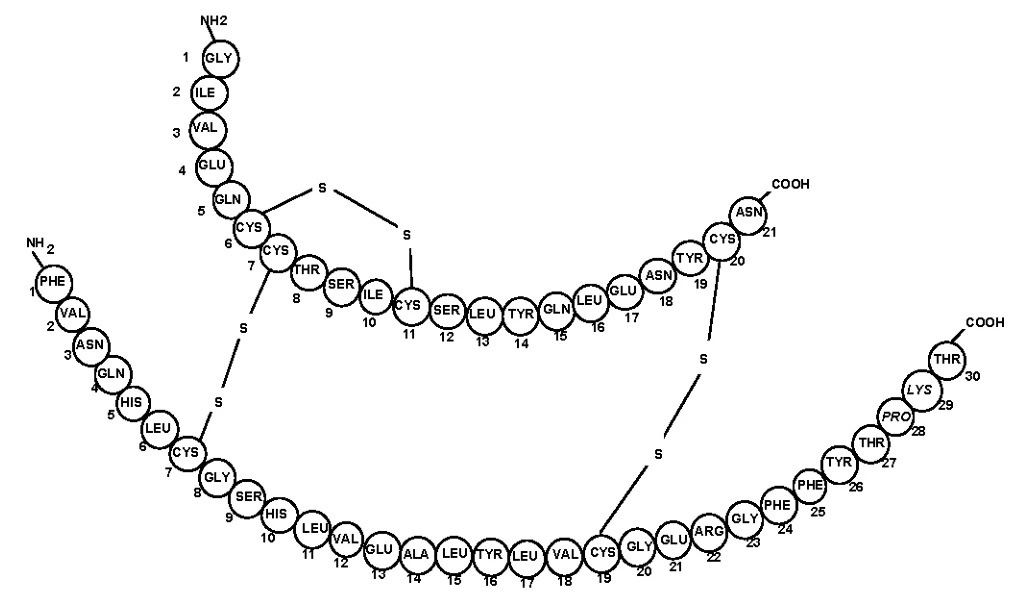
Insulin, human biosynthetic, is a polypeptide hormone consisting of a 21 amino acid A-chain and a 30 amino acid B-chain linked by two disulfide bonds. HUMULIN (insulin, human biosynthetic) is found to be chemically, physically, biologically and immunologically equivalent to pancreatic human insulin which differs slightly from porcine or bovine insulin in amino acid composition.
Studies indicate that immunogenicity problems with biosynthetic human insulin (BHI) produced by recombinant DNA technology are less likely than with insulin that is derived from animal origin. Biosynthetic human insulin is devoid of all protein contaminants of pancreatic origin normally present in trace amounts in all insulins of pancreatic origin. The purification procedures used in the manufacture of biosynthetic human insulin result in a product which contains an insufficient quantity of E. coli polypeptides to be antigenic in deliberately sensitized animals. No antibodies to E. coli polypeptides have been detected in specifically designed radioimmunoassay methods examining patient serum samples.
Mechanism of Action
The administration of suitable doses of insulin to patients with diabetes mellitus, along with controlled diet and exercise, temporarily restores their ability to metabolize carbohydrates, fats and proteins; to store glycogen in the liver; and to convert glucose to fat. When given in suitable doses at regular intervals to a patient with diabetes mellitus, the blood sugar is maintained within a reasonable range, the urine remains relatively free of sugar and ketone bodies, and diabetic acidosis and coma are prevented.
Pharmacodynamics
The primary activity of human insulin is the regulation of glucose metabolism. In addition, insulin has several anabolic and anti-catabolic actions on many tissues in the body. In muscle and other tissues (except the brain), insulin causes rapid transport of glucose and amino acids intracellularly, promotes anabolism, and inhibits protein catabolism. In the liver, insulin promotes the uptake and storage of glucose in the form of glycogen, inhibits gluconeogenesis, and promotes the conversion of excess glucose into fat.
HUMULIN-R, insulin injection, human biosynthetic (rDNA Origin) REGULAR is a fast-acting insulin. The duration of action of HUMULIN-R is between 6 and 8 hours.
HUMULIN-N, insulin isophane, human biosynthetic (rDNA Origin) NPH is an intermediate-acting insulin with a slower onset of action than Regular insulin and a longer duration of activity of up to 24 hours.
HUMULIN MIXTURE, insulin injection, insulin isophane, human biosynthetic (rDNA Origin) 30/70 is an intermediate-acting insulin combined with a fast-acting insulin. HUMULIN MIXTURE has a more rapid onset of action than NPH alone and a duration of activity of up to 24 hours.
Pharmacokinetics
Insulin preparations differ in onset, peak and duration of action. Individual variations of blood glucose response profiles are dependent upon factors such as the size of dose, site of injection and physical activity of the patient (for all human insulin formulations). The addition of protamine to insulin, in the presence of zinc, produces a stable complex with less intense and more prolonged action, due to its slow dissolution.
HUMULIN-N may be mixed with HUMULIN-R to meet individual metabolic requirements of the patient as determined by the physician.
STORAGE AND STABILITY
Prior to first use insulin should be stored in a cold place (2-8°C), preferably in a refrigerator, but not in a freezer. Do not let it freeze or leave it in direct sunlight. Expiration dates are stated on the labels.
When in current use, vials, cartridges and prefilled pens should be stored at room temperature and discarded after 28 days.
SPECIAL HANDLING INSTRUCTIONS
See Part III CONSUMER INFORMATION for injection procedures for vials and instructions for use of cartridges/ pens. Also refer to the User Manual for HUMULIN KwikPen.
DOSAGE FORMS, COMPOSITION AND PACKAGING
HUMULIN is available in the following presentations:
HUMULIN R, insulin injection, human biosynthetic (rDNA Origin) REGULAR:
- Vial HI0210, 10 mL, 100 units/mL.
- Vial HI0213, 3 mL, 100 units/mL.
- Cartridge HI0219, 3.0 mL, 100 units/mL, 5 cartridges/box.
HUMULIN R KwikPen, insulin injection, human biosynthetic (rDNA Origin) REGULAR:
- 1. Cartridge and Pen HP8804, 3.0 mL prefilled pen, 100 units/mL, 5 pens/box.
HUMULIN N, insulin isophane, human biosynthetic (rDNA Origin) NPH:
- 1. Vial HI0310, 10 mL, 100 units/mL.
- 2. Vial HI0313, 3 mL, 100 units/mL.
- 3. Cartridge HI0319, 3.0 mL, 100 units /mL, 5 cartridges/box.
HUMULIN N KwikPen, insulin isophane, human biosynthetic (rDNA Origin) NPH:
- 1. Cartridge and Pen HP8805, 3.0 mL prefilled pen, 100 units/mL, 5 pens/box.
HUMULIN 30/70, 30% insulin injection, 70% insulin isophane, human biosynthetic (rDNA Origin):
- 2. Vial HI0710, 10 mL, 100 units/mL.
- 3. Cartridge HI0719, 3.0 mL, 100 units/mL, 5 cartridges/box.
HUMULIN cartridges are designed for use with Lilly injector systems.
Not all pack sizes and presentations may be marketed.
PART II: SCIENTIFIC INFORMATION
PHARMACEUTICAL INFORMATION
Drug Substance
HUMULIN (insulin, human biosynthetic) is a polypeptide hormone consisting of a 21 amino acid A-chain and a 30 amino acid B-chain linked by two disulfide bonds. It is synthesized in a non-disease-producing special laboratory strain of E. coli that has been genetically altered by the addition of the human gene for insulin production.
Molecular formula: C257H383N65O77S6
Molecular weight: 5807.72.
Structural formula:
CLINICAL TRIALS
New Patient Studies
One hundred and twenty nine (129) insulin naive patients were treated for one year. Dramatic, albeit expected, improvement of metabolic control followed institution of biosynthetic human insulin (BHI). Insulin antibody binding was measured and compared with results obtained from a well-matched group of historical controls on animal insulins. BHI was less immunogenic than modified beef pork (MBP) or purified pork insulin (PPI). The possible reasons that BHI is ever immunogenic in humans are (1) the fact that BHI is given subcutaneously and (2) the presence of insulin aggregates.
Transfer Patient Studies
In a double-blind, double-crossover study, patients were switched from beef-insulin to PPI or BHI and then back again; patients on BHI had modestly higher fasting blood sugars. Moreover, the A.M. dose of BHI could be administered closer to breakfast than was possible with animal-sourced insulins.
In another double-blind study, patients were switched either to BHI or maintained on their PPI or MBP insulin. Patients switched from MBP or PPI to BHI had slightly higher fasting and/or postprandial blood sugars than control groups which were maintained on their prestudy animal insulin programs. Patients switched from MBP to BHI demonstrated clear reductions in their serum insulin antibody binding. Patients switched from PPI to BHI demonstrated significantly less insulin binding at six months after transfer; at 24 months, bound insulin was essentially the same for both groups.
The immune responses of a subset of 142 of 427 transfer patients have been statistically analyzed. These patients had been randomly allocated to treatment with BHI, PPI or MBP. Taking type of diabetes into account, this study confirmed that BHI was the least immunogenic.
Use of BHI in Patients with Complications of Insulin Therapy:
In isolated instances where patients were experiencing insulin allergy or resistance to insulin therapy, BHI has been used with limited success.
There are isolated case reports in which patients with the complications of insulin therapy, principally lipoatrophy, insulin allergy and insulin resistance, have been treated with BHI.
Overall, the clinical studies indicate that BHI is an effective, safe insulin both in patients receiving insulin for the first time and in patients being switched from animal insulin. However, BHI appears to be shorter acting than animal insulin. The data from these studies are not sufficient to determine whether BHI is superior to PPI in the prevention or treatment of complications of insulin therapy. However, HUMULIN (insulin, human biosynthetic) was shown to be less immunogenic than mixed beef-pork insulin or purified pork insulin.
DETAILED PHARMACOLOGY
Preclinical Pharmacology
Biosynthetic human insulin (BHI) has been studied extensively. In nearly all the studies, BHI was compared with native pancreatic human insulin as well as with purified pork insulin. The resulting data clearly indicate that BHI is chemically, physically, biologically and immunologically equivalent to the appropriate pancreatic insulin standards. BHI is prepared by the proinsulin route, starting with an E. coli fermentation using recombinant DNA-containing plasmids. The amino acid sequences of the insulin chains were found to be correct and the disulfide bonds were shown to be in the proper configuration. Additional chemical and physical studies verified that the normal structure of the human insulin molecule was integrally formed by the proinsulin process.
Further confirmation that BHI is structurally identical to pancreatic human insulin was provided by radioimmunochemical assays for insulin. BHI and pancreatic human insulin reacted identically in the insulin radioimmunoassay, a method that is sensitive to minor structural variations within the insulin molecule.
The biological activity of BHI was evaluated by a wide variety of in vitro techniques, all of which demonstrated that BHI and pancreatic human insulin are equivalent within experimental error. In addition, BHI was found to have a hypoglycemic potency equivalent to purified pancreatic insulins as determined by the USP rabbit assay.
BHI did not elicit an antigenic response when administered to E. coli polypeptide-sensitized rats and guinea pigs. In a clinical experiment, it was demonstrated that the anti- E. coli polypeptide antibody levels in 20 new diabetic patients were the same regardless of whether the treatment was with BHI or purified pork insulin.
No antibodies specific to E coli polypeptide have been detected in patient serum samples from over 1,350 patients.
Clinical Pharmacology
Clinical pharmacologic studies with, biosynthetic human insulin (rDNA) demonstrate that generally the pharmacokinetics and pharmacodynamics of BHI and purified pork insulin (PPI) are the same. However, serum concentrations after BHI is administered subcutaneously may be higher or occur sooner than after PPI. These differences are generally ascribed to the greater solubility of BHI, which apparently is related to the presence of threonine instead of alanine on the B-30 position of the molecule.
A 30/70 Regular/NPH mixture produced the same effect as equivalent doses of the two formulations administered separately. Mixtures of NPH and Regular BHI have demonstrated a slight excess of protamine in NPH BHI which binds to added Regular insulin, and that this binding delays slightly the occurrence of the peak serum concentration. Effects of BHI on substrates and other non-insulin and glucose parameters have been studied. Most investigators have reported that the suppression of endogenous insulin as indicated by serum C-peptide values was equivalent for BHI and PPI.
Growth hormone (GH) increase was also equivalent or slightly less with BHI. Prolactin response was less after BHI than with PPI, while the cortisol response to insulin hypoglycemia may be greater with BHI than with PPI. There was no difference in non-esterified fatty acid lowering or blood glycerol, lactate, or 3-hydroxybutyrate levels between BHI and PPI.
While the effects of BHI on suppression of human C-peptide usually are the same as those for PPI, BHI may affect other variables differently than PPI. Further studies will be needed to determine the significance of differences between BHI and PPI on prolactin, GH, and glucagon concentrations.
TOXICOLOGY
As with pork insulin, biosynthetic human insulin will be mainly used by subcutaneous injection in humans and, therefore, the majority of studies in animals have been performed using this route of administration. However, acute toxicity studies in monkeys and a subchronic study in dogs were performed using intravenous administration. The experiments for acute toxicity are presented in Table 1 and for subacute toxicity in Table 2 and are summarized as follows:
- 1. The selection of dose levels of human insulin for the single and multiple dose studies in animals was restricted by the potent hypoglycemic activity of this compound. The pharmacological effects of insulin are well-known from many years of human therapy and therefore the toxicological studies were designed to evaluate adverse effects of possible impurities such as E. coli polypeptides.
- 2. The minimal lethal subcutaneous dose of biosynthetic human insulin in rats and mice was greater than 10 units/kg. This dose was a large multiple of the initial human clinical trial dose and also much greater than the average daily therapeutic dose of insulin (0.6 units/kg/day).
- 3. Dogs given a single subcutaneous dose of 2 units/kg or an intravenous dose of 0.1 unit/kg of human insulin evidenced hypoglycemia and related pharmacological effects but no significant toxicity.
- 4. No compound-related toxic effects were observed when rats were given daily subcutaneous injections of 2.4 units/kg of biosynthetic human insulin for one month. Similarly, beagle dogs given daily subcutaneous injections of 2 units/kg or intravenous injections of 0.1 unit/kg of human insulin for one month evidenced marked hypoglycemia, but no adverse effects were seen on hematologic or serum chemistry parameters and there were no pathologic changes. There was no evidence of tissue damage or irritation at the site of injection in the rats or dogs.
- 5. Biosynthetic human insulin gave negative results in the Modified Ames, Rat Hepatocyte, and Chinese Hamster mutagenicity tests.
It can be concluded that injections of pharmacologically effective doses of biosynthetic human insulin in animals did not produce toxic effects. There were no findings that would preclude the use of this compound in humans.
Table 1. Acute Toxicity
| Species | Number Per Dose | Route | Single Dose | Duration (Days) | Observations |
| Rats | 10 females 10 males | SC | 10 IU/kg | 14 | No mortality. Minimum lethal dose > 10 IU/kg. |
| Mice | 10 females 10 males | SC | 10 IU/kg | 14 | No mortality. Alopecia in females on BHI. Minimum lethal dose > 10 IU/kg. |
| Mice | 10 females 10 males | SC | 10 IU/kg | 14 | No mortality. Minimum lethal dose > 10 IU/kg |
| Rats | 10 females 10 males | SC | 10 IU/kg | 14 | Significant tolerance of doses without signs of toxicity. |
| Dogs | 2 females 2 males | SC | 2 IU/kg | 14 | Significant tolerance of doses without signs of toxicity. |
| Monkeys | 2 females 2 males | IV | 1 IU/kg | 14 | Significant tolerance without signs of toxicity. Blood glucose values decreased sharply in all animals 15-20 minutes post administration. |
Table 2. Subacute Toxicity
| Species | Number Per Dose | Route | Single Daily Dose | Number of Doses | Observations |
| Rats | 15 females 15 males | SC | 2.4 IU/kg/day | 30 | No toxicologically important changes occurred. |
| Dogs | 3 females 3 males | SC | 2.0 IU/kg/day | 30 | One male on BHI experienced convulsions. Some ataxia and hypoactivity. |
| Dogs | 4 females 4 males | IV | 0.1 IU/kg /day | 30 | Decreased thrombocyte numbers. Minor changes in alanine transaminase activities. |
REFERENCES
- Altman J, Pehuet M, Slama G, et al. Three cases of allergic reaction to human insulin. Lancet 1983;(Aug 27):524.
- Bachmann W, Sieger C, Lacher F, et al. Binding of biosynthetic human insulin to erythrocytes of normal and insulin-dependent diabetic subjects: Comparison with pork and human pancreatic insulin. Diabetes Care 1981;4(2):215-219.
- Bachmann W, Hasche H, Mehnert H. Intradermal desensitization with human insulin (recombinant DNA) in a patient with severe allergic skin reaction due to insulin. Diabetes Care 1982;5(suppl 2):165-167.
- Baker R, Ross W, Schmidtke J, et al. Preliminary studies on the immunogenicity and amount of escherichia coli polypeptides in biosynthetic human insulin produced by recombinant DNA Technology. Lancet 1981;2:1139-1141.
- Bauman W, Yalow R. Immunologic Potency of recombinated A and B-chains of synthetic human and pancreatic pork insulins. Diabetes 1981;30:265-266.
- Beischer W, Maier V, Jonatha E, et al. Immunologic properties of biosynthetic human insulin in vitro. Diabetes Care 1981;4(2):202-204.
- Bell G, Pictet R, Rutter W, et al. Sequence of the human insulin gene. Nature 1980; 284:26-32.
- Berke L, Owen J, Atkinson R. Allergies to human insulin, Diabetes Care 1984; 7(4):402-403.
- Beyer J, Weber T, Schultz G, et al. Comparison of biosynthetic human insulin and pork insulin during rest, food ingestion, and physical work in insulin-dependent diabetic subjects using a glucose controlled insulin infusion system. Diabetes Care 1981;4(2):189-192.
- Bottermann P, Gyaram H, Wahl K, et al. Pharmacokinetics of biosynthetic human insulin and characteristics of its effect. Diabetes Care 1981;4(2):168-169.
- Canadian Diabetes Association 2008 Clinical Practice Guidelines for the Prevention and Management of Diabetes in Canada. Canadian J. Diabetes 2008;32(supp 1):S1-S201.
- Carpentier J, Halban P, Renold A, et al. Internalization of 125I-insulin by IM-9 cultured human lymphocytes: A comparison between A-14-monoiodo-pork and biosynthetic human insulin. Diabetes Care 1981;4(2):220-222.
- Carveth-Johnson A, Mylvaganam K, Child D. Generalised allergic reaction with synthetic human insulin. Lancet 1982;(Dec 4):1287.
- Chance R, Enzmann F, Galloway J, et al. Introduction to symposium on biosynthetic human insulin, Athens, Greece (Sep 1980) and Wiesbaden, Germany (Dec 1980). Skyler J, and Raptis S, Editors. Diabetes Care 1981;4(2):139.
- Chance R, Kroeff E, Hoffman J, et al. Chemical, physical, and biologic properties of biosynthetic human insulin. Diabetes Care 1981;4(2):147-154.
- Check W. Bacterially produced human insulin given therapeutically. JAMA 1981; 245:322-323.
- Clark A, Wiles P, Leiper J, et al. A double-blind crossover trial comparing human insulin (recombinant DNA) with animal insulins in the treatment of previously insulin-treated diabetic patients. Diabetes Care 1982;5(suppl 2):129-134.
- DeLeeuw I, Delvigne C, Bekaert J. Insulin allergy treated with human insulin (recombinant DNA). Diabetes Care 1982;5(suppl 2):168-170.
- De Meyts P, Halban P, Hepp K. In vitro studies on biosynthetic human insulin: an overview. Diabetes Care 1981;4(2):144-146.
- Federlin K, Laube H, Velcovsky H. Biologic and immunologic in vivo and in vitro studies with biosynthetic human insulin. Diabetes Care 1981;4(2):170-174.
- Fehlmann M, Le Marchand-Brustel Y, Dolais-Kitabgi J, et al. Biologic activity and receptor binding properties of biosynthetic human insulin in isolated rat hepatocytes and mouse soleus muscle in vitro. Diabetes Care 1981;4(2):223-227.
- Fineberg S, Galloway J, Fineberg N, et al. Immunologic improvement resulting from the transfer of animal insulin-treated diabetic subjects to human insulin (recombinant DNA). Diabetes Care 1982;5(suppl 2):107-113.
- Fineberg S, Galloway J, Fineberg N, et al. Immunogenicity of recombinant DNA human insulin. Diabetologia 1983;25:465-469.
- Fussgaenger R, Ditschuneit H, Martini H, et al. Potency of biosynthetic human insulin determined in vitro. Diabetes Care 1981;4(2):228-234.
- Gait M. Synthetic genes for human insulin. Nature 1979;277(8):429-431.
- Galloway J. Insulin treatment for the early 80's: facts and questions about old and new insulins and their usage. Diabetes Care 1980;3(5):615-622.
- Galloway J, Marsden J. Clinical trials with biosynthetic human insulin. Diabetes Care 1981;4(2):260-261.
- Galloway J, Peck F, Fineberg S, et al. The US "new patient" and "transfer" studies. Diabetes Care 1982;5(suppl. 2):135.
- Galloway J, Root M, Bergstrom R, et al. Clinical pharmacologic studies with human insulin (recombinant DNA). Diabetes Care 1982;5(suppl 2):13-22.
- Galloway J, Spradlin C, Root M, et al. Plasma glucose response of normal fasting subjects to neutral regular and NPH biosynthetic human and purified pork insulins. Diabetes Care 1981;4(2):183-188.
- Galloway J. Highlights of clinical experiences with recombinant human insulin (r DNA) and human proinsulin (r DNA). Netherland J Med 1985;28(suppl 1):37-42.
- Gammeltoft S. Receptor binding of biosynthetic human insulin on isolated pig hepatocytes. Diabetes Care 1981;4(2):235-237.
- Garcia-Ortega P, Knobel H, Mirada A. Sensitization to human insulin. British Med J 1984;288:1271.
- Gerich J. Appraisal of the role of biosynthetic human insulin in the future treatment of diabetes mellitus. Diabetes Care 1981;4(2):262-264.
- Goeddel D, Kleid D, Bolivar F, et al. Expression in Escherichia coli of chemically synthesized genes for human insulin. Proc National Acad Sciences 1979;76:106-110.
- Halban P, Berger M, Gjinovci A, et al. Biologic activity and pharmacokinetics of biosynthetic human insulin in the rat. Diabetes Care 1981;4(2):238-243.
- Herings R, deBoer A, Stricker B, et al. Hypoglycemia associated with use of inhibitors Home P, Alberti K. Human insulin. Clinics Endocrin & Metabol 1982;11:543-583.
- Howey D, Fineberg S, Nolen P, et al. The therapeutic efficacy of human insulin (recombinant DNA) in patients with insulin-dependent diabetes mellitus: a comparative study with purified porcine insulin. Diabetes Care 1982;5(suppl 2):73-77.
- Johnson I. Authenticity and purity of human insulin (recombinant DNA). Diabetes Care 1982;5(suppl E2):4-12.
- Keefer L, Piron M, De Meyts P. Receptor binding properties and biologic activity in vitro of biosynthetic human insulin. Diabetes Care 1981;4(2):209-214.
- Keen H, Glynne A, Pickup J, et al. Human insulin produced by recombinant DNA technology: safety and hypoglycaemic potency in healthy men. Lancet II 1980; 8191:398-401.
- Kumar D, Alexander C, Zeidler A, et al. Immunoreactivity of human insulin of recombinant DNA origin. Diabetes 1983;32:516-519.
- Kurtz W, Pravenec M. Antidiabetic mechanisms of angiotensin-converting-enzyme inhibitors and angiotensin II receptor antagonists: beyond the renin-angiotensin system. J Hypertension 2004;22(12):2253-2261.
- Landgraf R, Kammerer S, Bock T, et al. Crossover study with human insulin of angiotensin converting enzyme. Lancet 1995;345:1195-98.
- (recombinant DNA) in type 1 diabetic subjects. Diabetes Care 1982;5(suppl 2):39-42.
- Maneschi F, Fineberg S, Kohner E. Successful treatment of immune-mediated insulin resistance by human insulin (recombinant DNA). Diabetes Care 1982;5(suppl E2): 175-179.
- Massi-Benedetti M, Burrin J, Capaldo B, et al. Comparative study of activity of biosynthetic human insulin and pork insulin using glucose clamp technique in normal subjects. Diabetes Care 1981;4(2):163-167.
- Olefsky J. Insulin binding, biologic activity, and metabolism of biosynthetic human insulin. Diabetes Care 1981;4(2):244-247.
- Pedersen-Bjergaard U, Agerholm-Larsen B, Pramming S, et al. Activity of angiotensin-converting enzyme and risk of severe hypoglycaemia in type 1 diabetes mellitus. Lancet 2001;357:1248-1253.
- Raptis S, Karaiskos C, Enzmann F, et al. Biologic activities of biosynthetic human insulin in healthy volunteers and insulin-dependent diabetic patients monitored by the artificial endocrine pancreas. Diabetes Care 1981;4(2):155-162.
- Renner R, Vocke K, Hepp K. Search for the most practical Regular/NPH mixtures for type 1 diabetic patients. Diabetes Care 1982;5(suppl 2):53-56.
- Sailer D, Ludwig T, Kolb S. Comparison of the activity profiles of two fixed combinations of Regular/NPH human insulin (recombinant DNA) of Different compositions with a fixed Regular/NPH porcine insulin combination (PPI) in insulin-dependent diabetic individuals. Diabetes Care 1982;5(suppl 2):57-59.
- Schernthaner G. Affinity of IgG-insulin antibodies to human (recombinant DNA) insulin and porcine insulin in insulin-treated diabetic individuals with and without insulin resistance. Diabetes Care 1982;5(suppl 2):114-118.
- Schernthaner G, Ludwig H, Jarisch R, et al. Immediate-type allergy against insulin itself: clinical and immunologic studies on diabetic patient with insulin intolerance. Diabetes Care 1981;4(2):196-201.
- Schluter K, Kerp L. Receptor binding studies and clinical effects of human insulin (recombinant DNA): studies in patients with newly diagnosed type 1 diabetes, type 2 diabetes, insulin resistance (type A and type B), insulin antibodies, insulin allergy, and "brittle" diabetes. Diabetes Care 1982;5(suppl 2):152-160.
- Skyler J. Human insulin of recombinant DNA origin: clinical potential. Diabetes Care 1982;5(suppl E2):181-186.
- Skyler J. Pfeiffer E, Raptis S, et al. .Biosynthetic human insulin: progress and prospects. Diabetes Care 1981;4(2):140-143.
- Small P, Lerman S. Human insulin allergy. Annals Allergy 1984;53(1):39-41.
- Spijker A, Poortman J, Thijssen J, et al. Decrease of circulating insulin antibodies in two patients treated with continuous subcutaneous infusion of human insulin (recombinant DNA). Diabetes Care 1982;5(suppl 2):171-174.
- Waldhausl W, Kastner G, Komjati M, et al. Studies on the biologic actions of biosynthetic human insulin in vitro and in diabetic man. Diabetes Care 1981;4(2):205-208.
- Weinges K, Ehrhardt M, Enzmann F. Comparison of biosynthetic human insulin and pork insulin in the Gerritzen test. Diabetes Care 1981;4(2):180-182.
- Weinges K, Ehrhardt M, Nell G, et al. Pharmacodynamics of human insulin (recombinant DNA) - Regular, NPH, and mixtures - obtained by the Gerritzen method in healthy volunteers. Diabetes Care 1982;5(suppl 2):67-70.
- Wieringa T, Van Putten J, Van Dijk-Besling, M, et al. Receptor binding and effect of biosynthetic human insulin on 2-deoxyglucose transport. Diabetes Care 1981; 4(2):254-256.
- Wiles P, Guy R, Watkins S, et al. Allergy to purified bovine, porcine, and human insulins. British Med J 1983;287:531.