


Product Monograph - Kirsty
1 INDICATIONS
Indications have been granted on the basis of similarity between Kirsty (Insulin Aspart) and the reference biologic drug NovoRapid
Kirsty (insulin aspart) is indicated for:
- Treatment of patients with diabetes mellitus who require insulin for the control of hyperglycemia.
Kirsty should normally be used in regimens together with an intermediate or long-acting insulin.
Kirsty (10 mL vials) may also be used for continuous subcutaneous insulin infusion (CSII) in pump systems which are licensed in Canada for insulin infusion.
1.1 Pediatrics
Pediatrics (2 – 17 years of age):
Evidence from clinical studies and experience suggests that use in the pediatric population is not associated with any differences in safety or effectiveness. Please see 11 ACTION AND CLINICAL PHARMACOLOGY.
1.2 Geriatrics
Geriatrics (> 65 years of age):
There was no clinically relevant difference in the pharmacokinetics and pharmacodynamics of insulin aspart between elderly and younger subjects. Please see 8 WARNINGS AND PRECAUTIONS and 11 ACTION AND CLINICAL PHARMACOLOGY.
2 CONTRAINDICATIONS
- During episodes of hypoglycemia;
- Patients who are hypersensitive to this drug or to any ingredient in the formulation or component of the container. For a complete listing, see 6 DOSAGE FORMS, STRENGTH, COMPOSITION and PACKAGING of the product monograph.
3 SERIOUS WARNINGS AND PRECAUTIONS BOX
Serious Warnings and Precautions
- Hypoglycemia is the most common adverse effect of insulin products. As with all insulin products the timing of hypoglycemia may differ. Glucose monitoring shall be performed for all patients with diabetes mellitus treated with insulins. (see HYPOGLYCEMIA, HYPERGLYCEMIA AND OVERDOSAGE).
- Uncorrected hypoglycemic or hyperglycemic reactions can cause loss of consciousness, coma or even death. (see ENDOCRINE AND METABOLISM – HYPOGLYCEMIA).
- Any transfer of insulin products should be made cautiously and only under medical supervision. (see 8 WARNINGS AND PRECAUTIONS).
- Some insulin products are short-acting insulin and are known for their rapid onset and short duration of action. The injection of such insulin products should immediately be followed by a meal (within 5-10 minutes or given immediately after the meal. (see 4 DOSAGE AND ADMINISTRATION).
- Short-acting insulin should be combined with a longer-acting insulin or insulin infusion pump therapy to maintain adequate glucose control. (see 4 DOSAGE AND ADMINISTRATION).
- Insulin products shall not be mixed with any other insulin unless clearly indicated and done under medical supervision. (see 8 WARNINGS AND PRECAUTIONS).
- Insulin products shall not be used if it is not water-clear and colourless or if it has formed a deposit of solid particles on the wall of the vial or cartridge. (see 4 DOSAGE AND ADMINISTRATION).
4 DOSAGE AND ADMINISTRATION
4.1 Dosing Considerations
- Patients being initiated on insulin can be started on Kirsty in the same manner as they would be on animal-source or human insulin.
- Changes for patients being transferred from other insulin to Kirsty should be made as directed by a physician.
4.2 Recommended Dose and Dosage Adjustment
Due to its faster onset of action, Kirsty should be given immediately before the meal. The injection should not be more than 5-10 minutes before the start of a meal. When necessary, Kirsty may be given immediately after the meal.
Dosage of Kirsty is individual and determined, based on the physician’s advice, in accordance with the needs of the patient. The individual insulin requirement is usually between 0.5-1.0 units/kg/day. In a meal-related treatment, 50-70% of this requirement may be provided by Kirsty and the remainder provided by an intermediate-acting or long-acting insulin.
The dosing of Kirsty should be regularly adjusted according to blood glucose measurements. Adjustment dosage may also be necessary if patients undertake increased physical activity or change their usual diet. Exercise taken immediately after a meal may increase the risk of hypoglycemia.
4.4 Administration
Kirsty (insulin aspart) is administered subcutaneously by injection in the abdominal wall, the thigh, the upper arm, the deltoid region or the gluteal region. Injection sites should be rotated within the same region from one injection to the next so that the same site is not used more than approximately once a month in order to reduce the risk of lipodystrophy and cutaneous amyloidosis (see sections 8 WARNINGS and PRECAUTIONS and 9 ADVERSE REACTIONS). Insulin aspart retains its more rapid onset and shorter duration of action irrespective of the injection site used (abdomen, thigh, upper arm). As with all insulins, the duration of action will vary according to the dose, injection site, blood flow, temperature and level of physical activity.
Parenteral drug products should be inspected visually for particulate matter and discoloration prior to administration, whenever solution and container permit. Never use Kirsty if it has become viscous (thickened) or cloudy; use it only if it is water-clear and colourless. Kirsty should not be used after its expiration date.
In patients with diabetes mellitus, optimized metabolic control effectively delays the onset and slows the progression of late diabetic complications. Optimized metabolic control, including glucose monitoring is therefore recommended.
Kirsty (10 mL vial) may be used for Continuous Subcutaneous Insulin Infusion (CSII) in pump systems licensed for insulin infusion. Patients using CSII should be comprehensively instructed in the use of the pump system. The infusion and reservoir set should be changed according to the pump manufacturer’s instructions. Patients administering Kirsty by CSII must have an alternate insulin delivery device available in case of pump system failure.
Before travelling between different time zones the patient should seek the doctors’ advice since this means that the patient has to take the insulin and meals at different times.
As a precautionary measure, patients should carry a spare syringe and extra insulin in case the insulin delivery device is lost or damaged.
5 OVERDOSAGE
Excess insulin administration may cause hypoglycemia and, particularly when given intravenously, hypokalemia. Hypoglycemia may occur as a result of an excessive dose of insulin relative to food intake, energy expenditure, or both. Omission of a meal or unplanned strenuous physical exercise may lead to hypoglycemia. Symptoms of hypoglycemia may occur suddenly. They may include cold sweat, cool pale skin, fatigue, nervousness or tremor, anxiousness, unusual tiredness or weakness, confusion, difficulty in concentration, drowsiness, excessive hunger, vision changes, headache, nausea and palpitation. Severe hypoglycemia may lead to unconsciousness and/or convulsions and may be fatal.
Mild episodes of hypoglycemia can be treated by oral administration of glucose or sugary products. It is therefore recommended that patients with diabetes always carry some sugar candy.
Severe hypoglycemic episodes, where the patient has become unconscious, can be treated with glucagon (0.5 - 1 mg) given intramuscularly or subcutaneously by a trained person or glucose given intravenously by a medical professional. Glucose must also be given intravenously if the patient does not respond to glucagon within 10-15 minutes. Upon regaining consciousness, administration of an oral carbohydrate is recommended for the patient in order to prevent relapse. Hypokalemia must be corrected appropriately.
For management of a suspected drug overdose, contact your regional poison control centre immediately.
6 DOSAGE FORMS, STRENGTHS, COMPOSITION AND PACKAGING
To help ensure the traceability of biologic products, including biosimilars, health professionals should recognise the importance of recording both the brand name and the non-proprietary (active ingredient) name as well as other product-specific identifiers such as the Drug Identification Number (DIN) and the batch/lot number of the product supplied.
Table 1: – Dosage Forms, Strengths, Composition and Packaging
Kirsty is available in 10 mL multiple-dose vial and in 3 mL disposable pre-filled pen.
1 mL of the solution contains 100 Units of insulin aspart (equivalent to 3.5 mg).
Pack size for vial is 1 x 10 mL.
| Route of Administration | Dosage Form / Strength/Composition | Non-medicinal Ingredients |
| Subcutaneous | Solution for injection / 100 Units / mL | Disodium hydrogen phosphate dihydrate; glycerol; metacresol; phenol; sodium chloride; water for injection and zinc chloride. Hydrochloric acid and sodium hydroxide are used for pH adjustment. |
Pack sizes for pre-filled pen include 1 x 3 mL pre-filled pen and 5 x 3 mL pre-filled pens.
7 DESCRIPTION
Kirsty (insulin aspart) is a rapid-acting human insulin analog, produced by recombinant DNA technology utilizing Pichia pastoris (yeast) cells, that rapidly lowers blood glucose. Kirsty is homologous with regular human insulin with the exception of a substitution of the amino acid proline for aspartic acid in position B28. The substitution of the amino acid proline with aspartic acid at position B28 in Kirsty reduces the tendency to form hexamers as observed with regular human insulin. Kirsty is therefore more rapidly absorbed from the subcutaneous layer compared to regular human insulin.
8 WARNINGS AND PRECAUTIONS
Please see 3 SERIOUS WARNINGS AND PRECAUTIONS BOX at the beginning of Part I: Health Professional Information.
General
As with all insulins, the duration of action of insulin aspart may vary in different individuals or in the same individual according to dose, injection site, blood flow, temperature and level of physical activity.
Kirsty differs from regular human insulin by its rapid onset and shorter duration of action. As a result of the fast onset of action, the injection of Kirsty should immediately be followed by a meal. As a result of the short duration of action of insulin aspart, patients with diabetes may also require a longer-acting insulin to maintain adequate glucose control.
Thiazolidinediones (TZDs), alone or in combination with other anti-diabetic agents (including insulin), can cause heart failure and oedema. The combination of insulin with a TZD is not indicated for the treatment of type 2 diabetes mellitus. Please refer to the respective TZD product monograph, (see WARNINGS AND PRECAUTIONS), information when the use of these drugs in combination with any insulin, including insulin aspart, is contemplated.
Kirsty pre-filled pen should never be shared between patients, even if the needle is changed. Sharing poses a risk for transmission of blood-borne pathogens.
Avoidance of accidental mix-ups/medication errors
Patients must be instructed to always check the insulin label before each injection to avoid accidental mix-ups between insulin aspart and other insulin products.
Carcinogenesis and Mutagenesis
See 18 Non-Clinical Toxicology.
Driving and Operating Machinery
Caution should be exercised when driving or operating a vehicle or potentially dangerous machinery.
Endocrine and Metabolism
Hypoglycemia
As with other insulins, hypoglycemia is the most common adverse effect of insulin therapy, including Kirsty. Such reactions following treatment with insulin aspart are mostly mild and easily managed. While the frequency of hypoglycemia observed in clinical trials is similar to that observed with regular human insulin, clinical trials in patients with type 1 diabetes have demonstrated a reduced risk of nocturnal hypoglycemia with insulin aspart compared with soluble human insulin. The risk of daytime hypoglycemia was not significantly increased.
As with all insulin preparations, hypoglycemic reactions may be associated with the administration of Kirsty. Early warning symptoms of hypoglycemia may be different or less pronounced under certain conditions, such as long duration of diabetes, diabetic nerve disease, use of medications such as betablockers, or intensified diabetes control.
Patients, whose blood glucose control is greatly improved, e.g. by intensified insulin therapy, may experience a change in their usual warning symptoms of hypoglycemia, and should be advised accordingly. Usual warning symptoms may disappear in patients with long-standing diabetes. Hypoglycemia may occur if the insulin dose is too high in relation to the insulin requirement. (see 9 ADVERSE REACTIONS, Hypoglycemia and 5 OVERDOSAGE)
Omission of a meal or unplanned strenuous physical exercise may lead to hypoglycemia. Care should be taken, especially in children, to match insulin doses (especially in basal-bolus regimens) with food intake, physical activities and current blood glucose level in order to minimise the risk of hypoglycaemia.
Stress or concomitant illness, especially infectious and febrile conditions may change insulin requirements. In these instances, patients should contact their physician and carefully control their blood glucose. Concomitant diseases in the kidney, liver or affecting the adrenal, pituitary or thyroid gland can require changes in the insulin dose.
Hypoglycemia can occur regardless of what type of insulin you take and can cause fatigue, sweating, heart palpitations, disturbed behaviour, hunger, convulsions, loss of consciousness temporary or permanent impairment of brain function, or, in extreme circumstances, even death which can occur without recognizable symptoms.
Some people may not recognize when their blood sugar drops low.
The patient’s ability to concentrate and react may be impaired as a result of hypoglycemia. This may constitute a risk in situations where these abilities are of special importance (e.g. driving a car or operating machinery).
Patients should be advised to take precautions to avoid hypoglycemia while driving. This is particularly important in those who have reduced or absent awareness of the warning signs of hypoglycemia or have frequent episodes of hypoglycemia. The advisability of driving should be considered in these circumstances.
Glucose monitoring is recommended for all patients with diabetes.
Hyperglycemia
Inadequate dosing or discontinuation of insulin treatment, especially in type 1 diabetes, may lead to hyperglycemia and diabetic ketoacidosis. Usually the first symptoms of hyperglycemia develop gradually over a period of hours or days. They include thirst, increased frequency of urination, nausea, vomiting, drowsiness, flushed dry skin, dry mouth, loss of appetite as well as acetone odour of breath. In type 1 diabetes, untreated hyperglycemic events eventually lead to diabetic ketoacidosis, which is potentially lethal.
Hypokalemia
All insulin products, including Kirsty, cause a shift in potassium from the extracellular to intracellular space, possibly leading to hypokalemia that, if left untreated, may cause respiratory paralysis, ventricular arrhythmia, and death. Use caution in patients who may be at risk for hypokalemia [e.g., patients using potassium-lowering medications, patients taking medications sensitive to serum potassium concentrations, patients receiving intravenously administered insulin, or patients losing potassium through other means (e.g., diarrhea)]. (see 9 ADVERSE REACTIONS).
Hepatic/Biliary/Pancreas
The pharmacokinetics of insulin aspart did not change in patients with mild (Mean Child Pugh Score: 5.7), moderate (Mean Child Pugh Score: 7.3) or severe (Mean Child Pugh Score: 10.2) hepatic impairment as compared to subjects with normal hepatic function (Mean Child Pugh Score: 0). As with other insulins, Kirsty requirement may need to be adjusted in patients with hepatic impairment.
A single dose pharmacokinetic study of insulin aspart was performed in 24 non-diabetic subjects with hepatic function ranging from normal to severely impaired. In patients with hepatic impairment absorption rate was decreased and more variable, resulting in delayed tmax from about 50 minutes in subjects with normal hepatic function to about 85 minutes in patients with moderate and severe hepatic impairment. AUC, Cmax and CL/F were similar in patients with reduced hepatic function compared with subjects with normal hepatic function.
Immune
Local allergic reaction
As with any insulin therapy, injection site reactions may occur and include pain, redness, itching, hives, swelling, bruising and inflammation. Continuous rotation of the injection site within a given area reduces the risk of developing these reactions. Reactions usually resolve in a few days to a few weeks. On rare occasions, injection site reactions may require discontinuation of Kirsty. Localized reactions and generalized myalgias have been reported with injected metacresol, which is an excipient in insulin aspart.
Systemic Allergic Reaction
Systemic allergic reactions have not been reported during the clinical development of insulin aspart. Systemic allergic reactions have rarely occurred with insulin aspart as with other insulin treatment. These reactions may be characterized by a generalized rash (with pruritus), shortness of breath, wheezing and drop in blood pressure. Severe cases of generalized allergy including anaphylactic reaction may be life threatening.
Antibody production
Insulin administration may cause insulin antibodies to form. In rare cases, the presence of such insulin antibodies may necessitate adjustment of the insulin dose in order to correct a tendency to hyper or hypoglycemia.
In the clinical development program, insulin aspart-specific, regular human insulin-specific and cross reactive antibodies were analyzed. Antibody production was monitored in 665 patients for 12 months. After a transient statistically significant increase in cross-reacting antibodies from baseline to 3 months for insulin aspart compared to human insulin, cross-reacting antibody levels returned to baseline levels in the insulin aspart group and were not different from the human insulin group. No adverse effects could be attributed to patients producing cross-reactive antibodies as compared to those who did not. There was no correlation between the extent of antibody formation and the insulin dose needed, level of glycemic control attained or adverse event reporting after 12 months treatment. No systemic allergic reactions were observed.
In a clinical study on the use of insulin aspart (n=157) during pregnancy in patients with type 1 diabetes, mean levels of antibodies specific to insulin aspart were low
(<3%). Variability between patients was up to 14% for insulin aspart. The majority of antibodies were cross-reacting. There was no observable increase in antibodies with insulin aspart treatment from baseline to the end of the third trimester.
Similar observations were found in cord blood. Mean levels of antibodies specific to insulin aspart were low (<1%). The majority of insulin antibodies were cross-reacting, and variability between patients was up to 17% for insulin aspart specific antibodies. Levels of antibodies in cord blood seemed to correlate with maternal antibodies which are consistent with a transfer of maternal cross-reacting insulin antibodies across the placenta. The same pattern was observed for insulin aspart specific antibodies.
In a clinical trial including 14 women with gestational diabetes assigned to treatment with insulin aspart mean levels of antibodies specific to insulin aspart remained relatively low (less than 0.5% binding).
See also 8 WARNING AND PRECAUTIONS, Sexual Function/Reproduction and Special Populations, Pregnant Women, 9 ADVERSE REACTIONS, Clinical Trial Adverse Drug Reactions, Pregnancy clinical trials; and Part II, SCIENTIFIC INFORMATION, 17 CLINICAL TRIALS, type 1 diabetes.
Mixing of Insulins
Mixing of an insulin formulation with another insulin formulation may change the pharmacokinetic and/or pharmacodynamic profile of action of the combined mixture in an unpredictable matter.
Monitoring and Laboratory Tests
As with all insulin therapy, the need for regular blood glucose self-monitoring should be considered when using Kirsty to obtain optimal glycemic control. Periodic measurement of glycated hemoglobin is recommended for the monitoring of long-term glycemic control. If a patient is pregnant, careful monitoring of the patient is required throughout pregnancy. During the perinatal period, careful monitoring of infants born to mothers with diabetes is warranted.
Renal
The pharmacokinetics of insulin aspart did not change in patients with mild (mean Clcr 60.0 mL min-1), moderate (mean Clcr: 35.7 mL min-1) and severe (mean Clcr: 23.5 mL min-1) renal impairment as compared to patient with normal renal function Clcr:> 99.8 mL min-1). The degree of renal impairment does not affect the pharmacokinetics variable of insulin aspart. As with other insulins, insulin aspart requirement may be reduced in patients with renal impairment. Insulin aspart requirement may need to be adjusted in patients with severe renal impairment.
A single dose pharmacokinetic study of insulin aspart in 18 subjects with type 1 diabetes and with renal function ranging from normal to severely impaired was performed. No apparent effect of creatinine clearance values on AUC, Cmax, CL/F and tmax of insulin aspart was found. Data were limited in patients with moderate and severe renal impairment. Patients with renal failure necessitating dialysis treatment were not investigated.
Sexual Health
Reproduction
There is no information on teratogenicity of insulin aspart in humans. In rabbit trials, insulin aspart did not exert any direct adverse effect on fertility, mating performance, reproductive capacity or embryo-fetal development and did not differ from human insulin.
Skin and subcutaneous tissue disorders
Subcutaneous administration of insulin products, including Kirsty can result in lipoatrophy (thinning of adipose tissue) or lipohypertrophy (thickening of adipose tissue) or localized cutaneous amyloidosis (skin lumps) which may affect insulin absorption.
Patients must be instructed to perform continuous rotation of the injection site to reduce the risk of developing lipodystrophy and cutaneous amyloidosis. Patients should be advised to consult their health professional if they notice any of these conditions and before changing the injection site. There is a potential risk of delayed insulin absorption and worsened glycaemic control following insulin injections at sites with these reactions. A sudden change in the injection site to an unaffected area has been reported to result in hypoglycaemia. Blood glucose monitoring is recommended after the change in the injection site from an affected to an unaffected area, and dose adjustment of antidiabetic medications may be considered.
8.1 Transferring Patients from Other Insulins
When patients are transferred between different types of insulin products, including animal insulins, the early warning symptoms of hypoglycemia may have changed or become less pronounced than those experienced with their previous insulin. Transferring a patient to a new type or brand of insulin should be done only under strict medical supervision. Changes in insulin strength, timing of administration, manufacturer, type (e.g. regular, NPH or insulin analogs), or method of manufacture (recombinant DNA versus animal source insulin) may result in the need for a change in dosage. Concomitant oral anti-diabetic treatment may also need to be adjusted. If an adjustment is needed, it may be done with the first doses or during the first weeks or months and under medical supervision.
8.2 Special Populations
8.2.1 Pregnant Women
Congenital anomalies are 3-4 times more prevalent in diabetic pregnancy than in non-diabetic pregnancies and with a two-fold higher mortality from major cardiovascular anomalies.
In a clinical trial of 157 pregnant women with type 1 diabetes treated with insulin aspart 10 congenital malformations were reported in 9 (5.7%) patients treated with insulin aspart. Cardiac anomalies were reported (n=7), mainly septal defects (n=4). Additional reports in offspring of patients treated with insulin aspart were one each of central nervous system anomaly, ankyloglossia and fetal disorders.
Of the women who received insulin aspart, fetal exposure throughout the entire pregnancy occurred in 44 women. One child exposed to insulin aspart had an anomaly neck edema resulting in fetal loss.
In a clinical trial of 14 women with gestational diabetes who received treatment with insulin aspart, two infants had abnormal findings and all findings were felt to be unrelated to the treatment.
See also 8 WARNINGS AND PRECAUTIONS, Immune and Special Populations, Pregnant Women; 9 ADVERSE REACTIONS, Clinical Trial Adverse Drug Reactions, Pregnancy clinical trials; and Part II, SCIENTIFIC INFORMATION, 17 CLINICAL TRIALS, type 1 diabetes.
Insulin aspart can be used in pregnant women with type 1 diabetes if clinically indicated. It is essential for patients with type 1 diabetes to maintain good metabolic control before conception and throughout pregnancy. Insulin requirements usually decrease during the first trimester and increase during the second and third trimesters. Patients should be advised to inform their health care professional if they are pregnant or are contemplating pregnancy. Careful monitoring of glucose control is essential in these patients.
A study was conducted in 157 pregnant women with type 1 diabetes treated with insulin aspart. Two-thirds (n=113) of the enrolled patients were already pregnant when they entered the study. Because only one third (n=44) of the patients were enrolled before conception, the sample size was not large enough to evaluate the risk of congenital malformations. A1C was evaluated during the study as well as the incidence of hypoglycemia. (see also, 9.2 Clinical Trial Adverse Drug Reactions, Pregnancy clinical trials and Part II, SCIENTIFIC INFORMATION, 17 CLINCIAL TRIALS, type 1 diabetes)
Reproduction studies have been performed in rats and rabbits at doses up to 16-32 times the human dose and have revealed no evidence of impaired fertility or harm to the fetus due to insulin aspart.
8.2.2 Breast-feeding
It is unknown whether insulin aspart is excreted in significant amounts in human milk. For this reason, caution should be exercised when insulin aspart is administered to a nursing mother. Patients with diabetes who are lactating may require adjustments in insulin dose, meal plan or both.
8.2.3 Pediatrics
Pediatrics (2-17 years of age): The pharmacokinetic properties of insulin aspart injection and regular human insulin were investigated in 18 children (6-12 years, n=9) and adolescents 13-17 years, n=9) with type 1 diabetes. The relative difference in pharmacokinetics and pharmacodynamics in type 1 diabetic children and adolescents between insulin aspart and regular human insulin correlated well with those in healthy adult subjects and type 1 diabetic adults.
The efficacy and safety of insulin aspart were compared to regular human insulin, both supplemented with NPH insulin, in a 24-week crossover (two 12-week treatments), randomized trial in children (age 2-6, n=25) with type 1 diabetes. Insulin aspart, injected either shortly before meal or immediately after a meal, produced the same effects with respect to postprandial blood glucose control (p=0.5180) and to overall glycemic control (as measured by A1C levels, 7.7 ± 0.23% vs 7.56 ± 0.25%, 0.111 (95% CI -0.113:0.336) as regular human insulin, injected 30 minutes before a meal. The safety profile was comparable to that of regular human insulin and did not appear to differ from that of insulin aspart in adults with type 1 diabetes. In addition, as compared to regular human insulin, insulin aspart did not increase the frequency and risk of hypoglycemia [RR 1.06 (95% CI: 0.96-1.17; p=0.225)].
In another trial, the efficacy and safety of insulin aspart were compared to insulin lispro and regular human insulin in a 24-week, randomized, open label study in 378 children (6-18 years of age) with type 1 diabetes. NPH insulin was administered as basal insulin. Baseline means A1C values for insulin aspart, lispro and regular human insulin were 8.3 ± 1.2%, 8.4% ± 1.2% and 8.3 ± 1.2%, respectively. At the end of the study, patients had mean A1C values of 8.4 ± 1.4%, 8.2 ± 1.2% and 8.3 ± 1.4%, respectively. The changes from baseline were not significantly different among the groups. Insulin aspart demonstrated similar, postprandial, blood glucose levels as lispro. The blood glucose levels after lunch and dinner decreased significantly with insulin aspart than with regular human insulin (lunch: 10.2 ± 4.5 mmol/L vs. 11.2 ±
4.7mmol/L, respectively; p=0.009; dinner: 10.5 ± 4.4 mmol/Lvs.11.6 ± 4.8mmol/L, respectively; p=0.003. Furthermore, insulin aspart did not increase the risk of hypoglycemia and had a safety profile comparable to both regular human insulin and lispro.
8.2.4 Geriatrics
PK/PD study comparing insulin aspart with soluble human insulin was performed in 19 elderly patients with type 2 diabetes. The relative differences in the pharmacodynamic properties between insulin aspart and human insulin in elderly were consistent with those seen in healthy subjects and in younger patients with diabetes. However, careful glucose monitoring and individual dose adjustments of insulin, including insulin aspart, may be necessary in elderly patients. (see 11 ACTION AND CLINICAL PHARMACOLOGY)
In the clinical development program, 226 patients aged 50 years and older (including 35 patients above the age of 65) were treated with insulin aspart for up to 6 months. No differences in dose, efficacy or adverse events were observed between these patients and younger population.
8.2.5 Others
The presence of diseases such as Acromegaly, Cushing’s syndrome, Hyperthyroidism and Pheochromocytoma can complicate the control of diabetes mellitus.
8.2.6 Gender
There was no significant difference in pharmacokinetics in a trial in type 2 diabetic patients. No significant difference in efficacy, as assessed by A1C, was found between genders in a trial in type 1 diabetic patients.
8.2.7 Obesity
The influence of obesity and/or subcutaneous fat thickness on the pharmacokinetics and glucodynamics of insulin aspart has not been studied. Patients with a body mass index (BMI) up to 40kg/m2 were treated with insulin aspart. No difference was observed in efficacy and safety compared to leaner patients.
8.2.8 Ethnic origin
There was no difference in efficacy in terms of blood glucose control as measured by A1C or safety in terms of adverse events between African Americans, Hispanics and Caucasian patients.
8.2.9 Smoking
The effect of smoking on the pharmacokinetics and pharmacodynamics of insulin aspart has not been studied. However, metabolic control was similar in smokers and non-smokers after 6 months treatment with insulin aspart in the clinical development program.
9 ADVERSE REACTIONS
The adverse drug reaction profiles reported in clinical studies that compared Kirsty to the reference biologic drug were comparable. The description of adverse reactions in this section is based on clinical experience with the reference biologic drug.
9.1 Adverse Reaction Overview
Adverse reactions observed in patients using insulin aspart are mainly due to the pharmacologic effect of insulin. The most frequently seen undesirable effect in insulin-treated patients is change in blood glucose levels. From clinical investigations, it is known that major hypoglycemia, defined as need for assistance in treatment, is common (>1/10) in well-controlled patients. Based on post-marketing experience adverse events including hypoglycemia are rare (>1/10,000 and <1/1000) during use of insulin products.
9.2 Clinical Trial Adverse Reactions
Because clinical trials are conducted under very specific conditions, the adverse reaction rates observed in the clinical trials may not reflect the rates observed in practice and should not be compared to the rates in the clinical trials of another drug. Adverse reaction information from clinical trials is useful for identifying drug-related adverse events and for approximating rates.
Frequencies of adverse drug reactions from clinical trials, which by an overall judgement are considered related to insulin aspart are listed below. The frequencies are defined as: Uncommon (>1/1000, <1/100) and rare (>1/10,000, <1/1000). Isolated spontaneous cases are presented as very rare defined as (<1/10,000).
Immune system disorders
Uncommon (>1/1000, <1/100): Urticaria, rash, eruptions
Very Rare (>1/10,000, <1/1000): Anaphylactic Reactions:
Symptoms of generalised hypersensitivity may include generalised skin rash, itching, sweating gastrointestinal upset, angioneurotic oedema, difficulties in breathing, palpitation and reduction in blood pressure. Generalised hypersensitivity reactions are potentially life threatening.
Nervous system disorders
Rare (>1/10,000, <1/1000): Peripheral neuropathy
Fast improvement in blood glucose control may be associated with a condition termed acute painful neuropathy, which is usually reversible.
Eye disorders
Uncommon (>1/1000, <1/100): Refraction disorder
Refraction anomalies may occur upon initiation of insulin therapy. These symptoms are usually of transitory nature.
Uncommon (>1/1000, <1/100): Diabetic retinopathy
Long-term improved glycemic control decreases the risk of progression of diabetic retinopathy. However, intensification of insulin therapy with abrupt improvement in glycaemic control may be associated with worsening of diabetic retinopathy.
Skin and subcutaneous tissue disorders
Uncommon (>1/1000, <1/100): Lipodystrophy
Lipodystrophy (including lipohypertrophy, lipoatrophy) may occur at the injection site as a consequence of failure to rotate injection sites within an area. Continuous rotation of the injection site within the particular injection area reduces the risk of developing these reactions.
Uncommon (>1/1000, <1/100): Local hypersensitivity
Local hypersensitivity reactions (redness, swelling and itching at the injection site) may occur during treatment with insulin. These reactions are usually transitory and normally they disappear during continued treatment.
General disorders and administration site conditions
Uncommon (>1/1000, <1/100): Oedema
Oedema may occur upon initiation of insulin therapy. These symptoms are usually of transitory nature.
Pregnancy Clinical Trials
In a clinical trial comparing safety and efficacy of insulin aspart to insulin human in the treatment of pregnant women with type 1 diabetes (322 exposed pregnancies 157 to insulin aspart 165 to human insulin) the adverse event profiles were similar in patients receiving insulin aspart and those receiving regular human insulin with respect to incidence and severity. Most adverse events were mild or moderate in severity. With the exception of obstetric complications, the adverse event profile was similar in patients during pregnancy and outside pregnancy. There were no differences in the incidence of obstetric complications between treatment groups.
Maternal Serious Adverse Events with possible or probable relationship to trial drug
Serious adverse events with possible or probable relation to trial drug were reported with insulin aspart or regular human insulin in >1% of subjects: hypoglycemia, inadequate control of diabetes, hypoglycemic coma.
The following maternal serious adverse events with possible or probable relationship to trial drug were reported at an incidence of <1% for insulin aspart: spontaneous abortion, missed abortion and caesarean section. (see also WARNINGS AND PRECAUTIONS, Immune, and Sexual Functions/reproduction and Special populations; Pregnant Women; and Part II, SCIENTIFIC INFORMATION, 17 CLINICAL TRIALS, type 1 diabetes)
9.3 Less Common Clinical Trial Adverse Reactions (<1%)
In addition, the following adverse events were reported at an incidence of <1% for insulin aspart regardless of drug relationship. Breech presentation, complication of delivery, hyperemesis gravidarum, HELLP syndrome, premature labour, ketoacidosis, ketonuria, acute bronchitis, hepatitis C, tonsillitis, tracheitis, uterine atony, asthenia, generalized oedema, contusion, obstetric procedure complication.
No clinically relevant differences were observed for any of the laboratory assessments, vital signs, ECG, or urine albumin/creatinine.
In each treatment group (insulin aspart and insulin human), 3 malformations resulted in fetal loss or death of the child. Serious adverse events were reported in 36% of children in the insulin aspart group and 29% of children in the regular human insulin group, the child adverse events profile was similar to that normally seen in children of diabetic mothers 33.6% of children in the insulin aspart group and 39.7% in the regular human insulin group experienced hypoglycemia leading to treatment (oral or intravenous glucose/dextrose or early feeding).
The most frequently reported adverse event with a frequency of over 1% in the clinical trial of 27 women with gestational diabetes the most commonly reported reaction was upper respiratory tract infection, as well as hypoglycemic reactions.
In the gestational pregnancy study 71% of women in the insulin aspart group and 69% of women in the regular human insulin group experienced a symptomatic hypoglycemic episode. No major hypoglycemic episodes were reported in this study.
Two infants in each group had abnormal findings; all findings were felt to be unrelated to the treatment. In the insulin aspart group, one fetal death occurred in utero due to umbilical cord strangulation at week 40, and one small pneumothorax and tachypnea which resolved the following day.
9.4 Post-Market Adverse Reactions
Adverse Drug Event Overview for a Post-Marketing CSII Trial
A 4 month post-marketing study in 511 patients with type 1 and insulin-requiring type 2 diabetes mellitus was conducted as a preference trial to assess the treatment satisfaction of insulin aspart and insulin lispro during CSII pump therapy. Adverse drug events were recorded when spontaneously reported by the patients in the study. The only adverse drug event reported at an incidence ≥ 1% was upper respiratory tract infection (incidence of 1.3% in the insulin aspart group).
Less Common Adverse Drug Events (<1%) in a Post-Marketing CSII Trial
In addition, the following adverse drug events were reported at an incidence of <1% for insulin aspart or insulin lispro in this study (in more than 1 patient in each treatment group), regardless of drug relationship.
Gastrointestinal Disorders: vomiting, nausea
Infections and Infestations: viral infection, urinary tract infection, sinusitis, onychomycosis, nasopharyngitis, bronchitis
Metabolism and Nutrition Disorders: hypoglycemia, hyperglycemia, diabetic ketoacidosis
Musculoskeletal and Connective Tissue Disorders: pain in extremity, back pain, arthralgia
Nervous System Disorders: neuropathy
Respiratory, Thoracic and Mediastinal Disorders: nasal congestion
The following serious adverse events were reported in more than 1 patient but at an incidence of < 1% for insulin aspart in Study 2190:
Metabolic and nutritional disorders: hypoglycemia (4 episodes) and diabetic ketoacidosis (2 episodes)
Hypoglycemia as an Adverse Drug Reaction in a Post-Marketing CSII Trial
The reporting of hypoglycemia was not a specific safety endpoint in this trial. Hypoglycemic episodes were recorded only if spontaneously reported by the subject as adverse drug reactions. Consequently, data on hypoglycemia is limited from this study. There were only 7 episodes of hypoglycemia reported during the four-month trial with over 500 patients. As such, the incidence of hypoglycemia was calculated to be <1% of the patients treated with either insulin aspart or insulin lispro and does not reflect real-life occurrence of hypoglycemia in diabetes patients.
10 DRUG INTERACTIONS
10.1 Overview
As with insulin in general, concomitant use of other drugs may influence insulin requirements.
10.2 Drug-Drug Interactions
The drugs listed below are based on either drug interaction case report or studies, or potential interactions due to the expected magnitude and seriousness of the interaction (i.e., those identified as contraindicated).
The following substances may reduce the insulin requirements: Oral anti-diabetic drugs, monoamine oxidase inhibitors (MAOI), beta-blockers, angiotensin converting enzyme (ACE) inhibitors, salicylates, anabolic steroids, sulfonamides and alcohol.
The following substances may increase insulin requirements: Oral contraceptives, thiazides, glucocorticosteroids, thyroid hormones, sympathomimetics growth hormone and danazol.
Beta-blocking agents may mask the symptoms of hypoglycemia and delay recovery from hypoglycemia.
Octreotide/lanreotide may either increase or decrease insulin requirements.
To avoid the risk of developing new or worsening heart failure, the use of TZDs in combination therapy with Kirsty is not indicated. (see 8 WARNINGS AND PRECAUTIONS)
10.3 Drug-Food Interactions
Please refer to 11 ACTION AND CLINICAL PHARMACOLOGY, Mechanism of Action and 4 DOSAGE AND ADMINISTRATION for interactions with food and timing of food consumption, respectively.
10.4 Drug-Herb Interactions
Interactions with herbal products have not been established.
10.5 Drug-Laboratory Test Interactions
Interactions with laboratory tests have not been established.
10.6 Drug-Lifestyle Interactions
The effect of smoking on the pharmacokinetics and pharmacodynamics of insulin aspart has not been studied. However, metabolic control was similar in smokers and non-smokers after 6 months treatment with insulin aspart in the clinical development program.
The influence of obesity and/or subcutaneous fat thickness on the pharmacokinetics and glucodynamics of insulin aspart has not been studied. Patients with a body mass index (BMI) up to 40kg/m2 were treated with insulin aspart. No difference was observed in efficacy and safety compared to leaner patients.
Patients should be informed about potential advantages and disadvantages of insulin aspart therapy including the possible side effects. Patients should also be offered continued education and advice on insulin therapies, life-style management, self-monitoring, complications of insulin therapy, timing of dosage, instruction for use of injection devices and storage of insulin.
The need for regular blood glucose self-monitoring should be considered when using Kirsty to obtain optimal glycemic control.
Alcohol may intensify or reduce the hypoglycemic effect of insulin.
11 ACTION AND CLINICAL PHARMACOLOGY
11.1 Mechanism of Action
The primary activity of insulin aspart is the regulation of glucose metabolism. Insulins, including insulin aspart, bind to the insulin receptors on muscle and fat cells and lower blood glucose by facilitating the cellular uptake of glucose - and simultaneously inhibit the output of glucose from the liver.
Insulin aspart is an analogue of human insulin, in which the amino acid, proline, in position 28, has been replaced by aspartic acid. This modification was designed to target the part of the molecule responsible for self association. Due to charge repulsion, insulin aspart has a reduced tendency to self associate. This causes insulin aspart to be absorbed more rapidly, resulting in faster action. Insulin aspart is designed to be similar to human insulin in all other aspects insulin aspart is equipotent to regular human insulin on a molar basis.
Insulin aspart produces a more rapid and more pronounced blood glucose lowering effect than regular human insulin, due to a faster absorption from the injection site.
When administered immediately before a meal, the effect of insulin aspart more closely mimics normal physiological postprandial insulin release than regular human insulin used as replacement therapy. This effect leads to reduced postprandial variability in blood glucose concentration.
In patients with diabetes mellitus, postprandial blood glucose levels are identified as a predictor of A1C levels. Furthermore, postprandial glucose control is an independent risk factor for morbidity and mortality in diabetics. This has been demonstrated with regard to overall mortality and cardiovascular disease and death. Since cardiovascular disease is the most frequent cause of death in a diabetic population, control of postprandial glucose levels is now recognized as an important clinical endpoint of successful diabetic therapy.
Optimized metabolic control in diabetic patients effectively delays the onset and slows the progression of late diabetic complications. Optimized metabolic control, including glucose monitoring is therefore recommended.
11.2 Pharmacodynamics
Insulin aspart produces a more rapid and pronounced blood glucose regulating effect than regular human insulin, due to the fast onset of action.
When insulin aspart is injected subcutaneously, the onset of action occurs within 10-20 minutes of injection. The maximum effect is exerted between 1 and 3 hours after injection. The duration of action is 3-5 hours.
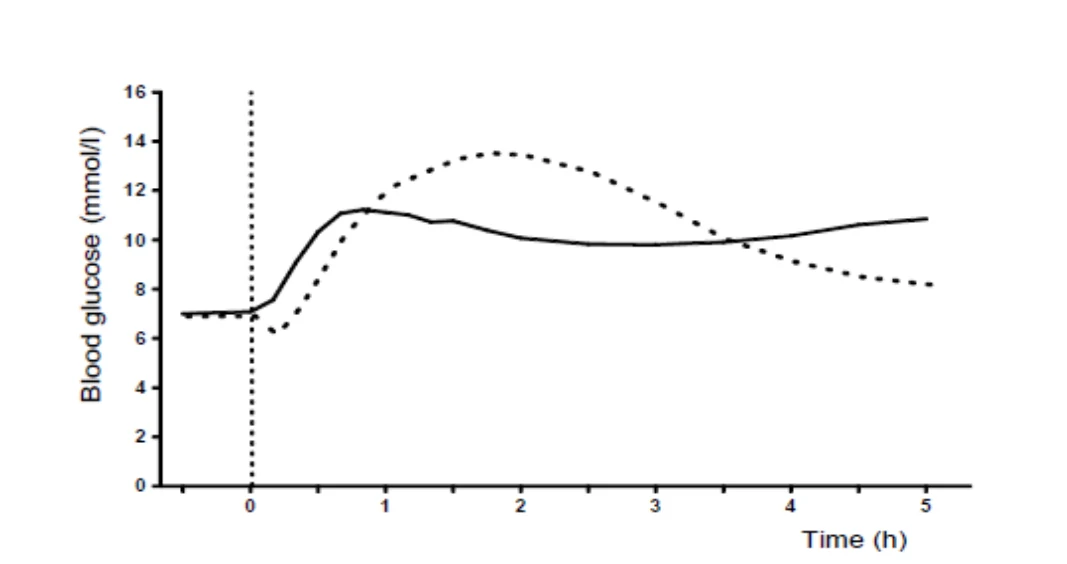
Fig. 1: Mean blood glucose levels following a single pre-meal subcutaneous dose (0.15U/kg) of insulin aspart injected immediately before a meal (solid line) or regular human insulin administered 30 minutes before a meal (hatched line) in 22 patients with type 1 diabetes.
The mean serum glucose profiles in the figure above show the superior postprandial glucose control obtained with insulin aspart compared to human insulin during the first 4 hours post dosing. This was confirmed by the significantly lower postprandial glucose excursion (EXC) for insulin aspart than for regular human insulin (p = 0.015).
Geriatrics (> 65 years of age):
A randomised, double-blind crossover PK/PD trial compared the pharmacodynamics and pharmacokinetics of a single 0.3 U/kg s.c. dose of insulin aspart (IAsp) and a single 0.3 U/kg s.c. dose of with soluble human insulin (HI) was performed in elderly patients with type 2 diabetes (19 patients aged 65-83 years, (mean age 70 years). The relative differences in the pharmacodynamic properties between insulin aspart and human insulin in elderly were consistent with those seen in healthy subjects and in younger patients with diabetes. However, no safety issues were raised, but careful glucose monitoring and individual dose adjustments of insulin, including insulin aspart, may be necessary in elderly patients.
Children and adolescents (2-17 years):
When given to children insulin aspart showed similar long-term glucose control compared to soluble human insulin.
11.3 Pharmacokinetics
In insulin aspart substitution of the amino acid proline with aspartic acid at position B28 reduces the tendency to form hexamers as observed with soluble human insulin.
Insulin aspart is therefore more rapidly absorbed from the subcutaneous layer compared to soluble human insulin.
The time to maximum concentration is on average, half of that for soluble human insulin. A mean maximum plasma concentration of 492 ± 256 pmol/l was reached 40 (interquartile range: 30-40) minutes after a subcutaneous dose of 0.15 U/kg bodyweight in type 1 diabetic patients. The insulin concentrations returned to baseline about 4 to 6 hours after dose. The absorption rate was somewhat slower in type 2 diabetic patients, resulting in a lower Cmax (352±240 pmol/l) and later tmax [60 (interquartile range: 50-90) minutes]. The intra-individual variability in time to maximum concentration is significantly less for insulin aspart than for soluble human insulin, where the intra-individual variability in Cmax for insulin aspart is larger.
Reduced renal or hepatic function does not alter the pharmacokinetics of insulin aspart.
Absorption: Insulin aspart has a faster absorption, a faster onset and a shorter duration of action than regular human insulin (see Fig.1 and Fig. 2). The relative bioavailability of insulin aspart to regular human insulin indicates that the two insulins are absorbed to a similar extent.
In clinical trials in healthy volunteers and type 1 diabetic patients, insulin aspart consistently reached maximum serum concentration at least twice as fast as regular human insulin. The average median time to maximum serum concentration was 40-50 minutes for insulin aspart versus 80-120 minutes for regular human insulin. The intra-individual variability in time to maximum concentration was significantly less for insulin aspart than for regular human insulin.
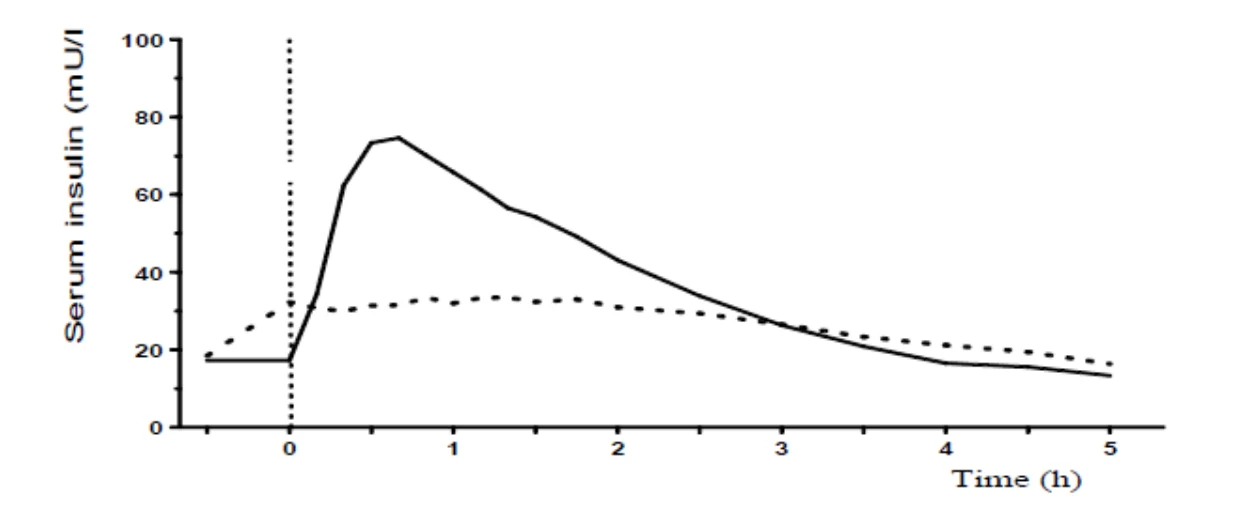
Fig 2: Mean serum insulin concentration following a single pre-meal subcutaneous dose (0.15U/kg body weight) of insulin aspart injected immediately before a meal (solid line) or regular human insulin administered subcutaneously 30 minutes before a meal (hatched line) in 22 patients with type 1 diabetes.
The pharmacokinetics following a single 0.15 U/kg dose of insulin aspart just before a standard meal or of regular human insulin 30 minutes before a standard meal were compared in type 1 diabetic patients (Fig. 2 above). Insulin aspart was rapidly absorbed after s.c. administration. There was a significant difference between Cmax for insulin aspart and regular human insulin (mean maximum concentrations 82.1 mU/l and 35.9 mU/l respectively).
The absorption rate was somewhat slower in type 2 diabetic patients, resulting in a lower Cmax, 352 ± 240 pmol/l, and later tmax, 60 minutes.
In healthy subjects, the pharmacokinetic differences between insulin aspart and regular human insulin, were maintained independent of the injection site (abdomen, thigh or deltoid).
When compared to regular human insulin on an equimolar basis, insulin aspart produces significantly superior control of blood glucose following a meal as assessed by excursion of blood glucose during the first 4 hours after a meal (Fig. 1). When injected subcutaneously into the abdomen, the onset of action will occur from 10 minutes after injection. The maximum effect is exerted between 1-3 hours after subcutaneous injection. The duration of action for insulin aspart is 3-5 hours compared to 5-8 hours for regular human insulin. In this trial, patients were clamped from the evening before the trial product administration in order to obtain a blood glucose concentration of 5-8 mmol/l.
The effect of insulin aspart given in a meal related regimen on 23-hour glucose control was studied in 104 type 1 diabetic patients. After 4 weeks of treatment, the instances of blood glucose levels outside the normal range (4-7 mmol/l or 72-126mg/dl) were significantly lower with insulin aspart than with regular human insulin.
The extent of absorption (AUC) and tmax(ins) for insulin aspart were found to be independent of injection site when insulin aspart was administered subcutaneously in the abdomen, deltoid, or thigh. However, Cmax(ins) was statistically significantly higher following injection into the abdomen relative to the thigh.
Distribution: Insulin aspart has a low binding to plasma proteins, 0-9%. A competitive ligand binding analysis using confluent HepG2 cells explored the relative binding affinities of insulin aspart and human insulin for the insulin receptor. There was no difference in their affinity. The affinity of insulin aspart for the insulin receptor was determined to be 92.2% (95% confidence limits 82.0-103.7%) of that of human insulin using HepG2 cells and to 92% of that of human insulin using solubilised receptors.
A very low affinity for the human IGF-1 receptor on HepG2 cells was also demonstrated; 68.8% compared to human insulin and about 1/1000th of the binding affinity of IGF-1 itself.
These studies show that insulin aspart has almost identical biological properties to human insulin including affinity for the specific insulin receptor, and similar on and off-rates at that receptor.
Metabolism: Long-term metabolic control, assessed by A1C was studied in 882 type 1 diabetic patients in one trial and 1065 type 1 diabetic patients in another trial, on a meal-related insulin regimen. With insulin aspart, significantly improved long-term metabolic control was obtained compared to regular human insulin after 6 months treatment, the values being 7.78±0.03% for insulin aspart and 7.93±0.05% (p <0.01) for regular human insulin in one trial and correspondingly 7.88±0.03% and 8.00±0.04% (p<0.02) in the other trial. Furthermore, this improvement in glycemic control was achieved without increasing the risk of hypoglycemic events.
In 182 type 2 diabetic patients treated with insulin aspart in a meal-related regimen for 6 months, the pharmacodynamic properties of insulin aspart were shown to be not different than regular human insulin with respect to metabolic control as assessed by insulin dose (meal related and NPH).
The degradation products (metabolites) of insulin aspart are assumed to be natural amino acids and peptides, which are subsequently incorporated into host proteins or metabolised, as is the case with human insulin. A number of cleavage (hydrolysis) sites on the human insulin molecule have been proposed; none of the insulin metabolites formed following cleavage are active.
Excretion: After subcutaneous administration insulin aspart was more rapidly eliminated than regular human insulin with an average apparent half life of 81 minutes compared to 141 minutes for regular human insulin. The rapid elimination of insulin aspart is reflected in the return of insulin aspart concentrations to pre-dosing levels within 4 hours after dosing.
Special Populations and Conditions
Pediatrics: The pharmacokinetic properties of insulin aspart and regular human insulin were investigated in 18 children (6-12 years, n=9) and adolescents (13-17 years, n=9) with type 1 diabetes. The relative difference in pharmacokinetics and pharmacodynamics in type 1 diabetic children and adolescents between insulin aspart and regular human insulin correlated well with those in healthy adult subjects and type 1 diabetic adults.
Insulin aspart was rapidly absorbed in both age groups, with similar tmax as in adults. However, Cmax differed between the age groups, stressing the importance of the individual titration of insulin aspart.
Geriatrics: The relative differences in pharmacokinetic properties between insulin aspart and soluble human insulin in elderly patients (65-83 years, mean age 70 years) with type 2 diabetes were similar to those observed in healthy subjects and in younger patients with diabetes; i.e. the significantly earlier and higher Cmax is maintained with insulin aspart. As in younger patients with type 2 diabetes, tmax of insulin aspart may be slightly delayed in elderly patients with type 2 diabetes, though still significantly earlier than for human insulin.
Sex: There was no significant difference in pharmacokinetics in a trial in type 2 diabetic patients. No significant difference in efficacy, as assessed by A1C was found between genders in a trial in type 1 diabetic patients.
Hepatic Insufficiency: Some studies with human insulin have shown increased circulating levels of insulin in patients with liver failure. In an open-label, single-dose study of 24 patients with Child-Pugh Scores ranging from 0 (healthy volunteers) to 12 (severe hepatic impairment), no correlation was found between the degree of hepatic failure and any insulin aspart pharmacokinetic parameter. Careful glucose monitoring and dose adjustments of insulin, including insulin aspart, may be necessary in patients with hepatic dysfunction. (see 8 WARNINGS AND PRECAUTIONS, Hepatic)
Renal Insufficiency: Some studies with human insulin have shown increased circulating levels of insulin in patients with renal failure. A single subcutaneous dose of insulin aspart was administered in a study of 18 patients with creatinine clearance values ranging from normal to <30 mL/min and not requiring hemodialysis. No apparent effect of creatinine clearance values on AUC and Cmax of insulin aspart was found. However, only 2 patients with severe renal impairment were studied (<30 mL/min). Careful glucose monitoring and dose adjustments of insulin, including insulin aspart on AUC and Cmax of insulin aspart was found. However, only 2 patients with severe renal impairment were studied (<30 mL/min). Careful glucose monitoring and dose adjustments of insulin, including insulin aspart, may be necessary in patients with renal dysfunction. (see 8 WARNINGS AND PRECAUTIONS, Renal)
12 STORAGE, STABILITY AND DISPOSAL
Keep out of the reach and sight of children. Keep Kirsty protected from heat or light.
Do not use Kirsty after the expiry date printed on the label and carton.
10 mL vial:
Before opening: Store in a refrigerator at 2°C to 8°C, away from the cooling element. Do not freeze. Protect from light.
During use or when carried as a spare: Store below 30°C. The product may be stored for a maximum of 4 weeks. Do not refrigerate or freeze
Kirsty should not be disposed of in waste water or household waste. Ask your pharmacist how to dispose of medicines no longer required. These measures will help protect the environment.
Pre-filled pen:
Before opening: Kirsty pre-filled pen that is not being used is to be stored in the refrigerator at 2°C to 8°C, away from the cooling element. Do not freeze.
During use or when carried as a spare: You can carry your Kirsty pre-filled pen with you and keep it at a temperature below 30°C or in a refrigerator (2˚C to 8˚C) for up to 4 weeks. If refrigerated, keep away from the cooling element. Do not freeze.
The Kirsty pre-filled pen you are using should be thrown away after 4 weeks, even if it still has insulin left in it. Do not use this medication after the expiration date stated on the label.
13 SPECIAL HANDLING INSTRUCTIONS
Kirsty pre-filled pen should never be shared between patients, even if the needle is changed. The cartridge must not be refilled. The patient should be advised to discard the needle after each injection.
Kirsty must not be used if it does not appear water-clear and colourless.
Kirsty which has been frozen must not be used.
Kirsty may be used in an infusion pump system (CSII). Tubings in which the inner surface materials are made of polyethylene or polyolefin have been evaluated and found compatible with pump use.
PART II: SCIENTIFIC INFORMATION
14 PHARMACEUTICAL INFORMATION
Drug Substance
Proper name: Insulin Aspart
Chemical name: 28B-L-Aspartic acid-insulin (human) analogue
Molecular formula and molecular mass: C256H381N65O79S6 and 5825.56 Da
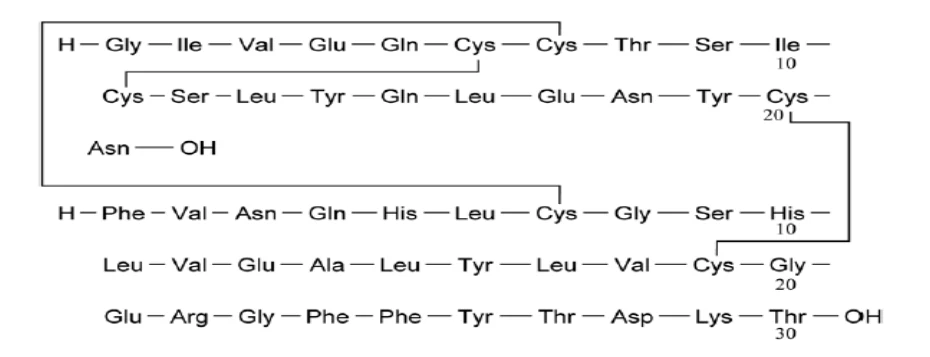
Insulin aspart is a 2-chain peptide containing 51 amino acids. The A-chain is composed of 21 amino acids, and the B-chain is composed of 30 amino acids. It is identical in primary structure to human insulin, except that it has an aspartic acid instead of proline at position 28 of the B-chain. As in human insulin, insulin aspart has 2 interchain (A7:B7 & A20:B19) and 1 intrachain (A6:A11) disulphide bond.
Structural formula: Insulin Aspart
Physicochemical properties:
Description: White, or almost white powder
Solubilities:
Practically insoluble in Ethanol (96%), in Methanol and in aqueous solvent at pH around 5.1. Soluble in aqueous solutions below pH 3.5 or above pH 6.5, the solubility is greater than 25 mg/ml.
1 U (6nmol = 1 unit) of insulin aspart is equimolar to 1 IU (international unit) of Human Insulin Standard.
Product Characteristics
The manufacture of the drug substance consists of the following three major steps: fermentation, recovery, and purification. During the fermentation, the insulin aspart precursor protein is released into the fermentation medium. After harvesting, the precursor is isolated and converted to the active molecule of insulin aspart and purified with different chromatographic steps during the downstream process stages.
15 COMPARATIVE CLINICAL TRIALS
15.1 Comparative Trial Design and Study Demographics
Clinical studies conducted to support similarity between Kirsty and the reference biologic drug included:
- MYL-1601D-1001, a randomized study performed in healthy participants to demonstrate similarity in pharmacokinetic (PK) exposure and pharmacodynamic (PD) activity between Kirsty and NovoRapid/NovoLog
- MYL-1601D-3001, a randomized, open-label, parallel-group clinical study comparing the safety and efficacy of Kirsty and NovoLog in Type 1 Diabetes Mellitus patients
An overview of the study design(s) and demographic characteristics of patients enrolled in each clinical study are presented in Table 2.
Table 2 - Summary of Trial Design and Patient Demographics
| Study # | Trial design | Dosage, route of administration and duration | Study subjects (n) | Mean age ± SD (Range) | Sex |
| Study # | Trial design | Dosage, route of administration and duration | Study subjects (n) | Mean age ± SD (Range) | Sex |
| MYL-1601D-1001 | Randomized, double-blind, three-treatment, three-period, crossover PK/PD study | Test Product: MYL-1601D Reference products: NovoRapid® (insulin aspart), NovoLog® (insulin aspart) All IMPs were administered as 0.2 U/kg b.w. from 10 mL - 100 U/mL vial -single, s.c. dose | Healthy participants 71 -dosed 66 -completed | 37.2 ± 11.4 (21 to 61) | 62 male 9 female |
| MYL-1601D-3001 | Randomized, multicenter, open-label, parallel-group | Test product: MYL-1601D. Reference Products: NovoLog®. During the Run-in period, all subjects were received FlexPen® NovoLog® ,100 U/mL until randomization. | Type 1 Diabetes Mellitus Patients 528 randomized, | 44.3 ± 13.61 (18 to 65) | 261 male 217 female |
| clinical study comparing the safety and efficacy of MYL-1601D with NovoLog® | During the Treatment period, all patients will receive one of the following treatments: MYL-1601D or FlexPen® NovoLog® taken at mealtime. Both investigational products were provided in a pre-filled disposable pen with a 3-mL cartridge. In addition, all subjects received once daily Lantus® SoloSTAR® (insulin glargine injection, 100 U/mL), manufactured by Sanofi-Aventis. During the treatment period, dose titration was kept to a minimum. All IMPs were admintered via subcutaneous injection. | 485 completed treatment | |||
15.2 Comparative Study Results
15.2.1 Comparative Bioavailability Studies
15.2.1.1 Pharmacokinetics
Comparative Pharmacokinetics Data from Study MYL-1601D-1001
Insulin Aspart
(1 x 0.2 U/kg b.w.)
From measured data
Geometric Mean
Arithmetic Mean (CV %)
| Parameter | Test1 | Reference2 | % Ratio of Geometric Means | 90% Confidence Interval |
AUC(0-12hr) (pg*hr/mL) | 8065 8188 (18) | 7933 8015 (15) | 101.8 | 100.0 – 103.7 |
AUCI (pg*hr/mL) | 8167 8288 (18) | 8041 8124 (15) | 101.7 | 100.0 – 103.5 |
CMAX (pg/mL) | 3049 3178 (30) | 2897 2972 (23) | 105.7 | 101.1 – 110.6 |
TMAX3 (h) | 1.03 (42.78) | 1.10 (48.64) | ||
| T½3 (h) | 0.88 (29.12) | 0.89 (30.14) |
1 MYL-1601D (Kirsty - Biocon Biologics Canada Inc. Insulin Aspart Solution for Injection, 100 U/mL)
2 NovoRapid®, 100U/mL, NovoNordisk A/S (purchased from Germany)
3Expressed as the arithmetic mean (CV%) only.
N=67 for each Test and Reference dosing period.
The primary PK endpoints AUC and Cmax were analyzed using logarithm-transformed data. The ANOVA were based on a general linear model (sas proc GLM).
15.2.1.2 Pharmacodynamics
Comparative Pharmacodynamics Data from Study MYL-1601D-1001
Blood Glucose
From measured data
Geometric Mean
Arithmetic Mean (CV %)
| Parameter | Test1 | Reference2 | % Ratio of Geometric Means | 95% Confidence Interval |
AUC(GIR 0-last) (mg/kg) | 2655 2773 (29) | 2736 2869 (31) | 96.4 | 91.2 – 102.0 |
GIRMAX (mg/kg/min) | 9.33 9.85 (32) | 9.77 10.24 (30) | 95.1 | 89.4 – 101.2 |
TMAX3 (h) | 2.74 (39) | 2.90 (32) |
1 MYL-1601D (Kirsty - Biocon Biologics Canada Inc. Insulin Aspart Solution for Injection, 100 U/mL)
2 NovoRapid®, 100U/mL, NovoNordisk A/S (purchased from Germany)
3Expressed as the arithmetic mean (CV%) only.
N=67 for each Test and Reference dosing period.
The primary PD endpoints AUC(GIR 0-last) and GIRmax were analyzed using logarithm-transformed data. The ANOVA were based on a general linear model (sas proc GLM).
Comparative Safety and Efficacy
15.2.1.1 Safety
The types, frequency and severity of adverse events were comparable between the biosimilar and the reference biologic drug.
Study MYL-1601D-3001 was a multicenter, open-label, randomized, parallel-group Phase 3 study in subjects with type 1 diabetes mellitus (T1DM) comparing the safety and efficacy of MYL-1601D with NovoLog. After screening period of up to 3 weeks, all subjects were titrated on NovoLog during a 4-week run-in period and were shifted from their current basal insulin to study insulin Lantus. After the run-in period, subjects were randomized; 1 group received MYL-1601D, while the other group received NovoLog for 24 weeks. A follow-up visit, via telephone call, was scheduled within 4 weeks after last dose of MYL-1601D.
The ITT set consisted a total of 478 patients (238 in the MYL-1601D and 240 in the NovoLog group). The primary efficacy analysis was conducted using the ITT population.
In the MYL-1601D group, the mean (SD) age was 44.5 (13.33) years, 54.2% of subjects were male, and 45.8% were female. The majority of subjects (210 [88.2%] subjects) were White and 23.9% of subjects were of Hispanic or Latino ethnicity. In the NovoLog group, the mean (SD) age was 44.2 (13.91) years, 55.0% of subjects were male, and 45.0% were female. The majority of subjects (210 [87.5%] subjects) were White and 18.8% of subjects were of Hispanic or Latino ethnicity. The mean (SD) duration of diabetes at baseline was 22.3 (13.71) years in the MYL-1601D group and 21.3 (12.91) years in the NovoLog group. Overall, the baseline disease characteristics of the 2 treatment groups were similar.
The study met its primary endpoint demonstrating that immunogenicity, as assessed by treatment emergent antibody response (TEAR) rate, was comparable between the MYL-1601D and NovoLog during 24-week treatment. TEAR positive rate was similar between the MYL-1601D (59 [24.9%] subjects) and NovoLog (67 [27.8%] subjects) groups.
15.2.1.2 Immunogenicity
In Study MYL-1601D-3001, the cumulative at any visit from baseline (inclusive) to week 24, ADA positive samples were identified in 210 (88.2%) subjects in MYL-1601D group and 202 (84.2%) subjects in NovoLog group. Out of those ADA positive samples, NAb positive were seen in 33 (13.9%) subjects in MYL-1601D and 30 (12.5%) subjects in NovoLog group. At baseline visit, prior to MYL-1601D treatment, there were 189 (79.4%) and 170 (70.8%) subjects that were ADA positive in MYL-1601D and Novolog group respectively, out of these subjects 15 (6.3%) and 17 (7.1%) subjects were NAb positive at baseline in MYL-1601D and Novolog group respectively.
16 COMPARATIVE NON-CLINICAL PHARMACOLOGY AND TOXICOLOGY
16.1 Comparative Non-Clinical Pharmacodynamics
The pharmacodynamic response to Kirsty (insulin aspart) (also referred to as MYL-1601D) and reference insulin aspart (US-NovoLog and/or EU-NovoRapid) was compared in in vitro studies.
Over the course of Kirsty’s development, a comprehensive non-clinical evaluation of comparative pharmacodynamics was conducted with MYL-1601D and reference insulin aspart. These studies were designed considering the mechanism of action of insulin aspart and included the following in vitro assays:
- Insulin Receptor-A binding kinetics
- Insulin Receptor-B binding kinetics
- Insulin Receptor-A phosphorylation
- Insulin Receptor-B phosphorylation
Cell-based assays for metabolic activity
- Glucose uptake
- Inhibition of stimulated lipolysis
- Adipogenesis
- IGF-1R binding kinetics
- Cell based assay of mitogenic activity
The results of each in vitro study demonstrated that MYL-1601D was similar to reference insulin aspart.
16.2 Comparative Toxicology
Two comparative toxicology studies were conducted with MYL-1601Dand US reference insulin aspart. The first study evaluated potential systemic toxicity in rats after a single intravenous dose of 0 (vehicle), 4.4, 8.8, or 17.5 mg/kg followed by a 14-day observation period. All animals treated with MYL-1601D or reference insulin aspart exhibited fine tremors and rapid respiration immediately after dosing. Additionally, in all test article treated animals, somnolence was observed at 0.5 to 1-hour post dose. These phenotypic signs were attributed to hypoglycemia, an expected pharmacodynamic effect. No other clinical signs or toxicity findings were observed.
In a comparative repeat-dose toxicity study, rats were administered MYL-1601D or reference insulin aspart at doses of 0.105, 0.315, or 1.05 mg/kg twice per day (equal to 0.21, 0.63, or 2.1 mg/kg per day) by subcutaneous injection for 28 days with a 14-day recovery period. An additional group of rats was administered vehicle.
Female rats administered MYL-1601D or reference insulin aspart showed reduced motor activity, potentially from hypoglycemia, which is consistent with the pharmacological activity of insulin aspart. Overall, rats administered MYL-1601D or reference insulin aspart demonstrated similar toxicity and local tolerability, with no systemic adverse effects or unique toxicities identified for MYL-1601D.
MYL-1601D and reference insulin aspart were similarly effective at reducing blood glucose, an anticipated pharmacodynamic effect. The reduction in serum glucose was of comparable magnitude and duration in both MYL-1601D and reference insulin aspart treated animals across dose levels. Anti-drug antibody development was not assessed.
17 CLINICAL TRIALS – REFERENCE BIOLOGIC DRUG
Postprandial and overall glycemic control: In diabetic patients, insulin aspart reduced postprandial blood glucose levels and improved the overall glycemic control by significantly reducing A1C as shown in two 6-month multicentre, randomized, parallel, open-label trials. Metabolic control, assessed by A1C was studied in 882 type 1 diabetic patients in one trial and 1065 type 1 diabetic patients in another trial, on a meal-related insulin regimen. With insulin aspart, significantly improved metabolic control was obtained compared to regular human insulin after 6 months treatment, the values being 7.78±0.03% for insulin aspart and 7.93±0.05% (p <0.01) for regular human insulin in one trial and correspondingly 7.88±0.03% and 8.00±0.04% (p<0.02) in the other trial. This improvement in glycemic control with insulin aspart was accompanied by a significant decrease of postprandial blood glucose levels after each meal, when compared to regular human insulin, without increasing the risk of hypoglycemic events.
Furthermore, insulin aspart demonstrated a significant decrease in prandial blood glucose increments (defined as the mean difference between the blood glucose value 90 minutes after the meal and the blood glucose value just before the meal, over the 3 meals) when compared to regular human insulin; with values being -1.46mmol/L in one trial and -1.15 mmol/L in the other; p<0.0001).
Data from an extension to one of these trials (n=598) showed that the effect of insulin aspart on A1C was maintained for 3 years [value being 7.97 ± 0.11%] without increasing the risk of hypoglycemic events.
Type 1 Diabetes:
Continuous subcutaneous insulin infusion (CSII) – Pump:
To evaluate the use of insulin aspart by continuous subcutaneous insulin infusion (CSII) with an external pump, one open-label, randomized, parallel design study for 16 weeks [n=118]4 compared insulin aspart versus Humalog® (insulin lispro) in patients with type 1 diabetes. Glycemic control (as measured by A1C) and rates of hypoglycemia were comparable. Patients with type 2 diabetes were also studied in an open-label, randomized, parallel design trial (24 weeks [n=127]. Insulin aspart by CSII was compared to a basal/bolus regimen of pre-prandial insulin aspart and basal Novolin®ge NPH injections. Reductions in A1C and rates of hypoglycemia were comparable. In the study (insulin aspart versus Humalog®), the rate of clogging or blockage events was similar between insulin aspart and Humalog®.
Pregnancy
The safety and efficacy of an intensified insulin regimen with insulin aspart was studied in an open-label study in 157 pregnant women with type 1 diabetes. 72% (113) were pregnant prior to entering the study (PBS) and 28% (44) entered the study before conception (PAS). The entry criteria for A1C were different between PBS and PAS (<8% vs. < 12%). PAS patients were withdrawn if A1C was > 8% at conception, so in this subgroup only women who conceived and had A1C < 8% had efficacy and safety parameters evaluated. The proportions of patients reaching different A1C targets with insulin aspart are presented in the following Table 3.
Table 3: Summary of A1C (%) by Pregnancy status at Screening - ITT Pregnant
Number of patients
Pregnant at Screening 113
Pregnant after Screening 44
ITT Pregnant 157
P
N
%
P
N
%
P
N
%
Visit P2 (week 12)
A1c ≤6.0%
108
36
33.3
31
9
29.0
*
*
*
A1c ≤6.5%
108
70
64.8
31
21
67.7
*
*
*
A1c ≤7.0%
108
98
90.7
31
26
83.9
*
*
*
Visit P3 (week 24)
A1c ≤6.0%
102
66
64.7
31
13
41.9
133
79
59.4
A1c ≤6.5%
102
83
81.4
31
27
87.1
133
110
82.7
A1c ≤7.0%
102
96
94.1
31
30
96.8
133
126
94.7
Visit P3 (week 36)
A1c ≤6.0%
96
53
55.2
26
7
26.9
122
60
49.2
A1c ≤6.5%
96
77
80.2
26
18
69.2
122
95
77.9
A1c ≤7.0%
96
90
93.8
26
26
100.0
122
116
95.1
Follow-up Visit (6 weeks postpartum)
A1c ≤6.0%
104
35
33.7
36
8
22.2
140
43
30.7
A1c ≤6.5%
104
58
55.8
36
20
55.6
140
78
55.7
A1c ≤7.0%
104
80
76.9
36
26
72.2
140
106
75.7
P: Number of patients with a A1c measurement at the actual visit
N: Number of patients with a A1c measurement having the given value at the actual visit
% Proportion of patients with a A1c measurement having the given value at the actual visit
Major and minor hypoglycemia rates for PBS and PAS by trimester are presented in the following Table 4.
Table 4: All Treatment Emergent Hypoglycemic Episodes During Pregnancy by Treatment, pregnancy status at Screening and trimester - ITT Pregnant.
IAsp + NPH
P
N
%
E
Rate
Major
Pregnant at Screening
- 1.
trimester
113
19
(16.80)
34
5.2
- 2.
trimester
113
22
(19.50)
44
1.3
- 3.
trimester
113
9
(8.00)
20
1
Pregnant after Screening
- 1.
trimester
44
5
(11.40)
7
0.8
- 2.
trimester
44
5
(11.40)
7
0.7
- 3.
trimester
44
1
(2.30)
1
0.2
All
- 1.
trimester
157
24
(15.30)
41
2.7
- 2.
trimester
157
27
(17.20)
51
1.2
- 3.
trimester
157
10
(6.40)
1
0.8
Minor
Pregnant at Screening
- 1.
trimester
113
97
(85.80)
907
139.4
- 2.
trimester
113
98
(86.70)
2992
90.9
- 3.
trimester
113
85
(75.20)
1639
83.7
Pregnant after Screening
- 1.
trimester
44
40
(90.90)
607
69.3
- 2.
trimester
44
33
(75.00)
672
68.1
- 3.
trimester
44
27
(61.40)
380
67.4
All
- 1.
trimester
157
137
(87.30)
1514
98.9
- 2.
trimester
157
131
(83.40)
3664
85.7
IAsp + NPH
P
N
%
E
Rate
- 3.
trimester
157
112
(71.30)
2019
80.1
Symptoms Only
Pregnant at Screening
- 1.
trimester
113
32
(28.300
154
23.5
- 2.
trimester
113
40
(35.40)
407
12.4
- 3.
trimester
113
34
(30.10)
256
13.1
Pregnant after Screening
- 1.
trimester
44
24
(54.50)
85
9.7
- 2.
trimester
44
15
(34.10)
118
12
- 3.
trimester
44
11
(25.00)
35
6.2
All
- 1.
trimester
157
56
(35.70)
39
15.6
- 2.
trimester
157
55
(35.00)
525
12.3
- 3.
trimester
157
45
(28.70)
291
11.5
Unclassifiable
Pregnant at Screening
- 1.
trimester
113
4
(3.50)
11
1.7
- 2.
trimester
113
9
(8.00)
58
1.8
- 3.
trimester
113
6
(5.30)
34
1.7
Pregnant after Screening
- 1.
trimester
44
4
(9.10)
6
0.7
- 2.
trimester
44
4
(9.10)
6
0.6
- 3.
trimester
44
3
(6.80)
27
4.8
P: Number of patients in the Population
N: Number of patients having Hypoglycemic Episodes
%: Proportion of patients in the Population having Hypoglycemic Episodes
E: Number of Hypoglycemic Episodes
Rate: Number of Hypoglycemic Episodes divided by years of exposure of patients in the Population in the given trimester
The outcome data observed in the human insulin control arm in the insulin aspart clinical trial are consistent with published trials of human insulin in type 1 diabetes in similar clinical settings.
Type 2 Diabetes:
In patients with type 2 diabetes, a randomized, double-blind, multicentre, 2- period, cross-over study showed that 4-hour postprandial glucose excursion in 37 patients (BMI 27.05±4.02, waist circumference 97.1±11.7 cm) was 20% lower following a single injection of insulin aspart (injected immediately before a meal test) than regular human insulin (injected 30 minutes before a meal test; p=0.034), independent of BMI. The insulin maximum concentration (Cmax) was significantly higher in patients receiving insulin aspart (p=0.023) and was reached 27 minutes earlier (p=0.039), despite the fact that insulin aspart was injected 30 minutes after human insulin.
In 182 type 2 diabetic patients treated with insulin aspart in a meal-related regimen for 6 months, the pharmacodynamic properties of insulin aspart were shown to be not different than regular human insulin with respect to metabolic control as assessed by insulin dose (meal related and NPH).
Geriatrics: A randomised, double-blind, crossover trial compared the pharmacodynamics and pharmacokinetics of a single 0.3 U/kg s.c. dose of insulin apart (IAsp) and single 0.3 U/kg s.c. dose of soluble human insulin (HI) in 19 patients aged 65-83 years (mean age 70 years). IAsp was rapidly absorbed and the tmax for IAsp occurred 90 minutes earlier than for HI (p=0.0089). Cmax was on average 132% higher with IAsp than with HI (p<0.0001). Also the extent of exposure with IAsp was greater than with HI up to approximately 300 minutes after administration but tended to be lower with IAsp than with HI from 300-600 minutes post dosing. The pharmacodynamic response to a single 0.3 U/kg dose of IAsp and a single 0.3 IU/kg was evaluated during euglycaemic clamp procedures in a cross-over design. Consistent with the pharmacokinetic results, the peak pharmacodynamic activity as determined by maximum value on the glucose infusion rate (GIR) profile was significantly higher (p=0.0039) and occurred approximately 83 minutes earlier with IAsp than with HI (p<0.0001). The area under the GIR profiles in the interval from 0-120 minutes was on average more than twice as large with IAsp than with HI and this difference was statistically significant (p<0.0001). Overall, the pharmacokinetic and pharmacodynamic properties of IAsp are preserved in geriatric patients with type 2 diabetes although a minor delay in peak insulin concentration has been observed when compared with younger patients with type 2 diabetes.
Combination with long-acting basal insulin analog: In an open-label, parallel, randomized trial involving 595 patients with type 1diabetes, insulin aspart in combination with insulin detemir significantly improved glycemic control when compared to regular human insulin with NPH insulin treatment. After 18 weeks of treatment, the mean A1C values were 7.88 ± 0.05% vs 8.11± 0.05% (95% CI; -0.34 to -0.10, p<0.001), respectively. In addition, the overall mean postprandial plasma glucose was significantly lower with the combination insulin aspart/ detemir when compared to regular human insulin/ NPH (7.81 mmol/L vs 7.87 mmol/L, respectively; p<0.001) with significant less intra-individual variability in plasma glucose (p < 0.001). This improvement of glycemic control was accompanied with a significant decrease in the risk of nocturnal hypoglycemic events (relative risk decreased by 55%; 95% CI 0.35 - 0.58; p<0.001) and a significant decrease in body weight (p<0.001).
Hypoglycemia: In a 16-week double-blind, randomized, multinational, crossover study with type 1 diabetes patients (n=156, A1C ≤ 9.0%) the rate of major nocturnal hypoglycemic episodes was 72% lower with insulin aspart than with regular human insulin {0.067 vs. 0.225 events/month, relative risk 0.28 (95% CI:0.13-0.59); p=0.001)}. NPH insulin was given as basal insulin once or twice daily as needed. Furthermore, insulin aspart significantly reduced the rate of minor hypoglycemic events when with the rate of minor events was significantly reduced by 7% with insulin aspart compared to regular human insulin {2.98 vs 3.186 events/months, relative risk 0.93 (95% CI:0.87-1.00), p=0.048}. While the total rate of major hypoglycemia did not differ significantly between treatments. Reductions in rate of hypoglycemia were achieved with insulin aspart while maintaining overall glycemic control. The mean A1C remained constant, with values being 7.69% for insulin aspart and 7.65% for regular human insulin (NS). Significant lower blood glucose values 90 minutes after breakfast (p=0.0001) and 90 minutes after dinner (p=0.023) were seen with insulin aspart compared to regular human insulin.
In another study (n=1065), significantly fewer patients (62% less) experienced major nocturnal hypoglycemia with l insulin aspart than with regular human insulin (1.3 vs 3.4% of patients, respectively; p<0.005).
18 NON-CLINICAL TOXICOLOGY – REFERENCE BIOLOGIC DRUG
DETAILED PHARMACOLOGY
Animal Data
The biological activity of insulin aspart has been evaluated in vivo in mouse, rabbit and pig and, in vitro in a free fat cell assay.
In a comparison of hypoglycemic activity of insulin aspart and human insulin in the diabetic ob/ob mouse, insulin aspart reduced moderate hyperglycemia to a similar extent as an equimolar dose of human insulin.
The molar potency of insulin aspart was compared to that of a human insulin standard using the mouse blood glucose assay according to Ph. Eur. and the rabbit blood sugar method according to USP. Using the mouse blood glucose assay, the potency of three different batches of insulin aspart was determined to be 104.4% (95% confidence limits: 96.1-113.4%), 105.4% (93.8 118.3%), and 104.8% (94.3-116.5%) relative to the first international human insulin standard. Thus, the potency of insulin aspart is not significantly different from that of human insulin in the mouse blood glucose assay. The molar potency of insulin aspart is defined as 1U=6 nmol. Potency estimates for insulin aspart determined by the rabbit blood sugar assay were equivalent to those determined by the mouse blood glucose assay.
Studies in pigs show that equimolar amounts of insulin aspart and human insulin have similar effects on blood glucose after i.v. administration, and that insulin aspart has a faster action than human insulin after s.c. administration.
In the free fat cell bioassay, the potency of insulin aspart was determined to be 102.7 % (95% confidence limits: 99.6-105.8%) relative to a human insulin standard. Thus, the potency of insulin aspart is not significantly different from that of human insulin in free fat cells.
The performed bioassays show that the potency of insulin aspart is equal to that of human insulin.
Cardiovascular studies in anaesthetized rats and pigs plus a range of standard behavioural and organ function test and interaction studies have been conducted. Dose levels used in rodents were up to 100 times higher than the expected human therapeutic dose of 1 U/kg. In cats and pigs the high dose was 4 times higher than the expected human therapeutic dose due to the higher sensitivity of these species.
| Test | Insulin Aspart / Human Insulin (HI) | Results |
|---|---|---|
| Test | Insulin Aspart / Human Insulin (HI) | Results |
| Irwin Observation Test, mice | 1,10 or 100 U/kg IV, HI 100 IU/kg IV | No difference from human insulin was observed |
Locomotor Activity, rats | 1,10 or 100 U/kg IV, | No consistent effect |
| HI 100 IU/kg IV | ||
Rotarod Performance, mice | 1,10 or 100 U/kg IV, HI 100 IU/kg IV | No effects |
| Hexobarbital induced sleeping time, mice | 1,10 or 100 U/kg i.v. HI 100 IU/kg IV | No difference from human insulin was observed |
| Ethanol induced sleeping time, mice | 1,10 or 100 U/kg IV, HI 100 IU/kg IV | No difference from human insulin was observed |
| Anti-convulsant activity, mice | 1,10 or 100 U/kg IV, HI 100 IU/kg IV | No effects |
| Pro-convulsant activity, mice | 1,10 or 100 U/kg IV, HI 100 IU/kg IV | No effects |
| Analgesic effect on acetic acid induced writhing | 1,10 or 100 U/kg IV, HI 100 IU/kg IV | No effects |
| Effects on body temperature | 1,10 or 100 U/kg IV, HI 100 IU/kg IV | No effects |
| Isolated guinea-pig ileum | 3.6, 36 or 360 mU/ml HI: 360 mIU/ml | No effects |
| Autonomic nervous system in anaesthetised cat | 0.4, 1.0 and 4.0 U/kg IV, HI: 0.4, 1.0 and 4.0 IU/kg IV | No difference from human insulin was observed |
Cardiovascular and Respiratory Systems in anaesthetised rat | 1,10 and 100 U/kg IV, HI: 1,10 and 100 IU/kg IV | No effects |
Cardiovascular and Respiratory Systems in anaesthetised pig | 0.4, 1.0 and 4.0 U/kg IV. HI: 0.4, 1.0 and 4.0 IU/kg IV | No difference from human insulin was observed |
| Gastrointestinal Motility in Mice | 1,10 or 100 U/kg IV, HI 100 IU/kg IV | No effects |
| Renal Function in Rats | 1,10 or 100 U/kg IV, HI 100 IU/kg IV | No effects in general |
There was no significant difference in pharmacokinetics in a trial in type 2 diabetic patients. No significant difference in efficacy, as assessed by A1C was found between genders in a trial in type1 diabetic patients.
There was no difference in efficacy in terms of blood glucose control as measured by A1C or safety in terms of adverse events between African Americans, Hispanics and Caucasian patients.
TOXICOLOGY
Acute Toxicity:
Table 5: Results of Acute Toxicity Studies with Insulin Aspart
Species, Strain, Route | (M+F) Animals per group | Doses (U/kg) | Results |
|---|---|---|---|
Mouse NMRI. SC | 5 + 5 | 0, 62.5, 250, 1000, 4000 | Highest non-lethal dose: 4000U/kg in males and 250U/kg in females |
Mouse, CD1, SC | 5 + 5 | 0, 62.5, 250, 1000, 4000 | Highest non-lethal dose: 4000U/kg |
Mouse, NMRI, IV | 5 + 5 | 0, 62.5, 250, 1000, 4000 | Highest non-lethal dose: 4000U/kg in males and 1000 u/kg in females |
Rat, S.D. SC | 5 + 5 | 0, 62.5, 250, 1000, 4000 | Highest non-lethal dose: 4000U/kg |
Rat, S.D. SC | 5 + 5 | 0, 62.5, 250, 1000, 2000. | Highest non-lethal dose: 2000Ukg |
Rat, S.D. SC | 5 + 5 | 0, 62.5, 250, 1000, 4000 | Highest non-lethal dose: 4000U/kg |
Rat, S.D. IV | 5 + 5 | 0, 62.5, 250, 1000, 4000 | Highest non-lethal dose: 4000 U/kg |
Dog, Beagle, SC. | 1 + 1 | 4, 8, 16, 32, 64 64 Old process | Highest non-lethal dose: 64U/kg Apart from hypoglycemia no treatment-related signs or changes |
The results of the acute toxicity testing in rodents are dominated by reports of non-fatal convulsions and instances of ptosis, both attributed to hypoglycemia. The pattern of effects was that expected for insulin given in high doses.
Long-term Toxicity:
Table 6: Results of long-term toxicity studies with insulin aspart.
| Species | Strain | Number of groups and size | Dosing Method | Dosing Method | Dose level (U/kg/day) | Results | |||||||
|---|---|---|---|---|---|---|---|---|---|---|---|---|---|
| Species | Strain | Number of groups and size | Dosing Method | Dosing Method | Dose level (U/kg/day) | Results | |||||||
| Species | Strain | Number of groups and size | Dosing Method | Dosing Method | Dose level (U/kg/day) | Results | |||||||
| Rat | Sprague- Dawley | 5 Groups 10M, 10F/group, main 9M, 9F/group, | SC | 4 weeks + 4 week recovery | 0, 5, 25, 100 + 100 | Hypoglycemia, increased food consumption and weight | |||||||
satellites 5M, 5F in groups 1, 4 & 5 reversibility assessment | in groups 1, 4 & 5 | gain. No unexpected observations. | |||||||||||
| Rat | Sprague- Dawley | 4 Groups 10M, 10F | SC | 4 weeks | 0, 12.5, 50, 200 | Hypoglycemia. No unexpected observations. | |||||||
| Rat | Mol: WIST | 4 Groups 15M, 15F | SC | 13 weeks | 0, 12.5, 50, 200 | Hypoglycemia, increased weight gain. No unexpected observations. | |||||||
| Rat | Sprague- Dawley | 4 Groups 32M, 32F Satellites included | SC | 52 weeks | Top dose levels 100 bid for 24 weeks, 50 bid weeks 25-26, 100 od weeks 27-37, 75 od from week 38-52. Lower dose levels 5 and 25U/kg/bid for 26 weeks 10 and 50 od for 27-52 weeks Controls. | Hypoglycemia, increased food and water consumption and weight gain. Excess of mammary tumours in high dose females. | |||||||
| Rat | Sprague- Dawley | 4 Groups 20F | SC | 52 weeks | 200 per drug substance. Insulin aspart, human insulin, control. | Mammary tumour-incidence higher in insulin aspart group equal to human insulin both being higher than controls. | |||||||
| Dog | Beagle | 4 groups 3M, 3F/group, main 1M, 1F in groups | SC | 4weeks (+ 4 Week recovery | 0, 0.25, 0.5, 1.0 bid | Hypoglycemia. No unexpected observations. | |||||||
1 & 4 reversibility assessment | in groups 1 & 4) | ||||||||||||
| Dog | Beagle | 3 Groups 4M, 4F | SC | 13 weeks | 0,1, 4 | Hypoglycemia. No unexpected observations. | |||||||
| Dog | Beagle | 4 Groups 4M, 4F | SC | 52 weeks | 0, 0.25, 0.5, 1.0 bid for 28 weeks same daily dose od from week 29-52. HI- 1.0 bid 28 weeks 2.0 od from 29-52 | Hypoglycemia. No unexpected observations. | |||||||
Carcinogenicity:
Carcinogenicity trials have not been performed with insulin aspart. A series of repeated dose trials in animals (including 52 weeks dosing in rats and dogs) showed that none of the effects observed with insulin aspart differed from those observed with regular human insulin. In vitro trials showed that the mitogenicity of insulin aspart does not differ from that observed with regular human insulin. Animal trials on the mutagenic potential of insulin aspart and regular human insulin did not show any difference between the two products.
Mutagenicity:
A comprehensive range of experiments have been completed and, insulin aspart gave negative results. Human insulin also gave negative results. It is concluded that insulin aspart is not a genotoxicant.
19 SUPPORTING PRODUCT MONOGRAPHS
- 1. NovoRapid® (Solution for Injection, 100 Units / mL), submission control 251029, Product Monograph, Novo Nordisk Canada Inc. August 12, 2021