


Product Monograph - Novolin Ge Toronto
1 INDICATIONS
Novolin®ge (Insulin, Human Biosynthetic) is indicated for:
- The treatment of patients with diabetes mellitus who require insulin for the control of hyperglycemia.
When administered in appropriate regular doses to patients with diabetes mellitus and who follow a controlled diet and exercise program, Novolin®ge (Insulin, Human Biosynthetic) temporarily restores their ability to metabolize carbohydrates, protein and fats.
The Novolin®ge formulations differ with respect to onset, peak and duration of action. These times reflect averages and can vary depending upon the individual patient. The standard time action characteristics are as follows:
Novolin®ge Toronto (Insulin Injection, Human Biosynthetic) is a water-clear, colourless, neutral solution of human insulin with a short duration of action. The effect of Novolin®ge Toronto after subcutaneous administration begins after approximately ½ hour, is maximal between 2 ½ and 5 hours and terminates after approximately 8 hours.
Novolin®ge NPH (Insulin Isophane, Human Biosynthetic) is a cloudy, neutral suspension of human isophane insulin with an intermediate duration of action. The effect of Novolin®ge NPH begins after approximately 1 ½ hours, is maximal between 4 and 12 hours and terminates after approximately 24 hours.
Novolin®ge Premixed Insulin Preparation: Novolin®ge 30/70 is an Insulin, Human Biosynthetic mixtures containing Novolin®ge Toronto and Novolin®ge NPH, respectively, in the proportions indicated by the ratio in the product name. The Novolin®ge Premixed Insulin Preparation is a dual-acting insulin witha biphasic formulation containing fast-acting and intermediate-acting insulin. The mixture is cloudy, neutral suspension with an intermediate duration of action. The strength of the initial effect is dependent on the amount of Novolin®ge Toronto in the mixture. The effect of Novolin®ge mixtures begins after approximately ½ hour, is maximal between 2 and about 12 hours and terminates after approximately 24 hours. Premixed insulin preparation is usually given once or twice daily when a rapid initial effect together with a more prolonged effect is desired.
Novolin®ge NPH insulin in vials may be mixed with Novolin®ge Toronto in order to meet the requirements of individual diabetics as determined by the physician.
Only Novolin®ge Toronto, using intravenous administration, should be used for the treatment of emergencies, such as diabetic coma and pre-coma, and in diabetics undergoing surgery. (See also CONTRAINDICATIONS)
1.1 Pediatrics (<18 years of age)
- Pediatrics: No data are available to Health Canada.
1.2 Geriatrics (≥65 years of age)
- Geriatrics: No data are available to Health Canada.
2 CONTRAINDICATIONS
Novolin®ge is contraindicated in patients who are hypersensitive to this drug or to any ingredient in the formulation, including any non-medicinal ingredient, or component of the container. For a complete listing, see DOSAGE FORMS, STRENGTHS, COMPOSITION AND PACKAGING.
- During episodes of hypoglycemia.
- In patients who are hypersensitive to human insulin or to any ingredient in the formulation or component of the container. For a complete listing, see DOSAGE FORMS, STRENGTHS, COMPOSITION AND PACKAGING section of the product monograph.
- Novolin®ge NPH (Insulin Isophane, Human Biosynthetic) and Novolin®ge (Insulin, Human Biosynthetic) Premixed Insulin Preparation are never to be administered intravenously, or intramuscularly.
- Novolin®ge NPH (Insulin Isophane, Human Biosynthetic) and Novolin®ge (Insulin, Human Biosynthetic) Premixed Insulin Preparation are not suitable for the treatment of diabetic coma.
3 SERIOUS WARNINGS AND PRECAUTIONS BOX
Serious Warnings and Precautions
|
|---|
4 DOSAGE AND ADMINISTRATION
4.1 Dosing Considerations
Concomitant stress or illness, especially infections and feverish conditions, usually increases the patient’s insulin requirement. In these instances, patients should contact their physicians and carefully control their blood glucose.
4.2 Recommended Dose and Dosage Adjustment
Novolin®ge (Insulin, Human Biosynthetic) is made in one strength in Canada, 100 units per mL. The dosage is determined by the physician in accordance with the needs of the patient.
The individual insulin requirement is usually between 0.3 and 1.0 IU/kg/day. The daily insulin requirement may be higher in patients with insulin resistance (e.g. during puberty in the young or due to obesity) and lower in patients with residual, endogenous insulin production.
Novolin®ge Toronto
Novolin®ge Toronto when used alone is usually given three or more times daily. Novolin®ge Toronto may also be used in combination with longer-acting insulins of equal purity to suit the needs of the individual patients. It may be given subcutaneously, intramuscularly or intravenously. The injection of Novolin®ge Toronto should be followed by a meal no later than 30 minutes after injection.
Novolin®ge NPH
Novolin®ge NPH is usually given once or twice daily. It is administered by subcutaneous injection.
Novolin®ge NPH may be used alone or mixed with fast-acting soluble insulin. In intensive insulin therapy the suspensions may be used as basal insulin (evening and/or morning injection) with fast-acting or rapid-acting insulin given at meals.
Novolin®ge Premixed Insulin Preparation
Novolin®ge 30/70 is usually given once or twice daily, especially when a strong initial effect is desired. It is administered by subcutaneous injection. The injection of Novolin®ge Premixed Insulin Preparation should be followed by a meal no later than 30 minutes after injection.
Dosage Adjustments
- Renal or hepatic impairment may reduce insulin requirement.
- Adjustment of dosage may also be necessary if patients undertake increased physical activity or change their usual diet.
- In insulin resistance, e.g. during puberty or due to obesity, the daily insulin requirement may be substantially higher.
The following are general prescribing guidelines:
New Patients
Although each patient must be assessed individually, initial stabilization on multiple injections of Novolin®ge Toronto is recommended. Following this, most patients will respond well to a regimen of Novolin®ge NPH once or twice daily. Usually small amounts of Novolin®ge Toronto are added to cover the morning and evening meals.
Alternatively, Novolin®ge Premixed Insulin Preparation may be given once or twice daily.
4.4 Administration
Before each injection, check that the right preparation is being used.
Novolin®ge in vials
A U-100 syringe should always be used. Failure to use the correct syringe can lead to dosage errors.
Novolin®ge Toronto
Insulin solution should not be used if it does not appear water-clear and colourless.
Novolin®ge NPH and Novolin®ge Premixed Insulin Preparation
An insulin suspension should not be used if it does not appear uniformly white and cloudy after re-suspension.
Novolin®ge NPH and Novolin®ge Premixed Insulin suspension should not be used if the precipitate has become lumpy or granular in appearance or has formed a deposit of solid particles on the wall of the vial or cartridge. These insulin suspensions should also not be used if the contents remain clear after the vial or cartridge has been shaken carefully.
To avoid possible transmission of disease, Penfill® cartridge in insulin delivery systems must not be used by more than one person.
Insulin should not be used after the expiration date printed on the package.
Routine Injection Procedure
Syringes
If sterile disposable syringes and needles are not used, sterile glass syringes and appropriate sterile needles may be used.
- The surface of the vial-stopper and the site of injection should be wiped with a suitable antiseptic, such as alcohol, and allowed to dry.
- If only one insulin type is used, a volume of air equal to the dose of insulin to be injected is drawn into the syringe, and then introduced into the vial. The vial and syringe is turned upside down and the correct insulin dose is drawn into the syringe. Then the needle is removed from the vial, any air is expelled from the syringe and the dose is checked.
- Insulins of different types should be mixed only on the recommendation of the physician. The order of mixing of insulins and brand or model of syringe should not be changed, otherwise dosage errors may result. This is because insulin hypodermic syringes may vary in the amount of space between the bottom line and the needle (dead space).
- The skin is pinched between the thumb and forefinger and the needle pushed into the fold at an angle of approximately 45 degrees. The insulin is injected under the skin (subcutaneously). Care should be taken not to inject into a muscle or vein. The needle is removed and the injection spot pressed gently for a few seconds to prevent any insulin seeping out.
- Successive injections at any one site should be avoided. The site of injection should be altered routinely as advised by the physician.
Insulin suspensions should be carefully shaken to ensure that the contents are uniformly mixed before injecting each dose.
Novo Nordisk Insulin Delivery Devices
Penfill® cartridges are only for use in Novo Nordisk insulin delivery devices described in the DOSAGE FORMS, STRENGTHS, COMPOSITION AND PACKAGING section. If treatment involves two insulins in Penfill® cartridges, a separate Novo Nordisk Insulin Delivery Device should be used for each type of insulin.
Novolin®ge Penfill® must not be refilled.
Follow carefully the instructions for assembly and use of the Novo Nordisk Insulin Delivery Devices
- Before use check that the Penfill® cartridge is intact (e.g., no cracks). Do not use Penfill® if any damage is seen, or if more of the rubber stopper (plunger) is visible than equal to the width of the white barcode label.
- Check that sufficient insulin remains in the cartridge, prefilled syringe or delivery system to complete the injection and that the insulin is the correct preparation.
- Wipe the rubber membrane of the Penfill® cartridge and the site of injection with a suitable antiseptic, such as alcohol, and allow to dry.
- Remove the paper tab from a NovoFine® and/or NovoFine®Plus needle and screw it firmly onto the Novo Nordisk Insulin Delivery Device. Pull off the outer and inner needle caps.
- For insulin suspensions, before insertion into Novo Nordisk Insulin Delivery Device, the Penfill® cartridge should be carefully shaken up and down at least 10 times (except for Novolin®ge Toronto Penfill® which is a clear solution), until the liquid appears uniformly white and cloudy. The glass ball inside the cartridge should move from one end to the other during mixing.
- Before each injection, Novo Nordisk Insulin Delivery Device with the inserted cartridge should be carefully shaken up and down at least 10 times (except for Novolin®ge Toronto which is a clear solution), until the liquid appears uniformly white and cloudy. The glass ball inside the cartridge should move from one end of the cartridge to the other during mixing.
- When making an injection using a Novo Nordisk insulin delivery device, allow the needle to remain under the skin for at least 6 seconds. Keep the push button fully depressed until after the needle has been withdrawn from the skin. This will ensure correct delivery and limit possible flow of blood or other body fluids into the needle or insulin reservoir.
- NovoFine® and/or NovoFine®Plus needles should be removed after each injection. If the needle is not removed, changes in ambient temperature can result in some liquid being expelled from the cartridge. In the case of insulin suspensions, removal of supernatant liquid can cause an increase in insulin concentration (i.e., strength) within the cartridge, which can cause inaccurate dosing.
Novolin®ge Penfill® cartridges are designed for use with Novo Nordisk Insulin Delivery Devices, NovoFine® and/or NovoFine®Plus needles.
NovoFine® and/or NovoFine®Plus needles are designed for use with Novo Nordisk Insulin Delivery Devices.
Novolin®ge Toronto is usually administered subcutaneously by injection in the abdominal wall. The thigh, the buttocks or the deltoid region may also be used. Injection sites should always be rotated within the same region from one injection to the next so that the same site is not used more than approximately once a month in order to reduce the risk of lipodystrophy and cutaneous amyloidosis (see sections WARNINGS AND PRECAUTIONS and ADVERSE REACTIONS). Subcutaneous injection into the abdominal wall ensures a faster absorption than from other injection sites.
Novolin®ge NPH is usually administered subcutaneously by injection in the thigh. If convenient, the abdominal wall, the buttocks or the deltoid region may also be used. Injection sites should always be rotated within the same region from one injection to the next so that the same site is not used more than approximately once a month in order to reduce the risk of lipodystrophy and cutaneous amyloidosis (see sections WARNINGS AND PRECAUTIONS and ADVERSE REACTIONS). Subcutaneous injection into the thigh results in a slower and less variable absorption compared to the other injection sites.
Novolin®ge Premixed Insulin Preparation is usually administered subcutaneously by injection in the thigh or abdominal wall. If convenient, the buttocks or the deltoid region may also be used. Injection sites should always be rotated within the same region from one injection to the next so that the same site is not used more than approximately once a month in order to reduce the risk of lipodystrophy and cutaneous amyloidosis (see sections WARNINGS AND PRECAUTIONS and ADVERSE REACTIONS). Subcutaneous injection into the abdominal wall ensures a faster absorption than from other injection sites.
5 OVERDOSAGE
Excess insulin administration may cause hypoglycemia and, particularly when given intravenously, hypokalemia. Hypoglycemia may occur as a result of an excessive dose of insulin relative to food intake, energy expenditure, or both. Omission of a meal or unplanned strenuous physical exercise may lead to hypoglycemia. Symptoms of hypoglycemia may occur suddenly. They may include cold sweat, cool pale skin, fatigue, nervousness or tremor, anxiousness, unusual tiredness or weakness, confusion, difficulty in concentration, drowsiness, excessive hunger, vision changes, headache, nausea and palpitation. Severe hypoglycemia may lead to unconsciousness and/or convulsions and may be fatal.
Mild episodes of hypoglycemia can be treated by oral administration of glucose or sugary products. It is therefore recommended that patients with diabetes always carry some sugar candy.
Severe hypoglycemic episodes, where the patient has become unconscious, can be treated with glucagon (0.5 to 1 mg) given intramuscularly or subcutaneously by a trained person or glucose given intravenously by a medical professional. Glucose must also be given intravenously if the patient does not respond to glucagon within 10 to 15 minutes. Upon regaining consciousness, administration of an oral carbohydrate is recommended for the patient in order to prevent relapse. Hypokalemia must be corrected appropriately.
| For management of a suspected drug overdose, contact your regional poison control centre. |
|---|
6 DOSAGE FORMS, STRENGTHS, COMPOSITION AND PACKAGING
To help ensure the traceability of biologic products, including biosimilars, health professionals should recognise the importance of recording both the brand name and the non-proprietary (active ingredient) name as well as other product-specific identifiers such as the Drug Identification Number (DIN) and the batch/lot number of the product supplied.
Novolin®ge (Insulin, Human Biosynthetic) preparations are available in 10 mL vials and 3mL Penfill® cartridges. Novolin®ge preparations are available in the following presentations:
| 10 mL vials | 3.0 mL Penfill® cartridges |
Novolin®ge Toronto Novolin®ge NPH Novolin®ge 30/70 | Novolin®ge Toronto Novolin®ge NPH Novolin®ge 30/70 |
Novo Nordisk Delivery devices are insulin delivery devices designed for use with Novolin®ge Penfill® insulin cartridges and NovoFine® and/or NovoFine®Plus needles.
Penfill® Needles and Novolin®ge Penfill® in a Novo Nordisk Insulin Delivery Device should never be shared between patients, even if the needle is changed.
Non-medicinal ingredients:
Novolin®ge Toronto
Glycerol, metacresol, zinc chloride and water for injection. Sodium hydroxide and/or hydrochloric acid may be added to adjust the pH.
Novolin®ge NPH
Disodium phosphate dihydrate, glycerol, metacresol, phenol, protamine sulphate, zinc chloride and water for injection. Sodium hydroxide and/or hydrochloric acid may be added to adjust the pH.
Novolin®ge 30
Disodium phosphate dihydrate, glycerol, metacresol, phenol, protamine sulphate, zinc chloride and water for injection. Sodium hydroxide and/or hydrochloric acid may be added to adjust the pH.
Table – Dosage Forms, Strengths, Composition and Packaging
| Route of Administration | Dosage Form / Strength/Composition | Non-medicinal Ingredients |
Novolin®ge Toronto Subcutaneous, intramuscular, or intravenous injection | injectable solution, 3.5 mg (100 IU) injectable suspension | Zinc chloride, glycerol, metacresol, sodium hydroxide and/or hydrochloric acid, water for injections Zinc chloride, glycerol, metacresol, phenol, |
Description
The active substance in Novolin®ge, Insulin, Human Biosynthetic, is a polypeptide that is structurally identical to natural human insulin. Insulin human is produced by recombinant DNA technology in Saccharomyces cerevisiae.
7 WARNINGS AND PRECAUTIONS
Please see the SERIOUS WARNINGS AND PRECAUTIONS BOX.
General
As with all insulin products, the duration of Novolin®ge NPH, Novolin®ge Toronto and Novolin®ge Premixed Insulin preparation may vary in different individuals or in the same individual according to dose, injection site, blood flow, temperature and level of physical activity.
Thiazolidinediones (TZDs), alone or in combination with other antidiabetic agents (including Insulin), can cause heart failure and oedema. The combination of Insulin with a TZD is not indicated for the treatment of Type 2 Diabetes Mellitus. Please refer to the respective TZD product monograph WARNINGS AND PRECAUTIONS information when the use of these drugs in combination with any insulin, including Novolin®ge, is contemplated.
Never Share a Novolin®ge Penfill® in a Novo Nordisk Insulin Delivery Device Between Patients:
Novolin®ge Penfill® in a Novo Nordisk Insulin Delivery Device should never be shared between patients, even if the needle is changed. Sharing poses a risk for transmission of blood-borne pathogens.
Avoidance of accidental mix-ups/medication errors
Patients must be instructed to always check the insulin label before each injection to avoid accidental mix-ups between Novolin®ge Toronto, Novolin®ge NPH, or Novolin®ge Premixed Insulin Preparation and other insulin products.
Carcinogenesis and Mutagenesis
See Part II – Scientific Information – NON-CLINICAL TOXICOLOGY.
Driving and Operating Machinery
Exercise caution when driving or operating a vehicle or potentially dangerous machinery.
Novolin®ge NPH Subcutaneous injection Novolin®ge 30/70 Subcutaneous injection | 3.5 mg (100 IU) injectable suspension 3.5 mg (100 IU) | disodium phosphate dihydrate, sodium hydroxide and/or hydrochloric acid, protamine sulphate, water for injections Zinc chloride, glycerol, metacresol, phenol, disodium phosphate dihydrate, sodium hydroxide and/or hydrochloric acid, protamine sulphate, water for injections |
Endocrine and Metabolism
Hypoglycemia
As with other insulins, hypoglycemia is the most frequently occurring undesirable effect of insulin therapy. Such reactions following treatment with Novolin®ge NPH, Novolin®ge Toronto or Novolin®ge Premixed Insulin preparation are mostly mild and easily managed.
As with all insulin preparations, hypoglycemic reactions may be associated with the administration of Novolin®ge NPH, Novolin®ge Toronto or Novolin®ge Premixed Insulin preparation. Early warning symptoms of hypoglycemia may be different or less pronounced under certain conditions, such as long duration of diabetes, diabetic nerve disease, use of medications such as beta-blockers, or intensified diabetes control.
Patients, whose blood glucose control is greatly improved, e.g. by intensified insulin therapy, may experience a change in their usual warning symptoms of hypoglycemia, and should be advised accordingly. Usual warning symptoms may disappear in patients with longstanding diabetes.
Hypoglycemia may occur if the insulin dose is too high in relation to the insulin requirement. (see ADVERSE REACTIONS and HYPOGLYCEMIA and TREATMENT OF OVERDOSAGE)
Omission of a meal or unplanned strenuous physical exercise may lead to hypoglycemia.
Stress or concomitant illness, especially infectious and febrile conditions may change insulin requirements. In these instances, patients should contact their physician and carefully control their blood glucose. Concomitant diseases in the kidney, liver or affecting the adrenal, pituitary or thyroid gland can require changes in the insulin dose.
Hypoglycemia can occur regardless of what type of insulin you take and can cause fatigue, sweating, heart palpitations, disturbed behaviour, hunger, convulsions, loss of consciousness, temporary or permanent impairment of brain function, or, in extreme circumstances, even death which can occur without recognizable symptoms.
Some people may not recognize when their blood sugar drops low.
The patient’s ability to concentrate and react may be impaired as a result of hypoglycemia. This may constitute a risk in situations where these abilities are of special importance (e.g. driving a car or operating machinery).
Patients should be advised to take precautions to avoid hypoglycemia while driving. This is particularly important in those who have reduced or absent awareness of the warning signs of hypoglycemia or have frequent episodes of hypoglycemia. The advisability of driving should be considered in these circumstances.
Glucose monitoring is recommended for all patients with diabetes.
Hepatic/Biliary/Pancreatic
There is no experience of the treatment with Novolin®ge patients with hepatic impairment. As with other insulins, Novolin®ge requirements may need to be adjusted in patients with hepatic impairment (see CLINICAL PHARMACOLOGY – Pharmacokinetics). As Novolin®ge is used for treatment of diabetes mellitus, there is experience with treatment of pancreatic impairment concerned with diabetes mellitus, but not with other types pancreatic impairment.
Hyperglycemia
Inadequate dosing or discontinuation of insulin treatment, especially in type 1 diabetes, may lead to hyperglycemia and diabetic ketoacidosis. Usually the first symptoms of hyperglycemia develop gradually over a period of hours or days. They include thirst, increased frequency of urination, nausea, vomiting, drowsiness, flushed dry skin, dry mouth, loss of appetite as well as acetone odour of breath (see ADVERSE REACTIONS). In type 1 diabetes, untreated hyperglycemic events eventually lead to diabetic ketoacidosis, which is potentially lethal.
Hypokalemia
All insulin products, including Novolin®ge NPH, Novolin®ge Toronto or Novolin®ge Premixed Insulin, cause a shift in potassium from the extracellular to intracellular space, possibly leading to hypokalemia that, if left untreated, may cause respiratory paralysis, ventricular arrhythmia, and death. Use caution in patients who may be at risk for hypokalemia [e.g., patients using potassium-lowering medications, patients taking medications sensitive to serum potassium concentrations, patients receiving intravenously administered insulin or patients losing potassium through other means (e.g., diarrhea)]. (see ADVERSE REACTIONS)
Immune
Local Allergic Reaction
As with any insulin therapy, injection site reactions may occur and include pain, redness, itching, hives, swelling, bruising and inflammation. Continuous rotation of the injection site within a given area may help to reduce or prevent these reactions. Reactions usually resolve in a few days to a few weeks. On rare occasions, injection site reactions may require discontinuation of Novolin®ge NPH, Novolin®ge Toronto or Novolin®ge Premixed Insulin preparation. Localized reactions and generalized myalgias have been reported with injected metacresol, which is an excipient in Novolin®ge NPH, Novolin®ge Toronto and Novolin®ge Premixed Insulin. (see Skin and subcutaneous tissue disorders)
Systemic Allergic Reaction
Systemic allergic reactions have not been reported during the clinical development of Novolin®ge NPH, Novolin®ge Toronto or Novolin®ge Premixed Insulin preparation. Systemic allergic reactions have rarely occurred with Novolin®ge NPH, Novolin®ge Toronto or Novolin®ge Premixed Insulin preparation as with other insulin treatment. These reactions may be characterized by a generalized rash (with pruritus), shortness of breath, wheezing and drop in blood pressure. Severe cases of generalized allergy including anaphylactic reaction may be life threatening.
Antibody Production
Immune responses can occur in response to insulin. This may be associated with elevated IgG levels however this does not appear to affect HbA1c.
Human insulin is known to be antigenic, with low titres of antibodies developing in most patients (up to 80%). The effect of insulin antibodies on insulin pharmacokinetics, with the presence of binding IgG in serum, may delay time to peak levels of free insulin. Antibodies may be cross-reactive between different types of insulin.
Mixing of Insulins
Mixing of Novolin®ge Premixed Insulin (30/70) preparation is generally not recommended.
Mixing of one insulin formulation with another insulin formulation may change the pharmacokinetic and/or pharmacodynamic profile of action of the combined mixture in an unpredictable manner.
Insulin should only be mixed as directed by the physician. Novolin®ge Toronto should be mixed in the syringe with insulin of equal purity (e.g., Novolin®ge NPH). The order of mixing and brand or model of syringe should be specified by the physician. In general, when longer-acting insulins are mixed with short-acting soluble insulins, the short-acting insulin should be drawn into the syringe first.
Monitoring and Laboratory Tests
In patients with diabetes mellitus optimised metabolic control delays the onset and slows the progression of late diabetic complications. Optimised metabolic control, including glucose monitoring, is therefore recommended.
Renal
There is no experience of the treatment with Novolin®ge patients with renal impairment. As with other insulins, Novolin®ge requirements may need to be adjusted in patients with renal impairment (see CLINICAL PHARMACOLOGY – Pharmacokinetics).
Reproductive Health: Female and Male Potential
Function
There is no information available on teratogenicity of human insulin products.
Reproduction
There is no information available on teratogenicity of human insulin products.
Transferring Patients from Other Insulins
When patients are transferred between different types of insulin products, including animal insulins, the early warning symptoms of hypoglycemia may have changed or become less pronounced than those experienced with their previous insulin. Transferring a patient to a new type or brand of insulin should be done only under strict medical supervision. Changes in insulin strength, timing of administration, manufacturer, type (e.g. regular, NPH or insulin analogs), or method of manufacture (recombinant DNA versus animal source insulin) may result in the need for a change in dosage. Concomitant oral anti-diabetic treatment may also need to be adjusted. If an adjustment is needed, it may be done with the first doses or during the first weeks or months and under medical supervision.
Patients currently on self-prepared mixtures should be transferred to the closest available Novolin®ge fixed mixture preparation.
Any patient on a total daily dose of greater than 100 units of insulin may need to be closely monitored by the physician when transferring to a different insulin preparation, preferably in hospital.
Skin and subcutaneous tissue disorders
Subcutaneous administration of insulin products, including Novolin®ge can result in lipoatrophy (thinning of adipose tissue) or lipohypertrophy (thickening of adipose tissue) or localized cutaneous amyloidosis (skin lumps) which may affect insulin absorption.
Patients must be instructed to perform continuous rotation of the injection site to reduce the risk of developing lipodystrophy and cutaneous amyloidosis. Patients should be advised to consult their health professional if they notice any of these conditions and before changing the injection site. There is a potential risk of delayed insulin absorption and worsened glycaemic control following insulin injections at sites with these reactions. A sudden change in the injection site to an unaffected area has been reported to result in hypoglycaemia. Blood glucose monitoring is recommended after the change in the injection site from an affected to an unaffected area, and dose adjustment of antidiabetic medications may be considered.
7.1 Special Populations
7.1.1 Pregnant Women
During pregnancy and lactation, diabetes may become more difficult to manage. However, optimal metabolic control not only during pregnancy, but also prior to conception has proven to be beneficial in reducing the risk of miscarriage and malformation of the fetus. Insulin requirements usually decrease during the first trimester and increase during the second and third trimesters. Diabetics who have become pregnant or desiring to become pregnant should consult their doctor for advice. Insulin ingested with the mother's milk has not been associated with any risk for the baby.
7.1.2 Breast-feeding
There are no restrictions on the treatment of diabetes with Novolin®ge Toronto, Novolin®ge NPH, or Novolin®ge Premixed Insulin Preparation during lactation. Insulin treatment of the nursing mother presents no risk to the baby. However, the dosage of Novolin®ge Toronto, Novolin®ge NPH, or Novolin®ge Premixed Insulin Preparation and/or diet may need to be adjusted.
7.1.3 Pediatrics
Pediatrics (<18 years of age): No data available to Health Canada.
7.1.4 Geriatrics
No data available to Health Canada.
Others
The presence of diseases such as Acromegaly, Cushing’s syndrome, Hyperthyroidism and Pheochromocytoma can complicate the control of diabetes mellitus.
8 ADVERSE REACTIONS
8.1 Adverse Reaction Overview
At institution of insulin therapy, oedema and refraction anomalies may occur. These conditions are usually of a transitory nature.
Occasionally, transitory redness, swelling, and itching at the injection site can either be caused by the insulin as such or the preservative used in the preparation. These reactions will often be of a non-specific and transitory nature. In very rare cases, lipoatrophy or lipohypertrophy can develop at the injection site. Patients should rotate the injection site to avoid this side effect.
If, in exceptional cases, redness at the injection site quickly spreads as rash and blisters over the whole body, immediate medical attention is required. This is extremely rare with the use of Novolin®ge (Insulin, Human Biosynthetic).
Hypoglycemia is the most frequent undesirable effect. It may occur if the insulin dose is too high in relation to the insulin requirement. In clinical trials and during marketed use, the frequency varies with patient population and dose regimes. Therefore, no specific frequency can be presented. Severe hypoglycemia may lead to unconsciousness and/or convulsions and may result in temporary or permanent impairment of brain function or even death.
8.2 Clinical Trial Adverse Reactions
Clinical trials are conducted under very specific conditions. The adverse reaction rates observed in the clinical trials; therefore, may not reflect the rates observed in practice and should not be compared to the rates in the clinical trials of another drug. Adverse reaction information from clinical trials may be useful in identifying and approximating rates of adverse drug reactions in real-world use.
Adverse events were reported in three comparative studies. In one study, one patient in the Novolin®ge treatment group experienced pain at the injection site. In one study, two patients in the Novolin®ge treatment group had suspected insulin allergy. However, skin tests showed no evidence of a response to either Novolin®ge or Novolin®, Insulin Human Semi-synthetic (ss). One patient receiving Novolin®ge was hospitalized with mild ketoacidosis but fully recovered after hospital treatment. In one study seven patients receiving Novolin®ge and two Novolin® (ss) reported headaches. There was no clear etiology for these. In addition, eight patients receiving Novolin®ge and one receiving Novolin® (ss) experienced pain and burning after injection. These latter findings are difficult to interpret as they are currently seen in clinical practice. They were not related to insulin allergy except in one patient who tested positive to protamine.
8.3 Less Common Clinical Trial Adverse Reactions
No clinical trials, where human insulin has been used as the primary investigational medicinal products (IMP), have been conducted recently. However, human insulin has been used as comparator or concomitant medication in clinical trials where other products have been the IMP.
The overall profile of adverse events – frequency, severity or type of adverse events – reported on human insulin during these clinical trials, has not caused any safety concern. No specific clustering of less common adverse drug reactions have been seen and no changes to the core safety information have been necessary for safety reasons.
8.5 Post-Market Adverse Reactions
The following are adverse drug reactions based on post-marketing experience.
Metabolism and Nutrition Disorders
Rare (<1/1000)
Change in blood glucose: hypoglycemia / hyperglycemia.
Hypoglycemia:
Symptoms of hypoglycemia usually occur suddenly. They may include cold sweats; cool pale skin; fatigue; nervousness or tremor; anxiousness; unusual tiredness or weakness; confusion; difficulty in concentration; drowsiness; excessive hunger; vision changes; headache; nausea and palpitation. Severe hypoglycemia may lead to unconsciousness and/or convulsions and may result in temporary or permanent impairment of brain function or even death.
Hyperglycemia:
Usually the first symptoms of hyperglycemia set in gradually, over a period of hours or days. They include thirst; increased frequency of urination; nausea; vomiting; drowsiness; flushed dry skin; dry mouth; loss of appetite as well as acetone odour of breath.
In type 1 diabetes, untreated hyperglycemic events eventually lead to diabetic ketoacidosis which is potentially lethal.
Immune system disorder
Uncommon (>1/1000, <1/100) – Urticaria, rash.
Very rare (<1/10 000) – Anaphylactic reactions.
Symptoms of generalized hypersensitivity may include generalized skin rash; itching; sweating; gastrointestinal upset; angioneurotic oedema; difficulties in breathing; palpitation; reduction in blood pressure and fainting/loss of consciousness. Generalized hypersensitivity reactions are potentially life threatening.
Nervous system disorders
Uncommon (>1/1000, <1/100) – Peripheral neuropathy for Novolin®ge Toronto and Novolin®ge Premix Insulin.
Very rare (<1/10 000) – Peripheral neuropathy for Novolin®ge NPH.
Fast improvement in blood glucose control may be associated with a condition termed “acute painful neuropathy”, which is usually reversible.
Eye disorders
Uncommon (>1/1000, <1/100) – Diabetic retinopathy for Novolin®ge NPH and Novolin®ge Premix Insulin.
Very rare (<1/10 000) – Diabetic retinopathy for Novolin®ge Toronto.
Long-term improved glycemic control decreases the risk of progression of diabetic retinopathy. However, intensification of insulin therapy with abrupt improvement in glycemic control may be associated with temporary worsening of diabetic retinopathy.
Very rare (<1/10 000) – Refraction disorders for Novolin®ge NPH and Novolin®ge Premix Insulin.
Uncommon (>1/1000, <1/100) – Refraction disorders for Novolin®ge Toronto.
Refraction anomalies may occur upon initiation of insulin therapy. These symptoms are usually transitory in nature.
Skin and subcutaneous tissue disorders
Uncommon (>1/1000, <1/100) – Lipodystrophy.
Lipodystrophy may occur at the injection site as a consequence of failure to rotate injection sites within an area.
General disorders and administration site conditions
Uncommon (>1/1000, <1/100) - Injection site reactions.
Injection site reactions (redness, swelling, itching, pain and haematoma at the injection site) may occur during treatment with insulin. Most reactions are usually transitory and disappear during continued treatment.
Uncommon (>1/1000, <1/100) – Oedema.
Oedema may occur upon initiation of insulin therapy. These symptoms are usually transitory in nature.
9 DRUG INTERACTIONS
9.2 Drug Interactions Overview
As with insulin in general, concomitant use of other drugs may influence insulin requirements.
9.4 Drug-Drug Interactions
The following substances may reduce the insulin requirements: Oral antidiabetic drugs, monoamine oxidase inhibitors (MAOI), beta-blockers, angiotensin converting enzyme (ACE) inhibitors, salicylates, anabolic steroids, sulphonamides and alcohol.
The following substances may increase insulin requirements: Oral contraceptives, thiazides, glucocorticosteroids, thyroid hormones, sympathomimetics, growth hormone and danazol.
Beta-blocking agents may mask the symptoms of hypoglycemia and delay recovery from hypoglycemia.
Octreotide/lanreotide may either increase or decrease insulin requirements.
Alcohol may intensify or reduce the hypoglycemic effect of insulin.
To avoid the risk of developing new or worsening heart failure, the use of TZDs in combination therapy with Novolin®ge is not indicated. (see WARNINGS AND PRECAUTIONS)
9.5 Drug-Food Interactions
Please refer to CLINICAL PHARMACOLOGY, Mechanism of Action and DOSAGE AND ADMINISTRATION for interactions with food and timing of food consumption, respectively.
9.6 Drug-Herb Interactions
Interactions with herbal products have not been established.
9.7 Drug-Laboratory Test Interactions
Interactions with laboratory tests have not been established.
Drug-Lifestyle Interactions
Changes in insulin therapy or changes in lifestyle (i.e. diet, exercise/physical activity) may require a change in dosage.
Patients should be informed about the potential advantages and disadvantages of Novolin®ge therapy including the possible side effects. Patients should also be offered continued education and advice on insulin therapies, life-style management, self-monitoring, complications of insulin therapy, timing of dosage, instruction for use of injection devices and storage of insulin.
The need for regular blood glucose self-monitoring should be considered when using Novolin®ge NPH, Novolin®ge Toronto or Novolin®ge Premixed Insulin preparation to obtain optimal glycemic control.
Female patients should be advised to discuss with their physician if they intend to or if they become pregnant.
10 CLINICAL PHARMACOLOGY
10.1 Mechanism of Action
The primary activity of Novolin®ge Toronto, Novolin®ge NPH and Novolin®ge 30/70 is the regulation of glucose metabolism. The blood glucose lowering effect of insulins, inlcuding Novolin®ge Toronto, Novolin®ge NPH and Novolin®ge 30/70 is due to the facilitated uptake of glucose following binding of insulin to receptors on muscle and fat cells and to the simultaneous inhibition of glucose output from the liver.
10.2 Pharmacodynamics
Novolin®ge Toronto – fast-acting insulin. Onset of action is within ½ hour, reaches maximum effect within 1.5-3.5 hours and entire time of duration is approximately 7-8 hours.
Novolin®ge NPH – intermediate-acting insulin. Onset of action is within 1½ hour, reaches maximum effect within 4-12 hours and the entire time of duration is approximately 24 hours.
Novolin®ge Premixed – dual-acting insulin. Onset of action is within ½ hour, reaches a maximum effect within 2-8 hours and the entire time of duration is up to 24 hours.
This profile is similar in children and adolescents.
10.3 Pharmacokinetics
Insulin in the blood stream has a half-life of a few minutes. Consequently, the time-action profile of an insulin preparation is determined solely by its absorption characteristics.
This process is influenced by several factors (e.g. insulin dosage, injection route and site, thickness of subcutaneous fat, type of diabetes). The pharmacokinetics of insulin is therefore affected by significant intra- and inter-individual variation.
In general, the absorption after subcutaneous administration of Novolin®ge products is different, dependant on the injection site. The absorption is fastest from the abdomen and slowest from the thigh. An approximate action profile following subcutaneous administration indicates:
| Novolin®ge Toronto | Novolin®ge NPH | Novolin®ge Premixed |
|---|
| Onset | 0.5 hour | 1.5 hours | 0.5 hour |
|---|---|---|---|
| Maximum | 1.5-3.5 hours | 4-12 hours | 2-8 hours |
| Duration | approx. 7-8 hrs | approx. 24 hours | up to 24 hours |
Absorption
Novolin®ge Toronto
The maximum plasma concentration is reached within 1.5-2.5 hours after subcutaneous administration.
Novolin®ge NPH
The maximum plasma concentration of the insulin is reached within 2-18 hours after subcutaneous administration.
Novolin®ge Premixed Insulin Preparation
The absorption profile is due to the product being a mixture of insulins with fast and protracted absorption respectively. The maximum plasma concentration of the fast-acting insulin is reached within 1.5-2.5 hours after subcutaneous administration.
Distribution:
Novolin®ge Toronto, Novolin®ge NPH, Novolin®ge Premixed Insulin Preparation.
No profound binding to plasma proteins, except circulating insulin antibodies (if present) has been observed.
Metabolism:
Novolin®ge Toronto, Novolin®ge NPH, Novolin®ge Premixed Insulin Preparation.
Human insulin is reported to be degraded by insulin protease or insulin-degrading enzymes and possibly protein disulfide isomerase. A number of cleavage (hydrolysis) sites on the human insulin molecule have been proposed; none of the metabolites formed following the cleavage are active.
Elimination
The terminal half-life is determined by the rate of absorption from the subcutaneous tissue. The terminal half-life (t1/2) is therefore a measure of the terminal absorption rather than of the elimination per se of insulin from plasma (insulin in the blood stream has a t1/2 of a few minutes).
Novolin®ge Toronto
Trials have indicated a t1/2 of about 2-5 hours.
Novolin®ge NPH and Premixed Insulin Preparations
Trials have indicated a t1/2 of about 5-10 hours.
Special Populations and Conditions
No specific pharmacokinetic data on Novolin®ge products in special patient populations are available. The approved indication covers "Treatment of insulin requiring diabetics" (see Indications and Clinical use) without any restrictions regarding age, gender or ethnicity of the diabetes patients.
Dosage is individual and is determined by the physician in accordance with the needs of the patients. However, renal or hepatic impairment may reduce insulin requirements.
Detailed Pharmacology
Animal Pharmacology
Novolin®ge, Insulin, Human Biosynthetic was tested in a number of pharmacological models in order to exclude secondary effects different from those which could be expected with Novolin®, Insulin, Human Semi-synthetic (ss). In a similar series of tests, Novolin® (ss) was compared with pork insulin of equal purity in doses up to 50 U/kg. The models used for both comparisons covered a wide range of target systems and can be seen in the following table:
Table 2 - Animal pharmacological models tested to exclude secondary effects from Novolin®ge different from those expected with Novolin® (ss).
| Target System | Pharmacological Model | Secondary Effects Seen (Yes/No) | ||
|---|---|---|---|---|
| Novolin® ge compared with Novolin® (ss) | Novolin® (ss) compared with pork insulin | |||
| Mice | Ataxia (animex and rotarod) and narcosis potentiation | Yes | Yes |
| Cat | Ganglionic Transmission | No | No |
| Rat | Tibial nerve-gastrocnemius muscle preparation | No | No |
| Cat | General Hemodynamics, respiration and ECG | No | No |
| Rat (conscious) | Blood pressure | No | No | |
| Rat | Diuresis and antidiuresis | No | Yes |
| Pig | Bromsulfophthalein test | No | No |
| Rat | Effects on streptozocin induced diabetes | Yes | Yes |
| Guinea-Pig | Illuem stimulated with acetylcholine, histamine, serotonim and nicotine | No | No |
| Guinea-Pig | Vas deferens stimulated with noradrenaline (concentration of the insulins 50 U/I) | No | No | |
When comparing Novolin®ge and Novolin® (ss), effects were seen in two of the tests (1 and 7). When comparing Novolin® (ss) and pork insulin, in addition to tests 1 and 7, effects were also seen in test 5. This may be due to the dose given or minor differences in experimental design. In all cases, these effects were the same for the two insulin preparations being compared. In other tests no effects were observed with any of the insulin preparations being compared. The immunogenicity of Novolin®ge was compared with Novolin® (ss) insulin. The immunization was performed in rabbits with 20 IU per injection in incomplete Freund's adjuvant. No statistically significant difference between the immunogenicity of Novolin®ge and Novolin® (ss) insulins was found.
Human Pharmacology
Owens compared the bioavailability of Novolin-Toronto® semi-synthetic with Novolin®ge Toronto following subcutaneous injection in ten normal male volunteer subjects. The study was undertaken with both U40 and U100 insulin preparations. All subjects participated in four separate study days, approximately one week apart. The subjects received, in random order, 0.1 IU/kg body weight of the following: Novolin®ge Toronto 40 IU/ml, Novolin®ge Toronto 100 IU/ml, and the equivalent Novolin® (ss) insulin preparations following a ten-hour overnight fast prior to each study day. Only the results from the study with U100 insulin are reviewed. No statistically significant differences were observed in terms of plasma insulin and plasma glucose profiles between the two insulin preparations following subcutaneous injections. Plasma glucose and immunoreactive insulin levels were virtually identical. The two comparative preparations were well tolerated by all subjects and no untoward side effects were reported.
Table 3 - Human pharmacological model tested to exclude secondary effect from Novolin®ge that differ from those expected with Novolin® (ss).
| Target System | Pharmacological Model | Secondary Effects Seen (Yes/No) | ||
|---|---|---|---|---|
| Novolin® ge compared with Novolin® (ss) | Novolin® (ss) compared with pork insulin | |||
| Thrombocytes | Man | In vitro aggregation (In this test concentrations up to 7.3 U/mL were used) | No | No |
11 STORAGE, STABILITY AND DISPOSAL
Novolin®ge that is not being used should be stored in a refrigerator between 2 to 10ºC not in or too near the freezer section or cooling element. Do not freeze. Insulin preparations which have been frozen must not be used.
After removing the vial of Novolin®ge NPH and Novolin®ge 30/70 from the refrigerator it is recommended to allow it to reach room temperature before resuspending the insulin as instructed for first time use.
After removing the Novolin®ge NPH Penfill® cartridge and Novolin®ge Penfill® cartridge Premixed insulin preparation, (Novolin®ge 30/70) from the refrigerator it is recommended to allow it to reach room temperature before resuspending the insulin as instructed for first time use.
During use: Do not refrigerate. Do not store Novolin®ge above 25ºC (vial) or 30ºC (Penfill®).
Novolin®ge Penfill® when used in Novo Nordisk Delivery Devices can be in-use or carried as a spare for up to one month at room temperature (not above 30ºC). When in use, Novo Nordisk insulin delivery devices are to be maintained at room temperature.
Keep the vial or cartridge in the outer carton in order to protect the insulin from light. Keep the pen cap on Penfill® in order to protect the insulin from light. Protect from excessive heat and light.
Insulin should not be used after the expiry date printed on the package.
12 SPECIAL HANDLING INSTRUCTIONS
For intravenous use, infusion systems with Novolin®ge Toronto at concentrations from 0.05 IU/ml to 1.0 IU/ml insulin human in the infusion fluids: 0.9% sodium chloride, 5% dextrose and 10% dextrose inclusive 40 mmol/L potassium chloride, using polypropylene infusion bags, are stable at room temperature for 24 hours. Although stable over time, a certain amount of insulin will initially be absorbed to the material of the infusion bag. Monitoring of blood glucose is necessary during the infusion.
Penfill® Cartridges should only be used in combination with products that are compatible with them and allow the cartridge to function safely and effectively.
Penfill® Needles and Novolin®ge Penfill® must not be shared. The container must not be refilled.
Insulin preparations which have been frozen must not be used.
Insulin solutions should not be used if they do not appear water-clear and colourless.
Insulin suspensions should not be used if they do not appear uniformly white and cloudy after resuspension.
Novolin®ge should not be used in insulin pumps for continuous subcutaneous insulin infusion.
Penfill® The patient should be advised to discard the needle after each injection.
After removing Novolin®ge NPH and Novolin®ge 30 vial/ Penfilll® from the refrigerator, it is recommended to allow vial/Penfilll® to reach room temperature before resuspending the insulin as instructed for first time use.
PART II: SCIENTIFIC INFORMATION
13 PHARMACEUTICAL INFORMATION
Drug Substance
Proper name: Insulin, Human Biosynthetic
Chemical name: TBC
Molecular formula and molecular mass: C257 H383 N65 O77 S6, approximately 6000
Structural formula:
Figure 1. Human insulin - molecular structure.
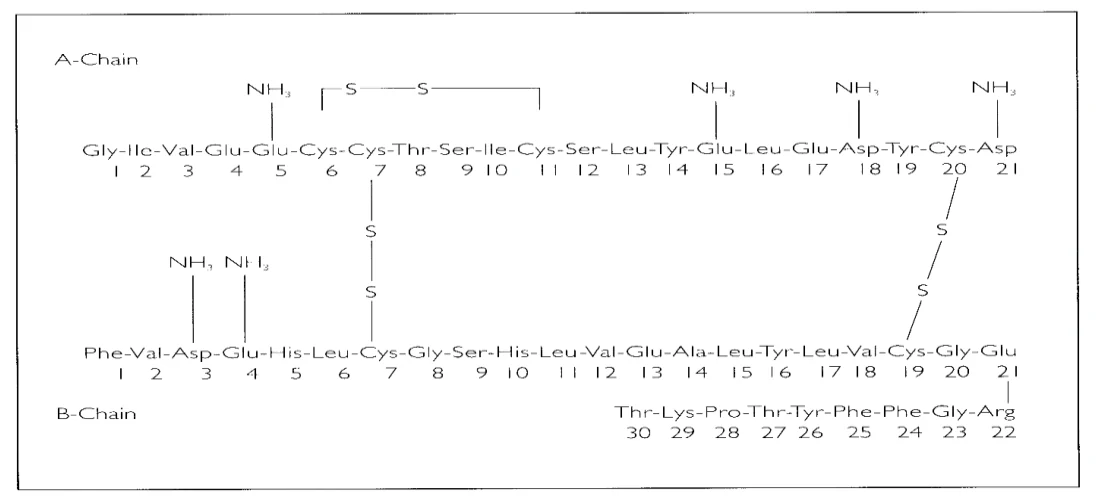
Physicochemical properties:
Description:
Novolin®ge Toronto is a water-clear, colourless, aqueous solution of human insulin.
Novolin®ge NPH is a cloudy, white, aqueous suspension of human insulin.
Novolin®ge Premixed Insulin Preparation is cloudy, white, aqueous suspension of human insulin.
One IU (International Unit) corresponds to 0.035 mg of anhydrous human insulin.
The homogeneity of Novolin®ge (Insulin, Human Biosynthetic) has been confirmed by amino acid analysis, disc electrophoresis, gel filtration and reverse phase HPLC.
The structure of Novolin®ge has been confirmed by chain separation, amino acid composition, enzymatic degradation and Edman degradation.
Product Characteristics
Novolin®ge Insulin, Human Biosynthetic is produced by recombinant DNA technology, using Saccharomyces cerevisiae (baker's yeast). During fermentation, the organism secretes a single peptide chain insulin precursor directly into the growth medium. The insulin precursor is then converted to human insulin via an enzyme-mediated reaction and subsequently purified. Novolin®ge is purified to a high degree resulting in no detectable (less than 1 ppm by weight of dry insulin) immunoreactive peptides derived from Saccharomyces cerevisiae as determined by enzyme linked immunoabsorbent assay.
Pharmaceutical standard: Manufacturer’s Standard
14 CLINICAL TRIALS
NOTE: There have been no clinical trials conducted with human insulin since 2002.
14.1 Trial Design and Study Demographics
Clinical studies have been designed not only to compare the safety and efficacy of Novolin®ge with Novolin® (ss) insulins, but also to screen for the formation of antibodies to S. cerevisiae. In order to do this a very sensitive ELISA technique has been developed. Evaluation of sera from 216 healthy volunteers without any history of atopy has been used to establish a normal range for antibodies to yeast and to provide a reference for comparison with samples from clinical trials with Novolin®ge.
Fourteen clinical studies investigating the safety and efficacy of Novolin®ge have been undertaken. All studies were of twelve months duration. A total of 396 diabetic patients, all previously treated with Novolin® (ss), completed their respective studies. One study was uncontrolled and sequential. Twelve were open, randomized, parallel, asymmetrical comparisons of Novolin®ge with the corresponding Novolin® (ss) preparations employing a similar protocol. One study was a multicentre, double blind, randomized, parallel, asymmetrical comparison of Novolin®ge with the corresponding Novolin® (ss) preparations.
The safety and efficacy of treatment with a series of premixed preparations of Novolin®ge Toronto and Novolin®ge NPH was compared with individual mixtures of biosynthetic human insulin manufactured by Eli Lilly in a 12-week crossover study of 38 insulin requiring diabetics. Metabolic control (as judged by HbA1c), 8 point blood glucose profiles (laboratory and home monitored), fasting blood sugar, occurrence and severity of hypoglycemic episodes, and complaints were recorded at predetermined intervals
14.2 Study Results
No significant differences were found between the two groups for mean 8 point blood glucose profiles (laboratory or home monitored), fasting blood glucose, or the occurrence of hypoglycemic episodes at week 6 or week 12 (crossover and completion). Metabolic control, as judged by HbA1c, remained unchanged between the 2 study groups irrespective of treatment order and no significant differences were found between the 2 groups at week 6 or week 12.
Two studies evaluated the bioequivalence of four different Novolin®ge premixed preparations and fresh admixtures of Novolin®ge Toronto / Novolin®ge NPH of similar proportions in 12 normal volunteers. In each study the serum concentration of immunoreactive insulin, C-peptide and blood glucose were compared after subcutaneous injection of 12 units according to a randomized 4-way crossover design. Bioequivalence was concluded to exist between all four premixed Novolin®ge preparations and the comparable admixture of Novolin®ge Toronto and Novolin®ge NPH as assessed by Tmax, Cmax, and AUC.
In both studies some subjects experienced hypoglycemia after administration of insulin especially in the study with Novolin®ge 40/60 and Novolin®ge 50/50. However, there were no differences between the premixed insulins and the admixtures in this regard. This is not unexpected in view of the proportion of regular insulin given and the fact that the subjects were fasting.
15 MICROBIOLOGY
No microbiological information is required for this drug product.
16 NON-CLINICAL TOXICOLOGY
Animal Toxicity
Table 4 - Details of Animal Toxicity Studies.
| Animal Species | ||||
| Mice and Rats | Rats | Rabbits | Beagles | |
| Objective | Compare Novolin®ge (Insulin, Human Biosynthetic) with Novolin®(ss) (Insulin, Human Semi-synthetic) insulin | Compare Novolin®ge (Insulin, Human Biosynthetic) with Novolin® (ss) (Insulin, Human Semi-synthetic) insulin | Inject 3.0 U/kg/day over a 13 week period. | |
| Route | Subcutaneous | Subcutaneous | Intermuscula r injection | Subcutaneous Injection |
| Dosage Regimen | Acute | 4 week | 13 week Period | |
| Results | No differences observed between Novolin®ge and Novolin® (ss) | No differences observed between Novolin®ge and Novolin® (ss) | No evidence of toxicity | |
Local irritation in rabbits after intermuscular injection with Novolin®ge was similar to that caused by isotonic saline.
Novolin®ge has been shown to be pyrogen free.
Carcinogenicity
Preclinical data with Novolin®ge reveal no special hazard for humans based on conventional studies of carcinogenic potential.
Mutagenicity
In a series of sensitive tests designed to evaluate mutagenic activity Novolin®ge has been shown to be non-mutagenic. Preclinical data with Novolin®ge reveal no special hazard for humans based on conventional studies of genotoxicity.