


Product Monograph - Apidra (Sanofi-Aventis Canada, PM 00061033)
RECENT MAJOR LABEL CHANGES
| 4 DOSAGE AND ADMINISTRATION 4.4 Administration | 05/2021 |
| 7 WARNING AND PRECAUTIONS | 05/2021 |
TABLE OF CONTENTS
Sections or subsections that are not applicable at the time of authorization are not listed.
PART I: HEALTH PROFESSIONAL INFORMATION .......................................................................3
1 INDICATIONS ................................................................................................................3
1.1 Pediatrics ............................................................................................................4
1.2 Geriatrics.............................................................................................................4
2 CONTRAINDICATIONS ...................................................................................................4
3 SERIOUS WARNINGS AND PRECAUTIONS BOX ..............................................................5
4 DOSAGE AND ADMINISTRATION...................................................................................5
4.1 Dosing Considerations .........................................................................................5
4.4 Administration.....................................................................................................6
5 OVERDOSAGE ...............................................................................................................7
6 DOSAGE FORMS, STRENGTHS, COMPOSITION AND PACKAGING ...................................7
7 WARNINGS AND PRECAUTIONS ....................................................................................8
7.1 Special Populations ............................................................................................ 11
7.1.1 Pregnant Women .........................................................................................11
7.1.2 Breast-feeding..............................................................................................11
7.1.3 Pediatrics .....................................................................................................11
7.1.4 Geriatrics .....................................................................................................11
8 ADVERSE REACTIONS .................................................................................................. 12
8.1 Adverse Reaction Overview................................................................................ 12
8.2 Clinical Trial Adverse Reactions .......................................................................... 14
8.2.1 Clinical Trial Adverse Reactions – Pediatrics ..................................................14
8.3 Less Common Clinical Trial Adverse Reactions .................................................... 15
8.5 Post-Market Adverse Reactions.......................................................................... 15
9 DRUG INTERACTIONS.................................................................................................. 15
9.2 Drug Interactions Overview................................................................................ 15
9.4 Drug-Drug Interactions ...................................................................................... 15
9.5 Drug-Food Interactions ...................................................................................... 17
9.6 Drug-Herb Interactions ...................................................................................... 17
9.7 Drug-Laboratory Test Interactions ...................................................................... 17
10 CLINICAL PHARMACOLOGY ......................................................................................... 17
10.1 Mechanism of Action.................................................................................... 17
10.2 Pharmacodynamics ...................................................................................... 17
10.3 Pharmacokinetics ......................................................................................... 18
11 STORAGE, STABILITY AND DISPOSAL ........................................................................... 21
12 SPECIAL HANDLING INSTRUCTIONS............................................................................. 22
PART II: SCIENTIFIC INFORMATION ........................................................................................ 23
13 PHARMACEUTICAL INFORMATION.............................................................................. 23
14 CLINICAL TRIALS.......................................................................................................... 23
14.1 Trial Design and Study Demographics ........................................................... 23
14.2 Study Results ............................................................................................... 25
15 MICROBIOLOGY .......................................................................................................... 27
16 NON-CLINICAL TOXICOLOGY ....................................................................................... 27
PATIENT MEDICATION INFORMATION - APIDRA® VIALS ......................................................... 36
PATIENT MEDICATION INFORMATION - APIDRA® CARTRIDGES .............................................. 47
PATIENT MEDICATION INFORMATION - APIDRA® SOLOSTAR® ............................................... 57
PART I: HEALTH PROFESSIONAL INFORMATION
1 INDICATIONS
APIDRA [insulin glulisine injection (rDNA origin)] is a recombinant human insulin analogue indicated for:
- the treatment of adult patients with diabetes mellitus where treatment with insulin is required.
- the treatment of pediatric patients with type 1 diabetes mellitus who require a short acting insulin. There is insufficient clinical data on the use of APIDRA in children below the age of 6 years (see WARNINGS AND PRECAUTIONS, Special Populations, Pediatrics).
APIDRA has a more rapid onset of action and a shorter duration of action than regular human insulin. APIDRA should normally be used in regimens that include a longer-acting insulin or basal insulin analogue to maintain adequate glucose control (see DOSAGE AND ADMINISTRATION). APIDRA can be used with oral hypoglycemic agents.
1.1 Pediatrics
Pediatrics (<6 years of age): Based on the data submitted and reviewed by Health Canada, the safety and effectiveness of APIDRA have been investigated in pediatric patients (age 4 to 17 years) with Type 1 diabetes [9(1.6%) < 6 years, 32 (5.6%) between 6 and 8 years, 149 (26%) between 8 and 12 years, and 382 (67%) above 12 years old]. Therefore, Health Canada has authorized an indication for pediatric use. APIDRA has not been studied in pediatric patients younger than 4 years of age. There is insufficient clinical data on the use of APIDRA in children below the age of 6 years.
1.2 Geriatrics
Geriatrics: Evidence from clinical studies and experience suggests that use in the geriatric population is associated with differences in safety or effectiveness.
Hypoglycemia may be difficult to recognize in the elderly (see WARNINGS AND PRECAUTIONS, Endocrine and Metabolism, Hypoglycemia). In the elderly, progressive deterioration of renal function may lead to steady decrease in insulin requirements. Careful glucose monitoring and dose adjustments of insulin or insulin analogues including APIDRA may be necessary (see WARNINGS AND PRECAUTIONS, Renal/ Hepatic/ Biliary/ Pancreatic).
2 CONTRAINDICATIONS
Patients who are hypersensitive to this drug or to any ingredient in the formulation or component of the container. For a complete listing, see DOSAGE FORMS, STRENGTHS, COMPOSITION AND PACKAGING.
3 SERIOUS WARNINGS AND PRECAUTIONS BOX
Serious Warnings and Precautions
|
|---|
4 DOSAGE AND ADMINISTRATION
4.1 Dosing Considerations
The dosage of APIDRA should be individualized and determined based on the physician’s advice in accordance with the needs of the patient.
APIDRA (insulin glulisine injection [rDNA origin]) is a recombinant human insulin analogue that has been shown to be equipotent to human insulin. One unit of APIDRA has the same glucose-lowering effect as one unit of regular human insulin. After subcutaneous administration it has a more rapid onset and a shorter duration of action (see CLINICAL PHARMACOLOGY).
APIDRA should be given by injection within 15 minutes before or within 20 minutes after starting a meal. APIDRA should normally be used in regimens that include a longer-acting insulin or basal insulin analogue (see CLINICAL PHARMACOLOGY).
APIDRA is intended for subcutaneous administration by injection and for use as a continuous subcutaneous insulin infusion (CSII) in pump systems suitable for insulin infusion.
As for all insulins, the rate of absorption, and consequently the onset and duration of action, may be affected by injection site, exercise and other variables. Blood glucose monitoring is recommended for all patients with diabetes.
4.4 Administration
Preparation and Handling:
APIDRA must only be used if the solution is clear, colourless, with no solid particles visible, and if it is of a water-like consistency. To minimize local irritation at the injection site, it is recommended to allow the insulin to reach room temperature before injection.
The instructions for using the APIDRA in a pump or with an injection pen must be followed carefully.
APIDRA should be administered by subcutaneous injection in the abdominal wall, the thigh, the buttock or the deltoid or by continuous subcutaneous infusion (CSII) in the abdominal wall. Injection sites and infusion sites within an injection area (abdomen, thigh, buttock or deltoid) must be rotated from one injection to the next so that the same site is not used more than approximately once a month to reduce the risk of lipodystrophy and localized cutaneous amyloidosis. Do not inject into areas of lipodystrophy or localized cutaneous amyloidosis (see WARNINGS AND PRECAUTIONS and ADVERSE REACTIONS).
Patient must be instructed to not re-use needles. INJECTION PENS, CARTRIDGES, NEEDLES, AND SYRINGES MUST NOT BE SHARED. To prevent the possible transmission of disease, never share an injection pen or cartridge between patients, even if the needle on the injection pen is changed.
An empty vial, cartridge, or SoloSTAR® must never be reused and must be properly discarded.
Vials
Before withdrawing insulin from the vial for the first time, remove the plastic protective cap.
Do not shake the vial vigorously as this may cause frothing. Froth may interfere with the correct measurement of the dose.
Mixing of Insulins
APIDRA can be mixed with NPH human insulin (except when administered with pump (see DOSAGE AND ADMINISTRATION, Continuous Subcutaneous Insulin Infusion pump)).
If APIDRA is mixed with NPH human insulin, APIDRA should be drawn into the syringe first. Injection should be made immediately after mixing.
No data are available on mixing APIDRA with insulin preparations other than NPH human insulin.
Mixtures should not be administered intravenously.
Cartridges or SoloSTAR
APIDRA cartridges or APIDRA SoloSTAR are not designed to allow any other insulin to be mixed in the cartridge.
Continuous Subcutaneous Insulin Infusion pump
APIDRA may be used for Continuous Subcutaneous Insulin Infusion (CSII) in pump systems suitable for insulin infusion. Patients using CSII must be comprehensively instructed on the use of the system pump.
The infusion set and reservoir used with APIDRA must be changed at least every 48 hours using aseptic technique. It is important that patients follow these instructions even if they differ from the general pump manual instructions. Failure to follow these instructions may lead to serious adverse events.
When used with an insulin infusion pump, APIDRA should not be mixed with any other insulin or diluted with any other solution.
Patients administering APIDRA by CSII must have an alternative insulin delivery system available in case of pump system failure (see WARNINGS AND PRECAUTIONS, Insulin pumps).
5 OVERDOSAGE
Hypoglycemia may occur as a result of an excess of insulin relative to food intake, energy exposure or both.
Mild/moderate episodes of hypoglycemia can usually be treated with oral carbohydrates. Adjustments in dosage of the medicinal product, meal patterns, or physical activity may be needed.
Severe episodes with coma, seizure, or neurologic impairment may be treated with intramuscular/subcutaneous glucagon or concentrated intravenous glucose.
Sustained carbohydrate intake and observation may be necessary because hypoglycemia may recur after apparent clinical recovery.
| For management of a suspected drug overdose, contact your regional poison control centre. |
6 DOSAGE FORMS, STRENGTHS, COMPOSITION AND PACKAGING
The vials, cartridges, and SoloSTAR contain a sterile solution of insulin glulisine for use as an injection.
APIDRA [Insulin glulisine injection (rDNA origin)] consists of insulin glulisine dissolved in a clear aqueous solution.
Each milliliter of APIDRA contains insulin glulisine 100 units. It also contains excipients: m-cresol, trometamol, sodium chloride, polysorbate 20, and water for injection. APIDRA has a pH of approximately 7.3 and is adjusted by addition of aqueous solutions of hydrochloric acid and sodium hydroxide.
APIDRA [insulin glulisine injection (rDNA origin)] 100 units per mL is available in the following package sizes:
- 10-mL vials
- 3-mL cartridges package of 5, for use with AllStar PRO and JuniorSTAR
- 3-mL APIDRA SoloSTAR (pre-filled disposable pen), package of 5
| Table 1 – Dosage Forms, Strengths, Composition and Packaging | |||||
| Route of Administration | Dosage Form / Strength/Composition | Non-medicinal Ingredients | |||
| Subcutaneous | Solution for injection 100 U/mL | m-cresol, trometamol, sodium chloride, polysorbate 20, water for injection, hydrochloric acid and sodium hydroxide (for pH adjustment) For a complete listing see DOSAGE FORMS, STRENGTHS, COMPOSITION AND PACKAGING. | |||
7 WARNINGS AND PRECAUTIONS
Please see 3 SERIOUS WARNINGS AND PRECAUTIONS BOX.
General
As with all insulin preparations, the time course of APIDRA action may vary in different individuals or at different times in the same individual and is dependent on site of injection, blood supply, temperature, and physical activity. Adjustment of dosage of any insulin may be necessary if patients change their physical activity or their usual meal plan.
Hypokalemia is among the potential clinical adverse effect associated with the use of all insulin therapies, particularly when given intravenously (e.g. treatment of diabetic ketoacidosis). This potential clinical adverse effect may be more relevant in patients who are on potassium lowering drugs, losing potassium through other means (e.g. diarrhea) or treated for diabetic ketoacidosis.
As with other insulins, additional caution should be exercised in patients with a long history of diabetes on insulin who might be prone to develop hypoglycemia and in patients with a previous history of cardiac ischemic disorders who might be prone to develop cardiac adverse events.
Stress or concomitant illness, especially infectious and febrile conditions may change insulin requirements. Additionally, drugs, losing potassium through other means (e.g. diarrhea) or treated for diabetic ketoacidosis.
Thiazolidinediones (TZDs), alone or in combination with other antidiabetic agents (including insulin), can cause heart failure and edema. The combination of TZD with insulin is not indicated for the treatment of Type 2 Diabetes Mellitus. Please refer to the respective TZD product monograph WARNINGS AND PRECAUTIONS information when the use of these drugs in combination with any insulin, including APIDRA, is contemplated.
To avoid transmission of disease, cartridge or a prefilled syringe/pen shall not be used by more than one person.
Accidental mix-ups between insulin glulisine and other insulins, particularly long-acting insulins, have been reported. To avoid medication errors between insulin glulisine and other insulins, patients should be instructed to always check the insulin label before each injection (see ADVERSE REACTIONS).
Driving and Operating Machinery
The patient’s ability to concentrate and react may be impaired as a result of hypoglycemia or hyperglycemia or, for example, as a result of visual impairment. This may constitute a risk in situations where these abilities are of special importance (e.g. driving a car or operating machinery).
Patients should be advised to take precautions to avoid hypoglycemia whilst driving. This is particularly important in those who have reduced or absent awareness of the warning symptoms of hypoglycemia or have frequent episodes of hypoglycemia. It should be considered whether it is advisable to drive or operate machinery in these circumstances.
Endocrine and Metabolism
Hypoglycemia:
As with all insulin preparations, hypoglycemic reactions may be associated with the administration of APIDRA. Hypoglycemia is the most common adverse effect of insulin therapy, including APIDRA (see ADVERSE REACTIONS). Hypoglycemia may occur if the insulin dose is too high in relation to the insulin requirement (see OVERDOSAGE). Use caution in patients with hypoglycemia unawareness and in patients who may be predisposed to hypoglycemia (e.g., the pediatric population and patients who fast or have erratic food intake). Early warning symptoms of hypoglycemia may be different, be less pronounced or absent, under certain conditions, as for example if glycemic control is markedly improved, if hypoglycemia is developing gradually, in elderly patients, in patients with a long history of diabetes, in patients with diabetic nerve disease, in patients using some medications such as beta-blockers, or intensified diabetes control (see DRUG INTERACTIONS). Such situations may result in severe hypoglycemia (and possibly, loss of consciousness) prior to patients’ awareness of hypoglycemia.
Severe hypoglycemia may require the assistance of another person. Patients who are unable to take sugar orally or who are unconscious may require an intramuscular/subcutaneous injection of glucagon or should be treated with intravenous administration of glucose by medical personnel. Without immediate medical help, serious reactions or even death could occur.
The time of occurrence of hypoglycemia depends on the action profile of the insulins used and may, therefore, change when treatment regimen is changed.
As with all insulins, prolonged or severe hypoglycemic attacks, especially if recurrent, may lead to neurological damage, loss of consciousness, coma or death (see ADVERSE REACTIONS).
Hypoglycemic reactions following treatment with insulin products such as APIDRA are mostly mild and easily managed. Changes in insulin therapy or changes in lifestyle (i.e. diet, omission of a meal, exercise/ physical activity) may require a change in dosage to avoid hypoglycemia. Glucose monitoring is recommended for all patients with diabetes.
Diabetic patients should be instructed to carry a few lumps of sugar, candies or biscuits to prevent the progression of a hypoglycemic reaction, should one occur (see PATIENT MEDICATION INFORMATION).
Hyperglycemia:
The use of too low insulin dosages or discontinuation of treatment, especially in Type 1 diabetes, may lead to hyperglycemia and diabetic ketoacidosis. Uncorrected hyperglycemic reactions can cause loss of consciousness, coma, or death.
Immune
Injection Site and Local Allergic Reactions:
Injection site reactions that may occur with insulin therapy include redness, pain, itching at the injection site, hives, swelling, and inflammation. Most minor reactions usually resolve in a few days to a few weeks. They may occur if the injection is not properly made (irritants in the skin cleansing agent or poor injection technique), or if the patient is allergic to the insulin or any excipients. Continuous rotation of the injection site within a given area may help to reduce or prevent these reactions.
Lipodystrophy and Cutaneous Amyloidosis:
Subcutaneous (SC) administration of insulin products can result in lipoatrophy (depression in the skin) or lipohypertrophy (enlargement or thickening of tissue) or localized cutaneous amyloidosis (skin lumps).
Patients must be instructed to perform continuous rotation of the injection site to reduce the risk of developing lipodystrophy and localized cutaneous amyloidosis. Patients should be advised to consult their health professional if they notice any of these conditions and before changing the injection site. There is a potential risk of delayed insulin absorption and worsened glycemic control following insulin injections at sites with these reactions. A sudden change in the injection site to an unaffected area has been reported to result in hypoglycemia. Blood glucose monitoring is recommended after the change in the injection site, and dose adjustment of antidiabetic medications may be considered (see ADVERSE REACTIONS).
Systemic allergic reactions:
Immediate-type allergic reactions are rare. Such reactions to insulin (including insulin glulisine) or the excipients may, for example, be associated with generalized skin reactions, angioedema, bronchospasm, hypotension, anaphylactic reaction or shock and may be life threatening (see CONTRAINDICATIONS and ADVERSE REACTIONS).
Patients who have demonstrated an allergic reaction to other insulin products may demonstrate an allergic reaction to APIDRA.
Antibody Production:
Insulin administration may cause insulin antibodies to form. Insulin antibodies are frequently cross-reactive. Insulin administration may cause the insulin antibodies to form. Insulin antibodies are frequently cross-reactive. In clinical studies, cross-reactive antibodies were observed in both insulin glulisine and comparator (insulin lispro, regular human insulin) treatment groups with similar percents of increased and decreased titers. There was no correlation between cross-reactive insulin antibody concentration and changes in A1c, insulin doses, or incidence of hypoglycemia and the clinical significance of these antibodies is not clear. In theory, the presence of such insulin antibodies may necessitate adjustment of the insulin dose in order to correct a tendency to hyperglycemia or hypoglycemia but has not been found on review of APIDRA clinical trials.
Intercurrent conditions:
Insulin requirements may be altered during illness, emotional disturbances or stress.
Insulin pumps
Patients using external pump infusion therapy should be trained appropriately. Physicians and patients should carefully evaluate information on pump use in the APIDRA product monograph, package insert, and the pump manufacturer’s manual (see DOSAGE AND ADMINISTRATION, Continuous Subcutaneous Insulin Infusion Pump).
When used in an external insulin pump for subcutaneous infusion, APIDRA should not be mixed with any other insulin or diluted with any other solution. The infusion set and reservoir used with APIDRA must be changed at least every 48 hours using aseptic technique. It is important that patients follow these instructions even if they differ from the general pump manual instructions. Failure to follow the instruction above, pump or infusion set malfunctions, handling errors or insulin degradation can lead to hyperglycemia, ketosis and diabetic ketoacidosis in a short time. This is especially pertinent for rapid-acting insulin analogues that are more rapidly absorbed and have a shorter duration of action. Prompt identification and correction of the cause of hyperglycemia or ketosis or diabetic ketoacidosis is necessary. Interim subcutaneous injection with APIDRA may be required. Patients using continuous subcutaneous insulin infusion (CSII) pump therapy must be trained to administer insulin by injection and have alternate insulin delivery system available in case of pump failure (see DOSAGE AND ADMINISTRATION, Continuous Subcutaneous Insulin Infusion Pump, CONSUMER INFORMATION, Vials, Continuous Subcutaneous Insulin Infusion Pump, STORAGE, STABILITY AND DISPOSAL).
Hepatic/Biliary/Pancreatic/Renal
The pharmacokinetic properties of APIDRA were generally maintained in subjects with renal impairment. Studies have not been performed in patients with hepatic impairment. As with all insulins, APIDRA requirements may be diminished due to reduced capacity for gluconeogenesis and reduced insulin metabolism, similar to observations found with other insulins (see CLINICAL PHARMACOLOGY, Special Populations and Conditions). Careful glucose monitoring and dose adjustments of insulin or insulin analogues including APIDRA may be necessary in patients with hepatic or renal dysfunction.
Transferring Patients from Other Insulins
Any change of insulin should be made cautiously and only under medical supervision. Changes in insulin strength, timing of administration, manufacturer, type (e.g., regular, NPH, or insulin analogs), species (animal, human), or method of manufacture (recombinant DNA versus animal-source insulin) may result in the need for a change in dosage. Concomitant oral antidiabetic treatment may need to be adjusted.
7.1 Special Populations
7.1.1 Pregnant Women
There are no well-controlled clinical studies of the use of APIDRA in pregnant women. Animal reproduction studies have not revealed any differences between APIDRA and human insulin regarding pregnancy, embryonal/foetal development, parturition or postnatal development (see No microbiological information is required for this drug product.
NON-CLINICAL TOXICOLOGY, Reproduction toxicity).
It is essential for patients with pre-existing or gestational diabetes to maintain good metabolic control before conception and during pregnancy. Insulin requirements may decrease during the first trimester and generally increase during the second and third trimesters. Immediately after delivery, insulin requirements decline rapidly.
Careful monitoring of glucose control is essential. Patients with diabetes must inform their doctor if they are pregnant or are contemplating pregnancy.
7.1.2 Breast-feeding
It is unknown whether APIDRA is excreted in human milk. Many drugs including human insulin, are excreted in human milk. There are no adequate and well-controlled studies in nursing women. For this reason, caution should be exercised when APIDRA is administered to a nursing woman. Lactating women may require adjustments in insulin dose and diet (see No microbiological information is required for this drug product.
NON-CLINICAL TOXICOLOGY, Reproduction toxicity).
7.1.3 Pediatrics
Pediatrics (<6 years of age): The safety and effectiveness of APIDRA have been investigated in pediatric patients (age 4 to 17 years) with Type 1 diabetes [9(1.6%) < 6 years, 32 (5.6%) between 6 and 8 years, 149 (26%) between 8 and 12 years, and 382 (67%) above 12 years old]. APIDRA has not been studied in pediatric patients younger than 4 years of age. There is insufficient clinical data on the use of APIDRA in children below the age of 6 years.
As in adults, the dosage of APIDRA must be individualized in pediatric patients based on metabolic needs and frequent monitoring of blood glucose.
7.1.4 Geriatrics
Hypoglycemia may be difficult to recognize in the elderly (see WARNINGS AND PRECAUTIONS, Endocrine and Metabolism, Hypoglycemia). In the elderly, progressive deterioration of renal function may lead to steady decrease in insulin requirements. Careful glucose monitoring and dose adjustments of insulin or insulin analogues including APIDRA may be necessary (see WARNINGS AND PRECAUTIONS, Renal/ Hepatic/ Biliary/ Pancreatic section).
In Phase III clinical trials (n=2408), APIDRA was administered to 147 patients ≥65 years of age and 27 patients ≥75 years of age. The majority of these were patients with Type 2 diabetes. The change in glycated hemoglobin (A1c) values and hypoglycemia frequencies did not differ by age, but greater sensitivity of some older individuals cannot be ruled out.
Other: The presence of diseases such as Acromegaly, Cushing's Syndrome, Hyperthyroidism, and Pheochromocytoma can complicate the control of Diabetes Mellitus.
Pens to be used with APIDRA cartridge
The APIDRA cartridge should only be used with the following pens:
- JuniorSTAR® which delivers APIDRA in 0.5 unit dose increments
- AllStar PRO® which delivers APIDRA in 1 unit dose increments
This cartridge should not be used with any other reusable pen as the dosing accuracy has only been established with the listed pens
8 ADVERSE REACTIONS
8.1 Adverse Reaction Overview
Overall, clinical studies comparing APIDRA with short-acting insulins did not demonstrate a difference in frequency of adverse events.
The adverse events observed were those known in this pharmacological class and consequently common to insulins.
Body as a whole:
Local Allergy
As with other insulin therapy, local allergy in patient may occur as redness, itching, swelling, or hemorrhage. These minor reactions usually resolve in a few days to a few weeks. In some instances, these reactions may be related to factors other than insulin, such as irritants in a skin cleansing agent or poor injection technique.
Systemic Allergy
Less common, but potentially more serious, is generalized allergy to insulin (including insulin glulisine), which may cause rash (including pruritus) over the whole body, shortness of breath, wheezing, reduction in blood pressure, rapid pulse, or sweating. Severe cases of generalized allergy, including anaphylactic reactions, may be life threatening.
Localized reactions and generalized myalgias have been reported with the use of m-cresol as an injectable excipient.
Hypoglycemia:
Hypoglycemia, a frequent adverse reaction to insulin therapy, may occur if the insulin dose is too high in relation to the insulin requirement.
As with all insulins, prolonged or severe hypoglycemic attacks, especially if recurrent, may lead to neurological damage, loss of consciousness, coma or death.
The risk of all categories of symptomatic hypoglycemia did not differ between APIDRA and short-acting insulin comparators in subjects with type 1 or type 2 diabetes (see WARNINGS AND PRECAUTIONS).
| Table 2: Number of subjects with at least one episode of symptomatic hypoglycemia in studies in adults with Type 1 and Type 2 diabetes | ||||||||||||||||||||||
|---|---|---|---|---|---|---|---|---|---|---|---|---|---|---|---|---|---|---|---|---|---|---|
| Type 1 diabetes | Type 2 diabetes | |||||||||||||||||||||
| Glulisine | Comparatora | Glulisine | Comparatorb | |||||||||||||||||||
| n/N | % | n/N | % | n/N | % | n/N | % | |||||||||||||||
| Subcutaneous injection | 783/921 | 85.0 | 516/611 | 84.5 | 562/883 | 63.6 | 578/883 | 65.5 | ||||||||||||||
| Continuousc subcutaneous infusion | 26/29 | 89.7 | 24/30 | 80.0 | - | - | - | - | ||||||||||||||
n = number of subjects with at least 1 episode of hypoglycemia; N = total number of evaluable ITT subjects. a: insulin lispro, regular human insulin; b: regular human insulin; c: insulin aspart | ||||||||||||||||||||||
| Table 3: Number (percentage) of pediatric subjects with Type 1 diabetes with all symptomatic hypoglycemia | |||||||||||||||
|---|---|---|---|---|---|---|---|---|---|---|---|---|---|---|---|
| Glulisine | Lispro | ||||||||||||||
| n/N | (%) | Number of episodes | n/N | (%) | Number of episodes | ||||||||||
| Screening / run-in phase | 198/277 | (71.5) | 1269 | 213/295 | (72.2) | 1144 | |||||||||
| Month 1 | 195/277 | (70.4) | 1212 | 184/295 | (62.4) | 973 | |||||||||
| Month 2 | 125/274 | (45.6) | 781 | 125/295 | (42.4) | 756 | |||||||||
| Month 3 | 158/270 | (58.5) | 864 | 168/292 | (57.5) | 870 | |||||||||
| Month 4 - treatment end | 199/268 | (74.3) | 2686 | 199/291 | (68.4) | 2747 | |||||||||
| Entire treatment phase | 230/277 | (83.0) | 5543 | 238/295 | (80.7) | 5346 | |||||||||
| n = number of subjects reporting at least one episode of symptomatic hypoglycemia; N = number of randomized and treated subjects evaluable. | |||||||||||||||
In pediatric subjects with type 1 diabetes, the overall incidence of symptomatic hypoglycaemia was comparable between the treatment groups (83% for insulin glulisine vs. 81% for insulin lispro). However, there was a significant difference between treatment groups during the first month of treatment in the frequency (70.4% in the insulin glulisine group, 62.4% in the insulin lispro group, p=0.0330) and in the monthly rate (4.77 vs. 3.59 respectively, p=0.0094) of symptomatic hypoglycemia. For nocturnal symptomatic hypoglycemia, a difference was noted between the two treatment groups in the frequency and monthly rate per subject, with a higher frequency (39.7% vs. 30.5%) and more events (0.25 vs. 0.19) reported in the insulin glulisine group. The difference was especially notable in the first month of treatment (frequency (19.9% vs. 11.2%) and events (0.41 vs. 0.23)), when all subjects had been randomized following a 4-week of run-in period with individualized dose adjustment of insulin lispro. The incidence of severe symptomatic hypoglycemia and the incidence of severe nocturnal symptomatic hypoglycemia were comparable between the treatment groups.
Skin and appendages:
As with other insulin therapy, lipodystrophy may occur at the injection site and delay insulin absorption.
Continuous rotation of the injection site within a given area may help to reduce or prevent these reactions.
Weight gain:
Weight gain can occur with insulin therapy, including APIDRA, and has been attributed to the anabolic effects of insulin and the decrease in glucosuria.
8.2 Clinical Trial Adverse Reactions
Clinical trials are conducted under very specific conditions. The adverse reaction rates observed in the clinical trials; therefore, may not reflect the rates observed in practice and should not be compared to the rates in the clinical trials of another drug. Adverse reaction information from clinical trials may be useful in identifying and approximating rates of adverse drug reactions in real-world use.
| Table 4: Common (≥1%) Adverse Drug Reactions in pooled adult Type 1 and 2 studies | |||||||||||
|---|---|---|---|---|---|---|---|---|---|---|---|
Adverse Event System Organ Class/ Preferred Term | Insulin Glulisine (All studies) n=1833 (% of subjects) | Lispro n= 333 (% of subjects) | Regular Insulin n=1161 (% of subjects) | Aspart n= 30 (% of subjects) | |||||||
General Disorders and Administration Site Condition Injection site hypertrophy | 9 (0.5) | 7 (2.1) |
|
| |||||||
Metabolism and Nutrition Disorders Hypoglycemia NOS* Hypoglycemic seizure Hypoglycemic unawareness | 83 (4.5) 16 (0.9) 1 (0.1) | 22 (6.6) 7 (2.1) 4 (1.2) | 33 (2.8) 9 (0.8)
| 2 (6.7)
2 (6.7) | |||||||
Nervous System Disorders Hypoglycemic coma | 49 (2.7) | 13 (3.9) | 19 (1.6) |
| |||||||
| *Not otherwise specified | |||||||||||
During clinical studies, there were no clinically noteworthy differences between insulin glulisine and comparator short-acting insulins in the overall incidences of adverse events. The adverse events observed were those known in this pharmacological class and consequently common to insulins.
8.2.1 Clinical Trial Adverse Reactions – Pediatrics
Table 5 summarizes the adverse reactions occurring with frequency higher than 1% in a clinical study in children and adolescents with type 1 diabetes treated with insulin glulisine (n=277) or insulin lispro.
| Table 5: Common (≥1%) Adverse Drug Reactions in children and adolescents with Type 1 diabetes | |||||
|---|---|---|---|---|---|
Adverse Event System Organ Class/ Preferred Term | Insulin Glulisine n=277 (% of subjects) | Lispro n= 295 (% of subjects) | |||
General Disorders and Administration Site Condition Injection site hypertrophy | 3 (1.1) | 1 (0.3) | |||
| Table 5: Common (≥1%) Adverse Drug Reactions in children and adolescents with Type 1 diabetes |
|---|
Adverse Event System Organ Class/ Preferred Term | Insulin Glulisine n=277 (% of subjects) | Lispro n= 295 (% of subjects) |
|---|---|---|
Metabolism and Nutrition Disorders Hypoglycemia NOS* Hypoglycemic seizure | 6 (2.2) 17 (6.1) | 7 (2.4) 14 (4.7) |
Nervous System Disorders Hypoglycemic coma | 1 (0.4) | 3 (1.0) |
| *Not otherwise specified | ||
8.3 Less Common Clinical Trial Adverse Reactions
Gastrointestinal disorders: nausea
General disorders administration site conditions: fatigue, injection site reaction NOS*, peripheral oedema, asthenia, increased fat tissue, injection site stinging
Infections and infestations: cellulitis
Injury, poisoning and procedural (complications): overdose NOS*
Metabolism and nutrition disorders: hyperglycemia NOS*
Nervous system disorders: paraesthesia
Skin and subcutaneous tissue disorders: acquired lipodystrophy
*Not otherwise specified
8.5 Post-Market Adverse Reactions
Medication errors have been reported in which other insulins, particularly long-acting insulins, have been accidentally administered instead of insulin glulisine.
9 DRUG INTERACTIONS
9.2 Drug Interactions Overview
The drugs listed in this table are based on either drug interaction case reports or studies, or potential interactions due to the expected magnitude and seriousness of the interaction (i.e., those identified as contraindicated).
9.4 Drug-Drug Interactions
The following are examples of potential drug-drug interactions that may occur with APIDRA treatment:
| Table 6: Established or Potential Drug-Drug Interactions | |||
|---|---|---|---|
| Proper name | Ref | Effect | Clinical comment |
| Table 6: Established or Potential Drug-Drug Interactions |
|---|
| Proper name | Ref | Effect | Clinical comment |
|---|---|---|---|
Oral antidiabetic agents ACE inhibitors Disopyramide Fibrates Fluoxetine MAO inhibitors Pentoxifylline Propoxyphene Salicylates Sulfonamide antibiotics | Theoretical | May enhance the blood-glucose-lowering effect and increase susceptibility to hypoglycemia | May require close monitoring of blood glucose level and dose adjustment (reduction) of APIDRA |
Corticosteroids Danazol Diazoxide Diuretics Glucagon Isoniazid Estrogens and progestogens (e.g. in oral contraceptives) Phenothiazine derivatives Somatropin Sympathomimetic agents (e.g. epinephrine, salbutamol, terbutaline) Protease inhibitors Atypical antipsychotic medications (e.g. olanzapine and clozapine) | Theoretical | May reduce the blood-glucose- lowering effect. | May require close monitoring of blood glucose level and dose adjustment (increase or decrease) of APIDRA |
Somatostatin analogs Thyroid hormones | Theoretical | May enhance or decrease the insulin requirements | May require close monitoring of blood glucose level and dose adjustment (increase or decrease) of APIDRA |
Alcohol Beta-blockers Clonidine Lithium salts | Theoretical | May either potentiate or weaken the blood-glucose-lowering effect of insulin | May require close monitoring of blood glucose level and dose adjustment (increase or decrease) of APIDRA |
| Pentamidine | Theoretical | May cause hypoglycemia, which may sometimes be followed by hyperglycemia | May require close monitoring of blood glucose level and dose adjustment (increase or decrease) of APIDRA |
| Sympatholytic medicinal products such as beta-blockers, clonidine, guanethidine and reserpine | Theoretical | The signs of hypoglycemia may be reduced or absent | May require close monitoring of blood glucose level and dosage adjustment (increase or decrease) of APIDRA |
Other: To avoid the risk of developing new or worsening heart failure, the use of TZDs in combination therapy with insulin is not indicated (see WARNINGS AND PRECAUTIONS).
9.5 Drug-Food Interactions
Interactions with food have not been established.
9.6 Drug-Herb Interactions
Interactions with herb have not been established.
9.7 Drug-Laboratory Test Interactions
Interactions with laboratory have not been established.
10 CLINICAL PHARMACOLOGY
10.1 Mechanism of Action
The primary activity of insulins and insulin analogues, including insulin glulisine, is regulation of glucose metabolism. Insulins lower blood glucose levels by stimulating peripheral glucose uptake by skeletal muscle and fat, and by inhibiting hepatic glucose production. Insulins inhibit lipolysis in the adipocyte, inhibit proteolysis, and enhance protein synthesis.
10.2 Pharmacodynamics
The glucose lowering activities of APIDRA and of regular human insulin are equipotent when administered by the intravenous route.
After subcutaneous administration the effect of APIDRA is more rapid in onset and of shorter duration compared to regular human insulin. APIDRA has a rapid onset of action and a short duration of about 4 hours. This has been demonstrated in studies in healthy volunteers and patients with diabetes.
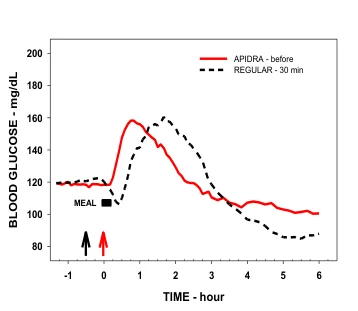
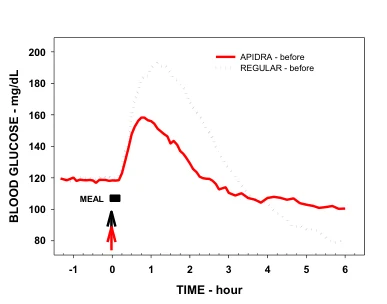
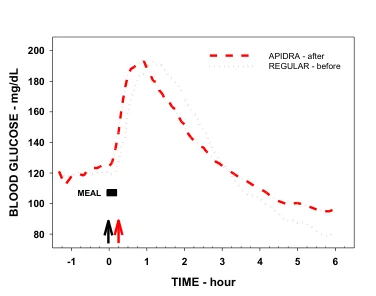
In a study in patients with Type 1 diabetes (n= 20), the glucose-lowering profiles of APIDRA and regular human insulin were assessed at various times in relation to a standard meal at a dose of 0.15 U/kg (see Figure 1).
Figure 1: Glucose-lowering effect over 6 hours.
APIDRA given 2 minutes (glulisine-pre) before the start of a meal compared to regular human insulin given 30 minutes (Regular - 30 min) before start of the meal (Figure 1A) and compared to regular human insulin (Regular - pre) given 2 minutes before a meal (Figure 1B). APIDRA given 15 minutes (glulisine-post) after start of a meal compared to regular human insulin (Regular - pre) given 2 minutes before a meal (Figure 1C). On the x-axis zero (0) is the start of a 15-minute meal.
Figure 1A Figure 1B Figure 1C
Legend:
↑ = Injection time Regular Human Insulin
↑ = Injection time Apidra
10.3 Pharmacokinetics
APIDRA exhibits dose-proportionality in insulin exposure and less than dose-proportional increases in effect, as common to short and rapid acting insulins.
| Table 7: Pharmacokinetic and Pharmacodynamic Results in Type 1 Diabetes Mellitus subjects treated with s.c insulin glulisine | |||||||||||||
|---|---|---|---|---|---|---|---|---|---|---|---|---|---|
| Pharmacokinetic Parameters | |||||||||||||
| Dose | 0.075 U/kg | 0.15 U/kg | 0.3 U/kg | ||||||||||
AUC0-2h (µU.min.mL-1) | 3792 3855 ± 677 | 6676 6832 ± 1461 | 12992 13237 ± 2599 | ||||||||||
AUC0-end (µU.min.mL-1) | 5341 5372 ± 589 | 11196 11284 ± 1456 | 24891 25076 ± 3209 | ||||||||||
Cmax (µU.mL-1) | 42 43 ± 9 | 72 73 ± 16 | 140 142 ± 25 | ||||||||||
| MRT (min) | 115 122 ± 50 | 121 125 ± 34 | 134 136 ± 28 | ||||||||||
Tmax Min (*) | 47 34 - 99 | 57 44 - 93 | 72 50 - 112 | ||||||||||
T10%- AUC Min (*) | 26 18 – 53 | 31 24 - 52 | 39 28 - 64 | ||||||||||
T90%- AUC Min (*) | 149 116 – 260 | 205 141 - 295 | 242 169 - 345 | ||||||||||
| T 1/2 (min) | 64 ± 33 | 55 ± 17 | 56 ± 17 | ||||||||||
| Volume of Distribution (mL/kg) | 1075 ± 362 | 986 ± 274 | 930 ± 216 | ||||||||||
| Glucose Infusion Rate – Pharmacodynamic Parameters | |||||||||||||
GIR-AUC (0-2h) (mg/kg) | 314 ± 156 | 491 ± 167 | 536 ± 153 | ||||||||||
| GIR-AUC (0-end) (mg/kg) | 499 ± 233 | 1090 ± 271 | 1476 ± 300 | ||||||||||
| Values in bold font represent the geometric means, all others are based on the mean & standard deviation, unless denoted with (*) to indicate the median, minimum & maximum range. | |||||||||||||
The table below compares pharmacokinetic and pharmacodynamic parameters for APIDRA (s.c.) from a study in patients with Type I diabetes (n=18) with historical data for Huminsulin® Normal 100 (s.c.) from a study in healthy adult subjects (n = 24; see Table 8).
| Table 8: Pharmacokinetic and Pharmacodynamic Results for s.c Apidra® and Huminsulin® Normal 100 | ||||||
|---|---|---|---|---|---|---|
APIDRA (N=18)2 | Huminsulin Normal 1001 (N=24)3 | |||||
| Dose | 0.3 U/kg | 0.3 IU/kg | ||||
| Pharmacokinetic Parameters | ||||||
| AUC0-end | 25076 ± 3209 | 17417 ± 2348 | ||||
| Table 8: Pharmacokinetic and Pharmacodynamic Results for s.c Apidra® and Huminsulin® Normal 100 |
|---|
APIDRA (N=18)2 | Huminsulin Normal 1001 (N=24)3 | ||||||
|---|---|---|---|---|---|---|---|
| (µU.min.mL-1) | |||||||
Cmax (µU.mL-1) | 142 ± 25 | 56 ± 16 | |||||
| MRT (min) | 136 ± 28 | 229 ± 41 | |||||
Tmax Min (*) | 72 50 – 112 | 120 60 - 240 | |||||
T10%- AUC Min (*) | 39 28 – 64 | 58 45 - 81 | |||||
T90%- AUC Min (*) | 242 169 – 345 | 448 321-590 | |||||
| T 1/2 (min) | 56 ± 17 | 64 ± 284 | |||||
| Volume of Distribution (mL/kg) | 930 ± 216 | 2375 ± 963 | |||||
| Glucose Infusion Rate – Pharmacodynamic Parameter | |||||||
GIR-AUC (0-end) (mg/kg) | 1476 ± 300 | 3032 ± 743 | |||||
Values represent mean and standard deviation, unless denoted with (*) to indicate the median, minimum & maximum range. 1 Historical data and different radioimmunoassay from Apidra study 2 Type 1 Diabetes patients 3 Healthy adult subjects. 4 N=23 | |||||||
Absorption
Pharmacokinetic profiles in healthy volunteers and diabetes patients (Type 1 or 2) demonstrated that absorption of insulin glulisine was up to twice as fast with a peak concentration approximately up to twice as high compared to regular human insulin.
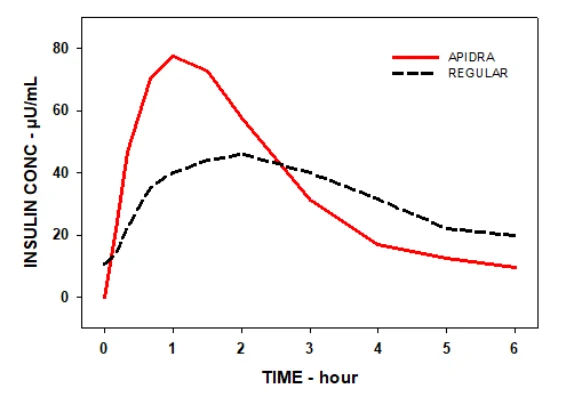
In a study in patients with type 1 diabetes (n=20) after subcutaneous administration of 0.15 U/kg, the median time to maximum concentration (Tmax) was 55 minutes (range 34 to 91 minutes) and the peak concentration (Cmax) was 82 µU/mL (range 42 to 134 µU/mL) for insulin glulisine compared to a median Tmax of 82 minutes (range 52 to 308 minutes) and a Cmax of 46 µIU/mL (range 32 to 70µIU/mL) for regular human insulin. The mean residence time of insulin glulisine was shorter (median: 98 minutes, range 55 to 149 minutes) than for regular human insulin (median: 161 minutes, range 133 to 193 minutes) (see Figure 2).
Figure 2 : Pharmacokinetic profile of insulin glulisine and regular human insulin in patients with Type 1 diabetes after a dose of 0.15 U/kg.
When APIDRA was injected subcutaneously into different areas of the body, the time-concentration profiles were similar with a slightly faster absorption when administered in the abdomen compared to the deltoid or thigh (see DOSAGE AND ADMINISTRATION.) The absolute bioavailability of insulin glulisine after subcutaneous administration is about 70%, regardless of injection area (abdomen 73%, deltoid 71%, thigh 68%). The Tmax for the abdomen was 44 min (range 27-69 min); 58 min for the deltoid (range 30-85 min), and 66 min for the thigh (range 35-108 min).
Distribution & Elimination
The distribution and elimination of insulin glulisine and regular human insulin after intravenous administration are similar with volumes of distribution of 13 L and 21 L and half lives of 13 and 17 minutes, respectively. After subcutaneous administration, insulin glulisine is eliminated more rapidly than regular human insulin with an apparent half life of 42 minutes compared to 86 minutes.
Special Populations and Conditions
- Pediatrics The pharmacokinetic and pharmacodynamic properties of insulin glulisine and regular human insulin were assessed in a study conducted in pediatric patients with Type 1 diabetes (children [7 – 11 years, n = 10] and adolescents [12 – 16 years, n = 10]). The relative differences in pharmacokinetics and pharmacodynamics between insulin glulisine and regular human insulin in pediatric patients with Type 1 diabetes were similar to those in healthy adult subjects and adults with Type 1 diabetes.
- Sex Information on the effect of sex on the pharmacokinetics of insulin glulisine is not available. However, in Phase III clinical trials in adults (n=2408), subgroup analyses based on sex did not show differences in safety and efficacy between insulin glulisine and other short-acting insulin formulations.
- Pregnancy and Breast-feeding The effect of pregnancy on the pharmacokinetics and pharmacodynamics of insulin glulisine has not been studied. It is unknown whether APIDRA is excreted in human milk.
- Race Information on the effect of race on the pharmacokinetics of insulin glulisine is not available.
- Hepatic Insufficiency The effect of hepatic impairment on the pharmacokinetics of insulin glulisine has not been studied. However, some studies with human insulin have shown increased circulating levels of insulin in patients with liver failure (see WARNINGS AND PRECAUTIONS).
- Renal Insufficiency Studies with human insulin have shown increased circulating levels of insulin in patients with renal failure. In a study performed in 24 non-diabetic subjects covering a wide range of renal function (CrCl>80mL/min; 30-50mL/min; <30mL/min), the pharmacokinetic properties of insulin glulisine were generally maintained (see WARNINGS AND PRECAUTIONS).
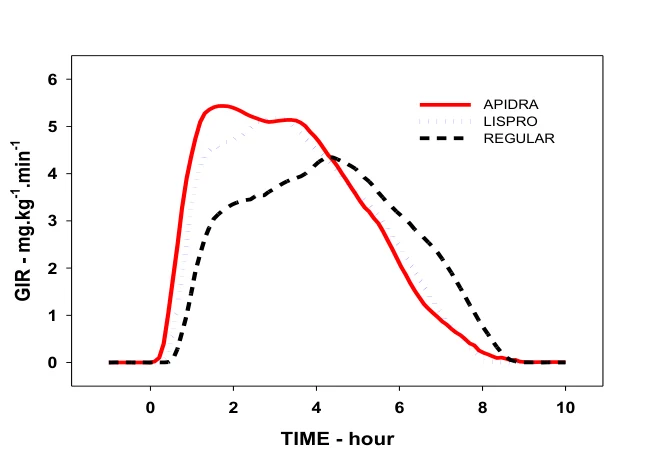
- Obesity The more rapid onset of action and shorter duration of activity of insulin glulisine and insulin lispro compared to regular human insulin were maintained in an obese non-diabetic population. The rapid onset of action was better maintained with insulin glulisine than with insulin lispro (see Figure 3).
Figure 3: Glucose infusion rates (GIR) after subcutaneous injection of 0.3 U/kg of APIDRA (glulisine), insulin lispro or regular human insulin in an obese population.
11 STORAGE, STABILITY AND DISPOSAL
Vials
Unopened Vial:
Unopened APIDRA vials should be stored in a refrigerator, between 2°C - 8°C. Keep APIDRA away from direct heat and light. APIDRA should not be stored in the freezer and should not be allowed to freeze. If APIDRA freezes or overheats, discard it.
Opened (In Use) Vial: The opened vial can be kept refrigerated or unrefrigerated (15 - 25°C) for up to 28 days away from direct heat and light, as long as the temperature is not greater than 25°C. Opened APIDRA vials, whether or not refrigerated, must be discarded after 28 days even if they contain insulin.
Opened APIDRA vials should not be stored in the freezer and should not be allowed to freeze. If a vial freezes or overheats, discard it.
Cartridges
Unopened Cartridge:
Unopened APIDRA cartridges should be stored in a refrigerator, between 2°C - 8°C. Keep APIDRA away from direct heat and light. APIDRA should not be stored in the freezer and should not be allowed to freeze. If APIDRA freezes or overheats, discard it.
Opened (In Use) Cartridge:
The opened cartridge in use must be kept unrefrigerated (15 - 25°C) for up to 28 days away from direct heat and light, as long as the temperature is not greater than 25°C. If the cartridge overheats or if there
is any remaining insulin after 28 days, discard it. The opened cartridge in use must never be removed from and reinserted into the injection pen.
SoloSTAR
Unopened SoloSTAR:
Unopened APIDRA SoloSTAR should be stored in a refrigerator, between 2°C - 8°C. Keep APIDRA away from direct heat and light. APIDRA should not be stored in the freezer and should not be allowed to freeze. If APIDRA freezes or overheats, discard it.
Opened (In Use) SoloSTAR:
Opened APIDRA SoloSTAR in use must be kept unrefrigerated (15-25°C) for up to 28 days away from direct heat and light, as long as the temperature is not greater than 25°C. If the APIDRA SoloSTAR overheats or if there is any remaining insulin after 28 days, discard it.
Opened APIDRA SoloSTAR should not be stored in the freezer and should not be allowed to freeze. If APIDRA SoloSTAR freezes discard it.
As with all medications and devices, keep out of reach of children.
Infusion sets:
Infusion sets (reservoirs, tubing, and catheters) and the APIDRA in the reservoir must be discarded after no more than 2 days of use or after exposure to temperatures that exceed 37°C.
12 SPECIAL HANDLING INSTRUCTIONS
See PATIENT MEDICATION INFORMATION and refer patients to the APIDRA Information for the Patient circular for APIDRA VIAL, APIDRA CARTRIDGE, and APIDRA SoloSTAR for additional information. Refer patients to the “Instructions for Use” for AllStar PRO and JuniorSTAR or to the User Manual for APIDRA SoloSTAR for additional information on use of the pens.
PART II: SCIENTIFIC INFORMATION
13 PHARMACEUTICAL INFORMATION
Drug Substance
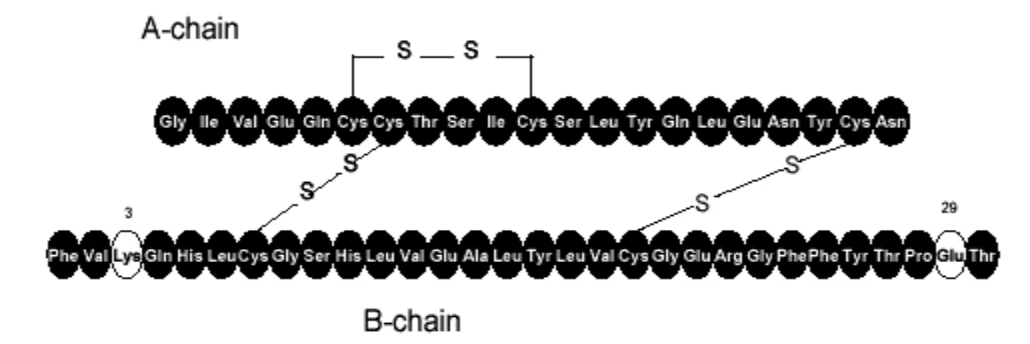
Proper name: insulin glulisine (rDNA origin)
Chemical name: 3B -lysine-29B -glutamic acid-human insulin
Molecular formula and molecular mass: C258H384N64O78S6 & 5823
Structural formula:
14 CLINICAL TRIALS
14.1 Trial Design and Study Demographics
The safety and efficacy of APIDRA (insulin glulisine) was studied in adult patients with Type 1 and Type 2 diabetes (n = 2408) and in children and adolescent patients (4 to 17 years) with type 1 diabetes (n=572). The primary efficacy parameter was glycemic control, as measured by glycated hemoglobin (A1c).
Type 1 Diabetes:
A 26-week, randomized, open-label, active-control study (n = 672) was conducted in patients with Type 1 diabetes to assess the safety and efficacy of APIDRA compared to insulin lispro when administered subcutaneously within 15 minutes before a meal. Insulin glargine (LANTUS®) was administered once daily in the evening as the basal insulin in both groups. Before start of the study there was a 4-week run-in period combining insulin lispro and insulin glargine followed by randomization. Glycemic control and the rates of hypoglycemia requiring intervention from a third party were comparable for the two treatment regimens. The number of daily insulin injections and the total daily doses of APIDRA and insulin lispro were similar. The decrease in A1c was observed in patients treated with APIDRA without an increase in the basal insulin dose (see Error! Reference source not found.).
| Table 9: Type 1 Diabetes Mellitus–Adult | |||||||||||||
|---|---|---|---|---|---|---|---|---|---|---|---|---|---|
| Treatment duration | 26 weeks | ||||||||||||
| Treatment in combination with following basal insulin: | LANTUS (insulin glargine) | ||||||||||||
| APIDRA | Insulin lispro | ||||||||||||
| Number of subjects treated | 339 | 333 | |||||||||||
| A1c (%) | |||||||||||||
| Endstudy mean | 7.46 | 7.45 | |||||||||||
| Adjusted mean change from baseline | -0.14 | -0.14 | |||||||||||
| APIDRA – Insulin lispro | 0.00 | ||||||||||||
| 95% CI for treatment difference | (-0.09; 0.10) | ||||||||||||
| Basal insulin dose (U/day) | |||||||||||||
| Endstudy mean | 24.16 | 26.43 | |||||||||||
| Adjusted mean change from baseline | 0.12 | 1.82 | |||||||||||
| Short-acting insulin dose (U/day) | |||||||||||||
| Endstudy mean | 29.03 | 30.12 | |||||||||||
| Adjusted mean change from baseline | -1.07 | -0.81 | |||||||||||
| Severe hypoglycemia* | |||||||||||||
| Number of subjects (%) | 16/335 (4.8) | 13/326(4.0) | |||||||||||
| Rate (events/month/patient) | 0.02 | 0.02 | |||||||||||
| Mean number of short-acting insulin injections per day | 3.36 | 3.42 | |||||||||||
* Events requiring assistance from third party during the last 3 months of the study CI = Confidence Interval | |||||||||||||
Type 1 Diabetes-Pediatric:
A 26-week phase III open-label, active controlled study (n=572) evaluated the efficacy and safety of APIDRA in children and adolescents with type I diabetes mellitus, in comparison with insulin lispro when administered subcutaneously within 15 minutes before a meal. LANTUS (insulin glargine) was administered once daily in the evening or NPH twice daily in the morning and in the evening as basal insulin. The study consisted of a 4-week run-in phase during which patients received NPH or insulin glargine combined with insulin lispro, followed by a 26-week treatment-phase comparing insulin glulisine and insulin lispro, given at least twice daily within15 minutes prior to a meal in combination with NPH insulin administered twice daily or insulin glargine administered once daily in the evening. Most patients were Caucasian (91%). Fifty percent of the patients were male. The mean age was 12.5 years (range 4 to 17 years). Mean BMI was 20.6 kg/m2. Glycemic control (see Error! Reference source not found.) was comparable for the two treatment regimens.
| Table 10: Type 1 Diabetes Mellitus–Pediatric | ||||||||
|---|---|---|---|---|---|---|---|---|
| Treatment duration | 26 weeks (mITT) | |||||||
| Treatment in combination with following basal insulin: | NPH or LANTUS (insulin glargine) | |||||||
| APIDRA | Insulin lispro | |||||||
| Number of subjects treated | 271 | 291 | ||||||
| A1c (%) | ||||||||
| Baseline mean | 8.20 | 8.17 | ||||||
| Endstudy mean | 8.31 | 8.37 | ||||||
| Adjusted mean change from baseline | 0.10 | 0.16 | ||||||
| APIDRA – Insulin lispro | -0.06 | |||||||
| Table 10: Type 1 Diabetes Mellitus–Pediatric |
|---|
| Treatment duration | 26 weeks (mITT) |
|---|
| Treatment in combination with following basal insulin: | NPH or LANTUS (insulin glargine) |
|---|
| APIDRA | Insulin lispro |
|---|
| Number of subjects treated | 271 | 291 | |||||
|---|---|---|---|---|---|---|---|
| 95% CI for treatment difference | (-0.24; 0.12) | ||||||
| Basal insulin dose (U/day) | |||||||
| Baseline mean | 27.20 | 26.55 | |||||
| Endstudy mean | 28.44 | 28.86 | |||||
| Rapid-acting insulin dose (U/day) | |||||||
| Baseline mean | 24.26 | 24.34 | |||||
| Endstudy mean | 25.48 | 26.97 | |||||
| Percentage of patients with an average number of rapid-acting insulin injections per day ≥ 3 | 77.0 | 80.3 | |||||
| Body Weight (kg) | |||||||
| Baseline mean | 51.5 | 50.8 | |||||
| Endstudy mean | 53.6 | 53.0 | |||||
| Mean weight change from baseline | 2.2 | 2.2 | |||||
14.2 Study Results
Type 2 Diabetes:
A 26-week, randomized, open-label, active-control study (n = 876) was conducted in insulin-treated patients with Type 2 diabetes to assess the safety and efficacy of APIDRA given within 15 minutes before a meal compared to regular human insulin administered 30 to 45 minutes prior to a meal. NPH human insulin was given twice a day as the basal insulin. All patients participated in a 4-week run-in period combining regular human insulin and NPH human insulin. The average body mass index (BMI) of patients was 34.55 kg/m2. At randomization, 58% of the patients were on an oral antidiabetic agent and were instructed to continue use of their oral antidiabetic agent at the same dose. The majority of patients (79%) mixed their short-acting insulin with NPH human insulin immediately prior to injection. Changes from baseline to endpoint in A1c were –0.46 in the insulin glulisine group and –0.30 in the regular insulin group. The difference in adjusted means between the 2 treatments was –0.16 (95% C1 ranging from –0.26 to –0.05) with respective p value of 0.0029. At end of treatment period, postprandial blood glucose levels in the APIDRA group were lower than in the regular human insulin group. The rates of hypoglycemia, requiring intervention from a third party, were comparable for the two treatment regimens. No differences between APIDRA and regular human insulin groups were seen in the number of daily injections or basal or short-acting insulin doses (see Error! Reference source not found.).
| Table 11: Type 2 Diabetes Mellitus–Adult | |||||||
|---|---|---|---|---|---|---|---|
| Treatment duration | 26 weeks | ||||||
| Treatment in combination with following basal insulin: | NPH human insulin | ||||||
| APIDRA | Regular Human Insulin | ||||||
| Number of subjects treated | 435 | 441 | |||||
| A1c (%) | |||||||
| Endstudy mean | 7.11 | 7.22 | |||||
| Adjusted mean change from baseline | -0.46 | -0.30 | |||||
| Table 11: Type 2 Diabetes Mellitus–Adult |
|---|
| Treatment duration | 26 weeks |
|---|
| Treatment in combination with following basal insulin: | NPH human insulin |
|---|
| APIDRA | Regular Human Insulin |
|---|
| Number of subjects treated | 435 | 441 | |||||||
|---|---|---|---|---|---|---|---|---|---|
| APIDRA – Regular Human Insulin | -0.16 | ||||||||
| 95% CI for Treatment difference | (-0.26; -0.05) | ||||||||
| Basal insulin dose (U/day) | |||||||||
| Endstudy mean | 65.34 | 63.05 | |||||||
| Adjusted mean change from baseline | 5.73 | 6.03 | |||||||
| Short-acting insulin dose (U/day) | |||||||||
| Endstudy mean | 35.99 | 36.16 | |||||||
| Adjusted mean change from baseline | 3.69 | 5.00 | |||||||
| Severe hypoglycemia* | |||||||||
| Number of subjects (%) | 6/416 (1.4) | 5/420 (1.2) | |||||||
| Rate (events/month/patient) | 0.00 | 0.00 | |||||||
| Mean number of short-acting insulin injections per day | 2.27 | 2.24 | |||||||
*Events requiring assistance from third party during the last 3 months of the study CI = Confidence Interval | |||||||||
Pre- and Post-Meal Administration (Type 1 Diabetes):
A 12-week, randomized, open-label, active-control study (n = 860) was conducted in patients with Type 1 diabetes to assess the safety and efficacy of APIDRA administered at different times with respect to a meal. APIDRA was administered subcutaneously either within 15 minutes before a meal or immediately after completing a meal or 20 minutes after starting a meal and regular human insulin was administered subcutaneously 30 to 45 minutes prior to a meal. The comparisons performed in this study were pre-meal APIDRA compared to regular human insulin, post-meal APIDRA compared to regular human insulin, and post-meal APIDRA compared to pre-meal APIDRA. Insulin glargine was administered once daily at bedtime as the basal insulin in all groups. Before start of the study there was a 4-week run-in period, with regular human insulin and insulin glargine followed by randomization. Glycemic control and the rates of hypoglycemia requiring intervention from a third party were comparable for the treatment regimens. Significant reductions from baseline in A1c were observed in all three treatment regimens. No changes from baseline between the treatments were seen in the total daily number of insulin injections. An increase in daily short-acting insulin dose was seen with regular human insulin (see Table 12).
| Table 12: Type 1 Diabetes Mellitus–Adult | ||||||||||||
|---|---|---|---|---|---|---|---|---|---|---|---|---|
| Treatment duration | 12 weeks | 12 weeks | 12 weeks | |||||||||
| Treatment in combination with following basal insulin: | LANTUS (insulin glargine) | LANTUS (insulin glargine) | LANTUS (insulin glargine) | |||||||||
| APIDRA | APIDRA | Regular Human Insulin | ||||||||||
| Pre-meal | Post-meal | Pre-meal | ||||||||||
| Number of subjects treated | 286 | 296 | 278 | |||||||||
| A1c (%) | ||||||||||||
| Endstudy mean | 7.46 | 7.58 | 7.52 | |||||||||
| Adjusted mean change from baseline* | -0.26 | -0.11 | -0.13 | |||||||||
| Table 12: Type 1 Diabetes Mellitus–Adult |
|---|
| Treatment duration | 12 weeks | 12 weeks | 12 weeks |
|---|
| Treatment in combination with following basal insulin: | LANTUS (insulin glargine) | LANTUS (insulin glargine) | LANTUS (insulin glargine) |
|---|
| APIDRA | APIDRA | Regular Human Insulin |
|---|
| Pre-meal | Post-meal | Pre-meal |
|---|
| Number of subjects treated | 286 | 296 | 278 | |||||||
|---|---|---|---|---|---|---|---|---|---|---|
| Basal insulin dose (U/day) | ||||||||||
| Endstudy mean | 29.49 | 28.77 | 28.46 | |||||||
| Adjusted mean change from baseline | 0.99 | 0.24 | 0.65 | |||||||
| Short-acting insulin dose | ||||||||||
| Endstudy mean (U/day) | 28.44 | 28.06 | 29.23 | |||||||
| Adjusted mean change from baseline | -0.88 | -0.47 | 1.75 | |||||||
| Severe hypoglycemia** | ||||||||||
| Number of subjects (%) | 24/286 (8.4) | 25/296 (8.4) | 28/278 (10.1) | |||||||
| Rate (events/month/patient) | 0.05 | 0.05 | 0.13 | |||||||
| Mean number of short-acting insulin injections per day | 3.15 | 3.13 | 3.03 | |||||||
* Adjusted mean change from baseline treatment difference (98.33% Confidence Interval for treatment difference): APIDRA pre-meal vs. Regular Human Insulin - 0.13 (-0.26; 0.01); APIDRA post meal vs. Regular Human Insulin 0.02 (-0.11; 0.16); APIDRA post meal vs. pre meal 0.15 (0.02; 0.29). ** Events requiring assistance from third party for the entire treatment phase. | ||||||||||
Continuous Subcutaneous Insulin Infusion (CSII) (Type 1 Diabetes):
To evaluate the use of APIDRA for administration using an external pump, a 12-week randomized, open-label, active-control study (APIDRA versus insulin aspart) was conducted in Type 1 diabetes patients (n = 59). A low monthly rate of catheter occlusion in both treatment groups was observed (APIDRA: 0.08 occlusions/month; insulin aspart: 0.15 occlusions/ month). A similar incidence of infusion site reactions was seen with APIDRA (n = 3/29; 10.3%) and insulin aspart (n = 4/30; 13.3%).
APIDRA has been studied in the following pumps and infusion sets: Disetronic® H-Tron® plus V100 and D-TronTM, with Disetronic catheters (RapidTM, Rapid CTM and DTM, and TenderTM); and with MiniMed® Models 506, 507, 507c and 508 with MiniMed catheters (Sof-set Ultimate QRTM, and Quick-setTM).
15 MICROBIOLOGY
No microbiological information is required for this drug product.
16 NON-CLINICAL TOXICOLOGY
General Toxicology:
Single and Repeated Dose Toxicity
Single- and repeated-dose toxicity studies were conducted in mice, rats and dogs in order to predict the safety profile for the therapeutic use of insulin glulisine in humans; all studies used normoglycemic animals. After a single injection of insulin glulisine, the approximate LD50 was >1000 U/kg in rats and mice and 40 U/kg in dogs. After repeated once daily subcutaneous injection of insulin glulisine, the No
Observable Adverse Effect Level (NOAEL) in rats were 50 U/kg after 1 month and 5 U/kg after 6 months. The NOAEL in dogs were 1 U/kg in both the 1-month and 6-month studies.
The toxicological profile of insulin glulisine was limited to the effects resulting from excessive hypoglycemia attributed to the exaggerated pharmacodynamic action of the compound after high doses in normoglycemic animals. Repeated-dose toxicity studies in rats and dogs did not reveal any unexpected findings different from human regular insulin.
Insulin glulisine-related effects in toxicity studies were dose-dependent, reversible and restricted to toxic dose levels. Clinical observations and pathological findings obtained in these studies were similar or comparable to those in human beings observed after hyperinsulinemia/ hypoglycemia. In some cases, excessive hypoglycemia caused the deaths of animals. These findings in healthy, non-diabetic animals are not indicative of any specific toxicity on insulin glulisine in patients, where it is used for controlled glucose-lowering effects at therapeutic doses.
Carcinogenicity:
In Sprague Dawley rats, a 12-month repeat dose toxicity study was conducted with insulin glulisine at doses of 2.5, 5, 20 or 50 U/kg twice daily (dose resulting in an exposure equivalent to approximately 26, 54, 258, 662 times the human Cmax at the average human dose, respectively). The incidence of mortality increased dose dependently in 2x20 and 2x50 U/kg insulin glulisine or IU/kg human insulin treated groups respectively. Generally, males were more severely affected than females and mortality at the comparable dose levels was always higher in the human insulin treated groups.
In this study, the effects of insulin glulisine on cellular proliferation in mammary glands were evaluated using Ki-67 immunohistochemistry. There were no significant differences in mammary cell proliferation between insulin glulisine, regular human insulin and control groups.
| Table 13 Insulin glulisine – Incidence of female SD-rats with mammary tumors in a 12-month toxicity study (30 rats per group) | |||||||||||||||||
|---|---|---|---|---|---|---|---|---|---|---|---|---|---|---|---|---|---|
| Insulin glulisine | Human regular insulin | ||||||||||||||||
| Controls | 2 x 2.5 U/kg | 2 x 5.0 U/kg | 2 x 20 U/kg | 2 x 50 U/kg | 2 x 5.0 IU/kg | 2 x 20 IU/kg | 2 x 50 IU/kg | ||||||||||
| Total Tumor Bearers: Benign and Malignant | 0 | 6* | 3 | 6* | 3 | 3 | 6* | 4 | |||||||||
*Significant increase in the one-sided Fisher Exact Test (p<0.05) No dose-dependency for insulin glulisine treated groups in regard of tumor incidence indicated by Peto-Trend-Test (p<0.01) | |||||||||||||||||
Mutagenesis:
Insulin glulisine was not mutagenic in the following tests: Ames test, in vitro mammalian chromosome aberration test in V79 cells and in vivo mammalian chromosome aberration test (erythrocyte micronucleus test).
Reproductive and Developmental Toxicology:
Impairment of Fertility
In fertility studies in male and female rats at subcutaneous doses up to 10 U/kg once daily (dose resulting in an exposure equivalent to approximately 50 times the human Cmax at the average human dose), no adverse effects on male and female fertility, or general reproductive performance of animals were observed.
Reproduction toxicity
| Table 14: Reproductive & Developmental Toxicity: Fertility & Early Embryonic Development to Implantation | ||||||||
|---|---|---|---|---|---|---|---|---|
| Species/ Strain | Route | Dosage/Duration | No. of Animals/ Group | Findings | ||||
| Sprague Dawley rats | Subcutaneous | Dose levels of 0, 1, 3.15 or 10 U/kg body weight of insulin glulisine or HR1799 at the dose levels of 1 or 10 U/kg body weight Once daily as a solution in placebo prior to mating | 23 male and females |
| ||||
| HR1799 = Reference compound (human insulin) | ||||||||
| Table 15: Reproductive & Developmental Toxicity: Effects on Embryofetal Development | ||||||||
|---|---|---|---|---|---|---|---|---|
| Species/ Strain | Route | Dosage/Duration | No. of Animals/ Group | Findings | ||||
| Sprague Dawley rats | Subcutaneous | Insulin glulisine once daily as a solution in placebo solution at the dose levels of 0, 15, 50, 150 or 500 U/kg body weight from day 6 - 17 of pregnancy | Groups of 6 mated females |
| ||||
| Table 15: Reproductive & Developmental Toxicity: Effects on Embryofetal Development |
|---|
| Species/ Strain | Route | Dosage/Duration | No. of Animals/ Group | Findings |
|---|---|---|---|---|
| Sprague Dawley rats | Subcutaneous | Dose levels of 0, 1, 3.15 or 10 U /kg body weight of insulin glulisine or HR1799 at the dose levels of 1 or 10 U /kg body weight, once daily as a solution in placebo from day 6-17 of pregnancy | Groups of 20-25 mated female |
|
| Sprague Dawley rats | Subcutaneous | Insulin glulisine once daily as a solution in placebo solution at the dose levels of 1.0, 3.15 or 10.0 U/kg body weight from day 6 - 12 of pregnancy | Groups of 10 mated females |
|
| Table 15: Reproductive & Developmental Toxicity: Effects on Embryofetal Development |
|---|
| Species/ Strain | Route | Dosage/Duration | No. of Animals/ Group | Findings |
|---|---|---|---|---|
| Himalay an rabbits | Subcutaneous | Insulin glulisine once daily as a solution in placebo solution at the dose levels of 0, 2, 10 or 50 U/kg body weight from day 6 - 18 of pregnancy | Groups of 6 mated female |
|
| Table 15: Reproductive & Developmental Toxicity: Effects on Embryofetal Development |
|---|
| Species/ Strain | Route | Dosage/Duration | No. of Animals/ Group | Findings |
|---|---|---|---|---|
| Himalay an rabbits | Subcutaneous | Dose levels of 0, 0.25, 0.50 or 1.50 U/kg body weight of insulin glulisine or HR1799 at the dose levels of 0.25 or 1.50 U/kg body weight, once daily as a solution in placebo from day 6 - 18 of pregnancy | Groups of 20-26 mated female |
|
| Table 15: Reproductive & Developmental Toxicity: Effects on Embryofetal Development |
|---|
| Species/ Strain | Route | Dosage/Duration | No. of Animals/ Group | Findings | ||||
|---|---|---|---|---|---|---|---|---|
| Himalay an rabbits | Subcutaneous | Insulin glulisine once daily as a solution in placebo solution at the dose levels of 0.25, 0.5 or 1.5 U/kg body weight from day 6 - 12 of pregnancy | Groups of 10 mated females |
| ||||
| HR1799 = Reference compound (human insulin) | ||||||||
| Table 16: Reproductive & Developmental Toxicity: Effects on Pre- & Post-Natal Development Including Maternal Function | ||||||||
|---|---|---|---|---|---|---|---|---|
| Species/ Strain | Route | Dosage/Durati on | No. of Animals/ Group | Findings | ||||
| Sprague Dawley rats | Subcutaneous | Dose levels 0, 1, 3.15 or 8 U/kg body weight of insulin glulisine or HR1799 at the dose levels of 1 or 8 U/kg body weight, once daily as a solution in placebo from day 6 of gestation until day 21 post partum. | Groups of 23 mated females |
| ||||
| HR1799 = Reference compound (human insulin) | ||||||||