


Product Monograph - Hypurin Regular Insulin Pork
SUMMARY PRODUCT INFORMATION
| Route of Administration | Dosage Form / Strength | Non-medicinal ingredients |
| Usually administered subcutaneously but where necessary it may be given intramuscularly or intravenously. | Solution for injection, 100 International Units/ml | Glycerol, metacresol, phenol, sodium phosphate and water for injection |
INDICATIONS AND CLINICAL USE
Hypurin Regular Insulin, Pork (Insulin Injection, Soluble (Porcine)) is indicated for the following:
- treatment of patients with insulin dependent diabetes mellitus who are already using an animal derived insulin
- treatment of new patients with insulin dependent diabetes mellitus who are unable to tolerate recombinant human insulin or whose diabetes is inadequately controlled by recombinant human insulin.
May be used for diabetics who fulfil the above criteria and who require an insulin of prompt onset and short duration.
CONTRAINDICATIONS
Hypurin Regular Insulin, Pork (Insulin Injection, Soluble (Porcine)) should not be used in patients who:
- have signs of hypoglycaemia.
- are hypersensitive to the active substance or to any of the excipients (refer to the DOSAGE FORMS, COMPOSITION AND PACKAGING section for a complete listing of the excipients).
WARNINGS AND PRECAUTIONS
- Hypoglycaemia is the most common adverse effect associated with insulin therapy (See OVERDOSAGE for symptoms of hypoglycaemia). Blood or urinary glucose concentrations should be monitored by patients on insulin therapy.
- Uncorrected hypoglycaemic or hyperglycaemic reactions can cause loss of consciousness, coma or even death (see Hypoglycaemia and Hyperglycaemia sections under WARNINGS AND PRECAUTIONS).
- Patients transferred to Hypurin Pork insulins from other commercially available preparations may require dosage adjustments.
- Hypurin Regular Insulin may be mixed with Hypurin NPH Insulin in the same syringe, in which case Hypurin Regular Insulin should be the first dose to be withdrawn. The injection should then be made immediately upon withdrawal of the contents.
- The vial must not be used if the contents have been frozen or it contains lumps that do not disperse on mixing (see SPECIAL HANDLING INSTRUCTIONS).
General
- As with all insulin therapies, the duration of action of Hypurin may vary in different individuals or in the same individual according to dose, injection site, blood flow, temperature and level of physical activity.
- Hypokalaemia is among the potential clinical adverse effects associated with the use of all insulin therapies. This potential clinical adverse effect may be relevant in patients who are on potassium lowering drugs or losing potassium through other means (e.g. diarrhoea) (see ADVERSE REACTIONS).
- Insulin requirements may increase during illness (this includes infection and accidental and surgical trauma), puberty or emotional upset.
- To avoid transmission of disease, the use of each vial should be restricted to a single patient.
- Patients using Hypurin vials must never share needles or syringes with another person.
- Thiazolidinediones (TZDs), alone or in combination with other antidiabetic agents (including Insulin), can cause heart failure and oedema. The combination of Insulin with a TZD is not indicated for the treatment of Type 2 Diabetes Mellitus. Please refer to the respective TZD product monograph Warnings and Precautions information when the use of these drugs in combination with any Insulin, including Hypurin is contemplated.
Endocrine and Metabolism:
Hypoglycaemia
- Hypoglycaemia is the most frequently occurring undesirable effect of insulin therapy (see ADVERSE REACTIONS).
- Hypoglycaemia can occur regardless of what type of insulin you take and can cause fatigue, sweating, heart palpitations, disturbed behaviour, hunger, convulsions, loss of consciousness, or in extreme circumstances even death and can occur without recognizable symptoms.
- Some people may not recognize when their blood sugar drops low.
- Susceptibility to hypoglycaemia may be increased by an inaccurate or excessive dosage of insulin, the omission of a meal by the patient or increased physical activity. Correct insulin administration and awareness of the symptoms of hypoglycaemia are essential to reduce the risk of hypoglycaemia (see OVERDOSAGE for symptoms).
- Changes in insulin therapy or changes in life style (i.e. diet, exercise/physical activity) may require a change in dosage to avoid hypoglycaemia.
The warning symptoms of hypoglycaemia may be changed, be less pronounced or absent in certain risk groups who should be advised accordingly. These include patients:
- in whom glycaemic control is greatly improved, e.g. by intensified insulin therapy.
- with a long history of diabetes
- who are elderly
- receiving concomitant treatment with certain medicinal products e.g. beta blockers or clonidine
- who have experienced repeated episodes of hypoglycaemia.
- Elderly diabetic patients are more susceptible to episodes of severe, rapid onset hypoglycaemia.
- Severe hypoglycaemia can result in temporary or permanent impairment of brain function and death (see OVERDOSAGE).
- Blood or urinary glucose concentrations should be monitored by patients on insulin therapy.
- The patient's ability to concentrate and react may be impaired as a result of hypoglycaemia. This may constitute a risk in situations where these abilities are of special importance (e.g. driving a car or operating machinery). Patients should be advised to take precautions to avoid hypoglycaemia whilst driving, this is particularly important in those who have reduced or absent awareness of the warning signs of hypoglycaemia or have frequent episodes of hypoglycaemia. The advisability of driving should be considered in these circumstances.
- Diabetic patients should be instructed to carry glucose tablets or a few lumps of sugar to prevent the progression of a hypoglycaemic reaction, should one occur (refer to the PACKAGE LEAFLET: INFORMATION FOR THE USER).
Hyperglycaemia
- Inadequate dosing or discontinuation of insulin treatment, especially in type 1 Diabetes Mellitus, may lead to hyperglycaemia and when untreated, hyperglycaemic events may eventually lead to diabetic ketoacidosis or coma, which are potentially fatal.
- Usually the first symptoms of hyperglycaemia develop gradually over a period of hours or days. They included polydipsia; polyurea; nausea; abdominal pain, vomiting; drowsiness; blurred vision, flushed dry skin; loss of appetite, weight loss as well as acetone odour of breath.
- Ability to concentrate and react may be impaired as a result of hyperglycaemia or as a result of hyperglycaemia-induced visual impairment. This may constitute a risk in situations where these abilities are of special importance such as driving a car or operating machinery.
Immune:
Local allergic reactions
- Local allergic reactions to insulin such as erythema, pruritus and oedema may occur at the injection site.
Systemic allergic reactions
- Generalised hypersensitivity may produce urticaria, rash, nausea, dyspnoea or wheezing and, in rare cases, anaphylactic reactions. Severe, angioedema is a rare adverse effect of insulin treatment occuring most often at the initiation of therapy.
- Allergic reactions to phenol and m-cresol contained as preservative may occur.
- Neuropathic pain induced by rapid glycaemic control following insulin administration may occur.
Immune:
Antibody production
Immune responses can occur in response to insulin. This may be associated with elevated IgG levels, but the clinical significance is uncertain.
Carcinogenesis and Mutagenesis
The carcinogenic and mutagenic potentials of Hypurin insulins have not been established.
Reproduction studies
Congenital abnormality is more common in offspring of diabetic than non-diabetic women.
No adequate and well-controlled studies with Hypurin insulins during pregnancy and lactation have been performed.
Renal / Hepatic / Biliary / Pancreatic impairment
Insulin requirements may decrease with liver disease.
In patients with severe renal impairment, insulin requirements may fall and dosage reduction may be necessary. The compensatory response to hypoglycaemia may also be impaired.
The safety of Hypurin insulins has not been established in patients with biliary or pancreatic impairment.
Drug Interactions
Caution is recommended when administering Hypurin insulins with compounds that may influence insulin requirements (refer to the DRUG INTERACTIONS section).
Transferring Patients from Other Insulins:
When patients are transferred between different types of insulin products, including animal insulins, the early warning symptoms of hypoglycaemia may change or become less pronounced than those experienced with their previous insulin. Transferring a patient to a new type or brand of insulin should be done only under strict medical supervision. Changes in insulin strength, timing of administration, manufacturer, type (e.g. regular, NPH, or insulin analogs), species (animal, human) or method of manufacture (recombinant DNA versus animal sourced insulin) may result in the need for a change in dosage. Concomitant oral anti-diabetic treatment may also need to be adjusted. If an adjustment is needed, it may be done with the first doses or during the first few weeks or months and under medical supervision.
Information for patients:
Patients should be informed about potential advantages and disadvantages of insulin therapy including the possible side effects. Patients should also be offered continued education and advice on insulin therapies, delivery device options, life-style management, self-monitoring, complications of insulin therapy, timing of dosage, and instructions for use of injection devices, storage of insulin, travelling and others (refer to the PACKAGE LEAFLET: INFORMATION FOR THE USER).
Female patients with diabetes mellitus should be advised to inform their doctor if they are pregnant or are contemplating pregnancy. Careful monitoring of glucose control, as well as general health is essential in pregnant patients with diabetes (refer to WARNINGS AND PRECAUTIONS: Special Populations and the PACKAGE LEAFLET: INFORMATION FOR THE USER).
Mixing of insulins:
Hypurin NPH Insulin may be mixed with Hypurin Regular Insulin in the syringe, in which case Hypurin Regular Insulin should be the first dose to be withdrawn. The injection should then be made immediately upon withdrawal of the contents.
Hypurin Regular Insulin should not be mixed with any other insulin preparations (with the exception of Hypurin NPH Insulin) as this may change the pharmacokinetic/ pharmacodynamic profile of action of one or both insulins in an unpredictable manner.
Other Warnings and Precautions:
The urine should be tested for ketones by patients on insulin therapy.
Insulin resistance is frequently associated with lipid disorders, hypertension and ischaemic heart disease. Patients with insulin resistance usually require more than 200 units of insulin daily. Insulin resistance of the type manifested by greatly increased insulin requirements may be due to factors including antibody formation although some diseases, such as infections, endocrine hyperfunctional states (e.g. acromegaly, Cushing’s syndrome, thyrotoxicosis) or stress can contribute to insulin resistance.
Newly diagnosed diabetic patients may experience fluctuating insulin requirements during the first weeks, months or even years of treatment (the so-called ‘honeymoon period’).
Insulin requirements may decrease with disease of the adrenal, pituitary or thyroid glands and coeliac disease.
Insulin requirements may be increased in the premenstrual period but may be reduced during or after a menstrual cycle.
Insulin requirements are usually reduced but occasionally increased during periods of increased activity.
Increase in subcutaneous blood flow, brought about by factors such as a hot bath, sunbathing/sunbed or sauna may increase the rate of absorption of insulin and increase the risk of hypoglycaemia occurring.
Special Populations
Pregnant Women:
There are no adequate and well controlled studies in pregnant women. Therefore, Hypurin insulins should be used during pregnancy only under medical supervision.
A decreased requirement for insulin may be observed in the early stages of pregnancy. However, in the second and third trimesters, insulin requirements may increase. Insulin requirements should therefore be assessed frequently by an experienced diabetic physician.
Maternal insulin requirements may decrease after delivery. As this decrease can be at an unpredictable rate, the maternal blood glucose should be closely monitored.
Nursing Women:
It is not known whether Hypurin insulins are excreted in human milk. There are no adequate and well-controlled studies in nursing women. Therefore, Hypurin insulins should be use with caution in nursing women. Lactating women may require adjustments in insulin dose and diet.
Geriatrics (> 65 years of age):
Elderly diabetic patients are more susceptible to episodes of severe, rapid onset hypoglycaemia and the warning symptoms may be changed, be less pronounced or absent.
Paediatrics (< 6 years of age):
There are no evaluated paediatric efficacy and safety data available to support paediatric dosing advice below the age of 6 years. Therefore, Hypurin insulins should be used in this sub-population only if clearly needed and done under medical supervision.
The safety of Hypurin insulins has not been established in this sub-population.
Others:
The presence of diseases such as acromegaly, Cushing’s syndrome, hyperthyroidism and pheochromocytoma can complicate the control of diabetes mellitus.
Self-Monitoring of Blood Glucose
Blood glucose concentrations should be monitored by patients on insulin therapy.
ADVERSE REACTIONS
Metabolic disorders:
- hypoglycaemia is the most common adverse effect associated with insulin therapy (see WARNINGS AND PRECAUTIONS: Hypoglycaemia and OVERDOSAGE for further information.
- hypokalaemia may occur with insulin therapy.
- insulin therapy may lead to weight gain.
General disorders and administration site conditions:
Lipodystrophy (atrophy or hypertrophy of the fat tissue) may occur at the injection site. Stinging or sensations of warmth or burning at the site of injection may also occur.
Immune system disorders:
Refer to WARNINGS AND PRECAUTIONS: Immune for details on immune system disorders.
DRUG INTERACTIONS
To avoid the risk of developing new or worsening heart failure, the use of TZDs in combination therapy with Hypurin is not indicated (refer to WARNINGS AND PRECAUTIONS: General).
Drug-Drug Interactions
Aminophylline is incompatible with Hypurin Regular Insulin.
Drugs that may increase the requirement for insulin
Antipyschotics: chloropromazine
Corticosteroids
Diazoxide
Diuretics: thiazide diuretics or loop diuretics
Sympathomimetic agents
Thyroid hormone replacement therapy
Smoking may also antagonise the hypoglycaemic effect of insulin
Drugs that may decrease the requirement for insulin
ACE inhibitors
Alcohol: moderate or large amounts of alcohol (more than 2 units per day for women and more than 3 units per day for men) can decrease the requirements for insulin and may lead to hypoglycaemic attacks. Episodic heavy drinking (‘binge’ drinking) carries a particularly high risk of hypoglycaemic episodes.
Anabolic steroids
Analgesics: NSAIDS, or salicylates, particularly large doses of aspirin
Androgens: testosterone may enhance the hypoglycaemic effect of insulin
Anti-arrhythmics: disopyramide.
Concomitant use of insulin with quinidine may increase the risk of hypoglycaemia occurring.
Anti-depressants: monoamine oxidase inhibitors or fluoxetine.
Concomitant use of amitriptyline with insulin may lead to hypoglycaemia.
Antihypertensives: guanethidine
Antimalarials: concomitant use of insulin with antimalarials such as chloroquine or quinine may increase the risk of hypoglycaemia occurring.
Fenfluramine
Hormone antagonists: octreotide
Lipid-regulating drugs: fibrates
Mebendazole
Pentoxifylline: the hypoglycaemic activity of insulin may be potentiated by concomitant administration of high-dose pentoxifylline injection.
Tetracyclines: tetracyclines such as oxytetracycline
Drugs that may increase or decrease the requirements for insulin
Antihypertensives: clonidine. Signs and symptoms of hypoglycaemia may be masked by clonidine.
Beta blockers: beta blockers. Some of the warning signs of insulin-induced hypoglycaemia may be masked.
Calcium channel blockers: nifedipine may occasionally impair glucose tolerance.
Cyclophosphamide
Isoniazid
Lipid-regulating drugs: gemfibrozil
Oral contraceptives
Drug-Food Interactions
Interactions with food have not been established.
Drug-Laboratory Interaction
Interactions with laboratory tests have not been established.
Drug-Lifestyle Interactions
Susceptibility to hypoglycaemia may be increased by an inaccurate or excessive dosage of insulin, the omission of a meal by the patient or increased physical activity (refer to the section on Hypoglycaemia in the WARNINGS AND PRECAUTIONS section).
DOSAGE AND ADMINISTRATION
Dosing Considerations
Dose adjustment may be required, for example, if the patient’s diet or lifestyle changes or if they suffer from other diseases or illnesses (see WARNINGS AND PRECAUTIONS).
Recommended Dose and Dosage Adjustment
Dosage of Hypurin Regular Insulin is individual and determined based on physician’s advice and in accordance to the need of the patient, as determined by glucose monitoring.
Administration
Usually administered subcutaneously but where necessary it may be given intramuscularly or intravenously. After subcutaneous injection onset of action occurs within 30-60 minutes with an overall duration of 6-8 hours. Maximum effect is exerted over the mid-range.
Hypurin Regular Insulin may be mixed with Hypurin NPH Insulin in the syringe (see WARNINGS AND PRECAUTIONS: Mixing of Insulins).
OVERDOSAGE
| For management of a suspected drug overdose, contact your regional Poison Control Centre. |
- a)
Symptoms
Overdosage causes hypoglycaemia. Symptoms include yawning, hunger, pallor, restlessness, weakness, sweating, trembling, confusion, anxiety, nervousness, excitement, irritability, aggression, altered behaviour, deep respiration, cramps, headache, paraesthesia and/or numbness of the nose, mouth, fingers or toes, reduced consciousness, visual disturbance, including blurred vision and double vision, slurred speech, difficulty in finding words, difficulty in concentration, drowsiness, fatigue, convulsions, hemiplegia, paralysis, tachycardia and/or palpitations, myocardial ischaemia and cerebral oedema which, if untreated, will lead to collapse, coma and/or irreversible brain damage.
Hypokalaemia may also occur with insulin overdose.
- b)
Treatment
Mild hypoglycaemia will respond to oral administration of glucose or sugar and rest.
Moderately severe hypoglycaemia can be treated with glucagon followed by oral carbohydrate when the patient is sufficiently recovered. Of the two glucagon products authorised for use in Canada, Glucagon (glucagon for injection, rDNA origin) is approved for intramuscular, intravenous, and subcutaneous administration and GlucoGen (glucagon) is approved for intramuscular use only.
For patients who are comatose or who have failed to respond to glucagon injection an intravenous injection of strong Dextrose Injection BP should be given.
ACTION AND CLINICAL PHARMACOLOGY
Pharmacodynamics
Insulin output from the pancreas of a healthy person is about 50 units per day, which is sufficient to maintain the fasting blood sugar concentration in the range 3.3 – 5.6 mmol/L. In diabetes mellitus, the blood sugar rises in an uncontrolled manner. Parenterally administered insulin causes a fall in blood sugar concentration and increased storage of glycogen in the liver. In the diabetic it raises the respiratory quotient after a carbohydrate meal and prevents the formation of ketone bodies. The rise in blood sugar concentration caused by adrenaline and corticosteroids, glucagon and posterior pituitary extract is reversed by insulin.
Pharmacokinetics
Insulin is rapidly absorbed from subcutaneous tissue or muscle following injection.
Insulin is metabolised mainly in the liver and a small amount is excreted in the urine.
The plasma half life is 4 to 5 minutes. The half life after subcutaneous injection is about 4 hours and after intramuscular injection about 2 hours.
STORAGE AND STABILITY
Shelf-life (unopened): 36 months.
Following injection of the first dose the product should be used within 28 days. Discard any unused material after this time.
Store at 2oC – 8oC.
Do not freeze.
Chemical and physical in-use stability has been demonstrated for 28 days at 25°C.
From a microbiological point of view the opening carries a risk of microbial contamination and aseptic handling is a necessity.
In use storage times and conditions are the responsibility of the user.
SPECIAL HANDLING INSTRUCTIONS
The vial must not be used if the contents have been frozen or it contains lumps that do not disperse on mixing.
The use of each vial should be restricted to a single patient.
DOSAGE FORMS, COMPOSITION AND PACKAGING
Hypurin Regular Insulin is a sterile, clear, colourless solution of porcine insulin (100 IU/ml) and is available in a 10ml neutral glass vial sealed with a rubber bung and metal closure.
Full list of excipients:
m-Cresol
Phenol
Sodium phosphate
Glycerol
Water for injections
PART II: SCIENTIFIC INFORMATION
PHARMACEUTICAL INFORMATION
Drug Substance
Proper name: Porcine Insulin Ph Eur
Molecular formula and molecular mass: C256H381N65O76S6 5778
Structural formula:
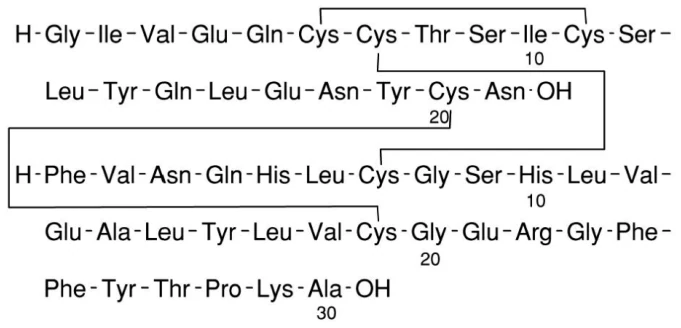
Physiochemical properties: Purified pork insulin is a polypeptide hormone consisting of a 21 amino acid A-chain and a 30 amino acid B-chain linked by 2 disulfide bonds derived from porcine pancreas. Administration of suitable doses of insulin temporarily restores the ability to metabolize carbohydrates, fats and proteins, to store glycogen in the liver, and to convert glucose to fat.
CLINICAL TRIALS
Not applicable.
DETAILED PHARMACOLOGY
Not applicable.
MICROBIOLOGY
Not applicable.
TOXICOLOGY
Not applicable.
REFERENCES
Not applicable.