


Product Monograph - Hyrnuo
Recent Major Label Changes
| Not applicable |
|---|
Table of Contents
Certain sections or subsections that are not applicable at the time of the preparation of the most recent authorized product monograph are not listed.
Recent Major Label Changes ........................................................................................................... 2
Table of Contents ............................................................................................................................ 2
Part 1: Healthcare Professional Information .................................................................................... 4
- 1.
Indications ................................................................................................................................ 4
1.1. Pediatrics ..................................................................................................................................... 4
1.2. Geriatrics ...................................................................................................................................... 4
- 2. Contraindications ..................................................................................................................... 4
- 4.
Dosage and Administration ....................................................................................................... 4
4.1. Dosing Considerations ................................................................................................................. 4
4.2. Recommended Dose and Dosage Adjustment ............................................................................ 4
4.4. Administration ............................................................................................................................. 7
4.5. Missed Dose ................................................................................................................................. 7
- 5. Overdose .................................................................................................................................. 8
- 6. Dosage Forms, Strengths, Composition, and Packaging ............................................................. 8
- 7.
Warnings and Precautions ........................................................................................................ 8
Driving and Operating Machinery ...................................................................................................... 8
Reproductive Health ......................................................................................................................... 10
7.1. Special Populations .................................................................................................................... 10
7.1.1. Pregnancy ............................................................................................................................. 10
7.1.2. Breastfeeding ....................................................................................................................... 11
7.1.3. Pediatrics .............................................................................................................................. 11
7.1.4. Geriatrics .............................................................................................................................. 11
- 8.
Adverse Reactions .................................................................................................................. 11
8.1. Adverse Reaction Overview ....................................................................................................... 11
8.2. Clinical Trial Adverse Reactions ................................................................................................. 12
8.3. Less Common Clinical Trial Adverse Reactions .......................................................................... 13
8.4. Abnormal Laboratory Findings: Hematologic, Clinical Chemistry and Other Quantitative Data14
- 9.
Drug Interactions .................................................................................................................... 15
9.3. Drug-Behaviour Interactions ..................................................................................................... 15
9.4. Drug-Drug Interactions .............................................................................................................. 15
9.5. Drug-Food Interactions .............................................................................................................. 18
9.6. Drug-Herb Interactions .............................................................................................................. 18
9.7. Drug-Laboratory Test Interactions............................................................................................. 18
- 10.
Clinical Pharmacology ........................................................................................................... 18
10.1. Mechanism of Action ............................................................................................................... 18
10.2. Pharmacodynamics .................................................................................................................. 19
10.3. Pharmacokinetics ..................................................................................................................... 19
- 11. Storage, Stability and Disposal .............................................................................................. 21
Part 2: Scientific Information ........................................................................................................ 22
- 13. Pharmaceutical Information ................................................................................................. 22
- 14.
Clinical Trials ......................................................................................................................... 23
14.1. Clinical Trials by Indication ...................................................................................................... 23
Non-Small Cell Lung Cancer (NSCLC) .............................................................................................. 23
- 16. Non-Clinical Toxicology ......................................................................................................... 24
Patient Medication Information .................................................................................................... 26
Part 1: Healthcare Professional Information
1. Indications
HYRNUO (sevabertinib) is indicated for:
the treatment of adult patients with locally advanced or metastatic non-small cell lung cancer (NSCLC) whose tumours have HER2 (ERBB2) tyrosine kinase domain (TKD) activating mutations and who have received a prior systemic therapy.
Marketing authorization with conditions was based on confirmed objective response rate (ORR) and duration of response (DOR) from one single-arm trial (see 14 Clinical Trials). An improvement in survival has not yet been established.
1.1. Pediatrics
Pediatrics (< 18 years of age): No data are available to Health Canada; therefore, Health Canada has not authorized an indication for pediatric use.
1.2. Geriatrics
Geriatrics (≥ 65 years of age): Clinical studies of HYRNUO did not include sufficient numbers of patients aged 65 and over to determine whether they respond differently from younger patients (see 7.1.4 Geriatrics).
2. Contraindications
- HYRNUO is contraindicated in patients who are hypersensitive to this drug or to any ingredient in the formulation, including any non-medicinal ingredient, or component of the container. For a complete listing, see 6 Dosage Forms, Strengths, Composition, and Packaging.
4. Dosage and Administration
4.1. Dosing Considerations
- Confirm the presence of HER2 (ERBB2) TKD activating mutations in tumour specimens using a validated test prior to initiation of therapy with HYRNUO (see 10.1 Mechanism of Action).
4.2. Recommended Dose and Dosage Adjustment
The recommended dose of HYRNUO is 20 mg (two 10 mg tablets) taken orally twice daily until disease progression or unacceptable toxicity.
Pediatrics (< 18 years of age)
The safety and efficacy of HYRNUO in children and adolescents below 18 years of age have not been established (see 1.1 Pediatrics).
Geriatrics (≥ 65 years of age)
No dose adjustment is necessary in patients ≥ 65 years (see 10.3 Pharmacokinetics, Geriatrics).
Patients with Hepatic Impairment
Use in patients with moderate or severe hepatic impairment is not recommended. The pharmacokinetics of sevabertinib have not been studied in patients with moderate (total bilirubin >1.5 to ≤3 x ULN and any AST) or severe (total bilirubin >3 x ULN and any AST) hepatic impairment.
No dose adjustment is necessary for patients with mild hepatic impairment (total bilirubin ≤ 1.5 x ULN and any AST). No clinically relevant increase in sevabertinib exposure was observed in patients with mild hepatic impairment (see 10.3 Pharmacokinetics, Hepatic Insufficiency).
Patients with Renal Impairment
No dose adjustment is considered necessary in patients with mild or moderate renal impairment.
No clinically relevant increase in sevabertinib exposure was observed in patients with mild (estimated Glomerular Filtration Rate [eGFR] 60 to 89 mL/min) or moderate (eGFR 30 to 59 mL/min) renal impairment (see 10.3 Pharmacokinetics, Renal Insufficiency). The pharmacokinetics of sevabertinib have not been studied in patients with severe renal impairment (eGFR less than 30 mL/min).
Dose Modifications for Adverse Reactions
Management of adverse reactions may require temporary dose interruption, dose reduction, or discontinuation of HYRNUO based on individual safety and tolerability. The recommended dose reduction levels are outlined in Table 1. Patients who are unable to tolerate 10 mg once daily should discontinue HYRNUO treatment permanently.
Table 1 – Recommended HYRNUO Dose Reductions for Adverse Reactions
| Dose Reduction | Number of Tablets and Frequency | Total Daily Dose |
|---|---|---|
| First dose reduction | One 10 mg tablet twice daily | 20 mg |
| Second dose reduction | One 10 mg tablet once daily | 10 mg |
The recommended dose modifications and measures for adverse reactions are provided in Table 2 (see 7 Warnings and Precautions and 8 Adverse Reactions).
Table 2 – Recommended HYRNUO Dose Modifications for Adverse Reactions
| Adverse Reaction | Severitya | Recommended HYRNUO Dose Modification |
|---|---|---|
| Adverse Reaction | Severitya | Recommended HYRNUO Dose Modification |
| Adverse Reaction | Severitya | Recommended HYRNUO Dose Modification |
| Diarrhea | Intolerable Grade 2 or Grade 3 |
|
| Grade 4 |
| |
| Hepatotoxicity | Grade 2, 3 or 4 ALT and/or AST without increased total bilirubin or Grade 3 total bilirubin |
|
ALT or AST ≥3 x ULN with total bilirubin ≥2 x ULN or Grade 4 total bilirubin |
| |
| Interstitial lung disease (ILD)/pneumonitis | Any Grade |
|
| Ocular toxicity | Grade 2 |
|
| Grade 3 or Grade 4 |
| |
| Pancreatic Enzyme Elevation | Grade 3 |
|
| Grade 4 |
| |
| Other adverse reactions | Intolerable or recurrent Grade 2 or Grade 3 |
|
| Grade 4 |
|
- a. Grades based on National Cancer Institute Common Terminology Criteria for Adverse Events (NCI-CTCAE) Version 5.0
Dose Modifications for Concomitant Use with Strong CYP3A4 Inhibitors
Concomitant use of strong CYP3A4 inhibitors with HYRNUO is not recommended. If concomitant use cannot be avoided, the current HYRNUO total daily dose should be reduced by 50% as shown in Table 3 below (see 9.4 Drug-Drug Interactions). For patients taking a current total daily dose of 10 mg (one 10 mg tablet once daily), HYRNUO should be temporarily withheld until treatment with the strong CYP3A4 inhibitor is completed.
After the CYP3A4 inhibitor has been discontinued for 3 to 5 elimination half-lives, HYRNUO should be resumed at the dose taken prior to initiating the inhibitor.
Table 3 – Recommended Dose Reductions of HYRNUO for Concomitant Use of Strong CYP3A4 Inhibitors
| Current HYRNUO Dosage | Reduced HYRNUO Dosage |
|---|---|
| Two 10 mg tablets twice daily (total daily dose of 40 mg) | One 10 mg tablet twice daily (total daily dose of 20 mg) |
| One 10 mg tablet twice daily (total daily dose of 20 mg) | One 10 mg tablet once daily (total daily dose of 10 mg) |
| One 10 mg tablet once daily (total daily dose of 10 mg) | Withhold HYRNUO |
4.4. Administration
HYRNUO is for oral use. The tablets should be taken with food.
The tablets should be swallowed whole and should not be chewed, crushed, or split prior to swallowing.
If vomiting occurs after taking HYRNUO, the patient must not take an additional dose. The next dose should be taken at its scheduled time.
4.5. Missed Dose
If a dose of HYRNUO is missed, the dose should be taken as soon as the patient remembers prior to the next scheduled dose. The patient should not take two doses at the same time to make up for the missed dose.
5. Overdose
There is no specific antidote for HYRNUO overdose. In the event of an overdose, the patient should be closely monitored, and general supportive treatment should be considered based on signs and symptoms.
The highest dose of HYRNUO studied clinically was 40 mg twice daily, equivalent to a total daily dose of 80 mg. At this dose, the dose-limiting adverse drug reactions observed were stomatitis, vomiting, and diarrhea.
For the most recent information in the management of a suspected drug overdose, contact your regional poison control centre or Health Canada’s toll-free number, 1-844 POISON-X (1-844-764-7669).
- 6. Dosage Forms, Strengths, Composition, and Packaging
Description
Each tablet contains 10 mg of sevabertinib.
HYRNUO 10 mg tablets are supplied as red brown film-coated, round, biconvex tablets debossed with “SE” on one side and “10” on the other side.
HYRNUO 10 mg tablets are supplied in bottles of 120 tablets closed with a child-resistant screw cap.
7. Warnings and Precautions
Driving and Operating Machinery
There is no evidence that HYRNUO will affect the ability to drive or use machines.
Gastrointestinal
Diarrhea
Diarrhea has been reported during treatment with HYRNUO and can be severe, leading to dehydration and electrolyte imbalance if untreated.
In the pooled safety population (see 8.1 Adverse Reaction Overview), based on adverse reaction data, diarrhea was reported in 84.3% of patients who received HYRNUO including Grade 3 diarrhea in 14.2%. The median time to first onset of any grade diarrhea was 4 days. Dosage interruptions were required in 15.3% of patients, and dose reductions occurred in 11.6% of patients receiving HYRNUO.
Patients should be advised to start an antidiarrheal agent (e.g. loperamide), and to increase fluid and electrolyte intake at first sign of diarrhea or increased bowel movement frequency. Based on the
Table 4 – Dosage Forms, Strengths, and Composition
| Route of Administration | Dosage Form/ Strength/Composition | Non-Medicinal Ingredients |
|---|---|---|
| oral | tablet, 10 mg | Cellulose microcrystalline, crospovidone, ferric oxide red, hypromellose 5 cP, lactose monohydrate, macrogol 3350, magnesium stearate |
severity of the diarrhea, patients may require temporary interruption, dose reduction or permanent discontinuation of therapy with HYRNUO (see 4.2 Recommended Dose and Dosage Adjustment, Dose Modifications for Adverse Reactions).
Hepatic/Biliary/Pancreatic
Hepatotoxicity
HYRNUO can cause hepatotoxicity, as evidenced by worsening treatment-emergent hepatic function laboratory values.
In the pooled safety population (see 8.1 Adverse Reaction Overview), based on adverse reaction data, 12.7% of patients treated with HYRNUO experienced increased alanine aminotransferase (ALT), including 1.5% Grade 3. Increased aspartate aminotransferase (AST) occurred in 12.3% of patients, including 1.1% Grade 3.
Based on laboratory data, 34.7% of patients in the pooled safety population experienced increased ALT, including 2.3% Grade 3. Increased AST occurred in 35.5% of patients treated with HYRNUO, including 2.3% Grade 3. Increased bilirubin occurred in 11.7% of patients treated with HYRNUO. The median time to first onset of AST or ALT elevation was 1.4 (range 0.2 to 14.5) months.
HYRNUO was interrupted due to hepatic functional abnormality (1.1%), increased ALT (2.2%), and increased AST (1.5%). Permanent discontinuation due to hepatic function abnormality occurred in 0.4% of patients.
Monitor liver function tests including ALT, AST, and total bilirubin at baseline prior to initiation of HYRNUO, and monthly thereafter as clinically indicated, with more frequent testing in patients who develop transaminase elevations. Interrupt, reduce the dose, or permanently discontinue HYRNUO based on the severity of the adverse reaction (see 4.2 Recommended Dose and Dosage Adjustment).
Pancreatic Enzyme Elevation
HYRNUO can cause elevations in amylase and lipase levels.
In the pooled safety population (see 8.1 Adverse Reaction Overview), based on laboratory data, increased amylase occurred in 31.7% of patients treated with HYRNUO, including 3.1% Grade 3 or 4. Increased lipase occurred in 39.9% of patients treated with HYRNUO, including 9.9% Grade 3 or 4. The median time-to-onset of Grade 3 or higher increased amylase/lipase was 1.4 (range 0.2 to 17) months.
One patient (0.4%) required interruption of HYRNUO due to increased lipase and 3 (1.1%) required interruption due to increased amylase.
Monitor amylase and lipase regularly during treatment with HYRNUO. Interrupt, reduce the dose, or permanently discontinue HYRNUO based on the severity of the adverse reaction (see 4.2 Recommended Dose and Dosage Adjustment).
Ophthalmologic
Ocular Toxicity
HYRNUO can cause ocular toxicity.
In the pooled safety population (see 8.1 Adverse Reaction Overview), ocular toxicity occurred in 8.6% of patients treated with HYRNUO. Overall, most cases observed were Grade 1 (7.1%) and Grade 2 (1.1%). One patient (0.4%) experienced Grade 3 corneal epithelial microcysts with temporary loss of vision in one eye.
Promptly refer patients presenting with new or worsening eye symptoms to an ophthalmologist. Interrupt, reduce the dose or permanently discontinue HYRNUO based on the severity of the adverse reaction (see 4.2 Recommended Dose and Dosage Adjustment).
Reproductive Health
Female patients of childbearing potential or male patients with partners of childbearing potential must be informed that HYRNUO may cause fetal harm (see 7.1.1 Pregnancy and 16 Non-Clinical Toxicology, Reproductive and developmental toxicology).
The pregnancy status of patients of childbearing potential should be verified prior to initiation of HYRNUO.
Patients of childbearing potential should be advised to avoid becoming pregnant and to use highly effective contraception during treatment with HYRNUO and for 1 week after treatment.
Male patients with partners of childbearing potential should also be advised to use highly effective contraception during treatment with HYRNUO and for 1 week after treatment to prevent pregnancy.
If a male patient is engaged in sexual activity with a pregnant partner, a condom is required during and for 1 week after completion of treatment with HYRNUO. Exposure of the fetus to sevabertinib through seminal transfer to the pregnant partner must be avoided, as this could affect development of the fetus.
- Fertility
There is no human data on the effect of HYRNUO on fertility (see 16 Non-Clinical Toxicology, Reproductive and developmental toxicology).
Respiratory
Interstitial Lung Disease/Pneumonitis
HYRNUO may cause severe interstitial lung disease (ILD)/pneumonitis.
In the pooled safety population (see 8.1 Adverse Reaction Overview), ILD/pneumonitis occurred in 1 patient (0.4%) treated with HYRNUO (Grade 3).
Monitor patients for new or worsening symptoms indicative of ILD/pneumonitis (e.g. dyspnea, cough, fever). Discontinue HYRNUO upon confirmation of ILD/pneumonitis (see 4.2 Recommended Dose and Dosage Adjustment).
7.1. Special Populations
7.1.1. Pregnancy
There is no data available on the use of HYRNUO in pregnant patients.
Available animal studies do not provide sufficient information regarding reproductive toxicity (see 16 Non-Clinical Toxicology, Reproductive and developmental toxicology).
The absence of HER2 and/or EGFR signaling has been shown to result in impairment of embryo-fetal development, embryo lethality as well as post-natal death in animals.
Based on its mechanism of action and findings in animal models, sevabertinib may cause fetal harm when administered during pregnancy.
HYRNUO should not be given during pregnancy unless the benefit of treatment to the patient is considered to outweigh potential risks to the fetus.
Patients taking HYRNUO during pregnancy or who become pregnant while taking HYRNUO should be advised of the potential hazard to the fetus.
7.1.2. Breastfeeding
There is no data on the presence of sevabertinib or its metabolites in human milk.
In rats, sevabertinib or its metabolites are excreted in milk (see 16 Non-Clinical Toxicology, Reproductive and developmental toxicology).
A risk to the breastfed child cannot be excluded. Breastfeeding should be discontinued during treatment with HYRNUO and for 1 week following the final dose.
7.1.3. Pediatrics
Pediatrics (< 18 years of age): The safety and efficacy of HYRNUO in children and adolescents below 18 years of age have not been established.
7.1.4. Geriatrics
Geriatrics (≥ 65 years of age): Of the 81 patients in the SOHO-01 clinical study Group D, 26 (32.1%) patients were 65 years and over. Clinical studies of HYRNUO did not include sufficient numbers of patients aged 65 and over to determine whether they respond differently from younger patients.
8. Adverse Reactions
8.1. Adverse Reaction Overview
The safety of HYRNUO was evaluated in an open-label, single-arm, multicenter, multi-cohort clinical study (SOHO-01). The primary safety analysis population (Group D) included 81 patients with locally advanced or metastatic HER2-mutated NSCLC who had received prior systemic therapy but were naïve to therapy targeting HER2 mutations. Supportive safety data was derived from Group E, which included 55 patients with HER2-mutated NSCLC who had received prior systemic therapy and had documented progression on HER2-targeted antibody-drug conjugates (ADCs). Patients in Groups D and E were treated with HYRNUO 20 mg twice daily until disease progression or unacceptable toxicity.
The pooled safety population referred to in 7 Warnings and Precautions reflects exposure to at least one dose of HYRNUO 20 mg orally twice daily in 268 treatment-naïve or previously treated patients with locally advanced or metastatic NSCLC harboring HER2 and/or EGFR mutations. Among the 268 patients who received HYRNUO, 35% were exposed for greater than 6 months and 12% were exposed for greater than one year.
In Group D, the median age of patients who received HYRNUO was 60 years (range: 29-82) and 62% were female. The majority of patients were Asian (70%), followed by White (22%), and Black (1.2%).
All patients in Group D experienced at least one adverse event (AE). Adverse drug reactions (considered by the investigator to be related to HYRNUO) occurred in 96.3% of patients. The most common adverse reactions (>20%) in patients receiving HYRNUO were diarrhea (84.0%), rash (71.6%), and paronychia (30.9%). The most common (>2%) Grade 3 or 4 laboratory abnormalities were lipase increased (12.8%), hypokalemia (10.0%), lymphocyte count decreased (6.6%), aspartate aminotransferase (AST) increased (5.0%), and alanine aminotransferase (ALT) increased (5.0%).
Serious adverse reactions occurred in 13.6% of patients in Group D. Serous adverse reactions reported in ≥2 patients included diarrhea (6.2%), nausea (2.5%), and hepatic function abnormal (2.5%).
Fatal AEs occurred in 6 patients (7.4%) in Group D with a primary cause of progressive disease (6.2%). None of these deaths were assessed by the investigator as study drug-related.
Permanent discontinuation due to adverse reactions occurred in 4 patients (4.9%) in Group D. Adverse reactions leading to permanent discontinuation of HYRNUO were corneal epithelial microcysts (1.2%), hepatic function abnormal (1.2%), electrocardiogram QT prolonged (1.2%), and dyspnea (1.2%).
Dose interruptions due to adverse reactions occurred in 30.9% of patients who received HYRNUO. The most frequent (>3%) adverse reactions leading to dose interruption were diarrhea (16.0%), hypokalemia (4.9%), and nausea (3.7%).
Dose reductions due to adverse reactions occurred in 23.5% of patients who received HYRNUO. The most frequent (>2%) adverse reactions leading to dose reduction were diarrhea (11.1%), ALT increased (2.5%), hepatic function abnormal (2.5%), and AST increased (2.5%).
8.2. Clinical Trial Adverse Reactions
Clinical trials are conducted under very specific conditions. Therefore, the frequencies of adverse reactions observed in the clinical trials may not reflect the frequencies observed in clinical practice and should not be compared to frequencies reported in clinical trials of another drug.
Non-Small Cell Lung Cancer (NSCLC)
Adverse reactions, considered related to HYRNUO by the investigator, reported in the SOHO-01 clinical study Group D (N = 81) are listed in Table 5. Among these patients, 60% were exposed to greater than 6 months of HYRNUO and 20% were exposed to greater than 1 year.
Table 5 – Adverse Reactions (≥10%) in Patients from SOHO-01 (Group D)
| System Organ Class (MedDRA)a | HYRNUO (N=81) | ||
|---|---|---|---|
| System Organ Class (MedDRA)a | HYRNUO (N=81) | ||
| All Grades n (%) | Grade 3 or Grade 4b n (%) | ||
| All Grades n (%) | Grade 3 or Grade 4b n (%) | ||
| Blood and lymphatic system disorders | |||
| Anemia | 11 (13.6%) | 1 (1.2%) | |
| Gastrointestinal disorders | |||
| Diarrhea | 68 (84.0%) | 19 (23.5%) | |
| Stomatitisc | 26 (32.1%) | 1 (1.2%) | |
| Nausea | 15 (18.5%) | 2 (2.5%) | |
| Vomiting | 13 (16.0%) | 3 (3.7%) | |
| Investigations | |||
| Weight decreased | 14 (17.3%) | 0 | |
| Aspartate aminotransferase increased | 13 (16.0%) | 1 (1.2%) | |
| Alanine aminotransferase increased | 12 (14.8%) | 1 (1.2%) | |
| Amylase increased | 12 (14.8%) | 0 | |
| Metabolism and nutrition disorders | |||
| Hypokalemia | 13 (16.0%) | 4 (4.9%) | |
| Decreased appetite | 12 (14.8%) | 3 (3.7%) | |
| Skin and subcutaneous tissue | |||
| Rashd | 58 (71.6%) | 0 | |
| Paronychiae | 25 (30.9%) | 0 | |
| Dry skinf | 16 (19.8%) | 0 | |
| Pruritis | 13 (16.0%) | 2 (2.5%) |
- a. Graded per NCI CTCAE version 5
- b. No Grade 4 adverse reactions were reported
- c. Stomatitis includes cheilitis, mouth ulceration, mucosal inflammation, stomatitis
- d. Rash includes acne, acne varioliformis, dermatitis acneiform, eczema, erythema, folliculitis, rash, rash erythematous, rash maculo-papular, skin exfoliation
- e. Paronychia includes nail disorder, onycholysis, paronychia
- f. Dry skin includes dry skin, xeroderma
Additional Information in Selected Adverse Reactions
Rash
In SOHO-01 (Group D), drug-related rash (grouped term) was reported in 71.6% of patients treated with HYRNUO and was mild to moderate in severity (Grade 1: 56.8% and Grade 2: 14.8%). No Grade 3 or 4 rash was reported. No dose interruption, dose reduction or treatment discontinuations due to rash were reported.
SOHO-01 (Group E)
The safety of HYRNUO was evaluated in 55 patients with advanced NSCLC harboring activating HER2 (ERBB2) mutations who had received prior systemic therapy, had documented progression to HER2-targeted antibody drug conjugates (ADCs) and who had received HYRNUO at 20 mg twice daily (Group E). The overall safety profile of Group E was comparable with that described above for Group D.
8.3. Less Common Clinical Trial Adverse Reactions
Clinically relevant adverse reactions in < 10% of patients who received HYRNUO in SOHO-01 (Group D) included:
- Cardiac disorders: cardiac arrhythmiaa
- Eye disorders: ocular toxicityb
- Gastrointestinal disorders: abdominal painc
- General disorders and Administration site conditions: fatigued
- Investigations: lipase increased, blood creatinine increased
Skin and subcutaneous tissue disorders: alopecia, palmar-plantar erythrodysesthesia syndrome
- a. Cardiac arrhythmia includes arrhythmia, atrioventricular block complete, electrocardiogram QT prolonged, sinus bradycardia, sinus tachycardia, supraventricular extrasystoles, supraventricular tachycardia, tachycardia.
- b. Ocular toxicity includes corneal epithelial microcysts, dry eye, ocular toxicity, visual acuity reduced, xerophthalmia
- c. Abdominal pain includes abdominal distension, abdominal pain, abdominal pain upper
- d. Fatigue includes asthenia, fatigue
8.4. Abnormal Laboratory Findings: Hematologic, Clinical Chemistry and Other Quantitative Data
Clinical Trial Findings
Table 6 summarizes the laboratory test abnormalities observed in SOHO-01 (Group D).
Table 6 – Laboratory Abnormalities that Worsened from Baseline in SOHO-01 (Group D)
| Laboratory Parameter (in % of samples investigated) | HYRNUO SOHO-01 Group D N=81a, n (%) | ||||||
|---|---|---|---|---|---|---|---|
| Laboratory Parameter (in % of samples investigated) | HYRNUO SOHO-01 Group D N=81a, n (%) | ||||||
| All Gradesb | Grade 3 or Grade 4 | ||||||
| All Gradesb | Grade 3 or Grade 4 | ||||||
| Hematology | |||||||
| Anemia | 37 (46.3%) | 1 (1.3%) | |||||
| Lymphocyte count decreased | 19 (31.1%) | 4 (6.6%) | |||||
| White blood cell decreased | 17 (21.5%) | 1 (1.3%) | |||||
| Chemistry | |||||||
| Lipase increased | 40 (51.3%) | 10 (12.8%) | |||||
| Aspartate aminotransferase increased | 37 (46.3%) | 4 (5.0%) | |||||
| Alanine aminotransferase increased | 33 (41.3%) | 4 (5.0%) | |||||
| Hypokalemia | 33 (41.3%) | 8 (10.0%) | |||||
| Hypomagnesemia | 33 (41.3%) | 0 | |||||
| Hypoalbuminemia | 26 (32.5%) | 2 (2.5%) | |||||
| Hyperglycemiac | 25 (32.5%) | 1 (1.3%) | |||||
| Creatinine increased | 26 (32.5%) | 0 | |||||
| Serum amylase increased | 25 (32.1%) | 1 (1.3%) | |||||
| Hypocalcemia | 23 (28.8%) | 1 (1.3%) | |||||
| Alkaline phosphatase increased | 21 (26.3%) | 0 | |||||
| Hyponatremia | 21 (26.3%) | 0 | |||||
| Hypertriglyceridemia | 20 (25.0%) | 0 | |||||
| Blood bilirubin increased | 10 (12.5%) | 0 | |||||
- a. The denominator used to calculate the rate varied from 61 to 80 based on the number of patients with a baseline value and at least one post-treatment value.
- b. Graded per NCI CTCAE version 5 using only numeric values.
- c. Graded per NCI CTCAE version 4.03 using only numeric values.
9. Drug Interactions
9.3. Drug-Behaviour Interactions
The interaction of HYRNUO with individual behavioural risks (e.g. cannabis use, and/or alcohol consumption) has not been studied.
9.4. Drug-Drug Interactions
The drugs listed in Table 7 are based on either drug interaction case reports or studies, or potential interactions due to the expected magnitude and seriousness of the interaction.
Table 7 - Established or Potential Drug-Drug Interactions
| Co-administered drug | Source of evidence | Effect | Clinical comment |
|---|---|---|---|
| Co-administered drug | Source of evidence | Effect | Clinical comment |
| Co-administered drug | Source of evidence | Effect | Clinical comment |
| Co-administered drug | Source of evidence | Effect | Clinical comment |
| Effects of other medicinal products on sevabertinib | |||
| Strong CYP3A4 inhibitors (e.g. itraconazole, clarithromycin, ketoconazole, cobicistat, lopinavir/ritonavir, saquinavir/ritonavir | CT | Co-administration of multiple daily doses of itraconazole (200 mg), and sevabertinib (10 mg) increased sevabertinib exposure with a mean AUC ratio of 2.3 and a mean Cmax ratio of 1.6 compared with administration of sevabertinib alone. | Concomitant use of strong CYP3A4 inhibitors during treatment with HYRNUO is not recommended. If concomitant use cannot be avoided, the HYRNUO dose should be modified as recommended (see 4.2 Recommended Dose and Dosage Adjustment, Dose Modifications for Concomitant Use with Strong CYP3A4 Inhibitors). |
| Moderate CYP3A4 inhibitors (e.g. erythromycin) | C | Sevabertinib exposure may be increased when co-administered with moderate CYP3A4 inhibitors. Limited clinical data are available on the impact of concomitant use | It is recommended to closely monitor patients for adverse reactions. |
| of moderate CYP3A4 inhibitors on sevabertinib plasma concentrations. | |||
| Weak CYP3A4 inhibitors (e.g. fosaprepitant) | popPK | Based on a population pharmacokinetics analysis, no impact of concomitant use of weak CYP3A4 (and P-gp) inhibitors was found. | HYRNUO may be given concomitantly with weak CYP3A4 inhibitors without a clinically relevant drug-drug interaction. |
| Strong CYP3A4 (and P-gp) inducers (e.g. carbamazepine, phenytoin, rifabutin, rifampicin) | CT | Co-administration of multiple doses of carbamazepine (600 mg), and sevabertinib (40 mg), resulted in a decrease of 79% in mean AUC and a decrease of 57% in Cmax of sevabertinib. | Use of strong CYP3A4 inducers during treatment with HYRNUO is not recommended since decreased sevabertinib plasma concentrations are expected to result in reduced efficacy. Selection of an alternate concomitant medicinal product, with no or less potential to induce CYP3A4 should be considered. |
| P-gp and BCRP inhibitors (e.g. danicopan) | T | In vitro, sevabertinib is a substrate of P-glycoprotein (P-gp), and Breast Cancer Resistance Protein (BCRP). No clinically relevant interaction with P-gp or BCRP inhibitors is expected due to high permeability and limited unchanged excretion of sevabertinib. | If HYRNUO is given concomitantly with P-gp or BCRP inhibitors, a clinically relevant drug-drug interaction is not expected. |
| Proton pump inhibitors (PPI), H2-receptor antagonists, and locally acting antacids (e.g. esomeprazole) | CT | Co-administration of esomeprazole (40 mg), and sevabertinib (20 mg), under low-fat, low-calorie fed conditions demonstrated no clinically relevant effect on the exposure of sevabertinib (decrease of 10% in mean AUC). | HYRNUO may be given concomitantly with acid-reducing agents. |
| Effects of sevabertinib on other medicinal products | |||
| Substrates of CYP3A4 (e.g. midazolam, alfentanil, cyclosporine, | CT | Sevabertinib is a weak inhibitor of CYP3A4. Co-administration of multiple daily doses of sevabertinib (20 mg twice | The related recommendation in the product information of sensitive CYP3A4 substrates with a narrow therapeutic window should be followed when co-administered with HYRNUO. |
| dihydroergotamine, ergotamine, fentanyl, pimozide, quinidine, sirolimus, or tacrolimus) | daily) and midazolam, increased midazolam exposure with a mean AUC ratio of 1.95 and a mean Cmax ratio of 1.8 compared with administration of midazolam alone. Concomitant use of HYRNUO may increase the plasma concentrations of sensitive CYP3A4 substrates. | ||
| Substrates of CYP1A1 (e.g. riociguat, granisetron) | T | In vitro, sevabertinib is a strong inhibitor of CYP1A1 at clinically relevant concentrations. Co-administration of HYRNUO may increase the plasma concentrations of CYP1A1 substrates. | The related recommendation in the product information of these substrates should be followed when co-administered with HYRNUO. |
| Substrates of P-gp (e.g. dabigatran etexilate, digoxin) | CT | Sevabertinib is an inhibitor of P-gp. Co-administration of multiple daily doses of sevabertinib (20 mg twice daily) and dabigatran etexilate, increased dabigatran exposure with a mean AUC ratio of 1.4 while Cmax was unchanged compared with administration of dabigatran etexilate alone. Concomitant use of HYRNUO may increase the plasma concentrations of sensitive P-gp substrates. | The related recommendation in the product information of sensitive P-gp substrates with a narrow therapeutic window should be followed when co-administered with HYRNUO. |
| Substrates of BCRP (e.g. rosuvastatin, methotrexate, atorvastatin) | CT | Sevabertinib is an inhibitor of BCRP. Co-administration of multiple daily doses of sevabertinib (20 mg twice daily) and rosuvastatin, increased rosuvastatin | The related recommendation in the product information of sensitive BCRP substrates should be followed when co-administered with HYRNUO. |
exposure with a mean AUC ratio of 1.3 and a mean Cmax ratio of 1.4 compared with administration of rosuvastatin alone. Concomitant use of HYRNUO may increase the plasma concentrations of sensitive BCRP substrates. | |||
| Substrates of MATE1 and MATE2-K) (e.g. metformin, cisplatin) | T | In vitro, sevabertinib is an inhibitor of Multidrug and Toxin Extrusion (MATE) 1 and 2-K at clinically relevant concentrations. Co-administration of HYRNUO may affect renal clearance of substrates of these transporters. | The related recommendation in the product information of these substrates should be followed when co-administered with HYRNUO. |
Legend: C = Case Study; CT = Clinical Trial; T = Theoretical; popPK = Population pharmacokinetic modeling
9.5. Drug-Food Interactions
Although a significant drug-food interaction has not been observed, for safety/tolerability reasons, this drug should be taken with food as recommended in 4.4 Administration. Avoid grapefruit or grapefruit juice as these may also increase plasma concentrations of sevabertinib.
9.6. Drug-Herb Interactions
Avoid hypericum perforatum (a CYP3A4 inducer), also known as St. John’s wort, as it may decrease plasma concentrations of sevabertinib.
9.7. Drug-Laboratory Test Interactions
Interactions with laboratory tests have not been established.
10. Clinical Pharmacology
10.1. Mechanism of Action
Sevabertinib is a tyrosine kinase inhibitor of human epidermal growth factor receptor 2 (HER2) and mutant epidermal growth factor receptor (EGFR).
In vitro, sevabertinib inhibited the phosphorylation of HER2 and mutant EGFR, and reduced downstream signaling. In cellular assays, sevabertinib inhibited proliferation of tumour cells overexpressing wild type or harboring HER2 mutations.
In vivo, sevabertinib demonstrated anti-tumour activity in subcutaneous mouse xenograft models derived from human NSCLC tumours with an activating HER2 exon 20 YVMA mutation.
10.2. Pharmacodynamics
Higher sevabertinib exposure, across the dose range of 10 to 80 mg total daily dose (0.25 to 2 times the recommended dosage), was associated with an increased incidence of diarrhea (including Grade 3) and rash.
No large changes in the mean QTcF interval (i.e. >20 ms) from baseline were detected in patients after oral administration of sevabertinib at doses up to 2 times the recommended total daily dose.
10.3. Pharmacokinetics
The pharmacokinetics of sevabertinib have been characterized in patients with advanced NSCLC harboring activating HER2 (ERBB2) or EGFR mutations and in healthy subjects.
Sevabertinib exposure increases dose-proportionally over the dose range from 10 to 80 mg total daily dose in patients with advanced NSCLC.
Table 8 - Summary of 20 mg Single Dose Pharmacokinetic Parameters in Patients with Advanced NSCLC Harboring Activating HER2 (ERBB2) or EGFR Mutations
Cmax (mcg/L) GeoMean (range) | Tmax (h) Median (range) | t½ (h) GeoMean (range) | AUC0-12 (mcg*h/L) GeoMean (range) | CL/F (L/h) GeoMean (range) | Vz/F (L) GeoMean (range) | |
|---|---|---|---|---|---|---|
| 20 mg twice daily | 718 (159-2110) | 2.02 (0.500-8.15) | 5.48 (2.59-8.96) | 4250 (1100-16600) | 3.56 (0.944-12.5) | 28.1 (12.2-99.4) |
AUC = area under the curve; Cmax = maximum drug concentration in plasma after dose; CL/F = apparent plasma clearance of drug; GeoMean = geometric mean; T½ = half life; Tmax = time to reach Cmax; Vz/F = apparent volume of distribution
Absorption
Sevabertinib reached maximum plasma concentrations (Cmax) around 2 hours after oral administration of 20 mg twice daily under fed conditions in patients with advanced NSCLC.
Sevabertinib plasma concentrations reached steady-state within 3 days and the mean accumulation ratio after continuous 20 mg twice daily oral dosing under fed conditions was 1.65.
The geometric mean [coefficient of variation (CV%)] maximum plasma concentration (Cmax) was 902 ng/mL (44.9%) and area under the plasma concentration-time curve from time 0 to 12 hours (AUC0-12hr) was 6640 ng*h/mL (50.2%) at steady-state.
Food effect
In healthy volunteers, administration of sevabertinib (20 mg) after a low-fat, low-calorie or high-fat, high calorie meal decreased AUCI by approximately 16.1% or 27.6% and Cmax by 27.8% or 55.7%, respectively, compared with fasted conditions. Tmax was delayed from about 1 h to 2 h (low-fat) or 4 h (high-fat). In clinical trials sevabertinib was administered with food.
Distribution
The geometric mean (CV%) apparent volume of distribution (Vz/F) is 28.1 L (42.2%).
Binding of sevabertinib to human plasma proteins in vitro was 95.3%.
The blood-to-plasma concentration ratio was 0.61.
Metabolism
Sevabertinib is metabolized primarily by oxidative metabolism mediated by CYP3A4 and to a minor extent by CYP1A1 and glucuronidation mediated by UGT enzymes.
Elimination
The geometric mean elimination half-life for sevabertinib is approximately 5-6 hours in patients with advanced NSCLC.
The apparent clearance (CL/F) of sevabertinib following oral administration was 3.6 L/hour (CV: 55.2%).
Following oral administration of sevabertinib, 83.6% of the dose was excreted with feces and less than 11% with urine (mainly as metabolites). Less than 2% of the dose was excreted unchanged in urine.
Special populations and conditions
- Pediatrics
No studies have been conducted to investigate the pharmacokinetics of sevabertinib in children or adolescents below 18 years of age.
- Geriatrics
Sevabertinib AUC in patients ≥65 years was similar to those in younger patients (<65 years).
- Sex
No clinically relevant differences in the pharmacokinetics of sevabertinib were observed based on gender.
- Ethnic Origin
No clinically relevant differences in the pharmacokinetics of sevabertinib were observed based on ethnicity (White, Asian, or Black).
- Hepatic Insufficiency
Based on available clinical data and a population pharmacokinetic analysis in patients with advanced NSCLC, sevabertinib exposure was similar in patients with mild hepatic impairment (total bilirubin ≤ 1.5 × ULN and any AST) and normal hepatic function.
The pharmacokinetics of sevabertinib have not been studied in patients with moderate (total bilirubin >1.5 to ≤3 times ULN and any AST) or severe (total bilirubin >3x ULN and any AST) hepatic impairment (see 4.2 Recommended Dose and Dosage Adjustment, Patients with Hepatic Impairment).
- Renal Insufficiency
Based on available clinical data and a population pharmacokinetic analysis in patients with advanced NSCLC, sevabertinib exposures were similar in patients with mild (eGFR 60 to 89 mL/min) and moderate (eGFR 30 to 59 mL/min) renal impairment and normal renal function (eGFR ≥90 mL/min).
The pharmacokinetics of sevabertinib have not been studied in patients with severe renal impairment (eGFR <30 mL/min).
11. Storage, Stability and Disposal
Store between 15°C to 30°C.
Keep out of reach and sight of children.
Part 2: Scientific Information
13. Pharmaceutical Information
Drug Substance
Non-proprietary name of the drug substance(s):
sevabertinib
Chemical name:
3-(3-chloro-2-methoxyanilino)-2-{3-[(2S)-1,4-dioxan-2-ylmethoxy]pyridin-4-yl}-1,5,6,7-tetrahydro-4H-pyrrolo[3,2-c]pyridin-4-one hydrate
Molecular formula and molecular mass:
C24H25ClN4O5 (anhydrate)
484.93 g/mol (anhydrate)
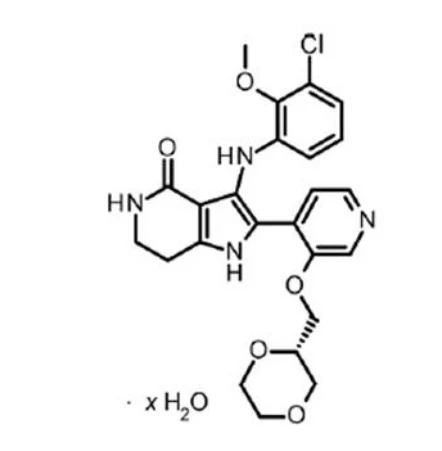
Structural formula:
Physicochemical properties:
The drug substance is a white to off-white to yellow to pinkish powder, isolated as a non-stoichiometric hydrate form of sevabertinib. It is slightly soluble in aqueous solution at pH 2, and practically insoluble in aqueous solutions at pH 4.5 and above.
14. Clinical Trials
14.1. Clinical Trials by Indication
Non-Small Cell Lung Cancer (NSCLC)
Table 9 - Summary of Patient Demographics for Clinical Trials in NSCLC; HER2 (ERBB2) TKD Activating Mutations
| Study # | Study design | Dosage, route of administration and duration | Study subjectsa (n) | Median age (range) | Sex (female/male) |
| SOHO-01b (Study 21607) | Phase 1/2 non-randomized, open-label, single-arm, multicenter multi-cohort | 20 mg HYRNUO orally twice daily until disease progression or unacceptable toxicity | Group D: n = 73 Group E: n = 52 | Group D: 59 years (29, 77) Group E: 65 years (35, 91) | Group D: 47/26 Group E: 35/17 |
- a. HER2 (ERBB2) TKD Activating Mutations
- b. Data cutoff as of 14 OCT 2024
The efficacy and safety of HYRNUO (sevabertinib) were evaluated in an open-label, single-arm, multicenter, multi-cohort clinical study (SOHO-01). The study included adult patients with advanced NSCLC with activating HER2 (ERBB2) mutations who had an Eastern Cooperative Oncology Group Performance Status (ECOG PS) of 0 or 1. The primary efficacy population (Group D) included 81 patients who had received prior systemic therapy but were naïve to therapy targeting HER2 activating mutations. The supportive efficacy population (Group E) included 55 patients who had received prior systemic therapy and had documented progression to HER2-targeted antibody drug conjugates (ADCs). Efficacy was evaluated in 73 patients in Group D and 52 patients in Group E with HER2 (ERBB2) TKD activating mutations.
Activating HER2 (ERBB2) mutations were determined in tumour tissue or plasma by local laboratories prior to enrollment. Patients with treated, stable and asymptomatic brain metastases were eligible. Patients with symptomatic CNS metastases, clinically significant cardiac disease, and history of steroid dependent interstitial lung disease (ILD)/pneumonitis were excluded from the study.
Baseline demographic and disease characteristics from Group D patients with HER2 (ERBB2) TKD activating mutations were: median age 59 years (range 29 to 77 years) and 64% female. The racial distribution included 70% Asian, 23% White, 1.4% Black and 5.5% not reported. Patients had an ECOG performance status of either 0 (37%) or 1 (63%); 65.8% were never-smokers, 30.1% were former smokers and 4.1% were current smokers. The majority of patients (90.4%) had stage IV disease, 95.9% had adenocarcinoma histology; 19.2% had stable brain metastases. The median number of prior therapies was 1 (range 1 to 8); 94.5% of patients received prior platinum-based chemotherapy, 72.6% received prior immunotherapy, and 69.9% received both in combination. 67.1% of patients had a Y772_A775dup (YVMA) exon 20 insertion.
The major efficacy outcomes were confirmed objective response rate (ORR) and duration of response (DOR) as assessed by Blinded Independent Central Review (BICR) using RECIST v1.1. A lower boundary of 30% for ORR, considered to be clinically meaningful, was predefined as statistically significant for response. The ORR was defined as the proportion of patients with the best overall response of confirmed complete response (CR) or confirmed partial response (PR).
SOHO-01 Group D (primary efficacy population)
Efficacy results from SOHO-01 study Group D are presented in Table 10.
Table 10 – Efficacy Results for SOHO-01 Study Group Da, Patients with HER2 (ERBB2) TKD Activating Mutations
| Efficacy Parameter | Group D N=73 |
|---|---|
| Confirmed Objective Response Rate (ORR)b,c (95% CI) | 65.8% (53.7%, 76.5%) |
| Complete Response (CR) | 1.4% |
| Partial Response (PR) | 64.4% |
| Duration of Response (DOR)c | N=48 |
| Median, monthsd (95% CI) | 6.8 (5.2, NE) |
| DOR ≥ 6 monthse | 27.1% |
CI = Confidence Interval; NE = Not estimable
- a. Based on 14 October 2024 data cut.
- b. ORR 95% CI calculated using Clopper-Pearson method.
- c. Assessed by Blinded Independent Central Review (BICR).
- d. Kaplan-Meier estimate.
- e. Observed proportion of responding patients with duration of response beyond landmark time.
Disease control rate (DCR), calculated based on the proportion of patients with a confirmed best overall response of CR, PR, or stable disease of at least 12 weeks following the first study treatment administration, was 82.2% (95% CI: 71.5%, 90.2%). Consistent efficacy results were observed in pre-defined subgroups for Group D, including prior therapy, presence of brain metastases, and age.
16. Non-Clinical Toxicology
General toxicology
Sevabertinib was evaluated in repeat-dose toxicology studies in rats and cynomolgus monkeys, revealing dose-dependent adverse effects primarily affecting the gastrointestinal tract, epithelial and mucosal tissues, and thymus, with additional liver changes observed in female monkeys. In toxicology studies of up to 13 weeks in rats and cynomolgus monkeys, the main findings included reduced body weight and diarrhea. These findings were observed at exposures corresponding to >0.4 times the human exposure (based on total AUC) at 20 mg twice daily. In the rat, histopathology revealed atrophic, inflammatory and/or degenerative processes in epithelial and mucosal tissues (gastrointestinal tissue, to a lesser extent skin). Atrophic, inflammatory and/or degenerative changes were also observed in the gastrointestinal mucosa in monkeys. Gastrointestinal and skin findings were largely reversible within 2 weeks of cessation of treatment. Thymic atrophy in male and female monkeys and fat accumulation in the liver of female monkeys was observed at exposures corresponding to >0.10 times the human exposure (based on AUC at 20 mg twice daily).
Genotoxicity
Sevabertinib was not mutagenic in an in vitro bacterial reverse mutation (Ames) assay and was not clastogenic in either an in vitro micronucleus assay or an in vivo micronucleus assay in rats.
Carcinogenicity
Carcinogenicity studies with sevabertinib have not been conducted.
Reproductive and developmental toxicology
Disruption or depletion of HER2/EGFR in mouse models has shown that HER2/EGFR signaling is critically important in reproductive and developmental processes including blastocyst implantation, placental development, and embryo-fetal/post-natal survival and development.
In embryo-fetal development studies, pregnant rats received oral doses of sevabertinib during the period of organogenesis from gestation to day 6 to 17. Sevabertinib caused maternal toxicity body weight loss, reduced body weight gain, low food consumption, and diarrhea at dosage of ≥7 mg/kg/day corresponding to 0.22 times the human exposure (based on AUC at 20 mg twice daily). Fetal effects included significantly reduced fetal and placenta weights, which resulted in reduced gravid uterine weights. The pivotal embryo-fetal development studies with pregnant rats revealed a reduction in fetal weights (combined and individual sexes) and a reduction in gravid uterine weight at dosage ≥6 mg/kg/day (0.2 times the human exposure based on AUC at the clinical dose).
In a human-induced pluripotent stem cell-based assay, sevabertinib demonstrated teratogenic potential by causing concentration dependent decrease in cardiomyocyte and hepatocyte differentiation markers.
Following administration of radiolabeled sevabertinib to lactating rats, sevabertinib or its metabolites are excreted in milk. Sevabertinib concentrations were 13 to 26 times higher in milk than in plasma. Approximately 1.3% of the administered dose of sevabertinib was excreted into the milk.
Specific studies on fertility have not been performed.
Special toxicology
In vitro, sevabertinib inhibited the hERG potassium channel at clinically relevant unbound plasma concentrations. In vivo, in telemetered dogs, delayed cardiac ventricular repolarization (QTc interval prolongation) was observed when sevabertinib was administered at approximately 12 times the human exposure at 20 mg twice daily (relative to unbound Cmax at steady state).