


Product Monograph - Nerlynx
RECENT MAJOR LABEL CHANGES
| 1 Indications | 06/2021 |
| 1 Indications, 1.2 Geriatrics | 06/2021 |
| 4 Dosage and Administration, 4.1 Dosing Considerations | 07/2021 |
| 4 Dosage and Administration, 4.2 Recommended Dose and Dosage Adjustment | 07/2021 |
| 7 Warnings and Precautions | 07/2021 |
| 7 Warnings and Precautions, 7.1.4 Geriatrics | 06/2021 |
TABLE OF CONTENTS
PART I: HEALTH PROFESSIONAL INFORMATION ....................................................... 4
1 INDICATIONS ........................................................................................................... 4
1.1 Pediatrics .......................................................................................................... 4
1.2 Geriatrics .......................................................................................................... 4
2 CONTRAINDICATIONS ........................................................................................... 4
4 DOSAGE AND ADMINISTRATION ......................................................................... 4
4.1 Dosing Considerations..................................................................................... 4
4.2 Recommended Dose and Dosage Adjustment .............................................. 6
4.4 Administration................................................................................................. 10
4.5 Missed Dose................................................................................................... 10
5 OVERDOSAGE ....................................................................................................... 11
6 DOSAGE FORMS, STRENGTHS, COMPOSITION AND PACKAGING ............ 11
7 WARNINGS AND PRECAUTIONS........................................................................ 11
7.1 Special Populations ....................................................................................... 14
7.1.1 Pregnant Women .................................................................................... 14
7.1.2 Breast-feeding ......................................................................................... 14
7.1.3 Pediatrics ................................................................................................. 14
7.1.4 Geriatrics.................................................................................................. 14
8 ADVERSE REACTIONS......................................................................................... 15
8.1 Adverse Reaction Overview .......................................................................... 15
8.2 Clinical Trial Adverse Reactions ................................................................... 17
8.3 Less Common Clinical Trial Adverse Reactions .......................................... 20
8.4 Abnormal Laboratory Findings: Hematological, Clinical, Chemistry and Other Quantitative Data .......................................................................................... 21
9 DRUG INTERACTIONS.......................................................................................... 22
9.2 Drug Interactions Overview ........................................................................... 22
9.4 Drug-Drug Interactions .................................................................................. 22
9.5 Drug-Food Interactions .................................................................................. 25
9.6 Drug-Herb Interactions .................................................................................. 25
10 CLINICAL PHARMACOLOGY............................................................................... 25
10.1 Mechanism of Action .................................................................................. 25
10.2 Pharmacodynamics .................................................................................... 25
10.3 Pharmacokinetics........................................................................................ 26
11 STORAGE, STABILITY AND DISPOSAL ............................................................ 28
12 SPECIAL HANDLING INSTRUCTIONS................................................................ 28
PART II: SCIENTIFIC INFORMATION ............................................................................. 29
13 PHARMACEUTICAL INFORMATION ................................................................... 29
14 CLINICAL TRIALS .................................................................................................. 30
14.1 Clinical Trials by Indication......................................................................... 30
15 MICROBIOLOGY .................................................................................................... 38
16 NON-CLINICAL TOXICOLOGY ............................................................................. 38
PATIENT MEDICATION INFORMATION ......................................................................... 41
PrNERLYNX®
neratinib tablets
PART I: HEALTH PROFESSIONAL INFORMATION
1 INDICATIONS
NERLYNX (neratinib) is indicated:
- For the extended adjuvant treatment of women with early-stage hormone receptor positive and HER2-overexpressed/amplified breast cancer, within one year after completion of trastuzumab-based adjuvant therapy.
- In combination with capecitabine for the treatment of patients with metastatic HER2-overexpressed/amplified breast cancer, who have received two or more prior anti-HER2-based regimens in the metastatic setting.
1.1 Pediatrics
Pediatrics (<18 years of age): No data are available to Health Canada; therefore, Health Canada has not authorized an indication for pediatric use.
1.2 Geriatrics
Geriatrics (≥ 65 years of age): In the Phase 3 study conducted in the extended adjuvant setting (ExteNET), a total of 1408 patients received NERLYNX of whom 24.9% were ≥ 60 years of age. Lower magnitude of efficacy was noted in patients of ≥ 60 years when compared to patients of < 60 years of age. Some differences in the clinical safety have been identified between the elderly and younger subjects (see 7 WARNINGS AND PRECAUTIONS, 7.1.4 Geriatrics).
In the Phase 3 study conducted in the metastatic setting (NALA), a total of 303 patients received NERLYNX in combination with capecitabine, of whom 20.5% were ≥ 65 years of age. No overall differences of efficacy were observed between patients ≥ 65 years when compared to patients of < 65 years of age. Some differences in the clinical safety have been identified between the elderly and younger subjects (see 7 WARNINGS AND PRECAUTIONS, 7.1.4 Geriatrics).
2 CONTRAINDICATIONS
NERLYNX is contraindicated in patients who are hypersensitive to this drug or to any ingredient in the formulation, including any non-medicinal ingredient, or component of the container. For a complete listing, see 6 DOSAGE FORMS, STRENGTHS, COMPOSITION AND PACKAGING.
4 DOSAGE AND ADMINISTRATION
4.1 Dosing Considerations
NERLYNX treatment can cause severe diarrhea (see 7 WARNINGS AND PRECAUTIONS).
Either a NERLYNX dose escalation or antidiarrheal prophylaxis with loperamide is recommended to lower the incidence and severity of diarrhea (see 8 ADVERSE REACTIONS and 7 WARNINGS AND PRECAUTIONS). NERLYNX dose interruptions or dose reductions may also be required to manage diarrhea (see 4.2 Recommended Dose and Dosage Adjustment).
Prophylaxis Management of Diarrhea
DOSE ESCALATION PROPHYLAXIS
Initiate NERLYNX at 120 mg daily and increase the dose according to the treatment schedule described in Table 1.
Table 1. NERLYNX Dose Escalation and Treatment Schedule
| Time on NERLYNX | NERLYNX Dose |
| Week 1 (days 1–7) | 120 mg daily (three 40 mg tablets) |
| Week 2 (days 8–14) | 160 mg daily (four 40 mg tablets) |
| Week 3 and onwards | 240 mg daily (six 40 mg tablets, recommended dose) |
If diarrhea occurs with dose escalation, loperamide 4 mg should be initiated no later than with the first bout of diarrhea, and continued with loperamide 2 mg after every subsequent loose stool, up to 16 mg per day, until diarrhea-free for 12 hours. Then, titrate loperamide to keep diarrhea controlled (1-2 bowel movements per day).
ANTIDIARRHEAL PROPHYLAXIS WITH LOPERAMIDE
Administer loperamide during the first 56 days of treatment, starting with the first dose of NERLYNX.
For both indications, instruct patients to take loperamide as directed in Table 2, titrating to 1-2 bowel movements per day. Additional antidiarrheal agents may be required to manage diarrhea in patients with loperamide-refractory diarrhea (see Tables 6 and 7 below).
Table 2. Loperamide Prophylaxis
| Time on NERLYNX | Dose | Frequency* |
| Weeks 1-2 (days 1–14) | 4 mg | Three times daily |
| Weeks 3-8 (days 15–56) | 4 mg | Twice daily |
| Weeks 9 and onwards | 4 mg | As needed (not to exceed 16 mg per day) |
*Titrate dosing to achieve 1 – 2 bowel movements per day (not to exceed 16 mg per day)
4.2 Recommended Dose and Dosage Adjustment
Recommended Dose
Extended Adjuvant Treatment of Early-Stage Breast Cancer: The recommended dose of NERLYNX is 240 mg (six 40 mg tablets) given orally once daily with food, continuously for one year at approximately the same time every day.
NERLYNX should be used in combination with endocrine therapy in patients with early-stage hormone receptor-positive and HER2 overexpressed/amplified breast cancer within one year after completion of trastuzumab-based adjuvant therapy.
Metastatic Breast Cancer: The recommended dose of NERLYNX is 240 mg (six 40 mg tablets) given orally once daily with food, at approximately the same time on Day 1 – 21 of a 21-day cycle in combination with capecitabine on Day 1 – 14 of a 21-day cycle until disease progression or unacceptable toxicities.
The recommended dose of capecitabine is 1500 mg/m2 total daily dose evenly divided into 2 doses of 750 mg/m2 each, starting on cycle 1 Day 1. Capecitabine should be taken with food or within 30 minutes after a meal.
Dose Adjustment for Adverse Reactions
NERLYNX dose modification is recommended based on individual safety and tolerability. Management of some adverse reactions may require dose interruption and/or dose reduction of treatment with NERLYNX as shown in Tables 3 to 8 below. Discontinue NERLYNX in patients who fail to recover to Grade 0-1 from treatment-related toxicity, for toxicities that result in a treatment delay of > 3 weeks, or for patients who are unable to tolerate 120 mg NERLYNX daily. Additional clinical situations may result in dose adjustments as clinically indicated (e.g., intolerable toxicities, persistent Grade 2 adverse reactions, etc.).
When NERLYNX is used in combination with capecitabine, refer to the product monograph for dose modifications to capecitabine.
Table 3. NERLYNX Monotherapy Dose Modifications for Adverse Reactions
| Dose Level | NERLYNX Dose |
| Recommended starting dose | 240 mg daily |
| First dose reduction | 200 mg daily |
| Second dose reduction | 160 mg daily |
| Third dose reduction | 120 mg daily |
Table 4. NERLYNX in Combination with Capecitabine Dose Modification for Adverse
Reactions
| Dose Level | NERLYNX Dose |
| Recommended starting dose | 240 mg daily |
| First dose reduction | 160 mg daily |
| Second dose reduction | 120 mg daily |
Table 5. NERLYNX Dose Modifications and Management–General Toxicities*
| Severity of Toxicity† | Action |
| Grade 3 | Hold NERLYNX until recovery to Grade ≤ 1 or baseline within 3 weeks of stopping treatment. Then resume NERLYNX at the next lower dose level. |
| Grade 4 | Discontinue NERLYNX permanently. |
* Refer to Table 6, 7 and 8 below for management of diarrhea and hepatotoxicity
† Per CTCAE v4.0
Dose Modifications for Diarrhea
Diarrhea management requires the correct use of antidiarrheal medication, dietary changes, replacement of fluids and electrolytes and appropriate dose modifications of NERLYNX. Guidelines for adjusting doses of NERLYNX in patients presenting with diarrhea are shown in Tables 6 and 7.
Table 6. NERLYNX Monotherapy Dose Modifications for Diarrhea
| Severity of Diarrhea * | Action |
|---|---|
|
|
|
|
| Severity of Diarrhea * | Action |
|---|---|
|
|
|
|
* Per CTCAE v4.0
† Complicated features include dehydration, fever, hypotension, renal failure, or Grade 3 or 4 neutropenia
‡ Despite being treated with optimal medical therapy
Table 7. NERLYNX in Combination with Capecitabine Dose Modifications for Diarrhea
| Severity of Diarrhea * | Action |
|---|---|
|
|
|
|
| Severity of Diarrhea * | Action |
|---|---|
|
Abbreviations: L: liter
*NCI CTCAE v.4.0
a Since capecitabine is provided as 150 mg or 500 mg tablets, it is recommended that the capecitabine dose reduction(s) is rounded down to the nearest 500 mg or multiple of 150 mg for the twice daily dose. If the patient’s body surface area is >2.0, the standard of care for the study center can be utilized for capecitabine mg/m2 dosing.
Dose Modifications for Hepatotoxicity
Guidelines for dose adjustment of NERLYNX in the event of liver toxicity are shown in Table 8. Patients who experience > Grade 3 diarrhea, requiring IV fluid treatment, or any signs or symptoms of hepatotoxicity, such as worsening of fatigue, nausea, vomiting, right upper quadrant pain or tenderness, fever, rash or eosinophilia should be evaluated for changes in liver function tests. Fractionated bilirubin and prothrombin time should also be collected during hepatotoxicity evaluation (see 7 WARNINGS AND PRECAUTIONS).
Table 8. Dose Modification for Hepatotoxicity
| Severity of Hepatotoxicity* | Action |
|---|---|
|
|
|
|
| Severity of Hepatotoxicity* | Action |
|---|---|
OR
| |
Signs or symptoms related to liver injury with either:
| |
| ALT or AST >3x ULN and bilirubin >2x ULN and alkaline phosphatase <2x ULN (potentially Hy’s Law indicators of drug-induced liver damage) | |
ULN = Upper Limit Normal; ALT = Alanine Aminotransferase; AST = Aspartate Aminotransferase
* Per CTCAE v4.0
Dose Modifications for Renal Impairment
No dose adjustment is necessary in patients with mild to moderate renal impairment. NERLYNX has not been studied in patients with severe renal impairment (10 CLINICAL PHARMACOLOGY, 10.3 Pharmacokinetics, Special Populations and Conditions).
Dose Modifications for Hepatic Impairment
No dose modifications are recommended for patients with mild to moderate hepatic impairment (Child-Pugh A or B) (see 7 WARNINGS AND PRECAUTIONS, Hepatotoxicity and 10 CLINICAL PHARMACOLOGY. Reduce the NERLYNX starting dose to 80 mg in patients with severe hepatic impairment (Child-Pugh C).
Pediatrics (< 18 years old)
Health Canada has not authorized an indication for pediatric use.
Geriatrics (≥ 65 years old)
No dose adjustment of NERLYNX is required in patients of ≥ 65 years of age. Older patients may experience higher toxicity and/or lower tolerance to NERLYNX treatment (see 7 WARNINGS and PRECAUTIONS).
4.4 Administration
NERLYNX tablets should be swallowed whole with a glass of water (tablets should not be chewed, crushed or split prior to swallowing).
High-fat meal may lead to higher exposures of NERLYNX than a standard breakfast (see 9 DRUG INTERACTIONS, 9.5 Drug-Food Interactions).
4.5 Missed Dose
If a patient misses a dose, do not replace missed dose, and instruct the patient to resume
NERLYNX with the next scheduled daily dose.
5 OVERDOSAGE
There is no specific antidote, and the benefit of hemodialysis in the treatment of NERLYNX overdose is unknown. In the event of an overdose, administration of NERLYNX should be withheld and general supportive measures undertaken.
In the clinical trial setting, a limited number of patients reported overdose. The adverse reactions experienced by these patients were diarrhea, nausea, vomiting, and dehydration. The frequency and severity of gastrointestinal disorders (diarrhea, abdominal pain, nausea and vomiting) appear to be dose related.
| For management of a suspected drug overdose, contact your regional poison control centre. |
6 DOSAGE FORMS, STRENGTHS, COMPOSITION AND PACKAGING
Table 9. Dosage Forms, Strengths, Composition and Packaging
| Route of Administration | Dosage Form / Strength / Composition | Non-medicinal Ingredients |
| Oral | Tablet, 40 mg neratinib (equivalent to 48.3 mg neratinib maleate). NERLYNX tablets are supplied as red, oval shaped and debossed, film-coated 40 mg tablets with ‘W104’ on one side and plain on the other side. | Tablet core: colloidal silicon dioxide, crospovidone, magnesium stearate, mannitol, microcrystalline cellulose, povidone, and purified water. Film coating: iron oxide red, polyethylene glycol, polyvinyl alcohol, talc, titanium dioxide. |
Packaging
NERLYNX is available in white, opaque round HDPE bottles, containing 180 tablets, with a child-resistant closure and foil-lined induction seal. An HDPE desiccant canister with 1 g silica gel is enclosed with the drug product in each container.
7 WARNINGS AND PRECAUTIONS
Cardiovascular
Decreased Left Ventricular Function
In both extended adjuvant (ExteNET trial) and metastatic (NALA) settings, patients with left ventricular ejection fraction (LVEF) either below institutional lower limit of normal or below 50%, symptomatic congestive heart failure of NYHA class 2 or higher, QTcF > 450 msec, ventricular arrhythmia requiring medical therapy, or with a history of myocardial infarction within 12 months were excluded from the study.
In the randomized, placebo-controlled study (ExteNET trial) conducted in the extended adjuvant setting, Grade 3 ejection fraction decrease or congestive cardiac failure was reported in 5 (0.4%) patients in the NERLYNX arm and 2 (0.1%) patients in the placebo arm. In the NERLYNX arm, 15 (1.1%) patients discontinued treatment due to decreased ejection fraction or left ventricular dysfunction versus 6 (0.4%) patients in the placebo arm.
In the randomized, active-controlled study (NALA trial) conducted in the metastatic setting, Grade 3 ejection fraction decrease or congestive cardiac failure was reported in 1 (0.3%) patient in the NERLYNX arm. In the NERLYNX arm, 1 (0.3%) patient discontinued treatment due to decreased ejection fraction.
In patients with known cardiac risk factors, conduct cardiac monitoring, including assessment of LVEF, as clinically indicated.
Gastrointestinal
Diarrhea
Severe diarrhea and sequelae, such as dehydration, hypotension, and renal failure, have been reported during treatment with NERLYNX.
In the randomized, placebo-controlled study (ExteNET trial) conducted in the extended adjuvant setting, diarrhea of any grade occurred in 95% of NERLYNX-treated patients, Grade 3 diarrhea occurred in 40%, and Grade 4 diarrhea occurred in 0.1% of NERLYNX-treated patients (see 8 ADVERSE REACTIONS). The majority of patients (93%) had diarrhea in the first month of treatment, with a median time to the first onset of Grade ≥ 3 diarrhea of 8 days (range: 1-350 days). The median cumulative duration of Grade ≥ 3 diarrhea was 5 days (range: 1-139 days). NERLYNX treatment was discontinued in 17% of patients due to diarrhea.
In the randomized, active-controlled study (NALA trial) conducted in the metastatic setting, diarrhea was reported in 83% of NERLYNX plus capecitabine treated patients who were required to receive anti-diarrheal prophylaxis in the first cycle. The majority of patients (70%) had diarrhea in the first cycle of treatment, the median time to first onset of Grade ≥ 3 diarrhea was 11 days (range: 2-728) and the median cumulative duration of Grade ≥ 3 diarrhea was 4 days (range: 1-24). In the NERLYNX plus capecitabine arm, Grade 3 diarrhea occurred in 25% of patients, and NERLYNX treatment was discontinued in 2.3% of patients due to diarrhea (see 8 ADVERSE REACTIONS).
Either a two-week NERLYNX dose escalation (with loperamide taken as needed) or antidiarrheal prophylaxis with loperamide for the first 56 days of treatment, is recommended to lower the incidence and severity of diarrhea (see 4 DOSAGE AND ADMINISTRATION and 8 ADVERSE REACTIONS). In addition, proactively manage diarrhea at the first unformed stool, especially within the first 2 weeks of starting NERLYNX. Measures include adequate oral hydration, avoiding foods that might aggravate diarrhea, and treatment with additional antidiarrheal therapy as needed.
When severe diarrhea with dehydration occurs, administer fluid and electrolytes as needed, interrupt NERLYNX and reduce subsequent doses. Permanently discontinue NERLYNX in patients with diarrhea recurring to Grade ≥ 2 at 120 mg NERLYNX daily dose or with Grade 4 diarrhea (see 4 DOSAGE AND ADMINISTRATION). Perform stool cultures as clinically indicated to exclude infectious causes of Grade 3 or 4 diarrhea or diarrhea of any grade with complicating features (dehydration, fever, neutropenia).
Hepatic / Biliary / Pancreatic
Hepatotoxicity
NERLYNX has been associated with hepatotoxicity, characterized by increased liver enzymes.
In the randomized, placebo-controlled study (ExteNET trial) conducted in the extended adjuvant setting, 12% of patients treated with NERLYNX reported hepatotoxicity, including 5% of patients who experienced an alanine aminotransferase (ALT) increase or an aspartate aminotransferase (AST) increase ≥ 3x ULN (≥ Grade 2). Of those, 1.7% of patients experienced an AST or ALT elevation > 5x ULN (≥ Grade 3). Increased bilirubin was reported in 1% of patients. Hepatotoxicity or increases in liver transaminases led to drug discontinuation in 1.7% of NERLYNX-treated patients. The median time of onset to any hepatotoxicity was 31 (range: 1-358) days.
In the randomized, active-controlled study (NALA trial) conducted in the metastatic setting, 7% of patients treated with NERLYNX and capecitabine experienced an ALT or AST > 3x ULN, 2% experienced ALT or AST > 5x ULN, 7% experienced bilirubin > 1.5x ULN, and 1.3% experienced bilirubin > 3x ULN. Hepatotoxicity or increases in liver transaminases led to drug discontinuation in 0.3% of NERLYNX and capecitabine-treated patients. The median time of onset to any hepatotoxicity was 57 (range: 2-1071) days.
Liver function tests should be conducted prior to and during NERLYNX treatment (see Monitoring and Laboratory Tests below). Dose modifications are recommended for patients with treatment-emergent hepatotoxicity. NERLYNX treatment should be permanently discontinued in patients with Grade 4 increases in liver transaminases (> 20x ULN), Grade 4 bilirubin (> 10x ULN), or in those with ALT/AST ≥ 3x ULN and bilirubin > 2x ULN (see 4 DOSAGE AND ADMINISTRATION).
Monitoring and Laboratory Tests
Liver Function Monitoring
Liver function tests including total bilirubin, ALT, AST, and alkaline phosphatase should be measured prior to starting treatment with NERLYNX and monthly for the first 3 months of treatment, then every 3 months while on treatment and as clinically indicated. These tests should also be performed in patients experiencing Grade 3 diarrhea or any signs or symptoms of hepatotoxicity, such as worsening of fatigue, nausea, vomiting, right upper quadrant tenderness, fever, rash, or eosinophilia. Fractionated bilirubin and prothrombin time should also be collected during hepatotoxicity evaluation (see 4 DOSAGE AND ADMINISTRATION, Dose Modifications for Hepatotoxicity and 8 ADVERSE REACTIONS).
Left Ventricular Function Testing
In patients with known cardiac risk factors, conduct cardiac monitoring, including assessment of LVEF, as clinically indicated.
Reproductive Health: Female and Male Potential
- Fertility
Fertility studies in humans have not been performed with NERLYNX. In a fertility study in rats, neratinib caused no effects on mating or the ability of animals to become pregnant; however, effects on male reproductive organs were observed in chronic, repeated-dose toxicity studies (see 16 NON-CLINICAL TOXICOLOGY).
- Teratogenic Risk
Women of childbearing potential must be advised to avoid pregnancy while on NERLYNX. Female patients of child-bearing potential must use highly effective contraceptive methods during treatment and for at least 1 month after the last dose (see 16 NON-CLINICAL TOXICOLOGY). Pregnancy testing is recommended for women of reproductive potential prior to starting treatment with NERLYNX.
Men with female partners of reproductive potential should be advised to use effective contraception during treatment with NERLYNX and for 3 months after the final dose.
7.1 Special Populations
7.1.1 Pregnant Women
There are no data regarding the use of NERLYNX in pregnant women. In animal studies, administration of neratinib to pregnant rabbits during organogenesis caused abortions, embryo-fetal death and fetal abnormalities at maternal exposures approximately 0.2 times the exposure in patients receiving the recommended dose (see 16 NON-CLINICAL TOXICOLOGY). Based on its mechanism of action and findings from nonclinical reproduction studies, NERLYNX can cause fetal harm when administered to a pregnant woman.
NERLYNX is not recommended during pregnancy and in women of childbearing potential not using effective contraception. If the patient becomes pregnant while taking NERLYNX, the patient should be informed of the potential hazard to the fetus.
7.1.2 Breast-feeding
It is unknown if neratinib or its metabolites are excreted in human milk. As many drugs are excreted in human milk, and because of the potential for serious adverse reactions in breastfed infants from NERLYNX, advise lactating women not to breastfeed while taking NERLYNX and for at least 1 month after the last dose (see 16 NON-CLINICAL TOXICOLOGY).
7.1.3 Pediatrics
Pediatrics (<18 years): No data are available to Health Canada, therefore Health Canada has not authorized an indication for pediatric use.
7.1.4 Geriatrics
In the ExteNET trial, which was conducted in the extended adjuvant setting, the mean age was 52 years in the NERLYNX arm; 12% were ≥ 65 years including 2% who were 75 years or older.
In the NERLYNX arm, a greater percentage of older patients (45%) compared with younger patients (25%) experienced treatment discontinuation due to adverse reactions. Diarrhea was the most common adverse reaction leading to treatment discontinuation, which was reported in 29% of older patients and 15% of younger patients.
The incidence of serious adverse reactions in the NERLYNX arm was 7.0% in the < 65 years-old group and 9.9% in the ≥ 65 years-old group. The serious adverse reactions most frequently reported in the ≥ 65 years-old group were vomiting (2.3%), diarrhea (1.7%), renal failure (1.7%), and dehydration (1.2%).
In the NALA trial, which was conducted in the metastatic setting, the mean age was 55 years in the NERLYNX plus capecitabine arm; 63 (21%) patients were ≥ 65 years, of whom 12 (4%) patients were 75 years or older.
In the NERLYNX plus capecitabine arm, a similar percentage of older patients ≥ 65 years (12%) compared with younger patients < 65 years (15%) experienced treatment discontinuation due to adverse reactions. Diarrhea was the most common adverse reaction leading to treatment discontinuation, which was reported in 3% of patients of all ages.
The incidence of serious adverse reactions in the NERLYNX plus capecitabine arm in the ≥ 65 years-old group was 36% and in the < 65 years-old group was 34%. The serious adverse reactions most frequently reported in the ≥ 65 years-old group were diarrhea (16%), acute kidney injury (8%), and dehydration (7%).
8 ADVERSE REACTIONS
8.1 Adverse Reaction Overview
Extended Adjuvant Treatment of Early-Stage Breast Cancer
In the randomized, double blind, placebo-controlled study (ExteNET) in women with HER2-positive early-stage breast cancer after completion of trastuzumab-based adjuvant therapy, patients were treated with NERLYNX or placebo for one year. The median duration of treatment was similar between the two arms: 11.6 (range: 0.03-13.3) months in the NERLYNX arm and 11.8 (range: 0.13-13.2) months in the placebo arm.
Patients treated with NERLYNX experienced higher incidences of treatment-emergent adverse events (99% vs 88%), grade 3-4 adverse events (50% vs 13%), and treatment-related adverse events (96% vs 57%) than those treated with placebo.
In the NERLYNX arm, the most common adverse reactions (≥ 10%) were diarrhea (95%), nausea (43%), abdominal pain (36%), fatigue (27%), vomiting (26%), rash (18%), stomatitis (14%), decreased appetite (12%), muscle spasms (11%), and dyspepsia (10%) (Table 10).
Serious adverse reactions were reported in 7% of patients treated with NERLYNX and 6% of patients treated with placebo. Serious adverse reactions reported in ≥ 3 patients in the NERLYNX arm included diarrhea (1.6%), vomiting (0.9%), dehydration (0.6%), cellulitis (0.4%), renal failure (0.4%), erysipelas (0.4%), alanine aminotransferase increased (0.3%), aspartate aminotransferase increased (0.3%), nausea (0.3%), fatigue (0.2%), and abdominal pain (0.2%).
NERLYNX dose reduction and dose interruption due to an adverse reaction occurred in 31.2% and 45% of patients, respectively. Permanent discontinuation due to any adverse reaction was reported in 27.6% of NERLYNX-treated patients. The most common adverse reaction leading to discontinuation was diarrhea, accounting for 16.8% of NERLYNX-treated patients.
Metastatic Breast Cancer
The randomized, multi-center, multinational, open-label, active-controlled study (NALA) was conducted in patients with HER2-positive metastatic breast cancer, who have received two or more prior anti-HER2-based regimens in the metastatic setting (see 14 CLINICAL TRIALS). The median duration of treatment was 5.7 months in the NERLYNX plus capecitabine arm and 4.4 months in the lapatinib plus capecitabine arm.
Similar proportions of patients treated with NERLYNX plus capecitabine and patients treated with lapatinib plus capecitabine experienced treatment-emergent adverse events (100% vs 99%), grade 3-4 adverse events (61% vs 60%), fatal adverse events (2.6% vs 3.2%), and treatment-related adverse events (95% vs 96%).
In the NERLYNX plus capecitabine arm, the most common adverse reactions (≥10%) were diarrhea (83%), nausea (53%), palmar-plantar erythrodysaesthesia syndrome (46%), vomiting (46%), fatigue/asthenia (45%), decreased appetite (35%), constipation (31%), stomatitis (28%), weight decreased (20%), rash (18%), nail disorders (15%), dizziness (14%), back pain (10%) and arthralgia (10%) (Table 11).
Serious adverse reactions were reported in 34% of patients treated with NERLYNX plus capecitabine and 30% of patients treated with lapatinib plus capecitabine. Serious adverse reactions reported in ≥ 3 patients (1%) in the NERLYNX plus capecitabine arm included diarrhea (7.3%), pleural effusion (3.3%), vomiting (3.0%), acute kidney injury (2.3%), nausea (2.3%), metastases to central nervous system (2.0%), pneumonia (2.0%), cellulitis (1.3%), dehydration (1.3%), seizure (1.3%), constipation (1.0%), pyrexia (1.0%), and urinary tract infection (1.0%).
Adverse reactions leading to dose hold of any study drugs were reported in 64% of patients treated with NERLYNX plus capecitabine and in 64% of patients treated with lapatinib plus capecitabine. NERLYNX and lapatinib dose hold due to an adverse reaction occurred in 50% and 47% of patients receiving NERLYNX plus capecitabine and lapatinib plus capecitabine, respectively.
Adverse reactions leading to dose reduction of any study drugs were reported in 24% of patients treated with NERLYNX plus capecitabine and in 30% of patients treated with lapatinib plus capecitabine. NERLYNX and lapatinib dose reduction due to an adverse reaction occurred in 10% and 11% of patients receiving NERLYNX plus capecitabine and lapatinib plus capecitabine, respectively.
Adverse reactions leading to discontinuation of any study drugs occurred in 14% of patients treated with NERLYNX plus capecitabine and in 18% of patients treated with lapatinib plus capecitabine. Discontinuation of NERLYNX and lapatinib due to an adverse reaction was reported in 11% and 15% of patients treated with NERLYNX plus capecitabine and lapatinib plus capecitabine, respectively. The most common adverse reactions leading to discontinuation of NERLYNX were vomiting (3.3%), diarrhea (2.3%), nausea (1.7%), and pleural effusion (1.0%).
8.2 Clinical Trial Adverse Reactions
Clinical trials are conducted under very specific conditions. The adverse reaction rates observed in clinical trials; therefore, may not reflect the rates observed in practice and should not be compared to the rates in the clinical trials of another drug. Adverse reaction information from clinical trials may be useful in identifying and approximating rates of adverse drug reactions in real-world use.
ExteNET
Table 10 summarizes the incidence rates of adverse drug reactions occurring at ≥ 2% of patients and with higher incidences reported in the NERLYNX arm in the ExteNET trial. Patients who received NERLYNX in this trial were not required to receive any prophylaxis with antidiarrheal agents to prevent the NERLYNX-related diarrhea.
Table 10. Incidence Rate of Adverse Reactions Reported in ≥ 2% of Patients treated with NERLYNX and with Higher Incidence Rates in the NERLYNX arm in ExteNET Study
| System Organ Class (Preferred Term) | NERLYNX n = 1408 | Placebo n = 1408 | ||||
|---|---|---|---|---|---|---|
| All Grades (%) | Grade 3 (%) | Grade 4 (%) | All Grades (%) | Grade 3 (%) | Grade 4 (%) | |
| Gastrointestinal Disorders | ||||||
| Diarrhea | 95 | 40 | 0.1 | 35 | 2 | 0 |
| Nausea | 43 | 2 | 0 | 22 | 0.1 | 0 |
| Abdominal pain* | 36 | 2 | 0 | 15 | 0.4 | 0 |
| Vomiting | 26 | 3 | 0 | 8 | 0.4 | 0 |
| Stomatitis† | 14 | 0.6 | 0 | 6 | 0.1 | 0 |
| Dyspepsia | 10 | 0.4 | 0 | 4 | 0 | 0 |
| Abdominal distension | 5 | 0.3 | 0 | 3 | 0 | 0 |
| Flatulence | 5 | 0.1 | 0 | 3 | 0.1 | 0 |
| Dry mouth | 3 | 0.1 | 0 | 2 | 0 | 0 |
| Hemorrhoids | 2 | 0 | 0 | 1 | 0 | 0 |
| General Disorders and Administration Site Conditions | ||||||
| Fatigue | 27 | 2 | 0 | 20 | 0.4 | 0 |
| Pyrexia | 6 | 0 | 0 | 4 | 0 | 0 |
| Hepatobiliary Disorders | ||||||
| Alanine aminotransferase increased | 9 | 1 | 0.2 | 3 | 0.2 | 0 |
| Aspartate aminotransferase increased | 7 | 0.5 | 0.2 | 3 | 0.3 | 0 |
| Infections and Infestations | ||||||
| Urinary tract infection | 5 | 0.1 | 0 | 2 | 0 | 0 |
| Cystitis | 3 | 0 | 0 | 1 | 0 | 0 |
| System Organ Class (Preferred Term) | NERLYNX n = 1408 | Placebo n = 1408 |
|---|
| All Grades (%) | Grade 3 (%) | Grade 4 (%) | All Grades (%) | Grade 3 (%) | Grade 4 (%) | |
|---|---|---|---|---|---|---|
| Investigations | ||||||
| Weight decreased | 5 | 0.1 | 0 | 0.5 | 0 | 0 |
| Metabolism and Nutrition Disorders | ||||||
| Decreased appetite | 12 | 0.2 | 0 | 3 | 0 | 0 |
| Dehydration | 4 | 0.9 | 0.1 | 0.4 | 0.1 | 0 |
| Musculoskeletal and Connective Tissue Disorders | ||||||
| Muscle spasms | 11 | 0.1 | 0 | 3 | 0.1 | 0 |
| Respiratory, Thoracic and Mediastinal Disorders | ||||||
| Epistaxis | 5 | 0 | 0 | 1 | 0.1 | 0 |
| Skin and Subcutaneous Tissue Disorders | ||||||
| Rash‡ | 21 | 0.6 | 0 | 10 | 0.1 | 0 |
| Dry skin | 6 | 0 | 0 | 2 | 0 | 0 |
| Nail Disorder§ | 8 | 0.3 | 0 | 2 | 0 | 0 |
| Skin fissures | 2 | 0.1 | 0 | 0.1 | 0 | 0 |
* Includes abdominal pain, abdominal pain upper, and abdominal pain lower
† Includes stomatitis, aphthous stomatitis, mouth ulceration, oral mucosal blistering, mucosal inflammation, oropharyngeal pain , oral pain, glossodynia, glossitis, and cheilitis
‡ Includes rash, rash erythematous, rash follicular, rash generalized, rash pruritic, rash pustular, rash maculo-papular, rash papular, dermatitis, dermatitis acneiform, toxic skin eruption, erythema multiforme, exfoliative rash, and acne
§ Includes nail disorder, paronychia, onychoclasis, nail discoloration, nail toxicity, nail growth abnormal, and nail dystrophy
NALA
Table 11 summarizes the incidence rates of adverse drug reactions occurring at ≥ 2% of patients in the NERLYNX in combination with capecitabine arm in the NALA trial. Prophylactic therapy was implemented for enrolled patients in the NERLYNX plus capecitabine arm.
Table 11. Incidence Rate of Adverse Reactions Reported in ≥ 2% of Patients treated with NERLYNX in combination with capecitabine in the NALA Study
| System Organ Class (Preferred Term) | NERLYNX plus capecitabine n = 303 | Lapatinib plus capecitabine n = 311 | ||||
|---|---|---|---|---|---|---|
| All Grades (%) | Grade 3 (%) | Grade 4 (%) | All Grades (%) | Grade 3 (%) | Grade 4 (%) | |
| Gastrointestinal Disorders | ||||||
| Diarrhea | 83 | 25 | 0 | 66 | 13 | 0 |
| Nausea | 53 | 4.3 | 0 | 42 | 2.9 | 0 |
| Vomiting | 46 | 4 | 0 | 31 | 1.9 | 0 |
| Constipation | 31 | 1 | 0 | 13 | 0 | 0 |
| Stomatitis† | 28 | 2.3 | 0 | 33 | 2.6 | 0 |
| Abdominal distension | 8 | 0.3 | 0 | 3.2 | 0.6 | 0 |
| General Disorders and Administration Site Conditions | ||||||
| Fatigue/Asthenia | 45 | 6 | 0 | 40 | 4.5 | 0 |
| Malaise | 4.3 | 0 | 0 | 2.3 | 0.3 | 0 |
| System Organ Class (Preferred Term) | NERLYNX plus capecitabine n = 303 | Lapatinib plus capecitabine n = 311 |
|---|
| All Grades (%) | Grade 3 (%) | Grade 4 (%) | All Grades (%) | Grade 3 (%) | Grade 4 (%) | |
|---|---|---|---|---|---|---|
| Influenza like illness | 4 | 0 | 0 | 1.3 | 0 | 0 |
| Infections and Infestations | ||||||
| Urinary tract infection | 9 | 0.7 | 0 | 4.2 | 0.6 | 0 |
| Upper respiratory tract infection | 8 | 0.3 | 0 | 4.5 | 0.3 | 0 |
| Investigations | ||||||
| Weight decreased | 20 | 0.3 | 0 | 13 | 0.6 | 0 |
| Metabolism and Nutrition Disorders | ||||||
| Decreased appetite | 35 | 2.6 | 0 | 22 | 2.3 | 0 |
| Dehydration | 5.9 | 2.3 | 0 | 6.4 | 1.9 | 0 |
| Musculoskeletal and Connective Tissue Disorders | ||||||
| Back Pain | 10 | 0.3 | 0 | 8 | 0.3 | 0 |
| Arthralgia | 10 | 0 | 0 | 6 | 1 | 0 |
| Muscle spasms | 5 | 0 | 0 | 1.9 | 0 | 0 |
| Nervous System Disorder | ||||||
| Dizziness | 14 | 0.3 | 0 | 10 | 0.6 | 0 |
| Renal and Urinary Disorders | ||||||
| Renal impairment* | 7 | 2 | 0.3 | 1 | 0 | 0.3 |
| Dysuria | 4.6 | 0 | 0 | 1.9 | 0 | 0 |
| Skin and Subcutaneous Tissues Disorders | ||||||
| Palmar-plantar erythrodysaesthesia syndrome | 46 | 9.6 | 0 | 56 | 11 | 0 |
| Rash‡ | 18 | 0.3 | 0 | 36 | 0.6 | 0 |
| Nail Disorder§ | 15 | 0.7 | 0 | 21 | 1.0 | 0 |
| Dry Skin | 6.6 | 0 | 0 | 4.8 | 0 | 0 |
| Skin Fissures | 3 | 0 | 0 | 6.1 | 0.3 | 0 |
*Renal impairment includes acute kidney injury, blood creatinine increased, renal failure, and renal impairment.
| †Stomatitis includes aphthous stomatitis, mouth ulceration, oral mucosal blistering, mucosal inflammation, oropharyngeal pain, oral pain, glossodynia, glossitis, and cheilitis |
| ‡Rash includes rash erythematous, rash follicular, rash generalized, rash pruritic, rash pustular, rash maculo-papular, rash papular, dermatitis, dermatitis acneiform, toxic skin eruption, erythema multiforme, exfoliative rash, and acne |
| §Nail disorder includes paronychia, onychoclasis, nail discoloration, nail toxicity, nail growth abnormal, and nail dystrophy |
CONTROL (Prophylaxis Management of Diarrhea)
The CONTROL (NCT02400476) study was a multicenter, open-label, multi-cohort trial evaluating prophylaxis regimens in patients with early-stage HER2-positive breast cancer treated with neratinib 240 mg daily for up to one year. Patients in the loperamide cohort were given loperamide daily for 56 days and then as needed. Patients in the neratinib dose-escalation cohort were given 120 mg neratinib for week 1, followed by 160 mg neratinib for week 2, followed by 240 mg neratinib for week 3 and thereafter, with loperamide administered on an as-needed basis only. The median duration of treatment was 11.63 months for the loperamide cohort and 11.96 months for the dose-escalation cohort.
The primary endpoint for this study was the incidence of grade 3 diarrhea or higher. There were no events of either grade 4 or grade 5 diarrhea in any of the cohorts. The incidence of grade 3 diarrhea in the dose-escalation cohort was 13.3%, compared to 30.7% of patients who received loperamide. Compared to the ExteNet study (16.8%), the proportion of patients who had diarrhea leading to neratinib discontinuation was 3.3% in the dose-escalation cohort compared to 20.4% in the loperamide cohort. Dose-escalation was also associated with fewer other gastrointestinal adverse events such as constipation, abdominal pain, nausea, and vomiting.
Dose escalation was not evaluated in patients receiving neratinib in combination with capecitabine for the treatment of metastatic breast cancer.
8.3 Less Common Clinical Trial Adverse Reactions
ExteNET
The following treatment emergent adverse reactions were reported in less than 2% of patients and with higher incidences in the NERLYNX arm in the ExteNET study.
Gastrointestinal Disorders: gastroesophageal reflux disease (1.8%), gastritis (1.4%), gastrointestinal pain (1.1%).
General Disorders and Administration Site Conditions: chills (1.8%), malaise (1.8%),
Hepatobiliary Disorders: blood alkaline phosphatase increased (2%), hyperbilirubinemia (0.7%), cholelithiasis (0.5%).
Infections and Infestations: cellulitis (1.7%).
Renal and Urinary Disorders: dysuria (1.8%), renal failure and renal failure acute (0.6%), blood creatinine increased (1.0%).
Respiratory, thoracic and mediastinal disorders: rhinorrhoea (1.4%), nasal dryness (1.4%).
Skin and Subcutaneous Tissue Disorders: palmar-plantar erythrodysaesthesia syndrome (1.8%), skin disorder (1%).
NALA
The following treatment emergent adverse reactions were reported in less than 2% of patients and with higher incidences in the NERLYNX in combination with capecitabine arm in the NALA study.
Gastrointestinal Disorders: pancreatitis (0.7%)
Investigations: amylase increased (1.7%)
8.4 Abnormal Laboratory Findings: Hematological, Clinical, Chemistry and Other Quantitative Data
Clinical Trial Findings
Table 12: Laboratory Abnormalities Reported in ≥ 10% of Patients Treated with NERLYNX in ExteNET Study*
| Laboratory Tests | NERLYNX n = 1408 | Placebo n = 1408 | ||||
|---|---|---|---|---|---|---|
| All Grades (%) | Grade 3 (%) | Grade 4 (%) | All Grades (%) | Grade 3 (%) | Grade 4 (%) | |
| Chemistry | ||||||
| Alanine Aminotransferase increased | 35 | 2 | 0.2 | 23 | 0.4 | 0.1 |
| Alkaline Phosphatase increased | 21 | 0 | 0 | 24 | 0.1 | 0 |
| Aspartate Aminotransferase increased | 26 | 0.8 | 0.1 | 18 | 0.4 | 0.1 |
| Bilirubin increased | 10 | 0.1 | 0.0 | 11 | 0.4 | 0.1 |
| Creatinine increased | 11 | 0.1 | 0.1 | 8 | 0 | 0 |
| Hematology | ||||||
| Hemoglobin decreased | 35 | 0.2 | 0.4 | 23 | 0 | 0.4 |
* Grades using NCI CTCAE version 3.0.
Table 13: Laboratory Abnormalities Reported in ≥ 10% of Patients Treated with NERLYNX in Combination with Capecitabine in NALA Study*
| Laboratory Tests | NERLYNX plus capecitabine n = 303 | Lapatinib plus capecitabine n = 311 | ||||
|---|---|---|---|---|---|---|
| All Grades (%) | Grade 3 (%) | Grade 4 (%) | All Grades (%) | Grade 3 (%) | Grade 4 (%) | |
| Chemistry | ||||||
| Alanine Aminotransferase increased | 24 | 0.7 | 0 | 23 | 1.3 | 0 |
| Alkaline Phosphatase increased | 16 | 0.3 | 0 | 23 | 1.3 | 0 |
| Aspartate Aminotransferase increased | 29 | 1 | 0 | 31 | 2.3 | 0 |
| Laboratory Tests | NERLYNX plus capecitabine n = 303 | Lapatinib plus capecitabine n = 311 |
|---|
| All Grades (%) | Grade 3 (%) | Grade 4 (%) | All Grades (%) | Grade 3 (%) | Grade 4 (%) | |
|---|---|---|---|---|---|---|
| Bilirubin increased | 20 | 1 | 0.3 | 43 | 5.1 | 0.3 |
| Creatinine increased | 15 | 0 | 0 | 11 | 0 | 0 |
| Hematology | ||||||
| Hemoglobin decreased | 48 | 2 | 0 | 35 | 3 | 0 |
* Grades using NCI CTCAE version 3.0.
9 DRUG INTERACTIONS
9.2 Drug Interactions Overview
Neratinib is primarily metabolized in the liver by CYP3A4. It is also a substrate of P-glycoprotein (P-gp). Drug interactions were observed when NERLYNX was coadministered with a strong CYP3A4/P-gp inhibitor and a strong CYP3A4/P-gp inducer. Simulated concomitant use of NERLYNX with a moderate CYP3A4/P-gp inhibitor or a moderate CYP3A4 inducer suggests significant changes in neratinib plasma concentrations. The relative contributions of CYP3A4 and P-gp to the pharmacokinetics of neratinib are unknown. The solubility of neratinib maleate increases dramatically as neratinib becomes protonated at acidic pH. Drug interactions were observed when NERLYNX was coadministered with a proton pump inhibitor (PPI) and a H2-receptor antagonist under fed conditions.
Neratinib may inhibit the transport of P-gp substrate and increase the exposure of co-administered medicinal products primarily cleared by P-gp.
9.4 Drug-Drug Interactions
The drugs listed in Table 14 are based on either drug interaction case reports or studies, or potential interactions due to the expected magnitude and seriousness of the interaction.
Table 14. Established or Potential Drug-Drug Interactions
| Common name | Source of Evidence | Effect | Clinical comment |
| Pharmacokinetic Interactions (Drugs that may affect the exposure to neratinib) | |||
| Strong inhibitor of CYP3A4/P-gp (e.g., boceprevir, clarithromycin, cobicistat, conivaptan, diltiazem, idelalisib, indinavir, itraconazole, ketoconazole, lopinavir, nefazodone, nelfinavir, posaconazole, ritonavir, saquinavir, tipranavir, troleandomycin, voriconazole) | CT | Concomitant use of NERLYNX with a strong CYP3A4/P-gp inhibitor (ketoconazole) increased neratinib Cmax by 321% and AUC by 481%. | Avoid concomitant use of NERLYNX with strong CYP3A4 and/or P-gp inhibitors. |
| Moderate inhibitor of CYP3A4/P-gp (e.g., aprepitant, cimetidine, ciprofloxacin, clotrimazole, crizotinib, cyclosporine, diltiazem, dronedarone, erythromycin, fluconazole, fluvoxamine, imatinib, tofisopam, verapamil) | T | Simulated concomitant use of NERLYNX with a moderate CYP3A4 inhibitor (fluconazole) suggests that neratinib Cmax and AUC may increase by 30% and 68%, respectively. Simulated concomitant use of NERLYNX with a moderate CYP3A4/P-gp inhibitor (verapamil) suggests the neratinib Cmax and AUC may increase by 203% and 299%, respectively. Concomitant use of NERLYNX with other moderate CYP3A4/P-gp inhibitors may increase neratinib concentrations. Increased neratinib concentrations may increase the risk of toxicity. | Avoid concomitant use of NERLYNX with moderate CYP3A4 and/or P-gp inhibitors. |
| Strong inducer of CYP3A4/P-gp (e.g., carbamazepine, enzalutamide, mitotane, phenytoin, rifampin) | CT | Concomitant use of NERLYNX with a strong CYP3A4/P-gp inducer (rifampin) reduced neratinib Cmax by 76% and AUC by 87%. | Avoid concomitant use of NERLYNX with strong CYP3A4 and/or P-gp inducers. |
| Moderate inducer of CYP3A4 (e.g., efavirenz) | T | Simulated concomitant use of NERLYNX with moderate CYP3A4 inducer (efavirenz) suggests the decrease the Cmax and AUC of neratinib by 36% and 52%, respectively. | Avoid concomitant use of NERLYNX with moderate CYP3A4 and/or P-gp inducers. |
| Antacids | T | Drugs that alter the pH of the upper GI tract, may alter the solubility of neratinib and hence its bioavailability. | Separate dosing of NERLYNX and antacids by 3 hours. |
| Proton Pump Inhibitor | CT | In a trial of 15 healthy subjects, administration of a single 240 mg dose of NERLYNX combined with a 30 mg lansoprazole dose at steady state decreased neratinib Cmax and AUC by 71% and 65%, respectively. | Avoid concomitant use. |
| H2-receptor antagonist | CT | When NERLYNX was administered 2 hours following a 300 mg dose of an H2-receptor antagonist (ranitidine), the neratinib Cmax and AUC were reduced by 55% and 47%, respectively. When NERLYNX was administered 2 hours prior to ranitidine 150 mg twice daily (administered in the morning and evening, approximately 12 hours apart), the neratinib Cmax and AUC were reduced by 40% and 30%, respectively. | Avoid concomitant use. If short-term use of a H2-receptor antagonist cannot be avoided, NERLYNX must be taken at least 2 hours before the morning dose and 10 hours after the evening dose of the H2-receptor antagonist dosing. |
| Pharmacokinetic Interactions (Drugs that may have their plasma concentrations altered by NERLYNX) | |||
| P-glycoprotein substrate (e.g., digoxin, dabigatran, fexofenadine) | CT | Concomitant use of digoxin (a single 0.5 mg oral dose), a P-gp substrate, with multiple oral doses of NERLYNX 240 mg in healthy subjects (n=18) increased the mean digoxin Cmax by 54% and AUC by 32%. | Caution is warranted and therapeutic concentration monitoring of P-gp substrates with a narrow therapeutic index is recommended. |
Legend: C = Case Study; CT = Clinical Trial; T = Theoretical
9.5 Drug-Food Interactions
Grapefruit, grapefruit juice, and products containing grapefruit extract may increase neratinib plasma concentrations and should be avoided.
The food-effect assessment was conducted in healthy volunteers who received NERLYNX 240 mg under fasting conditions and with high-fat food (approximately 55% fat, 31% carbohydrate, and 14% protein) or standard breakfast (approximately 50% carbohydrate, 35% fat, and 15% protein). A high-fat meal increased neratinib Cmax and AUCinf by 1.7-fold (90% CI: 1.1- 2.7) and 2.2-fold (90% CI: 1.4- 3.5), respectively. A standard breakfast increased the Cmax and AUCinf by 1.2-fold (90% CI: 0.97- 1.42) and 1.1-fold (90% CI: 1.02- 1.24), respectively.
9.6 Drug-Herb Interactions
Interactions with herbal products have not been established. St. John’s wort (Hypericum perforatum) is an inducer of CYP3A4 that may decrease neratinib plasma concentrations and should be avoided.
10 CLINICAL PHARMACOLOGY
10.1 Mechanism of Action
Neratinib is a protein kinase inhibitor that irreversibly binds to Epidermal Growth Factor Receptor (EGFR), Human Epidermal Growth Factor Receptor 2 (HER2), and HER4. In vitro, neratinib reduces EGFR and HER2 autophosphorylation, downstream MAPK and AKT signaling pathways, and showed antitumor activity in EGFR and/or HER2 expressing carcinoma cell lines. Neratinib human metabolites M3, M6, M7 and M11 inhibited the activity of EGFR, HER2 and HER4 in vitro. In vivo, oral administration of neratinib inhibited tumor growth in mouse xenograft models with tumor cell lines expressing HER2 and EGFR.
10.2 Pharmacodynamics
Cardiac Electrophysiology
The effects of NERLYNX on ECG interval parameters were evaluated in a randomized, placebo- and positive-controlled, double-blind, single-dose, crossover study in 60 healthy subjects. The study was conducted in two parts. Part A was a three-way crossover of single dose treatment with test article (neratinib 240 mg, placebo, or moxifloxacin 400 mg) in a fed state. Part B was a two-way crossover of a single dose of test article (neratinib 240 mg or placebo) co-administered with ketoconazole 400 mg/day in a fasting state. Ketoconazole 400 mg was administered for four days, beginning one day prior to neratinib administration.
Following single dose treatment with neratinib 240 mg, in the presence and absence of the CYP3A inhibitor, ketoconazole 400 mg/day, no clinically relevant effects on the QTc interval, the QRS duration, the PR interval, or ventricular heart rate were observed. The mean (SD) Cmax of single dose neratinib 240 mg was 68.0 (27.0) ng/mL when administered alone and 162.6 (75.0) ng/mL when administered with ketoconazole 400 mg/day.
10.3 Pharmacokinetics
Neratinib exhibits a non-linear PK profile with less than dose proportional increase of AUC with increasing daily dose over the range of 40 to 400 mg.
Table 15 summarizes the single dose PK parameters in healthy subjects under fed and fasted conditions.
Table 15. Summary of Pharmacokinetics (PK) Parameters of NERLYNX Following Single Ascending Oral Doses of 240 mg of NERLYNX to Healthy Subjects under Fasted and Fed Conditions: Arithmetic Mean (+SD).
| Cmax (ng/mL) | Tmax (hr) | t½ (h) | AUC0-∞ (ng.h/mL) | CL (L/hr/kg) | Vd (L/kg) | ||||||||
|---|---|---|---|---|---|---|---|---|---|---|---|---|---|
| Single dose mean | Fed (high fat) | 74.4 (20.87) | 6 | 11 (1.84) | 1357 (386) | 2.62 (0.66) | 40.8 (7.86) | ||||||
| Fasted | 44.6 (15.0) | 4 | 9.8 (2.97) | 667 (268) | 6.27 (4.63) | 78.6 (36.39) | |||||||
Cmax = maximum (peak) concentration; Tmax = median time at peak concentration;
T1/2 = half-life; AUC = total area under the time-concentration curve; CL/F = apparent clearance; Vd = apparent volume of distribution
Absorption: Following oral single-dose administration, neratinib showed a moderate rate of absorption with a median Tmax after approximately 6 hours under fed conditions versus 4 hours under fasted conditions.
A preliminary food-effect assessment was conducted in healthy subjects who received NERLYNX 240 mg under fasting conditions and with high-fat food (approximately 55% fat, 31% carbohydrate, and 14% protein) or standard breakfast (approximately 50% carbohydrate, 35% fat, and 15% protein). A high-fat meal increased neratinib Cmax and AUCinf by 1.7-fold (90% CI: 1.1- 2.7) and 2.2-fold (90% CI: 1.4- 3.5), respectively. A standard breakfast increased the Cmax and AUCinf by 1.2-fold (90% CI: 0.97- 1.42) and 1.1-fold (90% CI: 1.02- 1.24), respectively.
Distribution: In patients, following multiple doses of NERLYNX, the mean (%CV) apparent volume of distribution at steady-state (Vss/F) was 6433 (19%) L. In vitro protein binding of neratinib in human plasma was greater than 99% and independent of concentration. Neratinib was bound predominantly to human serum albumin and human alpha-1 acid glycoprotein.
Metabolism: Neratinib is metabolized primarily in the liver by CYP3A4 and to a lesser extent by flavin-containing monooxygenase (FMO).
Following oral administration of NERLYNX, neratinib represents the most prominent component in plasma. At steady state after 240 mg daily oral doses of NERLYNX in healthy subjects (N = 25), the systemic exposures (AUC) of the active metabolites M3, M6, M7 and M11 were 15%, 33%, 22% and 4% of the systemic neratinib exposure (AUC), respectively.
Elimination: The mean apparent oral clearance (CL/F) of neratinib was high and variable (ranging from 159 L/kg to 456 L/kg (2.0 to 6.3 L/h/kg)), relatively similar at all dosages, and similar in healthy volunteers and cancer patients. Following single doses of neratinib, the mean apparent plasma half-life of neratinib was 17 hours in patients.
In a mass balance analysis in healthy subjects, after oral administration of 200 mg NERLYNX, fecal excretion accounted for approximately 97.1% and urinary excretion accounted for 1.13% of the total dose. The excretion was rapid and complete with the majority of the radioactivity (61%) recovered within 96 hours and 98% recovered after 10 days.
Special Populations and Conditions
- Pediatrics: Pharmacokinetic studies of neratinib have not been evaluated in children under 18 years of age.
- Geriatrics: Age (range, 28-90 years of age) has no clinically significant effect on neratinib pharmacokinetics in patients with cancer based on a population PK analysis.
- Gender: Population pharmacokinetic analyses showed that sex had no clinically meaningful effect on the pharmacokinetics of neratinib.
- Ethnic Origin: Based on a population PK analysis, race does not have a clinically significant effect on neratinib pharmacokinetics.
- Hepatic Insufficiency: Neratinib is mainly metabolized in the liver. Single doses of 120 mg NERLYNX were evaluated in non-cancer patients with chronic hepatic impairment (N = 6 each with Child-Pugh Class A, B and C) and in healthy subjects (N = 9) with normal hepatic function. Neratinib exposures in patients with Child-Pugh Class A (mild impairment) and B (moderate impairment) were similar to that in normal healthy volunteers. In patients with severe hepatic impairment (Child-Pugh Class C), Cmax and AUC increased by 273% and 281%, respectively, as compared to healthy control subjects.
Renal Insufficiency: In a population pharmacokinetic analysis, NERLYNX clearance among 593 subjects (393 patients and 200 healthy volunteers) showed no relationship with renal function measured as creatinine clearance, which ranged from 30.6 to 213 mL/min/1.73m2 in the analysis population. The population included 179 subjects with mild renal impairment (30 to < 60 mL/min/1.73m2) and 37 subjects with moderate renal impairment (60 to < 90 mL/min/1.73m2). NERLYNX has not been studied in patients with severe renal impairment (< 30 mL/min/1.73m2).
There have been no dedicated pharmacokinetic studies in patients with renal impairment or those undergoing hemodialysis.
11 STORAGE, STABILITY AND DISPOSAL
Store at: 15 to 25 °C. Keep bottle tightly closed.
Store in the original package in order to protect from moisture.
Keep in a safe place out of reach and sight of children.
12 SPECIAL HANDLING INSTRUCTIONS
Any unused product or waste material should be disposed in accordance with local requirements.
PART II: SCIENTIFIC INFORMATION
13 PHARMACEUTICAL INFORMATION
Drug Substance
Proper name/Common Name: Neratinib maleate
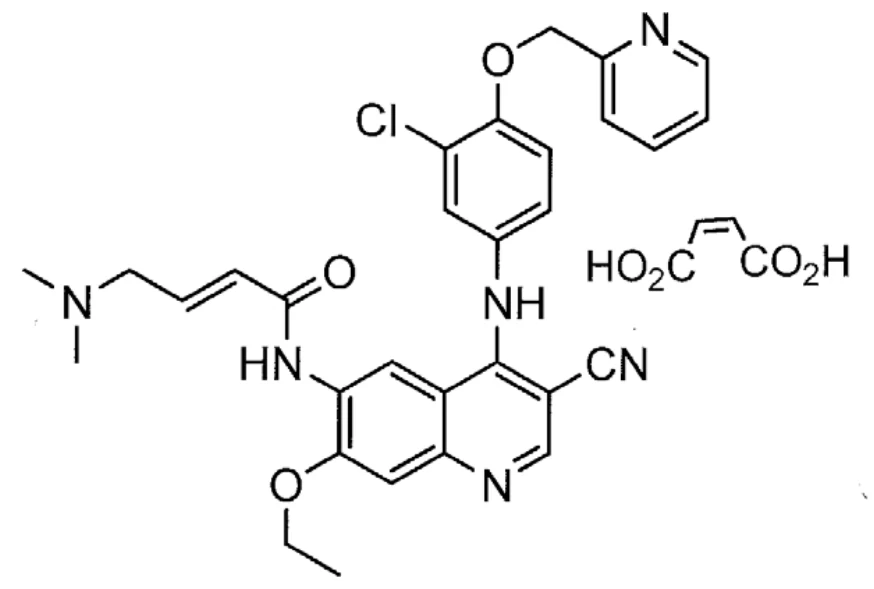
Chemical name: (E)-N-{4-[3-chloro-4-(pyridin-2-yl methoxy)anilino]-3-cyano-7-ethoxyquinolin-6-yl}-4-(dimethylamino)but-2-enamide maleate
Molecular formula: C30H29ClN6O3•C4H4O4
Molecular mass: 673.11
Structural formula:
Physicochemical properties: Neratinib maleate is an off-white to yellow powder with a melting temperature of approximately 201oC, followed immediately by decomposition. The solubility of neratinib maleate increases dramatically in acidic pH. The maximum aqueous solubility of neratinib maleate is 32.90 mg/mL at pH 1.2 and becomes negligible (0.08 mg/mL or less) at approximately pH 5.0 and above.
14 CLINICAL TRIALS
14.1 Clinical Trials by Indication
Extended Adjuvant Treatment of Early-Stage Breast Cancer
Table 16. Summary of Patient Demographics for Clinical Trials in Early-Stage Breast Cancer
| Study # | Study design | Dosage, route of administration and duration | Study subjects (n) | Median age (Range) | Sex |
| ExteNET | Randomized, double-blind, placebo-controlled study in patients with early-stage HER2-positive breast cancer | NERLYNX 240 mg once daily Placebo once daily | 2840 | 52 (23-83) | F: 100% |
ExteNET Trial Design and Study Demographics
The safety and efficacy of NERLYNX were investigated in a multicenter, randomized, double blind, placebo-controlled study in women with early-stage HER2-positive breast cancer, who had previously received trastuzumab-based adjuvant therapy (ExteNET).
A total of 2840 women with early-stage HER2-positive breast cancer were randomized to receive either NERLYNX (n = 1420) or placebo (n = 1420). Randomization was stratified by the following factors: hormone receptor status, nodal status (0, 1-3 vs 4 or more positive nodes) and whether prior trastuzumab was given sequentially versus concurrently with chemotherapy. NERLYNX 240 mg or placebo was given orally once daily for one year. The median duration of treatment was 11.6 months in the NERLYNX arm vs. 11.8 months in the placebo arm. Patients who were hormone receptor-positive (defined as ER-positive and/or PgR-positive) received concomitant endocrine therapy.
Patient demographics and disease characteristics were balanced between treatment arms. Overall, patients had a median age of 52 years (range 23 to 83); 12% of patients were 65 years of age or older. The majority of patients were Caucasian (81%), and most (92%) had an ECOG performance status of 0. Fifty-seven percent (57%) had hormone receptor positive disease. At initial diagnosis, 24% were node negative, 47% had one to three positive nodes and 30% had four or more positive nodes. Ten percent (10%) of patients had Stage I disease, 41% had Stage II disease, 31% had Stage III disease and 18% of unknown stage. Median time from diagnosis to randomization was 22.1 months.
Twenty-five percent (25%) of patients had received prior neoadjuvant therapy and 17% initiated trastuzumab in the neoadjuvant setting. The majority of patients (81%) were enrolled within one year of completion of trastuzumab-based adjuvant treatment. Median time from the last adjuvant trastuzumab treatment to randomization was 4.4 months in the NERLYNX arm vs. 4.6 months in the placebo arm.
ExteNET Study Results
The primary efficacy outcome measure was invasive disease-free survival (iDFS) at 24 months defined as the time from randomization to the first occurrence of invasive tumor recurrence (local/regional, ipsilateral, or contralateral breast cancer), distant recurrence, or death from any cause. Secondary endpoints of the study were disease-free survival including ductal carcinoma in situ (DFS-DCIS), distant disease-free survival (DDFS), time to distant recurrence (TTDR), and cumulative incidence of central nervous system (CNS) recurrences.
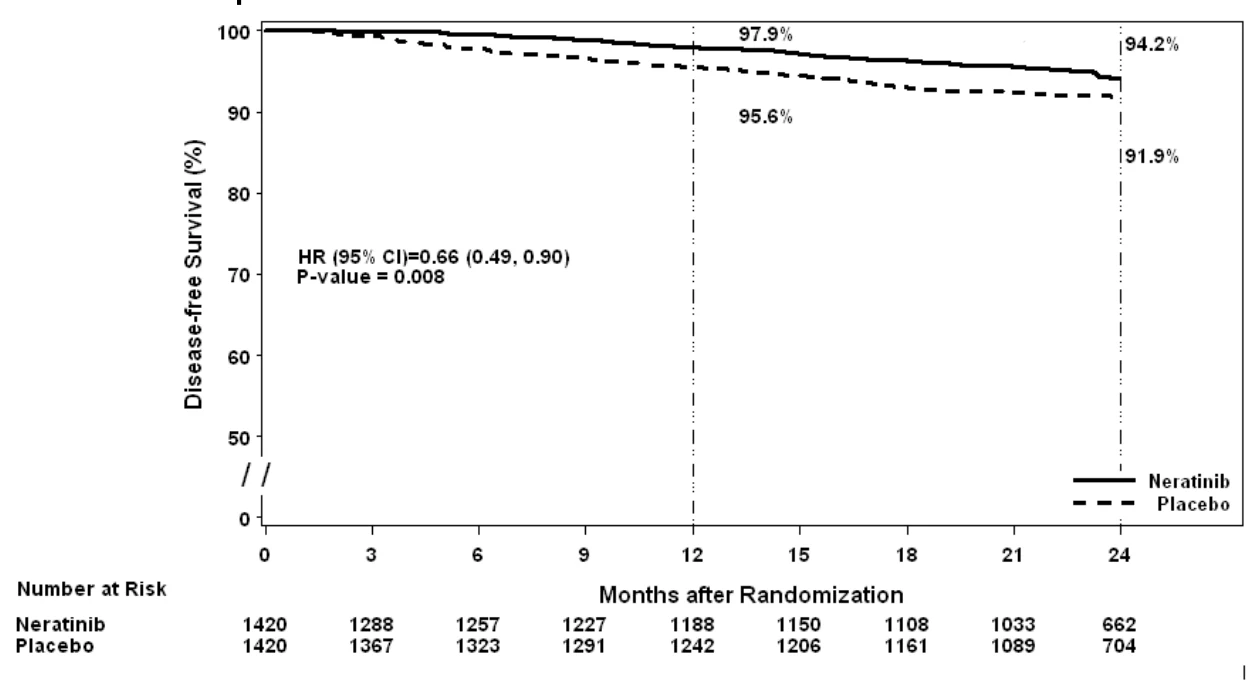
The primary analysis of the efficacy results of the ITT population from the ExteNET study is summarized in Table 17 and a Kaplan-Meier (K-M) plot in Figure 1. The primary analysis demonstrated that NERLYNX significantly reduced the risk of invasive disease recurrence or death at 24 months by 34% (HR = 0.66 with 95% CI: 0.49, 0.90, two-sided p = 0.008) when compared to placebo in the ITT population.
Based on the primary analyses of the secondary endpoints, NERLYNX reduced the risk of DFS-DCIS events by 39% compared to the placebo. A trending benefit was shown for DDFS and TTDR in patients treated with NERLYNX (Table 17). The most frequent site for distance recurrence as DDFS events in NERLYNX-treated patients was bone, followed by liver and brain.
Table 17. Primary Efficacy Analyses at 24 Months – ITT Population
| Endpoint | Patient with events (%) | Estimated 2-year event free rates1 (%) | Hazard ratio (95% CI)2 | P-value3 | ||
|---|---|---|---|---|---|---|
| NERLYNX (N = 1420) | Placebo (N = 1420) | NERLYNX (N = 1420) | Placebo (N = 1420) | |||
| Invasive disease-free survival (iDFS) | 4.7 | 7.5 | 94.2 | 91.9 | 0.66 (0.49, 0.90) | 0.008 |
| Disease-free survival including ductal carcinoma in situ (DFS-DCIS) | 4.7 | 8 | 94.2 | 91.3 | 0.61 (0.45, 0.83) | 0.001 |
| Distant disease-free survival (DDFS) | 3.8 | 5.4 | 95.3 | 94.0 | 0.74 (0.52, 1.05) | 0.094 |
| Time to distant recurrence (TTDR) | 3.7 | 5.3 | 95.5 | 94.2 | 0.73 (0.51, 1.04) | 0.087 |
| Cumulative incidence of CNS recurrence | 0.8 | 1.1 | 0.92 | 1.16 | – | 0.548 |
CNS = central nervous system.
1 Event-free rates for all endpoints, except for CNS recurrence for which cumulative incidence is reported.
2 Stratified by prior trastuzumab (concurrent vs. sequential), nodal status (0-3 positive nodes vs. ≥4 positive nodes), and ER/PR status (positive vs. negative).
3 Stratified 2-sided log-rank test.
Figure 1: Kaplan-Meier iDFS Estimates Primary Analysis at 24 Months – ITT Population
The pre-specified subgroup analyses were performed for the three stratification factors used in randomization (HRc positive vs. HRc negative; nodal disease, prior trastuzumab given sequentially vs. concurrently with chemotherapy), and time from completion of trastuzumab (≤ 1 vs. > 1 year).
A Forest plot of the subgroup analyses of iDFS for the ITT population is shown in Figure 2. In most subgroups analyzed, the treatment effect was in favor of NERLYNX. However, efficacy of NERLYNX (versus placebo) was not demonstrated in patients who were hormone receptor negative (n = 604 and 605, respectively); the hazard ratio for iDFS at 24 months was 0.93 (95% CI: 0.60, 1.43, p = 0.365). Efficacy of NERLYNX (versus placebo) was also not significantly different in patients who were randomized over one year after completion of trastuzumab-based adjuvant therapy (n = 268 and 275, respectively). The hazard ratio for iDFS at 24 months was 0.92 (95% CI: 0.37, 2.23, p = 0.430) in this population.
Figure 2: Forest Plot of Subgroup Analyses of iDFS – ITT population
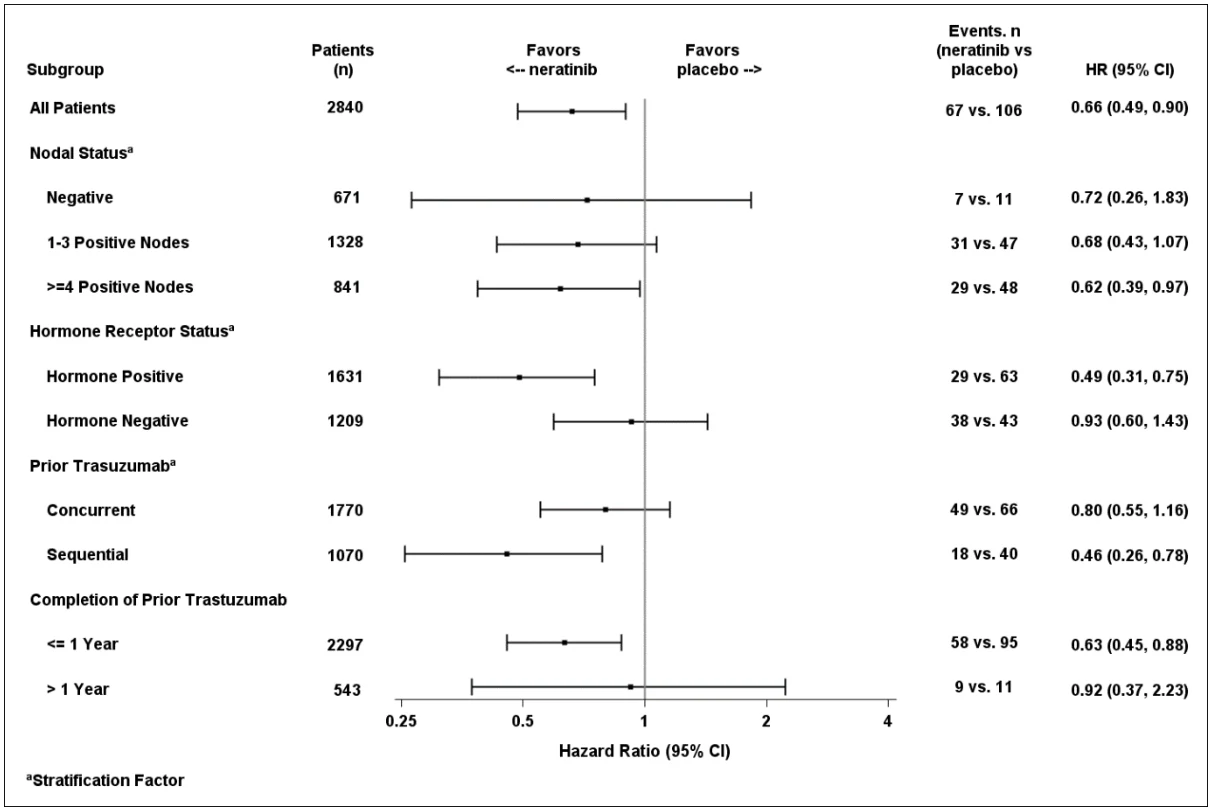
In an exploratory subgroup analysis for patients who were hormone receptor-positive and less than one year from completion of trastuzumab-based adjuvant therapy, the hazard ratio for invasive disease-free survival was 0.49 (95%CI: 0.30, 0.78). The estimated 2-year event-free rate was 95.3% for NERLYNX arm and 90.8% for placebo arm with a rate difference of 4.5%.
Approximately 75% of the ITT population was re-consented for 5-year follow-up. Observations with missing data were censored at the last date of assessment. This exploratory analysis suggests that the iDFS results at 5 years are consistent with the 2-year iDFS results observed in ExteNET.
Metastatic Breast Cancer
Table 18. Summary of Patient Demographics for Clinical Trials in Metastatic Breast Cancer
| Study # | Study design | Dosage, route of administration and duration | Study subjects (n) | Median age (Range) | Sex |
| NALA | Randomized, open-label, active-controlled study in patients with metastatic, | NERLYNX 240 mg orally once daily + capecitabine 1500 mg/m2 on days 1-14 of a 21-day cycle | 621 | 55 (25-84) | F: 99.5% M: 0.5% |
| previously treated, HER2-positive breast cancer | Lapatinib 1250 mg orally once daily + capecitabine 2000 mg/m2 on days 1-14 of a 21-day cycle |
NALA Trial Design and Study Demographics
The safety and efficacy of NERLYNX in combination with capecitabine was studied in a randomized, multicenter, open label clinical trial in patients with metastatic HER2-positive breast cancer who had received 2 or more prior anti-HER2 based regimens in the metastatic setting (NALA).
A total of 621 patients with metastatic breast cancer were randomized 1:1 to receive either NERLYNX in combination with capecitabine or lapatinib in combination with capecitabine. Randomization was stratified by the following factors: number of previous HER2-directed regimens in the metastatic setting, geographical region, visceral versus non-visceral only disease, and hormone receptor status. NERLYNX was given 240 mg orally once daily on Days 1-21 in combination with capecitabine at a total daily dose of 1500 mg/m2 evenly divided into 2 doses of 750 mg/m2, on Days 1-14 for each 21-day cycle (n = 307). Lapatinib was given 1250 mg orally once daily on Days 1-21 in combination with capecitabine at a total daily dose of 2000 mg/m2 evenly divided into 2 doses of 1000 mg/m2 on Days 1-14 for each 21-day cycle (n = 314). Patients were treated until disease progression or unacceptable toxicity. The median duration of treatment was 5.7 months in the NERLYNX plus capecitabine arm vs 4.4 months in the lapatinib plus capecitabine arm.
HER2 expression was based on archival tissue tested at a central laboratory prior to enrollment. HER2 positivity was defined as a HER2 immunohistochemistry (IHC) score of 3+ or IHC 2+ with confirmatory in situ hybridization (ISH) positive.
Patients who received previous therapy with capecitabine, neratinib, lapatinib, or any other
HER2-directed tyrosine kinase inhibitors and who had symptomatic or unstable brain metastases were excluded from the study. Concomitant endocrine therapy was not allowed in NALA.
Patient demographics and disease characteristics were balanced between treatment arms . Overall, patients had a median age of 55 years (range 25 to 84); 21% of patients were 65 years of age or older. Approximately half of patients were Caucasian (57%), with an ECOG performance status of 0 (54%) or 1 (46%). Fifty-nine percent (59%) of patients had hormone receptor positive disease. At initial diagnosis, 69% had received two prior anti-HER2 based regimens and 31% had received three or more prior anti-HER2 based regimens (99.7% received trastuzumab; 41.7% received pertuzumab; 54.3% received T-DM1; 34.6% received trastuzumab, pertuzumab and T-DM1). 81% had visceral disease, and 19% had non-visceral only disease. Patients with asymptomatic or stable brain metastases were included in NALA trial (16%). Median time from diagnosis to randomization was 3.4 years.
NALA Study Results
The study had two co-primary endpoints: independently adjudicated progression-free-survival (PFS) and overall survival (OS) with success requiring only one to be positive.
The co-primary endpoint of centrally adjudicated progression-free-survival (PFS) was defined as the time interval from the date of randomization until the first date on which recurrence, progression (per RECIST v 1.1), or death due to any cause was documented. The co-primary endpoint of overall survival (OS) was defined as the time from randomization to death due to any cause. Secondary endpoints of the study included objective response rate (ORR), duration of response (DOR), and time to intervention for symptomatic metastatic central nervous system (CNS) disease.
The centrally assessed PFS results for the ITT population from the NALA study is summarized in Table 19 and K-M plots for PFS and OS are presented in Figure 3 and Figure 6, respectively. The primary analysis of PFS demonstrated that NERLYNX plus capecitabine significantly reduced the risk of disease progression or death by 24% (HR = 0.76; 95% CI: 0.63, 0.93; p = 0.0059) when compared to the lapatinib plus capecitabine arm. Median PFS was 5.6 months (95% CI: 4.9, 6.9) in the NERLYNX plus capecitabine arm compared to 5.5 months (95% CI: 4.3, 5.6) in the lapatinib plus capecitabine arm. For OS, the stratified hazard ratio for NERLYNX plus capecitabine was 0.88 (95% CI: 0.72, 1.07; p = 0.2086).
Table 19. Efficacy Results – NALA Trial (ITT Population)
| NERLYNX + Capecitabine (n = 307) | Lapatinib + Capecitabine (n = 314) | |||||||||||
|---|---|---|---|---|---|---|---|---|---|---|---|---|
| Progression Free Survival (PFS)1 | ||||||||||||
| Number of Events (%) | 210 (68.4) | 223 (71.0) | ||||||||||
| Median PFS, month (95% CI) | 5.6 (4.9, 6.9) | 5.5 (4.3, 5.6) | ||||||||||
| HR (95% CI)* | 0.76 (0.63,0.93) | |||||||||||
| p-value† | 0.0059 | |||||||||||
| PFS rates at 12 months, % (95% CI)α | 29 (23, 35) | 15 (10, 20) | ||||||||||
| PFS rates at 24 months, % (95% CI)‡, α | 12 (7, 18) | 3 (1, 8) | ||||||||||
| Overall Survival (OS)2 | ||||||||||||
| Number of Events (%) | 192 (62.5) | 218 (69.4) | ||||||||||
| Median OS, month (95% CI) | 21.0 (17.7, 23.5) | 18.7 (15.5, 21.2) | ||||||||||
| HR (95% CI)* | 0.88 (0.72, 1.07) | |||||||||||
| p-value† | 0.2086 | |||||||||||
| Cumulative Incidence of Intervention for Symptomatic Metastatic CNS Disease2 | ||||||||||||
| Overall Cumulative Incidence (95% CI) | 22.8 (15.5, 30.9) | 29.2 (22.5, 36.1) | ||||||||||
| Objective Response Rate (ORR)1 | ||||||||||||
| ORR, % (95% CI) | 32.8 (27.1, 38.9) | 26.7 (21.5, 32.4) | ||||||||||
| Complete response (CR) | 1 (0.4) | 0 (0.0) | ||||||||||
| Partial response (PR) | 83 (32.4) | 72 (26.7) | ||||||||||
| Duration of Response (DOR)1 | ||||||||||||
| Median DOR, months (95% CI) | 8.5 (5.6, 11.2) | 5.6 (4.2, 6.4) | ||||||||||
HR = Hazard Ratio; CI = confidence interval; CNS = central nervous system
* Hazard ratio is presented as NERLYNX plus Capecitabine (N+C) vs Lapatinib plus Capecitabine (L+C) via the stratified cox proportional hazards model
† Stratified log-rank test
‡ The total number of patients remaining on study at 24 months is 11; with 9 patients on N+C and 2 patients on L+C
α exploratory analysis
1 Centrally assessed
2 Locally assessed
Figure 3: Kaplan-Meier Plot of Progression-Free Survival – Central Assessment (ITT Population)
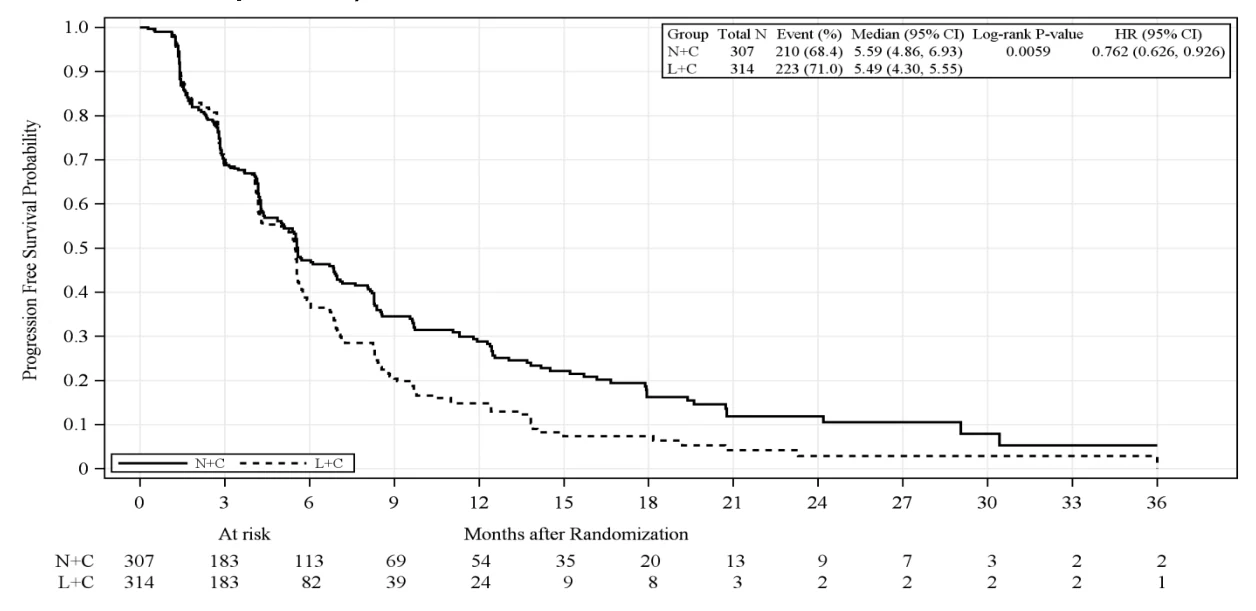
CI = confidence interval; HR = hazard ratio; ITT = intent-to-treat; L+C = lapatinib plus capecitabine; N+C = neratinib plus capecitabine.
Log-rank test and Cox model are stratified by randomization stratification factors: hormone receptor status, number of prior HER2-directed regimens in the metastatic setting, and visceral vs non-visceral only disease location.
In most subgroups analyzed, the treatment effect was in favor of NERLYNX plus capecitabine. However, a statistically significant interaction was found (p < 0.001) in the subgroup analysis for PFS by hormone receptor status. The treatment effect in the overall population was substantially driven by hormone receptor-negative patients. The subgroup analyses by hormone receptor status and their respective Kaplan-Meier plots are presented in Figures 4 and 5.
Figure 4: Kaplan-Meier Plot of Progression-Free Survival – Central Assessment (ITT Population, Subgroup: Hormone Receptor Positive)
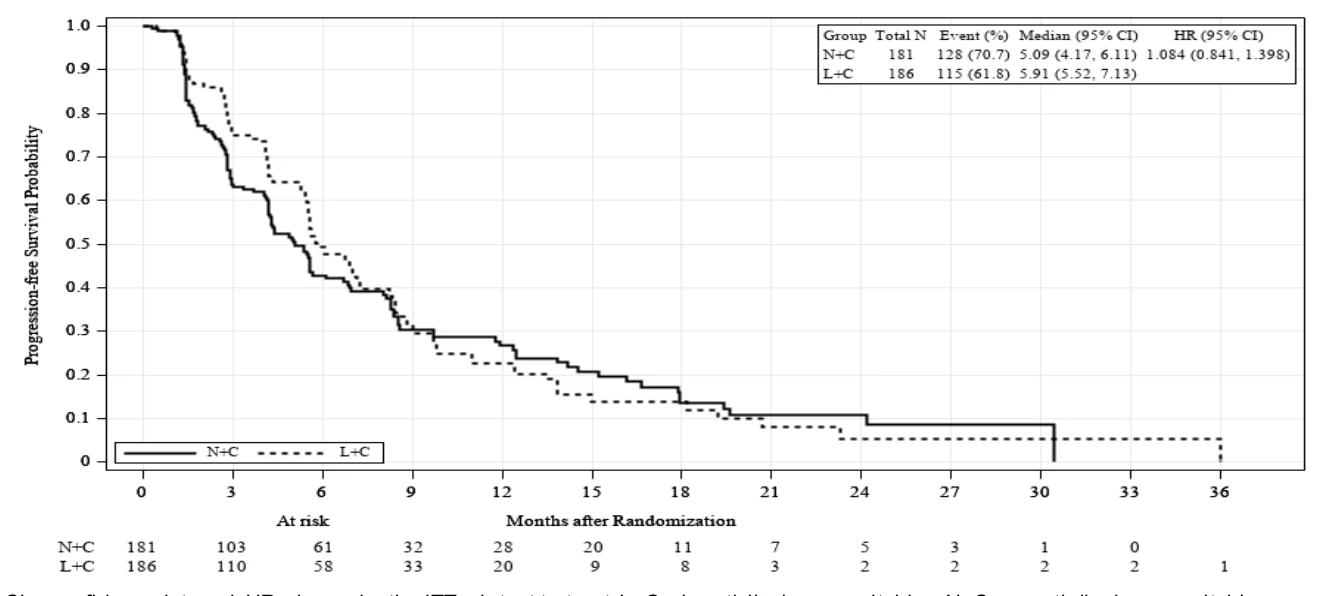
CI = confidence interval; HR = hazard ratio; ITT = intent-to-treat; L+C = lapatinib plus capecitabine; N+C = neratinib plus capecitabine.
Figure 5: Kaplan-Meier Plot of Progression-Free Survival – Central Assessment (ITT Population, Subgroup: Hormone Receptor Negative)
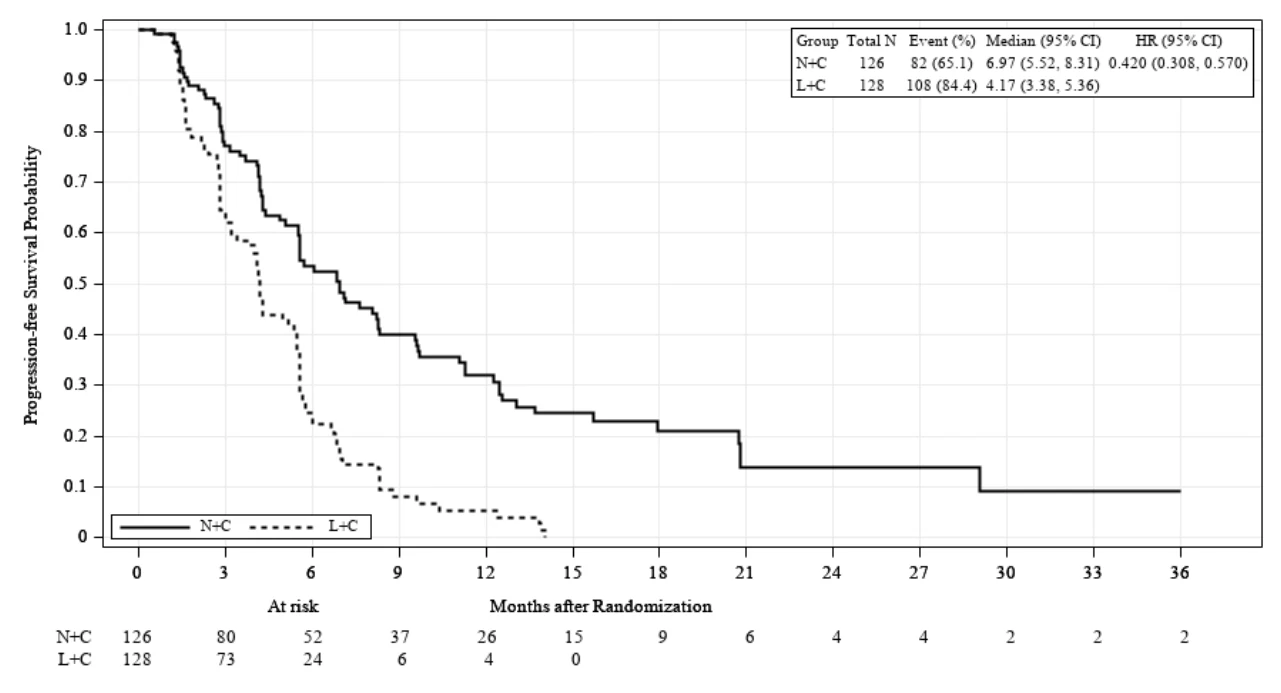
CI = confidence interval; HR = hazard ratio; ITT = intent-to-treat; L+C = lapatinib plus capecitabine; N+C = neratinib plus capecitabine.
Figure 6: Kaplan-Meier Plot of Overall Survival (ITT Population)
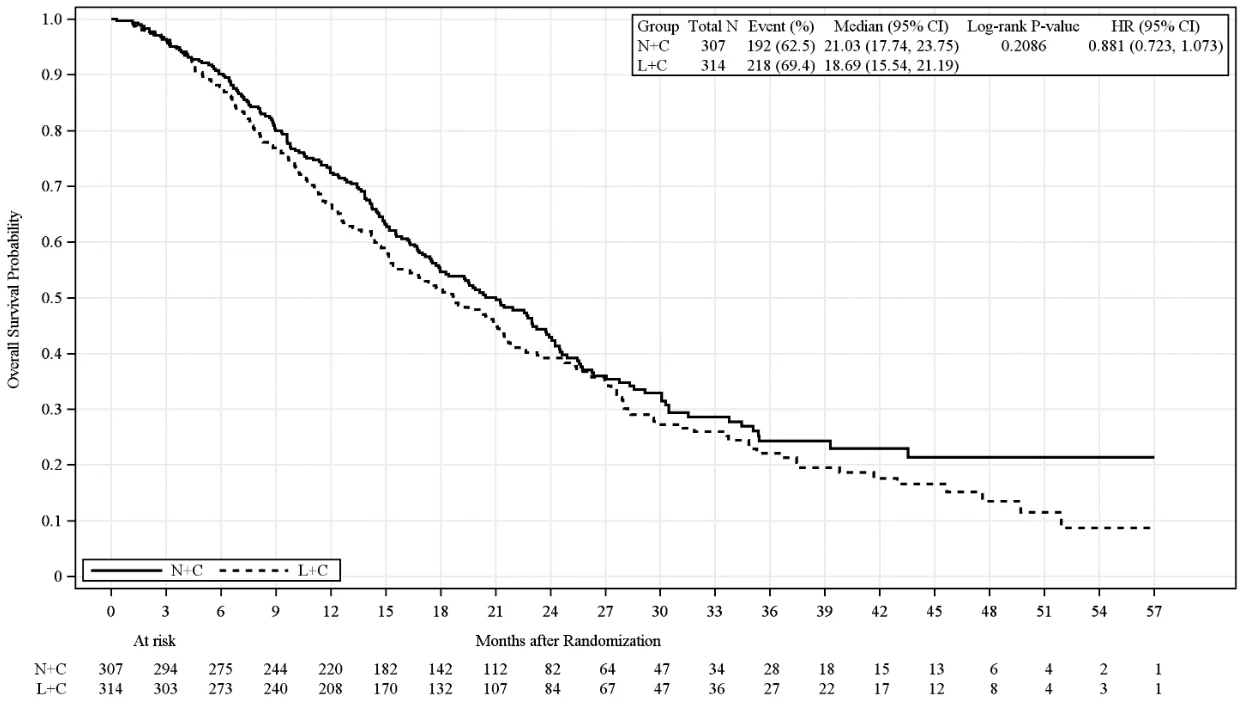
CI = confidence interval; HR = hazard ratio; ITT = intent-to-treat; L+C = lapatinib plus capecitabine; N+C = neratinib plus capecitabine.
Based on OS analysis by subgroup, the hazard ratios (NERLYNX plus capecitabine arm compared to lapatinib plus capecitabine arm) were 0.94 (95% CI: 0.72, 1.22) and 0.76 (95% CI: 0.57, 1.01) in patients with hormone receptor positive and hormone receptor negative status, respectively.
15 MICROBIOLOGY
No microbiological information is required for this drug product.
16 NON-CLINICAL TOXICOLOGY
General Toxicology:
Neratinib was administered orally at doses of 3, 10, and 30 mg/kg/day to rats for 26 weeks. Neratinib-related effects were observed in the liver (hepatic biliary epithelial cell vacuolation) and skin (inflammation) at 30 mg/kg/day, in the intestinal tract (luminal dilatation of the duodenum and ileum, mixed cell inflammation and crypt abscess of the cecum, villous atrophy of the ileum, mixed cell inflammation of the colon) at doses of ≥10 mg/kg/day, and in the mammary gland (atrophy) in males and lymph nodes (plasmacytosis, sinus histiocytosis) at doses of ≥3 mg/kg/day. Complete or partial recovery was observed for all target organs after a
28-day recovery period. The dose of 3 mg/kg/day in rats was approximately 5 times the maximum recommended human dose of 240 mg/day based on AUC comparison.
Neratinib was administered orally to male and female beagle dogs for at least 39 consecutive weeks at dose levels of 0.5, 2, or 6 mg/kg/day (up to 0.8 times the AUC in patients receiving the recommended dose of 240 mg/day). Neratinib-related microscopic changes were observed in the duodenal papilla (histiocytosis) at 6 mg/kg/day, and in the gall bladder (mucinous hyperplasia, lymphohistiocytic inflammation), mesenteric lymph nodes (sinus erythrocytosis), and testes (tubular hyperplasia) at doses of ≥0.5 mg/kg/day. The dose of 0.5 mg/kg/day in dogs was approximately 0.05 times the maximum recommended human dose of 240 mg/day based on AUC comparison.
Carcinogenicity:
Neratinib was not carcinogenic in a 6-month Tg.rasH2 transgenic mouse study at oral doses of up to 50 mg/kg/day in males and 125 mg/kg/day in females (approximately 10-33 times the AUC in patients receiving the recommended dose of 240 mg/day). Similarly, neratinib was not carcinogenic in a 2-year rat study at oral doses up to 10 mg/kg/day (approximately 22-35 times the AUC in patients receiving the recommended dose of 240 mg).
Genotoxicity:
Neratinib and its metabolites M3, M6, M7 and M11 were not mutagenic in an in vitro bacterial reverse mutation (AMES) assay or clastogenic in an in vitro human lymphocyte chromosomal aberration assay. Neratinib and M3 were not clastogenic in an in vivo rat bone marrow micronucleus assay.
Reproductive and Developmental Toxicology:
In a fertility study in rats, neratinib administration up to 12 mg/kg/day (approximately 0.5 times the maximum recommended dose of 240 mg/day in patients on a mg/m2 basis) to either males or females caused no effects on mating or the ability of animals to become pregnant. In repeat-dose toxicity studies in dogs with oral administration of neratinib daily for up to 39 weeks, tubular hypoplasia of the testes was observed at ≥ 0.5 mg/kg/day. This finding was observed at AUCs that were approximately 0.05 times the AUC in patients at the maximum recommended dose of 240 mg.
In a fertility and early embryonic development study in female rats, neratinib was administered orally for 15 days before mating to Day 7 of pregnancy, which did not cause embryonic toxicity at doses up to 12 mg/kg/day in the presence of maternal toxicity. A dose of 12 mg/kg/day in rats is approximately 0.5 times the maximum recommended dose of 240 mg/day in patients on a mg/m2 basis.
In an embryo-fetal development study in rats, pregnant animals received oral doses of neratinib up to 15 mg/kg/day during the period of organogenesis. No effects on embryo-fetal development or survival were observed. Maternal toxicity was evident at 15 mg/kg/day (approximately 0.6 times the AUC in patients receiving the maximum recommended dose of 240 mg/day).
In an embryo-fetal development study in rabbits, pregnant animals received oral doses of neratinib up to 9 mg/kg/day during the period of organogenesis. Administration of neratinib at doses ≥ 6 mg/kg/day resulted in maternal toxicity, abortions and embryo-fetal death (increased resorptions). Neratinib administration resulted in increased incidence of fetal gross external (domed head), soft tissue (dilation of the brain ventricles and ventricular septal defect), and skeletal (misshapen anterior fontanelles and enlarged anterior and/or posterior fontanelles)
abnormalities at ≥ 3 mg/kg/day. The AUC(0-t) at 6 mg/kg/day and 9 mg/kg/day in rabbits were approximately 0.5 and 0.8 times, respectively, the AUCs in patients receiving the maximum recommended dose of 240 mg/day.
In a peri and postnatal development study in rats, oral administration of neratinib from gestation day 7 until lactation day 20 resulted in maternal toxicity at ≥ 10 mg/kg/day (approximately 0.4 times the maximum recommended dose of 240 mg/day in patients on a mg/m2 basis) including decreased body weights, body weight gains, and food consumption. Effects on long-term memory were observed in male offspring at maternal doses of ≥ 5 mg/kg/day (approximately 0.2 times the maximum recommended dose of 240 mg/day in patients on a mg/m2 basis).