


Product Monograph - Tykerb
RECENT MAJOR LABEL CHANGES
None at the time of authorisation
TABLE OF CONTENTS
Sections or subsections that are not applicable at the time of authorization are not listed.
RECENT MAJOR LABEL CHANGES............................................................................................ 2
TABLE OF CONTENTS .............................................................................................................. 2
PART I: HEALTH PROFESSIONAL INFORMATION ..................................................................... 4
1 INDICATIONS .............................................................................................................. 4
1.1 Pediatrics (< 18 years of age).............................................................................. 4
1.2 Geriatrics (> 65 years of age): ............................................................................. 4
2 CONTRAINDICATIONS ................................................................................................. 4
3 SERIOUS WARNINGS AND PRECAUTIONS BOX ............................................................ 4
4 DOSAGE AND ADMINISTRATION................................................................................. 5
4.1 Dosing Considerations ....................................................................................... 5
4.2 Recommended Dose and Dosage Adjustment..................................................... 5
4.3 Reconstitution ................................................................................................... 7
4.4 Administration................................................................................................... 7
4.5 Missed Dose ...................................................................................................... 7
5 OVERDOSAGE ............................................................................................................. 7
6 DOSAGE FORMS, STRENGTHS, COMPOSITION AND PACKAGING ................................. 8
7 WARNINGS AND PRECAUTIONS .................................................................................. 8
7.1 Special Populations .......................................................................................... 11
7.1.1 Pregnant Women ....................................................................................... 11
7.1.2 Breast-feeding............................................................................................ 12
7.1.3 Pediatrics ................................................................................................... 12
7.1.4 Geriatrics ................................................................................................... 12
8 ADVERSE REACTIONS ................................................................................................ 12
8.2 Clinical Trial Adverse Reactions ........................................................................ 12
8.3 Less Common Clinical Trial Adverse Reactions .................................................. 15
8.4 Abnormal Laboratory Findings: Hematologic, Clinical Chemistry and Other
Quantitative Data ...................................................................................................... 16
8.5 Post-Market Adverse Reactions........................................................................ 17
9 DRUG INTERACTIONS................................................................................................ 18
9.2 Drug Interactions Overview.............................................................................. 18
9.4 Drug-Drug Interactions .................................................................................... 18
9.5 Drug-Food Interactions .................................................................................... 23
9.7 Drug-Laboratory Test Interactions .................................................................... 23
10 CLINICAL PHARMACOLOGY ....................................................................................... 23
10.1 Mechanism of Action.................................................................................. 23
10.2 Pharmacodynamics .................................................................................... 24
10.3 Pharmacokinetics ....................................................................................... 25
11 STORAGE, STABILITY AND DISPOSAL ......................................................................... 27
12 SPECIAL HANDLING INSTRUCTIONS........................................................................... 27
PART II: SCIENTIFIC INFORMATION ...................................................................................... 28
13 PHARMACEUTICAL INFORMATION............................................................................ 28
14 CLINICAL TRIALS........................................................................................................ 29
14.1 Clinical Trials by Indication.......................................................................... 29
Breast Cancer ............................................................................................................ 29
15 MICROBIOLOGY ........................................................................................................ 36
16 NON-CLINICAL TOXICOLOGY ..................................................................................... 36
PATIENT MEDICATION INFORMATION ................................................................................. 38
PART I: HEALTH PROFESSIONAL INFORMATION
1 INDICATIONS
TYKERB (lapatinib tablets) is indicated for:
In combination with capecitabine, for the treatment of patients with metastatic breast cancer whose tumours overexpress ErbB2 (HER2). Patients should have progressed on taxanes and anthracycline before starting this therapy. In addition, patients should have progressed on prior trastuzumab therapy in the metastatic setting.
Approval is based on the surrogate endpoint, time to progression, without demonstration of an overall survival advantage or palliation due to therapy (see 14, CLINICAL TRIALS).
- In combination with letrozole for the treatment of post-menopausal patients with hormone receptor positive metastatic breast cancer, whose tumours overexpress the ErbB2 (HER2) receptor, and who are suitable for endocrine therapy. Approval was based on progression free survival, without demonstrating an overall survival advantage or quality of life benefit.
1.1 Pediatrics (< 18 years of age)
No data are available to Health Canada; therefore, Health Canada has not authorized an indication for pediatric use.
1.2 Geriatrics (> 65 years of age):
There are limited data of the use of TYKERB in patients aged 65 years and older.
(See 7.1.4 Geriatrics)
2 CONTRAINDICATIONS
- TYKERB is contraindicated in patients who are hypersensitive to this drug or to any ingredient in the formulation or component of the container. For a complete listing, see 6 DOSAGE FORMS, STRENGTHS, COMPOSITION AND PACKAGING section of the product monograph.
- Please refer to the product monograph of the co-administered medicinal products (capecitabine or letrozole) for relevant contraindications and safety information.
3 SERIOUS WARNINGS AND PRECAUTIONS BOX
Serious Warnings and Precautions
TYKERB (lapatinib tablets) should only be administered by physicians experienced with antineoplastic drugs (see 1 INDICATIONS).
|
4 DOSAGE AND ADMINISTRATION
4.1 Dosing Considerations
- TYKERB should only be administered by physicians experienced with antineoplastic drugs (see 1 INDICATIONS).
- ErbB2 (HER2) over-expressing tumours are defined by IHC3+, IHC2+ and gene amplification (FISH), or gene amplification alone. Gene amplification should be performed using an accurate and validated assay. Tumour tissue is ErbB2 (HER2) positive by FISH if the ratio is greater than 2.0 and by IHC with IHC3+ and full circumferential staining in >10% tumour cells.
- The bioavailability of lapatinib is increased by food. TYKERB should only be taken at least 1 hour before or at least 1 hour after a low-fat meal. The recommended daily lapatinib dose should not be divided.
4.2 Recommended Dose and Dosage Adjustment
TYKERB/capecitabine Combination:
The recommended dose of TYKERB is 1250 mg (i.e. five tablets) once daily every day when taken in combination with capecitabine. TYKERB should be taken at least one hour before, or at least one hour after a low fat meal (see 10.1 Mechanism of Action, 10.3 Pharmacokinetics).
The recommended dose of capecitabine is 2000 mg/m2/day divided into two equal doses, each dose taken 12 hours apart on days 1-14 in a 21 day cycle (see 14. CLINICAL TRIALS). Capecitabine should be taken with food or within 30 minutes after food.
The prescribing information for capecitabine must be consulted for guidance on dose delay and dose reduction recommendations for capecitabine.
TYKERB/letrozole Combination:
The recommended dose of lapatinib is 1500 mg (i.e. six tablets) once daily every day when taken in combination with letrozole. TYKERB should be taken at least one hour before, or at least one hour after a low fat meal (see 10.1 Mechanism of Action, 10.3 Pharmacokinetics).
When lapatinib is co-administered with letrozole, the recommended dose of letrozole is 2.5 mg once daily.
Cardiac events (see 7. WARNINGS AND PRECAUTIONS):
TYKERB should be discontinued in patients with symptoms associated with decreased LVEF that are National Cancer Institute Common Terminology Criteria for Adverse Events (NCI CTCAE) grade 3 or greater or if their LVEF drops below the institutions lower limit of normal. Consideration may be given to restarting TYKERB after a minimum of 2 weeks and only if the LVEF recovers to normal and the patient is asymptomatic. If TYKERB is restarted under these circumstances, a reduced dose (1000 mg/day when administered with capecitabine and 1250 mg/day when administered with letrozole) is recommended. Based on current data, the majority of LVEF decreases occur within the first 12 weeks of treatment, but there is limited data on long term exposure.
Interstitial lung disease/pneumonitis (see 7. WARNINGS AND PRECAUTIONS and 8. ADVERSE REACTIONS):
TYKERB should be discontinued in patients who experience pulmonary symptoms indicative of interstitial lung disease/pneumonitis which are NCI CTCAE grade 3 or greater.
Diarrhea (see 7. WARNINGS AND PRECAUTIONS and 8. ADVERSE REACTIONS):
TYKERB dosing should be interrupted in patients with diarrhea which is NCI CTCAE grade 3 or grade 1 or 2 with complicating features (moderate to severe abdominal cramping, nausea or vomiting greater than or equal to NCI CTCAE grade 2, decreased performance status, fever, sepsis, neutropenia, frank bleeding or dehydration). TYKERB may be reintroduced at a lower dose (reduced from 1000 mg/day to 750 mg/day, from 1250 mg/day to 1000 mg/day or from 1500 mg/day to 1250 mg/day) when diarrhea resolves to grade 1 or less. TYKERB dosing should be permanently discontinued in patients with diarrhea which is NCI CTCAE grade 4.
Severe cutaneous reactions (see 7. WARNINGS AND PRECAUTIONS):
TYKERB should be discontinued in patients who experience severe progressive skin rash with blisters or mucosal lesions.
Renal Impairment : There is no experience of TYKERB in patients with severe renal impairment; however, patients with renal impairment are unlikely to require dose modification of TYKERB given that less than 2% of an administered dose (TYKERB and metabolites) is eliminated by the kidneys (see 10.1 Mechanism of Action, 10.3 Pharmacokinetics, 7.1 Special Populations and Conditions).
Hepatic Impairment
TYKERB is metabolised in the liver. Moderate and severe hepatic impairment have been associated respectively, with 56% and 85% increases in systemic exposure. Administration of TYKERB to patients with hepatic impairment should be undertaken with caution due to increased exposure to the drug. Reduction in dose is recommended in patients with pre-existing hepatic impairment. (see 7. WARNINGS AND PRECAUTIONS, Hepatic/Biliary/pancreatic). TYKERB dosing should be discontinued if changes in liver function are severe and patients should not be retreated. (see 7. WARNINGS AND PRECAUTIONS and 10.1 Mechanism of Action and 10.3 Pharmacokinetics, 7.1 Special Populations and Conditions).
There is no safety data from clinical trials on the use of TYKERB in patients with severe hepatic impairment (Child-Pugh Class C). TYKERB should be used with caution in these patients (see 7. WARNINGS AND PRECAUTIONS and 10.1 Mechanism of Action and 10.3 Pharmacokinetics, 7.1 Special Populations and Conditions).
Concomitant Strong CYP3A4 Inhibitors:
The concomitant use of strong CYP3A4 inhibitors should be avoided (see 7. WARNINGS AND PRECAUTIONS and 9. DRUG INTERACTIONS). There are no clinical data recommending an appropriate dose adjustment in patients receiving strong CYP3A4 inhibitors. However, if patients must be co-administered a strong CYP3A4 inhibitor, based on pharmacokinetic studies, a dose reduction to 500 mg/day of TYKERB is predicted to adjust the lapatinib AUC to the range observed without inhibitors and should be considered. If the strong inhibitor is discontinued, a washout period of approximately 1 week should be allowed before the lapatinib dose is adjusted upward to the indicated dose.
Concomitant Strong CYP3A4 Inducers:
The concomitant use of strong CYP3A4 inducers should be avoided (see 7. WARNINGS AND
PRECAUTIONS and 9. DRUG INTERACTIONS). There are no clinical data recommending an appropriate dose adjustment in patients receiving strong CYP3A4 inducers. If patients must be co-administered a strong CYP3A4 inducer the dose of TYKERB should be titrated gradually based on tolerability. If the strong inducer is discontinued the TYKERB dose should be reduced over approximately 2 weeks to the indicated dose.
Other toxicities:
Discontinuation or interruption of dosing with TYKERB may be considered when a patient develops toxicity greater than or equal to grade 2 on the NCI CTCAE. Dosing can be restarted at either, 1250 mg/day when administered with capecitabine or 1500 mg/day when administered with letrozole, when the toxicity improves to grade 1 or less. If the toxicity recurs, then TYKERB should be restarted at a lower dose (1000 mg/day when administered with capecitabine and 1250 mg/day when administered with letrozole).
4.3 Reconstitution
Not Applicable
4.4 Administration
TYKERB tablets are to be taken orally.
4.5 Missed Dose
Missed doses of TYKERB should not be replaced and the dosing should resume with the next scheduled daily dose (see 5 OVERDOSAGE).
5 OVERDOSAGE
There is no specific antidote for the inhibition of ErbB1 (EGFR) and/or ErbB2 (HER2) tyrosine phosphorylation. The maximum oral dose of TYKERB that has been administered in clinical trials is 1800 mg once daily.
More frequent ingestion of TYKERB could result in serum concentrations exceeding those observed in clinical trials, therefore missed doses should not be replaced and dosing should resume with the next scheduled daily dose (see 4. DOSAGE AND ADMINISTRATION). Continuous ECG monitoring may be appropriate in cases of overdose.
Symptoms and Signs
Asymptomatic and symptomatic cases of overdose have been reported in patients being treated with TYKERB. Symptoms observed include known TYKERB associated adverse events (see 8 ADVERSE REACTIONS), and in some cases sore scalp, sinus tachycardia (with an otherwise normal ECG), and/or mucosal inflammation.
Treatment
TYKERB is not significantly renally excreted and is highly bound to plasma proteins, therefore hemodialysis would not be expected to be an effective method to enhance the elimination of TYKERB.
Further management should be as clinically indicated or as recommended by the Regional Poison Control Centre, where available.
| For management of a suspected drug overdose, contact your regional poison control centre. |
6 DOSAGE FORMS, STRENGTHS, COMPOSITION AND PACKAGING
Table 1 – Dosage Forms, Strengths, Composition and Packaging
TYKERB tablets, 250 mg, are yellow, oval, biconvex, film-coated tablets, with one side plain and the opposite side debossed with GS XJG.

The inactive ingredients of TYKERB are:
Tablet Core: magnesium stearate, microcrystalline cellulose, povidone, sodium starch glycolate.
Coating: hypromellose, iron oxide red, iron oxide yellow, macrogol/PEG 400, polysorbate 80 and titanium dioxide.
TYKERB film-coated tablets are available in HDPE bottles of 70 tablets.
7 WARNINGS AND PRECAUTIONS
General
It is not recommended that lapatinib in combination with letrozole be administered to HER2 negative patients due to a lack of clinical benefit in this population (see 14. CLINICAL TRIALS).
Cardiovascular
LVEF and Heart Failure: TYKERB has been reported to decrease left ventricular ejection fraction [LVEF] (see 8. ADVERSE REACTIONS). In randomized clinical trials, the majority (>57%) of LVEF decreases occurred within the first 12 weeks of treatment, but data on long-term exposure are limited. LVEF should be evaluated in all patients prior to initiation of treatment with TYKERB to ensure that the patient has a baseline LVEF that is within the institutions normal limits. LVEF should continue to be evaluated during treatment with TYKERB to ensure that LVEF does not decline to an unacceptable level. Caution should be taken if TYKERB is to be administered to patients with conditions that could impair left ventricular function (see 4.1 DOSAGE AND ADMINISTRATION: Dosing Considerations, Cardiac Events and See 14. CLINICAL TRIALS).
QT/QTc Prolongation: TYKERB is associated with QT/QTc interval prolongation (see 9.4 Drug-Drug Interactions and see 10.1 Mechanism of Action). Many drugs that cause QT/QTc prolongation are suspected to increase the risk of torsade de pointes. If sustained, torsade de pointes can progress to
| Route of Administration | Dosage Form / Strength/Composition | Non-medicinal Ingredients |
| Oral | Tablet 250 mg lapatinib (as lapatinib ditosylate) | Hypromellose, Iron oxide red, Iron oxide yellow, Macrogol/PEG 400, Magnesium stearate, Microcrystalline Cellulose, Polysorbate 80, Povidone, Sodium Starch Glycolate and Titanium Dioxide. |
ventricular fibrillation and sudden cardiac death. Events of ventricular fibrillation, cardiac arrest, and sudden death have been reported with TYKERB in clinical trials.
QT prolongation was observed in an uncontrolled, open-label dose escalation study of lapatinib in advanced cancer patients. A concentration dependent increase of the QTc interval has also been confirmed in a dedicated placebo-controlled crossover study in subjects with advanced solid tumors (see 10.2 Pharmacodynamics).
Caution should be taken if TYKERB is administered to patients who have or may develop prolongation of QTc. These conditions include patients with hypokalemia or hypomagnesemia, congenital long QT syndrome, patients taking anti-arrhythmic medicines or other medicinal products that lead to QT prolongation. Hypokalemia, hypocalcaemia or hypomagnesemia should be corrected prior to lapatinib administration.
Particular care should be exercised when administering TYKERB to patients who are suspected to be at an increased risk of experiencing torsade de pointes during treatment with a QT/QTc-prolonging drug. Risk factors for torsade de pointes in the general population include, but are not limited to, the following: female gender; age 65 years or older; baseline prolongation of the QT/QTc interval; presence of genetic variants affecting cardiac ion channels or regulatory proteins, especially congenital long QT syndromes; family history of sudden cardiac death at <50 years; cardiac disease (e.g., myocardial ischemia or infarction, congestive heart failure, left ventricular hypertrophy, cardiomyopathy, conduction system disease); history of arrhythmias (especially ventricular arrhythmias, atrial fibrillation, or recent conversion from atrial fibrillation); electrolyte disturbances (e.g., hypokalemia, hypomagnesemia, hypocalcemia); bradycardia (<50 beats per minute); acute neurological events (e.g., intracranial or subarachnoid haemorrhage, stroke, intracranial trauma); nutritional deficits (e.g., eating disorders, extreme diets); diabetes mellitus; autonomic neuropathy; hepatic dysfunction.
Physicians who prescribe drugs that prolong the QT/QTc interval should counsel their patients concerning the nature and implications of the ECG changes, underlying diseases and disorders that are considered to represent risk factors, demonstrated and predicted drug-drug interactions, symptoms suggestive of arrhythmia, risk management strategies, and other information relevant to the use of the drug.
Driving and Operating Machinery
There have been no studies to investigate the effect of TYKERB on driving performance or the ability to operate machinery. A detrimental effect on such activities cannot be predicted from the pharmacology of lapatinib. The clinical status of the patient and the adverse event profile of TYKERB should be borne in mind when considering the patient's ability to perform tasks that require judgement, motor or cognitive skills.
Gastrointestinal
Diarrhea, including severe diarrhea, has been reported with TYKERB treatment (see 8. ADVERSE REACTIONS). Diarrhea may be severe, and deaths have been reported. Diarrhea generally occurs early during TYKERB treatment, with almost half of those patients with diarrhea first experiencing it within 6 days. This usually lasts 4-5 days. TYKERB -induced diarrhea is usually low-grade, with severe diarrhea of National Cancer Institute Common Terminology Criteria for Adverse Events (NCI CTCAE) grades 3 and 4 occurring in <10% and <1% of patients, respectively. Early identification and intervention is critical for the optimal management of diarrhea. At the start of therapy, the patient’s bowel pattern and other symptoms (e.g. fever, cramping pain, nausea, vomiting, dizziness and thirst) should be determined, to allow identification of changes during treatment and to help identify patients at greater risk of diarrhea. Patients should be instructed to promptly report any change in bowel patterns immediately. Proactive management of diarrhea with anti-diarrhea agents is important. Prompt treatment after the first unformed stool is recommended with reassessment at 24 hours advised. Severe cases of diarrhea (CTCAE grade 3 or 4, grades 1 or 2 with complicating features such as severe cramping, severe nausea/vomiting, decreased performance status, fever, sepsis, Grade 3 or 4 neutropenia, frank bleeding, dehydration) may require administration of oral or intravenous electrolytes and fluids as indicated, use of antibiotics such as fluoroquinolones and interruption or discontinuation of TYKERB therapy (see 4.2 DOSAGE AND ADMINISTRATION: Recommended Dose and Dosage Adjustment, Diarrhea). Please refer to the capecitabine product monograph for relevant safety information.
Hepatic/Biliary/Pancreatic
Hepatotoxicity (ALT or AST > 3 times the upper limit of normal and total bilirubin > 1.5 times the upper limit of normal) has been observed in clinical trials (< 1% of patients) and post-marketing experience (see 8. ADVERSE REACTIONS). The hepatotoxicity may be severe and deaths have been reported. The hepatotoxicity may occur days to several months after initiation of treatment. Liver function tests (transaminases, bilirubin, and alkaline phosphatase) should be monitored before initiation of treatment, every 4 to 6 weeks during treatment, and as clinically indicated. If changes in liver function are severe, therapy with TYKERB should be discontinued and patients should not be retreated with lapatinib. Patients who carry the HLA alleles DQA1*02:01 and DRB1*07:01 have increased risk of TYKERB -associated hepatotoxicity. In a large, randomised clinical trial of TYKERB monotherapy (n=1,194), the overall risk of severe liver injury (ALT >5 times the upper limit of normal, NCI CTCAE grade 3) was 2% (1:50), the risk in DQA1*02:01 and DRB1*07:01 allele carriers was 8% (1:12) and the risk in non-carriers was 0.5% (1:200). Carriage of the HLA risk alleles is common (15 to 25%) in Caucasian, Asian, African and Hispanic populations but lower (1%) in Japanese populations.
There is no clinical experience with TYKERB in patients with severe pre-existing hepatic impairment. If TYKERB is to be administered to patients with severe pre-existing hepatic impairment, a dose reduction is recommended based on pharmacokinetic modeling. In patients who develop severe hepatotoxicity while on therapy, lapatinib should be discontinued and patients should not be retreated with TYKERB (see 4.2 DOSAGE AND ADMINISTRATION: Recommended Dose and Dosage Adjustment, Hepatic Impairment).
Monitoring and Laboratory Tests
Hypokalemia, hypomagnesemia, or hypocalcemia should be corrected prior to administration of TYKERB. The prescriber should consider baseline and on-treatment electrolyte measurements and electrocardiograms with QT measurement.
Prior to the initiation of treatment, left ventricular ejection fraction (LVEF) must be evaluated to ensure that baseline LVEF is within the institutional limits of normal (see 7. WARNINGS AND PRECAUTIONS). LVEF must continue to be monitored during treatment with TYKERB to ensure that LVEF does not decline below the institutional lower limit of normal. LVEF was monitored at approximately 8 week intervals during treatment with TYKERB in clinical trials (see 4.2 Recommended Dose and Dosage Adjustment).
Liver function (transaminases, bilirubin and alkaline phosphatase) should be monitored before initiation of treatment, every 4 to 6 weeks during treatment and as clinically indicated. Lapatinib dosing should be discontinued if changes in liver function are severe and patients should not be retreated.
Physicians are advised to perform a skin examination prior to treatment and regularly during treatment.
Reproductive Health: Female and Male Potential
Pregnant women should be advised of the potential risk to the fetus and TYKERB should be used during pregnancy only if the expected benefit for the patients justifies the potential risk to the fetus. (see 7.1.1 Pregnant Women). The effect of lapatinib on human fertility is unknown.
Respiratory
TYKERB has been associated with reports of interstitial lung disease and pneumonitis (see 8. ADVERSE REACTIONS). Patients should be monitored for pulmonary symptoms indicative of interstitial lung disease/pneumonitis. TYKERB should be discontinued in patients who experience pulmonary symptoms indicative of interstitial lung disease/pneumonitis which are ≥ Grade 3 (see 4. DOSAGE AND ADMINISTRATION).
Skin
Severe cutaneous reactions have been reported with TYKERB. If erythema multiforme or life-threatening reactions such as Stevens-Johnson syndrome, or toxic epidermal necrolysis (e.g. progressive skin rash often with blisters or mucosal lesions) are suspected, discontinue treatment with TYKERB (see 4. DOSAGE AND ADMINISTRATION).
As dermatologic adverse reactions such as rash and palmar-plantar dysesthesia were very commonly reported in clinical trials (see 8. ADVERSE REACTIONS), physicians are advised to perform a skin examination prior to treatment and regularly during treatment. Lapatinib may increase the risk of photosensitivity. Patients should be encouraged to avoid exposure to sunlight and apply broad spectrum sunscreens with an SPF ≥ 30. If a skin reaction occurs a full body examination should be performed at every visit until one month after resolution. Patients with extensive or persistent skin reactions should be referred to a dermatologist.
7.1 Special Populations
7.1.1 Pregnant Women
TYKERB can cause fetal harm when administered to a pregnant woman (See 16. NON-CLINICAL, TOXICOLOGY: Reproductive and Developmental Toxicology). There are no adequate and well-controlled studies of TYKERB in pregnant women. Women of childbearing potential should be advised to use adequate contraception and avoid becoming pregnant while receiving TYKERB and for at least 5 days after the last dose. If this drug is used during pregnancy, or if the patient becomes pregnant while taking this drug, the patient should be apprised of the potential hazard to the fetus.
TYKERB was not teratogenic when studied in pregnant rats and rabbits but caused minor abnormalities at doses which were maternally toxic (See 16. NON-CLINICAL, TOXICOLOGY: Reproductive and Developmental Toxicology).
7.1.2 Breast-feeding
It is not known whether TYKERB is excreted in human milk. Because many drugs are excreted in human milk and because of the potential for adverse reactions in breastfeeding infants from TYKERB, it is recommended that women should not breast-feed while receiving TYKERB and for at least 5 days after the last dose.
7.1.3 Pediatrics
No data are available to Health Canada; therefore, Health Canada has not authorized an indication for pediatric use.
7.1.4 Geriatrics
See 1.2 Geriatrics
Of the total number of metastatic breast cancer patients in clinical studies of TYKERB in combination with capecitabine (N=198) 17% were 65 and over and 1% were 75 and over. No overall differences in safety were observed between these subjects and younger subjects. Of the total number of hormone sensitive metastatic breast cancer patients in the clinical studies of lapatinib in combination with letrozole (N=642) 44% were 65 and over and 12% were 75 and over. No overall differences in safety of the combination of lapatinib and letrozole were observed between these subjects and younger subjects. However, peripheral edema was not commonly reported by subjects in the <65 years of age group. Other reported clinical experience has not identified differences in responses between the elderly and younger patients, but greater sensitivity of some older individuals cannot be ruled out. In the clinical study of lapatinib in combination with letrozole, the median time to onset of a cardiac event was shorter for subjects aged 65 and over in the letrozole plus lapatinib group (16.43 weeks) compared with the letrozole plus placebo group (44.14 weeks) (in the ‘all patients’ population).
8 ADVERSE REACTIONS
8.2 Clinical Trial Adverse Reactions
Clinical trials are conducted under very specific conditions. The adverse reaction rates observed in the clinical trials; therefore, may not reflect the rates observed in practice and should not be compared to the rates in the clinical trials of another drug. Adverse reaction information from clinical trials may be useful in identifying and approximating rates of adverse drug reactions in real-world use.
TYKERB has been evaluated for safety as a single agent and in combination with other chemotherapies in more than 12,000 patients with various cancers.
TYKERB/capecitabine Combination
The safety of TYKERB in combination with capecitabine in advanced and metastatic breast cancer was evaluated in 198 patients in a randomized, phase III trial (See 14. CLINICAL TRIALS). Adverse events (regardless of causality) which occurred in at least 5% of patients in either treatment arm are shown in Table 2.
Table 2 Adverse Events from Clinical Trial EGF100151 (Without Regard to Causality) Occurring in ≥5% of Patients
| TYKERB + Capecitabine | Capecitabine | ||||||||||||||||
| (N = 198) | (N = 191) | ||||||||||||||||
| All Grades* | Grade 3 | Grade 4 | All Grades* | Grade 3 | Grade 4 | ||||||||||||
| Event | % | % | % | % | % | % | |||||||||||
| Gastrointestinal disorders | |||||||||||||||||
| Diarrhea | 65 | 13 | 1 | 40 | 10 | 0 | |||||||||||
| Nausea | 44 | 2 | 0 | 43 | 2 | 0 | |||||||||||
| Vomiting | 26 | 2 | 0 | 21 | 2 | 0 | |||||||||||
| Abdominal pain | 13 | 1 | 0 | 16 | 1 | 0 | |||||||||||
| Stomatitis | 14 | 0 | 0 | 11 | <1 | 0 | |||||||||||
| Constipation | 10 | 0 | 0 | 12 | 1 | 0 | |||||||||||
| Abdominal pain upper | 9 | 0 | 0 | 6 | 0 | 0 | |||||||||||
| Dyspepsia | 11 | <1 | 0 | 3 | 0 | 0 | |||||||||||
| General disorders and administrative site conditions | |||||||||||||||||
| Fatigue | 23 | 3 | 0 | 25 | 3 | <1 | |||||||||||
| Mucosal inflammation | 15 | 0 | 0 | 12 | 2 | 0 | |||||||||||
| Asthenia | 10 | 1 | <1 | 13 | 2 | 0 | |||||||||||
| Pyrexia | 8 | 0 | 0 | 6 | 0 | 0 | |||||||||||
| Oedema peripheral | 6 | <1 | 0 | 4 | <1 | 0 | |||||||||||
| Infections and infestations | |||||||||||||||||
| Nasopharyngitis | 4 | 0 | 0 | 7 | 0 | 0 | |||||||||||
| Metabolism and Nutrition Disorders | |||||||||||||||||
| Anorexia | 14 | <1 | 0 | 19 | <1 | 0 | |||||||||||
| Musculoskeletal and connective tissue disorders | |||||||||||||||||
| Pain in extremity | 12 | 1 | 0 | 7 | <1 | 0 | |||||||||||
| Back pain | 11 | 1 | 0 | 6 | <1 | 0 | |||||||||||
| Arthralgia | 7 | <1 | 0 | 4 | 0 | 0 | |||||||||||
| Bone Pain | 7 | <1 | 0 | 4 | <1 | 0 | |||||||||||
| Nervous system disorder | |||||||||||||||||
| Headache | 10 | 0 | 0 | 14 | <1 | <1 | |||||||||||
| Dizziness | 4 | 0 | 0 | 8 | <1 | <1 | |||||||||||
| Psychiatric disorders | |||||||||||||||||
| Insomnia | 10 | <1 | 0 | 6 | 0 | 0 | |||||||||||
| Respiratory, thoracic, and mediastinal disorders | |||||||||||||||||
| Dyspnea | 12 | 3 | 0 | 8 | 2 | 0 | |||||||||||
| Cough | 7 | 0 | 0 | 8 | 0 | 0 | |||||||||||
| Epistaxis | 8 | 0 | 0 | 2 | 0 | 0 | |||||||||||
| Skin and subcutaneous tissue disorders | |||||||||||||||||
| Palmar-plantar erythrodysaesthesia | 53 | 12 | 0 | 51 | 14 | 0 | |||||||||||
| Rash† | 28 | 2 | 0 | 14 | 1 | 0 | |||||||||||
| Dry skin | 10 | 0 | 0 | 6 | 0 | 0 | |||||||||||
* National Cancer Institute Common Toxicity Criteria for Adverse Events, version 3
† Grade 3 dermatitis acneiform was reported in <1% of patients in TYKERB plus capecitabine group.
None of the listed Adverse Events met the criteria for Grade 5.
The most common adverse reactions during therapy with TYKERB plus capecitabine were gastrointestinal (diarrhea, nausea, and vomiting), dermatologic (palmar-plantar erythrodysaesthesia and rash), and fatigue. Diarrhea was the most common adverse reaction (60% all grades) resulting in discontinuation of study medication (5% of patients). The most common Grade 3 and 4 adverse reactions (NCI CTC v3) were diarrhea and palmar-plantar erythrodysaesthesia.
TYKERB/letrozole Combination
The increase in lapatinib dose from 1250 mg to 1500 mg was evaluated in combination with letrozole in a Phase I study. The study demonstrated a similar adverse event profile for each dose, however, very few individuals were included in the 1250 mg arm making a comparison difficult.
In a randomized clinical trial of patients (N=1286) with hormone receptor positive advanced or metastatic breast cancer, who had not received chemotherapy for their metastatic disease, patients received letrozole with or without TYKERB. In this trial, the safety profile of TYKERB was consistent with previously reported results from trials of TYKERB in the advanced or metastatic breast cancer population. Adverse reactions which occurred in at least 10% of patients in either treatment arm and were higher in the combination arm are shown in Table 3Table .
Table 3 Adverse Events from Clinical Trial EGF30008 (Without Regard To Causality) Occurring in ≥ 10% Patients
| System organ class | Number (%) | of subjects | ||||||||||||
MedDRA preferred term | TYKERB 1500 mg + Letrozole 2.5 mg (N=654) | Letrozole 2.5 mg + Placebo (N=624) | ||||||||||||
All Gradesa % | Grade 3 % | Grade 4 % | All Gradesa % | Grade 3 % | Grade 4 % | |||||||||
| Metabolism and nutrition disorders | ||||||||||||||
| Anorexia | 11 | <1 | 0 | 9 | <1 | 0 | ||||||||
| Nervous system disorders | ||||||||||||||
| Headache | 14 | <1 | 0 | 13 | <1 | 0 | ||||||||
| Gastrointestinal disorders | ||||||||||||||
Diarrhea Nausea Vomiting | 64 31 17 | 9 <1 1 | <1 0 <1 | 20 21 11 | <1 <1 <1 | 0 0 <1 | ||||||||
| Skin and subcutaneous tissue disorders | ||||||||||||||
Rashb Pruritus Alopecia Dry skin Nail disorder | 44 12 13 13 11 | 1 <1 <1 <1 <1 | 0 0 0 0 0 | 13 9 7 4 <1 | 0 <1 0 0 0 | 0 0 0 0 0 | ||||||||
| General disorders and administrative site conditions | ||||||||||||||
Fatigue Asthenia | 20 12 | 2 <1 | 0 0 | 17 11 | <1 <1 | 0 0 | ||||||||
| Respiratory, thoracic and mediastinal disorders | ||||||||||||||
| Epistaxis | 11 | <1 | 0 | 2 | <1 | 0 | ||||||||
- a. National Cancer Institute Common Terminology Criteria for Adverse Events, version 3.
- b. In addition to the rash reported under “Skin and subcutaneous tissue disorders”, 3 additional subjects in each treatment group had a rash reported under “Infections and infestations”; none were Grade 3 or 4.
Grade 3=severe AE; Grade 4=life threatening or disabling AE.
8.3 Less Common Clinical Trial Adverse Reactions
Cardiotoxicity:
Rare but serious events of congestive heart failure, cardiac arrest and sudden death have been reported with TYKERB. Due to potential cardiac toxicity with ErbB2 (HER2) inhibitors, LVEF was monitored in clinical trials at approximately 8-week intervals. Decreases in LVEF were considered a Serious Adverse Event (SAE) if signs or symptoms of deterioration in LVEF were ≥ Grade 3 (NCI CTCAE), or in cases of a ≥20% decrease in LVEF relative to baseline value and below the institution’s lower limit of normal. In study EGF100151, among 177 patients who received lapatinib plus capecitabine and had screening, plus at least one on-treatment LVEF measurement, 10 patients (6%) experienced a ≥ 20% decrease in LVEF, including 4 patients (2%) that met the SAE criteria above. Amongst 150 patients who received capecitabine monotherapy and had screening, plus at least one on treatment LVEF measurement, 9 patients (6%) experienced a ≥ 20% decrease in LVEF, including 4 patients (3%) that met the SAE criteria.
In 3 supportive monotherapy studies, among 338 patients who had screening, plus at least one on treatment LVEF measurement, 17 patients (5%) experienced a ≥ 20% decrease in LVEF, including 7 patients (2.1%) that met the SAE criteria (see 7. WARNINGS AND PRECAUTIONS, 8.3 Less Common Clinical Trial Adverse Reactions: Cardiotoxicity).
In study EGF30008, 3.1% and 1.3% of patients met the SAE criteria above, in the TYKERB plus letrozole and letrozole alone treatment arms, respectively.
Hepatotoxicity:
TYKERB has been associated with hepatotoxicity. In clinical trials, it has been observed in <1% of patients, but may be severe and deaths have been reported. (See 7. WARNINGS AND PRECAUTIONS, Hepatic/Biliary/Pancreatic).
Respiratory, Thoracic and Mediastinal Disorders:
TYKERB has been associated with interstitial lung disease and pneumonitis in monotherapy or in combination with other chemotherapies. (See 7. WARNINGS AND PRECAUTIONS, Respiratory).
Immune System Disorders:
TYKERB has been associated with hypersensitivity reactions including anaphylaxis. (See 2. CONTRAINDICATIONS).
Skin and Subcutaneous Tissue Disorders:
Nail disorders including paronychia have been reported.
8.4 Abnormal Laboratory Findings: Hematologic, Clinical Chemistry and Other Quantitative Data
Clinical Trial Findings
Abnormal Hematologic and Clinical Chemistry Findings
TYKERB/capecitabine Combination
Selected laboratory abnormalities are shown in Table 4Table. The majority of adverse events and laboratory abnormalities were Grades 1 or 2.
Table 4 Selected Laboratory Abnormalities
| TYKERB + Capecitabine | Capecitabine | ||||||||||||||
| All Grades* | Grade 3 | Grade 4 | All Grades* | Grade 3 | Grade 4 | ||||||||||
| Event | % | % | % | % | % | % | |||||||||
| Hematologic | |||||||||||||||
| Hemoglobin | 56 | <1 | 0 | 53 | 1 | 0 | |||||||||
| Neutrophils | 22 | 3 | <1 | 31 | 2 | 1 | |||||||||
| Platelets | 18 | <1 | 0 | 17 | <1 | <1 | |||||||||
| Hepatic | |||||||||||||||
| AST | 49 | 2 | <1 | 43 | 2 | 0 | |||||||||
| Total Bilirubin** | 45 | 4 | 0 | 30 | 3 | 0 | |||||||||
| ALT | 37 | 2 | 0 | 33 | 1 | 0 | |||||||||
* National Cancer Institute Common Terminology Criteria for Adverse Events, version 3.
** Elevated bilirubin may be due to lapatinib inhibition of hepatic uptake by OATP1B1, Pgp or BCRP (see 9. DRUG INTERACTIONS section).
TYKERB/letrozole Combination
Selected laboratory abnormalities are shown in Table below.
Table 5 Selected Laboratory Abnormalities
| TYKERB 1500 mg/day + Letrozole 2.5 mg/day | Letrozole 2.5 mg/day + Placebo | |||||||||||||
| All Gradesa | Grade 3 | Grade 4 | All Gradesa | Grade 3 | Grade 4 | |||||||||
| Hepatic Parameters | % | % | % | % | % | % | ||||||||
| Total Bilirubin | 22 | <1 | <1 | 11 | 1 | <1 | ||||||||
| AST | 53 | 6 | 0 | 36 | 2 | <1 | ||||||||
| ALT | 46 | 5 | <1 | 35 | 1 | 0 | ||||||||
- a. National Cancer Institute Common Terminology Criteria for Adverse Events, version 3.
Rash occurred in approximately 28% of patients who received TYKERB in combination with capecitabine and in 44% of patients who received TYKERB in combination with letrozole. Rash was generally low grade and did not result in discontinuation of treatment with TYKERB.
8.5 Post-Market Adverse Reactions
The following adverse drug reactions have been derived from post-marketing experience with TYKERB via spontaneous case reports and literature cases. Because these reactions are reported voluntarily from a population of uncertain size, it is not possible to reliably estimate their frequency which is therefore categorized as not known. Adverse drug reactions are listed according to system organ classes in MedDRA. Within each system organ class, ADRs are presented in order of decreasing seriousness.
| Cardiac disorders |
| Ventricular arrhythmias/Torsades de Pointes (TdP) |
| Electrocardiogram QT prolonged |
| Skin and subcutaneous tissue disorders |
Severe cutaneous adverse reactions, including Stevens Johnson syndrome (SJS) and toxic epidermal necrolysis (TEN) Skin Fissures 1 1Frequency of skin fissures in pooled clinical trials data set was 4.9% (common) |
9 DRUG INTERACTIONS
9.2 Drug Interactions Overview
Concomitant treatment with inhibitors or inducers of CYP3A4, including grapefruit juice, should be avoided due to risk of increased or decreased exposure to TYKERB, respectively.
Concomitant treatment with other QT-prolonging drugs should be avoided to the extent possible.
9.4 Drug-Drug Interactions
Lapatinib undergoes extensive metabolism by CYP3A4, and concomitant administration of strong inhibitors or inducers of CYP3A4 alter lapatinib concentrations (see 10.1 Mechanism of Action, 10.3 Pharmacokinetics and 7 WARNINGS AND PRECAUTIONS).
In healthy subjects receiving ketoconazole, a CYP3A4 inhibitor, at 200 mg twice daily for 7 days, systemic exposure (AUC) to lapatinib was increased approximately 3.6 fold of control and half-life increase to 1.7 fold of control. The concomitant use of strong CYP3A4 inhibitors should be avoided (e.g., ketoconazole, itraconazole, clarithromycin, atazanivir, indinavir, nefazodone, nelfinavir, ritonavir, saquinavir, telithromycin, voriconazole). Grapefruit may also increase plasma concentrations of lapatinib and should be avoided. If patients must be co-administered a strong CYP3A4 inhibitor, a dose reduction should be considered. (see 4. DOSAGE AND ADMINISTRATION, Recommended Dose and Dosage Adjustment). Co-administration of lapatinib with moderate inhibitors of CYP3A4 should proceed with caution and clinical adverse reactions should be carefully monitored.
In healthy subjects receiving the CYP3A4 inducer, carbamazepine, at 100 mg twice daily for 3 days and 200 mg twice daily for 17 days, systemic exposure (AUC) to lapatinib was decreased by approximately 72%. The concomitant use of strong CYP3A4 inducers should be avoided (e.g., dexamethasone, phenytoin, carbamazepine, rifampin, rifabutin, rifapentin, phenobarbital, St. John’s Wort). If patients must be co-administered a strong CYP3A4 inducer, the dose of lapatinib should be adjusted (see 4. DOSAGE AND ADMINISTRATION, Recommended Dose and Dosage Adjustment).
Pre-treatment with a proton pump inhibitor (esomeprazole) decreased lapatinib exposure by an average of 27% (range: 6% to 49%). This effect decreases with increasing age from approximately 40 to 60 years. Therefore, caution should be used when lapatinib is used in patients pre-treated with a proton pump inhibitor.
The concomitant use of TYKERB with another QT/QTc-prolonging drug should be avoided to the extent possible. Drugs that have been associated with QT/QTc interval prolongation and/or torsade de pointes include, but are not limited to, the examples in the following list. Chemical/pharmacological classes are listed if some, although not necessarily all, class members have been implicated in QT/QTc prolongation and/or torsade de pointes:
Class IA antiarrhythmics (e.g., quinidine, procainamide, disopyramide);
Class III antiarrhythmics (e.g., amiodarone, sotalol, ibutilide);
Class 1C antiarrhythmics (e.g., flecainide, propafenone);
Anthracyclines, including a history of prior treatment (e.g., doxorubicin, epirubicin)
Tyrosine kinase inhibitors (e.g., sunitinib);
Antipsychotics (e.g., chlorpromazine, pimozide, haloperidol, droperidol, ziprasidone);
Antidepressants (e.g., fluoxetine, venlafaxine, tricyclic/tetracyclic antidepressants e.g., amitriptyline, imipramine, maprotiline);
Opioids (e.g., methadone);
Macrolide antibiotics and analogues (e.g., erythromycin, clarithromycin, telithromycin);
Quinolone antibiotics (e.g., moxifloxacin, levofloxacin), Pentamidine;
Antimalarials (e.g., quinine, chloroquine);
Azole antifungals (e.g., ketoconazole, fluconazole, voriconazole),
Domperidone, 5-HT3 receptor antagonists (e.g., dolasetron, ondansetron), tacrolimus;
Beta-2 adrenoceptor agonists (e.g., salmeterol, formoterol).
As plasma levels of lapatinib can be increased by inhibitors of CYP3A4, prolongation of the QT/QTc interval by TYKERB is anticipated to be increased in the presence of CYP3A4 inhibitors. The concomitant use of these drugs with TYKERB is discouraged.
The use of TYKERB is discouraged with drugs that can disrupt electrolyte levels, including, but not limited to, the following: loop, thiazide, and related diuretics; laxatives and enemas; amphotericin B; high dose corticosteroids.
TYKERB inhibits CYP3A4 in vitro at clinically relevant concentrations. Coadministration of lapatinib with orally administered midazolam resulted in an approximate 45% increase in the AUC of midazolam. There was no clinically meaningful increase in AUC when midazolam was dosed intravenously. Caution should be exercised and dose reduction of the concomitant substrate drug should be considered when dosing TYKERB concurrently with orally administered medications with narrow therapeutic windows that are substrates of CYP3A4 (see 10.1 Mechanism of Action, 10.3 Pharmacokinetics).
TYKERB is anticipated to decrease the metabolism/increase the bioavailability of the following CYP3A4 substrates that also prolong the QT/QTc interval: clarithromycin, erythromycin, telithromycin, quinidine, quinine, ondansetron, haloperidol, pimozide, ziprasidone, salmeterol, methadone, and domperidone. The concomitant use of these drugs with TYKERB is discouraged.
The above lists of potentially interacting drugs are not comprehensive. Current information sources should be consulted for newly approved drugs that prolong the QT/QTc interval, inhibit CYP3A4, or cause electrolyte disturbances, as well as for older drugs for which these effects have recently been established.
Lapatinib inhibits CYP2C8 in vitro at clinically relevant concentrations. Caution should be exercised when dosing lapatinib concurrently with medications with narrow therapeutic windows that are substrates of CYP2C8 (see 10.1 Mechanism of Action, 10.3 Pharmacokinetics).
Lapatinib is a substrate for the transport proteins P-glycoprotein and BCRP (Breast Cancer Resistance Protein). Inhibitors (e.g. quinidine and cyclosporine A) and inducers (e.g. rifampicin and dexamethasone) of these proteins may alter the exposure and/or distribution of lapatinib, and caution should be exercised (see 10.3 Pharmacokinetics). The QT/QTc prolongation caused by TYKERB is expected to be increased in the presence of inhibitors of these transport proteins.
Lapatinib inhibits the transport protein Pgp in vitro at clinically relevant concentrations. Coadministration of lapatinib with orally administered digoxin, also a substrate for Pgp, resulted in an approximate 98% increase in the AUC of digoxin. Due to its narrow therapeutic window, monitoring of serum digoxin concentrations should be performed at the beginning of coadministration with lapatinib. Caution should be exercised when dosing lapatinib concurrently with digoxin or other medications with narrow therapeutic windows that are substrates of Pgp.
TYKERB inhibits the transport proteins BCRP and OATP1B1 in vitro. The clinical relevance of this effect has not been evaluated, although it may cause elevated bilirubin due to lapatinib inhibition of hepatic uptake by OATP1B1 or inhibition of excretion into bile by Pgp or BCRP. If TYKERB is administered with drugs that are substrates of BCRP or OATP1B1 (e.g. rosuvastatin), increased concentrations of the substrate drug are likely, and caution should be exercised (see 10.3 Pharmacokinetics).
Concomitant administration of TYKERB with capecitabine or letrozole did not meaningfully alter the pharmacokinetics of either agent (or the metabolites of capecitabine), or TYKERB.
Table 6: Established or Potential Drug-Drug Interactions
| [Proper/Common name] | Source of Evidence | Effect | Clinical comment |
|---|---|---|---|
| ketoconazole, itraconazole, clarithromycin, atazanivir, indinavir, nefazodone, nelfinavir, ritonavir, saquinavir, telithromycin, voriconazole | CT | The concomitant use of strong CYP3A4 inhibitors with TYKERB should be avoided. This may result in elevated control and half life. | Reduction in TYKERB dose is recommended when co-administered with a strong CYP3A4 inhibitor. |
| dexamethasone, phenytoin, carbamazepine, rifampin, rifabutin, rifapentin, phenobarbital, St. John’s Wort | CT | The concomitant use of strong CYP3A4 inducers with TYKERB should be avoided. This may result in decreased systemic exposure AUC. | Adjustment in TYKERB dose is recommended when co-administered with a strong CYP3A4 inducers. |
Proton Pump Inhibitors (esomeprazole | CT | Decreased lapatinib exposure by an average of 27% (range: 6% to 49%) | Advised caution when lapatinib is used in patients pre-treated with a proton pump inhibitor |
Drugs implicated in QT/QTc interval prolongation and/or torsade de pointes. (examples listed on page: 19) | CT | The drugs from this category inhibit CYP3A4, resulting in elevated plasma levels of lapatinib. | The concomitant use of these drugs with TYKERB is discouraged. |
Drugs that can disrupt electrolyte levels. (e.g loop, thiazide, and related diuretics; laxatives and enemas; amphotericin B; high dose corticosteroids) | CT | Decreased levels of electrolytes | The concomitant use of these drugs with TYKERB is discouraged. |
| [Proper/Common name] | Source of Evidence | Effect | Clinical comment |
|---|---|---|---|
medications with narrow therapeutic windows that are substrates of CYP3A4 (e.g midazolam) | T | Co-administration of lapatinib with orally administered midazolam resulted in an approximate 45% increase in the AUC of midazolam. There was no clinically meaningful increase in AUC when midazolam was dosed intravenously. This is attributed to inhibition of CYP3A4 (in vitro) at clinically relevant concentration. | When co-administerd with TYKERB, dose reduction of the concomitant substrate drug should be considered with caution. |
| Drugs which are CYP3A4 substrates that also prolong the QT/QTc interval: clarithromycin, erythromycin, telithromycin, quinidine, quinine, ondansetron, haloperidol, pimozide, ziprasidone, salmeterol, methadone, and domperidone. | CT | TYKERB is anticipated to decrease the metabolism/increase the bioavailability of drugs which are CYP3A4 substrates. | The concomitant use of these drugs with TYKERB is discouraged. |
medications with narrow therapeutic windows that are substrates of CYP2C8 (e.g Repaglinide) | T | Lapatinib inhibits CYP2C8 in vitro at clinically relevant concentrations. | When co-administerd with TYKERB, dose reduction of the concomitant substrate drug should be considered with caution. |
P-glycoprotein and BCRP (Breast Cancer Resistance Protein): Inhibitors (e.g. quinidine and cyclosporine A) inducers (e.g. rifampicin and dexamethasone) | CT | Lapatinib is a substrate for the transport proteins P-glycoprotein and BCRP. Inhibitors and inducers of these proteins may alter the exposure and/or distribution of lapatinib. The QT/QTc prolongation caused by TYKERB is expected to be increased in the presence of inhibitors of these transport proteins. | The concomitant use of these drugs with TYKERB is discouraged. |
| [Proper/Common name] | Source of Evidence | Effect | Clinical comment |
|---|---|---|---|
| Digoxin | T | Lapatinib is a substrate for the transport proteins P-glycoprotein. Lapatinib inhibits the transport protein Pgp in vitro at clinically relevant concentrations. Co-administration of lapatinib with orally administered digoxin, also a substrate for Pgp, resulted in an approximate 98% increase in the AUC of digoxin. | Due to its narrow therapeutic window, monitoring of serum digoxin concentrations should be performed at the beginning of co-administration with lapatinib. |
Drugs : Substrates of BCRP or OATP1B1 (e.g. rosuvastatin) | T | TYKERB inhibits the transport proteins BCRP and OATP1B1 in vitro. The clinical relevance of this effect has not been evaluated, although it may cause elevated bilirubin due to lapatinib inhibition of hepatic uptake by OATP1B1 or inhibition of excretion into bile by Pgp or BCRP. | If TYKERB is administered with such drugs that are substrates of BCRP or OATP1B1, increased concentrations of the substrate drug are likely, and should be used with caution. |
Legend: C = Case Study; CT = Clinical Trial; T = Theoretical
9.5 Drug-Food Interactions
The bioavailability of TYKERB is increased by food. TYKERB should only be taken at least 1 hour before or at least 1 hour after a low-fat meal (see 4 DOSAGE AND ADMINISTRATION and see 10.1 Mechanism of Action, 10.3 Pharmacokinetics).
Grapefruit juice may inhibit CYP3A4 in the gut wall and increase the bioavailability of lapatinib and should therefore be avoided during treatment with lapatinib.
9.7 Drug-Laboratory Test Interactions
TYKERB is known to have an impact on the outcome of certain laboratory tests. These test include the tests for liver function and cardiac function. (See 7 WARNING AND PRECAUTIONS: Monitoring and Laboratory Tests)
10 CLINICAL PHARMACOLOGY
10.1 Mechanism of Action
Lapatinib ditosylate is a novel small molecule, dual 4-anilinoquinazoline kinase inhibitor with a unique mechanism of action, since it is a potent, reversible and selective inhibitor of the intracellular tyrosine kinase domains of both ErbB1 (EGFR) and of ErbB2 (HER2) receptors (estimated Kiapp values of 3nM and 13nM, respectively). Like other small-molecule tyrosine kinase inhibitors, lapatinib mimics adenosine triphosphate (ATP) and binds to the ATP binding site at the tyrosine kinase domain. As a result, lapatinib blocks ATP from binding to the tyrosine kinase domain and inhibits tyrosine kinase from using ATP as a cofactor for phosphorylation of tyrosine residues. Unlike other small molecule tyrosine kinase inhibitors which only inhibit one type of intracellular tyrosine kinase domain, lapatinib inhibits two members of the human epidermal growth family, i.e. both ErbB1 and ErbB2 tyrosine kinase.
Lapatinib has a slow off-rate from these receptors (half-life greater than or equal to 300 minutes). This dissociation rate was found to be slower than other 4-anilinoquinazoline kinase inhibitors studied. Lapatinib inhibits ErbB-driven tumour cell growth in vitro and in various animal models.
In addition to its activity as a single agent, an additive effect was demonstrated in an in vitro study when lapatinib and 5-Fluorouracil (the active metabolite of capecitabine) were used in combination in the four tumour cell lines tested. The clinical significance of these in vitro data is unknown.
The growth inhibitory effects of lapatinib were evaluated in trastuzumab-conditioned cell lines. Lapatinib retained significant activity against breast cancer cell lines selected for long-term growth in trastuzumab-containing medium in vitro. These findings suggest non-cross-resistance between these two ErbB2 (HER2) directed agents.
Hormone sensitive breast cancer cells (estrogen receptor [ER] positive and/or progesterone receptor [PgR] positive) that co-express ErbB2 (HER2) tend to be resistant to established endocrine therapies. Hormone sensitive breast cancer cells that initially lack EGFR or ErbB2 (HER2) will up regulate these receptors as the tumour becomes resistant to endocrine therapy.
10.2 Pharmacodynamics
Cardiac Electrophysiology: QT Prolongation
The effect of lapatinib on the QT-interval was evaluated in a single-blind, placebo controlled, single sequence (placebo and active treatment) crossover study in patients with advanced solid tumors (N=58) (Study EGF114271). The majority of subjects (64%) were female. The median age was 56 years. During the 4-day treatment period, three doses of matching placebo were administered 12 hours apart in the morning and evening on Day 1 and in the morning on Day 2. This was followed by three doses of lapatinib 2000 mg administered in the same way. Measurements, including ECGs and pharmacokinetic samples were done at baseline and at the same time points on Day 2 and Day 4.
The primary endpoint of placebo-corrected least square mean change in Fridericia-corrected QT (QTcF) interval from Baseline (ΔΔQTcF) at each time point was analysed in both the Evaluable Population (defined as subjects that received consecutive doses of study drug in the proper sequence as specified in the protocol and completed an adequate number of ECG acquisitions via Holter monitoring on Day 1 and through the 24-hour time point on Study Days 2/3 and 4/5) and the Pharmacodynamic (PD) population (defined as subjects that received at least one dose of placebo or lapatinib and completed the ECG acquisition via Holter monitoring on at least one time point on Study Days 1, 2, 3 and 4). In the evaluable population (N=37), the maximum mean ΔΔQTcF of 8.75 ms (90% CI: 4.08, 13.42) was observed 10 hours after ingestion of the third dose of lapatinib 2000 mg. The ΔΔQTcF exceeded the 5 ms threshold and the upper bound 90% CIs exceeded the 10 ms threshold at multiple time points. The results for the PD population (n=52) were consistent with those from the evaluable population (maximum ΔΔQTcF of 7.91 ms, 90% CI: 4.13, 11.68) observed 10 hours after ingestion of the third dose of lapatinib. The PK/PD analyses confirmed the presence of a positive relationship between lapatinib plasma concentrations and ΔΔQTcF.
In an uncontrolled, open-label, dose escalation study in patients with solid tumours receiving TYKERB at doses of 175 mg/kg to 1800 mg/kg for 14 days, concentration-dependent prolongation of the QTc interval was observed. The magnitude of QTc prolongation at maximal plasma concentrations based on pharmacokinetic-pharmacodynamic modelling was predicted to be as follows:
| Predicted Change from Baseline in QTc (ms) N=38 | |||||
| Condition* | Lapatinib concentration (ng/mL) | Machine Read ECG | Manually Read ECG | ||
| mean slope | 95th percentile slope | mean slope | 95th percentile slope | ||
| Geometric mean Cmax in EGF10005 | 3203 | 12 | 20 | 7 | 13 |
| Maximum observed Cmax in EGF10005 | 7487 | 27 | 47 | 16 | 29 |
| Moderate** hepatic impairment (x 1.15) | 3683 | 13 | 23 | 8 | 14 |
| Ketoconazole inhibition (x 2.14) | 6854 | 24 | 43 | 15 | 27 |
| High-fat breakfast (x 3.15) | 10089 | 36 | 63 | 22 | 39 |
QTc=QT/RR0.33 * geom. mean Cmax value multiplied by geom. mean ratio of effect noted in parentheses for each condition ** Cmax was decreased in severe hepatic impairment so change due to moderate impairment is provided. | |||||
10.3 Pharmacokinetics
Table 7: Summary of Lapatinib Pharmacokinetic Parameters in specific patient population
| Cmax | Tmax | t½ (h) | AUC0-∞ | CL | Vd | |
|---|---|---|---|---|---|---|
| Single dose mean | 2.43 (1.57 to 3.77) µg/mL | 4 hours | 24 hours | 36.2 (23.4 to 56) µg*hr/mL | NA | NA |
NA: Not Available
Absorption
Absorption following oral administration of TYKERB is incomplete and variable (approximately 50 to 100% coefficient of variation in AUC). Serum concentrations appear after a median lag time of 0.25 hours (range 0 to 1.5 hour). Peak plasma concentrations (Cmax) of lapatinib are achieved approximately 4 hours after administration. Daily dosing of 1250 mg produces steady state geometric mean (95% confidence interval) Cmax values of 2.43 (1.57 to 3.77) µg/mL and AUC values of 36.2 (23.4 to 56)
µg*hr/mL.
Systemic exposure to lapatinib is increased when administered with food (see 4. DOSAGE AND ADMINISTRATION and 9. DRUG INTERACTIONS). Lapatinib AUC values were approximately 3- and 4-fold higher (Cmax approximately 2.5 and 3-fold higher) when administered with a low fat (5% fat [500 calories]) or with a high fat (50% fat [1,000 calories]) meal, respectively.
Distribution:
Lapatinib is highly bound (greater than 99%) to albumin and alpha-1 acid glycoprotein. In vitro studies indicate that lapatinib is a substrate for the transporters BCRP (ABCG2) and Pgp (ABCB1). Lapatinib has also been shown to inhibit in vitro to Pgp (IC50 2.3 µg/mL), BCRP (IC50 0.014 µg/mL) and the hepatic uptake transporter OATP 1B1 (IC50 2.3 µg/mL), in vitro at clinically relevant concentrations. The clinical significance of these effects on the pharmacokinetics of other drugs or the pharmacological activity of other anti-cancer agents is not known. Lapatinib does not significantly inhibit the OAT or OCT renal transporters (in vitro IC50 values were greater than or equal to 6.9 µg/mL).
Metabolism:
Lapatinib undergoes extensive metabolism, primarily by CYP3A4/5, with minor contributions from CYP2C19 and CYP2C8 to a variety of oxidated metabolites, none of which account for more than 14% of the dose recovered in the feces or 10% of lapatinib concentration in plasma.
TYKERB inhibits CYP3A4 (Ki 0.6 to 2.3 µg/mL) and CYP2C8 (0.3 µg/mL) in vitro at clinically relevant concentrations. TYKERB did not significantly inhibit the following enzymes in human liver microsomes: CYP1A2, CYP2C9, CYP2C19, and CYP2D6 or UGT enzymes (in vitro IC50 values were greater than or equal to 6.9 µg/mL).
In healthy volunteers receiving ketoconazole, a CYP3A4 inhibitor, at 200 mg twice daily for 7 days, systemic exposure to lapatinib was increased approximately 3.6–fold, and half-life increased 1.7–fold (see 9. DRUG INTERACTIONS, 9.4 Drug-Drug interaction).
In healthy volunteers receiving carbamazepine, a CYP3A4 inducer, at 100 mg twice daily for 3 days and 200 mg twice daily for 17 days, systemic exposure to lapatinib was decreased by approximately 72% (see 9. DRUG INTERACTIONS, 9.4 Drug-Drug interaction).
Elimination
The half-life of lapatinib measured after single dose increases with increasing dose. However, daily dosing of TYKERB results in achievement of steady state within 6 to 7 days, indicating an effective half-life of 24 hours. Lapatinib is predominantly eliminated through metabolism by CYP3A4/5. The primary route of elimination for lapatinib and its metabolites is in feces (median recovery 27% (range 3 to 67%)). Less than 2% is excreted in urine.
Special Populations and Conditions
Hepatic Insufficiency: The pharmacokinetics of TYKERB were examined in subjects with moderate (n = 8) or severe (n = 4) hepatic impairment and in 8 healthy control subjects. Systemic exposure (AUC) to lapatinib after a single oral 100 mg dose increased approximately 56% and 85% in subjects with moderate and severe hepatic impairment, respectively. Administration of TYKERB in patients with hepatic impairment should be undertaken with caution due to increased exposure to the drug. There is no safety data from clinical trials on the use of TYKERB in patients with severe hepatic impairment, however based on pharmacokinetic modeling, a dose reduction is recommended although the safety and efficacy
- of this dose has not been demonstrated (See 4 DOSAGE AND ADMINISTRATION, 4.2 Recommended Dose and Dosage Adjustment). In patients who develop severe hepatotoxicity while on therapy, TYKERB should be discontinued and patients should not be retreated with lapatinib (see 4 DOSAGE AND ADMINISTRATION and 7 WARNINGS AND PRECAUTIONS).
- Renal Insufficiency: TYKERB pharmacokinetics have not been specifically studied in patients with renal impairment or in patients undergoing hemodialysis. However, renal impairment is unlikely to affect the pharmacokinetics of TYKERB given that less than 2% of an administered dose (as unchanged lapatinib and metabolites) is eliminated by the kidneys.
11 STORAGE, STABILITY AND DISPOSAL
Store between 15-30°C.
12 SPECIAL HANDLING INSTRUCTIONS
Not Applicable
PART II: SCIENTIFIC INFORMATION
13 PHARMACEUTICAL INFORMATION
Drug Substance
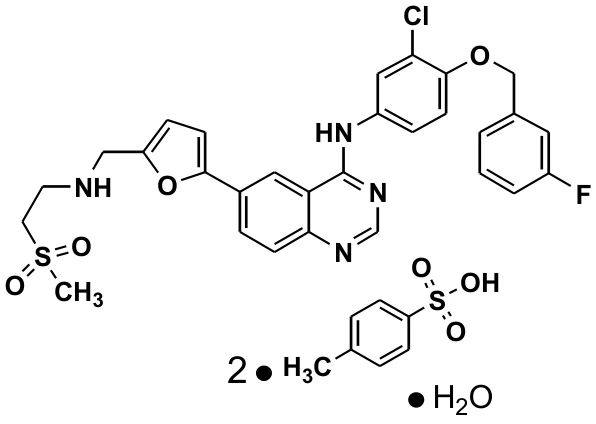
Proper/Common name: lapatinib ditosylate
Chemical name: N-(3-chloro-4-{[(3-fluorophenyl) methyl]oxy}phenyl)-6-[5-({[2-(methylsulfonyl)ethyl]amino}methyl)-2-furanyl]-4-quinazolinamine bis (4-methylbenzenesulfonate) monohydrate
Molecular formula and molecular mass: C29ClFH26N4O4S (C7H8O3S)2 H2O (ditosylate monohydrate)
943.5 (581.07 free base)
Structural formula:
Physicochemical properties: Lapatinib is a yellow solid and its solubility in water is 0.007 mg/mL and in 0.1N HCl is 0.001 mg/mL at 25°C
Product Characteristics: The 250 mg tablets contain 405 mg of lapatinib ditosylate monohydrate, equivalent to 250 mg lapatinib free base per tablet.
14 CLINICAL TRIALS
14.1 Clinical Trials by Indication
Breast Cancer
TYKERB/capecitabine Combination
Table 8 - Summary of patient demographics for clinical trials in TYKERB (lapatinib ditosylate) tablets in combination with capecitabine
| Study # | Study design | Dosage, route of administration and duration | Study subjects (n) | Median age (Range) |
| NA | open-label randomized, phase III trial | TYKERB 1250 mg once daily (continuously) plus capecitabine (2000 mg/m2/day on days 1-14 every 21 days), Or Receive capecitabine alone (2500 mg/m2/day on days 1-14 every 21 days). | 198 201 | 54 (26-80) 52 (28-83) |
The efficacy and safety of TYKERB (lapatinib ditosylate) tablets in combination with capecitabine in breast cancer were evaluated. Patients eligible for enrolment had ErbB2 (HER2) over-expressing (IHC 3+, or IHC 2+ and FISH positive), and locally advanced or metastatic breast cancer, progressing after prior treatment that included taxanes, anthracyclines and trastuzumab. Study treatment was given until disease progression, or withdrawal for another reason. The primary endpoint was time to progression (TTP) including deaths due to breast cancer, as assessed by an independent review committee (IRC). The study was halted based on the results of a pre-specified interim analysis that showed an improvement in TTP for patients receiving TYKERB plus capecitabine. An additional 75 patients were enrolled in the study between the time of the interim analysis and the updated analysis on April 3, 2006. At this time patients receiving capecitabine alone were permitted to cross over to the study arm and receive TYKERB. After the study was halted, 36 patients crossed over from capecitabine to TYKERB plus capecitabine, of whom 26 crossed over prior to disease progression while on capecitabine alone.
Below tables summarizes the additional demographic and disease characteristics of the two study groups.
| Characteristics | TYKERB + Capecitabine | Capecitabine |
Age Group, % < 65 years ≥ 65 years | 83 17 | 88 12 |
Race, % White Asian Hispanic Other | 91 3 2 3 1 | 90 4 3 1 1 |
Stage & Site of Disease at Study Entry, % IIIb or Stage IIIc with T4 lesion IV – visceral IV – non-visceral | 4 75 22 | 4 79 17 |
Hormone Receptor Status, % ER+ and/or PR+ ER- and PR- unknown | 48 48 4 | 46 50 3 |
ER = estrogen receptor
PR = progesterone receptor
Study results:
At the updated analysis, the IRC and investigator data demonstrated that lapatinib in combination with capecitabine significantly increased time to progression compared to capecitabine alone. However, the IRC and investigator assessments of TTP were discordant (the IRC analysis of TTP was likely overestimated), thus the magnitude of improvement in TTP cannot be quantified in this trial. Although unblinded investigator’s results are often affected by assessment bias, the investigator’s results in this trial are considered a more accurate assessment of TTP.
Table 9 : Efficacy Results* at the time of the updated analysis (April 3, 2006)
| Investigator Assessment | Independent Assessment | ||||||||||||||||||||
| TYKERB plus capecitabine | Capecitabine alone | TYKERB plus capecitabine | Capecitabine alone | ||||||||||||||||||
| (N = 198) | (N = 201) | (N = 198) | (N = 201) | ||||||||||||||||||
| Number of TTP events | 121 | 126 | 82 | 102 | |||||||||||||||||
| Median TTP, weeks | 23.9 | 18.3 | 27.1 | 18.6 | |||||||||||||||||
| (25th, 75th percentile), weeks | (12.0, 44.0) | (6.9, 35.7) | (17.4, 49.4) | (9.1, 36.9) | |||||||||||||||||
| Hazard Ratio | 0.72 | 0.57 | |||||||||||||||||||
| (95% CI) | (0.56, 0.92) | (0.43, 0.77) | |||||||||||||||||||
| p value | 0.00762 | 0.00013 | |||||||||||||||||||
| Response Rate (%) | 31.8 | 17.4 | 23.7 | 13.9 | |||||||||||||||||
| (95% CI) | (25.4, 38.8) | (12.4, 23.4) | (18.0, 30.3) | (9.5, 19.5) | |||||||||||||||||
*There was a consistent benefit in TTP by both investigator and independent assessment, although the magnitude of TTP by independent assessment was likely overestimated.
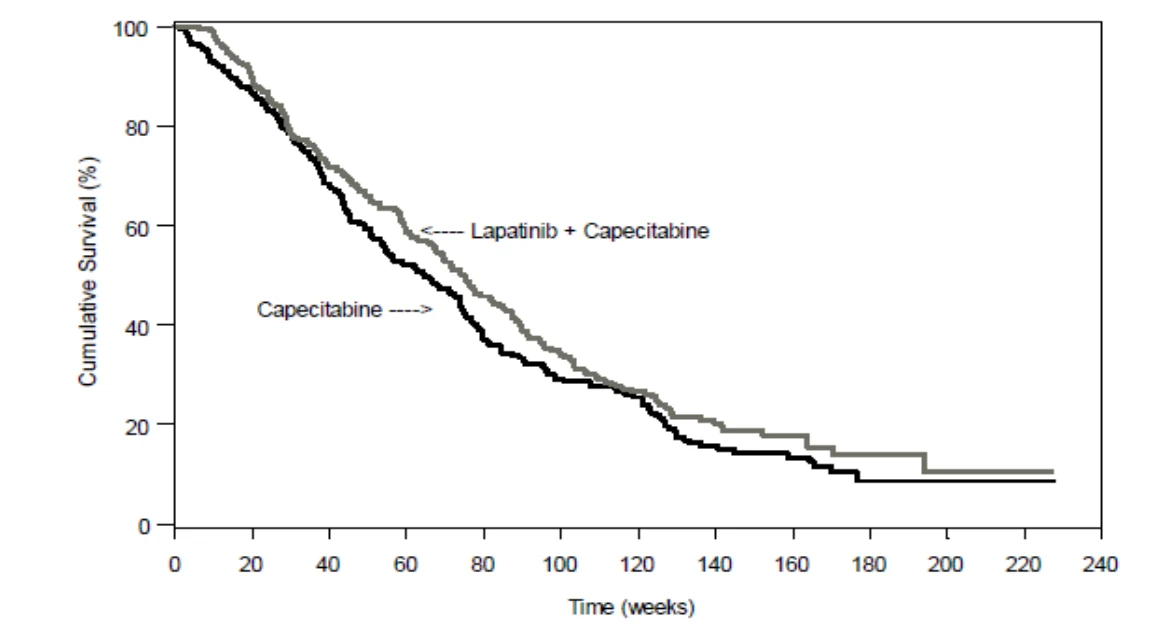
TYKERB when given in combination with capecitabine significantly prolonged the progression free survival compared to capecitabine alone. In addition, on the combination arm, there were 4 (2%) progressions in the central nervous system as compared with 13 (6%) progressions on the capecitabine alone arm (p=0.0445). However, a statistically significant overall survival advantage, or palliation due to therapy has not been demonstrated. The most recent analysis of overall survival to October 1, 2008 demonstrates an unadjusted hazard ratio of 0.87 (95% CI: 0.71 1.08, p=0.210). The median overall survival is 64.7 weeks for capecitabine alone compared to 75.0 weeks for lapatinib + capecitabine (Table 10)
Table 10 Summary of Overall Survival (ITT Population) (October 1, 2008)
TYKERB plus Capecitabine N=207* | Capecitabine N=201* | ||||||||
| Subject deaths, n (%) | |||||||||
| Died | 168 (81) | 172 (86) | |||||||
| Kaplan-Meier estimate of Overall Survival, weeks | |||||||||
| Median, [95% CI] | 75.0 [65.3,85.6] | 64.7 [53.3,74.4] | |||||||
| Hazard ratio | |||||||||
| Estimate, [95% CI] | 0.87 [0.71,1.08] | ||||||||
| Log-rank two-sided p-value | 0.210 | ||||||||
*At the time of enrolment was halted to EGF100151 (April 3, 2006), 399 patients were randomized to study therapy and 9 other patients were being screened. All 9 patients in screening, and all those already receiving capecitabine monotherapy, were offered combination treatment. In total, 207 patients were assigned to the combination therapy and 201 patients were assigned to capecitabine monotherapy.
Figure 1 Kaplan-Meier Estimates of Overall Survival: ITT Population (October 1, 2008)
TYKERB/Letrozole Combination
Table 11 - Summary of patient demographics for clinical trials in TYKERB (lapatinib ditosylate) tablets in combination with Letrozole
| Study # | Study design | Dosage, route of administration and duration | Study subjects (n) | Median age (Range) |
| EGF30008 | randomized, double-blind, controlled | TYKERB 1500 mg once daily plus Letrozole 2.5 mg once daily Or Letrozole with placebo. | 111 108 | 60.0 (44-85) 59.0 (45-87) |
TYKERB has been studied in combination with letrozole for the treatment of advanced or metastatic breast cancer in hormone receptor positive (estrogen receptor [ER] positive and / or progesterone receptor [PgR] positive) postmenopausal women.
EGF30008 was tried in patients with hormone-sensitive (HS) locally advanced or metastatic breast cancer (MBC), who had not received prior therapy for their metastatic disease. The objective was to evaluate and compare progression free survival (PFS) in subjects with ER positive and/or PgR positive, ErbB2 (HER2) positive advanced or metastatic breast cancer treated with lapatinib and letrozole versus letrozole and placebo. The primary endpoint was investigator-evaluated PFS in the ErbB2 (HER2) positive population. 1286 patients were randomized to TYKERB 1500 mg once daily plus letrozole 2.5 mg once daily or letrozole with placebo. Randomisation was stratified by sites of disease and prior adjuvant anti-estrogen therapy. ErbB2 (HER2) receptor status was retrospectively determined by central laboratory testing. Of all patients randomized to treatment, 219 patients (17%) had tumours over-expressing the ErbB2 (HER2) receptor (the ‘ErbB2 (HER2) positive population’, IHC 3+, or IHC 2+ and FISH positive), which was the pre-specified primary population for the analysis of efficacy. There were 952 ErbB2 (HER2) negative patients (74%) and a total of 115 patients (9%) whose ErbB2 (HER2) status was unconfirmed.
The baseline demographic and disease characteristics were balanced between the two treatment arms and are provided in below table for the ErbB2 (HER2) positive population.
| Characteristics | TYKERB + Letrozole | Letrozole |
Age Group, % < 65 years ≥ 65 years | 63 37 | 66 34 |
Race, % White Asian Hispanic Other | 74 11 13 2 <1 | 84 5 8 3 0 |
Hormone Receptor Status, % ER+ and/or PR+ ER- and PR- unknown | 84 9 7 | 85 6 8 |
| Median time since 1st diagnosis of breast cancer (months) | 29.2 | 27.8 |
Histology at 1st diagnosis, % Infiltrating ductal Lobular Invasive Othera | 86 10 4 | 81 10 9 |
Stage of Disease at Study Entry, % IIIB /IIIC IV | 5 95 | 6 94 |
Involved Site (Strata), % Visceral Bone Only | 86 14 | 83 17 |
ER = estrogen receptor
PR = progesterone receptor
a Included tubular, adenocystic, carcinosarcoma, other.
In the ErbB2 (HER2) positive population (N=219), investigator-determined progression-free survival (PFS) was significantly greater with TYKERB plus letrozole (N=111) compared with letrozole plus placebo (N=108) (see Table 12 and Figure 1). The median duration of treatment in the ErbB2 (HER2) positive population was 32.57 weeks for the TYKERB plus letrozole group and 13.86 weeks for the letrozole plus placebo group. The majority (53% vs 67%) of PFS events occurred in the first 3 assessments (12, 24 and 36 weeks) for the combination and letrozole arms, respectively.
Table 12: Efficacy results from Study EGF30008 (TYKERB/letrozole)
| ErbB2 (HER2) Positive Population | ErbB2 (HER2) Negative Population | ||||||||||||||
TYKERB 1500 mg/day + Letrozole 2.5 mg/day | Letrozole 2.5 mg /day | TYKERB 1500 mg/day + Letrozole 2.5 mg/day | Letrozole 2.5 mg /day | ||||||||||||
| N = 111 | N = 108 | N = 478 | N = 474 | ||||||||||||
Median PFSa, weeks (95% CI) | 35.4 (24.1, 39.4) | 13.0 (12.0, 23.7) | 59.7 (48.6, 69.7) | 58.3 (47.9, 62.0) | |||||||||||
Hazard Ratio P value | 0.71 (0.53, 0.96) 0.019 | 0.90 (0.77, 1.05) 0.188 | |||||||||||||
PFS Cox Regression Treatment Hazard Ratio P value | 0.65 (0.47, 0.89) 0.008 | 0.77 (0.64, 0.94) 0.010 | |||||||||||||
Response Rate (%) (95% CI) | 27.9 (19.8, 37.2) | 14.8 (8.7, 22.9) | 32.6 (28.4, 37.0) | 31.6 (27.5, 36.0) | |||||||||||
CBRb (%) (95% CI) | 47.7 (38.2, 57.4) | 28.7 (20.4, 38.2) | 58.2 (53.6, 62.6) | 56.5 (51.9, 61.1) | |||||||||||
Median OS, weeks (95% CI) | 144.7 (95.6, NE) | 140.3 (92.1, 159.4) | 174 .4 (161.1, NE) | 179.7 (168.9, NE) | |||||||||||
OS Hazard Ratio P value | 0.74 (0.5, 1.1) 0.113 | 1.15 (0.9, 1.4) 0.193 | |||||||||||||
PFS = progression-free survival; CI = confidence interval; OS = overall survival; NE = Not evaluable.
ErbB2 (HER2) overexpression = IHC 3+, or IHC 2+ and FISH positive; ErbB2 (HER2) negative = IHC 0, 1+ or 2+ and/or FISH negative.
- a. Kaplan-Meier estimate.
- b. CBR = Clinical Benefit Rate in patients with evidence of confirmed complete response, partial response, or stable disease for at least 6 months (≥183 days)
Figure 1 Kaplan-Meier Estimates for Progression-Free Survival for the ErbB2 (HER2) Positive Population in Study EGF30008
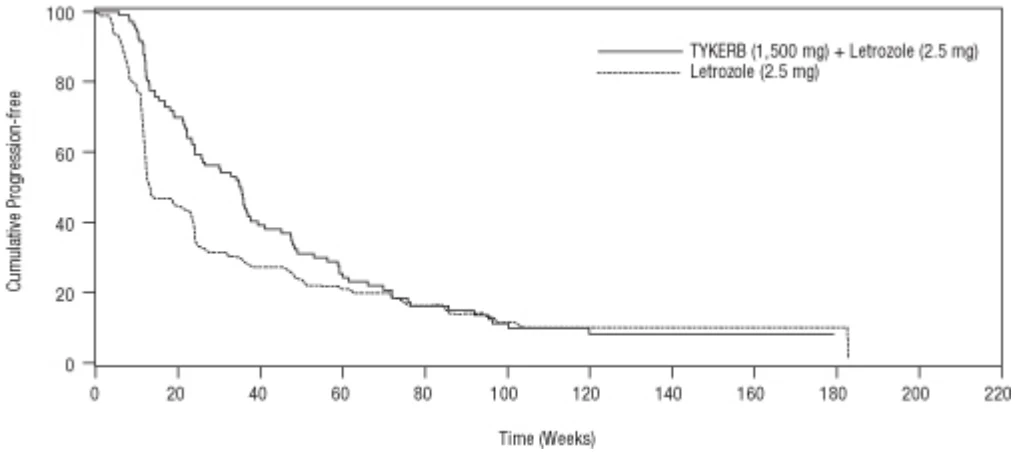
To further explore the impact of baseline prognostic factors on PFS in the TYKERB plus letrozole group compared with letrozole alone, a pre-planned Cox regression analysis was performed which also favoured the combination arm (HR=0.65 (95% CI 0.47-0.89) p=0.008). In addition to a PFS benefit seen in the ErbB2 (HER2) positive patient population, combination therapy of TYKERB and letrozole offered an improvement in objective response rate compared with letrozole treatment alone (27.9% and 14.8% respectively) and in Clinical Benefit Rate (CBR) (47.7% and 28.7% respectively). The overall survival (OS) data were not mature, with 47% of the events having occurred; however, a trend in OS in favour of the TYKERB plus letrozole in the ErbB2 (HER2) positive population was observed (Table 12, Figure 2).
Figure 2 Kaplan-Meier Estimate Overall Survival for the ErbB2 (HER2) Positive Population in Study EGF30008
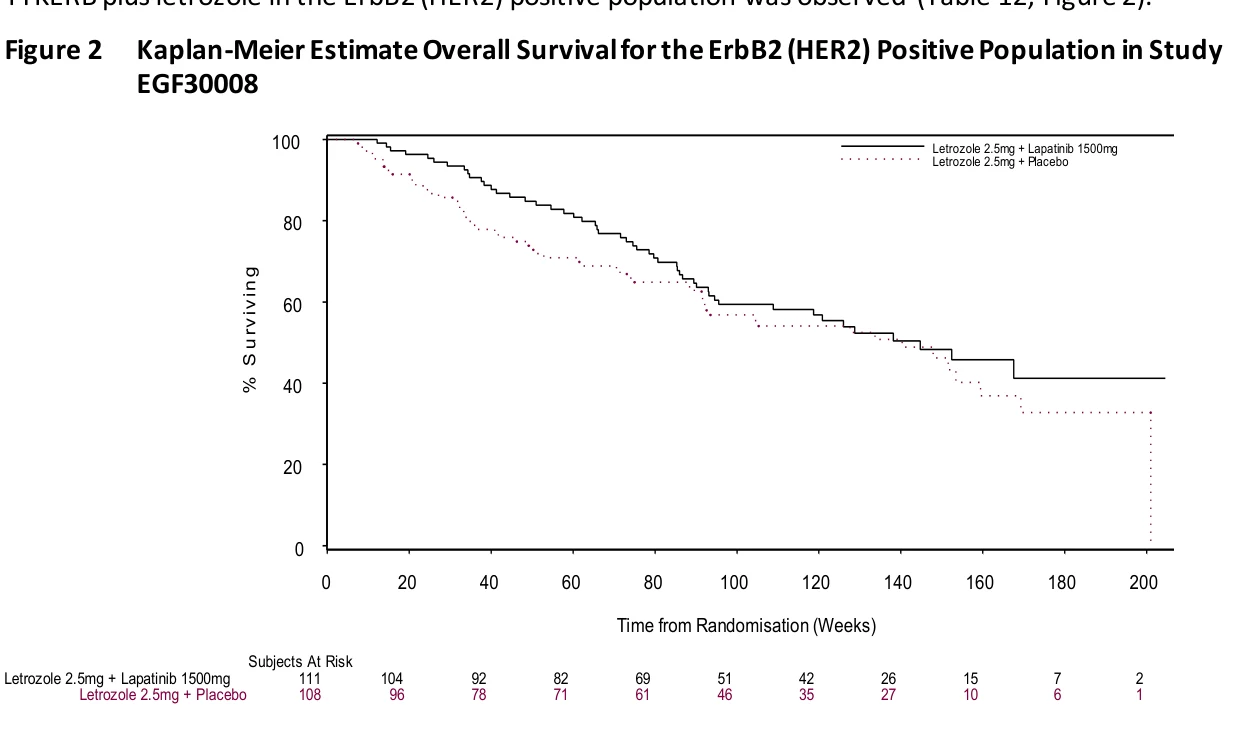
In the ErbB2 (HER2)-negative population (N=952), no significant differences in PFS were observed between treatment arms (Table 12). The OS data were not mature at the time of reporting with 34% of the events having occurred, however, a trend towards a potential decrease in OS was observed in the TYKERB plus letrozole arm (Table 12).
15 MICROBIOLOGY
Not Applicable
16 NON-CLINICAL TOXICOLOGY
General Toxicology:
Single-dose toxicity:
The approximate non-lethal oral dose of lapatinib in mice and rats is > 2000 mg/kg (maximum dose tested). This dose is approximately 8 and 16 times the recommended adult human dose of 1250 mg/day in mice and rats, respectively.
Repeat-dose toxicity:
The chronic toxicity profile of lapatinib was evaluated in a series of oral repeated-dose studies up to 26 weeks in rats at doses of 20, 60 and 180 (males) or 120 (females) mg/kg/day, and 39 weeks in dogs at doses of 10, 40 and 100 mg/kg. The totality of the data indicates that the target organs of lapatinib toxicity are liver, GI tract, and skin. The doses associated with toxicity are similar to the expected human clinical exposure.
Combination toxicity:
TYKERB is indicated in combination with capecitabine. Several target organs of toxicity for capecitabine and lapatinib are similar and include skin, GI tract and liver. In clinical trials, an increased incidence of adverse events is noted for patients treated with TYKERB + capecitabine when compared with capecitabine alone, suggesting the potential for enhanced toxicity (see 8. ADVERSE REACTIONS). A toxicology study was not conducted to evaluate if cumulative organ toxicity is observed following administration of lapatinib in combination with capecitabine.
Safety Pharmacology:
The effect of lapatinib on hERG tail currents was studied in stably transfected HEK-293 cells. Lapatinib inhibited hERG channel tail currents in a concentration-dependent manner when compared with vehicle (N=5-6 cells/concentration). The IC25 and IC50 values were estimated to be 0.181 and 1.11 µM (0.1052 and 0.6450 µg/mL), respectively. The IC25 and IC50 values are 4.3 fold and 26.5 fold, respectively, the human free Cmax obtained with a 1250 mg/day oral dose of TYKERB (0.0243 g/mL; based on 99% protein binding).
No treatment-related effects were noted on action potential parameters in isolated canine cardiac Purkinje fibres following treatment with lapatinib at concentrations up to 2.56 µg/mL.
In conscious telemetered male beagle dogs (N=4), cardiovascular function was assessed in a crossover study investigating single oral doses of 0, 50, 150, and 500 mg/kg. Higher mean systolic, diastolic, and mean arterial blood pressure were noted after 150 and 500 mg/kg compared to controls, after approximately 10 to 14 or 6 to 14 hours, respectively. The no adverse effect level for the study was 50 mg/kg. No effects on ECG interval parameters were observed.
Carcinogenicity:
A two-year mouse carcinogenicity study was conducted wherein males and females were administered lapatinib at doses of 75, 150 and 300 mg/kg/day. Increased mortality was observed in males at 150 and 300 mg/kg/day and in females at 300 mg/kg/day, and was related to skin toxicities. Due to early sacrifice of males dosed at 300 mg/kg/day, assessment of carcinogenic potential in this group was not performed. There was no evidence of carcinogenicity in males and females at doses up to 150 and 300 mg/kg/day, respectively (2 times the expected human clinical exposure).
A two-year rat carcinogenicity study was conducted wherein males were administered lapatinib at 60, 120, 240 and 500 mg/kg/day and females were administered lapatinib 20, 60, 180 and 300 mg/kg/day. Increased mortality was observed in males at 500 mg/kg/day and females at 300 mg/kg/day, and was related to skin toxicities. Renal infarcts and papillary necrosis was observed in females from 60 mg/kg/day (7 times the expected clinical exposure) and 180 mg/kg/day (10 times the expected clinical exposure), respectively. An increased incidence of benign hemangioma of the mesenteric lymph nodes was noted in males from 120 mg/kg/day (1 times the expected clinical exposure) and in females at 180 mg/kg/day (10 times the expected clinical exposure) but was within background range. The clinical significance of these findings to humans is not known.
Genotoxicity:
Lapatinib was not clastogenic or mutagenic in a battery of assays including the Chinese hamster chromosome aberration assay, the Ames assay, human lymphocyte chromosome aberration assay and an in vivo rat bone marrow chromosome aberration assay.
Reproductive and Developmental Toxicology:
There were no effects on male or female rat gonadal function, mating, or fertility at doses up to 120 mg/kg/day (females) and up to 180 mg/kg/day (males) (8 and 3times the expected human clinical exposure, respectively). The effect on human fertility is unknown.
Lapatinib was studied in pregnant rats and rabbits given oral doses of 30, 60, and 120 mg/kg/day. There were no teratogenic effects. In rats, minor anomalies (left-sided umbilical artery, cervical rib and precocious ossification) occurred at the maternally toxic dose of 120 mg/kg/day (8 times the expected human clinical exposure). In rabbits, lapatinib was associated with maternal toxicity at 60 and 120 mg/kg/day (0.08 and 0.23 times the expected human clinical exposure, respectively) and abortions at 120 mg/kg/day. At maternally toxic doses, decreased fetal body weights, decreased number of live fetuses and minor skeletal variations were noted. The developmental no adverse effect level was considered to be 60 mg/kg/day in rats and 30 mg/kg/day in rabbits (4 and 0.03 times the expected human clinical exposure, respectively).
In the rat pre- and postnatal development study, a decrease in pup survival occurred between birth and postnatal day 21 at 60 and 120 mg/kg/day. The highest no-effect dose for this study was 20 mg/kg/day (3 times the expected human clinical exposure).