


Product Monograph - Iclusig
RECENT MAJOR LABEL CHANGES
| 3 Serious Warnings and Precautions Box | 09/2023 |
|---|---|
| 4.1 Dosing Considerations | 09/2023 |
| 4.2 Recommended Dose and Dosage Adjustment | 02/2025 |
TABLE OF CONTENTS
Sections or subsections that are not applicable at the time of authorization are not listed.
RECENT MAJOR LABEL CHANGES ............................................................................................ 2
TABLE OF CONTENTS .............................................................................................................. 2
PART I: HEALTH PROFESSIONAL INFORMATION ...................................................................... 4
1 INDICATIONS ............................................................................................................... 4
1.1 Pediatrics ................................................................................................................ 4
1.2 Geriatrics ................................................................................................................ 4
2 CONTRAINDICATIONS ................................................................................................. 4
3 SERIOUS WARNINGS AND PRECAUTIONS BOX ............................................................ 4
4 DOSAGE AND ADMINISTRATION ................................................................................. 5
4.1 Dosing Considerations ............................................................................................ 5
4.2 Recommended Dose and Dosage Adjustment ....................................................... 6
4.4 Administration ........................................................................................................ 8
4.5 Missed Dose ........................................................................................................... 9
5 OVERDOSAGE .............................................................................................................. 9
6 DOSAGE FORMS, STRENGTHS, COMPOSITION AND PACKAGING ................................. 9
7 WARNINGS AND PRECAUTIONS ................................................................................ 10
7.1 Special Populations............................................................................................... 18
7.1.1 Pregnant Women ........................................................................................... 18
7.1.2 Breast-feeding ................................................................................................ 18
7.1.3 Pediatrics ........................................................................................................ 19
7.1.4 Geriatrics ........................................................................................................ 19
7.1.5 Men and Women with Childbearing Potential ............................................... 19
7.1.6 Lactose Intolerance ........................................................................................ 19
7.1.7 Hepatic Impairment ........................................................................................ 19
7.1.8 Renal Impairment ........................................................................................... 20
8 ADVERSE REACTIONS ................................................................................................ 20
8.1 Adverse Reaction Overview .................................................................................. 20
8.2 Clinical Trial Adverse Reactions ............................................................................ 21
8.3 Less Common Clinical Trial Adverse Reactions ..................................................... 26
8.4 Abnormal Laboratory Findings: Hematologic, Clinical Chemistry and Other Quantitative Data ........................................................................................................... 27
8.5 Post-Market Adverse Reactions ........................................................................... 29
9 DRUG INTERACTIONS ................................................................................................ 30
9.2 Drug Interactions Overview .................................................................................. 30
9.3 Drug-Behavioural Interactions .............................................................................. 30
9.4 Drug-Drug Interactions ......................................................................................... 30
9.5 Drug-Food Interactions ......................................................................................... 32
9.6 Drug-Herb Interactions ......................................................................................... 32
9.7 Drug-Laboratory Test Interactions ........................................................................ 32
10 CLINICAL PHARMACOLOGY ....................................................................................... 32
10.1 Mechanism of Action ...................................................................................... 32
10.2 Pharmacodynamics ........................................................................................ 32
10.3 Pharmacokinetics ........................................................................................... 33
11 STORAGE, STABILITY AND DISPOSAL ......................................................................... 35
12 SPECIAL HANDLING INSTRUCTIONS ........................................................................... 35
PART II: SCIENTIFIC INFORMATION ....................................................................................... 36
13 PHARMACEUTICAL INFORMATION ............................................................................ 36
14 CLINICAL TRIALS ........................................................................................................ 36
14.1 Clinical Trials by Indication ............................................................................. 36
Chronic myeloid leukemia (CML) or Philadelphia chromosome positive acute lymphoblastic leukemia (Ph+ ALL) .................................................................................. 36
15 MICROBIOLOGY ........................................................................................................ 44
16 NON-CLINICAL TOXICOLOGY ..................................................................................... 44
PATIENT MEDICATION INFORMATION .................................................................................. 47
PART I: HEALTH PROFESSIONAL INFORMATION
1 INDICATIONS
ICLUSIG (ponatinib tablets) is indicated for:
- the treatment of adult patients with chronic phase (CP), accelerated phase (AP), or blast phase (BP) chronic myeloid leukemia (CML) or Philadelphia chromosome positive acute lymphoblastic leukemia (Ph+ ALL) for whom other tyrosine kinase inhibitor (TKI) therapy is not appropriate, including CML or Ph+ ALL that is T315I mutation positive or where there is prior TKI resistance or intolerance.
1.1 Pediatrics
Pediatrics (< 18 years of age): No data are available to Health Canada; therefore, Health Canada has not authorized an indication for pediatric use.
1.2 Geriatrics
Geriatrics (≥ 65 years of age): Compared to patients < 65 years, older patients (with CP-CML) are more likely to experience adverse reactions.
Evidence from the clinical study suggests that use in the geriatric population (with CP-CML) is associated with reduced safety and effectiveness (see 7.1.4 Geriatrics).
2 CONTRAINDICATIONS
- ICLUSIG is contraindicated in patients who are hypersensitive to this drug or to any ingredient in the formulation, including any non-medicinal ingredient, or component of the container. For a complete listing, see 6 DOSAGE FORMS, STRENGTHS, COMPOSITION AND PACKAGING.
- Do not use in patients with unmanaged cardiovascular risk factors, including uncontrolled hypertension. Hypertension may contribute to the risk of arterial occlusive events (AOEs). Blood pressure should be monitored and managed to avoid hypertension (see also 7 WARNINGS AND PRECAUTIONS, Hypertension and Monitoring and Laboratory Tests).
- Do not use in patients who are not adequately hydrated and with uncorrected high uric acid levels (see 7 WARNINGS AND PRECAUTIONS, Tumour Lysis Syndrome).
3 SERIOUS WARNINGS AND PRECAUTIONS BOX
Serious Warnings and Precautions
ICLUSIG should only be prescribed and monitored by a physician who is experienced in the use of antineoplastic therapy and in the treatment of CML or Ph+ ALL.
|
|---|
|
|---|
4 DOSAGE AND ADMINISTRATION
4.1 Dosing Considerations
ICLUSIG must only be prescribed and used in treatment initiated by a physician who is experienced in diagnosing patients with leukemia (in particular, CML or Ph+ ALL) and with treatments including antineoplastic therapy.
Before starting treatment with ICLUSIG, the cardiovascular status of the patient should be assessed and cardiovascular risk factors should be actively managed. Cardiovascular status should continue to be monitored and therapy optimized during treatment with ICLUSIG.
Monitoring for evidence of AOEs and VTEs should be performed and ICLUSIG should be interrupted or discontinued immediately in case of vascular occlusion (see Table 1).
Hematologic support such as platelet transfusion and hematopoietic growth factors can be used during treatment if clinically indicated.
Avoid co-administration of ICLUSIG with strong CYP3A inhibitors and strong CYP3A inducers. See 9.4 Drug-Drug Interactions.
Advise patients to take ICLUSIG exactly as prescribed and not to change their dose or to stop taking ICLUSIG unless they are told to do so by their healthcare provider.
Advise patients who have intolerance to lactose that ICLUSIG contains lactose (see 7.1.6 Lactose Intolerance).
4.2 Recommended Dose and Dosage Adjustment
CP-CML
The recommended starting dosage of ICLUSIG is 45 mg orally once daily with a reduction to 15 mg orally once daily upon achievement of molecular response (≤1% BCR::ABL1IS). Patients with loss of response can re-escalate the dose of ICLUSIG to a previously tolerated dosage of 30 mg or 45 mg orally once daily. Continue ICLUSIG until loss of response at the re-escalated dose or unacceptable toxicity. Consider discontinuing ICLUSIG if hematologic response has not occurred by 3 months.
AP-CML, BP-CML, and Ph+ ALL
The recommended starting dosage is 45 mg of ICLUSIG once daily. Continue ICLUSIG until loss of response or unacceptable toxicity. Consider reducing the dose of ICLUSIG for patients with accelerated phase (AP) CML who have achieved a major cytogenetic response. Consider discontinuing ICLUSIG if response has not occurred by 3 months.
Health Canada has not authorized an indication for pediatric use.
Dose Modifications for Adverse Reactions
Recommendations for dose modifications of ICLUSIG for the management of adverse reactions are summarized in Table 1 and recommended dose reductions of ICLUSIG for adverse reactions are presented in Table 2. For a dose of 30 mg or 15 mg once daily, 15 mg tablets are available.
Table 1. Recommended ICLUSIG Dose Modifications for Adverse Reactions
| Adverse Reaction | Severity | ICLUSIG Dose Modification |
|---|---|---|
| AOE: cardiovascular or cerebrovascular | Grade 1 | Interrupt ICLUSIG until resolved, then resume at same dose. |
| Grade 2 | Interrupt ICLUSIG until ≤ Grade 1, then resume at next lower dose. Discontinue ICLUSIG if recurrence. | |
| Grade 3 or Grade 4 | Discontinue ICLUSIG. | |
AOE: peripheral vascular and other or | Grade 1 | Interrupt ICLUSIG until resolved, then resume at same dose. |
| Grade 2 | Interrupt ICLUSIG until ≤ Grade 1, then resume at same dose. |
| Adverse Reaction | Severity | ICLUSIG Dose Modification |
|---|---|---|
| VTE | If recurrence, interrupt ICLUSIG until ≤ Grade 1, then resume at next lower dose. | |
| Grade 3 | Interrupt ICLUSIG until ≤ Grade 1, then resume at next lower dose. Discontinue ICLUSIG if recurrence. | |
| Grade 4 | Discontinue ICLUSIG. | |
| Heart Failure | Grade 2 or 3 | Interrupt ICLUSIG until ≤ Grade 1, then resume at next lower dose. Discontinue ICLUSIG if recurrence. |
| Grade 4 | Discontinue ICLUSIG. | |
| Hepatic Toxicity | AST or ALT greater than 3 times ULN | Interrupt ICLUSIG until ≤ Grade 1, then resume at next lower dose. |
| AST or ALT at least 3 times ULN concurrent with bilirubin greater than 2 times ULN and alkaline phosphatase less than 2 times ULN | Discontinue ICLUSIG. | |
| Pancreatitis and Elevation of Lipase / Amylase | Asymptomatic Grade 2 pancreatitis and/or elevation of lipase/amylase greater than 1.5 - 2.0 times ULN or greater than 2.0 - 5.0 times ULN and asymptomatic | Consider interrupting ICLUSIG until resolution then resume at same dose. |
| Elevation of lipase/amylase greater than 5.0 times ULN and asymptomatic | Interrupt ICLUSIG until ≤ Grade 1 (less than 1.5 times ULN) then resume at next lower dose. | |
| Grade 3 pancreatitis or elevation of lipase/amylase greater than 2.0 - 5.0 times ULN and symptomatic | Interrupt ICLUSIG until complete resolution of symptoms and after recovery of lipase elevation ≤ Grade 1, then resume at next lower dose. | |
| Grade 4 pancreatitis or elevation of lipase/amylase greater than 5.0 times ULN and symptomatic | Discontinue ICLUSIG | |
| Myelosuppression | ANC less than 1.0 × 10⁹/L or platelets less than 50 × 109/L | Interrupt ICLUSIG until ANC at least 1.5 × 10⁹/L and platelets at least 75 × 109/L, then resume at same dose. If recurrence, interrupt ICLUSIG until resolution, then resume at next lower dose. |
| Adverse Reaction | Severity | ICLUSIG Dose Modification |
|---|---|---|
| Other Non-hematologic Adverse Reactions | Grade 2 | Interrupt ICLUSIG until ≤ Grade 1, then resume at same dose. If recurrence, interrupt ICLUSIG until ≤ Grade 1, then resume at next lower dose. |
| Grade 3 or 4 | Interrupt ICLUSIG until ≤ Grade 1, then resume at next lower dose. Discontinue ICLUSIG if recurrence. | |
Grading based on the National Cancer Institute Common Terminology Criteria for Adverse Events (CTCAE) v5.0. ANC = absolute neutrophil count; AOE = arterial occlusive event; ULN = upper limit of normal; VTE = venous thromboembolic event | ||
Table 2. Recommended Dose Reductions for ICLUSIG for Adverse Reactions
| Dose Reduction | Dosage for Patients with CP-CML | Dosage for Patients with AP-CML, BP-CML, and Ph+ ALL |
|---|---|---|
| First | 30 mg orally once daily | 30 mg orally once daily |
| Second | 15 mg orally once daily | 15 mg orally once daily |
| Subsequent Reduction | Permanently discontinue ICLUSIG in patients unable to tolerate 15 mg orally once daily. | Permanently discontinue ICLUSIG in patients unable to tolerate 15 mg orally once daily. |
Hepatic Impairment
ICLUSIG has not been studied at doses above 30 mg in patients with hepatic impairment (Child-Pugh A, B and C). Caution is recommended when administering ICLUSIG to patients with hepatic impairment. The recommended starting dose is 30 mg once daily in patients with hepatic impairment (see 7.1.7 Hepatic Impairment).
Renal Impairment
ICLUSIG has not been studied in patients with severe renal impairment (creatinine clearance <30 mL/min). Caution is recommended when administering ICLUSIG to patients with severe renal impairment or end-stage renal disease (see 7.1.8 Renal Impairment).
Mild to moderate renal impairment (creatinine clearance 30 to 89 mL/min) did not have a clinically meaningful effect on the pharmacokinetics of ponatinib based on a population pharmacokinetic analysis.
4.4 Administration
ICLUSIG tablets should be swallowed whole. Patients should not crush or dissolve the tablets. ICLUSIG may be administered with or without food.
4.5 Missed Dose
If a dose is missed, the patient should not take an additional dose. In this case, the patient should take the usual dose at the next scheduled time.
5 OVERDOSAGE
Isolated cases of unintentional overdose with ICLUSIG were reported in clinical trials. Single doses of 165 mg and an estimated 540 mg in 2 patients did not result in any clinically significant adverse reactions. Multiple doses of 90 mg per day for 12 days in a patient resulted in pneumonia, systemic inflammatory response, atrial fibrillation, and asymptomatic, moderate pericardial effusion. Treatment was interrupted, the events resolved, and ICLUSIG was restarted at 45 mg, once daily. Multiple doses of 60 mg per day, administered due to lack of efficacy, in a Ph+ ALL patient resulted in hospitalization for pleural and pericardial effusions after 6 days of treatment. The patient was treated with diuretics and the events abated. ICLUSIG dosing was not interrupted.
There is no specific antidote for overdose with ICLUSIG. In the event of an overdose, the patient should be observed and appropriate supportive treatment given.
| For management of a suspected drug overdose, contact your regional poison control centre. |
|---|
6 DOSAGE FORMS, STRENGTHS, COMPOSITION AND PACKAGING
Table 3. Dosage Forms, Strengths, Composition and Packaging
15 mg: Each tablet contains 15 mg ponatinib (as 16.03 mg ponatinib hydrochloride). The 15 mg tablet is a white, biconvex, round film-coated tablet that is approximately 6 mm in diameter, with “A5” debossed on one side. Supplied in HDPE bottles with screw-top closures containing 60 tablets and one canister desiccant.
45 mg: Each tablet contains 45 mg of ponatinib (as 48.08 mg ponatinib hydrochloride). The 45 mg tablet is a white, biconvex, round film-coated tablet that is approximately 9 mm in diameter, with “AP4” debossed on one side. Supplied in HDPE bottles containing 30 tablets and one canister desiccant.
| Route of Administration | Dosage Form / Strength/Composition | Non-medicinal Ingredients |
| Oral | Tablet 15 mg and 45 mg | Tablet core: colloidal silicon dioxide, lactose monohydrate, magnesium stearate, microcrystalline cellulose, sodium starch glycolate Tablet coating: polyethylene glycol, polyvinyl alcohol, talc, titanium dioxide (E171) |
7 WARNINGS AND PRECAUTIONS
Please see 3 SERIOUS WARNINGS AND PRECAUTIONS BOX.
General
Avoid co-administration of ICLUSIG with strong CYP3A inhibitors. A reduction of the starting dose of ICLUSIG is recommended with concurrent use of ICLUSIG and strong CYP3A inhibitors (see 9.4 Drug-Drug Interactions).
Carcinogenesis and Mutagenesis
A statistically significant increased incidence of squamous cell carcinoma of the clitoral gland in rats was observed at a plasma exposure level lower or equal to the human exposure within the clinically recommended dose range. The clinical relevance of this finding is not known (see 16 NON-CLINICAL TOXICOLOGY).
Cardiovascular
Before starting treatment with ICLUSIG, the cardiovascular status of the patient should be assessed and cardiovascular risk factors should be actively managed. Cardiovascular status should continue to be monitored and therapy optimized during treatment with ICLUSIG (see 9.4 Drug-Drug Interactions and 7 WARNINGS AND PRECAUTIONS, Monitoring and Laboratory Tests).
Hypertension may contribute to the risk of AOEs. Blood pressure should be monitored and managed to avoid hypertension (see 7 WARNINGS AND PRECAUTIONS, Monitoring and Laboratory Tests).
Arterial Occlusive Events
In clinical trials arterial occlusive events (AOEs), including cardiovascular (e.g., fatal myocardial infarction, acute coronary syndrome), cerebrovascular (e.g., fatal cerebral infarction, stroke, stenosis of large arterial vessels of the brain), and peripheral vascular (e.g., retinal occlusion leading to vision loss, peripheral arterial occlusive disease, sometimes resulting in amputation) occlusions, some requiring the need for urgent revascularization procedures (cerebrovascular, coronary, and peripheral arterial), occurred in ICLUSIG-treated patients with and without cardiovascular risk factors (including patients less than 50 years old). Some patients experienced recurrent or multisite vascular occlusion. Renal artery stenosis, associated with worsening, labile or treatment-resistant hypertension, has also occurred in some ICLUSIG-treated patients.
In PACE, patients with uncontrolled hypertriglyceridemia and patients with clinically significant or active cardiovascular disease, including any history of clinically significant atrial/ventricular arrhythmias or history of myocardial infarction, unstable angina, or congestive heart failure within the 3 months prior to the first dose of ICLUSIG, were excluded. In OPTIC, patients with uncontrolled hypertension or diabetes and patients with clinically significant, uncontrolled, or active cardiovascular disease, including any history of myocardial infarction, peripheral vascular infarction, revascularization procedure, congestive heart failure, venous thromboembolism, or clinically significant atrial/ventricular arrhythmias, were excluded. Consider whether the benefits of ICLUSIG are expected to exceed the risks.
In the PACE trial, AOEs occurred in 25% (111/449) of ICLUSIG-treated patients with some patients experiencing events of more than one type. Cardiovascular AOEs, including fatal and life-threatening myocardial infarction and coronary artery occlusion occurred in 13% (59/449) of ICLUSIG-treated patients. Patients developed heart failure concurrent or subsequent to the myocardial ischemic event.
Cerebrovascular AOEs, including fatal stroke, occurred in 9% (41/449) of ICLUSIG-treated patients. ICLUSIG has been associated with stenosis over multiple segments in major arterial vessels that supply the brain (e.g., carotid, vertebral, middle cerebral artery). Peripheral AOEs, including fatal mesenteric artery occlusion and life-threatening peripheral arterial disease occurred in 11% (48/449) of ICLUSIG-treated patients. Patients have developed digital or distal extremity necrosis and have required amputations.
In the OPTIC trial, arterial occlusion occurred in 10% (9/94) of ICLUSIG-treated patients who received a starting dose of 45 mg. Of these 9 patients, 4%, 2%, and 3% experienced a cardiovascular, cerebrovascular, and peripheral vascular AOE, respectively.
In PACE, the median time to onset of AOEs was 13.4 months overall (range 3 days to 59.7 months) and 15.4 months in CP-CML patients. AOEs were more frequent with increasing age and in patients with prior history of ischemia, hypertension, diabetes, or hyperlipidemia. In OPTIC (CP-CML patients), the median time to onset of AOEs was 6.4 months for the 45 mg cohort.
ICLUSIG should not be used in patients with a history of myocardial infarction, prior revascularization or stroke unless the potential benefit of treatment outweighs the potential risk (see 2 CONTRAINDICATIONS).
Before starting treatment with ICLUSIG, the cardiovascular status of the patient should be assessed and cardiovascular risk factors should be actively managed. Cardiovascular status should continue to be monitored during treatment with ICLUSIG (see 7 WARNINGS AND PRECAUTIONS, Monitoring and Laboratory Tests). If decreased vision or blurred vision occurs, an ophthalmic examination (including fundoscopy) should be performed and ICLUSIG should be interrupted if arterial occlusion is suspected. Monitoring for evidence of arterial occlusion should be performed and ICLUSIG should be interrupted immediately in case of arterial occlusion. A benefit–risk consideration should guide a decision to restart ICLUSIG therapy (see 4.2 Recommended Dose and Dosage Adjustment).
Inform patients that serious arterial occlusive events (including arterial stenosis sometimes requiring revascularization) have occurred. Advise patients to immediately seek medical attention with any symptoms suggestive of a blood clot such as chest pain, shortness of breath, weakness on one side of the body, speech problems, leg pain, or leg swelling.
Venous Thromboembolic Events
Venous thromboembolic events (VTEs) occurred in ICLUSIG-treated patients.
In the PACE trial, 6% (27/449) of ICLUSIG-treated patients experienced VTEs, including deep vein thrombosis, pulmonary embolism, superficial thrombophlebitis, retinal vein occlusion, and retinal vein thrombosis with vision loss.
Cases of pulmonary embolism have been reported, some of which were fatal. The incidence of thromboembolic events was higher in patients with Ph+ ALL or BP-CML than those with AP-CML or CP-CML.
Of the 94 patients who received a starting dose of 45 mg in OPTIC, 1 patient experienced a VTE (Grade 1 retinal vein occlusion).
If decreased vision or blurred vision occurs, an ophthalmic examination (including fundoscopy) should be performed and ICLUSIG should be interrupted if a VTE is suspected. Monitoring for evidence of a venous thromboembolism should be performed and ICLUSIG should be interrupted immediately in case of a VTE. A benefit-risk consideration should guide a decision to restart ICLUSIG therapy (see 4.2 Recommended Dose and Dosage Adjustment).
Inform patients that serious VTEs have occurred. Advise patients to immediately seek medical attention with any symptoms suggestive of a blood clot such as chest pain, cough, fever, shortness of breath, feeling faint, weakness on one side of the body, speech problems, leg pain or leg swelling, rapid breathing or irregular heartbeat.
Heart Failure and Left Ventricular Dysfunction
Heart failure or left ventricular dysfunction, including fatal cases, occurred in ICLUSIG-treated patients (see 8 ADVERSE REACTIONS and 10.2 Pharmacodynamics).
Left ventricular ejection fraction (LVEF) should be evaluated in all patients prior to initiation of treatment with ICLUSIG, at three months after initiation of ICLUSIG, and whenever clinically indicated. ICLUSIG should be used with caution in patients with a history of congestive heart failure or conditions that could impair left ventricular function. Patients receiving ICLUSIG should be monitored for signs and symptoms consistent with congestive heart failure, with treatment as clinically indicated, including interruption of ICLUSIG. Consider dose modification or discontinuation of ICLUSIG in patients who develop new or worsening serious heart failure (see 4.2 Recommended Dose and Dosage Adjustment).
In PACE, 39 of 449 patients (9%) experienced heart failure or left ventricular dysfunction, including 28 patients (6%) with serious events and 4 patients (1%) with fatal events.
In OPTIC, 3 of 94 patients (3%) in the 45 mg cohort experienced heart failure (left ventricular dysfunction, heart failure, or ejection fraction decreased).
Inform patients of the possibility of heart failure and abnormally slow or fast heart rates. Advise patients to contact their healthcare provider if they experience symptoms such as shortness of breath, chest pain, palpitations, dizziness, or fainting.
Hypertension
Hypertension (including hypertensive crisis) occurred in ICLUSIG-treated patients. Patients may require urgent clinical intervention. Hypertension may contribute to the risk of AOEs, including renal artery stenosis. During ICLUSIG treatment, blood pressure should be monitored and managed. Hypertension should be treated to normalize blood pressure. ICLUSIG treatment should be temporarily interrupted, dose reduced or stopped if hypertension is not medically controlled. Monitoring for significant or unexplained hypertension is recommended as it may contribute to renal vascular disease. In the event of significant worsening, labile or treatment-resistant hypertension, interrupt treatment and consider evaluating for renal artery stenosis.
In PACE, hypertension was observed in 32% (142/449) of patients (12% grade 3 or greater); hypertensive crisis was observed in two patients (<1%). Eight patients (2%) experienced treatment-emergent symptomatic hypertension as a serious adverse reaction.
In the 45 mg cohort of OPTIC, 32% (30/94) patients experienced a hypertension event. Two patients (2%) in the 45 mg cohort experienced hypertension as a serious adverse reaction, including hypertensive crisis.
Serious cases of artery dissection have been reported in patients using Vascular Endothelial Growth Factor Receptors (VEGFR) TKIs, including ICLUSIG, with or without hypertension.
Inform patients of the possibility of new or worsening of existing hypertension. Advise patients to contact their healthcare provider for elevated blood pressure or if symptoms of hypertension occur including confusion, headache, dizziness, chest pain, or shortness of breath.
Cardiac Arrhythmias
In PACE, arrhythmia adverse events occurred in 20% (89/449; 7% [33/449] grade 3 or greater) of ICLUSIG-treated patients. Atrial fibrillation was the most common arrhythmia and occurred in 8% (34/449) of patients, approximately half of which were grade 3 or 4. Other grade 3 or 4 arrhythmia events included syncope (9 patients; 2%), tachycardia and bradycardia (2 patients each; <1%), and electrocardiogram QT prolonged, atrial flutter, supraventricular tachycardia, ventricular tachycardia, atrial tachycardia, atrioventricular block complete, cardio-respiratory arrest, loss of consciousness, and sinus node dysfunction (1 patient each; <1%).
Symptomatic bradyarrhythmias that led to a requirement for pacemaker implantation occurred in 1% (3/449) of ICLUSIG-treated patients. The cardiac rhythms (1 case each) identified were complete heart block, sick sinus syndrome, and atrial fibrillation with bradycardia and pauses.
In the 45 mg cohort of OPTIC, 16% (15/94) of patients experienced cardiac arrhythmias (6% grade 3-4); the most common were atrial fibrillation and tachycardia (2% each).
Advise patients to report signs and symptoms suggestive of slow heart rate (fainting, dizziness) or rapid heart rate (chest pain, palpitations, dizziness). Interrupt ICLUSIG and evaluate.
Fluid Retention
In PACE, fluid retention adverse events occurred in 32% (4% grade 3 or greater) of patients treated with ICLUSIG. These events included peripheral edema, pericardial effusion, and pleural effusion.
Of the 94 patients in the 45 mg cohort in OPTIC, 5% patients experienced fluid retention adverse events. The most frequent fluid retention events were peripheral edema and pleural effusion.
Patients should be monitored for fluid retention. Interrupt, reduce or discontinue ICLUSIG as clinically indicated. Inform patients of the possibility of developing fluid retention and to contact their healthcare provider for symptoms such as leg swelling, abdominal swelling, weight gain, or shortness of breath.
Driving and Operating Machinery
The effect of ICLUSIG on the ability to drive or operate machinery was not specifically measured; however, in clinical studies with ICLUSIG, visual impairment, blurred vision, dizziness, mental status changes, and confusion were reported. Patients should be advised not to drive or operate machinery if they experience any of these symptoms while taking ICLUSIG.
Gastrointestinal
Gastrointestinal Perforation and Impaired Wound Healing
Serious gastrointestinal perforation (fistula) was reported in a patient 38 days following cholecystectomy. ICLUSIG may impair wound healing based on the mechanism of action. Temporary interruption of ICLUSIG therapy should be considered in patients prior to undergoing major surgical procedures. Clinical judgment of adequate wound healing should guide the decision to resume ICLUSIG treatment after surgery.
Advise patients to inform their healthcare provider if they plan to undergo a surgical procedure or had recent surgery. Inform patients that cases of gastrointestinal perforation have been reported.
Hematologic
Hemorrhage
Hemorrhage occurred in 28% (126/449) of ICLUSIG-treated patients in PACE. Severe hemorrhage events, including fatalities, occurred in 7% (32/449) of ICLUSIG-treated patients. The incidence of severe bleeding events was higher in patients with AP-CML, BP-CML, or Ph+ ALL than CP-CML. Gastrointestinal hemorrhage (one fatal) and subdural hematoma (one fatal) were the most commonly reported severe bleeding events (1% each). Most hemorrhagic events, but not all, occurred in patients with grade 3 or 4 thrombocytopenia.
Hemorrhage occurred in 12% (2% grade 3 or greater) of ICLUSIG-treated patients from OPTIC (45 mg cohort).
Interrupt ICLUSIG for serious or severe (grade 3 or greater) hemorrhage and evaluate (discontinuation may be required) (see 4.2 Recommended Dose and Dosage Adjustment).
Inform patients of the possibility of serious bleeding and to immediately contact their healthcare provider with any signs or symptoms suggestive of hemorrhage such as unusual bleeding or easy bruising.
Myelosuppression
Myelosuppression was reported as an adverse event in 60% (269/449) of patients (51% grade 3 or greater) in patients treated with ICLUSIG in PACE. Most commonly reported events included thrombocytopenia, neutropenia, and anemia occurring in 44%, 25%, and 25% of patients, respectively. Severe (grade 3 or greater) events of thrombocytopenia (36%, 160/449), neutropenia (23%, 101/449) and anemia (16%, 73/449) were reported. The incidence of these events was higher in patients with AP-CML, BP-CML or Ph+ ALL than in patients with CP-CML. Of the patients who developed grade 3 or 4 platelet count decreased, most developed it within the first 3 months of treatment.
Myelosuppression events were reported in 63% of ICLUSIG-treated patients from OPTIC (45 mg cohort) of which 43% were grade 3 or greater. Most commonly reported events included thrombocytopenia, neutropenia, and anemia occurring in 44%, 30%, and 21% of ICLUSIG-treated patients, respectively.
A complete blood count should be performed every 2 weeks for the first 3 months and then monthly or as clinically indicated. Dose modification may be required. Myelosuppression was generally reversible and was usually managed by withholding ICLUSIG temporarily or reducing the dose (see 4.2 Recommended Dose and Dosage Adjustment).
Myelosuppression was reported in patients with normal baseline laboratory values as well as in patients with pre-existing laboratory abnormalities. In PACE, discontinuation due to myelosuppression occurred due to thrombocytopenia (4%), neutropenia and anemia (<1% each).
Inform patients of the possibility of developing low blood cell counts and to immediately report should fever develop, particularly in association with any suggestion of infection.
Hepatic/Biliary/Pancreatic
Hepatotoxicity
Hepatotoxicity, including acute fatal hepatic failure, occurred in ICLUSIG-treated patients within 1 week of starting ICLUSIG treatment. In PACE, 30% (134/449) of ICLUSIG-treated patients experienced hepatotoxicity events; 11% (51/449) were grade 3 or 4. The most common forms of hepatotoxicity (≥2%) were elevations of aspartate aminotransferase (AST), alanine aminotransferase (ALT), gamma-glutamyltransferase (GGT), bilirubin, alkaline phosphatase, and hypoalbuminemia. The incidence of adverse events of ALT and AST elevation was 19% (83/449) and 16% (72/449), respectively. Most patients who reported an event of hepatotoxicity had their first event in the first year of treatment.
In OPTIC (45 mg cohort), 26/94 patients (28%) experienced hepatotoxicity, including 6 patients (6%) with grade 3 or greater. The most frequently reported events of hepatotoxicity (≥2%) in the 45 mg cohort were elevations of ALT, AST, alkaline phosphatase, GGT and transaminases.
Liver function tests (LFTs), including transaminases, should be performed at baseline, then at least monthly or as clinically indicated. Dose interruption, reduction or discontinuation may be required (see 4.2 Recommended Dose and Dosage Adjustment).
Inform patients of the possibility of developing liver function abnormalities and serious hepatic toxicity. Advise patients to immediately seek medical attention if signs of liver failure occur, including yellowing of the eyes or skin, “teacoloured” urine, or drowsiness.
Pancreatitis and Serum Lipase
In PACE, ICLUSIG was associated with pancreatitis and acute pancreatitis (7%; 6% grade 3 or greater). Elevations of serum lipase and amylase were 39% (14% grade 3 or greater) and 18% (4% grade 3 or greater), respectively. The frequency of pancreatitis is greater in the first 2 months of ICLUSIG use.
Of the 94 patients who received a starting dose of 45 mg in OPTIC, pancreatitis and acute pancreatitis occurred in 2% of patients (2% grade 3 or greater). Elevations of serum lipase and amylase have been reported in 34% (12% grade 3 or greater) and 11% (3% grade 3 or greater) of patients, respectively.
Check serum lipase and amylase every 2 weeks for the first 2 months and then periodically thereafter or as clinically indicated. Dose modification may be required (see Table 1 in 4.2 Recommended Dose and Dosage Adjustment). If lipase elevations are accompanied by abdominal symptoms, ICLUSIG should be withheld and patients evaluated for evidence of pancreatitis. Caution is recommended in patients with a history of pancreatitis or alcohol abuse. Patients with severe or very severe (grade 3 or greater) hypertriglyceridemia should be appropriately managed to reduce the risk of pancreatitis.
Inform patients of the possibility of developing pancreatitis that may be accompanied by nausea, vomiting, abdominal pain, or abdominal discomfort, and to promptly report these symptoms.
Immune
Hepatitis B Virus Reactivation
Reactivation of hepatitis B virus (HBV) has occurred in patients who are chronic carriers of this virus after receiving BCR::ABL tyrosine kinase inhibitors. Some cases resulted in acute hepatic failure or fulminant hepatitis leading to liver transplantation or death.
Patients currently receiving ICLUSIG should be tested for HBV infection, if clinically indicated, in order to identify chronic carriers of the virus. Patients should be tested for HBV infection before initiating treatment with ICLUSIG. Experts in liver disease and in the treatment of hepatitis B should be consulted before treatment is initiated in patients with positive hepatitis B serology (including those with active disease) and for patients who test positive for HBV infection during treatment. Carriers of HBV who require treatment with ICLUSIG should be closely monitored for signs and symptoms of active HBV infection throughout therapy and for several months following termination of therapy.
Metabolism
Tumour Lysis Syndrome
Serious tumour lysis syndrome occurred in 2 patients (<1%) in PACE. One case occurred in an AP-CML patient and one case occurred in a BP-CML patient. Hyperuricemia occurred in 32 patients (7%), most of whom were CP-CML patients (19 patients).
In OPTIC, serious tumour lysis syndrome occurred in 1 patient (1%) in the 45 mg cohort). Hyperuricemia occurred in 2% of patients.
Ensure adequate hydration and high uric acid levels should be corrected prior to initiating therapy with ICLUSIG.
Monitoring and Laboratory Tests
ICLUSIG is associated with serious events of arterial occlusion, cardiac arrhythmias and cardiac failure. Before starting treatment with ICLUSIG, the cardiovascular status of the patient should be assessed and cardiovascular risk factors should be actively managed (see 9.4 Drug-Drug Interactions). Cardiovascular status should continue to be monitored and therapy optimized during treatment with ICLUSIG (see 7 WARNINGS AND PRECAUTIONS, Cardiovascular and 4.2 Recommended Dose and Dosage Adjustment).
Hypertension may contribute to risk of arterial occlusive events (AOEs). During ICLUSIG treatment, blood pressure should be monitored and managed to avoid hypertension (see 7 WARNINGS AND PRECAUTIONS, Hypertension).
ICLUSIG is associated with severe (grade 3 or greater) thrombocytopenia, neutropenia, and anemia. A complete blood count should be performed every 2 weeks for the first 3 months and then monthly or as clinically indicated (see 7 WARNINGS AND PRECAUTIONS, Myelosuppression and 4.2 Recommended Dose and Dosage Adjustment).
ICLUSIG may result in elevation in ALT, AST, bilirubin, and alkaline phosphatase. Liver function tests should be performed at baseline and periodically, as clinically indicated (see 7 WARNINGS AND PRECAUTIONS, Hepatotoxicity and 4.2 Recommended Dose and Dosage Adjustment).
ICLUSIG is associated with pancreatitis. Check serum lipase and amylase every 2 weeks for the first 2 months and then periodically thereafter. Dose interruption or reduction may be required (see Table 1). If lipase elevations are accompanied by abdominal symptoms, ICLUSIG should be withheld and patients evaluated for evidence of pancreatitis (see 4.2 Recommended Dose and Dosage Adjustment and 7 WARNINGS AND PRECAUTIONS, Pancreatitis and Serum Lipase).
Left ventricular ejection fraction (LVEF) should be evaluated in all patients prior to initiation of treatment with ICLUSIG, at three months after initiation of ICLUSIG and whenever clinically indicated (see 7 WARNINGS AND PRECAUTIONS, Heart Failure and Left Ventricular Dysfunction).
Monitor for evidence of venous thromboembolic events (VTEs). Interrupt treatment with ICLUSIG or consider discontinuation in patients who develop venous thromboembolism (see 7 WARNINGS AND PRECAUTIONS, Venous Thromboembolic Events and 4.2 Recommended Dose and Dosage Adjustment).
Serious ocular toxicities leading to blindness or blurred vision occurred in ICLUSIG-treated patients.
Conduct comprehensive eye exams at baseline and periodically during treatment (see 7 WARNINGS AND PRECAUTIONS, Ophthalmologic).
Ensure adequate hydration and correct uric acid levels prior to initiating therapy with ICLUSIG if tumour lysis syndrome is considered a substantial risk (see 7 WARNINGS AND PRECAUTIONS, Tumour Lysis Syndrome).
Patients should be weighed and monitored regularly for signs and symptoms of fluid retention (see 7 WARNINGS AND PRECAUTIONS, Fluid Retention).
Phosphate should be measured at baseline and monitored during ICLUSIG treatment, as clinically indicated.
Neurologic
Peripheral and cranial neuropathies occurred in ICLUSIG-treated patients. Overall, 20% (88/449) of ICLUSIG-treated patients in the PACE trial experienced a peripheral neuropathy event of any grade (2%, grade 3/4). The most common peripheral neuropathies reported were paresthesia (5%, 24/449), peripheral neuropathy (5%, 20/449), hypoesthesia (4%, 16/449), muscular weakness (2%, 10/449), dysgeusia (1%, 6/449), and hyperesthesia (1%, 5/449). Cranial neuropathy developed in 3% (13/449) of ICLUSIG-treated patients (<1%, 3/449 - grade 3/4). Cases of ataxia and convulsion were also reported. Of the patients who developed peripheral neuropathy, 22% (19/88) developed neuropathy during the first month of treatment.
Of the patients who received a starting dose of 45 mg in OPTIC, 6% (6/94) experienced a peripheral neuropathy event (none grade 3/4). Paraesthesia, hypoesthesia, and muscular weakness were experienced in 2 patients each (2%) and peripheral neuropathy in one patient (1%). Cranial neuropathy events were reported in 2 patients.
Inform patients of the possibility of developing peripheral or cranial neuropathy while being treated with ICLUSIG. Advise patients to report symptoms of neuropathy, such as hypoesthesia, hyperesthesia, paresthesia, discomfort, a burning sensation, neuropathic pain, or weakness.
Ophthalmologic
Serious ocular toxicities leading to blindness or blurred vision occurred in ICLUSIG-treated patients.
In PACE, ocular toxicities occurred in 30% (136/449) of patients. The most common (≥2%) ocular toxicities were dry eye (8%), blurred vision (6%), eye pain (4%), cataract (3%), and periorbital edema (2%). The following retinal toxicities occurred in 1% of patients for each: eye hemorrhage, macular edema, retinal vein occlusion, retinal hemorrhage, and vitreous floaters (see 8 ADVERSE REACTIONS). A case of retinal artery occlusion (grade 4) while taking a 45 mg dose of ICLUSIG was reported.
Of the 94 patients who received a starting dose of 45 mg in OPTIC, ocular toxicities occurred in 11% of patients. The most common (≥2%) were blurred vision and eye pain. Retinal toxicities, including age-related macular degeneration and retinal vein occlusion, occurred in one patient each.
Conduct comprehensive eye exams at baseline and periodically during treatment. ICLUSIG should be interrupted if an AOE is suspected. Patients should be monitored for the occurrence of vision problems (see 7 WARNINGS AND PRECAUTIONS, Arterial Occlusive Events).
Inform patients of the possibility of ocular toxicity while being treated with ICLUSIG. Advise patients to report symptoms of ocular toxicity, such as blurred vision, dry eye, or eye pain.
Posterior Reversible Encephalopathy Syndrome (PRES)
Post-marketing cases of Posterior Reversible Encephalopathy Syndrome (PRES, also known as Reversible Posterior Leukoencephalopathy Syndrome – RPLS) have been reported in ICLUSIG-treated patients (see 8.5 Post-Market Adverse Reactions). PRES is a serious neurological disorder that can present with signs and symptoms such as seizure with hemiplegia, headache, decreased alertness, altered mental functioning, vision loss, and other visual and neurological disturbances. Hypertension is often present and diagnosis is made with supportive findings on Magnetic Resonance Imaging (MRI) of the brain.
If PRES is diagnosed during treatment, interrupt ICLUSIG treatment and resume treatment only once the event is resolved and if the benefit of continued treatment outweighs the risk of PRES.
Reproductive Health: Female and Male Potential
- Fertility
Ponatinib may impair female fertility. The effect of ponatinib on male and female fertility in humans is unknown. No human data on the effect of ponatinib on fertility are available. In rats, treatment with ponatinib has shown impairment of female fertility. Male fertility was not affected by ponatinib treatment. The clinical relevance of these findings to human fertility is unknown (see 16 NON-CLINICAL TOXICOLOGY).
- Teratogenic Risk
Ponatinib may cause fetal harm when administered to pregnant women. There are no clinical data from the use of ponatinib in pregnant women. Studies in animals have shown teratogenic and embryo-fetal toxic effects at exposures lower than human exposures at the recommended human dose (see 16 NON-CLINICAL TOXICOLOGY). Women of childbearing age being treated with ICLUSIG should be advised of the potential risk to a fetus, and advised not to become pregnant (see 7.1.1 Pregnant Women and 7.1.5 Men and Women with Childbearing Potential). Men being treated with ICLUSIG should be advised not to father a child during treatment. An effective method of contraception should be used during treatment. It is unknown whether ICLUSIG affects the effectiveness of systemic hormonal contraceptives. An alternative or additional method of contraception should be used.
7.1 Special Populations
7.1.1 Pregnant Women
Ponatinib may cause fetal harm when administered to pregnant women. Embryo-fetal toxicity and teratogenicity have been reported in animal studies at exposures lower than human exposures at the recommended human dose (see 16 NON-CLINICAL TOXICOLOGY). There are no data regarding the use of ICLUSIG in pregnant women. The potential risk for humans is unknown. Patients must be informed of the potential risk to the fetus.
Inform patients that ICLUSIG can cause fetal harm when administered to a pregnant woman. Advise women of the potential hazard to a fetus and to avoid becoming pregnant during the treatment of ICLUSIG.
7.1.2 Breast-feeding
It is unknown if ponatinib is excreted in human milk. Breast-feeding should be stopped during treatment with ICLUSIG.
7.1.3 Pediatrics
Pediatrics (< 18 years of age): The safety and efficacy of ICLUSIG in patients less than 18 years of age have not been established. No data are available to Health Canada; therefore, Health Canada has not authorized an indication for pediatric use.
7.1.4 Geriatrics
Geriatrics (≥ 65 years of age): Compared to patients < 65 years of age, older patients (≥ 65 years of age) are more likely to experience reduced efficacy and adverse reactions. Of the 449 patients in the clinical study of ICLUSIG, 155 (35%) were ≥ 65 years of age. CP-CML patients ≥ 65 years of age had a lower MCyR rate, 40%, compared with patients between 45 and 64 years of age (MCyR 61%) and patients between 18 and 44 years of age (MCyR 72%). Patients ≥ 65 years of age are more likely to experience adverse reactions, including vascular occlusion, decreased platelet count, peripheral edema, increased lipase, dyspnea, asthenia, muscle spasms, and decreased appetite.
In general, dose selection for an older patient should be done cautiously, reflecting the greater frequency of decreased hepatic, renal, or cardiac function, of concomitant disease or other drug therapy.
7.1.5 Men and Women with Childbearing Potential
Women of childbearing age being treated with ICLUSIG should be advised not to become pregnant and men being treated with ICLUSIG should be advised not to father a child during treatment. An effective method of birth control should be used during ICLUSIG treatment. It is unknown whether ICLUSIG affects the effectiveness of systemic hormonal contraceptives. An alternative or additional method of contraception should be used. See 7 WARNINGS AND PRECAUTIONS, Reproductive Health: Female and Male Potential, Fertility.
7.1.6 Lactose Intolerance
ICLUSIG contains 121 mg of lactose monohydrate in a 45 mg daily dose. Advise patients who have or may have an intolerance to lactose. Patients with rare hereditary disorders of galactose intolerance, the Lapp lactase deficiency, or glucose-galactose malabsorption should not take ICLUSIG (see 2 CONTRAINDICATIONS).
7.1.7 Hepatic Impairment
Administer ICLUSIG at a starting dose of 30 mg once daily in patients with hepatic impairment (Child Pugh A, B or C) (see 4.2 Recommended Dose and Dosage Adjustment). Hepatic elimination is a major route of excretion for ICLUSIG.
A single dose of ICLUSIG 30 mg was administered to patients with mild, moderate, and severe hepatic impairment (Child-Pugh Classes A, B, and C, respectively) and to healthy subjects. Overall, no major differences in ponatinib pharmacokinetics were observed in patients with varying degrees of hepatic impairment as compared to healthy subjects. However, there was an increased overall incidence of adverse reactions in patients with severe hepatic impairment, including a case of severe pancreatitis. The safety of multiple ICLUSIG doses, or doses higher than 30 mg, has not been studied in patients with hepatic impairment. Caution is recommended when administering ICLUSIG to patients with hepatic impairment.
7.1.8 Renal Impairment
ICLUSIG has not been studied in patients with severe renal impairment (creatinine clearance <30 mL/min). Caution is recommended when administering ICLUSIG to patients with severe renal impairment or end-stage renal disease.
Mild to moderate renal impairment (creatinine clearance 30 to 89 mL/min) did not have a clinically meaningful effect on the pharmacokinetics of ponatinib based on a population pharmacokinetic analysis.
8 ADVERSE REACTIONS
8.1 Adverse Reaction Overview
Previously Treated CML or Ph+ ALL
Study AP24534-10-201 (PACE) is a multicenter trial in 449 adult patients with CML (CP-CML, AP-CML or BP-CML) or Ph+ ALL patients who were resistant or intolerant to prior TKI therapy including those with a BCR::ABL T315I mutation. All patients received a starting dose of 45 mg ICLUSIG once daily. The median duration of treatment with ICLUSIG was 32.2 months in CP-CML patients, 19.4 months in AP-CML patients, and 2.8 months in BP-CML/Ph+ ALL patients. The rates of treatment-emergent adverse events resulting in discontinuation were 21% (57/270) in CP-CML, 12% (10/85) in AP-CML, 15% (9/62) in BP-CML, and 9% (3/32) in Ph+ ALL.
The most common non-hematologic adverse events (≥ 20%) in previously treated CML or Ph+ ALL patients (PACE) who received ICLUSIG at a starting dose of 45 mg once daily were abdominal pain (43%), rash (42%), constipation (38%), headache (38%), dry skin (37%), hypertension (32%), fatigue (31%), arthralgia (30%), pyrexia (30%), nausea (30%), diarrhea (22%), lipase increased (22%), vomiting (22%), myalgia (21%), pain in extremity (21%), and back pain (20%). The most common adverse events (≥ 1%) that led to treatment discontinuation was platelet count decreased (4%). The most common adverse events (≥ 5%) that led to dose modification (interruption or dose reduction) were platelet count decreased (31%), neutrophil count decreased (14%), lipase increased (13%), arterial occlusive events (13%), abdominal pain (13%), rash (9%), anemia (7%), pancreatitis (6%), ALT increased (6%), AST increased (5%), and hypertension (5%).
Previously Treated CP-CML
Study AP24534-14-203 (OPTIC) is a multicenter trial in 282 adult patients with resistant CP-CML who received at least 2 prior TKI therapies and had demonstrated resistance to treatment or had the T315I mutation. Patients were randomized 1:1:1 to receive 1 of 3 starting doses of ICLUSIG once daily: 45 mg, 30 mg, or 15 mg. The median duration of ICLUSIG treatment in the 45 mg cohort was 21 months. Patients who received a starting dose of 45 mg had a mandatory dose reduction to 15 mg once daily upon achievement of ≤1% BCR::ABL1IS.
The most common non-hematologic adverse events (≥ 10%) in the 45 mg cohort (n=94) were hypertension, ALT increased, lipase increased, headache, pyrexia, hypertriglyceridemia, AST increased, rash, dry skin, constipation, abdominal pain/abdominal pain upper, and arthralgia. The most common adverse events (≥ 2%) that led to treatment discontinuation was platelet count decreased (3.2%).
8.2 Clinical Trial Adverse Reactions
Clinical trials are conducted under very specific conditions. The adverse reaction rates observed in the clinical trials; therefore, may not reflect the rates observed in practice and should not be compared to the rates in the clinical trials of another drug. Adverse reaction information from clinical trials may be useful in identifying and approximating rates of adverse drug reactions in real-world use.
Previously Treated CML or Ph+ ALL
The most common adverse drug reactions (≥ 5%) are presented in Table 4. Overall, the very common adverse reactions (≥ 10%) were platelet count decreased, rash, constipation, headache, dry skin, abdominal pain, fatigue, hypertension, arthralgia, nausea, neutrophil count decreased, anemia, lipase increased, myalgia, ALT increased, AST increased. The most common serious adverse drug reactions reported were pancreatitis and peripheral arterial occlusive disease (Table 5).
Table 4. Most Common Adverse Drug Reactions Occurring in ≥ 5% of Resistant or Intolerant CP-CML, AP-CML, BP-CML and Ph+ ALL Patients* in Phase 2 Study AP24534-10-201 (PACE, N=449)
System Organ Class Preferred Term | CP-CML (N=270) | AP-CML (N=85) | BP-CML (N=62) | Ph+ ALL (N=32) | |||||||||||||||||
|---|---|---|---|---|---|---|---|---|---|---|---|---|---|---|---|---|---|---|---|---|---|
Any Grade (%) | Grade 3/4 (%) | Any Grade (%) | Grade 3/4 (%) | Any Grade (%) | Grade 3/4 (%) | Any Grade (%) | Grade 3/4 (%) | ||||||||||||||
| Blood and lymphatic system disorders | |||||||||||||||||||||
| Neutropenia | 16 | 13 | 27 | 27 | 18 | 15 | 9 | 9 | |||||||||||||
| Anemia | 12 | 6 | 21 | 14 | 23 | 21 | 16 | 13 | |||||||||||||
| Febrile neutropenia | <1 | <1 | 2 | 2 | 3 | 3 | 6 | 6 | |||||||||||||
| Cardiac disorders | |||||||||||||||||||||
| Cardiac failure** | 5 | 4 | 6 | 5 | 7 | 5 | 0 | 0 | |||||||||||||
| Angina pectoris | 6 | 1 | 0 | 0 | 2 | 0 | 0 | 0 | |||||||||||||
| Eye disorders | |||||||||||||||||||||
| Dry eye | 6 | 1 | 5 | 0 | 2 | 0 | 3 | 0 | |||||||||||||
| Gastrointestinal disorders | |||||||||||||||||||||
| Abdominal pain | 29 | 7 | 18 | 5 | 10 | 2 | 19 | 6 | |||||||||||||
| Constipation | 21 | 2 | 14 | 1 | 5 | 0 | 19 | 3 | |||||||||||||
| Nausea | 16 | 0 | 12 | 0 | 21 | 0 | 3 | 0 | |||||||||||||
| Vomiting | 8 | 1 | 8 | 0 | 13 | 0 | 3 | 0 | |||||||||||||
| Diarrhea | 9 | <1 | 11 | 0 | 2 | 0 | 3 | 3 | |||||||||||||
| Pancreatitis | 7 | 7 | 8 | 6 | 5 | 3 | 0 | 0 | |||||||||||||
| Abdominal distension | 6 | 0 | 4 | 0 | 5 | 0 | 0 | 0 | |||||||||||||
| Dry mouth | 6 | 0 | 1 | 0 | 2 | 0 | 3 | 0 | |||||||||||||
| General disorders and administration site conditions | |||||||||||||||||||||
| Fatigue | 21 | 2 | 21 | 1 | 11 | 3 | 9 | 0 | |||||||||||||
| Asthenia | 10 | 1 | 6 | 1 | 8 | 2 | 0 | 0 | |||||||||||||
| Pyrexia | 9 | 0 | 8 | 1 | 3 | 0 | 13 | 0 | |||||||||||||
System Organ Class Preferred Term | CP-CML (N=270) | AP-CML (N=85) | BP-CML (N=62) | Ph+ ALL (N=32) | |||||||||||||||||
|---|---|---|---|---|---|---|---|---|---|---|---|---|---|---|---|---|---|---|---|---|---|
Any Grade (%) | Grade 3/4 (%) | Any Grade (%) | Grade 3/4 (%) | Any Grade (%) | Grade 3/4 (%) | Any Grade (%) | Grade 3/4 (%) | ||||||||||||||
| Pain | 7 | 1 | 7 | 0 | 7 | 2 | 0 | 0 | |||||||||||||
| Edema peripheral | 6 | 0 | 7 | 0 | 5 | 0 | 9 | 0 | |||||||||||||
| Infections and infestations | |||||||||||||||||||||
| Folliculitis | 4 | 0 | 4 | 0 | 2 | 0 | 6 | 0 | |||||||||||||
| Investigations | |||||||||||||||||||||
| Platelet count decreased | 42 | 32 | 45 | 35 | 27 | 26 | 9 | 6 | |||||||||||||
| Lipase increased | 26 | 12 | 15 | 13 | 13 | 11 | 9 | 6 | |||||||||||||
| Neutrophil count decreased | 17 | 15 | 29 | 29 | 23 | 18 | 13 | 13 | |||||||||||||
| Alanine aminotransferase increased | 15 | 4 | 17 | 2 | 10 | 3 | 6 | 3 | |||||||||||||
| Aspartate aminotransferase increased | 12 | 3 | 14 | 4 | 8 | 2 | 6 | 3 | |||||||||||||
| Amylase increased | 7 | 3 | 7 | 4 | 5 | 3 | 3 | 0 | |||||||||||||
| Gamma-glutamyltransferase increased | 6 | 3 | 9 | 4 | 3 | 3 | 0 | 0 | |||||||||||||
| Blood alkaline phosphatase increased | 6 | <1 | 11 | 1 | 3 | 0 | 0 | 0 | |||||||||||||
| Weight decreased | 5 | 0 | 4 | 0 | 2 | 0 | 3 | 0 | |||||||||||||
| White blood cell count decreased | 4 | 3 | 11 | 7 | 0 | 0 | 3 | 3 | |||||||||||||
| Metabolism and nutrition disorders | |||||||||||||||||||||
| Decreased appetite | 7 | <1 | 7 | 1 | 5 | 0 | 9 | 0 | |||||||||||||
| Dehydration | 2 | <1 | 1 | 1 | 0 | 0 | 6 | 3 | |||||||||||||
| Musculoskeletal and connective tissue disorders | |||||||||||||||||||||
| Arthralgia | 19 | 2 | 20 | 2 | 13 | 0 | 3 | 0 | |||||||||||||
| Myalgia | 19 | 1 | 20 | 0 | 13 | 0 | 6 | 0 | |||||||||||||
| Pain in extremity | 13 | 2 | 7 | 0 | 5 | 0 | 0 | 0 | |||||||||||||
| Muscle spasms | 11 | 0 | 4 | 0 | 2 | 0 | 6 | 0 | |||||||||||||
| Bone pain | 10 | <1 | 6 | 0 | 3 | 0 | 0 | 0 | |||||||||||||
| Back pain | 9 | 1 | 2 | 0 | 0 | 0 | 0 | 0 | |||||||||||||
| Musculoskeletal pain | 6 | 1 | 4 | 0 | 2 | 0 | 0 | 0 | |||||||||||||
System Organ Class Preferred Term | CP-CML (N=270) | AP-CML (N=85) | BP-CML (N=62) | Ph+ ALL (N=32) | |||||||||||||||||
|---|---|---|---|---|---|---|---|---|---|---|---|---|---|---|---|---|---|---|---|---|---|
Any Grade (%) | Grade 3/4 (%) | Any Grade (%) | Grade 3/4 (%) | Any Grade (%) | Grade 3/4 (%) | Any Grade (%) | Grade 3/4 (%) | ||||||||||||||
| Nervous system disorders | |||||||||||||||||||||
| Headache | 26 | 3 | 13 | 0 | 11 | 2 | 13 | 0 | |||||||||||||
| Dizziness | 7 | <1 | 2 | 0 | 0 | 0 | 0 | 0 | |||||||||||||
| Reproductive system and breast disorders | |||||||||||||||||||||
| Erectile dysfunction | 4 | 0 | 6 | 0 | 0 | 0 | 0 | 0 | |||||||||||||
| Psychiatric disorders | |||||||||||||||||||||
| Confusional state | 1 | <1 | 0 | 0 | 0 | 0 | 6 | 0 | |||||||||||||
| Disorientation | <1 | 0 | 0 | 0 | 0 | 0 | 6 | 0 | |||||||||||||
| Respiratory, thoracic and mediastinal disorders | |||||||||||||||||||||
| Dyspnea | 8 | 2 | 8 | 0 | 7 | 2 | 0 | 0 | |||||||||||||
| Pleural effusion | 3 | 1 | 7 | 1 | 5 | 0 | 9 | 0 | |||||||||||||
| Skin and subcutaneous tissue disorders | |||||||||||||||||||||
| Rash | 42 | 4 | 34 | 4 | 24 | 3 | 19 | 3 | |||||||||||||
| Dry skin | 41 | 3 | 25 | 1 | 18 | 2 | 22 | 0 | |||||||||||||
| Erythema | 9 | 1 | 7 | 0 | 5 | 0 | 6 | 0 | |||||||||||||
| Rash pruritic | 9 | 0 | 11 | 2 | 2 | 0 | 3 | 0 | |||||||||||||
| Pruritus | 10 | <1 | 4 | 0 | 2 | 2 | 0 | 0 | |||||||||||||
| Alopecia | 7 | 0 | 7 | 0 | 5 | 0 | 6 | 0 | |||||||||||||
| Skin exfoliation | 7 | 0 | 2 | 0 | 2 | 0 | 0 | 0 | |||||||||||||
| Exfoliative rash | 3 | 0 | 7 | 0 | 2 | 0 | 0 | 0 | |||||||||||||
| Vascular disorders | |||||||||||||||||||||
| Hypertension | 23 | 7 | 14 | 6 | 3 | 3 | 3 | 3 | |||||||||||||
| Deep vein thrombosis | <1 | 0 | 0 | 0 | 0 | 0 | 6 | 3 | |||||||||||||
Treatment related adverse events as assessed by the investigator. The incidence rates reported in 7 WARNINGS AND PRECAUTIONS section are treatment-emergent frequencies. * All patients received a starting dose of 45 mg ICLUSIG once daily. **Cardiac failure includes the following MedDRA preferred terms: cardiac failure, cardiac failure congestive, cardiac failure acute, cardiac failure chronic, left ventricular dysfunction, ejection fraction decreased. MedDRA Version 19.0 was used for coding adverse events. | |||||||||||||||||||||
Other Common (≥ 1% and < 5%) clinical trial adverse drug reactions include:
- Blood and lymphatic system disorders: pancytopenia
- Cardiac disorders: acute coronary syndrome, acute myocardial infarction/ myocardial infarction, atrial fibrillation, coronary artery disease, palpitations, pericardial effusion
- Eye disorders: vision blurred
- Gastrointestinal disorders: abdominal discomfort, dry mouth, dyspepsia, gastroesophageal reflux disease, gastrointestinal hemorrhage (includes fatal events), gingival bleeding, mouth ulceration, stomatitis
- General disorders and administration site conditions: chest pain, chills, influenza like illness, malaise, non-cardiac chest pain, peripheral swelling
- Infections and infestations: cellulitis, conjunctivitis, pneumonia, upper respiratory tract infection
- Investigations: blood bilirubin increased, blood cholesterol increased, blood creatinine increased, lymphocyte count decreased
- Metabolism and nutrition disorders: hyperglycemia, hypertriglyceridemia, hyperuricemia, hypocalcemia, hypokalemia, hyponatremia, hypophosphatemia
- Musculoskeletal and connective tissue disorders: musculoskeletal chest pain, neck pain
- Nervous system disorders: cerebral infarction, cerebrovascular accident, hypoesthesia, lethargy, migraine, neuropathy peripheral, paresthesia
- Psychiatric disorders: insomnia
- Respiratory, thoracic and mediastinal disorders: cough, dysphonia, epistaxis, pulmonary hypertension
- Skin and subcutaneous tissue disorders: dermatitis exfoliative, ecchymosis, hyperhidrosis, hyperkeratosis, night sweats, pain of skin, petechiae, skin hyperpigmentation
- Vascular disorders: flushing, hot flush, intermittent claudication, peripheral arterial occlusive disease, peripheral artery stenosis, peripheral artery occlusion
Table 5. Serious Adverse Drug Reactions Occurring in ≥ 1% of Resistant or Intolerant CP-CML, AP-CML, BP-CML and Ph+ ALL Patients* in Phase 2 Study AP24534-10-201 (PACE, N=449)
MedDRA System Organ Class Preferred Term | N (%) |
|---|---|
| Blood and lymphatic system disorders | |
| Anemia | 6 (1.3%) |
| Febrile neutropenia | 5 (1.1%) |
| Pancytopenia | 5 (1.1%) |
| Cardiac disorders | |
| Arterial occlusive events | 62 (13.8%) |
| Cardiac vascular | 31 (6.9%) |
| Angina pectoris | 12 (2.7%) |
| Acute myocardial infarction/myocardial infarctiona | 9 (2.0%) |
| Coronary artery disease | 8 (1.8%) |
| Acute coronary syndrome | 6 (1.3%) |
| Cerebrovascular | 20 (4.5%) |
| Cerebral infarction | 7 (1.6%) |
| Cerebrovascular accident | 5 (1.1%) |
| Peripheral vascular | 27 (6.0%) |
| Peripheral arterial occlusive disease | 14 (3.1%) |
| Peripheral artery stenosis | 6 (1.3%) |
| Venous thromboembolic eventsb | 9 (2.0%) |
| Atrial fibrillation | 10 (2.2%) |
| Cardiac failure congestive | 7 (1.6%) |
| Pericardial effusion | 6 (1.3%) |
| Gastrointestinal disorders | |
| Pancreatitis | 25 (5.6%) |
| Abdominal pain | 9 (2.0%) |
MedDRA System Organ Class Preferred Term | N (%) |
|---|---|
| General disorders and administration site conditions | |
| Pyrexia | 5 (1.1%) |
| Investigations | |
| Lipase increased | 9 (2.0%) |
| Platelet count decreased | 8 (1.8%) |
| Neutrophil count decreased | 5 (1.1%) |
| Vascular disorders | |
| Hypertension | 8 (1.8%) |
a Includes fatal events.
b Individual venous thromboembolic events occurred at a frequency of < 1%.
* All patients received a starting dose of 45 mg ICLUSIG once daily.
MedDRA Version 19.0 was used for coding adverse events.
Previously Treated CP-CML
Adverse reactions reported in CP-CML patients from OPTIC (45 mg cohort) were generally similar to those reported for CP-CML patients from PACE.
Common adverse drug reactions (≥ 5%) in the 45 mg cohort are presented in Table 6. Grade 3/4 adverse drug reactions (≥ 5%) were thrombocytopenia (30%), neutropenia (18%), anemia (10%), lipase increased (10%), and platelet count decreased (5%). In the 45 mg cohort, serious adverse drug reactions (≥ 2%) were thrombocytopenia (4%), pyrexia (3%), sudden death (2%), neutropenia (2%), anemia (2%), and atrial fibrillation (2%).
Table 6. Common Adverse Drug Reactions Occurring in ≥ 5% of Previously Treated CP-CML Patients who Received ICLUSIG at Starting Dose of 45 mg followed by Reduction to 15 mg after Achievement of ≤ 1% BCR::ABL1IS in Phase 2 Study AP24534-14-203 (OPTIC, N=282)
System Organ Class Preferred Term | CP-CML (N=94) | |||||
|---|---|---|---|---|---|---|
Any Grade (%) | Grade 3/4 (%) | |||||
| Blood and lymphatic system disorders | ||||||
| Thrombocytopenia | 42 | 30 | ||||
| Neutropenia | 30 | 18 | ||||
| Anemia | 18 | 10 | ||||
| Leukopenia | 5 | 2 | ||||
| Gastrointestinal disorders | ||||||
| Constipation | 5 | 0 | ||||
| General disorders and administration site conditions | ||||||
| Pyrexia | 6 | 1 | ||||
| Fatigue | 5 | 1 | ||||
| Infections and infestations | ||||||
| Folliculitis | 5 | 0 | ||||
| Metabolism and nutrition disorders | ||||||
| Hypertriglyceridemia | 13 | 0 | ||||
System Organ Class Preferred Term | CP-CML (N=94) | |||||
|---|---|---|---|---|---|---|
Any Grade (%) | Grade 3/4 (%) | |||||
| Musculoskeletal and connective tissue disorders | ||||||
| Myalgia | 5 | 1 | ||||
| Nervous system disorders | ||||||
| Headache | 9 | 0 | ||||
| Investigations | ||||||
| Lipase increased | 19 | 10 | ||||
| Alanine aminotransferase increased | 16 | 3 | ||||
| Platelet count decreased | 12 | 5 | ||||
| Aspartate aminotransferase increased | 10 | 0 | ||||
| Blood alkaline phosphatase increased | 5 | 2 | ||||
Skin and subcutaneous tissue disorders | ||||||
| Rash | 12 | 0 | ||||
| Dermatitis | 6 | 1 | ||||
| Dry skin | 6 | 0 | ||||
| Rash maculo-papular | 5 | 1 | ||||
| Vascular disorders | ||||||
| Hypertension | 18 | 4 | ||||
Treatment related adverse events as assessed by the investigator. The incidence rates reported in 7 WARNINGS AND PRECAUTIONS section are treatment-emergent frequencies. MedDRA Version 23.0 was used for coding adverse events. | ||||||
8.3 Less Common Clinical Trial Adverse Reactions
Previously Treated CML or Ph+ ALL
Less common (< 1%) clinical trial adverse drug reactions include the following:
- Cardiac disorder: atrial flutter, bradycardia, cardiac discomfort, coronary artery occlusion, ischemic cardiomyopathy, myocardial ischemia, sinus bradycardia, tachycardia, ventricular tachycardia
- Ear and labyrinth disorders: tinnitus, vertigo
- Endocrine disorders: hypothyroidism
- Eye disorders: blepharitis, cataract, conjunctival hemorrhage, conjunctival hyperemia, eyelid edema, eye pain, eye swelling, ocular hyperemia, periorbital edema, retinal artery occlusion, retinal vein thrombosis and occlusion, and visual impairment
- Gastrointestinal disorders: ascites, flatulence, GI hemorrhage/upper GI hemorrhage, gingival bleeding, hemorrhoidal hemorrhage, mouth ulceration
- General disorders and administration site conditions: face edema, localised edema
- Hepatobiliary disorders: hepatic failure, hepatocellular injury, hepatotoxicity, jaundice
- Infections and infestations: herpes zoster, sepsis/septic shock, urinary tract infection
- Injury, poisoning and procedural complications: contusion
- Investigations: blood lactate dehydrogenase increased, blood uric acid increased, electrocardiogram QT prolonged, transaminases increased, weight increased
- Metabolism and nutrition disorders: diabetes mellitus, fluid retention, gout, hyperlipidemia, hypoalbuminemia, tumour lysis syndrome
- Musculoskeletal and connective tissue disorders: flank pain, musculoskeletal stiffness, upper extremity mass
- Neoplasms benign, malignant unspecified (incl cysts and polyps): melanocytic nevus
- Nervous system disorders: amnesia, burning sensation, carotid artery stenosis, cerebral artery stenosis, cerebral hemorrhage, cerebral ischemia, dysgeusia, hyperesthesia, peripheral sensory neuropathy, syncope, transient ischemic attack, tremor
- Psychiatric disorders: anxiety, depression
- Renal and urinary disorders: acute kidney injury, renal artery stenosis
- Respiratory, thoracic and mediastinal disorders: dry throat, pulmonary embolism (includes fatal events)
- Skin and subcutaneous tissue disorders: acne, actinic keratosis, dermatitis acneiform, dermatitis psoriasiform, erythema multiforme, generalised erythema, ichthyosis acquired, keratosis pilaris, skin discoloration, skin lesion, toxic skin eruption
- Vascular disorders: embolism venous, hematoma, hypertensive crisis, peripheral ischemia, peripheral vascular disorder, poor peripheral circulation, splenic infarction
Previously Treated CP-CML
Less common (< 1%) clinical trial adverse drug reactions reported in CP-CML patients from OPTIC were generally similar to those reported for CP-CML patients from PACE.
8.4 Abnormal Laboratory Findings: Hematologic, Clinical Chemistry and Other Quantitative Data
Clinical Trial Findings
Previously Treated CML or Ph+ ALL
In PACE, myelosuppression was commonly reported in all patient populations of resistant or intolerant CML and Ph+ ALL. The frequency of grade 3 or 4 thrombocytopenia, neutropenia, and anemia was higher in patients with AP-CML and BP-CML/Ph+ ALL than in patients with CP-CML (see Table 7). Myelosuppression was reported in patients with normal baseline laboratory values as well as in patients with pre-existing laboratory abnormalities.
Table 7. Incidence of Laboratory Abnormalities in ≥ 20% of Resistant or Intolerant CML and Ph+ ALL Patients from Study AP24534-10-201 (PACE, N=449)
| Laboratory Test | CP-CML (N=270) | AP-CML (N=85) | BP-CML (N=62) | Ph+ ALL (N=32) | ||||
|---|---|---|---|---|---|---|---|---|
Any Grade (%) | Grade 3/4 (%) | Any Grade (%) | Grade 3/4 (%) | Any Grade (%) | Grade 3/4 (%) | Any Grade (%) | Grade 3/4 (%) | |
| Hematology | ||||||||
| Thrombocytopenia (platelet count decreased) | 62 | 35 | 79 | 49 | 50 | 45 | 50 | 47 |
Neutropenia (ANC decreased) | 46 | 23 | 80 | 52 | 60 | 48 | 69 | 59 |
| Laboratory Test | CP-CML (N=270) | AP-CML (N=85) | BP-CML (N=62) | Ph+ ALL (N=32) | ||||
|---|---|---|---|---|---|---|---|---|
Any Grade (%) | Grade 3/4 (%) | Any Grade (%) | Grade 3/4 (%) | Any Grade (%) | Grade 3/4 (%) | Any Grade (%) | Grade 3/4 (%) | |
Leukopenia (WBC decreased) | 46 | 12 | 78 | 37 | 65 | 48 | 72 | 63 |
| Lymphopenia | 44 | 10 | 61 | 25 | 60 | 32 | 66 | 19 |
| Anemia (Hgb decreased) | 43 | 8 | 65 | 31 | 61 | 52 | 75 | 34 |
| Biochemistry | ||||||||
| Glucose increased | 56 | 8 | 58 | 13 | 44 | 2 | 44 | 0 |
| Lipase increased | 46 | 13 | 35 | 13 | 23 | 15 | 19 | 13 |
| ALT increased | 43 | 4 | 47 | 8 | 34 | 8 | 22 | 6 |
| AST increased | 38 | 3 | 31 | 5 | 34 | 5 | 16 | 0 |
| Phosphorus decreased | 37 | 10 | 42 | 13 | 21 | 11 | 9 | 3 |
| Alkaline phosphatase increased | 37 | 2 | 44 | 4 | 47 | 3 | 38 | 0 |
| Albumin decreased | 28 | <1 | 32 | 0 | 29 | 0 | 19 | 0 |
| Sodium decreased | 27 | 6 | 34 | 6 | 27 | 2 | 13 | 3 |
| Calcium decreased | 26 | <1 | 35 | 2 | 42 | 2 | 31 | 0 |
| Creatinine increased | 23 | <1 | 26 | 0 | 19 | 0 | 3 | 0 |
| Potassium increased | 22 | 2 | 19 | 1 | 15 | 5 | 16 | 0 |
| Bicarbonate decreased | 20 | <1 | 25 | 0 | 16 | 0 | 13 | 0 |
Previously Treated CP-CML
Table 8. Incidence of Laboratory Abnormalities from Baseline in ≥ 20% of CP-CML Patients from Study AP24534-14-203 (OPTIC, N=282)
| Laboratory Test | 45 mg Cohort (N=94) | |
|---|---|---|
Any Grade (%) | Grade 3/4 (%) | |
| Hematology | ||
| Platelet count decreased | 65 | 31 |
| White blood cell decreased | 54 | 13 |
| Neutrophil count decreased | 32 | 22 |
| Hemoglobin decreased | 32 | 14 |
| Lymphocytes decreased | 18 | 7 |
| Biochemistry | ||
| ALT increased | 49 | 1 |
| Glucose increased | 45 | 1 |
| Hypertriglyceridemia | 44 | 3 |
| AST Increased | 40 | 0 |
| Cholesterol High | 35 | 1 |
| Lipase increased | 34 | 12 |
| Hypophosphatemia | 27 | 3 |
| Direct bilirubin increased | 23 | 2 |
Alkaline Phosphatase Increased | 23 | 1 |
Electrocardiogram Findings
In a phase 3 randomised, open-label study of ICLUSIG versus active comparator in adult patients with newly diagnosed CP-CML patients, the ICLUSIG group received once daily oral administration of 45 mg for 28 day continuous cycles, with dose adjustments based on tolerability. At the month 3 assessment, ICLUSIG was associated with statistically significant decreases from baseline in the QTcF interval and heart rate. The mean change from baseline in the QTcF interval (N=78) was -8.2 ms (90% CI -11.98, -4.88) and the mean change from baseline in heart rate (N=84) was -5.6 bpm (90% CI -7.81, -3.43).
8.5 Post-Market Adverse Reactions
Because these reactions are reported voluntarily from a population of uncertain size, it is not always possible to reliably estimate their frequency or establish a causal relationship to drug exposure.
The safety profile observed in post-marketing is similar to that observed during clinical studies. However, serious cases of Posterior Reversible Encephalopathy Syndrome (PRES, also known as Reversible Posterior Leukoencephalopathy Syndrome – RPLS) occurred in patients receiving ICLUSIG. Blurred vision or bilateral blindness was reported in some patients after 5 days of treatment. Hepatitis B virus reactivation has been reported in patients who are chronic carriers of this virus after receiving BCR::ABL tyrosine kinase inhibitors.
In addition, the following adverse reactions have been identified during post-marketing use of ICLUSIG: urinary tract infection, chest pain, dehydration, peripheral swelling, panniculitis, squamous cell carcinoma, and severe cutaneous reaction (e.g., Erythema multiforme, Stevens-Johnson Syndrome).
Artery dissection and artery aneurysm (including rupture) have been reported in association with VEGFR TKIs, including ICLUSIG.
9 DRUG INTERACTIONS
9.2 Drug Interactions Overview
Ponatinib is metabolized by esterases and/or amidases, and also by CYP3A4. Avoid co-administration of ICLUSIG with strong CYP3A inhibitors and strong CYP3A inducers.
In vitro studies indicate that drug-drug interactions are unlikely to occur as a result of ponatinib-mediated inhibition of the metabolism of substrates for CYP1A2, CYP2B6, CYP2C8, CYP2C9, CYP2C19, CYP3A or CYP2D6. An in vitro study in human hepatocytes indicated that drug-drug interactions are also unlikely to occur as a result of ponatinib-mediated induction of the metabolism of substrates for CYP1A2, CYP2B6, or CYP3A.
At therapeutic plasma concentrations, ponatinib did not inhibit OATP1B1 or OATP1B3, OCT1 or OCT2, organic anion transporters OAT1 or OAT3, or bile salt export pump (BSEP) in vitro. Clinical drug-drug interactions are unlikely to occur as a result of ponatinib-mediated inhibition of these transporter substrates. In vitro, ponatinib is an inhibitor of P-glycoprotein (P-gp) and breast cancer resistance protein (BCRP). Ponatinib may have the potential to increase plasma concentrations of co-administered substrates of P-gp or BCRP and may increase their therapeutic effect and adverse reactions. Close clinical surveillance is recommended when ponatinib is co-administered with P-gp and BCRP substrates.
See 9.4 Drug-Drug Interactions.
9.3 Drug-Behavioural Interactions
No studies have been conducted on the potential interaction between ICLUSIG and alcohol consumption.
9.4 Drug-Drug Interactions
Substances that increase ponatinib plasma concentrations
CYP3A inhibitors
Ponatinib is primarily metabolized by CYP3A4. Therefore, concomitant use of substances which inhibit CYP3A may increase ponatinib plasma concentrations.
Co-administration in healthy volunteers of a single 15 mg oral dose of ICLUSIG in the presence of ketoconazole (400 mg daily), a strong CYP3A inhibitor, resulted in increases in ponatinib systemic exposure, with ponatinib AUC0-∞ and Cmax values that were 78% and 47% higher, respectively, than those seen when ponatinib was administered alone. Patients being co-administered ICLUSIG with strong CYP3A inhibitors may be at increased risk for adverse reactions.
Avoid co-administration of ICLUSIG with strong CYP3A inhibitors such as clarithromycin, itraconazole, ketoconazole, nelfinavir, ritonavir, voriconazole, posaconazole, and grapefruit juice. If co-administration of a strong CYP3A inhibitor cannot be avoided, reduce the ICLUSIG dosage as recommended in Table 9. After the strong CYP3A inhibitor has been discontinued for 3 to 5 elimination half-lives, resume the ICLUSIG dosage that was tolerated prior to initiating the strong CYP3A inhibitor.
Table 9. Recommended ICLUSIG Dosage for Co-administration with Strong CYP3A Inhibitors
| Current ICLUSIG Dosage | Recommended ICLUSIG Dosage with a Strong CYP3A Inhibitor |
|---|---|
| 45 mg orally once daily | 30 mg orally once daily |
| 30 mg orally once daily | 15 mg orally once daily |
| 15 mg orally once daily | Discontinue ICLUSIG. |
Substances that decrease ponatinib plasma concentrations
CYP3A inducers
Ponatinib is primarily metabolized by CYP3A4. Therefore, concomitant use of CYP3A inducers may decrease ponatinib plasma concentrations. Co-administration of ICLUSIG with strong CYP3A inducers (such as carbamazepine, phenobarbital, phenytoin, rifabutin, rifampicin, and St. John’s Wort) should be avoided unless the benefit outweighs the possible risk of decreased ponatinib exposure. Monitor patients for signs of reduced efficacy. Selection of concomitant medications with no or minimal CYP3A induction potential is recommended.
Co-administration in healthy volunteers of a single 45 mg dose of ICLUSIG in the presence of rifampicin (600 mg daily for 9 days), a strong CYP3A inducer, resulted in decreases in ponatinib systemic exposure, with ponatinib AUC0-∞ and Cmax values that were 62% and 42% lower, respectively, than those seen when ponatinib was administered alone.
Gastric pH Elevating Drugs
The aqueous solubility of ponatinib is pH-dependent, with higher pH resulting in lower solubility.
Administration of a single 45 mg dose of ICLUSIG following multiple doses of a potent proton pump inhibitor, lansoprazole, 60 mg QD for 2 days, in 18 healthy volunteers, resulted in reductions in ponatinib Cmax by 25% without a change in overall systemic exposure (AUC0-∞), respective to those seen when ICLUSIG was administered alone. Median Tmax was increased by 1 hour when ICLUSIG was administered following lansoprazole pretreatment.
ICLUSIG may be administered concurrently with proton pump inhibitors or other drugs that raise gastric pH without the need for adjustment of the ICLUSIG dose or separation of administration.
Substances that may have their plasma concentrations altered by ponatinib
Transporter substrates
In vitro, ponatinib is an inhibitor of P-gp and BCRP. Therefore, ponatinib may have the potential to increase plasma concentrations of co-administered substrates of P-gp (e.g., digoxin, dabigatran, colchicine, pravastatin) or BCRP (e.g., methotrexate, rosuvastatin, sulfasalazine) and may increase their therapeutic effect and adverse reactions. Close clinical surveillance is recommended when ICLUSIG is co-administered with P-gp or BCRP substrates.
9.5 Drug-Food Interactions
Administration of ICLUSIG with a high- or low-fat meal, or without food, does not change the pharmacokinetics of ponatinib (see 10.3 Pharmacokinetics).
Products and juices containing grapefruit, star fruit, pomegranate, Seville oranges and other similar fruits that are known to inhibit CYP3A should be avoided at any time.
9.6 Drug-Herb Interactions
Interactions with herbal products have not been studied. St. John’s Wort is a potent CYP3A inducer. Co-administration of St. John’s Wort with ICLUSIG may lead to increased ponatinib metabolism and therefore decreased ponatinib plasma concentrations (see 9.4 Drug-Drug Interactions).
Co-administration of St. John’s Wort with ICLUSIG should be avoided.
9.7 Drug-Laboratory Test Interactions
Interactions with laboratory tests have not been studied.
10 CLINICAL PHARMACOLOGY
10.1 Mechanism of Action
Ponatinib is a kinase inhibitor. Ponatinib is a potent pan-breakpoint cluster region-Abelson 1 (BCR::ABL) inhibitor with structural elements, including a carbon-carbon triple-bond that enables high affinity binding to native BCR::ABL and mutant forms of the ABL kinase. Ponatinib inhibits the in vitro tyrosine kinase activity of ABL and T315I mutant ABL with IC50s values of 0.4 and 2.0 nM, respectively. Ponatinib inhibits the in vitro activity of additional kinases with IC50s between 0.1 and 20 nM, including members of the VEGFR, PDGFR, FGFR, EPH receptors and SRC families of kinases, and KIT, RET, TIE2, and FLT3.
10.2 Pharmacodynamics
In cellular assays, ponatinib was able to overcome imatinib, dasatinib, and nilotinib resistance mediated by BCR::ABL kinase domain mutations. In preclinical studies, 40 nM was determined as the concentration of ponatinib sufficient to inhibit viability of cells expressing all tested BCR::ABL mutants by > 50% (including T315I). In a cell-based accelerated mutagenesis assay, no mutation in BCR::ABL was detected that could confer resistance to 40 nM ponatinib.
Ponatinib elicited tumour shrinkage and prolonged survival in mice bearing tumours expressing native or T315I-mutant BCR::ABL.
The dose intensity-safety relationship indicated that there are significant increases in grade 3 or greater adverse events (arterial thrombosis, cardiac failure, hypertension, thrombocytopenia, pancreatitis, neutropenia, rash, ALT increase, AST increase, lipase increase, myelosuppression, arthralgia) over the dose range of 15 to 45 mg once daily.
In the phase 1 study, plasma steady state trough concentrations of ponatinib typically exceeded 21 ng/mL (40 nM) at doses of 30 mg or greater. At daily oral doses of 15 mg or greater, 32 of 34 patients (94%) demonstrated a ≥ 50% reduction of CRKL phosphorylation, a biomarker of BCR::ABL inhibition, in peripheral blood mononuclear cells.
Cardiac Electrophysiology
The effect of ICLUSIG on ECG intervals was assessed in 39 leukemia patients who received 30 mg, 45 mg, or 60 mg ICLUSIG once daily in an open label, uncontrolled trial. Serial ECGs in triplicate were collected at baseline and at 2h, 4h, and 6h post-dosing at steady state (Day 29). The QTcF interval showed a decrease from baseline in all dose cohorts. At the therapeutic dose of 45 mg, the maximal observed mean change in QTcF from baseline was -7.5 ms at 6h.
No large changes in the mean QTc interval (i.e., > 20 ms) from baseline were detected in the study. However, an increase in the mean QTc interval of < 10 ms cannot be excluded because of study design limitations, and due to the absence of a thorough QT study.
Ventricular Performance
The effect of ICLUSIG on LVEF was assessed by echocardiography in 24 patients with advanced or refractory leukemia who received 45 mg ICLUSIG once daily in the phase 1 open-label, uncontrolled trial. The mean change from baseline to minimum post-baseline LVEF was -9.9% (90% CI -13.0, -6.8). Minimum post-baseline ejection was < 50% in 5 (20.8%) of the subjects and < 40% in 2 (8.3%) subjects. The reduction from baseline to minimum post-baseline ejection fraction was ≥ 10% in 10 (41.7%) subjects, including 3 (12.5%) subjects with a reduction from baseline of ≥ 20%.
10.3 Pharmacokinetics
Table 10. Summary of Ponatinib Pharmacokinetic Parameters at Steady State
| Dose | Cmax (ng/mL) a | Tmax (h) b | t½ (h) a | AUC0-τ (ng.hr/mL) a | CL/F (L/h) c | V/F (L) a |
| 45 mg | 73 | 6 | 22 | 1253 | 34 | 1101 |
a: geometric mean; b: median; c: based on a population PK analysis
Absorption:
Peak concentrations of ponatinib are observed approximately 6 hours after oral administration. Within the range of clinically relevant doses evaluated in patients (15 mg to 60 mg), ponatinib exhibited approximately dose-proportional increases in both Cmax and AUC.
The geometric mean (CV%) Cmax and AUC(0-τ) exposures achieved for ponatinib 45 mg daily at steady state were 73 ng/mL (61%) and 1253 ngˑhr/mL (58%), respectively. The absolute bioavailability of ponatinib is unknown.
Following either a high-fat or low-fat meal in 22 healthy volunteers, plasma ponatinib exposures (Cmax and AUC) were not different versus those in fasting conditions. ICLUSIG may be administered with or without food.
Distribution:
In vitro, ponatinib is highly bound (> 99%) to plasma proteins. The blood/plasma partition ratio of ponatinib is 0.96. At daily doses of 45 mg, the geometric mean (CV%) apparent steady state volume of distribution is 1101 L (94%), suggesting that ponatinib is extensively distributed in the extravascular space. In vitro studies suggested that ponatinib is either not a substrate or is a weak substrate for both P-gp and BCRP. Ponatinib is not a substrate for the organic anion transporting polypeptides OATP1B1, OATP1B3, or the organic cation transporter OCT-1.
Metabolism:
Ponatinib is metabolized to an inactive carboxylic acid by esterases and/or amidases, and metabolized by CYP3A4 to an N-desmethyl metabolite that is 4 times less active than ponatinib. The carboxylic acid and the N-desmethyl metabolite comprise 58% and 2% of the circulating levels of ponatinib, respectively.
Elimination:
Following multiple 45 mg doses of ICLUSIG in patients, the terminal elimination half-life of ponatinib was 22 hours. With once daily dosing, plasma exposures of ponatinib are increased by approximately 1.5-fold between first dose and steady state conditions. Ponatinib is mainly eliminated via feces. Following a single oral dose of [14C] ponatinib, approximately 87% of the radioactive dose is recovered in the feces and approximately 5% in the urine. Unchanged ponatinib accounted for 24% and < 1% of the administered dose in feces and urine, respectively, with the remainder of the dose comprising metabolites.
Linearity/Non-linearity:
A pharmacokinetic analysis conducted on the plasma concentration-time data from the 81 patients in the phase 1 study (AP24534-07-101) showed the increase in ponatinib concentrations was approximately proportional with increasing dose over the 15 mg to 60 mg dose range.
Special Populations and Conditions
No specific studies have been performed to evaluate the effects of gender, age, race, and body weight on ponatinib pharmacokinetics. In CP-CML patients 65 years of age and over, there was a trend towards reduced efficacy.
- Hepatic Insufficiency
A single 30 mg oral dose of ponatinib was administered to subjects with normal liver function (N=8) and to subjects with mild [Child-Pugh A (N=6)], moderate [Child-Pugh B (N=6)], and severe [Child-Pugh C (N=4)] hepatic impairment. Compared to subjects with normal liver function, there was no trend of increased ponatinib exposure in subjects with hepatic impairment.
There was an increased incidence of adverse reactions in patients with severe hepatic impairment compared to subjects with normal liver function. Caution is recommended when administering ICLUSIG to patients with hepatic impairment. The recommended starting dose is 30 mg once daily in patients with hepatic impairment (Child-Pugh A, B, or C) (see 7.1.7 Hepatic Impairment).
- Renal Insufficiency
Renal excretion is not a major route of ponatinib elimination. ICLUSIG has not been studied in patients with severe renal impairment (creatinine clearance <30 mL/min). Caution is recommended when administering ICLUSIG to patients with severe renal impairment or end-stage renal disease (see 7.1.8 Renal Impairment).
Mild to moderate renal impairment (creatinine clearance 30 to 89 mL/min) did not have a clinically meaningful effect on the pharmacokinetics of ponatinib based on a population pharmacokinetic analysis.
- Pharmacogenomics
Patients with rare hereditary problems of galactose intolerance, the Lapp lactase deficiency or glucose-galactose malabsorption should not take this medicinal product (see 7.1.6 Lactose Intolerance and 2 CONTRAINDICATIONS).
11 STORAGE, STABILITY AND DISPOSAL
ICLUSIG tablets should be stored at room temperature (15° to 30°C).
Store in the original package.
ICLUSIG must be kept out of reach and sight of children.
12 SPECIAL HANDLING INSTRUCTIONS
No special requirements.
PART II: SCIENTIFIC INFORMATION
13 PHARMACEUTICAL INFORMATION
Drug Substance
Proper name: ponatinib HCl
Chemical name: 3-(imidazo[1,2-b]pyridazin-3-ylethynyl)-4-methyl-N-{4-[(4-methylpiperazin-1-yl)methyl]-3-(trifluoromethyl)phenyl}benzamide hydrochloride
Molecular formula and molecular mass: C29H28ClF3N6O 569.02 g/mol (salt)
C29H27F3N6O 532.56 g/mol (free base)
Structural formula:
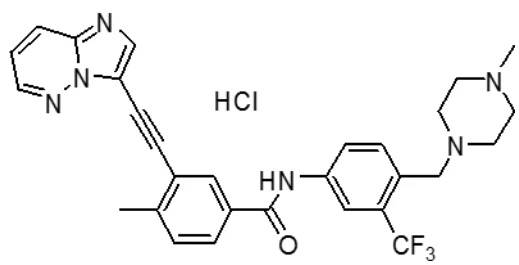
Physicochemical properties: Ponatinib HCl is an off-white to yellow powder with pKa of 2.77 and 7.8. The solubility of ponatinib in pH 1.7, 2.7, and 7.5 buffers is 7790 mcg/mL, 3.44 mcg/mL, and 0.16 mcg/mL, respectively, indicating a decrease in solubility with increasing pH.
Pharmaceutical standard: Professed
14 CLINICAL TRIALS
14.1 Clinical Trials by Indication
Chronic myeloid leukemia (CML) or Philadelphia chromosome positive acute lymphoblastic leukemia (Ph+ ALL)
Table 11. Summary of Patient Demographics for Clinical Trials with ICLUSIG
| Study # | Study design | Dosage, route of administration and duration | Study subjects (n) | Mean age in years (Range) | Sex, n (%) M/F |
| AP24534-10-201 (PACE) | Multicenter, single-arm, open-label phase 2 study | Starting dose of ponatinib: 45 mg taken orally once daily with possible dose modification including dose reduction to 15 mg or 30 mg once daily | n=449 patients with CML (CP, AP, or BP) or Ph+ ALL, resistant or intolerant to dasatinib or nilotinib, or had T315I mutation | 59 (18 - 94) (median) | 238 (53%) / 211 (47%) |
| Study # | Study design | Dosage, route of administration and duration | Study subjects (n) | Mean age in years (Range) | Sex, n (%) M/F |
| AP24534-14-203 (OPTIC) | Multicenter, randomized, open-label, phase 2 study | Cohort A: 45 mg taken orally once daily | n=94 | 48.3 (18 – 81) | 141 (50%) / 141 (50%) |
| Cohort B: 30 mg taken orally once daily | n=94 | ||||
| Cohort C: 15 mg taken orally once daily | n=94 | ||||
Total=282 Patients with CP-CML, resistant or who had T315I mutation | |||||
Previously Treated CML or Ph+ ALL (PACE)
The safety and efficacy of ICLUSIG (ponatinib tablets) in adult CML and Ph+ ALL patients who were resistant or intolerant to prior TKI therapy were evaluated in 449 patients in a single-arm, open-label, international, multicenter phase 2 trial (PACE study). All patients were administered a starting dose of 45 mg of ICLUSIG once daily with the possibility of dose modifications, dose reductions, and/or interruptions. Patients were assigned to one of 6 cohorts based on disease phase (CP-CML; AP-CML; or BP-CML/Ph+ ALL), resistance or intolerance (R/I) to dasatinib or nilotinib, or the presence of the T315I mutation. Resistance in CP-CML was defined as failure to achieve either a complete hematologic response (CHR) (by 3 months), a minor cytogenetic response (by 6 months), or a major cytogenetic response (MCyR) (by 12 months) while on dasatinib or nilotinib.
CP-CML patients who experienced a loss of response or development of a kinase domain mutation in the absence of a complete cytogenetic response or progression to AP-CML or BP-CML at any time on dasatinib or nilotinib were also considered resistant. Resistance in AP-CML and BP-CML/Ph+ ALL was defined as failure to achieve either a major hematologic response (MaHR) (AP-CML by 3 months, BP-CML/Ph+ ALL by 1 month), loss of MaHR (at any time), or development of kinase domain mutation in the absence of a MaHR while on dasatinib or nilotinib.
Intolerance was defined as the discontinuation of dasatinib or nilotinib due to toxicities despite optimal management in the absence of a complete cytogenetic response (CCyR) for CP-CML patients or MaHR for AP-CML, BP-CML, or Ph+ ALL patients.
The primary efficacy endpoint in CP-CML was MCyR by 12 months which included CCyR and partial cytogenetic responses (PCyR)1. The secondary efficacy endpoints in CP-CML were CHR and major molecular response (MMR). The primary efficacy endpoint in AP-CML and BP-CML/Ph+ ALL was MaHR by 6 months, defined as either a CHR or no evidence of leukemia (NEL). The secondary efficacy endpoints in AP-CML and BP-CML/Ph+ ALL were MCyR and MMR. For all patients, additional secondary
1 In PACE, a month is defined as 30.43 days for all calculations.
efficacy endpoints included confirmed MCyR, time to response, duration of response, progression-free survival (PFS), and overall survival (OS).
The phase 2 PACE trial enrolled 449 patients, of which 444 were eligible for analysis: 267 CP-CML patients (R/I Cohort: n=203, T315I Cohort: n=64), 83 AP-CML patients (R/I Cohort: n=65, T315I Cohort: n=18), 62 BP-CML (R/I Cohort: n=38, T315I Cohort: n=24), and 32 Ph+ ALL patients (R/I Cohort: n=10, T315I Cohort: n=22). A prior MCyR or better (MCyR, MMR, or complete molecular response [CMR]) to dasatinib or nilotinib was only achieved in 26% patients with CP-CML, and a prior MaHR or better (MaHR, MCyR, MMR, or CMR) was only achieved in 21% and 24% of AP-CML and BP-CML/Ph+ ALL patients, respectively. Baseline demographic characteristics are described in Table 12 below.
Table 12. Demographics and Disease Characteristics for PACE
| Patient Characteristics at Entry | Total Safety Population N=449 |
|---|---|
| Age | |
| Median, years (range) | 59 (18 - 94) |
| Gender, n (%) | |
| Male | 238 (53%) |
| Race, n (%) | |
| Asian | 59 (13%) |
| Black/African American | 25 (6%) |
| White | 352 (78%) |
| Other | 13 (3%) |
| ECOG Performance Status, n (%) | |
| ECOG=0 or 1 | 414 (92%) |
| Disease History | |
| Median time from diagnosis to first dose, years (range) | 6.09 (0.33 - 28.47) |
| Resistant to prior TKI therapya, n (%) | 374 (88%) |
| Prior TKI therapy– number of regimens, n (%) | |
| 1 | 31 (7%) |
| 2 | 155 (35%) |
| ≥3 | 263 (59%) |
| BCR::ABL mutation detected at entryb, n (%) | |
| None | 198 (44%) |
| 1 | 192 (43%) |
| ≥2 | 54 (12%) |
a Of 427 patients reporting prior tyrosine kinase inhibitor (TKI) therapy with dasatinib or nilotinib. b Of the patients with one or more BCR::ABL kinase domain mutations detected at entry, 37 unique mutations were detected. | |
Study Results in Previously Treated CML or Ph+ ALL (PACE)
Overall, 56% of patients had one or more BCR::ABL kinase domain mutation at entry, with the most frequent being T315I (29%), F317L (8%), E255K (4%) and E359V (4%). In 67% of CP-CML patients in the R/I cohort, no mutations were detected at study entry. The median duration of follow-up for all patients was 37.3 months (range: 0.07 to 73.1 months); 56.8 months for CP-CML patients, 32.3 months for AP-CML patients, and 6.0 months for patients with BP-CML/Ph+ ALL. The median duration of ICLUSIG treatment was 32.2 months in CP-CML patients, 19.4 months in AP-CML patients, 2.9 months in BP-CML patients, and 2.7 months in Ph+ ALL patients. Efficacy results are summarized in Table 13 and Table 14.
Table 13. Efficacy of ICLUSIG in Resistant or Intolerant CP-CML Patients in PACE (N=449)
Overall (N=267)a | Resistant or Intolerant | |||||
|---|---|---|---|---|---|---|
R/I Cohort (N=203) | T315I Cohort (N=64) | |||||
| Cytogenetic Response Rate | ||||||
Major (MCyR)b % n/N 95% CI (%) | 55% (148/267) (49 - 62) | 51% (103/203) (44 - 58) | 70% (45/64) (58 - 81) | |||
Complete (CCyR) % n/N 95% CI (%) | 46% (123/267) (40 - 52) | 40% (81/203) (33 - 47) | 66% (42/64) (53 - 77) | |||
Major Molecular Response (MMR)c % n/N 95% CI (%) | 40% (108/267) (35 - 47) | 35% (71/203) (28 - 42) | 58% (37/64) (45 - 70) | |||
MCyR rates are unconfirmed (defined as response not necessarily confirmed at subsequent assessment). a Includes 3 CP-CML patients who were not assigned to a cohort. These patients had a history of T315I that was not confirmed by mutation testing at study entry, and did not have prior therapy with either dasatinib or nilotinib. b Primary endpoint for CP-CML Cohorts was MCyR (unconfirmed) by 12 months, which combines both complete (No detectable Ph+ cells) and partial (1% to 35% Ph+ cells) cytogenetic responses. c Secondary endpoint for CP-CML Cohorts was MMR measured in peripheral blood. Defined as a ≤ 0.1% ratio of BCR::ABL to ABL transcripts on the International Scale (IS) (i.e., ≤ 0.1% BCR::ABLIS; patients must have the b2a2/b3a2 [p210] transcript), in peripheral blood, measured by quantitative reverse transcriptase polymerase chain reaction (qRT PCR). | ||||||
Ninety-four percent (95% CI: [91% - 97%]) of CP-CML patients achieved a CHR. The estimated median time to CHR was 13 days.
Of the CP-CML patients previously treated with 1, 2, 3 or 4 prior market authorised TKIs, 79% (15/19), 68% (66/97), 44% (63/142), and 58% (7/12) achieved a MCyR while on ICLUSIG, respectively.
Of the CP-CML patients with no mutation detected at entry, 49% (66/136) achieved a MCyR. In CP-CML patients who achieved confirmed MCyR (defined as CCyR [no Ph+ cells] + PCyR [1% to 35% Ph+ cells]), the median time to MCyR was 2.8 months (range: 1.6 to 11.3 months) and in patients who achieved MMR, the median time to MMR was 5.5 months (range: 1.8 to 55.5 months).
Of the CP-CML patients, 59.6% (159/267), 53.9% (144/267), and 40.4% (108/267) achieved MCyR, CCyR, and MMR, respectively, at any time on study. Most of the CP-CML patients who achieved MMR (40.4%, 108/267) also achieved MR4 (30.3%, 81/267) or MR4.5 (24.0%, 64/267).
The median durations of MCyR and MMR had not yet been reached at data cutoff. Of the CP-CML patients who achieved MCyR and MMR, 82.4% (95% CI: [74.1% – 88.2%]) and 61.0% (95% CI: [50.6% – 69.8%]), respectively, were estimated to maintain their response after 5 years.
With a median follow-up of 56.8 months, 3.4% (9/267) of CP-CML patients experienced transformation of their disease to AP-CML or BP-CML.
Based on Kaplan-Meier estimates, CP-CML patients who achieved certain MCyR or MMR response within the first year of treatment had statistically significantly improved PFS and OS compared to those patients who did not meet the treatment milestones.
Table 14. Efficacy of ICLUSIG in Resistant or Intolerant AP-CML, BP-CML or Ph+ ALL Patients in PACE
| AP-CML | BP-CML | Ph+ ALL | |||||||||||
|---|---|---|---|---|---|---|---|---|---|---|---|---|---|
R/I Cohort (N=65) | T315I Cohort (N=18a) | R/I Cohort (N=38) | T315I Cohort (N=24) | R/I Cohort (N=10) | T315I Cohort (N=22) | ||||||||
| Hematologic Response Rate | |||||||||||||
Major (MaHR)b % n/N 95% CI (%) | 57% (37/65) (44 – 69) | 56% (10/18) (31 – 79) | 32% (12/38) (18 – 49) | 29% (7/24) (13 – 51) | 50% (5/10) (19 – 81) | 36% (8/22) (17 – 59) | |||||||
Complete (CHR)c % n/N 95% CI (%) | 49% (32/65) (37 - 62) | 56% (10/18) (31 – 79) | 24% (9/38) (11 – 40) | 17% (4/24) (5 – 37) | 40% (4/10) (12 – 74) | 32% (7/22) (14 – 55) | |||||||
Major Cytogenetic Response (MCyR)d % n/N 95% CI (%) | 34% (22/65) (23 – 47) | 56% (10/18) (31 – 79) | 18% (7/38) (8 – 34) | 29% (7/24) (13 – 51) | 60% (6/10) (26 – 88) | 41% (9/22) (21 – 64) | |||||||
a Includes 2 AP-CML patients who were not assigned to a cohort. These patients had a history of T315I that was not confirmed by mutation testing at study entry, and did not have prior therapy with either dasatinib or nilotinib. b Primary endpoint for AP-CML and BP-CML/Ph+ ALL cohorts was MaHR by 6 months, which combines complete hematologic responses and no evidence of leukemia. c CHR (confirmed): WBC ≤ institutional ULN, ANC ≥1000/mm3, platelets ≥100,000/mm3, no blasts or promyelocytes in peripheral blood, bone marrow blasts ≤5%, <5% myelocytes plus metamyelocytes in peripheral blood, basophils <5% in peripheral blood, no extramedullary involvement (including no hepatomegaly or splenomegaly). d MCyR combines both complete (no detectable Ph+ cells) and partial (1% to 35% Ph+ cells) cytogenetic responses. | |||||||||||||
The median time to MaHR in patients with AP-CML, BP-CML, and Ph+ ALL among responders was 0.7 months (range: 0.4 to 5.8 months), 1.0 month (range: 0.4 to 3.7 months), and 0.7 months (range: 0.4 to 5.5 months), respectively.
The median duration of MaHR for patients with AP-CML, BP-CML and Ph+ ALL was estimated as 12.9 months (range: 1.2 to 68.4 months), 6.0 months (range: 1.8 to 59.6 months), and 3.2 months (range: 1.8 to 12.8 months), respectively. In the patients with AP-CML, the probability of remaining in MaHR was estimated to be 51% (95% CI: [36% - 65%]) and 29% (95% CI: [17% - 43%]) at 12 months and 24 months, respectively. In the patients with BP-CML/Ph+ ALL, the probability of remaining in MaHR was estimated to be 28% (95% CI: [14% - 44%]) and 16% (95% CI: [6% - 30%]) at 12 months and 24 months, respectively.
Previously Treated CP-CML (OPTIC)
The safety and efficacy of ICLUSIG was evaluated in a randomized, open-label, phase 2 dose-optimization trial in adult CP-CML patients whose disease was considered to be resistant to at least 2 prior TKIs or who had the T315I mutation (OPTIC study). Resistance in CP-CML while on a prior TKI was defined as failure to achieve either a CHR (by 3 months), a minor cytogenetic response (by 6 months), a MCyR (by 12 months), or development of a new BCR::ABL1 kinase domain mutation or new clonal evolution. Patients were required to have >1% BCR::ABL1IS (by real-time polymerase chain reaction) at trial entry. Patients received 1 of 3 starting dosages once daily: 45 mg, 30 mg, or 15 mg. Patients who received a starting dose of 45 mg or 30 mg had a dose reduction to 15 mg once daily upon achieving ≤1% BCR::ABL1IS.
The primary efficacy endpoint was a molecular response based on the achievement of ≤1% BCR::ABL1IS at 12 months (defined as a ≤1% ratio of BCR::ABL to ABL transcripts on the International Scale (IS))2. All patients reached the 12-month time point (primary endpoint) by the data cutoff.
The secondary efficacy endpoints included CCyR at 12 months, MMR at 12 and 24 months, CHR at 3 months, time to response, duration of response, maintenance of response, PFS and OS. Additional assessment included the rates of molecular response at each patient visit at 3-month intervals for 36 months based on the achievement of ≤1% BCR::ABL1IS.
Baseline demographic characteristics are described in Table 15 for patients who received a starting dose of 45 mg.
2 In OPTIC, a month is defined as 28 days (cycle of treatment for ICLUSIG) for all calculations.
Table 15. Demographic and Disease Characteristics for OPTIC (45 mg Cohort)
| Patient Disease Characteristics at Entry | ICLUSIG 45 mg → 15 mg (N=94) |
|---|---|
| Age | |
| Median years (range) | 46 (19 to 81) |
| Sex, n (%) | |
| Male | 50 (53%) |
| Race, n (%) | |
| White | 73 (78%) |
| Asian | 16 (17%) |
| Other/Unknown | 4 (4%) |
| Black or African American | 1 (1%) |
| ECOG Performance Status, n (%) | |
| ECOG 0 or 1 | 93 (99%) |
| Disease History | |
| Median time from diagnosis to first dose, years (range) | 5.5 (1 to 21) |
| Resistant to Prior Kinase Inhibitor, n (%) | 92 (98%) |
| Presence of one or more BCR::ABL kinase domain mutations, n (%) | 41 (44%) |
| Number of Prior Kinase Inhibitors, n (%) | |
| 1 | 1 (1%) |
| 2 | 43 (46%) |
| ≥3 | 50 (53%) |
| T315I mutation at baseline | 25 (27%) |
| Comorbidities | |
| Hypertension | 29 (31%) |
| Diabetes | 5 (5%) |
| Hypercholesterolemia | 3 (3%) |
| History of ischemic heart disease | 3 (3%) |
Study Results in Previously Treated CP-CML (OPTIC)
The median duration of follow-up for the 45 mg cohort (N=94) was 31.1 months (95% CI: 24.1, 36.0). A total of 282 patients received ICLUSIG: 94 received a starting dose of 45 mg, 94 received a starting dose of 30 mg, and 94 received a starting dose of 15 mg.
Efficacy results are summarized in Table 16. The primary endpoint was met in patients who received a starting dose of 45 mg. Overall, 44% of patients had one or more BCR::ABL kinase domain mutations at study entry with the most frequent being T315I (27%). The subgroup analysis based on baseline T315I mutation status showed similar ≤1% BCR::ABL1IS rates at 12 months in patients with and without T3151. No mutations were detected at study entry for 54% of the patients who received the starting dose of 45 mg.
Table 16. Efficacy Results in Patients with CP-CML who Received ICLUSIG at Starting Dose of 45 mg in OPTIC
ICLUSIG 45 mg → 15 mg (N=93)a | |||
|---|---|---|---|
| Molecular Response at 12 monthsb | |||
Overall ≤1% BCR::ABL1IS Rate % (n/N) (98.3% CI)c | 44% (41/93) (32%, 57%) | ||
Patients with T315I mutation % (n/N) (95% CI) | 44% (11/25) (24%, 65%) | ||
Patients without T315I mutation % (n/N) (95% CI) | 44% (29/66)d (32%, 57%) | ||
| Cytogenetic Response by 12 months | |||
Major (MCyR)e % (n/N) (95% CI) | 48% (44/91)f (38%, 59%) | ||
Patients with T315I mutation % (n/N) (95% CI) | 52% (13/25) (31%, 72%) | ||
Patients without T315I mutation % (n/N) (95% CI) | 46% (30/65)g (34%, 59%) | ||
a ITT population (N=93) defined as patients who had the b2a2/b3a2 (p210) transcripts.
b Primary endpoint was ≤1% BCR::ABL1IS rate at 12 months. Defined as a ≤1% ratio of BCR::ABL to ABL transcripts on the International Scale (IS) (i.e., ≤1% BCR::ABLIS; patients must have the b2a2/b3a2 (p210) transcript), in peripheral blood measured by quantitative reverse transcriptase polymerase chain reaction (qRT PCR).
c 98.3% CI is calculated using the binomial exact (Clopper-Pearson) method.
d Of the 93 patients, two patients did not have a baseline mutation assessment and were excluded from the response by mutation analysis.
e Secondary endpoint was MCyR by 12 months which combines both complete (no detectable Ph+ cells) and partial (1% to 35% Ph+ cells in at least 20 metaphases) cytogenetic responses.
f Analysis is based on ITT cytogenetic population (N=91) defined as patients who had a cytogenetic assessment at baseline with at least 20 metaphases examined. One patient who had a complete cytogenetic response at baseline was excluded from the analysis.
g Of the 91 patients, one patient did not have a baseline mutation assessment and was excluded from the response by mutation analysis.
At 12 months, 34% (31/91) and 17% (16/93) of CP-CML patients who received a starting dose of 45 mg achieved CCyR, and MMR, respectively. At 24 months, 24% (18/75) of patients achieved MMR. The median duration of MMR had not yet been reached. Eighty-seven percent (95% CI: [79% - 93%]) patients achieved or maintained a CHR at 3 months.
A response of ≤1% BCR::ABL1IS was achieved as early as 2.9 months. In CP-CML patients who received a starting dose of 45 mg, the median time to response was 6 (95% CI: 3.1, 6.0) months. The median duration of ICLUSIG treatment in patients who received a starting dose of 45 mg was 21 months. Of the
45 patients who had a dose reduction after achieving ≤1% BCR::ABL1IS, 28 patients (62%) maintained their response at the reduced dose for at least 90 days. Of the 28 patients, 18 patients (64%) maintained the response for at least one year. Median duration of response (MR2) was not reached at data cutoff.
Long-term outcomes (PFS and OS) were favourable. Based on Kaplan-Meier estimates, the PFS rates were 92% at 12 months and 80% at 24 months. The OS rates were 98% at 12 months and 92% at 24 months.
The rates of efficacy response ≤1% BCR::ABL1IS analysed by patient visits at pre-specified timepoints were 22% (3 months), 41% (6 months), 47% (9 months), 52% (12 months), 56% (18 months), 56% (24 months), 56% (30 months) and 56% (36 months).
The molecular response rates (measured by achievement of ≤1% BCR::ABL1IS) at 12 months was lower among patients who had received treatment with ≤2 prior TKIs compared with patients who had received ≥3 prior TKIs (40% vs 48%, respectively).
15 MICROBIOLOGY
No microbiological information is required for this drug product.
16 NON-CLINICAL TOXICOLOGY
General Toxicology:
Single-dose Toxicity
In mice, single doses of 50 and 150 mg/kg ponatinib were asymptomatic. At 450 mg/kg, rough hair coats, reversible decreased body weight gain, and decreased food consumption were observed. The no-observed-adverse-effect level (NOAEL) for ponatinib was 150 mg/kg when administered as a single oral dose to mice.
Rats administered single oral doses of 10 mg/kg ponatinib were asymptomatic, except for thinning fur in one animal/sex. Transient decreases in reticulocytes, albumin and A:G ratio were noted. At doses of 30 and 100 mg/kg, histopathologic examination revealed that moribundity and mortality in many of these animals appeared to be associated with ponatinib-mediated immunosuppression (due to lymphoid depletion). Bacterial sepsis was a sequela to the immunosuppression, and there were numerous systemic tissue alterations that were deemed secondary to sepsis/hypoperfusion/shock. In addition, single-cell necrosis involving the exocrine pancreas and intestinal crypt epithelial cells was observed at 100 mg/kg. Clinical signs were also observed in the 30 and 100 mg/kg dose groups. The NOAEL for ponatinib was 10 mg/kg when administered as a single oral dose to rats.
Ponatinib doses of 5, 15, and 45 mg/kg administered to cynomolgus monkeys were well tolerated; the only noteworthy clinical observations were dry flaky skin and mild to moderate skin erythema at 15 and 45 mg/kg. Reversible, slight body weight loss and reduced food consumption were observed at the 15 and 45 mg/kg doses during the first week post-dose. There were no ponatinib-related changes in hematology, clinical chemistry, coagulation, or urinalysis parameters. Systolic heart murmurs were noted in individual animals treated with 5 and 45 mg/kg. Heart murmurs were also noted in some animals near the end of a 28-day repeat dose toxicity study on ponatinib in cynomolgus monkeys that were shown to be reversible. In both studies, no macroscopic or microscopic correlates were noted.
Repeat-dose Toxicity
Pivotal repeat-dose toxicity studies were conducted in rats and cynomolgus monkeys. In the 28-day study in rats, animals were administered doses of 0, 1.5, 3 and 6 mg/kg ponatinib and in the 6-month study in rats, doses of 0, 0.25, 0.75, and 2 mg/kg were administered. In the 28-day rat study, there were transient increases in mean ALT and AST, however, there were microscopic correlates. Dry flaky skin was observed in rats after repeated dosing.
In monkeys, ponatinib doses were 0, 1, 2.5, and 5 mg/kg in the 28-day study, and 0, 0.25, 0.75, and 2 mg/kg in the 6-month study. The pancreas was identified as a target organ of toxicity in the 28-day toxicity study in monkeys. Skin changes in the form of crusts, hyperkeratosis, or erythema were observed in toxicity studies in cynomolgus monkeys. Heart murmurs were observed in individual animals in the repeat-dose 28-day toxicity study. In the 6-month study, there were reversible increases in ALT/AST levels in individual animals without microscopic correlates.
In addition, the adverse reactions not observed in clinical studies, but seen in animals at exposure levels similar to clinical exposure levels and with possible relevance to clinical use are described below. Depletion of lymphoid organs was observed in repeat-dose toxicity studies in rats and cynomolgus monkeys. The effects were shown to be reversible or partially reversible after withdrawal of the treatment. Ponatinib-related bone changes were observed in repeat-dose toxicity studies in rats and characterized by reversible hyperplasia of the epiphyseal cartilage after 28 days of administration, and a non-reversible reduction in physeal chondrocytes after 6 months of administration.
In rats, inflammatory changes accompanied by increases in neutrophils, monocytes, eosinophils, and fibrinogen levels were found in the preputial and clitoral glands following chronic dosing. Thyroid gland follicular atrophy mostly accompanied by a reduction in T3 levels and a tendency toward increased TSH and T4 levels were observed in the 4-week repeat-dose toxicity study in cynomolgus monkeys and reversible reductions in T3 levels with no microscopic correlates in rats.
Ponatinib at doses of 3, 10, and 30 mg/kg produced increases in urine output and electrolyte excretions and caused a decrease in gastric emptying in safety pharmacology studies in rats.
Carcinogenicity:
In a two-year carcinogenicity study, male rats were orally administered ponatinib at 0.05, 0.1 and 0.2 mg/kg/day and females were orally administered 0.2, 0.4, and 0.8 mg/kg/day. A statistically significant increased incidence of squamous cell carcinoma of the clitoral gland was observed at 0.8 mg/kg/day, which resulted in plasma exposure levels generally lower or equivalent to human exposure at a dose range of 15 to 45 mg daily. At doses of 0.4 and 0.8 mg/kg/day, there was increased incidence of sex cord stromal hyperplasia and of mixed sex cord stromal benign tumours in the ovaries. The clinical relevance of these findings is not known.
Genotoxicity:
Ponatinib was not mutagenic in a bacterial mutagenesis (Ames) assay, was not clastogenic in a chromosome aberration assay in human lymphocytes, nor was it clastogenic in an in vivo mouse micronucleus assay at oral doses up to 2000 mg/kg.
Reproductive and Developmental Toxicology:
Ponatinib may impair fertility in female patients. In a rat fertility study with 0.25, 0.75, and 1.50 mg/kg/day ponatinib, there was no effect observed on male fertility parameters, but female fertility parameters were reduced. There was increased pre- and post-implantation embryo-fetal lethality observed in the 1.50 mg/kg/day female group. The NOAEL for paternal toxicity was
0.25 mg/kg/day based on reduced body weight and reduced body weight gain at ≥0.75 mg/kg/day. The NOAEL for reproductive performance and fertility was 1.50 mg/kg/day in males and 0.75 mg/kg/day in females.
Ponatinib was administered orally to pregnant female rats at doses of 0.3, 1, and 3 mg/kg/day from Gestation Day 7 through 17. Embryo-fetal toxicity in the form of post-implantation loss, reduced fetal body weight, and multiple soft tissue and skeletal alterations were observed at maternal toxic dosages. Multiple fetal soft tissue and skeletal alterations were also observed at maternal nontoxic dosages. The maternal NOAEL was considered to be 1 mg/kg/day and the developmental NOAEL was considered to be 0.3 mg/kg/day.
In juvenile rats, daily oral administration of 3 mg/kg/day ponatinib to juvenile rats beginning on Day 15 postpartum resulted in mortality related to inflammatory effects within 6 to 7 days of treatment initiation. Lower doses (0.75 and 1.5 mg/kg/day) caused adverse reductions in body weight gain, but no adverse effects on juvenile rat developmental parameters (vaginal opening, preputial separation or bone measurements).
Ponatinib-related microscopic findings in the ovaries (increased follicular atresia), uterus (endometrial atrophy), and testes (minimal germ cell degeneration) in cynomolgus monkeys treated with 5 mg/kg ponatinib were noted in the 28-day repeat-dose toxicity study at exposures approximately 3.3 times the AUC in patients receiving the recommended dose of 45 mg/day.
Other Toxicity Studies
In a phototoxicity study in rats, diffuse corneal edema with neutrophilic cell infiltration, and hyperplastic changes in the lenticular epithelium suggestive of a mild phototoxic reaction were observed in animals treated with 5 and 10 mg/kg ponatinib.
Ponatinib inhibited aggregation of human platelets in vitro only at a test concentration 100 times higher than the estimated plasma Cmax in human patients at the recommended therapeutic dose. No inhibition of platelet aggregation was detected at concentrations 10 times higher than the therapeutic Cmax.