


Product Monograph - Scemblix
Recent Major Label Changes
| 1 Indications | 07/2025 |
|---|---|
| 7 Warnings and Precautions | 01/2024 |
Table of Contents
Sections or subsections that are not applicable at the time of authorization are not listed.
Recent Major Label Changes .......................................................................................... 2
Table of Contents ............................................................................................................. 2
Part 1: Healthcare Professional Information ................................................................ 4
- 1.
Indications ................................................................................................................ 4
1.1. Pediatrics ..................................................................................................................... 4
1.2. Geriatrics ..................................................................................................................... 4
- 2. Contraindications .................................................................................................. 4
- 4.
Dosage and Administration ................................................................................. 4
4.1. Dosing Considerations ................................................................................................ 4
4.2. Recommended Dose and Dosage Adjustment ........................................................... 4
4.4. Administration ............................................................................................................ 6
4.5. Missed Dose ................................................................................................................ 6
- 5. Overdose ................................................................................................................ 6
- 6. Dosage Forms, Strengths, Composition, and Packaging ............................... 7
- 7.
Warnings and Precautions .................................................................................. 7
Carcinogenesis and Genotoxicity ....................................................................................... 7
Cardiovascular .................................................................................................................... 7
Hematologic ....................................................................................................................... 8
Hepatic/Biliary/Pancreatic ................................................................................................. 9
Immune .............................................................................................................................. 9
Monitoring and Laboratory Tests ...................................................................................... 9
Reproductive Health ........................................................................................................ 10
7.1. Special Populations ................................................................................................... 10
7.1.1 Pregnancy ...................................................................................................... 10
7.1.2 Breastfeeding ................................................................................................. 11
7.1.3 Pediatrics ........................................................................................................ 11
7.1.4 Geriatrics ........................................................................................................ 11
- 8.
Adverse Reactions .............................................................................................. 11
8.1. Adverse Reaction Overview ...................................................................................... 11
8.2. Clinical Trial Adverse Reactions ................................................................................ 12
8.3. Less Common Clinical Trial Adverse Reactions ......................................................... 15
8.4. Abnormal Laboratory Findings: Hematologic, Clinical Chemistry and Other Quantitative Data ............................................................................................................. 16
- 9.
Drug Interactions................................................................................................. 19
9.2. Drug Interactions Overview ...................................................................................... 19
9.4. Drug-Drug Interactions ............................................................................................. 19
9.5. Drug-Food Interactions ............................................................................................. 22
9.6. Drug-Herb Interactions ............................................................................................. 22
- 10.
Clinical Pharmacology ....................................................................................... 23
10.1. Mechanism of Action .............................................................................................. 23
10.2. Pharmacodynamics ................................................................................................. 23
10.3. Pharmacokinetics .................................................................................................... 23
- 11. Storage, Stability, and Disposal ........................................................................ 25
- 12. Special Handling Instructions ........................................................................... 25
Part 2: Scientific Information ........................................................................................ 26
- 13. Pharmaceutical Information .............................................................................. 26
- 14.
Clinical Trials ....................................................................................................... 28
14.1. Clinical Trials by Indication...................................................................................... 28
Newly diagnosed Philadelphia chromosome-positive chronic myeloid leukemia (Ph+ CML) in chronic phase (CP) .............................................................................................. 28
Ph+ CML-CP, previously treated with two or more TKIs ................................................. 30
- 15. Microbiology ........................................................................................................ 31
- 16. Non-Clinical Toxicology ..................................................................................... 31
Patient Medication Information .................................................................................... 34
Part 1: Healthcare Professional Information
1. Indications
SCEMBLIX® (asciminib tablets) is indicated for the treatment of:
- Adult patients with Philadelphia chromosome-positive chronic myeloid leukemia (Ph+ CML) in chronic phase (CP) who are newly diagnosed or who have previously received 1 or more tyrosine kinase inhibitors.
1.1. Pediatrics
Paediatrics (< 18 years of age): No data are available to Health Canada; therefore, Health Canada has not authorized an indication for SCEMBLIX for pediatric use.
1.2. Geriatrics
Geriatrics (≥ 65 years of age): No overall differences in the safety or efficacy of SCEMBLIX were observed between patients of 65 years of age or above and younger patients (see 7.1.4 Geriatrics and 14 CLINICAL TRIALS).
2. Contraindications
SCEMBLIX is contraindicated in patients who are hypersensitive to this drug or to any ingredient in the formulation, including any non-medicinal ingredient, or component of the container. For a complete listing, see 6 Dosage Forms, Strengths, Composition, and Packaging.
4. Dosage and Administration
4.1. Dosing Considerations
Treatment with SCEMBLIX should be initiated by a physician experienced in the use of anticancer therapies.
The pregnancy status of females of reproductive potential should be verified prior to starting treatment with SCEMBLIX.
4.2. Recommended Dose and Dosage Adjustment
The recommended total daily dose of SCEMBLIX is 80 mg. SCEMBLIX can be taken orally either as 80 mg once daily at approximately the same time each day, or as 40 mg twice daily at approximately 12-hour intervals.
Patients changing from 40 mg twice daily to 80 mg once daily should start taking SCEMBLIX once daily approximately 12 hours after the last twice-daily dose, and then continue at 80 mg once daily.
Patients changing from 80 mg once daily to 40 mg twice daily should start taking SCEMBLIX twice daily approximately 24 hours after the last once-daily dose and then continue at 40 mg twice daily at approximately 12-hour intervals.
Any change in the dosage regimen is at the prescriber’s discretion, as necessary for the management of the patient.
Treatment with SCEMBLIX should be continued as long as clinical benefit is observed or until unacceptable toxicity occurs.
Dosage Modifications
For the management of adverse reactions, SCEMBLIX dose can be reduced based on individual safety and tolerability, as described in Table 1. If adverse reactions are effectively managed, SCEMBLIX may be resumed as described in Table 1.
SCEMBLIX should be permanently discontinued in patients unable to tolerate a total daily dose of 40 mg.
Table 1 SCEMBLIX dosage modification
| Starting dose | Reduced dose | Resumed dose |
| 80 mg once daily | 40 mg once daily | 80 mg once daily |
| 40 mg twice daily | 20 mg twice daily | 40 mg twice daily |
The recommended dosage modification for the management of selected adverse reactions is shown in Table 2.
Table 2 SCEMBLIX dosage modification for the management of selected adverse reactions
| Adverse reaction | Dosage modification |
| Adverse reaction | Dosage modification |
| Thrombocytopenia and/or neutropenia | |
| ANC <1 x 10⁹/L and/or PLT <50 x 109/L | Withhold SCEMBLIX until resolved to ANC ≥1 x 10⁹/L and/or PLT ≥50 x 109/L. If resolved:
For recurrent severe thrombocytopenia and/or neutropenia, withhold SCEMBLIX until resolved to ANC ≥1 x 10⁹/L and PLT ≥50 x 109/L, then resume at reduced dose. |
| Asymptomatic amylase and/or lipase elevation | |
| Elevation >2 x ULN | Withhold SCEMBLIX until resolved to <1.5 x ULN.
|
| Non-hematologic adverse reactions | |
| Grade 3 or higher1 adverse reactions | Withhold SCEMBLIX until resolved to grade 1 or lower.
|
Abbreviations: ANC, absolute neutrophil count; PLT, platelets; ULN, upper limit of normal 1 Based on National Cancer Institute Common Terminology Criteria for Adverse Events (NCI CTCAE) v 4.03. | |
Special populations
Pediatrics (<18 years of age): Health Canada has not authorized an indication for pediatric use.
Geriatrics (≥ 65 years): No dose adjustment is required in patients 65 years of age or above (see 7.1.4 Geriatrics and 10.3 Pharmacokinetics).
Renal impairment: No dose adjustment is required in patients with mild, moderate or severe renal impairment not requiring dialysis (absolute Glomerular Filtration Rate (aGFR) ≥15 mL/min) receiving SCEMBLIX (see 10.3 Pharmacokinetics). SCEMBLIX has not been studied in subjects with end stage renal disease requiring dialysis.
Hepatic impairment: No dose adjustment is required in patients with mild, moderate or severe hepatic impairment receiving SCEMBLIX (see 10.3 Pharmacokinetics).
4.4. Administration
SCEMBLIX should be taken orally without food. Food consumption should be avoided for at least 2 hours before and 1 hour after taking SCEMBLIX (see 9 DRUG INTERACTIONS and 10 CLINICAL PHARMACOLOGY).
SCEMBLIX tablets should be swallowed whole and should not be broken, crushed or chewed.
4.5. Missed Dose
Once-daily dosage regimen: If a SCEMBLIX dose is missed by more than approximately 12 hours, it should be skipped and the next dose should be taken as scheduled.
Twice-daily dosage regimen: If a SCEMBLIX dose is missed by more than approximately 6 hours, it should be skipped and the next dose should be taken as scheduled.
5. Overdose
There is limited experience of SCEMBLIX overdose. In clinical studies, SCEMBLIX has been administered at doses up to 280 mg twice daily with no evidence of increased toxicity. General supportive measures and symptomatic treatment should be initiated in cases of suspected overdose.
For the most recent information in the management of a suspected drug overdose, contact your regional poison control centre or Health Canada’s toll-free number, 1-844 POISON-X (1-844-764-7669).
- 6. Dosage Forms, Strengths, Composition, and Packaging
Table 3 Dosage Forms, Strengths, and Composition
Description
Each 20 mg film-coated SCEMBLIX tablet contains 21.62 mg asciminib hydrochloride, which is equivalent to 20 mg asciminib.
20 mg film-coated SCEMBLIX tablets: pale yellow, round, biconvex with beveled edges, approximately 6.2 mm diameter, unscored, debossed with “Novartis” logo on one side and “20” on the other side.
Each 40 mg film-coated SCEMBLIX tablet contains 43.24 mg asciminib hydrochloride, which is equivalent to 40 mg asciminib.
40 mg film-coated SCEMBLIX tablets: violet white, round, biconvex with beveled edges, approximately 8.2 mm diameter, unscored, debossed with “Novartis” logo on one side and “40” on the other side.
SCEMBLIX 20 mg and 40 mg tablets are supplied in blister pack (10 blisters/card, 6 cards/carton).
7. Warnings and Precautions
Carcinogenesis and Genotoxicity
A 2-year preclinical carcinogenicity study conducted in rats demonstrated ovarian, mammary gland, thyroid, and testicular tumors (see 16 NON-CLINICAL TOXICOLOGY - Carcinogenicity). The relevance of these findings for humans is not known at this time.
Cardiovascular
Cardiovascular toxicity
| Route of Administration | Dosage Form/ Strength/Composition | Non-medicinal Ingredients |
| Oral | Tablet 20 mg and 40 mg asciminib (as asciminib hydrochloride) | Colloidal silicon dioxide, croscarmellose sodium, hydroxypropylcellulose, iron oxide (yellow and red for the 20 mg tablet and black and red for the 40 mg tablet), lactose monohydrate, lecithin, magnesium stearate, microcrystalline cellulose, polyvinyl alcohol, talc, titanium dioxide, xanthan gum. |
Cardiovascular toxicity (including ischemic cardiac and CNS conditions, arterial thrombotic and embolic conditions) and cardiac failure occurred in 37 (7%) and in 14 (3%) of 556 patients receiving SCEMBLIX, respectively. Grade 3 cardiovascular toxicity was reported in 12 (2%) patients, while grade 3 cardiac failure was observed in 8 (1%) patients. Grade 4 cardiovascular toxicity occurred in 3 (0.5%) patients, with fatalities occurring in 3 (0.5%) patients. Grade 4 cardiac failure was observed in 2 (0.4%) patients, with a fatality in 1 (0.2%) patient.
Permanent discontinuation of SCEMBLIX occurred in 3 (0.5%) patients due to cardiovascular toxicity and in 1 (0.2%) patient due to cardiac failure. Cardiovascular toxicity occurred in patients with pre-existing cardiovascular conditions or risk factors, and/or prior exposure to multiple TKIs.
Arrhythmias
Arrhythmia, including QTc prolongation, occurred in 36 of 556 (7%) patients receiving SCEMBLIX, with grade 3 or 4 arrhythmia reported in 11 (2%) and 2 (0.4%) patients, respectively. Electrocardiogram QTc prolongation occurred in 5 of 556 (0.9%) patients receiving SCEMBLIX, with grade 3 QTc prolongation reported in 2 out of 556 (0.4%) patients (see 8 ADVERSE REACTIONS and Monitoring and Laboratory Tests).
In the ASCEMBL clinical study, one patient had a prolonged QTcF greater than 500 ms together with more than 60 ms QTcF increase from baseline and one patient had prolonged QTcF with more than 60 ms QTcF increase from baseline.
Caution should be exercised when administering SCEMBLIX concomitantly with medicinal products with a known risk of torsades de pointes (see 9 DRUG INTERACTIONS and 10 CLINICAL PHARMACOLOGY).
Hypertension
Hypertension occurred in 88 of 556 (16%) patients receiving SCEMBLIX, with grade 3 and 4 reactions reported in 47 (9%) and 1 (0.2%) patients, respectively. Among the patients with hypertension ≥ grade 3, the median time to first occurrence of reactions was 21 weeks (range: 0.1 to 365 weeks). SCEMBLIX was temporarily withheld in 5 (1%) patients due to hypertension.
Hematologic
Myelosuppression
Thrombocytopenia, neutropenia and anemia occurred in patients receiving SCEMBLIX. Severe (NCI CTCAE grade 3 or 4) thrombocytopenia and neutropenia were reported during treatment with SCEMBLIX (see 8 ADVERSE REACTIONS). Myelosuppression was generally reversible and managed by temporarily withholding SCEMBLIX (see Monitoring and Laboratory Tests).
Thrombocytopenia occurred in 156 of 556 (28%) patients receiving SCEMBLIX, with grade 3 and 4 reactions reported in 39 (7%) and 53 (10%) of patients, respectively. Among the patients with thrombocytopenia ≥ grade 3, the median time to first occurrence was 6 weeks (range: 0.1 to 64 weeks) with median duration of any occurring reaction of 2 weeks (95% CI, range: 1.1 to 2 weeks). SCEMBLIX was permanently discontinued in 11 (2%) patients, while it was temporarily withheld in 70 (13%) patients due to thrombocytopenia.
Neutropenia occurred in 120 of 556 (22%) patients receiving SCEMBLIX, with grade 3 and 4 reactions reported in 41 (7%) and 35 (6%) patients, respectively. Among the patients with neutropenia ≥ grade 3, the median time to first occurrence was 7 weeks (range: 0.1 to 180 weeks)
with median duration of any occurring reaction of 2 weeks (95% CI, range: 1.2 to 2 weeks). SCEMBLIX was permanently discontinued in 7 (1%) patients, while it was temporarily withheld in 52 (9%) patients due to neutropenia.
Anemia occurred in 70 of 556 (13%) patients receiving SCEMBLIX, with grade 3 reactions occurring in 22 (4%) patients. Among the patients with anemia grade 3, the median time to first occurrence was 22 weeks (range: 0.1 to 207 weeks) with median duration of any occurring reaction of 0.8 weeks (95% CI, range: 0.3 to 1.7 weeks). SCEMBLIX was temporarily withheld in 2 (0.4%) patients due to anemia.
Based on the severity of thrombocytopenia and/or neutropenia, the SCEMBLIX dose should be reduced, temporarily withheld or permanently discontinued as described in Table 2 (see 4 DOSAGE AND ADMINISTRATION).
Hepatic/Biliary/Pancreatic
Pancreatic toxicity
Pancreatitis occurred in 11 of 556 (2%) patients receiving SCEMBLIX, with grade 3 reactions occurring in 6 (1%) patients. SCEMBLIX was permanently discontinued in 3 (0.5%) patients, while it was temporarily withheld in 6 (1%) patients due to pancreatitis. Asymptomatic elevation of serum lipase and amylase occurred in 107 of 556 (19%) patients receiving SCEMBLIX, with grade 3 and 4 reactions occurring in 41 (7%) and 11 (2%) patients, respectively. SCEMBLIX was permanently discontinued in 11 (2%) patients due to the asymptomatic elevation of serum lipase and amylase (see Monitoring and Laboratory Tests).
If serum lipase and amylase elevation are accompanied by abdominal symptoms, treatment should be temporarily withheld and appropriate diagnostic tests should be considered to exclude pancreatitis (see 4 DOSAGE AND ADMINISTRATION).
Based on the severity of serum lipase and amylase elevation, the SCEMBLIX dose should be reduced, temporarily withheld or permanently discontinued as described in Table 2 (see 4 DOSAGE AND ADMINISTRATION).
Immune
Hepatitis B reactivation
Reactivation of hepatitis B virus (HBV) has occurred in patients who are chronic carriers of this virus following administration of other BCR::ABL1 tyrosine kinase inhibitors (TKIs). Patients should be tested for HBV infection before the start of treatment with SCEMBLIX (see Monitoring and Laboratory Tests).
Hypersensitivity
Hypersensitivity events occurred in 169 of 556 (30%) patients receiving SCEMBLIX, with ≥grade 3 events reported in 8 (1%) patients (see Monitoring and Laboratory Tests).
Monitoring and Laboratory Tests
It is recommended that an electrocardiogram is performed prior to the start of treatment with SCEMBLIX and monitored during treatment as clinically indicated. Hypokalemia and hypomagnesemia should be corrected prior to SCEMBLIX administration and monitored during treatment as clinically indicated.
Hypertension should be monitored and managed using standard antihypertensive therapy during treatment with SCEMBLIX as clinically indicated.
The pregnancy status of females of reproductive potential should be verified prior to starting treatment with SCEMBLIX.
Complete blood counts should be performed every two weeks for the first 3 months of treatment and monthly thereafter, or as clinically indicated. Patients should be monitored for signs and symptoms of myelosuppression.
Serum lipase and amylase levels should be assessed monthly during treatment with SCEMBLIX, or as clinically indicated. Patients should be monitored for signs and symptoms of pancreatic toxicity. More frequent monitoring should be performed in patients with a history of pancreatitis.
HBV carriers who require treatment with SCEMBLIX should be closely monitored for signs and symptoms of active HBV infection throughout therapy and for several months following termination of therapy.
Patients should be monitored for signs and symptoms of hypersensitivity and appropriate treatment should be initiated as clinically indicated.
Reproductive Health
Fertility
Based on findings in animals, SCEMBLIX may impair fertility. There are no data on the effect of SCEMBLIX on human fertility (see 16 NON-CLINICAL TOXICOLOGY).
7.1. Special Populations
7.1.1 Pregnancy
Based on findings from animal studies, SCEMBLIX can cause fetal harm when administered to a pregnant woman. There are no adequate and well-controlled studies in pregnant women to inform a product-associated risk. There have been reports of spontaneous abortion and fetal or infant anomalies from women who have taken asciminib during pregnancy. The causal relationship to asciminib has not been yet established. Animal reproduction studies in pregnant rats and rabbits demonstrated that oral administration of asciminib during organogenesis induced embryotoxicity, fetotoxicity and teratogenicity.
Pregnant women and females of reproductive potential should be advised of the potential risk to a fetus if SCEMBLIX is used during pregnancy or if the patient becomes pregnant while taking SCEMBLIX (see Reproductive Health) and 16 NON-CLINICAL TOXICOLOGY).
The pregnancy status of females of reproductive potential should be verified prior to starting treatment with SCEMBLIX.
Sexually-active females and males of reproductive potential should use effective contraception (in addition to a barrier method) during treatment with SCEMBLIX and for at least 7 days after the last dose (see Pregnancy and Monitoring and Laboratory Tests).
7.1.2 Breastfeeding
It is unknown whether SCEMBLIX is excreted in human milk. Because of the potential for serious adverse reactions in the breastfed child, breast-feeding is not recommended during treatment with SCEMBLIX and for at least 7 days after the last dose.
7.1.3 Pediatrics
Pediatrics (< 18 years):
No data are available to Health Canada; therefore, Health Canada has not authorized an indication for SCEMBLIX for pediatric use.
7.1.4 Geriatrics
Geriatrics (≥ 65 years):
Among the 556 patients receiving SCEMBLIX in the ASC4FIRST, ASCEMBL and X2101 studies, 130 (23%) were 65 years of age or older and 31 (6%) were 75 years of age or older.
No overall differences in the safety or efficacy of SCEMBLIX were observed between patients of 65 years of age or above and younger patients.
8. Adverse Reactions
8.1. Adverse Reaction Overview
The overall safety profile of SCEMBLIX has been evaluated in 556 patients with Ph+ CML in chronic (CP) and accelerated (AP) phases receiving SCEMBLIX as monotherapy. It is based on the safety pool of the pivotal phase III study J12301 (ASC4FIRST) (N=200 newly diagnosed Ph+ CML-CP patients), the pivotal phase III study A2301 (ASCEMBL) (N=156 Ph+ CML-CP patients previously treated with two or more TKIs) and the phase I study X2101, including patients with:
- Ph+ CML-CP (N=115),
- Ph+ CML-CP harboring the T315I mutation (N=70),
- Ph+ CML-AP (N=15).
The safety pool (N=556) includes patients receiving SCEMBLIX at doses ranging from 10 to 200 mg twice daily and 80 to 200 mg once daily. In the pooled dataset, the median duration of exposure to SCEMBLIX was 83 weeks (range: 0.1 to 439 weeks) with 79% of patients exposed for at least 48 weeks and 42% of patients exposed for at least 96 weeks, respectively.
The most common adverse reactions of any grade (incidence ≥20%) in patients receiving SCEMBLIX were musculoskeletal pain (33%), thrombocytopenia (28%), fatigue (25%), upper respiratory tract infections (24%), headache (22%), neutropenia (22%), and diarrhea (20%). The most common adverse reactions of ≥ grade 3 (incidence ≥5%) in patients receiving SCEMBLIX were thrombocytopenia (17%), neutropenia (14%), increased pancreatic enzymes (9%), and hypertension (9%).
Clinically relevant adverse reactions (incidence <20%) in patients receiving SCEMBLIX included hypersensitivity (0.2%).
Serious adverse reactions occurred in 10% of patients receiving SCEMBLIX. The most frequent serious adverse reactions (incidence ≥1%) were pleural effusion (2%), lower respiratory tract infections (1%), thrombocytopenia (1%), pancreatitis (1%) and pyrexia (1%).
8.2. Clinical Trial Adverse Reactions
Clinical trials are conducted under very specific conditions. The adverse reaction rates observed in the clinical trials; therefore, may not reflect the rates observed in practice and should not be compared to the rates in the clinical trials of another drug. Adverse reaction information from clinical trials may be useful in identifying and approximating rates of adverse reactions in real-world use.
Adverse Reactions in Patients with Newly Diagnosed Ph+ CML-CP
The ASC4FIRST clinical trial randomized 405 patients with newly diagnosed Ph+ CML-CP to receive SCEMBLIX 80 mg once daily or investigator selected tyrosine kinase inhibitors (IS-TKIs). IS-TKIs included imatinib (400 mg once daily), nilotinib (300 mg twice daily), dasatinib (100 mg once daily), or bosutinib (400 mg once daily) (see 14 Clinical Trials). The safety population included 200 patients with newly diagnosed Ph+ CML-CP who received at least 1 dose of SCEMBLIX. Among patients who received SCEMBLIX, 90% were exposed for 48 weeks or longer.
The most common (≥ 20%) adverse reaction in patients who received SCEMBLIX was musculoskeletal pain.
Serious adverse events occurred in 11% of patients who received SCEMBLIX. Serious adverse reactions in ≥ 1% included pancreatitis (1%).
Permanent discontinuation due to an adverse reaction occurred in 3% of patients receiving SCEMBLIX. Adverse reactions which resulted in permanent discontinuation of SCEMBLIX in > 1% of patients included pancreatic enzymes increased (2%) and thrombocytopenia (1%).
Dosage interruptions of SCEMBLIX due to an adverse reaction occurred in 26% of patients. Adverse reactions which required dosage interruption in > 5% of patients included thrombocytopenia (13%) and neutropenia (10%).
Dose reductions of SCEMBLIX due to an adverse reaction occurred in 6% of patients. Adverse reactions which required dose reductions in > 1% of patients included thrombocytopenia (3%) and neutropenia (2%).
Table 4 Summary of adverse reactions (≥ 10%) observed with SCEMBLIX in ASC4FIRST
| System organ class/adverse reaction | Scemblix 80 mg QD N = 200 | IS-TKIs1 100-400 mg QD or BID N = 201 | ||
|---|---|---|---|---|
All Grades % | Grade 3/4 % | All Grades % | Grade 3/4 % | |
| Gastrointestinal disorders | ||||
| Abdominal pain2 | 13 | 0.5 | 9 | 0 |
| Diarrhea | 16 | 0 | 26 | 0.5 |
| Constipation | 10 | 0 | 9 | 0.5 |
| General disorders | ||||
| Fatigue3 | 18 | 1 | 20 | 0.5 |
| Infections and infestations | ||||
| Upper respiratory tract infection4 | 14 | 0 | 14 | 0.5 |
| Metabolism and nutrition disorders | ||||
| Dyslipidemia5 | 14 | 1 | 9 | 0.5 |
| Musculoskeletal and connective tissue disorders | ||||
| Arthralgia | 10 | 0 | 8 | 0.5 |
| Musculoskeletal pain6 | 24 | 1 | 30 | 0.5 |
| Nervous system disorders | ||||
| Headache | 14 | 0.5 | 15 | 0 |
| Skin and subcutaneous tissue disorders | ||||
| Rash7 | 15 | 0 | 18 | 2 |
1Investigator-selected TKIs (IS-TKIs) include imatinib (400 mg once daily) or second generation (2G) TKIs, i.e. nilotinib (300 mg twice daily), dasatinib (100 mg once daily) or bosutinib (400 mg once daily). IS-TKIs median duration of exposure: 64 weeks (range: 1 to 103 weeks). 2G TKIs median duration of exposure: 71 weeks (range: 1 to 103 weeks) Imatinib median duration of exposure: 56 weeks (range:3 to 99 weeks) 2Abdominal pain includes abdominal pain and abdominal pain upper; 3Fatigue includes fatigue and asthenia; 4Upper respiratory tract infection includes upper respiratory tract infection, nasopharyngitis, pharyngitis and rhinitis; 5Dyslipidemia includes hypertriglyceridemia, blood cholesterol increased, hypercholesterolemia, blood triglycerides increased, hyperlipidemia and dyslipidemia; 6Musculoskeletal pain includes pain in extremity, back pain, myalgia, non-cardiac chest pain, bone pain, musculoskeletal pain, neck pain, musculoskeletal chest pain, and musculoskeletal discomfort; 7Rash includes: rash, rash maculopapular and rash pruritic. | ||||
Adverse Reactions in Patients with Ph+ CML-CP, Previously Treated with Two or More TKIs
In the ASCEMBL randomized study, the safety population (patients receiving at least 1 dose of SCEMBLIX) included 156 patients with Ph+ CML-CP, previously treated with two or more TKIs, and treated with SCEMBLIX 40 mg twice daily or bosutinib 500 mg once daily (see 14 Clinical Trials). In the asciminib arm, 83% of patients were exposed for at least 24 weeks and 67% were exposed for 48 weeks or longer.
The most common (≥ 20%) adverse reactions in patients who received SCEMBLIX were upper respiratory tract infections (27%), fatigue (21%) and musculoskeletal pain (22%).
Serious adverse events occurred in 22% of patients who received SCEMBLIX. Serious adverse events in ≥ 1% included urinary tract infection (2%), pyrexia (1%), cardiac failure (2%) and thrombocytopenia (1%).
Five patients (3%) receiving asciminib died during the on-treatment period with cause of death in one each: cardiac disorder, cardiac failure, embolism arterial, ischemic stroke and unknown cause of death.
Permanent discontinuation of SCEMBLIX due to an adverse reaction occurred in 8% of patients. Adverse reactions which resulted in permanent discontinuation of SCEMBLIX in ≥ 2% of patients included thrombocytopenia (3%) and neutropenia (3%).
Dosage interruptions of SCEMBLIX due to an adverse reaction occurred in 35% of patients. Adverse reactions which required dosage interruption in ≥ 5% of patients included thrombocytopenia (19%) and neutropenia (18%).
Dose reductions of SCEMBLIX due to an adverse reaction occurred in 5% of patients. Adverse reactions which required dose reductions in ≥ 1% of patients included thrombocytopenia (5%) and neutropenia (1%).
Adverse reactions from the phase III clinical study A2301 (ASCEMBL) (Table 5) are listed by MedDRA system organ class and ranked by frequency within each system organ class.
Table 5 Summary of adverse reactions (≥ 10%) observed with SCEMBLIX in ASCEMBL
| System organ class/adverse reaction | SCEMBLIX 40 mg BID1 N=156 % | Bosutinib 500 mg QD2 N=76 % | |||||||||
|---|---|---|---|---|---|---|---|---|---|---|---|
| System organ class/adverse reaction | SCEMBLIX 40 mg BID1 N=156 % | Bosutinib 500 mg QD2 N=76 % | |||||||||
| All grades | Grade 3/4 | All grades | Grade 3/4 | ||||||||
| All grades | Grade 3/4 | All grades | Grade 3/4 | ||||||||
| Gastrointestinal disorders | |||||||||||
| Diarrhea | 13 | 0 | 72 | 11 | |||||||
| Nausea | 12 | 0.6 | 46 | 0 | |||||||
| Abdominal pain3 | 13 | 0.6 | 22 | 3 | |||||||
| General disorders and administration site conditions | |||||||||||
| Fatigue4 | 21 | 2 | 12 | 1 | |||||||
| Infections and infestations | |||||||||||
| Upper respiratory tract infection5 | 27 | 0.6 | 9 | 0 | |||||||
| Musculoskeletal and connective tissue disorders | |||||||||||
| Musculoskeletal pain6 | 22 | 3 | 18 | 1 | |||||||
| Arthralgia | 15 | 0.6 | 3 | 0 | |||||||
| Nervous system disorders | |||||||||||
| Headache | 19 | 2 | 16 | 0 | |||||||
| Skin and subcutaneous tissue disorders | |||||||||||
| Rash7 | 15 | 0 | 25 | 5 | |||||||
| Vascular disorders | |||||||||||
| Hypertension8 | 15 | 8 | 5 | 4 | |||||||
1SCEMBLIX median duration of exposure: 156 weeks (range: 0.1 to 256 weeks). 2Bosutinib median duration of exposure: 31 weeks (range: 1 to 239 weeks). 3Abdominal pain includes: abdominal pain and abdominal pain upper; 4Fatigue includes: fatigue and asthenia; 5Upper respiratory tract infection includes: upper respiratory tract infection, nasopharyngitis, pharyngitis and rhinitis; 6Musculoskeletal pain includes: pain in extremity, back pain, myalgia, non-cardiac chest pain, bone pain, musculoskeletal pain, neck pain, musculoskeletal chest pain, musculoskeletal discomfort; 7Rash includes: rash, rash maculopapular and rash pruritic; 8Hypertension includes: hypertension and blood pressure increased; | |||||||||||
8.3. Less Common Clinical Trial Adverse Reactions
Other clinically significant adverse reactions reported in < 10% of patients in the SCEMBLIX arm (all grades) are presented below.
Adverse Reactions in Patients with Newly Diagnosed Ph+ CML-CP
Blood and lymphatic system disorders: Febrile neutropenia (0.5%)
Cardiac disorders: Palpitations (0.5%)
Endocrine disorders: Hypothyroidism (3%)
Eye disorders: Dry eye (6%) and vision blurred (1%)
Gastrointestinal disorders: Nausea (9%), vomiting (6%) and pancreatitis (1%)
General disorders and administration site conditions: Pyrexia (6%) and edema (3%)
Infections and infestations: Lower respiratory tract infection (4%) and influenza (2%)
Investigations: Gamma glutamyl transferase increased (2%) and electrocardiogram QT prolonged (0.5%)
Metabolism and nutrition disorders: Decreased appetite (3%)
Nervous system disorders: Dizziness (4%)
Respiratory, thoracic and mediastinal disorders: Cough (6%) and dyspnea (0.5%)
Skin and subcutaneous tissue disorders: Pruritus (7%) and urticaria (3%)
Vascular disorders: Hypertension (7%)
Adverse Reactions in Patients with Ph+ CML-CP, Previously Treated with Two or More TKIs
Blood and lymphatic system disorders: Febrile neutropenia (0.6%)
Cardiac disorders: Palpitations (3%)
Endocrine disorders: Hypothyroidism (1%)
Eye disorders: Vision blurred (3%), dry eye (2%)
Gastrointestinal disorders: Vomiting (8%), constipation (5%)
General disorders and administration site conditions: Edema (8%), pyrexia (4%)
Immune system disorders: Hypersensitivity (0.3%)
Infections and infestations: Lower respiratory tract infection (4%), influenza (3%)
Investigations: Electrocardiogram QT prolonged (1%)
Metabolism and nutrition disorders: Dyslipidemia (6%), decreased appetite (5%)
Nervous system disorders: Dizziness (9%)
Respiratory, thoracic and mediastinal disorders: Cough (9%), dyspnea (5%), pleural effusion (1%)
Skin and subcutaneous tissue disorders: Pruritus (5%), urticaria (1%)
8.4. Abnormal Laboratory Findings: Hematologic, Clinical Chemistry and Other Quantitative Data
Table 6 Clinically relevant or ≥ 10% new or worsened laboratory abnormalities in adult patients with newly diagnosed Ph+ CML in CP in ASC4FIRST
| Laboratory abnormality | SCEMBLIX1 | IS-TKIs1 | ||
|---|---|---|---|---|
All Grades % | Grade 3 or 4 % | All Grades % | Grade 3 or 4 % | |
| Hematologic parameters | ||||
| Lymphocyte count decreased | 71 | 3 | 82 | 11 |
| Leukocyte count decreased | 54 | 5 | 66 | 13 |
| Platelet count decreased | 48 | 12 | 55 | 11 |
| Neutrophil count decreased | 46 | 12 | 62 | 20 |
| Hemoglobin decreased | 24 | 3 | 49 | 5 |
| Biochemical parameters | ||||
| Uric acid increased2 | 46 | - | 27 | - |
| Calcium corrected decreased | 42 | 0.5 | 71 | 2 |
| Creatine kinase increased | 38 | 16 | 40 | 35 |
| Lipase increased | 37 | 10 | 45 | 10 |
| Cholesterol increased | 34 | 0 | 30 | 0 |
| Creatinine increased | 34 | 0 | 30 | 0 |
| Alanine aminotransferase (ALT) increased | 27 | 2 | 40 | 6 |
| Alkaline phosphatase (ALP) increase | 25 | 0.5 | 36 | 0 |
| Triglycerides increased | 20 | 1 | 15 | 2 |
| Amylase increased | 18 | 0.5 | 24 | 4 |
| Aspartate aminotransferase (AST) increased | 16 | 1 | 28 | 2 |
| Bilirubin increased | 16 | 0 | 18 | 0.5 |
| Phosphate decreased2 | 13 | - | 38 | - |
1The denominator used to calculate the rate for SCEMBLIX, IS TKIs, imatinib and 2G TKI strata varied from 198 to 200, 201, 99 and 102 respectively, based on the number of patients with a baseline value and at least one post-treatment value.
2Worst post-baseline laboratory abnormalities based on normal ranges.
CTCAE version 5.0
Table 7 Clinically relevant or ≥ 10% new or worsened laboratory abnormalities in adult patients with Ph+ CML in CP, previously treated with two or more tyrosine kinase inhibitors in ASCEMBL
SCEMBLIX1 40 mg BID N = 156 | Bosutinib1 500 mg QD N = 76 | ||||||||||
|---|---|---|---|---|---|---|---|---|---|---|---|
| Laboratory Abnormality | All Grades % | Grade 3 or 4 % | All Grades % | Grade 3 or 4 % | |||||||
| Hematologic parameters | |||||||||||
| Platelet count decreased | 46 | 24 | 36 | 12 | |||||||
| Neutrophil count decreased | 43 | 22 | 33 | 15 | |||||||
| Hemoglobin decreased | 37 | 2 | 54 | 5 | |||||||
| Lymphocyte count decreased | 21 | 3 | 36 | 3 | |||||||
| Biochemical parameters | |||||||||||
| Triglycerides increased | 45 | 5 | 32 | 3 | |||||||
| Creatine kinase increased | 33 | 3 | 25 | 5 | |||||||
| Alanine aminotransferase (ALT) increased | 30 | 1 | 50 | 16 | |||||||
| Aspartate aminotransferase (AST) increased | 23 | 3 | 46 | 7 | |||||||
| Uric acid increased | 21 | 6 | 18 | 3 | |||||||
| Phosphate decreased | 18 | 7 | 20 | 7 | |||||||
| Lipase increased | 17 | 5 | 20 | 7 | |||||||
| Corrected calcium decreased | 18 | 1 | 22 | 0 | |||||||
| Creatinine increased | 17 | 0 | 26 | 0 | |||||||
| Amylase increased | 13 | 1 | 13 | 0 | |||||||
| Alkaline phosphatase (ALP) increased | 13 | 0 | 12 | 0 | |||||||
| Bilirubin increased | 12 | 0 | 4 | 0 | |||||||
| Cholesterol increased | 16 | 0 | 8 | 0 | |||||||
| Potassium decreased | 12 | 0 | 9 | 0 | |||||||
1 The denominator used to calculate the rate for SCEMBLIX and bosutinib varied from 152 to 156 and 75 to 76, respectively, based on the number of patients with a baseline value and at least one post-treatment value.
9. Drug Interactions
9.2. Drug Interactions Overview
Drugs that may alter asciminib plasma concentrations
CYP3A4 inducers: Concomitant administration of SCEMBLIX with strong CYP3A4 inducers reduces asciminib plasma concentrations, which may reduce SCEMBLIX efficacy.
Itraconazole oral solution containing hydroxypropyl-β-cyclodextrin: Concomitant administration of SCEMBLIX with an itraconazole oral solution containing hydroxypropyl-β-cyclodextrin decreases asciminib plasma concentrations, which may reduce SCEMBLIX efficacy. Avoid concomitant use of itraconazole oral solution containing hydroxypropyl-β-cyclodextrin.
Drugs that may have their plasma concentrations altered by asciminib
CYP3A4 substrates: Concomitant administration of SCEMBLIX with CYP3A4 substrates increases plasma concentrations of these substrates and may result in increased risk of adverse reactions to these agents.
CYP2C9 substrates: Concomitant administration of SCEMBLIX with CYP2C9 substrates increases plasma concentrations of these substrates and may result in increased risk of adverse reactions to these agents.
P-gp substrates: Concomitant administration of SCEMBLIX with P-gp substrates may increase plasma concentrations of these substrates and may result in increased risk of adverse reactions related to these agents.
BCRP substrates: Concomitant administration of SCEMBLIX with substrates of BCRP may increase plasma concentrations of these substrates and may result in increased risk of adverse reactions related to these substrates.
Drugs that may have a pharmacodynamic interaction with asciminib
Drugs with known risk of torsades de pointes: Medicinal products with known risk of torsades de pointes may interact with asciminib.
9.4. Drug-Drug Interactions
The drugs listed in this table are based on either drug interaction case reports or studies, or potential interactions due to the expected magnitude and seriousness of the interaction (i.e., those identified as contraindicated).
Table 8 Established or Potential Drug-Drug Interactions
| [Proper/Common name] | Source of Evidence | Effect | Clinical comment |
| Strong CYP3A4 inducers (e.g., rifampicin, carbamazepine, phenobarbital, phenytoin or St. John’s wort). | CT | Co-administration of a strong CYP3A4 inducer (rifampicin) decreased asciminib AUCinf by 14.9%, while increasing asciminib Cmax by 9% in healthy subjects receiving a single SCEMBLIX dose of 40 mg. Co-administration of a strong CYP3A4 inducer (phenytoin) decreased asciminib AUCinf and Cmax by 34% and 22%, respectively, in healthy subjects receiving a single Scemblix dose of 200 mg. | Caution should be exercised during concomitant administration of SCEMBLIX with strong CYP3A4 inducers. |
| Itraconazole oral solution containing hydroxypropyl-β-cyclodextrin | CT | Co-administration of the strong CYP3A4 inhibitor itraconazole as an oral solution containing hydroxypropyl-β-cyclodextrin decreased asciminib AUCinf by 40% and Cmax by 50% in healthy subjects receiving a single SCEMBLIX dose of 40 mg. | Avoid concomitant administration of SCEMBLIX with itraconazole oral solution containing hydroxypropyl-β-cyclodextrin. |
| CYP3A4 substrates (e.g., fentanyl, alfentanil, dihydroergotamine, or ergotamine) | CT, T | Co-administration of asciminib with a CYP3A4 substrate (midazolam) increased midazolam AUCinf and Cmax by 28% and 11%, respectively, in healthy subjects receiving SCEMBLIX 40 mg twice daily. PBPK models predict that co-administration of asciminib at 80 mg once daily would increase midazolam AUCinf and Cmax by 24% and 17%, respectively. | Caution should be exercised during concomitant administration of SCEMBLIX with CYP3A4 substrates known to have a narrow therapeutic index. |
| CYP2C9 substrates (e.g., phenytoin or warfarin) | CT, T | Co-administration of asciminib with a CYP2C9 substrate (warfarin) increased S-warfarin AUCinf and Cmax by 41% and 8%, respectively, in healthy subjects receiving SCEMBLIX 40 mg twice daily. PBPK models predict that co-administration of asciminib at 80 mg once daily would increase S-warfarin AUCinf and Cmax by 52% and 4%, respectively. | Caution should be exercised during concomitant administration of SCEMBLIX with CYP2C9 substrates known to have a narrow therapeutic index. Consider dose adjustment of CYP2C9 substrates as per their Product Monographs. |
| Agents/medicinal products with known risk of torsades de pointes (e.g., bepridil, chloroquine, clarithromycin, halofantrine, haloperidol, methadone, moxifloxacin or pimozide) | CT | Events of arrhythmia, including QTc prolongation, were observed in patients receiving SCEMBLIX in clinical studies (see 7 WARNINGS AND PRECAUTIONS and 10 CLINICAL PHARMACOLOGY). | Caution should be exercised during concomitant administration of SCEMBLIX and medicinal products known to cause torsades de pointes. |
| P-gp substrates (e.g., digoxin, dabigatran and colchicine) | T | PBPK models predict that co-administration of asciminib 80 mg total daily dose with a P-gp substrate (digoxin) would increase digoxin AUCinf by 4%-34% and Cmax by 6%- 38%. | Caution should be exercised during concomitant administration of SCEMBLIX with P-gp substrates known to have a narrow therapeutic index. |
| BCRP substrates (e.g., sulfasalazine, methotrexate, rosuvastatin) | T | Based upon a mechanistic understanding of the elimination of asciminib and its in vitro inhibitory potential, concomitant use of SCEMBLIX with BCRP substrates may increase Cmax and AUC of the substrates, increasing the risk of adverse reactions. | Caution should be exercised during concomitant administration of SCEMBLIX with BCRP substrates and the dosage of the substrates should be reduced as recommended in their product monographs. Avoid coadministration of SCEMBLIX with rosuvastatin. |
Legend: C = Case Study; CT = Clinical Trial; T = Theoretical
Clinical studies
Effect of CYP3A4 inhibitors on asciminib: Co-administration of a strong CYP3A4 inhibitor, clarithromycin, with a single SCEMBLIX dose of 40 mg increased asciminib AUC by 36% and Cmax by 20%. The exposure changes are not considered clinically meaningful.
Effect of acid-reducing agents on asciminib: Co-administration of a proton pump inhibitor, rabeprazole, had no effect on the AUC and Cmax of asciminib.
Effect of P-gp inhibitors on asciminib: Co-administration of a P-gp inhibitor, quinidine, had no effect on the AUC and Cmax of asciminib.
Effect of combined inhibitors of BCRP, CYP3A4, and UGT2B17 on asciminib: Co-administration of imatinib, an inhibitor of BCRP, CYP3A4, and UGT2B17, increased asciminib AUC by 108% and Cmax by 59%. The exposure changes are not considered clinically meaningful.
Effect of asciminib on CYP2C8 substrates: Co-administration of asciminib with a CYP2C8 substrate, repaglinide, had no effect on the AUC and Cmax of repaglinide.
Effect of asciminib on OATP1B substrates (e.g. atorvastatin): Co-administration of asciminib at 80 mg once daily with an OATP1B, CYP3A4 and P-gp substrate (atorvastatin) increased atorvastatin AUCinf and Cmax by 14% and 24%, respectively, in healthy subjects. Clinically relevant interactions between SCEMBLIX and OATP1B substrates are unlikely to occur.
In vitro studies
Asciminib and CYP/UGT enzymes: At plasma concentrations reached at a total daily dose of 80 mg, asciminib is a reversible inhibitor of CYP3A4, CYP2C9, UGT1A1 and a weak inducer of CYP1A2.
Asciminib is not an inhibitor of CYP1A2, CYP2A6, CYP2B6, CYP2C19, CYP2D6, CYP2E1, or UGT2B7 at clinically relevant plasma concentrations.
Asciminib and transporters: Asciminib is a substrate of BCRP and P-gp. Asciminib is an inhibitor of BCRP, P-gp, OATP1B1, and OATP1B3 (see Table 8).
Asciminib is not an inhibitor of BSEP, OCT1, OCT2, OAT1, OAT3, MATE1, or MATE2-K at clinically relevant plasma concentrations.
9.5. Drug-Food Interactions
The bioavailability of asciminib decreases on consumption of food (see 4 DOSAGE AND ADMINISTRATION and 10 CLINICAL PHARMACOLOGY).
9.6. Drug-Herb Interactions
St. John’s wort (Hypericum perforatum) is an inducer of CYP3A4 that may increase the metabolism of asciminib and hence decrease asciminib blood levels and caution should be exercised during concomitant administration of SCEMBLIX with strong CYP3A4 inducers.
10. Clinical Pharmacology
10.1. Mechanism of Action
Asciminib is an oral inhibitor of ABL/BCR::ABL1 tyrosine kinase. Asciminib inhibits the ABL1 kinase activity of the BCR::ABL1 fusion protein, by specifically targeting the ABL myristoyl pocket (STAMP).
10.2. Pharmacodynamics
In vitro, asciminib inhibits the tyrosine kinase activity of ABL1 at mean IC50 values below 3 nanomolar. In patient-derived cancer cells, asciminib specifically inhibits the proliferation of cells harboring BCR::ABL1 with IC50 values between 1 and 25 nanomolar. In cells expressing the wild-type form of BCR::ABL1, asciminib inhibits cell growth with mean IC50 values of 0.61 ±0.21 nanomolar.
In mouse xenograft models of CML, asciminib dose-dependently inhibited the growth of tumors harbouring the wild-type form of BCR::ABL1, with tumor regression being observed at doses above 7.5 mg/kg twice daily.
Cardiac electrophysiology
SCEMBLIX treatment is associated with an exposure-related prolongation of the QT interval. The correlation between asciminib concentration and the estimated maximum mean change from baseline of the QT interval with Fridericia’s correction (ΔQTcF) was evaluated in 239 patients with Ph+ CML or Ph+ acute lymphoblastic leukemia (ALL). Asciminib is not predicted to cause large mean increases in QTcF interval (i.e., >20 msec) following a total daily dose of 80 mg.
10.3. Pharmacokinetics
Asciminib exhibits a slight dose over-proportional increase in steady-state exposure (AUC and Cmax) across the dose range of 10 to 200 mg (0.25 to 5 times the recommended 80 mg total daily dose) administered once or twice daily. Steady-state conditions are achieved within 3 days. Table 9 summarizes the steady state asciminib exposures and accumulation ratios in patients at the recommended dosages under fasting condition.
Table 9 Steady State Asciminib Exposure (Geometric Mean (CV%)) and Accumulation Ratios at Recommended Dosages
| Asciminib Dose | Cmax (ng/mL) | AUCtau (ng*h/mL) | Accumulation Ratio |
|---|---|---|---|
| 80 mg once daily | 1781 (23%) | 15112 (28%) | 1.3 |
| 40 mg twice daily | 793 (49%) | 5262 (48%) | 1.7 |
Cmax = maximum (peak) concentration; AUCtau = AUC0-12h for twice daily dosing and AUC0-24h for once daily dosing
Absorption
Asciminib is rapidly absorbed, with median maximum plasma levels (Tmax) reached 2 to 3 hours after oral administration.
Food effect
Food consumption decreases asciminib bioavailability, with a high-fat meal having a higher impact on asciminib pharmacokinetics than a low-fat meal. Asciminib AUC is decreased by 62.3% with a high-fat meal and by 30% with a low-fat meal compared to the fasted state, independent of the dose (see 4 DOSAGE AND ADMINISTRATION and 9 DRUG INTERACTIONS).
Distribution
Asciminib apparent volume of distribution at steady state is 111 L, based on population pharmacokinetic analysis. Asciminib is the main circulating component in plasma (92.7% of the administered dose). Asciminib is mainly distributed to plasma, with a mean blood-to-plasma ratio of 0.58. Based on in vitro data, asciminib is 97.3% bound to human plasma proteins.
Metabolism
Asciminib is primarily metabolized via CYP3A4-mediated oxidation, UGT2B7- and UGT2B17-mediated glucuronidation.
Elimination
Asciminib is mainly eliminated via fecal excretion, with a minor contribution of the renal route. Eighty percent (57% as unchanged) and 11% (2.5% as unchanged) of the asciminib dose were recovered in the feces and in the urine of healthy subjects, respectively, following oral administration of a single 80 mg dose of [14C]-labelled asciminib. The biliary excretion of asciminib is mediated by breast cancer resistant protein (BCRP).
The oral total apparent clearance (CL/F) of asciminib is 6.31 L/hour, based on population pharmacokinetic analysis. The terminal elimination half-life (T1/2) of asciminib is between 7 and 15 hours. The accumulation half-life (T1/2) of asciminib is 5.2 hours at 80 mg total daily dose, derived from population pharmacokinetic analysis.
Special Populations and Conditions
- Pediatrics (<18 years): No studies have been conducted to investigate the pharmacokinetics in pediatric patients below the age of 18 years.
- Geriatrics (≥ 65 years): Based on population pharmacokinetic analyses, age (20 to 88 years of age) has no clinically significant effect on asciminib pharmacokinetics.
- Sex/Ethnic Origin/Obesity: Based on population pharmacokinetic analyses, gender, race (White 71%, Asian 20%, Black/American African 4%) or body weight (42 kg to 184 kg) have no clinically significant effect on asciminib pharmacokinetics. The effect of obesity based on BMI (body mass index) on the pharmacokinetics of asciminib is unclear.
- Hepatic Insufficiency: A dedicated hepatic impairment study including 8 subjects each with normal hepatic function, mild hepatic impairment (Child-Pugh A), moderate hepatic impairment (Child-Pugh B) or severe hepatic impairment (Child-Pugh C) was conducted. Asciminib AUCinf is increased by 22%, 3% and 66% in subjects with mild, moderate and severe hepatic impairment, respectively, compared to subjects with normal hepatic function, following oral administration of a single 40 mg dose of SCEMBLIX.
Renal Insufficiency: A dedicated renal impairment study including 6 subjects with normal renal function (aGFR ≥90 mL/min) and 8 subjects with severe renal impairment not requiring dialysis (aGFR 15 to <30 mL/min) has been conducted. Asciminib AUCinf and Cmax are increased by 56% and 8%, respectively, in subjects with severe renal impairment compared to subjects with normal renal function, following oral administration of a single 40 mg dose of SCEMBLIX.
Population pharmacokinetics analyses indicate that mild to moderate renal impairment (aGFR 30 to <90 mL/min) has no clinically significant effect on the systemic exposure of asciminib.
- Storage, Stability, and Disposal
Do not store above 25 oC.
Store in the original package in order to protect from moisture.
SCEMBLIX must be kept out of the reach and sight of children.
12. Special Handling Instructions
Not applicable.
Part 2: Scientific Information
13. Pharmaceutical Information
Drug Substance
Non-proprietary name of the drug substance: Asciminib hydrochloride
Chemical name:
N-[4-(Chlorodifluoromethoxy) phenyl]-6-[(3R)-3-hydroxypyrrolidin-1-yl]-5-(1H-pyrazol-3-yl) pyridine-3-carboxamide-hydrogen chloride (1/1)
Molecular formula
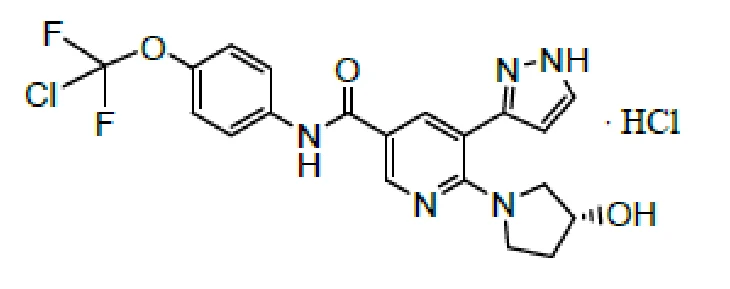
Molecular mass:
Free base: 449.84
Salt form: 486.30
Structural formula:
Free base: C20H18CIF2N5O3
Salt form: C20H18CIF2N5O3.HCl
Physicochemical properties:
Physical description: White to slightly yellow powder.
Solubility: The drug substance is slightly soluble in water, soluble in methanol and practically insoluble in acetone.
| Solvent | Solubility (g/100 mL) |
|---|---|
| Water | 0.072 |
| pH 1.0 (HCl 0.1N) | 0.191 |
| pH 2.0 (HCI 0.01N) | ≥ 0.320 |
| pH 3.0 (citrate buffer) | 0.017 |
| pH 4.0 (acetate buffer) | 0.009 |
| pH 5.0 (acetate buffer) | 0.001 |
| pH 6.8 (phosphate buffer) | <0.001 |
pH: The pH of a 1.0% (m/V) solution of asciminib hydrochloride in water/ethanol (50:50) is in the range of 2.37 – 2.47 (~25oC).
pKa: The pKa value of the free base component of the drug substance is 3.93 ± 0.02.
Partition Coefficient: The distribution coefficient (log D) of asciminib hydrochloride at 37oC for n-octanol/0.1 N HCl is 1.26.
Melting Point: There is no clear identified melting point for asciminib hydrochloride.
14. Clinical Trials
14.1. Clinical Trials by Indication
Newly diagnosed Philadelphia chromosome-positive chronic myeloid leukemia (Ph+ CML) in chronic phase (CP)
Table 10 Summary of patient demographics for clinical trials in newly diagnosed Ph+ CML-CP
| Study # | Study design | Dosage, route of administration and duration | Study subjects (n) | Mean age (Range) | Sex |
Study: CABL001J12301 (ASC4FIRST) | Multi-center, randomized, active-controlled and open-label phase III study to demonstrate efficacy and safety of SCEMBLIX in the treatment of patients with newly diagnosed Ph+ CML-CP. | Tablets, Oral. Either SCEMBLIX 80 mg once daily or investigator selected tyrosine kinase inhibitors (IS-TKIs) at clinically recommended doses (doses are detailed in Table 11). The median duration of treatment was 70 weeks (range: 0.7 to 108 weeks) for patients receiving SCEMBLIX and 64 weeks (range: 1 to 103 weeks) for patients receiving IS-TKIs. | 405 patients | 51 years (range: 18 to 86 years) | 37% female and 63% male. |
The clinical efficacy of SCEMBLIX in the treatment of patients with newly diagnosed Ph+ CML-CP was evaluated in the multi-center, randomized, active-controlled and open-label phase III study ASC4FIRST.
In this study, a total of 405 patients were randomized in a 1:1 ratio to receive either SCEMBLIX or investigator selected tyrosine kinase inhibitors (IS-TKIs). Prior to randomization, the investigator selected the TKI (imatinib, nilotinib, dasatinib, or bosutinib) to be used in the event of randomization to the comparator arm, based on patient characteristics and comorbidities. Patients were stratified according to EUTOS long-term survival (ELTS) risk group (low, intermediate, high), and pre-randomization selection of TKI (imatinib or second generation [2G] TKI [nilotinib, dasatinib, or bosutinib]). Patients received either SCEMBLIX or IS-TKIs, and continued treatment until unacceptable toxicity or treatment failure.
Of the 405 patients, 23.5% were 65 years or older, while 6.2% were 75 years or older. Patients were Caucasian (53.8%), Asian (44.4%), Black (1%) and 0.7% unknown. The demographic characteristics within the imatinib (N=203) and the 2G TKIs (N=202) strata were:
- Median age: 55 years and 43 years, respectively;
- ELTS high risk group: 8.4% and 13.9%, respectively;
- Framingham cardiovascular disease high risk group: 35.5% and 17.8%, respectively.
The demographic characteristics were balanced across SCEMBLIX and IS-TKIs, as well as across the two arms within the imatinib and 2G TKIs strata.
Of the 405 patients, 200 received SCEMBLIX, while 201 received IS-TKIs (99 received imatinib, 49 received nilotinib, 42 received dasatinib, and 11 received bosutinib). Four patients did not receive any treatment.
The median duration of treatment was 69.8 weeks (range: 0.7 to 107.7 weeks) for patients receiving SCEMBLIX and 64.3 weeks (range: 1.3 to 103.1 weeks) for patients receiving IS-TKIs. By 48 weeks, 90% of patients on SCEMBLIX and 80.6% of patients on IS-TKIs were still receiving treatment.
The study had two primary objectives, both assessing major molecular response rate (MMR) at 48 weeks. One primary objective evaluated MMR in patients receiving SCEMBLIX compared to IS-TKIs. The other primary objective evaluated MMR in the subset of patients within the imatinib stratum, comparing SCEMBLIX to imatinib.
The main efficacy outcomes from ASC4FIRST are summarized in Table 11.
Table 11 Results of study CABL001J12301 (ASC4FIRST) in patients with newly diagnosed Ph+ CML-CP
| SCEMBLIX 80 mg once daily | IS-TKIs1 at clinically recommended doses | Difference (95% CI)2 | p-value | ||
| All patients (N=204) | Imatinib stratum (N=102) | ||||
| MMR rate, % (95% CI) at 48 weeks | |||||
All patients (N=201) | 68 (61, 74) | 49 (42, 56) | 19 (10, 28) | <0.0013 | |
| Imatinib stratum (N=101) | 69 (59, 78) | 40 (31,50) | 30 (17, 42) | <0.0014 | |
Abbreviations: MMR, major molecular response (BCR::ABL1IS ≤ 0.1%); IS-TKIs, investigator-selected tyrosine kinase inhibitors; PRS-TKI, pre-randomization selection of TKI. 1IS-TKIs include imatinib (400 mg once daily), nilotinib (300 mg twice daily), dasatinib (100 mg once daily) or bosutinib (400 mg once daily). | |||||
2 Estimated using a common risk difference stratified by PRS-TKI and baseline ELTS risk groups. 3Adjusted p-value using a Cochran-Mantel-Haenszel 1-sided test stratified by PRS-TKI and baseline ELTS risk groups. 4Adjusted p-value using a Cochran-Mantel-Haenszel 1-sided test stratified by baseline ELTS risk groups | |||||
MMR rates at 48 weeks in patients receiving SCEMBLIX, IS-TKIs and IS-TKIs within the 2G TKIs stratum were: 66% (95% CI: 56% to 75%) and 58% (95% CI: 48% to 68%), respectively. The common treatment difference in the MMR rate was 8.17% (95% CI: -5.14, 21.47) estimated using the Cochran–Mantel–Haenszel method after stratifying by baseline ELTS risk groups.
Median time to MMR in patients receiving SCEMBLIX, IS-TKIs, IS-TKIs within the imatinib stratum, and IS-TKIs within the 2G TKIs stratum were: 24 weeks (95% CI: 24 to 25 weeks), 36 weeks (95% CI: 36 to 49 weeks), 49 weeks (95% CI: 36 to 60 weeks), and 36 weeks (95% CI: 24 to 48 weeks), respectively.
Ph+ CML-CP, previously treated with two or more TKIs
Table 12 Summary of patient demographics for clinical trials in Ph+ CML- CP previously treated with two or more tyrosine kinase inhibitors (ASCEMBL)
| Study # | Study design | Dosage, route of administration and duration | Study subjects (n) | Mean age (Range) | Sex |
Study: CABL001A2301 (ASCEMBL) | Multi-center, randomized, active-controlled and open-label phase III study to demonstrate efficacy and safety of SCEMBLIX in the treatment of patients with Ph+ CML-CP previously treated with two or more tyrosine kinase inhibitors. | Tablets, Oral. Either SCEMBLIX 40 mg twice daily (N=157) or bosutinib 500 mg once daily (N=76). The median duration of treatment was 156 weeks (range: 0.1 to 256 weeks) for patients receiving SCEMBLIX and 31 weeks (range: 1 to 239 weeks) for patients receiving bosutinib. | 233 patients | 52 years (range: 19 to 83 years) | 52% female and 49% male |
The clinical efficacy of SCEMBLIX in the treatment of patients with Ph+ CML-CP previously treated with two or more tyrosine kinase inhibitors was evaluated in the multi-center, randomized, active-controlled and open-label phase III study ASCEMBL.
In this study, a total of 233 patients were randomized in a 2:1 ratio and stratified according to major cytogenetic response (MCyR) status at baseline. Patients in the treatment arm received SCEMBLIX (40 mg) twice daily while patients in the control arm received bosutinib (500 mg) once daily. Patients randomized to either arm were to continue treatment until treatment failure (i.e. lack of efficacy), unacceptable toxicity or withdrawal.
Eligible patients had to be at least 18 years of age with a diagnosis of Ph+ CML-CP, have an ECOG 0 or 1, have adequate organ function, have evidence of BCR::ABL1 transcripts at screening, have received prior treatment with two or more ATP binding site TKIs (i.e. imatinib, nilotinib, dasatinib, radotinib (has not been authorized in Canada) or ponatinib) and had either a treatment failure or were intolerant to the most recent TKI. Patients with known presence of T315I and/or V299L mutations at any time prior to study entry were not included in ASCEMBL.
The primary endpoint of the study was the MMR rate at 24 weeks. MMR is defined as a BCR::ABL1 ratio ≤0.1% by International Scale [IS]. The key secondary endpoint was the MMR rate at 96 weeks. Other secondary endpoints were complete cytogenetic response (CCyR) rate at 24 and 96 weeks. CCyR is defined as no Philadelphia-positive metaphases in bone marrow with a minimum of 20 metaphases examined. BCR::ABL1 levels for the primary and key secondary endpoints were determined by a central laboratory blinded to treatment assignment.
Of the 233 patients, 19% were 65 years or older, while 3% were 75 years or older. Patients were Caucasian (75%), Asian (14%) and Black (4%). Of the 233 patients, 81% and 18% had Eastern Cooperative Oncology Group (ECOG) performance status 0 or 1, respectively. Patients who had previously received 2, 3, 4, 5 or more prior lines of TKIs were 48%, 31%, 15% and 6%, respectively.
The main efficacy outcomes from ASCEMBL are summarized in Table 13.
Table 13 Results of study CABL001A2301 in Ph+ CML-CP previously treated with two or more tyrosine kinase inhibitors.
SCEMBLIX 40 mg BID | Bosutinib 500 mg QD | Difference (95% CI) | p-value | ||||||
Primary Endpoint MMR rate, % (95% CI) at 24 weeks | N=157 25 (19, 33) | N=76 13 (6, 23) | 121 (2, 22) | 0.032 | |||||
Key Secondary Endpoint MMR rate, % (95% CI) at 96 weeks | 38 (30, 46) | 16 (8, 26) | 22 (11, 33) | 0.0012 | |||||
Other Secondary Endpoint CCyR rate, % (95% CI) at 24 weeks | N=1033 41 (31, 51) | N=623 24 (14, 37) | 17 (4, 31) | Not formally tested | |||||
| CCyR rate, % (95% CI) at 96 weeks | 40 (30, 50) | 16 (8, 28) | 241 (10, 37) | Not formally tested | |||||
1On adjustment for the baseline major cytogenetic response status 2Cochran-Mantel-Haenszel two-sided test stratified by baseline major cytogenetic response status 3CCyR analysis based on patients who were not in CCyR at baseline | |||||||||
A pre-planned subgroup analysis showed that the MMR rates were higher with asciminib than with bosutinib in all analyzed demographic and prognostic factors of response including across all lines of TKI therapy (third, fourth, fifth or more lines) and irrespective of the detection of BCR::ABL1 mutations at baseline.
With a median duration of follow-up of 28 months (range: 1 day to 45 months), the median duration of response for patients who achieved MMR had not yet been reached.
15. Microbiology
No microbiological information is required for this drug product.
16. Non-Clinical Toxicology
General Toxicology:
Repeat dose toxicity studies identified the pancreas, liver, hematopoietic system, adrenal gland and gastro-intestinal tract as target organs of asciminib.
Pancreatic effects (serum amylase and lipase increases, acinar cell lesions) occurred in dogs at Area Under the Curve (AUC) exposures below those achieved in patients on 40 mg twice daily or 80 mg once daily. A trend towards recovery was observed. Additional studies were conducted in order to investigate the pancreas toxicity mechanism, however the mechanism of pancreas toxicity in dogs could not be elucidated.
Elevations in liver enzymes and/or bilirubin were observed in rats, dogs and monkeys. Histopathological hepatic changes (centrilobular hepatocyte hypertrophy, slight bile duct hyperplasia, increased individual hepatocyte necrosis and diffuse hepatocellular hypertrophy) were seen in rats and monkeys. These changes occurred at AUC exposures either equivalent to (rats) or 8- to 18-fold (dogs and monkeys) higher than those achieved in patients on 40 mg twice daily or 80 mg once daily. These changes were fully reversible.
Effects on the hematopoietic system (reduction in red blood cells mass, increased splenic or bone marrow pigment and increased reticulocytes) were consistent with a mild and regenerative, extravascular, hemolytic anemia in all species. These changes occurred at AUC exposures either equivalent to (rats) or 10- to 14- fold (dogs and monkeys) higher than those achieved in patients on 40 mg twice daily or 80 mg once daily. These changes were fully reversible.
Minimal mucosal hypertrophy/hyperplasia (increase in thickness of the mucosa with frequent elongation of villi) was present in the duodenum of rats, at AUC exposures 30-fold or 22-fold higher than those achieved in patients on 40 mg twice daily or 80 mg once daily, respectively. This change was fully reversible.
Minimal or slight hypertrophy of the adrenal gland and mild to moderate decreased vacuolation in the zona fasciculata occurred at AUC exposures either equivalent to (monkeys) or 19- to 13- fold (rats) higher than those achieved in patients on 40 mg twice daily or 80 mg once daily, respectively. These changes were fully reversible.
Genotoxicity
Asciminib did not have mutagenic, clastogenic or aneugenic potential neither in vitro nor in vivo.
Carcinogenicity
In a 2-year rat carcinogenicity study, asciminib was administered at doses of 20, 66 and 200 mg/kg/day to male rats and 10, 30 and 66 mg/kg/day to female rats. Male rats at 200 mg/kg/day and female rats at ≥30 mg/kg/day showed reduced longevity.
A dose-dependent increase in the incidence of Sertoli cells hyperplasia in the ovaries was noted in female rats at all doses, with benign Sertoli cell tumors observed at 66 mg/kg/day. Mammary gland fibroadenoma was noted at all doses in female rats. AUC exposures to asciminib in female rats at 10 mg/kg/day were generally 0.7-fold or 0.5-fold human exposure at the dose of 40 mg twice daily or 80 mg once daily, respectively.
Increased thyroid follicular cell adenoma was noted at 200 mg/kg/day in male rats. A dose-dependent increase in Leydig cell adenoma of the testis was noted at all doses in male rats. AUC exposures to asciminib in male rats at 20 mg/kg/day were generally 2-fold or 1.4-fold human exposure at the dose of 40 mg twice daily or 80 mg once daily, respectively.
Reproductive and Developmental Toxicology:
In embryo-fetal development studies, pregnant animals received oral doses of asciminib at 25, 150 and 600 mg/kg/day in rats and at 15, 50 and 300 mg/kg/day in rabbits during the period of organogenesis.
In rats, asciminib was not tolerated in maternal animals at 600 mg/kg/day and resulted in the early termination of the dose group. There was no evidence of asciminib-related embryo-fetal death at doses below or equal to 150 mg/kg/day. A dose-related increase in fetal weights at 25 and 150 mg/kg/day was observed. Fetal variations in the urinary tract and skeleton (skull, vertebral column and ribs), indicative of changes in the rate of development, were observed primarily at 150 mg/kg/day. An increase in the malformation rate (anasarca and cardiac malformations) and some visceral variants indicative of adverse effects on embryo-fetal development were also observed at 150 mg/kg/day. The maternal no-observed-adverse-effect level (NOAEL) was 150 mg/kg/day and the fetal NOAEL was 25 mg/kg/day. At the fetal NOAEL of 25 mg/kg/day, the AUC exposures were equivalent to or below those achieved in patients at the 40 mg twice-daily or 80 mg once-daily doses, respectively.
In rabbits, 300 mg/kg/day caused morbidity in the maternal animals and resulted in the early termination of the dose group. An increased incidence of resorptions, indicative of embryo-fetal mortality, and a low incidence of cardiac malformations, indicative of teratogenicity, were observed at 50 mg/kg/day. There was no effect on fetal growth. The NOAEL for maternal toxicity was 50 mg/kg/day and the fetal NOAEL was 15 mg/kg/day. At the fetal NOAEL of 15 mg/kg/day, the AUC exposures were equivalent to or below those achieved in patients at the 40 mg twice-daily or 80 mg once-daily doses, respectively.
In the rat fertility study, asciminib did not affect reproductive function in male and female rats. A slight effect on male sperm motility and sperm count was observed at doses of 200 mg/kg/day, likely at AUC exposures 19-fold, 13-fold higher than those achieved in patients at the 40 mg twice-daily, or 80 mg once-daily twice-daily doses, respectively. While there were no effects on fertility indices or conception rates, a decreased mean number of live embryos was observed at 200 mg/kg/day and was attributed to a lower number of implantations and an increased number of early resorptions.
Special Toxicology
In mice, asciminib showed dose-dependent phototoxic effects indicated by clinical signs (erythema) and local lymph-node inflammatory reactions starting at 200 mg/kg/day. At the No-Observed-Adverse-Effect Level (NOAEL) of 60 mg/kg/day, exposure based on Cmax in plasma was 15-fold or 6-fold higher than the exposure in patients on 40 mg twice daily or 80 mg once daily respectively.