


Product Monograph - Jamp Ipratropium HFA
SUMMARY PRODUCT INFORMATION
| Route of Administration | Dosage Form / Strength | Nonmedicinal Ingredients |
|---|---|---|
| Oral inhalation | Pressurized Inhalation Solution 20 mcg of ipratropium bromide/metered dose | Anhydrous citric acid, ethanol, 1,1,1,2-tetrafluorethane, nitrogen and purified water. |
INDICATIONS AND CLINICAL USE
JAMP Ipratropium HFA (ipratropium bromide) pressurized inhalation solution is indicated as bronchodilator for maintenance treatment of bronchospasm associated with chronic obstructive pulmonary disease (COPD), including chronic bronchitis and emphysema.
Pediatrics:
The efficacy and safety in children and adolescents under 18 years has not been established. JAMP Ipratropium HFA is not indicated in this patient population.
Geriatrics:
Elderly patients can use JAMP Ipratropium HFA at the recommended dose.
CONTRAINDICATIONS
JAMP Ipratropium HFA (ipratropium bromide) pressurized inhalation solution is contraindicated in patients with known hypersensitivity to ipratropium bromide, atropine or its derivatives (such as the active substance ipratropium bromide) or any other aerosol components. For a complete listing see the DOSAGE FORMS, COMPOSITION AND PACKAGING.
WARNINGS AND PRECAUTIONS
General
JAMP Ipratropium HFA is a bronchodilator for the maintenance treatment of bronchospasm associated with COPD and since the drug has a slower onset of action than that of an adrenergic β2 agonist aerosol, it is not indicated for the initial treatment of acute episodes of bronchospasm where rescue therapy is required for rapid response.
Excessive Use and Use with other Muscarinic Antagonists
JAMP Ipratropium HFA should not be used more frequently or at higher doses than recommended (maximum recommended daily dose is 12 actuations = 240 mcg; minimum dosing interval is 4 hours).
JAMP Ipratropium HFA should not be administered concomitantly with other medications that contain a short- or long-acting muscarinic antagonist (e.g. ipratropium, tiotropium, glycopyrronium, aclidinium, umeclidinium).
Anticholinergic Effects
Like other anticholinergic drugs, JAMP Ipratropium HFA should be used with caution in patients with narrow-angle glaucoma or urinary retention.
Worsening of Narrow-Angle Glaucoma:
JAMP Ipratropium HFA should be used with caution in patients with narrow-angle glaucoma. Care should be taken to avoid spraying the mist into the eyes. Since the pressurized inhalation solution is applied via mouth piece and manually controlled, the risk for the mist entering the eyes is limited. There have been isolated cases of ocular complications (ie., mydriasis, increased intraocular pressure, narrow angle closure glaucoma, eye pain) when aerosolised ipratropium bromide either alone or in combination with an adrenergic beta2-agonist solution has come in contact with the eyes. Prescribers and patients should be alert for signs and symptoms of acute narrow-angle glaucoma (e.g., eye pain or discomfort, blurred vision, visual halos or colored images in association with red eyes from conjunctival congestion and corneal edema). Instruct patients to consult a physician immediately should any of these signs or symptoms develop. Miotic drops alone are not considered to be effective treatment.
To ensure optimal delivery of JAMP Ipratropium HFA to the bronchial tree, the patient should be properly instructed by the physician or other health professional in the use of the inhaler.
Worsening of Urinary Retention:
JAMP Ipratropium HFA should be used with caution in patients with urinary retention. Prescribers and patients should be alert for signs and symptoms of prostatic hyperplasia or bladder-neck obstruction (e.g., difficulty passing urine, painful urination). Instruct patients to consult a physician immediately should any of these signs or symptoms develop.
Carcinogenesis and Mutagenesis
Please see TOXICOLOGY section.
Cardiovascular
Cardiovascular effects, such as cardiac arrhythmias (e.g. atrial fibrillation and tachycardia), may be seen after the administration of muscarinic receptor antagonists (see ADVERSE REACTIONS).
Gastrointestinal
Patients with cystic fibrosis may be more prone to gastro-intestinal motility disturbances.
Immune
Hypersensitivity:
Hypersensitivity reactions including urticaria, angioedema, rash, bronchospasm, anaphylaxis, and oropharyngeal edema may occur after administration of ipratropium bromide. In clinical trials and post-marketing experience with ipratropium containing products, hypersensitivity reactions such as skin rash, pruritus, angioedema of tongue, lips and face, urticaria (including giant urticaria), laryngospasm and anaphylactic reactions have been reported (see ADVERSE REACTIONS). If such a reaction occurs, therapy with JAMP Ipratropium HFA should be stopped at once and alternative treatment should be considered (see CONTRAINDICATIONS).
Ophthalmologic
Worsening of Narrow-Angle Glaucoma (see WARNINGS AND PRECAUTIONS, Anticholinergic Effects).
Renal
Worsening of Urinary Retention (see WARNINGS AND PRECAUTIONS, Anticholinergic Effects).
Respiratory
Paradoxical bronchospasm:
As with other inhaled medicines ipratropium bromide may result in paradoxical bronchospasm that may be life-threatening. If paradoxical bronchospasm occurs JAMP Ipratropium HFA should be discontinued immediately and substituted with an alternative therapy.
Dyspnea:
The patient should be instructed to consult a doctor immediately in the event of acute, rapidly worsening dyspnea. In addition, the patient should be warned to seek medical advice should a reduced response become apparent.
Special Populations
Fertility
Clinical data on fertility are not available for ipratropium bromide. Nonclinical studies performed with ipratropium bromide showed no adverse effect on fertility (see TOXICOLOGY Section).
Pregnant Women
The safety of ipratropium bromide pressurized inhalation solution in pregnancy has not been established. Nonclinical studies with ipratropium bromide have shown no embryotoxic or teratogenic effects following inhalation or intranasal application at doses considerably higher than those recommended in man. Because animal reproduction studies are not always predictive of human response, JAMP Ipratropium HFA should be used during pregnancy only if the potential benefit justifies the potential risk to the unborn child.
Nursing Women
No specific studies have been conducted on the excretion of ipratropium bromide in breast milk. It is considered unlikely that ipratropium bromide would reach the infant to an important extent, especially when administered by inhalation. However, caution should be exercised when JAMP Ipratropium HFA is administered to nursing mothers. The benefits of JAMP Ipratropium HFA use during lactation should therefore be weighed against possible effects on the infant.
Pediatrics
The efficacy and safety in children and adolescents under 18 years has not been established. JAMP Ipratropium HFA is not indicated for pediatric patients.
Effects on Ability to Drive and Use Machines:
No studies on the effects on the ability to drive and use machines have been performed.
However, patients should be advised that they may experience undesirable effects such as dizziness, accommodation disorder, mydriasis and blurred vision during treatment with JAMP Ipratropium HFA. Therefore, caution should be recommended when driving a car or operating machinery. If patients experience the above mentioned side effects they should avoid potentially hazardous tasks such as driving or operating machinery.
ADVERSE REACTIONS
Adverse Drug Reaction Overview
The following adverse reactions have been reported during use of ipratropium bromide in clinical trials and during the post-marketing experience.
The adverse event profile was examined in a total of 3250 patients that were treated in clinical trials with formulations of ipratropium bromide other than HFA (e.g. CFC, unit dose vials, capsules and solution for inhalation). The nature and frequency of adverse events in this extended population were similar to ipratropium bromide pressurized inhalation solution.
Adverse reactions to ipratropium bromide pressurized inhalation solution are similar in nature to reactions to other anticholinergic bronchodilators and may include cardiovascular effects (atrial arrhythmias and tachycardia), ocular disorders (e.g. blurred vision), dysuria, urinary retention, gastrointestinal disorders (e.g., constipation and dry mouth), paradoxical bronchospasm, cough and immediate hypersensitivity reactions, including anaphylaxis (see CONTRAINDICATIONS, WARNINGS AND PRECAUTIONS).
Clinical Trial Adverse Drug Reactions
Because clinical trials are conducted under very specific conditions the adverse reaction rates observed in the clinical trials may not reflect the rates observed in practice and should not be compared to the rates in the clinical trials of another drug. Adverse drug reaction information from clinical trials is useful for identifying drug-related adverse events and for approximating rates.
Table 1 below summarizes the adverse events reported with a frequency of at least 1% in the ipratropium bromide pressurized inhalation solution clinical trial safety data set, which includes a total of 1231 patients, of which 787 were treated with ipratropium bromide pressurized inhalation solution at total daily doses of 20 mcg to 320 mcg for up to 4 months. Figures for ipratropium bromide CFC from the same data set are given for comparison. The adverse events reported are on the whole those that might be expected in a population of patients with COPD or asthma that is being treated with an inhaled anticholinergic. The only significant difference between the two placebo formulations is in the reporting frequency for "taste perversion", which was higher for placebo HFA than placebo CFC.
TABLE 1: COMMONLY REPORTED* ADVERSE EVENTS
Formulation No. of Patients Exposed | Ipratropium bromide | Placebo | ||||||
|---|---|---|---|---|---|---|---|---|
CFC N= 431 | HFA N= 787 | CFC | HFA | |||||
| N = 106 | N=126 | |||||||
| n | % | n | % | n | % | n | % | |
| RESPIRATORY SYSTEM DISORDERS | ||||||||
| Any AE Within the Body System | 165 | 38 | 305 | 39 | 34 | 32 | 38 | 30 |
| Rhinitis | 40 | 9 | 59 | 7 | 7 | 7 | 5 | 4 |
| Bronchitis | 33 | 8 | 67 | 9 | 5 | 5 | 32 | |
| Dyspnoea | 34 | 8 | 57 | 7 | 5 | 5 | 4 | 3 |
| Coughing | 25 | 6 | 46 | 6 | 4 | 4 | 7 | 6 |
| Chronic obstructive airways disease | 26 | 6 | 37 | 5 | 9 | 8 | 8 | 6 |
| Upper Respiratory Tract Infection | 17 | 4 | 44 | 6 | 8 | 8 | 8 | 6 |
| Pharyngitis | 23 | 5 | 38 | 5 | 1 | <1 | 4 | 3 |
| Asthma | 14 | 3 | 36 | 5 | 0 | 0 | 0 | 0 |
| Sinusitis | 8 | 2 | 10 | 1 | 2 | 2 | 3 | 2 |
| BODY AS A WHOLE - GENERAL DISORDERS | ||||||||
| Any AE Within the Body System | 62 | 14 | 134 | 17 | 11 | 10 | 16 | 13 |
| Headache | 32 | 7 | 59 | 7 | 7 | 7 | 7 | 6 |
| Pain | 8 | 2 | 24 | 3 | 0 | 0 | 4 | 3 |
| Influenza-like symptoms | 6 | 1 | 24 | 3 | 0 | 0 | 3 | 2 |
| Back pain | 7 | 2 | 8 | 1 | 1 | <1 | 1 | <1 |
| Chest pain | 6 | 1 | 10 | 1 | 0 | 0 | 0 | 0 |
| Fatigue | 3 | <1 | 9 | 1 | 1 | <1 | 1 | <1 |
| GASTRO-INTESTINAL SYSTEM DISORDERS | ||||||||
| Any AE Within the Body System | 47 | 11 | 97 | 12 | 6 | 6 | 6 | 5 |
| Nausea | 7 | 2 | 23 | 3 | 2 | 2 | 1 | <1 |
| Mouth dry | 7 | 2 | 18 | 2 | 0 | 0 | 2 | 2 |
| Diarrhoea | 6 | 1 | 15 | 2 | 0 | 0 | 0 | 0 |
| Abdominal pain | 7 | 2 | 13 | 2 | 1 | <1 | 0 | 0 |
| Vomiting | 5 | 1 | 15 | 2 | 0 | 0 | 0 | 0 |
| Constipation | 6 | 1 | 7 | <1 | 1 | <1 | 1 | <1 |
| Dyspepsia | 6 | 1 | 7 | <1 | 1 | <1 | 0 | 0 |
| CENTRAL & PERIPHERAL NERVOUS SYSTEM DISORDERS | ||||||||
| Any AE Within the Body System | 24 | 6 | 34 | 4 | 4 | 4 | 5 | 4 |
| Dizziness | 6 | 1 | 15 | 2 | 1 | <1 | 2 | 2 |
| Dysphonia | 8 | 2 | 7 | <1 | 0 | 0 | 1 | <1 |
| SPECIAL SENSES OTHER, DISORDERS | ||||||||
| Any AE Within the Body System | 18 | 4 | 28 | 4 | 0 | 0 | 8 | 6 |
| Taste Perversion | 18 | 4 | 28 | 4 | 0 | 0 | 8 | 6 |
| URINARY SYSTEM DISORDERS | ||||||||
| Any AE Within the Body System | 10 | 2 | 15 | 2 | 5 | 5 | 4 | 3 |
| Urinary tract infection | 8 | 2 | 7 | <1 | 2 | 2 | 1 | <1 |
| MUSCULO-SKELETAL SYSTEM DISORDERS | ||||||||
| Any AE Within the Body System | 14 | 3 | 13 | 2 | 2 | 2 | 2 | 2 |
| Myalgia | 7 | 2 | 4 | <1 | 2 | 2 | 1 | <1 |
| VISION DISORDERS | ||||||||
| Any AE Within the Body System | 6 | 1 | 20 | 3 | 3 | 3 | 0 | 0 |
| Conjunctivitis | 3 | <1 | 11 | 1 | 0 | 0 | 0 | 0 |
* Commonly reported adverse events are those that were reported with a frequency of at least 1% in the global safety data set regardless of relationship to treatment.
AE: Adverse event
n = No. of patients reporting AE. % = Percentage of patients reporting AE.
CFC: Chlorofluorocarbon formulation. HFA: Alternative Propellant, hydrofluoroalkane formulation. Adverse events occurring prior to the first intake of test treatment are not included.
Treatment was the last treatment the patient received prior to the onset or worsening of the adverse event.
Many of the listed undesirable effects can be assigned to the anticholinergic properties of ipratropium bromide. As with all inhalation therapy ipratropium bromide may show symptoms of local irritation. Adverse drug reactions were identified from data obtained in clinical trials and pharmacovigilance during post approval use of the drug.
The most frequent adverse events reported in clinical trials were headache, throat irritation, cough, dry mouth, gastrointestinal motility disorders (constipation, diarrhea, vomiting), dizziness and nausea.
As with other inhaled therapy including bronchodilators, cough, local irritation, paradoxical bronchospasm and in very rare instances, exacerbation of symptoms have been observed.
Post-Market Adverse Drug Reactions
World-wide safety data, including post-marketing data, spontaneous reports, literature reports, and reports from clinical trials list below the most frequent undesirable effects of ipratropium bromide according to system organ class.
Immune system disorders
- hypersensitivity
- anaphylactic reaction
Nervous system disorders
- headache
- dizziness
Eye disorders
- vision blurred
- mydriasis
- intraocular pressure increased
- glaucoma
- eye pain
- halo vision
- conjunctival hyperaemia
- corneal oedema
- accommodation disorder
Cardiac disorders
- palpitations
- supraventricular tachycardia
- atrial fibrillation
- heart rate increased
Respiratory, thoracic and mediastinal disorders
- throat irritation
- cough
- bronchospasm
- bronchospasm paradoxical
- laryngospasm
- pharyngeal oedema
- dry throat
Gastrointestinal disorders
- dry mouth
- nausea
- gastrointestinal motility disorder
- diarrhea
- constipation
- vomiting
- stomatitis
- oedema mouth
Skin and subcutaneous tissue disorders
- rash
- pruritus
- angioedema
- urticarial
Renal and urinary disorders
- urinary retention
Because these reactions are reported voluntarily from a population of uncertain size, it is not possible to reliably estimate their frequency or establish a causal relationship to drug exposure.
DRUG INTERACTIONS
Drug-Drug Interactions
Anticholinergics
The chronic co-administration of ipratropium bromide inhalation with other anticholinergic drugs has not been studied. Therefore, JAMP Ipratropium HFA should not be administered concomitantly with other medications that contain a short- or long-acting muscarinic antagonist (e.g. ipratropium, tiotropium, glycopyrronium, aclidinium, umeclidinium).
Xanthine derivatives and beta2 adrenergic agents may enhance the effect of ipratropium bromide pressurized inhalation solution.
DOSAGE AND ADMINISTRATION
Dosing Considerations
- Counselling by doctors on smoking cessation should be the first step in treating patients with COPD, who smoke, independent of the clinical presentation i.e. chronic bronchitis (with or without airflow limitation) or emphysema. Cessation of smoking produces dramatic symptomatic benefits and has been shown to confer a survival advantage.
- Spacer device is not required
- The safety and efficacy of ipratropium bromide pressurized inhalation solution in pediatric patients under 18 years of age have not been established.
Recommended Dose and Dosage Adjustment
The optimal maintenance dosage must be individually determined and patients should be kept under medical supervision during treatment.
Recommended dose: The recommended dosage is 2 metered doses (actuations) (40 mcg) 3 or 4 times daily. Some patients may need up to 4 metered doses (actuations) (80 mcg) at a time to obtain maximum benefit during early treatment.
Maximum daily dose: The maximum daily dose should not exceed 12 metered doses (actuations) (240 mcg) and the minimum interval between doses should not be less than 4 hours.
If therapy does not produce a significant improvement or if the patient’s condition gets worse, medical advice must be sought in order to determine a new plan of treatment. The patient should be instructed that in the case of acute or rapidly worsening dyspnoea a physician should be consulted immediately.
Missed Dose
If a dose is missed, the next scheduled dose should be taken. An extra dose must not be taken.
OVERDOSAGE
Doses of ipratropium bromide up to 1.2 mg (60 puffs) have been administered by inhalation without the appearance of serious systemic anticholinergic effects. Minor systemic manifestations of anticholinergic action, including dry mouth, visual accommodation disorder and increase of heart rate may occur.
Should signs of serious anticholinergic toxicity appear, cholinesterase inhibitors may be considered.
| For management of a suspected drug overdose, contact your regional Poison Control Centre. |
|---|
ACTION AND CLINICAL PHARMACOLOGY
Mechanism of Action
Ipratropium bromide, a quaternary ammonium derivative of atropine is an anticholinergic drug having bronchodilator properties. In nonclinical studies, it appears to inhibit vagally mediated reflexes by antagonizing the action of acetylcholine, the transmitter agent released from the vagus nerve. Anticholinergics prevent the increase in intracellular concentration of Ca++ which is caused by interaction of acetylcholine with the muscarinic receptor on bronchial smooth muscle. Ca++ release is mediated by the second messenger system consisting of IP3 (inositol triphosphate) and DAG (diacylglycerol).
The bronchodilation following inhalation of ipratropium bromide is primarily local and site specific to the lung and not systemic in nature.
On inhalation the onset of action is noted within 5 to 15 minutes with a peak response between 1 and 2 hours, lasting about 2 additional hours with subsequent decline. An inhaled dose of 40 mcg induces bronchodilator effect lasting for some 6 hours.
In controlled 90 day studies in patients with bronchospasm associated with chronic obstructive pulmonary disease (COPD, chronic bronchitis and emphysema) significant improvements in pulmonary function occurred within 15 minutes, reached a peak in 1-2 hours, and persisted up to 4- 6 hours.
Pharmacodynamics
Large, single inhaled doses of ipratropium bromide have been given to man without any signs of toxicity. After the administration of 400 mcg to 10 normal subjects no changes were detected in pulse rate, blood pressure, intraocular pressure, salivary secretion, visual accommodation or electrocardiograms. Likewise, in another study, no changes in pulse rate or salivary secretion were seen when cumulative doses up to 1.2 mg were administered by inhalation to 12 normal volunteers.
Special studies utilizing normal therapeutic doses in asthmatic and chronic bronchitic patients have not revealed any systemic anticholinergic effects.
In one study, 14 patients were treated for 45 days with either ipratropium bromide pressurized inhalation solution 40 mcg q.i.d. or ipratropium bromide pressurized inhalation solution 40 mcg q.i.d. plus oral Berotec 5 mg q.i.d. No changes in visual acuity, intraocular pressure, pupil size or accommodation of vision occurred. Micturition function studies in 20 male patients showed no differences in urinary flow, total flow time and time until maximum flow between placebo and ipratropium bromide pressurized inhalation solution 40 mcg t.i.d administered for 3 days.
A wide variety of challenge studies have been conducted utilizing ipratropium bromide as a protective agent. In pharmacologically induced bronchospasm, ipratropium bromide, in clinical doses, was very effective against methacholine and acetylcholine, moderately effective against propranolol but had little or no effect against histamine or serotonin. Studies in exercise induced bronchospasm have yielded variable results. Some investigations have indicated that ipratropium bromide has little or no effect but other studies have shown that some patients, at least, are protected against bronchospasm induced by exercise. Likewise, the protective effects of ipratropium bromide against cold air induced bronchospasm have been variable.
Antigen challenge studies have demonstrated that ipratropium bromide offers some protection against the “early” allergic asthma response, but has no effect on the “late” response.
The Lung Health Study
The Lung Health Study was a randomized multi centre clinical trial carried out from October 1986 to April 1994 in North America. It was designed to test the effectiveness of intervention-smoking cessation and bronchodilator administration in smokers aged 35-60 years who have mild obstructive pulmonary disease. The main outcome or end point was the rate of change and cumulative change in FEV1 over a 5-year period.
A total of 5887 male and female smokers, aged 35 to 60 years, with spirometric signs of early chronic obstructive pulmonary disease were recruited. Participants were randomized to one of the following groups: (1) smoking intervention plus bronchodilator, (2) smoking intervention plus placebo, or (3) no intervention.
Smoking intervention consisted of an intensive 12-session smoking cessation program combining behaviour modification and use of nicotine gum, with continuing 5-year maintenance program to minimize relapse. Two puffs ipratropium bromide was prescribed three times daily from a metered-dose-inhaler.
The results showed that participants in the two smoking intervention groups showed significantly smaller declines in FEV1 than did those in the control group. Most of this difference occurred during the first year following entry into the study and was attributable to smoking cessation, with those who achieved sustained smoking cessation experiencing the largest benefit. The benefit associated with the use of the ipratropium bromide vanished after the ipratropium bromide was discontinued at the end of the study.
In summary, the results showed that smoking intervention reduced the rate of decline in FEV1 in middle aged smokers with mild airways obstruction who remained non-smokers throughout the 5 years. The other intervention, administration of ipratropium bromide, did not alter the rate of decline in lung function. There was a small one time improvement in lung function associated with the onset of ipratropium use, but this disappeared rapidly when ipratropium use was discontinued at the end of the study. Otherwise, the regular use of ipratropium bromide had no effect on the rate of decline of lung function over 5 years in patients studied.
Pharmacokinetics
Absorption:
Ipratropium bromide is absorbed quickly after oral inhalation of a nominal dose of 40 mcg administered from a pressurized metered dose inhaler. The peak plasma concentration (mean Cmax = 32 pg/mL) is reached within 5 minutes after inhalation. The therapeutic effect of ipratropium bromide is produced by a local action in the airways. Time courses of bronchodilation and systemic pharmacokinetics do not run in parallel. The plasma concentration-versus-time curve was similar to that seen after oral administration, likely reflecting the large fraction of inhaled dose which is deposited on the pharyngeal mucosa and swallowed.
Following inhalation 10 to 30% of a dose is generally deposited in the lungs, depending on the formulation and inhalation technique. The major part of the dose is swallowed and passes the gastro-intestinal tract.
The portion of the dose deposited in the lungs reaches the circulation rapidly (within minutes).
Intravenous administration of 1.0 mg in man showed a rapid distribution into tissues (half-life of an alpha phase approximately five minutes), and a terminal half-life (beta phase) of 3-4 hours. Plasma concentrations after inhaled ipratropium bromide were about 1000 times lower than equipotent oral or intravenous doses (15 and 0.15 mg, respectively).
Cumulative renal excretion (0-24 hrs) of the parent compound is approximated to 46% of an intravenously administered dose, below 1% of an oral dose and approximately 3 to 13% of an inhaled dose. Based on these data the total systemic bioavailability of oral and inhaled doses of ipratropium bromide is estimated at 2% and 7 to 28% respectively.
Taking this into account, swallowed dose portions of ipratropium bromide do not relevantly contribute to systemic exposure.
Distribution:
The basic pharmacokinetic parameters describing the disposition of ipratropium were calculated from the plasma level data after i.v. administration. A rapid biphasic decline in plasma was noted for ipratropium. The main metabolites found in urine bind poorly to the muscarinic receptor. The apparent volume of distribution at steady-state (Vdss) is approximately 176 L (≈2.4 L/kg).
The drug is minimally (less than 20%) bound to plasma proteins. Nonclinical data indicate that quaternary amine ipratropium does not cross the placental or the blood-brain barrier.
The known metabolites show very little or no affinity for the muscarinic receptor and have to be regarded as ineffective.
Metabolism:
Up to 8 metabolites of ipratropium bromide have been detected in man, rat and dog.
After intravenous administration approximately 60% of a dose is metabolized, the major portion probably in the liver by oxidation.
The known metabolites are formed by hydrolysis, dehydration or elimination of the hydroxy- methyl group in the tropic acid moiety.
Excretion:
The half-life of the terminal elimination phase was approximately 1.6 hours.
The total clearance of ipratropium is 2.3 L/minute with a renal clearance of 0.9 L/min.
In an excretion balance study cumulative renal excretion (6 days) of drug-related radioactivity (including parent compound and all metabolites) accounted for 72.1% after intravenous administration, 9.3% after oral administration and 3.2% after inhalation. Total radioactivity excreted via the faeces was 6.3% following intravenous application, 88.5% following oral dosing and 69.4% after inhalation.
Regarding the excretion of drug-related radioactivity after intravenous administration, the main excretion occurs via the kidneys. The half-life for elimination of drug-related radioactivity (parent compound and metabolites) is 3.6 hours.
Thirty-nine percent of the active ingredient is excreted renally after intravenous administration, 4.4% - 13.1% after inhalation from a metered dose inhaler is excreted as unchanged compound in urine.
Special Populations and Conditions
Pediatrics
JAMP Ipratropium HFA is recommended for the use in patients 18 years and older.
Hepatic Insufficiency
Ipratropium bromide pressurized inhalation solution has not been studied in patients with hepatic insufficiency.
Renal Insufficiency
Ipratropium bromide pressurized inhalation solution has not been studied in patients with renal insufficiency.
STORAGE AND STABILITY
The aerosol canister should be stored at room temperature (15-30ºC); the contents are stable up to the expiration date stamped on the label.
SPECIAL HANDLING INSTRUCTIONS
The product should be dispensed in the original container.
Caution: Contents under pressure. Container may explode if heated. Do not place in hot water or near radiators, stoves or other sources of heat. Do not puncture or incinerate container or store at temperatures over 30ºC.
Keep out of reach and sight of children. Avoid spraying in eyes. The product should be kept from freezing.
DOSAGE FORMS, COMPOSITION AND PACKAGING
JAMP Ipratropium HFA (ipratropium bromide) pressurized inhalation solution is a metered dose aerosol system which contains a 10 mL of transparent and clear solution 0.04% (W/W) of ipratropium bromide and the propellant (1,1,1,2 – Tetrafluoroethane (HFA 134a)), anhydrous citric acid, ethanol, nitrogen and water. It is supplied in a pressurised metal canister, equipped with metering valve for 200 actuations and mouthpiece. Each actuation of the valve delivers 20 micrograms of ipratropium bromide.
PART II: SCIENTIFIC INFORMATION
PHARMACEUTICAL INFORMATION
Drug Substance
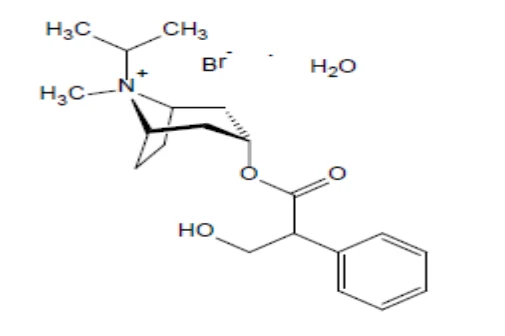
Proper name: ipratropium bromide monohydrate
Chemical name: (8r)-8-Isopropyl-3-(+)-tropoyloxylαH, 5αH-tropanium bromide monohydrate
Molecular formula and molecular mass: C20H30BrNO3. H2O; 430.38 g/mol
Structural formula:
Physicochemical properties: White or almost white crystalline powder.
Soluble in water, freely soluble in methanol, and slightly soluble in ethanol. In neutral and acid solutions the substance is rather stable. In alkaline solutions the ester bond is rapidly hydrolyzed.
pH: Between 5.0 to 7.0
pKa (Strongest acidic): 15.15
pKa (Strongest basic): -2.7
CLINICAL TRIALS
Comparative Bioavailability Study
An adaptive two stage sequential, randomized, crossed, single dose study of JAMP Ipratropium HFA (Ipratropium Bromide Pressurized Inhalation Solution) 20 mcg/metered dose of JAMP Pharma Corporation and Atrovent® from Laboratorios Boehringer Ingelheim España, S.A. was conducted in healthy male & female subjects under fasting conditions. A summary of the comparative bioavailability data from the 18 subjects, who completed the study is presented in following table.
SUMMARY TABLE OF THE COMPARATIVE BIOAVAILABILITY DATA
Ipratropium (6 × 20 mcg) Uncorrected for potency **Geometric Mean Arithmetic Mean (CV %) | ||||
| Parameter | Test1 | Reference2 | % Ratio of Geometric Means | 94.12% Confidence Interval |
AUCT (pg/mL)*(hr) | 845.86 884.15 (31.32) | 824.47 859.22 (29.30) | 102.6 | 87.2 - 120.7 |
AUCI (pg/mL)*(hr) | 1063.77 1434.49 (134.05) | 1022.87 1064.35 (29.85) | 104.0 | 76.4 - 141.6 |
Cmax (pg/mL) | 188.91 206.84 (49.18) | 159.06 175.14 (42.84) | 118.8 | 94.4 - 149.4 |
Tmax3 (h) | 0.03 (0.03 - 0.17) | 0.08 (0.03 - 2.00) | ||
T½4 (h) | 11.09 (123.09) | 9.77 (32.12) | ||
** Expressed as Geometric least square mean
1 JAMP Ipratropium HFA (20 mcg/metered dose) of JAMP Pharma Corporation
2 Atrovent® (20 mcg/actuation) from Laboratorios Boehringer Ingelheim España, S.A.
3 Expressed as the median (range)
4 Expressed as the arithmetic mean (CV%)
Study demographics and trial design
The efficacy of ipratropium bromide pressurized inhalation solution were derived from two randomized, double-blind, controlled clinical studies. These studies enrolled males and females ages 40 years and older, with a history of COPD, a smoking history of > 10 pack-years, and FEV1<65% and FEV1/FVC < 70%.
Table 2- Summary of patient demographics for clinical trials in specific indication
| Study # | Trial design | Dosage, route of administration and duration | Study subjects (n=number) | Mean age (Range) | Gender |
|---|---|---|---|---|---|
| 244.1405 | Double blind, parallel group | Ipratropium HFA 20 mcg 40 mcg Ipratropium CFC 20 mcg 2 oral inhalations, 4 times daily, 12 weeks | Ipratropium HFA n = 125 n = 127 Ipratropium CFC n = 127 Placebo n = 128 | 65.5 (41-87) | 313 Males 194 Females |
| 244.1408 | Double blind, parallel group | Ipratropium HFA 20 mcg Ipratropium CFC 20 mcg 2 oral inhalations, 4 times daily, 12 weeks | Ipratropium HFA n = 118 Ipratropium CFC n = 56 | 66 (40-83) | 123 Males 51 Females |
Study results
In a 12-week randomized, double-blind active and placebo controlled trial, 507 patients with COPD were evaluated for bronchodilator efficacy of 40 mcg q.i.d. (n=125) and 80 mcg q.i.d. (n=127) ipratropium bromide pressurized inhalation solution in comparison to 40 mcg q.i.d (n=127) ipratropium bromide CFC pressurized inhalation solution and their respective placebos (HFA n=62, CFC n=66).
Serial FEV1 measurements (shown below as mean FEV1 changes from test day baseline) on day 85 demonstrated that 2 inhalations of ipratropium bromide pressurized inhalation solution produced significantly greater improvement in pulmonary function than placebo. Ipratropium bromide pressurized inhalation solution was shown to be clinically comparable to ipratropium bromide CFC pressurized inhalation solution.
Adjusted Mean FEV1 Over Time on day 85 Using Test Day Baseline as Covariate
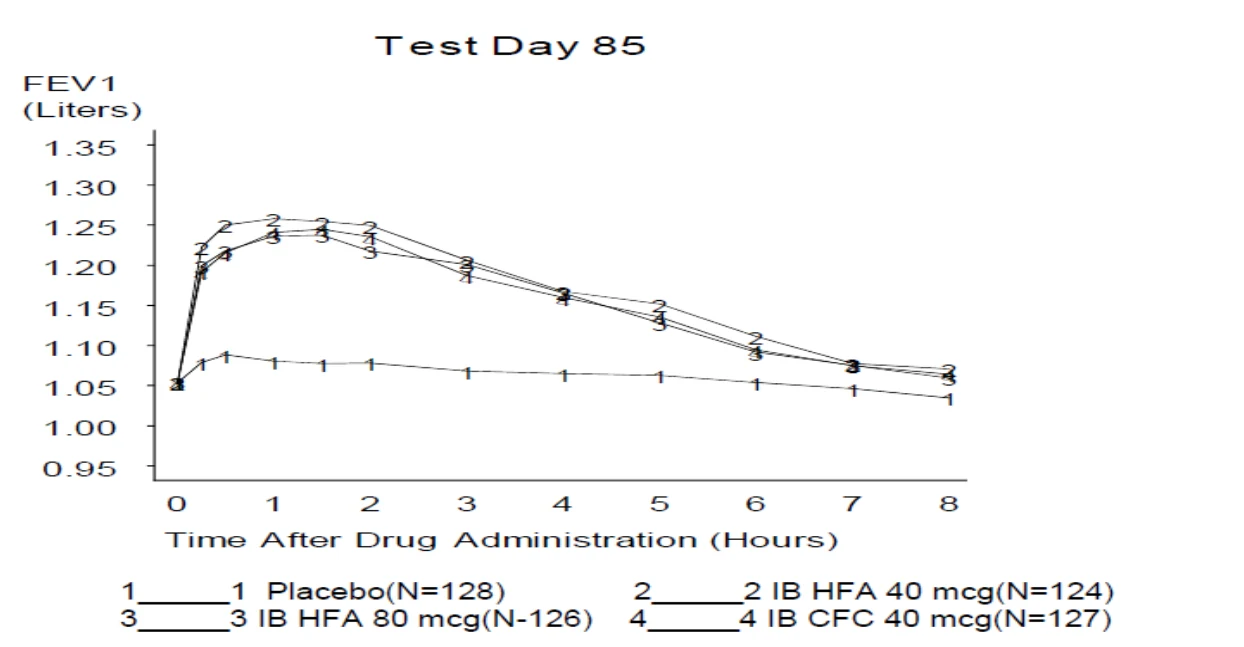
Note: IB = Ipratropium Bromide; means are adjusted for center effects and test day baseline FEV1; placebo HFA and CFC groups were combined.
The median time to onset of a 15% increase in FEV1 was between 14 and 17.5 minutes. The median time to peak effect was 90 minutes.
Both the HFA and CFC 40 mcg doses of Ipratropium bromide were equally efficacious as confirmed further by similar confidence intervals around differences in adjusted mean FEV1AUC 0-6 (±90mL) on all test days. Table 3 summarizes these equivalence tests.
TABLE 3: SUMMARY OF THE TESTS FOR THERAPEUTIC EQUIVALENCE BETWEEN IPRATROPIUM BROMIDE CFC 40 mcg AND IPRATROPIUM BROMIDE HFA 40 AND 80 mcg – ENDPOINT ANALYSES OF THE INTENT-TO-TREAT DATASET 12-WEEK US COPD TRIAL (244.1405)
| COMPARISON OF IPRATROPIUM BROMIDE CFC 40 mcg TO: | ||||||
|---|---|---|---|---|---|---|
| Ipratropium bromide HFA, 40 mcg | Ipratropium bromide HFA, 80 mcg | |||||
| Difference | Std Error | 90% Confidence Interval | Difference | Std Error | 90% Confidence Interval | |
| FEV1AUC 0-6 | ||||||
| Day 1 | 0.024 | 0.020 | (-0.009, 0.056) | 0.045 | 0.020 | (0.013,0.077) |
| Day 29 | -0.012 | 0.020 | (-0.045,0.022) | -0.006 | 0.020 | (-0.039,0.028) |
| Day 57 | -0.015 | 0.020 | (-0.047,0.018) | -0.007 | 0.020 | (-0.039,0.025) |
| Day 85 | 0.014 | 0.020 | (-0.019,0.047) | 0.002 | 0.020 | (-0.031,0.034) |
| FEV1Peak | ||||||
| Day 1 | 0.040 | 0.023 | (0.003,0.078) | 0.052 | 0.023 | (0.015,0.090) |
| Day 29 | 0.000 | 0.024 | (-0.038,0.039) | -0.004 | 0.023 | (-0.043,0.035) |
|---|---|---|---|---|---|---|
| Day 57 | -0.001 | 0.022 | (-0.037,0.034) | 0.005 | 0.021 | (-0.031,0.040) |
| Day 85 | 0.033 | 0.023 | (-0.005,0.072) | 0.004 | 0.023 | (-0.034,0.042) |
In another 12-week, double-blind clinical study in 174 adults with COPD, ipratropium bromide pressurized inhalation solution 40 mcg q.i.d. (n=118) was compared to ipratropium bromide pressurized inhalation solution CFC 40 mcg q.i.d. (n=56). Safety and efficacy of HFA and CFC formulations were shown to be comparable. No significant differences were seen with respect to peak response or onset and duration of therapeutic response.
Therapeutic equivalence was demonstrated when the one-sided confidence interval for the adjusted mean treatment differences for both FEV1 max and FEV1 AUC0-6 was contained within the equivalence region defined as greater than -0.120 L (Table 4). Similar results were found for FVCmax and FVCAUC0-6.
TABLE 4: EVALUATION OF THE DIFFERENCE BETWEEN TREATMENT GROUPS WITH RESPECT TO FEV1 MAX AND FEV1 AUC0-6, (INTENT-TO-TREAT DATA SET) 12-WEEK UK COPD TRIAL (244.1408)
Treatment Contrast: HFA-CFC | Difference in Adjusted* Mean (se) | 90% Confidence Interval for Difference | |||||
|---|---|---|---|---|---|---|---|
| FEV1 max | |||||||
| Visit 2 (Day 0) | 0.0034 (0.0252 L) | -0.0383 L to 0.0451 L | |||||
| Visit 4 (Day 42) | 0.0227 (0.0245 L) | -0.0179 L to 0.0634 L | |||||
| Visit 6 (Day 84) | 0.0085 (0.0268 L) | -0.0359 L to 0.0529 L | |||||
| FEV1 AUC0-6 | |||||||
| Visit 2 (Day 0) | 0.0066 (0.0204 L) | -0.0272 L to 0.0403 L | |||||
| Visit 4 (Day 42) | 0.0452 (0.0211 L) | 0.0101 L to 0.0802 L | |||||
| Visit 6 (Day 84) | 0.0096 (0.0236 L) | -0.0295L to 0.0487 L | |||||
* Adjusted for test day baseline FEV1 and center
The bronchodilator efficacy and comparability of ipratropium bromide HFA vs. ipratropium bromide CFC were also shown in the one-year safety and efficacy study in 456 COPD patients. Results of this study were similar to the 12-week study mentioned above.
DETAILED PHARMACOLOGY
Ipratropium bromide is a quaternary ammonium compound with anticholinergic (parasympatholytic) properties. In nonclinical studies, it appears to inhibit vagally mediated reflexes by antagonising the action of acetylcholine, the transmitter agent released from the vagus nerve. Anticholinergics prevent the increase in intracellular concentration of Ca++ which is caused by interaction of acetylcholine with the muscarinic receptor on bronchial smooth muscle. Ca++ release is mediated by the second messenger system consisting of IP3 (inositol triphosphate) and DAG (diacylglycerol).
The bronchodilation following inhalation of ipratropium bromide is primarily local and site specific to the lung and not systemic in nature.
When administered to the guinea pig and dog intravenously at an ED50 of 0.15-0.40 mcg/kg, ipratropium bromide abolishes acetylcholine induced bronchospasm with a transient effect on blood pressure. By inhalation, approximately 25 mcg of ipratropium bromide produces a 50% inhibition of acetylcholine induced bronchospasm in the dog with no detectable effect on blood pressure but with an increased duration of action compared to i.v. administration. Histological evaluation of human bronchial mucosa following chronic inhalation of ipratropium bromide showed no alterations of epithelial, ciliated or goblet cells. Short term mucociliary clearance in normal and bronchitic subjects was not adversely affected by 200 mcg of inhaled ipratropium bromide.
The anticholinergic effects of ipratropium bromide were evaluated in several other organ systems following oral, subcutaneous, intravenous and inhalation administration. In dogs, a 50% increase in heart rate resulted from an s.c. dose of about 0.011 mg/kg, equipotent to atropine, but the equi- effective oral dose of ipratropium was 58 times greater. By inhalation no increase in heart rate or pathological changes in ECG pattern were recorded at doses up to 8 mg. In another experiment, blood pressure and heart rate in the dog could be modulated after i.v. administration of low doses of ipratropium bromide, but metered aerosol administration of 100 puffs (40 mcg/puff) was required to produce an 11% increase in heart rate.
Salivary secretion in rat, mouse and dog was effectively inhibited by low parenteral doses of ipratropium bromide (0.001 to 0.032 mg/kg) but when given by the oral route, the effective dose increased over 100-fold. Aerosol administration in dogs of about 65 puffs (0.04 mg/puff) produced a 50% inhibition of salivary flow. Similarly, effects on gastric secretion in the rat showed at least a 100-fold difference between effective enteral and subcutaneous doses.
Mydriatic effects of ipratropium bromide in mice were approximately equipotent to atropine after s.c. doses but were 10-20 times less after oral administration. Tests of doses of ipratropium bromide up to 100 mg/kg in the rabbit showed no effect on the central nervous system.
Ipratropium bromide, subcutaneously, inhibited the secretory effects of the cholinergic agonist, oxtremorine, in mice. It also exhibited spasmolytic effects equivalent to or greater than atropine in isolated guinea pig gut. In vitro tests with the isolated rectum of the guinea pig demonstrated the effectiveness of ipratropium bromide in suppressing the spasmogenic effects of acetylcholine and pilocarpine. It was ineffective against histamine or barium chloride induced spasm. Ipratropium bromide exerted anticholinergic effects on the in situ bladder and intestine preparations of the dog. Intravenous doses were 500 times more potent than oral or intraduodenal administration.
TOXICOLOGY
Local and systemic tolerability of ipratropium bromide have comprehensively been investigated in several animal species using various administration routes.
ACUTE
The acute inhalation, oral and intravenous toxicity has been assessed in several rodent and non- rodent species. When administered by inhalation, the minimum lethal dose in male Guinea pigs was 199 mg/kg. In rats, no mortality was observed up to the highest technically feasible dosages (.i.e. 0.05 mg/kg after 4 h of administration or 160 puffs of ipratropium bromide, 0.02 mg/puff). The oral LD50 values for the mouse, rat and rabbit were 1585, 1925 and 1920 mg/kg, respectively. The intravenous LD50 for the mouse, rat and dog was, respectively, 13.6, 15.8 and about 18.2 mg/kg. Clinical signs included mydriasis, dry oral mucosa, dyspnoea, tremor, spasms and/or tachycardia.
| SPECIES | SEX | ROUTE | LD50 (mg/kg) |
|---|---|---|---|
| Mouse | i.v. | 13.5 | |
| Mouse | M | i.v. | 12.3 |
| Mouse | F | i.v. | 15.0 |
| Mouse | s.c. | 322 | |
| Mouse | s.c. | 300 | |
| Mouse | oral | 2010 | |
| Mouse | oral | 1038 | |
| Rat | i.v. | 15.8 | |
| Rat | s.c. | 1500 | |
| Rat | oral | 4000 | |
| Rat | oral | 1722 |
The signs of toxicity were apathy, reduced mobility, ataxia, paralysis of skeletal muscle, clonic convulsions and death from respiratory failure. Toxic signs persisted for 3 hours after i.v. and 8 days after oral administration. The rather low oral toxicity compared to the higher intravenous toxicity reflects the poor gastro-intestinal absorption.
Acute dose tolerance studies were performed in dogs. No deaths occurred up to doses of 400 mg/kg oral or 50 mg/kg s.c. Signs of toxicity were mydriasis, dryness of oral, nasal and optic mucosa, vomiting, ataxia, increased heart rate, decreased body temperature and death from respiratory failure.
When administered by inhalation, the minimum lethal dose in the guinea pig was 199 mg/kg and in rats dosed of 11.5 mcg/L/hr q.i.d. or 48 mcg/kg/4 hours did not cause mortality. The oral and intravenous LD50 were considerably higher than the minimum lethal dose by inhalation.
Anesthetized normal and hypoventilated dogs tolerated doses up to 200 puffs (4 mg) of ipratropium bromide without ECG changes or heart failure. Reductions in heart rate were observed. Similar findings were seen in dogs given i.v. infusions (10 mg/kg/min.) up to 1550 mg/kg or 1000 mg/kg plus 200 puffs from a placebo inhaler. Blood pressure reductions were also seen in these experiments.
SUBACUTE
ORAL
A subacute toxicity study of 9 weeks duration in rats utilizing doses of 10, 100 and 500 mg/kg revealed no pathological findings apart from a dose related decrease in food consumption and growth rate.
A 4 week study in dogs using doses of 3, 30 and 150 (for 3 weeks) increased to 300 mg/kg showed mydriasis, inhibition of lacrimal and salivary secretion, tracheal and ocular inflammation, decreased food intake and weight loss at the medium and high doses. Three of 6 dogs died when the dose was increased from 150 to 300 mg/kg.
A supplementary study of 13 weeks using doses of 1.5, 3.0 and 15 mg/kg revealed no pathological changes apart from a dose related inhibition of lacrimation and associated keratoconjunctivitis and dryness of the mouth.
SUBCUTANEOUS
Rats were treated with subcutaneous injections of 1, 10 and 100 mg/kg. One death occurred in the 10 mg/kg dose group from paralytic ileus. Inflammatory changes were noted at the injection site.
A 4 week study in dogs using doses of 10, 20 and 30 mg/kg (increased to 40 mg/kg on the last 5 days) was conducted. Dryness of the oral and nasal mucous membranes and mydriasis were noted along with conjunctivitis and keratitis associated with decreased lacrimal secretions. A decrease in food intake and body weight also occurred. One dog died in the high dose group. Signs of liver damage were noted in 2 high dose dogs. Low testicular weights, which have not been observed in other subsequent studies, were also observed.
INHALATION
Twelve rats were exposed to aerosolized ipratropium bromide in a concentration of 11.5 mcg/L for 1 hour, 4 times per day for 7 days. No drug toxicity was found.
In another study, administration of ipratropium bromide in doses of 128, 256 and 384 mcg per rat per day for 30 days showed no signs of toxicity apart from a low grade inflammatory response and areas of fibrosis and hemorrhage in the parametrium of 2/9 females in the high dose group. This finding has not been observed in subsequent studies.
Four rhesus monkeys inhaled 500 mcg of ipratropium bromide twice a day (total dose 1 mg/day) for 7 days without the appearance of any drug induced toxicity.
In another study rhesus monkeys were given ipratropium bromide in doses of 200, 400 and 800 mcg/day by inhalation for 6 weeks. Included in the tests were measurements of mucociliary transport rate and ciliary beat frequency. No signs of drug toxicity were found.
CHRONIC
ORAL
A 6 month and a 1 year study in rats using doses of 6, 30 and 150 mg/kg were performed. The high dose was increased to 200 mg/kg after l4 weeks. Reductions in food consumption and growth rates were observed in the highest dose group. A dose dependent constipation which caused severe coprostasis and dilatation of the intestines was observed in the highest dose groups. A toxic hepatosis was observed in some animals of the highest dose group.
Ipratropium bromide was administered to dogs in doses of 1.5, 3.0, 15.0 and 75.0 mg/kg for 1 year. A decrease in body weight development was seen in the highest dose group and food consumption was reduced in the dogs receiving 3 mg/kg and above. Emesis was seen in all treated groups. A dose dependent decrease (3 mg/kg and above) in nasal, oral and lacrimal secretions, the latter leading to keratoconjunctivitis was observed. Increases in SGPT and SGOT (15 and 75 mg/kg) and alkaline phosphatase (75 mg/kg) were noted. Localized gastric necrosis was found in 2 dogs at the highest dose and a non-dose-dependent fatty degeneration of the liver which varied from animal to animal, was also seen.
INHALATION
In inhalation studies up to 6 months in rats, dogs and Rhesus monkeys, the no-observed adverse effect level (NOAEL) was 0.384 mg/kg/day, 0.18 mg/kg/day and 0.8 mg/kg/day respectively. Dry oral mucosa and tachycardia were noted in the dogs. No substance-related histopathological lesions were observed in the broncho-pulmonary system or in any other organs. In the rat the NOAEL after 18 months of oral administration was 0.5 mg/kg/day.
Repeated-dose inhalation toxicity studies in rats for up to 6 months and in dogs for up to 3 months with other formulations (intranasal formulation, alternative propellant HFA 134a and lactose powder formulation) revealed no additional information on the general toxicity profile of ipratropium bromide.
Intranasal administration for up to 6 months revealed No Effect Level (NOEL) > 0.20 mg/kg/day in dogs and confirmed earlier studies with intranasal administration for up to 13 weeks. Repeat- dose toxicity studies of ipratropium bromide have shown the toxicological profiles of the HFA formulation and the conventional CFC formulation to be similar.
An aqueous solution of ipratropium bromide, (0.05 mg/kg) was locally well tolerated when administered to rats by inhalation (single administration over 4 h). In the repeated dose toxicity studies, ipratropium bromide, was locally well tolerated.
Neither active anaphylaxis nor passive cutaneous anaphylactic reactions were demonstrated in Guinea pigs.
MUTAGENICITY
In vitro mutagenicity on bacteria (Ames test) did not indicate a mutagenic potential. The results of in vivo assays (micronucleus test, dominant lethal test in mice, cytogenic assay on bone marrow cells of Chinese hamsters), did not demonstrate an increase in rate of chromosomal aberrations.
There was no evidence of genotoxicity in vitro (Ames test) and in vivo (micronucleus test, dominant lethal test in mice, cytogenetic assay on bone marrow cells of Chinese hamsters).
CARCINOGENICITY
Carcinogenicity studies in mice (107 weeks duration) and rats (114 weeks duration) utilizing oral doses up to 6 mg/kg were performed. These studies demonstrated that ipratropium bromide does not have a tumorgenic or carcinogenic effects.
REPRODUCTIVE STUDIES
Studies to investigate the possible influence of ipratropium bromide on fertility, embryo- fetotoxicity, and peri/postnatal development have been performed on mice, rats and rabbits.
High oral dose levels, i.e. 1000 mg/kg/day in the rat and 125 mg/kg/day in the rabbit were maternotoxic for both species and embryo-/fetotoxic in the rat, where the fetal weight was reduced. Treatment-related malformations were not observed.
In an inhalation teratology study the highest, technically feasible doses for inhalation of the metered aerosol, 1.5 mg/kg/day in rats and 1.8 mg/dg/day in rabbits, showed no adverse effects on litter parameters, and no embryotoxic or teratogenic effects.
A fertility study in rats with oral doses of 5, 50 and 500 mg/kg being given 60 days prior to and during early gestation was performed. Fertility was delayed in 8 of 20 couples at 500 mg/kg and spurious pregnancy in 5 of 20 females occurred at this dose. In addition, the conception rate was decreased in 75% of females at this dose. No embryotoxic or teratogenic effects were observed.
REFERENCES
- 1. Ahonen A, et al. Bronchodilator action of two different doses of ipratropium bromide (Sch 1000) compared with fenoterol and placebo. Curr Ther Res 1978;24:65.
- 2. Allen CJ, Campbell AH. Dose response of ipratropium bromide assessed by two methods. Thorax 1979;34:137.
- 3. Chervinsky P. Double-blind study of ipratropium bromide, a new anticholinergic bronchodilator. J Allergy Clin Immunol 1977;59:22.
- 4. Engelhardt A. Pharmacology and toxicology of Atrovent. Scand J Respir Dis Suppl 1979;103:110.
- 5. Gross NJ, Skorodin MS. Role of the parasympathetic system in airway obstruction due to emphysema. New England Journal of Medicine 1984; 311:421-425.
- 6. Jaffe GV, et al. A comparative trial of Atrovent and Ventolin in chronic bronchitis. Practitioner 1980;224:433.
- 7. Karpel JP. Bronchodilator responses to anticholinergic and beta-adrenergic agents in acute and stable COPD. Chest 1991;99(4):871-876.
- 8. Lulling J, Delwiche JP, Ledent C, Prignot J. Controlled trial of the effect of repeated administration of ipratropium bromide on ventilatory function of patients with severe chronic airway obstruction. Br J Dis Chest 1980;74:135-141.
- 9. Pavia D, et al. Effect of ipratropium bromide on mucociliary clearance and pulmonary function in reversible airways obstruction. Thorax 1979;34:501.
- 10. Poppius H, Salorinne Y. Comparative trial of a new anticholinergic bronchodilator, Sch 1000, and salbutamol in chronic bronchitis. Br Med J 1973;4:134.
- 11. Rominger KL. Chemistry and pharmacokinetics of ipratropium bromide. Scand J Respir Dis Suppl. 1979;103:116.
- 12. Ruffin RE, et al. A comparison of the bronchodilator activity of Sch 1000 and salbutamol. J Allergy Clin Immunol 1977;59:136.
- 13. Tashkin DP, Ashutosh K, Bleecker ER, Britt EJ, Cugell DW, Cummiskey JM, Delorenzo L, Gilman MJ, Gross GN, Gross NJ, Kotch A, Lakshminarayan S, Maguiere G, Miller M, Plummer A, Renzetti A, Sackner MA, Skorodin MS, Wanner A, Watanabe S. Comparison of the anticholinergic bronchodilator ipratropium bromide with metaproterenol in chronic obstructive pulmonary disease. A 90-day multi-centre study. Am J Med 1986;81(Suppl 5A):81-90.
- 14. Atrovent® HFA( Ipratropium Bromide), Product Monograph, Boehringer Ingelheim (Canada) Ltd, Date of Revision: November 4, 2019, Control No.: 230291.