


Product Monograph - Mylan-Ipratropium Solution
SUMMARY PRODUCT INFORMATION
Route of Administration | Dosage Form / Strength | Clinically Relevant Nonmedicinal Ingredients |
| oral | Inhalation Solution 0.025% (250 mcg/mL) in 1 mL plastic vials or 0.05% (500 mcg/2 mL) in 2 mL plastic vials or 0.025% (250 mcg/mL) in 20 mL bottles | Benzalkonium chloride, sodium chloride and disodium edetate. For a complete listing see Dosage Forms, Composition and Packaging section. |
INDICATIONS AND CLINICAL USES
MYLAN-IPRATROPIUM (ipratropium bromide) solution administered either alone or with a adrenergic stimulant solution is indicated:
- As a bronchodilator for the maintenance treatment of bronchospasm associated with, or for the therapy of, acute exacerbations of chronic obstructive pulmonary disease, including chronic bronchitis and emphysema. MYLAN-IPRATROPIUM (ipratropium solution), when used in conjunction with a β2 adrenergic stimulant solution such as fenoterol or salbutamol, is indicated for acute asthmatic attacks. It is to be administered by compressed air or oxygen driven nebulizers.
Pediatrics:
The efficacy and safety of MYLAN-IPRATROPIUM in children younger than 5 years has not been established.
CONTRAINDICATIONS
- Known hypersensitivity to MYLAN-IPRATROPIUM (ipratropium bromide), to any of the product ingredients, or to atropinics.
WARNINGS AND PRECAUTIONS
General
MYLAN-IPRATROPIUM (ipratropium bromide) solution in the 20 mL multidose bottle contains preservatives (benzalkonium chloride and disodium ethylene diamine tetra acetic acid – EDTA - disodium). It has been reported that these preservatives may cause bronchoconstriction in some patients with hyper reactive airways.
The unit dose vials do not contain preservatives.
MYLAN-IPRATROPIUM should not be used alone for the abatement of an acute asthmatic attack since the drug has a slower onset of effect than that of an adrenergic β2 agonist.
Immediate hypersensitivity reactions may occur after administration of MYLAN-IPRATROPIUM Inhalation Solution, as demonstrated by rare cases of utricaria, angioedema, rash, bronchospasm, oropharyngeal edema and anaphylaxis.
MYLAN-IPRATROPIUM solution (bottle and Sterinebs) is intended only for inhalation with suitable nebulizing devices and should not be taken orally or administered parenterally.
Patients should be instructed in the proper use of the nebulizer. Caution is advised against accidental release of the solution into the eyes.
In patients with glaucoma, prostatic hyperplasia, urinary retention and bladder neck obstruction, MYLAN-IPRATROPIUM (ipratropium solution) should be used with caution.
If a reduced response to MYLAN-IPRATROPIUM becomes apparent, the patient should seek medical advice.
MYLAN-IPRATROPIUM solution when administered to patients with acute severe asthma, should be used with concomitant β2-adrenergic stimulant therapy.
Carcinogenesis and Mutagenesis
Please see TOXICOLOGY section.
Ear/Nose/Throat
GLAUCOMA, ANGLE-CLOSURE
Care should be taken to ensure that the nebulizer mask fits the patient's face properly and that nebulized solution does not escape into the eyes. In patients with glaucoma or narrow anterior chambers, the administration by nebulizer of a combined ipratropium/β2-agonist solution should be avoided unless measures (eg., use of swimming goggles or use of a nebulizer with a mouth piece) are taken to ensure that nebulized solution does not reach the eye. There have been isolated reports of ocular complications (i.e., mydriasis, increased intraocular pressure, angle closure glaucoma) when nebulized ipratropium bromide either alone or in combination with an adrenergic β2 agonist solution has escaped into the eyes.
Eye pain or discomfort, blurred vision, visual halos or coloured images in association with red eyes from conjunctival congestion and corneal edema may be signs or acute narrow-angle glaucoma. In the event that glaucoma is precipitated or worsened, treatment should include standard measures for this condition.
Gastrointestinal
Patients with cystic fibrosis may be more prone to gastro-intestinal motility disturbances.
Special Populations
Pregnant Women:
The safety of MYLAN-IPRATROPIUM inhalation aerosol in pregnancy has not been established. The benefits of using MYLAN-IPRATROPIUM when pregnancy is present or suspected must be weighed against possible hazards caused to the fetus. Studies in rats, mice and rabbits showed no embryotoxic nor teratogenic effects.
Nursing Women:
No specific studies have been conducted on excretion of this drug in breast milk. Benefits of MYLAN-IPRATROPIUM inhalation aerosol use during lactation should therefore be weighed against possible effects on the infant.
Pediatrics:
The efficacy and safety of MYLAN-IPRATROPIUM in children younger than 5 years has not been established.
ADVERSE REACTIONS
Adverse Drug Reaction Overview
Side effects noted as with the use of other inhalation therapy are cough, local irritation and inhalation induced bronchospasm, and in very rare instances exacerbation of symptoms has been observed.
The most frequent non-respiratory adverse events reported in clinical trials were headache, gastro-intestinal motility (constipation, diarrhoea and vomiting), dizziness and dryness of the mouth/throat.
The adverse event profile was examined in a total of 214 patients receiving ipratropium bromide solution, 94 patients receiving ipratropium bromide plus a β2 agonist alone. Furthermore the frequency of adverse reactions reported as possibly related to ipratropium bromide treatment was studied in a 12-week controlled clinical trial in 219 COPD patients.
Clinical Trial Adverse Drug Reactions
Because clinical trials are conducted under very specific conditions the adverse reaction rates observed in the clinical trials may not reflect the rates observed in practice and should not be compared to the rates in the clinical trials of another drug. Adverse drug reaction information from clinical trials is useful for identifying drug-related adverse events and for approximating rates.
ACUTE ADMINISTRATION
The frequency of adverse reactions recorded in 214 patients receiving ipratropium bromide solution was as follows:
ADVERSE REACTION % OF PATIENTS
Dry mouth or throat 9.3 Bad taste 5.1 Tremor 4.2 Exacerbation of symptoms 4.2 Burning eyes 0.9 Nausea 0.9 Sweating 0.9 Cough 0.9 Headache 0.5 Palpitations 0.5
The adverse reaction judged to be most severe was exacerbation of bronchospasm. This occurred in 8 patients treated with ipratropium bromide solution alone, 6 of whom withdrew from the clinical studies.
Bronchospasm occurred in 3 patients with acute severe asthma who received ipratropium bromide solution alone. In two patients, this was reversed after therapy with a β2 sympathomimetic solution. The third patient received no other therapy.
The following table compares the incidence of adverse reactions of the combination of ipratropium bromide and a β2 agonist (either fenoterol or salbutamol) solution with that of the β2 agonist alone.
ADVERSE REACTION IPRATROPIUM BROMIDE + β2
AGONIST
β2 AGONIST
(% of 94 patients) (% of 96 patients)
Tremor 31.9 26.0 Dry Mouth 16.0 28.1 Bad Taste 16.0 13.5 Vomiting 2.1 2.1 Palpitations 2.1 1.0 Headache 1.1 2.1 Cough 1.1 0.0 Flushing 1.1 0.0 Dizziness 0.0 1.0 Numbness in leg 0.0 1.0
CHRONIC ADMINISTRATION
The frequency of adverse reactions reported as possibly related to ipratropium treatment in 219 COPD patients participating in long-term (12-week) controlled clinical trials was as follows:
ADVERSE REACTION % OF PATIENTS
Dry mouth 2.7% Coughing 1.8% Dyspnea 1.8% Headache 1.8% Urinary retention 1.4% Tremor 0.9% Nausea 0.9% Palpitation 0.9% Eye pain 0.9%
Observed adverse events occurring in at least 1% of subjects include rhinitis (0.9) and sputum increase (0.9%).
The following other adverse reactions were reported in one patient each: bronchospasm, tachycardia and urticaria.
In addition, the following adverse events were observed in one patient each: bronchitis, chest pain, depression, fatigue, flu-symptoms, hypoaesthesia, increased saliva, insomnia, nervousness, pain, paraesthesia, pharyngitis, somnolence.
The frequency of adverse reactions reported as possibly related to drug treatment in greater than 1% of COPD patients participating in long-term (12-week) controlled clinical trials that compared the efficacy and safety of ipratropium bromide solution + β2 agonists (metaproterenol or salbutamol) versus the β2 agonist alone, was as follows:
% OF PATIENTS ADVERSE
EFFECT
IPRATROPIUM BROMIDE + β2
AGONIST (n =208)
β2 AGONIST
(n =417)
Headache 4.3 1.7
Tremor 3.8 3.4
Nervousness 3.8 1.9
Dyspnea 2.4 3.4
Dry mouth 2.4 1.0
Bronchitis 2.9 2.9
Dizziness 1.4 1.9
Coughing 1.4 1.0
Taste perversion 1.9 1.2
Insomnia 1.9 0.2
Dysuria 1.0 0.2
Nausea 1.0 1.7
Abnormal vision 0.5 1.2
Chest pain 1.4 0.7
Constipation 1.4 0.0
Dysphoria 1.0 0.2
Dyspepsia 1.0 0.0
Bronchospasm aggravated 1.0 0.7
Micturition frequency 1.0 0.2
Less Common Clinical Trial Adverse Drug Reactions (<1%)
There have been isolated reports of ocular effects such as mydriasis, increased intraocular pressure, and acute glaucoma associated with the escape of nebulized ipratropium bromide, alone or in combination with a β2 agonist solution into the eyes.
Side effects such as tachycardia and palpitations, supraventricular tachycardia and atrial fibrillation, ocular accommodation disturbances, nausea and urinary retention
have been reversible, although the risk of urinary retention may be increased in patients with pre-existing outflow tract obstruction.
Ocular side effects have been reported (see Warnings and Precautions).
Post-Market Adverse Drug Reactions
World-wide safety data, which includes post-marketing data, spontaneous reports and literature reports indicates that the most frequent non-respiratory side effects of ipratropium bromide are headache and dryness of mouth/throat.
Immediate hypersensitivity reactions may occur after administration of ipratropium bromide. Allergic type reactions such as skin rash, pruritus, angioedema of the tongue, lips and face, urticaria (including giant uritcaria), laryngospasm, oropharyngeal edema, bronchospasm, and anaphylactic reactions, may occur.
Dizziness has been reported.
DRUG INTERACTIONS
Overview
In patients receiving other anticholinergic drugs, MYLAN-IPRATROPIUM should be used with caution because of possible additive effects.
MYLAN-IPRATROPIUM solution with preservatives (i.e.from the 20 mL multidose bottle) should not be mixed with sodium cromoglycate, as this produces a cloudy solution caused by complexation between the preservatives and sodium cromoglycate. If the patient’s condition requires the administration of sodium cromoglycate, it should be given in combination with MYLAN-IPRATROPIUM (ipratropium solution) without preservatives (i.e., from the unit dose vial).
In acute and maintenance therapy of chronic reversible airways obstruction, ipratropium bromide has been shown to provide additive bronchodilating effects to theophylline and beta-adrenoceptor agonists (sympathomimetic amines). Repeated inhalation of ipratropium bromide has not been linked to tolerance towards bronchodilating effects.
DOSAGE AND ADMINISTRATION
Recommended Dose and Dosage Adjustment
Counselling by physicians on smoking cessation should be the first step in treating patients with chronic obstructive pulmonary disease (COPD), who smoke, independent of the clinical presentation i.e. chronic bronchitis (with or without airflow limitation)
or emphysema. Cessation of smoking produces dramatic symptomatic benefits and has been shown to confer a survival advantage.
In adults, the average single dose of MYLAN-IPRATROPIUM solution is 250-500 μg of ipratropium bromide. In children, aged 5-12 years, the recommended dose is 125-250 μg of ipratropium bromide. In most cases, dilution of the dose with sterile preservative-free saline is not necessary. However, volumes of MYLAN-IPRATROPIUM solution less than 2 mLs are not appropriate for nebulization and must be diluted with saline or another suitable nebulizer solution to make up a total fill volume of 2-5 mL (see PHARMACEUTICAL INFORMATION).
Nebulization should take place using a gas flow (oxygen or compressed air) of 6-10 L/minute and the solution nebulized to dryness over a 10-15 minute period. The Hudson UpdraftTM, Bennett Twin Jet®, DeVilbiss, Pari Compressors and Inspiron Mini-Neb® nebulizers, with facemask or mouthpiece have been used. The manufacturers' instructions concerning cleaning and maintenance of the nebulizer should be strictly followed.
Treatment with MYLAN-IPRATROPIUM (ipratropium solution) may be repeated every 4-6 hours as necessary.
Daily doses exceeding 2 mg in adults should be given under medical supervision.
For the maintenance treatment of bronchospasm associated with chronic obstructive pulmonary disease, the recommended dose is 500 μg of MYLAN-IPRATROPIUM (ipratropium solution) given 3-4 times per day.
Missed Dose
If a dose is missed, the next scheduled dose should be taken. An extra dose must not be taken.
OVERDOSAGE
Doses of ipratropium bromide solution up to 1.2 mg (60 puffs) have been administered by inhalation without the appearance of serious systemic anticholinergic effects. Minor systemic manifestations of anticholinergic action, including dry mouth, visual accomodation disturbances and increase of heart rate may occur.
Should signs of serious anticholinergic toxicity appear, cholinesterase inhibitors may be considered.
| For management of a suspected drug overdose, contact your regional Poison Control | ||
| Centre. |
ACTION AND CLINICAL PHARMACOLOGY
Mechanism of Action
Ipratropium bromide, a quaternary ammonium derivative of atropine is an anticholinergic drug having bronchodilator properties. On inhalation the onset of action is noted within 5 to 15 minutes with a peak response between 1 and 2 hours, lasting about 2 additional hours with subsequent decline. Bronchodilation is still evident 8 hours after inhalation.
Pharmacodynamics
Large, single inhaled doses of ipratropium bromide have been given to man without any signs of toxicity. After the administration of 400 μg by inhaler (10 times the recommended single dose) to 10 normal subjects, no changes were detected in pulse rate, blood pressure, intraocular pressure, salivary secretion, visual accommodation or electrocardiograms. Likewise, in another study, no changes in pulse rate or salivary secretion were seen when cumulative doses up to 1.2 mg were administered by inhaler to 12 normal volunteers.
Special studies utilizing normal therapeutic doses in asthmatic and chronic bronchitic patients again have not revealed any systemic anticholinergic effects. In one study, 14 patients were treated for 45 days with either ipratropium bromide inhaler 40 μg q.i.d. or ipratropium bromide inhaler 40μg q.i.d. plus oral Berotec 5 mg q.i.d. No changes in visual acuity intraocular pressure, pupil size or accommodation of vision occurred. Micturition function studies in 20 male patients showed no differences in urinary flow, total flow time and time until maximum flow between placebo and ipratropium bromide inhaler 40 μg t.i.d. administered for 3 days.
Deterioration in pulmonary function in patients treated in all clinical trials with therapeutic doses of ipratropium bromide solution was examined. The following table shows the number of patients who showed a 15% or greater fall in FEV1 at any time within 2 hours following the administration of the drug. Also shown are the figures for comparative agents used.
Treatment Incidence Normal saline 15/90 (16.7%) Ipratropium Bromide Solution 14/214 (6.5%) Ipratropium Bromide Inhaler 4/78 (5.1%) Berotec Solution 4/83 (4.8%) Ipratropium Bromide Solution + Berotec Solution 1/81 (1.2%)
Dose titration studies in stable asthmatic patients with ipratropium bromide solution have indicated that maximal improvement in pulmonary function occurs at approximately 250 μg for adults and 125 μg for children over 5 years.
A clinical pharmacology study comparing single doses of ipratropium bromide inhaler (80 mg) and ipratropium bromide solution (250 mg) in 16 stable adult asthmatics was performed. No difference between the regimens was found, based on an improvement in pulmonary function over a 2 hour period.
A wide variety of challenge studies have been conducted utilizing ipratropium bromide as a protective agent. In pharmacologically induced bronchospasm, ipratropium bromide in clinical doses, was very effective against methacholine and acetylcholine, moderately effective against propranolol but had little or no effect against histamine or serotonin. Studies in exercise induced bronchospasm have yielded variable results. Some investigations have indicated that ipratropium bromide has little or no effect but other studies have shown that some patients are protected against bronchospasm induced by exercise. Likewise, the protective effects of ipratropium bromide against cold air induced bronchospasm have been variable.
Antigen challenge studies have demonstrated that ipratropium bromide offers some protection against the “early” allergic asthma response, but has no effect on the “late” response.
Pharmacokinetics
Absorption:
Ipratropium bromide is absorbed quickly after oral inhalation of a nominal dose of 40 μg administered from a pressurized metered dose inhaler. The peak plasma concentration (mean Cmax = 32 pg/mL) is reached within 5 minutes after inhalation. The therapeutic effect of ipratropium bromide is produced by a local action in the airways. Therefore time courses of bronchodilation and systemic pharmacokinetics do not run in parallel. The systemic bioavailability after inhalation of 2 mg ipratropium bromide, via an ultrasonic Mizer inhaler, over 20 minutes is estimated to be 7% of the dose. The bioavailability of the swallowed portion of the dose is approximately 2%.
Distribution:
Intravenous administration of 1.0 mg in man showed a rapid distribution into tissues (half-life of an alpha phase approximately 5 minutes), and a terminal half-life (beta phase) of 3-4 hours. Plasma concentrations after inhaled ipratropium bromide were about 1000 times lower than equipotent oral or intravenous doses (15 and 0.15 mg, respectively).
Parameters describing the disposition of ipratropium bromide were calculated from the plasma concentrations after i.v. administration. A rapid biphasic decline in plasma is noted for ipratropium. The half-life of the terminal elimination phase is about 1.6 hours. The total clearance of the active ingredient is 2.3 L/min. Approximately 40% of the clearance is renal (0.9 L /min) and 60% non-renal i.e. mainly hepato-metabolic. The volume of distribution is 338 L (corresponding to approximately 4.6 L /kg).
Radio-labelled technetium was administered with ipratropium bromide solution in an adult dose finding study. The following table outlines the doses reaching the patient. The figures for ipratropium bromide inhaler are published estimates.
Dose Available (μg) Amount Reaching Patient
(μg)
Lung dose (μg)
500 53 17.0 250 27 8.5 125 13 4.3 40 Ipratropium Bromided Inhaler 40 4.4
The drug is minimally (less than 20%) bound to plasma proteins. The ipratropium ion does not cross the blood-brain barrier, consistent with the quaternary amine structure of the molecule.
Metabolism:
Up to 8 metabolites of ipratropium bromide have been detected in man, rat and dog. However, the main metabolites bind poorly to the muscarinic receptor.
Excretion:
In man, about 70% of the 14C labelled drug is excreted unchanged after i.v. administration and only one metabolite exceeds 10% of the total radioactivity. The elimination of ipratropium and its metabolites occurs primarily via the kidney with less than 10% of the total intravenous dose excreted via the biliary or fecal route. After oral or inhaled doses, however, up to 90% of the radiolabelled dose is detectable in the feces, suggesting relatively low lung deposition and poor absorption of the swallowed portion.
Thirty-nine percent of the active ingredient is excreted renally after intravenous administration, 4.4% - 13.1% after inhalation from a metered dose inhaler is excreted as unchanged compound in urine. Depending on the formulation and inhalation technique, renal excretion may increase up to 13% of the dose (40 or 80 μg dose), reflecting a higher deposition in the airways and a higher bioavailability.
Special Populations and Conditions
Pediatrics: The efficacy and safety of impratropium bromide in children younger than 5 years has not been established.
STORAGE AND STABILITY
Unopened bottles of MYLAN-IPRATROPIUM solution should be stored at controlled room temperature (between 15°C and 30°C). Solutions diluted with preservative free sterile sodium chloride Inhalation Solution, USP 0.9% should be used within 24 hours from time of dilution when stored at room temperature and within 48 hours when stored in the refrigerator.
A controlled Preservative Challenge test, done in accordance with the current USP guideline for Preservative Efficacy Testing, indicated that bottles of ipratropium bromide solution, opened and closed several times, simulating patient use, were stable for up to 28 days when stored at room temperature (15° - 30°C).
Controlled laboratory experiments using mixtures of ipratropium bromide solution with Alupent® (orciprenaline sulfate), Berotec® (fenoterol hydrobromide) or salbutamol sulfate (6 mg/mL preserved with benzalkonium chloride) solutions and diluted with a sterile bacteriostatic sodium chloride solution 0.9% (i.e. normal saline), preserved with benzalkonium chloride, indicated that such mixtures were stable for 7 days at room temperature. For the preparation of such mixtures, it is recommended that only sterile solutions of bacteriostatic sodium chloride 0.9% preserved with 0.01% benzalkonium chloride be used to maintain the level of preservative in the mixture.
The safety of preservatives other than benzalkonium chloride has not been established.
SPECIAL HANDLING INSTRUCTIONS
Incompatibilities:
Ipratropium bromide solution with preservatives (i.e. from the 20 mL multidose bottle) should not be mixed with sodium cromoglycate solution, as this produces a cloudy solution caused by complexation between the preservatives and sodium cromoglycate. If the patient’s condition requires the administration of sodium cromoglycate, it should be given in combination with ipratropium solution without preservatives (i.e., from the unit dose vial).
1 mL or 2 mL Unit Dose Vials:
Unopened unit dose vials of MYLAN-IPRATROPIUM solution should be stored at controlled room temperature (15°C – 30°C) and protected from light. If required, the solution should be diluted with a preservative free sterile sodium chloride solution 0.9% and used immediately. Any solution remaining in the vial must be discarded.
The solution is physically compatible with Alupent® (orciprenaline sulfate), Berotec® (fenoterol hydrobromide) or salbutamol sulfate (6 mg/mL) solutions. If such mixtures are prepared, they should be diluted with preservative free sterile sodium chloride solution 0.9% and used immediately. Any unused portion of such combined solutions must be discarded.
DOSAGE FORMS, COMPOSITION AND PACKAGING
500 μg /2 mL
MYLAN-IPRATROPIUM (ipratropium bromide) 500 μg /2 mL is provided as 2 mL of clear, colourless solution containing 0.025% ipratropium bromide in isotonic solution, presented in a plastic single use vial. Each vial contains a total of 500 μg of ipratropium bromide. Boxes of 10.
250 μg/mL
MYLAN-IPRATROPIUM (ipratropium bromide) 250 μg /mL is provided as 1 mL of clear, colourless solution containing 0.025% ipratropium bromide in isotonic solution, presented in a plastic single use vial. Each vial contains a total of 250 μg of ipratropium bromide. Boxes of 20.
Bottles
MYLAN-IPRATROPIUM (ipratropium bromide) 250 μg /mL is provided as a 20 mL clear, colourless solution containing 0.025% ipratropium bromide in isotonic solution preserved with benzalkonium chloride 0.025% and disodium edetate 0.05% in an amber glass bottle with screw-cap.
Unit Dose Vials: Ipratropium bromide 250 μg/mL (0.025%) in Normal Saline (9 mg/mL (0.9%) sodium chloride solution). Also contains hydrochloric acid.
20 mL Bottle: Ipratropium bromide 250 μg /mL (0.025%) in isotonic solution preserved with benzalkonium chloride 0.025% and disodium edetate 0.05%
PART II: SCIENTIFIC INFORMATION
PHARMACEUTICAL INFORMATION
Drug Substance
Proper Name: ipratropium bromide
Chemical Name: 8-azoniabicyclo [3.2.1] octane, 3-(3-hydroxy-1-oxo-2- phenylpropoxy)-8-methyl-8-(1- methylethyl)-,bromide, monohydrate(endo,syn)-,(±)-.
Structural Formula:
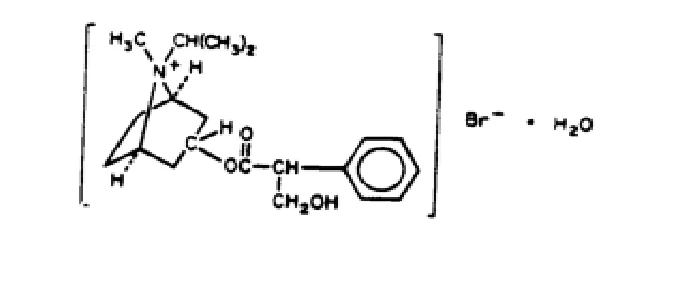
Molecular Formula: C20H30BrNO3•H2O
Molecular Weight: 430.4
Description: White crystalline substance with a bitter taste. Freely soluble in water and alcohol; insoluble in chloroform and ether. In neutral and acid solutions the substance is rather stable; in alkaline solutions the ester bond is rapidly hydrolyzed.
Melting point: 230°C with decomposition.
pH: Between 5.0 to 7.5 of 1% solution in water.
CLINICAL TRIALS
In controlled 12-week studies in patients with bronchospasm associated with chronic obstructive pulmonary disease (chronic bronchitis and emphysema), significant improvements in pulmonary function (FEV1 and FEF25-75% in increases of 15% or more) occurred within 15 minutes, reached a peak in 1 -2 hours, and persisted for periods of 4 - 5 hours in the majority of patients, with 25 to 38% of the patients demonstrating increases of at least 15% at 7 - 8 hours. Continued effectiveness of ipratropium bromide solution was demonstrated throughout the 12-week period. In addition, significant changes in forced vital capacity (FVC) have been demonstrated.
Additional controlled 12-week studies were conducted to evaluate the safety and efficacy of ipratropium bromide solution administered concomitantly with bronchodilator solutions of orciprenaline or salbutamol, compared with the administration of each of the beta agonists alone.
Combined therapy produced significant additional responses in FEV1, FVC and FEF25-
75%. On combined therapy, the median duration of 15% improvement in FEV1 was 5 - 7 hours, compared with 3 - 4 hours in patients receiving a beta agonist alone.
DETAILED PHARMACOLOGY
Ipratropium bromide is an anticholinergic agent which, when delivered by aerosol, exerts its effects primarily in the bronchial tree. It abolishes acetylcholine-induced bronchospasm in the guinea pig and dog after intravenous administration at an ED50 of 0.15-0.40 μg /kg with a transient effect on blood pressure. By inhalation, approximately 25 μg of ipratropium bromide produces a 50% inhibition of acetylcholine-induced bronchospasm in the dog with no detectable effect on blood pressure but with an increased duration of action compared to i.v. administration. Histological evaluation of human bronchial mucosae following chronic inhalation of ipratropium bromide showed no alterations of epithelial, ciliated or goblet cells. Short term mucociliary clearance in normal and bronchitic subjects was not adversely affected by 200 μg of inhaled ipratropium bromide.
The anticholinergic effects of ipratropium bromide were evaluated in several other organ systems following oral, subcutaneous, intravenous and inhalation administration. In dogs, a 50% increase in heart rate resulted from an s.c. dose of about 0.011 mg/kg, equipotent to atropine, but the equi-effective oral dose of ipratropium was 58 times greater. When given by inhalation, no increase in heart rate or pathological changes in ECG pattern were recorded at doses up to 8 mg. In another experiment, blood pressure and heart rate in the dog could be modulated after i.v.
administration of low doses of ipratropium bromide, but metered aerosol administration of 100 puffs (40 μg /puff) was required to produce an 11% increase in heart rate.
Salivary secretion in rat, mouse and dog was effectively inhibited by low parenteral doses of ipratropium bromide (0.001 to 0.032 mg/kg) but when given by the oral route, the effective dose increased over 100-fold. Aerosol administration in dogs of about 65 puffs (0.04 mg/puff) produced a 50% inhibition of salivary flow. Similarly, effects on gastric secretion in the rat showed at least a 100-fold difference between effective enteral and subcutaneous doses.
Mydriatic effects of ipratropium bromide in mice were approximately equipotent to atropine after s.c. doses but were 10-20 times less after oral administration. Tests of doses of ipratropium bromide up to 100 mg/kg in the rabbit showed no effect on the central nervous system.
Ipratropium bromide, subcutaneously, inhibited the secretory effects of the cholinergic agonist, oxtremorine, in mice. It also exhibited spasmolytic effects equivalent to or greater than atropine in isolated guinea pig gut. In vitro tests with the isolated rectum of the guinea pig demonstrated the effectiveness of ipratropium bromide in suppressing the spasmogenic effects of acetylcholine and pilocarpine. It was ineffective against histamine or barium chloride induced spasm. Ipratropium bromide exerted anticholinergic effects on the in situ bladder and intestine preparations of the dog. Intravenous doses were 500 times more potent than oral or intraduodenal administration. Ipratropium bromide was administered by inhalation in combination with a β2 sympathomimetic agent (fenoterol hydrobromide). In both the dog and guinea pig, these agents were additive in antagonizing acetylcholine induced bronchospasm with ED50 being 19.8 μg (ipratropium), 49.25 μg (fenoterol) and 11.05 μg + 27.63 μg (ipratropium + fenoterol). In the dog, 50 μg of fenoterol by inhalation produced an 8% increase in heart rate and a 16% increase in left ventricular dp/dt. When 20 μg ipratropium was added to the above, the corresponding increases were 8% and 9%.
TOXICOLOGY
Acute
Acute toxicity has been investigated with observation periods of 14 days in several rodent and non-rodent species.
SPECIES SEX ROUTE LD50 (mg/kg)
Mouse i.v. 13.5 Mouse M i.v. 12.3 Mouse F i.v. 15.0 Mouse s.c. 322 Mouse s.c. 300 Mouse oral 2010 Mouse oral 1038 Rat i.v. 15.8 Rat s.c. 1500 Rat oral 4000 Rat oral 1722
The signs of toxicity were apathy, reduced mobility, ataxia, paralysis of skeletal muscle, clonic convulsions and death from respiratory failure. Toxic signs persisted for 3 hours after i.v. and 8 days after oral administration.
IPRATROPIUM BROMIDE + FENOTEROL HYDROBROMIDE
(RATIO 1:2.5)
SPECIES SEX ROUTE LD50 (mg/kg)
Mouse M i.v. 23.6 Mouse F i.v. 26.2 Mouse M oral 630 Mouse F oral 650 Rat M i.v. 32.5 Rat F i.v. 32.5 Rat M oral 3200 Rat F oral 2450
The signs of toxicity were spasmodic breathing, tonic, clonic and saltatory convulsions, sedation, ataxia, spasms, exophthalmus, chromolacryorrhoea, reduced motility, tremor and positive sliding test. Late mortality occurred only after oral administration.
Acute dose tolerance studies were performed in dogs. No deaths occurred up to doses of 400 mg/kg oral or 50 mg/kg s.c. Signs of toxicity were mydriasis, dryness of oral, nasal and optic mucosa, vomiting, ataxia, increased heart rate, decreased body temperature, and death from respiratory failure.
An acute inhalation toxicity study of ipratropium bromide administered as 4% and 8% solution to guinea pigs was performed. No toxic signs were observed with the 4% solution and death occurred after 5 hours of administration with the 8% solution (approximately 200 mg/kg).
An acute inhalation tolerance study in rats with benzalkonium chloride (0.025%) or benzalkonium chloride (0.025%) plus ipratropium bromide (0.025%) administered over 8 hours was performed. No clinical signs of intolerance were observed. Necropsy and histological findings (16 hours and 14 days after administration) were also negative.
Anesthetized normal and hypoventilated dogs tolerated doses up to 200 puffs (4 mg) of ipratropium bromide without EGG changes or heart failure. Reductions in heart rate were observed. Similar findings were seen in dogs given i.v. infusions (10 mg/kg/min) up to 1550 mg/kg or 1000 mg/kg plus 200 puffs from a placebo inhaler. Blood pressure reductions were also seen in these experiments.
An acute inhalation dose tolerance study in rats using doses of up to 160 puffs (3.2 mg) from an ipratropium bromide inhaler was performed. No deaths occurred. A combination of ipratropium bromide (up to 3.2 mg/kg) with fenoterol hydrobromide (up to 8 mg/kg) was administered by inhaler (up to 320 puffs) to rats. There were no deaths or clinical signs observed.
SUBACUTE
Oral:
A subacute toxicity study of 9 weeks duration in rats utilizing doses of 10, 100 and 500 mg/kg revealed no pathological findings apart from a dose related decrease in food consumption and growth rate.
A 4 week study in dogs using doses of 3, 30 and 150 (for 3 weeks) increased to 300 mg/kg showed mydriasis, inhibition of lacrimal and salivary secretion, tracheal and ocular inflammation, decreased food intake and weight loss at the medium and high doses. Three of 6 dogs died when the dose was increased from 150 to 300 mg/kg.
A supplementary study in dogs of 13 weeks duration, using doses of 1.5, 3.0 and 15 mg/kg revealed no pathological changes apart from a dose related inhibition of lacrimal secretions and associated keratoconjunctivitis and dryness of the mouth.
Intravenous:
A 32 day study in rats was conducted with the combination of ipratropium bromide and fenoterol hydrobromide at doses of 1.32 + 3.32 μg/kg (Group 1) 8 + 20 μg /kg (Group 2) and 24 + 60 μg /kg (Group 3), respectively. Fenoterol 60 μg /kg (Group 4) and ipratropium 24 μg /kg (Group 5) were also administered. Increases in heart rate (dose related in all treated animals) and dry mouth and nose (Groups 3 and 5) were seen. Increases in LDH (Groups 3 and 4), creatine kinase (all treated Groups),
potassium (Groups 2, 3 and 4) and cholesterol (Groups 3 and 4) were observed. Myocardial scars were seen in one animal in Group 3 and fatty changes in the liver were noted in one animal in Group 4.
Subcutaneous:
Rats were treated with subcutaneous injections of 1, 10 and 100 mg/kg. One death occurred in the 10 mg/kg dose group from paralytic ileus. Inflammatory changes were noted at the injection site.
A 4 week study in dogs using doses of 10, 20 and 30 mg/kg (increased to 40 mg/kg on the last 5 days) was conducted. Dryness of the oral and nasal mucous membranes and mydriasis were noted along with conjunctivitis and keratitis associated with decreased lacrimal secretions. A decrease in food intake and body weight also occurred. One dog died in the high dose group. Signs of liver damage were noted in 2 high dose dogs. Low testicular weights, which have not been observed in other subsequent studies, were also observed.
Inhalation:
Twelve rats were exposed to aerosolized ipratropium bromide in a concentration of 11.5 μg /L for 1 hour, 4 times per day for 7 days. No drug toxicity was found.
In another study, administration of ipratropium bromide in doses of 128, 256 and 384 μg per rat per day for 30 days showed no signs of toxicity apart from a low grade inflammatory response and areas of fibrosis and hemorrhage in the parametrium of 2/9 females in the high dose group. This finding has not been observed in subsequent studies.
Four rhesus monkeys inhaled 500 μg of ipratropium bromide twice a day (total dose 1 mg/day) for 7 days without the appearance of any drug induced toxicity.
In another study rhesus monkeys were given ipratropium bromide in doses of 200, 400 and 800 μg /day by inhalation for 6 weeks. Included in the tests were measurements of mucociliary transport rate and ciliary beat frequency. No signs of drug toxicity were found.
Rats were exposed to a combination of fenoterol and ipratropium twice, 4 times and 8 times per day. Metered dose inhalers containing 50 μg fenoterol and 20μg ipratropium per actuation were discharged into the exposure chamber at a rate of 6 doses per minute for 25 minutes over a 7 day period. No changes apart from a reduction in food consumption in the first 2 days in the high dose group were noted.
A 28 day study in dogs was conducted using fenoterol and ipratropium in the following doses respectively: 350 + 140 μg (Group 3); 1050 + 420 μg (Group 4); 3150 + 1260 μg (Group 5). Vasodilation occurred in Groups 4 and 5 and heart rate was increased in the treated animals. Potassium levels were raised in Group 5. Liver glycogen content was raised in 4 (of 6) animals in Group 5 and 2 in Group 4.
A further 13 week combination study was done in dogs using doses of 23 + 9 μg (Group 1), 160 + 64 μg (Group 2) and 1100 + 440 (Group 3) fenoterol + ipratropium bromide respectively. Peripheral hyperaemia and dry mucous membranes were observed in all treated animals. Increases in heart rate were seen in Groups 1 to 3, and 5 of 6 dogs in Group 3 had disturbances of impulse formation and conduction. Slight increases in GPT in Groups 2 and 3, as well as increases in AP in individual animals of Groups 1 to 3 were noted. Histological findings consisted of a scar in the papillary muscle of the left ventricle of one dog in Group 3 as well as centrolobular fatty infiltration of hepatocytes in dogs of Groups 2 and 3.
CHRONIC
Oral:
A 6 month and a 1 year study in rats using doses of 6, 30 and 150 mg/kg were performed. The high dose was increased to 200 mg/kg after 14 weeks. Reductions in food consumption and growth rates were observed in the highest dose group. A dose dependent constipation which caused severe coprostasis and dilatation of the intestines was observed in the highest dose groups. A toxic hepatosis was observed in some animals of the highest dose group.
Ipratropium bromide was administered to dogs in doses of 1.5, 3.0, 15.0 and 75.0 mg/kg for 1 year. A decrease in body weight development was seen in the highest dose group and food consumption was reduced in the dogs receiving 3 mg/kg and above. Emesis was seen in all treated groups. A dose dependent decrease (3 mg/kg and above) in nasal, oral and lacrimal secretions - the latter leading to keratoconjunctivitis - was observed. Increases in SGPT and SGOT (15 and 75 mg/kg) and alkaline phosphatase (75 mg/kg) were noted. Localized gastric necrosis was found in 2 dogs at the highest dose and a non dose-dependent fatty degeneration of the liver, which varied from animal to animal, was also seen.
Inhalation:
A 6 month study in rats was performed using doses of 128, 256 and 384 μg per rat per day. Measurements included ciliary beat frequency, lung mechanics and blood gas. The only finding was a dose related decrease in growth rate of the male animals.
A 6 month inhalation toxicity study was performed in rhesus monkeys utilizing daily doses of 20, 800 and 1600 μg. All findings were negative including measurements of lung mechanics, ciliary beat frequency and blood gases.
MUTAGENICITY:
Three Ames tests, a micronucleus test in mice, a cytogenetic study in Chinese hamsters, and a dominant lethal test in mice were performed to assess the mutagenic potential of ipratropium bromide. Two positive tests (one Ames and the micronucleus study) were apparently spurious as they could not be reproduced with subsequent exhaustive experimentation. In the cytogenetic study, a dose related increase in the number of chromatid gaps, but not of other aberrations, was seen. The significance of this finding is not known. All other test results were negative.
CARCINOGENICITY:
Carcinogenicity studies in mice (107 weeks duration) and rats (114 weeks duration) utilizing oral doses of up to 6 mg/kg were performed. These studies demonstrated that ipratropium bromide does not have a tumorigenic or carcinogenic effect.
REPRODUCTIVE STUDIES
Three teratological studies, one in mice using oral doses of 2 and 10 mg/kg, and two in rats, were performed. The first study used the same doses and the second employed 10 and 20 mg/kg and revealed no drug induced fetal abnormalities.
A similar oral study in rabbits utilizing doses of 2 and 10 mg/kg again showed no teratogenic or embryotoxic effects of ipratropium bromide.
An inhalation teratology study in rabbits using doses of 0.3, 0.9 and 1.8 mg/kg demonstrated no effect on litter parameters, and no embryotoxic or teratogenic effects.
Two inhalation teratology studies with the combination of fenoterol and ipratropium in rats (doses up to 8 x 25 minute exposures of 7.5 mg fenoterol + 3.0 mg ipratropium per day) and rabbits (doses up to 3.0 mg fenoterol + 1.2 mg ipratropium) revealed no embryotoxic or teratogenic effects.
A fertility study in rats with oral doses of 5, 50 and 500 mg/kg being given 60 days prior to and during early gestation was performed. Fertility was delayed in 8 of 20 couples at 500 mg/kg and spurious pregnancy in 5 of 20 females occurred at this dose. In addition, the conception rate was decreased in 75% of females at this dose. No embryotoxic or teratogenic effects were observed.
REFERENCES
- 1. Beasley GRW, Ratterty P, Holgate ST. Bronchoconstrictor properties of preservatives in ipratropium bromide (ATROVENT) nebuliser solutions. Br Med J 1987;294:1197-8.
- 2. Beck R, Robertson C, Galdes-Sebaldt M, Levison H. Combined salbutamol and ipratropium bromide by inhalation in the treatment of severe acute asthma. J Pediatr 1985; 107:605-8.
- 3.
Boehringer Ingelheim (Canada) Ltd. Atrovent Solution (Ipratropium bromide)
inhalation solution 0.025%). Product Monograph. Burlington, Ontario. June 9, 2009. Control number 128180.
- 4.
Bryant DH. Nebulized ipratropium bromide in the treatment of acute asthma.
Chest 1985;88:24-9.
- 5. Chan CS, Brown IG, Kelly GA, Dent AG, Zimmerman PV. Bronchodilator responses to nebulized ipratropium and salbutamol singly and in combination in chronic bronchitis. Br J Clin Pharmacol 1984; 17:103-5
- 6. Chan-Yeung M. The effect of Sch 1000 and disodium cromoglycate on exercise-induced asthma. Chest 1977;71:320-3.
- 7. Cockroft DW, Ruffin RE, Hargreave FE. Effect of Sch 1000 in allergen-induced asthma, Clin Allergy 1978;8:361-72.
- 8. Cockroft DW, Killian DN, Mellon JJA, Hargreave FE. Protective effect of drugs on histamine-induced asthma. Thorax 1977;32:429-437.
- 9.
Davis A, Vickerson F, Worsley G, Mindorff G, Kazim F, Levison H.
Determination of the dose response relationship for nebulized ipratropium in asthmatic children. J Pediatr 1984;105:1002-5.
- 10. Douglas NJ, Davidson I, Sudlow MF, Flenley DC. Bronchodilation and the site of airway resistance in severe chronic bronchitis 1979;34:51-6.
- 11.
Anonymous. Ipratropium (ATROVENT) for airway obstruction. Drug Ther
Bull 1980;18:59.
- 12.
Engelhardt A. Pharmacology and toxicology of ATROVENT. Scand J Respir
Dis 1979;60 (Suppl 103):110-115.
- 13.
Jenkins CR, Chow GM, Fisher BL, Martin GE. Comparison of ipratropium bromide and salbutamol by aerosolized solution. Aust NZ J Med 1981;11:513-
6.
- 14. Lenney W, Evans NAP. Nebulized salbutamol and ipratropium bromide in asthmatic children. Br J Dis Chest 1986; 80:59-65.
- 15. McIntosh D. A comparison between fenoterol/ipratropium bromide combinations and salbutamol administered as nebulizer solutions assessing dose-response and duration of action. Pharmacothapeutica 1986;4:416-21.
- 16. Molkenboer JFWM, Lardenoge JG. The effect of ATROVENT in micturition function, double-blind cross-over study, Scand J Respir Dis 1979; 60(Suppl 103)154-158.
- 17. Pavia, Bateman JRM, Sheahan NF, Clarke SW. Effect of ipratropium bromide on mucociliary clearance and pulmonary function in reversible airways obstruction. Thorax 1979; 34:501-7.
- 18. Rebuck AS, Abboud R, Pare PD, et al. Nebulized anticholinergic and sympathomimetic treatment of obstructive airways disease in the emergency room. Am J Med 1987;82:59-64.
- 19.
Rominger KL. Chemistry and pharmacokinetics of ipratropium bromide.
Scand J Respir Dis 1979;60(Suppl 103):116-126.
- 20. Ruffin RE, Cockcroft DW, Hargreave FE. A comparison of the protective effect of fenoterol and Sch 1000 on allergen-induced asthma. J Allergy Clin Immunol 1978; 61:42-7.
- 21.
Ruffin RE, Wolff RD, Dolovich MB, Rossman CM, Fitzgerald MB, Newhouse
MT. Aerosol therapy with Sch 1000: Short-term mucociliary clearance in normal and bronchitic subjects and toxicology in normal subjects. Chest 1978; 73:501-6.
- 22.
Sackner MA, Friedman M, Silva G, Fernandez R. The pulmonary
hemodynamic effects of aerosols of isoproterenol and ipratropium in normal subjects and patients with reversible airway obstruction. Am Rev Respir Dis 1977; 116:1013-22.
- 23. Ward MJ, Macfarlane JH, Davies D. A place for ipratropium bromide in the treatment of severe asthma, Br J Dis Chest 1985; 79:374-8.
- 24. Ward MJ, Fentem PH, Roderick-Smith WH, Davies D. Ipratropium bromide in acute asthma. Br Med J 1981;282:598-600.
- 25.
Proceedings from the Canadian Bronchitis Symposium. February 18-19, 1994.
Recommendations on the Management of Chronic Bronchitis. CMAJ, suppl. Nov. 15, 1994. Vol. 151(10).
- 26. Anthonisen NR, Connett JE, Kiley JP, et al. Effects of Smoking Intervention and the use of an Inhaled Anticholinergic Bronchodilator on the Rate of Decline of FEV1: The Lung Health Study. JAMA. Nov. 16, 1994, Vol. 272. No. 19:1471-1556.