


Product Monograph - Lupin-Tiotropium
RECENT MAJOR LABEL CHANGES
N/A
TABLE OF CONTENTS
Sections or subsections that are not applicable at the time of authorization are not listed .
RECENT MAJOR LABEL CHANGES ............................................................................................. 2
TABLE OF CONTENTS ............................................................................................................... 2
PART I: HEALTH PROFESSIONAL INFORMATION ...................................................................... 4
1 INDICATIONS ............................................................................................................... 4
- 1.1 Pediatrics ................................................................................................................ 4
- 1.2 Geriatrics ................................................................................................................ 4
- 2 CONTRAINDICATIONS .................................................................................................. 4
4 DOSAGE AND ADMINISTRATION .................................................................................. 4
- 4.1 Dosing Considerations ............................................................................................ 4
- 4.2 Recommended Dose and Dosage Adjustment ........................................................ 5
- 4.4 Administration ........................................................................................................ 5
- 4.5 Missed Dose ........................................................................................................... 5
- 5 OVERDOSAGE .............................................................................................................. 5
- 6 DOSAGE FORMS, STRENGTHS, COMPOSITION AND PACKAGING .................................. 6
7 WARNINGS AND PRECAUTIONS ................................................................................... 7
- 7.1 Special Populations ................................................................................................ 9
- 7.1.1 Pregnant Women .............................................................................................. 9
- 7.1.2 Breast-feeding .................................................................................................. 9
- 7.1.3 Pediatrics ........................................................................................................ 10
- 7.1.4 Geriatrics ........................................................................................................ 10
8 ADVERSE REACTIONS ................................................................................................. 10
- 8.1 Adverse Reaction Overview .................................................................................. 10
- 8.2 Clinical Trial Adverse Reactions ............................................................................ 10
- 8.3 Less Common Clinical Trial Adverse Reactions ..................................................... 16
8.5 Post-Market Adverse Reactions ............................................................................ 17
9 DRUG INTERACTIONS ................................................................................................. 17
- 9.2 Drug Interactions Overview .................................................................................. 17
- 9.4 Drug-Drug Interactions ......................................................................................... 17
- 9.5 Drug-Food Interactions ......................................................................................... 18
- 9.6 Drug-Herb Interactions ......................................................................................... 18
- 9.7 Drug-Laboratory Test Interactions ........................................................................ 18
10 CLINICAL PHARMACOLOGY ........................................................................................ 18
- 10.1 Mechanism of Action ...................................................................................... 18
- 10.2 Pharmacodynamics ......................................................................................... 18
- 10.3 Pharmacokinetics ............................................................................................ 21
- 11 STORAGE, STABILITY AND DISPOSAL .......................................................................... 24
- 12 SPECIAL HANDLING INSTRUCTIONS ............................................................................ 24
PART II: SCIENTIFIC INFORMATION ....................................................................................... 25
- 13 PHARMACEUTICAL INFORMATION ............................................................................. 25
14 CLINICAL TRIALS......................................................................................................... 26
- 14.1 Clinical Trials by Indication .............................................................................. 26
Chronic Obstructive Pulmonary Disease (COPD) ............................................................ 26
- 14.2 Comparative Bioavailability Studies........................................................................ 30
- 15 MICROBIOLOGY ......................................................................................................... 31
- 16 NON-CLINICAL TOXICOLOGY ...................................................................................... 31
- 17 SUPPORTING PRODUCT MONOGRAPHS............................................................................. 33
PATIENT MEDICATION INFORMATION .................................................................................. 34
PART I: HEALTH PROFESSIONAL INFORMATION
1 INDICATIONS
LUPIN-TIOTROPIUM (tiotropium bromide monohydrate) is indicated for:
- long-term once-daily maintenance bronchodilator treatment of airflow obstruction in patients with chronic obstructive pulmonary disease (COPD), including chronic bronchitis and/or emphysema.
LUPIN-TIOTROPIUM is not indicated as rescue medication for the relief of acute bronchospasm in COPD.
1.1 Pediatrics
- Pediatrics (< 18 years of age): Safety and effectiveness of tiotropium in patients less than 18 years of age were not studied.
1.2 Geriatrics
- Geriatrics (≥ 65 years of age): No dose adjustment is required for patients 65 years of age or older.
2 CONTRAINDICATIONS
- LUPIN-TIOTROPIUM (tiotropium bromide monohydrate) is contraindicated in patients with a history of hypersensitivity to tiotropium bromide, atropine or its derivatives (e.g. ipratropium), or to any component of this product (see 7 WARNINGS AND PRECAUTIONS and 6 DOSAGE FORMS, STRENGTHS, COMPOSITION AND PACKAGING).
4 DOSAGE AND ADMINISTRATION
4.1 Dosing Considerations
- Counselling by doctors on smoking cessation should be the first step in treating patients with COPD, who smoke, independent of the clinical presentation i.e. chronic bronchitis (with or without airflow limitation) or emphysema. Cessation of smoking produces dramatic symptomatic benefits and has been shown to confer a survival advantage.
- Elderly patients, hepatically impaired patients, and renally impaired patients can use LUPIN-TIOTROPIUM at the recommended dose. However, as with all renally excreted drugs, LUPIN-TIOTROPIUM use should be monitored closely in patients with moderate to severe renal impairment.
- LUPIN-TIOTROPIUM should not be used for the initial treatment of acute episodes of bronchospasm. Patients should be prescribed a rapid onset, short duration inhaled bronchodilator to relieve acute symptoms such as shortness of breath and be advised to have this available for use at all times.
- Patients should be made aware that for optimum benefit, LUPIN-TIOTROPIUM must be used regularly, even when asymptomatic.
- There is no experience with tiotropium in infants and children and therefore should not be used in this age group.
4.2 Recommended Dose and Dosage Adjustment
- The recommended dosage of LUPIN-TIOTROPIUM (tiotropium bromide monohydrate) is oral inhalation of the contents of one capsule (18 mcg) once daily using the LupinHaler inhalation device.
- The capsule must not be swallowed.
Pediatrics (< 18 years of age): LUPIN-TIOTROPIUM should not be used in patients under 18 years of age.
Geriatrics (≥ 65 years of age): No dose adjustment is required for patients 65 years of age or older.
4.4 Administration
LUPIN-TIOTROPIUM should be administered once daily, at the same time of day, by oral inhalation only through the LupinHaler inhalation device.
When prescribing LUPIN-TIOTROPIUM, patients should be instructed on the correct use of the LupinHaler inhalation device. Patients who do not experience improvement in breathing should be asked if they are swallowing the medicine rather than inhaling it (see PATIENT MEDICATION INFORMATION).
4.5 Missed Dose
Patients should be advised that if they forget to take a dose, they should take one as soon as they remember but do not take two doses at the same time or on the same day. Then take the next dose as usual.
Patients should be advised that if they take more LUPIN-TIOTROPIUM 18 microgram than they should – talk to their doctor immediately.
5 OVERDOSAGE
High doses of tiotropium bromide may lead to signs and symptoms of exaggerated anticholinergic effects, such as constipation, voiding difficulties or increased intraocular pressure causing pain, vision disturbances or reddening of the eye. Should signs of serious anticholinergic toxicity appear, vital signs should be carefully monitored and appropriate therapy should be initiated.
There were no systemic anticholinergic adverse effects following a single inhaled dose of up to 282 mcg tiotropium in healthy volunteers. Additionally, no relevant adverse effects, beyond bilateral conjunctivitis and dry mouth were observed following 7 day dosing with up to 141 mcg tiotropium/day in healthy volunteers, (which resolved while still under treatment). In a multiple dose study in COPD patients with a maximum daily dose of 36 mcg tiotropium over four weeks, dry mouth was the only observed adverse event attributable to tiotropium.
Accidental Ingestion
Acute intoxication by inadvertent oral ingestion of LUPIN-TIOTROPIUM capsules is unlikely since the drug has a low oral bioavailability.
6 DOSAGE FORMS, STRENGTHS, COMPOSITION AND PACKAGING
Table 1 – Dosage Forms, Strengths, Composition and Packaging
| Route of Administration | Dosage Form / Strength/Composition | Non-medicinal Ingredients |
|---|---|---|
| Oral Inhalation | capsule / 18 mcg | lactose monohydrate (which contains milk protein) |
LUPIN-TIOTROPIUM capsules, containing 18 mcg tiotropium (equivalent to 22.5 mcg tiotropium bromide monohydrate), are white opaque cap and white opaque body, imprinted with "LU" on cap and "T18" on body with black ink. LUPIN-TIOTROPIUM capsules also contain lactose monohydrate (which contains milk protein) as a “carrier”. The dry powder within the capsule is intended for oral inhalation only.
LUPIN-TIOTROPIUM capsules are partially filled but contain exact amount of medication as declared on the label.
Ten LUPIN-TIOTROPIUM capsules are packaged in Aluminium /Aluminium blister strips/cards containing 10 capsules with horizontal and cross perforation separating each incorporated cavity The following pack types are available:
- Carton of 30 LUPIN-TIOTROPIUM capsules (3 blister cards) and one LupinHaler device.
Carton of 10 LUPIN-TIOTROPIUM capsules (1 blister card) and one LupinHaler device.
Refill packs:
- Carton of 30 LUPIN-TIOTROPIUM capsules (3 blister cards)
INHALATION DEVICE
The LupinHaler inhalation device is a single dose inhalation device made from plastic materials (ABS) and stainless steel used for the administration of LUPIN-TIOTROPIUM capsules. The LupinHaler device is white colored with a green piercing button. It is imprinted with LupinHaler (tiotropium bromide inhalation powder), the Lupin company logo. It is also imprinted to indicate that tiotropium bromide inhalation powder capsules should not be
For management of a suspected drug overdose, contact your regional poison control centre.
stored in the LupinHaler device and that the LupinHaler device is only to be used with tiotropium bromide inhalation powder capsules.
To use the delivery system, a LUPIN-TIOTROPIUM capsule is placed in the center chamber of the LupinHaler inhalation device and the capsule is pierced by pressing and releasing the green piercing button on the side of the device. The tiotropium formulation is dispersed into the air stream when the patient inhales slowly and deeply through the mouthpiece.
7 WARNINGS AND PRECAUTIONS
General
LUPIN-TIOTROPIUM capsules contains 5.5 mg of lactose monohydrate per capsule. Patients with rare hereditary problems of galactose intolerance, total lactase deficiency or glucose-galactose malabsorption should not take this medicine.
Not for Acute Use
LUPIN-TIOTROPIUM, as a once daily maintenance bronchodilator, should not be used for the initial treatment of acute episodes of bronchospasm or for the relief of acute symptoms. In the event of an acute attack, a rapid-acting beta-2 agonist should be used.
When beginning treatment with LUPIN-TIOTROPIUM, patients who have been taking inhaled, short-acting bronchodilators on a regular basis (e.g., four times a day) should be instructed to discontinue the regular use of these drugs.
When prescribing LUPIN-TIOTROPIUM, the healthcare professional should also provide the patient with an inhaled, short-acting bronchodilator (i.e., short-acting beta-agonist) for treatment of COPD symptoms that occur acutely, despite regular once-daily use of LUPIN-TIOTROPIUM.
COPD Deterioration
LUPIN-TIOTROPIUM should not be initiated in patients with acutely deteriorating COPD (over a period of hours or days), which may be a life-threatening condition.
If LUPIN-TIOTROPIUM no longer controls the symptoms of bronchoconstriction, or the patient’s inhaled, short-acting beta-2 agonist becomes less effective or the patient needs more inhalation of a short-acting bronchodilator than usual, these may be markers of deterioration of disease. In this setting, a re-evaluation of the patient and the COPD treatment regimen should be undertaken at once. Increasing the daily dosage of LUPIN-TIOTROPIUM beyond the recommended dose is not appropriate in this situation.
Excessive Use
LUPIN-TIOTROPIUM should not be used more frequently than once daily or at higher doses than recommended. LUPIN-TIOTROPIUM should not be administered concomitantly with other medicines containing a long-acting muscarinic antagonist, as this has not been studied, and an overdose may result.
Anticholinergic Effects
Like other anticholinergic drugs, LUPIN-TIOTROPIUM should be used with caution in patients with symptomatic prostatic hyperplasia, narrow-angle glaucoma (see Ophthalmologic) or urinary retention (see Renal).
Cardiovascular
Cardiovascular effects, such as cardiac arrhythmias (e.g. atrial fibrillation and tachycardia), may be seen after the administration of muscarinic receptor antagonists (see 8 ADVERSE REACTIONS).
Tiotropium should be used with caution in patients with recent myocardial infarction < 6 months; any unstable or life threatening cardiac arrhythmia or cardiac arrhythmia requiring intervention or a change in drug therapy in the past year; hospitalisation due to heart failure within the past year. These patients were excluded from the clinical trials and these conditions may be affected by the anticholinergic mechanism of action.
Driving and Operating Machinery
No studies on the effects on the ability to drive and use machines have been performed. The occurrence of dizziness or blurred vision may influence the ability to drive and use machinery.
Immune
Hypersensitivity
Immediate hypersensitivity reactions, including urticaria, angioedema (including swelling of the lips, tongue or throat), rash, bronchospasm, anaphylaxis, or itching may occur after administration of LUPIN-TIOTROPIUM. If such a reaction occurs, therapy with LUPIN-TIOTROPIUM should be stopped at once and alternative treatments should be considered. Given the similar structural formula of atropine to tiotropium, patients with a history of hypersensitivity reactions to atropine or its derivatives should be closely monitored for similar hypersensitivity reactions to LUPIN-TIOTROPIUM.
There have been reports of anaphylactic reactions in patients with severe milk protein allergy after inhalation of other powder products containing lactose (with probable traces of milk protein); therefore, LUPIN-TIOTROPIUM should be used with caution in patients with severe milk protein allergy.
Ophthalmologic
Worsening of Narrow-Angle Glaucoma (see Anticholinergic Effects).
LUPIN-TIOTROPIUM should be used with caution in patients with narrow-angle glaucoma. Patients should be cautioned to avoid getting the drug powder into their eyes. They should be advised that this may result in precipitation or worsening of narrow-angle glaucoma. Prescribers and patients should be alert for signs and symptoms of acute narrow-angle glaucoma (e.g., eye pain or discomfort, blurred vision, visual halos or colored images in association with red eyes from conjunctival congestion and corneal edema). Instruct patients to consult a physician immediately should any of these signs or symptoms develop. Miotic drops alone are not considered to be effective treatment.
Renal
As with all predominantly renally excreted drugs, LUPIN-TIOTROPIUM should be used only if the expected benefit outweighs the potential risk in patients with moderate to severe renal impairment (creatinine clearance ≤ 50 mL/min). These patients should be monitored closely for potential adverse drug reactions.
Worsening of Urinary Retention (see Anticholinergic Effects).
LUPIN-TIOTROPIUM should be used with caution in patients with urinary retention. Prescribers and patients should be alert for signs and symptoms of prostatic hyperplasia or bladder-neck obstruction (e.g., difficulty passing urine, painful urination). Instruct patients to consult a physician immediately should any of these signs or symptoms develop.
Reproductive Health: Female and Male Potential
- Fertility
Clinical data on fertility are not available for tiotropium. A non-clinical study performed with tiotropium showed no indication of any adverse effect on fertility (see 16 NON-CLINICAL TOXICOLOGY).
Respiratory
Paradoxical bronchospasm
Inhaled medicines may cause inhalation-induced bronchospasm. If this occurs, treatment with LUPIN-TIOTROPIUM should be discontinued immediately and other treatment options considered.
7.1 Special Populations
7.1.1 Pregnant Women
Pregnant Women: There is a limited amount of data from the use of tiotropium in pregnant women. Animal studies do not indicate direct or indirect harmful effects with respect to reproductive toxicity (see 16 NON-CLINICAL TOXICOLOGY). Because animal reproduction studies are not always predictive of human response, LUPIN-TIOTROPIUM should be used during pregnancy only if the benefits outweigh any possible risk to the unborn child.
Labour and Delivery: The safety and effectiveness of tiotropium have not been studied during labour and delivery.
7.1.2 Breast-feeding
Based on lactating rodent studies, a small amount of tiotropium (1.9%) is excreted in milk over two days. Clinical data from nursing women exposed to tiotropium are not available. LUPIN-TIOTROPIUM should not be used in nursing women unless the expected benefit outweighs any possible risk to the infant.
7.1.3 Pediatrics
Pediatrics (< 18 years of age): No data are available to Health Canada; therefore, Health
Canada has not authorized an indication for pediatric use.
7.1.4 Geriatrics
No dose adjustment is required in patients 65 years of age and older.
8 ADVERSE REACTIONS
8.1 Adverse Reaction Overview
Adverse reactions to tiotropium are similar in nature to reactions to other anticholinergic bronchodilators. Many of the listed undesirable effects can be assigned to the anticholinergic properties of tiotropium.
In controlled clinical studies, the commonly observed undesirable effects were anticholinergic undesirable effects such as dry mouth which occurred in approximately 4% of patients. In 28 clinical trials, dry mouth led to discontinuation in 18 of 9647 tiotropium treated patients
(0.2 %).
Other undesirable effects consistent with anticholinergic effects include palpitations, supraventricular tachycardia, atrial fibrillation, blurred vision, glaucoma, constipation and intestinal obstruction including ileus paralytic as well as urinary retention.
An increase in anticholinergic effects may occur with increasing age.
8.2 Clinical Trial Adverse Reactions
Clinical trials are conducted under very specific conditions. The adverse reaction rates observed in the clinical trials; therefore, may not reflect the rates observed in practice and should not be compared to the rates in the clinical trials of another drug. Adverse reaction information from clinical trials may be useful in identifying and approximating rates of adverse drug reactions in real-world use.
Of the 1456 patients in the four one-year controlled clinical trials, 1207 patients in the two six- month controlled clinical trials and 5993 patients in the four year trial, 906, 402 and 2986 patients, respectively, were treated with tiotropium at the recommended dose of 18 mcg once a day.
One-year studies
Four multi-centre, one-year, controlled studies have evaluated once daily doses of tiotropium in patients with COPD. The following table shows adverse events that occurred with a frequency of ≥ 3% in the tiotropium group in the placebo-controlled trials, and where the rates in the tiotropium group exceeded placebo by ≥ 1%. The frequency of corresponding events in the ipratropium-controlled trials are included for comparison.
Table 2 Adverse event incidence (% patients) in one-year COPD clinical trials
Placebo Controlled Studies Combined Data (Trials 205.114/117 & 205.115/208) | Ipratropium Controlled Studies Combined Data (Trials 205.122A/126A & 205.122B/126B) | ||||||||
|---|---|---|---|---|---|---|---|---|---|
Body System Event | tiotropium [n=550] | PLACEBO [n=371] | tiotropium [n=356] | IPRATROPIUM [n=179] | |||||
Body as a Whole Accidents Chest Pain (non-specific) Edema, Dependent | 13 7 5 | 11 5 4 | 5 5 3 | 8 2 5 | |||||
Gastrointestinal System Disorders Abdominal Pain Constipation Dry Mouth* Dyspepsia Vomiting | 5 4 16 6 4 | 3 2 3 5 2 | 6 1 12 1 1 | 6 1 6 1 2 | |||||
Musculo-skeletal System Myalgia | 4 | 3 | 4 | 3 | |||||
Resistance Mechanism Disorders Infection Moniliasis | 4 4 | 3 2 | 1 3 | 3 2 | |||||
Respiratory System (upper) Epistaxis Pharyngitis Rhinitis Sinusitis Upper Respiratory Tract Infection | 4 9 6 11 41 | 2 7 5 9 37 | 1 7 3 3 43 | 1 3 2 2 35 | |||||
Skin and Appendage Disorders Rash | 4 | 2 | 2 | 2 | |||||
Urinary System Urinary Tract Infection | 7 | 5 | 4 | 2 | |||||
* Dry mouth was usually mild and led to discontinuation of therapy in 0.3% of tiotropium treated patients.
Arthritis, coughing and influenza-like symptoms occurred at a rate of ≥ 3% in the tiotropium treatment group, but were < 1% in excess of the placebo groups.
Six month studies
Two multi-centre, six-month, salmeterol and placebo-controlled studies have evaluated once daily doses of tiotropium in patients with COPD. The following table shows adverse events where the frequency was ≥ 3% in the tiotropium 18 mcg once daily group and where the rates in the tiotropium group exceeded placebo by at least 1%.
Table 3 Adverse event incidence (% patients*) in six-month COPD clinical trials
| Combined Data (Trials 205.130 & 205.137) | |||||||
|---|---|---|---|---|---|---|---|
| Body System Event | tiotropium [n=402] | SALMETEROL [n=405] | PLACEBO [n=400] | ||||
Body as a Whole Accidents Back Pain Headache Influenza Like Symptoms | 4.2 4.0 6.5 6.7 | 5.2 4.0 6.9 5.2 | 2.5 3.0 4.5 4.0 | ||||
Gastrointestinal System Disorders Dry Mouth | 8.2 | 1.7 | 2.3 | ||||
Respiratory System (upper) Pharyngitis Upper Respiratory Tract Infection | 4.5 19.4 | 3.5 17.0 | 3.0 16.0 | ||||
Respiratory System (lower) Coughing | 5.2 | 5.9 | 3.5 | ||||
* Percentages are calculated using total number of patients treated as the denominator.
Long-Term (4-year) Study
The long term effects of treatment with tiotropium was assessed in a four-year, multi-national, placebo-controlled trial (205.235) involving 5,993 patients with COPD, during which all patients were permitted to use all respiratory medications as prescribed by their health care providers other than inhaled anticholinergics. In total, there were 9,468 person-years of exposure to tiotropium and 8,746 person-years of exposure to placebo, which includes the 30 day follow- up period.
Adverse events were experienced by 93% of the tiotropium group and 92% of the placebo group. The proportion of patients who experienced serious adverse events was 52% in the tiotropium group and 50% in the placebo group. Fatal events during the treatment period occurred in 381 patients (12.8%) in the tiotropium group and 411 (13.7%) in the placebo group.
Given the duration of the trial and differences in discontinuation rates, comparisons between study drugs are most appropriately assessed by examination of exposure adjusted rates (i.e. incidence rates). Incidence rates of selected events are computed as the number of patients experiencing an event divided by the person years at risk. Time at risk is time of exposure + 30 days for subjects who did not experience a specific event, and time from start of treatment to onset of a specific event for subjects who experienced this event. Rates are presented per 100 person-years of time at risk to tiotropium or placebo.
The most common adverse events were COPD exacerbations (65% of patients), pneumonia (14% of patients), and dyspnea (14% of patients). The incidence rate per 100 person years for COPD exacerbation was 45.5 and 38.1 for placebo and tiotropium, respectively. The rate per 100 person years for pneumonia was 5.14 in placebo and 4.94 in tiotropium group (Table 4).
Table 4 Frequency [N (%)] of patients with adverse events occurring with incidence of preferred term > 3% – using collapsed tiotropium preferred terms1 - treated set (Trial 205.235)
| Tiotropium | Placebo | ||||||||||
|---|---|---|---|---|---|---|---|---|---|---|---|
| N=2986 | N=3006 | ||||||||||
| N (%) | IR2 | N (%) | IR2 | ||||||||
Total with adverse events | 2764 (92.6) | 2774 (92.3) | |||||||||
| COPD exacerbations | 1934 (64.8) | 38.1 | 1986 (66.1) | 45.5 | |||||||
| Pneumonia | 433 (14.5) | 4.94 | 418 (13.9) | 5.14 | |||||||
| Dyspnoea | 364 (12.2) | 4.09 | 443 (14.7) | 5.49 | |||||||
| Nasopharyngitis | 373 (12.5) | 4.33 | 324 (10.8) | 4.06 | |||||||
Upper respiratory tract infection | 298 (10.0) | 3.38 | 290 (9.6) | 3.57 | |||||||
| Hypertension | 275 (9.2) | 3.08 | 284 (9.4) | 3.45 | |||||||
| Bronchitis | 232 (7.8) | 2.57 | 233 (7.8) | 2.82 | |||||||
| Cough | 238 (8.0) | 2.64 | 213 (7.1) | 2.57 | |||||||
| Back pain | 198 (6.6) | 2.18 | 188 (6.3) | 2.25 | |||||||
| Urinary tract infections | 190 (6.4) | 2.08 | 169 (5.6) | 2.00 | |||||||
| Sinusitis | 194 (6.5) | 2.14 | 160 (5.3) | 1.90 | |||||||
| Influenza | 158 (5.3) | 1.73 | 158 (5.3) | 1.87 | |||||||
| Headache | 171 (5.7) | 1.88 | 136 (4.5) | 1.61 | |||||||
| Oedema | 145 (4.9) | 1.57 | 130 (4.3) | 1.52 | |||||||
| Constipation | 151 (5.1) | 1.63 | 111 (3.7) | 1.29 | |||||||
| Diarrhoea | 138 (4.6) | 1.50 | 122 (4.1) | 1.43 | |||||||
| Cataract | 120 (4.0) | 1.30 | 123 (4.1) | 1.45 | |||||||
| Atrial Fibrillation | 119 (4.0) | 1.28 | 113 (3.8) | 1.32 | |||||||
| Mouth dry | 152 (5.1) | 1.68 | 80 (2.7) | 0.93 | |||||||
| Depression | 131 (4.4) | 1.42 | 98 (3.3) | 1.14 | |||||||
| Insomnia | 131 (4.4) | 1.42 | 91 (3.0) | 1.06 | |||||||
| Arthralgia | 125 (4.2) | 1.36 | 94 (3.1) | 1.10 | |||||||
Benign prostatic hyperplasia | 122 (4.1) | 1.32 | 96 (3.2) | 1.12 | |||||||
| Rhinitis | 101 (3.4) | 1.09 | 112 (3.7) | 1.32 | |||||||
| Abdominal pain | 113 (3.8) | 1.22 | 96 (3.2) | 1.12 | |||||||
| Respiratory failure | 88 (2.9) | 0.94 | 120 (4.0) | 1.39 | |||||||
| Hypercholesterolaemia | 104 (3.5) | 1.12 | 97 (3.2) | 1.13 | |||||||
| Nausea | 93 (3.1) | 1.00 | 94 (3.1) | 1.09 | |||||||
| Dizziness | 103 (3.4) | 1.11 | 81 (2.7) | 0.94 | |||||||
1 tiotropium preferred terms include multiple MedDRA preferred terms, 2 incidence rate per 100 person years
Other than lung cancer, serious adverse events reported by >1% of patients in either treatment group were either cardiac or respiratory in nature and are displayed in Table 5.
The most common reason for discontinuation from treatment was due to an exacerbation of a patient’s underlying respiratory disease.
Table 5 Frequency [n (%)] and incidence rate (per 100 person years) of patients experiencing serious adverse events1 reported by >1% of patients in any treatment group according to system organ (SOC) class during the treatment period (from first to last day of study drug + 30 days). (Trials 205.235)
| Tiotropium N = 2986 | Placebo N = 3006 | |||||||||||
|---|---|---|---|---|---|---|---|---|---|---|---|---|
| N (%) | IR | N (%) | IR | |||||||||
| Cardiac SOC | 322 (10.8) | 3.56 | 350 (11.6) | 4.22 | ||||||||
| Angina | 48 (1.6) | 0.51 | 31 (1.0) | 0.36 | ||||||||
| Atrial fibrillation | 69 (2.3) | 0.74 | 67 (2.2) | 0.77 | ||||||||
| Cardiac failure | 57 (1.9) | 0.61 | 42 (1.4) | 0.48 | ||||||||
Cardiac failure congestive | 27 (0.9) | 0.29 | 42 (1.4) | 0.48 | ||||||||
| Coronary artery disease | 20 (0.7) | 0.21 | 32 (1.1) | 0.37 | ||||||||
| Myocardial infarction | 65 (2.2) | 0.69 | 84 (2.8) | 0.97 | ||||||||
| Respiratory (lower) SOC | 911 (30.5) | 11.32 | 985 (32.8) | 13.47 | ||||||||
| Bronchitis | 35 (1.2) | 0.37 | 27 (0.9) | 0.31 | ||||||||
| COPD exacerbation | 688 (23.0) | 8.19 | 742 (24.7) | 9.70 | ||||||||
| Dyspnea | 36 (1.2) | 0.38 | 54 (1.8) | 0.62 | ||||||||
| Pneumonia | 296 (9.9) | 3.28 | 290 (9.6) | 3.46 | ||||||||
| Respiratory failure | 85 (2.8) | 0.90 | 113 (3.8) | 1.31 | ||||||||
1 excluding lung cancer (multiple different terms)
Consolidated Safety Database
Pooled analysis of Tiotropium (18 mcg) vs. Placebo studies
- 1) Clinical trial evidence. All Trial Participants.
Data included in this section are based on pooled data from 28 randomized placebo-controlled parallel group clinical trials in phase III and IV with treatment periods ranging between four weeks and four years. The cutoff date for these analyses was December 17, 2010. Adverse drug reactions were identified from data obtained in clinical trials. The clinical trial database includes 9,647 tiotropium patients, contributing 12,469 person years of exposure to tiotropium. Under each treatment, 'N with event' is the number of patients with the selected adverse drug reaction or adverse event.
The frequencies assigned to the undesirable effects listed below are based on crude incidence rates of adverse drug reactions (i.e. events attributed to tiotropium) observed in the tiotropium group (9,647 patients) from 28 pooled placebo-controlled clinical trials with treatment periods ranging from four weeks to four years.
Frequency is defined using the following convention:
Very common (≥ 1/10); common (≥ 1/100 to < 1/10); uncommon (≥ 1/1,000 to < 1/100); rare (≥ 1/10,000 to < 1/1,000); very rare (< 1/10,000), not known (cannot be estimated from the available data).
Table 6 Adverse drug reactions
| MedDRA Preferred Term | Frequency |
|---|---|
| Metabolism and nutrition disorders | |
| Dehydration | Not known* |
| Nervous system disorders | |
| Dizziness | Uncommon |
| Insomnia | Rare |
| Eye disorders | |
| Vision blurred | Uncommon |
| Glaucoma | Rare |
| Intraocular pressure increased | Rare |
| Cardiac disorders | |
| Atrial fibrillation | Uncommon |
| Supraventricular tachycardia | Rare |
| Tachycardia | Rare |
| Palpitations | Rare |
| Respiratory, thoracic and mediastinal disorders | |
| Pharyngitis | Uncommon |
| Dysphonia | Uncommon |
| Cough | Uncommon |
| Bronchospasm | Rare |
| Epistaxis | Rare |
| Laryngitis | Rare |
| Sinusitis | Rare |
| Gastrointestinal disorders | |
| Dry mouth, usually mild | Common |
| Stomatitis | Rare |
| Gastrooesophageal reflux disease | Uncommon |
| Constipation | Uncommon |
| Intestinal obstruction, including ileus paralytic | Rare |
| Gingivitis | Rare |
| Glossitis | Rare |
| Oropharyngeal candidiasis | Uncommon |
| MedDRA Preferred Term | Frequency |
|---|---|
| Dysphagia | Rare |
Skin and subcutaneous tissue disorders, Immune system disorders | |
| Rash | Uncommon |
| Urticaria | Rare |
| Pruritus | Rare |
| Hypersensitivity (including immediate reactions) | Rare |
| Angioedema | Rare |
| Skin infection, skin ulcer | Not known* |
| Dry skin | Not known* |
Musculoskeletal and connective tissue disorders | |
| Joint swelling | Not known* |
| Renal and urinary disorders | |
| Dysuria | Uncommon |
Urinary retention (usually in men with predisposing factors) | Uncommon |
| Urinary tract infection | Rare |
*no events attributed to tiotropium in 9,647 tiotropium treated patients; however, events are considered adverse drug reactions associated with tiotropium
- 8.3 Less Common Clinical Trial Adverse Reactions One-year studies
Other events that occurred in the tiotropium group at a frequency of 1 - 3% in the placebo- controlled trials and where the rates exceeded that in the placebo group include:
Body as a Whole: allergic reaction, leg pain;
Central and Peripheral Nervous System: dysphonia, paraesthesia;
Gastro-intestinal System Disorders: gastro-intestinal disorder not otherwise specified (NOS), gastroesophageal reflux, stomatitis (including ulcerative stomatitis);
Metabolic and Nutritional Disorders: hypercholesterolemia, hyperglycemia;
Musculo-Skeletal System Disorders: skeletal pain;
Myo Endo Pericardial and Valve Disorders: angina pectoris (including aggravated angina pectoris);
Psychiatric Disorder: depression;
Resistance Mechanism Disorders: herpes zoster; Respiratory System Disorder (Upper): laryngitis;
Vision Disorder: cataract.
Adverse reactions with incidences > 0.1% and < 1% in excess of placebo include:
Cardiovascular system: tachycardia
Urinary system: difficulty urinating and urinary retention (in men with predisposing factors)
Hypersensitivity reactions: angio-oedema (1 of 906 patients in the four one-year trials).
As with other orally inhaled drugs, pharyngo-oral irritation and paradoxical bronchospasm were observed.
8.5 Post-Market Adverse Reactions
The following adverse reactions have been identified primarily by reporting in the worldwide post-marketing experience of tiotropium: dysphonia, epistaxis, palpitations, dizziness, rash, urticaria, pruritus, atrial fibrillation, tachycardia.
Post-marketing adverse experiences also include rare reports of syncope/loss of consciousness, chest pain, myocardial infarction, angina pectoris, arrhythmia, and cardiac failure. Because these reactions are reported voluntarily from a population of uncertain size, it is not always possible to reliably estimate their frequency or establish a causal relationship to drug exposure.
9 DRUG INTERACTIONS
9.2 Drug Interactions Overview
Tiotropium is mainly excreted renally (approximately 74% of the intravenously administered dose). The remaining dose is mainly nonenzymatically cleared with a minor portion (<20% of intravenous dose) being metabolized by CYP2D6 and CYP3A4 ( see 10.3 Pharmacokinetics Metabolism). Tiotropium does not inhibit cytochrome P450 1A1, 1A2, 2B6, 2C9, 2C19, 2D6, 2E1, 3A4 even in supratherapeutic concentrations, which makes clinically relevant metabolic interactions with tiotropium unlikely.
9.4 Drug-Drug Interactions
Although no formal drug interaction studies have been performed, tiotropium bromide has been used concomitantly with other drugs commonly used in the treatment of COPD including sympathomimetic bronchodilators, methylxanthines, and oral and inhaled steroids, without clinical evidence of drug interactions.
Anticholinergics
The chronic co-administration of tiotropium bromide with other anticholinergic-containing drugs has not been studied. There is potential for an additive interaction with concomitantly used anticholinergic medication. Therefore, avoid co-administration of LUPIN-TIOTROPIUM with other anticholinergic-containing drugs as this may lead to an increase in anticholinergic adverse effects.
9.5 Drug-Food Interactions
Food is not expected to influence the absorption of tiotropium.
9.6 Drug-Herb Interactions
Interactions with herbal products have not been established.
9.7 Drug-Laboratory Test Interactions
Interactions with laboratory tests have not been established.
10 CLINICAL PHARMACOLOGY
10.1 Mechanism of Action
Tiotropium is a long acting muscarinic receptor antagonist (LAMA), also known as an anticholinergic. It has a similar affinity to the subtypes of muscarinic receptors M1 to M5. In the lungs, inhibition of M3-receptors at the smooth muscle results in relaxation of the airways. The competitive and reversible nature of antagonism was shown with human and animal origin receptors and isolated organ preparations. The M3-receptor is the main muscarinic receptor subtype involved in the bronchoconstriction induced by acetylcholine. Among the other muscarinic receptor subtypes of known physiological relevance, M2- receptors are responsible for the effects of parasympathetic inhibition of heart rate.
Tiotropium bromide is a quaternary ammonium molecule with duration of action sufficient to provide 24 hours of bronchoprotection with once-a-day inhalational administration.
The long duration of action of tiotropium is thought to be due to its slow dissociation kinetics from the muscarinic M3-receptor subtype. Dissociation from M2-receptors is faster than from M3, which in functional in vitro studies, elicited (kinetically controlled) receptor subtype selectivity of M3 over M2. As an N-quaternary anticholinergic, tiotropium is topically selective when administered by inhalation to the lung. Pharmacological in vitro and in vivo studies profiled tiotropium as a potent, long acting bronchodilator suitable for a once -daily dose regimen.
10.2 Pharmacodynamics
Primary Pharmacodynamic Effects
The primary pharmacodynamic effect in subjects with COPD following inhalation of tiotropium is bronchodilation, which is primarily a site-specific, rather than a systemic effect. Tiotropium bromide, administered once daily in the COPD population, provided significant improvement in lung function (forced expiratory volume in one second, FEV1 and forced vital capacity, FVC) within 30 minutes following the first dose which was maintained for 24 hours.
The time course of the effect of tiotropium was determined in a randomized, placebo-controlled 6-week clinical study that included spirometry measurements every 3 hours in 105 COPD patients.
Tiotropium administered once daily provided significant improvement in lung function (forced expiratory volume in one second, FEV1; and forced vital capacity, FVC) within 30 minutes following the first dose and was maintained for 24 hours whether tiotropium was administered in the morning or in the evening.
Repeated inhalation of tiotropium has not been linked with tolerance towards bronchodilatory effects of the drug.
Onset of Pharmacodynamic Steady State
Study results supported that pharmacodynamic steady state was attained within the first week of dosing with the majority of bronchodilation observed by the third day; additionally, the multiple dose studies supported the once daily dosing regimen for tiotropium administered by inhalation of a dry powder formulation.
Dose-ranging - Multiple-dose
A 9 mcg dose provided 75%, the 18 mcg dose provided 85%, and the 36 mcg dose provided 92% of the maximum effect. The data suggested that a dose of approximately 18 mcg was superior to lower doses and nearly as effective as a dose of approximately 36 mcg. The increased incidence of dry mouth at and above 36 mcg suggested that a lower dose would be preferable; thereby supporting the proposed dose of 18 mcg. The data also suggested that since the differences between the trough FEV1 and average FEV1(0-6 hr) response are minimal, a once a day dosing regimen for tiotropium appears to be appropriate.
Secondary Pharmacodynamic Effects
Studies with supratherapeutic doses have confirmed that reduced salivation is among the most sensitive effects. This clinical physiologic effect is mirrored by reports of dry mouth.
Cardiac Electrophysiology
In a multi-centre, randomized, double-blind trial using tiotropium dry powder for inhalation that enrolled 198 patients with COPD, the number of subjects with changes from baseline- corrected QT interval of 30 to 60 msec was higher in the tiotropium group as compared with placebo. This difference was apparent using both the Bazett (QTcB) [20 (20%) patients vs., 12 (12%) patients] and Fredericia (QTcF) [16 (16%) patients vs. 1 (1%) patient] corrections of QT for heart rate. No patients in either group had either QTcB or QTcF of >500 msec. Other clinical trials with tiotropium did not detect an effect of the drug on QTc intervals.
The effect of tiotropium dry powder for inhalation on QT interval was also evaluated in a randomized, placebo- and positive-controlled crossover study in 53 healthy volunteers. Subjects received tiotropium inhalation powder 18 mcg, 54 mcg (3 times the recommended dose), or placebo for 12 days. ECG assessments were performed at baseline and throughout the dosing interval following the first and last dose of study medication. Relative to placebo, the maximum mean change from baseline in study-specific QTc interval was 3.2 msec and 0.8 msec for tiotropium inhalation powder 18 mcg and 54 mcg, respectively. No subject showed a new onset of QTc >500 msec or QTc changes from baseline of ≥60 msec.
4-year Long Term Efficacy and Safety Study
The long term efficacy and safety of treatment with tiotropium was assessed in a four-year multi- centre, multi-national, double-blind, randomized, placebo-controlled, parallel-group clinical trial (205.235), involving 5,993 patients with moderate-severe COPD. The mean age of the patients was 65 ± 8 years (range 40 - 88 years) with a post bronchodilator FEV1 of ≤ 70% of predicted at baseline.
The effect of tiotropium on the rate of decline in FEV 1 was investigated in patients with COPD who were permitted all therapy (including short- acting beta-agonists, long-acting beta- agonists, inhaled steroids, or theophyllines) other than inhaled anticholinergics drugs. Long- term outcomes of health-related quality of life, exacerbations, related hospitalizations and mortality were also evaluated.
Study results
tiotropium maintained improvements in FEV1 throughout 4 years but did not alter the annualized rate of decline of FEV1. There were no significant differences between treatment groups in the mean annual rate of decline for both of the co-primary efficacy endpoints (either pre- bronchodilator or post-bronchodilator FEV1) and FVC from day 30 to the end of treatment.
For mean pre-bronchodilator FEV1, the estimated mean difference between tiotropium and control groups ranged from 87 to 103 ml (p-value<0.0001), Day 30 to Month 48, with an overall mean difference of 94 ml (p-value<0.0001).
Mortality data were captured as a safety endpoint. During treatment, there was a 16% reduction in the risk of death on tiotropium compared to control. The incidence rate of death was 4.10 per 100 patient years in the tiotropium group vs. 4.79 per 100 patient years in the control group. [Hazard Ratio (tiotropium/control) = 0.84, 95% CI = 0.73, 0.97]. The overall incidence of adverse events, including cardiac and respiratory AEs, was similar between tiotropium and placebo during the 4 year treatment period (Table 4 & 5).
Tiotropium statistically significantly delayed the time to the first exacerbation (p <0.0001) and the time to first hospitalization for an exacerbation (p<0.0025). Based on the Kaplan-Meier estimates, median time to the first exacerbation was estimated to be 12.5 months and 16.7 months in placebo and tiotropium treated patients, respectively. The estimated number of COPD exacerbations per patient year was 0.85 (95% CI 0.81, 0.88) in the placebo group and
0.73 (95% CI 0.69, 0.76) in the tiotropium group. There was no difference in the number of COPD exacerbations leading to hospitalization per patient year between two treatment groups.
There was no treatment difference in the rate of decline of SGRQ scores. Statistically significant differences in favour of tiotropium were observed at all time points for the St. George’s Respiratory Questionnaire (SGRQ) total score, activity score, impact score and symptom score (all p-value <0.015). A statistically significantly higher proportion of patients in the tiotropium compared to control groups achieved ≥ 4 unit improvements in the SGRQ total scores from baseline at years 1 (49.1% vs. 41.2%), 2 (47.5% vs. 39.0%), 3 (46.2% vs. 36.5%), and
4 years (44.9% vs. 36.3%) (p<0.001 for all).
Evaluation of Mucociliary Clearance
As a class, systemically absorbed anticholinergic drugs have been reported to decrease mucociliary clearance. A study was conducted to investigate the effect of three (3) weeks of once daily inhaled tiotropium 18 mcg on tracheobronchial clearance (TBC) as assessed by radioaerosol technique in patients with COPD (n=37).
The data showed that once daily inhaled tiotropium resulted in improved penetration of radioaerosol but did not change TBC compared to baseline; however, TBC following tiotropium was apparently delayed compared to placebo. This difference however, was within the pre- specified limit for non-inferiority of tiotropium compared to placebo. The deeper penetration of radioaerosol is attributable to the effectiveness of tiotropium as a bronchodilator in patients with COPD. The deeper penetration of the aerosol particles influenced by the increased airway patency is the likely cause of the apparent slower TBC in the tiotropium group.
Severity of COPD
In COPD patients, disease severity is likely to be confounded with age effects and seems to have no relevant influence on tiotropium absorption.
10.3 Pharmacokinetics
Tiotropium bromide is a non-chiral quaternary ammonium compound and is sparingly soluble in water. It is administered via inhaler by dry powder inhalation. Generally with the inhaled route of administration, the majority of the delivered dose is deposited in the gastrointestinal tract, and to a lesser extent in the intended organ of the lung. Some of the pharmacokinetic data described below were obtained with higher doses than recommended for therapy.
Absorption
Following dry powder inhalation by young healthy volunteers, the absolute bioavailability of 19.5% suggests that the fraction reaching the lung is highly bioavailable. Oral solutions of tiotropium have an absolute bioavailability of 2 - 3%. Food is not expected to influence the absorption of tiotropium. Maximum tiotropium plasma concentrations were observed 5 – 7 minutes after inhalation. At steady state, peak tiotropium plasma concentrations in COPD patients were 12.9 pg/mL and decreased rapidly in a multi-compartmental manner. Steady state trough plasma concentrations were 1.71 pg/mL and were reached by day 7, with no accumulation thereafter.
Distribution
The drug has a plasma protein binding of 72% and shows a volume of distribution of 32 L/kg. Local concentrations in the lung are not known, but the mode of administration suggests substantially higher concentrations in the lung. Studies in rats have shown that tiotropium does not penetrate the blood-brain barrier to any relevant extent.
Metabolism
The extent of biotransformation is small. This is evident from urinary excretion of approximately 74% of unchanged substance after an intravenous dose to young healthy volunteers. Tiotropium, an ester, is nonenzymatically cleaved to the alcohol N-methylscopine and dithienylglycolic acid, both of which do not bind muscarinic receptors.
In-vitro experiments with human liver microsomes and human hepatocytes suggest that some further drug (<20% of dose after intravenous administration) is metabolized by cytochrome P450 dependent oxidation and subsequent glutathione conjugation to a variety of Phase II - metabolites. This enzymatic pathway can be inhibited by the CYP450 2D6 (and 3A4) inhibitors, quinidine, ketoconazole and gestodene. Thus CYP450 2D6 and 3A4 are involved in the metabolic pathway that is responsible for the elimination of a smaller part of the dose.
Tiotropium bromide even in supra-therapeutic concentrations does not inhibit cytochrome P450 1A1, 1A2, 2B6, 2C9, 2C19, 2D6, 2E1 or 3A in human liver microsomes.
Elimination
The effective half-life of tiotropium bromide ranges between 27 to 45 h following inhalation by COPD patients.
Intravenously administered tiotropium bromide to young healthy volunteers is mainly excreted unchanged in urine (74%) with a total clearance of 880 mL/min.
After dry powder inhalation to COPD patients to steady state, urinary excretion is 7% (1.3 mcg) of the unchanged dose over 24 hours, the remainder being mainly non-absorbed drug in gut that is eliminated via the faeces.
The renal clearance of tiotropium exceeds the creatinine clearance indicating secretion into the urine. After chronic once daily inhalation by COPD patients, pharmacokinetic steady state was reached by day 7 with no accumulation thereafter.
Special Populations and Conditions
- Pediatrics: Pharmacokinetics in children were not investigated as tiotropium development is currently restricted to therapy for COPD in adults.
Geriatrics: As expected for all predominantly renally excreted drugs, advanced age (≥ 65 years) was associated with a decrease of tiotropium renal clearance from 365
mL/min in COPD patients < 65 years to 271 mL/min in COPD patients ≥ 65 years. This did not result in a corresponding increase in AUC0-6,ss or Cmax,ss values.
- Sex: Based on a pooled analysis of pharmacokinetic data, the exposure to tiotropium was not found to differ by sex.
- Hepatic Insufficiency: The effects of hepatic impairment on the pharmacokinetics of tiotropium were not studied. However, impaired liver function is not expected to have any clinically relevant influence on tiotropium pharmacokinetics since tiotropium is predominantly cleared by renal elimination and by non-enzymatic ester cleavage to products that do not bind to muscarinic receptors.
Renal Insufficiency: Once daily inhaled administrations of tiotropium to steady-state in COPD patients with mild renal impairment (creatinine clearance 60-< 90 ml/min) resulted in similar AUC0-6,ss and Cmax,ss values compared to patients with normal renal function. Moderate renal impairment (creatinine clearance 30- <60 mL/min) resulted in modestly higher AUC0-6,ss (approximately 54% higher) and Cmax,ss (approximately 15%
- higher) values compared to patients with COPD with normal renal function (creatinine clearance ≥ 90 mL/min).
In patients with severe renal impairment (creatinine clearance <30 mL/min), a single intravenous administration of tiotropium bromide resulted in approximately 94% higher AUC0-4 and 52% higher Cmax compared to patients with normal renal function.
Animal Pharmacology
Systemic effects of tiotropium are very limited as observed in safety pharmacology studies. Tiotropium induced, after parenteral administration (s.c. or i.v.), typical systemic peripheral anticholinergic effects: inhibition of salivary, lacrimal and gastric acid excretions, mydriasis, tachycardia and delayed intestinal transit. This was expected since most of the affected functions are controlled through muscarinic M3- (salivary and lacrimal secretions, intestinal transit), and/or M1- (gastric acid secretion, pupillary diameter) or M2- (heart rate) receptor subtypes. At the parenteral dosages used, sufficient plasma concentrations of tiotropium are obtained that can block all three subtypes of muscarinic receptors. After inhalation administration, however, pharmacologically effective doses were shown to be devoid of systemic anticholinergic effects in both guinea pigs and dogs. The therapeutic window between bronchoprotection and inhibition of salivation is maintained even after repeated administration of tiotropium up to 14 days.
Similar peripheral anticholinergic effects were also observed after oral administration of tiotropium although equipotent oral doses were approximately 100-fold higher than parenteral doses. This indicates an extremely low absorption of tiotropium from the gastrointestinal tract.
A clear dissociation between bronchoprotective effects and the above mentioned systemic anticholinergic effects was observed after an administration by inhalation, demonstrating that a lung-selective cholinergic blockade can be obtained through this route of administration.
Pharmacodynamic interaction studies in anesthetized dogs revealed that the treatment with glucocorticoids did not interfere with the bronchodilatory action of tiotropium. Investigations with i.v. theophylline revealed a slight enhancement of the bronchodilatory effect of tiotropium. The bronchodilatory effect of tiotropium and salbutamol were additive in anesthetized dogs. In pregnant rats, excision studies at 10 mg/kg i.v. on day 12 or day 18 of pregnancy showed that while drug-related radioactivity crossed the placenta, the tissue and organ concentrations in the fetus were lower than in maternal tissue. The radioactivity in the fetus was eliminated rapidly. A single 10 mg/kg i.v. dose of [14C] tiotropium administered to lactating rats resulted in milk: plasma radioactivity ratios of 0.4 (0.5 hour, first sampling time) to 18 at 24 hours and approximately 1.9 % of the dose was estimated to be excreted in the milk over two days. At least four metabolites were detected in milk, one of them identified as N-methylscopine.
11 STORAGE, STABILITY AND DISPOSAL
Temperature
Store capsules and LupinHaler device between 15-25°C. Do not freeze.
Moisture
Protect from moisture.
12 SPECIAL HANDLING INSTRUCTIONS
LUPIN-TIOTROPIUM capsules should be used with the LupinHaler inhalation device only. The LupinHaler inhalation device should not be used with any other capsules.
The capsules should always be stored in the blister and only removed from the blister immediately before use. If more than one capsule is exposed to air inadvertently, the exposed unused capsules must be discarded.
Do not store LUPIN-TIOTROPIUM capsules in the LupinHaler device.
PART II: SCIENTIFIC INFORMATION
13 PHARMACEUTICAL INFORMATION
Drug Substance
Proper name: tiotropium bromide monohydrate
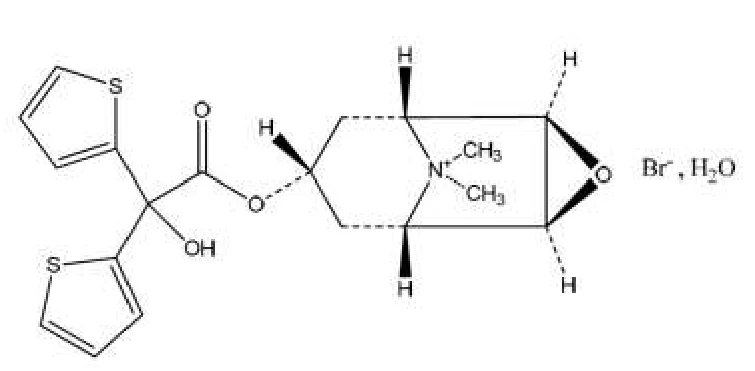
Chemical name: (1R, 2R, 4S, 5S, 7s)-7-[(2-Hydroxy-2, 2-dithiophen-2-ylacetyl) oxy]-9, 9-dimethyl- 3-oxa-9-azoniatricyclo [3.3.1.02,4] nonane bromide monohydrate
or
(1α,2β,4β,5α,7β)-7-[Hydroxydi-2-thienylacetyl)oxy]-9,9dimethyl-3- oxa-9-azoniatricyclo[3.3.1.02,4]nonane bromide monohydrate
Molecular formula and molecular mass: C19H22NO4S2Br • H2O; 490.4 g/mol
Structural formula:
Physicochemical properties:
| Description: | white or yellowish white powder or crystal. It is sparingly soluble in water and soluble in methanol and practically insoluble in Dichloromethane. |
|---|---|
| Polymorphism: | five crystalline forms are possible, the monohydrate and four anhydrous forms |
| Melting Point: | between 225o C and 235o C |
| pH: | about 6.33 |
| Partition Coefficient: | log P about 0.93 |
14 CLINICAL TRIALS
14.1 Clinical Trials by Indication
Chronic Obstructive Pulmonary Disease (COPD)
Table 7 - Summary of patient demographics for clinical trials in COPD
| Study # | Study design | Dosage, route of administration and duration | Study subjects (n) | Mean age (Range) | Sex |
|---|---|---|---|---|---|
205.114/117, 205.115/208 | Multi-centre, placebo- controlled, randomized, double-blind, parallel group | Tiotropium 18 mcg, once-daily oral inhalation, 1 year duration | Tiotropium n = 550 Placebo n = 371 | 65 years (39-87) | m&f |
205.122A/126A, 205.122B/126B | Multi-centre, active controlled, randomized, double-blind, parallel group | Tiotropium 18 mcg, once-daily oral inhalation, 1 year duration | Tiotropium n = 356 Ipratropium n = 179 | 64 years (41-82) | m&f |
205.130, 205.137 | Multi-centre, active and placebo- controlled, randomized, double-blind, parallel group | Tiotropium 18 mcg, once-daily oral inhalation, six months duration | Tiotropium n = 402 Salmeterol n = 405 Placebo n = 400 | 64 years (39-87) | m&f |
Long-term clinical trials (6 Months to 1 Year Trials) Study demographics and trial design
The efficacy and safety of tiotropium were evaluated in six (6) Phase 3 studies in 2663 COPD patients with moderate to severe airway obstruction, 1308 receiving tiotropium: two 1-year, placebo-controlled studies, two 6-month, placebo-controlled studies and two 1-year, ipratropium-controlled studies. All studies were randomized, double-blind, (double-dummy- active control), controlled, parallel group studies which followed nearly identical protocols with identical patient inclusion and exclusion criteria. In all studies, tiotropium was administered as a once-daily inhaled dose of 18 mcg via the inhalation device.
The main inclusion criteria were patients 40 years of age or older, diagnosis of COPD with screening FEV1 ≤ 65% of predicted normal, and a history of smoking of 10-pack years or more. The main exclusion criterion was significant disease other than COPD which in the opinion of the investigator, precluded the patient’s participation in this study.
Lung Function
For all 6 clinical trials, the primary efficacy parameter was trough FEV1 as an index of bronchodilator efficacy.
In all studies, a single 18 mcg dose of tiotropium provided significant improvement in pulmonary function (mean FEV1 increase of 11% or more) within 30 minutes following administration; the response reached a peak within 3 hours and was maintained for 24 hours.
Following one year treatment, tiotropium induced a sustained increase (> 120 mL) over baseline in trough FEV1 (23 - 24 hrs post dose) with no evidence of tolerance. The difference in trough FEV1 at the end of one year with tiotropium was 150 mL (p < 0.001).
In the two six-month studies, tiotropium performed consistently better than salmeterol in trough response over the 24 weeks of the study. The difference between tiotropium and salmeterol for trough response was not statistically significant in one of the six -month studies while in the other the difference was statistically significant.
A similar pattern of response was observed for FVC over the six -month and one-year treatment periods.
Tiotropium improved morning and evening peak expiratory flow rate (PEFR) as measured by patients’ daily recordings.
Use of tiotropium was associated with a reduced requirement for rescue bronchodilator medications. No age or sex-related differences in efficacy were observed.
Figure 1 - Mean FEV1 Over Time (prior to and after administration of study drug) on Days 1 and 344 in Two 1-Year Placebo-Controlled Trials
Tiotropium vs. Placebo
1.35
1.30
1.25
1.20
1.15
1.10
1.05
1.00
0.95
0.90
Tiotropium - Day 1 Tiotropium - Day 344 Placebo - Day1
Placebo - Day 344
-2.0 -1.0 0.0 1.0 2.0 3.0 4.0
Time Post-Treatment (hours)
FEV1 (liters)
Figure 2 - Mean FEV1 Over Time (prior to and after administration of study drug) on Days 1 and 364 in Two 1-Year Ipratropium-Controlled Trials
Figure 3 - Mean FEV1 Over Time (prior to and after administration of study drug) on Days 1 and 169 in Two 6-Month Salmeterol- and Placebo-Controlled Trials
Dyspnea and Health-related Quality of Life
In addition to lung function, Transition Dyspnea Index (TDI), as an index of dyspnea, was measured in all six trials. TDI was a secondary variable in the four 1 year studies; the protocols of the two six-month studies were amended to include TDI as a co-primary variable after the trials were completed, but before the blind was broken. TDI focal score ≥ 1 was considered to
Tiotropium vs. Ipratropium
1.55
1.50
1.45
1.40
1.35
1.30
1.25
1.20
1.15
1.10
Tiotropium - Day 1 Tiotropium - Day 364 Ipratropium - Day 1
Ipratropium - Day 364
-2.0 -1.0 0.0 1.0 2.0 3.0 4.0 5.0 6.0 7.0
Time Post-Treatment (hours)
Tiotropium vs. Salmeterol vs. Placebo
1.40
1.35
1.30
1.25
1.20
1.15
1.10
1.05
1.00
0.95
-2.0 -1.0 0.0 1.0 2.0 3.0 4.0
Time Post-Treatment (hours)
FEV1 (liters)
FEV1 (liters)
be clinically significant. The proportion of patients achieving a clinically meaningful response (responders) was compared.
Improvement in dyspnea as measured by TDI occurred within the first 8 days of treatment and was sustained over the one-year treatment period. In both the one-year and six-month trials, the proportion of patients achieving a clinically meaningful response (TDI focal score ≥ 1 was considered to be clinically significant and such patients were considered responders) was 46.0% and 43.1% for tiotropium, and 28.6% and 29.8% for placebo, respectively.
Improvement in disease-specific quality of life was assessed using the St. George’s Respiratory Questionnaire. Tiotropium improved health-related quality of life which was maintained over the treatment period.
Exercise Tolerance
Two multi-centre, double-blind, placebo-controlled trials were conducted to evaluate the efficacy and safety of 6 weeks of treatment with tiotropium in 459 patients with COPD. The primary efficacy endpoint was submaximal exercise tolerance as measured by endurance time (ET) to symptom limitation during constant work rate cycle exercise at 75% of maximal work capacity on day 42 of the randomized treatment phase.
Table 8 - Summary of patient demographics for clinical trials in exercise tolerance programme
| Study # | Study design | Dosage, route of administration and duration | Study subjects (n) | Mean age (Range) | Sex |
|---|---|---|---|---|---|
| 205.131 | Multi-centre, placebo-controlled, randomized, double-blind, parallel group | Tiotropium 18 mcg, once-daily oral inhalation, 6 weeks duration | Tiotropium n = 98 Placebo n = 100 | 60.5 (40-71) | m&f |
| 205.223 | Multi-centre, placebo-controlled, randomized, double-blind, parallel group | Tiotropium 18 mcg, once-daily oral inhalation, 6 weeks duration | Tiotropium n = 131 Placebo n = 130 | 62.6 (41-75) | m&f |
Study results
The results of these trials showed that tiotropium significantly improved symptom-limited exercise tolerance by 102 seconds (geometric mean ET compared with placebo adjusted for baseline, p=0.0012) in Trial 205.131, and 100 seconds (median ET change from baseline compared with placebo, p=0.0003) in Trial 205.223. The increased endurance time was associated with a reduction in lung hyperinflation and dyspnea during exercise.
COPD Exacerbations
The effect of tiotropium on COPD exacerbations was investigated in a randomized, double -blind, placebo-controlled trial of 1,829 patients with COPD over a 6 month period. The study enrolled patients from one health care system (US Veterans Affairs). The mean age of these patients was 68 years and about 98.5% were male. At baseline, the mean FEV 1 was 1.04L and the mean predicted FEV1 was 35.6%. About 29% of patients were using home oxygen at the entry of this study.
In this six month trial, a COPD exacerbation was defined as a complex of respiratory symptoms (increased or new onset) of more than one of the following: cough, sputum, wheezing, dyspnea or chest tightness with a duration of at least three days requiring treatment with antibiotics and/or systemic steroids and/or hospital admission (including ER visits greater than 24 hours). Although there is no consensus with respect to a definition of COPD exacerbation and its classification, the definition used in this trial has been used in a number of large clinical trials.
Study results
The results of this trial showed that tiotropium reduced the proportion of patients who experienced at least one COPD exacerbation (27.9% vs. 32.3%, p=0.0368) and reduced the number of exacerbations by 18.8% (0.853 vs. 1.051 events per patient year of exposure, p=0.0028) compared to placebo. Seven percent of patients in the tiotropium group and 9.5% of patients in the placebo group were hospitalized due to a COPD exacerbation (p=0.056).
Table 9 - Efficacy endpoint results of study 205.266 in COPD exacerbations
Tiotropium N=914 | Placebo N=915 | P-value | Absolute difference and 95%CI | |
|---|---|---|---|---|
| The percent of patients with a COPD exacerbation | 27.9% | 32.3% | 0.0368 | -4.4% (-0.1%, -8.7%) |
| Mean number of COPD exacerbations/patient -year | 0.853 | 1.051 | 0.0028 | -0.198 events per patient year of exposure |
14.2 Comparative Bioavailability Studies
A randomized, two-way, single-dose, crossover comparative study of Tiotropium Bromide Inhalation Powder, containing 18 mcg Tiotropium (Lupin Pharma Canada Limited) with SPIRIVA® HANDIHALER® (Boehringer Ingelheim Pharmaceuticals Inc.) was conducted in healthy adult male and female subjects under fasting conditions. The results obtained from 91 subjects are presented in the table below.
Tiotropium bromide (1 x 18 mcg) From measured data Geometric Mean Arithmetic Mean (CV %) | ||||
| Parameter | Test Product1 | Reference Product2 | % Ratio of Geometric Means | 90% Confidence Interval |
AUC0-48 (pg·h/mL) | 23.12 | 20.79 | 111.2 | 105.7,117.1 |
AUCI (pg·h/mL) | 44.97 | 34.18 | 131.6 | 121.2,142.8 |
Cmax (pg/mL) | 6.14 | 5.57 | 110.2 | 102.1, 118.8 |
Tmax3 (hr) | 0.06 (0.03,0.25) | 0.06 (0.03,0.33) | ||
T½4 (hr) | 55.261± 34.49 | 39.40 ± 20.50 | ||
1 Lupin-Tiotropium (Tiotropium Bromide) 18 mcg with the LUPINHALER (Lupin Pharma Canada Ltd.)
2 SPIRIVA HANDIHALER, (Tiotropium Bromide) 18 mcg, (Boehringer Ingelheim Pharmaceuticals Inc.), purchased in USA
3 Expressed as the median (range) only
4 Expressed as the arithmetic mean (CV%) only
15 MICROBIOLOGY
No microbiological information is required for this drug product.
16 NON-CLINICAL TOXICOLOGY
General Toxicology:
Acute Toxicity
The acute inhalation toxicity in mice, rats and dogs was low and independent of the formulation type used (aqueous aerosol, lactose powder). Non-lethal dosages produced clinical signs characteristic of the pharmacodynamic activity of tiotropium (mydriasis, dry mouth and nose) as well as non-specific signs of toxicity (dyspnea, tremor, ataxia, convulsions, loss of motility and body weight). In mice, deaths occurred at 131 mg/kg tiotropium when administered as an aqueous aerosol through nose only exposure (the LD50-value could not be established). No lethal dosage was achieved by the inhalation of either formulation in rats (LD50 > 334.5 mg/kg) or dogs (LD50 > 3.6 and > 0.7 mg/kg). Necropsy of decedents revealed pulmonary emphysema and/or congestion of liver and kidneys. No gross lesions were detected among survivors. The oral LD50 for mice and rats are 219,099 and 1,279,279 times respectively the maximum recommended human dose on a mg/m2 basis.
Chronic Toxicity
The repeated-dose toxicity was investigated by inhalation of tiotropium by rats and Beagle dogs for 13 and 52 weeks, by intravenous injection over 4 weeks, and by oral gavage for 13 weeks. In rats and dogs, most in-life and morphological changes were directly or indirectly attributable to the anticholinergic activity of the compound. These changes included mydriasis, increased heart rate, and dry mucous membranes due to lowered secretory activity of the lacrimal glands as well as of the glands of the digestive and upper respiratory tract. The anticholinergic activity of the compound most probably also accounted for distension of the large bowel, and for the species-specific deposition of proteinaceous material in the urinary bladder of male rats. Subsequently, secondary indirect changes developed, such as rhinitis and keratoconjunctivitis sicca, as well as decreased food consumption, body weight gain, liver lipids, serum glucose and triglycerides. Thymic involution and changes of the Harderian gland including chromodacryorrhea were regarded as non-specific responses to stress.
Even low dosages induced signs characteristic of the anticholinergic activity of tiotropium; therefore, a No Observed Toxic Effect Level (NOTEL) could only be established in a limited number of studies. In the rat, the inhalation NOTEL was < 0.013 mg/kg and the inhalation NOTEL in the dog was > 0.010 mg/kg. The few changes that were perhaps unexpected include urogenital tract changes and cataracts in rats. The urogenital changes are nevertheless considered as sequelae to pharmacological effects and as such are part of a syndrome that includes the prostate. In view of the species-specificity of the syndrome and its harmless nature, it is unlikely to have any influence on human safety assessment. Similarly, although the precise mechanism remains unknown, cataract formation appears to be specific to Wistar rats and to the mode of administration. As the method of administration to the patient avoids direct eye exposure to tiotropium, any risk to patients is negligible.
Carcinogenicity:
Inhalation carcinogenicity studies in mice and rats have revealed no carcinogenic potential at target tiotropium doses up to 2.54, 180 and 75 mcg/kg/day (male mice, female mice and rats, respectively). These doses correspond to about 0.45, 92 and 27 times the maximum recommended human dose (MRHD) on a mg/m2 basis.
Results of various mutagenicity studies (Ames test and E coli bacterial gene mutation test, gene mutation test in V79 Chinese hamster cells, in vitro cytogenetic study with human lymphocytes, in vitro unscheduled DNA-synthesis test, and in vivo micronucleus test) were negative.
Reproductive and Developmental Toxicology:
The effects of tiotropium administered via inhalation on the fertility and early embryonal development (Segment I), and on the peri- and postnatal development (Segment III) were assessed in rats, and those on the embryo-fetal development (Segment II) were investigated in rats and rabbits. Dose dependent paternal and maternal toxicity was observed. Embryo-fetal toxicity, considered secondary to maternal toxicity, was observed at high doses in rats and rabbits. There was no impairment of reproductive function of the F 0 generation and no effect on the postnatal development of the F1 generation. The incidence of variations was increased at dose levels above 0.01 mg/kg but they were of the types encountered in the historical controls. No teratogenicity was noted.
The NOTEL for maternal/paternal toxicity in the rat and rabbit was < 0.01 mg/kg Ba 679 BR and for developmental toxicity 0.01 mg/kg in all three segments when administered by inhalation.
In a general reproduction and fertility study in rats, there was no indication of any adverse effect on fertility or mating performance of either treated parents or their offspring at clinically relevant dosages.
17 SUPPORTING PRODUCT MONOGRAPH
- 1. SPIRIVA® (Tiotropium Capsules for Oral Inhalation) 18 μg tiotropium per capsule as tiotropium bromide monohydrate, submission control No. 258194, Product Monograph, Boehringer Ingelheim International GmbH, APR 22, 2022