


Product Monograph - Kineret
RECENT MAJOR LABEL CHANGES
| 7 WARNINGS AND PRECAUTIONS, General, Amyloidosis | 01/2025 |
|---|---|
| 7 WARNINGS AND PRECAUTIONS, General, Drug reaction with eosinophilia and systemic symptoms (DRESS) | 08/2025 |
TABLE OF CONTENTS
Sections or subsections that are not applicable at the time of authorization are not listed.
RECENT MAJOR LABEL CHANGES .......................................................................................... 2
TABLE OF CONTENTS ............................................................................................................ 2
PART I: HEALTH PROFESSIONAL INFORMATION .................................................................... 4
1 INDICATIONS ............................................................................................................. 4
1.1 Pediatrics ................................................................................................................ 4
1.2 Geriatrics ................................................................................................................ 4
2 CONTRAINDICATIONS ................................................................................................ 4
3 SERIOUS WARNINGS AND PRECAUTIONS BOX ........................................................... 5
4 DOSAGE AND ADMINISTRATION ................................................................................ 5
4.2 Recommended Dose and Dosage Adjustment ...................................................... 5
4.4 Administration ....................................................................................................... 6
4.5 Missed Dose ........................................................................................................... 6
5 OVERDOSAGE ............................................................................................................ 6
6 DOSAGE FORMS, STRENGTHS, COMPOSITION AND PACKAGING ................................ 6
7 WARNINGS AND PRECAUTIONS ................................................................................. 7
7.1.1 Pregnant Women ............................................................................................... 9
7.1.2 Breast-feeding .................................................................................................... 9
7.1.3 Pediatrics ............................................................................................................ 9
7.1.4 Geriatrics ............................................................................................................ 9
8 ADVERSE REACTIONS................................................................................................. 9
8.1 Adverse Reaction Overview ................................................................................... 9
8.2 Clinical Trial Adverse Reactions ........................................................................... 10
8.2.1 Clinical Trial Adverse Reactions – Pediatrics.................................................... 15
8.3 Less Common Clinical Trial Adverse Reactions .................................................... 15
8.3.1 Less Common Clinical Trial Adverse Reactions – Pediatrics ............................ 15
8.4 Abnormal Laboratory Findings: Hematologic, Clinical Chemistry and Other Quantitative Data ............................................................................................................. 15
8.5 Post-Market Findings ........................................................................................... 16
9 DRUG INTERACTIONS .............................................................................................. 17
9.2 Drug Interactions Overview ................................................................................. 17
9.4 Drug-Drug Interactions ........................................................................................ 17
9.5 Drug-Food Interactions ........................................................................................ 17
9.6 Drug-Herb Interactions ........................................................................................ 17
9.7 Drug-Laboratory Test Interactions....................................................................... 17
10 CLINICAL PHARMACOLOGY ...................................................................................... 17
10.1 Mechanism of Action ........................................................................................... 17
10.2 Pharmacodynamics .............................................................................................. 18
10.3 Pharmacokinetics ................................................................................................. 18
11 STORAGE, STABILITY AND DISPOSAL ........................................................................ 20
12 SPECIAL HANDLING INSTRUCTIONS .......................................................................... 20
PART II: SCIENTIFIC INFORMATION ..................................................................................... 21
13 PHARMACEUTICAL INFORMATION .......................................................................... 21
14 CLINICAL TRIALS ...................................................................................................... 22
14.1 Clinical Trials by Indication .................................................................................. 22
Rheumatoid Arthritis ....................................................................................................... 22
Neonatal Onset Multisystem Inflammatory Disease (NOMID) ....................................... 26
15 MICROBIOLOGY ...................................................................................................... 28
16 NON-CLINICAL TOXICOLOGY .................................................................................... 28
PATIENT MEDICATION INFORMATION ................................................................................ 30
PART I: HEALTH PROFESSIONAL INFORMATION
1 INDICATIONS
Rheumatoid arthritis
KINERET® (anakinra) is indicated for:
- reducing the signs and symptoms of active rheumatoid arthritis (RA) in patients 18 years of age or older.
- inhibiting the progression of structural damage by reducing erosions and cartilage degradation in patients with active rheumatoid arthritis despite treatment with stable doses of methotrexate (MTX).
KINERET® can be used alone or in combination with other disease-modifying antirheumatic drugs (DMARDs), particularly MTX.
Cryopyrin-Associated Periodic Syndromes
KINERET® (anakinra) is indicated for:
- treatment of Neonatal-Onset Multisystem Inflammatory Disease (NOMID) in adults, adolescents, children and infants aged 8 months and older with a body weight of 10 kg or above.
1.1 Pediatrics
Pediatrics (< 18 years of age):
RA: The efficacy of KINERET® in children with RA (Juvenile Idiopathic Arthritis (JIA)) aged 0 to 18 years has not been established.
1.2 Geriatrics
Geriatrics (>65 years of age): In the pivotal controlled RA trials, 752 patients 65 years of age or older were enrolled. No differences in safety or efficacy were observed between these patients and younger patients.
No patients 65 years of age or older were enrolled in the pivotal NOMID trial.
2 CONTRAINDICATIONS
KINERET® (anakinra) is contraindicated in patients with known hypersensitivity to E. coli-derived proteins, KINERET®, or any components of the product. For a complete listing of components, see 6 DOSAGE FORMS, STRENGTHS, COMPOSITION AND PACKAGING.
3 SERIOUS WARNINGS AND PRECAUTIONS BOX
Serious Warnings and Precautions
Serious Infections
KINERET® (anakinra) has been associated with an increased incidence of serious infections (1.7%) vs. placebo (1.0%) in RA patients. Administration of KINERET® should be discontinued in RA patients if a patient develops a serious infection. In KINERET® treated NOMID patients, the risk of a disease flare when discontinuing KINERET® treatment should be weighed against the potential risk of continued treatment. Treatment with KINERET® should not be initiated in patients with active infections. The safety and efficacy of KINERET® in immunosuppressed patients or in patients with chronic infections have not been evaluated.
Anaphylactic Reactions
Allergic reactions, including anaphylactic reactions, angioedema, urticaria, rash and pruritus, have been reported. If a severe allergic reaction occurs, administration of KINERET® should be discontinued and appropriate therapy initiated.
4 DOSAGE AND ADMINISTRATION
4.2 Recommended Dose and Dosage Adjustment
Rheumatoid Arthritis: Adults The recommended dose of KINERET® (anakinra) for the treatment of active RA is 100 mg/day administered daily by subcutaneous (SC) injection. The dose should be administered at approximately the same time of day every day. KINERET® is provided in single-use prefilled syringes containing the full daily dose.
NOMID: Adults, adolescents, children and infants aged 8 months and older with a body weight of 10 kg or above.
Starting dose: The recommended starting dose of KINERET® for the treatment of patients with NOMID is 1-2 mg/kg administered daily by SC injection. The graduated syringe allows for doses between 20 and 100 mg.
Dose increases may become necessary within 1-2 months based on therapeutic response. Adjust doses in 0.5 to 1.0 mg/kg increments. The usual maintenance dose is 3-4 mg/kg/day, which can be individually adjusted to a maximum of 8 mg/kg/day to control active inflammation. Very limited data is available for doses higher than 5 mg/kg/day. The dose should be administered at approximately the same time of day every day. KINERET® is provided in single-use graduated prefilled syringes, which allow for dose adjustment.
Renally Impaired Patients: Physicians may consider an alternate dose of 100 mg of KINERET® every other day for RA patients with severely reduced renal function such as End Stage Renal Disease (ESRD) (see 7.1 Special Populations and 10.3 Pharmacokinetics, Special Populations and Conditions). There is no clinical experience from KINERET® treatment of NOMID patients with renal impairment.
4.4 Administration
Administer only one dose per day. Rotating the injection sites is recommended. Instructions on appropriate use should be given by the health care professional to the patient or care provider. See “Patient Medication Information” for detailed instructions on the handling and injection of KINERET®.
Discard any unused portions. After administration of KINERET®, it is essential to follow the proper procedure for disposal of syringes, needles and supplies (see Patient Medication Information for instructions).
Do not use KINERET® beyond the expiration date shown on the carton and prefilled syringe. Visually inspect the solution for particulate matter and discolouration before administration. There may be small translucent-to-white particles of protein in the solution. This is not unusual for proteinaceous solutions. The prefilled syringe should not be used if the solution is discoloured or cloudy, or if foreign particulate matter is present.
None of the syringe or needle shield components are made with natural rubber latex.
4.5 Missed Dose
Patients who miss a dose by more than a few hours should be instructed to take the missed dose as soon as possible and contact their doctor or nurse. The dose the next day should not be doubled.
5 OVERDOSAGE
There have been no reported cases of overdose with KINERET® (anakinra). In clinical trials with KINERET® carried out for sepsis, subjects received the drug over a 72-hour period for a dose of KINERET® that was up to 34.7 times higher than the recommended daily dose for RA patients (100 mg). In these trials there were no serious acute toxicities attributable to KINERET®.
For management of a suspected drug overdose, contact your regional poison control centre.
6 DOSAGE FORMS, STRENGTHS, COMPOSITION AND PACKAGING
Table 1 – Dosage Form, Strength and Composition
KINERET® (anakinra) is available as single-use, preservative-free graduated prefilled syringes with 29-gauge needles containing 100 mg/0.67 mL (150 mg/mL) in dispensing pack of 7 syringes. The prefilled syringe has an outer rigid plastic needle shield attached to a black inner needle cover. None of the syringe or needle shield components are made with natural rubber latex.
| Route of Administration | Dosage Form / Strength | Non-medicinal Ingredients |
| Subcutaneous Injection (SC) | Sterile solution for injection in a prefilled syringe 100 mg/0.67 mL of 150 mg/mL solution | Citric acid anhydrous, disodium EDTA dihydrate, polysorbate 80, sodium chloride, water for injection |
7 WARNINGS AND PRECAUTIONS
Please see 3 SERIOUS WARNINGS AND PRECAUTIONS BOX.
General
Efficacy studies with DMARDs, other than methotrexate, have not been conducted.
Amyloidosis
In patients with NOMID/CINCA who received high doses of KINERET® over extended periods of time and presented with injection site amyloid deposits, isolated cases of systemic AIL1RAP (IL-1 receptor antagonist protein) amyloidosis have been reported during post-marketing use (see 8.5 Post-Market Findings, Post-Market Adverse Reactions, Amyloidosis). To limit injection site amyloid deposits, rotate injection sites regularly. KINERET® should not be injected into areas which are already swollen or red.
In patients with confirmed injection site amyloid deposits, close monitoring for proteinuria is recommended.
Drug reaction with eosinophilia and systemic symptoms (DRESS)
Drug reaction with eosinophilia and systemic symptoms (DRESS) has been reported during post-marketing use in patients treated with KINERET®, predominantly in pediatric patients. Patients with DRESS may require hospitalization, as this condition may be fatal. If signs and symptoms of DRESS are present and an alternative etiology cannot be established, KINERET® must not be readministered and a different treatment considered.
Tuberculosis screening
Prior to initiating immunomodulatory therapies, including KINERET®, patients should be tested for latent tuberculosis infection. The safety of KINERET® in individuals with latent tuberculosis is unknown. Drugs that affect the immune system have been associated with an increased risk of reactivation of latent tuberculosis (TB). It is possible that taking drugs such as KINERET® that block IL-1 increases the risk of TB or other atypical or opportunistic infections. Patients testing positive in tuberculosis screening should be treated according to standard medical practice.
Use with TNF Blocking Agents Concurrent introduction of KINERET® and etanercept therapies has not been associated with increased clinical benefit to patients and has resulted in an increased rate of serious infections. In two studies where patients received concurrent etanercept and KINERET® therapy for up to 24 weeks, a 7% rate of serious infections was observed. Similar effects have been observed with a second investigational TNF blocking agent. Based on these data, use of KINERET® in combination with TNF blocking agents is not recommended.
Carcinogenesis and Mutagenesis
The carcinogenic potential of KINERET® has not been fully evaluated. KINERET® failed to induce bacterial or mammalian cell gene mutations in a standard battery of tests. Similarly, KINERET® did not increase the incidence of chromosomal abnormalities or micronuclei in bone marrow or peripheral blood erythrocytes in mice.
Hepatic/Biliary/Pancreatic
Hepatically Impaired Patients: No formal studies have been conducted examining the pharmacokinetics of KINERET® administered subcutaneously in RA or NOMID patients with hepatic impairment.
Immune
Immunosuppression:
The impact of treatment with KINERET® on active and/or chronic infections and the development of malignancies are not known. (See 3 SERIOUS WARNINGS AND PRECAUTIONS BOX, and 8 ADVERSE REACTIONS).
Immunizations:
No data are available on the effects of vaccination in patients receiving KINERET®. Live vaccines should not be given concurrently with KINERET®. No data are available on the secondary transmission of infection by live vaccines.
Monitoring and Laboratory Tests
Patients receiving KINERET® may experience a decrease in neutrophil counts. In placebo-controlled studies, 9 KINERET® -treated patients (0.4%) experienced neutropenia (ANC<1 x 10⁹/L). None of these patients had serious infections associated with the neutropenia. KINERET® treatment should not be initiated in patients with neutropenia (ANC <1 x 10⁹/L). Neutrophil counts should be assessed prior to initiating KINERET® treatment, and quarterly while receiving KINERET® for a period up to 1 year.
Renal
Renally Impaired Patients: From studies performed in non-RA patients with various degrees of renal insufficiency KINERET® is known to be substantially excreted by the kidney. The mean plasma clearance of KINERET® decreased 70-75% in subjects with severe or end stage renal disease (defined as creatinine clearance less than 30 mL/minute). Patients with renal impairment should be carefully evaluated before initiating therapy. A dose schedule change may be considered for subjects with severe renal insufficiency or end stage renal disease (see 4 DOSAGE AND ADMINISTRATION and 10 CLINICAL PHARMACOLOGY). There is no clinical experience from KINERET® treatment of NOMID patients with renal impairment.
Reproductive Health: Female and Male Potential
Fertility
KINERET® had no observed effect on the fertility, early development, embryo-fetal development, or peri- and postnatal development in the rat at doses up to 100 times the human dose. No effects on embryo-fetal development in the rabbit were observed at doses 100 times the human dose.
Respiratory
Asthmatic Patients:
In cumulative experience across clinical trials with anakinra, the incidence of serious infections in a small subset of RA patients with asthma was higher (4.5%) in patients treated with anakinra than those treated with placebo (0.0%).
Caution should be exercised in patients with underlying airway inflammation; if present or suspected in asthmatic patients, it should be brought under control with appropriate asthma therapy prior to initiating treatment with KINERET®.
Special Populations
7.1.1 Pregnant Women
There are no adequate and well-controlled studies in pregnant women. KINERET® should be used during pregnancy only if the potential benefit justifies the potential risk to the fetus.
Reproductive studies have been conducted with KINERET® in rats and rabbits at doses up to 100 times the human dose and have revealed no evidence of harm to the fetus. Because animal reproduction studies are not always predictive of human response, KINERET® should be used during pregnancy only if medically necessary.
7.1.2 Breast-feeding
It is not known whether KINERET® is excreted in human milk. Because many drugs are excreted in human milk, precaution should be exercised if KINERET® is administered to a breast-feeding woman.
7.1.3 Pediatrics
Pediatrics (<18 years of age): RA: The efficacy of KINERET® in children with RA (JIA) aged 0 to 18 years has not been established.
NOMID: KINERET® is not recommended for use in children below 8 months of age due to lack of clinical data.
7.1.4 Geriatrics
Geriatrics (>65 years of age):
In the pivotal controlled trials in RA, 752 patients 65 years of age or older were enrolled. No differences in safety or efficacy were observed between these patients and younger patients.
Because there is a higher incidence of infections in the elderly population in general, caution should be used in treating the elderly.
In the pivotal NOMID trial, no patients 65 years of age or older were enrolled.
8 ADVERSE REACTIONS
8.1 Adverse Reaction Overview
KINERET® (anakinra) has been used in studies enrolling over 3000 patients with RA and in studies enrolling over 1400 patients with other diseases. The data described herein reflect exposure to KINERET® in 2805 patients including 1958 exposed for at least 6 months and 884 exposed for at least 1 year. The most common and consistently reported treatment related adverse events were injection site reactions (ISRs). With the exception of ISRs, there appears to be no difference in the proportion of patients who discontinued treatment because of adverse events in the KINERET® groups and the placebo group.
Adverse reactions data in NOMID patients are based on an uncontrolled, open-label study of 43 patients with NOMID treated with KINERET® for up to 5 years, with a total KINERET® exposure of 159.8 patient years. During the 5-year study 14 patients (32.6%) reported 24 serious adverse events (SAEs). The most common type of SAEs were infections (see 3 SERIOUS WARNINGS AND PRECAUTIONS BOX). Eleven SAEs in 4 (9.3%) patients were considered related to KINERET®. One patient experienced histiocytosis haematophagica (macrophage activation syndrome) in the pivotal NOMID study. This patient also experienced histiocytosis haematophagica before start of KINERET® treatment. A causal relationship between KINERET® and histiocytosis haematophagica has not been established. There were no permanent discontinuations of KINERET® treatment due to adverse reactions. The reporting frequency of adverse events (AEs) was highest during the first 6 months of treatment. The most commonly reported AEs during the first 6 months of treatment (incidence >10%) were injection site reaction (ISR), headache, vomiting, arthralgia, pyrexia, and nasopharyngitis. The incidence of AEs did not increase over time, and no new types of AEs emerged. The AE profiles for different age groups <2 years, 2-11 years, and 12-17 years corresponded to the AE profile for patients ≥18 years, with the exception of infections and related symptoms being more frequent in patients <2 years.
8.2 Clinical Trial Adverse Reactions
Clinical trials are conducted under very specific conditions. The adverse reaction rates observed in the clinical trials; therefore, may not reflect the rates observed in practice and should not be compared to the rates in the clinical trials of another drug. Adverse reaction information from clinical trials may be useful in identifying and approximating rates of adverse drug reactions in real-world use.
Rheumatoid arthritis
Adverse events reported in at least 5% of patients treated with KINERET® in the pivotal clinical trials that used the 100 mg/day dose over a 6-month period are shown in Table .
Table 2– Summary of Adverse Events Reported in ≥5% of KINERET®-treated Patients in Pivotal Placebo-controlled Clinical Trials Conducted at the 100 mg/day Dose
KINERET® –treated Patients (%) N = 1565 | Placebo-treated Patients (%) N = 733 | |
|---|---|---|
General disorders and administration site conditions Injection Site Reactions | 70.8 | 28.5 |
| Influenza-like Symptoms | 5.9 | 5.5 |
Musculoskeletal and connective tissue disorders Arthralgia | 5.9 | 6.4 |
| Exacerbation of RA | 19.3 | 28.9 |
Infections and infestations Upper Respiratory Infection | 13.8 | 16.6 |
| Sinusitis | 6.9 | 6.7 |
Nervous system Disorders Headache | 11.6 | 9.0 |
Gastrointestinal disorders Abdominal Pain | 5.2 | 4.8 |
| Nausea | 8.4 | 6.7 |
| Diarrhea | 6.9 | 5.2 |
Injection-Site Reactions Injection-site reactions (ISRs) were the most common adverse events associated with KINERET® therapy. ISRs were typically described as mild to moderate with the most frequently reported symptoms of ISRs being erythema, pruritus, rash, and pain. In the pivotal studies, the incidence of ISRs among the higher anakinra dose groups was approximately 60% to 80%.
ISRs were typically reported within the first 4 weeks after initiation of therapy and lasted for 14 to 28 days (first ISR encountered to last ISR resolved). The development of ISRs in patients who had not previously experienced ISRs was uncommon after the first month of therapy. The overall withdrawal rate due to ISRs across the pivotal studies was 6%.
The occurrence of severe ISRs was infrequent. ISRs were typically treated with topical corticosteroids or antihistamines, or less frequently with oral corticosteroids.
Infections An increased susceptibility to infections is a potential safety issue with chronic administration of agents that alter cytokine responses. Upper respiratory infections, sinusitis, influenza-like symptoms, urinary tract infections, and bronchitis were the most frequently reported infections and occurred at similar rates in patients receiving KINERET® or placebo.
The incidence of serious infections in the pivotal studies combined was 1.7% in KINERET®-treated patients and 1.0% in placebo-treated patients. The infections consisted primarily of bacterial events such as cellulitis, pneumonia, and bone and joint infections. There were no reports of unusual opportunistic, fungal or viral infections. In cumulative experience across clinical trials with anakinra, the incidence of serious infections in a small subset of RA patients with asthma was higher (4.5%) in patients treated with anakinra than those treated with placebo (0.0%). Most patients continued on study drug after the infections resolved. Of note, previous studies in subjects with sepsis demonstrated no worsening of patient outcomes with KINERET® as compared with placebo.
In open-label extension studies the overall rate of serious infections was stable over time and comparable to that observed in controlled studies. In clinical studies and post marketing experience, rare cases of opportunistic infections have been observed and included fungal, mycobacterial, bacterial and viral pathogens. Infections have been noted in all organ systems and have been reported in patients receiving KINERET® alone or in combination with immunosuppressive agents.
Allergic Reactions Allergic reactions, including anaphylactic reactions, angioedema, urticaria, rash and pruritus have been reported.
Hepatic Events Transient elevations of liver enzymes have been reported in clinical studies. No apparent differences were seen between KINERET® and placebo-treated patients with regard to frequency and levels of enzyme elevations. These elevations have not been associated with signs or symptoms of hepatocellular damage. (See 8.5 Post-Market Adverse Reactions).
Malignancies RA patients may be at higher risk (up to several-fold) for the development of lymphoma. An increased rate of up to several-fold has been reported in the RA population, and may be further increased in patients with more severe disease activity. In clinical trials, RA patients treated with KINERET® had an incidence of lymphoma that was higher than the rate expected in the general population based on the National Cancer Institute’s Surveillance Epidemiology and End Results (SEER) database. While patients with RA, particularly those with highly active disease, may be at a higher risk (up to several fold) for the development of lymphoma, the role of IL-1 blockers in the development of malignancy is not known.
Malignancies of various types were observed at a rate similar to the rate expected for the general population.
It is unknown if chronic exposure to KINERET® can increase the incidence of malignancies.
The overall incidence of malignancies has not increased with extended exposure to KINERET®.
Antibodies In the large pivotal studies conducted using the 100 mg/day dose, serum samples were obtained for antibody testing. In studies from which data is available for up to 36 months, between 50 and 60% of patients tested positively at one or more timepoints for anti-anakinra antibodies in a highly sensitive, anakinra-binding biosensor assay. Up to 3% of patients tested seropositive at least once during the study for antibodies capable of neutralizing the biologic effects of anakinra. The occurrence of antibodies was typically transient and not associated with clinical adverse reactions or diminished efficacy.
Antibody assay results are highly dependent on the sensitivity and specificity of the assays. Additionally, the observed incidence of antibody positivity in an assay may be influenced by several factors, including samples handling, concomitant medications, and underlying disease. For these reasons comparison of the incidence of antibodies to KINERET® with the incidence of antibodies to other products may be misleading.
NOMID
The safety of KINERET® was investigated in a single investigator-initiated, open-label study in 43 NOMID patients, including 36 children (0.7 to 17 years of age at start of treatment; median: 6.8 years), who were exposed to KINERET® for up to 60 months, adding up to a total exposure of 159.8 patient years. Mean exposure in children < 2 years of age was 2.6 patient years, as compared with approximately 4 patient years in patients aged 2 to 11, 12 to 17 and ≥ 18 years of age. Patients were treated with a starting dose of 1 to 2 mg/kg/day and an average maintenance dose of 3-4 mg/kg/day adjusted depending on the severity of disease. The most common treatment-emergent adverse reactions during KINERET® treatment (incidence ≥ 5%) are shown in Table .
Table 3– Treatment emerging adverse events occurring in ≥5% of patients (i.e. in >2 patients) during the up to 60 months study duration by system organ class and preferred term, in decreasing order of frequency
Safety population
System organ class Preferred term
Subject count (N = 43) n (%)
Event count (PYRS = 159.8) F (events/patient year)
Any AE
38 (88.4)
979 (6.1)
Infections and infestations
36 (83.7)
218 (1.4)
Upper respiratory tract infection
17 (39.5)
48 (0.3)
Nasopharyngitis
15 (34.9)
40 (0.3)
Sinusitis
12 (27.9)
28 (0.2)
Ear infection
11 (25.6)
23 (0.1)
Otitis media
11 (25.6)
20 (0.1)
Gastroenteritis
7 (16.3)
8 (0.1)
Safety population
System organ class Preferred term
Subject count (N = 43) n (%)
Event count (PYRS = 159.8) F (events/patient year)
Urinary tract infection
6 (14.0)
10 (0.1)
Gastrointestinal viral infection
6 (14.0)
8 (0.1)
Viral infection
6 (14.0)
8 (0.1)
Pneumonia
5 (11.6)
6 (0.0)
Bronchitis
4 (9.3)
6 (0.0)
Pharyngitis
3 (7.0)
4 (0.0)
Gastrointestinal infection
3 (7.0)
3 (0.0)
Hordeolum
3 (7.0)
3 (0.0)
Otitis externa
3 (7.0)
3 (0.0)
General disorders and administration site conditions
27 (62.8)
136 (0.9)
Pyrexia
17 (39.5)
51 (0.3)
Fatigue
10 (23.3)
27 (0.2)
Injection site reaction
8 (18.6)
12 (0.1)
Condition aggravated
5 (11.6)
7 (0.0)
Chest pain
4 (9.3)
10 (0.1)
Malaise
3 (7.0)
18 (0.1)
Pain
3 (7.0)
6 (0.0)
Gait disturbance
3 (7.0)
5 (0.0)
Nervous system disorders
21 (48.8)
125 (0.8)
Headache
21 (48.8)
115 (0.7)
Dizziness
3 (7.0)
10 (0.1)
Musculoskeletal and connective tissue disorders
20 (46.5)
200 (1.3)
Arthralgia
18 (41.9)
133 (0.8)
Pain in extremity
9 (20.9)
27 (0.2)
Neck pain
8 (18.6)
11 (0.1)
Back pain
7 (16.3)
22 (0.1)
Myalgia
4 (9.3)
7 (0.0)
Respiratory, thoracic and mediastinal disorders
18 (41.9)
83 (0.5)
Oropharyngeal pain
9 (20.9)
27 (0.2)
Cough
9 (20.9)
19 (0.1)
Nasal congestion
6 (14.0)
14 (0.1)
Epistaxis
4 (9.3)
10 (0.1)
Rhinorrhoea
4 (9.3)
6 (0.0)
Sinus congestion
4 (9.3)
4 (0.0)
Rhinitis allergic
3 (7.0)
3 (0.0)
Gastrointestinal disorders
17 (39.5)
79 (0.5)
Safety population
System organ class Preferred term
Subject count (N = 43) n (%)
Event count (PYRS = 159.8) F (events/patient year)
Diarrhoea
10 (23.3)
16 (0.1)
Vomiting
7 (16.3)
25 (0.2)
Nausea
6 (14.0)
14 (0.1)
Abdominal pain
6 (14.0)
11 (0.1)
Abdominal pain upper
4 (9.3)
9 (0.1)
Constipation
4 (9.3)
4 (0.0)
Skin and subcutaneous tissue disorders
15 (34.9)
56 (0.4)
Rash
14 (32.6)
51 (0.3)
Exfoliative rash
3 (7.0)
5 (0.0)
Eye disorders
14 (32.6)
44 (0.3)
Ocular hyperaemia
12 (27.9)
35 (0.2)
Eye pain
4 (9.3)
4 (0.0)
Conjunctivitis
3 (7.0)
5 (0.0)
Injury, poisoning and procedural complications
11 (25.6)
15 (0.1)
Fall
5 (11.6)
6 (0.0)
Post lumbar puncture syndrome
5 (11.6)
5 (0.0)
Contusion
3 (7.0)
4 (0.0)
Ear and labyrinth disorders
7 (16.3)
10 (0.1)
Ear pain
4 (9.3)
7 (0.0)
Vertigo
3 (7.0)
3 (0.0)
Psychiatric disorders
6 (14.0)
10 (0.1)
Sleep disorder
6 (14.0)
10 (0.1)
Investigations
3 (7.0)
3 (0.0)
Weight increased
3 (7.0)
3 (0.0)
n: Number of patients; PYRS: Total patient years; F: Total number of events.
Injection Site Reactions In total, 17 injection site reactions (ISRs) were reported in 10 patients during the 5-year study period. Out of the 17 ISRs, 11 (65%) occurred during the first month and 13 (76%) were reported during the first 6 months. No ISR was reported after Year 2 of treatment. The majority of ISRs were reported as mild (76% mild, 24% moderate). No patient permanently or temporarily discontinued KINERET® treatment due to injection site reactions.
Infections The reporting rate for infections was higher during the first 6 months of treatment (2.3 infections/patient-year) compared to after the first 6 months (1.7 infections/patient year). The most common infections were upper respiratory tract infections, sinusitis, ear infections, and nasopharyngitis.
In one patient KINERET® administration was temporarily stopped during an infection. Thirteen infections in 7 patients were classified as serious, the most common being pneumonia and gastroenteritis occurring in 3 and 2 patients, respectively. The reporting frequency for infections was highest in patients <2 years of age.
Immunogenicity The immunogenicity of KINERET® in NOMID patients was not evaluated.
CAPS
Infections
Serious infections, not leading to Kineret discontinuation, were reported in one patient in a prospective long-term (treatment duration of up to 5 years) safety study with 12 CAPS patients.
8.2.1 Clinical Trial Adverse Reactions – Pediatrics
Refer to Section 8.2, under NOMID for Clinical Trial Adverse Reactions.
8.3 Less Common Clinical Trial Adverse Reactions
This information is not available for this drug product.
8.3.1 Less Common Clinical Trial Adverse Reactions – Pediatrics
This information is not available for this drug product.
8.4 Abnormal Laboratory Findings: Hematologic, Clinical Chemistry and Other Quantitative Data
Clinical Trial Findings
Rheumatoid arthritis
Abnormal Hematologic and Clinical Chemistry Findings In pivotal placebo-controlled studies of KINERET®, treatment was associated with small reductions in the mean values for total white blood cell count, absolute neutrophil count, alkaline phosphatase, and a small increase in the mean eosinophil differential percentage. There was no dose-response relationship for any of these changes. These findings were not associated with adverse clinical consequences. In all placebo-controlled studies 8% of patients receiving KINERET® had decreases in ANC of at least 1 World Health Organization toxicity grade, compared with 2% of placebo patients. Nine KINERET®-treated patients (0.4%) developed neutropenia (ANC <1 x 10⁹/L). None of these patients had serious infections associated with the neutropenia.
A post-approval review of clinical studies in RA patients revealed that thrombocytopenia was reported in 1.9% of KINERET®-treated patients compared to 0.3% in placebo-treated patients. The thrombocytopenias were in all cases mild, i.e. platelet counts were >75 x109/L. The frequency of thrombocytopenia was calculated from clinical trial data in the RA safety pool to be common, i.e. ≥1/100 to <1/10.
In a post-approval review of clinical studies in 775 RA patients treated with daily KINERET® doses of 30 mg, 75 mg, 150 mg, 1 mg/kg or 2 mg/kg, there was an increase of 2.4% to 5.3% in total cholesterol levels 2 weeks after the start of KINERET® treatment, without a dose-response relationship. A similar pattern was seen at 24 weeks of KINERET® treatment. Placebo treatment (n=213) resulted in a decrease of approximately 2.2% in total cholesterol levels at week 2 and 2.3% at week 24. No specific data for LDL or HDL cholesterol were available. The frequency of blood cholesterol increases is estimated from the frequency of patients in the RA safety pool with cholesterol below 5.0 mmol/L at baseline that shift to ≥5.0 mmol/L at week 24. Such increases are not dose dependent and occurred in 10.1% to 24.2% of anakinra treated patients, i.e. the frequency is calculated to ≥1/10 (Very Common).
NOMID
Abnormal Hematologic and Clinical Chemistry Findings After the start of KINERET® treatment neutropenia was reported in 2 patients. One of these patients experienced an upper respiratory tract infection and an otitis media infection. Both episodes of neutropenia resolved over time with continued KINERET® treatment.
Mild thrombocytopenia has been observed in NOMID patients (platelet counts >75 x109/L).
8.5 Post-Market Findings
Rheumatoid arthritis
Abnormal Hematologic and Clinical Chemistry Findings During post-marketing use of KINERET®, thrombocytopenia has been reported. In the majority of cases, the thrombocytopenias have been mild, however, occasional case reports indicating severe thrombocytopenia (i.e. platelet counts <10 x 109/L) have also been received.
Post-Market Adverse Reactions
Rheumatoid arthritis
Hepatic Events During post-marketing use, isolated case reports indicating non-infectious hepatitis have been received. Hepatic events during post-marketing use have mainly been reported in patients who have been treated for off-label indications or in patients with predisposing factors such as history of transaminase elevations before the start of KINERET® treatment.
NOMID
Infections
During post-marketing use of KINERET® in patients with NOMID serious infections, including occasional serious opportunistic infections have been reported.
Amyloidosis
During post-marketing use, isolated cases of injection site amyloid deposits have been reported in patients with NOMID/CINCA who received high doses of KINERET® injected subcutaneously into the same area of the skin over long periods of time. Rotation of injection sites is therefore recommended.
In a few cases, patients with injection site amyloid deposits developed systemic AIL1RAP (IL-1 receptor antagonist protein) amyloidosis (see 7 WARNINGS AND PRECAUTIONS, General, Amyloidosis).
Drug reaction with eosinophilia and systemic symptoms (DRESS)
See section 7 WARNINGS AND PRECAUTIONS, General, Drug reaction with eosinophilia and systemic symptoms (DRESS).
9 DRUG INTERACTIONS
9.2 Drug Interactions Overview
No formal studies have been performed in humans to evaluate possible drug interactions.
A formal toxicologic and toxicokinetic interaction study in rats revealed no evidence that KINERET® alters the toxicologic or pharmacokinetic profile of methotrexate (MTX). There is no evidence that KINERET® or MTX adverse events were any different between patients taking KINERET® in combination with MTX and patients taking placebo in combination with MTX.
9.4 Drug-Drug Interactions
TNF Blocking Agents Concurrent administration of KINERET® and etanercept has resulted in an increased rate of serious infections. The most common infections consisted of bacterial pneumonia (4 cases) and cellulitis (4 cases). One patient with pulmonary fibrosis and pneumonia died due to respiratory failure (see 7 WARNINGS and PRECAUTIONS). Two percent (3/139) of patients treated concurrently with KINERET® and etanercept developed neutropenia (ANC < 1 x 10⁹/L). One neutropenic patient developed cellulitis which resolved with antibiotic therapy.
Cytochrome P450 Substrates The formation of CYP450 enzymes is suppressed by increased levels of cytokines (e.g., IL-1) during chronic inflammation. Thus, it may be expected that for an IL-1 receptor antagonist, such as anakinra, the formation of CYP450 enzymes could be normalized during treatment. This would be clinically relevant for CYP450 substrates with a narrow therapeutic index (e.g. warfarin). Upon the start or end of KINERET® treatment in patients on these types of medicinal products, it may be relevant to consider therapeutic monitoring of the effect or drug concentration of these products and the individual dose of the medicinal product may need to be adjusted.
In clinical trials, drug interactions between KINERET® and other drugs (including nonsteroidal anti-inflammatory drugs, corticosteroids, and other DMARDs such as methotrexate, hydroxychloroquine, sulfasalazine, leflunomide and azathioprine) have not been observed.
9.5 Drug-Food Interactions
As KINERET® is administered by the subcutaneous route, interactions with food are not expected.
9.6 Drug-Herb Interactions
The interaction of anakinra with herbal medications or supplements has not been studied.
9.7 Drug-Laboratory Test Interactions
No evidence suggests that anakinra interferes with laboratory tests.
10 CLINICAL PHARMACOLOGY
10.1 Mechanism of Action
KINERET® blocks the biological activity of both IL-1α and IL-1β by competitively inhibiting IL-1 binding to the interleukin-1 type I receptor (IL-1R1) without activating the receptor, which is expressed in a wide variety of tissues and organs. KINERET® binds to IL-1R1 but does not associate with IL-1 receptor accessory protein (IL-1 R-AcP) and as such, is incapable of initiating signaling events and thus has no agonist activity.
IL-1 is a pivotal pro-inflammatory cytokine mediating many cellular responses including those important in synovial inflammation and subsequently joint destruction in rheumatoid arthritis (RA). IL-1 is found in the plasma and synovial fluid of patients with RA and a correlation has been reported between IL-1 concentrations in the plasma and the activity of the disease. IL-1 has a broad range of activities including increased production of cytokines (i.e. TNF-α) and chemokines by T cells, macrophages, and several mesenchymal cells; increased production of nitric oxide, prostaglandin and collagenase by fibroblasts and chondrocytes; cartilage degradation by its induction of the rapid loss of proteoglycans, as well as stimulation of bone resorption; increased production of adhesion molecules (ICAM-1) by vascular endothelium; and release of histamine and thromboxane.
10.2 Pharmacodynamics
Rheumatoid arthritis (RA) is a systemic inflammatory autoimmune disorder of unknown etiology, although it is thought to be mediated by antigen-driven T-cells and macrophages that produce proinflammatory cytokines such as IL-1 and tumour necrosis factor-alpha (TNFα).
IL-1 is a potent stimulator of synoviocytes, chondrocytes, and osteoblasts. Upon exposure to IL-1, fibroblast-like synoviocytes proliferate and produce prostaglandins as well as metalloproteinases such as collagenases and stromelysin. Thus, IL-1 activates effector molecules responsible for joint destruction in addition to its proinflammatory effects. IL-1 inhibits proteoglycan synthesis and stimulates collagen breakdown by chondrocytes. Increased RANK (receptor activator of NF-B) ligand production from IL-1-stimulated osteoblasts leads to osteoclast activation and proliferation, resulting in enhanced bone resorption.
In addition to IL-1, IL-1Ra also has been identified in the synovial fluid and synovial sublining of RA and osteoarthritis (OA) patients. The levels of the naturally occurring IL-1Ra in these patients are not sufficient to compete with the elevated amount of locally produced IL-1.
Spontaneous mutations in the CIAS1/NLRP3 gene have been identified in a majority of patients with CAPS such as NOMID. CIAS1/NLRP3 encodes for cryopyrin, a component of the inflammasome. The activated inflammasome results in proteolytic maturation and secretion of IL-1β, which has a broad range of effects.
10.3 Pharmacokinetics
Absorption: KINERET® is well absorbed after a SC bolus injection in healthy subjects (n = 11) with an absolute bioavailability of 95% at a dose of 70 mg. The absorption process is the rate-limiting factor for the disappearance of KINERET® from the plasma after a SC injection. Maximum plasma concentrations of KINERET® occurred at approximately 3 to 7 hours after a SC injection of KINERET® at clinically relevant doses (1 to 2 mg/kg) to patients with RA (n = 18). The terminal half-life ranged from 4 to 6 hours. There was no unexpected accumulation in plasma concentrations of KINERET®, after daily SC doses, for up to 24 weeks.
Distribution: KINERET® initially distributes into a volume corresponding to the plasma volume, followed by distribution into a steady-state volume, similar in magnitude to the extracellular water volume.
Distribution into the cerebrospinal fluid has been demonstrated.
Metabolism: After single intravenous (IV) administration of KINERET® at doses ranging from 1 to 2 mg/kg in healthy subjects (n = 2), the KINERET® plasma clearance values were independent of dose and ranged from 132 to 171 mL/min, which were moderately higher than the estimate of the glomerular filtration rate (creatinine clearance range = 99 to 149 mL/min).
In NOMID patients (N = 16), at a median SC dose of 3 mg/kg once daily and a median treatment time of 3.5 years, the median (range) steady-state serum exposure of anakinra was Cmax 3628 (655-8511) ng/mL and C24h 203 (53-1979) ng/mL. The median (range) half-life of anakinra was 5.7 (3.1-28.2) hours. There was no obvious gender difference.
Elimination: Animal data demonstrated that the kidney is the major organ responsible for elimination of KINERET® (80% in rats). Since very little KINERET® appears in the urine (<10%), it is postulated that KINERET®, like other therapeutic proteins of similar size, is filtered at the glomeruli and reabsorbed in the proximal tubules wherein it is metabolized. The mechanism for non-renal clearance has not been identified.
Special Populations and Conditions
Age/Sex
The influence of demographic covariates on the pharmacokinetics of KINERET® was studied using population pharmacokinetic analysis with sparse data (1-5 samples per subject) obtained from 341 patients with active RA. Patients received daily SC injection of KINERET® at doses of 30, 75, and 150 mg for up to 24 weeks. The estimated KINERET® clearance increased with increasing creatinine clearance and body weight.
Population pharmacokinetic analysis demonstrated that the mean plasma clearance value after SC bolus administration was approximately 14% higher in men (n = 79) than in women (n = 262) and approximately 10% higher in subjects <65 years (n = 262) than in subjects >65 years (n = 79). However, after adjusting for creatinine clearance and body weight, sex and age were not significant factors for mean plasma clearance.
Hepatic Insufficiency
After IV administration of 1 mg/kg KINERET® in normal patients with hepatic dysfunction (Child classification B, n = 12), plasma clearance was reduced by 30% compared with that in healthy volunteers (95.1 vs. 141 mL/min). The decrease in plasma clearance correlated with a slight decrease in estimates of creatinine clearance in this population. No formal studies have been conducted to examine the pharmacokinetics of KINERET® administered subcutaneously in patients with rheumatoid arthritis or NOMID who have hepatic dysfunction.
Renal Insufficiency
The mean plasma clearance of KINERET® in subjects with severe renal insufficiency and end stage renal disease (creatinine clearance <30 mL/min), has been observed to decline by 70% and 75% respectively and the mean terminal half-life increases approximately two-fold of that in healthy individuals. Less than 2.5% of the administered dose of KINERET® was removed by hemodialysis or continuous ambulatory peritoneal dialysis. Based on these observations, a dose schedule change may be considered for subjects with severe renal insufficiency or end stage renal disease (see 4 DOSAGE AND ADMINISTRATION). There were no formal studies conducted to examine the pharmacokinetics of KINERET® administered subcutaneously in renally impaired patients with rheumatoid arthritis or NOMID.
11 STORAGE, STABILITY AND DISPOSAL
Do not use KINERET® beyond the expiry date shown on the carton and the syringe label. Store at 2° to 8°C. Do not freeze or shake. Protect from light.
12 SPECIAL HANDLING INSTRUCTIONS
Information for Patients
In those situations, in which the physician determines that a patient can safely and effectively self-administer KINERET®, the patient and family member or caregiver should be instructed as to the proper administration technique. Patients should be referred to the “Patient Medication Information” section of the monograph. This is intended as a guide for patients; however, it is not a disclosure of all possible side effects. Patients should be informed of the signs and symptoms of allergic drug reactions and advised of appropriate actions.
If home use is prescribed for a patient, the patient or caregiver should be thoroughly instructed in the importance of proper disposal of syringes and cautioned against the re-use of needles, syringes, or drug product. A puncture-resistant container for the disposal of used syringes and needles should be available to the patient. The full container should be disposed of according to the directions provided by the physician, pharmacist or nurse.
PART II: SCIENTIFIC INFORMATION
13 PHARMACEUTICAL INFORMATION
Drug Substance
Proper name:
anakinra
Chemical name:
Not applicable. Anakinra is not a chemical. Anakinra is a recombinant methionyl Human Interleukin-1 Receptor Antagonist.
Molecular formula and molecular mass:
Anakinra consists of 153 amino acids with a molecular weight of 17.3 kilodaltons.
Physicochemical properties:
KINERET® is supplied in single use graduated prefilled glass syringes with 29-gauge needles as a sterile, clear, colourless-to-white, preservative-free solution for daily subcutaneous (SC) administration. The solution may contain some small translucent-to-white proteinaceous particles. Each prefilled glass syringe contains: 0.67 mL (100 mg) of anakinra in a solution (pH 6.5) containing citric acid, anhydrous (1.29 mg), sodium chloride (5.48 mg), disodium EDTA, dihydrate (0.12 mg), and polysorbate 80 (0.70 mg) in Water for Injection, USP.
Pharmaceutical standard:
Professed
Product Characteristics:
KINERET® (anakinra) is a recombinant, non-glycosylated version of the human interleukin-1 receptor antagonist (IL-1Ra) and is identical to the natural nonglycosylated form of human IL-1Ra, except for the addition of a single methionine residue at the N-terminus. The recombinant protein consists of 153 amino acids with a molecular weight of 17.3 kilodaltons. KINERET® is produced using an Escherichia coli (E. coli) bacterial expression system.
14 CLINICAL TRIALS
14.1 Clinical Trials by Indication
Rheumatoid Arthritis
Table 4– Summary of patient demographics for clinical trials in Rheumatoid Arthritis
| Study# | Trial design | Dosage, route of administration and duration | Study subjects (N=number) | Endpoints |
|---|---|---|---|---|
0560 monotherapy | Double-blind, randomized, Placebo-controlled Active RA; DMARD-naïve DMARD failures | Fixed dosing 30, 75, or 150 mg/day 24 weeksa SC | N=472 | Primary: ACR20 at 24 weeks Secondary: Sustained ACR20, ACR50, ACR70, X-ray scoring of Radiographic Progression (Larsen and Genant modified Sharp) |
960180 MTX combination | Double-blind. Randomized, Placebo-controlled Active RA; On MTX | Weight-based dosing 0.04, 0.1, 0.4, 1.0 or 2.0 mg/kg/day 24 weeks SC | N=419 | Primary: ACR20 at 12 weeks Secondary: ACR20 at 24 weeks, Sustained ACR20, ACR50, ACR70 |
990145 Confirmatory Efficacy Study MTX combination | Double-blind, randomized, Placebo-controlled Active RA; On MTX | Fixed dosing 100 mg/day 52 weeksc SC | N=899b | Primary: X-ray scoring at 52 weeks Secondary: ACR20 at 24 weeks, Sustained ACR20, ACR50, ACR70 |
990757 Safety Study Concurrent DMARDs Double-blind | Double-blind, Randomized, Placebo-controlled Active RA; DMARD-naïve DMARD failures Concurrent DMARDs | Fixed dosing 100 mg/day 24 weeksd SC | N=1399 | Primary: Safety assessment |
N = Number of subjects treated; SC = Subcutaneous; MTX = methotrexate
aA 24-week follow-up study was conducted. Efficacy evaluations were performed out to 48 weeks.
b501 of these patients were evaluated for the effect on signs and symptoms of active RA.
cFirst 52 weeks is double-blind, placebo-controlled. After 52 weeks, trial becomes open-label for an additional 2 years.
dFirst 24 weeks is double blind, placebo-controlled. After 24 weeks, trial becomes open-label for additional 2.5 years.
Study 0560 In study 0560, KINERET®-treated patients were more likely to achieve an ACR20 response at week 24 than were placebo patients. The onset of response to KINERET® was evident by week 1 and statistically significant differences versus placebo were evident by week 2 for all 3 KINERET® dose groups. Subjects receiving anakinra were more than twice as likely to maintain a sustained ACR20 response over the 24-week period as compared with placebo subjects. In addition, the magnitude of clinical response (ACR50 and ACR70) increased across the doses explored. The ACR results from this study are presented in Table In an open label extension study the effects of KINERET® were maintained over an additional 24 weeks.
Study 0560 provided promising evidence that KINERET® decreases the rate of radiographic progression of disease. Subjects treated with KINERET® showed a significant slowing of radiographic progression of disease as early as 24 weeks, which further increased by week 48.
Study 960180 The therapeutic benefit of KINERET® in combination with MTX was examined in study 960180. A significant KINERET® treatment effect with regard to the ACR20 response was seen in the 1.0 and 2.0 mg/kg dose groups. Results, presented in Table , indicate that KINERET® achieves a rapid response that is maintained throughout the treatment period. Examination of the effects of anakinra across the entire 24-week treatment period demonstrates that the ACR20 responses were sustained.
Study 990145 Signs and Symptoms of RA In study 990145, subjects treated with 100 mg/day of KINERET® plus background MTX were more likely to achieve an ACR20 response at week 24, than subjects treated with placebo and background MTX (Table 6). In addition, as in the previous studies, KINERET® subjects were more likely than placebo subjects to achieve a sustained ACR20 response during the 24-week period than placebo patients. The effects of KINERET® was rapid and was usually observed within the first 4 weeks of therapy (Figure 1). Additionally, KINERET®-treated subjects were twice as likely to achieve an ACR50, and almost three times as likely to achieve an ACR70 than placebo subjects receiving MTX alone.
KINERET® therapy was associated with significant improvements over placebo in patient centered outcomes which are components of the ACR composite score. The results of pain, Health Assessment Questionnaire (HAQ), and Patients Global assessment for study 990145 are shown in Table .
Table 5– Proportion of ACR Responses in Studies 990145, 960180, and 0560 (Percent of Patients)
990145 (Patients on MTX) | 960180 (Patients on MTX) | 0560 (No DMARDS) | |
|---|---|---|---|
990145 (Patients on MTX) | 960180 (Patients on MTX) | 0560 (No DMARDS) | |
| Response | Placebo KINERET® 100 mg/day (N=251) (N=250) | Placebo KINERET® 1.0 2.0 mg/kg/day mg/kg/day (N=74) (N=59) (N=72) | Placebo KINERET® 75 150 mg/day mg/day (N=119) (N=115) (N=115) |
ACR20 Month 3 Month 6 ACR 50 Month 3 Month 6 | 24% 34% a 22% 38% c 6% 13% b 8% 17% b | 19% 46% c 38% c 23% 42% a 35% 4% 19% c 24% c 4% 24% c 17% a | 23% 33% 33% 27% 34% 43% a 5% 10% 8% 8% 11% 19% a |
ACR 70 Month 3 Month 6 | 0% 3% a 2% 6% a | 0% 5% a 11% c 0% 10% a 7% a | 0% 0% 0% 1% 1% 1% |
a p<0.05 KINERET® versus placebo
b p<0.01 KINERET® versus placebo
c p<0.001 KINERET® versus placebo
Figure 1: Proportion of Patients Achieving an ACR20 Response by Visit, Study 990145, Non-responder Imputation
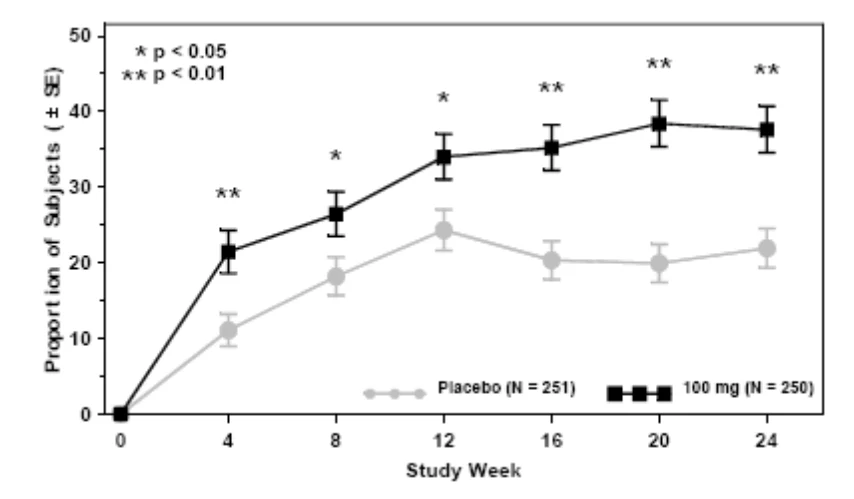
Table 6– Summary of Patient Centered Outcomes of ACR Composite Score Study 990145
Mean Change from Baseline at Week 24 | Percentage Improvement | |||||||
|---|---|---|---|---|---|---|---|---|
Placebo plus MTX | KINERET® (100 mg/day) plus MTX | |||||||
| Subject’s assessment of disease activity | -8.92 | -17.73** | 99% | |||||
| Subject’s assessment of pain activity | -11.71 | -19.00** | 62% | |||||
| Health assessment questionnaire | -0.18 | -0.29* | 59% | |||||
*p-value <0.05
**p-value <0.01
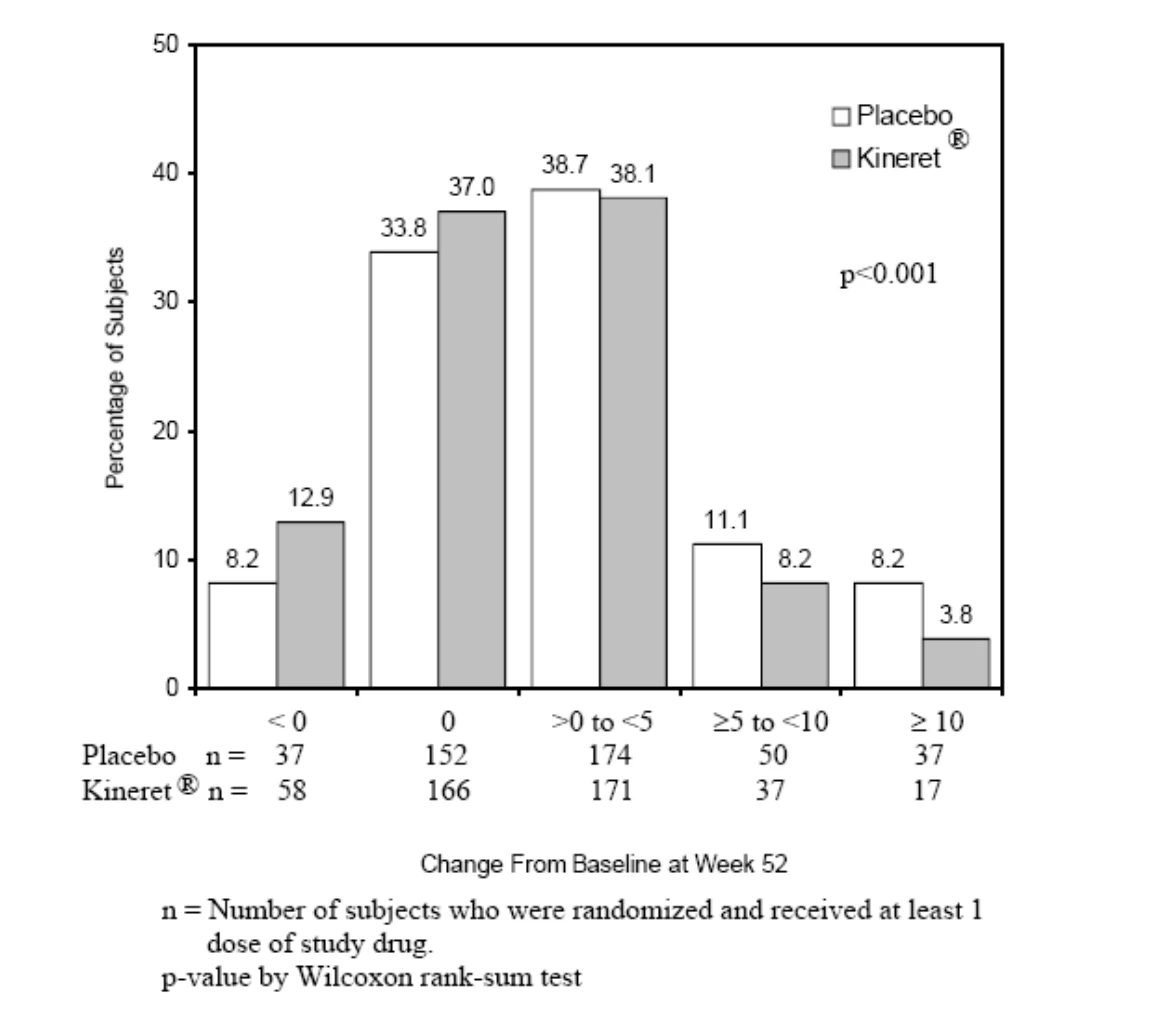
Radiographic response In study 990145, the ability of KINERET® to inhibit structural damage was assessed by measuring the change from baseline at week 52 in the Total Modified Sharp Score (TMSS) and its subcomponents, the joint space narrowing score (JS) and erosion score (ES). KINERET® treatment was associated with a highly significant (p < 0.001) reduction in radiographically measured disease progression (Figure 2). The mean change from baseline in TMSS was 36% lower in the KINERET® group compared with placebo.
KINERET® had an early onset of action, as reflected by a statistically significant difference between treatments at week 24 (p = 0.012).
Figure 2: Distribution of Changes from Baseline Over 1 Year in TMSS
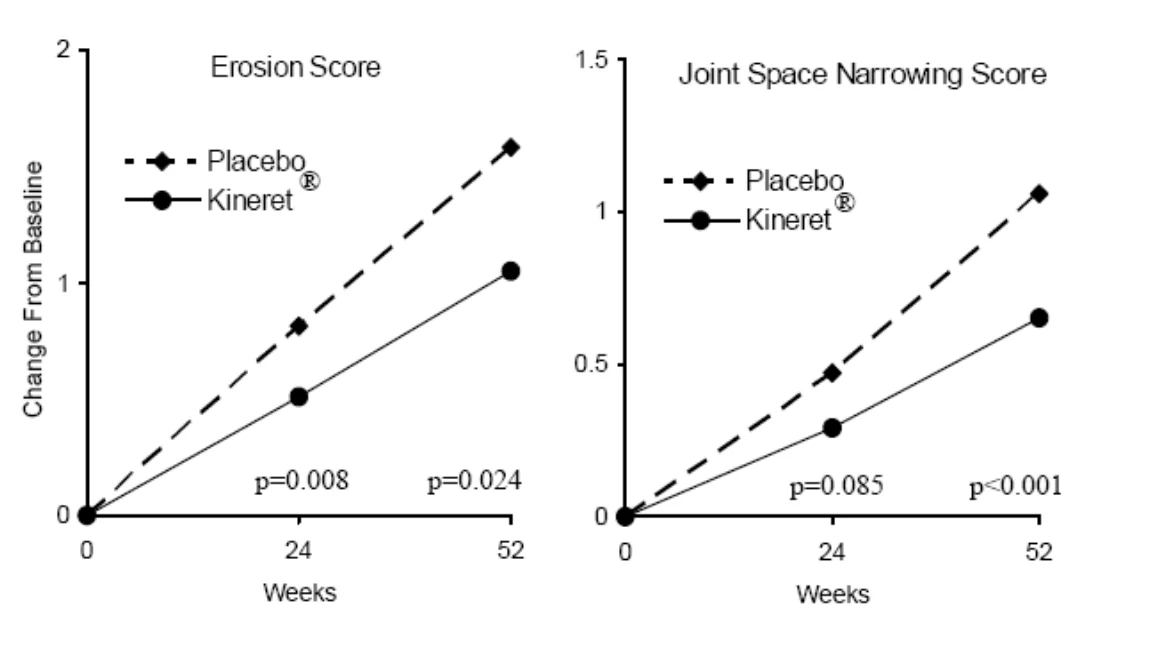
Results for the ES (Figure 3) were similar to those for the TMSS with significant reduction in disease progression in the KINERET® group at both week 24 (p = 0.008) and week 52 (p =0.024) compared with placebo. The mean change from baseline in ES was reduced by 37% and 34% in the KINERET® group compared with placebo at weeks 24 and 52, respectively.
Similarly, the mean change from baseline in JS (Figure 3) was reduced by 39% in the KINERET® group compared with placebo at week 52 (p< 0.001). The mean change from baseline in the KINERET® group was 38% lower than that of the placebo group at week 24 (p = 0.085).
Figure 3: Change From Baseline in Erosion and Joint Space Narrowing Scores p-value by Wilcoxon rank-sum test
Physical Function At 52 weeks, patients who received KINERET® showed improvement of physical function compared to placebo at 52 weeks. The mean HAQ scores improved by 0.26, which was significantly different (p = 0.007) from placebo (0.15). Consistent with improvements seen in HAQ, mean change in the Short Form 35 Physical Component score was statistically significantly superior for patients receiving KINERET® compared to those on placebo (p = 0.001), and by week 8 improved by more than 2 points.
Neonatal Onset Multisystem Inflammatory Disease (NOMID)
Table 7– Summary of patient demographics for clinical trials in NOMID
| Study# | Trial design | Dosage*, route of administration and duration | Study subjects (N=number) | Endpoints |
|---|---|---|---|---|
| 03-AR.0298 | Prospective, long-term, open-label, uncontrolled | Initial dose: 1-2.4 mg/kg body weight**, SC Average maintenance dose: 3 to 4 mg/kg (daily), SC Up to 5 years | N=43 | NOMID symptoms were assessed with a disease-specific Diary Symptom Sum Score (DSSS), which included the prominent disease symptoms fever, rash, joint pain, vomiting, and headache. The range of possible scores was zero to 20. In addition, serum amyloid A (SAA), hsCRP, and ESR levels were monitored. |
N = Number of subjects treated; SC = Subcutaneous
*The maximum dose administered was 8.2 mg/kg/day. The dose was given once daily, with the exception of some patients who split the dose into two daily administrations for better control of disease activity.
** During the period for which study results were reported, dose adjustments by 0.5 to 1 mg/kg increments were allowed, titrated to control signs and symptoms of disease.
Study 03-AR.0298
The efficacy of KINERET® was evaluated in a prospective, long-term, open-label and uncontrolled study including 43 NOMID patients 0.7 to 46 years of age treated for up to 5 years. Patients were given an initial KINERET® dose of 1-2.4 mg/kg body weight. During the period for which study results were reported, dose adjustments by 0.5 to 1 mg/kg increments were allowed, titrated to control signs and symptoms of disease. The average maintenance dose was 3 to 4 mg/kg daily. The maximum dose administered was 8.2 mg/kg/day. In general, the dose was given once daily, but for some patients, the dose was split into twice daily administrations for better control of disease activity. The study incorporated a withdrawal period in a subset of 11 patients.
NOMID symptoms were assessed with a disease-specific Diary Symptom Sum Score (DSSS), which included the prominent disease symptoms fever, rash, joint pain, vomiting, and headache. The range of possible scores was zero to 20. In addition, serum amyloid A (SAA), hsCRP, and ESR levels were monitored. Changes in clinical and laboratory parameters from baseline to Months 3 to 6 and from Month 3 (before withdrawal) to the end of the withdrawal period were assessed in the subset of patients who underwent withdrawal. The estimated changes from baseline in DSSS are summarized through Month 60 in Table . Results were consistent across all subgroups, including age, gender, presence of CIAS1/NLRP3 mutation, and disease phenotype. Improvements occurred in all individual disease symptoms comprising the DSSS (Table ), as well as in the serum markers of inflammation. For the 11 patients who went through a withdrawal phase, disease symptoms and serum markers of inflammation worsened after withdrawal and promptly responded to reinstitution of KINERET® therapy. Upon withdrawal of treatment, the median time until disease flare criteria were met was 5 days.
Table 8– Estimated change from baseline in DSSS in severe NOMID patients (ITT diary population)
| Time point | Estimated mean change from baseline in DSSS* | 95% confidence interval |
|---|---|---|
| Month 3-6** | -3.5 | -3.7 to -3.3 |
| Month 12 | -3.6 | -3.9 to -3.3 |
| Month 36 | -3.5 | -3.8 to -3.2 |
| Month 60 | -3.5 | -3.8 to -3.1 |
Estimates of change from baseline and 95% CIs are based on a repeated measures analysis of covariance model including visit as a fixed factor and baseline value as a covariate. ITT diary observed cases (N=29).
*Mean (SD) baseline value was 4.5 (3.2).
**Month 3-6 is the estimated average of the Month 3 and Month 6 visits.
Table 9– Individual diary key symptom scores by visit (ITT diary population)
| Visit (month) | Number of patients | Fever score* | Rash score* | Joint pain score* | Vomiting score* | Headache score* |
|---|---|---|---|---|---|---|
| Baseline | 29 | 0.5 (0.8) | 1.9 (1.1) | 1.2 (1.1) | 0.1 (0.2) | 0.9 (1.0) |
| 1 | 28 | 0.1 (0.1) | 0.3 (0.5) | 0.2 (0.3) | 0.0 (0.0) | 0.2 (0.3) |
| 3 | 26 | 0.1 (0.2) | 0.1 (0.2) | 0.2 (0.4) | 0.0 (0.1) | 0.1 (0.2) |
| 6 | 25 | 0.0 (0.1) | 0.1 (0.1) | 0.2 (0.4) | 0.0 (0.1) | 0.2 (0.3) |
| 12 | 24 | 0.1 (0.1) | 0.1 (0.2) | 0.1 (0.2) | 0.0 (0.1) | 0.1 (0.2) |
| 36 | 19 | 0.0 (0.2) | 0.0 (0.2) | 0.1 (0.3) | 0.0 (0.0) | 0.2 (0.6) |
| 60 | 15 | 0.0 (0.0) | 0.1 (0.3) | 0.3 (0.7) | 0.0 (0.0) | 0.1 (0.3) |
*Mean (SD)
A clinical response was seen within 10 days of initiating KINERET® treatment in all patients and was sustained for up to 5 years with the continued administration of KINERET®.
KINERET® treatment also appeared to be associated with improvement of, or stability in, assessments of other NOMID disease manifestations, such as CNS symptoms, audiogram and visual acuity data, up to Month 60.
A prospective long-term safety study (an extension of the study 03-AR.0298) was designed to evaluate the safety of Kineret in the treatment of 12 patients with CAPS in routine clinical care. Serious infections were reported in 1 patient in this study, which is consistent with the established safety profile of Kineret. No ISRs, allergic reactions, malignancies or medication errors were reported.
15 MICROBIOLOGY
No microbiological information is required for this drug product.
16 NON-CLINICAL TOXICOLOGY
KINERET® (anakinra) has been well characterized in in vitro and in vivo nonclinical studies and is a selective antagonist of IL-1. Inhibition of inflammation, bone destruction, and cartilage degeneration has been observed in several animal models of arthritis following treatment with anakinra.
Anakinra is similar, but not identical, to the analogous receptor antagonist proteins of other species, and has been shown to be biologically active in a wide variety of species, including those used in the toxicity studies. Subchronic and chronic toxicity studies were conducted in rats and subchronic studies were conducted in nonhuman primates. Because the principal biological action of anakinra is to antagonize the effects of IL-1 and because anakinra does not possess intrinsic agonist activity, no exaggerated pharmacologic effects from high doses of anakinra were expected, nor were any seen. Anakinra is a foreign protein in the species used for preclinical safety assessment; as such, anti-anakinra antibodies were an anticipated finding. Non-neutralizing antianakinra antibodies were detectable in both rats and monkeys.
General Toxicology:
Acute and Multiple Dose Toxicity
In non-human primates, the no observed effect level (NOEL) based on systemic toxicity effects is considered to be 100 mg/kg/day; based on local injection site effects the NOEL is less than 10 mg/kg/day.
Twice-daily SC administration of anakinra (BID) for 6 months to rats at total doses of 2, 20, and 200 mg/kg/day produced local injection site inflammation at all dosages, the incidence and severity of which increased with dose. Systemic toxicity at 200 mg/kg/day was limited to the kidney with increased kidney weights, proteinuria, and chronic progressive nephropathy being the principal findings after 6 months of dosing. Chronic progressive nephropathy is a background disease in aging rats, with higher incidence in males, and is known to be influenced by protein levels. Kidney toxicity was not evident at the 1-month interim necropsy or after the 1-month recovery period.
Genotoxicity:
No evidence of genotoxicity was found in mutagenicity assays.
Neither pre-neoplastic lesions nor tumors related to anakinra treatment were observed in a 6-month study of anakinra in rats at doses up to 200 mg/kg/day. Thus, there is no evidence of anakinra being involved in direct tumor production.
Reproductive and Developmental Toxicology:
No adverse effects of anakinra were noted in any reproductive toxicity or teratology studies in rats and rabbits, conducted at dosages up to 200 mg/kg/day.
Special Toxicology:
Immunogenicity
In preclinical toxicology studies in rats and monkeys, no evidence of immunosuppression was seen. Additionally, anakinra had no effect on specific immune function tests, such as antibody formation to keyhole limpet hemocyanin or sheep red blood cells, cytolytic T lymphocyte response in mice or NK cell activity in rats and monkeys.
Host Resistance Assays
Published studies, including studies on IL-1 knockout and IL-1Ra over-expressing mice do not reveal a clear or consistent picture on the role of IL-1 inhibition in compromising host resistance to bacterial infection. For example, IL-1β or IL-1R knock-out mice showed no increased susceptibility to infectious challenges, while IL-1Ra over-expressing mice were more susceptible.
In acute host resistance rat models infected with E. coli, S. aureus, and L. monocytogenes, anakinra did not increase mortality following these infections and its effect on host resistance (based on CFU in blood, liver, or spleen) was slight to nonexistent.
Therefore, in animal models, anakinra does not appear to greatly impair host resistance mechanisms.
Safety Pharmacology
The effects of combined administration of anakinra with MTX or with cytokine inhibitors were investigated:
Coadministration of anakinra and MTX (in rats) or PEG sTNF-RI (in rats and monkeys), did not identify any toxicity or pharmacokinetic interactions between the two agents.
There was no evidence in monkeys and rats of detrimental anakinra interaction with the cytokine inhibitors, etanercept and PEG sTNF-RI in blood cell counts, body and lymphoid organ (spleen, thymus) weights, lymphoid organ cellularity, lymphoid organ viability, NK cell function, immune cell phenotype, and antibody response to keyhole limpet hemocyanin or the anti-sheep red blood antibody-forming cell (AFC) assay.