


Product Monograph - Koselugo Granules
RECENT MAJOR LABEL CHANGES
| 1 INDICATIONS | 02/2026 |
|---|---|
| 1 INDICATIONS | 07/2026 |
| 4 DOSAGE AND ADMINISTRATION, 4.2 Recommended Dose and Dosage Adjustment | 02/2026 |
| 4 DOSAGE AND ADMINISTRATION, 4.1 Dosing Considerations, 4.2 Recommended Dose and Dosage Adjustment | 08/2026 |
| 4 DOSAGE AND AMINISTRATION, 4.4 Administration | 08/2026 |
| 7 WARNINGS AND PRECAUTIONS | 08/2026 |
| 7 WARNINGS AND PRECAUTIONS | 03/2026 |
TABLE OF CONTENTS
Sections or subsections that are not applicable at the time of authorization are not listed .
RECENT MAJOR LABEL CHANGES ..................................................................................... 1
TABLE OF CONTENTS .......................................................................................................... 2
PART I: HEALTH PROFESSIONAL INFORMATION............................................................... 4
1 INDICATIONS.............................................................................................................. 4
1.1 Pediatrics.......................................................................................................... 4
1.2 Geriatrics .......................................................................................................... 4
2 CONTRAINDICATIONS ............................................................................................... 4
4 DOSAGE AND ADMINISTRATION .............................................................................. 4
4.1 Dosing Considerations ...................................................................................... 4
4.2 Recommended Dose and Dosage Adjustment................................................... 5
4.4 Administration ................................................................................................... 9
4.5 Missed Dose ................................................................................................... 10
5 OVERDOSAGE ......................................................................................................... 10
6 DOSAGE FORMS, STRENGTHS, COMPOSITION AND PACKAGING ...................... 10
7 WARNINGS AND PRECAUTIONS ............................................................................ 11
7.1 Special Populations ........................................................................................ 16
7.1.1 Pregnancy .................................................................................................. 16
7.1.2 Breast-feeding............................................................................................. 16
7.1.3 Pediatrics .................................................................................................... 16
7.1.4 Geriatrics .................................................................................................... 17
8 ADVERSE REACTIONS ............................................................................................ 17
8.1 Adverse Reaction Overview ............................................................................ 17
8.2 Clinical Trial Adverse Reactions ...................................................................... 18
8.4 Abnormal Laboratory Findings: Hematologic, Clinical Chemistry and Other
Quantitative Data ....................................................................................................... 23
9 DRUG INTERACTIONS ............................................................................................. 24
9.2 Drug Interactions Overview ............................................................................. 24
9.4 Drug-Drug Interactions .................................................................................... 25
9.5 Drug-Food Interactions ................................................................................... 26
10 CLINICAL PHARMACOLOGY ................................................................................... 27
10.1 Mechanism of Action....................................................................................... 27
10.2 Pharmacodynamics ........................................................................................ 27
10.3 Pharmacokinetics ........................................................................................... 27
11 STORAGE, STABILITY AND DISPOSAL .................................................................. 31
12 SPECIAL HANDLING INSTRUCTIONS ..................................................................... 31
13 PHARMACEUTICAL INFORMATION ........................................................................ 32
14 CLINICAL TRIALS .................................................................................................... 33
14.1 Clinical Trials by Indication .............................................................................. 33
15 MICROBIOLOGY....................................................................................................... 39
16 NON-CLINICAL TOXICOLOGY ................................................................................. 39
PATIENT MEDICATION INFORMATION .............................................................................. 41
PATIENT MEDICATION INFORMATION .............................................................................. 49
PART I: HEALTH PROFESSIONAL INFORMATION
1 INDICATIONS
KOSELUGO® (selumetinib capsules) / KOSELUGO® Granules (selumetinib oral granules) are indicated for:
Capsules
The treatment of adult and pediatric patients aged 2 years and older, with neurofibromatosis type 1 (NF1) who have symptomatic, inoperable plexiform neurofibromas (PN).
Granules
The treatment of pediatric patients aged 1 year and older, with NF1 who have symptomatic, inoperable PN.
1.1 Pediatrics
Safety and effectiveness have been established in pediatric patients 1 year to less than 7 years with NF1 who have inoperable PN and information supporting this use is discussed throughout the Product Monograph. Pediatric patients 1 year of age and older were studied using the granules formulation, and clinical efficacy was demonstrated in patients 3 years of age and older treated with the capsule formulation. For the capsule formulation, this indication was expanded to pediatric patients who are 2 years of age and older, because the safety, efficacy and pharmacokinetics of KOSELUGO (selumetinib capsules) / KOSELUGO Granules in patients who are 2 years of age is expected to be similar to patients at 3 years of age and older. Use in pediatric patients 1 year of age and older is additionally supported by extrapolation based on similar disease characteristics and comparable pharmacokinetic exposure across age groups and formulations.
1.2 Geriatrics
Geriatrics (≥65 years of age): No data are available to Health Canada; therefore, Health Canada has not authorized an indication for geriatric use.
2 CONTRAINDICATIONS
KOSELUGO (selumetinib capsules) / KOSELUGO Granules are contraindicated in patients who are hypersensitive to this drug or to any ingredient in the formulation, including any non-medicinal ingredient, or component of the container. For a complete listing, see 6 DOSAGE FORMS, STRENGTHS, COMPOSITION AND PACKAGING.
4 DOSAGE AND ADMINISTRATION
4.1 Dosing Considerations
Treatment with KOSELUGO (selumetinib capsules) / KOSELUGO Granules should be initiated by a physician experienced in the diagnosis and the treatment of patients with NF1 related tumours.
Treatment with KOSELUGO (selumetinib capsules) / KOSELUGO Granules should continue as long as clinical benefit is observed, or until PN progression, or the development of unacceptable toxicity.
Do not administer KOSELUGO capsules to patients who are unable to swallow a whole capsule.
Administer KOSELUGO Granules to pediatric patients aged 1 year and older who have difficulty swallowing a whole capsule.
If vomiting occurs after KOSELUGO (selumetinib capsules) / KOSELUGO Granules administration, do not take an additional dose, but continue with the next scheduled dose.
4.2 Recommended Dose and Dosage Adjustment
Capsules
The recommended dose of KOSELUGO is 25 mg/m2 based on body surface area (BSA), taken orally twice daily (approximately every 12 hours).
Dosing in adult and pediatric patients is individualized based on BSA (mg/m2) and rounded to the nearest achievable 5 mg or 10 mg dose (up to a maximum single dose of 50 mg). Different strengths of KOSELUGO capsules can be combined to attain the desired dose (See Table 1).
Table 1 – KOSELUGO capsules Recommended Dosage Based on Body Surface Area
| Body Surface Area (BSA)a | Recommended Dosage | |||||
| 0.55 – 0.69 m2 | 20 mg in the morning | 10 mg in the evening | ||||
| 0.70 – 0.89 m2 | 20 mg twice daily | |||||
| 0.90 – 1.09 m2 | 25 mg twice daily | |||||
| 1.10 – 1.29 m2 | 30 mg twice daily | |||||
| 1.30 – 1.49 m2 | 35 mg twice daily | |||||
| 1.50 – 1.69 m2 | 40 mg twice daily | |||||
| 1.70 – 1.89 m2 | 45 mg twice daily | |||||
| ≥1.90 m2 | 50 mg twice daily | |||||
a The recommended dosage for patients with a BSA less than 0.55 m2 has not been established.
Granules
The recommended dose of KOSELUGO Granules is equivalent to 25 mg/m2 of BSA, taken orally twice daily (approximately every 12 hours).
Dosing is individualized based on BSA (mg/m2) and rounded to the nearest achievable 2.5 mg, 5 mg or 10 mg dose (up to a maximum single dose of 50 mg). Different strengths of KOSELUGO Granules can be combined to attain the desired dose (Table 2).
Table 2 - KOSELUGO Granules Recommended Dosage Based on Body Surface Area
| Body surface area (BSA)a | Recommended Dosage |
| 0.40 – 0.49 m2 | 10 mg twice daily |
| 0.50 – 0.59 m2 | 12.5 mg twice daily |
| 0.60 – 0.69 m2 | 15 mg twice daily |
| 0.70 – 0.89 b m2 | 20 mg twice daily |
| 0.90 – 1.09 m2 | 25 mg twice daily |
| 1.10 – 1.29 c m2 | 30 mg twice daily |
| 1.30 – 1.49 m2 | 35 mg twice daily |
| 1.50 – 1.69 m2 | 40 mg twice daily |
| 1.70 – 1.89 m2 | 45 mg twice daily |
| ≥1.90 m2 | 50 mg twice daily |
- a. The recommended dosage for patients with a BSA less than 0.40 m2 has not been established.
- b. For patients with a BSA 0.70 m2 and above, dosing recommendations for the Granules are in line with the dosing recommendations for capsules.
- c. If a patient is unable to transition to capsules when they attain a BSA ≥1.29 m2 patients can continue to receive the granules at the dose shown in Table 1.
Dose Adjustments
Interruption and/or dose reduction or permanent discontinuation of KOSELUGO (selumetinib capsules) / KOSELUGO Granules may be required based on individual safety and tolerability (see 7 WARNINGS AND PRECAUTIONS and 8 ADVERSE REACTIONS).
Recommended dose reductions are given in Table 3 and Table 4.
Table 3 - KOSELUGO (selumetinib capsules) Recommended Dose Reductions for Adverse Reactions
a Permanently discontinue KOSELUGO in patients unable to tolerate KOSELUGO after two dose reductions
| Body Surface Area (BSA) | Initial dose (mg/dose) | First dose reduction (mg/dose) | Second dose reductiona (mg/dose) | ||||||||
| Morning | Evening | Morning | Evening | ||||||||
| 0.55 – 0.69 m2 | 20 in the morning; 10 in the evening | 10 | 10 | 10 mg once daily | |||||||
| 0.70 – 0.89 m2 | 20 twice daily | 20 | 10 | 10 | 10 | ||||||
| 0.90 – 1.09 m2 | 25 twice daily | 25 | 10 | 10 | 10 | ||||||
| 1.10 – 1.29 m2 | 30 twice daily | 25 | 20 | 20 | 10 | ||||||
| 1.30 – 1.49 m2 | 35 twice daily | 25 | 25 | 25 | 10 | ||||||
| 1.50 – 1.69 m2 | 40 twice daily | 30 | 30 | 25 | 20 | ||||||
| 1.70 – 1.89 m2 | 45 twice daily | 35 | 30 | 25 | 20 | ||||||
| ≥1.90 m2 | 50 twice daily | 35 | 35 | 25 | 25 | ||||||
Table 4 - KOSELUGO Granules Recommended Dose Reductions for Adverse Reactions
| Body surface area (BSA) | Initial dose (mg/twice daily) | First dose reduction (mg/ dose) | Second dose reductiona (mg/dose) | ||||||||||||||
| Morning | Evening | Morning | Evening | ||||||||||||||
| 0.40 – 0.49 m2 | 10 | 7.5 | 7.5 | 5 | 5 | ||||||||||||
| 0.50 – 0.59 m2 | 12.5 | 10 | 10 | 7.5 | 7.5 | ||||||||||||
| 0.60 – 0.69 m2 | 15.0 | 12.5 | 12.5 | 10 | 10 | ||||||||||||
| 0.70 – 0.89 m2 | 20 | 15 | 15 | 12.5 | 12.5 | ||||||||||||
| 0.90 – 1.09 m2 | 25 | 20 | 20 | 15 | 15 | ||||||||||||
| 1.10 – 1.29b m2 | 30 | 22.5 | 22.5 | 15 | 15 | ||||||||||||
| 1.30 – 1.49 m2 | 35 | 25 | 25 | 25 | 10 | ||||||||||||
| 1.50 – 1.69 m2 | 40 | 30 | 30 | 25 | 20 | ||||||||||||
| 1.70 – 1.89 m2 | 45 | 35 | 30 | 25 | 20 | ||||||||||||
| ≥1.90 m2 | 50 | 35 | 35 | 25 | 25 | ||||||||||||
a. Permanently discontinue KOSELUGO Granules in patients unable to tolerate KOSELUGO after two dose reductions.
b. If a patient is unable to transition to capsules when they attain a BSA ≥ 1.29 m2, patients can continue to receive the granules at the dose shown in Table 1, and dose modifications in Table 3.
Table 5 - Recommended KOSELUGO (selumetinib capsules) / KOSELUGO Granules Dosage Modifications for Adverse Reactions
| CTCAE Grade a | Recommended Dose Modification |
| Grade 1 or 2 (tolerable) | Continue treatment and monitor as clinically indicated |
| Grade 2 (intolerable) or Grade 3 | Interrupt treatment until toxicity is grade 0 or 1 and reduce by one dose level when resuming therapy (see Table 3 and Table 4) |
| Grade 4 | Interrupt treatment until toxicity is grade 0 or 1 and reduce by one dose level when resuming therapy (see Table 3 and Table 4). Consider discontinuation. |
a Common Terminology Criteria for Adverse Events (CTCAE)
Dose modification advice for left ventricular ejection fraction (LVEF) reduction
In cases of asymptomatic LVEF reduction by ≥10% from baseline value and less than the institutional lower level of normal (LLN), KOSELUGO (selumetinib capsules) / KOSELUGO Granules treatment should be interrupted until resolution. Once resolved, reduce KOSELUGO by one dose level when resuming therapy (see Table 3).
In patients who develop symptomatic LVEF reduction or a grade 3 or 4 LVEF reduction, KOSELUGO (selumetinib capsules) / KOSELUGO Granules should be discontinued and a prompt cardiology referral should be carried out (see 7 WARNINGS AND PRECAUTIONS).
Dose modification advice for retinal toxicities
KOSELUGO (selumetinib capsules) / KOSELUGO Granules treatment should be interrupted in patients diagnosed with retinal pigment epithelial detachment (RPED) or central serous retinopathy (CSR) with reduced visual acuity until resolution; reduce KOSELUGO (selumetinib capsules) / KOSELUGO Granules by one dose level when resuming therapy (see Table 2). In patients diagnosed with RPED or CSR without reduced visual acuity, ophthalmic assessment should be conducted every 3 weeks until resolution. In patients who are diagnosed with retinal vein occlusion (RVO), treatment with KOSELUGO (selumetinib capsules) / KOSELUGO Granules should be permanently discontinued (see 7 WARNINGS AND PRECAUTIONS).
Dose adjustments for co-administration with CYP3A4 and CYP2C19 inhibitors
Concomitant use of strong or moderate CYP3A4 or CYP2C19 inhibitors is not recommended and alternative agents should be considered. If a strong or moderate CYP3A4 or CYP2C19 inhibitor must be co-administered, the recommended KOSELUGO (selumetinib capsules) / KOSELUGO Granules dose reduction is as follows: If a patient is currently taking 25 mg/m2 twice daily, dose reduce to 20 mg/m2 twice daily (see Table 6 and Table 7). If a patient is currently taking 20 mg/m2 twice daily, dose reduce to 15 mg/m2 twice daily (see Table 6 and Table 7 and 9 DRUG INTERACTIONS).
| Table 6 - Recommended Capsules dosage to achieve 20 mg/m2 or 15 mg/m2 twice daily dose level | |||||||||||||
| Body Surface Area | 20 mg/m2 twice daily (mg/dose) | 15 mg/m2 twice daily (mg/dose) | |||||||||||
| Morning | Evening | Morning | Evening | ||||||||||
| 0.55 – 0.69 m2 | 10 | 10 | 10 mg once daily | ||||||||||
| 0.70 – 0.89 m2 | 20 | 10 | 10 | 10 | |||||||||
| 0.90 – 1.09 m2 | 20 | 20 | 20 | 10 | |||||||||
| 1.10 – 1.29 m2 | 25 | 25 | 25 | 10 | |||||||||
| 1.30 – 1.49 m2 | 30 | 25 | 25 | 20 | |||||||||
| 1.50 – 1.69 m2 | 35 | 30 | 25 | 25 | |||||||||
| 1.70 – 1.89 m2 | 35 | 35 | 30 | 25 | |||||||||
| ≥ 1.90 m2 | 40 | 40 | 30 | 30 | |||||||||
Table 7 - Recommended Granules dosage to achieve 20 mg/m2 or 15 mg/m2 twice daily dose level
| Body Surface Area | 20 mg/m2 twice daily (mg/dose) | 15 mg/m2 twice daily (mg/dose) | ||||||||||
| Morning | Evening | Morning | Evening | |||||||||
| 0.40 – 0.49 m2 | 7.5 | 7.5 | 7.5 | 5 | ||||||||
| 0.50 – 0.59 m2 | 10 | 10 | 7.5 | 7.5 | ||||||||
| 0.60 – 0.69 m2 | 12.5 | 12.5 | 10 | 7.5 | ||||||||
| 0.70 – 0.89 m2 | 15 | 15 | 10 | 10 | ||||||||
| 0.90 – 1.09 m2 | 20 | 20 | 15 | 15 | ||||||||
| 1.10 – 1.29 m2 | 25 | 25 | 25 | 10 | ||||||||
| 1.30 – 1.49 m2 | 30 | 25 | 25 | 20 | ||||||||
| 1.50 – 1.69 m2 | 35 | 30 | 25 | 25 | ||||||||
| 1.70 – 1.89 m2 | 35 | 35 | 30 | 25 | ||||||||
| ≥ 1.90 m2 | 40 | 40 | 30 | 30 | ||||||||
Dose modifications for special patient populations
Renal impairment
Based on clinical studies no dose adjustment is recommended in patients with mild, moderate, or severe renal impairment or those with End Stage Renal Disease (ESRD) (see 10.3 Pharmacokinetics).
Hepatic impairment
Based on clinical studies, no dose adjustment is recommended in patients with mild hepatic impairment. The starting dose should be reduced in patients with moderate hepatic impairment to 20 mg/m2 BSA, twice daily (see Table 6 and Table 7). KOSELUGO (selumetinib capsules) / KOSELUGO Granules are not recommended for use in patients with severe hepatic impairment (see 10.3 Pharmacokinetics).
Ethnicity
Increased systemic exposure has been seen in Asian subjects, although there is considerable overlap with Western subjects when corrected for body weight. No specific adjustment to the starting dose is recommended for Asian patients, however, these patients should be closely monitored for adverse events (see 10.3 Pharmacokinetics).
4.4 Administration
KOSELUGO is available in two dosage forms: KOSELUGO capsules and KOSELUGO Granules. Prescribe KOSELUGO Granules for pediatric patients aged 1 year and older who have difficulty swallowing whole capsules.
Capsules
KOSELUGO (selumetinib capsules) can be taken with or without food (see 10 CLINICAL PHARMACOLOGY).
Swallow KOSELUGO capsules whole with water.
Do not chew, dissolve or open capsules.
Granules
KOSELUGO Granules must be administered by carefully opening the capsules and sprinkling the entire contents on a small amount of smooth yogurt or fruit puree containing the following fruits: apple, banana, pear or strawberry. This medicinal product dispensed on or mixed with food must be swallowed within 30 minutes and must not be stored for future use. If a dose has been partially consumed within 30 minutes of preparation, the remainder of the dose should be discarded and a new dose should not be prepared. The KOSELUGO Granules should be free-flowing. Granules that are clumped or stuck inside the capsule shell should not be used. The empty capsule shells must be discarded after use.
The capsule shells of KOSELUGO Granules must not be swallowed, chewed, or dissolved. KOSELUGO Granules must not be mixed in water, milk, vegetable puree, grapefruit or any juice, fruit puree or jam containing Seville orange.
4.5 Missed Dose
If a dose of KOSELUGO (selumetinib capsules) / KOSELUGO Granules is missed, it should only be taken if it is more than 6 hours until the next scheduled dose.
5 OVERDOSAGE
There is no specific treatment for overdose. If overdose occurs, patients should be treated supportively with appropriate monitoring as necessary. Dialysis is ineffective in the treatment of overdose.
| For the most recent information in the management of a suspected drug overdose, contact your regional poison control centre or Health Canada's toll-free number, 1-844 POISON-X (1-844-764-7669). |
|---|
6 DOSAGE FORMS, STRENGTHS, COMPOSITION AND PACKAGING
Table 8 - Dosage Forms, Strengths, Composition
| Route of Administration | Dosage Form / Strength/Composition | Non-medicinal Ingredients |
| oral | Capsule, 10 mg selumetinib (as selumetinib sulfate) | Ammonium hydroxide 28%, Carnauba wax, Carrageenan, Hypromellose, Iron oxide black, Potassium chloride, Propylene glycol, Purified water, Shellac glaze, Titanium dioxide, Vitamin E polyethylene glycol succinate (D α-tocopheryl polyethylene glycol 1000 succinate) |
| oral | Capsule, 25 mg selumetinib (as selumetinib sulfate) | Carnauba wax and/or Corn starch, Carrageenan, FD&C Blue 2, FD&C blue 2 aluminum lake, Ferric oxide red, Ferric oxide yellow, Glyceryl monooleate, Hypromellose, Potassium chloride, Purified water, Titanium dioxide, Vitamin E polyethylene glycol succinate (D α-tocopheryl polyethylene glycol 1000 succinate), White shellac |
| oral | Granules, 5 mg selumetinib (as selumetinib sulfate) | Glyceryl dibehenate, Hypromellose acetate succinate, Stearic acid and Stearoyl polyoxylglycerides. The capsule shells (not to be consumed) contain Ferric oxide yellow, Hypromellose, Pharmaceutical ink and Titanium dioxide. |
KOSELUGO (selumetinib capsules) / KOSELUGO Granules are sold in 60 capsules HDPE plastic bottles with child-resistant closure and silica gel desiccant.
Capsules, hard (capsules)
KOSELUGO (selumetinib capsules) 10 mg hard capsule
White to off-white, opaque, size 4 hard capsule, banded and marked with “SEL 10” in black ink.
KOSELUGO (selumetinib capsules) 25 mg hard capsule
Blue, opaque, size 4 hard capsule, banded and marked with “SEL 25” in black ink.
Granules
KOSELUGO Granules 5 mg (granules in capsule for opening)
Size 0 hard capsule with a yellow cap and a white body. The cap is printed with ‘sel 5’ and the body is printed with a sprinkle capsule image indicating opening.
KOSELUGO Granules 7.5 mg (granules in capsule for opening)
Size 0 capsule with a pink cap and a white body. The cap is printed with ‘sel 7.5’ and the body is printed with a sprinkle capsule image indicating opening.
7 WARNINGS AND PRECAUTIONS
General
Vitamin E Supplementation (only applicable to KOSELUGO capsules)
Advise patients not to take any supplemental vitamin E.
KOSELUGO 10 mg capsules contain 32 mg vitamin E as the excipient, D-alpha-tocopheryl polyethylene glycol 1000 succinate (TPGS). KOSELUGO 25 mg capsules contain 36 mg vitamin E as TPGS. High doses of vitamin E may increase the risk of bleeding in patients taking concomitant anticoagulant or antiplatelet medications (e.g., warfarin or aspirin). Anticoagulant assessments, including international normalized ratio or prothrombin time, should be conducted more frequently to detect when dose adjustments of the anticoagulant or antiplatelet medication are warranted (see Monitoring and Laboratory Tests, 9 DRUG INTERACTIONS).
Cardiovascular
Cardiomyopathy
KOSELUGO (selumetinib capsules) / KOSELUGO Granules have not been studied in patients with a history of clinically significant cardiac disease or LVEF less than 55% prior to treatment (lower limit of normal, LLN) (see 14.1 Clinical Trials by Indication). Prior to starting KOSELUGO treatment, patients should have an ejection fraction above the institutional LLN.
Pediatric subjects: Cardiomyopathy, defined as reduction in left ventricular ejection fraction (LVEF) ≥ 10% below baseline, occurred in 28% of 74 pediatric patients with NF1. Four percent of patients experienced decreased LVEF below the institutional lower limit of normal (LLN).
| oral | Granules, 7.5 mg selumetinib (as selumetinib sulfate) | Glyceryl dibehenate, Hypromellose acetate succinate, Stearic acid and Stearoyl polyoxylglycerides. The capsule shells (not to be consumed) contain Ferric oxide red, Hypromellose, Pharmaceutical ink and Titanium dioxide. |
Grade 3 decreased LVEF occurred in one patient and resulted in dose reduction. All patients with decreased LVEF were asymptomatic and identified during routine echocardiography. The median time to first onset of AEs in the sub-group term of ejection fraction decreased events was 232.0 days, with a median duration of 252 days. Decreased LVEF resolved in 81% of these patients.
Adult subjects: In the NF1-PN adult patients (N = 137), left ventricular ejection fraction (LVEF) decrease occurred in 10 (7%) patients; among them, in 1 (0.7%) patient, the reported ADR was grade 3. In 2 (1.5%) patients, LVEF decrease led to dose interruption. LVEF decrease resolved in 7 of the 10 (patients. The median time to first onset of maximum CTCAE grade LVEF reduction was 169 days (approximately 6 months) [median duration 112.5 days (approximately 4 months)] [see 8 ADVERSE REACTIONS].
Left ventricular dysfunction or decreased LVEF resulting in permanent discontinuation of KOSELUGO occurred in an unapproved population of adult patients with multiple tumour types who received KOSELUGO. Decreased LVEF resulting in permanent discontinuation of KOSELUGO occurred in a pediatric population with NF1 in an expanded access program.
LVEF should be evaluated before initiation of treatment to establish baseline values and at approximately 3-month intervals, or more frequently as clinically indicated, during treatment (see 7 WARNINGS AND PRECAUTIONS, Monitoring and Laboratory tests). Reduction in LVEF can be managed using treatment interruption, dose reduction or treatment discontinuation (see 4.2 Recommended Dose and Dosage Adjustment).
Driving and Operating Machinery
No studies on the effects on the ability to drive and use machines have been performed. KOSELUGO may have a minor influence on the ability to drive and use machines. Fatigue, asthenia and visual disturbances have been reported during treatment with KOSELUGO and patients who experience these symptoms should observe caution when driving or using potentially dangerous machines.
Gastrointestinal
Pediatric subjects: Diarrhea occurred in 81% of 74 pediatric patients who received KOSELUGO in SPRINT, including Grade 3 in 15% of patients. Diarrhea resulting in permanent discontinuation occurred in 1.4% of patients. Diarrhea resulting in dose interruption or dose reduction occurred in 15% and 1.4% of patients, respectively. The median time to first onset of diarrhea was 20 days and the median duration was 2 days.
Adult subjects: In the NF1-PN adult patients (N = 137), gastrointestinal toxicities, primarily including diarrhea (41 patients, 30%), vomiting (27 patients, 20%), nausea (23 patients, 17%), stomatitis (19 patients, 14%), and constipation (13 patients, 10%) occurred in patients who received KOSELUGO. Most of these events were Grade 1 or 2. In 1 patient (0.7%), grade 3 event was reported for stomatitis. Dose interruption was required in 2 patients (1.5%) each with nausea and vomiting, and in 1 patient (0.7%) each with diarrhea and stomatitis. Dose reduction occurred in 1 patient (0.7%) each with an ADR of nausea and stomatitis. One patient reported an event of nausea that led to treatment discontinuation. The median time to first onset of maximum CTCAE grade diarrhea was 57 days and the median duration was 7 days [see 8 ADVERSE REACTIONS].
Colitis occurred in an unapproved population of pediatric patients with multiple tumour types who received KOSELUGO as a single agent. In addition, serious gastrointestinal toxicities, including perforation, colitis, ileus and intestinal obstruction occurred in an unapproved population of adult patients with multiple tumour types who received KOSELUGO as a single agent or in combination with other anti-cancer agents.
Advise patients to start an anti-diarrheal agent (e.g., loperamide) immediately after the first episode of unformed, loose stool and to increase fluid intake during diarrhea episodes. Withhold, reduce dose, or permanently discontinue KOSELUGO based on severity of adverse reaction (see 4 DOSAGE AND ADMINISTRATION).
Increased Creatine Phosphokinase
Pediatric subjects: Increased creatine phosphokinase (CPK) occurred in 77% of 74 pediatric patients who received KOSELUGO in SPRINT, including Grade 3 or 4 in 9% of patients. Increased CPK resulted in dose reduction in 7% of patients. Increased CPK concurrent with myalgia occurred in 8% of patients, including one patient who permanently discontinued KOSELUGO for myalgia.
Adult subjects: In the NF1-PN adult patients (N = 137), increased creatine phosphokinase (CPK) occurred in patients who received KOSELUGO and led to dose interruption in 6 patients and dose reduction in 3 patients. Forty-two patients (30.7%) had maximum grade of 1 or 2. A maximum grade 3 events occurred in 5 (3.6%) patients, and grade 4 events occurred in 4 (2.9%) patients. The median time to first onset of maximum CTCAE grade blood CPK increase was 103 days (approximately 3 months), and the median duration of maximum grade events was 122 days (approximately 4 months). Increased CPK concurrent with myalgia occurred in some patients (see 8 ADVERSE REACTIONS).
Rhabdomyolysis occurred in an unapproved adult population who received KOSELUGO as a single agent.
Withhold, reduce dose, or permanently discontinue KOSELUGO (selumetinib capsules) / KOSELUGO Granules based on severity of adverse reaction (see 4 DOSAGE AND ADMINISTRATION).
Serum CPK level should be evaluated before initiation of treatment, periodically during the treatment and as clinically indicated (see 7 WARNINGS AND PRECAUTIONS, Monitoring and Laboratory tests).
Monitoring and Laboratory tests
- Cardiac function: Assess left ventricular ejection fraction (LVEF) by echocardiogram prior to initiating treatment, every 3 months during the first year of treatment, every 6 months thereafter, and as clinically indicated. In patients who interrupt KOSELUGO (selumetinib capsules) / KOSELUGO Granules for decreased LVEF, obtain an echocardiogram or a cardiac MRI every 3 to 6 weeks. Upon resolution of decreased LVEF to greater than or equal to the institutional LLN, obtain an echocardiogram or a cardiac MRI every 2 to 3 months or as directed by the cardiologist (see 7 WARNINGS AND PRECAUTIONS).
Ophthalmic assessments: Conduct comprehensive ophthalmic assessments prior to initiating KOSELUGO (selumetinib capsules) / KOSELUGO Granules, at regular intervals during treatment, and for new or worsening visual changes. Permanently
- discontinue KOSELUGO (selumetinib capsules) / KOSELUGO Granules in patients with retinal vein occlusion (RVO). Withhold KOSELUGO (selumetinib capsules) / KOSELUGO Granules in patients with retinal pigment epithelial detachment (RPED), follow up with optical coherence tomography assessments every 3 weeks until resolution, and resume KOSELUGO (selumetinib capsules) / KOSELUGO Granules at a reduced dose (see 7 WARNINGS AND PRECAUTIONS and 4 DOSAGE AND ADMINISTRATION)
- Anticoagulant assessment: In patients taking a vitamin-K antagonist, perform anticoagulant assessments, including INR or prothrombin time, more frequently and adjust the dose of vitamin K antagonists or anti-platelet agents as appropriate (see 7 WARNINGS AND PRECAUTIONS).
- Creatine phosphokinase (CPK): Obtain serum CPK prior to initiating KOSELUGO, periodically during treatment, and as clinically indicated. If increased CPK occurs, evaluate patients for rhabdomyolysis or other causes. Withhold, reduce dose, or permanently discontinue KOSELUGO (selumetinib capsules) / KOSELUGO Granules based on severity of adverse reaction (see 7 WARNINGS AND PRECAUTIONS and 4 DOSAGE AND ADMINISTRATION).
- Skin rashes: Monitor for severe skin rashes (see 7 WARNINGS AND PRECAUTIONS). Withhold, reduce dose, or permanently discontinue KOSELUGO (selumetinib capsules) / KOSELUGO Granules based on severity of adverse reaction (see 4 DOSAGE AND ADMINISTRATION).
Ophthalmologic
Visual Impairment
Pediatric subjects: Advise patients to report any new visual disturbances. Adverse events of blurred vision, photophobia, cataracts, and ocular hypertension occurred in 20% of 74 pediatric patients receiving KOSELUGO (selumetinib capsules). Blurred vision resulted in dose interruption in 2.7% of patients.
Adult subjects: In the NF1-PN adult patients (N = 137), ocular toxicity, mainly blurred vision, was reported in 5 (4%) patients who received KOSELUGO and led to dose interruption in 1 (0.7%) patient. All events were managed without dose reduction. Ocular toxicity resolved in all these patients (see 8 ADVERSE REACTIONS).
Serious ocular toxicities including retinal pigment epithelial detachment (RPED), central serous retinopathy (CSR) and retinal vein occlusion (RVO) have been observed in an unapproved population of adult patients with multiple tumour types, receiving treatment with KOSELUGO monotherapy or in combination with other anti-cancer agents. RPED occurred in the pediatric population during treatment with single agent KOSELUGO and resulted in permanent discontinuation (see 8 ADVERSE REACTIONS).
An ophthalmological evaluation prior to treatment initiation and at any time a patient reports new visual disturbances should be conducted (see 7 WARNINGS AND PRECAUTIONS, Monitoring and Laboratory tests). In patients diagnosed with RPED or CSR without reduced visual acuity, ophthalmic assessment should be conducted every 3 weeks until resolution. If RPED or CSR is diagnosed and visual acuity is affected KOSELUGO (selumetinib capsules) / KOSELUGO Granules therapy should be interrupted and the dose reduced when treatment is resumed (see Table 3 and Table 4). If RVO is diagnosed, treatment with KOSELUGO (selumetinib capsules) / KOSELUGO Granules should be permanently discontinued (see 4 DOSAGE AND ADMINISTRATION).
Reproductive Health
Fertility
There are no data on the effect of KOSELUGO on human fertility.
KOSELUGO had no impact on fertility and mating performance in male (20 mg/kg twice daily) and female (2.5 mg/kg twice daily) mice, at exposures up to 32-times or 5-times, respectively, the human exposure (AUC) at the clinical dose of 25 mg/m2 twice a day (see 16 NON-CLINICAL TOXICOLOGY, Reproductive and Developmental Toxicology).
Teratogenic Risk: Embryo-Fetal Toxicity
A reduction in embryonic survival was observed in animal reproduction studies when selumetinib was administered at doses ≥ 12.5 mg/kg twice a day (approximately 5 times the human exposure by AUC) to female pregnant mice during organogenesis. Selumetinib also increased the incidence of malformations in pups even at sub-therapeutic exposures (see 7 WARNINGS AND PRECAUTIONS, 7.1 Special Populations and 16 NON-CLINICAL TOXICOLOGY, Reproductive and Developmental Toxicology).
Skin
Pediatric subjects: Rash occurred in 93% of 74 pediatric patients who received KOSELUGO in SPRINT. The most frequent rashes included dermatitis acneiform (61%), maculopapular rash (50%), and eczema (26%). Grade 3 rash occurred in 9% of patients. Rash resulted in dose interruption in 14% of patients and dose reduction in 4% of patients.
Adult subjects: In the NF1-PN adult patients (N = 137), rashes (acneiform), mainly dermatitis acneiform, occurred in 73 (52%) patients who received KOSELUGO in 3 patients (2.2%) acneiform rashes led to dose interruption, and in 2 patients (1.5%) each acneiform rashes led to dose reduction and dose discontinuation. Seventy-one (52%) patients reported ADRs with maximum grade 1 or 2. Grade 3 events were reported in 2 (1.5 %) patients (see 8 ADVERSE REACTIONS).
Pediatric subjects: Paronychia was reported in 57% of patients with Grade ≥3 events reported in 13.5% of patients. Paronychia resulted in dose interruption in 16 (21.6%) patients, and dose reduction in 8 (10.8%) patients, with discontinuation of KOSELUGO reported in 1 (1.4%) patient.
Adult subjects: In the NF1-PN adult patients (N = 137), paronychia occurred in patients who received KOSELUGO and led to dose interruption (1 patient, 0.7%), dose reduction (3 patients, 2.2%). Paronychia did not lead to dose discontinuation in any of the patients. Nineteen (14%) patients had a maximum CTCAE grade of 1 or 2. Grade 3 events occurred in 4 (3%) patients. (see 8 ADVERSE REACTIONS).
Other skin toxicities, including severe palmar-plantar erythrodysesthesia syndrome, occurred in an unapproved population of adult patients with multiple tumour types who received KOSELUGO as a single agent or in combination with other anti-cancer agents.
7.1 Special Populations
7.1.1 Pregnancy
Women of childbearing potential should be advised to avoid becoming pregnant while receiving KOSELUGO. Both male and female patients (of reproductive potential) should be advised to use effective contraception during and for at least 1 week after completion of treatment with KOSELUGO.
KOSELUGO is not recommended in women of child-bearing potential not using contraception.
There is a very limited experience on the use of KOSELUGO (selumetinib capsules) in pregnant women. Reproduction studies in mice have shown that administration of KOSELUGO during organogenesis at exposures > 5 times the human exposure (based on AUC) at the clinical dose (25 mg/m2 twice daily), caused reduced fetal weight, adverse structural defects, and effects on embryo-fetal survival in the absence of apparent maternal toxicity. Administration of KOSELUGO to pregnant mice increased the incidence of malformations in pups even at low doses, equivalent to ~0.6 times the human Cmax at the 25 mg/m2 twice daily clinical dose (see Reproductive and Developmental Toxicology).
KOSELUGO (selumetinib capsules) / KOSELUGO Granules are not recommended during pregnancy. If a female patient or a female partner of a male patient receiving KOSELUGO becomes pregnant, she should be apprised of the potential hazard to the fetus.
It is recommended that a pregnancy test should be performed on women of childbearing potential prior to initiating treatment.
In KOMET, a first trimester spontaneous abortion was reported in a patient receiving KOSELUGO.
7.1.2 Breast-feeding
It is not known whether KOSELUGO, or its metabolites, are excreted in human milk or their effects on the breastfed child or milk production. KOSELUGO and its active metabolite were found in the milk of lactating mice (see 16 NON-CLINICAL TOXICOLOGY, Reproductive and Developmental Toxicology, Pre- and postnatal development). Due to the potential for adverse reactions in a breastfed child, advise women not to breastfeed during treatment with KOSELUGO and for 1 week after the last dose.
7.1.3 Pediatrics
Pediatrics (0 – 2 years of age): Based on the data submitted and reviewed by Health Canada, the safety and effectiveness of KOSELUGO (selumetinib capsules) / KOSELUGO Granules have not been established in pediatric patients younger than 1 year of age; Therefore, Health Canada has not authorized an indication for use in pediatric population younger than 1 year of age.
In a general toxicology study conducted with rats some animals showed growth plate dysplasia at exposures > 60 times the human exposure (based on AUC) (see 16 NON-CLINICAL TOXICOLOGY, General Toxicology).
7.1.4 Geriatrics
Geriatrics (≥65): No data are available to Health Canada; therefore, Health Canada has not authorized an indication for use in patients 65 years of age or older.
8 ADVERSE REACTIONS
8.1 Adverse Reaction Overview
The safety of KOSELUGO monotherapy has been evaluated in a combined safety population of 74 pediatric patients (20-30 mg/m2 twice daily) and 137 adult patients (25 mg/ m2 twice daily) with NF1 who had inoperable PN that was causing significant morbidity and 347 adult patients (75-100 mg/m2 twice daily) with multiple tumour types.
Pediatric
The median total duration of KOSELUGO treatment in pediatric patients with NF1 PN was 55 months (range: <1 – 97 months), 61% of patients were exposed to KOSELUGO treatment for >48 months and 16% for >72 months. The safety database is supported by serious adverse event reports from 291 pediatric patients enrolled in externally sponsored studies across a range of indications.
In the Phase II Stratum 1 pivotal study (SPRINT), 50 pediatric patients with NF1 PN were treated with KOSELUGO 25 mg/m2 twice daily (see 14.1 Clinical Trials by Indication). The most common adverse reactions of any grade (incidence ≥20%) were vomiting, blood creatine phosphokinase increased, diarrhea, nausea, dry skin, pyrexia, asthenic events, dermatitis acneiform, paronychia, rashes (non-acneiform), hypoalbuminemia, stomatitis, aspartate aminotransferase increased, hemoglobin decreased, ALT increased, AST increased, hair changes, blood creatinine increased, abdominal pain, constipation, musculoskeletal pain, edema, headache, hematuria, proteinuria, decreased appetite, sinus tachycardia, epistaxis, pruritis, hypertension and ejection fraction decreased.
Dose interruptions and reductions due to adverse events were reported in 80% and 24% of patients, respectively. The adverse events leading to dose modification of KOSELUGO in ≥ 5% of patients were vomiting (12 [24.0%]), paronychia (7 [14.0%]), diarrhea (6 [12.0%]), nausea (5 [10.0%], abdominal pain (4 [8.0%]), skin infection (4 [8.0%]), influenza-like illness (7 [14.0%]), pyrexia (4 [8.0%]) and weight gain (3 [6.0%]).
Permanent discontinuation due to adverse events was reported in 12% of the patients and included events of increased creatinine, increased weight, diarrhea, paronychia, malignant peripheral nerve sheath tumour, acute kidney injury and skin ulcer. Serious adverse reactions that occurred in 2 or more patients were anemia, hypoxia and diarrhea.
In the Pediatric pool of 74 patients, the most commonly reported SAEs by preferred term (PT) were abdominal pain, anemia, blood creatine phosphokinase increased, dehydration, diarrhea, fracture, hypoxia, pyrexia and skin infection, (occurred in 2 [2.7%] patients each).
Adult
The median total duration of KOSELUGO treatment in adult patients with NF1 PN was 12 months with a range of 10 days to approximately 31 months.
In the Phase III pivotal study (KOMET), 137 adult patients with NF1 PN were treated with KOSELUGO 25 mg/m2 twice daily (see 14.1 Clinical Trials by Indication).
The most common adverse reactions (≥ 40%) were rash (all) and rash (acneiform).
Serious adverse reactions occurred in 13% of patients who received KOSELUGO. Cellulitis as a serious adverse reaction, occurred in 2 or more patients.
Dosage interruptions and dose reductions due to adverse reactions occurred in 31% and 12% of patients who received KOSELUGO, respectively. Adverse reactions requiring a dosage reduction in 2 or more patients were paronychia, increased CPK, alopecia, dermatitis acneiform, increased ALT, and increased AST. Adverse reactions requiring a dosage interruption in 2 or more patients were increased CPK, cellulitis, decreased appetite, headache, abdominal pain, nausea, vomiting, dermatitis acneiform, pyrexia, and ejection fraction decreased.
Permanent discontinuation due to an adverse reaction occurred in 7% of patients who received KOSELUGO. Adverse reactions resulting in permanent discontinuation of KOSELUGO included cellulitis, nausea, dermatitis acneiform, and nail disorder.
In addition, selumetinib safety for the granule formulation was also evaluated in 36 pediatric patients (dose equivalent to 25 mg/m2 twice daily, granules) with NF1 and symptomatic inoperable PN from the Phase I/II SPRINKLE study (D1346C00004).
In the SPRINKLE study, the median total duration of selumetinib treatment was approximately 11 months (range: 3 – 25 months). Thirty-six pediatric patients were treated with selumetinib equivalent to 25 mg/m2 twice daily. The most common adverse reactions of any grade (incidence ≥ 40%) were pyrexia and dry skin (47% patients each); and paronychia (44%). Adverse events leading to dose interruptions were reported in 30.6% of patients, while no patients had AEs leading to dose reductions. A total of 22.2% patients had adverse reactions leading to dose modification of selumetinib (dose interruptions). The adverse reactions leading to dose modification (incidence ≥ 5%) were vomiting and pyrexia (11.1% patients each) and diarrhea (5.6%). No patient had adverse reactions that led to treatment discontinuation.
The observed safety profile of KOSELUGO granules in the SPRINKLE study was consistent with the known safety profile of KOSELUGO capsules.
8.2 Clinical Trial Adverse Reactions
Because clinical trials are conducted under very specific conditions, the adverse reaction rates observed in the clinical trials may not reflect the rates observed in practice and should not be compared to the rates in the clinical trials of another drug. Adverse reaction information from clinical trials is useful for identifying drug-related adverse events and for approximating rates.
The safety of KOSELUGO was evaluated in selumetinib pediatric and adult studies in NF1-PN patients (14.1 Clinical Trials by Indication).
Pediatrics 2-18 years of Age (SPRINT Phase II Stratum 1)
Eligible pediatric patients were 2-18 years of age with NF1 who had inoperable PN that was causing significant morbidity. Patients were excluded for abnormal LVEF, uncontrolled hypertension (blood pressure > the 95th percentile for age, height, and sex), any current or past history of RVO or RPED, intraocular pressure > 21 mmHg (or upper limit of normal adjusted by age), uncontrolled glaucoma, and inability to swallow whole capsules. All patients (N=50) received KOSELUGO 25 mg/m2 orally twice daily. Among these patients, 88% were exposed for 12 months or longer and 56% were exposed for more than 4 years.
Table 9 Table 9 - Adverse Reactions Reported in Patients Treated with KOSELUGO in SPRINT (Phase II; Stratum 1) presents the adverse reactions identified in the SPRINT Phase II Stratum.
Table 9 - Adverse Reactions Reported in Patients Treated with KOSELUGO in SPRINT (Phase II; Stratum 1)
| MedDRA System Organ Class MedDRA Term | All CTCAE Grades N=50 n (%) | CTCAE Grade ≥ 3 a N=50 n (%) |
| MedDRA System Organ Class MedDRA Term | All CTCAE Grades N=50 n (%) | CTCAE Grade ≥ 3 a N=50 n (%) |
| Cardiac Disorders | ||
| Decreased Ejection Fraction | 13 (26.0%) | 0 (0%) |
| Sinus Tachycardia | 11 (22.0%) | 0 (0%) |
| Eye Disorders | ||
| Vision Blurred | 7 (14.0%) | 0 (0%) |
| Gastrointestinal Disorders | ||
| Vomiting | 43 (86.0%) | 4 (8.0%) |
| Abdominal Pain | 38 (76.0%) | 0 (0%) |
| Diarrhea | 37 (74.0%) | 8 (16.0%) |
| Nausea | 36 (72.0%) | 2 (4.0%) |
| Stomatitis | 26 (52.0%) | 0 (0%) |
| Dry Mouth | 2 (4.0%) | 0 (0%) |
| Skin and Subcutaneous Tissue Disorders | ||
| Dry Skin | 34 (68.0%) | 1 (2.0%) |
| Rash Acneiform b | 31 (62.0%) | 3 (6.0%) |
| Paronychia | 28 (56.0%) | 4 (8.0%) |
| Pruritis | 26 (52.0%) | 0 (0%) |
| Dermatitis | 18 (36.0%) | 2 (4.0%) |
| Rashes (non-acneiform) b | 27 (54.0%) | 1 (2.0%) |
| Hair Changes | 16 (32.0%) | 0 (0%) |
| General Disorders | ||
| Pyrexia | 31 (62.0%) | 4 (8.0%) |
| Asthenic Events b | 28 (56.0%) | 0 (0%) |
| Peripheral edema b | 17 (34.0%) | 0 (0%) |
| Facial edema b | 3 (6.0%) | 0 (0%) |
| Infections | ||
| Skin Infection | 11 (22.0%) | 2 (4.0%) |
| Investigations | ||
| Blood CPK increased | 39 (78.0%) | 3 (6.0%) |
| Hemoglobin decreased b | 27 (54.0%) | 2 (4.0%) |
| Hypoalbuminemia | 26 (52.0%) | 0 (0%) |
| AST increased | 23 (46.0%) | 1 (2.0%) |
| ALT increased | 19 (38.0%) | 2 (4.0%) |
| Blood creatinine increased | 17 (34.0%) | 1 (2.0%) |
| Increased blood pressure b | 10 (20.0%) | 0 (0%) |
| Nervous System Disorders | ||
| Headache | 28 (56.0%) | 1 (2.0%) |
| Renal and Urinary System Disorders | ||
| Hematuria | 15 (30.0%) | 1 (2.0%) |
| Respiratory, Thoracic & Mediastinal Disorders | ||
| Epistaxis | 16 (32.0%) | 0 (0%) |
| Dyspnea b | 4 (8.0%) | 0 (0%) |
a Per the National Cancer Institute CTCAE version 4.03, all events were CTCAE grade 3, except for one CTCAE grade 4 event of blood CPK increased and one CTCAE grade 4 event of blood creatinine increased. There were no deaths.
b ADRs based on grouping of individual Preferred Terms (PT):
Rashes (non-acneiform): Rash maculo-papular, Rash papular, Rash, Rash erythematous, Rash macular, Rash pruritis
Rashes (acneiform): Acne, Dermatitis acneiform, Folliculitis
Hair changes: Alopecia, Hair colour change
Asthenic events: Fatigue, Asthenia
Peripheral edema: Edema peripheral, Edema, Localized edema, Peripheral swelling
Facial edema: Periorbital edema, Face edema
Hemoglobin decreased: Anemia, Hemoglobin decreased
Dyspnea: Dyspnea exertional, Dyspnea, Dyspnea at rest
Increased blood pressure: Hypertension, Blood pressure increased
CPK = creatine phosphokinase; AST = aspartate aminotransferase; ALT = alanine aminotransferase.
Hair changes
In SPRINT, sixteen (32%) of patients experienced hair changes (reported as hair lightening [preferred term (PT): hair colour changes] and hair thinning [PT: alopecia]). In the pediatric pool 13 of 74 (18%) patients experienced both events during treatment, 22 (30%) experienced at least one adverse event of alopecia and 20 (27%) experienced at least one event of hair colour change. All cases were grade 1 and did not require dose interruption or dose reduction.
Adults ≥ 18 years of Age (KOMET Phase III)
Eligible patients were 18 years of age or older with NF1 who had symptomatic, inoperable PN that could not be completely surgically removed without a risk of substantial morbidity. Patients were excluded for abnormal LVEF, uncontrolled hypertension, any current or past history of RVO or RPED/CSR, intraocular pressure > 21 mmHg (or upper limit of normal adjusted by age), uncontrolled glaucoma, and inability to swallow whole capsules.
Table 10 presents the adverse reactions in the KOMET study. The 12 cycle (48 weeks) randomization period for KOSELUGO versus placebo was followed by a single arm treatment period where all patients received KOSELUGO (66 patients on placebo crossed over to KOSELUGO at end of the randomized period). No new adverse reactions were identified during the open-label period.
Table 10 - Adverse Reactions ≥ 5% in Patients Who Received KOSELUGO (N=137) and at a greater frequency than in Placebo -Treated Patients in KOMET
| Adverse Reactions | Randomized to KOSELUGO* (n=71) | Randomized to Placebo* (n=74) | All Receiving KOSELUGO† (Overall N=137) | ||||||||||||
|---|---|---|---|---|---|---|---|---|---|---|---|---|---|---|---|
All Grades (%) | Grades ≥ 3 (%) | All Grades (%) | Grades ≥ 3 (%) | All Grades (%) | Grades ≥ 3 (%) | ||||||||||
| Skin and Subcutaneous Tissue | |||||||||||||||
| Rash (all)1 | 82 | 3 | 20 | 0 | 75 | 2 | |||||||||
| Rash acneiform2 | 69 | 4 | 11 | 0 | 55 | 2 | |||||||||
| Hair changes3 | 18 | 0 | 11 | 0 | 18 | 0 | |||||||||
| Paronychia4 | 13 | 3 | 4 | 0 | 17 | 3 | |||||||||
| Dry skin | 18 | 0 | 5 | 0 | 13 | 0 | |||||||||
| Gastrointestinal | |||||||||||||||
| Diarrhea | 42 | 0 | 12 | 0 | 30 | 0 | |||||||||
| Vomiting | 25 | 0 | 8 | 0 | 20 | 0 | |||||||||
| Nausea | 25 | 0 | 16 | 0 | 17 | 0 | |||||||||
| Stomatitis5 | 18 | 0 | 5 | 0 | 14 | 1 | |||||||||
| Abdominal pain6 | 11 | 3 | 8 | 0 | 10 | 2 | |||||||||
| Constipation | 10 | 0 | 1 | 0 | 10 | 0 | |||||||||
Adverse Reactions
Randomized to KOSELUGO* (n=71) | Randomized to Placebo* (n=74) | All Receiving KOSELUGO† (Overall N=137) | |||||||||||||
|---|---|---|---|---|---|---|---|---|---|---|---|---|---|---|---|
All Grades (%) | Grades ≥ 3 (%) | All Grades (%) | Grades ≥ 3 (%) | All Grades (%) | Grades ≥ 3 (%) | ||||||||||
| General | |||||||||||||||
| Edema7 | 21 | 0 | 1 | 0 | 16 | 0 | |||||||||
| Fatigue8 | 24 | 0 | 18 | 0 | 15 | 0 | |||||||||
| Pyrexia | 7 | 0 | 4 | 0 | 5 | 1 | |||||||||
| Musculoskeletal and Connective Tissue | |||||||||||||||
| Musculoskeletal pain9 | 14 | 0 | 11 | 0 | 12 | 0 | |||||||||
| Cardiac System | |||||||||||||||
| Ejection fraction decreased | 7 | 1 | 3 | 0 | 7 | 1 | |||||||||
| Infections | |||||||||||||||
| Skin infection10 | 6 | 3 | 1 | 0 | 6 | 2 | |||||||||
* ADRs of patients during the 12 Cycle (48 weeks) randomization period. † Includes ADRs from all patients after they have commenced KOSELUGO, including patients randomized to placebo who crossed over to KOSELUGO treatment.
1 Rash (all): acne, dermatitis acneiform, erythema, exfoliative rash, rash, rash erythematous, rash maculo-papular, rash pruritic, rash pustular, urticaria, rash macular, and rash papular.
2 Rash acneiform: acne and dermatitis acneiform, folliculitis.
3 Hair changes: alopecia and hair color change.
4 Paronychia: paronychia and nail infection.
5 Stomatitis: stomatitis, mouth ulceration, gingival swelling, and aphthous ulcer.
6 Abdominal pain: abdominal pain and upper abdominal pain.
7 Edema: localized edema, edema, edema peripheral, and peripheral swelling.
8 Fatigue: asthenia, fatigue, and malaise.
9 Musculoskeletal pain: back pain, musculoskeletal pain, neck pain, and pain in extremity.
10 Skin infection: abscess, cellulitis, impetigo, skin infection, staphylococcal skin infection.
Adverse Drug Reactions in Other Clinical trials
Adverse drug reactions reported in adult patients with multiple tumour types (N=347) included Retinal Pigment Epithelial Detachment (RPED)/Central Serous Retinopathy (CSR) (2 [0.6%]; Detachment of macular retinal pigment epithelium, Chorioretinopathy) and Retinal Vein Occlusion (RVO) (1 [0.3%]; Retinal vein occlusion, Retinal vein thrombosis, Retinal vascular disorder).
In addition, a single event of RPED was reported in a pediatric patient receiving KOSELUGO monotherapy (25 mg/m2 twice daily) for a not approved indication in an externally sponsored pediatric study.
8.4 Abnormal Laboratory Findings: Hematologic, Clinical Chemistry and Other Quantitative Data
Table 11 presents the laboratory abnormalities in SPRINT Phase II Stratum 1.
Table 11 - Select Laboratory Abnormalities (≥ 15%) Worsening from Baseline in Patients Who Received KOSELUGO in SPRINT (Phase II; Stratum 1)
| Laboratory Abnormality | KOSELUGO | |
|---|---|---|
| All Grades (%) a | Grade ≥ 3 (%) | |
| Chemistry | ||
| Increased creatine phosphokinase (CPK) | 79 | 7b |
| Decreased albumin | 53 | 0 |
| Increased aspartate aminotransferase (AST) | 43 | 2 |
| Increased alanine aminotransferase (ALT) | 44 | 4 |
| Increased lipase | 39 | 12 |
| Increased potassium | 29 | 4b |
| Decreased potassium | 22 | 4b |
| Increased alkaline phosphatase | 22 | 0 |
| Increased creatinine | 22 | 2b |
| Increased amylase | 26 | 0 |
| Decreased sodium | 20 | 0 |
| Increased sodium | 16 | 0 |
| Hematology | ||
| Decreased hemoglobin | 51 | 4 |
| Decreased neutrophils | 40 | 4 |
| Decreased lymphocytes | 27 | 2 |
a The denominator used to calculate the rate varied from 39 to 49 based on the number of patients with a baseline value and at least one post-treatment value. Change from baseline was derived from laboratory data collected at protocol-scheduled assessments.
b Includes one Grade 4 increased CPK one Grade 4 increased creatinine, one Grade 4 decreased potassium and one Grade 4 increased potassium.
CPK = creatine phosphokinase; AST = aspartate aminotransferase; ALT = alanine aminotransferase.
Table 12 presents the laboratory abnormalities in the KOMET study.
Table 12 - Selected Laboratory Abnormalities (≥ 15%) Worsening from Baseline in Patients Who Received KOSELUGO or Placebo in KOMET
| Laboratory Abnormalities | Randomized to KOSELUGO* (n=71) | Randomized to Placebo* (n=74) | All Receiving KOSELUGO† (Overall N=137) | |||||||||||||||
|---|---|---|---|---|---|---|---|---|---|---|---|---|---|---|---|---|---|---|
All Grades (%) | Grades ≥ 3 (%) | All Grades (%) | Grades ≥ 3 (%) | All Grades (%) | Grades ≥ 3 (%) | |||||||||||||
| Chemistry | ||||||||||||||||||
| Increased creatinine | 89 | 0 | 89 | 3 | 82 | 0 | ||||||||||||
| Increase creatine phosphokinase | 70 | 7 | 15 | 1.4 | 61 | 7 | ||||||||||||
| Increased aspartate aminotransferase (AST) | 48 | 3 | 12 | 0 | 41 | 2 | ||||||||||||
| Increased alanine aminotransferase (ALT) | 39 | 4.3 | 14 | 0 | 37 | 2 | ||||||||||||
| Decreased albumin | 24 | 1.4 | 6 | 0 | 21 | 1 | ||||||||||||
| Increased alkaline phosphatase (ALP) | 17 | 1.4 | 7 | 0 | ‡ | ‡ | ||||||||||||
| Increased amylase | 17 | 1.4 | 5 | 0 | 15 | 2 | ||||||||||||
| Increased gamma glutamyl transferase (GGT) | 17 | 1.4 | 10 | 0 | ‡ | ‡ | ||||||||||||
| Decreased magnesium | 16 | 0 | 5 | 0 | ‡ | ‡ | ||||||||||||
| Hematology | ||||||||||||||||||
| Decreased hemoglobin | 24 | 0 | 14 | 0 | 22 | 1 | ||||||||||||
| Decreased lymphocytes | 16 | 2 | 15 | 0 | ‡ | ‡ | ||||||||||||
* Lab abnormalities of patients during the 12 Cycle (48 weeks) randomization period.
† Includes lab abnormalities from all patients after they have commenced KOSELUGO, including patients randomized to placebo who crossed over to KOSELUGO treatment.
‡ Data did not meet the ≥ 15% threshold.
9 DRUG INTERACTIONS
9.2 Drug Interactions Overview
Interaction studies have only been performed in healthy adults (aged ≥18 years). Strong CYP3A4 or CYP2C19 inhibitors increase the exposure and strong and moderate CYP3A4 inducers reduce the exposure of KOSELUGO (selumetinib capsules) / KOSELUGO Granules.
Active substances that may increase selumetinib plasma concentrations
Co-administration with a strong CYP3A4 inhibitor (200 mg itraconazole twice daily for 11 days and 25 mg selumetinib, single oral dose at Day 8) increased selumetinib Cmax by 19% (90% CI 4, 35) and AUC by 49% (90% CI 40, 59) in healthy adult volunteers.
Co-administration with a strong CYP2C19/moderate CYP3A4 inhibitor (400 mg fluconazole single dose at Day 1 followed by 200 mg fluconazole once daily for 10 days and 25 mg selumetinib single oral dose at Day 8) increased selumetinib Cmax by 26% (90% CI 10, 43) and AUC by 53% (90% CI 44, 63) in healthy adult volunteers.
Concomitant use of erythromycin (moderate CYP3A4 inhibitor) or fluoxetine (moderate CYP2C19/strong CYP2D6 inhibitor) is predicted to increase selumetinib AUC by ~30-40% and Cmax by ~20%.
Co-administration with strong inhibitors of CYP3A4 (e.g., clarithromycin, grapefruit and grapefruit products, oral ketoconazole) or CYP2C19 (e.g., ticlopidine) should be avoided. Co-administration with moderate inhibitors of CYP3A4 (e.g., erythromycin and fluconazole) or CYP2C19 (e.g., omeprazole) should be avoided. If co-administration is unavoidable, patients should be carefully monitored for adverse events and the selumetinib dose should be reduced (see 9 DRUG INTERACTIONS and Table 6 and Table 7).
Active substances that may decrease selumetinib plasma concentrations
Co-administration with a strong CYP3A4 inducer (600 mg rifampicin daily for 8 days) decreased selumetinib Cmax by -26% (90% CI -17, -34) and AUC by -51% (90% CI -47, -54).
Avoid concomitant use of strong CYP3A4 inducers (e.g., phenytoin, rifampicin, carbamazepine, St. John’s Wort) or moderate CYP3A4 inducers with KOSELUGO Capsules / KOSELUGO Granules.
Active substances whose plasma concentrations may be altered by KOSELUGO Capsules / KOSELUGO Granules
In vitro, selumetinib may be an inhibitor of OAT3 and the potential for a clinically relevant effect on the pharmacokinetics of concomitantly administered substrates of OAT3 (e.g. methotrexate and furosemide) cannot be excluded (see 10.3 Pharmacokinetics-In vitro studies).
Effect of gastric acid reducing agents on KOSELUGO Capsules / KOSELUGO Granules
KOSELUGO does not exhibit pH dependent dissolution. KOSELUGO can be used concomitantly with gastric pH modifying agents (i.e., H2-receptor antagonists and proton pump inhibitors) without any restrictions except omeprazole which is a CYP2C19 inhibitor.
Vitamin E (only applicable to KOSELUGO capsules)
KOSELUGO capsules contain vitamin E as the excipient TPGS. Therefore, patients should avoid taking supplemental vitamin E, and anticoagulant assessments should be performed more frequently in patients taking concomitant anticoagulant or antiplatelet medications (see 7 WARNINGS AND PRECAUTIONS, General).
9.4 Drug-Drug Interactions
The drugs listed in this table are based on either drug interaction case reports or studies, or potential interactions due to the expected magnitude and seriousness of the interaction (i.e., those identified as contraindicated).
Table 13 - Established or Potential Drug-Drug Interactions
| Drug/Drug Class | Source of Evidence | Effect | Clinical Comment |
| Strong or moderate CYP3A4 or CYP2C19 inhibitors | CT/T | Increased selumetinib plasma concentrations which may increase the risk of adverse reactions. | Avoid coadministration of strong or moderate CYP3A4 or CYP2C19 inhibitors with KOSELUGO Capsules / KOSELUGO Granules. If coadministration with strong or moderate CYP3A4 or CYP2C19 inhibitors cannot be avoided, reduce KOSELUGO Capsules / KOSELUGO Granules dosage |
| Strong or Moderate CYP3A4 Inducers | CT/T | Decreased selumetinib plasma concentrations which may reduce KOSELUGO efficacy. | Avoid concomitant use of strong or moderate CYP3A4 inducers with KOSELUGO Capsules / KOSELUGO Granules. |
| Vitamin E | T | KOSELUGO (selumetinib capsules) contains vitamin E and daily vitamin E intake that exceeds the recommended or safe limits may increase the risk of bleeding. An increased risk of bleeding may occur in patients taking a vitamin-K antagonist or an anti-platelet agent with KOSELUGO (selumetinib capsules). | Supplemental vitamin E is not recommended if daily vitamin E intake (including the amount of vitamin E in KOSELUGO (selumetinib capsules) and supplement) will exceed the recommended or safe limits. Monitor for bleeding in patients co-administered a vitamin-K antagonist or an anti-platelet agent with KOSELUGO (selumetinib capsules). Increase International Normalized Ratio (INR) monitoring, as appropriate, in patients taking a vitamin-K antagonist |
Legend: C = Case Study; CT = Clinical Trial; T = Theoretical
9.5 Drug-Food Interactions
In healthy adult subjects, co-administration of a single 75 mg dose (3 x 25 mg capsules) of KOSELUGO (selumetinib capsules) with a high-fat meal resulted in a mean decrease in Cmax of 50% compared to dose administration under fasting condition. Selumetinib mean AUC was also reduced by 16% when dosing was conducted under high-fat fed condition, and the time to reach maximum concentration (tmax) was delayed by approximately 1.5 hours. Similar results were obtained in a food effect study conducted in adult patients with advanced solid malignancies.
In healthy adult subjects at a dose of 50 mg, co-administration of KOSELUGO capsules with a low-fat meal resulted in 60% lower Cmax when compared to fasting administration. Selumetinib AUC was reduced by 38%, and tmax was delayed by approximately 0.9 hours. Similarly, in healthy male subjects, co-administration of KOSELUGO granules with a low-fat meal (400 to 500 calories, 25% of calories from fat) resulted in a mean decrease in Cmax of 39% and tmax was delayed by approximately 1.3 hours compared to fasting conditions. There was no significant effect of a low-fat meal on AUC for the granules.
In adolescent patients with NF-1 and inoperable PN treated with multiple doses of 25 mg/m2 twice daily, co-administration of selumetinib capsules with a low-fat meal resulted in 24% lower Cmax when compared to fasting administration. Selumetinib AUC was reduced by 8%, and tmax was delayed by approximately 0.57 hours (see 4.4 Administration).
A population PK analysis including children and adolescent patients with NF-1 and inoperable PN, adult patients with advanced solid malignancies and healthy adult subjects taken from 15 studies showed that concomitant administration of a low or high fat meal did not have a clinically relevant effect on the exposure (AUC) of selumetinib.
Based on the above results, the effect of food (high-fat, low-fat and without regard to food) for both formulations are not expected to result in a clinically relevant impact on the AUC of selumetinib since the magnitude of effect on the oral administration
bioavailability (F1) is less than 30%.
10 CLINICAL PHARMACOLOGY
10.1 Mechanism of Action
Selumetinib is an orally available, selective inhibitor of mitogen-activated protein kinase kinases 1 and 2 (MEK1/2). MEK1/2 proteins are critical components of the RAS-regulated RAF-MEK-ERK pathway, which is often activated in neurofibromatosis type 1 syndrome and different types of cancers. Selumetinib blocks MEK activity and inhibits growth of RAF-MEK-ERK pathway activated cell lines.
10.2 Pharmacodynamics
In genetically modified mouse models of Type 1 neurofibroma that recapitulate the genotype and phenotype of human NF1, oral dosing of selumetinib inhibited ERK phosphorylation, and reduced neurofibroma numbers, volume, and proliferation.
Cardiac electrophysiology
The effect of selumetinib on the QTc interval following a single 75 mg oral dose, in a placebo- and positive-controlled (moxifloxacin) study, in 48 healthy adults showed no clinically relevant effect on the QTc interval (<10 msec change). A pharmacokinetic-pharmacodynamic analysis predicted a <10 msec change at 150 mg dose (3 times higher than the recommended maximum dose of 50 mg in pediatric patients with NF1).
10.3 Pharmacokinetics
The pharmacokinetic (PK) parameters in pediatric patients (3 to ≤ 18 years old) with NF1-PN and in adult patients (≥ 18 years old) with NF1-PN are comparable.
Table 14 - Summary of selumetinib Pharmacokinetic Parameters in Pediatric Patient Population
| Dose (mg/m2) | N | Cmax (ng/mL) (GCV%)a | tmax (h) (range)b | AUC (ng*h/mL) (GCV%)a | CL/F (L/h) (SD)c | Vz/F (L) (SD)c | t1/2 (h) (SD)c |
|---|---|---|---|---|---|---|---|
| Single Dose | |||||||
| 20 | 9 | 755 (48) | 1 (0.98-3.0) | 2231 (18) | 11.5 (5.1) | 146 (62.4) | 9.4 (4.6) |
| 25 | 4 | 928 (18) | 1 (1-2) | 2550 (14) | 8.8 (2.5) | 78 (20.6) | 6.2 (0.9) |
| 30 | 5 | 963 (51) | 1 (1-2) | 3055 (39) | 15.0 (7.5) | 171 (121.0) | 7.3 (6.9) |
| 25 Phase II | 50 | 731 (62) | 1.5 (0.5-6) | 2009 (35)d | NC | NC | NC |
| Multiple Dose | |||||||
| 25 Phase II | 45 | 798 (52) | 1.5 (0.2-3.2) | 1958 (41)e | NC | NC | NC |
- a. Geometric mean, GCV% geometric coefficient of variation
- b. Median (range)
- c. Arithmetic mean (SD)
- d. AUC0-12
- e. AUC0-6
AUC Area under the plasma concentration time curve; Cmax Maximum plasma concentration; CL/F Apparent clearance; N Number of subjects enrolled to the study; NC Not calculated; t1/2 Half-life; tmax Time to reach maximum concentration; Vss/F Apparent volume of distribution.
Selumetinib AUC and Cmax increases proportionally over a dose range from 20 mg/m2 to 30 mg/m2 (0.8 to 1.2 times the recommended dose). Minimal accumulation of ~1.1 fold was observed at steady state upon twice daily dosing.
In the KOMET study, at the recommended dosage of 25 mg/m2 twice daily in adult patients (≥ 18 years old), the geometric mean (geometric coefficient of variation [gCV%]) maximum plasma concentration (Cmax) was 789 (47%) ng/mL and the area under the plasma drug concentration curve (AUC0-12) following the first dose was 2986 (43%) ng·h/mL.
Across all ages, the minimal accumulation range was 1.2 to 1.5 following administration of selumetinib.
In adult patients (≥ 18 years old), at a dose level of 25 mg/m2, selumetinib has an apparent oral clearance of 14.1 L/h, mean apparent volume of distribution at steady state of 126.1 L and mean elimination half-life of ~9.0 hours.
The SPRINKLE study is a Phase I/II, single-arm, multicentre, open-label study in 36 pediatric patients aged from 1 year to less than 7 years at study entry (15 patients in global cohort 1 [≥ 4 to < 7 years], 17 patients in global cohort 2 [≥ 1 to < 4 years], and 4 patients in the Japan cohort [1 patient ≥ 1 to < 4 years and 3 patients ≥ 4 to < 7 years]) with a clinical diagnosis of NF1 with symptomatic, inoperable PN. The study was designed to evaluate the pharmacokinetics (PK), safety, efficacy, and tolerability of selumetinib granules and to define a dosing regimen accordingly. Study patients were to receive selumetinib for at least 25 cycles at a dose equivalent to 25 mg/m2 BSA twice daily.
In the SPRINKLE study (DCO: 08-April-2024), the granules dose schema of equivalent to 25 mg/m2 twice daily, 12 hours apart was confirmed in the dose-finding phase and achieved single-dose exposure within the target single-dose exposure from the Phase II Stratum 1 SPRINT study. At the primary analysis, the 95% CI of the geometric mean AUC0-12 of the granules in global cohort 1 (1902 ng·h/mL), and global cohort 2 (1699 ng·h/mL) fell within the prespecified target of 60% to 140% of the geometric mean AUC0-12 (2009 ng·h/mL) achieved by the capsules in the pivotal SPRINT Phase II Stratum 1 study. The observed selumetinib and N-desmethyl selumetinib exposure are similar between SPRINKLE and SPRINT studies.
Absorption:
In healthy adult subjects, the mean absolute oral bioavailability of selumetinib was 62%.
Following oral dosing, selumetinib is rapidly absorbed, producing peak steady state plasma concentrations (tmax) at 2 hours post-dose.
Distribution:
The mean apparent volume of distribution at steady state of selumetinib across 20 to 30 mg/m2 ranged from 78 to 171 L in pediatric patients. Comparable values were observed in adult patients across 25 mg/m2 and ranged from 40 to 3710 L. These values, indicate moderate distribution into tissue.
In vitro plasma protein binding is 98.4% in humans. Selumetinib mostly binds to serum albumin (96.1%) and α-1 acid glycoprotein (<35%).
Metabolism:
In vitro, selumetinib undergoes Phase 1 metabolic reactions including oxidation of the side chain, N-demethylation, and loss of the side chain to form amide and acid metabolites. CYP3A4 is the predominant isoform responsible for selumetinib oxidative metabolism with CYP2C19, CYP1A2, CYP2C9, CYP2E1 and CYP3A5 involved to a lesser extent. In vitro studies indicate that selumetinib also undergoes direct Phase 2 metabolic reactions to form glucuronide conjugates principally involving the enzymes UGT1A1 and UGT1A3. It is estimated that 56% of the observed intrinsic clearance of selumetinib could be attributed to CYP metabolism and about 29% to direct glucuronidation by UGT enzymes in vitro.
Following a single oral dose of 14C-selumetinib to healthy male subjects, unchanged selumetinib was identified as the major circulating drug-related component (~40% of the radioactivity). The main circulating metabolites identified in human plasma were glucuronide of imidazoindazole metabolite (M2; 22%), selumetinib glucuronide (M4; 7%), N-desmethyl selumetinib (M8; 3%), and N-desmethyl carboxylic acid (M11; 4%). N-desmethyl selumetinib represents less than 10% of selumetinib levels in human plasma but is approximately 3 to 5 times more potent than the parent compound, contributing to about 21% to 35% of the overall pharmacologic activity.
In vitro studies
Selumetinib is not a reversible inhibitor of CYP1A2, CYP2A6, CYP2C8, CYP2C19, CYP3A4 or CYP2E1. Selumetinib does not induce CYP1A2 or CYP2B6 and did not cause time-dependent inhibition of CYP2C9, CYP2D6 or CYP3A4/5.
Selumetinib is a reversible inhibitor of CYP2C9, CYP2B6, CYP2D6, UGT1A3, UGT1A4, UGT1A6 and UGT1A9, an inducer of CYP3A4 and a time-dependent inhibitor of CYP1A2 and CYP2C19; however, these effects are not expected to be clinically relevant.
Based on in vitro studies, selumetinib is a substrate for breast cancer resistance protein (BCRP) and P-glycoprotein (P-gp) transporters but is unlikely to be subjected to clinically relevant drug interactions at the recommended pediatric dose. Based on in vitro studies, selumetinib is not a substrate forOATP1B1, OATP1B3, or OCT1 transporters. In vitro, selumetinib is an inhibitor of BRCP, OATP1B1, OATP1B3, OCT2, OAT1, OAT3, MATE1 and MATE2K but does not inhibit P-gp or OCT1. These in vitro inhibitory effects are not expected to be clinically relevant with the exception of OAT3 where a clinically relevant effect on the pharmacokinetics of concomitantly administered substrates of OAT3 cannot be excluded.
Elimination:
In healthy adult volunteers, following a single oral 75 mg dose of radiolabelled selumetinib, 59% of the dose was recovered in feces (19% unchanged) while 33% of the administered dose (<1% as parent) was found in urine by 9 days of sample collection.
Special Populations and Conditions
Other adult patients (>18 years old):
The PK parameters in adult subjects are similar to those in pediatric patients (3 to ≤18 years old) with NF1.
Ethnic origin:
Selumetinib exposure appears to be higher in Japanese, non-Japanese-Asian and Indian healthy adult volunteers compared to Western adult volunteers. However, there is considerable overlap with Western subjects when corrected for body weight or BSA (see 4 DOSAGE AND ADMINISTRATION).
Hepatic Insufficiency:
Adult subjects with normal hepatic function (N=8) and mild hepatic impairment (Child-Pugh A, n=8) were dosed with 50 mg selumetinib, subjects with moderate hepatic impairment (Child-Pugh B, N=8) were administered a 50 or 25 mg dose, and subjects with severe hepatic impairment (Child-Pugh C, N=8) were administered a 20 mg dose. Selumetinib total dose normalized AUC and unbound AUC were 86% and 69% respectively, in mild hepatic impairment patients, compared to the AUC values for subjects with normal hepatic function. Selumetinib exposure (AUC) was higher in patients with moderate (Child-Pugh B) and severe (Child-Pugh C) hepatic impairment; the total AUC and unbound AUC values were 159% and 141% (Child-Pugh B) and 157% and 317% (Child-Pugh C), respectively, of subjects with normal hepatic function (see 4 DOSAGE AND ADMINISTRATION).
Renal Insufficiency: The exposure of 50 mg oral selumetinib was investigated in adult subjects with normal renal function (N=11) and subjects with ESRD (N=12). The ESRD group showed 16% and 28% lower Cmax and AUC, respectively, with the fraction of unbound selumetinib being 35% higher in ESRD subjects. As a result, the unbound Cmax and AUC ratios were 0.97 and 1.13 in the ESRD group when compared to the group with normal renal function. A small increase, approximately 20% AUC, in the N-desmethyl metabolite to parent ratio was detected in the ESRD group when compared to the normal group. As exposure in ESRD subjects was similar to those with normal renal function, investigations in mild, moderate and severe renally impaired subjects were not performed. Renal impairment is expected to have no meaningful influence on the exposure of selumetinib (see 4 DOSAGE AND ADMINISTRATION).
11 STORAGE, STABILITY AND DISPOSAL
Capsules: Store KOSELUGO (selumetinib capsules) at room temperature, between 15°C - 30°C.
Granules: Before dispensing, store and transport KOSELUGO Granules refrigerated at 2°C to 8°C. After dispensing, store KOSELUGO Granules refrigerated or at room temperature (between 2°C to 25°C). Do NOT exceed 30°C. KOSELUGO Granules may clump together or stick to the capsule shell if exposed to high temperatures, which may lead to underdose.
Dispense and store in the original bottle to protect from moisture and light. Do not remove desiccant. Keep the bottle tightly closed after first opening.
Any unused product or waste material should be disposed of in accordance with local requirements.
12 SPECIAL HANDLING INSTRUCTIONS
No special requirements.
PART II: SCIENTIFIC INFORMATION
13 PHARMACEUTICAL INFORMATION
Drug Substance
Proper/Common name:
Selumetinib sulfate
Chemical name:
5-[(4-bromo-2-chlorophenyl)amino]-4-fluoro-6-[(2-hydroxyethoxy)carbamoyl]-1-methyl-1H-benzimidazol-3-ium hydrogen sulfate
Structural formula:
F N N NH O NH O OH Cl Br .H2SO4
Molecular formula:
Selumetinib sulfate: C17H17BrClFN4O7S
Selumetinib free base: C17H15BrClFN4O3
Molecular mass:
Selumetinib sulfate: 555.76
Selumetinib free base: 457.68
Physicochemical properties:
Selumetinib sulfate is a monomorphic crystalline powder. The chosen form is non-solvated and non-hygroscopic. The drug substance has 2 dissociation constants, a pKa1 of 2.8 and a pKa2 of 8.4
Solubility:
Media
Solubility (µg/mL)
Temperature
Water
2.4
37 °C
Aqueous buffer at approx. pH 1.2
146.3
37 °C
Aqueous buffer at approx. pH 6.5
2.0
37 °C
14 CLINICAL TRIALS
14.1 Clinical Trials by Indication
The efficacy of selumetinib in pediatric and adult NF1-PN patients was evaluated in studies as described below.
Neurofibromatosis Type 1 with Inoperable Plexiform Neurofibromas
Table 15 - Summary of Patient Demographics for Clinical Trials in NF1 with PN
| Study # | Trial design | Dosage, route of administration and duration | Study subjects (n) | Mean age (Range) | Sex |
| SPRINT (Phase II Stratum I) | Open-label, multi-centre, single-arm, Phase II study | 25 mg/m2 (BSA) twice daily oral administration for 28 days (1 treatment cycle), on a continuous dosing schedule. | 50 | 10.3 years (3.5 – 17.4) | 60% Male 40% Female |
| KOMET (Phase III) | A multi-centre, international study with a parallel, randomised, double-blind, placebo-controlled, 2 arm design. | 25 mg/m2 (BSA) or placebo twice daily oral administration for 12 cycles (28-day cycles). Treatment was open-label selumetinib after the end of cycle 12 (or earlier if disease progression was confirmed by Independent Central Review (ICR) in placebo patients). | 145 | 31.2 years (18 – 60) | 52% Male 48% Female |
SPRINT
The efficacy of KOSELUGO was evaluated in an open-label, multi-centre, single-arm study (SPRINT Phase II Stratum I) of 50 pediatric patients with NF1 inoperable PN that caused significant morbidity. Inoperable PN was defined as a PN that could not be surgically completely removed without risk for substantial morbidity due to encasement of, or close proximity to, vital structures, invasiveness, or high vascularity of the PN. Patients received KOSELUGO 25 mg/m2 (BSA) twice daily, for 28 days (1 treatment cycle), on a continuous dosing schedule. Treatment was discontinued if a patient was no longer deriving clinical benefit, experienced unacceptable toxicity or PN progression, or at the discretion of the investigator.
The target PN, the PN that caused relevant clinical symptoms or complications (PN-related morbidities), was measured for determination of response rate using centrally read volumetric magnetic resonance imaging (MRI) analysis per Response Evaluation in Neurofibromatosis and Schwannomatosis (REiNS) criteria. Tumour size was evaluated at baseline and while on treatment after every 4 cycles for 2 years, and then every 6 cycles.
Patients had target PN MRI volumetric evaluations and clinical outcome assessments, which included functional assessments and patient reported outcomes.
Table 16 - Summary of Baseline Patient Disease Demographics for SPRINT (Phase II; Stratum I)
| Disease Characteristics | SPRINT (N = 50) |
| Target PN volume (mL): | |
| Median (range) | 487.5 (5.6 - 3820) |
| Number of PN related morbidities: | |
| Median (range) | 3 (1 - 4) |
| Target PN related morbidities (%): | |
| Disfigurement | 88% |
| Motor dysfunction | 66% |
| Pain | 52% |
| Airway dysfunction | 32% |
| Visual impairment | 20% |
| Bladder/bowel dysfunction | 20% |
The primary efficacy endpoint was Objective Response Rate (ORR), defined as the percentage of patients with complete response (defined as disappearance of the target PN) or confirmed partial response (defined as ≥20% reduction in PN volume, confirmed at a subsequent tumour assessment within 3-6 months), based on NCI centralized review. Duration of Response (DoR) was also evaluated.
Efficacy results are provided based on a data cut-off of March 2021.
The primary endpoint, ORR was 68% (95% CI, 53.3 – 80.5). The median time to onset of response was 7.2 months (range 3.3 months to 3.2 years). The median (min-max) time to the maximal PN shrinkage from baseline was 15.1 months (3.3 months to 5.2 years).
The probability to remain in response after 12, 24 and 36 months, estimated using the Kaplan-Meier method, was 100% (95% CI not estimated), 90.0% (95% CI 72.1 – 96.7) and 86.3% (95% CI 67.3 – 94.6), respectively.
Table 17 - NF1 PN Efficacy Results from the SPRINT study (Phase II; Stratum I)
| Efficacy Parameter | SPRINT (N=50) |
| Objective Response Rate a | |
| Objective Response Rate, % (95% CI) | 68.0 (53.3 – 80.5) |
| Best objective response, n (%) b, c | |
| Complete Response | 0 |
| Confirmed Partial Response | 34 (68%) |
| Unconfirmed Partial Response | 3 (6%) |
| Stable Disease | 11 (22%) |
| Progressive Disease | 0 |
| Duration of Response d | |
| Median (95% CI) months | NR (41.2 – NE) |
| Estimated percentage remaining in response e | |
| ≥12 months, % (95% CI) | 100 (NE – NE) |
| ≥24 months, % (95% CI) | 90.0 (72.1 – 96.7) |
| ≥36 months, % (95% CI) | 86.3 (67.3 – 94.6) |
| Number and percentage remaining in response | |
| ≥ 12 months, n (%) | 31 (91.2%) |
| ≥ 24 months, n (%) | 26 (76.5%) |
| ≥ 36 months, n (%) | 21 (61.8%) |
CI - confidence interval, NE - not estimated, NR - not reached
a Responses required confirmation at least 3 months after the criteria for first partial response were met.
b Complete response: disappearance of the target lesion; Partial Response: decrease in target PN volume by ≥20% compared to baseline; Stable Disease: insufficient volume change from baseline to qualify for either partial response or progressive disease; Progressive Disease: increase in target PN volume by ≥20% compared to baseline or best response (maximal PN shrinkage) after a documented partial response.
c Two patients were not evaluable.
d Duration of Response from onset of response in patients with confirmed partial response.
e Calculated using Kaplan-Meier method.
The median DoR from onset of response was not reached; at the time of data cut-off the median follow-up time was 41.3 months from first dose. Of the 34 patients who had confirmed partial responses, 31 (91.2%) remained in response after 12 months, 26 (76.5%) remained in response after 24 months and 21 (61.8%) remained in response after 36 months. The median time from treatment initiation to disease progression while on treatment was not reached. At the time of data cut-off or last scan on treatment for patients who had discontinued treatment, 25 (50%) patients remained in confirmed partial response, 1 (2%) had unconfirmed partial responses, 12 (24%) had stable disease and 10 (20%) had progressive disease.
The median best percentage change in PN volume from baseline was -27.85% (range: -60.3 % to 2.2%). Figure 1 shows the best percentage change in target PN volume for each patient.
Figure 1 – Waterfall Plot of Best Percentage Change from Baseline in Target PN Volumea for Patients in SPRINT (Phase II; Stratum I)
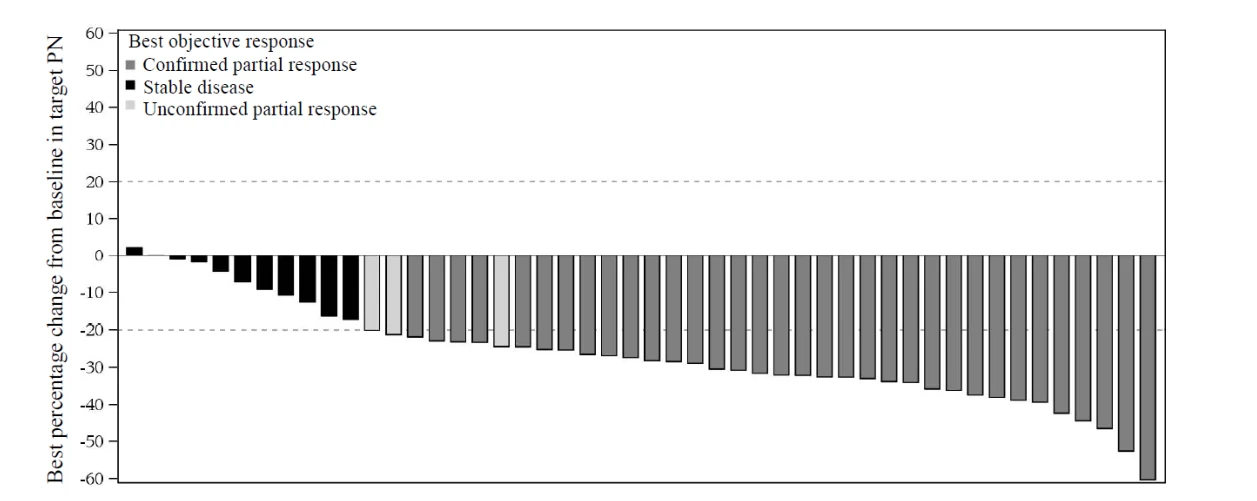
a Best percentage change in target PN volume is the maximum reduction from baseline, or the minimum increase from baseline in the absence of a reduction. Two patients were not evaluable.
Pain intensity of the target PN was self-reported by patients ≥8 years of age using an 11-point Numeric Rating Scale (NRS-11). There were 24 patients who completed the NRS-11 both at baseline and pre-Cycle 13. At pre-Cycle 13, the mean change in pain intensity score from baseline was -2.07 (95% CI: -2.84, -1.31).
Based on mixed model repeated measures (MMRM) analysis, a clinically meaningful reduction in pain (defined as, ≥2-point decrease from baseline) was seen at pre-Cycle 25 (adjusted mean change from baseline: -2.17, 95% CI: -3.17, -1.17) and at pre-Cycle 49 (adjusted mean change from baseline: -2.43, 95% CI: -3.47, -1.40).
Parent reported (all patients) and patient reported (≥8 years of age) health-related quality of life (HRQoL) was assessed using the Peds-QL questionnaire. Based on Mixed Model Repeated Measures (MMRM) analysis, a clinically meaningful improvement in HRQoL (clinically meaningful threshold 11.90) was reported by parents at pre-Cycle 13 with a mean change from baseline in Peds-QL total score of 12.82 (95% CI 9.00 - 16.63) and was sustained at all remaining measurement cycles. Improvement in HRQoL was also reported by patients as pre-Cycle 13 with a mean change from baseline of 6.17 (95% CI 0.93 - 11.40). The improvement in patient reported Peds-QL total score was clinically meaningful (clinically meaningful threshold 10.33) at pre‑Cycle 37, with a mean change from baseline in Peds-QL total score of 11.23 (95% CI 6.81 - 15.65) and was sustained at pre-Cycle 49.
KOMET
The efficacy of KOSELUGO in adult patients was evaluated in a Phase III, multicentre, international study that had a parallel, randomized 1:1, double blind, placebo controlled, 2 arm design. A total of 145 patients were randomized to receive either selumetinib 25 mg/m2 (BSA) or placebo twice daily for 12 cycles (28-day cycles). After the end of Cycle 12, placebo patients crossed over to receive open label selumetinib or earlier if disease progression was confirmed by the Independent Central Review (ICR). Treatment was discontinued if a patient was no longer deriving clinical benefit, experienced unacceptable toxicity, patient decision, PN progression, or at the discretion of the investigator.
The target PN, the clinically most relevant PN, which is measurable by volumetric MRI analysis and, if relevant, one additional non-target PN, was evaluated for response rate using centrally read volumetric MRI analysis per REiNS criteria. Tumour response was evaluated at baseline and while on treatment after every 4 cycles for 2 years, and then every 6 cycles. Patients had target and non target PN MRI volumetric evaluations and clinical outcome assessments.
Demographics and baseline disease characteristics were generally well balanced between the selumetinib and placebo treatment arms. Baseline demographics in the selumetinib and placebo groups were as follows: median age at enrolment was 29 years (range: 18 to 60 years), male (51.7%), White (55.9%), and Asian (31%). The median volume of the target PN was 110.18 mL for the selumetinib group and 221.85 mL for the placebo group. The median number of PN related morbidities was 2 in both the selumetinib and placebo groups The most common reported target PN morbidity at baseline was pain (selumetinib: 87.3%; placebo: 82.4%), followed by motor (selumetinib: 42.3%; placebo: 36.5%), and disfigurement (selumetinib: 32.4%; placebo: 23.0%). Airway, vision, and bowel/bladder morbidities were less frequent, affecting 4.2% or less of the patients in both the selumetinib and placebo groups. The NF1-PN disease characteristics at baseline are provided in Table 18 below.
Table 18 - Baseline disease characteristics in the KOMET study
| Characteristics | Selumetinib (N = 71) | Placebo (N = 74) |
| Target PN volume (mL): | ||
| Median (range) | 110.18 (3.3 – 13574.9)1 | 221.85 (9.1 – 5621.9) |
| Number of PN related morbidities: | ||
| Target PN median (range) | 2 (1 - 5) | 2 (1 - 5) |
| Target PN related overall morbidities (%) | ||
| Pain | 87.3% | 82.4% |
| Motor | 42.3% | 36.5% |
| Disfigurement | 32.4% | 23% |
| Airway | 4.2% | 4.1% |
| Vision | 4.2% | 4.1% |
| Bowel/bladder | 2.8% | 2.7% |
| Other | 15.5% | 27% |
The primary efficacy endpoint was the overall response rate (ORR) for selumetinib by the end of Cycle 16. ORR was defined as the percentage of patients with confirmed complete response (disappearance of the target PN, confirmed by consecutive scan within 3–6 months after the first response) or confirmed partial response (target PN volume decrease ≥ 20%, compared to baseline, confirmed by a consecutive scan within 3–6 months after the first response) by the end of Cycle 16 as determined by ICR per REiNS criteria. Secondary endpoints including single-arm (i.e. within the subset of patients randomized to selumetinib only) ORR, time to response (TTR), and duration of response (DoR) were also evaluated during selumetinib treatment up to the DCO date (05 August 2024).
At the planned primary analysis, the study met its primary endpoint demonstrating a statistically significant and clinically meaningful ORR in selumetinib group versus placebo. By the end of Cycle 16, the ORR for selumetinib was 19.7% (95% CI: 11.2, 30.9) versus an ORR for placebo of 5.4% (95% CI: 1.5, 13.3). At the time of DCO, the median total duration of exposure was 554 days (approximately 18.2 months) in patients randomized to selumetinib. The median TTR was 3.7 months (95% CI: 3.61, 11.07) and the median DoR from onset of response was not reached. Of the 14 patients who had confirmed partial response in the selumetinib group, 12 (85.7%) patients remained in response after 6 months. Efficacy results are presented in Table 19 below.
Table 19 - NF1-PN efficacy results from the KOMET study
| Efficacy Parameters a | Selumetinib (N = 71) | Placebo (N = 74) | |
|---|---|---|---|
| Objective Response Rate (ORR) by the end of Cycle 16 b, c | |||
| ORR % (95% CI) | 19.7 (11.2, 30.9) | 5.4 (1.5, 13.3) | |
| p-value d | 0.0112 | ||
| Best objective response (BOR) by the end of Cycle 16, n (%) b, c, e | |||
| Confirmed Complete Response | 0 | 0 | |
| Confirmed Partial Response | 14 (19.7%) | 4 (5.4%) | |
| Overall Stable Disease | 50 (70.4%) | 63 (85.1%) | |
| Unconfirmed Complete Response | 0 | 0 | |
| Unconfirmed Partial Response | 5 (7%) | 8 (10.8%) | |
| Stable Disease | 45 (63.4%) | 55 (74.3%) | |
| Progressive Disease | 1 (1.4%) | 5 (6.8%) | |
| Not Evaluable | 6 (8.5%) | 2 (2.7%) | |
| Single arm ORR h | |||
| ORR % (95% CI) | 19.7 (11.2, 30.9) | ND | |
| Time to Response (TTR) h | |||
| Median (95% CI) months g | 3.7 (3.61, 11.07) | ND | |
| Duration of Response (DOR) f, g, h | |||
| Median (95% CI) months | NR (11.5, NE) | ND | |
| Number and percentage remaining in response | |||
| ≥ 6 months, n (%) | 12 (85.7%) | ND | |
CI – confidence interval, NE – not estimated, NR - not reached, ND – Not determined for placebo treatment arm.
a Results are based on planned primary analysis (DCO: 05 August 2024) which occurred 32 months after study initiation. Total number of patients included in the primary analysis was 145.
b Each treatment cycle in the study is of 28 calendar days (Cycle 16 corresponds to approximately 15 months).
c Patients with confirmed complete response or partial response by independent central review (ICR) per REiNS criteria. Response confirmation was by a consecutive scan within 3 to 6 months after the first response as determined by ICR per REiNS criteria.
d 2-sided p-value calculated using Fisher's exact method (alpha of 0.047) by comparison of Selumetinib vs Placebo.
e Complete Response: disappearance of the target lesion; Partial Response: decrease in target PN volume by ≥ 20% compared to baseline; Stable Disease: insufficient volume change from baseline to qualify for either partial response or progressive disease; Progressive Disease: increase in target PN volume by ≥ 20% compared to baseline or the documented time of best response.
f Duration of Response from date of first documented response (subsequently confirmed) until date of documented progression by ICR per REiNS criteria.
g Calculated using Kaplan-Meier method.
h Calculated for patients randomized to selumetinib arm including data until DCO (05 August 2024).
Pain intensity was assessed as a key secondary endpoint using the PAINS-pNF chronic target PN pain intensity score to characterize patient-reported pain associated with plexiform neurofibromas. At Cycle 12, the mean change from baseline in pain intensity was −2.0-points decrease in the selumetinib group and −1.3-point decrease in the placebo group. However, the results were not statistically significant.
15 MICROBIOLOGY
No microbiological information is required for this drug product.
16 NON-CLINICAL TOXICOLOGY
General Toxicology
In 26-week repeat toxicity studies conducted in mice and monkeys, gastrointestinal disturbances were identified as the most common adverse effect. In mice, selumetinib at a dose of 2 mg/kg/day (around 2 times the human exposure, based in AUC at the human clinical dose) produced minimal colon inflammation. At a higher dose (more than 35 times the human exposure) the inflammatory GI tract findings were associated with secondary changes in the liver and lymphoreticular system in both sexes. In addition, some male mice showed evidence of significant urinary tract obstruction.
Selumetinib administration in monkeys led to loose/liquid feces even at a low dose (1.5/mg/kg twice a day), equivalent to ~1.3 times the human exposure (AUC) at the 25 mg/m2 twice daily clinical dose.
The main clinical sign seen after selumetinib administration in rats for 3 months, at levels > 5 times the human exposure (at the MRHD), were skin lesions or scabs associated with microscopic erosions and ulceration. GI findings showed evidence of reversibility following a recovery period. Reversibility for skin toxicities was not evaluated. Male rats receiving selumetinib at doses ≥ 10 mg/kg daily (equivalent to more than 60 times the human exposure at the clinical dose based on AUC) showed growth plate dysplasia.
Carcinogenicity
Selumetinib was not carcinogenic in a 6-month study in rasH2 transgenic mice at exposures 23 times (males) and 35 times (females) and in 2-year carcinogenicity study in rats at exposures 20 times (male) and 15 times (females) the human exposure (AUC) at maximum recommended human dose (MRHD) of 25 mg/m2.
Genotoxicity
Selumetinib showed no mutagenic or clastogenic potential in vitro but produced an increase in micronucleated immature erythrocytes (chromosome aberrations) in mouse micronucleus studies, predominantly via an aneugenic mode of action. The aneugenic findings were observed at doses that resulted in exposure levels (Cmax) of at least 10 times the levels obtained at the maximum recommended human dose of 25 mg/m2.
Reproductive and Developmental Toxicology
Fertility
In a 6-month mouse study, selumetinib did not affect male mating performance at any dose up to 20 mg/kg twice daily corresponding to approximately 32-times the human clinical exposure based on AUC at the maximum recommended human dose (MRHD). Repeated treatment of male mice with selumetinib at doses up to 5 mg/kg twice a day (~11 times the clinical exposure at 25 mg/m2 BID) for 26 weeks had no adverse effects on progressive motility or sperm numbers. In female mice exposed to selumetinib at 12.5 mg/kg twice daily, mating performance and fertility were not affected, but the number of live fetuses was slightly reduced. Following a three-week treatment withdrawal period, no effects were apparent on any parameter. The No Observed Adverse Effect Level (NOAEL) for both maternal toxicity and effects on reproductive performance was 2.5 mg/kg twice daily (approximately, 5-fold human exposure at the MRHD, 25 mg/m2 twice daily).
Embryofetal toxicity
In embryo-fetal development studies in mice at doses > 2.5 mg/kg twice daily (~5 times the human exposure based on AUC at the clinical dose of 25 mg/m2 twice daily), selumetinib caused increases in post-implantation loss, a reduction in mean fetal and litter weights, and an increased occurrence of open eye and cleft palate but did not induce significant maternal toxicity.
These results indicate that selumetinib has potential to cause embryo-fetal defects.
Pre- and postnatal development
Administration of selumetinib to pregnant mice from gestation Day 6 through to lactation Day 20 resulted in reduced pup body weights, and fewer pups met the pupil constriction criterion on Day 21 post-partum. The incidence of malformations (e.g. prematurely open eye(s) and cleft palate) was increased even at the lowest dose of 0.5 mg/kg twice daily (maternal maximal concentration [Cmax] of ~0.6 times the human Cmax at the clinical dose of 25 mg/m2 twice daily).
Selumetinib and its active metabolite were present in milk from mice dosed with selumetinib throughout gestation and lactation, with a mean plasma/milk ratio of 1.5 in lactating dams dosed at 5 mg/kg twice daily (>4.5 times the human exposure based on Cmax at the clinical dose of 25 mg/m2 twice daily).