


Product Monograph - Libtayo (Regeneron Canada)
Recent Major Label Changes
| 1 Indications | 2026-06 |
|---|---|
| 1 Indications, 1.1 Pediatrics | 2026-03 |
| 3 Serious Warnings and Precautions Box | 2026-06 |
| 4 Dosage and Administration, 4.2 Recommended Dose and Dosage Adjustment | 2026-06 |
| 4 Dosage and Administration, 4.3 Reconstitution | 2024-10, 2026-06 |
| 7 Warnings and Precautions, Immune | 2024-09, 2026-04, 2026-06 |
| 7 Warnings and Precautions, 7.1.4 Geriatrics | 2026-06 |
Table of Contents
Certain sections or subsections that are not applicable at the time of the preparation of the most recent authorized product monograph are not listed.
Recent Major Label Changes ............................................................................................ 2
Table of Contents ................................................................................................................... 2
Part 1: Healthcare Professional Information ........................................................................... 4
1 Indications .................................................................................................................. 4
1.1 Pediatrics .............................................................................................................. 4
1.2 Geriatrics .............................................................................................................. 4
2 Contraindications ........................................................................................................ 5
3 Serious Warnings and Precautions Box ....................................................................... 5
4 Dosage and Administration ......................................................................................... 5
4.1 Dosing Considerations .......................................................................................... 5
4.2 Recommended Dose and Dosage Adjustment ..................................................... 5
4.3 Reconstitution .................................................................................................... 10
4.4 Administration .................................................................................................... 11
4.5 Missed Dose ....................................................................................................... 12
5 Overdose................................................................................................................... 12
6 Dosage Forms, Strengths, Composition, and Packaging ............................................. 12
7 Warnings and Precautions ......................................................................................... 12
Driving and Operating Machinery .................................................................................. 12
Immune .......................................................................................................................... 13
Reproductive Health ...................................................................................................... 16
7.1 Special Populations ............................................................................................. 17
7.1.1 Pregnancy ....................................................................................................... 17
7.1.2 Breastfeeding ................................................................................................. 17
7.1.3 Pediatrics ........................................................................................................ 17
7.1.4 Geriatrics ........................................................................................................ 17
8 Adverse Reactions ..................................................................................................... 18
8.1 Adverse Reaction Overview ................................................................................ 18
8.2 Clinical Trial Adverse Reactions .......................................................................... 18
8.3 Less Common Clinical Trial Adverse Reactions ................................................... 39
8.4 Abnormal Laboratory Findings: Hematologic, Clinical Chemistry and Other Quantitative Data ........................................................................................................... 42
8.5 Post-Market Adverse Reactions ......................................................................... 46
9 Drug Interactions ...................................................................................................... 47
10 Clinical Pharmacology ............................................................................................... 47
10.1 Mechanism of Action .......................................................................................... 47
10.2 Pharmacodynamics ............................................................................................ 47
10.3 Pharmacokinetics ............................................................................................... 47
10.4 Immunogenicity .................................................................................................. 49
11 Storage, Stability, and Disposal ................................................................................. 49
12 Special Handling Instructions .................................................................................... 49
Part 2: Scientific Information ................................................................................................ 50
13 Pharmaceutical Information ...................................................................................... 50
14 Clinical Trials ............................................................................................................. 51
14.1 Clinical Trials by Indication ................................................................................. 51
Cutaneous Squamous Cell Carcinoma ............................................................................ 51
Non-Small Cell Lung Cancer ............................................................................................ 57
Basal Cell Carcinoma ...................................................................................................... 65
Cervical Cancer ............................................................................................................... 68
16 Non-Clinical Toxicology ............................................................................................. 72
Patient Medication Information ........................................................................................... 74
Part 1: Healthcare Professional Information
1 Indications
Cutaneous Squamous Cell Carcinoma
LIBTAYO (cemiplimab for injection) is indicated for:
- the treatment of adult patients with metastatic or locally advanced cutaneous squamous cell carcinoma (CSCC) who are not candidates for curative surgery or curative radiation.
- the adjuvant treatment of adult patients with CSCC at high risk of recurrence after surgery and radiation.
Non-Small Cell Lung Cancer
LIBTAYO (cemiplimab for injection) is indicated:
as monotherapy for the first-line treatment of adult patients with non-small cell lung cancer (NSCLC) expressing PD-L1 in ≥ 50% of tumour cells (Tumour Proportion Score [TPS] ≥ 50%), as determined by a validated test, with no EGFR, ALK or ROS1 aberrations, who have:
- locally advanced NSCLC who are not candidates for surgical resection or definitive chemoradiation, or
- metastatic NSCLC.
in combination with platinum‐based chemotherapy for the first‐line treatment of adult patients with NSCLC whose tumours have no EGFR, ALK or ROS1 aberrations and is:
- locally advanced where patients are not candidates for surgical resection or definitive chemoradiation, or
- metastatic NSCLC.
Basal Cell Carcinoma
LIBTAYO (cemiplimab for injection) is indicated for:
- the treatment of adult patients with locally advanced basal cell carcinoma (BCC) previously treated with a hedgehog pathway inhibitor.
Cervical Cancer
LIBTAYO (cemiplimab for injection) is indicated for:
- the treatment of adult patients with cervical cancer who have progressed on or after prior platinum-based chemotherapy and who require additional systemic therapy to treat recurrent or metastatic disease.
1.1 Pediatrics
Pediatrics (< 18 years of age): Health Canada has not authorized an indication for pediatric use (see 7.1.3 Pediatrics).
1.2 Geriatrics
Geriatrics (> 65 years of age): No overall differences in efficacy were observed between younger patients (< 65 years of age) and elderly patients (≥ 65 years of age) (see 7.1.4 Geriatrics).
2 Contraindications
LIBTAYO is contraindicated in patients who are hypersensitive to this drug or to any ingredient in the formulation, including any non-medicinal ingredient, or component of the container. For a complete listing, see 6 Dosage Forms, Strengths, Composition, and Packaging.
3 Serious Warnings and Precautions Box
Serious Warnings and Precautions
Severe and fatal immune-mediated adverse reactions have been observed in patients treated with LIBTAYO. Fatal and life-threatening immune-mediated adverse reactions include pneumonitis, hepatitis, Stevens-Johnson syndrome /toxic epidermal necrolysis, nephritis, myocarditis, myositis, paraneoplastic encephalomyelitis, meningitis, and pancreatitis, as well as toxicities in other organ systems [see 7 Warnings and Precautions, Immune].
For early identification and management of immune-mediated adverse reactions [see sections 7 Warnings and Precautions and 4 Dosage and Administration].
4 Dosage and Administration
4.1 Dosing Considerations
Treatment with LIBTAYO must be initiated and supervised by healthcare professionals experienced in the treatment of cancer.
Patient Selection for NSCLC
Patients should be selected for treatment with LIBTAYO based on PD-L1 expression confirmed by a validated test in locally advanced or metastatic NSCLC (see 14 Clinical Trials).
4.2 Recommended Dose and Dosage Adjustment
The recommended dose of LIBTAYO is 350 mg every three (3) weeks administered as an intravenous infusion over 30 minutes.
Table 1: Recommended dosages for LIBTAYO
| Indication | Recommended dosage of LIBTAYO as an intravenous infusion | Duration of Treatment |
|---|---|---|
| Indication | Recommended dosage of LIBTAYO as an intravenous infusion | Duration of Treatment |
| Adults with metastatic cutaneous squamous cell carcinoma (mCSCC) or locally advanced CSCC (laCSCC) | 350 mg every 3 weeks | Until disease progression or unacceptable toxicity, whichever occurs first. |
| Adjuvant treatment of adult patients with CSCC at high risk of recurrence after surgery and radiation | 350 mg every 3 weeks for 12 weeks, followed by 700 mg every 6 weeks Or 350 mg every 3 weeks | Until disease recurrence, unacceptable toxicity, or up to 48 weeks of total therapy. |
| Adults with locally advanced basal cell carcinoma (laBCC) or metastatic BCC (mBCC) | 350 mg every 3 weeks | Until disease progression, unacceptable toxicity, whichever occurs first. |
| Adults with non-small cell lung cancer (NSCLC) | 350 mg every 3 weeks | Until disease progression or unacceptable toxicity, whichever occurs first. |
| Adults with cervical cancer | 350 mg every 3 weeks | 96 weeks or until disease progression or unacceptable toxicity, whichever occurs first. |
No dose reductions are recommended. Dosing delay or discontinuation may be required based on individual safety and tolerability. Recommended modifications to manage adverse reactions are provided in Table 2 (see 7 Warnings and Precautions and 8 Adverse Reactions).
When LIBTAYO is to be administered in combination with other agents, refer to the Product Monograph for these agents for recommended dosing information prior to administration.
Table 2: Recommended Treatment Modifications for Adverse Reactions
| Adverse Reaction | Severitya | Dose modification | Additional Intervention |
|---|---|---|---|
| Adverse Reaction | Severitya | Dose modification | Additional Intervention |
| Adverse Reaction | Severitya | Dose modification | Additional Intervention |
| Adverse Reaction | Severitya | Dose modification | Additional Intervention |
| Adverse Reaction | Severitya | Dose modification | Additional Intervention |
| Immune-Mediated Adverse Reactions | |||
| Pneumonitis | Grade 2 | Withhold LIBTAYO | Initial dose of 1 mg/kg/day to 2 mg/kg/day prednisone or equivalent followed by a taper |
| Resume LIBTAYO if pneumonitis improves and remains at Grade 0 to 1 after corticosteroid taper to ≤10 mg/day prednisone or equivalent | |||
Grade 3 or 4 or recurrent Grade 2 | Permanently discontinue LIBTAYO | Initial dose of 2 mg/kg/day to 4 mg/kg/day prednisone or equivalent followed by a taper | |
| Colitis | Grade 2 or 3 | Withhold LIBTAYO | Initial dose of 1 mg/kg/day to 2 mg/kg/day prednisone or equivalent followed by a taper |
| Resume LIBTAYO if colitis or diarrhea improves and remains at Grade 0 to 1 after corticosteroid taper to ≤10 mg/day prednisone or equivalent | |||
Grade 4 or recurrent Grade 3 | Permanently discontinue LIBTAYO | Initial dose of 1 mg/kg/day to 2 mg/kg/day prednisone or equivalent followed by a taper | |
| Hepatitis | Grade 2 with AST or ALT >3 and ≤5×ULN or total bilirubin >1.5 and ≤3×ULN | Withhold LIBTAYO | Initial dose of 1 mg/kg/day to 2 mg/kg/day prednisone or equivalent followed by a taper |
| Resume LIBTAYO if hepatitis improves and remains at Grade 0 to 1 after corticosteroid taper to ≤10 mg/day prednisone or equivalent or returns to baseline AST or ALT after completion of corticosteroid taper | |||
Grade ≥3 with AST or ALT >5×ULN or total bilirubin >3×ULN | Permanently discontinue LIBTAYO | Initial dose of 1 mg/kg/day to 2 mg/kg/day prednisone or equivalent followed by a taper | |
| Hypothyroidism | Grade 3 or 4 | Withhold LIBTAYO | Initiate thyroid hormone replacement as clinically indicated |
| Resume LIBTAYO when hypothyroidism returns to Grade 0 to 1 or is otherwise clinically stable | |||
| Hyperthyroidism | Grade 3 or 4 | Withhold LIBTAYO | Initiate symptomatic management |
| Resume LIBTAYO when hyperthyroidism returns to Grade 0 to 1 or is otherwise clinically stable | |||
| Thyroiditis | Grade 3 to 4 | Withhold LIBTAYO | Initiate hormone management as clinically indicated |
| Resume LIBTAYO when thyroiditis returns to Grade 0 to 1 or is otherwise clinically stable | |||
| Hypophysitis | Grade 2 to 4 | Withhold LIBTAYO | Initial dose of 1 mg/kg/day to 2 mg/kg/day prednisone or equivalent followed by a taper and hormone replacement as clinically indicated |
| Resume LIBTAYO if hypophysitis improves and remains at Grade 0 to 1 after corticosteroid taper to ≤10 mg/day prednisone or equivalent or is otherwise clinically stable | |||
| Adrenal insufficiency | Grade 2 to 4 | Withhold LIBTAYO | Initial dose of 1 mg/kg/day to 2 mg/kg/day prednisone or equivalent followed by a taper and hormone replacement as clinically indicated |
| Resume LIBTAYO if adrenal insufficiency improves and remains at Grade 0 to 1 after corticosteroid taper to ≤10 mg/day prednisone or equivalent or is otherwise clinically stable | |||
| Type 1 Diabetes Mellitus | Grade 3 or 4 (hyperglycemia) | Withhold LIBTAYO | Initiate treatment with insulin as clinically indicated |
| Resume LIBTAYO when diabetes mellitus returns to Grade 0 to 1 or is otherwise clinically stable | |||
| Skin Adverse Reactions | Grade 2 lasting longer than 1 week, Grade 3 or suspected Stevens-Johnson syndrome (SJS) or toxic epidermal necrolysis (TEN) | Withhold LIBTAYO | Initial dose of 1 mg/kg/day to 2 mg/kg/day prednisone or equivalent followed by a taper |
| Resume LIBTAYO if skin reaction improves and remains at Grade 0 to 1 after corticosteroid taper to ≤10 mg/day prednisone or equivalent | |||
| Grade 4 or confirmed SJS or TEN | Permanently discontinue LIBTAYO | Initial dose of 1 mg/kg/day to 2 mg/kg/day prednisone or equivalent followed by a taper | |
| Skin Reaction or other Adverse Reactions in patients with prior treatment with idelalisib | Grade 2 | Withhold LIBTAYO | Initiate management immediately, including initial dose of 1 mg/kg/day to 2 mg/kg/day prednisone or equivalent followed by a taper |
| Resume LIBTAYO if skin reaction or other immune-mediated adverse reaction improves and remains at Grade 0 to 1 after corticosteroid taper to ≤10 mg/day prednisone or equivalent | |||
Grade 3 or 4 (excluding endocrinopathies) or recurrent Grade 2 | Permanently discontinue LIBTAYO | Initiate management immediately, including initial dose of 1 mg/kg/day to 2 mg/kg/day prednisone or equivalent followed by a taper | |
| Nephritis | Grade 2 creatinine increased | Withhold LIBTAYO | Initial dose of 1 mg/kg/day to 2 mg/kg/day prednisone or equivalent followed by a taper |
| Resume LIBTAYO if nephritis improves and remains at Grade 0 to 1 after corticosteroid taper to ≤10 mg/day prednisone or equivalent | |||
| Grade 3 or 4 creatinine increased | Permanently discontinue LIBTAYO | Initial dose of 1 mg/kg/day to 2 mg/kg/day prednisone or equivalent followed by a taper | |
| Other (see Other Immune-Mediated Adverse Reactions) | Grade 2 or 3 based on severity or type of reaction | Withhold LIBTAYO | Initiate symptomatic management, including initial dose of 1 mg/kg/day to 2 mg/kg/day prednisone or equivalent as clinically indicated followed by a taper |
| Resume LIBTAYO if other immune-mediated adverse reaction improves and remains at Grade 0 to 1 after corticosteroid taper to ≤10 mg/day prednisone or equivalent | |||
| Permanently discontinue LIBTAYO | Initial dose of 1 mg/kg/day to 2 mg/kg/day prednisone or equivalent as clinically indicated followed by a taper | |
| Neurologic | Grade 3 or 4 neurologic toxicity | Permanently discontinue LIBTAYO | Initial dose of 1 mg/kg/day to 2 mg/kg/day prednisone or equivalent as clinically indicated followed by a taper |
| Cardiac |
| Permanently discontinue LIBTAYO | Initial dose of 1 mg/kg/day to 2 mg/kg/day prednisone or equivalent as clinically indicated followed by a taper |
| Hemophagocytic lymphohistiocytosis (HLH) | Suspected | Withhold LIBTAYO | Initiate treatment |
| Resume LIBTAYO at physician’s discretion if diagnosis of HLH is excluded | |||
| Confirmed | Permanently discontinue | Initiate/continue treatment for HLH | |
| Infusion-related reactions | |||
| Infusion-Related Reaction | Grade 1 or 2 | Interrupt or slow rate of infusion | Initiate symptomatic management |
| Grade 3 or 4 | Permanently discontinue LIBTAYO | ||
ALT: alanine aminotransferase; AST: aspartate aminotransferase; ULN: upper limit of normal. a Toxicity should be graded with the current version of National Cancer Institute Common Terminology Criteria for Adverse Events (NCI CTCAE). | |||
Pediatrics:
Health Canada has not authorized an indication for pediatric use.
Renal Impairment:
No formal studies of LIBTAYO in patients with renal impairment have been conducted. Based on population pharmacokinetic analyses, no dose adjustment of LIBTAYO is recommended for patients with renal impairment (see 10 Clinical Pharmacology).
Hepatic Impairment:
No formal studies of LIBTAYO in patients with hepatic impairment have been conducted. Based on population pharmacokinetic analyses, no dose adjustment of LIBTAYO is recommended for patients with mild to moderate hepatic impairment (see 10 Clinical Pharmacology).
4.3 Reconstitution
Preparation and Reconstitution
Visually inspect drug product for particulate matter and discolouration prior to administration. LIBTAYO is a clear to slightly opalescent, colourless to pale yellow solution that may contain trace amounts of translucent to white particles.
Discard the vial if the solution is cloudy, discoloured or contains extraneous particulate matter other than trace amounts of translucent-to-white particles.
Do not shake the vial.
Withdraw the required volume from the vial(s) of LIBTAYO and transfer into an intravenous (IV) infusion bag containing 0.9% Sodium Chloride Injection or 5% Dextrose Injection. Mix diluted solution by gentle inversion. Do not shake the solution. The final concentration of the diluted solution should be between 1 mg/mL to 20 mg/mL. Use 2 vials for doses of 700 mg.
LIBTAYO is for single use only. Dispose of any unused medicinal product or waste material in accordance with local requirements.
No compatibility studies have been performed. Do not mix with other medicinal products.
Storage of Solution
Once prepared, administer the diluted solution immediately. If diluted solution is not administered immediately, it may be stored temporarily either:
|
Or
|
Do not freeze.
Do not shake.
For further information, see 11 Storage, Stability, and Disposal.
4.4 Administration
LIBTAYO is administered by intravenous infusion over 30 minutes through an intravenous line containing a sterile, in-line or add-on filter (0.2-micron to 5-micron pore size).
Do not co-administer with other drugs through the same infusion line.
When administered in combination with platinum-based doublet chemotherapy agents, the chemotherapy agents should be infused first, followed by cemiplimab, on the same day. Use separate infusion bags and filters for each infusion.
4.5 Missed Dose
If a planned dose of LIBTAYO is missed, it should be administered as soon as possible; do not wait until the next planned dose. Maintain the planned schedule of administration of subsequent doses.
5 Overdose
There is no information on overdosage with LIBTAYO (cemiplimab for injection). In case of overdose, patients should be closely monitored for signs or symptoms of adverse reactions, and appropriate symptomatic treatment instituted.
For the most recent information in the management of a suspected drug overdose, contact your regional poison control centre or Health Canada’s toll-free number, 1-844-POISON-X (1-844-764-7669).
6 Dosage Forms, Strengths, Composition, and Packaging
To help ensure the traceability of biologic products, healthcare professionals should record both the brand name and the non-proprietary (active ingredient) name as well as other product-specific identifiers such as the Drug Identification Number (DIN) and the batch/lot number of the product supplied.
Table 3: Dosage Forms, Strengths, Composition and Packaging
LIBTAYO is a clear to slightly opalescent, colourless to pale yellow sterile solution with a pH of 6.0 that may contain trace amounts of translucent to white particles.
LIBTAYO is provided in a 10 mL glass vial with a 20 mm finish made of clear Type 1 glass, equipped with a 20 mm grey chlorobutyl elastomeric liquid stopper. The 350 mg vial has a violet flip-off button.
7 Warnings and Precautions
See 3 Serious Warnings and Precautions Box
GeneralLIBTAYO should be administered under the supervision of health care practitioners experienced in the treatment of cancer.
Driving and Operating Machinery
Due caution should be exercised when driving or operating a vehicle or potentially dangerous
| Route of Administration | Dosage Form / Strength / Composition | Non-medicinal Ingredients |
| Intravenous (IV) Infusion | Sterile solution for infusion/ 350 mg cemiplimab/7 mL (10 mL single use vial) | L-Histidine, L-Histidine Monohydrochloride Monohydrate, Sucrose, L-Proline, Polysorbate 80, Water for Injection |
machinery.
Immune
Severe and fatal immune-mediated adverse reactions have been observed in patients treated with LIBTAYO (see 4 Dosage and Administration and 8 Adverse Reactions). These immune-mediated reactions may involve any organ system and may affect more than one body system simultaneously. Immune-mediated reactions can manifest at any time during treatment with LIBTAYO; however, immune-mediated adverse reactions can occur after discontinuation of LIBTAYO.
The warnings and precautions for immune-mediated adverse reactions applies to the use of LIBTAYO as monotherapy and also in combination with platinum-based chemotherapy.
Early identification and management of immune-mediated adverse reactions are essential to ensure safe use of PD-1/PD-L1 blocking antibodies. Evaluate suspected immune-mediated adverse reactions to exclude other causes. Monitor patients continuously (even after the last dose) for signs and symptoms of immune-mediated adverse reactions and manage immune-mediated adverse reactions with LIBTAYO treatment modifications, hormone replacement therapy (as clinically indicated), and corticosteroids. Depending upon the severity of the adverse reaction, withhold or permanently discontinue LIBTAYO (see 4 Dosage and Administration).
Important immune-mediated adverse reactions listed under Warnings and Precautions may not include all possible severe and fatal immune-mediated reactions.
Immune-Mediated Pneumonitis
Immune-mediated pneumonitis, defined as requiring use of corticosteroids with no clear alternate etiology, including fatal cases, has been observed in patients receiving LIBTAYO (see 8 Adverse Reactions).
Monitor patients for signs and symptoms of pneumonitis. Evaluate patients with suspected pneumonitis with radiographic imaging and manage with treatment modifications and corticosteroids (see 4 Dosage and Administration).
Immune-Mediated Colitis
Immune-mediated diarrhea or colitis, defined as requiring use of corticosteroids with no clear alternate etiology, has been observed in patients receiving LIBTAYO (see 8 Adverse Reactions).
Monitor patients for signs and symptoms of diarrhea or colitis and manage with treatment modifications, anti-diarrheal agents, and corticosteroids (see 4 Dosage and Administration).
Immune-Mediated Hepatitis
Immune-mediated hepatitis, defined as requiring use of corticosteroids with no clear alternate etiology, including fatal cases, has been observed in patients receiving LIBTAYO (see 8 Adverse Reactions).
Monitor patients for abnormal liver tests prior to and periodically during treatment, and manage with treatment modifications and corticosteroids (see 4 Dosage and Administration).
Immune-Mediated Endocrinopathies
Immune-mediated endocrinopathies, defined as treatment emergent endocrinopathies with no clear alternate etiology, have been observed in patients receiving LIBTAYO (see 8 Adverse Reactions).
Thyroid Disorders (Hypothyroidism/Hyperthyroidism/Thyroiditis)
Immune-mediated thyroid disorders have been observed in patients receiving LIBTAYO. Thyroiditis can present with or without an alteration in thyroid function tests. Hypothyroidism can follow hyperthyroidism. Thyroid disorders can occur at any time during the treatment.
Monitor patients for changes in thyroid function at the start of the treatment, periodically during treatment, and as indicated based on clinical evaluation. Manage patients with hormone replacement therapy (if indicated) and treatment modifications. Initiate medical management for control of hyperthyroidism (see 4 Dosage and Administration).
Hypophysitis
Immune-mediated hypophysitis has been observed in patients receiving LIBTAYO.
Monitor patients for signs and symptoms of hypophysitis and manage with treatment modifications, corticosteroids and hormone replacement, as clinically indicated (see 4 Dosage and Administration).
Adrenal Insufficiency
Adrenal insufficiency has been observed in patients receiving LIBTAYO.
Monitor patients for signs and symptoms of adrenal insufficiency during and after treatment and manage with treatment modifications, corticosteroids and hormone replacement, as clinically indicated (see 4 Dosage and Administration).
Type 1 Diabetes Mellitus
Immune-mediated type 1 diabetes mellitus, including diabetic ketoacidosis, has been observed in patients receiving LIBTAYO.
Monitor patients for hyperglycemia and signs and symptoms of diabetes. Manage immune-mediated Type 1 diabetes mellitus with insulin and treatment modifications as clinically indicated (see 4 Dosage and Administration).
Immune-Mediated Skin Adverse Reactions
Immune-mediated skin adverse reactions, defined as requiring use of systemic corticosteroids with no clear alternate etiology, including rash, erythema multiforme, pemphigoid, and Stevens-Johnson syndrome (SJS)/toxic epidermal necrolysis (TEN) (some cases with fatal outcome) have been observed (see 8 Adverse Reactions). Drug reaction with eosinophilia and systemic symptoms (DRESS) has been observed with PD-1/PD-L1 inhibitors.
Monitor patients for signs and symptoms of suspected severe skin reactions and exclude other causes. Manage patients with treatment modifications and corticosteroids.
For symptoms or signs of SJS, TEN, refer the patient for specialized care for assessment and treatment and manage patient with treatment modifications (see 4 Dosage and Administration).
Cases of SJS/TEN/stomatitis including fatal TEN occurred following dosing of LIBTAYO in patients with prior exposure to idelalisib, who were participating in a clinical trial evaluating LIBTAYO in Non Hodgkin Lymphoma (NHL), and who had recent exposure to sulfa containing antibiotics. Two patients experienced fatal mucocutaneous toxicity after a single dose of cemiplimab monotherapy, and a third patient developed myositis and myasthenia gravis following 2 doses of cemiplimab. Manage patients immediately with treatment modifications and corticosteroids as described above (see 4 Dosage and Administration, Table 2).
Immune-Mediated Nephritis
Immune-mediated nephritis, defined as requiring use of corticosteroids with no clear alternate etiology, including a fatal case, has been observed in patients receiving LIBTAYO (see 8 Adverse Reactions).
Monitor patients for changes in renal function. Manage patients with treatment modifications and corticosteroids (see 4 Dosage and Administration).
Other Immune-Mediated Adverse Reactions
Other fatal and life-threatening immune-mediated adverse reactions have been observed in patients receiving LIBTAYO including paraneoplastic encephalomyelitis, meningitis, myositis, and myocarditis, and pancreatitis (see 8 Adverse Reactions).
Cases of solid organ transplant rejection have been reported in the postmarketing setting with LIBTAYO. Solid organ transplant rejection has been reported in patients treated with other PD-1 inhibitors. Patients with history of solid organ transplant were excluded from LIBTAYO clinical studies. Treatment with LIBTAYO may increase the risk of rejection in solid organ transplant recipients. Consider the benefit of treatment with LIBTAYO versus the risk of possible organ rejection in these patients.
Cases of graft-versus-host disease have been reported in the postmarketing setting in patients treated with other PD-1/PD-L1 inhibitors in association with allogeneic hematopoietic stem cell transplant.
Cases of aplastic anemia have been reported in patients treated with other PD-1/PD-L1 inhibitors.
Cases of uveitis have been reported in patients treated with LIBTAYO (see 8.5 Post-Market Adverse Reactions).
Evaluate suspected immune-mediated adverse reactions to exclude other causes. Patients should be monitored for signs and symptoms of immune-mediated adverse reactions and managed with LIBTAYO treatment modifications and corticosteroids as clinically indicated (see 4 Dosage and Administration and 8 Adverse Reactions).
Hemophagocytic lymphohistiocytosis (HLH) has been reported in the postmarketing setting with LIBTAYO (see 8.5 Post-Market Adverse Reactions). Patients should be monitored for clinical signs and symptoms of HLH. If HLH is suspected, administration of LIBTAYO should be withheld and treatment initiated (see 4.2 Recommended Dose and Dosage Adjustment). If HLH is confirmed, administration of LIBTAYO should be permanently discontinued.
Immune-Mediated Myocarditis/Myositis/Myasthenia Gravis Overlap Syndrome (Triple M syndrome):
Triple M syndrome has been observed in clinical trials or the post-marketing setting with PD-1 and PD-L1 inhibitors. Onset occurs predominately within the first two treatment cycles. It is important to recognize the overlapping symptoms, which can complicate diagnosis and management and could have a higher risk of mortality. Patients presenting with signs or symptoms of one condition should be monitored and evaluated for the other two conditions and they should be managed as clinically indicated. Refer to the table in Section 4 Dosage and Administration section for recommended dose modification guidance for the management of imAEs.
Infusion-Related Reactions
LIBTAYO can cause severe or life-threatening infusion-related reactions (see 8 Adverse Reactions).
Monitor patients for signs and symptoms of infusion-related reactions and manage with treatment modifications and corticosteroids.
Interrupt or slow the rate of infusion or permanently discontinue LIBTAYO based on the severity of reaction (see 4 Dosage and Administration).
Reproductive Health
- Fertility
No clinical data are available on the possible effects of cemiplimab on fertility. No effects on fertility assessment parameters or in the male and female reproductive organs were observed in a 3-month repeat dose fertility assessment study with sexually mature cynomolgus monkeys (see 16 Non-Clinical Toxicology).
7.1 Special Populations
7.1.1 Pregnancy
Based on its mechanism of action, LIBTAYO can cause fetal harm when administered to a pregnant woman. There are no available data on the use of cemiplimab in pregnant women. Blockade of PD-1/PD-L1 signaling has been shown in murine models of pregnancy to disrupt tolerance to the fetus and to result in an increase in fetal loss. Animal reproduction studies have not been conducted with cemiplimab (see 16 Non-Clinical Toxicology).
Human IgG4 is known to cross the placental barrier and cemiplimab is an IgG4; therefore, cemiplimab has the potential to be transmitted from the mother to the developing fetus.
Cemiplimab is not recommended during pregnancy and in women of childbearing potential not using effective contraception unless the clinical benefit outweighs the potential risk. Effective contraception should be used in women of childbearing potential during treatment with cemiplimab and for at least 4 months following the last dose of LIBTAYO.
7.1.2 Breastfeeding
It is unknown whether cemiplimab is secreted in human milk. It is known that antibodies (including IgG4) are secreted in human milk; a risk to the newborn/infant cannot be excluded.
Breast-feeding women should be advised not to breast-feed during treatment and for at least 4 months after the last dose due to the potential risks to newborns/infants.
7.1.3 Pediatrics
Pediatrics (< 18 years of age): The safety and efficacy of LIBTAYO in pediatric patients has not been established; therefore, Health Canada has not authorized an indication for pediatric use.
7.1.4 Geriatrics
Geriatrics (≥ 65 years of age): No overall differences in efficacy were observed between elderly patients and younger patients. There was a trend towards a higher frequency of serious adverse events, Grade ≥ 3 treatment-related adverse reactions and discontinuations due to adverse events in patients 65 years and older compared with patients aged less than 65 years.
8 Adverse Reactions
8.1 Adverse Reaction Overview
The following clinically significant adverse reactions have been observed in patients treated with LIBTAYO and are detailed under Warnings and Precautions:
Severe and fatal immune-mediated adverse reactions (see 7 Warnings and Precautions, Immune and 8.2 Clinical Trial Adverse Reactions, Additional Information on Selected Adverse Reactions)
Infusion-related reactions (see7 Warnings and Precautions, Immune and 8.2 Clinical Trial Adverse Reactions)
LIBTAYO as Monotherapy (Studies 1423, 1540, 1620, 1624, and 1676)
The safety data reflect exposure to LIBTAYO monotherapy in 1116 patients with advanced solid malignancies in 5 clinical studies. Three clinical studies were single-arm, open-label, multicohort studies (Studies 1423, 1540 and 1620) and two were open-label, randomized, multi-center studies (Studies 1624 and 1676). These studies included 219 patients with advanced CSCC (Studies 1540 and 1423), 138 patients with advanced BCC (Study 1620), 355 patients with NSCLC (Study 1624), 300 patients with recurrent or metastatic cervical cancer, and 104 patients with other advanced solid tumours (Study 1423). LIBTAYO was administered intravenously at doses of 3 mg/kg every 2 weeks (n=235), 350 mg every 3 weeks (n=849), or other doses (n=32; 1 mg/kg every 2 weeks, 10 mg/kg every 2 weeks, 200 mg every 2 weeks). The median duration of exposure to LIBTAYO was 27 weeks (range: 2 days to 144 weeks). Among the 1116 patients, 51% were exposed for ≥ 6 months and 23% were exposed for ≥ 12 months.
The overall safety population characteristics were: median age of 62 years (range: 22 to 96 years), 656 (58.8%) male, 900 (80.6%) white, European Cooperative Oncology Group (ECOG) performance score (PS) of 0 in 457 patients (40.9%) and 1 in 658 patients (59.0%); 633 (56.7%) patients had at least 1 prior systemic anti cancer therapy, and 605 (54.2%) had prior radiotherapy.
In the 1116 monotherapy patients, the most common adverse reactions (occurring in ≥15% of patients) were musculoskeletal pain, fatigue, rash, anemia, and diarrhea.
LIBTAYO as Combination with Platinum‐Based Chemotherapy (Study 16113)
In patients with advanced or metastatic NSCLC treated with LIBTAYO in combination with platinum-based chemotherapy, the most common adverse reactions (≥ 15%) were: anemia, neutropenia, peripheral neuropathy, hyperglycemia, decreased appetite, nausea, alopecia, musculoskeletal pain, fatigue, and alanine aminotransferase increased.
8.2 Clinical Trial Adverse Reactions
Clinical trials are conducted under very specific conditions. Therefore, the frequencies of adverse reactions observed in the clinical trials may not reflect frequencies observed in clinical practice and should not be compared to frequencies reported in clinical trials of another drug.
Cutaneous Squamous Cell Carcinoma (Studies 1423 and 1540)
The initial study population characteristics were: median age of 71.0 years (range: 38 to 96), 84.7% male, 96.3% white, ECOG performance score of 0 (44.2%) or 1 (55.8%), and 42.9% of patients had at least 1 prior anti-cancer therapy, and 73.0% had prior radiotherapy.
LIBTAYO has been evaluated as a monotherapy or as a combination therapy in two uncontrolled clinical studies (Study 1423 [Phase 1] and Study 1540 [Phase 2]). Initial enrollment (out of 534 patients total) included 98 patients with metastatic (nodal or distant) cutaneous squamous cell carcinoma (metastatic CSCC), 65 patients with locally advanced cutaneous squamous cell carcinoma (locally advanced CSCC) and 371 patients with other advanced solid malignancies.
Advanced CSCC patients with locally advanced and metastatic disease in Studies 1423 and 1540 received LIBTAYO as an intravenous infusion over 30 minutes until unequivocal progression of disease, unacceptable toxicity or completion of planned treatment. Study 1423 was an open-label, multi-center study in 397 patients with a variety of advanced solid tumours. It included 16 patients with mCSCC and 10 patients with laCSCC. Study 1540 was an open-label, multi-center study that initially enrolled 137 patients with mCSCC or laCSCC at the time of data cut-off. In the advanced CSCC patients, the initial median duration of exposure to LIBTAYO was 20 weeks (range: 3 days to 71 weeks).
In a subsequent update with a later data cut-off, 56 more patients with mCSCC or laCSCC were enrolled in Study 1540 (for a total of 193 patients). Updated safety data reflect exposure to LIBTAYO in 219 patients with advanced CSCC [mCSCC (131 subjects) and laCSCC (88 subjects)] from both Study 1423 and Study 1540. In the 219 patients with advanced CSCC, the median duration of exposure to LIBTAYO was 38 weeks (range: 2 weeks to 110 weeks).
Initially, among the 534 patients treated with LIBTAYO in Studies 1423 and 1540, 4 (0.7%) died due to treatment-related adverse events: pneumonitis (n=1), hepatic failure (n=1) and paraneoplastic encephalomyelitis (n=1) and death of unknown cause.
In a subsequent update, among the 591 patients treated with LIBTAYO in Studies 1423 and 1540, one more death was attributed to the study drug (pneumonitis) bringing the total to 5 (0.8%) that died due to treatment-related adverse events.
The data described below reflects exposure to LIBTAYO in 163 patients with advanced CSCC (metastatic CSCC and locally advanced CSCC) in Study 1423 and Study 1540. Initially, LIBTAYO was permanently discontinued due to adverse reactions in 8/163 (4.9%) CSCC patients; the only adverse reaction resulting in permanent discontinuation in more than 1 patient was pneumonitis. Serious adverse reactions occurred in 13/163 (8%) patients. The only serious adverse reaction that occurred in more than 1 patient was pneumonitis. There were no Grade 4 adverse reactions. The Grade 3 adverse reactions reported in more than 1 patient were hepatitis, rash, increased aspartate aminotransferase, and pneumonitis.
After a subsequent update, it was observed that LIBTAYO was permanently discontinued due to adverse reactions in 16/219 (7.3%) CSCC patients; the only adverse reaction resulting in permanent discontinuation in more than 1 patient was pneumonitis. Serious adverse reactions occurred in 19/219 (8.7%) patients. The only serious adverse reaction that occurred in more than 1 patient was pneumonitis. The Grade 4 adverse reaction that occurred in more than 1 patient was pneumonitis. The Grade 3 adverse reactions reported in more than 1 patient were pneumonitis, hepatitis, rash, increased aspartate aminotransferase, anemia and fatigue.
There were no new safety signals identified at the final analysis.
Table 4: Adverse Reactions that Occurred in ≥1% of Advanced CSCC Patients in Study 1423 and Study 1540
Adverse Reactions*
SOC/
PT
Cemiplimab
N = 163
All Grades
N (%)
Grade 3-4
N (%)
Endocrine Disorders
Hypothyroidism
12 (7.4%)
0
Hyperthyroidism
3 (1.8%)
0
Gastrointestinal Disorders
Diarrheaa
20 (12.3%)
1 (0.6%)
General Disorders and Administration Site Conditions
Fatigueb
34 (20.9%)
1 (0.6%)
Hepatobiliary Disorders
Hepatitis
3 (1.8%)
3 (1.8%)
Injury, Poisoning and Procedural Complications
Infusion related reaction
7 (4.3%)
0
Investigations
Alanine aminotransferase increased
8 (4.9%)
1 (0.6%)
Aspartate aminotransferase increased
6 (3.7%)
2 (1.2%)
Blood alkaline phosphatase increased
3 (1.8%)
0
Blood creatinine increased
3 (1.8%)
0
Musculoskeletal and Connective Tissue Disorders
Arthritis
2 (1.2%)
1 (0.6%)
Myalgia
4 (2.5%)
1 (0.6%)
Respiratory, Thoracic, and Mediastinal Disorders
Pneumonitis
6 (3.7%)
2 (1.2%)
Skin and Subcutaneous Tissue Disorders
Rashc
32 (19.6%)
2 (1.2%)
Pruritusd
17 (10.4%)
0
* Version 4.03 of the NCI CTCAE was used to grade toxicity.
a Diarrhea is a composite term that includes diarrhea and colitis.
b Fatigue is a composite term that includes fatigue and asthenia.
c Rash is a composite term that includes rash maculo-papular, rash, dermatitis, rash generalized, dermatitis bullous, drug eruption, erythema, rash erythematous, rash macular, rash pruritic, and skin reaction.
d Pruritus is a composite term that includes pruritus and pruritus allergic.
In a subsequent update to Studies 1423 and 1540 (N=219), the study population characteristics in advanced CSCC patients were: median age of 72 years (range: 38 to 96 years), 182 (83.1%) male, 211 (96.3%) white, ECOG performance score of 0 in 96 patients (43.8%) and 1 in 123 patients (56.2%); 80 (36.5%) patients had at least 1 prior systemic anti-cancer therapy, and 152 (69.4%) had prior radiotherapy. The incidence of the following adverse events (as defined above) increased: pruritus (All Grades: 17.8%, Grade 3+: 0%), diarrhea (All Grades: 24.2%, Grade 3+: 0.5%), fatigue (All Grades: 32.4%, Grade 3+: 2.3%), myalgia (All Grades: 4.6%, Grade 3+: 0%), alanine aminotransferase increased (All Grades: 6.4%, Grade 3+: 0.5%), aspartate aminotransferase increased (All Grades: 5.5%; Grade 3+: 0.9%), blood alkaline phosphatase levels increased (All Grades: 5.0%, Grade 3+: 0%), blood creatinine increased (All Grades: 6.8%, Grade 3+: 0.5%), hypothyroidism (All Grades: 10.0%, Grade 3+: 0%), hyperthyroidism (All Grades: 2.7%; Grade 3+: 0%), pneumonitis (All Grades: 5.9%; Grade 3+: 2.3%), and infusion related reaction (All Grades: 4.6%; Grade 3+: 0%). Furthermore, the following adverse events were also noted in ≥ 1% of Advanced CSCC Patients: cough (All Grades: 14.2%; Grade 3+: 0%), anemia (All Grades: 11.4%; Grade 3+: 3.7%), hypertension (All Grades: 7.3%; Grade 3+: 3.2%), cellulitis (All
Grades: 5.5%; Grade 3+ 3.7%), pneumonia (All Grades: 3.7%, Grade 3+: 2.7%), hyperglycemia (All Grades: 3.2%; Grade 3+: 1.8%) and sepsis (All Grades: 2.3%, Grade 3+: 2.3%).
No new safety signals were observed at the final analysis.
Adjuvant treatment of high-risk CSCC (Study 1788/C-POST)
The safety of LIBTAYO was evaluated in 409 patients (205 patients in the LIBTAYO group and 204 patients in the placebo group) with CSCC at high risk of recurrence after surgery followed by radiotherapy in the C-POST study. The median duration of exposure to was 47.9 weeks (range: 3 weeks to 52 weeks) in the LIBTAYO group and 47.7 weeks (range: 3 weeks to 51 weeks) in the placebo group.
The safety population characteristics in the LIBTAYO group were: median age of 71 years (33 to 87 years), 83.4% male, 90.7% White, and ECOG performance score (PS) of 0 (63.4%) and 1 (36.6%). The most common adverse reactions (≥ 15%) were: fatigue (All Grades: 22.0%, Grade 3+: 0.5%), diarrhea (All Grades: 15.6%, Grade 3+: 1.5%), pruritus (All Grades: 16.1%, Grade 3+: 0.5%) and rash (All Grades: 16.1%, Grade 3+: 0.5%).
Serious adverse reactions occurred in 17.6% of patients in the LIBTAYO group. The serious adverse reactions that occurred in ≥ 1% of patients in the LIBTAYO group were: pneumonia (1.0%), adrenal insufficiency (1.0%), and diarrhea (1.0%).
Permanent discontinuation due to an adverse reaction occurred in 9.8% of patients in the LIBTAYO group. Adverse reactions leading to treatment discontinuation reported in ≥1% of patients in the cemiplimab arm were: alanine aminotransferase increased (1.5%), aspartate aminotransferase increased (1.0%), and blood alkaline phosphatase increased (1.0%), and adrenal insufficiency (1.0%). Fatal adverse events due to TEAEs occurred in 2 patients in the cemiplimab arm. One patient (0.5%) died from pneumonia and one patient (0.5%) died due to immune-mediated myositis. In the placebo arm, one patient (0.5%) died due to pneumonia and one patient (0.5%) died due to lung neoplasm malignant.
The safety profile of LIBTAYO in the adjuvant setting in the C-POST study is consistent with the known safety profile for LIBTAYO monotherapy in advanced cancers. The incidence of immune mediated adverse reactions of LIBTAYO as monotherapy in adjuvant treatment of high-risk CSCC in the C-POST study was 22.9% compared to 20.8% in the monotherapy population with advanced solid malignancies.
Table 5 summarizes the adverse reactions that occurred in > 2% of patients receiving LIBTAYO in
C-POST study.
Table 5: Adverse Reactions* in >2% of Patients with High-risk CSCC Receiving LIBTAYO as Adjuvant Therapy in the C-POST study (Study 1788)
Adverse Reactions**
SOC/
PT
Cemiplimab
N = 205
Placebo
N = 204
All Grades
N (%)
Grade 3-5
N (%)
All Grades
N (%)
Grade 3-5
N (%)
Ear and Labyrinth Disorders
Vertigo
7 (3.4%)
0
2 (1.0%)
1 (0.5%)
Endocrine Disorders
Hypothyroidism
24 (11.7%)
1 (0.5%)
6 (2.9%)
0
Hyperthyroidism
12 (5.9%)
0
1 (0.5%)
0
Gastrointestinal Disorders
Nausea
15 (7.3%)
0
13 (6.4%)
0
Dry mouth
11 (5.4%)
0
8 (3.9%)
0
Vomiting
7 (3.4%)
0
6 (2.9%)
0
General Disorders and Administration Site Conditions
Asthenia
10 (4.9%)
1 (0.5%)
7 (3.4%)
0
Chills
5 (2.4%)
0
3 (1.5%)
0
Fatigue
45 (22.0%)
1 (0.5%)
44 (21.6%)
0
Influenza like illness
5 (2.4%)
0
2 (1.0%)
0
Localized oedema
5 (2.4%)
0
0
0
Oedema peripheral
11 (5.4%)
0
5 (2.5%)
0
Infections and Infestations
Oral candidiasis
8 (3.9%)
0
5 (2.5%)
0
Urinary tract infection
8 (3.9%)
2 (1.0%)
4 (2.0%)
0
Sinusitis
6 (2.9%)
0
3 (1.5%)
0
Otitis externa
5 (2.4%)
0
0
0
Injury, Poisoning and Procedural Complications
Fall
9 (4.4%)
0
5 (2.5%)
1 (0.5%)
Investigations
Alanine aminotransferase increased
12 (5.9%)
4 (2.0%)
3 (1.5%)
0
Aspartate aminotransferase increased
10 (4.9%)
1 (0.5%)
1 (0.5%)
0
Weight decreased
6 (2.9%)
0
5 (2.5%)
0
Blood creatinine increased
5 (2.4%)
0
2 (1.0%)
0
Blood thyroid stimulating hormone increased
5 (2.4%)
0
2 (1.0%)
0
Weight increased
5 (2.4%)
0
1 (0.5%)
0
Metabolism and Nutrition Disorders
Decreased appetite
7 (3.4%)
0
5 (2.5%)
0
Hyperglycemia
7 (3.4%)
1 (0.5%)
2 (1.0%)
0
Musculoskeletal and Connective Tissue Disorders
Arthralgia
26 (12.7%)
0
25 (12.3%)
0
Back pain
11 (5.4%)
0
8 (3.9%)
0
Pain in extremity
7 (3.4%)
1 (0.5%)
4 (2.0%)
0
Muscle spasms
5 (2.4%)
0
2 (1.0%)
0
Neoplasms Benign, Malignant and Unspecified (incl cysts and polyps)
Seborrhoeic keratosis
5 (2.4%)
0
2 (1.0%)
0
Nervous System Disorders
Dysgeusia
10 (4.9%)
0
0
0
Dizziness
8 (3.9%)
0
7 (3.4%)
0
Paraesthesia
6 (2.9%)
0
3 (1.5%)
0
Psychiatric Disorders
Insomnia
11 (5.4%)
0
5 (2.5%)
0
Respiratory, Thoracic, and Mediastinal Disorders
Cough
12 (5.9%)
0
7 (3.4%)
0
Dyspnea
6 (2.9%)
0
4 (2.0%)
0
Pneumonitis
5 (2.4%)
0
1 (0.5%)
0
Skin and Subcutaneous Tissue Disorders
Pruritus
33 (16.1%)
1 (0.5%)
25 (12.3%)
0
Rash
33 (16.1%)
1 (0.5%)
18 (8.8%)
0
Rash maculo-papular
23 (11.2%)
0
12 (5.9%)
0
Actinic keratosis
20 (9.8%)
0
16 (7.8%)
1 (0.5%)
Dry skin
9 (4.4%)
0
5 (2.5%)
0
Rash macular
6 (2.9%)
0
2 (1.0%)
0
Hyperkeratosis
5 (2.4%)
0
4 (2.0%)
0
Skin lesion
5 (2.4%)
0
2 (1.0%)
0
* Includes adverse reactions that occurred more frequently in the cemiplimab arm than the placebo arm.
**Toxicity was graded per National Cancer Institute Common Terminology Criteria for Adverse Events (NCI CTCAE) v.5
Non-Small Cell Lung Cancer
First-line treatment of NSCLC with LIBTAYO as monotherapy (Study 1624)
The safety of LIBTAYO was evaluated in 355 patients with locally advanced or metastatic NSCLC in Study 1624 (see 14 Clinical Trials). Patients received LIBTAYO 350 mg every 3 weeks (n=355) or investigator’s choice of chemotherapy (n=342), consisting of paclitaxel plus cisplatin or carboplatin; gemcitabine plus cisplatin or carboplatin; or pemetrexed plus cisplatin or carboplatin followed by optional pemetrexed maintenance. The median duration of exposure was 27.3 weeks (9 days to 115 weeks) in the LIBTAYO group and 17.7 weeks (18 days to 86.7 weeks) in the chemotherapy group. In the LIBTAYO group, 54% of patients were exposed to LIBTAYO for ≥ 6 months and 22 % were exposed for ≥ 12 months.
The safety population characteristics were: median age of 63 years (31 to 79 years), 44% of patients 65 or older, 88% male, 86% white, 82% had metastatic disease and 18% had locally advanced disease and ECOG performance score (PS) of 0 (27%) and 1 (73%).
LIBTAYO was permanently discontinued due to adverse reactions in 6% of patients; adverse reactions resulting in permanent discontinuation in at least 2 patients were pneumonitis, pneumonia, ischemic stroke and increased aspartate aminotransferase.
In Study 1624, 28% of patients in the cemiplimab arm and 28% patients in the chemotherapy arm experienced at least 1 serious adverse event. The most common serious TEAE by PT (occurring in ≥ 5% of patients) was pneumonia in both the cemiplimab arm and the chemotherapy arm.
The most common TEAEs (occurring in ≥ 10% of patients) in the cemiplimab arm were anemia, decreased appetite and fatigue. In the chemotherapy arm, the most common TEAEs (occurring in ≥ 20% of patients) were anemia, nausea, and alopecia. Grade ≥3 TEAEs were reported in 37% of patients in the cemiplimab arm and 48% of patients in the chemotherapy arm. The most common Grade 3-4 adverse reactions (occurring in > 2% of patients) in the cemiplimab arm were anemia, pneumonia, increased aspartate aminotransferase and dyspnea; the most common Grade 3-4 adverse reactions (occurring in > 2% of patients) in the chemotherapy arm were anemia, neutropenia, thrombocytopenia, pneumonia, diarrhea and fatigue. Grade 5 TEAEs were reported in 9.6% of patients in the cemiplimab arm and 9.1% of patients in the chemotherapy arm. The most common Grade 5 adverse reactions in the cemiplimab arm were cardiac disorders (1 patient each for autoimmune myocarditis, cardiac failure, cardio-respiratory arrest, cardiopulmonary failure). The most common Grade 5 adverse reactions in the chemotherapy arm were pneumonia and pulmonary embolism (2 patients).
Table 6 summarizes the adverse reactions that occurred in ≥ 1% of patients and Table 12 summarizes Grade 3 or 4 laboratory abnormalities in patients receiving LIBTAYO.
Table 6: Adverse Reactions that Occurred in ≥1% of NSCLC Patients in Study 1624
Adverse Reactions*
SOC/
PT
Cemiplimab
N = 355
Chemotherapy
N = 342
All Grades
N (%)
Grade 3-5
N (%)
All Grades
N (%)
Grade 3-5
N (%)
Blood and Lymphatic System Disorders
Anemia
52 (14.6%)
12 (3.4%)
171 (50.0%)
56 (16.4%)
Thrombocytopenia
7 (2.0%)
0
52 (15.2%)
28 (8.2%)
Neutropenia
6 (1.7%)
2 (0.6%)
63 (18.4%)
35 (10.2%)
Endocrine Disorders
Hypothyroidism
23 (6.5%)
0
0
0
Hyperthyroidism
16 (4.5%)
0
6 (1.8%)
0
Gastrointestinal Disorders
Constipation
27 (7.6%)
0
52 (15.2%)
0
Diarrhea
25 (7.0%)
1 (0.3%)
32 (9.4%)
7 (2.0%)
Abdominal paina
24 (6.8%)
1 (0.3%)
18 (5.3%)
1 (0.3%)
Nausea
22 (6.2%)
0
97 (28.4%)
4 (1.2%)
Vomiting
15 (4.2%)
0
49 (14.3%)
4 (1.2%)
Dry mouth
9 (2.5%)
0
0
0
Stomatitis
9 (2.5%)
0
13 (3.8%)
1 (0.3%)
Colitisb
6 (1.7%)
1 (0.3%)
0
0
General Disorders and Administration Site Conditions
Fatiguec
48 (13.5%)
4 (1.1%)
89 (26.0%)
7 (2.0%)
Pyrexiad
25 (7.0%)
0
18 (5.3%)
0
Oedemae
17 (4.8%)
1 (0.3%)
11 (3.2%)
0
Hepatobiliary Disorders
Hepatitisf
8 (2.3%)
4 (1.1%)
2 (0.6%)
1 (0.3%)
Infections and Infestations
Pneumoniag
35 (9.9%)
19 (5.4%)
39 (11.4%)
21 (6.1%)
Upper respiratory tract infectionh
22 (6.2%)
3 (0.8%)
21 (6.1%)
2 (0.6%)
Urinary tract infection
Injury, Poisoning and Procedural Complications
5 (1.4%)
0
5 (1.5%)
2 (0.6%)
Infusion related reaction
10 (2.8%)
0
2 (0.6%)
0
Investigations
Alanine aminotransferase increased
29 (8.2%)
5 (1.4%)
18 (5.3%)
1 (0.3%)
Aspartate aminotransferase increased
27 (7.6%)
8 (2.3%)
15 (4.4%)
1 (0.3%)
Blood creatinine increased
21 (5.9%)
1 (0.3%)
24 (7.0%)
1 (0.3%)
Blood alkaline phosphatase increased
19 (5.4%)
3 (0.8%)
10 (2.9%)
1 (0.3%)
Weight decreased
16 (4.5%)
2 (0.6%)
22 (6.4%)
0
Amylase increased
14 (3.9%)
1 (0.3%)
3 (0.9%)
1 (0.3%)
Weight increased
10 (2.8%)
2 (0.6%)
1 (0.3%)
0
Blood lactate dehydrogenase increased
7 (2.0%)
1 (0.3%)
2 (0.6%)
0
Lipase increased
6 (1.7%)
1 (0.3%)
0
0
Metabolism and Nutrition Disorders
Decreased appetite
42 (11.8%)
2 (0.6%)
63 (18.4%)
1 (0.3%)
Hypoalbuminemia
23 (6.5%)
2 (0.6%)
24 (7.0%)
3 (0.9%)
Hyperglycemia
18 (5.1%)
1 (0.3%)
14 (4.1%)
0
Hypokalemia
11 (3.1%)
3 (0.8%)
14 (4.1%)
5 (1.5%)
Hyperkalemia
11 (3.1%)
2 (0.6%)
5 (1.5%)
2 (0.6%)
Hypomagnesemia
8 (2.3%)
0
29 (8.5%)
2 (0.6%)
Musculoskeletal and Connective Tissue Disorders
Adverse Reactions*
SOC/
PT
Cemiplimab
N = 355
Chemotherapy
N = 342
All Grades
N (%)
Grade 3-5
N (%)
All Grades
N (%)
Grade 3-5
N (%)
Musculoskeletal paini
92 (25.9%)
2 (0.6%)
93 (27.2%)
5 (1.5%)
Nervous System Disorders
Headache
18 (5.1%)
1 (0.3%)
5 (1.5%)
0
Peripheral neuropathyj
9 (2.5%)
1 (0.3%)
65 (19.0%)
2 (0.6%)
Psychiatric Disorders
Insomnia
21 (5.9%)
0
18 (5.3%)
0
Renal and Urinary Disorders
Nephritisk
6 (1.7%)
1 (0.3%)
8 (2.3%)
2 (0.6%)
Respiratory, Thoracic, and Mediastinal Disorders
Coughl
38 (10.7%)
0
28 (8.2%)
1 (0.3%)
Dyspneam
34 (9.6%)
7 (2.0%)
25 (7.3%)
6 (1.8%)
Pneumonitisn
13 (3.7%)
3 (0.8%)
2 (0.6%)
0
Skin and Subcutaneous Tissue Disorders
Rasho
55 (15.5%)
5 (1.4%)
20 (5.8%)
0
Pruritus
27 (7.6%)
0
12 (3.5%)
0
* Version 4.03 of the NCI CTCAE was used to grade toxicity.
a Abdominal pain is a composite term that includes abdominal pain, abdominal pain upper, abdominal discomfort, abdominal pain lower, and epigastric discomfort.
b Colitis is a composite term that includes colitis, enterocolitis, and immune-mediated enterocolitis.
c Fatigue is a composite term that includes fatigue, asthenia, and malaise.
d Pyrexia is a composite term that includes pyrexia and hyperthermia.
e Oedema is a composite term that includes oedema peripheral, face oedema, generalised oedema, peripheral swelling, and swelling face.
f Hepatitis is a composite term that includes autoimmune hepatitis, hepatitis, immune-mediated hepatitis, hepatitis toxic, hepatotoxicity, and liver injury.
g Pneumonia is a composite term that includes pneumonia, lower respiratory tract infection, atypical pneumonia, and pneumonia bacterial.
h Upper respiratory tract infection is a composite term that includes nasopharyngitis, viral upper respiratory tract infection, pharyngitis, rhinitis, sinusitis, and respiratory tract infection.
i Musculoskeletal pain is a composite term that includes back pain, arthralgia, pain in extremity, musculoskeletal pain, musculoskeletal chest pain, bone pain, myalgia, neck pain, spinal pain, and musculoskeletal stiffness.
j Peripheral neuropathy is a composite term that includes peripheral neuropathy, paraesthesia, peripheral sensory neuropathy, and polyneuropathy.
k Nephritis is a composite term that includes acute kidney injury, nephritis, nephropathy toxic, renal failure, and renal impairment.
l Cough is a composite term that includes cough and productive cough.
m Dyspnea is a composite term that includes dyspnea and dyspnea exertional.
n Pneumonitis is a composite term that includes pneumonitis, immune-mediated pneumonitis, and interstitial lung disease.
o Rash is a composite term that includes rash, dermatitis, urticaria, rash maculo-papular, erythema, rash erythematous, rash pruritic, psoriasis, autoimmune dermatitis, dermatitis acneiform, dermatitis allergic, dermatitis atopic, dermatitis bullous, drug eruption, dyshidrotic eczema, lichen planus, and skin reaction.
First-line treatment of NSCLC with LIBTAYO in Combination with Platinum-based Chemotherapy (Study 16113)
The safety of LIBTAYO in combination with platinum‐based chemotherapy was evaluated in 465 patients with locally advanced or metastatic NSCLC in Study 16113 (see 14 Clinical Trials). Patients received LIBTAYO 350 mg every 3 weeks in combination with platinum-based chemotherapy every 3 weeks for 4 cycles (n=312; LIBTAYO and chemotherapy arm) or placebo every 3 weeks in combination with platinum-based chemotherapy every 3 weeks for 4 cycles (n=153; placebo and chemotherapy arm). The median duration of exposure was 38.5 weeks (range: 10 days to 102.6 weeks) in the LIBTAYO plus platinum-based chemotherapy group, and 21.3 weeks (range: 4 days to 95 weeks) in the placebo plus platinum-based chemotherapy group. In the LIBTAYO plus platinum-based chemotherapy group, 71.8% of patients were exposed to LIBTAYO for ≥ 24 weeks and 27.9 % were exposed for ≥ 60 weeks.
The safety population characteristics were: median age of 63 years (range: 25 to 82 years), 188 (40.3%) were 65 or older, 268 (85.9%) male, 267 (85.6%) White, 397 (85.2%) had metastatic disease and 69 (14.8%) had locally advanced disease, and ECOG PS of 0 in 51 patients (16.3%) and 1 in 259 patients (83%).
LIBTAYO was permanently discontinued due to adverse reactions in 5.1% of patients; adverse reactions resulting in permanent discontinuation in at least 2 patients were anemia and alanine aminotransferase increased.
Serious adverse events occurred in 25.3% of patients in the LIBTAYO and chemotherapy arm and 22.2% of patients in the placebo and chemotherapy arm. The most frequent serious adverse events that occurred in at least 2% of patients in the LIBTAYO and chemotherapy arm were pneumonia (2.9%) and anemia (2.9%) and in the placebo and chemotherapy arm were pneumonia (2.0%) and febrile neutropenia (2.6%).
The most common (≥ 20%) adverse reactions that occurred in the LIBTAYO and chemotherapy arm were anemia, alopecia, musculoskeletal pain, nausea, fatigue, and peripheral neuropathy. The most common (≥ 20%) adverse reactions that occurred in the placebo and chemotherapy arm were alopecia, musculoskeletal pain, and anemia. The most common Grade 3-4 adverse reactions (≥ 2%) that occurred in the LIBTAYO and chemotherapy arm were anemia, neutropenia, fatigue, white blood cell count decreased, hyponatremia, thrombocytopenia, neutrophil count decreased, pneumonia, alanine aminotransferase increased and dyspnea. The most common Grade 3-4 adverse reactions (≥2%) that occurred in the placebo and chemotherapy arm were anemia, neutropenia, febrile neutropenia, pneumonia, fatigue, alanine aminotransferase increased, aspartate aminotransferase increased, white blood cell count decreased and neutrophil count decreased. Fatal (Grade 5) adverse reactions, regardless of causality, occurred in 6.1% of patients in the LIBTAYO and chemotherapy arm and in 7.8% of patients in the placebo and chemotherapy arm. The Grade 5 adverse reactions that occurred in the LIBTAYO and chemotherapy arm included death not otherwise specified, sudden death, pneumonitis and mesenteric artery thrombosis. The Grade 5 adverse reactions that occurred in the placebo and chemotherapy arm included pulmonary embolism and colitis.
Table 7 summarizes the incidence of adverse reactions that occurred in ≥ 1% patients receiving LIBTAYO in combination with chemotherapy in Study 16113.
Table 7: Adverse Reactions that Occurred in ≥1% of NSCLC Patients Receiving LIBTAYO in Combination with Chemotherapy in Study 16113
Adverse Reactions*
SOC/
PT
Cemiplimab + Chemotherapy
N = 312
Placebo + Chemotherapy
N = 153
All Grades
N (%)
Grade 3-5
N (%)
All Grades
N (%)
Grade 3-5
N(%)
Blood and Lymphatic System Disorders
Anemia
136 (43.6%)
31 (9.9%)
61 (39.9%)
10 (6.5%)
Neutropenia
48 (15.4%)
18 (5.8%)
19 (12.4%)
9 (5.9%)
Thrombocytopenia
41 (13.1%)
8 (2.6%)
19 (12.4%)
2 (1.3%)
Leukopenia
18 (5.8%)
3 (1.0%)
10 (6.5%)
2 (1.3%)
Thrombocytosis
7 (2.2%)
0
1 (0.7%)
0
Leukocytosis
5 (1.6%)
0
4 (2.6%)
0
Febrile neutropenia
4 (1.3%)
4 (1.3%)
4 (2.6%)
4 (2.6%)
Cardiac Disorders
Tachycardia
4 (1.3%)
0
1 (0.7%)
0
Ear and Labyrinth Disorders
Tinnitus
3 (1.0%)
0
1 (0.7%)
0
Endocrine Disorders
Hypothyroidism
28 (9.0%)
1 (0.3%)
4 (2.6%)
0
Hyperthyroidisma
19 (6.1%)
1 (0.3%)
4 (2.6%)
0
Eye Disorders
Lacrimation increased
6 (1.9%)
0
2 (1.3%)
0
Gastrointestinal Disorders
Nausea
78 (25.0%)
0
25 (16.3%)
0
Constipation
43 (13.8%)
1 (0.3%)
17 (11.1%)
0
Vomiting
38 (12.2%)
0
15 (9.8%)
0
Diarrhea
33 (10.6%)
4 (1.3%)
10 (6.5%)
0
Abdominal painb
16 (5.1%)
1 (0.3%)
4 (2.6%)
0
Stomatitis
10 (3.2%)
2 (0.6%)
1 (0.7%)
0
Gastritis
4 (1.3%)
0
0
0
Abdominal distension
3 (1.0%)
0
1 (0.7%)
0
Colitis
3 (1.0%)
1 (0.3%)
1 (0.7%)
1 (0.7%)
General Disorders and Administration Site Conditions
Fatiguec
73 (23.4%)
12 (3.8%)
28 (18.3%)
3 (2.0%)
Pyrexia
19 (6.1%)
1 (0.3%)
9 (5.9%)
0
Oedemad
18 (5.8%)
1 (0.3%)
6 (3.9%)
0
Non-cardiac chest pain
14 (4.5%)
1 (0.3%)
9 (5.9%)
0
Hepatobiliary Disorders
Hepatitise
8 (2.6%)
3 (1.0%)
2 (1.3%)
0
Hyperbilirubinemia
5 (1.6%)
0
1 (0.7%)
0
Immune System Disorders
Hypersensitivity
3 (1.0%)
1 (0.3%)
0
0
Infections and Infestations
Conjunctivitis
4 (1.3%)
0
2 (1.3%)
0
Pneumonian
Urinary tract infectiono
25 (8.0%)
6 (1.9%)
9 (2.9%)
2 (0.6%)
8 (5.2%)
1 (0.7%)
6 (3.9%)
0
Investigations
Alanine aminotransferase increased
51 (16.3%)
7 (2.2%)
22 (14.4%)
3 (2.0%)
Aspartate aminotransferase increased
46 (14.7%)
1 (0.3%)
18 (11.8%)
3 (2.0%)
Weight decreased
35 (11.2%)
4 (1.3%)
13 (8.5%)
0
Adverse Reactions*
SOC/
PT
Cemiplimab + Chemotherapy
N = 312
Placebo + Chemotherapy
N = 153
All Grades
N (%)
Grade 3-5
N (%)
All Grades
N (%)
Grade 3-5
N(%)
Blood creatinine increased
31 (9.9%)
1 (0.3%)
8 (5.2%)
0
Weight increased
24 (7.7%)
0
2 (1.3%)
0
White blood cell count decreased
23 (7.4%)
10 (3.2%)
6 (3.9%)
3 (2.0%)
Amylase increased
22 (7.1%)
3 (1.0%)
5 (3.3%)
0
Blood lactate dehydrogenase increased
22 (7.1%)
0
6 (3.9%)
0
Blood urea increased
21 (6.7%)
0
7 (4.6%)
0
Blood alkaline phosphatase increased
17 (5.4%)
0
14 (9.2%)
0
Platelet count decreased
17 (5.4%)
3 (1.0%)
6 (3.9%)
0
Blood thyroid stimulating hormone increased
15 (4.8%)
0
1 (0.7%)
0
Blood uric acid increased
15 (4.8%)
0
7 (4.6%)
1 (0.7%)
Lipase increased
15 (4.8%)
1 (0.3%)
2 (1.3%)
0
Neutrophil count decreased
12 (3.8%)
8 (2.6%)
5 (3.3%)
3 (2.0%)
Lymphocyte count decreased
11 (3.5%)
3 (1.0%)
4 (2.6%)
0
Blood thyroid stimulating hormone decreased
7 (2.2%)
0
4 (2.6%)
0
Blood bilirubin increased
6 (1.9%)
1 (0.3%)
4 (2.6%)
0
Blood potassium increased
4 (1.3%)
1 (0.3%)
1 (0.7%)
1 (0.7%)
Bilirubin conjugated increased
3 (1.0%)
0
0
0
Metabolism and Nutrition Disorders
Hyperglycemia
55 (17.6%)
6 (1.9%)
18 (11.8%)
0
Decreased appetite
53 (17.0%)
3 (1.0%)
18 (11.8%)
0
Hypoalbuminemia
32 (10.3%)
2 (0.6%)
9 (5.9%)
0
Hypokalemia
20 (6.4%)
3 (1.0%)
7 (4.6%)
2 (1.3%)
Hypocalcemia
19 (6.1%)
1 (0.3%)
11 (7.2%)
1 (0.7%)
Hyperkalemia
15 (4.8%)
0
7 (4.6%)
3 (2.0%)
Hyperuricemia
15 (4.8%)
1 (0.3%)
3 (2.0%)
0
Hyponatremia
15 (4.8%)
9 (2.9%)
3 (2.0%)
2 (1.3%)
Hypomagnesemia
13 (4.2%)
0
1 (0.7%)
1 (0.7%)
Hypercalcemia
9 (2.9%)
1 (0.3%)
5 (3.3%)
2 (1.3%)
Hypophosphatemia
3 (1.0%)
1 (0.3%)
2 (1.3%)
0
Musculoskeletal and Connective Tissue Disorders
Musculoskeletal painf
84 (26.9%)
4 (1.3%)
49 (32.0%)
0
Muscular weakness
4 (1.3%)
1 (0.3%)
3 (2.0%)
0
Arthritisg
3 (1.0%)
0
0
0
Nervous System Disorders
Peripheral neuropathyh
66 (21.2%)
0
29 (19.0%)
0
Hypoesthesia
4 (1.3%)
0
0
0
Psychiatric Disorders
Insomnia
34 (10.9%)
0
11 (7.2%)
0
Mood altered
10 (3.2%)
0
1 (0.7%)
0
Renal and Urinary Disorders
Nephritisi
13 (4.2%)
2 (0.6%)
4 (2.6%)
2 (1.3%)
Respiratory, Thoracic, and Mediastinal Disorders
Dyspneaj
40 (12.8%)
7 (2.2%)
10 (6.5%)
1 (0.7%)
Coughk
22 (7.1%)
1 (0.3%)
12 (7.8%)
0
Pneumonitisl
14 (4.5%)
2 (0.6%)
1 (0.7%)
0
Skin and Subcutaneous Tissue Disorders
Alopecia
115 (36.9%)
0
66 (43.1%)
0
Adverse Reactions*
SOC/
PT
Cemiplimab + Chemotherapy
N = 312
Placebo + Chemotherapy
N = 153
All Grades
N (%)
Grade 3-5
N (%)
All Grades
N (%)
Grade 3-5
N(%)
Rashm
39 (12.5%)
4 (1.3%)
9 (5.9%)
0
Pruritis
14 (4.5%)
0
3 (2.0%)
0
Dry skin
6 (1.9%)
0
4 (2.6%)
0
* Version 4.03 of the NCI CTCAE was used to grade toxicity.
a Hyperthyroidism is a composite term that includes hyperthyroidism, Basedow’s disease, and toxic nodular goitre.
b Abdominal pain is a composite term that includes abdominal pain and abdominal pain upper.
c Fatigue is a composite term that includes asthenia, fatigue, and malaise.
d Oedema is a composite term that includes oedema peripheral, peripheral swelling, oedema, and face oedema.
e Hepatitis is a composite term that includes hepatic function abnormal, drug-induced liver injury, hepatitis, hepatitis acute, hepatotoxicity, and immune-mediated hepatitis.
f Musculoskeletal pain is a composite term that includes arthralgia, back pain, pain in extremity, myalgia, bone pain, musculoskeletal pain, neck pain, musculoskeletal chest pain, and spinal pain.
g Arthritis is a composite term that includes arthritis and autoimmune arthritis.
h Peripheral neuropathy is a composite term that includes peripheral sensory neuropathy, peripheral neuropathy, paraesthesia, and polyneuropathy.
i Nephritis is a composite term that includes acute kidney injury, renal failure, renal impairment, tubulointerstitial nephritis, and immune-mediated nephritis.
j Dyspnea is a composite term that includes dyspnea and dyspnea exertional.
k Cough is a composite term that includes cough and productive cough.
l Pneumonitis is a composite term that includes pneumonitis and immune mediated pneumonitis.
m Rash is a composite term that includes rash, rash maculo-papular, dermatitis, psoriasis, rash papular, urticaria, dermatitis allergic, erythema, lichen planus, rash macular, rash pruritic, skin reaction, and skin toxicity.
n Pneumonia is a composite term that includes pneumonia and lower respiratory tract infection.
o Urinary tract infection is a composite term that includes urinary tract infection and cystitis.
Basal Cell Carcinoma (Study 1620)
The safety of LIBTAYO was evaluated in 132 patients with advanced BCC (mBCC N=48, laBCC N=84) in an open-label, single-arm trial (Study 1620) (see 14 Clinical Trials). Patients received LIBTAYO 350 mg every 3 weeks as an intravenous infusion for up to 93 weeks or until disease progression or unacceptable toxicity. The median duration of exposure was 42 weeks (range: 2.1 weeks to 94 weeks).
The safety population characteristics were: median age of 68 years (38 to 90 years), 67% male, 74% white, and ECOG performance score (PS) of 0 (62%) and 1 (38%).
Serious adverse reactions occurred in 32% of patients. Serious adverse reactions that occurred in > 1.5% (at least 2 patients) were urinary tract infection, colitis, acute kidney injury, adrenal insufficiency, anemia, infected neoplasm, and somnolence. Fatal adverse reactions occurred in 1.5% of patients who received LIBTAYO, which included acute kidney injury (1 patient) and cachexia (1 patient).
Permanent discontinuation of LIBTAYO due to an adverse reaction occurred in 13% of patients. Adverse reactions resulting in permanent discontinuation of LIBTAYO in > 1.5% (at least 2 patients) were colitis and general physical health deterioration.
Dosage delays of LIBTAYO due to an adverse reaction occurred in 34% of patients. Adverse reactions which required dosage delay in > 2% of patients (at least 3 patients) included blood creatinine increased, diarrhea, colitis, fatigue, headache, pneumonitis, and urinary tract infection.
The most common adverse reactions reported in at least 15% of patients were fatigue, musculoskeletal pain, diarrhea, rash, pruritus, and upper respiratory tract infection.
The most common Grade 3 or 4 adverse reactions (> 2%) were hypertension, colitis, fatigue, urinary tract infection, pneumonia, increased blood pressure, hypokalemia and visual impairment. The most common (> 3%) laboratory abnormality worsening from baseline to Grade 3 or 4 was hyponatremia.
Table 8 summarizes the adverse reactions that occurred in ≥ 1% of patients and Table 14 summarizes Grade 3 or 4 laboratory abnormalities worsening from baseline in ≥ 10% of patients receiving LIBTAYO.
Table 8: Adverse Reactions that Occurred in ≥1% of BCC Patients in Study 1620
Adverse Reactions*
SOC/
PT
Cemiplimab
N = 132
All Grades
N (%)
Grade 3-5
N (%)
Blood and Lymphatic System Disorders
Anemia
17 (12.9%)
1 (0.8%)
Lymphopenia
5 (3.8%)
2 (1.5%)
Cardiac Disorders
Myocarditisa
2 (1.5%)
2 (1.5%)
Endocrine Disorders
Hypothyroidismb
12 (9.1%)
0
Hyperthyroidism
5 (3.8%)
0
Adrenal insufficiency
3 (2.3%)
2 (1.5%)
Thyroiditis
2 (1.5%)
0
Gastrointestinal Disorders
Diarrhea
33 (25.0%)
0
Nausea
16 (12.1%)
1 (0.8%)
Constipation
14 (10.6%)
1 (0.8%)
Abdominal painc
13 (9.8%)
2 (1.5%)
Vomiting
10 (7.6%)
0
Colitisd
9 (6.8%)
6 (4.5%)
Dry mouth
6 (4.5%)
0
Abdominal distension
4 (3.0%)
0
Stomatitis
2 (1.5%)
0
General Disorders and Administration Site Conditions
Fatiguee
64 (48.5%)
5 (3.8%)
Oedemaf
11 (8.3%)
1 (0.8%)
Pyrexia
11 (8.3%)
1 (0.8%)
Influenza like illness
7 (5.3%)
0
Chills
4 (3.0%)
0
Hepatobiliary Disorders
Hepatitisg
6 (4.5%)
1 (0.8%)
Infections and Infestations
Upper respiratory tract infectionh
20 (15.2%)
0
Urinary tract infection
16 (12.1%)
3 (2.3%)
Rash pustular
2 (1.5%)
0
Injury, Poisoning and Procedural Complications
Infusion related reaction
4 (3.0%)
0
Investigations
Weight decreased
12 (9.1%)
2 (1.5%)
Blood creatinine increased
12 (9.1%)
0
Alanine aminotransferase increased
6 (4.5%)
0
Blood creatine phosphokinase increased
6 (4.5%)
0
Aspartate aminotransferase increased
5 (3.8%)
0
Gamma-glutamyltransferase increased
4 (3.0%)
2 (1.5%)
Blood thyroid stimulating hormone increased
3 (2.3%)
0
Lymphocyte count decreased
2 (1.5%)
0
Metabolism and Nutrition Disorders
Decreased appetite
19 (14.4%)
2 (1.5%)
Hyperglycemia
7 (5.3%)
1 (0.8%)
Adverse Reactions*
SOC/
PT
Cemiplimab
N = 132
All Grades
N (%)
Grade 3-5
N (%)
Hyperkalemia
5 (3.8%)
1 (0.8%)
Musculoskeletal and Connective Tissue Disorders
Musculoskeletal paini
43 (32.6%)
2 (1.5%)
Muscle spasms
6 (4.5%)
0
Nervous System Disorders
Headache
16 (12.1%)
2 (1.5%)
Dizziness
13 (9.8%)
0
Peripheral neuropathyj
8 (6.1%)
0
Renal and Urinary Disorders
Nephritisk
6 (4.5%)
1 (0.8%)
Respiratory, Thoracic, and Mediastinal Disorders
Dyspneal
15 (11.4%)
0
Coughm
11 (8.3%)
0
Pneumonitis
5 (3.8%)
2 (1.5%)
Skin and Subcutaneous Tissue Disorders
Rashn
29 (22.0%)
1 (0.8%)
Pruritus
26 (19.7%)
0
Eczema
10 (7.6%)
0
Actinic keratosis
9 (6.8%)
0
Dry Skin
8 (6.1%)
0
Vascular Disorders
Hypertensiono
14 (10.6%)
6 (4.5%)
* Version 4.03 of the NCI CTCAE was used to grade toxicity.
a Myocarditis is a composite term that includes autoimmune myocarditis and immune-mediated myocarditis.
b Hypothyroidism is a composite term that includes hypothyroidism and immune-mediated hypothyroidism.
c Abdominal pain is a composite term that includes abdominal pain, abdominal pain upper, abdominal pain lower, and gastrointestinal pain.
d Colitis is a composite term that includes colitis, autoimmune colitis, and enterocolitis.
e Fatigue is a composite term that includes fatigue, asthenia, and malaise.
f Oedema is a composite term that includes oedema peripheral, peripheral swelling, and swelling face.
g Hepatitis is a composite term that includes hepatocellular injury, autoimmune hepatitis, and immune-mediated hepatitis.
h Upper respiratory tract infection is a composite term that includes nasopharyngitis, viral upper respiratory tract infection, pharyngitis, rhinitis, sinusitis, and respiratory tract infection.
i Musculoskeletal pain is a composite term that includes arthralgia, back pain, myalgia, pain in extremity, musculoskeletal pain, neck pain, musculoskeletal stiffness, musculoskeletal chest pain, musculoskeletal discomfort, and spinal pain.
j Peripheral neuropathy is a composite term that includes paraesthesia, peripheral motor neuropathy, and peripheral sensory neuropathy.
k Nephritis is a composite term that includes acute kidney injury, renal failure, nephropathy toxic, and renal impairment.
l Dyspnea is a composite term that includes dyspnea and dyspnea exertional.
m Cough is a composite term that includes cough and productive cough.
n Rash is a composite term that includes rash maculo-papular, rash, dermatitis, dermatitis acneiform, erythema, rash pruritic, dermatitis bullous, dyshidrotic eczema, pemphigoid, rash erythematous, and urticaria.
o Hypertension is a composite term that includes hypertension and hypertensive crisis.
Cervical Cancer (Study 1676)
The safety of LIBTAYO was evaluated in 300 patients with recurrent or metastatic cervical cancer in Study 1676 (see 14 Clinical Trials). Patients received LIBTAYO 350 mg every 3 weeks (n=300) or investigator’s choice of IV chemotherapy (n=290), consisting of pemetrexed; topotecan or irinotecan; gemcitabine; or vinorelbine. Treatment in both arms was for up to 96 weeks and continued until disease progression or unacceptable toxicity, or whichever occurred first.
Permanent discontinuation of LIBTAYO due to an adverse event occurred in 9% of patients, which included pneumonitis (1.7%).
Serious adverse events occurred in 30% of patients treated with LIBTAYO. The serious adverse event that occurred in at least 2% of patients treated with LIBTAYO was urinary tract infection.
Dosage delays of LIBTAYO due to an adverse event occurred in 25% of patients receiving LIBTAYO. Adverse reactions which required dosage delay in > 2% of patients receiving LIBTAYO included anemia, and urinary tract infection.
The most common Grade 3 or 4 adverse events (> 2%) were anemia, urinary tract infection, hypokalemia, asthenia, and hydronephrosis. The most common (> 3%) laboratory abnormality worsening from baseline to Grade 3 or 4 were anemia, lymphocyte count decreased, hyponatremia, hypokalemia, aspartate aminotransferase increased, alanine aminotransferase increased, alkaline phosphatase increased, creatinine increased, hypoalbuminemia.
Table 9 summarizes the adverse reactions that occurred in ≥ 1% of patients and Table 15 summarizes Grade 3 or 4 laboratory abnormalities worsening from baseline in ≥ 10% of patients receiving LIBTAYO.
Table 9: Adverse Reactions that Occurred in ≥ 1% of Cervical Cancer Patients in Study 1676
Adverse Reactions*
SOC/
PT
Cemiplimab
N = 300
Chemotherapy
N = 290
All Grades
N (%)
Grade 3-5
N (%)
All Grades
N (%)
Grade 3-5
N (%)
Blood and Lymphatic System Disorders
Anemia
75 (25.0%)
36 (12.0%)
129 (44.5%)
78 (26.9%)
Neutropenia
6 (2.0%)
3 (1.0%)
44 (15.2%)
26 (9.0%)
Endocrine Disorders
Hypothyroidism
18 (6.0%)
1 (0.3%)
0
0
Hyperthyroidism
9 (3.0%)
0
0
0
Gastrointestinal Disorders
Nausea
55 (18.3%)
1 (0.3%)
97 (33.4%)
6 (2.1%)
Vomiting
48 (16.0%)
2 (0.7%)
68 (23.4%)
7 (2.4%)
Abdominal paina
45 (15.0%)
4 (1.3%)
53 (18.3%)
5 (1.7%)
Constipation
45 (15.0%)
0
59 (20.3%)
1 (0.3%)
Diarrhea
32 (10.7%)
3 (1.0%)
39 (13.4%)
4 (1.4%)
Stomatitis
12 (4.0%)
1 (0.3%)
22 (7.6%)
3 (1.0%)
Gastroesophageal reflux disease
7 (2.3%)
0
3 (1.0%)
0
Colitis
5 (1.7%)
1 (0.3%)
0
0
Dry mouth
4 (1.3%)
0
2 (0.7%)
0
General Disorders and Administration Site Conditions
Fatigueb
83 (27.7%)
11 (3.7%)
97 (33.4%)
8 (2.8%)
Pyrexiac
40 (13.3%)
1 (0.3%)
65 (22.4%)
0
Influenza like illness
6 (2.0%)
1 (0.3%)
7 (2.4%)
0
Chills
4 (1.3%)
0
2 (0.7%)
0
Hepatobiliary Disorders
Hepatitisd
12 (4.0%)
11 (3.7%)
2 (0.7%)
1 (0.3%)
Injury, Poisoning and Procedural Complications
Infusion related reaction
8 (2.7%)
0
13 (4.5%)
1 (0.3%)
Investigations
Blood creatinine increased
20 (6.7%)
4 (1.3%)
17 (5.9%)
1 (0.3%)
Weight decreased
14 (4.7%)
3 (1.0%)
11 (3.8%)
1 (0.3%)
Alanine aminotransferase increased
13 (4.3%)
2 (0.7%)
20 (6.9%)
2 (0.7%)
Aspartate aminotransferase increased
12 (4.0%)
2 (0.7%)
19 (6.6%)
0
Blood alkaline phosphatase increased
12 (4.0%)
4 (1.3%)
14 (4.8%)
2 (0.7%)
Gamma-glutamyltransferase increased
7 (2.3%)
0
6 (2.1%)
1 (0.3%)
Platelet count decreased
3 (1.0%)
2 (0.7%)
14 (4.8%)
5 (1.7%)
Metabolism and Nutrition Disorders
Decreased appetite
45 (15.0%)
1 (0.3%)
46 (15.9%)
2 (0.7%)
Musculoskeletal and Connective Tissue Disorders
Musculoskeletal paine
72 (24.0%)
6 (2.0%)
54 (18.6%)
4 (1.4%)
Nervous System Disorders
Headache
22 (7.3%)
1 (0.3%)
17 (5.9%)
0
Dizziness
12 (4.0%)
0
12 (4.1%)
0
Renal and Urinary Disorders
Nephritisf
11 (3.7%)
3 (1.0%)
11 (3.8%)
2 (0.7%)
Proteinuria
3 (1.0%)
2 (0.7%)
2 (0.7%)
0
Respiratory, Thoracic, and Mediastinal Disorders
Dyspneag
28 (9.3%)
5 (1.7%)
18 (6.2%)
1 (0.3%)
Pneumonitish
7 (2.3%)
2 (0.7%)
2 (0.7%)
1 (0.3%)
Adverse Reactions*
SOC/
PT
Cemiplimab
N = 300
Chemotherapy
N = 290
All Grades
N (%)
Grade 3-5
N (%)
All Grades
N (%)
Grade 3-5
N (%)
Skin and Subcutaneous Tissue Disorders
Rashi
37 (12.3%)
5 (1.7%)
28 (9.7%)
0
Pruritus
16 (5.3%)
0
15 (5.2%)
1 (0.3%)
Dry skin
10 (3.3%)
0
0
0
* Version 4.03 of the NCI CTCAE was used to grade toxicity.
a Abdominal pain includes abdominal pain, abdominal pain upper, abdominal pain lower, and abdominal discomfort.
b Fatigue includes fatigue, asthenia, and malaise.
c Pyrexia includes pyrexia, hyperthermia, and hyperpyrexia.
d Hepatitis includes autoimmune hepatitis, immune-mediated hepatitis, hepatic failure, hepatic function abnormal, hepatitis, hepatotoxicity, drug-induced liver injury, and hepatocellular injury.
e Musculoskeletal pain includes back pain, arthralgia, pain in extremity, myalgia, neck pain, musculoskeletal chest pain, bone pain, musculoskeletal pain, and spinal pain.
f Nephritis includes acute kidney injury, renal failure, nephritis, and renal impairment.
g Dyspnea includes dyspnea and dyspnea exertional.
h Pneumonitis includes pneumonitis and interstitial lung disease.
i Rash includes rash, rash maculo-papular, dermatitis, rash pruritic, urticaria, dermatitis allergic, dermatitis bullous, dermatitis exfoliative generalized, erythema, erythema multiforme, rash erythematous, rash macular, rash papular, skin toxicity, and dermatitis acneiform.
Description of Selected Adverse Reactions (Monotherapy; Studies 1423, 1540, 1620, 1624 and 1676)
The data for the following Selected Adverse Reactions reflects exposure to 1281 patients from a pooled analysis with advanced solid malignancies receiving LIBTAYO monotherapy in 5 clinical studies (Monotherapy; Studies 1423, 1540, 1620, 1624 and 1676). Identified imAEs were defined as potential imAEs requiring treatment with systemic corticosteroid or other immunosuppressants or events that were immune-mediated endocrinopathies. High-dose corticosteroids in the following sections are defined as ≥ 40 mg prednisone per day, or equivalent.
These selected adverse reactions were consistent when LIBTAYO was administered as monotherapy in patients with advanced solid malignancies, as monotherapy in the adjuvant setting, or in combination with platinum-based chemotherapy.
Immune-mediated Adverse Reactions
(see 4 Dosage and Administration, Table 2, and 7 Warnings and Precautions).
Immune-mediated pneumonitis
Immune-mediated pneumonitis occurred in 30 (2.7%) of 1116 patients receiving LIBTAYO, including 4 (0.4%) patients with Grade 4 and 6 (0.5%) patients with Grade 3 pneumonitis. Immune-mediated pneumonitis led to permanent discontinuation of LIBTAYO in 15 (1.3%) of 1116 patients. Twenty-five of the 30 patients (83.3%) received high-dose corticosteroids for a median of 12 days (range: 1 day to 5.9 months). Resolution of pneumonitis had occurred in 18 (60.0%) of the 30 patients at the time of data cutoff.
Immune-mediated colitis
Immune-mediated diarrhea or colitis occurred in 23 (2.1%) of 1116 patients receiving LIBTAYO including 9 (0.8%) with Grade 3 immune-mediated diarrhea or colitis. Immune-mediated diarrhea or colitis led to permanent discontinuation of LIBTAYO in 5 (0.4%) of 1116 patients. Eighteen patients (78.3%) with immune-mediated diarrhea or colitis received high-dose corticosteroids for a median of 27 days (range: 2 days to 5.2 months). Resolution of immune-mediated diarrhea or colitis had occurred in 13 (57%) of the 23 patients at the time of data cutoff.
Immune-mediated hepatitis
Immune-mediated hepatitis occurred in 27 (2.4%) of 1116 patients receiving LIBTAYO including 1 (<0.1%) patient with Grade 5, 4 (0.4%) patients with Grade 4, and 19 (1.7%) patients with Grade 3 immune-mediated hepatitis. Immune-mediated hepatitis led to permanent discontinuation of LIBTAYO in 18 (1.6%) of 1116 patients. Twenty-three patients (85.2%) with immune-mediated hepatitis received high-dose corticosteroids for a median of 26 days (range: 6 days to 3.1 months). Resolution of hepatitis had occurred in 9 (33.3%) of the 27 patients at the time of data cutoff.
Immune-mediated endocrinopathies
Hypothyroidism occurred in 79 (7.1%) of 1116 patients receiving LIBTAYO including 1 (<0.1%) patient with Grade 3 hypothyroidism. Three (0.3%) of 1116 patients discontinued LIBTAYO due to hypothyroidism. Resolution of hypothyroidism had occurred in 5 (6.3%) of the 79 patients at the time of data cutoff.
Hyperthyroidism occurred in 36 (3.2%) of 1116 patients receiving LIBTAYO including 11 (1.0%) patients with Grade 2 hyperthyroidism. No patient discontinued LIBTAYO due to hyperthyroidism. Resolution of hyperthyroidism had occurred in 19 (52.8%) of the 36 patients at the time of data cutoff.
Thyroiditis occurred in 6 (0.5%) of 1116 patients receiving LIBTAYO including 3 (0.3%) patients with Grade 2 thyroiditis. No patient discontinued LIBTAYO due to thyroiditis. Resolution of thyroiditis had occurred in 1 (16.7%) of the 6 patients at the time of data cutoff.
Adrenal insufficiency occurred in 3 (0.3%) of 1116 patients receiving LIBTAYO including 3 (0.3%) patients with Grade 3 adrenal insufficiency. One (< 0.1%) of 1116 patients discontinued LIBTAYO due to adrenal insufficiency. All 3 patients (100.0%) were treated with systemic corticosteroids. Adrenal insufficiency had not resolved in any patient at the time of data cutoff.
Hypophysitis occurred in 3 (0.3%) of 1116 patients receiving LIBTAYO, including 2 (0.2%) patients with Grade 3 hypophysitis. One (< 0.1%) of 1116 patients discontinued LIBTAYO due to hypophysitis. Two of the 3 patients (66.7%) were treated with systemic corticosteroids. Hypophysitis resolved in 1 of the 3 patients (33.3%) at the time of data cutoff.
Type 1 diabetes mellitus occurred in 1 (< 0.1%) of 1116 patients (Grade 4).
Immune-mediated skin adverse reactions
Immune-mediated skin adverse reactions occurred in 18 (1.6%) of 1116 patients receiving LIBTAYO including 8 (0.7%) patients with Grade 3 immune-mediated skin adverse reactions. Immune-mediated skin adverse reactions led to permanent discontinuation of LIBTAYO in 1 (< 0.1%) of 1116 patients. Twelve patients (66.7%) with immune-mediated skin adverse reactions received high-dose corticosteroids for a median of 9 days (range: 1 day to 2.6 months). Resolution of skin reaction had occurred in 13 (72.2%) of 18 patients at the time of data cutoff.
Immune-mediated nephritis
Immune-mediated nephritis occurred in 7 (0.6%) of 1116 patients receiving LIBTAYO including 1 (<0.1%) patient with Grade 5 and 1 (< 0.1%) patient with Grade 3 immune-mediated nephritis. Immune-mediated nephritis led to permanent discontinuation of LIBTAYO in 2 (0.2%) of 1116 patients. Six patients (85.7%) with immune-mediated nephritis received high-dose corticosteroids for a median of 16 days (range: 3 days to 1.3 months). Resolution of nephritis had occurred in 5 (71.4%) of the 7 patients at the time of data cutoff.
Other Immune-mediated Adverse Reactions
The following clinically significant, immune-mediated adverse reactions occurred at an incidence of less than 1% of 1116 patients with advanced solid malignancies treated with LIBTAYO monotherapy in clinical trials. The events were Grade 3 or less unless stated otherwise:
Nervous System Disorders: Aseptic meningitis, paraneoplastic encephalomyelitis (Grade 5), chronic inflammatory demyelinating polyradiculoneuropathy, encephalitis, myasthenia gravis, peripheral neuropathya
Cardiac Disorders: Myocarditisb (Grade 5), pericarditisc
Immune System Disorders: Immune thrombocytopenia
Musculoskeletal and Connective Tissue Disorders: Arthralgia, arthritisd, muscular weakness, myalgia, myositise, polymyalgia rheumatica, Sjogren's syndrome
Eye Disorders: Keratitis
Gastrointestinal Disorders: Stomatitis, pancreatitis (Grade 4)f
a. includes neuritis, peripheral neuropathy and polyneuropathy
b. includes autoimmune myocarditis, immune-mediated myocarditis and myocarditis
c. includes autoimmune pericarditis and pericarditis
d. includes arthritis and polyarthritis
e. includes myositis and dermatomyositis
f. Includes Pancreatitis includes pancreatitis and immune-mediated pancreatitis. Includes cases outside the pooled safety dataset, hence frequency cannot be estimated.
The following additional immune-mediated adverse reactions were observed in patients receiving combination therapy in clinical trials: vasculitis, Guillain-Barre syndrome, central nervous system inflammation, and meningitis (Grade 4), each with the frequency of rare (≥ 1/10,000 to < 1/1,000).
Infusion-related Reactions
Infusion-related reactions occurred in 83 (7.4%) of 1116 patients treated with LIBTAYO including 1 (< 0.1%) patient with Grade 3 infusion-related reaction. The most common symptoms of infusion-related reactions were nausea, pyrexia and vomiting.
8.3 Less Common Clinical Trial Adverse Reactions
Cutaneous Squamous Cell Carcinoma (CSCC) (Studies 1423 and 1540)
Listing 1a: Adverse Reactions that Occurred in <1% of Advanced Cutaneous Squamous Cell Carcinoma Patients in Study 1423 and Study 1540
Cardiac Disorders: Autoimmune myocarditis
Endocrine Disorders: Adrenal insufficiency, hypophysitis
Infections and Infestations: Meningitis
Musculoskeletal and Connective Tissue Disorders: Sjogren’s syndrome
Nervous System Disorders: Chronic inflammatory demyelinating polyradiculoneuropathy
Renal and Urinary Disorders: Nephritis
Listing 2b: Adverse Reactions that Occurred in <1% of Advanced Cutaneous Squamous Cell Carcinoma Patients in Study 1540
In the final analysis of study 1540 (n=358), the following other adverse reactions observed in ≤ 1% of advanced CSCC patients included:
Cardiac Disorders: Myocarditis, pericarditis
Endocrine Disorders: Thyroiditis, adrenal insufficiency
Gastrointestinal Disorders: Stomatitis, immune-mediated gastritis
Musculoskeletal and Connective Tissue Disorders: Myositis, myalgia, arthritisa, polymyalgia rheumatica
Nervous System Disorders: Encephalitis, meningitis aseptic, neuropathy peripheralb
Renal and Urinary Disorders: Immune-mediated nephritisc
Skin and subcutaneous tissue disorders: Pruritus
- a. includes polyarthritis, arthritis, immune-mediated arthritis
- b. includes neuropathy peripheral, peripheral sensory neuropathy, neuritis
- c. includes nephritis and blood creatinine increased
Non-Small Cell Lung Cancer (Study 1624) - Monotherapy
Listing 3: Adverse Reactions that Occurred in <1% of Locally Advanced and Metastatic Non- Small Cell Lung Cancer Patients in Study 1624
Cardiac Disorders: Myocarditisa
Endocrine Disorders: Thyroiditisb, hypophysitis, blood thyroid stimulating hormone increased
Gastrointestinal Disorders: Stomatitis
Hepatobiliary Disorders: Blood alkaline phosphatase increased
Musculoskeletal and Connective Tissue Disorders: Arthritisc, myositis
Nervous System Disorders: Peripheral neuropathyd
Renal and Urinary Disorders: Immune-mediated nephritise
- a. includes autoimmune myocarditis and myocarditis
- b. includes thyroiditis and autoimmune thyroiditis
- c. includes arthritis and polyarthritis
- d. includes peripheral neuropathy and polyneuropathy
- e. includes nephritis (Grade 5), acute kidney injury and blood creatinine increased
Non-Small Cell Lung Cancer (Study 16113) – Combination with Platinum‐Based Chemotherapy
Listing 3: Adverse Reactions that Occurred in < 1% of NSCLC Patients Receiving LIBTAYO in Combination with Chemotherapy in Study 16113
Endocrine Disorders: Thyroiditisa, type 1 diabetes mellitusb
Immune System Disorders: Infusion related reaction
Investigations: Gamma-glutamyltransferase increased
- a. includes autoimmune thyroiditis and immune-mediated thyroiditis.
- b. includes diabetes mellitus.
Basal Cell Carcinoma (Study 1620)
Listing 4: Adverse Reactions that Occurred in < 1% of Basal Cell Carcinoma Patients in Study 1620
Cardiac Disorders: Autoimmune pericarditis
Endocrine Disorders: Blood thyroid stimulating hormone decreased, hypophysitis
Skin and Subcutaneous Tissue Disorders: Rash maculo-papular, pruritus
Cervical Cancer (Study 1676)
Listing 5: Adverse Reactions that Occurred in < 1% of Cervical Cancer Patients in Study 1676
Cardiac Disorders: Autoimmune pericarditis
Endocrine Disorders: Thyroiditis, blood thyroid stimulating hormone increased
Musculoskeletal and Connective Tissue Disorders: Arthritisa
Renal and Urinary Disorders: Immune-mediated nephritisb
- a. includes arthritis and polyarthritis
- b. includes nephritis and acute kidney injury
Adjuvant CSCC (Study 1788)
Listing 6: Adverse Reactions that Occurred in <1% of Advanced Cutaneous Squamous Cell Carcinoma Patients in Study 1788
Endocrine Disorders: Hypothyroidism
Gastrointestinal Disorders: Colitis
Skin and subcutaneous tissue disorders: Immune-mediated dermatitis, pemphigoid, rash
Cardiac Disorders: Myocarditis
Hepatobiliary Disorders: Immune-mediated hepatitis
Musculoskeletal and Connective Tissue Disorders: Myositis
Renal and Urinary Disorders: Acute kidney injury
Vascular Disorders: Hypertension
8.4 Abnormal Laboratory Findings: Hematologic, Clinical Chemistry and Other Quantitative Data
Clinical Trial Findings
Cutaneous Squamous Cell Carcinoma (Studies 1423 and 1540)
Table 10: Selected Treatment-Emergent Laboratory Abnormalities in ≥15% of Advanced CSCC Patients in Study 1423 and Study 1540
| Laboratory Tests* | Any Grade (N=163) n/N (%)† | Grade 3-4 (N=163) n/N (%)† | |||
|---|---|---|---|---|---|
| Chemistry | |||||
| Aspartate aminotransferase increased | 25/156 (16.0) | 5/156 (3.2) | |||
| Creatinine increased | 37/157 (23.6) | 1/157 (0.6) | |||
| Hematology | |||||
| Anemia | 66/157 (42.0) | 3/157 (1.9) | |||
| Lymphopenia | 65/157 (41.4) | 11/157 (7.0) | |||
* Treatment-emergent consists of new onset of laboratory abnormality or worsening of baseline laboratory abnormality † Percentages are based on the number of patients with at least 1 post-baseline value available for that parameter | |||||
In a subsequent update of Studies 1423 and 1540 (N=219), the incidence of the following laboratory abnormalities increased: aspartate aminostransferase increased (Any Grade: 48/215 (22.3%), Grade 3+: 5/215 (2.3%)), creatinine increased (Any Grade: 174/216 (80.6%), Grade 3+: 2/216 (0.9%)), anemia (Any Grade: 91/216 (42.1%), Grade 3+: 10/216 (4.6%)). Furthermore, the following treatment-emergent laboratory abnormalities were also observed in > 15% of advanced CSCC patients: hypoalbumenia (Any Grade: 70/216 (32.4%), Grade 3+: 2/216 (0.9%)), hyponatremia (Any Grade: 61/216 (28.2%), Grade 3+:
10/216 (4.6%)), hypophosphatemia (Any Grade: 53/215 (24.7%), Grade 3+: 9/215 (4.2%)), hypocalcemia (uncorrected calcium) (Any Grade: 47/216 (21.8%), Grade 3+: 0/216 (0%)), hyperkalemia (Any Grade: 44/216 (20.4%), Grade 3+: 2/216 (0.9%)), hypokalemia (Any Grade: 39/216 (18.1%), Grade 3+: 1/216 (0.5%)), activated partial thromboplastin time (Any Grade: 32/177 (18.1%), Grade 3+: 1/177 (0.6%)), and alanine aminotransferase increased (Any Grade: 37/216 (17.1%), Grade 3+: 1/216 (0.5%)).
Adjuvant treatment of high-risk CSCC - C-POST study (Study 1788)
Table 11: Laboratory Abnormalities Worsening from Baseline in ≥ 10% of Patients with High Risk CSCC Receiving LIBTAYO in the C-POST study (Study 1788)
| Laboratory Tests* | LIBTAYO (N=205) | Placebo (N=204) | |||||||||||
|---|---|---|---|---|---|---|---|---|---|---|---|---|---|
Any Grade (N=205) n/N (%)† | Grade 3-4 (N=205) n/N (%)† | Any Grade (N=204) n/N (%)† | Grade 3-4 (N=205) n/N (%)† | ||||||||||
| Hematology | |||||||||||||
| Hemoglobin (Anemia) | 47/203 (23.2) | 1/203 (0.5) | 32/203 (15.8) | 1/203 (0.5) | |||||||||
| Leukocytes (White blood cell count decreased) | 33/203 (16.3) | 0 | 31/203 (15.3) | 0 | |||||||||
| Lymphocytes (Lymphocyte count decreased) | 65/203 (32.0) | 13/203 (6.4) | 55/203 (27.1) | 6/203 (3.0) | |||||||||
| Electrolytes | |||||||||||||
| Potassium (Hyperkalemia) | 29/203 (14.3) | 1/203 (0.5) | 35/203 (17.2) | 0 | |||||||||
| Sodium (Hyponatremia) | 37/203 (18.2) | 1/203 (0.5) | 37/203 (18.2) | 1/203 (0.5) | |||||||||
| Chemistry | |||||||||||||
| Alanine Aminotransferase (Alanine aminotransferase increased) | 49/203 (24.1) | 8/203 (3.9) | 24/203 (11.8) | 0 | |||||||||
| Aspartate Aminotransferase (Aspartate aminotransferase increased) | 58/201 (28.9) | 6/201 (3.0) | 22/202 (10.9) | 1/202 (0.5) | |||||||||
| Alkaline Phosphatase (Alkaline phosphatase increased) | 31/203 (15.3) | 3/203 (1.5) | 15/202 (7.4) | 0 | |||||||||
| Albumin (Hypoalbuminemia) | 44/203 (21.7) | 2/203 (1.0) | 24/203 (11.8) | 0 | |||||||||
| Bilirubin (Blood bilirubin increased) | 25/203 (12.3) | 1/203 (0.5) | 29/203 (14.3) | 0 | |||||||||
| Creatinine (Creatinine increased) | 46/203 (22.7) | 1/203 (0.5) | 26/203 (12.8) | 0 | |||||||||
Toxicity graded per NCI CTCAE v. 5
† Percentages are based on the number of patients with at least 1 post-baseline value available for that parameter
Non-Small Cell Lung Cancer (Study 1624) - Monotherapy
Table 12: Laboratory Abnormalities in ≥10% of Locally Advanced and Metastatic NSCLC Patients in Study 1624
| Laboratory Tests* | Cemiplimab (N=355) | Chemotherapy (N=342) | |||||||||||||
|---|---|---|---|---|---|---|---|---|---|---|---|---|---|---|---|
Any Grade n/N (%) | Grade 3-4 n/N (%) | Any Grade n/N (%) | Grade 3-4 n/N (%) | ||||||||||||
| Chemistry | |||||||||||||||
| Alanine Aminotransferase (Alanine aminotransferase increased) | 86/336 (25.6%) | 9/336 (2.7%) | 73/321 (22.7%) | 1/321 (0.3%) | |||||||||||
| Albumin (Hypoalbuminemia) | 110/336 (32.7%) | 6/336 (1.8%) | 84/320 (26.3%) | 4/320 (1.3%) | |||||||||||
| Alkaline Phosphatase (Alkaline phosphatase increased) | 86/335 (25.7%) | 8/335 (2.4%) | 74/321 (23.1%) | 1/321 (0.3%) | |||||||||||
| Aspartate Aminotransferase (Aspartate aminotransferase increased) | 92/336 (27.4%) | 13/336 (3.9%) | 76/321 (23.7%) | 4/321 (1.2%) | |||||||||||
| Bilirubin (Blood bilirubin increased) | 46/336 (13.7%) | 7/336 (2.1%) | 23/321 (7.2%) | 1/321 (0.3%) | |||||||||||
| Calcium (Hypercalcemia (Uncorrected Calcium)) | 60/333 (18.0%) | 4/333 (1.2%) | 47/320 (14.7%) | 7/320 (2.2%) | |||||||||||
| Calcium (Hypocalcemia (Uncorrected Calcium)) | 87/333 (26.1%) | 13/333 (3.9%) | 83/320 (25.9%) | 11/320 (3.4%) | |||||||||||
| Creatinine (Creatinine increased) | 267/336 (79.5%) | 4/336 (1.2%) | 246/321 (76.6%) | 5/321 (1.6%) | |||||||||||
| Glucose (Hypoglycemia) | 39/335 (11.6%) | 0/335 | 23/321 (7.2%) | 0/321 | |||||||||||
| Magnesium (Hypomagnesemia) | 55/334 (16.5%) | 0/334 | 100/318 (31.4%) | 5/318 (1.6%) | |||||||||||
| Phosphate (Hypophosphatemia) | 53/334 (15.9%) | 8/334 (2.4%) | 52/317 (16.4%) | 13/317 (4.1%) | |||||||||||
| Potassium (Hyperkalemia) | 74/336 (22.0%) | 14/336 (4.2%) | 65/321 (20.2%) | 6/321 (1.9%) | |||||||||||
| Potassium (Hypokalemia) | 34/336 (10.1%) | 5/336 (1.5%) | 43/321 (13.4%) | 7/321 (2.2%) | |||||||||||
| Sodium (Hyponatremia) | 101/336 (30.1%) | 21/336 (6.3%) | 99/321 (30.8%) | 24/321 (7.5%) | |||||||||||
| Hematology | |||||||||||||||
| Hemoglobin (Anemia) | 109/336 (32.4%) | 9/336 (2.7%) | 245/324 (75.6%) | 52/324 (16.0%) | |||||||||||
| Lymphocytes (Lymphocyte count decreased) | 79/335 (23.6%) | 22/335 (6.6%) | 116/324 (35.8%) | 29/324 (9.0%) | |||||||||||
| Platelets (Platelet count decreased) | 46/336 (13.7%) | 1/336 (0.3%) | 121/323 (37.5%) | 25/323 (7.7%) | |||||||||||
* Version 4.03 of the NCI CTCAE was used to grade toxicity.
Non-Small Cell Lung Cancer (Study 16113) – Combination with Platinum‐Based Chemotherapy
Table 13 Laboratory Abnormalities in ≥ 10% of NSCLC Patients Receiving LIBTAYO in Combination with Chemotherapy in Study 16113
| Laboratory Tests* | Cemiplimab + Chemotherapy (N=312) | Placebo + Chemotherapy (N=153) | ||||||||||
|---|---|---|---|---|---|---|---|---|---|---|---|---|
Any Grade n/N (%) | Grade 3-4 n/N (%) | Any Grade n/N (%) | Grade 3-4 n/N (%) | |||||||||
| Chemistry | ||||||||||||
| Creatinine (Creatinine increased) | 95/298 (31.9%) | 6/298 (2.0%) | 32/146 (21.9%) | 2/146 (1.4%) | ||||||||
| Fasting Glucose (Hyperglycemia) | 141/276 (51.1%) | 11/276 (4.0%) | 62/134 (46.3%) | 2/134 (1.5%) | ||||||||
| Liver Function | ||||||||||||
| Alanine Aminotransferase (Alanine aminotransferase increased) | 118/299 (39.5%) | 9/299 (3.0%) | 49/146 (33.6%) | 3/146 (2.1%) | ||||||||
| Albumin (Hypoalbuminemia) | 90/298 (30.2%) | 3/298 (1.0%) | 36/146 (24.7%) | 0/146 (0%) | ||||||||
| Alkaline Phosphatase (Alkaline phosphatase increased) | 80/298 (26.8%) | 2/298 (0.7%) | 32/146 (21.9%) | 1/146 (0.7%) | ||||||||
| Aspartate Aminotransferase (Aspartate Aminotransferase increased) | 120/299 (40.1%) | 1/299 (0.3%) | 40/146 (27.4%) | 3/146 (2.1%) | ||||||||
| Bilibrubin (Blood bilirubin increased) | 40/298 (13.4%) | 2/298 (0.7%) | 14/146 (9.6%) | 1/146 (0.7%) | ||||||||
| Electrolytes | ||||||||||||
| Calcium (Hypercalcemia (Uncorrected Calcium)) | 78/298 (26.2%) | 5/298 (1.7%) | 28/146 (19.2%) | 1/146 (0.7%) | ||||||||
| Calcium (Hypocalcemia (Uncorrected Calcium) | 96/298 (32.2%) | 9/298 (3.0%) | 36/146 (24.7%) | 3/146 (2.1%) | ||||||||
| Magnesium (Hypermagnesemia) | 41/297 (13.8%) | 7/297 (2.4%) | 14/144 (9.7%) | 4/144 (2.8%) | ||||||||
| Magnesium (Hypomagnesemia) | 91/297 (30.6%) | 2/297 (0.7%) | 41/144 (28.5%) | 2/144 (1.4%) | ||||||||
| Phosphate (Hypophosphatemia) | 52/298 (17.4%) | 10/298 (3.4%) | 18/146 (12.3%) | 10/146 (6.8%) | ||||||||
| Potassium (Hyperkalemia) | 70/298 (23.5%) | 8/298 (2.7%) | 31/146 (21.2%) | 4/146 (2.7%) | ||||||||
| Potassium (Hypokalemia) | 61/298 (20.5%) | 7/298 (2.3%) | 20/146 (13.7%) | 2/146 (1.4%) | ||||||||
| Sodium (Hyponatremia) | 80/298 (26.8%) | 18/298 (6.0%) | 27/146 (18.5%) | 6/146 (4.1%) | ||||||||
| Hematology | ||||||||||||
| Hemoglobin (Anemia) | 204/299 (68.2%) | 31/299 (10.4%) | 99/146 (67.8%) | 10/146 (6.8%) | ||||||||
| Leukocytes (White blood cell decreased) | 108/299 (36.1%) | 19/299 (6.4%) | 49/146 (33.6%) | 6/146 (4.1%) | ||||||||
| Lymphocytes (Lymphocyte count decreased) | 106/299 (35.5%) | 22/299 (7.4%) | 39/146 (26.7%) | 11/146 (7.5%) | ||||||||
| Neutrophils (Neutrophil count decreased) | 103/299 (34.4%) | 30/299 (10.0%) | 48/145 (33.1%) | 12/145 (8.3%) | ||||||||
| Platelets (Platelet count decreased) | 100/299 (33.4%) | 14/299 (4.7%) | 36/146 (24.7%) | 1/146 (0.7%) | ||||||||
* Version 4.03 of the NCI CTCAE was used to grade toxicity, except for Creatinine which was coded using NCI CTCAE Version 5.0.
Basal Cell Carcinoma (Study 1620)
Table 14: Laboratory Abnormalities in ≥10% of BCC Patients in Study 1620
| Laboratory Tests* | Any Grade (N=132) n/N (%) | Grade 3-4 (N=132) n/N (%) | ||||
|---|---|---|---|---|---|---|
| Chemistry | ||||||
| Alanine Aminotransferase (Alanine aminotransferase increased) | 29/130 (22.3%) | 1/130 (0.8%) | ||||
| Albumin (Hypoalbuminemia) | 35/130 (26.9%) | 1/130 (0.8%) | ||||
| Alkaline Phosphatase (Alkaline phosphatase increased) | 20/130 (15.4%) | 1/130 (0.8%) | ||||
| Aspartate Aminotransferase (Aspartate aminotransferase increased) | 43/130 (33.1%) | 1/130 (0.8%) | ||||
| Bilirubin (Blood bilirubin increased) | 13/130 (10.0%) | 1/130 (0.8%) | ||||
| Calcium (Hypercalcemia (Uncorrected Calcium)) | 14/130 (10.8%) | 0/130 | ||||
| Calcium (Hypocalcemia (Uncorrected Calcium)) | 23/130 (17.7%) | 0/130 | ||||
| Creatinine (Creatinine increased) | 42/130 (32.3%) | 0/130 | ||||
| Potassium (Hyperkalemia) | 30/130 (23.1%) | 0/130 | ||||
| Potassium (Hypokalemia) | 17/130 (13.1%) | 2/130 (1.5%) | ||||
| Sodium (Hyponatremia) | 37/130 (28.5%) | 4/130 (3.1%) | ||||
| Hematology | ||||||
| Hemoglobin (Anemia) | 52/130 (40.0%) | 0/130 | ||||
| Lymphocytes (Lymphocyte count decreased) | 44/130 (33.8%) | 3/130 (2.3%) | ||||
* Version 4.03 of the NCI CTCAE was used to grade toxicity, except for Creatinine which was coded using NCI CTCAE Version 5.0.
Cervical Cancer (Study 1676)
Table 15: Laboratory Abnormalities in ≥10% of Cervical Cancer Patients in Study 1676
| Laboratory Tests* | Cemiplimab (N=300) | Chemotherapy (N=290) | |||||||||||
|---|---|---|---|---|---|---|---|---|---|---|---|---|---|
Any Grade n/N (%) | Grade 3-4 n/N (%) | Any Grade n/N (%) | Grade 3-4 n/N (%) | ||||||||||
| Chemistry | |||||||||||||
| Creatinine (Creatinine increased) | 200/294 (68.0%) | 9/294 (3.1%) | 188/272 (69.1%) | 8/272 (2.9%) | |||||||||
| Fasting Glucose (Hyperglycemia) | 91/228 (39.9%) | 2/228 (0.9%) | 72/193 (37.3%) | 3/193 (1.6%) | |||||||||
| Hematology | |||||||||||||
| Hemoglobin (Anemia) | 156/293 (53.2%) | 49/293 (16.7%) | 212/278 (76.3%) | 83/278 (29.9%) | |||||||||
| Leukocytes (White blood cell decreased) | 45/293 (15.4%) | 4/293 (1.4%) | 151/277 (54.5%) | 38/277 (13.7%) | |||||||||
| Lymphocytes (Lymphocyte count decreased) | 107/293 (36.5%) | 42/293 (14.3%) | 154/278 (55.4%) | 61/278 (21.9%) | |||||||||
| Platelets (Platelet count decreased) | 38/293 (13.0%) | 6/293 (2.0%) | 78/278 (28.1%) | 19/278 (6.8%) | |||||||||
* Version 4.03 of the NCI CTCAE was used to grade toxicity.
8.5 Post-Market Adverse Reactions
The following adverse reactions have been reported during post approval use of LIBTAYO. Because these reactions are reported voluntarily from a population of uncertain size, it is not always possible to reliably estimate their frequency or establish a causal relationship to drug exposure (see 7 Warnings and Precautions as applicable).
Immune System Disorder: Solid organ transplant rejection
Blood and lymphatic system disorders: HLH
Musculoskeletal Disorder: Myositis
Eye disorders: Uveitis
9 Drug Interactions
No drug interaction studies have been conducted with cemiplimab.
The use of systemic corticosteroids or immunosuppressants before starting LIBTAYO should be avoided because of their potential interference with the pharmacodynamic activity and efficacy of LIBTAYO. However, systemic corticosteroids or other immunosuppressants can be used after starting LIBTAYO to treat immune-mediated adverse reactions (see7 Warnings and Precautions). Corticosteroids can also be used as premedication, when LIBTAYO is used in combination with chemotherapy, as antiemetic prophylaxis and/or to alleviate chemotherapy-related adverse reactions.
10 Clinical Pharmacology
10.1 Mechanism of Action
Cemiplimab is a fully human immunoglobulin G4 (IgG4) monoclonal antibody that binds to programmed cell death 1 (PD-1) on T-cells and blocks its interaction with PD-L1 and PD-L2, countering PD-1 mediated inhibition of the immune response, including the anti-tumour immune response. In syngeneic mouse tumour models, blocking PD-1 activity resulted in decreased tumour growth.
10.2 Pharmacodynamics
No exposure-response relationships were found in patients treated with cemiplimab monotherapy and plus chemotherapy for all efficacy and safety endpoints in patients with NSCLC.
10.3 Pharmacokinetics
Concentration data were combined in a population pharmacokinetic (PK) analysis in 1063 patients with various solid tumours who received cemiplimab (including CSCC, BCC, NSCLC, and Cervical). At intravenous dosing regimens of 1 mg/kg to 10 mg/kg administered intravenously every 2 weeks (Q2W) and 350 mg Q3W, the pharmacokinetics of cemiplimab were linear and dose proportional, suggesting saturation of the systemic target-mediated pathway over the dosing interval.
At 350 mg Q3W, the mean (CV%) concentration of cemiplimab at steady-state ranged between Cmax of 171 mg/L (27.1%) and Ctrough of 59 mg/L (47.1%). Steady-state exposure is achieved after approximately 4 months of treatment. Cemiplimab exposure at steady-state in patients with solid tumours is similar at 350 mg Q3W and at 3 mg/kg Q2W.
Table 16: Summary of LIBTAYO Pharmacokinetic Parameters for Multiple Tumour Typesa
Cmax (mg/L) | Ctrough (mg/L) | Tmax | t½ (days) | AUC3wk,ss (mg.day/L) | CL (L/day) | Vd (L) | |
|---|---|---|---|---|---|---|---|
| 350 mg Q3W | 171 (27.1) | 59 (47.1) | NAb | 22 (41.9) | 1864 (37.0%) | 0.22 (43.7) |
|
Parameters are presented as geometric mean values (%CV) based on population PK analysis.
Abbreviations: AUC – area under the concentration time curve over a 3 week dosing interval at steady-state; Cmax – maximum concentration; Ctrough – trough concentration; Tmax – time to reach Cmax; t½– terminal elimination half-life; CL – clearance; Vd – volume of distribution
a Solid tumours, CSCC, BCC, NSCLC
b Cemiplimab is administered IV and peak concentrations are typically reached at the end of infusion
Absorption
Cemiplimab is administered by intravenous route and is therefore immediately and completely bioavailable.
Distribution
Based on the population pharmacokinetic analysis, the volume of distribution parameter of cemiplimab at steady-state is 5.9 L.
Metabolism
Cemiplimab is entirely metabolized by proteolysis without formation of active metabolites.
Elimination
Based on the population pharmacokinetic analysis, cemiplimab clearance (CV%) after the first dose is approximately 0.25 L/day (40.9%). The total clearance parameter appears to decrease by approximately 11% over time, resulting in a steady state clearance parameter (CLss) of 0.22 L/day (43.7%). The within dosing interval half-life (CV%) at steady state is estimated to be 22 days (41.9%).
Special Populations and Conditions
A population pharmacokinetic analysis suggests that the following factors have no clinically significant effect on the exposure of cemiplimab: age (27-96 years), gender, body weight (31-172 kg), race (White, Black, Asian), cancer type, albumin level (20-93 g/L), renal impairment (CLcr 30-89 mL/min), or mild hepatic impairment (total bilirubin > 1.0-1.5 times the ULN).
- Hepatic Insufficiency: The effect of hepatic impairment on the exposure of LIBTAYO was evaluated by population pharmacokinetic analysis in patients with mild hepatic impairment (n=22) (total bilirubin [TB] greater than 1.0 to 1.5 times the upper limit of normal [ULN] and any AST) and patients with moderate hepatic impairment (n=3) (total bilirubin > 1.5-3 times the ULN and any AST). No clinically important differences in the exposure of LIBTAYO were found between patients with mild to moderate hepatic impairment and patients with normal hepatic function. LIBTAYO has not been studied in patients with severe hepatic impairment.
- Renal Insufficiency: The effect of renal impairment on the exposure of LIBTAYO was evaluated by a population pharmacokinetic analysis in patients with mild (CLcr 60-89 mL/min; n=396), moderate (CLcr 30-59 mL/min; n=166), or severe (CLcr 15-29 mL/min; n=7) renal impairment. No clinically important differences in the exposure of LIBTAYO were found between patients with renal impairment and patients with normal renal function.
Pediatric Population:
The efficacy, safety and pharmacokinetics of LIBTAYO as a single agent (Part 1) or in combination with radiation therapy (Part 2) were evaluated, but not established in a two-part, open-label, multi-centre clinical trial (Study 1690, NCT03690869) in 49 pediatric patients (1 to 17 years) with relapsed or refractory solid or central nervous system (CNS) tumours, or newly diagnosed CNS tumours (including diffuse intrinsic pontine glioma [DIPG], newly diagnosed high-grade glioma [HGG], or recurrent HGG). LIBTAYO was administered at 3 mg/kg or 4.5 mg/kg via a 30 minute intravenous infusion every 2 weeks. No new safety signals were observed in the pediatric patients. The median Ctrough and Cmax of cemiplimab in the pediatric patients were within the range previously observed in adult patients receiving 350 mg intravenously every 3 weeks.
10.4 Immunogenicity
As with all therapeutic proteins, there is a potential for immunogenicity with LIBTAYO. Immunogenicity was assessed in 1784 patients who were treated with LIBTAYO. Approximately 2.4% of patients developed treatment-emergent antibodies to cemiplimab, with approximately 0.2% of patients exhibiting persistent antibody responses. There was no evidence of an altered pharmacokinetic profile with anti-cemiplimab antibody development.
Immunogenicity data are highly dependent on the sensitivity and specificity of the assay as well as other factors. Additionally, the observed incidence of antibody positivity in an assay may be influenced by several factors, including sample handling, timing of sample collection, concomitant medications, and underlying disease. For these reasons, comparison of the incidence of antibodies to cemiplimab with the incidence of antibodies to other products may be misleading.
11 Storage, Stability, and Disposal
Store LIBTAYO (cemiplimab for injection) at 2°C to 8°C.
Protect LIBTAYO from light by storing in the original carton until time of use.
Do not freeze. Do not shake.
Do not use after the expiration date stamped in the carton and container label.
For storage conditions after reconstitution or dilution of the medicinal product, see 4 Dosage and Administration.
12 Special Handling Instructions
LIBTAYO does not contain preservative.
Once opened, LIBTAYO should be diluted and infused immediately (see 4 Dosage and Administration, 4.3 Reconstitution).
Any unused medicinal product or waste material should be disposed of in accordance with local requirements.
Part 2: Scientific Information
13 Pharmaceutical Information
Drug Substance
Non-proprietary name of the drug substance:
Cemiplimab for injection
Molecular formula:
C6380H9808N1688O2000S44
Molecular mass:
Structure:
143,567.1 Da
Cemiplimab (IgG4 isotype) is a covalent heterotetramer consisting of two disulfide-linked human heavy chains, each covalently linked through a disulfide bond to a human kappa light chain.
Physicochemical properties:
Clear to slightly opalescent, colourless to pale yellow liquid. Essentially free from visible particles
Product Characteristics:
Cemiplimab is a recombinant human immunoglobulin G4 (IgG4) monoclonal antibody that is produced by recombinant DNA technology in Chinese hamster ovary (CHO) cell suspension culture.
14 Clinical Trials
14.1 Clinical Trials by Indication
Cutaneous Squamous Cell Carcinoma
Metastatic or locally advanced cutaneous squamous cell carcinoma (CSCC) who are not candidates for curative surgery or curative radiation.
Table 17: Summary of patient demographics for clinical trials in metastatic and locally advanced cutaneous squamous cell carcinoma (Studies 1423 and 1540)
| Study # | Study design | Dosage, route of administration and duration | Study subjects (n) | Mean age (Range) | Sex |
| R2810-ONC-1423 | Phase 1 First-in-human Open-label, repeat dose study with cemiplimab as monotherapy and combination therapy Adult patients (≥ 18 years old, males/females) with advanced solid malignancies |
| Initial: 397 (26 with advanced CSCC) Subsequent update: 398 (26 with advanced CSCC) | Initial: 61 (27-88) Subsequent update: 61 (27-88) | Initial: 204 male 193 female Subsequent update: 204 male 194 female |
| R2810-ONC-1540 | Phase 2 Pivotal Study Non-randomized multicentre study, with cemiplimab 3 mg/kg or 350 mg as monotherapy Adult patients (≥ 18 years old, males/females) with mCSCC or laCSCC |
| Initial: 137 Subsequent update: 193 | Initial: 70 (38-96) Subsequent update: 72 (38-96) | Initial: 117 male 20 female Subsequent update: 161 male 32 female |
The efficacy and safety of LIBTAYO in patients with metastatic (nodal or distant) cutaneous squamous cell carcinoma or locally advanced cutaneous squamous cell carcinoma who were not candidates for curative surgery or curative radiation were initially evaluated in two prospective clinical trials, Study 1423 and Study 1540. Study 1423 was an open-label, multi-center study in 397 patients with a variety of advanced solid tumours. It included 26 advanced CSCC patients (16 patients with mCSCC and 10 patients with laCSCC) who were treated with cemiplimab monotherapy. Study 1540 was an open-label, multi-center study that enrolled 137 advanced CSCC patients in Groups 1 to 3: 59 patients with mCSCC treated with LIBTAYO 3 mg/kg Q2W (Group 1), 55 patients with laCSCC treated with LIBTAYO 3 mg/kg Q2W (Group 2), 23 patients with mCSCC treated with LIBTAYO 350 mg Q3W (Group 3).
Both studies excluded patients with autoimmune disease that required systemic therapy with immunosuppressant agents within 5 years; history of solid organ transplant; prior treatment with anti-PD-1/PD-L1 or other immune checkpoint inhibitor therapy; infection with HIV, hepatitis B or hepatitis C; or ECOG performance score ≥ 2. Patients with anogenital squamous cell carcinoma (SCC) or SCCs arising on the dry red lip (vermillion) were not eligible.
Patients in both studies received LIBTAYO as an intravenous infusion over 30 minutes until unequivocal progression of disease, unacceptable toxicity or completion of planned treatment [3 mg/kg every 2 weeks for 48 weeks in Study 1423 or 96 weeks (Groups 1 and 2) in Study 1540 or 350 mg every 3 weeks for 54 weeks (Group 3) in Study 1540]. Patients could continue treatment beyond initial progression at the discretion of the investigator. If patients with locally advanced disease showed sufficient response to treatment, surgery with curative intent was permitted. Tumour response assessments were performed every 8 or 9 weeks. The primary endpoint was confirmed objective response rate (ORR), as assessed by independent central review (ICR). For patients with mCSCC without externally visible target lesions, ORR was determined by Response Evaluation Criteria in Solid Tumours (RECIST 1.1). For patients with externally visible target lesions (laCSCC and mCSCC), ORR was determined by a composite endpoint that integrated ICR assessments of radiologic data (RECIST 1.1) and digital medical photography (WHO criteria). The key secondary endpoint was duration of response (DOR). Other secondary endpoints were progression free survival (PFS), overall survival (OS), complete response rate (CRR) and European Organization for Research and Treatment of Cancer Quality of Life Questionnaire-Core 30 (EORTC QLQ-C30). The primary efficacy analysis for each group was conducted when all patients had the opportunity for at least 6 months of follow-up.
Results are presented as a combined analysis of 26 CSCC patients from Study 1423 (1 patient in the dose escalation cohort received cemiplimab 1 mg/kg Q2W), and 82 patients from Study 1540 who received cemiplimab 3 mg/kg every 2 weeks. Of these 108 patients, 75 were metastatic CSCC and 33 locally advanced CSCC with a median age of 71 years (range: 38 to 96). Thirty-eight (35.2%) patients were 75 years or older. Ninety-two (85.2%) patients were male, and 105 (97.2%) were White; the ECOG performance score was 0 (42.6%) or 1 (57.4%). Fifty per cent (50%) of patients had received at least one prior anti-cancer systemic therapy, 96.3% of patients had received prior cancer related surgery, and 78.7% of patients had received prior radiotherapy. Among patients with metastatic CSCC, 69.3% had distant metastases, and 30.7% had only nodal metastases.
Initial efficacy results are presented in Table 18. Similar objective response rates (ORR) were observed in patients with metastatic CSCC (46.7%) and in patients with locally advanced CSCC (48.5%). At time of data cut-off, patients with advanced CSCC had been followed for a median duration of 8.9 months; the median duration of response (DOR) had not been reached. Fifty-one (47.2%) patients achieved response, defined as complete response (CR) or partial response (PR). At the time of data cut-off, 4 of these responding patients had subsequent progression.
Table 18: Combined Efficacy Results for Study 1423 and Study 1540 – metastatic CSCC, locally advanced CSCC and combined CSCC
| Efficacy Endpointsa | metastatic CSCC (N = 75) | locally advanced CSCC (N = 33) | combined CSCC (N = 108) | ||||||||||||
|---|---|---|---|---|---|---|---|---|---|---|---|---|---|---|---|
| Confirmed Objective Response Rate (ORR) | |||||||||||||||
ORR % 95% CI | 46.7% (35.1%, 58.6%) | 48.5% (30.8%, 66.5%) | 47.2% (37.5%, 57.1%) | ||||||||||||
| Complete response rate (CR)b | 5.3% | 0% | 3.7% | ||||||||||||
| Partial response rate (PR) | 41.3% | 48.5% | 43.5% | ||||||||||||
| Duration of Response (DOR)c | |||||||||||||||
Median DOR in months (range) (months) | NR (2.8 – 15.2+) | NR (1.0 – 12.9+) | NR (1.0 – 15.2+) | ||||||||||||
| Patients with DOR ≥ 6 months, % | 60.0% (21/35) | 62.5% (10/16) | 60.8% (31/51) | ||||||||||||
| Time to Response (months) | |||||||||||||||
Median Range (months) | 1.9 (1.7, 6.0) | 3.7 (1.8, 7.6) | 1.9 (1.7, 7.6) | ||||||||||||
CI: confidence interval; NR: Not reached; +: Denotes ongoing at last assessment.
a Median duration of follow up: metastatic CSCC: 8.1 months (range: 1.1 to 17.0); locally advanced CSCC: 10.2 months (range: 0.8 to 16.7); combined CSCC: 8.9 months (range: 0.8 to 17.0).
b Only includes patients with complete healing of prior cutaneous involvement; locally advanced CSCC patients in Study 1540 required biopsy to confirm complete response.
c 41 of 51 responses are on-going at last assessment.
Subsequent Update:
Study 1540
Among the 193 advanced CSCC patients enrolled in Study 1540 who received LIBTAYO at either 3 mg/kg every 2 weeks or 350 mg every 3 weeks, 115 had mCSCC and 78 had laCSCC. The median age was 72 years (38 to 96 years); 83% were male; 97% were White; 45% had ECOG PS 0 and 55% had ECOG PS 1; 34% received at least one prior anti-cancer systemic therapy; 90% received prior cancer related surgery; and 68% received prior radiotherapy. Among patients with mCSCC, 77% had distant metastases and 23% had only nodal metastases.
For the responding patients presented in Table 19 below, the median time to response was 1.9 months (range: 1.7 to 9.1 months).
Efficacy results in patients who received 3 mg/kg every 2 weeks are presented in Table 19.
Table 19: Efficacy Results for Study 1540 – metastatic CSCC, locally advanced CSCC and combined CSCC
| Efficacy Endpointsa | metastatic CSCCc (N = 59) | locally advanced CSCC (N = 78) | combined CSCC (N = 137) | ||||||
|---|---|---|---|---|---|---|---|---|---|
| Confirmed Objective Response Rate (ORR) | |||||||||
ORR % 95% CI | 49% (29/59) (36%, 63%) | 44% (34/78) (32%, 55%) | 46% (63/137) (37%, 55%) | ||||||
| Complete response rate (CR)b | 17% (10/59) | 13% (10/78) | 15% (20/137) | ||||||
| Partial response rate (PR) | 32% (19/59) | 31% (24/78) | 31% (43/137) | ||||||
| Duration of Response (DOR) | |||||||||
| Median DOR in months (range) | NR 2.8 – 21.6+ | NR 1.0 – 24.2+ | NR 1.0 – 24.2+ | ||||||
| Patients with DOR ≥ 6 months, % | 93% (27/29) | 68% (23/34) | 79% (50/63) | ||||||
CI: confidence interval; NR: Not reached; +: Denotes ongoing at last assessment
a Median duration of follow up: metastatic CSCC: 16.5 months (range: 1.1 to 26.6); locally advanced CSCC: 9.3 months (range: 0.8 to 27.9); combined CSCC: 11.1 months (range: 0.8 to 27.9)
b Only includes patients with complete healing of prior cutaneous involvement; locally advanced CSCC patients in Study 1540 required biopsy to confirm complete response
c mCSCC data represent results from a post-hoc analysis with a longer duration of follow-up performed after the pre-specified primary analysis
In an additional cohort in Study 1540, 56 patients received cemiplimab at a dose of 350 mg intravenously every 3 weeks for up to 54 weeks. With a median duration of follow-up of 8.0 months (range: 0.6 to 14.1 months), the confirmed ORR was 41% (23/56) (95% CI: 28, 55), and 65% (15/23) of responders had a DOR ≥ 6 months.
At the final analyses of Study 1540, the efficacy results remain consistent with the earlier reported data.
Study 1423
Among the 26 CSCC patients in Study 1423, 16 had mCSCC and 10 had laCSCC. The median age was 73 years (52 to 88 years), 81% of patients were male, 92% of patients were White; the ECOG PS was 0 (38%) and 1 (62%). 58% of patients had received at least 1 prior anti-cancer systemic therapy, 92% of patients had received prior cancer related surgery and 81% had received prior radiotherapy. One patient in the mCSCC group was dosed at 1 mg/kg. The rest received 3 mg/kg every 2 weeks.
With a median duration of follow-up of 13.3 months (range 1.1 to 21.0 months), for the combined total 26 CSCC patients, the confirmed ORR was 50% (13/26) (95% CI: 29.9, 70.1) (all responses were PRs) for mCSCC and laCSCC combined. The median DOR was not reached (range: 1.0 to 20.3 months). DOR was ≥ 6 months for 85% (11/13) of responders. The median time to response for all responding patients was 1.9 months (range: 1.7 to 7.3 months) and 85% of responders had a DOR ≥ 6 months.
High-risk cutaneous squamous cell carcinoma (CSCC)
Adjuvant treatment of high-risk CSCC (Study 1788/C-POST)
Table 20: Summary of patient demographics for clinical trial in adjuvant setting for patients with high-risk advanced cutaneous squamous cell carcinoma (Study 1788/C-POST)
| Study # | Study design | Dosage, route of administration and duration | Study subjects (n) | Mean age (Range) | Sex |
R2810-ONC-1788 (C-POST) | An ongoing randomized, placebo-controlled, double-blind study, multi-centre Adult patients (≥ 18 years old, males/females) with high-risk CSCC patients, who have undergone surgical resection followed by radiation therapy (RT) |
| 415 | 69.2 (33- 95) | 348 male, 67 female |
Adjuvant treatment of high-risk CSCC (Study 1788/C-POST)
The efficacy of LIBTAYO was evaluated for the adjuvant treatment of patients with CSCC at high risk of recurrence after surgery followed by radiotherapy in the C-POST study, a randomized, double-blind, multicenter, placebo-controlled phase 3 trial. Study participants were at high risk of recurrence due to nodal features (extracapsular extension or ≥ 3 involved lymph nodes) and/or non-nodal features (in-transit metastases, T4 lesion, perineural invasion, or locally recurrent tumour with ≥ 1 additional adverse feature), and completed adjuvant radiation therapy within 2 to 10 weeks of randomization.
The study excluded patients with autoimmune disease that required systemic therapy with immunosuppressant agents within 5 years; history of solid organ transplant; prior allogeneic or autologous stem cell transplantation; uncontrolled HIV, hepatitis B or hepatitis C infection, or ECOG PS ≥ 2. Patients with chronic lymphocytic leukemia (CLL) were eligible if they had not required systemic therapy for CLL within 6 months.
In the C-POST study 415 patients were randomized 1:1 to LIBTAYO (N=209) or placebo (n=206). There were 334 patients assigned to receive 350 mg LIBTAYO (N=171) or placebo (N=163) intravenously every 3 weeks for 12 weeks, followed by 700 mg LIBTAYO or placebo intravenously every 6 weeks for an additional 36 weeks. There were 81 patients assigned to receive 350 mg LIBTAYO (N=38) or placebo (N=43) intravenously every 3 weeks for up to 48 weeks. Treatment continued until disease recurrence, unacceptable toxicity or up to 48 weeks.
The primary endpoint was disease-free survival (DFS) defined as time from randomization to the first documented disease recurrence by investigator assessment or death due to any cause. Imaging assessments were performed at the end of each 12-week cycle during the 48 weeks. During the follow-up period, imaging was conducted every 4 months during the first 2 years of planned follow-up and every 6 months thereafter until recurrence.
The trial population characteristics were median age 71 years (range: 33 to 95); 83.9% male; 91.1% White, 3.1% Asian; 63.6% had ECOG PS 0 and 36.4% had ECOG PS 1. The location of tumour was head and neck (HN) in 82.7 % and non-HN in 17.3% of patients. The high-risk feature was nodal in 58.3% of patients and exclusively non-nodal in 41.7% of patients.
The trial demonstrated a statistically significant improvement in DFS for patients treated with LIBTAYO compared with placebo. Efficacy results for C-POST study are shown in Table 21 and Figure 1.
Table 21: Efficacy Results for the C-POST study in high-risk CSCC in the adjuvant setting
| Efficacy Endpoints | LIBTAYO | Placebo | ||
|---|---|---|---|---|
| N = 209 | N = 206 | |||
| Disease-Free Survival (DFS) | ||||
| Number of events, n (%) | 24 (11.5%) | 65 (31.6%) | ||
| Median (95% CI) in monthsb | NR (NE, NE) | 49.4 (48.5, NE) | ||
| Hazard ratio (95% CI)c | 0.32 (0.20, 0.51) | |||
| p-valued | < 0.0001 | |||
CI: confidence interval; NE: not evaluable; NR: not reached
- a. Deaths that were counted as DFS events; does not include deaths in patients who previously had recurrence
- b. Based on Kaplan-Meier method
- c. Based on stratified proportional hazards model
- d. Based on a two-sided p-value
Figure 1: DFS in the C-POST study in high-risk CSCC in the adjuvant setting
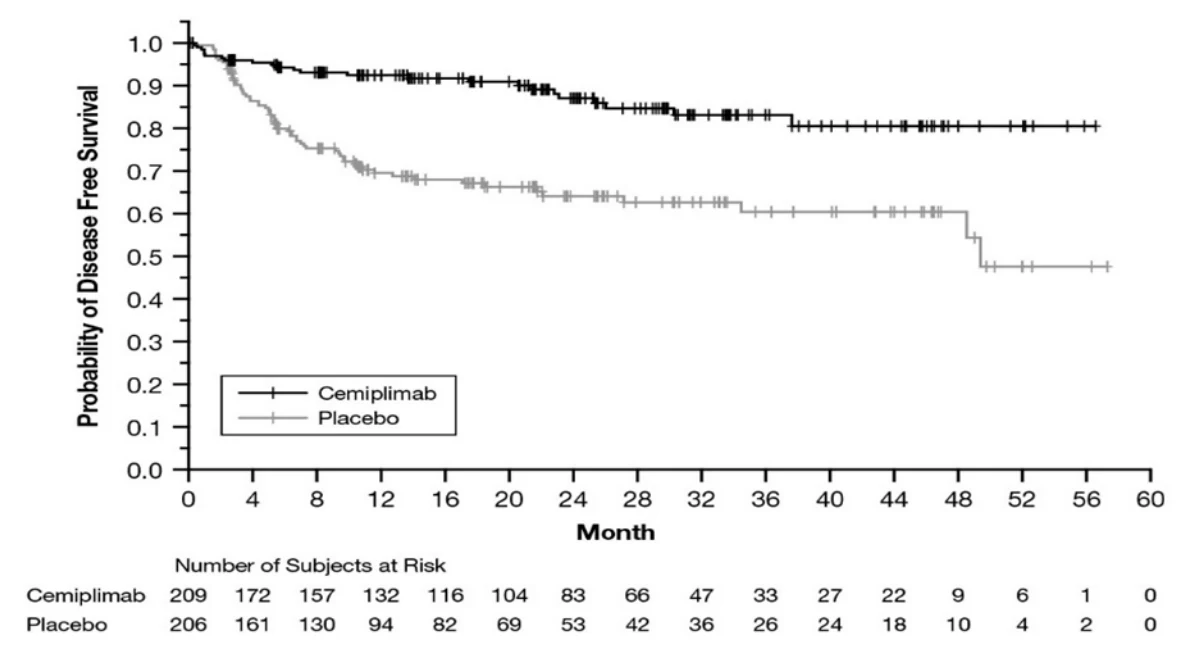
Non-Small Cell Lung Cancer
First-line treatment of NSCLC with LIBTAYO as monotherapy (Study 1624)
Table 22: Summary of patient demographics for clinical trials in locally advanced and metastatic non-small cell lung cancer
| Study # | Study design | Dosage, route of administration and duration | Study subjects (n) | Mean age (Range) | Sex |
| R2810-ONC-1624 | Open-label, randomized, multi-centre Adult patients (≥ 18 years old, males/females) with locally advanced or metastatic non-small cell lung cancer |
| 710 | 63 (31-79) | 606 male 104 female |
The efficacy of LIBTAYO in patients with locally advanced NSCLC who were not candidates for surgical resection or definitive chemoradiation, with locally advanced NSCLC who have progressed after treatment with chemoradiation, or with metastatic NSCLC was evaluated in Study 1624, a randomized, open-label, multi-center study.
The study was designed to enroll patients with tumour PD-L1 expression ≥ 50%. PD-L1 expression was evaluated using the PD-L1 IHC 22C3 pharmDx assay. A total of 710 patients (Intent-To-Treat [ITT] population) were enrolled in the study.
The study excluded patients with EGFR, ALK or ROS1 genomic tumour aberrations, medical conditions that required systemic immunosuppression, uncontrolled infection with hepatitis B (HBV) or hepatitis C (HCV) or human immunodeficiency virus (HIV), autoimmune disease that required systemic therapy within 2 years of treatment, or who have never smoked. Patients with type 1 diabetes mellitus or hypothyroidism only requiring hormone replacement were eligible. The study included patients who had not received prior systemic therapy for recurrent or metastatic NSCLC. Treatment of brain metastases was permitted, and patients could be enrolled if they had been adequately treated and had neurologically returned to baseline for at least 2 weeks prior to randomization. Radiological confirmation of stability or response was not required.
Randomization was stratified by histology (non-squamous vs squamous) and geographic region (Europe vs. Asia vs. Rest of world). Patients were randomized (1:1) to receive LIBTAYO 350 mg intravenously (IV) every 3 weeks for up to 108 weeks or investigator’s choice of the following platinum-doublet chemotherapy regimens for 4 to 6 cycles:
- Paclitaxel + cisplatin or carboplatin
- Gemcitabine + cisplatin or carboplatin
- Pemetrexed + cisplatin or carboplatin followed by optional pemetrexed maintenance (This regimen was not recommended for patients with squamous NSCLC.)
Treatment with LIBTAYO continued until RECIST 1.1-defined progressive disease, unacceptable toxicity, or up to 108 weeks. Patients who experienced IRC-assessed RECIST 1.1-defined progressive disease on LIBTAYO therapy were permitted to continue treatment with LIBTAYO with an addition of 4 cycles of histology-specific chemotherapy until further progression was observed. Patients who experienced IRC-assessed RECIST 1.1-defined progressive disease on chemotherapy treatment were permitted to receive LIBTAYO treatment until further progression, unacceptable toxicity or up to 108 weeks. Of the 203 patients randomized to receive chemotherapy who had IRC-assessed RECIST 1.1- defined disease progression, 150 (73.9%) patients crossed over to treatment with LIBTAYO. Assessment of tumour status was performed every 9 weeks. The co-primary efficacy endpoints were overall survival (OS) and progression-free survival (PFS). An additional efficacy endpoint was objective response rate (ORR).
The study population characteristics of patients in the ITT population are included in Table 23 .
Table 23: Summary of Baseline Patient and Disease Characteristics in the ITT population
LIBTAYO N=356 | Chemotherapy N=354 | ||||||||
|---|---|---|---|---|---|---|---|---|---|
| PATIENT DEMOGRAPHICS | |||||||||
| Median Age, Years (min, max) | 63 (31, 79) | 64 (40, 84) | |||||||
| Age < 65 Years, n (%) | 200 (56) | 190 (54) | |||||||
| Age ≥ 65 Years, n (%) | 156 (44) | 164 (46) | |||||||
| Gender: Male n (%) | 312 (88) | 294 (83) | |||||||
Race: White n (%) Asian n (%) | 308 (87) 39 (11) | 305 (86) 38 (11) | |||||||
| ECOG Performance Status n (%) | |||||||||
| 0 | 96 (27) | 96 (27) | |||||||
| 1 | 260 (73) | 258 (73) | |||||||
| History of brain metastasis (%) | 12 | 11 | |||||||
| DISEASE CHARACTERISTICS | |||||||||
| Extent of Disease n (%) | |||||||||
| Locally Advanced | 63 (18) | 52 (15) | |||||||
| Metastatic | 293 (82) | 302 (85) | |||||||
| Histological Subtype n (%) | |||||||||
| Squamous | 159 (45) | 152 (43) | |||||||
| Non-squamous | 197 (55) | 202 (57) | |||||||
The study demonstrated statistically significant improvement in OS and PFS for patients randomized to LIBTAYO as compared with chemotherapy. Median duration of follow-up was 13.1 months in the LIBTAYO group and 13.1 months in the chemotherapy group.
Efficacy results for the ITT population are presented in Table 24 and Figures 2 and 3.
Table 24: Efficacy Results from Study 1624 in Non-Small Cell Lung Cancer
| Efficacy Endpoints | Intent-To-Treat (ITT) Population (N=710) | |||||||||||||
|---|---|---|---|---|---|---|---|---|---|---|---|---|---|---|
LIBTAYO 350 mg every 3 weeks N=356 | Chemotherapy N=354 | |||||||||||||
| Overall Survival (OS) | ||||||||||||||
| Number of deaths (%) | 108 (30.3) | 141 (39.8) | ||||||||||||
| Median in months (95% CI)a | 22.1 (17.7, NE) | 14.3 (11.7, 19.2) | ||||||||||||
| Hazard ratio (95% CI)b | 0.68 (0.53, 0.87) | |||||||||||||
| p-Valuec | 0.0022 | |||||||||||||
| Progression-free survival (PFS) per BICR | ||||||||||||||
| Number of events (%) | 201 (56.5) | 262 (74.0) | ||||||||||||
| Median in months (95% CI)a | 6.2 (4.5, 8.3) | 5.6 (4.5, 6.1) | ||||||||||||
| Hazard ratio (95% CI)b | 0.59 (0.49, 0.72) | |||||||||||||
| p-Valuec | < 0.0001 | |||||||||||||
| Objective Response Rate (ORR) (%) per BICRd | ||||||||||||||
| ORR (95% CI) | 36.5 (31.5, 41.8) | 20.6 (16.5, 25.2) | ||||||||||||
| Complete response (CR) rate | 3.1 | 0.8 | ||||||||||||
| Partial response (PR) rate | 33.4 | 19.8 | ||||||||||||
BICR: Blinded Independent Central Review; CI: Confidence Interval; NE: Not evaluable
- a. Based on Kaplan-Meier method
- b. Based on stratified Cox proportional hazards model
- c. Based on a two-sided p-value.
- d. Based on Clopper-Pearson exact confidence interval
Figure 2: Kaplan-Meier Curve for OS in the ITT Population
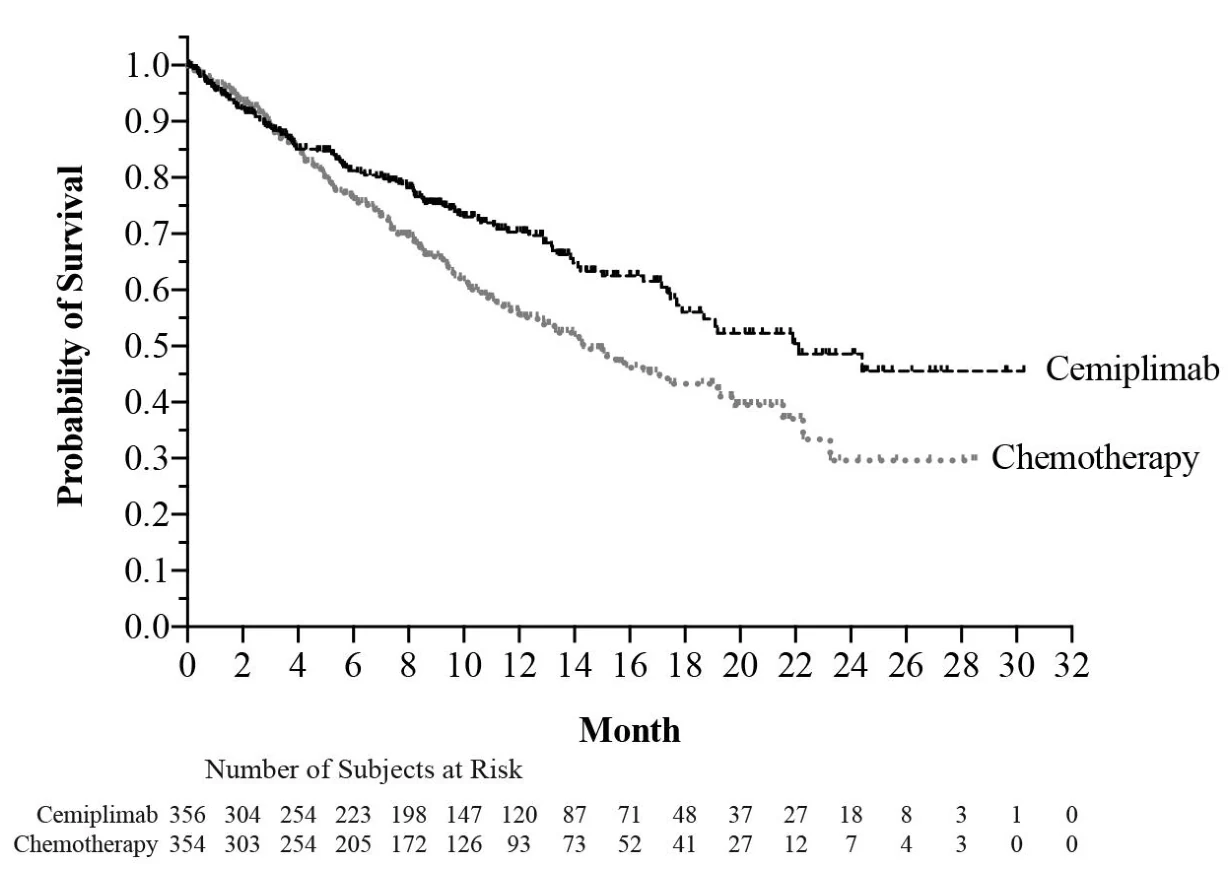
Figure 3: Kaplan-Meier Curve for PFS in the ITT Population
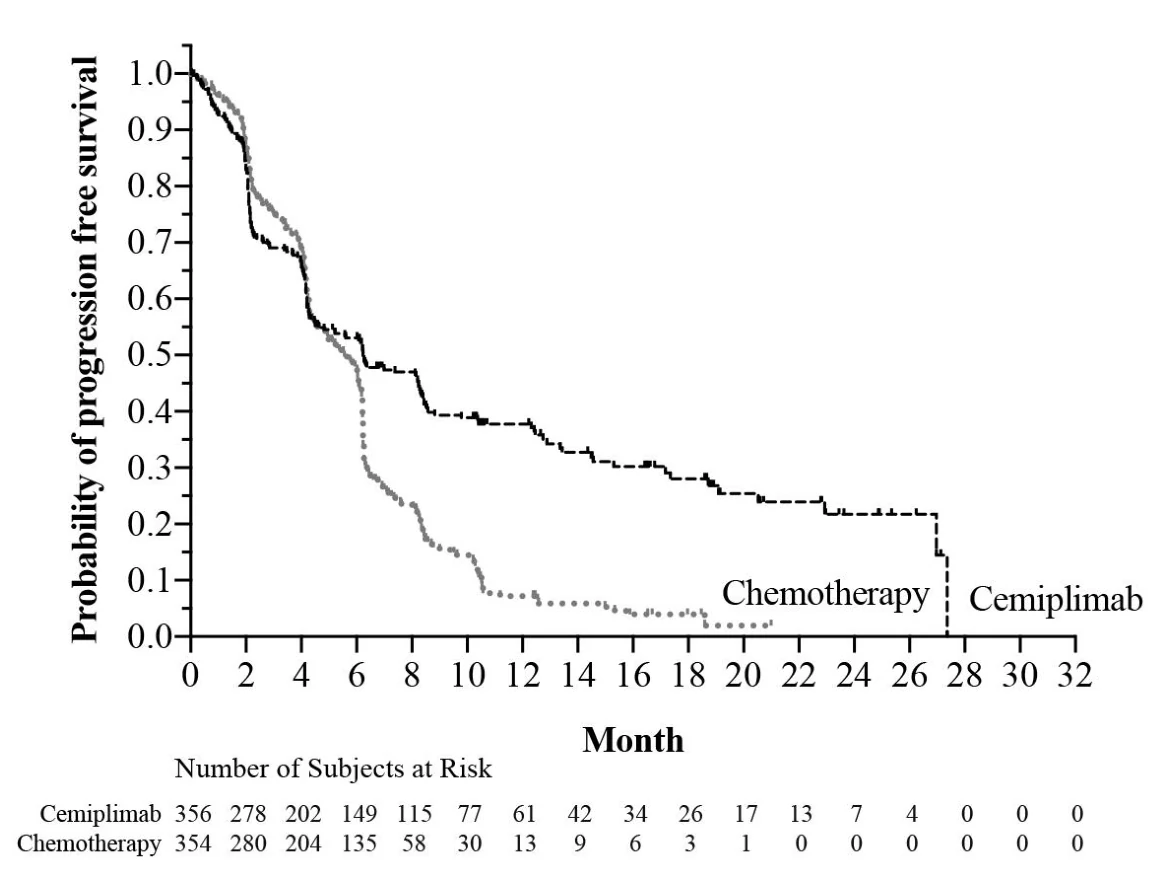
For the ITT population, the median duration of response was 21.0 months (range: 1.9 to 23.3 months) for patients who received LIBTAYO and 6.0 months (range: 1.3 to 16.5 months) for patients treated with chemotherapy.
Out of 710 patients enrolled in Study 1624, 235 patients were impacted by PD-L1 testing not performed according to instructions for use. As a result, 563 patients had confirmed PD-L1 expression ≥ 50% (283 in the LIBTAYO arms, and 280 in the chemo arm). An analysis of overall survival and progression-free survival was performed in the population of patients with confirmed PD-L1 expression ≥ 50%. For overall survival, the hazard ratio was 0.57 (95% CI: 0.42, 0.77) in favour of patients treated with LIBTAYO. For progression-free survival, the hazard ratio was 0.54 (95% CI: 0.43, 0.68) in favour of patients treated with LIBTAYO.
First-line treatment of NSCLC with LIBTAYO in Combination with Platinum-based Chemotherapy (Study 16113)
Table 25: Summary of patient demographics for clinical trials for non-small cell lung cancer in combination with platinum-based chemotherapy
| Study # | Study design | Dosage, route of administration and duration | Study subjects (n) | Mean age (Range) | Sex |
| R2810-ONC-16113 | Phase 3 Randomized (2:1), multicenter, double blind study Adult patients (≥18 years old, males/females) with histologically or cytologically documented squamous or non-squamous NSCLC with stage IIIB or IIIC disease who are not candidates for curative surgery, definitive chemoradiotherapy, or patients with stage IV disease if they have not received prior systemic treatment for advanced NSCLC |
| 466 | 61.8 (25-84) | 391 male 75 female |
The efficacy and safety of LIBTAYO in combination with platinum-based chemotherapy were evaluated in Study 16113, a randomized, multi-center, double-blind, active-controlled trial in 466 patients with locally advanced NSCLC who were not candidates for surgical resection or definitive chemoradiation, or with metastatic NSCLC, regardless of tumour PD-L1 expression status and who had not previously received systemic treatment for metastatic NSCLC.
Patients with EGFR, ALK or ROS1 genomic tumour aberrations; a medical condition that required systemic immunosuppression, active infection with hepatitis B (HBV) or hepatitis C (HCV), uncontrolled human immunodeficiency disease (HIV), or ongoing or recent autoimmune disease that required systemic therapy were ineligible. Patients with a history of brain metastases were eligible if they had been adequately treated and had neurologically returned to baseline for at least 2 weeks prior to randomization. Radiological confirmation of stability or response was not required.
Randomization was stratified by histology (non-squamous vs squamous) and PD-L1 expression (< 1% versus 1% to 49% versus ≥ 50%) according to the VENTANA PD-L1 (SP263) assay. Patients were randomized (2:1) to receive either LIBTAYO 350 mg intravenously (IV) every 3 weeks for 108 weeks plus platinum-based chemotherapy every 3 weeks for 4 cycles, or placebo intravenously (IV) every 3 weeks for 108 weeks plus platinum-based chemotherapy every 3 weeks for 4 cycles. Platinum-based chemotherapy in either arm consisted of carboplatin AUC of 5 or 6 and paclitaxel 200 mg/m2; cisplatin 75 mg/m2 and paclitaxel 200 mg/m2; carboplatin AUC of 5 or 6 and pemetrexed 500 mg/m2; or cisplatin 75 mg/m2 and pemetrexed 500 mg/m2. Maintenance pemetrexed was mandatory for patients with non-squamous NSCLC who received a pemetrexed containing chemotherapy regimen in the first 4 treatment cycles.
Treatment with LIBTAYO and platinum-based chemotherapy or placebo and platinum-based chemotherapy continued until RECIST 1.1-defined progressive disease, unacceptable toxicity, or 108 weeks. Assessment of tumour status was performed every 9 weeks beginning at week 9 during year 1 and every 12 weeks beginning at week 55 during year 2. The primary efficacy endpoint was overall survival (OS). Additional efficacy endpoints were progression-free survival (PFS) and objective response rate (ORR) as assessed by blinded independent central review (BICR).
The study population characteristics were: median age of 63 years (25 to 84 years), 40.3% age 65 or older; 83.9% male; 86.9% White, 13.1% Asian; an ECOG PS 0 and 1 in 14.8% and 84.3% respectively; 85.6% were smokers and 14.4% were non-smokers; 85.2% had metastatic disease and 14.8% had stage IIIB or IIIC disease and were not candidates for surgical resection or definitive chemoradiation per investigator assessment; 57.1% had non-squamous and 42.9% had squamous histology; and 6.7% had history of treated brain metastases at baseline.
The study demonstrated a statistically significant improvement in OS for patients randomized to LIBTAYO in combination with chemotherapy compared with placebo in combination with chemotherapy. The median duration of follow-up was 16.3 months for the LIBTAYO plus platinum-based chemotherapy arm and 16.7 months for the placebo plus platinum-based chemotherapy arm.
Efficacy results, based on the prespecified second interim analysis for study 16113, are presented in Table 26 and Figure 4.
Table 26: Efficacy Results for Study 16113 in Non-Small Cell Lung Cancer
| Efficacy Endpointsa | LIBTAYO and Chemotherapy N=312 | Placebo and Chemotherapy N=154 | ||||||||||||
|---|---|---|---|---|---|---|---|---|---|---|---|---|---|---|
| Overall Survival (OS) | ||||||||||||||
| Number of deaths (%) | 132 (42) | 82 (53) | ||||||||||||
| Median in months (95% CI)b | 21.9 (15.5, NE) | 13.0 (11.9, 16.1) | ||||||||||||
| Hazard ratio (95% CI)c | 0.71 (0.53, 0.93) | |||||||||||||
| p-Valued | 0.0140 | |||||||||||||
| Progression-free survival (PFS) | ||||||||||||||
| Number of events (%) | 204 (65) | 122 (79) | ||||||||||||
| Median in months (95% CI)b | 8.2 (6.4, 9.3) | 5.0 (4.3, 6.2) | ||||||||||||
| Hazard ratio (95% CI)c | 0.56 (0.44, 0.70) | |||||||||||||
| p-Valued | < 0.0001 | |||||||||||||
| Objective Response Rate (ORR) (%)e | ||||||||||||||
| ORR (95% CI) | 43 (38, 49) | 23 (16, 30) | ||||||||||||
| Complete response (CR) rate | 3 | 0 | ||||||||||||
| Partial response (PR) rate | 41 | 23 | ||||||||||||
CI: confidence interval; NE: Not evaluable; +: Ongoing response
- a. Median duration of follow up: cemiplimab and chemotherapy: 16.3 months, placebo and chemotherapy: 16.7 months
- b. Based on Kaplan-Meier method
- c. Based on stratified proportional hazards model
- d. Second interim analysis (primary). The two-sided p-value to declare statistical significance of OS is 0.01631. The two-sided p-value to declare statistical significance of PFS is 0.05.
- e. Clopper-Pearson exact confidence interval
At the time of protocol pre-specified final OS analysis, the median duration of follow-up was 28.4 months in LIBTAYO in combination with chemotherapy group and 28.5 months in placebo in combination with chemotherapy group.
The median OS in LIBTAYO in combination with chemotherapy group was 21.1 months (95% CI: 15.9, 23.5) compared to 12.9 months (95% CI: 10.6, 15.7) in placebo in combination with chemotherapy group, with a HR of 0.65 (95% CI: 0.51, 0.82); the median PFS in the LIBTAYO in combination with chemotherapy group was 8.2 months (95% CI: 6.4, 9.0) versus 5.5 months (95% CI: 4.3, 6.2) in placebo in combination with chemotherapy group with the HR 0.55 (95% CI: 0.44 to 0.68); the ORR in LIBTAYO in combination with chemotherapy group was 43.6% (95% CI: 38.0 to 49.3) versus 22.1% (95% CI: 15.8 to 29.5) in placebo in combination with chemotherapy group.
Figure 4: OS in Study 16113 in NSCLC
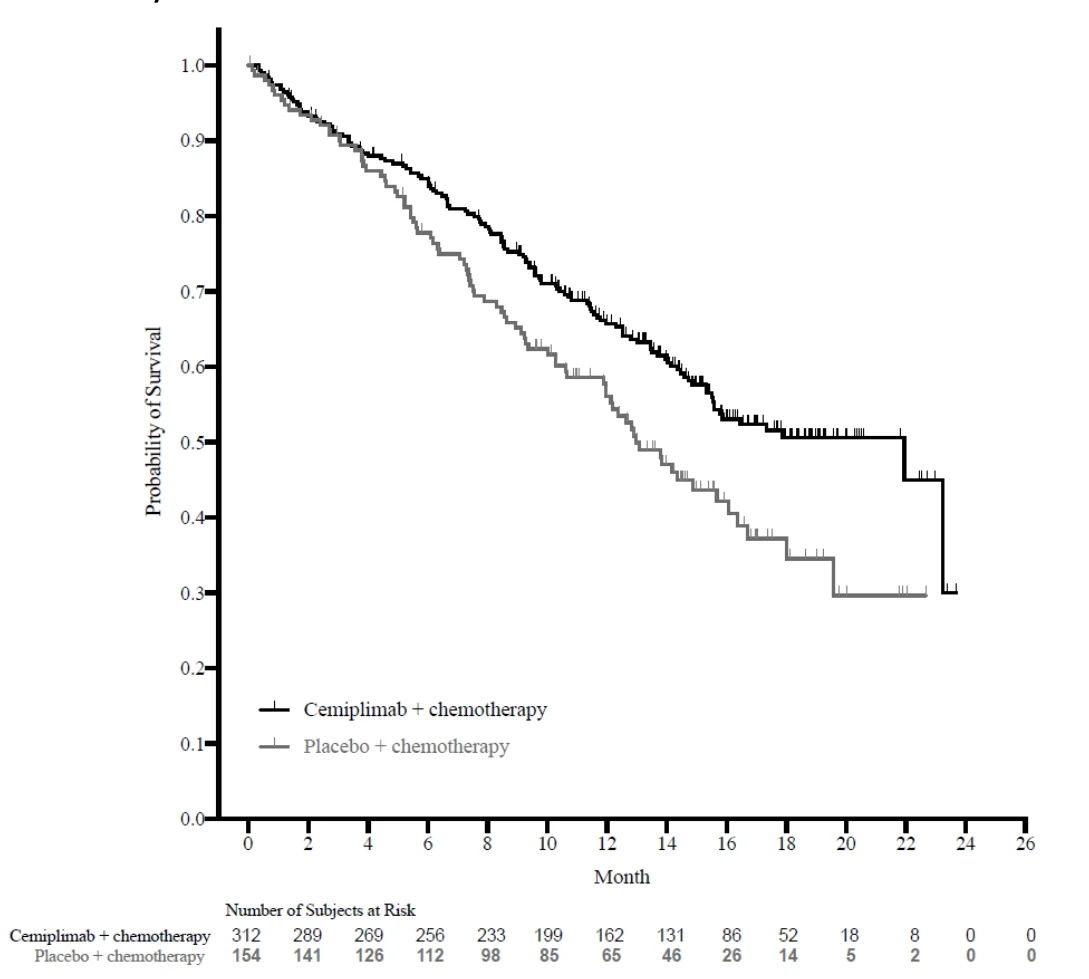
For the ITT population, the median duration of response was 15.6 months (range: 1.7 to 18.7 months) for patients who received LIBTAYO in combination with platinum-based chemotherapy and 7.3 months
(range: 1.8 to 18.8 months) for patients treated with placebo plus platinum-based chemotherapy. At pre-specified final OS analysis, the median duration of response was 16.4 months (range: 1.7 to 32.9 months) for patients who received LIBTAYO in combination with platinum-based chemotherapy and 7.3 months (range: 1.8 to 29.6 months) for patients treated with placebo plus platinum-based chemotherapy.
The results from an exploratory subgroup OS analysis with respect to tumour histology and PD-L1 expression are shown in Table 27.
Table 27: Overall Survival by Tumour Histology and PD-L1 Expression
Overall Survival: n; HRa (95% CI) Primary analysis* | Overall Survival: n; HRa (95% CI) Pre-specified Final Analysis** | |||||||||
|---|---|---|---|---|---|---|---|---|---|---|
| Squamous | Non-squamous | Squamous | Non-squamous | |||||||
| Any PD-L1 Expression | n=200; 0.56 (95% CI: 0.37, 0.84) | n=266; 0.79 (95% CI: 0.54, 1.14) | n=200; 0.61 (95% CI: 0.42, 0.87) | n=266; 0.64 (95% CI: 0.47, 0.88) | ||||||
| PD-L1 < 1% | n=54; 0.67 (95% CI: 0.31, 1.49) | n=85; 1.32 (95% CI: 0.74, 2.35) | n=54; 0.60 (95% CI: 0.30, 1.20) | n=85; 1.26 (95% CI: 0.74, 2.12) | ||||||
| PD-L1 ≥ 1% | n=146, 0.52 (95% CI: 0.32, 0.84) | n=181; 0.57 (95% CI: 0.34, 0.94) | n=146; 0.61 (95% CI: 0.40, 0.94) | n=181; 0.44 (95% CI: 0.30, 0.66) | ||||||
* Data cutoff Jun 14, 2021
** Data cutoff Jun 14, 2022
a Based on unstratified proportional hazards model (cemiplimab + chemotherapy vs placebo + chemotherapy)
Basal Cell Carcinoma
Table 28: Summary of patient demographics for clinical trials in metastatic and locally advanced basal cell carcinoma (Study 1620)
| Study # | Study design | Dosage, route of administration and duration | Study subjects (n) | Mean age (Range) | Sex |
| R2810-ONC-1620 | Open-label, non-randomized, multi-centre Adult patients (≥ 18 years old, males/females) with locally advanced or metastatic basal cell carcinoma |
| 132 | 68 (38-90) | 89 male 43 female |
The efficacy of LIBTAYO in patients with locally advanced, unrescectable basal cell carcinoma (BCC) who had progressed on hedgehog pathway inhibitor (HHI) therapy, were intolerant of prior HHI therapy, or had no better than stable disease (SD) after 9 months on HHI therapy (exclusive of treatment breaks), was evaluated in Study 1620, an open-label, multi-center, non-randomized study. The study excluded patients with autoimmune disease that required systemic therapy with immunosuppressant agents within 5 years; history of solid organ transplant; prior treatment with anti–PD-1/PD-L1 therapy or other immune checkpoint inhibitor therapy; infection with HIV, hepatitis B or hepatitis C; or ECOG performance score (PS) ≥ 2.
Patients received LIBTAYO 350 mg intravenously (IV) every 3 weeks for 5 cycles of 9 weeks followed by 4 cycles of 12 weeks up to 93 weeks of treatment. Treatment continued until disease progression, unacceptable toxicity or completion of planned treatment. Tumour assessments were performed every 9 weeks during cycles 1 to 5 and every 12 weeks during cycles 6 to 9. The major efficacy endpoints were confirmed objective response rate (ORR) and duration of response (DOR) as assessed by independent central review (ICR). For patients with externally visible target lesions, ORR was determined by a composite endpoint that integrated ICR assessments of radiologic data (RECIST 1.1) and digital medical photography (WHO criteria).
The efficacy analysis included 84 laBCC patients. See Table 29 for a summary of baseline patient and disease characteristics.
Table 29: Summary of Baseline Patient Characteristics and Prior Treatments in Study 1620
laBCC N=84 | ||||
|---|---|---|---|---|
laBCC N=84 | ||||
| PATIENT CHARACTERISTICS | ||||
Median Age Years (Range) | 70.0 (42 – 89) | |||
| <65 | 31 (37%) | |||
| ≥65 | 53 (63%) | |||
| Gender: Male | 56 (67%) | |||
| Race: White | 57 (68%) | |||
| ECOG Performance Status | ||||
| 0 | 51 (61%) | |||
| 1 | 33 (39%) | |||
| PRIOR TREATMENTS | ||||
| Prior Cancer-related Surgery | ||||
| Patients with at least 1 prior cancer-related surgery, n (%) | 70 (83%) | |||
| Patients with >3 prior cancer-related surgeries, n (%) | 29 (35%) | |||
Median number of prior cancer-related surgeries (Range) | 3.0 (1 - 43) | |||
| Prior Anti-cancer Radiotherapy | ||||
| Patients with at least 1 prior anti-cancer radiotherapy, n (%) | 42 (50%) | |||
Median number of prior anti-cancer radiotherapy regimens (Range) | 1.0 (1 - 6) | |||
| Prior Treatment with a HHIa | 84 (100%) | |||
| Prior treatment with both vismodegib and sonidegib (as separate lines of therapy), n (%) | 9 (11%) | |||
| Reason for Discontinuation of HHI | ||||
| Disease progression/lack of responseb, n (%) | 63 (75%) | |||
| Intolerance to HHI therapy, n (%) | 21 (25%) | |||
- a. Sums to greater than 100% as some patients switched from one HHI to another
- b. Lack of response was defined as no better than stable disease after 9 months on HHI therapy
The median follow-up for patients with laBCC was 15.1 months (range: 0.5 to 25.1 months). The median time to response was 4.2 months (range: 2.1 to 13.4 months). Twenty-four patients (28.6%) with laBCC had complete response (CR) or partial response (PR).
Efficacy results are presented in Table 30.
Table 30: Efficacy Results for Study 1620 in Basal Cell Carcinoma
| Efficacy Endpoints | Locally Advanced BCC LIBTAYO 350 mg every 3 weeks | |||||
| N=84 | ||||||
| ICR | ||||||
| Confirmed Objective Response Rate (ORR) | ||||||
Objective response rate (ORR: CR+ PR) (95% CI) | 24 (28.6%)a (19.2, 39.5) | |||||
| Complete response (CR), n (%) | 5 (6.0%) | |||||
| Partial response (PR), n (%) | 19 (22.6 %) | |||||
| Duration of Response (DOR) | ||||||
Medianb (months) (Range in months) | NR (2.1 - 21.4) | |||||
| Patients with observed DOR ≥ 6 months, n (%) | 19 (79.2%) | |||||
ICR: Independent Central Review; CI: confidence interval; NR: Not reached; NE: Not evaluable; +: Denotes ongoing at last assessment
- a. Locally advanced BCC patients in Study 1620 required biopsy to confirm complete response.
- b. Based on Kaplan Meier estimates.
Cervical Cancer
Table 31: Summary of patient demographics for clinical trials in cervical cancer (Study 1676)
| Study # | Study design | Dosage, route of administration and duration | Study subjects (n) | Mean age (Range) | Sex |
| R2810-ONC-1676 | Phase 3 Randomized, open-label, multi-center study Adult patients (≥ 18 years old, females) who progressed on or after prior platinum based chemotherapy and who have recurrent or metastatic cervical cancer | 350 mg Q3W cemiplimab for up to 96 weeks, or investigator’s choice of chemotherapy with pemetrexed; topotecan or irinotecan; gemcitabine; or vinorelbine; for up to 96 weeks | 608 | 51 (22-87) | 608 female |
The efficacy and safety of LIBTAYO in adult patients with recurrent or metastatic cervical cancer who progressed on or after prior platinum-based chemotherapy was compared to investigator’s choice chemotherapy in Study 1676, a randomized, open-label, multi-center study. Patients were enrolled regardless of PD-L1 tumour expression status.
To be enrolled on study, patients were required to have measurable disease, adequate hepatic function, adequate renal function (serum creatinine ≤ 1.5x ULN or estimated creatinine clearance > 45 mL/min), hemoglobin ≥ 9.0 g/dL, absolute neutrophil counts ≥ 1.5x 10⁹/L and platelet counts ≥ 75 x 109/L. Patients were excluded if they had prior treatment with any agent that blocks the PD-1/PD-L1 pathway, ongoing or recent evidence of autoimmune disease that required treatment with systemic immunosuppressive agents or treatment, or prior treatment with other systemic-modulating agents within 4 weeks of study enrollment. Patients were also excluded if they had an active bacterial, viral, fungal or mycobacterial infection, pneumonitis within five years prior to enrollment, a history of documented allergic reactions to antibody therapies, prior treatment with idelalisib (another anticancer agent), or were pregnant or breast-feeding.
The stratification factors for the efficacy analysis were geographic region (North America, Asia, Rest of World) and histology (squamous histology, adenocarcinoma / adenosquamous histologies). Randomization was also stratified by whether or not patients had received prior bevacizumab treatment and their ECOG performance status. Patients were randomized (1:1) to receive LIBTAYO 350 mg intravenously every 3 weeks or intravenous chemotherapy with pemetrexed; topotecan or irinotecan; gemcitabine; or vinorelbine.
Treatment was for up to 96 weeks and continued until disease progression or unacceptable toxicity. Patients who experienced progressive disease on LIBTAYO were permitted to continue treatment with LIBTAYO. Tumour assessments were performed every 6 weeks for the first 24 weeks and every 12 weeks thereafter. The key efficacy outcome measure was overall survival (OS). Investigator-assessed progression-free survival (PFS) and overall response rates were secondary endpoints.
Table 32: Summary of Baseline Patient Characteristics and Prior Treatments in Study 1676
| N=608 | ||||
|---|---|---|---|---|
| PATIENT DEMOGRAPHICS | ||||
Median Age Years (Range) | 51.1 (22 – 87) | |||
| <65 | 533 (88%) | |||
| ≥65 | 75 (12%) | |||
| Race: White | 385 (63%) | |||
| Race: Asian | 176 (29%) | |||
| Race: Black | 21 (3.5%) | |||
| ECOG Performance Status | ||||
| 0 | 283 (47%) | |||
| 1 | 325 (54%) | |||
| PRIOR TREATMENTS | ||||
| Patients with prior bevacizumab treatment, n (%) | 297 (49%) | |||
| Patients with 1 prior line of treatment in recurrent or metastatic setting, n (%) | 346 (57%) | |||
| Patients with > 1 prior line of treatment in recurrent or metastatic setting, n (%) | 259 (43%) | |||
| BASELINE DISEASE CHARACTERISTICS | ||||
| Squamous histology (SCC) | 78% | |||
| Adenocarcinoma / Adenosquamous histology (AC) | 22% | |||
| Metastatic disease | 94% | |||
LIBTAYO demonstrated a statistically significant improvement in OS and PFS compared to chemotherapy. Survival benefit compared to chemotherapy was seen regardless of prior bevacizumab treatment.
Efficacy results are presented in Table 33, Figure 5 and Figure 6.
Table 33: Efficacy Results for Study 1676 in Cervical Cancer
Total population (N=608) | |||||||||
|---|---|---|---|---|---|---|---|---|---|
| Efficacy Endpoint | LIBTAYO 350 mg every 3 weeks (n=304) | Chemotherapy (n=304) | |||||||
| Overall Survival (OS) | |||||||||
Deaths n, (%) | 184 (60.5%) | 211 (69.4%) | |||||||
Median in monthsa (95% CI) | 12.0 (10.3, 13.5) | 8.5 (7.5, 9.6) | |||||||
Hazard Ratiob (95% CI) | 0.69 (0.56, 0.84) | ||||||||
| p-value | 0.0001c | ||||||||
| Progression-Free Survival (PFS) | |||||||||
Hazard Ratiob (95% CI) | 0.75 (0.63, 0.89) | ||||||||
| p-value | 0.0005 | ||||||||
| Overall Response Rate (ORR) | |||||||||
Objective response rate n, % (ORR: CR+ PR) (95% CI) | 50 (16.4%) (12.5, 21.1) | 19 (6.3%) (3.8, 9.6) | |||||||
CI: Confidence interval
- a. Based on Kaplan-Meier method
- b. Based on stratified proportional hazards model stratified by histology and geographic region
- c. One-sided p-value (cemiplimab vs. chemotherapy)
Figure 5: OS in Study 1676 in Cervical Cancer
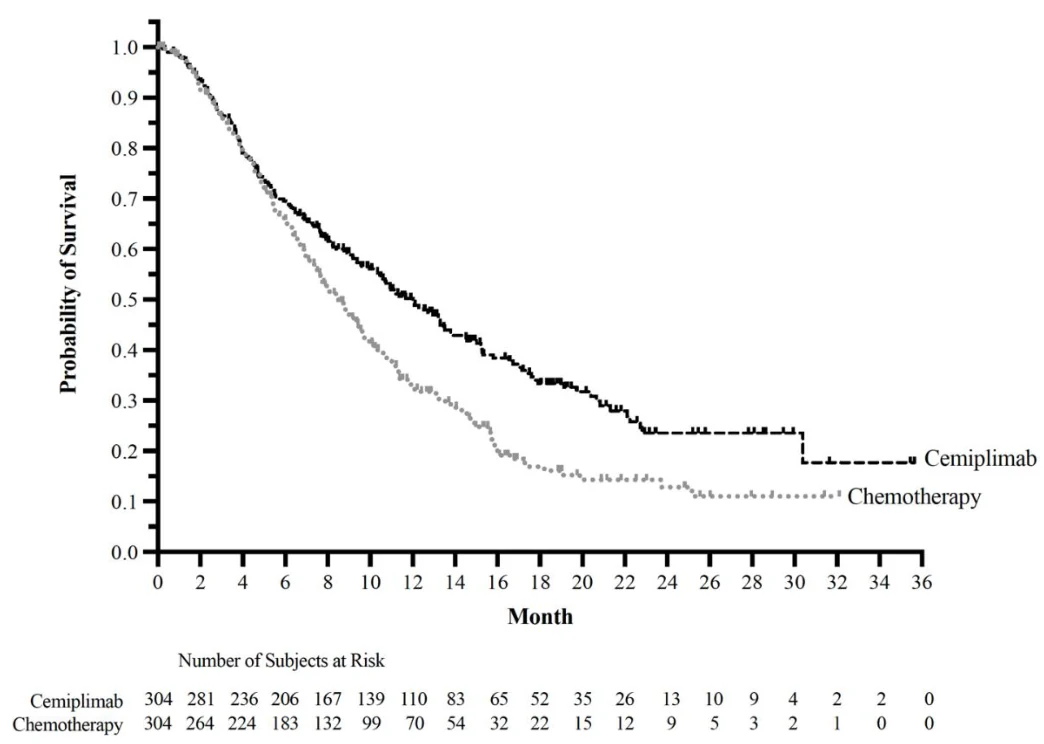
Figure 6: Investigator-assessed PFS in Study 1676 in Cervical Cancer
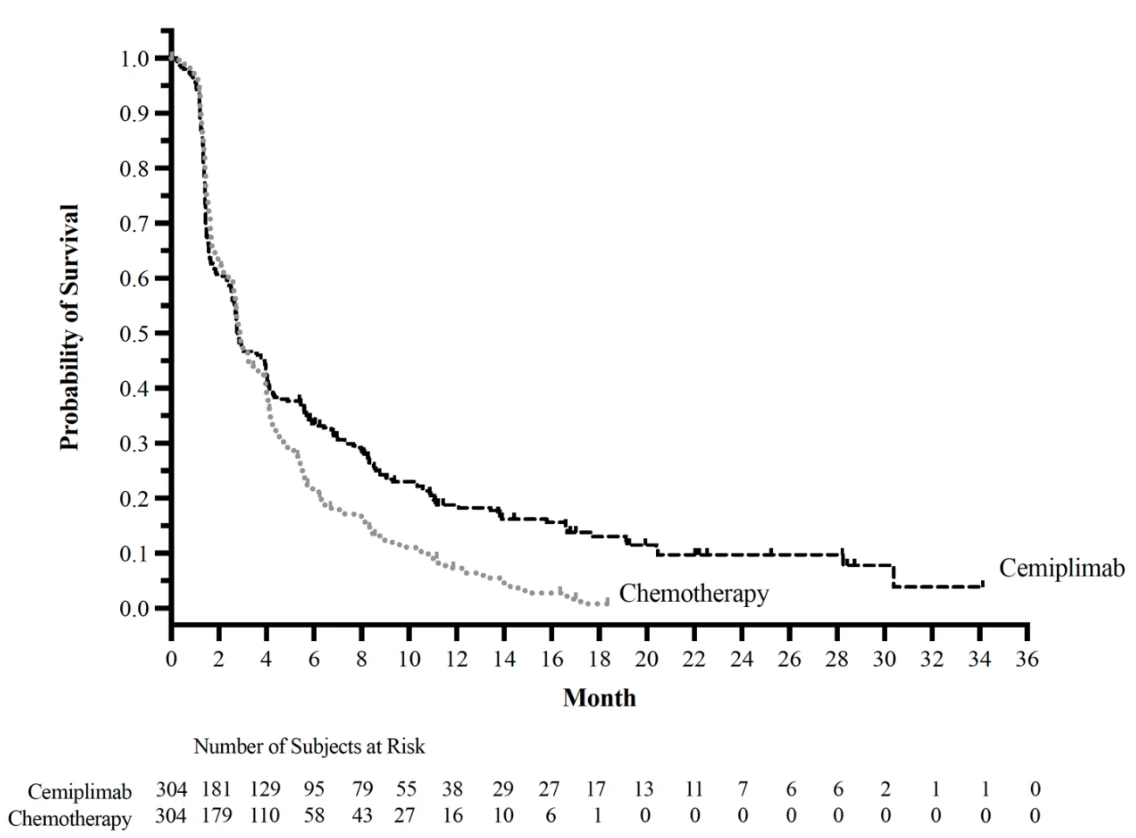
Tumour PD-L1 biomarker analysis was available for 254 patients on study and 162 (64%) patients were considered positive for PD-L1 at the 1% level according to the Ventana kit using SP263 antibody. In an exploratory analysis, the Hazard Ratio for OS for LIBTAYO over IC chemotherapy was 0.70 [95% CI: 0.46,1.05] in PD-L1-positive patients, and 0.98 [95% CI: 0.59, 1.62] in PD-L1 negative patients.
16 Non-Clinical Toxicology
General Toxicology:
The safety of cemiplimab was evaluated in a 1-month and a 6-month repeat-dose toxicity studies in cynomolgus monkeys. The no-observed adverse effect level (NOAEL) was the highest dose administered in these studies (50 mg/kg/week).
Carcinogenicity:
No carcinogenicity studies have been conducted with cemiplimab.
Genotoxicity:
No genotoxicity studies have been conducted with cemiplimab.
Reproductive and Developmental Toxicology:
Animal reproduction studies have not been conducted with cemiplimab.
In a 3-month repeat-dose fertility assessment study with sexually mature cynomolgus monkeys at the highest dose (50 mg/kg/week) tested, there were no cemiplimab-related effects on fertility assessment parameters (menstrual cycle, semen analysis, or testicular measurements) or in male or female reproductive organs.