


Product Monograph - Macugen
SUMMARY PRODUCT INFORMATION
| Route of Administration | Dosage Form / Strength | Clinically Relevant Nonmedicinal Ingredients |
| Intravitreous injection | sterile solution / 0.3 mg | Not applicable. For a complete listing see Dosage Forms, Composition and Packaging section. |
INDICATIONS AND CLINICAL USE
MACUGEN (pegaptanib sodium injection) is indicated for the treatment of subfoveal choroidal neovascularization (CNV) secondary to age-related macular degeneration.
CONTRAINDICATIONS
MACUGEN (pegaptanib sodium injection) is contraindicated in patients with active or suspected ocular or periocular infection or a known hypersensitivity to any component of this preparation. For a complete listing, see the Dosage Forms, Composition and Packaging section of the product monograph.
WARNINGS AND PRECAUTIONS
General
FOR OPHTHALMIC USE ONLY.
Carcinogenesis and Mutagenesis: see Toxicology
Hepatic and Renal:
MACUGEN has not been studied in patients with hepatic impairment or adequately studied in patients with severe renal insufficiency (i.e. creatinine clearances below 20 mL/min). Therefore, clinicians should exercise appropriate clinical judgment before deciding to administer MACUGEN in these patient populations.
Immune:
Rare cases of anaphylaxis/anaphylactoid reactions, including angioedema, have been reported in the post-marketing experience following the pegaptanib intravitreal administration procedure. A direct relationship to pegaptanib or any of the various medications administered, as part of the injection preparation procedure or other factors has not been established in these cases (see DOSAGE AND ADMINISTRATION).
Immunogenicity: No anti-pegaptanib sodium IgG antibodies were detected in patients dosed with MACUGEN.
Ophthalmologic:
Increased IOP: Transient increases in intraocular pressure ( 35 mmHg) were seen in 9% of MACUGEN treated patients shortly after injection (usually within 30 minutes). Therefore, the perfusion of the optic nerve head and the intraocular pressure should be monitored and appropriately managed (See DOSAGE AND ADMINISTRATION).
A risk of sustained increase in intraocular pressure after repeated intravitreal dosing of Macugen has been reported from post marketing studies. This phenomenon is not specific to Macugen therapy and has also been observed with intravitreal dosing of other anti-VEGF therapies.
Endophthalmitis: Intravitreous injections have been associated with endophthalmitis. Endophthalmitis may occur within one week from injection (for MACUGEN in clinical setting, 0.14 % per injection). Proper aseptic injection technique should always be utilized when administering MACUGEN and patients should be monitored during the week following the injection to permit early treatment, should the infection occur. (See DOSAGE AND ADMINISTRATION)
Traumatic cataracts: Most of the events were associated with contact and/or penetration of the lens with the intravitreous injection needle. Thus proper injection techniques should be applied to avoid touching or puncturing the lens.
Injection of the entire volume of the pre-filled syringe could result in serious adverse events; therefore, the excess volume must be expelled before injection
Information for Patients
In the days following MACUGEN administration, patients are at risk for the development of endophthalmitis. If the eye becomes red, sensitive to light, painful or develops a change in vision, the patient should seek immediate care with their ophthalmologist. Patients receiving MACUGEN should be advised to have appropriate ophthalmic follow-up examinations.
Special Populations:
Pregnancy
Developmental toxicology studies of pegaptanib sodium have been performed in mice at intravenous doses of 1 to 40 mg/kg/day. Pegaptanib sodium produced no maternal toxicity and no evidence of teratogenicity or fetal mortality. Reduced fetal body weight (5%) and delayed ossification in forepaw phalanges were observed in the 40 mg/kg/day dose group. These findings were within historical controls for this species. In the 40 mg/kg/day group, the maximum pegaptanib sodium plasma concentrations in dams were 20,000 fold greater than those observed in humans (3 mg dose group, 10 times greater than recommended dose). Pegaptanib sodium crosses the placenta in mice. In the 40 mg/kg/day group, pegaptanib sodium concentrations in the amniotic fluid were 0.05% of the maternal plasma levels. The 40 mg/kg regimen represents about 7,000 times the recommended human monocular ophthalmic dose of 0.3 mg/eye.
There are no studies in pregnant women with MACUGEN. It is unknown whether pegaptanib sodium can cause fetal harm when administered to a pregnant woman. MACUGEN should be used during pregnancy only if the potential benefit to the mother justifies the potential risk to the fetus.
Nursing Mothers
It is not known whether MACUGEN is excreted in human milk.
Pediatric Use
Safety and effectiveness of MACUGEN in pediatric patients have not been studied.
Geriatric Use
Approximately 94% (834/892) of the patients treated with MACUGEN were > 65 years of age and approximately 62% (553/892) were > 75 years of age. No difference in treatment effect or systemic exposure was seen with increasing age.
ADVERSE REACTIONS
Adverse Drug Reaction Overview
MACUGEN (pegaptanib sodium injection) was administered to 892 patients in controlled studies for up to one year (total number of injections = 7545, mean number of injections/patient = 8.5) at doses of 0.3, 1.0 and 3.0 mg. All three doses shared a similar safety profile. In addition, 128 patients continued to receive MACUGEN 0.3 mg for up to 2 years. The safety data described below summarize the experience of 128 patients exposed for up to two years (total number of injections = 2078 mean number of injections/patient = 15.6) at the recommended dose of 0.3 mg.
Clinical Trial Adverse Drug Reactions
Because clinical trials are conducted under very specific conditions the adverse reaction rates observed in the clinical trials may not reflect the rates observed in practice and should not be compared to the rates in the clinical trials of another drug. Adverse drug reaction information from clinical trials is useful for identifying drug-related adverse events and for approximating rates.
Ocular Adverse Events
The ocular adverse events in the study eye reported to be at least possibly related to study drug or injection procedure in 1% of patients in the 0.3 mg MACUGEN group are presented below.
Table 1- Incidence (%) of Ocular Adverse Events in Study Eye of 1% of Patients Treated with 0.3 mg MACUGEN for up to 2 years – Reported to be At Least Possibly Related –Cohort of Studies EOP1003 and EOP1004 – Safety Population
| Incidence (%) | ||
| MedRA preferred term | 0.3 mg Macugen N=128 | Sham N=51 |
| Punctate keratitis | 48 ( 38%) | 21 ( 41%) |
| Vitreous floaters | 45 ( 35%) | 7 ( 14%) |
| Eye pain | 44 ( 34%) | 15 ( 29%) |
| Intraocular pressure increased | 34 (27%) | 3 ( 6%) |
| Vitreous opacities | 28 ( 22%) | 8 ( 16%) |
| Anterior chamber inflammation | 22 ( 17%) | 2 ( 4%) |
| Corneal oedema | 20 ( 16%) | 7 ( 14%) |
| Eye irritation | 15 ( 12%) | 7 ( 14%) |
| Eye redness | 15 ( 12%) | 7 ( 14%) |
| Abnormal sensation in eye | 14 ( 11%) | 7 ( 14%) |
| Cataract | 14 ( 11%) | 2 ( 4%) |
| Conjunctival haemorrhage | 14 ( 11%) | 6 ( 12%) |
| Eye discharge | 14 ( 11%) | 7 ( 14%) |
| Visual disturbance NOS | 14 ( 11%) | 3 ( 6%) |
| Ocular discomfort | 12 ( 9%) | 4 ( 8%) |
| Vitreous disorder NOS | 12 ( 9%) | 0 ( 0%) |
| Lacrimation increased | 11 ( 9%) | 6 ( 12%) |
| Eye pruritus | 9 ( 7%) | 6 ( 12%) |
| Photophobia | 9 ( 7%) | 4 ( 8%) |
| Visual acuity reduced | 8 ( 6%) | 2 ( 4%) |
| Conjunctival hyperaemia | 7 ( 5%) | 3 ( 6%) |
| Corneal epithelium disorder | 7 ( 5%) | 1 ( 2%) |
| Photopsia | 7 ( 5%) | 1 ( 2%) |
| Vision blurred | 7 ( 5%) | 5 ( 10%) |
| Conjunctival oedema | 6 ( 5%) | 2 ( 4%) |
| Vitreous detachment | 6 ( 5%) | 2 ( 4%) |
| Conjunctivitis | 3 ( 2%) | 0 ( 0%) |
| Corneal epithelium defect | 3 ( 2%) | 4 ( 8%) |
| Dry eye NOS | 3 ( 2%) | 5 ( 10%) |
| Eyelid oedema | 3 ( 2%) | 4 ( 8%) |
| Vitreous haemorrhage | 3 ( 2%) | 0 ( 0%) |
| Deposit eye | 2 ( 2%) | 0 ( 0%) |
| Eyelid ptosis | 2 ( 2%) | 0 ( 0%) |
| Keratitis | 2 ( 2%) | 2 ( 4%) |
| Mydriasis | 2 ( 2%) | 1 ( 2%) |
The ocular adverse events in the study eye that were reported by a single investigator as at least possibly related to study drug or injection procedure in a single patient, (< 1% of all patients) in the 0.3 mg MACUGEN group were the following: Anterior uveitis, blepharitis, conjunctivitis allergic, corneal abrasion, corneal deposits, corneal erosion, diplopia, endophthalmitis, eye inflammation NOS, eye swelling, eyelid bleeding, eyelid disorder NOS, eyelid irritation, eyelid margin crusting, eyelids pruritus, keratoconjunctivitis sicca, keratopathy NOS, macular degeneration, ocular icterus, optic nerve cupping, pupillary deformity, pupillary disorder NOS, pupillary reflex impaired, retinal artery occlusion, retinal artery spasm, retinal haemorrhage, retinal scar, retinal telangiectasia.
The following Ocular AEs were reported in the study eye as serious, regardless of causality, among the 892 MACUGEN treated patients in any MACUGEN group during the first year: Endophthalmitis (12 cases, 1%), retinal detachment (4 cases, <1%), retinal hemorrhage (3 cases, <1%), cataract (3 cases, <1%), traumatic cataract (3 cases, <1%), vitreous hemorrhage (2 cases, <1%), glaucoma NOS (1 case, <1%), uveitis NOS (1 case, <1%), intraocular pressure increased (1 case, <1%).
No serious ocular adverse events were reported in the study eye during the second year of continuous treatment with 0.3 mg dose of MACUGEN (128 patients).
The ocular adverse events in the study eye that were reported to be not related to the study drug or injection procedure in > 1% of patients in the 0.3 mg MACUGEN group were the following: Visual acuity reduced, cataract, visual disturbance NOS, punctuate keratitis, blepharitis, retinal haemorrhage, vision blurred, dry eye NOS, eye pain, macular degeneration, conjunctivitis, eye pruritus, vitreous floaters, eye discharge, photopsia, posterior capsule opacification, vitreous opacities, lacrimation increased, abnormal sensation eye, anterior chamber inflammation, corneal dystrophy, eye irritation, intraocular pressure increased, meibomianitis, photophobia, retinal exudates, colour blindness NOS, corneal abrasion, corneal oedema, eyelid oedema, keratitis, keratopathy NOS, ocular discomfort, retinal oedema, and vitreous detachment.
Non Ocular Adverse Events
In the 128 patients who were treated with 0.3 mg MACUGEN for up to 2 years, the overall safety data were consistent with the Year 1 safety data, and no new safety signals emerged from Year 2.
The non-ocular adverse events reported as at least possibly related to study drug or injection procedure in >1 % of patients in the 0.3 mg MACUGEN group were headache and rhinorrhoea.
The non-ocular adverse events reported by a single investigator as at least possibly related to study drug or injection procedure in a single patient (< 1 % of all patients) in the 0.3 mg MACUGEN group were: Tachycardia NOS, vertigo, dyspepsia, vomiting NOS, chest pain, fatigue, tenderness NOS, drug hypersensitivity, corneal abrasion, corneal erosion, periorbital haematoma, back pain, nightmare, dermatitis contact, eczema pruritus, and hypertension NOS.
The following non-ocular serious adverse events were reported in > 1% of patients in the 0.3 mg MACUGEN group regardless of causality: Angina pectoris, atrial fibrillation, cardiac failure congestive, cerebrovascular accident, chest pain, fall, pneumonia NOS, Prostate cancer NOS, pulmonary embolism, transient ischaemic attack, urinary retention.
The non-ocular serious adverse events reported at an incidence of < 1% of patients in the 0.3 mg MACUGEN group (1 patient each) regardless of causality are breast cancer NOS, carotid artery occlusion, carotid artery stenosis, carotid sinus syndrome, cerebrovascular insufficiency, chronic obstructive airways disease exacerbated, confusional state, coronary artery occlusion, depression, dizziness, duodenal stricture, endometrial cancer NOS, fractured pelvis NOS, gastrointestinal candidiasis, haematuria, hip fracture, humerus fracture, hypertension NOS, hypertensive crisis, localised osteoarthritis, lung squamous cell carcinoma stage unspecified, metastases to brain, nephrolithiasis, orthostatic hypotension, Parkinson's disease NOS, post procedural pain, prostatic adenoma, pubic rami fracture, pulmonary oedema NOS, renal cell carcinoma stage unspecified, silent myocardial infarction, tachycardia NOS, and thrombocytopenia.
The non-ocular reported adverse events reported to be unrelated to the study drug or injection procedure, in > 1% of patients in the 0.3 mg MACUGEN group include: abdominal pain NOS, abrasion NOS, anaemia NOS, angina pectoris, arthralgia, arthritis NOS, arthritis NOS aggravated, asthenia, atrial fibrillation, back pain, balance impaired NOS, basal cell carcinoma, benign prostatic hyperplasia, blood creatinine increased, bone spur, bronchitis NOS, cardiac failure congestive, carotid artery occlusion, cerebrovascular accident, chest pain, constipation, contusion, corneal abrasion, coronary artery disease NOS, cough, depression, cutis laxa, diarrhoea NOS, diabetes mellitus NOS, dizziness, dyspepsia, dyspnoea NOS, emphysema, epistaxis, fall, fatigue, fractured pelvis NOS, fungal infection NOS, gastroenteritis viral NOS, gastrooesophageal reflux disease, haematoma NOS, haematuria, headache, herpes zoster, hypercholesterolaemia, hyperkalaemia, hyperlipidaemia NOS, hypersensitivity NOS, hypertension NOS, hypertension aggravated, hypoacusis, hypokalaemia, hyponatraemia, hypotension NOS, influenza upper respiratory tract infection NOS, insomnia, intraocular pressure increased, lower respiratory tract infection NOS, malaise, muscle cramp, muscle weakness NOS, nasal congestion, nasopharyngitis, nausea, nerve compression, nervousness, oedema peripheral, osteoarthritis NOS, pain in limb, periorbital haematoma, pharyngitis, pitting oedema, pleural effusion chronic obstructive airways disease exacerbated, pneumonia NOS, post procedural pain, pulmonary congestion, pulmonary embolism, pyrexia, prostate cancer NOS, sinusitis NOS, skin carcinoma NOS, skin cysts NOS, skin laceration, skin lesion NOS, tinnitus, transient ischaemic attack, urinary retention, urinary tract infection NOS, vertigo, vomiting NOS, thrombocytopenia, and weight decreased.
Abnormal Hematological & Clinical Chemistry Findings
There were no findings to suggest a relationship between MACUGEN and the development of clinically significant abnormalities.
Post-Marketing Experience: Rare cases of anaphylaxis/anaphylactoid reactions, including angioedema, have been reported in patients following administration of pegaptanib along with various medications administered as part of the injection preparation procedure. Cases of serious increase in intraocular pressure have been reported when the excess volume in the pre-filled syringe was not expelled before injection. (see DOSAGE AND ADMINISTRATION and WARNINGS AND PRECAUTIONS).
Cases of sustained increases in intraocular pressure (IOP) after repeated intravitreal dosing of Macugen have been reported from post marketing studies. This phenomenon is not specific to Macugen therapy and has also been observed with intravitreal dosing of other anti-VEGF therapies. The odds of increased IOP in all patients with and without sustained IOP increase in a post marketing observational study was increased by a factor of 1.128 for each additional injection (p= 0.0003).
Other adverse events reported during post-marketing experience are listed below. It should be noted that the uncontrolled nature of post-marketing surveillance makes it difficult to determine definitively if a reported event was actually caused by MACUGEN, or to reliably assess causation in individual cases. The serious adverse events reported in one or more post-marketing cases with 0.3 mg MACUGEN were: Activated partial thromboplastin time prolonged, anaphylactic reaction, angioneurotic oedema, blindness, choroidal detachment, coeliac disease, colonic polyp, death, feeling abnormal, haematochezia, haemoptysis, haemorrhage, haemorrhage intracranial, idiopathic thrombocytopenic purpura, inflammation, injury, intermediate uveitis, iridocyclitis, iritis, loss of consciousness, lung adenocarcinoma, lung disorder, neuritis, non-cardiac chest pain, obstructive airways disorder, pulmonary haemorrhage, pulmonary mass, rash generalized, retinal detachment, retinal neovascularisation, retinal tear, syncope, temporal arteritis, tremor, urticaria, vitritis, white blood cell count decreased.
Non-serious adverse events reported in more than one patient included: Arthropathy, diarrhoea, drug ineffective, dysphagia, eye disorder, foreign body in eye, heart rate increased, injection site discomfort, injection site pain, myalgia, ocular hyperaemia, pain, scleral disorder, urticaria.
DRUG INTERACTIONS
Overview
Drug interaction studies have not been conducted with MACUGEN. Pegaptanib sodium is metabolized by nucleases and therefore cytochrome P450 mediated drug interactions are unlikely.
A clinical study conducted in patients who received MACUGEN alone (no photodynamic therapy (PDT) within 6 weeks of MACUGEN administration) and in combination with PDT (PDT therapy within 6 weeks of MACUGEN administration) revealed no apparent difference in the plasma pharmacokinetics of pegaptanib.
Specific plasma protein drug interaction studies were not conducted. In vitro pharmacodynamic studies however suggest no such interaction.
Drug-Herb Interactions
Interactions with herbal products have not been established.
Drug-Laboratory Test Interactions
Interactions with laboratory tests have not been established.
DOSAGE AND ADMINISTRATION
Recommended Dose and Dosage Adjustment
MACUGEN (pegaptanib sodium injection) 0.3 mg should be administered once every six weeks by intravitreous injection into the eligible eye. Parenteral drug products should be inspected visually for particulate matter and discoloration prior to administration.
The pre-filled syringe is supplied with an excess product volume. See Administration for instructions to expel the excess volume before injection.
No special dosage modification is required for any of the special populations that have been studied (i.e. gender, elderly).
Administration
Staked needle syringe: Administration of the syringe contents involves attaching the threaded plastic plunger rod to the rubber stopper inside the barrel of the syringe. Do not pull back on the plunger. The syringe end cap is then removed to allow administration of the product.
Luer lock syringe: Do not pull back on the plunger. The last rib of the plunger stopper (closest to the plunger rod) should not be pushed past the dose line printed on the syringe. Immediately prior to administration this last rib of the plunger should be aligned with the dose line to ensure the delivery of the appropriate dose. At this point, the entire content of the syringe should be injected.
The pre-filled syringe is supplied with an excess product volume. Follow the instructions below to expel the excess volume before injection.
To avoid compromising the sterility of the product, do not pull back on the plunger.
- 1. Remove the syringe from the plastic clip.
- 2. Twist off cap.
- 3.
Attach the sterile administration needle (included) to the syringe by screwing it into the syringe tip.
--Another sterile administration needle may be used in lieu of the one included. Remove the plastic needle shield from the needle.
- 4. Holding the syringe with the needle pointing up, check the syringe for bubbles. If there are bubbles, gently tap the syringe with your finger until the bubbles rise to the top of the syringe. SLOWLY depress the plunger to eliminate all the bubbles and to expel the excess drug so that the top edge of the 3rd rib on the plunger stopper aligns with the pre-printed black dosing line (See Fig 2, below).
- 5.
Inject the entire contents of the syringe.
PRIOR to Injection
Fig 1. Before expelling air bubble and excess drug
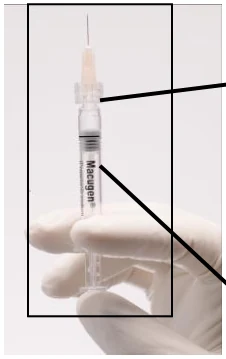
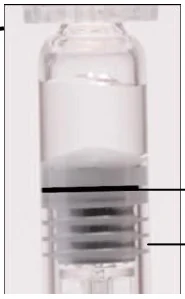
(Actual air bubble formation may vary)
READY for Injection
Fig 2. After expelling air bubble and excess drug
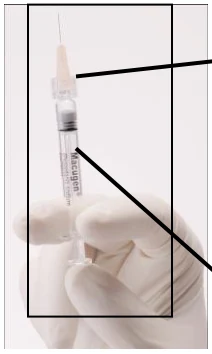
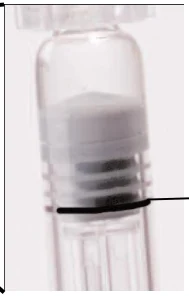
In clinical trials, to optimize safety the injection procedure was carried out under controlled aseptic conditions, which included the use of sterile gloves, a sterile drape and a sterile eyelid speculum. Adequate anesthesia, antibiotic drops and a povidone-iodine flush (or a suitable alternative) was given prior to the injection. For patients allergic to, or intolerant of, povidone-iodine, the treating physician was allowed to use topical broad-spectrum antibiotic drops for 3 days prior to the procedure. Treating physicians were discouraged from performing a paracentesis prior to the injection. Broad-spectrum antibiotic drops were to be continued for 2 days following the injection.
The patient’s medical history for hypersensitivity reactions should be carefully evaluated prior to performing the intravitreal procedure (see WARNINGS AND PRECAUTIONS).
Following the injection, patients should be monitored for elevation in intraocular pressure and for endophthalmitis. Monitoring may consist of a check for perfusion of the optic nerve head immediately after the injection, tonometry within 30 minutes following the injection, and
Dosing line
3rd Rib (top edge)
Dosing line and top edge of 3rd rib aligned
appropriate follow-up within seven days following the injection. Patients were instructed to report any symptoms suggestive of endophthalmitis without delay, at any time.
The safety and efficacy of MACUGEN therapy administered to both eyes concurrently has not been studied.
OVERDOSAGE
Overdosage with MACUGEN (pegaptanib sodium injection) has not been reported in clinical trials. The highest dose administered to patients in the clinical studies was 3mg per eye which represents 10 times the recommended therapeutic dose (0.3 mg). The adverse events at 3 mg dose were similar to those at 0.3 mg or 1mg. No additional adverse events have been noted but there is decreased efficacy with doses above 1 mg.
ACTION AND CLINICAL PHARMACOLOGY
Mechanism of Action
MACUGEN (pegaptanib sodium injection) is a selective Vascular Endothelial Growth Factor (VEGF) antagonist. VEGF is a secreted protein that selectively binds and activates its receptors located primarily on the surface of vascular endothelial cells. VEGF induces angiogenesis, vascular permeability and inflammation, all of which are thought to contribute to the progression of the neovascular (wet) form of Age-Related Macular Degeneration (AMD), a leading cause of blindness10. VEGF has been implicated in blood retinal barrier breakdown and pathological ocular neovascularization2.
Pegaptanib sodium is a pegylated aptamer, a modified oligonucleotide, which adopts a three-dimensional conformation that enables it to bind to extracellular VEGF with high affinity and selectivity3,13. Pegaptanib sodium binds to the major pathological VEGF isoform, extracellular VEGF165, with high affinity (Kd = 200 pM) and specificity, thereby inhibiting VEGF165 binding to its VEGF receptors11. In contrast virtually no binding of the non-pegylated aptamer to VEGF121 or the VEGF -related proteins VEGF-B, VEGF-C and placental growth factor (PlGF) was detected using in vitro filter binding assays. Pegaptanib sodium does not bind significantly to VEGF121. In animal models, VEGF164 (the rodent counterpart of human VEGF165) was specifically upregulated in disease. The selective inhibition of VEGF164 with pegaptanib sodium proved as effective at suppressing pathological neovascularization as pan-VEGF inhibition7, however pegaptanib sodium spared the normal vasculature whereas pan-VEGF inhibition did not.
Pharmacokinetics
The pharmacokinetics of MACUGEN has not been well characterized in humans.
Absorption:
In animals, pegaptanib sodium is slowly absorbed into the systemic circulation from the eye after intravitreous administration. The rate of absorption from the eye is the rate limiting step in the disposition of pegaptanib sodium in animals and is likely to be in humans. In humans, the average ± standard deviation apparent plasma half-life of pegaptanib sodium after a 3 mg (10-times the recommended dose) monocular dose is 10 ± 4 days.
A mean maximum plasma concentration of about 80 ng/mL occurs within 1 to 4 days after a 3 mg (10-times the recommended dose) monocular dose in humans. The mean area under the plasma concentration-time curve (AUC) is about 25 g·hr/mL at this dose. Pegaptanib sodium does not accumulate in the plasma when administered intravitreously every 6 weeks. At doses below 0.5 mg/eye, pegaptanib sodium plasma concentrations do not likely exceed 10 ng/mL.
The absolute bioavailability of pegaptanib sodium (parent drug) after intravitreous administration has not been assessed in humans, but is approximately 70-100% in rabbits, dogs, and monkeys.
In animals that received doses of pegaptanib sodium of up to 0.5 mg/eye to both eyes, plasma concentrations were 0.03% to 0.15% of those in the vitreous humor.
Distribution/Matabolism/Excretion:
No study evaluating the potential accumulation in tissues was conducted. Potential accumulation of pegaptanib or pegaptanib metabolites in tissues, and in particular the eye, cannot be excluded.
In mice, rats, rabbits, dogs and monkeys, pegaptanib sodium distributes primarily into plasma volume and is not extensively distributed to peripheral tissues after intravenous administration. Twenty-four hours after intravitreous administration of a radiolabeled dose of pegaptanib sodium to both eyes of rabbits, radioactivity was mainly distributed in vitreous fluid, retina and aqueous fluid. After intravitreous and intravenous administrations of radiolabeled pegaptanib sodium to rabbits, the highest concentrations of radioactivity (excluding the eye for the intravitreous dose) were obtained in the kidney. In rabbits, the component nucleotide, 2’-fluorouridine is found in plasma and urine after single radiolabeled pegaptanib sodium intravenous and intravitreous doses. Pegaptanib sodium is metabolized by endo- and exonucleases. In rabbits, pegaptanib sodium is eliminated as parent drug and metabolites primarily in the urine.
Special Populations and Conditions
Geriatrics:
Plasma concentrations of pegaptanib sodium were similar among patients 50 to 90 years of age. The number of patients below 60 (n=27; 3.0%) and above 85 (n=72; 8.1%) years old was however limited in the studies.
Gender:
Plasma concentrations of pegaptanib sodium in male and female patients are similar.
Hepatic Insufficiency:
MACUGEN has not been studied in patients with hepatic impairment (See WARNINGS AND PRECAUTIONS).
Renal Insufficiency:
Based on a clinical study (EOP1006) with pegaptanib sodium injection 3 mg, a decrease in creatinine clearance from 70mL/min to 30 mL/min was associated with a 2.3-fold increase in AUC. However, a dosage adjustment for patients treated with the recommended 0.3 mg pegaptanib sodium dose and whose creatinine clearance was 30 mL/min is not warranted. The pharmacokinetic data indicates that 0.3mg dose would not exceed exposure seen with 3mg which was a well tolerated dose. Patients with severe renal insufficiency (creatinine clearance < 20 mL/min) have not been adequately studied. (See WARNINGS AND PRECAUTIONS).
Hemodialysis:
MACUGEN has not been studied in patients requiring hemodialysis.
STORAGE AND STABILITY
Store in the refrigerator at 2° to 8°C. Do not freeze.
The MACUGEN syringe should not be removed from the pouch until the patient has been prepared for injection.
SPECIAL HANDLING INSTRUCTIONS
Do not use if particles, discoloration, or cloudiness is evident.
Staked needle syringe: Administration of the syringe contents involves attaching the threaded plastic plunger rod to the rubber stopper inside the barrel of the syringe. Do not pull back on the plunger. The syringe end cap is then removed to allow administration of the product.
Luer lock syringe: The syringe should be removed from the plastic clip and the tip cap removed. Do not pull back on the plunger. A 27 or 30 G x ½ inch needle should be attached to the luer lock adaptor, to allow administration of the product.
The pre-filled syringe is supplied with an excess product volume. See Administration for instructions to expel the excess volume before injection.
Any unused product or waste material should be disposed of in accordance with local requirements.
DOSAGE FORMS, COMPOSITION AND PACKAGING
Prefilled Syringe
Dosage Form/packaging:
Staked needle syringe: MACUGEN (pegaptanib sodium injection) is supplied in a single use 1 mL glass syringe containing 0.3 mg in a 90 µL deliverable volume. Each syringe is fitted with an attached 27 gauge needle and is contained in an outer package. The accompanying plunger rod and flange are in a separate package.
Luer lock syringe: Each pack contains a pouch in a carton, containing a 1 ml pre-filled syringe, Type 1 glass, sealed with an elastomeric plunger stopper and a pre-attached plunger rod, held by a plastic clip. The syringe has a pre-attached polycarbonate plastic luer lock adaptor and the tip is sealed with an elastomeric tip cap. The pack is supplied without a needle.
Composition: MACUGEN is a sterile, clear, preservative-free solution. Each syringe contains 0.3 mg pegaptanib sodium (as the free acid form of the oligonucleotide), 0.8 mg sodium chloride, 0.069 mg monobasic sodium phosphate, monohydrate, 0.11 mg dibasic sodium phosphate heptahydrate, hydrochloric acid and sodium hydroxide in water for injection.
PART II: SCIENTIFIC INFORMATION
PHARMACEUTICAL INFORMATION
Drug Substance
Proper name: pegaptanib sodium
Chemical name: RNA, ((2'-deoxy-2'-fluoro)C-Gm-Gm-A-A-(2'-deoxy-2'-fluoro)U-(2'-deoxy-2'-fluoro)C-Am-Gm-(2'-deoxy-2 -fluoro)U-Gm-Am-Am-(2'-deoxy-2'-fluoro)U-Gm-(2'-deoxy-2'-fluoro)C-(2'-deoxy-2'-fluoro)U-(2'-deoxy-2'-fluoro)U-Am-(2'-deoxy-2'-fluoro)U-Am-(2'-deoxy-2'-fluoro)C-Am-(2'-deoxy-2'-fluoro)U-(2'-deoxy-2'-fluoro)C-(2'-deoxy-2'-fluoro)C-Gm-(3' 3')-dT), 5'-ester with , '-[4,12-dioxo-6-[[[5-(phosphonooxy)pentyl]amino]carbonyl]-3,13-dioxa-5,11-diaza-1,15-pentadecanediyl]bis[ -methoxypoly(oxy-1,2-ethanediyl)], octacosasodium salt
Molecular formula and molecular mass: C294H342F13N107Na28O188P28[C2H4O]n (where n is approximately 900) and the molecular weight is approximately 50 kilodaltons.
Structural formula:
NH N N O NH2 N O OMe O H H N NH2 O N O FH H O NH O O N O FH H O N NH2 O N O F O H H O PO O O RHN(CH2)5 PO O NH N N O NH2 N O OMe O H H O PO O O PO O N N N N NH2 O OH O H H O PO O N N N N NH2 O OHH H O PO O PO O NH O O N O FH H O PO O O N NH2 O N O F O H H O PO O O N N N N NH2 O OMeH H O PO O O PO O NH N N O NH2 N O OMeH H O NH O O N O FH H O PO O O O PO O NH N N O NH2 N O OMeH H O N N N N NH2 O OMeH H O PO O O N N N N NH2 O OMeH H O PO O O NH O O N O FH H O PO O O O PO O NH N N O NH2 N O OMeH H O N NH2 O N O FH H O PO O O NH O O N O FH H O PO O O NH O O N O FH H O PO O O N N N N NH2 O OMeH H O PO O O NH O O N O FH H O PO O O N N N N NH2 O OMeH H O PO O O O N NH2 O N O FH H O PO O N N N N NH2 O OMe O H H O PO O O N NH2 O N O F O H H O PO O O O PO O NH N N O NH2 N O OMeH H O HN O O N O H O H H P O O OH O Na Na Na Na Na Na Na Na Na Na Na Na Na Na Na Na Na Na Na Na Na Na Na Na Na Na Na Na
O NH HN O O OMe O OMe n n O Where R is and n is approximately 450
CLINICAL TRIALS
MACUGEN was studied in two multicentre, controlled, double-masked, and identically designed randomized studies (EOP1003; EOP1004) in patients with subfoveal choroidal neovascularization (SCNV) associated with age related macular degeneration. A total of 1208 patients were enrolled and 1190 were treated (892 MACUGEN, 298 sham) with a median age of 77 years (range 52-97 years). Patients received a mean of between 8.4-8.6 treatments out of a possible 9 total across all treatment arms in the first year.
Patients were randomized to receive control (sham injection) or 0.3 mg, 1 mg, or 3 mg MACUGEN administered as intravitreous injections every 6 weeks for 48 weeks. Verteporfin photodynamic therapy (PDT) was permitted in patients with predominantly classic lesions at the discretion of the investigators. The two trials enrolled patients, including all neovascular AMD lesion subtypes, lesion sizes up to 12 disc areas, of which up to 50% could be comprised of subretinal hemorrhage and/or up to 25% fibrotic scar or atrophic damage. Patients had up to one prior PDT and baseline visual acuity in the study eye between 20/40 and 20/320.
At one year, pegaptanib 0.3 mg exhibited a statistically significant treatment benefit in both trials for the primary efficacy endpoint, proportion of patients losing less than 15 letters of visual acuity (prespecified pooled analysis, pegaptanib 0.3 mg 70% versus Sham 55%). Results from individual studies are presented in Table 2.
Table 2- Proportion Patients Losing < 15 letters of Vision at Week 54 from Baseline
| Number (%) of patients | MACUGEN | SHAM | ||
| 0.3 mg | 1 mg | 3 mg | ||
| Study EOP1003 | ||||
| ITT Population | N=150 | N=154 | N=153 | N=152 |
| Responders | 109 (73%)* | 116 (75%)* | 106 (69%) | 89 (59%) |
| Study EOP1004 | ||||
| ITT Population | N=144 | N=146 | N=143 | N=144 |
| Responders | 97 (67%)* | 97 (66%)* | 87 (61%) | 75 (52%) |
| Combined | ||||
| ITT Population | N=294 | N=300 | N=296 | N=296 |
| Responders | 206 (70%)* | 213 (71%)* | 193 (65%)* | 164 (55%) |
*p < 0.05 versus sham. ITT: all randomized patients who had baseline assessments and received at least one treatment. Analysis used the last observation carried forward. The proportion of patients withdrawing from the studies was small (7%-8%). Study EOP1003 was conducted internationally including Canada; Study EOP1004 was conducted in USA and Canada | ||||
MACUGEN treatment effect appears to be independent of lesion subtype, lesion size, baseline visual acuity and use of PDT prior to baseline. Few patients had PDT treatment at least 8 weeks prior to first MACUGEN treatment; Concomitant use of PDT overall was low.
Overall, patients in both MACUGEN 0.3 mg and sham continued to experience vision loss. However, patients that were treated with MACUGEN 0.3 mg showed a slower rate of vision loss than patients treated with sham (See figures).
EOP 1003: Figure 1 Mean change in Visual acuity over time Unadjusted mean changes based on observed data -14 -12 -10 -8 -6 -4 -2 0 Week 0 Week 6 Week 12 Week 18 Week 24 Week 30 Week 36 Week 42 Week 48 Week 54 Visit Time VAS Cha ng e 0.3 mg N=150 1.0 mg N=154 3.0 mg N=153 Sham N=152
EOP 1004: Figure 2 Mean change in Visual acuity over time Unadjusted mean changes based on observed data -18 -16 -14 -12 -10 -8 -6 -4 -2 0 Week 0 Week 6 Week 12 Week 18 Week 24 Week 30 Week 36 Week 42 Week 48 Week 54 Visit Time VAS Cha ng e 0.3 mg N=144 1.0 mg N=146 3.0 mg N=143 Sham N=144
In both studies, patients treated with MACUGEN 0.3 mg had less severe vision loss (30 or more letters of vision from baseline to week 54) compared with the sham patients (Study EOP1003: MACUGEN 0.3mg 9% vs. Sham 20%, p-value=0.0022; Study EOP1004: MACUGEN 0.3 mg 10% vs. sham 24%, p-value=0.0007).
In both studies, the proportion of patients treated with 0.3 mg MACUGEN reaching a vision of 20/200 or worse at week 54 was lower than in sham patients (Study EOP1003: MACUGEN 0.3mg 34% vs. Sham 54%, p-value=0.0005; Study EOP1004: MACUGEN 0.3 mg 42% vs. sham 58%, p-value=0.0026).
At the end of the first year (week 54), 1053 patients were re-randomized to either continue or discontinue treatment through week 102.The proportion of patients who lost less than 15 letters at Week 102 in all treatment groups are summarized in Table 3.
Table 3: Proportion Patients Losing < 15 letters of Vision at Week 102 from Baseline
| Number (%) of patients | MACUGEN | Sham – Sham/DC | ||
| 0.3 mg – 0.3 mg | 1 mg – 1 mg | 3 mg – 3 mg | ||
| Study EOP1003 | ||||
| ITT Population | N=67 | N=67 | N=63 | N=54 |
| Responders | 38 (57%) | 48 (72%) | 43 (68%) | 30 (56%) |
| Study EOP1004 | ||||
| ITT Population | N=66 | N=66 | N=62 | N=53 |
| Responders | 40 (61%)* | 37 (56%)* | 33 (53%)* | 18 (34%) |
| Combined | ||||
| ITT Population | N=133 | N=133 | N=125 | N=107 |
| Responders | 78 (59%)* | 85 (64%)* | 76 (61%)* | 48 (45%) |
*p < 0.05 versus sham. ITT: all patients re-randomized at week 54 regardless of eligibility. Analysis used the last observation carried forward. Study EOP1003 was conducted internationally including Canada; Study EOP1004 was conducted in USA and Canada D/C: Patients who discontinued treatment. | ||||
On average, the treatment benefit was maintained at 102 weeks with continuing preservation of visual acuity for patients re-randomized to continue MACUGEN for both EOP1003 and EOP1004 studies (Figures 3 and 4), however, the proportion of patients losing less than 15 letters of vision was reduced in the second year (Table 2 and 3).
Additionally, patients treated with MACUGEN 0.3 mg for 2 years, had significantly less severe vision loss (≥ 30 letters of vision) compared with sham patients (MACUGEN 0.3mg 13% vs. Sham 26%).
The proportion of patients treated with 0.3 mg MACUGEN reaching a vision of 20/200 or worse at week 102 was lower than in sham patients (MACUGEN 0.3mg 36% vs. Sham 54%).
Please refer to Table 3 for the N values. For 0.3 mg-Discontinue group, N=132 (EOP1003, N=66; EOP1004, N=66). Figure 3: Mean Visual Acuity At Week 102 |
| EOP1003 EOP1004 |
| 2 30 35 40 45 50 55 60 54 60 66 72 78 84 90 96 102 EOP 1003 Mean Visual Acuity Year 2 (LOCF) Vision (Letters) Week Patient Treatment (Year 1) (Year 2) (0.3 mg) (Discontinue) (0.3 mg) (0.3 mg) (Sham) Sham or discontinue | 4 EOP 1004 Mean Visual Acuity Year 2 (LOCF) 30 35 40 45 50 55 60 54 60 66 72 78 84 90 96 102 Vision (Letters) Week Patient Treatment (Year 1) (Year 2) (0.3 mg) (0.3 mg) (0.3 mg) (Discontinue) (Sham) Sham or discontinue |
-6 -5 -4 -3 -2 -1 0 1 54 60 66 72 78 84 90 96 102 Week Vi s u a l Ac u i ty (i n L e tte rs ) (0.3 mg) (0.3 mg) (0.3 mg) (Discontinue) Figure 4 Mean Change in Visual Acuity Over Time
Data over a two-year period indicates that Macugen treatment should be initiated as early as possible. In advanced disease the initiation and continuation of Macugen therapy should take into consideration the potential for useful vision in the eye.
The safety and efficacy of Macugen has not been demonstrated beyond 2 years.
DETAILED PHARMACOLOGY
Pegaptanib binds to the major pathological VEGF isoform, VEGF165, with an equilibrium dissociation constant (Kd) of about 200 pM. Pegaptanib’s non-pegylated aptamer also binds to VEGF165. In contrast, virtually no binding of the non-pegylated aptamer to VEGF121 or the VEGF-related proteins, VEGF-B, VEGF-C, and placental growth factor (PlGF), was detected using in vitro filter binding assays. The non-pegylated aptamer also binds to the cell surface bound VEGF isoform, VEGF188 (murine homolog to human VEGF189), with an affinity that was lower than with VEGF165. In vitro, pegaptanib can effectively inhibit VEGF165 binding to its cell surface receptors, fms-like tyrosine kinase receptor (Flt-1 or vascular endothelial growth factor receptor [VEGFR]-1), kinase insert domain containing receptor (KDR or VEGFR-2), and neuropilin-1 (NP-1) with concentrations that produce 50% of the maximum inhibition (IC50) of 0.47, 1.10, and 0.23 nM, respectively. In cellular assays, pegaptanib inhibits VEGF165-induced proliferation, calcium mobilization, and tissue factor gene expression in human umbilical vein
Figure 5 Mean Visual Acuity Over Time (LOCF) 0 10 20 30 40 50 60 0 6 12 18 24 30 36 42 48 54 60 66 72 78 84 90 96 102 Week V is u a l A c u ity (in L e tte rs ) (0.3 mg) (0.3 mg) (0.3 mg) (Discontinue) (Sham) Sham or Discontinue
vascular endothelial cells (HUVECs). In vivo, pegaptanib inhibits hypoxia-induced retinal neovascularization in a murine model of retinopathy of prematurity, VEGF165-induced corneal angiogenesis in a rat corneal pocket model, and VEGF165-induced vascular leakage in a guinea pig model of dermal vascular permeability (modified Miles assay). Pegaptanib was also shown to inhibit VEGF165-dependent tumor growth in a murine human xenograft tumor model.
Table 4- In Vitro and In Vivo Pharmacology Studies
| Study Type/Species | Assay | Key Result/Finding |
|---|---|---|
| In Vitro | [32P] non-pegylated pegaptanib binding to VEGF165 | Non-pegylated pegaptanib binds to human VEGF165 with a Kd of 0.049 nM. |
| In Vitro | [125I] VEGF165 competitive binding | Pegaptanib inhibits binding of VEGF165 to HUVECs with an IC50 of 0.03 to 1.41 nM and porcine aortic endothelial cells expressing the tyrosine kinase VEGF receptors, Flt-1 and KDR. |
| In Vitro | VEGF165 induced HUVEC proliferation and calcium mobilization | Pegaptanib has specificity and inhibits VEGF165-mediated cellular proliferation with an IC50 of 0.4 to 2.9 nM and calcium mobilization of HUVECs in vitro with an IC50 of 0.74 to 3.18 nM. |
| Guinea Pig | VEGF165 induced dermal vascular permeability (Miles Assay). | Intradermally administered pegaptanib pre-mixed with VEGF165 inhibits VEGF165 induced vascular leakage from 100 to 1000 nM. |
| Rat | Corneal Angiogenesis | IV administered treatment with pegaptanib sodium shows dose dependent inhibition (up to 65%) of corneal angiogenesis with an ED50 of 1 to 3 mg/kg/12 h. |
| Mouse | Retinopathy of Prematurity | IP administered pegaptanib reduces retinal neovasculature by 80% relative to untreated control at 3 and 10 mg/kg/day. |
| Nude Mouse | Human Tumor Xenograft | IP administered pegaptanib sodium shows an anti-tumor dose response at 0.03 to 10 mg/kg/day in non-established and established A673 rhabdomyosarcoma xenograft models. |
HUVEC = human umbilical vein endothelial cells; IP = intraperitoneal
TOXICOLOGY
The overall assessment of pegaptanib sodium in acute, subchronic and chronic toxicology studies using the intravitreous (IVT) and intravenous (IV) routes of administration suggests minimal toxic potential. Studies were conducted in mice, rats, rabbits, dogs and Rhesus monkeys. Pegaptanib sodium does not appear to be genotoxic or clastogenic, does not activate complement, and does not elicit the production of IgG directed antibodies directed against pegaptanib following repeated dosing in mice, rats, rabbits and Rhesus monkeys. IV injections of pegaptanib sodium did not produce embryo/fetal toxicity and was not teratogenic rabbits in a range-finding developmental toxicity study. Reduced fetal body weight (5%) and delayed ossification in forepaw phalanges were observed following pegaptanib administration (40 mg/kg/day IV) to pregnant dams. These findings were within historical controls for this species.
Single-Dose Toxicity
The highest dose tested by the ocular route was 2 mg/eye both eyes in the Rhesus Monkey (2 animals). Ophthalmic examination (direct) was conducted at 24 hours post dose and on Days 2, 4, 8, and 29. The adverse effect found was conjunctival redness. Five rats each sex were administered pegaptanib by the intravenous route at 0, 50, 150, and 450 mg/kg. Gross necropsy revealed no toxicity up to 30 days after administration.
Repeat-Dose Toxicity
Table 5- Summary Table of IVT Toxicology Findings for Pegaptanib Sodium
| Species/Strain | Number/Group | Dosing Regimen IVT | Doses (mg/eye) Aptamera | Study Duration | NOAEL | Key Result/Finding |
| Rabbits/DB | 5 M and 5 F/group | 6 doses 4 doses 6 doses 6 doses 2 doses once every 2 weeks | 0. 0.1 0.3 1 2 (both eyes) | 3 months | 1 mg/eye | Mild to moderate dose-related macrophage infiltrates No tonometric or electroretinographic changes associated with above findings Findings possibly related to injection procedure: Attenuation of retinal vessels in some animals (unconfirmed in fundus photo), transient ocular swelling, irritation, focal cataract, iritis. |
| Rabbits/ NZW | 9 M and 9 F high-dose and control group. 7 M and 7 F low and mid-dose group | 13 doses once every 2 weeks | 0 0.2 0.67 2 (both eyes) | 6 months with 6 week recovery group | 2 mg/ eye | No test article-related adverse effects Findings possibly related to injection procedure: Bubble on the outer scleral surface (1-2 days post-dose), low grade cellular infiltration, transmural fibrosis, linear capsular ectasia, punctuate vitreal opacities and vitreal fibrin strands. |
| Dogs/ Beagle | 7M/7 F vehicle control and high dose. 5 M/5 F low and mid dose. | 20 doses once every 2 weeks | 0 0.3 1 3 (both eyes) | 9 months with 6-month recovery group | 3 mg/ eye | No test article-related adverse effects. Findings possibly related to injection procedure: Tapetal scar, hemorrhage, conjunctival hyperemia, ecchymosis, retinal detachment, vitreal floaters, lymphocytic infiltration, transiently increased IOP. |
| Monkey/ Rhesus | 3M,3 F/group | 6 doses 4 doses 6 doses 6 doses 2 doses Once every 2 weeks | 0 0.1 0.25 0.5 1 (both eyes) | 3 months | 0.5 mg/eye after 6 doses 1 mg/eye after 2 doses | No test article-related adverse effects No antibodies against pegaptanib were formed Findings possibly related to injection procedure: Conjunctival congestion and discharge, fibros tracts in ciliary body, choroids and/or sclera. |
a. Aptamer is 20% of total molecular weight of pegaptanib sodium
Table 6- Summary Table of IV Toxicology Findings for Pegaptanib Sodium
| Species/Strain | Number/Group | Dosing Regimen IV | Doses Aptamera | Study Duration | NOAEL | Key Result/Finding |
|---|---|---|---|---|---|---|
| Rats/SD | 10M, 10F/group | Daily 3 months | 0 mg/kg 0.1 mg/kg 1 mg/kg 10 mg/kg | 3 months | 1 mg/kg males 10 mg/kg females | Mild splenic lymphoid depletion. The degree of lymphoid depletion was not considered to be biologically relevant, and there were no statistically significant dose-related changes in leukocyte or lymphocyte counts. (Males at 1 and 10 mg/kg, females at 10 mg/kg) Increased incidence of mild progressive nephropathy (males at 10 mg/kg) Vacuolated macrophages in spleen, liver, lymph nodes, kidney, and bone marrow (Males at 1 mg/kg, females at 10 mg/kg). Vacuoles presumable lysosome containing PEG, which is considered to be physiologic and not toxic 10 mg aptamer/kg/day: This dosing regimen likely resulted in peak plasma concentrations of pegaptanib in the rat that were at least 1000 times greater than those observed following intravitreal injection in humans. |
a. Aptamer is 20% of total molecular weight of pegaptanib sodium
Genotoxicity and Carcinogenicity
Carcinogenicity studies with pegaptanib have not been conducted.
Table 7- Summary of Mutagenicity, Clastogenicity, and Morphological Cell Transformation Studies for Pegaptanib Sodium and Component Nucleosides
| Test Article/Assay | Species and Strain | Method of Administration | Doses Aptamera | GLP Compliance | Testing Facility | Key Findings |
|---|---|---|---|---|---|---|
Pegaptanib sodium Reverse Mutation Assay | S. typhimurium, E.coli | In Vitro | 10 to 5000 μg/plate (±S9) | Yes | Covance | Nonmutagenic |
| Pegaptanib sodium TK Mouse Lymphoma Assasy | L5178Y | In Vitro | 39.1 to 5000 mg/mL (±S9) | Yes | Covance | Nonmutagenic |
Pegaptanib sodium Mouse micronucleus Assay | CD-1 mice, 5/sex/group | In Vivo | 0 mg/kg vehicle control, 1, 10, and 100 mg. aptamer/kg IV | Yes | Sitek Research | Nonclastogenic |
Pegaptanib sodium Syrian Hamster Embryo (SHE) Cell morphological transformation Assay | SHE cells | In Vitro | 10 to 1000 μg/mL | Yes | Covance | No transformation of SHE cells |
| 2’-MA Reverse Mutation Assay | S. typhimurium E. coli | In Vitro | 10 to 5000 µg/plate (±S9) | Yesb | Covance | Nonmutagenic |
| 2’-MG | S. typhimurium E. coli | In Vitro | 10 to 5000 µg/plate (±S9) | Yesb | Covance | Nonmutagenic |
| 2’-MA Chromosomal Aberrations | Human Whole Blood Lymphocytes | In Vitro | 840 to 2460 µg/mL (-S9) | No | Covance | Nonclastogenic |
| 2’-MG Chromosomal Aberrations | Human Whole Blood Lymphocytes | In Vitro | 114 to 470 µg/mL (-S9) | No | Covance | Nonclastogenic |
| 2’-FC Reverse Mutation Assay | S. typhimurium E. coli | In Vitro | 1 to 5000 µg/plate (±S9) | Yes | Covance | Negative in all S. typhimurium strains; non-dose related ~3-4 fold increase in revertants in E. coli strain |
| 2’-FU Reverse Mutation Assay | S. typhimurium | In Vitro | 1 to 5000 µg/plate (±S9) | Yes | Covance | Negative in all S. typhimurium |
| Test Article/Assay | Species and Strain | Method of Administration | Doses Aptamera | GLP Compliance | Testing Facility | Key Findings | ||||||
|---|---|---|---|---|---|---|---|---|---|---|---|---|
| E. coli | strains; non-dose related ~3-4 fold increase in revertants in E. coli strain | |||||||||||
| 2’-FU Chromosomal Aberrations | Human Whole Blood Lymphocytes | In Vitro | 1720 to 5000 µg/mL (-S9) | No | Covance | Nonclastogenic | ||||||
| 2’-FC Chromosomal Aberrations | Human Whole Blood Lymphocytes | In Vitro | 840 to 5000 µg/mL (-S9) | No | Covance | Nonclastogenic | ||||||
| 2’-FC SHE Cell Transformation Assay | SHE Cells | In Vitro | 0.05 to 1 µg/mL | Yes | Covance | No transformation of SHE cells | ||||||
| 2’-FU SHE Cell Transformation Assay | SHE Cells | In Vitro | 24.62 to 2462 µg/mL | Yes | Covance | No transformation of SHE cells | ||||||
b Except no quality assurance audit of raw data
Pegaptanib sodium and its monomer component nucleotides (2’-MA, 2’-MG, 2’-FU, 2’-FC) were evaluated for genotoxicity in a battery of in vitro and in vivo assay systems. Pegaptanib sodium, 2’-O-methlyadenosine (2’-MA) and 2’-O-methylguanosine (2’-MG) were negative in all assay systems evaluated. 2’-fluorouridine (2’-FU) and 2’-fluorocytidine (2’-FC) were nonclastogenic and were negative in all bacterial mutagenicity tester strains (S. typhimurium), but produced a small increase in revertant frequency with no relationship to dose in a single bacterial mutagenicity tester strain (E. coli). Pegaptanib sodium, 2’-FU and 2’-FC tested negative in cell transformation assays. Based on this information there is no risk of genotoxicity. In summary, no genotoxicity was demonstrated for pegaptanib sodium in reverse mutation, forward mutation, micronucleus, or Syrian hamster embryo (SHE) cell transformation assays. DNA incorporation studies in rats and woodchucks were inconclusive. Based on the accumulated negative genotoxicity data and absence of any preneoplastic events in the chronic toxicology studies, no carcinogenicity studies are planned. Secondly, no studies were conducted due to inherent difficulties in proposing an appropriate dosing regimen for an IVT administered drug. Thirdly, consideration of the intended patient population was also taken into account with regard to the need for carcinogenicity testing.
Reproduction and Developmental Toxicity
No data are available to evaluate male or female mating or fertility indices.
Pegaptanib sodium was not teratogenic after IVT and IV administration in a dose-range finding study in NZW rabbits and a definitive embryo-fetal toxicity study in CD-1 mice, respectively. Reduced fetal body weight (5%) and delayed ossification in forepaw phalanges were observed in the 40 mg/kg/day dose group. These findings were within historical controls for this species. No maternal toxicity was observed. At 40 mg/kg/day, the maximum plasma concentration (Cmax) in pregnant dams was approximately 2 mg/mL, which is > 10,000-fold higher than clinical exposures at the maximum therapeutic dose of 3 mg/one eye administered every 4 weeks (90 ng/mL). Pegaptanib crosses the placenta; though amniotic fluid concentrations of pegaptanib were only 0.05% of the concentrations observed in maternal plasma at the 40 mg/kg/day dose level. The abbreviated nature of the reproductive toxicology program was justified due to the nature of the intended patient population.
There was no evidence of immunogenicity with pegaptanib sodium in studies in mice, rats, rabbits, or Rhesus monkeys.
Table 8- Summary of Reproduction and Developmental Toxicity
| Species/Strain | Number/Group | Dosing Regimen IV | Doses Aptamer | Study Duration | NOAEL | Key Result/Finding |
|---|---|---|---|---|---|---|
| Mice/CD-1 | Gestation day 6-15 | 0, 0.2, 1. 2, and 8 mg /kg/day | Gestation day 6-15 | 8 mg/kg/day | Range-finding study; no drug related findings. | |
| Mice/CD-1 | 21 pregnant F 4 pregnant | Gestation day 6-15 Gestation day 6-17 | 0 mg/kg, 1 mg/kg, 6.5 mg/kg, 40 mg/kg | Day 18 gestation through lactation Day 20 | 40 mg/kg dams, 6.5 mg/kg fetus | No evidence of embryo/fetal toxicity including teratogenicity; limited effects on fetal body weight and delayed ossification of forepaw phalanges at the 40 mg/kg dose (within historical control values). No maternal toxicity. No adverse effect in F1 generation ECG parameters. |
REFERENCES
- 1. Aiello LP, Bruckner AJ, Chang S, et al. Evolving guidelines for intravitreous injections. Retina 2004;24:S3-S19.
- 2. Ambati J, Ambati BK, Yoo SH, Ianchulev S, Adamis AP. Age-related macular degeneration: Etiology, pathogenesis, and therapeutic strategies. Surv Ophthalmol 2003;48:257-93.
- 3. Ellington AD, Szostak JW. In vitro selection of RNA molecules that bind specific ligands. Nature 1990; 346:818-22.
- 4. The Eyetech Study Group. Preclinical and Phase IA Clinical Evaluation of an Anti- VEGF Pegylated Aptamer (EYE001) for the Treatment of Exudative Age-Related Macular Degeneration. Retina, The Journal of Retinal and Vitreous Diseases 2002;22:143-152.
- 5. The Eyetech Study Group. Anti-vascular Endothelial Growth Factor Therapy for Subfoveal Choroidal Neovascularization Secondary to Age-related Macular Degeneration Phase II Study Results. Ophthalmology 2003;110:979–986.
- 6. Gonzales CR. Enhanced Efficacy Associated With Early Treatment of Neovascular Age-Related Macular Degeneration with Pegaptanib Sodium: An Exploratory Analysis. Retina 2005; 25:815-827.
- 7. Gragoudas ES, Adamis, AP, Cunningham, ET, et al. Pegaptanib for Neovascular Agre-Related Macular Degeneration. M Engl J Med 2004; 351 : 2805-16
- 8. Ishida S, Usui T, Yamashiro K, Kaji Y, Amano S, Ogura Y, Hida T, Oguchi Y, Ambati J, Miller J, Gragoudas ES, Ng Y-S, D'Amore PA, Shima DT, Adamis AP. VEGF164-mediated inflammation is required for pathological, but not physiological, ischemia-induced retinal neovascularization. J Exp Med 2003;198:483-9.
- 9. Jager RD, Aiello LP, Patel SC, Cunningham ET, Jr. Risks of intravitreous injection: A comprehensive review. Retina 2004;24:676-98.
- 10. Krzystolik MG, Afshari MA, Adamis AP, et al. Prevention of experimental choridal neovascularization with intravitreal anti-vascular endothelial growth factor antibody fragment. Arch Ophthalmol 2002;120:338-46.
- 11. Maguire MG, In : Berger JW, Fine SL, Macquire MG; editors. Age-related macular degeneration. Missouri Mosby incorporated 1999
- 12. Ruckman J, Green LS, Beeson J., et al. 2’-Fluoropyimidine RNA-Based Aptamers to the 165-Amino Acid Form of Vascular Endothelial Growth Factor (VEGF165). J Biological Chem 1998;273(32):20556-67
- 13.
Ta CN. Minimizing the risk of endophthalmitis following intravitreous injections. Retina
- 2004;24:699-705.
- 14. Tuerk C, Gold L. Systematic evolution of ligands by exponential enrichment: RNA ligands to bacteriophage T4 DNA polymerase. Science 1990; 249:505-10. (NC 1830)
- 15. Usui T, Ishida S, Yamashiro K, Kaji Y, Poulaki V, Moore J, Moore T, Amano S, Horikawa Y, Dartt D, Golding M, Shima DT, Adamis AP. VEGF1164(165) as the pathological isoform: Differential leukocyte and endothelial responses through VEGFR1 and VEGRF2. Retina 2004;45:368-74.