


Product Monograph - Vabysmo
Recent Major Label Changes
| 1 Indications | 2024-07 |
|---|---|
| 4 Dosage and Administration, 4.1 Dosing Considerations | 2024-12 |
| 4 Dosage and Administration, 4.2 Recommended Dose and Dosage Adjustment | 2025-07 |
| 4 Dosage and Administration, 4.4 Administration | 2024-12 |
| 7 Warnings and Precautions | 2024-07 |
Table of Contents
Certain sections or subsections that are not applicable at the time of the preparation of the most recent authorized product monograph are not listed.
Recent Major Label Changes ................................................................................................. 2
Table of Contents ................................................................................................................. 2
Part 1: Healthcare Professional Information.......................................................................... 4
- 1.
Indications..................................................................................................................... 4
1.1. Pediatrics .................................................................................................................... 4
1.2. Geriatrics .................................................................................................................... 4
- 2. Contraindications .......................................................................................................... 4
- 4.
Dosage and Administration ............................................................................................ 4
4.1. Dosing Considerations ............................................................................................... 4
4.2. Recommended Dose and Dosage Adjustment .......................................................... 4
4.3. Reconstitution ............................................................................................................ 5
4.4. Administration ........................................................................................................... 5
4.5. Missed Dose ............................................................................................................. 15
- 5. Overdose ..................................................................................................................... 15
- 6. Dosage Forms, Strengths, Composition, and Packaging ................................................ 15
- 7.
Warnings and Precautions ........................................................................................... 16
Driving and Operating Machinery ........................................................................................ 16
Immune ................................................................................................................................ 16
Ophthalmologic .................................................................................................................... 16
Reproductive Health ............................................................................................................. 17
Systemic Effects .................................................................................................................... 18
7.1. Special Populations .................................................................................................. 18
7.1.1. Pregnancy ......................................................................................................... 18
7.1.2. Breastfeeding ................................................................................................... 18
7.1.3. Pediatrics .......................................................................................................... 18
7.1.4. Geriatrics .......................................................................................................... 19
- 8.
Adverse Reactions ....................................................................................................... 19
8.1. Adverse Reaction Overview ..................................................................................... 19
8.2. Clinical Trial Adverse Reactions ............................................................................... 20
8.3. Less Common Clinical Trial Adverse Reactions ........................................................ 22
8.4. Abnormal Laboratory Findings: Hematologic, Clinical Chemistry, and Other Quantitative Data ................................................................................................................. 22
8.5. Post-Market Adverse Reactions ............................................................................... 23
- 9.
Drug Interactions ......................................................................................................... 23
9.2. Drug Interactions Overview ..................................................................................... 23
9.3. Drug-Behaviour Interactions .................................................................................... 23
9.4. Drug-Drug Interactions ............................................................................................ 23
9.5. Drug-Food Interactions ............................................................................................ 23
9.6. Drug-Herb Interactions ............................................................................................ 23
9.7. Drug-Laboratory Test Interactions........................................................................... 23
- 10.
Clinical Pharmacology .................................................................................................. 23
10.1. Mechanism of Action ............................................................................................... 23
10.2. Pharmacodynamics .................................................................................................. 23
10.3. Pharmacokinetics ..................................................................................................... 24
10.4. Immunogenicity ....................................................................................................... 25
- 11. Storage, Stability, and Disposal .................................................................................... 25
- 12. Special Handling Instructions ....................................................................................... 25
Part 2: Scientific Information .............................................................................................. 27
- 13. Pharmaceutical Information ........................................................................................ 27
- 14.
Clinical Trials ............................................................................................................... 27
14.1. Clinical Trials by Indication ...................................................................................... 27
- 16. Non-Clinical Toxicology ................................................................................................ 38
Patient Medication Information ......................................................................................... 39
Part 1: Healthcare Professional Information
1. Indications
VABYSMO (faricimab injection) is indicated for the treatment of:
- Neovascular (wet) age-related macular degeneration (AMD)
- Diabetic macular edema (DME)
- Macular edema secondary to retinal vein occlusion (RVO)
1.1. Pediatrics
Pediatrics (< 18 years of age): No data are available to Health Canada; therefore, Health Canada has not authorized an indication for pediatric use.
1.2. Geriatrics
Geriatrics (≥ 65 years of age): No dose adjustment is required in patients ≥ 65 years of age (see 4.2 Recommended Dose and Dosage Adjustment, Special Populations and 10.3 Pharmacokinetics, Special populations and conditions).
2. Contraindications
- Patients with ocular or periocular infections.
- Patients with active intraocular inflammation.
- Patients who are hypersensitive to VABYSMO or to any ingredient in the formulation, including any non-medicinal ingredient, or component of the container. For a complete listing, see 6 Dosage Forms, Strengths, Composition, and Packaging
4. Dosage and Administration
4.1. Dosing Considerations
- Single-use pre-filled syringe or single-use vial for intravitreal injection only.
- VABYSMO must be administered by a qualified physician experienced in intravitreal injections.
- Each pre-filled syringe or vial should only be used for the treatment of a single eye.
4.2. Recommended Dose and Dosage Adjustment
Neovascular (wet) Age-related Macular Degeneration (AMD)
The recommended dose for VABYSMO is 6 mg (0.05 mL) administered by intravitreal injection every 4 weeks (approximately every 28 ± 7 days) for the first 4 doses.
Thereafter, an assessment of disease activity based on visual acuity and/or anatomic parameters is recommended 20 and/or 24 weeks after treatment initiation and regularly thereafter. In patients without disease activity, treatment every 16 weeks could be considered. In patients with disease activity, treatment every 8 weeks or 12 weeks could be considered. If visual and/or anatomic outcomes change, the treatment interval should be adjusted accordingly. Treatment interval should be shortened up to 8 weeks in a 4-week or 8-week reduction if visual and/or anatomic outcomes deteriorate (see 14 Clinical Trials).
Patients should be assessed regularly. Monitoring between the dosing visits should be scheduled based on the patient's status and at the physician's discretion.
Diabetic Macular Edema (DME)
VABYSMO is recommended to be administered by following one of these two dose regimens (see 14 Clinical Trials):
- VABYSMO 6 mg (0.05 mL) administered by intravitreal injection every 4 weeks (approximately every 28 ± 7 days) for the first 6 doses, followed by 6 mg (0.05 mL) every 8 weeks;
- VABYSMO 6 mg (0.05 mL) administered by intravitreal injection every 4 weeks (approximately every 28 ± 7 days) for at least 4 doses or until macular edema is resolved based on the central subfield thickness (CST) of the macula as measured by optical coherence tomography. Thereafter, the dosing interval may be modified using a treat-and-extend approach based on anatomic and visual acuity outcomes at dosing visits. In patients without disease activity, the dosing interval may be extended up to every 16 weeks (4 months) in up to 4-week increments. If anatomic and/or visual outcomes deteriorate, then the treatment interval should be shortened accordingly.
Patients should be assessed regularly. Monitoring between the dosing visits should be scheduled based on the patient's status and at the physician's discretion.
Macular edema secondary to retinal vein occlusion (RVO)
The recommended dose is 6 mg (0.05 mL) administered by intravitreal injection every 4 weeks (approximately every 28 ± 7 days) until stable visual acuity improvement and disease control are achieved. Thereafter, based on anatomic and visual acuity outcomes at dosing visits, the treatment interval may be extended up to 16 weeks (4 months) in up to 4-week increments at a time in patients without disease activity. If anatomic and/or visual outcomes deteriorate, the treatment interval should be shortened accordingly. The interval between doses should not be shorter than one month (see 14.1 Clinical Trials by Indication).
Patients should be assessed regularly. Monitoring between the dosing visits should be scheduled based on the patient’s status and at the physician’s discretion.
Special Populations
Pediatrics (< 18 years of age)
Health Canada has not authorized an indication for pediatric use.
Geriatrics
No dose adjustment is required in patients ≥ 65 years of age (see 7.1.4 Geriatrics and 10.3 Pharmacokinetics, Special populations and conditions).
4.3. Reconstitution
Not applicable.
4.4. Administration
VABYSMO should be inspected visually for particulate matter and discolouration prior to administration (see 12 Special Handling Instructions).
The injection procedure must be carried out under aseptic conditions, which include the use of surgical hand disinfection, sterile gloves, a sterile drape and a sterile eyelid speculum (or equivalent). Sterile paracentesis equipment should be available as a precautionary measure. Adequate anesthesia and a broad-spectrum topical microbicide to disinfect the periocular skin, eyelid and ocular surface should be administered prior to the injection.
Immediately following the intravitreal injection, patients should be monitored for elevation in intraocular pressure. Appropriate monitoring may consist of a check for perfusion of the optic nerve head or tonometry. If required, sterile equipment for paracentesis should be available.
Following intravitreal injection, patients should be instructed to report any symptoms suggestive of endophthalmitis (e.g. vision loss, eye pain, redness of the eye, photophobia, blurring of vision) without delay.
Pre-filled Syringe
Before you start

Read all the instructions carefully before using VABYSMO.
The VABYSMO carton includes:

A sterile pre-filled syringe in a sealed tray. The pre-filled syringe is for a single dose only.

A sterile, 30-gauge x ½ inch, ETW (Extra Thin Wall) injection filter needle with an integrated filter in the hub. The injection filter needle is for single use only.
Only use the provided injection filter needle for the administration, as it was designed to ensure safe ophthalmic use of the medicinal product.

VABYSMO should be refrigerated at temperatures between 2°C to 8°C.
Do not freeze.

Allow VABYSMO to reach room temperature (up to 25°C) before proceeding with the administration.

Prior to use, keep the sealed tray in the original carton to protect the pre-filled syringe from light. The pre-filled syringe may be kept at room temperature in the original carton for up to 24 hours.

VABYSMO should be inspected visually prior to administration.
Do not use if the carton seals have been tampered with.
Do not use if the packaging, pre-filled syringe, injection filter needle is expired, damaged, or have been tampered with.
Do not use if the injection filter needle is missing.
Do not remove the finger grip from the syringe.
Do not use if the syringe cap is detached from the Luer lock.
Do not use if particulates, cloudiness, or discolouration are visible. VABYSMO is a clear to opalescent and colourless to brownish-yellow liquid solution.
Carton contents
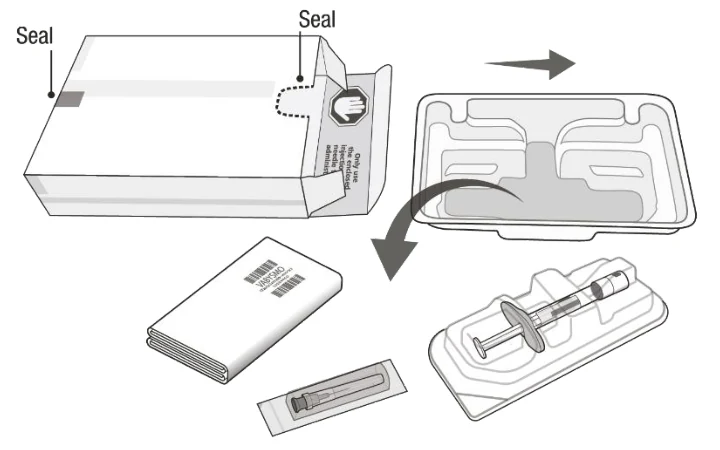
Figure A
Device description
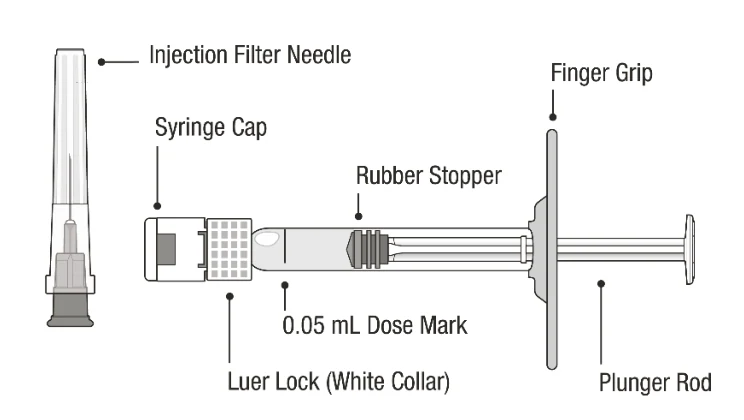
Figure B
Removal of the syringe from the syringe tray (step 1) and all subsequent steps should be done using aseptic technique.
Note: the dose must be set to the 0.05 mL dose mark.
Open tray and remove syringe cap
- 1. Peel the lid off the syringe tray and aseptically remove the pre-filled syringe.
- 2.
Hold the syringe by the white collar; snap off the syringe cap (see Figure C).
Do not twist off the cap.
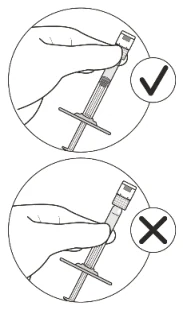
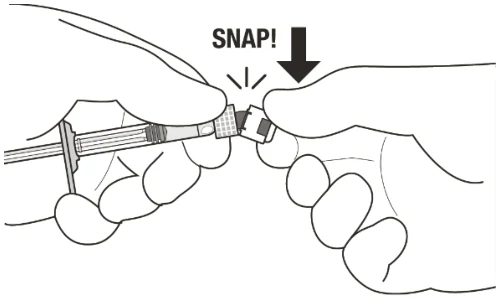
Figure C
Attach injection filter needle
- 3. Aseptically remove the injection filter needle from its packaging.
- 4. Aseptically and firmly attach the injection filter needle onto the syringe Luer lock (see Figure D).
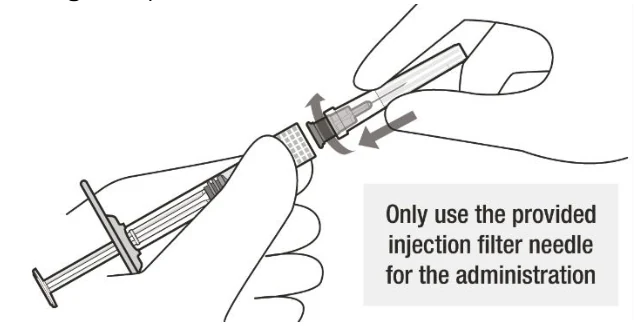
Figure D
- 5. Carefully remove the needle cap by pulling it straight off.
Dislodge air bubbles
- 6. Hold the syringe with the injection filter needle pointing up. Check the syringe for air bubbles.
- 7. If there are any air bubbles, gently tap the syringe with your finger until the bubbles rise to the top (see Figure E).
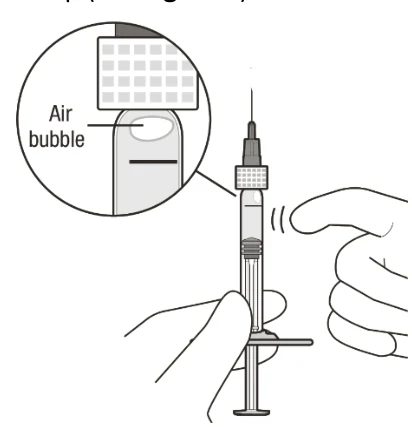
Figure E
Adjust medicinal product dose and expel air
- 8.
Hold the syringe at eye level and slowly push the plunger rod until the lower edge of the rubber stopper's dome is aligned with the 0.05 mL dose mark (see Figure F). This will expel the air and the excess solution and set the dose to 0.05 mL.
Excess volume should be expelled prior to injection. The injection dose must be set to the 0.05 mL dose mark to avoid overdose.
Ensure that the injection is given immediately after preparation of the dose.
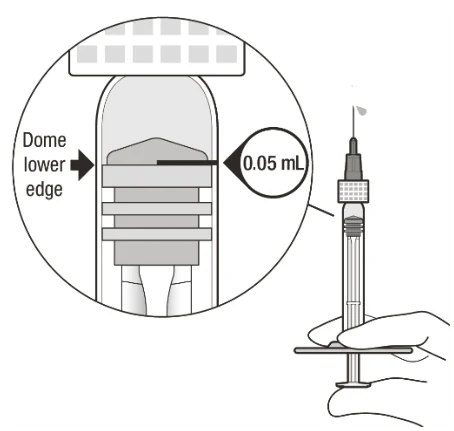
Figure F
Injection procedure
- 9.
The injection procedure should be carried out under aseptic conditions.
Inject slowly until rubber stopper reaches the bottom of the syringe to deliver the volume of 0.05 mL.
Do not recap or detach the injection filter needle from the syringe. Any unused medicinal product or waste material should be disposed of in accordance with local regulations.
Vial
Preparation for Administration
Before you start

Read all the instructions carefully before using VABYSMO.

The VABYSMO kit includes a glass vial and transfer filter needle. The glass vial is for a single dose only. The filter needle is for single use only.

VABYSMO should be stored refrigerated at temperatures between 2°C to 8°C.
Do not freeze.
Do not shake.

Allow VABYSMO to reach room temperature (up to 25°C) before proceeding with the administration. Keep the vial in the original carton to protect from light.
The VABYSMO vial may be kept at room temperature for up to 24 hours.

The VABYSMO vial should be inspected visually prior to administration. VABYSMO is a clear to opalescent and colourless to brownish-yellow liquid solution.
Do not use if particulates, cloudiness, or discolouration are visible.
Do not use if the packaging, vial and/or transfer filter needle are expired, damaged, or have been tampered with (see Figure A).
Use aseptic technique to carry out the preparation of the intravitreal injection.
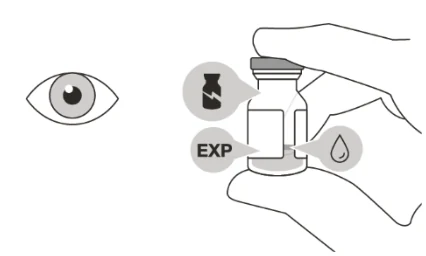
Figure A
Gather supplies
- 1.
Gather the following supplies:
- One VABYSMO vial (included)
One sterile 5-μm blunt transfer filter needle 18-gauge x 1½ inch
(included)
- One sterile 1 mL Luer lock syringe with a 0.05 mL dose mark (not included)
One sterile injection needle 30-gauge x ½ inch (not included)
Note that a 30-gauge injection needle is recommended to avoid increased injection forces that could be experienced with smaller diameter needles.
- Alcohol swab (not included).
- 2. To ensure all liquid settles at the bottom of the vial, place the vial upright on a flat surface (for about 1 minute) after removal from packaging (see Figure B). Gently tap the vial with your finger (see Figure C), as liquid may stick to the top of the vial.
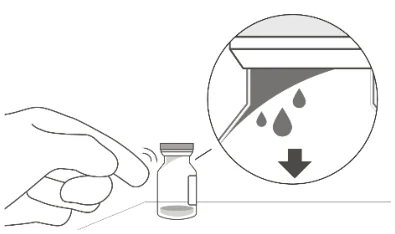
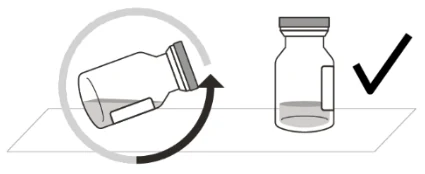
Figure B
Figure C
- 3. Remove the flip-off cap from the vial (see Figure D) and wipe the vial septum with an alcohol swab (see Figure E).
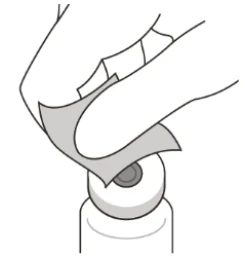
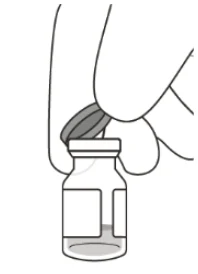
Figure D
Figure E
Transfer drug product from vial to syringe
- 4. Aseptically and firmly attach the included 18-gauge x 1½ inch transfer filter needle onto a 1 mL Luer lock syringe (see Figure F).
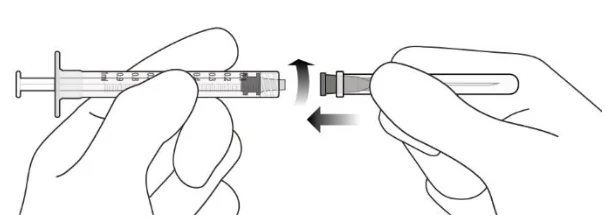
Figure F
- 5. Using aseptic technique, push the transfer filter needle into the center of the vial septum (see Figure G), push it all the way in, then tilt the vial slightly so that the needle touches the bottom edge of the vial (see Figure H).
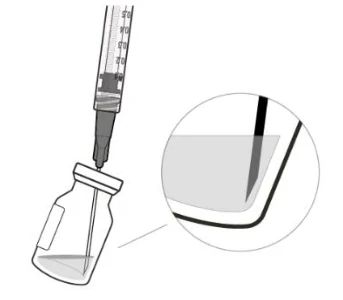
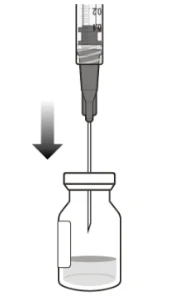
Figure G
Figure H
- 6. Hold the vial slightly inclined and slowly withdraw all the liquid from the vial (see Figure I). Keep the bevel of the transfer filter needle submerged in the liquid, with the bevel facing down, to avoid introduction of air.
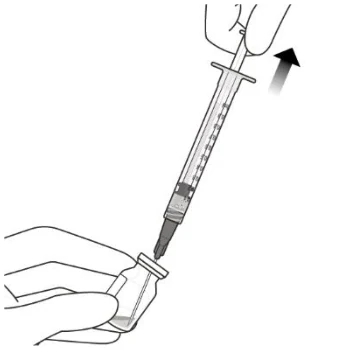
Figure I
Attach injection needle
- 7. Ensure that the plunger rod is drawn sufficiently back when emptying the vial, in order to completely empty the transfer filter needle (see Figure I).
- 8.
Disconnect the transfer filter needle from the syringe and dispose of it in accordance with local regulations.
Do not use the transfer filter needle for the intravitreal injection.
- 9. Aseptically and firmly attach a 30-gauge x ½ inch injection needle onto the Luer lock syringe (see Figure J).
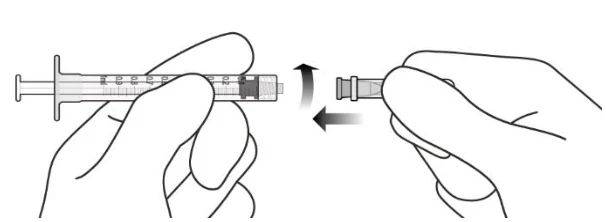
Figure J
Dislodge air bubbles and adjust drug dose
- 10. Carefully remove the plastic needle shield from the needle by pulling it straight off.
- 11. To check for air bubbles, hold the syringe with the needle pointing up. If there are any air bubbles, gently tap the syringe with your finger until the bubbles rise to the top (see Figure K).
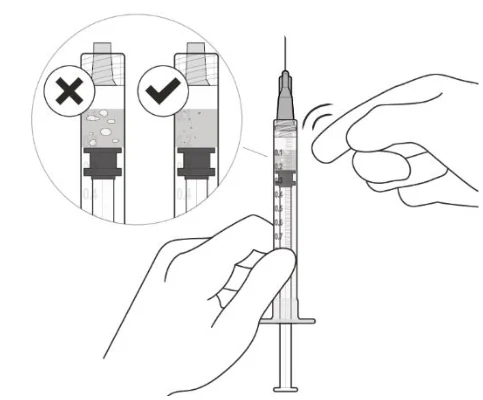
Figure K
- 12. Carefully expel the air from the syringe and needle, and slowly depress the plunger to align the rubber stopper tip to the 0.05 mL dose mark. The syringe is ready for the injection (see Figure L). Ensure that the injection is given immediately after preparation of the dose.
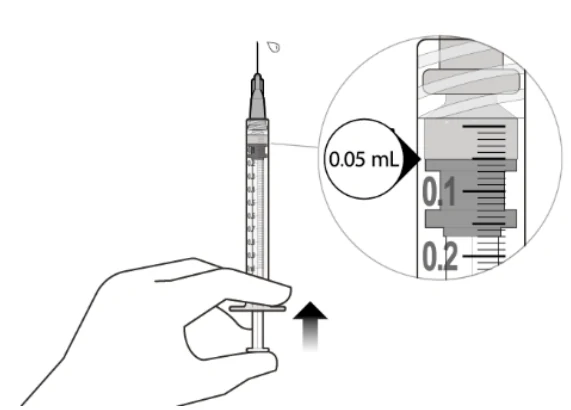
Figure L
Injection Procedure
Inject slowly until the rubber stopper reaches the end of the syringe to deliver the volume of 0.05 mL. Confirm delivery of the full dose by checking that the rubber stopper has reached the end of the syringe barrel.
Any waste material or unused medicinal product should be disposed of in accordance with local regulations.
4.5. Missed Dose
If a dose is delayed or missed, the patient should return to be assessed by physician as soon as possible and continue dosing depending on physician’s discretion.
5. Overdose
Doses higher than the recommended dosing regimen have not been studied. Overdosing with greater than recommended injection volume may increase intraocular pressure.
In the event of an overdose, intraocular pressure (IOP) should be monitored and, if deemed necessary by the treating physician, appropriate treatment should be initiated.
For the most recent information in the management of a suspected drug overdose, contact your regional poison control centre or Health Canada’s toll-free number, 1-844 POISON-X (1-844-764-7669).
- 6. Dosage Forms, Strengths, Composition, and Packaging
To help ensure the traceability of biologic products, healthcare professionals should record both the brand name and the non-proprietary (active ingredient) name as well as other product-specific identifiers such as the Drug Identification Number (DIN) and the batch/lot number of the product supplied.
Table 1 Dosage Forms, Strengths, and Composition
VABYSMO injection is a sterile, preservative-free, clear to opalescent, colourless to brownish-yellow solution, available in a single-use pre-filled syringe or single-use glass vial.
Pre-filled Syringe
Each pre-filled syringe contains 21 mg faricimab in 0.175 mL solution. This provides a usable amount to deliver a single dose of 0.05 mL solution containing 6 mg of faricimab.
| Route of Administration | Dosage Form/ Strength/Composition | Non-medicinal Ingredients |
| Intravitreal Injection | Solution 6 mg/0.05 mL | Acetic acid 30% (for pH adjustment), D-sucrose, L-histidine, L-methionine, polysorbate 20, sodium chloride, water for injections |
Each carton contains one glass pre-filled syringe and one sterile Extra Thin Wall injection filter needle (30-gauge x ½ inch, 0.30 mm x 12.7 mm).
Vial
Each vial contains 28.8 mg faricimab in 0.24 mL solution. This provides a usable amount to deliver a single dose of 0.05 mL solution containing 6 mg of faricimab.
Each carton contains one glass vial and one sterile 5 μm blunt transfer filter needle (18-gauge x 1½ inch, 1.2 mm x 40 mm).
7. Warnings and Precautions
Driving and Operating Machinery
Patients may experience temporary visual disturbances following the intravitreal injection with VABYSMO and the associated eye examination. Patients should not drive or use machines until visual function has recovered sufficiently.
Immune
Hypersensitivity
As with all therapeutic proteins, there is the potential for immune response to VABYSMO. Hypersensitivity reactions may manifest as rash, pruritus, urticaria, erythema, severe intraocular inflammation or anaphylactic reactions. Patients should be instructed to report any symptoms of anaphylaxis or intraocular inflammation such as vision loss, eye pain, increased sensitivity to light, floaters or worsening eye redness, which might be a clinical sign attributable to hypersensitivity.
Ophthalmologic
Endophthalmitis, Intraocular Inflammation, Retinal Detachments and Traumatic Cataract
Intravitreal injections, including those with VABYSMO, have been associated with endophthalmitis, intraocular inflammation, rhegmatogenous retinal detachment, retinal tear and iatrogenic traumatic cataract (see 8 Adverse Reactions). Proper aseptic injection techniques must always be used when administering VABYSMO. Patients should be instructed to report any symptoms, such as eye pain, loss of vision, photophobia, blurred vision, floaters, or redness, suggestive of endophthalmitis or any of the above-mentioned events without delay, to permit prompt and appropriate management. Patients with increased frequency of injections may be at increased risk of procedural complications.
Retinal Vasculitis and Retinal Occlusive Vasculitis
Retinal vasculitis and retinal occlusive vasculitis have been reported with the use of VABYSMO, typically in the presence of intraocular inflammation or treatment with other intravitreal agents. Discontinue treatment with VABYSMO in patients who develop these events. Patients experiencing any change in vision following treatment should talk to their healthcare professional without delay.
Retinal Pigment Epithelial Tear
Retinal pigment epithelial tear has been reported with the use of VABYSMO (see 8 Adverse Reactions). Risk factors associated with the development of a retinal pigment epithelial tear after anti-VEGF therapy for wet AMD include a large and/or high pigment epithelial detachment. When initiating VABYSMO therapy, caution should be used in patients with these risk factors for retinal pigment epithelial tears.
Increases in Intraocular Pressure (IOP)
Transient increases in intraocular pressure (IOP) have been seen within 60 minutes of intravitreal injection, including those with VABYSMO. Sustained (present at 2 or more consecutive visits) IOP increases > 21 mm Hg have also been reported. In all cases, both the IOP and perfusion of the optic nerve head and/or vision must be monitored and managed appropriately.
Special precaution is needed in patients with poorly controlled glaucoma. Do not inject VABYSMO while the IOP is ≥ 30 mmHg.
Bilateral Treatment
The safety and efficacy of VABYSMO administered in both eyes concurrently have not been studied.
Concomitant Use of Other Anti-VEGF
There are no data available on the concomitant use of VABYSMO with anti-VEGF medicinal products or other therapies (e.g., photodynamic therapy) in the same eye.
Withholding Treatment
Treatment should be withheld in patients with:
- Rhegmatogenous retinal detachment, stage 3 or 4 macular holes, retinal break; treatment should not be resumed until an adequate repair has been performed.
- Treatment related decrease in Best Corrected Visual Acuity (BCVA) of ≥ 30 letters compared with the last assessment of visual acuity; treatment should not be resumed earlier than the next scheduled treatment.
- Performed or planned intraocular surgery within the previous or next 28 days; treatment should not be resumed earlier than the next scheduled treatment.
Populations with Limited Data
In wet AMD clinical trials, there is limited data in patients with the total lesion size > 9 disc areas on fundus fluorescein angiography. There is only limited experience in the treatment of DME patients with HbA1c over 10%, patients with high-risk proliferative diabetic retinopathy (DR), or wet AMD, DME and RVO patients with active systemic infections. There is also no experience of treatment with VABYSMO in diabetic and RVO patients with uncontrolled hypertension. This lack of information should be considered by the physician when treating such patients.
Reproductive Health
Contraception
Women of childbearing potential have to use effective contraception during treatment with VABYSMO and for at least 3 months following the last dose of VABYSMO (see 7.1.1 Pregnancy
Fertility
No reproductive or fertility studies have been conducted to assess VABYSMO’s impact on fertility.
No effects on reproductive organs in male or female animals were observed in a 6-month cynomolgus monkey study at VABYSMO doses of up to 3 mg/eye (8-10 times the clinical exposure based on AUC). VEGF inhibition has been shown to affect follicular development, corpus luteum function and fertility. Based on the mechanism of action of VEGF and Ang-2 inhibitors, there is a potential risk to female reproductive capacity (see 16 Non-Clinical Toxicology, Reproductive and developmental toxicology).
Systemic Effects
Arterial Thromboembolic Events (ATEs) and Non-ocular Hemorrhage
Systemic adverse events including arterial thromboembolic events and non-ocular hemorrhage have been reported following intravitreal injection of VEGF inhibitors, including VABYSMO (see 8 Adverse Reactions) and there is a theoretical risk that these may be related to VEGF inhibition. ATEs are defined as nonfatal stroke, nonfatal myocardial infarction, vascular death or death of unknown cause.
There are limited/no data on safety of faricimab in patients with history of stroke or transient ischemic attack or myocardial infarction.
7.1. Special Populations
7.1.1. Pregnancy
There are no data from the use of VABYSMO in pregnant women.
In an embryofetal development study in pregnant cynomolgus monkeys, faricimab given intravenously throughout the period of organogenesis did not adversely affect pregnancy or fetal development at doses up to 3 mg/kg IV (523 times the clinical exposure based on the Cmax at the maximum recommended human dose of a single 6 mg/eye intravitreal dose) (see 16 Non-Clinical Toxicology, Reproductive and developmental toxicology).
It is not known whether faricimab can cross the placenta or cause harm to the fetus when administered to pregnant women. The systemic exposure to faricimab is low after ocular administration, but due to its mechanism of action of VEGF and Ang-2 inhibitors, faricimab must be regarded as potentially teratogenic and embryo/fetotoxic. Therefore, VABYSMO should not be used during pregnancy unless the potential benefit to the patient outweighs the potential risk to the fetus.
7.1.2. Breastfeeding
No studies have been conducted to assess VABYSMO’s impact on milk production, its presence in breast milk, or its effects on the nursing child.
It is not known whether faricimab is excreted in human breast milk. Precaution should be exercised because many drugs can be excreted in human milk. A risk to the breastfed child cannot be excluded. Breastfeeding is not recommended during treatment with VABYSMO and for at least one month after the last dose of VABYSMO. A decision must be made whether to discontinue breastfeeding or to postpone, if feasible, therapy with VABYSMO. The benefits of therapy should be weighed against potential adverse effects on the breastfed child from VABYSMO.
7.1.3. Pediatrics
Pediatrics (< 18 years of age): No data are available to Health Canada; therefore, Health Canada has not authorized an indication for pediatric use.
7.1.4. Geriatrics
Geriatrics (≥ 65 years of age): In the Phase III wet AMD, DME and RVO clinical studies, approximately 58% (1,496/2,571) of patients randomized to treatment with VABYSMO were ≥ 65 years of age. No significant differences in efficacy or safety of VABYSMO were seen with increasing age in these studies (see 4.2 Recommended Dose and Dosage Adjustment, Special Populations and 10.3 Pharmacokinetics, Special populations and conditions).
- 8. Adverse Reactions
8.1. Adverse Reaction Overview
A total of 4,489 patients constituted the safety population in the six Phase III clinical studies (2,567 VABYSMO treated patients; 664 in wet AMD, 1,262 in DME and 641 in RVO).
Treatment of wet AMD
The most frequently reported serious adverse reactions in patients treated with VABYSMO were retinal pigment epithelial (RPE) tear (0.6%), cataract (0.5%), endophthalmitis (0.5%), uveitis (0.5%), and visual acuity reduced (0.3%).
The most frequently reported adverse reactions in patients treated with VABYSMO were cataract (9%), conjunctival hemorrhage (9%), vitreous detachment (5%), vitreous floaters (5%), intraocular pressure (IOP) increased (4%), eye pain (4%) and RPE tear (3%).
The adverse reactions (regardless of causality) leading to permanent discontinuation of VABYSMO were uveitis, endophthalmitis, iridocyclitis, vitritis, and RPE tear.
Treatment of DME
The most frequently reported serious adverse reactions in patients treated with VABYSMO were cataract (1%), endophthalmitis (0.5%), uveitis (0.2%), retinal tear (0.2%) and vitreous hemorrhage (0.2%).
The most frequently reported adverse reactions in patients treated with VABYSMO were cataract (15%), conjunctival hemorrhage (8%), vitreous detachment (5%), vitreous floaters (4%), IOP increased (4%) and eye pain (3%).
The most frequently reported adverse reactions (regardless of causality) leading to permanent discontinuation of VABYSMO was uveitis.
Treatment of RVO
The most frequently reported serious adverse reactions in patients treated with VABYSMO were uveitis (0.5%), vitreous hemorrhage (0.3%), rhegmatogenous retinal detachment (0.3%), iridocyclitis (0.2%), visual acuity reduced (0.2%), vitritis (0.2%) and retinal tear (0.2%).
The most frequently reported adverse reactions in patients treated with VABYSMO were conjunctival hemorrhage (6%), IOP increased (5%), cataract (4%), vitreous detachment (4%), eye pain (3%), vitreous floaters (2%), visual acuity reduced (1%) and vitritis (1%).
The most frequently reported adverse reactions (regardless of causality) leading to permanent discontinuation of VABYSMO were uveitis, vitritis, and rhegmatogenous retinal detachment.
8.2. Clinical Trial Adverse Reactions
Clinical trials are conducted under very specific conditions. Therefore, the frequencies of adverse reactions observed in the clinical trials may not reflect frequencies observed in clinical practice and should not be compared to frequencies reported in clinical trials of another drug.
Neovascular (Wet) Age-related Macular Degeneration (AMD)
The data described below reflect exposure to VABYSMO in 664 patients with wet AMD treated with the 6 mg dose in the two randomized, double-masked, active comparator (aflibercept 2 mg every 8 weeks) controlled clinical studies (TENAYA and LUCERNE) through Week 112 (see 14 Clinical Trials).
Table 2 Adverse Reactions (≥ 1%) in the TENAYA and LUCERNE wet AMD Studies through Week 112
Adverse Reactions
SOC Preferred Term MedDRA version 24.0 | Week 60 | Week 112 | ||||||||
VABYSMO n = 664 | Aflibercept n = 662 | VABYSMO n = 664 | Aflibercept n = 662 | |||||||
| Eye disorders | ||||||||||
| Conjunctival hemorrhage | 8% | 8% | 9% | 9% | ||||||
| Cataract | 5% | 3% | 9% | 8% | ||||||
| Vitreous detachment | 4% | 3% | 5% | 5% | ||||||
| Vitreous floaters | 3% | 2% | 5% | 3% | ||||||
| Intraocular pressure increased | 3% | 3% | 4% | 4% | ||||||
| Eye pain | 3% | 3% | 4% | 4% | ||||||
| Intraocular inflammationa | 2% | < 1% | 3% | 1% | ||||||
| Retinal pigment epithelial tear | 3% | 2% | 3% | 2% | ||||||
| Eye irritation | 1% | < 1% | 2% | 1% | ||||||
| Corneal abrasion | 1% | 1% | 2% | 2% | ||||||
| Eye pruritus | 1% | < 1% | 1% | < 1% | ||||||
| Ocular discomfort | 1% | < 1% | 1% | < 1% | ||||||
| Ocular hyperaemia | 1% | 1% | 1% | < 1% | ||||||
| Vision blurred | < 1% | < 1% | 1% | < 1% | ||||||
aIncluding iridocyclitis, iritis, uveitis and vitritis
Diabetic Macular Edema (DME)
The data described below reflect exposure to VABYSMO in 1,262 patients with DME treated with the 6 mg dose in the two randomized, double-masked, active comparator (aflibercept 2 mg every 8 weeks) controlled clinical studies (YOSEMITE and RHINE) through Week 100 (see 14 Clinical Trials).
Table 3 Adverse Reactions (≥ 1%) in the YOSEMITE and RHINE DME Studies through Week 100
Adverse Reactions SOC Preferred Term MedDRA version 23.1 | Baseline to Week 56 | Baseline to Week 100 | ||||||||
VABYSMO n = 1,262 | Aflibercept n = 625 | VABYSMO n = 1,262 | Aflibercept n = 625 | |||||||
| Eye disorders | ||||||||||
| Cataract | 5% | 5% | 15% | 12% | ||||||
| Conjunctival hemorrhage | 7% | 6% | 8% | 7% | ||||||
| Vitreous detachment | 3% | 3% | 5% | 4% | ||||||
| Vitreous floaters | 3% | 2% | 4% | 3% | ||||||
| Intraocular pressure increased | 3% | 2% | 4% | 3% | ||||||
| Eye pain | 2% | 3% | 3% | 3% | ||||||
| Intraocular inflammationa | 1% | < 1% | 1% | < 1% | ||||||
| Lacrimation increased | < 1% | < 1% | 1% | < 1% | ||||||
| Vitreous hemorrhage | 1% | < 1% | < 1% | < 1% | ||||||
aIncluding iridocyclitis, iritis, uveitis and vitritis
Macular Edema Secondary to Retinal Vein Occlusion (RVO)
The data described below reflect exposure to VABYSMO in 641 patients with RVO treated with the 6 mg dose in the two randomized, double-masked, active comparator (aflibercept 2 mg every 4 weeks) controlled clinical studies (BALATON and COMINO) from baseline to Week 24 (controlled) and from baseline to Week 72 (no control arm from Week 24) (see 14 Clinical Trials).
Table 4 Adverse Reactions (≥ 1%) in the BALATON and COMINO RVO Studies through Week 24 and Week 72
Adverse Reactions SOC Preferred Term MedDRA version 25.0 | Baseline to Week 24 | Baseline to Week 72b | |||||
Adverse Reactions SOC Preferred Term MedDRA version 25.0 | Baseline to Week 24 | Baseline to Week 72b | |||||
VABYSMO n = 641 | Aflibercept n = 635 | VABYSMO n = 641 | |||||
VABYSMO n = 641 | Aflibercept n = 635 | VABYSMO n = 641 | |||||
| Eye disorders | |||||||
| Cataract | < 1% | 1% | 4% | ||||
| Conjunctival hemorrhage | 3% | 4% | 6% | ||||
| Eye pain | < 1% | < 1% | 3% | ||||
| Visual acuity reduced | < 1% | < 1% | 1% | ||||
| Vitreous detachment | 2% | 2% | 4% | ||||
| Vitreous floaters | 2% | 2% | 2% | ||||
| Intraocular inflammationa | 1% | < 1% | 3% | ||||
| Investigations | |||||||
| Intraocular pressure increased | 1% | 3% | 5% | ||||
aIncluding iridocyclitis, iritis, uveitis and vitritis
bRepresents patients treated with VABYSMO from baseline to 72 Weeks (see Table 9 for the study design).
Description of Selected Adverse Reactions from Clinical Trials
Arterial Thromboembolic Events (ATEs)
The incidence of reported ATEs in the wet AMD studies from baseline to Week 112 was 3% (22 out of 664) in patients treated with VABYSMO compared with 3% (20 out of 662) in patients treated with aflibercept.
The incidence of reported ATEs in the DME studies from baseline to Week 100 was 5% (64 out of 1,262) in patients treated with VABYSMO compared with 5% (32 out of 625) in patients treated with aflibercept.
The incidence of reported ATEs in the RVO studies from baseline to Week 24 was 1.1% (7 out of 641) in patients treated with VABYSMO compared with 1.4% (9 out of 635) in patients treated with aflibercept. The incidence of reported ATEs from baseline to Week 72 was 2.8% (18 out of 641) in patients treated with VABYSMO.
8.3. Less Common Clinical Trial Adverse Reactions
Less common adverse reactions reported in < 1% of the patients treated with VABYSMO in all Phase III studies [pooled data for Phase III studies for wet AMD (Week 112), DME (Week 100) and RVO (Week 72)] are listed below.
Eye Disorders: blurred vision, conjunctival hyperaemia, eye irritation, eye pruritus, iridocyclitis, iritis, lacrimation increased, ocular discomfort, ocular hyperemia, retinal tear, rhegmatogenous retinal detachment, sensation of foreign body, uveitis, vitritis, visual acuity reduced, visual acuity reduced transiently, and vitreous hemorrhage
Infections and infestations: endophthalmitis
Injury, poisoning and procedural complications: cataract traumatic, corneal abrasion, procedural pain
8.4. Abnormal Laboratory Findings: Hematologic, Clinical Chemistry, and Other Quantitative Data
Clinical Trial Findings
There were no findings to suggest a relationship between VABYSMO and the development of clinically significant laboratory abnormalities in the Phase III (TENAYA, LUCERNE, YOSEMITE, and RHINE) studies.
8.5. Post-Market Adverse Reactions
- the post-marketing setting. Retinal vasculitis and retinal occlusive vasculitis have also been reported in patients treated with IVT therapies.
Eye disorders: retinal vasculitis, retinal occlusive vasculitis
9. Drug Interactions
9.2. Drug Interactions Overview
No drug interaction studies have been performed with VABYSMO.
9.3. Drug-Behaviour Interactions
The interaction of VABYSMO with individual behavioural risks (e.g. cigarette smoking, cannabis use, and/or alcohol consumption) has not been studied.
9.4. Drug-Drug Interactions
No drug-drug interaction studies have been performed with VABYSMO.
9.5. Drug-Food Interactions
No drug-food studies have been performed with VABYSMO.
9.6. Drug-Herb Interactions
No drug-herb studies have been performed with VABYSMO.
9.7. Drug-Laboratory Test Interactions
No drug-laboratory studies have been performed with VABYSMO.
10. Clinical Pharmacology
10.1. Mechanism of Action
Faricimab is a humanized bispecific immunoglobulin G1 (IgG1) antibody that acts through inhibition of both Ang-2 and vascular endothelial growth factor A (VEGF-A). By inhibiting VEGF-A, faricimab suppresses endothelial cell proliferation, neovascularization and vascular permeability. By inhibiting Ang-2, faricimab is thought to increase vascular stability and desensitize blood vessels to the effects of VEGF-A. Ang-2 levels are increased in some patients with wet AMD, DME and RVO.
10.2. Pharmacodynamics
Following intravitreal administration of faricimab in wet AMD, DME and RVO patients, free Ang-2 and VEGF-A in aqueous humor was reduced.
Reductions in mean central subfield thickness (CST) from baseline were observed in patients with wet AMD, DME or RVO treated with VABYSMO in the six clinical trials (TENAYA, LUCERNE, RHINE, YOSEMITE, BALATON and COMINO).
In wet AMD patients, the mean CST change from baseline to the primary endpoint visits (averaged at Weeks 40, 44 and 48) for VABYSMO versus aflibercept (Q8W) was -137 μm vs. -129 μm (TENAYA) and -137 µm vs. -131 μm (LUCERNE); and -146.5 μm vs. -146.2 μm (TENAYA) and -150.3 μm vs. -141.6 μm (LUCERNE) averaged at Weeks 104, 108 and 112.
In DME patients treated with VABYSMO Q8W or VABYSMO variable dosing versus aflibercept Q8W, the mean change in CST from baseline was -207 µm and -197 µm vs. -170 µm (YOSEMITE) and -196 µm, -188 µm vs. -170 µm (RHINE) at the primary endpoint visits (averaged at Weeks 48, 52 and 56); and -216 µm, -205 µm vs. -196 µm (YOSEMITE) and -203 µm, -197 µm vs. -186 µm (RHINE) averaged at Weeks 92, 96 and 100.
In patients with branch retinal vein occlusion (BRVO; BALATON) and central/hemiretinal vein occlusion (C/HRVO; COMINO) treated with VABYSMO every 4 weeks (Q4W), the mean CST reduction from baseline to Week 24 was 311.4 μm for VABYSMO versus 304.4 μm for aflibercept, and 461.6 μm for VABYSMO Q4W versus 448.8 μm for aflibercept Q4W, in BALATON and COMINO, respectively.
10.3. Pharmacokinetics
Absorption and Distribution
Based on a population pharmacokinetic analysis (including wet AMD and DME, N=2,246), maximum free (unbound to VEGF-A and Ang-2) faricimab plasma concentrations (Cmax) are estimated to occur approximately 2 days post-dose. Mean (± SD) plasma Cmax are estimated 0.23 (0.07) mcg/mL and 0.22 (0.07) mcg/mL respectively in wet AMD and DME patients. After repeated administrations, mean plasma free faricimab trough concentrations are predicted to be 0.002-0.003 mcg/mL for Q8W dosing.
No accumulation of faricimab was apparent in the vitreous or in plasma following repeated intravitreal dosing. No apparent suppression of Ang-2 or VEGF-A was observed in plasma.
Pharmacokinetic analysis of patients with wet AMD, DME, and RVO (N = 2,977) has shown that the pharmacokinetics of faricimab are comparable in wet AMD, DME, and RVO patients.
Metabolism and Elimination
The metabolism of faricimab has not been directly studied. As a monoclonal antibody, faricimab is expected to be metabolized principally by catabolism through IgG proteolysis.
The estimated mean vitreous elimination half-life of faricimab is approximately 7.5 days.
Special populations and conditions
- No clinically meaningful differences in faricimab pharmacokinetics were observed based on age, gender, and race.
- Hepatic Insufficiency: No formal pharmacokinetic study has been conducted in patients with hepatic impairment.
- Renal Insufficiency: No formal pharmacokinetic study has been conducted in patients with renal impairment. Population pharmacokinetic analysis of pooled data from all clinical studies of which 63% had renal impairment (mild 38%, moderate 23%, and severe 2%), revealed no differences with respect to systemic pharmacokinetics of faricimab after intravitreal administration of VABYSMO.
10.4. Immunogenicity
Immunogenicity assay results are highly dependent on several factors including assay sensitivity and specificity, assay methodology, sample handling, timing of sample collection, concomitant medications and underlying disease. For these reasons, comparison of incidence of antibodies to VABYSMO with the incidence of antibodies to other products may be misleading.
As with all therapeutic proteins, there is a potential for an immune response in patients treated with VABYSMO (see 7 Warnings and Precautions). After dosing with VABYSMO for up to 112 (wet AMD), 100 (DME) and 72 (RVO) weeks, treatment emergent anti-faricimab antibodies were detected in approximately 91 out of 660 (13.8%), 120 out of 1252 (9.6%) and 92 out of 642 (14.4%) of patients randomized to faricimab, respectively.
Intraocular inflammation adverse reactions were observed in 12 out of 98 (12.2%, wet AMD), 15 out of 128 (11.7%, DME) and 9 out of 95 (9.5%, RVO) ADA-positive patients and in 8 out of 562 (1.4%, wet AMD), 5 out of 1124 (0.4%, DME) and 10 out of 543 (1.8%, RVO) ADA-negative patients randomized to faricimab, respectively.
- 11. Storage, Stability, and Disposal
Store in a refrigerator (2°C to 8°C).
Do not freeze.
Keep the sealed tray containing the pre-filled syringe or vial in the original carton to protect from light.
Prior to use, the sealed tray containing the pre-filled syringe or unopened vial may be kept at room temperature (up to 25°C), in the original carton, for up to 24 hours.
Ensure that the injection is given immediately after preparation of the dose.
VABYSMO should not be used after the expiry date (EXP) shown on the pack.
Keep out of reach and sight of children.
Incompatibilities
In the absence of compatibility studies, this medicinal product must not be mixed with other medicinal products.
Disposal of Unused/Expired Medicines
The release of pharmaceuticals in the environment should be minimized. Medicines should not be disposed of via wastewater and disposal through household waste should be avoided.
The following points should be strictly adhered to regarding the use and disposal of syringes and other medicinal sharps:
- Needles and syringes should never be reused.
- Place all used needles and syringes into a sharps container (puncture-proof disposable container).
Any unused medicinal product or waste material should be disposed of in accordance with local requirements.
12. Special Handling Instructions
Do not shake.
VABYSMO should be inspected visually upon removal from the refrigerator and prior to administration. Do not use if particulates, cloudiness, or discolouration are visible. Do not use if the packaging, pre-filled syringe, injection filter needle, vial or transfer filter needle are damaged or expired.
The contents of the pre-filled syringe and vial are sterile and for single use only.
Use aseptic technique for preparation of the intravitreal injection.
Part 2: Scientific Information
13. Pharmaceutical Information
Drug Substance
Non-proprietary name of the drug substance(s):
faricimab
Chemical name:
humanized bispecific antibody of the CrossMAb format that selectively binds vascular endothelial growth factor A (VEGF) and angiopoetin 2 (Ang 2)
Molecular formula and molecular mass:
C6506H9962N1724O2041S45
Approximately 146 kDa (peptide chains only, heavy chains without C terminal lysine residues)
Structural formula:
The recombinant bispecific antibody is produced in CHO cells and consists of two different heavy chains (VEGF HC: HC1 with 452 amino acid residues, Ang-2 HC: HC2 with 462 amino acid residues; without C-terminal lysine) and two different light chains (VEGF LC: LC1 with 214 amino acid residues, Ang-2-LC: LC2 with 213 amino acid residues) with inter and intra chain disulfide bonds that are typical for IgG1 antibodies plus an additional disulfide bridge in the CH3 CH3 interface
Physicochemical properties:
Faricimab is a sterile, preservative-free, clear to opalescent, colourless to brownish-yellow solution.
The pH of the solution of faricimab is in the range of 5.3 – 5.8.
Pharmaceutical standard:
Professed
Product Characteristics:
Faricimab is a humanized bispecific antibody produced in mammalian Chinese Hamster Ovary (CHO) cell culture by recombinant DNA technology.
14. Clinical Trials
14.1. Clinical Trials by Indication
Treatment of wet AMD
The safety and efficacy of VABYSMO (faricimab) were assessed in two randomized, multi-center, double-masked, active comparator-controlled studies in patients with wet AMD, Study GR40306 (TENAYA) and Study GR40844 (LUCERNE). A total of 1,329 patients were enrolled in these studies, with 1,135 (85%) patients completing the studies through Week 112. A total of 1,326 patients received at least one dose (664 with VABYSMO).
Table 5 Summary of patient demographics for clinical trials in wet AMD
| Study # | Study design | Dosage, route of administration and duration | Study subjects (n) | Mean age (Range) | Sex |
| GR40306 (TENAYA) | Randomized, multi-center, double-masked, active comparator-controlled studies | VABYSMO (see below for details) Aflibercept 2mg Q8W after three initial monthly doses | VABYSMO: N=334 Aflibercept: N=337 | 76.3 (50-99 years) | Male: 40.1 % Female: 59.9% |
| GR40844 (LUCERNE) | VABYSMO: N=331 Aflibercept: N=327 | 75.5 (50-99 years) | Male: 40.6 % Female: 59.4 % | ||
In both studies, patients were randomized in a 1:1 ratio to one of two treatment arms:
- Aflibercept 2 mg every 8 weeks (Q8W) after three initial monthly doses. Patients in the aflibercept arm remained on Q8W dosing throughout the study period.
- VABYSMO: After the first 6 mg four monthly doses (Weeks 0, 4, 8, and 12), patients received 6 mg every 16 weeks (Q16W), every 12 weeks (Q12W) or every 8 weeks (Q8W) dosing based on assessments of pre-specified visual and anatomic criteria at Weeks 20 and 24 as well as treating physician clinical assessment. Patients remained on these fixed dosing intervals until Week 60 without supplemental therapy. From Week 60 onwards, patients in the VABYSMO arm moved to an adjustable dosing regimen, where the dosing interval could be increased in up to 4-week increments (up to Q16W) or could be decreased by up to 8-week increments (up to Q8W) based on an objective assessment of pre-specified visual and anatomic disease activity criteria at study drug dosing visits.
- Both studies were 112 weeks in duration.
The primary efficacy endpoint was the mean change in BCVA from baseline based on an average at Weeks 40, 44 and 48 (i.e., Year 1), as measured by the Early Treatment Diabetic Retinopathy Study (ETDRS) letter score. The secondary endpoints included proportion of patients gaining ≥15 letters in BCVA from baseline based on an average at Weeks 40, 44 and 48.
In both studies (TENAYA and LUCERNE), non-inferiority of VABYSMO compared to aflibercept Q8W was demonstrated using mean change in BCVA from baseline at Year 1. The results are summarized in Table 6 and in Figure 1 and Figure 2 below.
Table 6 Efficacy outcomes at Year 1a in TENAYA and LUCERNE
| Efficacy Outcomes | TENAYA | LUCERNE | ||||||||||||||
|---|---|---|---|---|---|---|---|---|---|---|---|---|---|---|---|---|
VABYSMO N = 334 | Aflibercept Q8W N = 337 | VABYSMO N = 331 | Aflibercept Q8W N = 327 | |||||||||||||
| Mean BCVA (SD) at baseline | 61.3 (12.5) | 61.5 (12.9) | 58.7 (14.0) | 58.9 (13.3) | ||||||||||||
| Mean change in BCVA from baseline as measured by ETDRS letter score (95% CI) | 5.8 (4.6, 7.1) | 5.1 (3.9, 6.4) | 6.6 (5.3, 7.8) | 6.6 (5.3, 7.8) | ||||||||||||
| Difference in LS mean (95% CI) | 0.7 (-1.1, 2.5)b | 0.0 (-1.7, 1.8)b | ||||||||||||||
| Proportion of patients with ≥ 15 letter gain from baselinec | 20.0% (15.6%, 24.4%) | 15.7% (11.9%, 19.6%) | 20.2% (15.9%, 24.6%) | 22.2% (17.7%, 26.8%) | ||||||||||||
| Difference (95% CI) | 4.3% (-1.6%, 10.1%) | -2.0% (-8.3%, 4.3%) | ||||||||||||||
aAverage of Weeks 40, 44 and 48
bMet the pre-specified non-inferiority margin of 4 letters for the primary endpoint in both studies cCochran-Mantel-Haenszel weighted proportion
BCVA: Best Corrected Visual Acuity
ETDRS: Early Treatment Diabetic Retinopathy Study
CI: Confidence Interval
LS: Least Square
SD: Standard Deviation
Figure 1 Mean change in BCVA from baseline to Week 112 in TENAYA
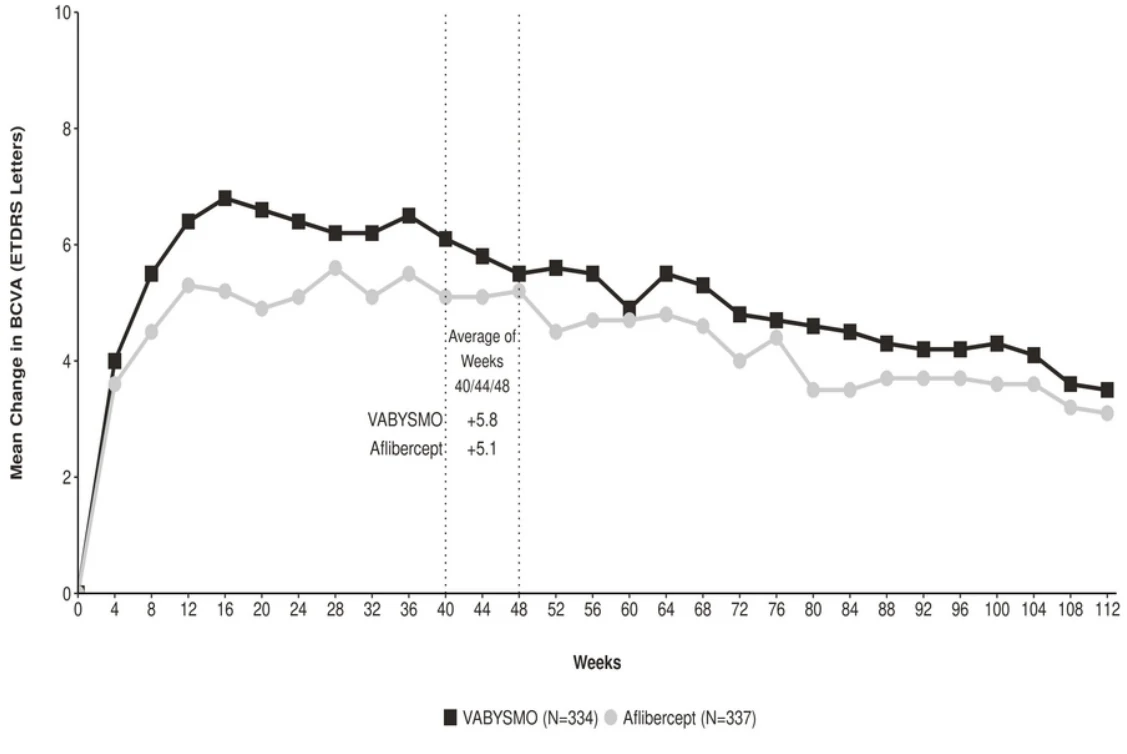
Figure 2 Mean change in BCVA from baseline to Week 112 in LUCERNE
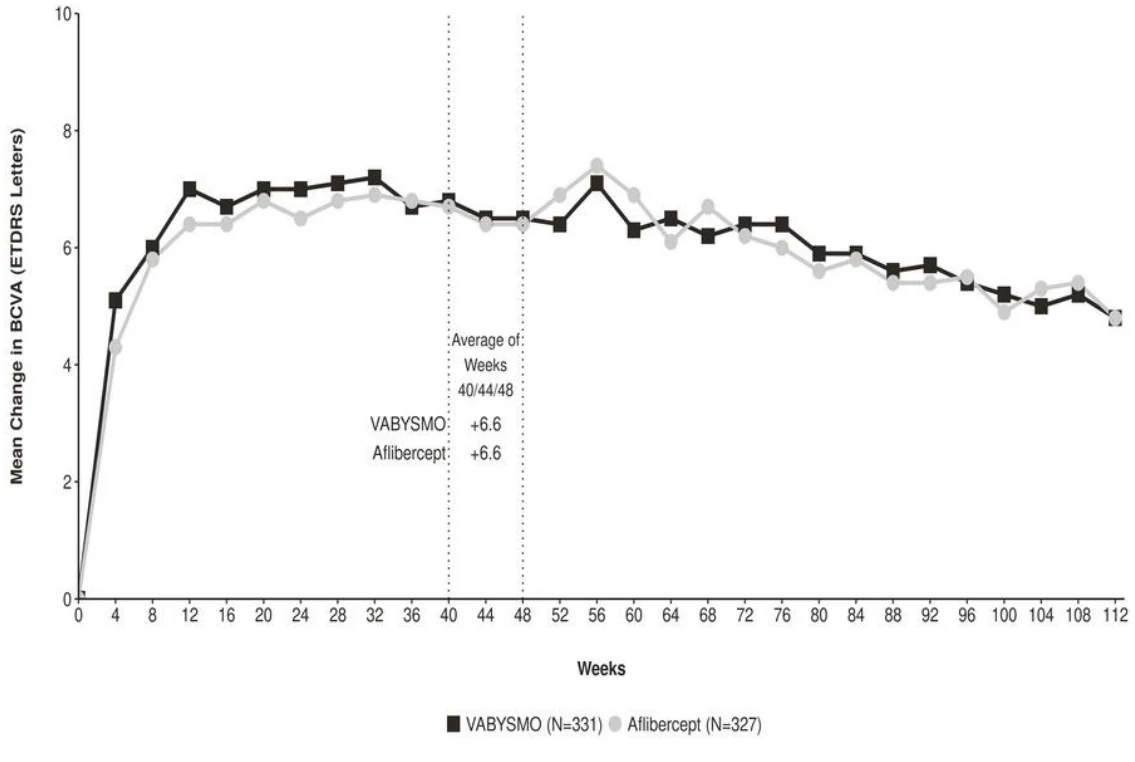
The proportion of patients on each of the faricimab treatment intervals at Week 48 in TENAYA and LUCERNE, respectively was: Q16W: 46%, 45%; Q12W: 34%, 33%; Q8W: 20%, 22%. The proportion of patients on each of the faricimab treatment intervals at Week 112 in TENAYA and LUCERNE, respectively was: Q16W: 59%, 67%; Q12W: 15%, 14%; Q8W: 26%, 19%.
The mean change in BCVA from baseline in TENAYA and LUCERNE at Weeks 104, 108 and 112 (averaged across visits) was 3.7 and 5.0 letters for VABYSMO and 3.3 and 5.2 letters for aflibercept, respectively. The proportions of patients who gained at least 15 letters in BCVA from baseline at Week 112 in TENAYA and LUCERNE were 23% and 22% for patients receiving VABYSMO and 17% and 21% for patients receiving aflibercept Q8W, respectively.
Treatment of DME
The safety and efficacy of VABYSMO were assessed in two randomized, multi-centre, double-masked, active comparator-controlled 2-year studies (YOSEMITE and RHINE) in patients with DME. A total of 1,891 patients were enrolled in the two studies with 1,622 (85.8%) patients completing the studies through Week 100. A total of 1,887 patients were treated with at least one dose through Week 56 (1,262 with VABYSMO). The overall population included both anti-VEGF naive patients (78%) and patients who had been previously treated with a VEGF inhibitor prior to study participation (22%).
Table 7 Summary of patient demographics for clinical trials in DME
| Study # | Study design | Dosage, route of administration and duration | Study subjects (n) | Mean age (Range) | Sex |
| GR40349 (YOSEMITE) | Randomized, multi-center, double-masked, active comparator-controlled studies | VABYSMO administered every 8 weeks (Q8W) after the first 6 monthly doses. VABYSMO variable dosing administered in variable intervals after the first 4 monthly doses. Aflibercept Q8W after the first 5 monthly doses. | VABYSMO (Q8W): N=315 VABYSMO variable dosing N=313 Aflibercept: N=312 | 62.2 (24-85 years) | Male: 59.8% Female: 40.2 % |
| GR40398 (RHINE) | VABYSMO (Q8W): N=317 VABYSMO variable dosing N=319 Aflibercept: N=315 | 62.2 (26-91 years) | Male: 60.9 % Female: 39.1 % | ||
In both studies, patients were randomized in a 1:1:1 ratio to one of the three treatment regimens:
- VABYSMO 6 mg every 8 weeks (Q8W) after the first 6 monthly doses.
- VABYSMO 6 mg variable dosing: patients received VABYSMO 6 mg every 4 weeks for at least 4 doses and until resolution of edema based on the central subfield thickness (CST) of the macula measured by optical coherence tomography was achieved, then the interval of dosing was modified by up to 4 week interval extensions or reductions in 4 or 8 week interval decrements based on CST and visual acuity evaluation at study drug dosing visits.
- Aflibercept 2 mg every 8 weeks (Q8W) after the first 5 monthly doses.
The primary efficacy endpoint was the mean change in BCVA from baseline based on an average at Weeks 48, 52 and 56 (i.e., Year 1), as measured by the Early Treatment Diabetic Retinopathy Study (ETDRS) letter score. Additional secondary endpoint was the proportion of patients gaining ≥ 15 letters in BCVA from baseline based on an average at Weeks 48, 52 and 56.
In both studies (YOSEMITE and RHINE), non-inferiority of VABYSMO Q8W compared to aflibercept Q8W and of VABYSMO variable dosing compared to aflibercept Q8W was demonstrated using mean change in BCVA from baseline at Year 1, respectively. The results are summarized in Table 8 and in Figure 3 and Figure 4 below.
At Week 52, in the VABYSMO variable dosing arm, 21% and 20% of patients achieved a Q12W dosing interval, and 53% and 51% of patients achieved a Q16W dosing interval in YOSEMITE and RHINE, respectively. Of the patients on Q16W at Week 52, 70% and 82% of patients maintained Q16W dosing without an interval reduction through Week 96 in YOSEMITE and RHINE, respectively. At Week 96, in the VABYSMO variable dosing arm, 60% and 64% of patients achieved a Q16W, 18% and 14% of patients achieved a Q12W dosing interval in YOSEMITE and RHINE, respectively. 4% and 6% of patients were extended to Q8W and stayed on ≤ Q8W dosing intervals through Week 96; 3% and 5% received only Q4W dosing in YOSEMITE and RHINE through Week 96, respectively.
Table 8 Efficacy outcomes at Year 1ab in YOSEMITE and RHINE
| Efficacy Outcomes | YOSEMITE | RHINE | ||||||||||||||
|---|---|---|---|---|---|---|---|---|---|---|---|---|---|---|---|---|
VABYSMO Q8W N = 315 | VABYSMO variable dosing N = 313 | Aflibercept Q8W N = 312 | VABYSMO Q8W N = 317 | VABYSMO variable dosing N = 319 | Aflibercept Q8W N = 315 | |||||||||||
| Mean BCVA (SD) at baseline | 62.0 (9.9) | 61.9 (10.2) | 62.2 (9.5) | 61.9 (10.1) | 62.5 (9.3) | 62.1 (9.4) | ||||||||||
| Mean change in BCVA from baseline as measured by ETDRS letter score (97.5% CI Year 1) | 10.7 (9.4, 12.0) | 11.6 (10.3, 12.9) | 10.9 (9.6, 12.2) | 11.8 (10.6, 13.0) | 10.8 (9.6, 11.9) | 10.3 (9.1, 11.4) | ||||||||||
| Difference in LS mean (97.5% CI) | -0.2 (-2.0, 1.6)b | 0.7 (-1.1, 2.5)b | 1.5 (-0.1, 3.2)b | 0.5 (-1.1, 2.1)b | ||||||||||||
| Proportion of patients who gained at least 15 letters in BCVA from baselinec | 29.2% (23.9%, 34.5%) | 35.5% (30.1%, 40.9%) | 31.8% (26.6%, 37.0%) | 33.8% (28.4%, 39.2%) | 28.5% (23.6%, 33.3%) | 30.3% (25.0%, 35.5%) | ||||||||||
| Difference in % (95% CI) | -2.6% (-10.0%, 4.9%) | 3.5% (-4.0%, 11.1%) | 3.5% (-4.0%, 11.1%) | -2.0% (-9.1%, 5.2%) | ||||||||||||
aAverage of Weeks 48, 52 and 56
bMet the pre-specified non-inferiority margin of 4 letters for the primary endpoint in both studies cCochran-Mantel-Haenszel weighted proportion
BCVA: Best Corrected Visual Acuity; ETDRS: Early Treatment Diabetic Retinopathy Study; CI: Confidence Interval; LS: Least Square
Figure 3 Mean change in BCVA from baseline to Year 2 (Week 100) in YOSEMITE
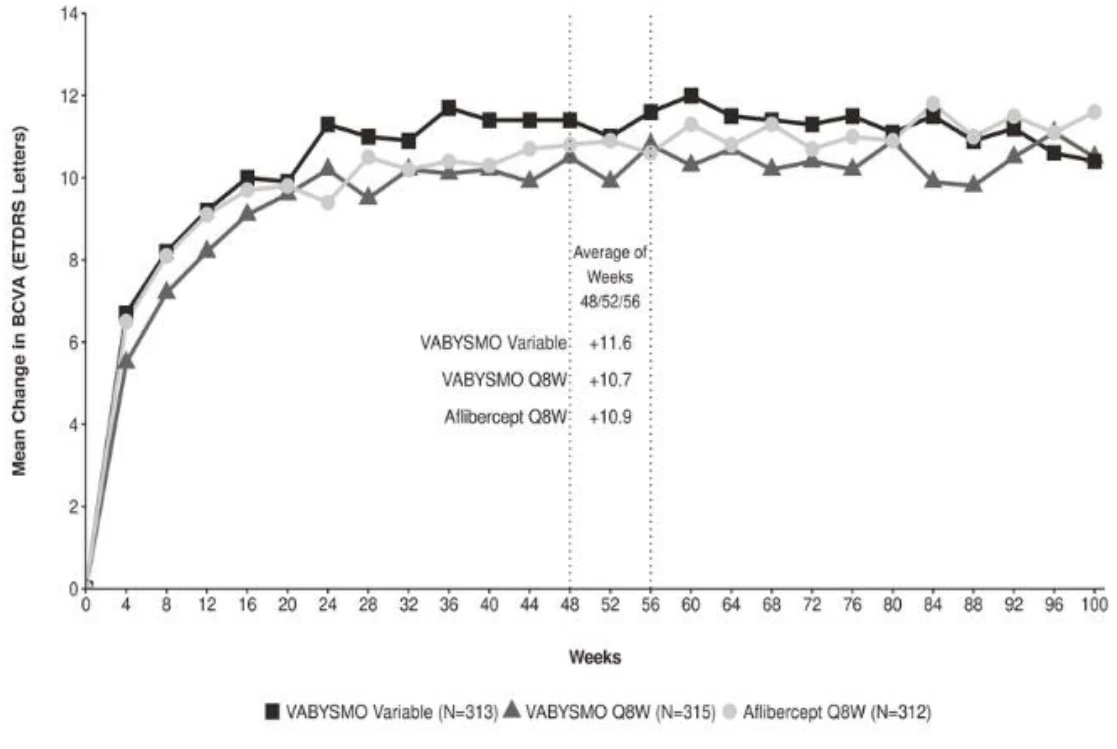
Figure 4 Mean change in BCVA from baseline to Year 2 (Week 100) in RHINE
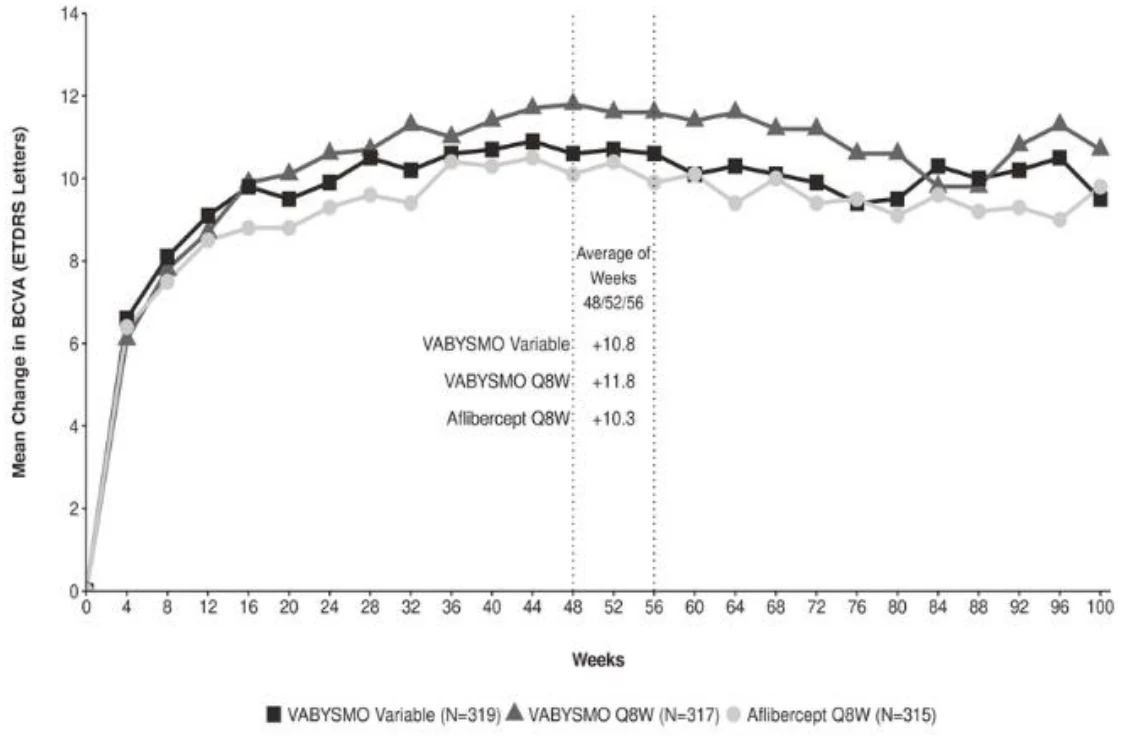
At Year 2 (average of Weeks 92, 96 and 100), the mean change in BCVA from baseline was 10.7, 10.7, and 11.4 letters for patients receiving VABYSMO Q8W, VABYSMO variable dosing, or aflibercept Q8W, respectively, in YOSEMITE; the results were 10.9, 10.1, and 9.4 letters in RHINE. The proportions of patients who gained at least 15 letters in BCVA from baseline at Year 2 in YOSEMITE were 37%, 38% and 37% for patients receiving VABYSMO Q8W, VABYSMO variable dosing, or aflibercept Q8W, respectively; the results in RHINE were 40%, 31% and 39%, respectively.
Treatment of Macular Edema Secondary to RVO
The safety and efficacy of VABYSMO were assessed in two randomised, multi-centre, double-masked, studies in patients with macular edema secondary to BRVO (BALATON) or CRVO/HRVO (COMINO). Active comparator-controlled data are available through month 6.
A total of 1,282 patients (553 in BALATON and 729 in COMINO) were enrolled in the two studies, with 1,276 patients treated with at least one dose through Week 24 (641 with VABYSMO).
Table 9 Summary of patient demographics for clinical trials in RVO
| Study # | Study design | Dosage, route of administration and duration | Study subjects (n) | Mean age Years (Range) | Sex |
| GR41984 (BALATON) | Randomized, multi-center, double-masked, studies | VABYSMO 6 mg Q4W for six consecutive monthly doses Aflibercept 2 mg Q4W for six consecutive monthly doses See text below for details beyond six months. | VABYSMO: N=276 Aflibercept: N=277 | 64.1 (28-93) | Male: 49.4% Female: 50.6 % |
| GR41986 (COMINO) | VABYSMO: N=366 Aflibercept: N=363 | 65.1 (22-100) | Male: 53.9 % Female: 46.1 % | ||
Q4W: every 4 weeks
In both studies, patients were randomized in a 1:1 ratio to one of two treatment arms:
- VABYSMO 6 mg Q4W for six consecutive monthly doses
- Aflibercept 2 mg Q4W for six consecutive monthly doses
After six initial monthly doses, all patients including those who initially randomized to the 2 mg aflibercept arm received the 6 mg VABYSMO adjustable dosing regimen (PTI), where the dosing interval could be increased in 4-week increments up to 16 weeks (Q16W) or decreased by 4-, 8- or 12-weeks at study drug dosing visits based on an assessment of pre-specified visual and anatomic disease activity criteria.
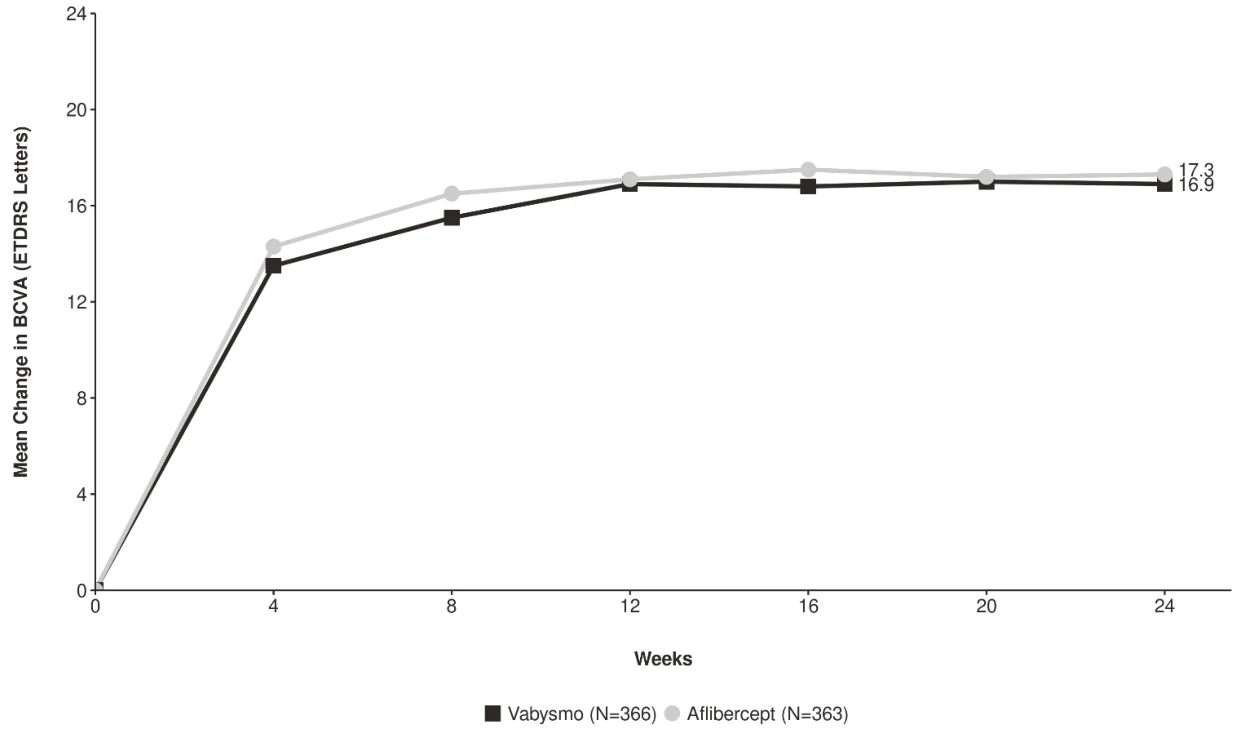
Both studies showed efficacy in the primary endpoint, defined as the change from baseline in BCVA at Week 24, as measured by the ETDRS Letter Score. In both studies, VABYSMO Q4W treated patients had a non-inferior mean change from baseline in BCVA at Week 24, compared to patients treated with aflibercept Q4W. The mean change from baseline in BCVA at Week 72 was 16.0 letters in the faricimab Q4W/faricimab PTI arm and 16.4 letters in the aflibercept Q4W/faricimab PTI arm in BALATON. In COMINO, the mean change from baseline in BCVA at Week 72 were 15.2 letters in the faricimab Q4W/faricimab PTI arm and 14.6 letters in the aflibercept Q4W/faricimab PTI arm. In this analysis, missing BCVA values were imputed using a Missing Not At Random methodology.
Between Week 24 and Week 72, for patients who received faricimab Q4W/faricimab PTI, 49% (136/276) of patients in BALATON and 34% (125/366) of patients in COMINO completed at least one cycle of every 12 weeks (Q12W) and maintained ≥ Q12W dosing without an interval reduction below Q12W through Week 68; 32% (87/276) of patients in BALATON and 24% (87/366) of patients in COMINO completed 2 cycles of Q16W through Week 72.
Detailed results of both studies are shown in Table 10, Figure 5 and Figure 6 below.
Table 10 Efficacy outcomes at the Week 24 visit in BALATON and COMINO
| Efficacy Outcomes | BALATON | COMINO | ||||
|---|---|---|---|---|---|---|
| 24 Weeks | 24 Weeks | |||||
VABYSMO N = 276 | Aflibercept N = 277 | VABYSMO N = 366 | Aflibercept N = 363 | |||
| Mean BCVA (SD) at baseline | 57.5 (13.0) | 57.6 (12.2) | 50.3 (16.3) | 50.7 (16.3) | ||
| Mean change in BCVA as measured by ETDRS letter score from baseline (95% CI) | 16.9 (15.7, 18.1) | 17.5 (16.3, 18.6) | 16.9 (15.4, 18.3) | 17.3 (15.9, 18.8) | ||
| Difference in LS mean (95% CI)a | -0.6 (-2.2, 1.1)b | -0.4 (-2.5, 1.6)c | ||||
a: Estimated using MMRM. Missing data were implicitly imputed by MMRM
b: Met the pre-specified non-inferiority margin of 4 letters for the primary endpoint in both studies
BCVA: Best Corrected Visual Acuity
ETDRS: Early Treatment Diabetic Retinopathy Study
CI: Confidence Interval
LS: Least Square
Figure 5 Mean change in visual acuity from baseline to Week 24 in BALATON
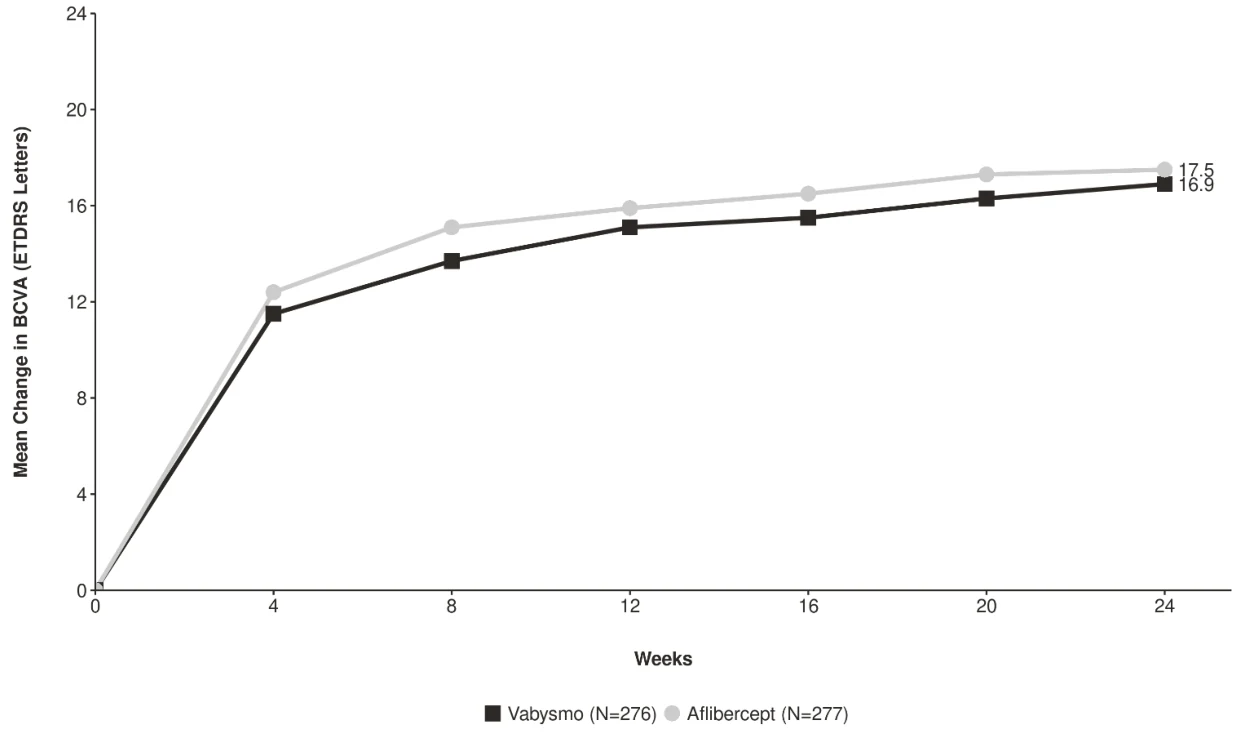
Figure 6 Mean change in visual acuity from baseline to Week 24 in COMINO
16. Non-Clinical Toxicology
General toxicology: The toxicology program of faricimab included 2-, 9-, and 26-week repeat-dose ITV toxicity studies in cynomolgus monkeys. Unilateral intravitreal administration of faricimab to cynomolgus monkeys at doses between 0.5 mg/eye and 3.0 mg/eye once every 4 weeks for up to 26 weeks (6 months) resulted in dose-dependent ocular inflammation. At the no observed adverse effect level (NOAEL) of 0.5 mg per eye in cynomolgus monkeys, the systemic exposure (AUC) was 1.5 times higher than the exposure observed in humans after the recommended intravitreal dose of 6 mg/eye. The observed ocular inflammation was consistent with immune-mediated complex formation. Faricimab did not appear to affect the retinal function or cause significant changes in intraocular pressure (IOP). Assessments after the 13 weeks recovery period indicated recovery from faricimab-induced ocular inflammation.
Genotoxicity: No studies have been conducted to establish the mutagenic potential of faricimab.
Carcinogenicity: No studies have been conducted to establish the carcinogenic potential of faricimab.
Reproductive and developmental toxicology: No fertility studies or reproductive toxicity testing of faricimab have been conducted.
In a 6-month cynomolgus monkey study with faricimab doses of up to 3 mg/eye, no treatment-related changes were noted in reproductive organs in male or female animals that denote adverse effects on fertility.
VEGF inhibition has been shown to cause malformations, embryo-fetal resorption, and decreased fetal weight. VEGF inhibition has also been shown to affect follicular development, corpus luteum function, and fertility. No dedicated studies addressing the effects of Ang-2 inhibition on pregnancy are available; however, based on non-clinical information, Ang-2 inhibition may lead to effects comparable to VEGF inhibition.
In an embryo-fetal development study, no treatment-related maternal changes or fetal developmental effects were observed in pregnant cynomolgus monkeys given 5 weekly IV injections of faricimab at 1 mg/kg or 3 mg/kg starting on day 20 up to day 48 of gestation. The no observed adverse effect level (NOAEL) was determined to be 3 mg/kg, the highest dose tested (523 times the clinical exposure based on the Cmax at the maximum recommended human dose of a single 6 mg/eye intravitreal dose).