


Product Monograph - Susvimo
RECENT MAJOR LABEL CHANGES
N/A
TABLE OF CONTENTS
Sections or subsections that are not applicable at the time of authorization are not listed.
RECENT MAJOR LABEL CHANGES .......................................................................................... 2
TABLE OF CONTENTS ............................................................................................................ 2
PART I: HEALTH PROFESSIONAL INFORMATION .................................................................... 4
- 1.
INDICATIONS ............................................................................................................. 4
1.1 Pediatrics .................................................................................................................. 4
1.2 Geriatrics .................................................................................................................. 4
- 2. CONTRAINDICATIONS ................................................................................................ 4
- 3. SERIOUS WARNINGS AND PRECAUTIONS BOX ........................................................... 4
- 4.
DOSAGE AND ADMINISTRATION ................................................................................ 5
4.1 Dosing Considerations ............................................................................................. 5
4.2 Recommended Dose and Dosage Adjustment ........................................................ 5
4.3 Reconstitution .......................................................................................................... 6
4.4 Administration ......................................................................................................... 6
4.5 Missed Dose ............................................................................................................. 7
- 5. OVERDOSAGE ............................................................................................................ 7
- 6. DOSAGE FORMS, STRENGTHS, COMPOSITION AND PACKAGING ................................ 7
- 7.
WARNINGS AND PRECAUTIONS ................................................................................. 8
7.1 Special Populations ................................................................................................ 13
7.1.1 Pregnant Women ............................................................................................. 13
7.1.2 Breast-feeding .................................................................................................. 13
7.1.3 Pediatrics .......................................................................................................... 13
7.1.4 Geriatrics .......................................................................................................... 13
- 8.
ADVERSE REACTIONS............................................................................................... 13
8.1 Adverse Reaction Overview ................................................................................... 13
8.2 Clinical Trial Adverse Reactions ............................................................................. 14
8.3 Less Common Clinical Trial Adverse Reactions ...................................................... 18
8.4 Abnormal Laboratory Findings: Hematologic, Clinical Chemistry and Other Quantitative Data ............................................................................................................. 18
- 9.
DRUG INTERACTIONS .............................................................................................. 18
9.2 Drug Interactions Overview ................................................................................... 18
9.3 Drug- Behavioral Interactions ................................................................................ 18
9.4 Drug-Drug Interactions .......................................................................................... 18
9.5 Drug-Food Interactions .......................................................................................... 18
9.6 Drug-Herb Interactions .......................................................................................... 18
9.7 Drug-Laboratory Test Interactions......................................................................... 18
- 10.
CLINICAL PHARMACOLOGY ...................................................................................... 19
10.1 Mechanism of Action ....................................................................................... 19
10.2 Pharmacodynamics .......................................................................................... 19
10.3 Pharmacokinetics ............................................................................................. 19
- 11. STORAGE, STABILITY AND DISPOSAL ........................................................................ 21
- 12. SPECIAL HANDLING INSTRUCTIONS .......................................................................... 21
PART II: SCIENTIFIC INFORMATION ..................................................................................... 23
- 13. PHARMACEUTICAL INFORMATION .......................................................................... 23
- 14.
CLINICAL TRIALS ...................................................................................................... 24
14.1 Clinical Trials by Indication .............................................................................. 24
14.3 Immunogenicity ............................................................................................... 27
- 15. MICROBIOLOGY ...................................................................................................... 27
- 16. NON-CLINICAL TOXICOLOGY .................................................................................... 27
- 17. SUPPORTING PRODUCT MONOGRAPHS ................................................................... 28
PATIENT MEDICATION INFORMATION ................................................................................ 29
PART I: HEALTH PROFESSIONAL INFORMATION
1. INDICATIONS
SUSVIMO (ranibizumab injection) is indicated for the treatment of patients with neovascular (wet) age-related macular degeneration (AMD) who have confirmed response to and require frequent intravitreal injections (every 8 weeks or more frequently) of a Vascular Endothelial Growth Factor (VEGF) inhibitor medication in order to maintain visual acuity.
1.1 Pediatrics
Pediatrics (< 18 years): No data are available to Health Canada; therefore, Health Canada has not authorized an indication for pediatric use.
1.2 Geriatrics
Geriatrics (≥ 65 years of age): No notable difference in treatment effect and safety was seen with increasing age (see 4
Dosing Considerations; Special Populations, Geriatrics and 10.3 Pharmacokinetics; Special Populations and Conditions, Geriatrics).
2. CONTRAINDICATIONS
- Susvimo is contraindicated in patients who are hypersensitive to ranibizumab or any ingredient in the formulation, including any non-medicinal ingredient, or component of the container. For a complete listing, see 6 DOSAGE FORMS, STRENGTHS, COMPOSITION AND PACKAGING.
- Susvimo is contraindicated in patients with active or suspected ocular or periocular infections.
- Susvimo is contraindicated in patients with active intraocular inflammation.
- SERIOUS WARNINGS AND PRECAUTIONS BOX
Serious Warnings and Precautions
|
|
4. DOSAGE AND ADMINISTRATION
4.1 Dosing Considerations
General
- Susvimo is for intravitreal use via the implant for Susvimo only. Do not administer Susvimo by any other route (e.g., not as a bolus intravitreal injection).
- The implant initial fill and implant insertion, and implant removal procedures must be performed by an ophthalmologist experienced in vitreoretinal surgery and trained in implant procedures in an operating room using aseptic technique.
- The implant refill-exchange procedure should be performed under aseptic conditions by an ophthalmologist trained in the implant refill-exchange procedure.
- Read and refer to the manufacturer’s most up-to-date Instructions for Use for the Implant with Insertion Tool Assembly for Susvimo and Initial Fill Needle for Susvimo; Refill Needle for Susvimo; or Explant Tool for Implant for Susvimo prior to initially filling, implanting, refilling or removing the implant.
- In order to prevent medication errors, it is important to check the vial labels to ensure that the drug being prepared and administered is Susvimo.
- Do not substitute Susvimo for or with other formulations of ranibizumab.
4.2 Recommended Dose and Dosage Adjustment
The recommended dose of Susvimo is 2mg (0.02mL of 100 mg/mL solution) continuously delivered via the Susvimo implant with refills administered every 24 weeks (approximately 6 months).
Monitoring between the refill dosing visits may be required by the treating physician as needed.
Supplemental treatment with intravitreal ranibizumab injection
Supplemental treatment with 0.5 mg (10 mg/mL) intravitreal ranibizumab injection may be administered in the affected eye while the Susvimo implant is in place and if clinically necessary (see 14 CLINICAL TRIALS).
Please refer to the full prescribing information for 0.5 mg (10 mg/mL) intravitreal ranibizumab injection for supplemental treatment.
Dose (Refill-exchange) interruptions related to adverse events
For dose (refill-exchange) interruptions related to adverse events see Table 1.
Table 1 Dose (refill-exchange) interruptions for adverse events
| Adverse Event | Modification |
|---|---|
| Intraocular inflammation ≥1+ cells or flare | Withhold dose (refill-exchange) |
| Adverse Event | Modification |
|---|---|
| Sight threatening adverse events (e.g. Rhegmatogenous retinal detachment, vitreous hemorrhage, unexplained vision loss, etc.) | Withhold dose (refill-exchange) |
| Local infections of either eye | Withhold dose (refill-exchange) |
| Infectious endophthalmitis | Withhold dose (refill-exchange) |
| Severe systemic infection | Withhold dose (refill-exchange) |
| Observed damage to the implant (e.g., septum dislodgement) or implant dislocation (see 7 WARNINGS AND PRECAUTIONS) | Withhold dose (refill-exchange) Consider implant removal Risks associated with removal or retention of a damaged or non-functional implant have not been established (see 7 WARNINGS AND PRECAUTIONS, Others). Refer to 4.4 Administration, Susvimo Ocular Implant Removal |
Geriatrics (≥ 65 years of age)
No dose adjustment of Susvimo is required in patients ≥ 65 years of age (see 10.3 Pharmacokinetics; Special Populations and Conditions, Geriatrics).
Renal Impairment
See 10.3 Pharmacokinetics; Special Populations and Conditions.
Hepatic Impairment
The safety and efficacy of Susvimo have not been established in patients with hepatic impairment (see 10.3 Pharmacokinetics; Special Populations and Conditions).
4.3 Reconstitution
Not applicable.
4.4 Administration
- Susvimo can only be administered to patients who have been well informed of the risks associated with the Susvimo procedures of insertion, refill-exchange and removal and have signed the surgical consent form as required by local clinical practice.
- Susvimo should only be administered to patients who have been advised how to take care of their eyes to prevent serious adverse events, including endophthalmitis, throughout treatment with Susvimo, including after the insertion of implant surgery, refill-exchange, or removal of implant.
- Patients should be advised to seek immediate care from an ophthalmologist if there are sudden changes in vision throughout Susvimo treatment.
Susvimo Ocular Implant Initial Fill
The implant is initially filled with 0.02 mL of Susvimo (ranibizumab injection) prior to implant insertion. No more than 30 minutes should pass between the initial fill of the ocular implant and the insertion into the patient’s eye. The initial fill needle should only be used for the initial fill.
Please refer to the manufacturer’s most up-to-date Instructions for Use for the Initial Fill Needle for Susvimo.
Susvimo Ocular Implant Insertion
Susvimo ocular implant insertion is a surgical procedure that must be performed by an ophthalmologist experienced in vitreoretinal surgery and trained in Susvimo implant insertion procedures.
Please refer to the manufacturer’s most up-to-date Instructions for Use for the Implant with Insertion Tool Assembly for Susvimo.
Susvimo Refill-Exchange
The Susvimo refill-exchange procedure must be performed under strict aseptic conditions by an ophthalmologist experienced in ophthalmic surgery and trained in Susvimo refill-exchange procedures. This includes the use of a surgical mask, sterile gloves, and a lid speculum.
The refill needle should only be used for the refill-exchange.
Please refer to the manufacturer’s most up-to-date Instructions for Use for the Refill Needle for Susvimo.
Susvimo Ocular Implant Removal
Removal of the Susvimo ocular implant is a surgical procedure that must be performed with adequate anesthesia by an ophthalmologist experienced in vitreoretinal surgery and trained in Susvimo ocular implant removal procedures in an operating room under strict aseptic conditions. Implant removal can be performed at the physician’s discretion should the benefit of the removal procedure outweigh the risk of the procedure and the risks of retaining a damaged or non-functional implant in the eye. Please refer to the manufacturer’s most up-to-date Instructions for Use for the Explant Tool for Implant for Susvimo.
4.5 Missed Dose
If a planned dose (refill-exchange) of Susvimo is missed, it should be administered as soon as possible and the subsequent refill-exchange should be performed 24 weeks (approximately 6 months) thereafter.
5. OVERDOSAGE
Based on the implant fill volume of 0.02 mL, the maximum amount of Susvimo that can be initially filled and subsequently refilled is approximately 2 mg.
| For management of a suspected drug overdose, contact your regional poison control centre. |
6. DOSAGE FORMS, STRENGTHS, COMPOSITION AND PACKAGING
To help ensure the traceability of biologic products, including biosimilars, health professionals should recognise the importance of recording both the brand name and the non-proprietary (active ingredient) name as well as other product-specific identifiers such as the Drug Identification Number (DIN) and the batch/lot number of the product supplied.
Table 2 Dosage Forms, Strengths, Composition and Packaging
Susvimo (ranibizumab) for intravitreal use via ocular implant for Susvimo is a clear to slightly opalescent, colourless to pale brown liquid supplied in a single-dose vial, containing 39.5 mg of ranibizumab in 0.395 mL of solution*. The implant is designed to contain approximately 0.02 mL (2 mg) of ranibizumab solution when filled.
*One mL solution contains 100 mg ranibizumab.
Two Susvimo pack types are available according to the procedure:
Initial fill kit
One glass vial of Susvimo and one initial fill needle [34G (0.18 mm) x 3 mm, 5 µm], for single use only.
Refill-exchange kit
One glass vial of Susvimo and one refill needle [34G (0.18 mm) x 5 mm, 5 µm], for single use only.
7. WARNINGS AND PRECAUTIONS
Please see 3 SERIOUS WARNINGS AND PRECAUTIONS BOX.
General
- Before deciding on whether to insert the implant that delivers ranibizumab, physicians should ensure that patients are fully aware of the risks associated with the implant and procedures, and are able to follow through appropriately on all eye care instructions provided, in order to prevent serious adverse events, including endophthalmitis. Patients should also be instructed to immediately report to their ophthalmologist any unexpected discomfort that might arise during the lifetime of the implant.
- In order to improve traceability of biological medicinal products and devices, the trade name and the batch/lot number of the product should be clearly recorded (or stated) in the patient file.
- The implant and/or implant-related procedures have been associated with endophthalmitis, rhegmatogenous retinal detachment, vitreous hemorrhage, conjunctival bleb, conjunctival erosion, conjunctival retraction, device (implant) dislocation, and septum dislodgement. Patients should be instructed to report signs or symptoms that could be associated with these events without delay. In some cases, these events can present asymptomatically. The implant and the tissue overlying the implant flange should be monitored carefully and routinely following the implant insertion and refill-exchange procedures to permit early medical or surgical intervention as necessary.
| Route of Administration | Dosage Form / Strength/Composition | Non-medicinal Ingredients |
| Intravitreal use with ocular implant. | Solution for injection 100 mg/mL | Histidine HCl, L Histidine, L Histidine Hydrochloride Monohydrate, Polysorbate 20, Sucrose, Water for Injection |
- Please refer to the manufacturer’s most up-to-date Instructions for Use for the Implant with Insertion Tool Assembly for Susvimo and Initial Fill Needle for Susvimo; Refill Needle for Susvimo; or Explant Tool for Implant for Susvimo for additional WARNINGS AND PRECAUTIONS. Strict adherence to these manufacturer’s most up-to-date Instructions and training in implant procedures is required to minimize procedure-related risks.
- The safety and efficacy of Susvimo in both eyes has not been studied. In clinical trials, patients with wet AMD in the fellow eye received anti-VEGF intravitreal injections.
- Risks associated with long-term use of Susvimo and its implant (including removal or retention of a damaged or non-functional implant, or replacement with a new implant) have not been established at this time.
- Special precautions need to be taken when handling Susvimo components (see 12 SPECIAL HANDLING INSTRUCTIONS).
Driving and Operating Machinery
Susvimo, implant, implant related-procedures and associated examinations have an influence on the ability to drive and use machines. Patients may experience temporarily reduced vision after implant-related procedures and the associated eye examination. Patients should not drive or use machines until the eye shield can be removed and visual function has recovered (see 8 ADVERSE REACTIONS).
Hypersensitivity
As with all therapeutic proteins, there is a theoretical risk of hypersensitivity reactions including anaphylaxis. Hypersensitivity reactions may manifest as rash, pruritus, urticaria, erythema, severe anaphylactic/anaphylactoid reactions or severe intraocular inflammation. Patients should be instructed to report any symptoms of anaphylaxis, allergic reactions or intraocular inflammation (e.g., redness of the eye, eye pain, photophobia, etc.).
Ophthalmologic
Endophthalmitis
Susvimo has been associated with endophthalmitis (see 3 SERIOUS WARNINGS AND PRECAUTIONS BOX, 8.2 Clinical Trial Adverse Reactions). These events may result in severe vision loss/blindness. In the active comparator period of controlled clinical trials, Susvimo has been associated with a 3-fold higher rate of endophthalmitis adverse events than monthly intravitreal injections of ranibizumab (1.7% in the Susvimo arm vs 0.5% in the intravitreal arm). When including extension phases of clinical trials, 2.0% (11/555) of patients receiving the ranibizumab implant experienced an episode of endophthalmitis. Reports occurred between days 5 and 853, with a median of 173 days. Many of the cases of endophthalmitis reported a preceding or concurrent conjunctival retraction or erosion event.
Patients should be instructed to report any symptoms suggestive of endophthalmitis without delay. Endophthalmitis should be treated promptly and appropriately in an effort to reduce the risk of vision loss and maximize recovery. The Susvimo dose (refill-exchange) should be delayed until resolution of endophthalmitis (see 4.2 Recommended Dose and Dosage Adjustment).
Patients should not have an active or suspected ocular or periocular infection or severe systemic infection at the time of any Susvimo implant or refill-exchange procedure. Strict aseptic technique should always be used during Susvimo implant insertion or refill-exchange procedures.
Strict adherence to the manufacturer’s most up-to-date Susvimo Instructions for Use is required (see 4.4 Administration). Strict adherence to intraoperative handling, secure closure of the conjunctiva and Tenon’s capsule, and early detection and surgical repair of conjunctival erosions or retractions may reduce the risk of endophthalmitis.
Intraocular Inflammation
Intraocular inflammation has been reported in patients receiving Susvimo (see 8.2 Clinical Trial Adverse Reactions). These adverse events primarily occurred after the implant insertion surgery and during the post-operative period. In clinical trials in adult wet AMD patients, the most frequently reported type of intraocular inflammation in the study eye was iritis. The Susvimo dose (refill-exchange) should be delayed in the presence of Intraocular Inflammation > 1+ cells or flare (see 4.2 Recommended Dose and Dosage Adjustment).
Appropriate sterility control before and during implant insertion surgery, and administration of post-operative eye medications should be used to minimize risk of intraocular inflammation.
Rhegmatogenous Retinal Detachment
Rhegmatogenous retinal detachment has been reported in patients receiving Susvimo and may result in severe vision loss (see 8 ADVERSE REACTIONS). Rhegmatogenous retinal detachment should be promptly treated with an intervention (e.g., pneumatic retinopexy, vitrectomy, or laser photocoagulation). The Susvimo dose (refill-exchange) should be delayed in the presence of retinal detachment or retinal break (see 4.2 Recommended Dose and Dosage Adjustment).
Patients should be instructed to report any symptoms suggestive of rhegmatogenous retinal detachment without delay.
Careful evaluation of the retinal periphery by scleral indentation should be performed, and any suspected areas of abnormal vitreo-retinal adhesion or retinal breaks should be treated before inserting the implant in the eye.
Strict adherence to the manufacturer’s most up-to-date Susvimo Instructions for Use (e.g. appropriate management of vitreous prolapse after pars plana incision) is required to minimize risks of rhegmatogenous retinal detachment (see 4.4 Administration).
Vitreous Hemorrhage
Vitreous hemorrhage has been reported in patients receiving Susvimo (see 8 ADVERSE REACTIONS). Vitreous hemorrhage may result in temporary vision loss. Vitrectomy may be needed in the case of a non-clearing vitreous hemorrhage. The Susvimo dose (refill-exchange) should be delayed in the event of sight-threatening vitreous hemorrhage (see 4.2 Recommended Dose and Dosage Adjustment).
Patients on antithrombotic medication (e.g. oral anticoagulants, aspirin, nonsteroidal anti-inflammatory drugs) may be at increased risk of vitreous hemorrhage. Antithrombotic medications are recommended to be temporarily interrupted prior to the implant insertion procedure.
Strict adherence to the manufacturer’s most up-to-date Susvimo Instructions for Use (e.g. appropriate pars plana laser ablation, scleral cauterization) is required to minimize risks of vitreous hemorrhage (see 4.4 Administration).
Conjunctival Bleb
Conjunctival bleb has been reported in patients receiving Susvimo (see 8.2 Clinical Trial Adverse Reactions). A conjunctival bleb is an encapsulated elevation of the conjunctiva above the implant flange, which may be secondary to subconjunctival thickening or fluid. Conjunctival blebs may require additional surgical and/or medical management to avoid further complications, especially if the implant septum is no longer identifiable due to the conjunctival bleb.
Strict adherence to the manufacturer’s most up-to-date Susvimo Instructions for Use (e.g. appropriate scleral incision length, appropriate incorporation of conjunctiva and Tenon’s capsule to preserve tissue integrity and secure peritomy closure, appropriate seating of the refill needle during refill-exchange procedure) is required to minimize risks of conjunctival blebs (see 4.4 Administration).
Conjunctival erosion or Conjunctival retraction
Conjunctival erosion and conjunctival retraction have been reported in patients receiving Susvimo (see 8.2 Clinical Trial Adverse Reactions). A conjunctival erosion is a full thickness degradation or breakdown of the conjunctiva in the area of the implant flange. A conjunctival retraction is a recession or opening of the limbal and/or radial peritomy. Conjunctival erosions or retraction could be associated with an increased risk of endophthalmitis, especially if the implant becomes exposed. Surgical intervention (e.g. conjunctival/Tenon’s capsule repair) should be performed in case of conjunctival erosion or retraction with or without exposure of the implant flange.
Strict adherence to the manufacturer’s most up-to-date Susvimo Instructions for Use (e.g. appropriate incorporation of conjunctiva and Tenon’s capsule to preserve tissue integrity and peritomy closure, and appropriate placement of conjunctival sutures to avoid contact with the implant edge) is required to minimize risks of conjunctival erosion.
Strict adherence to the manufacturer’s most up-to-date Susvimo Instructions for Use (e.g. including appropriate suturing of the conjunctiva and Tenon’s capsule to the limbus) is required to minimize risks of conjunctival retraction (see 4.4 Administration).
The implant and the tissue overlying the implant flange should be monitored carefully and routinely following the implant insertion.
Traumatic Cataract
Traumatic cataract could potentially result from improper insertion of the implant’s distal tip in close proximity to the patient’s lens, excessive force applied during the refill-exchange resulting in eye indentation, dislocation of the implant into the vitreous cavity, or surgical removal of the dislocated implant. Perpendicular entry of the implant is important to avoid contact between the implant and intraocular structures such as the lens.
Intraocular Pressure Increased
Transient and sustained increases in intraocular pressure have been observed in clinical trials of Susvimo (see 8.2 Clinical Trial Adverse Reactions). Both intraocular pressure and perfusion of the optic nerve head must be monitored and managed appropriately.
Susvimo has not been studied in patients with uncontrolled ocular hypertension or glaucoma (defined as intraocular pressure [IOP] > 25 mmHg or a cup to disc ratio > 0.8).
Postoperative Decrease in Visual Acuity
Visual acuity was decreased by 4 letters on average in the first postoperative month and 2 letters on average in the second postoperative month following initial implantation of Susvimo (see Error! Reference source not found. CLINICAL TRIALS, Error! Reference source not found.).
Device (implant) Dislocation
In clinical trials, the device (implant) has dislocated or subluxated into the vitreous cavity, or extend outside the vitreous cavity into or beyond the subconjunctival space (see 8.2 Clinical Trial Adverse Reactions). Device dislocation requires urgent surgical intervention. Consider removal of the device when the device is dislocated or is thought to be non-functional.
Strict adherence to the manufacturer’s most up-to-date Susvimo Instructions for Use (e.g. appropriate scleral incision length, appropriate targeting of the pars plana during laser ablation) is required to minimize risks of implant dislocation (see 4.4 Administration).
Septum Dislodgement
In clinical trials, a type of implant damage where the septum has dislodged into the body of the implant has been reported. Perform a dilated slit lamp exam and/or dilated indirect ophthalmoscopy to inspect the implant in the vitreous cavity through the pupil prior to and after the refill-exchange procedure to identify if septum dislodgement has occurred. Discontinue treatment with Susvimo following septum dislodgement and consider implant removal should the benefit of the removal procedure outweigh the risk (see 4.2 Recommended Dose and Dosage Adjustment).
Strict adherence to the manufacturer’s most up-to-date Susvimo Instructions for Use [e.g. appropriate handling and insertion of the refill needle into the septum (avoid twisting and/or rotation)] is required to minimize the risk of septum dislodgement (see 4.4 Administration).
Air Bubbles Causing Improper Filling of the Implant and Deflection of the Implant
Please refer to the manufacturer’s most up-to-date Instructions for Use for the Implant with Insertion Tool Assembly for Susvimo.
Systemic Impact
Arterial thromboembolic events (ATEs) and Non-ocular hemorrahages
Systemic adverse events including arterial thromboembolic events (ATEs) and non-ocular hemorrhage have been reported following intravitreal delivery of VEGF inhibitors, including Susvimo (see 8 ADVERSE REACTIONS) and there is a theoretical risk that these may be related to VEGF inhibition. ATEs are defined as nonfatal stroke, nonfatal myocardial infarction, vascular death or death of unknown cause.
There are limited data on safety of Susvimo in patients with history of stroke or transient ischemic attack or myocardial infarction.
Reproductive Health: Female and Male Potential
Contraception
Women of child bearing potential should use effective contraception while receiving Susvimo and for at least 12 months after the last dose (refill-exchange) of Susvimo.
Fertility
No studies on the effects of ranibizumab on fertility have been conducted (see 16 NON-CLINICAL TOXICOLOGY; Reproductive and Developmental Toxicology, Impairment of Fertility).
Reproduction
It is not known whether ranibizumab can affect reproduction capacity. Based on the anti-VEGF mechanism of action for ranibizumab, treatment with Susvimo may pose a risk to reproductive capacity (see 16 NON-CLINICAL TOXICOLOGY; Reproductive and Developmental Toxicology, Reproductive toxicity).
7.1 Special Populations
7.1.1 Pregnant Women
There are no adequate and well-controlled studies of Susvimoin pregnant women.
A study in pregnant cynomologus monkeys given intravitreal ranibizumab throughout the period of organogenesis resulted in skeletal abnormalities (see 16 NON-CLINICAL TOXICOLOGY; Reproductive and Developmental Toxicology, Reproductive toxicity).
Due to its mechanism of action, Susvimo must be regarded as potentially teratogenic and embryo-/fetotoxic. Susvimo is not recommended during pregnancy unless the expected benefit outweighs the potential risk to the fetus. The implant may be flushed with saline using a refill needle should the patient become pregnant. For women who wish to become pregnant and have been treated with Susvimo, it is recommended to wait at least 3 months after the last dose of Susvimo before conceiving a child (See 17 SUPPORTING PRODUCT MONOGRAPHS).
Labor and Delivery
The safe use of Susvimo during labor and delivery has not been established.
7.1.2 Breast-feeding
It is not known whether ranibizumab is excreted in human breast milk after administration of Susvimo. No studies have been conducted to assess the impact of Susvimo on the breastfed infant or milk production or its presence in breast milk.
Because many drugs are excreted in human milk and the potential for absorption and harm to infant growth and development exists, as a precautionary measure, Susvimo is not recommended to nursing women.
7.1.3 Pediatrics
Pediatrics (< 18 years): Safety and efficacy in pediatric patients below the age of 18 have not been studied. Health Canada has not authorized an indication for pediatric use.
7.1.4 Geriatrics
In the pivotal study, 90% (222 of 248) of the patients randomized to treatment with Susvimo were ≥65 years old, and approximately 57% (141 of 248) of patients were ≥75 years old. No notable difference in treatment effect and safety was seen with increasing age (see 4
Dosing Considerations; Special Populations, Geriatrics and Section 10.3 Pharmacokinetics; Special Populations and Conditions, Geriatrics).
- 8. ADVERSE REACTIONS
8.1 Adverse Reaction Overview
The data provided below reflect adverse reactions of exposure of 248 patients with wet AMD in the Archway study to 2 mg of Susvimo delivered via the Susvimo implant following the Susvimo initial fill and implant insertion, refill, and implant removal procedures up to Week 40 unless otherwise specified. In patients treated with Susvimo:
- The adverse reactions that resulted in study discontinuation were endophthalmitis (0.8%), conjunctival retraction (0.4%), device dislocation (0.4%) and detachment of retinal pigment epithelium (0.4%).
- The most common (≥ 10%) adverse reactions were conjunctival hemorrhage (71.8%), conjunctival hyperemia (26.2%), iritis (20.6%), and eye pain (10.1%).
- The most common (≥ 2 patients [0.8%]) serious adverse reactions were endophthalmitis (1.6%), conjunctival retraction (0.8%), conjunctival erosion (0.8%), rhegmatogenous retinal detachment (0.8%), visual acuity reduced (0.8%).
The data provided below are of 248 patients in the Archway study as of the planned interim analysis after Week 40 with the clinical cut-off of Sept 11, 2020, at which point all enrolled patients had completed at least 60 weeks of follow-up or had discontinued the study early:
- There were 92%, 25%, 27% and 20% of patients who had experienced at least one ocular adverse event during 0-37 days after implantation, Day 38-Day 168, Day 169-Day 336 and Day 337-Day 504, respectively.
- There were 3.2%, 2.4%, 1.6% and 1.2% of patients who had experienced at least one ocular serious adverse event during 0-37 days after implantation, Day 38-Day 168, Day 169-Day 336 and Day 337-Day 504, respectively.
As of Sept 11, 2020, 18 patients (4.0%) underwent implant removal across all Susvimo studies (GR40548, GR40549, and GX28228). The reasons that resulted in implant removal were endophthalmitis (5 patients), device dislocation or damage (4 patients), lack of efficacy (4 patients), rhegmatogenous retinal detachment, conjunctival erosion, conjunctival retraction, wound secretion and drug hypersensitivity for one patient each.
8.2 Clinical Trial Adverse Reactions
Clinical trials are conducted under very specific conditions. The adverse reaction rates observed in the clinical trials therefore, may not reflect the rates observed in practice and should not be compared to the rates in the clinical trials of another drug. Adverse reaction information from clinical trials may be useful in identifying and approximating rates of adverse drug reactions in real-world use.
Table 3 below lists adverse reactions, with causality, reported in the Archway study that occurred in greater than or equal to 1% of patients.
Table 3 Adverse Reactions occurring in ≥1% in the study eye in Study GR40548 (Archway) in wet AMD patients
Adverse Reactions
Primary System Organ Class Preferred Term MedDRA Version: 23.0 | Week 40 | |
|---|---|---|
Susvimo (Ranibizumab 100 mg/mL) Q24W n = 248 | Intravitreal ranibizumab 0.5 mg Q4W n = 167 | |
| Eye Disorders | ||
| Conjunctival hemorrhage | 72% | 6% |
| Conjunctival hyperemia | 26% | 2% |
| Iritis1 | 23% | 1% |
| Eye pain | 10% | 5% |
| Vitreous floaters | 9% | 2% |
| Conjunctival bleb/ filtering bleb leak2 | 9% | 0 |
| Foreign body sensation in eyes | 7% | 1% |
| Punctate keratitis | 6% | 2% |
| Hypotony of eye | 6% | 0 |
| Vitreous detachment | 6% | 5% |
| Vitreous hemorrhage | 5% | 2% |
| Conjunctival edema | 5% | 0 |
| Anterior chamber flare | 4% | <1% |
| Corneal disorder | 4% | 0 |
| Corneal abrasion3 | 4% | < 1% |
| Corneal edema | 4% | 0 |
| Vision blurred | 3% | 3% |
| Ecchymosis | 3% | 0 |
| Eye irritation | 3% | < 1% |
| Eyelid ptosis | 3% | 0 |
| Lacrimation increased | 3% | 0 |
| Procedural pain | 3% | 0 |
| Anterior chamber cell | 2% | <1% |
| Blepharitis | 2% | 1% |
| Eye pruritus | 2% | < 1% |
| Visual acuity reduced | 2% | 0 |
| Conjunctival erosion | 2% | 0 |
| Vitritis | 2% | 0 |
Adverse Reactions Primary System Organ Class Preferred Term MedDRA Version: 23.0 | Week 40 |
|---|
Susvimo (Ranibizumab 100 mg/mL) Q24W n = 248 | Intravitreal ranibizumab 0.5 mg Q4W n = 167 | |
|---|---|---|
| Conjunctival retraction | 2% | 0 |
| Iris adhesions | 2% | 0 |
| Ocular discomfort | 2% | 1% |
| Retinal hemorrhage | 2% | < 1% |
| Conjunctivitis | 2% | 0 |
| Endophthalmitis4 | 2% | 0 |
| Photophobia | 2% | 0 |
| Intraocular pressure increased | 2% | 1% |
| Intraocular pressure decreased | 2% | 0 |
| Iridocyclitis | 1% | 0 |
| Injury, poisoning, procedural complications | ||
| Headache5 | 7% | 2% |
| Nausea6 | 2% | 2% |
| Vomiting7 | 1% | < 1% |
1 Iritis includes: iritis, anterior chamber flare, and anterior chamber cell
2 Conjunctival bleb/filtering bleb leak includes: conjunctival bleb, conjunctival filtering bleb leak, conjunctival cyst, subconjunctival cyst, and implant site cyst
3 Corneal abrasion includes: corneal abrasion and vital dye staining cornea present
4 In clinical studies, the management of endophthalmitis included a flush of implant contents with 100 µL (0.1 mL) of vancomycin (1 mg/0.1 mL), with or without previous flush with saline, in addition to standard of care.
5 Headache includes: headache and procedural headache
6 Nausea includes: nausea and procedural nausea
7 Vomiting includes: vomiting and procedural vomiting
Description of selected adverse reactions
Endophthalmitis
In Study GR40548 (Archway), through Week 40, 1.6% (4/248) of patients receiving Susvimo reported 5 endophthalmitis events in the study eye. No patient in the monthly intravitreal ranibizumab arm reported an endophthalmitis event. All events were serious. When including the extension phases of all clinical trials, 2.0% (11/555) of patients receiving a ranibizumab implant experienced at least one endophthalmitis AE in the study eye. Six events were reported, preceding or concurrent with conjunctival erosion or retraction events. Seven events led to implant removal.
Intraocular Inflammation
In Study GR40548 (Archway), through Week 40, 19.4% (48/248) of patients receiving Susvimo experienced at least one intraocular inflammation event, according to the Standard Uveitis
Nomenclature classification within 7 days of surgery and 23% (57/248) of patients within the 37-day postoperative period. The most frequently reported category of intraocular inflammation in the study eye was iritis [16.5% (41/248) of patients within 7 days of surgery and 19.4% (48/248) of patients within the 37-day postoperative period]. The iritis events resolved with standard-of-care topical treatment. None of the iritis events were considered serious. Through Week 40, there were no iritis events in the intravitreal arm.
Rhegmatogenous retinal detachment
In Study GR40548 (Archway), through Week 40, 0.8% (2/248) of patients in the Susvimo arm experienced 3 rhegmatogenous retinal detachment events in the study eye. All rhegmatogenous retinal detachment events were severe and serious. No patients in the monthly intravitreal ranibizumab arm reported rhegmatogenous retinal detachment events. 0.9% (4/450) patients reported rhegmatogenous retinal detachment events across all ranibizumab implant studies.
Vitreous hemorrhage
In Study GR40548 (Archway), through Week 40, vitreous hemorrhages in the study eye were reported in 5.2% (13/248) of patients in the Susvimo arm and 2.4% (4/167) of patients in the monthly intravitreal ranibizumab arm. Based on a functional grading system, the majority of patients in the Susvimo arm (11/13) reported Grade 1 (< 15 letter BCVA loss from previous visit) and Grade 2 (16 – 30 letter BCVA loss from previous visit) events. In the monthly intravitreal ranibizumab arm, most patients (3/4 patients) reported Grade 1 events. In the Susvimo and monthly intravitreal ranibizumab arms, the majority of patients (12/13 and 3/4, respectively) experienced vitreous hemorrhage events that resolved spontaneously.
Conjunctival bleb/Conjunctival filtering bleb leak
In Study GR40548 (Archway), through Week 40, 8.5% (21/248) of patients in the Susvimo arm reported conjunctival bleb/conjunctival filtering bleb leak in the study eye and 5.6% (14/248) of patients reported these events in the post-operative period. The majority of Susvimo arm patients reported conjunctival bleb/conjunctival filtering bleb leak events that were mild (16/21) or moderate (4/21).
Conjunctival erosion
In Study GR40548 (Archway), through Week 40, 2.4% (6/248) of patients in the Susvimo arm reported conjunctival erosion in the study eye and 0.4% (1/248) of patients reported this event in the post-operative period. The majority of patients in the Susvimo arm reported conjunctival erosion events that were mild (4/6) or moderate (1/6). No patients in the monthly intravitreal ranibizumab arm reported conjunctival erosion events.
Conjunctival retraction
In Study GR40548 (Archway), through Week 40, 2% (5/248) of patients in the Susvimo arm reported conjunctival retraction in the study eye and 0.4% (1/248) of patients reported these events in the post-operative period. The majority of patients in the Susvimo arm reported conjunctival retraction events that were mild (1/5) or moderate (3/5). 1/5 patients had the implant removed as a result of conjunctival retraction. No patients in the monthly intravitreal ranibizumab arm reported conjunctival retraction events.
Device (implant) dislocation
In Study GR40548 (Archway), through Week 40, 0.4% (1/248) of patients receiving Susvimo reported device dislocation in the study eye. 1.1% (5/450) of patients receiving Susvimo reported device dislocation in the study eye across all Susvimo studies. Events occurred between days 118 and 1113. All events were serious and 4 events led to implant removal. Eight (1.8%) patients reported device breakage, device failure, or a device deposit issue.
Septum dislodgement
Out of approximately 1,205 implants inserted and 4,121 refill exchange procedures conducted in patient eyes across all Susvimo clinical trials, septum dislodgement has been reported in approximately 1.6% (19) upon implant photo review by an independent image reading center or by the investigator.
8.3 Less Common Clinical Trial Adverse Reactions
Adverse reactions occurring in < 1% in Study GR40548 (Archway) and at a greater incidence in the Susvimo arm compared to the Intravitreal ranibizumab arm:
Eye Disorders: choroidal detachment, conjunctival disorder(may present as conjunctival thinning or thickening), eyelid edema, eye discharge, post procedural complication (reported as thickened tenons capsule over implant), post procedural discomfort, retinal tear, rhegmatogenous retinal detachment, scleral hyperemia, administration site discomfort (reported as refill site irritation - discomfort), device dislocation, device material opacification (reported as opacities of unknown etiology within implant) , foreign body in eye, hyphema, implant site fibrosis, implant site reaction (reported as exposed suture) , post procedural swelling, scleral thinning.
8.4 Abnormal Laboratory Findings: Hematologic, Clinical Chemistry and Other Quantitative Data
Clinical Trial Findings
There were no findings to suggest a relationship between Susvimo and the development of clinically significant laboratory abnormalities.
Post-Market Adverse Reactions
Not applicable
9. DRUG INTERACTIONS
9.2 Drug Interactions Overview
No drug interaction studies have been performed.
9.3 Drug- Behavioral Interactions
No drug-behavioural interaction studies have been performed.
9.4 Drug-Drug Interactions
No drug-drug interaction studies have been performed.
9.5 Drug-Food Interactions
No drug-food interaction studies have been performed.
9.6 Drug-Herb Interactions
No drug-herb interaction studies have been performed.
9.7 Drug-Laboratory Test Interactions
No drug-laboratory interaction studies have been performed.
10. CLINICAL PHARMACOLOGY
10.1 Mechanism of Action
Ranibizumab is a humanized recombinant monoclonal antibody fragment targeted against human vascular endothelial growth factor A (VEGF-A). It binds with high affinity to all biologically active VEGF-A isoforms (e.g. VEGF110, VEGF121 and VEGF165), thereby preventing binding of VEGF-A to its receptors VEGFR-1 and VEGFR-2.
Binding of VEGF-A to its receptors leads to endothelial cell proliferation and neovascularization, as well as vascular leakage, which contribute to the progression of the neovascular form of age-related macular degeneration.
10.2 Pharmacodynamics
Leakage of blood and fluid from choroidal neovascularization (CNV) may cause retinal thickening or edema and/or intraretinal/subretinal hemorrhage, resulting in vision loss.
In Archway, at week 36, the adjusted mean change in center point thickness (CPT) was 5.4 microns vs 2.6 microns in the Susvimo arm and intravitreal ranibizumab arm, respectively.
10.3 Pharmacokinetics
Vitreal and serum pharmacokinetics following treatment with Susvimo exhibit rate-limited elimination, driven by the release of ranibizumab from the implant.
Absorption
After insertion of implant, the release rate of ranibizumab into the vitreous decreases over time as the concentration gradient between the device and vitreous decreases. The vitreous concentrations decreased by half in 173 days after refill. The predicted vitreous concentrations with Susvimo are below the maximum and above the minimum concentrations experienced with monthly 0.5 mg intravitreal ranibizumab (see
Figure 1 below).
Figure 1 Predicted vitreous ranibizumab concentration versus time of Susvimo (ranibizumab) and monthly 0.5 mg intravitreal ranibizumab injection
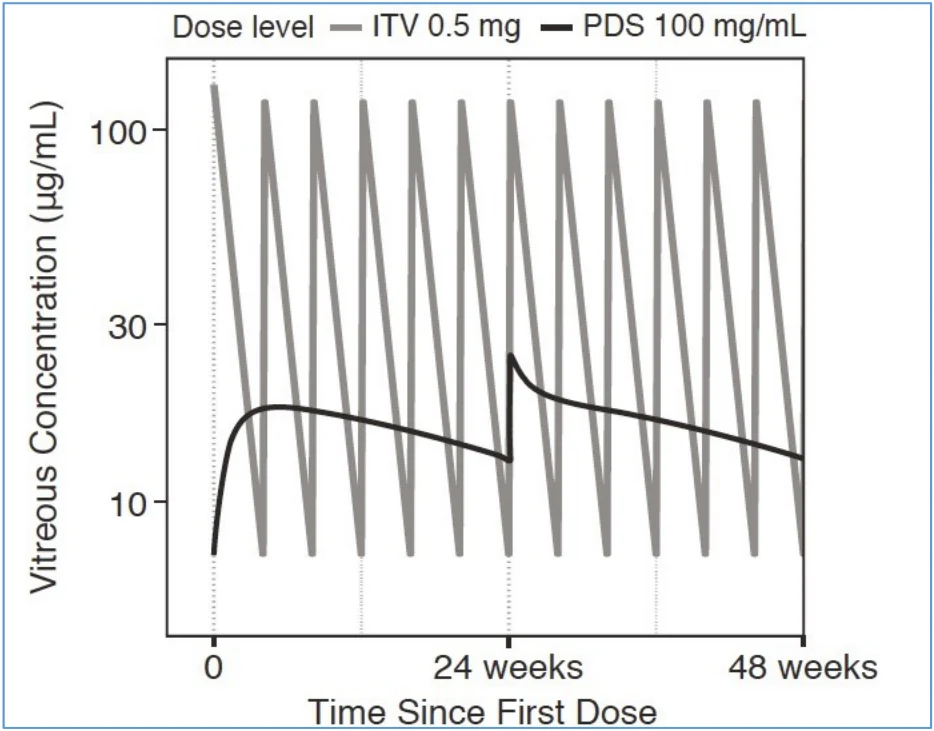
PDS = Susvimo; ITV = intravitreal ranibizumab
Distribution
Following the initial fill and refill of Susvimo in patients with wet AMD, serum concentrations of ranibizumab were generally low, with maximum concentrations generally below the ranibizumab concentration necessary to inhibit the biological activity of VEGF by 50%. Maximum serum concentrations, attained approximately 29 days after implantation and 7 days after refill, were observed ranging between 0.2 and 64.8 ng/mL, and minimum serum concentrations are predicted to be 0.25 ng/mL. Ranibizumab did not accumulate in serum when administered with refills every 24 weeks. Following ranibizumab administration via Susvimo or via intravitreal injection, serum ranibizumab exposure is predicted to be approximately 50,000-fold lower than vitreal ranibizumab exposure.
Metabolism
The metabolism of Susvimo has not been directly studied. Susvimo is a monoclonal antibody fragment. Antibodies are cleared principally by catabolism.
Elimination
Vitreal and serum pharmacokinetics following treatment with Susvimo exhibit rate-limited elimination, driven by the release of ranibizumab from the implant (see 10.3 Pharmacokinetics).
Special Populations and Conditions
Pediatrics
No studies have been conducted to investigate the pharmacokinetics of Susvimo in this population.
Geriatrics
Age did not have a significant effect on the pharmacokinetics of Susvimo (ranibizumab).
Hepatic Insufficiency
Hepatic Impairment
No formal study has been conducted to examine the pharmacokinetics of Susvimo in patients with hepatic impairment.
Renal Insufficiency
Renal Impairment
No formal study has been conducted to examine the pharmacokinetics of Susvimo in patients with renal impairment. In a population pharmacokinetic analysis of wet AMD patients with Susvimo, 75% (220 of 295) had renal impairment (42% mild [CrCL 60 to 89 mL/min], 30% moderate [CrCL 30 to 59 mL/min] and 2% severe [CrCL <30 mL/min]). The CL parameter in the model was slightly lower in renal impaired patients but was not clinically relevant.
11. STORAGE, STABILITY AND DISPOSAL
Store Susvimo vial at 2°C to 8°C in the outer carton in order to protect from light.
Prior to use, the unopened vial may be kept at 9°C to 30°C for up to 24 hours.
Do not freeze. Do not shake.
This medicine should not be used after the expiry date (EXP) shown on the pack.
Keep out of reach and sight of children.
12. SPECIAL HANDLING INSTRUCTIONS
- Refer to the manufacturer’s most up-to-date Instructions for Use for the Implant with Insertion Tool Assembly for Susvimo and Initial Fill Needle for Susvimo; Refill Needle for Susvimo or Explant Tool for Implant for Susvimo for use for a complete list of indications, contraindications, warnings, precautions, adverse events, and instructions for use of the device.
- Strict aseptic procedures must be used during the preparation and handling of the Susvimo vial and when filling and refilling the implant.
- Susvimo vials should be inspected visually for particulate matter and discolouration prior to administration. Susvimo is a clear to slightly opalescent, colourless to pale brown liquid. Do not use Susvimo if the medicine has particulate matter, cloudiness or discolouration.
- The contents of the vial and the initial fill and refill needles are supplied sterile and are for single use only. Do not reprocess, resterilize, or reuse any component. Do not use any component if it is damaged, broken, or the sterility has been compromised.
Incompatibilities
No incompatibilities between Susvimo and polyacrylic, polyamide, polypropylene, polycarbonate, or polyethylene have been observed.
Susvimo should not be mixed or diluted with other drugs.
Disposal of unused/expired medicines
The release of pharmaceuticals in the environment should be minimized. Medicines should not be disposed of via wastewater and disposal through household waste should be avoided.
The following point should be strictly adhered to regarding the use and disposal of syringes and other medicinal sharps:
- All used needles and syringes must be placed into a sharps container (puncture-proof disposable container).
- Any unused medicinal product or waste material should be disposed of in accordance with local requirements.
PART II: SCIENTIFIC INFORMATION
13. PHARMACEUTICAL INFORMATION
Drug Substance
Proper name: ranibizumab
Chemical name: immunoglobulin G1, anti-human VEGF Fab fragment (human-mouse monoclonal rhuFab V2 G1-chain), disulfide with human-mouse monoclonal rhuFab V2 k-chain
Molecular formula and molecular mass: Approximately 48,379 Da (peptide chains only)
Structural formula: Ranibizumab is the antigen binding fragment (Fab) of a humanized monoclonal antibody based on a human IgG1 framework containing heavy chain VHIII and light chain VL κI subgroup sequences. The recombinant antibody fragment is produced in E. coli and consists of one heavy chain (231 amino acid residues) and one light chain (214 amino acid residues).
Amino Acid Sequence of Ranibizumab Light Chain
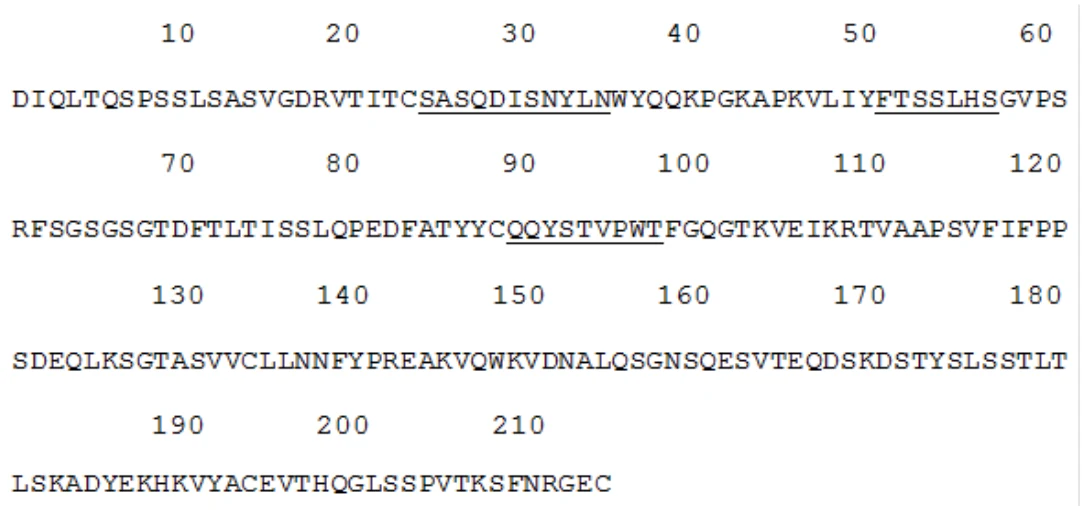
Note 1: The calculated molecular mass of the light chain is 23,433 Da (cysteine residues are in the reduced form).
Note 2: Complementarity-determining regions are underlined.
Amino Acid Sequence of Ranibizumab Heavy Chain
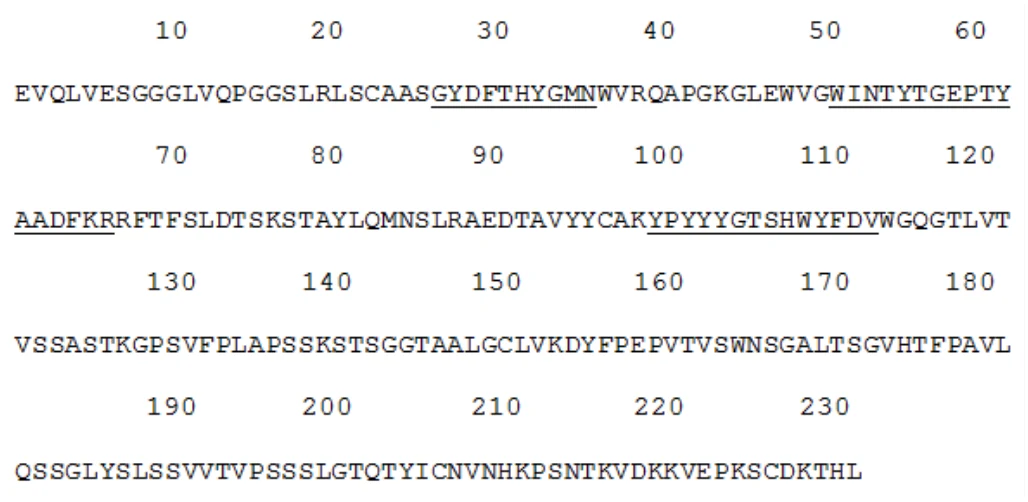
Note 1: The calculated molecular mass of the heavy chain is 24,957 Da (cysteine residues are in the reduced form).
Note 2: Complementarity determining regions are underlined.
Physicochemical properties: Ranibizumab is a clear to slightly opalescent, colourless to pale brown liquid. The pH of the ranibizumab liquid is in the range of 5.2 - 5.8.
Pharmaceutical standard: Professed
Product Characteristics:
Ranibizumab is a humanized recombinant monoclonal antibody fragment targeted against human vascular endothelial growth factor A (VEGF-A). It is produced in Escherichia coli expression vector by standard recombinant DNA technology.
14. CLINICAL TRIALS
14.1 Clinical Trials by Indication
Treatment of Wet AMD
The clinical efficacy and safety of Susvimo were assessed in a randomized, visual assessor-masked, open-label active treatment-controlled Study GR40548 (ARCHWAY) in patients with wet AMD. A total of 415 patients (248 in the Susvimo arm and 167 in the intravitreal ranibizumab arm) were enrolled and treated in this study.
Table 4 Summary of trial design and patient demographics for clinical trials in wet AMD
| Study # | Study design | Dosage, route of administration and duration | Study subjects (n) | Mean age (Range) | Sex |
| GR40548 (ARCHWAY) | randomized, multicenter, open-label (visual assessor masked), active-controlled study | Susvimo: 100 mg/mL Q24W Intravitreal ranibizumab 0.5 mg Q4W | Susvimo n=248 Intravitreal ranibizumab n = 167 | 75.0 years (65-85 years) | Male: 41.0 % Females: 59.0 % |
Patients were diagnosed with any type of macular choroidal neovascularization (CNV) related to wet AMD within the 9 months prior to screening and received ≥3 doses of anti-VEGF intravitreal agents in the study eye within the last 6 months prior to screening. They have demonstrated a response to anti-VEGF intravitreal agents defined as overall decrease in wet AMD disease activity detected on spectral-domain optical coherence tomography (SD-OCT) and stable or improved vision.
At the screening visit, patients received an additional intravitreal injection of 0.5 mg ranibizumab if they received only 3 doses of anti-VEGF intravitreal agents within the last 6 months and/or if the last treatment received prior to screening was not 0.5 mg ranibizumab.
Patients were randomized in a 3:2 ratio to receive continuous delivery of Susvimo via the implant every 24 weeks or 0.5 mg intravitreal ranibizumab injections every 4 weeks. For patients randomized to the Susvimo arm, supplemental treatment with intravitreal injections of 0.5 mg ranibizumab was available at Weeks 16, 20, 40, 44, 64, 68, 88, and 92, if one of the following criteria was met: a loss of 15 letters from the best recorded Best Corrected Visual Acuity (BCVA) value on study, an increase of 150 microns from the lowest central subfield thickness (CST) value on study, or a loss of 10 letters from the highest BCVA value associated with an increase of 100 microns from the lowest CST value.
Prior to study treatment, a median of 4 doses of anti-VEGF intravitreal agents were administered in the study eye of patients in the Susvimo and intravitreal ranibizumab arms. The mean change in visual acuity in the study eye from diagnosis of wet AMD to baseline was 11.3 ETDRS letters. Approximately 75% of Susvimo patients (who were not treatment naive) were treated with a monthly intravitreal regimen per standard of care before enrollment in the study, while 25% of patients were treated with intravitreal regimens ranging from every 6 weeks to every 12 weeks.
The primary efficacy endpoint of change from baseline in BCVA score averaged over Week 36 and Week 40 demonstrated Susvimo to be equivalent to intravitreal ranibizumab injections administered every 4 weeks. Detailed efficacy results are shown in Table 5 and Figure 2 below.
Table 5 Visual acuity outcomes at Week 40 in Study GR40548 (ARCHWAY)
| Outcome Measure* | Susvimo 100mg/mL n=248 | Intravitreal ranibizumab 0.5 mg (10mg/mL) n=167 | Difference (95% CI)** |
|---|---|---|---|
| Mean BCVA letter score at baseline | 74.4 | 75.5 | |
| Adjusted Mean change from baseline in BCVA score averaged over Weeks 36 and 40 | 0.2 | 0.5 | -0.3 (-1.7, 1.1)*** |
BCVA = Best corrected visual acuity
* BCVA measured by Early Treatment Diabetic Retinopathy Study (ETDRS) letters score
**All estimates are adjusted estimates based on a mixed-effect model with repeated measures for mean change from baseline or based on Cochran-Mantel-Haenszel weighting for proportion of patients. Susvimo arm –intravitreal ranibizumab arm. The type 1 error was adjusted for interim safety monitoring.
*** Equivalence margins were ±4.5 letters.
Figure 2 Adjusted Mean Change from Baseline in Best Corrected Visual Acuity in Study Eye through Week 48 in the Study GR40548 (ARCHWAY) study*
PDS with ranibizumab = Susvimo arm; Q24W = every 24 weeks; Q4W = every 4 weeks
* Decrease in BCVA at Week 4 during post-operative recovery period.
In the first 24 week treatment period, 1.6% of patients in the Susvimo arm received 1 or more supplemental treatment with 0.5 mg intravitreal ranibizumab injections. In the following 24 week treatment period, 5.4% of patients received 1 or more supplemental treatment.
14.3 Immunogenicity
As with all therapeutic proteins, there is the potential for an immune response to ranibizumab.
In previously treated wet AMD patients in the Archway study, anti-ranibizumab antibodies were detected in 2.1% (5 of 243) of patients prior to insertion of the implant. After implant insertion and treatment, anti-ranibizumab antibodies developed in 11.7% (29 of 247) patients.
No clinically meaningful differences in the pharmacokinetics, efficacy, or safety in patients with treatment-emergent anti-ranibizumab antibodies were observed.
Immunogenicity assay results are highly dependent on several factors including assay sensitivity and specificity, assay methodology, sample handling, timing of sample collection, concomitant medications and underlying disease. For these reasons, comparison of incidence of antibodies to Susvimo with the incidence of antibodies to other products may be misleading.
15. MICROBIOLOGY
No microbiological information is required for this drug product.
16. NON-CLINICAL TOXICOLOGY
Carcinogenicity
No carcinogenicity studies have been performed to establish the carcinogenic potential of Susvimo.
Genotoxicity
No studies have been performed to establish the mutagenic potential of Susvimo.
Reproductive and Developmental Toxicology
Impairment of Fertility
No fertility studies in animals have been performed to evaluate the effect of ranibizumab delivered via the implant.
Although no effects on reproductive tissues were noted in repeat-dose monkey studies with intravitreal ranibizumab, inhibition of VEGF in human female reproductive tissues could potentially impair fertility.
Reproductive toxicity
No reproductive and developmental toxicity studies have been conducted with ranibizumab delivered via the implant.
Intravitreal ranibizumab injection
An embryo-fetal developmental toxicity study with intravitreal ranibizumab was performed on pregnant cynomolgus monkeys. Pregnant animals received intravitreal ranibizumab injections every 14 days starting on Day 20 of gestation, until Day 62 at doses of 0, 0.125, and 1 mg/eye. The intravitreal ranibizumab injection doses of 0.125 and 1.0 mg/eye administered in a 50 µL volume, give maximum maternal serum levels (Cmax) of 30- and 300- fold, respectively, higher than the median Cmax in humans given monthly unilateral Susvimo 100 mg/mL. See 17 SUPPORTING PRODUCT MONOGRAPHS. Skeletal abnormalities including incomplete and/or irregular ossification of bones in the skull, vertebral column, and hindlimbs and shortened supernumerary ribs were seen at a low incidence in fetuses from animals treated with 1 mg/eye of ranibizumab.
No skeletal abnormalities were seen at the lower dose of 0.125 mg/eye, a dose which resulted in trough concentrations equivalent to single eye treatment with Susvimo in humans. No effect on the weight or structure of the placenta, maternal toxicity, or embryotoxicity was observed. The systemic exposure to Susvimo is low after administration via the implant, but due to its mechanism of action, Susvimo must be regarded as potentially teratogenic and embryo-/fetotoxic. Therefore, Susvimo is not recommended during pregnancy unless the expected benefit outweighs the potential risk to the fetus (see 7 WARNINGS AND PRECAUTIONS; Reproductive Health: Female and Male Potential and 7.1.1 Pregnant Women).
17. SUPPORTING PRODUCT MONOGRAPHS
- i. PrLUCENTIS® (ranibizumab injection) Product Monograph, Submission Control No: 245596 dated December 21, 2021.