


Product Monograph - Mekinist (Novartis Pharmaceuticals Canada, 0.5 mg, 2 mg, 4.7 mg)
Recent Major Label Changes
| 7 Warnings and Precautions, Endocrine and Metabolism | 05/2024 |
|---|
Table of Contents
Table of Contents ............................................................................................................... 2
Part 1: Healthcare Professional Information ......................................................... 5
1 Indications ............................................................................................................. 5
1.1 Pediatrics .............................................................................................................. 6
1.2 Geriatrics .............................................................................................................. 6
2 Contraindications ................................................................................................ 6
3 Serious Warnings and Precautions Box ........................................................ 6
4 Dosage and Administration .................................................................................. 7
4.1 Dosing Considerations .......................................................................................... 7
4.2 Recommended Dose and Dosage Adjustment ..................................................... 7
4.4 Administration .................................................................................................... 12
4.5 Missed Dose ....................................................................................................... 13
5 Overdose ................................................................................................................ 13
6 Dosage Forms, Strengths, Composition, and Packaging .............................. 13
7 Warnings and Precautions .................................................................................. 14
7.1 Special Populations ............................................................................................. 23
7.1.1 Pregnancy ..................................................................................................... 23
7.1.2 Breastfeeding ............................................................................................... 23
7.1.3 Pediatrics ...................................................................................................... 23
7.1.4 Geriatrics ....................................................................................................... 24
8 Adverse Reactions ................................................................................................ 25
8.1 Adverse Reaction Overview ................................................................................ 25
8.2 Clinical Trial Adverse Reactions .......................................................................... 27
8.3 Less Common Clinical Trial Adverse Reactions ................................................... 40
8.4 Abnormal Laboratory Findings: Hematologic, Clinical Chemistry and Other Quantitative Data ........................................................................................................... 45
8.5 Post-Market Adverse Reactions ......................................................................... 48
9 Drug Interactions .................................................................................................. 49
9.2 Drug Interactions Overview ................................................................................ 49
9.4 Drug-Drug Interactions ....................................................................................... 49
9.5 Drug-Food Interactions ....................................................................................... 50
9.6 Drug-Herb Interactions ....................................................................................... 50
9.7 Drug-Laboratory Test Interactions ...................................................................... 50
10 Clinical Pharmacology ......................................................................................... 51
10.1 Mechanism of Action .......................................................................................... 51
10.2 Pharmacodynamics ............................................................................................ 51
10.3 Pharmacokinetics ............................................................................................... 52
11 Storage, Stability, and Disposal ......................................................................... 54
12 Special Handling Instructions ............................................................................ 55
Part 2: Scientific Information.......................................................................................... 55
13 Pharmaceutical Information ................................................................................ 55
14 Clinical Trials ......................................................................................................... 56
14.1 Clinical Trials by Indication ................................................................................. 56
Unresectable or Metastatic Melanoma – MEKINIST Monotherapy ...................... 56
Unresectable or Metastatic Melanoma – MEKINIST in Combination with Dabrafenib .................................................................................................................... 61
Adjuvant Treatment of Melanoma – MEKINIST in Combination with Dabrafenib 65
Metastatic Non-Small Cell Lung Cancer (NSCLC) – MEKINIST in Combination with Dabrafenib ............................................................................................................ 69
Low-grade Glioma (LGG) and High-grade Glioma (HGG) - MEKINIST in Combination with Dabrafenib ..................................................................................... 72
15 Microbiology .......................................................................................................... 77
16 Non-Clinical Toxicology ....................................................................................... 77
Patient Medication Information ...................................................................................... 81
Patient Medication Information ...................................................................................... 94
Part 1: Healthcare Professional Information
1 Indications
Unresectable or Metastatic Melanoma
MEKINIST (trametinib) is indicated, as a monotherapy or in combination with dabrafenib, for:
- the treatment of patients with unresectable or metastatic melanoma with a BRAF V600 mutation.
Clinical data supporting the effectiveness of MEKINIST monotherapy for the treatment of patients with BRAF V600K mutation are limited and fewer responses were reported in BRAF V600K patients compared to BRAF V600E patients (see 14 CLINICAL TRIALS). There are no clinical data for other less common BRAF V600 mutations.
MEKINIST monotherapy should not be used in patients who have progressed on a prior BRAF inhibitor therapy (see 7 General and 14 CLINICAL TRIALS).
MEKINIST monotherapy has not been compared with a BRAF inhibitor in a clinical study in patients with unresectable or metastatic melanoma (see 7 General).
MEKINIST in combination with dabrafenib is not recommended in patients who have previously progressed on a BRAF inhibitor due to its limited efficacy in patients who progressed on dabrafenib monotherapy (see 7 General).
Adjuvant Treatment of Melanoma
MEKINIST (trametinib), in combination with dabrafenib, is indicated for:
- the adjuvant treatment of patients with melanoma with a BRAF V600 mutation and involvement of lymph node(s), following complete resection.
The indication is based on relapse-free survival (RFS) demonstrated in a randomized, placebo-controlled Phase III trial. Overall survival (OS) benefit has not been confirmed (see 14 CLINICAL TRIALS).
Clinical data supporting the effectiveness of MEKINIST in combination with dabrafenib are limited to patients with BRAF V600E or BRAF V600K mutations. There are no clinical data for other less common BRAF V600 mutations.
Metastatic Non-Small Cell Lung Cancer (NSCLC)
MEKINIST (trametinib) in combination with dabrafenib, is indicated for:
- the treatment of patients with metastatic non-small cell lung cancer (NSCLC) with a BRAF V600 mutation.
Effectiveness is based on overall response rate (ORR). Prolongation of progression-free survival (PFS), overall survival (OS) and improvement in quality-of-life has not been demonstrated (see 14 CLINICAL TRIALS).
Clinical data supporting the effectiveness of MEKINIST in combination with dabrafenib are limited to patients with a BRAF V600E mutation.
Low-grade glioma (LGG) and High-grade glioma (HGG)
MEKINIST (trametinib) in combination with dabrafenib is indicated for:
- the treatment of pediatric patients 1 year of age and older with low-grade glioma (LGG) with a BRAF V600E mutation who require systemic therapy (see 14 CLINICAL TRIALS).
- the treatment of pediatric patients 1 year of age and older with high-grade glioma (HGG) with a BRAF V600E mutation who have received at least one prior radiation and/or chemotherapy treatment (see 14 CLINICAL TRIALS).
A validated test is required to identify BRAF V600 mutation status to select patients appropriate for treatment with MEKINIST as monotherapy and in combination with dabrafenib.
When MEKINIST is used in combination with dabrafenib, see also the dabrafenib Product Monograph.
1.1 Pediatrics
Pediatrics (< 1 year of age): The safety and efficacy of MEKINIST in combination with dabrafenib in pediatric patients with glioma <1 year of age and/or < 8 kg have not been established. MEKINIST is not recommended in this age group (see 7.1.3 Pediatrics).
MEKINIST is not indicated for pediatric patients (<18 years old) with melanoma or NSCLC.
1.2 Geriatrics
Geriatrics (≥ 65 years of age): No overall differences in effectiveness of MEKINIST were observed between elderly patients (≥ 65 years) and younger patients. However, permanent discontinuation and dose reductions/interruptions of MEKINIST were reported more frequently in elderly patients treated for unresectable or metastatic melanoma than in younger patients (see 7.1.4 Geriatrics).
2 Contraindications
MEKINIST is contraindicated in patients who are hypersensitive to this drug or to any ingredient in the formulation, including any non-medicinal ingredient, or component of the container. For a complete listing, see 6 DOSAGE FORMS, STRENGTHS, COMPOSITION AND PACKAGING.
3 Serious Warnings and Precautions Box
MEKINIST tablets should be prescribed by a physician experienced in the administration of anti-cancer agents.
The following are significant adverse drug reactions identified in clinical trials conducted with MEKINIST:
- Left ventricular dysfunction (see 7 Cardiovascular)
- Retinal pigment epithelial detachment and retinal vein occlusion (see 7 Ophthalmologic)
- Interstitial lung disease (see 7 Respiratory)
- Skin toxicity including serious cases (see 7 Skin)
- Venous Thromboembolism (see 7 Cardiovascular)
- Major hemorrhagic events (see 7 Hematologic)
In addition to the above events, the following are significant adverse drug reactions identified in clinical trials conducted with MEKINIST in combination with dabrafenib:
- Non-infectious febrile events (see 7 General and the dabrafenib Product Monograph)
4 Dosage and Administration
4.1 Dosing Considerations
MEKINIST is available in two dosage forms: tablets and powder for oral solution. Tablets can be used for adult and pediatric patients who weigh at least 26 kg. Powder for oral solution can be used for patients who weigh at least 8 kg. The bioequivalence of the two dosage forms of MEKINIST has not been demonstrated. Use caution if switching patients from one dosage for to the other.
4.2 Recommended Dose and Dosage Adjustment
Recommended Dose
When using MEKINIST in combination with dabrafenib, please refer to the dabrafenib Product Monograph for full dosing instructions.
Tablets
Adult patients
The recommended dose regimens of MEKINIST tablets in adult patients are:
Monotherapy: 2 mg given orally once daily with a full glass of water.
Combination with dabrafenib: 2 mg given orally once daily with 150 mg (two 75 mg capsules) of dabrafenib given orally twice daily (corresponding to a total daily dose of 300 mg).
Pediatric patients
The recommended dosage for MEKINIST tablets in pediatric patients who weigh at least 26 kg, is based on body weight (Table 1). A recommended dosage for MEKINIST tablets in pediatric patients who weigh less than 26 kg has not been established.
Table 1 Recommended Dosage for MEKINIST Tablets in Pediatric Patients
| Body weight | Recommended starting dosage |
|---|---|
| 26 to 37 kg | 1 mg orally once daily |
| 38 to 50 kg | 1.5 mg orally once daily |
| ≥51 kg | 2 mg orally once daily |
Powder for Oral Solution
The recommended dosage for MEKINIST powder for oral solution is based on body weight (Table 2).
Table 2 Recommended Dosage for Reconstituted MEKINIST Powder for Oral Solution
| Body weight (kg) | Recommended dose Total volume of oral solution once daily (trametinib content) |
|---|---|
| 8 kg | 6 mL (0.3 mg) |
| 9 to 10 kg | 7 mL (0.35 mg) |
| 11 kg | 8 mL (0.4 mg) |
| 12 to 13 kg | 9 mL (0.45 mg) |
| 14 to 17 kg | 11 mL (0.55 mg) |
| 18 to 21 kg | 14 mL (0.7 mg) |
| 22 to 25 kg | 17 mL (0.85 mg) |
| 26 to 29 kg | 18 mL (0.9 mg) |
| 30 to 33 kg | 20 mL (1 mg) |
| 34 to 37 kg | 23 mL (1.15 mg) |
| 38 to 41 kg | 25 mL (1.25 mg) |
| 42 to 45 kg | 28 mL (1.4 mg) |
| 46 to 50 kg | 32 mL (1.6 mg) |
| ≥51 kg | 40 mL (2 mg) |
Dose Modifications
The management of adverse reactions may require treatment interruption, dose reduction, or treatment discontinuation (see Table 3 to Table 6). Discontinue MEKINIST treatment permanently if a dose reduction below 1 mg once daily is required. When an individual’s adverse reactions are under effective management, dose re-escalation following the same dosing steps as de-escalation may be considered.
Table 3 Recommended Dose Modifications for MEKINIST Monotherapy and for MEKINIST and Dabrafenib Combination Therapy
| Adverse Reactiona | MEKINIST |
|---|---|
| Adverse Reactiona | MEKINIST |
| Adverse Reactiona | MEKINIST |
| Cutaneous | |
|
|
|
|
|
|
| Cardiac | |
|
|
|
|
|
|
|
|
| Febrile Drug Reaction | |
|
|
|
|
| Ocular | |
|
|
|
|
| |
|
|
|
|
|
|
| Pulmonary | |
|
|
| Abnormal weight gain (pediatric patients) | |
|
|
|
|
| Other | |
|
|
|
|
|
|
a The intensity of clinical adverse events graded by the Common Terminology Criteria for Adverse Events (CTC-AE) v4.0
Recommended dose reductions for MEKINIST tablets in adult patients are provided in Table 4.
Table 4 Recommended Dose Reductions for MEKINIST Tablets in Adult Patients
| Dose Reductions for MEKINIST | |
|---|---|
| First reduction | 1.5 mg once daily |
| Second reduction | 1 mg once daily |
| If unable to tolerate 1 mg once daily | Discontinue MEKINIST |
Recommended dose reductions for MEKINIST tablets in pediatric patients are provided in Table 5.
Table 5 Recommended Dose Reductions for MEKINIST Tablets in Pediatric Patients
| Dose reduction | Recommended starting dosage | ||||
|---|---|---|---|---|---|
| 1 mg orally once daily | 1.5 mg orally once daily | 2 mg orally once daily | |||
| First dose reduction | 0.5 mg orally once daily | 1 mg orally once daily | 1.5 mg orally once daily | ||
| Second dose reduction | - | 0.5 mg orally once daily | 1 mg orally once daily | ||
| Permanently discontinue if unable to tolerate a maximum of two dose reductions | |||||
The recommended dose reductions for MEKINIST powder for oral solution are based on body weight (Table 6).
Table 6 Recommended Dose Reductions for Reconstituted MEKINIST Powder for Oral Solution
| Body weight (kg) | Recommended dose Total volume of oral solution once daily (trametinib content) | Dose Level Reductions | ||||||
|---|---|---|---|---|---|---|---|---|
First dose reduction (once daily) | Second dose reduction (once daily) | |||||||
| 8 kg | 6 mL (0.3 mg) | 5 mL | 3 mL | |||||
| 9 to 10 kg | 7 mL (0.35 mg) | 5 mL | 4 mL | |||||
| 11 kg | 8 mL (0.4 mg) | 6 mL | 4 mL | |||||
| 12 to 13 kg | 9 mL (0.45 mg) | 7 mL | 5 mL | |||||
| 14 to 17 kg | 11 mL (0.55 mg) | 8 mL | 6 mL | |||||
| 18 to 21 kg | 14 mL (0.7 mg) | 11 mL | 7 mL | |||||
| 22 to 25 kg | 17 mL (0.85 mg) | 13 mL | 9 mL | |||||
| 26 to 29 kg | 18 mL (0.9 mg) | 14 mL | 9 mL | |||||
| 30 to 33 kg | 20 mL (1 mg) | 15 mL | 10 mL | |||||
| 34 to 37 kg | 23 mL (1.15 mg) | 17 mL | 12 mL | |||||
| 38 to 41 kg | 25 mL (1.25 mg) | 19 mL | 13 mL | |||||
| 42 to 45 kg | 28 mL (1.4 mg) | 21 mL | 14 mL | |||||
| 46 to 50 kg | 32 mL (1.6 mg) | 24 mL | 16 mL | |||||
| ≥51 kg | 40 mL (2 mg) | 30 mL | 20 mL | |||||
| Permanently discontinue if unable to tolerate a maximum of two dose reductions. | ||||||||
Duration of treatment
Unresectable or metastatic melanoma and metastatic NSCLC
Treatment should continue until disease progression or the development of unacceptable toxicity (see Table 3).
Adjuvant treatment of melanoma
Treatment should continue for a period of 12 months. Discontinue treatment upon disease recurrence or unacceptable toxicity (see Table 3).
Low-grade glioma (LGG) and High-grade glioma (HGG)
Treatment should continue until disease progression or the development of unacceptable toxicity (see Table 3). There are limited data in patients older than 18 years of age with glioma, therefore, continued treatment into adulthood should be based on benefits and risks to the individual patient as assessed by the health professional.
Special Populations:
Pediatrics (< 1 year of age): MEKINIST is not indicated in the pediatric population less than 1 year of age (see 7.1.3 Pediatrics).
Geriatrics: No dose adjustment is required in patients over 65 years of age (see 10 Geriatrics).
Renal impairment: No dosage adjustment is required in patients with mild or moderate renal impairment. There are no clinical data with MEKINIST in patients with severe renal impairment; the need for starting dose adjustment is unknown (see 7 WARNINGS AND PRECAUTIONS and 10 Renal Insufficiency).
Hepatic impairment: No dosage adjustment is required in patients with mild hepatic impairment. There are no clinical data in patients with moderate or severe hepatic impairment; the need for starting dose adjustment is unknown (see 7 WARNINGS AND PRECAUTIONS and 10 Hepatic Insufficiency).
4.4 Administration
MEKINIST alone or in combination with dabrafenib should be taken without food at least one hour before or two hours after a meal (see 10.3 Pharmacokinetics).
When MEKINIST and dabrafenib are taken in combination, the once-daily dose of MEKINIST should be taken at the same time each day with either the morning dose or the evening dose of dabrafenib.
Health professionals should regularly monitor the weight of pediatric patients to ensure that they are receiving the appropriate dose, and confirm that patients or caregiver(s) understand how to administer the correct daily dose.
Tablets
MEKINIST tablets should be taken with a full glass of water.
Powder for Oral Solution
To prepare MEKINIST for oral solution, tap the bottle until powder flows freely. Add 90 mL distilled or purified water to the powder in the bottle and invert or gently shake the bottle with re-attached cap for up to 5 minutes until powder is fully dissolved yielding a clear solution. Separate the dosing adapter from the oral syringe. Insert dosing adapter into bottle neck after reconstitution of the solution. Write the discard-after date. Once reconstituted, MEKINIST oral solution can be used for 35 days.
Administer MEKINIST for oral solution from oral dosing syringe or feeding tube.
After reconstitution, store in original bottle below 25°C and do not freeze.
When using MEKINIST powder for oral solution, health professionals should review and discuss with the patient or caregiver(s) the Patient Medication Information and instructions for administering MEKINIST.
A complete illustrated set of instructions for administration of the prepared solution is in the Patient Medication Information section.
4.5 Missed Dose
If a dose of MEKINIST is missed, it should not be taken if it is less than 12 hours until the next dose.
5 Overdose
Symptoms and Signs
There were no cases of MEKINIST dosed above 4 mg once daily reported from the clinical trials. Doses of up to 4 mg orally once daily or loading doses of up to 10 mg on two consecutive days, have been administered to limited numbers of patients in a clinical study. Doses above the recommended 2 mg orally once daily regimen were associated with increased toxicities including retinal pigment epithelial detachment.
Treatment
There is no specific antidote for overdosage of MEKINIST. In case of suspected overdose, MEKINIST should be withheld and supportive care instituted. Patients who develop adverse reactions should receive appropriate symptomatic treatment. Haemodialysis is not expected to enhance the elimination as trametinib is highly bound to plasma proteins.
For the most recent information in the management of a suspected drug overdose, contact your regional poison control centre or Health Canada’s toll-free number, 1-844 POISON-X (1-844-764-7669).
6 Dosage Forms, Strengths, Composition, and Packaging
Table 7 Dosage Forms, Strengths, and Composition
| Route of Administration | Dosage Form / Strength / Composition | Non-medicinal Ingredients |
| Oral | Tablet / 0.5 mg, 2 mg (as trametinib dimethylsulfoxide (1:1) equivalent to 0.5 or 2 mg of trametinib) | Croscarmellose sodium, hypromellose, magnesium stearate (vegetable source), mannitol, microcrystalline cellulose, silicon dioxide (colloidal), and sodium lauryl sulphate. The tablet coating contains: hypromellose, polyethylene glycol and titanium dioxide, iron oxide yellow (0.5 mg tablets only), iron oxide red and polysorbate 80 (2 mg tablets only). |
Description
MEKINIST 0.5 mg tablets are yellow, modified oval, biconvex, film coated tablets with ‘GS’ debossed on one face and ‘TFC’ on the opposing face.
Available in bottles of 30 tablets. Bottles contain a silica gel desiccant.
OR
MEKINIST 0.5 mg tablets are yellow, ovaloid, biconvex, unscored film coated tablets with bevelled edges and with the ‘Novartis logo’ debossed on one side and ‘TT’ on the other side.
Available in bottles of 30 tablets. Bottles contain a silica gel desiccant.
MEKINIST 2 mg tablets are pink, round, biconvex, film-coated tablets with ‘GS’ debossed on one face and ‘HMJ’ on the opposing face.
Available in bottles of 30 tablets. Bottles contain a silica gel desiccant.
OR
MEKINIST 2 mg tablets are pink, round, biconvex, unscored film-coated tablets with bevelled edges and with the ‘Novartis logo’ debossed on one side and ‘LL’ on the other side.
Available in bottles of 30 tablets. Bottles contain a silica gel desiccant.
MEKINIST 4.7 mg powder for oral solution is a white or almost white powder available in a 180mL amber glass bottle.
7 Warnings and Precautions
Please see 3 Serious Warnings and Precautions Box.
When MEKINIST is used in combination with dabrafenib, also consult the dabrafenib Product Monograph for important warnings and precautions for dabrafenib in regard to
| Route of Administration | Dosage Form / Strength / Composition | Non-medicinal Ingredients |
Powder for oral solution 4.7 mg Each bottle contains 5.3 mg trametinib dimethylsulfoxide equivalent to 4.7 mg of trametinib. Each mL of the constituted solution contains 0.05 mg of trametinib. | Citric acid monohydrate, disodium phosphate, flavour strawberry, methyl parahydroxybenzoate, potassium sorbate sucralose, sulfobutylbetadex sodium. |
secondary malignancies, non-infectious febrile events, decreased efficacy of oral contraceptives, valve abnormalities, QTc prolongation, hyperglycaemia, pancreatitis, uveitis, effects on fertility in males, renal failure, teratogenicity and use in pediatrics, geriatrics, moderate or severe hepatic impairment or severe renal impairment.
General
BRAF V600 Testing: Confirmation of BRAF V600 mutation in a tumour biopsy using a validated test is required for selection of patients appropriate for treatment with MEKINIST.
MEKINIST monotherapy has not been compared with a BRAF inhibitor in a clinical study in patients with BRAF V600 mutation-positive unresectable or metastatic melanoma. However, overall response rates were lower in patients treated with MEKINIST than those reported in patients treated with BRAF inhibitors.
Prior BRAF Inhibitory Therapy: MEKINIST monotherapy was not effective in patients with BRAF V600 mutation-positive unresectable or metastatic melanoma who progressed on a prior BRAF inhibitor therapy (see 14 CLINICAL TRIALS). MEKINIST monotherapy should not be used in this patient population.
The combination of MEKINIST and dabrafenib demonstrated limited clinical activity in patients who had progressed on dabrafenib monotherapy and is not recommended for patients who have progressed on a prior BRAF inhibitor. Of 43 patients in a phase I/II study who crossed over from dabrafenib monotherapy to the combination of MEKINIST plus dabrafenib following progression, only 9% (95% CI: 2.6, 22.1) had an ORR and the median PFS was 3.6 months (95% CI: 1.8, 3.9).
Pyrexia and Serious Non-Infectious Febrile Events: MEKINIST increases the incidence and severity of pyrexia associated with dabrafenib when used as a combination therapy in both adults and children. Refer to the dabrafenib Product Monograph for further details on these events. See Table 3 (4 DOSAGE AND ADMINISTRATION) for dose modifications of MEKINIST in patients who have serious non-infectious febrile events while on the combination therapy.
Interrupt therapy (MEKINIST when used in monotherapy, or both MEKINIST and dabrafenib when used in combination) if patient’s temperature is ≥ 38oC. In case of recurrence, therapy can also be interrupted at the first symptom of pyrexia. Initiate treatment with anti-pyretics and evaluate patients for signs and symptoms of infection. The use of oral corticosteroids should be considered in those instances in which anti-pyretics are insufficient.
Resume therapy (MEKINIST monotherapy, or both MEKINIST and dabrafenib when used in combination) at the recommended daily dose if patient is symptom free of grade 1 or grade 2 fevers (38- 40.0 °C) for at least 24 hours. Reduce the dose if recurrent pyrexia cannot be managed with interruption or corticosteroids.
If patient is symptom free for at least 24 hours of fevers > 40.0°C or fevers associated with other severe signs or symptoms, and a decision is made to restart therapy (MEKINIST when used in monotherapy or both MEKINIST and dabrafenib when used in combination), the dose should be reduced according to dose modification protocols See Table 3 (4 DOSAGE AND ADMINISTRATION).
Brain Metastases: The safety and efficacy of the combination of MEKINIST and dabrafenib has not been evaluated in patients with a BRAF V600 mutation-positive melanoma which has metastasized to the brain. Three patients who developed brain metastases while on treatment with MEKINIST in combination with dabrafenib in phase III trials experienced fatal cerebral hemorrhage (see 7 Hematologic).
Gender: When administered as a monotherapy in adult patients, female patients with lower body weights had higher systemic exposure of trametinib compared to male patients (see 10 Sex/Weight). Common and Grade 3 adverse reactions were reported more frequently in female than male patients in the randomized clinical trial (see 8.2 Clinical Trial Adverse Reactions).
Carcinogenesis and Mutagenesis
Carcinogenicity studies have not been performed with trametinib.
There was no indication for a genotoxic potential of trametinib after testing in standard in vitro assays and in vivo in rats (see 16 General Toxicology).
Secondary malignancies have occurred in patients receiving combination therapy with dabrafenib and MEKINIST.
Cardiovascular
Left Ventricular Dysfunction: MEKINIST has been reported to decrease left ventricular ejection fraction (LVEF) (see 8 ADVERSE REACTIONS). In clinical trials with patients treated with MEKINIST at the recommended dose, patients with abnormal left ventricular ejection fraction were excluded.
In the randomized clinical study in patients with unresectable or metastatic melanoma, cardiac adverse events including decreased LVEF, left ventricular dysfunction, and cardiac failure were reported in 8% patients treated with MEKINIST monotherapy whereas none was reported in patients in the chemotherapy arm. In clinical trials with MEKINIST monotherapy, the median time to onset of left ventricular dysfunction and decreased LVEF was 58.5 (range: 16-526) days.
In a phase III clinical study of MEKINIST in combination with dabrafenib compared to dabrafenib monotherapy in unresectable or metastatic melanoma, cardiac-related events (LVEF reduction and/or cardiac failure) were reported in 6% (12/209) of patients treated with combination therapy. (see 8.2 Clinical Trial Adverse Reactions). The median time to onset of the first occurrence of left ventricular dysfunction, cardiac failure and LVEF decrease in patients treated with MEKINIST in combination with dabrafenib was 157 (range: 28-758) days.
In a phase III trial in the adjuvant treatment of melanoma, cardiac-related events (LVEF reduction and/or cardiac failure) were reported in 5% (22/435) of patients treated with MEKINIST in combination with dabrafenib and in 2% (7/432) of patients who received placebo. The median time to onset of cardiac-related events was 81 days in the combination arm compared to 168 days in the placebo arm.
In the NSCLC phase II study, cardiac-related events (LVEF reduction and/or cardiac failure) were reported in 9.7% (9/93) of patients treated with MEKINIST in combination with dabrafenib. The median time to onset of the first occurrence of cardiac-related events was 9.7 (range 1.4 to 27.2) months.
Across clinical trials in adult patients, cardiac-related events were reported in 6% (43/737) of patients receiving combination therapy.
In a pooled safety population of pediatric patients receiving MEKINIST in combination with dabrafenib (n=171), cardiac related events were reported in 6% of patients.
LVEF should be evaluated in all patients prior to initiation of treatment with MEKINIST with a recommendation of periodic follow-up within 8 weeks of initiating therapy. LVEF should continue to be evaluated during treatment with MEKINIST as clinically appropriate. MEKINIST is not recommended in patients with decreased LVEF at baseline. Dose modifications for managing decreased LVEF/left ventricular dysfunction are outlined in Table 3 (see 4 DOSAGE AND ADMINISTRATION). MEKINIST should be permanently discontinued if left ventricular dysfunction cannot be resolved within 4 weeks after interruption of MEKINIST treatment or is of ≥ Grade 3 (see 4.2 Recommended Dose and Dosage Adjustment). MEKINIST should be used with caution in patients with conditions that could impair left ventricular function.
Venous Thromboembolism: Venous thromboembolism (VTE), including deep vein thrombosis (DVT) and pulmonary embolism (PE) can occur with MEKINIST. Across clinical studies in patients receiving MEKINIST monotherapy (n = 329), DVT was reported in 3 patients (1%) and PE was reported in 12 (4%) patients.
Fatal venous thromboembolism events have occurred when MEKINIST was used in combination with dabrafenib.
In clinical trials in adult patients receiving MEKINIST in combination with dabrafenib, DVT and/or PE were reported in 3% (29/941) of patients, including 2 fatalities (<1%).
In a pooled safety population of pediatric patients receiving MEKINIST in combination with dabrafenib, one case of embolism was reported (1/171 patients; < 1%).
If patients develop symptoms of PE or DVT such as shortness of breath, chest pain, or arm or leg swelling, they should immediately seek medical care.
Electrocardiography: MEKINIST was associated with a concentration-dependent prolongation of the PR interval in a phase I study. Analyses of Holter-derived ECG data in an ECG study showed a statistically significant decrease in heart rate and prolongation of the PR interval following dosing with MEKINIST versus placebo (see 10.2 Pharmacodynamics). Cases of atrioventricular block and bundle branch block have been reported post marketing with MEKINIST when given as monotherapy or in combination with dabrafenib (see 8.5 Post-Market Adverse Reactions). Caution should be observed in patients with pre-existing conduction system disease or a history of syncope of unknown etiology. There are no data regarding concomitant use of MEKINIST with medications that result in PR interval prolongation. Nonetheless, these medications should be used with caution with MEKINIST (see 9 DRUG INTERACTIONS).
Hypertension: Elevations in blood pressure have been reported in association with MEKINIST in patients with or without pre-existing hypertension. In a retrospective review of blood pressure measured every 3 weeks in the randomized clinical study in patients with unresectable or metastatic melanoma, there was a statistically significant increase in mean systolic and diastolic pressure in the MEKINIST monotherapy arm versus the chemotherapy arm at week 3 and 6, and diastolic pressure at week 9 following initiation of treatments. The comparator adjusted mean increase in systolic pressure was 5 mmHg and the diastolic pressure 4 mmHg. In this randomized study, hypertension as an adverse event was reported in 35 patients (17%)
of which 28 (13%) were Grade 3.
In clinical trials in adult patients receiving MEKINIST in combination with dabrafenib, hypertension was reported in 16% (105/644) of patients, including Grade 3 hypertension in 39 patients (6%).
In a pooled safety population of pediatric patients receiving MEKINIST in combination with dabrafenib (n=171), 4 cases of hypertension were reported (2%).
Blood pressure should be monitored during MEKINIST treatment, with control of hypertension by standard therapy as appropriate (see Monitoring and Laboratory Tests).
Endocrine and Metabolism
Tumour Lysis Syndrome (TLS): Post-marketing cases of TLS, including fatal cases, have been reported in patients treated with MEKINIST (trametinib) in combination with dabrafenib. Risk factors for TLS include high tumour burden, pre‑existing chronic renal insufficiency, oliguria, dehydration, hypotension, and acidic urine. Patients with risk factors for TLS should be closely monitored and prophylactic hydration should be considered. TLS should be treated promptly, as clinically indicated.
Gastrointestinal
Colitis and Gastrointestinal Perforation: Colitis and gastrointestinal perforation, including fatal outcome, have been reported in patients taking MEKINIST (see 8 ADVERSE REACTIONS). Treatment with MEKINIST monotherapy or in combination with dabrafenib should be used with caution in patients with risk factors for gastrointestinal perforation, including a history of diverticulitis, metastases to the gastrointestinal tract and concomitant use of medications with a recognised risk of gastrointestinal perforation.
Patients should be advised to seek immediate medical care if they develop symptoms of colitis and gastrointestinal perforation.
Hematologic
Hemorrhage: Bleeding events including major hemorrhagic events (defined as symptomatic bleeding in a critical site, and fatal intracranial hemorrhages) have been reported in patients taking MEKINIST.
Bleeding events (any grade) were reported in 22% (73/329) of patients receiving MEKINIST monotherapy across clinical studies. Major hemorrhagic events of intracranial or gastric hemorrhage occurred in 0.6% (2/329) of patients.
In a phase I/II study in unresectable or metastatic melanoma, bleeding events (any grade) were reported in 31% (17/55) of patients treated with the combination of MEKINIST and dabrafenib. Intracranial hemorrhage occurred in 5% (3/55) and were fatal in 4% (2/55) of patients treated with the combination therapy. Gastrointestinal hemorrhage occurred in 7% (4/55) of patients in the combination arm; none of the events were fatal. In a phase III study, bleeding events (any grade) were reported in 19% (40/209) of patients treated with combination therapy and intracranial hemorrhage was fatal in 1% (3/209) of patients. Gastrointestinal hemorrhage occurred in 6% (12/209) of patients in the combination arm; none of the events were fatal.
In the phase III trial in unresectable or metastatic melanoma, 6 patients (1%) taking MEKINIST in combination with dabrafenib experienced fatal cerebral hemorrhage, including 2 who were taking anticoagulants and 3 who had developed brain metastases. The risk for serious hemorrhagic events in patients with unstable and/or symptomatic brain metastases or low platelets (< 75,000) is not established, as patients with these conditions were excluded from clinical trials. The risk of hemorrhage may be increased with concomitant use of antiplatelet or anticoagulant therapy or in patients who develop brain metastases while on treatment.
No fatal hemorrhagic events occurred in the phase III study in the adjuvant treatment of melanoma.
In the NSCLC phase II study, the incidence of hemorrhagic events in patients receiving MEKINIST with dabrafenib was 26% (24/93). Fatal hemorrhagic events occurred in 2% (2/93) of patients receiving MEKINIST with dabrafenib, one with retroperitoneal hemorrhage and one with subarachnoid hemorrhage.
In a pooled safety population of pediatric patients receiving MEKINIST in combination with dabrafenib (n=171), hemorrhagic events occurred in 25% of patients; the most common type of bleeding was epistaxis (16%). Serious events of bleeding occurred in 4% of patients and included gastrointestinal hemorrhage (1%), cerebral hemorrhage (< 1%) uterine hemorrhage (< 1%), post-procedural hemorrhage (< 1%) and epistaxis (< 1%).
If hemorrhage occurs, patients should be treated as clinically indicated. Patients should be advised to seek immediate medical care if they develop symptoms of hemorrhage.
Cerebral hemorrhage (including fatal cases) associated with MEKINIST in combination with dabrafenib were reported in clinical trials and during post-marketing use.
Neutropenia: Neutropenia, including Grade 3 or 4 occurrences, has been reported in association with the combination of MEKINIST and dabrafenib in both adult and pediatric patients. Patients receiving the combination therapy should have their complete blood counts determined at baseline and periodically on treatment (see Monitoring and Laboratory Tests).
Hepatic/Biliary/Pancreatic
Hepatotoxicity: Hepatic adverse events have been reported when MEKINIST is used in combination with dabrafenib (see 8.2 Clinical Trial Adverse Reactions).
Across several large trials in patients treated with the combination of MEKINIST and dabrafenib, hepatic adverse events were reported in 20% (150/737) of adult patients and in 20% (35/171) of pediatric patients.
Immune
Sarcoidosis: Cases of sarcoidosis have been reported in patients treated with MEKINIST in combination with dabrafenib, mostly involving the skin, lung, eye and lymph nodes. In the majority of the cases, treatment with MEKINIST and dabrafenib was maintained. In case of a diagnosis of sarcoidosis, relevant treatment should be considered. It is important not to misinterpret sarcoidosis as disease progression.
Haemophagocytic lymphohistiocytosis (HLH): In post-marketing experience, HLH has been observed with MEKINIST in combination with dabrafenib. Patients should be closely monitored. If HLH is suspected, treatment should be interrupted. If HLH is confirmed, treatment should be discontinued and appropriate management of HLH should be initiated.
Monitoring and Laboratory Tests
Confirmation of BRAF V600 mutation using a validated test is required for selection of patients appropriate for MEKINIST therapy.
LVEF should be evaluated in all patients prior to initiation of treatment with MEKINIST with a recommendation of periodic follow-up within 8 weeks of initiating therapy. LVEF should continue to be evaluated during treatment with MEKINIST, as clinically appropriate (see 4 DOSAGE AND ADMINISTRATION).
Blood pressure should be measured at baseline and monitored during treatment with MEKINIST (see 10.2 Pharmacodynamics).
A thorough ophthalmological evaluation should be performed at baseline, if clinically warranted. Perform ophthalmological evaluation any time a patient reports new visual disturbances and compare to baseline, if available.
Patients should be monitored for skin toxicity 2 weeks after initiating MEKINIST treatment and periodically thereafter or as clinically warranted.
Monitor patients receiving MEKINIST carefully for bleeding events and neurologic symptoms.
Patients receiving MEKINIST in combination with dabrafenib should have their complete blood counts determined at baseline and periodically on treatment.
Monitor liver function in patients receiving treatment with MEKINIST in combination with dabrafenib approximately every 4 weeks for 6 months after treatment initiation of this combination therapy. Liver monitoring may be continued thereafter as clinically indicated during therapy.
Monitor body weight and growth of pediatric patients receiving MEKINIST in combination with dabrafenib.
Monitor renal function, uric acid levels and electrolytes in patients receiving treatment with MEKINIST in combination with dabrafenib, especially in those patients at high risk of Tumour Lysis Syndrome.
Musculoskeletal
Rhabdomyolysis: Rhabdomyolysis has been reported in patients taking MEKINIST (see 8.2 Clinical Trial Adverse Reactions). Many cases were severe and resulted in hospitalization with interruption or permanent discontinuation of MEKINIST.
Signs or symptoms of rhabdomyolysis warrant an appropriate clinical evaluation and treatment as indicated. MEKINIST therapy should be interrupted until rhabdomyolysis resolves. Carefully consider the benefits and risks when deciding if treatment with MEKINIST should be re-initiated and, if so, consider resuming at a reduced dose.
Ophthalmologic
Retinal Pigment Epithelial Detachment (RPED): RPED can occur during treatment with MEKINIST monotherapy and in combination with dabrafenib (see 8.2 Clinical Trial Adverse Reactions). In the phase III clinical studies of MEKINIST monotherapy and in combination with dabrafenib in unresectable or metastatic melanoma, RPED was reported in < 1% of patients. The drug-induced RPEDs were often bilateral, multifocal, occurring in the macular region of the retina, and were associated with symptoms such as blurred vision and decreased visual acuity. Optical coherence tomography (OCT) abnormalities may persist beyond a month. Recurrence was reported in some patients who had experienced ≥ Grade 2 RPED after MEKINIST was re-initiated at reduced doses.
In a pooled safety population of pediatric patients receiving MEKINIST in combination with dabrafenib (n=171), one case of RPED was reported (<1%).
Perform ophthalmological evaluation any time a patient reports new visual disturbances and compare to baseline, if available. Withhold MEKINIST if RPED is diagnosed. If resolution of RPED is documented on repeat ophthalmological evaluation within 3 weeks, MEKINIST can be resumed at a reduced dose. If RPED recurs or does not improve within 3 weeks to grade 0-1, MEKINIST should be permanently discontinued (see 4.2 Recommended Dose and Dosage Adjustment).
Retinal Vein Occlusion (RVO): RVO has been reported in patients treated with MEKINIST (see 8.2 Clinical Trial Adverse Reactions). The incidence of RVO was 0.2% across MEKINIST clinical trials. RVO may lead to macular oedema, acute and progressive loss of vision, neovascularization and glaucoma. Full recovery may not occur in patients developing RVO on MEKINIST treatment. Patients with hypertension, diabetes, hypercholesterolemia, or glaucoma are at higher risk for RVO. MEKINIST is not recommended in patients with a history of RVO. In patients who experience RVO, treatment with MEKINIST should be permanently discontinued (see 4.2 Recommended Dose and Dosage Adjustment).
Uveitis: MEKINIST increases the severity of uveitis (including iridocyclitis) events associated with dabrafenib when used as a combination therapy.
In a pooled safety population of pediatric patients receiving MEKINIST in combination with dabrafenib (n=171), uveitis occurred in 5 patients (3%).
Reproductive Health
Reproduction: Male patients (including those who have had a vasectomy) with sexual partners who are pregnant or are of childbearing potential should use condoms with spermicide during sexual intercourse while taking MEKINIST monotherapy or in combination with dabrafenib and for at least 16 weeks after stopping treatment with MEKINIST.
Women of childbearing potential should use effective methods of contraception during therapy and for at least 16 weeks following discontinuation of MEKINIST. If MEKINIST is used during pregnancy, or if the patient becomes pregnant while taking MEKINIST, the patient should be informed of the potential hazard to the foetus.
Women of childbearing potential receiving MEKINIST in combination with dabrafenib should be advised that dabrafenib may decrease the efficacy of oral or any systemic hormonal contraceptives and an effective alternative method of contraception should be used.
Fertility: There is no information on the effect of MEKINIST on human fertility. In animals, no fertility studies have been performed. In a repeat-dose toxicity study, adverse effects were seen on female reproductive organs in rats at sub-therapeutic exposures. There were no effects on male reproductive organs; however, systemic exposures at doses tolerated by animals were lower than exposure at the recommended therapeutic dose (see 16 General Toxicology). MEKINIST may impair fertility in humans.
Respiratory
Interstitial Lung Disease: In a phase III clinical study in patients with unresectable or metastatic melanoma, interstitial lung disease or pneumonitis was reported in 2.4% (5/211) of patients treated with MEKINIST compared to none in patients in the chemotherapy arm (see 8.2 Clinical Trial Adverse Reactions). All reported cases were serious (including one fatal case) leading to permanent discontinuation.
In clinical trials in adult patients receiving MEKINIST in combination with dabrafenib, pneumonitis was reported in <1% (5/737) of patients. In a pooled safety population of pediatric patients receiving MEKINIST in combination with dabrafenib (n=171), no events of pneumonitis or interstitial lung disease were reported.
MEKINIST should be permanently discontinued if pneumonitis is diagnosed (see 4.2 Recommended Dose and Dosage Adjustment).
Skin
Skin Toxicity: In clinical studies with MEKINIST monotherapy, skin toxicities of all grades have occurred in 87% of patients. Severe skin toxicities have occurred in 12% of patients. These skin toxicities included rash, dermatitis acneiform, and palmar-plantar erythrodysesthesia syndrome (see 8 ADVERSE REACTIONS).
Serious skin infections including dermatitis, folliculitis, paronychia, cellulitis, and infective skin ulcer were also reported. In the randomized study in patients with unresectable or metastatic melanoma, six percent of patients treated with MEKINIST compared to none in the chemotherapy arm required hospitalization and intravenous antibiotics due to serious skin toxicity or secondary infections.
In a phase III clinical study of MEKINIST in combination with dabrafenib compared to dabrafenib monotherapy in unresectable or metastatic melanoma, skin toxicities occurred in 48% of patients who received combination treatment. Most skin-related toxicities were Grade 1 or Grade 2, and most were events of rash. No serious skin-related toxicities were reported.
In the adjuvant treatment of melanoma phase III study, skin toxicities were reported in 63% (274/435) of patients who received the combination of MEKINIST and dabrafenib and in 39% (170/432) of patients who received placebo.
In the NSCLC phase II clinical study, the overall incidence of any skin toxicity was 73% for patients receiving MEKINIST and dabrafenib.
In a pooled safety population of pediatric patients receiving MEKINIST in combination with dabrafenib (n=171), skin toxicities were reported in 79% of patients.
Skin toxicity and infections should be monitored during MEKINIST treatment. MEKINIST should be withheld for up to 3 weeks if Grade 2 intolerable or ≥ Grade 3 skin toxicity occurs. MEKINIST should be permanently discontinued if the skin toxicity does not improve within three weeks despite interruption of therapy (see 4.2 Recommended Dose and Dosage Adjustment).
Severe cutaneous adverse reactions: Cases of severe cutaneous adverse reactions (SCARs), including Stevens-Johnson syndrome (SJS) and drug reaction with eosinophilia and systemic symptoms (DRESS), which can be life-threatening or fatal, have been reported during treatment with MEKINIST in combination with dabrafenib. Before initiating treatment, patients should be advised of the signs and symptoms and monitored closely for skin reactions. If signs and symptoms suggestive of SCARs appear, MEKINIST and dabrafenib should be withdrawn.
7.1 Special Populations
7.1.1 Pregnancy
There are no adequate and well-controlled studies of MEKINIST in pregnant women. Animal studies have shown reproductive toxicity. In rabbits, post-implantation loss, including total loss of pregnancy, and foetal toxicity, consisting of decreased body weight and ossification defects, occurred at sub-therapeutic systemic trametinib exposure levels (see 16 Reproductive and Developmental Toxicology). MEKINIST should not be administered to pregnant women (see 7 Reproductive Health: Female and Male Potential).
7.1.2 Breastfeeding
No studies have been conducted with MEKINIST in nursing mothers. MEKINIST should not be administered to nursing mothers. It is not known whether trametinib is transferred into human milk. Because many drugs are transferred into human milk, a risk to the nursing infant cannot be excluded. A decision should be made whether to discontinue nursing or to discontinue MEKINIST, taking into account the importance of MEKINIST to the mother.
7.1.3 Pediatrics
Pediatrics (< 1 year of age): The safety and efficacy of MEKINIST in pediatric patients <1 year of age have not been established. MEKINIST is not recommended in this age group.
Pediatrics (≥ 1 year to <18 years of age):
The safety and efficacy of MEKINIST in combination with dabrafenib in pediatric patients 1 year of age and older with low-grade glioma are supported by evidence from the randomized LGG cohort of the G2201 study (N=73).
The safety and efficacy of MEKINIST in combination with dabrafenib in pediatric patients 1 year of age and older with high-grade glioma are supported by evidence from the single-arm HGG cohort of the G2201 study (N=41).
The warnings applicable to adults are also relevant to pediatric use.
Adverse drug reactions occurring at a higher frequency category in a pooled safety population of pediatric patients (N=171) compared to adult patients were neutropenia, dermatitis acneiform, paronychia, anaemia, leukopenia (very common); bradycardia, dermatitis exfoliative generalised, hypersensitivity and pancreatitis (common).
Weight increase has only been reported in the pediatric population. It was reported as an adverse reaction in 16.4% of pediatric patients, including Grade 3 cases in 5.3% of patients, with a discontinuation rate of 0.6% of patients. The median time to onset of the first occurrence of the reported weight increase in pediatric patients receiving trametinib in combination with dabrafenib was 3.5 months. Weight increase from baseline of ≥2 BMI (body mass index)-for-age percentile categories was observed in 35.7% of patients.
Please refer to pediatric Adverse Events Table 12 and 13
In juvenile rats, decreased bone length and corneal dystrophy were observed at doses resulting in exposures as low as 0.3 times the human exposure at the recommended adult dose based on AUC. Additionally, a delay in sexual maturation was noted at doses resulting in exposures as low as 1.6 times the human exposure at the recommended adult dose based on AUC (see 16 Juvenile Toxicity)
7.1.4 Geriatrics
Geriatrics (≥ 65 years of age): In clinical studies with MEKINIST monotherapy in patients with unresectable or metastatic melanoma (n=329), 67 patients (20%) were 65 years of age and older, and 13 patients (4%) were 75 years of age and older. Higher rates of discontinuation and dose interruptions/ reductions were reported in elderly patients than the younger patients (see 8.2 Clinical Trial Adverse Reactions).
Of the number of patients in a phase III clinical study receiving MEKINIST in combination with dabrafenib (N=209) in unresectable or metastatic melanoma, 56 patients (27%) were 65 years of age and older, and 11 patients (5%) were 75 years of age and older. Compared with younger patients (<65 years), more patients ≥65 years’ old had adverse events that led to dose reductions (43% versus 23%) or interruptions (66% versus 53%) of therapy with MEKINIST or dabrafenib. In addition, older patients experienced more serious adverse events compared to younger patients (59% versus 36%). The incidences of peripheral oedema in the combination (34% vs. 16%) and monotherapy arms (18% vs. 5%) and of decreased appetite in the combination (21% vs. 9%) and monotherapy arms (15% vs. 13%) were more frequent in patients ≥65 years than in patients <65 years, respectively.
Of the 435 patients who received MEKINIST plus dabrafenib in the combination phase III study in the adjuvant treatment of melanoma, 85 patients (20%) were aged 65 years and older and 12 patients (3%) were aged 75 years and older. No overall differences in the effectiveness or safety of MEKINIST plus dabrafenib were observed in elderly patients compared to younger patients.
8 Adverse Reactions
8.1 Adverse Reaction Overview
Unresectable or Metastatic Melanoma – MEKINIST Monotherapy
The safety of MEKINIST monotherapy was evaluated in an integrated population of 329 patients with BRAF V600-mutant unresectable or metastatic melanoma treated with MEKINIST 2 mg orally once daily in clinical trials (MEK114267, MEK113583 and MEK111054) with median duration of treatment of 3.8 (range: 0.03-24.5) months.
Almost all patients (>99%) treated with MEKINIST monotherapy reported at least one adverse reaction. The most common adverse reactions (≥ 20%) included rash, diarrhoea, fatigue, peripheral oedema, nausea, dermatitis acneiform and vomiting. Serious adverse drug reactions were reported in 22% of patients treated with MEKINIST. Serious adverse drug reactions reported in ≥ 1% of patients included cellulitis, pulmonary embolism, anaemia, dyspnoea, pneumonitis and vomiting.
Adverse reactions leading to permanent discontinuation were reported in 10% of patients treated with MEKINIST monotherapy. The most common adverse reactions leading to permanent discontinuation were ejection fraction decreased/left ventricular dysfunction, pneumonitis, and alanine aminotransferase increased. Adverse reactions leading to dose reduction and interruption were reported in 26% and 36%, respectively. The most common adverse reactions leading to dose reductions or interruptions included rash, ejection fraction decreased/left ventricular dysfunction, dermatitis acneiform, diarrhoea and peripheral oedema.
Unresectable or Metastatic Melanoma – MEKINIST in Combination with Dabrafenib
The safety of MEKINIST in combination with dabrafenib was evaluated in a multicentre, randomized phase III study (MEK115306) in a safety population of 209 patients with unresectable or metastatic melanoma. In this study, approximately 71% of patients received treatment with MEKINIST and dabrafenib for more than 6 months. The median durations of treatment in the combination and dabrafenib monotherapy arms were 11 and 8 months, respectively.
A higher percentage of patients had AEs leading to permanent discontinuation of study treatment in the combination therapy arm of the MEK115306 study (11%) than in the dabrafenib monotherapy arm (7%). The percentage of patients with AEs leading to dose interruptions and dose reductions was also higher in the combination therapy arm than with dabrafenib monotherapy. Fifty six percent (56%) and 28% of patients receiving the combination therapy had dose interruptions and reductions, respectively, compared to 37% and 14% of patients treated with dabrafenib monotherapy.
Adjuvant Treatment of Melanoma – MEKINIST in Combination with Dabrafenib
The safety of MEKINIST in combination with dabrafenib has been evaluated in a phase III, randomized, double-blind study of MEKINIST in combination with dabrafenib versus two placebos in the adjuvant treatment of Stage III BRAF V600 mutation-positive melanoma after surgical resection. The median duration of exposure was 11 months for dabrafenib and trametinib and 10 months for the placebo arm. The majority of patients had > 6 to 12 months of exposure to trametinib (72%) and dabrafenib (71%), respectively.
In the MEKINIST 2 mg once daily and dabrafenib 150 mg twice daily arm, the most common adverse reactions (≥ 20%) were pyrexia, fatigue, nausea, headache, rash, chills, diarrhoea, vomiting, arthralgia and myalgia. The most common serious adverse reactions (≥ 1%) were pyrexia, chills, ejection fraction decreased, erysipelas, hypotension, cellulitis and chorioretinopathy.
Adverse reactions resulting in the permanent discontinuation of MEKINIST in combination with dabrafenib occurred in 26% of patients. Adverse reactions leading to dose interruptions or reductions of MEKINIST in combination with dabrafenib occurred in 66% and 38% of patients, respectively.
Female patients treated with combination therapy had higher incidences of treatment-related adverse events (95% vs. 88%) and treatment-related serious adverse events (31% vs. 24%), corresponding to more dose reductions (45% vs. 33%), dose interruptions (70% vs. 64%), and adverse events leading to discontinuation (32% vs. 22%) compared to male patients. No differences in the pattern of adverse events or the overall incidence of adverse events (females: 98% vs. males: 96%) were observed between genders.
Metastatic Non-Small Cell lung Cancer (NSCLC) – MEKINIST in Combination with Dabrafenib
The safety of MEKINIST in combination with dabrafenib was also evaluated in a phase II, multi-centre, multi-cohort, non-randomised, open label study of patients with BRAF V600E mutation-positive metastatic NSCLC. Patients (N=93) had a median exposure to MEKINIST of 8.5 months (range: 0.3-31.6 months), with 62% of patients receiving treatment with MEKINIST and dabrafenib for more than 6 months.
The most common adverse drug reactions (≥ 20%) reported in patients with NSCLC who received MEKINIST in combination with dabrafenib were pyrexia, asthenia, nausea, vomiting, oedema peripheral, diarrhoea, dry skin, rash, decreased appetite, hemorrhage and chills.
The most common serious adverse drug reactions (≥ 2%) reported in patients with NSCLC who received dabrafenib in combination with trametinib were pyrexia, ejection fraction decreased, alanine aminotransferase increased, aspartate aminotransferase increased, hypotension, vomiting, anaemia, nausea, abdominal pain, asthenia, back pain, blood alkaline phosphatase increased, chills, confusional state, decreased appetite, dehydration, diarrhoea, dyspnoea, haemoptysis, hypercalcaemia, lung infection, pulmonary embolism, renal failure, respiratory distress, squamous cell carcinoma of skin and tubulointerstitial nephritis.
Twenty percent (20%) of NSCLC patients treated with the dabrafenib and trametinib combination had AEs leading to permanent discontinuation of study treatment. The percentage of patients with AEs leading to dose interruptions and dose reductions was 67% and 35%, respectively.
Low-grade Glioma and High-grade Glioma – MEKINIST in Combination with Dabrafenib
The safety of MEKINIST in combination with dabrafenib was studied in 171 pediatric patients across two studies (G2201 and X2101) with BRAF V600E mutation-positive advanced solid tumours of which 118 patients had a BRAF mutation-positive low-grade glioma (WHO Grades 1 and 2), 41 patients had a BRAF mutation-positive high-grade glioma (WHO Grades 3 and 4) and 12 had Langerhans Cell Histiocytosis.
Of these 171 pediatric patients, 4 (2.3%) patients were 1 to <2 years of age, 39 (22.8%) patients were 2 to <6 years of age, 54 (31.6%) patients were 6 to <12 years of age, and 74 (43.3%) patients were 12 to <18 years of age.
The overall safety profile in the pediatric population was similar to the safety profile observed in adults. The most frequently reported adverse drug reactions (≥20%) were pyrexia, rash, headache, vomiting, musculoskeletal pain, dry skin, fatigue, diarrhoea, hemorrhage, neutropenia, nausea, dermatitis acneiform, abdominal pain, cough and transaminases increased.
An adverse drug reaction of weight increased was identified in the pediatric safety pool with a frequency of 16% (very common). Sixty-one out of 171 patients (36%) had an increase from baseline of ≥2 BMI-for-age percentile categories. In the pediatric G2201 study, 49.3% of patients in the LGG cohort and 40% of patients in the HGG cohort had a notably high weight gain velocity at Month 6.
Serious adverse reactions occurred in 29% of patients who received MEKINIST in combination with dabrafenib. Serious adverse reactions occurring in > 3% of patients included pyrexia (15%), vomiting (4%) and hemorrhage (4%).
Permanent treatment discontinuation due to an adverse reaction occurred in 8% of patients. Adverse reactions which resulted in permanent discontinuation of MEKINIST and dabrafenib in > 1% of patients included pyrexia (1%), rash (2%), ALT increased (1%), and AST increased (1%).
Dosage interruptions due to an adverse reaction occurred in 76% of patients. Adverse reactions which required dosage interruption in > 5% of patients included pyrexia (53%), vomiting (12%), neutropenia (8%) and rash (7%).
Dose reductions due to an adverse reaction occurred in 14% of patients. Adverse reactions which required dose reductions in > 2% of patients included pyrexia (5%) and rash (3%).
8.2 Clinical Trial Adverse Reactions
Clinical trials are conducted under very specific conditions. Therefore, the adverse reaction rates observed in the clinical trials may not reflect the rates observed in practice and should not be compared to the rates in the clinical trials of another drug.
Unresectable or Metastatic Melanoma – MEKINIST Monotherapy
The adverse drug reactions described in this section were those reported in a randomized, open-label study (MEK114267) where patients with unresectable or metastatic melanoma were randomized to receive MEKINIST 2 mg orally once daily or chemotherapy (dacarbazine 1,000 mg/m2 every 3 weeks or paclitaxel 175 mg/m2 every 3 weeks). Patients who received at least one dose of study drug were included in the safety population. The median duration of study treatment was 4.8 (range: 0.3-16.3) months for the MEKINIST arm and 2.1 (range: 0.1-14.0) months for the chemotherapy arm.
The incidence of adverse events resulting in permanent discontinuation of study medication was 12% for patients treated with MEKINIST and 9% for patients treated with chemotherapy. The incidence of adverse events leading to dose reductions was 32% for MEKINIST and 10% for chemotherapy. The incidence of adverse events leading to dose delay/interruption was 38% for MEKINIST and 24% for chemotherapy.
Fatal treatment-emergent adverse events were reported in 1.9% of patients in the MEKINIST arm (myocardial infarction, renal failure, hepatic and renal failure, death of unknown cause) and in 2% of patients in the chemotherapy arm (pneumonia, pseudomembranous colitis). Two fatal adverse events (infected skin ulcer, pneumonitis) were reported in patients treated with MEKINIST after crossover from the chemotherapy arm.
Adverse reactions were reported in > 99% and 93% of patients in the safety population treated with MEKINIST and chemotherapy, respectively. The majority of patients (97% in the MEKINIST arm and 80% in the chemotherapy arm) reported adverse events considered drug-related by the investigators. Among the commonly reported adverse events, rash, diarrhoea, peripheral oedema, dermatitis acneiform, dry skin, pruritus, paronychia and hypertension were more frequent in patients in the MEKINIST arm, while nausea, vomiting and constipation were more frequent in patients in the chemotherapy arm. Table 8 lists the adverse reactions with an incidence of ≥ 10% in patients receiving MEKINIST.
Table 8 Adverse Reactions (%) Occurring in ≥ 10% of Patients Treated with MEKINIST Monotherapy – Unresectable or Metastatic Melanoma Study
| MEKINIST 2mg QD | Chemotherapyb | ||||||||||
|---|---|---|---|---|---|---|---|---|---|---|---|
| MEKINIST 2mg QD | Chemotherapyb | ||||||||||
| (N = 211) | (N = 99) | ||||||||||
| (N = 211) | (N = 99) | ||||||||||
| Adverse Drug Reactions by System Organ Class and Preferred Term | All Gradesa | Grade 3/4 | All Gradesa | Grade 3/4 | |||||||
| Adverse Drug Reactions by System Organ Class and Preferred Term | All Gradesa | Grade 3/4 | All Gradesa | Grade 3/4 | |||||||
| Any adverse reaction | >99 | 52 | 93 | 32 | |||||||
| Gastrointestinal disorders | 70 | 7 | 65 | 5 | |||||||
| Diarrhoea | 44 | <1 | 17 | 2 | |||||||
| Nausea | 22 | <1 | 39 | 1 | |||||||
| Constipation | 16 | <1 | 23 | 1 | |||||||
| Vomiting | 15 | 1 | 20 | 2 | |||||||
| General disorders and administrative site conditions | 64 | 9 | 55 | 6 | |||||||
| Fatigue | 29 | 4 | 28 | 3 | |||||||
| Oedema peripheral | 29 | <1 | 3 | 0 | |||||||
| Infections and Infestations | 42 | 7 | 21 | 1 | |||||||
| Paronychia | 11 | 0 | 1 | 0 | |||||||
| Folliculitis | 10 | <1 | 2 | 0 | |||||||
| Investigations | 31 | 11 | 19 | 8 | |||||||
| Aspartate aminotransferase increased | 10 | 2 | 1 | 0 | |||||||
| Nervous system disorders | 33 | 4 | 38 | 3 | |||||||
| Headache | 14 | 1 | 15 | 0 | |||||||
| Respiratory, thoracic and mediastinal disorders | 29 | 7 | 20 | 0 | |||||||
| Cough | 11 | 0 | 6 | 0 | |||||||
| Skin and subcutaneous tissue disorders | 92 | 13 | 36 | 0 | |||||||
| Rash | 59 | 7 | 10 | 0 | |||||||
| Dermatitis acneiform | 19 | <1 | 2 | 0 | |||||||
| Alopecia | 18 | <1 | 19 | 0 | |||||||
| Dry Skin | 13 | 0 | 1 | 0 | |||||||
| Pruritus | 11 | 2 | 1 | 0 | |||||||
| Vascular Disorders | 30 | 15 | 16 | 4 | |||||||
| Hypertension | 17 | 13 | 7 | 3 | |||||||
| Hemorrhage | 13 | <1 | 0 | 0 | |||||||
a National Cancer Institute Common Terminology Criteria for Adverse Events, version 4
b Chemotherapy included patients on dacarbazine (DTIC) 1000 mg/m2 every 3 weeks or paclitaxel 175 mg/m2 every 3 weeks
Elderly patients (≥ 65 years) reported the following adverse reactions more frequently than the younger counterpart (< 65 years): peripheral oedema, pruritus, decreased appetite, rash pustular, paraesthesia, lymphoma, pain in extremity, vision blurred, blood creatine phosphokinase increased, blood lactate dehydrogenase increased, erythema, oedema, syncope, weight decreased and periorbital oedema. Grade 3 adverse events (57% vs. 37%) and serious adverse events (26% vs. 16%) were also reported more frequently in elderly than younger patients. In addition, a higher percentage of elderly patients compared to younger patients experienced adverse events leading to dose interruption (45% vs. 32%), reduction (47% vs. 22%) or permanent discontinuation (21% vs. 6%).
Female patients reported the following adverse reactions more frequently than male patients: peripheral oedema, alopecia, vomiting, dry skin, pruritus, stomatitis, dry mouth, abdominal pain/abdominal pain upper, epistaxis, mucosal inflammation, rash pustular, eczema, palmar-plantar erythrodysesthesia syndrome and periorbital oedema.
Unresectable or Metastatic Melanoma – MEKINIST in Combination with Dabrafenib
Table 9 and Table 15 present adverse drug reactions and laboratory abnormalities, respectively, from the phase III study of MEKINIST 2 mg given once daily in combination with dabrafenib 150 mg given twice daily compared to dabrafenib monotherapy (see 14 CLINICAL TRIALS). The common adverse reactions in Table 9 were reported in ≥ 10% of patients treated with the combination of MEKINIST with dabrafenib or were Grade 3 and 4 events reported in ≥ 2% of patients treated with the combination.
Table 9 Adverse Reactions (%) Occurring in ≥ 10% (All Grades) or ≥ 2% (Grades 3 or 4) of Patients Treated with MEKINIST in Combination with Dabrafenib in Unresectable or Metastatic Melanoma Study MEK115306
| MEK115306 | |||||||||||
|---|---|---|---|---|---|---|---|---|---|---|---|
| MEK115306 | |||||||||||
Dabrafenib 150 mg BID + MEKINIST 2 mg QD (N = 209) | Dabrafenib 150 mg BID + Placebo (N = 211) | ||||||||||
Dabrafenib 150 mg BID + MEKINIST 2 mg QD (N = 209) | Dabrafenib 150 mg BID + Placebo (N = 211) | ||||||||||
All Grades (%) | Grade 3 and Grade 4 (%) | All Grades (%) | Grade 3 and Grade 4 (%) | ||||||||
All Grades (%) | Grade 3 and Grade 4 (%) | All Grades (%) | Grade 3 and Grade 4 (%) | ||||||||
| Blood and Lymphatic System Disorders | |||||||||||
| Neutropenia | 10 | 3 | 2 | <1 | |||||||
| Anaemia | 6 | 3 | 9 | 4 | |||||||
| Cardiac disorders | |||||||||||
| Ejection fraction decreased | 6 | 1 | 3 | 2 | |||||||
| Gastrointestinal disorders | |||||||||||
| Nausea | 34 | <1 | 27 | 1 | |||||||
| Diarrhoea | 30 | 1 | 16 | <1 | |||||||
| Vomiting | 25 | <1 | 14 | <1 | |||||||
| Constipation | 13 | <1 | 10 | 0 | |||||||
| Abdominal pain | 13 | <1 | 9 | 2 | |||||||
| General disorders and administrative site conditions | |||||||||||
| Pyrexia | 57 | 7 | 33 | 2 | |||||||
| Fatigue | 39 | 2 | 37 | 1 | |||||||
| Chills | 31 | 0 | 17 | <1 | |||||||
| Oedema peripheral | 21 | <1 | 9 | <1 | |||||||
| Asthenia | 12 | 1 | 14 | <1 | |||||||
| Hepatobiliary Disorders | |||||||||||
| ALT increased | 13 | 2 | 6 | <1 | |||||||
| AST increased | 13 | 3 | 4 | <1 | |||||||
| Infections and infestations | |||||||||||
| Nasopharyngitis | 12 | 0 | 10 | 0 | |||||||
| Urinary tract infection | 11 | 2 | 3 | <1 | |||||||
| Metabolism and nutritional disorders | |||||||||||
| Decreased appetite | 12 | <1 | 13 | < 1 | |||||||
| Hyperglycaemiaa | 7 | 3 | 3 | <1 | |||||||
| Musculoskeletal, connective tissue and bone disorders | |||||||||||
| Arthralgia | 26 | <1 | 31 | 0 | |||||||
| Pain in extremity | 15 | 1 | 17 | <1 | |||||||
| Myalgia | 13 | <1 | 13 | 0 | |||||||
| Neoplasms benign and malignant (including cysts and polyps) | |||||||||||
| cuSCCb,c | 3 | 3 | 10 | 10 | |||||||
| Nervous system disorders | |||||||||||
| Headache | 33 | <1 | 30 | 1 | |||||||
| Dizziness | 14 | 0 | 7 | 0 | |||||||
| Respiratory, thoracic and mediastinal disorders | |||||||||||
| Cough | 21 | 0 | 21 | 0 | |||||||
| Skin and subcutaneous tissue disorders | |||||||||||
| Rash | 27 | 0 | 22 | <1 | |||||||
| Dry skin | 12 | 0 | 16 | 0 | |||||||
| Pruritus | 12 | 0 | 14 | 0 | |||||||
| Dermatitis acneiform | 10 | 0 | 4 | 0 | |||||||
| Vascular disorders | |||||||||||
| Hypertension | 25 | 6 | 16 | 6 | |||||||
| Hemorrhaged | 19 | 2 | 15 | 2 | |||||||
| Hypotension | 6 | 2 | 3 | <1 | |||||||
a Includes hyperglycaemia, type 2 diabetes, diabetes mellitus, and blood glucose increase b Includes squamous cell carcinoma of skin, squamous cell carcinoma in situ (Bowen’s disease) and keratoacanthoma
c Cases of cutaneous squamous cell carcinoma were required to be reported as Grade 3 per protocol d Includes intracranial and gastric hemorrhage
Adjuvant Treatment of Melanoma – MEKINIST in Combination with Dabrafenib
Table 10 and Table 16 present adverse drug reactions and laboratory abnormalities, respectively, from the adjuvant treatment of melanoma phase III study (BRF115532) of MEKINIST 2 mg given once daily in combination with dabrafenib 150 mg given twice daily (see 14 CLINICAL TRIALS). The adverse drug reactions in Table 10 were reported in ≥ 10% of patients treated with the combination of MEKINIST with dabrafenib, or were Grade 3 and 4 events reported in ≥ 2% of patients treated with the combination.
Table 10 Adverse Reactions (%) Occurring in ≥ 10% (All Grades) or ≥ 2% (Grades 3 and 4) of Patients Treated with MEKINIST in Combination with Dabrafenib in the Adjuvant Treatment of Melanoma Study BRF115532
| Study BRF115532 | ||||
|---|---|---|---|---|
Dabrafenib 150 mg BID + MEKINIST 2 mg QD (N = 435) | Placebo (N = 432) | |||
All Grades (%) | Grades 3 and 4 (%) | All Grades (%) | Grades 3 and 4 (%) | |
| Blood and lymphatic system disorders | ||||
| Neutropenia1 | 10 | 5 | ˂1 | NR |
| Gastrointestinal disorders | ||||
| Nausea | 40 | ˂1 | 20 | NR |
| Diarrhoea | 33 | ˂1 | 15 | ˂1 |
| Vomiting | 28 | ˂1 | 10 | NR |
| Abdominal pain2 | 16 | ˂1 | 11 | ˂1 |
| Constipation | 12 | NR | 6 | NR |
| General disorders and administration site conditions | ||||
| Pyrexia3 | 63 | 5 | 11 | ˂1 |
| Fatigue4 | 59 | 5 | 37 | ˂1 |
| Chills | 37 | 1 | 4 | NR |
| Oedema peripheral5 | 16 | ˂1 | 6 | NR |
| Influenza-like illness | 15 | ˂1 | 7 | NR |
| Infections and infestations | ||||
| Nasopharyngitis6 | 12 | ˂1 | 12 | NR |
| Investigations | ||||
| Alanine aminotransferase increased7 | 17 | 4 | 2 | ˂1 |
| Aspartate aminotransferase increased8 | 16 | 4 | 2 | ˂1 |
| Metabolism and nutrition disorders | ||||
| Decreased appetite | 11 | ˂1 | 6 | NR |
| Musculoskeletal and connective tissue disorders | ||||
| Arthralgia | 28 | ˂1 | 14 | NR |
| Myalgia9 | 20 | ˂1 | 14 | NR |
| Pain in extremity | 14 | ˂1 | 9 | NR |
| Muscle spasms10 | 11 | NR | 4 | NR |
| Nervous system disorders | ||||
| Headache11 | 39 | 1 | 24 | NR |
| Dizziness12 | 11 | ˂1 | 10 | NR |
| Respiratory, thoracic and mediastinal disorders | ||||
| Cough13 | 17 | NR | 8 | NR |
| Skin and subcutaneous tissue disorders | ||||
| Rash14 | 37 | ˂1 | 16 | ˂1 |
| Dry skin15 | 14 | NR | 9 | NR |
| Dermatitis acneiform | 12 | ˂1 | 2 | NR |
| Erythema16 | 12 | NR | 3 | NR |
| Pruritus17 | 11 | ˂1 | 10 | NR |
| Vascular disorders | ||||
| Hemorrhage18 | 15 | ˂1 | 4 | ˂1 |
COMBI-APlus (Pyrexia Management Study)
Study COMBI-APlus evaluated the impact of pyrexia-related outcomes of a revised pyrexia management algorithm in patients who received MEKINIST in combination with dabrafenib in the adjuvant treatment of BRAF V600 mutation-positive melanoma after complete resection. The pyrexia management guidance recommended to interrupt both MEKINIST and dabrafenib when a patient’s temperature was ≥ 38.0°C.
Grade 3-4 pyrexia occurred in 4.3% of patients, hospitalizations due to pyrexia occurred in 5.1% of patients, pyrexia with complications (dehydration, hypotension, renal dysfunction, syncope) occurred in 2.2% of patients, and treatment discontinuation due to pyrexia occurred in 2.5% of patients.
Metastatic Non-Small Cell lung Cancer (NSCLC) – MEKINIST in Combination with Dabrafenib
Table 11 and Table 17 present adverse drug reactions and laboratory abnormalities, respectively, from the NSCLC phase II study of MEKINIST 2 mg given once daily in combination with dabrafenib 150 mg given twice daily (see 14 CLINICAL TRIALS). The common adverse drug reactions in Table 11 were reported in ≥ 10% of patients treated with the combination of MEKINIST with dabrafenib or were Grade 3 and 4 events reported in ≥ 2% of
| Study BRF115532 | ||||
|---|---|---|---|---|
Dabrafenib 150 mg BID + MEKINIST 2 mg QD (N = 435) | Placebo (N = 432) | |||
All Grades (%) | Grades 3 and 4 (%) | All Grades (%) | Grades 3 and 4 (%) | |
| Hypertension19 | 11 | 6 | 8 | 2 |
1 Neutropenia also includes febrile neutropenia and cases of neutrophil count decreased that met the criteria for neutropenia 2 Abdominal pain also includes abdominal pain upper and abdominal pain lower 3 Pyrexia also includes hyperpyrexia 4 Fatigue also includes asthenia and malaise 5 Oedema peripheral also includes peripheral swelling 6 Nasopharyngitis also includes pharyngitis 7 Alanine aminotransferase increased also includes hepatic enzyme increased, liver function test increased, liver function test abnormal, and hypertransaminasaemia 8 Aspartate aminotransferase increased also includes hepatic enzyme increased, liver function test increased, liver function test abnormal, and hypertransaminasaemia 9 Myalgia also includes musculoskeletal pain and musculoskeletal chest pain 10Muscle spasms also includes musculoskeletal stiffness 11 Headache also includes tension headache 12 Dizziness also includes vertigo 13 Cough also includes productive cough 14 Rash also includes rash maculo-papular, rash macular, rash generalized, rash erythematous, rash papular, rash pruritic, nodular rash, rash vesicular, and rash pustular 15 Dry skin also includes xerosis and xeroderma 16 Erythema also includes generalized erythema 17 Pruritus also includes pruritus generalized and pruritus genital 18 Hemorrhage includes a comprehensive list of hundreds of event terms that capture bleeding events 19 Hypertension also includes hypertensive crisis NR: not reported | ||||
patients treated with the combination.
Table 11 Adverse Reactions (%) Occurring in ≥ 10% (All Grades) or ≥ 2% (Grades 3 or 4) of Patients Treated with MEKINIST in Combination with Dabrafenib in NSCLC Study BRF113928
| Study BRF113928 | ||||||
|---|---|---|---|---|---|---|
| Study BRF113928 | ||||||
MEKINIST 2 mg QD + Dabrafenib 150 mg BID (N = 93) | ||||||
MEKINIST 2 mg QD + Dabrafenib 150 mg BID (N = 93) | ||||||
All Grades (%) | Grade 3 and Grade 4 (%) | |||||
All Grades (%) | Grade 3 and Grade 4 (%) | |||||
| Blood and lymphatic system disorders | ||||||
| Anaemia | 16 | 4 | ||||
| Neutropenia1 | 15 | 8 | ||||
| Leukopenia | 6 | 2 | ||||
| Cardiac disorders | ||||||
| Ejection fraction decreased | 9 | 4 | ||||
| Gastrointestinal disorders | ||||||
| Nausea | 46 | 0 | ||||
| Vomiting | 37 | 3 | ||||
| Diarrhoea | 33 | 2 | ||||
| Decreased appetite | 28 | 0 | ||||
| Constipation | 16 | 0 | ||||
| General disorders and administrative site conditions | ||||||
| Pyrexia | 55 | 5 | ||||
| Asthenia2 | 47 | 6 | ||||
| Oedema peripheral | 34 | 0 | ||||
| Chills | 24 | 1 | ||||
| Investigations | ||||||
| Weight decreased | 13 | 1 | ||||
| Blood alkaline phosphatase increased | 12 | 0 | ||||
| Aspartate aminotransferase increased | 11 | 2 | ||||
| Alanine aminotransferase increased | 10 | 4 | ||||
| Weight increased | 10 | 3 | ||||
| Gamma-glutamyltransferase increased | 2 | 2 | ||||
| Metabolism and nutritional disorders | ||||||
| Hyponatraemia | 14 | 9 | ||||
| Dehydration | 8 | 3 | ||||
| Hypercalcaemia | 3 | 2 | ||||
| Musculoskeletal and connective tissue | ||||||
| Arthralgia | 16 | 0 | ||||
| Myalgia | 13 | 0 | ||||
| Muscle spasms | 10 | 0 | ||||
| Neoplasms benign, malignant and unspecified (including cysts and polyps) | ||||||
| Squamous cell carcinoma of skin | 3 | 2 | ||||
| Nervous system disorders | ||||||
| Headache | 16 | 0 | ||||
| Dizziness | 14 | 0 | ||||
| Renal and urinary disorders | ||||||
| Tubulointerstitial nephritis | 2 | 2 | ||||
| Respiratory, thoracic and mediastinal disorders | ||||||
| Cough | 23 | 0 | ||||
| Dyspnoea | 15 | 2 | ||||
| Skin and subcutaneous tissue disorders | ||||||
| Dry skin | 32 | 1 | ||||
| Rash3 | 31 | 3 | ||||
| Pruritus4 | 15 | 2 | ||||
| Hyperkeratosis5 | 13 | 1 | ||||
| Erythema | 10 | 0 | ||||
| Vascular disorders | ||||||
| Hemorrhage6 | 26 | 3 | ||||
| Hypotension | 15 | 2 | ||||
| Hypertension | 8 | 6 | ||||
| Pulmonary embolism | 4 | 2 | ||||
1 Neutropenia includes neutropenia and neutrophil count decreased. Neutrophil count decreased qualified as a neutropenia event. 2 Asthenia also includes fatigue and malaise 3 Rash includes rash, rash generalized, rash papular, rash macular, rash maculo-papular and rash pustular 4 Pruritus includes pruritus, pruritus generalized and eye pruritus 5 Hyperkeratosis includes hyperkeratosis, actinic keratosis, seborrhoeic keratosis and keratosis pilaris 6 Hemorrhage includes cases of haemoptysis, haematoma, epistaxis, purpura, haematuria, subarachnoid hemorrhage, gastric hemorrhage, urinary bladder hemorrhage, contusion, haematochezia, injection site hemorrhage, melaena, pulmonary and retroperitoneal hemorrhage | ||||||
Low-grade Glioma and High-grade Glioma - MEKINIST in Combination with Dabrafenib
A total of 151 patients were enrolled in the G2201 study; 110 in the LGG cohort and 41 in the HGG cohort.
The LGG cohort, consisting of pediatric patients with chemotherapy-naïve BRAF V600E mutation-positive LGG who required systemic therapy, was randomized 2:1 to receive MEKINIST in combination with dabrafenib (n=73) or carboplatin in combination with vincristine (n=37). The median age was 9.5 years (range: 1-17) with approximately one third of patients in each of the three age ranges (12 months to < 6 years; ≥ 6 years to < 12 years; and 12 years to < 18 years). The median follow-up was 39 months (range: 28-55.5), with a minimum study follow-up of approximately 28 months.
The HGG cohort, consisting of pediatric patients with BRAF V600E mutation-positive relapsed or refractory HGG tumours, was a single-arm clinical trial to evaluate the effect of MEKINIST in combination with dabrafenib. The median age was 13.0 years (range: 2 to 17) with the majority of patients (63.4%) aged between 12 and < 18 years. The median follow-up was 45.2 months (range:31.9-61.2), with a minimum study follow-up of approximately 31.9 months.
Trametinib and dabrafenib dosing was age- and weight-dependent, and carboplatin and vincristine were dosed based on age and body surface area (see 14.1 Clinical Trials by Indication).
LGG Cohort
Table 12 presents the adverse events that were reported in the LGG cohort of Study G2201.
The number of patients with serious adverse events (SAEs) was similar in both treatment arms. The most frequently reported SAEs (> 2% in either arm) by preferred term (PT) were: pyrexia (16.4% vs. 18.2%), tonsilitis and vomiting (4.1% vs. 0), apnea, hydrocephalus, procedural complication, seizure, and urinary tract infection (2.7% vs. 0, each). All other SAEs were reported in 1 patient each in either of the treatment arms.
Notable serious adverse events in single patients were detachment of retinal pigment, embolism, hypernatremia, and toxic shock syndrome in the MEKINIST in combination with dabrafenib arm and hemorrhage intracranial in the carboplatin in combination with vincristine arm.
Serious adverse events suspected to be study treatment-related were lower in the targeted therapy (MEKINIST in combination with dabrafenib) arm compared to the chemotherapy (carboplatin in combination with vincristine) arm ( 15.1% vs. 27.3%). The most frequently reported SAE suspected to be study treatment-related (difference of at least 2 patients) by PT was pyrexia.
Serious adverse events were reported more frequently in patients aged 12 months to < 6 years of age (13/20; 65%) compared to patients aged 6 to < 12 years (10/25; 40%) and 12 to <18 years of age (11/28; 39%).
Table 12 Adverse Events (%) Occurring in ≥ 10% (All Grades) or ≥ 2% (Grades 3 and 4) of Pediatric LGG Patients Treated with MEKINIST in Combination with Dabrafenib in Study G2201
| Study G2201 | |||||||||||||
|---|---|---|---|---|---|---|---|---|---|---|---|---|---|
| Adverse Eventsa | MEKINIST + dabrafenib | Carboplatin + Vincristine | |||||||||||
| (N = 73) | (N = 33) | ||||||||||||
All Grades (%) | Grades 3 and 4 (%) | All Grades (%) | Grades 3 and 4 (%) | ||||||||||
| Blood and lymphatic system disorders | |||||||||||||
| Anaemia | 19 | 0 | 61 | 24 | |||||||||
| Neutropenia | 14 | 10 | 30 | 30 | |||||||||
| Gastrointestinal disorders | |||||||||||||
| Vomiting | 37 | 1 | 52 | 3 | |||||||||
| Diarrhoea | 37 | 0 | 18 | 6 | |||||||||
| Nausea | 29 | 0 | 52 | 0 | |||||||||
| Abdominal painb | 34 | 0 | 24 | 0 | |||||||||
| Constipation | 14 | 0 | 36 | 0 | |||||||||
| General disorders and administration site disorders | |||||||||||||
| Pyrexia | 75 | 14 | 18 | 3 | |||||||||
| Fatiguec | 36 | 0 | 39 | 0 | |||||||||
| Investigations | |||||||||||||
| Transaminase increasedd | 20 | 7 | 30 | 9 | |||||||||
| Weight increased | 16 | 8 | 0 | 0 | |||||||||
| Neutrophil count decreased | 15 | 5 | 48 | 48 | |||||||||
| White blood cell count decreased | 12 | 0 | 36 | 15 | |||||||||
| Musculoskeletal and connective tissue disorders | |||||||||||||
| Musculoskeletal paine | 36 | 0 | 27 | 0 | |||||||||
| Nervous system disorders | |||||||||||||
| Headache | 55 | 1 | 27 | 3 | |||||||||
| Dizziness | 11 | 0 | 3 | 3 | |||||||||
| Respiratory, thoracic and mediastinal disorders | |||||||||||||
| Oropharyngeal pain | 14 | 0 | 21 | 0 | |||||||||
| Cough | 15 | 0 | 12 | 0 | |||||||||
| Vascular disorders | |||||||||||||
| Hemorrhagef | 30 | 0 | 12 | 0 | |||||||||
| Infections and infestations | |||||||||||||
| Upper respiratory tract infection | 22 | 0 | 6 | 0 | |||||||||
| Paronychial | 23 | 0 | 0 | 0 | |||||||||
| Nasopharyngitis | 12 | 0 | 6 | 0 | |||||||||
| Skin and subcutaneous tissue disorders | |||||||||||||
| Rashg | 45 | 3 | 12 | 3 | |||||||||
| Dry skin | 27 | 0 | 3 | 0 | |||||||||
| Eczema | 18 | 0 | 0 | 0 | |||||||||
| Erythema | 16 | 0 | 0 | 0 | |||||||||
| Acne | 14 | 0 | 0 | 0 | |||||||||
| Dermatitis acneiform | 14 | 0 | 0 | 0 | |||||||||
| Pruritus | 12 | 0 | 6 | 0 | |||||||||
| Neoplasms, benign, malignant and unspecified (incl cysts and polyps) | |||||||||||||
| Skin papilloma | 14 | 0 | 0 | 0 | |||||||||
a NCI CTCAE version 4.03 b Includes abdominal pain and upper abdominal pain c Includes fatigue and asthenia d Transaminase increased Includes alanine aminotransferase increased, aspartate aminotransferase increased, hypertransaminasaemia, transaminases increased e Includes pain in extremity, back pain, bone pain, musculoskeletal pain, neck pain, noncardiac chest pain, myalgia and arthralgia f Includes epistaxis, post-procedural hemorrhage, hematuria, upper gastrointestinal hemorrhage, and hemorrhage intracranial g Includes rash, rash macular, rash maculo-papular, rash pustular, rash papular, rash erythematous | |||||||||||||
HGG Cohort
Serious adverse events (SAEs) were reported in 28 patients (68.3%) of which 24 patients (58.8%) had grade ≥ 3 SAEs. The most frequently reported SAEs (occurring in ≥ 5% of patients) were headache and pyrexia (7.3% each). Except for the SAEs of hydrocephalus, intracranial pressure increased, and seizure that were reported in 2 patients, all other SAEs were reported in 1 patient each.
Serious AEs suspected to be related to study treatment were reported in 7 patients (17.1%); 6 patients (14.6%) had grade ≥ 3 SAEs. The SAEs suspected to be study treatment related were pyrexia (2 patients), gastro-intestinal hemorrhage, pancreatitis, influenza-like illness, dysarthria, agitation, confusional state, uterine hemorrhage, erythema nodosum, rash, and hypotension (1 patient each).
Serious AEs with a fatal outcome were reported in 3 patients (7.3%); encephalomyelitis and increased intracranial pressure were each reported in 1 patient among patients who died due to ‘other’ reasons and apnea was reported in the patient who died due to disease progression.
Table 13 Adverse Events (%) Occurring in ≥ 10% (All Grades) or ≥ 2% (Grades 3 and 4) of Pediatric HGG Patients Treated with MEKINIST in Combination with Dabrafenib in Study G2201
| Study G2201 | ||||||
|---|---|---|---|---|---|---|
| Adverse Eventsa | MEKINIST + dabrafenib (N = 41) | |||||
All Grades (%) | Grades 3 and 4 (%) | |||||
| Blood and lymphatic system disorders | ||||||
| Neutropenia | 17 | 2 | ||||
| Gastrointestinal disorders | ||||||
| Vomiting | 29 | 5 | ||||
| Diarrhoea | 24 | 2 | ||||
| Nausea | 27 | 0 | ||||
| Abdominal painb | 17 | 0 | ||||
| Constipation | 15 | 0 | ||||
| General disorders and administration site disorders | ||||||
| Pyrexia | 54 | 2 | ||||
| Fatiguec | 17 | 0 | ||||
| Investigations | ||||||
| White blood cell count decreased | 12 | 2 | ||||
| Weight increased | 15 | 2 | ||||
| Nervous system disorders | ||||||
| Headache | 46 | 10 | ||||
| Seizure | 12 | 10 | ||||
| Musculoskeletal and Connective Tissue Disorders | ||||||
| Musculoskeletal paind | 27 | 2 | ||||
| Respiratory, thoracic and mediastinal disorders | ||||||
| Hemorrhagee | 29 | 5 | ||||
| Cough | 17 | 0 | ||||
| Oropharyngeal pain | 15 | 0 | ||||
| Infections and infestations | ||||||
| Upper respiratory tract infection | 24 | 0 | ||||
| Skin and subcutaneous tissue disorders | ||||||
| Rashf | 37 | 2 | ||||
| Dry skin | 34 | 0 | ||||
| Acne | 15 | 0 | ||||
| Erythema | 12 | 0 | ||||
| Eczema | 12 | 0 | ||||
| Urticaria | 12 | 2 | ||||
a NCI CTCAE version 4.03 b Includes abdominal pain and upper abdominal pain c Includes fatigue and asthenia d includes pain in extremity, back pain, bone pain, musculoskeletal pain, neck pain, non-cardiac chest pain, myalgia and arthralgia e Includes epistaxis, hematuria, gastrointestinal hemorrhage, uterine hemorrhage, cerebral hemorrhage, anal hemorrhage, hematochezia and catheter site hemorrhage f Includes rash, rash maculo-papular, rash pustular, rash erythematous | ||||||
8.3 Less Common Clinical Trial Adverse Reactions
Unresectable or Metastatic Melanoma – MEKINIST Monotherapy
Treatment emergent adverse events considered clinically significant in studies with MEKINIST monotherapy at the recommended dose (n = 329) are presented below. As the list includes adverse events from the integrated safety population of three clinical trials, some adverse events with frequency > 10% are not included in Table 8.
Blood and lymphatic system disorders: Anaemia (9%), Thrombocytopenia (2%), Neutropenia (2%)
Cardiac disorders: Ejection fraction decreased (5%), Bradycardia (2%), Left ventricular dysfunction (4%), Cardiac failure (<1%)
Cardiovascular disorders: Pulmonary embolism (4%), Deep vein thrombosis (1%)
Eye disorders: Vision blurred (6%), Periorbital oedema (3%), Dry eye (3%), Visual impairment (2%), Retinal pigment epithelial detachment (< 1%), Papilloedema (<1%), Retinal detachment (<1%), Retinal vein occlusion (<1%)
Gastrointestinal disorders: Abdominal pain (13%), Dry mouth (10%), Stomatitis (7%),
Dysphagia (2%)
General disorders and administration site conditions: Pyrexia (12%), Mucosal inflammation (7%), Face oedema (7%), Asthenia (5%), Sudden death (<1%)
Hepatobiliary disorders: Alanine aminotransferase increased (8%), Blood alkaline phosphatase increased (5%), Cytolytic hepatitis (<1%), Blood bilirubin increased (<1%)
Immune system disorders: Hypersensitivity (2%), Corneal graft rejection (<1%)
Infections and infestations: Cellulitis (5%), Rash pustular (3%), Erysipelas (2%), Eye infection (2%), Fungal skin infection (<1%)
Metabolism and nutrition disorders: Hypoalbuminaemia (6%), Dehydration (4%)
Musculoskeletal and connective tissue disorders: Arthralgia (10%), Back pain (7%), pain in extremity (7%), Muscle spasm (5%), Joint swelling (2%), Blood creatine phosphokinase increased (2%), Rhabdomyolysis (<1%)
Nervous system disorders: Dizziness (8%), Dysgeusia (6%), Syncope (2%)
Reproductive system and breast disorders: Scrotal oedema (<1%)
Respiratory, thoracic and mediastinal disorders: Cough (11%), Dyspnoea (11%), Epistaxis (8%), Pneumonitis (2%), Interstitial lung disease (<1%)
Skin and subcutaneous tissue disorders: Erythema (5%), Palmar plantar erythrodysesthesia syndrome (4%), Skin chapped (4%), Skin fissures (3%), Dermatitis (2%), Hyperkeratosis (1%), Skin ulcer (1%)
Vascular disorders: Lymphedema (7%)
Unresectable or Metastatic Melanoma – MEKINIST in Combination with Dabrafenib
In addition to adverse reactions observed in MEKINIST monotherapy studies, other clinically relevant adverse reactions which are specific to or more common, or occur with greater severity when MEKINIST is used in combination with dabrafenib and reported in < 10% of patients or < 2% of patients with Grade 3 or 4 events treated with MEKINIST 2 mg once daily in combination with dabrafenib 150 mg twice daily in the safety population from the phase III clinical trial include:
Blood and lymphatic system disorders: Thrombocytopenia (4%), Leukopenia (4%)
Cardiac disorders: Bradycardia (<1%)
Eye disorders: Vision blurred (3%), Visual impairment (2%), Periorbital oedema (<1%), Uveitis (<1%), Retinal detachment (<1%)
Gastrointestinal disorders: Dry mouth (8%), Stomatitis (1%), Pancreatitis (< 1%)
General disorders and administration site conditions: Mucosal inflammation (2%), Influenza-like illness (8%), Face oedema (2%)
Hepatobiliary disorders: Blood alkaline phosphatase increased (8%), Gamma-glutamyltransferase increased (2%)
Immune system disorders: Hypersensitivity (<1%)
Infections and infestations: Cellulitis (3%), Folliculitis (6%), Paronychia (2%), Rash pustular (3%)
Metabolism and nutrition disorders: Hyponatraemia (2%), Dehydration (1%), Hypophosphataemia (4%)
Musculoskeletal and connective tissue disorders: Muscle spasms (9%), Blood creatine phosphokinase increased (3%)
Neoplasms benign, malignant and unspecified (including cysts and polyps): Seborrhoeic keratosis (4%), Skin papilloma (2%), Acrochordon (skin tags) (1%), New primary melanoma (<1%)
Renal and urinary disorders: Renal failure (<1%), Granulomatous nephritis/tubulointerstitial nephritis (<1%)
Respiratory, thoracic and mediastinal disorders: Dyspnoea (6%), Pneumonitis (<1%)
Skin and subcutaneous tissue disorders: Erythema (9%), Alopecia (7%), Night sweats (6%), Hyperhidrosis (7%), Hyperkeratosis (7%), Skin lesion (3%), Palmar-plantar erythrodysesthesia syndrome (hand-foot syndrome) (5%), Actinic keratosis (5%), Urticaria (3%), Panniculitis, including erythema nodosum (3%), Skin fissures (2%), Photosensitivity (2%)
Vascular disorders: Deep vein thrombosis and pulmonary embolism (3%), Lymphoedema (<1%)
Adjuvant Treatment of Melanoma – MEKINIST in Combination with Dabrafenib
Other clinically important adverse reactions reported in < 10% of patients or < 2% of patients with Grade 3 or 4 events treated with MEKINIST in combination with dabrafenib in the safety population from the adjuvant treatment of melanoma phase III clinical trial include:
Eye disorders: Blurred vision (6%), Uveitis (1%), Chorioretinopathy* (1%), Retinal detachment** (1%)
Investigations: Alkaline phosphatase increased (7%), Ejection fraction decreased (5%)
Musculoskeletal and connective tissue disorders: Rhabdomyolysis (˂1%)
Renal and urinary disorders: Renal failure (˂1%)
Skin and subcutaneous tissue disorders: Palmar-plantar erythrodysaesthesia syndrome (6%)
* Chorioretinopathy also includes chorioretinal disorder
** Retinal detachment also includes detachment of macular retinal pigment epithelium and detachment of retinal pigment epithelium
Metastatic Non-Small Cell lung Cancer (NSCLC) – MEKINIST in Combination with Dabrafenib
Other clinically relevant adverse reactions for MEKINIST reported in < 10% of patients or < 2% of patients with Grade 3 or 4 events treated with MEKINIST in combination with dabrafenib in the safety population from the NSCLC phase II clinical trial include:
Eye disorders: Detachment of retina/retinal pigment epithelium (2%)
Gastrointestinal disorders: Pancreatitis acute (1%)
Renal and urinary disorders: Renal failure (3%)
Low-grade Glioma (LGG) – MEKINIST in Combination with Dabrafenib
Other clinically important adverse reactions reported in < 10% of patients treated with MEKINIST in Combination with dabrafenib in the safety population from the study G2201 (LGG Cohort)
Blood and lymphatic system disorders: Leukopenia (4%), Thrombocytopenia (1%)
Cardiac disorders: Ejection fraction decreased (3%)
Eye disorders: Vision blurred (8%), Uveitis (5%), Detachment of retinal pigment epithelium (1%), Visual impairment (1%)
Gastrointestinal disorders: Stomatitis (8%), Colitis (1%), Pancreatitis (1%)
General disorders and administration site conditions: Chills (6%), Malaise (3%), Influenza like illness (1%), Oedema peripheral (3%), Face oedema (3%)
Infections and infestations: Skin infection (6%), Urinary tract infection (7%), Tonsillitis (4%)
Injury, poisoning and procedural complications: Contusion (4%), Procedural complication (3%)
Investigations: Blood alkaline phosphatase increased (10%), Blood creatine phosphokinase increased (4%), International normalised ratio increased (1%)
Metabolism and nutrition disorders: Decreased appetite (6%), Hyperglycaemia (3%), Hyponatraemia (3%), Dehydration (1%), Hypophosphataemia (1%)
Musculoskeletal and connective tissue disorders: Musculoskeletal stiffness (3%)
Nervous system disorders: Syncope (4%), Hydrocephalus (3%)
Respiratory, thoracic and mediastinal disorders: Apnoea (3%)
Skin and subcutaneous disorders: Panniculitis (8%), Dermatitis (4%), Skin lesion (4%), Skin exfoliation (3%), Alopecia (3%), Folliculitis (3%), Dermatitis exfoliative (1%), Night sweats (1%), Palmar-plantar erythrodysaesthesia syndrome (1%), Ecchymosis (1%)
Vascular disorders: Haematoma (3%)
High-grade Glioma (HGG) - MEKINIST in Combination with Dabrafenib
Other clinically important adverse reactions reported in < 10% of patients treated with MEKINIST in Combination with Dabrafenib in the safety population from the study G2201 (HGG Cohort)
Blood and lymphatic system disorders: Anaemia (10%), Leukopenia (7%), Thrombocytopenia (2%), Febrile neutropenia (2%)
Cardiac disorders: Ejection fraction decreased (10%), Bradycardia (2%)
Eye disorders: Vision blurred (2%), Blindness (5%), Papilloedema (5%), Exophthalmos (2%)
Gastrointestinal disorders: Stomatitis (7%), Pancreatitis (2%), Toothache (5%), Dysphagia (2%), Gastrointestinal haemorrhage (2%)
General disorders and administration site conditions: Oedema peripheral (10%), Influenza like illness (5%), Chills (2%), Face oedema (2%), Pain (2%)
Immune system disorders: Hypersensitivity (2%)
Infections and infestations: Paronychia (7%), Folliculitis (2%), Nasopharyngitis (2%), Urinary tract infection (2%), Brain abscess (2%), Encephalomyelitis (2%), Haematological infection (2%),Tooth abscess (2%), Viral infection (2%)
Injury, poisoning and procedural complications: Extradural hematoma (2%), Contusion (5%), Fracture (2%), Tooth avulsion (2%)
Investigations: Blood alkaline phosphatase increased (7%), Gamma-glutamyltransferase increased (2%), Transaminases increased (Includes alanine aminotransferase increased, aspartate aminotransferase increased, hypertransaminasaemia and transaminases increased) (10%), INR increased (2%), Ejection fraction decreased (10%), Neutrophil count decreased (5%), Amylase increased (2%), Body mass index increased (2%), C-reactive protein increased (2%), Lipase increased (2%), Platelet count decreased (2%), Protein urine present (2%)
Metabolism and nutrition disorders: Decreased appetite (7%), Dehydration (2%), Hyperglycaemia (2%), Hypernatraemia (7%), Hyponatraemia (2%), Hypophosphataemia (5%) Hypokalaemia (2%), Type 2 diabetes mellitus (2%)
Musculoskeletal and connective tissue disorders: Pain in extremity (10%), Muscle spasms (5%)
Nervous system disorders: Dizziness (10%), Ataxia (7%), Hydrocephalus (5%), Intracranial pressure increased (5%), Brain oedema (2%),Facial paralysis (2%), Hemiparesis (2%), Paresis (2%),Partial seizures (2%), Sciatica (2%), Syncope (2%)
Neoplasms benign, malignant and unspecified (incl cysts and polyps): Skin papilloma (10%)
Renal and urinary disorders: Proteinuria (2%)
Reproductive system and breast disorders: Uterine haemorrhage (2%)
Psychiatric disorders: Anxiety (7%), Agitation (2%), Confusional state (2%), Mental status changes (2%)
Respiratory, thoracic and mediastinal disorders: Dyspnoea (5%), Atelectasis (2%)
Skin and subcutaneous disorders: Pruritus (10%), Dermatitis acneiform (10%), Skin lesion (5%), Alopecia (2%), Skin exfoliation (2%), Xeroderma (2%), Skin fissures (2%)
Vascular disorders: Hypertension (5%), Hypotension (5%)
8.4 Abnormal Laboratory Findings: Hematologic, Clinical Chemistry and Other Quantitative Data
Clinical Trial Findings
Unresectable or Metastatic Melanoma – MEKINIST Monotherapy
Table 14 lists the laboratory adverse events with an incidence of ≥ 1% in patients receiving MEKINIST monotherapy in the randomized study in patients with unresectable or metastatic melanoma.
Table 14 Abnormal Laboratory Adverse Events (%) Occurring in ≥1% of Patients Treated with MEKINIST Monotherapy – Unresectable or Metastatic Melanoma Study
| Adverse Events by Preferred Term | MEKINIST 2 mg QD (N = 211) | Chemotherapyb (N = 99) | ||
|---|---|---|---|---|
| All Gradesa | Grades 3 and 4 | All Gradesa | Grades 3 and 4 | |
| Hypoalbuminaemia | 4 | 1 | 1 | 1 |
| Hypocalcaemia | 2 | 0 | 0 | 0 |
| Hyponatraemia | 1 | 1 | 0 | 0 |
| Aspartate aminotransferase increased | 10 | 2 | 1 | 0 |
| Alanine aminotransferase increased | 9 | 3 | 3 | 0 |
| Blood alkaline phosphatase increased | 6 | 1 | 1 | 0 |
| Blood lactate dehydrogenase increased | 4 | <1 | 0 | 0 |
| Blood creatinine phosphokinase increased | 4 | 2 | 1 | 0 |
| Blood albumin decreased | 2 | <1 | 1 | 1 |
| Haemoglobin decreased | 1 | <1 | 1 | 0 |
| White blood cell count decreased | 1 | 0 | 2 | 0 |
a National Cancer Institute Common Terminology Criteria for Adverse Events, version 4 b Chemotherapy included patients on dacarbazine (DTIC) 1000 mg/m2 every 3 weeks or paclitaxel 175 mg/m2 every 3 weeks
Unresectable or Metastatic Melanoma – MEKINIST in Combination with Dabrafenib
Table 15 Laboratory Abnormalities Changed from Baseline in the Phase III
Unresectable or Metastatic Melanoma Study MEK115306
Adjuvant Treatment of Melanoma – MEKINIST in Combination with Dabrafenib
Table 16 Laboratory Abnormalities Changed from Baseline in the Phase III Adjuvant Treatment of Melanoma Study BRF115532
| Test | MEKINIST plus Dabrafenib N = 435 | Placebo N = 432 | ||
|---|---|---|---|---|
| All Grades (%) | Grades 3 and 4 (%) | All Grades (%) | Grades 3 and 4 (%) | |
| Haematologya | ||||
| Neutropenia | 47 | 6 | 12 | <1 |
| Leukopenia | 43 | 3 | 10 | <1 |
| Lymphopenia | 26 | 5 | 6 | <1 |
| Anaemia | 25 | <1 | 6 | <1 |
| Liver Function Tests | ||||
| Increased ASTa | 57 | 6 | 11 | <1 |
| Increased ALTa | 48 | 5 | 18 | <1 |
| Increased blood alkaline phosphatasea | 38 | 1 | 6 | <1 |
| Chemistry | ||||
| Hyperglycaemiaa | 63 | 3 | 47 | <1 |
| Hypophosphatemiaa | 42 | 7 | 10 | <1 |
| Hypoalbuminemiaa | 25 | <1 | <1 | 0 |
| Hyponatraemiaa | 16 | 3 | 3 | <1 |
a For these laboratory tests the denominator varied from 429 to 431 for MEKINIST plus dabrafenib and 426 to 428 for placebo
| MEK115306 | |||||||||||||
|---|---|---|---|---|---|---|---|---|---|---|---|---|---|
| Preferred Term | Dabrafenib 150 mg BID + MEKINIST 2 mg QD (N = 209) | Dabrafenib 150 mg BID + Placebo (N = 211 ) | |||||||||||
All Grades (%) | Grades 3 and 4 (%) | All Grades (%) | Grades 3 and 4 (%) | ||||||||||
| Hyperglycaemia | 65 | 6 | 57 | 4 | |||||||||
| Hypophosphataemia | 38 | 4 | 35 | 7 | |||||||||
| Hyponatraemia | 24 | 6 | 14 | 3 | |||||||||
| Hypoalbuminaemia | 53 | 1 | 27 | 0 | |||||||||
| Creatinine | 10 | < 1 | 7 | < 1 | |||||||||
| Increased alkaline phosphatase | 50 | < 1 | 25 | < 1 | |||||||||
Metastatic Non-Small Cell lung Cancer (NSCLC) – MEKINIST in Combination with Dabrafenib
Table 17 Laboratory Abnormalities Changed from Baseline in the Phase II Study BRF113928
| Study BRF113928 | ||||||
|---|---|---|---|---|---|---|
| Preferred Term | MEKINIST 2 mg QD + dabrafenib 150 mg BID (N = 93)1 | |||||
| All Grades (%) | Grades 3 and 42 (%) | |||||
| Hyperglycaemia | 71 | 9 | ||||
| Hyponatraemia | 57 | 17 | ||||
| Hypophosphataemia | 36 | 7 | ||||
| Creatinine | 21 | 1 | ||||
| Increased alkaline phosphatase | 64 | 0 | ||||
| Increased AST | 61 | 4 | ||||
| Anaemia | 46 | 10 | ||||
| Leukocytopenia | 48 | 8 | ||||
| Neutropenia | 44 | 8 | ||||
| Lymphocytopenia | 42 | 14 | ||||
| Thrombocytopenia | 16 | 1 | ||||
1 For these laboratory tests the denominator is n = 90, except for anaemia, leukocytopenia, neutropenia, lymphocytopenia and thrombocytopenia (n = 91)
2 Grade 4 adverse reactions limited to AST increased (n =1), lymphocytopenia (n = 1), neutropenia (n = 1), hypophosphataemia (n = 1) and hyponatraemia (n = 1)
Low-grade Glioma and High-grade Glioma - MEKINIST in Combination with Dabrafenib
Table 18 Laboratory Abnormalities (>20%) that Worsened from Baseline in Pediatric LGG Patients Treated with MEKINIST in Combination with Dabrafenib in Study G2201
| Laboratory Abnormalityb | MEKINIST plus dabrafeniba | Carboplatin plus Vincristine | ||||||||
|---|---|---|---|---|---|---|---|---|---|---|
| All Grades | Grade 3 or 4 | All Grades | Grade 3 or 4 | |||||||
| (%) | (%) | (%) | (%) | |||||||
| Hepatic | ||||||||||
| Alkaline phosphatase increased | 55 | 0 | 13 | 0 | ||||||
ALT increased AST increased | 29 37 | 3 1 | 61 55 | 9 0 | ||||||
| Biochemistry | ||||||||||
Magnesium decreased Magnesium increased | 34 32 | 4 0 | 76 24 | 6 3 | ||||||
| Hematology | ||||||||||
Hemoglobin decreased Leukocytes decreased Lymphocytes decreased Lymphocytes increased | 46 59 16 24 | 0 0 1 0 | 94 91 56 13 | 36 18 6 3 | ||||||
| Neutrophils decreased | 44 | 17 | 84 | 75 | ||||||
| Platelets decreased | 30 | 0 | 73 | 18 | ||||||
a The denominator used to calculate the rate varied from 70 to 73 in the D+T arm and 9 to 33 in the C+V arm based on the number of patients with a baseline value and at least one post-treatment value.
b Hyperglycemia has been previously reported during treatment with MEKINIST in combination with dabrafenib. Accurate estimation of the frequency of hyperglycemia in pediatric LGG patients in Study G2201 could not be established due to limited data collection.
Table 19: Laboratory Abnormalities (>20%) that Worsened from Baseline in Pediatric HGG Patients Treated with MEKINIST in Combination with Dabrafenib in Study G2201
| Laboratory Abnormalityb | MEKINISTplus Dabrafeniba | |||||
|---|---|---|---|---|---|---|
| All Grades | Grade 3 or 4 | |||||
| (%) | (%) | |||||
| Hepatic | ||||||
| Alkaline phosphatase increased | 46 | 0 | ||||
| ALT increased | 25 | 0 | ||||
| AST increased | 30 | 3 | ||||
| Biochemistry | ||||||
Calcium decreased Magnesium decreased | 22 34 | 2 0 | ||||
| Magnesium increased | 27 | 0 | ||||
| Hematology | ||||||
Hemoglobin decreased Leukocytes decreased | 35 50 | 3 3 | ||||
| Lymphocytes decreased | 28 | 5 | ||||
| Neutrophils decreased | 46 | 15 | ||||
| Platelets decreased | 23 | 3 | ||||
a The denominator used to calculate the rate varied from 39 to 41 based on the number of patients with a baseline value and at least one post-treatment value.
b Hyperglycemia has been previously reported during treatment with MEKINIST in combination with dabrafenib. Accurate estimation of the frequency of hyperglycemia in pediatric HGG patients in Study G2201 could not be established due to limited data collection.
8.5 Post-Market Adverse Reactions
- -approval use of MEKINIST. These include spontaneous case reports as well as serious adverse events from registries,
- investigator sponsored studies, clinical pharmacology studies and exploratory studies in unapproved indications.
- There are post-marketing cases of Atrioventricular block (including atrioventricular block first degree, atrioventricular block second degree and atrioventricular block complete), Bundle branch block (including bundle branch block right and bundle branch block left) associated with the use of MEKINIST when given as monotherapy or in combination with dabrafenib.
- : Colitis, gastrointestinal perforation
- Sarcoidosis, Haemophagocytic lymphohistiocytosis
- : Tumour lysis syndrome
- : Rhabdomyolysis
Nervous system disorders: There are post-marketing cases of Peripheral neuropathy (including sensory and motor neuropathy) associated with the use of MEKINIST when given as monotherapy or in combination with dabrafenib.
There are post-marketing cases of Guillain-Barré syndrome associated with the use of MEKINIST when given in combination with dabrafenib.
Skin and subcutaneous tissue disorders: Neutrophilic dermatoses (including acute febrile neutrophilic dermatosis [Sweet’s syndrome], hidradenitis, dermatosis, pyoderma gangrenosum, and neutrophilic panniculitis), tattoo associated skin reaction.
- : Venous thromboembolism (VTE) (including pulmonary embolism, deep vein thrombosis, embolism and venous thrombosis)
9 Drug Interactions
9.2 Drug Interactions Overview
Formal clinical drug interaction studies with MEKINIST have not been conducted.
Trametinib is metabolized predominantly via deacetylation by hydrolytic enzymes (including carboxylesterases). In microsomes and hepatocytes, trametinib was metabolically stable with low intrinsic clearance. The NADPH-dependent (oxidative) metabolism of 14C-trametinib was very low in both human liver microsomes (~1%) and recombinant CYPs (~3%).
9.4 Drug-Drug Interactions
The drugs listed in this table are based on either drug interaction case reports or studies, or potential interactions due to the expected magnitude and seriousness of the interaction (i.e., those identified as contraindicated).
Table 20 Established or Potential Drug-Drug Interactions
| Drug class | Source of Evidence | Effect | Clinical comment |
|---|---|---|---|
| Drugs that prolong the PR interval, including, but not limited to, antiarrhythmics, beta blockers, non-dihydropyridine calcium channel blockers, digitalis glycosides, sphingosine-1 phosphate receptor modulators, and some HIV protease inhibitors | T | Pharmaco-dynamic interaction | MEKINIST may be associated with concentration-dependent prolongation of the PR interval (see 10 Cardiovascular Effects). Caution should therefore be exercised when MEKINIST is administered concomitantly with other drugs that prolong the PR interval. |
Legend: C = Case Study; CT = Clinical Trial; T = Theoretical
Effects of Trametinib on Drug Metabolizing Enzymes and Transporters: Based on in vitro studies, trametinib is not an inhibitor of CYP1A2, CYP2A6, CYP2B6, CYP2D6 and CYP3A4. The inhibition of CYP2C8, CYP2C9 and CYP2C19 in vitro occurred at concentrations that are at multiples of therapeutic concentrations of trametinib (9- to >100 fold) and therefore drug interactions with sensitive CYP2C8, CYP2C9, and CYP2C19 substrates are not anticipated.
In vitro, trametinib was an inducer of CYP3A4 and an inhibitor of the transporters OAT1, OAT3, OCT2, MATE1, OATP1B1, OATP1B3, Pgp and BCRP. Based on the low dose and low clinical systemic exposure relative to the in vitro potency of inhibition or induction, trametinib treatment is unlikely to have an effect on the kinetics of substrates of CYP3A4 and the transporters.
Effects of Other Drugs on Trametinib: Trametinib metabolism by CYP enzymes is minor and trametinib is not a substrate for the transporters BCRP, OATP1B1, OATP1B3, OATP2B1, OCT1, MRP2 and MATE1. Trametinib is deacetylated via carboxylesterases. Drug-drug interactions via competition for carboxylesterases have been reported and could influence the exposure to trametinib. Trametinib is an in vitro substrate of the efflux transporter Pgp, but it is unlikely to be significantly affected by inhibition of this transporter given its high passive permeability and high bioavailability.
Effects of Trametinib on Other Drug Products: The effect of repeat-dose trametinib on the steady-state pharmacokinetics of combination oral contraceptives, norethindrone and ethinyl estradiol, was assessed in a clinical study of 19 female patients with solid tumours. Norethindrone exposure increased by 20% and ethinyl estradiol exposure was similar when co-administered with trametinib. No loss of efficacy of hormonal contraceptives is expected when co-administered with trametinib monotherapy.
9.5 Drug-Food Interactions
Interactions with food have not been established.
9.6 Drug-Herb Interactions
Interactions with herbal products have not been established.
9.7 Drug-Laboratory Test Interactions
Interactions with laboratory tests have not been established.
10 Clinical Pharmacology
10.1 Mechanism of Action
MEKINIST monotherapy: Trametinib is small molecule inhibitor of mitogen-activated extracellular signal-regulated kinases 1 and 2 (MEK1 and MEK2). MEK1 and MEK2 are components of the mitogen-activated protein kinase (MAPK) pathway. The RAS effector pathway RAF-MEK-ERK, is an essential, shared element of mitogenic signalling involving tyrosine kinase receptors, leading to a wide range of cellular responses, including growth, differentiation, inflammation, and apoptosis. Mutant BRAF and RAS proteins subsequently signal through MEK1 and MEK2 leading to consecutive activation of the MAPK pathway and stimulation of cell growth. BRAF mutations have been identified at a high frequency in specific cancers, including approximately 50% of melanoma. Trametinib is a reversible, and selective allosteric inhibitor of MEK1 and MEK2 activation and kinase activity with no affinity for other kinases at concentrations up to 10 μM. The IC50 values for the unphosphorylated form of MEK1 and MEK2 are 0.7 nM and 0.9 nM, respectively. The IC50 values for the phosphorylated form of MEK1 and MEK2 are 13.2 nM and 10.7 nM, respectively. Trametinib inhibits growth of BRAF V600E mutant melanoma and non-small cell lung cancer (NSCLC) cell lines in vitro and demonstrates anti-tumour effects in BRAF V600 mutant melanoma xenograft models.
MEKINIST in combination with dabrafenib: Dabrafenib is a small molecule inhibitor of RAF kinases, including BRAF. Oncogenic mutations in BRAF lead to constitutive activation of the MAPK pathway (including RAS/RAF/MEK/ERK) and may promote tumour cell growth. Dabrafenib and trametinib provide concomitant inhibition of the pathway at the level of the RAF and MEK kinases, respectively. The combination of dabrafenib with trametinib was synergistic in BRAF V600 mutation-positive melanoma and V600E mutated non-small cell lung carcinoma (NSCLC) cell lines and delayed the emergence of resistance in BRAF V600 mutation-positive melanoma xenografts.
10.2 Pharmacodynamics
In patients (n = 5-6) with BRAF mutant melanoma, administration of trametinib (1 mg or 2 mg once daily) resulted in dose-dependent changes in biomarkers including inhibition of phosphorylated ERK, inhibition of Ki67 (a marker of cell proliferation),and increases in p27 (a marker of apoptosis).
Cardiovascular Effects: Initially, the effect of MEKINIST on ECG intervals was assessed as part of the first time in human study to determine the relationship between the manually read ECG interval parameters and plasma concentrations of trametinib using a nonlinear mixed effect model. Data were available from 50 patients with a total of 498 matched ECG interval and plasma concentration values collected on day 1 and day 15. The slope (95% CI) of the exposure-relationship with PR was positive (0.371 [0.223, 0.519] msec/ng/mL) indicating an increase in PR interval with increasing trametinib concentrations. A median increase of 8.3 msec in the PR interval is predicted at the geometric mean Cmax value of 22.2 ng/mL, with an upper 95th percentile limit of 10.9 msec. At the maximum Cmax value of 32.9 ng/mL, a median increase of 12.2 msec of the PR interval is predicted, with an upper 95th percentile limit of 16.2 msec. The slopes of the relationship between trametinib concentration and QTc, QRS, and heart rate were not statistically significant.
In a modified QT study in patients with solid tumours, 35 patients received placebo on study day 1 followed by a 2 mg once daily dose of MEKINIST on study days 2 to 14. On study day 15, 27 patients received a single dose of 3 mg MEKINIST (supratherapeutic dose) and the other 3 patients received 2 mg MEKINIST. The study showed no potential for MEKINIST to alter the QTcF interval after repeat-dose administration of 2 mg MEKINIST, including at the supratherapeutic dose of 3 mg on day 15. Analyses of Holter-derived ECG data showed a statistically significant prolongation of the PR interval and decrease in heart rate. The worst-case on therapy mean increase in PR interval from baseline was 25.3 msec with MEKINIST vs. 6.0 msec with placebo. The worst-case on therapy mean decrease in heart rate from baseline was 11.5 bpm following treatment with MEKINIST vs. 3.0 bpm following placebo treatment.
The 24-hr Ambulatory Blood Pressure Monitoring (ABPM) results showed an overall increase from baseline in blood pressure. The mean worst post-baseline diastolic blood pressure (DBP) was 81.4 mmHg up from mean baseline DBP of 71.2 mmHg. The mean worst post-baseline systolic blood pressure (SBP) was 131.7 mmHg up from mean baseline SBP of 120.1 mmHg following treatment with MEKINIST. Post-treatment LVEF measured on Day 16 showed decreased LVEF from baseline in 20 (57%) patients, including 6 (17%) patients with LVEF decreased by 10 - 19 % and no patient had a LVEF decrease of > 20%. No clinically significant changes from baseline in other ECG parameters or LVEF results were identified.
10.3 Pharmacokinetics
The pharmacokinetics of trametinib were characterized in adult patients following single- and repeat-oral administration of MEKINIST tablets and were adequately described by a 2-compartment model with dual sequential first-order absorption in patients.
Table 21 Pharmacokinetic Parameters of Trametinib Tablets in Patients with Cancer
| Study | Tmax (h) Median (Min, Max) | Cmax (ng/mL) Geometric Mean (95% CI) | AUCa (ng*hr/mL) Geometric Mean (95% CI) | t1/2 (hr) Geometric Mean (95% CI) |
Single 2 mg Dose b (n = 22) | 1.5 (1.0, 4.0) | 9.1 (7.2, 11.6) | 415 (359, 479) | 127 (113, 143) |
Repeat-Dose (Day 15) c, d (n = 13) | 1.8 (1.0, 3.0) | 22.2 (18.7, 26.4) | 370 (320, 427) | NA |
Abbreviations: CI, confidence interval; NA, not applicable
a AUC refers to AUC(0-∞) for single dose and AUC(0-τ) for repeat dose
b Data is from the Phase I food effect study (fasting conditions)
c 2 mg once daily; includes patients who received loading dose regimens
d Data is from the Phase I first time in human study
Absorption: Trametinib is absorbed orally with median time to achieve peak concentrations of 1.5 hours post-dose (see Table 21). The mean absolute bioavailability of a single 2 mg tablet dose is 72% relative to an intravenous (IV) microdose. The increase in exposure (Cmax and AUC) was dose-proportional following repeat-dosing. Following administration of 2 mg daily, geometric mean Cmax, AUC(0-τ) and pre-dose concentration were 22.2 ng/mL, 370 ng*hr/mL
(see Table 21) and 12.1 ng/mL, respectively with a low peak:trough ratio (1.8). Inter-subject variability was low (< 28%).
Administration of a single dose of trametinib tablet with a high-fat, high-calorie meal resulted in a 70% and 24% decrease in Cmax and AUC(0-168h), respectively, compared to fasted conditions (see 4 DOSAGE AND ADMINISTRATION).
Distribution: Binding of trametinib to human plasma proteins is 97.4%. Trametinib has a volume of distribution of 1060 L determined following administration of a 5 μg IV microdose.
Metabolism: In vitro studies demonstrated that trametinib is metabolized predominantly via deacetylation alone or with mono-oxygenation or in combination with glucuronidation biotransformation pathways. Following a single dose (2 mg) of [14C]-trametinib, about 50% of circulating radioactivity is represented as parent. The deacetylation is mediated by carboxyl-esterases (i.e. carboxylesterase 1b/c and 2) and may also be mediated by other hydrolytic enzymes. The deacetylated metabolite (M5) has been shown to be active based on in vitro studies. However, based on its exposure (~10%) relative to parent, it is unlikely to contribute to the clinical activity of trametinib.
Elimination: Trametinib accumulates with repeat daily dosing with a mean accumulation ratio of 6.0 following a 2 mg once-daily dose. Mean terminal half-life is 127 hours (5.3 days) after single dose administration in a study with a 7-day sampling period (see Table 21), although a longer terminal phase (11 days) has been observed with a longer sampling period (10 days), presumably due to elimination from deep compartments. Steady-state was estimated to be achieved by Day 15-20 following administration of 2 mg once daily. The mean accumulation ratio of patients receiving continuous dosing of 2 mg once daily was 6.5 (95% CI: 5.5, 7.6) on Day 15 over Day 1. Trametinib plasma IV clearance is 3.21 L/hr.
Total dose recovery is low after a 10-day collection period (< 50%) following administration of a single oral dose of radiolabelled trametinib as a solution, due to the long half-life. Faecal excretion is the major route of elimination after [14C]-trametinib oral dose, accounting for > 80% of excreted radioactivity recovered while urinary excretion accounted for < 19% of excreted radioactivity recovered. Less than 0.1% of the excreted dose was recovered as parent in urine.
Combination with dabrafenib: Co-administration of MEKINIST 2 mg once daily and dabrafenib 150 mg twice daily resulted in a 16% increase in dabrafenib Cmax and 23% increase in AUC at steady-state. A small decrease in trametinib bioavailability was also observed with the combination therapy, corresponding to a decrease in the trametinib AUC of 12% (estimated by Population PK analysis).
Special Populations and Conditions
- Pediatrics: The pharmacokinetics of trametinib in glioma and other solid tumours were evaluated in 244 pediatric patients (1 to <18 years old) following single or repeat age- and weight-adjusted dosing. The pharmacokinetic exposures of trametinib in pediatric patients were within range of those observed in adults given the same dose based on weight. Weight was found to influence trametinib oral clearance.
- Geriatrics: Based on a population pharmacokinetic analysis, age had no relevant clinical effect on trametinib pharmacokinetics.
Sex/Weight: Based on the adult population pharmacokinetic analysis, sex and body
- weight were found to influence trametinib oral clearance. At a median weight of 79 kg, female patients had 21% lower trametinib clearance (4.9 vs. 6.2 L/h) and 25% higher AUC (402 vs. 322 ng•h.mL) than males.
- Ethnic Origin: There are insufficient data to evaluate potential differences in the pharmacokinetics of trametinib by race or ethnicity.
- Hepatic Insufficiency: A clinical pharmacokinetic study has not been conducted in patients with hepatic impairment. Based on a population pharmacokinetic analysis, trametinib oral clearance was not significantly different in patients with mild hepatic impairment (defined by total bilirubin ≤ ULN and AST > ULN, or total bilirubin > 1.0-1.5x ULN with any AST level) relative to those with normal hepatic function. No data are available in patients with moderate or severe hepatic impairment (see 4 DOSAGE AND ADMINISTRATION).
- Renal Insufficiency: A clinical pharmacokinetic study in patients with renal impairment has not been conducted. Renal impairment is unlikely to have a clinically relevant effect on trametinib pharmacokinetics given the low renal excretion of trametinib. The pharmacokinetics of trametinib were characterized in 223 patients enrolled in clinical trials with trametinib who had mild renal impairment and 35 patients with moderate renal impairment. Based on a population pharmacokinetic analysis mild (60 ≤ GFR < 90 mL/min/1.73m2) and moderate renal impairment (30 ≤ GFR < 60 mL/min/1.73m2) had no significant effect on trametinib oral clearance (< 6% decrease for either renal impaired group compared to normal renal function) and systemic exposure of trametinib. No data are available in patients with severe renal impairment (see 4 DOSAGE AND ADMINISTRATION).
11 Storage, Stability, and Disposal
Tablets
Store between 20 to 25°C. Protect from light and moisture. Do not remove desiccant. Dispense in original bottle.
Once opened, store at not more than 30°C. Protect from light and moisture. Keep the bottle tightly closed. Do not remove desiccant. Discard any unused tablets 30 days after first opening the bottle.
Powder for Oral Solution:
Store refrigerated, 2°C to 8°C until reconstitution.
Protect from light and moisture. Keep the bottle tightly closed.
After reconstitution, store the solution in the original bottle in an upright position below 25°C and do not freeze. Discard any unused solution 35 days after reconstitution.
MEKINIST must be kept out of the reach and sight of children.
12 Special Handling Instructions
Not applicable
Part 2: Scientific Information
13 Pharmaceutical Information
Drug Substance
Non-proprietary name of the drug substance(s): trametinib
Chemical name: equimolecular combination of N-(3-{3-cyclopropyl-5-[(2-fluoro-4-iodophenyl)amino]-6,8-dimethyl-2,4,7-trioxo-3,4,6,7-tetrahydropyrido[4,3-d]pyrimidin-1(2H)-yl}phenyl)acetamide with (methylsulfinyl)methane
Molecular formula and molecular mass: C26H23FIN5O4.C2H6OS
693.53 (DMSO solvate of parent)
615.39 (non-solvated parent)
Structural formula:
Tablets are formulated to contain trametinib DMSO solvate equivalent to the labelled amount of trametinib as the unsolvated parent.
Physicochemical properties: Trametinib dimethyl sulfoxide is a white to almost white solid. Trametinib dimethyl sulfoxide has low solubility (0.2 − 0.3 μg/mL) in the pH range of 2 to 8 in aqueous media at 37°C. Trametinib dimethyl sulfoxide is soluble in organic solvents (3.8 mg/mL in dimethyl sulfoxide (DMSO)) at 20°C.
pKa (basic) = 0.25
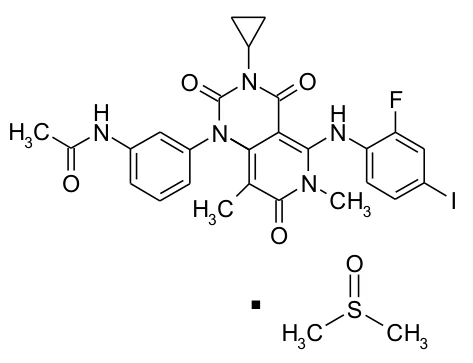
14 Clinical Trials
14.1 Clinical Trials by Indication
Unresectable or Metastatic Melanoma – MEKINIST Monotherapy
Table 22 Summary of Patient Demographics for Clinical trials in Unresectable or Metastatic Melanoma - MEKINIST Monotherapy
| Study # | Study design | Dosage, route of administration and duration | Study subjects (n) | Mean age (Range) | Sex n (%) |
|---|---|---|---|---|---|
| MEK114267 | Phase III randomized (2:1), multi-centre, international, open label, efficacy and safety study comparing MEKINIST monotherapy to chemotherapy in patients with unresectable or metastatic BRAF V600E or V600K mutation-positive cutaneous melanoma. | MEKINIST 2 mg orally once daily or chemotherapy (dacarbazine 1000 mg/m2 every 3 weeks or paclitaxel 175 mg/m2 every 3 weeks). Treatment for all patients continued until disease progression, death or withdrawal. | MEKINIST (N = 214) | Age (years) Median (Min-Max) 54.5 (23-85) Age Group, n (%) < 65: 165 (77) > 65: 49 (23) | Female 94 (44) Male 120 (56) |
| Chemotherapya (N = 108) | Age (years) Median (Min-Max) 54.0 (21-77) Age Group, n (%) < 65: 86 (80) > 65: 22 (20) | Female 55 (51) Male 53 (49) | |||
| Total (N = 322) | Age (years) Median (Min-Max) 54.0 (21–85) Age Group, n (%) < 65: 251 (78) > 65: 71 (22) | Female 149 (46) Male 173 (54) |
a Chemotherapy included patients on dacarbazine (DTIC) 1,000 mg/m2 every 3 weeks or paclitaxel 175 mg/m2 every 3 weeks.
The efficacy and safety of MEKINIST monotherapy were evaluated in a phase III randomized, multi-centre, international, open label study comparing MEKINIST to chemotherapy in patients with unresectable or metastatic BRAF V600E or V600K mutation-positive cutaneous melanoma (Table 22).
Patients may have received up to one prior chemotherapy in unresectable or metastatic setting. Patients previously treated with a BRAF or MEK inhibitor were excluded. Patients were randomized 2:1 to receive MEKINIST 2 mg once daily or chemotherapy (dacarbazine 1000 mg/m2 every 3 weeks or paclitaxel 175 mg/m2 every 3 weeks). Treatment for all patients continued until disease progression, death or withdrawal. Patients in the chemotherapy arm were allowed to cross-over to MEKINIST therapy after independent confirmation of progression.
The Intent to Treat (ITT) population included all randomized patients with BRAF V600E, or V600K mutation-positive unresectable or metastatic melanoma with or without a prior history of brain metastases.
The primary efficacy population included patients with unresectable or metastatic BRAF V600E mutation-positive cutaneous melanoma without a prior history of brain metastases. The primary efficacy endpoint was progression-free survival (PFS). The secondary endpoints included PFS in the ITT population as well as overall survival (OS), overall response rate (ORR), and duration of response (DoR) in the primary efficacy and ITT populations.
Study demographics and baseline characteristics were balanced between treatment groups in the primary efficacy population and the ITT population (Table 23).
Table 23 Summary of Patient Baseline Characteristics in Pivotal Clinical Trial of MEKINIST (ITT Population) – Study MEK114267
| MEKINIST (N = 214) | Chemotherapy (N = 108) | Total (N = 322) | |||||||
|---|---|---|---|---|---|---|---|---|---|
Baseline lactate dehydrogenase, n (%) ≤ULN | 134 (63) | 66 (61) | 200 (62) | ||||||
| >ULN | 77 (36) | 42 (39) | 119 (37) | ||||||
| Unknown | 3 (1) | 0 | 3 (<1) | ||||||
Any prior therapy, n (%) No | 14 (7) | 7 (6) | 31 (10) | ||||||
| Yes | 200 (93) | 101 (94) | 291 (90) | ||||||
Prior chemotherapy in unresectable or metastatic setting, n (%) No | 143 (67) | 70 (65) | 213 (66) | ||||||
| Yes | 71 (33) | 38 (35) | 109 (34) | ||||||
Prior immunotherapy, n (%)b No | 146 (68) | 78 (72) | 224 (70) | ||||||
| Yes | 68 (32) | 30 (28) | 98 (30) | ||||||
Prior biologic therapy, n (%) No | 198 (93) | 95 (88) | 293 (91) | ||||||
| Yes | 16 (7) | 13 (12) | 29 (9) | ||||||
ECOG PS at Baseline, n (%) ECOG 0 | 136 (64) | 69 (64) | 205 (64) | ||||||
| ECOG 1 | 78 (36) | 39 (36) | 117 (36) | ||||||
Stage at screening, n (%) IIIC, IV M1a, or IV M1b | 69 (32) | 45 (42) | 114 (35) | ||||||
| IV M1c | 144 (67) | 63 (58) | 207 (64) | ||||||
| Unknown | 1 (<1) | 0 | 1 (<1) | ||||||
Number of disease sites at Baseline, n (%) ≥3 sites | 123 (57) | 56 (52) | 179 (56) | ||||||
| <3 sites | 91 (43) | 52 (48) | 143 (44) | ||||||
BRAF mutation status, n (%) V600E | 184 (86) | 97 (90) | 281 (87) | ||||||
| V600K | 29 (14) | 11 (10) | 40 (12) | ||||||
| V600E/V600K | 1 (<1) | 0 | 1 (<1) | ||||||
History of brain metastases, n (%) No | 205 (96) | 106 (98) | 311 (97) | ||||||
| Yes | 9 (4) | 2 (2) | 11 (3) | ||||||
Abbreviations: ECOG = Eastern Cooperative Oncology Group; PS = performance status; ULN = upper limit of normal b The majority of patients received adjuvant interferon. Patients were not permitted ipilimumab in the unresectable or metastatic setting. | |||||||||
Efficacy results are presented in Table 24 and Figure 1.
Table 24 Results of Study MEK114267 in Unresectable or Metastatic Melanoma - MEKINIST Monotherapy
| Primary Endpoints | Associated value and statistical significance for MEKINIST | Associated value and statistical significance for Chemotherapya | ||||||||||||
|---|---|---|---|---|---|---|---|---|---|---|---|---|---|---|
| Primary Efficacy Population | (N = 178) | (N = 95) | ||||||||||||
| PFS | Number of events, n (%) Median, PFS (months) (95% CI) | 96 (54) 4.8 (3.5, 4.9) | Number of events, n (%) Median, PFS (months) (95% CI) | 68 (72) 1.4 (1.4, 2.7) | ||||||||||
Hazard Ratiob (95% CI) P valueb | 0.44 (0.31, 0.64) <0.0001 | |||||||||||||
| ITT Population | (N = 214) | (N = 108) | ||||||||||||
| PFS | Number of events, n (%) Median, PFS (months) (95% CI) | 118 (55) 4.8 (4.3, 4.9) | Number of events, n (%) Median, PFS (months) (95% CI) | 77 (71) 1.5 (1.4, 2.7) | ||||||||||
Hazard ratiob (95% CI) P valueb | 0.45 (0.33, 0.63) <0.0001 | |||||||||||||
OS Primary analysis: OSc | Died, n (%) | 35 (16) | Died, n (%) | 29 (27) | ||||||||||
Hazard Ratiob (95% CI) P valueb | 0.54 (0.32, 0.92) 0.014 | |||||||||||||
| OS censored at the time of crossover | Died, n (%) | 35 (16) | Died, n (%) | 15 (14) | ||||||||||
Hazard Ratiob (95% CI) P valueb | 0.59 (0.30, 1.18) 0.073 | |||||||||||||
| Updated OS | Died, n (%) | 137 (64) | Died, n (%) | 67 (62) | ||||||||||
Hazard Ratiob (95% CI) P valueb | 0.78 (0.57, 1.06) 0.091 | |||||||||||||
Median overall survival (months) (95% CI) | 15.6 (5.9, 9.2) | Median overall survival (months) (95% CI) | 11.3 (7.2, 14.8) | |||||||||||
| Overall Response | Best Response, n(%) CR, n (%) PR, n (%) ORR (CR+PR), (%) (95% CI) | 4 (2)d 43 (20) 22 (16.6, 28.1) | Best Response, n(%) CR, n (%) PR, n (%) ORR (CR+PR), (%) (95% CI) | 0 9 (8) 8 (3.9, 15.2) | ||||||||||
| Duration of Response | (N = 47) Median, months (95% CI) 5.5 (4.1, 5.9) | (N = 9) Median, months (95% CI) NR (5.0, NR) | ||||||||||||
ITT = Intent to treat; PFS = Progression-free survival; CI = Confidence interval; CR = Complete response; ORR = Overall response rate; PR = Partial response; NR = Not reached
a Chemotherapy included patients on dacarbazine (DTIC) 1000 mg/m2 every 3 weeks or paclitaxel 175 mg/m2 every 3 weeks.
b Hazard ratios are estimated using a Pike estimator. A hazard ratio < 1 indicates a lower risk with this treatment. Hazard Ratio and p-value from stratified log-rank test are adjusted for prior chemotherapy for unresectable or metastatic disease and baseline LDH.
c Fifty-one (47%) patients crossed over to receive MEKINIST following disease progression.
d The four patients were reported as 2 PR, 1 stable disease and 1 ‘not evaluable’ by the Independent Review Committee.
In the primary efficacy population, MEKINIST demonstrated a statistically significant improvement in investigator-assessed PFS (HR = 0.44; [95% CI: 0.31, 0.64], N = 273, P <0.0001) which represents a 56% reduction in the risk of tumour progression or death for patients treated with MEKINIST compared with those treated with chemotherapy. Comparable PFS results were observed in the ITT population (HR = 0.45; [95% CI: 0.33, 0.63], N = 322, P <0.0001; see below and Figure 1). Similar PFS results were seen based on an Independent Review Committee evaluation. At the time of the primary analysis, the median follow-up was 4.9 months for patients treated with MEKINIST and 4.8 months for those treated with chemotherapy.
At the time of primary analysis, OS data were not mature with 20% events reported in the ITT population and 51 (47%) patients in the chemotherapy arm had crossed over to receive MEKINIST after a confirmed disease progression. An updated analysis was conducted with 63% events (Table 24).
The investigator-assessed best confirmed ORR was 22% in the MEKINIST arm compared to 8% in the chemotherapy arm (see Table 24). However, in the MEKINIST treatment arm, the confirmed ORR was 10% in patients with BRAF V600K mutation compared to 24% in those with BRAF V600E mutation.
Treatment effect with MEKINIST was observed across all subgroups. However, in patients with BRAF V600K mutation, the investigator-assessed best confirmed ORR was 10% in the MEKINIST arm (n = 29) compared to 18% in the chemotherapy arm (n = 11).
Figure 1 Investigator-Assessed PFS (ITT population)
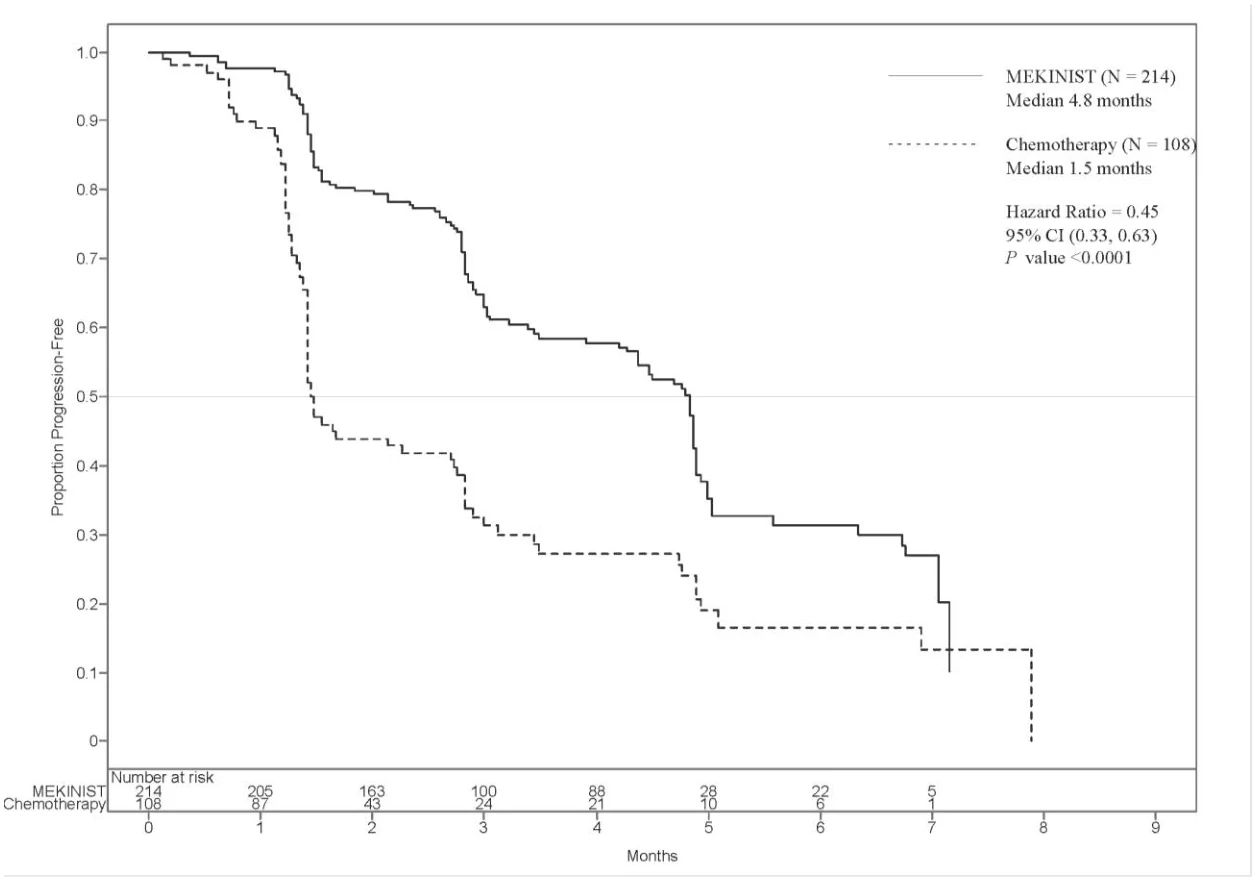
Lack of efficacy in patients previously treated with BRAF inhibitors
In a single-arm Phase II study, efficacy of MEKINIST monotherapy was evaluated in 40 patients with BRAF V600E or V600K mutation-positive unresectable or metastatic cutaneous melanoma who had received prior treatment with a BRAF inhibitor. At baseline, the median age was 58 (range: 23-76) years, 63% were male, 100% were Caucasian, 98% had ECOG performance status of 0 or 1. No patient achieved a confirmed complete or partial response after treatment with MEKINIST at 2 mg once daily (see 1 INDICATIONS and 7 General).
Unresectable or Metastatic Melanoma – MEKINIST in Combination with Dabrafenib
Table 25 Summary of Patient Demographics for Clinical Trials in Unresectable or Metastatic Melanoma - MEKINIST in Combination with Dabrafenib
| Study # | Study design | Dosage, route of administration and duration | Study subjects (n) | Mean age (Range) | Sex n (%) |
|---|---|---|---|---|---|
| MEK115306 | Phase III, randomized, double-blind study comparing the combination of MEKINIST and dabrafenib to dabrafenib and placebo as first-line therapy for subjects with unresectable (Stage IIIC) or metastatic (Stage IV) BRAF V600E/K mutation-positive cutaneous melanoma. | MEKINIST 2 mg orally once daily and dabrafenib 150 mg orally twice daily. | MEKINIST Dabrafenib (N = 211) | Age (years) Median (Min-Max) 55.1 (22, 89) Age Group, n (%) < 65: 154 (73) > 65: 57 (27) | Female 100 (47) Male 111 (53) |
Placebo Dabrafenib (N = 212) | Age (years) Median (Min-Max) 56.5 (22, 86) Age Group, n (%) < 65: 151 (71) > 65: 61 (29) | Female 98 (46) Male 114 (54) |
MEK115306 was a phase III, randomized, double-blind study comparing the combination of MEKINIST and dabrafenib to dabrafenib and placebo as first-line therapy for subjects with unresectable (Stage IIIC) or metastatic (Stage IV) BRAF V600E/K mutation-positive cutaneous melanoma (Table 25).
Screening for eligibility included central laboratory testing for BRAF V600 mutation using a BRAF mutation assay conducted on the most recent tumour sample available from either a primary tumour or a tumour from a metastatic site.
Patients were not allowed to have prior systemic anti-cancer treatment in the unresectable or metastatic setting, although prior systemic treatment in the adjuvant setting was allowed. The primary endpoint was investigator-assessed progression-free survival (PFS), which was to be assessed after 193 events (progression or death) were observed (Primary PFS Analysis); upon formal declaration of a data cut based on the 193 known events, an additional 18 progressions were discovered during the data retrieval and cleaning process. Secondary endpoints ORR and duration of response were reported at the time of this primary PFS analysis. The secondary endpoint OS analysis was to be performed when 220 events (death) had occurred (Final OS Analysis).
Patients were stratified by lactate dehydrogenase (LDH) level (above the upper limit of normal [ULN] versus ≤ULN) and BRAF mutation (V600E versus V600K). Crossover was not allowed.
Study demographics were balanced between treatment arms. Baseline disease characteristics and prognostic factors were well balanced between the treatment arms, with the exception of the occurrence of visceral disease, which was higher in the combination therapy arm compared with the dabrafenib monotherapy arm (Table 26).
Table 26 Baseline Characteristics - Study MEK115306
MEKINIST Dabrafenib (N = 211) | Placebo Dabrafenib (N = 212) | |
|---|---|---|
| ECOG PS at Baseline, n (%) | ||
| 0 | 155 (73) | 150 (71) |
| 1 | 55 (26) | 61 (29) |
| Baseline LDH, n (%) | ||
| ≤ULN | 133 (63) | 140 (66) |
| >ULN | 77 (36) | 71 (33) |
| Visceral Disease at Baseline, n (%) | ||
| Yes | 165 (78) | 145 (68) |
| No | 46 (22) | 66 (31) |
| BRAF Mutation Status, n (%) | ||
| V600E | 179 (85) | 181 (85) |
| V600Ka | 32 (15) | 30 (14) |
| (M stage) at Screening, n (%) | ||
| M0 | 5 (2) | 10 (5) |
| M1a | 19 (9) | 31 (15) |
| M1b | 45 (21) | 32 (15) |
| M1c | 142 (67) | 138 (65) |
a One subject was both BRAF V600E and BRAF V600K mutation-positive and is included in the V600K subset in this display.
ECOG = Eastern Cooperative Oncology Group; PS = performance status
Efficacy results are presented in Table 27 and in Figure 2 and Figure 3.
Table 27 Results of Study MEK115306 in Unresectable or Metastatic Melanoma - MEKINIST in Combination with Dabrafenib
| Associated value and statistical significance for MEKINIST + dabrafenib | Associated value and statistical significance for dabrafenib + Placebo | ||||||||
|---|---|---|---|---|---|---|---|---|---|
| Primary Endpoints | |||||||||
| PFS | (N = 211) | (N = 212) | |||||||
| Primary Analysis* | |||||||||
Median, months (95% CI) 9.3 (7.7, 11.1) | Median, months (95% CI) 8.8 (5.9, 10.9) | ||||||||
HR (95% CI) and log-rank p-valuea 0.75 (0.57, 0.99) p = 0.035 | |||||||||
| Updated Analysis* | |||||||||
Median, months (95% CI) 11.0 (8.0, 13.9) | Median, months (95% CI) 8.8 (5.9, 9.3) | ||||||||
| HR (95% CI) and log-rank p-valuea | |||||||||
0.67 (0.53, 0.84) p < 0.001 | |||||||||
| Secondary endpoints | |||||||||
| ORRd | N = 210 | N = 210 | |||||||
| Primary Analysis* | |||||||||
CR, n (%) PR, n (%) ORR (CR+PR), n (%) (95% CI) | 22 (10) 118 (56) 140 (67) (59.9, 73.0) | CR, n (%) PR, n (%) ORR (CR+PR), n (%) (95% CI) | 18 (9) 90 (43) 108 (51) (44.5, 58.4) | ||||||
| Updated Analysis* | |||||||||
CR, n (%) PR, n (%) ORR (CR+PR), n (%) (95% CI) | 33 (16) 111 (53) 144 (69) (61.8, 74.8) | CR, n (%) PR, n (%) ORR (CR+PR), n (%) (95% CI) | 28 (13) 84 (40) 112 (53) (46.3, 60.2) | ||||||
| Duration of Response | Primary Analysis* | ||||||||
Median, months (95% CI) N = 140 9.2 (7.4, NR) | Median, months (95% CI) N = 109 10.2 (7.5, NR) | ||||||||
| Updated Analysis* | |||||||||
Median, months (95% CI) N = 144 12.9 (9.4, 19.5) | Median, months (95% CI) N = 113 10.6 (9.1, 13.8) | ||||||||
| OS | (N = 211) | (N = 212) | |||||||
| Interim Analysis | |||||||||
Died (%) 40 (19) | Died (%) 55 (26) | ||||||||
HR (CI) and log-rank p-valuea 0.63 (0.30, 1.32)b | |||||||||
Median, months (95% CI) NR | |||||||||
| Final Analysis | |||||||||
Died (%) 99 (47) | Died (%) 123 (58) | ||||||||
HR (CI) and log-rank p-valuea 0.71 (0.55, 0.92)c p = 0.011 | |||||||||
Median, months (95% CI) 25.1 (19.2, NR) | Median, months (95% CI) 18.7 (15.2, 23.7) | ||||||||
*Primary analysis data cut: 26 August 2013, Final OS data cut: 12 January 2015
PFS = Progression-Free Survival; CI = Confidence Interval; HR = Hazard Ratio; CR = Complete Response; ORR = Overall Response Rate; PR = Partial Response; NR = Not Reached
a Hazard ratio and log-rank p-value are adjusted for randomized strata: baseline LDH and BRAF mutation status
b The stopping boundary for overall survival (one-sided alpha) for this interim analysis is based on the available information (95 events), and is 0.00014. Confidence interval is based on the allocated alpha. The results were not statistically significant.
c 95% CI
d Includes only patients with measurable disease at baseline
Treatment with the combination therapy resulted in a statistically significant improvement in investigator-assessed PFS compared with dabrafenib monotherapy treatment (HR 0.75; 95% CI: 0.57, 0.99; p = 0.035). This represents a 25% reduction in risk of tumour progression or death in the combination therapy arm compared with dabrafenib monotherapy. Median PFS for the combination therapy arm was 9.3 months compared with 8.8 months for the dabrafenib monotherapy arm. Independent reviewer assessed PFS results were not statistically significant (HR 0.78; 95% CI: 0.59, 1.04). The secondary endpoint of investigator assessed best-confirmed ORR favoured the combination therapy over dabrafenib monotherapy.
Figure 2 Kaplan-Meier Curves for PFS Primary Analysis (ITT Population) - Study MEK115306
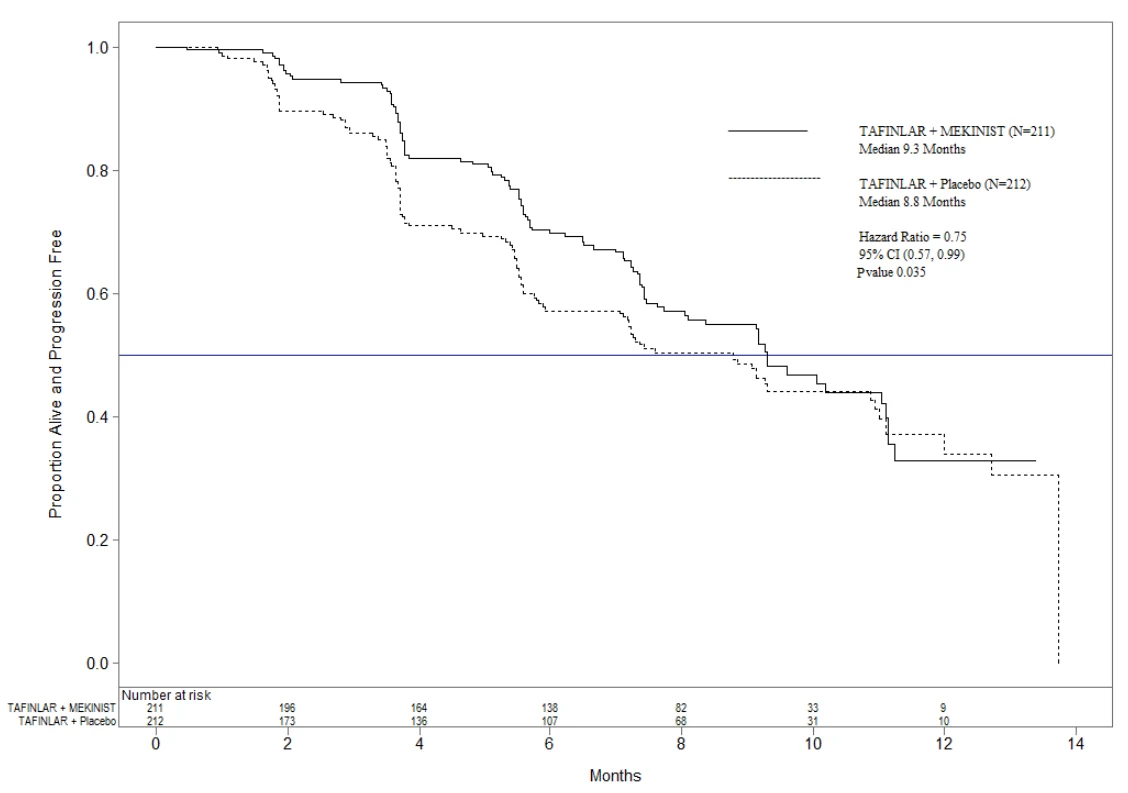
Figure 2 Kaplan-Meier Curves for Final OS (ITT population) - Study MEK115306
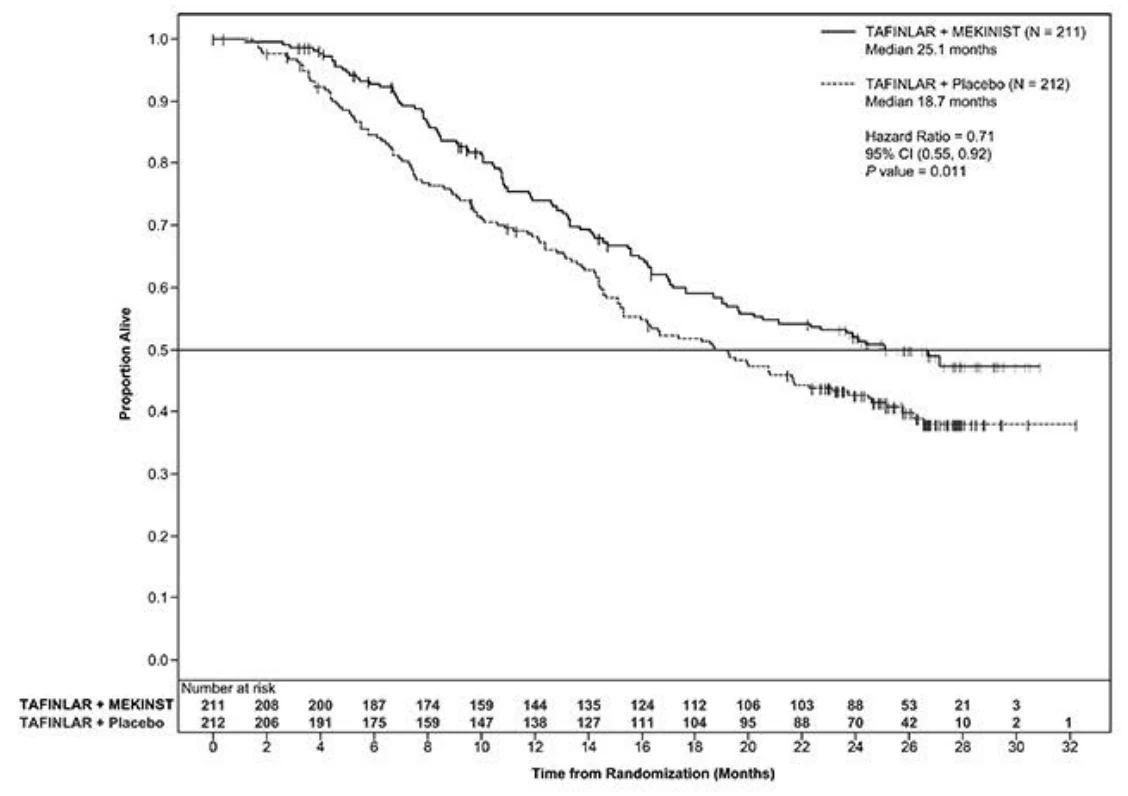
The OS analysis at 5 years shows an estimated survival rate of 32% for the combination of MEKINIST and dabrafenib versus 27% for dabrafenib monotherapy (HR 0.80, 95 % CI 0.63-1.01); the median OS for the combination arm was 25.8 months compared to 18.7 months for dabrafenib monotherapy.
Adjuvant Treatment of Melanoma – MEKINIST in Combination with Dabrafenib
Table 28 Summary of Patient Demographics for Clinical Trials in Adjuvant Treatment of Melanoma - MEKINIST in Combination with Dabrafenib
| Study # | Study design | Dosage, route of administration and duration | Study subjects (n) | Mean age (Range) | Sex n (%) |
|---|---|---|---|---|---|
BRF115532 Phase III Pivotal Study | Phase III, multi-centre, randomized (1:1), double-blind, placebo-controlled study of MEKINIST in combination with dabrafenib in the adjuvant treatment of patients with Stage III | MEKINIST 2 mg orally once daily and dabrafenib 150 mg orally twice daily or two placebos for 12 months. | MEKINIST + Dabrafenib (N = 438) | Age (years) Median (Min-Max) 50.0 (18,89) Age Group, n (%) < 65: 353 (81) > 65: 85 (19) | Female 195 (45%) Male 243 (55%) |
| melanoma with a BRAF V600 mutation, following resection. | 51.0 (20,85) Age Group, n (%) < 65: 359 (83) > 65: 73 (17) | Male 239 (55%) | |||
Placebo (N = 432) | Age (years) Median (Min-Max) | Female 193 (45%) | |||
The efficacy and safety of MEKINIST in combination with dabrafenib in the adjuvant treatment of patients with Stage III melanoma with a BRAF V600 mutation, following resection was studied in a phase III, multi-centre, randomized, double-blind, placebo-controlled study (BRF115532). Screening for the study included central laboratory testing of BRAF mutation (V600E or V600K) using a BRAF mutation assay conducted at baseline (Table 28).
Patients were randomized 1:1 to receive either dabrafenib and trametinib combination therapy (MEKINIST 2 mg once daily and dabrafenib 150 mg twice daily) or two placebos for a period of 12 months. Enrolment required complete resection of melanoma with complete lymphadenectomy within 12 weeks prior to randomization. Any prior systemic anticancer treatment, including radiotherapy, was not allowed. Patients with a history of prior malignancy, if disease-free for at least 5 years, were eligible. Patients presenting with malignancies with confirmed activating RAS mutations were not eligible. Patients were stratified by BRAF mutation status (V600E or V600K) and stage of disease prior to surgery (by Stage III sub-stage, indicating different levels of lymph node involvement and primary tumour size and ulceration). The primary endpoint was investigator-assessed relapse-free survival (RFS), defined as the time from randomization to disease recurrence or death from any cause. Radiological tumour assessment was conducted every 3 months for the first two years and every 6 months thereafter, until first relapse was observed. The key secondary endpoint was overall survival (OS). The median duration of follow-up (time from randomization to last contact or death) was 2.83 years in the dabrafenib and trametinib combination arm and 2.75 years in the placebo arm.
The baseline characteristics of the patients were well balanced in the two groups. In both groups, 91% had a BRAF V600E mutation and 9% had a BRAF V600K mutation (Table 29).
Table 29 Demographic and Baseline Characteristics - Study BRF115532
MEKINIST + Dabrafenib (N = 438) | Placebo (N = 432) | |||||
|---|---|---|---|---|---|---|
Race, n (%) White Asian | 432 (99%) 6 (1%) | 427 (99%) 5 (1%) | ||||
Primary Tumour Type Melanoma | 438 (100%) | 432 (100%) | ||||
Time Since Initial Diagnosis (months) 1st Quartile Median 3rd Quartile Min. – Max. | 4 5.0 19 1 - 306 | 4 6.0 20 0 - 351 | ||||
Stage at Screening* IIIA IIIB IIIC Unknown | 83 (19%) 169 (39%) 181 (41%) 5 (1%) | 71 (16%) 187 (43%) 166 (38%) 8 (2%) | ||||
Primary Tumour Ulceration Yes No Missing | 179 (41%) 253 (58%) 6 (1%) | 177 (41%) 249 (58%) 6 (1%) | ||||
In-transit Disease Yes No Missing | 51 (12%) 387 (88%) 0 | 36 (8%) 395 (91%) 1 (˂1%) | ||||
| BRAF Mutation Status, n (%) | ||||||
| V600E | 400 (91%) | 395 (91%) | ||||
| V600K | 38 (9%) | 37 (9%) | ||||
| * Per the American Joint Committee on Cancer (AJCC) – Melanoma of the Skin Staging – 7th Edition | ||||||
Results for the primary analysis of RFS are presented in Figure 4 and in Table 30 below.
Table 30 Results of Study BRF115532 in Adjuvant Treatment of Melanoma –
MEKINIST in Combination with Dabrafenib
| Primary Endpoints | Associated value and statistical significance for MEKINIST + Dabrafenib (N = 438) | Associated value and statistical significance for Placebo (N = 432) | |||||
|---|---|---|---|---|---|---|---|
| RFS | Number of events, n (%) Recurrence Relapsed with distant metastasis Death | 166 (38%) 163 (37%) 103 (24%) 3 (<1%) | Number of events, n (%) Recurrence Relapsed with distant metastasis Death | 248 (57%) 247 (57%) 133 (31%) 1 (<1%) | |||
Median (months) (95% CI) | NE (44.5, NE) | Median (months) (95% CI) | 16.6 (12.7, 22.1) | ||||
Hazard ratio[1] (95% CI) p-value[2] | 0.47 (0.39, 0.58) 1.53×10⁻¹⁴ | ||||||
1-year rate (95% CI) | 0.88 (0.85, 0.91) | 1-year rate (95% CI) | 0.56 (0.51, 0.61) | ||||
2-year rate (95% CI) | 0.67 (0.63, 0.72) | 2-year rate (95% CI) | 0.44 (0.40, 0.49) | ||||
| 3-year rate (95% CI) | 0.58 (0.54, 0.64) | 3-year rate (95% CI) | 0.39 (0.35, 0.44) | ||||
| OS | Hazard ratio[1] 0.57 | ||||||
(95% CI) (0.42, 0.79) | |||||||
[1] Hazard ratio is obtained from the stratified Pike model.
[2] P-value is obtained from the two-sided stratified log-rank test (stratification factors were disease stage – IIIA vs. IIIB vs. IIIC – and BRAF V600 mutation type – V600E vs. V600K)
NE = not estimable
The study showed a statistically significant difference for the primary outcome of RFS between treatment arms, with an estimated 53% risk reduction in the dabrafenib and trametinib combination arm compared to the placebo arm (HR=0.47; 95% CI: 0.39, 0.58; p=1.53×10⁻¹⁴). Results were consistent across subgroups, including stratification factors for disease stage and BRAF V600 mutation type. Median RFS was 16.6 months for the placebo arm, and has not yet been reached for the combination arm.
Figure 4 Relapse-free survival Kaplan-Meier curves (ITT population) - Study BRF115532
Based on 153 events (60 (14%) in the combination arm and 93 (22%) in the placebo arm) corresponding to a 26% information fraction of the total target of 597 OS events, the estimated hazard ratio for OS was 0.57 (95% CI: 0.42, 0.79), which was not statistically significant. The overall survival data were not mature at the time of the study’s primary efficacy analysis.
Metastatic Non-Small Cell Lung Cancer (NSCLC) – MEKINIST in Combination with Dabrafenib
Table 31 Summary of Patient Demographics for Clinical Trials in Metastatic Non-Small Cell Lung Cancer (NSCLC) – MEKINIST in Combination with Dabrafenib
| Study # | Study design | Dosage, route of administration and duration | Study subjects (n) | Mean age (Range) | Sex n (%) |
|---|
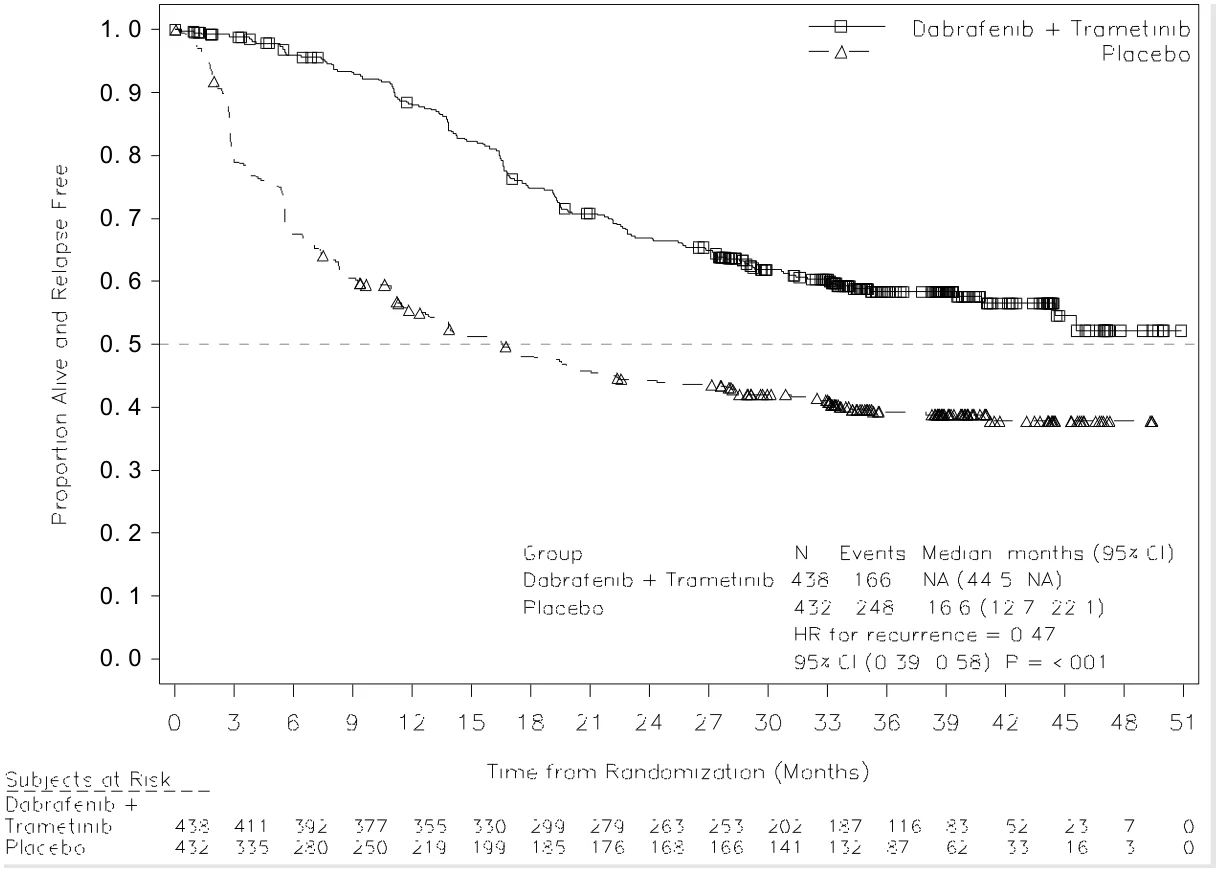
| BRF113928 | Phase II, multi-centre, non-randomized, open-label study of MEKINIST in combination with dabrafenib in the treatment of patients with metastatic non-small cell lung cancer (NSCLC) with a BRAF V600E mutation. | MEKINIST 2 mg orally once daily and dabrafenib 150 mg orally twice daily. | Previously treated MEKINIST + Dabrafenib (N = 57) | Age (years) Median (Min-Max) 64 (41, 88) Age Group, n (%) < 65: 29 (51) > 65: 28 (49) | Female 28 (49) Male 29 (51) |
|---|---|---|---|---|---|
Treatment-naïve MEKINIST + Dabrafenib (N = 36) | Age (years) Median (Min-Max) 67 (44, 91) Age Group, n (%) < 65: 14 (39) > 65: 22 (61) | Female 22 (61) Male 14 (39) |
The efficacy and safety of MEKINIST in combination with dabrafenib in the treatment of patients with metastatic non-small cell lung cancer (NSCLC) with a BRAF V600E mutation has been evaluated in the phase II multi-centre, international clinical study BRF113928. Screening for the study included local laboratory testing of BRAF V600E mutation conducted on tumour samples available mostly from the primary tumour (Table 31).
The study enrolled 93 patients; 57 patients whose disease progressed following 1 to 3 previous systemic treatments and 36 patients who received the study medication as first-line treatment for metastatic disease. All patients received MEKINIST 2 mg once daily and dabrafenib 150 mg twice daily.
The primary endpoint was the investigator-assessed ORR using the ‘Response Evaluation Criteria In Solid Tumors’ (RECIST), v1.1, and the secondary endpoint was Duration of Response (DoR); both were also assessed by an Independent Review Committee (IRC) as a sensitivity analysis. For those whose disease progressed following 1 to 3 previous systemic treatments, the null hypothesis was that the ORR is less than or equal to 30%. The alternative hypothesis was that the ORR is higher than or equal to 55%. For those who received the study medication as first line treatment for metastatic disease, the null hypothesis was that the ORR is less than or equal to 30%. The alternative hypothesis was that the ORR is higher than or equal to 60%.
Baseline characteristics are listed in Table 32.
Table 32 Demographic and Baseline Characteristics - Study BRF113928
Previously treated MEKINIST + Dabrafenib (N = 57) | Treatment-naïve MEKINIST + Dabrafenib (N = 36) | |
|---|---|---|
Race, n (%) White | 49 (86) | 30 (83) |
Asian Black or African American Other | 4 (7) 2 (4) 2 (4) | 3 (8) 1 (3) 2 (6) |
| ECOG PS at Baseline, n (%) | ||
0 1 2 | 17 (30) 35 (61) 5 (9) | 13 (36) 22 (61) 1 (3) |
Histology, n (%) Squamous Non-squamous | 0 57 (100) | 1 (3)* 35 (37) |
| Smoking History, n (%) | ||
Never smoked Current smoker Former smoker | 16 (28) 6 (11) 35 (61) | 10 (28) 5 (14) 21 (58) |
Prior anti-cancer therapy for metastatic disease, n (%) 1 2 3 | 38 (67) 12 (21) 7 (12) | 0 (0) 0 (0) 0 (0) |
ECOG = Eastern Cooperative Oncology Group; PS = performance status
* 1 patient with adenosquamous carcinoma - predominately squamous histology. All histology was determined by local pathological report.
Efficacy results are presented in Table 33.
Table 33 Results of Study BRF113928 in Metastatic Non-Small Cell Lung Cancer (NSCLC) – MEKINIST in Combination with Dabrafenib
Associated value and statistical significance for Previously treated* (N = 57) | Associated value and statistical significance for Treatment-naïve* (N = 36) | ||||||||
|---|---|---|---|---|---|---|---|---|---|
| Primary Endpoints† | |||||||||
| Overall Response Rate (ORR) | Investigator- Assessed | IRC-Assessed | Investigator-Assessed | IRC-Assessed | |||||
ORR, % (95% CI) CR, n (%) PR, n (%) | 63.2 (49.3, 75.6) 2 (4) 34 (60) | 63.2 (49.3, 75.6) 0 36 (63) | 61.1 (43.5, 76.9) 2 (6) 20 (56) | 61.1 (43.5, 76.9) 1 (3) 21 (58) | |||||
| Secondary endpoints† | |||||||||
| Duration of response | Median, months (95% CI) | 9.0 (6.9, 18.3) | 9.0 (5.8, 17.6) | NE (8.3, NE) | NE (6.9, NE) | ||||
* Primary analysis data cut-off dates: 07 October 2015 (previously treated), 08 August 2016 (treatment-naïve)
† CI = Confidence interval; CR = Complete response; IRC = Independent review committee; NE = Not evaluable; PR = Partial response
The ORR in the previously treated combination therapy population was 63.2% (95% CI, 49.3, 75.6) by investigator assessment and median DoR was 9.0 months (95% CI: 6.9, 18.3). The median duration of treatment was 10.6 months. The ORR in the treatment-naïve population was 61.1% (95% CI, 43.5, 76.9) and median DoR was not reached. The median duration of treatment was 8.21 months. The IRC-assessed efficacy results were consistent with the investigator assessments (Table 33).
Low-grade Glioma (LGG) and High-grade Glioma (HGG) - MEKINIST in Combination with Dabrafenib
The clinical efficacy and safety of MEKINIST plus dabrafenib combination therapy in pediatric patients aged 1 to <18 years of age with BRAF V600E mutation-positive glioma was evaluated in the multi-centre, open-label, Phase II clinical trial CDRB436G2201 (Study G2201). Study G2201 included a cohort of patients with low-grade glioma and a cohort of patients with high-grade glioma.
The study enrolled male and female patients with a Karnofsky/Lansky performance score of at least 50; adequate bone marrow, renal, liver and cardiac function; and without history or evidence of cardiovascular risk including LVEF below the institutional LLN. Patients with a history of retinal vein occlusion were excluded.
In both cohorts, MEKINIST and dabrafenib dosing was age- and weight-dependent, with dabrafenib (either as capsules or tablet for oral suspension) dosed orally at 2.625 mg/kg twice daily for ages <12 years and 2.25 mg/kg twice daily for ages 12 years and older. MEKINIST (tablets or powder for oral solution) was dosed orally at 0.032 mg/kg once daily for ages <6 years and 0.025 mg/kg once daily for ages 6 years and older. Dabrafenib doses were capped at 150 mg twice daily and MEKINIST doses at 2 mg once daily until disease progression or intolerable toxicity. In the control arm of the LGG cohort, carboplatin and vincristine were dosed based on age and body surface area at doses 175 mg/m2 and 1.5 mg/m2, respectively, as one 10-week induction course followed by eight 6-week cycles of maintenance therapy. The HGG cohort used a single-arm design.
BRAF mutation status was identified prospectively via a local test, or a central laboratory real-time polymerase chain reaction (PCR) test when a local test was not available. In addition, retrospective testing of available tumour samples by the central laboratory was performed to evaluate BRAF V600E mutation status.
LGG Cohort
In Study G2201, patients with BRAF V600E mutation-positive low-grade glioma (WHO grades 1 and 2) who required first systemic therapy following prior surgery or who were not surgical candidates were randomized in a 2:1 ratio to MEKINIST plus dabrafenib or carboplatin plus vincristine (Table 34). Participants in the carboplatin + vincristine arm could cross-over to receive the targeted MEKINIST plus dabrafenib combination treatment upon centrally-confirmed disease progression.
Table 34 Summary of Patient Demographics for Clinical Trials in Pediatric Patients with LGG
| Study # | Study design | Dosage, route of administration and duration | Study subjects (n) | Median age (Range) | Sex n (%) |
|---|---|---|---|---|---|
DRB436G2201 (Study G2201) Phase II Pivotal Study, Low-grade Glioma (LGG) cohort | Phase II multi-centre, randomized, open-label study of MEKINIST in combination with dabrafenib versus carboplatin in combination with vincristine in children and adolescent patients with BRAF V600E mutation-positive LGG following surgical excision, or non-surgical candidates with necessity to begin first systemic therapy. | MEKINIST and dabrafenib dosing was age- and weight- dependent. Oral | MEKINIST + Dabrafenib (N = 73) | ||
Median Age (years) (Min-Max) 10.0 (1,17) Age Group, n (%) 12 months - < 6 years: 20 (27.4) 6 - <12 years: 25 (34.2) 12 - <18 years: 28 (38.4) | Female 44 (60.3) Male 29 (39.7) | ||||
Carboplatin and vincristine dosing was based on age and body surface area Intravenous | Carboplatin + Vincristine (N=37) | Median Age (years) (Min-Max) 8.0 (1,17) Age Group, n (%) 12 months - < 6 years: 14 (37.8) 6 - <12 years: 11 (29.7) 12 - <18 years: 12 (32.4) | Female 22 (59.5) Male 15 (40.5) |
Demographic and Baseline Characteristics - Study DRB436G2201 - LGG Cohort:
For patients enrolled in the LGG cohort of Study G2201, 73% were White, 9% were race unknown, 7% were Asian, 5% were Black or African American, and 3% were race not reported. The median time since initial diagnosis of primary site to study entry was 3.5 months. The predominant tumour histologies were pilocytic astrocytoma (31%), ganglioma (27%), and LGG not otherwise specified (NOS; 18%). The majority of patients (85% in D+T arm vs. 78% in C+V arm) had prior surgery, and only 2 patients (2%) did not have residual disease. None of the patients underwent prior radiotherapy.
The primary efficacy endpoint was Overall Response Rate (ORR, sum of confirmed complete/CR and partial responses/PR) by Independent review based on RANO 2017 criteria. The primary analysis was performed when all patients had completed at least 32 weeks of therapy. Progression-free survival (PFS) was evaluated as a key secondary endpoint. The final analysis was performed 2 years after completion of enrollment in both cohorts.
Efficacy results of the LGG cohort are presented in Table 35 and Figure 5. The ORR in the targeted therapy (MEKINIST plus dabrafenib) arm (46.6%) showed a statistically significant improvement over the chemotherapy (carboplatin plus vincristine) arm (10.8%), with an odds ratio of 7.19 and 1-sided p-value <0.001 (Table 35).
Table 35 Results of Study G2201 in Pediatric Patients with LGG
Dabrafenib + Trametinib N=73 | Carboplatin + Vincristine N=37 | ||||||||||||||||
|---|---|---|---|---|---|---|---|---|---|---|---|---|---|---|---|---|---|
| Primary Analysis | |||||||||||||||||
| Overall Response Rate | |||||||||||||||||
| ORRa (95% CI), p-value | 47% (34.8, 58.6), p<0.001 | 11% (3.0, 25.4) | |||||||||||||||
| Odds ratio (95% CI) | 7.19 (2.3, 22.4) | ||||||||||||||||
| Best overall response | |||||||||||||||||
| Complete response (CR), n (%) | 2 (2.7) | 1 (2.7) | |||||||||||||||
| Partial response (PR), n (%) | 32 (43.8) | 3 (8.1) | |||||||||||||||
| Progression-Free Survival | |||||||||||||||||
| Median (months) | 20.1 (12.8, NE) | 7.4 (3.6, 11.8) | |||||||||||||||
| Hazard ratiob (95% CI), p-value | 0.31 (0.17, 0.55), p<0.001 | ||||||||||||||||
| Final Analysis | |||||||||||||||||
| Overall Response Rate | |||||||||||||||||
| ORRa (95% CI) | 55% (42.7, 66.5) | 16% (6.2, 32.0) | |||||||||||||||
| Odds ratio (95% CI) | 6.26 (2.3, 16.8) | ||||||||||||||||
| Best overall response | |||||||||||||||||
| Complete response (CR), n (%) | 2 (2.7) | 1 (2.7) | |||||||||||||||
| Partial response (PR), n (%) | 38 (52.1) | 5 (13.5) | |||||||||||||||
| Progression-Free Survival | |||||||||||||||||
| Median (months) | 24.9 (12.9, 31.6) | 7.2 (2.8, 11.2) | |||||||||||||||
| Hazard ratiob (95% CI) | 0.36 (0.22, 0.59) | ||||||||||||||||
a Consisting of complete and partial responses; b Estimated using a Cox proportional hazards model
Figure 5 Kaplan-Meier PFS Curves for Study G2201 (LGG cohort, final analysis)
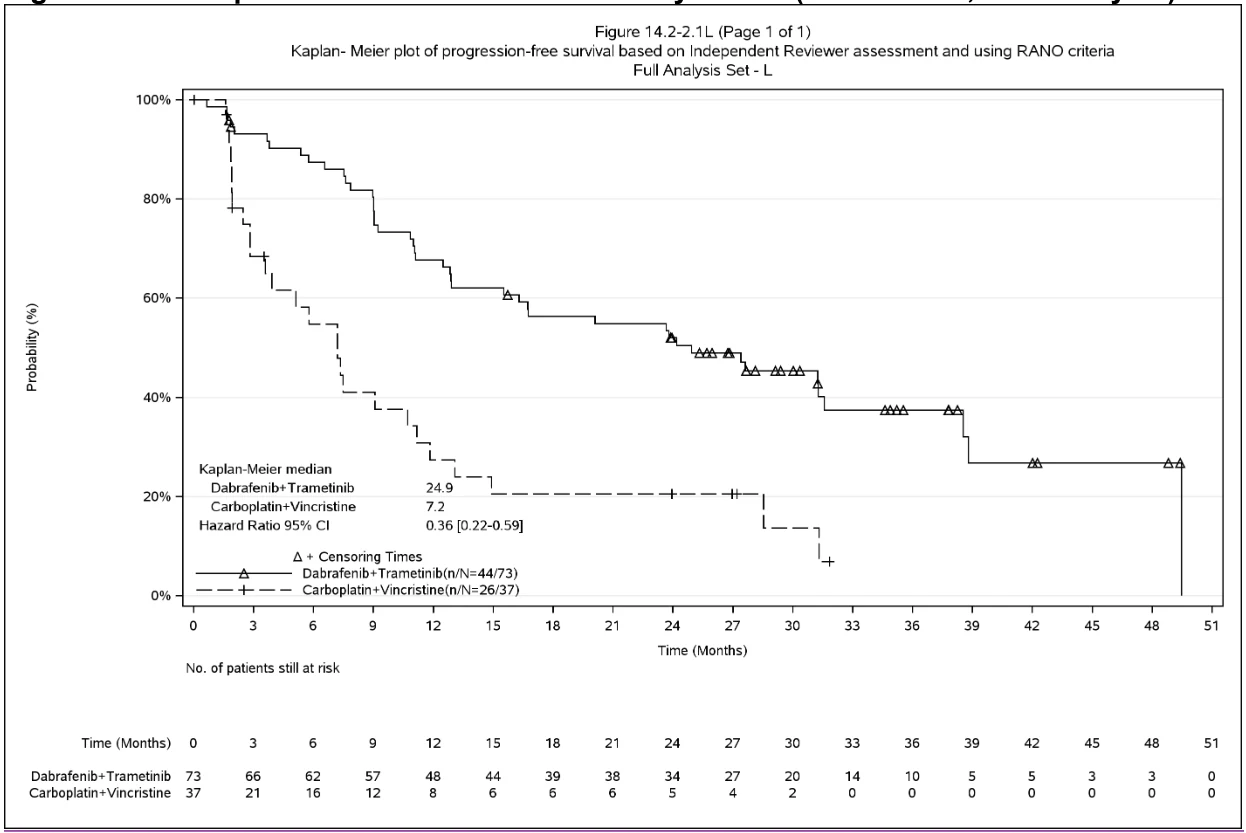
At the time of the interim analysis of overall survival (OS), conducted when all patients had completed at least 32 weeks of treatment or had discontinued earlier, there was one death in the C+V arm. The OS results at primary analysis did not reach statistical significance (p=0.065).
For the nine patients who crossed over to targeted MEKINIST plus dabrafenib therapy following centrally-confirmed disease progression on chemotherapy (carboplatin plus vincristine), the ORR was 33.3% (95% CI: 7.5, 70.1) as assessed by Independent review.
HGG Cohort
The single-arm high-grade glioma cohort of Study G2201 included 41 patients who relapsed, progressed, or failed to respond to front-line therapy (optimal surgical approach with radiation or chemotherapy) (Table 36).
Table 36 Summary of Patient Demographics for Clinical Trials in Pediatric Patients with HGG
| Study # | Study design | Dosage, route of administration and duration | Study subjects (n) | Median age (Range) | Sex n (%) |
|---|---|---|---|---|---|
DRB436G2201 (Study G2201) Phase II Pivotal Study, High-grade Glioma (HGG) cohort | Phase II multi-centre, open-label single-arm study of MEKINIST in combination with dabrafenib in children and adolescent patients with BRAF V600E mutation-positive HGG who had relapsed, progressed, or failed to respond to front-line therapy. | MEKINIST and dabrafenib dosing was age- and weight- dependent. Oral | MEKINIST +Dabrafenib (N = 41) | Median Age (years) (Min-Max) 13.0 (2,17) Age Group, n (%) 12 months - < 6 years: 5 (12.2) 6 - <12 years: 10 (24.4) 12 - <18 years: 26 (63.4) | Female 23 (56.1) Male 18 (43.9) |
Demographic and Baseline Characteristics - StudyG2201 - HGG Cohort:
For patients enrolled in the HGG cohort of Study G2201, 61% were White, 27% were Asian, 7% were race unknown, 2% were Black or African American, and 2% were race not reported. The median time since initial diagnosis of primary site to study entry was 17.4 months. The predominant tumour histologies were pleomorphic xanthoastrocytoma with anaplasia (29%) and diffuse midline glioma (10%). All patients had received at least one form of prior antineoplastic therapy. All patients except one (98%) had prior surgery, with the majority of patients (61%) having residual disease. In total, 90% of patients underwent prior radiotherapy, mostly in the adjuvant setting (49%), and 81% of patients had received chemotherapy, mostly in the adjuvant setting (51%).
The primary efficacy endpoint was ORR (sum of confirmed CR and PR) by Independent review based on RANO 2010 criteria. The primary analysis was performed when all patients had completed at least 32 weeks of therapy.
Efficacy results for the HGG cohort are presented in Table 37:
Table 37 Results of Study G2201 in Pediatric Patients with HGG
| Dabrafenib + Trametinib | ||||||||
|---|---|---|---|---|---|---|---|---|
| N=41 | ||||||||
| Primary Analysis | ||||||||
| Best overall response | ||||||||
| Complete Response (CR), n (%) | 12 (29.3) | |||||||
| Partial Response (PR), n (%) | 11 (26.8) | |||||||
| ORRa % (95% CI) | 56.1 (39.7, 71.5) | |||||||
| Duration of response (DoR) | ||||||||
| Kaplan-Meier median (95% CI) | 22.2 (7.6, NE) | |||||||
| DoR ≥6 months (%) | 78 | |||||||
| DoR ≥12 months (%) | 48 | |||||||
| DoR ≥24 months (%) | 22 | |||||||
| Final Analysis | ||||||||
| Best overall response | ||||||||
| Complete Response (CR), n (%) | 14 (34.1) | |||||||
| Partial Response (PR), n (%) | 9 (22.0) | |||||||
| ORRa % (95% CI) | 56.1 (39.7, 71.5) | |||||||
| Duration of response (DoR) | ||||||||
| Kaplan-Meier median (95% CI) | 27.4 (9.2, NE) | |||||||
| DoR ≥6 months (%) | 83 | |||||||
| DoR ≥12 months (%) | 57 | |||||||
| DoR ≥24 months (%) | 39 | |||||||
a Consisting of complete and partial responses
15 Microbiology
No biological information is required for this drug product.
16 Non-Clinical Toxicology
General Toxicology
Trametinib administration in non-clinical toxicology studies resulted in dose-dependent findings attributed primarily to its pharmacologic mechanism of action (inhibition of MAPK which leads to inhibition of cell proliferation in tissues with high proliferative rates including gastrointestinal, integument, and hematopoietic systems). These effects occurred in animals at systemic trametinib exposures generally below those achieved at the oral therapeutic dose of 2 mg/day in cancer patients (Cmax = 22.2 ng/mL; AUC = 370 ng.h/mL). Other findings included effects on phosphate homeostasis and soft tissue mineralization, liver, bone, ovary, and the developing embryo or foetus.
Skin lesions were seen in rats and dogs, but were more prevalent in rats where they included acanthosis, erosion, and ulceration as well as inflammatory responses in more severe cases.
Adverse gastrointestinal tract effects were observed in all repeated dose toxicology studies and were more common in dogs than rats. In both species, gastrointestinal-related clinical effects included reduced food consumption, body weight loss, and abnormal faeces. Microscopic findings in dogs included erosions and/or neutrophilic inflammation and were observed throughout the GI tract and were accompanied by lymphoid depletion in gut-associated lymphoid tissue (GALT). In rats, erosion and ulceration of stomach and cecum mucosal epithelium were seen in exploratory studies and erosion, inflammation, and hyperplasia of the glandular mucosa seen in the 13-week pivotal study.
Hematopoietic effects were seen in rats and dogs. Microscopic changes in rats included hematopoietic cell and lymphoid necrosis, bone marrow hypocellularity, and splenic necrosis in short term studies and hematopoietic cell necrosis in a 13-week study. In dogs, lymphoid depletion in GALT and thymus, bone marrow hypocellularity, and myeloid hyperplasia were seen in one or more studies. Total WBC count was frequently increased, due mainly to increased neutrophils, and likely related to the inflammatory lesions in the skin and gastrointestinal tract. Decreases in RBC parameters and reticulocyte count were seen in most of the rat studies and all dog studies.
Trametinib caused dose-dependent serum phosphatemia in rats and dogs and presumably the related soft tissue mineralization in rat tissues including stomach, kidney, heart, lung, aorta, cornea, and liver, that was shown to be due to calcium deposition. In the exploratory studies, myocardial necrosis, hepatocellular necrosis, renal cortical tubular degeneration, and alveolar/bronchiolar lesions and hemorrhage seen at non-tolerated doses were usually associated with tissue mineralization.
Thickening of the growth plate was observed in the long bones of rats with subepiphyseal infarcts/degeneration observed at higher doses. Serum and urine biomarkers indicated that both bone resorption (urinary deoxypyridinoline-to-creatinine ratio) and formation (serum cross-linked C-telopeptide of type 1 collagen, osteocalcin, tartrate-resistant acid phosphatase) occurred in rats in a 3-day investigative study.
In repeat-dose studies in rats, hepatocellular necrosis and transaminase elevations were seen after 8 weeks at ≥ 0.062 mg/kg/day (approximately 0.8 times human clinical exposure based on AUC). Mild aminotransferase and alkaline phosphatase increases at ≥ 0.03 mg/kg/day in dogs correlated with sinusoidal neutrophilia and Kupffer cell activation may have been related to gastrointestinal toxicity.
In mice, lower heart rate, heart weight and left ventricular function were observed without cardiac histopathology after 3 weeks at ≥ 0.25 mg/kg/day trametinib (approximately 3 times human clinical exposure based on AUC) for up to 3 weeks. In adult rats, myocardial mineralization and/or necrosis associated with increased serum phosphorus were seen ≥ 0.3 mg/kg/day.
Trametinib was phototoxic in an in vitro mouse fibroblast 3T3 Neutral Red Uptake (NRU) assay at significantly higher concentrations than clinical exposures (IC50 at 2.92 µg/mL, ≥ 130 times the clinical exposure based on Cmax).
Dogs given trametinib in combination with dabrafenib for 4 weeks demonstrated decreased serum albumin concentrations consistent with an acute phase response secondary to mild granulomatous changes in the stomach and mesenteric lymph node. Decreases in serum albumin have also been reported in patients receiving combination therapy as compared to those receiving dabrafenib monotherapy in the phase III combination study (see Table 14).
Dogs given trametinib in combination with dabrafenib for 4 weeks also demonstrated decreased lymphoid cellularity of the thymus at a lower dose than in a 3-week dog study in which single agent trametinib was administered.
Carcinogenicity
Carcinogenicity studies with trametinib have not been conducted. Trametinib was not genotoxic in studies evaluating reverse mutations in bacteria, mutagenicity and chromosomal aberrations in cultured mouse lymphoma cells, and micronuclei in the bone marrow of rats.
Reproductive and Developmental Toxicology
Fertility: No formal fertility studies were conducted. Trametinib may impair female fertility in humans. In adult rat repeat-dose studies with female rats given trametinib for up to 13 weeks, alterations in follicular maturation, consisting of increases in cystic follicles and decreases in corpora lutea, were observed at doses ≥ 0.016 mg/kg/day (approximately 0.3 times the human clinical exposure based on AUC). All of these effects were reversible following an off-treatment period and likely attributable to the pharmacology of trametinib. However, in adult rat and dog toxicity studies up to 13 weeks in duration, there were no treatment effects observed on male reproductive tissues; although systemic exposure to trametinib was at sub-therapeutic levels.
Pregnancy: In reproductive toxicity studies in rats, maternal and developmental toxicity (decreased foetal weights) were seen at ≥ 0.031 mg/kg/day (approximately 0.3 times human clinical exposure based on AUC). In pregnant rabbits, maternal toxicity and post-implantation loss, including total loss of pregnancy, and foetal toxicity, consisting mainly of incomplete ossification defects, occurred at ≥ 0.039 mg/kg/day (approximately 0.1 times human clinical exposure based on AUC) and a low incidence of skeletal malformations was seen at ≥ 0.077 mg/kg/day (approximately 1/6th the human therapeutic AUC).
Juvenile Toxicity
In a juvenile toxicity study, trametinib was administered orally to rats from postnatal day (PND) 7 until PND 45. The principal toxicities observed were on growth (reduced bodyweight gain and shorter long bone length). Adverse microscopic findings included changes in the bone (physeal thickening/degeneration, necrosis/increased resorption/chondrocyte retention in the primary spongiosa and physeal region widening) at all doses (≥ 0.3 times adult human clinical exposure based on AUC), mineralization and/or degeneration in various organs, primarily stomach at all doses and also eye (corneal mineralization/dystrophy), kidney, aortic arch and nasal cavity/sinuses; and changes in the skin (acanthosis, ulceration/erosion, and/or inflammation) and liver (necrosis) at ≥ 0.025/0.17 mg/kg (≥ 0.8 times adult human clinical exposure based on AUC). Soft tissue mineralization was associated with increased serum phosphorus.
Increased heart weight without microscopic changes was observed at 0.05/0.35 mg/kg/day (1.6 times adult human clinical exposure based on AUC).
Slight delays in hallmarks of female sexual maturation (vaginal opening and increased incidence of prominent terminal end buds within the mammary gland), accompanied by lower ovarian weights and lower numbers of corpora lutea, and slight hypertrophy of the surface epithelium of the uterus were observed at 0.05/0.35 mg/kg/day.
The majority of findings were reversible with the exception of the bone, serum phosphorus and soft tissue mineralization (including corneal mineralization and dystrophy), which
progressed/worsened during the off-drug period. Also, kidney tubular basophilia and higher heart weights were still present at end of recovery period.
Corneal dystrophy, which occurred at doses ≥ 0.3 times adult human clinical dose based on AUC comparisons, and increased heart weight had not been observed in adult animals given trametinib.