


Product Monograph - Miconazole Nitrate Vaginal Cream USP, 2%
CONTRAINDICATIONS
MICONAZOLE Nitrate Vaginal Cream, USP 2% is contraindicated in patients known to be hypersensitive to this drug or to any of its ingredients.
PRECAUTIONS
- 1. Patients should not use MICONAZOLE Nitrate Vaginal Cream USP, 2% preparations for self-medication if vaginal pruritus or discomfort is occurring for the first time. In this instance, a physician must be consulted to establish the diagnosis of vulvovaginal candidiasis.
- 2. Patients should not use MICONAZOLE Nitrate Vaginal Cream USP, 2% for self-medication if pains in the back or lower abdomen, fever or malodorous vaginal discharge are present, as a condition more serious than vulvovaginal candidiasis may exist.
- 3. Patients should be advised to discontinue medication if sensitization or other signs of irritation (rash or hives, burning, blistering, redness) not present before therapy occur.
- 4. Intractable candidiasis may be the presenting symptom of unrecognized diabetes; thus appropriate urine/blood studies may be indicated in patients not responding to treatment. In any case, if a patient is unresponsive to therapy appropriate microbiological studies should be repeated to confirm the diagnosis of vulvovaginal candidiasis and to rule out other pathogens.
- 5. Pregnant patients should be advised to exercise caution in the use of the vaginal applicator for the cream.
- 6. Follow-up reports on infants born to 167 of 263 pregnant patients (some follow-up reports are not yet available) who participated in North American clinical evaluations of Miconazole Nitrate 2% Cream administered in a 14-day regimen described no complications or adverse effects attributed to this therapeutic agent. Nevertheless, since miconazole nitrate is absorbed in small amounts from the human vagina, MICONAZOLE Nitrate Vaginal Cream,USP 2% should not be used by pregnant or nursing women unless the physician considers it essential to the welfare of the patient.
- 7. During therapy it may be advisable to instruct the patient to abstain from intercourse.
- 8. Miconazole nitrate preparations reduce the effectiveness of latex condoms and diaphragms. Therefore concurrent use of MICONAZOLE Nitrate Vaginal Cream, USP 2% with natural rubber products, such as vaginal diaphragms or condoms, is not recommended.
- 9. Miconazole administered systemically is known to inhibit CYP3A4/2C9. Due to the limited systemic availability after vaginal application, clinically relevant interactions occur very rarely. In patients on oral anticoagulants, such as warfarin, caution should be exercised and the anticoagulant effect should be monitored. (9, 10)
ADVERSE REACTIONS
The standard for defining frequency terms will be based on the Council for International Organizations of Medical Science (CIOMS) convention. Specifically:
Very common =1/10
Common =1/100 and <1/10
Uncommon =1/1,000 and <1/100
Rare =1/10,000 and <1/1,000
Very rare <1/10,000, including isolated reports
In general, the complaints reported with miconazole nitrate therapy involved vulvovaginal burning, itching, irritation, pelvic cramping and edema as well as hives, rash and headache.
Clinical Trial Data
A total of 1,089 patients participated in international clinical evaluations of Miconazole Nitrate formulated as the 2% Cream and administered in dosage regimens of varying duration. Of these, fifty-nine patients reported reactions which were possibly drug related but not severe enough to cause discontinuation of therapy, four patients discontinued therapy due to vulvovaginal burning and itching, and one patient discontinued therapy due to hives.
Adverse events, regardless of causality, reported in 2 Phase 3 clinical trials are shown in the table below. A total of 537 women with microbiologically confirmed candidiasis and symptoms (e.g. vulvovaginal itching, burning/irritation), or signs of vulvar erythema, edema, excoriation, or vaginal erythema or edema were treated with miconazole intravaginally: randomly assigned to either a single 1,200 mg capsule, or a 7-day application of 2% vaginal cream. There was no placebo reference. Safety was self-assessed daily on a diary card. Included in the table are adverse events reported by >5% of subjects in either treatment group.
Postmarketing data
Adverse events which may be causally related to the administration of MONISTAT* that have come to light as a result of reports received in relation to administration of the marketed product are provided in this section. Because these reactions are reported voluntarily from a population
| System Organ Class | Miconazole 2% Cream, 7-day | Miconazole 1,200 mg Capsule |
| Adverse Event | (n=265), % | (n=272), % |
| Overall adverse events | 64 | 70 |
Nervous system disorders Headache | 18.9 | 17.6 |
Renal and urinary disorders Urinary tract infection NOS | _ | 5.1 |
Reproductive system and breast disorders Genital pruritus female Genital burning sensation Vaginal irritation Vaginal discharge | 26.8 23.8 15.5 4.5 | 19.1 26.1 20.2 10.3 |
of uncertain size, it is not always possible to reliably estimate their frequency or establish a causal relationship to drug exposure.
Immune system disorders
Allergic conditions, including anaphylactic and anaphylactoid reactions, angioneurotic edema
Skin and subcutaneous tissue disorders
Urticaria, pruritus, rash
Reproductive system and breast disorders
Pelvic pain (cramping), genital burning sensation, genital pruritus female, vaginal irritation, vaginal discharge
General disorders and administration site conditions
Application site reactions
SYMPTOMS AND TREATMENT OF OVERDOSAGE
Overdose of miconazole nitrate in humans has not been reported to date. In mice, rats, guinea pigs and dogs, the LD50 values were found to be 578.1, >640, 275.9 and >160 mg/kg, respectively.
MICONAZOLE Nitrate Vaginal Cream USP, 2% is intended for local application and not for oral use.
However, although highly unlikely to occur, in the event of a substantial overdose, and if taken concomitantly with other drugs (e.g. coumarin derivatives, oral hypoglycaemics or phenytoin), the effects and side effects of the other drugs can be increased.
DOSAGE AND ADMINISTRATION
Cream and Suppository: One 5-g applicatorful of MICONAZOLE Nitrate Vaginal Cream, USP 2% (equivalent to 100 mg miconazole nitrate) administered intravaginally once daily at bedtime for 7 consecutive days.
A course of therapy with the cream may be repeated if the patient remains symptomatic and if it has been determined by appropriate smears and cultures that the infecting organism is still miconazole susceptible Candida.
PHARMACEUTICAL INFORMATION
Trade Name: MICONAZOLE Nitrate Vaginal Cream USP, 2%
Proper Name: Miconazole Nitrate
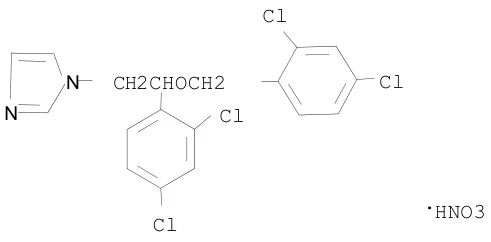
Chemical Name: 1- {2, 4-dichloro-β-[(2,4-dicholorobenzyl)oxy]phenethyl)- 1H-imidazole nitrate
Structural Formula:
Molecular Formula: C18H14Cl4N2O . HNO3
Molecular Weight: 479.16
Description:
Miconazole nitrate is a white, crystalline or microcrystalline powder, very slightly soluble in water (0.03%) and very slightly soluble to slightly soluble in most common organic solvents and dilute inorganic acids.
Melting Point: 178 ° - 184 °C
Optical Rotation: - 0.10 ° to + 0.10 °
Composition:
MICONAZOLE Nitrate Vaginal Cream, USP 2% is a water miscible, white cream containing 2% miconazole nitrate as the active ingredient. Non-active ingredients consist of Apricot Kernel Oil/PEG-6, Benzoic Acid, Butylated Hydroxytoluene, Mineral Oil, PEG-6-32 Stearate/Glycol Stearate and Purified Water.
Stability and Storage Recommendations:
MICONAZOLE Nitrate Vaginal Cream USP, 2% should be stored at 15 - 30°C and protected from freezing.
AVAILABILITY OF DOSAGE FORMS
MICONAZOLE Nitrate Vaginal Cream, USP 2% is supplied in tubes of 45 g sufficient for one 7 day course of therapy. Included in each package is a Consumer Information Leaflet and 7 disposable applicators. Each tube of MICONAZOLE Nitrate Vaginal Cream, USP 2% has sufficient cream for the treatment period and sufficient cream for extravaginal use, if necessary. Each full applicator supplies 100 mg miconazole nitrate in 5 gram cream.
MICROBIOLOGY
- 1. In Vitro
SUSCEPTIBILITY OF CANDIDA SPECIES TO MICONAZOLE
| SPECIES | MIC (µg/mL)* |
Candida paraosilosis, Z40 C. pseudotropicalis. Z27, RV 11210 C. krusei Z70, RV 11792 C. tropicalis, Z156 C. tropicalis, RV 10747 C. albicans Z248, RV 4688, 502/9, B 1995L C. paraosilosis, RV 14018 C. stellaroidea, RV 14018 C. pelliculosa, Z220 C. guilliermondii, Z55 C. intermedia, 512/9 C. tropicalis, 502/7 | 0.01 0.01 0.1 0.1 1.0 1.0 1.0 1.0 10.0 10.0 10.0 10.0 |
* Determination in Sabouraud broth culture medium.
Electron microscopic examination was performed on C. albicans after treatment in vitro with different doses of miconazole: 5 ng, 1mg, 2mg and 5 mg/mL of culture (CYG medium) harvested twenty four hours later. The ultrastructural data on the alterations induced by a low dose (5 ng/mL) of miconazole indicated that the drug exerts its effect primarily on the cell wall and plasmalemma. With higher doses, progressive degradation of cytoplasmic material was observed. Injured parts of the cellular material were sequestered from the rest of the cytoplasm and engulfed by the vacuole. The same degradation process was noted on the cell periphery.
Necrosis of cells, characterized by the loss of their normal shape and by severe alternations of every substructure was prominent at higher dose levels.
These ultrastructural findings firmly substantiate the fungistatic activity at low doses and the fungicidal activity at higher doses of miconazole. From the morphologic point of view, a clear dose relationship was established.
- 2. In Vivo
Adult guinea pigs pretreated with alloxan (200 mg/kg, i.m.) and infected with Candida albicans received daily topical treatment with 1 g of ointment containing 2% miconazole, nystatin, or amphotericin B, for 14 days starting on the third day after infection.
Miconazole applied topically was effective in curing the lesions induced by C. albicans and was slightly superior to and faster-acting than nystatin and amphotericin B.
Oral doses of miconazole at 160 mg/kg and 40 mg/kg administered for 14 days were effective against Candida albicans–induced lesions. By comparison, oral nystatin and amphotericin B (160 mg/kg) and pimaricin (40 mg/kg) had little effect on the course of the infection.
SUMMARY
| Treatment | Dose | #of animals | Route | Lesion scores at 15 day (No. of animals) | |||||||
| 0 | 1 | 2 | 3 | 4 | |||||||
| Controls | excipient | 20 | topical | 0 | 4 | 6 | 7 | 3 | |||
| Miconazole | 2% | 20 | topical | 1 | 11 | 4 | 3 | 1 | |||
| Nystatin | 2% | 20 | topical | 0 | 4 | 7 | 7 | 2 | |||
| Amphotericin B | 2% | 20 | topical | 0 | 2 | 4 | 7 | 7 | |||
| Controls | excipient | 15 | oral | 0 | 1 | 1 | 6 | 7 | |||
| Miconazole | 160 mg/kg | 12 | oral | 10 | 2 | 0 | 0 | 0 | |||
| Miconazole | 40 mg/kg | 14 | oral | 9 | 5 | 0 | 0 | 0 | |||
| Miconazole | 10 mg/kg | 13 | oral | 2 | 2 | 1 | 5 | 3 | |||
| Nystatin | 160 mg/kg | 6 | oral | 0 | 1 | 0 | 2 | 3 | |||
| Amphotericin B | 160 mg/kg | 6 | oral | 0 | 0 | 1 | 2 | 3 |
| Rimaricin | 40 mg/kg | 2 | oral | 0 | 0 | 0 | 0 | 2 |
*NOTE: Inhibition of growth was scored as follows (some spontaneous healing in controls by day 15);
0 = absence of lesions
1 = ¼ the lesions of infected controls
2 = ½ the lesions of infected controls
3 = ¾ the lesions of infected controls
4 = lesions corresponding to infected controls
PHARMACOLOGY
ANIMAL
- 1 Tissue and Whole Animal
The agonist activity of miconazole on the guinea pig ileum, rabbit duodenum, rabbit spleen and rat stomach fundus tissue preparations is limited to a slight initial tonus increase observed with the rabbit duodenum preparation at concentrations of 2.5 – 10 mg/l. This compound is observed to antagonize the spasmogenic effects of bradykinin, serotonin, nicotine, eledoisin, angiotensin and histamine, but is devoid of anticholinergic (rabbit duodenum), antiserotoninergic (rat stomach fundus) anti-α-adrenergic (rabbit spleen) and β-adrenergic blocking (fowl rectal caecum) activity.
Miconazole given to mice in a single dose of 40 mg/kg had no influence on the licking reflex or other gross behavioural characteristics. In addition, rats treated with this regimen showed no autonomic or CNS induced effects. As well, no morphine-like properties, anticonvulsant effects or change in body temperature was recorded in this species. After repeated administration at this dose level (40 mg/kg/day for 7 consecutive days) no significant changes were again observed in behavioural characteristics and gross overall condition of pathological examination at autopsy.
- 2. Metabolism and Pharmacokinetics
- a) In Vitro
Rats (miconazole nitrate tritium labeled)
Incubation of tritium-labeled miconazole nitrate was carried out with the 10,000 gm supernatant fractions and microsomal fractions of the liver, lungs and kidneys of the Wistar rat. The major metabolite was a α-(2,4-dichloro-phenyl)-1H-imidazole-1-ethanol (R 14821). Whereas more than 70% of the drug was unmetabolized, this metabolite, resulting from an oxidative O – dealkylation by microsomal enzymes, amounted to about 20% of total reactivity. The microsomal enzymes responsible for this metabolic breakdown were twice as active in the liver as in the lungs or the kidneys.
Humans (miconazole nitrate tritium labeled on the 2-ethyl group)
The binding of miconazole nitrate to human plasma protein, and the distribution of the drug in human blood, blood cell suspension and ghost cell suspension were studied by equilibrium dialysis. Human blood was obtained by venous puncture from healthy male (8) and female (3) volunteers who had not taken any medication for at least two weeks, from patients (4) with chronic renal failure and from patients (4) who were under haemodialysis treatment.
Miconazole nitrate was found to bind very strongly to human plasma proteins. For example, a 4% HSA solution bound miconazole nitrate for 98% with an overall association constant of 91.6 x 10³. Even a 1.5% human gamma globulin solution bound the drug for about 81% with an overall association constant of 8.0 x 10³. The binding of miconazole nitrate to the plasma proteins amounted to 98.7%. In blood, 1.2% was distributed in the plasma water, 88.2% was bound to the plasma proteins and 10.6% to the blood cells.
The percentage of bound miconazole was not influenced by the total drug concentration within the tested range from 0.1 to 10.0 x 10⁻⁶ M. In a blood cell suspension 97.6% of the drug was bound to the blood cells, probably due to the binding properties of not only the cell membranes but also inner constituents such as haemoglobin.
No significant sex differences and only minor individual differences were found for the plasma protein binding and the distribution of miconazole nitrate in blood. Only very small differences were found between the plasma protein binding and the distribution of the drug in blood or normal subjects, of patients with chronic renal failure and of patients under haemodialysis treatment.
- b) In Vivo
Studies were conducted using miconazole labelled with tritium at C-2 of the imidazole ring or the β-carbon of the ethyl side chain. It was noted that the tritium label at C-2 of the imidazole ring was labile.
Rats (miconazole tritium labelled at C-2 of the imidazole ring)
Five male Wistar rats were each given an oral dose of 40 mg/kg miconazole in PEG-200. During the four days when urine and faeces were collected, 66% of the total radioactivity administered was recovered; 62% after 48 hours. In the urine collected more than 37% of the radioactivity recovered was in the form of tritiated water. At autopsy (day 4) blood, liver and brain tissues contained 1.9% of the administered radioactivity. Examination of the excreta by the inverse isotope dilution method revealed that 18% of the administered dose was excreted unchanged, 19%, as α-(2,4-dichlorophenyl)-imidazole-1-ethanol or its parent ketone and traces as imidazole.
Dogs and Rabbits (miconazole tritium labelled at C-2 of the imidazole ring)
In separate excretion and absorption studies involving 2 animals per study, miconazole was administered intravaginally in carbowax 1000 and wecobee FS and M (7:3) vehicles to beagle bitches ( 1 mL of 1% formulation) and New Zealand white rabbit doe (0.5 mL of 1% formulation). In the excretion studies urine and faeces were collected for 12 days from the dogs and urine only from the rabbits. In both species the major percentage of the recovered radioactivity was obtained during the 3 days after dosing. In dogs greater than 60% of the radioactivity was in the urine where the carbowax vehicle was used whereas less than 50% was recovered in the urine of dogs given miconazole in the wecobee vehicle. This observation was made with rabbits as well. In the absorption studies blood samples were obtained at 2, 4, 7 and 25 hours. Peak levels in dogs occurred 4 – 7 hours after dosing whereas in rabbits bloods levels peaked at 2 hours. The highest level in dogs (0.06 mg/mL) was found with the carbowax vehicle as was the case with rabbits (0.17-0.18 mg//mL). At autopsy (25 hours) the vaginas were dissected and washed. Only 0.08% of the administered dose to dogs and 0.456% to rabbits was found in the tissues and washings.
Rabbits (miconazole tritium labelled in the β-carbon of the ethyl side chain)
Vaginal suppositories (2% miconazole) were administered to 2 New Zealand White rabbits. Urine and faeces were collected daily and blood at 3, 6, 24, 72, 96, 144, and 168 hours. Most of the administered radioactivity (90% in one animal and 70% in the other) was excreted in eight days. Fifty percent of the tritium excreted was recovered in 2-3 days and found in the faeces. Maximum blood levels of tritium occurred 6 hours after dosing (0.95 mg//mL).
HUMAN
Vaginal Absorption Study
Miconazole Nitrate was administered as a 2% cream formulation for 14 consecutive days to 6 female patients (5 non-pregnant and 1 pregnant) with confirmed diagnosis of vulvovaginal candidiasis (positive 10% KOH smear and NICKERSON’S Medium culture. Patients were scheduled to have blood samples drawn pre-therapy and day 5, 10, 16, 22 and 44 for analysis of serum levels of unchanged miconazole.
The levels of systemic absorption of miconazole which occurred during the period of intravaginal administration of miconazole cream were minimal (1.7 – 4.2 ng/mL).
A consistent cumulative absorption was not evident and serum levels of miconazole declined rapidly after drug administration was discontinued (1-3 days post-therapy levels ranged from 1.7 to 3.7 ng/mL; however, after day 9 post-therapy miconazole was not detectable in serum).
Another study of systemic absorption from a single dose of 5 grams of radiolabelled Miconazole Cream 2% applied intravaginally resulted in only about 1% of the total administered dose being recovered in the urine.
Summary of Clinical Efficacy and Safety
Clinical studies of miconazole nitrate administered intravaginally in a dose of 100 mg for 7 consecutive days in the form of a cream (5 grams of 2% cream) and as a vaginal suppository have been effective in yielding both mycological and clinical cure rates of approximately 80%- 90% for vulvovaginal candidiasis.
A three-day regimen using miconazole vaginal ovules 400 mg inserted intravaginally for 3 consecutive nights also yielded comparable mycological and clinical results.
All three regimens were well tolerated in clinical circumstances with mild vaginal itching, irritation and burning being the side effects observed.
TOXICOLOGY
ANIMAL
- 1. Acute
Acute oral toxicity of miconazole (7-day mortality) was assessed in male white mice, male Wistar rats, female guinea pigs and male and female mongrel dogs. The compound was administered in a micronized aqueous suspension. The following values were obtained:
Species Species
Mice
Rats
Guinea Pigs
Dogs
LD50 (95% Confidence Limits) mg/kg
578 (324.4 – 1030)
> 640
276 (201.2 - 378.3)
> 160
The intraperitoneal LD50 in male Swiss Webster mice was 670 mg/kg ± 0.36 S.E.
- 2. Subacute
Rats
Adult Wistar Rats (10 males and 10 females per dose group) were given miconazole at 80, 10 and 5 mg/kg/day in their diet for 13 weeks. All animals survived the test. The urine of treated animals was compared with the urine of control animals. Specific gravity was increased in the high dose group and urine pH was lowered in the intermediate and high dose groups. In addition, minor changes in liver, thymus, spleen and kidney were noted in the high dose group after histopathological examination. From these results the no-effect dose is calculated to be less than 80 mg/kg, but greater than 20 mg/kg.
Dogs
Adult Beagle dogs (3 males and 5 females per dose group) were given miconazole at 40, 20, and 2.5 mg/kg/day orally by capsule, 6 days a week, for 13 weeks. All animals survived the test. The following changes were noted: haematocrit and haemoglobin values were lowered in the high dose group; serum calcium and cholesterol and sulfhydryl values decreased in the intermediate and high dose groups and the odd animal in the high dose group salivated and would vomit subsequent to drug administration. At autopsy slight liver changes were noted in the high dose group animals. From these results the no-effect dose is calculated to be less than 40 mg/kg but greater than 10 mg/kg.
- 3. Chronic
Rats
Adult Wistar rats (30 males and 30 females per dose group) were given miconazole at 160, 40 and 10 mg/kg/day in their diet. Interim sacrifices of 20 animals (10 males and 10 females) per dose level were made at 6 and 12 months, the remaining animals being sacrificed at the termination of the study (18 months). Histopathology showed some slight liver changes which appeared to be more pronounced in the males. However, this finding did not progress with time. No other significant findings were reported and miconazole was well tolerated up to 160 mg/kg over the study period.
Dogs
Adult Beagle dogs (3 males and 3 females per dose group) were given oral doses by capsule of miconazole at 20, 5 and 1.25 mg/kg/day, 6 days a week for 52 weeks. All animals survived the study period. Persistent increased alkaline phosphatase levels and slightly increased SGPT values were noted with the high dose group; however, all other measured parameters were normal. At autopsy no significant histopathological changes were evident.
- 4. Reproductive Studies
Fertility in Rats
Adult Wistar rats (2 groups per dose level) were given miconazole at 320, 160 and 80 mg/kg in their diet as follows:
Group A20 males – drug given 60 days premating
20 females – no drug
Group B20 males – no drug
20 females – drug 14 days premating plus 21 days gestation
Females were sacrificed at day 22 of gestation. There was no difference between dose levels or groups A or B in pregnancy rate, but the number of dead foetuses and resorbed foetuses was increased in the high dose level. No abnormalities were noted among pups born to dosed females with the exception of two animals with rib deformities born to a high dose female. Based on the study findings, miconazole had no effect on the fertility of dosed males or females.
Peri-and Postnatal Studies in Rats
In one study, pregnant rats (20 animals per dose group) were given miconazole at 320, 160 and 80 mg/kg in their diet from day 16 of gestation through the 3 week lactation period. The gestation period was increased one day for the intermediate and high dose groups. In the test animals, litter size and the number of live foetuses at birth were slightly lower when compared to controls. In addition, body weight gains in the intermediate and high dose groups for the surviving pups were lower, whereas the birth weights of pups in the various groups had not differed.
In a second study pregnant Long-Evans derived rats (20 animals per dose group) were given miconazole, suspended in carboxymethylcellulose at 80, 40 and 20 mg/kg by gastric gavage from day 14 of gestation through to day 21 post partum. In the high dose group a prolonged gestation period associated with an increase in the number of still born pups was noted. Performance of the other dose groups was comparable to controls.
- 5. Teratology
Rats
Pregnant rats (20 animals per dose group) were given miconazole at 160 and 80 mg/kg in their diet from day 6 to day 15 of gestation. On day 22 of gestation, foetuses were delivered by caesarean section. No abnormalities were noted in this study either in the offspring or the reproductive performance of the dams.
Rabbits
Pregnant New Zealand white rabbits were given miconazole in carboxymethylcellulose at 80 (17 animals), 40 (15 animals) and 20 (15 animals) mg/kg by gavage from day 7 to day 19 of gestation. On day 30 gestation, the animals were sacrificed. No adverse effect was noted at the low or intermediate dose levels upon maternal mortality, pregnancy rate or early parturition or on foetal resorption, size, sex ratio or malformation. At the high dose level there was evidence of maternal and foetal toxicity as indicated by maternal weight loss during gestation, lengthened period of gestation and significant foetal resorption. However, at the high dose there was no indication of teratogenicity.
- 6. Other Studies
Intravaginal irritation studies have been carried out in rabbits for 10 days with miconazole nitrate in the glycerides base suppository formulation (100 mg per suppository single daily dose). Under the experimental conditions the glycerides base with or without miconazole nitrate has demonstrated a low order of irritation to the intact vaginal mucosa.
Similar findings were reported for vaginal irritation studies in rabbits and monkeys (3 months) utilizing 1 gm carbowax suppositories containing miconazole nitrate 2% and in rabbits for periods ranging from 10 days to 3 months with miconazole nitrate in its 2% cream formulation (single daily dosage of 1 gm of cream; 5-7 mg/kg of miconazole). No evidence of systemic toxicity was noted.
Dermal and ocular studies on rabbits ranging from 24 hours to 1 month in duration have revealed little irritation when miconazole was utilized in the 2% cream formulation. Dose levels of miconazole in these studies were as high as 50 mg/kg/day. In addition, no evidence of systemic toxicity was apparent in these studies.
An ocular irritation study of miconazole nitrate formulated with mineral oil, white wax and liquid petrolatum was performed in rabbits for four weeks. The results indicate that this 2% miconazole nitrate formulation when instilled into the eye once daily at a 0.1 mL dosage produces no irritation.
HUMAN
1.Tolerance Study
Miconazole Nitrate in a 2% vaginal cream formulation or placebo cream was administered to female volunteers meeting the following criteria – adult, healthy, non-pregnant and free of vaginal pathology – twice daily for a period of 30 days for the purpose of comparing side effect patterns, defining any possible changes in hematologic and biochemical parameters and to ascertain the level of systemic absorption of miconazole from the vagina. Twenty-three subjects receiving active cream and 20 receiving placebo cream participated in this double-blind study.
Pre- and post-administration physical examination findings remained essentially unchanged.
Analysis of the findings of the daily vaginal examinations and patient complaints revealed that both the active and placebo creams were essentially non-irritating to the normal vaginal mucosa. All reports of vaginal itching or burning were mild in nature (7 subjects using active cream, 3 subjects using placebo cream).
A review of the laboratory reports indicated no consistent changes which would denote drug toxicity.
REFERENCES
- 1. Godefroi, E.F., Heeres, J., van Cutsem. J., and Janssen, P.A.J.: The preparation and antimycotic properties of derivatives of 1-phenethylimidazole. J. MED. CHEM. 12: 784-791 (1969).
- 2. Van Cutsem, J.M. and Thienpont, D.: Miconazole, a broad-spectrum antimycotic agent with antibacterial activity. CHEMOTHERAPY, 17:392-404 (1972).
- 3. Bossche Vanden, H.: Biochemical effects of Miconazole on Fungi-1. Effects on the uptake and/or utilization of purines, pyrimidines, nucleosides, amino acids and glucose by Candida albicans. BIOCHEM, PHARMACOL. 23: 887 – 888 (1974).
- 4. Swamy, K.H.S., Sirsi, M. and Rao, G.R.: Studies on the mechanism of action of miconazole: p Effect of miconazole on respiration and cell permeability of Candida albicans. ANTIMICROB. AG. CHEMOTHER., 5:420 – 425 (1974).
- 5. Data on File, Ortho Pharmaceutical
- 6. Van Den Bossche, H., Willemsens, G., Van Cutsem, J.M.: The Action of Miconazole on the Growth of Candida albicans. SABOURAUDIA. 13: 63-73 (1975)
- 7. De Nollin, S., Borgers, M.: Scanning electron microscopy of Candida albicans after in vitro treatment with Miconazole. ANTIMICROB. AG. CHEMOTHER. 7(5): 704 – 711 (1975).
- 8. De Nollin, S. Borgers, M.: The ultrastructure of Candida albicans after in vitro treatment with Miconazole. SABOURAUDIA. 12:341 – 351 (1974).
- 9. Lansdorp D, Bressers HP, Dekens-Konter JA, Meyboom RH. Potentiation of Acenocoumarol During Vaginal Administration of Miconazole. Br J Clin Pharmacol 1999;47:225-6.
- 10. Johnson & Johnson Pharmaceutical Research & Development, L.L.C.: Company Core Data Sheet for Miconazole Nitrate. November 9, 2004.
- 11.
Product Monograph for Monistat 7 Vaginal Cream (miconazole nitrate, 2%), Monistat 7 Vaginal Suppositories (miconazole nitrate 100 mg), Monistat 3 Vaginal Ovules (miconazole nitrate 400 mg), Monistat 7 Dual-Pak (miconazole nitrate 100 mg suppositories + 2% cream), Monistat 3 Dual-Pak (miconazole nitrate 400 mg ovules + 2% cream). McNeil Consumer Healthcare, Canada. Control No. 151075, Date of preparation: November 24, 2011
RELEVANT LITERATURE
- 1. Botter, A.A.: Further experiments with miconazole nitrate, a broad-spectrum antimycotic with antibacterial activity. MYKOSEN 15(4):179 – 183 (1972).
- 2. Brugmans, J., van Cutsem, J., Heykants, J., Schuermans, V., and Thienpont, D.: Systemic antifungal potential, safety, biotransport and transport and transformation of miconazole nitrate. EUROP. J. CLIN. PHARMACOL., 5: 93 – 99 (1972).
- 3. Godts, P., Vermylen, P. and van Cutsem, J.: Clinical evaluation of miconazole nitrate in the treatment of vaginal candidiasis. ARZNEIM-FORSCH (DRUGS RES.) 21(2): 256 – 257 (1971).
- 4. Proost, J. M., Maes-Dockx, F.M., Nelis, M.O., and van Cutsem, J.M.: Miconazole in the treatment of mycotic vulvovaginitis. AM. J. OBSTET. GYNECOL., 112(5): 688 – 692 (1972).
- 5. Thierry, M., Mrozowski, B.J., and van Kets, H.: Miconazole, a new broad-spectrum antimycotic. In the treatment of vaginal candidiasis. MYKOSEN, 15: 35-37 (1972)
- 6. McEvoy, G. K. ed, American Hospital Formulary Services (AHFS) Drug Information, American Society of Hospital Pharmacists Inc., 1994
- 7. USP DI, Drug Information for the Health Care Professional, 14th ed., The United States Pharmacopeial Convention Inc., 1994
- 8.
Daneshmend TK, Systemic absorption of Miconazole from the vagina, Journal of Antimicrobial Chemotherapy 1986 (18): 507-511.
INFORMATION FOR THE PATIENT
MICONAZOLE Nitrate Vaginal Cream USP, 2%
CURES MOST VAGINAL YEAST INFECTIONS
Indications
Miconazole Nitrate Vaginal Cream USP, 2% is an antifungal agent intended for the treatment of vaginal yeast infections (such as vaginal and vulval candidiasis).
Miconazole Nitrate Vaginal Cream USP, 2% relieves vaginal itching, burning and discharge associated with vaginal yeast infections and cures most vaginal yeast (Candida) infections when used for the full treatment period.
What Is A Vaginal Yeast Infection?
A vaginal yeast infection is an imbalance in the vagina caused most commonly by an overgrowth of the yeast called Candida albicans. Candida is a common organism in the vagina. When an imbalance occurs, such as when the normal pH balance of the vagina changes or when your hormonal balance changes, Candida can multiply. You can then get a vaginal yeast infection.
Some of the factors that can contribute to the development of a vaginal yeast infection are:
- Hormone level changes: menstrual cycle, pregnancy, birth control pills (with high estrogen), estrogen therapy (during menopause).
- Antibiotic use
- Uncontrolled diabetes
- Weakened immune system: HIV infection, corticosteroid therapy, chemotherapy
- Perfumed soaps, bubble baths or douching
- Wet bathing suits, nylon underwear, and pantyhose can retain heat and moisture, creating an environment that encourages the growth of Candida.
Symptoms of Vaginal Yeast Infections
There are many signs and symptoms of a yeast infection. They can include:
- Vaginal itching (ranging from mild to severe);
- A clumpy, white vaginal discharge that may look like cottage cheese;
- Vaginal soreness, irritation or burning, especially during intercourse;
- Rash or redness around the vagina.
A yellow/green discharge or a discharge that smells “fishy” may indicate that you have something other than a yeast infection. If this is the case, you should consult your doctor before using MICONAZOLE Nitrate Vaginal Cream, USP 2%
Directions for Use
MICONAZOLE Nitrate Vaginal Cream USP, 2% (with 7 Disposable Applicators):
Many women find it more comfortable to use this product just before going to bed as this will reduce vaginal leakage. To begin treatment:
- 1. Open the tube by unscrewing the cap. Turn the cap upside down and place the cap on the end of the tube. Push down firmly until the seal is broken.
- 2. Attach the applicator to the tube by pressing the end of the applicator firmly onto the neck of the opened tube.
- 3. Squeeze the tube from the bottom. This will force the cream into barrel of the applicator, pushing up the plunger. The plunger will stop moving outward when the barrel is full. Remove the applicator from the tube.
- 4. Gently insert the applicator into the vagina as far as it will go comfortably. This can be done while standing with your feet spread a few inches apart and your knees bent. Or, you can lie on your back with your knees bent. Once the applicator is in place, depress the plunger to deposit the cream. Remove the applicator from the vagina and discard. You should go to bed as soon as possible after inserting the cream. This will reduce leakage.
- 5. After each use, replace cap and roll tube from bottom.
- 6. Repeat steps 1 through 5 before going to bed on each of the next six evenings.
You may want to use deodorant-free mini-pads or pantyshields while you are using MICONAZOLE Nitrate Vaginal Cream, USP 2%. As there may be some vaginal leakage. Tampons may absorb the medication; therefore, do not use them, day or night, for 7 days following treatment.
Local treatment of the vulva and perianal region twice daily for up to 7 days is recommended for relief of external vulvar itching associated with a yeast infection. Squeeze a small amount of cream onto your finger and gently spread the cream on the irritated area of the vulva.
For Best Results:
- 1. Be sure to use for 7 days in a row even if your symptoms go away before the 7th day.
- 2. Apply the recommended amount, even during your menstrual period.
- 3. Dry the outside vaginal area thoroughly after a shower, bath, or swim. Change out of a wet bathing suit or damp workout clothes as soon as possible. A dry area is less likely to encourage the growth of yeast.
- 4. Wipe from front to rear (away from the vagina) after a bowel movement.
- 5. Avoid perfumed soaps, bubble baths or douching which may cause vaginal irritation and upset the normal balance.
- 6. Do not scratch the affected area as this can cause more irritation.
- 7. Discuss with your doctor any medication you are now taking. Certain types of medication can make your vagina more prone to infection.
- 8. Wear cotton underwear. Nylon underwear and pantyhose can retain heat and moisture, creating an environment that encourages the growth of Candida.
- 9. If your male sexual partner has any penile itching, redness, or discomfort, he should talk to his doctor and mention that you are treating a yeast infection.
- 10. To prevent transmission of the infection, do not allow others to use your washcloth or towel.
Precautions
If you have any or all of the symptoms of a yeast infection (vaginal itching, burning, white discharge) and if at some time in the past your doctor has told you that these symptoms are due to a yeast infection, then use MICONAZOLE Nitrate Vaginal Cream USP, 2% as directed. If, however, you have never had these symptoms before, you should see your doctor before using MICONAZOLE Nitrate Vaginal Cream USP, 2% so that your condition can be properly diagnosed.
This product is only effective in treating vaginal infection caused by yeast. It does not treat other infections and does not prevent pregnancy. Do not take by mouth.
Talk to your doctor if you have fever, pain in the back or lower abdomen, or foul-smelling vaginal discharge before or during the use of this medication. You may have a more serious condition.
Relief of symptoms should begin within 3 days but if complete relief is not felt within 7 days, the infection worsens or your symptoms return within 2 months, then you may have something other than a yeast infection. You should talk to your doctor.
If you are pregnant or think you may be, or are breastfeeding use this product only under the advice and supervision of a doctor.
Oral anticoagulants (blood thinning medication): If you are taking an oral blood thinning medication, such as warfarin, talk to a doctor or pharmacist before using MICONAZOLE NitrateVaginal Cream USP, 2% as bruising or bleeding may occur.
While side effects are rare, the following side effects might occur with the use of MICONAZOLE Nitrate Vaginal CreamUSP, 2%: abdominal cramping, headaches, hives, and skin rash Sometimes a temporary increase in redness, itching, burning and/or irritation can occur at the start of treatment. This will not reduce the effectiveness of the product.
If skin rash, hives, abdominal cramps or new irritation occurs, discontinue use and call your doctor. If you are sensitive or allergic to any MICONAZOLE Nitrate Vaginal Cream USP, 2% product, do not use without talking to your doctor first. Tampons may absorb the medication, therefore, do not use them, day or night, for 7 days following treatment.
This medication reduces the effectiveness of latex condoms and diaphragms. Do not rely on them to prevent sexually transmitted diseases or pregnancy while using miconazole.
If you are at increased risk for sexually transmitted diseases, have multiple partners or change partners often, talk to a doctor before starting each treatment.
This product should not be used by children under 12 years of age unless advised to do so by a doctor. Please keep this and all drugs out of the reach of children.
Various medical conditions can damage the body’s normal defenses against infection. One of the most serious of these conditions is infection with the human immunodeficiency virus (HIV – the virus that is associated with AIDS). Infection with HIV causes the body to be more susceptible to infections, including vaginal yeast infections. If you may have been exposed to HIV and are experiencing either frequently recurring vaginal yeast infections or, especially, vaginal yeast infections that do not clear up easily with proper treatment, you should see your doctor promptly.
In case of accidental ingestion, call a doctor or the Poison Control Center at once.
Storage
Store at room temperature (15-30oC). Protect from freezing.
If You Have A Question
If you have any questions or need more information on this product, call our toll-free number between 9:00 a.m. and 5:00 p.m. Eastern Time, Monday through Friday: 1-800-268-1975. (Questions of a medical nature should be discussed with your doctor.)