


Product Monograph - Monistat 1 Vaginal Ovule
RECENT MAJOR LABEL CHANGES
NONE.
TABLE OF CONTENTS
PART I: HEALTH PROFESSIONAL INFORMATION ................................................................. 4
1 INDICATIONS ................................................................................................................. 4
1.1 Pediatrics ............................................................................................................... 4 1.2 Geriatrics ............................................................................................................... 4
2 CONTRAINDICATIONS .................................................................................................. 4
3 SERIOUS WARNINGS AND PRECAUTIONS BOX ........................................................ 5
4 DOSAGE AND ADMINISTRATION ................................................................................ 5
4.1 Dosing Considerations ........................................................................................... 5 4.2 Recommended Dose and Dosage Adjustment ....................................................... 5 4.3 Administration ........................................................................................................ 6 4.4 Reconstitution ........................................................................................................ 6 4.5 Missed Dose .......................................................................................................... 6
5 OVERDOSAGE ............................................................................................................... 6
6 DOSAGE FORMS, STRENGTHS, COMPOSITION AND PACKAGING ......................... 7
7 WARNINGS AND PRECAUTIONS ................................................................................. 7
7.1 Special Populations ............................................................................................... 8 7.1.1 Pregnant Women .............................................................................................. 8 7.1.2 Breast-feeding ................................................................................................... 8 7.1.3 Pediatrics .......................................................................................................... 8 7.1.4 Geriatrics ........................................................................................................... 9
8 ADVERSE REACTIONS ................................................................................................. 9
8.1 Adverse Reaction Overview ................................................................................... 9 8.2 Clinical Trial Adverse Reactions............................................................................. 9 8.3 Less Common Clinical Trial Adverse Reactions ................................................... 10 8.4 Abnormal Laboratory Findings: Hematologic, Clinical Chemistry and Other Quantitative Data ........................................................................................................... 10 8.5 Clinical Trial Adverse Reactions (Pediatrics) ........................................................ 10 8.6 Post-Market Adverse Reactions ........................................................................... 10
9 DRUG INTERACTIONS ................................................................................................ 11
9.1 Serious Drug Interactions Box ............................................................................. 11 9.2 Overview .............................................................................................................. 11 9.3 Drug-Drug Interactions ......................................................................................... 11 9.4 Drug-Food Interactions ........................................................................................ 11 9.5 Drug-Herb Interactions ......................................................................................... 11 9.6 Drug-Laboratory Test Interactions ........................................................................ 11 9.7 Drug-Lifestyle Interactions ................................................................................... 11
10 ACTION AND CLINICAL PHARMACOLOGY ............................................................... 11
10.1 Mechanism of Action ........................................................................................ 11 10.2 Pharmacodynamics .......................................................................................... 12 10.3 Pharmacokinetics ............................................................................................. 12
11 STORAGE, STABILITY AND DISPOSAL ..................................................................... 15
12 SPECIAL HANDLING INSTRUCTIONS ........................................................................ 15
PART II: SCIENTIFIC INFORMATION ..................................................................................... 16
13 PHARMACEUTICAL INFORMATION ........................................................................... 16
14 CLINICAL TRIALS ........................................................................................................ 16
14.1 Trial Design and Study Demographics ............................................................. 16 14.2 Study Results ................................................................................................... 17 14.3 Comparative Bioavailability Studies .................................................................. 17
15 MICROBIOLOGY .......................................................................................................... 17
16 NON-CLINICAL TOXICOLOGY .................................................................................... 19
17 SUPPORTING PRODUCT MONOGRAPHS ................................................................. 22
PATIENT MEDICATION INFORMATION ................................................................................. 23
PART I: HEALTH PROFESSIONAL INFORMATION
1 INDICATIONS
MONISTAT*1 Vaginal Ovule (Miconazole Nitrate 1200 mg vaginal ovule) is indicated for:
use during the day or at bedtime for the local treatment of vulvovaginal candidiasis
(moniliasis)
MONISTAT*1 Combination Pack (Miconazole Nitrate 1200 mg vaginal ovule and vaginal cream 2% USP) is indicated for:
use during the day or at bedtime for the local treatment of vulvovaginal candidiasis
(moniliasis) and for the relief of particularly several external itching and irritation associated with vulvovaginal candidiasis
No statistically significant differences in therapeutic, mycological or clinical cure rates were noted between patients treating during the daytime and those treating before bedtime. Additionally, no statistically significant difference in therapeutic cure rate was seen between patients treating prior to bedtime and daytime patients who participated in physical activity (mild, moderate or vigorous) up to four hours post ovule administration. Although vulvovaginal candidiasis may be more difficult to cure during pregnancy, pregnant patients can be treated with the same regimen as non-pregnant patients. The 3-day regimen (MONISTAT* 3) is preferred, with the 1 or 7-day regimens (MONISTAT* 1 or MONISTAT* 7) providing effective alternatives. No significant difference in therapeutic cure rate (therapeutic cure includes both symptomatic and microbiological cure) was reported between the pregnant and non-pregnant patient groups who participated in clinical evaluations of the 3-day (ovules) or 7-day (suppositories or cream) treatment regimens. Similarly, users and non-users of oral contraceptives who participated in these clinical evaluations experienced therapeutic cure rates which did not differ significantly. In addition, no statistically significant differences in therapeutic cure rates were noted between patients undergoing dosage regimens of varying duration (1, 3, 7, 10, and 14 day).
1.1 Pediatrics
Pediatrics (ages 12 and under): No data are available to Health Canada; therefore, Health Canada has not authorized an indication for pediatric use.
1.2 Geriatrics
Geriatrics: No data are available to Health Canada; therefore, Health Canada has not authorized an indication for geriatric use.
2 CONTRAINDICATIONS
MONISTAT*1 Vaginal Ovule and MONISTAT*1 Combination Pack is contraindicated in patients
who are hypersensitive to this drug or to any ingredient in the formulation, including any non-medicinal ingredient, or component of the container. For a complete listing, see Dosage Forms, Strengths, Composition and Packaging.
3 SERIOUS WARNINGS AND PRECAUTIONS BOX
4 DOSAGE AND ADMINISTRATION
4.1 Dosing Considerations
It is important to remember that MONISTAT*’s 1 day therapy does not mean a 1 day cure. It’s a concentrated formula that continues to work in your body even after your symptoms have disappeared. Although some women feel better within the first 24 hours, you should begin to experience symptom relief within 1 to 3 days with just one dose.
You may want to use a deodorant-free mini-pad or panty shield while using MONISTAT* as there may be some vaginal leakage. Tampons may absorb the medication, therefore, do not use them day or night for 7 days following treatment.
4.2 Recommended Dose and Dosage Adjustment
MONISTAT*1 Vaginal Ovule: One (1) ovule administered intravaginally, once during the day or at bedtime.
MONISTAT*1 Combination Pack: One (1) ovule administered intravaginally, once during the
Serious Warnings and Precautions
- Should not be used for self-medication if vaginal pruritus or discomfort is occurring for the first time (see Warnings - General section below);
- Should not be used for self-medication if fever, nausea, unexplained pain in the lower back, lower abdomen, or either shoulder, or foul-smelling vaginal discharge are present (see Warnings - General section below);
- Discontinue use if sensitization or other signs of irritation not present before therapy occur (see Warnings - General section below);
- Intractable candidiasis may be the presenting symptom of unrecognized diabetes. If unresponsive to therapy appropriate microbiological studies should be repeated to confirm the diagnosis of vulvovaginal candidiasis (see Warnings - Endocrine section below);
- Should not be used by pregnant or nursing women without consulting health professional (see Warnings - Pregnant Women section below);
- Refrain from intercourse during therapy (see Warnings - Sexual Health section below);
Therapy reduces the effectiveness of latex condoms and diaphragms (see Warnings -
Sexual Health section below);
- Anticoagulant effect (see Warnings - General section below).
day or at bedtime. Apply a thin layer of the cream to external areas twice daily, in the morning and the evening. Massage gently until the cream disappears. Apply cream as required for external itching for up to 7 days
A course of therapy may be repeated if the patient remains symptomatic and if it has been determined by appropriate smears and cultures that the infecting organism is still miconazole susceptible Candida.
Health Canada has not authorized an indication for pediatric use. Please see Pediatrics Section.
4.3 Administration
MONISTAT*1 Vaginal Ovule: One (1) ovule administered intravaginally
MONISTAT*1 Combination Pack: One (1) ovule administered intravaginally. Cream administered topically to external areas.
4.4 Reconstitution
Not applicable.
4.5 Missed Dose
Not applicable.
5 OVERDOSAGE
MONISTAT* 1 Combination Pack contains 1380 mg miconazole nitrate. Approximately 50% of an oral dose is absorbed from the gastrointestinal tract. Hence, the maximum possible systemic exposure if the entire contents of the MONISTAT* 1 Combination Pack were to be accidentally or deliberately ingested would be equivalent to 690 mg. This represents the lowest dose administered IV to adults (600 - 1800 mg) and compares favourably to the IV dose that would be administered to a one year old child (400 mg). Consequently, the possibility of acute overdosage is remote.
However, although highly unlikely to occur, in the event of a substantial overdose, and if taken concomitantly with other drugs (e.g. coumarin derivatives, oral hypoglycaemics or phenytoin), the effects and side effects of the other drugs can be increased.
MONISTAT* 1 products are intended for local application and not for oral use. In the event of accidental ingestion of large quantities of MONISTAT* products, contact a doctor or Poison Control Centre at once. Keep this and all other medications out of the reach of children and pets.
For management of a suspected drug overdose, contact your regional poison control centre.
6 DOSAGE FORMS, STRENGTHS, COMPOSITION AND PACKAGING
Table – Dosage Forms, Strengths, Composition and Packaging.
The ovule is packaged in a PVC blister, and the cream is packaged in a 9-gram laminate tube. The ovule and the cream are packaged together in a paperboard carton with a package insert and plastic applicator for the ovule.
7 WARNINGS AND PRECAUTIONS
Please see the Serious Warnings and Precautions Box at the beginning of Part I: Health Professional Information.
General
Patients should not use MONISTAT* vaginal preparations for self-medication if vaginal pruritus or discomfort is occurring for the first time. In this instance, a physician must be consulted to establish the diagnosis of vulvovaginal candidiasis.
Patients should not use MONISTAT* vaginal preparations for self-medication if fever, nausea, unexplained pain in the lower back, lower abdomen, or either shoulder, or foul-smelling vaginal discharge are present, as a condition more serious than vulvovaginal candidiasis may exist.
Patients should be advised to discontinue medication if sensitization or other signs of irritation (skin rash or hives, burning, blistering, redness) not present before therapy occur.
Miconazole administered systemically is known to inhibit CYP3A4/2C9. Due to the limited systemic availability after vaginal application, clinically relevant interactions occur very rarely. Patients taking prescription blood thinners, such as warfarin, should talk to their physician or pharmacist before using MONISTAT* due to the risk of bleeding and bruising. Caution should
| Route of Administration | Dosage Form / Strength/Composition | Non-medicinal Ingredients |
| Vaginal | ovule 1200 mg Creamy to white viscous medium of liquid paraffin, white petrolatum and lecithin enclosed in a soft capsule containing gelatin, glycerin, sodium ethylparaben, sodium propylparaben and titanium dioxide | Gelatin, glycerin, lecithin, mineral oil, petrolatum, titanium dioxide |
| Topical | Cream 2% USP Water miscible, white cream containing 2% miconazole nitrate as the active ingredient | Benzoic Acid, Cetyl Alcohol, Isopropyl Myristate, Polysorbate 60, Potassium Hydroxide, Propylene Glycol, Stearyl Alcohol, Water |
be exercised and the anticoagulant effect should be monitored.
Endocrine and Metabolism
Intractable candidiasis may be the presenting symptom of unrecognized diabetes; thus appropriate urine/blood studies may be indicated in patients not responding to treatment. In any case, if a patient is unresponsive to therapy appropriate microbiological studies should be repeated to confirm the diagnosis of vulvovaginal candidiasis and to rule out other pathogens.
Sexual Health
Reproduction
Miconazole nitrate preparations reduce the effectiveness of latex condoms and diaphragms. With MONISTAT*1 and MONISTAT*1 Combination Pack, the use of diaphragms and condoms is not recommended during therapy and for 3 days afterwards. Condoms and diaphragms may be damaged and fail to prevent pregnancy or sexually transmitted diseases.
Function
During therapy, instruct the patient to refrain from intercourse.
7.1 Special Populations
7.1.1 Pregnant Women
Pregnant patients should be advised either to exercise caution in the use of the vaginal applicator for the ovule or to insert the ovule digitally.
Follow-up reports on infants born to twenty-six pregnant patients who participated in European and North American clinical evaluations of Miconazole Nitrate 100 mg Suppositories and infants born to 167 of 263 pregnant patients (some follow-up reports are not yet available) who participated in North American clinical evaluations of Miconazole Nitrate 2% Cream administered in a 14-day regimen described no complications or adverse effects attributed to this therapeutic agent. Nevertheless, since miconazole nitrate is absorbed in small amounts from the human vagina, MONISTAT* vaginal preparations should not be used by pregnant or nursing women unless the physician considers it essential to the welfare of the patient.
7.1.2 Breast-feeding
It is unknown if the drug is excreted in human milk. Because many drugs are excreted in human milk precaution should be exercised.
7.1.3 Pediatrics
Pediatrics (ages 12 and under): Based on the data submitted and reviewed by Health Canada, the safety and efficacy of MONISTAT*1 in pediatric patients has not been established; therefore, Health Canada has not authorized an indication for pediatric use. Please see Pediatrics Section.
7.1.4 Geriatrics
Not applicable. Please see Geriatrics Section.
8 ADVERSE REACTIONS
8.1 Adverse Reaction Overview
THE STANDARD FOR DEFINING FREQUENCY TERMS WILL BE BASED ON THE COUNCIL FOR INTERNATIONAL ORGANIZATIONS OF MEDICAL SCIENCE (CIOMS) CONVENTION. SPECIFICALLY:
Very common ≥1/10 (≥10%)
Common ≥1/100 and <1/10 (≥1% and <10%)
Uncommon ≥1/1,000 and <1/100 (≥0.1% and <1%)
Rare ≥1/10,000 and <1/1,000 (≥0.01% and <0.1%)
Very rare <1/10,000, including isolated reports (<0.01%)
In general, the complaints reported with miconazole nitrate therapy involved vulvovaginal burning, itching, irritation, pelvic cramping and edema as well as hives, rash and headache.
8.2 Clinical Trial Adverse Reactions
Because clinical trials are conducted under very specific conditions, the adverse reaction rates observed in the clinical trials may not reflect the rates observed in practice and should not be compared to the rates in the clinical trials of another drug. Adverse reaction information from clinical trials is useful for identifying drug-related adverse events and for approximating rates.
A randomized clinical study involving 278 patients comparing one-day treatment with MONISTAT* 1 to the seven-day cream treatment indicated that generally both products were equally well tolerated.
A randomized clinical study involving 570 patients comparing one-day treatment administered during the day to one day treatment administered at bedtime indicated that treatment emergent adverse events observed between the two groups were similar and were consistent with the known safety profile of miconazole nitrate. Adverse events, regardless of causality, reported in 2 Phase 3 clinical trials are shown in the table below. A total of 537 women with microbiologically confirmed candidiasis and symptoms (e.g. vulvovaginal itching, burning/irritation), or signs of vulvar erythema, edema, excoriation, or vaginal erythema or edema were treated with miconazole intravaginally: randomly assigned to either a single 1,200 mg capsule, or a 7-day application of 2% vaginal cream. There was no placebo reference. Safety was self-assessed daily on a diary card. Included in the table are adverse events reported by >5% of subjects in either treatment group.
Table 1 Clinical Trial Data
| System Organ Class | % of patients on Miconazole (2% Cream, 7-day) reporting AEs during trial (n = 265) | % of patients on Miconazole (1,200 mg Capsule) reporting AEs during trial (n = 272) |
| Overall Adverse Events | 64 | 70 |
Nervous System Disorders Headache | 18.9 | 17.6 |
Renal and Urinary Disorders Urinary tract infection NOS | -- | 5.1 |
Reproductive System and Breast Disorders Genital pruritus female Genital burning sensation Vaginal irritation Vaginal discharge | 26.8 23.8 15.5 4.5 | 19.1 26.1 20.2 10.3 |
Table 1 shows the data obtained from a randomized clinical study of a total of 537 women with microbiologically confirmed candidiasis and symptoms or signs of vulvar erythema, edema, excoriation, or vaginal erythema or edema treated with miconazole intravaginally.
8.3 Less Common Clinical Trial Adverse Reactions
Not applicable.
8.4 Abnormal Laboratory Findings: Hematologic, Clinical Chemistry and Other
Quantitative Data
Not applicable.
8.5 Clinical Trial Adverse Reactions (Pediatrics)
Not applicable. Please see Pediatrics Section.
8.6 Post-Market Adverse Reactions
Adverse events which may be causally related to the administration of MONISTAT* that have come to light as a result of reports received in relation to administration of the marketed product are provided in this section. Because these reactions are reported voluntarily from a population of uncertain size, it is not always possible to reliably estimate their frequency or establish a causal relationship to drug exposure.
9 DRUG INTERACTIONS
9.1 Serious Drug Interactions Box
9.2 Overview
Miconazole administered systemically is known to inhibit CYP3A4/2C9. Due to the limited systemic availability after vaginal application, clinically relevant interactions occur very rarely. Patients taking prescription blood thinners, such as warfarin, should talk to their physician or pharmacist before using MONISTAT* due to the risk of bleeding and bruising. Caution should be exercised and the anticoagulant effect should be monitored.
9.3 Drug-Drug Interactions
Not applicable.
9.4 Drug-Food Interactions
Not applicable.
9.5 Drug-Herb Interactions
Not applicable.
9.6 Drug-Laboratory Test Interactions
Not applicable.
9.7 Drug-Lifestyle Interactions
Not applicable.
10 ACTION AND CLINICAL PHARMACOLOGY
10.1 Mechanism of Action
Depending upon concentration, miconazole nitrate exhibits broad spectrum in vitro fungistatic or fungicidal activity against species of the genus Candida. Miconazole nitrate also inhibits several other genera of fungi, including dermatophytes and yeasts, as well as gram positive bacteria.
Serious Drug Interactions
- Patients taking prescription blood thinners should talk to their physician or pharmacist before using MONISTAT* due to the risk of bleeding and bruising.
Miconazole nitrate inhibits the biosynthesis of ergosterol or other sterols, damaging the fungal cell wall membrane and altering its permeability. In fungi, it also inhibits biosynthesis of triglycerides and phospholipids as well as oxidative and peroxidative enzymes. The latter action results in intracellular buildup of toxic concentrations of hydrogen peroxide, which may contribute to deterioration of subcellular organelles and cellular necrosis.
Candida albicans cells have been observed to exhibit progressive cytoplasmic deterioration and prominent shape changes resulting in complete cell necrosis depending on the dose and duration of exposure to miconazole nitrate. The sequence of morphologic alterations induced by miconazole nitrate at fungistatic doses (10-6M) are lysis of cytoplasmic organelles, focal to complete loss of cell plasmalemma and irregular thickening of the cell wall containing multiple inclusions. Administration of fungicidal doses (10-4M) induces a completely necrotic cell interior with an unaltered cell wall.
In Candida albicans, miconazole nitrate inhibits the transformation of blastospores into invasive mycelial form. Not all species or strains of a particular organism may be susceptible to miconazole nitrate.
To date, no wild strains or fungal mutants with substantial acquired resistance to miconazole have been reported; however, miconazole resistant Candida albicans has been isolated from an infant following bladder irrigation with miconazole for the treatment of urinary candidiasis.
10.2 Pharmacodynamics
ANIMAL
- 1. Tissue and Whole Animal
The agonist activity of miconazole on the guinea pig ileum, rabbit duodenum, rabbit spleen and rat stomach fundus tissue preparations is limited to a slight initial tonus increase observed with the rabbit duodenum preparation at concentrations of 2.5 – 10 mg/l. This compound is observed to antagonize the spasmogenic effects of bradykinin, serotonin, nicotine, eledoisin, angiotensin and histamine, but is devoid of anticholinergic (rabbit duodenum), antiserotoninergic (rat stomach fundus) anti-a-adrenergic (rabbit spleen) and ß-adrenergic blocking (fowl rectal caecum) activity.
Miconazole given to mice in a single dose of 40 mg/kg had no influence on the licking reflex or other gross behavioural characteristics. In addition, rats treated with this regimen showed no autonomic or CNS induced effects. As well, no morphine-like properties, anticonvulsant effects or change in body temperature was recorded in this species. After repeated administration at this dose level (40 mg/kg/day for 7 consecutive days) no significant changes were again observed in behavioural characteristics and gross overall condition of pathological examination at autopsy.
10.3 Pharmacokinetics
Absorption:
HUMAN
Vaginal Absorption Study
Miconazole Nitrate was administered as a 2% cream formulation for 14 consecutive days to 6 female patients (5 non-pregnant and 1 pregnant) with confirmed diagnosis of vulvovaginal candidiasis (positive 10% KOH smear and NICKERSON'S Medium culture). Patients were scheduled to have blood samples drawn pre-therapy and day 5, 10, 16, 22 and 44 for analysis of serum levels of unchanged miconazole.
The levels of systemic absorption of miconazole which occurred during the period of intravaginal administration of MONISTAT* Cream were minimal (1.7 - 4.2 ng/mL). A consistent cumulative absorption was not evident and serum levels of miconazole declined rapidly after drug administration was discontinued (1-3 days post-therapy levels ranged from 1.7 to 3.7 ng/mL; however, after day 9 post-therapy miconazole was not detectable in serum).
Another study of systemic absorption from a single dose of 5 grams of radiolabelled MONISTAT* Cream 2% applied intravaginally resulted in only about 1% of the total administered dose being recovered in the urine.
A published study which examined the systemic absorption of miconazole nitrate from a 1200mg miconazole nitrate vaginal ovule in healthy women found low but measurable serum concentrations which remained steady for about 36 hours and then slowly declined. Mean systemic bioavailability was about 1.4%.
Miconazole persists in the vagina for up to 72 hours after a single dose. Plasma concentrations of miconazole are measurable within 2 hours of administration in some subjects, with maximal levels seen 12 to 24 hours after administration. Plasma concentrations decline slowly thereafter and were still measurable in most subjects 96 hours post-dose. A second dose administered 48 hours later resulted in a plasma profile similar to that of the first dose.
The small amount of miconazole that is absorbed is eliminated predominantly in feces as both unchanged drug and metabolites over a four-day post-administration period. Smaller amounts of unchanged drug and metabolites also appear in urine. The mean apparent elimination half-life is 57 hours.
Distribution: Not applicable.
Metabolism:
- a) In Vitro
Rats (miconazole nitrate tritium labelled)
Incubation of tritium-labelled miconazole nitrate was carried out with the 10,000 gm supernatant fractions and microsomal fractions of the liver, lungs and kidneys of the Wistar rat. The major metabolite was a-(2,4-dichloro-phenyl)-1H-imidazole-1-ethanol ® 14821). Whereas more than 70% of the drug was unmetabolized, this metabolite, resulting from an oxidative O - dealkylation by microsomal enzymes, amounted to about 20% of total reactivity. The microsomal enzymes responsible for this metabolic breakdown were twice as active in the liver as in the lungs or the kidneys.
Humans (miconazole nitrate tritium labelled on the 2-ethyl group)
The binding of miconazole nitrate to human plasma proteins, and the distribution of the drug in human blood, blood cell suspension and ghost cell suspension were studied by equilibrium dialysis. Human blood was obtained by venous puncture from health male (8) and female (3)
volunteers who had not taken any medication for at least two weeks, from patients (4) with chronic renal failure and from patients (4) who were under haemodialysis treatment.
Miconazole nitrate was found to bind very strongly to human plasma proteins. For example, a 4% HSA solution bound miconazole nitrate for 98% with an overall association constant of 91.6 x 10³. Even a 1.5% human gamma globulin solution bound the drug for about 81% with an overall association constant of 8.0 x 10³. The binding of miconazole nitrate to the plasma proteins amounted to 98.7%. In blood, 1.2% was distributed in the plasma water, 88.2% was bound to the plasma proteins and 10.6% to the blood cells.
The percentage of bound miconazole was not influenced by the total drug concentration within the tested range from 0.1 to 10.0 x 10⁻⁶M. In a blood cell suspension 97.6% of the drug was bound to the blood cells, probably due to the binding properties of not only the cell membranes but also inner constituents such as haemoglobin.
No significant sex differences and only minor individual differences were found for the plasma protein binding and the distribution of miconazole nitrate in blood. Only very small differences were found between the plasma protein binding and the distribution of the drug in blood or normal subjects, of patients with chronic renal failure and of patients under haemodialysis treatment.
- b) In Vivo
Studies were conducted using miconazole labelled with tritium at C-2 of the imidazole ring or the ß-carbon of the ethyl side chain. It was noted that the tritium label at C-2 of the imidazole ring was labile.
Rats (miconazole tritium labelled at C-2 of the imidazole ring)
Five male Wistar rats were each given an oral dose of 40 mg/kg miconazole in PEG-200. During the four days when urine and faeces were collected, 66% of the total radioactivity administered was recovered; 62% after 48 hours. In the urine collected more than 37% of the radioactivity recovered was in the form of tritiated water. At autopsy (day 4) blood, liver and brain tissues contained 1.9% of the administered radioactivity. Examination of the excreta by the inverse isotope dilution method revealed that 18% of the administered dose was excreted unchanged, 19%, as a-(2,4-dichlorophenyl)-imidazole-1-ethanol or its parent ketone and traces as imidazole.
Dogs and Rabbits (miconazole tritium labelled at C-2 of the imidazole ring) In separate excretion and absorption studies involving 2 animals per study, miconazole was administered intravaginally in carbowax 1000 and wecobee FS and M (7:3) vehicles to beagle bitches (1 mL of 1% formulation) and New Zealand white rabbit doe (0.5 mL of 1% formulation). In the excretion studies urine and faeces were collected for 12 days from the dogs and urine only from the rabbits. In both species the major percentage of the recovered radioactivity was obtained during the 3 days after dosing. In dogs greater than 60% of the radioactivity was in the urine where the carbowax vehicle was used whereas less than 50% was recovered in the urine of dogs given miconazole in the wecobee vehicle. This observation was made with rabbits as well. In the absorption studies blood samples were obtained at 2, 4, 7 and 25 hours. Peak levels in dogs occurred 4 - 7 hours after dosing whereas in rabbits blood levels peaked at 2 hours. The highest level in dogs (0.06 mg/mL) was found with the carbowax vehicle as was the case with rabbits (0.17 - 0.18 mg/mL). At autopsy (25 hours) the vaginas were dissected and washed. Only 0.08% of the administered dose to dogs and 0.456% to rabbits was found in the tissues
and washings.
Rabbits (miconazole tritium labelled in the b-carbon of the ethyl side chain) Vaginal suppositories (2% miconazole) were administered to 2 New Zealand White rabbits. Urine and faeces were collected daily and blood at 3, 6, 24, 72, 96, 144, and 168 hours. Most of the administered radioactivity (90% in one animal and 70% in the other) was excreted in eight days. Fifty percent of the tritium excreted was recovered in 2-3 days and found in the faeces. Maximum blood levels of tritium occurred 6 hours after dosing (0.95 mg/mL).
Elimination:
The small amount of miconazole that is absorbed is eliminated predominantly in feces as both unchanged drug and metabolites over a four-day post-administration period. Smaller amounts of unchanged drug and metabolites also appear in urine. The mean apparent elimination half-life is 57 hours.
11 STORAGE, STABILITY AND DISPOSAL
MONISTAT*Derm Cream should be stored at controlled room temperature (15 °C - 30 °C).
MONISTAT*1 Vaginal Ovules should be stored in a dry place and at controlled room temperature (15 °C - 30 °C).
12 SPECIAL HANDLING INSTRUCTIONS
Not applicable.
PART II: SCIENTIFIC INFORMATION
13 PHARMACEUTICAL INFORMATION
Drug Substance
Proper name: Miconazole Nitrate
Chemical name: 1-{2,4-dichloro-ß-[(2,4-dichlorobenzyl)oxy]phenethyl}-imidazole nitrate
Molecular formula and molecular mass: C18H14Cl4N2O·HNO3; 479.16
Structural formula:
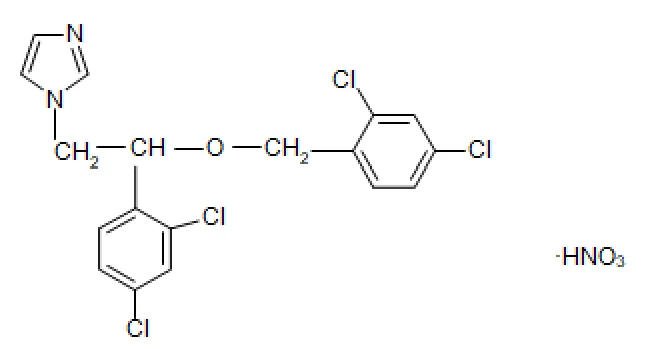
Physicochemical properties: melting point: 178 - 184 EC; description: white, crystalline or microcrystalline powder, very slightly soluble in water (0.03%) and very slightly to slightly soluble in most common organic solvents and dilute inorganic acids.
14 CLINICAL TRIALS
14.1 Trial Design and Study Demographics
Clinical studies of miconazole nitrate (MONISTAT* brand) administered intravaginally in a dose of 100 mg for 7 consecutive days in the form of a cream (5 grams of 2% cream) and as a vaginal suppository have been effective in yielding both mycological and clinical cure rates of approximately 80% - 90% for vulvovaginal candidiasis.
A three-day regimen using MONISTAT* vaginal ovules 400 mg inserted intravaginally for 3 consecutive nights also yielded comparable mycological and clinical results.
A one-day regimen using 1200mg MONISTAT* vaginal ovules intravaginally for a single night has also been demonstrated to provide comparable efficacy and safety to 2% miconazole nitrate vaginal cream daily for 7 days.
In addition, in the treatment of vulvovaginal candidiasis the single dose 1200mg miconazole nitrate vaginal ovule regimen was shown in published studies to provide comparable efficacy to miconazole nitrate as 400mg vaginal ovules daily x 3 days, 100mg tampons daily x 5 days, 100mg vaginal inserts x 7 days, and to single dose clotrimazole 500mg vaginal inserts, single dose oral fluconazole 150mg, and oral ketoconazole 400mg daily x 5 days.
A clinical study in patients with vulvovaginal candidiasis compared the safety and efficacy of a single dose of a 1200mg miconazole nitrate (MONISTAT* brand) vaginal ovule following daytime or bedtime self-administration. The study demonstrated comparable results between the two groups.
Therapeutic cure rates, based on mycological and clinical responses, in patients administering the ovule during the day were higher than those experienced by the patients administering prior to bedtime. Individual mycological and clinical cure rates were also slightly higher in the daytime group compared to those reported in the bedtime group. There was no statistically significant difference between groups for therapeutic, mycological or clinical cure rates. In addition, there was no statistically significant difference between the two treatment groups with respect to median time to relief of itching, burning, irritation or all three symptoms combined.
The study also examined the effect of daytime patients’ physical activity levels on therapeutic cure rates. Therapeutic, mycological and clinical cure rates in daytime subjects who participated in moderate or vigorous activity within four hours of ovule insertion were slightly higher relative to subjects in the bedtime group. The 1200mg miconazole nitrate vaginal ovule effectively stayed in place following daytime administration, even during increased (moderate or vigorous) levels of activity. There was no statistically significant difference in the therapeutic cure rates between activity levels.
Overall, these clinical study results identify MONISTAT* 1 as an effective treatment for daytime use, enabling patients to treat vulvovaginal candidiasis and associated symptoms as soon as they are recognizable.
All miconazole nitrate regimens were well tolerated in clinical circumstances with mild vaginal itching, irritation, burning and headache being the side effects observed.
14.2 Study Results
Please see Clinical Trials – Trials Design and Study Demographics Section.
14.3 Comparative Bioavailability Studies
Not applicable.
15 MICROBIOLOGY
- 1. In Vitro
SUSCEPTIBILITY OF CANDIDA SPECIES TO MICONAZOLE
| SPECIES | MIC (ug/mL)* |
Candida parapsilosis, Z40 C. pseudotropicalis, Z27, RV 11210 C. krusei, Z70, RV 11792 C. tropicalis, Z156 C. tropicalis, RV 10747 C. albicans, Z248, RV 4688, 502/9, B 1995L | 0.01 0.01 0.1 0.1 1.0 1.0 |
C. parapsilosis, RV 14018
C. stellatoidea, RV 19133
C. pelliculosa, Z220
C. guilliermondii, Z55
C. intermedia, 512/9
C. tropicalis, 502/7
1.0
1.0
10.0 10.0 10.0 10.0 * Determined in Sabouraud broth culture medium
Electron microscopic examination was performed on C. albicans after treatment in vitro with different doses of miconazole: 5 ng, 1 mg, 2 mg and 5 mg/mL of culture (CYG medium) harvested twenty four hours later. The ultrastructural data on the alterations induced by a low dose (5 ng/mL) of miconazole indicated that the drug exerts its effect primarily on the cell wall and plasmalemma. With higher doses, progressive degradation of cytoplasmic material was observed. Injured parts of the cellular material were sequestered from the rest of the cytoplasm and engulfed by the vacuole. The same degradation process was noted on the cell periphery. Necrosis of cells, characterized by the loss of their normal shape and by severe alterations of every substructure was prominent at higher dose levels.
These ultrastructural findings firmly substantiate the fungistatic activity at low doses and the fungicidal activity at higher doses of miconazole. From the morphologic point of view, a clear dose relationship was established.
- 2. In Vivo
Adult guinea pigs pretreated with alloxan (200 mg/kg, i.m.) and infected with Candida albicans received daily topical treatment with 1 g of ointment containing 2% miconazole, nystatin, or amphotericin B, for 14 days starting on the third day after infection.
Miconazole applied topically was effective in curing the lesions induced by C. albicans and was slightly superior to and faster-acting than nystatin and amphotericin B. 23 Oral doses of miconazole at 160 mg/kg and 40 mg/kg administered for 14 days were effective against Candida albicans-induced lesions. By comparison, oral nystatin and amphotericin B (160 mg/kg) and pimaricin (40 mg/kg) had little effect on the course of the infection.
SUMMARY
| Treatment | Dose | # of animals | Route | Lesion scores at 15 days* (no. of animals) 0 1 2 3 4 |
Controls Miconazole Nystatin Amphotericin B Controls Miconazole Miconazole Miconazole Nystatin Amphotericin B Rimaricin | excipient 2% 2% 2% excipient 160 mg/kg 40 mg/kg 10 mg/kg 160 mg/kg 160 mg/kg 40 mg/kg | 20 20 20 20 15 12 14 13 6 6 2 | topical topical topical topical oral oral oral oral oral oral oral | 0 4 6 7 3 1 11 4 3 1 0 4 7 7 2 0 2 4 7 7 0 1 1 6 7 10 2 0 0 0 9 5 0 0 0 2 2 1 5 3 0 1 0 2 3 0 0 1 2 3 0 0 0 0 2 |
* NOTE: Inhibition of growth was scored as follows (some spontaneous healing in controls by
day 15)
0 = absence of lesions
1 = 1/4 the lesions of infected controls
2 = 1/2 the lesions of infected controls
3 = 3/4 the lesions of infected controls
4 = lesions corresponding to infected controls
16 NON-CLINICAL TOXICOLOGY
ANIMAL
- 1. Acute
Acute oral toxicity of miconazole (7-day mortality) was assessed in male white mice, male Wistar rats, female guinea pigs and male and female mongrel dogs. The compound was administered in a micronized aqueous suspension. The following values were obtained:
| Species | LD50 (95% Confidence Limits) mg/kg |
Mice Rats Guinea Pigs Dogs | 578 (324.4 – 1030) > 640 276 (201.2 – 378.3) > 160 |
The intraperitoneal LD50 in male Swiss Webster mice was 670 mg/kg + 0.36 S.E.
- 2. Subacute
Rats
Adult Wistar Rats (10 males and 10 females per dose group) were given miconazole at 80, 10 and 5 mg/kg/day in their diet for 13 weeks. All animals survived the test. The urine of treated animals was compared with the urine of control animals. Specific gravity was increased in the high dose group and urine pH was lowered in the intermediate and high dose groups. In addition, minor changes in liver, thymus, spleen and kidney were noted in the high dose group after histopathological examination. From these results the no-effect dose is calculated to be less than 80 mg/kg, but greater than 20 mg/kg.
Dogs
Adult Beagle dogs (3 males and 5 females per dose group) were given miconazole at 40, 20 and 2.5 mg/kg/day orally by capsule, 6 days a week, for 13 weeks. All animals survived the test. The following changes were noted: haematocrit and haemoglobin values were lowered in the high dose group; serum calcium and cholesterol and sulfhydryl values decreased in the intermediate and high dose groups and the odd animal in the high dose group salivated and would vomit subsequent to drug administration. At autopsy slight liver changes were noted in the high dose group animals. From these results the no-effect dose is calculated to be less than 40 mg/kg but greater than 10 mg/kg.
- 3. Chronic
Rats
Adult Wistar rats (30 males and 30 females per dose group) were given miconazole at 160, 40 and 10 mg/kg/day in their diet. Interim sacrifices of 20 animals (10 males and 10 females) per dose level were made at 6 and 12 months, the remaining animals being sacrificed at the termination of the study (18 months). Histopathology showed some slight liver changes which appeared to be more pronounced in the males. However, this finding did not progress with time. No other significant findings were reported and miconazole was well tolerated up to 160 mg/kg over the study period.
Dogs
Adult Beagle dogs (3 males and 3 females per dose group) were given oral doses by capsule of miconazole at 20, 5 and 1.25 mg/kg/day, 6 days a week for 52 weeks. All animals survived the study period. Persistent increased alkaline phosphatase levels and slightly increased SGPT values were noted with the high dose group; however, all other measured parameters were normal. At autopsy no significant histopathological changes were evident.
- 4. Reproductive Studies
Fertility in Rats
Adult Wistar rats (2 groups per dose level) were given miconazole at 320, 160 and 80 mg/kg in their diet as follows:
Group A: 20 males - drug given 60 days premating, 20 females - no drug Group B: 20 males - no drug, 20 females - drug 14 days premating plus 21 days gestation
Females were sacrificed at day 22 of gestation. There was no difference between dose levels or groups A or B in pregnancy rate, but the number of dead foetuses and resorbed foetuses was increased in the high dose level. No abnormalities were noted among pups born to dosed females with the exception of two animals with rib deformities born to a high dose female. Based on the study findings, miconazole had no effect on the fertility of dosed males or females.
Peri-and Postnatal Studies in Rats
In one study, pregnant rats (20 animals per dose group) were given miconazole at 320, 160 and 80 mg/kg in their diet from day 16 of gestation through the 3 week lactation period. The gestation period was increased one day for the intermediate and high dose groups. In the test animals, litter size and the number of live foetuses at birth were slightly lower when compared to controls. In addition, body weight gains in the intermediate and high dose groups for the surviving pups were lower, whereas the birth weights of pups in the various groups had not differed.
In a second study pregnant Long-Evans derived rats (20 animals per dose group) were given miconazole, suspended in carboxymethylcellulose at 80, 40 and 20 mg/kg by gastric gavage from day 14 of gestation through to day 21 post partum. In the high dose group a prolonged gestation period associated with an increase in the number of still born pups was noted. Performance of the other dose groups was comparable to controls.
- 5. Teratology
Rats
Pregnant rats (20 animals per dose group) were given miconazole at 160 and 80 mg/kg in their diet from day 6 to day 15 of gestation. On day 22 of gestation, foetuses were delivered by caesarean section. No abnormalities were noted in this study either in the offspring or the
reproductive performance of the dams.
Rabbits
Pregnant New Zealand white rabbits were given miconazole in carboxymethylcellulose at 80 (17 animals), 40 (15 animals) and 20 (15 animals) mg/kg by gavage from day 7 to day 19 of gestation. On day 30 of gestation, the animals were sacrificed. No adverse effect was noted at the low or intermediate dose levels upon maternal mortality, pregnancy rate or early parturition or on foetal resorption, size, sex ratio or malformation. At the high dose level there was evidence of maternal and foetal toxicity as indicated by maternal weight loss during gestation, lengthened period of gestation and significant foetal resorption. However, at the high dose there was no indication of teratogenicity.
- 6. Other Studies
Intravaginal irritation studies have been carried out in rabbits for 10 days with miconazole nitrate in the glycerides base suppository formulation (100 mg per suppository single daily dose). Under the experimental conditions the glycerides base with or without miconazole nitrate has demonstrated a low order of irritation to the intact vaginal mucosa.
Similar findings were reported for vaginal irritation studies in rabbits and monkeys (3 months) utilizing 1 gm carbowax suppositories containing miconazole nitrate 2% and in rabbits for periods ranging from 10 days to 3 months with miconazole nitrate in its 2% cream formulation (single daily dosage of 1 gm of cream; 5-7 mg/kg of miconazole). No evidence of systemic toxicity was noted.
Dermal and ocular studies on rabbits ranging from 24 hours to 1 month in duration have revealed little irritation when miconazole was utilized in the 2% cream formulation. Dose levels of miconazole in these studies were as high as 50 mg/kg/day. In addition, no evidence of systemic toxicity was apparent in these studies.
An ocular irritation study of miconazole nitrate formulated with mineral oil, white wax and liquid petrolatum was performed in rabbits for four weeks. The results indicate that this 2% miconazole nitrate formulation when instilled into the eye once daily at a 0.1 mL dosage produces no irritation.
HUMAN
- 1. Tolerance Study
Miconazole Nitrate in a 2% vaginal cream formulation or placebo cream was administered to female volunteers meeting the following criteria - adult, healthy, non-pregnant and free of vaginal pathology - twice daily for a period of 30 days for the purpose of comparing side effect patterns, defining any possible changes in hematologic and biochemical parameters and to ascertain the level of systemic absorption of miconazole from the vagina. Twenty-three subjects receiving active cream and 20 receiving placebo cream participated in this double-blind study.
Pre- and post-administration physical examination findings remained essentially unchanged.
Analysis of the findings of the daily vaginal examinations and patient complaints revealed that both the active and placebo creams were essentially non-irritating to the normal vaginal mucosa. All reports of vaginal itching or burning were mild in nature (7 subjects using active cream, 3 subjects using placebo cream).
A review of the laboratory reports indicated no consistent changes which would denote drug toxicity.
17 SUPPORTING PRODUCT MONOGRAPHS
Not applicable.