


Product Monograph - Movapo
SUMMARY PRODUCT INFORMATION
| Route of Administration | Dosage Form / Strength | All Nonmedicinal Ingredients |
| Subcutaneous | Sterile solution for injection (10 mg/mL) -Ampoule of 2 mL -3 mL pre-filled disposable multidose pen | MOVAPO Ampoule: Hydrochloric acid concentrated, sodium hydroxide, sodium metabisulfite (E223) and water for injection MOVAPO Pen: Hydrochloric acid concentrated, sodium bisulfite (E222), and water for injection |
INDICATIONS AND CLINICAL USE
Adults:
MOVAPO (Apomorphine hydrochloride 10 mg/mL) is indicated for:
- The acute, intermittent treatment of hypomobility, “off” episodes (“end-of-dose wearing off” and unpredictable “on/off” episodes) in patients with advanced Parkinson’s disease.
MOVAPO has been studied only as intermittent subcutaneous injection, given as an adjunct to oral medications used for the treatment of Parkinson’s disease.
MOVAPO must not be administered via the intravenous route (see WARNINGS AND PRECAUTIONS, General).
MOVAPO should be initiated with use of a concomitant antiemetic and in a clinical setting where blood pressure and pulse can be closely monitored by medical personnel (see CONTRAINDICATIONS; WARNINGS AND PRECAUTIONS, Cardiovascular, Gastrointestinal; DOSAGE AND ADMINISTRATION, Dosing Considerations).
Geriatrics (> 65 years of age): Of the total number of patients with advanced Parkinson’s disease included in the clinical trials for MOVAPO more than half were 65 years of age or older. MOVAPO can be titrated in a normal manner in geriatric patients but extra caution is recommended due to potential age-related comorbidities and the potential for increased frequency of certain adverse events (see WARNINGS AND PRECAUTIONS, Special Populations).
Pediatrics (< 18 years of age): The safety and efficacy of MOVAPO have not been evaluated in patients under 18 years of age, and the use of MOVAPO is not recommended in this patient population.
CONTRAINDICATIONS
MOVAPO is contraindicated in patients:
- Hypersensitive to apomorphine hydrochloride or to any ingredient (including sodium metasulfite (E223) and sodium bisulfite (E222)) in the formulation or component of the container (see DOSAGE FORMS, COMPOSITION AND PACKAGING). Patients with a sulfite sensitivity may experience various allergic-type reactions, including anaphylactic symptoms and life-threatening asthmatic attacks. Patients who experienced any hypersensitivity/allergic reaction to MOVAPO reaction should avoid taking MOVAPO again.
- Using concomitant drugs of the 5HT3 antagonist class, including antiemetics (e.g., ondansetron, granisetron, palonosetron). There have been reports of profound hypotension and loss of consciousness when apomorphine hydrochloride was administered concomitantly with ondansetron (see DRUG INTERACTIONS).
- Using concomitant antihypertensive medications or vasodilators. The hypotensive effect of apomorphine hydrochloride may be potentiated by concomitant use with antihypertensive medications or vasodilators. There are no data available from studies that have systematically evaluated the potential interaction between apomorphine hydrochloride and antihypertensive medications or vasodilators (see WARNINGS AND PRECAUTIONS, Cardiovascular; ACTION AND CLINICAL PHARMACOLOGY, Decreases in blood pressure; DRUG INTERACTIONS).
- With severe hepatic or renal impairment (see ACTION AND CLINICAL PHARMACOLOGY, Special Populations).
WARNINGS AND PRECAUTIONS
General
Serious adverse events following intravenous administration
MOVAPO should not be administered intravenously. Serious adverse events (such as intravenous crystallization of apomorphine, leading to thrombus formation and pulmonary embolism) have followed the intravenous administration of MOVAPO.
Falls
Patients with Parkinson’s disease are at risk of falling due to the underlying postural instability, possible automatic instability, and syncope caused by the blood pressure lowering effects of the drugs used to treat Parkinson’s disease. Subcutaneous MOVAPO may increase the risk of falling by simultaneously lowering blood pressure and altering mobility (see WARNINGS AND
Serious Warnings and Precautions
Sudden Onset of Sleep
Patients receiving treatment with MOVAPO (apomorphine hydrochloride) and other dopaminergic agents have reported suddenly falling asleep while engaged in activities of daily living, including the driving of a motor vehicle, which has sometimes resulted in accidents. Although some of the patients reported somnolence while on MOVAPO, others perceived that they had no warning signs, such as excessive drowsiness, and believed that they were alert immediately prior to the event.
Physicians should alert patients of the reported cases of sudden onset of sleep, bearing in mind that these events are NOT limited to initiation of therapy. Patients should also be advised that sudden onset of sleep has occurred without warning signs. If drowsiness or sudden onset of sleep should occur, patients should immediately contact their physician.
Until further information is available on the management of this unpredictable and serious adverse event, patients should be warned not to drive or engage in other activities where impaired alertness could put themselves and others at risk of serious injury or death (e.g., operating machines). Episodes of falling asleep while engaged in activities of daily living have also been reported in patients taking other dopaminergic agents, therefore, symptoms may not be alleviated by substituting these products.
Currently, the precise cause of this event is unknown. It is known that many Parkinson’s disease patients experience alterations of sleep architecture, which results in excessive daytime sleepiness or spontaneous dozing, and that dopaminergic agents can also induce sleepiness. There is insufficient information to determine whether this event is associated with MOVAPO, all dopaminergic agents or Parkinson’s disease itself.
PRECAUTIONS, Cardiovascular).
In clinical trials, 30% of patients had events that could reasonably be considered falls and about 5% of patients had falls that were considered serious.
Alcohol
Patients should not consume alcohol during treatment with MOVAPO because the hypotensive and sedating effects of apomorphine hydrochloride may be potentiated by alcohol. There are no data available from studies that have systematically evaluated the effects on blood pressure from a potential interaction between MOVAPO and alcohol (see WARNINGS AND PRECAUTIONS, Cardiovascular; ACTION AND CLINICAL PHARMACOLOGY, Decreases in blood pressure; DRUG INTERACTIONS).
Carcinogenesis and Mutagenesis
See PART II: TOXICOLOGY, Carcinogenesis.
Cardiovascular
Concomitant use of antihypertensives and vasodilators
See CONTRAINDICATIONS; DRUG INTERACTIONS.
Orthostatic hypotension
Dopamine agonists, including MOVAPO, appear to impair the systemic regulation of blood pressure, resulting in postural/orthostatic hypotension, especially during dose escalation. Therefore, Parkinson’s disease patients being treated with dopaminergic agonists require careful monitoring for signs and symptoms of postural hypotension, especially during dose escalation, and should be informed of this risk. Particular caution is recommended in patients with Parkinson’s disease because of an impaired capacity to respond to postural challenge.
MOVAPO causes dose-related decreases in systolic and diastolic blood pressure (see ACTION AND CLINICAL PHARMACOLOGY, Decreases in blood pressure). Initial administration and titration of MOVAPO should be conducted in a clinical setting where blood pressure and pulse can be closely monitored by medical personnel (see DOSAGE AND ADMINISTRATION, Recommended Dose and Dosage Adjustment). Use in patients treated with antihypertensive medications or vasodilators is contraindicated due to a potential additive effect on blood pressure (see CONTRAINDICATIONS).
A study of 56 apomorphine-naïve patients with advanced Parkinson’s disease undergoing titration of MOVAPO in the range of 2 mg to 10 mg showed an increased incidence (from 4% pre-dose to 18% post-dose) of systolic orthostatic hypotension (defined as ≥ 20 mmHg decrease) when evaluated at various times after in-office dosing. A small number of patients developed severe systolic orthostatic hypotension (≥ 30 mmHg decrease and systolic blood pressure ≤ 90 mmHg) after subcutaneous MOVAPO injection. For most doses the proportion of patients reporting orthostatic symptoms at 20 minutes post-dose was greater than the proportion of patients meeting criteria for orthostatic hypotension (systolic blood pressure decreased by > 20 mmHg). Patients with advanced Parkinson’s disease who used apomorphine for several months prior to entering other clinical trials also showed an increased frequency of orthostatic hypotension (> 20 mmHg decrease in systolic blood pressure or >10 mmHg decrease in diastolic blood pressure) at 20 minutes post-dose when treated with MOVAPO compared to placebo.
In clinical trials of MOVAPO in patients with advanced Parkinson’s disease, 59 of 550 patients (11%) had orthostatic hypotension, hypotension, and/or syncope adverse events. These events were considered serious in 4 patients (< 1%) and resulted in withdrawal of MOVAPO in 10 patients (2%). These events occurred both with initial dosing and during long-term treatment. Whether or not hypotension contributed to other significant adverse events (e.g., falls) is not known.
Syncope
Dopamine agonists, including MOVAPO, have been associated with syncope. Particular caution is advised in patients with a history of orthostatic hypotension, syncope, or severe cardiovascular disease. In clinical trials, approximately 2% of patients treated with MOVAPO experienced syncope.
Coronary events
Of the 550 patients with advanced Parkinson’s disease treated with MOVAPO in clinical studies, 4% experienced adverse events of angina, myocardial infarction, cardiac arrest and/or sudden death; some cases of angina and myocardial infarction occurred in close proximity to MOVAPO dosing (within 2 hours), while other cases of cardiac arrest and sudden death were observed at times unrelated to dosing. MOVAPO has been shown to reduce resting systolic and diastolic blood pressure and may have the potential to exacerbate coronary (and cerebral) ischemia in patients with known cardiovascular and cerebrovascular disease. If patients develop signs and symptoms of coronary or cerebral ischemia, physicians should re-evaluate the continued use of MOVAPO.
QT Prolongation and Potential for Proarrhythymic Effects
In clinical trials with advanced Parkinson’s disease patients, a small dose related prolongation of QTc interval was observed with doses of MOVAPO greater than 6 mg (see ACTION AND CLINICAL PHARMACOLOGY). Doses greater than 6 mg do not provide additional clinical benefit and are not recommended (see DOSAGE AND ADMINISTRATION).
Drugs that prolong the QTc interval have been associated with torsades de pointes and sudden death. The relationship of QTc prolongation to torsades de pointes is clearest for larger increases (20 msec and greater), but it is possible that smaller QTc prolongations may also increase risk, or increase it in susceptible individuals, such as those with hypokalemia, hypomagnesaemia, bradycardia, concomitant use of other drugs that prolong the QTc interval, or genetic predisposition (e.g., congenital prolongation of the QT interval) (see WARNINGS AND PRECAUTIONS, Gastrointestinal; DRUG INTERACTIONS). Although torsade de pointe has not been observed in association with the use of MOVAPO at recommended doses in clinical studies, experience is too limited to rule out an increased risk. Palpitations and syncope may signal the occurrence of an episode of torsades de pointes.
The effect of apomorphine hydrochloride on the QTc interval has not been evaluated in a thorough
QT interval study. The risks and benefits of MOVAPO treatment should be considered prior to initiating treatment with MOVAPO in patients with risk factors for prolonged QTc.
Connective Tissue
Fibrotic complications
Cases of retroperitoneal fibrosis, pulmonary infiltrates, pleural effusion, pleural thickening, pericarditis, and cardiac valvulopathy have been reported in some patients treated with ergot-derived dopaminergic agents, while these complications may resolve when the drug is discontinued, complete resolution does not always occur.
Although these adverse events are believed to be related to the ergoline structure of these compounds, whether other non-ergot derived dopamine agonists can cause them is unknown.
Gastrointestinal
MOVAPO causes severe nausea and vomiting when it is administered at recommended doses and should be initiated with the use of a concomitant antiemetic. The antiemetic should be started at least two days prior to the initial dose of MOVAPO. Dose and duration of concomitant antiemetic treatment should be consistent with dosing recommendations for the antiemetic and the need for concomitant treatment should be re-assessed periodically.
In MOVAPO clinical studies, 98% of all patients were pre-medicated with trimethobenzamide (antiemetic not available in Canada) for three days prior to study enrollment, and were then encouraged to continue the antiemetic for at least 6 weeks. Despite use of concomitant antiemetic in clinical studies, 31% and 11% of the MOVAPO-treated patients had nausea and vomiting, respectively, and 3% and 2% of the patients discontinued MOVAPO due to nausea and vomiting, respectively. Among 522 patients treated, 262 (50%) discontinued the antiemetic while continuing MOVAPO. The average time to discontinuation of the antiemetic was about 2 months (range: 1 day to 33 months). For the 262 patients who discontinued the antiemetic, 249 patients continued MOVAPO without the antiemetic for a duration of follow-up that averaged 1 year (range: 0 years to 3 years).
The ability of other concomitantly administered antiemetic drugs to reduce the incidence of nausea and/or vomiting in MOVAPO-treated patients has not been studied in clinical trials. Antiemetics with central anti-dopaminergic actions (e.g., haloperidol, chlorpromazine, promethazine, prochlorperazine, metaclopramide) have the potential to worsen the symptoms in patients with Parkinson’s disease and should be avoided. Concomitant administration of antiemetics belonging to the 5HT3 antagonist class (e.g., ondansetron, granisetron, palonosetron) is contraindicated due to reports of profound hypotension and loss of consciousness when apomorphine was administered concomitantly with ondansetron (see CONTRAINDICATIONS).
Caution, with careful consideration of dose, duration of treatment and the QT prolonging effect of domperidone is recommended if domperidone is prescribed concomitantly as an antiemetic. Risk factors for QT prolongation should be carefully assessed for individual patients prior to initiating treatment and during treatment.
Hematologic
Hemolytic Anemia
Hemolytic anemia requiring hospitalization has been reported with apomorphine treatment in the post-marketing setting (see ADVERSE REACTIONS, Post-Market Adverse Reactions). Many of the reported cases included positive direct antiglobulin test (Coombs test), suggesting a potential immune-mediated hemolysis. Severe anemia, angina, and dyspnea have occurred with hemolytic anemia. Some patients were treated with high dose glucocorticoids or blood transfusions. Hemolytic anemia can appear at any time after apomorphine treatment. If a patient develops anemia while taking MOVAPO, consider a workup for hemolytic anemia. If hemolytic anemia occurs, consider discontinuing apomorphine treatment.
Hypersensitivity
Sulfite sensitivity
MOVAPO Ampoule contains sodium metabisulfite and MOVAPO Pen contains sodium bisulfite. Sulfite may cause allergic-type reactions, including anaphylactic symptoms and life-threatening or less severe asthmatic episodes in certain susceptible people. The overall prevalence of sulfite sensitivity in the general population is unknown. Sulfite sensitivity is seen more frequently in asthmatic than in non-asthmatic people.
Neurologic
Dyskinesia
MOVAPO may cause dyskinesia or exacerbate pre-existing dyskinesia. During clinical development, dyskinesia was reported in 24% of patients. Overall, 2% of MOVAPO-treated patients withdrew from studies due to dyskinesia.
Neuroleptic Malignant Syndrome
A symptom complex resembling the neuroleptic malignant syndrome (characterized by elevated temperature, muscular rigidity, altered consciousness, and autonomic instability), with no other obvious aetiology, has been reported in association with rapid dose reduction, withdrawal of, or changes in antiparkinsonian therapy.
Somnolence
Somnolence was reported in 35% of patients treated with MOVAPO and in none of the patients in the placebo group in one randomized, double-blind placebo controlled clinical trial including patients with advanced Parkinson’s disease (see WARNINGS AND PRECAUTIONS, Serious Warnings and Precautions; ADVERSE REACTIONS).
Ophthalmologic
Retinal pathology
In a 2-year carcinogenicity study of apomorphine in albino rat, retinal atrophy was detected at all subcutaneous doses tested (up to 0.8 mg/kg/day or 2 mg/kg/day in males or females, respectively; less than the maximum recommended human dose (MRHD) of 20 mg/day on a body surface area (mg/m2) basis). Retinal atrophy/degeneration has been observed in albino rats treated with other dopamine agonists for prolonged periods (generally during 2-year carcinogenicity studies). Retinal findings were not observed in a 39-week subcutaneous toxicity study of apomorphine in monkey at doses up to 1.5 mg/kg/day, a dose similar to the MRHD on a mg/m2 basis.
The potential significance of the finding in humans has not been established but cannot be disregarded because disruption of a mechanism that is universally present in vertebrate (e.g., disk shedding) may be involved. While the potential significance of this effect on humans has not been established, an increased susceptibility to apomorphine hydrochloride in human albinos (or people who suffer from albinismus oculi) compared to normally pigmented people cannot be excluded.
Psychiatric
Patients with a major psychotic disorder should ordinarily not be treated with apomorphine hydrochloride because of the risk of exacerbating psychosis. In addition, certain medications used to treat psychosis (dopamine antagonists) may exacerbate the symptoms of Parkinson’s disease and may decrease the effectiveness of apomorphine hydrochloride (see DRUG INTERACTIONS).
Hallucinations
In clinical studies, hallucinations were reported by 14% of the MOVAPO-treated patients. Hallucination adverse events resulted in discontinuation of MOVAPO in 1% of patients. In one randomized, double-blind, placebo-controlled study, hallucinations or confusion occurred in 10% of patients treated with MOVAPO and 0% of patients treated with placebo.
Postmarketing reports indicate that patients may experience new or worsening mental status and behavioral changes, which may be severe, including psychotic-like behavior after starting or increasing the dose of MOVAPO. Other drugs prescribed to improve the symptoms of Parkinson’s disease can have similar effects on thinking and behavior. This abnormal thinking and behavior can consist of one or more of a variety of manifestations, including paranoid ideation, delusions, hallucinations, confusion, disorientation, aggressive behavior, agitation, and delirium.
Impulse control disorders
Impulse control disorders including compulsive behaviours such as intense urges to gamble, increased sexual urges, intense urges to spend money, binge eating, compulsive eating, punding and/or other intense urges have been reported in Parkinson’s disease patients with dopamine agonists, including MOVAPO. Because patients may not recognize these behaviors as abnormal, it is important for physicians to specifically ask patients and caregivers to identify new behavior patterns. Physicians should consider dose reduction or stopping the medication if a patient develops such urges while taking MOVAPO.
Literature and postmarketing reports have described a very rare addictive pattern of dopamine replacement therapy, in which patients use doses of medications containing apomorphine hydrochloride or levodopa in excess of those required to control their motor symptoms. Because patients may not recognize these behaviors as abnormal, it is important for physicians to specifically ask patients and caregivers to identify new behavior patterns. Review of treatment is recommended if such symptoms develop.
Sexual Function/Reproduction
Priapism
MOVAPO may cause prolonged painful erections in some patients. In clinical studies, painful erections were reported by 3 of 361 MOVAPO-treated men (<1%), and one patient discontinued MOVAPO therapy because of priapism. Although no patients in the clinical studies required surgical intervention, severe priapism may require surgical intervention.
Skin
Melanoma
Epidemiological studies have shown that patients with Parkinson’s disease have a higher risk (2- to approximately 6-fold higher) of developing melanoma than the general population. Whether the increased risk observed was due to Parkinson’s disease or other factors, such as drugs used to treat Parkinson’s disease, is unclear.
For the reasons stated above, patients and providers are advised to monitor for melanomas frequently and on a regular basis when using MOVAPO for any indication. Ideally, periodic skin examinations should be performed by appropriately qualified individuals (e.g., dermatologists).
Injection site reactions
Among the 550 patients with advanced Parkinson’s disease treated with MOVAPO in clinical trials, 27% reported injection site reactions, including bruising (16%), granuloma (4%) and pruritus (2%). Changing the injection site with each injection may reduce the risk of injection site reactions.
Special Populations
Pregnant Women: There are no adequate and well-controlled studies in pregnant women. MOVAPO has been shown to be teratogenic in rabbits and embryolethal in rats when given at clinically relevant doses (see TOXICOLOGY). MOVAPO should be used during pregnancy only if the potential benefit justifies the potential risk to the fetus.
Apomorphine hydrochloride administered to females throughout gestation and lactation, resulted in increased offspring mortality at the highest dose tested. There were no effects on developmental parameters or reproductive performance in surviving offspring. The no-effect dose for developmental toxicity (1 mg/kg/day) is less than the MRHD on a mg/m2 basis (see
TOXICOLOGY).
Nursing Women: It is not known whether MOVAPO is excreted in human breast milk. Because many drugs are excreted in human milk, the potential for serious harm in nursing infants cannot be excluded; therefore, breast-feeding is not recommended during treatment with MOVAPO. A decision to discontinue nursing or discontinue the drug should be made taking into account the benefit of breast-feeding to the child and the benefit of therapy for the mother.
Pediatrics (< 18 years of age): The safety and efficacy of MOVAPO in children under 18 years of age have not been established and MOVAPO is not recommended in this population.
Geriatrics (> 65 years of age): In the MOVAPO clinical development program, there were 239 patients less than age 65 treated with MOVAPO and 311 patients who were age 65 years or older. Confusion and hallucinations were reported more frequently with patients age 65 and older compared to patients with less than age 65. Serious adverse reactions (life-threatening events or events resulting in hospitalization and/or increased disability) were also more common in patients age 65 and older. Patients age 65 and older were more likely to fall (experiencing bone and joint injuries), have cardiovascular events, develop respiratory disorders, and have gastrointestinal events. Patients age 65 and above were also more likely to discontinue MOVAPO treatment as a result of one or more adverse events.
Hepatic impairment: Caution should be exercised when administering MOVAPO to patients with mild and moderate hepatic impairment due to the increased Cmax and AUC in these patients (see DOSAGE AND ADMINISTRATION; ACTION AND CLINICAL PHARMACOLOGY, Special Populations and Conditions). Studies of subjects with severe hepatic impairment have not been conducted. MOVAPO is contraindicated in patients with severe hepatic impairment.
Renal impairment: The starting MOVAPO dose should be reduced in patients with mild or moderate renal impairment because the exposure (Cmax and AUC) is increased in these patients (see DOSAGE AND ADMINISTRATION; ACTION AND CLINICAL PHARMACOLOGY, Special Populations and Conditions). Studies in subjects with severe renal impairment have not been conducted. MOVAPO is contraindicated in patients with severe renal impairment.
ADVERSE REACTIONS
Adverse Drug Reaction Overview
MOVAPO has been administered to 550 patients with advanced Parkinson’s disease, mostly in clinical trials in which treatment was open label. A total of 122 of the 550 patients received apomorphine in placebo-controlled trials, with most patients receiving only one subcutaneous dose of MOVAPO. A total of 311 patients and 171 patients received MOVAPO for at least 6 months or at least 12 months, respectively. All patients received concomitant levodopa and 86% received concomitant dopamine agonist. All patients had some degree of spontaneously occurring periods of hypomobility (“off episodes”) at baseline.
The most common treatment emergent adverse events reported in patients treated with MOVAPO
(incidence of at least 5% and at least twice the rate of placebo) were yawning, drowsiness/somnolence, sedation, dyskinesia, dizziness/postural hypotension, rhinorrhea, nausea and/or vomiting, hallucination/confusion, edema/swelling of extremities, sweating increased, flushing, pallor, and headache.
Adverse Events Associated with Discontinuation of Treatment
Of the 550 patients who were treated with MOVAPO, 25% discontinued due to adverse events. Adverse events that were associated with study discontinuation by 2% or more of the patient population were: nausea (3%), dyskinesia (2%), dizziness (2%), vomiting (2%), and somnolence (2%).
The risk of discontinuation was greater for patients aged ≥65 years (29% vs 21%) and for females (30% vs 23%), but was similar for patients taking COMT inhibitors (25% vs 26%) or vasodilators (22% vs 26%) (see DRUG INTERACTIONS).
Clinical Trial Adverse Drug Reactions
Because clinical trials are conducted under very specific conditions the adverse reaction rates observed in the clinical trials may not reflect the rates observed in practice and should not be compared to the rates in the clinical trials of another drug. Adverse drug reaction information from clinical trials is useful for identifying drug-related adverse events and for approximating rates.
Adverse Events Incidence In Controlled Clinical Trials:
Adverse events were recorded by the clinical investigators using terminology of their own choosing. To provide a meaningful estimate of the proportion of individuals having adverse events, similar events were grouped into a smaller number of standardized categories using MedDRA dictionary terminology. Differences in study design and duration of treatment precludes presentation of adverse events pooled from all placebo controlled clinical trials.
Table 1 presents treatment emergent adverse events reported by apomorphine-naïve patients with advanced Parkinson’s disease, who were enrolled in a randomized placebo-controlled, parallel group trial and treated for up to 4 weeks (Study 1). Individual MOVAPO doses in this trial ranged from 2 mg to 10 mg, and were titrated to achieve tolerability and control of symptoms.
Table 1: Treatment emergent adverse events reported in two or more patients treated with apomorphine in Study 1 and more frequently with apomorphine than placebo.
Adverse Events
MOVAPO N= 20 | Placebo N= 9 | |||
|---|---|---|---|---|
| n (%) | n (%) | |||
| Any adverse event | 17 (85) | 8 (89) | ||
| Yawning | 8 (40) | 0 (0) | ||
| Dyskinesias | 7 (35) | 1 (11) | ||
| Drowsiness or somnolence | 7 (35) | 0 (0) | ||
| Nausea and / or vomiting | 7 (35) | 1 (11) | ||
| Dizziness or postural hypotension | 5 (25) | 0 (0) | ||
| Rhinorrhea | 4 (20) | 0 (0) | ||
| Chest pain/ pressure/angina | 3 (15) | 1 (11) | ||
| Hallucination or confusion | 2 (10) | 0 (0) | ||
| Edema/swelling of extremities | 2 (10) | 0 (0) | ||
Other Treatment Emergent Adverse Events:
Table 2 lists treatment emergent adverse events that occurred in ≥ 1% of the 550 patients with advanced Parkinson’s disease treated with MOVAPO that are not listed in Table 1. Table 2 does not include events for which a drug cause was remote, events which were so general as to be uninformative, or events which were not considered to have significant clinical implications.
Table 2: Treatment emergent adverse events reported in ≥ 1% of the patients treated with MOVAPO in Phase 2/3 placebo-controlled trials.
| System Organ Class and Preferred Term | MOVAPO N=550 % | ||
|---|---|---|---|
| Any adverse event | 89 | ||
| Cardiac disorders | |||
| Cardiac failure congestive | 3 | ||
| Atrial fibrillation | 2 | ||
| Bradycardia | 1 | ||
| Palpitations | 1 | ||
| Ear and labyrinth disorders | |||
| Vertigo | 2 | ||
| Tinnitus | 1 | ||
| Eyes disorders | |||
| Vision blurred | 3 | ||
| Diplopia | 3 | ||
| Gastrointestinal disorders | |||
| Constipation | 6 | ||
| Diarrhea | 5 |
|---|---|
| Abdominal pain | 3 |
| Dyspepsia | 2 |
| Dry mouth | 2 |
| Abdominal pain upper | 1 |
| General disorders and administration site conditions | |
| Injection site reaction1 | 27 |
| Fall | 26 |
| Fatigue | 6 |
| Weakness | 6 |
| Difficulty in walking | 1 |
| Infections and infestations | |
| Urinary tract infection | 9 |
| Pneumonia | 4 |
| Investigations | |
| Blood pressure decreased | 1 |
| Electrocardiogram abnormal | 1 |
| Metabolism and nutrition disorders | |
| Dehydration | 5 |
| Appetite decreased | 2 |
| Musculoskeletal, connective tissue and bone disorders | |
| Arthralgia | 10 |
| Pain in limb | 8 |
| Back pain | 7 |
| Neck pain | 4 |
| Myalgia | 2 |
| Nervous System Disorders | |
| Headache | 9 |
| Insomnia | 8 |
| Parkinson’s disease aggravated | 7 |
| Dyskinesia aggravated | 4 |
| Sedation | 3 |
| Syncope | 2 |
| Dizziness postural | 2 |
| Psychiatric disorders | |
| Depression | 9 |
| Anxiety | 3 |
| Agitation | 3 |
| Disorientation | 2 |
| Delusion | 1 |
| Sleep disorder | 1 |
| Abnormal dreams | 1 |
| Nightmare | 1 |
| Abnormal behavior | 1 |
1Injection site reaction includes bruising (16%), granuloma (4%), pruritus, reaction (2% each), induration, erythema and pain (1% each) at the injection site.
Less Common Clinical Trial Adverse Drug Reactions (<1%)
In addition to the treatment adverse events reported during clinical trials specified above, the following treatment adverse events have also been reported with MOVAPO in clinical trials of patients with advanced Parkinson’s disease. The listing does not include events: 1) already listed in previous tables, 2) for which a drug cause was remote, 3) which were so general as to be uninformative, 4) which were not considered to have significant clinical implications.
Blood and lympathic system disorders: Red blood cell abnormality, white blood cell disorder.
Cardiac disorders: Ventricular extrasystoles, atrial flutter, pulsus bigemius, sinus bradycardia, atrial tachycardia, sinus arrest, tachycardia, oedema upper limb, oedema peripheral, chest pressure sensation.
Eye disorders: Visual disturbance, eye irritation, blepharospasm, eye pain, photophobia.
Gastrointestinal disorders: Flatulence, abdominal distension, eructation, retching, bowel sounds abnormal.
General disorders and administration site conditions: Administration site reactions (incl. injections sites such as haemorrhage, dermatitis, oedema, burning, fibrosis, irritation, inflammation, necrosis, paraesthesia, ulcer and urticarial), drug effect decreased.
Hepatobiliary disorders: Hepatomegaly.
Immune system disorders: Selective IgA immunodeficiency.
Injury and poisoning: Drug toxicity, overdose.
| Drug induced psychosis | 1 |
|---|---|
| Reproductive system and breast disorders | |
| Erection increased | 1 |
| Respiratory, thoracic and mediastinal disorders | |
| Dyspnoea | 6 |
| Cough | 4 |
| Pulmonary congestion | 1 |
| Skin & subcutaneous tissue disorders | |
| Sweating increased | 6 |
| Ecchymosis | 6 |
| Dermatitis | 4 |
| Vascular disorders | |
| Flushing | 3 |
| Pallor | 3 |
| Hypertension | 3 |
| Hot flushes | 2 |
Investigations: Electrocardiogram QT prolonged, electrocardiogram ST segment abnormal, heart rate irregular, heart rate increased, coombs direct test positive, eosinophil count increased, haematocrit, leukocyte count decrease, platelet count decreased, Beta-2 microglobulin increased, blood immunoglobulin G and M increased.
Metabolism and nutrition disorders: Anorexia, appetite increased, diabetes mellitus insulin-dependent.
Musculoskeletal, connective tissue and bone disorders: Musculoskeletal pain, sensation of heaviness, joint stiffness.
Neoplasm benign and malignant: Monoclonal gammopathy of unknown significance, breast cancer female.
Nervous System Disorders: Parosmia, migraine aggravated, tension headaches, cognitive disorder, memory impairment, hyperkinetic syndrome, opisthotonus, tremor aggravated, neurological signs (incl. ataxia aggravated, coordination abnormal, dysarthria, loss of consciousness, paresthesia oral, restless leg syndrome, stupor).
Psychiatric disorders: Hallucination auditory, hallucination aggravated, thinking slowed, impulse behavior, confusion aggravated, delirium, anxiety disorders (incl. nervousness, agitation aggravated, panic reaction), aggression, irritability, psychotic disorders (incl. psychosis aggravated, psychotic disorder), mood disorders (incl. mood swings, euphoric mood, mood disorder), restlessness, listless, disturbance in behaviors (irritability, aggression), sexual disturbances (libido increased, anorgasmia, libido decreased), short-term memory loss.
Renal and urinary disorders: Fluid retention.
Reproductive system and breast disorders: Impotence, priapism.
Respiratory, thoracic and mediastinal disorders: Chest tightness, rhinitis, sinus congestion, oropharyngeal spasm, sneezing, hyperventilation.
Skin & subcutaneous tissue disorders: Erythema, pruritus, purpura, face oedema, urticaria, skin discoloration, skin ulcer and nodule.
Vascular disorders : peripheral coldness.
Post-Market Adverse Reactions
The following adverse events have been identified during post-authorization use of apomorphine. When these events are reported voluntarily from a population of uncertain size, it is not always possible to reliably estimate their frequency or establish a causal relationship to drug exposure.
Hematologic: Hemolytic anemia requiring hospitalization (see 7 WARNINGS AND
PRECAUTIONS, Hematologic, Hemolytic Anemia).
DRUG INTERACTIONS
Drug-Drug Interactions
Carbidopa/Levodopa
Levodopa pharmacokinetics were unchanged when subcutaneous apomorphine hydrochloride and levodopa were co-administered in patients. However, motor response differences were significant. The threshold levodopa concentration necessary for an improved motor response was reduced significantly, leading to an increased duration of effect without a change in the maximal response to levodopa therapy.
5HT3 antagonists
Based on reports of hypotension and loss of consciousness when MOVAPO was administered with ondansetron, the concomitant use of MOVAPO with drugs of the 5HT3 antagonist class, including antiemetics (including, for example, ondansetron, granisetron, palonosetron) is contraindicated.
Antihypertensive medications and vasodilators
The hypotensive effect of apomorphine hydrochloride may be potentiated by concomitant use with antihypertensive medications or vasodilators. There are no data available from studies that have systematically evaluated the potential interaction between apomorphine and antihypertensive medications or vasodilators. Therefore, MOVAPO is contraindicated in patients treated with antihypertensive medications or vasodilators (see CONTRAINDICATIONS, WARNINGS AND PRECAUTIONS, Cardiovascular).
The following adverse events were experienced more frequently in clinical trials in patients with advanced Parkinson’s disease receiving MOVAPO and antihypertensive medications or vasodilators (n = 94) compared to patients not receiving these drugs with MOVAPO (n = 456): hypotension 10% vs 4%, myocardial infarction 3% vs 1%, serious pneumonia 5% vs 3%, serious falls 9% vs 3%, and bone and joint injuries 6% vs 2%. The mechanism underlying many of these events is unknown, but may represent increased hypotension.
Dopamine antagonists
Since apomorphine is a dopamine agonist, concomitant use of dopamine antagonists, such as the neuroleptics (phenothiazines, butyrophenones, thioxanthenes) or metoclopramide, may diminish the efficacy of MOVAPO. Patients with major psychotic disorders, treated with neuroleptics, should be treated with dopamine agonists only if the potential benefits outweigh the potential harms.
Other drugs eliminated via hepatic metabolism
Based upon an in vitro study, cytochrome P450 enzymes play a minor role in the metabolism of apomorphine. In vitro studies have also demonstrated that drug interactions are unlikely due to apomorphine hydrochloride acting as a substrate, an inhibitor, or an inducer of cytochrome P450 enzymes.
Alcohol
The hypotensive and sedating effects of MOVAPO may be potentiated by alcohol. Patients should avoid alcohol when using MOVAPO (see WARNINGS AND PRECAUTIONS, General).
Sedating medicinal products
Apomorphine hydrochloride causes somnolence (see ADVERSE REACTIONS). Patients should be cautioned about the possible additive effects of taking sedating medicinal products, other CNS depressants (e.g. benzodiazepines, antipsychotics, antidepressants) in combination with MOVAPO.
Drugs prolonging the QT/QTc interval
Caution should be exercised when prescribing MOVAPO concomitantly with the drugs that prolong the QT/QTc interval (see WARNINGS AND PRECAUTIONS, Cardiovascular).
In addition to the Class Ia and Class III antiarrhythmic drugs, other drugs that have been associated with QTc interval prolongation and/or torsade de pointes include, but are not limited to, the examples found below. Chemical/ pharmacological classes are listed if some, although not necessarily all, class members have been implicated in QTc prolongation and/or torsades de pointes:
Class 1C antiarrhythmics (e.g., flecainide, propafenone); antipsychotics (e.g., chlorpromazine, haloperidol); antidepressants (e.g., fluoxetine, tricyclic/tetracyclic antidepressants e.g., amitriptyline, imipramine, maprotiline); opioids (e.g., methadone); macrolide antibiotics and analogues (e.g., erythromycin, clarithromycin, tacrolimus); quinolone antibiotics (e.g., ciprofloxacin); antimalarials (e.g., quinine, chloroquine); azole antifungals (e.g., ketoconazole); domperidone; 5HT3 receptor antagonists (e.g., ondansetron); tyrosine kinase inhibitors (e.g., sunitinib); histone deacetylase inhibitors (e.g., vorinostat); beta-2 adrenoceptor agonists (e.g., salmeterol). Current information sources should be consulted for newly approved drugs that prolong the QT/QTc interval as well as for older drugs for which this effect has recently been established.
Drug-Food Interactions
Interactions with food have not been established.
Drug-Herb Interactions
Interactions with herbal products have not been established.
Drug-Laboratory Interactions
Interactions with laboratory tests have not been established.
DOSAGE AND ADMINISTRATION
Dosing Considerations
MOVAPO is indicated for acute, intermittent treatment of hypomobility, “off” episodes by subcutaneous injection only. Administration of MOVAPO by continuous subcutaneous infusion has not been studied.
MOVAPO must not be administered intravenously (see WARNINGS AND PRECAUTIONS, General).
The initial dose and dose titrations should be performed by a healthcare professional. Blood pressure and pulse should be measured in a supine and standing position before and after dosing. A caregiver or patient may administer MOVAPO if a healthcare professional determines that it is appropriate. Instruct patients to follow the directions provided in the Patient Medication Information. The prescribed dose of MOVAPO should always be expressed in mL to avoid confusion.
Visually inspect MOVAPO for particulate matter and discoloration prior to administration. The solution should not be used if discolored (it should be colorless), or cloudy, or if foreign particles are present. Rotate the injection site to reduce the risk of injection site reactions and use proper aseptic technique.
MOVAPO should be initiated with the use of a concomitant antiemetic. The antiemetic should be started at least two days prior to the initial dose of MOVAPO. Dose and duration of concomitant antiemetic treatment should be consistent with dosing recommendations for the antiemetic and the need for concomitant treatment should be re-assessed periodically. Based on reports of profound hypotension and loss of consciousness when apomorphine hydrochloride was administered with ondansetron, the concomitant use of apomorphine hydrochloride with drugs of the 5HT3 antagonist class, including antiemetics (for example, ondansetron, granisetron, palonosetron) are contraindicated (see WARNINGS AND PRECAUTIONS, Gastrointestinal Disorders; DRUG INTERACTIONS).
Recommended Dose and Dosage Adjustment
The recommended starting dose of MOVAPO is 0.2 mL (2 mg). Titrate on the basis of effectiveness and tolerance, up to a maximum recommended dose of 0.6 mL (6 mg).
In controlled trials doses greater than 0.6 mL (6 mg) did not lead to an increased effect and therefore, individual doses above 0.6 mL (6 mg) are not recommended. The most frequently used doses in clinical trials were in the range of 0.2 mL (2 mg) to 0.4 mL (4 mg). The average frequency of dosing in clinical trials was 3 times per day, with the majority of patients using < 3 injections per day. There is limited experience with single doses greater than 0.6 mL (6 mg), dosing more than 5 times per day or with total daily doses greater than 2 mL (20 mg). The total daily dose should not exceed 2 mL (20 mg).
Begin dosing when patients are in an “off” state. The initial dose should be a 0.2 mL (2 mg) test dose in a setting where medical personnel can closely monitor blood pressure and pulse. Both supine and standing blood pressure and pulse should be checked pre-dose and at 20 minutes, 40 minutes, and 60 minutes post-dose (and after 60 minutes, if there is significant hypotension at 60 minutes). Patients who develop clinically significant orthostatic hypotension in response to this test dose should not be considered candidates for treatment with MOVAPO.
If the patient tolerates the 0.2 mL (2 mg) dose, and responds adequately, the starting dose should be 0.2 mL (2 mg), used on an as needed basis to treat recurring “off” episodes. If needed, the dose can be increased in 0.1 mL (1 mg) increments every few days on an outpatient basis.
The general principle guiding subsequent dosing (described in details below) is to determine whether the patient needs and can tolerate a higher test dose, 0.3 mL or 0.4 mL (3 mg or 4 mg, respectively), administered under close medical supervision. A trial of outpatient dosing may follow (periodically assessing both efficacy and tolerability), using a dose 0.1 mL (1 mg) lower than the tolerated test dose.
If the patient tolerates the 0.2 mL (2 mg) test dose but does not respond adequately, a dose of 0.4 mL (4 mg) may be administered under medical supervision, at least 2-hours after the initial test dose, at the next observed “off” period. If the patient tolerates and responds to a test dose of 0.4 mL (4 mg), the initial maintenance dose should be 0.3 mL (3 mg) used on an as needed basis to treat recurring “off” episodes as an outpatient. If needed, the dose can be increased in 0.1 mL (1 mg) increments every few days on an outpatient basis.
If the patient does not tolerate a test dose of 0.4 mL (4 mg), a test dose of 0.3 mL (3 mg) may be administered during a separate “off” period under medical supervision, at least 2-hours after the previous dose. If the patient tolerates the 0.3 mL (3 mg) test dose, the initial maintenance dose should be 0.2 mL (2 mg) used on an as needed basis to treat existing “off” episodes. If needed, and the 0.2 mL (2 mg) dose is tolerated, the dose can be increased to 0.3 mL (3 mg) after a few days. In such a patient, the dose should ordinarily not be increased to 0.4 mL (4 mg) on an outpatient basis.
Re-treatment and treatment discontinuation
If a single dose of MOVAPO is ineffective for a particular “off” period, a second dose should not be given for that “off” episode. The efficacy and safety of administrating a second dose for a single “off” episode has not been studied systematically. Do not administer a repeat dose of MOVAPO sooner than 2 hours after the last dose.
Patients who have an interruption in therapy of more than a week should be restarted on a 0.2 mL (2mg) dose and gradually titrated again according to efficacy and tolerability.
Administration
Subcutaneous administration should be done only by aseptic injection in the upper arms, thighs or abdomen. Injection sites should be rotated. Care should be taken to ensure that a blood vessel has not been entered.
An empty ampoule or pen must never be reused and must be properly discarded.
MOVAPO Ampoules
The ampoule’s content should not be reused on the following day and should be discarded.
MOVAPO Pen
Each new MOVAPO pen can be used for up to 48 hours when stored at room temperature.
Special Populations
Patients with Renal impairment: For patients with mild and moderate renal impairment, the testing dose and subsequently the starting dose should be reduced to 0.1 mL (1 mg). MOVAPO is contraindicated in patients with severe renal impairment (see ACTION AND CLINICAL PHARMACOLOGY, Special Populations).
Patients with Hepatic impairment: Closely monitor patients with mild and moderate hepatic impairment. MOVAPO is contraindicated in patients with severe hepatic impairment (see ACTION AND CLINICAL PHARMACOLOGY, Special Populations).
OVERDOSAGE
A 62-year-old man accidently injected 25 mg of MOVAPO subcutaneously. After 3 minutes, the patient felt nauseated and lost consciousness for 20 minutes. Afterwards, he was alert with a heart rate 40/minute and a supine blood pressure of 90/50. He recovered completely within an hour.
ACTION AND CLINICAL PHARMACOLOGY
Mechanism of Action
Apomorphine hydrochloride is a potent non-ergoline D1-D2 dopamine agonist that is relatively non-selective for dopamine D1, D2, D3, D4, and D5 receptors. The precise mechanism of action of MOVAPO as a treatment for Parkinson’s disease is not known, but it is believed to be due to stimulation of post-synaptic D2-type receptors within the caudate-putamen in the brain.
| For management of a suspected drug overdose, contact your regional Poison Control Centre. |
|---|
Pharmacodynamics
Prolongation of the QTc interval:
The effect of apomorphine hydrochloride on the QTc interval has not been evaluated in a thorough QT interval study.
In a placebo-controlled study in which 56 patients with advanced Parkinson’s disease received increasing single doses of MOVAPO from 2 mg to up to 10 mg, the mean difference in QTc (measured by Holter monitor) between MOVAPO and placebo was 0 msec at 4 mg, 1 msec at 6 mg, and 7 msec at 8 mg. Too few patients received a 10 mg dose to be able to adequately characterize the change in QTc interval at that dose.
In a controlled trial in which 62 patients with advanced Parkinson’s disease were administered placebo or a single dose of MOVAPO (mean dose of 5.2 mg; range of 2 mg to 10 mg), the mean difference between MOVAPO and placebo in the change in QTc was about 3 msec at 20 minutes and 90 minutes. In the entire database, 2 patients (one at 2 mg and 6 mg, one at 6 mg) exhibited large QTc increments (> 60 msecs from pre-dose) and had QTc intervals greater than 500 msecs acutely after dosing.
The results from these clinical trials suggest that doses of 6 mg or less may be associated with small increases in QTc but too few patients were treated with doses above 6 mg to adequately characterize the magnitude of change at these doses. The risks and benefits of MOVAPO treatment should be considered prior to initiating treatment in patients with risk factors for prolonged QTc.
Decreases in blood pressure:
In a clinical trial that included 56 apomorphine-naïve patients with advanced Parkinson’s disease undergoing dose titration in the range of 2 mg to 10 mg, blood pressure was measured prior to dosing and at 20, 40 and 90 minutes post-dose. Dose-dependent mean decrements in systolic blood pressure ranged from 5 mmHg after 2 mg MOVAPO to 16 mmHg after 10 mg MOVAPO. Dose-dependent mean decrements in diastolic blood pressure ranged from 3 mmHg after 2 mg MOVAPO to 8 mmHg after 10 mg MOVAPO. The largest decrements were observed with MOVAPO doses of 6 mg or more. These changes were observed at 20 minutes, and were maximal between 20 and 40 minutes after dosing. Lesser, but still noteworthy blood pressure decrements persisted up to at least 90 minutes after dosing.
Pharmacokinetics
Absorption: Apomorphine hydrochloride is a lipophilic compound that is rapidly absorbed (time to peak concentration ranges from 10 to 60 minutes) following subcutaneous administration into the abdominal wall. After subcutaneous administration, apomorphine hydrochloride appears to have bioavailability equal to that of an intravenous administration. Apomorphine hydrochloride exhibits linear pharmacokinetics over a dose range of 2 to 8 mg following a single subcutaneous injection of MOVAPO into the abdominal wall in patients with idiopathic Parkinson’s disease.
Distribution: The plasma-to-whole blood apomorphine hydrochloride concentration ratio is equal to one. Mean (range) apparent volume of distribution was 218 L (123 – 404 L). Maximum concentrations in cerebrospinal fluid (CSF) are less than 10% of maximum plasma concentrations and occur 10 to 20 minutes later.
Metabolism and elimination: The mean apparent clearance (range) is 223 L/hr (125 – 401 L/hr) and the mean terminal elimination half-life is about 40 minutes (range about 30 to 60 minutes).
The route of metabolism in humans is not known. Potential routes of metabolism in humans include sulfation, N-demethylation, glucuronidation and oxidation.
COMT interactions: A pharmacokinetic interaction of apomorphine hydrochloride with catechol-O-methyl transferase (COMT) inhibitors or drugs metabolized by this route is unlikely since apomorphine hydrochloride appears not to be metabolized by COMT.
Special Populations and Conditions
The clearance of MOVAPO does not appear to be influenced by age, gender, weight, duration of Parkinson’s disease, levodopa dose or duration of therapy.
Pediatrics: The pharmacokinetics in subjects below the age of 18 years has not been established.
Geriatrics: The pharmacokinetics in geriatrics has not been established.
Hepatic Impairment: In a study comparing subjects with hepatic impairment (moderately impaired as determined by the Child-Pugh classification method) to healthy matched volunteers, the AUC0-∞ and Cmax values were increased by approximately 10% and 25%, respectively, following a single subcutaneous administration of MOVAPO into the abdominal wall. Patients with mild or moderate hepatic impairment should be monitored closely. Studies in subjects with severe hepatic impairment have not been conducted and MOVAPO is contraindicated in patients with severe hepatic impairment (see CONTRAINDICATIONS; WARNINGS AND PRECAUTIONS, Special Populations).
Renal Impairment: In a study comparing subjects with renal impairment (moderately impaired as determined by estimated creatinine clearance) to healthy matched volunteers, the AUC0-∞ and Cmax values were increased by approximately 16% and 50%, respectively, following a single subcutaneous administration of MOVAPO into the abdominal wall. The mean time to peak concentrations and the mean terminal half-life of MOVAPO were unaffected by the renal status of the individual. The starting dose for patients with mild or moderate renal impairment should be reduced. Studies in subjects with severe renal impairment have not been conducted and MOVAPO is contraindicated in patients with severe renal impairment (see CONTRAINDICATIONS; WARNINGS AND PRECAUTIONS, Special Populations; DOSAGE AND ADMINISTRATION).
STORAGE AND STABILITY
MOVAPO Ampoules:
Unopened ampoules:
The unopened ampoules must be stored at 25oC. Excursions permitted 15oC to 30oC. Keep the unopened ampoules in the outer carton to protect from light.
Opened ampoules:
The unused contents of opened ampoules should not be reused on the following day and should be discarded.
MOVAPO Pen:
Unopened pen:
Unopened disposable pen should be stored at 25°C. Excursions permitted 15°C to 30°C. Keep the pen in the original box to protect from light.
Opened (In Use) pen:
Opened disposable pen in use can be kept at room temperature (between 15oC to 30oC) for up to 48 hours. The opened pen should not be re-used after this time. A new pen should be used after 48 hours. If there is any remaining apomorphine hydrochloride in the pen after 48 hours, discard it.
Keep out of reach and sight of children.
SPECIAL HANDLING INSTRUCTIONS
Only use MOVAPO if the solution is clear and colorless. Do not use MOVAPO if the solution is cloudy, green, or contains particles. The solution should be inspected visually prior to use (see DOSAGE and ADMINISTRATION: Administration). See also PART III: PATIENT MEDICATION INFORMATION.
DOSAGE FORMS, COMPOSITION AND PACKAGING
The ampoules and disposable multi-dose pen contain a sterile, preservative-free solution of apomorphine hydrochloride for use as a subcutaneous injection.
Each milliliter of MOVAPO contains apomorphine hydrochloride 10 mg.
MOVAPO ampoules contain the following excipients: Sodium metabisulfite (E223) and water for injection. MOVAPO pen also contain the sodium bisulfite (E222) and water for injection.
MOVAPO may also contain hydrochloric acid and sodium hydroxide for pH adjustment.
MOVAPO (apomorphine hydrochloride, 10 mg/mL) is available in the following package sizes:
- 2-mL ampoules, package of 5.
- 3-mL disposable pen (pre-filled multi-dose pen), package of 1.
- 3-mL disposable pen (pre-filled multi-dose pen), package of 5.
- 3-mL disposable pen (pre-filled multi-dose pen), package of 10.
Not all pack sizes and presentations may be marketed.
PART II: SCIENTIFIC INFORMATION
PHARMACEUTICAL INFORMATION
Drug Substance
Proper name: Apomorphine hydrochloride
Chemical name: 6aβ-Aporphine-10,11-diol hydrochloride hemihydrate
Molecular formula and molecular mass: C17H17NO2 • HCl • 1/2H2O and 312.79
Structural formula:
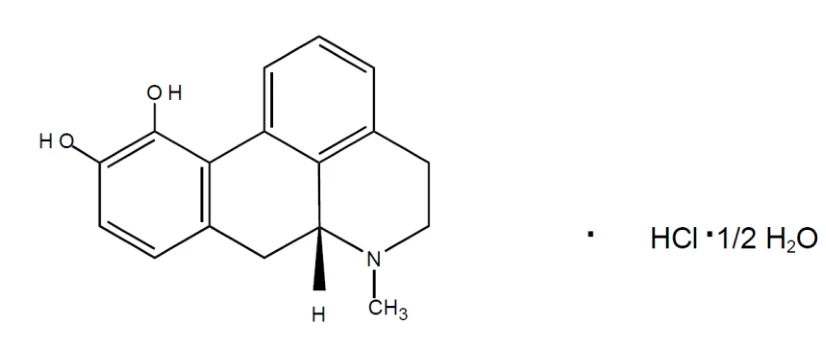
Physicochemical properties: minute, white or grayish-white glistening crystals or as white powder that is soluble in water at 80oC
CLINICAL TRIALS
Study demographics and trial design
The efficacy of MOVAPO in the acute symptomatic treatment of the recurring episodes of hypomobility, “off” episodes (“end-of-dose wearing off” and unpredictable “on/off” episodes), associated with advanced Parkinson’s disease was established in three randomized, controlled trials. At baseline in these trials, the mean duration of Parkinson’s disease was approximately 11 years. All patients were using concomitant L-dopa at baseline, 86% of patients were using a concomitant oral dopaminergic agonist, 31% were using a concomitant catechol-ortho-methyl transferase (COMT) inhibitor and 10% were using a concomitant monoamine B oxidase inhibitor. All studies excluded patients with atypical Parkinson’s disease, psychosis, dementia, hypotension, or those taking dopamine antagonists.
Study 1 was conducted in patients without prior exposure to MOVAPO (MOVAPO-naïve), and studies 2 and 3 were conducted in patients with at least 3 months of MOVAPO use immediately prior to study enrollment. Almost all patients without prior exposure to MOVAPO began taking an antiemetic three days prior to initiating treatment with MOVAPO and 50% of patients were able to discontinue the concomitant antiemetic, on average 2 months after initiating MOVAPO.
The change from baseline to 20 minutes after administration of study medication in Part III (Motor Examination) of the Unified Parkinson’s Disease Rating Scale (UPDRS) served as the primary outcome assessment measure in each study. Part III of the UPDRS contains 14 items designed to assess the severity of the cardinal motor findings (e.g., tremor, rigidity, bradykinesia, postural instability, etc.) in patients with Parkinson's disease.
Study 1:
Study 1 was a randomized, double-blind, placebo-controlled, parallel-group trial in 29 patients with advanced Parkinson’s disease who had at least 2 hours of “off” time per day despite a regimen of optimized oral antiparkinson medications including levodopa and an oral dopaminergic agonist. In an office setting, hypomobility was allowed to occur by withholding the patients’ oral antiparkinson medications overnight. The following morning, patients (in a hypomobile state) were randomized in a 2:1 ratio to study treatment (2 mg of MOVAPO or placebo given subcutaneously). At least 2 hours after the first dose, patients were given additional doses of study medication until they achieved a “therapeutic response” (defined as a response on the UPDRS Motor Examination similar to the patient’s response to their usual dose of levodopa) or until 10 mg of MOVAPO or placebo equivalent was given. At each injection re-dosing, the study drug dose was increased in 2 mg increments up to 4 mg, 6 mg, 8 mg, or 10 mg of MOVAPO, or placebo equivalent.
Of the 20 patients assigned to apomorphine, 18 achieved a therapeutic response at about 20 minutes. The mean MOVAPO dose was 5.4 mg (3 patients on 2 mg, 7 patients on 4 mg, 5 patients on 6 mg, 3 patients on 8 mg, and 2 mg on 10 mg). In contrast, of the 9 placebo-treated, none reached such a therapeutic response. The mean change from baseline in UPDRS Part III score was statistically significantly greater in the MOVAPO group (highest dose) compared to the placebo group (see Table 3 below).
Table 3: Mean Change from Baseline in UPDRS Motor Score for Intent-To-Treat population in Study 1
| Treatment | Baseline UPDRS Motor Score | Mean change from Baseline | Difference from Placebo |
|---|---|---|---|
| Placebo (N=9) | 36.3 | -0.1 | NA |
| MOVAPO (N=20) | 39.7 | -23.9* | -23.8 |
*p < 0.0001 for MOVAPO versus placebo
Patients continued to use study treatment (MOVAPO or placebo), to treat “off” episodes as needed for 4 weeks in an outpatient setting. During outpatient treatment, patient diaries were used to document daily “off” and “on” time for two days prior to and two days after each scheduled study visit. At baseline the mean duration of daily “off” time was 5.86 hours in the MOVAPO group and 6.5 hours in the placebo group and patients in both groups experienced an average of approximately 3.5 “off” episodes per day. In the outpatient setting, on average, 95% of treated
“off” episodes were aborted following administration of MOVAPO compared to 23% following administration of placebo. In the MOVAPO group daily “off” time was reduced on average by 1.7 hours compared to no reduction in the placebo group. Mean changes in daily “on” time could not be estimated reliably from the available patient diary data.
Study 2:
Study 2 was a randomized, placebo-controlled, crossover trial including 17 patients with advanced Parkinson’s disease who had been using MOVAPO for intermittent treatment of “off” episodes for at least 3 months prior to study entry. Patients received their usual morning doses of oral antiparkinson medications and were followed until hypomobility occurred, at which time they received either a single dose of subcutaneous MOVAPO (at their usual dose, between 2 mg and 10 mg) or placebo on different days in random order. UPDRS Part III scores were evaluated over time. The mean dose of MOVAPO was 4 mg (2 patients on 2 mg, 9 patients on 3 mg, 2 patients on 4 mg, and 1 patient each on 4.5 mg, 5 mg, 8 mg and 10 mg). The mean change from baseline in the UPDRS Part III score was statistically significantly greater in the MOVAPO group compared to the placebo group, as shown in Table 4 below:
Table 4: Mean Change from Baseline in UPDRS Motor Score for Intent-To-Treat population in Study 2
| Treatment | Baseline UPDRS Motor Score | Mean change from Baseline | Difference from Placebo |
|---|---|---|---|
| Placebo (N=17) | 40.1 | -3.0 | NA |
| MOVAPO (N=17) | 41.3 | -21.3* | -17.0 |
* p < 0.0001 for MOVAPO versus placebo
Study 3:
Study 3 was a randomized, double-blind, placebo-controlled, parallel-groups trial that included 62 patients with advanced Parkinson’s disease (MOVAPO: 35; Placebo: 27) who had been using MOVAPO for intermittent treatment of “off” episodes for at least 3 months prior to study entry. Patients were randomized to one of the following treatments:
- 1) MOVAPO at the usual maintenance dose (mean dose 4.6 mg),
- 2) Placebo at a volume matching the usual MOVAPO dose,
- 3) MOVAPO at the usual dose + 2 mg (0.2 mL) (mean dose 5.8 mg), or
- 4) Placebo at a volume matching the usual MOVAPO dose + 0.2 mL.
Patients received their usual morning doses of oral antiparkinson medications and were followed until hypomobility occurred, at which time they received a single dose of the randomized treatment. MOVAPO doses ranged between 2 mg and 10 mg. The mean change from baseline in the UPDRS Part III score at 20 minutes post-dosing was statistically significantly greater in the MOVAPO group compared to the placebo group (Table 5). Figure 1 shows the mean change in UPDRS Motor Scores over time following study medication administration in the pooled MOVAPO and pooled placebo groups.
Table 5: Mean Change from Baseline in UPDRS Motor Score for Intent-To-Treat population in Study 3
| Treatment | Baseline UPDRS Motor Score | Mean change from Baseline | Difference from Placebo |
|---|---|---|---|
Placebo (pooled Group 2 and Group 4) (N=27) | 40.6 | -7.4 | NA |
MOVAPO (pooled Group 1 and Group 3) (N=35) | 42.0 | -24.2* | -16.9 |
* p < 0.0001 for MOVAPO versus placebo
Figure 1: Mean Change from Baseline in UPDRS Motor Scores of Pooled MOVAPO groups and Placebo groups in Study 3
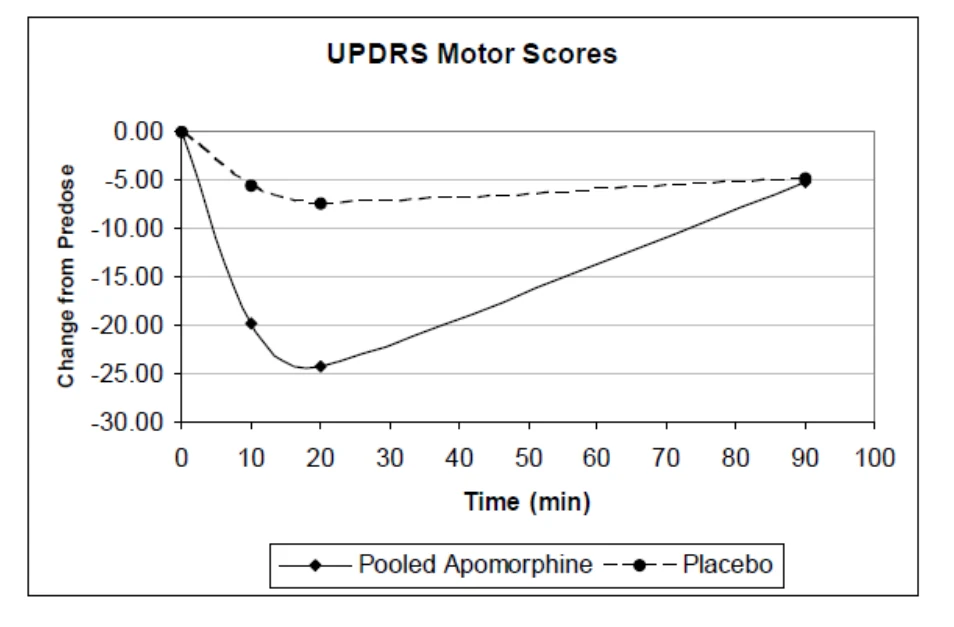
In Study 3, the mean change from baseline in the UPDRS Part III score at 20 minutes post-dosing was 24 in the MOVAPO group that received their usual maintenance dose (Group 1, mean dose 4.6 mg) and 25 in the MOVAPO group that received their usual dose + 2 mg (Group 3, mean dose 5.8 mg). The result suggests that patients chronically treated at a dose of 4 mg might derive little additional benefit from a dose increment of 2 mg. There was also an increased incidence of adverse reactions in patients randomized to higher dose MOVAPO group (Group 3).
DETAILED PHARMACOLOGY
Mechanism of action
Apomorphine hydrochloride is a potent non-ergoline D1-D2 dopamine agonist that is relatively non-selective for dopamine D1, D2, D3, D4, and D5 receptors.
Apomorphine hydrochloride has been shown to improve motor function in an animal model of Parkinson’s disease. In particular, apomorphine hydrochloride attenuates the motor deficits induced by lesions in the ascending nigrostriatal dopaminergic pathway with the neurotoxin 1-methyl-4*phenyl-1,2,3,6-tetrahydropyridine (MPTP) in primates.
TOXICOLOGY
Repeat dose toxicity studies
General toxicity has been evaluated in rats and cynomolgus monkeys with apomorphine hydrochloride administered as divided subcutaneous (s.c.) doses 4 times daily in rats and s.c. 6 times daily in monkeys. Apomorphine induced stereotypic behaviour (abnormally repetitive behavior accompanied by hyperactivity that develops as a result of excessive dopaminergic stimulation) was dose limiting in rats and monkeys. The highest doses were 4 mg/kg/day (approximately 2 times maximum recommended human dose [MRHD] on a mg/m2 basis) for 4 and 13 weeks and 3 mg/kg/day for 26 weeks in the rats. In the monkey, 3 mg/kg/day (approximately 3 times MRHD on a mg/m2 basis) was administered for 13 weeks and was originally selected as the high dose in a 39 week study. Due to to the severity of the clinical signs, the dose was lowered to 1.5 mg/kg/day. Local irritation at the injection sites was noted in both rats and monkeys in vehicle control and apomorphine treated groups after dosing for 13 weeks and longer. Decreases in body weight and in body weight gain in rats were attributed to increased activity. Adrenal cortical hypertrophy was observed in male rats at 0.4, 1.0, and 4.0 mg/kg/day after 13 weeks of dosing. Similar findings were not noted in the 26 week study at 0.3, 1.0, and 3.0 mg/kg/day. A significant dose related decrease in testis weight with no histological correlates was observed in a 39-week study in cynomolgus monkeys at 0.3, 1.0 and 1.5 mg/kg/day. There were no reported effects on hematology, but sporadic changes in biochemistry parameters were noted. There were no apomorphine related ophthalmic findings in either rats or monkeys.
Carcinogenesis
Carcinogenicity studies of apomorphine hydrochloride were conducted in rats with apomorphine administered s.c. once daily at 0.1, 0.3 and 0.8 mg/kg/day in males and at 0.3, 0.8 and 2 mg/kg/day in females for 22 to 23 months. In males, there was an increase in Leydig cell tumors at 0.8 mg/kg/day, which is less than the MRHD on a mg/m2 basis. This finding is of questionable significance because the endocrine mechanisms believed to be involved in the production of Leydig cell tumors in rats are not relevant to humans. No drug-related tumors were observed in females; the highest dose tested is similar to the MRHD on a mg/m2 basis. Retinal atrophy was noted in all apomorphine treated groups.
In a 26-week carcinogenicity study in P53- knockout transgenic mice, there was no evidence of carcinogenic potential when apomorphine hydrochloride was administered by subcutaneous injection at doses up to 20 mg/kg/day (male) or 40 mg/kg/day (female).
Genotoxicity
Apomorphine was mutagenic in the in vitro bacterial reverse mutation (Ames) and the in vitro mouse lymphoma tk assays. Apomorphine was clastogenic in the in vitro chromosomal aberration assay in human lymphocytes and in the in vitro mouse lymphoma tk assay. Apomorphine was negative in the in vivo micronucleus assay in mice.
Reproductive toxicity studies
Fertility
Apomorphine hydrochloride was administered subcutaneously at doses up to 3 mg/kg/day (approximately 1.5 times the MRHD on a mg/m2 basis) to male and female rats prior to and throughout the mating period and continuing in females through gestation day 6. There was no evidence of adverse effects on fertility or on early fetal viability. A significant decrease in testis weight was observed in a 39-week study in cynomolgus monkeys at all doses; the lowest dose is less than the MRHD on a mg/m2 basis (see TOXICOLOGY, Repeat dose toxicity studies).
Embryo-fetal development
No adverse developmental effects were observed when apomorphine hydrochloride (0.3, 1, and 3 mg/kg/day) was administered by subcutaneous injection to pregnant rats throughout organogenesis; the highest dose tested (3 mg/kg/day) is 1.5 times the MRHD on a mg/m2 basis. Administration of apomorphine hydrochloride (0.3, 1, and 3 mg/kg/day) by subcutaneous injection in pregnant rabbits throughout organogenesis resulted in 1 and 2 fetuses with heart and/or great vessels anomalies at 1 and 3 mg/kg/day, respectively, compared to none in controls at 0.3 mg/kg/day.
Prenatal and postnatal development
Apomorphine hydrochloride (0.3, 1, and 3 mg/kg/day), administered by subcutaneous injection to females throughout gestation and lactation, resulted in increased offspring mortality including total litter loss in a few females at 3 mg/kg/day. There were no effects on developmental parameters or reproductive performance in surviving offspring. The no-effect dose for developmental toxicity (1 mg/kg/day) is less than the MRHD on a mg/m2 basis.
REFERENCES
- 1- Alkana RL, Parker ES, Malcolm RD, Cohen HB, Birch H, Noble EP. Interaction of apomorphine and amantadine with ethanol in men. Alcohol Clin Exp Res. 1982;6(3):403-411.
- 2- Arnold G, Schwarz J, Macher C, Oertel WH. Domperidone is superior to ondansetron in acute apomorphine challenge in previously untreated parkinsonian patients - A double blind study. Parkinsonism Relat Disord. Dec 1997;3(4):191-193.
- 3- Axelsson P, Thörn S-E, Lövqvist A, Wattwil L, Wattwil M. Betamethasone does not prevent nausea and vomiting induced by the dopamine-agonist apomorphine. Can J Anaesth. Apr 2006;53(4):370-374.
- 4- Baas H, Harder S, Bürklin F, Demisch L, Fischer PA. Pharmacodynamics of levodopa coadministered with apomorphine in parkinsonian patients with end-of-dose motor fluctuations. Clin Neuropharmacol. 1998;21(2):86-92.
- 5- Broussolle E, Cinotti L, Pollak P, et al. Relief of akinesia by apomorphine and cerebral metabolic changes in Parkinson's disease. Mov Disord. Oct 1993;8(4):459-462.
- 6- Courty E, Durif F, Zenut M, Courty P, Lavarenne J. Psychiatric and sexual disorders induced by apomorphine in Parkinson's disease. Clin Neuropharmacol. Apr 1997;20(2):140-147.
- 7- Deleu D, Hanssens Y, Northway MG. Subcutaneous apomorphine : an evidence-based review of its use in Parkinson's disease. Drugs Aging. 2004;21(11):687-709.
- 8- Dewey RB Jr, Hutton JT, LeWitt PA, Factor SA. A randomized, double-blind, placebo-controlled trial of subcutaneously injected apomorphine for parkinsonian off-state events. Arch Neurol. Sep 2001;58(9):1385-1392.
- 9- Gancher ST, Nutt JG, Woodward WR. Absorption of apomorphine by various routes in parkinsonism. Mov Disord. 1991;6(3):212-216.
- 10- Gancher S. Pharmacokinetics of apomorphine in Parkinson's disease. J Neural Transm Suppl. 1995;45:137-141.
- 11- Harder S, Baas H, Demisch L, Simon E. Dose response and concentration response relationship of apomorphine in patients with Parkinson's disease and end-of-dose akinesia. Int J Clin Pharmacol Ther. Jul 1998;36(7):355-362.
- 12- Hofstee DJ, Neef C, van Laar T, Jansen EN. Pharmacokinetics of apomorphine in Parkinson's disease: plasma and cerebrospinal fluid levels in relation to motor responses. Clin Neuropharmacol. Feb 1994;17(1):45-52.
- 13- Kebabian JW, Calne DB. Multiple receptors for dopamine. Nature. Jan 1979;277:93-96.
- 14- LeWitt PA. Subcutaneously administered apomorphine: pharmacokinetics and metabolism. Neurology. Mar 2004;62(6 Suppl 4):S8-S11.
- 15- LeWitt PA, Ondo WG, Van Lunen B, Bottini PB. Open-label study assessment of safety and adverse effects of subcutaneous apomorphine injections in treating "off" episodes in advanced Parkinson disease. Clin Neuropharmacol. 2009;32(2):89-93.
- 16- Neef C, van Laar T. Pharmacokinetic-pharmacodynamic relationships of apomorphine in patients with Parkinson's disease. Clin Pharmacokinet. Sep 1999;37(3):257-271.
- 17- Nicolle E, Pollak P, Serre-Debeauvais F, et al. Pharmacokinetics of apomorphine in parkinsonian patients. Fundam Clin Pharmacol. 1993;7(5):245-252.
- 18- Pahwa R, Koller WC, Trosch RM, Sherry JH, Investigators APOS. Subcutaneous apomorphine in patients with advanced Parkinson's disease: a dose-escalation study with randomized, double-blind, placebo-controlled crossover evaluation of a single dose. J Neurol Sci. Jul 15 2007;258(1-2):137-143.
- 19- Pfeiffer RF, Gutmann L, Hull KL Jr, Bottini PB, Sherry JH, APO302 Study Investigators. Continued efficacy and safety of subcutaneous apomorphine in patients with advanced Parkinson's disease. Parkinsonism Relat Disord. Mar 2007;13(2):93-100.
- 20- Sampaio C, Branco M, Rosa M, Passarinho M, Castro-Caldas A. A pharmacokinetic interaction between subcutaneous apomorphine and levodopa/carbidopa (Sinemet®). Clin Drug Invest1995:363-366.
- 21- Stacy M, Silver D. Apomorphine for the acute treatment of "off" episodes in Parkinson's disease. Parkinsonism Relat Disord. 2008;14(2):85-92.
- 22- Strange PG. New insights into dopamine receptors in the central nervous system. Neurochem Int. Mar 1993;22(3):223-236.
- 23- Suter W, Matter-Jaeger I. Genotoxicity of apomorphine and various catecholamines in the Salmonella mutagenicity test (Ames test) and in tests for primary DNA damage using DNA repair-deficient B. subtilis strains (rec assay). Mutat Res. Jul 1984;137(1):17-28.
- 24- Van Laar T, Kruger PP, Gubbens-Stibbe JM, Boddé HE, Roos RA, Danhof M. Pharmacokinetics, enantiomer interconversion, and metabolism of R-apomorphine in patients with idiopathic Parkinson's disease. Clin Neuropharmacol. 1998;21(3):159-168.
- 25- Verhagen Metman L, Locatelli ER, Bravi D, Mouradian MM, Chase TN. Apomorphine responses in Parkinson's disease and the pathogenesis of motor complications. Neurology. Feb 1997;48(2):369-372.