


Product Monograph - Mylan-Ciprofloxacin (Mylan Pharmaceuticals, 250 mg, 500 mg)
SUMMARY PRODUCT INFORMATION
Table 1 – Product Information Summary
| Route of Administration | Dosage Form, Strength | All Nonmedicinal Ingredients |
| Oral | Tablet, 250 mg, 500 mg | Microcrystalline cellulose NF, corn starch NF, colloidal silicon dioxide NF, crospovidone NF, magnesium stearate NF, pregelatinized starch NF, and opadry II white Y-22-7719. |
INDICATIONS AND CLINICAL USE
MYLAN-CIPROFLOXACIN (ciprofloxacin tablets, USP) may be indicated for the treatment of patients with the following infections caused by susceptible strains of the indicated microorganisms:
Respiratory Tract Infections
Acute exacerbation of chronic bronchitis caused by:
Haemophilus influenzae
Moraxella catarrhalis
Acute pneumonia caused by:
Enterobacter cloacae
Escherichia coli
Haemophilus influenzae
Klebsiella pneumoniae
Proteus mirabilis
Pseudomonas aeruginosa
Staphylococcus aureus
Acute sinusitis caused by:
Haemophilus influenzae
Moraxella catarrhalis
MYLAN-CIPROFLOXACIN should not be prescribed to patients with acute bacterial exacerbations of simple/uncomplicated chronic obstructive pulmonary disease (ie. patients who have chronic obstructive pulmonary disease without underlying risk factors).1
MYLAN-CIPROFLOXACIN is not indicated for acute bronchitis.
Due to the nature of the underlying conditions which usually predispose patients to pseudomonas infections of the respiratory tract, bacterial eradications may not be achieved in patients who display clinical improvement despite evidence of in vitro sensitivity. In patients requiring subsequent courses of therapy, MYLAN-CIPROFLOXACIN should be used alternately with other antipseudomonal agents. Some strains of Pseudomonas aeruginosa may develop resistance during treatment. Therefore, susceptibility testing should be performed periodically during therapy to detect the emergence of bacterial resistance.
Urinary Tract Infections
Upper and lower urinary tract infections, such as complicated and uncomplicated cystitis, pyelonephritis, and pyelitis caused by:
Citrobacter diversus
Citrobacter freundii
Enterobacter cloacae
Escherichia coli
Klebsiella pneumoniae
Klebsiella oxytoca
Morganella morganii
Proteus mirabilis
Pseudomonas aeruginosa
Serratia marcescens
Staphylococcus aureus
Staphylococcus epidermidis
Staphylococcus saprophyticus
Streptococcus faecalis
Acute uncomplicated cystitis:
in females caused by Eschericia coli
1 Canadian Thoracic Society recommendations for management of chronic obstructive pulmonary disease – 2008 update – highlights for primary care. O’Donnell et al. Can Respir J 2008; 15(Suppl A):1A-8A.
In cases of uncomplicated acute bacterial cystitis, limit the use of MYLAN-CIPROFLOXACIN to circumstances where no other treatment options are available. A urine culture should be obtained prior to treatment to ensure ciprofloxacin susceptibility.
Chronic Bacterial Prostatitis
Caused by:
Escherichia coli
Skin and Soft Tissue Infections
Caused by:
Enterobacter cloacae
Escherichia coli
Klebsiella pneumoniae
Proteus mirabilis
Proteus vulgaris
Pseudomonas aeruginosa
Staphylococcus aureus
Staphylococcus epidermidis
Streptococcus pyogenes
Bone and Joint Infections
Caused by:
Enterobacter cloacae
Pseudomonas aeruginosa
Serratia marcescens
Staphylococcus aureus
Infectious Diarrhea (when antibacterial therapy is indicated)
Caused by:
Campylobacter jejuni
Escherichia coli (enterotoxigenic strains)
Shigella dysenteriae
Shigella flexneri
Shigella sonnei
Meningococcal Carriers
Treatment of asymptomatic carriers of Neisseria meningitidis to eliminate meningococci from the nasopharynx. A minimal inhibitory concentration (MIC) determination on the isolate from the index case should be performed as soon as possible. Ciprofloxacin is not indicated for the treatment of meningococcal meningitis.
Typhoid Fever (enteric fever)
Caused by:
Salmonella paratyphi
Salmonella typhi
Uncomplicated Gonorrhea
Cervical/urethral/rectal/pharyngeal infections caused by Neisseria gonorrhoea. Because co-infection with Chlamydia trachomatis is common, consideration should be given to treating presumptively with an additional regimen that is effective against C. trachomatis.
To reduce the development of drug-resistant bacteria and maintain the effectiveness of MYLAN-CIPROFLOXACIN and other antibacterial drugs, MYLAN-CIPROFLOXACIN should be used only to treat infections that are proven or strongly suspected to be caused by susceptible bacteria. When culture and susceptibility information are available, they should be considered in selecting or modifying antibacterial therapy. In the absence of such data, local epidemiology and susceptibility patterns may contribute to the empiric selection of therapy.
Limit the use of MYLAN-CIPROFLOXACIN to patients where no other treatment options exist AND where ciprofloxacin susceptibility is demonstrated, OR ciprofloxacin susceptibility is highly likely, typically greater than or equal to 95%, based on local susceptibility patterns.
Appropriate culture and susceptibility tests should be performed prior to initiating treatment in order to isolate and identify organisms causing the infection and to determine their susceptibilities to ciprofloxacin. Therapy with MYLAN-CIPROFLOXACIN may be initiated before results of these tests are known. However, modification of this treatment may be required once results become available or if there is no clinical improvement. Culture and susceptibility testing performed periodically during therapy will provide information on the possible emergence of bacterial resistance. If anaerobic organisms are suspected to be contributing to the infection, appropriate therapy should be administered.
Geriatrics (≥ 65 years of age)
Elderly patients should receive a dose dependent on the severity of their illness and their creatinine clearance (see DOSAGE AND ADMINISTRATION: Special Populations -Impaired Renal Function for dose modification based on creatinine clearance or serum creatinine).
Pediatrics (<18 years of age)
The safety and efficacy of ciprofloxacin in individuals less than 18 years of age has not been established. MYLAN-CIPROFLOXACIN is not recommended for children under the age of 18 years (see WARNINGS AND PRECAUTIONS: Special Populations - Pediatrics (< 18 years of age)).
CONTRAINDICATIONS
MYLAN-CIPROFLOXACIN is contraindicated in patients who have shown
hypersensitivity to ciprofloxacin, or other quinolone antibacterial agents or any of the excipients. For a complete listing, see the DOSAGE FORMS, COMPOSITION AND
PACKAGING section.
- Concurrent administration of ciprofloxacin and agomelatinea is contraindicated since it may result in an undesirable increase in agomelatine exposure (see DRUG INTERACTIONS).
Concurrent administration of ciprofloxacin and tizanidine is contraindicated since it may result in an undesirable increase in serum tizanidine concentrations. This can be
associated with clinically relevant tizanidine-induced side effects (hypotension, somnolence, drowsiness) (see DRUG INTERACTIONS).
a Currently not marketed in Canada
WARNINGS AND PRECAUTIONS
Serious Warnings and Precautions
|
|
General
The use of ciprofloxacin with other drugs may lead to drug-drug interactions. For established or potential drug interactions, see DRUG INTERACTIONS.
Prolonged use of MYLAN-CIPROFLOXACIN may result in the overgrowth of nonsusceptible organisms. Careful observation of the patient is therefore essential, and if superinfection should occur during therapy, appropriate measures should be taken.
Ciprofloxacin is not recommended for treatment of pneumococcal infections due to inadequate efficacy against Streptococcus pneumoniae.
Cardiovascular
Ciprofloxacin has been shown to prolong the QT interval of the electrocardiogram in some patients. In general, elderly patients may be more susceptible to drug associated effects on the QT interval. Precaution should be taken when using ciprofloxacin with concomitant drugs that can result in prolongation of the QT interval (eg, class IA or III antiarrhythmics) or in patients with risk factors for torsade de pointes (eg, known QT prolongation, uncorrected hypokalemia) (see DRUG INTERACTIONS and ADVERSE REACTIONS).
Endocrine and Metabolism
Blood Glucose Disturbances
Fluoroquinolones, including ciprofloxacin tablets, have been associated with disturbances of blood glucose, including symptomatic hyperglycemia and hypoglycemia, usually in diabetic patients receiving concomitant treatment with an oral hypoglycemic agent (e.g., glyburide) or with insulin. In these patients, careful monitoring of blood glucose is recommended. SEVERE CASES OF HYPOGLYCEMIA RESULTING IN COMA OR DEATH HAVE BEEN REPORTED. If a hypoglycemic reaction occurs, discontinue MYLAN-CIPROFLOXACIN immediately and initiate appropriate therapy (see ADVERSE REACTIONS and DRUG INTERACTIONS, Drug-Drug Interactions).
Gastrointestinal
Clostridium difficile-associated disease
Clostridium difficile-associated disease (CDAD) has been reported with the use of many antibacterial agents, including ciprofloxacin. CDAD may range in severity from mild diarrhea to fatal colitis. It is important to consider this diagnosis in patients who present with diarrhea or symptoms of colitis, pseudomembranous colitis, toxic megacolon, or perforation of the colon subsequent to the administration of any antibacterial agent. CDAD has been reported to occur over 2 months after the administration of antibacterial agents.
Treatment with antibacterial agents may alter the normal flora of the colon and many permit overgrowth of Clostridium difficile. C. difficile produces toxins A and B, which contribute to the development of CDAD. CDAD may cause significant morbidity and mortality. CDAD can be refractory to antimicrobial therapy.
If the diagnosis of CDAD is suspected or confirmed, appropriate therapeutic measures should be initiated. Mild cases of CDAD usually respond to discontinuation of antibacterial agents not directed against C. difficile. In moderate to severe cases, consideration should be given to management with fluids and electrolytes, protein supplementation, and treatment with an antibacterial agent clinically effective against C. difficile. Drugs that inhibit peristalsis may delay clearance of C. difficile and its toxins, and therefore should not be used in the treatment of CDAD. Surgical evaluation should be instituted as clinically indicated since surgical intervention may be required in certain severe cases (see ADVERSE REACTIONS).
Hepatic/Biliary/Pancreatic
Cases of hepatic necrosis and life-threatening hepatic failure have been reported with ciprofloxacin. In the event of any signs and symptoms of hepatic disease (such as anorexia, jaundice, dark urine, pruritus, or tender abdomen), treatment should be discontinued (see ADVERSE REACTIONS).
There can be an increase in transaminases, alkaline phosphatase, or cholestatic jaundice, especially in patients with previous liver damage, who are treated with MYLAN-CIPROFLOXACIN (see ADVERSE REACTIONS).
Immune
Serious hypersensitivity and/or anaphylactic reactions have been reported in patients receiving quinolone therapy, including ciprofloxacin (see ADVERSE REACTIONS). These reactions may occur within the first 30 minutes following the first dose and may require epinephrine and other emergency measures. Some reactions have been accompanied by cardiovascular collapse, hypotension/shock, seizure, loss of consciousness, tingling, angioedema (including tongue, laryngeal, throat or facial edema/swelling), airway obstruction (including bronchospasm, shortness of breath and acute respiratory distress), dyspnea, urticaria, itching and other serious skin reactions.
MYLAN-CIPROFLOXACIN should be discontinued at the first appearance of a skin rash or any other sign of hypersensitivity. Serious acute hypersensitivity reactions may require treatment with epinephrine and other resuscitative measures, including oxygen, intravenous fluids, antihistamines, corticosteroids, pressor amines and airway management, as clinically indicated.
Serious and sometimes fatal events, some due to hypersensitivity and some due to uncertain etiology, have been reported in patients receiving therapy with all antibiotics. These events may be severe and generally occur following the administration of multiple doses. Clinical manifestations may include one or more of the following: fever, rash or severe dermatologic reactions (eg, toxic epidermal necrolysis, Stevens-Johnson Syndrome), vasculitis, arthralgia, myalgia, serum sickness, allergic pneumonitis, interstitial nephritis, acute renal insufficiency or failure, hepatitis, jaundice, acute hepatic necrosis or failure, hepatic necrosis with fatal outcome, anemia including hemolytic and aplastic, thrombocytopenia including thrombotic thrombocytopenic purpura, leukopenia, agranulocytosis, pancytopenia, and/or other hematologic abnormalities.
Musculoskeletal
Myasthenia Gravis
Fluoroquinolones, including MYLAN-CIPROFLOXACIN, have neuromuscular blocking activity and may exacerbate muscle weakness in persons with myasthenia gravis. Postmarketing serious adverse events, including deaths and requirement for ventilatory support, have been associated with fluoroquinolone use in persons with myasthenia gravis. Avoid MYLAN-CIPROFLOXACIN in patients with a known history of myasthenia gravis (see ADVERSE REACTIONS).
Tendinitis
Rupture of the shoulder, hand and Achilles tendons that required surgical repair or resulted in prolonged disability have been reported in patients receiving quinolones, including ciprofloxacin (see ADVERSE REACTIONS). MYLAN-CIPROFLOXACIN should be discontinued if the patient experiences pain, inflammation, or rupture of a tendon. Patients should rest and refrain from exercise until the diagnosis of tendinitis or tendon rupture has been confidently excluded. The risk of developing fluoroquinolone associated tendinitis and tendon rupture is further increased in older patients usually over 60 years of age, in patients taking corticosteroid drugs, and in patients with kidney, heart, or lung transplants. Factors, in addition to age and corticosteroid use, that may independently increase the risk of tendon rupture include strenuous physical activity, renal failure, and previous tendon disorders such as rheumatoid arthritis. Tendinitis and tendon rupture have also occurred in patients taking fluoroquinolones who do not have the above risk factors. Tendon rupture can occur during or after completion of therapy; cases occurring up to several months after completion of therapy have been reported. MYLAN-CIPROFLOXACIN should be discontinued if the patient experiences pain, swelling, inflammation, or rupture of a tendon. Patients should be advised to rest at the first sign of tendinitis or tendon rupture, and to contact their healthcare provider regarding changing to a non-quinolone antimicrobial drug.
MYLAN-CIPROFLOXACIN should not be used in patients with a history of tendon disease/disorder related to previous quinolone treatment.
Central Nervous System Effects
Psychiatric Adverse Reactions
Fluoroquinolones, including ciprofloxacin tablets have been associated with an increased risk of psychiatric adverse reactions, including: toxic psychoses, hallucinations, or paranoia; depression, or suicidal thoughts; anxiety, agitation, restlessness, or nervousness; confusion, delirium, disorientation, or disturbances in attention; insomnia or nightmares; and memory impairment. Cases of attempted or completed suicide have been reported, especially in patients with a medical history of depression, or an underlying risk factor for depression. These reactions may occur following the first dose. If these reactions occur in patients receiving MYLAN-CIPROFLOXACIN, discontinue MYLAN-CIPROFLOXACIN and institute appropriate measures (see ADVERSE REACTIONS).
Central Nervous System Adverse Reactions
Fluoroquinolones, including ciprofloxacin tablets, have been associated with an increased risk of seizures (convulsions), increased intracranial pressure (including pseudotumor cerebri), tremors, and light-headedness. Cases of status epilepticus have also been reported. As with other fluoroquinolones, MYLAN-CIPROFLOXACIN should be used with caution in patients with a known or suspected central nervous system (CNS) disorder that may predispose them to seizures or lower the seizure threshold (e.g., severe cerebral arteriosclerosis, epilepsy) or in the presence of other risk factors that may predispose them to seizures or lower the seizure threshold (e.g., certain drug therapy, renal dysfunction). If these reactions occur in patients receiving MYLAN-CIPROFLOXACIN, discontinue MYLAN-CIPROFLOXACIN immediately and institute appropriate measures (see ADVERSE REACTIONS).
Peripheral Neuropathy
Cases of sensory or sensorimotor axonal polyneuropathy affecting small and/or large axons resulting in paresthesias, hypoesthesias, dysesthesias and/or weakness have been reported in patients receiving quinolones, including ciprofloxacin.
Ciprofloxacin should be discontinued if the patient experiences symptoms of neuropathy including pain, burning, tingling, numbness, and/or weakness, or is found to have deficits in light touch, pain, temperature, position sense, vibratory sensation, and/or motor strength in order to prevent the development of an irreversible condition (see ADVERSE REACTIONS).
Renal
Crystalluria related to ciprofloxacin has been reported only rarely in man because human urine is usually acidic. Crystals have been observed in the urine of laboratory animals, usually from alkaline urine. Patients receiving ciprofloxacin should be well hydrated and alkalinity of the urine should be avoided. The recommended daily dose should not be exceeded.
Since ciprofloxacin is eliminated primarily by the kidney, MYLAN-CIPROFLOXACIN should be used with caution and at a reduced dosage in patients with impaired renal function (see DOSAGE AND ADMINISTRATION and DETAILED PHARMACOLOGY: Human Pharmacology).
Skin
Phototoxicity
Ciprofloxacin has been shown to produce photosensitivity reactions. Moderate to severe phototoxicity reactions have been observed in patients exposed to direct sunlight or ultraviolet light while receiving drugs in this class. Excessive exposure to sunlight or ultraviolet light should be avoided. Therapy should be discontinued if phototoxicity occurs (eg, sunburn-like skin reactions).
Susceptibility/Resistance
Development of Drug-Resistant bacteria
Prescribing MYLAN-CIPROFLOXACIN in the absence of a proven or strongly suspected bacterial infection is unlikely to provide benefit to the patient and risks the development of drug-resistant bacteria.
Vision Disorders
If vision disorder occurs in association with the use of MYLAN-CIPROFLOXACIN consult an eye specialist immediately.
Special Populations
Pregnant Women
The safety of ciprofloxacin in pregnancy has not yet been established. MYLAN-CIPROFLOXACIN should not be used in pregnant women unless the likely benefits outweigh the possible risk to the fetus. Ciprofloxacin has been shown to be non-embryotoxic and non-teratogenic in animal studies.
Nursing Women
The safety of ciprofloxacin in nursing women has not been established. Ciprofloxacin is excreted in human milk. Because of the potential for serious adverse reactions in infants nursing from women taking ciprofloxacin, a decision should be made to discontinue nursing or to discontinue the administration of MYLAN-CIPROFLOXACIN, taking into account the importance of the drug to the mother and the possible risk to the infant.
Pediatrics (< 18 years of age)
The safety and efficacy of ciprofloxacin in the pediatric population less than 18 years of age have not been established. Quinolones, including ciprofloxacin, cause arthropathy and osteochondrosis in juvenile animals of several species. Damage to juvenile weight-bearing joints and lameness were observed both in rat and dog studies but not in weaned piglets (see TOXICOLOGY). Histopathological examination of the weight-bearing joints in immature dogs revealed permanent lesions of the cartilage. MYLAN-CIPROFLOXACIN is not recommended for use in pediatric patients and adolescents.
Geriatrics (≥ 65 years of age)
Ciprofloxacin is substantially excreted by the kidney, and the risk of adverse reactions may be greater in elderly patients with impaired renal function (see DETAILED PHARMACOLOGY: Human Pharmacology).
Monitoring and Laboratory Tests
Ciprofloxacin in vitro potency may interfere with the Mycobacterium spp. culture test by suppression of mycobacterial growth, causing false negative results in specimens from patients currently taking ciprofloxacin.
ADVERSE REACTIONS
Adverse Drug Reaction Overview
The following sections summarize the safety information derived from clinical trials and post-market use of Ciprofloxacin.
Clinical Trial Adverse Drug Reactions
Because clinical trials are conducted under very specific conditions the adverse reaction rates observed in the clinical trials may not reflect the rates observed in practice and should not be compared to the rates in the clinical trials of another drug. Adverse drug reaction information from clinical trials is useful for identifying drug-related adverse events and for approximating rates.
Ciprofloxacin tablets, USP are generally well tolerated. During worldwide clinical investigation (1991), 16,580 courses of ciprofloxacin treatment were evaluated for drug safety.
The incidence of adverse reactions was 8.0%. In orally treated patients enrolled in clinical trials, the most frequently reported events, possibly, probably drug-related were: nausea (1.3%), and diarrhea (1.0%).
Most of the adverse events reported were described as only mild or moderate in severity.
Events possibly or probably drug-related occurring at a frequency of less than 1% with ciprofloxacin treatment during clinical trials and subsequent post-marketing surveillance are as follows:
Body as a Whole: back pain, chest pain, pain, pain in extremities, moniliasis.
Cardiovascular System: palpitation, phlebitis, tachycardia, thrombophlebitis. The following has been reported rarely (≥0.01% <0.1%): hypotension. The following have been reported very rarely (<0.01%): angina pectoris, atrial fibrillation, cardiac arrest, cerebrovascular disorder, electrocardiogram abnormality, hot flashes, hypertension, kidney vasculitis, myocardial infarct, pericarditis, pulmonary embolus, substernal chest pain, syncope (fainting), vasodilation (hot flashes).
Digestive: abdominal pain, decreased appetite and food intake, dry mouth, dyspepsia, dysphagia, enlarged abdomen, flatulence, gastrointestinal moniliasis, jaundice, stomatitis, vomiting, abnormal liver function test. The following have been reported rarely: moniliasis (oral), cholestatic jaundice, and pseudomembranous colitis. The following have been reported very rarely: constipation, esophagitis, gastrointestinal hemorrhage, glossitis, hepatomegaly, ileus, increased appetite, intestinal perforation, life-threatening pseudomembranous colitis with possible fatal outcome, liver damage, melena, pancreatitis, tenesmus, tooth discoloration, toxic megacolon, ulcerative stomatitis.
Hemic and Lymphatic: agranulocytosis, anaemia, eosinophilia, granulocytopenia, leukocytopenia, leukocytosis, pancytopenia. The following have been reported rarely: abnormal prothrombin level, thrombocytopenia, thrombocytosis. The following have been reported very rarely: haemolytic anaemia, bone marrow depression (life-threatening), pancytopenia (life-threatening).
Hypersensitivity: rash. The following have been reported rarely: allergic reaction, anaphylactic/anaphylactoid reactions including facial, vascular and laryngeal edema, drug fever, haemorrhagic bullae and small nodules (papules) with crust formation showing vascular involvement (vasculitis), hepatitis, interstitial nephritis, petechiae (punctuate skin hemorrhages), pruritus, serum sickness-like reaction, Stevens-Johnson syndrome (potentially life-threatening) (see WARNINGS AND PRECAUTIONS: Immune). The following have been reported very rarely: shock (anaphylactic; life threatening), pruritic rash, erythema multiforme (minor), erythema nodosum, major liver disorders including hepatic necrosis, (very rarely progressing to life threatening hepatic failures), toxic epidermal necrolysis (Lyell Syndrome, potentially life threatening).
Metabolic and Nutritional Disorder: creatinine increased. The following have been reported rarely: edema (face), hyperglycemia, hypoglycemia.
Musculoskeletal: The following have been reported rarely in patients of all ages: achiness, arthralgia (joint pain), joint disorder (joint swelling), pain in the extremities, partial or completed tendon rupture (shoulder, hand or Achilles tendon), tendinitis (predominantly achillotendinitis), myalgia (muscular pain). The following have been reported very rarely: myasthenia (exacerbation of symptoms of myasthenia gravis) (see WARNINGS AND PRECAUTIONS: Musculoskeletal).
Nervous System: agitation, confusion, convulsion, dizziness, hallucinations, headache, hypesthesia, increased sweating, insomnia, somnolence, tremor (trembling). The following has been reported rarely: paresthesia (peripheral paralgesia), abnormal dreams (nightmares), anxiety, seizures (including status epilepticus), depression (potentially culminating in self-injurious behaviour, such as suicidal ideations/thoughts and attempted or completed suicide) (see WARNINGS AND PRECAUTIONS: Central Nervous System Effects). The following have been reported very rarely: apathy, ataxia, depersonalization, diplopia, hemiplegia, hyperesthesia, hypertonia, increase of intracranial pressure, meningism, migraine, nervousness, neuritis, paresthesia, polyneuritis, sleep disorder, twitching, grand mal convulsions, abnormal (unsteady) gait, psychotic reactions (potentially culminating in self-injurious behavior, such as suicidal ideations/thoughts and attempted or completed suicide), intracranial hypertension (including pseudotumor cerebri). In some instances these reactions occurred after the first administration of ciprofloxacin. In these instances, ciprofloxacin has to be discontinued and the doctor should be informed immediately.
Other: The following have been reported rarely: asthenia (general feeling of weakness, tiredness), death.
Respiratory System: dyspnea. The following have been reported very rarely: hiccup, hyperventilation, increased cough, larynx edema, lung edema, lung hemorrhage, pharyngitis, stridor, voice alteration.
Skin/Appendages: pruritus, urticaria, rash, maculopapular rash. The following has been reported rarely: photosensitivity reaction, blistering. The following have been reported very rarely: alopecia, angioedema, fixed eruption, photosensitive dermatitis, petechia.
Special Senses: abnormal vision (visual disturbances), taste perversion, tinnitus. The following have been reported rarely: transitory deafness (especially at higher frequencies), taste loss
(impaired taste). The following have been reported very rarely: chromatopsia, colour blindness, conjunctivitis, corneal opacity, diplopia, ear pain, eye pain, parosmia (impaired smell), anosmia (usually reversible on discontinuation).
Urogenital System: albuminuria, hematuria. The following have been reported rarely: abnormal kidney function, acute kidney failure, dysuria, leukorrhea, nephritis interstitial, urinary retention, vaginitis, vaginal moniliasis.
Abnormal Hematologic and Clinical Chemistry Findings
Laboratory Values: increased alkaline phosphatase, ALT increased, AST increased, BUN (urea) increased, cholestatic parameters increased, Gamma-GT increased, lactic dehydrogenase increased, NPN increased, transaminases increased, decreased albuminuria, bilirubinemia, creatinine clearance decreased, hypercholesteremia, hyperuricemia, increased sedimentation rate. The following have been reported rarely: acidosis, increased amylase, crystalluria, electrolyte abnormality, haematuria, hypercalcemia, hypocalcemia and lipase increased.
Post-Market Adverse Drug Reactions
The following additional adverse events, in alphabetical order, regardless of incidence or relationship to drug, have been reported during clinical trials and/or from worldwide postmarketing experience in patients given ciprofloxacin (includes all formulations, all dosages, all drug-therapy durations, and in all indications): acute generalized exanthematous pustulosis (AGEP), arrhythmia, atrial flutter, bleeding diathesis, bronchospasm, C. difficile associated diarrhea, candiduria, cardiac murmur, cardiopulmonary arrest, cardiovascular collapse, cerebral thrombosis, chills, delirium, drowsiness, dysphasia, edema (conjunctivae, hands, lips, lower extremities, neck), epistaxis, exfoliative dermatitis, fever, gastrointestinal bleeding, gout (flare up), gynecomastia, hearing loss, hemoptysis, hemorrhagic cystitis, hyperpigmentation, joint stiffness, lightheadedness, lymphadenopathy, manic reaction, myoclonus, nystagmus, pain (arm, breast, epigastric, foot, jaw, neck, oral mucosa), paranoia, peripheral neuropathy, phobia, pleural effusion, polyneuropathy, polyuria, postural hypotension, pulmonary embolism, purpura, QT prolongation, renal calculi, respiratory arrest, respiratory distress, restlessness, rhabdomyolysis, torsades de pointes, toxic psychosis, unresponsiveness, urethral bleeding, urination (frequent), ventricular ectopy, ventricular fibrillation, ventricular tachycardia, vesicles, visual acuity (decreased) and visual disturbances (flashing lights, change in colour perception, overbrightness of lights).
The following has been reported at an unknown frequency: international normalized ratio (INR) increased (in patients treated with Vitamin K antagonists).
DRUG INTERACTIONS
Overview
SERIOUS AND FATAL REACTIONS HAVE BEEN REPORTED IN PATIENTS RECEIVING CONCURRENT ADMINISTRATION OF CIPROFLOXACIN AND THEOPHYLLINE. These reactions include cardiac arrest, seizure, status epilepticus and respiratory failure. Similar serious adverse events have been reported in patients receiving theophylline alone; the possibility that ciprofloxacin may potentiate these reactions cannot be eliminated. If concomitant use cannot be avoided, serum levels of theophylline should be monitored and dosage adjustments should be made as appropriate.
Cytochrome P450
Ciprofloxacin is contraindicated in patients receiving concomitant treatment with agomelatinea or tizanidine as this may lead to an undesirable increase in exposure to these drugs.
Ciprofloxacin is known to be an inhibitor of the CYP450 1A2 enzymes. Care should be taken when other drugs are administered concomitantly which are metabolized via the same enzymatic pathway (eg, theophylline, methylxanthines, caffeine, duloxetine, clozapine, zolpidem). Increased plasma concentrations associated with drug specific side effects may be observed due to inhibition of their metabolic clearance by ciprofloxacin.
a Currently not marketed in Canada
Drug-Drug Interactions
The drugs listed in this table are based on either drug interaction case reports or studies, or potential interactions due to the expected magnitude and seriousness of the interaction (ie, those identified as contraindicated).
Table 2 – Established or Potential Drug-drug Interactions
| Proper Name | Ref | Effect | Clinical Comment |
|---|---|---|---|
| Agomelatinea | T | No clinical data are available for interaction with ciprofloxacin. Fluvoxamine, a CYP1A2 inhibitor, markedly inhibits the metabolism of agomelatine resulting in a 60-fold (range 12 to 412) increase of agomelatine exposure (AUC). Similar effects can be expected upon concurrent ciprofloxacin administration. | Agomelatine must not be administered concurrently with ciprofloxacin since it may result in an undesirable increase in agomelatine exposure and associated risk of hepatotoxicity (see CONTRAINDICATIONS). |
| Proper Name | Ref | Effect | Clinical Comment |
|---|---|---|---|
| Antidiabetic Agents | C | Disturbances of blood glucose, including symptomatic hyperglycemia and hypoglycemia, have been reported with quinolones, including ciprofloxacin, usually in diabetic patients receiving concomitant treatment with an oral antidiabetic agent (mainly sulfonylureas such as glyburide/glibenclamide, glimepiride) or with insulin. | In diabetic patients, careful monitoring of blood glucose is recommended. If a hypoglycemic reaction occurs in a patient receiving ciprofloxacin, discontinue the drug immediately and an appropriate therapy should be instituted (see ADVERSE REACTIONS). |
Caffeine and Other Xanthine Derivatives | CT | Caffeine has been shown to interfere with the metabolism and pharmacokinetics of ciprofloxacin. Excessive caffeine intake should be avoided. Ciprofloxacin decreases caffeine clearance and inhibits the formation of paraxanthine after caffeine administration. Upon concurrent administration of ciprofloxacin and pentoxifylline (oxpentifylline)-containing products, raised serum concentrations of this xanthine derivative were reported. | Caution and careful monitoring of patients on concomitant therapy of ciprofloxacin and caffeine or pentoxifylline (oxpentifylline) containing products is recommended |
Class IA or III Antiarrhythmics | C | Ciprofloxacin may have an additive effect on the QT interval (see WARNINGS AND PRECAUTIONS). | Like other fluoroquinolones, precaution should be taken when using ciprofloxacin together with class IA (eg, quinidine, procainamide) or III (eg, amiodarone, sotalol) antiarrhythmics. |
| Clozapine | C | Following concomitant administration of 250 mg ciprofloxacin for 7 days, serum concentrations of clozapine and n- desmethylclozapine were increased by 29% and 31%, respectively (see WARNINGS AND PRECAUTIONS). | Clinical surveillance and appropriate adjustment of clozapine dosage during and shortly after co- administration with ciprofloxacin is advised. |
| Cyclosporine | CT | Some quinolones, including ciprofloxacin, have been associated with transient increases in serum creatinine levels in patients who are concomitantly receiving cyclosporine. | It is necessary to monitor the serum creatinine concentrations in these patients (twice a week). |
| Proper Name | Ref | Effect | Clinical Comment |
|---|---|---|---|
| Duloxetine | C | In clinical studies it was demonstrated that concomitant use of duloxetine with inhibitors of the CYP450 1A2 isozyme such as fluvoxamine, may result in an increase of AUC and Cmax of duloxetine. Although no clinical data are available on a possible interaction with ciprofloxacin, similar effects can be expected upon concomitant administration. | Caution and careful monitoring of patients on concomitant therapy is recommended. |
| Ferrous Sulfate | CT | Oral ferrous sulfate at therapeutic doses decreases the bioavailability of oral ciprofloxacin. | Ciprofloxacin should be administered at least 2 hours before or 6 hours after this preparation. |
Calcium-Fortified Products (including Food and Dairy Products) | CT | Although, ciprofloxacin may be taken with meals that include milk, simultaneous administration with dairy products, alone, or with calcium-fortified products should be avoided, since decreased absorption is possible. | It is recommended that ciprofloxacin be administered at least 2 hours before or 6 hours after substantial calcium intake (>800 mg) (see DOSAGE AND ADMINISTRATION). |
Histamine H2-receptor Antagonists | CT | Histamine H2-receptor antagonists appear to have no significant effect on the bioavailability of ciprofloxacin. | No dosage adjustment is required. |
| Lidocaine | CT | It was demonstrated in healthy subjects that concomitant use of lidocaine with ciprofloxacin, an inhibitor of CYP450 1A2 isozyme, reduces clearance of intravenous lidocaine by 22%. Ciprofloxacin may increase the systemic toxicity of lidocaine. | Caution and careful monitoring of patients on concomitant therapy is recommended. |
| Methotrexate | C | Renal tubular transport of methotrexate may be inhibited by concomitant administration of ciprofloxacin, potentially leading to increased plasma levels of methotrexate. This might increase the risk of methotrexate associated toxic reactions. | Patients under methotrexate therapy should be carefully monitored when concomitant ciprofloxacin therapy is indicated. |
| Metoclopramide | CT | Metoclopramide accelerates the absorption of ciprofloxacin (oral), resulting in a shorter time to reach maximum plasma concentrations. No effect was seen on the bioavailability of ciprofloxacin. | No dosage adjustment required. |
| Proper Name | Ref | Effect | Clinical Comment |
|---|---|---|---|
| Multivalent Cations | CT | Concurrent administration of a quinolone, including ciprofloxacin, with multivalent cation-containing products such as magnesium/ aluminum antacids, polymeric phosphate binders such as sevelamer, lanthanum carbonate, sucralfate, VIDEX® (didanosine) chewable/ buffered tablets or pediatric powder, mineral supplements or products containing calcium, iron, or zinc may substantially interfere with the absorption of the quinolone, resulting in serum and urine levels considerably lower than desired. Absorption of ciprofloxacin is significantly reduced by concomitant administration of multivalent cation- containing products. | Ciprofloxacin should be administered at least 2 hours before or 6 hours after these preparations. |
Nonsteroidal Anti- Inflammatory Drugs (NSAIDs) | CT | Concomitant administration of a nonsteroidal anti-inflammatory drug (fenbufen) with a quinolone (enoxacin) has been reported to increase the risk of CNS stimulation and convulsive seizures. | Caution and careful monitoring of patients on concomitant therapy is recommended. |
| Omeprazole | CT | Concomitant administration of ciprofloxacin and omeprazole containing medicinal products results in a slight reduction of Cmax and AUC of ciprofloxacin. | No dosage adjustment needed |
| Oral Anticoagulants | CT | Simultaneous administration of ciprofloxacin with an oral anticoagulant (eg, vitamin K antagonist) may augment its anticoagulant effects. There have been many reports of increases in oral anticoagulant activity in patients receiving antibacterial agents, including quinolones. The risk may vary with the underlying infection, age, and general status of the patient so that the contribution of ciprofloxacin to the increase in INR (international normalized ratio) is difficult to assess. | INR and/or prothrombin time should be monitored frequently during and shortly after co- administration of ciprofloxacin with an oral anticoagulant (eg, warfarin, acenocoumarol). |
| Proper Name | Ref | Effect | Clinical Comment |
|---|---|---|---|
| Phenytoin | CT | Altered (decreased or increased) serum levels of phenytoin were observed in patients receiving ciprofloxacin and phenytoin simultaneously. | Monitoring of phenytoin therapy is recommended, including phenytoin serum concentration measurements, during and shortly after co- administration of ciprofloxacin with phenytoin to avoid the loss of seizure control associated with decreased phenytoin levels and to prevent phenytoin overdose-related undesirable effects. |
| Probenecid | CT | Probenecid blocks renal tubular secretion of ciprofloxacin and has been shown to produce an increase in the level of ciprofloxacin in the serum. Co-administration of probenecid (1000 mg) with ciprofloxacin (500 mg) orally resulted in about 50% reduction in the ciprofloxacin renal clearance and a 50% increase in its concentration in the systemic circulation. | Caution and careful monitoring of patients on concomitant therapy is recommended. |
| Ropinirole | CT | In a clinical study it was shown that concomitant use of ropinirole with ciprofloxacin, an inhibitor of the CYP450 1A2 isozyme, resulted in increases in the Cmax and AUC of ropinirole of 60% and 84%, respectively. Ciprofloxacin may increase the systemic toxicity of ropinirole. | Monitoring ropinirole- related undesirable effects, dose adjustment as appropriate is recommended during and shortly after co- administration with ciprofloxacin |
| Sildenafil | CT | Cmax and AUC of sildenafil were increased approximately two-fold in healthy subjects after an oral dose of 50 mg was given concomitantly with 500 mg ciprofloxacin. | Caution should be used when prescribing ciprofloxacin concomitantly with sildenafil, taking into consideration the risks and the benefits. |
| Proper Name | Ref | Effect | Clinical Comment |
|---|---|---|---|
| Theophylline | CT | Concurrent administration of ciprofloxacin with theophylline may lead to elevated serum concentrations of theophylline and prolongation of its elimination half-life. This may result in increased risk of theophylline-related adverse reactions. Studies with immediate-release ciprofloxacin have shown that concomitant administration of ciprofloxacin with theophylline decreases the clearance of theophylline, resulting in elevated serum theophylline levels and increased risk of a patient developing CNS or other adverse reactions. | If concomitant use cannot be avoided, serum levels of theophylline should be monitored and dosage adjustments made as appropriate. |
| Tizanidine | CT | In a clinical study in healthy subjects there was an increase in tizanidine serum concentrations (Cmax increase: 7-fold, range: 4- to 21-fold; AUC increase: 10-fold, range: 6- to 24- fold) when given concomitantly with ciprofloxacin. Associated with the increased serum concentrations was a potentiated hypotensive and sedative effect. | Tizanidine must not be administered together with ciprofloxacin (see CONTRAINDICATIONS). |
| Zolpidem | CT | Zolpidem exposure (AUC) increased by 46% after a single 5 mg dose when administered together with a 500 mg oral ciprofloxacin dose to healthy volunteers pretreated with ciprofloxacin (300.2 ± 115.5 vs. 438.1 ± 142.6 ng h/ml) | Concurrent use with ciprofloxacin is not recommended. |
Legend: C=Case Study; CT=Clinical Trial; T=Theoretical
a Currently not marketed in Canada
Serum Protein Binding
Serum protein binding of ciprofloxacin is between 19% to 40%, which is not likely to be high enough to cause significant protein binding interactions with other drugs.
Drug-Food Interactions:
Although ciprofloxacin may be taken with meals that include milk, simultaneous administration with dairy products alone (calcium intake >800 mg), with calcium-fortified products, or mineral fortified drinks, should be avoided since decreased absorption is possible. It is recommended that ciprofloxacin be administered at least 2 hours before or 6 hours after these preparations (see DRUG INTERACTIONS: Drug-Drug Interactions, and DOSAGE AND ADMINISTRATION: Dosing Considerations).
Drug-Herb Interactions:
Interactions with herbal products have not been established.
Drug-Laboratory Test Interactions:
Ciprofloxacin in vitro potency may interfere with the Mycobacterium spp. culture test by suppression of mycobacterial growth, causing false negative results in specimens from patients currently taking MYLAN-CIPROFLOXACIN.
Drug-Lifestyle Interactions
Ability to Drive and Operate Machinery
Fluoroquinolones including ciprofloxacin may result in an impairment of the patient's ability to drive or operate machinery due to CNS reactions. This applies particularly in combination with alcohol (see ADVERSE REACTIONS).
DOSAGE AND ADMINISTRATION
Dosing Considerations
The determination of dosage for any particular patient must take into consideration the severity and nature of the infection, the susceptibility of the causative organism, the integrity of the patient's host-defence mechanisms, and the status of renal function.
MYLAN-CIPROFLOXACIN may be taken before or after meals. Absorption is faster on an empty stomach.
Patients should be advised to drink fluids liberally and avoid taking dairy products or antacids containing magnesium or aluminum.
Ciprofloxacin should be administered at least 2 hours before or 6 hours after antacids and mineral supplements containing magnesium or aluminum, as well as sucralfate, VIDEX® (didanosine) chewable/buffered tablets or pediatric powder, metal cations such as iron, and multivitamin preparations with zinc (see DRUG INTERACTIONS).
Although ciprofloxacin may be taken with meals that include milk, simultaneous administration with dairy products alone, or with calcium-fortified products should be avoided, since decreased absorption is possible. It is recommended that ciprofloxacin be administered at least 2 hours before or 6 hours after substantial calcium intake (>800 mg) (see DRUG INTERACTIONS).
Recommended Dose and Dosage Adjustment
Adults
The recommended dosages of MYLAN-CIPROFLOXACIN are:
Table 3: Recommended Oral Dosages
| Location of Infection | Type/Severity | Unit Dose | Frequency | Daily Dose | |||||||||
| Urinary Tract | Mild/Moderate | 250 mg | q12h | 500 mg | |||||||||
| Severe/Complicated | 500 mg | q12h | 1000 mg | ||||||||||
| Chronic Bacterial Prostatitis | Asymptomatic/Mild/ Moderate | 500 mg | q12h | 1000 mg | |||||||||
Respiratory Tract Bone & Joint Skin & Soft Tissue | Mild/Moderate | 500 mg | q12h | 1000 mg | |||||||||
| Severea/Complicated | 750 mg | q12h | 1500 mg | ||||||||||
| Infectious Diarrhea | Mild/Moderate/Severe | 500 mg | q12h | 1000 mg | |||||||||
Urogenital and Extragenital Gonorrhea | Uncomplicated | 500 mg | once | 500 mg | |||||||||
| Typhoid Fever | Mild/Moderate | 500 mg | q12h | 1000 mg | |||||||||
Neisseria meningitidis Nasopharyngeal Colonization | Carrier State | 750 mg | once | 750 mg | |||||||||
| Acute Sinusitis | Moderate | 500 mg | q12h | 1000 mg | |||||||||
a. eg, hospital-acquired pneumonia, osteomyelitis
Depending on the severity of the infections, as well as the clinical and bacteriological responses, the average treatment period should be approximately 7 to 14 days. Generally, treatment should last 3 days beyond the disappearance of clinical symptoms or until cultures are sterile. Patients with osteomyelitis may require treatment for a minimum of 6 to 8 weeks and up to 3 months. With acute cystitis in females a 3- to 5- day treatment may be sufficient. With infectious diarrhea a five-day treatment may be sufficient. Typhoid fever should be treated for 14 days. Acute sinusitis should be treated for 10 days with 500 mg q12h. Chronic bacterial prostatitis should be treated for 28 days with 500 mg q12h.
Special Populations
Impaired Renal Function
Ciprofloxacin is eliminated primarily by renal excretion. However, the drug is also metabolized and partially cleared through the biliary system of the liver and through the intestine (see
DETAILED PHARMACOLOGY: Human Pharmacology). This alternate pathway of drug elimination appears to compensate for the reduced renal excretion of patients with renal impairment. Nonetheless, some modification of dosage is recommended, particularly for patients with severe renal dysfunction. The following table provides a guideline for dosage adjustment of MYLAN-CIPROFLOXACIN. However, monitoring of serum drug levels provides the most reliable basis for dosage adjustments.
Table 4: Maximum Daily Oral Dose With Stated Creatinine Clearance or Serum Creatinine
| Creatinine Clearance mL/min/1.73m2 | Maximum Daily Oral Dose | Serum Creatinine Concentration mg/100 mL |
| 31-60 | 1000 mg | 1.4 -1.9 |
| ≤ 30 | 500 mg | ≥ 2.0 |
Maximum daily doses are not to be exceeded when either creatinine clearance or serum creatinine are in the ranges stated.
Hemodialysis
Only a small amount of ciprofloxacin (< l0%) is removed from the body after hemodialysis or peritoneal dialysis. For hemodialysis patients, please follow dosing recommendations as described in Table 4. On dialysis days, the dose should be administered after dialysis.
When only the serum creatinine concentration is available, the following formula (based on sex, weight and age of the patient) may be used to convert this value into creatinine clearance. The serum creatinine should represent a steady state of renal function:
Creatinine Clearance mL/sec =
Males: Weight (kg) x (140 - age)
49 x serum creatinine (μmol/L)
Females: 0.85 x the above value
In traditional units mL/min =
Males: Weight (kg) x (140 - age)
72 x serum creatinine (mg/100 mL)
Females: 0.85 x the above value
Impaired Hepatic Function
No dosage adjustment is required.
Pediatric Use
The safety and efficacy of ciprofloxacin in individuals less than 18 years of age has not been established. MYLAN-CIPROFLOXACIN is not recommended for use in pediatric patients and adolescents (see WARNINGS AND PRECAUTIONS: Special Populations - Pediatrics (< 18 years of age)).
Missed Dose
Take the normal dose as soon as possible and then continue as prescribed. However, if it is almost time for your next dose, do not take the missed dose and continue as usual. Do not take a double dose to make up for a forgotten dose. Be sure to complete your course of treatment.
OVERDOSAGE
| For management of a suspected drug overdose, contact your regional Poison Control Centre immediately. |
In the event of acute, excessive oral overdosage, reversible renal toxicity, arthralgia, myalgia and CNS symptoms have been reported. Therefore, apart from routine emergency measures, it is recommended to monitor renal function and to administer magnesium- or calcium-containing antacids which reduce the absorption of ciprofloxacin and to maintain adequate hydration. Based on information obtained from subjects with chronic renal failure, only a small amount of ciprofloxacin (< 10%) is removed from the body after hemodialysis or peritoneal dialysis.
The administration of activated charcoal as soon as possible after oral overdose may prevent excessive increase of systemic ciprofloxacin exposure.
ACTION AND CLINICAL PHARMACOLOGY
Mechanism of Action
Ciprofloxacin, a synthetic fluoroquinolone, has in vitro activity against a wide range of gram-negative and gram-positive microorganisms. Its bactericidal action is achieved through inhibition of topoisomerase II (DNA gyrase) and topoisomerase IV (both Type II topoisomerases), which are required for bacterial DNA replication, transcription, repair, and recombination.
Ciprofloxacin retained some of its bactericidal activity after inhibition of RNA and protein synthesis by rifampin and chloramphenicol, respectively. These observations suggest ciprofloxacin may possess two bactericidal mechanisms, one mechanism resulting from the inhibition of DNA gyrase and a second mechanism which may be independent of RNA and protein synthesis.
The mechanism of action of fluoroquinolones, including ciprofloxacin, is different from that of penicillins, cephalosporins, aminoglycosides, macrolides, and tetracyclines. Therefore, microorganisms resistant to these classes of drugs may be susceptible to ciprofloxacin. Conversely, microorganisms resistant to fluoroquinolones may be susceptible to these other classes of antimicrobial agents (see PART II: SCIENTIFIC INFORMATION: MICROBIOLOGY). There is no cross-resistance between ciprofloxacin and the mentioned classes of antibiotics.
Pharmacokinetics
(See DETAILED PHARMACOLOGY: Human Pharmacology)
Absorption
Following oral administration of single doses of 250 mg and 500 mg of ciprofloxacin tablets, ciprofloxacin is absorbed rapidly and extensively mainly from the small intestine, reaching maximum serum concentrations 1-2 hours later.
The absolute bioavailability is approximately 70% to 80%. Maximum serum concentrations (Cmax) and total areas under serum concentration vs time curves (AUC) increased in proportion to dose.
Food
The administration of ciprofloxacin with food delayed absorption, as shown by an increase of approximately 50% in time to peak concentrations, but did not cause other changes in the pharmacokinetics of ciprofloxacin.
Distribution
The protein binding of ciprofloxacin is low (20% to 30%), and the substance is present in plasma largely in a non-ionized form. Ciprofloxacin can diffuse freely into the extravascular space. The large steady-state volume of distribution of 2-3 L/kg body weight shows that ciprofloxacin penetrates in tissues resulting in concentrations which clearly exceed the corresponding serum levels.
Metabolism
Small concentrations of four metabolites have been reported. They were identified as desethyleneciprofloxacin (M1), sulphociprofloxacin (M2), oxociprofloxacin (M3) and formylciprofloxacin (M4). M1 to M3 display antibacterial activity comparable to or inferior to that of nalidixic acid. M4, with the smallest quantity, is largely equivalent to norfloxacin in its antimicrobial activity.
Excretion
Ciprofloxacin is largely excreted unchanged both renally and to a smaller extent non-renally.
Renal clearance is between 0.18 to 0.3 L/h/kg and the total body clearance between 0.48 to 0.60 L/h/kg. Ciprofloxacin undergoes both glomerular filtration and tubular secretion.
Non-renal clearance of ciprofloxacin is mainly due to active transintestinal secretion as well as metabolization. 1% of the dose is excreted via the biliary route. Ciprofloxacin is present in the bile in high concentrations.
Special Populations and Conditions
Geriatrics (≥ 65 years of age)
No dosage adjustment based on age alone is necessary for elderly patients. Compromised renal function may lead to increased drug exposure in this population group as ciprofloxacin is substantially excreted by the kidney (see DETAILED PHARMACOLOGY: Human Pharmacology).
Hepatic Impairment
In preliminary studies in patients with stable chronic liver cirrhosis (with mild to moderate hepatic impairment), no significant changes in ciprofloxacin pharmacokinetics were observed.
The kinetics of ciprofloxacin in patients with acute hepatic insufficiency and stable chronic cirrhosis (with severe hepatic impairment), however, have not been fully elucidated. An increased incidence of nausea, vomiting, headache and diarrhea were observed in this patient population (see DETAILED PHARMACOLOGY: Human Pharmacology).
Renal Impairment
Ciprofloxacin is eliminated primarily by renal excretion. Patients with renal insufficiency had significantly increased AUCs, prolonged (about 2-fold) elimination half-lives, and decreased renal clearances (see DETAILED PHARMACOLOGY: Human Pharmacology).
Some modification of dosage is recommended, particularly for patients with severe renal dysfunction. Only a small amount of ciprofloxacin (< l0%) is removed from the body after hemodialysis or peritoneal dialysis (see DOSAGE AND ADMINISTRATION: Special Populations - Impaired Renal Function).
STORAGE AND STABILITY
Store between 15oC and 30oC.
DOSAGE FORMS, COMPOSITION AND PACKAGING
MYLAN-CIPROFLOXACIN 250 mg: each white, round, biconvex, film-coated tablet is embossed with “CF 250” on one side and “G” on the other side. HDPE bottles of 100's.
MYLAN-CIPROFLOXACIN 500 mg: each white, capsule-shaped, biconvex, film-coated tablet is embossed with “CF 500” on one side and “G” on the other side. Unit dose packages of 10 (cartons of 100's), and HDPE bottles of 100's and 500's.
COMPOSITION
Each tablet contains ciprofloxacin hydrochloride (ciprofloxacin 250 mg or 500 mg per tablet) as the active ingredient. In addition, each tablet contains the following non-medicinal ingredients: Microcrystalline Cellulose NF, Corn Starch NF, Colloidal Silicon Dioxide NF, Crospovidone NF, Magnesium Stearate NF, Pregelatinized Starch NF, and Opadry II White Y-22-7719. The colour, Opadry II White Y-22-7719, contains hydroxypropyl methylcellulose, titanium dioxide, polydextrose, triacetin, and polyethylene glycol.
PART II: SCIENTIFIC INFORMATION
PHARMACEUTICAL INFORMATION
DRUG SUBSTANCE
Proper Name: Ciprofloxacin hydrochloride
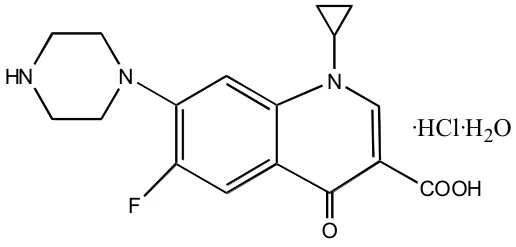
Chemical Name: 1-cyclopropyl-6-fluoro-1,4-dihydro-4-oxo-7-(1-piperazinyl)-3-quinolinecarboxylic acid hydrochloride monohydrate
Structural Formula:
Molecular Formula: C17H18FN3O3HCl H2O
Molecular Weight: 385.8 g/mol
Description: A pale yellow, crystalline powder.
Solubility:
| Solvent | Descriptive Term | Parts of Solvent Required for 1 Part of Solute (as per USP) |
| Water | Sparingly soluble | From 30 to 100 |
| Acetic acid & Methanol | Slightly soluble | From 100 to 1000 |
| Dehydrated alcohol | Very slightly soluble | From 1000 to 10,000 |
| Acetone, Acetonitrile, Ethyl acetate, Hexane, & Methylene chloride | Practically insoluble | 10,000 and over |
Melting Point: 318-320°C
pH: 3.0 - 4.5 (for a 2.5% solution in water).
pKa Values:
pKa 1 (Carboxylic acid): 5.5 ± 0.01
pKa 2 (Protonated piperazine nitrogen): 10.4 ± 0.01
Extinction Co-efficient:
Solution concentration: 0.001% w/v in 0.1 N sodium hydroxide solution.
λ max: 271 nm.
Extinction co-efficient: 83 ± 2.
CLINICAL TRIALS
Comparative Bioavailability Studies
A single dose, randomized, two-treatment, two-period, crossover bioavailability study of MYLAN-CIPROFLOXACIN 750 mg (Mylan Pharmaceuticals ULC) and Cipro® 750 mg (Bayer Inc.) was performed in healthy, adult male subjects (n=18) was performed under fasting conditions.
A summary of the results is presented in the following table.
A Comparative Randomized, Two-way Crossover Bioavailability Study of Ciprofloxacin Tablets, 750 mg and CIPRO® 750 mg Tablets Under Fasting Conditions (Study No. 106-40-11600)
Ciprofloxacin (1 x 750 mg) From measured data Geometric Mean Arithmetic Mean (CV %) Uncorrected for Potency | |||||
| Parameter | Test* | Reference¥ | % Ratio of Geometric Means | 90% Confidence Interval | 95% Confidence Interval |
AUCT (ng.hr/mL) | 11699 12168 (27) | 11662 11981 (23) | 100 | 91.0 - 110.6 | 89.1 - 113.0 |
AUC0-∞ (ng.hr/mL) | 12555 13096 (28) | 12513 12894 (25) | 100 | 90.7 - 111.0 | 88.8 - 113.4 |
Cmax (ng/mL) | 2387 2451 (22) | 2370 2427 (22) | 101 | 95.3 - 106.5 | 94.1 - 107.7 |
| Tmax (h)** | 1.64 (43) | 1.36 (40) | N/A | N/A | N/A |
| T½ (h)** | 4.07 (13) | 4.12 (15) | N/A | N/A | N/A |
*Mylan-Ciprofloxacin 750 mg, Manufactured by Mylan Pharmaceuticals ULC
¥Cipro®, Manufactured by Bayer Inc.
DETAILED PHARMACOLOGY
Animal Pharmacology
Effects on Histamine Release
Ciprofloxacin was administered intravenously to 9 anaesthetized dogs (initially with thiopental sodium at 25 mg/kg IV, followed by continuous infusion of a mixture of fentanyl 0.04 mg/kg/h and dehydrobenzperidol 0.25 mg/kg/h) at a single dose of 3, 10 or 30 mg/kg. Ciprofloxacin treatment resulted in circulatory changes similar to those caused by histamine release. These were reductions in blood pressure, cardiac output and maximum rate of pressure increase in the left ventricle (dp/dt max), and increase in heart rate. This histamine-liberating effect was counteracted by the simultaneous intravenous administration of 0.01 mg/kg pyrilamine maleate. No signs of histamine liberation were observed on conscious animals.
In vitro experiments on isolated rat mast cells also indicate that ciprofloxacin at concentrations of 0.1 to 100 mg/L has histamine liberating properties.
Bronchodilatory Effects
Ciprofloxacin was tested on isolated guinea-pig trachea at concentrations of 0.0001 to 10 mg/L. It produced a dose-related small but significant relaxation of respiratory airway smooth muscle. It has, however, no effect on leukotriene D4 and histamine-induced contractions at these doses.
Central Nervous System (CNS) Effects
Ciprofloxacin was administered orally to 4 groups of 1 cat each under chloralose-urethane anaesthesia at doses of 0, 10, 20, and 100 mg/kg. No effects were observed on neuromuscular transmission, flexor reflex, or blood pressure.
Gastrointestinal Effects
Ciprofloxacin was administered orally to 4 groups of 20 mice each at doses of 0, 10, 30, and 100 mg/kg, 40 minutes prior to a 15% charcoal suspension. No effect was observed in intestinal charcoal transit time. When given to 3 groups of 20 rats each at doses of 0, 30 or 100 mg/kg, no gastric lesions were observed on sacrificing the animals after 5 hours.
When given intraduodenally to 3 groups of 8 rats each at doses of 0, 10, and 100 mg/kg, no increase in basal gastric acid secretion was observed on perfusion of the stomach.
Effect on Blood Glucose and Serum Triglycerides
Four groups of six fasting rats each were given intravenous injections of 0, 3, 10, and 30 mg/kg respectively. A slight but significant increase in blood glucose concentrations 60 minutes and 240 minutes post dose was observed in the 3 and 10 mg/kg groups but not in the 30 mg/kg group in comparison to controls.
At 60 minutes post dose, the serum triglyceride concentrations were slightly but significantly reduced in all three groups. This effect was not dose-related. At 120 minutes, the concentration was slightly elevated in the 30 mg/kg group.
Human Pharmacology
Pharmacokinetics
The relative bioavailability of oral ciprofloxacin, given as a tablet, is between 70 and 80 per cent compared to an equivalent dose of I.V. ciprofloxacin.
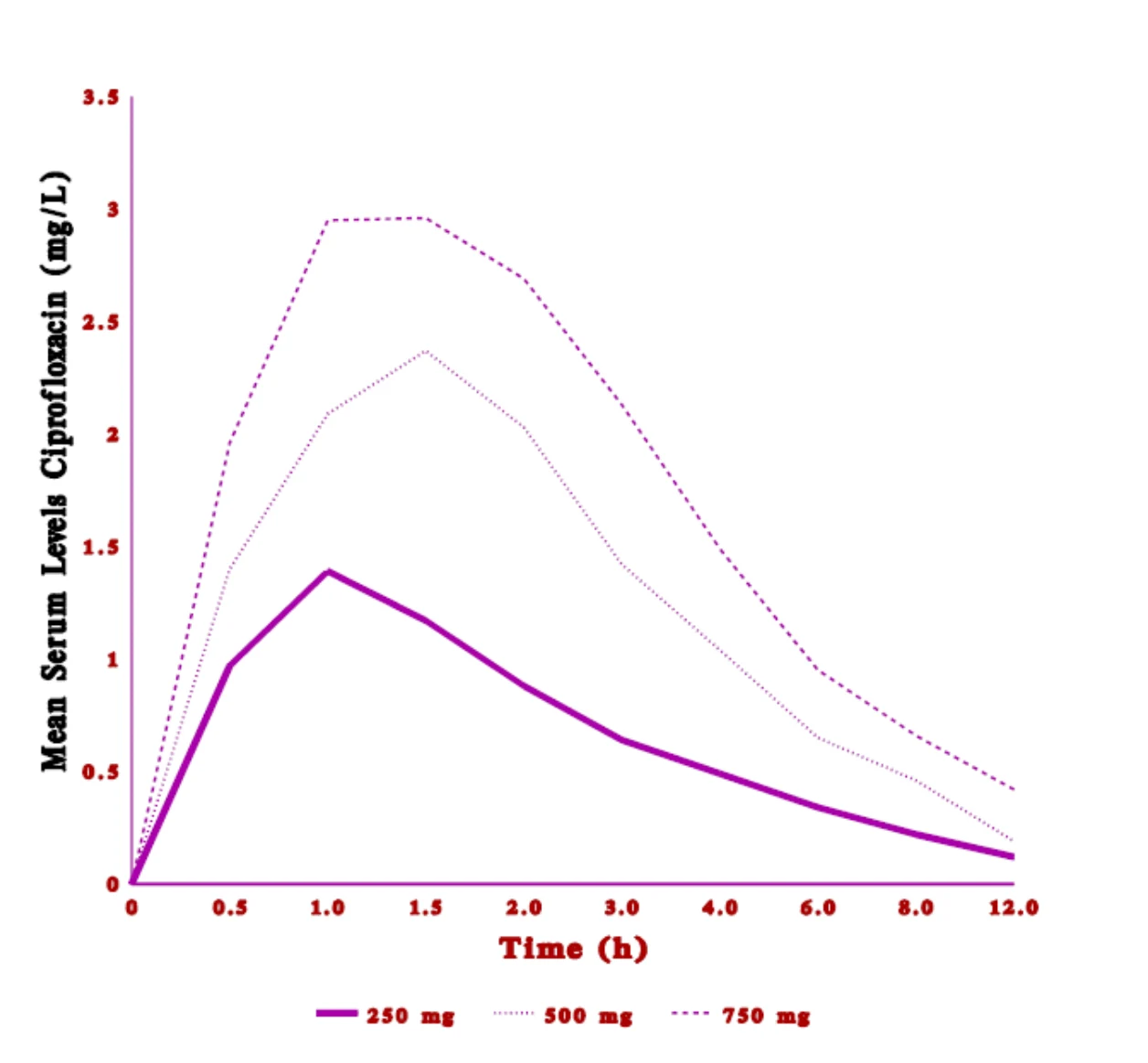
Following oral administration of single doses of 250 mg, 500 mg, and 750 mg of ciprofloxacin respectively to groups of 3 healthy male volunteers (age: 22.8 ± 3.5 years, weight: 68.5 ± 9.4 kg), ciprofloxacin was absorbed rapidly and extensively from the gastrointestinal tract.
Maximum serum concentrations (Cmax) increased dose-proportionally and were attained 1 to 2 hours after oral dosing. The total areas under the serum concentration-time curves (AUC) were also increased in proportion to dose. Mean concentrations 12 hours after dosing with 250 mg, 500 mg, or 750 mg were 0.1, 0.2, and 0.4 mg/L, respectively. The serum elimination half-lives (t1/2) were between 4 and 6 hours. (See Table 5 and Figure 1)
Table 5: Pharmacokinetic Parameters Following a Single Oral Dose of Ciprofloxacin Tablets in Healthy Volunteers
| Dose | 250 mg | 500 mg | 750 mg |
| Cmax (mg/L) | 1.42 | 2.60 | 3.41 |
| t½ (h) | 4.19 | 4.87 | 5.34 |
| AUC 0-∞ (mg·h/L) | 5.43 | 10.60 | 15.03 |
| tmax (h) | 1.11 | 1.11 | 1.56 |
Similar values were obtained following the oral administration of multiple doses every 12 hours for 7 days (see Table 6).
Table 6: Mean Pharmacokinetic Parameters of Ciprofloxacin at Steady State in Healthy Volunteers
| Regimen | AUC0-12h (mg·h/L) | Cmax (mg/L) | tmax (h) |
| Ciprofloxacin 500 mg PO q12h | 13.7 | 2.97 | 1.23 |
Figure 1: Mean Ciprofloxacin Serum Concentration After Single Oral Doses
Tablets
Metabolism and Excretion
Ciprofloxacin is largely excreted unchanged both renally and, to a small extent, extra-renally.
Small concentrations of 4 metabolites have been reported: Desethyleneciprofloxacin (M1) (1.8%), sulphociprofloxacin (M2) (5.0%), oxociprofloxacin (M3) (9.6%) and formylciprofloxacin (M4) (0.1%).
Following the oral administration of a single 259 mg dose of 14C-labelled ciprofloxacin to six healthy male volunteers (age: 25.0 ± 1.46 years, weight: 70.0 ± 3.39 kg), approximately 94% of the dose was recovered in the urine and feces over five days. Most of the radioactivity was recovered in the urine (55.4%). Unchanged ciprofloxacin was the major radioactive moiety identified in both urine and feces, accounting for 45% and 25% of the dose, respectively. Total (urine and feces) excretion of all metabolites was 18.8%.
Table 7 shows urinary recovery data from another trial where healthy subjects were administered a single dose of ciprofloxacin in tablet form (see Table 7).
Table 7: Mean Urinary Excretion of Ciprofloxacin
| Hours After Oral Administration of a Single Tablet | ||||
| 0-2 | 2-4 | 4-8 | 8-12 | |
| Urine Concentration mg/L (±S.D.) | ||||
| 250 mg PO | 205 (±89) | 163 (±145) | 101 (±65) | 32 (±28) |
| 500 mg PO | 255 (±204) | 358 (±206) | 117 (±86) | 26 (±10) |
| 750 mg PO | 243 (±143) | 593 (±526) | 169 (±131) | 55 (±36) |
| Amount Excreted mg (± S.D.) | ||||
| 250 mg dose | 54.38 (±36.22) | 26.79 (±11.78) | 22.84 (±6.79) | 8.90 (±4.25) |
| 500 mg dose | 64.51 (±25.06) | 47.37 (±15.65) | 39.54 (±11.17) | 15.52 (±5.39) |
| 750 mg dose | 68.90 (±41.85) | 72.43 (±33.13) | 61.07 (±21.68) | 28.11 (±7.64) |
Following the intravenous administration of a single 107 mg dose of 14C-labelled ciprofloxacin to six healthy male volunteers (age: 23.7 ± 1.89 years, weight: 80.2 ± 3.45 kg), 15% of unchanged ciprofloxacin was recovered in the feces, suggesting that hepatic extraction and biliary excretion is an extra-renal clearance pathway for ciprofloxacin. Direct evidence of biliary excretion of ciprofloxacin was obtained in 12 patients (age 28-58) with T-tube drainage. A peak biliary concentration of 16 mg/L was seen 4 hours after a single oral dose of ciprofloxacin 500 mg.
Tissue Concentrations
In one study, the apparent volume of distribution (Vdarea) of ciprofloxacin was estimated from the kinetic data recorded after oral doses and found to be approximately 3.5 L/kg, which suggests substantial tissue penetration.
The distribution of ciprofloxacin was observed to be rapid in healthy volunteers receiving various single and multiple intravenous doses. Fitting the serum profile to a two-compartment model provides a distribution phase with a half-life between 0.2 and 0.4 hours. The volume of distribution at steady state (Vdss) and Vdarea were between 1.7 and 2.7 L/kg respectively. The volume of the central compartment was between 0.16 and 0.63 L/kg, which approximates the total volume of extracellular water.
Single intravenous doses of 100, 150, and 200 mg ciprofloxacin were administered to nine healthy volunteers to determine the excretion and distribution of ciprofloxacin following intravenous administration and to assess the effect of dose size on pharmacokinetic parameters.
Analysis with a three-compartmental pharmacokinetic model quantified approximate sizes and kinetics of distribution into two peripheral compartments: a rapidly equilibrating compartment
(V2) with a high intercompartmental clearance rate, accounting for the rapid decline in ciprofloxacin concentrations in serum immediately following drug infusion; and a second, slowly equilibrating tissue compartment with relatively slow intercompartmental clearance. This would contribute to the prolonged terminal half-life (4 to 5 h) of ciprofloxacin IV.
The results of this study were as follows: volume of distribution at steady state (Vss) was determined to be between 2.0 and 2.9 L/kg. Volumes in each compartment were determined to be: central compartment 0.2 - 0.4, peripheral V2 0.6 - 0.8 and peripheral V3 1.2 - 1.6 L/kg.
Table 8 summarizes the results of tissue and fluid penetration of ciprofloxacin in man.
Table 8: Distribution of Ciprofloxacin in Human Tissue/Fluid
| Tissue/Fluid | No. of Patients | Single Dose of Ciprofloxacin | Peak Concentration (mg/kg or mg/L) | Mean Serum Concentration (mg/L) | Time After Dose (h) |
| Skin Blister Fluid | 6 | 500 mg PO | 1.4 ± 0.36 | 2.3 ± 0.7 | 1 - 6 |
| Bone | 4 | 750 mg PO | 1.4 ± 1.0 | 2.9 ± 2.2 | 2 - 4 |
| Gynecological Tissue | 18 | 500 mg PO | 1.3 ± 0.66 to 1.6 ± 0.97 | 1.4 ± 0.87 | 2 - 4 |
| Prostatic Tissue | 1 | 500 mg PO | 3.76 | 1.84 | 2.5 |
| Muscle | 4 | 250 mg PO | 2.4 ± 1.0 | 2.9 ± 2.2 | 2 - 4 |
| Nasal Secretions | 20 | 500 mg PO | 1.4 ± 0.81 | 1.8 ± 0.48 | 1 - 3 |
| Bronchial Tissues | 10 | 200 mg IV | 3.94 ± 2.5 | 1.62 ± 0.7 | 0.97 |
| Vagina | 18 | 100 mg IV | 1.13 ± 0.2 | 0.61 ± 0.12 | 0.5 |
| Ovary | 18 | 100 mg IV | 1.00 ± 0.23 | 0.61 ± 0.12 | 0.5 |
Special Populations
Geriatrics
In 4 females and 6 males, (age: 67 ± 4 years, weight: 65 ± 6 kg) with normal renal function for their age, given a single oral dose of 250 mg, maximum ciprofloxacin serum concentrations and areas under the serum concentration time curves were significantly higher than in 10 male younger volunteers (age: 24 ± 3 years, weight: 72 ± 9 kg). The time to peak serum concentrations, overall elimination half-life and urinary recovery of ciprofloxacin were similar in both age groups.
Table 9: Comparison of Pharmacokinetic Parameters Between Healthy Elderly and Healthy Younger Volunteers Following Oral Administration of a Single 250 mg Tablet
| Parameter | Elderly Volunteers (Mean ± S.D.) | Younger Volunteers (Mean ± S.D.) |
| Cmax (mg/L) | 1.8 ± 0.5 | 1.3 ± 0.4 |
| tmax (h) | 1.2 ± 0.3 | 1.2 ± 0.1 |
| t1/2 (h) | 3.7 ± 0.9 | 3.3 ± 0.6 |
| Total AUC (mg•h/L) | 7.25 ± 2.45 | 5.29 ± 1.21 |
| % Dose Urinary Recovery after 24 hours | 43 | 43 |
Renal Impairment
Ciprofloxacin is eliminated primarily by renal excretion. However, the drug is also metabolized and partially cleared through the biliary system of the liver and through the intestine. This alternate pathway of drug elimination appears to compensate for the reduced renal excretion of patients with renal impairment. Nonetheless, some modification of dosage is recommended, particularly for patients with severe renal dysfunction.
The pharmacokinetics of ciprofloxacin following a single oral dose of 250 mg in 6 patients (5 male, 1 female, age: 51 ± 9 years) with normal renal function (see Group I, Table 10) were compared to 6 patients (3 male, 3 female, age: 63 ± 6 years) with renal impairment (see Group II, Table 10) and to 5 patients (2 male, 3 female, age: 63 ± 6 years) with end-stage renal failure, treated by haemodialysis (see Group III, Table 10). Patients with renal insufficiency had significantly increased AUCs, prolonged (about 2-fold) elimination half-lives, and decreased renal clearances.
Haemodialysis resulted in a minimal decrease in plasma levels. From the dialysate concentrations, it can be estimated that no more than 2% of the dose was removed by dialysis over 4 hours, which was less than the amount lost in the urine over 24 hours in patients of Group II (see Table 10).
Table 10: Mean Pharmacokinetic Parameters for Ciprofloxacin Following Oral Administration of a Single 250 mg Tablet in Healthy Volunteers and in Patients with Renal Insufficiency
| Group | Creatinine Clearance (mL/s/1.73 m²) (mL/min/1.73 m²) | Parameter | ||||||||||
| Cmax (mg/L) | tmax (h) | Half-Life (h) | Total AUC (mg•h/mL) | Renal Clearance (mL/min) | % Dose Urinary Recovery (0-24 h) | |||||||
| I | > 1.0 (> 60) | 1.52 (± 0.21) | 1.0 (± 0.0) | 4.4 (±0.2) | 6.94 (± 0.97) | 232.9 (± 44.8) | 37.0 (± 3.7) | |||||
| II | < 0.33 (< 20) | 1.70 (± 0.41) | 1.7 (± 0.5) | 8.7 (±0.9) | 14.36 (± 3.5) | 18.3 (± 3.5) | 5.3 (± 1.7) | |||||
| III | End-Stage Renal Failure Treated by Hemodialysis | 2.07 (± 0.23) | 1.6 (± 0.2) | 5.8 (± 0.9) | 15.87 (± 2.0) | |||||||
Hepatic Impairment
In studies in patients with stable chronic cirrhosis (with mild to moderate hepatic impairment), no significant changes in ciprofloxacin pharmacokinetics have been observed. In a study of 7 cirrhotic patients and healthy volunteers given ciprofloxacin 750 mg every 12 hours for a total of nine doses followed by a 1-week washout and then a 30-minute infusion of ciprofloxacin I.V. 200 mg, there was no difference in pharmacokinetics between patients with stable chronic cirrhosis (with mild to moderate hepatic impairment) and healthy volunteers.
MICROBIOLOGY
Mechanism of Action
The bactericidal action of ciprofloxacin results from inhibition of enzymes topoisomerase II (DNA gyrase) and topoisomerase IV, which are required for bacterial DNA replication, transcription, repair, and recombination.
Drug Resistance
The mechanism of action of fluoroquinolones, including ciprofloxacin, is different from that of penicillins, cephalosporins, aminoglycosides, macrolides, and tetracyclines; therefore, microorganisms resistant to these classes of drugs may be susceptible to ciprofloxacin and other fluoroquinolones. There is no known cross-resistance between ciprofloxacin and other classes of antimicrobials. In vitro resistance to ciprofloxacin develops slowly by multiple step mutations. Resistance to ciprofloxacin due to spontaneous mutations occurs at a general frequency of between <10-9 to 1x10⁻⁶.
Activity in vitro and in vivo
Ciprofloxacin has in vitro activity against a wide range of gram-positive and gram-negative microorganisms. Ciprofloxacin is slightly less active when tested at acidic pH. The inoculum size has little effect when tested in vitro. The minimal bactericidal concentration (MBC) generally does not exceed the minimal inhibitory concentration (MIC) by more than a factor of 2.
Ciprofloxacin has been shown to be active against most strains of the following microorganisms, both in vitro and in clinical infections:
Aerobic gram-positive microorganisms
Enterococcus faecalis (Many strains are only moderately susceptible.)
Staphylococcus aureus (methicillin-susceptible strains only)
Staphylococcus epidermidis (methicillin-susceptible strains only)
Staphylococcus saprophyticus
Streptococcus pyogenes
Aerobic gram-negative microorganisms
Campylobacter jejuni Proteus mirabilis
Citrobacter diversus Proteus vulgaris
Citrobacter freundii Providencia rettgeri
Enterobacter cloacae Providencia stuartii
Escherichia coli Pseudomonas aeruginosa
Haemophilus influenzae Salmonella typhi
Haemophilus parainfluenzae Serratia marcescens
Klebsiella pneumoniae Shigella boydii
Moraxella catarrhalis Shigella dysenteriae
Morganella morganii Shigella flexneri
Neisseria gonorrhoeae Shigella sonnei
The following in vitro data are available, but their clinical significance is unknown.
Ciprofloxacin exhibits in vitro minimum inhibitory concentrations (MICs) of 1 μg/mL or less against most (≥90%) strains of the following microorganisms; however, the safety and effectiveness of ciprofloxacin in treating clinical infections due to these microorganisms have not been established in adequate and well-controlled clinical trials.
Aerobic gram-positive microorganisms
Staphylococcuc haemolyticus
Staphylococcus hominis
Aerobic gram-negative microorganisms
Acetinobacter iwoffii Salmonella enteritidis
Aeromonas hydrophila Vibrio cholerae
Edwardsiella tarda Vibrio parahaemolyticus
Enterobacter aerogenes Vibrio vulnificus
Legionella pneumophila Yersinia enterocolitica
Pasteurella multocida
Most strains of Burkholderia cepacia and some strains of Stenotrophomonas maltophilia are resistant to ciprofloxacin as are most anaerobic bacteria, including Bacteroides fragilis and Clostridium difficile.
Susceptibility Tests
Dilution Techniques: Quantitative methods are used to determine antimicrobial minimal inhibitory concentrations (MICs). These MICs provide estimates of the susceptibility of bacteria to antimicrobial compounds. The MICs should be determined using a standardized procedure. Standardized procedures are based on a dilution method (1) (broth or agar) or equivalent with standardized inoculum concentrations and standardized concentrations of ciprofloxacin powder. The MIC values should be interpreted according to the criteria outlined in Table 11.
Diffusion Techniques: Quantitative methods that require measurement of zone diameters also provide reproducible estimates of the susceptibility of bacteria to antimicrobial compounds. One such standardized procedure (2) requires the use of standardized inoculum concentrations. This procedure uses paper disks impregnated with 5 µg ciprofloxacin to test the susceptibility of microorganisms to ciprofloxacin.
Reports from the laboratory providing results of the standard single-disk susceptibility test with a 5 µg ciprofloxacin disk should be interpreted according to the criteria outlined in Table11. Interpretation involves correlation of the diameter obtained in the disk test with the MIC for ciprofloxacin.
| Table 11: Susceptibility Interpretative Criteria for Ciprofloxacin | |||||||
| MIC (μg/mL) | Zone Diameter (mm) | ||||||
| Species | S | I | R | S | I | R | |
| Enterobacteriacae | ≤1 | 2 | ≥4 | ≥21 | 16-20 | ≤15 | |
| Enterococcus faecalis | ≤1 | 2 | ≥4 | ≥21 | 16-20 | ≤15 | |
| Methicillin susceptible Staphylococcus species | ≤1 | 2 | ≥4 | ≥21 | 16-20 | ≤15 | |
| Pseudomonas aeruginosa | ≤1 | 2 | ≥4 | ≥21 | 16-20 | ≤15 | |
| Haemophilus influenzae | ≤1a | g | g | ≥21b | g | g | |
| Haemophilus parainfluenzae | ≤1a | g | g | ≥21b | g | g | |
| Streptococcus pyogenes | ≤1c | 2c | ≥4c | ≥21d | 16-20d | ≤15d | |
| Neisseria gonorrhoeae | ≤0.06e | 0.12 – 0.5e | ≥1e | ≥41f | 28-40f | ≤27f | |
| Abbreviations: I = Intermediate; MIC = minimum inhibitory concentration; μg = microgram; | |||||||
| mL = milliliter; mm = millimiter; R = Resistant; S = Susceptible | |||||||
| a This interpretive standard is applicable only to broth microdilution susceptibility tests with Haemophilus | |||||||
| influenzae and Haemophilus parainfluenzae using Haemophilus Test Medium (HTM). (1) | |||||||
| b This zone diameter standard is applicable only to tests with Haemophilus influenzae and Haemophilus | |||||||
| parainfluenzae using Haemophilus Test Medium (HTM).(2) | |||||||
| c These interpretive standards are applicable only to broth microdilution susceptibility tests with | |||||||
| streptococci using cation-adjusted Mueller-Hinton broth with 2-5% lysed horse blood. | |||||||
| d These zone diameter standards are applicable only to tests performed for streptococci using Mueller- | |||||||
| Hinton agar supplemented with 5% sheep blood incubated in 5% CO2. | |||||||
| e This interpretive standard is applicable only to agar dilution test with GC agar base and 1% defined | |||||||
| growth supplement. | |||||||
| f This zone diameter standard is applicable only to disk diffusion tests with GC agar base and 1% defined | |||||||
| growth supplement. | |||||||
| g The current absence of data on resistant strains precludes defining any results other than “Susceptible”. | |||||||
| Strains yielding MIC results suggestive of a “nonsusceptible” category should be submitted to a | |||||||
| reference laboratory for further testing. | |||||||
A report of “Susceptible” indicates that the pathogen is likely to be inhibited if the antimicrobial compound in the blood reaches the concentrations usually achievable. A report of “Intermediate” indicates that the result should be considered equivocal, and, if the microorganism is not fully susceptible to alternative, clinically feasible drugs, the test should be repeated. This category implies possible clinical applicability in body sites where the drug is physiologically concentrated or in situations where high dosage of drug can be used. This category also provides a buffer zone which prevents small uncontrolled technical factors from causing major discrepancies in interpretation. A report of “Resistant” indicates that the pathogen is not likely to be inhibited if the antimicrobial compound in the blood reaches the concentrations usually achievable; other therapy should be selected.
Quality Control: Standardized susceptibility test procedures require the use of laboratory control microorganisms to control the technical aspects of the laboratory procedures. For dilution technique, standard ciprofloxacin powder should provide the MIC values according to criteria outlined in Table 12. For diffusion technique, the 5 μg ciprofloxacin disk should provide the zone diameters outlined in Table 12.
| Table 12 : Quality Control for Susceptibility Testing | |||||||||
| Strains | MIC range (μg/mL) | Zone Diameter (mm) | |||||||
| Enterococcus faecalis ATCC 29212 | 0.25 – 2 | - | |||||||
| Escherichia coli ATCC 25922 | 0.004 - 0.015 | 30 – 40 | |||||||
| Haemophilus influenzae ATCC 49247 | 0.004 - 0.03a | 34 – 42d | |||||||
| Pseudomonas aeruginosa ATCC 27853 | 0.25 – 1 | 25 – 33 | |||||||
| Staphylococcus aureus ATCC 29213 | 0.12 – 0.5 | - | |||||||
| Staphylococcus aureus ATCC 25923 | - | 22 – 30 | |||||||
| Neisseria gonorrhoeae ATCC 49226 | 0.001 – 0.008b | 48 – 58e | |||||||
| C. jejuni ATCC 33560 | 0.06 – 0.25 and 0.03 – 0.12c | - | |||||||
| Abbreviations: ATCC = American Type Culture Collection; MIC = minimum inhibitory concentration; | |||||||||
| μg = microgram; mL = milliliter; mm = millimiter | |||||||||
| a This quality control range is applicable to only H. influenzae ATCC 49247 tested by a broth microdilution | |||||||||
| procedure using Haemophilus Test Medium (HTM). (1) | |||||||||
| b N. gonorrhoeae ATCC 49226 tested by agar dilution procedure using GC agar and 1% defined growth | |||||||||
| supplement in a 5% CO2 environment at 35-37°C for 20-24 hours. (2) | |||||||||
| c C. jejuni ATCC 33560 tested by broth microdilution procedure using cation adjusted Mueller Hinton | |||||||||
| broth with 2.5-5% lysed horse blood in a microaerophilic environment at 36-37°C for 48 hours and for | |||||||||
| 42°C at 24 hours, respectively. | |||||||||
| d These quality control limits are applicable to only H. influenzae ATCC 49247 testing using Haemophilus Test | |||||||||
| Medium (HTM). (2) | |||||||||
| e These quality control limits are applicable only to tests conducted with N. gonorrhoeae ATCC 49226 performed | |||||||||
| by disk diffusion using GC agar base and 1% defined growth supplement. | |||||||||
TOXICOLOGY
Acute Toxicity
Table 13: LD50 (mg/kg) across species
| Species | Mode of Administration | LD50 (mg/kg) |
| Mouse | PO | Approx. 5000 |
| Rat | PO | Approx. 5000 |
| Rabbit | PO | Approx. 2500 |
| Mouse | I.V. | Approx. 290 |
| Rat | I.V. | Approx. 145 |
| Rabbit | I.V. | Approx. 125 |
| Dog | I.V. | Approx. 250 |
Chronic Toxicity
Subacute Tolerability Studies Over 4 Weeks
Oral administration: Doses up to and including 100 mg/kg were tolerated without damage by rats. Pseudoallergic reactions due to histamine release were observed in dogs.
Parenteral administration: In the highest-dose group in each case (rats 80 mg/kg and monkeys
30 mg/kg), crystals containing ciprofloxacin were found in the urine sediment. There were also changes in individual renal tubules, with typical foreign-body reactions due to crystal-like precipitates. These changes are considered secondary inflammatory foreign-body reactions due to the precipitation of a crystalline complex in the distal renal tubule system.
Subchronic Tolerability Studies Over 3 Months
Oral administration: All doses up to and including 500 mg/kg were tolerated without damage by rats. In monkeys, crystalluria and changes in the renal tubules were observed in the highest-dose group (135 mg/kg).
Parenteral administration: Although the changes in the renal tubules observed in rats were in some cases very slight, they were present in every dose group. In monkeys they were found only in the highest-dose group (18 mg/kg) and were associated with slightly reduced erythrocyte counts and hemoglobin values.
Chronic Tolerability Studies Over 6 Months
Oral administration: Doses up to and including 500 mg/kg and 30 mg/kg were tolerated without damage by rats and monkeys, respectively. Changes in the distal renal tubules were again observed in some monkeys in the highest-dose group (90 mg/kg).
Parenteral administration: In monkeys slightly elevated urea and creatinine concentrations and changes in the distal renal tubules were recorded in the highest-dose group (20 mg/kg).
Carcinogenicity
In carcinogenicity studies in mice (21 months) and rats (24 months) with doses up to approximately 1000 mg/kg bw/day in mice and 125 mg/kg bw/day in rats (increased to 250 mg/kg bw/day after 22 weeks), there was no evidence of a carcinogenic potential at any dose level.
Reproductive Toxicology
Fertility studies in rats: Fertility, the intrauterine and postnatal development of the young, and the fertility of F1 generation were not affected by ciprofloxacin.
Embryotoxicity studies: Embryotoxicity studies:
These yielded no evidence of any embryotoxic or teratogenic action of ciprofloxacin.
Perinatal and postnatal development in rats:
No effects on the perinatal or postnatal development of the animals were detected. At the end of the rearing period histological investigations did not bring to light any sign of articular damage in the young.
Mutagenesis
Eight in vitro mutagenicity tests have been conducted with ciprofloxacin. Test results are listed below:
Salmonella: Microsome Test (Negative)
E. coli: DNA Repair Assay (Negative)
Mouse Lymphoma Cell Forward Mutation Assay (Positive)
Chinese Hamster V79 Cell HGPRT Test (Negative)
Syrian Hamster Embryo Cell Transformation Assay (Negative)
Saccharomyces cerevisiae: Point Mutation Assay (Negative)
Mitotic Crossover and Gene Conversion Assay (Negative)
Rat Hepatocyte Primary Culture DNA Repair Assay (LIDS) (Positive)
Two of the eight tests were positive, but results of the following four in vivo test systems gave negative results:
Rat Hepatocyte DNA Repair Assay
Micronucleus Test (Mice)
Dominant Lethal Test (Mice)
Chinese Hamster Bone Marrow
Special Tolerability Studies
It is known from comparative studies in animals, both with the older gyrase inhibitors and the more recent ones, that this substance class produces a characteristic damage pattern. Kidney damage, cartilage damage in weight-bearing joints of immature animals, and eye damage may be encountered.
Renal Tolerability Studies
The crystallization observed in the animal studies occurred preferentially under pH conditions that do not apply in man.
Compared to rapid infusion, a slow infusion of ciprofloxacin reduces the danger of crystal precipitation.
The precipitation of crystals in renal tubules does not immediately and automatically lead to kidney damage. In the animal studies, damage occurred only after high doses, with correspondingly high levels of crystalluria. For example, although they always caused crystalluria, even high doses were tolerated over 6 months without damage and without foreign-body reactions occurring in individual distal renal tubules.
Damage to the kidneys without the presence of crystalluria has not been observed. The renal damage observed in animal studies must not, therefore, be regarded as a primary toxic action of ciprofloxacin on the kidney tissue, but as typical secondary inflammatory foreign-body reactions due to the precipitation of a crystalline complex of ciprofloxacin, magnesium, and protein.
Articular tolerability studies
As it is also known for other gyrase inhibitors, ciprofloxacin causes damage to the large, weight-bearing joints in immature animals.
The extent of the cartilage damage varies according to age, species, and dose; the damage can be reduced by taking the weight off the joints. Studies with mature animals (rat, dog) revealed no evidence of cartilage lesions.
Retina tolerability studies
Ciprofloxacin binds to the melanin containing structures including the retina. Potential effects of ciprofloxacin on the retina were assessed in various pigmented animal species. Ciprofloxacin treatment had no effect on the morphological structures of the retina and on electroretinographic findings.
REFERENCES
- 1.
CLSI (Clinical and Laboratory Standards Institute). Methods for Dilution Antimicrobial
Susceptibility Tests for Bacteria That Grow Aerobically; Approved Standard. CLSI
Document M7-A8, Vol. 29, No. 2. Eighth Edition ed. CLSI, Wayne, PA2009.
- 2.
CLSI (Clinical and Laboratory Standards Institute). Performance Standards for
Antimicrobial Disk Susceptibility Tests; Approved Standard. CLSI Document M2-A10
Vol. 29, No. 1. Tenth Edition ed. CLSI, Wayne, PA2009.
- 3. Aigner KR, Dalhoff A. Penetration activities of ciprofloxacin into muscle, skin and fat following oral administration. J Antimicrob Chemother. 1986 Nov;18(5):644-5.
- 4. Aldridge KE, Schiro DD, Tsai L, Janney A, Sanders CV, Marier RL. Ciprofloxacin (BAY o 9867) and in vitro comparison with other broad spectrum antibiotics. Curr Ther Res. 1985;37(4):754-62.
- 5. Auckenthaler R, Michea-Hamzehpour M, Pechere JC. In-vitro activity of newer quinolones against aerobic bacteria. J Antimicrob Chemother. 1986 Apr;17 Suppl B:29-39.
- 6. Barry AL, Fass RJ, Anhalt JP, Neu HC, Thornsberry C, Tilton RC, et al. Ciprofloxacin disk susceptibility tests: interpretive zone size standards for 5-microgram disks. J Clin Microbiol. 1985 Jun;21(6):880-3.
- 7. Bauernfeind A, Petermuller C. In vitro activity of ciprofloxacin, norfloxacin and nalidixic acid. Eur J Clin Microbiol. 1983 Apr;2(2):111-5.
- 8. Bayer A, Gajewska A, Stephens M, Stark JM, Pathy J. Pharmacokinetics of ciprofloxacin in the elderly. Respiration. 1987;51(4):292-5.
- 9. Beermann D, Scholl H, Wingender W, Forster D, Beubler E. Metabolism of ciprofloxacin in man. In Neu HC & Weuta H (Eds) 1st International Ciprofloxacin Workshop, Leverkusen: Excerpta Medica, Amsterdam1985.
- 10.
CLSI (Clinical and Laboratory Standards Institute). Methods for Antimicrobial Dilution and Disk Susceptibility Testing of Infrequently Isolated or Fastidious Bacteria; Approved
Guideline. Document M45-A2. Second Edition ed. CLSI, Wayne, PA.2010.
- 11. Crump B, Wise R, Dent J. Pharmacokinetics and tissue penetration of ciprofloxacin. Antimicrob Agents Chemother. 1983 Nov;24(5): 784-6.
- 12.
Fass RJ. Treatment of skin and soft tissue infections with oral ciprofloxacin. J
Antimicrob Chemother. 1986 Nov;18 Suppl D:153-7.
- 13. Fass RJ. Efficacy and safety of oral ciprofloxacin for treatment of serious urinary tract infections. Antimicrob Agents Chemother. 1987 Feb;31(2):148-50.
- 14. Fass RJ. Efficacy and safety of oral ciprofloxacin in the treatment of serious respiratory infections. Am J Med. 1987 Apr 27;82(4A):202-7.
- 15. Fong IW, Ledbetter WH, Vandenbroucke AC, Simbul M, Rahm V. Ciprofloxacin concentrations in bone and muscle after oral dosing. Antimicrob Agents Chemother. 1986 Mar;29(3):405-8.
- 16. Gasser TC, Ebert SC, Graversen PH, Madsen PO. Ciprofloxacin pharmacokinetics in patients with normal and impaired renal function. Antimicrob Agents and Chemother. 1987 May;31(5):709-12.
- 17. Giamarellou H, Galanakis N, Dendrinos C, Stefanou J, Daphnis E, Daikos GK. Evaluation of ciprofloxacin in the treatment of Pseudomonas aeruginosa infections. Eur J Clin Microbiol. 1986 Apr;5(2):232-5.
- 18. Gonzalez MA, Moranchel AH, Duran S, Pichardo A, Magana JL, Painter B, et al. Multiple-dose ciprofloxacin dose ranging and kinetics. Clin Pharmacol Ther. 1985 Jun;37(6):633-7.
- 19. Greenberg RN, Kennedy DJ, Reilly PM, Luppen KL, Weinandt WJ, Bollinger MR, et al. Treatment of bone, joint, and soft-tissue infections with oral ciprofloxacin. Antimicrob Agents Chemother. 1987 Feb;31(2):151-5.
- 20. Greenberg RN, Tice AD, Marsh PK, Craven PC, Reilly PM, Bollinger M, et al. Randomized trial of ciprofloxacin compared with other antimicrobial therapy in the treatment of osteomyelitis. Am J Med. 1987 Apr 27;82(4A):266-9.
- 21.
Honeybourne D, Andrews JM, Ashby JP, Lodwick R, Wise R. Evaluation of the penetration of ciprofloxacin and amoxycillin into the bronchial mucosa. Thorax. 1988
Sep;43(9):715-9.
- 22. Honeybourne D, Wise R, Andrews JM. Ciprofloxacin penetration into lungs. Lancet. 1987(2031):1040.
- 23. LeBel M, Bergeron MG, Vallee F, Fiset C, Chasse G, Bigonesse P, et al. Pharmacokinetics and pharmacodynamics of ciprofloxacin in cystic fibrosis patients. Antimicrob Agents Chemother. 1986 Aug;30(2):260-6.
- 24. Ledergerber B, Bettex JD, Joos B, Flepp M, Luthy R. Effect of standard breakfast on drug absorption and multiple-dose pharmacokinetics of ciprofloxacin. Antimicrob Agents Chemother. 1985 Mar;27(3):350-2.
- 25. Licitra CM, Brooks RG, Sieger BE. Clinical efficacy and levels of ciprofloxacin in tissue in patients with soft tissue infection. Antimicrob Agents Chemother. 1987 May;31(5):805-7.
- 26. Ramirez-Ronda CH, Saavedra S, Rivera-Vazquez CR. Comparative, double-blind study of oral ciprofloxacin and intravenous cefotaxime in skin and skin structure infections. Am J Med 1987 Apr 27;82(4A):220-3.
- 27. Raoof S, Wollschlager C, Khan FA. Ciprofloxacin increases serum levels of theophylline. Am J Med. 1987 Apr 27;82(4A):115-8.
- 28. Ratcliffe NT, Smith JT. Effects of magnesium on the activity of 4-quinolone antibacterial agents. J Pharm Pharmacol. 1983; 35(Suppl):61.
- 29. Schacht P, Arcieri G, Branolte J, Bruck H, Chysky V, Griffith E, et al. Worldwide clinical data on efficacy and safety of ciprofloxacin. Infection,. 1988;16 Suppl 1:S29-43.
- 30. Schluter G. Toxicology of ciprofloxacin. Excerpta Medica, Amsterdam,: In Neu HC, Weuta H (Eds) 1st International Ciprofloxacin Workshop, Leverkusen 19851986.
- 31. Smith JT. The mode of action of 4-quinolones and possible mechanisms of resistance. J Antimicrob Chemother. 1986 Nov;18 Suppl D:21-9.
- 32. Wolfson JS, Hooper DC. The fluoroquinolones: structures, mechanisms of action and resistance, and spectra of activity in vitro. Antimicrob Agents Chemother. 1985 Oct;28(4):581-6.
- 33. Zeiler HJ. Evaluation of the in vitro bactericidal action of ciprofloxacin on cells of Escherichia coli in the logarithmic and stationary phases of growth. Antimicrob Agents Chemother. 1985 Oct;28(4):524-7.
- 34. CIPRO® (Ciprofloxacin Hydrochloride Tablets) Product Monograph, Bayer Inc., dated February 1, 2019, Control No. 219636.
- 35. A Comparative Randomized, Two-way Crossover Bioavailability Study of Ciprofloxacin Tablets, 750 mg and CIPRO® 750 mg Tablets Under Fasting Conditions (Study No. 106-40-11600). Mylan Pharmaceuticals ULC August 2000.