


Product Monograph - Mytolac
RECENT MAJOR LABEL CHANGES
| Not applicable |
|---|
TABLE OF CONTENTS
Sections or subsections that are not applicable at the time of authorization are not listed.
RECENT MAJOR LABEL CHANGES ....................................................................................................... 2
TABLE OF CONTENTS ............................................................................................................................. 2
PART I: HEALTH PROFESSIONAL INFORMATION ................................................................................. 4
1 INDICATIONS ..................................................................................................................................... 4
1.1 Pediatrics ..................................................................................................................................... 4
1.2 Geriatrics ..................................................................................................................................... 4
2 CONTRAINDICATIONS ...................................................................................................................... 4
3 SERIOUS WARNINGS AND PRECAUTIONS BOX ............................................................................ 5
4 DOSAGE AND ADMINISTRATION .................................................................................................... 5
4.1 Dosing Considerations ................................................................................................................. 5
4.2 Recommended Dose and Dosage Adjustment ............................................................................. 6
4.3 Reconstitution .............................................................................................................................. 7
4.4 Administration .............................................................................................................................. 7
4.5 Missed Dose ................................................................................................................................ 8
5 OVERDOSAGE .................................................................................................................................. 8
6 DOSAGE FORMS, STRENGTHS, COMPOSITION AND PACKAGING .............................................. 8
7 WARNINGS AND PRECAUTIONS ..................................................................................................... 9
7.1 Special Populations .................................................................................................................... 12
7.1.1 Pregnant Women ....................................................................................................................... 12
7.1.2 Breast-feeding ............................................................................................................................ 12
7.1.3 Pediatrics ................................................................................................................................... 12
7.1.4 Geriatrics ................................................................................................................................... 12
8 ADVERSE REACTIONS ................................................................................................................... 12
8.1 Adverse Reaction Overview ....................................................................................................... 12
8.2 Clinical Trial Adverse Reactions ................................................................................................. 13
8.3 Less Common Clinical Trial Adverse Reactions .......................................................................... 18
8.4 Abnormal Laboratory Findings: Hematologic, Clinical Chemistry and Other Quantitative Data.... 19
8.5 Post-Market Adverse Reactions ................................................................................................. 19
9 DRUG INTERACTIONS .................................................................................................................... 19
9.1 Serious Drug Interactions ........................................................................................................... 19
9.2 Drug Interactions Overview ........................................................................................................ 20
9.3 Drug-Behavioural Interactions .................................................................................................... 20
9.4 Drug-Drug Interactions ............................................................................................................... 20
9.5 Drug-Food Interactions ............................................................................................................... 21
9.6 Drug-Herb Interactions ............................................................................................................... 21
9.7 Drug-Laboratory Test Interactions .............................................................................................. 21
10 CLINICAL PHARMACOLOGY .......................................................................................................... 21
10.1 Mechanism of Action .................................................................................................................. 21
10.2 Pharmacodynamics .................................................................................................................... 22
10.3 Pharmacokinetics ....................................................................................................................... 25
11 STORAGE, STABILITY AND DISPOSAL ......................................................................................... 31
12 SPECIAL HANDLING INSTRUCTIONS ............................................................................................ 32
PART II: SCIENTIFIC INFORMATION ..................................................................................................... 33
13 PHARMACEUTICAL INFORMATION .................................................................................................. 33
14 CLINICAL TRIALS ........................................................................................................................... 34
14.1 Clinical Trials by Indication ......................................................................................................... 34
15 MICROBIOLOGY .............................................................................................................................. 41
16 NON-CLINICAL TOXICOLOGY ............................................................................................................ 41
17 SUPPORTING PRODUCT MONOGRAPHS ..................................................................................... 45
PATIENT MEDICATION INFORMATION ................................................................................................. 46
PART I: HEALTH PROFESSIONAL INFORMATION
1 INDICATIONS
PrMYTOLAC® [lanreotide (as lanreotide acetate) injection] is indicated for:
- The long-term treatment of adult patients with acromegaly due to pituitary tumours who have had an inadequate response to or cannot be treated with surgery and/or radiotherapy.
The relief of symptoms associated with acromegaly.
The goal of treatment in acromegaly is to reduce growth hormone (GH) and age adjusted insulin-like growth factor 1 (IGF-1) levels, and where possible, to achieve normalization of their values.
The treatment of enteropancreatic neuroendocrine tumours in adult patients with Grade 1 or a subset of Grade 2 (equivalent to Ki67<10%) unresectable, locally advanced or metastatic disease, to delay progression.
The effectiveness of lanreotide is based on a phase III placebo-controlled study which demonstrated a benefit in progression-free survival in patients classified with stable disease by RECIST criteria (<20% growth) over 12 to 24 weeks. There was no evidence of an overall survival benefit. Data on hindgut tumours were limited (see 14.1 Clinical Trials by Indication, Enteropancreatic Neuroendocrine Tumours).
- The treatment of adult patients with carcinoid syndrome; when used, PrMYTOLAC® reduces the administration frequency of short-acting somatostatin analog rescue therapy (see 14.1 Clinical Trials by Indication, Carcinoid Syndrome).
1.1 Pediatrics
Pediatrics (< 18 years of age): No data are available to Health Canada; therefore, Health Canada has not authorized an indication for pediatric use.
1.2 Geriatrics
Geriatrics (> 65 years of age): Evidence from clinical studies and experience suggests that use in the geriatric population is associated with differences in pharmacokinetics (see 7.1.4 Geriatrics). It is not necessary to alter the starting dose in elderly acromegaly patients (see 4.2 Recommended Dose and Dosage Adjustment, Acromegaly). Clinical studies in patients with enteropancreatic neuroendocrine tumours (NETs) or carcinoid syndrome did not include sufficient numbers of patients aged 65 years and over (see 7.1.4 Geriatrics).
2 CONTRAINDICATIONS
- Lanreotide injection is contraindicated in patients who are hypersensitive to this drug (see Immune), or to any ingredient in the formulation, including any non-medicinal ingredient, or component of the container. For a complete listing, see 6 DOSAGE FORMS, STRENGTH, COMPOSITION AND PACKAGING.
- Lanreotide injection is contraindicated in patients who are hypersensitive to somatostatin or related peptides.
- Lanreotide injection is contraindicated in patients with complicated, untreated lithiasis of the bile ducts.
3 SERIOUS WARNINGS AND PRECAUTIONS BOX
4 DOSAGE AND ADMINISTRATION
4.1 Dosing Considerations
Acromegaly
- After 3 months of treatment with PrMYTOLAC®, GH and IGF-1 levels should be measured and the dose should be adjusted based on disease progression and effectiveness of treatment (see 4.2 Recommended Dose and Dosage Adjustment, Acromegaly and Monitoring and Laboratory Tests, Acromegaly).
- Slight decreases in thyroid function have been observed during treatment. Thyroid function tests are recommended where clinically indicated (see Endocrine and Metabolism and Monitoring and Laboratory Tests, Acromegaly).
- Patients with moderate or severe hepatic or renal impairment should start treatment with PrMYTOLAC® 60 mg followed by dose adjustments. These patients have not been studied for an extended dosing interval of PrMYTOLAC®120 mg (see 4.2 Recommended Dose and Dosage Adjustment, Acromegaly).
Acromegaly, Enteropancreatic NETs, and Carcinoid Syndrome
- Sinus bradycardia may occur in patients suffering from cardiac disorders prior to treatment initiation with PrMYTOLAC®, therefore, heart rate should be monitored in these patients (see Cardiovascular and Monitoring and Laboratory Tests).
- Patients treated with PrMYTOLAC® may experience hypoglycemia or hyperglycemia. Blood glucose levels should be monitored when treatment is initiated or when the dose is changed and periodically thereafter, and treatment of diabetic patients should be adjusted accordingly (see 3 SERIOUS WARNINGS AND PRECAUTIONS BOX, Endocrine and Metabolism and Monitoring and Laboratory Tests).
- PrMYTOLAC® may reduce gallbladder motility and lead to gallstone formation. Gallbladder ultrasonography is recommended at the start of treatment and periodically thereafter. If complications of cholelithiasis are suspected, discontinue PrMYTOLAC® and treat appropriately (see 3 SERIOUS WARNINGS AND PRECAUTIONS BOX, Hepatic/Biliary/Pancreatic and Monitoring and Laboratory Tests).
- Concomitant administration of PrMYTOLAC® with cyclosporin may decrease blood levels of cyclosporine, therefore, cyclosporin blood levels should be monitored (see 3 SERIOUS WARNINGS AND PRECAUTIONS BOX and 9.1 Serious Drug Interactions).
The gastrointestinal effects of PrMYTOLAC® may reduce the intestinal absorption of co- administered drugs. PrMYTOLAC® may decrease the metabolic clearance of compounds known to be metabolized by cytochrome P450 enzymes. Caution should be exercised when medicinal products mainly metabolized by CYP3A4 that have a low therapeutic index
Endocrine and Metabolism
Monitoring
and Laboratory Tests
Hepatic/Biliary/Pancreatic
Monitoring and Laboratory
Tests
9.1 Serious Drug Interactions are co-administered with PrMYTOLAC® (see 9.2 Drug Interactions Overview).
- Concomitant administration of bradycardia-inducing drugs may have an additive effect on the reduction of heart rate associated with PrMYTOLAC® treatment. Dosage adjustments of concomitant drugs may be necessary (see 9.2 Drug Interactions Overview).
- It is not necessary to alter the starting dose in elderly acromegaly patients (see 4.2 Recommended Dose and Dosage Adjustment, Acromegaly). Clinical studies in patients with enteropancreatic NETs or carcinoid syndrome did not include sufficient numbers of geriatric patients aged 65 and older to recommend a dose for these patients (see 7.1.4 Geriatrics).
Enteropancreatic NETs
- There is no recommended dose adjustment for mild or moderate renal impairment. There is insufficient information to recommend a dose for patients with severe renal impairment or with hepatic impairment of any severity (see 4.2 Recommended Dose and Dosage Adjustment, Enteropancreatic NETs).
Carcinoid Syndrome
- There is insufficient information to recommend a dose for patients with renal or hepatic impairments of any severity. Specific renal or hepatic impairment studies were not conducted in patients with carcinoid syndrome (see 4.2 Recommended Dose and Dosage Adjustment, Carcinoid Syndrome).
4.2 Recommended Dose and Dosage Adjustment
Acromegaly
Patients should begin treatment with PrMYTOLAC® 90 mg given via deep subcutaneous route, at 4 week intervals for 3 months. After 3 months dosage may be adapted as follows:
GH > 1 to ≤ 2.5 ng/mL, IGF-1 normal and clinical symptoms controlled: Maintain
PrMYTOLAC® dosage at 90 mg every 4 weeks
GH > 2.5 ng/mL, IGF-1 elevated and/or clinical symptoms uncontrolled: Increase
PrMYTOLAC® dosage to 120 mg every 4 weeks
GH ≤ 1 ng/mL, IGF-1 normal and clinical symptoms controlled: Reduce PrMYTOLAC®
dosage to 60 mg every 4 weeks
Thereafter, the dose should be adjusted according to the response of the patient as judged by a reduction in symptoms and/or in GH and/or IGF-1 levels.
The starting dose in patients with moderate or severe hepatic or renal impairment should be 60 mg PrMYTOLAC® via the deep subcutaneous route, at 4 week intervals for 3 months, followed by dose adjustments as described above (see 10.3 Pharmacokinetics, Hepatic Insufficiency and Renal Insufficiency).
Patients who are controlled on PrMYTOLAC® 60 mg or 90 mg may be considered for an extended dosing interval of PrMYTOLAC® 120 mg every 6 or 8 weeks. GH and IGF-1 levels should be obtained 6 weeks after this change in dosing regimen to evaluate the persistence of patients’ response.
Continued monitoring of patients’ response with dose adjustments for biochemical and clinical symptom control is recommended.
Patients with moderate or severe hepatic or renal impairment have not been studied for an extended dosing interval of PrMYTOLAC® 120 mg every 6 or 8 weeks (see 10.3 Pharmacokinetics, Pharmacokinetics of Lanreotide in Patients with Acromegaly).
Health Canada has not authorized an indication for pediatric use in patients less than 18 years of age (see 1.1 Pediatrics).
It is not necessary to alter the starting dose in geriatric patients aged 65 years and older (see
10.3 Pharmacokinetics, Geriatrics).
Enteropancreatic NETs
The recommended dose of PrMYTOLAC® is 120 mg administered every 4 weeks by deep subcutaneous injection in the superior external quadrant of the buttock or upper outer thigh. Treatment with PrMYTOLAC® should be discontinued upon disease progression.
There is no recommended dose adjustment for mild or moderate renal impairment. There is insufficient information to recommend a dose for patients with severe renal impairment or with hepatic impairment of any severity (see 10.3 Pharmacokinetics, Hepatic Insufficiency and Renal Insufficiency).
Health Canada has not authorized an indication for pediatric use in patients less than 18 years of age (see 7.1.3 Pediatrics).
Clinical studies in patients with enteropancreatic NETs did not include sufficient numbers of geriatric patients aged 65 and older to recommend a dose for these patients (see 7.1.4 Geriatrics).
Carcinoid Syndrome
The recommended dose of PrMYTOLAC® is 120 mg administered every 4 weeks by deep subcutaneous injection.
If patients are already being treated with PrMYTOLAC® for enteropancreatic NETs, patients should not administer an additional dose for the treatment of carcinoid syndrome.
There is insufficient information to recommend a dose for patients with renal or hepatic impairments of any severity. Specific renal or hepatic impairment studies were not conducted in patients with carcinoid syndrome (see 10.3 Pharmacokinetics, Hepatic Insufficiency and Renal Insufficiency).
Health Canada has not authorized an indication for pediatric use in patients less than 18 years of age (see 7.1.3 Pediatrics).
Clinical studies in patients with carcinoid syndrome did not include sufficient numbers of geriatric patients aged 65 and older to recommend a dose for these patients (see 7.1.4 Geriatrics).
4.3 Reconstitution
Reconstitution is not required for this drug product.
4.4 Administration
The injection may be given by a healthcare professional or, for patients considered by their healthcare professional to be on a stable dose of PrMYTOLAC®, by another appropriately trained individual. Alternatively, such patients may self-administer the product after appropriate training. The decision regarding administration by the patient or a trained individual should be taken by the healthcare professional.
PrMYTOLAC® should be injected via the deep subcutaneous route in the superior external quadrant of the buttock or in the upper outer thigh. In the case of self- administration, the injection should be given in the upper outer thigh.
Regardless of the site of administration, the skin should be stretched prior to injection. The needle should be inserted rapidly to its full length, perpendicularly to the skin. The injection site should be alternated between the right and left sides.
PrMYTOLAC® is provided in a sterile, pre-filled syringe, co-packaged with a single use needle fitted with a shield which automatically covers and locks around the needle following administration of the product, to help prevent needle stick injury after use. PrMYTOLAC® is for immediate and single use following first opening. No reconstitution is required.
4.5 Missed Dose
If a dose is missed, the next dose should be administered as soon as possible.
5 OVERDOSAGE
If overdose occurs, symptomatic management is indicated. Experience with lanreotide overdose in humans consists of a single case, a 52-year-old acromegalic patient with medical history of diabetes mellitus and hypertension, who had received as a result of drug misuse a 30 mg lanreotide injection daily for 2 months. No acute symptoms or pharmacological signs of overdose were reported. One week after the last injection he experienced a myocardial infarction.
6 DOSAGE FORMS, STRENGTHS, COMPOSITION AND PACKAGING Table 1: Dosage Forms, Strengths, Composition and Packaging
| Route of Administration | Dosage Form / Strength/Composition | Non-medicinal Ingredients |
|---|---|---|
| Deep subcutaneous injection | Extended release solution 60 mg, 90 mg, 120 mg lanreotide (as lanreotide acetate) per unit (syringe) | Acetic acid, water for injection |
PrMYTOLAC® is supplied in a sterile, pre-filled polypropylene syringe with thermoplastic elastomer rubber closure sealed with a polypropylene cap. The syringe is co-packaged with a separate needle pack. The needle pack contains a SAN® (Safe Auto Needle) – Light device, which is a needle with a GREEN NEEDLE SHIELD to prevent needle stick injury.
Each pre-filled syringe is flag labeled, placed in a plastic tray and sealed inside a labeled aluminum pouch. Each stainless steel needle is fitted with a shield, an automatic safety device, and is packed separately. The syringe and the needle are co-packaged in a carton box, which contains the Patient Medication Information leaflet.
Box of one individual 60 mg MYTOLAC® dose in a 0.5 mL syringe + one stainless steel needle (18G X 20 mm) fitted with a shield.
Box of one individual 90 mg MYTOLAC® dose in a 0.5 mL syringe + one stainless steel needle (18 G X 20 mm) fitted with a shield.
Box of one individual 120 mg MYTOLAC® dose in a 0.5 mL syringe + one stainless steel needle (18G X 20 mm) fitted with a shield.
PrMYTOLAC® is an extended-release preparation intended for deep subcutaneous injection. The only excipients are water for injection and acetic acid (for pH adjustment).
7 WARNINGS AND PRECAUTIONS
Please see 3 SERIOUS WARNINGS AND PRECAUTIONS BOX.
Cardiovascular
Lanreotide may lead to a decrease of heart rate without necessarily reaching the threshold of bradycardia in patients without an underlying cardiac problem. In patients suffering from cardiac disorders prior to lanreotide initiation, sinus bradycardia may occur and therefore heart rate should be monitored (see Monitoring and Laboratory Tests).
In 81 patients with baseline heart rates of ≥ 60 beats per minute (bpm) treated with lanreotide in enteropancreatic neuroendocrine tumours (NETs) Study 726, the incidence of heart rate
<60 bpm was 23% (19/81) as compared to 16% (15/94) of placebo treated patients; ten patients (12%) had documented heart rates <60 bpm on more than one visit. The incidence of documented episodes of heart rate <50 bpm as well as the incidence of bradycardia reported as an adverse event was 1% in each treatment group. Initiate appropriate medical management in patients who develop symptomatic bradycardia.
Driving and Operating Machinery
Clinical studies in patients with acromegaly, enteropancreatic NETs, or carcinoid syndrome demonstrated that adverse reactions of headache and dizziness were most commonly reported with lanreotide treatment. Patients should be warned to exercise caution when driving or operating machinery while on treatment with PrMYTOLAC®.
Endocrine and Metabolism
Pharmacological studies in animals and humans show that lanreotide, like somatostatin and its analogues, inhibits the secretion of insulin and glucagon. Hence, patients treated with PrMYTOLAC® may experience hypoglycemia or hyperglycemia. Blood glucose levels should be monitored when lanreotide treatment is initiated or when the dose is changed and periodically thereafter, and treatment of diabetic patients should be adjusted accordingly (see Monitoring and Laboratory Tests). In insulin-dependent patients, insulin requirements may be reduced.
Slight decreases in thyroid function have been seen during treatment with lanreotide in acromegalic patients, though clinical hypothyroidism is rare. Thyroid function tests are recommended where clinically indicated (see Monitoring and Laboratory Tests).
Gastrointestinal
The gastrointestinal effects of lanreotide may reduce the intestinal absorption of co- administered drugs.
Hepatic/Biliary/Pancreatic
Lanreotide may reduce gallbladder motility and lead to gallstone formation. Gallbladder ultrasonography is therefore advised at the start of treatment and periodically thereafter (see Monitoring and Laboratory Tests).
There have been post-marketing reports of gallstones resulting in complications, including cholecystitis, cholangitis, and pancreatitis, requiring cholecystectomy in patients taking lanreotide. If complications of cholelithiasis are suspected, discontinue PrMYTOLAC® and treat appropriately.
In hepatic impairment, an increase in Volume of Distribution, Mean Residence Time, AUC, and half-life were observed. Clearance was reduced by 30% in moderate to severe hepatically impaired patients (See 10.3 Pharmacokinetics, Hepatic Insufficiency).
Pancreatic exocrine insufficiency (PEI) has been observed in some patients receiving lanreotide therapy mainly for gastroenteropancreatic NETs, but cases have also been reported in patients receiving lanreotide therapy for acromegaly or carcinoid syndrome. Symptoms of PEI can include steatorrhea, loose stools, abdominal bloating, and weight loss. Screening and appropriate treatment for PEI according to clinical guidelines should be considered in symptomatic patients.
Acromegaly
It is recommended that patients with moderate or severe hepatic impairment receive a starting dose of lanreotide (as lanreotide acetate) of 60 mg (see 4.2 Recommended Dose and Dosage Adjustment, Acromegaly).
Patients with moderate or severe hepatic impairment have not been studied for an extended dosing interval of lanreotide 120 mg every 6 or 8 weeks (see 10.3 Pharmacokinetics, Pharmacokinetics of Lanreotide in Patients with Acromegaly).
Enteropancreatic NETs
In patients with enteropancreatic neuroendocrine tumours, lanreotide was not studied in patients with mild, moderate, or severe hepatic impairment (as per Child-Pugh score) (see 4.2 Recommended Dose and Dosage Adjustment, Enteropancreatic NETs and 10.3 Pharmacokinetics, Hepatic Insufficiency).
Carcinoid Syndrome
In patients with carcinoid syndrome, lanreotide was not studied in patients with mild, moderate, or severe hepatic impairment (see 4.2 Recommended Dose and Dosage Adjustment, Carcinoid Syndrome and 10.3 Pharmacokinetics, Hepatic Insufficiency).
Immune
Allergic reactions (including angioedema and anaphylaxis) have been reported following the administration of lanreotide (see 8.5 Post- Market Adverse Drug Reactions).
Monitoring and Laboratory Tests Acromegaly
Evaluation of GH and IGF-1 levels are useful markers of the disease progression and effectiveness of treatment (see 4.2 Recommended dose and dosage adjustment, Acromegaly).
Slight decreases in thyroid function have been seen during treatment. Thyroid function tests are recommended where clinically indicated.
Acromegaly, Enteropancreatic NETs, and Carcinoid Syndrome
In patients suffering from cardiac disorders prior to lanreotide initiation, sinus bradycardia may occur and therefore heart rate should be monitored.
The principal pharmacodynamic interaction that may occur is the inhibition of glucagon secretion which may lead to the onset of hypoglycemia in treated diabetic patients, notably insulin-dependent patients. Thus, the insulin requirements in insulin-dependent diabetic patients may be reduced. Patients treated with PrMYTOLAC® may experience hypoglycemia or hyperglycemia. Therefore, blood glucose levels should be monitored when PrMYTOLAC® treatment is initiated or when the dosage is attuned, and periodically thereafter. The antidiabetic treatment of diabetic patients should be adjusted accordingly.
Lanreotide may reduce gallbladder motility and lead to gallstone formation. Gallbladder ultrasonography is therefore advised at the start of treatment and periodically thereafter.
Renal Acromegaly
Subjects with severe renal impairment show an approximately 2-fold decrease in total serum clearance of lanreotide, with a consequent increase in half-life and AUC (see 10.3 Pharmacokinetics, Renal Insufficiency). It is recommended that patients with moderate or severe renal impairment receive a starting dose of lanreotide of 60 mg (see 4.2 Recommended Dose and Dosage Adjustment, Acromegaly).
Patients with moderate or severe renal impairment have not been studied for an extended dosing interval of lanreotide 120 mg every 6 or 8 weeks (see 10.3 Pharmacokinetics, Pharmacokinetics of Lanreotide in Patients with Acromegaly).
Enteropancreatic NETs
In patients with enteropancreatic neuroendocrine tumours, no effect was observed in total clearance of lanreotide in patients with mild or moderate renal impairment receiving lanreotide 120 mg. Patients with severe renal impairment were not studied (see 4.2 Recommended Dose and Dosage Adjustment, Enteropancreatic NETs and 10.3 Pharmacokinetics, Renal Insufficiency).
Carcinoid Syndrome
In patients with carcinoid syndrome, lanreotide was not studied in patients with mild, moderate, or severe renal impairment (see 4.2 Recommended Dose and Dosage Adjustment, Carcinoid Syndrome and 10.3 Pharmacokinetics, Renal Insufficiency).
Reproductive Health: Female and Male Potential
See 7.1.1 Pregnant Woman
Fertility
No human fertility studies have been conducted. Based on results from animal studies conducted in female rats, lanreotide may reduce fertility in females of reproductive potential (see 16 NON-CLINICAL TOXICOLOGY)
Teratogenic Risk
Lanreotide may cause fetal harm when administered to a pregnant woman based on results from animal reproduction studies in rats and rabbits. In pregnant rats, administration of 30 mg/kg of lanreotide by subcutaneous injection every 2 weeks [5 times the maximum recommended human dose (MRHD)] resulted in decreased embryo/fetal survival. Pregnant rabbits administered lanreotide subcutaneous injections of 0.45 mg/kg/day (2 times the MRHD) showed decreased fetal survival and increased fetal skeletal and soft tissue abnormalities (see 16 NON-CLINICAL TOXICOLOGY).
Women of childbearing potential are recommended to use contraception when treated with lanreotide. The use of PrMYTOLAC® during pregnancy is not recommended (see 7.1.1 Pregnant Women).
7.1 Special Populations
7.1.1 Pregnant Women
There is very limited experience of pregnancy in patients treated with lanreotide, either during clinical trials or from postmarketing reports.
Studies in animals have shown reproductive toxicity but no evidence of teratogenic effects (see 16 NON-CLINICAL TOXICOLOGY). The potential risk for humans is unknown.
PrMYTOLAC® is not recommended for use during pregnancy.
7.1.2 Breast-feeding
It is unknown if the drug is excreted in human milk. PrMYTOLAC® should not be administered to breast-feeding women.
7.1.3 Pediatrics
Pediatrics (< 18 years): No data are available to Health Canada; therefore, Health Canada has not authorized an indication for pediatric use.
7.1.4 Geriatrics
Geriatrics (≥ 65 years): Healthy elderly subjects show an increase in half-life and mean residence time compared to healthy young subjects (see 10.3 Pharmacokinetics, Geriatrics). Clinical studies conducted in patients with enteropancreatic neuroendocrine tumours or carcinoid syndrome (see 14.1 Clinical Trials by Indication, Enteropancreatic Neuroendocrine Tumours and Carcinoid Syndrome) did not include sufficient numbers of patients aged 65 years and older.
8 ADVERSE REACTIONS
8.1 Adverse Reaction Overview
The adverse reactions commonly reported with lanreotide administration are predominantly local (at injection site) and gastrointestinal.
8.2 Clinical Trial Adverse Reactions
Clinical trials are conducted under very specific conditions. The adverse reaction rates observed in the clinical trials; therefore, may not reflect the rates observed in practice and should not be compared to the rates in the clinical trials of another drug. Adverse reaction information from clinical trials may be useful in identifying and approximating rates of adverse drug reactions in real-world use.
Acromegaly Study 717
Study 717 was a randomized, double-blind placebo-controlled study, conducted in 108 acromegalic patients treated for one year. Patients received a total of 13 injections at 28 day intervals (one injection of placebo plus 12 injections of lanreotide or 13 injections of lanreotide). The dose could be adapted every 4 injections based on GH or IGF-1 levels.
The total exposure to lanreotide over the three phases of the study is summarized below.
Table 2: Total exposure to Lanreotide during all three phases in Study 717 (Safety Population)
| Statistic | Cumulative lanreotide dose (mg) | Average monthly lanreotide dose (mg)1 | Duration of active treatment (days)2 |
|---|---|---|---|
N Median Mean ± SD Minimum, Maximum | 107 1140.0 1196.4 ± 301.6 270, 1560 | 107 98.6 96.4 ± 20.4 58.8, 121.3 | 107 364.0 348.0 ± 48.7 86, 400 |
1 [Cumulative lanreotide dose/duration of active treatment] x 28
2 [Date of last lanreotide dose – date of first lanreotide dose] + 28
Most Commonly Reported Treatment Emergent Adverse Events (TEAEs)
The incidence of TEAEs for lanreotide 60 mg, 90 mg, and 120 mg compared to placebo as investigated during the first phase of Study 717 are provided in Table 3.
Table 3: Most commonly (≥5%) reported TEAEs during the double-blind phase (1 month
= 1 injection) in Study 717 (Safety Population) by dose
| Preferred Term | Lanreotide | Placebo (N= 25) | Total (N= 108)* | ||||||||||||||
|---|---|---|---|---|---|---|---|---|---|---|---|---|---|---|---|---|---|
60 mg (N= 27) | 90 mg (N=27) | 120 mg (N= 29) | Overall (N=83) | ||||||||||||||
| N (%) | N (%) | N (%) | N (%) | N (%) | N (%) | ||||||||||||
| Any adverse event | 11(41) | 19 (70) | 20 (69) | 50 (60) | 9 (36) | 59 (55) | |||||||||||
| Diarrhea | 3 (11) | 10 (37) | 13 (45) | 26 (31) | 0 | 26 (24) | |||||||||||
| Abdominal Pain | 2 (7) | 2 (7) | 2 (7) | 6 (7) | 1 (4) | 7 (6) | |||||||||||
| Bradycardia | 3 (11) | 2 (7) | 2 (7) | 7 (8) | 0 | 7 (6) | |||||||||||
| Weight decrease | 2 (7) | 4 (15) | 1 (3) | 7 (8) | 0 | 7 (6) | |||||||||||
| Anemia | 1 (4) | 4 (15) | 1 (3) | 6 (7) | 0 | 6 (6) | |||||||||||
| Flatulence | 0 | 2 (7) | 3 (10) | 5 (6) | 0 | 5 (5) | |||||||||||
*Total number of patients included in the safety population for this study phase is 108.
The incidence of the most commonly reported related AEs, i.e. those reported in ≥2% of patients for the lanreotide Study 717 are presented in Table 4 by dose of onset. The majority of AEs observed in this study were mild to moderate in intensity. This table includes all TEAEs which began after the injection of lanreotide, therefore it excludes TEAEs which occurred in patients receiving placebo in the initial double-blind phase. The number of patients included in each dose group is based on the total number of patients who received at least one dose at that dose level; also provided is the total across the three dose groups.
The injections were well tolerated. Injection site reactions, primarily reports of injection site mass and injection site pain, were infrequently reported over the 52-week study occurring in 9% and 9% of patients, respectively.
Table 4: Treatment Emergent Adverse Events Related to Lanreotide Reported in ≥ 2% of Total Patients on Lanreotide in Study 717 (Safety Population) by Dose of Onset
| Adverse Event by Body System | Lanreotide | ||||||||||||
|---|---|---|---|---|---|---|---|---|---|---|---|---|---|
60 mg (N = 46) | 90 mg (N = 66) | 120 mg (N = 74) | Total (N = 107*) | ||||||||||
| N (%) | N (%) | N (%) | N (%) | ||||||||||
| Any AE | 23 (50) | 33 (50) | 51 (69) | 72 (67) | |||||||||
Application Site Disorders Injection site mass Injection site pain Injection site reaction Injection site bleeding | 2 (4) 3 (7) 0 (0) 0 (0) | 2 (3) 3 (5) 1 (2) 1 (2) | 7 (9) 4 (5) 2 (3) 1 (1) | 10 (9) 10 (9) 3 (3) 2 (2) | |||||||||
General Disorders Fatigue Back Pain Malaise Chest Pain | 1 (2) 2 (4) 0 (0) 0 (0) | 4 (6) 0 (0) 0 (0) 0 (0) | 3 (4) 1 (1) 2 (3) 2 (3) | 8 (7) 3 (3) 2 (2) 2 (2) | |||||||||
Cardiovascular Disorders Hypertension aggravated Heart murmur | 2 (4) 0 (0) | 2 (3) 0 (0) | 1 (1) 2 (3) | 5 (5) 2 (2) | |||||||||
Central & Peripheral Nervous System Disorders Dizziness Headache Vertigo | 2 (4) 2 (4) 0 (0) | 0 (0) 0 (0) 2 (3) | 2 (3) 2 (3) 0 (0) | 4 (4) 4 (4) 2 (2) | |||||||||
GI System Disorders Diarrhea Abdominal pain Flatulence Nausea Vomiting Constipation Dyspepsia Anorexia | 10 (22) 5 (11) 2 (4) 3 (7) 1 (2) 1 (2) 1 (2) 0 (0) | 19(29) 8 (29) 3 (5) 2 (3) 0 (0) 1 (2) 4 (6) 1 (2) | 34 (46) 10 (14) 7 (9) 5 (7) 3 (4) 2 (3) 1 (1) 2 (3) | 50 (47) 21 (20) 11 (10) 10 (9) 4 (4) 4 (4) 6 (6) 3 (3) | |||||||||
Heart Rate and Rhythm Disorders Bradycardia | 7 (15) | 5 (8) | 3 (4) | 14 (13) | |||||||||
Liver and Biliary System Disorders Cholelithiasis and/or gallbladder sludge Gallbladder disorder Bilirubinemia Hepatomegaly | 8 (17) 3 (7) 1 (2) 0 (0) | 8 (12) 3 (5) 1 (2) 1 (2) | 18 (24) 2 (3) 0 (0) 1 (1) | 32 (30) 8 (7) 2 (2) 2 (2) | |||||||||
Metabolic and Nutritional Disorders Hyperglycemia Weight Decrease Hypoglycemia Hypercholesterolemia Phosphatase Alkaline Increased | 3 (7) 3 (7) 1 (2) 2 (4) 0 (0) | 2 (3) 3 (5) 1 (2) 1 (2) 1 (2) | 3 (4) 3 (4) 0 (0) 0 (0) 1 (1) | 8 (7) 9 (8) 2 (2) 2 (2) 2 (2) | |||||||||
Musculo-Skeletal System Disorders Arthralgia Myalgia | 1 (2) 1 (2) | 5 (8) 1 (2) | 1 (1) 1 (1) | 6 (6) 3 (3) | |||||||||
Muscle weakness Skeletal pain | 1 (2) 0 (0) | 0 (0) 1 (2) | 1 (1) 1 (1) | 2 (2) 2 (2) |
|---|---|---|---|---|
Myo Endo Pericardial & Valve Disorders Heart Valve disorders Aortic stenosis Aortic valve incompetence Myocardial infarction | 0 (0) 1 (2) 1 (2) 0 (0) | 1 (2) 0 (0) 2 (3) 0 (0) | 2 (3) 1 (1) 0 (0) 2 (3) | 3 (3) 2 (2) 2 (2) 2 (2) |
Psychiatric Disorders Depression Nervousness | 1 (2) 1 (2) | 1 (2) 0 (0) | 0 (0) 1 (1) | 2 (2) 2 (2) |
Red Blood Cell Disorders Anemia | 2 (4) | 2 (3) | 2 (3) | 6 (6) |
Respiratory System Disorders Dyspnea | 1 (2) | 0 (0) | 2 (3) | 3 (3) |
Skin and Appendages Disorders Alopecia Hair disorder Nail disorder | 5 (11) 1 (2) 2 (4) | 3 (5) 0 (0) 1 (2) | 5 (7) 2 (3) 0 (0) | 11 (10) 3 (3) 3 (3) |
White Blood Cell Disorders Leucopenia | 0 (0) | 0 (0) | 2 (3) | 2 (2) |
*Total number of patients included in the safety population for these study phases is 107.
Other related adverse events occurring at an incidence between <2% and ≥1% reported in the pivotal clinical study 717:
Application Site Disorders: injection site inflammation General Disorders: asthenia, edema, pain, sweating increased Cardiovascular Disorders: cardiomegaly, ECG abnormal
Central and Peripheral Nervous System Disorders: dysesthesia, gait abnormal, hypoesthesia, paraesthesia
Endocrine Disorders: hypothyroidism
Gastrointestinal System Disorders: change in bowel habits, gastrointestinal disorder, gastroesophageal reflux, hemorrhoids, pancreatitis
Hearing and Vestibular Disorders: tinnitus
Heart Rate and Rhythm Disorders: arrhythmia atrial, arrhythmia ventricular, bundle branch block, heart block
Liver and Biliary System Disorders: cholecystitis, hepatic neoplasm, hepatocellular damage, hepatosplenomegaly
Metabolic and Nutritional Disorders: diabetes mellitus, diabetes mellitus aggravated, vitamin B12 deficiency
Musculo-Skeletal System Disorders: bursitis
Myo Endo Pericardial & Valve Disorders: atrial septal defect, mitral insufficiency
Neoplasm: hepatic neoplasm, neoplasm
Psychiatric Disorders: anxiety, appetite increased, impotence, insomnia
Reproductive Disorders: endometrial disorder Respiratory System Disorders: bronchitis, rhinitis
Secondary Terms: cyst
Urinary System Disorders: dysuria, renal pain Vascular (Extracardiac) Disorders: peripheral ischemia Vision Disorders: cataract, corneal deposits
Enteropancreatic NETs Study 726
Study 726 was a randomized, double-blind placebo-controlled study, conducted in 204 enteropancreatic NETs patients treated for 96 weeks. Lanreotide 120 mg fixed dose was administered every 4 weeks.
Safety results are based on a median follow-up of approximately 96 weeks in the group treated with lanreotide 120 mg and 60 weeks in the group treated with placebo. The rates of discontinuation due to treatment emergent adverse events were 3% in the lanreotide arm and 2.9% in the placebo arm.
Table 5 compares the treatment-emergent adverse events reported with an incidence of ≥5% in patients receiving lanreotide 120 mg administered every 4 weeks versus placebo. The majority of these events were mild to moderate in severity.
Table 5: Adverse Reactions Occurring in ≥5% of Lanreotide-treated Patients with Enteropancreatic NETs in Study 726
| Body System Preferred Term | Lanreotide 120 mg (N = 101) N (%) | PLACEBO (N = 103) N (%) |
|---|---|---|
| Any TEAE | 89 (88) | 93 (90) |
Gastrointestinal Disorders Diarrhea Abdominal pain Vomiting Nausea Constipation Flatulence Abdominal pain upper Abdominal discomfort | 68 (67) 35 (35) 24 (24) 19 (19) 14 (14) 12 (12) 12 (12) 8 (8) 5 (5) | 65 (63) 36 (35) 17 (17) 9 (9) 14 (14) 13 (13) 9 (9) 8 (8) 3 (3) |
Infections and Infestations Nasopharyngitis Urinary tract infection | 41 (41) 9 (9) 9 (9) | 46 (45) 16 (16) 9 (9) |
General Disorders and Administration Site Disorders Fatigue Asthenia | 36 (36) 10 (10) 8 (8) | 43 (42) 15 (15) 5 (5) |
| Injection site pain Edema peripheral | 8 (8) 5 (5) | 4 (4) 7 (7) |
Musculo-Skeletal and Connective Tissue Back Pain Arthralgia Musculoskeletal pain Muscle spasms | 34 (34) 12 (12) 10 (10) 7 (7) 5 (5) | 24 (23) 11 (11) 9 (9) 3 (3) 4 (4) |
Nervous System Disorders Headache Dizziness Lethargy | 32 (32) 16 (16) 9 (9) 5 (5) | 19 (18) 11 (11) 2 (2) 4 (4) |
Metabolism and Nutrition Disorders Decreased appetite Diabetes mellitus Hyperglycemia Dehydration | 32 (32) 10 (10) 7 (7) 6 (6) 5 (5) | 19 (18) 9 (9) 4 (4) 0 (0) 1 (1) |
|---|---|---|
Vascular Disorders Hypertension | 24 (24) 13 (13) | 18 (18) 5 (5) |
Skin and subcutaneous tissue disorders Pruritus Alopecia Rash | 22 (22) 5 (5) 5 (5) 5 (5) | 21 (20) 5 (5) 4 (4) 3 (3) |
Hepatobiliary Disorders Cholelithiasis | 20 (20) 14 (14) | 10 (10) 7 (7) |
Investigations Weight decreased Pancreatic enzymes decreased | 18 (18) 8 (8) 6 (6) | 14 (14) 9 (9) 0 (0) |
Respiratory, Thoracic and Mediastinal Disorders Dyspnea Cough Oropharyngeal pain | 17 (17) 6 (6) 5 (5) 5 (5) | 15 (15) 1 (1) 3 (3) 3 (3) |
Blood and Lymphatic Disorders Anemia | 8 (8) 6 (6) | 7 (7) 1 (1) |
TEAE = Treatment-emergent adverse event Dictionary Name = MedDRA 16.0
A patient is counted only once for each body system and preferred term.
Other related adverse events occurring at an incidence between <5% and ≥1% in the clinical study 726:
Gastrointestinal disorders: pancreatic insufficiency, abdominal distension, steatorrhea, abdominal pain lower, abdominal rigidity, abnormal feces, defecation urgency, dyspepsia, feces pale/discoloured
General disorders and administrative site conditions: injection site reactions (induration, granuloma, mass, nodule, pruritus, swelling, rash) pyrexia, chills, influenza-like illness
Hepatobiliary disorders: biliary fistula, hepatic failure
Nervous system disorders: syncope
Investigations: blood glucose decreased, gamma-glutamyltransferase increased
Metabolism and nutritional disorders: glucose tolerance impaired
Psychiatric disorders: nervousness, depression
Skin and subcutaneous tissue disorders: hyperhidrosis, pruritus generalized, skin lesion, dry skin
Musculoskeletal and connective tissue disorders: myalgia
Cardiac disorders: bradycardia
Eye disorders: vision blurred
Carcinoid Syndrome Study 730
The safety of lanreotide 120 mg in patients with histopathologically- confirmed neuroendocrine tumours and a history of carcinoid syndrome (flushing and/or diarrhea) was evaluated in Study
730, a double-blind, placebo-controlled trial for 16 weeks, followed by open-label treatment.
Patients were randomized to receive lanreotide (N=59) or placebo (N=56) administered by deep subcutaneous injection once every 4 weeks. Patients in both arms of Study 730 had access to subcutaneous octreotide as rescue medication for symptom control. Patients were evaluated for safety for up to 5.4 years, with a mean duration of exposure of 2.1 years.
Adverse reactions reported in Study 730 were generally similar to those reported in Study 726 for the enteropancreatic NETs population (see 8 ADVERSE REACTIONS, Table 5 and Other related adverse events occurring at an incidence between <5% and ≥1% in the clinical study 726).Treatment-emergent adverse events occurring in Study 730 in >5% of lanreotide-treated patients and occurring more commonly than in placebo-treated patients (>5% higher incidence) were headache (12% vs. 5%, respectively), dizziness (7% vs. 0%, respectively), and muscle spasm (5% vs. 0%, respectively) by Week 16. Adverse reactions occurring in Study 730 in ≥5% of lanreotide-treated patients were nausea (5.2%) vs. placebo (1.8%) by Week 16.
Adverse reactions occurring at an incidence between <5% and ≥1% in the Lanreotide arm during the double-blind phase (by Week 16) in the Carcinoid Syndrome clinical study 730:
Blood and lymphatic system disorders: microcytic anemia
Ear and labyrinth disorders: deafness permanent
Gastrointestinal disorders: abdominal pain, vomiting, flatulence, constipation, abdominal pain upper, gastritis, feces pale
General disorders and administrative site conditions: fatigue, asthenia, injection site pain
Investigations: weight decreased, blood viscosity increased
Metabolism and nutritional disorders: decreased appetite, hypoglycemia Nervous system disorders: headache, dizziness, tremor Musculoskeletal and connective tissue disorders: myalgia
Long-term adverse reactions in Study 730:
The above-mentioned adverse reactions occurring by Week 16 persisted and were also reported during the open-label phase of Study 730. Additionally, the adverse reactions reported only during the open-label phase (with a median exposure to lanreotide of approximately 20 months) but not during the 16-week double-blind phase in
≥1% of lanreotide-treated patients included cholelithiasis (5.9%), abdominal distension (3.0%), hyperglycemia (3.0%), muscle spasms (2.0%), dyspepsia (2.0%), injection site induration (2.0%), and the following adverse reactions reported with an incidence of 1.0% each; diarrhea, oral pain, type 2 diabetes mellitus, neuropathy peripheral, glucose tolerance impaired, impaired fasting glucose, blood glucose increased, blood triglyceride increased, gamma-glutamyl transferase increased, edema peripheral, visceral pain, nodule, injection site erythema, injection site pruritus, arthralgia, bone pain, conjunctiva hyperaemia, tinnitus, dysmenorrhea, hot flush, confusional state, hyperhidrosis, and night sweats.
8.3 Less Common Clinical Trial Adverse Reactions
The following less common adverse reactions were reported with an incidence of <1%.
Acromegaly Study 717
Administration site disorders: injection site nodule
Gastrointestinal disorders: steatorrhea
Skin and appendages disorders: allergic skin reaction
Enteropancreatic NETs Study 726
Skin and appendages disorders: allergic skin reaction
8.4 Abnormal Laboratory Findings: Hematologic, Clinical Chemistry and Other Quantitative Data
Clinical Trial Findings
Acromegaly Study 717
Slight anemia is not uncommon in acromegaly patients. In the pivotal lanreotide study no clinically meaningful changes in hematology or chemistry parameters were noted. Only small mean decreases from baseline to week 52 and last value available post-baseline were noted for all red cell parameters, including hemoglobin, hematocrit, and red blood cell count. No trends were noted for changes from baseline in red cell or clinical chemistry parameters.
In two additional studies with lanreotide there were no clinically significant changes in any hematology or biochemistry parameters over the course of treatment.
Enteropancreatic NETs Study 726
No clinically meaningful shifts in any of the hematology parameters were observed.
Approximately 23% of patients in the lanreotide arm experienced a shift in their HbA1c (%) from normal at baseline to high at the last value compared to 4% of patients in the placebo arm.
Carcinoid Syndrome Study 730
There were no clinically relevant changes in any hematology or biochemistry parameters.
8.5 Post-Market Adverse Reactions
Rarely post-injection episodes of malaise with signs of dysautonomia were reported. Rare cases of persisting induration at injection site were reported.
Occurrence of injection site abscesses at the recommended injection site have been reported.Allergic reactions associated with lanreotide (including angioedema, anaphylaxis, and hypersensitivity) have been reported in the post-marketing environment.
Hepatobiliary and pancreatic disorders including cases of cholecystitis, cholangitis and pancreatitis, which have sometimes required cholecystectomy, have been reported.
Gastrointestinal disorders including pancreatic exocrine insufficiency and steatorrhea have been reported.
9 DRUG INTERACTIONS
9.1 Serious Drug Interactions
9.4 Drug-Drug Interactions)
9.2 Drug Interactions Overview
The gastrointestinal effects of PrMYTOLAC® may reduce the intestinal absorption of co- administered drugs. No significant interaction was found with vitamin K when administered concomitantly with lanreotide.
Interactions with highly plasma bound drugs are unlikely in view of the moderate binding of lanreotide to serum proteins (78% mean serum binding).
The potential for interference between lidocaine and lanreotide was studied. The binding of lidocaine in serum varied from 78.84% to 68.28% when the concentration increased from 4 to 20 μM. Binding remained unchanged in the presence of 400 nM of lanreotide. This confirms that lanreotide, given its moderate total binding, its average affinity for acid alpha-1 glycoprotein (65000 M-1), and its very low therapeutic serum concentration (-100 nM), cannot displace other drugs bound to this protein.
The potential for drug-drug interactions of lanreotide between lareotide and cyclosporin and vitamin K has been evaluated. Lanreotide decreased the bioavailability of oral cyclosporin by approximately 20%. No significant interaction with vitamin K was observed.
Literature comparisons of lanreotide with Sandostatin and Somatostatin UCB show that the principal pharmacodynamics interaction that may occur is the inhibition of glucagon secretion which may lead to the onset of hypoglycemia in treated diabetic patients, notably insulin-dependent patients. Thus, the insulin requirements in insulin-dependent diabetic patients may be reduced.
Limited published data indicate that somatostatin analogues might decrease the metabolic clearance of compounds known to be metabolized by cytochrome P450 enzymes, which may be due to the suppression of growth hormone. Since it cannot be excluded that lanreotide may have this effect, other medicinal products mainly metabolized by CYP3A4 and which have a low therapeutic index, (e.g. sirolimus, tacrolimus) should therefore be used with caution.
Concomitant administration of bradycardia-inducing drugs (e.g., beta-blockers) may have an additive effect on the reduction of heart rate associated with PrMYTOLAC® treatment. Dosage adjustments of concomitant drugs may be necessary.
9.3 Drug-Behavioural Interactions
Interactions with behavioural risks have not been established.
9.4 Drug-Drug Interactions
The drugs listed here are based on either drug interaction case reports or studies, or potential interactions due to the expected magnitude and seriousness of the interaction (i.e., those identified as contraindicated).
Table 6: Established or potential drug-drug interactions
| [Proper/Common name] | Source of Evidence | Effect | Clinical comment |
|---|---|---|---|
| Bradycardia-inducing drugs (e.g., beta- blockers) | T | Concomitant administration of PrMYTOLAC® with bradycardia- inducing drugs may result in an additive effect on the reduction of heart rate associated with PrMYTOLAC® treatment. | Dosage adjustments of the concomitantly administered drugs may be necessary. |
| Bromocriptine | T | Concomitant administration of PrMYTOLAC® and bromocriptine increases the availability of bromocriptine. | Dose reductions of the concomitantly administered drugs should be considered. |
|---|---|---|---|
| Cyclosporine | CT | Concomitant administration of PrMYTOLAC® injection with cyclosporine may decrease blood levels of cyclosporine. | Blood levels of cyclosporine should be monitored and adjustment of the cyclosporine dose to maintain therapeutic drug concentrations may be necessary. |
| Drugs mainly metabolized by CYP3A4 with a low therapeutic index (e.g. sirolimus, tacrolimus) | T | Lanreotide may decrease the metabolic clearance of compounds known to be metabolized by cytochrome P450 enzymes. Drugs mainly metabolized by CYP3A4 and which have a low therapeutic index (e.g. sirolimus, tacrolimus) should therefore be used with caution when concomitantly administered with PrMYTOLAC®. | Dose reductions of the concomitantly administered medications should be considered. |
| Insulin and oral hypoglycemic drugs | CT | Lanreotide, like somatostatin and other somatostatin analogs, inhibits the secretion of insulin and glucagon. | Blood glucose levels should be monitored when PrMYTOLAC® treatment is initiated or when the dose is altered, and antidiabetic treatment should be adjusted accordingly (see Monitoring and Laboratory Tests). |
C = Case Study; CT = Clinical Trial; T = Theoretical
9.5 Drug-Food Interactions
Interactions with food have not been established.
9.6 Drug-Herb Interactions
Interactions with herbal products have not been established.
9.7 Drug-Laboratory Test Interactions
Interactions with laboratory tests have not been established.
10 CLINICAL PHARMACOLOGY
10.1 Mechanism of Action
Lanreotide is a synthetic octapeptide analogue of natural somatostatin. Somatostatin is an endogenous peptide present in several areas of the central nervous system and in the gastrointestinal tract. It has very powerful inhibitory effects on different cell types.
Like natural somatostatin, lanreotide is a peptide inhibitor of numerous endocrine, neuroendocrine and exocrine mechanisms. It exhibits high affinity for both the somatostatin Type 2 (SSTR2) and Type 5 (SSTR5) receptors that are found in both the pituitary gland and pancreas, as well as in growth hormone secreting pituitary tumours. Conversely, it has a much lower affinity for somatostatin 1, 3, and 4 receptors. This confers relative specificity of action on growth hormone secretion, making it suitable for the treatment of acromegaly.
Table 7: Inhibition of Radioligand Binding to Human Recombinant Somatostatin Receptors (Ki) Comparing Lanreotide and Octreotide (Study RO-10)
| Receptor | Lanreotide (nM) Mean±SEM | Octreotide (nM) Mean±SEM |
|---|---|---|
| hSSTR1 | 2022 ± 394 | 1154 ± 307 |
| hSSTR2 | 0.75 ± 0.09 | 0.53 ± 0.07 |
| hSSTR3 | 75.2 ± 2.7 | 40.2 ± 8.1 |
| hSSTR4 | 1826 ± 264 | 5029 ± 2001 |
| hSSTR5 | 5.25 ± 0.80 | 6.77 ± 0.96 |
There are a number of mechanisms by which somatostatin analogues may inhibit cell proliferation. A direct antitumour effect may result from the activation of somatostatin receptors on tumour cells leading to modulation of intracellular signalling pathways. Somatostatin analogues may also produce an indirect antitumour effect through the inhibition of mitogenic growth factors such as insulin-like growth factor and inhibition of tumour angiogenesis through interaction with somatostatin receptors on endothelial cells and monocytes.
10.2 Pharmacodynamics
Primary pharmacology studies using lanreotide showed that lanreotide dose-dependently reduced spontaneous GH secretion in healthy volunteers and acromegalic patients.
Population PK/PD relationship between GH inhibition and lanreotide serum concentration was reported in two analyses including 129 and 107 patients respectively treated with lanreotide. Results from these studies indicated that lanreotide has a maximum capacity of GH inhibition of 82%. Lanreotide concentration providing half of the maximum inhibition of GH (EC50) in responder patients was 0.206 to 0.612 ng/mL and the median lanreotide serum level needed to decrease the GH to 2.5 ng/mL (C2.5) was 0.95 to 1.1 ng/mL. Non-responders do not respond to lanreotide treatment even with high lanreotide concentrations.
An exploratory study in previously untreated patients with large pituitary adenomas suggests that lanreotide induces pituitary tumour volume reduction.
The potential for formation of lanreotide antibodies has been examined during the conduct of efficacy studies using lanreotide. Laboratory investigations showed that non-specific binding (NSB) >10% was present in a small minority of patients treated with lanreotide, and in a few patients the binding was specific for lanreotide and associated with serum antibodies.
Somatostatin was not bound by any of the specimens tested. The safety profiles of patients with NSB values <10%, between 10 and 30% and >30% were similar and there was no evidence that any of the serious adverse events that were reported were due to hypersensitivity reactions. Clinical investigations failed to demonstrate any differences in response to lanreotide treatment between patients with NSB >10% or NSB >25% versus patients who did not exhibit NSB at these levels.
The majority of patients with elevated levels of plasma chromogranin A and/or urinary 5-HIAA (5-hydroxyindoleacetic acid) who received treatment with lanreotide had a decrease in the levels of these tumour markers.
Clinical Pharmacodynamics
The dose and concentration of lanreotide was chosen with the help of results from an analysis of the relationship between lanreotide serum levels and GH plasma levels. This analysis was conducted using data from five clinical trials in which lanreotide was administered over a range of doses, routes, and durations. The main finding from this analysis was that the concentration of lanreotide required to decrease the GH levels to 2.5 ng/mL was between 2 ng/mL and 3.5 ng/mL (60% to 81% of patients showed GH normalization at these concentrations). Non-responders do not respond to lanreotide treatment even with high lanreotide concentrations.
In Study 730, patients with carcinoid syndrome treated with lareotide 120 mg every 4 weeks showed greater reduction from baseline to Week 12 in mean levels of urinary 5- hydroxyindole acetic acid (5-HIAA) compared with placebo.
Secondary pharmacological effects
The secondary pharmacological effects of lanreotide are those observed with somatostatin analogs. Somatostatin is widely distributed in cells throughout the bodies of vertebrates and has pleiotropic actions. Therefore, the effects of lanreotide on several physiological systems that are regulated by somatostatin such as inhibition of insulin, glucagons, and somatostatin have been investigated.
Lanreotide provoked a physiological picture of slight glucose intolerance, characterized by decreased plasma levels of insulin and C-peptide and increased plasma levels of glucose. This effect was dose-related and attenuated over seven days of dosing. A study in patients with Type I or Type II diabetes mellitus evaluated the effects of a continuous, 21-day infusion of lanreotide. Lanreotide appeared to reduce the insulin requirements in patients with diabetes mellitus and had only a transient effect on blood glucose levels.
Five studies have been conducted to investigate the effects of lanreotide on digestive hormone secretions in healthy subjects. Similar to somatostatin, lanreotide significantly reduced pancreatic polypeptide, motilin, gastric inhibitory peptide levels (AUC values) and post prandial gastrin secretion, but did not affect secretin.
Somatostatin inhibits bile secretion and pancreatic secretion of bicarbonate and enzymes. Similarly, lanreotide inhibited the volume of exogenously stimulated secretin and cholecystokinin (CCK) pancreatic secretion and pancreatic bicarbonate and amylase secretion only on Day 2 after administration. Lanreotide did not significantly affect exogenously stimulated biliary secretion of bilirubin. Meal-stimulated secretion of amylase and bilirubin (AUC values) were significantly inhibited by lanreotide only on Day 2.
Somatostatin inhibits gastric acid secretion by inhibiting gastrin and by direct action on parietal cells. Lanreotide dose-dependently increased median gastric pH values and increased the duration of decreased acidity when given as a 24-hour infusion.
The human digestive tract and pancreas contain a large number of cells that secrete somatostatin. Somatostatin inhibits intestinal secretion of calcium, glucose, galactose, glycerol, fructose, xylose, lactose, amino acids, triglycerides, and water.
When studied, as expected, lanreotide significantly reduced PGE1 stimulated jejunal secretions of water, sodium, potassium, and chloride.
Somatostatin reduces blood flow to the small intestine. It inhibits mesenteric blood flow and restricts portal flow by constricting splanchnic blood vessels. Some studies have shown that GH and IGF-1 increase glomerular filtration rate (GFR) and renal plasma flow in healthy volunteers, and the somatostatin analogue octreotide decreased GFR in insulin-dependent diabetics and acromegalics. Three studies investigated the effects of lanreotide on renal and splanchnic blood flow in healthy subjects.
These studies showed that lanreotide decreases SMA and portal venous flow but has no effect on renal blood flow.
Inhibition of gallbladder contractility is a known effect of the drug class. The somatostatin analogue octreotide inhibits gallbladder contractility and facilitates formation of gallstones; approximately 18% of patients treated chronically develop either gallbladder sludge or stones.
As expected, a single injection of lanreotide also significantly inhibited basal and post- prandial gallbladder contraction. Somatostatin inhibits the release of thyroid-releasing hormone (TRH) in humans. This effect is readily observed in patients who are hypothyroid or who undergo stimulation with TRH. The three studies which investigated the effects of lanreotide on thyroid parameters confirmed that lanreotide administered as continuing infusion significantly inhibited nocturnal TSH in healthy volunteers and when administered repeatedly slightly affected TSH values compared to baseline in acromegalic patients.
Somatostatin inhibits prolactin secretion. In cultured prolactinomas, this inhibition appeared to be mediated by the somatostatin receptor (SSTR) 5 receptor, but not the SSTR2 receptor. Prolactinomas appear to express only SSTR1 and SSTR5, and SSTR5 expression is correlated with prolactin regulation. Prolactin levels were measured in two studies conducted with lanreotide. In both of these studies, lanreotide treatment reduced prolactin levels.
Although acute administration of somatostatin strongly inhibits exocrine pancreatic secretions, divergent results have been published after prolonged treatment. Evidence from studies with the SST analogue octreotide suggests that the degree of inhibition of pancreatic secretion may decrease with continuing treatment. Inhibition of pancreatic enzyme secretion persisted after six days of treatment with the somatostatin analogue octreotide, but the degree of inhibition subsided from 80% to about 60% of control values, indicating an escape from the inhibitory effect of octreotide on CCK-stimulated enzyme secretion. A similar trend has been seen with acute and chronic administration of lanreotide.
Laboratory investigations of acromegalic patients treated with lanreotide in clinical studies show that the percentage of patients with putative antibodies at any time point after treatment is low (<1% to 4% of patients in specific studies whose antibodies were tested). The antibodies did not appear to affect the efficacy or safety of lanreotide.
In Study 726, development of anti-lanreotide antibodies was assessed using a radioimmunoprecipitation assay. In patients with enteropancreatic NETs receiving lanreotide, the incidence of anti-lanreotide antibodies was 3.7% (3 of 82) at 24 weeks, 10.4% (7 of 67) at 48 weeks, 10.5% (6 of 57) at 72 weeks, and 9.5% (8 of 84) at 96 weeks. Assessment for neutralizing antibodies was not conducted. In Study 730, less than 2% (2 of 108) of carcinoid syndrome patients treated with lanreotide developed anti-lanreotide antibodies.
The detection of antibody formation is highly dependent on the sensitivity and specificity of the assay. Additionally, the observed incidence of antibody (including neutralizing antibody) positivity in an assay may be influenced by several factors including assay methodology, sample handling, timing of sample collection, concomitant medications, and underlying disease. For these reasons, comparison of the incidence of antibodies to lanreotide with the incidence of antibodies to other products may be misleading.
10.3 Pharmacokinetics
Pharmacokinetics of Lanreotide in Healthy Volunteers
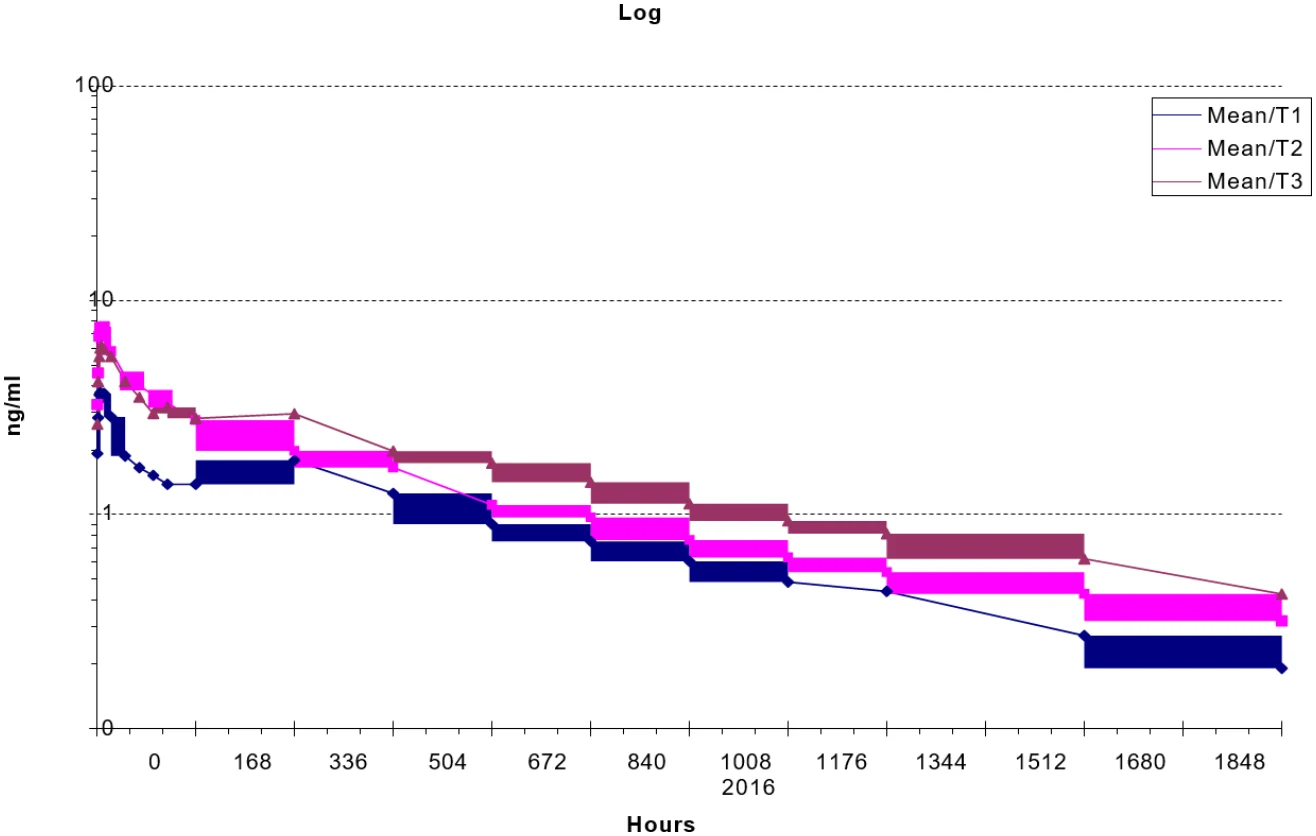
Descriptive pharmacokinetics of lanreotide after Autogel deep subcutaneous (s.c.) administration was studied in healthy volunteers after a single administration. Results from this study show that the lanreotide release profile approximates log-linear following deep s.c. administration (Figure 1).
Figure 1: Mean, overlaid, plasma concentration-time profiles of lanreotide (ng/mL) after deep s.c. administration of Lanreotide T1, T2, and T3 (dose = 60, 90, and 120 mg, respectively)
Standard pharmacokinetic parameters monitored in this study following deep s.c. administration of lanreotide to healthy volunteers are summarized below.
Table 8a: Summary of Lanreotide’s Pharmacokinetic Parameters in Healthy Volunteers After a Single Deep s.c Dose of Lanreotide 60, 90, and 120mg
| Parameter | 60 mg (N=13) | 90 mg (N=13) | 120 mg (N=12) | ||||||||||||||||
|---|---|---|---|---|---|---|---|---|---|---|---|---|---|---|---|---|---|---|---|
| Mean | SD | CV% | Mean | SD | CV% | Mean | SD | CV% | |||||||||||
| Cmax (ng/mL) | 4.246 | 1.934 | 45.55 | 8.391 | 4.915 | 58.57 | 6.785 | 3.641 | 53.66 | ||||||||||
| AUCt | 1634.61 | 435.19 | 26.62 | 2453.78 | 816.66 | 33.28 | 2984.81 | 1024.70 | 34.33 | ||||||||||
AUC∞ (h·ng/mL) | 1904.98 | 564.09 | 29.61 | 2984.35 | 1214.04 | 40.68 | 3552.26 | 947.33 | 26.67 |
|---|---|---|---|---|---|---|---|---|---|
| t ½ (h) | 664 | 455 | 68.52 | 860 | 431 | 50.12 | 816 | 334 | 40.93 |
| tmax (h)* | 8 (4 to 336) | -- | -- | 12 (4 to 336) | -- | -- | 7 (2 to 48) | -- | -- |
| tlag (h) | <1.0 | 0.0 | -- | <1.0 | 0.0 | -- | <1.0 | 0.0 | -- |
| MRT (h) | 940.62 | 462.83 | 49.20 | 1009.87 | 568.17 | 56.26 | 1102.13 | 469.61 | 42.61 |
| MAT (h) | 939.78 | 463.00 | 49.27 | 1009.11 | 568.28 | 56.31 | 1101.29 | 469.49 | 42.63 |
| F (%) | 83.25 | 34.56 | 41.51 | 78.14 | 25.87 | 33.11 | 80.87 | 24.18 | 29.90 |
N = number of subjects; SD = standard deviation; CV% = coefficient of variation; h = hour; * = Median (range) value; Cmax = maximum serum drug concentration; AUCt = area under the serum concentration time curve from time zero to the last quantifiable value; AUC∞ = area under the serum curve from time zero to infinity; t1/2= elimination half-life; tmax = time of maximum serum drug concentration; tlag = lag time; MRT = mean residence time; MAT = mean absorption time; F = absolute bioavailability.
Both AUCt and AUC∞ increased with the dose; Cmax increased from 60 to 90mg but at 120mg an intermediate value was obtained. The high inter-subject variability observed for this parameter could explain why a dose relationship was not observed for Cmax. Some variability was also observed in tmax ranging between 2 and 48 hours, except in two volunteers who showed an unexpected value of 336 h. No important differences were observed in the median values obtained for these parameters (7 to 12 hours). The other parameters t½, tlag, MRT, MAT, and F% showed similar values in the three dose groups. Mean t½ ranged from 664 to 860 hours (28 to 36 days) and bioavailability ranged from 78% to 83%.
Studies in healthy elderly subjects receiving the immediate-release formulation of lanreotide showed an 85% increase in half-life and a 65% increase in MRT of lanreotide compared to healthy young volunteers. However, there was no change in either AUC or Cmax of lanreotide in elderly subjects compared to healthy young subjects.
Pharmacokinetics of Lanreotide in Patients with Acromegaly
Table 8b1: Summary of Lanreotide’s Pharmacokinetic Parameters in Acromegalic Patients After Four Doses of Lanreotide 60, 90, and 120mg
| Parameter | 60 mg | 90 mg | 120 mg | ||||||||||||||||||||
|---|---|---|---|---|---|---|---|---|---|---|---|---|---|---|---|---|---|---|---|---|---|---|---|
| Mean | SD | Mean | SD | Mean | SD | ||||||||||||||||||
| Cmax.ss (ng/mL) | 3.821 | 0.509 | 5.694 | 1.672 | 7.685 | 2.470 | |||||||||||||||||
| AUCτ (h·ng/mL) | 1650.96 | 204.72 | 2042.64 | 410.40 | 3039.84 | 663.84 | |||||||||||||||||
| Tmax.ss (d)* | 84.62 | (84.17- 85.99) | 84.29 | (84.17 – 85.99) | 84.66 | (84.33 – 85.97) | |||||||||||||||||
| Cmin.ss (ng/mL) | 1.822 | 0.304 | 2.511 | 0.882 | 3.762 | 1.012 | |||||||||||||||||
| Cavg (ng/mL) | 2.457 | 0.305 | 3.040 | 0.611 | 4.523 | 0.988 | |||||||||||||||||
| PTF (%) | 81 | -- | 108 | -- | 86 | -- | |||||||||||||||||
SD = standard deviation; Cmax.ss = maximum serum drug concentration at steady-state; AUCτ = area under the serum concentration time curve over a dosing interval; tmax.ss = time of maximum serum drug concentration at steady state; d = day; * = Median (range) value; Cmin.ss = minimum serum drug concentration at steady state; Cavg = average drug concentration; PTF = Peak Trough Fluctuation
The primary pharmacokinetic results for lanreotide are derived from a randomized parallel-group, double-blind, single-center study that evaluated the pharmacokinetic profile of lanreotide administered at fixed doses of 60, 90, and 120mg four times every 28 days in 18 patients with active acromegaly.
Following a single dose, the pharmacokinetics of lanreotide were dose-independent in the dose range 60 to 120mg. Dose proportionality was observed in the pharmacokinetic parameters Cmin, 1, Cmax, and AUCτ as shown in Table 8b2 below.
Table 8b2: Comparative Mean (± SD) Pharmacokinetic Parameters following a First Single Dose of Lanreotide 60, 90, and 120mg in Patients with Acromegaly
| Parameter (units) | 60 mg | 90 mg | 120 mg | P | ||||||
|---|---|---|---|---|---|---|---|---|---|---|
| Mean | SD | N | Mean | SD | N | Mean | SD | N | ||
Tmax (1) (d) | 0.25 (0.17-0.98) | 6 | 0.25 (0.25-1.00) | 5 | 0.98 (0.24-0.99) | 5 | 0.433 | |||
| Cmax (ng.mL-1) | 1.650 | 0.623 | 6 | 3.543 | 2.546 | 5 | 3.053 | 0.932 | 5 | 0.694(2) |
| Cmin (ng.mL-1) | 0.725 | 0.191 | 6 | 0.973 | 0.199 | 5 | 1.406 | 0.306 | 6 | 0.699(2) |
AUCτ (ng.mL-1d) | 22.27 | 6.42 | 6 | 37.29 | 14.23 | 5 | 48.49 | 15.36 | 6 | 0.864(2) |
SD = standard deviation; N = number of subjects; tmax = time of maximum serum drug concentration; d = day; Cmax = maximum serum drug concentration; Cmin = minimum serum drug concentration; AUCτ= area under the serum concentration time curve over a dosing interval
(1) For this parameter, the median and range values were used
(2) p value corresponding to pharmacokinetic parameters normalized by dose
Lanreotide exhibited linear pharmacokinetics after repeated doses over the range of 60 to 120 mg administered once every 28 days (Table 8b2). Pharmacokinetic parameters Cmin.ss, Cmax ss, and AUC increased in a dose-dependent linear manner. During the dosing interval, average steady state concentrations (Cavg) of 2.457, 3.040, and 4.523 ng.mL-1 were observed for the 60, 90, and 120mg dose levels, respectively.
Table 8b3: Comparative Mean (± SD) Steady-State Pharmacokinetic Parameters Following Four Doses of Lanreotide 60, 90, 120 mg in Patients with Acromegaly
| Parameter (units) | 60 mg | 90 mg | 120 mg | P | ||||||
|---|---|---|---|---|---|---|---|---|---|---|
| Mean | SD | N | Mean | SD | N | Mean | SD | N | ||
| Tmax.ss(1) (d) | 84.62 (84.17-85.99) | 4 | 84.29 (84.17- 85.99) | 6 | 84.66 (84.33- 85.97 | 6 | 0.615(2) | |||
| Cmax.ss (ng.mL-1) | 3.821 | 0.509 | 4 | 5.694 | 1.672 | 6 | 3.053 | 0.932 | 6 | 0.974(2) |
| Cmin.ss (ng.mL-1) | 1.822 | 0.304 | 4 | 2.511 | 0.882 | 6 | 3.762 | 1.012 | 6 | 0.721(2) |
AUCT (ng.mL-1d) | 68.79 | 8.53 | 4 | 85.11 | 17.10 | 6 | 4.523 | 0.988 | 6 | 0.279(2) |
| Cavg (ng.mL-1) | 2.457 | 0.305 | 4 | 3.040 | 0.611 | 6 | 4.523 | 0.988 | 6 | 0.289(2) |
SD = standard deviation; N = number of subjects; tmax.ss = time of maximum serum drug concentration at steady state; d = day; Cmax.ss = maximum serum drug concentration at steady-state; Cmin.ss = minimum serum drug concentration at steady state; AUCτ = area under the serum concentration time curve over a dosing interval; Cavg = average drug concentration
(1) For this parameter, the median and range values were used
(2) p value corresponding to pharmacokinetic parameters normalized by dose
Peak-trough fluctuation during the dosing interval was dose-independent in the dose range 60 to 120mg, with values of 81%, 108%, and 86% for the 60, 90, and 120mg doses, respectively.
Four consecutive lanreotide administrations produced a slight accumulation independent of the dose level, with a mean accumulation index of approximately 2.7. This accumulation result is not unexpected considering the long half-life of lanreotide.
Following a single dose of lanreotide 60, 90, and 120mg in Study 717, Cmin1 increased with lanreotide dose. The minimum serum levels after at least four consecutive lanreotide administrations at the same dose (steady-state) also increased with dose. Although the increase in Cmin.ss was slightly less than proportional to the dose for comparison of the 120 mg and the 60 mg doses in this study, no statistically significant differences by dose could be demonstrated when normalized by dose (Cmin.ss/D). These results indicate that lanreotide exhibited linear pharmacokinetics in acromegalic patients over the range of 60 to 120 mg after four consecutive doses of lanreotide once every 28 days. Moderate accumulation of lanreotide in the body was also observed during this study at all dose levels, with mean accumulation indices (Rac) of 2.6, 3.2, and 2.8 for the 60, 90, and 120mg doses, respectively.
The mean Cmax values following initial dosing with lanreotide were 2- to 4-fold higher than mean minimum serum levels after first lanreotide administration (Cmin1), indicating that no initial burst effect is produced with this formulation for the three dose levels tested (60, 90, and 120mg).
Consistent observations were made after multiple deep s.c. injections.
Pharmacokinetic data from studies evaluating the use of extended dosing intervals of lanreotide 120mg every 6 or 8 weeks, demonstrated mean steady state Cmin values between 1.6 and 2.3 ng/mL for the 8 and 6-week treatment intervals, respectively. The median minimum effective serum concentration of lanreotide required to reduce GH levels to ≤ 2.5ng/mL ranged from 0.95 to 1.13 ng/mL.
Studies evaluating the use of extended dosing intervals of lanreotide 120mg every 6 or 8 weeks were not conducted in patients with moderate or severe hepatic or renal impairment. There are no pharmacokinetic data available regarding the use of lanreotide 120 mg every 6 or 8 weeks in patients with moderate or severe hepatic or renal impairment
Pharmacokinetics of Lanreotide in Patients with Enteropancreatic NETs
In a population PK analysis in 290 NETs patients receiving lanreotide, rapid initial release of lanreotide was seen with mean Cmax values of 7.49 ± 7.58 ng/mL reached within the first day after a single injection. Steady-state concentrations were reached after 4 to 5 injections of lanreotide 120 mg every 4 weeks and were sustained up to the last assessment (up to 96 weeks after the first injection). At steady state, the mean Cmax values were 13.9 ± 7.44 ng/mL and the mean trough serum levels were 6.56 ± 1.99 ng/mL. The mean apparent terminal half-life was 49.8 ± 28.0 days.
Individual PK parameters (post hoc Empirical Bayes Estimates) were obtained from a population PK model including 290 NETs patients. Descriptive statistics on individual PK parameter estimates are shown in Table 8c1.
Table 8c1: Summary Statistics of Lanreotide Pool PK Model Parameters
CL/F (L/day) [a] | V/F (L) | KA (day-1) | t½ KA (days) | ||||||
|---|---|---|---|---|---|---|---|---|---|
| Lanreotide 120mg (N=298) | |||||||||
| Mean (SD) | 519 (129) | 26.3 (30.2) | 0.0174 (0.00900) | 49.8 (28.0) | |||||
| Geometric mean | 503 | 20.7 | 0.0156 | 44.4 | |||||
| Median | 504 | 18.3 | 0.0157 | 44.3 | |||||
| 5th and 95th percentiles | 327-743 | 13.1-85.9 | 0.00750-0.0358 | 19.3-93.0 |
|---|
CL/F = apparent total plasma clearance; V/F = apparent volume of distribution; KA = constant of absorption; t½KA = absorption half life
a = Only 290 subjects provided at least one concentration and were included in the PK model building. However, the PK parameters were simulated for the whole population (N=298)
In addition, lanreotide 120 mg exposure parameters after a single dose and at steady state were simulated from the model. Summary statistics are presented for the single dose in Table 8c2 and for steady state in Table 8c3.
Table 8c2: Summary Statistics of Derived Lanreotide 120mg Exposure Parameters After a Single dose
AUC0-28 (ng*day/mL) | Cmax (ng/mL) | Cmin (ng/mL) | Cavg (ng/mL) | |
|---|---|---|---|---|
| Mean (SD) | 88.6 (40.1) | 7.49 (7.58) | 2.40 (0.930) | 3.44 (1.57) |
| Geometric Mean | 80.1 | 5.73 | 2.20 | 3.11 |
| Median | 83.8 | 5.39 | 2.38 | 3.24 |
| 5th and 95th percentiles | 38.5 to 162 | 2.17 to 20.6 | 1.14 to 4.05 | 1.48 to 6.33 |
AUC= Area under the curve over the dosing interval (4 weeks); Cmax = maximum serum drug concentration; Cmin = minimum serum drug concentration; Cavg = average concentration over the dosing interval (4 weeks); SD = standard deviation
Table 8c3: Summary Statistics of Derived Lanreotide 120mg Exposure Parameters at Steady State
AUC0-28 (ng*day/mL) | Cmax (ng/mL) | Cmin (ng/mL) | Cavg (ng/mL) | |
|---|---|---|---|---|
| Mean (SD) | 239 (64.8) | 13.9 (7.44) | 6.56 (1.99) | 8.64 (2.36) |
| Geometric Mean | 232 | 12.8 | 6.23 | 8.35 |
| Median | 231 | 11.9 | 6.49 | 8.41 |
| 5th and 95th percentiles | 158-358 | 7.69-25.5 | 3.53-9.99 | 5.49-12.9 |
AUC= Area under the curve over the dosing interval (4 weeks); Cmax = maximum serum drug concentration; Cmin = minimum serum drug concentration; Cavg = average concentration over the dosing interval (4 weeks); SD = standard deviation
Distribution:
Studies with lanreotide after intravenous administration at doses of 7, 21, and 42 µg/kg have demonstrated that it shows limited extravascular distribution, with a mean Vss of 0.186 to 0.194 L/kg.
Lanreotide human serum proteins binding studies were performed in vitro obtaining a range of values from 79 to 83% at lanreotide concentrations between 12 and 60 ng/ml.
Metabolism:
Lanreotide is metabolised extensively in the gastrointestinal tract after biliary excretion.
The values of apparent elimination half-life of lanreotide after deep s.c. administration range from 28 to 36 days.
Elimination
Two studies examined the excretion of lanreotide. When lanreotide was given as a single s.c. dose of 3 mg, less than 1% of the administered dose was recovered in urine, and renal clearance was
<1% of total plasma clearance. When lanreotide was given by s.c. infusion, the fraction of lanreotide excreted in the urine at steady state was 1% to 5% for a dose of 0.75 mg/day. Data for fecal excretion were collected in this study and less than 0.5% of the administered dose was recovered over a 24-hour period at steady state.
Therefore, urinary and fecal excretion of unchanged lanreotide represents only a small fraction of the total dose administered. This suggests that lanreotide is probably metabolized extensively in the gastrointestinal tract after biliary excretion.
Special Populations and Conditions
- Pediatrics: No studies in pediatrics were performed. Health Canada has not authorized an indication for pediatric use.
Geriatrics: With the immediate-release formulation, healthy elderly subjects showed an 85% increase in half-life and a 65% increase in mean residence time of lanreotide compared to healthy young volunteers. However, there was no change in either AUC or Cmax of lanreotide in elderly subjects compared to healthy young subjects (see
10.3 Pharmacokinetics, Pharmacokinetics of Lanreotide in Healthy Volunteers). It is not necessary to alter the starting dose in elderly acromegaly patients.
Table 8d: Summary of Lanreotide’s Pharmacokinetic Parameters* in Geriatric Subjects aged 65 years and older
Cmax (ng/mL) | t½ (h) | AUC0-inf (h·ng/mL) | Clearance (L/h/kg) | Volume of distribution (L/kg) | |
|---|---|---|---|---|---|
Single dose mean Study E-92- 52030-012 | 48.75 | 1.74 | 29.17 | 0.269 | 0.200 |
*Lanreotide was administered intravenously as the immediate release formulation
Cmax = maximum serum drug concentration; t½ = elimination half-life; h = hour; AUC0-inf = area under the plasma curve from time 0 to infinity
In a population PK analysis of enteropancreatic NETs patients treated with lanreotide, including 122 patients aged 65 to 85 years, no effect of age on clearance and volume of distribution of lanreotide was observed.
- Sex: No gender differences were found in PK parameters.
Hepatic Insufficiency: In patients with hepatic impairment, an increase in volume of distribution, mean residence time, AUC and half-life were observed with the lanreotide immediate-release formulation. Clearance was reduced by 30% in patients with moderate to severe hepatic impairment, suggesting that clearance of lanreotide does not only depend on hepatic function (see Table 8e)
Table 8e: Summary of Lanreotide’s Pharmacokinetic Parameters* in Patients with Hepatic impairment
Cmax (ng/mL) | t½ (h) | AUC0-inf (h·ng/mL) | Clearance (L/h/kg) | Volume of distribution (L/kg) | |
|---|---|---|---|---|---|
| Single dose mean | |||||
Mild to Moderate Study E-92- 52030-013 | 28.74 | 1.66 | 20.02 | 0.362 | 0.322 |
Moderate to Severe Study E-38- 52030-701 | 34.394 | 2.998 | 30.090 | 0.237 | 0.349 |
*Lanreotide was administered intravenously as the immediate release formulation
Cmax = maximum serum drug concentration; t½ = elimination half-life; h = hour; AUC0-inf = area under the plasma curve from time 0 to infinity
No enteropancreatic NETs or carcinoid syndrome patients with hepatic impairment (as per Child-Pugh score) were studied.
Renal Insufficiency: Lanreotide immediate-release formulation has been studied in patients with end-stage renal function on dialysis,but has not been studied in patients with mild or moderate renal impairment. In subjects with severe renal impairment, total serum clearance of lanreotide is decreased by approximately two-fold, with a consequent two-fold increase in half-life and AUC (see Table 8f).
Table 8f: Summary of Lanreotide’s Pharmacokinetic Parameters* in Patients with Severe Chronic Renal Insufficiency
Cmax (ng/mL) | t½ (h) | AUC0-inf (h·ng/mL) | Clearance (L/h/kg) | Volume of distribution (L/kg) | |
|---|---|---|---|---|---|
Single dose mean Study E-92- 52030-011 | 307.45 | 2.39 | 62.95 | 0.138 | 0.110 |
*Lanreotide was administered intravenously as the immediate release formulation
Cmax = maximum serum drug concentration; t½ = elimination half-life; h = hour; AUC0-inf = area under the plasma curve from time 0 to infinity
No effect on clearance of lanreotide was observed in a population PK analysis of enteropancreatic NETs patients, including 165 patients with mild or moderate renal impairment (106 and 59, respectively) treated with lanreotide.
Enteropancreatic NETs patients with severe renal impairment were not studied. In patients with carcinoid syndrome, lanreotide was not studied in patients with mild, moderate, or severe renal impairment.
11 STORAGE, STABILITY AND DISPOSAL
Store under refrigeration (2°C to 8°C) in its original package in order to protect from light. Do not freeze.
Leave at room temperature for 30 minutes before administration. Once removed from the refrigerator, product left in its sealed pouch may be returned to the refrigerator for continued storage and later use, provided it has been stored for no longer than a total of 72 hours at below 40°C (the number of temperature excursions must not exceed three times).
12 SPECIAL HANDLING INSTRUCTIONS
Not applicable.
PART II: SCIENTIFIC INFORMATION
13 PHARMACEUTICAL INFORMATION Drug Substance
Proper name: Lanreotide acetate (USAN)
Chemical name: [cyclo S-S]-3-(2-naphthyl)-D-alanyl-L-cysteinyl-L-tyrosyl-D-tryptophyl-L-lysyl-L- valyl-L-cysteinyl-L-threoninamide, acetate
Molecular formula and molecular mass: C54H69N11O10S2 (CH3COOH)x Where x = 1.0 to 2.0 Structural formula:
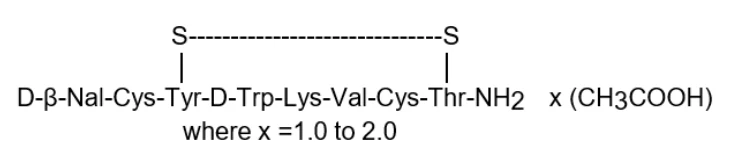
or
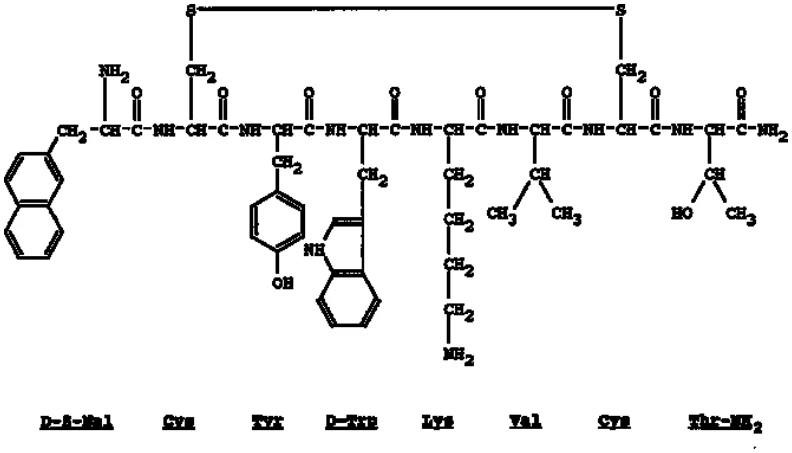
x (CH3COOH)
where x =1.0 to 2.0
Physicochemical properties:
Appearance: White to off-white amorphous powder.
Solubility: The solubility of lanreotide in aqueous solution varies little with pH, except at extreme pH values, most notably at alkaline pH.
14 CLINICAL TRIALS
14.1 Clinical Trials by Indication Acromegaly
Table 9: Summary of patient demographics for clinical trials in Acromegaly
| Study # | Study design | Dosage, route of administration and duration | Study subjects (n) | Mean age (Range) | Sex |
|---|---|---|---|---|---|
E-28- 52030- 717 | Randomized, double blind, placebo- controlled study | Lanreotide (60, 90 or 120 mg), injection Placebo, injection Treatment duration: 52 weeks including a 16-week placebo controlled period | N=83 N=25 | 54 (19, 84) | 47%M |
The clinical efficacy of lanreotide was assessed in one pivotal clinical trial (E- 28-52030-717). This study (Study 717) was a randomized, double blind, placebo-controlled study, conducted in 108 acromegalic patients treated for one year. Half (50%) of the patients had never been treated with a somatostatin analog or dopamine agonist, or had stopped treatment for acromegaly three or more months prior to their participation in the study. For inclusion into study 717, these patients were required to have a mean GH level >5 ng/mL at their first visit.
The other 50% of the patients had received treatment with a somatostatin analog or a dopamine agonist prior to study entry (requiring an appropriate wash-out of this therapy before receiving the first injection of lanreotide).
The median age of patients enrolled was 54.0 years with a range of 19-84 years. A similar number of males (n=51) and females (n=57) were treated and the median duration from diagnosis of acromegaly was approximately 3 years.
Upon entry, patients were randomly allocated to receive a deep subcutaneous (s.c.) injection of lanreotide 60 mg, 90 mg, or 120 mg or placebo (3:1). After the initial placebo-controlled phase, patients entered a fixed-dose phase where they received injections of lanreotide at 4 week intervals for 4 injections, followed by a dose-titration phase of 8 injections (a total of 13 injections; including placebo phase). During the titration phase the dose could be adapted after 3 months according to the patients’ individual GH and IGF 1 levels.
Table 10: Results of Study 717 in Acromegaly
| Primary Endpoints | Associated value and statistical significance (comparison Lanreotide versus placebo) n/N - % p value |
|---|---|
| The proportion of patients with a >50% decrease in mean GH from baseline 4 weeks after a single injection, comparing each Lanreotide group (60, 90, and 120 mg) versus placebo. The combined Lanreotide group was also compared to placebo. | Placebo: 0/25 – 0% Lanreotide 60 mg: 14/27 – 52%; p <0.001 Lanreotide 90 mg: 12/27 – 44%; p<0.001 Lanreotide 120 mg: 26/29 – 90%; p<0.001 Lanreotide Combined: 52/83 – 63%; p<0.001 |
| Secondary Endpoints | Lanreotide (all combined doses) n/N - % |
| The proportion of patients with a >50% decrease in mean GH from baseline at weeks 16, 32, 52 and Last Value Available post- baseline (LVA). | Wk 16: 77/105 – 73% Wk 32: 82/103 – 80% Wk 52: 80/98 – 82% LVA: 82/107 – 77% |
|---|---|
| The proportion of patients with mean GH≤2.5 ng/mL over time | Wk 16: 52/105 – 50% Wk 32: 59/103 – 57% Wk 52: 53/98 – 54% LVA: 55/107 – 51% |
| The proportion of patients with normalized IGF-I over time | Wk 16: 58/105 – 55% Wk 32: 57/103 – 55% Wk 52: 58/98 – 59% LVA: 61/107 – 57% |
| The proportion of patients with mean GH≤2.5 ng/mL and normalized IGF-I over time | Wk 16: 41/105 – 39% Wk 32: 46/103 – 45% Wk 52: 42/98 – 43% LVA: 43/106 – 41% |
| Symptoms | Lanreotide (all combined doses) |
| By the end of the study, the acromegaly symptoms of headache, perspiration, fatigue, swelling of extremities, and joint pain had improved from baseline or were stable in 88% to 94% of patients. |
n = number of subjects in the Lanreotide group; N = number of subjects in the placebo group; p = p value; GH = growth hormone; Wk = week; LVA= Last Value Available post-baseline; IGF-I = insulin-like growth factor 1
Enteropancreatic Neuroendocrine Tumours
Table 11: Summary of patient demographics for clinical trials in Enteropancreatic Neuroendocrine Tumours
| Study # | Study design | Dosage, route of administration and duration | Study subjects (n) | Mean age (Range) | Sex |
|---|---|---|---|---|---|
2-55- 52030- 726 | Fixed-duration, randomized, double- blind, multicenter, placebo-controlled study | Lanreotide (120 mg), injection Placebo, injection Treatment duration: 96 weeks | N=101 N=103 | 63 (30,83) 62 (31,92) | 53%M 52%M |
Study 726 was a Phase 3, 96-week, fixed-duration, randomized, double-blind, multicenter, placebo-controlled trial of lanreotide was conducted in patients with enteropancreatic neuroendocrine tumours to assess the antiproliferative effect of lanreotide.
Patients had non-functioning metastatic and/or locally advanced inoperable disease with histologically confirmed Grade 1 or a subset of Grade 2 (equivalent to Ki67 <10%) tumours, originating in the pancreas, midgut, hindgut, or of unknown primary location.
Randomization was stratified by previous therapy at entry and the presence/absence of progression at baseline as assessed by Response Evaluation Criteria in Solid Tumours (RECIST 1.0) during a 3- to 6-month screening phase. Approximately 96% of patients had stable disease at baseline.
The primary endpoint was progression-free survival (PFS) measured as time to either disease progression by RECIST 1.0 or death within 96 weeks after first treatment administration, as assessed by a central, independent, radiological review.
Patients were randomized 1:1 to receive either lanreotide 120 mg every 4 weeks (n=101) or placebo (n=103). Baseline patient demographics and disease characteristics are summarized in Table 12.
Table 12: Summary of Baseline Patient Demographics and Disease Characteristics in for Study 726 in patients with Enteropancreatic Neuroendocrine Tumours
Lanreotide 120 mg (N=101) | Placebo (N=103) | |
|---|---|---|
Age (years) Mean (range) | 63.3 (30 to 83) | 62.2 (31 to 92) |
Sex, n (%) Male Female | 53 (52.5) 48 (47.5) | 54 (52.4) 49 (47.6) |
Race, n (%) Asian Black/African American Caucasian/White | 2 (2.0) 2 (2.0) 97 (96.0) | 5 (4.9) 2 (1.9) 96 (93.2) |
| Primary tumour location, n (%) | ||
| Pancreas | 42 (41.6) | 49 (47.6) |
| Midgut | 33 (32.7) | 40 (38.8) |
| Hindgut | 11 (10.9) | 3 (2.9) |
| Other/Unknown | 15 (14.9) | 11 (10.7) |
| Proliferation Index Ki67%, n (%) | ||
| ≤2% | 52 (51.5) | 51 (49.5) |
| >2% to <10% | 31 (30.7) | 29 (28.1) |
| Unknowna | 18 (17.8) | 23 (22.3) |
| Grade of tumourb, n (%) | ||
| G1 | 69 (68.3) | 72 (69.9) |
| G2 | 32 (31.7) | 29 (28.2) |
| Missing | 0 | 2 (1.9) |
| Hepatic tumour load, n (%) | ||
| 0% to ≤10% | 49 (48.5) | 58 (56.3) |
| >10% to ≤25% | 13 (12.9) | 17 (16.5) |
| >25% to <50% | 39 (38.6) | 28 (27.2) |
| Previous chemotherapy for NET, n (%) | ||
| Yes | 14 (13.9) | 15 (14.6) |
| No | 86 (86.1) | 88 (85.4) |
| Previous surgery of the primary tumour, | ||
| n (%) | 40 (39.6) | 39 (37.9) |
| Yes | 61 (60.4) | 64 (62.1) |
| No | ||
Baseline CgA, n (%) ≤ULN >1 to >2 ULN Missing | 33 (32.7) 66 (65.4) 2 (2.0) | 34 (33.0) 66 (64.1) 3 (2.9) |
Progression at baseline, n (%) Yes No | 4 (4.0) 97 (96.0) | 5 (4.9) 98 (95.1) |
N= total number of subjects in group; n=number of subjects with assessment G1=Grade 1; G2=Grade 2;
ULN= upper limit of normal; NET= neuroendocrine tumours; CgA= Chromogranin A
aThe Ki67 is <10%, but the Ki67 could not be reliably quantified (these subjects were enrolled based on the mitotic index, which was ≤2 mitoses/10 HPF)
bG1=Mitotic count <2 mitoses/10 HPF and/or Ki67 ≤2%; G2= Mitotic count 2-20 mitoses/10 HPF and/or Ki67 >2% to 20%
Monthly treatment with lanreotide demonstrated a statistically significant improvement in PFS, resulting in a 53% reduction in tumour progression or death when compared to placebo (p=0.0002). The median PFS for lanreotide was not reached at 96 weeks while the median PFS for placebo was 72 weeks, as shown in Table 13 and Figure 2.
Table 13: Results of Study 726 in patients with Enteropancreatic Neuroendocrine Tumours
| Median Progression-free survival (weeks) | Hazard Ratio (95% CI) | Reduction in risk of progression or death | p-value | ||||||
|---|---|---|---|---|---|---|---|---|---|
Lanreotide (n=101) | Placebo (n=103) | ||||||||
| All patients | >96 weeks | 72.0 weeks (95% CI: 48.6, 96.0) | 0.47 (0.30, 0.73) | 53% | 0.0002 | ||||
| Primary Tumour Type | |||||||||
| Pancreas | (n=42) | (n=49) | |||||||
| >96 weeks | 48.6 weeks | 0.58 | 42% | 0.0637 | |||||
| (95% CI: 37.7, | (0.32, 1.04) | ||||||||
| 73.1) | |||||||||
| Midgut | (n=33) | (n=40) | |||||||
| >96 weeks | 84.6 weeks | 0.35 | 65% | 0.0091 | |||||
| (95% CI: | (0.16, 0.80) | ||||||||
| 68.1,NC) | |||||||||
| Hindgut | (n=11) | (n=3) | |||||||
| >96 weeks | 97.7 weeks | 1.46 | -- | 0.7114 | |||||
| (95% CI: 48.1, | (0.16, 13.24) | ||||||||
| 97.7) | |||||||||
| Unknown/other | (n=15) | (n=11) | |||||||
| >96 weeks | 60.0 weeks | 0.20 | 80% | 0.0341 | |||||
| (95% CI: 25.1, | (0.04, 1.03) | ||||||||
| NC) | |||||||||
n= number of subjects in group; CI= confidence interval; NC= not calculable
Figure 2: Kaplan-Meier Progression-Free Survival Curves
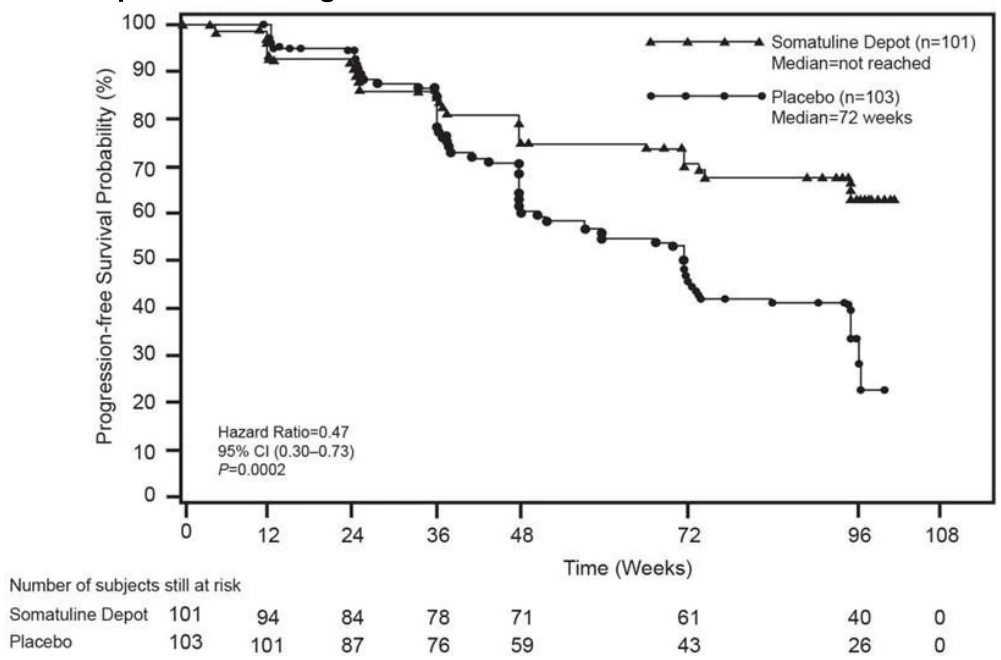
The beneficial effect of lanreotide in reducing the risk of progression or death was consistent, regardless of the location of primary tumour, hepatic tumour load, previous chemotherapy, baseline Ki67, tumour grade, age and of other pre-specified characteristics as shown in Figure 3.
Figure 3: Results of Subgroup analyses of PFS based on separate Cox Proportional Hazards models
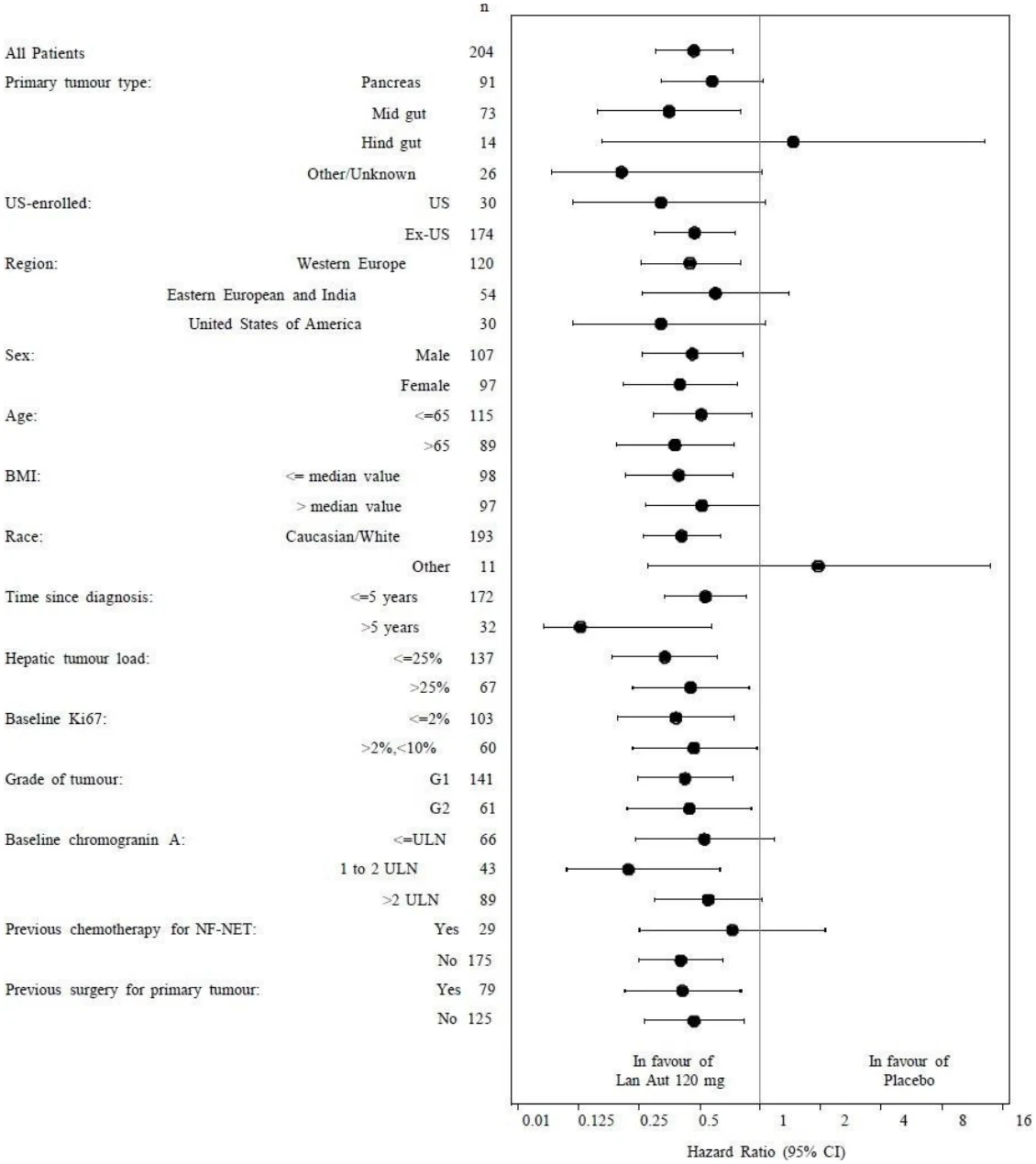
Note: median value of BMI is 26.2 kg/m2
Carcinoid Syndrome
Table 14: Summary of patient demographics for clinical trials in Carcinoid Syndrome
| Study # | Study design | Dosage, route of administration and duration | Study subjects (n) | Mean age (Range) | Sex |
|---|---|---|---|---|---|
2-55- 52030-730 | Multicenter, randomized, 16- week, double-blind, placebo-controlled trial | Lanreotide (120 mg), injection Placebo, injection Treatment duration: | N=59 N=56 | 57.9 (38,77) 59.3 (27,85) | 46%M 38%M |
48 weeks including a 16-week placebo controlled period |
Study 730 was a multicenter, randomized, 16-week, double-blind, placebo-controlled trial of 115 patients with histopathologically-confirmed neuroendocrine tumours and a history of carcinoid syndrome (flushing and/or diarrhea). The study duration for efficacy was 52 weeks (4 weeks baseline screening, 16 weeks double-blind treatment, and 32 weeks open-label treatment), followed by an extended open-label safety phase.
Patients were randomized 1:1 to receive lanreotide 120 mg (n=59) or placebo (n=56) by deep subcutaneous injection every 4 weeks. Patients were instructed to self-administer a short acting somatostatin analog (SSA) (subcutaneous octreotide ≤600µg per day) as rescue medication, as needed, for symptom control. The use of short-acting octreotide and the severity and frequency of diarrhea and flushing symptoms were reported daily in electronic patient diaries. The primary efficacy outcome measure was the percentage of days in which patients received at least one injection of rescue medication for symptom control during the 16-week double-blind phase. Average daily frequencies of diarrhea and flushing events were assessed secondarily.
The patient population had a mean age of 58.6 years (range 27 to 85 years), 58% were female and 77% were Caucasian. The study included patients who had been previously treated with a SSA, as well as patients who were SSA-naïve. Fifty six percent of patients had received SSA therapy (octreotide) prior to randomization (see Table 15), and 84% of patients experienced moderate or severe diarrhea or flushing at baseline.
Table 15: Baseline Clinical and Demographic Characteristics in Study 730 in Carcinoid Syndrome
| Lanreotide | Placebo | |||||||
|---|---|---|---|---|---|---|---|---|
| 120 mg | (N=56) | |||||||
| (N=59) | ||||||||
| Age (years) | ||||||||
| Mean | 57.9 | 59.3 | ||||||
| Sex, n (%) | ||||||||
| Male | 27 (45.8) | 21 (37.6) | ||||||
| Female | 32 (54.2) | 35 (62.5) | ||||||
| Race, n (%) | ||||||||
| White | 44 (74.6) | 44 (78.6) | ||||||
| Multiracial | 7 (11.9) | 6 (10.7) | ||||||
| Asian | 6 (10.2) | 3 (5.4) | ||||||
| Black/African American | 2 (3.4) | 3 (5.4) | ||||||
| Time from first symptom to study treatment initiation, n (%) | ||||||||
| <1 year | 14 (23.7) | 18 (32.1) | ||||||
| ≥1 year | 45 (76.3) | 38 (67.9) | ||||||
| Time from diagnosis to study treatment initiation, n (%) | ||||||||
| <1 year | 19 (32.2) | 22 (39.3) | ||||||
| ≥1 year | 40 (67.8) | 34 (60.7) | ||||||
| Region and prior SSA therapy, n (%) | ||||||||
United States Prior SSA therapy SSA-naïve Non-United States Prior SSA therapy | 21 (35.6) 19 (32.2) 2 (3.4) 38 (64.4) 14 (23.7) | 19 (33.9) 17 (30.4) 2 (3.6) 37 (66.1) 14 (25) | ||||||
| SSA-naïve | 24 (40.7) | 23 (41.1) |
|---|---|---|
| Prior SSA therapy ≤3 months before screening, n (%) | ||
Yes No | 28 (47.5) 31 (52.5) | 28 (50) 28 (50) |
| Prior use of short-acting octreotide, n (%) | ||
Yes No | 15 (25.4) 44 (74.6) | 9 (16.1) 47 (83.9) |
| Use of short-acting octreotide during screening, n (%) | ||
Yes No | 30 (50.8) 29 (49.2) | 29 (51.8) 27 (48.2) |
N= total number of subjects in each group
Results of Study 730 in patients with Carcinoid Syndrome
Patients in the lanreotide arm had 15% fewer days on rescue medication compared to patients in the placebo arm (33.7% vs 48.5% of days, respectively; p=0.0165). The beneficial effect of lanreotide in reducing rescue medication use was evident regardless of baseline characteristics, including prior SSA use, duration of prior SSA use, and global region.
The average daily frequencies of diarrhea and flushing events in patients treated with lanreotide (and rescue medication) were numerically lower compared to patients treated with placebo (and rescue medication), but were not statistically significantly different by hierarchical statistical testing.
15 MICROBIOLOGY
No microbiological information is required for this drug product.
16 NON-CLINICAL TOXICOLOGY General Toxicology
An immediate-release formulation (IRF) of lanreotide, administered either by s.c. injection or as an intravenous (i.v.) infusion was used for most of the toxicology studies. This allowed considerably higher doses to be achieved than would have been possible with the Autogel formulation.
Single Dose Toxicity Studies
Table 16: Summary of lanreotide single dose toxicity studies
| Species | Route | Dose | No effect dose (mg/kg) | Minimal effect dose (mg/kg) | LD50 (mg/kg) |
|---|---|---|---|---|---|
| Mouse | i.v. | 0.8, 30, 100, 120, 135, 150, 180mg/kg | <30 | 30 | 120-135 |
| Rat | i.v. | 3, 6, 24, 48, 60, 75mg/kg | 3 | >6 | >48 |
| Mouse | s.c. | 0.8, 600, 900, 1200mg/kg | <600 | 600 | >1200 |
| Rat | s.c. | 0.8, 1500mg/kg | <1500 | 1500 | >1500 |
The results of the single dose i.v. and s.c. studies indicated that both rodent species were able to tolerate large doses of lanreotide. There was no evidence of organ specific toxicity.
Table 17: Summary of lanreotide repeat dose toxicity studies
| Species | Route | Duration | Doses (mg/kg/day) |
|---|---|---|---|
| Mouse | s.c. | 5 days | 0.8 |
| Mouse | s.c. | 13 weeks | 0, 10, 30, 60 |
| Mouse | s.c. | 13/20 weeks | 0, 0.5, 5*, 1 od 0.1*, 0.5 bid (*0.1 changed to 5 Weeks 8-20) |
| Rat | s.c. | 6 weeks | 0, 0.004, 0.04, 0.2 |
| Rat | s.c. | 13 weeks | 0, 0.5, 1 od 0.1, 0.5 bid |
| Rat | s.c. | 26 weeks | 0, 0.2, 1.0, 5.0 (3.0, 2.0) |
| Rat | i.v. infusion | 14 days | 0, 1, 5, 20 |
| Dog | s.c. | 6 weeks | 0, 0.004, 0.04, 0.2 |
| Dog | i.v. infusion (dose finding) | 14 days | 2.5, 5.0, 10 (6 days) 20, 25 |
| Dog | i.v. infusion | 45 days | 0, 0.4, 4.0, 10 |
| Dog | i.m. | 26 weeks | 1.00-1.62, 3.35-4.98, 6.26-9.95 mg/kg once every 2 weeks |
The toxicological effects associated with repeated subcutaneous (s.c.), intramuscular (i.m.) and intravenous (i.v.) administrations were assessed in mice and/or rats and dogs (see Table 17). Chronic toxicity was assessed in the rat and in the dog. The results of these studies revealed no evidence of target organ toxicity. Inhibition of growth rates observed at high doses was considered to be secondary to lanreotide’s recognized pharmacologic effect, inhibition of growth hormone secretion. Similarly, lanreotide-associated reductions in serum concentrations of some hormones were considered to be extensions of the pharmacologic effect. Continuous infusion of lanreotide to dogs for up to 45 days was associated with dose-related testicular immaturity in males. Control animals also had immature testicles but the degree of immaturity appeared to increase in a dose-related fashion and was consistent with the general growth retardation of lanreotide treated animals.
With the exception of dose-related irritation at the site of injection, lanreotide was well tolerated by all test species and the results indicate little, if any, potential for chronic administration of the drug in humans to produce target organ toxicity.
Chronic Toxicity Studies
Table 18: Summary of lanreotide chronic toxicity studies
| Species | Route | Duration | Doses (mg/kg/day) |
|---|---|---|---|
| Rat | s.c. | 24 months | 0, 0.008, 0.040, 0.120 |
| Dog | s.c. | 24 months | 0, 0.008, 0.040, 0.120 |
The chronic toxicity of subcutaneously administered lanreotide was assessed in a 24 months study in rats. The results of this study were similar to those of shorter-term repeated dose studies in that there was no evidence of systemic, organ specific toxicity. Further, there was no evidence that lanreotide influenced the incidence or rate of onset of spontaneously occurring neoplasms in this strain of rats.
Chronic toxicity (24 months) was also assessed in dogs. The results of this study corroborated the absence of significant systemic toxicity observed in dogs after shorter-term repeated dose studies.
Carcinogenicity
A two-year mouse carcinogenicity study was conducted wherein males and females were administered lanreotide once daily by subcutaneous injection at 0.5, 1.5, 5, 10, and 30 mg/kg/day. Reduced survival was observed at 30 mg/kg/day in males and females and was related to the presence of masses at subcutaneous injection sites (increased incidence of fibrosarcomas and malignant fibrous histiocytomas). No systemic neoplastic changes were observed.
A two-year rat carcinogenicity study was conducted wherein males and females were administered lanreotide once daily by subcutaneous injection at 0.1, 0.2, and 0.5 mg/kg/day. Survival rate was comparable in male treated groups compared to male control groups. In females, survival rate tended to be higher at all dose levels. No systemic neoplastic changes were observed. At injection sites of male and female rats treated with 0.5 mg/kg/day lanreotide, an increased incidence of fibrosarcomas and malignant fibrous histiocytomas was observed.
The increased incidence of subcutaneous tumours at injection sites is likely due to the increased dose frequency in animals (daily). Considering that monthly dosing is recommended in human, these findings may not be clinically relevant. Exposure multiples (ratio of animal AUC to human AUC) were not calculated as systemic tumours were not observed.
Genotoxicity
Table 19: Summary of In Vivo and In Vitro Mutagenicity Studies
| Test | Lanreotide Concentration | Organism/Cell Source | Metabolic Activation S9 |
|---|---|---|---|
| Non-mammalian in vitro assays | |||
| AMES test | 1.6 to 5000 mcg/plate | TA 1535 TA 100 TA 1537 TA 98 WP2 uvrA | (+/-) (+/-) (+/-) (+/-) (+/-) |
| Mammalian cell in vitro assays | |||
| Mouse lymphoma assay | 100-1200 mcg/ml | Mouse lymphoma cells | (+/-) |
| Chromosomal aberration assay | 393.7 – 2000 mcg/ml | Human lymphocytes | (+/-) |
| In vivo / in vitro Mutation frequency and DNA synthesis and repair assays | |||
| Induction of gene mutations in liver and bone marrow tissue | 120 or 180 mg/kg/day subcutaneous | Male CD2-lacZ80/HazfBRstrain mice | NA |
| Mammalian cell in vivo assays (PO) | |||
| Micronucleus test | 6.25, 12.5, 25 mg/k/day intravenous | Male and female Swiss Ico:OF1 (IOPS Caw) mice | NA |
The standard battery of genotoxicity tests was performed. In this set of studies, no positive results were obtained.
Reproductive and Developmental Toxicology
The high dose somatostatinergic effects of lanreotide on the secretion of pituitary hormones can be expected to cause perturbations of reproduction. The effects of lanreotide on mating behaviour and reproductive performance were assessed in male and female rats by administering the drug by the s.c. and/or i.m. routes.
Although administered at doses sufficiently high to reduce growth rates of both males and females of the F0 generation, neither mating behaviour nor reproductive performance were adversely affected. The behavioural and reproductive characteristics of the F1 and F2 generations were similarly unaffected by administration of lanreotide to the parental generations.
In a fertility study conducted with lanreotide in rats, reduced female fecundity was observed at estimated exposure corresponding to approximately 10-fold the plasma exposure at the maximum recommended human dose (MRHD) of 120 mg. The fertility of male rats was unaffected by the treatment up to an estimated exposure corresponding to approximately 11- fold the plasma exposure at the MRHD of 120 mg.
Teratological potential was assessed by daily administering s.c. doses of lanreotide (0, 100, 450, or 2000 mcg/kg) to pregnant rats (from gestation day 6 to 15) and rabbits (from gestation day 6 to 18), and by administering 30 mg/kg of lanreotide by s.c. injection every 2 weeks (5 times the MRHD of 120 mg, based on body surface area comparisons) to pregnant rats. The doses were selected on the basis of preliminary dose range finding studies, at doses up to and including 5000 mcg/kg/day. Female rats administered the 2000 mcg/kg dose exhibited decreased weight gains but there was no evidence of either fetal toxicity or teratological anomalies, whereas 30 mg/kg by s.c. injection every 2 weeks resulted in decreased embryo/fetal survival. In rabbits, all dosed groups had reduced body weight gains and there was evidence of fetal toxicity (increased post implant loss in the 450 and 2000 mcg/kg groups) but no evidence of either soft tissue or skeletal malformations. Decreased fetal survival and increased fetal skeletal and soft tissue abnormalities were seen in the 0.45 mg/kg/day group (2 times the MRHD of 120 mg, based on comparisons of relative body surface area).
Local Tolerance
Tolerance studies with lanreotide formulation were conducted in animals for up to 150 days, and are summarized below.
Table 20: Summary of lanreotide local tolerance studies
| Species/Strain | Method of Administration | Doses (mg/kg) |
|---|---|---|
| Rabbit/NZW | Single i.m. | 60 mg per animal |
| Rabbit /NZW | Repeated i.m. | 10 mg per animal /4 weeks |
| Rabbit/NZW | Single s.c. | 60 mg per animal |
| Rabbit/NZW, Monkey / Cynomolgus, Minipig/ Gottingen | Single s.c. | 60 mg per animal |
| Rabbit | Repeated s.c. | 10 mg per animal / 4 weeks |
Local tolerance was adequate to support the prolonged intermittent use of lanreotide in patients. Local tolerance studies showed a locally restricted response with development of a fibrous capsule at the injection site. The response was not severe and is likely to be similar to the effects of injecting other biocompatible materials. No general adverse reactions were observed and there was no difference in local tolerance after multiple doses compared to single injections.
Immunotoxicity
Provision was made to assess the potential to adversely affect lymphocytes, macrophages, and natural killer cells during the course of a 45-day continuous i.v. infusion toxicity study in beagle dogs. No effects were found at doses of 0.4, 4, or 10 mg/kg to indicate that lanreotide has any potential to modify the selected immunotoxicity end-points.
Lanreotide is a small peptide whose molecular weight is below the approximate 10000 minimum for antigenicity independently of any haptenic function. Neither modifications of the hematology parameters nor lesions of the lymphoid organs, which may be indicative of immunostimulation, were observed in treated rats and dogs.
Blood samples obtained from rats after 26 weeks and 24 months of daily s.c. administration of lanreotide at doses of 0, 8, 40, and 120 mcg/kg/day tested negative for anti-lanreotide antibodies. Thus, no evidence was obtained in these studies to conclude that lanreotide has any immunogenic potential when repeatedly administered to rats for prolonged periods.
17 SUPPORTING PRODUCT MONOGRAPHS
- 1. SOMATULINE® AUTOGEL®, lanreotide injection 60 mg, 90 mg, 120 mg, Submission Control Number: 268030, Product Monograph (Ipsen Biopharmaceuticals Canada Inc), Aug 08, 2023.