


Product Monograph - Opsumit
RECENT MAJOR LABEL CHANGES
| 1 Indications | 2025-09 |
|---|---|
| 4 Dosage and administration, 4.2 Recommended Dose and Dosage Adjustment | 2025-09 |
| 4 Dosage and administration, 4.4 Administration | 2025-09 |
| 7 Warnings and Precautions, 7.1.3 Pediatrics | 2025-09 |
TABLE OF CONTENTS
RECENT MAJOR LABEL CHANGES ....................................................................................... 2
TABLE OF CONTENTS ............................................................................................................ 2
PART I: HEALTH PROFESSIONAL INFORMATION ................................................................ 4
1 INDICATIONS ................................................................................................................ 4
1.1 Pediatrics ............................................................................................................ 4
1.2 Geriatrics ............................................................................................................ 4
2 CONTRAINDICATIONS ................................................................................................. 4
4 DOSAGE AND ADMINISTRATION ............................................................................... 4
4.1 Dosing Considerations ........................................................................................ 4
4.2 Recommended Dose and Dosage Adjustment .................................................... 5
4.3 Reconstitution ..................................................................................................... 6
4.4 Administration ..................................................................................................... 6
4.5 Missed Dose ....................................................................................................... 6
5 OVERDOSAGE .............................................................................................................. 7
6 DOSAGE FORMS, STRENGTHS, COMPOSITION AND PACKAGING ........................ 7
7 WARNINGS AND PRECAUTIONS ................................................................................ 7
7.1 Special Populations ............................................................................................ 9
7.1.1 Pregnant Women ............................................................................................ 9
7.1.2 Breast-feeding ................................................................................................. 9
7.1.3 Pediatrics ........................................................................................................ 9
7.1.4 Geriatrics .......................................................................................................10
8 ADVERSE REACTIONS ...............................................................................................10
8.1 Adverse Reaction Overview ...............................................................................10
8.2 Clinical Trial Adverse Reactions .........................................................................10
8.2.1 Clinical Trial Adverse Reactions: Pediatrics .......................................................11
8.3 Less Common Clinical Trial Adverse Reactions .................................................12
8.4 Abnormal Laboratory Findings: Hematologic, Clinical Chemistry and Other Quantitative Data ...............................................................................................13
8.5 Post-Market Adverse Reactions .........................................................................13
9 DRUG INTERACTIONS ................................................................................................13
9.2 Drug Interactions Overview ................................................................................13
9.4 Drug-Drug Interactions .......................................................................................14
9.5 Drug-Food Interactions ......................................................................................16
9.6 Drug-Herb Interactions .......................................................................................16
9.7 Drug-Laboratory Test Interactions ......................................................................16
10 CLINICAL PHARMACOLOGY ......................................................................................16
10.1 Mechanism of Action ..........................................................................................16
10.2 Pharmacodynamics ...........................................................................................17
10.3 Pharmacokinetics ...............................................................................................17
11 STORAGE, STABILITY AND DISPOSAL .....................................................................18
12 SPECIAL HANDLING INSTRUCTIONS ........................................................................18
PART II: SCIENTIFIC INFORMATION .....................................................................................18
13 PHARMACEUTICAL INFORMATION ...........................................................................18
14 CLINICAL TRIALS ........................................................................................................19
14.1 Clinical Trials by Indication .................................................................................19
14.3 Comparative Bioavailability Studies ...................................................................30
15 MICROBIOLOGY ..........................................................................................................30
16 NON-CLINICAL TOXICOLOGY ....................................................................................30
PATIENT MEDICATION INFORMATION .................................................................................33
PATIENT MEDICATION INFORMATION .................................................................................39
PART I: HEALTH PROFESSIONAL INFORMATION
1 INDICATIONS
OPSUMIT® (macitentan) is indicated for:
- the long-term treatment of pulmonary arterial hypertension (PAH, WHO Group I) to reduce morbidity in adult patients of WHO Functional Class II or III whose PAH is either idiopathic or heritable, or associated with connective tissue disease or congenital heart disease.
- the long-term treatment of pulmonary arterial hypertension (PAH, WHO Group I) in pediatric patients aged 2 to less than 18 years of WHO Function Class II-III whose PAH is either idiopathic or heritable, or associated with connective tissue disease or congenital heart disease.
OPSUMIT® is effective when used as monotherapy or in combination with phosphodiesterase-5 inhibitors.
1.1 Pediatrics
Pediatrics (2 to <18 years of age):
Based on the data submitted and reviewed, Health Canada has authorized OPSUMIT® for the long-term treatment of pediatric PAH (WHO Group I) patients aged 2 to <18 years of WHO Functional Class II or III whose PAH is either idiopathic or heritable, or associated with connective tissue disease or congenital heart disease (see 1 INDICATIONS, 4 DOSAGE AND ADMINISTRATION and 14.1 Clinical Trials by Indication).
Pediatrics (<2 years of age): The safety and efficacy of OPSUMIT® in children <2 years of age has not been established; therefore, Health Canada has not authorized an indication in this population
1.2 Geriatrics
Geriatrics (≥ 65 years of age): Of the total number of subjects in the clinical study of OPSUMIT® for PAH, 14% were ≥65 years of age.
2 CONTRAINDICATIONS
OPSUMIT® (macitentan) is contraindicated in:
- patients who are hypersensitive to this drug or to any ingredient in the formulation, including any non-medicinal ingredient, or component of the container. For a complete listing, see 6 DOSAGE FORMS, STRENGTHS, COMPOSITION AND PACKAGING.
- Women who are or may become pregnant (see 7.1.1 Pregnant Women).
- Nursing women (see 7.1.2 Breast-feeding).
4 DOSAGE AND ADMINISTRATION
4.1 Dosing Considerations
Patients with Hepatic Impairment
There is no clinical experience with the use of OPSUMIT® in PAH patients with moderate or severe hepatic impairment; therefore, use of OPSUMIT® in this patient population is not recommended (see 7 WARNINGS AND PRECAUTIONS, Hepatic/Biliary/Pancreatic). No dose adjustment is required in patients with mild hepatic impairment.
Patients with Renal Impairment
Patients with moderate or severe renal impairment may run a higher risk of experiencing hypotension and anemia during treatment with macitentan. Therefore, monitoring of blood pressure and hemoglobin should be considered. There is no experience with the use of OPSUMIT® in patients undergoing dialysis, and therefore OPSUMIT® is not recommended in this population (see 7 WARNINGS AND PRECAUTIONS, Renal).
4.2 Recommended Dose and Dosage Adjustment
Adults
Film-coated tablet
The recommended dose of OPSUMIT® in adult patients is one 10 mg film-coated tablet taken once daily.
Pediatrics (2 years to less than 18 years old)
Dispersible tablets for suspension
The recommended dose of OPSUMIT® in pediatric patients aged 2 years to less than 18 years is based on body weight (Table 1). OPSUMIT® should be taken once daily.
Table 1: Dosing Regimen based on Body Weight
| Body Weight (kg) | Daily Dose | Recommended Number of Tablets to Be Dispersed |
|---|---|---|
| ≥ 10 and < 20 | 5 mg | 2 x 2.5 mg |
| ≥ 20 and < 40 | 7.5 mg | 3 x 2.5 mg |
| ≥ 40 | 10 mg | 4 x 2.5 mg |
Pediatrics (<2 years of age): The safety and efficacy of OPSUMIT® in children <2 years of age has not been established; therefore, Health Canada has not authorized an indication in this population
Geriatrics (≥65 years of age)
No dose adjustment is required in patients ≥65 years of age.
There is limited clinical experience in patients >75 years of age, and therefore macitentan should be used with caution in this population (see 7.1.4 Geriatrics).
4.3 Reconstitution
Administration by a tablespoon
The prescribed daily dose of dispersible tablet(s) should be added to room temperature drinking water in a tablespoon to form a white cloudy liquid. The liquid can be gently stirred for 1 to 3 minutes using a knife tip to speed up dissolution. Either administer the medicine to the patient right away or mix it further with a small portion of apple sauce or yogurt to aid with administration. A little more water, apple sauce or yogurt should be added to the tablespoon and administered to the patient to make sure the entire dose of medicine has been taken.
Alternatively, instead of drinking water, the oral suspension can be prepared in other liquids like orange juice, apple juice or skimmed milk.
Administration by a glass
The prescribed daily dose of dispersible tablet(s) should be placed in a small glass containing a small volume (from 10 ml up to maximum 100 ml) of room temperature drinking water to form a white cloudy liquid. The liquid can be gently stirred with a spoon for 1 to 2 minutes. Administer the medicine to the patient right away. A little more water (minimum 5 mL) should be added to the glass and stirred with the same spoon to re-suspend any remaining medicine. The entire contents of the glass should be administered to the patient to make sure all the medicine has been taken.
4.4 Administration
Film-coated tablets
OPSUMIT® is to be taken orally at a dose of 10 mg once daily at about the same time, with or without food. Tablets are to be swallowed whole.
Dispersible tablets
OPSUMIT® should be taken orally once a day at about the same time with or without food.
OPSUMIT® dispersible tablets must be dispersed in room temperature liquid and are to be taken as an oral suspension only. The oral suspension must be prepared and administered using either a spoon or a small glass. Care should be taken to ensure the entire dose of medicine has been taken. If not administered right away the medicine should be discarded and a new dose of medicine should be prepared. Hands must be thoroughly washed and dried before and after preparation of the medicine.
4.5 Missed Dose
If a dose of OPSUMIT® is missed, the tablet(s) should be taken as soon as it is remembered. Otherwise, advise the patient to skip the dose and take the next dose at the regular time. The patient should be advised not to take 2 doses on the same day to make up for a missed dose.
5 OVERDOSAGE
There is currently no experience with overdosage of OPSUMIT®. In a clinical study in healthy adult subjects where macitentan was administered as a single dose up to and including 600 mg, AEs of headache, nausea and vomiting were observed. In the event of an overdose, standard supportive measures should be taken, as required. Due to high degree of protein binding of macitentan, dialysis is unlikely to be effective.
For management of a suspected drug overdose, contact your regional poison control centre.
6 DOSAGE FORMS, STRENGTHS, COMPOSITION AND PACKAGING
Table 1: Dosage Forms, Strengths, Composition and Packaging.
OPSUMIT® film-coated tablets
10.0 mg - white to off-white, round, biconvex film-coated tablet, debossed with “10” on both sides. Each film -coated tablet contains 10 mg macitentan
OPSUMIT® film-coated tablets are supplied as follows:
- 30 count film-coated tablets PVC/PE/PVDC aluminum foil blisters in carton.
OPSUMIT® dispersible tablets for suspension
2.5 mg - white to almost white, round tablet, debossed with a “2.5” on one side and with “Mn” on the other side. Each dispersible tablet contains 2.5 mg of macitentan
OPSUMIT® dispersible tablets for suspension are supplied as follows:
- 30 count tablets in aluminum cold form film blisters with integrated desiccant and an aluminum push through lidding foil in cartons
7 WARNINGS AND PRECAUTIONS
Hematologic
As with other ERAs, treatment with OPSUMIT® has been associated with a decrease in hemoglobin concentration. OPSUMIT® related decreases in hemoglobin concentration occurred early, were not progressive, stabilised before 12 weeks of treatment and remained stable during chronic treatment. Cases of anemia requiring transfusion have been reported with OPSUMIT® and other ERAs. Initiation of OPSUMIT® is not recommended in patients with severe anemia.
| Route of Administration | Dosage Form / Strength/Composition | Non-medicinal Ingredients |
| Oral | 10 mg film-coated tablet | lactose monohydrate, magnesium stearate, microcrystalline cellulose, polysorbate 80, povidone, sodium starch glycolate Type A, polyvinyl alcohol, soya lecithin, talc, titanium dioxide, and xanthan gum |
| Oral | 2.5 mg dispersible tablets for suspension | mannitol, croscarmellose sodium, isomalt, magnesium stearate |
It is recommended that hemoglobin concentrations are measured prior to initiation of treatment, again after one month, and periodically thereafter as clinically indicated (see 7 WARNINGS AND PRECAUTIONS, Monitoring and Laboratory Tests and 8 ADVERSE REACTIONS).
Hepatic/Biliary/Pancreatic
Elevations of liver aminotransferases (AST, ALT) have been associated with PAH and with endothelin receptor antagonists (ERAs). In a long-term double-blind, placebo-controlled Phase III outcome study of OPSUMIT®, the incidence of an increase in ALT of >3 times the upper limit of normal (ULN) was 3.4% in the 10 mg group compared to 1.6% in the placebo group. The incidence of elevated aminotransferases of >8 x ULN was 2.1% in the macitentan 10 mg group compared to 0.4% in the placebo group. Post-market cases of liver injury have been reported with OPSUMIT® use (see 8.5 Post-Market Adverse Reactions, Gastrointestinal Disorders). OPSUMIT® is not to be initiated in patients with elevated aminotransferases (>3 x ULN) at baseline and is not recommended in patients with moderate to severe hepatic impairment (see 4.1 Dosing Considerations, Patients with Hepatic Impairment).
Liver enzyme tests should be obtained prior to initiation of OPSUMIT®. Subsequently, monthly testing during the first year of treatment is recommended. They may then be repeated less frequently during treatment as clinically indicated (see 7 WARNINGS AND PRECAUTIONS, Monitoring and Laboratory Tests).
If unexplained clinically relevant aminotransferase elevations occur, or if elevations are accompanied by an increase in bilirubin >2 x ULN, or by clinical symptoms of liver injury (e.g. jaundice), OPSUMIT® treatment should be discontinued. Re-initiation of OPSUMIT® may be considered following the return of hepatic enzyme levels to within the normal range in patients who have not experienced clinical symptoms of liver injury (see 8 ADVERSE REACTIONS).
Monitoring and Laboratory Tests
Hematologic: It is recommended that hemoglobin concentrations are measured prior to initiation of treatment, again after one month, and periodically thereafter as clinically indicated (see 7 WARNINGS AND PRECAUTIONS, Hematologic and 8 ADVERSE REACTIONS).
Hepatic/Biliary/Pancreatic: Liver enzyme tests should be obtained prior to initiation of OPSUMIT® and subsequently at monthly intervals during the first year of treatment. They may then be repeated less frequently during treatment as clinically indicated (see 7 WARNINGS AND PRECAUTIONS, Hepatic/Biliary/Pancreatic).
Pulmonary Veno-Occlusive Disease
Cases of pulmonary edema have been reported with vasodilators (mainly prostacyclins) when used in patients with pulmonary veno-occlusive disease. Consequently, if signs of pulmonary edema occur when OPSUMIT® is administered in patients with PAH, the possibility of pulmonary veno-occlusive disease should be considered.
Renal
Patients with renal impairment: Patients with moderate or severe renal impairment may run a higher risk of experiencing hypotension and anaemia during treatment with macitentan. Therefore, monitoring of blood pressure and hemoglobin should be considered. There is no experience with the use of OPSUMIT® in patients undergoing dialysis, and therefore OPSUMIT® is not recommended in this population.
Reproductive Health: Female and Male Potential
Fertility
Based on findings in animals, OPSUMIT® may impair fertility in males of reproductive potential. Decreases in sperm cell count have been observed in patients taking ERAs. OPSUMIT®, like other ERAs, may have an adverse effect on spermatogenesis in men. It is not known whether the effects on fertility would be reversible. Counsel men about potential effects on fertility.
In repeated-dose toxicity studies, pathologic changes in testes (tubular dilatation, tubular degeneration and/or tubular atrophy; and/or hypospermatogenesis) occurred in rats or dogs at >18-fold human exposure (see 16 NON-CLINICAL TOXICOLOGY, Reproductive toxicity).
7.1 Special Populations
7.1.1 Pregnant Women
PAH is a contraindication to pregnancy, due to a high mortality risk to both mother and fetus. There are limited data from the use of OPSUMIT® in pregnant women. The potential risk for humans is still unknown. In animal studies, macitentan was teratogenic in rabbits and rats causing cardiovascular and mandibular arch fusion abnormalities at all dose levels tested. Women receiving OPSUMIT® must be advised of the risk of harm to the fetus. OPSUMIT® is contraindicated during pregnancy (see 2 CONTRAINDICATIONS).
OPSUMIT® treatment should only be initiated in women of child-bearing potential when the absence of pregnancy has been verified, appropriate advice on contraception provided, and reliable contraception is practiced. Women should not become pregnant for 1 month after discontinuation of OPSUMIT®. Monthly pregnancy tests during treatment with OPSUMIT® are recommended to allow the early detection of pregnancy.
7.1.2 Breast-feeding
It is not known whether macitentan is excreted into human breast milk. In rats, macitentan and its metabolites were excreted into milk during lactation. Breast-feeding is contraindicated during treatment with OPSUMIT® (see 2 CONTRAINDICATIONS).
7.1.3 Pediatrics
Pediatrics (2 to <18 years of age): Based on the data submitted and reviewed, Health Canada has authorized OPSUMIT® for the long-term treatment of pediatric PAH (WHO Group I) patients aged 2 to <18 years of WHO Functional Class II or III whose PAH is either idiopathic or heritable, or associated with connective tissue disease or congenital heart disease (see
1 INDICATIONS and 14.1 Clinical Trials by Indication).
Pediatrics (<2 years of age): The safety and efficacy of OPSUMIT® in children <2 years of age has not been established; therefore, Health Canada has not authorized an indication in this population.
7.1.4 Geriatrics
Geriatrics (≥ 65 years of age): Of the total number of subjects in the clinical study of OPSUMIT® for pulmonary arterial hypertension, 14% were ≥65 years of age. There is limited clinical experience in patients >75 years of age, and therefore macitentan should be used with caution in this population (see 4 DOSAGE AND ADMINISTRATION).
8 ADVERSE REACTIONS
8.1 Adverse Reaction Overview
The most common adverse reactions (>3% compared to placebo) are nasopharyngitis (14%), headache (14%), anemia (13%), bronchitis (12%), urinary tract infection (9%), increased uterine bleeding (7%) pharyngitis (6%) and influenza (6%).
8.2 Clinical Trial Adverse Reactions
Clinical trials are conducted under very specific conditions. Therefore, the frequencies of adverse reactions observed in the clinical trials may not reflect frequencies observed in clinical practice and should not be compared to frequencies reported in clinical trials of another drug.
Safety data for OPSUMIT® were obtained from 1 long-term placebo-controlled clinical study in 742 adult and adolescent patients with PAH. Doses of 3 mg and 10 mg OPSUMIT® were administered once daily. Safety data for the recommended dose of OPSUMIT® 10 mg are presented. The exposure to OPSUMIT® in this trial was up to 3.6 years (N=542 for 1 year; N=429 for 2 years and N=98 for more than 3 years). The overall incidence of treatment discontinuations due to adverse events (AEs) was 11% (26/242 patients) for OPSUMIT® 10 mg and 12% (31/249 patients) for placebo. The overall incidence of patients with a serious AE was 45% (109/242 patients) for OPSUMIT® 10 mg and 55% (137/249 patients) for placebo.
The majority of AEs were mild to moderate in intensity. Table 2 presents treatment-emergent AEs reported by >3% of patients in the OPSUMIT® 10 mg group and more frequently than on placebo by >3%.
Table 2: Treatment-emergent Adverse Reactions Reported by >3% of Patients on OPSUMIT® and more frequent than on Placebo by >3%
| System Organ Class / Adverse Events (AEs) | OPSUMIT® 10 mg (n=242) (%) | Placebo (n=249) (%) |
| Blood and Lymphatic System Disorders | ||
| Anemia | 13 | 3 |
| Infections and Infestations | ||
| Nasopharyngitis | 14 | 10 |
| Bronchitis | 12 | 6 |
| Urinary tract infection | 9 | 6 |
| Pharyngitis | 6 | 3 |
| Influenza | 6 | 2 |
| Nervous System Disorders | ||
| Headache | 14 | 9 |
| Reproductive System and Breast Disorders | ||
| Increased uterine bleeding1 | 7 | 2 |
1Includes PTs of heavy menstrual bleeding, abnormal uterine bleeding, intermenstrual bleeding, uterine/vaginal haemorrhage, polymennorhoea and menstruation irregular. Frequency based on exposure in females.
Hypotension has been associated with the use of ERAs. In SERAPHIN, a long-term double-blind study in patients with PAH, hypotension as an AE was reported for 7.0% and 4.4% of patients on macitentan 10 mg and placebo, respectively. This corresponded to 3.5 events/100 patient-years on macitentan 10 mg compared to 2.7 events/ 100 patient-years on placebo.
Edema/ fluid retention has been associated with the use of ERAs and is also a clinical manifestation of right heart failure and underlying PAH disease. In SERAPHIN, a long-term double-blind study in patients with PAH, the incidence of edema AEs in macitentan 10 mg and placebo treatment groups was 21.9%, and 20.5%, respectively. This corresponded to 11.0 events/100 patient-years on macitentan 10 mg compared to 12.5 events/100 patient-years on placebo.
Open-Label Extension Study
Of the 742 patients who participated in the pivotal SERAPHIN double-blind study, 550 patients entered a long-term open-label extension study (182 patients who continued on OPSUMIT® 10 mg and 368 patients who received placebo or macitentan 3 mg and crossed over to OPSUMIT® 10 mg).
Long-term follow up of patients treated with OPSUMIT® 10 mg in the double-blind / open-label extension studies (N=242) for a median exposure of 4.6 years and a maximum exposure of 11.8 years showed a safety profile that was consistent with that described above for the double-blind, placebo-controlled phase.
8.2.1 Clinical Trial Adverse Reactions: Pediatrics
Pediatric population (aged ≥2 years to less than 18 years)
The safety of macitentan was evaluated in TOMORROW, a Phase 3 study of pediatric patients with PAH. A total of 148 participants patients, aged ≥2 years to less than 18 years were randomized 1:1 to receive either OPSUMIT® or standard of care (SoC). The mean age at enrollment was 10.5 years (range 2.1 years 17.9 years). In the comparator SoC group, subjects received best available care which may include an endothelin receptor antagonist (ERA) (other than macitentan). The proportion of subjects with ERA treatment, as a component of the planned SoC, is limited to a maximum of 40% of the overall number of subjects randomized.
The difference in exposure to randomized treatments (183.36 weeks or 253.0 patient-years in the OPSUMIT® arm versus 130.59 weeks or 87.7 patient-years in the SoC arm) and the open-label design of the study should be taken into consideration when interpreting safety results.
Overall, the safety profile in this pediatric population was consistent with that observed in the adult population. In addition to the adverse reactions shown above in Table 2, the following pediatric adverse reactions have been reported: upper respiratory tract infection (31.9% in OPSUMIT® group versus 6% in SoC group), rhinitis (8.3% in OPSUMIT® group versus 2.7% in SoC group), and gastroenteritis (11.1% in OPSUMIT® group versus 1.3% in SoC group). The majority of adverse reactions were mild to moderate in intensity.
8.3 Less Common Clinical Trial Adverse Reactions
Blood and Lymphatic System Disorders: anemia, eosinophilia, hemorrhagic, leukopenia, lymphadenitis, polycythemia
Cardiac Disorders: atrial flutter, atrial tachycardia, atrioventricular block first degree, bundle branch block right, pericardial effusion, supraventricular tachycardia
Ear and Labyrinth Disorders: vertigo
Eye Disorders: cataract, conjunctivitis, lacrimation increased, vision blurred
Gastrointestinal Disorders: abdominal pain, colitis, constipation, diverticulum intestinal, food poisoning, gastritis erosive, hemorrhoids, irritable bowel syndrome, periodontitis, toothache
General Disorders and Administration Site Conditions: influenza like-illness, non-cardiac chest pain, sudden death
Hepatobiliary Disorders: cholelithiasis, hyperbilirubinemia
Immune System Disorders: drug hypersensitivity
Infections and Infestations: ear infection, furuncle, gastroenteritis viral, infection parasitic, lower respiratory infection, oral herpes, overgrowth bacterial, strongyloidiasis, tonsillitis, tooth abscess, tracheitis
Injury, Poisoning and Procedural Complications: arthropod sting, contusion, laceration
Investigations: alanine aminotransferase increased, blood creatinine increased, blood urea increased, hematocrit decreased, hemoglobin decreased, platelet count decreased, red blood cell count decreased, weight decreased, white blood cell count decreased
Metabolism and Nutrition Disorders: hyperkalemia, hyponatremia
Musculoskeletal and Connective Tissue Disorders: arthritis, costochondritis, myofascial pain syndrome, muscle spasms, osteoarthritis, osteochondrosis, plantar fasciitis, systemic sclerosis
Neoplasms Benign, Malignant and Unspecified (including cysts and polyps): uterine leiomyoma
Nervous System Disorders: dizziness exertional, migraine, neuralgia, sciatica
Psychiatric Disorders: anxiety, decreased activity
Reproductive System and Breast Disorders: amenorrhea, gynecomastia, ovarian cyst, uterine cervical erosion
Respiratory, Thoracic and Mediastinal Disorders: bronchial hyperreactivity, chronic obstructive pulmonary disease, dysphonia, dyspnoea exertional, hydrothorax, hypoxia, nasal congestion, oropharyngeal pain, productive cough, respiratory failure, rhinitis allergic, rhinorrhea
Skin and Subcutaneous Tissue Disorders: dermatitis allergic, eczema, erythema, photosensitivity reaction, pruritis, swelling face, urticaria
Vascular Disorders: flushing, hematoma, hot flush, orthostatic hypotension, thrombophlebitis, varicose vein
8.4 Abnormal Laboratory Findings: Hematologic, Clinical Chemistry and Other Quantitative Data
Hemoglobin: In SERAPHIN, a double-blind study in patients with PAH, OPSUMIT® 10 mg was associated with a mean decrease in hemoglobin versus placebo of 1.0 g/dL. A decrease in hemoglobin concentration to below 10 g/dL was reported in 8.7% of patients treated with OPSUMIT® 10 mg and 3.4% of placebo-treated patients (see 7 WARNINGS AND PRECAUTIONS, Hematologic).
Liver aminotransferases: The incidence of aminotransferase elevations (ALT/AST) >3 x ULN was 3.4% on OPSUMIT® 10 mg and 4.5% on placebo in SERAPHIN, a double-blind study in patients with PAH. Elevations >5 x ULN occurred in 2.5% of patients on OPSUMIT® 10 mg versus 2% of patients on placebo. The incidence of elevated aminotransferases of >8 x ULN was 2.1% on OPSUMIT® 10 mg versus 0.4% in the placebo group (see 7 WARNINGS AND PRECAUTIONS, Hepatic/Biliary/Pancreatic).
Elevations of liver aminotransferases (ALT, AST) and liver injury have been reported with OPSUMIT® use. In most cases alternative causes could be identified (heart failure, hepatic congestion, autoimmune hepatitis). Endothelin receptor antagonists have been associated with elevations of aminotransferases, hepatotoxicity, and cases of liver failure.
8.5 Post-Market Adverse Reactions
In addition to adverse events identified from clinical studies, the following adverse events were identified during post-approval use of OPSUMIT®. Because these events have been reported voluntarily from a population of unknown size, estimates of frequency cannot be made.
Gastrointestinal Disorders: elevations of liver aminotransferases (ALT, AST), liver injury
General Disorders and Administration Site Conditions: edema/fluid retention
Immune System Disorders: hypersensitivity reactions (angioedema, pruritus and rash)
Reproductive system and breast disorders: increased uterine bleeding
Respiratory, Thoracic and Mediastinal disorders: nasal congestion
9 DRUG INTERACTIONS
9.2 Drug Interactions Overview
The metabolism of macitentan to its active metabolite is catalyzed mainly by CYP3A4, with minor contributions from CYP2C8, CYP2C9 and CYP2C19.
At clinically relevant concentrations, macitentan and its active metabolite do not have relevant inhibitory or inducing effects on CYP enzymes.
Macitentan is neither a substrate nor an inhibitor of the multi-drug resistance protein (P-gp, MDR-1). At clinically relevant concentrations, the active metabolite of macitentan is not an inhibitor of P-gp. At clinically relevant concentrations, macitentan and its active metabolite are neither substrates nor inhibitors of the organic anion transporting polypeptides OATP1B1 and OATP1B3.
At clinically relevant concentrations, macitentan and its active metabolite are not inhibitors of the uptake transporters OCT1, OCT2, OAT1, OAT, and the drug efflux pumps BCRP, MATE-1, and MATE2-K.
At clinically relevant concentrations, macitentan and its active metabolite do not interact with proteins involved in hepatic bile salt transport, i.e., the bile salt export pump (BSEP) and the sodium-dependent taurocholate co-transporting polypeptide (NTCP).
9.4 Drug-Drug Interactions
The drugs listed in this table are based on either drug interaction case reports or studies, or potential interactions due to the expected magnitude and seriousness of the interaction (i.e., those identified as contraindicated).
Table 3: Established or Potential Drug-Drug Interactions
| Proper / Common name | Source of Evidence | Effect | Clinical comment |
| Sildenafil | CT | At steady-state in healthy volunteers, the exposure to sildenafil 20 mg three times daily was increased by 15% during concomitant administration of macitentan 10 mg once daily. Sildenafil, a CYP3A4 substrate, did not affect the pharmacokinetics of macitentan, while there was a 15% reduction in the exposure to the active metabolite of macitentan. These changes are not considered clinically relevant. In a placebo-controlled trial in patients with PAH, the efficacy and safety of macitentan 10 mg in combination with sildenafil were demonstrated. | No dose adjustment is warranted. |
| Hormonal contraceptives | T | Macitentan 10 mg once daily did not affect the pharmacokinetics of an oral contraceptive (norethisterone 1 mg and ethinyl estradiol 35 µg). | No dose adjustment is warranted. |
| Warfarin | CT | In healthy volunteers receiving 25 mg warfarin, daily doses of macitentan did not have a clinically relevant effect on the pharmacokinetics of S-warfarin (CYP2C9 substrate) or R-warfarin (CYP3A4 substrate). The pharmacodynamic effect of warfarin on International Normalized Ratio (INR) was not affected by macitentan. The pharmacokinetics of macitentan and its active metabolite were not affected by warfarin. | No dose adjustment is warranted. |
Strong CYP3A4 inhibitors (ketoconazole) | CT | In the presence of ketoconazole 400 mg daily, a strong CYP3A4 inhibitor, exposure to macitentan increased approximately 2-fold in healthy volunteers. Exposure to the active metabolite of macitentan was reduced by 26%. The clinical significance of these changes is not known. | Caution should be exercised when macitentan is administered concomitantly with strong CYP3A4 inhibitors (e.g., itraconazole, ketoconazole, voriconazole, clarithromycin, nefazodone, ritonavir, saquinavir). |
Moderate Dual or Combined CYP3A4 and CYP2C9 Inhibitors (fluconazole) | T | In the presence of fluconazole 400 mg daily, a moderate dual inhibitor of CYP3A4 and CYP2C9, exposure to macitentan may increase approximately 3.8 fold or higher in CYP2C9 poor metabolisers, as assessed in physiologically based pharmacokinetic modelling. However, there were no clinically relevant changes in exposure to the active metabolite of macitentan, and the clinical significance of these findings is not known. The uncertainties of such modelling should be considered. | Caution should be exercised when macitentan is administered concomitantly with dual inhibitors and moderate dual inhibitors of CYP3A4 and CYP2C9 (e.g., fluconazole, amiodarone). Caution should also be exercised when macitentan is administered concomitantly with both a moderate CYP3A4 inhibitor (e.g., ciprofloxacin, cyclosporine, diltiazem, erythromycin, verapamil) and CYP2C9 inhibitor (e.g., miconazole). |
| Cyclosporin A | CT | In healthy volunteers, concomitant treatment with cyclosporine A 100 mg twice daily, a combined CYP3A4 and OATP inhibitor, did not alter the steady-state exposure to macitentan and its active metabolite to a clinically relevant extent. | No dose adjustment is warranted. |
| Rifampicin | CT | In healthy volunteers, concomitant treatment with rifampicin 600 mg daily, a potent inducer of CYP3A4, reduced the steady-state exposure (AUC) to macitentan by 79% but did not affect the exposure to the active metabolite. Reduced efficacy of macitentan in the presence of a potent inducer of CYP3A4, such as rifampicin, should be considered. | The combination of macitentan with strong CYP3A4 inducers should be avoided. |
| Breast cancer resistance protein substrate drugs | Macitentan 10 mg once daily did not affect the pharmacokinetics of oral rosuvastatin 10 mg. | No dose adjustment is warranted. | |
| Riociguat | Macitentan 10 mg once daily did not affect the pharmacokinetics of oral riociguat 1 mg. | No dose adjustment is warranted. |
Legend: C = Case Study; CT = Clinical Trial; T = Theoretical
9.5 Drug-Food Interactions
The exposure to macitentan and its active metabolite is unchanged in the presence of food and, therefore, macitentan can be given with or without food.
9.6 Drug-Herb Interactions
Interactions with herbal products have not been established.
9.7 Drug-Laboratory Test Interactions
Interactions with laboratory tests have not been established.
10 CLINICAL PHARMACOLOGY
10.1 Mechanism of Action
Endothelin (ET)-1 and its receptors (ETA and ETB) mediate a variety of deleterious effects such as vasoconstriction, fibrosis, proliferation, hypertrophy, and inflammation. In disease conditions such as PAH, the local ET system is upregulated and is involved in vascular hypertrophy and in organ damage.
Macitentan is an orally active, dual ETA and ETB receptor antagonist that prevents the binding of ET-1 to its receptors. Macitentan displays high affinity to and sustained occupancy of the ET receptors in human pulmonary arterial smooth muscle cells and has physicochemical properties favoring penetration into lung tissue. In animal studies, penetration of macitentan in lung tissues was higher in rats with induced pulmonary hypertension compared to normal rats.
In models of pulmonary hypertension, macitentan selectively decreased mean pulmonary arterial pressure without affecting systemic blood pressure, decreased pulmonary arterial hypertrophy and right ventricular remodeling, and significantly increased survival compared to vehicle-treated rats.
10.2 Pharmacodynamics
In healthy subjects, macitentan dose-dependently increased plasma ET-1 concentrations at single and multiple doses.
Cardiac Electrophysiology: In a randomized, placebo-controlled four-way crossover study with a positive control in healthy adult subjects, repeated doses of 10 mg and 30 mg macitentan had no significant effect on the QTc interval.
10.3 Pharmacokinetics
The pharmacokinetics of macitentan and its active metabolite aprocitentan have mainly been documented in healthy adult subjects. A cross study comparison shows that the exposures to macitentan and its active metabolite in patients with PAH are similar to those observed in healthy subjects. Trough plasma concentrations of macitentan in PAH patients were not influenced by the severity of the disease.
After repeated administration of doses of ≤30 mg, the pharmacokinetics of macitentan are dose proportional.
Absorption: Maximum plasma concentrations of macitentan are achieved about 8-9 hours after administration of film-coated tablets and dispersible tablets. Thereafter, plasma concentrations of macitentan and its active metabolite decreased slowly, with an apparent elimination half-life of approximately 16 hours and 48 hours, respectively. In healthy subjects, the exposure to macitentan and its active metabolite is unchanged in the presence of food and, therefore, macitentan may be taken with or without food.
Distribution: Macitentan and its active metabolite aprocitentan are well distributed into tissues as indicated by an apparent volume of distribution (Vss/F) of approximately 50 L and 40 L, respectively. Macitentan and its active metabolite are highly bound to plasma proteins (>99%) primarily to albumin and to a lesser extent to alpha1-acid glycoprotein.
Metabolism: Macitentan has four primary metabolic pathways. Macitentan primarily undergoes oxidative depropylation of the sulfamide to form a pharmacologically active metabolite aprocitentan. This reaction is dependent on the cytochrome P450 system, mainly CYP3A4 with a minor contribution of CYP2C19. Very small amounts of the active metabolite are also formed by CYP2C8 and CYP2C9. The active metabolite circulates in human plasma and may contribute to the overall pharmacological effect.
Other metabolic pathways yield products without pharmacological activity. For these pathways, CYP2C9 plays a predominant role with minor contributions from CYP2C8, CYP2C19 and CYP3A4.
Elimination: Macitentan is excreted only after extensive metabolism. The major excretion route is via urine, accounting for about 50% of the dose.
Special Populations and Conditions
Pediatrics: Pharmacokinetics of macitentan and its active metabolite aprocitentan were characterized in 48 pediatric patients ≥2 years or older by population pharmacokinetics (popPK) analysis and simulations according to a model that was developed with observed clinical data from the pediatric patients. Body weight-based dose regimens of macitentan resulted in simulated exposures in pediatric patients ≥2 and <18 years (5 mg for ≥10 kg to <20 kg, 7.5 mg for ≥20 kg to <40 kg, and 10 mg for ≥40 kg; see DOSAGE AND ADMINISTRATION, Recommended Dose and Dosage Adjustment) that were comparable to exposures observed in adult PAH patients who received 10 mg once daily.
Age/Race/Gender: There is no clinically relevant effect of age, gender or race on the pharmacokinetics of macitentan and its active metabolite.
Hepatic Insufficiency: Exposure to macitentan was decreased by 21%, 34%, and 6% and for the active metabolite by 20%, 25%, and 25% in adult subjects with mild, moderate, or severe hepatic impairment, respectively. This decrease is not considered clinically relevant.
Renal Insufficiency: Exposure to macitentan and its active metabolite was increased by 1.3- and 1.6-fold, respectively, in adult patients with severe renal impairment. This increase is not considered clinically relevant.
11 STORAGE, STABILITY AND DISPOSAL
Store at room temperature (15 to 30°C).
Keep out of reach and sight of children.
OPSUMIT® dispersible tablets for suspension should be stored in original package.
12 SPECIAL HANDLING INSTRUCTIONS
This information is not available for this drug product.
PART II: SCIENTIFIC INFORMATION
13 PHARMACEUTICAL INFORMATION
Drug Substance
Proper name: macitentan
Chemical name: N-[5-(4-Bromophenyl)-6-[2-[(5-bromo-2-pyrimidinyl)oxy]ethoxy]-4 pyrimidinyl]-N'-propylsulfamide
Molecular formula and molecular mass: C19H20Br2N6O4S, 588.27
Structural formula:
N N NH S N H O Br O O O N N Br
Physicochemical properties: Macitentan is a crystalline powder that is insoluble in water. In the solid state macitentan is very stable, is not hygroscopic, and is not light sensitive.
14 CLINICAL TRIALS
14.1 Clinical Trials by Indication
Pulmonary Arterial Hypertension
A multicenter, double-blind, placebo controlled, parallel group, event driven, Phase 3 outcome study (AC-055-302/SERAPHIN) was conducted in 742 patients with symptomatic pulmonary arterial hypertension (PAH) who were randomized to three treatment groups [placebo (n=250), 3 mg macitentan (n=250) or 10 mg OPSUMIT® (n=242) once daily. At baseline, the majority of enrolled patients (64%) were treated with a stable dose of specific therapy for PAH, either oral phosphodiesterase inhibitors (61%) and/or inhaled/oral prostanoids (6%). The primary study endpoint was the time to first occurrence of a morbidity or mortality event up to end of double-blind treatment (EOT), defined as death, or atrial septostomy, or lung transplantation, or initiation of intravenous (i.v.) or subcutaneous (s.c.) prostanoids, or other worsening of PAH. Other worsening of PAH was defined as the concurrent presence of all of the three following components: a sustained decrease in 6-minute walk distance (6MWD) of at least 15% from baseline; worsening of PAH symptoms (worsening of WHO FC or right heart failure); and need for new treatment for PAH. All events were confirmed by an independent adjudication committee, blinded to treatment allocation.
The median treatment duration was 101, 116 weeks and 118 weeks in the placebo, macitentan 3 mg and 10 mg groups, respectively, up to a maximum of 188 weeks on macitentan.
Efficacy was evaluated up to the end of double-blind treatment (EOT). The EOT either coincided with end of study (EOS) for patients who completed the study as scheduled or occurred earlier in case of premature discontinuation of study drug. For those patients who stopped treatment prior to EOS, PAH therapy, including OPSUMIT® 10 mg, may have been initiated. All patients were followed up to EOS for vital status. The ascertainment rate for vital status at the EOS was greater than 95%.
The mean age of all patients was 46 years (range 12-85 years) with the majority of subjects being Caucasian (55%) and female (77%). Approximately 52%, 46%, and 2% of patients were in WHO FC II, III, and IV, respectively.
Idiopathic or heritable PAH was the most common etiology in the study population (57%) followed by PAH due to connective tissue disorders (31%), PAH associated with congenital heart disease with shunts (8%) and PAH associated with other etiologies [drugs and toxins (3%) and HIV (1%)].
Study Results
Outcome Endpoints
Treatment with OPSUMIT® 10 mg resulted in a 45% relative risk reduction (HR 0.55, 97.5% CI 0.39 0.76; logrank p<0.0001) in the occurrence of a primary endpoint event up to EOT compared to placebo. The proportion of patients without an event at 3 years was 63.2% in OPSUMIT® 10 mg compared to 47.0% in placebo, corresponding to an absolute risk reduction of 16.2% at 3 years (Figure 1). The beneficial effect of OPSUMIT® 10 mg was primarily attributable to a reduction in other PAH worsening events (the concurrent presence of sustained deterioration in 6MWD and worsening of PAH symptoms and need for new PAH treatment). The treatment effect was established early and sustained for a median treatment duration of 2 years. Figure 1: Kaplan-Meier Estimates of Primary Endpoint Events up to EOT in SERAPHIN*
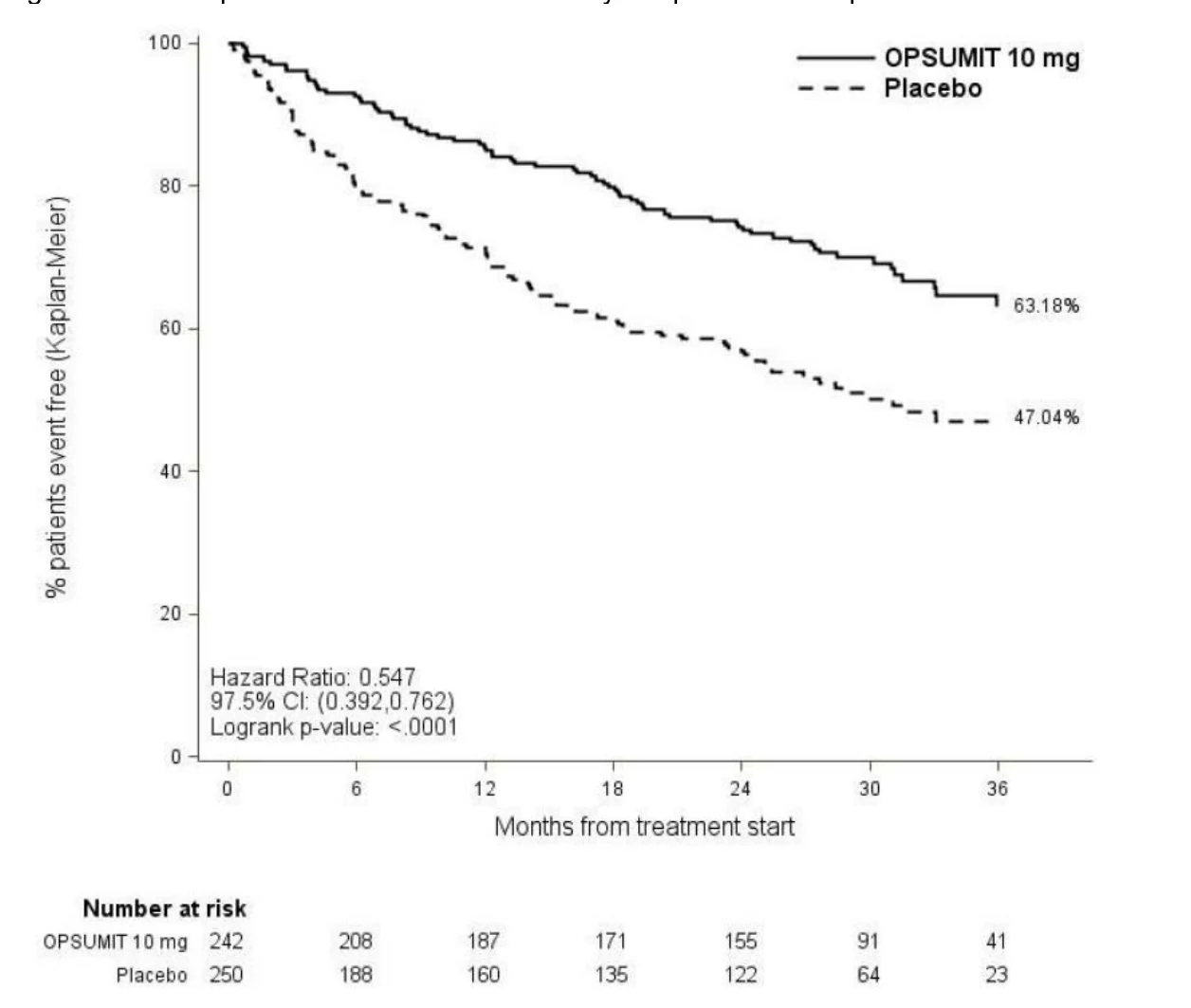
*Note: The treatment response on the primary endpoint was almost entirely attributable to an effect on morbidity.
During treatment, 46.4% and 31.4% of the patients in the placebo and OPSUMIT® 10 mg dose group, respectively, experienced a primary endpoint event, with worsening of PAH reported as the most common first event in the placebo (37.2%) and OPSUMIT® 10 mg (24.4%) treatment groups. Other events reported that contributed to the primary endpoint included death (6.8% placebo, 6.6% OPSUMIT® 10 mg,) and i.v./s.c. prostanoid initiation (2.4% placebo, 0.4% OPSUMIT® 10 mg).
Consistent efficacy of OPSUMIT® 10 mg on the primary endpoint was seen across subgroups of age, sex, race, geographical region, etiology, by monotherapy or in combination with another PAH therapy, 6MWD, and WHO FC.
Treatment with OPSUMIT® 10 mg in monotherapy resulted in a 55% relative risk reduction (HR 0.45, 95% CI 0.28-0.72; logrank p=0.0007) in the occurrence of a primary endpoint event compared to placebo. The proportion of patients without an event at 3 years was 64.4% in OPSUMIT® 10 mg compared to 43.5% in placebo, corresponding to an absolute risk reduction of 20.9% (Figure 2).
Treatment with OPSUMIT® 10 mg in combination with another PAH therapy resulted in a 38% relative risk reduction (HR 0.62, 95% CI 0.43 0.89; logrank p=0.0094) in the occurrence of a primary endpoint event. The proportion of patients without an event at 3 years was 62.6% in OPSUMIT® 10 mg compared to 48.6% in placebo, corresponding to an absolute risk reduction of 14.0% (Figure 3).
Figure 2: Kaplan-Meier Estimates of Primary Endpoint Events up to EOT; Monotherapy at Baseline in SERAPHIN*
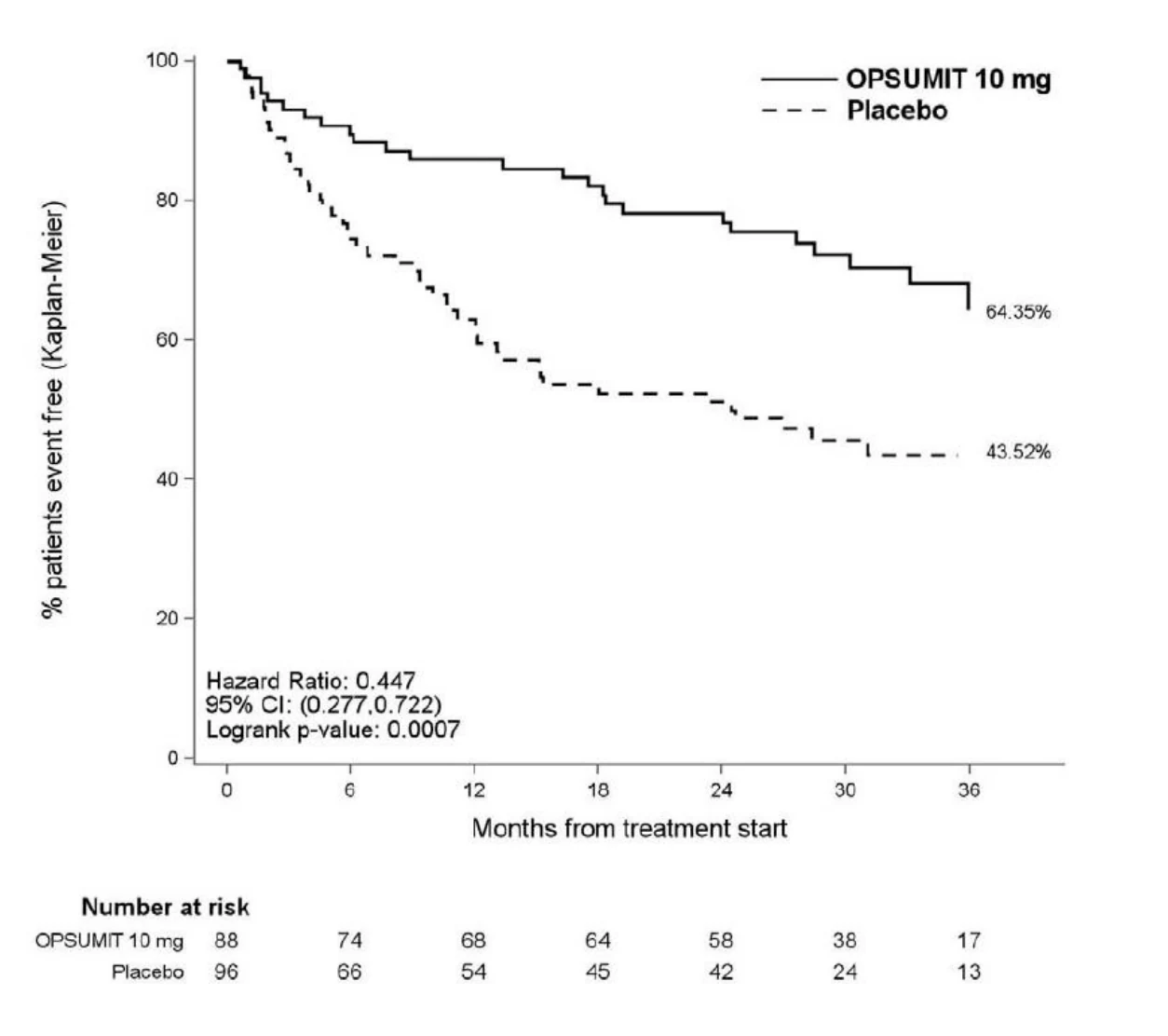
*Note: The treatment response on the primary endpoint was almost entirely attributable to an effect on morbidity.
Figure 3: Kaplan-Meier Estimates of Primary Endpoint Events up to EOT; Combination PAH Therapy* at Baseline in SERAPHIN†
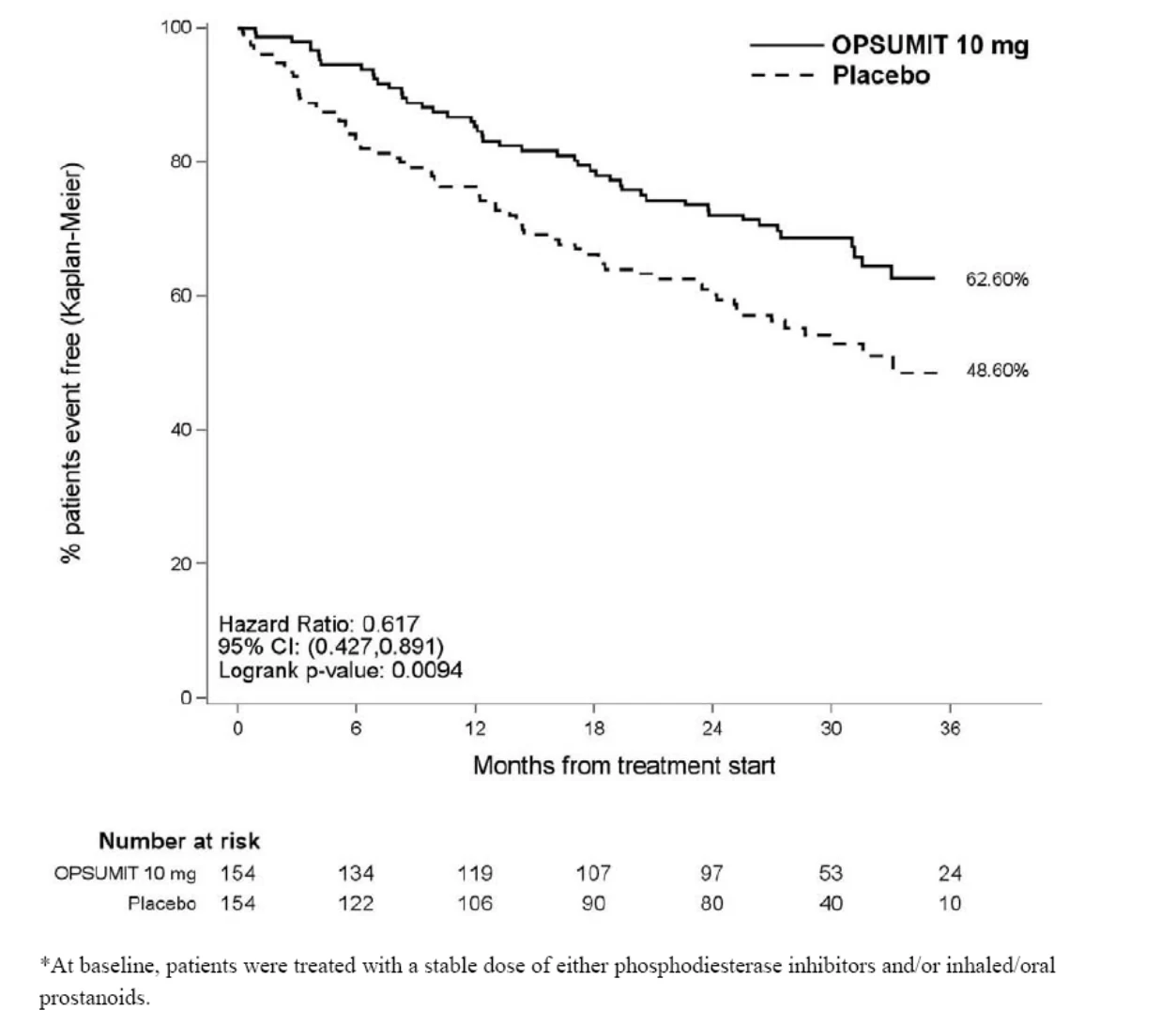
†Note: The treatment effect in the primary endpoint was almost entirely attributable to an effect on morbidity.
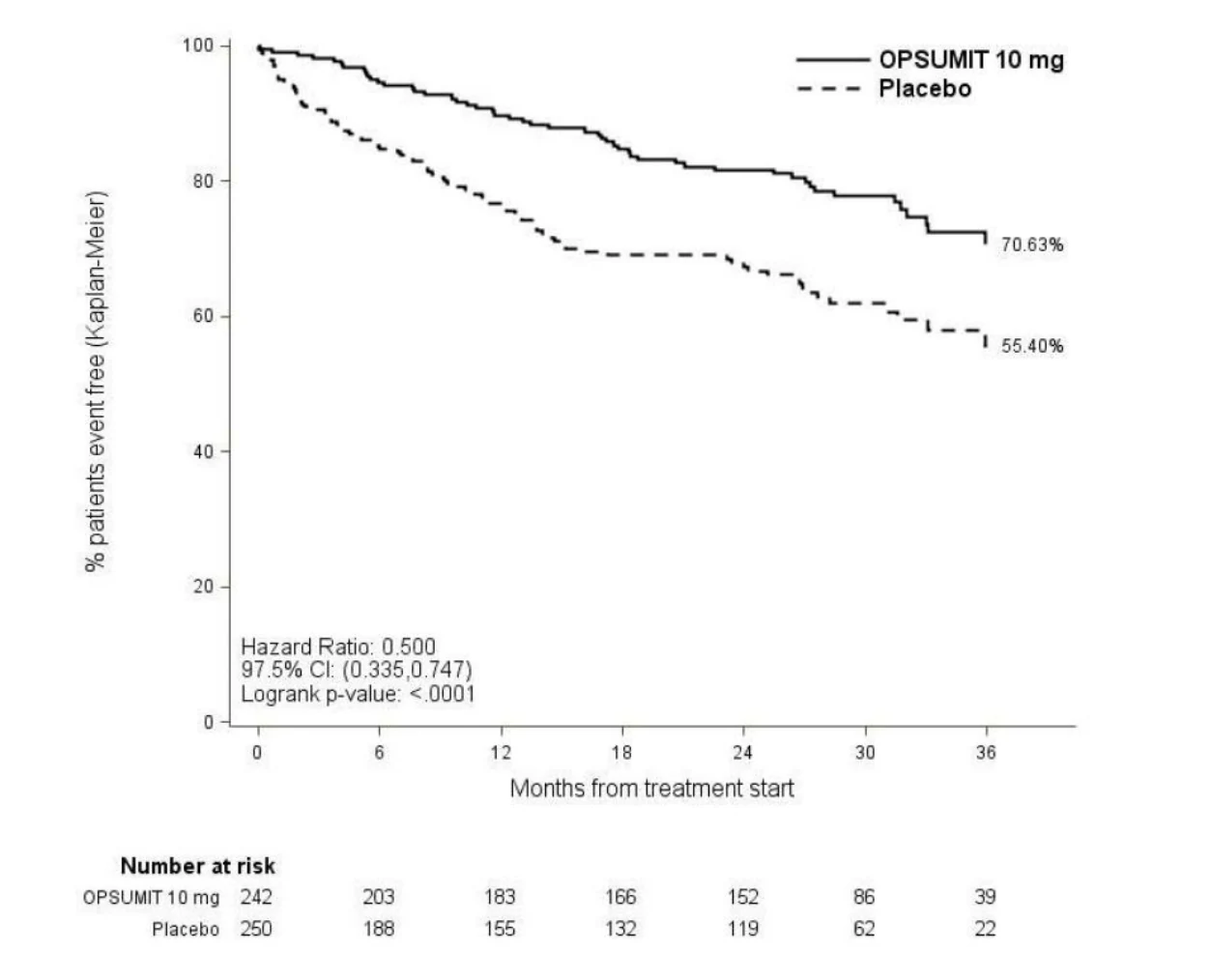
Treatment with OPSUMIT® 10 mg resulted in a 50% relative risk reduction (HR 0.50, 97.5% CI 0.34-0.75; logrank p<0.0001) in the occurrence of PAH related death or hospitalization for PAH, up to EOT compared to placebo. The proportion of patients without a PAH related death or hospitalization for PAH at 3 years was 70.6% in OPSUMIT® 10 mg compared to 55.4% in placebo, corresponding to an absolute risk reduction of 15.2% (Figure 4).
Treatment with OPSUMIT® 10 mg resulted in fewer PAH related hospitalizations per year (0.3 and 0.7 with OPSUMIT® 10 mg and placebo, respectively) and for all causes (0.5 and 1.0 with OPSUMIT® 10 mg and placebo, respectively).
Figure 4: Kaplan-Meier Estimates of Death due to PAH or Hospitalization for PAH up to EOT in SERAPHIN
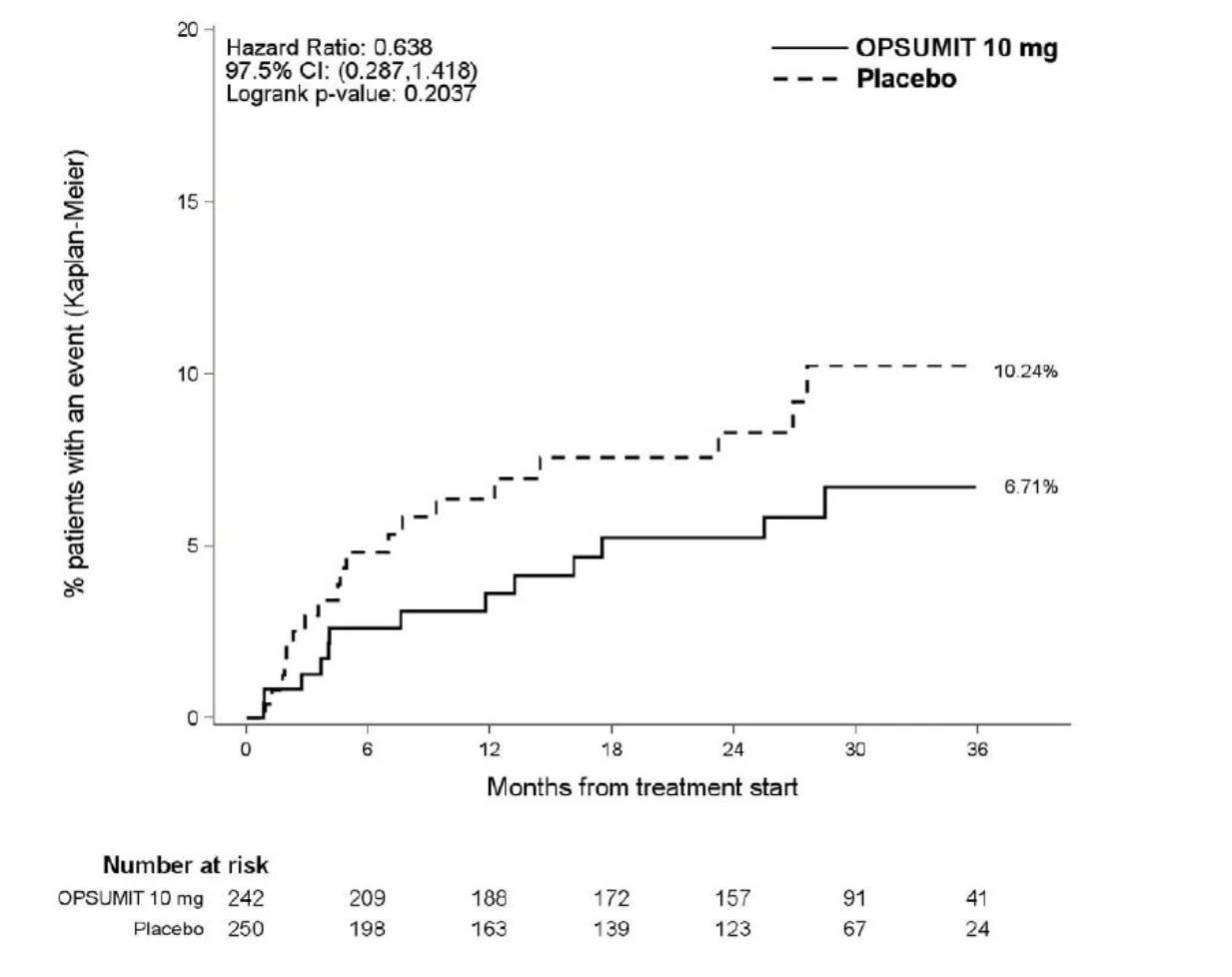
Treatment with OPSUMIT® 10 mg resulted in a 36% relative risk reduction (HR 0.64, 97.5% CI 0.29-1.42; logrank p=0.2037) in the occurrence of death of all causes up to EOT. The proportion of deaths of all causes at 3 years was 10.2% in placebo compared to 6.7% in OPSUMIT® 10 mg, corresponding to an absolute risk reduction of 3.5% (Figure 5). The relative risk reduction for death up to EOS was 23% (HR 0.77, 97.5% CI 0.46-1.28; logrank p=0.2509). The proportion of deaths of all causes at 3 years was 19.3% in the placebo group compared to 17.1% in the OPSUMIT® 10 mg, corresponding to an absolute risk reduction of 2.2%.
Figure 5: Kaplan-Meier Estimates of Death of all Causes up EOT in SERAPHIN
Symptomatic and Functional Endpoints
Exercise ability was evaluated as a secondary endpoint. Treatment with OPSUMIT® 10 mg at Month 6 resulted in a placebo-corrected mean increase in 6MWD of 22 meters (97.5% CI 3-41; p=0.0078). Evaluation of 6MWD by functional class resulted in a placebo corrected mean increase from baseline to Month 6 in FC III/IV patients of 37 meters (97.5% CI 5- 69; p=0.0088) and in FC I/II of 12 meters (97.5% CI -8-33; p=0.1762). The increase in 6MWD achieved with OPSUMIT® was maintained for the duration of the study.
Treatment with OPSUMIT® 10 mg led to a 74% higher chance of WHO FC improvement relative to placebo (risk ratio 1.74; 97.5% CI 1.10–2.74; p=0.0063). Treatment with OPSUMIT® 10 mg led to an improvement of at least one WHO FC at Month 6 in 22% of patients compared to 13% of patients treated with placebo.
OPSUMIT® 10 mg improved quality of life assessed by the SF-36 questionnaire. Improvements compared to placebo were observed in 7 out of 8 domains at Month 6 including physical functioning, role-physical, bodily pain, vitality, social functioning, role emotional, and mental health domains of the SF 36 questionnaire (SF-36).
Hemodynamic Endpoints
Hemodynamic parameters were assessed in a subset of patients (placebo, n=67, OPSUMIT® 10 mg, n=57) after 6 months of treatment. Patients treated with OPSUMIT® 10 mg achieved a median reduction of 36.5% (CI 21.7-49.2%) in pulmonary vascular resistance and an increase of 0.58 L/min/m2 (CI 0.28-0.93 L/min/m2) in cardiac index compared to placebo.
Long-Term Treatment of PAH
In long-term follow-up of patients who were treated with OPSUMIT® 10 mg in the double-blind / open-label extension studies (N=242), Kaplan-Meier estimates of survival at 1, 2, 3, 4, 5, 6, 7, 8 and 9 years were 95%, 89%, 84%, 78%, 73%, 66%, 63%, 58% and 53% respectively (Figure 6). The median follow-up time was 5.9 years. These uncontrolled observations do not allow comparison with a group not given OPSUMIT® and cannot be used to determine the long term-effect of OPSUMIT® on mortality.
Figure 6: Kaplan-Meier estimates of time to death (all-causes) in long-term follow-up of OPSUMIT® treatment
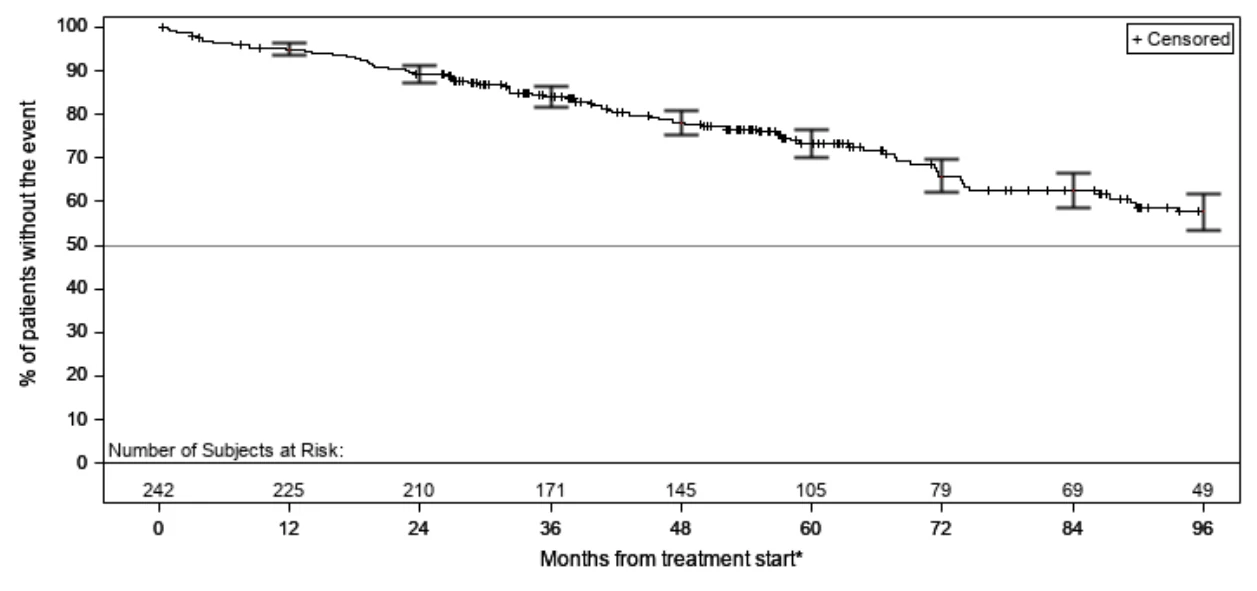
Survival curves are presented up to the time when more than 10% of the subjects are still at risk.
Error bars show Kaplan-Meier estimate ± standard error.
*Treatment start corresponds to the start of double-blind macitentan 10 mg in AC-055-302.
Pulmonary Arterial Hypertension – Pediatrics (aged 2 years to less than 18 years)
Table 4 - Summary of patient demographics for clinical trials in pediatric PAH (aged 2 years to less than 18 years)
| Study # | Study design | Dosage, route of administration and duration | Study subjects (n) | Mean age (Range) | Sex |
|---|---|---|---|---|---|
AC-055-312/ TOMORROW | Phase 3, multicenter, open-label, randomized, active controlled, parallel group in pediatric patients ≥2 to <18 years of age | Macitentan monotherapy or add-on to PDE-5ia, weight-base dosing, once daily in dispersed form via oral route | 73 | 10.5 (2.1-17.9) | F: 68.5% M:31.5% |
| Standard of careb | 75 | 9.0 (2.1-17.8) | F: 50.7% M: 49.3% |
a Patients with no PAH-specific therapy at randomization received macitentan monotherapy. Patients on a PDE-5i monotherapy at randomization received macitentan as add-on therapy. Patients on an ERA or oral/inhaled prostanoids monotherapy at randomization received macitentan monotherapy instead. Patients on a PDE-5i in combination with another PAH-specific therapy at randomization received the combination of macitentan and the PDE-5i.
b Study protocol does not impose any predefined comparator drug. Patients randomized to this arm are treated with SoC as per site’s clinical practise which may comprise treatment with PAH non-specific treatment and/or up to two PAH-specific medications excluding macitentan and IV/SC prostanoids. Patients on only PAH non-specific medications at randomization continued on their medications. Patients on a PDE-5i and/or on other PAH-specific treatment (such as ERA, or inhaled/oral prostanoids) at randomization continued on their medications. For all patients, additional PAH-specific therapy (excluding macitentan and IV/SC prostanoids), if prescribed during the screening period, could be initiated.
The efficacy of macitentan in a pediatric PAH population is mainly corroborated by an extrapolation approach based upon exposure-matching to the adult efficacious dose range, given the similarity of the disease in children and adults, as well as on supportive efficacy and safety data from the TOMORROW Phase 3 study.
A multicenter, open-label, randomized, Phase 3 study with an open-label single-arm extension period (AC-055-312/TOMORROW) was conducted to assess pharmacokinetics, efficacy and safety in pediatric patients with symptomatic PAH.
The primary endpoint was the characterization of pharmacokinetics (see 10.3 Pharmacokinetics). The key secondary endpoint was the time to first Clinical Events Committee (CEC) confirmed disease progression occurring between randomization and the end of the core period (EOCP) visit. Disease progression is defined as death (all causes); atrial septostomy or Potts’ anastomosis, or registration on lung transplant list; hospitalization due to worsening of PAH; and clinical worsening of PAH (defined as need for, or initiation ofnew PAH-specific therapy or intravenous diuretics or continuous oxygen use and at least one of the following: worsening WHO FC, new occurrence or worsening of syncope, new occurrence or worsening of at least 2 PAH symptoms, or new occurrence or worsening of signs of right heart failure not responding to oral diuretics). Other secondary endpoints included time to first CEC-confirmed hospitalization for PAH, time to CEC-confirmed death due to PAH both between randomization and EOCP, time to all-cause death between randomization and study closure, and N-terminal prohormone of brain natriuretic peptide (NT-proBNP) data.
A total of 148 patients aged ≥2 years to less than 18 years were randomized 1:1 to receive either OPSUMIT® or Standard of Care (SoC). At baseline, a total of 75 (50.7%) patients who received (OPSUMIT®: 53.4%, SoC: 48%) were on PDE5i monotherapy, 52 (35.1%) were on PDE5i and ERA combination therapy (OPSUMIT®: 31.5%, SoC: 38.7%), and 12 (8.1%) patients were on ERA monotherapy (OPSUMIT®: 9.6%, SoC: 5%). In the comparator group, subjects received best available care which may include an ERA (other than macitentan). The proportion of subjects with ERA treatment, as a component of the planned SoC, is limited to a maximum of 40% of the overall number of subjects randomized. The mean age was 9.8 years (range 2.1 years 17.9 years), with 35 (23.6%) aged ≥2 to <6 years, 61 (41.2%) aged ≥6 to <12 years, and 52 (35.1%) aged ≥12 to <18 years. The majority of patients were white (51.4%) and female (59.5%). Patients were either WHO FC I (25.0%), FC II (56.1%), or FC III (18.9%).
Idiopathic PAH was the most common etiology in the study population (48.0%), followed by PAH associated with post-operative congenital heart disease (28.4%), PAH with co-incidental congenital heart disease (17.6%), heritable PAH (4.1%) and PAH associated with connective tissue disease (2.0%). The mean treatment duration in the randomized study was 183.4 weeks in the OPSUMIT® arm and 130.6 weeks in the SoC arm.
Secondary endpoint efficacy results
Pediatrics (aged ≥2 years to less than 18 years)
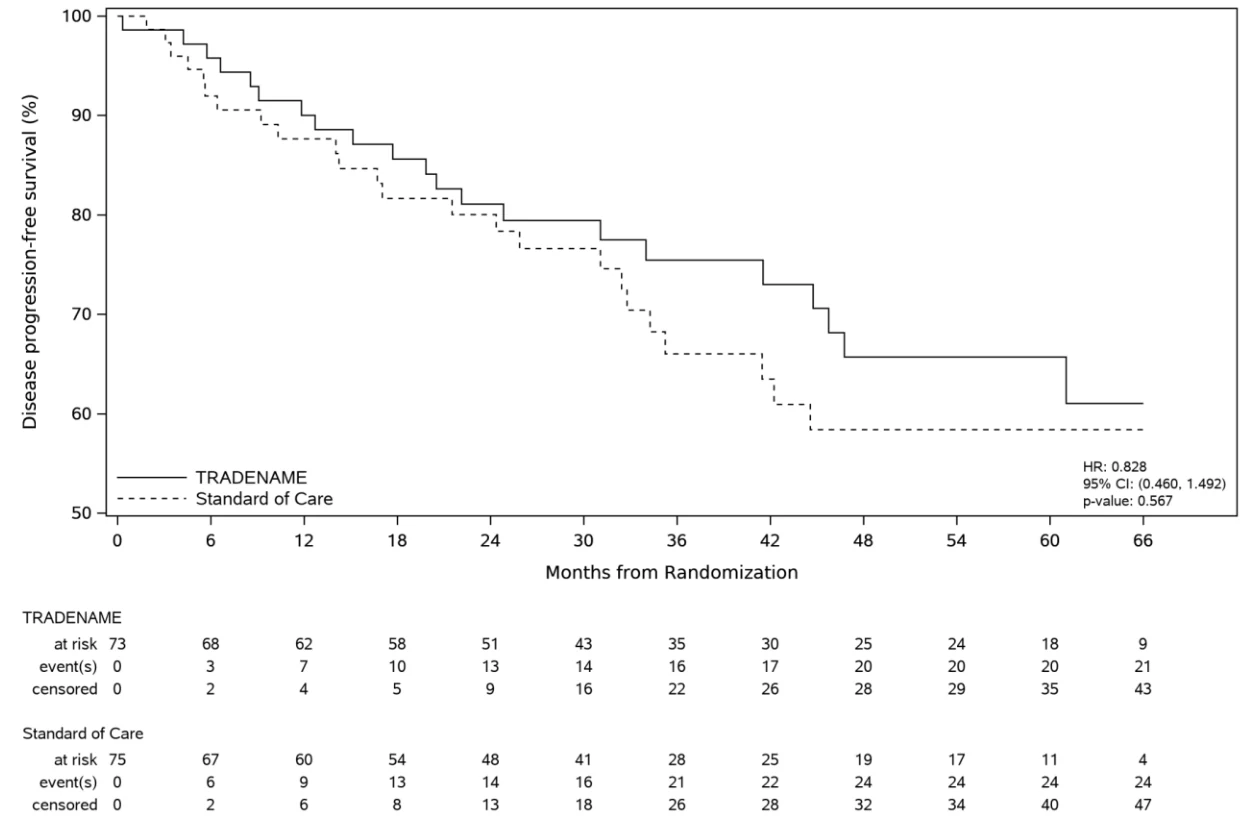
Fewer events for the key secondary endpoint of CEC-confirmed disease progression were observed in the macitentan arm (21 events/73 patients, 29%) versus the SoC arm (24 events/75 patients, 32%), absolute risk reduction of 3%. The hazard ratio was 0.828 (95% CI 0.460; 1.492; 2-sided stratified p-value = 0.567), mainly driven by the clinical worsening of PAH (Figure 7).
Figure 7: Kaplan-Meier curves of time to first CEC-confirmed disease progression event for subjects ≥2 years old (key secondary endpoint)
Other secondary efficacy analyses
In terms of the time to CEC-confirmed death due to PAH and death from all causes, a total of 7 deaths (6 of which were due to PAH as per CEC) were observed in the macitentan arm compared to 6 deaths (4 of which were due to PAH as per CEC) in the SoC arm. The interpretation of mortality results is difficult due to limited number of events.
Macitentan treatment tended to reduce the percent of baseline NT-proBNP (pmol/L) at Week 12 compared with the SoC arm (geometric mean ratio: 0.72; 95% CI: 0.49 to 1.05) but the results were not statistically significant (2-sided p-value of 0.086). The non-significant trend was less pronounced at Week 24 (geometric mean ratio: 0.97;95% CI: 0.66 to 1.43;2-sided p-value of 0.884).
Efficacy results from patients ≥2 years to less than 18 years were similar to those of adult patients.
14.3 Comparative Bioavailability Studies
Bioequivalence of macitentan 10 mg was established between the film-coated tablet and 4 x 2.5 mg dispersible tablets in a study with 28 healthy subjects.
15 MICROBIOLOGY
This information is not available for this drug product.
16 NON-CLINICAL TOXICOLOGY
Detailed Pharmacology
Steady-state conditions of macitentan and its active metabolite are achieved after 3 days and 7 days, respectively. Peak plasma concentrations of macitentan were reached 8 hours after administration and the AUC0-24 and Cmax of macitentan were dose-proportional over the tested dose range (1 to 30 mg o.d.). As anticipated from the observed t1/2 of 16 hours and 48 hours for macitentan and its active metabolite, respectively, the accumulation of macitentan was minimal (approximately 1.5-fold) whereas that of the active metabolite was about 8.5-fold. Macitentan and its circulating metabolites are highly bound (≥ 99%) to plasma proteins, mainly albumin, in all species, including man.
General Toxicology
Acute toxicity studies
Macitentan had a low order of acute toxicity in rodents. No deaths occurred following a single oral dose of 2000 mg/kg in mice and rats.
Repeated-dose toxicity studies
No adverse effects were observed in repeated-dose oral toxicity studies in rats or dogs with treatment durations ≤ 26 or 39 weeks at exposures of 2- to 6-fold the human exposure at 10 mg/day.
Prolonged coagulation test times (PT and APTT) leading to hemorrhage and death occurred at a very high dose level (1500 mg/kg/day) in male rats. As exposure at this dose was 137-fold the human exposure, this finding is considered of limited relevance for humans.
Generally mild to moderate decreases in red blood cell parameters (red blood cell count, hemoglobin, hematocrit) that occurred in rats or dogs were reversible.
In dogs, macitentan decreased blood pressure at exposures similar to the therapeutic human exposure. Intimal thickening of coronary arteries, considered secondary to hemodynamic changes, was observed in dogs at 17-fold the human exposure after 4 to 39 weeks of treatment. Treatment-related coronary intimal thickening of coronary arteries was not observed in dogs at 4-fold (males) to 9-fold (females) human exposure.
Increased incidences of arteritis/peri-arteritis of coronary arteries occurred in dogs at ≥ 17-fold human exposure. Due to the species-specific sensitivity and the safety margin, this finding is considered of limited relevance for humans.
There were no adverse liver findings in long-term studies conducted in B6C3F1 mice, rats, and dogs at exposures of 12- to 116-fold the human exposure. The relevance of increased aminotransferase activities and liver cell necrosis observed in CD-1 mice at ≥ 5 mg/kg/day is not known in view of the inconsistency of these findings across studies.
Liver cell hypertrophy in mice, rats and dogs and associated thyroid follicular cell hypertrophy in rats, represent adaptive changes related to hepatic enzyme induction.
Pathologic changes in testes (tubular dilatation, degeneration and/or atrophy; and/or hypospermatogenesis) occurred in rats or dogs at >18-fold human exposure.
Carcinogenicity
Carcinogenicity studies of 2 years duration did not reveal any carcinogenic potential at exposures 18-fold and 116-fold the human exposure in rats and mice, respectively.
Mutagenicity
Macitentan was not genotoxic in a standard battery of in vitro and in vivo assays. Macitentan was not phototoxic in vivo.
Reproductive toxicity
Macitentan was teratogenic in rabbits and rats at all dose levels tested. In both species there were cardiovascular abnormalities and mandibular arch fusion abnormalities.
Macitentan was fetotoxic in rabbits at a dose 218-fold the human exposure.
Administration of macitentan to female rats from late pregnancy through lactation caused reduced pup survival and impairment of the reproductive capability of the offspring at maternal exposures 5-fold the human exposure.
Treatment of juvenile rats from postnatal Day 4 to Day 114 led to reduced body weight gain and testicular tubular atrophy at exposures 6-fold the human exposure.
Treatment with macitentan also caused a reduction in the numbers of implantation sites and live embryos. Although at an exposure 3-fold the human exposure, macitentan had no effects on sperm count or motility, the incidence of sperm misshapen or with abnormally curved hook was increased.
Testicular tubular dilatation was not observed in repeated-dose toxicity studies at exposures 8- and 6-fold the human exposure in rats and dogs, respectively.
After 2 years of treatment, tubular atrophy was seen in rats at 4-fold the human exposure. Macitentan did not affect male or female fertility at exposures ranging from 19- to 44-fold the human exposure, respectively, and had no effect on sperm count, motility, and morphology in male rats.
No testicular findings were noted in mice after treatment up to 2 years. In mice treated for 2 years with macitentan, uterine weight was increased and there was an increase in the mean severity and incidence of uterine endometrial cysts at exposures 9-fold and 90-fold the human exposure, respectively.