


Patient Medication Information: uses, side effects, how to take - Pegasys Rbv
ABOUT THIS MEDICATION
What the medication is used for:
PEGASYS RBV (peginterferon alfa-2a and ribavirin) is used in combination with other hepatitis C virus (HCV) drugs that have been authorized for combination use in Canada, or alone for the treatment of chronic hepatitis C in:
- Adult patients without cirrhosis
- Adult patients with compensated cirrhosis,
including HCV/HIV co-infection patients with stable HIV disease with or without antiretroviral therapy.
PEGASYS RBV is not authorized for use in children and adolescents under the age of 18 years (see SIDE EFFECTS AND WHAT TO DO ABOUT THEM).
If your doctor has prescribed additional medication (that works by directly targeting Hepatitis C virus to reduce the amount of virus in your body), also read the leaflet for that medication.
What it does:
PEGASYS is a prescription medication belonging to the family of drugs called interferons. “Interferon” refers to a kind of protein normally made in a person’s body. Interferons are a normal part of your body’s defense system for fighting disease. Scientists can also make interferons outside of the body for use as medicines. Another name for PEGASYS is peginterferon alfa-2a. PEGASYS is a modified interferon that is different from the interferon made in a person’s body. This modification helps the interferon (PEGASYS) stay in your body for a prolonged time and allows PEGASYS to be injected only once a week.
COPEGUS is an antiviral agent, also known as ribavirin, that fights infection, but is not used by itself to treat hepatitis C. It is used in combination with PEGASYS to treat chronic (lasting) hepatitis C in adults whose liver still works normally.
What is Hepatitis C:
Hepatitis C is a liver disease caused by the hepatitis C virus. Hepatitis C is spread by contact with blood of a person carrying the hepatitis C virus.
Hepatitis C is more serious for some people than others. Most people who get hepatitis C carry the virus in their blood for the rest of their lives. Most of these people will have some liver damage, but many do not feel sick from the disease. In some people, the liver becomes badly damaged and scarred. This is called cirrhosis. Cirrhosis can cause the liver to stop working properly.
With PEGASYS RBV combination therapy, the hepatitis C virus can be decreased to a level so low that it cannot be measured by blood tests. The virus is decreased and cannot be measured in 5 - 8 out of every 10 people who take PEGASYS RBV therapy for approximately one year. After 3 months of therapy, a blood test can help your healthcare provider determine your likelihood of long-term response. It has not been shown in clinical trials that PEGASYS RBV combination therapy can cure hepatitis C (permanently eliminate the virus) or if it can prevent liver failure or liver cancer that is caused by hepatitis C infection. It is not known if treatment with PEGASYS RBV combination therapy will prevent an infected person from spreading the hepatitis C virus to another person. It is not known how COPEGUS and PEGASYS work together to fight hepatitis C virus infections.
Your healthcare provider will monitor the effects of your medicine on your body through blood tests. While you are using PEGASYS RBV combination therapy, it is very important to get the blood tests your doctor orders. This will help your doctor see how well the medicine is working for you.
If you have questions about your health condition or PEGASYS RBV, talk to your healthcare provider.
When it should not be used:
HARM TO UNBORN CHILDREN. The COPEGUS component of PEGASYS RBV therapy may cause birth defects and/or death of an unborn child. If you are female and are pregnant or plan to become pregnant or, if you are male and have a female partner who is pregnant or plans to become pregnant, you must not receive PEGASYS RBV combination therapy. Extreme care must be taken to avoid pregnancy during PEGASYS RBV therapy and for 6 months after completion of treatment in both female and male patients. Two forms of effective birth control (one for each partner) must be used during this time and for 6 months after stopping therapy.
- During this time, you must also have monthly pregnancy tests that show you are not pregnant. If pregnancy occurs, report the pregnancy to your doctor right away.
- Anemia. PEGASYS RBV therapy may cause your red blood cell count to decrease (anemia). This can be dangerous, especially if you have heart or breathing problems. This may cause a worsening of heart (cardiovascular) or circulatory problems.
- you ever had an allergic reaction to other alpha interferons, ribavirin or any component of PEGASYS or COPEGUS.
- you have autoimmune hepatitis (hepatitis caused by your immune system attacking your liver).
- you have unstable or advanced liver disease.
- you have an autoimmune disease (where the body’s immune system attacks the body’s own cells) such as psoriasis (a skin disease) or sarcoidosis.
- you are coinfected with HIV and you have unstable or advanced liver disease, as determined by your doctor.
- you have blood disorders, including anemia (low red blood cell count), thalassemia (Mediterranean anemia) and sickle-cell anemia.
- neonates and infants because the PEGASYS component contains benzyl alcohol. There have been rare reports of death in neonates and infants associated with excessive exposure to benzyl alcohol. The amount of benzyl alcohol at which toxicity or adverse effects may occur in neonates or infants is not known.
- you have a history of or current mental illness (such as depression or anxiety). PEGASYS RBV combination therapy may make them worse. Tell your doctor if you are being treated or had treatment in the past for any mental problems, including depression, thoughts of ending your life (suicidal thoughts) or a feeling of loss of contact with reality, such as hearing voices or seeing things that are not there (psychosis). Tell your doctor if you take any medicines for these problems.
- you have problems with your thyroid gland.
- you are breast feeding.
What the medicinal ingredient is:
peginterferon alfa-2a and ribavirin.
What the non-medicinal ingredients are:
PEGASYS: acetic acid, benzyl alcohol, polysorbate 80, sodium acetate trihydrate, sodium chloride and water for injection.
COPEGUS: ethyl cellulose, hydroxypropyl methylcellulose, iron oxide red, iron oxide yellow, magnesium stearate, maize starch, microcrystalline cellulose, pregelatinized starch, sodium starch glycolate, talc, titanium dioxide, triacetin.
What dosage forms it comes in:
PEGASYS:
Pre-filled Syringes: Each syringe contains 180 mcg of PEGASYS in a 0.5 mL volume.
Vials: Each vial contains 180 mcg of PEGASYS in a 1 mL volume.
ProClick® Autoinjector: Each autoinjector contains 180 mcg of PEGASYS in a 0.5 mL volume.
COPEGUS:
Bottles: Pink film-coated tablets containing 200 mg ribavirin.
WARNINGS AND PRECAUTIONS
Serious Warnings and Precautions
Interferons, including PEGASYS cause or aggravate fatal or life-threatening neuropsychiatric (mental illness), autoimmune (where the body’s immune system attacks the body’s own cells), ischemic (conditions in which blood flow, and thus oxygen, is restricted to a part of the body) and infectious disorders. If you have persistently severe or worsening signs or symptoms of these conditions you should contact your doctor. Your doctor will assess you and may discontinue you from therapy. In many cases, but not all cases, these disorders resolve after stopping interferon therapy.
BEFORE you use PEGASYS RBV talk to your doctor or pharmacist if:
- you are pregnant or breast feeding or plan to become pregnant at any time while you are being treated or during 6 months after your treatment has ended.
- you are a male patient with a female sexual partner who is pregnant or plans to become pregnant at any time while you are being treated or during 6 months after your treatment has ended.
- you have autoimmune hepatitis (hepatitis caused by your immune system attacking your liver).
- you have an autoimmune disease (where the body’s immune system attacks the body’s own cells) such as psoriasis (a skin disease) or sarcoidosis.
- you have unstable or advanced liver disease.
- you ever had an allergic reaction to other alpha interferons, ribavirin or any component of PEGASYS or COPEGUS.
- you are allergic to other medicines, including those not prescribed by your doctor.
- you have a history of or current mental illness (such as depression or anxiety). PEGASYS RBV combination therapy may make them worse. Tell your doctor if you are being treated or had treatment in the past for any mental problems, including depression, thoughts of ending your life (suicidal thoughts) or a feeling of loss of contact with reality, such as hearing voices or seeing things that are not there (psychosis). Tell your doctor if you take any medicines for these problems.
- you have a history of or current drug or alcohol addiction or abuse.
- you have high blood pressure or a history of heart disease or previous heart attack or high blood fat (such as elevated triglyceride or cholesterol levels).
- you have a history of cancer.
- you have kidney problems.
- you have blood disorders, including anemia (low red blood cell count), thalassemia (Mediterranean anemia) and sickle-cell anemia.
- you are taking any other medicines, vitamins or herbal supplements, including those not prescribed by your doctor. Your doctor should know if you are taking medicines called methadone, theophylline, didanosine, zidovudine, stavudine or azathioprine.
- you are taking the Chinese herbal medicine sho-saiko-to, also known as Xiao-Chai-Hu.
- you have had an organ transplant and are taking medicine that keeps your body from rejecting your transplant (suppresses your immune system).
- you have been infected with hepatitis B virus and/or human immunodeficiency virus (the virus that causes AIDS).
- you have diabetes (high blood sugar).
- you have problems with your thyroid gland.
- you have liver problems (other than hepatitis C).
- you have past interferon treatment for hepatitis C virus infection that did not work for you.
- you have lung (respiratory) problems, such as pneumonia, shortness of the breath, and Chronic Obstructive Pulmonary Disease (COPD).
This information will help your doctor and you decide whether you should use PEGASYS RBV combination therapy and what extra care may need to be taken while you are on these medicines. If you have any doubts about your health condition or about taking PEGASYS RBV, talk to your doctor.
INTERACTIONS WITH THIS MEDICATION
Drugs that may interact with PEGASYS RBV include: didanosine, lamivudine, methadone, sho-saiko-to/Xiao-Chai-Hu, stavudine, theophylline, zidovudine, azathioprine.
Tell your doctor or pharmacist if you are taking Sebivo® (telbivudine) for chronic hepatitis B because taking this medicine together with PEGASYS may increase your risk of developing peripheral neuropathy (numbness, weakness, tingling, and/or burning sensations, or pain in the arms and/or legs). The combined use of these medications is not recommended.
Pancytopenia (marked decreases in red and white blood cells and platelets) and bone marrow (tissue inside bones that makes blood cells) suppression have been seen when ribavirin is taken with azathioprine. This was reversible when these treatments were stopped.
PROPER USE OF THIS MEDICATION
Usual dose:
How should you take PEGASYS RBV combination therapy?
Your doctor has prescribed PEGASYS RBV combination therapy after carefully studying your case. Other people may not benefit from taking this medicine, even though their problems may seem similar to yours. Do not give your medicine to anyone else.
PEGASYS is given as an injection just under the skin, on the stomach or thighs. You may hear people call this type of injection a “subcutaneous” or “Sub Q” injection. This means that the injection goes into the layer of fat just under the skin. If you have any questions about how to take PEGASYS or have trouble giving yourself the injections, call your doctor immediately.
Your healthcare provider will tell you how much medicine to take and how often to take it. PEGASYS is a ready-to-use solution usually given as a single injection once per week. Make sure that you drink plenty of fluids while you are being treated with PEGASYS.
PEGASYS is supplied in three different ways: pre-filled syringes, autoinjectors, and vials. It is important that you follow the specific instructions for using the kind of PEGASYS that your doctor has prescribed. Whether you give yourself the injection, or another person gives the injection to you, it is important to follow the instructions (see Appendix 1- How to use) in this information sheet.
COPEGUS tablets should be taken each day in two doses with food (morning and evening). Your healthcare provider will determine the correct dose of COPEGUS tablets based on your weight and the genotype of the disease you have.
Do not take COPEGUS alone to treat hepatitis C virus infection. COPEGUS does not treat hepatitis C virus infections by itself. COPEGUS should be used in combination with PEGASYS to treat continuing (chronic) hepatitis C virus infections.
How long will you have to take PEGASYS RBV?
Your doctor will tell you how long you need to use PEGASYS RBV. Over time, your doctor may change your dose of PEGASYS RBV. For information on how to change your dose of PEGASYS, see the section called “How do you use PEGASYS?” Only change your dose of PEGASYS RBV if your doctor tells you to change it.
After 3 months of therapy, your doctor may ask you to have a blood test to determine how you are responding to your treatment.
What should you do if your doctor changes your dose of PEGASYS?
If your doctor changes your dose of PEGASYS, you will need to pull a different amount of medicine into the syringe from the vial. Your doctor will tell you which mark on the syringe to use. Do not change your dose of PEGASYS unless your doctor tells you to.
If you ever switch between using pre-filled syringes, autoinjectors, and vials, talk to your healthcare provider about how much PEGASYS to use. Equal volumes of liquid from the pre-filled syringes, autoinjectors, and the vials DO NOT contain the same amount of PEGASYS. If you switch between pre-filled syringes and vials, you will have to adjust the volume of liquid that you use to give your injection. If you do not adjust this, you could accidentally take too much or too little of your medicine.
The autoinjector is designed to deliver the full content. If your required dose is not available in an autoinjector, pre-filled syringes or vials should be used.
Are all interferon and ribavirin combinations the same?
Once you start treatment with PEGASYS RBV combination therapy, do not switch to another brand of interferon and/or ribavirin without talking to your doctor. Other brands may not have the same effect on the treatment of your disease. Switching brands will also require a change in your dose.
Overdose:
If you take more than the prescribed amount of PEGASYS, call your doctor right away. Your doctor may want to examine you and take blood for testing.
| In case of drug overdose, contact a health care practitioner, hospital emergency department or regional Poison Control Centre immediately, even if there are no symptoms. |
Missed Dose:
If you miss a dose of PEGASYS and remember within 2 days of the scheduled dose, give yourself an injection of PEGASYS as soon as you remember. Take your next PEGASYS dose on the day you would usually take it. If more than 2 days have passed, ask your doctor what you should do.
If you miss a dose of COPEGUS tablets and remember within the same day, take the missed dose as soon as you remember. If an entire day has passed, ask your doctor what to do. Do not take two doses at the same time.
To get the most benefit from this medicine, it is important to take PEGASYS RBV combination therapy exactly as your doctor and healthcare providers tell you.
SIDE EFFECTS AND WHAT TO DO ABOUT THEM
Unwanted effects are possible with all medicines. PEGASYS RBV combination therapy can cause some serious side effects. Before starting PEGASYS RBV combination, you should talk with your doctor about the possible benefits and possible side effects of treatment. Talk to your doctor or pharmacist if you are worried about side effects or find them very bothersome. There may be a way to relieve your symptoms. While taking PEGASYS RBV combination therapy, you will need to see your doctor regularly for medical examinations and blood tests to make sure your treatment is working and to check for side effects.
The most common side effects of interferon therapy, including PEGASYS RBV are:
- Flu-like symptoms such as unusual tiredness, fever, chills, muscle aches, joint pain, and headaches. Most people have mild to moderate flu-like symptoms, but these usually decrease after the first few weeks of treatment. Taking acetaminophen (e.g. Tylenol®) or ibuprofen (e.g. Advil®) before you take PEGASYS can help with these symptoms. Ask your pharmacist or doctor for a recommendation as to which pain reliever to take. You can also try taking PEGASYS at night. You may be able to sleep through the symptoms.
Other common side effects can occur with PEGASYS RBV, but are usually mild. These may include:
- Upset stomach, nausea, vomiting, loss of appetite, diarrhea, back pain, trouble sleeping, poor concentration, dizziness, decreased sexual desire, numbness or tingling, rash, dry itchy skin, hair thinning, redness and swelling at the injection site, problems with blood sugar, feeling tired and cough.
Dental and gum disorders, which may lead to loss of teeth, have been reported in patients receiving PEGASYS RBV. In addition, dry mouth could have a damaging effect on teeth and membranes of the mouth during long-term treatment with PEGASYS RBV. You should brush your teeth thoroughly twice daily and have regular dental examinations. In addition some patients may experience vomiting. If you have this reaction, be sure to rinse your mouth thoroughly afterwards.
The serious possible side effects of interferon therapy, including PEGASYS RBV are:
- Mood or behavioral problems including irritability (getting easily upset), depression (feeling low, feeling bad about yourself or feeling hopeless), and anxiety. Some patients may have aggressive behaviour (sometimes directed towards others) or develop thoughts about ending their lives (suicidal thoughts) and may attempt to do so. A few patients have ended their lives.
- Blood related disorders such as pancytopenia (marked decreases in red and white blood cells and platelets) and different forms of anemia
- A drop in the number of white blood cells causing a risk for infection, and drop in platelets resulting in bleeding if the numbers drop too low.
- Serious infections (bacterial, viral or fungal).
- Lung problems, such as difficulty breathing, pneumonia, or high blood pressure of the lungs (pulmonary hypertension)
- Eye problems that may cause blurred vision, a visual field deficit, or loss of vision.
- Autoimmune problems (where the body’s own immune system begins to attack itself) including psoriasis or thyroid problems.
- Chest pain and very rarely heart attack.
- Stroke: some patients may have weakness, loss of coordination and numbness
- Nerve problems: some patients may have numbness, tingling or burning sensation in the arms or legs
- Effect on growth in children: In a clinical study, it was observed that children can experience a delay in weight gain and height increase while being treated with PEGASYS and COPEGUS. Catch-up in growth happens after treatment stops, however some children may not reach the height that they were expected to have before treatment. (PEGASYS RBV is not authorized for use in children and adolescents under the age of 18 years.)
| SERIOUS SIDE EFFECTS, HOW OFTEN THEY HAPPEN AND WHAT TO DO ABOUT THEM | ||||
|---|---|---|---|---|
| Symptom / effect | Talk with your doctor or pharmacist | Stop taking drug and call your doctor or pharmacist | ||
| Only if severe | In all cases | |||
| Less Common | Depressed or think of suicide | ☑ | ||
| Experience hallucinations, aggressiveness or confusion, or have trouble sleeping or concentrating | ☑ | |||
| Severe chest pain or irregular heart beat | ☑ | |||
| Trouble breathing or persistent cough | ☑ | |||
| Problems with your eyesight, a change in your vision (such as blurred vision, a visual field deficit or loss of vision) or hearing problem | ☑ | |||
| Unusual bleeding or bruising, including severe nosebleeds | ☑ | |||
| Psoriasis (skin disease) and it gets worse while taking medicine | ☑ | |||
| Serious skin rash, hives, swelling or itching | ☑ | |||
| High fever or chills or have pain when urinating | ☑ | |||
| Severe stomach pain or lower back pain | ☑ | |||
| Bloody diarrhea | ☑ | |||
| Woman and become pregnant | ☑ | |||
| Weakness, loss of coordination and numbness, tingling or burning sensation in the arms or legs | ☑ | |||
If you are concerned about these or any other unexpected effects while on PEGASYS RBV, talk to your doctor or pharmacist.
HOW TO STORE IT
PEGASYS RBV packages must be stored in the refrigerator at a temperature of 2-8°C. Do not freeze. Do not shake. Protect from light.
If the package components are separated: PEGASYS must be stored in the refrigerator at a temperature of 2-8°C. Do not freeze. Do not shake. Protect from light. COPEGUS should be stored below 30°C or in the refrigerator (2-8°C).
Keeping PEGASYS at temperatures outside the recommended range and shaking can destroy the medicine.
Do not use after expiry date stated on the label.
Keep this and all other medicines out of the reach of children.
Appendix 1 How to Use
What is the safe way to handle and dispose of PEGASYS?
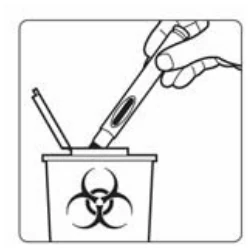
If you use PEGASYS at home, you must throw away syringes, autoinjectors, and needles in a box that will not let the needles stick through it. This will help protect you and other people from accidental needle sticks. Being stuck by a needle not only hurts, but also can pass diseases on to other people.
You can get these special boxes, often called “puncture-resistant containers,” from your doctor or pharmacist. Keep this box out of the reach of children. When the box is full, follow your healthcare provider’s instructions for throwing it away. Placing used boxes in the household waste should be avoided.
For safety reasons, always throw away syringes and needles promptly and never reuse them.
How do you use PEGASYS?
Please ask your doctor what supplies you need for properly administering this drug.
Pre-filled Syringes:
The following instructions will help you learn how to use PEGASYS pre-filled syringes to inject yourself. It is important to follow these directions carefully. Talk to your healthcare provider if you have any concerns about how to use PEGASYS.
If you are giving this injection to someone else, a healthcare provider must teach you how to avoid needle sticks. Being stuck by a needle can pass diseases on to you.
Getting ready
Wash your hands carefully before handling any of the items.
Collect the necessary items before beginning:
Included in the pack:
- a pre-filled syringe of PEGASYS
- an injection needle*
Not included in the pack:
- alcohol swabs
- small bandage or sterile gauze
- a puncture-resistant container for cleaning up when you are finished
You may need to purchase these.
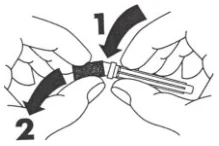
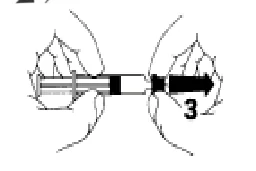
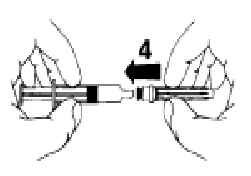
Preparing the syringe and needle for injection
|  |
|  |
|  |
| 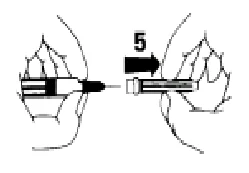 |
- To remove air bubbles from the syringe, hold the syringe with the needle pointing up. Tap the syringe gently to bring the bubbles to the top. Push the plunger up slowly to the correct dose. Replace the needle guard and place the syringe in a horizontal position until ready for use.
- Allow the solution to reach room temperature before injection or warm the syringe between your palms.
- Visually inspect the solution prior to administration. Do not use if it is discoloured (any colour besides colourless to light yellow) or if particles are present and report the lot number to your healthcare provider.
- You are now ready to inject the dose.
Injecting the solution
- Select the injection site in the abdomen or thigh (except your navel or waistline). Change your injection site each time.
- Clean and disinfect the skin where the injection is to be made with an alcohol swab.
- Wait for the area to dry.
- Remove the needle guard.
- With one hand, pinch a fold of loose skin. With your other hand hold the syringe as you would a pencil.
| 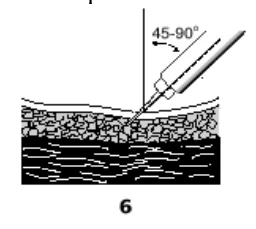 |
- Inject the solution by gently pushing the plunger all the way down.
- Pull the needle straight out of the skin.
Disposal of the injection materials
- Clean up after your injection.
- Place the syringe and needle in a puncture-resistant container immediately after use.
- Throw away full containers according to directions provided by your healthcare provider.
Vials:
The following instructions will help you learn how to use PEGASYS vials. Please read all of these directions before trying to take your medicine. It is important to follow these directions carefully. Talk to your healthcare provider if you have any concerns about how to use PEGASYS.
If you are giving this injection to someone else, a healthcare provider must teach you how to avoid needle sticks. Being stuck by a needle can pass diseases on to you.
Getting ready
Wash your hands carefully before handling any of the items.
Collect the necessary items before beginning:
Included in the pack:
- a vial of PEGASYS solution for injection.
Not included in the pack:
- alcohol swabs
- 1 mL syringe and needle (recommended: 27 gauge x ½ inch) for subcutaneous administration
- small bandage or sterile gauze
- a puncture-resistant container for cleaning up when you are finished.
- You may need to purchase these.
Measuring the dose of PEGASYS
| 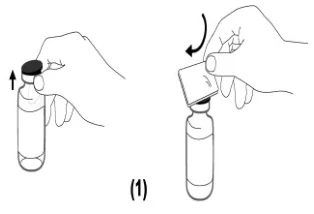 |
- Remove the needle and syringe from their packaging.
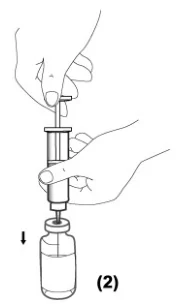
- Pull the syringe plunger back to the mark on the syringe barrel as instructed, this will pull air into the syringe barrel.
- Remove the needle guard without touching the needle and insert through the center of the stopper on the PEGASYS vial.
|  |
|  |
| 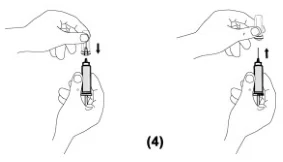 |
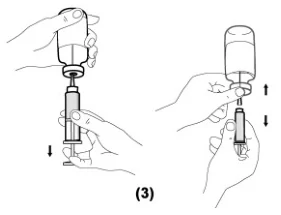
- Check for air bubbles in the syringe. If you see any bubbles, pull the plunger slightly back. To remove air bubbles from the syringe, hold the syringe with the needle pointing up. Tap the syringe gently to bring the bubbles to the top. Push the plunger up slowly to the correct dose. Replace the needle guard and place the syringe in a horizontal position until ready for use.
- Allow the solution to reach room temperature before injection or warm the syringe between your palms.
- Visually inspect the solution prior to administration. Do not use if it is discoloured (any colour besides colourless to light yellow) or if particles are present and report the lot number to your healthcare provider.
- You are now ready to inject the dose.
Injecting the solution
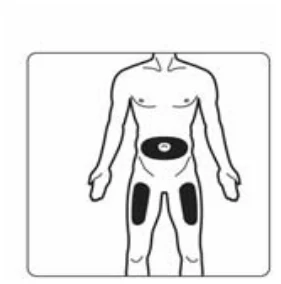
- Select the injection site in the abdomen or thigh (except your navel or waistline). Change your injection site each time.
- Clean and disinfect the skin where the injection is to be made with an alcohol swab.
- Wait for the area to dry.
- Remove the needle guard.
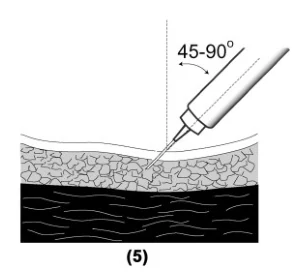
- With one hand, pinch a fold of loose skin. With your other hand hold the syringe as you would a pencil.
|  |
- Inject the solution by gently pushing the plunger all the way down.
- Pull the needle straight out of the skin.
Disposal of the injection materials
- Clean up after your injection.
- Place the syringe and needle in a puncture-resistant container immediately after use.
- Throw away full containers according to directions provided by your healthcare provider.
ProClick® Autoinjector:
The following instructions will help you or your caregiver learn how to use PEGASYS ProClick™ autoinjector correctly. These instructions do not replace training from your healthcare provider. Your healthcare provider should show you how to prepare and use your autoinjector properly before you use it for the first time. Ask your healthcare provider any questions you may have. Do not attempt to administer an injection until you are sure you understand how to use the autoinjector.
The ready to use autoinjector includes a post-injection needle shield that was designed to help prevent needle-stick injuries and keeps the needle non-visible. The autoinjector is for single use only and is then to be discarded.
Do not:
- attempt to open the autoinjector or take it apart.
- expose to excessive forces or shock.
- use through clothing covering the skin.
- use if autoinjector appears to be damaged.
- use if medicine is cloudy, hazy, discoloured or has particles in it.
- shake the autoinjector.
- remove the blue cap if you are not ready to use it.
- re-use the autoinjector.
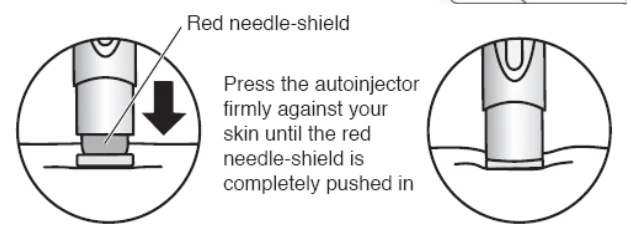
- push or pull the red needle-shield before, during or after use, as this is a safety device.
Getting ready:
Wash your hands carefully before handling any of the items.
Collect the necessary items before beginning:
Included in the pack:
a PEGASYS ProClick® autoinjector
Not included in the pack:
- alcohol swabs
- small bandage or sterile gauze
- a puncture-resistant container for cleaning up when you are finished
You may need to purchase these.
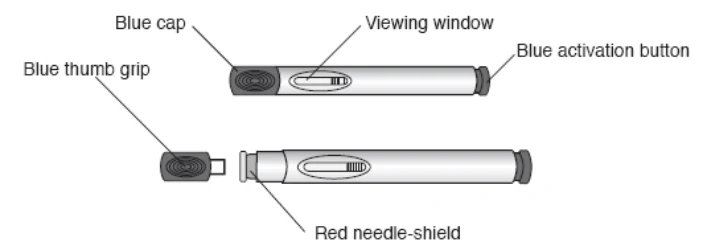
ProClick® Autoinjector parts:
How to proceed:
- 1. Visually check the autoinjector
Take the autoinjector out of the refrigerator. Visually examine the autoinjector, as well as the medicine through the viewing window. Do not shake. Do not remove the blue cap. If there is foam on the medicine, put the autoinjector back in the refrigerator and use at a later time.
Dispose of the autoinjector and use another if:
- the medicine is cloudy.
- the medicine contains particles.
- the medicine is any colour besides colourless to light yellow.
- any part of the autoinjector appears to be damaged.
- the expiration date has passed. You will find the expiration date on the box as well as on the label of the autoinjector itself.
- Contact your health care provider or pharmacist if the medicine in the autoinjector is cloudy or contains particles.
Keep the blue protective cap on the autoinjector until Step 4.
- 2. Allow the autoinjector to adjust to room temperature
Allow the refrigerated autoinjector to adjust to room temperature for about 20 minutes to warm up. Do not warm up autoinjector in any other way.
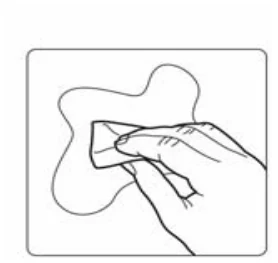
- 3. Choose and prepare an injection site
|  |
| |
|  |
- 4. Remove blue cap
NOTE: The cap contains a loose-fitting metal tube. Once the cap is removed, the autoinjector should be used immediately to avoid contamination. If it is not used within 5 minutes, the autoinjector should be disposed and a new autoinjector should be used. Never re-attach the protective blue cap after removal. | 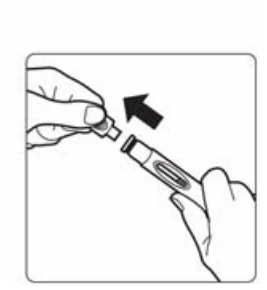 |
- 5. Place the autoinjector on the injection site
NOTE: Do not press the blue activation button yet. | 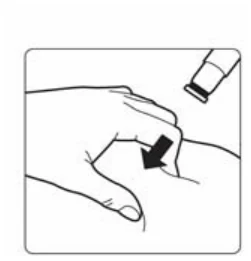 |
| 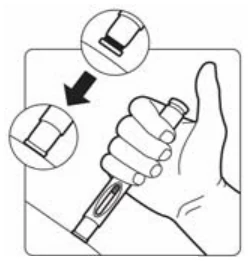 |
- 6. Give Injection
| 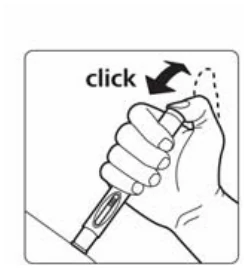 |
| 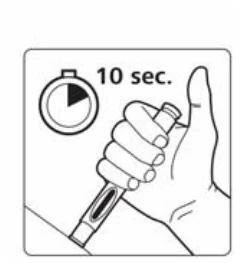 |
| 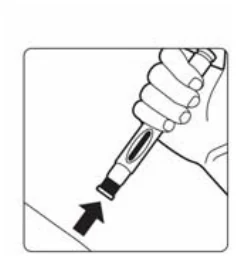 |
CAUTION: If the viewing window is not completely filled by the red indicator:
the needle-shield may not have locked.
- Do not touch the tip of the autoinjector, since needlestick injuries may occur.
you may not have received an entire dose.
- Do not try to use the autoinjector again.
- Do not repeat the injection with another autoinjector.
- Call your healthcare provider for instructions.
- After the injection
| 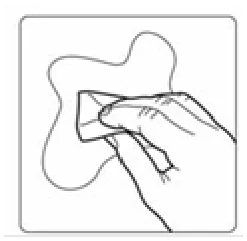 |
|
 |

REPORTING SUSPECTED SIDE EFFECTS
You can report any suspected adverse reactions associated with the use of health products to the Canada Vigilance Program by one of the following 3 ways: --------------------------------------------------------------------------
Postage paid labels, Canada Vigilance Reporting Form and the adverse reaction reporting guidelines are available on the MedEffect™ Canada Web site at www.healthcanada.gc.ca/medeffect. NOTE: Should you require information related to the management of side effects, contact your health professional. The Canada Vigilance Program does not provide medical advice. |
MORE INFORMATION
This brochure does not contain all known information about PEGASYS RBV. If you have any further questions or concerns about your treatment with PEGASYS RBV, please contact your doctor or pharmacist.
This document plus the full product monograph, prepared for health professionals can be found at:
www.rochecanada.com
Last revised:
©Copyright 2004–2015 Hoffmann-La Roche Limited
*Injection needle manufactured by Terumo Europe N. V., Interleuvenlaan 40 Leuven, ZZ, Belgium 3001
PEGASYS RBV®, PEGASYS®, ProClick®, and COPEGUS® are registered trade-marks of F. Hoffmann-La Roche AG, used under license
All other trade-marks are the property of their respective owners.
Hoffmann-La Roche Limited
Mississauga, Ontario L5N 5M8