


Product Monograph - PMS-Doxycycline (Pharmascience, 100 mg)
INDICATIONS AND CLINICAL USE
pms-DOXYCYCLINE Capsules and Tablets may be indicated for the treatment of:
Pneumonia: Single and multilobe pneumonia and bronchopneumonia due to susceptible strains of
Streptococcus pneumoniae and other Streptococcus spp., Staphylococcus spp., H. influenzae and
Klebsiella pneumoniae.
Other Respiratory Tract Infections: Pharyngitis, tonsillitis, sinusitis, otitis media, bronchitis caused by susceptible strains of beta-hemolytic Streptococcus, Staphylococcus spp., Streptococcus pneumoniae and H. influenzae.
Genitourinary Tract Infections: Pyelonephritis, cystitis, urethritis, gonococcal urethritis caused by susceptible strains of Klebsiella spp., Enterobacter aerogenes, E. coli, Enterococcus spp.,
Staphylococcus spp., Streptococcus spp. and Neisseria gonorrhoeae.
In adult patients with urethritis, cervicitis and vaginitis and with a positive test for Chlamydia trachomatis and/or Ureaplasma urealyticum, clinical resolution and absence of detectable organisms have only been observed at the completion of oral doxycycline hyclate therapy. Relapses or reinfection can occur. In these cases, limited data suggest that some patients may derive clinical benefit from an alternative therapy. The effect on long-term morbidity has not been established.
Skin and Soft Tissue Infections: Impetigo, furunculosis, cellulitis, abscess, wound sepsis, paronychia, caused by susceptible strains of Staphylococcus aureus and epidermidis, Streptococcus spp., E. coli, Klebsiella spp. and Enterobacter aerogenes.
Gastro-intestinal Infections: Caused by susceptible strains of Shigella spp., Salmonella spp. and E.
coli.
Up to 44% of strains of Streptococcus pyogenes and 74% of strains of Streptococcus faecalis have been found to be resistant to tetracycline drugs.
Appropriate culture and susceptibility studies should be carried out prior to initiation of therapy with pms-DOXYCYCLINE Capsules or Tablets and if clinically indicated during treatment.
Consideration may be given to the initiation of therapy before obtaining results of these tests, however modification of such treatment may be required once the results become available.
CONTRAINDICATIONS
pms-DOXYCYCLINE Capsules and Tablets is contraindicated in persons who have shown hypersensitivity to tetracyclines and in patients with myasthenia gravis.
WARNINGS
pms-DOXYCYCLINE Capsules and Tablets may form a stable calcium complex in any bone forming tissue, although in vitro it binds calcium less strongly than other tetracyclines. If used during tooth development which includes the last trimester of pregnancy, during lactation, neonatal period and early childhood to the age of eight years, doxycycline hyclate may cause permanent discolouration of the teeth (yellow-grey-brown). Although more commonly associated with long-term use of tetracycines, this effect has also been known to occur after short courses. Enamel hypoplasia has also been reported. pms-DOXYCYCLINE Capsules and Tablets should therefore not be used in these age groups unless other drugs are unlikely to be effective or are contraindicated.
In some individuals taking tetracyclines, photosensitivity manifested by an exaggerated sunburn reaction has been observed. Patients who will be exposed to direct sunlight or ultraviolet light should be advised that this reaction can occur with pms-DOXYCYCLINE Capsules and Tablets and treatment should be discontinued at the first evidence of skin erythema (see PRECAUTIONS,
ADVERSE REACTIONS and INFORMATION FOR THE PATIENT). The use of sunscreen or sunblock prior to sun or UV light exposure should be considered in patients taking pms-
DOXYCYCLINE Capsules or Tablets.
Instances of esophageal lesions (esophagitis and ulcerations), sometimes severe, have been reported in patients receiving doxycycline. The patients must be instructed to take pms-DOXYCYCLINE
Capsules and Tablets with a full glass of water, to keep in orthostatic position after the administration and not to go to bed within 1-2 hours after the intake. If symptoms such as dysphagyia and retrosternal pain occur, pms-DOXYCYCLINE should be discontinued and an esophagic lesion must be investigated (see PRECAUTIONS, ADVERSE REACTIONS, DOSAGE
AND ADMINISTRATION and INFORMATION FOR THE PATIENT). pms-DOXYCYCLINE
Capsules and Tablets should not be prescribed to patients with obstructive esophagic pathology, such as stenosis and achalasia.
Clostridium difficile-associated disease (CDAD) has been reported with use of many antibacterial agents, including doxycycline hyclate. CDAD may range in severity from mild diarrhea to fatal colitis. It is important to consider this diagnosis in patients who present with diarrhea, or symptoms of colitis, pseudomembranous colitis, toxic megacolon, or perforation of colon subsequent to the administration of any antibacterial agent. CDAD has been reported to occur over 2 months after the administration of antibacterial agents.
Treatment with antibacterial agents may alter the normal flora of the colon and may permit overgrowth of Clostridium difficile. C. difficile produces toxins A and B, which contribute to the development of CDAD. CDAD may cause significant morbidity and mortality. CDAD can be refractory to antimicrobial therapy.
If the diagnosis of CDAD is suspected or confirmed, appropriate therapeutic measures should be initiated. Mild cases of CDAD usually respond to discontinuation of antibacterial agents not directed against Clostridium difficile. In moderate to severe cases, consideration should be given to management with fluids and electrolytes, protein supplementation, and treatment with an antibacterial agent clinically effective against Clostridium difficile. Surgical evaluation should be instituted as clinically indicated, as surgical intervention may be required in certain severe cases.
(see ADVERSE REACTIONS)
Use in Pregnancy and During Lactation:
pms-DOXYCYCLINE Capsules and Tablets should not be administered to pregnant women, unless in the judgment of the physician the potential benefit to the mother outweighs the risk to the foetus.
(see above WARNINGS section about use during tooth development).
Results of animal studies indicate that tetracyclines cross the placenta, are found in fetal tissues, and can have toxic effects on the developing fetus (often related to retardation of skeletal development).
Evidence of embryotoxicity has also been noted in animals treated early in pregnancy.
Tetracyclines are excreted in the milk of lactating women. Therefore, the use of pms-
DOXYCYCLINE Capsules and Tablets is not recommended in women while they are breast feeding. (See above WARNINGS section about use during tooth development.)
Use in Newborns, Infants and Children:
Until safe conditions for use are established, pms-DOXYCYCLINE Capsules and Tablets should not be administered to children under 8 years of age. (See WARNINGS section about use during tooth development.) As with other tetracyclines, doxycycline hyclate forms a stable complex in any bone forming tissue. In premature infants given oral tetracycline in doses of 25 mg/kg every six hours, decreased fibula growth rate has been observed. The reaction was shown to be reversible when the drug was discontinued.
PRECAUTIONS
In clinical studies to date, doxycycline hyclate administered to patients with impaired renal function did not lead to increased serum levels or an increase in the serum half-life of doxycycline. Normal dosage of pms-DOXYCYCLINE Capsules or Tablets may be used to treat these patients. No evidence of increased toxicity has been observed in these patients, however the potential for increased hepatic or other toxicity should be considered until further data on the metabolic fate of doxycycline under these conditions becomes available.
Concurrent administration of pms-DOXYCYCLINE Capsules or Tablets and agents known to be hepatotoxic should be avoided.
The use of antibiotics may occasionally result in overgrowth of non-susceptible organisms including fungi; thus, observation of the patient is essential. Patients should be advised that the use of doxycycline might increase the incidence of vaginal candidiasis (see ADVERSE REACTIONS and
INFORMATION FOR THE PATIENT).
Bulging fontanelles in infants and benign intracranial hypertension in adults has been reported in individuals receiving full therapeutic dosages. The mechanism of this phenomenon is unknown and the signs and symptoms have disappeared rapidly upon cessation of treatment with no sequelae (see
ADVERSE REACTIONS).
Esophageal injury, such as esophagitis and esophageal ulceration, have been reported in patients treated with doxycycline hyclate orally. Most of these patients took medication immediately before going to bed and/or without adequate amount of fluid (see DOSAGE AND ADMINISTRATION).
Should this occur, pms-DOXYCYCLINE should be discontinued until healing occurs. The administration of antacids and/or cimetidine has been shown to provide relief in such cases.
PATIENTS SHOULD BE ADVISED TO TAKE PMS-DOXYCYCLINE Capsules or Tablets WITH
AN ADEQUATE AMOUNT OF FLUID WHILE STANDING OR SITTING UPRIGHT, IN
ORDER TO DECREASE THE RISK OF ESOPHAGEAL INJURY. pms-DOXYCYCLINE should not be given at bedtime.
Periodic laboratory evaluation of organ systems, including hematopoietic, renal and hepatic studies should be performed in patients under long-term therapy with pms-DOXYCYCLINE Capsules and
Tablets. Liver function tests should be carried out at regular intervals in patients receiving high doses for prolonged periods of time.
Drug Interactions:
Anticoagulants: pms-DOXYCYCLINE Capsules and Tablets should be given with caution to patients receiving oral anticoagulants. Because tetracyclines have been shown to depress plasma prothrombin activity, patients who are on anticoagulant therapy may require downward adjustment of their anticoagulant dosage.
Antacids: Antacids containing aluminum, calcium or magnesium impair absorption and should not be given to patients taking pms-DOXYCYCLINE.
Hepatic Enzyme Inducers: The concurrent use of pms-DOXYCYCLINE Capsules or Tablets with alcohol, barbiturates, phenytoin and carbamazepine (hepatic enzyme inducers) have been reported to result in a reduction of plasma half-life of doxycycline, thereby reducing the antimicrobial effectiveness of doxycycline. This effect may last for several days after discontinuation of therapy with the inducing agent. Therefore, consideration should be given re-adjustment of the daily dose of pms-DOXYCYCLINE when administered concomitantly with alcohol and with drugs known to be enzyme inducers.
Iron Salts: it has been reported that concomitant administration of ferrous sulphate (iron) lowered serum concentrations of doxycycline given orally and shortened the serum half-life after a single intravenous injection. In the events that iron and iron-containing products have to be given during treatment with pms-DOXYCYCLINE, the interval between administrations of each drug should be as wide as possible.
Bismuth subsalicylate: It has been reported that when subsalicylate bismuth was given simultaneously and as a multiple-dose regimen before oral doxycycline hyclate there was a reduced bioavailability of doxycycline. Also peak serum concentrations of doxycycline were significantly decreased when subsalicylate bismuth was given 2 hours before oral doxycycline hyclate but not when given 2 hours after oral doxycycline hyclate. Therefore subsalicylate bismuth should not be taken during therapy with oral pms-DOXYCYCLINE.
Penicillin: Since bacteriostatic drugs may interfere with the bactericidal action of penicillin, it is advisable to avoid giving pms-DOXYCYCLINE or any other tetracycline in conjunction with penicillin.
Contraceptives: There have been anecdotal reports that concurrent use of tetracyclines may render oral contraceptives less effective.
ADVERSE REACTIONS
Gastro-intestinal:
As with other broad spectrum antibiotics administered orally or parenterally, gastro-intestinal disturbances such as anorexia, nausea, vomiting, diarrhea, glossitis, dysphagia, stomatitis, proctitis and enterocolitis may occur, but have rarely been sufficiently troublesome to warrant discontinuation of therapy with doxycycline hyclate. Abdominal pain, dyspepsia, pseudomembranous colitis, C. difficile diarrhea and inflammatory lesions (with monilial overgrowth) in the anogenital region have also been reported.
Cases of esophagitis and esophageal ulcerations, sometimes severe, in patients receiving capsule and tablet form of doxycycline hyclate have been reported (see WARNINGS, PRECAUTIONS,
DOSAGE AND ADMINISTRATION, INFORMATION FOR THE PATIENT).
Autonomic Nervous system:
Flushing.
Body as a whole:
Hypersensitivity reactions consisting of urticaria, angioneurotic edema, anaphylaxis, anaphylactic shock, anaphylactoid reaction, anaphylactoid purpura, dyspnea, hypotension, pericarditis, peripheral edema, serum sickness, tachycardia and exacerbation of systemic lupus erythematosus have been reported.
Skin:
Maculopapular and erythematous rashes, photosensitivity skin reactions, photo-onycholysis, erythema multiforme, Stevens-Johnson syndrome and Toxic Epidermal Necrolysis have been reported. Exfoliative dermatitis has also been reported but is uncommon (see WARNINGS).
Musculo-Skeletal:
Arthralgia and myalgia.
Central Nervous System:
Headache, bulging fontanels in infants and benign intracranial hypertension in adults. (see
PRECAUTIONS).
Hepatic, biliary and renal:
There have been reports of hepatotoxicity (including hepatic failure, autoimmune hepatitis and cholestasis). Elevation of SGOT or SGPT values have been reported as with other tetracyclines, the significance of which is unknown. Elevated BUN (apparently dose related) has been reported.
Haematologic:
Hemolytic anemia, thrombocytopenia, neutropenia, eosinophilia, leucopenia.
Hearing/Vestibular:
Tinnitus.
Others:
When given over prolonged periods tetracyclines have been reported to produce brown-black microscopic discolouration of the thyroid gland. Abnormalities of thyroid function have not been shown to date (see TOXICOLOGY, Subacute Toxicity).
SYMPTOMS AND TREATMENT OF OVERDOSAGE
There is no specific information available on symptoms or treatment of overdosage with doxycycline hyclate. Treatment, therefore, should be symptomatic and gastric lavage may be considered for overdosage with oral preparations. Dialysis does not alter serum half-life and thus would not be of benefit in treating cases of overdosage.
For management of suspected drug overdose contact your regional Poison Control Centre.
DOSAGE AND ADMINISTRATION
EXCEEDING THE RECOMMENDED DOSAGE MAY RESULT IN AN INCREASED
INCIDENCE OF SIDE EFFECTS.
pms-DOXYCYCLINE Capsules and Tablets should be given with or after a meal to minimize the possibility of gastric upset. Antacids containing aluminium, calcium or magnesium and iron preparations impair absorption and should not be given concomitantly to patients taking oral pms-
DOXYCYCLINE.
pms-DOXYCYCLINE Capsules and Tablets should be given to patients with a full glass of water, to keep in orthostatic position after the administration and not to go to bed within 1-2 hours after the intake.
Adults: The recommended dosage of pms-DOXYCYCLINE Capsules and Tablets for the majority of susceptible infections is a single loading dose of 200 mg on the first day of treatment followed by a maintenance dose of 100 mg once daily at the same time each day thereafter.
In severe infections (particularly chronic infections of the urinary tract), a single daily dose of
200mg should be used throughout the treatment period.
Therapy should be continued for at least 24-48 hours after symptoms and fever have subsided. It should be noted, however, that effective antibacterial levels are usually present 24 to 36 hours following discontinuance of pms-DOXYCYCLINE therapy.
When used in streptococcal infections, pms-DOXYCYCLINE therapy should be continued for 10 days to prevent the development of rheumatic fever or glomerulonephritis.
For treatment of uncomplicated acute gonococcal infections, the recommended dosage is 200 mg as a starting dose and 100 mg in the evening, the first day, followed by 100 mg BID for 3 days.
For the treatment of uncomplicated urethral, endocervical or vaginal infections in adults associated with Chlamydia trachomatis and Ureaplasma urealyticum: 100 mg by mouth, twice a day for at least
10 days.
No alteration in recommended dosage schedule needs to be made when treating patients with impaired renal function.
Children: There is no recommended dosage for children (see WARNINGS).
 PHARMACEUTICAL INFORMATION
CHEMISTRY
Trade name(s): pms-DOXYCYCLINE
Proper Name: Doxycycline hyclate
Chemical Name: 2-Naphthacenecarboxamide,
4-(dimethyIamino)-1,4,4a,5,5a,6,11,12a-octahydro- 3,5,10,12,12a-pentahydroxy-6- methyl-1,11-dioxomonohydrochloride, compd. with ethanol (2:1), monohydrate, |4S-(4∀ ,4a∀,5∀,5a∀,6∀, 12∀) | -or
∀-6-deoxy-5-oxytetracycline
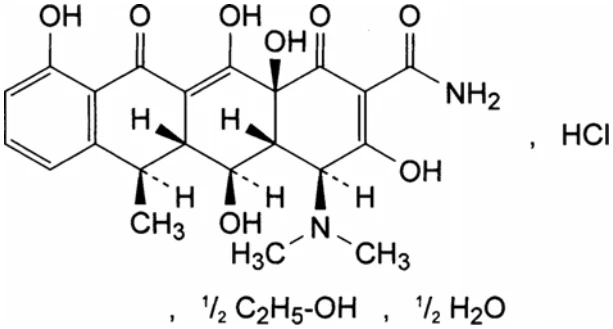
Structural Formula:
Molecular Formula: (C22H24N2O8 - HCl)2 . C2H6O.H2O
Molecular Weight: 1025.89
Description: Doxycycline Hyclate is a light yellow crystalline powder essentially free of solvent odor.
It is soluble in water: pH (1%, H2O) between 2.0 and 3.0. It decomposes without melting at 201°C.
It is soluble in water and in solutions of alkali hydroxides and carbonates, slightly soluble in alcohol and practically insoluble in chloroform and ether.
Composition:
pms-DOXYCYCLINE 100 mg TABLETS: The active ingredient is Doxycycline Hyclate equivalent to 100 mg of doxycycline. It also contains as non-medicinal ingredients: cellulose, starch, sodium starch glycolate, stearic acid, magnesium stearate, colloidal silicon dioxide, hydroxypropyl methylcellulose, titanium dioxide, polyethylene glycol, FD&C yellow No. 6, polysorbate, FD&C red No. 40, D&C yellow No. 10, FD&C blue No. 2, carnauba wax.
pms-DOXYCYCLINE 100 mg CAPSULES: The active ingredient is Doxycycline Hyclate equivalent to 100 mg of doxycycline. It also contains as non-medicinal ingredients: Allura RReedd AACC
((FFDDCC RReedd NNoo.. 4400)),, BBrriilllliiaanntt BBlluuee FFCCFF ssooddiiuumm ssaalltt ((FFDD && CC BBlluuee NNoo.. 11)),, GGeellaattiinn,, IInnddiiggoo CCaarrmmiinnee
((FFDDCC BBlluuee NNoo.. 22)),, IIrroonn ooxxiiddee,, LLaaccttoossee,, MMaaggnneessiiuumm sstteeaarraattee,, MMiiccrrooccrryyssttaalllliinnee cceelllluulloossee,, PPrrooppyylleennee ggllyyccooll,, QQuuiinnoolliinnee YYeellllooww WWSS ((DDCC YYeellllooww NNoo..1100)),, SShheellllaacc,, SSiilliiccoonn ddiiooxxiiddee,, ccoollllooiiddaall,, SStteeaarriicc aacciidd aanndd TTiittaanniiuumm ddiiooxxiiddee..
Stability and Storage Recommendations:
Bottles of pms-DOXYCYCLINE Capsules and Tablets 100 mg should be stored at controlled room temperature (15-30°C) protected from light and dispensed in light resistant containers.
AVAILABILITY OF DOSAGE FORMS
pms-DOXYCYCLINE tablets are available as orange, round, biconvex film-coated tablets, scored on one side and debossed “DOXY” over a “100” on the other side, containing doxycycline hyclate equivalent to 100 mg doxycycline. Supplied in bottles of 100 and 300 tablets.
pms-DOXYCYCLINE capsules are available as aqua-blue capsule printed in black ink “P” on one half of the capsule and “100” printed on the other half, containing doxycycline hyclate equivalent to
100 mg doxycycline. Supplied in bottles 100 and 300 capsules.
MICROBIOLOGY
Doxycycline hyclate is a broad spectrum antibiotic and has been shown to be active in vitro against the following Gram-negative, Gram-positive and other micro-organism:
Staphylococcus aureus Klebsiella pneumoniae
Staphylococcus epidermidis (albus) Salmonella typhi
Streptococcus pyogenes Salmonella Typhimurium
Streptococcus faecalis Salmonella enteriditis
Streptococcus pneumoniae Shigella sonnei
Streptococcus viridans Shigella flexneri
Listeria monocytogenes Pseudomonas aeruginosa
Corynebacterium diphtheriae Haemophilus influenzae
Bacillus anthracis Serratia spp.
Bacillus subtilis Brucella spp.
Neisseria gonorrhoeae Proteus spp.
Neisseria catarrhalis Pasteurella spp.
Escherichia coli Mycoplasma pneumoniae
Enterobacter aerogenes Chlamydia trachomatis
Ureaplasma urealyticum
There is evidence suggesting that oral doxycycline because of the rapid and almost complete absorption may have less effect on the gut flora than other tetracyclines. It has been reported
(Hinton, 1968) that the normal dosage regimen of tetracycline HCl administered to 17 volunteers was associated with important effects on the intestinal flora in terms of both changes in total population, and emergence of resistant strains. Large doses of oral doxycycline (i.e. doubling the maximum recommended dosage) had to be adminitered to produce an equivalent effect.
In a similar number of volunteers however, administration of the normal dosage regimen of oral doxycycline was associated with substantially less effect on gut flora. It is reported (Barteaux,
1968) that the gut flora of patients on various doses of oral doxycycline for 10 to 80 days showed no significant deviation from the normal flora or from the flora of a control group of patients. These data suggest that microbiological intestinal complications such as diarrhoea associated with tetracycline therapy may be less frequent when ordinary therapeutic doses of doxycycline are used.
The drugs in the tetracycline class have closely similar antimicrobial spectra and cross-resistance among them is common.
Susceptibility Testing:
Results from the Kirby-Bauer method of disc susceptibility testing (using the 30 mcg doxycycline disc) and dilution susceptibbility should be interpreted according to the criteria in the following table:
TABLE OF SUSCEPTIBILITY TEST RESULTS
ZONE DIAMETER
(30 μg doxycycline disc)
mm
M.I.C.
mg/L
Susceptible
Intermediate
Resistant
≥ 16
13-15
≤ 12
≤ 4
≥ 16
PHARMACOLOGY
A comparative four-way crossover, single-dose bioavailability study was carried out in twenty four adult volunteers on one 100 mg pms-DOXYCYCLINE Capsule and Tablet products, and
Vibramycin 100 mg Capsules. The pharmacokinetic data (mean ∀ standard deviation) calculated for the doxycycline capsule and tablet and Vibramycin Capsule formulations is tabulated below:
Pharmacokinetic Indices for Doxycycline:
| Vibramycin 1 X 100 mg | pms- DOXYCYCLINE Tablets 1 X 100 mg | pms- DOXYCYCLINE Capsules 1 X 100 mg | |
| Area Under the Curve: (mcg-hours/ml); | 21.36 ∀ 3.38 | 21.82 ∀ 4.77 | 22.27 ∀ 5.10 |
| 0-24 hours | |||
| Peak Plasma Concentration: | 1.85 ∀ 0.27 | 1.82 ∀ 0.41 | 1.86 ∀ 0.46 |
| Cmax (mcg/mL) | |||
| Time to Peak Plasma Level: | 1.85 ∀ 0.84 | 2.15 ∀ 0.95 | 2.33 ∀ 1.06 |
| Tmax (hours) | |||
| Elimination Rate Constant: | 0.053 ∀ 0.01 | 0.071 ∀ 0.09 | 0.049 ∀ 0.01 |
| Kel (hours -1) |
Serum levels of doxycycline administered orally follow a similar pattern to those obtained with equivalent dosages administered intravenously as shown in TABLE 2. Peak serum levels were slightly higher and occurred earlier following intravenous administration than for oral administration
(see TABLE 2).
TABLE 2
Serum levels (mg/L) after oral and I.V. infusion over 60 minutes (0.5 mg/mL) of a total daily dose of
200 mg of doxycycline hyclate on the first day (100 mg every 12 hours) and a dose of 100 mg on the second and third day of administration (22 Male Volunteers/Group).
Where no p is stated, p>.10
____ time of dosing
Doxycycline was rapidly and completely absorbed following oral administration. The absorption of doxycycline was not significantly influenced by ingestion of food or milk (see TABLE 3):
TABLE 3
Effect of Food or Milk on Absorption of a Single Oral Dose of Doxycycline 100 mg as Hyclate (5 Male Volunteers/Group).
| AVERAGE SERUM LEVELS (mg/L) | |||
Hours 0 1 2 3 5 8 12 24 | Breakfast 0 0.966 1.118 1.269 1.036 0.973 0.738 0.498 | Fasting 0 1.004 1.377 1.296 1.133 0.936 0.801 0.528 | 6 oz. milk 0 1.081 1.325 1.244 1.046 0.885 0.686 0.475 |
| Time (hr:min) | Mean Serum Level I.V. | Mean Serum Level Capsules | p |
____ 0:05 1:00 2:00 3:00 16:00 11:00 ____ 13:00 15:00 24:00 ____ 35:00 48:00 ____ 48:05 49:00 50:00 51:00 54:00 59:00 72:00 83:00 96:00 107:00 AUC (mg•h/L) 0-107 hr | ____ 2.455 1.608 1.551 1.421 1.131 0.800 ____ 2.397 2.130 1.468 ____ 1.734 1.159 ____ 3.658 2.945 2.848 2.760 2.150 1.665 1.021 0.700 0.426 0.247 mean area I.V. 138 | ____ 0.000 1.206 1.643 1.482 1.124 0.815 ____ 1.107 2.000 1.663 ____ 1.725 1.078 ____ 1.124 2.147 2.406 2.436 1.989 1.516 0.945 0.709 0.399 0.234 mean area capsules 128 | <.001 < .01 <.001 .088 <.001 <.001 .056 |
Doxycycline is approximately 93% protein bound. The serum half-life of doxycycline is 18 hours.
Doxycycline is excreted in the urine (approximately 35-40% of the administered dose) and in the bile. The volume of distribution is approximately 0.7 L/kg. Hemodialysis does not alter the serum half-life.
Excretion of doxycycline by the kidney is about 40%/72 hours in individuals with normal renal function (creatinine clearance about 75 mL/min.). This percentage excretion may fall to a range as low as 1-5%/72 hours in individuals with severe renal insufficiency (creatinine clearance below 10 mL/min.). The serum half-life of doxycycline is not increased, nor does it accumulate in the blood of patients with impaired renal function.
TOXICOLOGY
Doxycycline Hyclate
- a) Acute Toxicity:
The acute oral and parenteral toxicity of doxycycline in mice, rats and dogs are as follows:
| LD50 (95% Confidence Limits) mg/kg | ||
| ORAL | I.V. | |
| Mice | 1,900 (1696-2128) | 241 (230-253) |
| Rats | >2,000 | 228 (202-258) |
| Dogs | > 500 | >100 |
The intraperitoneal LD50's of doxycycline in weanling and newborn rats are 262 (range 222-309) and
300 (range 275-327) mg/kg, respectively.
- b) Subacute Toxicity:
One to 2 1/2-month subacute toxicity studies were conducted in rats, hamsters, dogs and monkeys.
Doxycycline induced a yellow fluorescence (under ultraviolet light) of bone, teeth, kidney and/or liver, in all animal species tested. In rats, doxycycline produced no toxic effects in doses of up to 500 mg/kg/day for 30 days. In hamsters, doxycycline in dosages of 500 or 250 mg/kg/day produced weight loss and early death, but the 50 mg/kg level (for 30 days) was nontoxic. In dogs, doxycycline in dosages of 250 mg/kg/day for one month produced discoloration of the thyroid gland with the presence of intracytoplasmic granules in follicular acini and occasional amorphous body formation within follicular colloid.
Certain biochemical, functional and histological changes of the liver occurred in the dogs (but not in the rats, hamsters, or monkeys) receiving doxycycline for 30 days at dosage levels of 250 and 50 mg/kg/day, but not at the 25 mg/kg/day level. The biochemical changes in the blood were elevations of alkaline phosphatase, SGPT and/or BSP retention. Histologic changes were confined to bile ductular proliferation and hepatocellular intracytoplasmic inclusion bodies and Kupffer cells swollen with PAS-positive granular material. These changes in the dog were reversible upon drug withdrawal.
Monkeys which received doxycycline at dosages of 25 and 50 mg/kg/day for 1 1/2 to2 1/2 months showed mild yellow ultraviolet fluorescence of liver, kidney and bone, and the presence of small amounts of intracytoplasmic granular material in the thyroid gland
- c) Chronic Toxicity
In an 18-month chronic toxicity study, rats were fed diets containing doxycycline at levels to provide daily drug intake of 500, 250, 50 and 0 mg/kg. Slight depression of weight gains in some rats receiving the 500 mg/kg/day dose occurred during the middle third of the study. The usual yellow ultraviolet fluorescence of bone, teeth and/or kidneys was seen in rats receiving all levels of doxycycline for 6, 12 or 18 months. Dark to light brown discoloration of the thyroid gland was also noted in rats receiving doxycycline for 12 months at levels of 500 and 250 mg/kg/day, and at 18 months at all levels. The only other change noted was depletion of hepatic glycogen in four rats receiving the highest dose level for 12 months.
Beagle dogs received doxycycline at levels of 10 and 100 mg/kg, six days per week. Moderate to marked elevations of alkaline phosphatase and SGPT (occasionally SGOT) were observed in animals receiving doxycycline, 100 mg/kg/day. One of two dogs receiving doxycycline, 100 mg/kg/day, displayed mild bile ductular proliferation and hepatocellular inclusion bodies after 5 months (biopsy sample) and 12 months(necropsy sample). Administration of doxycycline for 5 and
12 months at a level of100 mg/kg/day and for 12 months at a level of 10 mg/kg caused black and brownish discoloration of the thyroid gland, respectively, with intracyloplasmic granules. Other changes included vasodilatation and focal areas of necrosis of the mucosa of the pyloric and fundic stomach of dogs, and yellow ultraviolet fluorescence of teeth and bones of animals at 100 mg/kg/day dose levels of doxycycline.
Additional groups of 4 beagles each received doxycycline in dosages of 5, 1 and 0 mg/kg/day for 6 months. The only abnormal findings were slight elevations of SGPT values in 3 dogs at the 5 mg/kg level at 180 days.
In a one year chronic toxicity study, groups of four rhesus monkeys each received doxycycline in oral doses of 0, 5, 25 and 50 mg/kg/day, respectively. Oral dosage of 100 mg/kg produced severe gastrointestinal symptoms, e.g., vomiting and diarrhea. In one out of 4 monkeys receiving the 50 mg/kg/day dose, occasional anorexia and diarrhea were observed during the first six months.
Significant pathologic changes noted in monkeys sacrificed after receiving doxycycline for 1 year at dose levels of 50 mg/kg/day were: 1) grossly, very light brown discoloration of the thyroid gland in one of the four monkeys, and 2) microscopically, brownish intracytoplasmic inclusions in the acinar cells of thyroid follicles of three out of four monkeys. Bone and dentin exhibited slight to moderate ultraviolet fluorescence.
Two monkeys, in another study, receiving the 25 mg/kg/day dosage, were sacrificed after 6 and 8 months on test, respectively. Significant gross and histopathologic findings were slight yellow ultraviolet fluorescence of the endosteum and periosteum of bone, and microscopic appearance of small amounts of granular intracytoplasmic material in the acinar cells of thyroid follicles.
The highlights of the chronic toxicity studies can be summarized as follows:
- 1) Discoloration of the thyroid gland, with deposition of intracytoplasmic granules in the acinar cells of the follicle. Thyroid function, however, did not seem to be affected. This phenomenon appears to be a result of the interaction of the antibiotic with the active iodinating system of the gland.
- 2) Yellow staining of bones and teeth, which is thought to be due to formation of a tetracycline-calcium-phosphate complex.
Otherwise doxycycline was well tolerated by the rat and monkey at doses up to and including 500 and 50 mg/kg/day for 18 and 12 months, respectively. In dogs, however, repeated daily oral administration of large doses of doxycycline resulted in certain hepatic functional and histopathologic changes which are reversible after drug withdrawal. No adverse hepatic effects were noted in the hamster (1 month), rats (18 months) or monkeys (12 months) for doses up to and including 500, 500 and 50 mg/kg/day, respectively. In view of this and in view of the lack of notable toxicity in our wide human clinical program, it is our opinion that this is a species specific phenomenon, for the dog only.
- d) Reproduction and Teratogenic Studies:
Doxycycline has no teratologic effects in rats, rabbits or monkeys.
Breeding rats received doxycycline by gavage in doses of 50 and 250 mg/kg/day prior to and throughout two consecutive litters. There was no evidence that doxycycline interfered with the reproductive process in rats.
Pregnant female white New Zealand rabbits received doxycycline orally in doses of 8 and 40 mg/kg/day, respectively, from day 8 to day 16 of pregnancy. Spina bifida and partial anencephaly in one pup each in the control and the 8 mg/kg group, respectively, are believed to be spontaneous and drug-induced.
In teratogenic studies using a limited number of monkeys, doxycycline, in doses ranging from 1 to
50 mg/kg/day, did not produce any teratologic effects.
Doxycycline Monohydrate
With bulk doxycycline monohydrate administered in a 10% aqueous suspension, the oral LD50 for albino male mice was greater than 5000 mg/kg.
DoxycycIine Hyclate with Ascorbic Acid
Studies in mice and rats showed the LD50 of doxycycline I.V. to be 75 mg/kg in mice and 88 mg/kg in rats of doxycycline (using a preparation of doxycycline hyclate equivalent to 100 mg of doxycycline with 480 mg of ascorbic acid as a sterile powder).
No signs of drug toxicity were seen in dogs receiving 20 to 21 daily doses of doxycycline I.V. at a dose level of 5 mg/kg when administered as a 0.5% solution at a rate of 1 mg/kg/min. Dogs receiving 14, 16 or 17 daily intravenous doses of 10 mg doxycycline I.V. per kg of bodyweight, or 4 daily 60 minute infusions of 300 mg doxycycline I.V., or 300 mg degraded doxycycline I.V.
evidenced serum alkaline phosphatase and serum glutamic pyruvic transaminase elevations. No morphological basis for these enzyme elevations was established although moderate bile ductular proliferation was seen in 1 of 2 dogs receiving 4 daily intravenous infusions of degraded doxycycline I.V.
In 8 dogs receiving daily intravenous doses of 10 mg doxycycline I.V./kg/day (0.5% solution), 5 of
24 vessels used for injections evidenced degrees of thrombosis with recanalization.
Thrombosis in 3 of 6 sites occurred in 2 dogs receiving infusions of degraded doxycycline I.V. (30 mg/kg-0.5% solution). Injection site thrombosis did not occur in6 dogs (18 sites) receiving daily doses of 5 mg doxycycline I.V./kg bodyweight administered as a 0.5% solution at a rate of 1 mg/kg/min (approximately 1 mL/min).
Studies to date indicate that the maximum tolerated intravenous daily dose of doxycycline I.V. in dogs for 21 consecutive days is 5 mg/kg/day when administered as a 0.5% solution at a rate of 1 mg/kg/min.
REFERENCES
General
1 Aitchison WRC, Grant IWB, Gould JC. Treatment of acute exacerbations in chronic bronchitis.
Brit J Clin Pract 1968; 22:343-45.
- 2. Barteaux JW. Clinical experience with doxycycline, a new tetracycline. Intl J Clin Pharmacol
Ther Toxicol 1968; 1:404-405.
- 3. Prescribing Information, Vibramycin Capsules and Vibra-Tabs Film Coated Tablets, April 7,
2009.
Clinical Research Reports
- 1. Colemore JP, Braden B, Wilkerson R. Effectiveness of doxycycline treatment in chronic urinary tract infections. Antimicrob Agents Chemother 1966; 118-120.
- 2. Domescik G, McLone DG, Scotti A, Mackey DM. Use of a single dose of doxycycline monohydrate for treating gonorrheal urethritis in men. Public Health Reports 1969; 84:182-83.
- 3. Gallai Z, Sylvestre L, Breault JP. Doxycycline in the treatment of acute gonorrhea in couples.
Presented at the 6th International Congress of Chemotherapy. Aug. 11-14 1969, Tokyo, Japan.
- 4. Gallai Z, Sylvestre L, Breault JP. Instant treatment of acute gonococcal urethritis with doxycycline. Presented at the second world congress of the Int. Soc. of Tropical Dermatology. Aug.
16-18 1969, Kyoto, Japan.
- 5. Grossan M. Management of infections of the ear, nose and throat with a new tetracycline antibiotic: doxycycline. EENT Month 1968; 47:321-24.
- 6. Hany A, Petite J, Robert M, Fabre J. La doxycycline en clinique (fre). Chemotherapy 1968;
13(Suppl):59-63.
- 7. Hinton NA. The effect of oral tetracycline HCI and doxycycline on the intestinal flora. Curr Ther
Res 1970; 12:341-52.
- 8. Huang NN, Shang K, Basavanand N. Doxycycline treatment of children with cystic fibrosis of pancreas. Antimicrob Agents Chemother 1966; :127-133.
- 9. Isenberg D. In Vitro activity of doxycycline against bacteria from clinical material. Appl
Microbiol 1967; 15(5):1074-78.
- 10. Kalfopoulos P at al. Absorption digestive de la doxycycline chez I'homme comparee a celle des autres tetracyclines. Policlinique de medecine (Pr. J. Fabre) et Clinique Medicale Therapeutique (Pr.
R.S. Mach) de l'universite de Geneve.
- 11. Lassus A. The treatment of gonorrhea with doxycycline as a single dose. Chemotherapy 1968;
13(6):366-68.
- 12. Lundberg C, Gullers K, MaImborg AS. Antibiotics in sinus secretions. Lancet 1968; 2:107-108.
- 13. Migliardi JR, Schach von Wittenau M. Pharmacokinetic properties of doxycycline in man. In:
Proceedings of the 5th Intl Cong of Chemother, Vienna, pp. 167-172, 1967.
- 14. Monnier J, Bourse R, Onfray J. Doxycycline: In Vitro bacteriostatic activity and serum levels in man. Antibiotica 1966; 4:268-82.
- 15. Neuvonen PJ, Gothoni G, Hackman R, Bjorksten KAF. Interference of iron with the absorption of tetracyclines in man, Brit Med J 1970; 4:532-34.
- 16. Pankey GA. Sinusitis. Current Therapy 1971, edited by Howard F. Conn. M.D., W.B. Saunders
Co. Toronto, pp. 125-27.
- 17. Roberge R, Lauchance W. Etude de la doxycycline en clinique et en laboratoire. Saguenay Med
1968; 15:101-107.
- 18. Rosenblatt JE, Barrett JE, Brodie JL, Kirhy WM. Comparison of In Vitro Activity and Clin.
Pharm. of Doxycycline and other tetracyclines. Antimicrobial Agents Chemother 1966; 6:134-41.
- 19. Schach von Wittenau M. Some pharmacokinetic aspects of doxycycline metabolism in man.
Chemotherapy 1968; 13(Suppl):41-50.
- 20. Steigbigel NH, Reed CW, Finland M. Susceptibility of common pathogenic bacteria to seven tetracycline antibiotics in vitro. Amer J Med Sci 1968; 255:179-95.
- 21. Sylvestre L, Gallai Z. Traitement minute de la gonorrhee par un nouveau derive de l'oxytetracycline: la doxycycline. Union Med Can 1968; 97:639-40.
- 22. Sylvestre L, Gallai Z. Instant treatment of gonorrhea with a new oxytetracycline derivative:
doxycycline (preliminary report), Intl Clin Pharm Ther Toxicol 1968; 1:401-403.
- 23. Williamson GM. Laboratory studies of Vibramycin (doxycycline) International Symposium.
New resource in antibiotic therapy: doxycycline, Buenos Aires, June 14-15, 1967.
- 24. Williamson GM. The in vitro activity of Vibramycin (doxycycline). Chemotherapy 1968;
13(Suppl):1-6.
Renal Insufficiency
- 1. Edel. Doxycycline in renal insufficiency. VI Intern Congress of Chemotherapy. Tokyo,August
1969.
- 2. Fabre J, Pitton JS, Kunz JP. Distribution and excretion of doxycycline in man. Chemotherapy
1966; 11:73-85.
- 3. Fabre J Pitton JS, Virieux C, Laurencet FL, Bernhardt JP, Godel JC. Doxycycline absorption, distribution of a new broad-spectrum antibiotic in man. Schweiz Med Wochenschr 1967;
97(28):915-24.(translation)
- 4. Fabre J. Medicaments et fonctions renales. HeIv Med Acta 1967; 47(34):24-41.
- 5. Fabre J, Kunz JP, Virieux C, Laurencet JL, Pitton JS. Le comportement de la doxycycline chez
I'homme. Chemotherapy 1968; 13(Suppl):2340.
- 6. Giromini M, Wasem R, Merier G, Fabre J. Influence de I'anurie et des hemodialyses sur le comportement des antibiotiques. Praxis 1969; 38:1181-87.
- 7. Laurencet FL, Fabre J. Influence de l'insuffisance renale sur le comportement de la doxycycline. J
Urol Nephrol 1968; 74:1038-47.
- 8. Little PJ, Bailey FIR. Tetracyclines and renal failure. N Z Med J 1970; 72:183-84.
- 9. Mahon WA, Wittenberg JVP, Tuffnel PG. Studies on the absorption and distribution of doxycycline in normal patients and in patients with severely impaired renal function. Can Med
Assoc J 1970; 103:1031-34.
- 10. Merier G, Laurencet FL, Rudhardt M, Chuit A, Fabre J. Behaviour of doxycycline in renal insufficiency. HeIv Med Acta 1969; 35:124-34.
- 11. Porpaczy P. Doxycycline (Vibramycin) in renal insufficiency. Wien Klin Wschr. 1970; 82:710-
14.
- 12. Ritzerfeld W, Westerboer S, Geller R. Doxycyclin in serum, diallysate and urine in patients with renal functional disease. Intl J Clin Pharmacol Ther Toxicol 1970; 3:325-29.
- 13. Schach von Wittenau M, Twomey TM. The disposition of doxycycline by man and dog.
Chemotherapy 1971; 16:217-28.
- 14. Schach von Wittenau, Twomey TM, Swindell AC. The disposition of doxycycline by the rat.
Chemotherapy. 1971; 17(l):26-39.
- 15. Stein W, Schoog M, Franz HE. Doxycycline serum levels in patients with renal insufficiency
(Ger). Arzneim Forsch (Drug Research). 1969; 19:827-28
- 16. Vibramycin. Pharmacology Actua September 1969; 1(8): 8.
- 17. Zech P, Traeger J. Tolerance de la doxycycline dans l'insuffisance renale severe. Lyon Med
1969; 999:943-45.
Gonorrhea
- 1. Caldwell JG, Wessler S, Avioli LV. Current therapy of gonorrhea. JAMA 1971; 218:714-17.
- 2. Ketterer WA. Homosexuality and venereal disease. Medical Aspects of Human Sexuality.
December 1971; 1(4):43-50.
- 3. Neumann HH, Baecker JM. Treatment of gonorrhea. Penicillin or tetracyclines? JAMA 1972;
219:471-74.
- 4. Smart WH, Lighter AC. Gonorrhea, the silent epidemic. A Scientific Exhibit, 23rd Clinical
Convention of the A.M.A., Denver, Colorado. November 30-December 3, 1969.
Chlamydia Trachomatis And Ureaplasma
Urealyticum Infectlons
- 1. Cunha BA, Comer JB, Jonas M. Symposium on antimicrobial therapy: The tetracyclines. Med
Clin North Am 1982;66(l):293-302.
- 2. Health and Welfare Canada, Bureau of Epidemiology. Canada Diseases Weekly Report
1981;7(21):101-108.
- 3. Jaffe HW. Nongonococcal urethritis: Treatment of men and their sexual partners. Rev Infect Dis
1982;4(6 Suppl):S772-S777.
- 4. Johannisson G, Sernryd A, Lycke E. Susceptibility of Chlamydia trachomatis to antibiotics in vitro and in vivo. Sex Trans Dis 1979;6(2):50-57.
- 5. Lassus A, Perko RL, Stubb S, Mattila R, Jansson E. Doxycycline treatment of nongonococcal urethritis with special reference to T-strain nyicoplasmas. Br J Vener Dis 1971;47:126-130.
- 6. McNeil PJ, Fiumara NJ, Caliando JJ, Benes S, McCormack WM. Evaluation of doxycycline hyclate in the treatment of nongonococcal urethritis. Sex Transm Dis 1981;8(2 Suppl):127-131.
- 7. Romanowski B, Beftzer AS, Rush J. Treatment guidelines for selected sexually transmitted diseases. Can J Public Health 1983;74:166-72.
- 8. Root TE, Edwards LID, Spengler PJ. Nongonococcal urethritis: A survey of clinical and laboratory features. Sex Transm Dis 1980;7(2):59-65.
- 9. Siboulet A, Bohbot JM, Catalan F, Siboulet A, Henry-Suchet J. Les infections uretro-genitales a
Chlamydia trachomatis. Bull Mem Soc Med Paris 1982;(4):103-13.
- 10. Thompson SE, ed. Urogenital chlamydial infections: an international perspective with a focus on doxycycline. Proceedings of a symposium held in conjunction with The Second World Congress of
Sexually Transmitted Diseases, Paris, June 1986. Clin Ther 1986;9(Suppl A):1-39.
- 11. U.S. Center for Disease Control. Sexually transmitted diseases treatment guidelines 1982 and
1985. MMWR 1982;31(2S):33S-60S.
INFORMATION FOR THE PATIENT
Please read this leaflet carefully before you use this medication. This leaflet provides some useful information for you on pms-DOXYCYCLINE Capsules and Tablets. If you have any questions about this medication or your condition, please ask your doctor or pharmacist.
REMEMBER: This medication is for YOU. Never give it to others. It may harm them even if their symptoms are the same as yours.
What is pms-DOXYCYCLINE Capsules and Tablets?
The name of this medication is pms-DOXYCYCLINE. Each tablet contains 100 mg of the active ingredient doxycycline (as hyclate). Each tablet also contains the non-medicinal ingredients:
cellulose, starch, sodium starch glycolate, stearic acid, magnesium stearate, colloidal silicon dioxide, hydroxypropyl methylcellulose, titanium dioxide, polyethylene glycol, FD&C yellow No. 6, polysorbate, FD&C red No. 40, D&C yellow No. 10, FD&C blue No. 2, carnauba wax. Each capsule contains 100 mg of the active ingredient doxycycline (as hyclate). Each capsule also contains the non-medicinal ingredients: Allura RReedd AACC ((FFDDCC RReedd NNoo.. 4400)),, BBrriilllliiaanntt BBlluuee FFCCFF ssooddiiuumm ssaalltt ((FFDD
&& CC BBlluuee NNoo.. 11)),, GGeellaattiinn,, IInnddiiggoo CCaarrmmiinnee ((FFDDCC BBlluuee NNoo.. 22)),, IIrroonn ooxxiiddee,, LLaaccttoossee,, MMaaggnneessiiuumm sstteeaarraattee,, MMiiccrrooccrryyssttaalllliinnee cceelllluulloossee,, PPrrooppyylleennee ggllyyccooll,, QQuuiinnoolliinnee YYeellllooww WWSS ((DDCC YYeellllooww NNoo..1100)),,
SShheellllaacc,, SSiilliiccoonn ddiiooxxiiddee,, ccoollllooiiddaall,, SStteeaarriicc aacciidd aanndd TTiittaanniiuumm ddiiooxxiiddee..
pms-DOXYCYCLINE Tablets are biconvex, orange, round-shaped and scored on one side.
pms-DOXYCYCLINE Capsules are aqua-blue and capsule-shaped.
What is pms-DOXYCYCLINE Capsules and Tablets used for?
pms-DOXYCYCLINE Capsules and Tablets may be prescribed by your doctor to treat bacterial infections.
When should pms-DOXYCYCLINE Capsules and Tablets not be used?
Do not take pms-DOXYCYCLINE Capsules and Tablets if:
- You are allergic to any of the ingredients listed at the beginning of this leaflet
- you have myasthenia gravis (a chronic autoimmune neuromuscular disease which cause muscle weakness)
Before taking pms-DOXYCYCLINE Capsules and Tablets
You should tell your doctor if:
- you are pregnant, or planning to become pregnant
- you are breastfeeding your child. pms-DOXYCYCLINE Capsules and Tablets is not recommended in women who are breastfeeding. Tetracycline is excreted in human breastmilk.
- pms-DOXYCYCLINE Capsules and Tablets is prescribed for a child, and your child is under 8 years old. pms-DOXYCYCLINE Capsules and Tablets is not recommended for children under 8 years of age.
you have or have had any other health problems especially:
- you have difficulty swallowing, or medical conditions such as the narrowing or obstruction of your esophagus (passage from your mouth to stomach)
- you are taking any other medicines, including medicines you buy without a prescription from a pharmacy, supermarket, or health food store.
Taking pms-DOXYCYCLINE Capsules and Tablets with other medicines
- pms-DOXYCYCLINE Capsules and Tablets should not be taken with alcohol, barbiturates, phenytoin and carbamazepine
Some medicines and pms-DOXYCYCLINE Capsules and Tablets may interfere with each other and your doctor may wish to change dosage or directions for the following medications or may recommend other medications:
- oral anticoagulants
- penicillin
- bismuth subsalicylate
- antacids containing aluminum, calcium or magnesium reduce pms-DOXYCYCLINE absorption and should not be given to patients taking pms-DOXYCYCLINE
- iron-containing products should be taken at a different time than pms-DOXYCYCLINE
- use of pms-DOXYCYCLINE may reduce the effectiveness of oral contraceptives
How should you take pms-DOXYCYCLINE Capsules and Tablets?
Antibacterial drugs including pms-DOXYCYCLINE Capsules and Tablets should only be used to treat bacterial infections. They do not treat viral infections (e.g., the common cold). Although it is common to feel better early in the course of therapy, the medication should be taken exactly as directed. Skipping doses or not completing the full course of therapy may (1) decrease the effectiveness of the immediate treatment and (2) increase the likelihood that bacteria will develop resistance and will not be treatable by doxycycline or other antibacterial drugs in the future.
Follow your doctor’s instructions carefully about how much pms-DOXYCYCLINE Capsules or
Tablets to take and when to take it.
pms-DOXYCYCLINE Capsules and Tablets should be swallowed, preferably with food.
How long should you take pms-DOXYCYCLINE Capsules and Tablets?
pms-DOXYCYCLINE Capsules and Tablets should be taken with or after a meal. This should be swallowed with a full glass of water to avoid potential irritation or ulceration of the esophagus
(passage from mouth to stomach). Remain in an upright position for a time and do not go to bed right away (at least 1-2 hours), to avoid direct irritation of the esophagus.
What should you do if you forget to take your medication?
If you should forget to take your tablet at the usual time, take it as soon as you remember unless it is time to take the next one. Continue with the remaining doses as before. Do not take more than one dose at a time.
What if you take too many tablets?
Do not take more tablets than your doctor has told you to. If you take too many tablets by accident, call your doctor, pharmacist, local poison control centre or hospital emergency department immediately.
While taking pms-DOXYCYCLINE Capsules or Tablets
- Follow your doctor’s instructions carefully,
- Stop taking pms-DOXYCYCLINE immediately if you become pregnant and consult your doctor.
- Tell your doctor and pharmacist that you are taking pms-DOXYCYCLINE if you are about to start taking any new medicines.
- Do not stop taking your medicine until your doctor tells you to, even if you are feeling better.
- Do not use pms-DOXYCYCLINE to treat any other medical complaints unless your doctor tells you to.
Are there any side effects with pms-DOXYCYCLINE Capsules and Tablets?
pms-DOXYCYCLINE Capsules and Tablets may cause side effects. If they occur, they are likely to be minor and temporary. However, some may be serious and need medical attention. pms-
DOXYCYCLINE Capsules and Tablets may cause side effects such as nausea, vomiting, diarrhea, loss of appetite, abdominal pain, pain or difficulty in swallowing, tooth discolouration and rash.
Use of pms-DOXYCYCLINE Capsules and Tablets may increase the incidence of vaginal candidiasis (infection) and benign intercranial hypertension (high blood pressure in the brain).
Sensitivity to sunlight and development of a sunburn reaction have occurred with some individuals taking tetracyclines. If you plan to be exposed to direct sunlight, preventative use of a sunscreen or other physical measures are recommended. Avoid excessive sunlight or artificial ultraviolet exposure. Discontinue use if photoxicity develops (e.g. skin eruption...).
Tell your doctor or pharmacist right away if you suffer from any of the following side effects while taking this medication:
- if you develop diarrhea, watery diarrhea, bloody stools, with or without stomach cramps and fever, contact your doctor as soon as possible.
Check with your doctor or pharmacist right away if you have any problems while taking pms-
DOXYCYCLINE, even if you do not think the problems are connected with the medicine or are not listed in this leaflet.
You can report any suspected adverse reactions associated with the use of health products to the
Canada Vigilance Program by one of the following 3 ways:
----------------------------------------------------------------------------------------------------------------------
- 1. Report online at www.healthcanada.gc.ca/medeffect
- 2. Call toll-free at 1-866-234-2345
- 3.
Complete a Canada Vigilance Reporting Form and:
- Fax toll-free to 1-866-678-6789, or
Mail to: Canada Vigilance Program
Health Canada
Postal Locator 0701C
Ottawa, ON K1A 0K9
Postage paid labels, Canada Vigilance Reporting Form and the adverse reaction reporting guidelines are available on the MedEffect™ Canada Web site at www.healthcanada.gc.ca/medeffect.
NOTE: Should you require information related to the management of side effects, contact your health professional. The Canada Vigilance Program does not provide medical advice.
----------------------------------------------------------------------------------------------------------------------
How to store pms-DOXYCYCLINE Capsules and Tablets
Store at room temperature 15°C to 30°C. Protect from light.
You should not use your medication after the expiration date printed on the carton and label.
Keep all medications out of the reach of children. This medication could harm them.