


Product Monograph - Poviztra
RECENT MAJOR LABEL CHANGES
Table Of Contents
Certain sections or subsections that are not applicable at the time of the preparation of the most recent authorized product monograph are not listed.
Table Of Contents ....................................................................................................................... 2
Part 1: Healthcare Professional Information ............................................................................ 4
1 Indications ....................................................................................................................... 4
1.1 Pediatrics ............................................................................................................... 4
1.2 Geriatrics ............................................................................................................... 5
2 Contraindications ............................................................................................................ 5
3 Serious Warnings and Precautions Box ....................................................................... 6
4 Dosage and Administration ........................................................................................... 6
4.1 Dosing Considerations .......................................................................................... 6
4.2 Recommended Dose and Dosage Adjustment ..................................................... 6
4.4 Administration ........................................................................................................ 7
4.5 Missed Dose .......................................................................................................... 8
5 Overdose .......................................................................................................................... 8
6 Dosage Forms, Strengths, Composition and Packaging ............................................ 8
7 Warnings and Precautions ........................................................................................... 11
Carcinogenesis and Mutagenesis ................................................................................... 11
Cardiovascular ................................................................................................................ 11
Dependence, Tolerance and/or Abuse Liability .............................................................. 12
Driving and Operating Machinery .................................................................................... 12
Endocrine and Metabolism .............................................................................................. 12
Gastrointestinal ............................................................................................................... 12
Hepatic/Biliary/Pancreatic ............................................................................................... 12
Immune ........................................................................................................................... 13
Ophthalmologic ............................................................................................................... 13
Perioperative Considerations .......................................................................................... 14
Psychiatric ....................................................................................................................... 14
Renal ............................................................................................................................... 14
Reproductive Health: Female and Male Potential ........................................................... 14
7.1 Special Populations ............................................................................................. 14
7.1.1 Pregnant Women ............................................................................................. 14
7.1.2 Breast-feeding ................................................................................................. 15
7.1.3 Pediatrics ......................................................................................................... 15
7.1.4 Geriatrics ......................................................................................................... 15
7.1.5 Hepatic Insufficiency ........................................................................................ 15
7.1.6 Renal Insufficiency .......................................................................................... 15
8 Adverse Reactions ........................................................................................................ 15
8.1 Adverse Reaction Overview ................................................................................ 15
8.2 Clinical Trial Adverse Reactions .......................................................................... 16
8.2.1 Clinical Trial Adverse Reactions – Pediatrics .................................................. 19
8.3 Less Common Clinical Trial Adverse Reactions .................................................. 20
8.3.1 Less Common Clinical Trial Adverse Reactions – Pediatrics .......................... 20
8.4 Abnormal Laboratory Findings: Hematologic, Clinical Chemistry and Other Quantitative Data ............................................................................................................ 20
8.5 Post Market Adverse Reactions .......................................................................... 21
9 Drug Interactions .......................................................................................................... 21
9.3 Drug Interactions Overview ................................................................................. 21
9.4 Drug-Drug Interactions ........................................................................................ 21
9.5 Drug-Food Interactions ........................................................................................ 22
9.6 Drug-Herb Interactions ........................................................................................ 23
9.7 Drug-Laboratory Test Interactions ....................................................................... 23
9.8 Drug-Lifestyle Interactions ................................................................................... 23
10 Clinical Pharmacology .................................................................................................. 23
10.1 Mechanism of Action ........................................................................................... 23
10.2 Pharmacodynamics ............................................................................................. 23
10.3 Pharmacokinetics ................................................................................................ 25
10.4 Immunogenicity ................................................................................................... 26
11 Storage, Stability and Disposal ................................................................................... 26
12 Special Handling Instructions ...................................................................................... 27
Part 2: Scientific Information ................................................................................................... 28
Pharmaceutical Information ..................................................................................................... 28
13 Microbiology .................................................................................................................. 28
14 Clinical Trials ................................................................................................................. 29
14.1 Clinical Trials by Indication .................................................................................. 29
Weight Management ....................................................................................................... 29
Risk Reduction Of Non-fatal Myocardial Infarction.......................................................... 42
15 Microbiology .................................................................................................................. 45
16 Non-Clinical Toxicology ............................................................................................... 45
Patient Medication Information ............................................................................................... 49
Part 1: Healthcare Professional Information
1 Indications
POVIZTRA™ (semaglutide injection) is indicated:
as an adjunct to a reduced calorie diet and increased physical activity for chronic weight management in:
Adult patients with an initial body mass index (BMI) of
- 30 kg/m2 or greater (obesity), or
- 27 kg/m2 or greater (overweight) in the presence of at least one weight-related comorbidity such as hypertension, type 2 diabetes mellitus, dyslipidemia, or obstructive sleep apnea.
Pediatric patients aged 12 to less than 18 years:
- with an initial BMI at the 95th percentile or greater for age and sex (obesity; see Table 1), and
- a body weight above 60 kg (132 lbs), and
- an inadequate response to reduced calorie diet and physical activity alone.
- to reduce the risk of non-fatal myocardial infarction in adults with established cardiovascular disease and BMI equal to or greater than 27 kg/m2
Limitations of Use
- POVIZTRA™ should not be used in combination with any other semaglutide-containing drug (e.g. Ozempic®, Rybelsus®) or any other GLP-1 receptor agonist.
- The efficacy and safety of POVIZTRA™ in combination with other products intended for weight management, including prescription drugs, over-the-counter drugs, and herbal preparations, have not been established.
- POVIZTRA™ is not indicated for the treatment of Type 1 diabetes mellitus or for the treatment of diabetic ketoacidosis.
- Safety and efficacy data in pediatric (12 to less than 18 years) patients with type 2 diabetes mellitus are limited (see 8.2.1 Clinical Trial Adverse Reactions – Pediatrics, 14 CLINICAL TRIALS).
1.1 Pediatrics
Pediatrics (aged 12 to less than 18 years of age): Based on the data submitted and reviewed by Health Canada, the safety and efficacy of POVIZTRA™ in pediatric patients aged 12 to less than 18 years has been established; therefore, Health Canada has authorized an indication for pediatric use in patients aged 12 to less than 18 years.
The safety and efficacy of POVIZTRA™ in children and adolescents aged 12 to less than 18 years with secondary causes of obesity (i.e., hypothalamic, monogenic, or endocrine causes) has not been studied.
Table 1 shows the age and sex-specific cut-offs for treatment eligibility.
Table 1 BMI (kg/m2) cut-off points for obesity (≥95th percentile) by sex and age for pediatric patients aged 12 to less than 18 years1
| Age (years) | Body Mass Index – 95th percentile | |||||
|---|---|---|---|---|---|---|
| Males | Females | |||||
| 12.0 | 24.2 | 25.2 | ||||
| 12.5 | 24.7 | 25.7 | ||||
| 13.0 | 25.1 | 26.3 | ||||
| 13.5 | 25.6 | 26.8 | ||||
| 14.0 | 26.0 | 27.2 | ||||
| 14.5 | 26.4 | 27.7 | ||||
| 15.0 | 26.8 | 28.1 | ||||
| 15.5 | 27.2 | 28.5 | ||||
| 16.0 | 27.5 | 28.9 | ||||
| 16.5 | 27.9 | 29.3 | ||||
| 17.0 | 28.2 | 29.6 | ||||
| 17.5 | 28.6 | 30.0 | ||||
1 United States Center for Disease Control criteria
1.2 Geriatrics
Geriatrics (> 65 years of age): In the POVIZTRA™ phase 3a weight management clinical trials, 233 (9.0%) POVIZTRA™-treated patients were between 65 and 74 years of age and 23 (1%) were ≥ 75 years of age. In SELECT, the Cardiovascular Outcomes Trial (CVOT), 2656 (30%) POVIZTRA™-treated patients were between 65 and 74 years of age, and 703 (8.0%) of POVIZTRA™ treated patients were 75 years of age and over. There is limited exposure to patients over the age of 85. No overall differences in safety or efficacy were detected between these patients and younger patients, but greater sensitivity of older individuals cannot be ruled out (see also 7.1.4 Geriatrics).
2 Contraindications
- POVIZTRA™ is contraindicated in patients who are hypersensitive to this drug or to any ingredient in the formulation, including any non-medicinal ingredient, or component of the container. For a complete listing, see 6 DOSAGE FORMS, STRENGTHS, COMPOSITION AND PACKAGING. See also 7 WARNINGS AND PRECAUTIONS and 8 ADVERSE REACTIONS.
- POVIZTRA™ is contraindicated in patients with a personal or family history of medullary thyroid carcinoma (MTC) or in patients with Multiple Endocrine Neoplasia syndrome type 2 (MEN 2) (see 3 SERIOUS WARNINGS AND PRECAUTIONS BOX and 7 WARNINGS AND PRECAUTIONS)
- POVIZTRA™ should not be used during pregnancy or breast-feeding (see 7 WARNINGS AND PRECAUTIONS)
3 Serious Warnings and Precautions Box
4 Dosage and Administration
4.1 Dosing Considerations
- POVIZTRA™ should not be used in combination with any other semaglutide-containing drug (e.g. Ozempic®, Rybelsus®) or any other GLP-1 receptor agonist.
- In patients with Type 2 diabetes mellitus, monitor blood glucose prior to starting and during POVIZTRA™ treatment. Discontinuation of POVIZTRA™ in these patients may result in an increase in blood glucose. Safety and efficacy data in pediatric (12 to less than 18 years) patients with type 2 diabetes mellitus are limited (see 8.2.1 Clinical Trial Adverse Reactions – Pediatrics, 14 CLINICAL TRIALS).
- POVIZTRA™ is not a substitute for insulin.
- POVIZTRA™ should be discontinued in cases of pregnancy, acute pancreatitis, or hypersensitivity reactions.
4.2 Recommended Dose and Dosage Adjustment
Adults and Pediatrics (aged 12 years or older)
The therapeutic and maintenance dose of 2.4 mg semaglutide once-weekly is reached by starting with a dose of 0.25 mg and then following a dose escalation regimen, with dose increases every 4 weeks (to doses of 0.5, 1, 1.7 and 2.4 mg/week) until the therapeutic/maintenance dose of 2.4 mg once-weekly is reached after 16 weeks as shown in Table 2. Follow the dose escalation to reduce the likelihood of gastrointestinal symptoms. If patients do not tolerate a dose during dose escalation, consider delaying dose escalation for 4 weeks.
Table 2 Dose Escalation Schedule
| Week 1-4 | Week 5-8 | Week 9-12 | Week 13-16 | Week 17 and on |
|---|---|---|---|---|
| Dose Escalation | Therapeutic/Maintenance Dose | |||
| 0.25 mg | 0.5 mg | 1 mg | 1.7 mg | 2.4 mg |
Adults (aged 18 years and older)
Serious Warnings and Precautions
- In rodents, semaglutide causes dose-dependent and treatment-duration-dependent thyroid C-cell tumours at clinically relevant exposures. It is unknown whether POVIZTRA™ causes thyroid C-cell tumours, including medullary thyroid carcinoma (MTC), in humans as human relevance of semaglutide-induced rodent thyroid C-cell tumours has not been determined (see 7 WARNINGS AND PRECAUTIONS and 16 NON-CLINICAL TOXICOLOGY).
- POVIZTRA™ is contraindicated in patients with a personal or family history of MTC or in patients with Multiple Endocrine Neoplasia syndrome type 2 (MEN 2) Counsel patients regarding the potential risk for MTC with the use of POVIZTRA™ and inform them of symptoms of thyroid tumours (e.g. a mass in the neck, dysphagia, dyspnea, persistent hoarseness). Routine monitoring of serum calcitonin or using thyroid ultrasound is of uncertain value for early detection of MTC in patients treated with POVIZTRA™ (see 2 CONTRAINDICATIONS, 7 WARNINGS AND PRECAUTIONS, 8 ADVERSE REACTIONS AND 16 NON-CLINICAL TOXICOLOGY).
If patients do not tolerate the therapeutic/maintenance 2.4 mg dose, the dose can be temporarily decreased to 1.7 mg weekly, for a maximum of 4 weeks. Patients should re-escalate to the therapeutic/maintenance 2.4 mg dose.
Pediatrics (aged 12 to less than 18 years)
For adolescents from the age of 12 to less than 18 years old, the same dose escalation schedule as for adults should be applied (see Table 2). Patients should aim at reaching the maintenance 2.4 mg once-weekly dose following the dose escalation schedule in Table 2.
If patients cannot reach the 2.4 mg dose or do not tolerate 2.4 mg, the patient may remain at a dose level of 1.7 mg once-weekly. Discontinue POVIZTRA™ treatment if the patient cannot tolerate the 1.7 mg once-weekly dose. Evaluate patient progress and reassess continuation of treatment after 12 weeks on the maintenance dose of 2.4 mg or maximum tolerated dose; patients not demonstrating progress by 12 weeks of maintenance treatment are less likely to achieve and sustain clinically meaningful BMI improvement with continued treatment.
Patients with Type 2 diabetes mellitus
Patients with Type 2 diabetes taking sulfonylureas or insulin have an increased risk of hypoglycemia when taking POVIZTRA™. When initiating POVIZTRA™, consider reducing the dose of concomitantly administered insulin or insulin secretagogues (such as sulfonylureas) to reduce the risk of hypoglycemia (see 7 WARNINGS AND PRECAUTIONS and 8 ADVERSE REACTIONS).
Geriatrics (> 65 years of age)
From population-PK modelling, no dose adjustment is required based on age (see 10 CLINICAL PHARMACOLOGY). Therapeutic experience of POVIZTRA™ is limited in patients ≥ 85 years of age.
Pediatrics (< 12 years of age)
The efficacy and safety of POVIZTRA™ in pediatric patients aged below 12 years have not been studied. POVIZTRA™ is not indicated for the treatment of pediatric patients below 12 year of age.
Patients with renal insufficiency
Based on population-PK modelling, no dosage adjustment is required for patients with renal insufficiency (see 10 CLINICAL PHARMACOLOGY). POVIZTRA™ is not recommended for use in patients with end-stage renal disease (see 7 WARNINGS AND PRECAUTIONS, Renal, Acute Kidney Injury and 10 CLINICAL PHARMACOLOGY).
Patients with hepatic insufficiency
The efficacy and safety of POVIZTRA™ in patients with hepatic insufficiency has not been studied. Therefore, POVIZTRA™ should be used with caution in this patient population (see 10 CLINICAL PHARMACOLOGY).
4.4 Administration
POVIZTRA™ solution should be inspected visually prior to each injection and should be clear, colourless, and contain no particles. Do not use POVIZTRA™ if particulate matter or colouration is seen.
Administer POVIZTRA™ subcutaneously in the abdomen, thigh, or upper arm. Change (i.e.
rotate) the site of injection for each administration. The time of day of the injection and the injection site can be changed without dose adjustment. Do not administer POVIZTRA™ intravenously or intramuscularly.
Administer POVIZTRA™ once weekly, on the same day each week, at any time of day, with or without meals.
The day of weekly administration can be changed if necessary, as long as the time between two doses is at least 3 days (≥ 72 hours).
4.5 Missed Dose
If a patient misses one dose and the next scheduled dose is at least 2 days (48 hours) away, instruct the patient to administer POVIZTRA™ as soon as possible. If a patient misses one dose and the next schedule dose is less than 2 days (48 hours) away, inform the patient to not take that dose of POVIZTRA™. The patients can resume their once-weekly dosing as scheduled.
If a patient misses more than 2 consecutive POVIZTRA™ doses, inform them to resume dosing as scheduled or, if needed, instruct them to reinitiate POVIZTRA™ according to the dose escalation schedule, which may reduce the occurrence of gastrointestinal symptoms associated with reinitiation of treatment.
5 Overdose
Overdose with semaglutide or other GLP-1 receptor agonists may be associated with severe hypoglycemia, severe nausea and severe vomiting which could lead to dehydration. There is no specific antidote for overdose with POVIZTRA™. In the event of overdose the patient should be observed for clinical signs and appropriate supportive treatment initiated according to the patient’s clinical signs and symptoms. A prolonged period of observation and treatment for these symptoms may be necessary, taking into account the long half-life of semaglutide of approximately 1 week.
For management of a suspected drug overdose, contact your regional poison control centre.
6 Dosage Forms, Strengths, Composition and Packaging
To help ensure the traceability of biologic products, healthcare professionals should record both the brand name and the non-proprietary (active ingredient) name as well as other product-specific identifiers such as the Drug Identification Number (DIN) and the batch/lot number of the product supplied.
Table 3 Dosage Forms, Strengths, Composition and Packaging
| Route of Administration | Dosage Form / Strength/Composition | Non-medicinal Ingredients |
POVIZTRA™ is a clear and colourless isotonic solution; pH=7.4.
Single-Use Pen
0.25 mg dose pen: POVIZTRA™ is provided in a pre-filled, fixed dose, single-use disposable pen. One mL of solution contains 0.5 mg of semaglutide. One pre-filled pen contains 0.25 mg semaglutide in 0.5 mL
0.5 mg dose pen: POVIZTRA™ is provided in a pre-filled, fixed dose, single-use disposable pen. One mL of solution contains 1 mg of semaglutide. One pre-filled pen contains 0.5 mg semaglutide in 0.5 mL
1 mg dose pen: POVIZTRA™ is provided in a pre-filled, fixed dose, single-use disposable pen. One mL of solution contains 2 mg of semaglutide. One pre-filled pen contains 1 mg semaglutide in 0.5 mL
1.7 mg dose pen: POVIZTRA™ is provided in a pre-filled, fixed dose, single-use disposable pen. One mL of solution contains 2.27 mg of semaglutide. One pre-filled pen contains 1.7 mg semaglutide in 0.75 mL
2.4 mg dose pen: POVIZTRA™ is provided in a pre-filled, fixed dose, single-use disposable pen. One mL of solution contains 3.2 mg of semaglutide. One pre-filled pen contains 2.4 mg of semaglutide in 0.75 mL
The primary packaging contains a 1 ml glass syringe (Type I glass) with attached stainless-steel needle, rigid needle shield (Type II/polyisoprene) and a rubber plunger (Type I/chlorobutyl).
| Subcutaneous | Solution for injection in a pre-filled, fixed dose, single-use disposable pen 0.25 mg/pen (0.25 mg/0.5 mL) 0.5 mg/pen (0.5 mg/0.5 mL) 1 mg/pen (1 mg/0.5 mL) 1.7 mg/pen (1.7 mg/0.75mL) 2.4 mg/pen (2.4 mg/0.75mL) | Disodium phosphate dihydrate; Hydrochloric acid; Sodium Chloride; Sodium hydroxide; Water for injection |
| Subcutaneous | Solution for injection in a pre-filled, fixed dose, multi-use disposable pen (FlexTouch®) 1 mg/pen (0.68 mg/mL) 2 mg/pen (0.68 mg/mL or 1.34 mg/mL) 4 mg/pen (1.34 mg/mL) 6.8 mg/pen (2.27 mg/mL) 9.6 mg/pen (3.2 mg/mL) | Disodium phosphate, dihydrate; propylene glycol; phenol; Hydrochloric acid; Sodium hydroxide; Water for injection |
POVIZTRA™ is available in the following package sizes containing disposable, pre-filled, single-use pens:
- 4 x 0.25 mg pens
- 4 x 0.5 mg pens
- 4 x 1 mg pens
- 4 x 1.7 mg pens
- 4 x 2.4 mg pens
Multi-Use Pen
0.25 mg dose pen: POVIZTRA™ is provided in a pre-filled, multi-use disposable pen (FlexTouch®). One mL of solution contains 0.68 mg of semaglutide. One pre-filled pen contains 1 mg semaglutide in 1.5 mL solution.
0.5 mg dose pen: POVIZTRA™ is provided in a pre-filled, multi-use disposable pen (FlexTouch®). One mL of solution contains either 0.68 mg or 1.34 mg of semaglutide. One pre-filled pen contains 2 mg semaglutide in either 3 mL or 1.5 mL solution.
1 mg dose pen: POVIZTRA™ is provided in a pre-filled, multi-use disposable pen (FlexTouch®). One mL of solution contains 1.34 mg of semaglutide. One pre-filled pen contains 4 mg semaglutide in 3 mL solution.
1.7 mg dose pen: POVIZTRA™ is provided in a pre-filled, multi-use disposable pen (FlexTouch®). One mL of solution contains 2.27 mg of semaglutide. One pre-filled pen contains 6.8 mg semaglutide in 3 mL solution.
2.4 mg dose pen: POVIZTRA™ is provided in a pre-filled, multi-use disposable pen (FlexTouch®). One mL of solution contains 3.2 mg of semaglutide. One pre-filled pen contains 9.6 mg semaglutide in 3 mL solution.
Each pen contains four doses. Patients should not administer the full volume of the pen at any time.
The primary packaging contains a 1.5 mL or 3 mL glass cartridge (Type I glass) closed at the one end with a rubber plunger (Type I/chlorobutyl) and at the other end with an aluminium cap with a rubber disc (Type I/bromobutyl/isoprene) inserted. The cartridge is assembled into a pre-filled multi-use disposable pen made of polypropylene, polyoxymethylene, polycarbonate and acrylonitrile butadiene styrene.
Disposable needles are included in the POVIZTRA™ (FlexTouch®) package.
POVIZTRA™ is available in the following package sizes containing a disposable, pre-filled, multi-use pen (FlexTouch®):
- 1 x 0.25 mg/dose pen (delivering 4 doses) and 4 disposable needles
- 1 x 0.5 mg/dose pen (delivering 4 doses) and 4 disposable needles
- 1 x 1 mg/dose pen (delivering 4 doses) and 4 disposable needles
- 1 x 1.7 mg/dose pen (delivering 4 doses) and 4 disposable needles
- 1 x 2.4 mg/dose pen (delivering 4 doses) and 4 disposable needles
7 Warnings and Precautions
Please see SERIOUS WARNINGS AND PRECAUTIONS BOX.
Carcinogenesis and Mutagenesis
Risk of Thyroid C-Cell Tumours
In mice and rats, semaglutide caused a treatment-duration-dependent increase in the incidence of thyroid C-cell tumours (adenomas and carcinomas) after lifetime exposure at clinically relevant plasma exposures (see 16 NON-CLINICAL TOXICOLOGY). It is unknown whether semaglutide causes thyroid C-cell tumours, including MTC, in humans as human relevance could not be determined. Thyroid C-cell tumours in rodents are a known class effect for GLP-1 receptor agonists.
In clinical trials, there were no cases of MTC observed in patients treated with POVIZTRA™.
Counsel patients regarding the potential risk for MTC with the use of POVIZTRA™ and inform them of symptoms of thyroid tumours (e.g. a mass in the neck, dysphagia, dyspnea, persistent hoarseness).
It is unknown whether monitoring with serum calcitonin or thyroid ultrasound will mitigate the potential risk of MTC, and such monitoring may increase the risk of unnecessary procedures, due to low test specificity for serum calcitonin and a high background incidence of thyroid disease. Patients with thyroid nodules noted on physical examination or neck imaging obtained for other reasons should be referred to an endocrinologist for further evaluation. Although routine monitoring of serum calcitonin is of uncertain value in patients treated with POVIZTRA™ if serum calcitonin is measured and found to be elevated, the patient should be referred to an endocrinologist for further evaluation.
POVIZTRA™ is contraindicated in patients with a personal or family history of medullary thyroid carcinoma (MTC) or in patients with Multiple Endocrine Neoplasia syndrome type 2 (MEN 2).
Cardiovascular
Heart Rate Increase
Semaglutide causes an increase in heart rate (see 8.2.1 Clinical Trial Adverse Reactions-Pediatrics, 10 CLINICAL PHARMACOLOGY). Caution should be observed in patients who have cardiac conditions that might be worsened by an increase in heart rate, such as tachyarrhythmias (see 9 DRUG INTERACTIONS). Monitor heart rate at regular intervals consistent with usual clinical practice. Instruct patients to inform their healthcare professional of palpitations or feelings of a racing heartbeat while at rest during POVIZTRA™ treatment. If patients experience a sustained increase in resting heart rate, discontinue POVIZTRA™.
PR Interval Prolongation
Semaglutide causes a prolongation of the PR interval of the electrocardiogram (see 10 CLINICAL PHARMACOLOGY). Caution should be observed in patients with pre-existing conduction system abnormalities (e.g., marked first-degree AV block or second- or third-degree AV block) or a history of rhythm disturbances (e.g., tachyarrhythmias).
Heart Failure
Patients with New York Heart Association (NYHA) Class IV heart failure were excluded from the
POVIZTRA™ clinical trials. The use of POVIZTRA™ in these patients is not recommended.
Dependence, Tolerance and/or Abuse Liability
POVIZTRA™ has not been studied for its potential to cause dependence, tolerance and/or abuse; however, there may be a theoretical risk of the occurrence of one or more of these risks. Healthcare professionals should consider the patient’s history of drug use and monitor appropriately.
Driving and Operating Machinery
If POVIZTRA™ is used in combination with a sulfonylurea or insulin, patients should be advised to take precautions to avoid hypoglycemia while driving and using machines (see 8 ADVERSE REACTIONS).
Endocrine and Metabolism
Hypoglycemia
POVIZTRA™ lowers blood glucose and can cause hypoglycemia. Patients with type 2 diabetes mellitus taking POVIZTRA™ with insulin or an insulin secretagogue (such as sulfonylureas) may have an increased risk of hypoglycemia, including severe hypoglycemia (see 8 ADVERSE REACTIONS). When initiating POVIZTRA™, consider reducing the dose of concomitantly administered insulin or insulin secretagogues. Inform patients of the risk of hypoglycemia and instruct them about the signs and symptoms of hypoglycemia. In patients with type 2 diabetes mellitus, monitor blood glucose prior to starting POVIZTRA™ and during POVIZTRA™ treatment. Safety and efficacy data in pediatric (12 to less than 18 years) patients with type 2 diabetes mellitus are limited (see 8.2.1 Clinical Trial Adverse Reactions – Pediatrics, 14 CLINICAL TRIALS).
Gastrointestinal
Use of POVIZTRA™ is associated with gastrointestinal adverse reactions that can cause dehydration, which can lead to a deterioration of renal function. Patients should be advised of the potential risk of dehydration in relation to gastrointestinal side effects and take precautions to avoid fluid depletion (see Renal Acute Kidney Injury below and 8 ADVERSE REACTIONS).
Delayed Gastric Emptying
There is limited experience in patients with a history of severe gastroparesis. Therefore, use of POVIZTRA™ in these patients is not recommended.
Use of GLP-1 receptor agonists may be associated with severe gastrointestinal disease (intestinal obstruction and ileus) (see 8.5 Post Market Adverse Reactions).
Events of intestinal obstruction and ileus have been reported in the post-marketing database with an unknown frequency.
Hepatic/Biliary/Pancreatic
Acute Pancreatitis
Cases of acute pancreatitis, including fatal and non-fatal hemorrhagic or necrotizing pancreatitis, have been observed in patients treated with GLP-1 receptor agonists, including semaglutide (see 8 ADVERSE REACTIONS). In the phase 3a weight management POVIZTRA™ clinical trials, acute pancreatitis was confirmed by adjudication in 4 POVIZTRA™-treated patients (0.2 cases per 100 patient years) versus 1 in placebo-treated patients (less than 0.1 cases per 100 patient years). One additional case of acute pancreatitis was confirmed in a POVIZTRA™-treated patient in another clinical trial. In SELECT, the cardiovascular outcomes trial, the frequency of acute pancreatitis confirmed by adjudication was 17 (0.2%) in POVIZTRA™ -treated patients (less than 0.1 cases per 100 patient years)and 24 (0.3%) in the placebo group (less than 0.1 cases per 100 patient years).
After initiation of POVIZTRA™, observe patients carefully for signs and symptoms of acute pancreatitis (including persistent severe abdominal pain, sometimes radiating to the back and which may or may not be accompanied by vomiting). If acute pancreatitis is suspected, POVIZTRA™ should promptly be discontinued and appropriate management should be initiated. If acute pancreatitis is confirmed, POVIZTRA™ should not be restarted. POVIZTRA™ has not been studied in patients with a history of chronic pancreatitis or a recent (past 6 months) history of acute pancreatitis; therefore caution is warranted in this population.
Acute Gallbladder Disease
In POVIZTRA™ randomized clinical trials in adults, cholelithiasis was reported by 1.6% of POVIZTRA™-treated patients and 0.7% of placebo-treated patients. Cholecystitis was reported by 0.6% of POVIZTRA™-treated patients and 0.2% of placebo-treated patients. In a clinical trial in pediatric patients aged 12 to less than 18 years, cholelithiasis was reported by 3.8% of POVIZTRA™-treated patients and by no placebo-treated patients. Cholecystitis was reported by 0.8% of POVIZTRA™-treated patients and by no placebo-treated patients.
Substantial or rapid weight loss can increase the risk of cholelithiasis; however, the incidence of acute gallbladder disease was greater in POVIZTRA™-treated patients than in placebo-treated patients, even after accounting for the degree of weight loss. If cholelithiasis is suspected, gallbladder studies and appropriate clinical follow-up are indicated (see 8 ADVERSE REACTIONS).
Immune
Hypersensitivity/allergy
Severe, life-threatening, generalized allergic reactions, including anaphylaxis, have occurred with semaglutide (8 ADVERSE REACTIONS). If a hypersensitivity reaction occurs, the patient should discontinue POVIZTRA™ and promptly seek medical advice. Do not use in patients with a previous hypersensitivity reaction to semaglutide or to any ingredient in the formulation, including any non-medicinal ingredient, or component of the container.
Ophthalmologic
Retinal Disorders (including Diabetic Retinopathy) in Patients with Type 2 Diabetes
Retinal disorders, including diabetic retinopathy, have been reported in POVIZTRATM-treated patients (see 8 ADVERSE REACTIONS). Rapid improvement in glucose control has been associated with a temporary worsening of diabetic retinopathy. The effect of long-term glycemic control with semaglutide on diabetic retinopathy complications has not been studied. Patients with a history of diabetic retinopathy should be monitored for progression of diabetic retinopathy.
Perioperative Considerations
Aspiration in association with general anaesthesia or sedation
POVIZTRA™ delays gastric emptying. Pulmonary aspiration has been reported in patients receiving GLP-1 receptor agonists undergoing general anaesthesia or sedation. This should be considered prior to such procedures.
Psychiatric
Suicidal Behaviour and Ideation
Patients with a history of suicidal behaviour or major depressive disorder, or a recent history of suicidal ideation were excluded from the clinical trials for POVIZTRA™. Do not use POVIZTRA™ in patients with a history of suicidal attempts or active suicidal ideation. Patients treated with POVIZTRA™ should be monitored for the emergence or worsening of depression, suicidal thoughts or behaviour and/or any unusual changes in mood or behaviour. Discontinue POVIZTRA™ in patients who experience suicidal thoughts or behaviours.
Renal
Acute Kidney Injury In patients treated with semaglutide, there have been post-marketing reports of acute renal failure and worsening of chronic renal failure, which may sometimes require hemodialysis. Patients with renal impairment may be at greater risk of acute renal injury, but some of these events were reported in patients without known underlying renal disease. A majority of the reported events occurred in patients who had experienced gastrointestinal events (e.g. nausea, vomiting or diarrhea) leading to volume depletion (see 8 ADVERSE REACTIONS). Monitor renal function in patients with renal insufficiency reporting severe adverse gastrointestinal reactions that could lead to volume depletion. Monitor renal function when initiating or escalating doses of POVIZTRA™ in patients with severe gastrointestinal reactions.
Reproductive Health: Female and Male Potential
It is recommended that patients use contraception when treated with semaglutide if they are at risk of becoming pregnant. If a patient wishes to become pregnant, or pregnancy occurs, discontinue semaglutide treatment. Discontinue semaglutide at least 2 months before a planned pregnancy due to its long half-life (see 10 CLINICAL PHARMACOLOGY).
Fertility
The effect of semaglutide on fertility in humans is unknown. In female rats, following administration of subcutaneous semaglutide, an increase in oestrous length and a small reduction in number of ovulations were observed at doses associated with maternal body weight loss (see 16 NON-CLINICAL TOXICOLOGY).
7.1 Special Populations
7.1.1 Pregnant Women
POVIZTRA™ is contraindicated during pregnancy (see 2 CONTRAINDICATIONS). Weight loss offers no benefit to a pregnant woman and may result in fetal harm. A minimum weight gain, and no weight loss, is recommended for all pregnant women, including those who are already overweight or have obesity, due to the necessary weight gain that occurs in maternal tissues during pregnancy. There have been no studies conducted in pregnant women with POVIZTRA™. If a patient wishes to become pregnant, or pregnancy occurs, discontinue semaglutide treatment. Discontinue semaglutide at least 2 months before a planned pregnancy due to its long half-life (see 10 CLINICAL PHARMACOLOGY).
Use of POVIZTRA™ during pregnancy may cause fetal harm based on animal studies. Animal studies with subcutaneous semaglutide have shown reproductive and developmental toxicity at exposures below or similar to human exposure levels. Adverse developmental effects included fetal malformations in rats, rabbits, and monkeys and pre- and post-natal losses in monkeys (see 16 NON-CLINICAL TOXICOLOGY).
7.1.2 Breast-feeding
It is unknown if POVIZTRA™ is excreted in human milk. Animal studies have shown that semaglutide was excreted in the milk of lactating rats. A risk to a breast-fed child cannot be excluded. Semaglutide is contraindicated during breast-feeding (see 2 CONTRAINDICATIONS).
7.1.3 Pediatrics
The efficacy and safety of POVIZTRA™ in children and adolescents below 12 years have not been studied. POVIZTRA™ is not indicated for use in pediatric patients below 12 years of age.
7.1.4 Geriatrics
In the POVIZTRA™ phase 3a weight management clinical trials, 233 (9.0%) POVIZTRA™-treated patients were between 65 and 74 years of age and 23 (1%) were ≥75 years of age. In SELECT, the cardiovascular outcomes trial, 2656 (30%) POVIZTRA™-treated patients were 65-74 years of age and 703 (8%) POVIZTRA™-treated patients were ≥75 years of age. Therapeutic experience of POVIZTRA™ is limited in patients ≥ 85 years of age. .
7.1.5 Hepatic Insufficiency
The efficacy and safety of POVIZTRA™ in patients with hepatic insufficiency has not been studied. Therefore, POVIZTRA™ should be used with caution in this patient population (see 10 CLINICAL PHARMACOLOGY).
7.1.6 Renal Insufficiency
Experience with the use of POVIZTRA™ in patients with severe renal impairment is limited. POVIZTRA™ is not recommended for use in patients with end-stage renal disease (see 7 WARNINGS AND PRECAUTIONS, Renal, Acute Kidney Injury and 10 CLINICAL PHARMACOLOGY).
8 Adverse Reactions
8.1 Adverse Reaction Overview
In the controlled weight management trials in adults, serious adverse events were more common with POVIZTRA™ (9.7% vs 6.5%) compared to placebo. In adolescent patients (aged 12 to <18 years), serious adverse events occurred in 11.3% of patients treated with POVIZTRA™ and 9.0% of patients treated with placebo.
In controlled clinical trials in adults, 6.8% of patients treated with POVIZTRA™ and 3.2% of patients treated with placebo prematurely discontinued treatment permanently due to adverse events. In adolescent patients, 4.5% of patients discontinued treatment permanently due to adverse events in both the POVIZTRA™ and placebo arms.
The most frequently reported adverse reactions in clinical trials in adult patients (occurring in ≥10% of POVIZTRA™ treated patients) were nausea (44% in POVIZTRA™ vs 16% in placebo), diarrhea (30% vs 16%), vomiting (24% vs 6.3%), constipation (24% vs 11%), abdominal pain (20% vs 10%), headache (16% vs 11%) and fatigue (11% vs 5.1%).
The most frequently reported adverse reactions in clinical trials in adolescent patients were nausea (42.1% in POVIZTRA™ vs 17.9% in placebo), vomiting (36.1% vs 10.4%), diarrhea (21.8% vs 19.4%), headache (16.5% vs 16.4%), and abdominal pain (15.0% vs 6.0%).
Overall, the frequency, type, and severity of adverse reactions in the adolescents were comparable to that observed in the adult population.
The following serious adverse reactions are described below or elsewhere in the Product Monograph (see 7 WARNINGS AND PRECAUTIONS):
- Risk of Thyroid C-Cell Tumours
- Acute Pancreatitis
- Acute Gallbladder Disease
- Retinal Disorders (including Diabetic Retinopathy) in Patients with Type 2 Diabetes
- Hypoglycemia
- Acute Kidney Injury
- Hypersensitivity Reactions
8.2 Clinical Trial Adverse Reactions
Because clinical trials are conducted under very specific conditions, the adverse reaction rates observed in the clinical trials may not reflect the rates observed in practice and should not be compared to the rates in the clinical trials of another drug. Adverse reaction information from clinical trials is useful for identifying drug-related adverse events and for approximating rates.
POVIZTRA™ was evaluated for safety in 3 randomized, double-blind, placebo-controlled trials that included 2116 adult patients treated with semaglutide 2.4 mg once-weekly for up to 68 weeks. [See 8.2.1 Clinical Trial Adverse Reactions – Pediatrics for data in adolescent patients.] The trials evaluated weight management with semaglutide 2.4 mg as an adjunct to a reduced-calorie diet and increased physical activity. STEP 1 and 3 included patients with obesity or overweight with at least one weight-related comorbidity (not T2D). STEP 2 included patients with T2D and with either obesity or overweight (403 POVIZTRA™-treated patients). Baseline characteristics included a mean age of 48 years, 71% women, 72% White, 42% with hypertension, 19% with type 2 diabetes, 43% with dyslipidemia, 28% with a BMI greater than 40 kg/m2, and 4% with cardiovascular disease.
The safety of POVIZTRA™ was also evaluated in SELECT, a cardiovascular outcomes trial. In this trial, patients (N=8,803) were exposed to POVIZTRA™ for a median of 37.3 months or placebo (N=8,801) for a median of 38.6 months (see 14 CLINICAL TRIALS). Safety data collection was limited to serious adverse events, adverse events leading to discontinuation, and adverse events of special interest. Overall, the safety profile for POVIZTRA™ in the SELECT trial was generally similar to that reported in the weight management phase 3a trials with some exceptions (see Table 4 and also sections below).
In the POVIZTRA™ STEP HFpEF and STEP-HFpEF-DM trials the types and frequency of adverse reactions were similar to those listed in Table 4 and described below.
Table 4 shows common adverse reactions associated with the use of POVIZTRA™ in the pool of placebo-controlled trials in adults (STEP 1-3). These adverse reactions occurred more commonly on POVIZTRA™ than on placebo, and occurred in at least 1% of patients treated with POVIZTRA™.
Table 4 Adverse reactions (regardless of causality) Reported in ≥1% of Patients Receiving POVIZTRA™ (semaglutide 2.4 mg) and More Frequently than in the Placebo Group in Three 68-week, Placebo-Controlled Trials in Adults (STEP 1-3)
Placebo N=1261 % | POVIZTRA™ N=2116 % | |
|---|---|---|
Placebo N=1261 % | POVIZTRA™ N=2116 % | |
| Gastrointestinal Disorders | ||
| Nausea | 16 | 44 |
| Diarrhea | 16 | 30 |
| Vomiting | 6.3 | 24 |
| Constipation | 11 | 24 |
| Abdominal Paina | 10 | 20 |
| Dyspepsia | 3.2 | 9.0 |
| Abdominal Distension | 5.1 | 7.0 |
| Eructation | 0.4 | 7.4 |
| Flatulence | 4.2 | 5.9 |
| Gastroesophageal Reflux Disease | 3.0 | 5.4 |
| Gastritisb | 1.3 | 3.6 |
| Hemorrhoids | 0.4 | 2.1 |
| General disorders and administration site conditions | ||
| Fatiguec | 5.1 | 11 |
| Injection Site Reactionsd | 1.0 | 1.4 |
| Hepatobiliary disorders | ||
| Cholelithiasis | 0.7 | 1.6 |
| Metabolism and nutrition disorders | ||
| Decreased Appetite | 3.0 | 9.3 |
| Nervous system disorders | ||
| Headachee | 11 | 16 |
| Dizziness | 3.8 | 7.7 |
| Dysgeusiah | 0.5 | 1.8 |
| Dysesthesiai | 1.4 | 2.3 |
| Skin and subcutaneous tissue disorders | ||
| Hair Lossf | 1.4 | 3.3 |
| Vascular disorders | ||
| Hypotensiong | 0.4 | 1.3 |
aIncludes abdominal pain, abdominal pain upper, abdominal pain lower, gastrointestinal pain, abdominal tenderness, abdominal discomfort and epigastric discomfort
bIncludes chronic gastritis, gastritis, gastritis erosive, and reflux gastritis
cIncludes fatigue and asthenia
dIncludes preferred terms Injection site reaction, Injection site pruritus, Injection site erythema, Injection site inflammation, Injection site paraesthesia, Injection site induration, Injection site swelling, Injection site urticaria, Injection site irritation
eIncludes migraine, migraine with aura, headache
fpreferred term alopecia
gIncludes hypotension, orthostatic hypotension and decreased blood pressure
hIncludes dysgeusia and taste disorder
iIncludes paresthesia, hyperesthesia, burning sensation, allodynia, dysesthesia, skin burning sensation, pain of skin, and sensitive skin
Gastrointestinal Disorders
In clinical trials with adult patients, gastrointestinal disorders were reported more frequently in POVIZTRA™-treated patients than placebo-treated patients (POVIZTRA™ 73%, placebo 47%). Most episodes of gastrointestinal events were mild or moderate, of short duration and did not lead to discontinuation of POVIZTRA™. The events of constipation were mild to moderate in severity and were of longer duration. In POVIZTRA™-treated adult patients, median duration of nausea was 8 days, vomiting 2 days, diarrhea 3 days, and constipation 47 days (see 7 WARNINGS AND PRECAUTIONS). Permanent discontinuation of treatment as a result of a gastrointestinal adverse reaction occurred in 4.3% of POVIZTRA™-treated patients versus 0.7% of placebo-treated patients (see 7 WARNINGS AND PRECAUTIONS). In a clinical trial in adolescent patients, gastrointestinal disorders occurred with a similar frequency and profile as with adults (see 8.2.1 Clinical Trial Adverse Reactions – Pediatrics).
Cholelithiasis and Cholecystitis
In clinical trials, cholelithiasis was reported in 1.6% of POVIZTRA™-treated adult patients and 0.7% of placebo-treated adult patients. Cholecystitis was reported in 0.6% of POVIZTRA™-treated adult patients and 0.2% of placebo-treated adult patients (see 7 WARNINGS AND PRECAUTIONS). In a clinical trial in pediatric patients aged 12 to less than 18 years, cholelithiasis was reported by 3.8% of POVIZTRA™-treated patients and by no placebo-treated patients. Cholecystitis was reported by 0.8% of POVIZTRA™-treated patients and by no placebo-treated patients.
Hair Loss/Alopecia
Alopecia was reported more frequently in POVIZTRA™-treated adult patients losing ≥ 20% compared to those losing < 20% of their initial body weight (5.3% vs 2.5%).
Retinal disorders (including Diabetic Retinopathy) in patients with Type 2 Diabetes
In a trial of patients with type 2 diabetes and BMI greater than or equal to 27 kg/m2, retinal disorders were reported by 6.9% of POVIZTRA™-treated patients, 6.2% of patients treated with semaglutide 1 mg SC, and 4.2% of patients treated with placebo. Of these, the majority were reported as diabetic retinopathy (4.0%, 2.7%, and 2.7%, respectively) and non-proliferative retinopathy (0.7%, 0%, and 0%, respectively) (see 7 WARNINGS AND PRECAUTIONS). The study in pediatric (aged 12 to <18 years) patients did not include a sufficient number of subjects with Type 2 Diabetes to assess the incidence of retinal disorders.
Hypoglycemia in patients with Type 2 Diabetes
In a trial of patients with type 2 diabetes and BMI greater than or equal to 27 kg/m2, hypoglycemia (defined as a plasma glucose less than 3.0 mmol/L) was reported in 6.2% of POVIZTRA™-treated patients versus 2.5% of placebo-treated patients. One episode of severe hypoglycemia was reported in a POVIZTRA™-treated patient. The risk of hypoglycemia was increased when POVIZTRA™ was used with a sulfonylurea (see 7 WARNINGS AND PRECAUTIONS). The study in pediatric (aged 12 to <18 years) patients did not include a sufficient number of subjects with Type 2 Diabetes to assess the incidence of hypoglycemia.
In STEP HFpEF DM no increased risk of clinically significant hypoglycemia was observed with POVIZTRA™-treated patients compared to placebo when used in combination with sulfonylurea and/or insulin.
Hypoglycemia in patients without Type 2 Diabetes
Episodes of hypoglycemia have been reported with GLP-1 receptor agonists in patients without type 2 diabetes mellitus. The POVIZTRA™ clinical trials in patients without type 2 diabetes mellitus did not systematically capture or report hypoglycemia episodes. In SELECT, the cardiovascular outcomes trial in patients without type 2 diabetes, 3 episodes of serious hypoglycemia were reported in POVIZTRA™-treated patients versus 1 episode in patients in the placebo group. In patients with a history of bariatric surgery (a risk factor for hypoglycemia), serious hypoglycemia was reported in 2/87 (2.3%) POVIZTRA™-treated patients and 0/97 (0%) of patients in the placebo group.
Acute Kidney Injury
Acute kidney injury occurred in clinical trials in 7 POVIZTRA™-treated patients (0.4 cases per 100 patient years) versus 4 placebo-treated patients (0.2 cases per 100 patient years of exposure). Some of these adverse reactions occurred in association with gastrointestinal adverse reactions or dehydration. In addition, 2 POVIZTRA™-treated patients had acute kidney injury with dehydration in other clinical trials. The risk of renal adverse reactions with POVIZTRA™ was increased in patients with a history of renal impairment (trials included 65 patients with a history of moderate or severe renal impairment at baseline), and occurred more frequently during dose titration (see 8.3 Less Common Clinical Trial Adverse Reactions).
Fractures
In SELECT, the cardiovascular outcomes trial, fractures of the femoral neck, femur, hip and pelvis were reported in 1.0% (24/2488) of female POVIZTRA™-treated patients and 0.2% (5/2424) of female patients in the placebo group. In patients 75 years of age and older, fractures of the femoral neck, femur, hip and pelvis were reported in 2.4% (17/703) of POVIZTRA™-treated patients and 0.6% (4/663) of patients in the placebo group.
8.2.1 Clinical Trial Adverse Reactions – Pediatrics
POVIZTRA™ was evaluated for safety in 1 randomized, double-blind, placebo-controlled trial that included 133 adolescents with obesity (≥95th percentile for age and sex) exposed to POVIZTRA™. Patients were 62.7% female with a mean age of 15.5 years (range 12-18) at study entry and a mean baseline body weight of 109.9 kg (range 61.6-211.9 kg).
Patients were treated for up to 68 weeks with the recommended maintenance dose of semaglutide 2.4 mg (or highest tolerated dose) once-weekly following a dose escalation phase, as an adjunct to a reduced calorie diet and increased physical activity. There were 120 (89.6 %) patients who completed the treatment, out of which 26 (21.7%) required 2 or more consecutive doses <2.4 mg/week due to tolerability issues.
Overall, the frequency, type, and severity of adverse reactions in the adolescents were comparable to that observed in the adult population. Consistent with use in adult patients, the most common adverse reactions in adolescent patients were gastrointestinal disorders, which occurred in 61.7% of POVIZTRA™ treated patients and 41.8% of placebo treated patients. The prevalence of gastrointestinal adverse events was highest during the dose escalation phase of treatment.
See subsections under 8.2 Clinical Trial Adverse Reactions for details on adverse events of special interest for POVIZTRA™ in adolescent patients. Cholelithiasis, an adverse events of special interest, occurred more frequently in adolescents than in adults (3.8% of POVIZTRA-treated adolescents, compared to 1.6% of POVIZTRA-treated adults).
There were 5 patients exposed to POVIZTRA™ (3.7%) and 3 to placebo (4.5%) who had pre-existing type 2 diabetes mellitus. Sample size was inadequate to draw conclusions on relative safety in this subset of adolescent patients but did not appear to differ substantially from non-diabetic patients.
No clinically relevant treatment differences were noted in adolescent patients with respect to growth or pubertal development.
8.3 Less Common Clinical Trial Adverse Reactions
The adverse reactions listed below occurred in less than 1% of patients, and occurred more frequently in POVIZTRA™-treated patients than those on placebo.
Cardiac disorders: Increased heart rate
Gastrointestinal disorders: Acute pancreatitis, Appendicitis
Nervous system disorders: Syncope
Immune system disorders: Anaphylactic Reaction
Investigations: Increased amylase, Increased lipase
Renal and urinary disorders: Acute kidney injury
Skin and subcutaneous tissue disorders: Angioedema
8.3.1 Less Common Clinical Trial Adverse Reactions – Pediatrics
The adverse reactions listed below occurred in less than 1% of adolescent patients, and occurred more frequently in POVIZTRA™-treated patients than those on placebo.
Cardiac disorders: Increased heart rate
Investigations: Increased amylase
8.4 Abnormal Laboratory Findings: Hematologic, Clinical Chemistry and Other Quantitative Data
Amylase and Lipase
Amylase and lipase were measured in the clinical trials. Adult patients treated with POVIZTRA™ had a mean increase from baseline in amylase of 16% and in lipase of 39%; increases in adolescent patients were similar to those in adults. The percentage of patients with values above 3 times the upper limit of normal for amylase or lipase at any timepoint on-treatment after baseline are presented below. The clinical significance of elevations of amylase or lipase in patients without other signs and symptoms of pancreatitis is unknown. (see 7 WARNINGS AND PRECAUTIONS).
Table 5 Amylase and lipase
POVIZTRA™ N = 2116 N (%) | Placebo N = 1261 N (%) | |
|---|---|---|
| Amylase > 3X ULN | 1 (< 0.1) | 0 |
| Lipase > 3X ULN | 26 (1.2) | 10 (0.8) |
%: percentage of patients; N: number of patients; ULN: upper limit of normal
Increased Heart Rate
In the adult phase 3a trials, a mean increase of 3 beats per minute (bpm) from a baseline mean of 72 bpm was observed in patients treated with POVIZTRA™. The proportions of adult patients with an increase from baseline ≥ 20 bpm at any time point during the on-treatment period were 26% in the POVIZTRA™ group vs 16% in the placebo group. In the study in adolescent patients, the proportion of patients with an increase in heart rate of ≥20 bpm at any time point was 36.4% in the POVIZTRA™ arm and 33.3% in the placebo arm.
8.5 Post Market Adverse Reactions
The following additional adverse reactions have been reported during post-approval use of POVIZTRA™. Because these events are reported voluntarily from a population of uncertain size, it is generally not possible to reliably estimate their frequency or establish a causal relationship to drug exposure.
Gastrointestinal disorders: delayed gastric emptying, intestinal obstruction (grouped term covering PTs intestinal obstruction, Ileus, small intestinal obstruction)
Nervous system disorders: dysesthesia (includes hyperesthesia, paraesthesia, dysesthesia, skin burning sensation, pain of skin, burning sensation, sensitive skin, skin discomfort, skin sensitization, and allodynia)
9 Drug Interactions
9.3 Drug Interactions Overview
As with other GLP-1 receptor agonists, semaglutide may delay gastric emptying and could potentially influence the absorption of concomitantly administered oral medicinal products. In a pharmacodynamic study, no clinically relevant effect on the rate of gastric emptying was observed with semaglutide 2.4 mg. In clinical pharmacology trials assessing the effect of semaglutide 1 mg on the absorption of co-administered oral medications at steady state no clinically relevant drug-drug interactions with semaglutide was observed based on the evaluated medications.
9.4 Drug-Drug Interactions
The drugs listed in this table are based on either drug interaction case reports or studies, or potential interactions due to the expected magnitude and seriousness of the interaction (i.e., those identified as contraindicated).
Table 6 Established or Potential Drug-Drug Interactions
| Semaglutide | Source of Evidence | Effect | Clinical comment |
| Atorvastatin | CT | No clinically relevant change in AUC or Cmax | None |
| Oral Contraceptives (containing ethinylestradiol and levonorgestrel) | |||
| Digoxin | CT | Semaglutide did not change AUC or Cmax | None |
| Metformin | |||
| Warfarin (S-warfarin and R-warfarin) | |||
| Warfarin/coumarin derivatives | P | Cases of decreased international normalised ratio have been reported during concomitant use of acenocoumarol and semaglutide | Upon initiation of semaglutide treatment in patients on warfarin/coumarin derivatives, including acenocoumarol, frequent monitoring of INR is recommended |
Legend: C = Case Study; CT = Clinical Trial; T = Theoretical, P = Post-Marketing Data
No dose adjustment is required for these oral medications when co-administered with semaglutide.
Drugs that Increase Heart Rate
POVIZTRA™ causes an increase in heart rate (see 7 WARNINGS AND PRECAUTIONS and 10 CLINICAL PHARMACOLOGY). The impact on heart rate of co-administration of POVIZTRA™ with other drugs that increase heart rate (e.g., sympathomimetic drugs) has not been evaluated in drug-drug interaction studies. As a result, co-administration of POVIZTRA™ with these drugs should be undertaken with caution.
Drugs that Cause PR Interval Prolongation
POVIZTRA™ causes an increase in the PR interval (see 7 WARNINGS AND PRECAUTIONS and 10 CLINICAL PHARMACOLOGY). The impact on the PR interval of co-administration of POVIZTRA™ with other drugs that prolong the PR interval (including, but not limited to, antiarrhythmics, calcium channel blockers, beta-adrenoceptor blockers, digitalis glycosides, HIV protease inhibitors) has not been evaluated. As a result, co-administration of POVIZTRA™ with these drugs should be undertaken with caution.
9.5 Drug-Food Interactions
Interactions with food have not been established.
9.6 Drug-Herb Interactions
Interactions with herbal products have not been established.
9.7 Drug-Laboratory Test Interactions
Interactions with laboratory tests have not been established.
9.8 Drug-Lifestyle Interactions
POVIZTRA™ has no or negligible influence on the ability to drive or use machines. However, dizziness can be experienced mainly during the dose escalation period. Driving or use of machines should be avoided if dizziness occurs. In patients with Type 2 Diabetes, when POVIZTRA™ is used in combination with a sulfonylurea or insulin, patients should be advised to take precautions to avoid hypoglycemia while driving and using machines.
10 Clinical Pharmacology
10.1 Mechanism of Action
Semaglutide is 94% similar to human GLP-1 and acts as a GLP-1 receptor agonist that binds to and activates GLP-1 receptors. Compared to native GLP-1, semaglutide has a prolonged half-life of around 1 week. The principal mechanism of protraction is albumin binding, which results in decreased renal clearance and protection from metabolic degradation. Furthermore, semaglutide is stabilised against degradation by the DPP-4 enzyme.
GLP-1 is a physiological regulator of appetite and caloric intake, and the GLP-1 receptor is present in several areas of the brain involved in appetite regulation. Animal studies show that semaglutide distributed to and activated neurons in some brain regions involved in regulation of food intake.
10.2 Pharmacodynamics
Appetite regulation and energy intake
Semaglutide lowers bodyweight by decreasing energy intake, likely mediated via a change in appetite.
Glucose-lowering effect
In clinical studies 1 mg semaglutide has been shown to reduce blood glucose through a mechanism where it stimulates insulin secretion and lowers glucagon secretion, both in a glucose-dependent manner.
Cardiac electrophysiology
QTc Interval: The effect of 2.4 mg subcutaneous semaglutide on cardiac repolarization has not been directly tested in a QTc trial. However, semaglutide did not prolong QTc intervals at dose levels up to 1.5 mg at steady state.
Heart Rate: Treatment with subcutaneous semaglutide was associated with an increase in heart rate at all dose levels (see 7 WARNINGS AND PRECAUTIONS and 9 DRUG INTERACTIONS).
PR Interval: Treatment with subcutaneous semaglutide causes PR interval prolongation, with no evidence of dose-dependency over the 0.5 to 1.5 mg dose range studied (see 7 WARNINGS AND PRECAUTIONS and 9 DRUG INTERACTIONS).
10.3 Pharmacokinetics
Table 7 – Summary of observed semaglutide 2.4 mg pharmacokinetic parameters in patients with BMI 27.0-34.9 kg/m2in a clinical pharmacology trial
| Cmax | tmax | t 1/2 | AUC0-168h | CL/F | Vss/F | |
|---|---|---|---|---|---|---|
| Steady state | 119 nmol/L | 24 h | 155 h | 14698 nmol*h/L | 0.040 L/h | 9.8 L |
All values are geometric mean (except for median tmax)
Absorption: Absolute bioavailability of semaglutide is 89%. Maximum concentration of semaglutide is reached 1 to 3 days post dose.
Similar exposure was achieved with s.c. administration of semaglutide in the abdomen, thigh, or upper arm.
Based on population PK modelling, the average semaglutide steady state concentration following s.c. administration of POVIZTRA™ was approximately 75 nmol/L in patients with either excess weight (BMI ≥27 kg/m2 to <30 kg/m2) or obesity (BMI ≥ 30 kg/m2). The steady state exposure of semaglutide increased proportionally with doses up to 2.4 mg once weekly.
Distribution: Based on population PK modelling, the mean volume of distribution of semaglutide following s.c. administration in patients with excess weight or obesity is approximately 12.4 L. Semaglutide is extensively bound to plasma albumin (> 99%).
Metabolism: Semaglutide is metabolised through proteolytic cleavage of the peptide backbone and sequential beta-oxidation of the fatty acid side chain.
Elimination: Semaglutide has pharmacokinetic properties compatible with once-weekly administration, with an elimination half-life of approximately 1 week.
The primary excretion routes of semaglutide-related material are via the urine and feces. Approximately 3% of the dose was excreted in the urine as intact semaglutide.
Clearance of semaglutide in patient with excess weight (BMI ≥27 kg/m2 to <30 kg/m2) or obesity (BMI ≥ 30 kg/m2) was approximately 0.05 L/h based on population PK modelling. With an elimination half-life of approximately 1 week, semaglutide can be present in the circulation for approximately 7 weeks after the last dose of 2.4 mg.
Special Populations and Conditions
Based on a population pharmacokinetic analysis, age, sex, race, ethnicity, renal impairment (mild or moderate), and glycemic status do not have a clinically meaningful effect on the pharmacokinetics of semaglutide. The exposure of semaglutide decreases with an increase in body weight. However, semaglutide 2.4 mg provides adequate systemic exposure over the body weight range of 54.4-245.6 kg evaluated in the clinical trials.
Hepatic Insufficiency
Hepatic insufficiency did not have any impact on the exposure of semaglutide. The pharmacokinetics of semaglutide were evaluated in patients with different degrees of hepatic insufficiency (mild, moderate, severe) compared with patients with normal hepatic function in a study with a single-dose of 0.5 mg semaglutide.
Renal Insufficiency
Renal insufficiency did not impact the pharmacokinetics of semaglutide in a clinically relevant manner. This was shown with a single dose of 0.5 mg semaglutide for patients with different degrees of renal insufficiency (mild, moderate, severe or patients in dialysis) compared with patients with normal renal function. This was also shown for patients with overweight (BMI ≥27 kg/m2 to <30 kg/m2) or obesity (BMI ≥ 30 kg/m2) and mild to moderate renal insufficiency based on data from phase 3a trials.
Pediatrics
Semaglutide has not been studied in children below 12 years of age. Population modelling analysis was conducted based on pooled datasets from adults (STEP1 4373, N = 1295) and adolescent patients (age 12 to < 18 years) enrolled in STEP TEENS 4451 (N = 124, body weight 61 .6-211.9 kg). The model estimated semaglutide exposure (AUC) in adolescents was similar to that in adults.
10.4 Immunogenicity
All therapeutic proteins have the potential for immunogenicity.
Consistent with the potentially immunogenic properties of protein and peptide pharmaceuticals, patients treated with POVIZTRA™ may develop anti-drug antibodies (ADAs) to the active ingredient in POVIZTRA™ (i.e. semaglutide). The detection of antibody formation is highly dependent on the sensitivity and specificity of the assay. Additionally, the observed incidence of antibody (including neutralizing antibody) positivity in an assay may be influenced by several factors including assay methodology, sample handling, timing of sample collection, concomitant medications, and underlying disease. For these reasons, comparison of the incidence of antibodies to semaglutide in the studies described below with the incidence of antibodies in other studies or to other products may be misleading.
Across the adult clinical trials with antibody assessments, 50 (2.9%) POVIZTRA™-treated patients developed ADAs to semaglutide. Of these, 28 patients (1.6%) developed antibodies cross-reacting with native GLP-1 The presence of semaglutide ADAs did not impact the safety or efficacy of POVIZTRA™. The in vitro neutralizing activity of antibodies to semaglutide is uncertain at this time.
11 Storage, Stability and Disposal
Keep away from the cooling element of the refrigerator. Do not freeze POVIZTRA™ and do not use POVIZTRA™ if it has been frozen. Protect from excessive heat and light.
Single-Use Pen
Store the POVIZTRA™ single-use pen in the refrigerator at 2°C to 8°C. If needed, each single-use pen, prior to cap removal, can be kept at a temperature below 30°C for a total of 28 days.
Storage of the POVIZTRA™ single-use pen in the original carton is recommended until time of administration. Safely discard the POVIZTRA™ single-use pen after use.
After use: Discard the POVIZTRA™ pen in a closable, puncture-resistant sharps container. Do not dispose of the pen in household trash. Do not recycle the filled sharps container.
Multi-Use Pen (FlexTouch®)
Keep the pen cap on when POVIZTRA™ is not in use in order to protect from light.
Before first use: Store in a refrigerator (2°C to 8°C).
After first use: Store below 30°C or in a refrigerator (2°C to 8°C) for up to 8 weeks.
Always remove the injection needle after each injection and store the pen without a needle attached. This may prevent blocked needles, contamination, infection, leakage of solution and inaccurate dosing.
After the final dose of POVIZTRA™ the pen should be discarded in accordance with local requirements.
12 Special Handling Instructions
The POVIZTRA™ pen is for use by one person only.
POVIZTRA™ should not be used if it does not appear clear and colourless, or almost colourless.
POVIZTRA™ should not be used if it has been frozen.
Substances added to POVIZTRA™ may cause degradation of semaglutide. POVIZTRA™ must not be mixed with other medicinal products, e.g. infusion fluids.
Part 2: Scientific Information
Pharmaceutical Information
Drug Substance
Proper name: POVIZTRA™
Chemical name: semaglutide
Molecular formula and molecular mass: C187H291N45O59 and 4113.6 Dalton
Structural formula:
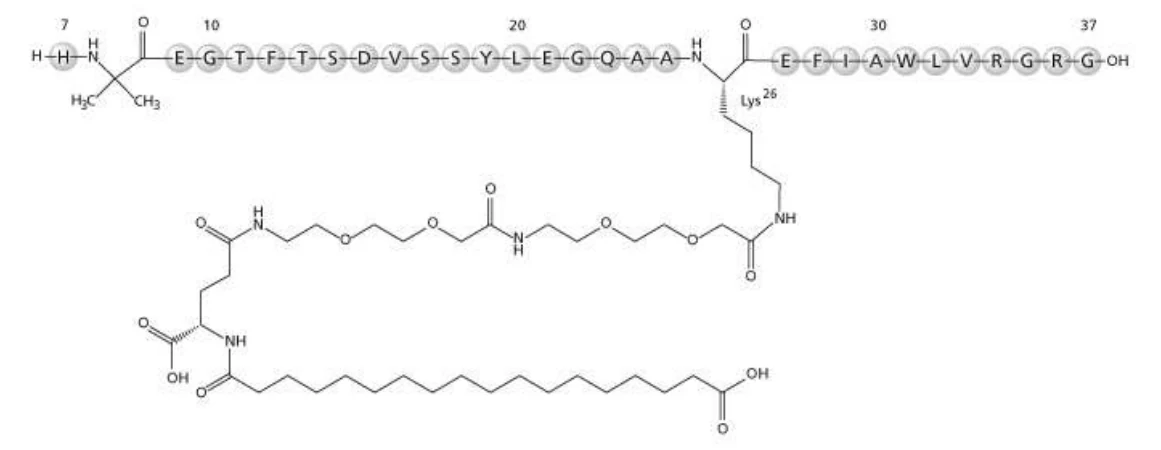
Physicochemical properties: Each 1 mL of POVIZTRA™ solution contains 0.5 mg, 1 mg, 2 mg, 2.27 mg, or 3.2 mg of semaglutide. Each pre-filled pen contains either 0.5 mL or 0.75 mL solution of POVIZTRA™ equivalent to 0.25 mg, 0.5 mg, 1 mg, 1.7 mg, or 2.4 mg semaglutide.
Product Characteristics
POVIZTRA™ contains semaglutide, a glucagon-like peptide-1 (GLP-1) receptor agonist (or GLP-1 analog) with 94% sequence homology to human GLP-1. The peptide backbone is produced by yeast fermentation (Saccharomyces cerevisiae) and includes three amino acid substitutions to allow for attachment of an albumin-binding C-18 fatty diacid with a hydrophilic spacer and to increase stabilisation against degradation by the enzyme dipeptidyl-peptidase 4 (DPP-4). The molecular weight of semaglutide is approximately 4 kilodalton.
13 Microbiology
No microbiological information is required for this drug product.
14 Clinical Trials
14.1 Clinical Trials by Indication
Weight Management
The safety and efficacy of POVIZTRA™ for chronic weight management (weight loss and maintenance) in conjunction with a reduced calorie meal plan and increased physical activity were studied in five 68-week, randomized, double-blind, placebo-controlled trials. A total of 4884 patients (2785 randomized to treatment with POVIZTRA™) were included in the trials.
In all studies, POVIZTRA™ was escalated to 2.4 mg subcutaneous weekly during a 16-week period. For POVIZTRA™ in STEP 1, 2 and 3 and STEP Teens, the 68 weeks of treatment included 16 weeks of dose escalation and 52 weeks on therapeutic/maintenance dose. In STEP 4, all patients who reached POVIZTRA™ 2.4 mg after the 20 weeks run-in period were randomized to either continued treatment with POVIZTRA™ or placebo for 48 weeks.
Adults
In STEP 1, 2 and 4, all patients received instruction for a reduced calorie diet (approximately 500 kcal/day deficit) and increased physical activity counselling (recommended to a minimum of 150 min/week) that began with the first dose of study medication or placebo and continued throughout the trial. In STEP 3, patients received intensive behavioural therapy (IBT) which was an initial 8-week low-calorie meal plan (total energy intake 1000 to 1200 kcal/day) followed by 60 weeks reduced caloric meal plan (1200-1800 kcal/day) and increased physical activity (100 mins/week with gradual increase to 200 mins/week).
In STEP 9 (phase 3b study), the effects of POVIZTRA™ once-weekly were investigated as an adjunct to a reduced-calorie diet and increased physical activity, on weight loss, knee OA-related pain and physical function, and health-related quality of life in people with obesity and knee OA.
Table 8 Summary of patient demographics for clinical trials in adult patients with either obesity (BMI ≥30 kg/m2), or excess weight (BMI ≥27 to <30 kg/m2) and at least one weight-related comorbidity
| Study # | Trial design | Dosage, route of administration and duration | Study patients (n) | Mean age (Range) | Sex N (%) |
| STEP 1 - 4373 | 68-week double blind, placebo controlled1 | POVIZTRA™ 2.4 mg, subcutaneous, once weekly OR Placebo, subcutaneous, once weekly | 1961 | 46 (18 to 86) | Female: 1451 (74%) Male: 510 (26%) |
| STEP 2 - 4374 | 68-week double blind, placebo controlled, in patients with Type 2 Diabetes1 | POVIZTRA™ 2.4 mg, subcutaneous, once weekly OR Placebo, subcutaneous, once weekly As an add-on to diet and exercise and up to 3 background diabetes medications (metformin, sulfonylurea [SU], glitazone or sodium-glucose co-transporter 2 inhibitor [SLGT2i])) | 807 | 55 (19 to 84) | Female: 412 (51%) Male: 395 (49%) |
| STEP 3 - 4375 | 68-week, double blind, placebo controlled, in conjunction with Intensive Behavioural Therapy1 | POVIZTRA™ 2.4 mg, subcutaneous, once weekly OR Placebo, subcutaneous, once weekly | 611 | 46 (18 to 75) | Female: 495 (81%) Male: 116 (19%) |
| STEP 4 - 4376 | 68-week double-blind, placebo controlled withdrawal trial | POVIZTRA™ 2.4 mg, subcutaneous, once weekly OR Placebo, subcutaneous, once weekly | 902 treated, 803 randomiz ed2 | 46 (18 to 78) | Female: 634 (79%) Male: 169 (21%) |
| STEP 9 – 4578 | 68-week, double-blind, placebo controlled, in patients with obesity and knee OA | POVIZTRA™ 2.4 mg, subcutaneous once-weekly OR Placebo, subcutaneous, once weekly | 4073 | 56 (18 to 85) | Female: 332 (81.6%) Male: 75 (18.4%) |
1Patients randomized to POVIZTRA™ received 52 weeks at target maintenance dose of 2.4 mg
2 All treated patients received escalating doses of semaglutide from Weeks 1-16. Patients reaching the 2.4 mg maintenance dose by Week 20 were randomized to continue POVIZTRA™ or switch to placebo at week 20 (baseline)
3 Population in STEP 9 included adult males or females with BMI ≥30.0 kg/m2, pain due to knee OA and clinical diagnosis of knee OA (ACR criteria) with moderate radiographic changes (KL grades 2 or 3 as per central reading) in target knee
For STEP 1, STEP 2 and STEP 3, the primary efficacy outcomes were percent change in body weight from baseline to week 68 and percentage of patients who achieve ≥5% body weight reduction. For STEP 4, the primary efficacy outcome was percent change in body weight from baseline to week 68.
STEP 1 – 4373
STEP 1 was a 68-week trial in patients with obesity (BMI ≥30 kg/m2) or overweight (BMI ≥27-<30 kg/m2) with at least one weight-related comorbidity; patients with diabetes were excluded. Patients were randomized in a 2:1 ratio to either POVIZTRA™ or placebo. Patients had a mean age of 46 years (range 18-86), 74.1% were women 75.1% were Caucasian, 13.3% were Asian and 5.7% were Black/African American. A total of 12.0% were Hispanic or Latino. Mean baseline body weight was 105.3 kg (range 61.8-245.6) (232.1lb [range 136.2-541.5]), mean BMI was 37.9 kg/m2 (range 26.5-83.0) and 43.7% of patients had pre-diabetes as assessed by investigator. At baseline, weight-related comorbidities in this trial that occurred in more than 10% of patients were dyslipidemia (37.0%), hypertension (36.0%), elevated HbA1c (range 5.7-6.4%) (17.9%), knee or hip osteoarthritis (15.9%), obstructive sleep apnea (11.7%), and asthma/chronic obstructive pulmonary disease (COPD) (11.6%).
STEP 2 – 4374
STEP 2 was a 68-week study in patients with type 2 diabetes and BMI ≥27 kg/m2. Patients included in the trial had insufficiently controlled diabetes (HbA1c 7-10%) and were treated with either: diet and exercise alone or in conjunction with 1 to 3 oral antidiabetic drugs (metformin, sulfonylurea [SU], glitazone or sodium-glucose co-transporter 2 inhibitor [SLGT2i]). Patients were randomized in a 1:1 ratio to receive either POVIZTRA™ or placebo. Patients had a mean age of 55 years (range 19-84), 50.9% of patients were women, 62.1% were Caucasian, 26.2% were Asian and 8.3% were Black/African American. A total of 12.8% were Hispanic or Latino. Mean baseline body weight was 99.8 kg (range 54.4-199.2) (220.0 lb[range 119.9-439.2]) and mean BMI was 35.7 kg/m2 (range 26.5-66.2). Weight-related comorbidities that occurred in more than 10% of patients were hypertension (69.8%), dyslipidemia (68.0%), liver diseases (22.6%), knee or hip osteoarthritis (19.6%), and obstructive sleep apnea (15.1%). In STEP 2, 78.5% of patients with type 2 diabetes treated with POVIZTRA™ achieved an HbA1c < 7% compared to 26.5% with placebo.
STEP 3 – 4375
STEP 3 was a 68-week trial in patients with obesity (BMI >30 kg/m2) or overweight (BMI ≥27-<30 kg/m2) and at least one weight-related comorbid condition; patients with diabetes were excluded. The patients were randomized in a 2:1 ratio to receive either POVIZTRA™ or placebo. Patients had a mean age of 46 years (range 18-75), 81.0% were women, 76.1% were Caucasian, 19.0% were Black/African American and 1.8% were Asian. A total of 19.8% were Hispanic or Latino. Mean baseline body weight was 105.8 kg (range 66.9-216.8) (233.2 lb [range 147.5-478.0]), mean BMI was 38.0 kg/m2 (range 27.0-69.0) and 49.8% of patients had pre-diabetes as assessed by investigator. Weight-related comorbidities that occurred in more than 10% of patients were hypertension (34.7%), dyslipidemia (34.7%), knee and hip osteoarthritis (18.7%), asthma/COPD (15.1%), obstructive sleep apnea (12.6%), menstrual disorders (14.7%), and impaired fasting glucose (10.6%).
All STEP trials met their primary objectives of demonstrating statistically significant weight loss compared to placebo in patients with obesity (BMI ≥30 kg/m2) or excess weight (BMI ≥27 kg/m2 to <30 kg/m2) and at least one weight-related comorbidity. Treatment benefit was also observed in the secondary endpoints including waist circumference and cardiometabolic parameters. The findings were generally consistent across the 4 clinical trials. See Table 9 for a summary of results at Week 68.
Of note, diet and exercise data were not collected and/or verified for any of the trials. Therefore, the results should be interpreted with caution since the contribution of patient adherence to diet and exercise in the favourable findings with POVIZTRA™ is unknown.
Table 9 Changes in Body Weight at Week 68 for STEP 1, 2 and 3
| STEP 1 | STEP 2 | STEP 3 | |||||||||||||||||||
|---|---|---|---|---|---|---|---|---|---|---|---|---|---|---|---|---|---|---|---|---|---|
| Intention-to-treata | Placebo | POVIZTRA™ | Placebo | POVIZTRA™ | Placebo | POVIZTRA™ | |||||||||||||||
| Primary outcomes | |||||||||||||||||||||
| Body weight | |||||||||||||||||||||
| Baseline (kg) | 105.2 | 105.4 | 100.5 | 99.9 | 103.7 | 106.9 | |||||||||||||||
| % change from baseline | -2.4 | -14.9 | -3.4 | -9.6 | -5.7 | -16.0 | |||||||||||||||
| % difference from placebo (LSMean) (95% CI) | -12.4 (-13.4; -11.5)* | -6.2 (-7.3; -5.2)* | -10.3 (-12.0; -8.6)* | ||||||||||||||||||
| Percent patients losing ≥5% body weight | |||||||||||||||||||||
| Week 68 n (%) | 31.1 | 83.5 | 30.2 | 67.4 | 47.8 | 84.8 | |||||||||||||||
| % difference from placebo (LSMean) (95% CI) | 52.4 (48.1; 56.8)* | 37.3 (30.7; 43.8)* | 37.0 (28.9; 45.2)* | ||||||||||||||||||
| Secondary outcomes | |||||||||||||||||||||
| Percent patients losing ≥10% body weight | |||||||||||||||||||||
| Week 68 n (%) | 12.0 | 66.1 | 10.2 | 44.5 | 27.1 | 73.0 | |||||||||||||||
| % difference from placebo (LSMean) (95% CI) | 54.1 (50.4; 57.9)* | 34.3 (28.4; 40.2)* | 45.9 (38.0; 53.7)* | ||||||||||||||||||
| Percent patients losing ≥15% body weight | |||||||||||||||||||||
| Week 68 n (%) | 4.8 | 47.9 | 4.3 | 25.1 | 13.2 | 53.5 | |||||||||||||||
| % difference from placebo (LSMean) (95% CI) | 43.1 (39.8; 46.3)* | 20.7 (15.7; 25.8)* | 40.2 (33.1; 47.3)* | ||||||||||||||||||
| Change from baseline waist circumference | |||||||||||||||||||||
| Baseline (cm) | 114.8 | 114.6 | 115.5 | 114.5 | 111.8 | 113.6 | |||||||||||||||
| Change from baseline (cm) | -4.1 | -13.5 | -4.5 | -9.4 | -6.3 | -14.6 | |||||||||||||||
| Difference from placebo (LSMean) (95% CI) | -9.4 (-10.3; -8.5)* | -4.9 (-6.0; -3.8)** | -8.3 (-10.1; -6.6)** | ||||||||||||||||||
aThe intent-to-treat population includes all randomized patients. At week 68, the body weight was missing for 7.2%/11.9% of patients randomized to POVIZTRA™/placebo in STEP 1, for 4.0%/6.7 of patients randomized to POVIZTRA™/placebo in STEP 2 and for 8.4%/7.4% of patients randomized to POVIZTRA™/placebo in STEP 3. Missing data were imputed from retrieved subjects of the same randomized treatment arm according to gender, BMI and timing of last available on-treatment measurement of the endpoint.
*p<0.0001 (unadjusted 2-sided) for superiority.
**p<0.005 (unadjusted 2-sided) for superiority.
Change in body weight ( %) Weeks POVIZTRA Placebo Multiple imputation (MI) 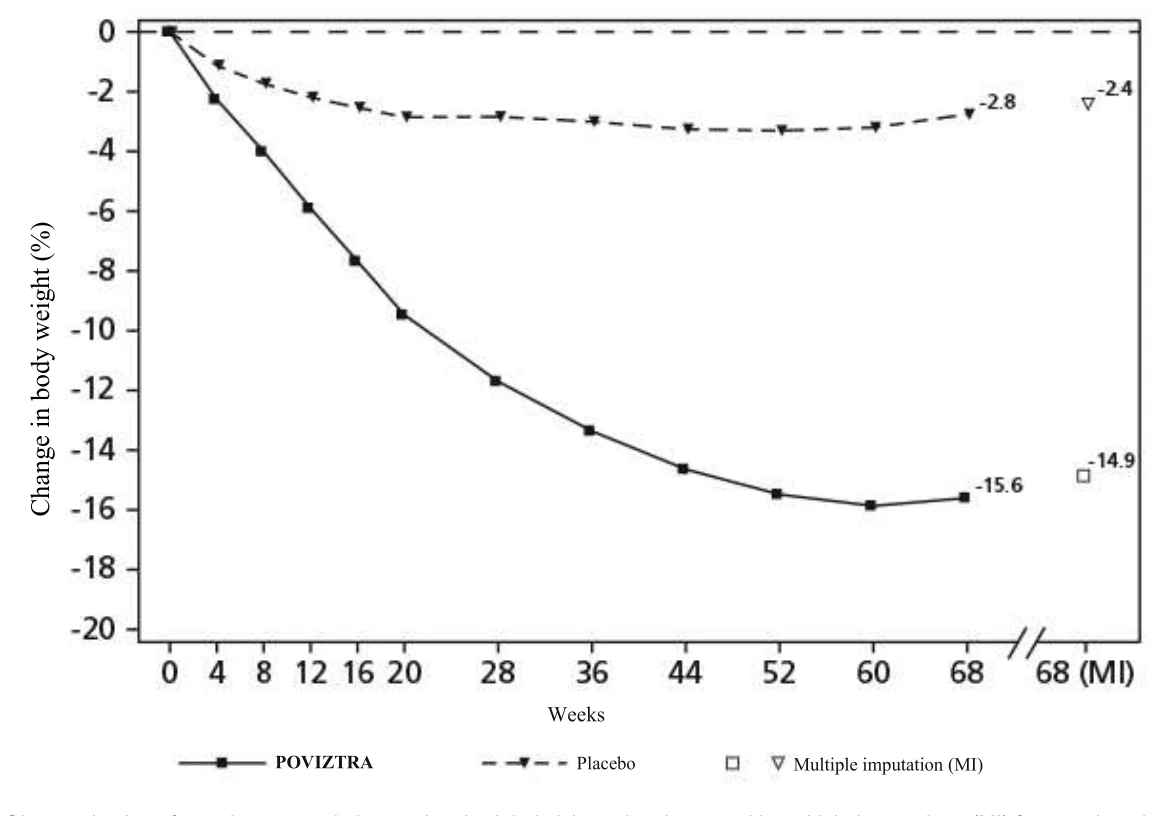

Observed values for patients completing each scheduled visit, and estimates with multiple imputations (MI) from retrieved dropouts
Figure 1 Change from baseline (%) in body weight (STEP 1)
Table 10 Changes in Cardiometabolic Parameters and Glycemic Control at Week 68
| Intention-to-treata | STEP 1 | STEP 2 | STEP 3 | |||||||||||||||||||||
|---|---|---|---|---|---|---|---|---|---|---|---|---|---|---|---|---|---|---|---|---|---|---|---|---|
| Placebo | POVIZTRA | Placebo | POVIZTRA | Placebo | POVIZTRA | |||||||||||||||||||
| Systolic blood pressure | ||||||||||||||||||||||||
| Baseline | 127 | 126 | 130 | 130 | 124 | 124 | ||||||||||||||||||
| Change from baseline (LSMean) | -1.1 | -6.2 | -0.5 | -3.9 | -1.6 | -5.6 | ||||||||||||||||||
| Difference from placebo (LSMean) (95% CI) | -5.1 (-6.3; -3.9) | -3.4 (-5.6; -1.3) | -3.9 (6.4; -1.5) | |||||||||||||||||||||
| Diastolic blood pressure | ||||||||||||||||||||||||
| Baseline | 80 | 80 | 80 | 80 | 81 | 80 | ||||||||||||||||||
| Change from baseline (LSMean) | -0.4 | -2.8 | -0.9 | -1.6 | -0.8 | -3.0 | ||||||||||||||||||
| Difference from placebo (LSMean) (95% CI) | -2.4 (-3.3; -1.6) | -0.7 (-2.0; 0.6) | -2.2 (-3.9; -0.6) | |||||||||||||||||||||
| HbA1c | ||||||||||||||||||||||||
| Baseline | 5.7 | 5.7 | 8.1 | 8.1 | 5.8 | 5.7 | ||||||||||||||||||
| Change from baseline (LSMean) | -0.2 | -0.5 | -0.4 | -1.6 | -0.3 | -0.5 | ||||||||||||||||||
| Difference from placebo (LSMean) (95% CI) | -0.3 (-0.3; -0.2) | -1.2 (-1.4; -1.1) | -0.2 (-0.3; -0.2) | |||||||||||||||||||||
| Total cholesterolb | ||||||||||||||||||||||||
| Baseline | 5.0 | 4.9 | 4.4 | 4.4 | 4.9 | 4.7 | ||||||||||||||||||
| % change from baseline (LSMean) | 0.1 | -3.3 | -0.5 | -1.4 | 2.1 | -3.9 | ||||||||||||||||||
| Relative Difference from placebo (LSMean) (95% CI) | -3.3 (-4.8; -1.8) | -0.9 (-3.6; 2.0) | -5.9 (-8.5; -3.2) | |||||||||||||||||||||
| LDL cholesterolb | ||||||||||||||||||||||||
| Baseline | 2.9 | 2.9 | 2.3 | 2.3 | 6.2 | 6.0 | ||||||||||||||||||
| % change from baseline (LSMean) | 1.3 | -2.5 | 0.1 | 0.5 | 2.6 | -4.7 | ||||||||||||||||||
| Relative Difference from placebo (LSMean) (95% CI) | -3.8 (-5.9; -1.5) | 0.4 (-4.0; 4.9) | -7.1 (-10.9; -3.2) | |||||||||||||||||||||
| HDL cholesterolb | ||||||||||||||||||||||||
| Baseline | 1.3 | 1.3 | 1.1 | 1.2 | 2.8 | 2.9 | ||||||||||||||||||
| % change from baseline (LSMean) | 1.4 | 5.2 | 4.1 | 6.9 | 5.0 | 6.5 | ||||||||||||||||||
| Relative Difference from placebo (LSMean) (95% CI) | 3.8 (2.2; 5.4) | 2.7 (-0.3; -5.1) | 1.5 (-1.8; 4.9) | |||||||||||||||||||||
| Triglyceridesb | ||||||||||||||||||||||||
| Baseline | 1.4 | 1.4 | 1.9 | 1.7 | 6.2 | 6.0 | ||||||||||||||||||
| % change from baseline (LSMean) | -7.3 | -21.9 | -9.4 | -22 | -6.5 | -22.5 | ||||||||||||||||||
| Relative Difference from placebo (LSMean) (95% CI) | -15.8 (-18.8; -12.7) | -13.9 (-19.0; -8.4) | -17.0 (-22.8; -10.8) | |||||||||||||||||||||
aThe intent-to-treat population includes all randomized patients. Missing data were imputed from retrieved subjects of the same randomized treatment arm according to gender, BMI and timing of last available on-treatment measurement of the endpoint.
bThe baseline value is the geometric mean
CI: Confidence interval
*p<0.005 (unadjusted 2-sided) for superiority
**p<0.0001(unadjusted 2-sided) for superiority
STEP 4 – 4376
STEP 4 was a 68-week trial that enrolled 902 patients with obesity (BMI ≥30 kg/m2) or with excess weight (BMI ≥27-<30 kg/m2) and at least one weight-related comorbid condition; patients with diabetes were excluded. All patients received POVIZTRA™ during the run-in period of 20 weeks which included 16 weeks of dose escalation. Patients who had reached the maintenance dose of 2.4 mg were randomized in a 2:1 ratio to either continue on POVIZTRA™ or receive placebo. There were 803 patients who reached the maintenance dose of POVIZTRA™ (2.4 mg) and were then randomized in a 2:1 ratio to either continue on POVIZTRA™ or receive placebo. Among randomized patients, the mean age was 46 years (range 18-78), 79% were women, 83.7% were Caucasian, 13% were Black/African American, and 2.4% were Asian. A total of 7.8% were Hispanic or Latino. Mean body weight at the start of the run-in period (week 0) was 107.2 kg (range 63.1-209.2) (236.3 lb [range 139.1-461.2]), mean BMI at week 0 was 38.4 kg/m2 (range 27.4 -75.9) and 46.8% of patients had pre-diabetes as assessed by investigator. Weight-related comorbidities that occurred in more than 10% of patients were hypertension (37.1%), dyslipidemia (35.9%), knee or hip osteoarthritis (13.3%), obstructive sleep apnea (11.7%), and asthma/COPD (11.5%).
Patients who had reached the maintenance dose of POVIZTRA™ at week 20 (baseline) and continued treatment with POVIZTRA™ for an additional 48 weeks continued losing weight (see Table 11 and Figure 2). On the other hand, in patients switching to placebo at week 20 (baseline), body weight increased steadily from week 20 to week 68. However, the observed mean body weight was lower at week 68 than at start of the run-in period (week 0) (see Figure 2).
Change in body weight ( %) Weeks POVIZTRA Placebo Multiple imputation (MI) 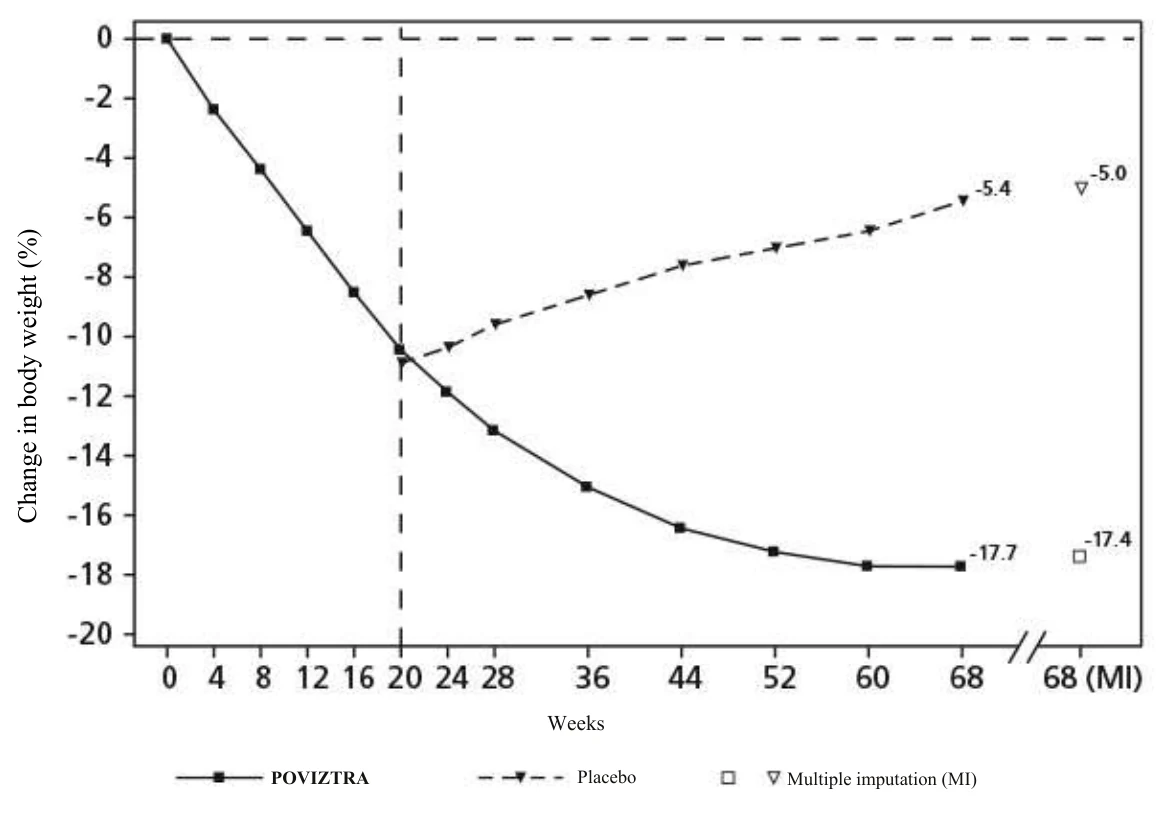

Observed values for patients completing each scheduled visit, and estimates with multiple imputations (MI) from retrieved dropouts
Figure 2 Change from baseline (%) in body weight (STEP 4)
Table 11 Changes in Body Weight at Week 68 -STEP 4 (Obesity or excess weight with comorbidity after 20 week run-in)
POVIZTRA™ N = 803a | |||
|---|---|---|---|
| Body Weight (only randomized patients) | |||
| Mean at week 0 (kg) | 107.2 | ||
| Mean at week 20 (kg) | 96.1 | ||
PLACEBO N = 268 | POVIZTRA™ N = 535 | ||
| Body Weight | |||
| Mean at week 20 (SD) (kg) | 95.4 (22.7) | 96.5 (22.5) | |
| % Change from week 20-68 (LSMean) | 6.9 | -7.9 | |
| % Difference from placebo (LSMean) (95% CI) | -14.8 (-16.0; -13.5)* | ||
| Waist Circumference (cm) | |||
| Mean at week 20 | 104.7 | 105.5 | |
| Change from week 20-68 (LSMean) | 3.3 | -6.4 | |
| Difference from placebo (LSMean) (95% CI) | -9.7 (-10.9; -8.5)* | ||
| Systolic Blood Pressure (mmHg) | |||
| Mean at week 20 | 121 | 121 | |
| Change from week 20-68 (LSMean) | 4.4 | 0.5 | |
| Difference from placebo (LSMean) (95% CI) | -3.9 [-5.8; -2.0]* | ||
aThe intent-to-treat population includes all randomized patients. At week 68, the body weight was missing for 2.8% and 6.7% of patients randomized to POVIZTRA™ and placebo, respectively. Missing data were imputed from retrieved patients of the same randomized treatment arm.
™™
*p<0.0001 (unadjusted 2-sided) for superiority, controlled for multiplicity.
Patient-Reported Outcomes
Improvement in physical functioning was measured by the general health-related quality of life questionnaire Short Form health survey (SF-36v2) and the obesity-specific Impact of Weight on Quality of Life-Lite for clinical trials Questionnaire (IWQOL-Lite-CT) in STEP 1 and 2. Estimated Treatment Differences were statistically significant in favour of POVIZTRA™ for SF-36 and for IWQOL-Lite-CT. Greater proportions of patients achieved clinically meaningful improvements in physical functioning (defined as proportion of patients achieving an improvement in score of at least 3.7 for SF-36 physical functioning and of at least 14.6 for IWQOL-Lite-CT physical function) with POVIZTRA™ than with placebo for SF-36v2 (39.8% vs. 24.1% in STEP 1 and 41.0% vs. 27.3% in STEP 2) and for IWQOL-Lite-CT (51.8% vs 28.3% in STEP 1 and 39.6% vs. 29.5% in STEP 2).
Effect on Body Composition
In a substudy of 140 patients conducted as part of STEP 1, DEXA analysis showed a 8.4 kg (18.5 lb) reduction in fat mass from a baseline of 42.1 kg (92.8 lb) in POVIZTRA™-treated patients compared to a 1.4 kg (3.1 lb) reduction from a baseline of 43.3 kg (95.5 lb) in patients treated with placebo. Reductions in lean body mass were 5.3 kg (11.7 lb) and 1.8 kg (4.0 lb) from baseline values of 52.4 kg (115.5 lb) and 51.5 kg (113.5 lb), respectively, for POVIZTRA™ and placebo-treated patients. In patients treated with POVIZTRA, the fat mass proportion decreased from 43.4% at baseline to 39.4% and the lean body mass proportion increased from 53.9% at baseline to 57.4%. Body composition in the placebo-treated group remained unchanged (total fat mass: 44.6% (baseline), 44.2% (week 68) and lean body mass: 52.7% (baseline), 53.0% (week 68)).
STEP 9 - 4578
In a 68-week double-blinded trial, 407 patients with obesity and moderate knee osteoarthritis (OA) of one or both knees were randomised to either POVIZTRA™ or placebo once-weekly. All patients were on a reduced-calorie diet and increased physical activity throughout the trial.
The treatment effect of POVIZTRA™ on knee OA-related pain was assessed by the Western Ontario and McMaster Universities Osteoarthritis 3.1 Index (WOMAC). This index is designed to evaluate changes in symptoms and lower extremity functioning associated with treatment in patients suffering from OA of the hip and/or knee.
At baseline, patients had a mean BMI of 40.3 kg/m2 and a mean body weight of 108.6 kg. The mean age of the patients was 56 years, with 81.6% of the participants being female. The ethnicity breakdown was as follows: 60.9% Caucasian/White, 11.8% American Indian and Alaska Native, 7.6% Black/African American, and 19.7% of other nationalities. All patients had a clinical diagnosis of knee OA with a mean baseline WOMAC pain score of 70.9 (on a scale of 0-100 where 100 indicates worst pain).
Patients treated with POVIZTRA™ experienced greater weight loss and an associated reduction in WOMAC Pain score for knee osteoarthritis compared to those treated with placebo (Table 12).
Table 12 Results of a 68-week trial comparing POVIZTRA™ with placebo in patients with obesity and knee osteoarthritis (STEP 9)
| Placebo | POVIZTRA™ injection | |
|---|---|---|
| Full analysis set (N) | 136 | 271 |
| Body weight | ||
| Baseline (kg) | 108.5 | 108.7 |
| Change (%) from baseline1 | -3.2 | -13.7 |
| Difference (%) from placebo1 [95% CI] | - | -10.5 [-12.3; -8.6]* |
| WOMAC (Knee OA-related disability)4 | ||
| WOMAC pain score | ||
| Baseline | 67.2 | 72.8 |
| Change from baseline1 | -27.5 | -41.7 |
| Difference from placebo1 [95% CI] | - | -14.1 [-20.0, -8.3]* |
| Patients (%) achieving clinically meaningful improvement 2, 3 | 35.0 | 59.0 |
* p< 0.0001 (unadjusted 2-sided) for superiority.
1 Estimated using an ANCOVA model using multiple imputation based on all data irrespective of discontinuation of randomised treatment or initiation of other anti-obesity therapies or other knee OA interventions and regardless of compliance with wash out period for pain medication (the latter only relevant for WOMAC endpoints). During the trial, randomised treatment was permanently discontinued by 12.5% and 21.3% of patients randomised to POVIZTRA™ and placebo, respectively.
2 Estimated from logistic regression model based on same imputation procedure as for the primary analysis.
3 The change in WOMAC pain score of ≤ -37.3 was used as a threshold for meaningful improvement. This threshold was derived from trial data using anchor-based methods.
STEP-HFpEF and STEP-HFpEF-DM trials in obese patients with heart failure with preserved ejection fraction with or without type 2 diabetes
STEP-HFpEF-DM and STEP-HFpEF were 52-week, randomized, double-blind, placebo-controlled trials including patients with obesity and HFpEF with or without T2D. Patients were randomized 1:1 to be treated with either POVIZTRA™ or placebo once weekly in addition to standard of care for heart failure.
Table 13 Summary of patient demographics for clinical trials in adult patients with obesity (BMI ≥30 kg/m2) and HFpEF
| Study # | Trial design | Dosage, route of administration and duration | Study patients (n) | Mean age (Range) | Sex N (%) |
| STEP HFpEF - 4665 | 52-week, double-blind, placebo-controlled in patients with obesity and HFpEF | POVIZTRA™ 2.4 mg, subcutaneous, once weekly OR Placebo, subcutaneous, once weekly In addition to standard of care for heart failure | 529 | 68 (33 to 88) | Female: 297 (56.1%) Male: 232 (43.9%) |
| STEP HFpEF DM - 4773 | 52-week, double-blind, placebo-controlled in patients with obesity and Type 2 Diabetes and HFpEF | POVIZTRA™ 2.4 mg, subcutaneous, once weekly OR Placebo, subcutaneous, once weekly In addition to standard of care for heart failure | 616 | 68 (37 to 91) | Female: 273 (44.3%) Male: 343 (55.7%) |
The STEP HFpEF study enrolled 529 patients with obesity and HFpEF. At baseline 66.2% of the patients were classified as New York Heart Association (NYHA) class II, 33.6% class III, and 0.2% class IV, median left ventricular ejection fraction (LVEF) was 57.0%, and with a mean BMI of 38.5 kg/m2. The patients had a mean age of 68 years, 56.1% were females. Patients were on standard of care therapy; 80.7% of patients were treated with diuretics, 79.0% with beta blockers, 75.0% with angiotensin converting enzyme (ACE) inhibitors or angiotensin receptor blockers (ARBs), 34.8% with mineralocorticoid receptor antagonists (MRAs) and 3.6% with sodium glucose cotransporter type-2 inhibitor (SGLT-2i). Among participants still receiving treatment at week 52, 83.7% of POVIZTRA™-treated patients were on the 2.4 mg dose (185 out of 221 patients) and 97.8% of placebo patients were on the 2.4 mg placebo dose (219 out of 224 patients).
The STEP HFpEF DM study in patients with obesity and type 2 diabetes and HFpEF enrolled 616 patients. At baseline 70.6% of the patients were classified as NYHA class II, 29.2% class III, and 0.2% class IV, median LVEF was 56.0%, mean HbA1c was 7.0%, and mean BMI was 37.9 kg/m2. The patients had a mean age of 68 years, and 44.3% were females. Patients were on standard of care therapy; 80.8% of patients were treated with diuretics, 82.8% with beta blockers, 81.6% with ACE inhibitors or ARBs, 32.5% with MRAs, 32.8% with SGLT-2i, 71.9% with metformin, 20.8% with insulin, 14.9% with dipeptidyl peptidase 4 (DPP-4) inhibitors, and
17.5% with sulfonylureas. Among patients still receiving treatment at week 52, 80.4% of POVIZTRA™-treated patients were on the 2.4 mg dose (209 out of 260 patients) and 95.8% of placebo patients were on the 2.4 mg placebo dose (248 out of 259 patients).
The dual primary endpoints were percentage change from baseline in body weight and change from baseline in the patient reported Kansas City Cardiomyopathy Questionnaire (KCCQ-CSS). The KCCQ-CSS includes the domains of symptom (frequency and burden) and physical limitation. The score ranges from 0 to 100, with higher scores representing better health status.
In both trials POVIZTRA™ resulted in a superior effect on KCCQ-CSS and change in body weight Table 19
Table 14 Results of KCCQ-CSS and body weight
| STEP HFpEF | STEP HFpEF DM | ||||||||||||||
|---|---|---|---|---|---|---|---|---|---|---|---|---|---|---|---|
| Placebo | POVIZTRA™ | Placebo | POVIZTRA™ | ||||||||||||
| Full analysis set (N) | 266 | 263 | 306 | 310 | |||||||||||
| KCCQ-CSS (score) | |||||||||||||||
| Baseline | 55.5 | 57.9 | 56.4 | 58.8 | |||||||||||
| Change from baseline1 | 8.7 | 16.6 | 6.4 | 13.7 | |||||||||||
| Difference from placebo1 (95% CI) | 7.8 (4.8; 10.9)* | 7.3 (4.1; 10.4)* | |||||||||||||
| Patients (%) experiencing meaningful change2 | 32.5 | 43.2 | 30.5 | 42.7 | |||||||||||
| Body weight | |||||||||||||||
| Baseline (kg) | 108.4 | 108.3 | 105.2 | 106.4 | |||||||||||
| Change (%) from baseline1 | -2.6 | -13.3 | -3.4 | -9.8 | |||||||||||
| Difference (%) from placebo1 (95% CI) | -10.7 (-11.9; -9.4)* | -6.4 (-7.6; -5.2)* | |||||||||||||
1 Estimated using an ANCOVA model using multiple and composite imputation based on all data irrespective of discontinuation of randomised treatment or initiation of other anti-obesity medication or bariatric surgery.
2 Responder analysis with a meaningful within patient change threshold of 17.2 points for STEP HFpEF trial and 16.3 points for STEP HFpEF DM trial (derived using an anchor-based method based on a 1-category improvement in Patient Global Impression of Status (PGI-S)). Percentage is based on patients with an observation at the visit.
*p<0.001 (unadjusted 2-sided) for superiority
Pediatrics (aged 12 to <18 years)
POVIZTRA™ was evaluated in a 68-week, double-blind, randomized, parallel group, placebo-controlled, multi-center trial in 201 pubertal pediatric patients aged 12 to less than 18 years, with BMI corresponding to ≥95th percentile for age and sex according to the age and sex-specific growth charts (see 1.1 Pediatrics). After a 12-week run-in period of non-pharmacological intervention (including dietary recommendations and physical activity counselling), patients were randomized 2:1 to POVIZTRA™ once-weekly or placebo once-weekly. POVIZTRA™ or matching placebo was escalated to 2.4 mg subcutaneous weekly or maximally tolerated dose during a 16-week period followed by 52 weeks on maintenance dose. Of POVIZTRA™-treated patients who completed the trial, 86.7% were on the 2.4 mg dose at the end of the trial.
The mean age was 15.4 years: 37.8% of patients were male, 79.1% were White, 8% were Black or African American and 2% were Asian; 10.9% were of Hispanic or Latino ethnicity. The mean baseline body weight was 107.5 kg, and mean Body Mass Index (BMI) was 37.0 kg/m2, and mean BMI Standard Deviation Score (SDS) was +3.31.
The proportions of patients who discontinued study drug were 10.4% for the POVIZTRA™-treated group and 10.4% for the placebo-treated group; 4.5% of patients treated with
POVIZTRA™ and 6% of patients treated with placebo discontinued treatment due to an adverse reaction.
Table 15 Summary of patient demographics for clinical trials in adolescent patients with obesity (BMI ≥95th percentile for age and sex)
| Study # | Trial design | Dosage, route of administration and duration | Study patients (n) | Mean age (range) | Sex n (%) |
|---|---|---|---|---|---|
| STEP Teens – 4451 | 68-week double-blind, placebo controlled | POVIZTRA™ 2.4 mg, subcutaneous, once weekly OR Placebo, subcutaneous, once weekly | 201 | 15.4 (12 to 18) | Female: 125 (62.2%) Male: 76 (37.8%) |
The primary endpoint in the STEP Teens study in adolescent patients with obesity was percent change in BMI from baseline to week 68. After 68 weeks, treatment with POVIZTRA™ resulted in a statistically significant reduction in percent BMI compared with placebo. Greater proportions of patients treated with POVIZTRA™ achieved ≥5% weight loss than those treated with placebo as shown in Table 16.
Table 16 Changes in Weight and BMI at Week 68 for in Pediatric Patients Aged 12 to less than 18 years
| Intention-to-Treata | PLACEBO N = 67 | POVIZTRA™ N = 134 |
|---|---|---|
| BMI | ||
| Baseline BMI | 35.7 | 37.7 |
| % change from baseline in BMI (LSMean1) | 0.6 | -16.1 |
| % difference from placebo (LSMean) | -16.7 (-20.3; -13.2)* | |
| % of Patients losing greater than or equal to 5% body weight | 16.3 | 73.2 |
% difference from placebo (LSMean) (95% CI) | 56.9 (44.6; 69.1)* | |
| % of Patients losing greater than or equal to 10% body weight | 6.8 | 62.8 |
| % of Patients losing greater than or equal to 15% body weight | 4.3 | 53.2 |
| % of Patients losing greater than or equal to 20% body weight | 2.8 | 36.6 |
| Body Weight | ||
| Baseline mean (kg) | 102.6 | 109.9 |
| % change from baseline (LSMean1) | 2.7 | -14.7 |
LSMean = least squares mean; CI = confidence interval
aThe intent-to-treat population includes all randomized patients, including 1 POVIZTRA™ patient that was randomized but never treated. At week 68, BMI and body weight was missing for 2.2% and 7.5% of patients randomized to POVIZTRA and placebo, respectively. Missing data were imputed using available data according to value and timing of last available observation on treatment and endpoint’s baseline value from retrieved subjects (RD-MI).
1Model based estimates based on an analysis of covariance model including treatment and stratification groups (gender, Tanner stage group) and the interaction between stratification groups as factors and baseline value as a covariate.
* p<0.0001 (unadjusted 2-sided) for superiority.
The time course of change in BMI with POVIZTRA™ and placebo from baseline through week 68 is depicted in Figure 3.
Chan ge i n BMI (%) Weeks -0.1 POVIZTRA Placebo POVIZTRA Placebo 0.6 -16.2 -16.1 RD-MI 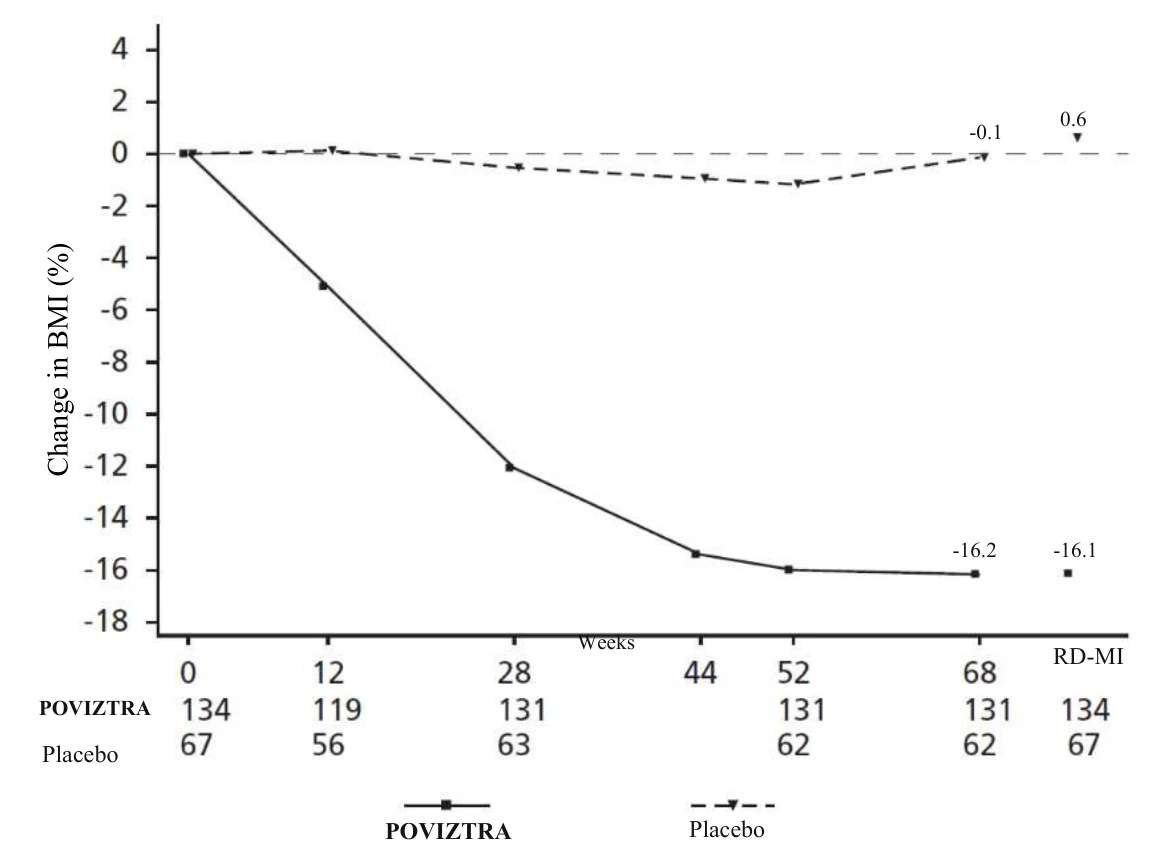

Figure 3 Change from baseline (%) in BMI in Pediatric Patients Aged 12 to less than 18 Years
Changes in waist circumference and cardiometabolic parameters with POVIZTRA™ are shown in Table 17 for the study in pediatric patients aged 12 to less than 18 years.
Table 17 Mean Changes in Anthropometry and Cardiometabolic Parameters in Pediatric Patients Aged 12 to Less than 18 Years
PLACEBO N = 67 | POVIZTRA N = 134 | ||||
|---|---|---|---|---|---|
| Baseline | Change from Baseline (LSMean1) | Baseline | Change from Baseline (LSMean1) | Difference from placebo (LSMean) | |
| Waist Circumference (cm) | 107.3 | -0.6 | 111.9 | -12.7 | -12.1 |
| Systolic Blood Pressure (mmHg) | 120 | -0.8 | 120 | -2.7 | -1.9 |
| Diastolic Blood Pressure (mmHg) | 73 | -0.8 | 73 | -1.4 | -0.6 |
| Heart Rate2 | 76 | -2.3 | 79 | 1.2 | 3.5 |
| HbA1c (%)* | 5.4 | -0.1 | 5.5 | -0.4 | -0.2 |
| FPG (mmol/L)* | 5.0 | -0.02 | 5.0 | -0.2 | -0.2 |
| Baseline | % Change from Baseline (LSMean1) | Baseline | % Change from Baseline (LSMean1) | Relative difference from placebo (LSMean) | |
| ALT (U/L) | 20 | -4.9 | 23 | -18.3 | -14.1 |
| Total Cholesterol (mg/dL)** | 160.1 | -1.3 | 159.4 | -8.3 | -7.1 |
| LDL Cholesterol (mg/dL)** | 91.7 | -3.6 | 89.8 | -9.9 | -6.6 |
| HDL Cholesterol (mg/dL)** | 43.3 | 3.2 | 43.7 | 8.0 | 4.7 |
| Triglycerides (mg/dL)** | 108.0 | 2.6 | 111.3 | -28.4 | -30.2 |
Missing data were imputed using available data according to value and timing of last available observation on treatment and endpoint’s baseline value from retrieved subjects (RD-MI).
1Model based estimates based on an analysis of covariance model including treatment and stratification groups (gender, Tanner stage group) and the interaction between stratification groups as factors and baseline value as a covariate.
2Model based estimates based on a mixed model for repeated measures including treatment as a factor and baseline value as a covariate all nested within visit
*For patients without type 2 diabetes at randomization (N=129 for POVIZTRA-treated patients and N=64 for placebo-treated patients)
**Baseline value is the geometric mean
STEP Teens included 5 POVIZTRA™ treated and 3 placebo treated patients with pre-existing type 2 diabetes. Sample size was inadequate to draw conclusions but there was no apparent difference in clinical efficacy profile for diabetic patients compared to the population at large. Data presented in the above tables includes the patients with type 2 diabetes with the exception of glycemic parameters in Table 17.
Risk Reduction Of Non-fatal Myocardial Infarction
SELECT cardiovascular outcomes trial in patients with overweight or obesity
SELECT was a randomized, double-blind, placebo-controlled, event-driven trial that included 17604 patients with established cardiovascular disease (67.6% with prior myocardial infarction only, 17.8% with prior stroke only, and 4.4% with peripheral arterial disease only; 8.2% with 2 or more prior CV events) and BMI≥27 kg/m2. Patients with a history of type 1 and type 2 diabetes were excluded. The median time in trial was 41.8 months. The study population consisted of 27.7% female and 72.3% male, with a mean age of 61.6 years, including 38.2% patients ≥ 65 years (n = 6728) and 7.8% patients ≥ 75 years (n = 1366). The mean BMI was 33.3 kg/m2 and the mean body weight was 96.7 kg.
Patients were randomized to either semaglutide 2.4 mg (n=8803) or placebo (n=8801) in addition to standard-of-care. At baseline, 92.0% of patients were receiving cardiovascular medication (70.2% beta blockers, 45.0% Angiotensin-Converting Enzyme (ACE) inhibitors, 29.5% angiotensin receptor blockers and 26.9% calcium-channel blockers), 90.1% lipid-lowering agents (primarily statins 87.6%) and 86.2% anti-platelet agents.
At baseline, most patients had cardiovascular-related comorbidities including 64.5% with HbA1c ≥ 5.7% indicative of prediabetes, 24.3% with chronic heart failure, 81.8% with hypertension, 46.8% with inflammation (hsCRP ≥ 2 mg/L) as well as patients with mild (48.7%), moderate (10.4%) or severe (0.4%) renal impairment.
The primary endpoint was the time from randomisation to the first occurrence of major adverse cardiovascular events (MACE), defined as a composite endpoint consisting of: CV death, non-fatal myocardial infarction, or non-fatal stroke. Findings are shown in Figure 4 to Figure 7.
. POVIZTRA Placebo Patients at risk 8803 8695 8561 8427 8254 7229 5777 4126 1734 71 8801 8652 8487 8326 8164 7101 5660 4015 1672 59 Time from randomization (months) Data from the in-trial period. Cumulative incidence estimates are based on time from randomisation to first EAC-confirmed MACE with non-CV death modelled as competing risk using the Aalen-Johansen estimator. Subjects without events of interest were censored at the end of their in-trial observation period. Time from randomisation to first MACE was analysed using a Cox proportional hazards model with treatment as categorical fixed factor. CV: cardiovascular, EAC: event adjudication committee, MACE: major adverse cardiovascular event. 10 8 6 4 2 0 0 6 18 12 30 36 24 48 54 42 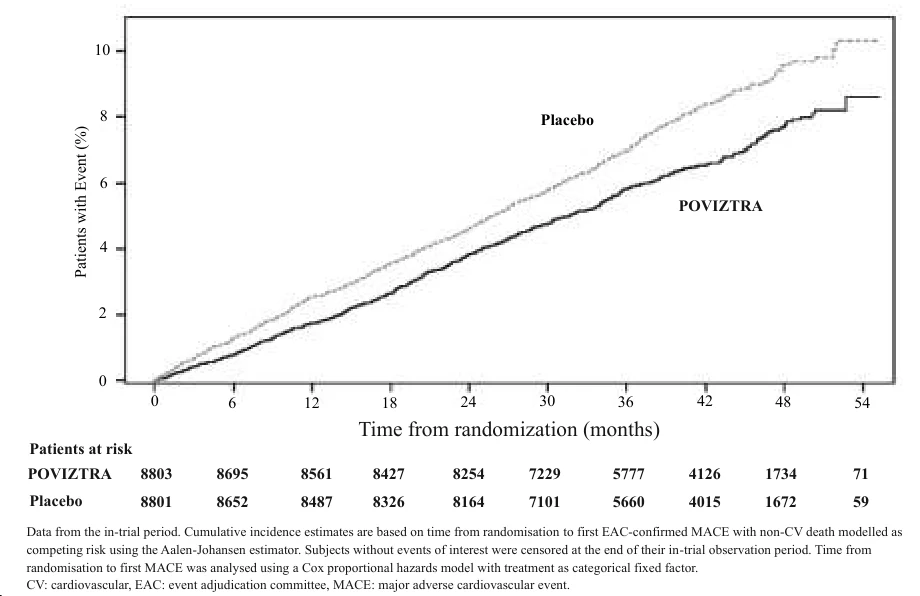



Figure 4 Cumulative Incidence Function: Time to First Occurrence of MACE in the SELECT trial
POVIZTRA Placebo Patients at risk 8803 8748 8673 8584 8465 7452 5988 4315 1832 73 8801 8733 8634 8528 8430 7395 5938 4250 1793 64 Time from randomization (months) Data from the in-trial period. Cumulative incidence estimates are based on time from randomisation to EAC-confirmed CV death with non-CV death modelled as competing risk using the Aalen-Johansen estimator. Subjects without events of interest will be censored at the end of their in-trial observation period. EAC-confirmed CV death includes both EAC-confirmed cardiovascular death and EAC-confirmed undetermined causes of death. CV: cardiovascular, EAC: event adjudication committee. 4 3 2 1 0 0 6 18 12 30 36 24 48 54 42 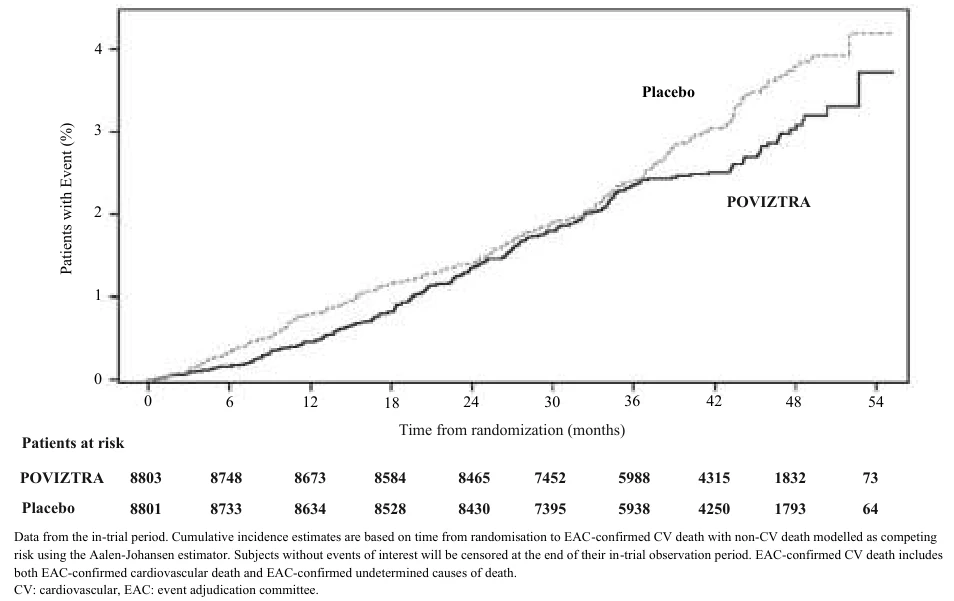



Figure 5 Cumulative Incidence Function: Time to First Occurrence of Cardiovascular Death in the SELECT trial
POVIZTRA Placebo Patients at risk 8803 8713 8598 8484 8332 7309 5862 4200 1774 73 8801 8674 8534 8398 8258 7206 5742 4089 1712 62 Time from randomization (months) Data from the in-trial period. Cumulative incidence estimates are based on time from randomisation to first EAC-confirmed non-fatal myocardial infarction with all-cause death modelled as competing risk using the Aalen-Johansen estimator. Subjects without events of interest were censored at the end of their in-trial observation period. EAC: event adjudication committee. 4 3 2 1 0 0 6 18 12 30 36 24 48 54 42 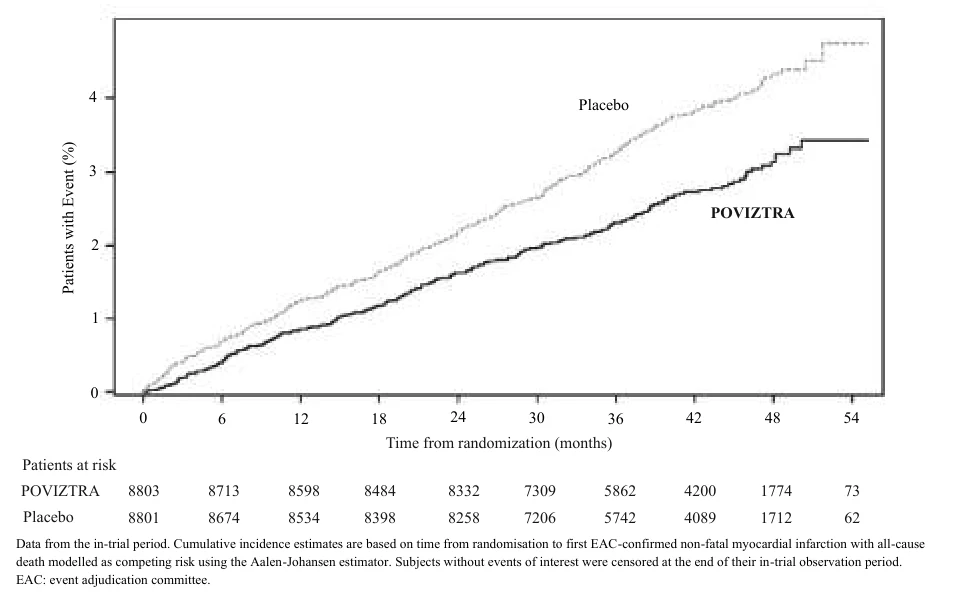



Figure 6 Cumulative Incidence Function: Time to First Occurrence of Non-Fatal Myocardial Infarction in the SELECT trial
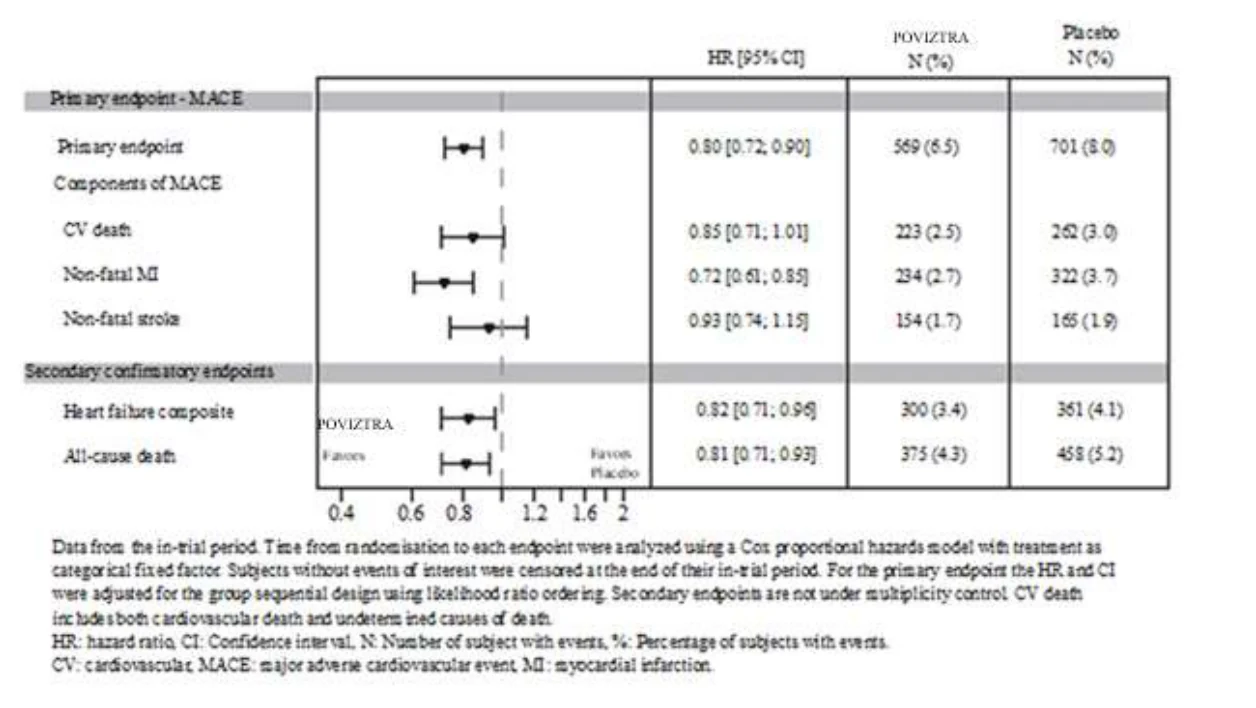
Figure 7 Forest plot of time from randomisation to first MACE and components, secondary confirmatory endpoints
Key secondary endpoints included composite heart failure endpoint and all-cause death. The composite heart failure endpoint was defined as time to the first occurrence of either heart failure hospitalization, urgent heart failure visit, or CV death.
All patients in the SELECT study were non-diabetic at the time of enrolment. At Week 117, there were 5.3% of semaglutide and 16.8% of placebo patients that had experienced a deterioration in glycemic status from baseline (i.e., from normoglycemic to pre-diabetic or diabetic, or from pre-diabetic to diabetic).
The impact of POVIZTRA™ on other parameters including body weight, waist circumference, blood pressure, blood lipids, and hsCRP were consistent with the STEP 1-3 studies.
15 Microbiology
No microbiological information is required for this drug product.
16 Non-Clinical Toxicology
Safety Pharmacology
Acute effects of semaglutide on vital organ function (central nervous system, cardiovascular system and respiration) and renal function were evaluated following subcutaneous dosing in rats or telemetered conscious unrestrained cynomolgus monkeys. Semaglutide was generally well tolerated but displayed pharmacologically-mediated effects of abnormal gait (walking on toes), decreased touch response, passivity, dirty muzzle, lethargy, piloerection, and increased acute transient diuresis in the rat, at doses below the human Cmax exposure at the maximal recommended human dose (MRHD) of 2.4 mg/week. In the monkey, no adverse effects were identified on acute cardiovascular function, at doses up to 4-fold the Cmax exposure at the MRHD. In vitro investigations (hERG ion channel assay and isolated rabbit Purkinje fibres) indicated no effects on cardiac repolarisation.
General Toxicology
Repeat dose toxicity studies were conducted in mice, rats and monkeys. Generally, decreased food consumption was observed in all studies and was accompanied by reduced body weight gain and body weights. Secondary to these effects, non-adverse clinical pathology and organ weight changes were observed across species. Clinical signs of decreased activity, hunched posture, and piloerection were also observed, during the first few weeks of dosing at the highest doses.
In a 13-week repeat-dose toxicity study, mice were dosed subcutaneously with 1, 3 and 10 mg/kg/day (6, 21 and 65-fold the human AUC exposure at the MRHD, based on animal AUC24h values of 11400, 38400, 116500 h*nmol/L). Thyroid C-cell hyperplasia was observed at all dose levels and consequently, a NOAEL could not be identified for this study.
In a 26-week repeat-dose toxicity study, rats were dosed subcutaneously with 0.03, 0.13, and 0.6 mg/kg/day (0.5, 2 and 10-fold the human AUC exposure at the MRHD, based on animal AUC24h values of 902, 3860, 18100 h*nmol/L). In the absence of any adverse findings, the NOAEL was determined to be 0.6 mg/kg/day.
In a 52-week repeat-dose toxicity study, cynomolgus monkeys were dosed subcutaneously with 0.01, 0.06, and 0.36 mg/kg/twice-weekly (0.3, 2 and 10-fold the human AUC exposure at the MRHD, based on animal AUC72h values of 1460, 9240, 54700 h*nmol/L). Electrocardiography (ECG) recordings revealed a continuous left-bundle-branch-block ECG recording in Weeks 26 and 52 in one high-dose female. In addition, histopathology revealed multifocal myocardial vacuolation, with karyomegaly, in the left ventricle of one high-dose male. As it could not be excluded that these findings were treatment related, 0.06 mg/kg twice-weekly was determined to be the NOAEL.
Carcinogenicity
Non-lethal thyroid C-cell tumours observed in rodents are a class effect for GLP-1 receptor agonists. In a 2-year carcinogenicity study in CD-1 mice, subcutaneous doses of 0.3, 1 and 3 mg/kg/day (2, 6 and 22-fold the human AUC exposure, at the MRHD, based on animal AUC24h values of 3090, 11400, 39500 h*nmol/L) was administered to the males, and 0.1, 0.3 and 1 mg/kg/day (0.6, 2 and 6-fold the human AUC exposure at the MRHD, based on animal AUC24h values of 1110, 3090, 11400 h*nmol/L) was administered to the females. High incidence rates of focal/multifocal C-cell hyperplasia and C-cell adenoma were observed in both sexes at all doses. In control animals, the incidence rate of C-cell hyperplasia was very low and no incidences of C-cell adenoma were observed. The increase in thyroid C-cell adenomas was statistically significant in both sexes at all doses. A numerical increase in C-cell carcinomas was observed in males and females at all doses, while no incidences of C-cell carcinomas were observed in control animals. A NOAEL could not be identified for this study.
In a 2-year carcinogenicity study in Sprague Dawley rats, subcutaneous doses of 0.0025, 0.01, 0.025 and 0.1 mg/kg/day were administered (below quantification, 0.2, 0.4 and 2-fold the human AUC exposure at the MRHD, based on animal AUC24h values of below qualification, 293, 641, 3820 h*nmol/L). An increase in incidence of focal C-cell hyperplasia of the thyroid was observed in males at all doses. A statistically significant increase in thyroid C-cell adenomas was observed in males and females at all doses, and a statistically significant increase in thyroid C-cell carcinomas was observed in males at ≥0.01 mg/kg/day, and in females at 0.1 mg/kg/day. The increases in the incidences of thyroid C-cell adenomas and carcinomas were largely dose-dependent. A NOAEL could not be identified for this study.
In both studies, the increased incidences of thyroid C-cell hyperplasia, adenoma, and carcinoma were determined to be treatment-related. Thyroid C-cell tumours are rare findings during carcinogenicity testing in mice and rats. The human relevance of thyroid C-cell tumours in these rodent species is unknown and could not be determined based on the results of the clinical or nonclinical studies (see 7 WARNINGS AND PRECAUTIONS, Carcinogenesis and Mutagenesis).
No other treatment-related tumours were observed in the carcinogenicity studies.
Genotoxicity
Semaglutide was not mutagenic or clastogenic in a standard battery of genotoxicity tests (bacterial reverse mutation test, in vitro chromosomal aberration test in human peripheral blood lymphocytes, and in vivo rat bone marrow micronucleus test).
Reproductive and Developmental Toxicity
In a combined fertility and embryo-fetal developmental toxicity study in rats, subcutaneous doses of 0.01, 0.03 and 0.09 mg/kg/day (0.04, 0.1 and 0.4-fold the human AUC exposure at the MRHD, based on animal AUC24h values of 82.9, 247, 735 h*nmol/L) were administered to male and female rats. Males were dosed for 4 weeks prior to mating, and females were dosed for 2 weeks prior to mating and throughout organogenesis until Gestation Day (GD) 17. No effects were observed on mating performance or male fertility. In females, an increase in estrus cycle length was observed at all dose levels, together with a small reduction in numbers of corpora lutea (ovulations) at ≥0.03 mg/kg/day. Semaglutide caused embryotoxicity below clinically relevant exposures. Semaglutide caused reductions in maternal body weight, and reduction in number of corpora lutea, leading to fewer implantations and reduced fetal growth. In fetuses, increased incidences of skeletal and visceral malformations were observed at the mid and high dose, consisting of short tibia/malrotated hindlimb at the high dose and retro-oesophageal aortic arch (cardiovascular malformation) in combination with variation in the origin of the right subclavian artery observed at the two highest doses. Increased incidences of minor abnormalities were also observed at the high-dose, including skeletal variations (partially fused, misaligned, or reduced ossification of skeletal components) and dilated lateral brain ventricles. Thus, the NOAEL for the embryo-fetal toxicity of semaglutide in rats was determined to be 0.01 mg/kg/day.
In an embryo-fetal developmental toxicity study in rabbits, subcutaneous doses of 0.001, 0.0025 and 0.0075 mg/kg/day (0.01, 0.1 and 0.9-fold the human AUC exposure at the MRHD, based on animal AUC24h values of 20.2, 208, 1530 h*nmol/L) were administered to female rabbits throughout organogenesis i.e. from GD6 to GD19. Semaglutide markedly reduced maternal body weight gain and food and water consumption. Semaglutide caused increased post-implantation losses and an increased incidence of incomplete ossification of metacarpals (skeletal variation) at the mid and the high dose, and increased incidences of other minor, non-adverse skeletal abnormalities at all dose levels. There was also an increased incidence of minor visceral abnormalities, consisting of dilated renal pelvis at the high dose, and increased incidences of forelimb/paw flexure at the mid and high doses. An increased number of visceral malformations were also observed at the mid and high dose that were not observed in controls, and consisted of multiple folded retina: absent vitreous humour, misshapen heart: dilated pulmonary trunk, absent kidney/ureter, absent adrenals, and bent scapula: hyperextension of the forelimb. Thus, the NOAEL for the embryo-fetal toxicity of semaglutide in rabbits was determined to be 0.001 mg/kg/day.
In an embryo-fetal developmental toxicity study in cynomolgus monkeys, subcutaneous doses of 0.015, 0.075, and 0.15mg/kg (0.4, 2 and 6-fold the human AUC exposure at the MRHD, based on animal AUC72h values of 2000, 10400, 30000 h*nmol/L) were administered to pregnant monkeys from GD 20 to 50 every 3 days. Marked maternal body weight loss and reduced food consumption was observed at all doses during the dosing period. A slightly increased incidence of fetal malformations was observed at the mid- and high-dose. The fetal abnormalities included skeletal abnormalities, consisting of shifts in the alignment of the vertebrae, ribs, and sternebrae at the cervico-thoracic border observed in one fetus of each of the mid- and high-dose groups, a misshapen right brain hemisphere, which was due to accumulation of blood between the dura mater and the brain, in a high-dose fetus, fused kidneys in a mid-dose fetus, and liver cysts in another mid-dose fetus. Thus, the NOAEL for the embryo-fetal toxicity of semaglutide in cynomolgus monkeys was determined to be 0.015 mg/kg administered every 3 days.
In a combined embryo-fetal and pre- and post-natal developmental toxicity study in cynomolgus monkeys, subcutaneous doses of 0.015, 0.075, and 0.15mg/kg (0.2, 1 and 3-fold the human AUC exposure at the MRHD, based on animal AUC72h values of 1320, 6720, 14400 h*nmol/L) were administered to pregnant monkeys from GD 20 to 140 every 3 days. A higher incidence of pre-natal loss was observed in the mid- and high-dose groups. The incidence of pre-natal loss was 5/24 (21%), 5/22 (23%), 7/22 (32%), and 10/24 (42%) in the control, low-, mid-, and high-dose groups, respectively, with the most losses occurring between GD 20 and 50; early pre-natal loss was 2/24 (8.3%), 1/22 (4.5%), 5/22 (23%), and 8/24 (33%) in the control, low-, mid-, and high-dose groups, respectively. A higher incidence of post-natal loss was also observed at all doses. The incidence of post-natal loss was 0/19 (0%), 5/17(29%), 3/15(20%), and 3/14(21%) in the control, low-, mid-, and high-dose groups, respectively. Infants were also slightly smaller at delivery in the two highest dose groups, but recovered during the lactation period. The NOAEL for the developmental toxicity of semaglutide in cynomolgus monkeys was determined to be 0.015 mg/kg administered every 3 days.
Juvenile Toxicity
In a juvenile toxicity study in rats, subcutaneous doses of 0.02, 0.13 and 0.6 mg/kg/day (0.3, 2 and 8-fold the human pediatric AUC exposure at the MRHD, based on animal AUC24h values of 456, 3610, 15000 h*nmol/L) were administered to young rats from Postnatal Day 21 to 98. As in other studies, lower body weight gain, body weights, and food consumption were observed in animals administered semaglutide when compared to control animals. Semaglutide also caused a delay in sexual maturation in both males and females. There were no consequential effects on estrus cycle length, the reproductive organs of either sex, the reproductive capacity of either sex, or on the ability of the females to maintain pregnancy.