


Product Monograph - Adlyxine (Sanofi-Aventis Canada, 10 mcg, 20 mcg)
RECENT MAJOR LABEL CHANGES
| 7 WARNINGS AND PRECAUTIONS | 07/2023 |
|---|
TABLE OF CONTENTS
Sections or subsections that are not applicable at the time of authorization are not listed.
PART I: HEALTH PROFESSIONAL INFORMATION .................................................................... 4
1 INDICATIONS ............................................................................................................. 4
1.1 Pediatrics .................................................................................................................. 4
1.2 Geriatrics .................................................................................................................. 4
2 CONTRAINDICATIONS ................................................................................................ 4
4 DOSAGE AND ADMINISTRATION ................................................................................ 4
4.1 Dosing Considerations ............................................................................................. 4
4.2 Recommended Dose and Dosage Adjustment ........................................................ 5
4.4 Administration ......................................................................................................... 5
4.5 Missed Dose ............................................................................................................. 6
5 OVERDOSAGE ............................................................................................................ 6
6 DOSAGE FORMS, STRENGTHS, COMPOSITION AND PACKAGING ................................ 6
7 WARNINGS AND PRECAUTIONS ................................................................................. 7
7.1 Special Populations ................................................................................................ 10
7.1.1 Pregnant Women ............................................................................................. 10
7.1.2 Breast-feeding .................................................................................................. 10
7.1.3 Pediatrics .......................................................................................................... 10
7.1.4 Geriatrics .......................................................................................................... 10
8 ADVERSE REACTIONS............................................................................................... 10
8.1 Adverse Reaction Overview ................................................................................... 10
8.2 Clinical Trial Adverse Reactions ............................................................................. 11
8.3 Less Common Clinical Trial Adverse Reactions ...................................................... 15
8.4 Abnormal Laboratory Findings: Hematologic, Clinical Chemistry and Other Quantitative Data ............................................................................................................. 16
8.5 Post-Market Adverse Reactions ............................................................................. 16
9 DRUG INTERACTIONS .............................................................................................. 16
9.2 Drug Interactions Overview ................................................................................... 16
9.4 Drug-Drug Interactions .......................................................................................... 17
9.5 Drug-Food Interactions .......................................................................................... 20
9.6 Drug-Herb Interactions .......................................................................................... 20
9.7 Drug-Laboratory Test Interactions......................................................................... 20
10 CLINICAL PHARMACOLOGY ...................................................................................... 21
10.1 Mechanism of Action ....................................................................................... 21
10.2 Pharmacodynamics .......................................................................................... 21
10.3 Pharmacokinetics ............................................................................................. 26
11 STORAGE, STABILITY AND DISPOSAL ........................................................................ 28
12 SPECIAL HANDLING INSTRUCTIONS .......................................................................... 29
PART II: SCIENTIFIC INFORMATION ..................................................................................... 30
13 PHARMACEUTICAL INFORMATION .......................................................................... 30
14 CLINICAL TRIALS ...................................................................................................... 31
14.1 Trial Design and Study Demographics ............................................................. 31
14.2 Study Results .................................................................................................... 33
15 MICROBIOLOGY ...................................................................................................... 44
16 NON-CLINICAL TOXICOLOGY .................................................................................... 44
PATIENT MEDICATION INFORMATION ................................................................................ 49
INSTRUCTIONS FOR USE: ADLYXINE® – 10 mcg Pen .............................................................. 56
INSTRUCTIONS FOR USE: ADLYXINE® – 20 mcg Pen .............................................................. 66
PART I: HEALTH PROFESSIONAL INFORMATION
1 INDICATIONS
ADLYXINE (lixisenatide injection) is indicated for use as an adjunct to diet and exercise to improve glycemic control in adult patients with type 2 diabetes mellitus in combination with:
- metformin,
- a sulfonylurea (alone or with metformin),
- pioglitazone (alone or with metformin),
- a basal insulin (alone or with metformin),
when the therapy listed above does not provide adequate glycemic control (see14 CLINICAL TRIALS)
Limitations of Use
ADLYXINE has not been studied with short acting insulin.
ADLYXINE should not be used in patients with type 1 diabetes mellitus or for the treatment of diabetic ketoacidosis.
1.1 Pediatrics
Pediatrics (<18 years of age): The safety and efficacy of ADLYXINE have not been established in patients younger than 18 years of age, therefore ADLYXINE is not indicated in pediatric patients.
1.2 Geriatrics
Geriatrics (≥65 years of age): ADLYXINE should be used with caution in patients 65 years and older, since a greater sensitivity of some older individuals cannot be ruled out (see 7 WARNINGS AND PRECAUTIONS – Special Populations - Geriatrics).
2 CONTRAINDICATIONS
ADLYXINE is contraindicated in patients who are hypersensitive to this drug or to any ingredient in the formulation, including any non-medicinal ingredient, or component of the container. For a complete listing, see 6 DOSAGE FORMS, STRENGTHS, COMPOSITION AND PACKAGING.
- Hypersensitivity reactions, including anaphylaxis, have occurred with ADLYXINE (see 7 WARNINGS AND PRECAUTIONS and 8 ADVERSE REACTIONS).
4 DOSAGE AND ADMINISTRATION
4.1 Dosing Considerations
ADLYXINE is administered by subcutaneous injection once daily, within the hour prior to any meal of the day.
- It is preferable that the prandial injection of ADLYXINE is performed before the same meal every day, when the most convenient meal has been chosen.
ADLYXINE is to be injected subcutaneously in the thigh, abdomen or upper arm.
- Injection sites within an injection area must be alternated from one injection to the next.
- ADLYXINE should not be administered intravenously or intramuscularly.
4.2 Recommended Dose and Dosage Adjustment
The starting dose is 10 mcg ADLYXINE once daily for 14 days. Increase the ADLYXINE dose to the maintenance dose of 20 mcg once daily starting on day 15.
If the 20 mcg daily maintenance dosage is not tolerated, the dosage can be temporarily reduced to 10 mcg once daily. Consider increasing the dosage to 20 mcg once daily within 4 weeks.
When ADLYXINE is added to a sulfonylurea or basal insulin, there is a potential risk of hypoglycemia. A reduction of the concomitantly administered sulfonylurea or basal insulin may be necessary based on clinical experience (see 7 WARNINGS AND PRECAUTIONS, and 8 ADVERSE REACTIONS).
Special Populations
Geriatrics (≥65 years):
No dose adjustment is required based on age. In Phase 2 and 3 controlled clinical studies of ADLYXINE, including a specific study dedicated to non-frail diabetic older patients aged 70 years and over (see 14 CLINICAL TRIALS), a total of 2013 of the patients exposed to ADLYXINE were 65 years of age and over and 350 were 75 years of age and over. No overall differences were observed in safety or effectiveness between these patients and younger patients, but greater sensitivity of some older individuals cannot be ruled out.
Pediatrics (<18 years of age):
The safety and effectiveness of ADLYXINE have not been studied in the pediatric population. ADLYXINE should not be used in pediatric patients.
Hepatic Impairment:
No dosage adjustment is necessary for patients with hepatic impairment.
Renal Impairment:
No dosage adjustment is necessary for patients with mild (creatinine clearance: 60-90 mL/min) and moderate (creatinine clearance: 30-60 mL/min) renal impairment.
Therapeutic experience with ADLYXINE in patients with severe renal impairment is very limited, and there is no experience in patients with end stage renal disease or on dialysis. Therefore, use in these patients is not recommended.
4.4 Administration
Patients and caregivers should receive proper training prior to first use of ADLYXINE (see 11 STORAGE, STABILITY AND DISPOSAL and 12 SPECIAL HANDLING INSTRUCTIONS).
4.5 Missed Dose
If a dose of ADLYXINE is missed, it should be injected within the hour prior to the next meal. An extra dose should not be taken to make up for the missed dose.
5 OVERDOSAGE
During clinical trials, short term exposure of patients to lixisenatide at doses of up to 30 mcg twice a day resulted in an increased incidence of gastrointestinal adverse reactions.
In case of overdose, appropriate supportive treatment should be initiated according to the patient’s clinical signs and symptoms and should include close monitoring of plasma glucose, hydration status and renal function. If ADLYXINE is to be continued, the ADLYXINE dose should be reduced to the prescribed dose.
| For management of a suspected drug overdose, contact your regional poison control centre. |
|---|
6 DOSAGE FORMS, STRENGTHS, COMPOSITION AND PACKAGING
Packaging
ADLYXINE is supplied in a disposable pen containing a sterile solution for subcutaneous administration. Each prefilled pen contains 3 mL solution. The green starter pen delivers 14 doses of 10 mcg, and the burgundy maintenance pen delivers 14 doses of 20 mcg.
The following packages are available:
- Maintenance Pack: 2 prefilled burgundy pens for ADLYXINE 20 mcg.
- A pack size of 1 prefilled green pen for ADLYXINE 10 mcg.
- A pack size of 2 prefilled green pens for ADLYXINE 10 mcg.
Pen needles are not included in the packages.
| Table 1 – Dosage Forms, Strengths, Composition and Packaging. | |||||
| Route of Administration | Dosage Form / Strength/Composition | Non-medicinal Ingredients | |||
| Subcutaneous | Sterile solution for injection, in prefilled pen: 10 mcg /dose (0.05 mg/mL) 20 mcg /dose (0.1 mg/mL) Active ingredient: lixisenatide | Glycerol, hydrochloric acid/sodium hydroxide solution for pH adjustment, metacresol (2.7 mg/mL), methionine, sodium acetate trihydrate, water for injection | |||
7 WARNINGS AND PRECAUTIONS
General
ADLYXINE must not be administered by intravenous or intramuscular injection.
ADLYXINE pens should never be shared between patients, even if the needle is changed.
Carcinogenesis and Mutagenesis
Risk of thyroid C-cell tumours:
Lixisenatide administration to mice and rats for 2 years resulted in thyroid C-cell neoplasia. C cell carcinomas were confined to rats at human systemic lixisenatide exposure ratios ≥35-fold, while increased incidences of C-cell hyperplasia and adenoma occurred at exposure ratios of >128-fold in mice and ≥9-fold in rats, with a no-effect level not identified in rats (see16 NON-CLINICAL TOXICOLOGY).
Other GLP-1 receptor agonists have been shown to cause thyroid C-cell tumours (adenomas and/or carcinomas) at clinically relevant exposures in rats and mice. The relevance of these results to humans has not yet been determined. Until further long-term data in humans are available, caution is advised when prescribing ADLYXINE in patients with a personal or family history of medullary thyroid carcinoma or in patients with Multiple Endocrine Neoplasia syndrome type 2 (MEN 2).
Cardiovascular
Heart Rate Increase:
ADLYXINE causes an increase in heart rate in clinical trials in healthy subjects undergoing serial electrocardiogram (ECG) monitoring and in patients with type 2 diabetes mellitus undergoing 24 hour ambulatory heart rate monitoring (see 10 CLINICAL PHARMACOLOGY– Pharmacodynamics). Caution should be observed in patients who have cardiac conditions that might be worsened by an increase in heart rate, such as tachyarrhythmias (see 9 DRUG INTERACTIONS).
PR Interval Prolongation:
ADLYXINE causes a prolongation of the PR interval of the ECG (see 10 CLINICAL PHARMACOLOGY – Pharmacodynamics). Caution should be observed in patients with pre-existing conduction system abnormalities (e.g. marked first-degree AV block or second- or third-degree AV block) or a history of rhythm disturbances (e.g. tachyarrhythmias).
Physicians should counsel their patients concerning the nature and implications of the ECG changes, underlying diseases and disorders that are considered to represent risk factors, demonstrated and predicted drug-drug interactions, symptoms suggestive of arrhythmia, risk management strategies, and other information relevant to the use of the drug (see 9 DRUG INTERACTIONS).
Driving and Operating Machinery
No studies on the effects on the ability to drive and use machines have been performed.
When used in combination with a sulfonylurea or a basal insulin, patients should be advised to take precautions to avoid hypoglycemia while driving and using machines.
Endocrine and Metabolism
Hypoglycemia:
Use with a sulfonylurea or basal insulin: Patients receiving ADLYXINE in combination with a sulfonylurea or basal insulin have an increased risk of hypoglycemia (see 8 ADVERSE REACTIONS). Reduction of the dose of the sulfonylurea or basal insulin may be considered to reduce the risk of hypoglycemia (see 4 DOSAGE AND ADMINISTRATION).
Gastrointestinal
Patients with Severe Gastrointestinal Disease:
Use of glucagon-like peptide-1 (GLP-1) receptor agonists, including ADLYXINE, is commonly associated with gastrointestinal adverse reactions, including nausea, vomiting and diarrhea. ADLYXINE has not been studied in patients with severe gastrointestinal disease, including gastroparesis, a history of stomach/gastric surgery, or inflammatory bowel disease, and therefore, the use of ADLYXINE is not recommended in these patients.
ADLYXINE can slow gastric emptying, which can reduce the rate of absorption of orally administered drugs (see 9 DRUG INTERACTIONS).
Acute gallbladder disease:
The use of GLP-1 receptor agonists has been associated with acute gallbladder disease. Acute gallbladder events such as cholelithiasis or cholecystitis have been reported in patients treated with lixisenatide. Patients should be informed of the characteristic symptoms of acute gallbladder disease: upper abdominal pain, fever, nausea, vomiting, and jaundice. If cholelithiasis is suspected, gallbladder exams and follow up are indicated.
Hepatic/Biliary/ Pancreatic
Pancreatitis:
Acute pancreatitis, including fatal and non-fatal hemorrhagic or necrotizing pancreatitis, has been reported in patients treated with GLP-1 receptor agonists, and cases of pancreatitis have occurred in patients treated with ADLYXINE during clinical trials (see 8 ADVERSE REACTIONSS). Patients should be informed of the characteristic symptoms of acute pancreatitis, such as persistent, severe abdominal pain, sometimes radiating to the back, and which may or may not be accompanied by vomiting. If pancreatitis is suspected, ADLYXINE should be discontinued and appropriate management initiated promptly. If pancreatitis is confirmed, ADLYXINE should not be restarted. Consider other antidiabetic therapies in patients with a history of pancreatitis or in patients with other risk factors for pancreatitis (e.g. gallstones, alcoholism, or hypertriglyceridemia).
Use of GLP-1 receptor agonists may be associated with acute gallbladder disease, see 7 Error! Reference source not found., Gastrointestinal; Acute gallbladder disease)
Immune
Anaphylaxis and Serious Hypersensitivity Reactions:
ADLYXINE is contraindicated in patients with known hypersensitivity to this drug or its contents (see 2 CONTRAINDICATIONS).
In clinical trials, there have been cases of anaphylaxis determined to be related to ADLYXINE. Other serious hypersensitivity reactions, including angioedema also occurred (see 8 ADVERSE REACTIONS).
If a hypersensitivity reaction is suspected, the patient should discontinue ADLYXINE and seek immediate medical attention.
Patients with a history of anaphylaxis or angioedema with another GLP-1 receptor agonist should be informed of and carefully monitored for allergic reactions, since it is unknown whether such patients will be predisposed to anaphylaxis with ADLYXINE.
Immunogenicity:
Patients may develop antibodies to lixisenatide following treatment with ADLYXINE. A pooled analysis of studies of lixisenatide-treated patients showed that 70% were antibody positive at Week 24 (see 8 ADVERSE REACTIONS). A higher incidence of allergic reactions and injection site reactions occurred in antibody positive patients. In the subset of patients with the highest antibody concentrations (>100 nmol/L), an attenuated glycemic response was observed.
If a patient receiving ADLYXINE displays worsening glycemic control or failure to achieve targeted glycemic control, or if significant injection site reactions or allergic reactions occur, alternative antidiabetic therapy should be considered.
Monitoring and Laboratory Tests
Anticoagulation:
International normalized ratio (INR) should be monitored frequently when initiating or discontinuing ADLYXINE when co-administered with warfarin (see 9 DRUG INTERACTIONS).
Renal Function:
Assessment of renal function is recommended prior to initiation of ADLYXINE and periodically thereafter, as appropriate (see 7 WARNINGS AND PRECAUTIONS– Renal).
Renal
Therapeutic experience with ADLYXINE in patients with severe renal impairment is very limited, and there is no experience in patients with end stage renal disease or on dialysis. Therefore, use in these patients is not recommended.
Acute kidney injury and worsening of chronic renal failure, sometimes requiring hemodialysis or kidney transplantation, has been reported post-marketing in patients treated with GLP-1 receptor agonists (see 8 ADVERSE REACTIONS – Post-Market Adverse Reactions). Some of these events were reported in patients without known underlying renal disease. Some events occurred in patients who had been experiencing nausea, vomiting, or diarrhea, with or without dehydration.
Since treatment with ADLYXINE may induce nausea, vomiting and diarrhea with transient hypovolemia, which may worsen renal function, renal function should be monitored when initiating or escalating doses of ADLYXINE especially in patients with renal impairment. Renal function should also be monitored in patients reporting severe gastrointestinal reactions (see 7 WARNINGS AND PRECAUTIONS
- Monitoring and Laboratory Tests).
7.1 Special Populations
7.1.1 Pregnant Women
ADLYXINE should not be used during pregnancy. Studies in animals have shown reproductive toxicity (see 16 NON-CLINICAL TOXICOLOGY). There are no adequate data from the use of ADLYXINE in pregnant women. The potential risk for humans is unknown. If a patient wishes to become pregnant, or pregnancy occurs, treatment with ADLYXINE should be discontinued.
7.1.2 Breast-feeding
ADLYXINE should not be used during breastfeeding. It is unknown if ADLYXINE is excreted in human milk. Lixisenatide was excreted in rat milk (see 16 NON-CLINICAL TOXICOLOGY).
7.1.3 Pediatrics
ADYXINE should not be used in pediatric patients (< 18 years). The safety and effectiveness of ADLYXINE in patients below the age of 18 years have not been established.
7.1.4 Geriatrics
In Phase 2 and 3 controlled clinical studies of ADLYXINE including a specific study dedicated to non-frail diabetic older patients aged 70 years and over (see 14 CLINICAL TRIALS), a total of 2013 of the patients exposed to ADLYXINE were 65 years of age and over and 350 were 75 years of age and over. No overall differences were observed in safety or effectiveness between these patients and younger patients, but greater sensitivity of some older individuals cannot be ruled out.
8 ADVERSE REACTIONS
8.1 Adverse Reaction Overview
In 9 placebo-controlled Phase 3 efficacy/safety studies, 2869 patients were exposed to ADLYXINE for a mean duration of exposure of 21. 7 weeks. Across the treatment arms, the mean age of patients was 56.1 years, 2.3% were 75 years or older and 48.2% were male. The population in these studies was 63.7% White, 2.6% Black or African American, 32.0% Asian; 18.9% were of Hispanic or Latino ethnicity. At baseline, the population had diabetes for an average of 8.2 years and had a mean HbA1c of 8.1%. At baseline, 11.2% of the population reported retinopathy. Baseline estimated renal function was normal or mildly impaired (eGFR ≥60 mL/min/1.73 m2) in 95.3% of the pooled study populations (see 14 CLINICAL TRIALS).
In this data pool, the most frequently reported (≥5%) adverse events occurring more commonly in ADLYXINE treated patients than placebo were nausea (25.3%), vomiting (9.8%), hypoglycemia (13.7%) headache (8.5%), diarrhea (7.7%), and dizziness (6.7%).
The incidence of treatment discontinuation due to treatment-emergent adverse events was 7.2% for ADLYXINE compared to 3.2% in the placebo group. The most common treatment-emergent adverse events which led to treatment discontinuation in the ADLYXINE group were nausea (2.8%) and vomiting (1.2%).
8.2 Clinical Trial Adverse Reactions
Clinical trials are conducted under very specific conditions. The adverse reaction rates observed in the clinical trials; therefore, may not reflect the rates observed in practice and should not be compared to the rates in the clinical trials of another drug. Adverse reaction information from clinical trials may be useful for identifying and approximating rates of adverse drug reactions in real-world use.
summarizes common adverse events, excluding hypoglycemia, reported more commonly in ADLYXINE treated patients than placebo in 9 pooled Phase 3 placebo controlled efficacy/safety studies (main treatment period of 12-weeks for monotherapy and 24-weeks for other 8 studies).
| Table 2 - Treatment-emergent Adverse Events Reported in ≥2% of ADLYXINE-treated Patients and Occurring More Frequently Compared to Placebo | |||
| ADLYXINE n = 2869 (%) | Placebo n = 1639 (%) | ||
Gastrointestinal disorders Nausea Vomiting Diarrhea Dyspepsia Constipation Abdominal distension Abdominal pain upper | 725 (25.3) 282 (9.8) 221 (7.7) 92 (3.2) 79 (2.8) 64 (2.2) 62 (2.2) | 99 (6.0) 30 (1.8) 90 (5.5) 4 (0.2) 30 (1.8) 14 (0.9) 14 (0.9) | |
General disorders and administration site conditions Asthenia Fatigue | 85 (3.0) 76 (2.6) | 30 (1.8) 23 (1.4) | |
Infections and infestations Upper respiratory tract infection Influenza Urinary tract infection | 96 (3.3) 92 (3.2) 59 (2.1) | 42 (2.6) 52 (3.2) 29 (1.8) | |
Metabolism and nutrition disorders Decreased appetite | 101 (3.5) | 20 (1.2) | |
Musculoskeletal and connective tissue disorders Back pain | 86 (3.0) | 32 (2.0) | |
Nervous system disorders Headache Dizziness Tremor | 244 (8.5) 193 (6.7) 64 (2.2) | 99 (6.0) 71 (4.3) 18 (1.1) | |
| *hypoglycemia is discussed separately | |||
Additional studies
The safety profile and adverse reactions reported in Table 2 above were consistent with those reported in 2 subsequent trials briefly described below.
One of these trials was conducted in elderly patients (N=350; mean age 74.2 years range 70-88 years) comparing ADLYXINE 20 mcg once daily vs. placebo, added on to standard of care.
The second trial (ELIXA) was a long-term cardiovascular outcomes trial (N=6068) which compared ADLYXINE 20 mcg once daily versus placebo, added on to standard of care, in high cardiovascular risk patients over a mean follow-up of 26 months.
Gastrointestinal adverse reactions:
In the pool of placebo-controlled trials, gastrointestinal adverse reactions occurred more frequently among patients receiving ADLYXINE than placebo (placebo 18.4%, ADLYXINE 39.7%). More patients receiving ADLYXINE (4.3%) discontinued treatment due to gastrointestinal adverse reactions than patients receiving placebo (0.5%). The severity of gastrointestinal adverse reactions in patients taking ADLYXINE was reported as “mild” in 64.2% of cases, “moderate” in 32.3% of cases, and “severe” in 3.5% of cases. Most of the adverse reactions occurred during the first 3 weeks of treatment.
Hypoglycemia:
Symptomatic hypoglycemia was defined as an event with clinical symptoms that were considered to result from a hypoglycemic episode with an accompanying plasma glucose <3.3 mmol/L, or associated with prompt recovery after oral carbohydrate, intravenous glucose or glucagon administration if no plasma glucose value was available.
Severe symptomatic hypoglycemia was defined as an event with clinical symptoms that were considered to result from hypoglycemia in which the patient required the assistance of another person, associated with a plasma glucose level below 2.0 mmol/L, or associated with prompt recovery after oral carbohydrate, intravenous glucose or glucagon administration if no plasma glucose was available.
Table 3 summarizes the incidence of symptomatic hypoglycemia and severe hypoglycemia by background anti-diabetic therapy based on seven placebo-controlled Phase 3 efficacy/safety studies.
| Table 3 - Incidence (%) of Symptomatic Hypoglycemia and Severe Hypoglycemia in Patients with Type 2 Diabetes Mellitus during the 24-week Main Treatment Period | |||
| Background therapy | Placebo | ADLYXINE | |
With Metformin Symptomatic (%) Severe (%) | N=432 1 0 | N=946 3 0 | |
With Sulfonylurea ± metformin Symptomatic (%) Severe (%) | N=377 11 0 | N=656 15 0.2 | |
| Table 3 - Incidence (%) of Symptomatic Hypoglycemia and Severe Hypoglycemia in Patients with Type 2 Diabetes Mellitus during the 24-week Main Treatment Period | |||
| Background therapy | Placebo | ADLYXINE | |
With Pioglitazone ± metformin Symptomatic (%) Severe (%) | N=161 1 0 | N=323 3 0 | |
With Basal insulin ± metformin Symptomatic (%) Severe (%) | N=213 23 0 | N=374 28 1 | |
Use with a sulfonylurea or basal insulin: Patients receiving ADLYXINE in combination with a sulfonylurea or basal insulin have an increased risk of hypoglycemia (see 7 WARNINGS AND PRECAUTIONS). Reduction of the dose of the sulfonylurea or basal insulin may be considered to reduce the risk of hypoglycemia (see 4 DOSAGE AND ADMINISTRATION).
Use with metformin and/or pioglitazone: A slightly higher rate of hypoglycemia was reported in patients treated with ADLYXINE in combination with metformin-alone or pioglitazone (with or without metformin).
Injection site reactions:
Injection site reactions (e.g. pain, pruritus and erythema) were reported more frequently in ADLYXINE-treated patients (4.0%) than placebo treated patients (1.8%).
Immunogenicity:
At Week 24, 70% of lixisenatide-treated patients were anti-drug antibody positive. In the subset of patients (2.4%) with the highest antibody concentrations (>100 nmol/L), an attenuated glycemic response was observed. A higher incidence of allergic reactions and injection site reactions occurred in antibody positive patients (see 7 WARNINGS AND PRECAUTIONS).
Anti-lixisenatide antibody characterization studies have demonstrated the potential for development of antibodies cross-reactive with endogenous GLP-1 and glucagon, but their incidence has not been fully determined and the clinical significance of these antibodies is not currently known.
No information regarding the presence of neutralizing antibodies is currently available. The detection of antibody formation is highly dependent on the sensitivity and specificity of the assay. Additionally, the observed incidence of antibody positivity in an assay may be influenced by several factors including assay methodology, sample handling, timing of sample collection, concomitant medications, and underlying disease. For these reasons, it may be misleading to compare the incidence of antibodies to lixisenatide with the incidence of antibodies to other products.
The following subsections refer to larger safety data pools of Phase 2/3 controlled clinical trials.
Anaphylaxis and hypersensitivity reactions:
Anaphylaxis assessed by a clinical trial adjudication committee occurred in the clinical program with ADLYXINE (N=6413) at a rate of 0.2% or 16 cases per 10,000 patient years compared to 0.1% or 7 cases per 10,000 patient years with placebo (N=4820). The only cases of anaphylaxis adjudicated as possibly related to study drug occurred in ADLYXINE-treated patients.
Combined allergic reactions adjudicated as possibly related to study medication (including anaphylactic reaction, angioedema and urticaria) were reported more frequently in ADLYXINE-treated patients (0.4%) than placebo-treated patients (0.2%) (see 7 WARNINGS AND PRECAUTIONS).
Pancreatitis:
There were 21 cases of pancreatitis among 7354 ADLYXINE-treated patients and 14 cases among 6079 in comparator-treated patients (incidence rate of 21 vs. 17 per 10,000 patient-years, respectively). ADLYXINE cases were reported as acute pancreatitis (N=3), pancreatitis (N=12), chronic pancreatitis (N=5), and edematous pancreatitis (N=1). Some patients had risk factors for pancreatitis, such as a history of cholelithiasis or alcohol abuse.
8.3 Less Common Clinical Trial Adverse Reactions
The following is a list of less common treatment-emergent adverse events reported in the 9 Phase 3 placebo-controlled clinical trials. Adverse events reported in <2% and reported in greater frequency in ADLYXINE-treated patients than in placebo-treated patients are included in the listing.
Blood and lymphatic system disorders: neutropenia
Cardiac disorders: palpitations, supraventricular extrasystoles, tachycardia
Ear and labyrinth disorders: motion sickness, vertigo
Eye disorders: vision blurred
Gastrointestinal disorders: abdominal discomfort, abdominal pain, dry mouth, dyspepsia, eructation, flatulence, frequent bowel movements, gastritis, gastroesophageal reflux disease, hyperchlorhydria, irritable bowel syndrome, regurgitation
General disorders and administration site conditions: chills, discomfort, face oedema, feeling abnormal, feeling cold, injection site erythema, injection site haematoma, injection site inflammation, injection site irritation, injection site macule, injection site nodule, injection site pain, injection site pruritus, injection site rash, injection site reaction, injection site swelling, malaise
Hepatobiliary disorders: acute gallbladder disease
Infections and infestations: gastroenteritis viral, nasopharyngitis
Immune system disorders: hypersensitivity
Musculoskeletal and connective tissue disorders: musculoskeletal pain, myalgia
Psychiatric disorders: anxiety, disorientation, food aversion, nervousness, restlessness
Respiratory, thoracic and mediastinal disorders: cough, nasal congestion, rhinorrhea, sneezing
Skin and subcutaneous tissue disorders: alopecia, dermatitis allergic, hyperhidrosis, rash, rash erythematous, rash maculo-papular, urticaria
Vascular disorders: flushing, hypertension
8.4 Abnormal Laboratory Findings: Hematologic, Clinical Chemistry and Other Quantitative Data
Clinical Trial Findings
Increases in serum calcitonin:
In the ELIXA long-term cardiovascular outcomes trial, levels of serum calcitonin, a marker for thyroid C-cell proliferation, were elevated to ≥50 ng/L in 12 patients in the lixisenatide group (0.4%) and 2 patients in the placebo group (<0.1%). Similar elevations were seen a pool of Phase 2/3 studies, however reporting of calcitonin elevations in these trials was less consistently implemented. The clinical significance of these elevations is unclear.
8.5 Post-Market Adverse Reactions
The following serious and unexpected adverse events not previously listed in the clinical trial adverse reactions section of the Product Monograph have been reported. Because these events are reported voluntarily from a population of uncertain size, it is generally not possible to reliably estimate their frequency or establish a causal relationship to drug exposure.
Renal:
In patients treated with GLP-1 receptor agonists, there have been post-marketing reports of acute renal failure and worsening of chronic kidney failure, which may sometimes require hemodialysis. Some of these events were reported in patients without known underlying renal disease. A majority of the reported events occurred in patients who had experienced nausea, vomiting, diarrhea, or dehydration.
9 DRUG INTERACTIONS
9.2 Drug Interactions Overview
When ADLYXINE is co-administered with sulfonylurea or basal insulin, there is a potential risk of hypoglycemia. A reduction of the concomitantly administered sulfonylurea or basal insulin may be necessary based on clinical experience (see 7 WARNINGS AND PRECAUTIONS, 8 ADVERSE REACTIONS and 4 DOSAGE AND ADMINISTRATION).
Co-administration of ADLYXINE with drugs that increase heart rate or prolong the PR interval should be undertaken with caution.
Delayed Gastric Emptying Effects on Oral Medications:
ADLYXINE delays gastric emptying which may reduce the rate of absorption of orally administered medications. Use caution when co administering ADLYXINE with oral medications that have a narrow therapeutic ratio or that require careful clinical monitoring. If such medications are to be administered with food, patients should be advised to take them with a meal or snack when ADLYXINE is not administered.
Oral medications that are particularly dependent on threshold concentrations for efficacy, such as antibiotics, or medications for which a delay in effect is undesirable, such as acetaminophen, should be administered at least 1 hour before ADLYXINE injection.
Patients taking oral contraceptives should be advised to take them at least 1 hour before ADLYXINE administration or at least 11 hours after the dose of ADLYXINE.
9.4 Drug-Drug Interactions
The drugs listed in this table are based on either drug interaction case reports or studies, or potential interactions due to the expected magnitude and seriousness of the interaction (i.e., those identified as contraindicated).
| Table 4 - Established or Potential Drug-Drug Interactions | |||||||||
| Co-administered drug | Lixisenatide | Source of Evidence | Effect | Clinical comment | |||||
Acetaminophen 1000 mg, single dose | 10 mcg, single dose | CT | No change in AUClast and AUCinf of acetaminophen whether administered before or after ADLYXINE. Cmax decreased by 29% and 31% and median tmax was delayed by approximately 2 and 1.75 hours if acetaminophen was administered 1 or 4 hours after ADLYXINE. | No dose adjustment of acetaminophen is required when co-administered with ADLYXINE. Recommended to take acetaminophen 1 hour before ADLYXINE injection. | |||||
| Table 4 - Established or Potential Drug-Drug Interactions | |||||||||
| Co-administered drug | Lixisenatide | Source of Evidence | Effect | Clinical comment | |||||
Oral contraceptive 0.03 mg EE and 0.15 mg levonorgestrel, single dose | 10 mcg, single dose | CT | Administration of oral contraceptives (ethinyl estradiol 0.03 mg/levonorgestrel 0.15 mg) 1 hour before or 11 hours after subcutaneous injection of lixisenatide 10 mcg, did not change the Cmax, AUClast, AUCinf, t1/2 and tmax of ethinyl estradiol and levonorgestrel. No change in AUClast and AUCinf, t1/2 of EE or levonorgestrel if oral contraceptive was administered 1-4 hours after ADLYXINE. Cmax of ethinyl estradiol and levonorgestrel decreased by 52% and 46% and tmax was delayed by 2 and 3 hours if oral contraceptive was administered 1 hour after ADLYXINE. Cmax of ethinyl estradiol and levonorgestrel decreased by 39% and 20% and tmax was delayed by 1 hour each if oral contraceptive was administered 4 hours after ADLYXINE. | No dose adjustment of oral contraceptive is required when co-administered with ADLYXINE. It is recommended that oral contraceptives be administered at least 1 hour before or at least 11 hours after ADLYXINE administration. | |||||
| Table 4 - Established or Potential Drug-Drug Interactions | |||||||||
| Co-administered drug | Lixisenatide | Source of Evidence | Effect | Clinical comment | |||||
Atorvastatin 40 mg, repeated dosing | 20 mcg, repeated dosing | CT | Co-administration with atorvastatin in the morning had no effect on AUC0-24h whereas Cmax decreased by 31% and median tmax was delayed by 3.25 hours. If atorvastatin was administered in the evening, no such effect on tmax was observed while AUC0-24h and Cmax were increased by 27% and 66%, respectively. | No dose adjustment of atorvastatin is required when co-administered with ADLYXINE. Recommended to take atorvastatin 1 hour before ADLYXINE injection. | |||||
Warfarin 25 mg, repeated dosing | 20 mcg, repeated dosing | CT | No effects on S-warfarin AUClast and AUCinf or INR (International Normalized Ratio) while Cmax was reduced by 19% and tmax was delayed by 7 hours. | No dose adjustment of warfarin is required when co-administered with ADLYXINE, but frequent INR monitoring is recommended at start or end of ADLYXINE treatment (see 7 WARNINGS AND PRECAUTIONS– Monitoring and Laboratory tests). | |||||
Digoxin 0.25 mg, repeated dosing | 20 mcg, repeated dosing | CT | No change in AUC0-24h of digoxin whereas Cmax was reduced by 26% and tmax of digoxin was delayed by 1.5 hours. | No dose adjustment of digoxin is required when co-administered with ADLYXINE. | |||||
| Table 4 - Established or Potential Drug-Drug Interactions | |||||||||
| Co-administered drug | Lixisenatide | Source of Evidence | Effect | Clinical comment | |||||
Ramipril 5 mg, repeated dosing | 20 mcg, repeated dosing | CT | Increase in the AUC0-24h of ramipril by 21% while the Cmax was decreased by 63%. The AUC0-24h and Cmax of the active metabolite (ramiprilat) were not affected. Tmax of ramipril and ramiprilat was delayed by 2.3 hours for Ramipril and 3 hours for Ramiprilat. | No dose adjustment of ramipril is required when co-administered with ADLYXINE. | |||||
| Legend: CT = Clinical Trial; EE= ethinyl estradiol | |||||||||
Drugs that Increase Heart Rate:
ADLYXINE causes an increase in heart rate (see 7 WARNINGS AND PRECAUTIONS– Cardiovascular and 10 CLINICAL PHARMACOLOGY – Pharmacodynamics). The impact on heart rate of co-administration of ADLYXINE with other drugs that increase heart rate (e.g. sympathomimetic drugs) has not been evaluated in drug-drug interaction studies. As a result, co-administration of ADLYXINE with these drugs should be undertaken with caution.
Drugs that Cause PR Interval Prolongation:
ADLYXINE causes an increase in the PR interval (see 7 WARNINGS AND PRECAUTIONS– Cardiovascular and 10 CLINICAL PHARMACOLOGY– Pharmacodynamics). The impact on the PR interval of co-administration of ADLYXINE with other drugs that prolong the PR interval (including, but not limited to, antiarrhythmics, calcium channel blockers, beta-adrenoceptor blockers, digitalis glycosides, HIV protease inhibitors) has not been evaluated. As a result, co-administration of ADLYXINE with these drugs should be undertaken with caution.
9.5 Drug-Food Interactions
Interactions with food have not been established.
9.6 Drug-Herb Interactions
Interactions with herbal products have not been established.
9.7 Drug-Laboratory Test Interactions
Interactions with laboratory tests have not been established.
10 CLINICAL PHARMACOLOGY
10.1 Mechanism of Action
Lixisenatide is a selective GLP-1 receptor agonist. The GLP-1 receptor is the target for native GLP-1, an endogenous incretin hormone that potentiates glucose-dependent insulin secretion from beta cells and suppresses glucagon from alpha cells in the pancreas. After a meal, lixisenatide activates the following individual physiologic responses:
- Enhances insulin secretion by β-cells
- Delays gastric emptying.
- Suppresses glucagon secretion by α-cells.
Lixisenatide stimulates glucose dependent insulin secretion. In parallel, glucagon secretion is suppressed. Lixisenatide also slows gastric emptying thereby reducing the rate at which meal-derived glucose appears in the circulation.
10.2 Pharmacodynamics
In a clinical pharmacology study in adults with type 2 diabetes mellitus, ADLYXINE, 20 mcg once daily reduced fasting plasma glucose level and postprandial blood glucose AUC0-300min compared to placebo (-1.88 mmol/L and -21.5 h mmol/L, respectively) following a standardized test meal. The effect on postprandial blood glucose AUC was most notable with the first meal, and the effect was attenuated with later meals in the day.
Glucagon secretion:
Treatment with ADLYXINE 20 mcg once daily reduced postprandial glucagon levels (AUC0¬300min) compared to placebo by -15.6 h pmol/L after a standardized test meal in patients with type 2 diabetes.
Insulin secretion:
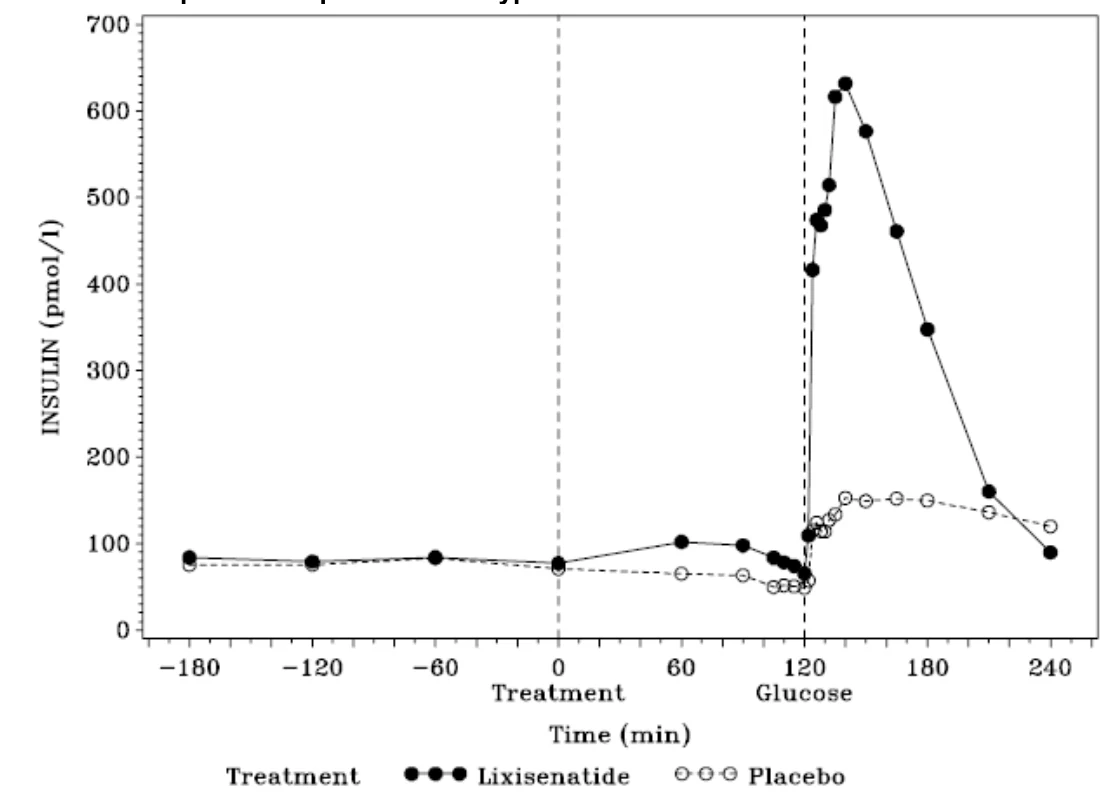
As shown below (Figure 1), ADLYXINE restores the first-phase insulin response in patients with type 2 diabetes in a glucose-dependent manner by 6.6-fold (90% CI: 5.0, 8.7) and increases the second-phase insulin response by 3.0-fold (90% CI: 2.7, 3.3) compared with placebo as measured by AUC.
Figure 1: Mean insulin response during an IV glucose challenge after injection of 20 mcg ADLYXINE or placebo in patients with type 2 diabetes
Gastric emptying:
Following a standardized labelled test meal, ADLYXINE slows gastric emptying, thereby reducing the rate at which postprandial glucose appears in the circulation. The delay of gastric emptying with ADLYXINE was maintained in an 8 week study in patients with type 2 diabetes mellitus.
Gallbladder Motility:
In a randomised, double-blind, placebo-controlled, crossover study, gallbladder motility was assessed in 24 healthy subjects who received single subcutaneous injections of 20 mcg ADLYXINE and placebo. ADLYXINE treatment caused statistically significant reductions in gall bladder ejection fraction (GBEF) in response to cholecystokinin-8, with mean differences from placebo in GBEF of 41.4% (95% CI: 28.6, 54.2) at 30 minutes and 45.8% (95% CI: 29.9, 61.7) at 60 minutes.
Cardiac electrophysiology:
A randomised, double-blind, double-dummy, repeated-dose, placebo-controlled, parallel group ECG assessment study was performed to assess the effect of lixisenatide at subcutaneous doses of 20 mcg once daily and a supratherapeutic dose of 30 mcg twice daily for 28 days in healthy subjects (N=60-62/treatment group). ECG assessments were performed at baseline and on day 28 of treatment.
Heart Rate: ADLYXINE was associated with increases in heart rate. In the lixisenatide 20 mcg once daily group, the maximum difference from placebo in mean change from baseline heart rate was 7.3 bpm (90% CI: 5.6, 9.0) at the 4 h time point. In the lixisenatide 30 mcg twice daily (supratherapeutic dose) group, the maximum difference from placebo in mean change from baseline heart rate was 8.6 bpm (90% CI: 7.0, 10.3) at 4 h. The 24 h time-averaged increase in mean heart rate was 3.9 (20 mcg once daily group), 5.8 bpm (30 mcg twice daily group), and 2.6 bpm (placebo) (see 7 WARNINGS AND PRECAUTIONS– Cardiovascular and 9 DRUG INTERACTIONS).
Figure 2:Time profile plot (mean and 90% CI) of pairwise comparisons versus placebo of time-matched mean difference estimates between T0h30 and T12h on Day 28 - Heart rate (bpm)
PR Interval: ADLYXINE resulted in PR interval prolongation. In the lixisenatide 20 mcg once daily group, the maximum difference from placebo in the mean change from baseline PR interval was 3.7 ms (90% CI: 0.6, 6.7) at the 1 h time point. In the lixisenatide 30 mcg twice daily (supratherapeutic dose) group, the maximum difference from placebo in mean change from baseline PR interval was 5.0 ms (90% CI: 2.0, 8.0) at 1 h (see 7 WARNINGS AND PRECAUTIONS– Cardiovascular and 9 DRUG INTERACTIONS).
Figure 3: Time profile plot (mean and 90% CI) of pairwise comparisons versus placebo of time-matched mean difference estimates between T0h30 and T12h on Day 28 - PR interval (ms)
QTcF Interval: In the lixisenatide 20 mcg once daily group, the maximum difference from placebo in the mean change from baseline in QTcF interval (QTcF = QT/RR0.33) was 4.6 ms (90% CI: 2.3, 6.9) at the 3 h time point. In the lixisenatide 30 mcg twice daily (supratherapeutic dose) group, the maximum difference from placebo in mean change from baseline QTcF was 5.5 ms (90% CI: 3.2, 7.8) at 3 h. Caution should be observed in patients with risk factors for torsade de pointes (e.g. congenital long QT syndrome, cardiac disease, electrolyte abnormalities).
Figure 4: Time profile plot (mean and 90% CI) of pairwise comparisons versus placebo of time-matched mean difference estimates between T0h30 and T12h on Day 28 - QTc Fridericia (ms)
Ambulatory Heart Rate Monitoring: In an open-label, randomised, active-controlled, parallel group study of ADLYXINE in patients with type 2 diabetes not adequately controlled with insulin glargine, with or without metformin, ADLYXINE 20 mcg was administered for 8 weeks (N=46). Ambulatory heart rate monitoring performed on day 57/58 showed a mean change from baseline in daytime mean heart rate of 3.67 bpm (95% CI: 0.86, 6.48) and a mean change from baseline in nighttime mean heart rate of 2.20 bpm (95% CI: -0.72, 5.11) (see 7 WARNINGS AND PRECAUTIONS – Cardiovascular and 9 DRUG INTERACTIONS).
10.3 Pharmacokinetics
In anti-drug antibody (ADA) negative healthy subjects and ADA negative patients with type 2 diabetes mellitus, the pharmacokinetic profiles of lixisenatide were generally comparable.
Anti-drug antibody status:
In presence of ADA, mean exposure (AUC) to lixisenatide was approximately 5-fold increased, mean apparent clearance was decreased, and there was a corresponding increase in mean apparent half-life (Table 6), compared to pharmacokinetic parameters in absence of ADA (Table 5).
| Table 5 - Summary of Lixisenatide Pharmacokinetic Parameters in ADA Negative Patients with type 2 diabetes mellitus after Repeated Dosing of 20 mcg QD at Steady State | |||||
Cmax (pg/mL) | Tmax (h) | t½ (h) | AUCa (pgh/mL) | CL (L/h) | |
| Number | 9 | 9 | 9 | 9 | 9 |
| Geometric mean | 175 | 1.3b | 3.1 | 794 | 24.2 |
| CV % | 37 | 0.8 : 2.3c | 65 | 40 | 38 |
| a AUC0:14-23:55h b Median c Min:Max QD = once daily CV = coefficient of variance | |||||
| Table 6: Summary of Lixisenatide Pharmacokinetic Parameters in ADA Positive Patients with type 2 diabetes mellitus after Repeated Dosing of 20 mcg QD at Steady State | |||||||||||||
| Cmax (pg/mL) | Tmax (h) | t½ (h) | AUCa (pg⋅h/mL) | CL/F (L/h) | |||||||||
| Number | 10 | 10 | 10 | 10 | 10 | ||||||||
| Geometric mean | 562 | 2.8b | 6.6 | 4437 | 4.5 | ||||||||
| CV % | 75 | 0.8 : 20.0c | 69 | 97 | 92 | ||||||||
| a AUC0:14-23:55h b Median c Min:Max QD = once daily CV = coefficient of variance | |||||||||||||
Absorption: Following subcutaneous administration to patients with type 2 diabetes mellitus, the median tmax is 1 to 3.5 h. There are no clinically relevant differences in the rate of absorption when lixisenatide is administered subcutaneously in the abdomen, thigh, or arm.
After multiple dosing, exposure to lixisenatide was dose-proportional between doses of 10 and 20 mcg QD in healthy subjects, and approximately dose-proportional between doses of 5 and 30 mcg QD in ADA negative patients with type 2 diabetes mellitus.
After repeated dosing, no relevant accumulation of lixisenatide was observed in ADA negative patients with type 2 diabetes mellitus.
Distribution: Lixisenatide has a moderate level of binding (55%) to human proteins. The apparent volume of distribution (Vz/F) after subcutaneous administration of lixisenatide is approximately 100L.
Metabolism: As a peptide, lixisenatide is eliminated through glomerular filtration, followed by tubular reabsorption and subsequent proteolytic degradation, resulting in smaller peptides and amino acids.
Elimination: After multiple dose administration in patients with type 2 diabetes, mean terminal half-life was approximately 3 hours and the mean apparent clearance (CL/F) about 35 L/h.
Special Populations and Conditions
- Pediatrics: The safety and efficacy of ADLYXINE have not been established in patients younger than 18 years of age, therefore ADLYXINE is not indicated in pediatric patients.
- Geriatrics: ADLYXINE should be used with caution in patients 65 years and older, since a greater sensitivity of some older individuals cannot be ruled out.
- Sex: Gender does not affect the pharmacokinetics of lixisenatide based on a population pharmacokinetic data analysis. The geometric mean exposure in females was 13% higher than in males and is not considered to be clinically relevant.
- Genetic Polymorphism: Being a peptide, lixisenatide is subject to standard proteolytic processes. Therefore, genetic polymorphism is not expected to have a relevant effect on the pharmacokinetics of lixisenatide.
- Ethnic Origin: Race had no clinically relevant effect on the pharmacokinetics of lixisenatide based on the results of pharmacokinetic studies in Caucasian, Japanese and Chinese subjects. The geometric mean exposure in Caucasian patients was 12% lower compared to Asians and is not considered to be clinically relevant.
- Hepatic Insufficiency: No pharmacokinetic study has been performed in patients with acute or chronic hepatic impairment. Hepatic dysfunction is not expected to affect the pharmacokinetics of lixisenatide.
- Renal Insufficiency: Compared to healthy subjects (N=4; CLcr greater than or equal to 90 mL/min), plasma Cmax of lixisenatide was increased by approximately 60%, 42%, and 83% in subjects with mild (N=9), moderate (N=11), and severe (N=8) renal impairment (CLcr 60-89, 30-59 and 15-29 mL/min), respectively; plasma AUCinf was increased by approximately 46%, 51% and 87% with mild, moderate and severe renal impairment, respectively. Therapeutic experience with ADLYXINE in patients with severe renal impairment is extremely limited, and there is no experience in patients with end stage renal disease or on dialysis. Therefore, use in these patients is not recommended.
- Body Weight: The population pharmacokinetic analysis showed that lixisenatide exposure decreased with increasing body weight in a nonlinear manner, with greater changes for low body weights.
11 STORAGE, STABILITY AND DISPOSAL
Unopened ADLYXINE pen should be stored in a refrigerator, between 2°C-8°C. Do not freeze. Keep the pen in the original package to protect it from light.
The opened pen may be stored at up to 30°C for up to 14 days. Do not store with needle attached. Replace the pen cap after each use to protect from light.
Discard the pen 14 days after first use, or if exposed to excessive heat or freezing.
12 SPECIAL HANDLING INSTRUCTIONS
The pen cap should be replaced on the pen after each use in order to protect from light. The pen should not be stored with a needle attached.
PART II: SCIENTIFIC INFORMATION
13 PHARMACEUTICAL INFORMATION
Drug Substance
Proper name: lixisenatide
Chemical name: H-His-Gly-Glu-Gly-Thr-Phe-Thr-Ser-Asp-Leu-Ser-Lys-Gln-Met-Glu-Glu-Glu-Ala-Val-Arg-Leu-Phe-Ile-Glu-Trp-Leu-Lys-Asn-Gly-Gly-Pro-Ser-Ser-Gly-Ala-Pro-Pro-Ser-Lys-Lys-Lys-Lys-Lys-Lys-NH2
Molecular formula and molecular mass: C215H347N61O65S 4858.5 (average)
Structural formula:
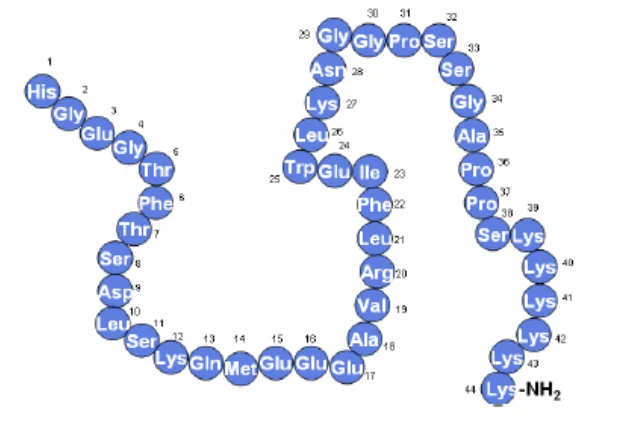
Lixisenatide is a novel human glucagon-like peptide-1 receptor (GLP-1R) agonist for the treatment of type 2 diabetes mellitus. The structure of lixisenatide was based on exendin-4 (1-39), which was modified by adding six Lysine residues C-terminally. These modifications enable the product to withstand physiological degradation by dipeptidyl peptidase IV
Physicochemical properties:
Appearance: Amorphous, hygroscopic, white to off-white powder
Solubility at 25°C: Citrate buffer, pH from 2 to 10: ~6 mg/mL, at all pH values Phosphate buffer, pH from 2 to 9: ~6 mg/mL, at all pH values
14 CLINICAL TRIALS
14.1 Trial Design and Study Demographics
| Table 7 - Summary of patient demographics for clinical trials | ||||||||||
| Study # | Trial design | Dosage, route of administration and duration | Study subjects (n) | Mean age (Range) | Sex (%M/F) | |||||
| Add-on Combination Therapy with Metformin | ||||||||||
| EFC10743 GetGoal-F1 | Randomized, double-blind, placebo-controlled, parallel-group study | ADLYXINE 20 mcg QD, sc 2-step initiation** 1-step initiation* Placebo QD, sc Main treatment period: 24 weeks Extension period: variable | One step: 161 Two step: 161 Placebo: 162 | 56.1 (24-79) | 45/55 | |||||
| EFC6014 GetGoal-M | Randomized, double-blind, placebo-controlled, 4-arm, parallel-group study | Morning (Breakfast) ADLYXINE 20 mcg QD, sc Evening (Dinner) ADLYXINE 20 mcg QD, sc Placebo morning or evening, sc Main treatment: 24 weeks Extension: up to 76 weeks | Morning: 255 Evening: 255 Placebo: 170 | 54.7 (23-87) | 43/57 | |||||
| Table 7 - Summary of patient demographics for clinical trials | ||||||||||
| Study # | Trial design | Dosage, route of administration and duration | Study subjects (n) | Mean age (Range) | Sex (%M/F) | |||||
| Add-on Combination Therapy with Pioglitazone (+/- Metformin) | ||||||||||
| EFC6017 GetGoal-P | Randomized, double-blind, placebo-controlled, 2-arm parallel-group study | ADLYXINE 20 mcg QD (2-step), sc Placebo QD, sc Main treatment: 24 weeks Extension: up to 76 weeks | Lixisenatide: 323 Placebo: 161 | 55.8 (26-82) | 52/48 | |||||
| Add-on Combination Therapy with Sulfonylurea (+/- Metformin) | ||||||||||
| EFC6015 GetGoal-S | Randomized, double-blind, placebo-controlled, 2-arm, parallel-group study | ADLYXINE 20 mcg QD, sc Placebo QD, sc Main treatment: 24 weeks Extension: up to 76 weeks | Lixisenatide: 573 Placebo: 286 | 57.2 (20-79) | 51/49 | |||||
| Add-On Combination Therapy with Basal Insulin (+/- Metformin) | ||||||||||
| EFC6016 GetGoal-L | Randomized, double-blind, placebo-controlled, 2-arm parallel-group study | ADLYXINE 20 mcg QD, sc Placebo QD, sc Main treatment: 24 weeks | Lixisenatide: 329 Placebo: 167 | 57.2 (29-81) | 46/54 | |||||
| Table 7 - Summary of patient demographics for clinical trials | ||||||||||
| Study # | Trial design | Dosage, route of administration and duration | Study subjects (n) | Mean age (Range) | Sex (%M/F) | |||||
| Studies in Special Populations | ||||||||||
| EFC12703 GetGoal-O | Randomized, placebo-controlled, 2-arm parallel-group, multinational, multicenter study in elderly patients | ADLYXINE 20 mcg QD (1-step), sc Placebo QD, sc Main treatment: 24 weeks | Lixisenatide: 176 Placebo: 174 | 74.2 (70-88) | 52/48 | |||||
| EFC11319 ELIXA | Randomized, placebo-controlled, double-blind, parallel-group study in high cardiovascular risk patients | ADLYXINE 20 mcg QD (1-step), sc Placebo QD, sc Main treatment: minimum 10 months | Lixisenatide: 3034 Placebo: 3034 | 60.3 (30-93) | 69/31 | |||||
| *1-step initiation: 10 mcg QD for 2 weeks, then maintenance dose of 20 mcg QD) **2-step initiation: 10 mcg QD for 1 week, then 15 mcg QD for 1 week, then maintenance dose of 20 mcg QD – only the 1-step titration regimen is approved. sc = subcutaneous; QD = once daily | ||||||||||
14.2 Study Results
Add-on therapy with metformin
A total of 1159 subjects with type 2 diabetes mellitus and inadequate glycemic control despite a stable dose of metformin (minimum 1500 mg/day) for at least 3 months prior to screening were evaluated for efficacy in two 24-week plus long term extension trials of ADLYXINE vs. placebo in combination with metformin.
In Study EFC10743, ADLYXINE and placebo were administered in 1-step and 2-step dose initiation regimens and study drug was administered 1 hour before the morning meal. In Study EFC6014, only a 2-step dose initiation regimen was evaluated and ADLYXINE or placebo were administered 1 hour before either the morning or evening meal. In each of the 2 studies, efficacy analyses were conducted for ADLYXINE vs. the combined placebo group (i.e. in EFC10743, placebo patients in the 1-step and 2-step titration regimens were combined and in EFC6014, placebo patients in the morning and evening injection groups were combined). Only the 1-step dose initiation regimen is approved.
In both studies, approximately 14% of randomized patients were aged ≥65 to <75 years, and 2% were aged ≥75 years. Mean baseline body mass index (BMI) was approximately 33 kg/m2, approximately 89-90% of patients were Caucasian/White, with lesser representation of Asian (7%), Black (2%), and other races (1%). In the studies, mean duration of diabetes at screening was approximately 6 years.
For the primary endpoint, both studies showed statistically significant reductions in HbA1c compared to placebo, at the end of the main 24-week treatment period (Table 8).
| Table 8 - Placebo-controlled Studies in Combination with Metformin (24-week results) | |||||||||||||||||
|---|---|---|---|---|---|---|---|---|---|---|---|---|---|---|---|---|---|
| EFC10743 / GetGoal-F1 | EFC6014 / GetGoal-M | ||||||||||||||||
| Background therapy | Metformin | Metformin | |||||||||||||||
| Randomized groups | ADLYXINE | Placebo | ADLYXINE | Placebo | |||||||||||||
| 1-step dose initiation | 2-step dose initiation | Morning | Evening | ||||||||||||||
| Mean HbA1c (%) | |||||||||||||||||
N (mITT) Baseline LS mean change from baseline (LOCF) LS mean difference vs. placebo (95% CI) | 156 7.99 -0.92 -0.49‡ (-0.670, -0.317) | 152 8.12 -0.83 -0.41‡ (-0.583, -0.232) | 158 8.03 -0.42 | 244 8.07 -0.87 -0.48‡ (-0.657, -0.312) | 239 8.07 -0.75 -0.37‡ (-0.540, -0.193) | 164 8.02 -0.38 | |||||||||||
| Patients (%) achieving HbA1c <7.0%# | |||||||||||||||||
| Responders | 47.4 | 42.1 | 24.1 | 43.0 | 40.6 | 22.0 | |||||||||||
| FPG (mmol/L) | |||||||||||||||||
| Table 8 - Placebo-controlled Studies in Combination with Metformin (24-week results) | |||||||||||||
|---|---|---|---|---|---|---|---|---|---|---|---|---|---|
| EFC10743 / GetGoal-F1 | EFC6014 / GetGoal-M | ||||||||||||
| Background therapy | Metformin | Metformin | |||||||||||
| Randomized groups | ADLYXINE | Placebo | ADLYXINE | Placebo | |||||||||
| 1-step dose initiation | 2-step dose initiation | Morning | Evening | ||||||||||
N (mITT) Baseline LS mean change from baseline (LOCF) LS mean difference vs. placebo (95% CI) | 158 9.55 -0.53 -0.65‡ (-1.019, -0.275) | 160 9.52 -0.56 -0.67‡ (-1.035, -0.301) | 158 9.46 0.11 | 253 9.46 -1.19 -0.94‡ (-1.329, -0.559) | 255 9.28 -0.81 -0.56† (-0.944, -0.173) | 170 9.51 -0.25 | |||||||
| Mean body weight (kg) | |||||||||||||
N (mITT) Baseline LS mean change from baseline (LOCF) LS mean difference vs. placebo (95% CI) | 158 90.30 -2.63 -1.00† (-1.687, -0.317) | 155 88.08 -2.68 -1.05† (-1.727, -0.371) | 158 87.86 -1.63 | 248 90.14 -2.01 -0.38 NS (-0.995, 0.239) | 249 89.01 -2.02 -0.39 NS (-1.006, 0.230) | 168 90.40 -1.64 | |||||||
| Table 8 - Placebo-controlled Studies in Combination with Metformin (24-week results) | |||||||||
|---|---|---|---|---|---|---|---|---|---|
| EFC10743 / GetGoal-F1 | EFC6014 / GetGoal-M | ||||||||
| Background therapy | Metformin | Metformin | |||||||
| Randomized groups | ADLYXINE | Placebo | ADLYXINE | Placebo | |||||
| 1-step dose initiation | 2-step dose initiation | Morning | Evening | ||||||
| 1-step initiation = 10 mcg QD for 2 weeks, then maintenance dose of 20 mcg QD 2-step initiation = 10 mcg QD for 1 week, then 15 mcg QD for 1 week, then maintenance dose of 20 mcg QD QD = once daily Only the 1-step titration regimen is approved. LOCF = Last observation carried forward; mITT = modified intent-to-treat, consists of all patients who were randomized, received at least one dose of double-blind investigational product, and had both a baseline assessment and at least one postbaseline assessment of any primary or secondary efficacy variables, irrespective of compliance with the study protocol and procedures. † = p<0.01 treatment vs. placebo; ‡ = p<0.001 treatment vs. placebo NS = not statistically significant # = included for descriptive purposes only | |||||||||
Add-on Therapy with Pioglitazone
In Study EFC6017, patients with inadequate glycemic control on a stable dose of pioglitazone, with or without metformin, were randomised (2:1) to receive 24-week double-blind treatment with either lixisenatide or placebo.
Approximately 16% of randomized patients were aged ≥65 to <75 years, and 2% were aged ≥75 years. Mean BMI was approximately 33.9 kg/m2, 84% of patients were Caucasian/White, with lesser representation of Asian (5%) and Black (5%). The mean duration of diabetes at screening was 8.1 years.
For the primary endpoint, the addition of lixisenatide, with or without metformin, to pioglitazone provided statistically significant improvements in HbA1c after 24 weeks of treatment compared to placebo (Table 9).
| Table 9 - 24-week Placebo-controlled Study of ADLYXINE as Add-on to Pioglitazone (+/- metformin) | |||||||
|---|---|---|---|---|---|---|---|
| EFC6017 / GetGoal-P | |||||||
| ADLYXINE | Placebo | ||||||
| Background therapy | Pioglitazone +/- metformin | ||||||
| Mean HbA1c (%) | |||||||
N (mITT) Baseline LS mean change from baseline LS mean difference vs. placebo (95% CI) | 308 8.08 -0.90 -0.56‡ (-0.731, -0.386) | 148 8.05 -0.34 | |||||
| Patients (%) achieving HbA1c <7%# | |||||||
| Responders | 52.3 | 26.4 | |||||
| FPG (mmol/L) | |||||||
N (mITT) Baseline LS mean change from baseline LS mean difference vs. placebo (95% CI) | 317 9.14 -1.16 -0.84‡ (-1.209, -0.467) | 159 9.12 -0.32 | |||||
| Body weight (kg) | |||||||
N (mITT) Baseline LS mean change from baseline LS mean difference vs. placebo (95% CI) | 315 92.83 -0.21 -0.41 NS (-1.031, 0.201) | 157 97.03 0.21 | |||||
| LOCF = Last observation carried forward; mITT = modified intent-to-treat, consists of all patients who were randomized, received at least one dose of double-blind investigational product, and had both a baseline assessment and at least one postbaseline assessment of any primary or secondary efficacy variables, irrespective of compliance with the study protocol and procedures. ‡ = p<0.001 treatment vs. placebo NS = not statistically significant # = included for descriptive purposes only | |||||||
Add-on Therapy with a Sulfonylurea
Study EFC6015 was a 24-week trial of patients inadequately controlled on a stable dose of sulfonylurea, with or without metformin. Patients were randomised (2:1) to receive either lixisenatide or placebo.
Approximately 21% of randomized patients were aged ≥65 to <75 years, and 3% were aged ≥75 years. Mean BMI was approximately 30.2 kg/m2, 52% of patients were Caucasian/White, 45% were Asian and 3% were Black. The mean duration of diabetes at screening was 9.4 years.
For the primary endpoint, the addition of lixisenatide to a sulfonylurea, with or without metformin, provided statistically significant improvements in HbA1c after 24 weeks of treatment compared to placebo (Table 10).
| Table 10 - 24-week Placebo-controlled Study of ADLYXINE as Add-on to Sulfonylurea (+/- metformin) | |||||||
|---|---|---|---|---|---|---|---|
| EFC6015 / GetGoal-S | |||||||
| ADLYXINE | Placebo | ||||||
| Background therapy | Sulfonylurea +/- metformin | ||||||
| Mean HbA1c (%) | |||||||
N (mITT) Baseline LS mean change from baseline (LOCF) LS mean difference vs. placebo (95% CI) | 544 8.28 -0.85 -0.74‡ (-0.867, -0.621) | 274 8.22 -0.10 | |||||
| Patients (%) achieving HbA1c <7%# | |||||||
| Responders | 36.4 | 13.5 | |||||
| FPG (mmol/L) | |||||||
N (mITT Baseline LS mean change from baseline (LOCF) LS mean difference vs. placebo (95% CI) | 564 9.67 -0.99 -0.63‡ (-0.919, -0.346) | 283 9.29 -0.36 | |||||
| Body weight (kg) | |||||||
| Table 10 - 24-week Placebo-controlled Study of ADLYXINE as Add-on to Sulfonylurea (+/- metformin) | |||||
|---|---|---|---|---|---|
| EFC6015 / GetGoal-S | |||||
| ADLYXINE | Placebo | ||||
N (mITT) Baseline LS mean change from baseline (LOCF) LS mean difference vs. placebo (95% CI) | 554 82.58 -1.76 -0.84‡ (-1.250, -0.421) | 278 84.52 -0.93 | |||
| LOCF = Last observation carried forward; mITT = modified intent-to-treat consists of all patients who were randomized, received at least one dose of double-blind investigational product, and had both a baseline assessment and at least one postbaseline assessment of any primary or secondary efficacy variables, irrespective of compliance with the study protocol and procedures. ‡ = p < 0.001 treatment vs. placebo # = included for descriptive purposes only | |||||
Add-on combination therapy with a basal insulin
Study EFC6016 compared ADLYXINE, given with a basal insulin alone, or with a combination of a basal insulin and metformin, to placebo. Patients not adequately controlled on a stable dose of basal insulin with or without metformin were randomized (2:1) to receive either ADLYXINE or placebo for the 24-week main treatment period.
Approximately 19% of randomized patients were aged ≥65 to <75 years, and 3% were aged ≥75 years. Mean BMI was approximately 32.1 kg/m2, 78% of patients were Caucasian/White, 17% were Asian and 4% were Black. The mean duration of diabetes at screening was 12.5 years.
For the primary endpoint, the addition of ADLYXINE to basal insulin provided a statistically significant improvement in HbA1c after 24 weeks of treatment, compared to placebo (Table 11).
| Table 11 - 24-week Placebo-controlled Study of ADLYXINE as Add-on Therapy to Basal Insulin (+/- Metformin) | ||||
|---|---|---|---|---|
| EFC6016 / GetGoal-L | ||||
| ADLYXINE | Placebo | |||
| Background therapy | Basal insulin with or without metformin | |||
| Mean HbA1c (%) | ||||
| Table 11 - 24-week Placebo-controlled Study of ADLYXINE as Add-on Therapy to Basal Insulin (+/- Metformin) | ||||||
|---|---|---|---|---|---|---|
| EFC6016 / GetGoal-L | ||||||
| ADLYXINE | Placebo | |||||
N (mITT) Baseline LS mean change from baseline (LOCF) LS mean difference vs. placebo (95% CI) | 304 8.39 -0.74 -0.36‡ (-0.550, -0.174) | 158 8.38 -0.38 | ||||
| Patients (%) achieving HbA1c <7%# | ||||||
| Responders | 28.3 | 12.0 | ||||
| FPG (mmol/L) | ||||||
N (mITT) Baseline LS mean change from baseline (LOCF) LS mean difference vs. placebo (95% CI) | 317 8.11 -0.63 -0.08 NS (-0.590, 0.430) | 163 8.03 -0.55 | ||||
| Body weight (kg) | ||||||
N (mITT) Baseline LS mean change from baseline (LOCF) LS mean difference vs. placebo (95% CI) | 311 87.39 -1.80 -1.28 NS (-1.803, -0.747) | 161 89.11 -0.52 | ||||
| LOCF = Last observation carried forward; mITT = modified intent-to-treat consists of all patients who were randomized, received at least one dose of double-blind investigational product, and had both a baseline assessment and at least one postbaseline assessment of any primary or secondary efficacy variables, irrespective of compliance with the study protocol and procedures. ‡ = p<0.001 treatment vs. placebo NS = not statistically significant/hierarchical testing procedure stopped earlier # = included for descriptive purposes only | ||||||
Studies in Special Populations
Patients aged ≥70 years
In Study EFC12703, the efficacy and safety of lixisenatide, administered before breakfast, in patients with type 2 diabetes mellitus aged ≥70 years was evaluated in a double-blind, placebo-controlled study of 24 weeks duration. Frail patients, including patients at risk for malnutrition and patients with moderate to severe cognitive impairment, were excluded.
A total of 350 patients were randomized 1:1. Overall, 37% of the patients were ≥75 years old and 11% were >80 years, approximately 71% were Caucasian/White, 5% were Asian, and 23% were described as Other. Mean BMI was 30.0 kg/m2, mean duration of diabetes was 14.1 years, and 31% of patients had moderate renal impairment. At baseline, approximately one third of patients were being treated with basal insulin with or without oral antidiabetic drugs, one third with a combination of oral antidiabetic drugs including sulfonylurea, and one third with a combination of oral antidiabetic drugs excluding sulfonylurea.
For the primary endpoint, compared to placebo, treatment with ADLYXINE resulted in a statistically significant reduction in HbA1c at Week 24 (Table 12).
| Table 12 - 24-week Placebo-Controlled Study in Patients Aged >70 Years on Stable Dose(s) of Oral Antidiabetic Drugs (OAD) and/or Basal Insulin | |
|---|---|
| EFC12703 / GetGoal-O | |
| ADLYXINE | Placebo |
| Background therapy | OAD as background therapy with or without basal insulin+ |
| Mean HbA1c (%) | |
N (mITT) Baseline LS mean change from baseline (LOCF) LS mean difference vs. placebo (95% CI) | |
172 8.03 -0.57 -0.64‡ (-0.810, -0.464) | 172 8.05 0.06 |
| Patients (%) achieving HbA1c <7%# | |
| Responders | |
| 36.6 | 14.0 |
| FPG (mmol/L) | |
N (mITT) Baseline LS mean change from baseline (LOCF) LS mean difference vs. placebo (95% CI) | |
171 8.83 -0.30 -0.31 NS (-0.828, 0.204) | 168 8.85 0.01 |
| Table 12 - 24-week Placebo-Controlled Study in Patients Aged >70 Years on Stable Dose(s) of Oral Antidiabetic Drugs (OAD) and/or Basal Insulin | |
|---|---|
| EFC12703 / GetGoal-O | |
| ADLYXINE | Placebo |
| Body weight (kg) | |
N (mITT) Baseline LS mean change from baseline (LOCF) LS mean difference vs. placebo (95% CI) | |
174 80.76 -1.47 -1.32‡ (-1.862, -0.769) | 173 80.24 -0.16 |
| + sulfonylurea or glinides were not used with basal insulin as background therapy LOCF = Last observation carried forward; mITT = modified intent-to-treat consists of all patients who were randomized, received at least one dose of double-blind investigational product, and had both a baseline assessment and at least one postbaseline assessment of any primary or secondary efficacy variables, irrespective of compliance with the study protocol and procedures ‡ = p<0.001 treatment vs. placebo NS = not statistically significant # = included for descriptive purposes only | |
Cardiovascular Outcomes Study
The ELIXA trial was a randomized, double-blind, placebo-controlled, multinational study that evaluated cardiovascular outcomes during treatment with lixisenatide in patients with type 2 diabetes mellitus after a recent Acute Coronary Syndrome event. The primary composite efficacy endpoint was the time to the first occurrence of a major cardiovascular event (MACE) defined as any of the following events positively adjudicated by the Cardiovascular Events Adjudication Committee:
- cardiovascular death,
- non-fatal myocardial infarction,
- non-fatal stroke, or
- hospitalization for unstable angina.
The study was designed as a non-inferiority trial with a pre-specified risk margin of 1.3 for the hazard ratio comparing ADLYXINE to placebo.
Overall, 6068 patients were randomized 1:1 to either placebo or lixisenatide 20 mcg (following a starting dose of 10 mcg during the first 2 weeks). The demographics and baseline characteristics were well balanced between treatments (see Table 7). Approximately 75% of the patients were Caucasian. The majority of patients were either obese or overweight with a median BMI of 29.4 kg/m2. The mean duration of diabetes was 9.3 years. More than 75% of patients had impaired renal function and 23.2% had an estimated GFR less than 60 mL/min/1.73 m2. Use of cardiovascular medications at baseline was similar between treatments; platelet aggregation inhibitors (acetylsalicylic acid and/or clopidogrel) were used by 97.5% of patients, statins by 92.7%, ACE inhibitors and/or angiotensin II antagonists by 86.8%, and beta-blockers by 84.4%. Prior to study entry, 93.9% of patients used at least 1 glucose-lowering medication, including metformin (69.9%), sulfonylureas (37.3%) and insulin (47.6%). During the study, antidiabetic medications were adjusted by the investigators per standard of care.
Ninety-six percent of the patients in both treatment groups completed the study in accordance with the protocol and the vital status was known at the end of the study for 99.0% and 98.6% of the patients in the lixisenatide and placebo group, respectively. Median treatment duration was 22.4 months in the lixisenatide group and 23.3 months in the placebo group, and the median duration of study follow-up was 25.8 and 25.7 months, respectively.
The results of the primary composite efficacy endpoint and other adjudicated endpoints are shown in Figure 5. The hazard ratio (HR) for lixisenatide versus placebo was 1.02, with an associated 2-sided 95% confidence interval (CI) of 0.89 to 1.17. The upper bound of this confidence interval excluded a risk margin larger than 1.3, thus demonstrating non-inferiority to placebo. Superiority to placebo was not demonstrated. Hazard ratios for the other adjudicated endpoints were not statistically significant.
Figure 5: Forest plot: analyses of adjudicated cardiovascular outcomes - ITT population
CV: cardiovascular, MI: myocardial infarction, HR: hazard ratio, CI: confidence interval.
15 MICROBIOLOGY
No microbiological information is required for this drug product.
16 NON-CLINICAL TOXICOLOGY
NON-CLINICAL PHARMACODYNAMICS
Lixisenatide is a peptide and has high and specific affinity for the GLP-1 receptor in vitro. Results of the pharmacology evaluation are consistent with lixisenatide being an agonist. Chronic administration of lixisenatide in rodent models for type 2 diabetes showed decreased concentrations of fasting blood glucose, as well as percentage glycated hemoglobin, indicative of the prevention of the progressive development of diabetes in these models.
NON-CLINICAL PHARMACOKINETICS
Systemic exposure (Cmax and AUC) generally increased approximately dose proportionally in mice, rats, and dogs after a single lixisenatide dose. After repeated daily sc dosing, lixisenatide induced an immunogenic response, with antidrug antibodies (ADA) detectable in all species. Consequently AUC, and to a lesser extent Cmax, increased more than dose proportionally. The accumulation due to antibody binding with repeated dosing differs among species (rat>mice>dogs>human).
In rats, lixisenatide was distributed to kidneys, lung, pancreas, and adrenals. Transfer of intact lixisenatide to brain, across the placenta, and via the milk was limited. Lixisenatide was extensively degraded in vitro, presumably by proteases, with a total of 28 metabolites identified, and all were degraded peptides of lixisenatide and excreted in urine and feces.
Safety margins versus clinical exposure were calculated using results of ADA negative animal exposure compared to clinical ADA positive exposure (ADA positive AUC of 7.25 ng h/mL after administration of the recommended 20 mcg/day dose). The rationale for using exposure data from ADA negative animals in the calculation of safety margins is that it is not known what fraction of total (antibody bound and unbound) lixisenatide exposure is active in vivo and furthermore, while most animals develop antibodies, some do not. Margins based on ADA positive animals and/or ADA negative patients are much higher.
Acute Toxicity:
A single dose of 500, 5000, and 100 mcg/kg iv or 500, 5000, and 200 mcg/kg sc was tolerated without mortality in mice, rats, and dogs, respectively.
Repeated Dose Toxicity:
The repeated dose toxicity of lixisenatide after sc twice daily (8 h apart) administration was evaluated in mice, rats, and dogs for up to 13, 26, and 52 weeks, respectively.
Changes in body weight/body weight gain in mice and rats and clinical signs were generally mild. No target organs relevant to human safety were identified and lixisenatide was tolerated in mice and rats at doses up to 4000 mcg/kg/day (lixisenatide AUC values >47 times the mean clinical exposure of 7.25 ng h/mL).
In dogs, reductions in food consumption and body weight loss were dose limiting. Initial dose escalation attenuated the effects of lixisenatide on body weight and food consumption. Using dose escalation, administration of doses up to 2000 mcg/kg/day for 52 weeks was possible. There were no target organs in females. In males, microscopic changes were noted in testes and epididymes in the 13 week study at 200 and 500 mcg/kg/day and in the 52 week study at 400 and 2000 mcg/kg/day. The changes in the testes included moderate to severe hypospermatogenesis in seminiferous tubules and epididymal dilation, degeneration, and oligospermia, or aspermia and were not present after 4 weeks without treatment at the end of the 13 week study. The changes in testes and epididymes occurred at very high multiples of human exposure (>140 times). The large margins to clinical exposure for effects on testes/epididymes in the dogs, as well as a mechanistic study showing species difference in GLP-1receptor expressions, indicate a very low risk for effects to male patients with the clinical use of lixisenatide
Carcinogenicity: Carcinogenicity studies were conducted in mice and rats given sc lixisenatide doses of 40, 200, and 1000 mcg/kg BID for 2 years. In mice, lixisenatide resulted in thyroid gland C-cell adenomas in males at 1000 mcg/kg BID and increased incidences of thyroid focal C-cell hyperplasia in males at 200 mcg/kg BID and males and females given 1000 mcg/kg BID. In rats, there were non dose-dependent increased incidences of thyroid C-cell focal hyperplasia and adenomas at all dose levels and C-cell carcinomas at 200 and 1000 mcg/kg BID in both sexes.
A no-effect dose level for increased thyroid hyperplasia and C-cell adenomas was not identified in rats. Systemic exposure at the low dose in rats was >9-fold when comparing mean AUC values in rats to clinical exposure, while that at the higher doses where C-cell carcinomas were observed was ≥35-fold. In mice, lixisenatide-related thyroid C-cell adenomas were confined to the high dose males given 1000 mcg/kg BID, at which exposure was 128 times that in patients. The exposure margin at the 200 mcg/kg no effect dose level for tumors was 26-fold. Increased incidences of thyroid C-cell hyperplasia were seen at 200 (males only) and 1000 mcg/kg BID, with mouse/human margins at the no effect dose level of 40 mcg/kg BID calculated as 4-fold.
Genotoxicity:
Lixisenatide was not mutagenic or clastogenic in vitro in a standard battery of genotoxicity tests (bacterial mutagenicity (Ames), in vitro human lymphocyte chromosome aberration, in vivo mouse bone marrow micronucleus).
Reproductive and Developmental Toxicology:
Impairment of Fertility
Studies in which male and female rats received twice daily subcutaneous doses of 2, 29, or 414 mcg/kg/day prior to pairing through gestation day 6 did not indicate any adverse effects on male or female fertility in rats up to the highest dose tested, 414 mcg/kg/day, or approximately 300 times the clinical systemic exposure at 20 mcg/day based on plasma AUC.
Embryo fetal development
Lixisenatide transfer across the placenta was limited and effects on embryo fetal development in rats and rabbits were noted in the presence of maternal toxicity. Body weight loss and reduced food consumption may have contributed to the embryo fetal toxicity, but a direct effect cannot be excluded. A relationship of toxicity to the dams on skeletal ossification and fetal growth is generally accepted; however, the correlation to visceral and external malformations is less well supported.
In pregnant rats receiving twice daily subcutaneous doses of 2.5, 35, or 500 mcg/kg (5, 70, or 1000 mcg/kg/day) from gestation day (GD) 6 to 17 (organogenesis), maternal toxicity was noted at all doses, which consisted of clinical signs and initially dose-dependent decreases in body weight and reduced food consumption. Fetuses showed a dose related trend of retarded growth and retarded ossification. All doses led to single cases of fetal malformations: one microphthalmia (5 mcg/kg/day), one anophthalmia and one diaphragmatic hernia (one fetus each at 70 mcg/kg/day), and similar multiple skeletal malformations in one retarded fetus of each dose group. Thus, the NOAEL for embryo fetal toxicity was less than 5 mcg/kg/day (AUC < clinical exposure).
In rabbits, there were two embryo fetal development studies. In the high dose study, lixisenatide was administered sc at 5, 50, and 500 mcg/kg/day twice daily (approximately 8 h apart) from GD 6 to 18, while in the follow up study, doses were 0.3, 2, and 5 mcg/kg/day. Lixisenatide treatment at ≥2 mcg/kg/day resulted in decreased motor activity, piloerection, decreased food and water consumption, and initial decreases body weight followed by decreased body weight gain. There was a slight increase in postimplantation loss with a related decrease in the number of live fetuses at 500 mcg/kg/day. There was an increase at fetal malformations at ≥5 mcg/kg/day (4-times clinical exposure). In the high dose study, there were 5 cases of multiple malformations (2 at 5 mcg/kg/day, 2 at 50 mcg/kg/day, and 1 at 500 mcg/kg/day), as well as single malformations at all doses. There was also a tendency to dose dependent increases in fetuses showing anomalies of the sternebrae, as well as retarded ossification. The NOAEL for maternal toxicity in rabbit was 0.3 mcg/kg/day and for embryo-fetal development was 2 mcg/kg/day, and at these doses, AUC values were < clinical exposure and 2 times clinical exposure, respectively.
Peri and postnatal development
Lixisenatide was administered to time mated female rats (F0 generation) sc at 4, 40, and 400 mcg/kg/day (2, 20, and 200 mcg/kg/day BID) from GD 6 to lactation day 21. Clinical signs in dams, initial body weight loss with reduced body weight throughout dosing and reduced food consumption, were seen at all dose levels. Pup mortality was slightly increased and there were severely growth delayed pups with multiple skeletal malformations at 400 mcg/kg/day. The number of pups/litter that showed insufficient suckling increased slightly and coat growth showed a slight delay at 40 and 400 mcg/kg/day, but there were no other effects on developmental landmarks, sensory function, motor development, memory, learning, and reproductive function of the F1 generation. The NOAEL for effects in the F0 dams was not identified (<4 mcg/kg/day), while the NOAEL for toxicity in F1 animals was 4 mcg/kg/day. Based on systemic exposure values in pregnant rats extrapolated from toxicokinetic data in the pivotal embryo-fetal development study, exposure at the 400 mcg/kg/day dose where malformations were seen was >32-times that in patients while exposure at 4 mcg/kg/day was likely sub-therapeutic.
Juvenile Toxicity: Juvenile toxicity studies were conducted in rats and dogs. There were no findings in these studies that were not identified in studies conducted with adult animals or were considered related to reduced body weight and food consumption.