


Product Monograph - Eperzan
SUMMARY PRODUCT INFORMATION
| Route of Administration | Dosage Form / Strength | Nonmedicinal Ingredients |
| Subcutaneous | Powder for solution for injection in pre-filled pen 30 mg/0.5 mL* and 50 mg/0.5 mL* *following reconstitution | Sodium phosphate monobasic, monohydrate Sodium phosphate dibasic, anhydrous Trehalose dihydrate Mannitol Polysorbate 80 Water for injection |
DESCRIPTION
EPERZAN™ contains albiglutide, an analog of human glucagon-like peptide 1 (GLP-1) and acts as a GLP-1 receptor agonist. Albiglutide is generated through genetic fusion of two tandem copies of modified human GLP-1 (97% amino acid sequence homology to endogenous human GLP-1 fragment 7-36) to human albumin. The GLP-1 sequence has been modified with a glycine substituted for the naturally-occurring alanine at position 8 in order to confer resistance to dipeptidylpeptidase IV (DPP-IV) mediated proteolysis. The human albumin moiety of the recombinant fusion protein, together with the DPP-IV resistance, extends the half-life to allow once-weekly dosing.
Albiglutide is produced by a strain of Saccharomyces cerevisiae modified to express the therapeutic protein.
EPERZAN™ is supplied as a pen with a dual chamber cartridge containing white to yellow powder and clear diluent for solution for injection. Each 30 mg single use pre-filled pen contains 40.3 mg lyophilized albiglutide and 0.65 mL diluent designed to deliver a dose of 30 mg in a volume of 0.5 mL after reconstitution. Each 50 mg single use pre-filled pen contains 67.0 mg lyophilized albiglutide and 0.65 mL diluent designed to deliver a dose of 50 mg in a volume of 0.5 mL after reconstitution (see DOSAGE FORMS, COMPOSITION AND PACKAGING).
INDICATIONS AND CLINICAL USE
EPERZAN™ is indicated for once-weekly administration for the treatment of adults with type 2 diabetes mellitus, as an adjunct to diet and exercise to improve glycemic control
- as monotherapy in patients inadequately controlled by diet, exercise and when metformin is inappropriate due to contraindication or intolerance.
in combination with one of the following therapeutic options in patients who have not achieved adequate glycemic control:
- metformin, when diet and exercise plus maximal tolerated dose of metformin do not achieve adequate glycemic control
- metformin and sulfonylurea, when diet and exercise plus dual therapy with metformin and sulfonylurea do not achieve adequate glycemic control
- basal insulin with oral antidiabetic therapies, when diet and exercise plus basal insulin with oral antidiabetic therapies do not achieve adequate glycemic control (See CLINICAL TRIALS).
The combination of EPERZAN™ with prandial insulin (short acting) has not been studied.
EPERZAN™ should not be used in type 1 diabetes (formerly known as insulin-dependent diabetes mellitus or IDDM) or for the treatment of patients with diabetic ketoacidosis.
Geriatrics (≥ 65 years of age):
See WARNINGS AND PRECAUTIONS, Special Populations, Geriatrics.
Pediatrics (< 18 years of age):
The safety and efficacy of EPERZAN™ in children below 18 years of age have not been studied. EPERZAN™ is not indicated for use in pediatric patients.
CONTRAINDICATIONS
- Patients who are hypersensitive to this drug or to any ingredient in the formulation or component of the container. For a complete listing, see the DOSAGE FORMS, COMPOSITION AND PACKAGING section of the Product Monograph.
- In patients with a personal or family history of medullary thyroid carcinoma or in patients with Multiple Endocrine Neoplasia syndrome type 2 (MEN 2) (see WARNINGS AND PRECAUTIONS, Carcinogenesis and Mutagenesis).
- During pregnancy or in breast-feeding women (see WARNINGS AND PRECAUTIONS, Special Populations).
WARNINGS AND PRECAUTIONS
Thyroid C-cell tumors have been observed in rodent studies with glucagon-like peptide-1 (GLP-1) receptor agonists at clinically relevant exposures. We cannot confirm whether or not EPERZAN™ causes thyroid C-cell tumors, including medullary thyroid carcinoma (MTC), in humans. EPERZAN™ is contraindicated in patients with a personal or family history of MTC and in patients with Multiple Endocrine Neoplasia syndrome type 2 (MEN 2) (See CONTRAINDICATIONS). |
General
EPERZAN™ should not be used in patients with type 1 diabetes mellitus or for the treatment of patients with diabetic ketoacidosis.
EPERZAN™ should not be administered intramuscularly.
Carcinogenesis and Mutagenesis
Risk of Thyroid C-cell Tumours
GLP-1 receptor agonists have been associated with an increased incidence of thyroid C-cell focal hyperplasia and C-cell adenomas and carcinomas in rodents. It is unknown whether GLP-1 receptor agonists are associated with thyroid C-cell tumours, including medullary thyroid carcinoma (MTC) in humans. Carcinogenicity studies have not been conducted with EPERZAN™ due to clearing anti-drug antibodies that develop in rodents. There were no drug-related thyroid histological findings in a 52-week monkey study with EPERZAN™ (see TOXICOLOGY).
Across 8 Phase III clinical trials, MTC was diagnosed in 2 patients (1 receiving EPERZAN™ and 1 receiving placebo), both of whom had markedly elevated serum calcitonin levels at baseline indicating a pre-existing condition.
EPERZAN™ is contraindicated in patients with a personal or family history of MTC or in patients with MEN 2. Counsel patients regarding the risk for MTC and the symptoms of thyroid tumours (e.g., a mass in the neck, dysphagia, dyspnea or persistent hoarseness). The clinical value of routine monitoring of serum calcitonin has not been established.
Cardiovascular
Heart Rate Increase: EPERZAN™ causes an increase in heart rate (see ACTION AND CLINICAL PHARMACOLOGY, Cardiac Electrophysiology). In studies in type 2 diabetes patients, mean increases in heart rate of 1 to 2 beats per minute (bpm) were observed with albiglutide versus placebo. In a thorough QT study in healthy subjects, a mean increase in heart rate (6 to 8 bpm) was observed after repeat dosing with albiglutide 50 mg compared to baseline values. In studies in type 2 diabetes patients, adverse reactions of atrial fibrillation (1.0%) and atrial flutter (0.2%) were reported more frequently for EPERZAN™ than for all comparators (0.5% and 0%, respectively) (see ADVERSE REACTIONS). Increases in heart rate may lead to worsening of cardiac conditions in patients with a history of ischemic heart disease or tachyarrhythmias. Caution should be observed in these patient populations.
PR Interval Prolongation: EPERZAN™ causes a prolongation of the PR interval of the electrocardiogram of 4 to 5 ms in healthy subjects (see ACTION AND CLINICAL PHARMACOLOGY, Cardiac Electrophysiology). Caution should be observed in patients with underlying structural heart disease, pre-existing conduction system abnormalities, ischemic heart disease, or cardiomyopathies, as these patients may be at increased risk for developing cardiac conduction abnormalities. In studies in type 2 diabetes patients, mean PR interval prolongation of approximately 2 ms was observed with albiglutide versus placebo. Prolongation of the PR interval has also been associated with an increased risk of atrial fibrillation; therefore, caution is warranted in patients with a history of atrial fibrillation.
Endocrine and Metabolism
Hypoglycemia
The risk of hypoglycemia is increased when EPERZAN™ is used in combination with insulin secretagogues (e.g. sulfonylureas) or insulin. Therefore, patients may require a lower dose of sulfonylurea or insulin to reduce the risk of hypoglycemia (see ADVERSE REACTIONS and DOSAGE AND ADMINISTRATION).
Gastrointestinal
In placebo-controlled clinical trials, gastrointestinal events were more frequently reported for EPERZAN™ compared to placebo and included diarrhea, nausea and vomiting (see ADVERSE REACTIONS, Gastrointestinal).
EPERZAN™ is not recommended for patients with pre-existing severe gastrointestinal disease, including severe gastroparesis.
Hepatic/Biliary/Pancreatic
Risk of Acute Pancreatitis
In clinical trials, acute pancreatitis has been reported in association with EPERZAN™ and other GLP-1 receptor agonists (see ADVERSE REACTIONS).
Patients should be informed of the characteristic signs and symptoms of acute pancreatitis (including persistent severe abdominal pain, sometimes radiating to the back, which may or may not be accompanied by vomiting). Observe patients carefully for the signs and symptoms of pancreatitis. If pancreatitis is suspected, EPERZAN™ should promptly be discontinued and appropriate management should be initiated. If pancreatitis is confirmed, EPERZAN™ should not be restarted.
EPERZAN™ has not been studied in patients with a history of pancreatitis to determine whether these patients are at increased risk for pancreatitis. Consider other antidiabetic therapies in patients with a history of pancreatitis.
Neurologic
No studies on the effects of the ability to drive and use machines have been performed. When EPERZAN™ is used in combination with insulin secretagogues (e.g. sulfonylureas) or insulin, patients should be advised to take precautions to avoid hypoglycemia while driving and using machines (see ADVERSE REACTIONS, Hypoglycemia).
Sexual Function/Reproduction
There are no data on the effects of EPERZAN™ on human fertility. Studies in mice showed no effects on fertility (see TOXICOLOGY). The potential risk for humans is unknown.
Special Populations
Pregnant Women: There are no adequate data to support the use of EPERZAN™ during pregnancy. Studies in animals have shown reproductive toxicity (see TOXICOLOGY).
EPERZAN™ is not recommended for use during pregnancy (see CONTRAINDICATIONS). If a patient wishes to become pregnant, EPERZAN™ should be discontinued at least 1 month before due to the long washout period for EPERZAN™.
Nursing Women: There are no adequate data to support the use of EPERZAN™ during lactation in humans.
It is not known if EPERZAN™ is excreted into human milk during lactation. Given that EPERZAN™ is an albumin-based protein therapeutic, it is likely to be present in human milk. Decreased body weight was observed in the offspring of mice treated with EPERZAN™ during gestation and lactation (see TOXICOLOGY). EPERZAN™ is not recommended for use by nursing women (see CONTRAINDICATIONS).
Pediatrics (< 18 years of age): See INDICATIONS AND CLINICAL USE, Pediatrics.
Geriatrics (≥ 65 years of age): No dose adjustment is required in patients over 65 years of age (see ACTION AND CLINICAL PHARMACOLOGY).
Of the total number of patients (N = 2,365) in all 8 Phase III clinical trials who received EPERZAN™, 19% (N = 444) were 65 years of age and older, and less than 2% (N = 52) were 75 years of age and older. No overall differences in safety or effectiveness were observed between these patients and younger patients, but greater sensitivity of some older individuals cannot be ruled out.
Renal Impairment: In patients treated with GLP-1 receptor agonists, there have been postmarketing reports of acute renal failure and worsening of chronic renal failure, which may sometimes require hemodialysis. Some of these events were reported in patients without known underlying renal disease. A majority of reported events occurred in patients who had experienced nausea, vomiting, diarrhea, or dehydration. In a trial of EPERZAN™ in patients with renal impairment (see CLINICAL TRIALS), the frequency of such gastrointestinal reactions increased as renal function declined. Because these reactions may worsen renal function, use caution when initiating or escalating doses of EPERZAN™ in patients with renal impairment.
Hepatic Impairment: The safety and efficacy of EPERZAN™ have not been studied in patients with hepatic impairment.
Hypersensitivity Reactions: Across 8 Phase III clinical trials, a serious hypersensitivity reaction with pruritus, rash, and dyspnea occurred in one patient treated with EPERZAN™. If hypersensitivity reactions occur, discontinue use of EPERZAN™; treat promptly per standard of care and monitor until signs and symptoms resolve. EPERZAN™ should not be used following a hypersensitivity reaction (see CONTRAINDICATIONS).
Angioedema has also been reported with other GLP-1 receptor agonists. Use caution in a patient with a history of angioedema with another GLP-1 receptor agonist because it is unknown whether such patients will be predisposed to angioedema with EPERZAN™.
Macrovascular Outcomes: There have been no clinical trials establishing conclusive evidence of macrovascular risk reduction with EPERZAN™.
Monitoring and Laboratory Tests: Response to all diabetic therapies should be monitored by periodic measurements of blood glucose and HbA1c levels, with a goal of decreasing these levels towards the normal range. HbA1c is especially useful for evaluating long-term glycemic control. Self-monitoring of blood glucose is recommended when initiating treatment with EPERZAN™ in combination with sulfonylurea or insulin in order to reduce the dose of the sulfonylurea or insulin, consequently reducing the risk of hypoglycemia.
ADVERSE REACTIONS
Adverse Drug Reaction Overview
The safety of EPERZAN™ (albiglutide) in patients with type 2 diabetes mellitus was evaluated in 8 active and placebo-controlled Phase III clinical trials including a total of 2,365 patients (3,623 patient years) treated with EPERZAN™.
Seven clinical trials were included in a pooled analysis and included comparisons to glimepiride, pioglitazone, liraglutide, sitagliptin (1 trial each), insulin (2 trials, one versus prandial insulin and one versus basal insulin) and placebo (4 trials). These trials included the use of EPERZAN™ as monotherapy, in combination with oral antidiabetic agents, and in combination with basal insulin. These 7 trials included a total of 2,116 patients (3,370 patient years) treated with EPERZAN™ and 2,284 patients (3,628 patient years) treated with active comparator or placebo. The duration of trials ranged from 32 weeks up to 3 years. One additional 52-week, Phase III clinical trial evaluated EPERZAN™ (N = 249) versus active control (sitagliptin, N = 246) in patients with mild, moderate, or severe renal impairment.
Due to the long duration of trials, additional antidiabetic therapies were permitted if glycemic thresholds were exceeded according to pre-specified criteria. Metformin and insulin glargine were the medications most frequently added.
In the pooled safety population (7 integrated studies), the most common treatment emergent adverse events occurring in ≥10% of patients at 104 weeks for EPERZAN™ and more frequently than all comparators (including placebo) were diarrhea (12.9% versus 9.2%), nausea (11.5% versus 10.6%), injection site reaction including rash, erythema, or itching at the injection site (13.1% versus 2.9%) and upper respiratory tract infection (12.9% versus 11.2%). The proportion of patients with adverse events leading to withdrawals was 7.5% for EPERZAN™ and 5.8% for all comparators. The most common adverse event leading to withdrawal for EPERZAN™ was injection site reaction (1.5% for EPERZAN™ versus 0% for all comparators).
Clinical Trial Adverse Drug Reactions
Because clinical trials are conducted under very specific conditions the adverse reaction rates observed in the clinical trials may not reflect the rates observed in practice and should not be compared to the rates in the clinical trials of another drug. Adverse drug reaction information from clinical trials is useful for identifying drug-related adverse events and for approximating rates.
Table 1 summarizes treatment-emergent adverse events occurring in ≥1% of patients and occurring more frequently with EPERZAN™ at 104 weeks.
Table 1 Treatment Emergent Adverse Events Occurring in ≥1% in Either Group and Occurring More Frequently with Albiglutide at 104 weeks
Albiglutidea N = 923 n (%) | Placeboa N = 468 n (%) | Albiglutideb N = 2116 n (%) | All Comparatorsb N = 2284 n (%) | |
|---|---|---|---|---|
| Cardiac disorders | ||||
| Atrial fibrillation | - | - | 22 (1.0) | 11 (0.5) |
| Palpitations | 9 (1.0) | 0 (0.0) | - | - |
| Ear and labyrinth disorders | ||||
| Vertigo | 24 (2.6) | 6 (1.3) | 41 (1.9) | 23 (1.0) |
| Eye disorders | ||||
| Cataract | 26 (2.8) | 11 (2.4) | 66 (3.1) | 68 (3.0) |
| Diabetic retinopathy | 33 (3.6) | 8 (1.7) | - | - |
| Vision blurred | 14 (1.5) | 3 (0.6) | 24 (1.1) | 14 (0.6) |
| Gastrointestinal Disorders | ||||
| Diarrhea | 121 (13.1) | 49 (10.5) | 272 (12.9) | 209 (9.2) |
| Nausea | 102 (11.1) | 45 (9.6) | 243 (11.5) | 242 (10.6) |
| Vomiting | 39 (4.2) | 12 (2.6) | 104 (4.9) | 101 (4.4) |
| Constipation | - | - | 100 (4.7) | 87 (3.8) |
| Dyspepsia | 31 (3.4) | 13 (2.8) | 80 (3.8) | 58 (2.5) |
| Gastroesophageal reflux disease | 32 (3.5) | 9 (1.9) | 64 (3.0) | 47 (2.1) |
Albiglutidea N = 923 n (%) | Placeboa N = 468 n (%) | Albiglutideb N = 2116 n (%) | All Comparatorsb N = 2284 n (%) | |
|---|---|---|---|---|
| Abdominal pain | - | - | 60 (2.8) | 59 (2.6) |
| Gastritis | - | - | 41 (1.9) | 39 (1.7) |
| Abdominal distension | 10 (1.1) | 3 (0.6) | 31 (1.5) | 22 (1.0) |
| Flatulance | - | - | 31 (1.5) | 21 (0.9) |
| Toothache | 12 (1.3) | 4 (0.9) | 23 (1.1) | 22 (1.0) |
| General Disorders and Administration Site Conditions | ||||
| Injection site reaction | 97 (10.5) | 10 (2.1) | 187 (8.8) | 45 (2.0) |
| Fatigue | - | - | 74 (3.5) | 61 (2.7) |
| Injection site erythema | 16 (1.7) | 2 (0.4) | 40 (1.9) | 8 (0.4) |
| Injection site rash | 13 (1.4) | 0 (0.0) | 28 (1.3) | 1 (0.0) |
| Injection site pruritus | - | - | 23 (1.1) | 11 (0.5) |
| Asthenia | 10 (1.1) | 3 (0.6) | - | - |
| Immune system disorders | ||||
| Seasonal allergy | - | - | 26 (1.2) | 24 (1.1) |
| Infections and Infestations | ||||
| Upper respiratory tract infection | 131 (14.2) | 61 (13.0) | 274 (12.9) | 256 (11.2) |
| Sinusitis | 57 (6.2) | 27 (5.8) | 130 (6.1) | 111 (4.9) |
| Gastroenteritis | 33 (3.6) | 12 (2.6) | 69 (3.3) | 72 (3.2) |
| Influenza | 48 (5.2) | 15 (3.2) | - | - |
| Pneumonia | 17 (1.8) | 3 (0.6) | 37 (1.7) | 18 (0.8) |
| Tooth abscess | - | - | 31 (1.5) | 32 (1.4) |
| Onychomycosis | - | - | 26 (1.2) | 21 (0.9) |
| Tooth infection | - | - | 24 (1.1) | 20 (0.9) |
| Herpes zoster | 13 (1.4) | 6 (1.3) | - | - |
| Otitis media | 9 (1.0) | 4 (0.9) | - | - |
| Acute sinusitis | 9 (1.0) | 3 (0.6) | - | - |
| Furuncle | 9 (1.0) | 0 (0.0) | - | - |
| Injury, poisoning and procedural complications | ||||
| Lacerations | 17 (1.8) | 5 (1.1) | 27 (1.3) | 26 (1.1) |
| Investigations | ||||
| Gamma-glutamyltransferase increased | 14 (1.5) | 4 (0.9) | 24 (1.1) | 14 (0.6) |
| Hepatic enzyme increased | 10 (1.1) | 3 (0.6) | - | - |
| Metabolism and nutrition disorders | ||||
| Gout | 14 (1.5) | 4 (0.9) | 26 (1.2) | 17 (0.7) |
| Hyperlipidemia | 11 (1.2) | 1 (0.2) | - | - |
| Hypercholesterolemia | 10 (1.1) | 4 (0.9) | - | - |
| Vitamin D Deficiency | 10 (1.1) | 3 (0.6) | - | - |
| Hypokalemia | 9 (1.0) | 1 (0.2) | - | - |
Albiglutidea N = 923 n (%) | Placeboa N = 468 n (%) | Albiglutideb N = 2116 n (%) | All Comparatorsb N = 2284 n (%) | |
|---|---|---|---|---|
| Musculoskeletal and connective tissue disorders | ||||
| Musculoskeletal pain | - | - | 73 (3.4) | 72 (3.2) |
| Back pain | 62 (6.7) | 27 (5.8) | - | - |
| Arthralgia | 61 (6.6) | 30 (6.4) | - | - |
| Muscle spasms | - | - | 49 (2.3) | 49 (2.1) |
| Exostosis | 9 (1.0) | 4 (0.9) | - | - |
| Neck pain | - | - | 22 (1.0) | 18 (0.8) |
| Nervous system disorders | ||||
| Dizziness | - | - | 79 (3.7) | 84 (3.7) |
| Hypoesthesia | 19 (2.1) | 5 (1.1) | 35 (1.7) | 26 (1.1) |
| Neuropathy peripheral | 20 (2.2) | 7 (1.5) | 32 (1.5) | 34 (1.5) |
| Paresthesia | 15 (1.6) | 3 (0.6) | 24 (1.1) | 18 (0.8) |
| Carpal tunnel syndrome | 9 (1.0) | 3 (0.6) | - | - |
| Migraine | 9 (1.0) | 3 (0.6) | 22 (1.0) | 9 (0.4) |
| Psychiatric disorders | ||||
| Anxiety | 26 (2.8) | 11 (2.4) | 53 (2.5) | 43 (1.9) |
| Insomnia | 26 (2.8) | 10 (2.1) | - | - |
| Reproductive system and breast disorders | ||||
| Erectile dysfunction | 12 (1.3) | 4 (0.9) | - | - |
| Respiratory, thoracic and mediastinal disorders | ||||
| Cough | 64 (6.9) | 29 (6.2) | - | - |
| Oropharyngeal pain | 19 (2.1) | 9 (1.9) | 39 (1.8) | 42 (1.8) |
| Sinus congestion | 18 (2.0) | 6 (1.3) | 32 (1.5) | 32 (1.4) |
| Asthma | 10 (1.1) | 4 (0.9) | 28 (1.3) | 20 (0.9) |
| Dyspnoea | 14 (1.5) | 6 (1.3) | - | - |
| Rhinitis allergic | 11 (1.2) | 5 (1.1) | - | - |
| Skin and subcutaneous tissue disorders | ||||
| Rash | 23 (2.5) | 10 (2.1) | - | - |
| Pruritis | 11 (1.2) | 0 (0.0) | - | - |
| Dermatitis | 9 (1.0) | 3 (0.6) | ||
| Vascular disorders | ||||
| Hypertension | 75 (8.1) | 38 (8.1) | 156 (7.4) | 165 (7.2) |
| Hot flush | 9 (1.0) | 2 (0.4) | - | - |
amean duration of 93.4 weeks for albiglutide and 85.7 weeks for placebo bmean duration of 75.1 weeks for albiglutide and 74.9 weeks for all comparators
Less Common Clinical Trial Adverse Drug Reactions ( ≥ 0.5% and <1%)
Blood and lymphatic system disorders: eosinophilia, iron deficiency anemia, neutropenia, thrombocytopenia
Cardiac disorders: angina pectoris
Ear and labyrinth disorders: ear pain, cerumen impaction
Endocrine disorders: goitre, hypothyroidism
Eye disorders: conjunctivitis, glaucoma, presbyopia, eye pain
Gastrointestinal disorders: abdominal discomfort, irritable bowel syndrome, abdominal tenderness, eructation, food poisoning
General disorders and administration site conditions: injection site hemorrhage, injection site hypersensitivity, odema, chest discomfort, influenza-like illness
Hepatobiliary disorders: hepatic steatosis
Infections and infestations: tinea pedis, subcutaneous abscess, vulvovaginal mycotic infection, localised infection, oral herpes, respiratory tract infection, rhinitis, tinea cruris, otitis externa subcutaneous abscess, viral infection, cystitis, rhinitis, paronychia, labyrinthitis
Injury, poisoning and procedural complications: thermal burn, meniscus lesion, concussion, fall, joint injury, limb injury, rib fracture
Investigations: cardiac murmur, blood uric acid increased, alanine aminotransferase increased, blood potassium increased, aspartate aminotransferase increased
Metabolism and nutrition disorders: hyperuricemia, dehydration
Musculoskeletal and connective tissue disorders: trigger finger, musculoskeletal chest pain, plantar fasciitis, rotator cuff syndrome, pain in jaw, intervertebral disc protrusion, costochondritis, plantar fasciitis, joint swelling
Neoplasms benign, malignant and unspecified (including cysts and polyps): basal cell carcinoma
Nervous system disorders: syncope, sciatica, transient ischaemic attack
Psychiatric disorders: panic disorder, suicidal ideation
Renal and urinary disorders: proteinuria, hematuria
Respiratory, thoracic and mediastinal disorders: rhinorrhoea, epistaxis
Skin and subcutaneous tissue disorders: hyperhidrosis, urticaria, alopecia, dry skin, erythema, skin lesion, ecchymosis
Vascular disorders: hematoma, hypotension
Respiratory: In the pool of 7 placebo- and active-controlled trials, pneumonia occurred in 1.8% of patients receiving EPERZAN™ and 0.8% of patients in the all comparators group. For EPERZAN™, these were single episodes of pneumonia in patients participating in studies with 32 weeks up to 3 years of observation.
Cardiovascular: In the pool of 7 placebo- and active-controlled trials, atrial fibrillation (1.0%) and atrial flutter (0.2%) were reported more frequently with EPERZAN™ than in the all comparators group (0.5% and 0%, respectively). The exposure-adjusted incidence of atrial fibrillation/flutter was 8.2 events/1,000 patient years with EPERZAN™ and 3.4 events/1,000 patient years for the all comparators group. In both the EPERZAN™ and comparator groups, patients with events were generally male, older, or had renal impairment or cardiac disease.
Pancreatitis: Across the 8 Phase III clinical trials, pancreatitis adjudicated as likely related to therapy occurred in 0.3% (6 of 2,365) patients receiving EPERZAN™, 0 (0 of 468) patients randomized to placebo and 0.1% (2 of 2,062) of patients receiving active comparators.
Gastrointestinal (GI) Events: Diarrhea and nausea were usually mild in intensity and resolved in less than 1 week in most cases. The majority of gastrointestinal events occurred within the first 6 months (see Figure 1).
The incidence of discontinuation of study medication for a GI adverse event was low and similar between EPERZAN™ and placebo (1.7% for both).
In the head-to-head trial with liraglutide, nausea and vomiting occurred more frequently for liraglutide compared to EPERZAN™ (29.2% versus 9.9% and 9.3% versus 5.0%, respectively), while diarrhea was similar in both groups (13.5% versus 14.9%). The difference in GI events was accounted for mainly by events that occurred within the first 12 weeks of treatment.
Figure 1 Treatment Emergent Gastrointestinal Events Over Time – Albiglutide versus Placebo (Phase III Integrated Safety Population)
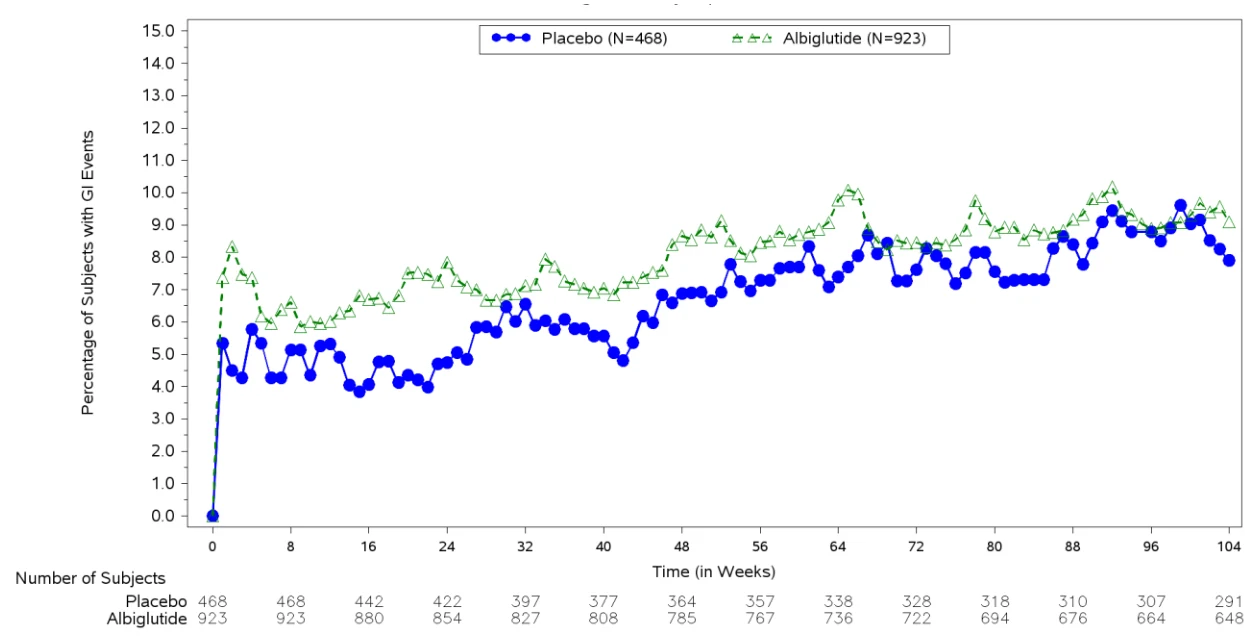
Note: Ontherapy events are those that have a start date on or after the first day of study medication and within 56 days after the end of study medication. The denominator used for percentages is the number of subjects (as shown above) considered on therapy for that particular time point. An event may be counted in multiple weeks depending on its duration. If a subject experienced more than 1 event within a week, the subject is counted only once.
Appendicitis: Across the 8 Phase III clinical trials, serious events of appendicitis occurred in 0.2% (5 of 2, 365) of patients treated with EPERZAN™ compared with 0% among all comparators at 104 weeks.
Injection Site Reactions: In placebo-controlled clinical trials of up to 3 years duration, injection site reactions (typically including rash, erythema, or itching at the injection site) occurred in 17.6% of patients treated with EPERZAN™ (N = 923) compared to 7.5% with placebo injections (N = 468) and led to discontinuation in 2% of all patients treated with EPERZAN™. Generally, injection site reactions were mild in intensity (72.8% of patients treated with EPERZAN™, compared to 94.3% with placebo) and few subjects required treatment (6.3% vs.
0.9%, respectively). Among patients who had an injection site reaction, approximately two-thirds had only 1 or 2 reactions.
Hypoglycemia: Across the 8 Phase III clinical trials, severe hypoglycemia (requiring the assistance of another person for treatment) occurred in 5 patients (N = 2,365) on EPERZAN™. Hypoglycemia was more frequent when EPERZAN™ was added to sulfonylurea or insulin (see WARNINGS AND PRECAUTIONS, Hypoglycemia). The proportion of patients experiencing at least one documented symptomatic hypoglycemic episode on EPERZAN™ and the proportion of patients experiencing at least one severe hypoglycemic episode on EPERZAN™ in clinical trials is shown in Table 2.
Table 2 Incidence (%) of Hypoglycemia in Clinical Trials of EPERZAN™ a
| Monotherapyb | Placebo | EPERZAN (30mg week ly) |
| (52 Weeks) | N = 101 | N = 101 |
| Documented symptomaticc | 2% | 2% |
| Severed | - | - |
| In Combination with Metformin Trial | Placebo | EPERZAN |
| (104 Weeks)e | N = 101 | N = 302 |
| Documented symptomatic | 4% | 3% |
| Severe | - | - |
| In Combination with Pioglitazone ± | Placebo | EPERZAN |
| Metformin (52 Weeks) | N = 151 | N = 150 |
| Documented symptomatic | 1% | 3% |
| Severe | - | 1% |
| In Combination with Metformin and | Placebo | EPERZAN |
| Sulfonylurea (52 Weeks) | N = 115 | N = 271 |
| Documented symptomatic | 7% | 13% |
| Severe | - | 0.4% |
| In Combination with | Insulin Lispro | EPERZAN |
| Insulin Glargine (26 Weeks) | N = 281 | N = 285 |
| Documented symptomatic | 30% | 16% |
| Severe | 0.7% | - |
| In Combination with | Insulin Glargine | EPERZAN |
| Metformin ± Sulfonylurea (52 Weeks) | N = 241 | N = 504 |
| Documented symptomatic | 27% | 17% |
| Severe | 0.4% | 0.4% |
| In Combination with OADs in Renal | Sitagliptin | EPERZAN |
| Impairment (26 Weeks) | N = 246 | N = 249 |
| Documented symptomatic | 6% | 10% |
| Severe | 0.8% | - |
OAD = Oral antidiabetic agents.
a Data presented are to the primary endpoint and include only events occurring on-therapy with randomized medications and excludes events occurring after use of glycemic rescue medications (i.e., primarily metformin or insulin).
b In this trial, no documented symptomatic or severe hypoglycemia were reported for EPERZAN™, 50 mg and these data are omitted from the table.
c Plasma glucose concentration ≤0.79 mmol/L and presence of hypoglycemic symptoms.
d Event requiring another person to administer a resuscitative action.
e Rate of documented symptomatic hypoglycemia for active controls 18% (glimepiride) and 2% (sitagliptin).
Immunogenicity: In the pooled safety population of 7 integrated studies (32 weeks to at least 104 weeks duration), 116 out of 2,098 patients (6%) tested positive for anti-albiglutide antibodies at any time during the trials. None of these antibodies were shown to neutralize the activity of albiglutide in an in vitro assay and antibody formation was not associated with reduced efficacy [as measured by HbA1c and fasting plasma glucose (FPG) or alterations in the pharmacokinetics of albiglutide]. In general, the antibody response was transient and did not persist. Antibody titers were generally low and not different from those observed in a small number of patients (~0.6%) who tested positive for albiglutide cross-reactive antibodies prior to treatment. Consistent with the high homology of albiglutide with human GLP-1, the majority of patients with anti-albiglutide antibodies also tested positive for anti-GLP-1 antibodies; none were neutralizing.
Although most patients with injection site reactions were antibody negative (~85%), injection site reactions were reported more frequently for antibody positive (41%, N = 116) than antibody negative patients (14%, N = 1,927). These events were predominantly mild and generally resolved without interruption of treatment and did not lead to discontinuation. Patients with antibodies did not have injection site reactions of greater severity or longer duration compared to patients without antibodies. Otherwise, the pattern of adverse events was generally similar for antibody positive and negative patients. No serious adverse events relating to hypersensitivity were noted in antibody positive patients.
DRUG INTERACTIONS
Drug-Drug Interactions
EPERZAN™ causes a delay of gastric emptying, and thereby has the potential to impact the absorption of concomitantly administered oral medications. In multiple-dose drug-drug interaction trials, no significant change in systemic exposures of the co-administered drugs were observed, except simvastatin (see below and Table 3).
Digoxin: Albiglutide did not meaningfully alter the pharmacokinetics of a single-dose of digoxin (0.5 mg) when co-administered with steady-state albiglutide (50 mg weekly).
Oral contraceptives: Albiglutide (50mg weekly for four weeks) had no clinically meaningful effects on the steady-state pharmacokinetics of a combination oral contraceptive containing norethindrone 0.5 mg and ethinyl estradiol 0.035 mg. In addition, no clinically relevant effects on luteinizing hormone, follicle-stimulating hormone, or progesterone were observed when albiglutide and a combination oral contraceptive were co-administered.
Simvastatin: A single dose of simvastatin (80 mg) was administered with steady-state albiglutide (50 mg weekly). Simvastatin AUC was decreased by 40% and simvastatin Cmax was increased by 18%. The AUC of simvastatin acid was increased by 36% and Cmax was increased by approximately 98%. A decrease in half-life of simvastatin and simvastatin acid from ~7 hours to 3.5 hours was observed. Clinical relevance of these changes has not been established.
Warfarin: No clinically relevant effects on the pharmacokinetics of R-and S- enantiomers of warfarin were observed when a single dose of racemic warfarin (25 mg) was administered with steady-state albiglutide (50 mg weekly). In addition, albiglutide did not significantly alter the pharmacodynamic effects of warfarin as measured by the international normalized ratio.
Table 3 Effect of Albiglutide on Systemic Exposure of Co-administered Drugs
| Co-administered Drug | Dose of Co-administered Druga | Dose of EPERZAN™ | Geometric Mean Ratio (Ratio +/- Co-administered Drug) No Effect = 1 | |||||||||
| Analyte | AUC (90% CI)b | Cmax (90% CI) | ||||||||||
| No dose adjustments of co-administered drug required for the following: | ||||||||||||
| Simvastatin | 80 mg | 50 mg QW for 5 weeks | Simvastatin | 0.60 (0.52 – 0.69) | 1.18 (1.02 – 1.38) | |||||||
| Simvastatin acid | 1.36 (1.19 – 1.55) | 1.98 (1.75 – 2.25) | ||||||||||
| Digoxin | 0.5 mg | 50 mg QW for 5 weeks | Digoxin | 1.09 (1.01 – 1.18) | 1.11 (0.98 – 1.26) | |||||||
| Oral contraceptivec | 0.035 mg ethinyl estradiol and 0.5 mg norethindrone | 50 mg QW for 4 weeks | Norethindrone | 1.00 (0.96 – 1.04) | 1.04 (0.98 – 1.10) | |||||||
| Levonorgestrel | 1.09 (1.06 – 1.14) | 1.20 (1.11 – 1.29) | ||||||||||
| Warfarin | 25 mg | 50 mg QW for 5 weeks | R-Warfarin | 1.02 (0.98 – 1.07) | 0.94 (0.89 – 0.99) | |||||||
| S-Warfarin | 0.99 (0.95 – 1.03) | 0.93 (0.87 – 0.98) | ||||||||||
QW = Once weekly.
- a. Single dose unless otherwise noted.
- b. AUCinf for drugs given as a single dose and AUC24h for drugs given as multiple doses.
- c. Subjects received low-dose oral contraceptive for two 28-day treatment cycles (21 days active/7 days placebo).
Drugs that Increase Heart Rate: EPERZAN™ causes an increase in heart rate (see ACTION AND CLINICAL PHARMACOLOGY, Cardiac Electrophysiology). Caution should be observed if EPERZAN™ is administered with other drugs that also increase heart rate, such as drugs with sympathomimetic or anticholinergic activity.
Drugs that Cause PR Interval Prolongation: EPERZAN™ causes an increase in the PR interval (see ACTION AND CLINICAL PHARMACOLOGY, Cardiac Electrophysiology). The impact on the PR interval of co-administration of EPERZAN™ with other drugs that prolong the PR interval (including, but not limited to, antiarrhythmics, non-dihydropyridine calcium channel blockers, beta adrenoceptor blockers, digitalis glycosides, HIV protease inhibitors, and somatostatin analogues) has not been evaluated. As a result, co-administration of EPERZAN™ with these drugs should be undertaken with caution.
DOSAGE AND ADMINISTRATION
Dosing Considerations
It may be necessary to reduce the dose of concomitantly administered insulin secretagogues (e.g. sulfonylureas) or insulin to reduce the risk of hypoglycemia when starting EPERZAN™.
EPERZAN™ causes a delay of gastric emptying, and thereby has the potential to impact the absorption of concomitantly administered oral medications (see DRUG INTERACTIONS).
Recommended Dose and Dosage Adjustment
Adults
The recommended dose of EPERZAN™ is 30 mg once per week, administered subcutaneously. The dose may be increased to 50 mg once-weekly based on individual glycemic response.
Pediatrics (<18 years of age) The safety and efficacy of EPERZAN™ in children below 18 years of age have not been established.
Geriatrics (≥65 years of age)
No dose adjustment is required in patients over 65 years of age (see WARNINGS AND PRECAUTIONS, Special Populations and ACTION AND CLINICAL PHARMACOLOGY, Special Populations and Conditions).
Renal impairment
No clinically significant change in pharmacokinetic parameters was observed in patients with renal impairment (mild, moderate, severe, and hemodialysis dependent patients) in clinical pharmacology and clinical trials. No dosage adjustment is required in patients with renal impairment (see ACTION AND CLINICAL PHARMACOLOGY, Special Populations and Conditions and CLINICAL TRIALS). Use caution when initiating or escalating doses of EPERZAN™ in patients with renal impairment. Monitor renal function in patients with renal impairment reporting severe gastrointestinal reactions which may worsen the renal function.
Hepatic impairment
Therapeutic proteins such as EPERZAN™ are catabolised by widely distributed proteolytic enzymes, which are not restricted to hepatic tissue; therefore, changes in hepatic function should not have any effect on the elimination of EPERZAN™. No dosage adjustment is recommended in patients with hepatic impairment (see ACTION AND CLINICAL PHARMACOLOGY, Special Populations and Conditions).
Missed Dose
If a dose is missed, it should be administered as soon as possible within 3 days after the missed dose. Thereafter, patients can resume dosing on their usual day of administration. If it is more than 3 days after the missed dose, patients should wait until their next regularly scheduled weekly dose.
Administration
EPERZAN™ is intended for patient self-administration as a subcutaneous injection in the abdomen, thigh, or upper arm region. When injecting in the same region, advise patients to use a different injection site each week. EPERZAN™ must not be administered intravenously or intramuscularly.
EPERZAN™ may be administered at any time of day without regard to meals. Administer EPERZAN™ once a week on the same day each week. The day of weekly administration may be changed if necessary as long as the last dose was administered 4 or more days before.
The lyophilized powder contained within the pen must be reconstituted prior to administration. Once the needle is attached, inject immediately. See PART III: PATIENT MEDICATION INFORMATION and Instructions for Use for complete administration instructions with illustrations.
Use EPERZAN™ only if the reconstituted product is clear and contains no particles.
When using EPERZAN™ with insulin, administer as separate injections. Never mix. It is acceptable to inject EPERZAN™ and insulin in the same body region but the injections should not be adjacent to each other.
Use a puncture-resistant container to discard the pen with needle still attached.
Alternate method of reconstitution (healthcare professional use only): PART III: PATIENT MEDICATION INFORMATION provides directions for the patient to wait 15 minutes for the 30 mg pen and 30 minutes for the 50 mg pen after the lyophilized powder and diluent are mixed to ensure reconstitution. Healthcare professionals may utilise the following alternate method of reconstitution that allows for more rapid dissolution. Because this method relies on appropriate swirling and visual inspection of the solution, it is intended only for healthcare professionals.
Follow instructions to twist the cartridge until <2> appears in the number window and a “click” is heard. This mixes the diluent in the rear chamber of the cartridge with the lyophilized powder in the front chamber. With the clear cartridge pointing up, gently swirl the pen for one minute. Avoid shaking as this can result in foaming. Inspect, and continue to swirl the pen until all the powder is dissolved. Complete dissolution for the 30 mg pen usually occurs within 2 but may take up to 5 minutes, as confirmed by visual inspection for a clear solution free of particles. Complete dissolution for the 50 mg pen usually occurs within 7 minutes but may take up to 10 minutes. After reconstitution, continue to follow the steps in the Instructions for Use to attach the needle, prime the pen and administer the injection (see SPECIAL HANDLING INSTRUCTIONS).
OVERDOSAGE
For management of a suspected drug overdose, contact your regional Poison Control Centre.
Symptoms and Signs
No data are available with regard to overdosage in humans. Anticipated symptoms of an overdose may be severe nausea, headache and vomiting.
Treatment
In the event of an overdose, appropriate supportive treatment should be initiated as dictated by the patient’s clinical signs and symptoms. Further management should be as clinically indicated or as recommended by the regional Poison Control Centre. A prolonged period of observation and treatment for these symptoms may be necessary, taking into account the half-life of EPERZAN™ (5 days).
ACTION AND CLINICAL PHARMACOLOGY
Mechanism of Action
EPERZAN™ is a Glucagon-Like Peptide-1 (GLP-1) receptor agonist. Like endogenous GLP-1, EPERZAN™ helps regulate postprandial blood glucose concentrations by stimulating glucose-dependent insulin secretion resulting in increased glucose utilization by tissues. This insulin secretion subsides as blood glucose concentrations decrease and approach euglycemia, therefore EPERZAN™ has a low intrinsic potential for hypoglycemia. EPERZAN™ also suppresses glucagon secretion in a glucose-dependent manner, leading to reduced hepatic glucose output. In addition, EPERZAN™ slows gastric emptying reducing the rate at which postprandial glucose appears in the circulation. In patients with type 2 diabetes mellitus, the postprandial rise in endogenous GLP-1 is reduced or absent, glucagon is inappropriately elevated, and obesity is common.
Albiglutide is generated through genetic fusion of two tandem copies of modified human GLP 1 (97% amino acid sequence homology to endogenous human GLP-1 fragment 7-36) to human albumin. The GLP-1 sequence has been modified with a glycine substituted for the naturally-occurring alanine at position 8 in order to confer resistance to dipeptidylpeptidase IV (DPP-IV) mediated proteolysis. The human albumin moiety of the recombinant fusion protein, together with the DPP-IV resistance, greatly extends the half-life to allow once-weekly dosing.
Pharmacodynamics
Glucose control: Albiglutide lowered fasting plasma glucose (FPG) and reduced postprandial glucose excursions. In patients with type 2 diabetes mellitus who received 2 doses of albiglutide 32 mg (Day 1 and 8), a reduction (24%) in postprandial glucose AUC(0.5-4.5h) was observed compared to placebo following a standardised breakfast meal on Day 9. The majority of the observed reduction in FPG occurs after a single dose consistent with the pharmacokinetic profile of albiglutide.
A single dose of albiglutide 50 mg subcutaneous (SC) did not impair the pancreatic (glucagon), adrenergic (adrenaline, noradrenaline, or cortisol) or pituitary (growth hormone) counter-regulatory hormone response to hypoglycemia.
Gastric motility: Albiglutide slowed gastric emptying compared with placebo for both solids and liquids when albiglutide 100 mg was administered as a single dose in healthy subjects.
Cardiac Electrophysiology: A randomised, double-blind, parallel group study was performed to investigate the electrocardiographic effects of albiglutide administered weekly over 6 weeks compared with placebo in healthy subjects. Subjects assigned to albiglutide treatment (N=85) received albiglutide 30 mg on Days 1 and 8 and 50 mg on Days 15, 22, 29, and 36. Subjects assigned to placebo treatment (N=88) received placebo on Days 1, 8, 15, 22, 29, and 36. The ECG assessments were performed on Day 4 at which plasma concentrations are expected to be maximal following a single 30 mg dose of albiglutide and on Day 39 when maximal plasma concentrations are expected after 4 weeks of repeat dosing with 50 mg albiglutide.
Heart Rate: Albiglutide was associated with concentration-related increases in heart rate. After repeat dose treatment with the 50 mg dose, the increase in heart rate ranged from 6.0 to 7.8 bpm over the 24 h time period studied. See Figure 2 below. Also see WARNINGS AND PRECAUTIONS, Cardiovascular.
Figure 2 Time Profile Plot of Placebo- and Baseline-Adjusted Heart Rate (90% CI) as a Function of Time for Albiglutide after a Single 30 mg Dose and after Repeat 50 mg Doses
Day 4 represents approximate Cmax after a single 30mg dose. Day 39 represents approximate Cmax after repeat 50mg dose.
-10
-5
0
5
10
15
0
1
2
3
4
5
6
7
8
9
10
11
12
13
14
15
16
17
18
19
20
21
22
23
24
D D HR (bp m)
Time (hour)
DDHR
Day 4 Albiglutide
Day 39 Albiglutide
PR Interval: Albiglutide resulted in PR interval prolongation. On Day 4, after a single dose of albiglutide 30 mg, the maximum mean difference from placebo was 3.9 ms (90% CI 1.3, 6.5) at 6 h. On Day 39, during repeat dose treatment with albiglutide 50 mg, the maximum mean difference from placebo was 4.5 ms (90% CI 1.2, 7.8) at 3 h. See Figure 3 below. Also see WARNINGS AND PRECAUTIONS, Cardiovascular.
Figure 3 Time Profile Plot of Placebo- and Baseline-Adjusted PR Interval (90% CI) as a Function of Time for Albiglutide after a Single 30 mg Dose and after Repeat 50 mg Doses
Day 4 represents approximate Cmax after a single 30mg dose. Day 39 represents approximate Cmax after repeat 50mg dose.
-10
-5
0
5
10
15
0
1
2
3
4
5
6
7
8
9
10
11
12
13
14
15
16
17
18
19
20
21
22
23
24
D D PR(msec )
Time (hour)
DDPR
Day 4 Albiglutide
Day 39 Albiglutide
QTc Interval: Repeat-dose treatment with albiglutide 50 mg was associated with shortening of the QTc interval, with a maximal reduction of -3.7 ms (90% CI -5.9, -1.5) at 12 h. The clinical significance of an acquired, drug-induced QTc shortening of this magnitude is not known.
Figure 4 Time Profile Plot of Placebo- and Baseline-Adjusted QTcF (90% CI) as a Function of Time for Albiglutide after a Single 30 mg Dose and after Repeat 50 mg Doses
Day 4 represents approximate Cmax after a single 30mg dose. Day 39 represents approximate Cmax after repeat 50mg dose.
Pharmacokinetics
Absorption: Following SC administration of a single 30 mg dose to patients with type 2 diabetes mellitus, maximum concentrations were reached 3 to 5 days post dose with mean peak albiglutide concentration (Cmax) of 1.74 µg/mL and mean area under the time-concentration curve (AUC) of 465 µ*h/mL. The average weekly steady-state concentrations following SC administration of 30 mg or 50 mg albiglutide are approximately 2.7 µg/mL and 4.4 µg/mL, respectively. Steady-state exposures are achieved following 4 to 5 weeks of once-weekly administration. Exposures at the 30 mg and 50 mg dose levels were consistent with a dose-proportional increase. Similar exposure is achieved with SC administration of albiglutide in the abdomen, thigh, or upper arm. The absolute bioavailability of albiglutide following SC administration has not been evaluated.
-10
-5
0
5
10
15
0
1
2
3
4
5
6
7
8
9
10
11
12
13
14
15
16
17
18
19
20
21
22
23
24
D D QTcF (msec )
Time (hour)
DDQTcF
Day 4 Albiglutide
Day 39 Albiglutide
Distribution: The mean estimate of apparent volume of distribution of albiglutide following SC administration is 11 litres (L). As albiglutide is an albumin fusion molecule, plasma protein binding has not been assessed.
Metabolism: Albiglutide is a protein for which the expected metabolic pathway is degradation to small peptides and individual amino acids by ubiquitous proteolytic enzymes. Classical biotransformation studies have not been performed. Because albiglutide is an albumin fusion protein, it likely follows a metabolic pathway similar to native human serum albumin which is catabolised primarily in the vascular endothelium.
Elimination: The mean apparent clearance of albiglutide is 67 mL/h with an elimination half-life of approximately 5 days, making albiglutide suitable for once-weekly administration.
Special Populations and Conditions
Pediatrics (<18 years of age): No pharmacokinetic data are available in pediatric patients.
Geriatrics (≥ 65 years of age): Age had no clinically relevant effect on the pharmacokinetics of albiglutide based on population pharmacokinetic analyses of patients 24 to 83 years of age.
Gender: Based on the results of population pharmacokinetic analyses, there is no clinically relevant effect of gender on clearance.
Race and Ethnicity: Based on the results of population pharmacokinetic analyses that included Caucasian, African American/African, Asian and Hispanic/Non-Hispanic subjects, race and ethnicity had no clinically meaningful effect on the pharmacokinetics of albiglutide clearance. Japanese patients showed approximately 30 to 40% higher exposures than Caucasians likely attributable to lower body weight. This effect was not considered clinically relevant.
Hepatic Impairment: No clinical studies were conducted to examine the effects of mild, moderate, or severe hepatic impairment on the pharmacokinetics of albiglutide. Therapeutic proteins such as albiglutide are catabolised by widely distributed proteolytic enzymes, which are not restricted to hepatic tissue; therefore, changes in hepatic function are unlikely to have any effect on the elimination of albiglutide.
Renal Impairment: In a population pharmacokinetic analysis including a trial in patients with mild, moderate and severe renal impairment, exposures were increased by approximately 30 to 40% in severe renal impairment compared to those observed in type 2 diabetes mellitus patients with normal renal function. In addition, a clinical pharmacology study showed a similar increased exposure for patients with moderate or severe renal impairment or those on haemodialysis relative to patients without renal impairment. These differences were not considered clinically relevant.
In a clinical trial in patients with mild, moderate, or severe renal impairment treated with EPERZAN™ (N=249), treatment with EPERZAN™ resulted in a statistically greater reduction in HbA1c from baseline at Week 26 compared to sitagliptin (N=246) (see CLINICAL TRIALS, Renal Impairment (Harmony 8)). No differences in overall safety were observed based on degree of renal impairment between EPERZAN™ and sitagliptin. For EPERZAN™ and sitagliptin respectively, the incidence of diarrhea was 8.8% and 5.7%; nausea was 4.8% and 2.8%, and vomiting was 1.2% and 0.4%; (data reflecting events occurring on-therapy with randomized medications to the primary endpoint). No clinically relevant changes in renal function (as measured by serum creatinine) were observed in either group.
In the Phase III clinical trials (excluding the renal impairment trial), approximately two-thirds of patients had mild (eGFR 60 to 89 mL/min/1.73m2) or moderate (30 to 59 mL/min/1.73 m2) renal impairment at baseline based on the Modification of Diet in Renal Disease (MDRD) equation. No differences in overall safety or effectiveness (HbA1c reduction) were observed between normal and mild to moderate renally impaired patients.
STORAGE AND STABILITY
Storage
Prior to dispensing
Store pen carton refrigerated at 2°C to 8°C. Do not freeze. Store pens in the original carton until use.
Following dispensing
Pen with Unreconstituted Powder
Store pen carton refrigerated at 2°C to 8°C. The carton may be stored at room temperature not to exceed 30°C for not more than 4 weeks. If a box of pens will be stored for more than 4 weeks, keep it refrigerated at 2°C to 8°C. Do not freeze. Store pens in the original carton until use.
Pen with Reconstituted Powder
After reconstitution, the EPERZAN™ pen should be used within 8 hours. However, once the needle is attached and primed, use immediately. Medicine can clog the needle if allowed to dry in the primed needle (see PART III: PATIENT MEDICATION INFORMATION and Instructions for Use).
SPECIAL HANDLING INSTRUCTIONS
EPERZAN™ must be prepared and administered only as directed.
- Do not use past the expiration date.
- Store pens in the original carton until use.
- Do not use EPERZAN™ if it has been frozen.
- If stored in refrigerator, allow to sit at room temperature for 15 minutes before reconstitution.
- Use the pen only if the reconstituted solution is clear and free of particulate matter.
- Do not use a pen if more than 8 hours has passed from the time of reconstitution.
- Once the needle is attached, inject immediately. Do not store with needle attached.
- Use a puncture-resistant container to discard the pen with needle still attached.
See Instructions for Use for complete administration instructions with illustrations.
DOSAGE FORMS, COMPOSITION AND PACKAGING
Dosage Forms
EPERZAN™ is supplied as a pre-filled pen injector (pen) with a dual chamber cartridge containing white to yellow powder and clear diluent for solution for injection.
30 mg single use prefilled pen injector: Contains 40.3 mg lyophilized albiglutide and 0.65 mL diluent designed to deliver a dose of 30 mg in a volume of 0.5 mL after reconstitution.
Available in:
- carton of 1 pen injector (containing one 5 mm, 29-gauge, thin-wall needle)
- carton of 4 pen injectors (containing four 5 mm, 29-gauge, thin-wall needles)
50 mg single use prefilled pen injector: Contains 67.0 mg lyophilized albiglutide and 0.65 mL diluent designed to deliver a dose of 50 mg in a volume of 0.5 mL after reconstitution
Available in:
- carton of 1 pen injector (containing one 5 mm, 29-gauge, thin-wall needle)
- carton of 4 pens injectors (containing four 5 mm, 29-gauge, thin-wall needles)
EPERZAN™ contains the following nonmedicinal ingredients: sodium phosphate monobasic monohydrate, sodium phosphate dibasic anhydrous, trehalose dihydrate, mannitol, polysorbate 80 and water for injection. EPERZAN™ does not contain a preservative.
PART II: SCIENTIFIC INFORMATION
PHARMACEUTICAL INFORMATION
Drug Substance
Proper name: albiglutide
Chemical name: Albiglutide is a recombinant fusion protein consisting of two copies of a 30-amino acid sequence of modified human glucagon-like peptide 1 (GLP-1, fragment 7-36) genetically linked in series to human albumin (hA).
Molecular Mass: 72971.4 Da
Structural formula:
Physicochemical properties: Albiglutide drug substance is a clear to opalescent, yellow to greenish-yellow liquid, with a concentration of 115.0-161.0 mg/mL, pH between 6.7-7.4 and an osmolality of 330-430 mOsm/kg
Product Characteristics
EPERZAN™ is supplied as a pre-filled pen with a dual chamber cartridge containing white to yellow powder and clear diluent for solution for injection.
CLINICAL TRIALS
Study demographics and trial design
The studies described in this section included a total of 2,015 patients with type 2 diabetes mellitus who were treated with EPERZAN™ as part of 6 active and placebo-controlled Phase III clinical trials. The 6 trials included comparisons to glimepiride, pioglitazone, liraglutide (1 trial each), sitagliptin (2 trials, including one in patients with renal impairment), insulin (2 trials, one versus prandial insulin and one versus basal insulin) and placebo (2 trials). These trials included the use of EPERZAN™ as monotherapy, in combination with oral antidiabetic agents, and in combination with basal insulin. Studies evaluated the use of albiglutide 30 mg and 50 mg once-weekly, with 5 of the 6 studies allowing for optional titration of EPERZAN™ from 30 mg to 50 mg once-weekly. For trials that allowed for optional dose up-titration, the glucose levels that triggered up-titration were the same for EPERZAN™ and oral comparators. All trials included at least a 4-week run-in/stabilization period prior to the start of trial medication (for 2 trials, this period was longer; the add-on to metformin and sulfonylurea trial had a 6-week run-in and the add-on to insulin glargine trial had a 4-week or 8-week run-in depending on whether patients were already on insulin glargine).
Across the 6 clinical trials, patients ranged from 18 to 86 years old (mean 56 years), 51% were male, with a mean body mass index (BMI) of 32 kg/m2 and included patients who were Caucasian (46%), Black (14%), and Asian (13%); and patients of Hispanic/Latino ethnicity (26%). The majority of patients had been previously treated with one or more oral antidiabetic medications or insulin. Trials included a broad spectrum of diabetes patients with respect to duration of disease with equal representation across each of the following categories: <5 years, ≥5 to <10 years, and ≥10 years.
Table 4 Summary of Phase III Trial Design
| Study # and Description | Trial Design1 | Primary Efficacy Endpoint Time-point | Total Duration of Treatment | Background Therapy2 | Dosage Arms | Total N (randomized) | Mean BMI (range) |
|---|---|---|---|---|---|---|---|
| GLP112753 (Harmony 3) Add-On to Metformin | Randomized, double-blind, placebo- and active-controlled | 104 weeks | 156 weeks | MET |
| 1012 | 32.58 (20.0-46.0) |
| GLP112757 (Harmony 5) Add-On to Metformin Plus Sulfonylurea | Randomized, double-blind, placebo- and active-controlled | 52 weeks | 156 weeks | MET+GLIM |
| 663 | 32.17 (20.0-46.0) |
| GLP108486 (Harmony 6) Add-On to Insulin Glargine | Randomized, open-label, active-controlled | 26 weeks | 52 weeks | Glargine or Glargine + OAD |
| 566 | 33.03 (21.0-46.0) |
| Study # and Description | Trial Design1 | Primary Efficacy Endpoint Time-point | Total Duration of Treatment | Background Therapy3 | Dosage Arms | Total N (randomized) | Mean BMI (range) |
|---|---|---|---|---|---|---|---|
| GLP112754 (Harmony 4) Active-Controlled Study Versus Insulin Glargine in Combination With Metformin ± Sulfonylurea | Randomized, open-label, active-controlled | 52 weeks | 156 weeks | MET or MET+SU |
| 745 | 33.12 (20.0-46.0) |
| GLP114179 (Harmony 7) Active-Controlled Study Versus Liraglutide in Combination With Metformin, Thiazolidinedione, or Sulfonylurea (as Monotherapy or Dual Therapy) | Randomized, open-label, active-controlled | 32 weeks | 32 weeks | MET, SU and TZD either alone or in combination |
| 812 | 32.79 (20.0-48.0) |
| GLP114130 (Harmony 8) Type 2 Diabetes Mellitus Patients with Renal Impairment | Randomized, double-blind, active-controlled | 26 weeks | 52 weeks | Diet and Exercise or MET, TZD and SU either alone or in combination |
| 495 | 30.39 (20.0-46.0) |
1Due to the long duration of trials, additional antidiabetic therapies were permitted if glycemic thresholds were exceeded according to pre-specified criteria. 2MET = metformin; SU = sulfonylurea; PIO = pioglitazone; OAD = oral antidiabetic medications, GLIM = glimepiride, BMI = Body Mass Index, TZD = thiazolidinedione, SIT = sitagliptin.
Combination Therapy
Add-On to Metformin (Harmony 3): The efficacy of EPERZAN™ was evaluated in a 3-year, randomized, double-blind, multicenter study (N = 999). On background therapy of metformin ≥1,500 mg daily, EPERZAN™ 30 mg SC weekly (with optional up-titration to 50 mg weekly after a minimum of 4 weeks) was compared to sitagliptin 100 mg daily, glimepiride 2 mg daily (with optional titration to 4 mg daily), or placebo. The primary endpoint was change in HbA1c from baseline at 104 weeks compared to placebo.
Results at 104 weeks are presented in Table 5. EPERZAN™ demonstrated a statistically superior reduction in HbA1c from baseline compared to placebo, sitagliptin, or glimepiride. Superiority testing against active control was only performed after demonstration of non-inferiority. By Week 104, 52.6% in the EPERZAN™ group and 53.8% in the glimepiride had up-titrated.
At Week 104, albiglutide-, placebo- and sitagliptin-treated subjects had an adjusted mean weight decrease from Baseline of 1.2 kg, 1.0 kg and 0.9 kg, respectively. Glimepiride subjects had an adjusted mean weight increase from Baseline of 1.2 kg.
Table 5 Results at 104 Weeks in a Study Comparing EPERZAN™ to Placebo as Add-On Therapy in Patients Inadequately Controlled on Metformin
EPERZAN™ + Metformin | Placebo + Metformin | Sitagliptin + Metformin | Glimepiride + Metformin | ||||||||||||
| ITT a (N) | N=297 | N=100 | N=300 | N=302 | |||||||||||
| HbA1c (%) | |||||||||||||||
Baseline (mean) Change at Week 104b Difference from placebo + metformin b (95% CI) Difference from sitagliptin + metformin b (95% CI) Difference from glimepiride + metformin b (95% CI) | 8.1 -0.6 -0.9 (-1.16, -0.65) -0.4 (-0.53, -0.17) -0.3 (-0.45, -0.09) | 8.1 +0.3 | 8.1 -0.3 | 8.1 -0.4 | |||||||||||
| P valuec (non-inferiority) | <0.0001 | <0.0001 | |||||||||||||
| P valuec (superiority) | <0.0001 | 0.0001 | 0.0033 | ||||||||||||
| Patients (%) achieving HbA1c <7% | 39 | 16 | 32 | 31 | |||||||||||
| FPG (mmol/L) | |||||||||||||||
Baseline (mean) Change at Week 104b Difference from placebo + metformin b (95% CI) Difference from sitagliptin + metformin b (95% CI) Difference from glimepiride + metformin b (95% CI) | 9.1 -1.0 -1.5 (-2.16, -0.90) -0.9 (-1.30, -0.41) -0.6 (-1.01, -0.12) | 9.0 +0.6 | 9.2 -0.1 | 9.3 -0.4 | |||||||||||
| P valuec (superiority) | <0.0001 | 0.0002 | 0.0133 | ||||||||||||
- a. Intent to treat population.. At Week 104, the last value recorded prior to rescue therapy or missing data was used in the analyses for 76%, 46%, 55% and 51% of individuals randomized to placebo, EPERZAN™, sitagliptin, and glimepiride, respectively.
- b. Adjusted mean based on ANCOVA model: Change = treatment + Baseline HbA1c (+Baseline FPG for the FPG analyses) + prior myocardial infarction history + age category + region. The difference of least squares means (albiglutide – placebo, albiglutide – sitagliptin, albiglutide –glimepiride) and corresponding 95% CI was from ANCOVA model.
- c. The Type I error rate is controlled for multiple testing using a gatekeeping procedure.
As this analysis is based on the last value prior to hyperglycemia rescue, these results should be interpreted with caution given the potential for bias against treatment groups with higher proportions of subjects with hyperglycemia rescue and with shorter time to hyperglycemia rescue. The incidence of hyperglycemia rescue at Week 104 was 21.2%, 45.0%, 30.0% and 26.5% in the albiglutide, placebo, sitagliptin, and glimepiride groups, respectively. Over the total duration of treatment of 156 weeks, the median time to hyperglycemia rescue was 67.7 weeks for placebo. As the probability of hyperglycemia rescue did not reach 50% for albiglutide, sitagliptin and glimepiride groups over the total duration of treatment of 156 weeks, the median times to hyperglycemia rescue could not be estimated.
Add-On to Metformin Plus Sulfonylurea (Harmony 5): The efficacy of EPERZAN™ was evaluated in a 3-year, randomized, double-blind, multicenter study (n = 657). On background therapy of metformin ≥1,500 mg daily plus glimepiride 4 mg daily, EPERZAN™ 30 mg SC weekly (with optional up-titration to 50 mg weekly after a minimum of 4 weeks) was compared to placebo or pioglitazone 30 mg daily (with optional titration to 45 mg daily). The primary endpoint was change in HbA1c from baseline at 52 weeks compared to placebo.
At 52 weeks, treatment with albiglutide resulted in statistically significant reductions from baseline in HbA1c (-0.6% for albiglutide versus +0.3% for placebo, p<0.05). Treatment with albiglutide did not meet the pre-specified non-inferiority margin (0.3%) against pioglitazone for HbA1c (-0.6% for albiglutide versus -0.8% for pioglitazone). In this trial, albiglutide provided less HbA1c reduction than pioglitazone, and the treatment difference was statistically significant in favour of pioglitazone. Results at 52 weeks are presented in Table 6.
At Week 52, albiglutide- and placebo-treated subjects had an adjusted mean weight decrease from Baseline of 0.4 kg and 0.4 kg, respectively. Pioglitazone subjects had an adjusted mean weight increase from Baseline of 4.4 kg.
Table 6 Results at 52 Weeks in a Trial Comparing EPERZAN™ to Placebo as Add-On Therapy in Patients Inadequately Controlled on Metformin + Sulfonylurea
EPERZAN™ + Metformin + Glimepiride | Placebo + Metformin + Glimepiride | Pioglitazone + Metformin + Glimepirided | ||||||||||
| ITTa (N) | N=269 | N=115 | N=273 | |||||||||
| HbA1c (%) | ||||||||||||
Baseline (mean) Change at Week 52b Difference from placebo + met + glimb (95% CI) Difference from pioglitazone + met + glimb (95% CI) P valuec (non-inferiority) P valuec (superiority) | 8.2 -0.6 -0.9 (-1.07, -0.68) 0.3 (0.10, 0.40) | 8.3 +0.3 <0.0001 | 8.3 -0.8 0.2685e N/A | |||||||||
| Patients (%) achieving HbA1c <7% | 30 | 9 | 35 | |||||||||
| FPG (mmol/L) | ||||||||||||
Baseline (mean) Change at Week 52b Difference from placebo + met + glim b (95% CI) Difference from pioglitazone + met + glim b (95% CI) | 9.5 -0.7 -1.3 (-1.9, -0.8) 1.1 (0.6, 1.5) | 9.7 +0.6 | 9.8 -1.7 | |||||||||
| P valuec (superiority) | <0.0001 | N/A | ||||||||||
- a. Intent to treat population. At Week 52, the last value recorded prior to rescue therapy or missing data was used in the analyses for 70%, 35%, and 34% of individuals randomized to placebo, EPERZAN™, and pioglitazone, respectively.
- b. Adjusted mean based on ANCOVA: Change = treatment + Baseline HbA1c (+Baseline FPG for the FPG analyses) + prior myocardial infarction history + age category + region. The difference of least squares means (albiglutide - placebo, albiglutide - pioglitazone) and corresponding 95% CI is from the ANCOVA model.
- c. The Type I error rate is controlled for multiple testing using a gatekeeping procedure.
- d. Pioglitazone is not indicated for use in combination with metformin and glimepiride.
- e. Did not meet non-inferiority margin of 0.3%.
As this analysis is based on the last value prior to hyperglycemia rescue, these results should be interpreted with caution given the potential for bias against treatment groups with higher proportions of subjects with hyperglycemia rescue and with shorter time to hyperglycemia rescue. The incidence of hyperglycemia rescue at Week 52 was 19.0%, 16.8% and 45.2% in the albiglutide, pioglitazone, and placebo groups, respectively. Over the total duration of treatment of 156 weeks, the median time to hyperglycemia rescue was 49.6 weeks and 137.7 weeks for placebo and albiglutide, respectively. As the probability of hyperglycemia rescue did not reach 50% for pioglitzone over the total duration of treatment of 156 weeks, the median time to hyperglycemia rescue could not be estimated.
Add-On to Insulin Glargine (Harmony 6): The efficacy of EPERZAN™ was evaluated in a 52 week, randomized, open-label, multicenter study (N = 563). On background therapy of insulin glargine (started at 10 units and titrated to ≥ 20 units per day) and with or without metformin, EPERZAN™ 30 mg SC weekly (with optional up-titration to 50 mg weekly after Week 8) was compared to prandial insulin lispro (administered daily at mealtimes, started according to standard of care and titrated to effect). The primary endpoint was change in HbA1c from baseline at 26 weeks. At Week 26, the mean daily dose of insulin glargine was 53 IU for the EPERZAN™ arm and 51 IU for the insulin lispro arm. The mean daily dose of insulin lispro at Week 26 was 31 IU.
Results at 26 weeks are presented in Table 7. The between-treatment difference in HbA1c of 0.2% (-0.32, 0.00) for albiglutide and insulin lispro met the pre-specified non-inferiority margin (0.3%). Superiority testing against insulin lispro was only performed after demonstration of non-inferiority. By Week 26, the percentage of patients treated with EPERZAN™ who up-titrated was 50.8%.
At Week 26, albiglutide -treated subjects had an adjusted mean weight decrease from Baseline of 0.7 kg, and insulin lispo subjects had an adjusted mean weight increase from Baseline of 0.8 kg.
Table 7 Results at 26 Weeks in a Trial Comparing EPERZAN™ to Insulin Lispro as Add-On Therapy in Patients Inadequately Controlled on Insulin Glargine
EPERZAN™ + Insulin glargine | Insulin lispro + Insulin glargine | ||||||||
| ITTa (N) | N=282 | N=281 | |||||||
| HbA1c (%) | |||||||||
Baseline (mean) Change at Week 26b Difference from insulin lisprob (95% CI) P valuec (non-inferiority) | 8.5 -0.8 -0.2 (-0.32, 0.00) <0.0001 | 8.4 -0.7 | |||||||
| P valuec (superiority) | 0.0533d | ||||||||
| Patients (%) achieving HbA1c <7% | 30 | 25 | |||||||
| FPG (mmol/L) | |||||||||
Baseline (mean) Change at Week 26b Difference from insulin lisprob (95% CI) | 8.5 -1.0 -0.3 (-0.7, 0.2) | 8.5 -0.7 | |||||||
| P valuec (superiority) | 0.2366 | ||||||||
- a. Intent to treat population. At Week 26, the last value recorded prior to rescue therapy or missing data was used in the analyses for 29% and 29% of individuals randomized to EPERZAN™ and insulin lispro.
- b. Adjusted mean based on ANCOVA: Change = treatment + baseline HbA1c (+Baseline FPG for the FPG analyses) + prior myocardial infarction + age category + region + current oral antidiabetic therapy. Difference of least squares means (albiglutide – insulin lispro) and 95% CI is from ANCOVA model.
- c. The Type I error rate is controlled for multiple testing using a gatekeeping procedure.
- d. Superiority not shown.
As this analysis is based on the last value prior to hyperglycemia rescue, these results should be interpreted with caution given the potential for bias against treatment groups with higher proportions of subjects with hyperglycemia rescue and with shorter time to hyperglycemia rescue. The incidence of hyperglycemia rescue at 26 weeks was 21.6% and 23.5% in the albiglutide and insulin lispro groups, respectively. As the probability of hyperglycemia rescue did not reach 50% for albiglutide and insulin lispro over the total duration of treatment of 52 weeks, the median time to hyperglycemia rescue could not be estimated.
Active-Controlled Study Versus Insulin Glargine in Combination With Metformin ± Sulfonylurea (Harmony 4): The efficacy of EPERZAN™ was evaluated in a 3-year, randomized, open-label, insulin glargine-controlled study (N = 735). On background therapy of metformin ≥1,500 mg daily (with or without sulfonylurea), EPERZAN™ 30 mg SC weekly (with optional up-titration to 50 mg weekly as early as Week 4) was compared to insulin glargine (started at 10 units and titrated weekly per prescribing information). The primary endpoint was change in HbA1c from baseline at 52 weeks. The starting total daily dose of insulin glargine ranged between 2 and 40 units (median daily dose of 10 units) and ranged between 3 and 230 units (median daily dose of 30 units) at Week 52.
Results at 52 weeks are presented in Table 8. The between-treatment difference in HbA1c of 0.1% (-0.04, 0.27) for albiglutide and insulin glargine met the pre-specified non-inferiority margin (0.3%). Superiority testing against insulin glargine was only performed after demonstration of non-inferiority. By Week 48, the percentage of patients treated with EPERZAN™ who up-titrated was 67.1%.
At Week 52, albiglutide -treated subjects had an adjusted mean weight decrease from Baseline of 1.1 kg, and insulin glargine subjects had an adjusted mean weight increase from Baseline of 1.6 kg.
Table 8 Results at 52 Weeks in a Trial Comparing EPERZAN™ to Insulin Glargine as Add-On Therapy in Patients Inadequately Controlled on Metformin ± Sulfonylurea
EPERZAN™ ± Metformin (with or without sulfonylurea) | Insulin glargine ± Metformin (with or without sulfonylurea) | ||||||
| ITTa (N) | N=496 | N=239 | |||||
| HbA1c (%) | |||||||
Baseline (mean) Change at Week 52b Difference from insulin glargineb (95% CI) P valuec (non-inferiority) P valuec (superiority) | 8.3 -0.7 0.1 (-0.04, 0.27) 0.0086 0.1463d | 8.4 -0.8 | |||||
| Patients (%) achieving HbA1c <7% | 32 | 33 | |||||
| FPG (mmol/L) | |||||||
Baseline (mean) Change at Week 52b Difference from insulin glargineb (95% CI) P valuec (superiority) | 9.4 -0.9 1.2 (0.8, 1.6)<0.0001 | 9.7 -2.1 | |||||
- a. Intent to treat population. At Week 52, the last value recorded prior to rescue therapy or missing data was used in the analyses for 41% and 36% of individuals randomized to EPERZAN™ and insulin glargine.
- b. Adjusted mean based on analysis of covariance (ANCOVA): Change = treatment + baseline HbA1c (+Baseline FPG for the FPG analyses) + prior myocardial infarction history + age category + region + current antidiabetic therapy. The difference of least squares means (albiglutide – insulin glargine) and 95% CI is from the ANCOVA model.
- c. The Type I error rate is controlled for multiple testing using a gatekeeping procedure.
- d. Superiority not shown.
As this analysis is based on the last value prior to hyperglycemia rescue, these results should be interpreted with caution given the potential for bias against treatment groups with higher proportions of subjects with hyperglycemia rescue and with shorter time to hyperglycemia rescue. The incidence of hyperglycemia rescue at Week 52 was 22.0% and 21.3% in the albiglutide and insulin glargine groups, respectively. Over the total duration of treatment of 156 weeks, the median time to hyperglycemia rescue was 107.6 weeks for albiglutide. As the probability of hyperglycemia rescue did not reach 50% for insulin glargine over the total duration of treatment of 156 weeks, the median time to hyperglycemia rescue could not be estimated.
Active-Controlled Study Versus Liraglutide in Combination With Metformin, Thiazolidinedione, or Sulfonylurea (as Monotherapy or Dual Therapy) (Harmony 7): The efficacy of EPERZAN™ was evaluated in a 32-week, randomized, open-label, liraglutide-controlled study (N = 805). EPERZAN™ 30 mg SC weekly (with up-titration to 50 mg weekly at Week 6) was compared to liraglutide 1.8 mg daily (titrated up from 0.6 mg at Week 1 and 1.2 mg at Week 1 to Week 2) in patients inadequately controlled on monotherapy or combination oral antidiabetic therapy (metformin, thiazolidinedione, or sulfonylurea, or a combination of these) compared to liraglutide. The primary endpoint was change in HbA1c from baseline at 32 weeks compared to liraglutide.
Results at 32 weeks are presented in Table 9. The between-treatment difference of 0.2% (0.08, 0.34) for albiglutide and liraglutide did not meet the pre-specified non-inferiority margin (0.3%).
At Week 32, albiglutide- and liragltide-treated subjects had an adjusted mean weight decrease from Baseline of 0.6 kg, and 2.2 kg, respectively.
Table 9 Results of Controlled Trial of EPERZAN™ Versus Liraglutide at 32 Weeks
| EPERZAN™ | Liraglutide | ||||||
| ITTa (N) | N=402 | N=403 | |||||
| HbA1c (%) | |||||||
Baseline (mean) Change at Week 32b Difference from liraglutideb (95% CI) P valuec (non-inferiority) | 8.2 -0.8 0.2 (0.08, 0.34) 0.0846d | 8.2 -1.0 | |||||
| Patients (%) achieving HbA1c <7% | 42 | 52 | |||||
| FPG (mmol/L) | |||||||
Baseline (mean) Change at Week 32b Difference from liraglutideb (95% CI) P valuec (superiority) | 9.4 -1.2 0.5 (0.1, 0.8) 0.0048 | 9.3 -1.7 | |||||
- a. Intent to treat population. At Week 32, the last value recorded prior to rescue therapy or missing data was used in the analyses for 31% and 24% of individuals randomized to EPERZAN™ and liraglutide, respectively.
- b. Adjusted mean based on ANCOVA: Change = treatment + baseline HbA1c (+Baseline FPG for the FPG analyses) + prior myocardial infarction history + age category + region. The difference of least squares means (albiglutide – liraglutide) and 95% CI was from the ANCOVA model.
- c. The Type I error rate is controlled for multiple testing using a gatekeeping procedure.
- d. Did not meet non-inferiority margin of 0.3%.
As this analysis is based on the last value prior to hyperglycemia rescue, these results should be interpreted with caution given the potential for bias against treatment groups with higher proportions of subjects with hyperglycemia rescue and with shorter time to hyperglycemia rescue. The incidence of hyperglycemia rescue at 32 weeks was 15.2% and 8.4% in the albiglutide and liraglutide groups, respectively. As the probability of hyperglycemia rescue did not reach 50%, the median time to hyperglycemia rescue over the total duration of treatment of 32 weeks could not be estimated.
Renal Impairment (Harmony 8): The efficacy of EPERZAN™ was evaluated in a randomized, double-blind, active-controlled 52-week study versus sitagliptin in 486 patients with mild, moderate, and severe renal impairment inadequately controlled on a current regimen of diet and exercise or other antidiabetic therapy (metformin, thiazolidinedione and sulfonylurea, either alone or in combination). EPERZAN™ 30 mg SC weekly (with optional up-titration to 50 mg weekly if needed as early as Week 4) was compared to sitagliptin. Sitagliptin was dosed according to renal function [100 mg daily in mild renal impairment (estimated glomerular filtration rate, eGFR ≥50 to 89 mL/min), 50 mg in moderate renal impairment (eGFR ≥30 to <50 mL/min), and 25 mg daily in severe renal impairment (eGFR <30 mL/min)]. The primary endpoint was change in HbA1c from baseline at 26 weeks.
Results at 26 weeks are presented in Table 10. The mean decrease in HbA1c from baseline with albiglutide was -0.80 (n = 125), -0.83 (n = 98), and -1.08 (n = 19) in patients with mild, moderate, and severe renal impairment, respectively. Superiority testing against active control was only performed after demonstration of non-inferiority. By Week 26, the percentage of patients treated with EPERZAN™ who up-titrated was 34.5%.
At Week 26, albiglutide- and sitagliptin-treated subjects had an adjusted mean weight decrease from Baseline of 0.8 kg, and 0.2 kg, respectively.
Table 10 Results of EPERZAN™ in Trial in Patients with Renal Impairment at 26 Weeks
| EPERZAN™ | Sitagliptin | |||||||
| ITTa (N) | N=246 | N=240 | ||||||
| HbA1c (%) | ||||||||
Baseline (mean) Change at Week 26b Difference from sitagliptinb (95% CI) | 8.1 -0.8 -0.3 (-0.49, -0.15) | 8.2 -0.5 | ||||||
| P-valuec (Non-inferiority) c | <0.0001 | |||||||
| P-valuec (Superiority) | 0.0003 | |||||||
| Patients (%) Achieving HbA1c <7% | 43 | 31 | ||||||
| FPG (mmol/L) | ||||||||
Baseline (mean) Change at Week 26b Difference from sitagliptin b (95% CI) | 9.2 -1.4 -1.2 (-1.7, -0.7) | 9.2 -0.2 | ||||||
| P-valuec (Superiority) | <0.0001 | |||||||
- a. Intent to treat population. At Week 26, the last value recorded prior to rescue therapy or missing data was used in the analyses for 17% and 25% of individuals randomized to EPERZAN™ and sitagliptin.
- b. Adjusted mean Based on ANCOVA: Change = treatment + baselineHbA1c (or baseline FPG for the FPG analyses) + renal impairment + prior myocardial infarction history + age category + region. The difference of least squares means (albiglutide – sitagliptin) and corresponding 95% CI is from the ANCOVA model.
- c. The Type I error rate is controlled for multiple testing using a gatekeeping procedure.
As this analysis is based on the last value prior to hyperglycemia rescue, these results should be interpreted with caution given the potential for bias against treatment groups with higher proportions of subjects with hyperglycemia rescue and with shorter time to hyperglycemia rescue. The incidence of hyperglycemia rescue at 26 weeks was 6.1% and 12.1% in the albiglutide and sitagliptin groups, respectively. As the probability of hyperglycemia rescue did not reach 50%, the median time to hyperglycemia rescue over the total duration of treatment of 52 weeks could not be estimated.
DETAILED PHARMACOLOGY
Pharmacology studies were conducted to determine the receptor specificity of albiglutide in vitro and its effects on glucose sensitive insulin secretion in an insulinoma cell line. The effects of albiglutide on glucose and insulin were investigated in vivo using pre-diabetic [CD-1 or severe combined immunodeficient (SCID)], diabetic (db/db) and DIO mice and diabetic rats [Zucker diabetic fatty (ZDF)], all of which are generally accepted as the most predictable models for determination of this activity in humans.
Aggregate findings of in vitro and in vivo effects of albigutide in nonclinical species are consistent with those observed with other GLP-1 receptor agonists in humans and nonclinical species, and support a beneficial effect on fuel homeostasis in Type 2 diabetes mellitus. Taken together, effects to reduce food intake and to slow gastric emptying reduce nutrient uptake (rate of appearance; Ra). Collectively, effects to augment insulin action, such as by increasing nutrient-stimulated insulin secretion or improving the insulin/proinsulin ratio, increase glucose disposal (rate of disappearance; Rd). Decreased Ra combined with increased Rd support an anti-diabetic effect of albiglutide.
TOXICOLOGY
In a 52-week monkey study, there was a small increase in pancreas tissue weight at 50 mg/kg/week (75 times clinical exposure based on AUC) associated with acinar cell hypertrophy. A small increase in islet cell number was also observed. The pancreas tissue weight changes were not associated with histomorphologic abnormalities or evidence of increased proliferation.
Carcinogenicity and Mutagenicity
No carcinogenicity studies have been performed with albiglutide due to immunogenicity in rodents. Thyroid C-cell tumours were observed in 2-year rodent carcinogenicity studies with other GLP-1 receptor agonists. Increased serum calcitonin levels have been associated with the thyroid C-cell hyperplasia and tumours observed in rodent studies with these other agents. Albiglutide also produced dose-dependent increases in serum calcitonin levels in a 21 day study in mice, suggesting that thyroid tumours in rodents are a theoretical possibility for albiglutide. The clinical relevance of the findings observed with other GLP-1 receptor agonists is unknown.
As albiglutide is a recombinant protein, no genotoxicity studies have been conducted.
Reproductive and Developmental Toxicology
Fertility
In reproductive toxicology studies with albiglutide in mice, there were no effects on mating or fertility at doses up to 50 mg/kg/day (34 times and 39 times clinical exposure based on AUC in male and female mice, respectively). Reductions in oestrous cycles were observed at 50 mg/kg/day, a dose associated with maternal toxicity (body weight loss and reduced food consumption). Effects on embryo-fetal development (embryo-fetal lethality and skeletal variations) were observed at 50 mg/kg/day (39 times clinical exposure based on AUC). Offspring of mice dosed with 50 mg/kg/day during organogenesis had reduced pre-weaning body weight (which recovered after weaning), dehydration and coldness, and a delay in balanopreputial separation. No effects were seen at 5 mg/kg/day (2.2 times clinical exposure based on AUC).
Pregnancy and Lactation
In pre and postnatal development studies in mice administered albiglutide during pregnancy or while nursing, reduced pre-weaning body weight of F1 offspring was observed at ≥1 mg/kg/day at exposures below clinical exposure based on AUC. Reduced F1 body weight reversed post-weaning with the exception of F1 females from dams treated perinatally (end of gestation to 10 days postpartum) at ≥5 mg/kg/day (2.2 times clinical exposure based on AUC) with no other effects on development. Trace levels of albiglutide were detected in plasma of offspring. It is unknown whether the reduced offspring body weight was caused by a direct albiglutide effect on the offspring or secondary to effects on the dam.
Increased mortality and morbidity were seen at all doses (≥1 mg/kg/day) in lactating females in mouse pre and postnatal development studies. Mortalities have not been observed in previous toxicology studies in non-lactating or non-pregnant mice, nor in pregnant mice. These findings are consistent with lactational ileus syndrome which has been previously reported in mice. Since the relative stress of lactation energy demands is much lower in humans than mice and humans have large energy reserves, the mortalities observed in lactating mice are considered not relevant to humans.
REFERENCES
- 1. Bush M, Scott R, Watanalumlerd P, Zhi H, Lewis E. Effects of multiple doses of albiglutide on the pharmacokinetics, pharmacodynamics, and safety of digoxin, warfarin, or a low-dose oral contraceptive. Postgrad Med. 2012; Nov 124(6):55-72.
- 2. Bush MA, Matthews JE, De Boever EH, Dobbins RL, Hodge RJ, Walker SE, et al. Safety, tolerability, pharmacodynamics and pharmacokinetics of albiglutide, a long-acting glucagon-like peptide-1 mimetic, in healthy subjects. Diabetes Obes Metab. 2009; May 11(5):498-505.
- 3. Canadian Diabetes Association Clinical Practice Guidelines Expert Committee. Canadian Diabetes Association 2013 Clinical Practice Guidelines for the Prevention and Management of Diabetes in Canada. Can J Diabetes 2013;37(suppl 1):S1-S212.
- 4. Matthews JE, Stewart MW, De Boever EH, Dobbins RL, Hodge RJ, Walker SE,et al. Albiglutide Study Group. Pharmacodynamics, pharmacokinetics, safety, and tolerability of albiglutide, a long-acting glucagon-like peptide-1 mimetic, in patients with type 2 diabetes. J Clin Endocrinol Metab. 2008; Dec 93(12):4810-7.
- 5. Rosenstock J, Reusch J, Bush M, Yang F, Stewart M; Albiglutide Study Group. Potential of albiglutide, a long-acting GLP-1 receptor agonist, in type 2 diabetes: a randomized controlled trial exploring weekly, biweekly, and monthly dosing. Diabetes Care. 2009; Oct 32(10):1880-6.
- 6. Workgroup on Hypoglycemia, American Diabetes Association. Defining and reporting hypoglycemia in diabetes: a report from the American Diabetes Association Workgroup on Hypoglycemia. Diabetes Care. 2005;28:1245-9.