


Product Monograph - Praxbind
SUMMARY PRODUCT INFORMATION
| Route of Administration | Dosage Form / Strength | Clinically Relevant Nonmedicinal Ingredients |
| Intravenous: infusion or bolus injection | sterile solution 2.5 g per vial 5 g per dose | acetic acid glacial, polysorbate 20, sodium acetate trihydrate, sorbitol, water for injection For a complete listing see DOSAGE FORMS, COMPOSITION AND PACKAGING section. |
DESCRIPTION
PRAXBIND is a humanized monoclonal antibody fragment that binds to dabigatran thereby inhibiting the activity of dabigatran as an anticoagulant. Idarucizumab binds to dabigatran with very high affinity, approximately 300-fold more potent than the binding affinity of dabigatran for thrombin. The antidote, idarucizumab, potently and specifically binds to dabigatran and its metabolites and reverses its anticoagulant effect.
INDICATIONS AND CLINICAL USE
PRAXBIND (idarucizumab) is an antidote, specific for dabigatran, and is indicated for adult patients treated with PRADAXA® when rapid specific reversal of the anticoagulant effects of dabigatran is required for:
- emergency surgery/urgent procedures;
- life-threatening or uncontrolled bleeding.
Geriatrics (> 65 years of age):
No overall differences in safety and efficacy were reported between elderly patients (65 years and older) and younger patients (less than 65 years) (see WARNINGS AND PRECAUTIONS Special Populations, Geriatrics and CLINICAL TRIALS).
Pediatrics (< 18 years of age):
The safety and efficacy of PRAXBIND have not been established in the pediatric population.
CONTRAINDICATIONS
- Patients who are hypersensitive to this drug or to any ingredient in the formulation or component of the container. For a complete listing, see the DOSAGE FORMS, COMPOSITION AND PACKAGING section of the product monograph.
WARNINGS AND PRECAUTIONS
General
PRAXBIND binds specifically to dabigatran (PRADAXA®) and reverses its anticoagulant effect. It will not reverse the effects of other anticoagulants (see Pharmacodynamics).
Thromboembolic Events
Reversing dabigatran therapy exposes patients to the thrombotic risk of their underlying disease. To reduce this risk, resumption of anticoagulant therapy should be considered as soon as medically appropriate (see ADVERSE REACTIONS and CLINICAL TRIALS).
Anaphylactic Reactions and Hypersensitivity
Anaphylactic reactions (including anaphylactic shock) have been observed in patients who received PRAXBIND in a clinical trial. A causal relationship could not be excluded.
Possible hypersensitivity adverse events including bronchospasm, rash, pyrexia, pruritus, and hyperventilation have been reported in clinical trials with PRAXBIND.
The risk of using PRAXBIND in patients with known hypersensitivity (e.g. anaphylactoid reaction) to idarucizumab or to any of the excipients needs to be weighed cautiously against the potential benefit of such an emergency treatment.
If an anaphylactic reaction or other serious allergic reaction occurs, administration of PRAXBIND should be discontinued immediately and appropriate therapy initiated.
Re-elevation of Coagulation Parameters
In a limited number of patients in the clinical program, between 12 and 24 hours after administration of 5 g idarucizumab, elevated coagulation parameters (e.g., diluted thrombin time (dTT), ecarin clotting time (ECT) or activated partial thromboplastin time (aPTT)) have been observed (see DOSAGE AND ADMINISTRATION).
If reappearance of clinically relevant bleeding together with elevated coagulation parameters is observed after administration of 5 g PRAXBIND, administration of an additional 5 g dose of PRAXBIND may be considered. Similarly, patients who require a second emergency surgery/ urgent procedure and have elevated coagulation parameters may receive an additional 5 g dose of PRAXBIND.
The safety and effectiveness of repeat treatment with PRAXBIND have not been established (see DOSAGE AND ADMINISTRATION).
Risks of Serious Adverse Reactions in Patients with Hereditary Fructose Intolerance due to Sorbitol Excipient
In patients with the condition of hereditary fructose intolerance who have received parenteral administration of sorbitol, serious adverse reactions, including fatal reactions, have been reported. Reactions have included hypoglycemia, hypophosphatemia, metabolic acidosis, increase in uric acid, acute liver failure with breakdown of excretory and synthetic function, and death. Therefore, in patients with hereditary fructose intolerance the risk of treatment with PRAXBIND must be weighed against the potential benefit of such an emergency treatment. If PRAXBIND is administered in these patients, intensified medical care during PRAXBIND exposure and within 24 hours of exposure is required.
The recommended dose of PRAXBIND contains 4 g sorbitol as an excipient. When prescribing PRAXBIND to patients with hereditary fructose intolerance consider the combined daily metabolic load of sorbitol/fructose from all sources, including PRAXBIND and other drugs containing sorbitol. The minimum amount of sorbitol at which serious adverse reactions may occur in these patients is not known.
Special Populations
Pregnant Women:
There are no data for the use of PRAXBIND in pregnant women. Reproductive and developmental toxicity studies have not been performed. PRAXBIND should not be given to a pregnant woman unless clear benefits outweigh its potential risks.
Nursing Women:
It is unknown whether PRAXBIND is excreted in human milk. There are no data on the effects of PRAXBIND on the breastfed child or on milk production. Because many drugs are secreted in human milk, caution should be exercised when PRAXBIND is administered to a nursing woman.
Pediatrics (< 18 years of age):
The safety and efficacy of PRAXBIND in the pediatric population have not been established.
Geriatrics (> 65 years of age):
Majority of patients (454/503) who have been treated with PRAXBIND in the case series trial were 65 years of age and older. No overall differences in safety and efficacy were reported between elderly patients (65 years or over) and younger patients (less than 65 years), (see CLINICAL TRIALS).
Hepatic Impairment:
No dose adjustment is required in patients with hepatic impairment (see ACTION AND
CLINICAL PHARMACOLOGY, Hepatic Impairment).
Renal Impairment:
No dose adjustment is required in patients with renal impairment.Renal impairment does not impact the reversal effect of idarucizumab (see DOSAGE AND ADMINISTRATION, ACTION AND CLINICAL PHARMACOLOGY, Renal Impairment and CLINICAL TRIALS).
ADVERSE REACTIONS
Adverse Drug Reaction Overview
The safety of idarucizumab (PRAXBIND) was assessed in three randomized, double-blind, placebo-controlled studies in 283 healthy subjects (224 treated with idarucizumab). In these trials during the treatment period the overall frequency of adverse events was comparable between idarucizumab-treated subjects (55/224, 25%) and placebo-treated subjects (26/105, 25%). No serious adverse events on-treatment was reported in these trials.
In the open-label, single arm, case series study (RE-VERSE AD™ (RE-VERSal Effects of idarucizumab on Active Dabigatran)), 503 dabigatran patients were administered idarucizumab either because they required an emergency surgery or urgent procedure, or because they presented with life-threatening or uncontrolled bleeding.
The most common adverse events in ≥ 10% of patients in the entire study period were urinary tract infection (57/503, 11.3%) and constipation (53/503, 10.5%). In the entire study period, there were no serious adverse events observed at ≥ 10% of patients.
Anaphylactic Reactions and Hypersensitivity
Two cases of anaphylactic reactions including one anaphylactic shock were reported in the case series trial in 503 patients. A causal relationship could not be excluded.
Possible hypersensitivity adverse events including bronchospasm, rash, pyrexia, pruritus, and hyperventilation have been reported in 11.5% of patients in the clinical trials with PRAXBIND.
Thromboembolic Events
In the RE-VERSE AD trial, thrombotic events were reported in 34 patients (23 out of the 34 patients were not on antithrombotic therapy at the time of the event) and in each of these cases, the thrombotic event could be attributed to the underlying medical condition of the patient (See WARNINGS AND PRECAUTIONS).
Clinical Trial Adverse Drug Reactions
Because clinical trials are conducted under very specific conditions the adverse reaction rates observed in the clinical trials may not reflect the rates observed in practice and should not be compared to the rates in the clinical trials of another drug. Adverse drug reaction information from clinical trials is useful for identifying drug-related adverse events and for approximating rates.
Table 1 presents adverse events reported in healthy volunteers treated with placebo alone, PRAXBIND alone and those treated either PRAXBIND alone or treated with PRAXBIND after pre-treatment with dabigatran etexilate.
Table 1 All grade adverse events in ≥ 1% of healthy volunteers
| MedDRA SOC | Adverse event MedDRA PT | Placebo alone N (%) | IDA alone N (%) | IDA or IDA+DE N (%) |
| Number of patients | 35 (100.0) | 107 (100.0) | 224 (100.0) | |
| Infections and infestations | Nasopharyngitis | 1 (2.9) | 2 (1.9) | 3 (1.3) |
| Nervous system disorders | Headache Dizziness | 2 (5.7) 1 (2.9) | 9 (8.4) 1 (0.9) | 12 (5.4) 5 (2.2) |
| Gastrointestinal disorders | Diarrhoea Constipation | 0 (0.0) 0 (0.0) | 2 (1.9) 1 (0.9) | 3 (1.3) 3 (1.3) |
| General disorders and administration site condition | Catheter site pain | 1 (2.9) | 2 (1.9) | 3 (1.3) |
| Musculoskeletal and connective tissue disorders | Back pain Musculoskeletal stiffness | 1 (2.9) 0 (0.0) | 4 (3.7) 2 (1.9) | 4 (1.8) 2 (0.9) |
| Skin and subcutaneous tissue disorders | Skin irritation | 2 (5.7) | 3 (2.8) | 6 (2.7) |
IDA – idarucizumab (Praxbind), DE – dabigatran etexilate (Pradaxa)
Among those subjects treated with idarucizumab, the adverse event reported in ≥ 5% of subjects was headache (12/224, 5%).
Table 2 presents all serious adverse events reported in the RE-VERSE AD trial during the 5-day on treatment period.
Table 2 Number of dabigatran-treated patients reporting a serious adverse event during the 5 day on-treatment period
| Group A* Bleeding N (%) | Group B* Surgery N (%) | Total N (%) | |||||||
|---|---|---|---|---|---|---|---|---|---|
| Number of subjects | 301 (100.0) | 202 (100.0) | 503 (100.0) | ||||||
| Total with serious adverse events | 66 (21.9) | 51 (25.2) | 117 (23.3) | ||||||
| Haemorrhage | Haemorrhage intracranial, Subdural haematoma, Shock haemorrhagic, Gastrointestinal haemorrhage, Melaena | 11 (3.7) | 1 (0.5) | 12 (2.4) | |||||
| Thrombotic events | Ischaemic stroke, Cerebral infarction, Deep vein thrombosis, Pulmonary embolism | 6 (2.0) | 3 (1.5) | 9 (1.8) | |||||
| Infections and infestations | Sepsis, Septic shock | 4 (1.3) | 10 (5.0) | 14 (2.8) | |||||
| Pneumonia | 0 (0.0) | 4 (2.0) | 4 (0.8) | ||||||
| Peritonitis | 0 (0.0) | 2 (1.0) | 2 (0.4) | ||||||
| Blood and lymphatic system disorders | Disseminated intravascular coagulation | 1 (0.3) | 1 (0.5) | 2 (0.4) | |||||
| Psychiatric disorders | Delirium | 7 (2.3) | 4 (2.0) | 11 (2.2) | |||||
| Cardiac disorders | Cardiac arrest | 1 (0.3) | 7 (3.5) | 8 (1.6) | |||||
| Cardiac failure | 4 (1.3) | 2 (1.0) | 6 (1.2) | ||||||
| Cardiogenic shock | 1 (0.3) | 2 (1.0) | 3 (0.6) | ||||||
| Cardiac failure congestive | 2 (0.7) | 0 (0.0) | 2 (0.4) | ||||||
| Bradycardia | 1 (0.3) | 1 (0.5) | 2 (0.4) | ||||||
| Myocardial infarction | 1 (0.3) | 1 (0.5) | 2 (0.4) | ||||||
| Vascular disorders | Shock | 0 (0.0) | 2 (1.0) | 2 (0.4) | |||||
| Respiratory, thoracic and mediastinal disorders | Respiratory failure | 3 (1.0) | 3 (1.5) | 6 (1.2) | |||||
| Pulmonary oedema | 4 (1.3) | 2 (1.0) | 6 (1.2) | ||||||
| Apnoea | 1 (0.3) | 1 (0.5) | 2 (0.4) | ||||||
| Hypoxia | 1 (0.3) | 1 (0.5) | 2 (0.4) | ||||||
| Renal and urinary disorders | Acute kidney injury | 1 (0.3) | 2 (1.0) | 3 (0.6) | |||||
| Anuria | 2 (0.7) | 0 (0.0) | 2 (0.4) | ||||||
| General disorders and administration site conditions | Multiple organ dysfunction syndrome | 1 (0.3) | 2 (1.0) | 3 (0.6) | |||||
* Group A and B not randomized.
Table 3 presents adverse events in patients treated with dabigatran etexilate and experiencing uncontrolled or life-threatening bleeding (group A) or required emergency surgery or procedures (group B).
Table 3 Number of adverse events reported in ≥ 2% in dabigatran-treated patients during the 5 day on-treatment period
Adverse event MedDRA PT | Group*A Bleeding N (%) | Group*B Surgery N (%) | Total N (%) | |
Number of patients Patients with adverse events | 301 (100.0) 217 (72.1) | 202 (100.0) 133 (65.8) | 503 (100.0) 350 (69.6) | |
| Infections and infestations | Urinary tract infection Pneumonia Lower respiratory tract infection | 12 (4.0) 6 (2.0) 5 (1.7) | 1 (0.5) 7 (3.5) 5 (2.5) | 13 (2.6) 13 (2.6) 10 (2.0) |
| Blood and lymphatic system disorders | Anaemia | 9 (3.0) | 7 (3.5) | 16 (3.2) |
| Metabolism and nutrition | Hypokalaemia | 13 (4.3) | 4 (2.0) | 17 (3.4) |
| Psychiatric disorders | Delirium Confusional state | 8 (2.7) 4 (1.3) | 4 (2.0) 8 (4.0) | 12 (2.4) 12 (2.4) |
| Nervous System Disorders | Headache | 17 (5.6) | 3 (1.5) | 20 (4.0) |
| Cardiac disorders | Bradycardia | 9 (3.0) | 5 (2.5) | 14 (2.8) |
| Vascular disorders | Hypotension Hypertension | 11 (3.7) 5 (1.7) | 11 (5.4) 6 (3.0) | 22 (4.4) 11 (2.2) |
| Respiratory, thoracic and mediastinal disorders | Pleural effusion Dyspnoea | 9 (3.0) 7 (2.3) | 4 (2.0) 3 (1.5) | 13 (2.6) 10 (2.0) |
| Gastrointestinal disorders | Constipation Nausea Diarrhoea Vomiting | 18 (6.0) 12 (4.0) 4 (1.3) 8 (2.7) | 15 (7.4) 11 (5.4) 8 (4.0) 4 (2.0) | 33 (6.6) 23 (4.6) 12 (2.4) 12 (2.4) |
| General disorders and administration site conditions | Pyrexia Oedema peripheral | 16 (5.3) 7 (2.3) | 2 (1.0) 6 (3.0) | 18 (3.6) 13 (2.6) |
| Investigations | Haemoglobin decreased | 5 (1.7) | 5 (2.5) | 10 (2.0) |
* Group A and B not randomized.
The most common adverse events occurring during the on-treatment period were constipation (6.6%), nausea (4.6%), hypotension (4.4%), headache (4.0%), and pyrexia (3.6%). The most common adverse events during the 90-day study period were urinary tract infection (11.3%), constipation (10.5%), pneumonia (8.0%), and nausea (7.8%).
Death:
Of the 503 patients, 101 patients died during the entire 90 day study period. During the 5 day on-treatment study period, adverse events with fatal outcomes occurred in 43 (8.5%) of the 503 treated patients, 24/301 patients in Group A and 19/202 patients in Group B. Events leading to death in at least 1% of patients in either Group A or Group B were septic shock (5 patients), sepsis (4 patients), cardiac arrest (3 patients), multiple organ dysfunction syndrome (3 patients), and shock (2 patients). Each of these deaths could be attributed either as a complication of the index event or associated with co-morbidities.
Similarly, other serious adverse events that reflected worsening of underlying conditions included sepsis and other infections, cardiac failure or shock, intracranial haemorrhage and other bleeding events, shock, renal and multi-organ failure.
Bleeding events:
During the on-treatment period, there were 54 bleeding events in Group A patients who enrolled with life threatening or uncontrolled bleeding. Sixteen of these events were severe. The majority of these severe bleeding events were temporally related to the index event, indicating continuation or worsening of the index event. In Group B, bleeding occurred in 22 patients.
Thrombotic events:
Thirty-four patients experienced at least 1 thrombotic event during the study, 19 in Group A and 15 in Group B. The most frequent events were ischemic stroke (9 patients), myocardial infarction (7 patients) and deep vein thrombosis (6 patients). During the on-treatment period, 12 patients experienced thrombotic events, 7 in Group A and 5 in Group A. Thrombotic events were considered related to the underlying risk of thrombosis in this patient population.
Anaphylactic Reactions and Hypersensitivity:
In a clinical trial, 2 possible cases of anaphylactic reactions were reported in 503 patients. Both cases resolved with appropriate medical management.
Mild hypersensitivity adverse events including bronchospasm, rash, pyrexia, pruritus, and hyperventilation have been reported in 11.5% of patients in clinical trials with PRAXBIND.
Hepatic Impairment:
Elevated transaminases or bilirubin (liver function tests) were reported as significant AEs in 5 of 503 patients (1%), all in Group A. All 5 events occurred post-treatment (6 to 90 days after idarucizumab administration).
Abnormal Hematologic and Clinical Chemistry Findings
Table 4 Baseline values (median and interquartile range) and clinically significant hematology abnormalities in 10 or more patients
| Laboratory Parameter | Clinically significant | Group A N (%) | Group B N (%) |
| Patients treated | 301 (100.0) | 202 (100.0) | |
| Baseline haematocrit | 25.9 (16.6, 36.7)% | 34.6 (27.5, 42.5)% | |
| Low haematocrit levels | <32% | 38 (12.6) | 44 (21.8) |
| Baseline haemoglobin | 89 (64, 121) g/L | 117 (91, 134) g/L | |
| Low haemoglobin levels | <115 (m); <90 (f) | 43 (14.3) | 34 (16.8) |
| Baseline red blood cell count | 3.3 (2.4, 4.2) x 1012/L | 4.0 (3.3, 4.7) x 1012/L | |
| Low red blood cell count | <3 x 10¹²/L | 38 (12.6) | 24 (11.9) |
| Baseline platelets | 185 (153, 229) x109/L | 188 (154, 237) x 109/L | |
| Low platelets | <75 x 109/L | 12 (4.0) | 9 (4.5) |
Table 5 Baseline values (median and interquartile range) and clinically significant chemistry abnormalities in 10 or more patients
| Laboratory Parameter | Clinically significant | Group A N (%) | Group B N (%) |
| Patients treated | 301 (100.0) | 202 (100.0) | |
| Baseline albumin | 30.7 (25.0, 36.4) g/L | 32.1 (25.8, 36.4) g/L | |
| Low albumin | <25 g/L | 11 (3.7) | 26 (12.9) |
| Baseline serum glucose | 6.9 (5.6, 9.2) mmol/L | 6.6 (5.2, 8.6) mmol/L | |
| Elevated serum glucose | >10 mmol/L | 20 (6.6) | 17 (8.4) |
| Baseline creatine kinase | 135 (72, 239) U/L | 201 (120, 482) U/L | |
| Elevated creatine kinase | >3x ULN | 10 (3.3) | 19 (9.4) |
| Baseline total protein | 51.5 (41.5, 61.1) g/L | 56.4 (48.1, 64.1) g/L | |
| Low total protein | <45 g/L | 9 (3.0) | 13 (6.4) |
| Baseline creatinine | 105 (76, 169) umol/L | 100 (75, 164) umol/L | |
| Elevated creatinine | >150 umol/L | 8 (2.7) | 11 (5.4) |
| Baseline AST/ALT | 17(12, 25)/ 11(7, 17) U/L | 20(14, 32)/ 14(9, 24) U/L | |
| Elevated AST/ALT | >2x ULN | 12 (4.0) | 28 (13.9) |
| Baseline bilirubin | 11.0 (8.0, 15.5) umol/L | 12.1 (9.1, 15.7) umol/L | |
| Elevated bilirubin | >17 umol/L | 10 (3.3) | 5 (2.5) |
| Baseline calcium | 2.2 (2.1, 2.3) mmol/L | 2.3 (2.1, 2.4) mmol/L | |
| Low calcium | <1.8 mmol/L | 6 (2.0) | 8 (4.0) |
After treatment with PRAXBIND proteinuria has been observed. The transient proteinuria usually peaked about 4 h after PRAXBIND administration and normalised within 12 - 24 hours. In single cases the transient proteinuria persisted for more than 24 hours.
Post-market Adverse Drug Reactions
Based on the limited information available, the post-market safety profile of PRAXBIND is similar to the safety profile in clinical trials.
DRUG INTERACTIONS
Overview
No formal interaction studies with PRAXBIND and other medicinal products have been performed.
Preclinical investigations have shown no interactions with volume expanders, coagulation factor concentrates, recombinant FVIIa and anticoagulants other than dabigatran (see Pharmacodynamics).
DOSAGE AND ADMINISTRATION
Dosing Considerations
PRAXBIND should be inspected visually for particulate matter and discolouration prior to administration. Do not use product if solution shows haziness, particulate matter, discolouration, or leakage.
PRAXBIND must not be mixed with other medicinal products. A pre-existing intravenous line may be used for administration of PRAXBIND. The line must be flushed with sterile sodium chloride 9 mg/mL (0.9 %) solution prior to and at the end of infusion. No other infusion should be administered in parallel via the same intravenous access.
PRAXBIND is for single-use only; it does not contain preservatives. Care must be taken to ensure aseptic handling when preparing the infusion.
PRAXBIND treatment can be used in conjunction with standard supportive measures, which should be considered as medically appropriate.
In order to improve traceability of biological medicinal products, the trade name and the batch number of the administered product should be clearly recorded in the patient file.
Recommended Dose and Dosage Adjustment
The recommended dose of PRAXBIND is 5 g provided as two separate vials each containing 2.5 g/50 mL idarucizumab.
The complete dose of 5 g is administered intravenously, as two consecutive infusions over 5 to 10 minutes each, or as a bolus injection.
No dose adjustment is required in patients with renal impairment or in patients with hepatic injury.
The safety and effectiveness of repeat treatment with PRAXBIND have not been established (see ACTION AND CLINICAL PHARMACOLOGY). There is limited data to support administration of an additional 5 g of PRAXBIND. Administration of a second 5 g dose of PRAXBIND may be considered in the following situations:
- recurrence of clinically relevant bleeding together with prolonged clotting times, or
- patients require a second emergency surgery/urgent procedure and have prolonged clotting times.
Relevant coagulation parameters are activated Partial Thromboplastin Time (aPTT), diluted Thrombin Time (dTT) or Ecarin Clotting Time (ECT) (see CLINICAL TRIALS).
Restarting Antithrombotic Therapy
PRADAXA® treatment can be re-initiated 24 hours after administration of PRAXBIND, if the patient is clinically stable and adequate hemostasis has been achieved.
After administration of PRAXBIND, other antithrombotic therapy (e.g., low-molecular weight heparin) can be started at any time, if the patient is clinically stable and adequate hemostasis has been achieved.
Absence of antithrombotic therapy exposes patients to the thrombotic risk of their underlying disease or condition for which PRADAXA was originally prescribed.
OVERDOSAGE
There is no clinical experience with overdoses of PRAXBIND.
| For management of a suspected drug overdose, contact your regional Poison Control Centre. |
ACTION AND CLINICAL PHARMACOLOGY
Mechanism of Action
Idarucizumab is a specific antidote to PRADAXA®. It is a humanized monoclonal antibody fragment (Fab) that binds to dabigatran with very high affinity, that is approximately 300-fold more potent than the binding affinity of dabigatran for thrombin. The idarucizumab-dabigatran complex is characterised by a rapid on-rate and extremely slow off-rate resulting in a very stable, long lived complex. The antidote, idarucizumab, potently and specifically binds to dabigatran and its metabolites and reverses its anticoagulant effect.
Pharmacodynamics
The pharmacodynamics of idarucizumab after administration of PRADAXA were investigated in healthy subjects aged 45 to 64 years receiving a dose of 5 g as an intravenous infusion. The median peak dabigatran exposure in the investigated healthy subjects was in the range of 191-274 ng/mL, which corresponds to what is observed (median (P25-P75): 184 (117-275) ng/mL) in patients with a twice daily administration of 150 mg PRADAXA.
Effect of idarucizumab on the exposure and anticoagulant activity of dabigatran
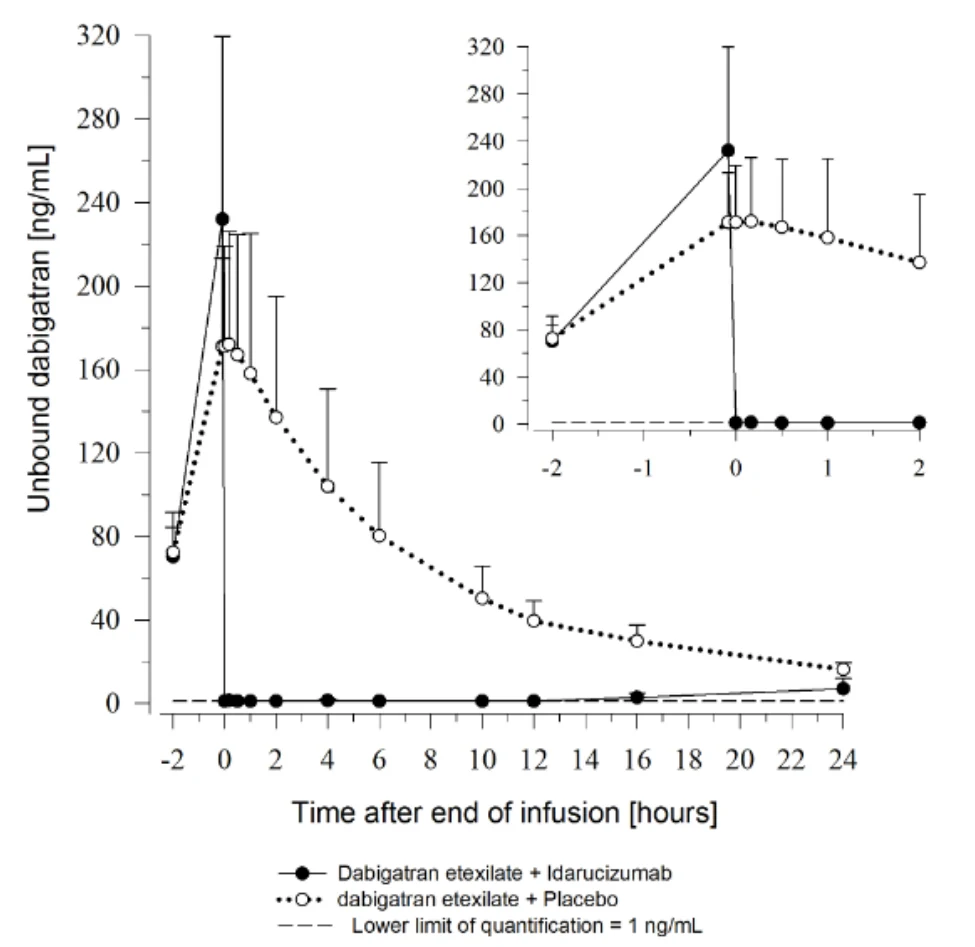
Immediately after the administration of idarucizumab, the plasma concentration of unbound dabigatran was reduced by more than 99%. This reduction in unbound dabigatran results in an immediate, complete and sustained reversal of the anticoagulant effect due to dabigatran.
Any plasma concentration of dabigatran in the plasma now represents the dabigatran bound and neutralized by idarucizumab, as well as the unbound dabigatran subsequently redistributed from the peripheral tissues to the plasma. Redistributed unbound dabigatran is bound and inactivated by idarucizumab in the plasma as long as free idarucizumab is available.
The attending physician should be aware that in some cases, the entry of unbound dabigatran from the tissues might re-establish the anticoagulant effect of dabigatran in the plasma. However, the majority of the patients showed sustained reversal of dabigatran plasma concentrations up to 12 hours (≥ 90%).
In a subset of patients (N=47 of 497; 9.46%), recurrence of plasma levels of unbound dabigatran and concomitant elevation of clotting tests was observed, possibly due to re-distribution of dabigatran. This occurred 1-24 hours after administration of idarucizumab mainly at timepoints ≥ 12 hours. In 10 Group A patients and no Group B patients, these re-elevations were associated with a bleed. In 3 of these patients, an additional dose of idarucizumab was administered (see CLINICAL TRIALS section).
Figure 1 – Mean plasma-levels (+ standard deviation, SD) of unbound dabigatran in the representative group of healthy subjects (administration of idarucizumab (N=6) or placebo (N=6) at 0 h)
Thrombin generation parameters
Whereas dabigatran (PRADAXA) exerts pronounced effects on parameters of the endogenous thrombin potential (ETP), idarucizumab (PRAXBIND) by itself has no such effect. However, when given to patients treated with PRADAXA, intravenous administration of PRAXBIND normalized both thrombin lag time ratio, and time to peak ratio to baseline levels as determined 0.5 to 12 hours after infusion.
Re-administration of dabigatran etexilate
24 hours after the idarucizumab infusion, re-administration of PRADAXA resulted in expected anticoagulant activity.
Pharmacokinetics
The pharmacokinetics of idarucizumab were investigated by non-compartmental analysis in healthy subjects aged 45 to 64 years receiving a dose of 5 g as a 5 minute intravenous infusion. The respective idarucizumab concentration-time profile is depicted in Figure 1a. Based on additional population pharmacokinetic analyses, sex, age, and race do not appear to have a clinically meaningful effect on the pharmacokinetics of idarucizumab.
Figure 1a – Idarucizumab concentration-time profile (mean ± SD) in the representative group of six healthy subjects following administration of 5 g idarucizumab as 5 min infusion
Distribution
Following the intravenous infusion of a 5 g dose to healthy volunteers (N=6) with a mean weight of 76.0 kg, the mean volume of distribution at steady state (Vss) was 9.1 L (coefficient of variation (CV) 23.6%); in the terminal phase, the volume of distribution (Vz) was 42.7 L (CV 22.6%). The half-life of the distribution phase was 47 minutes (CV 11.7%).
Biotransformation
Several pathways have been described that may contribute to the metabolism of antibodies. All of these pathways involve biodegradation of the antibody to smaller molecules, i.e. small peptides or amino acids which are then reabsorbed and incorporated in the general protein synthesis.
Elimination
Idarucizumab was rapidly eliminated with a total clearance of 47.7 mL/min (N=6, CV 17.9%), and a terminal half-life of 10.4 h (N=6, CV 18.1%). After intravenous administration of 5 g idarucizumab, 36.1% (N=6, CV 50.7%) of the dose was recovered in urine within a collection period of 6 hours and less than 1% in the following 18 hours.
Special population
Age, gender, race and body weight
Overall gender (201 males and 19 females), age (range: 20-76 yr.), body weight (range: 50-114 kg) as well as Caucasian (n=158) vs. Japanese (n=61) race distinctions had no clinically meaningful effect on the pharmacokinetics of idarucizumab, based on population pharmacokinetic analyses which included data from 220 volunteers and 486 patients.
Hepatic Impairment
A total of 58 patients in the idarucizumab clinical trials had hepatic impairment as determined by elevated liver function tests. Compared to 272 patients without hepatic impairment, the median AUC of idarucizumab was changed by -6%, 37% and 10% in patients with AST/ALT elevations of 1 to < 2x ULN (N=34), 2 to < 3x ULN (N=3) and > 3x ULN (N=21), respectively. Based on pharmacokinetic data from 12 patients with liver disease, the AUC of idarucizumab was increased by 10% as compared to patients without liver disease.
Renal Impairment
In Phase I studies PRAXBIND has been investigated in subjects with a creatinine clearance ranging from 44 to 213 mL/min. Subjects with a creatinine clearance below 44 mL/min have not been studied in Phase I.
Depending on the degree of renal impairment the total clearance was reduced compared to healthy subjects, leading to an increased exposure of idarucizumab.
Based on pharmacokinetic data from 347 patients with different degrees of renal function (median creatinine clearance – 21-99 mL/min) it is estimated that mean idarucizumab exposure (AUC0–24h) increases by 38% in patients with mild (CrCl 50 - < 80 mL/min), by 90% in moderate (30 - <50 mL/min) and by 146% in severe (0 < 30 mL/min) renal impairment. Since dabigatran is also excreted primarily via the kidneys, increases in the exposure to dabigatran are also seen with worsening renal function.
Based on these data and the extent of reversal of the anticoagulant effect of dabigatran in patients, renal impairment does not impact the reversal effect of idarucizumab.
Sexual Function/Reproduction
There are no data on the effect of PRAXBIND on fertility.
STORAGE AND STABILITY
Unopened vial
Store PRAXBIND in a refrigerator (2-8°C) until use or until the expiry date. The expiration date is the last day of the month as stated on the product label. Store vials in the original package to protect from light.
DO NOT FREEZE OR EXPOSE VIALS TO DIRECT HEAT. If a vial freezes or is exposed to direct heat, it should be discarded.
Prior to use, the unopened vial may be kept at room temperature (15 to 30°C) for up to 48 hours, if stored in the original package to protect from light.
Opened vial
An opened vial can be kept unrefrigerated (15-30°C) for up to 6 hours away from direct heat and light, as long as the temperature is not greater than 30°C. The solution should not be exposed to light for more than 6 hours.
PRAXBIND vials are for single-use only; it does not contain preservatives.
SPECIAL HANDLING INSTRUCTIONS
Not applicable. (See STORAGE AND STABILITY)
DOSAGE FORMS, COMPOSITION AND PACKAGING
Dosage Form:
PRAXBIND is supplied as a sterile solution for intravenous administration (bolus injection or infusion) in glass vials each containing 2.5 g idarucizumab in 50 mL of an aqueous vehicle (See DOSAGE AND ADMINISTRATION). Administration of the contents of two (2) vials represents a complete dose.
Composition:
PRAXBIND is a humanized monoclonal antibody fragment with a molecular weight of approximately 47.8 kDa.
Excipients:
Acetic acid glacial, polysorbate 20, sodium acetate trihydrate, sorbitol, water for injection
Each box contains one dose (2 vials) of PRAXBIND.
PART II: SCIENTIFIC INFORMATION
PHARMACEUTICAL INFORMATION
Drug Substance
Proper name: Idarucizumab
Chemical name: Not applicable
Molecular formula and molecular mass: approximately 47.8 kDa
Structural formula: Not applicable
Physicochemical properties: Not applicable
Product Characteristics
Idarucizumab is a humanized antibody fragment (Fab) generated from a mouse monoclonal antibody against dabigatran. The mouse monoclonal antibody was humanized and the Fab portion of the molecule is directly expressed in CHO cells.
The Fab molecule is composed of the light chain and the heavy chain fragment (amino acids 1-225), covalently linked together by one disulfide bond between cysteine 225 of the heavy chain fragment and cysteine 219 of the light chain.
CLINICAL TRIALS
The safety and efficacy of PRAXBIND have been investigated in pharmacokinetic/ pharmacodynamic trials with healthy volunteers, and in a single cohort case series trial with PRADAXA-treated patients who had life-threatening or uncontrolled bleeding, or who required emergency surgery or urgent procedure (RE-VERSE AD, Study 1321.3).
Study demographics and trial design
Table 6 Summary of patient demographics for clinical trials in specific indication
| Study # | Trial design | Dosage, route of administration and duration | Study subjects (n = number) | Mean age (Range) | Gender |
|---|---|---|---|---|---|
| 1321.1 | Phase I, randomized, double-blind, placebo-controlled, within dose groups study | Single rising dose, intravenous, 0.02 to 8 g | 157 (118 treated with idarucizumab) | 32 (19-46 years) | Male |
| 1321.2 | Phase I randomized, double-blind, placebo-controlled, two-way cross-over, single dose | 1, 2.5 or 5 g, intravenous | 46 (46 treated with idarucizumab) | 64 (45-76 years) | Male (58.7%) and female (41.3%) |
| 1321.5 | Phase I, randomized double-blind, single rising dose and placebo-controlled (within dose groups) study | 1, 2, 4, 5 (2.5+2.5) or 8 g, intravenous | 80 (60 treated with idarucizumab) | 27 (20-45 years) | Male, Japanese |
| 1321.3 | Single arm, open label, case series | 5 g, intravenous | 503 | 77 (21-96 years) | Male and female Total: (54.5% male, 45.5% female) Group A (57.1% male, 42.9% female) Group B (50.5% male, 49.5% female) |
Healthy Volunteers
Three randomised, double-blind, placebo-controlled Phase I studies in 283 subjects (224 treated with idarucizumab) were conducted to assess the safety, efficacy, tolerability, pharmacokinetics and pharmacodynamics of idarucizumab, given alone or after administration of dabigatran etexilate. The investigated population included 6.7% (19/283) females, 10.6% (30/283) subjects 65 years or older and 6.4% (18/283) subjects with renal deficiencies (CrCL<80 mL/min). In these studies the doses of idarucizumab ranged from 20 mg to 8 g; 35 subjects received a total dose of 5 g.
The pharmacokinetics of idarucizumab were investigated in 224 subjects and the pharmacodynamics of idarucizumab after administration of dabigatran etexilate were investigated in 141 subjects. Representative values for pharmacokinetic and pharmacodynamic parameters were established on the basis of six healthy subjects with a mean age (range) of 50 (46-57) years receiving a single 5 min infusion of 5 g idarucizumab (see Pharmacokinetics and Pharmacodynamics and information included in this section).
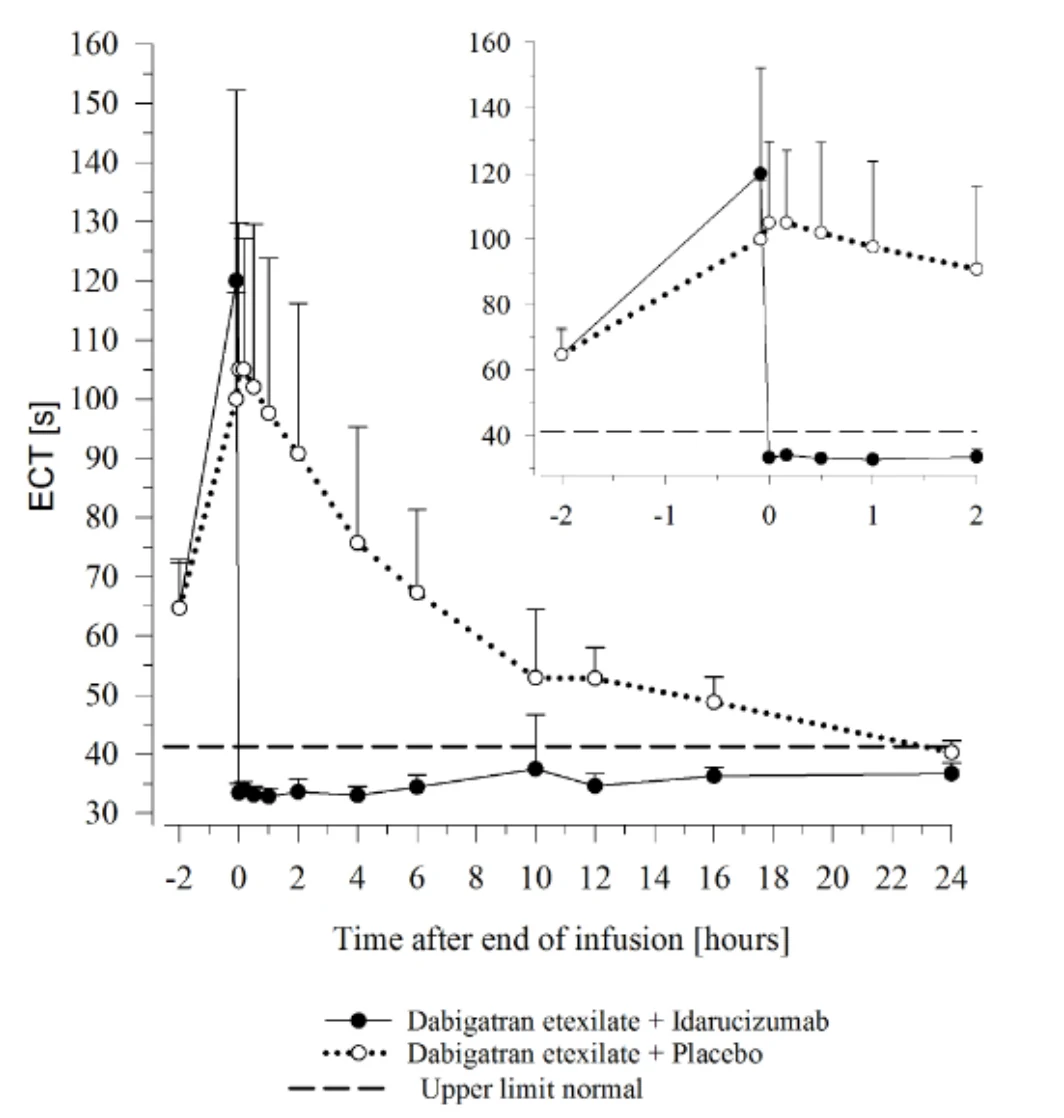
A complete and sustained reversal of dabigatran-induced clotting time prolongation measured by activated Partial Thromboplastin Time (aPTT), diluted thrombin time (dTT) and ecarin clotting time (ECT) was observed immediately after the idarucizumab infusion, lasting over the entire 24 hours observation period.
Figure 2 – Reversal of dabigatran-induced clotting time prolongation determined by dTT (mean + SD) in the representative group of healthy subjects (administration of Idarucizumab (N=6) or placebo (N=6) at 0 h)
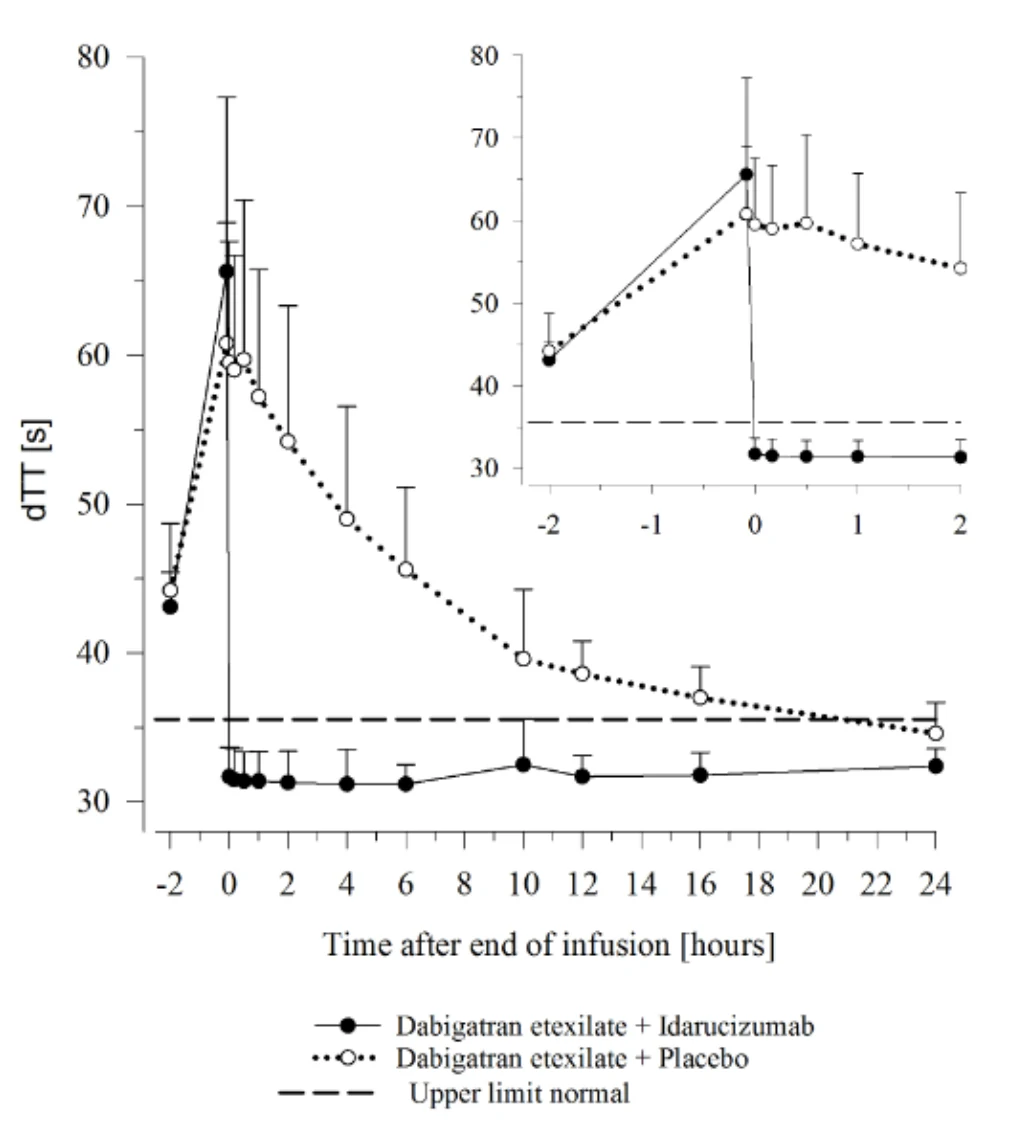
Figure 3 – Reversal of dabigatran-induced clotting time prolongation determined by ECT in the representative group of healthy subjects (administration of Idarucizumab (N=6) or placebo (N=6) at 0 h)
Single arm case series study in patients
One prospective, open-label, non-randomized, uncontrolled study (RE-VERSE AD, 1321.3) was conducted to investigate the treatment of adult patients who presented with dabigatran-related life-threatening or uncontrolled bleeding (Group A) or who required emergency surgery or urgent procedures (Group B). The primary endpoint was the maximum percentage reversal of the anticoagulant effect of dabigatran within 4 hours after the administration of idarucizumab, based on central laboratory determination of dilute thrombin time (dTT) or ecarin clotting time (ECT).
RE-VERSE AD included data for 503 patients: 301 patients (172 male/129 female) with serious bleeding (Group A) and 202 patients (102 male/100 female) requiring an urgent procedure/ surgery (Group B). The median age was 78 years (range 21-96 years) and the median creatinine clearance was 52.6 mL/min (11-193 mL/min). 61.5% of patients in Group A and 62.4% of patients in Group B had been treated with dabigatran 110 mg twice daily.
Reversal was only evaluable for those patients showing prolonged coagulation times prior to idarucizumab treatment (396/503, 78.7% for dTT, 461/503, 91.7% for ECT and 373/503, 74.2% for aPTT). Most patients in both Groups A and B, achieved complete reversal of the anticoagulant effect of dabigatran (dTT: 98.7%; ECT: 82.2%; aPTT: 92.5% of evaluable patients, respectively) in the first 4 hours after administration of 5 g idarucizumab. Reversal effects were evident immediately after administration.
Figure 4 – Reversal of dabigatran-induced clotting time prolongation determined by dTT in patients from the RE-VERSE AD study (N=487)
Figure 5 – Reversal of dabigatran-induced clotting time prolongation determined by ECT in patients from the RE-VERSE AD study (N=487)
The results of the centrally measured activated Prothrombin Time (aPTT) in patients were in support of the primary analysis.
Immunogenicity
Serum samples from 283 subjects in phase I trials (224 volunteers treated with idarucizumab) and 501 patients were tested for antibodies to idarucizumab before and after treatment.
Pre-existing antibodies with cross-reactivity to idarucizumab were detected in 12% (33/283, 244 treated with idarucizumab) of the healthy subjects and 3.8% (19/501) of the patients. Treatment-
emergent anti-idarucizumab antibodies were detected in 4% (10/224) of the healthy subjects and 1.6% (9/501) of the patients. The majority of pre-existing antibodies were shown to have low titers. No impact on the pharmacokinetics, the reversal effect of idarucizumab or hypersensitivity reactions was observed in these subjects. Nine patients were re-dosed within 6 days after the first idarucizumab dose and none were tested positive for anti-idarucizumab antibodies.
DETAILED PHARMACOLOGY
Preclinical pharmacodynamics
Idarucizumab stopped bleeding and prevented mortality following dabigatran administration in a pig blunt liver injury model.
Idarucizumab did not interact with volume expanders (e.g., crystaloids, colloids and retransfusion of washed red blood cells) in swine. Fifty-percent (50%) hemodilution with routinely used volume replacement strategies did not influence its neutralization of dabigatran anticoagulant activity. Idarucizumab did not reverse effects of other anticoagulants.
TOXICOLOGY
No adverse effects were observed in Rhesus monkeys and rats administered idarucizumab up to two and four weeks, respectively. Significant findings were limited to the expected pharmacological activity; anticoagulant effects of dabigatran etexilate were reversed by idarucizumab administration in monkeys.
Studies to evaluate the mutagenic and carcinogenic potential of idarucizumab have not been performed.
Studies to assess the potential reproductive or developmental effects of idarucizumab have not been performed.
No local irritation of the blood vessel was observed after intravenous or paravenous administration of idarucizumab. The idarucizumab formulation did not produce hemolysis of human whole blood in vitro.