


Product Monograph - Prucalopride
RECENT MAJOR LABEL CHANGES
None at the time of the most recent authorization.
TABLE OF CONTENTS
Certain sections or subsections that are not applicable at the time of the preparation of the most recent authorized product monograph are not listed.
RECENT MAJOR LABEL CHANGES ............................................................................................. 2
TABLE OF CONTENTS ............................................................................................................... 2
PART I: HEALTH PROFESSIONAL INFORMATION ....................................................................... 4
1 INDICATIONS .................................................................................................................. 4
1.1 Pediatrics .................................................................................................................... 4
1.2 Geriatrics .................................................................................................................... 4
2 CONTRAINDICATIONS ..................................................................................................... 4
4 DOSAGE AND ADMINISTRATION .................................................................................... 4
4.1 Dosing Considerations ................................................................................................ 4
4.2 Recommended Dose and Dosage Adjustment ........................................................... 5
4.4 Administration ............................................................................................................ 5
4.5 Missed Dose ............................................................................................................... 5
5 OVERDOSAGE ................................................................................................................. 5
6 DOSAGE FORMS, STRENGTHS, COMPOSITION AND PACKAGING .................................... 6
7 WARNINGS AND PRECAUTIONS ...................................................................................... 7
7.1 Special Populations ..................................................................................................... 9
7.1.1 Pregnant Women ....................................................................................................... 9
7.1.2 Breast-feeding ............................................................................................................ 9
7.1.3 Pediatrics .................................................................................................................... 9
7.1.4 Geriatrics .................................................................................................................... 9
8 ADVERSE REACTIONS ...................................................................................................... 9
8.1 Adverse Reaction Overview ........................................................................................ 9
8.2 Clinical Trial Adverse Reactions ............................................................................... 10
8.3 Less Common Clinical Trial Adverse Reactions ......................................................... 13
9 DRUG INTERACTIONS ................................................................................................... 14
9.2 Drug Interactions Overview ...................................................................................... 14
9.3 Drug-Behavioural Interactions .................................................................................. 14
9.4 Drug-Drug Interactions ............................................................................................. 14
9.5 Drug-Food Interactions ............................................................................................. 16
9.6 Drug-Herb Interactions ............................................................................................. 16
9.7 Drug-Laboratory Test Interactions ............................................................................ 16
10 CLINICAL PHARMACOLOGY ........................................................................................... 16
10.1 Mechanism of Action ................................................................................................ 16
10.2 Pharmacodynamics .................................................................................................. 17
10.3 Pharmacokinetics ..................................................................................................... 18
11 STORAGE, STABILITY AND DISPOSAL............................................................................. 23
12 SPECIAL HANDLING INSTRUCTIONS .............................................................................. 23
PART II: SCIENTIFIC INFORMATION ........................................................................................ 24
13 PHARMACEUTICAL INFORMATION ............................................................................... 24
14 CLINICAL TRIALS ........................................................................................................... 25
14.1 Clinical Trials by Indication ....................................................................................... 25
14.2 Comparative Bioavailability Studies.......................................................................... 35
15 MICROBIOLOGY ............................................................................................................ 35
16 NON-CLINICAL TOXICOLOGY ......................................................................................... 35
17 SUPPORTING PRODUCT MONOGRAPHS ....................................................................... 39
PATIENT MEDICATION INFORMATION ................................................................................... 40
PART I: HEALTH PROFESSIONAL INFORMATION
1 INDICATIONS
PRUCALOPRIDE (prucalopride tablets) is indicated for:
- The treatment of chronic idiopathic constipation in adult female patients in whom laxatives failed to provide adequate relief.
There were an insufficient number of male patients in the clinical trials to demonstrate efficacy. The efficacy of prucalopride tablets has been established in double-blind, placebo-controlled studies for up to 3 months. In case of prolonged treatment the benefit should be re-assessed at regular intervals. If treatment with prucalopride tablets is not effective during the first 4 weeks, therapy should be discontinued.
1.1 Pediatrics
Pediatrics (<18 years of age): No data are available to Health Canada; therefore, Health Canada has not authorized an indication for pediatric use.
1.2 Geriatrics
Geriatrics (> 65 years of age): Prucalopride tablets has been studied in subjects 65 years and older. Clinical studies demonstrate that efficacy similar to that seen in the study population under the age of 65 years may be achieved at a lower dose (i.e., 1 mg) (see 6 DOSAGE FORMS, STRENGTHS, COMPOSITION AND PACKAGING and 14 CLINICAL TRIALS).
2 CONTRAINDICATIONS
Prucalopride tablets is contraindicated in:
- Patients who are hypersensitive to this drug or to any ingredient in the formulation, including any non-medicinal ingredient or component of the container. For a complete listing, see 6 DOSAGE FORMS, STRENGTHS, COMPOSITION AND PACKAGINGS.
- Patients with renal impairment requiring dialysis, see 10.3 Pharmacokinetics.
- Patients with intestinal perforation or obstruction due to structural or functional disorder of the gut wall, obstructive ileus, severe inflammatory conditions of the intestinal tract, such as Crohn’s disease, ulcerative colitis, and toxic megacolon/megarectum.
4 DOSAGE AND ADMINISTRATION
4.1 Dosing Considerations
- Due to the specific mode of action of PRUCALOPRIDE (stimulation of propulsive motility), exceeding the daily dose of 2 mg is not expected to increase efficacy.
- If the intake of once daily PRUCALOPRIDE is not effective during the first 4 weeks of treatment, therapy should be discontinued.
- The efficacy of prucalopride tablets has been established in double-blind, placebo-controlled studies for up to 3 months. In case of prolonged treatment the benefit should be re-assessed at regular intervals.
4.2 Recommended Dose and Dosage Adjustment
Adults: 2 mg once daily. If there is no bowel movement in 3 to 4 days, patients should be directed to inform their doctor and the doctor should consider an appropriate add-on laxative for acute treatment of constipation (e.g., rescue treatment) during the ongoing PRUCALOPRIDE treatment.
Elderly (>65 years): 1 mg tablet once daily (see 10.3 Pharmacokinetics); if needed the dose can be increased to 2 mg once daily.
Children (<18 years):
Health Canada has not authorized an indication for pediatric use (see 10.3 Pharmacokinetics).
Patients with renal impairment:
The dose for patients with severe renal impairment (GFR <30 mL/min/1.73 m2) is 1 mg once daily (see 2 CONTRAINDICATIONS and 10.3 Pharmacokinetics). No dose adjustment is required for patients with mild to moderate renal impairment.
Patients with hepatic impairment:
Patients with severe hepatic impairment (Child-Pugh class C) start with 1 mg once daily which may be increased to 2 mg if required to improve efficacy and if the 1 mg dose is well tolerated (see 10 CLINICAL PHARMACOLOGY, Special Populations and Conditions). No dose adjustment is required for patients with mild to moderate hepatic impairment.
4.4 Administration
PRUCALOPRIDE film-coated tablets are for oral use and can be taken with or without food, at any time of the day.
4.5 Missed Dose
Prucalopride tablets has a terminal half-life of approximately 1 day. The dose should not be doubled to make up for a missed dose.
5 OVERDOSAGE
In a study in healthy subjects, treatment with prucalopride tablets was well tolerated when given in an up-titrating scheme up to 20 mg once daily (10 times the recommended therapeutic dose). An overdose may result in symptoms resulting from an exaggeration of the medicinal product’s known pharmacodynamic effects and include headache, nausea and diarrhea. Specific treatment is not available for PRUCALOPRIDE overdose. Should an overdose occur, the patient should be treated symptomatically and supportive measures instituted, as required. Extensive fluid loss by diarrhea or vomiting may require correction of electrolyte disturbances.
For the most recent information in the management of a suspected drug overdose, contact your regional poison control centre or Health Canada’s toll-free number, 1-844 POISON-X (1-844-764-7669).
6 DOSAGE FORMS, STRENGTHS, COMPOSITION AND PACKAGING
Table 1: Dosage Forms, Strengths, Composition and Packaging
| Route of Administration | Dosage Form / | Non-medicinal Ingredients | ||
| Strength/Composition | ||||
| Oral | Film-coated tablet 1 mg and 2 mg prucalopride (as prucalopride succinate) | 1 mg: Tablet core: hydroxypropyl cellulose, magnesium stearate and microcrystalline cellulose. Coating: hydroxypropyl cellulose, hydroxypropyl methylcellulose, titanium dioxide and triethyl citrate. 2 mg: Tablet core: hydroxypropyl cellulose, magnesium stearate and microcrystalline cellulose. Coating: ferric oxide red, ferric oxide yellow, hydroxypropyl cellulose, hydroxypropyl methylcellulose, titanium dioxide and triethyl citrate. | ||
PRUCALOPRIDE is available as film-coated tablets containing 1 mg or 2 mg of prucalopride (as prucalopride succinate). Both strengths of PRUCALOPRIDE film-coated tablets are available in bottles of 100 tablets and in blister packs of 28 tablets:
1 mg – white to off-white, round, biconvex coated tablets, engraved “APO” on one side,
“P1” on the other side.
- 2 mg – pink, round, biconvex coated tablets, engraved “APO” on one side, “P2” on the other side.
7 WARNINGS AND PRECAUTIONS
General
Patients with severe and clinically unstable concomitant disease (e.g., liver, cardiovascular or lung disease, neurological or psychiatric disorders, cancer or AIDS and other endocrine disorders) as well as patients with insulin-dependent diabetes mellitus have not been studied. Caution should be exercised when prescribing PRUCALOPRIDE to patients with these conditions.
Carcinogenesis and Mutagenesis
Prucalopride tablets tested weakly positive in the TA100 bacterial strain of the Ames assay and was negative or equivocal in several other in vitro and in vivo genotoxicity assays. Prucalopride tablets increased liver, thyroid, mammary, pituitary, adrenal medulla, and pancreatic islet cell tumor incidences in mice and/or rats. Mechanistic studies indicated that the increased tumor incidences may be due to rodent-specific epigenetic mechanisms and/or occurred at >60-times human exposure (see 16 NON-CLINICAL TOXICOLOGY).
Cardiovascular
PRUCALOPRIDE should be used with caution in patients with a history of arrhythmias or ischemic cardiovascular disease. Prucalopride tablets has been associated with a slight increase of heart rate in healthy volunteers, as well as a decrease in the PR interval (see 10 CLINICAL PHARMACOLOGY, Electrocardiography). Caution should be observed in patients with conditions that might be worsened by an increase in heart rate, such as ischemic heart disease or tachyarrhythmias (see 8 ADVERSE REACTIONS).
Caution should also be observed in patients with pre-excitation syndromes such as Wolff- Parkinson-White syndrome or Lown-Ganong-Levine syndrome, or atrio-ventricular nodal rhythm disorders, such as AV junctional rhythms with retrograde activation or ectopic atrial rhythms.
Palpitations have been reported during clinical studies. Clinical monitoring is recommended particularly in patients with cardiovascular conditions. If palpitations are severe and persistent patients should consult with their physician.
Gastrointestinal
In case of severe diarrhea, the efficacy of oral contraceptives may be reduced and the use of an additional contraceptive method is recommended to prevent possible failure of oral contraception (see the prescribing information of the oral contraceptive).
If severe or persistent diarrhea occurs during treatment, patients should be advised not to continue therapy with PRUCALOPRIDE and consult their physician.
Ischemic colitis is a potential and rare adverse event. No cases of ischemic colitis have been reported with prucalopride tablets during the clinical studies. Nonetheless, patients should be advised to discontinue PRUCALOPRIDE therapy and consult their physician if they develop severe, persistent, and/or worsening abdominal symptoms, bloody diarrhea or rectal bleeding.
Hepatic/Biliary/Pancreas
Caution should be exercised when prescribing PRUCALOPRIDE to patients with severe hepatic impairment (Child-Pugh class C) due to limited data in patients with severe hepatic impairment (see 4 DOSAGE AND ADMINISTRATION).
Monitoring and Laboratory Tests
Laboratory parameters were reviewed to detect changes over time. The overall incidence of abnormal laboratory values was similar between placebo and prucalopride-treated subjects in Phase 2 and 3 double-blind, placebo-controlled studies. There were no consistent or clinically relevant treatment-related trends.
Psychomotor Impairment
No studies on the effects of prucalopride tablets on the ability to drive and use machines have been performed. Prucalopride tablets have been associated with dizziness and fatigue particularly during the first day of treatment which may have an effect on driving and using machines (see 8 ADVERSE REACTIONS).
Psychiatric
Suicides, suicide attempts, and suicidal ideation have been reported in clinical trials. A causal association between treatment with prucalopride tablets and an increased risk of suicidal ideation and behavior has not been established. Patients should be monitored for persistent worsening of depression or the emergence of suicidal thoughts and behaviors. Counsel the patients and their caregivers and family members to be aware of any unusual changes in mood or behavior, and to discontinue PRUCALOPRIDE and contact the healthcare provider immediately.
Renal
Renal excretion is the main route of elimination of prucalopride (see 10.3 Pharmacokinetics). A dose of 1 mg is recommended in patients with severe renal impairment (see 4 DOSAGE AND ADMINISTRATION). Patients with severe renal impairment should be closely followed due to limited safety data.
7.1 Special Populations
7.1.1 Pregnant Women
- Cases of spontaneous abortion have been observed during clinical studies, although, in the presence of other risk factors, the relationship to prucalopride tablets is unknown.
- Animal studies do not indicate direct or indirect harmful effects with respect to pregnancy, embryonal/fetal development, parturition or postnatal development.
Experience with prucalopride tablets during pregnancy is very limited. PRUCALOPRIDE is not recommended during pregnancy. Women of childbearing potential should use effective contraception during treatment with PRUCALOPRIDE.
7.1.2 Breast-feeding
Prucalopride is excreted in breast milk. In the absence of human data, it is not recommended to use PRUCALOPRIDE during breast-feeding (See 10.3 Pharmacokinetics).
7.1.3 Pediatrics
Pediatrics (< 18 years of age): PRUCALOPRIDE is not recommended in children. No data are available to Health Canada; therefore, Health Canada has not authorized an indication for pediatric use.
7.1.4 Geriatrics
Geriatrics (> 65 years of age): Limited evidence does not indicate a change in the safety profile of prucalopride other than an increase in some events that are associated with age in the general population.
Geriatric patients are likely to have reduced renal function and therefore a lower starting dose should be considered in this group of patients (see 7 WARNINGS AND PRECAUTIONS/Renal and 4 DOSAGE AND ADMINISTRATION).
8 ADVERSE REACTIONS
8.1 Adverse Reaction Overview
Adverse events were compiled from Phase 2/3 controlled studies. Doses up to 4 mg prucalopride were used in these studies.
Prucalopride tablets have been given orally to 2,717 patients with chronic constipation in controlled clinical studies. Of these patients, 938 patients received prucalopride tablets at the recommended dose of 2 mg per day, while 1,361 patients were treated with 4 mg prucalopride tablets daily.
Overall, adverse events occurred in 69% of subjects treated with prucalopride and 60% of subjects treated with placebo. The most common adverse events (≥10%) encountered with prucalopride tablets are gastrointestinal (nausea, diarrhea, abdominal pain) and nervous system disorders (headache). Approximately half of the adverse events of nausea, diarrhea and headache occurred during the first 1 to 2 days of treatment. For abdominal pain about 36% occurred early on treatment. The majority of these adverse events were mild to moderate in severity. The incidence of these adverse events tended to increase with dose (see Table 2 below).
Serious treatment emergent adverse events (regardless of causality) were low and similar between the all prucalopride group (2.1%) and the placebo group (1.9%). Serious adverse events reported by ≥2 subjects that were suspected of being drug-related include abdominal pain and headache. Severe adverse events were reported in 18.4% of prucalopride group vs. 13.6% in the placebo group and 7.1% and 2.8% of prucalopride- and placebo-treated patients discontinued treatment, respectively.
The most commonly reported adverse reactions leading to discontinuation were related to gastrointestinal disorders (reported by 5.0% of subjects treated with prucalopride and 1.5% in the placebo group) and nervous systems disorders such as headache (2.3% and 0.4%, respectively). The incidence of these adverse reactions tended to increase with dose.
8.2 Clinical Trial Adverse Reactions
Clinical trials are conducted under very specific conditions. The adverse reaction rates observed in the clinical trials; therefore, may not reflect the rates observed in practice and should not be compared to the rates in the clinical trials of another drug. Adverse reaction information from clinical trials may be useful in identifying and approximating rates of adverse drug reactions in real-world use.
Table 2: Treatment Emergent Adverse Events Occurring More Frequently in The Combined prucalopride Group than The Placebo Group By at Least 0.5% and with at Least 1% Patients With an AE in Any prucalopride Dose Group Population: All Double-Blind Placebo-Controlled Phase II/III Studies in Patients with Chronic Constipation
| System Organ | Prucalopride | Prucalopride | Prucalopride | Prucalopride | All | Placebo | |||||||||||||||
| Class Preferred | 0.5mg | 1mg | 2mg | 4mg | Prucalopride | ||||||||||||||||
| Term | N= 110 (%) | N= 308 (%) | N= 938 (%) | N= 1361 (%) | N= 2717 (%) | N= 1369 (%) | |||||||||||||||
| Total no. of | |||||||||||||||||||||
| patients | |||||||||||||||||||||
| Cardiac disorders | |||||||||||||||||||||
| Palpitations | 1 (0.9) | 3 (1.0) | 7 (0.7) | 26 (1.9) | 37 (1.4) | 9 (0.7) | |||||||||||||||
| System Organ | Prucalopride | Prucalopride | Prucalopride | Prucalopride | All | Placebo | |||||||||||||||
| Class Preferred | 0.5mg | 1mg | 2mg | 4mg | Prucalopride | ||||||||||||||||
| Term | N= 110 (%) | N= 308 (%) | N= 938 (%) | N= 1361 (%) | N= 2717 (%) | N= 1369 (%) | |||||||||||||||
| Total no. of | |||||||||||||||||||||
| patients | |||||||||||||||||||||
| Gastrointestinal disorders | |||||||||||||||||||||
| Nausea | 7 (6.4) | 31 (10.1) | 157 (16.7) | 267 (19.6) | 462 (17.0) | 106 (7.7) | |||||||||||||||
| Diarrhea | 5 (4.5) | 23 (7.5) | 111 (11.8) | 191 (14.0) | 330 (12.1) | 45 (3.3) | |||||||||||||||
| Vomiting | 5 (4.5) | 6 (1.9) | 43 (4.6) | 72 (5.3) | 126 (4.6) | 32 (2.3) | |||||||||||||||
| Abdominal pain upper | 4 (3.6) | 12 (3.9) | 40 (4.3) | 71 (5.2) | 127 (4.7) | 37 (2.7) | |||||||||||||||
| Abdominal pain | 7 (6.4) | 22 (7.1) | 110 (11.7) | 142 (10.4) | 281 (10.3) | 128 (9.3) | |||||||||||||||
| Bowel sounds abnormal | 1 (0.9) | 3 (1.0) | 16 (1.7) | 17 (1.2) | 37 (1.4) | 5 (0.4) | |||||||||||||||
| Flatulence | 3 (2.7) | 11 (3.6) | 43 (4.6) | 67 (4.9) | 124 (4.6) | 52 (3.8) | |||||||||||||||
| Dyspepsia | 2 (1.8) | 4 (1.3) | 23 (2.5) | 42 (3.1) | 71 (2.6) | 29 (2.1) | |||||||||||||||
| Abdominal discomfort | 0 (0.0) | 4 (1.3) | 11 (1.2) | 22 (1.6) | 37 (1.4) | 13 (0.9) | |||||||||||||||
Rectal hemorrhage | 1 (0.9) | 1 (0.3) | 11 (1.2) | 21 (1.5) | 34 (1.3) | 11 (0.8) | |||||||||||||||
| Stomach discomfort | 1 (0.9) | 1 (0.3) | 3 (0.3) | 19 (1.4) | 24 (0.9) | 5 (0.4) | |||||||||||||||
| Gastroenteritis | 1 (0.9) | 3 (1.0) | 5 (0.5) | 7 (0.5) | 16 (0.6) | 2 (0.1) | |||||||||||||||
| General disorders and administration site conditions | |||||||||||||||||||||
| Fatigue | 1 (0.9) | 7 (2.3) | 24 (2.6) | 41 (13.0) | 73 (2.7) | 21 (1.5) | |||||||||||||||
| Malaise | 1 (0.9) | 2 (0.6) | 6 (0.6) | 18 (1.3) | 27 (1.0) | 5 (0.4) | |||||||||||||||
| Pyrexia | 0 (0.0) | 2 (0.6) | 8 (0.9) | 15 (1.1) | 25 (0.9) | 2 (0.1) | |||||||||||||||
| Nervous system disorders | |||||||||||||||||||||
| Headache | 12 (10.9) | 43 (14.0) | 204 (21.7) | 329 (24.2) | 588 (21.6) | 162 (11.8) | |||||||||||||||
| Dizziness | 2 (1.8) | 8 (2.6) | 41 (4.4) | 56 (4.1) | 107 (3.9) | 25 (1.8) | |||||||||||||||
| Migraine | 2 (1.8) | 4 (1.3) | 13 (1.4) | 14 (1.0) | 33 (1.2) | 9 (0.7) | |||||||||||||||
| Musculoskeletal and connective tissue disorder | |||||||||||||||||||||
| Muscle spasms | 3 (2.7) | 2 (0.6) | 18 (1.9) | 26 (1.9) | 49 (1.8) | 15 (1.1) | |||||||||||||||
| Metabolism and nutrition disorders | |||||||||||||||||||||
| Anorexia | 0 (0.0) | 1 (0.3) | 8 (0.9) | 15 (1.1) | 24 (0.9) | 4 (0.3) | |||||||||||||||
| Skin and subcutaneous tissue disorders | |||||||||||||||||||||
| System Organ | Prucalopride | Prucalopride | Prucalopride | Prucalopride | All | Placebo | |||||||||||||||
| Class Preferred | 0.5mg | 1mg | 2mg | 4mg | Prucalopride | ||||||||||||||||
| Term | N= 110 (%) | N= 308 (%) | N= 938 (%) | N= 1361 (%) | N= 2717 (%) | N= 1369 (%) | |||||||||||||||
| Total no. of | |||||||||||||||||||||
| patients | |||||||||||||||||||||
| Hyperhidrosis | 0 (0.0) | 3 (1.0) | 3 (0.3) | 10 (0.7) | 16 (0.6) | 1 (0.1) | |||||||||||||||
| Renal and urinary disorders | |||||||||||||||||||||
| Pollakiuria | 0 (0.0) | 1 (0.3) | 12 (1.3) | 17 (1.2) | 30 (1.1) | 3 (0.2) | |||||||||||||||
Prucalopride tablets have been given orally to 2,717 patients with chronic constipation in controlled clinical studies. Of these patients, 938 patients received prucalopride tablets at the recommended dose of 2 mg per day, while 1,361 patients were treated with 4 mg of prucalopride tablets daily.
In the three pivotal studies a total of 659 patients have been treated with prucalopride 2 mg and 4 mg for a duration of up to 12 weeks. The total person-years exposure to prucalopride in the double-blind, placebo-controlled studies was 406 years, compared to 216 person-years of exposure in the placebo group.
Adverse events reported by at least 1.0% of the patients in any prucalopride treatment group and showing at least 0.5% difference between the all prucalopride and placebo groups in the Phase 2 (4 weeks duration), three Phase 3 studies (4 weeks duration) and three pivotal double-blind placebo-controlled trials (12 weeks duration) in patients with chronic idiopathic constipation are shown in Table 2.
A total of 564 elderly patients (≥65 years) with chronic constipation were treated with prucalopride tablets in all double-blind studies. Similar to the younger age group, the most common adverse reactions with prucalopride treatment among the elderly (>65 years) groups were gastrointestinal disorders and headache. No clinically meaningful increase of adverse events was observed in prucalopride tablets treated groups as compared to placebo group.
Elderly patients (N=166) were followed-up for at least 6 months in an open-label study. The number (%) of elderly patients reporting adverse reactions were as follows: dizziness 12 (7.2%), surgical intervention 12 (7.2%), anemia 8 (4.8%), creatine phosphokinase increased 8 (4.8%), anxiety 7 (4.2%), palpitation 6 (3.6%), extrasystoles 3 (1.8%), atrial fibrillation 3 (1.8%), aggravated hypertension 3 (1.8%), ECG abnormal specific 3 (1.8%), myocardial infarction 3 (1.8%), syncope 2 (1.2%), aggravated angina pectoris 1 (0.6%).
In Phase 2 and 3 double-blind, placebo-controlled clinical trials in patients with chronic constipation, the incidence of a composite endpoint of atrial rhythm-related adverse events (atrial fibrillation, supraventricular extrasystoles, atrial flutter, supraventricular tachycardia, arrhythmia supraventricular, sinus arrhythmia, sinus tachycardia) was higher with prucalopride 1 to 2 mg (0.6%) than with placebo (0.1%).
Suicidal behavior / ideation
In the double-blind clinical trials, one patient reported a suicide attempt 7 days after the end of treatment with prucalopride tablets 2 mg once daily; none were reported in patients on placebo. In the open-label trials, two patients reported a suicide attempt and another patient reported suicidal ideation. Completed suicide was reported in two patients, previously treated with prucalopride tablets 2 mg or 4 mg; both discontinued prucalopride tablets for at least one month prior to the event.
8.3 Less Common Clinical Trial Adverse Reactions
Ear and labyrinth disorders: vertigo
General disorders and administration site conditions: fever, chest pain Metabolism and nutrition disorders: anorexia
Nervous system disorders: tremors, migraine
Psychiatric disorders: anxiety
Renal: urinary incontinence
Serious adverse events during all double-blind controlled studies:
The overall incidence of serious treatment-emergent adverse events (regardless of causality) was low and similar between the all prucalopride group (2.1%) and the placebo group (1.9%). Serious adverse events reported by up to 3 prucalopride-treated subjects (0.1%) are provided below:
Cardiac disorders: supraventricular tachycardia
Discontinuation: The most commonly reported adverse reactions leading to discontinuation in Phase 2/3 double-blind, placebo-controlled studies were related to gastrointestinal disorders (reported by 5.0% of subjects treated with prucalopride and 1.5% in the placebo group, and headache (2.3% and 0.4%, respectively). Dizziness led to discontinuation in 0.5% and 0.1%, respectively. The incidence of these adverse reactions tended to increase with dose. Gastrointestinal disorders: abdominal pain, constipation
General disorders: chest pain
Infections and infestations: bronchitis, pneumonia
Nervous system disorders: headache
Psychiatric disorders: anxiety
Reproductive system and breast disorders: vaginal hemorrhage
Surgical and medical procedures: abdominoplasty, hysterectomy
Serious adverse events during open-label follow-up studies (N=2,595): SAE reported in at least 3 cases (0.1%) to at most 0.3% are below:
Cardiac disorders: angina pectoris, myocardial infarction, atrial fibrillation Gastrointestinal disorders: abdominal pain, constipation, vomiting, nausea, diarrhea, pancreatitis
General disorders and administration site conditions: chest pain
Hepatobiliary disorders: cholelithiasis, cholecystitis
Infections and infestations: gastroenteritis, pneumonia, sinusitis, urinary tract infection Nervous system disorders: headache, syncope
Psychiatric disorders: confusional state, depression
Pregnancy puerperium and perinatal conditions: pregnancy, abortion spontaneous Reproductive system and breast disorders: ovarian cyst
Surgical and medical procedures: hysterectomy, cholecystectomy, colectomy Respiratory, thoracic and mediastinal disorders: dyspnea
SAEs in Compassionate study: (in at least 2 cases) colectomy
9 DRUG INTERACTIONS
9.2 Drug Interactions Overview
In vitro data indicate that prucalopride has a low interaction potential. Approximately 60% of the dose is excreted unchanged in urine via both passive filtration and active renal transporters (P-glycoprotein (P-gp) and BCRP). The therapeutic concentrations of prucalopride are not expected to affect the CYP-mediated metabolism of co-medicated medicinal products. Prucalopride is a weak substrate for P-gp and BCRP. Prucalopride is a weak in vitro inhibitor of P-gp and BCRP transporters, and it is not a significant inhibitor of OATP1B1, OATP1B3, OAT1, OAT3, BSEP and MRP2 transporters.
9.3 Drug-Behavioural Interactions
No information is available.
9.4 Drug-Drug Interactions
The drugs listed in this table are based on either drug interaction case reports or studies, or potential interactions due to the expected magnitude and seriousness of the interaction (i.e., those identified as contraindicated).
Table 3: Established or Potential Drug-Drug Interactions
| Proper/Common | Source of Evidence | Effect | Clinical comment | ||
| name | |||||
Ketoconazole, verapamil, cyclosporine A and quinidine | T | A potent inhibitor of CYP3A4 and of P-gp, increased the area under the curve (AUC) of prucalopride by approximately 40%. | NA | ||
| Warfarin, alcohol, paroxetine or oral contraceptives | CT | No clinically relevant effects | NA | ||
| Digoxin | CT | 10% decrease in the bioavailability of digoxin associated with prucalopride co-administration | NA | ||
| Erythromycin | CT | Increased erythromycin Cmax by 40% and AUC24h by 28%. The mechanism for this erythromycin- prucalopride interaction is not fully known, but the available data support that this is the consequence of the high intrinsic variability in erythromycin pharmacokinetics, rather than a direct effect of prucalopride | NA | ||
| Probenecid, cimetidine, | T | Did not affect the pharmacokinetics of prucalopride | NA | ||
| Proper/Common | Source of Evidence | Effect | Clinical comment | ||
| name | |||||
| erythromycin and paroxetine | |||||
| Alcohol | CT | Data suggests that the pharmacokinetics of prucalopride are unlikely to be affected to a clinically relevant extent by alcohol. | NA | ||
| Atropine-like substances | T | Because of the mechanism of action, the use of atropine-like substances may reduce the 5-HT4 receptor mediated effects of prucalopride | NA | ||
Legend: CT: Clinical Trial, T:Theoretical, NA – Not Applicable
9.5 Drug-Food Interactions
Interactions with food have not been established.
9.6 Drug-Herb Interactions
Interactions with herbal products have not been established.
9.7 Drug-Laboratory Test Interactions
Interactions with laboratory tests have not been established.
10 CLINICAL PHARMACOLOGY
10.1 Mechanism of Action
Chronic constipation is a condition that comprises multiple symptoms, including infrequent defecation, straining, lumpy or hard stools, sensation of incomplete evacuation and painful abdominal symptoms. Chronic constipation is generally associated with a reduction in the giant migrating contractions that normally drive mass transits through the colon. Morphological alteration of the enteric nervous system may underlie motility impairment in these patients.
Investigations suggest an important role of serotonin 5-HT4 receptors in mediating colonic motility.
10.2 Pharmacodynamics
Prucalopride is the first of a new class of dihydrobenzofurancarboxamide compounds with prokinetic activities. Prucalopride is a selective, high affinity serotonin (5-HT4) receptor agonist, which is likely to explain its prokinetic effects. Functional in vivo and in vitro studies revealed that prucalopride enhances the peristaltic reflex and propulsive motor patterns in the gastrointestinal tract via 5-HT4 receptor activation.
In in vitro studies, prucalopride demonstrated a high affinity (Ki <11 nM) for human 5-HT4 receptors expressed in HEK293 cells. Its interaction with the 5-HT4 receptor leads to the elevation of cAMP levels in the same cell line (EC50 = 5 nM). The affinity of prucalopride for 5- HT4 receptors is at least 150 times higher than that for other receptors such as 5-HT1,2 and human ether-à-go-go related gene (hERG) encoded IKr channel.
In dogs, prucalopride alters colonic motility patterns via serotonin 5-HT4 receptor stimulation: it stimulates proximal colonic motility, enhances gastroduodenal motility and accelerates delayed gastric emptying. Furthermore, giant migrating contractions are induced by prucalopride. These are equivalent to the colonic mass movements in humans, and provide the main propulsive force to defecation. In dogs, the effects observed in the gastrointestinal tract are sensitive to blockade with selective 5-HT4 receptor antagonists, illustrating that the observed effects are exerted via selective action on 5-HT4 receptors.
Safety pharmacology
Prucalopride did not affect IKr current in hERG-transfected HEK293 or COS-7 cells, at a concentration up to 1 mcM (49x the therapeutic plasma concentration). The EC50 values determined ranged between 4.1 and 22 mcM (or 200x to 1100x the therapeutic plasma concentration). Prucalopride had no effect on action potential duration up to 1mcM in experiments using various isolated tissues, such as rabbit and dog Purkinje fibers, rabbit heart and guinea pig papillary muscles. When studied in vivo in various animal species, intravenous administration of prucalopride caused increases in systolic and diastolic blood pressure in conscious dogs and in anesthetized pigs. However there were no other relevant cardiovascular effects at prucalopride concentrations comparable to and exceeding the plasma concentrations achieved after therapeutic doses in humans (7.5 ng/mL).
In vivo studies
Pharmacodynamic effects related to the GI prokinetic activity of prucalopride were studied in healthy subjects and in subjects with chronic constipation, at doses ranging from 0.5 to 4 mg once daily (o.d.). Effects on GI and colonic transit, colonic response to eating, colonic motility, and anorectal manometry were studied and symptoms associated with chronic constipation and bowel habit were documented.
Pharmacodynamic studies assessing various direct and indirect outcome measures suggest that prucalopride may accelerate colonic transit. In a randomized, double-blind, placebo-controlled, parallel-group study and a randomized, double-blind, placebo-controlled, 2-way cross-over study in patients with chronic constipation, prucalopride was associated with a non-significant trend toward an accelerated transit through the stomach, small bowel, and colon in patients with constipation unassociated with a rectal evacuation disorder.
Thorough QT Study
A thorough double-blind QT study, M0001-C102, was performed to evaluate the effects of prucalopride on the QT interval at therapeutic (2 mg) and supratherapeutic doses (10 mg). This study did not show significant differences between prucalopride and placebo at either dose, based on mean QTc measurements (largest increase in mean double-delta QTc [subject-specific correction] was 3.83 msec for 2 mg and 3.03 msec for 10 mg) and outlier analysis. This confirmed the results of two earlier, placebo controlled studies which included QT measurements. The three studies confirmed that the incidence of QT-related adverse events and ventricular arrhythmias was low and comparable to placebo.
10.3 Pharmacokinetics
Human Pharmacokinetics
Based on a population pharmacokinetic analysis on data from Phase 1, 2, and 3 studies, it was demonstrated that the apparent plasma clearance of prucalopride is similar in healthy subjects and subjects with chronic constipation. Due to limited pharmacokinetic information collected from studies with patients suffering from chronic constipation, the model included a 39% residual error for patient data. However, the model building process and model evaluation suggests that this pharmacokinetic model can sufficiently describe the plasma pharmacokinetics data observed in both healthy subjects and patients treated with prucalopride. Based on this modeled analysis, the apparent clearance of prucalopride was not affected by age, body weight or BMI, sex, or race, but as expected, creatinine clearance had a significant effect.
An open-label, parallel-design trial in healthy elderly (n=12 [8M/4F]; median age 71 years [range 65 to 81 years]) and young (n=12 [8M/4F]; median age 23 years [range 20 to 32 years]) subjects indicated that a once-daily 1 mg oral tablet dose of prucalopride for 7 consecutive days resulted in an increase in Cmax (36.5%) and AUC0-24h (40%), and reduction in Clren (20%) in elderly compared with young subjects. The elevation in plasma prucalopride concentration is attributed to a reduction in renal function associated with age, as prucalopride is primarily renally excreted by glomerular filtration and tubular secretion processes. Based on the limited data available at this time to demonstrate safety and efficacy of a 2 mg oral dose of prucalopride in an elderly population and the elevation of prucalopride plasma concentrations in elderly compared with young subjects following 1 mg oral dose of prucalopride, a prucalopride dose reduction (e.g., 1 mg) may be recommended in elderly subjects.
An open-label trial in subjects with mild (n=8 [6M/2F]; mean age 62.6 years [range 46 to 74]), moderate (n=7 [5M/2F]; 62.7 years [43 to 69]), or severe (n=9 [3M/6F]; 51.8 years [45 to 59]) renal impairment indicated that a single 2 mg oral capsule dose of prucalopride resulted in a progressively greater AUC∞ and t1/2 term with degree of renal impairment compared to subjects with normal renal function (n=10 [5M/5F]; 59.4 years [52 to 68]). AUC∞ increased 1.25-fold (mild), 1.5-fold (moderate), and 2.3-fold (severe), while t1/2 term increased from 30 h (normal renal function) to 34 h (mild), 43 h (moderate), and 47 h (severe). It is noted that in this study, the t1/2 term reported in subjects with normal renal function was greater (25%) than that observed in the majority of other prucalopride trials (30 h vs. 24 h). There were no observed marked differences in other absorption parameters (i.e., Tmax or Cmax) associated with degree of renal impairment. There were no adverse events classified as heart rate and rhythm disorders. There were no atrial or ventricular arrhythmias, or changes in electrocardiogram parameters considered to be clinically relevant. There were observed fluctuations in heart rate, PR interval and QT/QTc data, however these changes appear to reflect random effects as the degrees of renal impairment did not predict alteration of QT/QTc. No dose reduction is recommended in patients with mild or moderate renal impairment, however, a dose of 1 mg o.d. is recommended in patients with severe renal impairment. No data are available in dialysis subjects; however, it is likely that only minor amounts of prucalopride will be removed by dialysis. Prucalopride is contraindicated in dialysis subjects.
Prucalopride is not recommended for use in the pediatric population due to an incomplete characterization of the clinical pharmacology and associated safety risks, including a potential risk of cardiac arrhythmia.
An open-label trial in healthy lactating female subjects (n=8; median age 33 years [extremes 27 to 36 years]) indicated that a 2 mg oral tablet dose (o.d.) of prucalopride for 4 days resulted in the transfer of prucalopride into breast milk. The mean (extremes) ratio of prucalopride concentration in breast milk to plasma (as per AUC24h) was 2.65(2.31 to 3.33), however, prucalopride concentration in breast milk (unlike plasma) did not appear to reach steady-state kinetics by day 4). At this time, prucalopride is not recommended for use during breast feeding.
Studies in healthy subjects showed that there were no clinically relevant effects of prucalopride on the pharmacokinetics of warfarin (25 mg), alcohol (0.7 g/kg) or paroxetine (10 to 20 mg/kg). Although not formally tested, a drug-drug interaction study with alcohol suggests that the pharmacokinetics of prucalopride is unlikely to be affected to a clinically relevant extent by alcohol. There was a 10% decrease in the bioavailability of digoxin (0.25 mg) associated with prucalopride (4 mg o.d.) co-treatment.
Probenecid (800 mg b.i.d.) and cimetidine (500 mg b.i.d.), potent inhibitors of renal anion and cation transport, respectively, did not result in a clinically significant effect on the pharmacokinetics of prucalopride. As both drugs were studied at relatively high doses, it is considered unlikely that renal excretion of prucalopride will be influenced by other drugs with similar action.
Therapeutic doses of erythromycin and paroxetine did not affect the pharmacokinetics of prucalopride. Concurrent administration of prucalopride increased the bioavailability of erythromycin (500 mg q.i.d.) by 20 to 40%. The mechanism for this erythromycin-prucalopride interaction is not fully known, but the available data support that this is the consequence of the high intrinsic variability in erythromycin pharmacokinetics, rather than a direct effect of prucalopride.
Ketoconazole (200 mg b.i.d.), a potent inhibitor of CYP3A4 and of P-gp, increased the area under the curve (AUC) of prucalopride by approximately 40%. Interactions of similar magnitude as observed with ketoconazole may also occur with other potent inhibitors of P-gp, such as verapamil, cyclosporine A and quinidine.
The pharmacokinetic profile of prucalopride in man has been extensively studied. Prucalopride has a large volume of distribution and a low plasma clearance. The terminal half-life is about one day. After once-daily oral tablet administration, steady-state is attained in three days. The accumulation ratio after once-daily dosing ranges from 1.9 to 2.3. The pharmacokinetics of prucalopride appears dose-proportional and time-independent across a wide dose range up to at least five times the therapeutic dose level of 2 mg. A summary of 2 mg prucalopride (oral tablet; once daily) mean (±standard deviation) Pharmacokinetic Parameters in healthy subjects (n=12 subjects) are presented in Table 4 below.
Table 4: Summary of 2 mg prucalopride (oral tablet; once daily) Mean (± std dev) Pharmacokinetic Parameters in Healthy Subjects (n=12 Subjects)
| Tmax | Cmax | AUC0-24h | T1/2 term | Cl (mL/min)‡ | |||||||||
| (h) | (ng/mL) | (ng·h/mL) | (h) | ||||||||||
| Single dose | 2.6 ± 1.5 | 3.93 ± 0.73 | 57.3 ± 8.2 | 24.0 ± 3.6 | - | ||||||||
| Repeat dose† | 1.7 ± 1.3 | 7.45 ± 1.48 | 109 ± 23 | 30.5 ± 4.6 | 196 ± 39 | ||||||||
† steady-state obtained within 3 to 5 doses.
‡ determined following 2 mg prucalopride (oral solution; b.i.d.) (n=9 subjects)
Absorption: Prucalopride is rapidly absorbed following once-daily 2 mg oral tablet administration. Peak concentrations are generally attained in 2 to 3 hour after intake. At 2 mg once-daily, steady-state plasma concentrations fluctuate between trough and peak values of 2.5 and 7.5 ng/mL, respectively. The absolute oral bioavailability is >90%. Concomitant intake of food does not influence the oral bioavailability of prucalopride.
Distribution: Prucalopride is rapidly and extensively distributed and has a large volume of distribution (Vdss) of 567 L. The plasma protein binding of prucalopride is about 30%.
Metabolism: Metabolism is a minor route of prucalopride elimination. Prucalopride (0.5 mg oral solution; 14C-radiolabelled) metabolism results in the production of eight metabolites. Metabolites overall account for 6.3 to 13.8% of the administered dose (n=3 subjects). The major metabolite (R107504; formed by O-demethylation and oxidation of the resulting alcohol function to a carboxylic acid) accounts for 2.6 to 3.5% of the dose. Four of the identified metabolites (including R107504) exhibit lower or similar in vitro affinity to 5-HT4 receptors as compared to prucalopride.
Elimination: Prucalopride (0.5 mg oral solution; 14C-radiolabelled) is primarily excreted unchanged, 55.1 to 73.8% of the administered dose in urine and 3.7 to 8.1% in feces by 10 days following single-dose administration. After intravenous (single) and oral solution (steady-state) administration of 2 mg prucalopride, approximately 60% of the dose is recovered unchanged in the urine (during 72 h following administration). Half to two-thirds of the renal clearance of prucalopride is attributable to active renal secretion, while passive glomerular filtration of prucalopride is responsible for the remainder. The t1/2 term is approximately one day.
Special Populations and Conditions
- Population Pharmacokinetics: A population pharmacokinetic analysis suggested that the apparent total clearance of prucalopride was correlated with creatinine clearance, but that age, body weight, sex or race had no influence.
- Pediatrics: Prucalopride is not recommended for use in the pediatric population due to an incomplete characterization of the clinical pharmacology and associated safety risks, including a potential risk of cardiac arrhythmia.
- Geriatrics: Once-daily 1 mg oral tablet dose of prucalopride for 7 consecutive days resulted in an increased Cmax (36.5%) and AUC0-24h (40%), and reduced Clren (20%) in geriatric patients compared with young adults (n=12/group). The elevation in plasma prucalopride concentration is attributed to a reduction in renal function associated with age, as prucalopride is primarily renally excreted by glomerular filtration and tubular secretion processes.
- Hepatic Insufficiency: Non-renal elimination contributes up to about 35% of total elimination, and based on the available data, hepatic impairment is unlikely to affect the pharmacokinetics of prucalopride to a clinically relevant extent (see 4 DOSAGE AND ADMINISTRATION and 7 WARNINGS AND PRECAUTIONS).
The effect of moderate to severe hepatic impairment on the pharmacokinetics of prucalopride in comparison with healthy subjects was investigated in a pharmacokinetic study (8 patients per group, age 18 to 70). Hepatically impaired subjects received a single oral dose of 2 mg prucalopride.
In this study, the Cmax and AUC of prucalopride were, on average, 10 to 20 % higher in subjects with moderate to severe hepatic impairment compared with healthy subjects (see Table 5 below).
The increase in Cmax and AUC observed in this study was not considered to be clinically relevant.
Table 5: Pharmacokinetic Parameters in Subjects with Moderate and Severe Hepatic Impairment and Healthy Subjects (N=24 Subjects)
| Tmax* | Cmax | AUC∞ | T1/2 term | Cl/F | |||||||||||
| (h) | (ng/mL) | (ng·h/mL) | (h) | (L/h) | |||||||||||
| Healthy Subjects | 2.00 ± (1.00-4.00) | 3.77 ± 0.91 | 96.2 ± 25.5 | 27.4 ± 5.56 | 22.0 ± 5.29 | ||||||||||
Moderate Hepatic Impairment | 2.00 ± (1.00-3.00) | 4.17 ± 0.75 | 115 ± 36.5 | 29.8 ± 10.3 | 19.0 ± 5.61 | ||||||||||
Severe Hepatic Impairment | 1.50 ± (0.50-3.00) | 4.43 ± 1.56 | 111 ± 42.2 | 27.4 ± 8.96 | 20.5 ± 7.95 | ||||||||||
*Values shown are mean (SD) except for Tmax where median (range) is shown
- Renal Insufficiency: Compared to subjects with normal renal function, plasma concentrations of prucalopride after a single 2 mg dose were on average 25% and 51% higher in subjects with mild (ClCR 50 to 79 mL/min) and moderate (ClCR 25 to 49 mL/min) renal impairment, respectively. In subjects with severe renal impairment (ClCR ≤24 mL/min), plasma concentrations were 2.3 times the levels in healthy subjects. The terminal half-life was extended from 30 h (normal renal function) to 34 h (mild), 43 h (moderate) and 47 h (severe), respectively (see 4 DOSAGE AND ADMINISTRATION and 7 WARNINGS AND PRECAUTIONS).
Electrocardiography: In a randomized, double-blind, placebo- and active-controlled, parallel arm study in healthy volunteers (n=60/treatment arm), subjects received a single dose of 2 mg prucalopride from days 1 to 5, with dosing escalated by 2 mg/day to 10 mg on day 9, with continued dosing with 10 mg prucalopride from days 10 to 13. ECG data were collected on days 5 and 13.
During the 2 mg treatment on day 5, heart rate was significantly increased at 9 of 12 time points, with a maximum difference versus placebo of mean 5.4 (90% CI 3.0, 7.8) bpm at 8 h post-dosing. During the 10 mg treatment on day 13, statistically significant heart rate increases were evident from 0 h to 12 h, inclusive, with a maximum difference versus placebo of mean 6.4 (90% CI 4.3, 8.5) bpm at 6 h post-dosing.
Prucalopride resulted in statistically significant shortening of the PR interval at all time points on days 5 and 13. On day 5 during treatment with 2 mg dose, the largest decrease was a mean -11.9 (90% CI -14.5, -9.3) ms at 3.5 h post-dosing, whilst during treatment with prucalopride 10 mg on day 10, the largest decrease was a mean -10.6 (90% CI -13.6, -7.7) ms at 2 h post-dosing (see 7 WARNINGS AND PRECAUTIONS, Cardiovascular).
There was no evidence of treatment-related effects on the QTc interval or the QRS duration in this study.
11 STORAGE, STABILITY AND DISPOSAL
Store at room temperature 15°C-30°C. Protect from moisture.
Keep out of reach and sight of children.
12 SPECIAL HANDLING INSTRUCTIONS
Store in the original blister package in order to protect from moisture.
PART II: SCIENTIFIC INFORMATION
13 PHARMACEUTICAL INFORMATION
Drug Substance
Proper name: Prucalopride
Chemical name: 4-amino-5-chloro-2,3-dihydro-N-[1-(3-methoxypropyl)-4- piperidinyl]-7-benzofurancarboxamide butanedioate (1:1)
Prucalopride succinate
Prucalopride butanedioate
Molecular formula
and
molecular mass: C18H26ClN3O3.C4H6O4; 485.96 g/mol
Structural formula:
Physicochemical properties: Prucalopride succinate is a white to an off-white powder with a melting point of ~198˚C. Prucalopride succinate is soluble in N,N-dimethylformamide, dimethylsulfoxide and N,N-dimethylacetamide and sparingly soluble in methanol. It is freely soluble in acidic aqueous media. However, this solubility decreases with increasing pH. The pKa for the piperidine moiety of prucalopride succinate is 8.5, determined at 20°C. The pKa for the amino moiety of prucalopride succinate is less than 3, determined at 20°C.
14 CLINICAL TRIALS
14.1 Clinical Trials by Indication
Chronic Constipation
Table 6: Summary of Patient Demographics for Clinical Trials in Chronic Constipation
| Study # | Study Design | Dosage, Route of | Study Subjects | Mean | Sex | ||||||
| Administration | (n = number) | Age | |||||||||
| and Duration | ATP* | (Range) | |||||||||
| PRU-INT-6 | Double- blind, parallel group, placebo- controlled study. | Oral administration of prucalopride 2 mg and 4 mg tablets over a 12-week treatment phase. | n=716 (238 for 2 mg; 238 for 4 mg; 240 for placebo) | 43.9 years (17, 89) | 650 F 66 M | ||||||
| PRU-USA-11 | Double- blind, parallel group, placebo- controlled study. | Oral administration of prucalopride 2 mg and 4 mg tablets over a 12-week treatment phase. | n=620 (207 for 2 mg; 204 for 4 mg; 209 for placebo) | 48.3 years (18, 85) | 545 F 75 M | ||||||
| PRU-USA-13 | Double- blind, parallel group, placebo- controlled study. | Oral administration of prucalopride 2 mg and 4 mg tablets over a 12-week treatment phase. | n=641 (214 for 2 mg; 215 for 4 mg; 212 for placebo) | 47.9 years (18, 95) | 555 F 86 M | ||||||
| PRU-INT-12 | Double- blind, parallel group, placebo- controlled study in elderly patients | Oral administration of prucalopride 1 mg, 2mg and 4 mg tablets over a 4-week treatment phase. | n=303 (76 for 1 mg; 75 for 2 mg; 80 for 4 mg; 72 for placebo) | 76.4 years (64-95) | 211 F 92 M | ||||||
* ATP: randomized patients who received treatment: “All Treated Patients”.
Pivotal Studies
PRU-INT-6, PRU-USA-11 and PRU-USA-13
The efficacy of prucalopride was established in three multicentre, randomized, double-blind, 12-week, placebo-controlled studies in patients with chronic idiopathic constipation (n=1279 on prucalopride with 1124 females and 155 males [based on intent-to-treat population]). Mean age in the pooled studies was 46.9 (range 17, 95). Patients were predominantly white (89.8%).
The prucalopride doses studied in each of these three studies included 2 mg and 4 mg dosing once daily. Patients included in the study had the mean duration (range) of chronic constipation of 20 (0.3 to 83) years. The reported main complaints were infrequent defecation (about 29%), abdominal bloating (25%), abdominal pain (15%), feeling of incomplete evacuation (14%), straining (11%) and hard stool (6%). More than half of the patients had used diet or bulk forming agents (not defined as laxatives in protocol while widely classified as such in different textbooks), and approximately 85% of the patient population used laxatives for their condition in the 6 months preceding the study. More than 80% of these patients who used laxatives or bulk forming agents considered the therapeutic effect of these previous therapies inadequate.
Patients were included in the study if they had ≤2 CSBM/week as well as the occurrence of one or more of the following for at least 6 months before the study: very hard stool for at least a quarter of the stools, sensation of incomplete evacuation following at least a quarter of the stools, and/or straining at defecation at least a quarter of the time. Constipation was not induced by secondary causes of constipation.
Patients were excluded from the study if:
- Suffering from secondary causes of chronic constipation including endocrine disorders, metabolic disorder, neurologic disorders, all of which are not controlled by appropriate medical therapy except insulin-dependent diabetes mellitus, megacolon/megarectum or pseudo-obstruction and known or suspected organic disorders of the large bowel (i.e., obstruction, carcinoma, or inflammatory bowel disease).
- Untreated colonic polyps by colonoscopy at screening.
- Presence of severe and clinically uncontrolled cardiovascular, liver, or lung disease, neurologic or psychiatric disorders (including active alcohol or drug abuse), cancer or AIDS, and other gastrointestinal or endocrine disorders.
- Impaired renal function, i.e., serum creatinine concentration >2 mg/dL (>180 micromol/L), or creatinine clearance ≤50 mL/min.
- Clinically significant abnormalities of hematology, urinalysis, or blood chemistry.
Table 7: Results of studies (PRU-INT-6, PRU-USA-11 and PRU-USA-13) in Chronic Constipation
| Primary Endpoints | Associated Value and Statistical | ||
| Significance for Drug and Placebo at | |||
| Specific Dosages | |||
| The primary efficacy endpoint was the | Both doses were statistically superior | ||
| Primary Endpoints | Associated Value and Statistical | ||
| Significance for Drug and Placebo at | |||
| Specific Dosages | |||
proportion (%) of patients that reached normalization of bowel movements defined as an average of three or more spontaneous complete bowel movements (SCBM) per week over a 4-week and 12-week treatment period. SCBMs are defined as spontaneous (i.e., 24 hours without the use of laxatives or other aids) bowel movements with a sense of complete evacuation. | (p<0.001) to placebo at the primary endpoint in each of the three studies, with no incremental benefit of the 4 mg dose over the 2 mg dose. The proportion of patients treated with the recommended dose of 2 mg prucalopride that reached an average of ≥3 SCBM per week was 27.8% (Weeks 1-4) and 23.6% (Weeks 1-12), versus 10.5% (Weeks 1-4) and 11.3% (Weeks 1-12) on placebo (Table 8, Figure 1). | ||
Table 8: Number (%) of Patients with ≥3 SCBMs per Week – Pooled Data from PRU-INT-6, PRU-USA-11, and PRU-USA-13, ITT Analysis Set
| Time-point | Prucalopride 2 mg | Placebo | Difference (%) (95% CI) | ||||
| N=640 | N=645 | [Prucalopride 2 mg | |||||
| |||||||
| N | n (%) | N | n (%) | ||||
| Run-in | 638 | 5 (0.8) | 643 | 4 (0.6) | |||
| Weeks 1-12 | 640 | 151 (23.6) | 645 | 73 (11.3) | 12.3 (8.2, 16.4) * | ||
| Weeks 1-4 | 640 | 178 (27.8) | 645 | 68 (10.5) | 17.3 (13.1, 21.5) * | ||
| Weeks 5-8 | 612 | 147 (24.0) | 628 | 83 (13.2) | 10.8 (6.5, 15.1) * | ||
| Weeks 9-12 | 612 | 154 (25.2) | 630 | 89 (14.1) | 11.0 (6.7, 15.4) * | ||
*: p< 0.001 (Comparison vs placebo).
Figure 1: Proportion of Patients with ≥3 SCBM per Week Over Twelve Weeks (Pooled Data from PRU-INT- 6, PRU-USA-11, and PRU-USA-13, ITT Population)
Table 9: Results of studies (PRU-INT-6, PRU-USA-11 and PRU-USA-13) in Chronic Constipation 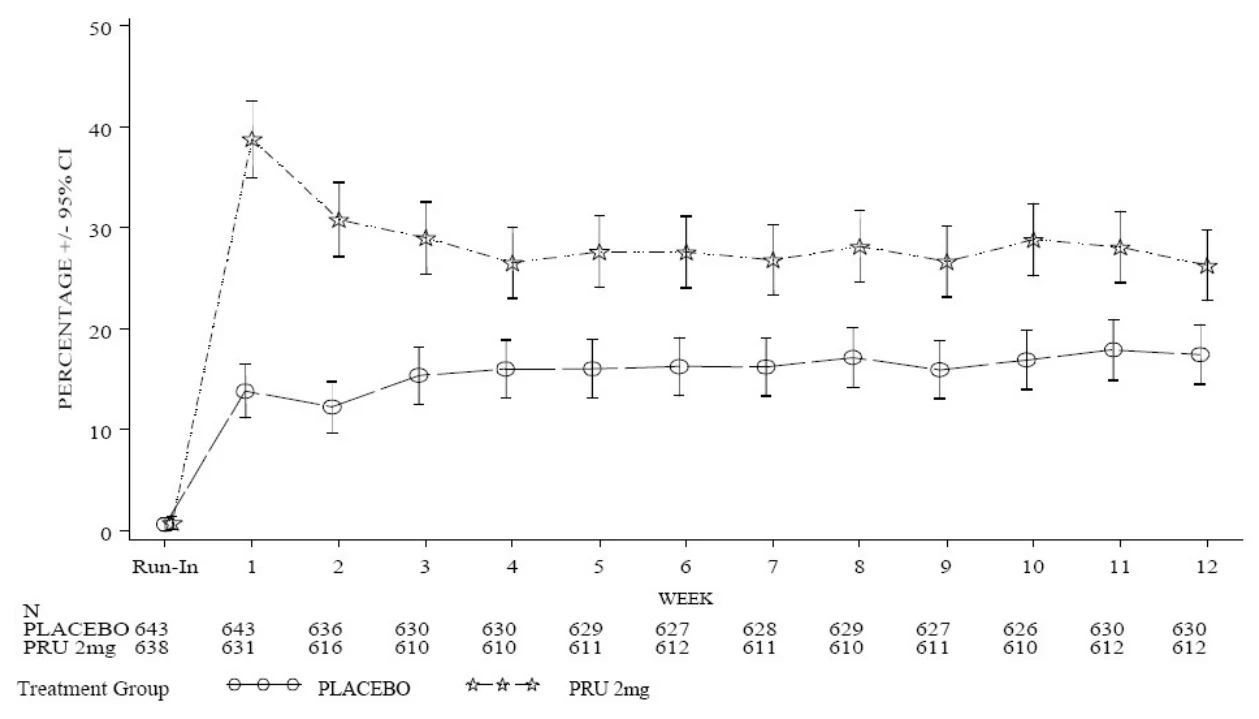
| Secondary Endpoints | Associated Value and Statistical | ||
| Significance for Drug and Placebo at | |||
| Specific Dosages | |||
Secondary endpoints were the proportion of patients with an average increase of ≥1 SCBM per week, average numbers of SCBM and SBM per week, constipation symptoms, time to first bowel movement; and patient satisfaction. | A clinically meaningful improvement of ≥1 SCBM per week, the most important secondary efficacy endpoint, was achieved in 48.1% (Week 4) and 43.1% (Week 12) of patients treated with 2 mg prucalopride versus 23.4% (Week 4) and 24.6% (Week
| ||
Table 10: Number (%) of Patients with an Increase of ≥1 SCBMs per Week (Data from PRU-INT-6, PRU-USA-11, and PRU-USA-13, ITT Population)
| Time point | Prucalopride 2.0 mg | Placebo | P-value | ||
| Prucalopride 2.0 mg vs. | |||||
| Placeboa | |||||
| Weeks 1-4 | 295/613 48.1% | 148/632 23.4% | <0.001 (PRU-INT-6) ≤0.001 (PRU-USA-11) ≤0.001 (PRU-USA-13) | ||
| Weeks 1-12 | 264/612 43.1% | 155/630 24.6% | 0.002 (PRU-INT-6) ≤0.001 (PRU-USA-11) ≤0.01 (PRU-USA-13) | ||
a p-values are from the individual pivotal Phase III studies
The treatment with prucalopride resulted in a significant increase of average frequency of S(C)BM/week as compared to placebo (Table 11). Despite the mean change from baseline being lower than 3 SCBM/week indicating that the majority of patients did not reach a nonconstipated state, about a quarter of prucalopride-treated patients did achieve normalization of bowel function (≥3 SCBM/week) (Table 8).
Table 11: Average Number of Weekly S(C)BM – Pooled Data from PRU-INT-6, PRU-USA-11, and PRU-USA-13, ITT Analysis Set
| Prucalopride 2.0 mg | Prucalopride 4.0 mg | Placebo | |||||||||
| Difference in LS | Difference in LS | ||||||||||
| Mean Change vs | Mean Change vs | ||||||||||
| Primary | Placebo (95% CI) b | Placebo (95% CI)b | |||||||||
| Mean | Mean | Mean | |||||||||
| Endpoints | N | Mean | N | Mean | N | Mean | Prucalopride | Prucalopride | |||
| Changea | Changea | Changea | |||||||||
| Interval | 2.0 mg | 4.0 mg | |||||||||
| Average SCBM/week | |||||||||||
| Baseline | 638 | 0.4 | 639 | 0.5 | 643 | 0.4 | |||||
| Weeks 1-12 | 612 | 1.9 | 1.5 | 593 | 2.1 | 1.6 | 630 | 1.1 | 0.7 | 0.8 (0.56, 1.07) | 0.9 (0.62, 1.13) |
| Weeks 1-4 | 613 | 2.1 | 1.7 | 596 | 2.4 | 1.9 | 632 | 1 | 0.6 | 1.1 (0.81, 1.37) | 1.3 (0.98, 1.55) |
| Average SBM/week | |||||||||||
| Baseline | 638 | 3.7 | 639 | 3.5 | 643 | 3.3 | |||||
| Weeks 1-12 | 612 | 6.3 | 2.6 | 593 | 6.3 | 2.8 | 630 | 4.2 | 0.9 | 1.8 (1.38, 2.20) | 2.1 (1.66, 2.48) |
| Weeks 1-4 | 613 | 7.2 | 3.5 | 596 | 7.4 | 3.9 | 632 | 4.4 | 1.1 | 2.5 (2.04, 2.96) | 2.9 (2.43, 3.36) |
a Mean change reflects mean change from run-in values
b Difference in least-square-mean (LS Mean) changes from run-in was based on ANCOVA model with treatment and trial as factors and baseline value as covariate.
Patients continued using laxatives during treatment (Table 12). However, the mean average number of bisacodyl tablets taken per week was reduced from run-in during the 12-week treatment period from approximately 2 to 1 tablet/week in the prucalopride groups while in the placebo group no reduction was found.
Table 12: Patients Using Laxatives During Run-In and Weeks 1-12 (pooled pivotal studies) - ITT Analysis Set
| Prucalopride 2 mg | Prucalopride 4 mg | Placebo | |
| N=640 | N=639 | N=645 | |
| n (%) | n (%) | n (%) | |
Bisacodyl use* Run-in Weeks 1-12 | 429 (67) 390 (61) | 421 (66) 359 (56) | 434 (67) 444(69) |
Enema* Run-in Weeks 1-12 | 53 (8) 50 (8) | 57 (9) 56 (9) | 57 (9) 87 (14) |
Other laxatives** Run-in Weeks 1-12 | 56 (9) 46 (7) | 69 (11) 45 (7) | 67 (10) 50 (8) |
* From diary-rescue medication; ** From CRF as concomitant medication
Bowel Movement Symptoms (from diaries)
- consistency of each bowel movement (watery, loose, normal, hard, very hard [little balls])
- degree of straining (no straining, mild straining, moderate straining, severe straining, very severe straining)
- feeling of complete evacuation (emptying) after a bowel movement was passed (yes/no)
Table 13: Bowel Movement Symptoms - Between Group Comparison – Pooled Data from PRU-INT-6, PRU-USA-11, and PRU-USA-13, ITT Analysis Set
| Prucalopride 2 mg | Prucalopride 4 mg | Placebo | |||||||||
| Difference in LS | Difference in LS | ||||||||||
| Mean Change | Mean Change | ||||||||||
| Time | Prucalopride 2 | Prucalopride 4 mg | |||||||||
| Mean | Mean | Mean | |||||||||
| Interval | N | Mean | N | Mean | N | Mean | mg vs. | vs. | |||
| Changea | Changea | Changea | |||||||||
| Placebo | Placebo | ||||||||||
| (95% CI)b | (95% CI)b | ||||||||||
| % SBM with normal consistency | |||||||||||
| Run-in | 553 | 25.2 | 582 | 27.7 | 564 | 23.5 | |||||
| Weeks 01-Dec | 607 | 46.6 | 21.2 | 588 | 48.8 | 21.1 | 606 | 39.1 | 16.2 | 6.2 (2.95, 9.37) | 8 (4.83, 11.23) |
| Prucalopride 2 mg | Prucalopride 4 mg | Placebo | |||||||||
| Difference in LS | Difference in LS | ||||||||||
| Mean Change | Mean Change | ||||||||||
| Time | Prucalopride 2 | Prucalopride 4 mg | |||||||||
| Mean | Mean | Mean | |||||||||
| Interval | N | Mean | N | Mean | N | Mean | mg vs. | vs. | |||
| Changea | Changea | Changea | |||||||||
| Placebo | Placebo | ||||||||||
| (95% CI)b | (95% CI)b | ||||||||||
| Weeks 01-Apr | 600 | 42.5 | 16.9 | 590 | 45.9 | 18.4 | 585 | 38.1 | 14.6 | 3.6 (0.24, 6.94) | 6.8 (3.48, 10.14) |
| % SBM with hard/very hard consistency | |||||||||||
| Run-in | 553 | 54.9 | 582 | 53.5 | 564 | 57.8 | |||||
| Weeks 01-Dec | 607 | 30.5 | -24.4 | 588 | 29.1 | -23.7 | 606 | 43.9 | -13.5 | -12.6 (-15.83, -9.3) | -13.1 (-16.34, -9.85) |
| Weeks 01-Apr | 600 | 29.7 | -25.2 | 590 | 27.7 | -25.3 | 585 | 46.3 | -11.3 | -15.8 (-19.32, -12.32) | -17 (-20.47, -13.53) |
| % SBM with no straining | |||||||||||
| Run-in | 553 | 12.8 | 583 | 13.8 | 563 | 10.8 | |||||
| Weeks 01-Dec | 607 | 18.7 | 6.4 | 588 | 20.2 | 5.9 | 606 | 13.9 | 2 | 5.1 (2.33, 7.82) | 5.3 (2.59, 8.05) |
| Weeks 01-Apr | 600 | 20.2 | 8.4 | 590 | 22.6 | 8.5 | 585 | 11.8 | 0.6 | 8.6 (5.73, 11.45) | 9.6 (6.77, 12.44) |
| % SBM with severe/very severe straining | |||||||||||
| Run-in | 553 | 40 | 583 | 38 | 563 | 42.1 | |||||
| Weeks 01-Dec | 607 | 23.1 | -17.9 | 588 | 21.9 | -15.9 | 606 | 31.1 | -10.7 | -8.1 (-11.21, -5.03) | -8 (-11.1, -4.95) |
| Weeks 01-Apr | 600 | 21.8 | -19.1 | 590 | 20.7 | -17.3 | 585 | 32.7 | -8.9 | -11.1 (-14.26, -7.89) | -10.9 (-14.05, -7.72) |
| % SBM with sensation complete evacuation | |||||||||||
| Run-in | 553 | 13.3 | 582 | 18.3 | 564 | 14.4 | |||||
| Weeks 01-Dec | 607 | 29 | 16.9 | 587 | 33.4 | 16.1 | 606 | 25 | 11.1 | 4.9 (1.58, 8.29) | 6.7(3.35, 10.03) |
| Weeks 01-Apr | 600 | 28.2 | 16.3 | 590 | 32.4 | 15.5 | 585 | 22.7 | 8.6 | 6.9 (3.5, 10.24) | 8.7 (5.4,12.09) |
a Mean change reflects mean change from run-in
b Difference in least-square-mean (LS Mean) changes from run-in was based on ANCOVA model with treatment and trial as factors and baseline value as covariate.
Most of the % SBM characteristics improved slightly (<10%) over placebo, however, the trend in the changes support the primary efficacy variable.
The time to first SCBM and SBM after the first intake on Day 1 and on Day 29 was statistically significantly shorter in the prucalopride groups (Table 14).
Table 14: Time to First S(C)BM After Day 1 Dose – Pooled Data from PRU-INT-6, PRU-USA-11, and PRU-USA-13, ITT Analysis Set
| Prucalopride 2 mg | Prucalopride 4 mg | Placebo | |
| N=640 | N=639 | N=645 | |
| Median (hh:mm) | Median (hh:mm) | Median (hh:mm) | |
| (range) | (range) | (range) | |
| Time to first SCBM | 56:10 (4:15; 651:00)* | 38:14 (2:55; 513:00)* | 375:00 (85:37; -) |
| Time to first SBM | 2:30 (1:05; 13:15)* | 1:50 (1:00; 7:02)* | 26:30 (4:43; 98:00) |
range: 25 – 75% interval
*p<0.001 vs. placebo
In all three studies, treatment with prucalopride resulted in small improvements in the Patient Assessment of Constipation Symptoms (PAC-SYM), a validated and disease-specific set of symptom measures, including abdominal, stool and rectal symptoms determined at Week 4 and Week 12. PAC-SYM questionnaire evaluation was rated with a 5-point scale: 0=absent through 4=very severe.
Table 15: Overall and Subscale Symptom Scores in The PAC-SYM Questionnaire – Pooled Data from PRU-INT-6, PRU-USA-11, and PRU-USA-13, ITT Analysis Set
| Time | Difference in | Difference in | |||||||||
| LS Mean | LS Mean | ||||||||||
| Prucalopride 2 mg | Prucalopride 4 mg | Placebo | |||||||||
| Interval | Change | Change | |||||||||
| Mean | Mean | Mean | Prucalopride | Prucalopride | |||||||
| 2mg vs. | 4mg vs. | ||||||||||
| N | Mean | N | Mean | N | Mean | ||||||
| Changeb | Changeb | Changeb | Placebo | Placebo | |||||||
| (95% CI)c | (95% CI)c | ||||||||||
| PAC-SYM overall score | |||||||||||
| Baseline | 639 | 2 | 636 | 1.9 | 641 | 2 | |||||
| Week 12a | 627 | 1.4 | -0.7 | 620 | 1.3 | -0.6 | 641 | 1.6 | -0.4 | -0.3 (-0.34, -0.17) | -0.3 (-0.36, -0.19) |
| Week 4a | 626 | 1.4 | -0.6 | 620 | 1.3 | -0.6 | 641 | 1.7 | -0.3 | -0.3 (-0.37, -0.21) | -0.3 (-0.41, -0.25) |
| PAC-SYM stool symptoms | |||||||||||
| Baseline | 638 | 2.5 | 636 | 2.4 | 640 | 2.5 | |||||
| Week 12a | 627 | 1.8 | -0.7 | 620 | 1.7 | -0.7 | 641 | 2.1 | -0.4 | -0.3 (-0.4, -0.18) | -0.3 (-0.41, -0.19) |
| Week 4a | 626 | 1.8 | -0.7 | 620 | 1.7 | -0.7 | 641 | 2.1 | -0.4 | -0.4 (-0.46, -0.25) | -0.4 (-0.47, -0.26) |
| PAC-SYM abdominal symptoms | |||||||||||
| Baseline | 638 | 2.1 | 636 | 1.9 | 641 | 2 | |||||
| Time | Difference in | Difference in | |||||||||
| LS Mean | LS Mean | ||||||||||
| Prucalopride 2 mg | Prucalopride 4 mg | Placebo | |||||||||
| Interval | Change | Change | |||||||||
| Mean | Mean | Mean | Prucalopride | Prucalopride | |||||||
| 2mg vs. | 4mg vs. | ||||||||||
| N | Mean | N | Mean | N | Mean | ||||||
| Changeb | Changeb | Changeb | Placebo | Placebo | |||||||
| (95% CI)c | (95% CI)c | ||||||||||
| Week 12a | 627 | 1.4 | -0.7 | 620 | 1.2 | -0.7 | 641 | 1.6 | -0.4 | -0.3 (-0.4, -0.18) | -0.3 (-0.45, -0.23) |
| Week 4a | 626 | 1.4 | -0.7 | 620 | 1.2 | -0.7 | 641 | 1.7 | -0.4 | -0.3 (-0.43, -0.24) | -0.4 (-0.51, -0.31) |
| PAC-SYM rectal symptoms | |||||||||||
| Baseline | 637 | 1.2 | 636 | 1.1 | 639 | 1.1 | |||||
| Week 12a | 627 | 0.7 | -0.5 | 620 | 0.7 | -0.4 | 640 | 0.8 | -0.3 | -0.1 (-0.23, -0.05) | -0.1 (-0.24, -0.06) |
| Week 4a | 626 | 0.8 | -0.4 | 620 | 0.6 | -0.4 | 640 | 0.8 | -0.3 | -0.1 (-0.19, -0.01) | -0.2 (-0.26, -0.09) |
a Data at endpoint
b Mean change reflects mean change from baseline values
c Difference in least-square-mean (LS Mean) changes from run-in was based on ANCOVA model with treatment and trial as factors and baseline value as covariate.
PAC-SYM questionnaire evaluation is rated with a 5-point scale: 0=absent through 4=very severe. Lower scores indicated improvement.
In all three studies, a significant benefit on a number of Quality of Life measures (PAC-QOL), such as degree of satisfaction with treatment and bowel habits, physical and psychosocial discomfort and worries and concerns, was observed at both the 4 and 12 week assessment time points during study visits. Table 16 provides an overview of PAC-SYM and PAC-QOL data.
Table 16: Overview of PAC-SYM and PAC-QOL Data for 12-Week Treatment Period (Pooled Data from PRU-INT-6, PRU-USA-11, PRU-USA-13, ITT Population)
| Prucalopride | ||
| Placebo | ||
| 2 mg | ||
| N=645 | ||
| N=640 | ||
| PAC-SYM overall score: | ||
| % patients with ≥1 improvement | 33.2%* | 21.5% |
| PAC-SYM stool symptom score: | ||
| % patients with ≥1 improvement | 40.8%* | 29.4% |
| PAC-SYM abdominal symptom score: | ||
| % patients with ≥1 improvement | 42.2%* | 27.9% |
| PAC-SYM rectal symptom score: | ||
| Prucalopride | ||
| Placebo | ||
| 2 mg | ||
| N=645 | ||
| N=640 | ||
| % patients with ≥1 improvement | 30.4%* | 21.6% |
| PAC-QOL overall score: | ||
| % patients with ≥1 improvement | 36.5%* | 18.6% |
| PAC-QOL satisfaction score: | ||
| % patients with ≥1 improvement | 44.0%* | 22.2% |
| % patients with mild or absent severity | 36.7%* | 21.8% |
| % patients with extremely or quite a bit effective treatment | 35.3%* | 17.8% |
*p<0.001 vs. placebo
Studies in Elderly
In PRU-INT-12, a Phase 3, double-blind, placebo-controlled trial in the elderly (≥65 years), 305 elderly patients were randomized to receive placebo, 1 mg, 2 mg or 4 mg once daily of prucalopride for 4 weeks. For the primary efficacy parameter, the number of patients with ≥3 SCBM per week, there was a higher proportion of patients reaching ≥3 SCBM per week in all 3 prucalopride groups compared with placebo: 39.5% on 1 mg prucalopride, 32% on 2 mg, and 31.6% on 4 mg vs. 20% on placebo. For the key secondary efficacy parameter (proportion of patients with increase of ≥1 SCBM per week), there were significantly higher proportions of patients with increases from run-in: 61.1% on 1 mg, 56.9% on 2 mg, 50.7% on 4 mg vs. 33.8% on placebo (p≤0.05). Other secondary endpoints tend to support the primary efficacy variable (Table 17).
Overall, the results indicate that all 3 doses were more effective than placebo but no advantage was gained by increasing the dose beyond 1 mg.
Table 17: Results for Efficacy Endpoints - From Trial in Elderly Patients - PRU-INT-12
| Prucalopride | Prucalopride | Prucalopride | ||
| Placebo | ||||
| 1 mg | 2 mg | 4 mg | ||
| Parameter | ||||
| N=76 | N=75 | N=79 | N=70 | |
| Number of patients with an average ≥3 SCBM per week, n/N (%) | ||||
| Weeks 1-4 | 30/76 (39.5)* | 24/75 (32.0) | 25/79 (31.6) | 14/70 (20.0) |
| Number of patients with an average increase ≥1 SCBM per week, n/N (%) | ||||
| Prucalopride | Prucalopride | Prucalopride | ||
| Placebo | ||||
| 1 mg | 2 mg | 4 mg | ||
| Parameter | ||||
| N=76 | N=75 | N=79 | N=70 | |
| Weeks 1-4 | 44/72 (61.1)* | 41/72 (56.9)* | 37/73 (50.7)* | 22/65 (33.8) |
| Mean change from baseline in SCBM per week | ||||
| Weeks 1-4 | 1.9 | 1.7 | 1.8 | 0.6 |
| Mean change from baseline in overall PAC-SYM symptoms score | ||||
| Week 4 | -0.53 | -0.37 | -0.55 | -0.23 |
| Mean change from baseline in overall PAC-QOL symptoms score | ||||
| Week 4 | -0.53 | -0.3 | -0.38 | -0.2 |
*p<0.05 vs. placebo (CMH test with Holm’s multiple comparison procedure)
14.2 Comparative Bioavailability Studies
PRUCALOPRIDE 1 mg and 2 mg tablets have satisfied the criteria for a Biopharmaceutics Classification System (BCS)-based biowaiver in comparison to the Canadian Reference Product, RESOTRAN® (prucalopride as prucalopride succinate) 1 mg and 2 mg tablets (Janssen Inc.).
15 MICROBIOLOGY
No microbiological information is required for this drug product.
16 NON-CLINICAL TOXICOLOGY
The oral toxicological profile of prucalopride has been investigated in a full set of studies, i.e., single-dose studies in mice and rats, repeat-dose studies in rats and dogs, fertility and pre- and postnatal developmental studies in rats, embryo-fetal developmental studies in rats and rabbits, in vitro and in vivo mutagenicity studies, carcinogenicity studies in rats, mice and neonatal mice, juvenile toxicity studies in rats and dogs, local tolerance studies, studies of impurities and degradation products, and finally, mechanistic studies in mice and rats.
General Toxicology:
Single oral gavage administration of prucalopride did not lead to mortality up to 320 mg/kg in male mice and up to 160 mg/kg in female mice. In rats, the highest oral dose tested of 640 mg/kg did not cause mortality in males, while in females mortality occurred at 548 mg/kg, but not at 320 mg/kg. A single intravenous dose of 40 mg/kg in rats and of 80 mg/kg in mice was devoid of lethal effects.
In the repeated dose oral toxicity studies (1, 6 and 12 [dogs only] months), 5 and 10 mg/kg/day were the No-Observed-Adverse-Effect-Levels (NOAEL) in rats and dogs, respectively. The AUC0-
24h exposure ratios at NOAEL versus humans (dosed at 2 mg daily) were 5 and 12 in male and female rats, respectively, and 244 in dogs. In rats, slight toxicity was evidenced by increased liver and heart weights, that were without notable microscopic correlates with the exception of slight increases in focal infiltration of chronic inflammatory cells in the heart of males at 80 mg/kg, and prolactin-mediated changes considered due to prucalopride antagonism of the dopamine D2 receptors in the pituitary gland at ≥20 mg/kg. The latter consisted of mammary gland stimulation in females at ≥20 mg/kg and males at 80 mg/kg and in the female genital tract, indicative of decreased estrus cycle activity, at 40 and 80 mg/kg. Other anatomic pathology changes consisted of: increased thymus weight at ≥20 mg/kg and slight individual cell necrosis and phagocytosis in the thymus at 80 mg/kg in a 6-month study; increased kidney and pancreas weight at ≥40 mg/kg and adrenal weight at 80 mg/kg without microscopic correlates; and increased thyroid weight at ≥40 mg/kg in a 4-week study and a slight increase in thyroid follicular epithelial height at 80 mg/kg in a 6-month study. In dogs, toxicity was seen at 20 and 30 mg/kg (CNS effects, histological changes in the liver and female genital tract, and lethality in 3/8 dogs at 30 mg/kg where the exposure margin was more than 500 times that at the 2 mg human dose).
Carcinogenicity:
Carcinogenicity studies with prucalopride resulted in an increased incidence of tumours in the two-year mouse and rat bioassays, while no drug-related tumour incidence increases were found in the neonatal mouse carcinogenicity study. The increased incidences consisted of: mammary gland adenocarcinomas in female mice at the high dose level of 80 mg/kg and in male and female rats at the high dose levels of 80 and 40 mg/kg, respectively. Other increases in rats consisted of pheochromocytomas, pancreatic islet cell adenomas, and pituitary adenomas in males at 80 mg/kg, hepatocellular adenomas in males at 40 and 80 mg/kg and females at 40 mg/kg, and thyroid follicular adenomas in males at 80 mg/kg and females at 40 mg/kg. According to recent ICH Guidance, positive tumorgenicity findings in rodents at doses above those producing a 25-fold exposure over that in humans would not generally be considered likely to reflect a relevant risk to humans. The increased tumour incidences in the prucalopride carcinogenicity studies all occurred at exposure (AUC) margins greater than 60 times that in humans at the 2 mg therapeutic dose and the no-effect margins were close to or greater than 25-fold with the exception of the liver tumours in the mid-dose male rats where the margin is only six times that at the 2 mg human dose.
The tumour profile was considered to reflect rodent-specific epigenetic responses related to a weak CAR-mediated pleiotropic response in the liver including organ weight increases and microsomal enzyme induction (rat) with respect to the liver tumours and thyroid tumours, and stimulation of prolactin secretion (rat and mouse) in the case of the mammary and pituitary tumours. The increased incidence of thyroid tumours was likely a consequence of hepatic microsomal enzyme induction resulting in increased metabolism and excretion of thyroxine and stimulation of the thyroid gland. The increased prolactin levels were likely due to prucalopride antagonism of the dopamine D2 receptors in the pituitary gland. It is concluded that the tumorigenic risk from prucalopride to humans is low.
Genotoxicity:
Genotoxicity studies revealed a slight but reproducible positive result in the in vitro Ames reverse mutation test using the TA100 strain with and without metabolic activation. Prucalopride also increased unscheduled DNA synthesis (UDS) in rat hepatocytes in vitro at cytotoxic concentrations ≥100 mcg/mL, but not at ≤50 mcg/mL. DNA adduct formation occurred in mouse and rat liver (but not other tissues) after oral prucalopride administration, although only under non-standard assay conditions and the adducts did not contain prucalopride or its known metabolites and therefore any relationship to treatment is unclear. However, prucalopride was negative in the majority of the genetic toxicity assays that consisted of: most bacterial strains used in the Ames assay, SOS-repair, mouse lymphoma cell, human peripheral blood lymphocyte, in vivo mouse micronucleus, in vivo UDS, and in vivo transgenic Big Blue (evaluates mutagenicity and adduct formation in rat liver) assays. A Structural Alert Relationship analysis did not show any alert for genotoxicity of prucalopride or its metabolites. Therefore, from a weight of evidence perspective, prucalopride is considered to have low in vivo genotoxic potential.
Reproductive and Developmental Toxicology:
Oral reproductive toxicology studies in rats did not elicit adverse effects up to 20 mg/kg in Segment I and Segment III studies. Increased precoital interval and pre-implantation loss at 80 mg/kg may have been due to maternal prolactin-mediated effects in the segment I study. In the Segment III study, a slight decrease in the weight of the gravid uterus and a marginal decrease in the number of corpora lutea were seen in the 80 mg/kg high dose group. In the oral Segment II studies in rats and rabbits, no teratogenicity or other embryotoxicity was seen up to the highest doses of 80 mg/kg, corresponding with exposure ratios versus humans of 938 in rats (based upon Cmax; AUC was not available) and 38 in rabbits (based upon AUC0-24h).
Juvenile Toxicity:
One-week and one-month neonatal/juvenile toxicity studies were performed in rats and dogs, resulting in a NOAEL of 5 mg/kg in the dog; however effects, including reduced body weight gain, occurred at all prucalopride dose levels (5 to 80 mg/kg) tested.
Exposure margins in the nonclinical species relative to that after a human therapeutic dose of 2 mg for principal findings in pivotal toxicology studies are summarized in Table 18.
Table 18: Summary of Exposure Margins in Pivotal Toxicology Studies
| Exposure Ratioa | ||||
| Species and | ||||
| Study Type | NOAEL (mg/kg) | Dose Level Ratioa | (AUC unless | |
| Specific Study | ||||
| specified) | ||||
Single-dose (mortality) |
| 160(F) - 320(M) 320(F) - 640(M) | 4000 - 8000 16000 | NA NA |
| Repeat-dose |
| 5 10 | 125 250 | 5 (M) -12 (F) 244 |
Reproductive/ developmental |
| 20 80 80 20 | 500 2000 2000 500 | ~102b 938c 38 ~102b |
| Neonatal / Juvenile |
| < 5 5 | NA 125 | NA ~54d |
Genotoxicity (in vivo) |
| 640 | 16000 | NA |
| 548 80 | 13700 2000 | 3208c ~430e | |
| Carcinogenicity |
| 5 (M) -10 (F) 80 (M) -20 (F) 300 | 125 (M)-250 (F) 2000(M)-500 (F) 7500 | 6 (M); 40 (F) 219 (M); 24 (F) 1606 (M); 1679 (F) |
Key: M: Males F: Females; NA: Not available
a Human dose of 2 mg/50 kg/day (AUC24h 7 days: 109 ng·h/mL).
b Exposure ratio based on AUC1-8h of 11081 ng·h/mL at 20 mg/kg dose level on day 16 of pregnancy in rat Segment II study where AUC was only determined at mid-dose level.
c Exposure ratio based on Cmax in humans after 7 days at 7.45 ng/mL.
d Exposure ratio based on estimated AUC from one-week exploratory study in neonatal dogs. e AUC0-24h based on a comparable study in Wistar rats at 80 mg/kg.
17 SUPPORTING PRODUCT MONOGRAPHS
- 1.
RESOTRAN® (Prucalopride tablets, 1 mg and 2 mg), submission control 275504, Product
Monograph, Amdipharm Limited. (NOV 08, 2023)