


Product Monograph - Ratio-Salbutamol HFA
SUMMARY PRODUCT INFORMATION
Route of Administration | Dosage Form / Strength | Clinically Relevant Nonmedicinal Ingredients |
| oral inhalation | Inhalation aerosol: 100 mcg salbutamol | 1,1,1,2-tetrafluoroethane (HFA-134a) |
For a complete listing see Dosage Forms, Composition and Packaging section.
INDICATIONS AND CLINICAL USE
ratio-SALBUTAMOL HFA (salbutamol sulphate) inhalation aerosol is indicated for: $ the symptomatic relief and prevention of bronchospasm due to bronchial asthma, chronic bronchitis and other chronic bronchopulmonary disorders in which bronchospasm is a complicating factor.
$ the prevention of exercise-induced bronchospasm.
Pediatrics (<4 years of age):
The safety and efficacy in children below the age of 4 years has not been established.
CONTRAINDICATIONS
$ Patients who are hypersensitive to this drug or to any ingredient in the formulation or component of the container. For a complete listing, see the Dosage Forms, Composition and Packaging section of the Product Monograph.
WARNINGS AND PRECAUTIONS
General
Patients should always carry their ratio-SALBUTAMOL HFA (salbutamol sulphate) inhalation aerosol to use immediately if an episode of asthma is experienced. If therapy does not produce a significant improvement or if the patient's condition worsens, medical advice must be sought to determine a new plan of treatment. In the case of acute or rapidly worsening dyspnea, a doctor should be consulted immediately.
Use of Anti-Inflammatory Agents
In accordance with the present practice for asthma treatment, concomitant anti-inflammatory therapy (eg. corticosteroids) should be part of the regimen if ratio-SALBUTAMOL HFA needs to be used more than 3 times a week (not including its use to prevent exercise-induced bronchospasm) (see DOSAGE AND ADMINISTRATION). It is essential that the physician instruct the patient in the need for further evaluation if the patient's asthma becomes worse.
Cardiovascular
In individual patients, any beta2-adrenergic agonist, including salbutamol, may have a clinically significant cardiac effect. Care should be taken with patients suffering from cardiovascular disorders, especially coronary insufficiency, cardiac arrhythmias and hypertension. Special care and supervision are required in patients with idiopathic hypertrophic subvalvular aortic stenosis, in whom an increase in the pressure gradient between the left ventricle and the aorta may occur, causing increased strain on the left ventricle.
Fatalities have been reported in association with excessive use of inhaled sympathomimetic drugs in patients with asthma. The exact cause of death is unknown, but cardiac arrest following an unexpected development of a severe acute asthmatic crisis and subsequent hypoxia is suspected.
Endocrine and Metabolism
Metabolic Effects
In common with other beta-adrenergic agents, salbutamol sulphate can induce reversible metabolic changes such as potentially serious hypokalemia, particularly following nebulised or especially infused administration. Particular caution is advised in acute severe asthma since hypokalemia may be potentiated by concomitant treatment with xanthine derivatives, steroids and diuretics and by hypoxia. Hypokalemia will increase the susceptibility of digitalis-treated patients to cardiac arrhythmias. It is recommended that serum potassium levels be monitored in such situations.
Care should be taken with patients with diabetes mellitus. Salbutamol can induce reversible hyperglycemia during nebulised administration or especially during infusions of the drug. The diabetic patient may be unable to compensate for this and the development of ketoacidosis has been reported. Concurrent administration of corticosteroids can exaggerate this effect.
Care should be taken with patients with hyperthyroidism.
Hypersensitivity
Immediate hypersensitivity reactions may occur after administration of salbutamol sulphate, as demonstrated by rare cases of urticaria, angioedema, rash, bronchospasm, hypotension, anaphylaxis and oropharyngeal edema.
Care should be taken in patients who are unusually responsive to sympathomimetic amines.
Neurologic
Care should be taken with patients with convulsive disorders.
Respiratory
ratio-SALBUTAMOL HFA can produce paradoxical bronchospasm, which may be life-threatening. If paradoxical bronchospasm occurs, ratio-SALBUTAMOL HFA should be discontinued immediately and alternative therapy instituted. It should be recognized that paradoxical bronchospasm, when associated with inhaled formulations, frequently occurs with the first use of a new canister.
Special Populations
Pregnant women: Salbutamol has been in widespread use for many years in humans without apparent ill consequence. However, there are no adequate and well-controlled studies in pregnant women and there is little published evidence of its safety in the early stages of human pregnancy. Administration of any drug to pregnant women should only be considered if the anticipated benefits to the expectant woman are greater than any possible risks to the fetus (see TOXICOLOGY, Teratogenicity Studies).
During worldwide marketing experience, rare cases of various congenital anomalies, including cleft palate and limb defects have been reported in the offspring of patients being treated with salbutamol. Some of the mothers were taking multiple medications during their pregnancies. Because no consistent pattern of defects can be discerned, and baseline rate for congenital anomalies is 2-3%, a relationship with salbutamol use cannot be established.
Labour and Delivery: Because of the potential for beta-agonist interference with uterine contractility, use of ratio-SALBUTAMOL HFA for relief of bronchospasm during labour should be restricted to those patients in whom the benefits clearly outweigh the risks.
Nursing Women : Plasma levels of salbutamol sulfate and HFA-134a after inhaled therapeutic doses are very low in humans, but it is not known whether the components are excreted in human milk. Because of the potential for tumorigenicity shown for salbutamol in some animal studies, a decision should be made whether to discontinue nursing or to discontinue the drug, taking into account the benefit of the drug to the mother. It is not known whether salbutamol in breast milk has a harmful effect on the neonate.
Pediatrics: The use of metered-dose inhalers in children depends on the ability of the individual child to learn the proper use of this device. Metered-dose inhalers with spacers are recommended for children under 5 years of age, especially for administration of inhaled corticosteroids.
Conversion from a face mask to a mouthpiece is strongly encouraged as soon as the age and the cooperation of the child permit.
During inhalation, children should be assisted or supervised by an adult who knows the proper use of the device.
Rarely, in children, hyperactivity occurs and occasionally, sleep disturbances, hallucination or atypical psychosis have been reported.
The safety and efficacy in children below the age of 4 years has not been established.
Geriatrics: As with other beta2-agonists, special caution should be observed when using ratio-SALBUTAMOL HFA in elderly patients who have concomitant cardiovascular disease that could be adversely affected by this class of drug.
Monitoring and laboratory Tests
In accordance with the present practice for asthma treatment, patient response should be monitored clinically and by lung function tests.
Monitoring Control of Asthma
Failure to respond for at least three hours to a previously effective dose of ratio-SALBUTAMOL HFA indicates a deterioration of the condition and the physician should be contacted promptly. Patients should be warned not to exceed the recommended dose.
The increasing use of fast-acting, short duration inhaled beta2-adrenergic agonists to control symptoms indicates deterioration of asthma control and the patient's therapy plan should be reassessed. In worsening asthma it is inadequate to increase beta2-agonist use only, especially over an extended period of time. In the case of acute or rapidly worsening dyspnea, a doctor should be consulted immediately. Sudden or progressive deterioration in asthma control is potentially life threatening; the treatment plan must be re-evaluated, and consideration be given to corticosteroid therapy.(see DOSAGE AND ADMINISTRATION).
ADVERSE REACTIONS
Adverse Drug Reaction Overview
As with other bronchodilator inhalation therapy, the potential for paradoxical bronchospasm should be kept in mind. If it occurs, the preparation should be discontinued immediately and alternative therapy instituted.
Potentially serious hypokalemia may result from beta2-agonist therapy primarily from parenteral and nebulised routes of administration (see WARNINGS AND PRECAUTIONS, Endocrine and Metabolism).
Peripheral vasodilation and a compensatory small increase in heart rate may occur in some patients. Cardiac arrhythmias (including atrial fibrillation, supraventricular tachycardia, extrasystoles) have been reported usually in susceptible patients.
Other adverse reactions associated with salbutamol are nervousness and tremor. In some patients inhaled salbutamol may cause a fine tremor of skeletal muscle, particularly in the hands. This effect is common to all beta2-adrenergic stimulants. Adaptation occurs during the first few days of dosing and the tremor usually disappears as treatment continues.
In addition, salbutamol, like other sympathomimetic agents, can cause adverse effects such as drowsiness, flushing, restlessness, irritability, chest discomfort, difficulty in micturition, hypertension, angina, vomiting, vertigo, central nervous system stimulation, hyperactivity in children, unusual taste and drying or irritation of the oropharynx, headache, palpitations, transient muscle cramps, insomnia, nausea, weakness and dizziness.
Clinical Trial Adverse Drug Reactions
Because clinical trials are conducted under very specific conditions the adverse reaction rates observed in the clinical trials may not reflect the rates observed in practice and should not be compared to the rates in the clinical trials of another drug. Adverse drug reaction information form clinical trials is useful for identifying drug-related adverse events and for approximating rates.
Adverse reaction information concerning ratio-SALBUTAMOL HFA (salbutamol sulphate) inhalation aerosol is derived from two 12-week, randomized, double-blind studies in 610 adolescent and adult asthmatic patients that compared ratio-SALBUTAMOL HFA, ratio-SALBUTAMOL inhalation aerosol (CFC formulation), and an HFA-134a placebo inhaler.
Table 1 – Adverse experience incidence (% of patients) in two large 12-week adolescent and adult clinical trials*
ratio-SALBUTAMOL HFA n=202 (% patients) | ratio-SALBUTAMOL (CFC formulation) n=207 (% patients) | Placebo (HFA-134a) n=201 (% patients) | |
| Ear, nose, and throat | |||
| Throat irritation | 10 | 6 | 7 |
| Upper respiratory inflammation | 5 | 5 | 2 |
| Lower respiratory | |||
| Viral respiratory infections | 7 | 4 | 4 |
| Cough | 5 | 2 | 2 |
| Musculoskeletal | |||
| Musculoskeletal pain | 5 | 5 | 4 |
* This table includes all adverse events (whether considered by the investigator to be drug-related or unrelated to drug) that occurred at an incidence rate of at least 3.0% in the group treated with ratio-SALBUTAMOL HFA and more frequently in the group treated with ratio-SALBUTAMOL HFA than in the HFA-134a placebo inhaler group.
Overall, the incidence and nature of the adverse events reported for ratio-SALBUTAMOL HFA and ratio-SALBUTAMOL inhalation aerosol (CFC formulation) were similar. Results in a 2-week pediatric clinical study (n=35) showed that the adverse event profile was generally similar to that of the adult.
Adverse events reported by less than 3% of the adolescent and adult patients receiving ratio-SALBUTAMOL HFA and by a greater proportion of patients receiving ratio-SALBUTAMOL HFA than receiving HFA-134a placebo inhaler and that have the potential to be related to ratio-SALBUTAMOL HFA include diarrhea, laryngitis, cough, lung disorders, tachycardia, and extrasystoles. Palpitation and dizziness have also been observed with ratio-SALBUTAMOL HFA.
Immediate hypersensitivity reactions including angioedema, urticaria, bronchospasm, hypotension, rash, oropharyngeal oedema, anaphylaxis and collapse have been reported very rarely.
DRUG INTERACTIONS
Drug-Drug Interactions
Table 2- Established or Potential Drug-Drug Interactions
Proper name
| Ref | Effect |
Clinical comment
Monoamine
oxidase inhibitors or tricyclic
antidepressants
| CS | May potentiate action of salbutamol on cardiovascular system |
Salbutamol should be administered with extreme caution to patients being treated with monoamine oxidase inhibitors or tricyclic antidepressants.
Other inhaled sympathomimetic bronchodilators or epinephrine
| CS | May lead to deleterious cardiovascular effects |
Other inhaled sympathomimetic bronchodilators or epinephrine should not be used concomitantly with salbutamol. If additional adrenergic drugs are to be administered by any route to the patient using inhaled salbutamol, the adrenergic drugs should be used with caution. Such concomitant use must be individualised and not given on a routine basis. If regular co-administration is required then alternative therapy must be considered.
Beta-blockers
| CS | May effectively antagonize the action of salbutamol |
Beta-adrenergic blocking drugs, especially the non-cardioselective ones, such as propranolol, should not usually be prescribed together.
Diuretics
| CS | May lead to ECG changes and/or hypokalemia although the clinical significance of these effects is not known. |
The ECG changes and/or hypokalemia that may result from the administration of non-potassium sparing diuretics (such as loop or thiazide diuretics) can be acutely worsened by beta-agonists, especially when the recommended dose of the beta-agonist is exceeded. Caution is advised in the co-administration of beta-agonists with non-potassium sparing diuretics.
Digoxin
| CS | May lead to a decrease in serum digoxin levels, although the clinical significance of these findings for patients with obstructive airways disease who are receiving salbutamol and digoxin on a chronic basis is unclear |
Mean decreases of 16-22% in serum digoxin levels were demonstrated after single dose intravenous and oral administration of salbutamol, respectively, to normal volunteers who had received digoxin for 10 days. It would be prudent to carefully evaluate serum digoxin levels in patients who are currently receiving digoxin and salbutamol.
Legend: CS = Class Statement
DOSAGE AND ADMINISTRATION
Dosing Considerations
The dosage should be individualised, and the patient's response should be monitored by the prescribing physician on an ongoing basis.
In accordance with current Canadian asthma guidelines, if salbutamol is required more than three times a week (not including its use to prevent exercise-induced bronchospasm), anti-inflammatory therapy (eg. corticosteroids) should be part of the regimen.
Increasing demand for ratio-SALBUTAMOL HFA (salbutamol sulphate) inhalation aerosol in bronchial asthma is usually a sign of worsening asthma and indicates that the treatment plan should be reviewed.
If a previously effective dose fails to provide the usual relief or the effects of a dose last for less than three hours, patients should seek prompt medical advice since this is usually a sign of worsening asthma.
As there may be adverse effects associated with excessive dosing, the dosage or frequency of administration should only be increased on medical advice. However, if a more severe attack has not been relieved by the usual dose, additional doses may be required. In these cases, patients should immediately consult their doctors or the nearest hospital.
Recommended Dose and Dosage Adjustment
| Acute Symptoms | Intermittent and Long-term Treatment* | Prevention of Exercice-induced Asthma | Maximum Daily Dose (Total daily dose should not exceed) | |
| Adult | One to two puffs of [100 to 200 mcg salbutamol (as sulphate)] | One to two puffs [100 to 200 mcg salbutamol (as sulphate)] four times daily. | Two puffs [200 mcg salbutamol (as sulphate)] before exercise. | Eight puffs [800 mcg salbutamol (as sulphate)]. |
Children (4 years or older) | One puff [100 mcg of salbutamol (as sulphate)]. May be increased to two puffs (200 mcg salbutamol) if required. | One puff [100 mcg salbutamol (as sulphate)] four times daily. | One puff [100 mcg salbutamol (as sulphate)] before exercise. May be increased to two puffs (200 mcg salbutamol) if required. | Four puffs [400 mcg salbutamol (as sulphate)]. |
*Despite appropriate anti-inflammatory therapy (eg. corticosteroids), regular daily use of the ratio-SALBUTAMOL HFA remains necessary for the control of bronchospasm.
It is recommended to test spray ratio-SALBUTAMOL HFA into the air four times before using for the first time and in cases where the aerosol has not been used for more than 4 weeks.
Missed Dose
If a single dose is missed, instruct the patient to take the next dose when it is due or if they become wheezy.
Administration
ratio-SALBUTAMOL HFA is administered by the inhaled route only. To ensure administration of the proper dose of the drug, the patient should be instructed by the physician or other health professional in the proper use of the inhalation aerosol.
Inhaler actuation should be synchronised with inspiration to ensure optimum delivery of drug to the lungs.
The use of open mouth technique to administer ratio-SALBUTAMOL HFA has not been investigated in clinical trials.
OVERDOSAGE
Symptoms and signs
The most common signs and symptoms of overdose with salbutamol are transient beta agonist pharmacologically mediated events (see Warning and Precautions and Adverse Reactions). Overdosage may cause tachycardia, cardiac arrhythmia, hypokalemia, hypertension and, in extreme cases, sudden death. Serum potassium levels should be monitored.
Treatment
Consideration should be given to discontinuation of treatment and appropriate symptomatic therapy. To antagonise the effect of salbutamol, the judicious use of a cardioselective beta-adrenergic blocking agent (e.g. metoprolol, atenolol) may be considered, bearing in mind the danger of inducing an asthmatic attack. There is insufficient evidence to determine if dialysis is beneficial for overdosage of ratio-SALBUTAMOL HFA (salbutamol sulphate) inhalation aerosol.
Fatalities have been reported in association with excessive use of inhaled sympathomimetic drugs in patients with asthma. The exact cause of death is unknown, but cardiac arrest following an unexpected development of a severe acute asthmatic crisis and subsequent hypoxia is suspected.
ACTION AND CLINICAL PHARMACOLOGY
Mechanism of Action
Salbutamol produces bronchodilation through stimulation of beta2-adrenergic receptors in bronchial smooth muscle, thereby causing relaxation of bronchial muscle fibres. This action is manifested by an improvement in pulmonary function as demonstrated by spirometric measurements. At therapeutic doses, salbutamol has little action on the beta1-adrenergic receptors in cardiac muscle.
A measurable decrease in airway resistance is typically observed 5 to 15 minutes after inhalation of salbutamol. The maximum improvement in pulmonary function usually occurs 60 to 90 minutes after salbutamol treatment, and significant bronchodilator activity has been observed to persist for 3 to 6 hours.
Pharmacokinetics
After inhalation of recommended doses of salbutamol, plasma drug levels are very low. When 100 mcg of tritiated salbutamol aerosol was administered to two normal volunteers, plasma levels of drug-radioactivity were insignificant at 10, 20 and 30 minutes following inhalation. The plasma concentration of salbutamol may be even less as the amount of plasma drug-radioactivity does not differentiate salbutamol from its principal metabolite, a sulphate ester. In a separate study, plasma salbutamol levels ranged from less than 0.5 ng/mL to 1.6 ng/mL in ten asthmatic children one hour after inhalation of 200 micrograms of salbutamol.
Approximately 10% of an inhaled salbutamol dose is deposited in the lungs. Eighty-five per cent of the remaining salbutamol administered from a metered-dose inhaler is swallowed, however, since the dose is low (100 to 200 mcg), the absolute amount swallowed is too small to be of clinical significance. Salbutamol is only weakly bound to plasma proteins. Results of animal studies indicate that following systemic administration, salbutamol does not cross the blood-brain barrier but does cross the placenta using an in vitro perfused isolated human placenta model. It has been found that between 2% and 3% of salbutamol was transferred from the maternal side to the fetal side of the placenta.
Salbutamol is metabolized in the liver. The principal metabolite in humans is salbutamol-o-sulphate, which has negligible pharmacologic activity. Salbutamol may also be metabolized by oxidative deamination and/or conjugation with glucuronide.
Salbutamol is longer acting than isoprenaline in most patients by any route of administration because it is not a substrate for the cellular uptake processes for catecholamines nor for catechol-O-methyl transferase. Salbutamol and its metabolites are excreted in the urine (>80%) and the feces (5% to 10%). Plasma levels are insignificant after administration of aerosolized salbutamol; the plasma half-life ranges from 3.8 to 7.1 hours.
Propellant HFA-134a is devoid of pharmacological activity except at very high doses in animals (140 to 800 times the maximum human exposure based on comparisons of AUC values), primarily producing ataxia, tremors, dyspnea, or salivation. These are similar to effects produced by the structurally related CFCs, which have been used extensively in metered-dose inhalers.
In animals and humans, propellant HFA-134a was eliminated rapidly in the breath, with no evidence of metabolism or accumulation in the body. Time to maximum plasma concentration (tmax) and mean residence time are both extremely short, leading to a transient appearance of HFA-134a in the blood with no evidence of accumulation.
STORAGE AND STABILITY
Replace the mouthpiece cover firmly and snap it into position. Keep out of the reach of children. Store at a temperature between 15EC and 25EC.
SPECIAL HANDLING INSTRUCTIONS
The contents of ratio-SALBUTAMOL HFA (salbutamol sulphate) inhalation aerosol are under pressure. The container may explode if heated. Do not place in hot water or near radiators, stoves or other sources of heat. Even when empty, do not puncture or incinerate container.
DOSAGE FORMS, COMPOSITION AND PACKAGING
ratio-SALBUTAMOL HFA (salbutamol sulphate) inhalation aerosol is a pressurized metered dose inhaler (MDI) consisting of an aluminum canister fitted with a metering valve. Each canister is fitted into the supplied blue plastic actuator. A blue dust cap is fitted over the actuator's mouthpiece when not in use. Each depression of the valve delivers 100 mcg of salbutamol (as sulphate).
ratio-SALBUTAMOL HFA contains a micro-crystalline suspension of salbutamol sulphate in propellant HFA-134a (1,1,1,2-tetrafluoroethane). It contains no excipients. Each actuation delivers 100 micrograms of salbutamol (as sulphate). This product does not contain chlorofluorocarbons (CFCs) as the propellant.
ratio-SALBUTAMOL HFA is available in 200 dose formats.
PART II: SCIENTIFIC INFORMATION
PHARMACEUTICAL INFORMATION
Drug Substance
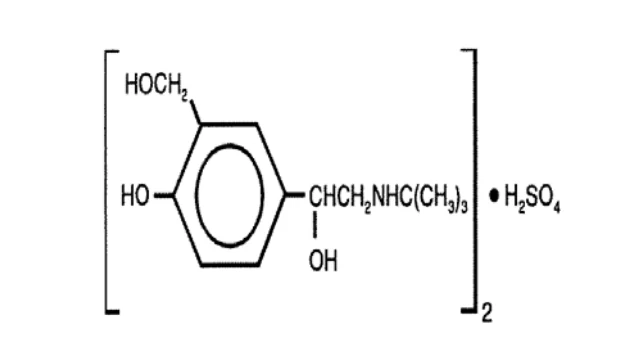
Proper name: salbutamol sulphate
Chemical name: α1-[(tert-butylamino)methyl]-4-hydroxy-m-xylene-α, α=-diol sulphate (2:1) (salt)
Molecular formula
and molecular mass: (C13H21NO3)2CH2SO4 and 576.7
Structural formula:
Physicochemical properties:
Description: White to almost white powder.
Solubility: Soluble in water and slightly soluble in methanol.
pKa Values: 9.4 and 10.0.
Distribution
Coefficient: The distribution coefficient between two phases of octanol and water, as determined by HPLC, at pH 9.9 is 0.23.
Melting Point: Approximately 156 EC.
CLINICAL TRIALS
In two 12-week, randomized, double-blind studies, ratio-SALBUTAMOL HFA (salbutamol sulphate) inhalation aerosol (202 patients) was compared to ratio-SALBUTAMOL inhalation aerosol (CFC formulation) (207 patients) and an HFA-134a placebo inhaler (201 patients) in adolescent and adult patients with mild to moderate asthma. The studies were similar in design.
One study evaluated the safety and efficacy of ratio-SALBUTAMOL HFA in patients with asthma, and the second study evaluated the effects of switching from ratio-SALBUTAMOL inhalation aerosol (CFC formulation) to ratio-SALBUTAMOL HFA. Serial forced expiratory volume in 1 second (FEV1) measurements (shown below as percent change from test-day baseline at week 12, n = 525) demonstrated that two inhalations of ratio-SALBUTAMOL HFA produced significantly greater improvement in pulmonary function than placebo and produced outcomes that were clinically comparable to ratio-SALBUTAMOL inhalation aerosol (CFC formulation) . Patients taking the HFA-134a placebo inhaler also took ratio-SALBUTAMOL HFA for asthma symptom relief on an as-needed basis. These patients produced similar morning predose baseline FEV1 values to patients taking ratio-SALBUTAMOL HFA and ratio-SALBUTAMOL inhalation aerosol (CFC formulation) taken four times daily (plus as-needed for asthma symptom relief) throughout the 12-week study period.
FEV1 as Percent Change From Predose in Two Large, 12-Week Clinical Trials
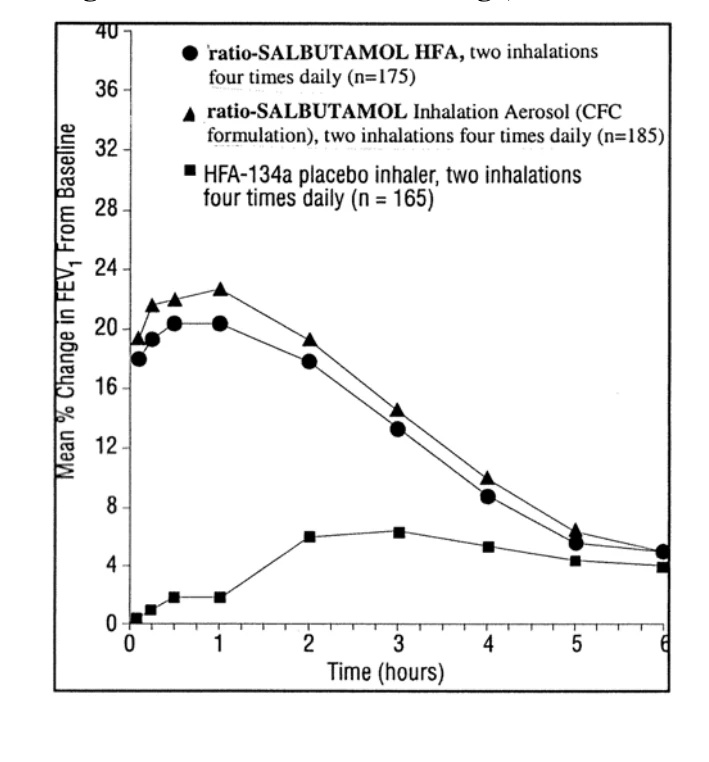
The median time to onset of a 15% increase in FEV1 was 4.8 minutes, and the median time to peak effect was 48 to 60 minutes. The mean duration of effect as measured by a 15% increase in FEV1 was approximately 3 hours. In some patients, duration of effect was as long as 6 hours.
In a 2-week, randomized, double-blind study, ratio-SALBUTAMOL HFA was compared to ratio-SALBUTAMOL inhalation aerosol (CFC formulation) and an HFA-134a placebo inhaler in 135 pediatric patients (4 to 11 years old) with mild to moderate asthma. Serial pulmonary function measurements demonstrated that two inhalations of ratio-SALBUTAMOL HFA produced significantly greater improvement in pulmonary function than placebo and that there were no significant differences between the groups treated with ratio-SALBUTAMOL HFA and ratio-SALBUTAMOL inhalation aerosol (CFC formulation).
The median time to onset of a 15% increase in peak expiratory flow rate (PEFR) was 5 to 10 minutes, and the median time to peak effect was approximately 60 minutes. The mean duration of effect as measured by a 15% increase in PEFR was 2.5 hours. In some patients, duration of effect was as long as 6 hours.
In a clinical study in adult patients with asthma, two inhalations of ratio-SALBUTAMOL HFA taken approximately 30 minutes prior to exercise significantly prevented exercise-induced bronchospasm (as measured by maximum percentage fall in FEV1 following exercise) compared to an HFA-134a placebo inhaler. In addition ratio-SALBUTAMOL HFA was shown to be clinically comparable to ratio-SALBUTAMOL inhalation aerosol (CFC formulation).
DETAILED PHARMACOLOGY
Animals
In vitro studies and in vivo pharmacologic studies have demonstrated that salbutamol has a preferential effect on beta2-adrenergic receptors compared with isoprenaline. While it is recognized that beta2-adrenergic receptors are the predominant receptors in bronchial smooth muscle, recent data indicate that there is a population of beta2-receptors in the human heart existing in a concentration between 10% and 50%. The precise function of these, however, is not yet established.
The pharmacologic effects of beta-adrenergic agonist drugs, including salbutamol, are at least in part attributable to stimulation through beta-adrenergic receptors of intracellular adenyl cyclase, the enzyme that catalyzes the conversion of adenosine triphosphate (ATP) to cyclic-3',5'-adenosine monophosphate (cAMP). Increased cAMP levels are associated with relaxation of bronchial smooth muscle and inhibition of release of mediators of immediate hypersensitivity from cells, especially from mast cells.
The muscle-relaxing effect of salbutamol was found to be more prolonged than when the effect was induced by isoprenaline. As suggested from the results of experiments in isolated animal tissues, salbutamol has been shown to produce a substantial bronchodilator effect in the intact animal. In the anaesthetised guinea pig, salbutamol completely prevents acetylcholine-induced bronchospasm at the dose of 100 micrograms /kg intravenously.
Administration of salbutamol aerosol at a dose of 250 micrograms/mL for one minute to guinea pigs prevented acetylcholine-induced bronchospasm without any chronotropic effect. A prolonged bronchodilator effect of salbutamol compared to isoprenaline (in terms of mean times to dyspnea following acetylcholine challenge) was observed following oral administration of salbutamol to conscious guinea pigs. The protective action of salbutamol in this case persisted for up to six hours.
In anaesthetised cats and dogs, salbutamol prevented the bronchospasm elicited by vagal stimulation without any significant effect on heart rate and blood pressure. Comparative tests of salbutamol and isoprenaline in isolated dog papillary muscle, guinea pig atrial muscle and human heart muscle have shown that the effect of salbutamol on beta1-adrenergic receptors in the heart is minimal.
In a number of studies using guinea pig atria, it was found that on a weight-to-weight basis, salbutamol was from 2,000 to 2,500 times less active in terms of inotropic effect and 500 times less active in terms of chronotropic effect than isoprenaline. Compared to orciprenaline, salbutamol was about 40 times less active in terms of inotropic effect and four times less potent in terms of chronotropic effect. Salbutamol has been shown to be one-fifth as potent a vasodilator in skeletal muscle as isoprenaline, as measured by effects on hind limb blood flow in the anaesthetised dog. In the perfused rabbit ear, salbutamol was shown to possess only one-tenth the activity of isoprenaline in terms of vasodilating effect. In dogs, salbutamol was shown to increase coronary blood flow, which was subsequently shown to be the result of a direct coronary vasodilating effect of salbutamol.
In six dogs with right-sided cardiac by-pass, salbutamol, given at the dose of 25 micrograms/kg, improved left ventricular efficiency and increased coronary blood flow. Recent studies in minipigs, rodents, and dogs recorded the occurrence of cardiac arrhythmias and sudden death (with histologic evidence of myocardial necrosis) when beta-agonists and methylxanthines were administered concurrently. The significance of these findings when applied to humans is currently unknown.
Animal studies show that salbutamol does not pass the blood brain barrier.
TOXICOLOGY
Acute Toxicity
| Species (n) | Oral LD50 | Intravenous LD50 |
| Mouse (10) | >2000 | 72 mg/kg |
| Rat (10) | /k>2000 |
/k
| 60 mg/kg |
| Rat (n) | Intraperitoneal LD50 |
| Newborn (155) | 216 mg/kg |
| Weanling (100) | 524 mg/kg |
| 2 week old (90) | 437 mg/kg |
The rate of respiration in test animals initially increased, but subsequently became abnormally slow and deep. Death, preceded by convulsions and cyanosis, usually occurred within four hours after drug administration.
Rabbits, cats and dogs survived a single dose of 50 mg/kg salbutamol.
Intermediate (Four Months) Toxicity
Rats received salbutamol twice daily, in oral doses from 0.5 to 25 mg/kg, on an increasing scale. The only significant hematological changes were a small increase in hemoglobin and packed cell volume. BUN and SGOT values were elevated while blood glucose and plasma protein levels remained unchanged. Pituitaries had increased amount of PAS-positive material in the cleft at the higher dose levels.
Salbutamol was given to dogs twice daily, in oral doses from 0.05 to 12.5 mg/kg, on an increasing scale. The rate of increase of hemoglobin and packed cell volume was depressed, particularly at higher doses. Leukocyte count decreased after sixteen weeks of treatment at each dose level. Platelet count was increased after eight weeks at the highest dose. No significant biochemical effects were observed. The only significant histological change was the appearance of corpora amylacea in the stomach which was attributed to altered mucus secretion. Inhalation of 1000 mcg of salbutamol CFC 11/12-propelled aerosol twice daily for three months did not produce any morphological changes in the lungs, trachea, lymph nodes, liver or heart.
Long-Term Toxicity
Fifty female, Charles River CD Albino rats received salbutamol orally at 2, 10 and 50 mg/kg/day for one hundred and four weeks; fifty female Charles River CD Sprague-Dawley- derived rats received 20 mg/kg/day salbutamol orally for fifty weeks, and fifty female Charles River Long-Evans rats received 20 mg/kg/day salbutamol orally for ninety-six weeks. These rat studies demonstrated a dose-related incidence of mesovarian leiomyomas. No similar tumors were seen in mice.
Mutagenicity
In vitro tests involving four micro-organisms revealed no mutagenic activity.
Carcinogenicity
In a two-year study in the rat, salbutamol sulphate caused a significant dose-related increase in the incidence of benign leiomyomas of the mesovarium at doses corresponding to 111, 555, and 2,800 times the maximum human inhalation dose. In another study, the effect was blocked by the co-administration of propranolol. The relevance of these findings to humans is not known. An 18-month study in mice and a lifetime study in hamsters revealed no evidence of tumorigenicity.
Teratogenicity Studies
Salbutamol has been shown to be teratogenic in mice when given in doses corresponding to 14 times the human aerosol dose; when given subcutaneously in doses corresponding to 0.2 times the maximum human (child weighing 21 kg) oral dose; and when given subcutaneously in doses corresponding to 0.4 times the maximum human oral dose.
A reproduction study in CD-1 mice given salbutamol at doses of 0.025, 0.25, and 2.5 mg/kg subcutaneously, corresponding to 1.4, 14, and 140 times the maximum human aerosol dose respectively, showed cleft palate formation in 5 of 111 (4.5%) fetuses at 0.25 mg/kg and in 10 of 108 (9.3%) fetuses at 2.5 mg/kg. No cleft palates were observed at a dose of 0.025 mg/kg salbutamol. Cleft palate occurred in 22 of 72 (30.5%) fetuses treated with 2.5 mg/kg isoprenaline (positive control).
In rats, salbutamol treatment given orally at 0.5. 2.32, 10.75 and 50 mg/kg/day throughout pregnancy resulted in no significant fetal abnormalities. However, at the highest dose level there was an increase in neonatal mortality. Reproduction studies in rats revealed no evidence of impaired fertility.
Salbutamol had no adverse effect when given orally to Stride Dutch rabbits, at doses of 0.5, 2.32 and 10.75 mg/kg/day throughout pregnancy. At a dose of 50 mg/kg/day, which represents 2800 times the maximum human inhalation dose, cranioschisis was observed in 7 of 19 (37%) fetuses.
A reproduction study in New Zealand White rabbits using salbutamol sulfate/HFA-134a formulation, revealed enlargement of the frontal portion of the fontanelles in 6 of 95 (6%) and 15 of 107 (14%) fetuses at 28 and 149 mcg/kg, respectively (approximately 2/5 and 2 times, respectively, the maximum recommended human daily dose on a mg/m2 basis), giving plasma levels of approximately 12 and 60 ng/mL, respectively.
REFERENCES
- 1.
Alexander DJ, Libretto SE. An overview of the toxicology of HFA-134a
(1,1,1,2-tetrafluoroethane). Human & Exper Toxicol 1995; 14(9): 715-20.
- 2.
Global Strategy for Asthma Management and Prevention NHLBI/WHO Workshop
Report M1. National Institutes of Health, Publication Number 95-3659 1995
- 3. Leaf A. Ozone depletion and public health. Hosp Pract (Off Ed) 1994; 29(6):9-10.
- 4.
Libretto Se. A review of the toxicology of salbutamol (albuterol). Arch Toxicol 1994;
68:213-216.
- 5. Salbutamol: A review. Drugs 1971; 4:274-302.
- 6. The Canadian Asthma Consensus Conference. Can Resp J 1996; 3(2): 89-100.
- 7.
Ventresca GP. Clinical pharmacology of HFA 134a. J Aerosol Med 1995; 8Supp 1:
S35-S39.
- 8.
Woodcock A. Continuing patient care with metered-dose inhalers. J Aerosol Med 1995;
8 Suppl 2:S5-10.
- 9. Draft Product Monograph for Ventolin HFA dated October 3, 2007