


Product Monograph - Rexulti (Otsuka Pharmaceutical, 0.5 mg / 1 mg, 1 mg / 2 mg)
INDICATIONS AND CLINICAL USE
Adults
Schizophrenia
REXULTI (brexpiprazole) is indicated for treatment of schizophrenia in adults.
In clinical trials, REXULTI was found to significantly improve both positive and negative symptoms.
Adjunctive Treatment of Major Depressive Disorder (MDD)
REXULTI is indicated for use as an adjunct to antidepressants for the treatment of major depressive disorder (MDD) in adult patients with an inadequate response to prior antidepressant treatments during the current episode (see CLINICAL TRIALS, Adjunctive Treatment of Major Depressive Disorder).
When considering the use of REXULTI as adjunctive treatment in MDD, clinicians must take into account the safety concerns associated with antipsychotic drugs, a class of drugs to which REXULTI belongs. Safety concerns of this class include: weight gain; hyperlipidemia; hyperglycaemia; Tardive Dyskinesia; and Neuroleptic Malignant Syndrome (see WARNINGS AND PRECAUTIONS, ADVERSE REACTIONS). REXULTI should only be prescribed in patients with MDD by clinicians who are aware of the importance and are experienced in the early detection and management of the safety issues associated with this class of drugs.
The efficacy and safety of REXULTI in the adjunctive treatment of MDD were demonstrated in 6-week, double-blind, placebo-controlled trials in adult patients. Therefore, the required length of adjunctive treatment with REXULTI is not known. When prescribed as an adjunct to antidepressants in the treatment of MDD, REXULTI should be used for the shortest period of time that is clinically indicated (see CLINICAL TRIALS, Adjunctive Treatment of Major Depressive Disorder; DOSAGE AND ADMINISTRATION, Adjunctive Treatment of Major Depressive Disorder).
Clinical trials evaluating REXULTI in MDD did not include REXULTI monotherapy treatment arms. It is, therefore, not known whether efficacy in adjunct treatment is due to REXULTI alone or from combined treatment with an antidepressant.
Geriatrics (> 65 years of age):
REXULTI is not indicated in elderly patients with dementia (see WARNINGS AND PRECAUTIONS, Serious Warnings and Precaution Box and Special Populations). The safety and efficacy of REXULTI have not been systematically evaluated in patients 65 years of age or older. Caution should be used when treating geriatric patients (see WARNINGS AND PRECAUTIONS, Special Populations and ACTION AND CLINICAL PHARMACOLOGY).
Pediatrics (< 18 years of age):
The safety and efficacy of REXULTI have not been established in patients less than 18 years of age. REXULTI is not indicated in pediatric patients and its use is not recommended in this population (see WARNINGS AND PRECAUTIONS, Special Populations, Pediatrics).
CONTRAINDICATIONS
REXULTI is contraindicated in patients who are hypersensitive to this drug or to any ingredient in the formulation, including any non-medicinal ingredient, or component of the container. For a complete listing, see Dosage Forms, Composition and Packaging (see WARNINGS AND PRECATIONS – Immune, ADVERSE REACTIONS – Post-Market Adverse Drug Reactions).
WARNINGS AND PRECAUTIONS
General
Body Temperature Regulation
Disruption of the body’s ability to reduce core body temperature has been attributed to antipsychotic agents. Appropriate care is advised when prescribing REXULTI for patients who will be experiencing conditions which may contribute to an elevation in core body temperature (e.g., exercising strenuously, exposure to extreme heat, receiving concomitant medication with anticholinergic activity, or being subject to dehydration).
Falls
Antipsychotics, including REXULTI, may cause somnolence, postural hypotension, motor and sensory instability, which may lead to falls and, consequently, fractures or other injuries. For patients with diseases, conditions, or medications that could exacerbate these effects, complete fall risk assessments when initiating antipsychotic treatment and recurrently for patients on long-term antipsychotic therapy.
Cardiovascular
Orthostatic Hypotension
In the short-term, placebo-controlled clinical studies of REXULTI in subjects with schizophrenia, the incidence of orthostatic hypotension-related adverse reactions in REXULTI-treated patients compared to placebo subjects included: dizziness (2.3% versus 1.4%), orthostatic hypotension (0.4% versus 0.2%), and syncope (0.1% versus 0%). In the short-term, placebo-controlled clinical studies of REXULTI + ADT in subjects with MDD, the incidence of orthostatic hypotension-related adverse reactions in REXULTI-treated subjects compared to placebo +ADT subjects included: dizziness (2.6% versus 1.6%), dizziness postural (0.1% versus 0.4%), orthostatic hypotension (0.1% versus 0%), and syncope (0.1% versus 0.4%).
Serious Warnings and Precautions
WARNING: INCREASED MORTALITY IN ELDERLY PATIENTS WITH DEMENTIA
Increased Mortality in Elderly Patients with Dementia
Elderly patients with dementia treated with atypical antipsychotic drugs are at an increased risk of death compared to placebo. Analyses of thirteen placebo-controlled trials with various atypical antipsychotics (modal duration of 10 weeks) in these patients showed a mean 1.6-fold increase in the death rate in the drug-treated patients. Although the causes of death were varied, most of the deaths appeared to be either cardiovascular (e.g., heart failure, sudden death) or infectious (e.g., pneumonia) in nature (see WARNINGS AND PRECAUTIONS, Special Populations, Geriatrics (> 65 years of age)). REXULTI is not approved for the treatment of patients with dementia.
Adverse reactions associated with orthostatic hypotension can include dizziness, lightheadedness and tachycardia. Generally, these risks are greatest at the beginning of treatment and during dose escalation. Patients at increased risk of these adverse reactions or at increased risk of developing complications from hypotension include those with dehydration, hypovolemia, treatment with antihypertensive medication, history of cardiovascular disease (e.g., heart failure, myocardial infarction, ischemia, or conduction abnormalities), history of cerebrovascular disease, as well as patients who are antipsychotic-naïve. In such patients, consider using a lower starting dosage and slower titration, and monitor orthostatic vital signs.
Patients with a recent history of myocardial infarction or unstable cardiovascular disease were excluded from clinical trials.
QT Interval
The effects of REXULTI on the QT/QTc interval were evaluated in a dedicated ECG study (see ACTION AND CLINICAL PHARMACOLOGY, Cardiac Electrophysiology). The trial involved administration of REXULTI at a therapeutic dose of 4 mg/day or a supratherapeutic dose of 12 mg/day for 11 days in 147 clinically stable patients with schizophrenia. On day 11, the maximum placebo-adjusted mean change from baseline in the QTcI interval was 8.3 ms (90% CI 3.7, 12.9) at 6 h post-dosing in the brexpiprazole 4 mg/day group (N=62) and 3.1 ms (90% CI -1.7, 8.0) at 4 h post-dosing in the brexpiprazole 12 mg/day group (N=53).
QTc prolongation may lead to an increased risk of ventricular arrhythmias including torsade de pointes. Torsade de pointes is a polymorphic ventricular tachyarrhythmia. Generally, the risk of torsade de pointes increases with the magnitude of QTc prolongation produced by the drug. Torsade de pointes may be asymptomatic or experienced by the patient as dizziness, palpitations, syncope, or seizures. If sustained, torsade de pointes can progress to ventricular fibrillation and sudden cardiac death.
Particular care should be exercised when administering REXULTI to patients who are suspected to be at an increased risk of experiencing torsade de pointes during treatment with a QTc-prolonging drug (see DRUG INTERACTIONS).
Risk factors for torsade de pointes in the general population include, but are not limited to, the following: female gender; age ≥65 years; baseline prolongation of the QT/QTc interval; presence of genetic variants affecting cardiac ion channels or regulatory proteins, especially congenital long QT syndromes; family history of sudden cardiac death at <50 years of age; cardiac disease (e.g., myocardial ischemia or infarction, congestive heart failure, cardiomyopathy, conduction system disease); history of arrhythmias; electrolyte disturbances (e.g., hypokalemia, hypomagnesemia, hypocalcemia) or conditions leading to electrolyte disturbances (e.g., persistent vomiting, eating disorders); bradycardia; acute neurological events (e.g., intracranial or subarachnoid haemorrhage, stroke, intracranial trauma); diabetes mellitus; and autonomic neuropathy.
When drugs that prolong the QTc interval are prescribed, healthcare professionals should counsel their patients concerning the nature and implications of the ECG changes, underlying
diseases and disorders that are considered to represent risk factors, demonstrated and predicted drug-drug interactions, symptoms suggestive of arrhythmia, risk management strategies, and other information relevant to the use of the drug. Patients should be advised to contact their healthcare provider immediately to report any new chest pain or discomfort, changes in heartbeat, palpitations, dizziness, lightheadedness, fainting, or changes in or new use of other medications.
Dependence/Tolerance
Brexpiprazole has not been systematically studied in humans for its potential for abuse, tolerance, or physical dependence. In drug dependence studies in animals, no withdrawal symptoms were observed upon abrupt cessation of dosing in rats and monkeys, and no frequent self-administration of brexpiprazole was observed in monkeys. While the clinical trials did not reveal any tendency for any drug-seeking behavior, these observations were not systematic and it is not possible to predict on the basis of this limited experience the extent to which a CNS-active drug will be misused, diverted, or abused once marketed. Consequently, patients should be evaluated carefully for a history of drug abuse, and such patients should be observed closely for signs of REXULTI misuse or abuse (e.g., development of tolerance, increases in dose, drug-seeking behavior).
Endocrine and Metabolism
Hyperglycemia and Diabetes Mellitus
In both short-term placebo-controlled trials and long-term open label trials with REXULTI, there have been reports of hyperglycemia in subjects treated with REXULTI. Diabetic ketoacidosis has occurred in patients with no reported history of hyperglycemia. Therefore, patients should have baseline and periodic monitoring of blood glucose and body weight.
Assessment of the relationship between atypical antipsychotic use and glucose abnormalities is complicated by the possibility of an increased background risk of diabetes mellitus in patients with schizophrenia and the increasing incidence of diabetes mellitus in the general population. Given these confounders, the relationship between atypical antipsychotic use and hyperglycemia-related adverse events is not completely understood. However, epidemiological studies which did not include REXULTI, suggest an increased risk of treatment-emergent hyperglycemia-related adverse events in patients treated with atypical antipsychotics. Because REXULTI was not marketed at the time these studies were performed, it is not known if brexpiprazole is associated with this increased risk. Precise risk estimates for hyperglycemia-related adverse events in patients treated with atypical antipsychotics are not available.
Patients should have baseline and periodic monitoring of blood glucose and body weight. Any patient treated with atypical antipsychotics should also be monitored for symptoms of hyperglycemia including polydipsia, polyuria, polyphagia, and weakness. Patients who develop symptoms of hyperglycemia during treatment with atypical antipsychotics should undergo fasting blood glucose testing. In some cases, hyperglycemia has resolved when the atypical antipsychotic was discontinued; however, some patients required continuation of anti-diabetic treatment despite discontinuation of the suspect drug. Patients with risk factors for diabetes mellitus (e.g., obesity, family history of diabetes) who are starting treatment with atypical antipsychotics should undergo fasting blood glucose testing at the beginning of treatment and periodically during treatment. Patients with an established diagnosis of diabetes mellitus who are started on atypical antipsychotics should be monitored regularly for worsening of glucose control.
Weight Gain
Antipsychotic drugs have been associated with metabolic changes, including weight gain. Clinical monitoring of weight is recommended (see ADVERSE REACTIONS, Weight Gain).
Dyslipidemia
Undesirable alterations in lipids have been observed in subjects treated with atypical antipsychotics. Therefore, patients should have baseline and periodic monitoring of fasting lipid profile (see ADVERSE REACTIONS, Fasting Lipids).
Hyperprolactinemia
Like other antipsychotics, REXULTI can elevate prolactin levels. Elevations associated with REXULTI treatment are generally mild and may decline during administration, however, in some infrequent cases the effect may persist during chronic administration (see ADVERSE REACTIONS, Prolactin).
Hyperprolactinemia may suppress hypothalamic GnRH, resulting in reduced pituitary gonadotrophin secretion. This, in turn, may inhibit reproductive function by impairing gonadal steroidogenesis in both female and male patients. Galactorrhea, amenorrhea, gynecomastia, and impotence have been reported with prolactin-elevating compounds. Long-standing hyperprolactinemia when associated with hypogonadism may lead to decreased bone mineral density in both female and male patients.
Tissue culture experiments indicate that approximately one-third of human breast cancers are prolactin dependent in vitro, a factor of potential importance if the prescription of these drugs is considered in a patient with previously detected breast cancer. As is common with compounds which increase prolactin release, an increase in mammary gland neoplasia was observed in a REXULTI carcinogenicity study conducted in mice (see TOXICOLOGY). The physiological differences between rats and humans with regard to prolactin make the clinical significance of these findings unclear. To date, neither clinical nor epidemiological studies have shown an association between chronic administration of these drugs and mammary tumorigenesis.
Genitourinary
Although no cases of priapism were reported in clinical trials with REXULTI, rare cases of priapism have been reported with antipsychotic use. With other psychotropic drugs, this adverse reaction did not appear to be dose-dependent and did not correlate with the duration of treatment.
Hematologic
In clinical trial and/or post-marketing experience, events of leukopenia/neutropenia have been
reported temporally related to antipsychotic agents. Agranulocytosis has also been reported. Therefore, it is recommended that patients have their complete blood count (CBC) tested prior to starting REXULTI and then periodically throughout treatment.
Possible risk factors for leukopenia/neutropenia include pre-existing low white blood cell count (WBC) and history of drug-induced leukopenia/neutropenia. Patients with a history of a clinically significant low WBC or drug-induced leukopenia/neutropenia should have their complete blood count (CBC) monitored frequently during the first few months of therapy and discontinuation of REXULTI should be considered at the first sign of a clinically significant decline in WBC in the absence of other causative factors.
Patients with clinically significant neutropenia should be carefully monitored for fever or other symptoms or signs of infection and treated promptly if such symptoms or signs occur. Discontinue REXULTI in patients with severe neutropenia (absolute neutrophil count <1x10⁹/L) and follow their WBC counts until recovery.
Venous thromboembolism
Venous thromboembolism (VTE), including fatal pulmonary embolism, has been reported with antipsychotic drugs including REXULTI, in case reports and/or observational studies. When prescribing REXULTI all potential risk factors for VTE should be identified and preventative measures undertaken.
Immune
Hypersensitivity
Spontaneous post-market reports of serious hypersensitivity reactions, such as anaphylaxis, angioedema and facial swelling, rash and urticaria, have been reported with REXULTI (see CONTRAINDICATIONS, ADVERSE REACTIONS – Post-Market Adverse Drug Reactions).
Drug Reaction with Eosinophilia and Systemic Symptoms (DRESS)
Post market cases of DRESS have been reported in association with atypical antipsychotic drugs similar to brexpiprazole.
Neurologic
Neuroleptic Malignant Syndrome (NMS)
Neuroleptic malignant syndrome is a potentially fatal symptom complex that has been reported in association with antipsychotic drugs.
Clinical manifestations of NMS are hyperpyrexia, muscle rigidity, altered mental status, and evidence of autonomic instability (irregular pulse or blood pressure, tachycardia, diaphoresis, and cardiac dysrhythmia). Additional signs may include elevated creatine phosphokinase (CPK), myoglobinuria (rhabdomyolysis), and acute renal failure.
In arriving at a diagnosis, it is important to identify cases where the clinical presentation includes both serious medical illness (e.g., pneumonia, systemic infection, etc.), and untreated or inadequately treated extrapyramidal signs and symptoms (EPS). Other important considerations in the differential diagnosis include central anticholinergic toxicity, heat stroke, drug fever, and primary central nervous system pathology.
The management of NMS should include 1) immediate discontinuation of all antipsychotic drugs including REXULTI and other drugs not essential to therapy; 2) intensive symptomatic treatment and medical monitoring; and 3) treatment of any concomitant serious medical problems for which specific treatments are available. There is no general agreement about specific pharmacological treatment for uncomplicated NMS.
If a patient requires antipsychotic drug treatment after recovery from NMS, the potential reintroduction of therapy should be very carefully considered. The patient should be carefully monitored, since recurrence of NMS has been reported.
Tardive Dyskinesia
A syndrome of potentially irreversible, involuntary, dyskinetic movements may develop in patients treated with antipsychotic drugs. Although the prevalence of the syndrome is highest among the elderly, especially elderly women, it is impossible to rely upon prevalence estimates to predict, at the inception of antipsychotic treatment, which patients are likely to develop the syndrome. Whether antipsychotic drugs differ in their potential to cause tardive dyskinesia is unknown.
The risk of developing tardive dyskinesia and the likelihood that it will become irreversible increase as the duration of treatment and the total cumulative dose of antipsychotic drugs administered to the patient increases. However, the syndrome can develop, although much less commonly, after relatively brief treatment periods at low doses.
There is no known treatment for established cases of tardive dyskinesia, although the syndrome may remit, partially or completely, if antipsychotic treatment is withdrawn. Antipsychotic treatment itself, however, may suppress (or partially suppress) the signs and symptoms of the syndrome and, thereby, may possibly mask the underlying process. The effect that symptomatic suppression has upon the long-term course of the syndrome is unknown.
Given these considerations, REXULTI should be prescribed in a manner that is most likely to minimize the occurrence of tardive dyskinesia. Chronic antipsychotic treatment should generally be reserved for patients who suffer from a chronic illness that (1) is known to respond to antipsychotic drugs and (2) for whom alternative, equally effective, but potentially less harmful treatments are not available or appropriate. In such patients who do require chronic treatment, the smallest dose and the shortest duration of treatment producing a satisfactory clinical response should be sought. The need for continued treatment should be reassessed periodically.
If signs and symptoms of tardive dyskinesia appear in a patient on REXULTI, drug discontinuation should be considered. However, some patients may require treatment with REXULTI despite the presence of the syndrome.
Seizure/Convulsion
As with other antipsychotic drugs, REXULTI should be used cautiously in patients with a history of seizures or with conditions that lower the seizure threshold. Post-marketing cases of seizures have been reported with REXULTI. Conditions that lower the seizure threshold may be more prevalent in a population of 65 years or older (see ADVERSE REACTIONS – Post-Market Adverse Drug Reactions).
Potential for Cognitive and Motor Impairment
Like other antipsychotics drugs, REXULTI has the potential to impair judgment, thinking, or motor skills. Because REXULTI may cause somnolence and impair motor skills, patients should be cautioned about performing activities requiring mental alertness, such as operating hazardous machinery, including motor vehicles, until they are reasonably certain that REXULTI therapy does not affect them adversely.
Psychiatric
Suicide
Completed suicide, attempted suicide, suicidal behavior and suicidal ideation have been reported during post-market use of REXULTI. The possibility of a suicide attempt is inherent in psychotic illnesses and major depressive disorder (MDD). In addition, depression may be co-morbid with schizophrenia. The risk of suicide-related events during a depressive episode may persist until remission occurs. It is general clinical experience that the risk of suicide may increase in the early stages of recovery. Close supervision and appropriate clinical management of high-risk patients should accompany drug therapy. Prescriptions for REXULTI should be written for the smallest quantity of tablets consistent with good patient management, in order to reduce the risk of overdose (see ADVERSE REACTIONS – Post-Market Adverse Drug Reactions).
Impulse-Control Disorders/Compulsive Behaviors
Post-marketing reports of impulse-control disorders including pathological gambling and compulsive shopping, binge eating, and hypersexuality and other compulsive behaviors have been reported very rarely in patients treated with brexpiprazole. Patients with a prior history of impulse-control disorder may be at increased risk and should be monitored carefully. Because patients may not recognize these behaviors as abnormal, it is important for prescribers to ask patients or their caregivers specifically about the development of new or increased impulse-control disorders or other compulsive behaviors while being treated with brexpiprazole. It should be noted that impulse-control symptoms can be associated with the underlying disorder. Compulsive behaviors may result in harm to the patient and others if not recognized. Consider dose reduction or stopping the medication if a patient develops such urges while taking brexpiprazole.
Special Populations
Pregnant Women:
Teratogenic effects
There are no adequate and well-controlled studies of REXULTI in pregnant women. It is not known whether REXULTI can cause fetal harm when administered to a pregnant woman or can affect reproductive capacity.
In animal studies, brexpiprazole was not teratogenic and did not cause adverse developmental effects when administered during pregnancy at doses up to 24-fold in rats and 49-fold in rabbits, of the maximum recommended human dose (MRHD) of 4 mg/day on a mg/m2 body surface area for a 60 kg patient (see TOXICOLOGY, Reproductive Toxicity). In a pregnant and lactating rat study, there was an increase in stillbirths and deaths of offspring at doses ≥ 10 mg/kg/day (24-fold MRHD on a mg/m2 basis).
Non-teratogenic effects
Neonates exposed to antipsychotic drugs during the third trimester of pregnancy are at risk for extrapyramidal and/or withdrawal symptoms following delivery. There have been reports of agitation, hypertonia, hypotonia, tremor, somnolence, respiratory distress and feeding disorder in these neonates. These complications have varied in severity; while in some cases symptoms have been self-limited, in other cases neonates have required intensive care unit support and prolonged hospitalization.
REXULTI should not be used during pregnancy unless the expected benefits to the mother markedly outweigh the potential risks to the fetus.
Labor and Delivery: The effect of REXULTI on labor and delivery in humans is unknown. Parturition in rats was not affected by brexpiprazole.
Nursing Women: REXULTI was excreted in milk of rats during lactation. It is not known whether REXULTI or its metabolites are excreted in human milk. Because of the potential for serious adverse reactions in nursing infants, it is recommended that women receiving REXULTI should not breast-feed.
Pediatrics: (<18 years of age): The safety and effectiveness of REXULTI in patients under the age of 18 years have not been established and its use is not recommended.
Weight gain has been observed with atypical antipsychotic use in pediatric and adolescent patient populations. Independent of any drug-specific effects, weight gain can be associated with adverse changes in other metabolic parameters (e.g., glucose and lipid metabolism). Abnormal childhood weight and metabolic status can have adverse effects on cardiovascular outcomes in adulthood. Weight gain and adverse effects on other metabolic parameters associated with atypical antipsychotics can be more frequent or severe in pediatric and adolescent patients than in the adult patients.
The long-term safety, including cardiometabolic effects and effects on growth, maturation and
behavioural development in patients under 18 years of age has not been systematically evaluated.
Geriatrics (> 65 years of age): Clinical studies of REXULTI did not include sufficient numbers of patients aged 65 and older to determine whether they respond differently from younger subjects. In general, dose selection for an elderly patient should be cautious, usually starting at the low end of the dosing range, reflecting the greater frequency of decreased hepatic, renal, or cardiac function, and of concomitant disease or other drug therapy (see Serious Warnings and Precautions box, and ACTION AND CLINICAL PHARMACOLOGY).
Use in Elderly Patients with Dementia
Overall Mortality
Elderly patients with dementia treated with atypical antipsychotic drugs showed increased mortality compared to placebo in a meta-analysis of 13 placebo-controlled trials of various atypical antipsychotic drugs. REXULTI is not indicated for the treatment of patients with dementia (e.g. dementia-related psychosis) (see Serious Warnings and Precautions box).
Cerebrovascular Adverse Events, Including Stroke in Elderly Patients with Dementia In placebo-controlled trials with some atypical antipsychotics, there was a higher incidence of cerebrovascular adverse events (cerebrovascular accidents and transient ischemic attacks) including fatalities compared to placebo-treated subjects. There are insufficient data with REXULTI to know if there is an increased risk of cerebrovascular events associated with REXULTI. REXULTI is not indicated for the treatment of patients with dementia (e.g. dementia-related psychosis) (see also Serious Warnings and Precautions box).
Dysphagia
Esophageal dysmotility and aspiration have been associated with antipsychotic drug use, including REXULTI. Aspiration pneumonia is a common cause of morbidity and mortality in elderly patients, in particular those with advanced Alzheimer’s dementia. REXULTI and other antipsychotic drugs should be used cautiously in patients at risk for aspiration pneumonia.
Use in Patients with Hepatic Impairment
For patients with moderate to severe hepatic impairment (Child-Pugh score ≥7), the maximum recommended dosage is 1.25 mg once daily for patients with MDD, and 3 mg once daily for patients with schizophrenia (see DOSAGE AND ADMINISTRATION, Dosing Considerations; ACTION AND CLINICAL PHARMACOLOGY, Pharmacokinetics, Special Populations and Conditions).
Use in Patients with Renal Impairment
For patients with moderate, severe or end-stage renal impairment (creatinine clearance CLcr<60 mL/minute), the maximum recommended dosage is 1.25 mg once daily for patients with MDD, and 3 mg once daily for patients with schizophrenia (see DOSAGE AND ADMINISTRATION, Dosing Considerations; ACTION AND CLINICAL PHARMACOLOGY, Pharmacokinetics, Special Populations and Conditions).
CYP2D6 Poor Metabolizers
Dosage adjustments are recommended in patients who are known cytochrome P450 (CYP) 2D6 poor metabolizers (see DOSAGE AND ADMINISTRATION, Dosing Considerations; ACTION AND CLINICAL PHARMACOLOGY, Pharmacokinetics, Special Populations and Conditions).
Lactose
REXULTI tablets contain lactose. This should be considered when prescribing to patients with rare hereditary problems of galactose intolerance, lactase deficiency or glucose-galactose malabsorption.
ADVERSE REACTIONS
Adverse Drug Reaction Overview
Clinical Trial Adverse Drug Reactions
Because clinical trials are conducted under very specific conditions the adverse reaction rates observed in the clinical trials may not reflect the rates observed in practice and should not be compared to the rates in the clinical trials of another drug. Adverse drug reaction information from clinical trials is useful for identifying drug-related adverse events and for approximating rates.
Short-term and long-term, Placebo-controlled Trials of Adult Patients with Schizophrenia
The following findings are based on two 6-week, placebo-controlled, fixed-dose clinical trials, and one long-term 52-week double blind placebo controlled randomized-withdrawal trial for schizophrenia in which REXULTI was administered at daily doses between 1 mg and 4 mg. These are referred to as Trials 1, 2 and 3 respectively. In Trials 1 and 2, 852 patients received REXULTI at fixed daily doses of 1, 2 or 4 mg and 368 patients received placebo. In Trial 3, following an open-label stabilization period of up to 36 weeks, 97 patients received REXULTI at flexible daily doses between 1 and 4 mg and 104 patients received placebo in the double-blind randomized withdrawal period; the mean daily REXULTI dose was 3.6 mg at the last visit in the study. This trial was terminated after efficacy was demonstrated in an interim analysis, and only 23 patients (11%), 14 in the REXULTI group and 9 in the placebo group, completed the 52-weeks of the double-blind, controlled period.
Safety data is also available for 1265 patients who participated in uncontrolled, open-label studies and received REXULTI daily doses from 1 mg to 4 mg; 604 patients completed at least 26 weeks and 372 completed at least 52 weeks in the open-label studies.
Most Common Adverse Events: There are no common adverse events that meet the criteria incidence of ≥5% and at least twice the rate of placebo in the Trials 1 and 2, the 6-week, placebo-controlled, fixed-dose trials, or Trial 3, during the double-blind randomized-withdrawal period.
Adverse Events Reported as Reasons for Discontinuation of Treatment: A total of 7.8% (67/852) REXULTI-treated subjects and 14.7% (54/368) of placebo-treated subjects discontinued due to adverse events. There were no adverse events associated with discontinuation in subjects treated with REXULTI that were at least 2% and at least twice the placebo rate.
Treatment emergent adverse events (TEAEs) associated with REXULTI (incidence of 2% or greater and REXULTI incidence greater than placebo) that occurred during acute therapy (up to 6-weeks in subjects with schizophrenia) are shown in Table 1.
| Table 1: TEAEs with Incidence of 2% or More in Any Brex Group and Greater Than Placebo | |||||
| Group in Trials 1 and 2 (6-Week, Placebo-Controlled, Fixed-Dose Trials in | |||||
| Schizophrenia) | |||||
| Brexpiprazole (mg/day) | |||||
| Placebo | |||||
| System Organ Class | 1 mg | 2 mg | 4 mg | ALL | |
| (N=368) | |||||
| MedDRA Preferred Term | (N=120) | (N=368) | (N=364) | (N=852) | |
| % | |||||
| % | % | % | % | ||
| Gastrointestinal disorders | |||||
| Diarrhoea | 1% | 3% | 3% | 3% | 2% |
| Dyspepsia | 6% | 2% | 3% | 3% | 2% |
| Dry mouth | 1% | 2% | 2% | 2% | 1% |
| Abdominal pain upper | 0% | 1% | 2% | 1% | 1% |
| Investigations | |||||
| Weight increased | 3% | 4% | 4% | 4% | 2% |
| Blood creatine phosphokinase increased | 4% | 2% | 2% | 2% | 1% |
| Musculoskeletal and connective tissue disorders | |||||
| Back pain | 1% | 2% | 3% | 2% | 2% |
| Pain in extremity | 3% | 2% | 2% | 2% | 1% |
| Myalgia | 2% | 1% | 1% | 1% | 1% |
| Nervous system disorders | |||||
| Akathisia | 4% | 5% | 7% | 6% | 5% |
| Tremor | 2% | 2% | 3% | 3% | 1% |
| Sedation | 2% | 2% | 3% | 2% | 1% |
| Dizziness | 2% | 1% | 3% | 2% | 1% |
| Psychiatric disorders | |||||
| Restlessness | 0% | 1% | 2% | 1% | 1% |
| Skin and Subcutaneous tissue disorders | |||||
| Rash | 3% | 2% | 1% | 2% | <1% |
In the longer-term randomized-withdrawal Trial 3, the general treatment-emergent adverse event profile for the initial 12 to 36-week single-blind REXULTI treatment phase of this study was comparable to the one characterised in the 6-week, placebo-controlled, fixed-dose studies 1 and 2 described above. In the double-blind, randomized withdrawal phase of the study, there was only one potentially drug related adverse event that occurred at a rate greater than 2% and double that of placebo (tremor 3%). No additional safety concerns were noted, however, the exposure in the double-blind phase was limited (97 in REXULTI and 104 in placebo, about 40% overall completed at least 6 months, and 11% overall completed the 52 weeks).
Short-term Placebo-Controlled Clinical Trials in Adult Patients Receiving REXULTI as Adjunctive Treatment in Major Depressive Disorder (MDD)
The following findings are based on four phase 3, 6-week, placebo-controlled trials (331-10-228, 331-10-227, 331-13-214, 331-12-282), three of which were fixed-dose and one which was flexible-dose with an active reference. These are referred to as Trials 4, 5, 6 and 7 respectively.
In total 1032 patients were treated with REXULTI in the 6-week trials. In Trials 4, 5 and 6, 835 patients received REXULTI at fixed daily doses of 1, 2 or 3 mg and 613 patients received placebo, added to their current antidepressant therapy (ADT). In Trial 7, 197 patients received REXULTI at flexible daily doses of 2 to 3 mg + ADT, 100 patients received an active reference + ADT, and 206 patients received placebo + ADT. In Trial 7 the mean daily REXULTI dose was 2.2 mg at the last visit in the study.
Safety data are also available for 2240 patients who participated in uncontrolled, open-label studies and received REXULTI daily doses from 1 mg to 3 mg with ADT; 1304 patients completed at least 26 weeks and 1002 completed at least 52 weeks in the open-label studies.
Most Common Adverse Events: The most common adverse events (incidence of ≥ 5% in the REXULTI +ADT group and at least twice the rate of placebo + ADT) during short-term and long-term studies were akathisia and weight increased.
Adverse Events Reported as Reasons for Discontinuation of Treatment: In the 6-week studies a total of 2.4% (37/1520) REXULTI+ADT-treated subjects and 0.7% (8/1132) of placebo+ADT-treated subjects discontinued due to adverse events. There were no adverse event associated with discontinuation in subjects treated with REXULTI+ADT that were at least 2% and at least twice the placebo + ADT rate.
Treatment emergent adverse events associated with the use of REXULTI+ADT (incidence of 2% or greater and REXULTI+ADT incidence greater than adjunctive placebo+ADT) that occurred during acute therapy (6-weeks in patients with MDD) in fixed- and flexible-dose trials are shown in Table 2.
Table 2: TEAEs with Incidence of 2% or More in Any Brexpiprazole Dose Group (1 to 3 mg) and Greater than Placebo Group in Trials 4, 5, 6 and 7 (6-Week, Placebo-Controlled, Fixed Dose and Flexible Dose Trials in Adjunctive Treatment in MDD)
System Organ Class
MedDRA Preferred Term
Brexpiprazole (mg/day)+ADT Placebo+ADT
(N=819)
%
1 mg (N=226)
%
2 mg
(N=380)
%
3 mg
(N=229)
%
2-3 mg/day1 (N=197)
%
ALL
(N=1032)
%
Subjects with any TEAE 55% 60% 63% 51% 58% 49% Eye disorders
Vision blurred 1% 2% 2% 1% 2% 0% Gastrointestinal Disorders
Constipation 3% 3% 1% 1% 2% 1% Dry mouth 1% 3% 1% 1% 2% 1% Flatulence 2% 1% 1% 1% 1% 1% Diarrhea 4% 3% 2% 0% 2% 3% General Disorders and Administration Site Conditions
Fatigue 3% 2% 5% 2% 3% 1% Asthenia 0% <1% 0% 2% 1% <1% Infections and Infestations
Nasopharyngitis 7% 3% 3% 5% 4% 3% Investigations
Weight Increased 7% 7% 6% 4% 6% 2% Blood cortisol decreased 4% 0% 3% 0% 1% 1% Blood prolactin increased <1% 1% 3% 0% 1% 0% Metabolism and Nutrition Disorders
Increased Appetite 3% 4% 2% 3% 3% 2% Musculoskeletal and Connective Tissue disorders
Back Pain 1% 2% 0% 1% 1% 2% Nervous System Disorders
Akathisia 4% 8% 14% 6% 8% 3% Headache 9% 4% 6% 6% 6% 6% Somnolence 4% 5% 6% 6% 5% 1% Tremor 4% 2% 5% 1% 3% 1% Dizziness 1% 4% 2% 4% 3% 1% Psychiatric Disorders
Restlessness 2% 6% 4% 3% 4% 1% Insomnia 2% 3% 3% 3% 3% 2% Anxiety 2% 3% 4% 1% 2% 1% Irritability 1% 1% <1% 2% 1% 1% Legend: ADT=antidepressant
1Brex 2-3 mg/day group is from flexible-dose trial 7 (Trial 331-12-282)
Selected Adverse Events
Extrapyramidal Symptoms
Schizophrenia
In Trials 1 and 2, the incidence of reported EPS-related events, excluding akathisia events, was 5.1% versus 3.5% for placebo-treated subjects. The incidence of akathisia events for REXULTI-treated subjects was 5.4% versus 4.9% for placebo-treated subjects. Akathisia was reported more often during Weeks 1 through 3 and was mild to moderate in severity. The incidence of EPS-related TEAEs is presented in Table 3.
Table 3: Incidence of EPS-related TEAEs in Short-term Controlled Schizophrenia Trials 1 and 2
EPS Class Adverse Event MedDRA Preferred Term | Brexpiprazole (mg/day) | Placebo N = 368 % | |||
1 mg N = 120 % | 2 mg N = 368 % | 4 mg N = 364 % | ALL N = 852 % | ||
| Subjects with any adverse event | 7% | 10% | 14% | 11% | 8% |
| Total Akathisia Eventsa | 5% | 5% | 7% | 6% | 5% |
| Total Dyskinetic Eventsb | 0% | <1% | <1% | <1% | <1% |
| Total Dystonic Eventsc | 2% | 1% | 2% | 2% | 2% |
| Total Parkinsonian Eventsd | 2% | 4% | 6% | 4% | 2% |
| Total Residual Eventse | 0% | 0% | <1% | <1% | 0% |
a Total Akathisia events includes adverse event terms: akathisia, psychomotor hyperactivity
b Total Dyskinetic events includes adverse events: dyskinesia, tardive dyskinesia
c Total Dystonic events includes adverse event terms: dystonia, muscle rigidity, muscle spasms d Total Parkinsonian events includes adverse event terms: bradykinesia, extrapyramidal disorder, parkinsonism, tremor e Total Residual events includes adverse event terms: muscle twitching
In Trials 1 and 2, data was objectively collected on the Simpson Angus Rating Score (SAS) for extrapyramidal symptoms (EPS), the Barnes Akathisia Global Score (BARS) for akathisia and the Abnormal Involuntary Movement Score (AIMS) for dyskinesia. The incidence of EPS change is presented in Table 4.
Table 4: Change in EPS Compared to Placebo in Schizophrenia Trials 1 and 2
Proportion of Subjects with Shifts (worsening) from Baseline
Brexpiprazole (mg/day)
1 mg 2 mg 4 mg Placebo AIMSa Total Score 1%
(1/120)*
3%
(12/361)*
4%
(13/362)*
4%
(13/361)*
BARSb Global Score 1%
(1/119)*
1%
(2/361)*
2%
(9/362)*
1%
(5/362)* SASc Total Score 6%
(7/119)*
6%
(21/356)*
8%
(28/357)*
5%
(19/356)* * denotes n/N where N=the total number of subjects who had a measurement at baseline and at least one post-baseline result. n=the number of subjects with shift.
a Abnormal Involuntary Movement Scale - %shifts from ≤1 at baseline to any post-baseline value ≥2
b Barnes Akathisia Rating Scale- %shifts from ≤2 at baseline to any post-baseline value >2
c Simpson Angus Scale- %shifts from ≤3 at baseline to any post-baseline value >3
Table 5 presents the reported incidence of concomitant medications used to treat EPS-related TEAEs, including akathisia.
Table 5: Incidence of Reported Concomitant Use to Treat EPS-related TEAEs for Short-term Controlled Schizophrenia Trials 1 and 2
Drug Class Medication Preferred Name | Brexpiprazole (mg/day) | Placebo N = 368 n (%) | ||
| 1 mg N = 120 n (%) | 2 mg N = 368 n (%) | 4 mg N = 364 n (%) | ||
| Total using 1 or more medications | 5 (4.2) | 23 (6.3) | 34 (9.3) | 19 (5.2) |
| Anti-Parkinson Drugs | 4 (3.3) | 18 (4.9) | 26 (7.1) | 15 (4.1) |
| Beta Blocking Agents | 1 (0.8) | 8 (2.2) | 11 (3.0) | 6 (1.6) |
Adjunctive Treatment in Major Depressive Disorder (MDD)
In Trials 4, 5 and 6, the incidence of reported EPS-related events, excluding akathisia events, was 5.3% versus 2.4% for placebo-treated subjects. The incidence of akathisia events for REXULTI-treated subjects was dose-dependent. In most cases, akathisia was assessed as mild or moderate in severity. Discontinuations due to akathisia were reported only for REXULTI-treated subjects (0.3% for REXULTI 2 mg/day + ADT, 2.2% for REXULTI 3 mg/day + ADT).
In Trial 7, the incidence of reported EPS-related events, excluding akathisia events, was 2.5% versus 0.5% for placebo-treated subjects. The incidence of akathisia events for REXULTI-treated subjects was 6.1% (2-3 mg) in the REXULTI +ADT group versus 1.9% in the placebo+ADT group. In most cases, akathisia was assessed as mild or moderate in severity.
The incidence of EPS-related TEAEs in the short-term fixed-dose and flexible dose trials is presented in Table 6.
Table 6: Incidence of EPS-related TEAEs in Short-term Fixed-dose Trials 4, 5, and 6 and
Short-term Flexible dose Trial 7 in Adjunctive Treatment in MDD
| EPS Category | Brexpiprazole (mg/day)+ADT | Placebo+ADT N = 819 % | ||||
1 mg N = 226 % | 2 mg N = 380 % | 3 mg N = 229 % | 2-3 mg1 N = 197 % | ALL N = 1032 % | ||
| Subjects with any adverse event | 10% | 13% | 18% | 9% | 13% | 5% |
| Total Akathisia Eventsa | 4% | 8% | 14% | 6% | 8% | 3% |
| Total Dyskinesia Eventsb | <1% | 0% | 0% | 0% | <1% | 0% |
| Total Dystonic Eventsc | 1% | 1% | 2% | 2% | 1% | 1% |
| Total Parkinsonian Eventsd | 5% | 4% | 6% | 1% | 4% | 2% |
| Total Residual Eventse | <1% | 1% | 0% | 0% | 1% | 0% |
Legend: ADT=antidepressant
a Total Akathisia events includes adverse event terms: akathisia
bTotal Dyskinetic events includes adverse events: dyskinesia
c Total Dystonic events includes adverse event terms: dystonia, muscle contractions involuntary, muscle rigidity, muscle spasms d Total Parkinsonian events includes adverse event terms: cogwheel rigidity, extrapyramidal disorder, hypertonia, hypokinesia, parkinsonian gait, parkinsonian rest tremor, parkinsonism, tremor
e Total Residual events includes adverse event terms: muscle twitching
1Brex 2-3 mg/day group is from flexible-dose trial 7 (Trial 331-12-282)
In Trials 4, 5, 6 and 7, data was objectively collected on the Simpson Angus Rating Score (SAS) for extrapyramidal symptoms (EPS), the Barnes Akathisia Global Score (BARS) for akathisia and the Abnormal Involuntary Movement Score (AIMS) for dyskinesia. The incidence of EPS change is presented in Table 7.
Table 7: Change in EPS Compared to Placebo in MDD Trials 4, 5, 6 and 7
Proportion of Subjects with Shifts (worsening) from Baseline
Brexpiprazole (mg/day)+ADT
1 mg 2 mg 3 mg 2-3 mg1 Placebo+ADT AIMSa Total
Score
3% (6/222)*
3%
(11/367)*
3%
(6/220)*
0%
(0/191)*
1%
(6/806)*
BARSb Global
Score
1% (3/220)*
6%
(23/373)*
6%
(12/220)*
4%
(7/191)*
2%
(14/810)* SASc Total Score 1%
(3/221)*
4%
(16/372)*
5%
(10/220)*
0%
(0/191)*
2%
(16/811)* Legend: ADT=antidepressant
* denotes n/N where N=the total number of subjects who had a measurement at baseline and at least one post-baseline result. n=the number of subjects with shift.
a Abnormal Involuntary Movement Scale - %shifts from ≤1 at baseline to any post-baseline value ≥2
b Barnes Akathisia Rating Scale- %shifts from ≤2 at baseline to any post-baseline value >2
c Simpson Angus Scale- %shifts from ≤3 at baseline to any post-baseline value >3
1Brex 2-3 mg/day group is from flexible-dose trial 7 (Trial 331-12-282)
Table 8 presents the reported incidence of concomitant medications used to treat EPS-related TEAEs, including akathisia during Trials 4, 5, 6 and 7.
Table 8: Incidence of Reported Concomitant Use to Treat EPS-related TEAEs for Short-term Controlled MDD Adjunctive Trials 4, 5, 6 and 7
Drug Class Medication Preferred Name | Brexpiprazole (mg/day)+ADT | Placebo+ADT N = 819 n (%) | |||
| 1 mg N = 226 n (%) | 2 mg N = 380 n (%) | 3 mg N = 229 n (%) | 2-3 mg1 N = 197 n (%) | ||
Total using 1 or more medications | 2 (0.9) | 15 (3.9) | 16 (7.0) | 7 (3.6) | 7 (0.9) |
| Anti-Parkinson Drugs | 2 (0.9) | 2 (0.5) | 9 (3.9) | 1 (0.5) | 2 (0.2) |
| Beta Blocking Agents | 0 (0.0) | 12 (3.2) | 7 (3.1) | 6 (3.0) | 5 (0.6) |
| Psycholeptics | 0 (0.0) | 3 (0.8) | 5 (2.2) | 0 (0) | 0 (0.0) |
Legend: ADT=antidepressant
1Brex 2-3 mg/day group is from flexible-dose trial 7 (Trial 331-12-282)
Weight Gain
Schizophrenia
Table 9 shows weight gain data at last visit and percentage of adult subjects with ≥7% increase in body weight at any visit from Trials 1 and 2.
Table 9: Changes in Weight (kg) - Trials 1 and 2 (up to 6 weeks)
Brexpiprazole (mg/day)
1 mg/day
N=120
2 mg/day
N=362
4 mg/day
N=362
Placebo
N=362
Mean Change from Baseline (kg) at Last Visit
All Subjects +1.0 +1.2 +1.2 +0.2
Proportion of Subjects with a ≥7% Increase in Body Weight (kg) at Any Visit
N=120 N=368 N=364 N=368
≥7% Increase 10.0%
(12/120)
10.5% (38/362)
10.2% (37/362)
4.1% (15/362)
The percentage of subjects in the 6-week Trials 1 and 2 with an increase of ≥7% in body weight was 10.5% and 10.2% in the REXULTI 2 and 4 mg/day group respectively, compared with 4.1% in the placebo group.
During the longer-term randomized-withdrawal Trial 3 the proportion of subjects with a ≥7% increase in body weight at any visit was 5.2% (5/96) in the REXULTI-treated group compared to 1.0% (1/104) in the placebo group. The proportion of subjects with a ≥7% decrease in body weight at any visit was 9.3% (9/96) in the REXULTI-treated group compared to 15.3% (16/104) in the placebo group. In the stabilization phase of this trial, the proportion of subjects with a ≥7% increase in body weight at any visit was 11.3% (52/462) and with a ≥7% decrease in body weight at any visit was 3.9% (18/462).
In the long-term, open-label schizophrenia studies, the mean change in body weight from baseline to last visit was 1.0 kg (N=1468). The proportion of subjects with a ≥7% increase in body weight at any visit was 17.9% (226/1257) and with a ≥7% decrease in body weight at any visit was 8.2% (104/1257). Weight gain led to discontinuation of study medication in 0.4% (5/1265) of subjects.
Adjunctive Treatment in Major Depressive Disorder (MDD)
Table 10 shows weight gain data at last visit and percentage of adult subjects with ≥7% increase in body weight at any visit from Trials 4, 5, 6 and 7.
Table 10: Changes in Weight (kg) - Trials 4, 5, 6 and 7 (up to 6 weeks)
Brexpiprazole (mg/day)+ADT
1 mg/day
N=225
2 mg/day
N=379
3 mg/day
N=228
2-3 mg/day1
N=193
Placebo+ADT
N=819
Mean Change from Baseline (kg) at Last Visit
All Subjects +1.3 +1.6 +1.6 +1.1 +0.3
Proportion of Subjects with a ≥7% Increase in Body Weight (kg) at Any Visit
N=225 N=379 N=229 N=193 N=609
≥7% Increase
4.9% (11/225)
4.5% (17/379)
2.2%
(5/228)
5.7% (11/193)
1.8% (15/814)
Legend: ADT=antidepressant
1Brex 2-3 mg/day group is from flexible-dose trial 7 (Trial 331-12-282)
In the long-term open label studies the proportion of subjects with a ≥7% increase in body weight at last visit (LOCF) was 22.1% (494/2232) and with a ≥7% decrease in body weight was 3.2% (72/2232). At 52 weeks (completers), the proportion of subject with a ≥7% increase in body weight at was 28.2 % (286/1013) and with a ≥7% decrease in body weight was 3.7% (37/1013). Weight gain led to discontinuation of study medication in 3.8% (84/2240) of subjects.
Constipation
Patients should be advised of the risk of severe constipation during REXULTI treatment, and they should tell their doctor if constipation occurs or worsens, since they may need medical intervention.
Less Common Clinical Trial Adverse Drug Reactions (<2%)
Other adverse reactions (<2% frequency in REXULTI-treated patients and greater than placebo) reported in the short-term, placebo-controlled trials in subjects with schizophrenia and MDD (N=2926) and in the long-term placebo-controlled trials in subjects with schizophrenia (N=97), are shown below. The following listing does not include adverse reactions: 1) already listed in previous tables or elsewhere in the labeling, 2) for which a drug cause was remote, 3) which were so general as to be uninformative, 4) which were not considered to have clinically significant implications, or 5) which occurred at a rate equal to or less than placebo.
Blood and Lymphatic System Disorders:
Infrequent: Anemia
Cardiovascular Disorders:
Infrequent: Vision Blurred, Sinus Bradycardia, Atrioventricular Block First Degree, Palpitations
Endocrine Disorders:
Infrequent: Hyperprolactinemia
Eye Disorders:
Infrequent: Lacrimation increased, Blepharospasm
Gastrointestinal Disorders:
Infrequent: Salivary Hypersecretion, Dental Caries, Abdominal Distension, Gastroesophageal Reflux Disease, Toothache
General Disorders & Administration Site Conditions:
Infrequent: Asthenia, Pyrexia, Chest Pain
Infections and Infestations:
Frequent: Upper Respiratory Tract Infection
Infrequent: Bronchitis, Conjunctivitis, Urinary Tract Infection
Investigations:
Infrequent: Hepatic Enzyme Increased, Blood Triglycerides Increased, Aspartate Aminotransferase Increased
Musculoskeletal and Connective Tissue Disorders:
Infrequent: Musculoskeletal Pain, Musculoskeletal Stiffness, Rhabdomyolysis Nervous System Disorders:
Infrequent: Psychomotor Activity, Extrapyramidal Disorder
Psychiatric Disorders:
Infrequent: Abnormal Dreams, Bruxism, Tension
Respiratory, Thoracic and Mediastinal Disorders:
Infrequent: Cough, Dyspnea
Skin and Subcutaneous Tissue Disorders:
Infrequent: Night Sweats
Vascular Disorders:
Infrequent: Hypertension, Orthostatic Hypotension, Hypotension, Flushing
Abnormal Hematologic and Clinical Chemistry Findings
Fasting Glucose
Schizophrenia
In the 6-week Trials 1 and 2, the proportion of patients with changes in fasting glucose to post-baseline high (≥126 mg/dL) results were comparable between REXULTI and placebo treated subjects.
In the longer-term randomized-withdrawal Trial 3, 7% of patients with normal baseline fasting glucose (N=388) had changes to high fasting glucose during the single-blind REXULTI treatment in the Stabilization phase. During the double-blind phase, from the patients with normal baseline fasting glucose, 4.5% in the REXULTI group (3/66) and 0% in the placebo group (0/62) had changes to high fasting glucose.
In the long-term, open-label schizophrenia studies, 7% of patients with normal baseline fasting glucose experienced a shift from normal to high while taking REXULTI, 17% of subjects with borderline fasting glucose experienced shifts from borderline to high. Combined, 9% of subjects with normal or borderline fasting glucose experienced shifts to high fasting glucose during the long-term schizophrenia studies.
Adjunctive Treatment in Major Depressive Disorder (MDD)
In the 6-week Trials 4, 5 and 6, the proportion of patients with changes in fasting glucose from normal values at baseline (ie, < 100 mg/dL) to post-baseline high (≥126 mg/dL) results were comparable between REXULTI+ADT and placebo+ADT treated subjects. In Trial 7, the percentage of patients with a shift in fasting glucose from a normal value (ie, < 100 mg/dL) at baseline to a high value (ie, ≥ 126 mg/dL) was 0.8% in the flexible-dose REXULTI + ADT group compared to 0% in the placebo + ADT group. Mean changes from baseline to last visit in the REXULTI + ADT groups were similar to the placebo + ADT group for HbA1c.
In the long-term, open-label MDD studies, 5.2% of patients with normal baseline fasting glucose experienced a shift from normal to high while taking REXULTI + ADT, 24.4% of subjects with borderline fasting glucose experienced shifts from borderline to high. Combined, 9.1% of subjects with normal or borderline fasting glucose experienced shifts to high fasting glucose during the long-term MDD studies.
Fasting Lipids
Schizophrenia
In Trials 1 and 2, the proportion of patients with clinically significant changes from baseline in fasting total cholesterol, LDL cholesterol, and HDL cholesterol were similar in REXULTI- and placebo-treated subjects. Table 11 shows the proportions of subjects with changes in fasting triglycerides.
Table 11: Change in Fasting Triglycerides in Trials 1 and 2 (up to 6 weeks)
Proportion of Subjects with Shifts Baseline to Post-Baseline
Brexpiprazole (mg/day)
1 mg/day 2 mg/day 4 mg/day Placebo
Triglycerides
Normal to High
(<150 mg/dL to ≥200
and <500 mg/dL)
10% (7/72)*
8% (19/232)*
10% (22/226)*
6% (15/253)*
Normal/Borderline to
Very High
(<200 mg/dL to ≥500
mg/dL)
0%
(0/94)*
0%
(0/283)*
0.4%
(1/283)*
0%
(0/303)*
* denotes n/N where N=the total number of subjects who had a measurement at baseline and at least one post-baseline result. n=the number of subjects with shift.
In the longer-term randomized-withdrawal Trial 3, 22% of patients with normal baseline fasting triglycerides (N=394) had changes to high or very high fasting triglycerides during single-blind REXULTI treatment in the Stabilization phase. During the double-blind phase, from the patients with normal baseline fasting triglycerides, 7% in the REXULTI group (4/57) and 0% in the placebo group (0/60) had changes to high fasting triglycerides.
In the long-term open-label studies, shifts in baseline fasting cholesterol from normal to high were reported in 6% (total cholesterol), 3% (LDL cholesterol), and shifts in baseline from normal to low were reported in 20% (HDL cholesterol) of patients taking REXULTI. Of patients with normal baseline triglycerides, 14% experienced shifts to high, and 0.3% experienced shifts to very high triglycerides. Combined, 0.5% of subjects with normal or borderline fasting triglycerides experienced shifts to very high fasting triglycerides during the long-term schizophrenia studies.
Adjunctive Treatment in Major Depressive Disorder (MDD)
In Trials 4, 5, 6, and 7, the proportion of patients with clinically significant changes from baseline in fasting total cholesterol, LDL cholesterol, and HDL cholesterol were similar in REXULTI+ADT- and placebo+ADT-treated subjects. Table 12 shows the proportions of subjects with changes in fasting triglycerides in Trials 4, 5, 6 and 7.
Table 12: Change in Fasting Triglycerides in Trials 4, 5, 6 and 7 (up to 6 weeks)
Proportion of Subjects with Shifts Baseline to Post-Baseline
Brexpiprazole (mg/day)+ADT
1 mg/day 2 mg/day 3 mg/day 2-3 mg/day1 Placebo+ADT
Triglycerides
Normal to High
(<150 mg/dL to ≥200
and <500 mg/dL)
5%
(7/145)*
8%
(19/226)*
9%
(13/150)*
9%
(11/120)*
5% (25/522)*
Normal/Borderline to
Very High
(<200 mg/dL to ≥500
mg/dL)
0%
(0/177)*
0.4%
(1/275)*
0%
(0/179)*
0%
(0/152)*
0% (0/618)*
Legend: ADT=antidepressant
* denotes n/N where N=the total number of subjects who had a measurement at baseline and at least one post-baseline result. n=the number of subjects with shift.
1Brex 2-3 mg/day group is from flexible-dose trial 7 (Trial 331-12-282)
In the long-term open-label studies, shifts in baseline fasting cholesterol from normal to high were reported in 8.7% (total cholesterol), 3.2% (LDL cholesterol), and shifts in baseline from normal to low were reported in 13.3% (HDL cholesterol) of patients taking REXULTI + ADT. Of patients with normal baseline triglycerides, 17.3% experienced shifts to high, and 0.2% experienced shifts to very high triglycerides. Combined, 0.6% of subjects with normal or borderline fasting triglycerides experienced shifts to very high fasting triglycerides during the long-term MDD studies.
Prolactin
Schizophrenia
Table 13 shows the mean change from baseline in prolactin and the proportion of subjects with prolactin elevations.
Table 13: Changes in Prolactin (ng/mL) - Trials 1 and 2 (up to 6 weeks)
Brexpiprazole (mg/day)
1 mg/day 2 mg/day 4 mg/day Placebo
Mean Change from Baseline (ng/mL) at Last Visit
All Male
N=73 N=220 N=208 N=206
-2.16 -1.36 -0.47 -1.08
All Female
N=41 N=129 N=132 N=127
-1.08 -1.31 -0.81 -5.57
Male with normal baseline
N=40 N=139 N=145 N=142
+2.61 +2.52 +3.12 +1.36
Female with normal baseline
N=29 N=102 N=102 N=92
+5.95 +7.00 +6.46 +2.55
Proportion of Subjects with new onset abnormal results at any time post-baseline
All Male N=73 N=221 N=208 N=207
>1x ULN 10% 12% 17% 12%
>2x ULN 3% 3% 0.5% 5%
>3x ULN 0% 0% 2% 2%
All Female N=41 N=129 N=132 N=127
>1x ULN 7% 12% 17% 7%
>2x ULN 7% 6% 3% 5%
>3x ULN 2% 1% 1% 2%
In the longer-term randomized withdrawal Trial 3, the mean change from baseline at last visit in prolactin in females was -2.17 ng/mL in REXULTI-treated group compared with -4.25 ng/mL in the placebo group. In males, mean change from baseline at last visit in prolactin was -1.73 ng/mL in REXULTI-treated group compared with 1.38 ng/mL in the placebo group. For females with normal prolactin results at baseline, the mean changes to last visit were 4.04 ng/mL in the REXULTI-treated group and -5.95 ng/mL in the placebo group; for males with normal baseline, the mean changes to last visit were 0.05 ng/mL in the REXULTI-treated group and 2.61 ng/mL in the placebo group. The proportion of subjects with prolactin elevations >1X ULN in females was 5.2% in the REXULTI-treated group compared with 2.6% in the placebo group. In males, the proportion of subjects with prolactin elevations > 1X ULN was 3.6% in the REXULTI-treated group compared with 4.9% in the placebo group. Similarly, prolactin elevations >3X ULN in females was 0.0% in the REXULTI-treated group compared with 5.2% in the placebo group. In males, prolactin elevations >3X ULN was 0.0% in the REXULTI-treated group compared with 3.2% in the placebo group.
In the long-term open-label schizophrenia trials, the mean change from baseline at last visit in prolactin in females was 2.78 ng/mL in REXULTI-treated group and 0.60 ng/mL in males. The proportion of subjects with prolactin elevations >1X ULN was 17.5% in females and 14.0% in males in the REXULTI-treated group, and prolactin elevations >3X ULN was 4.1% in females and 1.7% in males.
Adjunctive Treatment in Major Depressive Disorder (MDD)
Table 14 shows the mean change from baseline in prolactin and the proportion of subjects with prolactin elevations in Trials 4, 5, 6 and 7.
Table 14: Changes in Prolactin (ng/mL) - Trials 4, 5, 6 and 7 (up to 6 weeks)
Brexpiprazole (mg/day)+ADT
1 mg/day 2 mg/day 3 mg/day 2-3
mg/day1
Placebo+AD
T
Mean Change from Baseline (ng/mL) at Last Visit
All Male
N=68 N=100 N=72 N=68 N=235
+0.98 +2.16 +2.14 +0.26 -0.01
All Female
N=154 N=262 N=152 N=122 N=559
+3.99 +7.69 +10.28 +1.09 +0.06
Male with normal
baseline
N=60 N=97 N=67 N=60 N=215
+1.55 +2.13 +2.86 +1.37 +0.12
Female with normal
baseline
N=153 N=254 N=150 N=115 N=543
+4.13 +8.14 +10.52 +1.92 +0.67
Proportion of Subjects with new onset abnormal results at any time post-baseline
All Male N=68 N=102 N=72 N=68 N=242
>1x ULN 18% 15% 22% 19% 9%
>2x ULN 0% 0% 1% 6% 3%
>3x ULN 0% 1% 1% 2% <1%
All Female N=155 N=270 N=155 N=123 N=571
>1x ULN 10% 17% 26% 11% 3%
>2x ULN 0% 1% 2% 1% <1%
>3x ULN 0% 0% 0% 2% 1%
Legend: ADT=antidepressant
1Brex 2-3 mg/day group is from flexible-dose trial 7 (Trial 331-12-282)
In the long-term open-label MDD trials, the mean change from baseline at last visit in prolactin in females was 1.86 ng/mL in REXULTI+ ADT group and 0.50 ng/mL in males. The proportion of subjects with prolactin elevations >1X ULN was 15.4% in females and 13.5% in males in the REXULTI+ ADT group, and prolactin elevations >3X ULN was 0.5% in females and 0.9% in males.
Post-Market Adverse Drug Reactions
Immune system disorders: hypersensitivity reactions (including anaphylaxis, angioedema, facial swelling, rash and urticaria)
Neurological: seizure
Psychiatric disorders: suicidality (including completed suicide, attempted suicide, suicidal behavior and suicidal ideation).
Atypical antipsychotic drugs, such as REXULTI, have been associated with cases of sleep apnea, with or without concomitant weight gain. In patients who have a history of or are at risk for sleep apnea, REXULTI should be prescribed with caution.
Complex sleep-related behaviors such as somnambulism and sleep-related eating disorder have been associated with the use of atypical antipsychotic drugs.
DRUG INTERACTIONS
Overview
REXULTI is predominantly metabolized by cytochrome P450 (CYP)3A4 and CYP2D6.
REXULTI should be used with caution in combination with drugs known to prolong QTc interval or cause electrolyte disturbances (see WARNINGS AND PRECAUTIONS, Cardiovascular, QT Interval).
Drug-Drug Interactions
Potential for other drugs to affect REXULTI
Dosage adjustments are recommended in patients who are known CYP2D6 poor metabolizers and in patients taking concomitant CYP3A4 inhibitors or CYP2D6 inhibitors or strong CYP3A4 inducers (Table 15). If the co-administered drug is discontinued, adjust the REXULTI dosage to its original level. If the co-administered CYP3A4 inducer is discontinued, reduce the REXULTI dosage to the original level over 1 to 2 weeks (see DOSAGE AND ADMINISTRATION, Dosing Considerations).
Table 15: Summary of Effect of Co-administered Drugs on Exposure to REXULTI
(brexpiprazole) in Healthy Subjects
Co-administered Drug | Ref | Dose Schedule Clinical comment | Effect on REXULTI Pharmacokinetics | Recommendation | ||
Co-administered Drug | REXULTI | Cmax | AUC | |||
Ketoconazole (strong CYP3A4 inhibitor*) | CT | 200 mg BID for 7 days | single 2 mg dose | No change | Increased by 97% | Administer half of usual REXULTI dose |
Quinidine (strong CYP2D6 inhibitor) | CT | 324 mg OD for 7 days | single 2 mg dose | No change | Increased by 94% | Administer half of usual REXULTI dose |
Ticlopidine (strong CYP2B6 inhibitor) | CT | 250 mg BID for 7 days | single 2 mg dose | No change | No change | No REXULTI dose adjustment required |
Rifampin (strong CYP3A4 inducer) | CT | 600 mg BID for 12 days | single 4 mg dose | Decreased by 31% | Decreased by 73% | Double usual REXULTI dose over 1 to 2 weeks, adjust as required based on clinical response |
Omeprazole (Gastric Acid pH Modifiers) | CT | 40 mg OD for 5 days | single 4 mg dose | No change | No change | No REXULTI dose adjustment required |
Legend: CT = Clinical Trial
*Mild and moderate CYP3A4 inhibitors (e.g. erythromycin, grapefruit juice) have not been studied
The effects of other drugs on the exposure of REXULTI are summarized in Figure 1.
Figure 1: The Effects of Other Drugs on REXULTI (brexpiprazole) Pharmacokinetics*
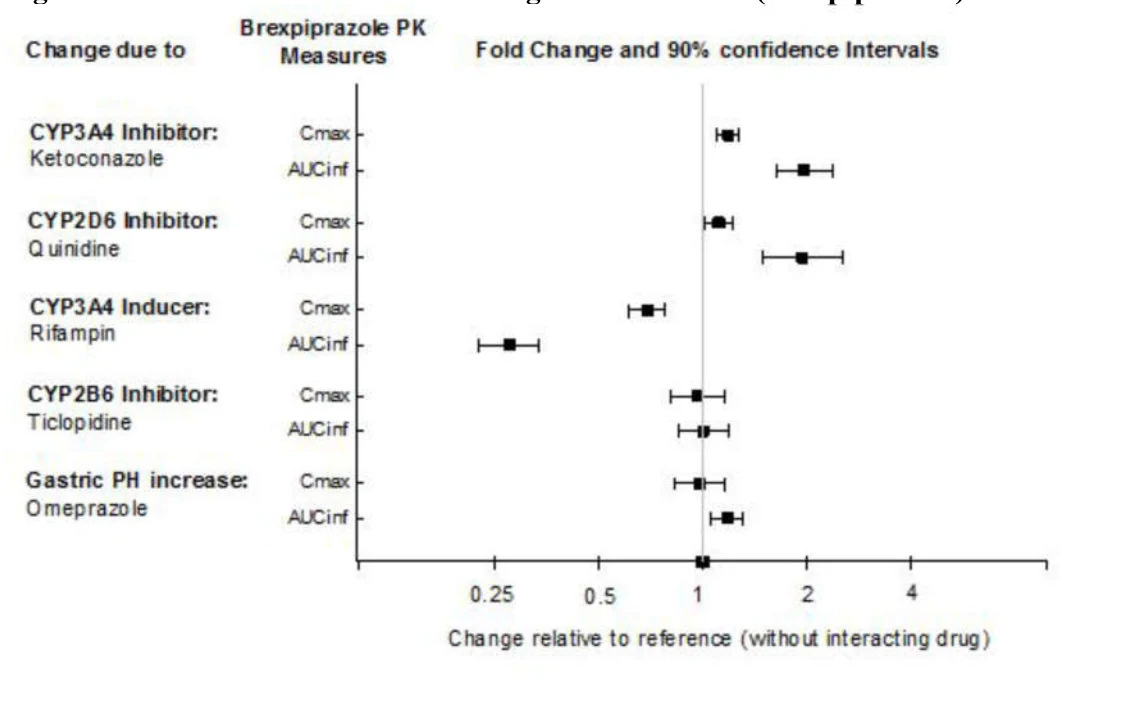
*see also impact for dosage recommendations in Table 15 above.
Potential for REXULTI to affect other drugs
Results of in vitro studies suggest that REXULTI is unlikely to cause clinically important pharmacokinetic interactions with drugs metabolized by cytochrome P450 enzymes. Clinical studies showed that oral brexpiprazole (2 mg/day, 5 days) had no effect on the metabolism of single doses of dextromethorphan (a CYP2D6 substrate), lovastatin (a CYP3A4 substrate) or bupropion (a CYP2B6 substrate). REXULTI did not affect absorption of single doses of drugs that are substrates of BCRP transporter (rosuvastatin) and PgP (P-glycoprotein) transporter (fexofenadine). No dosage adjustment of CYP2D6, CYP3A4, CYP2B6, BCRP and PgP substrates is required during concomitant administration with REXULTI.
The effects of REXULTI on the exposure of other drugs are summarized in Figure 2.
Figure 2: The Effects of REXULTI (brexpiprazole) on Pharmacokinetics of Other Drugs
Drug-Food Interactions
REXULTI may be administered with or without food.
Drug-Herb Interactions
Interactions with herbal products have not been established.
Drug-Laboratory Interactions
Interactions with laboratory tests have not been established.
Drug-Lifestyle Interactions
Alcohol/CNS Drugs
Given the primary CNS effects of brexpiprazole, as with most psychoactive medications, combination use of REXULTI with alcohol or other CNS drugs with overlapping undesirable effects such as sedation, should be avoided.
Smoking
Based on studies utilizing human liver enzymes in vitro, brexpiprazole is not a substrate for CYP1A2. No dosage adjustment is required based on smoking status.
DOSAGE AND ADMINISTRATION
Recommended dose and dose adjustment
Table 16: Dose and dose adjustment
| Indication | Starting Dose | Recommended Target Dose | Maximum Dose |
| Schizophrenia | 1 mg/day | 2-4 mg/day | 4 mg/day |
| Adjunctive Treatment in Major Depressive Disorder (MDD) | 0.5 mg/day or 1 mg/day | 2 mg/day | 2 mg/day |
Schizophrenia
The recommended starting dosage for REXULTI is 1 mg once daily on Days 1 to 4, taken orally with or without food.
The recommended target REXULTI dosage is 2 mg to 4 mg once daily. In short-term fixed-dose clinical trials, the dose was titrated to 2 mg once daily on Day 5 through Day 7, then to 4 mg on Day 8. The maximum recommended daily dosage is 4 mg. Periodically reassess to determine the continued need and appropriate dosage for treatment.
Patients should be treated with the lowest effective dose that provides optimal clinical response and tolerability.
Adjunctive Treatment in Major Depressive Disorder (MDD)
The dose range of 1 to 3 mg/day was evaluated as adjunctive treatment in clinical trials. No additional benefit was demonstrated at doses greater than 2 mg/day (see CLINICAL TRIALS, Adjunctive Treatment of Major Depressive Disorder). Periodically reassess to determine the continued need and appropriate dose for treatment.
The required length of adjunctive treatment with REXULTI is not known. When prescribed as an adjunct to antidepressants in the treatment of MDD, REXULTI should be used for the shortest period of time that is clinically indicated (see CLINICAL TRIALS, Adjunctive Treatment of Major Depressive Disorder).
The recommended starting dose for REXULTI as adjunctive treatment is 0.5 mg or 1 mg once daily, taken orally with or without food.
Titrate to 1 mg once daily, then up to the recommended target dosage of 2 mg once daily. Dosage increases should occur at weekly intervals based on the patient’s clinical response and tolerability. The maximum recommended dose is 2 mg once daily.
Dosing Considerations
Hepatic Impairment: For patients with moderate to severe hepatic impairment (Child-Pugh score ≥7), the maximum recommended dosage is 3 mg once daily for patients with schizophrenia and 1.25 mg once daily for patients with MDD.
Renal Impairment: For patients with moderate, severe or end-stage renal impairment (creatinine clearance CLcr<60 mL/minute), the maximum recommended dosage is 3 mg once daily for patients with schizophrenia and 1.25 mg once daily for patients with MDD.
CYP isozymes: Dosage adjustments are recommended in patients who are known cytochrome P450 (CYP) 2D6 poor metabolizers and in patients taking concomitant CYP3A4 inhibitors or CYP2D6 inhibitors or strong CYP3A4 inducers (see Table 17). If the co-administered drug is discontinued, adjust the REXULTI dosage to its original level. If the co-administered CYP3A4 inducer is discontinued, reduce the REXULTI dosage to the original level over 1 to 2 weeks.
Table 17: Dosage Adjustments of REXULTI for CYP2D6 Poor Metabolizers and for
Concomitant Use with CYP3A4 and CYP2D6 Inhibitors and/or CYP3A4 Inducers
| Factors | Adjusted REXULTI Dosage |
| CYP2D6 Poor Metabolizers | |
| Known CYP2D6 poor metabolizers | Administer half of the usual dose |
| Known CYP2D6 poor metabolizers taking strong/moderate CYP3A4 inhibitors | Administer a quarter of the usual dose |
| Patients Taking CYP2D6 Inhibitors and/or CYP3A4 Inhibitors | |
| Strong CYP2D6 inhibitors* | Administer half of the usual dose |
| Strong CYP3A4 inhibitors | Administer half of the usual dose |
| Strong/moderate CYP2D6 inhibitors with strong/moderate CYP3A4 inhibitors | Administer a quarter of the usual dose |
| Patients Taking CYP3A4 Inducers | |
| Strong CYP3A4 inducers | Double usual dose over 1 to 2 weeks |
*In clinical trials examining the adjunctive use of REXULTI in the treatment of MDD, dosage was not adjusted for strong CYP2D6 inhibitors (e.g., paroxetine, fluoxetine). Thus, CYP considerations are already factored into general dosing recommendations and REXULTI may be administered without dosage adjustment in patients with MDD.
Geriatrics: The safety and efficacy of REXULTI in patients 65 years of age or older have not been established. Caution should be used when treating geriatric patients (see WARNINGS AND PRECAUTIONS, Special Population, Geriatrics). REXULTI is not indicated in elderly patients with dementia (see WARNINGS AND PRECAUTIONS, Serious Warnings and Precaution Box and Special Populations).
Pediatrics: The safety and efficacy of REXULTI have not been established in patients less than 18 years of age. REXULTI is not indicated in pediatric patients and its use is not recommended in this population (see WARNINGS AND PRECAUTIONS, Special Populations, Pediatrics).
Missed Dose
If a dose is missed then it should be taken as soon as possible unless it is close to the next dose. Two doses should not be taken.
Administration
REXULTI may be given once daily, with or without food.
Switching from Other Antipsychotics
There are no systematically collected data to specifically address switching patients with schizophrenia or MDD from other antipsychotics to REXULTI or concerning concomitant administration with other antipsychotics. While immediate discontinuation of the previous antipsychotic treatment may be acceptable for some patients with schizophrenia or MDD, more gradual discontinuation may be most appropriate for others. In all cases, the period of overlapping antipsychotic administration should be minimized.
OVERDOSAGE
There is limited clinical trial experience regarding human overdosage with REXULTI. ECG monitoring is recommended in the event of overdose.
For management of a suspected drug overdose, contact your regional Poison Control Centre.
ACTION AND CLINICAL PHARMACOLOGY
Mechanism of Action
The mechanism of action of brexpiprazole is unknown. The efficacy of brexpiprazole may be mediated through a combination of partial agonist activity at serotonergic 5-HT1A and at dopaminergic D2 receptors with antagonist activity at serotonergic 5-HT2A receptors. The clinical relevance of these receptor interactions with brexpiprazole is unknown.
Pharmacodynamics
Brexpiprazole has high affinity (expressed as Ki values) for serotonin 5HT1A (0.12 nM), 5HT2A (0.47 nM), 5HT2B (1.88 nM), dopamine D2 (0.3 nM), D3 (1.14 nM), and noradrenergic α1A (3.78 nM), α1B (0.17 nM), α1D (2.60 nM), and α2C (0.59 nM) receptors.
Brexpiprazole exhibits a moderate affinity for dopamine D4 (6.3 nM), serotonin 5-HT7A (9.48 nM), noradrenergic α2A (15 nM), α2B (17 nM) and histamine H1 (19 nM) receptors; and weak affinity for the serotonin 5-HT1B (32 nM) and 5-HT2C (33 nM) receptors (see DETAILED PHARMACOLOGY).
Brexpiprazole acts as a partial agonist at the 5-HT1A, D2, and D3 receptors and as an antagonist at 5HT2A, 5HT2B, 5HT7, α1A, α1B, α1D, and α2C receptors.
Cardiac Electrophysiology: In a multicenter, randomized, double-blind, placebo- and positive-controlled, parallel group, multiple dose ECG assessment study, subjects with schizophrenia or schizoaffective disorder received treatment with brexpiprazole at a therapeutic dose of 4 mg/day or a supratherapeutic dose of 12 mg/day for 11 days. On day 11, the maximum placebo-adjusted mean change from baseline in the QTcI interval was 8.3 ms (90% CI 3.7, 12.9) at 6 h post-dosing
in the brexpiprazole 4 mg/day group (N=62) and 3.1 ms (90% CI -1.7, 8.0) at 4 h post-dosing in the brexpiprazole 12 mg/day group (N=53). No exposure-response relationship was apparent.
Sub-group analyses suggested that the QTc prolongation was larger in female subjects than in males. In the brexpiprazole 4 mg/day group, the maximum placebo-adjusted mean change from baseline in the QTcI interval was 5.2 ms (90% CI 1.5, 8.9) in males (N=48) and 15.0 ms (90% CI 7.7, 22.3) in females (N=14) at 6 h post-dosing. In the brexpiprazole 12 mg/day group, the maximum placebo-adjusted mean change from baseline in the QTcI interval was 2.9 ms (90% CI -1.2, 6.9) in males (N=40) at 12 h post-dosing and 10.4 ms (90% CI 2.7, 18.2) in females (N=13) at 24 h post-dosing. Limitations of the gender sub-group analyses included diminished statistical power.
The brexpiprazole 4 mg/day treatment had no effect on heart rate; however, the brexpiprazole 12 mg/day treatment was associated with an increase in heart rate, with a maximum mean difference from placebo of 4.8 bpm (90% CI 1.9, 7.7) at 2 h.
Pharmacokinetics
Absorption
After single dose administration of REXULTI tablets, the peak plasma brexpiprazole concentrations occurred within 4 hours after administration; and the absolute oral bioavailability was 95%. Brexpiprazole steady-state concentrations were attained within 10-12 days of dosing. REXULTI can be administered with or without food. Administration of a 4 mg REXULTI tablet with a standard high fat meal did not significantly affect the Cmax or AUC of brexpiprazole. After single and multiple once daily dose administration, brexpiprazole exposure (Cmax and AUC) increased in proportion to the dose administered. In vitro studies of brexpiprazole did not indicate that brexpiprazole is a substrate of efflux transporters such as MDRI (P-gp) and BCRP.
Distribution
The volume of distribution of brexpiprazole following intravenous administration is high (1.56±0.42 L/kg), indicating extravascular distribution. Brexpiprazole is highly protein bound in plasma (greater than 99%) to serum albumin and α1-acid glycoprotein, and its protein binding is not affected by renal or hepatic impairment. Based on results of in vitro studies, brexpiprazole protein binding is not affected by warfarin, diazepam, or digitoxin.
Metabolism
Based on in vitro metabolism studies of brexpiprazole using recombinant human cytochrome P450 (CYP1A1, 1A2, 2A6, 2B6, 2C8, 2C9, 2C19, 2D6, 2E1, and 3A4), the metabolism of brexpiprazole was shown to be mainly mediated by CYP3A4 and CYP2D6. Based on in vitro data, brexpiprazole showed little to no inhibition of CYP450 isozymes.
In vivo brexpirazole is metabolized primarily by CYP3A4 and CYP2D6 enzymes. After single- and multiple-dose administrations, brexpiprazole and its major metabolite, DM-3411, were the predominant drug moieties in the systemic circulation. At steady-state, DM-3411 represented 23% to 48% of brexpiprazole exposure (AUC) in plasma. DM-3411 is considered not to contribute to the therapeutic effects of brexpiprazole.
Excretion
Following a single oral dose of [14C]-labeled brexpiprazole, approximately 25% and 46% of the administered radioactivity was recovered in the urine and feces, respectively. Less than 1% of unchanged brexpiprazole was excreted in the urine and approximately 14% of the oral dose was recovered unchanged in the feces. Apparent oral clearance of brexpiprazole oral tablet after once daily administration is 19.8 (±11.4) mL/h/kg. After multiple once daily administration of brexpiprazole, the terminal elimination half-life of brexpiprazole and its major metabolite, DM-3411, is 91.4 hours and 85.7 hours, respectively.
Special Populations and Conditions
Pediatrics: The safety and efficacy of REXULTI in patients under the age of 18 years have not been established.
The pharmacokinetics, safety and tolerability of brexpiprazole 0.5 – 4 mg per day oral doses were assessed in 43 adolescent subjects (aged 13 to 17 years, weight range 43.4 - 116.2 kg) with a diagnosis of schizophrenia, bipolar disorder, or other related psychiatric disorders in an open-label, dose-escalation trial (Trial 8). The brexpiprazole exposure, in terms of AUC and Cmax, seemed slightly higher and apparent clearance seemed slightly lower in adolescent subjects compared with adult subjects.
The pharmacokinetics, safety and tolerability of brexpiprazole single oral doses of 0.75 and 1.5 mg in 12 subjects 6 to < 10 years old (weight range 20.1 - 40.0 kg) and single oral doses of 1.5 and 3 mg in 12 subjects 10 to < 13 years old (weight range 28.0 - 61.0 kg) with a diagnosis of CNS disorders were assessed in a sequential cohort, nonrandomized crossover trial (Trial 9). Children 6 to < 10 years old appeared to have slightly higher brexpiprazole exposure and lower brexpiprazole apparent clearance as compared to children 10 to < 13 years old.
The pharmacokinetic profile in pediatric patients and the comparison with adults should be considered preliminary. REXULTI is not indicated for use in patients below the age of 18 (see INDICATIONS AND CLINICAL USE, Pediatrics; WARNINGS AND PRECAUTIONS, Special Populations, Pediatrics).
Geriatrics: Clinical studies of the efficacy of REXULTI did not include a meaningful number of subjects aged 65 or older to determine whether they respond differently from younger subjects. In general, dose selection for an elderly patient should be cautious, usually starting at the low end of the dosing range, reflecting the greater frequency of decreased hepatic, renal, and cardiac function, concomitant diseases, and other drug therapy.
Antipsychotic drugs increase the risk of death in elderly patients with dementia-related psychosis. REXULTI is not approved for the treatment of patients with dementia-related psychosis (see Serious Warnings and Precautions box).
CYP2D6 poor metabolism status: Based on the results of the population PK analysis CYP2D6 poor metabolizer subjects exhibited 47% higher exposure (AUCτ) to brexpiprazole compared with CYP2D6 extensive metabolizer subjects (see DOSAGE AND ADMINISTRATION,
Dosing Considerations).
Age/Gender: After single dose administration of brexpiprazole (2 mg), elderly subjects (older than 65 years old) exhibited similar brexpiprazole systemic exposure (Cmax and AUC) in comparison to the adult subjects (18-45 years old) and female subjects exhibited approximately 40-50% higher brexpiprazole systemic exposure (Cmax and AUC) in comparison to the male subjects. Population pharmacokinetic evaluation identified age and female sex as statistically significant covariates affecting brexpiprazole PK while the effects were not considered clinically relevant. No dosage adjustment is required in subjects based on age or gender (see WARNINGS AND PRECAUTIONS, Special Populations, Geriatrics).
Race: Although no specific pharmacokinetic study was conducted to investigate the effects of race on the disposition of brexpiprazole, population pharmacokinetic evaluation revealed no evidence of clinically significant race-related differences in the pharmacokinetics of brexpiprazole. No dosage adjustment is required in patients based on race.
Hepatic Insufficiency: In subjects with varying degrees of hepatic impairment (Child-Pugh Classes A, B, and C; N=22), the AUC of oral brexpiprazole (2 mg single dose), compared to matched healthy subjects, increased 24% in mild hepatic impairment, increased 60% in moderate hepatic impairment, and 8% in severe hepatic impairment. Specific dosing considerations are recommended for patients with moderate to severe hepatic impairment (see DOSAGE AND ADMINISTRATION, Dosing Considerations, Hepatic Impairment).
Renal Insufficiency: In subjects with severe renal impairment (CLcr <30 mL/min; N=10), AUC of oral brexpiprazole (2 mg single dose) compared to matched healthy subjects was increased by 68% while its Cmax was not changed. Specific dosing considerations are recommended for patients with moderate, severe or end stage renal impairment (see DOSAGE AND ADMINISTRATION, Dosing Considerations, Renal Impairment).
STORAGE AND STABILITY
Store REXULTI tablets between 15°- 30°C (59°-86°F).
SPECIAL HANDLING INSTRUCTIONS
Keep out of reach of children.
DOSAGE FORMS, COMPOSITION AND PACKAGING
REXULTI is available in bottles of 30 tablets and blister packs of 30 tablets. REXULTI is available in the following tablet strengths:
Table 18: REXULTI Tablet Presentations
Tablet
Strength
Tablet
Color/Shape
Tablet
Markings
(Debossed with “BRX” and tablet strength on one side)
0.25 mg Light brown, film-coated
Round; shallow convex; bevel-edged
“BRX”
and “0.25”
0.5 mg Light orange, film-coated
Round; shallow convex; bevel-edged
“BRX”
and “0.5”
1 mg Light yellow, film-coated
Round; shallow convex; bevel-edged
“BRX”
and “1”
2 mg Light green, film-coated
Round; shallow convex; bevel-edged
“BRX”
and “2”
3 mg Light purple, film-coated
Round; shallow convex; bevel-edged
“BRX”
and “3”
4 mg White, film-coated
Round; shallow convex; bevel-edged
“BRX”
and “4”
REXULTI contains the following inactive ingredients; lactose monohydrate, corn starch, microcrystalline cellulose, hydroxypropyl cellulose, low-substituted hydroxypropyl cellulose, magnesium stearate, hypromellose, and talc.
Colourants: titanium dioxide, ferric oxide yellow (0.25 mg, 0.5 mg, 1 mg, 2 mg), ferric oxide red (0.25 mg, 0.5 mg, 3 mg), and ferrosoferric oxide (0.25 mg, 2 mg, 3 mg).
PART II: SCIENTIFIC INFORMATION
PHARMACEUTICAL INFORMATION
Drug Substance
Proper name: brexpiprazole
Chemical name: 7-{4-[4-(1-Benzothiophen-4-yl)piperazin-1-yl]butoxy}quinolin-2(1H)- one
Molecular formula: C25H27N3O2S
Molecular mass: 433.57g/mol.
Structural formula:
Physicochemical properties: Brexpiprazole is nonhygroscopic, with white to off white crystals or crystalline powders, and a melting point of 183°C (decomposition). Brexpiprazole is a weakly basic compound with a pKa of 7.8. It is practically insoluble in water, and the solubility of the drug substance at pH 2 is 0.56 mg/mL, at pH 4 is 0.13 mg/mL, and at pH 6 is 0.0020 mg/mL.
HN O
O N
N S
CLINICAL TRIALS
Schizophrenia
The efficacy of REXULTI in the treatment of adults with schizophrenia was demonstrated in two 6-week, randomized, double blind, placebo controlled fixed dose clinical trials and one longer-term randomized withdrawal trial in subjects who met DSM-IV-TR criteria for schizophrenia and were experiencing an acute exacerbation of psychotic symptoms. The efficacy was also evaluated in a 6-week, randomized, double-blind, placebo-controlled and active-reference flexible dose clinical trial.
In two fixed dose trials, Trial 231 (hereafter “Trial 1”) and Trial 230 (hereafter “Trial 2”), subjects were randomized to REXULTI 2 or 4 mg once per day or placebo. Subjects in the REXULTI groups initiated treatment at 1 mg once daily on Days 1 to 4. The REXULTI dosage was increased to 2 mg on Days 5 to 7. The dosage was then either maintained at 2 mg once daily or increased to 4 mg once daily, depending on treatment assignment, for the 5 remaining weeks. The primary efficacy endpoint of both trials was the change from baseline to Week 6 in the Positive and Negative Syndrome Scale (PANSS) total score. The PANSS is a 30-item scale that measures positive symptoms of schizophrenia (7 items), negative symptoms of schizophrenia (7 items), and general psychopathology (16 items), each rated on a scale of 1 (absent) to 7 (extreme); the total PANSS scores range from 30 (best) to 210 (worst). The key secondary endpoint of both trials was the change from baseline to Week 6 in Clinical Global Impression Severity of Illness Scale (CGI-S) total score, a validated clinician-related scale that measures the subject’s current illness state and overall clinical state on a 1 (normal, not at all ill) to 7-point (extremely ill) scale.
In Trial 1, REXULTI was superior to placebo (N=178) at both 2 mg/day (n=180) and 4 mg/day (N=178) doses for the primary endpoint (PANSS total score) and key secondary endpoint (CGI-S total score).
In Trial 2, REXULTI at 4 mg/day group (N=181) was superior to placebo (N=180) for the primary endpoint (PANSS total score), but not at the 2 mg/day dose (N=179).
Examination of population subgroups based on age, gender and race did not suggest differential responsiveness.
In the 6-week flexible-dose study (Study 14644A), REXULTI at doses between 2 and 4 mg/day (N=150) was not superior to placebo (N=159) for the primary endpoint, the mean changes in PANSS total score at Week 6; however, the active reference (N=150) confirmed the assay sensitivity of the study.
The longer term Trial 3 was a randomized-withdrawal, double-blind, placebo-controlled trial to assess the efficacy of REXULTI (1 - 4 mg/day) in adults with schizophrenia experiencing an exacerbation of psychotic symptoms at study entry, who met criteria for stability for at least 12 weeks during single-blind treatment with REXULTI (flexible doses 1- 4 mg/day), and were then randomized to continue on their REXULTI dose or to switch to placebo, for up to 52 weeks. The
primary endpoint was the time to exacerbation of psychotic symptoms/impending relapse; the key secondary endpoint was the percentage of subjects with exacerbation of psychotic symptoms/impending relapse.
A pre-specified interim analysis, conducted after 50% of the events planned in the calculation of power, demonstrated a statistically significantly longer time to relapse in subjects randomized to the REXULTI group compared to placebo-treated subjects and the trial was subsequently terminated early because of demonstrated efficacy. The final analysis demonstrated a statistically significantly longer time to relapse in subjects randomized to the REXULTI group (N=96) compared to placebo-treated subjects (N=104). Time to impending relapse was statistically significantly delayed with REXULTI compared with placebo in both the interim and final analyses (p = 0.0008 and p < 0.0001, respectively; log-rank test). For the final analysis, the hazard ratio from the Cox proportional hazard model for the placebo to REXULTI comparison was 3.420 (95% CI: 1.825, 6.411); thus, subjects in the placebo group had a 3.4-fold greater risk of experiencing impending relapse than the subjects in the REXULTI group.
The key secondary endpoint, the proportion of subjects who met the criteria for impending relapse, was statistically significantly lower in REXULTI-treated subjects compared with placebo group (13.5% vs. 38.5%, p<0.0001).
Short-term Adjunctive Treatment in Major Depressive Disorder (MDD)
The efficacy of REXULTI, as an adjunctive treatment to antidepressant therapy for major depressive disorder (MDD), was evaluated in four phase 3, 6-week, double-blind, placebo-controlled trials: three fixed-dose trials (331-10-228, 331-10-227, 331-13-214) and one flexible-dose trial with an active reference (331-12-282). These trials are referred to as Trials 4, 5, 6 and 7, respectively, in Table 19.
The adult patients in these trials fulfilled the DSM-IV-TR criteria for MDD, with or without symptoms of anxiety, and demonstrated an inadequate response (patient reported) to 1-3 prior antidepressant therapy(ies) in the current episode and an inadequate response during the 8-10 weeks of prospective antidepressant treatment (escitalopram, fluoxetine, paroxetine controlled-release, sertraline, duloxetine or venlafaxine extended-release) during the trials. Inadequate response to prospective antidepressant treatment in Studies 4 and 5 was initially defined as < 50% improvement from baseline on the Hamilton Depression scale (HAMD-17), a HAMD-17 score > 14, and a Clinical Global Impression (CGI-I) > 3 at Week 8. To ensure that randomized patients had an inadequate response throughout the prospective antidepressant treatment phase, this definition was amended during Studies 4 and 5 to the following: < 50% improvement from baseline on the HAMD-17 and a HAMD-17 score > 14 at Week 8; and, CGI-I > 3 and < 50% improvement from baseline on the Montgomery-Asberg Depression Rating Scale (MADRS) Total Score at Weeks 2, 4, 6 and 8 (and Week 10, as applicable). This definition of inadequate response to prospective antidepressant treatment was also applied in Studies 6 and 7. With the exception of approximately 6% of patients in Studies 4 and 5, all patients who were randomized in the short-term clinical trials fulfilled the revised definition of inadequate response to prospective antidepressant treatment.
Patients remained on the same antidepressant treatment throughout the entire duration of each study. All patients randomized to REXULTI in the fixed dose studies (Studies 4, 5 and 6) initiated treatment at 0.5 mg/day during Week 1. The REXULTI dose was increased to 1 mg/day during Week 2 in all dose groups and, based on the assigned treatment, the dose was either maintained at 1 mg/day or increased to 3 mg/day (Study 5) or increased to 2 mg/day (Studies 4 and 6), from Week 3 onwards. Dosages were maintained at the assigned doses for the 4 remaining weeks. In the flexible dose study (Study 7), patients randomized to REXULTI initiated treatment at 1 mg/day during Week 1, and the dose was increased to the target dose of 2 mg/day during Week 2. Patients remained at 2 mg/day in Study 7 unless there was a decision to increase the dose to 3 mg/day.
The primary efficacy endpoint in all studies was mean change from baseline (randomization) to Week 6 on the Montgomery Asberg Depression Rating Scale (MADRS) Total Score, a 10-item clinician-rated scale that assesses the degree of depressive symptomatology (apparent sadness, reported sadness, inner tension, reduced sleep, reduced appetite, concentration difficulties, lassitude, inability to feel, pessimistic thoughts, and suicidal thoughts). Each item is scored from 0 (normal/symptom not present) to 6 (most severe symptoms) and the range for the total score is 0 to 60.
The key secondary instrument was the Sheehan Disability Scale (SDS), a 3-item self-rated instrument used to assess three domains of functioning (work/school, social life, and family life) with each item scored from 0 (no disruption at all) to 10 (extreme disruption).
Table 19: Clinical Studies Supporting Efficacy of REXULTI in the Adjunctive
Treatment in Major Depressive Disorder
| Study | Trial designa | Oral Dosage | Number of Subjects (N)b Gender [Male/Female (M/F)]b | Age (yrs) Mean (SD)b |
| 331-10-228 (Trial 4) | Phase A (8 weeks): Single-blind placebo +ADT Phase B (6 weeks): Double-blind, placebo-controlled + ADT | 2 mg/day Brex+ADT | N=187 (58M/129F) | 44.1 (11.6) |
| Placebo+ADT | N=191 (54M/137F) | 45.2 (11.3) | ||
| 331-10-227 (Trial 5) | 1 mg/day Brex+ADT | N=225 (67M/158F) | 45.7 (11.6) | |
| 3 mg/day Brex+ADT | N=226 (71M/155F) | 44.6 (11.2) | ||
| Placebo+ADT | N=218 (75M/143F) | 46.6 (11.1) | ||
| 331-13-214 (Trial 6) | 2 mg/day Brex+ADT | N=191 (45M/146F) | 43.2 (12.6) | |
| Placebo+ADT | N=202 (58M/144F) | 42.7 (12.5) | ||
| 331-12-282 (Trial 7) | Phase A (8-10 weeks): Double-blind placebo +ADT Phase B (6 weeks): Double-blind, placebo-controlled and active-referenced + ADT | 2 to 3 mg/day Brex+ADT | N=191 (68M/123F) | 43.8 (11.5) |
| Placebo+ADT | N=205 (56M/149F) | 41.8 (11.7) |
Brex=brexpiprazole; ADT=antidepressant; SD=standard deviation
aThese were 14-16-week trials which required a retrospective failure to 1 to 3 courses of ADT treatment during the current depressive episode and consisted of an 8-10-week, single- or double-blind placebo + ADT (Phase A), followed by a 6-week double blind, randomization phase. bDemographic characteristics based on randomized subjects (Phase B) who took at least one dose of study medication during Phase B and who had MADRS Total Score values at the randomization visit and at least one post-randomization visit.
Study Results
For the randomized patients, the mean duration of the current major depressive episode ranged between approximately 12 and 18 months and the majority of patients (approximately 79% - 84%) reported an inadequate response to one prior antidepressant treatment, before receiving 8-10 weeks of prospective antidepressant treatment during the trials. Following 8-10 weeks of prospective antidepressant treatment, the mean MADRS Total Score at randomization ranged between 25 and 27. Mean SDS score at randomization was between 5.6 and 6.3.
In Trials 4, 6 and 7 there was greater improvement in the mean MADRS Total Score with REXULTI (2 mg/day or 2-3 mg/day) + ADT compared to placebo + ADT (p < 0.05). No additional benefit was demonstrated at doses greater than 2 mg/day (Table 20). In Study 7, the majority of patients treated with REXULTI received 2 mg/day and the mean daily REXULTI dose at endpoint was 2.2 mg/day.
Table 20: Summary of the Primary Efficacy Results (MADRS) of REXULTI in Trials 4,
5, 6, and 7 for the Adjunctive Treatment in Major Depressive Disorder
Trial Treatment Group | N | Baseline End of Phase A | Mean Change End of Phase B | Treatment Comparison vs Placebo | ||
| Mean (SD) | LS Mean (SE)a | LSMDb | 95% CI a | P-valuea | ||
| Trial 4c | ||||||
| 2 mg Brex+ADT | 187 | 26.61 (5.79) | -8.27 (0.61) | -3.12 | (-4.70, -1.54) | 0.0001 |
| Placebo+ADT | 191 | 27.14 (5.60) | -5.15 (0.63) | - | - | - |
| Trial 5c | ||||||
| 1 mg Brex+ADT | 225 | 26.69 (5.61) | -7.65 (0.50) | -1.19 | (-2.58, 0.20) | 0.0925 |
| 3 mg Brex+ADT | 226 | 26.31 (5.24) | -7.98 (0.51) | -1.52 | (-2.92, -0.13) | 0.0327 |
| Placebo+ADT | 218 | 26.23 (5.27) | -6.45 (0.51) | - | - | - |
| Trial 6 | ||||||
| 2 mg Brex+ADT | 191 | 27.05 (5.67) | -10.4 (0.63) | -2.30 | (-3.97, -0.62) | 0.0074 |
| Placebo+ADT | 202 | 26.20 (6.20) | -8.07 (0.61) | - | - | - |
| Trial 7 | ||||||
| 2-3 mg Brex+ADT | 191 | 25.28 (5.02) | -6.04 (0.43) | -1.48 | (-2.56, -0.39) | 0.0078 |
| Placebo+ADT | 205 | 25.39 (5.19) | -4.57 (0.41) | - | - | - |
Legend: ADT=antidepressant
NOTE: Baseline equals Week 8 or Week 10 measurement prior to randomization.
aMMRM with model terms treatment, site, visit, treatment-by-visit, and baseline-by-visit interaction as covariates, where baseline is MADRS Total Score at end of Phase A (Week 8). An unstructured covariance was used. To control Type 1 error for testing two doses in Study 5, the brexpiprazole vs placebo treatment difference was statistically significant only if the larger of the two p-values was <0.05 or the smaller p-value was <0.025.
bLSMD was the difference between LS mean of brexpiprazole and placebo.
cResults for the primary analysis populations for Studies 4 and 5 are presented and include approximately 6% of patients who were randomized prior to the revised definition of inadequate response, which required an inadequate response throughout the 8-week duration of prospective antidepressant treatment.
In Trial 4, the mean SDS score showed greater improvement with REXULTI (2 mg/day) + ADT than with placebo + ADT (p<0.05).
DETAILED PHARMACOLOGY
Brexpiprazole has a broad receptor binding profile with high affinity (Ki < 5 nM) for multiple monoaminergic receptors including serotonin 5-HT1A, 5-HT2A, 5-HT2B, dopamine D2, D3, and noradrenergic α1A, α1B, α1D, and α2C receptors. Brexpiprazole exhibits a moderate affinity for dopamine D4, serotonin 5-HT7A, noradrenergic α2A, α2B and histamine H1 receptors; and weak affinity for the serotonin 5-HT1B and 5-HT2C receptors. Although affinity constants have not been determined, brexpiprazole (at 10 µM) showed occupancy at the muscarinic M1 receptor (64%), dopamine transporter (90%) and serotonin transporter (65%).
Brexpiprazole acts as a partial agonist at the 5-HT1A, D2, and D3 receptors and as an antagonist at 5-HT2A, 5-HT2B, 5-HT7, α1A, α1B, α1D, and α2C receptors. Dose response occupancy and brain/ plasma exposure relationship were determined in vivo or ex vivo for D2/D3, 5-HT2A, 5-HT1A, and
5-HT7 receptors as well as the serotonin transporter in preclinical studies. These results are consistent with the relative binding affinities and indicate that brexpiprazole has activity at several targets in the central nervous system at therapeutic plasma exposures.
Brexpiprazole was shown in vitro to inhibit both norepinephrine and serotonin uptake into synaptosome preparations from rat brain tissue. Brexpiprazole also inhibited monoamine oxidase B (MAO-B) enzyme activity in rat liver extracts.
Central Nervous System Safety Pharmacology: In safety pharmacology studies, brexpiprazole had a depression effect on the CNS that was related to the exaggerated pharmacological effect of the compound. Brexpiprazole caused a decreased body temperature in repeat-dose toxicity studies at doses ≥30 mg/kg in rats, monkeys and dogs (see TOXICOLOGY).
Cardiovascular Safety Pharmacology: Significant decrease in blood pressure and prolongation of QT interval and QTc were noted in the conscious telemetry dog trial, and on Day 1 of administration at doses ≥3 mg/kg in the repeat-dose toxicity studies with monkeys and in the juvenile toxicity study with dogs (15- and 24-fold the MRHD on a mg/m2 basis, respectively). In conscious telemetry dogs (N=4), brexpiprazole was administered at sequential oral doses of 0 (vehicle), 1, 3, 10, and 30 mg/kg at intervals of 7-8 days. Brexpiprazole at 10 mg/kg and 30 mg/kg caused statistically significant increases in the QTc interval and the QRS duration compared to the vehicle control group.
In anesthetised dogs (N=4) under phenylephrine-induced hypertensive state, intravenous infusions of brexpiprazole were associated with statistically significant decreases in systolic and diastolic blood pressure at 0.3 mg/kg and 3 mg/kg and decrease in heart rate at 3 mg/kg. The effect of brexpiprazole on blood pressure may be due to a blockade of α1- adrenoceptors in peripheral blood vessels, which is consistent with the pharmacological profile for this compound.
In Chinese hamster ovary cells CHO-K1 expressing the alpha subunit of the human IKr potassium channel, brexpiprazole caused a statistically significant and concentration-dependent suppression of hERG currents over a 0.01 to 1 µM concentration range, with a IC50 of 0.117 µM (51 ng/mL).
TOXICOLOGY
Acute Toxicity
In single-dose oral (gavage) toxicity studies, the minimum oral lethal dose was >1000 and 300 mg/kg, respectively for male and female Sprague Dawley (SD) rats, and > 100 mg/kg for both male and female cynomolgus monkeys. At doses of 1000 and 300 mg/kg, clinical signs observed in male and female rats included hypoactivity, closed eyes or incomplete eyelid closure, fixed stare, lacrimation, abnormal posture, and hypothermia. In monkey, clinical signs included drowsiness, partially closed eyes, crouching or prone positions, tremors of the limbs, decrease in movement, and decrease in body temperature.
Repeat Dose Toxicity
In a repeat-dose toxicity study conducted in rats at oral doses of 0, 3, 10, 30 and 100 mg/kg/day for 26 weeks duration, the no observed adverse effect level (NOAEL) was 3 mg/kg (7-fold MRHD on a mg/m2 basis). Clinical signs observed at 30 and 100 mg/kg included CNS depression, hypoactivity, hypothermia, gynecomastia, galactorrhea, and increases in blood levels of aspartate aminotransferase and gamma globulin, as well as decrease in body weight and food consumption. Female rats increased in body weight at 3 mg/kg compared to the control group. Major histopathology finding corresponded to atrophy of the uterus, thymus and pituitary glands, and enlargement of adrenal glands at doses ≥10 mg/kg.
In repeat-dose toxicity studies conducted in Cynomolgus monkeys at oral doses of 0, 1, 3 and 30 mg/kg/day for 13 and 39 weeks duration, the NOAEL was 1 mg/kg (5-fold MRHD) for both sexes. At doses ≥3 mg/kg, animals exhibited CNS depression, decrease in blood pressure, decreases in leukocytes and reticulocytes, as well as increases in blood cholesterol and phospholipids. Major histopathology finding corresponded to death-related gastrointestinal bleeding and ulcers at 30 mg/kg.
Juvenile Repeat Dose Toxicity
In repeat-dose toxicity study conducted in juvenile rats at oral doses of 0, 3, 10 and 20 mg/kg/day for 8 weeks duration, the NOAEL was <3 mg/kg (7-fold MRHD on a mg/m2 basis) in both sexes. At doses ≥10mg/kg, animals exhibited CNS depression, hypoactivity, as well as increases in blood globulins and phospholipids. Decrease in body weight, pubertal delays and gynecomastia were also noted at the end of the administration period compared with the control group. Female rats increased in body weight at 3 mg/kg. Major histopathology finding corresponded to atrophy of the pituitary glands, liver and kidney at doses ≥10 mg/kg. Following 2 weeks untreated recovery period, differences in fertility and reproductive performance between treatment groups were unremarkable.
In repeat-dose toxicity study conducted in juvenile Beagle dogs at oral doses of 0, 1, 3 and 30 mg/kg/day for 26 weeks duration, the NOAEL was <3 mg/kg (24-fold MRHD) in both sexes. At 30 mg/kg, animals exhibited CNS depression, hypoactivity, decreased respiration rates, lower blood pressure and decrease in reticulocytes, as well as, increases in blood cholesterol and phospholipids. Major histopathology finding corresponded to enlargement of adrenal glands and liver at 30 mg/kg. Toxicology findings were unremarkable after 8 weeks untreated recovery period, except for male pubertal delays noted in the 30 mg/kg group.
Carcinogenesis
The lifetime carcinogenic potential of brexpiprazole was evaluated in two year studies in mice and rats. In mice, brexpiprazole was administered orally (gavage) at doses of 0.75, 2 and 5 mg/kg/day (1 to 6-fold MRHD on a mg/m2 basis. There was no increase in the incidence of tumors in males at any dose group. In female mice, there was an increased incidence of mammary gland adenocarcinoma and adenosquamous carcinoma, and pars distalis adenoma of the pituitary gland at all doses. In rats, brexpiprazole was administered orally (gavage) at doses of 1, 3 and 10 mg/kg/day in males or 3, 10 and 30 mg/kg/day in females (for males 2 to 24-fold and for females 7 to 73-fold the MRHD). Long-term administration of brexpiprazole to rats did not induce neoplastic lesions.
Proliferative and/or neoplastic changes in the mammary and pituitary glands of rodents have been observed following chronic administration of antipsychotic drugs and are considered to be prolactin mediated. The potential for increasing serum prolactin level of brexpiprazole was shown in both sexes in mice and rats. The relevance for human risk of the findings of prolactin-mediated endocrine tumors in rodents is unknown.
Mutagenesis
Brexpiprazole was not mutagenic when tested in the in vitro bacterial reverse-mutation assay (Ames test), in vivo in the micronucleus assay in rats, and the unscheduled DNA synthesis assay in rats. Brexpiprazole was mutagenic and clastogenic but occurred only at doses that induced cytotoxicity (20-30 µg/mL) in the in vitro forward gene mutation assay in mouse lymphoma cells and in the in vitro chromosomal aberration assay in Chinese hamster ovary cells. Based on a weight of evidence, brexpiprazole is not considered to present a genotoxic risk to humans at therapeutic doses and exposures.
Impairment of Fertility
In female rats treated with brexpiprazole at oral doses of 0, 0.3, 3 or 30 mg/kg/day prior to mating with untreated males and continuing through conception and implantation, the NOAEL in terms of reproductive performance and fertility was 0.3 mg/kg/day (0.7-fold MRHD). Prolonged diestrus and decreased fertility were observed at 3 mg/kg/day. At 30 mg/kg/day a prolongation of the mating phase was observed and significantly increased preimplantation losses were seen.
In male rats treated with brexpiprazole at oral doses of 0, 3, 10 or 100 mg/kg/day for 63 days prior to mating and during copulation (with untreated females), the NOAEL in terms of male fertility and toxicological effects was 10 mg/kg/day (24-fold MRHD).
Reproductive Toxicity
In a prenatal and postnatal developmental study in rats, pregnant dams receiving brexpiprazole at oral doses of 0, 3, 10 and 30 mg/kg/day from implantation until weaning of offspring, the NOAEL for maternal toxicity and newborn viability was 3 mg/kg/day (7-fold MRHD). Increase in the number of stillbirth and death in pups during lactation were observed at 10 and 30 mg/kg. Changes observed at 30 mg/kg/day included impaired nursing in dams, and low birth weight, impaired viability, suppressed body weight gain, delayed pinna unfolding and decreased number of corpora lutea in the offspring.
In a rabbit embryo-fetal development study, pregnant dams receiving brexpiprazole at oral doses of 0, 10, 30 and 150 mg/kg/day during gestation, the NOAEL for reproductive toxicity was 10 mg/kg/day (49-fold MRHD). At doses ≥30 mg/kg, an increase incidence in renal pelvic dilation and caudal vena cava abnormality was observed in fetuses. At 150 mg/kg/day, decreased body weight, retarded ossification, and increased incidences of visceral and skeletal malformations were observed.
REFERENCES
- 1. Citrome L. Brexpiprazole: a new dopamine D2 receptor partial agonist for the treatment of schizophrenia and major depressive disorder. Drugs of Today. 2015 Jul; 51(7):397-414.
- 2.
Citrome L. Brexpiprazole for schizophrenia and as adjunct for major depressive disorder:
a systematic review of the efficacy and safety profile for this newly approved antipsychotic - what is the number needed to treat, number needed to harm and likelihood to be helped or harmed? Int J Clin Pract. 2015 Jul; 69(9):978-997.
- 3. Correll CU, Skuban A, Ouyang J, Hobart M, Pfister S, McQuade RD, et al. Efficacy and safety of brexpiprazole for the treatment of acute schizophrenia: a 6-week randomized, double-blind, placebo-controlled trial. Am J Psychiatry. 2015 Jan; 172(9):870-880.
- 4.
Fleischhacker WW, Hobart M, Ouyang J, Forbes A, Pfister S, McQuade RD, et al.
Efficacy and Safety of Brexpiprazole (OPC-34712) as Maintenance Treatment in Adults with Schizophrenia: a Randomized, Double-Blind, Placebo-Controlled Study. International Journal of Neuropsychopharmacology. 2016 June; 00(00): 1–11.
- 5. Kane JM, Skuban A, Ouyang J, Hobart M, Pfister S, McQuade RD, et al. A multicenter, randomized, double-blind, controlled phase 3 trial of fixed-dose brexpiprazole for the treatment of adults with acute schizophrenia. Schizophrenia Research. 2015 Jan; 164(1-3) 127-135.
- 6.
Maeda K, Sugino H, Akazawa H, Amada N, Shimada J, Futamura T et al, Brexpiprazole
I: in vitro and in vivo characterization of a novel serotonin-dopamine activity modulator. J Pharmacol Exp Ther. 2014 Sept: 350:589–604.
- 7.
Maeda K, Lerdrup L, Sugino H, Akazawa H, Amada N, McQuade RD et al.
Brexpiprazole II: antipsychotic-like and procognitive effects of a novel serotonin-dopamine activity modulator. . J Pharmacol Exp Ther. 2014 Sept: 350:605-614.
- 8. Thase ME, Youakim JM, Skuban A, Hobart M, Augustine C, Zhang P, et al. Efficacy and safety of adjunctive brexpiprazole 2 mg in major depressive disorder: a phase 3, randomized, placebo-controlled study in patients with inadequate response to antidepressants. J Clin Psychiatry. 2015 Sep; 76(9):1224-31.
- 9. Thase ME, Youakim JM, Skuban A, Hobart M, Zhang P, McQuade RD, et al. Adjunctive brexpiprazole 1 and 3 mg for patients with major depressive disorder following inadequate response to antidepressants: A phase 3, randomized, double-blind study. J Clin Psychiatry. 2015 Sep; 76(9):1232-40.
- 10.
Hobart M, Skuban A, Zhang P, Augustine C, Brewer C, Hefting N et al. A Randomized,
Placebo-Controlled Study of the Efficacy and Safety of Fixed-Dose Brexpiprazole 2 mg/day as Adjunctive Treatment of Adults With Major Depressive Disorder. J Clin Psychiatry. 2018 May; 79(4): pii: 17m12058.
- 11. Hobart M, Skuban A, Zhang P, Josiassen MK, Hefting N, Augustine C et al. Efficacy and safety of flexibly dosed brexpiprazole for the adjunctive treatment of major depressive disorder: a randomized, active-referenced, placebo-controlled study. Curr Med Res Opin. 2018 Apr; 34(4): 633-642.