


Product Monograph - Riva-Duloxetine
SUMMARY PRODUCT INFORMATION
Route of Administration | Dosage Form / Strength | All Non-medicinal Ingredients |
| Oral | Delayed-Release Capsule / 30 mg and 60 mg | Colloidal Silicon Dioxide, Eudragit, FD&C Blue No. 2, Gelatin, Hypromellose, Plasacryl, Propylene Glycol, Shellac, Sucrose, Sugar Spheres, Talc, Titanium Dioxide, Triethyl Citrate, Yellow Iron Oxide, and the following: 30 mg: Black Iron Oxide and Potassium Hydroxide. 60 mg: Povidone and Sodium Hydroxide |
INDICATIONS AND CLINICAL USE
Adults
Major Depressive Disorder
RIVA-DULOXETINE (duloxetine hydrochloride) is indicated for the symptomatic relief of major depressive disorder (MDD).
The efficacy of duloxetine hydrochloride in maintaining an antidepressant response for up to 12 months in patients who have shown initial treatment response following up to 34 weeks of open-label acute treatment was demonstrated in 2 placebo-controlled trials.
The efficacy of duloxetine hydrochloride in hospitalized patients with MDD has not been studied.
Generalized Anxiety Disorder
RIVA-DULOXETINE is indicated for the symptomatic relief of anxiety causing clinically significant distress in patients with generalized anxiety disorder (GAD).
The efficacy of duloxetine hydrochloride in maintaining anxiolytic response for up to 6 months in patients with GAD was demonstrated in a long-term placebo-controlled trial in patients who had initially responded to duloxetine hydrochloride during a 6-month open-label phase.
Neuropathic Pain Associated with Diabetic Peripheral Neuropathy
RIVA-DULOXETINE is indicated for the management of neuropathic pain associated with diabetic peripheral neuropathy (DPN).
Chronic Low Back Pain
RIVA-DULOXETINE is indicated for the management of chronic low back pain (CLBP).
Osteoarthritis of the Knee
RIVA-DULOXETINE is indicated for the management of chronic pain associated with osteoarthritis (OA) of the knee.
Long-Term Use of RIVA-DULOXETINE
The efficacy of duloxetine hydrochloride in long-term use for MDD has been demonstrated in controlled clinical trials for up to 12 months. Physicians should periodically re-evaluate the long-term usefulness of RIVA-DULOXETINE for the individual patient.
The efficacy of duloxetine hydrochloride has been demonstrated in controlled clinical trials for up to 12 weeks in DPN and up to 13 weeks in patients with CLBP and OA. The physician who elects to use RIVA-DULOXETINE for extended periods in DPN, CLBP or OA should periodically re-evaluate the long-term usefulness of the drug for the individual patient.
Geriatrics (≥ 65 years of age)
Pharmacokinetic results suggest no overall differences between these subjects and younger subjects. Other reported clinical experience has not identified differences in responses between the elderly and younger patients, but greater sensitivity of some older individuals cannot be ruled out (see WARNINGS AND PRECAUTIONS, Special Populations, Geriatrics; and ACTION AND CLINICAL PHARMACOLOGY, Special Populations and Conditions).
Pediatrics (< 18 years of age)
The safety and efficacy of duloxetine hydrochloride in pediatric patients (< 18 years of age) have not been established and its use in this patient population is not indicated. See WARNINGS AND PRECAUTIONS, General, Potential Association with Behavioural and Emotional Changes, including Self-Harm; see also DOSAGE AND ADMINISTRATION section.
CONTRAINDICATIONS
Hypersensitivity
RIVA-DULOXETINE (duloxetine hydrochloride) is contraindicated in patients with a known hypersensitivity to the drug or the other components of the product.
Monoamine Oxidase Inhibitors (MAOIs)
RIVA-DULOXETINE should not be used concomitantly with a monoamine oxidase inhibitor (MAOI), including the antibiotic linezolid and the thiazine dye methylthioninium chloride
(methylene blue) which are less well-known examples of MAOIs, or within at least 14 days of discontinuing treatment with an MAOI. Based on the half-life of duloxetine, at least 5 days should be allowed after stopping RIVA-DULOXETINE before starting an MAOI (see WARNINGS AND PRECAUTIONS, General, MAOIs).
Hepatic Impairment
RIVA-DULOXETINE is contraindicated in patients with any liver disease resulting in hepatic impairment (see WARNINGS AND PRECAUTIONS, General, Hepatic Impairment; and DOSAGE AND ADMINISTRATION, Dosage for Patients with Hepatic Impairment).
Uncontrolled Narrow-Angle Glaucoma
In clinical trials, duloxetine hydrochloride was associated with an increased risk of mydriasis; therefore, its use should be avoided in patients with uncontrolled narrow-angle glaucoma (see WARNINGS AND PRECAUTIONS, General, Ophthalmologic).
Severe Renal Impairment
RIVA-DULOXETINE is contraindicated in patients with severe renal impairment (i.e., creatinine clearance < 30 mL/min) or end-stage renal disease (see WARNINGS AND PRECAUTIONS, Renal Impairment).
Thioridazine
Concomitant use of RIVA-DULOXETINE and thioridazine is contraindicated (see WARNINGS AND PRECAUTIONS, General, Thioridazine).
CYP1A2 Inhibitors
RIVA-DULOXETINE should not be used concomitantly with potent CYP1A2 inhibitors (e.g., fluvoxamine) and some quinolone antibiotics (e.g., ciprofloxacin or enoxacin) (see DRUG INTERACTIONS).
WARNINGS AND PRECAUTIONS
General
Potential Association with Behavioural and Emotional Changes, Including Self-Harm
Pediatrics: Placebo-Controlled Clinical Trial Data
- Recent analyses of placebo-controlled clinical trial safety databases from selective serotonin reuptake inhibitors (SSRIs) and other newer antidepressants suggest that use of these drugs in patients under the age of 18 may be associated with behavioural and emotional changes, including an increased risk of suicidal ideation and behaviour over that of placebo.
- The small denominators in the clinical trials database, as well as the variability in placebo rates, preclude reliable conclusions on the relative safety profiles among these drugs.
Adults and Pediatrics: Additional Data
- There are clinical trial and post-marketing reports with SSRIs and other newer antidepressants, in both pediatrics and adults, of severe agitation-type adverse events coupled with self-harm or harm to others. The agitation-type events include: akathisia, agitation, disinhibition, emotional lability, hostility, aggression, and depersonalization. In some cases, the events occurred within several weeks of starting treatment.
Rigorous clinical monitoring for suicidal ideation or other indicators of potential for suicidal behaviour is advised in patients of all ages. This includes monitoring for agitation- type emotional and behavioural changes.
An FDA meta-analysis of placebo-controlled clinical trials of antidepressant drugs in adult patients ages 18 to 24 years with psychiatric disorder showed an increased risk of suicidal behaviour with antidepressants compared to placebo.
Akathisia/Psychomotor Restlessness
The use of SSRI’s and other newer antidepressants, including duloxetine, has been very rarely associated with the development of akathisia, which is characterized by a subjectively unpleasant or distressing restlessness and a need to move, often accompanied by an inability to sit or stand. This is most likely to occur within the first few weeks of treatment. In patients who develop these symptoms, increasing the dose may be detrimental.
Discontinuation Symptoms
Patients currently taking SSRIs or newer antidepressants should NOT be discontinued abruptly, due to risk of discontinuation symptoms. At the time that a medical decision is made to discontinue an SSRI or other newer antidepressant drug, a gradual reduction in the dose rather than an abrupt cessation is recommended (see WARNINGS AND PRECAUTIONS, Dependence, Discontinuation of Treatment; ADVERSE REACTIONS, Adverse Events Following Discontinuation of Treatment; and DOSAGE AND ADMINISTRATION, Discontinuation of Treatment).
Monoamine Oxidase Inhibitors (MAOIs)
In patients receiving a serotonin reuptake inhibitor in combination with a MAOI, there have been reports of serious, sometimes fatal, reactions including hyperthermia, rigidity, myoclonus, autonomic instability with possible rapid fluctuations of vital signs, and mental status changes that include extreme agitation progressing to delirium and coma. These reactions have also been reported in patients who have recently discontinued serotonin reuptake inhibitors and are then started on a MAOI. Some cases presented with features resembling neuroleptic malignant syndrome. The effects of combined use of duloxetine hydrochloride and MAOIs have not been evaluated in humans or animals. Therefore, because duloxetine hydrochloride is an inhibitor of both serotonin and norepinephrine reuptake, it is recommended that RIVA-DULOXETINE not be used in combination with a MAOI, including the antibiotic linezolid and methylene blue, a surgical dye, or within at least 14 days of discontinuing treatment with a MAOI. Based on the half-life of duloxetine, at least 5 days should be allowed after stopping RIVA-DULOXETINE before starting a MAOI (see CONTRAINDICATIONS, MAOIs; and DRUG INTERACTIONS).
Hepatic Impairment
Patients with clinically evident hepatic impairment have decreased duloxetine metabolism and elimination. After a single non-therapeutic (20 mg) dose of duloxetine hydrochloride, 6 cirrhotic patients with moderate liver impairment (Child-Pugh Class B) had a mean plasma duloxetine clearance about 15% that of age- and gender-matched healthy subjects, with a 5-fold increase in mean exposure (AUC). Although Cmax was similar to normals in the cirrhotic patients, the half-life was about 3 times longer. RIVA-DULOXETINE is contraindicated in patients with any liver disease resulting in hepatic impairment (see CONTRAINDICATIONS, Hepatic Impairment; ACTION AND CLINICAL PHARMACOLOGY, Hepatic Impairment; and DOSAGE AND ADMINISTRATION, Dosage for Patients with Hepatic Impairment).
Hepatotoxicity
Duloxetine hydrochloride increases the risk of elevation of serum aminotransferase levels. In clinical trials, the median time to detection of the aminotransferase elevation was about two months. In most patients, these were usually transient and self-limiting with continued use, or resolved upon discontinuation of duloxetine hydrochloride. Liver aminotransferase elevations resulted in the discontinuation of 0.3% (89/29,435) of duloxetine hydrochloride-treated patients.
In placebo-controlled trials in MDD, elevations of alanine aminotransferase (ALT) to > 3 times the upper limit of normal occurred in 0.4% (8/1,902) of duloxetine hydrochloride-treated patients and in 0.2% (2/1,200) of placebo-treated patients. In placebo-controlled trials in DPN, elevations of ALT to > 3 times the upper limit of normal occurred in 2% (13/662) of duloxetine hydrochloride-treated patients and in 0% (0/281) of placebo-treated patients.
In the full cohort of placebo-controlled trials in any indication for patients with normal and abnormal baseline ALT values, elevation of ALT > 3 times the upper limit of normal occurred in 1.37% (132/9.611) of duloxetine hydrochloride-treated patients compared with 0.49% (35/7,182) of placebo- treated patients. In placebo-controlled studies using a fixed-dose design, there was evidence of a dose-response relationship for ALT and AST elevation of > 3 times the upper limit of normal and > 5 times the upper limit of normal, respectively.
Postmarketing reports have described cases of hepatitis with abdominal pain, hepatomegaly and elevation of transaminase levels to more than twenty times the upper limit of normal with or without jaundice, reflecting a mixed or hepatocellular pattern of liver injury. Cases of cholestatic jaundice with minimal elevation of transaminase levels have also been reported (see ADVERSE REACTIONS, Post-Market Adverse Drug Reactions, Hepatic).
The combination of aminotransferase elevations and elevated bilirubin, without evidence of cholestasis, is generally recognized as an important predictor of severe liver injury. In clinical trials, 7 duloxetine hydrochloride patients had elevations of aminotransferase and bilirubin, but 5 of 7 also had elevation of alkaline phosphatase, suggesting an obstructive process; in 3 of these 7 patients, there was evidence of heavy alcohol use and this may have contributed to the abnormalities seen. Two placebo-treated patients also had aminotransferase elevations with elevated bilirubin.
Post-marketing reports indicate that elevated aminotransferase, bilirubin, and alkaline phosphatase have occurred in patients with chronic liver disease or cirrhosis. Severe elevations of liver enzymes (> 10 times the upper limit of normal) or liver injury with a cholestatic or mixed pattern have been rarely reported, in some cases associated with excessive alcohol use or pre-existing liver disease. Because it is possible that duloxetine and alcohol may interact to cause liver injury or that duloxetine may aggravate pre-existing liver disease, RIVA-DULOXETINE should ordinarily not be prescribed to patients with substantial alcohol use (see Special Populations, Use in Patients with Substantial Alcohol Use). RIVA-DULOXETINE should not be used in patients with any liver disease resulting in hepatic impairment (see CONTRAINDICATIONS, Hepatic Impairment). RIVA-DULOXETINE should be used with caution in patients treated with other drugs associated with hepatic injury (see ADVERSE REACTIONS, Post-Market Adverse Drug Reactions, Hepatic).
Severe hepatic injury, associated with jaundice, has been reported very rarely in patients with non-alcoholic fatty liver disease (NAFLD). It is not clear whether these events are related to use of duloxetine or to other factors.
Physicians should be aware of the signs and symptoms of liver damage (e.g., pruritus, dark urine, jaundice, right upper quadrant tenderness, or unexplained "flu-like" symptoms) and should investigate such symptoms promptly. RIVA-DULOXETINE should be discontinued and should not be restarted in patients with jaundice.
Thioridazine
Thioridazine administration alone produces prolongation of the QTc interval, which is associated with serious ventricular arrhythmias, such as torsades de pointes-type arrhythmias, and sudden death. This effect appears to be dose-related.
An in vivo study suggests that drugs which inhibit P4502D6, including certain SSRIs such as paroxetine, fluoxetine, and fluvoxamine, will elevate plasma levels of thioridazine. Therefore, as duloxetine hydrochloride is a moderate inhibitor of CYP2D6 and increases the AUC and Cmax of drugs metabolized by CYP2D6, RIVA-DULOXETINE should not be used in combination with thioridazine. See CONTRAINDICATIONS, and DRUG INTERACTIONS sections.
Inhibitors of CYP1A2
Because CYP1A2 is involved in duloxetine metabolism, the potential exists for increased concentrations of duloxetine when co-administered with a CYP1A2 inhibitor. Fluvoxamine (100 mg QD), a potent inhibitor of CYP1A2, decreased the apparent plasma clearance of duloxetine by about 77%. RIVA-DULOXETINE should not be used concomitantly with potent CYP1A2 inhibitors (e.g., fluvoxamine) and some quinolone antibiotics (e.g., ciprofloxacin or enoxacin). See CONTRAINDICATIONS; and DRUG INTERACTIONS.
Sucrose
RIVA-DULOXETINE capsules contain sucrose. Patients with rare hereditary problems of fructose intolerance, glucose-galactose malabsorption or sucrose-isomaltase insufficiency should not take this medicine.
Bone Fracture Risk
Epidemiological studies show an increased risk of bone fractures following exposure to some antidepressants, including SSRIs/SNRIs. The risks appear to be greater at the initial stages of treatment, but significant increased risks were also observed at later stages of treatment. The possibility of fracture should be considered in the care of patients treated with RIVA-DULOXETINE. Elderly patients and patients with important risk factors for bone fractures should be advised of possible adverse events which increase the risk of falls, such as dizziness and orthostatic hypotension, especially at the early stages of treatment but also soon after withdrawal. Preliminary data from observational studies show association of SSRIs/SNRIs and low bone mineral density in older men and women. Until further information becomes available, a possible effect on bone mineral density with long-term treatment with SSRIs/SNRIs, including RIVA-DULOXETINE, cannot be excluded, and may be a potential concern for patients with osteoporosis or major risk factors for bone fractures.
Cardiovascular
Blood Pressure and Heart Rate: Duloxetine hydrochloride has been associated with an increase in blood pressure and clinically significant hypertension in some patients. This may be due to the noradrenergic effect of duloxetine.
In placebo-controlled clinical trials across all approved indications for change from baseline to endpoint, duloxetine hydrochloride treatment was associated with mean increases of 0.09 mm Hg in systolic and 0.65 mm Hg in diastolic blood pressure compared to mean decreases of 1.35 mm Hg systolic and 0.79 mm Hg diastolic in placebo-treated patients. There was no significant difference in the frequency of sustained (3 consecutive visits) elevated blood pressure (see ADVERSE REACTIONS, Vital Sign Changes). There was no significant difference between treatment groups in the rate of discontinuation due to elevated blood pressure.
Duloxetine hydrochloride treatment, for up to 26 weeks in placebo-controlled trials across all approved indications was associated with an increase in heart rate of 1.39 beats per minute (mean change from baseline to endpoint).
Cases of hypertensive crisis have been reported very rarely with duloxetine hydrochloride, especially in patients with pre-existing hypertension. RIVA-DULOXETINE should be used with caution in patients with uncontrolled hypertension as it may expose them to hypertensive crisis (see ADVERSE REACTIONS, Post-Market Adverse Drug Reactions).
Blood pressure and heart rate should be evaluated prior to initiating treatment and periodically measured throughout treatment, especially in patients with known hypertension and/or other cardiac disease. RIVA-DULOXETINE should be used with caution in patients whose conditions could be compromised by an increased heart rate or by an increase in blood pressure. Caution should also be exercised when RIVA-DULOXETINE is used with drugs that may impair its metabolism (see DRUG INTERACTIONS). For patients who experience a sustained increase in blood pressure while receiving RIVA-DULOXETINE either dose reduction or gradual discontinuation should be considered.
Electrocardiogram Changes: Duloxetine hydrochloride has not been systematically evaluated in patients with a recent history of myocardial infarction or unstable heart disease. Patients with these diagnoses were generally excluded from clinical studies during the product’s pre-marketing testing.
Electrocardiograms of 321 patients who received duloxetine hydrochloride in MDD placebo-controlled clinical trials and 728 patients who received duloxetine hydrochloride in DPN placebo-controlled clinical trials were evaluated; duloxetine hydrochloride was not associated with the development of clinically significant ECG abnormalities (see ADVERSE REACTIONS, Electrocardiogram Changes). Additionally, a clinical pharmacology study was conducted to assess the safety of duloxetine at the highest tolerable level of exposure of duloxetine (200 mg BID) and to measure QT interval. QT interval at doses up to 200 mg BID was not prolonged (see ACTION AND CLINICAL PHARMACOLOGY, Clinical Safety Pharmacology).
In MDD and DPN placebo-controlled clinical trials, duloxetine hydrochloride-treated patients did not develop abnormal ECGs at a rate different from that in placebo-treated patients (see ADVERSE REACTIONS, Electrocardiogram Changes).
Concomitant Illness
Clinical experience with duloxetine hydrochloride in patients with concomitant systemic illnesses is limited. Caution is advisable when using RIVA-DULOXETINE in patients with diseases or conditions that produce altered metabolism or hemodynamic responses. For ex., caution should be exercised in using RIVA-DULOXETINE in patients with conditions that slow gastric emptying (e.g., some patients with diabetic gastroparesis) (see DRUG INTERACTIONS, Potential for Interaction with Drugs That Affect Gastric Acidity).
Dependence
Dependence Liability: In animal studies, duloxetine did not demonstrate stimulant or barbiturate- like (depressant) abuse potential. Duloxetine did produce reductions in activity in rodents and monkeys. In drug dependence studies, duloxetine did not demonstrate any dependence- producing potential in monkeys or rats.
While duloxetine hydrochloride has not been systematically studied in humans for its potential for abuse, there was no indication of drug-seeking behaviour in the clinical trials. However, it is not possible to predict on the basis of pre-marketing experience the extent to which a CNS active drug will be misused, diverted, and/or abused once marketed. Consequently, physicians should carefully evaluate patients for a history of drug abuse and follow such patients closely, observing them for signs of misuse or abuse of RIVA-DULOXETINE (e.g., development of tolerance, incrementation of dose, drug-seeking behaviour).
Discontinuation of Treatment: Discontinuation symptoms have been systematically evaluated in patients taking duloxetine hydrochloride. Following abrupt or tapered discontinuation in placebo-controlled clinical trials, the following symptoms occurred at a rate greater than or equal to 1% and at a significantly higher rate in duloxetine hydrochloride-treated patients compared with those discontinuing from placebo: dizziness, nausea, headache, paresthesia, fatigue,
vomiting, irritability, nightmare, insomnia, diarrhea, anxiety, hyperhidrosis, vertigo, somnolence, and myalgia.
Patients should be monitored for these symptoms when discontinuing treatment with RIVA-DULOXETINE. A gradual reduction in the dose rather than abrupt cessation is recommended whenever possible. If intolerable symptoms occur following a decrease in the dose or upon discontinuation of treatment, dose titration should be managed on the basis of the patient’s clinical response (see ADVERSE REACTIONS, Adverse Events Following Discontinuation of Treatment; and DOSAGE AND ADMINISTRATION, Discontinuation of Treatment).
Endocrine
Glucose Regulation: In DPN trials, duloxetine hydrochloride treatment worsened glycemic control in some diabetic patients. In three clinical trials of duloxetine hydrochloride for the management of pain associated with DPN, the mean duration of diabetes was approximately 12 years, the mean baseline fasting blood glucose was 9.8 mmol/L (176 mg/dL), and the mean baseline hemoglobin A1c (HbA1c) was 7.8%. In the 12-week acute treatment phase of these studies, duloxetine hydrochloride was associated with a small increase in mean fasting blood glucose as compared to placebo. In the extension phase of these studies, which lasted up to 52 weeks, mean fasting blood glucose increased by 0.67 mmol/L (12 mg/dL) in the duloxetine hydrochloride group and decreased by 0.64 mmol/L (11.5 mg/dL) in the routine care group, which was statistically significantly different. HbA1c increased by 0.5% in the duloxetine hydrochloride group and by 0.2% in the routine care groups.
Hematologic
Abnormal Bleeding: SSRIs and SNRIs, including duloxetine hydrochloride, may increase the risk of bleeding events by causing abnormal platelet aggregation. Concomitant use of acetylsalicylic acid (ASA), nonsteroidal anti-inflammatory drugs (NSAIDS), warfarin and other anticoagulants may add to the risk. Case reports and epidemiological studies (case-control and cohort design) have demonstrated an association between use of drugs that interfere with serotonin reuptake and the occurrence of gastrointestinal bleeding (see ADVERSE REACTIONS, Other Adverse Events, Gastrointestinal Bleeding; and Post-Market Adverse Drug Reactions). Bleeding events related to SSRIs and SNRIs use have ranged from ecchymoses, hematomas, epistaxis, and petechia to life-threatening hemorrhages. An observational study showed an association between the occurrence of postpartum hemorrhage and exposure to duloxetine hydrochloride close to delivery (see WARNINGS AND PRECAUTIONS, Special Populations, Labour and Delivery).
Patients should be cautioned about the risk of bleeding associated with the concomitant use of RIVA-DULOXETINE and NSAIDS, ASA, or other drugs that affect coagulation (see DRUG INTERACTIONS – Potential for Duloxetine to Affect Other Drugs). Caution is advised in patients with a history of bleeding disorder or predisposing conditions (e.g., thrombocytopenia).
Hyponatremia
Hyponatremia may occur as a result of treatment with SSRIs and SNRIs, including duloxetine hydrochloride. In many cases, this hyponatremia appears to be the result of the syndrome of
inappropriate antidiuretic hormone secretion (SIADH). Cases with serum sodium lower than 110 mmol/L have been reported and appeared to be reversible when duloxetine hydrochloride was discontinued. Elderly patients may be at greater risk of developing hyponatremia with SSRIs and SNRIs. Also, patients taking diuretics or who are otherwise volume depleted may be at greater risk. Discontinuation of RIVA-DULOXETINE should be considered in patients with symptomatic hyponatremia and appropriate medical intervention should be instituted.
Signs and symptoms of hyponatremia include headache, difficulty concentrating, memory impairment, confusion, weakness, and unsteadiness, which may lead to falls. More severe and/or acute cases have been associated with hallucination, syncope, seizure, coma, respiratory arrest, and death (see ADVERSE REACTIONS, Post-Marketing Adverse Drug Reactions).
Neurologic
Seizures: Although anticonvulsant effects of duloxetine have been observed in animal studies, duloxetine hydrochloride has not been systematically evaluated in patients with a seizure disorder. These patients were excluded from clinical studies during the product’s premarketing testing. In placebo-controlled clinical trials across all indications, seizures/convulsions occurred in 0.03% (3/10,524) of patients treated with duloxetine and 0.01% (1/7,699) of patients treated with placebo. As with other CNS active drugs, RIVA-DULOXETINE should be used with caution in patients with a history of a seizure disorder.
Serotonin Syndrome/Neuroleptic Malignant Syndrome: On rare occasions serotonin syndrome or neuroleptic malignant syndrome-like events have occurred in association with treatment with SSRIs, particularly when given in combination with other serotonergic and/or neuroleptic drugs. Serotonin syndrome symptoms may include mental status changes (e.g., confusion, irritability, extreme agitation progressing to delirium and coma), autonomic instability with rapid fluctuations of vital signs (e.g., tachycardia, labile blood pressure, hyperthermia), neuromuscular aberrations (e.g., rigidity, myoclonus, hyperreflexia, incoordination) and/or gastrointestinal symptoms (e.g., nausea, vomiting, diarrhea). As these syndromes may result in potentially life- threatening conditions, treatment with RIVA-DULOXETINE should be discontinued if such events occur and supportive symptomatic treatment should be initiated. RIVA-DULOXETINE should not be used in combination with MAOIs, including the antibiotic linezolid and the thiazine dye methylthioninium chloride (methylene blue) which are less well-known examples of MAOIs,) or serotonin-precursors (such as L-tryptophan, oxitriptan) and should be used with caution in combination with other serotonergic drugs (triptans, certain tricyclic antidepressants, lithium, tramadol, St. John’s Wort) due to the risk of serotonergic syndrome (see CONTRAINDICATIONS and DRUG INTERACTIONS).
Triptans (5HT1 Agonists): Cases of life-threatening serotonin syndrome have been reported during combined use of selective serotonin reuptake inhibitors (SSRIs)/serotonin norepinephrine reuptake inhibitors (SNRIs) and triptans. If concomitant treatment with RIVA-DULOXETINE and a triptan is clinically warranted, careful observation of the patient is advised, particularly during treatment initiation and dose increases. See WARNINGS AND PRECAUTIONS: Serotonin Syndrome/Neuroleptic Malignant Syndrome, and DRUG INTERACTIONS: Triptans (5HT1 agonists).
Effects on Ability to Drive and Use Machines: Any psychoactive drug may impair judgment, thinking, or motor skills. Duloxetine hydrochloride may be associated with undesirable effects such as sedation and dizziness. Therefore, patients should be cautioned about operating hazardous machinery, including automobiles, until they are reasonably certain that RIVA-DULOXETINE therapy does not affect their ability to engage in such activities.
Ophthalmologic
Angle-Closure Glaucoma: As with other antidepressants, RIVA-DULOXETINE can cause mydriasis, which may trigger an angle-closure attack in a patient with anatomically narrow ocular angles. Healthcare providers should inform patients to seek immediate medical assistance if they experience eye pain, changes in vision or swelling or redness in or around the eye.
Psychiatric
Suicide: The possibility of a suicide attempt is inherent in MDD and other psychiatric disorders and may persist until significant remission occurs.
As with other drugs with similar pharmacological action (inhibitor of serotonin reuptake [SSRI] or inhibitor of serotonin and norepinephrine reuptake [SNRI]), isolated cases of suicidal ideation and suicidal behaviours have been reported during duloxetine hydrochloride therapy or early after treatment discontinuation.
Close supervision of high-risk patients should accompany initial drug therapy. Prescriptions should be written for the smallest quantity consistent with good patient management, in order to reduce the risk of overdose (see WARNINGS AND PRECAUTIONS: General: Potential Association with Behavioural and Emotional Changes, Including Self-Harm; ADVERSE REACTIONS: Adverse Events Following Discontinuation of Treatment; and DOSAGE AND ADMINISTRATION: Discontinuation of Treatment).
Because of the well-established comorbidity between depression and other psychiatric disorders, the same precautions observed when treating patients with depression should be observed when treating patients with other psychiatric disorders (see WARNINGS AND PRECAUTIONS: General: Potential Association with Behavioural and Emotional Changes, Including Self-Harm section).
Physicians should encourage patients to report any distressing thoughts or feelings at any time.
Activation of Mania/Hypomania: In placebo-controlled trials in patients with MDD, activation of mania or hypomania was reported in 0.1% (2/2,489) of duloxetine hydrochloride-treated patients and 0.1% (1/1,625) of placebo-treated patients. No activation of mania or hypomania was reported in GAD, DPN, CLBP or OA placebo-controlled trials. Activation of mania/hypomania has been reported in a small proportion of patients with mood disorders who were treated with other marketed drugs effective in the treatment of MDD. As with similar CNS active drugs, RIVA-DULOXETINE should be used cautiously in patients with a history of mania.
A major depressive episode may be the initial presentation of bipolar disorder. Patients with bipolar disorder may be at an increased risk of experiencing manic episodes when treated with
antidepressants alone. Therefore, the decision to initiate symptomatic treatment of depression should be made only after patients have been adequately assessed to determine if they are at risk for bipolar disorder.
Renal
Increased plasma concentrations of duloxetine occur in patients with end-stage renal disease (requiring dialysis). For this reason, RIVA-DULOXETINE is not recommended for patients with end- stage renal disease or severe renal impairment (see CONTRAINDICATIONS, Severe Renal Impairment; ACTION AND CLINICAL PHARMACOLOGY, Renal Impairment; and DOSAGE AND ADMINISTRATION, Dosage for Patients with Renal Impairment).
Urinary Hesitation and Retention
Duloxetine hydrochloride is in a class of drugs known to affect urethral resistance. Urinary hesitation and retention have been observed in clinical trials for various indications. Spontaneous post-marketing cases of urinary hesitation and retention have been reported. In some instances of urinary retention associated with duloxetine hydrochloride therapy, hospitalization and/or catheterization was required. If symptoms of urinary hesitation develop during treatment with RIVA-DULOXETINE, discontinuation or dose-reduction should be considered. Caution should also be exercised in prescribing RIVA-DULOXETINE to patients who use concomitant medications that may affect voiding (e.g., anticholinergics; see ADVERSE REACTIONS, Other Adverse Events).
Sexual Function
Refer to ADVERSE REACTIONS: Sexual Function.
Skin
Serious Dermatological Reactions
There have been very rare post-marketing reports of serious cutaneous reactions including Stevens-Johnson Syndrome (SJS) and erythema multiforme in patients treated with duloxetine hydrochloride (see ADVERSE REACTIONS, Post-Market Adverse Drug Reactions). Post-market reporting rate is generally accepted to be an underestimate due to under-reporting. In some cases, causality in relation to duloxetine hydrochloride could not be established. Patients should be advised that if they experience a skin rash, they should discontinue RIVA-DULOXETINE treatment and contact their physician for assessment and advice.
Carcinogenesis, Mutagenesis and Impairment of Fertility
For animal data, see TOXICOLOGY.
Special Populations
Pregnant Women
Safe use of duloxetine hydrochloride during pregnancy has not been established. Therefore, RIVA-DULOXETINE should not be administered to pregnant women or those intending to become pregnant, unless, in the opinion of the treating physician, the expected benefits to the patient markedly outweigh the possible hazards to the fetus.
There are no adequate and well-controlled studies in pregnant women. In animal reproductive studies, duloxetine and/or its metabolites were found to cross the placenta in rats and duloxetine has been shown to have adverse effects on embryo/fetal and post-natal development (see TOXICOLOGY). Because animal reproduction studies are not always predictive of human response and because of the possibility that duloxetine and/or its metabolites may have adverse effects on the newborn, the use of this drug during pregnancy should only be considered if the potential benefit justifies the potential risk to the fetus.
Nonteratogenic Effects: Post-marketing reports indicate that some neonates exposed to SSRIs or newer antidepressants late in the third trimester have developed complications requiring prolonged hospitalization, respiratory support, and tube feeding. Such complications can arise immediately upon delivery. Reported clinical findings have included respiratory distress, cyanosis, apnea, seizures, temperature instability, feeding difficulty, vomiting, hypoglycemia, hypotonia, hypertonia, hyperreflexia, tremor, jitteriness, irritability, and constant crying. These features are consistent with either a direct toxic effect of SSRIs and other newer antidepressants or, possibly, a drug discontinuation syndrome. It should be noted that, in some cases, the clinical picture is consistent with serotonin syndrome (see CONTRAINDICATIONS: MAOIs). When treating a pregnant woman with RIVA-DULOXETINE during the third trimester, the physician should carefully consider the potential risks and benefits of treatment (see DOSAGE AND ADMINISTRATION, Treatment of Pregnant Women During the Third Trimester).
Patients should be advised to notify their physician if they become pregnant or intend to become pregnant during therapy.
Labour and Delivery: An observational study evaluating the risks of maternal outcomes associated with exposure to duloxetine during pregnancy demonstrated an increased risk of postpartum hemorrhage for women exposed to duloxetine. The risk of postpartum hemorrhage was 36/1,000 (95% confidence interval 24.8 – 49.4) women exposed to duloxetine close to delivery (final 30 days of pregnancy) compared to 23/1,000 (95% confidence interval 23.1-23.4) women who were not exposed to duloxetine during pregnancy [adjusted relative risk 1.53 (95% confidence interval 1.08-2.18)]. When treating a pregnant woman, the use of duloxetine close to labour and delivery, should only be considered if the potential benefit justifies the potential risk to the fetus.
Nursing Women
Duloxetine is excreted into the milk of lactating women. The estimated daily infant dose on a mg/kg basis is approximately 0.14% of the maternal dose. Because the safety of duloxetine in infants is not known, nursing while on RIVA-DULOXETINE is not recommended.
Patients should be advised to notify their physician if they are breast-feeding.
Pediatrics (< 18 years of age)
The safety and efficacy of duloxetine hydrochloride in pediatric patients (< 18 years of age) have not been established and its use in this patient population is not indicated. See WARNINGS AND PRECAUTIONS: General, Potential Association with Behavioural and Emotional
Changes, including Self-Harm. See also DOSAGE AND ADMINISTRATION, Dosage for Pediatric Patients; and INDICATIONS AND CLINICAL USE, Pediatrics sections.
Geriatrics (≥ 65 years of age)
Of the 2,418 duloxetine hydrochloride-treated patients in the MDD clinical studies 5.9% (143) were 65 years of age or over. Of the 1,169 duloxetine hydrochloride-treated patients in the acute placebo-controlled GAD studies, 17.2% (201) were 65 years of age or over. Of the 1,429 hydrochloride-treated patients in the DPN studies, 31.9% (456) were 65 years of age or over. Of the 600 duloxetine hydrochloride-treated patients in CLBP placebo-controlled clinical studies, 22.3% (134) were 65 years of age or over. No overall differences in safety or effectiveness were observed between these subjects and younger subjects, and although other reported clinical experience has not identified differences in responses between the elderly and younger patients, greater sensitivity of some older individuals cannot be ruled out (see WARNINGS AND PRECAUTIONS, Bone Fracture Risk; WARNINGS AND PRECAUTIONS, Hyponatremia).
Use in Patients with Substantial Alcohol Use
Use of duloxetine hydrochloride in patients who consume substantial amounts of alcohol may be associated with severe liver injury. Isolated cases of liver failure, including fatal cases, have been reported. RIVA-DULOXETINE should only be used in exceptional circumstances and with extreme caution in these patients (see WARNINGS and PRECAUTIONS: Hepatotoxicity, and ADVERSE REACTIONS: Post-Market Adverse Drug Reactions: Hepatic).
Monitoring and Laboratory Tests
No specific laboratory tests are recommended.
Patient Counseling Information
Consumer Information is included in the package of RIVA-DULOXETINE dispensed to the patient.
Patients should be advised to read this sheet prior to using RIVA-DULOXETINE.
Patients who are prescribed RIVA-DULOXETINE should be given the following instructions by the physician:
- 1.
Proper Administration
RIVA-DULOXETINE is usually taken once a day. RIVA-DULOXETINE capsules may be taken with or without food; however, food may help reduce the incidence of initial nausea.
RIVA-DULOXETINE should be swallowed whole and should not be chewed or crushed, nor should the contents be sprinkled on food or mixed with liquids. All of these might affect the enteric coating.
- 2.
Continued Therapy
While patients may notice improvement with RIVA-DULOXETINE therapy in 1 to 4 weeks, they should be advised to continue therapy for several months or longer as directed.
- 3.
New or Worsened Emotional or Behavioural Problems
Patients should be advised that they may experience new or worsened feelings of agitation, hostility, anxiety, impulsivity, or thoughts about suicide, self-harm or harm to others, particularly in the first few weeks of treatment or when doses are adjusted. Patients should inform their doctor of any changes in their emotional status, including any distressing thoughts or feelings, after starting the medication. Physicians should advise patients to not discontinue RIVA-DULOXETINE on their own without consulting their physician.
- 4.
Discontinuation Symptoms
Patients should be advised that discontinuation of RIVA-DULOXETINE may be associated with symptoms such as dizziness, nausea, diarrhea, headache, paresthesia, vomiting, irritability, anxiety, excessive sweating, fatigue, insomnia, and nightmare. These symptoms usually disappear without needing treatment. Patients should be instructed to contact their doctor immediately if they have these or any other symptoms. Physicians should advise patients to not discontinue RIVA-DULOXETINE on their own without consulting their physician.
- 5.
Hepatotoxicity
Patients should be informed that severe liver problems, sometimes fatal, have been reported in patients treated with duloxetine hydrochloride. Patients should be instructed to talk to their doctor about the signs and symptoms of liver damage. Use of RIVA-DULOXETINE in patients who consume substantial amounts of alcohol may be associated with severe liver injury.
- 6.
Alcohol Use
Patients should be advised to keep use of alcohol to a minimum while taking RIVA-DULOXETINE.
- 7.
Effects on Blood Pressure
Patients should be cautioned that RIVA-DULOXETINE may cause an increase in blood pressure.
- 8.
Abnormal Bleeding
Patients should be cautioned about the risk of bleeding associated with the concomitant use of duloxetine hydrochloride and NSAIDS, ASA, or other drugs that affect coagulation.
- 9.
Serotonin Syndrome/Neuroleptic Malignant Syndrome
Patients should be cautioned about the risk of serotonin syndrome associated with the concomitant use of RIVA-DULOXETINE and other serotonergic and/or neuroleptic drugs. Patients should be advised of the signs and symptoms associated with serotonin syndrome and to seek medical care immediately if they experience the symptoms.
- 10.
Hyponatremia
Patients should be advised that hyponatremia may occur as a result of treatment with SSRIs and SNRIs, including RIVA-DULOXETINE. Patients should be advised of the signs and symptoms associated with hyponatremia.
- 11.
Urinary Hesitation and Retention
Patients should be instructed to consult with their doctor if they develop any problems with urine flow.
- 12.
Bone Fractures
Elderly patients and patients with important risk factors for bone fractures should be advised of possible adverse events which increase the risk of falls, such as dizziness and orthostatic hypotension, especially at the early stages of treatment but also soon after withdrawal.
- 13.
Serious Skin Reactions
Patients should be advised that if they experience a skin rash, they should discontinue RIVA-DULOXETINE treatment and contact their physician for assessment and advice.
ADVERSE REACTIONS
Adverse Drug Reaction Overview
Major Depressive Disorder (MDD)
Duloxetine hydrochloride has been evaluated for safety in 2,418 patients diagnosed with MDD who participated in multiple-dose pre-marketing trials, representing 1,099 patient-years of exposure. Among these 2,418 duloxetine hydrochloride-treated patients, 1,139 patients participated in eight 8- or 9-week, placebo-controlled trials at doses ranging from 40 to 120 mg/day, while the remaining 1,279 patients were followed for up to 1-year in an open-label safety study using flexible doses between 80 and 120 mg/day. Two placebo-controlled studies with doses of 80 and 120 mg/day had 6-month maintenance extensions. Of these 2,418 patients, 993 duloxetine hydrochloride-treated patients were exposed for at least 180 days and 445 duloxetine hydrochloride-treated patients were exposed for at least 1 year. The long-term safety of duloxetine hydrochloride in MDD patients has also been evaluated in 533 patients in one long-term maintenance of effect study consisting of a 12-week, open-label, acute phase followed by a 26-week, double-blind continuation phase and in 514 patients in another long-term maintenance of effect study consisting of a 4 to 10 week, open-label, acute phase, a 24-week, open-label, continuation phase followed by a 52-week, double-blind, maintenance phase.
Generalized Anxiety Disorder (GAD)
Duloxetine hydrochloride has also been evaluated for safety in 1,797 patients with GAD. Most patients in the acute placebo-controlled studies received duloxetine hydrochloride 60 mg QD or 120 mg QD as their final dose.
Neuropathic Pain Associated with Diabetic Peripheral Neuropathy (DPN) Duloxetine hydrochloride has also been evaluated for safety in 1,429 patients with neuropathic pain associated with DPN representing 894.13 patient-years of exposure. Among these 1,429 duloxetine hydrochloride-treated patients, 800 patients participated in three 12- to 13-week, placebo- controlled trials at doses ranging from 20 to 120 mg/day. An additional 449 patients were enrolled in an open-label safety study using 120 mg/day for a duration of 6 months (87 patients continued on to an open-label extension phase for an additional 24 weeks). Another 57 patients, originally treated with placebo, were exposed to duloxetine hydrochloride for up to 12 months at 60 mg twice daily in an extension phase. Among these 1,429 patients, 881 had ≥ 6 months of exposure to duloxetine hydrochloride, and 515 had greater than 12 months of exposure.
Chronic Low Back Pain
Duloxetine hydrochloride has been evaluated for safety in 698 patients with CLBP (representing 237.99 patient-years exposure to duloxetine). In 12- to 13-week placebo-controlled studies, the majority of the duloxetine hydrochloride-treated patients (428, 71.3%) received duloxetine hydrochloride 60 mg QD. Approximately a quarter of duloxetine hydrochloride-treated patients (139, 23.2%) received duloxetine 120 mg QD at some point during the acute phase.
Chronic Pain Associated with Osteoarthritis (OA) of the Knee
Duloxetine hydrochloride has been evaluated for safety in 503 duloxetine-treated patients with OA of the knee in two 13-week, placebo-controlled trials and one 10-week placebo-controlled “add-on” trial with NSAIDs (see CLINICAL TRIALS).
Clinical Trial Adverse Drug Reactions
The data in the following tables and text cannot be used to predict the incidence of side effects in the course of usual medical practice where patient characteristics and other factors differ from those that prevailed in the clinical trials. Similarly, the cited frequencies cannot be compared with data obtained from other clinical investigations involving different treatments, uses, or investigators. The cited data provide the prescribing physician with some basis for estimating the relative contribution of drug and non-drug factors to the adverse event incidence in the population studied.
Adverse Events Reported as Reasons for Discontinuation of Treatment
Placebo-Controlled MDD Trials: Approximately 10% of the 1,139 patients who received duloxetine hydrochloride in acute placebo-controlled trials discontinued treatment due to an adverse event, compared with 4% of the 777 patients receiving placebo. Nausea (duloxetine hydrochloride 1.4%, placebo 0.1%) was the only common adverse event reported as reason for discontinuation and considered to be drug-related (i.e., discontinuation occurring in at least 1% of the duloxetine hydrochloride-treated patients and at a rate of at least twice that of placebo).
Placebo-Controlled GAD Trials: Approximately 14% of the 910 patients who received duloxetine hydrochloride in acute placebo-controlled trials for GAD discontinued treatment due to an adverse event, compared with 5.3% of the 665 patients receiving placebo. Nausea (duloxetine hydrochloride 3.3%, placebo 0.5%) and dizziness (duloxetine hydrochloride 1.0%,
placebo 0.5%) were the common adverse events reported as reasons for discontinuation and considered to be drug-related (as defined under MDD Trials, above).
Placebo-Controlled Trials for Neuropathic Pain Associated with DPN: Approximately 12% of the 800 patients who received duloxetine hydrochloride in acute placebo-controlled trials discontinued treatment due to an adverse event, compared with 5% of the 339 patients receiving placebo. Nausea (duloxetine hydrochloride 3.0%, placebo 0.3%), dizziness (duloxetine hydrochloride 1.1%, placebo 0.3%), and somnolence (duloxetine hydrochloride 1.2%, placebo 0%) were the common adverse events reported as reasons for discontinuation and considered to be drug-related (as defined under MDD Trials, above).
Placebo-Controlled CLBP Trials: Approximately 17% of the 600 patients who received duloxetine hydrochloride in 13-week placebo-controlled trials for CLBP discontinued treatment due to an adverse reaction, compared with 6.3% of the 441 patients receiving placebo. Common adverse reactions reported as a reason for discontinuation and considered to be drug-related (as defined above) included nausea (duloxetine hydrochloride 3.0%, placebo 0.7%) and somnolence (duloxetine hydrochloride 1.0%, placebo 0.0%).
Placebo-Controlled OA Trials: Approximately 16% of the 239 patients who received duloxetine hydrochloride in 13 week placebo-controlled trials for chronic pain due to OA of the knee discontinued treatment due to an adverse reaction, compared with 5.6% of the 248 patients receiving placebo. Common adverse reactions reported as a reason for discontinuation and considered to be drug-related (as defined above) included nausea (duloxetine hydrochloride 2.9%, placebo 0.8%) and asthenia (duloxetine hydrochloride 1.3%, placebo 0.0%). Similarly, more patients taking duloxetine hydrochloride (40/264, or 15.2%) discontinued from the 10 week placebo-controlled, “add-on” trial with NSAIDs due to adverse events than did patients in the placebo group (23/260, or 8.8%).
Adverse Events Following Discontinuation of Treatment
Discontinuation symptoms have been systematically evaluated in patients taking duloxetine hydrochloride. Following abrupt or tapered discontinuation in placebo-controlled clinical trials, the following symptoms occurred at a rate greater than or equal to 1% and at a significantly higher rate in duloxetine hydrochloride-treated patients compared with those discontinuing from placebo: dizziness, nausea, headache, paresthesia, fatigue, vomiting, irritability, nightmare, insomnia, diarrhea, anxiety, hyperhidrosis, vertigo, somnolence, and myalgia. Although these events are generally self-limiting, some have been reported to be severe (see WARNINGS AND PRECAUTIONS: Discontinuation of Treatment and DOSAGE AND ADMINISTRATION).
Adverse Events Occurring Among Duloxetine Hydrochloride-Treated Patients in Placebo-Controlled Major Depressive Disorder (MDD) Trials
Table 1 lists the incidence of treatment-emergent adverse events that occurred in 2% or more of patients treated with duloxetine hydrochloride in the acute phase of MDD placebo-controlled trials and with an incidence greater than placebo. The most commonly observed adverse events in duloxetine hydrochloride-treated MDD patients (incidence 5% or greater and at least twice the incidence in placebo patients) were: nausea, dry mouth, constipation, decreased appetite, fatigue,
somnolence, and increased sweating. MedDRA terminology has been used to classify reported adverse events.
Table 1: Treatment-Emergent Adverse Events Incidence in the Acute Phase of MDD Placebo-Controlled
Trials1
System Organ Class/Adverse Event Percentage of Patients Reporting Event
Placebo (N = 777)
Duloxetine Hydrochloride
(N = 1,139)
Gastrointestinal Disorders
Nausea 7 20 Dry mouth 6 15 Constipation 4 11 Diarrhea 6 8 Vomiting 3 5 Metabolism and Nutrition Disorders
Appetite decreased2 2 8 General Disorders
Fatigue 4 8 Investigations
Weight decreased 1 2 Nervous System Disorders
Dizziness 5 9 Somnolence 3 7 Tremor 1 3 Skin and Subcutaneous Tissue Disorders
Sweating increased 2 6 Vascular Disorders
Hot flushes 1 2 Eye Disorders
Vision blurred 1 4 Psychiatric Disorders
Anxiety 2 3 Insomnia3 6 11 Libido decreased 1 3 Anorgasmia 1 3 Reproductive System
Erectile dysfunction4,5 1 4 Ejaculation delayed4 1 3 Ejaculation dysfunction4,5 1 3 1 Events reported by at least 2% of patients treated with duloxetine hydrochloride and more often than with placebo. The following events were reported by at least 2% of patients treated with duloxetine hydrochloride for MDD and had an incidence equal to or less than placebo: upper abdominal pain, palpitations, dyspepsia, back pain, arthralgia, headache, pharyngitis, cough, nasopharyngitis, and upper respiratory tract infection.
2 Term includes anorexia
3 Term includes middle insomnia
4 Male patients only
5 Term includes ejaculation disorder and ejaculation failure
Adverse events seen in men and women were generally similar except for effects on sexual function (see ADVERSE REACTIONS: Sexual Function). Clinical studies of duloxetine hydrochloride did not suggest a difference in adverse event rates in people over or under 65 years of age. There were too few non-Caucasian patients studied to determine if these patients responded differently from Caucasian patients.
Table 2 lists the incidence of treatment-emergent adverse events that occurred in 2% or more of patients treated with duloxetine hydrochloride in a long-term maintenance of effect study in MDD patients. The most commonly observed adverse events in duloxetine hydrochloride-treated MDD patients (incidence 5% or greater) during the double-blind maintenance phase included back pain, headache, nasopharyngitis, and fatigue.
Table 2: Treatment-Emergent Adverse Events Incidence from a Long-term Maintenance of MDD Effect
Study
System Organ Class/Adverse Event
Percentage of Patients Reporting Event
Acute Phase
Continuation
Phase
Maintenance Phase Duloxetine
Hydrochloride
(N = 514)
Duloxetine Hydrochloride
(N = 413)
Placebo
(N = 142)
Duloxetine Hydrochloride
(N = 146) Cardiac Disorders
Palpitations 1 < 1 1 3 Angina Pectoris 0 0 < 1 2 Ear and Labyrinth Disorders
Vertigo 3 1 3 0 Gastrointestinal Disorders
Nausea 29 1 5 4 Dry mouth 15 3 < 1 3 Constipation 9 3 0 0 Diarrhea 7 4 3 1 Vomiting 5 1 1 1 Abdominal pain upper 3 2 1 3 Abdominal pain 2 1 1 2 Dyspepsia 1 1 2 3 General Disorders and Administration Site Conditions
Fatigue 12 2 3 6 Edema peripheral < 1 < 1 2 2 Immune System Disorders
Hypersensitivity < 1 < 1 0 2 Infections and Infestations
Nasopharyngitis 3 6 8 6 Influenza 1 3 8 3 Bronchitis < 1 2 3 3 Investigations
Weight increased < 1 2 0 2 Metabolism and Nutrition Disorders
Decreased appetite 5 < 1 0 0 Anorexia 4 0 < 1 < 1 Diabetes Mellitus 0 < 1 < 1 2 Musculoskeletal and Connective Tissue Disorders
Back pain 2 5 5 9 Arthralgia < 1 2 < 1 4 Musculoskeletal pain < 1 2 < 1 2
System Organ Class/Adverse Event
Percentage of Patients Reporting Event
Acute Phase
Continuation
Phase
Maintenance Phase Duloxetine
Hydrochloride
(N = 514)
Duloxetine
Hydrochloride
(N = 413)
Placebo
(N = 142)
Duloxetine Hydrochloride
(N = 146)
Pain in extremity < 1 1 2 3 Nervous System Disorders
Headache 15 9 8 9 Dizziness 8 2 6 3 Tremor 4 0 0 0 Somnolence 3 < 1 0 0 Cervicobrachial syndrome 0 < 1 0 2 Psychiatric Disorders
Insomnia 5 3 6 5 Libido decreased 3 1 < 1 0 Restlessness 3 < 1 1 < 1 Depression < 1 < 1 1 2 Renal and Urinary Disorders
Pollakiuria 2 < 1 1 0 Skin and Subcutaneous Tissue Disorders
Hyperhidrosis 15 6 1 5
Adverse Events Occurring Among Duloxetine Hydrochloride-Treated Patients in Placebo-Controlled Generalized Anxiety Disorder (GAD) Trials
Table 3 lists the incidence of treatment-emergent adverse events that occurred in ≥ 2% of patients treated with duloxetine hydrochloride in the GAD acute placebo-controlled trials and with an incidence greater than placebo. The most commonly observed adverse events in duloxetine hydrochloride-treated GAD patients (incidence 5% or greater and at least twice the incidence in placebo patients) included nausea, dizziness, dry mouth, fatigue, constipation, somnolence and increased sweating.
Table 3: Treatment-Emergent Adverse Events Incidence in the Acute Phase of GAD Placebo-Controlled
Trials1
System Organ Class/Adverse Event
Percentage of Patients Reporting Event Placebo
(N = 665)
Duloxetine Hydrochloride
(N = 910)
Gastrointestinal Disorders
Nausea 10 34 Dry mouth 4 12 Constipation 4 10 Diarrhea 6 8 Vomiting 3 5 Metabolism and Nutrition Disorders
Appetite decreased2 1 4 General Disorders
Fatigue 4 11 Investigations
Weight decreased 1 4 Nervous System Disorders
Dizziness 8 14 Somnolence 2 8
System Organ Class/Adverse Event
Percentage of Patients Reporting Event Placebo
(N = 665)
Duloxetine Hydrochloride
(N = 910)
Tremor 1 4 Skin and Subcutaneous Tissue Disorders
Sweating increased 2 7 Vascular Disorders
Hot flushes 1 2 Eye Disorders
Vision blurred 1 4 Psychiatric Disorders
Anxiety 1 2 Insomnia3 4 8 Libido decreased 1 5 Respiratory, Thoracic and Mediastinal Disorder
Yawning 0 3 Reproductive System
Erectile dysfunction 4,5 0 2 1 Events reported by at least 2% of patients treated with duloxetine hydrochloride and more often than with placebo. 2 Term includes anorexia
3 Term includes middle insomnia
4 Male patients only
5 Term includes ejaculation disorder and ejaculation failure
Dose Dependency of Adverse Events in GAD
Adverse events that occurred in the duloxetine 120 mg/day group at an incidence rate that was 5% or greater, and approximately twice that of the duloxetine 60 mg/day group included the following: increased sweating (15.3% versus 8.3%), diarrhea (7.6% versus 3.0%), and vomiting (6.5% versus 3.0%).
Adverse Events Occurring Among duloxetine hydrochloride-Treated Patients in Placebo-Controlled Trials of Pain Associated with Diabetic Peripheral Neuropathy (DPN):
Table 4 lists the incidence of treatment-emergent adverse events that occurred in 2% or more of patients treated with duloxetine hydrochloride in the acute phase (12-week) of DPN placebo-controlled trials (doses of 20 to 120 mg/day) and with an incidence greater than placebo. The most commonly observed adverse events in duloxetine hydrochloride-treated DPN patients (incidence of 5% or greater and at least twice the incidence in placebo patients) were: nausea, constipation, dry mouth, vomiting, fatigue, decreased appetite, somnolence, erectile dysfunction, and hyperhidrosis. MedDRA terminology has been used to classify reported adverse events.
Table 4: Treatment-Emergent Adverse Events Incidence in the Acute Phase of Neuropathic Pain Associated with DPN Placebo-Controlled Trials1
System Organ Class/Adverse Event
Percentage of Patients Reporting Event
Duloxetine
Hydrochloride
60 QD
(N = 344)
Duloxetine
Hydrochloride
60 BID
(N = 341)
Duloxetine
Hydrochloride
Total*
(N = 800)
Placebo (N = 339)
Gastrointestinal Disorders
Nausea 24 27 24 9 Diarrhea 11 7 10 7 Constipation 8 12 9 2
System Organ Class/Adverse Event
Percentage of Patients Reporting Event
Duloxetine Hydrochloride
60 QD
(N = 344)
Duloxetine
Hydrochloride
60 BID
(N = 341)
Duloxetine Hydrochloride
Total*
(N = 800)
Placebo (N = 339)
Dry mouth 6 10 8 3 Vomiting 5 6 6 3 Dyspepsia2 4 4 4 2 General Disorders and Administration Site Conditions
Fatigue3 12 16 12 6 Abdominal Pain4 5 2 4 2 Infections and Infestations
Nasopharyngitis 5 7 6 5 Influenza5 3 2 3 3 Metabolism and Nutrition Disorders
Decreased appetite6 7 14 10 1 Musculoskeletal and Connective Tissue Disorders
Back pain 5 2 4 3 Muscle spasm 3 3 3 2 Nervous System Disorders
Somnolence7 17 21 17 5 Headache 12 11 12 9 Dizziness 11 13 11 6 Paresthesia 8 2 2 2 1 Psychiatric Disorders
Insomnia 9 8 10 9 5 Agitation 10 3 3 3 1 Renal and Urinary Disorders
Pollakiuria 1 3 2 1 Reproductive System and Breast Disorders
Erectile dysfunction11 2 8 5 0 Respiratory, Thoracic and Mediastinal Disorders
Cough 12 3 4 4 4 Pharyngolaryngeal pain 1 4 3 2 Skin and Subcutaneous Tissue Disorders
Sweating increased 8 10 9 2 * Includes all doses used in DPN studies (i.e., 20 mg QD, 60 mg QD and 60 mg BID)
1 Events reported by at least 2% of patients treated with duloxetine hydrochloride and more often than placebo. The following events were reported by at least 2% of patients treated with duloxetine hydrochloride for DPNP and had an incidence equal to or less than placebo: pain in extremity, upper respiratory tract infection, arthralgia, cough, influenza, pruritus, musculoskeletal pain (includes myalgia and neck pain), and edema peripheral. 2 Includes stomach discomfort.
3 Also includes asthenia.
4 Includes abdominal pain upper, abdominal pain lower, abdominal tenderness, abdominal discomfort, and gastrointestinal pain.
5 2.8% of patients treated with duloxetine hydrochloride; 2.7% of patients who received placebo. 6 Includes anorexia.
7 Includes hypersomnia, sedation.
8 Includes hypoesthesia, hypoesthesia facial, and paresthesia oral.
9 Also includes middle insomnia, early morning awakening, and initial insomnia.
10 Also includes feeling jittery, nervousness, restlessness, tension, and psychomotor agitation. 11 Male patients only. (Duloxetine hydrochloride 60 mg QD, N = 201; duloxetine hydrochloride 60 mg BID, N = 190; all duloxetine hydrochloride, N = 466; placebo, N = 181).
12 3.9% of patients treated with duloxetine hydrochloride; 3.8% of patients who received placebo.
Adverse Events Occurring Among Duloxetine Hydrochloride-Treated Patients in Placebo-Controlled CLBP Trials
Table 5 lists the incidence of treatment-emergent adverse events (TEAEs) that occurred in ≥ 2% of patients treated with duloxetine hydrochloride in the CLBP placebo-controlled trials and with an incidence greater than placebo. The most commonly observed adverse events in duloxetine hydrochloride- treated CLBP patients (incidence 5% or greater and at least twice the incidence in placebo patients) included nausea, insomnia, somnolence, constipation, dry mouth, fatigue, and dizziness.
Table 5: Treatment-Emergent Adverse Events Incidence in the CLBP Placebo-Controlled Trials*
System Organ Class/Adverse Reaction
Percentage of Patients Reporting Reaction
Placebo
(N = 441)
Duloxetine Hydrochloride
(N = 600) Gastrointestinal Disorders
Nausea 3 16 Dry mouth 2 9 Constipation 2 7 Diarrhea 4 6 Abdominal Pain1 2 3 Flatulence - - General Disorders and Administration Site Conditions
Fatigue (including asthenia) 1 6 Infections and Infestations
Influenza 3 4 Metabolism and Nutrition Disorders
Decreased appetite (including anorexia) < 1 4 Musculoskeletal and Connective Tissue Disorders
Musculoskeletal pain (including myalgia and neck pain) 2 3 Nervous System Disorders
Somnolence (including hypersomnia and sedation) 1 8 Dizziness 2 6 Headache - - Psychiatric Disorders
Insomnia2 4 8 Libido decreased (including loss of libido) 1 3 Skin and Subcutaneous Tissue Disorders
Hyperhidrosis 1 3 * Events reported by at least 2% of patients treated with duloxetine hydrochloride and more often than placebo. The following events were reported by at least 2% of patients treated with duloxetine hydrochloride and CLBP and had an incidence equal to or less than placebo: arthralgia; and nasopharyngitis
1 Also includes abdominal pain upper, abdominal discomfort, and gastrointestinal pain
2 Also includes initial insomnia, middle insomnia, terminal insomnia
Adverse Events Occurring Among Duloxetine Hydrochloride-Treated Patients in Placebo-Controlled OA Trials
Table 6 lists the incidence of treatment-emergent adverse events (TEAEs) that occurred in ≥ 2% of patients treated with duloxetine hydrochloride in three placebo-controlled OA trials (treatment duration = 10 to 13 weeks) with an incidence greater than placebo. The most commonly observed adverse events in duloxetine hydrochloride-treated OA patients (incidence 5% or greater and at least twice the incidence in placebo patients) were: nausea, constipation, dry
mouth, diarrhea, abdominal pain, fatigue, dizziness, insomnia, decreased appetite and erectile dysfunction.
Table 6: Treatment-Emergent Adverse Events in Clinical Trials of Patients with Pain due to Osteoarthritis of the Knee.
System Organ Class/Adverse Reaction
Percentage of Patients Reporting AEs Placebo
(N = 508)
Duloxetine Hydrochloride
(N = 503)
Gastrointestinal Disorders
Nausea 3 12 Constipation 2 7 Dry mouth 2 7 Diarrhea 3 6 Abdominal paina 1 5 Vomiting 1 2 Flatulence < 1 2 General Disorders and Administration Site Conditions
Fatigueb 1 7 Nervous System Disorders
Dizziness 2 5 Somnolencec 3 5 Headache 3 5 Psychiatric Disorders
Insomniad 2 5 Libido decreased < 1 2 Metabolism and Nutrition Disorders
Decreased appetite < 1 5 Skin and Subcutaneous Tissue Disorders
Hyperhidrosis < 1 4 Musculoskeletal and Connective Tissue Disorders
Arthralgia 2 2 Reproductive System and Breast Disorders
Erectile dysfunctionf 1 5 Ejaculation disorder e,f 0 3 a. Also includes Abdominal discomfort, Abdominal pain lower, Abdominal pain upper, Abdominal tenderness,
Gastrointestinal pain.
b. Also includes Asthenia
c. Also includes Hypersomnia, Sedation.
d. Also includes Initial insomnia, Middle insomnia, Terminal insomnia.
e. Also includes Ejaculation failure
f. Male only (N = 173 for Placebo, N = 192 for Duloxetine).
Other Adverse Events
Urinary Hesitation: Duloxetine hydrochloride is in a class of drugs known to affect urethral resistance during the filling stage of the bladder. Spontaneous post-marketing cases of urinary hesitation and retention have been reported. In some instances of urinary retention associated with duloxetine hydrochloride therapy, hospitalization and/or catheterization was required. If symptoms of urinary hesitation develop during treatment with duloxetine hydrochloride, consideration should be given to the possibility that they might be drug-related. Dose-reduction or discontinuation should also be considered (see WARNINGS AND PRECAUTIONS, Renal, Urinary Hesitation and Retention).
Gastrointestinal Bleeding: In placebo-controlled clinical trials across all indications, gastrointestinal hemorrhage was reported in 0.23% of duloxetine hydrochloride-treated patients compared with 0.15% of placebo-treated patients (p = .198). The term gastrointestinal hemorrhage is a combined term consisting of diarrhea hemorrhagic, lower gastrointestinal hemorrhage, hematemesis, hematochezia, haemorrhoidal hemorrhage, melena, rectal hemorrhage, and ulcer hemorrhage. A statistically significant difference in the incidence of gastrointestinal hemorrhage between duloxetine hydrochloride-treated patients compared with placebo-treated patients was only seen in MDD placebo-controlled trials (duloxetine hydrochloride 0.3% [9/3,007 patients] versus 0.05% [1/1,883 patients], p = .031) but not the other indications. Post-marketing cases of gastrointestinal bleeding have also been reported (see ADVERSE REACTIONS, Post-Marketing Adverse Drug Reactions).
Laboratory Changes: Duloxetine hydrochloride treatment in placebo-controlled clinical trials across indications was associated with small mean increases from baseline to endpoint in ALT, AST, CPK, and alkaline phosphatase; infrequent, transient, abnormal values were observed for these analytes in duloxetine hydrochloride-treated patients, compared with placebo-treated patients (see WARNINGS AND PRECAUTIONS, Hepatotoxicity). In placebo-controlled clinical trials across all indications, treatment-emergent high potassium levels were observed more frequently in duloxetine-treated patients than placebo patients (2.2% with duloxetine versus 1.6% with placebo, p = .016). In addition, the treatment-emergent adverse event “Blood potassium increased”, including the individual terms Hyperkalemia and Blood potassium increased, was reported more frequently in duloxetine-treated patients than placebo patients (0.11% with duloxetine versus 0.05% with placebo, p = .146).
Vital Sign Changes: In placebo-controlled clinical trials across all approved indications for change from baseline to endpoint, duloxetine hydrochloride treatment was associated with mean increases of 0.09 mm Hg in systolic blood pressure and 0.65 mm Hg in diastolic blood pressure compared to mean decreases of 1.35 mm Hg systolic and 0.79 mm Hg diastolic in placebo-treated patients.
Sustained elevations of either systolic or diastolic blood pressure were also measured in placebo- controlled studies. A patient was considered to have sustained elevation in blood pressure if either of the following criteria for sustained elevation in systolic blood pressure or diastolic blood pressure was met.
- Sustained elevation in systolic blood pressure was defined as a value ≥ 140 mm Hg with an increase ≥ 10 mm Hg from baseline for three consecutive visits.
- Sustained elevation in diastolic blood pressure was defined as a value ≥ 90 mm Hg with an increase of ≥ 10 mm Hg from baseline for three consecutive visits.
In placebo-controlled trials across all approved indications, there was no significant difference in the frequency of sustained (3 consecutive visits) elevated blood pressure.
There was no significant difference between treatment groups in the frequency of elevated blood pressure as a reason for discontinuation.
Duloxetine hydrochloride treatment, for up to 26 weeks in placebo-controlled trials across all approved indications, was associated with an increase in heart rate of 1.39 beats per minute (mean change from baseline to endpoint).
Weight Changes: Duloxetine hydrochloride had minimal effect on weight. In MDD and GAD placebo-controlled clinical trials, patients treated with duloxetine hydrochloride for up to 9 weeks experienced a mean weight loss of approximately 0.5 kg, compared with a mean weight gain of approximately 0.35 kg in placebo-treated patients. This represents a small but significant decrease in weight compared with placebo-treated patients. Long-term trials over 52 weeks in duration demonstrated a mean weight gain of 2.4 kg but this was not clinically significant.
In DPN, CLBP and OA studies, patients treated with duloxetine hydrochloride (N = 3,160) for up to 26 weeks experienced a mean weight loss of approximately 0.63 kg compared with a mean weight gain of approximately 0.15 kg in placebo-treated patients.
In 3 placebo-controlled DPN clinical trials, patients treated with duloxetine hydrochloride for up to 13 weeks experienced a mean weight loss of 0.92 kg, compared with a mean weight gain of 0.16 kg in placebo-treated patients. In long-term trials of up to 52 weeks in duration, the mean decrease in weight was 0.35 kg for duloxetine hydrochloride-treated patients.
In one long-term CLBP 54-week study (13-week, placebo-controlled acute phase and 41-week uncontrolled extension phase), duloxetine hydrochloride-treated patients (N = 109) experienced a mean weight decrease of 0.6 kg compared with a mean weight increase of 0.1 kg in placebo-treated patients (N = 116) during the acute phase of the study. In the open-label phase, all patients treated with duloxetine hydrochloride (N = 178) had a mean weight increase of 0.4 kg.
Electrocardiogram Changes: Electrocardiograms were obtained from duloxetine hydrochloride-treated patients and placebo-treated patients in clinical trials across all indications. No clinically significant differences were observed for QTc, QT, PR, and QRS intervals between duloxetine hydrochloride-treated and placebo-treated patients. There were no differences in clinically meaningful QTcF elevations between duloxetine hydrochloride and placebo.
Additionally a clinical pharmacology study was conducted to assess the safety of duloxetine at the highest tolerable level of exposure of duloxetine (200 mg BID) and to measure QT interval. QT interval at doses up to 200 mg BID was not prolonged (see ACTION AND CLINICAL PHARMACOLOGY, Clinical Safety Pharmacology).
Glucose Regulation: In DPN trials, duloxetine hydrochloride treatment worsened glycemic control in some diabetic patients. In three clinical trials of duloxetine hydrochloride for the management of pain associated with DPN, the mean duration of diabetes was approximately 12 years, the mean baseline fasting blood glucose was 9.8 mmol/L (176 mg/dL), and the mean baseline hemoglobin A1c (HbA1c) was 7.8%. In the 12-week acute treatment phase of these studies, duloxetine hydrochloride was associated with a small increase in mean fasting blood glucose as compared to placebo. In the extension phase of these studies, which lasted up to 52 weeks, mean fasting blood glucose increased by 0.67 mmol/L (12 mg/dL) in the duloxetine hydrochloride group and decreased by 0.64 mmol/L (11.5 mg/dL) in the routine care group,
which was statistically different. HbA1c increased by 0.5% in the duloxetine hydrochloride group and by 0.2% in the routine care groups.
Sexual Function: Although changes in sexual desire, sexual performance, and sexual satisfaction often occur as manifestations of a psychiatric disorder, they may also be a consequence of pharmacologic treatment. Reliable estimates of the incidence and severity of untoward experiences involving sexual desire, performance, and satisfaction are difficult to obtain, however, in part because patients and physicians may be reluctant to discuss them. Table 7 displays the incidence of sexual side effects spontaneously reported by at least 2% of either male or female patients taking duloxetine hydrochloride in MDD placebo-controlled trials.
Table 7: Treatment-Emergent Sexual Dysfunction-Related Adverse Events Incidence in MDD Placebo-
Controlled Trials1
| Adverse Event | Percentage of Patients Reporting Event | |||
| % Male Patients | % Female Patients | |||
Duloxetine Hydrochloride (N = 378) | Placebo (N = 247) | Duloxetine Hydrochloride (N = 761) | Placebo (N = 530) | |
Orgasm abnormal2 Ejaculatory dysfunction3 Libido decreased Erectile dysfunction Ejaculation delayed | 4 3 6 4 3 | 1 1 2 1 1 | 2 NA 1 NA NA | 0 NA 0 NA NA |
- 1. Events reported by at least 2% of patients treated with duloxetine hydrochloride and more often than with placebo.
- 2. Term includes anorgasmia.
- 3. Term includes ejaculation disorder and ejaculation failure.
NA = Not applicable
Other Adverse Reactions Observed During the Premarketing and Postmarketing Clinical Trial Evaluation of Duloxetine
The following is a list of treatment-emergent adverse reactions reported by patients treated with duloxetine in clinical trials. In clinical trials across all indications, 34,756 patients were treated with duloxetine. Of these, 26.9% (9,337) took duloxetine for at least 6 months, and 12.4% (4,317) for at least one year. The following listing is not intended to include reactions (1) already listed in previous tables or elsewhere in labelling, (2) for which a drug cause was remote, (3) which were so general that they were uninformative, (4) which were not considered to have significant clinical implications, or (5) which occurred at a rate equal to or less than placebo.
Reactions are categorized by body system according to the following definitions: common adverse reactions are those occurring in at least 1/100 patients; uncommon adverse reactions are those occurring in 1/100 to 1/1,000 patients; rare reactions are those occurring in less than 1/1,000 patients.
Cardiac Disorders — Common: palpitations; Uncommon: myocardial infarction, tachycardia.
Ear and Labyrinth Disorders — Common: vertigo; Uncommon: ear pain, tinnitus.
Endocrine Disorders — Rare: hypothyroidism.
Eye Disorders — Uncommon: diplopia, visual impairment, mydriasis, dry eye.
Gastrointestinal Disorders — Common: flatulence; Uncommon: eructation, gastritis, halitosis, gastroenteritis; Rare: gastric ulcer, melena, stomatitis.
General Disorders and Administration Site Conditions — Common: chills (includes rigors); Uncommon: falls (falls were more common in the elderly, ≥ 65 years old), feeling abnormal, feeling hot and/or cold, malaise, thirst, dysphagia; Rare: gait disturbance.
Infections and Infestations — Uncommon: laryngitis.
Investigations — Uncommon: weight increased, blood cholesterol increased.
Metabolism and Nutrition Disorders — Uncommon: dehydration, hyperlipidemia; Rare: dyslipidemia.
Musculoskeletal and Connective Tissue Disorders — Common: musculoskeletal pain; Uncommon: muscle tightness (includes musculoskeletal stiffness), muscle twitching.
Nervous System Disorders — Common: dysgeusia, lethargy, paresthesia/hypoesthesia; Uncommon: disturbance in attention, dyskinesia, myoclonus, poor quality sleep; Rare: dysarthria.
Psychiatric Disorders — Common: abnormal dreams (includes nightmares), sleep disorder; Uncommon: apathy, bruxism, disorientation (includes confusional state), irritability, mood swings, suicide attempt; Rare: completed suicide.
Renal and Urinary Disorders — Common: Urinary frequency; Uncommon: dysuria, micturition urgency, nocturia, polyuria, urine flow decreased, urine odour abnormal.
Reproductive System and Breast Disorders — Common: anorgasmia/orgasm abnormal; Uncommon: menopausal symptoms, sexual dysfunction, testicular pain; Rare: menstrual disorder.
Respiratory, Thoracic and Mediastinal Disorders — Common: Oropharyngeal pain; Uncommon: throat tightness.
Skin and Subcutaneous Tissue Disorders — Uncommon: cold sweat, dermatitis contact, increased tendency to bruise, night sweats, photosensitivity reaction; Rare: ecchymosis.
Vascular Disorders — Common: flushing (includes hot flush); Uncommon: peripheral coldness, orthostatic hypotension.
Post-Market Adverse Drug Reactions
Since the first approval of duloxetine hydrochloride on 03 August 2004 through 31 July 2013, it is estimated that 63.8 million patients have been treated with duloxetine hydrochloride worldwide, accounting for over 23.8 million patient-years of therapy.
Hepatic: Post-marketing surveillance has identified reports of hepatic injury, including hepatocellular, pure cholestatic and mixed injury ranging from mild elevations in laboratory values to more severe clinical signs and symptoms of liver injury. Isolated cases of liver failure, including fatal cases, have been reported. Most of these cases have been reported in patients with past or current medical and other risk factors for liver injury, including alcohol abuse, hepatitis, or exposure to drugs with known adverse effects on the liver and it is unclear to what extent duloxetine may have played a contributing role (see CONTRAINDICATIONS; and WARNINGS AND PRECAUTIONS, Hepatotoxicity).
Hyponatremia: Hyponatremia may occur as a result of treatment with SSRIs and SNRIs, including duloxetine hydrochloride. In many cases, this hyponatremia appears to be the result of the syndrome of inappropriate antidiuretic hormone secretion (SIADH). Cases with serum sodium lower than 110 mmol/L have been reported and appeared to be reversible when duloxetine hydrochloride was discontinued. Elderly patients may be at greater risk of developing hyponatremia with SSRIs and SNRIs. Also, patients taking diuretics or who are otherwise volume depleted may be at greater risk. Discontinuation of RIVA-DULOXETINE should be considered in patients with symptomatic hyponatremia and appropriate medical intervention should be instituted.
Signs and symptoms of hyponatremia include headache, difficulty concentrating, memory impairment, confusion, weakness, and unsteadiness, which may lead to falls. More severe and/or acute cases have been associated with hallucination, syncope, seizure, coma, respiratory arrest, and death (see WARNINGS AND PRECAUTIONS).
Gastrointestinal bleeding: Post-marketing cases of gastrointestinal bleeding have been reported very rarely (Table 8) (see also Clinical Trial Adverse Drug Reactions, Other Adverse Events, Gastrointestinal Bleeding).
Serious Dermatological Reactions: There have been very rare post-marketing reports of serious cutaneous reactions including Stevens-Johnson Syndrome (SJS) and erythema multiforme in patients treated with duloxetine hydrochloride (see WARNINGS AND PRECAUTIONS). Post-market reporting rate is generally accepted to be an underestimate due to under-reporting. In some cases, causality in relation to duloxetine hydrochloride could not be established. Patients should be advised that if they experience a skin rash, they should discontinue RIVA-DULOXETINE treatment and contact their physician for assessment and advice.
Table 8 is based on post-market spontaneous adverse event reports. The percentages shown are calculated by dividing the number of adverse events reported to the company by the estimated number of patients exposed to the drug during the same time period. A causal relationship between duloxetine hydrochloride and the emergence of these events has not been clearly established.
Table 8: Duloxetine Hydrochloride Post-Market Spontaneous Adverse Event Reports For All Indications
| Adverse Event | Frequency | |||
| Common ≥ 1% | Uncommon < 1% and ≥ 0.1% | Rare < 0.1% and ≥ 0.01% | Very Rare < 0.01% | |
Blood Disorders Thrombocytopenia | X | |||
Cardiac Disorders Supraventricular arrhythmia Cardiac failure exacerbation Cardiomyopathy | X X X | |||
Ear and Labyrinth Disorders Tinnitus upon treatment discontinuation | X | |||
Endocrine Disorders Syndrome of Inappropriate Antidiuretic Hormone (SIADH) | X | |||
Eye Disorders Glaucoma | X | |||
Gastrointestinal Disorders Gastrointestinal bleeding Hematochezia Microscopic colitis | X | X X | ||
Hepatobiliary Disorders Hepatitis Jaundice | X X | |||
Immune System Disorders Anaphylactic reaction Hypersensitivity | X X | |||
Investigations Alanine aminotransferase increased Alkaline phosphatase increased Aspartate aminotransferase increased Bilirubin increased | X X X X | |||
Metabolism and Nutritional Disorders Hyponatremia Hyperglycemia (reported mostly in diabetic patients) | X X | |||
Musculoskeletal and Connective Tissue Disorders Muscle spasm Trismus | X X | |||
Nervous System Disorders Extrapyramidal disorder Paresthesia (including electric shock-like sensation) upon treatment discontinuation Restless leg syndrome Serotonin syndrome Seizures Seizures upon treatment discontinuation | X X X X X X | |||
Psychiatric Disorders Hallucinations Mania Aggression and anger (particularly early in treatment or after treatment discontinuation) | X | X X | ||
| Adverse Event | Frequency | |||
| Common ≥ 1% | Uncommon < 1% and ≥ 0.1% | Rare < 0.1% and ≥ 0.01% | Very Rare < 0.01% | |
Renal and Urinary Disorders Urinary retention | X | |||
Reproductive System and Breast Disorders Galactorrhea Gynecological bleeding Hyperprolactinemia Testicular pain | X X X X | |||
Skin and Subcutaneous Tissue Disorders Rash Alopecia Angioneurotic edema Contusion Cutaneous vasculitis (sometimes associated with systemic involvement) Ecchymosis Erythema multiforme Stevens-Johnson Syndrome Urticaria | X | X X X X X X X X | ||
Vascular Disorders Orthostatic hypotension (especially at initiation of treatment) Syncope (especially at initiation of treatment) Hypertensive crisis | X X X | |||
DRUG INTERACTIONS
Serious Drug Interactions
Monoamine Oxidase Inhibitors: See CONTRAINDICATIONS Thioridazine: See CONTRAINDICATIONS
Overview
Patients should be advised to inform their physicians if they are taking, or plan to take, any prescription or over-the-counter medications.
Potential for Other Drugs to Affect Duloxetine
Both CYP1A2 and CYP2D6 are responsible for duloxetine metabolism.
Inhibitors of CYP1A2: When duloxetine 60 mg was co-administered with fluvoxamine 100 mg, a potent CYP1A2 inhibitor, to male subjects (n = 14) duloxetine AUC was increased by approximately 6-fold, the Cmax was increased about 2.5-fold, and duloxetine t½ was increased by approximately 3-fold. RIVA-DULOXETINE (duloxetine hydrochloride) should not be used concomitantly with potent CYP1A2 inhibitors (e.g., fluvoxamine) and some quinolone antibiotics (e.g., ciprofloxacin, or enoxacin).
Inhibitors of CYP2D6: Because CYP2D6 is involved in duloxetine metabolism, concomitant use of duloxetine with potent inhibitors of CYP2D6 would be expected to, and does, result in higher concentrations (on average 60%) of duloxetine. Paroxetine (20 mg QD) increased duloxetine (40 mg QD) AUC and Cmax by 60%. Caution is advised if administering duloxetine with inhibitors of CYP2D6 (e.g., SSRIs).
Dual Inhibition of CYP1A2 and CYP2D6: Concomitant administration of duloxetine 40 mg BID with fluvoxamine 100 mg, a potent CYP1A2 inhibitor, to CYP2D6 poor metabolizer subjects (n = 14) resulted in a 6-fold increase in duloxetine AUC and Cmax.
Potential for Duloxetine to Affect Other Drugs
Drugs Metabolized by CYP2D6: Duloxetine is a moderate inhibitor of CYP2D6. When duloxetine (60 mg BID) was co-administered with a single 50-mg dose of desipramine, a CYP2D6 substrate, the AUC of desipramine increased 3-fold. The co-administration of duloxetine (40 mg BID) increased steady-state AUC of tolterodine (2 mg BID) by 71% but did not affect the pharmacokinetics of the 5-hydroxyl metabolite. Therefore, caution should be used if duloxetine is co-administered with medications that are predominately metabolized by the CYP2D6 system or have a narrow therapeutic index such as antiarrhythmics (e.g., flecainide and encainide) (see DRUG INTERACTIONS, Tricyclic Antidepressants).
Drugs Metabolized by CYP1A2: In vitro drug interaction studies demonstrate that duloxetine does not induce catalytic activity associated with the CYP1A2 isoform. Therefore, an increase in the metabolism of CYP1A2 substrates (e.g., theophylline and caffeine) resulting from induction is not anticipated, although clinical studies of induction have not been performed. Duloxetine has been shown to be a potential inhibitor of the CYP1A2 isoform in in vitro studies. However, in a clinical study, the pharmacokinetics of theophylline, a CYP1A2 substrate, were not significantly affected by co-administration with duloxetine (60 mg BID). These results suggest that duloxetine is unlikely to have a clinically significant effect on the metabolism of CYP1A2 substrates.
Drugs Metabolized by CYP2C9: Results of in vitro studies demonstrate that duloxetine does not inhibit CYP2C9 activity.
Drugs Metabolized by CYP3A: Results of in vitro studies demonstrate that duloxetine does not inhibit or induce the catalytic activity of CYP3A. Therefore, an increase or decrease in the metabolism of CYP3A substrates (e.g., oral contraceptives and other steroidal agents) resulting from induction or inhibition is not anticipated, although clinical studies have not been performed.
Drugs Metabolized by CYP2C19: Results of in vitro studies demonstrate that duloxetine does not inhibit CYP2C19 activity at therapeutic concentrations. Inhibition of the metabolism of CYP2C19 substrates is therefore not anticipated, although clinical studies have not been performed.
CNS Drugs: Caution is advised when RIVA-DULOXETINE is taken in combination with other centrally acting drugs and substances, especially those with a similar mechanism of action, including alcohol. Concomitant use of other drugs with serotonergic activity (e.g., SNRIs, SSRIs, triptans, or tramadol) may result in serotonin syndrome.
Drugs Highly Bound to Plasma Protein: Duloxetine is highly bound to plasma proteins (> 90%). Therefore, administration of RIVA-DULOXETINE to a patient taking another drug that is highly protein bound may cause increased free concentrations of either drug.
Electroconvulsive Therapy (ECT): There are no clinical studies of the combined use of electroconvulsive therapy and duloxetine.
Benzodiazepines
Lorazepam: Under steady-state conditions, duloxetine (60 mg Q 12 hours) had no effect on lorazepam (2 mg Q 12 hours) pharmacokinetics and lorazepam had no effect on duloxetine pharmacokinetics. The combination of duloxetine and lorazepam resulted in increased sedation compared with lorazepam alone.
Temazepam: Under steady-state conditions, duloxetine (60 mg qhs) had no effect on temazepam (2 mg qhs) kinetics and temazepam had no effect on duloxetine pharmacokinetics.
Monoamine Oxidase Inhibitors: See CONTRAINDICATIONS, MAOIs; and WARNINGS AND PRECAUTIONS, MAOIs.
Serotonergic Drugs: Based on the mechanism of action of duloxetine and the potential for serotonin syndrome, caution is advised when RIVA-DULOXETINE is coadministered with other drugs or agents that may affect the serotonergic neurotransmitter systems, such as tryptophan, triptans, serotonin reuptake inhibitors, lithium, tramadol, fentanyl and its analogues, dextromethorphan, tapentadol, meperidine, methadone, pentazocine or St. John's Wort (see WARNINGS AND PRECAUTIONS, Serotonin Syndrome/Neuroleptic Malignant Syndrome).
Triptans (5HT1 agonists): Cases of life-threatening serotonin syndrome have been reported during combined use of selective serotonin reuptake inhibitors (SSRIs)/serotonin norepinephrine reuptake inhibitors (SNRIs) and triptans. If concomitant treatment with RIVA-DULOXETINE and a triptan is clinically warranted, careful observation of the patient is advised, particularly during treatment initiation and dose increases (see WARNINGS AND PRECAUTIONS, Serotonin Syndrome/Neuroleptic Malignant Syndrome).
Tricyclic Antidepressants (TCA): Caution is advised in the co-administration of tricyclic antidepressants (TCAs) (e.g., amitriptyline, desipramine, nortriptyline) with duloxetine, because duloxetine may inhibit TCA metabolism. Plasma TCA concentrations may need to be monitored and the dose of the TCA may need to be reduced if a TCA is co-administered with duloxetine (see DRUG INTERACTIONS, Drugs Metabolized by CYP2D6).
Drugs Affecting Platelet Function (e.g., NSAIDs, ASA, and other anticoagulants): Serotonin release by platelets plays an important role in hemostasis. Epidemiological studies of the case- control and cohort design that have demonstrated an association between use of psychotropic drugs that interfere with serotonin reuptake and the occurrence of upper gastrointestinal bleeding have also shown that concurrent use of an NSAID, ASA or other anticoagulants may potentiate this risk of bleeding.
Altered anticoagulant effects, including increased bleeding, have been reported when SSRIs or SNRIs are coadministered with warfarin. Patients receiving warfarin therapy should be carefully monitored when RIVA-DULOXETINE is initiated or discontinued (See WARNINGS AND PRECAUTIONS).
Potential for Interaction with Drugs that Affect Gastric Acidity: RIVA-DULOXETINE has an enteric coating that resists dissolution until reaching a segment of the gastrointestinal tract where the pH exceeds 5.5. In extremely acidic conditions, RIVA-DULOXETINE, unprotected by the enteric coating, may undergo hydrolysis to form naphthol. Caution is advised in using RIVA-DULOXETINE in patients with conditions that may slow gastric emptying (e.g., some patients with diabetic gastroparesis). Drugs that raise the gastrointestinal pH may lead to an earlier release of duloxetine. However, co-administration of duloxetine hydrochloride with aluminum- and magnesium-containing antacids (51 mEq) or duloxetine hydrochloride with famotidine had no significant effect on the rate or extent of duloxetine absorption after administration of a 40 mg oral dose. It is unknown whether the concomitant administration of proton pump inhibitors affects duloxetine absorption.
Drug-Food Interactions
Food delays the time for duloxetine to reach peak concentration from 6 to 10 hours and it marginally decreases the extent of absorption (approximately 11%) (see ACTION AND CLINICAL PHARMACOLOGY). However, food does not affect the Cmax of duloxetine. RIVA-DULOXETINE may be taken with or without food.
Drug-Herb Interactions
In common with other SSRIs and SNRIs, pharmacodynamic interactions between duloxetine and the herbal remedy St. John’s Wort may occur and may result in an increase in undesirable effects. Interactions with other herbal products have not been established.
Drug-Laboratory Interactions
Interactions with laboratory tests have not been established.
Drug-Lifestyle Interactions
Smoking: Duloxetine bioavailability appears to be about 34% lower in smokers than in non-smokers, although dosage modifications are not routinely recommended.
Alcohol: Although duloxetine does not increase the impairment of mental and motor skills caused by alcohol, the concomitant use of duloxetine and substantial amounts of alcohol is not recommended.
In the duloxetine hydrochloride clinical trials database, three duloxetine hydrochloride-treated patients had liver injury as manifested by ALT and total bilirubin elevations, with evidence of cholestasis. Substantial inter-current ethanol use was present in each of these cases, and this may have contributed to the abnormalities seen (see WARNINGS AND PRECAUTIONS, Hepatotoxicity).
DOSAGE AND ADMINISTRATION
Dosage Considerations
- RIVA-DULOXETINE (duloxetine hydrochloride) is not indicated for use in children under 18 years of age (see WARNINGS AND PRECAUTIONS: General: Potential Association with Behavioural and Emotional Changes, Including Self-Harm).
- RIVA-DULOXETINE may be administered with or without food; however, food may help reduce the incidence of initial nausea. Results from a well-controlled dose comparison study (N = 647) have demonstrated that patients taking duloxetine hydrochloride 60 mg/day with food experienced similar rates of nausea as patients treated with duloxetine hydrochloride 30 mg/day with or without food.
- RIVA-DULOXETINE should be swallowed whole and should not be chewed or crushed, nor should the contents be sprinkled on food or mixed with liquids. All of these might affect the enteric coating.
- All patients who participated in the chronic low back pain clinical trials had a clinical diagnosis of CLBP with pain present on most days for at least 6 months and no signs of radiculopathy or spinal stenosis (see CLINICAL TRIALS).
Recommended Dose and Dose Adjustment
Adults
Major Depressive Disorder
The recommended dose is 60 mg once daily. A lower starting dose of 30 mg may be considered for tolerability reasons in some patients, with a target dose of 60 mg/day within 1-2 weeks. Therapeutic response is usually seen after 1-4 weeks of treatment. There is no evidence that doses greater than 60 mg/day confer additional benefit (see CLINICAL TRIALS).
Generalized Anxiety Disorder
The recommended dose is 60 mg once daily. A lower starting dose of 30 mg may be considered for tolerability reasons in some patients, with a target dose of 60 mg/day within 1-2 weeks (see Dosage for Elderly Patients). Therapeutic response is usually seen after 1-4 weeks of treatment. While a 120 mg once daily dose was shown to be safe and effective, there is no evidence that doses greater than 60 mg/day confer additional benefit and the higher dose is less well-tolerated. Daily doses above 120 mg have not been evaluated for safety or efficacy and are not recommended (see CLINICAL TRIALS).
Neuropathic Pain Associated with Diabetic Peripheral Neuropathy
The recommended dose is 60 mg once daily. A lower starting dose of 30 mg may be considered for tolerability reasons in some patients, with a target dose of 60 mg/day within 1-2 weeks. Efficacy of duloxetine hydrochloride has been demonstrated within the first week.
Some patients may benefit from dosages above the recommended 60 mg once daily up to a maximum dose of 120 mg per day. While a 120 mg/day dose was shown to be safe and effective, there is no evidence that doses greater than 60 mg/day confer additional significant benefit, and the higher dose is less well-tolerated (see ADVERSE EVENTS, Table 3). Daily doses above 120 mg have not been evaluated for safety or efficacy and are not recommended (see CLINICAL TRIALS).
Chronic Low Back Pain
The recommended dose is 60 mg once daily. A lower starting dose of 30 mg may be considered for tolerability reasons in some patients, with a target dose of 60 mg/day within 1-2 weeks. Some patients may respond within the first week. There is no evidence that higher doses confer additional benefit, even in patients who do not respond to a 60 mg dose, and higher doses are associated with a higher rate of adverse reactions. Daily doses above 120 mg have not been evaluated for safety or efficacy and are not recommended (see CLINICAL TRIALS).
Chronic Pain Associated with Osteoarthritis of the Knee
The recommended dose is 60 mg once daily. A lower starting dose of 30 mg may be considered for tolerability reasons in some patients, with a target dose of 60 mg/day within 1-2 weeks. Some patients may respond within the first week. Some patients may benefit from dosages above the recommended 60 mg once daily up to a maximum dose of 120 mg per day, although the higher dose has been associated with a higher rate of adverse reactions. Daily doses above 120 mg have not been evaluated for safety or efficacy and are not recommended (see CLINICAL TRIALS).
Maintenance/Continuation/Extended Treatment
Major Depressive Disorder
It is generally agreed that acute episodes of major depression require several months or longer of sustained pharmacologic therapy beyond response to the acute episode. There is insufficient evidence available to answer the question of how long a patient should continue to be treated with duloxetine hydrochloride. Patients should be periodically reassessed to determine the need for maintenance treatment and the appropriate dose for such treatment.
Generalized Anxiety Disorder
During long-term therapy, the dosage should be maintained at the lowest effective level and patients should be periodically re-assessed to determine the need to continue treatment (see CLINICAL TRIALS).
Chronic Low Back Pain, Chronic Pain Associated with Osteoarthritis of the Knee, and Neuropathic Pain Associated with Diabetic Peripheral Neuropathy
The efficacy of duloxetine hydrochloride beyond 12 weeks in DPN and 13 weeks in CLBP or OA has not been evaluated in controlled clinical trials. The physician who elects to use RIVA-DULOXETINE for extended periods in the treatment of DPN, CLBP and OA should periodically re-evaluate the long-term usefulness of the drug for the individual patient.
General Considerations for Dosing in Special Populations
Dosage for Patients with Renal Impairment: RIVA-DULOXETINE is not recommended for patients with end-stage renal disease (requiring dialysis) or in severe renal impairment (estimated creatinine clearance < 30 mL/min) (see CONTRAINDICATIONS, Severe Renal Impairment; WARNINGS AND PRECAUTIONS, Renal; and ACTION AND CLINICAL PHARMACOLOGY).
Dosage for Patients with Hepatic Impairment: RIVA-DULOXETINE should not be used in patients with any liver disease resulting in hepatic impairment (see CONTRAINDICATIONS; WARNINGS AND PRECAUTIONS; and ACTION AND CLINICAL PHARMACOLOGY).
Dosage for Elderly Patients: For GAD, RIVA-DULOXETINE should be initiated at a dose of 30 mg once daily for 2 weeks. For patients showing a response, 30 mg once daily may then be continued. For others, the dose can be increased to the target dose of 60 mg/day. In patients who continue to show insufficient response, patients may benefit from doses above 60 mg once daily. The maximum dose studied is 120 mg per day. For all other indications, no dose adjustment is recommended for elderly patients on the basis of age. Caution should be exercised in treating the elderly. Pharmacokinetic results suggest no overall differences between these subjects and younger subjects. Other reported clinical experience has not identified differences in responses between the elderly and younger patients, but greater sensitivity of some older individuals cannot be ruled out. When individualizing the dosage, extra care should be taken when increasing the dose.
Dosage for Pediatric Patients: The safety and efficacy of duloxetine hydrochloride in pediatric patients (< 18 years of age) have not been established and its use in this patient population is not indicated (see WARNINGS AND PRECAUTIONS, General, Potential Association with Behavioural and Emotional Changes, Including Self-Harm).
Treatment of Pregnant Women During the Third Trimester: Post-marketing reports indicate that some neonates exposed to SSRIs or other newer antidepressants late in the third trimester have developed complications requiring prolonged hospitalization, respiratory support, and tube feeding (see WARNINGS AND PRECAUTIONS, Special Populations, Pregnant Women). When treating pregnant women with RIVA-DULOXETINE during the third trimester, the physician should carefully consider the potential risks and benefits of treatment. The physician may consider tapering RIVA-DULOXETINE in the third trimester.
Discontinuation of Treatment
When discontinuing RIVA-DULOXETINE after more than 1 week of therapy, it is recommended that the dose be tapered to minimize the risk of discontinuation symptoms (see WARNINGS AND PRECAUTIONS, General, Discontinuation Symptoms; WARNINGS AND PRECAUTIONS, Dependence: Discontinuation of Treatment; and ADVERSE REACTIONS, Adverse Events Following Discontinuation of Treatment). If intolerable symptoms occur following a decrease in the dose or upon discontinuation of treatment, then resuming the previously prescribed dose may be considered. Subsequently, the physician may continue decreasing the dose but at a more gradual rate.
Switching Patients to or from a Monoamine Oxidase Inhibitor: At least 14 days should elapse between discontinuation of an MAOI and initiation of therapy with RIVA-DULOXETINE. In addition, at least 5 days should be allowed after stopping RIVA-DULOXETINE before starting an MAOI (see CONTRAINDICATIONS, MAOIs; and WARNINGS AND PRECAUTIONS, General, MAOIs).
OVERDOSAGE
Human Experience: In clinical trials, cases of acute ingestions above 3,000 mg, alone or in combination with other drugs, were reported, with none being fatal. However, in post marketing experience fatal outcomes have been reported for acute overdoses, primarily with mixed overdoses, but also with duloxetine only, at doses as low as approximately 1,000 mg. Signs and symptoms of overdose (duloxetine alone or with mixed drugs) included somnolence, serotonin syndrome, seizures, vomiting, and tachycardia.
Animal Experience: In animal studies, the major signs of overdose toxicity related to the central nervous and gastrointestinal systems. These included central nervous system effects such as tremors, clonic convulsions, ataxia, emesis, and decreased appetite.
Management of Overdose
No specific antidote is known, but if serotonin syndrome ensues, specific treatment (such as with cyproheptadine and/or temperature control) may be considered. An airway should be established. Monitoring of cardiac and vital signs is recommended, along with appropriate symptomatic and supportive measures. Gastric lavage may be indicated if performed soon after ingestion or in symptomatic patients. Activated charcoal may be useful in limiting absorption. Duloxetine has a large volume of distribution and forced diuresis, hemoperfusion, and exchange perfusion are unlikely to be beneficial.
In managing overdose, consider the possibility of multiple drug involvement. A specific caution involves patients who are taking or have recently taken duloxetine and might ingest excessive quantities of a tricyclic antidepressant. In such a case, accumulation of the parent tricyclic and/or its active metabolite may increase the possibility of clinically significant sequelae and extend the time needed for close medical observation (see DRUG INTERACTIONS).
ACTION AND CLINICAL PHARMACOLOGY
Mechanism of Action
Duloxetine hydrochloride is a serotonin and norepinephrine reuptake inhibitor, and weakly inhibits dopamine uptake with no significant affinity for histaminergic, dopaminergic, cholinergic, and adrenergic receptors. Duloxetine is also a potent in vitro inhibitor of transporter binding, with 5-HT and transporter NE inhibition constants (Ki) of 0.8 and
| For management of a suspected drug overdose, contact your | ||
| regional Poison Control Centre. |
7.5 nM, respectively. Duloxetine dose-dependently increases extracellular levels of serotonin and norepinephrine in various brain areas of animals. The exact mechanism of action of duloxetine in humans is unknown. It is chemically unrelated to other SNRIs, tricyclic, tetracyclic, or other available drugs effective in the treatment of MDD.
Pharmacodynamics
The effectiveness of duloxetine in the treatment of MDD is presumed to be linked to inhibition of central nervous system (CNS) neuronal uptake of serotonin and norepinephrine, and a resultant increase in serotonin and norepinephrine neurotransmission. The pain inhibitory action of duloxetine is believed to be a result of potentiation of descending inhibitory pain pathways within the central nervous system. Studies at clinically relevant doses in humans (i.e., 40-60 mg BID) have shown that duloxetine decreases 5-hydroxytryptamine concentration in the blood and decreases the urinary excretion of norepinephrine and its metabolites, consistent with blockade of serotonin and norepinephrine uptake processes, respectively. Duloxetine undergoes extensive metabolism; however, the major circulating metabolites have not been shown to contribute significantly to the pharmacologic activity of duloxetine. Neurochemical and behavioural studies in laboratory animals showed an enhancement of both serotonin and norepinephrine neurotransmission in the CNS. Responses consistent with enhanced serotonergic and noradrenergic neurotransmission include lowered food intake, body weight, and alcohol intake. Duloxetine also normalized pain thresholds in several preclinical models of neuropathic [L5/L6 spinal nerve ligation model and partial sciatic nerve ligation model] and inflammatory pain [carrageenan model and acetic-acid induced writhing model] and attenuated pain behaviour in a model of persistent pain [formalin model, late phase] at doses that are consistent with in vivo blockade of 5HT and NE reuptake sites].
Duloxetine’s affinity for dopamine uptake sites is low. Nevertheless, animal studies have shown increases in extracellular levels of dopamine in prefrontal cortex in addition to increases in norepinephrine and serotonin levels. This is presumed to be associated with the known propensity of cortical norepinephrine transporters to take up dopamine as well as norepinephrine, rather than an effect on dopamine transporters themselves.
Pharmacokinetics
Absorption: In humans, orally administered duloxetine hydrochloride is well-absorbed, with maximal plasma concentrations (Cmax) of duloxetine occurring 6 hours post dose. Food does not affect the Cmax of duloxetine. However, food delays the time to reach peak concentration from 6 to 10 hours and it marginally decreases the extent of absorption (approximately 11%). Duloxetine plasma exposure increases in proportion to dose for doses up to 60 mg twice a day. Steady-state plasma concentrations are typically achieved after 3 days of dosing. Based upon AUC, multiple once daily doses of 60 mg produce steady-state concentrations that are approximately 1.5 times higher than that predicted from a 60 mg single dose. Average minimum and maximum steady-state concentrations for the 60 mg QD dose are 27.0 and 89.5 ng/mL, respectively. There is no clinically important difference in the pharmacokinetic parameters of morning and evening doses.
Distribution: The apparent volume of distribution ranges from 701 to 3,800 L (5th to 95th percentile, mean of 1,640 L). Duloxetine is highly bound (> 90%) to proteins in human plasma,
binding primarily to albumin and α1-acid glycoprotein. Plasma protein binding of duloxetine is not affected by renal or hepatic impairment.
Metabolism: Biotransformation and disposition of duloxetine in humans have been determined following oral administration of 14C-labelled duloxetine. Integrated over time, duloxetine comprises about 3% of the total radiolabelled material in the plasma, indicating that it undergoes extensive metabolism to numerous metabolites. The major biotransformation pathways for duloxetine involve oxidation of the naphthyl ring followed by conjugation and further oxidation. Both CYP2D6 and CYP1A2 catalyze the formation of 2 major metabolites found in plasma and urine (glucuronide conjugate of 4-hydroxy duloxetine, and the sulfate conjugate of 5-hydroxy, 6-methoxy duloxetine). The major circulating metabolites are not pharmacologically active.
Excretion: The elimination half-life of duloxetine ranges from 8.1 to 17.4 hours (5th to 95th percentile, mean of 12.1 hours) and the apparent plasma clearance ranges from 33 to 261 L/hr (5th to 95th percentile, mean of 101 L/hr). Apparent plasma clearance of duloxetine does not differ between once daily and twice daily dosing. Only trace (< 1% of the dose) amounts of unchanged duloxetine are present in the urine following single dose administration of 14C-labelled duloxetine. The majority (72%) of the duloxetine dose is recovered in the urine as metabolites of duloxetine and approximately 19% is recovered in the feces.
Special Populations and Conditions
Pediatrics: Safety and efficacy in pediatric patients have not been established.
In a Phase 2, 6-month, open-label pharmacokinetic, safety and tolerability study in pediatric patients (ages 7-17 years) with MDD, duloxetine hydrochloride 30 mg QD to 120 mg QD was administered to 72 patients. The median steady state duloxetine concentrations in pediatric patients receiving 60 mg QD duloxetine were ~29% lower than in previous data for adults. Duloxetine apparent oral clearance (CL/F) in pediatric patients was nearly twice the value estimated from previous data in adults. Similarly, median body weight normalized CL/F was nearly four times and two times higher in children and adolescents respectively, as compared with adults. The pharmacokinetic results in pediatric patients from this study and the comparison with adults should be considered preliminary (see DOSAGE AND ADMINISTRATION, Dosage Considerations).
Geriatrics: The pharmacokinetics of duloxetine after a single dose of 40 mg were evaluated in 12 healthy elderly females (65 to 77 years) and 12 healthy middle-age females (32 to 50 years). There was no difference in the Cmax, but the AUC of duloxetine was 24% higher and the half-life 4.3 hours longer in the elderly females. Pharmacokinetic results suggest no overall differences between these subjects and younger subjects. Other reported clinical experience has not identified differences in responses between the elderly and younger patients, but greater sensitivity of some older individuals cannot be ruled out. Dosage adjustment based on the age of the patient is not necessary (see DOSAGE AND ADMINISTRATION, Dosage for Elderly Patients).
Gender: In clinical pharmacology studies, the mean apparent clearance of duloxetine was 9 to 55% lower in females as compared with males. In these studies, duloxetine half-life was similar
between males and females. A similar effect of gender on the apparent plasma clearance was identified in patients with MDD. Since exposure in males and females spans a similar range, these differences in average clearance values do not appear to be clinically significant. Dosage adjustment based on gender is not necessary.
Race: No specific pharmacokinetic study was conducted to investigate the effects of race. Due to large interpatient variability, clinically significant differences in drug level exposure among ethnic groups are not likely.
Hepatic Impairment: Patients with clinically evident hepatic impairment have decreased duloxetine metabolism and elimination. After a single, non-therapeutic (20 mg) dose of duloxetine hydrochloride, 6 cirrhotic patients with moderate liver impairment (Child-Pugh Class B) had a mean plasma duloxetine clearance about 15% that of age- and gender-matched healthy subjects, with a 5-fold increase in mean exposure (AUC). Although Cmax was similar to normalsin the cirrhotic patients, the half-life was about 3 times longer. RIVA-DULOXETINE is contraindicated in patients with any liver disease resulting in hepatic impairment (see CONTRAINDICATIONS, Hepatic Impairment; WARNINGS AND PRECAUTIONS, Hepatic Impairment; and DOSAGE AND ADMINISTRATION, Dosage for Patient with Hepatic Impairment).
Renal Impairment: Duloxetine Cmax and AUC values were approximately 2-fold higher in patients with end stage renal disease (ESRD) receiving chronic intermittent hemodialysis, compared with subjects with normal renal function. In contrast, the elimination half-life was similar in both groups. Studies have not been conducted in patients with a moderate degree of renal dysfunction. Population PK analyses suggest that mild renal dysfunction has no significant effect on duloxetine apparent clearance. RIVA-DULOXETINE is not recommended for patients with end-stage renal disease or severe renal impairment (see CONTRAINDICATIONS; WARNINGS AND PRECAUTIONS, Renal; and DOSAGE AND ADMINISTRATION, Dosage for Patients with Renal Impairment).
Smoking Status: Duloxetine bioavailability appears to be about 34% lower in smokers than in non-smokers, although dosage modifications are not routinely recommended.
Clinical Safety Pharmacology
Effect on QTc Interval: A clinical pharmacology study was conducted to assess the safety of duloxetine at the highest tolerable level of exposure of duloxetine and measure QT interval. Of the 117 subjects enrolled, 84 were available for statistical analysis at the maximum dosage of 200 mg BID, and 91 on placebo. Seventy subjects (approximately 60%) completed the entire protocol. Compared with placebo, the mean change in the QTcF interval decreased at each time point with duloxetine 200 mg BID, ranging between -3.0 and -6.4 msec. The upper limit of the two-sided 90% confidence intervals was less than 5 msec at each time point, indicating no clinically relevant increase in the QTcF interval. Similar results were found with the covariance approach and the individual correction method.
No individual QTcF exceeded 470 msec on either duloxetine or placebo, and only 2 subjects had a categorical QTcF increase > 30 msec at either 160 mg BID or 200 mg BID dosages (n = 84),
compared with 6 subjects (n = 97) at placebo. Furthermore, no subject had a maximal QTc interval greater than 450 msec based on the average of replicate QTcF and QTcI values on day four of duloxetine 200 mg BID. The ability to detect relevant changes in QTc intervals in this study was confirmed by observing significant differences in the QTc interval at two-time points (mean change in QTcF = 6.7 msec at 2 hours, p < 0.0001 and 2.7 msec at 6 hours, p = 0.0186) with moxifloxacin as compared with placebo. QT interval at doses up to 200 mg BID was not prolonged.
STORAGE AND STABILITY
Store between 15oC and 30oC.
DOSAGE FORMS, COMPOSITION AND PACKAGING
Delayed-Release Capsules
30 mg Each hard gelatin capsule, ink-printed in yellow with “DLX” on the opaque blue cap and “30 mg” on the opaque white body contains 30 mg of duloxetine, as duloxetine hydrochloride, and the following non-medicinal ingredients: Black Iron Oxide, Colloidal Silicon Dioxide, Eudragit, FD&C Blue No.2, Gelatin, Hypromellose, Plasacryl, Potassium Hydroxide, Propylene Glycol, Shellac, Sucrose, Sugar Spheres, Talc, Titanium Dioxide, Triethyl Citrate, Yellow Iron Oxide. Available in HDPE bottles of 100 capsules and blister packs of 30 capsules.
60 mg Each hard gelatin capsule, ink-printed in white with “DLX” on the opaque blue cap and “60 mg” on the opaque green body contains 60 mg of duloxetine, as duloxetine hydrochloride, and the following non-medicinal ingredients: Colloidal Silicon Dioxide, Eudragit, FD&C Blue No.2, Gelatin, Hypromellose, Plasacryl, Povidone, Propylene Glycol, Shellac, Sodium Hydroxide, Sucrose, Sugar Spheres, Talc, Titanium Dioxide, Triethyl Citrate, Yellow Iron Oxide. Available in HDPE bottles of 100 capsules and blister cartons of 30 capsules.
PART II: SCIENTIFIC INFORMATION
PHARMACEUTICAL INFORMATION
Drug Substance
Proper Name: duloxetine hydrochloride
Chemical Name: (+)-(S)-N-methyl-γ-(1-naphthalenyloxy)-2- thiophenepropanamine hydrochloride
Molecular Formula: C18H19NOS•HCl
Molecular Mass: 333.88 g/mol
Structural Formula:
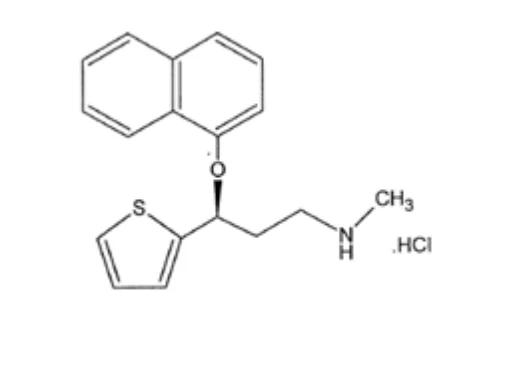
Physicochemical properties:
Description: White to slightly brownish white solid.
Solubility of duloxetine hydrochloride:
| Solvent | Descriptive USP Term |
| Water | Slightly soluble |
| Methanol | Freely soluble |
| Acetonitrile | Sparingly soluble |
CLINICAL TRIALS
Comparative Bioavailability Studies
Study Conducted Under Fasting Conditions
A single center, double-blind, balanced, randomized, two-treatment, two-period, two-sequence, single dose, crossover, oral bioequivalence study of 1 x RIVA-DULOXETINE 60 mg Delayed-Release Capsules (Laboratoire Riva Inc.) versus 1 x PrCYMBALTA® 60 mg Delayed-Release Capsules (Eli Lilly Canada Inc.) was conducted with 25 healthy, adult, human subjects under fasting conditions. Bioavailability data were measured and the results are summarized in the following table:
SUMMARY TABLE OF THE COMPARATIVE BIOAVAILABILITY DATA
Duloxetine (1 × 60 mg Delayed-Release Capsules – Fasting) From measured data Geometric Mean Arithmetic Mean (CV %) | ||||
| Parameter | Test* | Reference† | % Ratio of Geometric Means | 90% Confidence Interval |
AUCT (ng·h/mL) | 760.0 836.408 (49.2) | 785.9 881.842 (54.2) | 96.7 | 90.5 - 103.3 |
AUCI (ng·h/mL) | 791.3 878.153 (51.8) | 816.9 918.525 (55.1) | 96.9 | 90.9 - 103.2 |
Cmax (ng/mL) | 41.1 44.330 (42.4) | 44.0 48.957 (50.3) | 93.4 | 85.4 - 102.1 |
| Tmax§ (h) | 6.00 (4.50 – 12.00) | 6.00 (3.00 – 10.02) | ||
| T½€ (h) | 11.82 (19.5) | 11.61 (18.8) | ||
* RIVA-DULOXETINE 60 mg Delayed-Release Capsules (Laboratoire Riva Inc.) † PrCymbalta® 60 mg Delayed-Release Capsules (Eli Lilly Canada Inc.) were purchased in Canada. § Expressed as the median value (range) only.
€ Expressed as the arithmetic mean (CV %) only.
Study Conducted Under Fed Conditions
A single center, double-blind, balanced, randomized, two-treatment, two-period, two-sequence, single dose, crossover, oral bioequivalence study of 1 x RIVA-DULOXETINE 60 mg Delayed-Release Capsules (Laboratoire Riva Inc.) versus 1 x PrCYMBALTA® 60 mg Delayed-Release Capsules (Eli Lilly Canada Inc.) was conducted with 26 normal, healthy, adult, human subjects under fed conditions. Bioavailability data were measured and the results are summarized in the following table:
SUMMARY TABLE OF THE COMPARATIVE BIOAVAILABILITY DATA
Duloxetine (1 × 60 mg Delayed-Release Capsules – Fed) From measured data Geometric Mean Arithmetic Mean (CV %) | ||||
| Parameter | Test* | Reference† | % Ratio of Geometric Means | 90% Confidence Interval |
AUCT (ng·h/mL) | 791.6 886.3 (46.4) | 722.3 800.3 (41.7) | 109.6 | 102.1- 117.6 |
AUCI (ng·h/mL) | 831.2 932.9 (47.1) | 758.2 846.8 (44.0) | 109.6 | 102.1 - 117.7 |
| Cmax (ng/mL) | 44.5 49.3 (45.8) | 42.0 45.7 (35.6) | 105.9 | 97.2 - 115.3 |
| Tmax (h)§ | 7.50 (6.00 – 10.00) | 7.25 (5.50 – 9.00) | ||
| T½€ (h) | 12.11 (15.1) | 12.42 (22.9) | ||
* RIVA-DULOXETINE 60 mg Delayed-Release Capsules (Laboratoire Riva Inc.) †PrCymbalta® 60 mg Delayed-Release Capsules (Eli Lilly Canada Inc.) were purchased in Canada. § Expressed as the median value (range) only.
€ Expressed as the arithmetic mean (CV %) only.
Major Depressive Disorder (MDD) Studies
Study Demographics and Trial Design
The efficacy of duloxetine hydrochloride as a treatment for MDD was assessed in 6 randomized, double-blind, placebo-controlled, fixed-dose studies in adult outpatients (18 to 83 years) meeting DSM-IV criteria for MDD, and having baseline scores of ≥ 15 on the 17-Item Hamilton Depression Rating Scale and ≥ 4 on the Clinic Global Impression Severity Score. Primary efficacy was evaluated using the mean total scores of the HAMD17.
In two studies of identical design, patients were randomized to duloxetine hydrochloride 60 mg once daily (N = 123 and N = 128, respectively) or placebo (N = 122 and N = 139, respectively) for 9 weeks; in a second set of 2 studies of identical design patients were randomized to duloxetine hydrochloride 20 mg (N = 91 and N = 86) or 40 mg twice daily (N = 84 and N = 91) or placebo (N = 90 and N = 89) for 8 weeks; in a third set of studies of identical design, patients were randomized to duloxetine hydrochloride 40 mg (N = 95 and N = 93) or 60 mg twice daily (N = 93 and N = 103) or placebo (N = 93 and N = 99) for 8 weeks. The design of the six studies is summarized in Table 9.
Table 9: Clinical Trials Supporting Efficacy of Duloxetine Hydrochloride in the Treatment of MDD
| Study # | Trial Design/Duration | Dosage, Route of Administration | Study Subjects (N) [Female/Male (F/M)] | Mean Age Age Range | Baseline Scores Mean HAMD-17 (Mean CGI-S) |
| HMBH(a) | 9-week, multicentre, parallel, double-blind, randomized, placebo-controlled, fixed dose; double-blind placebo lead-out | Duloxetine 60 mg PO QD | N = 245 [F = 163; M = 82] | Mean age = 42.4 Age range = 18.6-77.7 | 21.3 (4.3) |
| HMBH(b) | 9-week, multicentre, parallel, double-blind, randomized, placebo-controlled, fixed dose; double-blind placebo lead-out | Duloxetine 60 mg PO QD | N = 267 [F = 184; M = 83] | Mean age = 40.9 Age range = 19.2-82.9 | 20.4 (4.2) |
| HMAT(a) | 8-week, multicentre, parallel, double-blind, randomized, placebo- and active comparator-controlled study with blinded placebo lead-in and placebo lead-out | Duloxetine 20 mg or 40 mg PO BID Paroxetine 20 mg QD | N = 354 [F = 218; M = 136] | Mean age = 43.7 Age range = 18.0-82.2 | 17.7 (3.9) |
| HMAT(b) | 8-week, multicentre, parallel, double-blind, randomized, placebo- and active comparator-controlled study with blinded placebo lead-in and placebo lead-out | Duloxetine 20 mg or 40 mg PO BID Paroxetine 20mg QD | N = 353 [F = 217; M = 136] | Mean age = 40.5 Age range = 18.2-78.2 | 17.9 (4.1) |
| Study # | Trial Design/Duration | Dosage, Route of Administration | Study Subjects (N) [Female/Male (F/M)] | Mean Age Age Range | Baseline Scores Mean HAMD-17 (Mean CGI-S) |
| HMAY(a) | 8-week, multicentre, parallel, double-blind, randomized, placebo- and active comparator-controlled study with blinded placebo lead-in and placebo lead-out with 26-week continuation phase | Duloxetine 40 mg or 60 mg PO BID Paroxetine 20 mg QD | Acute Phase: N = 367 [F = 267; M = 100] Continuation Phase: N = 273 [F = 199; M = 100] | Acute Phase: Mean age = 43.4 Continuation Phase: Mean age = 42.9 | 20.0 (4.3) |
| HMAY(b) | 8-week, multicentre, parallel, double-blind, randomized, placebo- and active comparator-controlled study with blinded placebo lead-in and placebo lead-out with 26-week continuation phase | Duloxetine 40 mg or 60 mg PO BID Paroxetine 20 mg QD | Acute Phase: N = 392 [F = 273; M = 119] Continuation Phase: N = 293 [F = 204; M = 89] | Acute Phase: Mean age = 45.2 Continuation Phase: Mean age = 45.1 | 21.1 (4.3) |
Study Results
The HAMD17 total score was the primary efficacy measure for the assessment of duloxetine hydrochloride’s effectiveness in the treatment of MDD. Additional secondary efficacy measures that supported the emotional and physical symptoms of MDD included: HAMD17 Depressed Mood Item (Item 1), HAMD17 Core and Anxiety subscales, Global Impression Scales (Patient Global Impressions (PGI) Improvement and CGI-Severity), and the Quality of Life in Depression (QLDS) rating scale.
In four of the six studies, duloxetine hydrochloride demonstrated statistical superiority over placebo as measured by improvement in the 17-item Hamilton Depression Rating Scale (HAMD-17) total score (see Table 10). The secondary efficacy outcomes were supportive of the primary efficacy outcomes.
Table 10: Mean Change in Hamilton Depression Rating Scale (HAMD-17) Total Score
| Study | Duloxetine Hydrochloride | Placebo | p-value |
| HMBH(a) | -9.47 (60 mg QD) | -5.67 | p ≤ 0.001 |
| HMBH(b) | -8.75 (60 mg QD) | –7.02 | p < 0.05 |
| HMAT(b) | -6.08 (20 mg BID) -6.77 (40 mg BID) | -3.67 | p ≤ 0.05 p ≤ 0.01 |
| HMAY(a) | -10.22 (40 mg BID) -11.06 (60 mg BID) | -8.07 | p ≤ 0.01 p ≤ 0.001 |
In comparison with placebo, duloxetine hydrochloride at doses of 60 mg once daily and 40 mg and 60 mg twice daily produced a significantly higher rate of response and remission as defined respectively by ≥ 50% decrease in the HAMD-17 total score and a total endpoint HAMD-17 score of ≤ 7.
There was no evidence that doses of greater than 60 mg/day conferred any additional benefit.
Analyses of the relationship between treatment outcome and age, gender, and race did not suggest any differential responsiveness on the basis of these patient characteristics.
Study in Elderly Patients with Depression
In a study comparing duloxetine hydrochloride 60 mg QD (n = 207) and placebo (n = 104) in the acute treatment (study duration 8 weeks) of elderly patients with MDD (> 65 years of age, mean age 72.9 years), the efficacy of duloxetine hydrochloride 60 mg once a day in treating depression symptoms was demonstrated by a statistically significant difference in the reduction of the HAMD17 score for duloxetine-treated patients compared to placebo (p < 0.001). Tolerability of duloxetine hydrochloride 60 mg once daily in elderly patients in this study was comparable to that seen in younger adults, but greater sensitivity of some older individuals cannot be ruled out.
Long-Term Maintenance of Effect Studies
The efficacy of duloxetine hydrochloride in maintaining antidepressant effect was assessed in two long-term studies.
Study HMBC: Patients responding to 12 weeks of acute treatment with open-label duloxetine hydrochloride at a dose of 60 mg once daily were randomly assigned to either duloxetine hydrochloride 60 mg once daily or placebo for a further 6 months (continuation phase) and time to relapse in each group was compared. Of 533 subjects who enrolled in the study, 278 responded and were randomized to duloxetine hydrochloride 60 mg once daily (n = 136) or placebo (N = 142). Response during the open-label phase was defined as meeting the following criteria at weeks 10 and 12: a HAMD-17 total score ≤ 9, Clinical Global Impressions of Severity (CGI-S) ≤ 2, and not meeting the DSM-IV criteria for MDD. The estimated probability of depressive relapse at 6 months for duloxetine hydrochloride was 19.7% and for placebo was 38.3% (p = 0.004). During the 6-month continuation therapy phase of this study, 17.4% of duloxetine hydrochloride-treated patients met the a priori-defined criteria for relapse compared with 28.5% on placebo. Median duration of treatment was 64 days for placebo and 178 days for duloxetine, with 74 (54%) patients on duloxetine and 47 (33%) patients on placebo completing the 6 month, double-blind continuous phase. Relapse during the continuation phase was defined as an increase in the CGI-S score of ≥ 2 points compared with that obtained at week 12, as well as meeting the DSM-IV criteria for MDD at 2 consecutive visits at least 2 weeks apart, where the 2-week temporal criterion had to be satisfied at only the second visit.
Study HMDI: Patients with at least 3 episodes of MDD in the past 5 years (and were in remission between the episodes) who responded to duloxetine hydrochloride at a dose of 60 to 120 mg QD during an initial 4- to 10-week, open-label, acute treatment period, and who continued to respond to the same dose during a further 24-week, open-label, continuation treatment period, were randomized to duloxetine hydrochloride or placebo for a 52-week, double-blind, maintenance phase. Response during the acute and continuation phases was defined as: HAMD17 total score ≤ 9, a CGI-S score ≤ 2, and not meeting DSM-IV criteria for MDD. During the maintenance phase, patients continued on the duloxetine hydrochloride dose to which they had responded (N = 146) or underwent a 4-week down-titration to placebo (N = 142). For the purposes of this study, recurrence during the maintenance phase was defined as: CGI-S score > 4 and meeting
DSM-IV criteria for MDD for at least 2 weeks; or 3 consecutive visits that met re-emergence criteria (CGI-S score > 4 but not meeting DSM-IV criteria for MDD) or 10 total re-emergence visits; or discontinued due to lack of efficacy. Time to depressive recurrence, as defined in the study (see above), was statistically significantly longer in duloxetine hydrochloride-treated patients compared with placebo-treated patients (p < 0.001) and significantly fewer patients treated with duloxetine hydrochloride experienced a return of their depressive symptoms (14.4%) compared to patients treated with placebo (33.1%).
Secondary efficacy measures that supported the primary outcome included: HAMD17 total score and subscales, CGI-Severity scale, PGI Improvement scale, and Sheehan Disability Scale (SDS) global functional impairment score.
The criteria for relapse and recurrence used in these studies were specified for these study protocols only; clinical criteria may vary.
Generalized Anxiety Disorder (GAD) Studies
The efficacy of duloxetine hydrochloride as a treatment for GAD was assessed in four acute, randomized, double-blind, placebo-controlled studies (duration: 9-10 weeks) in adult outpatients (ages 18 to 84 years) meeting DSM-IV criteria for GAD, and having baseline Hamilton Anxiety Rating Scale (HAMA) total score of ≥ 18 (moderate severity) and ≥ 4 on the Clinical Global Impression of Severity Score. The primary efficacy end-point was mean change from baseline to end-point on the HAMA total score versus placebo. Treatment difference was determined by calculating the difference between mean change in anxiety scores at end-point between duloxetine hydrochloride and placebo arms (Drug-Placebo; see Table 11). The main secondary efficacy measure was improvement in the Sheehan Disability Scale (SDS) global functional impairment score. The SDS measures the extent to which emotional symptoms disrupt patient functioning in 3 life domains: work/school, social life/leisure activities, and family life/home responsibilities.
Table 11: Clinical Trials Supporting Efficacy of Duloxetine Hydrochloride in the Treatment of GAD
| Study # | Trial Design/ Duration | Dosing Regimen; No. of Patients per Group (n) | Study Patients (N); Gender (M, F); Mean Age (Range) | Completers N (%) | Baseline Mean HAMA- total | Treatment Difference HAMA (p Value) |
| HMBR | 9 Week, double-blind, fixed dose, placebo- controlled study with a single-blind placebo lead-in. | DLX 60 mg QD: n = 168 DLX 120 mg QD: n = 170 Placebo: n = 175 | N = 513 [F = 348; M = 165] 43.8 (18.0-83.5) | All DLX: 259/338 (77%) Placebo: 130/175 (74%) | 25.3 | -4.4 (p < 0.001) |
| HMDT | 10 Week, double-blind, flexible-dose placebo - controlled, study with a single-blind placebo lead-in. | DLX 60 to 120 mg QD: n = 168 Placebo: n = 159 | N = 327 [F = 202; M = 125] 41.6 (19.2-77.2) | All DLX: 93/168 (55%) Placebo: 109/159 (69%) | 23.1 | -2.2 (p = 0.023) |
| HMDU | 10 Week, double-blind, flexible dose, placebo - and active-controlled study. | DLX 60 to 120 mg QD: n = 162 Active Control: 75 to 225 mg QD: n = 164 Placebo: n = 161 | N = 487 [F = 305; M = 182] 40.8 (18.6-83.2) | All DLX: 88/162 (54%) Active Control: 102/164 (62%) Placebo: 100/161 (62%) | 25.2 | -2.6 (p = 0.007) |
| HMDW | 10 Week, double-blind, flexible dose, placebo - and active-controlled study. | DLX 20 mg QD: n = 84 DLX 60 to 120 mg QD: n = 158 Active Control 75 to 225 mg QD: n = 169 Placebo: n = 170 | N = 581 [F = 332; M = 249] 42.8 (18.1-78.5) | All DLX: 172/242 (71%) Active Control: 122/169 (72%) Placebo: 102/170 (60%) | 27.4 | -3.7 (p < 0.001) |
| HMDV | Relapse prevention study with a 6-month, open-label flexible dose phase followed by a 6-month, randomized double-blind placebo- controlled phase. | DLX 60 to 120 mg QD: n = 216 Placebo: n = 213 | Open-Label: N = 887 [F = 541; M = 346] Dbl.-Blind: N = 429 [F = 257; M = 172] 43.3 (18.1-79.7) | Double Blind Al DLX : 167/216 (77%) Placebo: 116/213 (55%) | l Open- Label: 26.4 Dbl.-Blind: 5.5 | Open-Label: -14.9 (p < 0.001) Dbl.-Blind: -5.9 (p < 0.001) |
Abbr: DLX = duloxetine; QD = once daily.
Study Results: In all 4 studies, duloxetine hydrochloride 60 mg to 120 mg once daily demonstrated statistically significant superiority over placebo as measured by improvement in the primary outcome measure, the HAMA total score, and improvement in secondary outcome measures, including the SDS global functional impairment score and the Clinical Global Impression of Change (CGI-Improvement). The results on the other secondary outcome measures were supportive of the positive primary outcome.
Subgroup analyses did not indicate that there were any differences in treatment outcomes as a function of age or gender.
Maintenance of Response: In a long-term, relapse observation study, patients diagnosed with GAD who had responded during an initial 6 months of open-label duloxetine hydrochloride treatment, were randomized to receive either their optimized dose of duloxetine hydrochloride or placebo in a double-blind phase for an additional 6-months. There were statistically significantly (p < 0.001) more relapses on placebo (42%) as compared to duloxetine hydrochloride 60 mg to 120 mg once daily (14%) during the double-blind continuation therapy phase.
Study in Elderly Patients with GAD
Study HMGF: The efficacy of duloxetine hydrochloride 30 to 120 mg once daily (n = 151) versus placebo (n = 140) in elderly patients (> 65 years, mean age 71.6 years) with GAD was evaluated in a 12- week randomized, double-blind, placebo-controlled, flexible dose study. The primary efficacy endpoint was the HAMA total score at week 10. The key secondary efficacy measure was the improvement in SDS global functional impairment score. At week 10, duloxetine hydrochloride was superior to placebo on least squares mean change from baseline in HAMA total scores (-15.9 vs. -11.7, p < 0.001) and in SDS global functional impairment scores (-8.6 vs. -5.4, p < 0.001). The efficacy and safety of duloxetine hydrochloride 30 to 120 mg once daily in elderly patients with GAD was similar to that seen in younger adult patients but greater sensitivity of some older individuals cannot be ruled out.
Neuropathic Pain Associated with Diabetic Peripheral Neuropathy (DPN) Studies
Study Demographics and Trial Design: The efficacy of duloxetine hydrochloride for the management of neuropathic pain associated with DPN was established in three randomized, 12-week, double- blind, placebo-controlled, fixed-dose studies in adult patients (20 to 84 years) having neuropathic pain associated with DPN for at least 6 months. All studies compared duloxetine hydrochloride 60 mg once daily or 60 mg twice daily with placebo. One of the studies also compared duloxetine hydrochloride 20 mg with placebo. The design of the three studies is summarized in Table 12.
The three studies enrolled a total of 1,139 patients, of whom 888 (78%) completed the studies. Patients enrolled had Type 1 or 2 diabetes mellitus with a diagnosis of painful distal symmetrical sensorimotor polyneuropathy for at least 6 months. The patients had a baseline pain score of ≥ 4 on an 11-point scale ranging from 0 (no pain) to 10 (worst possible pain). Patients were permitted up to 4 g of acetaminophen per day as needed for pain, in addition to duloxetine hydrochloride. Patients recorded their pain daily in a diary.
Table 12: Study Design of Clinical Trials Supporting Efficacy of Duloxetine Hydrochloride in the
Management of Neuropathic Pain Associated with DPN
| Study # | Trial Design/ Duration | Dosage, Route Of Administration | Study Subjects (N) | Number of DLX Completers (n) and Completion Rate (%) | Mean Age (Range) |
HMAW
| 12 week, multicentre, parallel, double- blind, randomized, placebo-controlled study | DLX 20 mg QD DLX 60 mg QD DLX 60 mg BID PBO | N = 457 DLX 20 QD: 115 DLX 60 QD: 114 DLX 60 BID: 113 PBO: 115 | n = 257 75% | 60.1 (22.4-79.1) |
HMAV(a)
| 12 week, multicentre, parallel, double- blind, randomized, placebo-controlled study | DLX 60 mg QD DLX 60 mg BID PBO | N = 334 DLX 60 QD: 114 DLX 60 BID: 112 PBO: 108 | n = 163 72% | 60.7 (27.6-84.3) |
HMAV(b)
| 12 week, multicentre, parallel, double- blind, randomized, placebo-controlled study | DLX 60 mg QD DLX 60 mg BID PBO | N = 348 DLX 60 QD: 116 DLX 60 BID: 116 PBO: 116 | n = 196 85% | 58.8 (20.4-81.9) |
Study Results: The 24-hour average pain severity was the primary efficacy measure for the assessment of duloxetine hydrochloride’s effectiveness for the management of neuropathic pain associated with DPN. Evidence of efficacy from the primary efficacy measure was confirmed by comprehensive results from the secondary pain and DPN symptom measures.
In all 3 studies, duloxetine hydrochloride 60 mg QD and duloxetine hydrochloride 60 mg BID were statistically significantly superior to placebo at 12 weeks as assessed by the reduction from baseline in the 24-hour average pain severity (p < 0.001).
Duloxetine hydrochloride’s effect on pain was apparent at the first weekly visit. In all studies, a statistically significant difference (p < 0.001) between duloxetine hydrochloride 60 mg QD versus placebo and 60 mg BID versus placebo was observed at the first week of treatment and persisted to week 12.
In all studies, both duloxetine hydrochloride 60 mg QD and 60 mg BID were statistically significantly superior to placebo as assessed by response rate, which was defined as a 30% reduction in pain severity (Table 13).
Table 13: 24-Hour Average Pain Severity; 30% Response Rate at Endpoint All Randomized Patients
| Placebo | DLX 20 mg QD | DLX 60 mg QD | DLX 60 mg BID | |
| Study HMAV(a) – Acute | 42% | NA | 63%1 | 69%2 |
| Study HMAV(b) – Acute | 49% | NA | 77%2 | 73%3 |
| Study HMAW – Acute | 47% | 51% | 64%4 | 65%5 |
1 p = 0.003; 2 p < 0.001; 3 p = 0.002; 4 p = 0.01; 5 p = 0.007
Secondary measures which further support the efficacy of duloxetine hydrochloride in the management of neuropathic pain associated with DPN included: 24-hour worst pain severity, night pain severity, and Patient’s Global Impressions of Improvement (PGI-Improvement). In all studies, the results from these secondary measures were statistically significant for both duloxetine hydrochloride 60 mg QD and 60 mg BID when compared to placebo.
In HMAW-Acute, there was a statistically significant difference in 24-hour worst pain severity and PGI-Improvement (p < 0.001 for both duloxetine hydrochloride 60 mg QD and 60 mg BID versus placebo), and for night pain severity (duloxetine hydrochloride 60 mg QD, p = 0.025 and duloxetine hydrochloride 60 mg BID, p < 0.001 versus placebo).
In HMAV (a)-Acute, there was a statistically significant difference in 24-hour worst pain severity (duloxetine hydrochloride 60 mg QD, p = 0.002 and duloxetine hydrochloride 60 mg BID, p < 0.001 versus placebo) and PGI-Improvement (p < 0.001 for both duloxetine hydrochloride 60 mg BID and 60 mg QD versus placebo) and night pain severity (duloxetine hydrochloride 60 mg QD, p = 0.009 and duloxetine hydrochloride 60 mg BID, p < 0.001 versus placebo).
In HMAV(b)-Acute, there was a statistically significant difference in 24-hour worst pain severity (duloxetine hydrochloride 60 mg QD, p = 0.002 and duloxetine hydrochloride 60 mg BID, p = 0.003 versus placebo) and PGI-Improvement (duloxetine hydrochloride 60 mg QD, p = 0.002 and duloxetine hydrochloride 60 mg BID, p < 0.001 versus placebo) and night pain severity (duloxetine hydrochloride 60 mg QD, p = 0.003 and duloxetine hydrochloride 60 mg BID, p = 0.002 versus placebo).
Summary: In controlled DPN clinical trials, duloxetine hydrochloride, at doses of 60 mg QD and 60 mg BID, was statistically significantly more effective than placebo in reducing 24-hour average pain severity (primary efficacy measure), 24-hour worst pain severity, night pain severity, and improving PGI scores.
These findings demonstrate the clinical relevance of the reductions in pain severity observed.
Chronic Low Back Pain (CLBP) Studies
Study Demographics and Trial Design: The efficacy of duloxetine hydrochloride in the management of CLBP was established in two randomized, double-blind, 12-13 weeks, placebo-controlled studies (HMEN and HMGC) in 637 adult patients (18-89 years of age). To enter the study, patients had to have a clinical diagnosis of CLBP with pain present on most days for at least 6 months and no signs of radiculopathy or spinal stenosis.
The primary efficacy endpoint in both studies was a reduction in pain severity as measured by the BPI 24-hour average pain rating on the 11-point Likert scale (0 = no pain; 10 = worst possible pain). Some of the supplemental and secondary efficacy endpoints were the Patient’s Global Impression of Improvement (PGI-I), Responder Rates (patients reporting at least 30% or 50% reduction in endpoint average pain score compared to baseline), and BPI Severity and Interference Score.
The design of the studies is summarized in Table 14.
Table 14: Clinical Trial Supporting Efficacy of Duloxetine Hydrochloride in the Management of Chronic Low
Back Pain
Study # | Trial Design/ Duration | Study Subjects (N) | Mean Age Age Range | Number of Completers (n) and Completion Rate (%) | Mean Baseline Pain Score (SD) and Range | Primary Efficacy (LS mean change from baseline) | Treatment Difference |
| HMGC | 12-week, double- blind, parallel, fixed-dose, placebo- controlled | N = 401 DLX 60 mg QD = 198 PBO = 203 | Mean age = 54.14 yrs. Age range = 18.66-89.30 yrs. | DLX: 147 (74.2%) PBO: 156 (76.8%) | BPI DLX: 5.84 (1.43) range 4-10 PBO: 5.75 (1.37) Range 4-10 | BPI DLX: -2.48 PBO: -1.80 (p = .001) | BPI -0.68 |
| HMEN | 13-week, double- blind, parallel, flexible-dose, placebo- controlled | N = 236 DLX 60/120 mg QD* = 115 PBO = 121 | Mean age = 51.47 yrs. Age range = 20.01-84.59 yrs. | DLX: 84 (73%) PBO: 98 (81%) | BPI DLX: 5.91 (1.59), range 2-10 PBO: 5.96 (1.66), range 2-10 | BPI DLX: -2.32 PBO: -1.50 (p = .004) | BPI -0.82 |
*Treatment group of 60/120mg QD is the combined population for patients who stayed on 60 mg QD or increased to 120 mg QD. QD = once daily; DLX = duloxetine; PBO = placebo; BPI = Brief Pain Inventory
Study Results
Study HMGC: In this fixed-dose study, patients were not permitted to use any other analgesic agent while taking duloxetine hydrochloride. After 12 weeks of treatment, patients taking duloxetine hydrochloride 60 mg QD had significantly greater pain reduction compared to placebo (see Table 14). Some patients on duloxetine hydrochloride experienced pain reduction as early as week one which persisted throughout the study. Most supplemental and secondary efficacy measures were supportive of the primary end-point.
Study HMEN: In this flexible-dose study, patients assigned to duloxetine hydrochloride started treatment at a dose of 30 mg once daily for one week to improve tolerability, then increased to 60 mg once daily (QD). After 7 weeks of treatment with duloxetine hydrochloride 60 mg QD, patients with sub-optimal response to treatment (< 30% pain reduction) and who tolerated duloxetine hydrochloride 60 mg once daily had their dose increased to 120 mg. Patients were permitted to continue on their stable therapeutic dose of NSAIDs or acetaminophen while taking duloxetine hydrochloride.
After 13 weeks of treatment, patients taking duloxetine hydrochloride 60-120 mg daily had a significantly greater pain reduction compared to placebo (see Table 14). Some patients on duloxetine hydrochloride experienced pain reduction in the first week after starting the 60 mg dose which continued throughout the 13 weeks of the acute therapy phase. Most supplemental and secondary efficacy measures were supportive of the primary end-point.
Osteoarthritis (OA) Studies
Study Demographics and Trial Design: The efficacy of duloxetine hydrochloride in the management of chronic pain associated with osteoarthritis of the knee was established in two, randomized, double-blind, placebo-controlled studies in 780 adult patients (40 to 92 years). To enter these studies, patients had to meet the American College of Rheumatology (ACR) clinical and radiographic criteria for the diagnosis of osteoarthritis of the knee with pain for ≥ 14 days of each month for 3 months prior to study entry. In both studies, the 11-point Likert scale (0 = no pain; 10 = worst possible pain) was used to measure pain severity. Some of the supplemental and secondary efficacy endpoints were the Western Ontario and McMaster Universities Osteoarthritis Index (WOMAC), Patient’s Global Impression of Improvement (PGI-I), Responder Rates (patients reporting at least 30% or 50% reduction in endpoint average pain score compared to baseline), and BPI Severity and Interference Score.
The design of these studies is summarized in Table 15.
Table 15: Clinical Trials Supporting Efficacy of Duloxetine Hydrochloride in the Management of Pain due to
Osteoarthritis of the Knee
| Study # | Trial Design/ Duration | Study Subjects (N) | Mean Age Age Range | Number of Completers (n) and Completion Rate (%) | Mean Baseline Pain Rating (SD) and Range | Primary Efficacy (LS mean change from baseline in BPI or 24- hour average pain rating) | Treatment Difference |
| HMFG | 13-week, multicenter, randomized, double-blind, parallel, placebo-controlled flexible-dose study | N = 256 DLX 60/120 mg QD*: 128 PBO: 128 | Mean age = 62.5 Age range = 40 – 79 yrs. | DLX = 93 (73%) PBO: 111 (87%) | DLX60/120: 6.07 (1.39), range 3-10 PBO: 6.14 (1.27), range 4-9 | DLX60/120: -2.29 PBO: -1.61 (p = 0.005) | -0.68 |
| HMGL | 10-week, multicenter, randomized, double-blind, parallel, placebo-controlled, flexible-dose study; DLX added on to optimized NSAID regimen | N = 524 DLX 60/120 mg QD*: 264 PBO: 260 | Mean age = 61.0 Age range = 40 – 92 yrs. | DLX: 189 (72%) PBO: 199 (76%) | DLX60/120: 6.27 (1.41), range 2-10 PBO: 6.36 (1.41), range 4-10 | DLX60/120: -2.46 PBO: -1.55 (p = < 0.001) | -0.91 |
*Treatment group of 60/120mg QD is the combined population for patients who stayed on 60mg QD or increased to 120mg QD. QD = once daily; DLX = duloxetine; PBO = placebo; BPI = Brief Pain Inventory
Study HMFG: In this 13-week long, flexible-dose study, 256 patients were initially randomized to receive duloxetine hydrochloride (128 patients; 73% completed) or placebo (128 patients, 87% completed). Patients had a mean baseline pain rating of 6 on a numerical rating scale
ranging from 0 (no pain) to 10 (worst possible pain). Patients randomized to duloxetine hydrochloride started treatment at a dose of 30 mg once daily for one week, then increased to 60 mg once daily (QD). After 7 weeks of treatment with duloxetine hydrochloride 60 mg QD, patients with sub-optimal response to treatment (< 30% pain reduction) had their dose increased to 120 mg for the remainder of the study, while the remaining patients who responded continued on duloxetine hydrochloride 60 mg QD. For efficacy analyses, data from both duloxetine hydrochloride doses were combined and compared to placebo. Patients administered duloxetine hydrochloride 60/120 mg QD reported significantly greater pain reduction compared to those on placebo as assessed by the primary efficacy end-point, Brief Pain Inventory (BPI) 24-hour average pain rating (Table 15). Secondary efficacy measures were supportive of the primary end-point.
Study HMGL: In this 10 week, placebo-controlled, flexible-dose study, patients with OA pain of the knee, which had inadequate pain relief from an optimized dose of NSAID therapy for two weeks, received duloxetine hydrochloride 60/120 mg/day or placebo. After 8 weeks of double-blind treatment, duloxetine-treated patients experienced significantly greater pain reduction compared with placebo on the weekly 24 hour average pain rating (primary efficacy measure). Results of the two gatekeeper efficacy end-points, Western Ontario and McMaster Universities (WOMAC) index of osteoarthritis and Patient Global Impression of Improvement (PGI-I) also demonstrated significantly greater improvement in duloxetine hydrochloride-treated patients compared with placebo. Secondary efficacy measures (example BPI) were also supportive of the primary endpoint.
DETAILED ANIMAL PHARMACOLOGY
Pharmacodynamics Studies
Nonclinical studies indicate that duloxetine has the following neuropharmacologic attributes:
- 1. Potently inhibits the uptake of serotonin (5-HT) and norepinephrine (NE) in vitro in a relatively balanced manner and has lower affinity for dopamine uptake
- 2. Has low affinity for a number of neuronal receptors including those which are associated with adverse events such as cholinergic, histaminergic, or α-adrenergic receptors
- 3. Blocks 5-HT and NE ex vivo uptake as well as 5-HT and NE depletion induced by transporter-dependent neurotoxins, demonstrating in vivo blockade of the respective transporters
- 4. Increases extracellular levels of 5-HT and NE in brain regions. Dopamine extracellular levels in prefrontal cortex were increased, consistent with noradrenergic uptake processes regulating dopamine extracellular levels in cortical areas
- 5. Is active in behaviour models indicative of enhancement of central 5-HT and NE neurotransmission and also in behavioural models of depression
Duloxetine is active in several models of chronic pain at doses that are consistent with in vivo uptake blockade of 5-HT and NE. This is in keeping with the known role of 5-HT and NE in enhancing endogenous analgesia mechanisms via descending spinal inhibitory pain pathways:
- 1. Duloxetine is an effective inhibitor of the second phase of the formalin test, the capsaicin test, the acetic-acid writhing test, the carrageenan test and nerve ligation injury tests (both the Chung and Seltzer models) indicative of analgesic effects in neurological, inflammatory, and neuropathic pains.
- 2. Full efficacy occurs at doses that do not impair motor performance on the rotorod test.
- 3. There is no evidence of reduction in effect with subchronic dosing in the nerve ligation models.
Thus, the activity of duloxetine in nonclinical models suggests that it would have antidepressant activity as well as utility in treating persistent/chronic pain.
Safety Pharmacology Studies
The potential of duloxetine to alter cardiovascular, central nervous system (CNS), smooth muscle, renal, immune, and gastrointestinal motility functions was examined to provide a profile of possible secondary pharmacologic effects of this compound. Smooth and cardiac muscle function was unaffected at concentrations of 1 nM to 1 mcM duloxetine. At the maximum clinically achieved unbound plasma concentration of duloxetine (90 nM or 30 ng/ml), duloxetine had no effect on any of the human cardiac ion channels tested. Significant cardiovascular effects were observed at intravenous doses of 2 mg/kg of duloxetine in anesthetized dogs. Cardiovascular function was not significantly altered following oral administration of 7 or 20 mg duloxetine/kg in the conscious rat. Intravenous doses of 0.4 mg/kg of duloxetine in the anesthetized dog stimulated respiratory rate. However, in conscious dogs, intravenous (2 mg/kg) or oral (10 mg/kg) administration of duloxetine had no effect on pulmonary or systemic arterial pressure or on heart rate. Duloxetine did not adversely affect the CNS functions of mice at acute oral doses of 3 mg/kg. In addition, multiple (5-day) oral administration of duloxetine in mice resulted in tolerance to its adrenergic activity, depressed CNS activity (as evaluated using hexobarbital-induced sleep), and enhanced anticonvulsive properties. Gastrointestinal motility was not affected at oral doses of up to 30 mg/kg. An increase in sodium excretion was the only effect on renal function observed at 3 mg/kg. Immune functions were unaltered at an oral dose of 130 mg/kg.
Based upon the results of these studies, therapeutically relevant doses of duloxetine would not be predicted to significantly alter the CNS, smooth muscle, renal, immune, or gastrointestinal functions tested. Potential secondary pharmacologic reactions of duloxetine at clinical doses would appear to be limited to increases in pulmonary pressure, pulmonary vascular resistance, and respiratory rate, effects which are attributable to the known actions of norepinephrine and serotonin. It should be noted, however, that these effects were only observed in anesthetized animals.
Pharmacokinetics
The absorption, distribution, metabolism, and excretion of duloxetine have been extensively evaluated in mice, rats, and dogs. After an oral gavage dose or daily oral or dietary doses, duloxetine is well-absorbed in mice, rats, and dogs, but extensively metabolized. The percent of the dose undergoing biotransformation after oral administration is > 90% in all 3 species, with dogs exhibiting the highest degree of metabolism. After an intravenous dose to both rats and dogs, duloxetine is also extensively metabolized with approximately 75% to 81% of the dose
circulating as metabolites. The elimination half-life of duloxetine ranges from 1.5 hours in rats to 4 hours in dogs after administration of an oral dose. The half-life of radioactivity is much longer (27 to 122 hours) in all three species and is reflective of the elimination of multiple metabolites. The major route of elimination in mice, rats, and dogs is via the feces (46% to 77%) with 14% to 43% of the radioactivity appearing in the urine. The elimination routes of radioactivity are similar after both an intravenous dose and an oral dose of 14C-duloxetine. In bile duct cannulated rats, the majority of the radioactivity is excreted in the bile indicating that radioactivity eliminated in the feces of noncannulated rats is due to biliary excretion and not to poor absorption.
Duloxetine is extensively metabolized in mice, rats, and dogs to numerous metabolites. In all three species, the major biotransformation pathways involve several oxidations, especially in the naphthyl ring followed by conjugation. The major metabolites in dogs are a dihydrodiol and cysteinylhydroxy derivative of duloxetine. The dihydrodiol of duloxetine is found in all three species, but the cysteinylhydroxy of duloxetine is only found in the dog. The major metabolites in mice and rats are glucuronide conjugates of 4-hydroxy duloxetine, and 6-hydroxy duloxetine, and the des (aminomethyl) acid metabolite. The 5-hydroxy related metabolites tended to predominate in the dog.
Tissue distribution studies indicate that after a dose of 14C-duloxetine, radioactivity is not widely distributed into tissues of rats and that the highest concentrations of radioactivity were observed in the liver, kidney, lung and gastrointestinal tract. Radioactivity does distribute into the brain, but at low levels. Duloxetine is highly bound to plasma proteins, which may account for some of its lower distribution. Duloxetine does cross the placenta and is excreted into milk of lactating rats. Although duloxetine appeared to be a mixed cytochrome P450 inducer (CYP1A and CYP2B) in rats at elevated doses, the data indicated that duloxetine has a very low potential for P450 induction in humans.
The disposition of duloxetine has been investigated in mice, rats, dogs and monkeys. The primary species used in studying duloxetine have been the rat and dog. Monkeys were only used in a pilot study determining the disposition and metabolism of 14C-duloxetine. Plasma concentrations of duloxetine have been quantitated utilizing HPLC with UV or fluorescence detection and HPLC with tandem mass spectrometry methods. 14C-duloxetine was synthesized with the radiolabel in various positions, 14C-alkyl, 14C-naphthyl and 14C at the chiral carbon. Radiolabelled drug was administered in the pharmacokinetic, metabolism, excretion and tissue distribution studies. The metabolism and excretion of 14C-duloxetine has been investigated in mice, rats, dogs and monkeys. The plasma protein binding of 14C-duloxetine has been determined in mouse, rat, dog and human plasma. Additional studies have investigated the placental transfer of 14C-duloxetine in rats and the excretion of 14C-duloxetine into milk of lactating rats.
TOXICOLOGY
Acute Toxicology Studies
The primary findings following acute oral administration of duloxetine to mice, rats, dogs, and monkeys were related to central nervous system (CNS) effects (i.e., tremors, convulsions, emesis, mydriasis, salivation, and hyperresponsiveness). In rats and mice, the median lethal dose ranged from 279 mg/kg to 595 mg/kg. No deaths occurred in single-dose studies in dogs or monkeys at doses up to 100 mg/kg, the highest dose tested.
Important toxicologic effects in rats following the dietary administration of duloxetine hydrochloride for 1, 3, or 6 months occurred primarily in the high-dose group of 0.08% or approximately 50 mg/kg. These effects were decreased mean body weight, body weight gain, and food consumption; moderate hepatic microsomal enzyme induction with correlated increased liver weights, and minimal-to-moderate midzonal hepatocellular lipid vacuolation primarily in males.
Subacute and Long-Term Toxicology Studies
Administration of duloxetine to dogs for 1, 6, or 12 months at doses of 3, 10, or 30 mg/kg caused dose-related clinical signs of the CNS as a result of the pharmacologic action of this compound, including decreased food consumption, abnormal stools, emesis, and mydriasis. The frequency of emesis increased in a dose-related manner and was the dose-limiting effect. Additional findings were related to the liver (hepatic microsomal enzyme induction, increased liver weight, increased liver phospholipid phosphorus, and increased numbers of secondary lysosomes) and were limited primarily to the 30-mg/kg group. Dogs treated with 3 mg/kg had no adverse signs of toxicity.
Other Toxicology Studies
The toxicity of duloxetine following intravenous administration was evaluated in rats and dogs. Administration of duloxetine to male and female Fischer 344 rats via a daily 30-minute intravenous infusion at dose levels of 1, 5, or 10 mg/kg/day resulted in excessive irritation at the injection sites. Systemic toxicity was not observed at a dose of 1 mg/kg/day for 15 days. Similarly, daily intravenous administration of duloxetine over an approximate 30-minute period to beagle dogs at doses of 1, 2.5, or 5 mg/kg/day for up to 15 days resulted in no evidence of systemic toxicity. However, local irritation at the injection sites precluded dosing of the 5 mg/kg/day group for more than 10 days.
Antigenicity studies indicated that the hypersensitivity-eliciting antigenicity of duloxetine in guinea pigs was restricted to active systemic anaphylaxis when immunized with a hapten-protein conjugate with adjuvant. Duloxetine was nonimmunogenic and did not possess hypersensitivity- eliciting antigenicity in mice. As a result, the overall risk of duloxetine causing allergic adverse reactions clinically is considered minimal.
Dependence studies indicated that duloxetine did not demonstrate any dependence-producing potential in monkeys or rats.
Dermal toxicity and dermal and ocular irritancy were determined to assess the occupational hazard of duloxetine. In the rabbit, duloxetine was considered to be nontoxic and a very slight irritant when administered dermally. Duloxetine was also determined to be corrosive ocularly.
Carcinogenicity Studies
Duloxetine was administered in the diet to rats and mice for 2 years. In rats, dietary doses of duloxetine up to approximately 27 mg/kg/day in females (2.0 times the maximum recommended human dose [MRHD] on a mg/m2 basis) or approximately 36 mg/kg/day in males (2.6 times the MRHD on a mg/m2 basis) did not cause any increase in incidence of expected or unusual neoplasms or decrease in the latency for any tumour type. Rats receiving dietary concentrations of approximately 30 mg/kg/day had plasma concentrations of duloxetine that were 3.5 to 12 times the plasma concentrations of patients receiving the MRHD.
In female mice receiving duloxetine at approximately 144 mg/kg/day (5 times MRHD on a mg/m2 basis), there was an increased incidence of hepatocellular adenomas and carcinomas, but these were considered to be secondary to hepatic enzyme induction with associated centrilobular hypertrophy and vacuolation. Mice receiving dietary concentrations of approximately 144 mg/kg/day had plasma concentrations of duloxetine that were 3 to 11 times the plasma concentrations of patients receiving the MRHD. The relevance of this mouse data in humans is unknown.
Mutagenicity Studies
Duloxetine demonstrated no mutagenic potential in a battery of genotoxicity tests which included the Ames bacterial mutagenesis assay, the Chinese hamster ovary (CHO) chromosomal aberration assay, the mouse lymphoma cell mutagenesis assay, the in vivo mouse micronucleus assay, the rat hepatocyte unscheduled DNA synthesis assay, and the in vivo CHO sister chromatid exchange assay.
Reproductive and Teratogenicity Studies
Reproductive performance was not affected in male rats receiving duloxetine orally at doses up to 45 mg/kg/day or approximately 3.3 times the MRHD on a mg/m2 basis. In female rats receiving 45 mg/kg/day duloxetine orally (3.3 times the MRHD on a mg/m2 basis), reproductive toxicity was demonstrated by a decrease in maternal food consumption and body weight, estrous cycle disruption, depressions in live birth indices and progeny survival, and progeny growth retardation. The no-observed-effect level (NOEL) for maternal toxicity, reproductive toxicity, and developmental toxicity in the female fertility study was 10 mg/kg/day (approximately 0.7 times the MRHD on a mg/m2 basis).
In embryo-fetal development studies in rats and rabbits there was no evidence of teratogenicity following the oral administration of up to 45 mg/kg/day (3.3 times the MRHD on a mg/m2 basis). In rat reproduction studies, mating and fertility indices and reproductive parameters were not affected by duloxetine administration of up to 30 mg/kg/day (2.2 times the MRHD on a mg/m2 basis). A decrease in pup survival to 1 day postpartum and a decrease in mean litter body weights during the lactation period occurred following maternal exposure to 30 mg/kg/day (2.2 times the MRHD on a mg/m2 basis). Increased reactivity was observed in pups following maternal
exposure to 10 and 30 mg/kg/day (0.7 and 2.2 times the MRHD on a mg/m2 basis, respectively). Growth and reproductive performance of the progeny were not affected adversely by maternal duloxetine treatment.
REFERENCES
- 1. Alaka KJ, Noble W, Montejo A, et al. 2014. Efficacy and safety of duloxetine in the treatment of older adult patients with generalized anxiety disorder: a randomized, doubleblind, placebo-controlled trial. Int J Geriatr Psychiatry. 2014; Article first published online: 20 Feb 2014 DOI:10.1002/gps.4088.
- 2.
Allgulander C, Hartford J, Russell J, et al. Pharmacotherapy of generalized anxiety disorder:
results of duloxetine treatment from a pooled analysis of 3 clinical trials. Current Medical Research and Opinion 2007;23(6);1245–1252.
- 3. Bingefors K, Isacson D, von Knorring L, Smedby B, et al. Antidepressant-treated patients in ambulatory care. Long-term use of non-psychotropic and psychotropic drugs. Br J Psychiatry 1996;168:292-298.
- 4.
Brunner H, Gross F. Cardiovascular Pharmacology: Report of the Main Working Party.
Pharmacol Ther 1979;5:63-97.
- 5. Bymaster F, Dreshfield-Ahmad L. Threlkeld P, Shaw J, et al. Comparative affinity of duloxetine and venlafaxine for serotonin and norepinephrine transporters in vitro and in vivo, Human Serotonin Receptor Subtypes, and Other Neuronal Receptors. Neuropsychopharmacol 2001;25:871-880.
- 6. Chappell A, Ossanna M, Liu-Seifert H, et al. Duloxetine, a centrally acting analgesic, in the treatment of patients with osteoarthritis knee pain: a 13week, randomized, placebo- controlled trial. Pain 2009;146:253-260.
- 7. Chappell A, Desaiah D, Liu-Seifert H, et al. A double-blind, randomized, placebo- controlled study of the efficacy and safety of duloxetine for the treatment of chronic pain due to osteoarthritis of the knee. Pain Pract 2011;11:33-41.
- 8. Davidson J, Wittchen H, Llorca P, et al. Duloxetine treatment for relapse prevention in adults with Generalized Anxiety Disorder: A 26-week, randomized, placebo-controlled, double-blind study. European Neuropsychopharmacol 2008;18:673–681.
- 9. Detke M, Wiltse C, Mallinckrodt C, McNamara R, et al. Duloxetine in the acute and long- term treatment of major depressive disorder: a placebo- and paroxetine-controlled trial. Neuropsychopharmacol 2004;14:457-470.
- 10. Detke M, Lu Y, Goldstein D, Hayes J, et al. Duloxetine, 60 mg once daily, for major depressive disorder: a randomized double-blind placebo-controlled trial. J Clin Psychiatry 2002;63:308-315.
- 11. Detke M, Lu Y, Goldstein D, McNamara R et al. Duloxetine, 60 mg once daily dosing versus placebo in the acute treatment of major depression. J Psychiatr Res 2002; 36:383-390.
- 12. Dunner D, Goldstein D, Mallinckrodt C, Lu Y, et al. Duloxetine in treatment of anxiety symptoms associated with depression. Depress Anxiety 2003;18:53-61.
- 13. Endicott J, Russell J, Raskin J, et al. Duloxetine treatment for role functioning improvement in generalized anxiety disorder: Three independent studies. J Clin Psychiatry 2007;68:518-524.
- 14.
Fava M. Somatic Symptoms, Depression, and Antidepressant Treatment. J Clin Psychiatry
2002;63:305-307.
- 15. Feighner J, Cohn J, Fabre L Jr, Fieve R, et al. A study comparing paroxetine, placebo and imipramine in depressed patients. J Affect Disord 1993;28:71-79.
- 16. Frakes E, Risser R, Ball TD, et al. Duloxetine added to oral nonsteroidal anti-inflammatory drugs for treatment of knee pain due to osteoarthritis: Results of a randomized, double- blind, placebo-controlled trial. Current Med Res Opinion 2011;27:2361-2372.
- 17.
Fuglum E. Rosenberg C. Damsbo N. and Danish University Antidepressant Group.
Screening and treating depressed patients. A comparison of two controlled citalopram trials across treatment settings: hospitalized patients versus patients treated by their family doctors. Acta Psychiatr Scand 1996;94:18-25.
- 18.
Garattini S, Valzelli L. Serotonin. New York (NY): American Elsevier Publishing Company
Inc. 1965; pp. 103-136 and 181-182.
- 19. Goldstein D, Mallinckrodt C, Lu Y, Demitrack M. Duloxetine in the treatment of major depressive disorder: a double-blind clinical trial. J Clin Psychiatry 2002;63:225-231.
- 20. Goldstein D, Lu Y, Detke M, Hudson J, et al. Effects of duloxetine on painful physical symptoms associated with depression. Psychosomatics 2004;45:17-28.
- 21. Goldstein D, Lu Y, Detke M, Wiltse C, et al. Duloxetine in the treatment of depression: a double-blind, placebo-controlled comparison with paroxetine. J Clin Psychopharmacol 2004;24:389-399.
- 22. Goldstein D, Lu Y, Detke M, Lee T, et al. Duloxetine versus placebo in patients with painful diabetic neuropathy. Pain 2005;116:109-118.
- 23. Hartford J, Kornstein S, Liebowitz M, et al. Duloxetine as an SNRI treatment for generalized anxiety disorder: results from a placebo and active-controlled trial. Int Clin Psychopharmacol 2007;22:167–174.
- 24. Koponen H, Allgulander C, Erickson J, et al. Efficacy of duloxetine for the treatment of generalized Anxiety Disorder: Implications for Primary Care Physicians. J Clin Psychiatry 2007;9:100-107.
- 25. Kroenke K, Price R. Symptoms in the community. Arch Intern Med 1993;153:2474-2480.
- 26. Lehmann H, Fenton F, Deutsch M, Feldman S, et al. An 11-year follow-up study of 110 patients. Acta Psychiatr Scand 1988;78:57-65.
- 27. Lopez-Ibor J. Guelfi J. Pletan Y. Tournoux A. et al. Milnacipran and selective serotonin reuptake inhibitors in major depression. Int Clin Psychopharmacol 1996;11:41-46.
- 28. Mallinckrodt C, Goldstein D, Detke M, et al. Duloxetine: A new treatment for the emotional and physical symptoms of depression. Primary Care Companion. J Clin Psychiatry 2003;5:19-28.
- 29. Nemeroff C, Schatzberg A, Goldstein D, et al. Duloxetine for the treatment of major depressive disorder. Psychopharmacol Bull 2002;36:106-132.
- 30. Paykel E, Ramana, R, Cooper Z, et al. Residual symptoms after partial remission: An important outcome in depression. Psychological Med 1995;25:1171-1180.
- 31. Perahia D, Gilaberte I, Wang F, Wiltse C, et al. Duloxetine in the prevention of relapse of major depressive disorder. Br J Psychiatry 2006;188:346-353.
- 32.
Perahia D, Maina G, Thase M, Spann M, Wang F, Walker D, Detke M. Duloxetine in the
Prevention of Depressive Recurrences: A Randomized, Double-blind, Placebo-controlled Trial. J Clin Psychiatry. 2009;70(5):706-716.
- 33.
Physicians' Desk Reference, 55th edition. 2001. Montvale (NJ): Medical Economics
Company.
- 34.
Raskin J, Goldstein D, Mallinckrodt C, Ferguson M. Duloxetine in the long-term treatment of
Major Depressive Disorder. J Clin Psychiatry 2003;64:1237-1244.
- 35. Raskin J, Smith T, Wong K, et al. Duloxetine versus routine care in the long-term management of Diabetic Peripheral Neuropathic Pain. J Palliat Med 2006;9:29-40.
- 36. Raskin J, Pritchett Y, Wang F, et al. A double-blind, randomized, multicenter trial comparing duloxetine with placebo in the management of Diabetic Peripheral Neuropathic Pain. Pain Med 2005;6:346-356.
- 37. Russell J, Weisberg R, Fava M, et al. Efficacy of duloxetine in the treatment of generalized anxiety disorder in patients with clinically significant pain symptoms. Depress Anxiety 2007;0:1-11.
- 38. Rynn M, Russell J, Erickson J, et al. Efficacy and safety of duloxetine in the treatment of generalized anxiety disorder: a flexible-dose, progressive-titration, placebo-controlled trial. Depress Anxiety 2007;0:1-8.
- 39. Sheehan D. Venlafaxine extended release (XR) in the treatment of generalized anxiety disorder. J Clin Psychiatry 1999;60:23-28.
- 40. Simon G, VonKorff M, Piccinelli M, et al. A international study of the relation between somatic symptoms and depression. N Engl J Med 1999;341: 1329-35.
- 41.
Skljarevski V, Desaiah D, Liu-Seifert H, Zhang Q, Chappell A, Detke M, Atkinson J,
Backonja M. Efficacy and Safety of Duloxetine in Patients With Chronic Low Back Pain. Spine. 2010; 35(13):E578-E585.
- 42. Skljarevski V, Ossanna M, Liu-Seifert H, et al. A double-blind, randomized trial of duloxetine versus placebo in the management of chronic low back pain. Eur J Neurol. 2009;16:1041-1048.
- 43. Skljarevski V, Zhang S, Desaiah D et al. Duloxetine versus placebo in patients with chronic low back pain: A 12-week, fixed-dose, randomized, double-blind trial. J of Pain 2010; 11(12):1282-1290.
- 44.
Steffens D, Krishnan K, Helms M. Are SSRIs better than TCAs? Comparisons of SSRIs and
TCAs: a meta-analysis. Depress Anxiety 1997;6:10-18.
- 45.
Stahl S. The psychopharmacology of painful physical symptoms in depression. J Clin
Psychiatry 2002;63:382-383.
- 46. Thase M, Entsuah R, Rudolph R. Remission rates during treatment with venlafaxine or selective serotonin reuptake inhibitors. Br J Psychiatry 2001;178:234-241.
- 47. Tignol J, Stoker M, Dunbar G. Paroxetine in the treatment of melancholia and severe depression. Int Clin Psychopharmacol 1992;7:91-94.
- 48.
Tran P, Bymaster F, McNamara R, Potter W. Dual Monoamine Modulation for Improved
Treatment of Major Depressive Disorder. J Clin Psychopharmacol 2003;13:1-9.
- 49.
Weiner N. Norepinephrine, Epinephrine, and the Sympathomimetic Amines. Goodman and
Gilman’s The Pharmacological Basis of Therapeutics, 7th Edition. MacMillan Publishing Company (New York) 1985; pp.145-180.
- 50. Wernicke J, Pritchett Y, D'Souza D, et al. A randomized controlled trial of duloxetine in diabetic peripheral neuropathic pain. Neurology 2006;67:1411-20.
- 51. Whitmyer V, Dunner D, Kornstein S, et al. A comparison of initial duloxetine dosing strategies in patients with major depressive disorder. J Clin Psychiatry 2007;68:1921-1930.
- 52. [WHO]. 1996. The global burden of disease: a comprehensive assessment of mortality and disability from diseases, injuries, and risk factors in 1990 and projected in 2020 (summary). Murray CJL, Lopez AD, editors. Boston (MA): Harvard School for Public Health.
- 53. Wong D, Bymaster F. Dual serotonin and noradrenaline uptake inhibitor class of antidepressants-potential for greater efficacy or just hype? Prog Drug Res 2002;59:169- 222.
- 54.
PrCYMBALTA® Product Monograph, Eli Lilly Canada Inc., dated June 12, 2019, Control no.
225221.