


Product Monograph - Ropivacaine Hydrochloride Injection
SUMMARY PRODUCT INFORMATION
| Route of Administration | Dosage Form / Strength | Non-medicinal Ingredients |
| Parenteral | Sterile solution / 2 mg/mL | Sodium chloride, sodium hydroxide, hydrochloric acid and water for injection |
INDICATIONS AND CLINICAL USE
Adults (> 18 years of age):
ROPIVACAINE HYDROCHLORIDE INJECTION is indicated for:
Analgesia
Acute pain management in connection with:
- continuous epidural infusion or intermittent bolus administration e.g. postoperative or labour pain;
- field block e.g. infiltration
Geriatrics (> 65 years of age):
Elderly patients should be given reduced doses of ropivacaine, commensurate with their age and physical condition (see WARNINGS AND PRECAUTIONS, Geriatrics and DOSAGE AND ADMINISTRATION, Special Populations).
Pediatrics (< 18 years of age):
The safety and efficacy of ropivacaine hydrochloride have not been investigated in children under 18 years of age. ROPIVACAINE HYDROCHLORIDE INJECTION is not indicated for use in patients below the age of 18 years (see WARNINGS AND PRECAUTIONS, Special Populations).
CONTRAINDICATIONS
ROPIVACAINE HYDROCHLORIDE INJECTION is contraindicated:
- in patients with a hypersensitivity to ropivacaine or any other local anaesthetic agent of the amide type.
- for intravenous regional anaesthesia (Bier block)
- in obstetric paracervical block anaesthesia. Use of other local anaesthetics in this technique has resulted in foetal bradycardia and death.
WARNINGS AND PRECAUTIONS
General
IN PERFORMING ROPIVACAINE HYDROCHLORIDE INJECTION BLOCKS, UNINTENDED INTRAVASCULAR OR SUBARACHNOID INJECTION IS POSSIBLE AND MAY RESULT IN CARDIAC ARRHYTHMIA OR CARDIAC ARREST. THE POTENTIAL FOR SUCCESSFUL RESUSCITATION HAS NOT BEEN STUDIED IN HUMANS.
LOCAL ANAESTHETICS SHOULD ONLY BE EMPLOYED BY CLINICIANS WHO ARE WELL VERSED IN THE DIAGNOSIS AND MANAGEMENT OF DOSE-RELATED TOXICITY AND OTHER ACUTE EMERGENCIES WHICH MIGHT ARISE FROM THE BLOCK TO BE EMPLOYED. FOR MANAGEMENT OF TOXIC REACTIONS AND RELATED EMERGENCIES, CARDIOPULMONARY RESUSCITATIVE EQUIPMENT, OXYGEN, RESUSCITATIVE DRUGS, AND PERSONNEL RESOURCES SHOULD BE IMMEDIATELY AVAILABLE WHEN ANY LOCAL ANAESTHETIC IS USED. DELAY IN PROPER MANAGEMENT OF DOSE-RELATED TOXICITY, UNDERVENTILATION FROM ANY CAUSE AND/OR ALTERED SENSITIVITY MAY LEAD TO THE DEVELOPMENT OF ACIDOSIS, CARDIAC ARREST AND, POSSIBLY, DEATH (see ADVERSE REACTIONS and OVERDOSAGE).
PRIOR TO RECEIVING MAJOR BLOCKS THE GENERAL CONDITION OF THE PATIENT SHOULD BE OPTIMIZED AND THE PATIENT SHOULD HAVE AN I.V. LINE INSERTED. ALL NECESSARY PRECAUTIONS SHOULD BE TAKEN TO AVOID INTRAVASCULAR INJECTION.
ROPIVACAINE HYDROCHLORIDE INJECTION SHOULD BE ADMINISTERED IN INCREMENTAL DOSES. IT IS NOT RECOMMENDED FOR EMERGENCY SITUATIONS, WHERE A FAST ONSET OF SURGICAL ANAESTHESIA IS NECESSARY.
IT IS ESSENTIAL THAT ASPIRATION FOR BLOOD AND CEREBROSPINAL FLUID BE DONE PRIOR TO INJECTING ANY LOCAL ANAESTHETIC, BOTH FOR THE ORIGINAL DOSE AND ALL SUBSEQUENT DOSES, TO AVOID INTRAVASCULAR OR SUBARACHNOID INJECTION. HOWEVER, A NEGATIVE ASPIRATION DOES NOT ENSURE AGAINST AN INTRAVASCULAR OR SUBARACHNOID INJECTION.
SOLUTIONS OF ROPIVACAINE HYDROCHLORIDE INJECTION SHOULD NOT BE USED FOR THE PRODUCTION OF RETROBULBAR BLOCK OR SPINAL ANAESTHESIA (SUBARACHNOID BLOCK) DUE TO INSUFFICIENT DATA TO SUPPORT SUCH USE.
For Caesarean section, doses up to 150 mg are recommended. Historically, pregnant patients were reported to have a high risk for cardiac arrhythmias, cardiac/circulatory arrest and death when 0.75% bupivacaine (another member of the amino amide class of local anaesthetics) was inadvertently rapidly injected intravenously.
Reports of Irreversible Chondrolysis with Intra-articular Infusions of Local Anaesthetics Following Surgery: Intra-articular infusions of local anaesthetics following arthroscopic and other surgical procedures is an unapproved use, and there have been post-marketing reports of irreversible chondrolysis in patients receiving such infusions. The majority of reported cases of irreversible chondrolysis have involved the shoulder joint; cases of gleno-humeral irreversible chondrolysis have been described in pediatric and adult patients following intra-articular infusions of local anaesthetics with and without epinephrine for periods of 48 to 72 hours. The time of onset of symptoms, such as joint pain, stiffness and loss of motion can be variable, but may begin as early as the 2nd month after surgery. Currently, there is no effective treatment for irreversible chondrolysis; patients who experienced irreversible chondrolysis have required additional diagnostic and therapeutic procedures and some required arthroplasty or shoulder replacement. ROPIVACAINE HYDROCHLORIDE INJECTION should not be used for post-operative intra-articular infusion (See DOSAGE AND ADMINISTRATION).
Major Peripheral Nerve Blocks: Major peripheral nerve blocks may imply the administration of a large volume of local anaesthetic in highly vascularized areas, often close to large vessels where there is increased risk of intravascular injection and/or rapid systemic absorption, which can lead to high plasma concentrations and serious adverse reactions (see ADVERSE REACTIONS).
Inflammation and Sepsis: Local anaesthetic procedures should be performed with care in inflamed regions. Injections should not be performed through inflamed tissue or when there is sepsis at or near the injection site.
Use with Other Local Anaesthetics: ROPIVACAINE HYDROCHLORIDE INJECTION should be used with caution in patients receiving other local anaesthetics or agents structurally related to amide-type local anaesthetics, since the toxic effects are additive (see DRUG INTERACTIONS).
Use in Patients Treated with Class III Antiarrhythmic Drugs: Patients treated with class III antiarrhythmic drugs (e.g., amiodarone) should be under close surveillance and ECG monitoring, since cardiac effects may be additive (see DRUG INTERACTIONS).
High Risk Populations
Local anaesthetics should be used with caution in patients in poor general condition due to advanced age, debilitation, or other compromising factors such as partial or complete heart conduction block, advanced liver disease, or severe renal dysfunction (see DOSAGE AND ADMINISTRATION). Patients treated with class III anti-arrhythmic drugs (e.g. amiodarone) should be under close surveillance and ECG monitoring.
There have been rare reports of cardiac arrest during the use of ropivacaine hydrochloride for epidural anaesthesia or peripheral nerve blockade, especially after unintentional accidental intravascular administration in elderly patients or in patients with concomitant heart disease. In some instances, resuscitation has been difficult. Should cardiac arrest occur; prolonged resuscitative efforts may be required to improve the likelihood of a successful outcome.
Ropivacaine hydrochloride is possibly porphyrinogenic and should only be prescribed to patients with acute porphyria when no safer alternative is available. Appropriate precautions should be taken in the case of vulnerable patients.
Cardiovascular Disease
There have been rare reports of cardiac arrest during the use of ropivacaine hydrochloride for epidural anaesthesia or peripheral nerve blockade, especially after unintentional accidental intravascular administration in patients with concomitant heart disease (see WARNINGS AND PRECAUTIONS, High Risk Populations).
Local anaesthetics should be used with caution in patients with impaired cardiovascular function who may be less able to compensate for functional changes associated with prolongation of AV conduction produced by these drugs. Hypotension, hypovolemia, or partial or complete heart block represent risk factors.
Peri-Operative Considerations
The safe and effective use of local anaesthetics depends on proper dosage, correct technique, adequate precautions and readiness for emergencies. Resuscitative equipment, oxygen and resuscitative drugs should be available for immediate use (see ADVERSE REACTIONS and OVERDOSAGE). During major regional nerve blocks, the patients should be in an optimal condition and have i.v. fluids running via an indwelling catheter to assure a functioning intravenous pathway. The clinician responsible should take the necessary precautions to avoid intravascular injection (see DOSAGE AND ADMINISTRATION) and be trained, and familiar with, the diagnosis and treatment of side effects, systemic toxicity, and other complications. The lowest dosage of local anaesthetics that results in effective anaesthesia should be used. Injections should be made slowly and incrementally. When a continuous catheter technique is used, syringe aspirations should be performed before and during each supplemental injection.
If blood is aspirated, relocate the needle. Inadvertent intravascular injection may cause serious consequences. Absorption is more rapid when injections are made into highly vascular tissues.
Administration of higher than recommended doses of ROPIVACAINE HYDROCHLORIDE INJECTION to achieve greater motor blockade or increased duration of sensory blockade may pose a particular risk in the event that an inadvertent intravascular injection occurs. In epidural administration, the procedure should be discontinued and re-initiated if the subarachnoid space has been entered, as shown by aspiration of spinal fluid.
Careful and constant monitoring of cardiovascular and respiratory vital signs (adequacy of ventilation) and the patient’s state of consciousness should be performed during the anaesthetic procedure. It should be kept in mind at such times that restlessness, anxiety, incoherent speech, lightheadedness, numbness and tingling of the mouth and lips, metallic taste, tinnitus, dizziness, blurred vision, tremors, twitching, depression, or drowsiness may be early warning signs of central nervous system toxicity.
Ropivacaine plasma concentrations may approach the threshold for central nervous system toxicity after the administration of 300 mg of ropivacaine for brachial plexus block. Caution should be exercised when using the 300 mg dose.
Epidural Anaesthesia and Analgesia
A well known risk of epidural anaesthesia is unintentional subarachnoid injection of the local anaesthetic. Two clinical studies have been performed to verify the safety of ropivacaine hydrochloride injected into the subarachnoid space at a volume of 3 mL, selected to be representative of an incremental epidural volume that could be unintentionally injected. The 15 and 22.5 mg doses injected resulted in sensory block levels as high as T5 and T4, respectively. Sensory block started in the sacral dermatomes in 2-3 minutes, extended to the T10 level in 10-13 minutes and lasted for approximately 2 hours. The results of these two clinical studies showed that a 3 mL dose did not produce any serious adverse events when spinal anaesthesia was achieved.
Epidural anaesthesia or analgesia may lead to hypotension and bradycardia. This risk can be reduced either by preloading the circulation or by injecting a vasopressor such as ephedrine 20-40 mg i.m. Hypotension should be treated promptly with e.g. ephedrine 5-10 mg intravenously and repeated as necessary.
During epidural administration, it is recommended that a test dose of a local anaesthetic with a fast onset of action be administered initially. The patient should be monitored for central nervous system and cardiovascular toxicity, as well as for signs of unintended intrathecal administration, before proceeding. When clinical conditions permit, test doses of local anaesthetic solutions which contain epinephrine should be considered because circulatory changes compatible with epinephrine may also serve as a warning sign of unintended intravascular injection. If injected into a blood vessel, this amount of epinephrine is likely to produce a transient “epinephrine response” within 45 seconds, consisting of an increase in heart rate and systolic blood pressure, circumoral pallor, palpitations and nervousness in the unsedated patient. The sedated patient may exhibit only a pulse rate increase of 20 or more beats per minute for 15 or more seconds. Therefore, following the test dose, the heart rate should be continuously monitored. Patients on
beta-blockers may not manifest changes in heart rate, but blood pressure monitoring can detect a rise in systolic blood pressure. A test dose of a short-acting amide anaesthetic such as lidocaine (30-40 mg) is recommended to detect an unintentional intrathecal administration. This will be manifested within a few minutes by signs of spinal block (e.g., decreased sensation of the buttocks, paresis of the legs, or, in the sedated patient, absent knee jerk). An intravascular or subarachnoid injection is still possible even if results of the test dose are negative. The test dose itself may produce a systemic toxic reaction, high spinal or epinephrine-induced cardiovascular effects.
During epidural administration, ropivacaine should be administered in incremental doses of 3 to 5 mL with sufficient time between doses to detect toxic manifestations of unintentional intravascular or subarachnoid injection. Frequent aspirations for blood or cerebrospinal fluid (where applicable, i.e. when using a “continuous” intermittent catheter technique) should be performed before and during each supplemental injection because plastic tubing in the epidural space can migrate into a blood vessel or through the dura. A negative aspiration, however, does not ensure against an intravascular or intrathecal injection.
Head and Neck Area
Small doses of local anaesthetics injected into the head and neck area, including dental and stellate ganglion blocks, may produce adverse reactions as a result of inadvertent intra-arterial injection and subsequent retrograde flow to the cerebral circulation. These adverse reactions may be similar to systemic toxicity seen with unintentional intravascular injections of larger doses. Confusion, convulsions, respiratory depression, and/or respiratory arrest, and cardiovascular stimulation or depression have been reported. Patients receiving these blocks should have their circulation and respiration monitored and be constantly observed. Resuscitative equipment and personnel for treating adverse reactions should be immediately available. Dosage recommendations should not be exceeded.
Hepatic
Because amide-type local anaesthetics such as ropivacaine are metabolized by the liver, these drugs, especially repeat doses, should be used cautiously in patients with hepatic disease.
Patients with severe hepatic disease, because of their inability to metabolize local anaesthetics normally, are at an increased risk of developing toxic plasma concentrations (see WARNINGS AND PRECAUTIONS, High Risk Populations, and DOSAGE AND ADMINISTRATION, Special Populations).
Neurologic
Psychomotor effects: Local anaesthetics may have a dose-dependent effect on mental function and coordination, causing temporary impairment of locomotion and alertness, even in the absence of overt CNS toxicity.
Ophthalmologic
Solutions of ROPIVACAINE HYDROCHLORIDE INJECTION should not be used for the production of retrobulbar block due to insufficient data to support such use.
Until appropriate experience is gained, the use of ROPIVACAINE HYDROCHLORIDE INJECTION for such surgery is not recommended.
Renal
Local anaesthetics should be used with caution in patients in poor general condition due to severe renal dysfunction (see DOSAGE AND ADMINISTRATION).
Normally there is no need to modify the dose of ROPIVACAINE HYDROCHLORIDE INJECTION when used for single dose or short term treatment in patients with impaired renal function. Acidosis and reduced plasma protein concentration, frequently seen in patients with chronic renal failure, may increase the risk of systemic toxicity (see ACTIONS AND CLINICAL PHARMACOLOGY, Pharmacokinetics).
Special Populations
Pregnant Women: Reproductive studies have been performed in rats and rabbits.
No effects on fertility and general reproductive performance were seen in rats over two generations. At the highest dose level, increased pup loss was seen during the first three days post-partum, which was considered to be secondary to impaired maternal care of the newborn, due to maternal toxicity.
Teratogenicity studies in rats and rabbits did not show evidence of any adverse effects of ropivacaine on organogenesis or early foetal development. There were no treatment-related effects on late foetal development, parturition, lactation, neonatal viability or growth of the offspring in a perinatal and postnatal study in rats using the maximum tolerated dose.
An additional perinatal and postnatal study in rats, in which ropivacaine was compared with bupivacaine, showed that maternal toxicity was observed at much lower dose levels and at lower unbound plasma concentrations of bupivacaine than of ropivacaine.
There are no clinical studies in preterm pregnant women on the effects of ropivacaine on the developing foetus. Ropivacaine should be used during pregnancy only if the potential benefit justifies the potential risk to the foetus. The use of ropivacaine at term for obstetric anaesthesia or analgesia is well documented.
Labour and Delivery: Local anaesthetics, including ropivacaine hydrochloride, rapidly cross the placenta, and when used for an epidural block, can cause varying degrees of maternal, foetal
and neonatal toxicity. The incidence and degree of toxicity depend upon the procedure performed, the type and amount of drug used, and the technique of drug administration. Adverse reactions in the parturient, foetus and neonate involve alterations of the central nervous system, peripheral vascular tone and cardiac function.
Maternal hypotension has resulted from epidural analgesia with ropivacaine hydrochloride for obstetrical pain relief. Elevating the patient’s legs and positioning her on her left side will help prevent decreases in blood pressure. The foetal heart rate also should be monitored continuously, and electronic foetal monitoring is highly advisable.
It is extremely important to avoid aorto-caval compression by the gravid uterus during administration of regional block to parturients. The patient should be maintained in the left lateral decubitus position if possible or manual displacement of the uterus off the great vessels be accomplished.
Nursing Women: The excretion of ropivacaine or its metabolites in human milk has not been studied. Based on the milk/plasma concentration ratio in rats, the estimated daily dose to a pup will be about 4% of the dose given to the mother. Caution should be exercised when ROPIVACAINE HYDROCHLORIDE INJECTION is administered to a nursing woman. Assuming that the milk/plasma concentration ratio in humans is of the same order, the total ropivacaine dose to which the baby is exposed by breast-feeding is far lower than by exposure in utero in pregnant women at term.
Pediatrics (< 18 years of age): The safety and efficacy of ROPIVACAINE HYDROCHLORIDE INJECTION have not been investigated in children under 18 years of age. In children early signs of local anaesthetic toxicity may be difficult to detect in cases where the block is given during general anaesthesia (see OVERDOSAGE). ROPIVACAINE HYDROCHLORIDE INJECTION is not indicated for use in patients below the age of 18 years.
Geriatrics (> 65 years of age): Elderly patients should be given reduced doses of ropivacaine, commensurate with their age and physical condition (see DOSAGE AND ADMINISTRATION, Special Populations). The risk of hypotension and bradycardia in patients receiving epidural anaesthesia with ROPIVACAINE HYDROCHLORIDE INJECTION increases in an age-dependent manner (see Table 5 in ADVERSE REACTIONS).
ADVERSE REACTIONS
Reactions to ropivacaine hydrochloride are characteristic of those associated with other long-acting local anaesthetics of the amide type.
Clinical Trial Adverse Drug Reactions
Because clinical trials are conducted under very specific conditions the adverse reaction rates observed in the clinical trials may not reflect the rates observed in practice and should not be compared to the rates in the clinical trials of another drug. Adverse drug reaction information from clinical trials is useful for identifying drug-related adverse events and for approximating rates.
In clinical trials, the great majority of adverse events reported with ropivacaine were related to the expected effects of the block and to the clinical situation, rather than reactions to the drug. When all clinical studies were pooled (total n=3056), hypotension and nausea were registered in 41.2% (n=1259) and 28.4% (n=867) of the patients, respectively. Similar incidences were reported for bupivacaine in the double-blind comparisons.
Adverse reactions to local anaesthetics are very rare in the absence of overdose or inadvertent intravascular injection. The effects of systemic overdose and unintentional intravascular injections can be serious, but should be distinguished from the physiological effects of the nerve block itself e.g. a decrease in blood pressure, bradycardia, urinary retention after epidural and intrathecal block, and events caused directly by needle puncture (e.g. spinal haematoma, postdural puncture, headache), or indirectly by introduction of micro-organisms (e.g. meningitis and epidural abscess).
Acute systemic toxicity from local anaesthetics is generally dose-related and due to high plasma levels which may result from overdosage (see OVERDOSAGE), rapid absorption from the injection site, diminished tolerance, or from inadvertent intravascular injection. Most commonly, the acute adverse experiences originate from the central nervous and cardiovascular systems.
Table 1: Adverse Events Reported in > 1% of Adult Patients Receiving Regional or Local Anaesthesia (Surgery, Labour,
Caesarean Section, Peripheral Nerve Block, Local Infiltration and Post-Operative Pain Management)
| Adverse Reaction | Total Number of Patients = 2867 | |||||||
| 2 mg/mL | 5 mg/mL | 7.5 mg/mL | 10 mg/mL | |||||
| Total n=1360 | Total n=740 | Total n=540 | Total n=222 | |||||
| n | % | n | % | n | % | n | % | |
| Hypotension | 641 | 47.1 | 224 | 30.1 | 174 | 32.2 | 116 | 52.3 |
| Nausea | 550 | 40.4 | 84 | 11.3 | 98 | 18.1 | 41 | 18.5 |
| Fever | 281 | 20.7 | 11 | 1.5 | 6 | 1.1 | 6 | 2.7 |
| Vomiting | 272 | 20.0 | 41 | 5.5 | 43 | 8.0 | 16 | 7.2 |
| Post-operative complications | 204 | 15.0 | 21 | 2.8 | 3 | 0.6 | 3 | 1.4 |
| Anaemia | 188 | 13.8 | 4 | 0.5 | 1 | 0.2 | 1 | 0.5 |
| Bradycardia | 140 | 10.3 | 48 | 6.4 | 82 | 15.2 | 35 | 15.8 |
| Pain | 140 | 10.3 | 42 | 5.6 | 15 | 2.8 | 2 | 0.9 |
| Oliguria | 139 | 10.2 | ||||||
| Dizziness | 136 | 10.0 | 20 | 2.7 | 11 | 2.0 | 4 | 1.8 |
| Pruritus | 123 | 9.0 | 10 | 1.3 | 16 | 3.0 | 2 | 0.9 |
| Hypertension | 113 | 8.3 | 4 | 0.5 | 3 | 0.6 | ||
| Unexpected therapeutic effect | 108 | 7.9 | ||||||
| Paraesthesia | 107 | 7.9 | 51 | 6.8 | 14 | 2.6 | 3 | 1.4 |
| Hypoxia | 86 | 6.3 | 2 | 0.4 | ||||
| Rigors (chills) | 84 | 6.2 | 11 | 1.5 | 10 | 1.9 | 12 | 5.4 |
| Hypokalaemia | 79 | 5.8 | 2 | 0.3 | ||||
| Headache | 74 | 5.4 | 21 | 2.8 | 30 | 5.6 | 18 | 8.1 |
| Back pain | 74 | 5.4 | 31 | 4.2 | 33 | 6.1 | 24 | 10.8 |
| Hypoproteinaemia | 74 | 5.4 | ||||||
| Diarrhoea | 66 | 4.9 | 1 | 0.1 | 1 | 0.2 | 1 | 0.5 |
| Bradycardia Foetal | 66 | 4.9 | 2 | 0.3 | ||||
| Haematuria | 63 | 4.6 | 2 | 0.9 | ||||
| Urinary retention | 62 | 4.6 | 7 | 0.9 | 8 | 1.5 | 5 | 2.3 |
| Hypothermia | 62 | 4.6 | 1 | 0.1 | ||||
| Tachycardia | 60 | 4.4 | 7 | 0.9 | 1 | 0.5 | ||
| Constipation | 59 | 4.3 | 1 | 0.1 | 1 | 0.2 | ||
| Adverse Reaction | Total Number of Patients = 2867 | |||||||
| 2 mg/mL | 5 mg/mL | 7.5 mg/mL | 10 mg/mL | |||||
| Total n=1360 | Total n=740 | Total n=540 | Total n=222 | |||||
| n | % | n | % | n | % | n | % | |
| Abdominal pain | 59 | 4.3 | 8 | 1.1 | ||||
| Urinary tract infection | 48 | 3.5 | 1 | 0.1 | ||||
| Creatine phosphokinase increased | 46 | 3.4 | ||||||
| Hypoaesthesia | 45 | 3.3 | 7 | 0.9 | 6 | 1.1 | 5 | 2.3 |
| Leukocytosis | 44 | 3.2 | ||||||
| Dyspepsia | 42 | 3.1 | 1 | 0.1 | ||||
| Hypocalcaemia | 41 | 3.0 | ||||||
| Urine abnormal | 40 | 2.9 | ||||||
| Chest pain | 39 | 2.9 | 4 | 0.5 | 3 | 0.6 | 1 | 0.5 |
| Anxiety | 36 | 2.6 | 7 | 0.9 | 1 | 0.2 | 1 | 0.5 |
| Dyspnoea | 35 | 2.6 | 3 | 0.4 | 1 | 0.2 | 2 | 0.9 |
| Hypotension postural | 34 | 2.5 | ||||||
| Abdomen enlarged | 34 | 2.5 | 1 | 0.1 | ||||
| Edema peripheral | 33 | 2.4 | 3 | 0.6 | ||||
| Phosphatase alkaline increased | 29 | 2.1 | ||||||
| Injection site reaction | 28 | 2.1 | 1 | 0.2 | ||||
| Insomnia | 27 | 2.0 | ||||||
| Thrombocytopenia | 27 | 2.0 | ||||||
| Infection | 27 | 2.0 | 6 | 1.1 | 1 | 0.5 | ||
| Pleural effusion | 26 | 1.9 | ||||||
| Thrombocythaemia | 26 | 1.9 | ||||||
| Rash | 25 | 1.8 | 4 | 0.5 | 3 | 0.6 | ||
| SGOT increased | 25 | 1.8 | ||||||
| Pyuria | 25 | 1.8 | ||||||
| Confusion | 24 | 1.8 | 2 | 0.3 | 1 | 0.2 | ||
| Faecal incontinence | 24 | 1.8 | ||||||
| Hyperglycaemia | 23 | 1.7 | ||||||
| Arthralgia | 22 | 1.6 | 4 | 0.5 | 1 | 0.5 | ||
| Atelectasis | 22 | 1.6 | ||||||
| Adverse Reaction | Total Number of Patients = 2867 | |||||||
| 2 mg/mL | 5 mg/mL | 7.5 mg/mL | 10 mg/mL | |||||
| Total n=1360 | Total n=740 | Total n=540 | Total n=222 | |||||
| n | % | n | % | n | % | n | % | |
| Bronchospasm | 21 | 1.5 | 1 | 0.1 | ||||
| Rales | 21 | 1.5 | ||||||
| Albuminuria | 20 | 1.5 | ||||||
| Progression of labour poor/failed | 20 | 1.5 | ||||||
| BUN decreased | 19 | 1.4 | ||||||
| Sweating increased | 18 | 1.3 | 2 | 0.4 | 1 | 0.5 | ||
| Urinary incontinence | 18 | 1.3 | 4 | 0.5 | 4 | 0.7 | 1 | 0.5 |
| Agitation | 18 | 1.3 | 1 | 0.2 | ||||
| Somnolence | 18 | 1.3 | 3 | 0.6 | ||||
| SGPT increased | 18 | 1.3 | 1 | 0.2 | ||||
| Coughing | 18 | 1.3 | ||||||
| Respiratory disorder | 18 | 1.3 | ||||||
| Respiratory insufficiency | 18 | 1.3 | ||||||
| Paresis | 17 | 1.3 | 1 | 0.1 | ||||
| Injection site inflammation | 16 | 1.2 | ||||||
| Prothrombin decreased | 16 | 1.2 | ||||||
| Tremor | 15 | 1.1 | 5 | 0.7 | 1 | 0.2 | 2 | 0.9 |
| Purpura | 15 | 1.1 | 3 | 0.4 | 1 | 0.5 | ||
| Application site reactions | 14 | 1.0 | ||||||
| Myalgia | 14 | 1.0 | 1 | 0.1 | ||||
| Hepatic function abnormal | 14 | 1.0 | ||||||
| Arrhythmia | 14 | 1.0 | 1 | 0.2 | 1 | 0.5 | ||
| Micturition disorder | 14 | 1.0 | 1 | 0.2 | 1 | 0.5 | ||
| Dysuria | 8 | 0.6 | 2 | 0.3 | 2 | 0.4 | 3 | 1.4 |
| Jaundice neonatal | 3 | 0.2 | 9 | 1.2 | ||||
Table 2A: Adverse Events Reported in > 1% of Women who Received Ropivacaine
Hydrochloride 5 mg/mL During Caesarean Section
| Adverse Reaction | Total Number of Patients = 173* | |
| n | % | |
| Hypotension | 101 | 58.4 |
| Paraesthesia | 44 | 25.4 |
| Pain | 29 | 16.8 |
| Nausea | 27 | 15.6 |
| Vomiting | 10 | 5.8 |
| Dizziness | 7 | 4.0 |
| Anxiety | 7 | 4.0 |
| Abdominal pain | 7 | 4.0 |
| Pruritus | 5 | 2.9 |
| Bradycardia | 5 | 2.9 |
| Back pain | 5 | 2.9 |
| Dyskinesia | 4 | 2.3 |
| Headache | 4 | 2.3 |
| Tachycardia | 4 | 2.3 |
| Hypoaesthesia | 3 | 1.7 |
| Tremor | 2 | 1.2 |
| Anaemia | 2 | 1.2 |
| Rigors (chills) | 2 | 1.2 |
| Postoperative complications | 2 | 1.2 |
| Postpartum haemorrhage | 2 | 1.2 |
*Some patients experienced more than one adverse event.
Table 2B: Adverse Events Reported in > 1% of Foetuses or Neonates of Mothers who Received
Ropivacaine Hydrochloride 5 mg/mL During Caesarean Section
| Adverse Reaction | Total Number of Patients = 173* | |
| n | % | |
| Jaundice neonatal | 9 | 5.2 |
| Tachypnoea neonatal | 6 | 3.5 |
| respiratory disorder neonatal | 3 | 1.7 |
| Bradycardia foetal | 2 | 1.2 |
*Some patients experienced more than one adverse event.
Table 2C: Adverse Events Reported in > 1% of Women who Received Ropivacaine
Hydrochloride 2 mg/mL During Labour
| Adverse Reaction | Total Number of Patients = 231* | |
| n | % | |
| Hypotension | 35 | 15.2 |
| Progression of labour poor/failed | 20 | 8.7 |
| Paraesthesia | 15 | 6.5 |
| Adverse Reaction | Total Number of Patients = 231* | |
| n | % | |
| Fever | 15 | 6.5 |
| Back pain | 13 | 5.6 |
| Nausea | 9 | 3.9 |
| Pain | 7 | 3.0 |
| Vomiting | 6 | 2.6 |
| Rigor (chills) | 6 | 2.6 |
| Bradycardia | 5 | 2.2 |
| Urinary tract infection | 4 | 1.7 |
| Dystocia | 4 | 1.7 |
| Urinary retention | 3 | 1.3 |
| Tachycardia | 3 | 1.3 |
| Jaundice | 3 | 1.3 |
*Some patients experienced more than one adverse event.
Table 2D: Adverse Events Reported in > 1% of Foetuses or Neonates of Mothers who Received
Ropivacaine Hydrochloride 2 mg/mL During Labour
| Adverse Reaction | Total Number of Patients = 231* | |
| n | % | |
| Bradycardia foetal | 66 | 28.6 |
| Foetal distress | 10 | 4.3 |
| Tachycardia foetal | 7 | 3.0 |
| Fever neonatal | 6 | 2.6 |
| Vomiting neonatal | 4 | 1.7 |
| Apgar score low | 4 | 1.7 |
| Jaundice neonatal | 3 | 1.3 |
| Hypoglycaemia neonatal | 3 | 1.3 |
| Neonatal complication (Not Other Specified) | 3 | 1.3 |
| Tachypnea neonatal | 3 | 1.3 |
| Respiratory disorder neonatal | 3 | 1.3 |
*Some patients experienced more than one adverse event.
Table 3: Common Events (Epidural Administration)
| Adverse Reactions | Ropivacaine Hydrochloride | |||||
| 5 mg/mL Total | 7.5 mg/mL Total | 10 mg/mL Total | ||||
| n=256 | n=297 | n=207 | ||||
| n | % | n | % | n | % | |
| Hypotension | 99 | 38.7 | 146 | 49.2 | 113 | 54.6 |
| Nausea | 34 | 13.3 | 68 | 22.9 | ||
| Bradycardia | 29 | 11.3 | 58 | 19.5 | 40 | 19.3 |
| Back pain | 18 | 7.0 | 23 | 7.7 | 34 | 16.4 |
| Vomiting | 18 | 7.0 | 33 | 11.1 | 23 | 11.1 |
| Adverse Reactions | Ropivacaine Hydrochloride | |||||
| 5 mg/mL Total | 7.5 mg/mL Total | 10 mg/mL Total | ||||
| n=256 | n=297 | n=207 | ||||
| n | % | n | % | n | % | |
| Headache | 12 | 4.7 | 20 | 6.7 | 16 | 7.7 |
| Fever | 8 | 3.1 | 5 | 1.7 | 18 | 8.7 |
Table 4: Most Common Adverse Events by Gender (Epidural Administration) Total n: females =405, males =355
| Adverse Reactions | Female | Male | ||
| n | % | n | % | |
| Hypotension | 220 | 54.3 | 138 | 38.9 |
| Nausea | 119 | 29.4 | 23 | 6.5 |
| Bradycardia | 65 | 16.0 | 56 | 15.8 |
| Vomiting | 59 | 14.6 | 8 | 2.3 |
| Back pain | 41 | 10.1 | 23 | 6.5 |
| Headache | 33 | 8.1 | 17 | 4.8 |
| Chills | 18 | 4.4 | 5 | 1.4 |
| Fever | 16 | 4.0 | 3 | 0.8 |
| pruritus | 16 | 4.0 | 1 | 0.3 |
Table 5: Incidence of Hypotension in Relation to Age (Epidural Administration) Total n: Ropivacaine Hydrochloride = 700
| Age | Ropivacaine Hydrochloride | |||||
| 5 mg/mL | 7.5 mg/mL | 10 mg/mL | ||||
| n | % | n | % | n | % | |
| < 65 | 68 | 32.2 | 99 | 43.2 | 87 | 51.5 |
| > 65 | 31 | 68.9 | 47 | 69.1 | 26 | 68.4 |
Central Nervous System: These are characterized by excitation and/or depression. Restlessness, anxiety, dizziness, tinnitus, blurred vision or tremors may occur, possibly proceeding to convulsions. However, excitement may be transient or absent, with depression being the first manifestation of an adverse reaction. This may quickly be followed by drowsiness merging into unconsciousness and respiratory arrest. Other central nervous system effects may be nausea, vomiting, chills, and constriction of the pupils.
The incidence of convulsions associated with the use of local anaesthetics varies with the procedure used and the total dose administered.
For a detailed description of Central Nervous System toxicity, please refer to ‘OVERDOSAGE’.
Cardiovascular System: High doses or unintentional intravascular injection may lead to high plasma levels and related depression of the myocardium, decreased cardiac output, heart block, hypotension, bradycardia, ventricular arrhythmias, including ventricular tachycardia and ventricular fibrillation, and cardiac arrest. Reactions due to systemic absorption may be either slow or rapid in onset. Cardiovascular collapse and cardiac arrest can occur rapidly (see WARNINGS AND PRECAUTIONS, General and OVERDOSAGE).
Allergic: Allergic type reactions are rare and may occur as a result of sensitivity to local anaesthetics of the amide-type. These reactions are characterized by signs such as urticaria, pruritus, erythema, angioneurotic oedema (including laryngeal oedema), tachycardia, sneezing, nausea, vomiting, dizziness, syncope, excessive sweating, elevated temperature, and in the most severe instances, anaphylactic shock.
Neurologic: The incidence of adverse neurologic reactions may be related to the total dose of local anaesthetic administered but is also dependent upon the particular drug used, the route of administration and the physical status of the patient. Neuropathy and spinal cord dysfunction (e.g. anterior spinal artery syndrome, arachnoiditis, cauda equina syndrome) have been associated with regional anaesthesia. Neurological effects may be related to local anaesthetic techniques, with or without a contribution from the drug.
During epidural block, occasional unintentional penetration of the subarachnoid space by the catheter or needle may occur. Neurologic effects following unintentional subarachnoid administration during epidural anaesthesia may include spinal block of varying magnitude (including total or high spinal block) and hypotension secondary to spinal block. A high spinal block is characterized by limb paralysis, loss of consciousness, respiratory paralysis and bradycardia.
Other neurological effects following unintentional subarachnoid administration during epidural anaesthesia may include persistent anaesthesia, paraesthesia, weakness, paralysis of the extremities and loss of sphincter control, all of which may have slow, incomplete or no recovery. Urinary retention, loss of bladder and bowel control (faecal and urinary incontinence), and loss of perineal sensation and sexual functions are extremely rare but possible neurotoxic complications. Headache, septic meningitis, meningismus, slowing of labour, increased incidence of forceps delivery, or cranial nerve palsies due to traction on nerves from loss of cerebrospinal fluid have been reported.
Elevation of Body Temperature: Epidural infusion of ropivacaine hydrochloride has, in some cases, been associated with transient elevations in body temperature to >38.5°C. This has occurred more frequently at doses greater than 16 mg/hour. The pyrexia seen in connection with postoperative epidural infusion of ropivacaine is similar to that seen with bupivacaine. Body temperature is not affected by systemic concentrations of ropivacaine.
DRUG INTERACTIONS
Drug-Drug Interactions
Local anaesthetics and agents structurally related to amide-type local anaesthetics ROPIVACAINE HYDROCHLORIDE INJECTION should be used with caution in patients receiving other amide-type local anaesthetics such as lidocaine, bupivacaine, mepivacaine and prilocaine since toxic effects are additive.
Antiarrhythmic Drugs
ROPIVACAINE HYDROCHLORIDE INJECTION should also be used with caution with structurally related agents such as the antiarrhythmics procainamide, disopyramide, tocainide, mexiletine and flecainide.
Class III Antiarrhythmic drugs
Specific interactions studies with ropivacaine and class III anti-arrhythmic drugs (e.g. amiodarone) have not been performed. Caution is advised when using Class III antiarrhythmic drugs concomitantly with ropivacaine due to potential pharmacodynamic or pharmacokinetic interactions, or both (see WARNINGS AND PRECAUTIONS, High Risk Populations). Patients treated with class III antiarrhythmic drugs should be under close surveillance and ECG monitoring, since cardiac effects may be additive.
Sedatives
If sedatives are employed to reduce patient apprehension, they should be used in reduced doses, since local anaesthetic agents, like sedatives, are central nervous system depressants which in combination may have an additive effect.
Strong Inhibitors of P4501A2
In vitro studies indicate that the cytochrome P4501A2 is involved in the formation of 3-hydroxy ropivacaine, the major metabolite.
Fluvoxamine and Enoxacin: In healthy volunteers, the plasma clearance of ropivacaine was reduced by up to 77% during co-administration of fluvoxamine, a selective and potent P4501A2 inhibitor. Thus strong inhibitors of cytochrome P4501A2, such as fluvoxamine, and enoxacin, given concomitantly during repeated administration of ROPIVACAINE HYDROCHLORIDE INJECTION, can interact with ROPIVACAINE HYDROCHLORIDE INJECTION. Prolonged administration should be avoided in patients treated with such strong inhibitors of P4501A2.
Theophylline and Imipramine: Possible interactions with drugs known to be metabolized by P4501A2 via competitive inhibition, such as theophylline and imipramine will occur, but should be of less importance.
Drug-Food Interactions
Interactions of ropivacaine with food have not been established.
Drug-Herb Interactions
Interactions of ropivacaine with herbal products have not been established.
Drug-Laboratory Interactions
Interactions of ropivacaine with laboratory tests have not been established.
Drug-Lifestyle Interactions
Interactions of ropivacaine with lifestyle have not been established.
DOSAGE AND ADMINISTRATION
Dosing Considerations
General
ROPIVACAINE HYDROCHLORIDE INJECTION should only be used by or under the supervision of clinicians experienced in regional anaesthesia.
It is recommended that hospitals using local anaesthetic infusions have a treatment protocol in place for nursing to follow in order to safely monitor the level of the block and for the proper management of complications and/or toxic reactions. If toxic reactions occur, the infusion should be stopped immediately.
There have been adverse event reports of irreversible chondrolysis in patients receiving intra-articular infusions of local anaesthetics following arthroscopic and other surgical procedures. ROPIVACAINE HYDROCHLORIDE INJECTION is not approved for this use (see WARNINGS AND PRECAUTIONS, General).
ROPIVACAINE HYDROCHLORIDE INJECTION should be administered at the smallest dose and the lowest concentration which are consistent with the necessary degree of anaesthesia or analgesia. The rapid injection of a large volume of local anaesthetic solution should be avoided and fractional doses should always be used. In general, surgical anaesthesia, e.g. epidural administration, requires the use of higher concentrations and doses. For analgesia, e.g. epidural administration for acute pain management, lower concentrations and doses are recommended.
The dose of any local anaesthetic administered varies with the anaesthetic procedure, the area to be anaesthetized, the vascularity of the tissues, the number of neuronal segments to be blocked, the depth of anaesthesia and degree of muscle relaxation required, the duration of anaesthesia desired, individual tolerance, and the physical condition of the patient. Patients in poor general condition due to advanced age or other compromising factors such as partial or complete heart conduction block, advanced liver disease or severe renal dysfunction require special attention
although regional anaesthesia is frequently indicated in these patients. To reduce the risk of potentially serious adverse reactions, attempts should be made to optimize the patient’s condition before major blocks are performed, and the dosage should be adjusted accordingly.
Parenteral drug products should be inspected visually for particulate matter and discolouration prior to administration, whenever solution and container permit. Solutions which are discoloured or which contain particulate matter should not be administered. For specific techniques and procedures, refer to standard contemporary textbooks.
Special Populations
Local anaesthetics should be used with caution in patients in poor general condition due to advanced age, debilitation, or other compromising factors such as partial or complete heart conduction block, advanced liver disease, or severe renal dysfunction.
Elderly and acutely ill patients should be given reduced doses of ropivacaine, commensurate with their age and physical condition.
Recommended Dose and Dosage Adjustment
Adults: The dosages in Table 6 are recommended as a guide for use in the average adult for the more commonly used blocks. The clinician’s experience and knowledge of the patient’s physical status are of importance in calculating the required dose.
Table 6: Adult Dosage Recommendations for ROPIVACAINE HYDROCHLORIDE
INJECTION
| Type of Block | Concentration (mg/mL) | Volume (mL) | Dose (mg) |
| ACUTE PAIN MANAGEMENT | |||
Lumbar Epidural Bolus (initial dose) Intermittent injections (top-up) (eg. labour pain management) | 2 2 | 10-20 10-15 (min. interval of 30 minutes) | 20-40 20-30 |
Lumbar Epidural Continuous infusion (e.g. labour pain & postoperative pain management) | 2 | 6-14 mL/h | 12-28 mg/h |
Thoracic Epidural Continuous infusion (e.g. postoperative pain management) | 2 | 6-14 mL/h | 12-28 mg/h |
Field Block e.g. infiltration | 2 | 1-100 | 2-200 |
Note 1: The doses in the table are those considered to be necessary to produce a successful block and should be regarded as guidelines for use in adults. The figures reflect the expected average dose range needed. For other local anaesthetic techniques standard textbooks should be consulted.
Note 2: There have been post-marketing reports of irreversible chondrolysis in patients receiving post-operative intra-articular infusion of local anaesthetics. ROPIVACAINE HYDROCHLORIDE INJECTION is not approved for this use (see WARNINGS AND PRECAUTIONS).
Careful aspiration before and during injection is recommended to prevent intravascular injection. When employing an epidural block, a test dose of 3-5 mL lidocaine (XYLOCAINE® 1-2%) with epinephrine is recommended. An inadvertent intravascular injection may be recognized by a temporary increase in heart rate and an accidental subarachnoid injection by signs of a spinal block. Aspiration should be repeated prior to and during administration of the main dose, which should be injected slowly or in incremental doses, at a rate of 25-50 mg/min, while closely observing the patient's vital functions and maintaining verbal contact. If toxic symptoms occur, the injection should be stopped immediately. The test dose should be repeated if the patient is moved in such a fashion as to have displaced the epidural catheter.
For treatment of postoperative pain, the following technique is recommended: Unless preoperatively instituted, an initial epidural block with ropivacine hydrochloride 5 mg/mL is induced via an epidural catheter. Analgesia is maintained with ROPIVACAINE HYDROCHLORIDE INJECTION 2 mg/mL infusion. Clinical studies have demonstrated that infusion rates of 6-14 mL (12-28 mg) per hour provide adequate analgesia with only slight and non-progressive motor block in most cases of moderate to severe postoperative pain. With this technique, a significant reduction in the need for narcotics has been observed. Clinical experience supports the use of ropivacine hydrochloride epidural infusions at rates up to 28 mg/h for 72 hours.
When prolonged blocks are used, either through continuous infusion or through repeated bolus administration, the risks of reaching a toxic plasma concentration or inducing local neural injury must be considered. Clinical experience to date indicates that a cumulative dose of up to 770 mg ropivacaine administered over 24 hours and continuous epidural infusion at rates up to 28 mg/h for 72 hours have been well tolerated in adults when used for postoperative pain management (i.e., ≥2000 mg).
The duration and intensity of ropivacaine block are not improved by the addition of epinephrine.
Children: The safety and efficacy of ROPIVACAINE HYDROCHLORIDE INJECTION have not been investigated in children under 18 years of age. ROPIVACAINE HYDROCHLORIDE INJECTION is not indicated for use in patients below the age of 18 years.
OVERDOSAGE
For management of a suspected drug overdose, contact your regional Poison Control Centre immediately.
Systemic toxic reactions primarily involve the central nervous system and cardiovascular system. Such reactions are caused by high plasma levels encountered during therapeutic use, overdose, or
to unintended intravascular or subarachnoid injection (see ADVERSE REACTIONS and WARNINGS AND PRECAUTIONS). CNS reactions are similar for all amide local anaesthetics, while cardiac reactions are more dependent on the drug, both quantitatively and qualitatively.
Symptoms
Accidental intravascular injections may cause immediate (within seconds to a few minutes) toxic effects. In the event of overdose, peak plasma concentrations may not be reached for 1 to 2 hours, depending on the site of injection, with signs of toxicity thus being delayed.
Central nervous system toxicity is a graded response with symptoms and signs of escalating severity. First symptoms are usually light-headedness, circumoral paraesthesia, numbness of the tongue, hyperacusis, tinnitus and visual disturbances. Dysarthria, muscular rigidity and muscular twitching are more serious and may precede the onset of generalized convulsions. These signs must not be mistaken for a neurotic behaviour. Unconsciousness and grand mal convulsions may follow which may last from a few seconds to several minutes. Hypoxia and hypercarbia occur rapidly following convulsions due to the increased muscular activity, together with the interference with normal respiration and loss of the airway. In severe cases apnoea may occur. Acidosis, hyperkalaemia, hypocalcaemia and hypoxia increase and extend the toxic effects of local anaesthetics.
Recovery is due to redistribution and metabolism of the local anaesthetic drug. Recovery may be rapid unless large amounts of the drug have been administered.
Cardiovascular system toxicity indicates a more severe situation and is generally preceded by signs of toxicity in the central nervous system, unless the patient is receiving a general anaesthetic or is heavily sedated with drugs such as a benzodiazepine or barbiturate. Hypotension, bradycardia, arrhythmia and cardiac arrest may occur as a result of high systemic concentrations of local anaesthetic. In volunteers, the intravenous infusion of ropivacaine resulted in signs of depression of conductivity and contractility.
In children early signs of local anaesthetic toxicity may be difficult to detect in cases where the block is given during general anaesthesia. It should be noted that ROPIVACAINE HYDROCHLORIDE INJECTION is not approved for use in paediatric patients.
Treatment
The first consideration is prevention, best accomplished by incremental injection of ROPIVACAINE HYDROCHLORIDE INJECTION, careful and constant monitoring of cardiovascular and respiratory vital signs and the patient’s state of consciousness after each local anaesthetic injection and during continuous infusion. At the first sign of change, oxygen should be administered. If signs of acute systemic toxicity appear, injection of the local anaesthetic should be immediately stopped.
The first step in the management of systemic toxic reactions, as well as under-ventilation or apnoea due to unintentional subarachnoid injection of drug solution, consists of immediate attention to the establishment and maintenance of a patent airway and assisted or controlled ventilation with oxygen and a delivery system capable of permitting immediate positive airway pressure by mask and bag or tracheal intubation.
This may prevent convulsions if they have not already occurred.
If necessary, use drugs to control the convulsions. An anticonvulsant should be given i.v. if the convulsions do not stop spontaneously in 15-20 seconds. Thiopental 1–3 mg/kg i.v. will abort the convulsions rapidly. Alternatively diazepam 0.1 mg/kg i.v. may be used, although its action will be slow. Both these drugs, however, depress the central nervous system, respiratory and cardiac function, add to postictal depression, and may result in apnoea.
Prolonged convulsions may jeopardize the patient’s ventilation and oxygenation. If so, injection of a muscle relaxant such as succinylcholine (1 mg/kg) will stop the muscle convulsions rapidly, so that ventilation and oxygenation can be controlled. Endo-tracheal intubation must be considered in such situations.
If cardiovascular depression is evident (hypotension, bradycardia) administration of intravenous fluids or a vasopressor such as ephedrine or epinephrine may be required.
Should circulatory arrest occur; immediate cardiopulmonary resuscitation should be instituted. Optimal oxygenation and ventilation and circulatory support as well as treatment of acidosis are of vital importance.
Should cardiac arrest occur; prolonged resuscitative efforts may be required to improve the likelihood of a successful outcome.
Clinical data from patients experiencing local anaesthetic-induced convulsions demonstrated rapid development of hypoxia, hypercarbia, and acidosis within a minute of the onset of convulsions. These observations suggest that oxygen consumption and carbon dioxide production are greatly increased during local anaesthetic convulsions and emphasize the importance of immediate and effective ventilation with oxygen which may avoid cardiac arrest.
The supine position is dangerous in pregnant women at term because of aorto-caval compression by the gravid uterus. Therefore, during treatment of systemic toxicity, maternal hypotension or foetal bradycardia following regional block, the parturient should be maintained in the left lateral decubitus position if possible, or manual displacement of the uterus off the great vessels should be accomplished. Resuscitation of obstetrical patients may take longer than resuscitation of non-pregnant patients and closed-chest cardiac compression may be ineffective. Rapid delivery of the foetus may improve the response to resuscitative efforts.
In human volunteers given intravenous ropivacaine hydrochloride, the mean maximum tolerated total and free arterial plasma concentrations were 4.3 and 0.6 µg/mL respectively, at which time moderate CNS symptoms (muscle twitching) were noted.
ACTION AND CLINICAL PHARMACOLOGY
ROPIVACAINE HYDROCHLORIDE INJECTION, a local anaesthetic of the amino amide class, is supplied as the pure S-(-)-enantiomer.
Ropivacaine hydrochloride has both local anaesthetic and analgesic effects. At high doses, surgical anaesthesia is achieved. At lower doses, ropivacaine hydrochloride produces sensory block (analgesia) with limited and non-progressive motor block.
Mechanism of Action
Ropivacaine hydrochloride, like other local anaesthetics, causes reversible blockade of impulse propagation along nerve fibers by preventing the inward movement of sodium ions through the cell membrane of the nerve fibers.
Onset and Duration of Action
The duration of action of local anaesthetics depends on the injection site, the route of administration, and the concentration and volume of the drug. The duration and intensity of ropivacaine block are not improved by the addition of epinephrine.
After epidural infusion of ropivacaine, the spread of sensory block and the degree of motor block, as well as their subsequent regression, are dose-dependent.
Pharmacodynamics
Ropivacaine, like other local anaesthetics, can also have effects on the central nervous and cardiovascular systems. If excessive amounts of drug reach the systemic circulation, symptoms and signs of central nervous system toxicity and cardiotoxicity may appear.
Signs and symptoms of central nervous system toxicity (see OVERDOSAGE) generally occur at lower plasma concentrations than do those of cardiotoxicity. Following systemic absorption, local anaesthetics can produce central nervous system stimulation, depression or both. Apparent central stimulation is usually manifested as restlessness, tremors, and shivering, progressing to convulsions, followed by depression and coma, leading ultimately to respiratory arrest. However, the local anaesthetics have a primary depressant effect on the medulla and on higher centers. The depressed stage may occur without a prior excited stage. High blood concentrations of local anaesthetics resulting from systemic absorption or intravascular injection can depress cardiac conduction and excitability. At toxic levels, atrioventricular block, ventricular arrhythmias, cardiac arrest, and death are possibilities.
Indirect cardiovascular effects (hypotension, bradycardia) may occur after epidural administration, depending on the extent of the concomitant sympathetic block.
In two clinical pharmacology studies (total N=24); ropivacaine and bupivacaine were infused (10 mg/min) in human volunteers until the appearance of CNS symptoms, e.g., visual or hearing disturbances, perioral numbness, tingling and others occurred. Similar symptoms were seen with both drugs. In one study, the mean ± SD maximum tolerated intravenous dose of ropivacaine infused (124 ± 38 mg) was significantly higher than that of bupivacaine (99 ± 30 mg), while in the other study the doses were not different (115 ± 29 mg of ropivacaine and 103 ± 30 mg of bupivacaine). In the latter study, the number of subjects reporting each symptom was similar for both drugs with the exception of muscle twitching, which was reported by more subjects with bupivacaine than ropivacaine at comparable intravenous doses. At the end of the infusion, ropivacaine in both studies caused significantly less depression of cardiac conductivity (less QRS widening) than bupivacaine. Ropivacaine and bupivacaine caused evidence of depression of cardiac contractility, but there were no changes in cardiac output.
Pharmacokinetics
Absorption: The systemic concentration of local anaesthetics is dependent upon the total dose and the concentration administered, the route of administration, the patient’s hemodynamic/ circulatory condition, and the vascularity of the injection site. Ropivacaine follows linear pharmacokinetics and the maximum plasma concentration is proportional to the dose.
Ropivacaine shows complete and biphasic absorption from the epidural space. The mean half-lives of the two phases are in the order of 14 min and 4 h. The slow absorption is the rate-limiting factor in the elimination of ropivacaine, which explains why the apparent elimination half-life is longer after epidural than after intravenous administration. Ropivacaine shows dose proportionality at epidural doses up to 250 mg and intravenous doses up to 80 mg.
Distribution: Following intravenous administration, the volume of distribution of ropivacaine hydrochloride is approximately 40 L. Ropivacaine hydrochloride is extensively bound to alpha1-acid glycoprotein in plasma with an unbound, i.e. pharmacologically active, fraction of about 6%. An increase in total plasma concentration during continuous epidural infusion has been observed in postoperative patients and is related to the postoperative increase of alpha1-acid glycoprotein. Variations in unbound concentration have been much less than in total plasma concentration.
Ropivacaine readily crosses the placenta and equilibrium, in regard to unbound concentration, is rapidly reached. The degree of plasma protein binding in the foetus is less than in the mother, which results in lower total plasma concentrations in the foetus than in the mother. The ratios of umbilical vein to maternal vein total and free concentrations are 0.31 and 0.74, respectively.
Metabolism: There is no evidence of in vivo racemization of ropivacaine. Ropivacaine is extensively metabolized in the liver predominantly to 3- hydroxy-ropivacaine by an aromatic hydroxylation process mediated by cytochrome P4501A2 and N-dealkylation to S-PPX mediated by CYP3A4. Conjugated and unconjugated 3-hydroxyropivacaine represent the major urinary metabolites. Urinary excretion of 4-hydroxy ropivacaine, N-dealkylated pipecoloxylidide (S-
PPX) and both the 3-hydroxy and 4-hydroxy N-dealkylated metabolites account for less than 3% of the dose. An additional metabolite, 2- hydroxy-methyl-ropivacaine has been identified, but not quantified in urine. S-PPX and 3- hydroxy ropivacaine are the major metabolites excreted in the urine during epidural infusion. A total S-PPX concentration in the plasma was about half that of total ropivacaine however, mean unbound concentrations of S-PPX were about 7 – 9 times higher than that of unbound ropivacaine following continuous epidural infusion up to 72 hours. The threshold for CNS toxicity in rats due to unbound plasma concentrations of S-PPX is approximately 12 times higher than that of unbound ropivacaine. S-PPX, 3-hydroxy ropivacaine, and 4-hydroxy ropivacaine have a pharmacological activity in animal models less than that of ropivacaine.
Impaired renal function has little or no influence on unchanged ropivacaine pharmacokinetics. The renal clearance of S-PPX is significantly correlated with creatinine clearance. A lack of correlation between total exposure, expressed as AUC, with creatinine clearance indicates that the total clearance of S-PPX includes a non-renal elimination in addition to renal excretion. Some patients with impaired renal function may show an increased exposure to S-PPX resulting from a low non-renal clearance. The relevance to humans of this increased exposure to S-PPX is unknown at this time.
Excretion: After intravascular administration, 86% of the total dose of ropivacaine is excreted in the urine of which approximately 1% is the parent compound and 36% is 3- hydroxy- ropivacaine. Ropivacaine has a mean total plasma clearance in the order of 440 mL/min, an unbound plasma clearance of 8 L/min, a renal clearance of 1 mL/min, and a volume of distribution at steady state of 47 L. Ropivacaine has an intermediate hepatic extraction ratio of about 0.4. The terminal elimination half-life is 1.6 to 1.8 hours after intravenous administration, 4.1-6.5 hours after epidural administration, and 5.7-8.0 hours after brachial plexus block. The total and unbound clearance of epidural ropivacaine at term in pregnancy (223-256 mL/min and 2.8-3.3 L/min, respectively), are lower than that observed in non-pregnant patients.
STORAGE AND STABILITY
ROPIVACAINE HYDROCHLORIDE INJECTION should be stored at 15°C to 30°C. Do not freeze.
SPECIAL HANDLING INSTRUCTIONS
Do not freeze.
ROPIVACAINE HYDROCHLORIDE INJECTION is a preservative-free, sterile solution and is for single use only. Discard unused portions.
Drug Compatibilities
ROPIVACAINE HYDROCHLORIDE INJECTION for infusion in polypropylene infusion bags is chemically and physically compatible with the following drugs:
| ROPIVACAINE HYDROCHLORIDE INJECTION 2 mg/mL | |
| Additive | Concentration |
| Fentanyl citrate | 1.0 – 10.0 µg/mL |
| Sufentanil citrate | 0.4 – 4.0 µg/mL |
| Morphine sulfate | 20.0 – 100.0 µg/mL |
| Clonidine hydrochloride | 5.0 – 50.0 µg/mL |
The mixtures should be used immediately. As with all parenteral products intravenous admixtures should be visually inspected for clarity, particulate matter, precipitate, discolouration and leakage prior to administration, whenever solution and container permit. Solutions showing haziness, particulate matter, precipitate, discolouration or leakage should not be used. Discard unused portions.
Incompatibility
Alkalinization may lead to precipitation since ropivacaine is poorly soluble above pH 6.0.
DOSAGE FORMS, COMPOSITION AND PACKAGING
ROPIVACAINE HYDROCHLORIDE INJECTION is a sterile, preservative-free isotonic solution.
ROPIVACAINE HYDROCHLORIDE INJECTION contains 2 mg/mL of ropivacaine hydrochloride as well as the following non-medicinal ingredients; sodium chloride, water for injection and sodium hydroxide/hydrochloric acid to adjust the pH.
ROPIVACAINE HYDROCHLORIDE INJECTION 2 mg/mL for infusion is available in 100 mL and 200 mL plastic infusion bags fitted with two infusion ports closed with rubber stoppers and snap caps, packed into plastic overpouches as 1, 5 or 10 bags per overpouch.
PART II: SCIENTIFIC INFORMATION
PHARMACEUTICAL INFORMATION
Drug Substance
Proper name: ropivacaine hydrochloride monohydrate
Chemical name: (-)-(2S)-N-(2,6-dimethylphenyl)-1-propylpiperidine-2-carboxamide hydrochloride monohydrate
Molecular formula: C17H26N2O·HCl·H2O2
Molecular mass: 328.89
Structural formula:
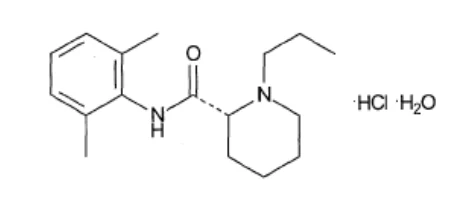
Physicochemical properties: Ropivacaine hydrochloride is a white to off-white crystalline powder, as the (S) enantiomer. Ropivacaine hydrochloride is soluble in water and ethanol, slightly soluble in methylene chloride and acetone and freely soluble in methanol. Ropivacaine hydrochloride has a solubility of 53.8 mg/mL in water at 25°C. The distribution ratio between n-octanol and phosphate buffer at pH 7.4 is 14:1 and the pKa is 8.07 in 0.1M KCl solution.
CLINICAL TRIALS
Epidural Administration in Labour and Delivery
Nine studies have been performed to investigate the use of epidural ropivacaine hydrochloride for pain relief during labour in pregnant females with full term singleton foetuses in the vertex presentation. Loading doses of approximately 25 mg were administered as fractionated doses. In four clinical trials in which continuous infusions were administered, the total infusion dose ranged from 3-30 mg/h with median values of 22-25 mg/h. Infusion times up to 13 hours have been studied. In the remaining studies, supplementary analgesia was provided by up to 8 top up doses of ropivacaine hydrochloride at median doses ranging from 14-18 mg/hr. In these studies, the median values for the onset of pain relief after the main dose ranged from 9-18 min. Median upper spread of sensory block ranged from T5 to T10.
Epidural Administration in Postoperative Pain Management
Sixteen clinical trials (n=1049) have been performed to investigate the lumbar-thoracic epidural use of ropivacaine hydrochloride 2 mg/mL in postoperative pain management following orthopaedic or upper or lower abdominal surgery. All patients received epidural anaesthesia with ropivacaine hydrochloride 5, 7.5 or 10 mg/mL or general anaesthesia intra-operatively prior to the initiation of postoperative epidural infusion.
In studies investigating infusion times up to 21 hours, the infusion of ropivacaine hydrochloride at doses ranging from 10-30 mg/h was associated with decreases in pain scores and narcotic requirement. The frequency and intensity of motor block tended to decrease during the 21-hour period. Motor block was dose rate-dependent. In two dose-controlled studies, infusion rates of 12-28 mg/h provided satisfactory analgesia (85-100% rated good or excellent) with relatively slight motor block. Sensory block was also dose rate-dependent and a decrease in spread was observed during the infusion period.
Two clinical studies have investigated the epidural infusion of ropivacaine hydrochloride 2 mg/mL (6-14 mL/h) for up to 72 hours of postoperative pain management following major abdominal surgery. Also included in this series, were study groups receiving epidural infusion of ropivacaine hydrochloride 2 mg/mL mixed with fentanyl 1-4 µg/mL at rates up to 28 mg/hour. Ropivacaine hydrochloride admixed with or without fentanyl, provided good/excellent pain relief for 87-100% of patients treated for up to 72 hours. In both studies, after 24 hours, 87-92% of the patients were without measurable motor block. No motor block was reported thereafter in 97-100% of patients. Although the combination of ropivacaine hydrochloride and fentanyl provided improved pain relief, there were narcotic side effects and hospitalization was prolonged.
Infiltration
Pre- and postoperative wound infiltrations with ropivacaine hydrochloride for postoperative pain relief have been studied in six clinical trials. An additional study examined local infiltration with ropivacaine for operation upon benign nevi. In total, 308 patients were studied. In the wound infiltration studies, ropivacaine at doses of 100-200 mg resulted in lower pain scores and/or a decreased analgesia requirement in the immediate post-operative period in 3 of 4 studies which contained inactive control groups. In the study of nevus excision, doses of 5-20 mg were considered to provide adequate analgesia in the 30 patients studied.
DETAILED PHARMACOLOGY
Animal
Pharmacodynamics
Ropivacaine has been demonstrated to produce topical, infiltration, epidural, and brachial plexus anaesthesia in a range of animal models with potency and pharmacodynamic characteristics similar to those of bupivacaine. Like bupivacaine, ropivacaine is also capable of inducing convulsions and hemodynamic changes when administered intravenously in large doses.
The convulsant doses of intravenously administered ropivacaine and bupivacaine were similar in mice, rats, and dogs. In sheep, ropivacaine was less proconvulsant than was bupivacaine when the drugs were administered by intravenous infusion. Both ropivacaine and bupivacaine exhibited considerably more proconvulsant activity than did lidocaine.
The cardiovascular effects of convulsant and superconvulsant doses of ropivacaine and bupivacaine have been assessed in unanaesthetized and anaesthetized animals. In unanaesthetized rats, convulsant doses of i.v. ropivacaine caused a 50% increase in QRS duration while bupivacaine resulted in a 100% increase. In unanaesthetized dogs, 2/6 animals which received i.v. ropivacaine at two times the convulsant dose experienced ventricular arrhythmias, while the incidence for bupivacaine was 5/6 animals.
Cardiovascular changes were similar for both drugs in pentobarbital anaesthetized pigs administered maximum i.v. doses or ropivacaine (4 mg/kg) and bupivacaine (3 mg/kg).
In a blinded study of sheep, the dose of ropivacaine required to produce cardiotoxicity (circulatory collapse) was consistently greater than that for bupivacaine (Table 7). Ropivacaine and other class-related local anaesthetics caused convulsions at lower doses in pregnant ewes compared to non-pregnant ewes, but pregnancy did not increase the sensitivity of ewes to other serious manifestations of systemic toxicity (e.g. hypotension, apnoea and circulatory collapse).
Table 7: Dose Required to Produce Convulsions (CNS) and Circulatory Collapse (CC) in
Pregnant Sheep
| I.V. Dose (mg/kg) | ||||
| CNS | CC | |||
| Non-pregnant | Pregnant | Non-pregnant | Pregnant | |
| Ropivacaine | 6.1 | 7.5 | 11.6 | 12.9 |
| Bupivicaine | 4.6 | 5.0 | 8.9 | 8.5 |
TOXICOLOGY
Single Dose Studies
Acute toxicity has been studied in mice and rats and besides death, the main signs observed were decreased motor activity, dyspnoea, piloerection, tremor, ataxia and clonic convulsions. These were all expected signs after administration of high doses of a local anaesthetic agent.
Table 8: Toxicity after Single Administration of Ropivacaine to Mice and Rats
| Species/Strain | Body Weight (g) | Number Dose Groups | Number Animals/Group | Route of Administration | Estimated LD50 (mg/kg) |
| Mouse/NMRI | 17-25 | 7 | 2-5 | s.c. | >120 |
| 15-21 | 5 | 2-5 | s.c. | 100 | |
| 16-20 | 4 | 5 | i.v. | 14-20 | |
| 15-19 | 4 | 5 | i.v. | 28 | |
| Rat/Sprague Dawley | 270-340 | 4 | 5 | s.c. | 58-69 |
| 180-220 | 4 | 2-5 | s.c. | 76 | |
| 180-210 | 4 | 2-5 | i.v. | 9.9 | |
| 150-180 | 4 | 2-5 | i.v. | 12 |
Long-Term Multi-dose Studies
In a two-week dose finding study in rats, the maximum tolerated s.c. dose of ropivacaine was determined to be below 30 mg/kg when 7 of 12 animals at this dose experienced convulsions which were fatal in 3 cases. In the main study, rats were treated subcutaneously with 3.3, 9.9 or 26 mg/kg ropivacaine for 1 month. A single male at the highest dose level showed convulsions and cyanosis on one occasion. The clinical chemistry investigation showed a slight, but dose dependent, decrease in serum potassium concentration. However, all values were within the laboratory reference limits. The pathological investigation did not disclose any changes that were caused by treatment with ropivacaine.
In dogs, the maximum tolerated s.c. dose of ropivacaine was reported to be below 16 mg/kg after convulsions were observed in one of six animals at this dose level. In a later study, also performed in dogs, repeated daily administration of ropivacaine for 1 month at 3.3, 6.6 and 13 mg/kg, caused vomiting and tremor in all drug treated groups with females at the highest dose level being most affected. These signs are comparable with known actions of other local anaesthetics on the CNS at this dosage range. No clinical, chemical or pathologic changes that could be attributed to treatment were seen.
Local Tolerance
Single perineural or intraneural (intrafascicular) injection of ropivacaine 7.9 mg/mL in rats produced no evidence of neurotoxicity in any of the treated nerves. Neither was there any
indication of a neurotoxic effect in dogs after single epidural or intrathecal injection of ropivacaine 7.9-10.6 mg/mL, or after continuous epidural infusion of ropivacaine 6 mg/mL for 5 days. The effects of ropivacaine on the spinal cord were also evaluated in rats after twice daily i.t. injections of 2.6, 5.3 or 11 mg/mL ropivacaine for two weeks. Assessment of the dose required to produce spinal anaesthesia did not change with time and, again, there was no evidence of neurotoxicity.
Continuous epidural infusion (up to 0.34 mg/kg) for 4 consecutive weeks of ropivacaine 4 mg/mL with or without fentanyl in Beagles produced no treatment-related neurological signs, other than paresis and paralysis which were considered to be consistent with the pharmacological actions of an epidurally administered local anaesthetic agent. Generally, these responses decreased during the latter half of the 4 week infusion period and disappeared on discontinuation of the infusion. The presence of fentanyl necessitated a step-up dosing procedure, but once the highest dose of ropivacaine had been achieved fentanyl did not change the response to the drug.
Reproduction Studies
Ropivacaine did not affect fertility or general reproductive performance over two generations in rats at dose levels up to 23 mg/kg when administered s.c. to males for 9 weeks up until mating, and in females, for two weeks prior to mating and up to 42 days post coitus. An increased pup loss was observed during the first few days post parturition in the 23 mg/kg dose group, but this was considered secondary to impaired maternal care of the newborn. Pregnant rats given up to 26 mg/kg ropivacaine subcutaneously on days 6-15 of pregnancy showed no signs of adverse effects on organogenesis and early foetal development.
In a dose finding study, pregnant rabbits administered 16 or 21 mg/kg ropivacaine subcutaneously on days 6-18 of pregnancy experienced a reduction in motor activity, reduction in body weight gain and convulsions. The convulsions resulted in the death of 2 of 4 animals. Foetal weight gain was decreased. Thus, the highest dose level was reduced in the main teratology study. In this study, ropivacaine at doses of up to 13 mg/kg subcutaneously did not affect organogenesis and early foetal development.
Mutagenicity
Weak mutagenic activity was found in the two mouse lymphoma tests performed. In the first test, weakly positive results were observed at the highest concentration of ropivacaine (890 mg/L) without metabolic activation and with metabolic activation in the 49-160 mg/L range. In the repeat test, in which a physiological medium was used, ropivacaine showed no mutagenic activity in the absence of activation despite achieving a two-fold increase in test compound concentration. With metabolic activation, a lower magnitude of mutagenic activity than in the first study was seen at concentrations of 70-210 mg/mL. No mutagenic activity was noted in any of the other in vitro systems or in vivo systems studied.
REFERENCES
- 1. Badner NH, Reid D, Sullivan P, Ganapathy S, Crosby ET, McKenna J, Liu A. Continuous epidural infusion of ropivacaine for the prevention of postoperative pain after major orthopaedic surgery: adose-finding study. Can J Anaesth 1996;43(1):17-22.
- 2.
Bailie D, Ellenbecker T. Severe chondrolysis after shoulder arthroscopy: A case series. J
Should Elbow Surg 2009;18(5):742-747.
- 3. Cederholm I, Anskar S, Bengtsson M. Sensory, motor and sympathetic block during epidural analgesia with 0.5% and 0.75% ropivacaine with and without epinephrine. Reg Anesth 1994;19(l):18-33.
- 4. Datta S, Camann W, Bader A, VanderBurgh L. Clinical effects and maternal and foetal plasma concentrations of epidural ropivacaine versus bupivacaine for Caesarean section. Anesthesiology 1995;82:1346-1352.
- 5. Eddleston JM, Holland JJ, Griffin RP, Corbett A, Horsman EL, Reynolds F. A double-blind comparison of 0.25% ropivacaine and 0.25% bupivacaine for extradural analgesia in labour. Br J Anaesth 1996;76:66-71.
- 6. Feldman HS. Toxicity of local anaesthetic agents. In: Rice SA, Fish KJ, eds. Anaesthetic toxicity. New York, USA, Raven Press 1994;7:107-133.
- 7. Feldman HS, Arthur GR, Pitkanen M, Hurley R, Doucette AM, Covino BG. Treatment of acute systemic toxicity after the rapid intravenous injection of ropivacaine and bupivacaine in the conscious dog. Anesth Analg 1991;73(4):373- 384.
- 8. Feldman HS, Covino BG. Comparative motor-blocking effects of bupivacaine and ropivacaine a new amino amide local anaesthetic in rat and dog. Anesth Analg 1988;67:1047-1052.
- 9.
Finucane BT, Sandler AN, McKenna J, Reid D, Milner A-L, Friedlander M, Muzyka D,
O'Callaghan-Enright S, Chan V. A double-blind comparison of ropivacaine 0.5%, 0.75%, 1.0% and bupivacaine 0.5%, injected epidurally, in patients undergoing abdominal hysterectomy. Can J Anaesth 1996;43(5):442-449.
- 10.
Hickey R, Candido KD, Ramamurthy S, Winnie AP, Blanchard J, Raza SM, Hoffman J,
Durrani Z, Masters RW. Brachial plexus block with a new local anaesthetic: 0.5 percent ropivacaine. Can J Anaesth 1990;37:732-738. Comment in: Can J Anaesth 1990;37:722-725.
- 11. Hickey R, Blanchard J, Hoffman J, Sjövall J, Ramamurthy S. Plasma concentrations of ropivacaine given with or without epinephrine for brachial plexus block. Can J Anaesth 1990;37(8):878-882.
- 12. Johansson B, Glise H, Hallerback B, Dalman P, Kristoffersson A. Preoperative local infiltration with ropivacaine for postoperative pain relief after cholecystectomy. Anesth Analg 1994;78(2):210-214.
- 13.
Katz JA, Knarr D, Bridenbaugh PO. A double-blind comparison of 0.5% bupivacaine and
0.75% ropivacaine administered epidurally in humans. Reg Anesth 1990;15:250-252.
- 14. Lee A, Fagan D, Lamont M, Tucker GT, Halldin M, Scott DB. Disposition kinetics of ropivacaine in humans. Anesth Analg 1989;69:736-738.
- 15. McClure JH. Ropivacaine. Br J Anaesth 1996;76:300-307.
- 16. McCrae AF, Jozwiak H, McClure JH. Comparison of ropivacaine and bupivacaine in extradural analgesia for the relief of pain in labour. Br J Anaesth 1995;74:261-265.
- 17.
McNickle A, L’Heureux D, Provencher M, Romeo A, Cole B. Postsurgical Glenohumeral
Arthritis in Young Adults. Am J Sports Med 2009; 37(9):1784-1791.
- 18.
Morrison LMM, Emanuelsson BM, McClure JH, Pollock AJ, McKeown DW, Brockway M,
Jozwiak H, Wildsmith JAW. Efficacy and kinetics of extradural ropivacaine: Comparison with bupivacaine. Br J Anaesth 1994;72(2):164-169.
- 19. Pitkanen M, Feldman HS, Arthur GR, Covino BG. Chronotropic and inotropic effects of ropivacaine, bupivacaine and lidocaine in the spontaneously beating and electrically paced isolated, perfused rabbit heart. Reg Anesth 1992;17(4):183-192.
- 20. Santos AC, Arthur GR, Pedersen H, Morishima HO, Finster M, Covino BG. Systemic toxicity of ropivacaine during ovine pregnancy. Anesthesiology 1991;75(1):137-141.
- 21.
Santos AC, Pedersen H, Sallusto JA, Johnson HV, Morishima HO, Finster M, Arthur
GR,Covino BG. Pharmacokinetics of ropivacaine in nonpregnant and pregnant ewes. Anesth Analg 1990;70(3):262-266.
- 22. Schug SA, Scott DA, Payne J, Mooney PH, Hägglöf B. Postoperative analgesia by continuous extradural infusion of ropivacaine after upper abdominal surgery. Br J Anaesth 1996;76:487-491.
- 23. Scott DA, Chamley DM, Mooney PH, Deam RK, Mark AH, Hägglöf B. Epidural ropivacaine infusion for postoperative analgesia after major lower abdominal surgery - a dose finding study. Anesth Analg 1995;81:982-986.
- 24. Scott DB, Lee A, Fagan D, Bowler GMR, Bloomfield P, Lundh R. Acute toxicity of ropivacaine compared with that of bupivacaine. Anesth Analg 1989;69:563-569.
- 25.
Solomon D, Navaie M, Stedje-Larsen E, Smith J, Provencher M. Glenohumeral Chondrolysis
After Arthroscopy: A Systematic Review of Potential Contributors and Causal Pathways. J Arthr Rel Surg 2009; 25(11):1329-1342.
- 26.
Stienstra R, Jonker TA, Boudrez P, Kuijpers JC, VanKlees JW, Lundberg U. Ropivacaine
0.25% versus bupivacaine 0.25% for continuous epidural analgesia in labor: A double-blind comparison. Anesth Analg 1995;80:285-289.
- 27.
Turner G, Blake D, Buckland M, Chamley D, Dawson P, Goodchild C, Mezzatesta J, Scott
D, Sultana A, Walker S, Hendrata M, Mooney P, Armstrong M. Continuous extradural infusion of ropivacaine for prevention of postoperative pain after major orthopaedic surgery. Br J Anaesth 1996;76:606-610.
- 28. Wolff AP, Hasselström L, Kerkkamp HE, Gielen MJ. Extradural ropivacaine and bupivacaine in hip surgery. Br J Anaesth 1995;74(4):458-460.
- 29. Wood MB, Rubin AP. A comparison of epidural 1% ropivacaine and 0.75% bupivacaine for lower abdominal gynecologic surgery. Anesth Analg 1993;76(6):1274-1278.
- 30. Zaric D, Axelsson K, Nydahl PA, Philipsson L, Larsson P, Jansson JR. Sensory and motor blockade during epidural analgesia with 1.0%, 0.75% and 0.5% ropivacaine-a double-blind study. Anesth Analg 1991;72:509-515.
- 31. Zaric D, Nydahl P-A, Philipson L, Samuelsson L, Heierson A, Axelsson K. The effect of continuous lumbar epidural infusion of ropivacaine (0.1%, 0.2% and 0.3%) and 0.25% bupivacaine on sensory and motor block in volunteers. Reg Anesth 1996;21(1):14-25.
- 32.
Product Monograph for Naropin® (ropivacaine hydrochloride) 2 mg/mL Injection for
Epidural Infusion, AstraZeneca Canada Inc., Submission Control No. 153035, Date of Revision January 14, 2013.