


Product Monograph - Symbicort Forte Turbuhaler
SUMMARY PRODUCT INFORMATION
| Route of Administration | Dosage Form / Strength | Non-medicinal Ingredients |
| Oral inhalation | Dry powder for oral inhalation, Turbuhaler / 100 mcg budesonide / 6 mcg formoterol fumarate dihydrate 200 mcg budesonide / 6 mcg formoterol fumarate dihydrate 400 mcg budesonide / 12 mcg formoterol fumarate dihydrate | Lactose monohydrate (which may contain milk protein residue) |
INDICATIONS AND CLINICAL USE
Asthma
SYMBICORT TURBUHALER (budesonide and formoterol fumarate dihydrate) is indicated for the treatment of asthma in patients 12 years and older with reversible obstructive airways disease.
SYMBICORT TURBUHALER can be used according to three different treatment approaches:
A. SYMBICORT TURBUHALER Anti-inflammatory Reliever Therapy: in patients with mild persistent asthma, SYMBICORT 200 TURBUHALER is taken as needed for relief of asthma symptoms when they occur.
SYMBICORT TURBUHALER has not been evaluated in patients whose asthma can be managed by occasional use of a rapid onset, short duration, inhaled beta2-agonist.
- B. SYMBICORT TURBUHALER Anti-inflammatory Reliever plus Maintenance Therapy: in patients with moderate or severe asthma, SYMBICORT 100 TURBUHALER or SYMBICORT 200 TURBUHALER are taken both as daily maintenance therapy and as needed for relief of asthma symptoms when they occur.
C. SYMBICORT TURBUHALER Maintenance Therapy: in patients with moderate or severe asthma, SYMBICORT TURBUHALER is taken as a fixed-dose daily
- treatment with a separate short-acting bronchodilator for relief of symptoms when they occur.
Once asthma control is achieved and maintained, the patient should be assessed at regular intervals.
Chronic Obstructive Pulmonary Disease (COPD)
SYMBICORT 200 TURBUHALER and SYMBICORT FORTE TURBUHALER are indicated for the maintenance treatment of moderate to severe COPD including chronic bronchitis and emphysema, in patients with persistent symptoms and a history of exacerbations, where the use of a combination product is considered appropriate.
SYMBICORT TURBUHALER is NOT indicated for the relief of acute bronchospasm in COPD patients.
See DOSAGE AND ADMINISTRATION and WARNINGS AND PRECAUTIONS.
Geriatrics:
No dosage adjustment is required in patients 65 years of age and older.
Pediatrics:
In the treatment of asthma, safety and efficacy in pediatric patients younger than 12 years have not been established. In the treatment of COPD, safety and efficacy in patients younger than 18 years have not been established.
CONTRAINDICATIONS
SYMBICORT TURBUHALER is contraindicated in patients with a known hypersensitivity to budesonide, formoterol or inhaled lactose.
WARNINGS AND PRECAUTIONS
General
Serious Asthma-Related Events – Hospitalizations, Intubations, Death Use of long-acting beta2-agonists (LABA) as monotherapy (without inhaled corticosteroids [ICS]) for asthma is associated with an increased risk of asthma-related death (see Salmeterol Multicenter Asthma Research Trial). Available data from controlled clinical trials also suggest that the use of LABA as monotherapy increases the risk of asthma-related hospitalization in pediatric and adolescent patients. These findings are considered a class effect of LABA monotherapy.
When LABA are used in fixed-dose combination with ICS, data from large clinical trials do not show a significant increase in the risk of serious asthma-related events (hospitalizations, intubations, death) compared with ICS alone (see Serious Asthma-Related Events with Inhaled Corticosteroid/Long-acting Beta2-adrenergic Agonist Combination Products).
Serious Asthma-Related Events with Inhaled Corticosteroid/Long-acting Beta2-adrenergic Agonist Combination Products Four (4) large, 26-week, randomized, double-blind, active-controlled clinical safety trials were conducted to evaluate the risk of serious asthma-related events when LABA were used in fixed-dose combination with ICS compared with ICS alone in subjects with asthma. Three (3) trials included adult and adolescent subjects aged 12 years and older: 1 trial compared budesonide/formoterol with budesonide, 1 trial compared fluticasone propionate/salmeterol with fluticasone propionate, and 1 trial compared mometasone furoate/formoterol with mometasone furoate. The fourth trial included pediatric subjects aged 4 to 11 years and compared fluticasone propionate/salmeterol with fluticasone propionate. The primary safety endpoint for all 4 trials was serious asthma-related events (hospitalizations, intubations, death). A single, blinded, independent, joint adjudication committee determined whether events were asthma related.
The 3 adult and adolescent trials were designed to rule out a 2.0-fold increase in relative risk for ICS/LABA compared with ICS, and the pediatric trial was designed to rule out a 2.7-fold increase in this relative risk. Each individual trial met its pre-specified objective and demonstrated non-inferiority of ICS/LABA to ICS alone. A meta-analysis of the 3 adult and adolescent trials did not show a significant increase in risk of a serious asthma-related event with ICS/LABA fixed-dose combination compared with ICS alone (Table 1). These trials were not designed to rule out all risk for serious asthma-related events with ICS/LABA compared with ICS.
Table 1 Meta-analysis of serious asthma-related events in subjects with asthma aged 12 years and older
ICS/LABA (n=17,537)a | ICS (n=17,552)a | ICS/LABA vs. ICS Hazard Ratio (95% CI)b | |
|---|---|---|---|
Serious asthma-related eventc Asthma-related death Asthma-related intubation (endotracheal) Asthma-related hospitalization (≥24-hour stay) | 116 2 1 115 | 105 0 2 105 | 1.10 (0.85, 1.44) |
ICS = Inhaled corticosteroid; LABA = Long-acting beta2-adrenergic agonist.
- a Randomized subjects who had taken at least 1 dose of study drug. Planned treatment used for analysis.
- b Estimated using a Cox proportional hazards model for time to first event with baseline hazards stratified by each of the 3 trials.
- c Number of subjects with an event that occurred within 6 months after the first use of study drug or 7 days after the last date of study drug, whichever date was later. Subjects may have had one or more events, but only the first event was counted for analysis. A single, blinded, independent, joint adjudication committee determined whether events were asthma related.
The pediatric safety trial included 6208 pediatric subjects aged 4 to 11 years who received ICS/LABA (fluticasone propionate/salmeterol inhalation powder) or ICS (fluticasone propionate inhalation powder). In this trial, 27/3107 (0.9%) subjects randomized to ICS/LABA and 21/3101 (0.7%) subjects randomized to ICS experienced a serious asthma-related event. There were no asthma-related deaths or intubations. ICS/LABA did not show a significant increase in risk of serious asthma-related events compared with ICS based on the pre-specified risk margin (2.7), with an estimated hazard ratio of time to first event of 1.28 (95% CI: 0.73, 2.27). SYMBICORT TURBUHALER is not indicated in children younger than 12 years of age.
Salmeterol Multicenter Asthma Research Trial A 28-week, placebo-controlled, U.S. trial that compared the safety of salmeterol with placebo, each added to usual asthma therapy, showed an increase in asthma-related deaths in subjects receiving salmeterol (13/13,176 in subjects treated with salmeterol versus 3/13,179 in subjects treated with placebo; relative risk: 4.37 [95% CI: 1.25, 15.34]). Use of background ICS was not required in the Salmeterol Multicenter Asthma Research Trial. The increased risk of asthma-related death is considered a class effect of LABA monotherapy.
Excessive Use and Use with Other LABA Products
When beginning treatment with SYMBICORT TURBUHALER, patients who have been taking inhaled beta2-agonist on a regular basis should be instructed to discontinue the regular use of these drugs. Clinically significant cardiovascular effects and fatalities have been reported in association with excessive use of inhaled sympathomimetic drugs. Patients should be informed not to exceed the prescribed dose of SYMBICORT TURBUHALER.
Asthma Reliever Medication
It is crucial to inform patients with asthma to have their reliever medication available at all times. Asthma patients should be clearly instructed to use medication for relief of symptoms (e.g., SYMBICORT TURBUHALER, terbutaline, or salbutamol) if they develop asthma symptoms while taking SYMBICORT TURBUHALER.
The reliever inhalations of SYMBICORT TURBUHALER should be taken in response to symptoms but are not intended for regular prophylactic use before exercise.
Use in adolescents and asthma severity reassessment
In adolescents the severity of asthma may vary with age and periodic reassessment should be considered to determine if continued therapy with SYMBICORT TURBUHALER is still indicated.
Systemic Effects of Corticosteroids
Systemic effects may occur with any inhaled corticosteroid, particularly at high doses prescribed for long periods; these effects are much less likely to occur than with oral corticosteroids. Possible systemic effects include Cushing’s syndrome, Cushingoid features, and adrenal suppression, growth retardation in children and adolescents, decrease in bone mineral density (BMD), cataract and glaucoma. It is important therefore, that the dose of inhaled corticosteroid is titrated to the lowest dose at which effective control is maintained (see Monitoring and Laboratory Tests).
A reduction of growth velocity in children or teenagers may occur as a result of inadequate control of chronic diseases such as asthma or from use of corticosteroids for treatment. Physicians should closely follow the growth of adolescents taking long-term corticosteroids by any route and weigh the benefits of the corticosteroid therapy and asthma control against the possible risk of growth suppression if any adolescent’s growth appears slowed.
Discontinuance
Maintenance treatment with inhaled corticosteroids should not be stopped abruptly, but tapered gradually under the supervision of a physician. Complete withdrawal of inhaled corticosteroids should not be considered unless it is temporarily required to confirm the diagnosis of asthma.
Cardiovascular
Cardiovascular Effects: Although clinically not significant, a small increase in QTc interval has been reported with therapeutic doses of formoterol. It is not known if this becomes clinically significant when concomitant medications causing similar effects are prescribed and/or in the presence of heart diseases, hypokalemia, or hypoxia.
No clinically significant effect on the cardiovascular system is usually seen after the administration of inhaled formoterol in recommended doses, but the cardiovascular and central nervous system effects seen with all sympathomimetic drugs (e.g., increased blood pressure, heart rate, excitement) can occur after use of formoterol. Formoterol, like all sympathomimetic amines, should be used with caution in patients with cardiovascular disorders, especially coronary insufficiency, cardiac arrhythmias, and hypertension; in patients with convulsive disorders or thyrotoxicosis; diabetes mellitus, and in patients who are unusually responsive to sympathomimetic amines.
With beta-adrenergic agonist bronchodilators, changes in systolic and/or diastolic blood pressure, pulse rate, and electrocardiograms have been noted. No clinically important differences have been observed with SYMBICORT TURBUHALER within the recommended dosages.
Ear/Nose/Throat
Candidiasis: Therapeutic dosages of budesonide may cause the appearance of Candida albicans (thrush) in the mouth and throat. The development of pharyngeal and laryngeal candidiasis is a cause for concern because the extent of its penetration into the respiratory tract is unknown. Symptomatic candidiasis can be treated with topical anti-fungal therapy while continuing to use SYMBICORT TURBUHALER.
Endocrine and Metabolism
Metabolic Changes: In common with other beta-adrenergic agents, formoterol can induce reversible metabolic changes (hyperglycemia, hypokalemia).
Metabolic Effects: Due to reversible hyperglycemic effect of beta2-agonists, additional blood glucose monitoring is recommended initially in diabetic patients.
Hypothyroidism: There is an enhanced effect of corticosteroids on patients with hypothyroidism.
Systemic steroid replacement by inhaled steroid: Particular care is needed in asthmatic patients who are transferred from systemically active corticosteroids to inhaled corticosteroids because deaths due to adrenal insufficiency have occurred during and after transfer. For the transfer of patients treated with oral corticosteroids, inhaled corticosteroids should first be added to the existing oral steroid therapy which is then gradually withdrawn.
Patients with adrenocortical suppression should be monitored regularly and the oral steroid reduced cautiously. Some depression of plasma cortisol may occur in a small number of patients on higher doses of inhaled budesonide (for example greater than 800 mcg/day). However, in most but not all patients on inhaled budesonide therapy, adrenal function and adrenal reserve remain within normal range. Some patients transferred from other inhaled steroids or oral steroids remain at risk of impaired adrenal reserve for a considerable time after transferring to inhaled budesonide.
After withdrawal from long-term treatment with systemic corticosteroids, a number of months are required for recovery of hypothalamic-pituitary-adrenal (HPA) function. During this period of HPA suppression, patients may exhibit signs and symptoms of adrenal insufficiency when exposed to trauma, surgery or infections, particularly gastroenteritis. Although inhaled budesonide may provide control of asthmatic symptoms during these episodes, it does not provide the systemic steroid which is necessary for coping with these emergencies. The physician may consider supplying oral steroids for use in times of stress (e.g. asthma exacerbations, chest infections, surgery).
During periods of stress or a severe asthmatic attack, patients who have been withdrawn from systemic corticosteroids should be instructed to resume systemic steroids immediately and to contact their physician for further instruction. These patients should also be instructed to carry a warning card indicating that they may need supplementary systemic steroids during periods of stress or asthma exacerbation. To assess the risk of adrenal insufficiency in emergency situations, routine tests of adrenal cortical function, including measurement of early morning and evening cortisol levels, should be performed periodically in all patients. An early morning resting cortisol level may be accepted as normal only if it falls at or near the normal mean level.
Reduction in Bone Mineral Density: Decreases in bone mineral density (BMD) have been observed with long-term administration of products containing inhaled corticosteroids. The clinical significance of small changes in BMD with regard to long-term consequences such as fracture is unknown. Patients with major risk factors for decreased bone mineral content, such as prolonged immobilization, chronic alcohol use, family history of osteoporosis, postmenopausal status, tobacco use, advanced age, poor nutrition, or chronic use of drugs that can reduce bone mass (e.g., anticonvulsants, oral corticosteroids) should be monitored and treated with established standards of care.
Hematologic
Eosinophilic Conditions: In rare cases, patients on inhaled corticosteroids may present with systemic eosinophilic conditions, with some patients presenting with clinical features of vasculitis consistent with eosinophilic granulomatosis with polyangiitis (EGPA) (formerly Churg-Strauss syndrome), a condition that is often treated with systemic corticosteroid therapy. These events usually, but not always, have been associated with the reduction and/or withdrawal of oral corticosteroid therapy following the introduction of inhaled corticosteroid. Physicians should be alerted to eosinophilia, vasculitic rash, worsening pulmonary symptoms, cardiac complications, and/or neuropathy presenting in their patients. A causal relationship between inhaled corticosteroid and these underlying conditions has not been established.
Hepatic/Biliary/Pancreatic
Cirrhosis: There is an enhanced effect of corticosteroids on patients with cirrhosis. Reduced liver function may affect the elimination of corticosteroids. The intravenous pharmacokinetics of budesonide however, are similar in cirrhotic patients and in healthy subjects. The pharmacokinetics after oral ingestion of budesonide were affected by compromised liver function as evidenced by increased systemic availability. This is however, of little importance for budesonide, as after inhalation, the oral contribution to systemic availability is very small (see DOSAGE AND ADMINISTRATION, Special Populations, Hepatic/Renal Impairment and ACTION AND CLINICAL PHARMACOLOGY, Pharmacokinetics, Excretion).
Immune
Effect on Infection: Patients who are on drugs that suppress the immune system are more susceptible to infections than healthy individuals. Chickenpox and measles, for example, can have a more serious or even fatal course in susceptible children or adults on immunosuppressant corticosteroids. In such children or adults who have not had these diseases, particular care should be taken to avoid exposure. How the dose, route, and duration of corticosteroid administration affect the risk of developing a disseminated infection is not known. The contribution of the underlying disease and/or prior corticosteroid treatment to the risk is also not known. If exposed to chickenpox, prophylaxis with varicella zoster immune globulin (VZIG) may be indicated. If exposed to measles, prophylaxis with pooled intravenous immunoglobulin (IG) may be indicated. If chickenpox develops, treatment with antiviral agents may be considered.
Corticosteroids may mask some signs of infection and new infections may appear. A decreased resistance to localized infection has been observed during corticosteroid therapy; this may require treatment with appropriate therapy or stopping the administration of SYMBICORT TURBUHALER.
Ophthalmologic
Glaucoma, increased intraocular pressure, and cataracts have been reported in patients following the long-term administration of inhaled corticosteroids. Therefore, close monitoring is warranted in patients with a change in vision or with a history of increased intraocular pressure, glaucoma, and/or cataracts.
Respiratory
Pneumonia (COPD patients): Physicians should remain vigilant for the possible development of pneumonia in patients with COPD as the clinical features of pneumonia and exacerbations frequently overlap. Lower respiratory tract infections, including pneumonia, have been reported following the inhaled administration of corticosteroids. Clinical studies and meta-analyses indicate that maintenance treatment of COPD with inhaled corticosteroids may lead to an increased risk of pneumonia. However, the absolute risk for budesonide is small.
The incidence of pneumonia and lung infections other than pneumonia have been assessed in two 12-month studies of 1,834 patients with COPD. In these two studies, there was a slightly higher incidence of lung infections other than pneumonia (e.g., bronchitis, viral lower respiratory tract infections, etc.) in patients receiving SYMBICORT TURBUHALER 2 x 200/6 mcg bid (13.0%) in comparison with those receiving formoterol 2 x 6 mcg bid (11.4%), budesonide 2 x 200 mcg bid (9.9%), or placebo (8.2%). Pneumonia occurred in 4.1% of patients treated with SYMBICORT 200 TURBUHALER compared with 2.4% treated with formoterol, 3.1% treated with budesonide, and 2.8% treated with placebo (see ADVERSE DRUG REACTIONS).
Paradoxical Bronchospasm: As with other inhalation therapy, paradoxical bronchospasm may occur characterized by an immediate increase in wheezing after dosing. In this event, SYMBICORT TURBUHALER should be discontinued immediately, the patient assessed, and if necessary, alternative therapy instituted.
Special Populations
Pregnant Women: In experimental animal studies, budesonide was found to cross the placental barrier. Like other glucocorticosteroids, budesonide is teratogenic to rodent species. High doses of budesonide administered subcutaneously produced fetal malformations, primarily skeletal defects, in rabbits, rats and mice. Results from world-wide post marketing experience indicate inhaled budesonide during pregnancy has no adverse effects on the health of the fetus/new born child. Review of published literature of orally inhaled budesonide, including results from a large case control study performed with cases identified from 3 Swedish health registers showed that there was no association between exposure to inhaled budesonide and overall congenital malformations. Results from a similar study performed with intranasal budesonide, using the same 3 Swedish health registers showed that the use of intranasal budesonide was associated with a subgroup “less severe cardiovascular defects”; however, there was no statistically significant association between the use of intranasal budesonide during pregnancy and overall congenital malformations, or overall frequency of cardiovascular defects in the offspring. The safety of formoterol during pregnancy has not yet been established. SYMBICORT TURBUHALER should be used during pregnancy only if the potential benefit justifies the potential risk to the fetus.
Use in Labour and Delivery: There are no well-controlled human studies that have investigated effects of formoterol on preterm labour or labour at term. Because of the potential for beta-agonist interference with uterine contractility, use of SYMBICORT TURBUHALER during labour should be restricted to those patients in whom the benefits clearly outweigh the risks.
Nursing Women: A clinical pharmacology study has shown that inhaled budesonide is excreted in breast milk. It is not known whether formoterol passes into human breast milk. In rats, small amounts of formoterol have been detected in maternal milk. Administration of SYMBICORT TURBUHALER to women who are breastfeeding should only be considered if the expected benefit to the mother is greater than any possible risk to the child.
Pediatrics: SYMBICORT TURBUHALER is not currently recommended in children younger than 18 years of age for the treatment of COPD or younger than 12 years of age for the treatment of asthma, due to limited clinical data in this age group.
Geriatrics: As with other beta2-agonists, special caution should be observed when using formoterol in elderly patients who have concomitant cardiovascular disease that could be adversely affected by this class of drug. Based on available data, there is no need to adjust the dose in elderly patients.
Monitoring and Laboratory Tests
Monitoring Control of Asthma or COPD
With asthma, a persistent increase in the use of medication for relief of symptoms (e.g. SYMBICORT TURBUHALER, terbutaline or salbutamol), indicates a deterioration of asthma control and the patient’s condition should be re-evaluated (see DOSAGE AND ADMINISTRATION).
Asthma or COPD may deteriorate acutely over a period of hours or chronically over several days or longer. If patients find their medication for relief of symptoms less effective (e.g. increased or persistent use), or exceeds the prescribed dose of SYMBICORT
TURBUHALER, medical attention must be sought as this could be indicative of disease deterioration.
Sudden and progressive deterioration in control of asthma or COPD (e.g. exacerbations) is potentially life threatening and the patient should undergo urgent medical assessment. It is recognized that exacerbations are the most frequent cause of medical visits, hospital admissions and mortality among patients with asthma or COPD. With asthma and COPD, consideration should be given to the need for increased therapy with corticosteroids, e.g. a course of oral corticosteroids. Antibiotic treatment should be considered if an infection is present. For treatment of severe exacerbations, SYMBICORT TURBUHALER alone is not sufficient.
During long-term therapy, HPA axis function and haematological status should be assessed periodically. For patients at risk, monitoring of bone and ocular effects (cataract and glaucoma) should also be considered in patients receiving maintenance therapy with SYMBICORT TURBUHALER. It is recommended that the height of children receiving prolonged treatment with inhaled corticosteroids is regularly monitored.
As with any asthma or COPD therapy, before introducing SYMBICORT TURBUHALER, adequate education on how to use the drug and what to do during periods of worsening disease should be provided to the patient.
ADVERSE REACTIONS
Adverse Drug Reaction Overview
Since SYMBICORT TURBUHALER contains both budesonide and formoterol, the same type and intensity of undesirable effects as reported for these substances may occur. No increased incidence of adverse reactions has been seen following concurrent administration of the two compounds. The most common drug related adverse reactions are pharmacologically predictable side-effects of beta2-agonist therapy, such as headaches, tremor, palpitations and coughing. These tend to be mild and disappear within a few days of treatment.
Use of LABA monotherapy increases the risk of serious asthma-related events (death, hospitalizations, and intubations) (see WARNINGS AND PRECAUTIONS, General).
Adverse reactions that have been associated with use of budesonide or formoterol, reported from either clinical trials for asthma or COPD, or SYMBICORT post-marketing use are noted in Table 2 below.
Table 2 Adverse reactions associated with use of budesonide or formoterol
| Frequency | System Organ Class (SOC) disorders | Reaction |
|---|---|---|
Common 1% to 10% (>1/100, <1/10) | Cardiac disorders: | Palpitations |
| Infections and infestations: | Candida infections in the oropharynx, | |
| Pneumonia (in COPD patients) | ||
| Nervous system disorders: | Headache, tremor | |
| Respiratory, thoracic and mediastinal disorders: | Mild irritation in the throat, coughing, hoarseness | |
Uncommon 0.1% to 1% (>1/1,000, </100) | Cardiac disorders: | Tachycardia |
| Gastrointestinal disorders: | Nausea | |
| Musculoskeletal and connective tissue disorders: | Muscle cramps | |
| Nervous system disorders: | Dizziness | |
| Psychiatric disorders: | Agitation, restlessness, nervousness, sleep disturbances | |
| Frequency | System Organ Class (SOC) disorders | Reaction |
|---|---|---|
Rare 0.01 to 0.1% (>1/10,000, <1/1,000) | Cardiac disorders: | Cardiac arrhythmias, e.g. atrial fibrillation, supraventricular tachycardia, extrasystoles |
| Immune system disorders: | Immediate and delayed hypersensitivity reactions, e.g., dermatitis, exanthema, urticaria, pruritus, angioedema and anaphylactic reaction. | |
| Respiratory, thoracic and mediastinal disorders: | Bronchospasm | |
| Skin and subcutaneous tissue disorders: | Skin bruising | |
Very rare <0.01% (<1/10,000) | Cardiac disorders: | Angina pectoris |
| Endocrine disorders: | Signs or symptoms of systemic glucocorticosteroid effects, e.g. hypofunction of the adrenal gland | |
| Metabolism and nutrition disorders: | Hyperglycemia | |
| Psychiatric disorders: | Depression, behavioural disturbances |
Clinical Trial Adverse Drug Reactions
Because clinical trials are conducted under very specific conditions the adverse reaction rates observed in the clinical trials may not reflect the rates observed in practice and should not be compared to the rates in the clinical trials of another drug. Adverse drug reaction information from clinical trials is useful for identifying drug-related adverse events and for approximating rates.
COPD
Clinical trial adverse event data is provided from two 12-month, randomized, double-blind, placebo-control multicentre trials comparing SYMBICORT TURBUHALER (2 x 200/6 mcg) bid with placebo, budesonide 2 x 200 mcg bid, and formoterol 2 x 6 mcg bid. A total of 1834 COPD patients were enrolled in these studies. The most frequently reported adverse events are presented in Table 3. These adverse reactions were mostly mild to moderate in severity.
Table 3 includes all events (whether considered drug-related or non drug-related by the investigator) that occurred at a rate of 3% or greater in the SYMBICORT TURBUHALER treatment group, and were more common than in the placebo group.
Table 3 Overall adverse experiences with ≥3% and more common than placebo in the SYMBICORT TURBUHALER group in controlled clinical trials (0629 and 0670) with SYMBICORT TURBUHALER in patients with COPD
Adverse event System organ class Preferred term | SYMBICORT TURBUHALER (n=462) % | Budesonide (n=455) % | Formoterol (n=456) % | Placebo (n=461) % |
|---|---|---|---|---|
| % of patients reporting at least one adverse event | 63 | 64 | 67 | 61 |
| Infections and infestations | ||||
| Nasopharyngitis | 9 | 7 | 7 | 6 |
| Pneumonia | 4 | 3 | 2 | 3 |
| General disorders and administration site conditions | ||||
| Chest pain | 3 | 2 | 2 | 2 |
| Nervous system disorders | ||||
| Headache | 3 | 2 | 3 | 2 |
| Musculoskeletal and connective tissue disorders | ||||
| Muscle spasms | 3 | 2 | 2 | 1 |
COPD Clinical Trial Adverse Drug Reactions (1-3%)
Gastrointestinal disorders: diarrhea, dyspepsia, constipation, abdominal pain, abdominal pain upper, vomiting
General disorders and administration site conditions: pyrexia
Infections and infestations: influenza, respiratory tract infection, upper respiratory tract infection, rhinitis, pharyngitis, cystitis, oral candidiasis
Musculoskeletal and connective tissue disorders: myalgia, arthralgia, pain in extremity
Nervous system disorders: tremor
Psychiatric disorders: insomnia, anxiety
Respiratory, thoracic and mediastinal disorders: dysphonia, oropharyngeal pain, nasal congestion
All cause mortality was assessed in COPD trials 0629 and 0670. Of the 1834 patients in the pooled data, there were 56 (3.1%) deaths: 20 (4.4%) in the formoterol group, 14 (3.0%) in the placebo group, 11 (2.4%) in the budesonide group, and 11 (2.4%) in the SYMBICORT TURBUHALER group. The most common cause of death overall was COPD (formoterol=9, placebo=7, budesonide=3, and SYMBICORT TURBUHALER=3 cases).
Post-market Adverse Drug Reactions
The following adverse reactions have been reported during post-approval use of SYMBICORT. Because these reactions are reported voluntarily from a population of uncertain size, it is not always possible to reliably estimate their frequency or establish a causal relationship to drug exposure. Some of these adverse reactions may also have been observed in clinical studies with SYMBICORT.
Cardiac disorders: angina pectoris, tachycardia, cardiac arrhythmias (e.g. atrial fibrillation, extrasystoles), palpitations
Endocrine disorders: hypercorticism, growth retardation
Eye disorders: cataract, glaucoma, increased intraocular pressure
Gastrointestinal disorders: oropharyngeal candidiasis, nausea
Immune system disorders: immediate and delayed hypersensitivity reactions, such as anaphylactic reaction, angioedema, brochospasm, uticaria, rash, dermatitis, pruritus
Metabolic and nutrition disorders: hyperglycemia, hypokalemia
Musculoskeletal, connective tissue, and bone disorders: muscle spasms
Nervous system disorders: tremor, dizziness, headache
Psychiatric disorders: behaviour disturbances, sleep disturbances, nervousness, agitation, depression, restlessness
Respiratory, thoracic, and mediastinal disorders: dysphonia, cough, throat irritation
Skin and subcutaneous tissue disorders: skin bruising
Vascular disorders: hypotension, hypertension
DRUG INTERACTIONS
Overview
Inhibitors of cytochrome P450 3A4 (CYP3A4)
The metabolism of budesonide is primarily mediated by CYP3A4. Strong CYP3A4 inhibitors like ritonavir and azole antifungals (e.g. ketoconazole and itraconazole) increase the systemic exposure to budesonide. If a patient requires long-term concomitant treatment with SYMBICORT TURBUHALER and a strong CYP3A4 inhibitor, the benefit should be weighed against the increased risk of systemic corticosteroid side effects, patients should be monitored for corticosteroid side effects and/or a reduction of the inhaled corticosteroid dose could be considered.
Beta-adrenergic receptor blocking agents
Beta-adrenergic blockers (including eye drops) can weaken or inhibit the effect of formoterol, a beta-adrenergic agonist. Beta-blockers not only block the therapeutic effects of beta-agonists, such as formoterol, but may produce severe bronchospasm in asthmatic patients. Therefore, patients with asthma should not normally be treated with beta-blockers. If concomitant treatment is necessary, patients should be monitored carefully for possible deterioration in pulmonary function and the need to adjust the dosage of either drug.
Drugs known to prolong the QTc interval
As with other beta2-adrenergic agonists, SYMBICORT TURBUHALER should be administered with caution to patients treated with monoamine oxidase inhibitors, tricyclic antidepressants, or drugs known to prolong the QT interval, as any effect of these on the QT interval may be potentiated. Drugs known to prolong the QT-interval may increase the risk of ventricular arrhythmia.
Treatments Leading to Hypokalemia
Concomitant treatment with xanthine derivatives, steroids or non-potassium sparing diuretics may potentiate a possible hypokalemic effect of beta2-agonists. Hypokalemia may increase the disposition towards arrhythmias in patients who are treated with digitalis glycosides.
Other drugs
L-Dopa, L-thyroxine, oxytocin and alcohol can impair cardiac tolerance towards beta2-sympathomimetics.
Concomitant treatment with monoamine oxidase inhibitors including agents with similar properties such as furazolidone and procarbazine may precipitate hypertensive reactions.
There is elevated risk of arrhythmias in patients receiving concomitant anaesthesia with halogenated hydrocarbons.
DOSAGE AND ADMINISTRATION
SYMBICORT TURBUHALER is for oral inhalation only. Patients should be instructed in the correct method to use the TURBUHALER, which is described in CONSUMER INFORMATION, Proper Use of This Medication. An instructional video is also available at Symbicort.ca/video. The medication from SYMBICORT TURBUHALER is delivered to the lungs as the patient inhales, and, therefore, it is important to instruct the patient to breathe in forcefully and deeply through the mouthpiece. The patient may not taste or feel any medication when using SYMBICORT TURBUHALER due to the small amount of drug dispensed.
Patients should never breathe out through the mouthpiece and should replace the cover of the SYMBICORT TURBUHALER after use. Patients should be instructed to rinse their mouths out with water after inhaling the dose. This will help prevent the occurrence of candidiasis. Cleansing dentures has the same effect.
Dosing Considerations for Asthma
It is crucial to inform patients to have a medication for rapid relief of symptoms (e.g., SYMBICORT TURBUHALER, terbutaline or salbutamol) available at all times. If the patient’s medication for rapid relief of symptoms becomes less effective medical attention should be sought.
If patients take SYMBICORT TURBUHALER as a maintenance therapy, they should be made aware that for optimum benefit, SYMBICORT TURBUHALER should be taken daily, even when they are asymptomatic. Inhalations for the rapid relief of symptoms only need to be taken to relieve acute asthma symptoms (see WARNINGS AND PRECAUTIONS).
A reassessment of asthma therapy should be considered in patients using an increasing number of inhalations for rapid symptom relief without achieving improved asthma control.
For treatment of severe exacerbations, SYMBICORT TURBUHALER alone is not sufficient.
Recommended Dose and Dosage Adjustment for Asthma
When starting a patient on SYMBICORT TURBUHALER, the most appropriate treatment approach should be selected on an individualized basis according to disease severity.
Patients should be assessed at regular intervals so that the treatment approach and dosage of SYMBICORT TURBUHALER they are receiving remains optimal.
SYMBICORT TURBUHALER can be used according to three different treatment approaches:
- A. SYMBICORT TURBUHALER anti-inflammatory reliever therapy.
- B. SYMBICORT TURBUHALER anti-inflammatory reliever plus maintenance therapy.
- C. SYMBICORT TURBUHALER maintenance therapy.
A. SYMBICORT TURBUHALER Anti-Inflammatory Reliever Therapy (patients with mild persistent asthma)
When the use of inhaled corticosteroids is appropriate, patients use SYMBICORT 200 TURBUHALER as needed for the rapid relief of asthma symptoms when they occur and for a timely increase in anti-inflammatory therapy.
Patients should be advised to always have SYMBICORT 200 TURBUHALER available for rapid relief of symptoms. A persistent increase in the use of SYMBICORT 200 TURBUHALER as needed indicates a deterioration of asthma control and the patient’s condition should be re-evaluated to determine the appropriate treatment.
Adults and adolescents (12 years and older):
1 inhalation of SYMBICORT 200 TURBUHALER as needed in response to symptoms to control asthma. If symptoms persist after a few minutes, 1 additional inhalation should be taken. Not more than 6 inhalations should be taken on any single occasion. The maximum recommended total daily dose is 8 inhalations.
SYMBICORT 100 TURBUHALER and SYMBICORT FORTE TURBUHALER should NOT be used as SYMBICORT Anti-inflammatory Reliever Therapy.
B. SYMBICORT TURBUHALER Anti-inflammatory Reliever plus Maintenance Therapy (SYMBICORT SMART®) (patients with moderate or severe asthma)
When maintenance treatment with a combination of inhaled corticosteroid and long-acting beta2-agonist is required, patients use SYMBICORT TURBUHALER as an anti-inflammatory reliever as needed for rapid symptom relief and a timely increase in anti-inflammatory therapy, and take a daily maintenance dose of SYMBICORT TURBUHALER for improved asthma control. Patients should be advised to always have SYMBICORT TURBUHALER available for the rapid relief of symptoms when they occur. A separate inhaler for rapid symptom relief is not necessary.
When control has been achieved, the dose should be titrated to the lowest dose at which effective control of symptoms is maintained.
A persistent increase in the use of SYMBICORT TURBUHALER as needed indicates a deterioration of asthma control, and the patient’s condition should be re-evaluated.
Adults and adolescents (12 years and older):
1 or 2 inhalations of SYMBICORT 100 TURBUHALER twice daily or 2 inhalations once daily. Additional doses can be used as needed to provide rapid symptom relief and improved asthma control as follows. Patients should take 1 additional inhalation as needed in response to symptoms to control asthma. If symptoms persist after a few minutes, 1 additional inhalation should be taken. Not more than 6 inhalations should be taken on any single occasion. The maximum recommended total daily dose is 8 inhalations.
or
1 or 2 inhalations of SYMBICORT 200 TURBUHALER twice daily or 2 inhalations once daily. Additional doses can be used as needed to provide rapid symptom relief and improved asthma control as follows. Patients should take 1 additional inhalation as needed in response to symptoms to control asthma. If symptoms persist after a few minutes, 1 additional inhalation should be taken. Not more than 6 inhalations should be taken on any single occasion. The maximum recommended total daily dose is 8 inhalations.
SYMBICORT FORTE TURBUHALER should NOT be used as SYMBICORT TURBUHALER Anti-inflammatory Reliever plus Maintenance Therapy.
C. SYMBICORT TURBUHALER Maintenance Therapy (SMT) (patients with moderate or severe asthma)
When maintenance treatment with a combination of inhaled corticosteroid and long-acting beta2-agonist is required, patients use SYMBICORT TURBUHALER as a fixed daily treatment with a separate short-acting inhaled bronchodilator (e.g., terbutaline or salbutamol) for rapid relief of symptoms. Patients should be advised to have their separate short-acting bronchodilator available at all times for rapid relief of symptoms.
Adults and adolescents (12 years and older):
1 or 2 inhalations of SYMBICORT 100 TURBUHALER once or twice daily. The maximum recommended daily maintenance dose is 4 inhalations.
or
1 or 2 inhalations of SYMBICORT 200 TURBUHALER once or twice daily. The maximum recommended daily maintenance dose is 4 inhalations.
or
1 inhalation of SYMBICORT FORTE TURBUHALER once or twice daily. The maximum recommended daily maintenance dose is 4 inhalations.
In adults and adolescents, the recommended starting dose is one or two inhalations of SYMBICORT 200 TURBUHALER twice daily.
When control has been achieved, the dose should be titrated to the lowest dose at which effective control of symptoms is maintained.
During periods of worsening of asthma, the dose may temporarily be increased up to a maximum of 4 inhalations of SYMBICORT 100 TURBUHALER or SYMBICORT 200 TURBUHALER twice daily or 2 inhalations of SYMBICORT FORTE TURBUHALER twice daily.
Missed Dose for Asthma
For SYMBICORT TURBUHALER Anti-inflammatory Reliever plus Maintenance Therapy and SYMBICORT TURBUHALER Maintenance Therapy:
If a daily maintenance dose of SYMBICORT TURBUHALER is missed, it should be taken as soon as possible; the patient should then resume their regular schedule. A double dose of SYMBICORT TURBUHALER should not be taken to make up for daily maintenance doses that are missed.
Dosing Considerations for Chronic Obstructive Pulmonary Disease (COPD)
SYMBICORT TURBUHALER should not be initiated to treat acute symptoms of COPD. For optimal benefit, patients should be instructed to take their daily maintenance dose of SYMBICORT TURBUHALER even when asymptomatic.
Recommended Dose and Dosage Adjustment for COPD
Maintenance for Adults (18 years and older)
2 inhalations of SYMBICORT 200 TURBUHALER twice daily. The maximum recommended daily dose is 4 inhalations.
or
1 inhalation of SYMBICORT FORTE TURBUHALER twice daily. The maximum recommended daily dose is 2 inhalations.
Special Populations
Pediatrics: SYMBICORT TURBUHALER is not currently recommended in children younger than 18 years of age for the treatment of COPD or younger than 12 years of age for the treatment of asthma, due to limited clinical data in this age group.
Geriatrics: There are no special dosage requirements for elderly patients.
Hepatic/Renal Impairment: There are no data available for the use of SYMBICORT TURBUHALER in patients with hepatic or renal impairment. As budesonide and formoterol are primarily eliminated via hepatic metabolism an increased exposure can be expected in patients with severe liver disease (see WARNINGS AND PRECAUTIONS, Hepatic/Biliary/Pancreatic and ACTION AND CLINICAL PHARMACOLOGY, Pharmacokinetics, Excretion).
OVERDOSAGE
There are no data available from clinical trials on overdose with SYMBICORT TURBUHALER. An overdose of formoterol would likely lead to effects that are typical for beta2-adrenergic agonists: tremor, headache, palpitations, and tachycardia. Hypotension, metabolic acidosis, hypokalemia and hyperglycemia may also occur. Supportive and symptomatic treatment may be indicated. A metered dose of 120 mcg formoterol administered during three hours in patients with acute bronchial obstruction and when given three times daily as a total of 54 mcg/day for 3 days to stable asthmatics raised no safety concerns.
Acute overdosage with budesonide even in excessive doses, is not expected to be a clinical problem. When used chronically in excessive doses, systemic glucocorticosteroid effects, such as hypercorticism and adrenal suppression, may appear.
ACTION AND CLINICAL PHARMACOLOGY
Mechanism of Action
SYMBICORT TURBUHALER contains budesonide and formoterol fumarate dihydrate, which have different modes of action and show additive effects in terms of the reduction of asthma and COPD exacerbations. In the treatment of asthma, SYMBICORT TURBUHALER can be used as an anti-inflammatory reliever, or anti-inflammatory reliever plus maintenance
| For management of suspected drug overdose, contact your regional Poison Control Centre. |
therapy, due to the rapid bronchodilator effect of formoterol and the anti-inflammatory effects of budesonide.
Pharmacodynamics
The respective mechanisms of action of budesonide and formoterol are discussed below.
Budesonide: Budesonide is a potent synthetic glucocorticosteroid with strong topical and weak systemic effects. Budesonide has a high local anti-inflammatory potency and it is rapidly biotransformed in the liver. This favorable separation between topical anti-inflammatory activity and systemic effect is due to strong glucocorticosteroid receptor affinity and an effective first pass metabolism with a short half-life. The anti-anaphylactic and anti-inflammatory effects of budesonide manifest themselves as decreased bronchial obstruction in the early as well as the late phase allergic reactions. When administered by inhalation at therapeutic doses, it has a direct, potent anti-inflammatory action within the lungs, resulting in reduced symptoms and exacerbations of asthma, without the adverse effects observed when corticosteroids are administered systemically. Budesonide has also been shown to decrease airway reactivity to both direct and indirect challenge in hyperreactive patients. Therapy with inhaled budesonide has been effective when used for prevention of exercise-induced asthma.
Formoterol: Formoterol is a potent, selective, fast and long-acting beta2-adrenergic stimulant used for the prevention and rapid relief of asthma and COPD symptoms. Formoterol produces relaxation of bronchial smooth muscle in patients with reversible airways obstruction. The bronchodilating effect sets in as rapidly as short-acting bronchodilators (salbutamol, terbutaline), within 1-3 minutes after inhalation, and has a duration of 12 hours after a single dose. Formoterol offers more effective protection against carbachol, histamine- or methacholine-induced bronchoconstriction than other short (e.g., salbutamol) and long-acting (e.g., salmeterol) beta2-agonists. Formoterol provides dose-related benefits in pulmonary function and in bronchoprotective effects against methacholine, histamine and AMP challenges, indicating a dose-related reduction in airways responsiveness to both direct and indirect stimuli and a greater protection against asthma triggers such as allergens and exercise.
SYMBICORT TURBUHALER: In clinical trials in asthma and COPD, combination treatment with formoterol and budesonide improved symptoms and lung function, and reduced exacerbations.
In asthma, the effect on lung function of SYMBICORT TURBUHALER was clinically equivalent to that of the free combination of budesonide and formoterol in separate inhalers in adults and exceeded that of budesonide alone in adults and adolescents. There was no sign of attenuation of the anti-asthmatic effect over time. SYMBICORT TURBUHALER and the short-acting bronchodilator salbutamol have been shown to have similarly rapid onsets of effect. The combination of budesonide and formoterol does not mask the onset or severity of exacerbations.
Pharmacokinetics
Absorption: After the administration of budesonide, formoterol or the fixed combination, pharmacokinetic parameters, for the respective substances, were comparable. Specifically, for budesonide, AUC was slightly higher, rate of absorption more rapid and maximal plasma concentration higher after administration of the fixed combination. For formoterol, maximal plasma concentration was slightly lower after administration of the fixed combination.
SYMBICORT TURBUHALER and the monoproducts (PULMICORT TURBUHALER and OXEZE TURBUHALER) were bioequivalent with regard to systemic bioavailability of budesonide and formoterol.
Inhaled budesonide is rapidly absorbed and the maximum plasma concentration is reached within 30 minutes after inhalation. In studies, mean lung deposition of budesonide after inhalation via TURBUHALER ranged from 32 to 44% of the delivered dose (25 to 30% of the metered dose). The systemic bioavailability is about 49% of the delivered dose and 38% of the metered dose.
Inhaled formoterol is rapidly absorbed and the maximum plasma concentration is reached within 10 minutes after inhalation. In studies the mean lung deposition of formoterol after inhalation via TURBUHALER ranged from 28-49% of the delivered dose (21-37% of the metered dose). Because of the low therapeutic dose, systemic levels of formoterol are low or undetectable after inhalation.
Distribution: Plasma protein binding is approximately 50% for formoterol and 90% for budesonide. Volume of distribution is about 4 L/kg for formoterol and 3 L/kg for budesonide.
Metabolism: Formoterol is inactivated via conjugation reactions (active O-demethylated and deformylated metabolites are formed, but they are seen mainly as inactivated conjugates). Budesonide undergoes an extensive degree (≈90%) of biotransformation on first passage through the liver to metabolites of low glucocorticosteroid activity. The glucocorticosteroid activity of the major metabolites, 6β-hydroxy-budesonide and 16α-hydroxy-prednisolone, is less than 1% of that of budesonide. There are no indications of any metabolic interactions or any displacement reactions between formoterol and budesonide.
Excretion: The major part of a dose of formoterol is eliminated via hepatic metabolism followed by renal excretion. After inhalation of formoterol via TURBUHALER 8-13% of the delivered dose of formoterol is excreted unmetabolised in the urine. Formoterol has a high systemic clearance (approximately 1.4 L/min) and the late elimination half-life averages 17 hours.
Budesonide is eliminated via metabolism mainly catalysed by the enzyme CYP3A4. The metabolites of budesonide are excreted in urine as such or in conjugated form. Only negligible amounts of unchanged budesonide have been detected in the urine. Budesonide has a high systemic clearance (approximately 1.2 L/min) and the plasma elimination half-life after i.v. dosing averages 4 hours.
Special Populations and Conditions
Pediatrics: Budesonide has a systemic clearance of approximately 0.5 L/min in 4-6 year old asthmatic children. Per kg body weight children have a clearance which is approximately 50% greater than in adults. The terminal half-life of budesonide after inhalation is approximately 2.3 hours in asthmatic children. The pharmacokinetics of formoterol in children has not been studied.
STORAGE AND STABILITY
SYMBICORT TURBUHALER should be stored at room temperature between 15ºC and 30ºC with the cover tightened.
SPECIAL HANDLING INSTRUCTIONS
SYMBICORT TURBUHALER cannot be refilled and should be discarded when finished.
DOSAGE FORMS, COMPOSITION AND PACKAGING
SYMBICORT TURBUHALER is a dry powder inhalation device and each dose contains 6 mcg of formoterol fumarate dihydrate, and 100 or 200 mcg of budesonide, or 12 mcg formoterol fumarate dihydrate and 400 mcg of budesonide per inhalation. SYMBICORT TURBUHALER also contains lactose (may contain milk protein residue) which acts as a “carrier”. The amount added does not normally cause problems in lactose-intolerant people.
SYMBICORT TURBUHALER is supplied in three strengths:
- SYMBICORT 100 TURBUHALER contains 100 mcg of budesonide and 6 mcg of formoterol fumarate dihydrate per dose. Each delivered dose contains 80 mcg of budesonide and 4.5 mcg of formoterol fumarate dihydrate.
- SYMBICORT 200 TURBUHALER contains 200 mcg of budesonide and 6 mcg of formoterol fumarate dihydrate per dose. Each delivered dose contains 160 mcg of budesonide and 4.5 mcg of formoterol fumarate dihydrate.
- SYMBICORT FORTE TURBUHALER contains 400 mcg of budesonide and 12 mcg of formoterol fumarate dihydrate per dose. Each delivered dose contains 320 mcg of budesonide and 9 mcg of formoterol fumarate dihydrate.
SYMBICORT 100 TURBUHALER is available in a 120 dose pack size, and SYMBICORT 200 TURBUHALER is available in 60 or 120 dose pack sizes. SYMBICORT FORTE TURBUHALER is available in a 60 dose pack size.
PART II: SCIENTIFIC INFORMATION
PHARMACEUTICAL INFORMATION
Drug Substance
| Proper Name | Budesonide | |
| Chemical Name | Budesonide is a mixture of two isomers:
| |
| Molecular Formula and Molecular Mass | C25H34O6 430.5 | |
| Structural Formula | 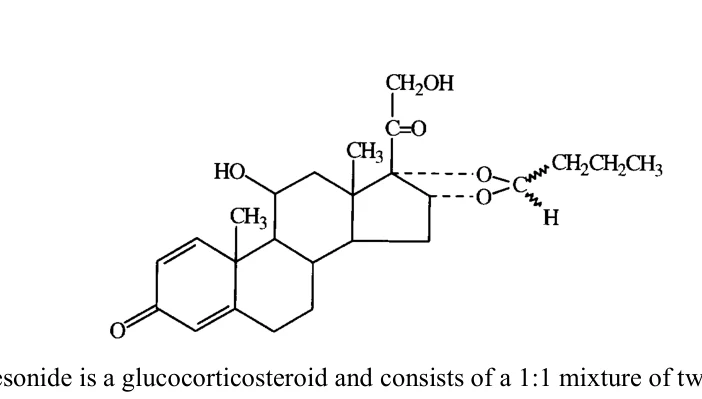 | |
| Physiochemical Properties: Budesonide is a glucocorticosteroid and consists of a 1:1 mixture of two epimers, 22R and 22S. It is a white to off-white crystalline powder and is freely soluble in chloroform, sparingly soluble in ethanol, practically insoluble in water and in heptane. Budesonide melts at 224°C to 231.5°C, with decomposition. | ||
Drug Substance
| Proper Name | formoterol fumarate dihydrate |
| Chemical Name | (R*,R*)-(±)-N-[2-hydroxy-5-[1-hydroxy-2-[[2-(4-methoxyphenyl)-1-methylethyl]amino]ethyl]phenyl]formamide, (E)-2-butendioate(2:1), dihydrate |
| Molecular Formula and Molecular Mass | C42H56N4O14 840.9 |
| Structural Formula: | 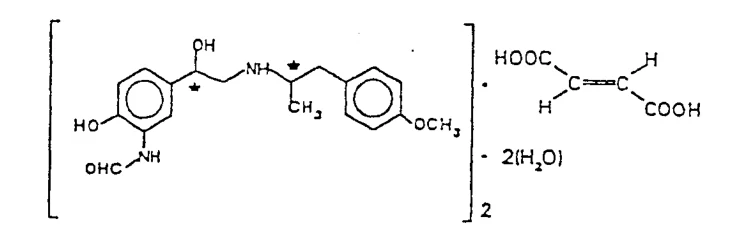 |
| Physiochemical Properties | Formoterol fumarate dihydrate is a white to off-white or slightly yellow non-hygroscopic crystalline powder. |
| Dissociation Constant | The pKa of formoterol fumarate dihydrate at 25°C is 7.9 for the phenolic group and 9.2 for the amino group. |
| Partition Coefficient | The octanol-water partition coefficient at 25°C is 2.6. |
CLINICAL TRIALS
Clinical Studies in Asthma
SYMBICORT TURBUHALER Anti-Inflammatory Reliever Therapy
Trial Design and Study Demographics
The safety and efficacy of SYMBICORT 200 TURBUHALER (200/6 mcg) as needed was evaluated in patients with mild asthma in a clinical development program that included two 52-week randomized, double-blind, parallel-group studies (SYGMA 1 and 2). SYGMA 1 compared SYMBICORT 200 TURBUHALER as needed with terbutaline 0.4 mg as needed and with daily budesonide 200 mcg bid plus terbutaline 0.4 mg as needed. SYGMA 2 compared SYMBICORT 200 TURBUHALER as needed with daily budesonide 200 mcg bid plus terbutaline 0.4 mg as needed. Use of all trial medication was recorded electronically with an inhaler monitor.
The primary endpoint for SYGMA 1 was the average percentage of well-controlled asthma weeks (WCAW) over the 52-week treatment period. The primary endpoint for SYGMA 2 was the annual severe asthma exacerbation rate over the 52-week treatment period, which was also a secondary endpoint in SYGMA 1.
Other secondary endpoints were rates and time to the first moderate-to-severe exacerbation (SYGMA 1 only), time to the first severe exacerbation, Asthma Control Questionnaire (ACQ-5) scores, medication usage (use of as-needed medication, ICS-controller use and total inhaled steroid load, and number of days with systemic corticosteroid treatment), lung-function variables, quality of life (according to the Asthma Quality of Life Questionnaire [AQLQ] score) and eDiary variables (SYGMA 1 only).
In both studies, patients were required to be either uncontrolled on only short-acting inhaled bronchodilator as needed or controlled on a low dose of inhaled corticosteroids or leukotriene receptor agonist plus short-acting inhaled bronchodilator as needed. During a 2 – 4 week run-in period, patients were removed from previous asthma treatment and were treated with terbutaline 0.4 mg as needed only. For randomization, patients were required to use the as-needed terbutaline on at least 3 separate days during the last week of the run-in period to ensure they had mild asthma that should be treated with low dose inhaled corticosteroids.
A total of 8064 asthma patients with mild asthma (≥12 years of age) were included in the SYGMA studies, of which 3384 patients were randomized to SYMBICORT 200 TURBUHALER as needed. In both studies, treatment arms were well balanced. The mean age of patients was 40 and 41 years, ~12.5% and 10% of patients were adolescents (≥12 to <18 years of age), ~7% and 9% of patients were >65 years of age and there were more female patients (~61% and 62%), in SYGMA 1 and 2, respectively.
Baseline lung function showed similar mean pre-bronchodilator FEV1 (~84%), post-bronchodilator FEV1 (~96%), reversibility (~15%) across studies and ~20% of patients had a severe exacerbation in the 12 months prior to study. ACQ-5 scores reflected uncontrolled asthma at baseline, with mean score of ~1.5, and the mean number of as-needed inhalations at baseline was approximately 1.4 inhalations per day in all treatment arms in both studies. Overall, approximately 45% of patients were previously uncontrolled on bronchodilator and 55% of patients were previously controlled on inhaled corticosteroids or leukotriene receptor antagonists in both studies.
Study Results
Median adherence with the intended use of maintenance treatment was ~85% in all treatment arms in SYGMA 1 (with twice daily electronic reminders) and ~68% in both treatment arms in SYGMA 2 (without any daily reminders).
Primary endpoint
The SYGMA 1 study demonstrated that SYMBICORT 200 TURBUHALER as needed was superior to terbutaline as needed in terms of WCAW (Table 4). The secondary analysis of the primary endpoint WCAW showed that non-inferiority for asthma symptom control was not met for SYMBICORT 200 TURBUHALER as needed compared with daily budesonide bid plus terbutaline as needed, in terms of WCAW (lower limit of the 2-sided 95% CI ≥ 0.8 for non-inferiority) (Table 4).
Table 4 Well-controlled asthma weeks (WCAW) during the randomized 52-week study period, repeated measures logistic regression (SYGMA 1)
Comparison between SYMBICORT TURBUHALER as needed and control group | ||||||||||
|---|---|---|---|---|---|---|---|---|---|---|
| Group | N | Mean percentage of WCAWa per patient | OR | 95% CI | p-value | |||||
SYMBICORT TURBUHALER 200/6 mcg as needed | 1269 | 34.4 | ||||||||
| Terbutaline 0.4 mg as needed | 1272 | 31.1 | 1.14 | (1.00, 1.30) | 0.046 | |||||
Budesonide 200 mcg bid + terbutaline 0.4 mg as needed | 1279 | 44.4 | 0.64 | (0.57, 0.73)b | NA | |||||
OR = Odds Ratio; CI = Confidence interval; N = Number of patients in analysis
- a WCAW is a composite endpoint capturing asthma symptoms, night-time awakenings, lung function, use of as- needed medication, and prescription of ICS and/or systemic glucocorticosteroid treatment for asthma. WCAW has 3 possible values: well-controlled, not-well-controlled and missing. The comparison of two different treatment approaches (‘as needed’ vs regular maintenance) should be interpreted with caution since ‘as-needed’ inhalations are counted in the assessment of WCAW.
- b The non-inferiority margin comparing SYMBICORT TURBUHALER 200/6 mcg to Budesonide 200 mcg bid + terbutaline 0.4 mg as needed was the lower limit of the 2-sided 95% CI ≥ 0.8.
In the SYGMA 2 study, SYMBICORT 200 TURBUHALER as needed was comparable (RR 0.97; 95% CI 0.78 to 1.20; upper limit of the 2-sided 95% CI <1.20 for non-inferiority) in the rate of severe exacerbations to a daily maintenance dose of budesonide bid plus terbutaline as-needed (Table 5).
Table 5 Severe asthma exacerbations over the randomized treatment period, negative binominal model (full analysis set) (SYGMA 2)
| Exacerbations / year | Comparison between SYMBICORT TURBUHALER as needed and control group | |||||||||||||
|---|---|---|---|---|---|---|---|---|---|---|---|---|---|---|
| Treatment group | N | Number of severe exacerbationsa | Rate | 95% CI | Rate Ratio | 95% CI | p-value | |||||||
SYMBICORT TURBUHALER 200/6 mcg as needed | 2084 | 217 | 0.11 | (0.10, 0.13) | ||||||||||
| Budesonide 200 mcg bid + terbutaline 0.4 mg as needed | 2083 | 221 | 0.12 | (0.10, 0.14) | 0.97 | (0.78, 1.20)b | NA | |||||||
CI = Confidence interval; N = Number of patients in analysis N/A = Not applicable
- a Defined as deterioration of asthma requiring any of: use of systemic steroids for at least 3 days; inpatient hospitalization; or emergency room visit due to asthma that required systemic steroids.
- b For the comparison of SYMBICORT TURBUHALER as needed vs. budesonide bid, an upper limit of the 2-sided 95% CI <1.20 indicates SYMBICORT TURBUHALER as needed is non-inferior to budesonide bid.
Secondary endpoints
The SYGMA 1 study showed that SYMBICORT 200 TURBUHALER as needed provided a clinically meaningful reduction in the rate of annual severe exacerbation by 64% compared with terbutaline as-needed (annualized exacerbation rate, 0.07 (95% CI 0.06, 0.09) and 0.20 (95% CI 0.16, 0.24), respectively; [RR] 0.36, 95% CI 0.27, 0.49). Reduction in the annual rate of moderate-to-severe exacerbations (60%) was consistent with that observed for severe exacerbations (annualized exacerbation rate, 0.14 (95% CI 0.12, 0.17) and 0.36 (95% CI 0.31, 0.42), respectively; [RR] 0.40, 95% CI 0.32, 0.49). The rate of annual severe exacerbation was similar for SYMBICORT 200 TURBUHALER as needed compared to daily maintenance budesonide bid (annualized exacerbation rate, 0.07 (95% CI 0.06, 0.09) and 0.09 (95% CI 0.07, 0.11), respectively; [RR] 0.83, 95% CI 0.59, 1.16).
Analysis of time to first severe exacerbation in the SYGMA 1 study showed that SYMBICORT 200 TURBUHALER as-needed reduced the instantaneous risk of experiencing a severe exacerbation over the one year treatment period by 56% ([HR] 0.44, 95% CI: 0.33-0.58) compared to terbutaline as-needed (see Figure 1a).
There were no differences in the probability of experiencing a severe exacerbation over the treatment period between SYMBICORT 200 TURBUHALER as-needed and daily maintenance budesonide 200 mcg bid plus terbutaline as-needed (see Figure 1a and Figure 1b).
Figure 1a Time to first severe asthma exacerbation in SYGMA 1 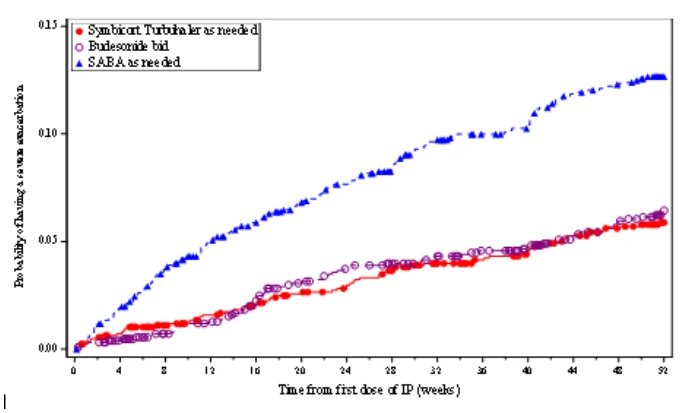 | Figure 1b Time to first severe asthma exacerbation in SYGMA 2 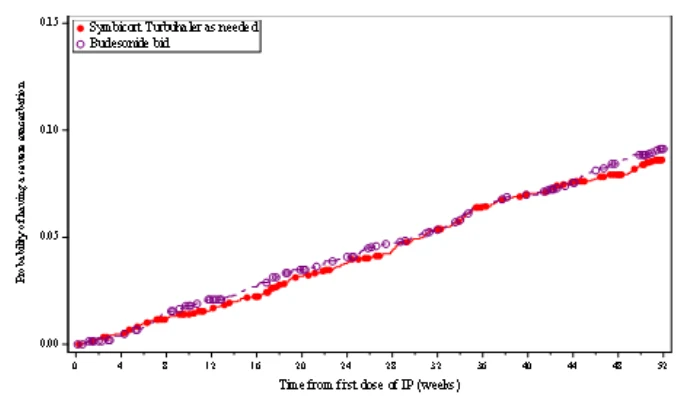 |
The SYMBICORT 200 TURBUHALER as needed treatment arms achieved comparable reduction in severe and moderate-to-severe exacerbations while reducing the median ICS load by 75% to 83% compared to the budesonide bid arms (SYGMA 1: 48.3 mcg/day vs 276.2 mcg/day; SYGMA 2: 52.9 and 214.1 mcg/day).
In SYGMA 1, the mean total number of as-needed inhalations per day over the randomized treatment period was 0.47 for SYMBICORT 200 TURBUHALER as needed, 0.58 for terbutaline as needed, and 0.39 for budesonide bid. In SYGMA 2, the mean total number of as-needed inhalations per day over the randomized treatment period was 0.52 for the SYMBICORT 200 TURBUHALER as needed group and 0.49 for the budesonide bid group. In both studies, patients did not use any as-needed medication on most days (range: 69%-77%), and when patients used as-needed medication, the most frequent use was 1 to 2 inhalations per day.
In SYGMA 1, increases in lung function compared to baseline (mean pre-bronchodilator FEV1) were larger for patients on SYMBICORT 200 TURBUHALER as needed compared to patients on terbutaline as needed. In both SYGMA 1 and 2, smaller increases were observed for SYMBICORT 200 TURBUHALER as needed compared to daily maintenance budesonide bid with terbutaline as needed; for both comparisons, mean differences in treatments’ effect were small (approximately 30 to 55 mL).
In the SYGMA 1 study, improvements in asthma control (as defined by ACQ-5) and in quality of life (as defined in AQLQ) in patients using SYMBICORT 200 TURBUHALER as needed were greater than improvements in patients using terbutaline as needed (ACQ-5: -0.15, 95% CI -0.20 to -0.11; AQLQ: 0.127; 95% CI 0.074 to 0.181). Improvements in asthma control were lower for SYMBICORT 200 TURBUHALER as needed compared to daily maintenance budesonide bid plus terbutaline as needed in both SYGMA 1 and 2 (ACQ-5: SYGMA 1: 0.15, 95% CI 0.10 to 0.20; SYGMA 2: 0.11, 95% CI 0.07 to 0.15; AQLQ: SYGMA 1: -0.102; 95% CI -0.155 to -0.049; SYGMA 2: -0.096; 95% CI -0.137 to -0.054).
For all comparisons, mean differences in treatment effect on ACQ-5 and AQLQ were not clinically meaningful (as assessed by a minimum clinically important difference of at least 0.5).
No safety concerns were identified for as-needed use of SYMBICORT 200 TURBUHALER. Safety findings were generally consistent across patient subgroups, and there were no safety concerns related to treatment class effects or the amount of medication usage.
SYMBICORT TURBUHALER Anti-inflammatory Reliever plus Maintenance Therapy (SYMBICORT SMART®)
SYMBICORT TURBUHALER anti-inflammatory reliever plus maintenance therapy is supported by 5 double-blind, randomized, parallel-group multicentre clinical studies that compared the safety and efficacy of SYMBICORT TURBUHALER anti-inflammatory reliever plus maintenance therapy with established treatments for persistent asthma for 6 or 12 months. The studies included 12,076 patients, of which 4447 were randomized to SYMBICORT TURBUHALER anti-inflammatory reliever plus maintenance therapy, 1519 were adolescents (ages 12 to 17) and 842 were elderly (ages 65 to 80). Patients were required to be symptomatic despite daily use of inhaled glucocorticosteroids.
SYMBICORT TURBUHALER anti-inflammatory reliever plus maintenance therapy provided statistically significant and clinically meaningful reductions in severe exacerbations by prolonging time to first event and reducing the event rate (Table 6), as compared with all comparator treatments, including SYMBICORT TURBUHALER at a higher maintenance dose (Study 735). Symptom control, lung function and reliever use were improved compared with SYMBICORT TURBUHALER at the same maintenance dose or budesonide at a 2 to 4 times higher maintenance dose. This was generally achieved with a lower overall drug load, including reduced use of glucocorticosteroids (GCS) and less as-needed inhalations (see Table 6).
In Study 735, SYMBICORT TURBUHALER anti-inflammatory reliever plus maintenance therapy significantly prolonged the time to the first exacerbation compared to the other treatment groups. The rate of exacerbations was reduced by 28% compared to twice the maintenance dose of SYMBICORT TURBUHALER with terbutaline as reliever (see Table 6).
In Study 734, SYMBICORT TURBUHALER anti-inflammatory reliever plus maintenance therapy prolonged the time to the first exacerbation compared to SYMBICORT TURBUHALER at the same maintenance dose with either formoterol or terbutaline as reliever. The rate of exacerbations was reduced by 33% and 48%, respectively. Symptoms and reliever use were reduced and lung function improved, compared with both comparator treatments (see Table 6).
In Studies 673, 668 and 667, SYMBICORT TURBUHALER anti-inflammatory reliever plus maintenance therapy prolonged the time to the first exacerbation compared to SYMBICORT TURBUHALER at the same maintenance dose with terbutaline as reliever and compared to a 2- to 4-fold higher maintenance dose of budesonide with terbutaline as reliever. Across the 3 studies, the rate of exacerbations was reduced by 45-54%. Symptoms and reliever use were reduced and lung function improved compared with all other treatments. The increases in symptoms, the increases in as-needed use, and the decreases in morning and evening peak expiratory flow (PEF) around severe exacerbations were similar between treatment groups, indicating exacerbations were no more severe in patients receiving SYMBICORT TURBUHALER anti-inflammatory reliever plus maintenance therapy.
In the 5 long-term studies, patients receiving SYMBICORT TURBUHALER anti-inflammatory reliever plus maintenance therapy used, on average, no reliever inhalations on 57% of treatment days and 0-2 reliever inhalations on 87% of treatment days and 0-6 reliever inhalations on 99% of treatment days. There was no sign of development of tolerance over time.
No new safety concerns were identified, based on the adverse event profile and the known class effects (GCS-related or beta2-agonist-related).
Table 6 Summary of pivotal clinical studies in support of SYMBICORT TURBUHALER anti-inflammatory reliever plus maintenance therapy (SYMBICORT SMART) - Baseline characteristics, dose, and effect on severe exacerbations in double-blind, long-term studies
Study 735a (COMPASS) | Study 734 (SMILE) | Study 673 (STAY) | Study 668 (STEP) | Study 667 (STEAM) | |||||||||||||
|---|---|---|---|---|---|---|---|---|---|---|---|---|---|---|---|---|---|
| Treatment group | Symb + Symb | Symb + terb | Symb + Symb | Symb + form | Symb + terb | Symb + Symb | Symb + terb | Bud + terb | Symb + Symb | Bud + terb | Symb + Symb | Bud + terb | |||||
| N randomized | 1107 | 1105 | 1113 | 1140 | 1141 | 925 | 909 | 926 | 947 | 943 | 355 | 342 | |||||
| Study duration | 6 months | 12 months | 12 months | 12 months | 6 months | ||||||||||||
| Age, years | Mean: 37.9 Range: 11-83 | Mean: 42 Range: 12-89 | Mean: 36 Range: 4-79 | Mean: 43 Range: 11-80 | Mean: 38 Range: 11-79 | ||||||||||||
| Gender, M/F | 1411/1924 | 1345/2049 | 1231/1529 | 798/1092 | 270/427 | ||||||||||||
| Race | 2329 Caucasian, 33 black, 424 oriental, 549 other | 2689 Caucasian, 12 black, 645 oriental, 48 other | 2130 Caucasian, 29 black, 455 oriental, 146 other | 1751 Caucasian, 9 black, 13 oriental, 117 other | 361 Caucasian, 3 black, 332 oriental, 1 other | ||||||||||||
| Baseline characteristics indicative of asthma severity | |||||||||||||||||
| FEV1 (%PN) | 72 | 73 | 72 | 72 | 72 | 73 | 73 | 73 | 70 | 70 | 75 | 75 | |||||
| Reversibility (%) | 24 | 25 | 24 | 24 | 24 | 21 | 21 | 21 | 24 | 24 | 17 | 17 | |||||
| GCS dose (mcg /day) | 740 | 750 | 757 | 758 | 751 | 619 | 598 | 620 | 744 | 748 | 353 | 343 | |||||
| LABA use (%)b | 45 | 46 | 59 | 58 | 59 | 28 | 28 | 27 | 44 | 43 | 22 | 18 | |||||
| Daily use of GCS/LABA during treatment (budesonide/formoterol for SYMBICORT TURBUHALER. NB budesonide and formoterol as delivered dose) | |||||||||||||||||
| Maintenance dose (mcg) | 320/9 | 640/18 | 320/9 | 320/9 | 320/9 | 160/9 | 160/9 | 640/0 | 320/9 | 640/0 | 160/9 | 320/0 | |||||
| Mean as-needed inh. | 1.02 | 1.05 | 1.02 | 1.23 | 1.26 | 1.00 | 1.20 | 1.44 | 0.91 | 1.42 | 1.03 | 1.46 | |||||
Study 735a (COMPASS) | Study 734 (SMILE) | Study 673 (STAY) | Study 668 (STEP) | Study 667 (STEAM) |
|---|
| Treatment group | Symb + Symb | Symb + terb | Symb + Symb | Symb + form | Symb + terb | Symb + Symb | Symb + terb | Bud + terb | Symb + Symb | Bud + terb | Symb + Symb | Bud + terb |
|---|
| N randomized | 1107 | 1105 | 1113 | 1140 | 1141 | 925 | 909 | 926 | 947 | 943 | 355 | 342 |
|---|---|---|---|---|---|---|---|---|---|---|---|---|
| Mean total dose (mcg) | 483/13.6 | 640/18 | 483/13.6 | 320/14.5 | 320/9 | 240/13.5c | 160/9c | 640/0c | 466/13 | 640/0 | 242/16.7 | 320/0 |
Incidence of severe exacerbations (excluding exacerbations due to PEF falls). Symb + Symb was statistically significantly superior to all comparators for time to first severe exacerbation and total number of severe exacerbations. | ||||||||||||
| Patients with an exacerbation (%) | 9 | 11 | 13 | 17 | 22 | 11 | 21 | 19 | 14 | 22 | 3 | 11 |
| Number of severe exacerbations | 125 | 173 | 194 | 296 | 377 | 160 | 330 | 294 | 197 | 349 | 14 | 57 |
| Exacerbations per patient-year | 0.23 | 0.32 | 0.19 | 0.29 | 0.37 | 0.19 | 0.40 | 0.35 | 0.23 | 0.42 | 0.08 | 0.35 |
| Risk of 1st severe asthma exacerbation | Hazard ratio for the time to 1st severe exacerbation decreased with Symb + Symb versus Symb + terb by 26% (p=0.026) | Hazard ratio for the time to 1st severe exacerbation decreased with Symb + Symb versus Symb + form by 27% (p=0.0038) and versus Symb + terb by 45% (p<0.001) | Hazard ratio for the time to 1st severe exacerbation decreased with Symb + Symb versus Symb + terb by 50% (p<0.001) and versus Bud + terb by 45% (p<0.001) | Hazard ratio for the time to 1st severe exacerbation decreased with Symb + Symb versus Bud + terb by 39% (p<0.001) | Hazard ratio for the time to 1st severe exacerbation decreased with Symb + Symb versus Bud + terb by 70% (p<0.001) | |||||||
| Number of days of systemic GCS use | 694 | 1133 | 1295 | 2174 | 2930 | 1255 | 2918 | 2577 | 1776 | 3177 | 114 | 498 |
- a The data from another inhaled corticosteroid/long-acting beta2-agonist treatment arm are not shown.
- b As monoproduct or in combination with inhaled GCS.
- c Mean total daily dose is the sum of the maintenance dose for adults and adolescents and the mean as-needed dose for the whole population.
Table 7 Summary of results for key secondary efficacy variables in double-blind, long-term studies
| Study | Treatment arm | Na | Morning PEF (L/min) b | Total symptom score (0-6) | Total daily as-needed inhalations | Nights with awakenings due to asthma symptoms (%) | Comments | ||||||
|---|---|---|---|---|---|---|---|---|---|---|---|---|---|
| Change from baseline | Baseline | Treatment | Baseline | Treatment | Baseline | Treatment | |||||||
| 735c | Symb + Symb | 1103 | 25.0 | 1.91 | 1.06 | 2.29 | 1.02 | 33.7 | 14.1 | Despite lower daily dose in Symb + Symb group similar results were seen between Symb + Symb and Symb + terb for all variables. | |||
| Symb + terb | 1099 | 25.7 | 1.93 | 1.07 | 2.31 | 1.05 | 32.8 | 14.6 | |||||
| 734 | Symb + Symb | 1107 | 15.3 | 1.71 | 1.02 | 1.83 | 1.02 | 31.2 | 14.7 | Symb + Symb stat. sig. superior to both comparators for all variables. | |||
| Symb + form | 1137 | 10.6 | 1.70 | 1.13 | 1.90 | 1.23 | 28.0 | 15.4 | |||||
| Symb + terb | 1138 | 7.9 | 1.74 | 1.14 | 1.91 | 1.26 | 30.3 | 17.0 | |||||
| 673 | Symb + Symb | 922 | 29.9 | 1.48 | 0.79 | 2.45 | 1.01 | 21.8 | 8.6 | Symb + Symb stat. sig. superior to both comparators for all variables. | |||
| Symb + terb | 906 | 22.0 | 1.44 | 0.86 | 2.41 | 1.21 | 20.2 | 11.9 | |||||
| Bud + terb | 925 | 13.0 | 1.50 | 1.01 | 2.41 | 1.46 | 20.6 | 12.4 | |||||
| 668 | Symb + Symb | 947 | 34.2 | 1.84 | 1.08 | 1.85 | 0.90 | 22.6 | 9.4 | Symb + Symb stat. sig. superior to budesonide for all variables | |||
| Bud + terb | 943 | 13.9 | 1.90 | 1.32 | 1.99 | 1.42 | 23.5 | 13.0 | |||||
| 667 | Symb + Symb | 354 | 34.5 | 1.25 | 0.73 | 1.64 | 1.04 | 13.3 | 6.5 | Symb + Symb stat. sig. superior to budesonide for all variables except awakenings | |||
| Bud + terb | 342 | 9.5 | 1.33 | 0.94 | 1.77 | 1.48 | 18.6 | 10.7 | |||||
- a Number refers to all patients analysed for efficacy; data were not available for every patient for every variable
- b Primary efficacy parameter in study 667; time to 1st severe exacerbation was a secondary endpoint
- c The data from another inhaled corticosteroid/long-acting beta2-agonist treatment arm are not shown.
SYMBICORT TURBUHALER Maintenance Therapy
Clinical studies in asthmatic adults and adolescents showed that SYMBICORT TURBUHALER was significantly more effective than budesonide alone on all primary efficacy comparisons.
In studies comparing the safety of the combination product to concomitant treatment with budesonide and formoterol via separate inhalers, no differences were seen with respect to adverse events, laboratory measurements, vital signs or ECG.
Compared to treatment with budesonide alone, in mild asthmatics (≤ 500 mcg ICS daily) SYMBICORT TURBUHALER increased the time to first mild exacerbation (p=0.02) and decreased the relative risk for mild exacerbations by 26% (p=0.02).
In a study of moderate-to-severe adult and adolescent asthmatics not well-controlled on inhaled glucocorticosteroids alone (≥ 750 mcg ICS daily), SYMBICORT TURBUHALER dosed twice daily (total daily dose 1600/48 mcg) was more effective than budesonide dosed twice daily (total daily dose 1600 mcg) in increasing morning PEF over 12 weeks of treatment (mean difference was 32.9 L/min, p<0.001). Statistically significant improvements were also seen for evening PEF (p<0.001), total asthma symptom score (p=0.005), daytime asthma symptoms (p<0.001), symptom free days (p<0.001), use of rescue medication (p<0.001), rescue free days (p<0.001), asthma control days (p<0.001), time to first mild exacerbation (p=0.003) and FEV1 (p<0.001).
In this 24-week study, no new safety concerns were identified and similar safety profiles were observed between the SYMBICORT TURBUHALER and budesonide + formoterol treatment groups.
No clinically important differences with regards to s-potassium, s-glucose, vital signs, or ECG variables were identified between the SYMBICORT TURBUHALER and budesonide + formoterol treatment groups or within these groups over time. There were no statistically significant differences between the SYMBICORT TURBUHALER and budesonide + formoterol treatment groups regarding morning plasma cortisol or stimulated cortisol.
Clinical Studies in COPD
The use of SYMBICORT 200 TURBUHALER (200/6 mcg) and SYMBICORT FORTE TURBUHALER (400/12 mcg) in the treatment of patients with moderate to severe COPD is supported by two 12-month, randomized, double-blind, placebo-controlled, parallel-group, multicentre clinical studies comparing efficacy and safety of SYMBICORT 200 TURBUHALER (given as 2 x 200/6 mcg bid) with placebo and with the individual components (budesonide 2 x 200 mcg bid or formoterol 2 x 6 mcg bid).
Patients with a clinical history of COPD, age 40 years or older, a pre-bronchodilator FEV1 of ≤ 50% predicted normal, an FEV1/VC ratio of ≤70%, a history of least one COPD exacerbation within 2-12 months period prior to enrolment, and a smoking history equivalent to 10 or more pack years were included in the studies. Patients with a history of asthma or seasonal allergic rhinitis prior to age 40, respiratory disorders other than COPD, relevant cardiac disorders, a requirement for the regular use of oxygen, or an exacerbation of COPD requiring hospitalisation, a course of antibiotics, and/or oral or systemic corticosteroids within 4 weeks prior to the study were excluded.
The co-primary efficacy endpoints in the SYMBICORT TURBUHALER studies (0629 and 0670) were post-bronchodilator FEV1 and moderate to severe COPD exacerbations, to demonstrate the benefit of the formoterol and budesonide components, respectively. A moderate to severe COPD exacerbation was defined as one or more of the following; use of oral steroids, antibiotics, or hospitalization due to respiratory symptoms. Specific respiratory symptoms or duration of symptoms were not pre-defined criteria for exacerbations and there was no criterion to distinguish between a new exacerbation and a relapse of a previous exacerbation. The statistical analyses did adjust for patient exposure and took into consideration heterogeneity caused by between-patient variation. While there is no consensus for the definition and classification of COPD exacerbations, a similar definition has been used in other COPD clinical studies.
A total of 1,834 COPD patients were randomized and received treatment. The average age of patients was 64 years, and 23% of those enrolled were female. The mean pre-bronchodilator FEV1 at baseline was 0.99 L or 36% predicted in both studies. Inhaled corticosteroids were used by 26% (Study 0629) and 48% (Study 0670) of the patients prior to enrolment, with a mean daily dose of around 850 mcg.
Both trials showed that in COPD patients, the improvements with SYMBICORT 200 TURBUHALER were statistically significantly superior to placebo for the following variables: post-bronchodilator FEV1, number of moderate to severe exacerbations, morning and evening PEF, total COPD symptom scores, night-time awakenings due to COPD symptoms, Health Related Quality of Life as measured by St. George’s Respiratory Questionnaire (SGRQ), and the use of short-acting beta2-agonists.
SYMBICORT 200 TURBUHALER was also statistically significantly superior to budesonide for post-bronchodilator FEV1, morning and evening PEF, and use of short-acting beta2-agonists.
In comparison to formoterol, SYMBICORT 200 TURBUHALER demonstrated a significant reduction in moderate to severe exacerbation rate of 23% (p=0.043) in Study 0629 and 26% (p=0.015) in Study 0670 (Table 8). In Study 0629, the mean number of moderate to severe exacerbations/patient-year was 1.42 for SYMBICORT 200 TURBUHALER, 1.84 for formoterol and 1.87 for placebo. Compared with formoterol, the treatment of SYMBICORT 200 TURBUHALER reduced the rate of exacerbations by 0.42 exacerbations/patient-year. Similarly, in Study 0670, the mean number of moderate to severe exacerbations/patient-year was 1.38 for SYMBICORT 200 TURBUHALER, 1.85 for formoterol and 1.80 for placebo. The treatment of SYMBICORT 200 TURBUHALER reduced the exacerbation rate by 0.47 exacerbation/patient-year compared with formoterol. In comparison with formoterol, SYMBICORT 200 TURBUHALER statistically significantly improved post-bronchodilator FEV1 (p=0.002) in Study 0670 but not in Study 0629 (p=0.487). SYMBICORT 200 TURBUHALER also demonstrated a statistically significant improvement of -3.3 (p=0.014) units in the total score for SGRQ in Study 0670 when compared with formoterol, but not in Study 0629 (-0.34 units, p=0.816).
Table 8 Summary of key results for COPD studies 0629 and 0670
SYMBICORT TURBUHALER 200/6 mcg vs placebo | SYMBICORT TURBUHALER 200/6 mcg vs formoterol | Formoterol vs placebo | |||||
|---|---|---|---|---|---|---|---|
| Improvements in post-dose FEV1 | |||||||
| Study 0629 | Mean ratio, %, (95% CI) | 114.91 (110.96 – 119.06) | 101.25 (97.76 – 104.86) | 113.52 (109.54 –117.65) | |||
| P-value | <0.001 | 0.487 | <0.001 | ||||
| Study 0670 | Mean ratio, %, (95% CI) | 114.09 (110.45 – 117.84) | 105.36 (101.99 – 108.84) | 108.28 (104.75 –111.94) | |||
| P-value | <0.001 | 0.002 | <0.001 | ||||
| Reductions in Moderate to Severe Exacerbations | |||||||
| Study 0629 | Rate ratioa (95% CI) | 0.758 (0.586 – 0.981) | 0.771 (0.599 – 0.992) | 0.984 (0.770 – 1.257) | |||
| Reduction/patient-year | 0.45 | 0.42 | - | ||||
| P-value | 0.035 | 0.043 | 0.895 | ||||
| Study 0670 | Rate ratioa (95% CI) | 0.764 (0.600 – 0.973) | 0.745 (0.587 – 0.945) | 1.026 (0.813 –1.295) | |||
| Reduction/patient-year | 0.42 | 0.47 | - | ||||
| P-value | 0.029 | 0.015 | 0.828 | ||||
| Improvements in Health-related Quality of Life: Change in total SGRQ score b | |||||||
| Study 0629 | Mean difference from baseline | -3.88 | -0.34 | -3.54 | |||
| P-value | 0.009 | 0.816 | 0.018 | ||||
SYMBICORT TURBUHALER 200/6 mcg vs placebo | SYMBICORT TURBUHALER 200/6 mcg vs formoterol | Formoterol vs placebo | |||||
|---|---|---|---|---|---|---|---|
| Study 0670 | Mean difference from baseline | -7.46 | -3.33 | -4.13 | |||
| P-value | <0.001 | 0.014 | 0.002 | ||||
- a From Poisson regression model
- b St. George’s Respiratory Questionnaire
In both studies, adverse reactions associated with SYMBICORT 200 TURBUHALER are described (see ADVERSE REACTIONS, Clinical Trial Adverse Drug Reactions, COPD).
DETAILED PHARMACOLOGY
Animal
Repeat dose pharmacokinetics of budesonide and formoterol fumarate dihydrate were determined by monitoring their plasma concentrations of each substance when inhaled individually and in combination during toxicity studies in the rat and dog. For both species, there was no evidence of altered exposure to or kinetics of budesonide and formoterol fumarate dihydrate, as a result of the combined administration of the substances.
Human
Pharmacokinetics and systemic pharmacodynamics of SYMBICORT were examined in healthy adult volunteers in repeat dose studies. Tolerability and systemic pharmacodynamics at doses exceeding the highest recommended dose were investigated in patients with asthma in repeat dose studies.
Pharmacodynamics: In these studies plasma cortisol, a marker of adaptation of the hypothalamic-pituitary-adrenal (HPA) axis was assessed as a single morning measurement. As well, 24 hour plasma cortisol AUC was measured. There was no difference in morning plasma cortisol between SYMBICORT and the free combination of budesonide and formoterol. The 24-hour plasma cortisol AUC detected differences in HPA axis adaptation that were not detected by the single morning measurement. Using this parameter, cortisol levels were 9% lower with SYMBICORT than with either budesonide alone or the free combination of budesonide and formoterol. As the difference was the same whether formoterol was present or not, greater systemic activity of SYMBICORT is not attributed to systemic interaction between budesonide and formoterol. The increased bioavailability of budesonide in SYMBICORT is considered to be of little clinical significance within the recommended dose.
In the tolerability study it was shown that the 12-hour average serum potassium concentration did not differ between SYMBICORT and formoterol alone at doses up to 2800/84 mcg budesonide/formoterol. Additionally, at this dose there were no differences in blood pressure, QT and QTc intervals and plasma lactate.
Pharmacokinetics: The systemic availabilities of budesonide and formoterol administered as SYMBICORT correspond to pulmonary availabilities of about 48% (budesonide) and 46% (formoterol) of the respective delivered dose. Absorption of budesonide and formoterol was rapid, both after administration of SYMBICORT and after administration of each drug alone. On average, peak plasma concentrations were reached within 10 minutes after drug inhalation.
TOXICOLOGY
For complete information on the toxicology of individual compounds, budesonide and formoterol fumarate dihydrate, please refer to the PULMICORT TURBUHALER and OXEZE TURBUHALER Product Monographs.
Long-term Toxicology
The general toxicity after repeated administration of the budesonide/formoterol combinations was studied in rats and dogs after inhalation.
Table 9 Summary of results of repeat dose toxicity studies
| Species | Route Duration | Treatment | Dose (mcg/kg) | Results and Observations |
|---|---|---|---|---|
| Rat | inhalation 13 weeks | budesonide | 72 |
|
| formoterol | 2.25 |
| ||
| budesonide/f ormoterol | 2.35/0.14 11.5/0.63 54/2.8 |
|
| Species | Route Duration | Treatment | Dose (mcg/kg) | Results and Observations |
|---|---|---|---|---|
| Dog | Inhalation 13 weeks | budesonide | 48.5 |
|
| formoterol | 2.65 |
|
| Species | Route Duration | Treatment | Dose (mcg/kg) | Results and Observations |
|---|---|---|---|---|
| budesonide/f ormoterol | 2.05/0.105 9.8/0.5 49.5/2.7 |
|
In rats, daily nose only inhalation administration of budesonide, formoterol or budesonide + formoterol at total inhaled doses up to 73, 2.3 + 51 and 2.7 mcg.kg-1.day-1 respectively for 3 months produced a range of effects on body weight profiles, clinical pathology parameters, organ weights and histopathology findings. The changes observed were consistent with beta-agonist or glucocorticoid treatment and were considered to be mild in severity. Comparison of the effects of the high doses of budesonide and formoterol alone with the high dose of budesonide + formoterol revealed no obvious differences.
Daily inhalation dosing of a SYMBICORT powder formulation to dogs for 13 weeks at total inhaled doses of up to 50 mcg.kg-1.day-1 budesonide + 2.7 mcg.kg-1.day-1 formoterol produced no evidence of significant systemic toxicity. Changes seen were considered to represent the normal class effects expected from an inhaled glucocorticosteroid and beta-agonist. There was no evidence of any unexpected systemic toxicity and no evidence of local toxicity or irritation in the respiratory tract. Toxicokinetic data demonstrated that the animals had been systemically exposed to budesonide and/or formoterol and that the exposure was dose-related. Comparison of the effects of the high doses of budesonide and formoterol alone with the high dose of SYMBICORT revealed no significant differences.
REFERENCES
- Aalbers R, Backer V, Kava T et al. Adjustable maintenance dosing with budesonide/formoterol compared with fixed-dose salmeterol/fluticasone in moderate to severe asthma. Curr Med Res Opin 2004;20:225-40.
- Ankerst J, Persson G, Weibull E. Tolerability of a high dose of budesonide/formoterol in a single inhaler in patients with asthma. Pulm Pharmacol Ther 2003;16:147-51.
- Balanag VM, Yunus F, Yang PC et al. Efficacy and safety of budesonide/formoterol compared with salbutamol in the treatment of acute asthma. Pulm Pharmacol Ther 2006;19:139-47.
- Bateman ED, Reddel HK, O’Byrne PM et al. As-Needed Budesonide–Formoterol versus Maintenance Budesonide in Mild Asthma. New England Journal Medicine 2018;378:1877-87.
- Buhl R, Creemers JPHM, Vondra V et al. Once-daily budesonide/formoterol in a single inhaler in adults with moderate persistent asthma. Respir Med 2003;97:323-30.
- Calverley PM, Boonsawat W, Cseke Z et al. Maintenance therapy with budesonide and formoterol in chronic obstructive pulmonary disease. Eur Respir J. 2003;22: 912-919 and Author’s correction: Eur Respir J 2004;24:1075 (referred to as Study 670 in the Product Monograph).
- Ekström T, Ringdal N, Sobradillo V et al. Low-dose formoterol Turbuhaler® (Oxis®) b.i.d., a three month placebo-controlled comparison with terbutaline (q.i.d.). Respir Med 1998;92:1040-5.
- Horn CR, Clark TJ, Cochrane GM. Compliance with inhaled therapy and morbidity from asthma. Respir Med 1990;84:67-70.
- Jenkins C, Kolarikova R, Kuna P et al. Efficacy and safety of high-dose budesonide/formoterol (Symbicort®) compared with budesonide administered either concomitantly with formoterol or alone in patients with persistent symptomatic asthma. Respirology 2006;11:276-86.
- Kips J, O'Connor B, Inman M et al. A long-term study of the antiinflammatory effect of low-dose budesonide plus formoterol versus high-dose budesonide in asthma. Am J Respir Crit Care Med 2000;161:996-1001.
- Kuna P, Creemers JP, Vondra V et al. Once-daily dosing with budesonide/formoterol compared with twice-daily budesonide/formoterol and once-daily budesonide in adults with mild to moderate asthma. Resp Med 2006; 100:2151-9.
- Lalloo UG, Malolepszy J, Kozma D et al. Budesonide and formoterol in a single inhaler improves asthma control compared with increasing the dose of corticosteroid in adults with mild-to-moderate asthma. Chest 2003;123:1480-7.
- Malolepszy J, Böszörményi Nagy G, Selroos O et al. Safety of formoterol Turbuhaler® at cumulative dose of 90 mcg in patients with acute bronchial obstruction. Eur Respir J 2001;18:928-34.
- Nelson HS, Weiss, ST, Bleeckeer ER et al. and SMART Study Group. The Salmeterol Multicenter Asthma Research Trial: A Comparison of Usual Pharmacotherapy for Asthma or Usual Pharmacotherapy Plus Salmeterol. Chest 2006;129:15-26
- O'Byrne PM, Barnes PJ, Rodriguez-Roisin R et al. Low dose inhaled budesonide and formoterol in mild persistent asthma The OPTIMA randomized trial. Am J Respir Crit Care Med 2001;164:1392-7.
- O’Byrne PM, Bisgaard H, Godard PP et al. Budesonide/formoterol combination therapy as both maintenance and reliever medication in asthma. Am J Respir Crit Care Med 2005;171:129-36.
- O’Byrne PM, FitzGerald JM, Bateman ED et al. Inhaled Combined Budesonide–Formoterol as Needed in Mild Asthma. New Engl J Med 2018;378:1865-76.
- OXEZE® TURBUHALER® Product Monograph, AstraZeneca Canada Inc.
- Palmqvist M, Arvidsson P, Beckman O et al. Onset of bronchodilation of budesonide/formoterol vs. salmeterol/fluticasone in single inhalers. Pulm Pharmacol Ther 2001;14:29-34.
- Pauwels RA, Löfdahl CG, Postma DS et al. Effect of inhaled formoterol and budesonide on exacerbations of asthma. N Engl J Med 1997;337:1405-1411.
- Peters SP, Bleecker ER, Canonica GW et al. Serious Asthma Events with Budesonide plus Formoterol vs. Budesonide Alone. N Engl J Med 2016;375:850-860.
- PULMICORT® TURBUHALER® Product Monograph, AstraZeneca Canada Inc.
- Rabe KF, Atienza T, Magyar P et al. Effect of budesonide in combination with formoterol for reliever therapy in asthma exacerbations: a randomised controlled, double-blind study. Lancet 2006;368:744-53.
- Rabe KF, Pizzichini E, Stallberg B et al. Budesonide/formoterol in a single inhaler for maintenance and relief in mild-to-moderate asthma. A randomized, double-blind trial. Chest 2006;129:246-56.
- Ringdal N, Derom E, Wahlin-boll E et al. Onset and duration of action of single doses of formoterol inhaled via Turbuhaler. Respir Med 1998;92:1017-21.
- Rosenhall L, Heinig JH, Lindqvist A et al. Budesonide /formoterol (Symbicort) is well tolerated and effective in patients with moderate persistent asthma. Int J Clin Pract 2002;56:427-33.
- Scicchitano R, Aalbers R, Ukena D et al. Efficacy and safety of budesonide/formoterol single inhaler therapy versus a higher dose of budesonide in moderate to severe asthma. Curr Med Res Opin 2004;20:1403-18.
- Szafranski W, Cukier A, Ramirez A et al. Efficacy and safety of budesonide/formoterol in the management of chronic obstructive pulmonary disease. Eur Respir J 2003;21:74-81 and Author’s correction: Eur Respir J 2003;21:912 (referred to as Study 629 in the Product Monograph).
- Van der Molen T, Postma DS, Turner MO et al. Effects of the long acting beta-agonist formoterol on asthma control in asthmatic patients using inhaled corticosteroids. Thorax 1997;52:535-9.
- Van der Woude HJ, Boorsma M, Bergqvist PB et al. Budesonide/formoterol in a single inhaler rapidly relieves methacholine induced moderate-to-severe bronchoconstriction. Pulm Pharmacol Ther 2004;17:89-95.
- Zetterstrom O, Buhl R, Mellem H et al. Improved asthma control with budesonide/formoterol in a single inhaler, compared with budesonide alone. Eur Respir J 2001;18:262-8.