


Product Monograph - Arbesda Respiclick
SUMMARY PRODUCT INFORMATION
| Route of Administration | Dosage Form / Strength | Clinically Relevant Nonmedicinal Ingredients |
| Oral inhalation | Dry powder for inhalation / 55 mcg, 113 mcg and 232 mcg fluticasone propionate / 14 mcg salmeterol (as the xinafoate salt) / 60 actuations | Lactose monohydrate (which contains milk protein). For a complete listing see Dosage Forms, Composition and Packaging section. |
INDICATIONS AND CLINICAL USE
ARBESDA RESPICLICKTM (fluticasone propionate/salmeterol xinafoate) is indicated for the treatment of asthma in patients aged 12 years and older.
ARBESDA RESPICLICK, an ICS/LABA combination, should be prescribed for patients not adequately controlled on a long-term asthma control medication, such as an ICS, or whose disease severity clearly warrants treatment with both an ICS and a LABA.
ARBESDA RESPICLICK is not indicated for patients whose asthma can be managed by occasional use of a rapid onset, short duration, inhaled beta2-agonist, or for patients whose asthma can be successfully managed by inhaled corticosteroids along with occasional use of a rapid onset, short duration, inhaled beta2-agonist.
ARBESDA RESPICLICK contains a long-acting beta2-agonist and should not be used as a rescue medication. To relieve acute asthmatic symptoms, a rapid onset, short duration inhaled bronchodilator (e.g. salbutamol) should be used.
Geriatrics (> 65 years of age):
No dosage adjustment is required in patients 65 years of age and older.
Pediatrics (< 12 years of age):
The safety and effectiveness of ARBESDA RESPICLICK in pediatric patients below the age of 12 years have not been established.
CONTRAINDICATIONS
ARBESDA RESPICLICK (fluticasone propionate/salmeterol xinafoate) is contraindicated in the following conditions:
- Patients who are hypersensitive to this drug or to any ingredient in the formulation or component of the container (for a complete listing, see DOSAGE FORMS, COMPOSITION, AND PACKAGING).
- Primary treatment of status asthmaticus or other acute episodes of asthma where intensive measures are required.
- Severe hypersensitivity to milk proteins
WARNINGS AND PRECAUTIONS
General
Serious Asthma-Related Events – Hospitalizations, Intubations, Death
Use of LABA as monotherapy (without ICS) for asthma is associated with an increased risk of asthma-related death (see Salmeterol Multicenter Asthma Research Trial (SMART)). Available data from controlled clinical trials also suggest that use of LABA as monotherapy increases the risk of asthma-related hospitalization in pediatric and adolescent patients. These findings are considered a class effect of LABA monotherapy.
When LABA are used in fixed-dose combination with ICS, data from large clinical trials do not show a significant increase in the risk of serious asthma-related events (hospitalizations, intubations, death) compared with ICS alone (see Serious Asthma-Related Events with Inhaled Corticosteroid/Long-acting Beta2-adrenergic Agonist Combination Products).
Serious Asthma-Related Events with Inhaled Corticosteroid/Long-acting Beta2-adrenergic Agonist Combination Products
Four (4) large, 26-week, randomized, double-blind, active-controlled clinical safety trials were conducted to evaluate the risk of serious asthma-related events when LABA were used in fixed-dose combination with ICS compared with ICS alone in subjects with asthma. Three (3) trials included adult and adolescent subjects aged 12 years and older: 1 trial compared budesonide/formoterol with budesonide, 1 trial compared fluticasone propionate/salmeterol with fluticasone propionate, and 1 trial compared mometasone furoate/formoterol with mometasone furoate. The fourth trial included pediatric subjects aged 4 to 11 years and compared fluticasone propionate/salmeterol with fluticasone propionate. No safety study was conducted with ARBESDA RESPICLICK. The primary safety endpoint for all 4 trials was serious asthma-related events (hospitalizations, intubations, death). A single, blinded, independent, joint adjudication committee determined whether events were asthma related.
The 3 adult and adolescent trials were designed to rule out a 2.0-fold increase in relative risk for ICS/LABA compared with ICS, and the pediatric trial was designed to rule out a 2.7-fold increase in this relative risk. Each individual trial met its pre-specified objective and demonstrated non-inferiority of ICS/LABA to ICS alone. A meta-analysis of the 3 adult and adolescent trials did not show a significant increase in risk of a serious asthma-related event with ICS/LABA fixed-dose combination compared with ICS alone (Table 1). These trials were not designed to rule out all risk for serious asthma-related events with ICS/LABA compared with ICS.
Table 1 Meta-analysis of Serious Asthma-Related Events in Subjects with Asthma Aged 12 Years and Older
ICS/LABA (n=17,537)a | ICS (n=17,552)a | ICS/LABA vs. ICS Hazard Ratio (95% CI)b | |
Serious asthma-related eventc Asthma-related death Asthma-related intubation (endotracheal) Asthma-related hospitalization (≥24-hour stay) | 116 2 1 115 | 105 0 2 105 | 1.10 (0.85, 1.44) |
ICS = Inhaled Corticosteroid; LABA = Long-acting Beta2-adrenergic Agonist.
aRandomized subjects who had taken at least 1 dose of study drug. Planned treatment used for analysis.
bEstimated using a Cox proportional hazards model for time to first event with baseline hazards stratified by each of the 3 trials.
cNumber of subjects with an event that occurred within 6 months after the first use of study drug or 7 days after the last date of study drug, whichever date was later. Subjects may have had one or more events, but only the first event was counted for analysis. A single, blinded, independent, joint adjudication committee determined whether events were asthma related.
The pediatric safety trial included 6,208 pediatric subjects aged 4 to 11 years who received ICS/LABA (fluticasone propionate/salmeterol inhalation powder) or ICS (fluticasone propionate inhalation powder). In this trial, 27/3,107 (0.9%) subjects randomized to ICS/LABA and 21/3,101 (0.7%) subjects randomized to ICS experienced a serious asthma-related event. There were no asthma-related deaths or intubations. ICS/LABA did not show a significant increase in risk of serious asthma-related events compared with ICS based on the pre-specified risk margin (2.7), with an estimated hazard ratio of time to first event of 1.29 (95% CI: 0.73, 2.27). ARBESDA RESPICLICK is not indicated in children younger than 12 years of age.
Salmeterol Multicenter Asthma Research Trial (SMART)
A 28-week, placebo-controlled, U.S. trial that compared the safety of salmeterol with placebo, each added to usual asthma therapy, showed an increase in asthma-related deaths in subjects receiving salmeterol (13/13,176 in subjects treated with salmeterol versus 3/13,179 in subjects treated with placebo; relative risk: 4.37 [95% CI: 1.25, 15.34]). Use of background ICS was not required in SMART. The increased risk of asthma-related death is considered a class effect of LABA monotherapy.
Not for Acute Use
ARBESDA RESPICLICK should not be used for the relief of acute symptoms, i.e., as rescue therapy for the treatment of acute episodes of bronchospasm. An inhaled, short-acting beta2-agonist, not ARBESDA RESPICLICK, should be used to relieve acute symptoms such as shortness of breath. When prescribing ARBESDA RESPICLICK, the healthcare provider should also prescribe an inhaled, short-acting beta2-agonist (e.g., salbutamol) for treatment of acute symptoms, despite regular twice daily use of ARBESDA RESPICLICK.
When beginning treatment with ARBESDA RESPICLICK, patients who have been taking oral or inhaled, short-acting beta2-agonists on a regular basis (e.g., 4 times a day) should be instructed to discontinue the regular use of these drugs.
Patients should seek medical advice if their asthma remains uncontrolled or worsens after initiation of treatment with ARBESDA RESPICLICK.
Excessive Use and Use with Other LABA Products
ARBESDA RESPICLICK should not be used more often than recommended, at higher doses than recommended, or in conjunction with other medicines containing LABA, as an overdose may result. Clinically significant cardiovascular effects and fatalities have been reported in association with excessive use of inhaled sympathomimetic drugs. Patients using
ARBESDA RESPICLICK should not use another medicine containing a LABA (e.g., salmeterol, formoterol fumarate, , indacaterol, olodaterol, vilanterol) for any reason.
Discontinuance
Treatment with inhaled corticosteroids should not be stopped abruptly in patients with asthma due to risk of exacerbation. In this case, therapy should be titrated down gradually, under physician supervision.
Cardiovascular and Central Nervous System Effects
Excessive beta-adrenergic stimulation has been associated with seizures, angina, hypertension or hypotension, tachycardia with rates up to 200 beats/min, arrhythmias, nervousness, headache, tremor, palpitation, nausea, dizziness, fatigue, malaise, and insomnia. Therefore, ARBESDA RESPICLICK, like all products containing sympathomimetic amines, should be used with caution in patients with cardiovascular disorders, especially coronary insufficiency, cardiac arrhythmias, hypertension and patients with convulsive disorders.
Salmeterol, a component of ARBESDA RESPICLICK, can produce a clinically significant cardiovascular effect in some patients as measured by pulse rate, blood pressure, and/or symptoms. Although such effects are uncommon after administration of salmeterol at recommended doses, if they occur, the drug may need to be discontinued. In addition, beta-agonists have been reported to produce electrocardiogram (ECG) changes, such as flattening of the T wave, prolongation of the QTc interval, and ST segment depression. The clinical significance of these findings is unknown. Large doses of inhaled or oral salmeterol (12 to 20 times the recommended dose) have been associated with clinically significant prolongation of the QTc interval, which has the potential for producing ventricular arrhythmias. Fatalities have been reported in association with excessive use of inhaled sympathomimetic drugs.
Ear/Nose/Throat
See Immune, Local Effects of Inhaled Corticosteroids - Candidiasis
Endocrine and Metabolism
Systemic Effects
Systemic effects of inhaled corticosteroids may occur, particularly at high doses prescribed for prolonged periods. These effects are much less likely to occur with inhaled corticosteroids than with oral corticosteroids. Possible systemic effects of ARBESDA RESPICLICK include: Cushing’s syndrome, Cushingoid features, hypothalamic-pituitary-adrenal (HPA) axis suppression, growth retardation in children and adolescents (in asthma) and a decrease in bone mineral density (BMD).
Transferring Patients from Systemic Corticosteroid Therapy
Particular care is needed for patients who have been transferred from systemically active corticosteroids to inhaled corticosteroids because deaths due to adrenal insufficiency have occurred in patients with asthma during and after transfer from systemic corticosteroids to less systemically available inhaled corticosteroids. After withdrawal from systemic corticosteroids, a number of months are required for recovery of hypothalamic-pituitary-adrenal (HPA) function.
Patients who have been previously maintained on 20 mg or more of prednisone (or its equivalent) may be most susceptible, particularly when their systemic corticosteroids have been almost completely withdrawn. During this period of HPA suppression, patients may exhibit signs and symptoms of adrenal insufficiency when exposed to trauma, surgery, or infection (particularly gastroenteritis) or other conditions associated with severe electrolyte loss. Although ARBESDA RESPICLICK may control asthma symptoms during these episodes, in recommended doses it supplies less than normal physiological amounts of glucocorticoid systemically and does NOT provide the mineralocorticoid activity that is necessary for coping with these emergencies.
During periods of stress or a severe asthmatic attack, patients who have been withdrawn from systemic corticosteroids should be instructed to resume oral corticosteroids (in large doses) immediately and to contact their physician for further instruction. These patients should also be instructed to carry a warning card indicating that they may need supplementary systemic corticosteroids during periods of stress or a severe asthma attack.
Patients requiring oral corticosteroids should be weaned slowly from systemic corticosteroid use after transferring to ARBESDA RESPICLICK. Prednisone reduction can be accomplished by reducing the daily prednisone dose by 2.5 mg on a weekly basis during therapy with ARBESDA RESPICLICK. Lung function (mean forced expiratory volume in 1 second [FEV1] or morning peak expiratory flow [AM PEF]), beta-agonist use, and asthma symptoms should be carefully monitored during withdrawal of oral corticosteroids. In addition, patients should be observed for signs and symptoms of adrenal insufficiency, such as fatigue, lassitude, weakness, nausea and vomiting, and hypotension.
During withdrawal from oral corticosteroids, some patients may experience symptoms of systemically active corticosteroid withdrawal (e.g., joint and/or muscular pain, lassitude, depression) despite maintenance or even improvement of respiratory function.
Transfer of patients from systemic corticosteroid therapy to ARBESDA RESPICLICK may unmask allergic conditions previously suppressed by the systemic corticosteroid therapy (e.g., rhinitis, conjunctivitis, eczema, arthritis, eosinophilic conditions).
Hypercorticism and Adrenal Suppression
Fluticasone propionate, a component of ARBESDA RESPICLICK, will often help control asthma symptoms with less suppression of HPA function than therapeutically equivalent oral doses of prednisone. Since fluticasone propionate is absorbed into the circulation and can be systemically active at higher doses, the beneficial effects of ARBESDA RESPICLICK in minimizing HPA dysfunction may be expected only when recommended dosages are not exceeded and individual patients are titrated to the lowest effective dose. A relationship between plasma levels of fluticasone propionate and inhibitory effects on stimulated cortisol production has been shown after 4 weeks of treatment with fluticasone propionate inhalation aerosol. Since individual sensitivity to effects on cortisol production exists, physicians should consider this information when prescribing ARBESDA RESPICLICK.
Because of the possibility of systemic absorption of inhaled corticosteroids in sensitive patients, patients treated with ARBESDA RESPICLICK should be observed carefully for any evidence of systemic corticosteroid effects. Particular care should be taken in observing patients postoperatively or during periods of stress for evidence of inadequate adrenal response.
It is possible that systemic corticosteroid effects such as hypercorticism and adrenal suppression (including adrenal crisis) may appear in a small number of patients who are sensitive to these effects. If such effects occur, ARBESDA RESPICLICK should be reduced slowly, consistent with accepted procedures for reducing systemic corticosteroids, and other treatments for management of asthma symptoms should be considered.
Effect on Growth
Orally inhaled corticosteroids, including ARBESDA RESPICLICK, may cause a reduction in growth velocity when administered to pediatric patients. If an adolescent on any corticosteroid appears to have growth suppression, the possibility that he/she is particularly sensitive to this effect of corticosteroids should be considered. The potential growth effects of prolonged treatment should be weighed against the clinical benefits obtained.
Monitor the growth of pediatric patients receiving ARBESDA RESPICLICK routinely (e.g. via stadiometry) (see Monitoring and Laboratory Tests). To minimize the systemic effects of orally inhaled corticosteroids, including ARBESDA RESPICLICK, titrate each patient’s dosage to the lowest dosage that effectively controls his/her symptoms.
Hematologic
Eosinophilic Conditions and Churg-Strauss Syndrome
In rare cases, patients on inhaled fluticasone propionate, a component of ARBESDA RESPICLICK, may present with systemic eosinophilic conditions. Some of these patients have clinical features of vasculitis consistent with Churg-Strauss syndrome, a condition that is often treated with systemic corticosteroid therapy. These events usually, but not always, have been associated with the reduction and/or withdrawal of oral corticosteroid therapy following the introduction of fluticasone propionate. Cases of serious eosinophilic conditions have also been reported with other inhaled corticosteroids in this clinical setting. Physicians should be alert to eosinophilia, vasculitic rash, worsening pulmonary symptoms, cardiac complications, and/or neuropathy presenting in their patients. A causal relationship between fluticasone propionate and these underlying conditions has not been established.
Hypersensitivity
Immediate hypersensitivity reactions (e.g., urticaria, angioedema, rash, bronchospasm, hypotension), including anaphylaxis, may occur after administration of ARBESDA RESPICLICK. There have been reports of anaphylactic reactions in patients with severe milk protein allergy after inhalation of powder products containing lactose; therefore, patients with severe milk protein allergy should not use ARBESDA RESPICLICK (see CONTRINDICATIONS).
Immune
Local Effects of Inhaled Corticosteroids - Candidiasis
In clinical trials, the development of localized infections of the mouth and pharynx with Candida albicans has occurred in subjects treated with ARBESDA RESPICLICK. When such an infection develops, it should be treated with appropriate local or systemic (i.e., oral) antifungal therapy while treatment with ARBESDA RESPICLICK continues, but at times therapy with ARBESDA RESPICLICK may need to be interrupted. Advise the patient to rinse his/her mouth with water without swallowing following inhalation to help reduce the risk of oropharyngeal candidiasis.
Infections
Corticosteroids may mask some signs of infection and new infections may appear. An increase susceptibility to infections has been observed during corticosteroid therapy. This may require treatment with appropriate therapy or stopping the administration of fluticasone propionate until the infection is eradicated. Persons who are using drugs that suppress the immune system are more susceptible to infections than healthy individuals. Chickenpox and measles, for example, can have a more serious or even fatal course in susceptible adolescents or adults using corticosteroids. In such adolescents or adults who have not had these diseases or been properly immunized, particular care should be taken to avoid exposure. How the dose, route and duration of corticosteroid administration affect the risk of developing a disseminated infection is not known. The contribution of the underlying disease and/or prior corticosteroid treatment to the risk is also not known. If a patient is exposed to chickenpox, prophylaxis with varicella-zoster immune globulin (VZIG) may be indicated. If a patient is exposed to measles, prophylaxis with pooled intramuscular immunoglobulin (IG) may be indicated. (See the respective package inserts for complete VZIG and IG prescribing information.) If chickenpox develops, treatment with antiviral agents may be considered.
Inhaled corticosteroids should be used with caution, if at all, in patients with active or quiescent tuberculosis infections of the respiratory tract; systemic fungal, bacterial, viral, or parasitic infections; or ocular herpes simplex.
Metabolic effect
ARBESDA RESPICLICK, like all medicines containing sympathomimetic amines, should be used with caution in patients with thyrotoxicosis and in those who are unusually responsive to sympathomimetic amines. Doses of the related beta2-adrenoceptor agonist salbutamol, when administered intravenously, have been reported to aggravate pre-existing diabetes mellitus and ketoacidosis.
Hypokalemia and Hyperglycemia
Beta-adrenergic agonist medicines may produce significant hypokalemia in some patients, possibly through intracellular shunting, which has the potential to produce adverse cardiovascular effects. The decrease in serum potassium is usually transient, not requiring supplementation. Clinically significant changes in blood glucose and/or serum potassium were seen infrequently during clinical trials with ARBESDA RESPICLICK at recommended doses.
Ophthalmologic
Glaucoma, increased intraocular pressure, cataracts and central serous chorioretinopathy (CSCR) have been reported in patients following the long-term administration of inhaled corticosteroids, including fluticasone propionate, a component of ARBESDA RESPICLICK. Therefore, close monitoring is warranted in patients with a change in vision or with a history of increased intraocular pressure, glaucoma, cataracts and/or CSCR.
Effects of treatment with other Fluticasone Propionate and Salmeterol Inhalation Powder 500/50, fluticasone propionate 500 mcg, salmeterol 50 mcg, or placebo on development of cataracts or glaucoma was evaluated in a subset of 658 subjects with COPD in the 3-year survival trial. Ophthalmic examinations were conducted at baseline and at 48, 108, and 158 weeks. Conclusions about cataracts cannot be drawn from this trial because the high incidence of cataracts at baseline (61% to 71%) resulted in an inadequate number of subjects treated with other Fluticasone Propionate and Salmeterol Inhalation Powder 500/50 who were eligible and available for evaluation of cataracts at the end of the trial (n = 53). The incidence of newly diagnosed glaucoma was 2% with other Fluticasone Propionate and Salmeterol Inhalation Powder 500/50, 5% with fluticasone propionate, 0% with salmeterol, and 2% with placebo.
Reduction in Bone Mineral Density
Decreases in bone mineral density (BMD) have been observed with long-term administration of products containing inhaled corticosteroids. The clinical significance of small changes in BMD with regard to long-term consequences such as fracture is unknown. Patients with major risk factors for decreased bone mineral content, such as prolonged immobilization, family history of osteoporosis, postmenopausal status, tobacco use, advanced age, poor nutrition, or chronic use of drugs that can reduce bone mass (e.g., anticonvulsants, oral corticosteroids) should be monitored and treated with established standards of care.
Respiratory
Paradoxical Bronchospasm and Upper Airway Symptoms
As with other inhaled medicines, ARBESDA RESPICLICK can produce paradoxical bronchospasm, which may be life-threatening. If paradoxical bronchospasm occurs following dosing with inhaled fluticasone propionate/salmeterol medicines, it should be treated immediately with an inhaled, short-acting bronchodilator; inhaled fluticasone propionate/salmeterol medicines should be discontinued immediately; and alternative therapy should be instituted. Upper airway symptoms of laryngeal spasm, irritation, or swelling, such as stridor and choking, have been reported in patients receiving inhaled fluticasone propionate/salmeterol medicines.
Special Populations
Pregnancy
There are no adequate and well-controlled clinical trials with ARBESDA RESPICLICK in pregnant women and the safety of ARBESDA RESPICLICK in pregnancy has not been adequately established. ARBESDA RESPICLICK should be used during pregnancy only if the potential benefit justifies the potential risk to the fetus. Women should be advised to contact their physicians if they become pregnant while taking ARBESDA RESPICLICK.
Corticosteroids and beta2-agonists have been shown to be teratogenic in laboratory animals when administered systemically at relatively low dosage levels (see TOXICOLOGY, Reproductive and Developmental Toxicology).
Hypoadrenalism may occur in infants born of mothers receiving corticosteroids during pregnancy. Such infants should be carefully monitored.
Labor or Delivery
ARBESDA RESPICLICK is a combination product containing a beta-agonist and a corticosteroid. Because of the potential for beta-agonist interference with uterine contractility, use of ARBESDA RESPICLICK for relief of bronchospasm during labor should be restricted to those patients in whom the benefits clearly outweigh the risk.
Nursing Women
There are no data from controlled trials on the use of ARBESDA RESPICLICK by nursing mothers. It is not known whether fluticasone propionate or salmeterol xinafoate, both components of ARBESDA RESPICLICK, are excreted in human breast milk. However, other corticosteroids have been detected in human milk. The developmental and health benefits of breastfeeding should be considered along with the mother’s clinical need for ARBESDA
RESPICLICK and any potential adverse effects on the breastfed child from fluticasone propionate and salmeterol xinafoate or from the underlying maternal condition.
Infertility
There are no human data to suggest any effects of fluticasone propionate and salmeterol on fertility (see TOXICOLOGY, Reproductive and Developmental Toxicology).
Pediatric Use (< 12 years of age)
The safety and effectiveness of ARBESDA RESPICLICK in pediatric patients below the age of 12 years have not been established.
Geriatric Use
Based on the available data, there is no need to adjust the dose of ARBESDA RESPICLICK in elderly patients, but greater sensitivity of some older individuals cannot be ruled out.
Hepatic Impairment
Formal pharmacokinetic studies using ARBESDA RESPICLICK have not been conducted in patients with hepatic impairment. However, since both fluticasone propionate and salmeterol are predominantly cleared by hepatic metabolism, impairment of liver function may lead to accumulation of fluticasone propionate and salmeterol in plasma. Therefore, patients with hepatic disease should be closely monitored.
Renal Impairment
Formal pharmacokinetic studies using ARBESDA RESPICLICK have not been conducted in patients with renal impairment.
Monitoring and Laboratory Tests
Monitoring Control of Asthma
ARBESDA RESPICLICK should not be initiated in patients during rapidly deteriorating or potentially life-threatening episodes of asthma. ARBESDA RESPICLICK has not been studied in subjects with acutely deteriorating asthma. The initiation of ARBESDA RESPICLICK in this setting is not appropriate.
Increasing use of inhaled, short-acting beta2-agonists is a marker of deteriorating asthma. In this situation, the patient requires immediate reevaluation with reassessment of the treatment regimen, giving special consideration to the possible need for replacing the current strength of ARBESDA RESPICLICK with a higher strength, adding additional inhaled corticosteroid, or initiating systemic corticosteroids. Patients should not use more than 1 inhalation twice daily of ARBESDA RESPICLICK.
Laboratory Monitoring
- Inhaled corticosteroids, including fluticasone propionate, a component of ARBESDA RESPICLICK, may cause a reduction in growth velocity in adolescents. The growth of pediatric patients receiving orally inhaled corticosteroids, including ARBESDA RESPICLICK, should be monitored.
- Potentially serious hypokalemia has been observed with other beta-agonist therapies, which may increase susceptibility to cardiac arrhythmias. It is therefore recommended that serum potassium levels be monitored in patients predisposed to low levels of serum potassium.
- Due to the hyperglycemic effect observed with other beta-agonists, additional blood glucose monitoring is recommended in diabetic patients.
- For patients at risk, monitoring of bone and ocular effects (cataract and glaucoma) should also be considered in patients receiving maintenance therapy with ARBESDA RESPICLICK.
- Patients with hepatic impairment should be monitored for corticosteroid effects due to potentially increased systemic exposure of fluticasone propionate.
ADVERSE REACTIONS
Adverse Drug Reaction Overview
Use of LABA monotherapy increases the risk of serious asthma-related events (death, hospitalizations, and intubations) (see WARNINGS AND PRECAUTIONS, General).
Clinical Trial Adverse Drug Reactions
Systemic and local corticosteroid use may result in the following (see WARNINGS AND PRECAUTIONS):
- Candida albicans infection
- Infections
- Hypercorticism and adrenal suppression
- Reduction in bone mineral density
- Effect on Growth in pediatrics
- Glaucoma and cataracts
Because clinical trials are conducted under very specific conditions the adverse reaction rates observed in the clinical trials may not reflect the rates observed in practice and should not be compared to the rates in the clinical trials of another drug. Adverse drug reaction information from clinical trials is useful for identifying drug-related adverse events and for approximating rates.
Clinical Trials Experience in Asthma
The incidence of adverse reactions associated with ARBESDA RESPICLICK in adult and adolescents patients 12 years of age and older with asthma (see Table 2) is based upon two placebo-controlled, 12-week, clinical studies (Study 1 and 2). A total of 1,364 adolescent and adult patients (798 females and 566 males) previously treated with inhaled corticosteroids were treated twice daily AERMONY RESPICLICK 55 mcg, 113 mcg, 232 mcg or ARBESDA RESPICLICK 55/14 mcg, 113/14 mcg, 232/14 mcg, or placebo. The average duration of exposure was 82 to 84 days in the active treatment groups compared with 75 days in the placebo.
Table 2: Adverse Reactions with ≥3% Incidence with ARBESDA RESPICLICK, and More Common than Placebo in Subjects with Asthma
| Adverse Reaction | AERMONY RESPICLICK 55 mcg (n=129) % | AERMONY RESPICLICK 113 mcg (n=274) % | AERMONY RESPICLICK 232 mcg (n=146) % | ARBESDA RESPICLICK 55/14 mcg (n=128) % | ARBESDA RESPICLICK 113/14 mcg (n=269) % | ARBESDA RESPICLICK 232/14mcg (n=145) % | Placebo (n=273) % |
| Infections and infestations | |||||||
Nasoph- aryngitis | 5.4 | 5.8 | 4.8 | 8.6 | 4.8 | 6.9 | 4.4 |
Oral Candidiasis* | 3.1 | 2.9 | 4.8 | 1.6 | 2.2 | 3.4 | 0.7 |
| Musculoskeletal and connective tissue disorders | |||||||
Back Pain | 0 | 1.5 | 1.4 | 3.1 | 0.7 | 0 | 1.8 |
| Nervous system disorders | |||||||
| Headache | 1.6 | 7.3 | 4.8 | 5.5 | 4.8 | 2.8 | 4.4 |
| Respiratory disorders | |||||||
| Cough | 1.6 | 1.8 | 3.4 | 2.3 | 3.7 | 0.7 | 2.6 |
*Oral candidiasis includes oropharyngeal candidiasis, oral fungal infection, and oropharyngitis fungal.
Additional Adverse Reactions: Other adverse reactions not previously listed (and occurring in <3% of patients and in three or more patients on ARBESDA RESPICLICK), whether considered drug-related or not by the investigators, that were reported more frequently by patients with asthma treated with ARBESDA RESPICLICK compared with patients treated with placebo include the following: sinusitis, oropharyngeal pain, pharyngitis, dizziness, influenza, rhinitis allergic, respiratory tract infection, rhinitis, nasal congestion, abdominal pain upper, myalgia, pain in extremity, dyspepsia, laceration, dermatitis contact, and palpitations.
Long Term Safety Study (Study 3). This was a 26-week, open labeled study of 674 patients previously treated with inhaled corticosteroids who were treated twice daily with AERMONY RESPICLICK 113 mcg, 232 mcg, ARBESDA RESPICLICK 113/14 mcg, 232/14 mcg, fluticasone propionate inhalation aerosol 110 mcg and 220 mcg, and fluticasone propionate 250 mcg and salmeterol 50 mcg inhalation powder, and fluticasone propionate 500 mcg and salmeterol 50 mcg inhalation powder. The types of adverse reactions were similar to those reported above in placebo controlled studies.
Post-Market Adverse Drug Reactions
In addition to adverse reactions reported from clinical trials, the following adverse reactions have been identified during post approval use of fluticasone propionate and/or salmeterol regardless of indication. Because these reactions are reported voluntarily from a population of uncertain size, it is not always possible to reliably estimate their frequency or establish a causal relationship to drug exposure. These events have been chosen for inclusion due to either their seriousness, frequency of reporting, or causal connection to fluticasone propionate and/or salmeterol or a combination of these factors.
Cardiac Disorders: Hypertension, arrhythmias (including atrial fibrillation, extrasystoles, supraventricular tachycardia), ventricular tachycardia.
Endocrine Disorders: Cushing’s syndrome, Cushingoid features, adrenal suppression (including suppression of HPA axis responsiveness to stress), growth velocity reduction in children/adolescents,bone density decreased.
Eye Disorders: Blurred vision and central serous chorioretinopathy, cataract, glaucoma.
Immune System Disorders: Immediate and delayed hypersensitivity reaction (including very rare anaphylactic reaction).
Infections and Infestations: Esophageal candidiasis.
Metabolic and Nutrition Disorders: Hyperglycemia.
Musculoskeletal, Connective Tissue, and Bone Disorders: Arthralgia, cramps, myositis, osteoporosis.
Nervous System Disorders: Paresthesia, restlessness.
Psychiatric Disorders: Anxiety, sleep disorders, agitation, aggression, depression. Behavioral changes, including hyperactivity and irritability, have been reported very rarely and primarily in children.
Respiratory, Thoracic, and Mediastinal Disorders: Chest congestion; chest tightness, dyspnea; facial and oropharyngeal edema, immediate bronchospasm; paradoxical bronchospasm; tracheitis; wheezing; reports of upper respiratory symptoms of laryngeal spasm, irritation, or swelling such as stridor or choking.
Skin and Subcutaneous Tissue Disorders: Ecchymoses, photodermatitis.
Vascular Disorders: Pallor.
DRUG INTERACTIONS
Overview
Use ARBESDA RESPICLICK with caution in patients receiving other medications causing hypokalemia and/or increased QTc interval (diuretics, high dose steroids, anti-arrhythmics) since cardiac and vascular effects may be potentiated.
Drug-Drug Interactions
ARBESDA RESPICLICK has been used concomitantly with other drugs, including short-acting beta2-agonists, and intranasal corticosteroids, commonly used in patients with asthma without adverse drug reactions. No formal drug interaction trials have been performed with ARBESDA RESPICLICK.
Inhibitors of Cytochrome P450 3A4
Fluticasone propionate and salmeterol, the individual components of ARBESDA RESPICLICK, are substrates of CYP3A4. The use of strong CYP3A4 inhibitors (e.g., ritonavir, atazanavir, clarithromycin, indinavir, itraconazole, nefazodone, nelfinavir, saquinavir, ketoconazole, telithromycin) with ARBESDA RESPICLICK is not recommended because increased systemic corticosteroid and increased cardiovascular adverse effects may occur.
Ritonavir: Fluticasone Propionate: A drug interaction trial with fluticasone propionate aqueous nasal spray in healthy subjects has shown that ritonavir (a strong CYP3A4 inhibitor) can significantly increase plasma fluticasone propionate exposure, resulting in significantly reduced serum cortisol concentrations. During postmarketing use, there have been reports of clinically significant drug interactions in patients receiving fluticasone propionate and ritonavir, resulting in systemic corticosteroid effects including Cushing’s syndrome and adrenal suppression.
Ketoconazole: Fluticasone Propionate: Coadministration of orally inhaled fluticasone propionate (1,000 mcg) and ketoconazole (200 mg once daily) resulted in a 1.9-fold increase in plasma fluticasone propionate exposure and a 45% decrease in plasma cortisol area under the curve (AUC) but had no effect on urinary excretion of cortisol.
Salmeterol: In a drug interaction trial in 20 healthy subjects, coadministration of inhaled salmeterol (50 mcg twice daily) and oral ketoconazole (400 mg once daily) for 7 days resulted in greater systemic exposure to salmeterol (AUC increased 16-fold and Cmax increased 1.4-fold). Three (3) subjects were withdrawn due to beta2-agonist side effects (2 with prolonged QTc and 1 with palpitations and sinus tachycardia). Although there was no statistical effect on the mean QTc, coadministration of salmeterol and ketoconazole was associated with more frequent increases in QTc duration compared with salmeterol and placebo administration [see Clinical Pharmacology].
Monoamine Oxidase Inhibitors and Tricyclic Antidepressants
ARBESDA RESPICLICK should be administered with extreme caution to patients being treated with monoamine oxidase inhibitors or tricyclic antidepressants, or within 2 weeks of discontinuation of such agents, because the action of salmeterol, a component of ARBESDA RESPICLICK, on the vascular system may be potentiated by these agents.
Beta-Adrenergic Receptor Blocking Agents
Beta-blockers not only block the pulmonary effect of beta-agonists, such as salmeterol, a component of ARBESDA RESPICLICK, but may also produce severe bronchospasm in patients with asthma. Therefore, patients with asthma should not normally be treated with beta-blockers. However, under certain circumstances, there may be no acceptable alternatives to the use of beta-adrenergic blocking agents for these patients; cardioselective beta-blockers could be considered, although they should be administered with caution.
Non-Potassium-Sparing Diuretics
The ECG changes and/or hypokalemia that may result from the administration of non–potassium-sparing diuretics (such as loop or thiazide diuretics) can be acutely worsened by beta-agonists, such as salmeterol, a component of ARBESDA RESPICLICK, especially when the recommended dose of the beta-agonist is exceeded. Although the clinical significance of these effects is not known, caution is advised in the coadministration of ARBESDA RESPICLICK with non–potassium-sparing diuretics
Table 3 - Established or Potential Drug-Drug Interactions
| Drug Type | Ref | Effect | Clinical comment |
|---|---|---|---|
| Sympathomimetic agents | T | May lead to deleterious cardiovascular effects. | Caution is recommended for concomitant use of ARBESDA RESPICLICK and sympathomimetic agents administered by any route. |
| Beta-Blockers | CS | May antagonise the bronchodilating action of salmeterol. | Non-selective beta-blocking drugs, should never be prescribed in asthma. Cardioselective beta-blocking drugs should be used with caution in patients with asthma. |
Potent cytochrome P450 3A4 inhibitors (i.e. Ketoconazole) | CT | Increase systemic exposure to fluticasone propionate. and salmeterol xinafoate | Caution should be exercised when considering the co-administration of ARBESDA RESPICLICK with long-term ketoconazole and other known strong CYP3A4 inhibitors (e.g., ritonavir, clarithromycin, indinavir, itraconazole, lopinavir, nelfinavir, saquinavir, voriconazole). |
Drugs that prolong the QTc interval Mono amine Oxidase Inhibitors or Tricyclic Antidepressants | T | Action of salmeterol on the vascular system may be potentiated | Salmeterol should be administered with extreme caution to patients being treated with monoamine oxidase inhibitors or tricyclic antidepressants, or drugs known to prolong the QTc interval, or within 2 weeks of discontinuation of such agents |
| Non-Potassium Sparing Diuretics | T | May potentiate ECG changes and /or hypokalemia | Caution is advised in the co-administration of salmeterol with non-potassium sparing diuretics |
| Ritonavir | CT & post- marketing | Systemic corticosteroid effects including Cushing’s syndrome and adrenal suppression. | Concomitant use of fluticasone propionate and ritonavir should be avoided. |
Legend: C = Case Study; CT = Clinical Trial; T = Theoretical
Drug-Food Interactions
Interactions with food have not been established.
Drug-Herb Interactions
Interactions with herbal products have not been established.
Drug-Laboratory Interactions
Interactions with laboratory tests have not been established.
DOSAGE AND ADMINISTRATION
Dosing Considerations
When treating patients with asthma, physicians should only prescribe ARBESDA RESPICLICK for patients not adequately controlled on a long-term asthma control medication, such as an inhaled corticosteroid or whose disease severity clearly warrants treatment with both an inhaled corticosteroid and LABA.
Patients with asthma should be regularly re-assessed by a healthcare professional so that the dose of ARBESDA RESPICLICK they are receiving remains optimal and is only changed on medical advice. The dose should be titrated to the lowest dose at which effective control of symptoms is maintained. If a previously effective dose of ARBESDA RESPICLICK fails to provide adequate control of asthma symptoms, patients should seek medical advice as this indicates worsening of their underlying condition.
As with other inhaled drugs containing beta2-adrenergic agents, ARBESDA RESPICLICK should not be used more often than recommended, at higher doses than recommended, or in conjunction with other medicines containing LABA, as an overdose may result.
When beginning treatment with ARBESDA RESPICLICK, patients who have been taking rapid onset, short duration, inhaled beta2-agonists on a regular basis (e.g., q.i.d) should be instructed to discontinue the regular use of these drugs and use them only for symptomatic relief if they develop acute respiratory symptoms while taking ARBESDA RESPICLICK.
It is crucial to inform patients that ARBESDA RESPICLICK should not be used to treat acute symptoms of asthma or COPD. Patients should be prescribed a rapid onset, short duration inhaled bronchodilator to relieve the acute symptoms such as shortness of breath and advised to have this available for use at all times.
Patients should be made aware that for optimum benefit, ARBESDA RESPICLICK must be used regularly, even when asymptomatic.
There is no need to adjust the dose in the otherwise healthy elderly. Because both fluticasone propionate and salmeterol are predominantly cleared by hepatic metabolism, patients with hepatic disease should be closely monitored.
Recommended Dose and Dosage Adjustment
ARBESDA RESPICLICK should be administered as one inhalation twice daily by the orally inhaled route only.
For patients aged 12 years and older, the dosage is one inhalation twice daily, approximately 12 hours apart. ARBESDA RESPICLICK should be used at approximately the same time every day. Do not use ARBESDA RESPICLICK more than 2 times every 24 hours.
The recommended starting dosages for ARBESDA RESPICLICK for patients aged 12 years and older are based on the patients’ asthma severity. For patients switching to ARBESDA RESPICLICK from another inhaled corticosteroid or combination product, select the low (55/14 mcg), medium (113/14 mcg) or high (232/14 mcg) dose strength based on the strength of the previous inhaled corticosteroid product or the strength of the inhaled corticosteroid from a combination product and level of disease severity (see Table 4).
The maximum recommended dosage is ARBESDA RESPICLICK 232/14 mcg twice daily.
Table 4: Usual Recommended Starting Dosages of ARBESDA RESPICLICK
| Current Therapy | ARBESDA RESPICLICK Recommended Starting Dose |
|---|---|
| Inhaled corticosteroids (with or without long-acting beta agonists) | |
| Low dose | 55/14 mcg twice daily |
| Medium dose | 113/14 mcg twice daily |
| High dose | 232/14 mcg twice daily |
More frequent administration or a greater number of inhalations (more than one inhalation twice daily) of the prescribed strength of ARBESDA RESPICLICK is not recommended as some patients are more likely to experience adverse effects with higher doses of salmeterol. Patients using ARBESDA RESPICLICK should not use additional LABA for any reason.
If asthma symptoms arise in the period between doses, an inhaled, short-acting beta2-agonist should be taken for immediate relief.
If a dosage regimen of ARBESDA RESPICLICK fails to provide adequate improvement in asthma control, the therapeutic regimen should be reevaluated and additional therapeutic options (e.g., replacing the current strength of ARBESDA RESPICLICK with a higher strength, adding additional controller therapies, initiating oral corticosteroids) should be considered.
After asthma stability has been achieved, it is desirable to titrate to the lowest effective dosage to reduce the possibility of side effects.
Missed Dose
If a single dose is missed, instruct the patient to take the next dose when it is due.
Administration
Administer ARBESDA RESPICLICK by oral inhalation only.
After inhalation of ARBESDA RESPICLICK, the patient should rinse his/her mouth with water without swallowing to help reduce the risk of oropharyngeal candidiasis.
The physician and pharmacist should instruct the patient as per the following points:
- ARBESDA RESPICLICK does not require priming.
- Do not use ARBESDA RESPICLICK with a spacer or volume holding chamber.
- Do not open your ARBESDA RESPICLICK cap unless you are taking a dose. Repeated opening and closing the yellow cap without taking medication will waste medication and may damage the inhaler.
- Immediately replace inhaler if mouthpiece cover is damaged or broken.
Counter: The ARBESDA RESPICLICK inhaler has a counter.
- When the patient receives the inhaler, the number 60 will be displayed. The counter will count down each time the mouthpiece is opened and closed. The counter window displays the number of actuations (inhalations) left in the inhaler in units of two (e.g., 60, 58, 56, etc.). When the counter reaches 20, the colour of the numbers will change to red to remind the patient to contact their pharmacist for a refill of medication or consult their physician for a prescription refill. When the counter reaches 0, the background will change to solid red and the colour of the numbers will change to black.
- Instruct the patient to discard ARBESDA RESPICLICK inhaler 30 days after opening the foil pouch, when the counter displays 0 or after the expiration date on the product, whichever comes first.
Cleaning:
- Keep the inhaler in a cool dry place. Never wash or put any part of the inhaler in water.
- Gently wipe the mouthpiece with a dry cloth or tissue once a week.
OVERDOSAGE
| For management of a suspected drug overdose, contact your regional Poison Control Centre. |
ARBESDA RESPICLICK should not be used more frequently than twice daily at the recommended dose. Fatalities have been reported in association with excessive use of inhaled sympathomimetic drugs (See WARNINGS AND PRECAUTIONS). Large doses of inhaled or oral salmeterol (12 to 20 times the recommended dose) have been associated with clinically significant prolongation of the QTc interval, which has the potential for producing ventricular arrhythmias.
ARBESDA RESPICLICK contains both fluticasone propionate and salmeterol; therefore, the risks associated with overdosage for the individual components described below apply to ARBESDA RESPICLICK. Treatment of overdosage consists of discontinuation of ARBESDA RESPICLICK together with institution of appropriate symptomatic and/or supportive therapy. The judicious use of a cardioselective beta-receptor blocker may be considered, bearing in mind that such medication can produce bronchospasm. Cardiac monitoring is recommended in cases of overdosage.
Fluticasone propionate
Acute inhalation of fluticasone propionate doses in excess of those approved may lead to temporary suppression of the hypothalamic-pituitary-adrenal axis. This does not usually require emergency action, as normal adrenal function typically recovers within a few days.
Chronic overdosage of fluticasone propionate may result in signs/symptoms of hypercorticism.
Salmeterol
The expected signs and symptoms with overdosage of salmeterol are those of excessive beta-adrenergic stimulation and/or occurrence or exaggeration of any of the signs and symptoms of beta-adrenergic stimulation (e.g., seizures, angina, hypertension or hypotension, tachycardia with rates up to 200 beats/min, arrhythmias, nervousness, headache, tremor, muscle cramps, dry mouth, palpitation, nausea, dizziness, fatigue, malaise, insomnia, hyperglycemia, hypokalemia, metabolic acidosis). Overdosage with salmeterol can lead to clinically significant prolongation of the QTc interval, which can produce ventricular arrhythmias.
As with all inhaled sympathomimetic medicines, cardiac arrest and even death may be associated with an overdose of salmeterol.
ACTION AND CLINICAL PHARMACOLOGY
Mechanism of Action
ARBESDA RESPICLICK: ARBESDA RESPICLICK contains both fluticasone propionate and salmeterol. The mechanisms of action described below for the individual components apply to ARBESDA RESPICLICK. These drugs represent two different classes of medications (a synthetic corticosteroid and a LABA) that have different effects on clinical, physiologic, and inflammatory indices.
Fluticasone Propionate: Fluticasone propionate is a synthetic trifluorinated corticosteroid with anti-inflammatory activity.
Inflammation is an important component in the pathogenesis of asthma. Corticosteroids have been shown to have a wide range of actions on multiple cell types (e.g., mast cells, eosinophils, neutrophils, macrophages, and lymphocytes) and mediators (e.g., histamine, eicosanoids, leukotrienes, and cytokines) involved in inflammation. These anti-inflammatory actions of corticosteroids contribute to their efficacy in asthma.
Salmeterol Xinafoate: Salmeterol is a selective LABA. In vitro studies show salmeterol to be at least 50 times more selective for beta2--adrenoceptors than salbutamol. Although beta2- adrenoceptors are the predominant adrenergic receptors in bronchial smooth muscle and beta1-adrenoceptors are the predominant receptors in the heart, there are also beta-adrenoceptors in the human heart comprising 10% to 50% of the total beta--adrenoceptors. The precise function of these receptors has not been established, but their presence raises the possibility that even selective beta2--agonists may have cardiac effects.
The pharmacologic effects of beta2--adrenoceptor agonist drugs, including salmeterol, are at least in part attributable to stimulation of intracellular adenyl cyclase, the enzyme that catalyzes the conversion of adenosine triphosphate (ATP) to cyclic-3′,5′-adenosine monophosphate (cyclic AMP). Increased cyclic AMP levels cause relaxation of bronchial smooth muscle and inhibition of release of mediators of immediate hypersensitivity from cells, especially from mast cells.
In vitro tests show that salmeterol is a potent and long--lasting inhibitor of the release of mast cell mediators, such as histamine, leukotrienes, and prostaglandin D2, from human lung. Salmeterol inhibits histamine-induced plasma protein extravasation and inhibits platelet-activating factor-induced eosinophil accumulation in the lungs of guinea pigs when administered by the inhaled route. In humans, single doses of salmeterol administered via inhalation aerosol attenuate allergen-induced bronchial hyper-responsiveness.
Pharmacodynamics
Hypothalamic-Pituitary-Adrenal Axis Effects.
There are no data from controlled trials using the ARBESDA RESPICLICK in healthy subjects or subjects with asthma in serum cortisol. However, in a Phase 3 open-label multiple dose long-term safety study using ARBESDA RESPICLICK, 24-hour urinary cortisol was collected at baseline, week 14 and at week 26, to study effects of mid and high doses of Fluticasone Propionate MDPI on the HPA axis. No significant differences across treatments were observed in 24 hour urinary cortisol excretion in patients 12 years of age and older with persistent asthma. Adverse events associated with urine cortisol findings were reported for 3 patients: 1 patient treated with Fluticasone Propionate HFA 110 mcg (related) and 2 patients treated with Fluticasone Propionate HFA 220 mcg had cortisol-free urine decrease (1 event related, 1 not related).
Pharmacokinetics
Absorption:
Fluticasone Propionate:
ARBESDA RESPICLICK acts locally in the lung; therefore, plasma levels may not predict therapeutic effect. Trials using oral dosing of labeled and unlabeled drug have demonstrated that the oral systemic bioavailability of fluticasone propionate was negligible (<1%), primarily due to incomplete absorption and pre-systemic metabolism in the gut and liver. In contrast, the majority of the fluticasone propionate delivered to the lung was systemically absorbed.
After administration of 232/14 mcg ARBESDA RESPICLICK to patients aged 12 years and older with persistent asthma in a clinical trial, the mean Cmax value of fluticasone propionate was 66 pg/mL with a median tmax value of approximately 2 hours.
Salmeterol:
After administration of 232/14 mcg ARBESDA RESPICLICK to patients aged 12 years and older with persistent asthma, the mean Cmax values of salmeterol was 60 pg/mL. The median tmax was 5 minutes.
Distribution:
Fluticasone Propionate:
Following intravenous administration, the initial disposition phase for fluticasone propionate was rapid and consistent with its high lipid solubility and tissue binding. The volume of distribution averaged 4.2 L/kg.
The percentage of fluticasone propionate bound to human plasma proteins averages 99%. Fluticasone propionate is weakly and reversibly bound to erythrocytes and is not significantly bound to human transcortin.
Salmeterol:
Volume of distribution data are not available for salmeterol.
The percentage of salmeterol bound to human plasma proteins averages 96% in vitro over the concentration range of 8 to 7,722 ng of salmeterol base per milliliter, much higher concentrations than those achieved following therapeutic doses of salmeterol.
Metabolism:
Fluticasone Propionate:
The total clearance of fluticasone propionate is high (average, 1,093 mL/min), with renal clearance accounting for less than 0.02% of the total. The only circulating metabolite detected in man is the 17β carboxylic acid derivative of fluticasone propionate, which is formed through the CYP3A4 pathway. This metabolite has less affinity (approximately 1/2,000) than the parent drug for the glucocorticoid receptor of human lung cytosol in vitro and negligible pharmacological activity in animal studies. Other metabolites detected in vitro using cultured human hepatoma cells have not been detected in man.
Salmeterol:
Salmeterol base is extensively metabolized by hydroxylation.
An in vitro study using human liver microsomes showed that salmeterol is extensively metabolized to α hydroxysalmeterol (aliphatic oxidation) by CYP3A4. Ketoconazole, a strong inhibitor of CYP3A4, essentially completely inhibited the formation of α hydroxysalmeterol in vitro.
Elimination:
Fluticasone Propionate:
Following intravenous dosing, fluticasone propionate showed polyexponential kinetics and had a terminal elimination half-life of approximately 7.8 hours. Terminal half-life estimates of fluticasone propionate following oral inhalation administration of ARBESDA RESPICLICK were approximately 10.8 hours.
Less than 5% of a radiolabeled oral dose was excreted in the urine as metabolites, with the remainder excreted in the feces as parent drug and metabolites.
Salmeterol:
Terminal half-life estimates for salmeterol for ARBESDA RESPICLICK were approximately 12.6 hours.
The xinafoate moiety has no apparent pharmacologic activity. The xinafoate moiety is highly protein bound (greater than 99%) and has a long elimination half-life of 11 days.
In 2 healthy adult subjects who received 1 mg of radio-labeled salmeterol (as salmeterol xinafoate) orally, approximately 25% and 60% of the radio-labeled salmeterol was eliminated in urine and feces, respectively, over a period of 7 days.
Special Populations and Conditions
Age: No pharmacokinetic studies have been performed with ARBESDA RESPICLICK in children or geriatric patients. A subgroup analysis was conducted to compare patients aged 12-17 (n=15) and ≥18 (n=23) years following administration of 232/14 mcg ARBESDA RESPICLICK.
Sex: A subgroup analysis was conducted to compare male (n=21) and female (n=16) patients following administration of 232/14 mcg ARBESDA RESPICLICK.
Race/ Ethnicity:
The effect of race/ethnicity on the pharmacokinetics of ARBESDA RESPICLICK has not been evaluated.
Renal Impairment: The effect of renal impairment of the pharmacokinetics of ARBESDA RESPICLICK has not been evaluated.
Hepatic Impairment: Formal pharmacokinetic studies using ARBESDA RESPICLICK have not been conducted in patients with hepatic impairment. Since both fluticasone propionate and salmeterol are predominantly cleared by hepatic metabolism, impairment of liver function may lead to accumulation of fluticasone propionate and salmeterol in plasma. Therefore, patients with hepatic disease should be closely monitored.
STORAGE AND STABILITY
Store ARBESDA RESPICLICK at room temperature (between 15° and 25°C) in a dry place, excursions permitted from 15ºC to 30ºC. Avoid exposure to extreme heat, cold, or humidity.
Keep out of reach of children.
ARBESDA RESPICLICK should be stored inside the unopened moisture-protective foil pouch and only removed from the pouch immediately before initial use. Discard ARBESDA RESPICLICK 30 days after opening the foil pouch or when the counter reads 0, whichever comes first. The inhaler is not reusable. Do not attempt to take the inhaler apart.
DOSAGE FORMS, COMPOSITION AND PACKAGING
ARBESDA RESPICLICK is an inhalation driven, device metered, multidose dry powder inhaler containing a blend of fluticasone propionate and salmeterol xinafoate as the active pharmaceutical ingredients, and lactose monohydrate as the excipient.
ARBESDA RESPICLICK is supplied in the following three strengths as a white dry-powder inhaler. Each inhaler has a yellow cap and is packaged individually in a foil pouch in a carton.
Each inhaler contains 0.45g of the formulation and provides 60 actuations with the following contents per actuation:
ARBESDA RESPICLICK 55/14 mcg contains 55 mcg fluticasone propionate and 14 mcg salmeterol (equivalent to 20.3 mcg salmeterol xinafoate) per actuation.
ARBESDA RESPICLICK 113/14 mcg contains 113 mcg fluticasone propionate and 14 mcg salmeterol (equivalent to 20.3 mcg salmeterol xinafoate) per actuation.
ARBESDA RESPICLICK 232/14 mcg contains 232 mcg fluticasone propionate and 14 mcg salmeterol (equivalent to 20.3 mcg salmeterol xinafoate) per actuation.
PART II: SCIENTIFIC INFORMATION
PHARMACEUTICAL INFORMATION
Drug Substance
Proper name: Fluticasone Propionate
Chemical name: 6α,9-difluoro-17-[[(fluoromethyl)sulphanyl]carbonyl]-11β-hydroxy-16α-methyl-3-oxoandrosta-1,4-dien-17α-yl propanoate
Molecular formula and molecular mass: C25H31F3O5S 500.6 g/mol
Structural formula:
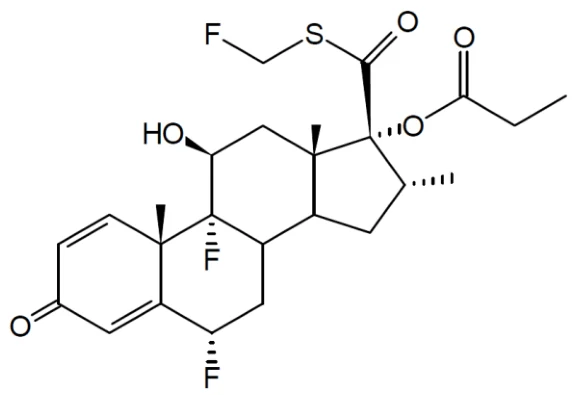
Physicochemical properties: Fluticasone propionate is a white fine powder. It is practically insoluble in water, freely soluble in dimethyl sulfoxide and dimethylformamide, and slightly soluble in methanol and 95% ethanol. It melts at 272 to 273°C.
Drug Substance
Proper name: Salmeterol Xinafoate
Chemical name: 1,3-Benzenedimethanol, 4-hydroxy-α'-[[[6-(4-phenyl butoxy)hexyl]amino]methyl]-,(±)-,1-hydroxy-2-naphthalenecarboxylate (salt)
or (±)-4-Hydroxy-α'-[[[6-(4-phenylbutoxy)hexyl]amino] methyl]-m-xylene-α,α'-diol 1-hydroxy-2-naphthoate (salt)
or 4-hydroxy-α'-[[[6-(4-phenylbutoxy) hexyl]amino]methyl]-1,3-benzene dimethanol 1-hydroxy-2-napthoate.
or 4-hydroxy-α'-[[[6-(4-phenylbutoxy) hexyl]amino]methyl]-1,3-benzene dimethanol 1-hydroxy-2-napthelene carboxylate
or (1RS)-1-[4-hydroxy-3-(hydroxy methyl)phenyl]-2-[[6-(4-phenyl butoxy)
hexyl]amino]ethanol 1-hydroxynapthalene-2-carboxylate
Molecular formula and molecular mass: C25H37NO4.C11H8NO3 603.74 g/mol
Structural formula:
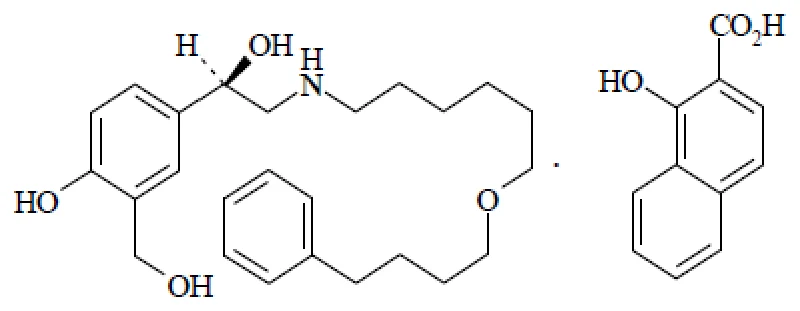
Physicochemical properties: Salmeterol xinafoate is a white or almost white powder. It is practically insoluble in water, soluble in methanol, slightly soluble in anhydrous ethanol, practically insoluble in methylene chloride. It melts at 136 to 139°C.
CLINICAL TRIALS
Study demographics and trial design
Adult and Adolescent Patients Aged 12 Years and Older
Two Phase 3 clinical trials were conducted; these trials comparing ARBESDA with fluticasone propionate dry powder inhaler alone or placebo (Study 1 and Study 2) (Table 5).
Two randomized double-blind, parallel-group, placebo-controlled clinical trials, Study 1 and Study 2, were conducted with ARBESDA RESPICLICK in 1360 adult and adolescent patients (aged 12 years and older, with baseline FEV1 40% to 85% of predicted normal) Full Analysis Set, FAS) with asthma that was not optimally controlled on their current therapy. All treatments were given as one inhalation twice a day from the RESPICLICK inhaler, and other maintenance therapies were discontinued.
Table 5 - Summary of the Design and Patient Demographics in clinical trials patients with Asthma (FAS)
Study # | Trial design | Dosage, route of administration and duration | Study subjects (n) | Mean age (Range) (Years) | Gender (%) | |||||
|---|---|---|---|---|---|---|---|---|---|---|
| Study 1 | Phase III: Randomized, double-blind, parallel group, placebo controlled, multicentre | ARBESDA RESPICLICK 55/14 mcg BID | 128 | 41.6 (12-86) | Male: 279 (44) Female: 361(56) | |||||
| ARBESDA RESPICLICK 113/14 mcg BID | 126 | |||||||||
| Fluticasone Propionate Dry Powder Inhaler 55 mcg BID | 128 | |||||||||
| Fluticasone Propionate Dry Powder Inhaler 113 mcg BID | 129 | |||||||||
Placebo Oral inhalation 12 weeks duration | 129 | |||||||||
| Study 2 | Phase III: Randomized, double-blind, parallel group, placebo controlled, multicentre | ARBESDA RESPICLICK 113/14 mcg BID | 141 | 44.9 (12-84) | Male: 284 (39) Female: 436 (61) | |||||
| ARBESDA RESPICLICK 232/14 mcg BID | 145 | |||||||||
| Fluticasone Propionate Dry Powder Inhaler 113 mcg BID | 145 | |||||||||
| Fluticasone Propionate Dry Powder Inhaler 232 mcg BID | 146 | |||||||||
Placebo Oral inhalation 12 weeks duration | 143 | |||||||||
Study 1
This randomized, double-blind, placebo-controlled, 12-week, global efficacy and safety trial compared Fluticasone Propionate Multidose Dry Powder Inhaler 55 and 113 mcg (one inhalation twice a day) with Fluticasone/Salmeterol Multidose Dry Powder Inhaler (ARBESDA) 55/ 14 and 113/14 mcg (one inhalation twice a day) and placebo in 640 adolescents and adult patients with persistent symptomatic asthma despite low-dose inhaled corticosteroid (ICS) or ICS/LABA therapy. Patients received single-blinded placebo MDPI and were switched from their baseline ICS or ICS/LABA therapy to beclomethasone dipropionate 40 mcg twice daily during the run-in period. Patients who met all randomization criteria were randomly assigned to receive treatment as follows: 129 received placebo, 128 received fluticasone propionate dry powder inhaler 55 mcg, 129 received fluticasone propionate dry powder inhaler 113 mcg, 128 received ARBESDA RESPICLICK 55/14 mcg, and 126 received ARBESDA RESPICLICK 113/14 mcg. Baseline FEV1 measurements were similar across treatments: fluticasone propionate dry powder inhaler 55 mcg 2.134 L, fluticasone propionate dry powder inhaler 113 mcg 2.166 L, ARBESDA RESPICLICK 55/14 mcg 2.302 L, ARBESDA RESPICLICK 113/14 mcg 2.162 L, and placebo 2.188 L.
The primary endpoints for this trial were the change from baseline in trough FEV1 at week 12 for all patients and standardized baseline-adjusted FEV1 AUEC0-12h at week 12 analyzed for a subset of approximately 312 patients who performed postdose serial spirometry.
Study 2
This randomized, double-blind, placebo-controlled, 12-week, global efficacy and safety trial compared Fluticasone Propionate Multidose Dry Powder Inhaler 113 and 232 mcg (one inhalation twice a day) with Fluticasone/Salmeterol Multidose Dry Powder Inhaler ARBESDA RESPICLICK 113/14 mcg and 232/14 mcg (one inhalation twice a day) and placebo in 720 adolescents and adult patients with persistent symptomatic asthma despite medium or high strength inhaled corticosteroid or inhaled corticosteroid/LABA therapy. Patients received single-blinded placebo MDPI and were switched from their baseline ICS therapy to fluticasone propionate dry powder inhaler 55 mcg twice daily during the run-in period. Patients who met all randomization criteria were randomly assigned to receive treatment as follows: 143 patients received placebo, 145 patients received fluticasone propionate dry powder inhaler 113 mcg, 146 patients received fluticasone propionate dry powder inhaler 232 mcg, 141 patients received ARBESDA RESPICLICK 113/14 mcg, and 145 patients received ARBESDA RESPICLICK 232/14 mcg. Baseline FEV1 measurements were similar across treatments: fluticasone propionate dry powder inhaler 113 mcg 2.069 L, fluticasone propionate dry powder inhaler 232 mcg 2.075 L, ARBESDA RESPICLICK 113/14 mcg 2.154 L, ARBESDA RESPICLICK 232/14 mcg 2.083 L, and placebo 2.132 L.
The primary endpoints for this trial were the change from baseline in trough FEV1 at week 12 for all patients and standardized baseline-adjusted FEV1 AUEC0-12h at week 12 analyzed for a subset of 312 patients who performed postdose serial spirometry.
Study results
Study 1
Primary Efficacy Endpoints
Patients receiving ARBESDA RESPICLICK 113/14 mcg and ARBESDA RESPICLICK 55/14 mcg had significantly greater improvements in trough FEV1 compared with fluticasone propionate dry powder inhaler (Fp MDPI) 113 mcg, fluticasone propionate dry powder inhaler (Fp MDPI) 55 mcg, and placebo (Table 6).
Table 6: Study 1: Primary Analysis of Change from Baseline in Trough FEV1 at Week 12 by Treatment Group (FAS)
| Fluticasone propionate dry powder inhaler (Fp MDPI) | ARBESDA RESPICLICK (FS MDPI) | |||||
| Variable Statistic | Placebo (N=129) | 55 mcg BID (N=128) | 113 mcg BID (N=129) | 55/14 mcg BID (N=128) | 113/14 mcg BID (N=126) | |
| Change in trough FEV1 (L) at week 12 | ||||||
| n | 129 | 128 | 129 | 128 | 126 | |
| LS mean (SE) | 0.053 (0.0350) | 0.172 (0.0347) | 0.204 (0.0340) | 0.319 (0.0350) | 0.315 (0.0352) | |
| 95% CI | (-0.015, 0.122) | (0.104, 0.240) | (0.137, 0.271) | (0.250, 0.388) | (0.246, 0.385) | |
| Comparison to placebo | ||||||
| Difference of LS mean | 0.119 | 0.151 | 0.266 | 0.262 | ||
| 95% CI | (0.025, 0.212) | (0.057, 0.244) | (0.172, 0.360) | (0.168, 0.356) | ||
| p-value | 0.0132 | 0.0017 | 0.0000 | 0.0000 | ||
| Comparison to Fp MDPI 55 mcg BID | ||||||
| Difference of LS mean | 0.147 | |||||
| 95% CI | (0.053, 0.242) | |||||
| p-value | 0.0022 | |||||
| Comparison to Fp MDPI 113 mcg BID | ||||||
| Difference of LS mean | 0.115 | 0.111 | ||||
| 95% CI | (0.021, 0.210) | (0.017, 0.206) | ||||
| p-value | 0.0166 | 0.0202 | ||||
Analysis performed using ANCOVA with effects due to baseline, sex, age, (pooled) center, previous therapy, and treatment.
The mean changes from baseline in trough FEV1 at each visit are displayed in Figure 1.
Figure 1: Mean Change from Baseline in Trough FEV1 at Each Visit by Treatment Group (Study 1)
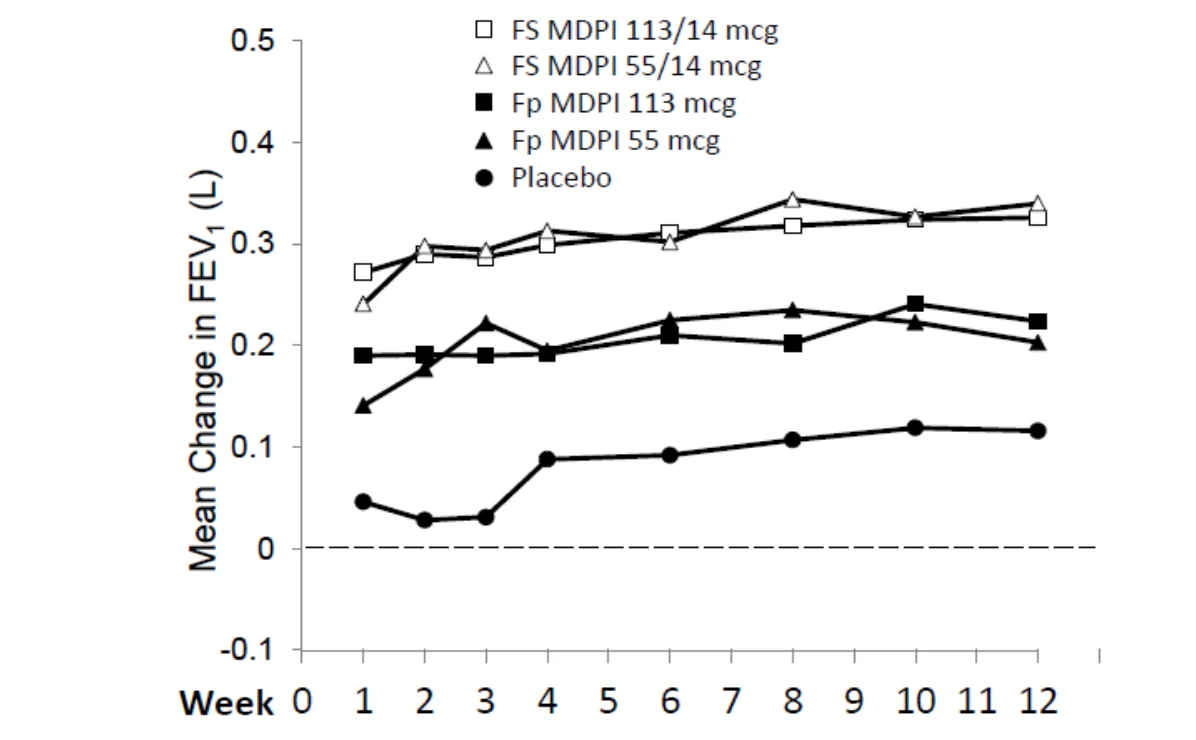
FEV1 = forced expiratory volume in 1 second; Fp = fluticasone propionate; FS = fluticasone propionate/salmeterol.
The analysis (FAS) of the standardized baseline-adjusted FEV1 AUEC0-12h at week 12 based on serial spirometry showed that ARBESDA RESPICLICK 113/14 mcg and ARBESDA RESPICLICK 55/14 mcg were statistically significantly superior to fluticasone propionate dry powder inhaler (Fp MDPI) 113 mcg (0.154 L, 95%CI 0.041, 0.267 L) and fluticasone propionate dry powder inhaler (Fp MDPI) 55 mcg (0.131 L, 95%CI 0.011, 0.250 L), respectively. These results demonstrated the incremental benefit of salmeterol in ARBESDA RESPICLICK when compared with fluticasone propionate dry powder inhaler monotherapy.
Improvements in FEV1 for both ARBESDA RESPICLICK dose groups were sustained over the 12 hours of testing at week 12 (Figure 2) in the serial spirometry subset of patients. No diminution in the 12 hour bronchodilator effect was observed with ARBESDA RESPICLICK as assessed by FEV1 following 12 weeks of therapy.
Figure 2: Serial Spirometry: Mean Change from Baseline in FEV1 (L) at Week 12 by Time Point and Treatment Group (Study 1; FAS; Serial Spirometry Subset)
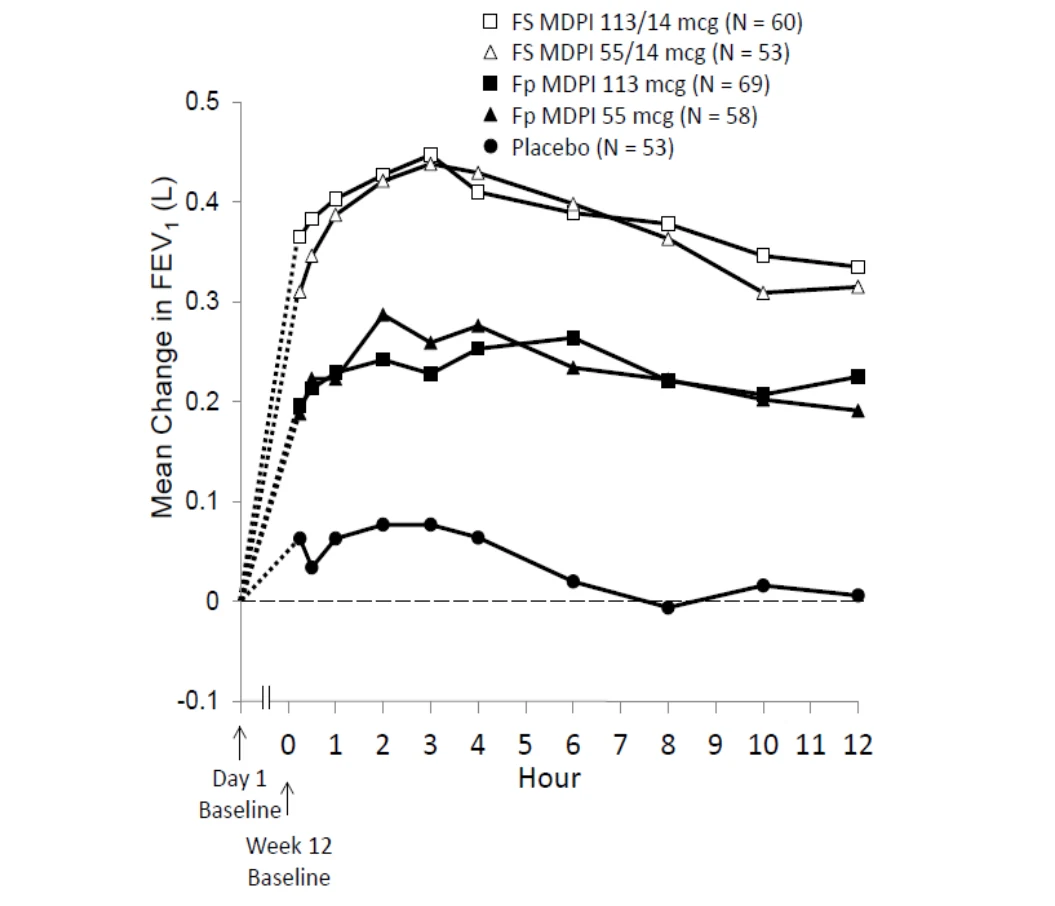
FEV1 = forced expiratory volume in 1 second; Fp = fluticasone propionate; FS = fluticasone propionate/salmeterol.
Secondary Efficacy Endpoints
There was supportive evidence of efficacy for ARBESA RESPICLICK 55/14 mcg and 113/14 mcg bid compared with placebo for secondary efficacy endpoints over the 12 week treatment period. These include improvement in weekly average of daily trough morning peak expiratory flow (AM PEF), weekly average of the total daily asthma symptom score, and weekly average of the total daily use of rescue medication. The Asthma Quality of Life Questionnaire (AQLQ) for patients age ≥ 18 years or the pediatric AQLQ (PAQLQ) for patients aged 12-17 were assessed in Study 1. The responder rate for both measures was defined as an improvement in score of 0.5 or more as threshold. In Study 1, the responder rate for patients receiving ARBESDA RESPICLICK 55/14 mcg and ARBESDA RESPICLICK 113/14 mcg was 51% and 57%, respectively, compared to 40% for patients receiving placebo.
The proportion of patients who achieved 12% of improvement in FEV1 within 15 minutes after administration of ARBESDA RESPICLICK was 29%-31% compared with only 3% in placebo. The proportion of patients who achieved 15% of improvement in FEV1 within 15 minutes after administration of ARBESDA RESPICLICK was 18%-20% compared with only 3% in placebo.
Study 2
Primary Efficacy Endpoints
Efficacy results in this trial were similar to those observed in Study 1. Patients receiving ARBESDA RESPICLICK 113/14 mcg and ARBESDA RESPICLICK 232/14 mcg had significantly greater improvements in trough FEV1 at 12 weeks compared with Fluticasone Propionate Dry Powder Inhaler (Fp MDPI) 113 mcg BID, Fluticasone Propionate Dry Powder Inhaler (Fp MDPI) 232 mcg and placebo (Table 7).
Table 7: Study 2: Primary Analysis of Change from Baseline in Trough FEV1 at Week 12 by Treatment Group (FAS)
| Fluticasone propionate dry powder inhaler (Fp MDPI) | ARBESDA RESPICLICK | |||||
| Variable Statistic | Placebo (N=143) | 113 mcg BID (N=145) | 232 mcg BID (N=146) | 113/14 mcg BID (N=141) | 232/14 mcg BID (N=145) | |
| Change in trough FEV1 (L) at week 12 | ||||||
| n | 143 | 144 | 145 | 140 | 145 | |
| LS mean (SE) | -0.004 (0.0312) | 0.119 (0.0311) | 0.179 (0.0308) | 0.271 (0.0311) | 0.272(0.0307) | |
| 95% CI | (-0.065, 0.057) | (0.058, 0.180) | (0.119, 0.240) | (0.210, 0.332) | (0.212, 0.333) | |
| Comparison to placebo | ||||||
| Difference of LS mean | 0.123 | 0.183 | 0.274 | 0.276 | ||
| 95% CI | (0.038, 0.208) | (0.098, 0.268) | (0.189, 0.360) | (0.191, 0.361) | ||
| p-value | 0.0047 | 0.0000 | 0.0000 | 0.0000 | ||
| Comparison to Fp MDPI 113 mcg BID | ||||||
| Difference of LS mean | 0.152 | |||||
| 95% CI | (0.066, 0.237) | |||||
| p-value | 0.0005 | |||||
| Comparison to Fp MDPI 232 mcg BID | ||||||
| Difference of LS mean | 0.092 | 0.093 | ||||
| 95% CI | (0.006, 0.177) | (0.009, 0.178) | ||||
| p-value | 0.0356 | 0.0309 | ||||
Analysis performed using ANCOVA with effects due to baseline, sex, age, (pooled) center, previous therapy, and treatment.
The mean changes from baseline in trough FEV1 at each visit are displayed in Figure 3.
Figure 3: Mean Change from Baseline in Trough FEV1 at Each Visit by Treatment Group (Study 2)
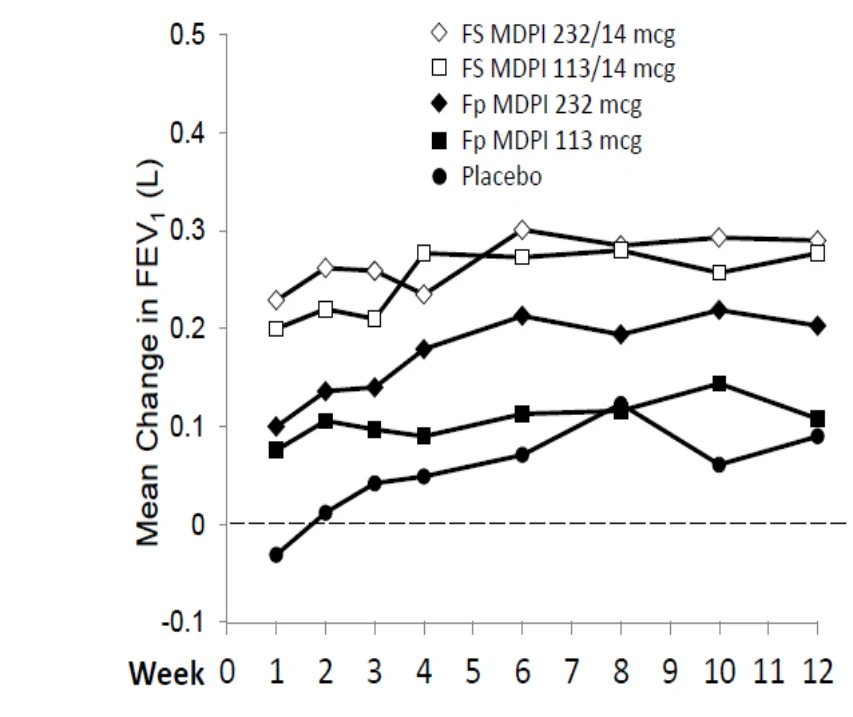
FEV1 = forced expiratory volume in 1 second; Fp = fluticasone propionate; FS = fluticasone propionate/salmeterol.
The analysis (FAS) of the standardized baseline-adjusted FEV1 AUEC0-12h at week 12 based on serial spirometry showed that ARBESDA RESPICLICK 232/14 mcg and ARBESDA RESPICLICK 113/14 mcg were statistically significantly superior to fluticasone propionate dry powder inhaler (Fp MDPI) 232 mcg (0.179 L, 95%CI 0.074, 0.285 L) and fluticasone propionate dry powder inhaler (Fp MDPI) 113 mcg (0.182 L, 95%CI 0.074, 0.291 L), respectively. These results demonstrated the incremental benefit of salmeterol in ARBESDA RESPICLICK when compared with fluticasone propionate dry powder inhaler monotherapy.
Improvements in FEV1 for both ARBESDA RESPICLICK dose groups were sustained over the 12 hours of testing at week 12 (Figure 4) in the serial spirometry subset of patients. No diminution in the 12 hour bronchodilator effect was observed with ARBESDA RESPICLICK as assessed by FEV1 following 12 weeks of therapy.
Figure 4: Serial Spirometry: Mean Change from Baseline in FEV1 (L) at Week 12 by Time Point and Treatment Group (FAS; Serial Spirometry Subset)
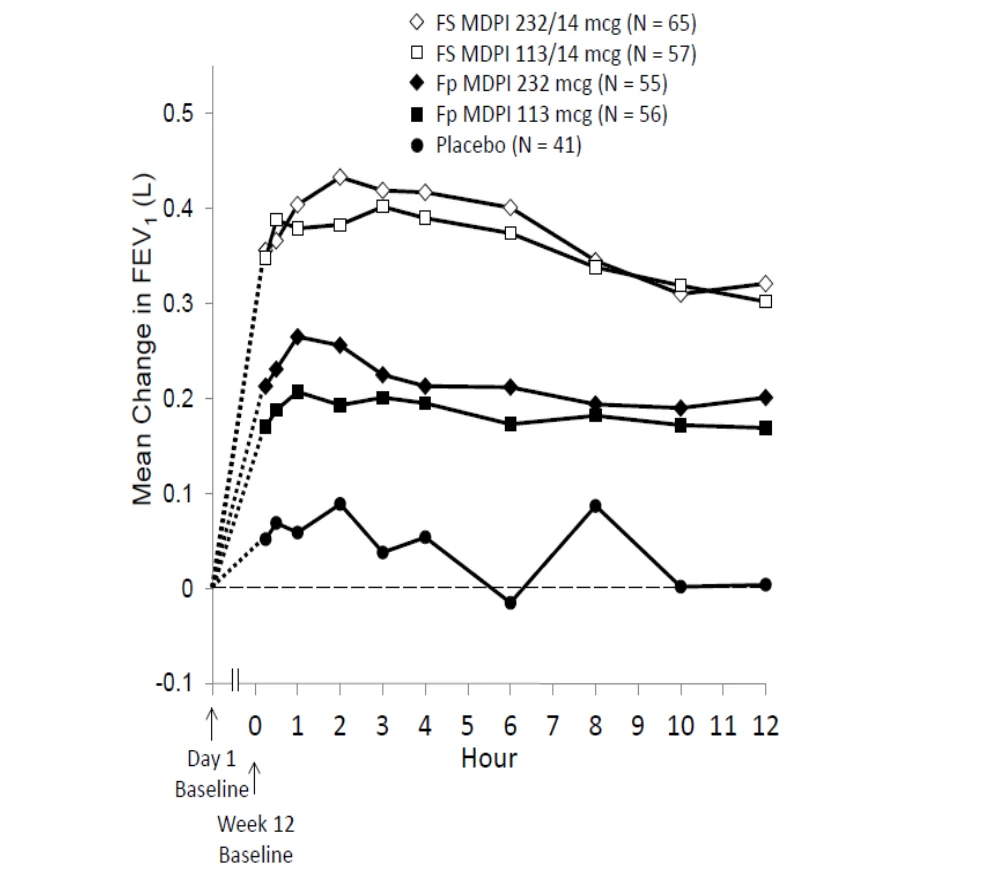
FAS = full analysis set; FEV1 = forced expiratory volume in 1 second; Fp = fluticasone propionate; FS = fluticasone propionate/salmeterol.
Secondary Efficacy Endpoints
There was supportive evidence of efficacy for ARBESDA RESPICLICK 113/14 mcg and 232/14 mcg bid compared with placebo for secondary efficacy endpoints over the 12 week treatment period. These include the improvement in weekly average of daily trough morning peak expiratory flow (AM PEF) weekly average of the total daily asthma symptom score, and weekly average of the total daily use of rescue medication. The Asthma Quality of Life Questionnaire (AQLQ) for patients age ≥ 18 years or the pediatric AQLQ (PAQLQ) for patients aged 12-17 were assessed in Study 2. The responder rate for both measures was defined as an improvement in score of 0.5 or more as threshold. In Study 2, the responder rate for patients receiving ARBESDA RESPICLICK 113/14 mcg and ARBESDA RESPICLICK 232/14 mcg was 48% and 41%, respectively, compared to 27% for patients receiving placebo.
The proportion of patients who achieved 12% of improvement in FEV1 within 15 minutes after administration of ARBESDA RESPICLICK was 29%-38% compared with 8% in placebo. The proportion of patients who achieved 15% of improvement in FEV1 within 15 minutes after administration of ARBESDA RESPICLICK was 21%-34% compared with only 3% in placebo.
No studies were conducted in the treatment of patients with chronic obstructive pulmonary disease (COPD) with ARBESDA RESPICLICK.
TOXICOLOGY
The toxicological profile of fluticasone propionate and salmeterol xinafoate is generally characterized by the exaggerated glucocorticoid and beta2-agonist pharmacological activity of each drug.
Fluticasone propionate: Fluticasone propionate at high doses is associated with findings such as lymphoid depletion, decreased corticosterone levels, decreased body weight gain, increased red blood cell (RBC) counts, and decreased white blood cell (WBC) counts, and liver, adrenal, spleen and thymus histopathology findings in rats; and decreased cortisol response to Synacthen (ACTH), decreased body weight gain, increased urea and cholesterol levels, increased liver weights, decreased adrenal weights, and thymic atrophy in dogs.
Salmeterol: Salmeterol at high enough doses was associated with findings such as uterine smooth muscle hypertrophy and hyperplasia in mice; hypoglycemia, hyperkalemia, increased body weights, urine volume, and blood urea nitrogen (BUN) in rats; and tachycardia, vasodilation, hypoglycemia, papillary muscle fibrosis and calcification, and increased muscle mass in dogs.
Studies in laboratory animals (minipigs, rodents, and dogs) have demonstrated the occurrence of cardiac arrhythmias and sudden death (with histologic evidence of myocardial necrosis) when beta-agonists and methylxanthines are administered concurrently. The clinical relevance of these findings is unknown.
Genotoxicity
Fluticasone Propionate: Fluticasone propionate did not induce gene mutation in prokaryotic or eukaryotic cells in vitro. No significant clastogenic effect was seen in cultured human peripheral lymphocytes in vitro or in the in vivo mouse micronucleus test.
Salmeterol: Salmeterol produced no detectable or reproducible increases in microbial and mammalian gene mutation in vitro. No clastogenic activity occurred in vitro in human lymphocytes or in vivo in a rat micronucleus test.
Carcinogenesis
Fluticasone propionate: Fluticasone propionate demonstrated no tumorigenic potential in mice at oral doses up to 1,000 mcg/kg (approximately 10 times the MRHDID on a mg/m2 basis) for 78 weeks or in rats at inhalation doses up to 57 mcg/kg (approximately equivalent to the MRHDID on a mg/m2 basis) for 104 weeks.
Salmeterol: In an 18-month carcinogenicity study in CD-mice, salmeterol at oral doses of 1.4 mg/kg and above (approximately 247 times the MRHDID on a mg/m2 basis) caused a dose-related increase in the incidence of smooth muscle hyperplasia, cystic glandular hyperplasia, leiomyomas of the uterus, and ovarian cysts. No tumors were seen at 0.2 mg/kg (approximately 35 times the MRHDID on a mg/m2 basis).
In a 24 month oral and inhalation carcinogenicity study in Sprague Dawley rats, salmeterol caused a dose related increase in the incidence of mesovarian leiomyomas and ovarian cysts at doses of 0.68 mg/kg and above (approximately 240 times the MRHDID on a mg/m2 basis). No tumors were seen at 0.21 mg/kg (approximately 74 times the MRHDID on a mg/m2 basis). These findings in rodents are similar to those reported previously for other beta adrenergic agonist drugs. The relevance of these findings to human use is unknown.
Impairment of Fertility
Fluticasone Propionate: No evidence of impairment of fertility was observed in male and female rats at subcutaneous doses up to 50 mcg/kg. Prostate weight was significantly reduced.
Salmeterol: No effects on fertility were identified in rats treated with salmeterol at oral doses up to 2 mg/kg (approximately 706 times the MRHDID on a mg/m2 basis).
Reproductive and Developmental Toxicology
Fluticasone Propionate and Salmeterol: In the mouse reproduction assay, fluticasone propionate by the subcutaneous route at a dose approximately 2 times the maximum recommended human daily inhalation dose (MRHDID) (on a mg/m2 basis at a maternal subcutaneous dose of 150 mcg/kg/day) combined with oral salmeterol at a dose approximately 1,765 times the MRHDID (on a mg/m2 basis at a maternal oral dose of 10 mg/kg/day) produced cleft palate, fetal death, increased implantation loss, and delayed ossification. These observations are characteristic of glucocorticoids. No developmental toxicity was observed at combination doses of fluticasone propionate subcutaneously up to approximately 2/5 the MRHDID (on a mg/m2 basis at a maternal subcutaneous dose of 40 mcg/kg/day) and doses of salmeterol up to approximately 247 times the MRHDID (on a mg/m2 basis at a maternal oral dose of 1.4 mg/kg/day). In rats, combining fluticasone propionate subcutaneously at a dose 2 times the MRHDID (on a mg/m2 basis at a maternal subcutaneous dose of 100 mcg/kg/day) and a dose of salmeterol at approximately 3,529 times the MRHDID (on a mg/m2 basis at a maternal oral dose of 10 mg/kg/day) produced decreased fetal weight, umbilical hernia, delayed ossification, and changes in the occipital bone. No such effects were seen when combining fluticasone propionate subcutaneously at a dose 3/5 the MRHDID (on a mg/m2 basis at a maternal subcutaneous dose of 30 mcg/kg/day) and an oral dose of salmeterol at approximately 352 times the MRHDID (on a mg/m2 basis at a maternal oral dose of 1 mg/kg/day).
Fluticasone Propionate: In mice and rats at fluticasone propionate doses less than or 2 times the MRHDID (on a mg/m2 basis at maternal subcutaneous doses of 45 and 100 mcg/kg/day, respectively) showed fetal toxicity characteristic of potent corticosteroid compounds, including embryonic growth retardation, omphalocele, cleft palate, and retarded cranial ossification. No teratogenicity was seen in rats at doses approximately equivalent to the MRHDID (on a mg/m2 basis at maternal inhaled doses up to 68.7 mcg/kg/day).
In rabbits, fetal weight reduction and cleft palate were observed at a fluticasone propionate dose 1/5 the MRHDID (on a mg/m2 basis at a maternal subcutaneous dose of 4 mcg/kg/day). However, no teratogenic effects were reported at fluticasone propionate doses up to approximately 13 times the MRHDID (on a mg/m2 basis at a maternal dose oral dose up to 300 mcg/kg/day). No fluticasone dipropionate was detected in the plasma in this study, consistent with the established low bioavailability following oral administration.
Fluticasone propionate crossed the placenta following subcutaneous administration to mice and rats and oral administration to rabbits.
Salmeterol: No teratogenic effects occurred in rats at salmeterol doses approximately 706 times the MRHDID (on a mg/m2 basis at maternal oral doses up to 2 mg/kg/day). In pregnant Dutch rabbits administered salmeterol doses approximately 706 times the MRHDID (on a mg/m2 basis at maternal oral doses of 1 mg/kg/day and higher), fetal toxic effects were observed characteristically resulting from beta-adrenoceptor stimulation. These included precocious eyelid openings, cleft palate, sternebral fusion, limb and paw flexures, and delayed ossification of the frontal cranial bones. No such effects occurred at a salmeterol dose approximately 424 times the MRHDID (on a mg/m2 basis at a maternal oral dose of 0.6 mg/kg/day).
New Zealand White rabbits were less sensitive since only delayed ossification of the frontal cranial bones was seen at a salmeterol dose approximately 7,059 times the MRHDID on a mg/m2 basis at a maternal oral dose of 10 mg/kg/day. Salmeterol xinafoate crossed the placenta following oral administration to mice and rats.
REFERENCES
- 1 Miller S. D. MD, Yiu G., Hellriegel T.E., Steinfeld J. MD. Dose-ranging study of salmeterol using a novel fluticasone propionate/salmeterol multidose dry powder inhaler in patients with persistent asthma. Allergy and Asthma Proceedings 2016;37(4):1-11.
- 2 Mansfield at al AAP. A 6-month safety and efficacy study of fluticasone propionate and fluticasone propionate/salmeterol multidose dry powder inhalers in persistent asthma: Published online: Allergy Asthma Proc 38:1–13, 2017; doi: 10.2500/aap.2017.38.4061.
- 3 Sher et al. Fluticasone propionate and fluticasone propionate/salmeterol multidose dry powder inhalers compared with placebo for persistent asthma. Published online: (Allergy Asthma Proc 38:1–11, 2017; doi: 10.2500/aap.2017.38.4069).
- 4 Raphael et al. Randomized, double-blind trial evaluating the efficacy and safety of fluticasone propionate and fluticasone propionate/salmeterol delivered via multidose dry powder inhalers in patients with persistent asthma aged 12 years and older. J Asthma. 2017 Aug 1:1-11. doi: 10.1080/02770903.2017.1350971. [Epub ahead of print]
- 5 Teva Canada Limited, Product Monograph of Aermony RESPICLICK (fluticasone propionate inhalation powder), dated August 22, 2017.