


Product Monograph - Targin
RECENT MAJOR LABEL CHANGES
| 4 DOSAGE AND ADMINISTRATION, 4.1 Dosing Considerations | 10/2023 |
|---|---|
| 4 DOSAGE AND ADMINISTRATION, 4.2 Recommended Dose and Dose Adjustment | 10/ 2023 |
| 7 WARNING AND PRECAUTIONS, Addiction, Abuse and Misuse | 10/2023 |
| 7 WARNING AND PRECAUTIONS, Dependence/Tolerance | 10/ 2023 |
| 7 WARNING AND PRECAUTIONS, Hepatic/Biliary/Pancreatic | 10/ 2023 |
| 7 WARNING AND PRECAUTIONS, Neurologic | 10/ 2023 |
| 7 WARNING AND PRECAUTIONS, Reproductive Health: Female and Male Potential | 10/ 2023 |
| 7 WARNINGS AND PRECAUTIONS, Respiratory | 10/2023 |
| 7 WARNING AND PRECAUTIONS, 7.1 Special Populations, Patients with Hepatic and Renal Impairment | 10/ 2023 |
TABLE OF CONTENTS
RECENT MAJOR LABEL CHANGES ..................................................................................... 2
TABLE OF CONTENTS .......................................................................................................... 2
PART I: HEALTH PROFESSIONAL INFORMATION............................................................... 4
1 INDICATIONS.............................................................................................................. 4
1.1 Pediatrics ........................................................................................................... 4
1.2 Geriatrics............................................................................................................ 4
2 CONTRAINDICATIONS ............................................................................................... 4
3 SERIOUS WARNINGS AND PRECAUTIONS BOX...................................................... 5
4 DOSAGE AND ADMINISTRATION .............................................................................. 6
4.1 Dosing Considerations ........................................................................................ 6
4.2 Recommended Dose and Dosage Adjustment .................................................... 8
4.4 Administration................................................................................................... 10
4.5 Missed Dose..................................................................................................... 11
5 OVERDOSAGE ......................................................................................................... 11
6 DOSAGE FORMS, STRENGTHS, COMPOSITION AND PACKAGING ...................... 11
7 WARNINGS AND PRECAUTIONS ............................................................................ 13
7.1 Special Populations .......................................................................................... 21
7.1.1 Pregnant Women .......................................................................................... 22
7.1.2 Breast-feeding ............................................................................................... 22
7.1.3 Pediatrics (<18 years of age) ......................................................................... 22
7.1.4 Geriatrics (>65 years of age) ......................................................................... 22
8 ADVERSE REACTIONS ............................................................................................ 23
8.1 Adverse Reaction Overview .............................................................................. 23
8.2 Clinical Trial Adverse Reactions ........................................................................ 24
8.3 Less Common Clinical Trial Adverse Reactions................................................. 26
8.5 Post-Market Adverse Reactions ........................................................................ 30
9 DRUG INTERACTIONS ............................................................................................. 30
9.1 Serious Drug Interactions.................................................................................. 30
9.2 Drug Interactions Overview ............................................................................... 31
9.3 Drug-Behavioural Interactions ........................................................................... 31
9.4 Drug-Drug Interactions...................................................................................... 31
9.6 Drug-Herb Interactions...................................................................................... 33
9.7 Drug-Laboratory Test Interactions ..................................................................... 33
10 ACTION AND CLINICAL PHARMACOLOGY ............................................................ 33
10.1 Mechanism of Action ..................................................................................... 33
10.2 Pharmacodynamics ....................................................................................... 33
10.3 Pharmacokinetics .......................................................................................... 35
11 STORAGE, STABILITY AND DISPOSAL .................................................................. 39
PART II: SCIENTIFIC INFORMATION .................................................................................. 40
13 PHARMACEUTICAL INFORMATION ........................................................................ 40
14 CLINICAL TRIALS .................................................................................................... 42
14.1 Clinical Trials by Indication ............................................................................ 42
16 NON-CLINICAL TOXICOLOGY ................................................................................. 52
PATIENT MEDICATION INFORMATION .............................................................................. 54
PART I: HEALTH PROFESSIONAL INFORMATION
1 INDICATIONS
TARGIN (oxycodone hydrochloride/naloxone hydrochloride) is a controlled release tablet having a dual therapeutic effect. The oxycodone component in TARGIN is indicated for the management of pain severe enough to require daily, continuous, long-term opioid treatment, and:
- that is opioid-responsive; and,
- for which alternative treatment options are inadequate.
The naloxone component in TARGIN is indicated for the relief of opioid-induced constipation (OIC).
TARGIN is not indicated as an as-needed (prn) analgesic.
1.1 Pediatrics
Pediatrics (<18 years of age): The safety and efficacy of TARGIN has not been studied in the pediatric population. Therefore, Health Canada has not authorized an indication for pediatric use.
1.2 Geriatrics
Geriatrics (>65 years of age): Evidence from clinical studies and experience suggests that use in the geriatric population is associated with differences in safety or effectiveness.
In general, dose selection for an elderly patient should be cautious, usually starting at the low end of the dosing range, reflecting the greater frequency of decreased hepatic, renal, or cardiac function, concomitant disease and other drug therapy. The dosage should be adjusted to the intensity of the pain and the sensitivity of the individual patient (see 10.3 Pharmacokinetics, Special Populations and Conditions, Geriatrics).
2 CONTRAINDICATIONS
TARGIN is contraindicated in:
- Patients who are hypersensitive to this drug or to any ingredient in the formulation, including any non-medicinal ingredient, or component of the container. For a complete listing, see 6 DOSAGE FORMS, STRENGTHS, COMPOSITION AND PACKAGING.
- Patients with known or suspected mechanical gastrointestinal obstruction (e.g., bowel obstruction, strictures) or any diseases/conditions that affect bowel transit (e.g., ileus of any type).
- Administration by the rectal route is contraindicated (see 7 WARNINGS AND PRECAUTIONS).
- Patients with suspected surgical abdomen (e.g., acute appendicitis or pancreatitis).
- Patients with mild, intermittent or short duration pain that can be managed with other pain medications.
- The management of acute pain, including use in outpatient or day surgeries.
- The management of perioperative pain.
- Patients with acute or severe bronchial asthma, chronic obstructive airway, or status asthmaticus.
- Patients with acute respiratory depression elevated carbon dioxide (CO2) levels in the blood, and cor pulmonale.
- Patients with acute alcoholism, delirium tremens, and convulsive disorders.
- Patients with severe CNS depression, increased cerebrospinal or intracranial pressure, and head injury.
- Patients taking monoamine oxidase (MAO) inhibitors (or within 14 days of such therapy).
- Women who are breast-feeding, pregnant, or during labour and delivery (see 3 SERIOUS WARNINGS AND PRECAUTIONS BO; 7.1.1 Pregnant Women; 7.1.2 Breast-feeding and 7 WARNINGS AND PRECAUTIONS, Reproductive Health: Male and Female Potential; Neonatal Opioid Withdrawal Syndrome).
- Opioid-dependent patients and for narcotic withdrawal treatment.
- Patients with moderate to severe hepatic impairment (Child-Pugh Class B & C).
- Patients with severe renal impairment.
3 SERIOUS WARNINGS AND PRECAUTIONS BOX
Serious Warnings and Precautions
Because of the risks of addiction, abuse, and misuse with opioids, even at recommended doses, and because of the greater risks of overdose and death with controlled release opioid formulations, TARGIN should only be used in patients for whom alternative treatment options (e.g., non-opioid analgesics) are ineffective, not tolerated, or would be otherwise inadequate to provide appropriate management of pain (see 4 DOSAGE AND ADMINISTRATION).
TARGIN poses risks of opioid addiction, abuse, and misuse, which can lead to overdose and death. Each patient’s risk should be assessed prior to prescribing TARGIN, and all patients should be monitored regularly for the development of these behaviours or conditions (see 7 WARNINGS AND PRECAUTIONS, General, Addiction, Abuse and Misuse). TARGIN should be stored securely to avoid theft or misuse.
Serious, life-threatening, or fatal respiratory depression may occur with use of TARGIN. Infants exposed in-utero or through breast milk are at risk of life-threatening respiratory depression upon delivery or when nursed. Patients should be monitored for respiratory depression, especially during initiation of TARGIN or following a dose increase (see 7 WARNINGS AND PRECAUTIONS, Respiratory, Respiratory Depression). |
|---|
4 DOSAGE AND ADMINISTRATION
4.1 Dosing Considerations
- All doses of opioids carry an inherent risk of fatal or non-fatal adverse events. This risk is increased with higher doses. For the management of chronic non-cancer, non-palliative pain, it is recommended that 60 mg (90 morphine milligram equivalent) daily of oxycodone not be exceeded. Each patient should be assessed for their risk prior to prescribing TARGIN, as the likelihood of experiencing serious adverse events can depend upon the type of opioid, duration of treatment, level of pain as well as the patient’s own level of tolerance. In addition, the level of pain should be assessed routinely to confirm the most appropriate dose and the need for further use of TARGIN (see 4.2 Recommended Dose and Dosage Adjustment, Adjustment or Reduction of Dosage).
TARGIN must be swallowed whole. Cutting, breaking, crushing, chewing, or dissolving TARGIN can lead to rapid release and absorption of a potentially fatal dose of oxycodone (see 7 WARNINGS AND PRECAUTIONS, General, Addiction, Abuse and Misuse). Further, instruct patients of the hazards related to taking opioids including fatal overdose.
Accidental ingestion of even one dose of TARGIN, especially by children, can result in a fatal overdose of oxycodone (see 11 STORAGE, STABILITY AND DISPOSAL for instructions on proper disposal).
Prolonged maternal use of TARGIN during pregnancy can result in neonatal opioid withdrawal syndrome, which may be life-threatening (see 7 WARNINGS AND PRECAUTIONS, Reproductive Health: Male and Female Potential; Neonatal Opioid Withdrawal Syndrome).
The co-ingestion of alcohol with TARGIN should be avoided as it may result in dangerous addictive effects, causing serious injury or death (see 7 WARNINGS AND PRECAUTIONS, General and 9.3 Drug-Behavioural Interactions).
Concomitant use of opioids with benzodiazepines or other CNS depressants, including alcohol, may result in profound sedation, respiratory depression, coma, and death (see 7 WARNINGS AND PRECAUTIONS, Neurologic and 9.2 Drug Interactions Overview).
|
|---|
- TARGIN should only be used in patients for whom alternative treatment options (e.g., non-opioid analgesics) are ineffective, or not tolerated, or would be otherwise inadequate to provide appropriate management of pain.
- TARGIN must be swallowed whole. Cutting breaking, crushing, chewing, or dissolving TARGIN tablets can lead to the rapid release and absorption of a potentially fatal dose of oxycodone (see 7 WARNINGS AND PRECAUTIONS, General, Addiction, Abuse and Misuse).
- Patients who are currently taking oral oxycodone can be switched to TARGIN based on an equivalent oxycodone dose. For conversion from other opioids/opioid preparations, patients should be initiated on the lowest available TARGIN strength, provided with adequate rescue medication, with dose titration to achieve satisfactory pain relief with acceptable side effects. TARGIN doses must be individualized and should be assessed at regular intervals.
- TARGIN 40/20 mg tablets are for use in opioid tolerant patients only. A single dose greater than 40 mg of oxycodone, or total daily doses greater than 80 mg of oxycodone, may cause fatal respiratory depression when administered to patients who are not tolerant to the respiratory depressant effects of opioids at equivalent doses (see 7 WARNINGS AND PRECAUTIONS, Dependence/Tolerance and Respiratory, Respiratory Depression and 9.2 Drug Interactions Overview).
- TARGIN is contraindicated for rectal administration (see 2 CONTRAINDICATIONS).
- TARGIN is contraindicated in the perioperative period, within 24 hours before or after surgery (see 2 CONTRAINDICATIONS). TARGIN is not indicated for pain in the postoperative period if the pain is mild or not expected to persist for an extended period of time. In the case of planned chordotomy or other pain-relieving operations, patients should not be treated with TARGIN within 24 hours before or after the operation. Thereafter, if TARGIN is to be continued after the patient recovers from the post-operative period, a new dose should be used in accordance with the changed need for pain relief.
- In steady-state studies, the analgesic efficacy of TARGIN is equivalent to the OxyContin® controlled release oxycodone formulation. In clinical studies with TARGIN, only patients who had previously been dosed on oxycodone were switched to TARGIN. To date, there is no clinical experience evaluating switching from other analgesics to TARGIN.
- TARGIN doses must be individualized based upon the status of each patient and should be assessed at regular intervals. Proper optimization of doses scaled to the individual’s pain should aim at the regular administration of the lowest dose of TARGIN which provides pain relief. The dosage of the drug must be individualized according to the response and tolerance of the patient.
TARGIN should be taken at the determined dosage twice daily (every 12 hours) according to a fixed time schedule. Single doses should not exceed 40 mg oxycodone and 20 mg naloxone. The maximum daily dose of TARGIN is 80 mg oxycodone hydrochloride and 40 mg naloxone hydrochloride. For patients requiring higher doses of TARGIN, administration of supplemental controlled-release oxycodone at the same time intervals should be considered. In the case of supplemental oxycodone dosing, the beneficial effect of naloxone on bowel function may be impaired. In general, the lowest effective opioid analgesic dose
- After discontinuation of therapy with TARGIN, with a subsequent switch to another opioid, symptoms associated with reduced bowel motility can be expected.
Treatment goals and discontinuation
Before initiating treatment with TARGIN, a treatment strategy including treatment duration and treatment goals, and a plan for end of the treatment, should be agreed together with the patient, in accordance with pain management guidelines. During treatment, there should be frequent contact between the health professional and the patient to evaluate the need for continued treatment, consider discontinuation and to adjust dosages if needed.
Careful and regular monitoring are required to establish required maintenance of treatment.
Duration of treatment
Oxycodone should not be used longer than necessary.
4.2 Recommended Dose and Dosage Adjustment
Pediatrics (<18 years of age)
Health Canada has not authorized an indication for pediatric use (see 1.1 Pediatrics).
Adults (≥18 years of age)
Individual dosing requirements vary considerably based on each patient's age, weight, severity and cause of pain, and medical and analgesic history.
Patients Not Receiving Opioids at the Time of Initiation of TARGIN Treatment (Opioid-Naïve)
The usual initial adult dose for patients who have not previously received opioid analgesics is TARGIN 10/5 mg every 12 hours.
The 5/2.5 mg tablets allow for smaller dose increases and are intended for use in titration or adjustments of dosage. Note that proportional bioavailability of the 5/2.5 mg tablet to other TARGIN strengths has not been established. Multiple units of the 5/2.5 mg tablet should not be substituted for other TARGIN strengths.
Patients Currently Receiving Opioids
Patients currently taking oxycodone can be switched to TARGIN based on an equivalent oxycodone dose. Discontinue all other around-the-clock oxycodone analgesic medications when TARGIN therapy is initiated. In clinical studies with TARGIN, only patients who had previously been dosed on oxycodone were switched to TARGIN. Patients receiving other oral oxycodone formulations may be transferred to TARGIN tablets at the same total daily dosage, equally divided into two 12-hourly TARGIN tablet doses and reassessed with dose adjustments made accordingly. To date, there is no clinical experience to refer to for switching other opioid analgesics to TARGIN.
Patients already receiving oxycodone, and tolerant to the respiratory depressant effects, may be started on higher dose than the usual initial adult dose of 10/5 mg every 12 hours depending on their previous oxycodone dose. Not to exceed the maximum daily dose of TARGIN, 80 mg oxycodone hydrochloride and 40 mg naloxone hydrochloride.
For conversion from other opioids/opioid preparations, discontinue all other round-the-clock opioid analgesic preparations. Patients should be initiated on the lowest available TARGIN strength, provided with adequate rescue medication, with dose titration to achieve satisfactory pain relief with acceptable side effects. TARGIN doses must be individualized and should be assessed at regular intervals.
Dose Titration
TARGIN should be gradually titrated until adequate pain relief and acceptable side effects have been achieved. The maximum daily dose of TARGIN is 80 mg oxycodone hydrochloride and 40 mg naloxone hydrochloride.
Proper optimization of doses scaled to the relief of the individual's pain should aim at regular administration of the lowest dose of TARGIN which will achieve the overall treatment goal of satisfactory pain relief with acceptable side effects. Dose adjustments may be made every 1-2 days until a stable dose is reached (see also 4.2 Recommended Dose and Dose Adjustment, Managing Expected Opioid Adverse Experiences).
Subsequent increases in TARGIN dosage must be individualized according to the pain relief and tolerance of the patient with adequate rescue medication, as required (see 4.2 Recommended Dose and Dose Adjustment, Management of Patients Requiring Rescue Medication). If pain repeatedly occurs at the end of the dosing interval it is generally an indication for a dosage increase rather than more frequent administration.
The maximum daily dose of TARGIN is 80 mg oxycodone hydrochloride and 40 mg naloxone hydrochloride.
Management of Patients Requiring Rescue Medication
Some patients taking TARGIN according to a fixed time schedule may require immediate-release analgesics as "rescue" medication for pain. In clinical trials with TARGIN, immediate-release oxycodone or combination preparations with codeine 30 mg were used as rescue medications. Selection of rescue medication should be based on individual patient conditions. TARGIN is a controlled release formulation and therefore is not intended for use as rescue medication.
For the treatment of breakthrough pain, a single dose of “rescue medication” should approximate one-sixth of the equivalent daily dose of oxycodone hydrochloride, or as deemed appropriate by the health professional. In those circumstances where such dose administration may not be possible with solid oral forms, consideration should be given to the use of alternate dosage forms.
The need for more than two rescue medication doses per day (24 hours) is usually an indication that the dose of TARGIN requires upward adjustment. This adjustment may be made every 1-2 days until a stable dose is reached. The aim is to establish a patient-specific 12-hour dose that will maintain adequate analgesia and minimize side effects for as long as pain therapy is necessary. Reducing the dosing frequency from every 12 hours is not recommended.
In absence of adequate pain control, the possibility of hyperalgesia, tolerance and progression of underlying disease should be considered.
Managing Expected Opioid Adverse Experiences
Many patients receiving opioids, especially those who are opioid-naïve, will experience side effects. Clinical trials have shown that these effects are generally most bothersome during initial treatment and can be minimized by starting TARGIN at 10/5 mg every 12 hours and gradually increasing the dose as needed.
Other opioid related side effects such as sedation and nausea are usually self -limited and often do not persist beyond the first few days. If nausea persists and is unacceptable to the patient, treatment with anti-emetics or other modalities may relieve these symptoms and should be considered.
Patients with Hepatic Impairment
TARGIN is contraindicated in patients with moderate and severe hepatic impairment (see 2 CONTRAINDICATIONS). When administering TARGIN to patients with mild hepatic impairment, reduce the initial dose to 1/3 to 1/2 the usual starting dose followed by careful dose titration (see 10.3 Pharmacokinetics, Hepatic Insufficiency).
Patients with Renal Impairment
TARGIN is contraindicated in patients with severe renal impairment (see 2 CONTRAINDICATIONS). When administering TARGIN to patients with mild or moderate renal impairment, reduce the initial dose to 1/3 to 1/2 the usual starting dose followed by careful dose titration (see 10.3 Pharmacokinetics, Renal Insufficiency).
Adjustment or Reduction of Dosage
Physical dependence with or without psychological dependence tends to occur with chronic administration of opioids, including TARGIN. Withdrawal (abstinence) symptoms may occur following abrupt discontinuation of therapy. These symptoms may include body aches, diarrhea, gooseflesh, loss of appetite, nausea, nervousness or restlessness, runny nose, sneezing, tremors or shivering, stomach cramps, tachycardia, trouble with sleeping, unusual increase in sweating, palpitations, unexplained fever, weakness and yawning.
Patients on prolonged therapy should be withdrawn gradually from the drug if it is no longer required for pain control. In patients who are appropriately treated with opioid analgesics and who undergo gradual withdrawal from the drug, these symptoms are usually mild (see 7 WARNINGS AND PRECAUTIONS, Dependence/Tolerance). Tapering should be individualized and carried out under medical supervision.
Patient should be informed that reducing and/or discontinuing opioids decreases their tolerance to these drugs. If treatment needs to be re-initiated, the patient must start at the lowest dose and titrate up to avoid overdose.
4.4 Administration
TARGIN may be taken with or without food with sufficient liquid (with 4 to 6 oz. of water). The empty matrix tablet remnants may be visible in the stool.
4.5 Missed Dose
If the patient forgets to take one or more doses, they should take their next dose at the next scheduled time and in the normal amount.
5 OVERDOSAGE
| For management of a suspected drug overdose, contact your regional poison control centre immediately. |
|---|
Symptoms
Depending on the history of the patient, an overdose of TARGIN may be manifested by symptoms that are either triggered by oxycodone (opioid receptor agonist) or by naloxone (opioid receptor antagonist).
Symptoms of oxycodone overdose include miosis, respiratory depression, somnolence progressing to stupor, hypotonia, bradycardia, toxic leukoencephalopathy, delayed post-hypoxic leukoencephalopathy as well as hypotension. Coma, non cardiogenic pulmonary oedema and circulatory failure may occur in more severe cases and may lead to a fatal outcome.
Symptoms of a naloxone overdose alone are unlikely due to the low systemic availability of naloxone by the oral route. Withdrawal symptoms due to an overdose of naloxone should be treated symptomatically in a closely-supervised environment.
- Treatment
Primary attention should be given to the establishment of adequate respiratory exchange through the provision of a patent airway and controlled or assisted ventilation. Clinical symptoms suggestive of an oxycodone overdose may be treated by the administration of opioid antagonists (e.g., naloxone 0.4-2 mg intravenously). Administration should be repeated at 2-3 minute intervals, as clinically necessary. It is also possible to apply an infusion of 2 mg naloxone in 500 mL of 0.9% sodium chloride or 5% dextrose (0.004 mg/mL naloxone). The infusion should run at a rate aligned to the previously administered bolus doses and to the patient's response.
Consideration may be given to gastric lavage.
Supportive measures (artificial ventilation, oxygen, vasopressors and infusions) should be employed, as necessary, to manage the circulatory shock accompanying an overdose. Cardiac arrest or arrhythmias may require cardiac massage or defibrillation. Artificial ventilation should be applied if necessary. Fluid and electrolyte metabolism should be maintained.
6 DOSAGE FORMS, STRENGTHS, COMPOSITION AND PACKAGING
Table 1 – Dosage Forms, Strengths, Composition and Packaging
| Route of Administration | Dosage Form / Strength/Composition | Non-medicinal Ingredients |
| Oral | Controlled Release Tablets / | Ethylcellulose, FD&C Blue No. 1 (5/2.5 |
Dosage Forms
TARGIN has been formulated with features intended to be tamper-resistant (see 10 ACTION AND CLINICAL PHARMACOLOGY, Tamper-resistance Properties).
TARGIN 5/2.5 mg are blue, oblong tablets with a film-coating, marked OXN on one side and 5 on the other.
TARGIN 10/5 mg are white, oblong tablets with a film coating, marked OXN on one side and 10 on the other.
TARGIN 20/10 mg are pink, oblong tablets with a film coating, marked OXN on one side and 20 on the other.
TARGIN 40/20 mg are yellow, oblong tablets with a film coating, marked OXN on one side and 40 on the other.
Composition
TARGIN 5/2.5 mg, 10/5 mg, 20/10 mg and 40/20 mg tablets contain the following nonmedicinal ingredients:
Tablet core
Ethylcellulose, hydroxypropyl cellulose (5/2.5 mg only), lactose monohydrate, magnesium stearate, povidone K30 (10/5, 20/10and 40/20 mg only), stearyl alcohol, talc.
Tablet coating
5/2.5 mg: Opadry II Blue: FD&C Blue No. 1-Aluminum Lake (E133), polyethylene glycol (Macrogol 3350), polyvinyl alcohol, talc, titanium dioxide (E171)
10/5 mg: Opadry II White: polyethylene glycol (Macrogol 3350), polyvinyl alcohol, talc, titanium dioxide (E171)
20/10 mg: Opadry II Pink: iron oxide red (E172), polyethylene glycol (Macrogol 3350), polyvinyl alcohol, talc, titanium dioxide (E171)
40/20 mg: Opadry II Yellow: iron oxide yellow (E172), polyethylene glycol (Macrogol 3350),
5 mg oxycodone hydrochloride / 2.5 mg naloxone hydrochloride 10 mg oxycodone hydrochloride / 5 mg naloxone hydrochloride 20 mg oxycodone hydrochloride /10 mg naloxone hydrochloride 40 mg oxycodone hydrochloride / 20 mg naloxone hydrochloride | mg only), hydroxypropylcellulose (5/2.5 mg only), iron oxide (20/10 and 40/20 mg only), lactose monohydrate, magnesium stearate, polyethylene glycol, polyvinyl alcohol, povidone K30 (10/20, 20/40 and 40/20 mg only), stearyl alcohol, talc, titanium dioxide |
polyvinyl alcohol, talc, titanium dioxide (E171)
Packaging
All strengths will be available in blisters (10s, 14s, 20s, 28s, 30s, 50s, 56s, 60s, 98s and 100s) and opaque plastic bottles of 50, 60, 100 and 250’s.
7 WARNINGS AND PRECAUTIONS
Please see the 3 SERIOUS WARNINGS AND PRECAUTIONS BO at the beginning of Part I: Health Professional Information.
General
TARGIN tablets must be swallowed whole. Taking broken, chewed, dissolved or crushed TARGIN tablets could lead to the rapid release and absorption of a potentially fatal dose of oxycodone.
TARGIN should not be administered rectally due to the possible increased systemic availability of naloxone by this route and the potential for the occurrence of severe withdrawal effects (see 2 CONTRAINDICATIONS).
TARGIN 40/20 mg tablets are for use in opioid tolerant patients only (see also 4.2 Recommended Dose and Dose Adjustment). A single dose greater than 40 mg of oxycodone, or total daily doses greater than 80 mg of oxycodone, may cause fatal respiratory depression when administered to patients who are not tolerant to the respiratory depressant effects of opioids (see 7 WARNINGS AND PRECAUTIONS, Dependence/Tolerance; Respiratory, Respiratory Depression and 9.2 Drug Interactions Overview).
Patients for whom TARGIN is prescribed should not give TARGIN to anyone else as such inappropriate use may have severe medical consequences, including death.
TARGIN should not be used to treat patients with constipation not related to opioid use.
The 5/2.5 mg tablets allow for smaller dose increases and are intended for use in titration or adjustments of dosage. Note that proportional bioavailability of the 5/2.5 mg tablet to other TARGIN strengths has not been established. Multiple units of the 5/2.5 mg tablet should not be substituted for other TARGIN strengths.
Patients should be cautioned not to consume alcohol while taking TARGIN, as it may increase the chance of experiencing dangerous side effects.
Hyperalgesia that will not respond to a further dose increase of oxycodone may very rarely occur at particularly high doses. An oxycodone dose reduction or change in opioid may be required.
There is no clinical experience in patients with cancer associated with peritoneal carcinomatosis or with sub-occlusive syndrome in advanced stages of digestive and pelvic cancers. Therefore, the use of TARGIN in this population is not indicated.
Addiction, Abuse and Misuse
Like all opioids, TARGIN is a potential drug of abuse and misuse, which can lead to overdose and death. Therefore, TARGIN should be prescribed and handled with caution. This risk is increased if TARGIN is taken with alcohol or other CNS depressants.
Tamper-resistance properties do not render TARGIN less addictive.
Patients should be assessed for their clinical risks for opioid abuse or addiction prior to being prescribed opioids. All patients receiving opioids should be routinely monitored for signs of misuse and abuse.
Opioids, such as TARGIN, should be used with particular care in patients with a history of alcohol and illicit/prescription drug abuse and other mental health disorders including, but not limited to, major depression and anxiety. However, concerns about abuse, addiction, and diversion should not prevent the proper management of pain.
TARGIN tablets are intended for oral use only. The tablets should be swallowed whole, and not chewed or crushed. If abused parenterally, intranasally or rectally by individuals dependent on opioid agonists, TARGIN is expected to produce marked withdrawal symptoms – because of the systemic opioid receptor antagonist characteristics of naloxone by these routes – or to intensify withdrawal symptoms already present.
TARGIN consists of a dual polymer matrix intended for oral use only. With parenteral abuse, the tablet excipients, especially talc, can be expected to result in local tissue necrosis, infection, pulmonary granulomas, and increased risk of endocarditis and valvular heart injury, which may be fatal.
Patient Counselling Information
A patient information sheet should be provided to patients when TARGIN tablets are dispensed to them.
Patients receiving TARGIN should be given the following instructions by the physician:
- 1. Patients should be informed that accidental ingestion or use by individuals (including children) other than the patient for whom it was originally prescribed, may lead to severe, even fatal, consequences.
- 2. Patients should be advised that TARGIN contains two ingredients: oxycodone, an opioid pain medicine and naloxone, which reduces constipation.
- 3. Patients should be advised that TARGIN should only be taken as directed. The dose of TARGIN should not be adjusted without consulting with a health professional.
- 4. TARGIN must be swallowed whole (not broken, chewed, dissolved or crushed) due to the risk of fatal oxycodone overdose.
- 5. Patients should be warned not to administer TARGIN by the rectal route, as severe withdrawal effects may occur.
- 6. Diarrhea is a possible effect of naloxone. Patients should be advised to contact their health professional if the diarrhea is severe or persistent.
- 7. Patients should be advised to report episodes of pain and adverse experiences occurring during therapy. Individualization of dosage is essential to make optimal use of this medication.
- 8. Patients should not combine TARGIN with alcohol or other central nervous system depressants (sleep aids, tranquilizers) because dangerous additive effects may occur resulting in serious injury or death.
- 9. Patients should be advised to consult their health professional or pharmacist if other medications are being used or will be used with TARGIN.
- 10. Patients should be advised that if they have been receiving treatment with TARGIN and cessation of therapy is indicated, it may be appropriate to taper the TARGIN dose, rather than abruptly discontinue it, due to the risk of precipitating withdrawal symptoms.
- 11. Patients should be advised of the most common adverse reactions that may occur while taking TARGIN: nausea, constipation, diarrhea, hyperhidrosis, fatigue, vomiting, headache and dizziness.
- 12. Patients should be advised that TARGIN may cause drowsiness, dizziness, or light-headedness and may impair mental and/or physical ability required for the performance of potentially hazardous tasks (e.g., driving, operating machinery). Patients started on TARGIN or patients whose dose has been adjusted should be advised not to drive a car or operate machinery unless they are tolerant to the effects of TARGIN.
- 13. Patients should be advised that TARGIN is a potential drug of abuse. They should protect it from theft or misuse.
- 14. Patients should be advised that TARGIN should never be given to anyone other than the individual for whom it was prescribed.
- 15. Patients should be advised that TARGIN 40/20 mg is for use only in individuals tolerant to the effect of equivalent doses of oxycodone.
- 16. Women of childbearing potential who become or are planning to become pregnant should be advised to consult a health professional prior to initiating or continuing therapy with TARGIN. Women who are breast-feeding or pregnant should not use TARGIN.
- 17. Patients should be advised that they may pass empty matrix tablet remnants in the stool, and that this should not be a concern since the analgesic medication, oxycodone, has already been released.
Carcinogenesis and Mutagenesis
See 16 NON-CLINICAL TOXICOLOGY, Carcinogenicity
Cardiovascular
TARGIN should be used with caution in patients with pre-existing cardiovascular disease.
Oxycodone administration may result in severe hypotension in patients whose ability to maintain adequate blood pressure is compromised by reduced blood volume or concurrent administration of drugs, such as phenothiazines or certain anaesthetics. Oxycodone may produce orthostatic hypotension in ambulatory patients. Oxycodone, like all opioid analgesics of the morphine-type, should be administered with caution to patients in circulatory shock, since vasodilation produced by the drug may further reduce cardiac output and blood pressure.
Dependence/Tolerance
As with other opioids, tolerance, and physical and psychological dependence, as well as opioid use disorder (OUD) may develop upon repeated administration of TARGIN and there is a potential for development of psychological dependence.
Tamper-resistance properties do not affect the development of tolerance and/or dependence.
Physical dependence and tolerance reflect the neuroadaptation of the opioid receptors to chronic exposure to an opioid and are separate and distinct from abuse and addiction. Tolerance, as well as physical dependence, may develop upon repeated administration of opioids, and are not by themselves evidence of an opioid use disorder.
Tolerance may occur to both the desired and undesired effects of drugs and may develop at different rates for different effects. Prolonged use of this product may lead to physical dependence and a withdrawal syndrome may occur upon abrupt cessation of therapy. When a patient no longer requires therapy with TARGIN, it may be advisable to taper the dose gradually to prevent symptoms of withdrawal. Given the increased risk for serious harms associated with increasing doses opioid use should be limited to the minimum dose and duration needed to manage pain.
Although the risk of addiction in any individual is unknown, it can occur in patients appropriately prescribed TARGIN tablets. Addiction can occur at recommended dosages and if the drug is misused or abused.
Repeated use of TARGIN may lead to Opioid Use Disorder (OUD). A higher dose and longer duration of opioid treatment may increase the risk of developing OUD. Abuse or intentional misuse of TARGIN may result in overdose and/or death. The risk of developing OUD is increased in patients with a personal or a family history (parents or siblings) of substance use disorders (including alcohol use disorder), in current tobacco users or in patients with a personal history of other mental health disorders (e.g. major depression, anxiety and personality disorders).
Before initiating treatment with TARGIN and during the treatment, treatment goals and a discontinuation plan should be agreed with the patient (see 4 DOSAGE AND ADMINISTRATION). Before and during treatment the patient should also be informed about the risks and signs of OUD. If these signs occur, patients should be advised to contact their health professional.
Patients will require monitoring for signs of drug-seeking behavior (e.g. too early requests for refills). The health professional should conduct a review of concomitant opioids and psycho-active drugs (like benzodiazepines). For patients with signs and symptoms of OUD, consultation with an addiction specialist should be considered.
Withdrawal symptoms may occur following abrupt discontinuation of therapy. These symptoms may include body aches, diarrhea, gooseflesh, loss of appetite, nausea, nervousness or restlessness, runny nose, sneezing, tremors or shivering, stomach cramps, tachycardia, trouble with sleeping, unusual increase in sweating, palpitations, unexplained fever, weakness and yawning (see 8 ADVERSE REACTIONS and 4.2 Recommended Dose and Dosage Adjustment, Adjustment or Reduction of Dosage).
In patients under long-term opioid treatment, the switch to TARGIN may initially provoke withdrawal symptoms or diarrhea.
Use in Drug and Alcohol Addiction
TARGIN is an agonist/antagonist combination product with no approved use in the management of addictive disorders. Patients with a history of addiction to drugs or alcohol may be at higher risk of becoming addicted to TARGIN, extreme caution and awareness is warranted to mitigate the risk.
Neonatal Opioid Withdrawal Syndrome (NOWS)
Prolonged maternal use of opioid during pregnancy can result in withdrawal signs in the neonate. Neonatal opioid withdrawal syndrome, unlike opioid withdrawal syndrome in adults, may be life-threatening.
Neonatal opioid withdrawal syndrome presents as irritability, hyperactivity and abnormal sleep pattern, high pitched cry, tremor, vomiting, diarrhea and failure to gain weight. The onset, duration, and severity of neonatal opioid withdrawal syndrome vary based on the specific opioid used, duration of use, timing and amount of last maternal use, and rate of elimination of the drug by the newborn.
Driving and Operating Machinery
TARGIN may impair the mental and/or physical abilities needed for certain potentially hazardous activities such as driving a car or operating machinery. Patients using TARGIN should not drive or operate dangerous machinery unless they are tolerant to the effects of the drug. Patients should also be cautioned about the combined effects of TARGIN with other CNS depressants, including other opioids, phenothiazines, sedative/hypnotics and alcohol.
Endocrine and Metabolism
Adrenal Insufficiency
Cases of adrenal insufficiency have been reported with opioid use including oxycodone, more often following greater than one month of use. Presentation of adrenal insufficiency may include non-specific symptoms and signs including nausea, vomiting, anorexia, fatigue, weakness, dizziness, and low blood pressure. If adrenal insufficiency is suspected, confirm the diagnosis with diagnostic testing as soon as possible. If adrenal insufficiency is diagnosed, treat with physiologic replacement doses of corticosteroids. Wean the patient off of the opioid to allow adrenal function to recover and continue corticosteroid treatment until adrenal function recovers. Other opioids may be tried as some cases reported use of a different opioid without recurrence of adrenal insufficiency. The information available does not identify any particular opioids as being more likely to be associated with adrenal insufficiency.
Gastrointestinal
Oxycodone and other morphine-like opioids have been shown to decrease bowel motility. Oxycodone may obscure the diagnosis or clinical course of patients with acute abdominal conditions and is also contraindicated in patients with paralytic ileus, appendicitis and pancreatitis. Monitor patients with biliary tract disease for worsening symptoms (see 2 CONTRAINDICATIONS; 8.1 Adverse Reaction Overview, Nausea and Vomiting and Constipation).
Diarrhea is a possible effect of naloxone. If severe or persistent diarrhea lasts for more than 3 days during treatment, patients should be advised to contact their health professional.
Hepatic/Biliary/Pancreatic
A clinical trial has shown that plasma concentrations of both oxycodone and naloxone are elevated in patients with hepatic impairment. Naloxone concentrations were affected to a higher degree than oxycodone (see 10.3 Pharmacokinetics).
Due to the potential for increased systemic availability of naloxone to result in withdrawal effects, a reduced initial dose followed by careful titration is recommended when administering TARGIN to patients with mild hepatic impairment undergoing prolonged opioid therapy (see 4.2 Recommended Dose and Dosage Adjustment, Patients with Hepatic Impairment). TARGIN is contraindicated in patients with moderate and severe hepatic impairment (see 2 CONTRAINDICATIONS).
Oxycodone can cause spasm of the sphincter of Oddi and an increase in intrabiliary pressure. Other opioid related effects may include a reduction in biliary and pancreatic secretions or elevations in serum amylase. Oxycodone should be avoided in patients with biliary tract disorders. Monitor patients for worsening symptoms related to biliary tract disease, including acute pancreatitis (see 2 CONTRAINDICATIONS).
Neurologic
Interactions with CNS Depressants (including benzodiazepines and alcohol)
TARGIN should be used with caution and in a reduced dosage during concomitant administration of other opioid analgesics, general anesthetics, phenothiazines and other tranquilizers, gabapentinoids, baclofen, sedative-hypnotics, tricyclic antidepressants, antipsychotics, antihistamines, benzodiazepines, centrally-active anti-emetics and other CNS depressants. Respiratory depression, hypotension and profound sedation, coma or death may result. When such combination therapy is contemplated, a substantial reduction in the dose of one or both agents should be considered and patients should be carefully monitored. TARGIN should not be consumed with alcohol as it may increase the chance of experiencing dangerous side effects (see 9 DRUG INTERACTIONS).
Observational studies have demonstrated that concomitant use of opioid analgesics and benzodiazepines increases the risk of drug-related mortality compared to use of opioid analgesics alone. Because of similar pharmacological properties, it is reasonable to expect similar risk with the concomitant use of other CNS depressant drugs with opioid analgesics (see 9 DRUG INTERACTIONS). If the decision is made to prescribe a benzodiazepine or other CNS depressant concomitantly with an opioid analgesic, prescribe the lowest effective dosages and minimum durations of concomitant use. In patients already receiving an opioid analgesic, prescribe a lower initial dose of the benzodiazepine or other CNS depressant than indicated in the absence of an opioid, and titrate based on clinical response. If an opioid analgesic is initiated in a patient already taking a benzodiazepine or other CNS depressant, prescribe a lower initial dose of the opioid analgesic, and titrate based on clinical response. Follow patients closely for signs and symptoms of respiratory depression and sedation.
Advise both patients and caregivers about the risks of respiratory depression and sedation when TARGIN is used with benzodiazepines or other CNS depressants (including alcohol and illicit drugs). Advise patients not to drive or operate heavy machinery until the effects of concomitant use of the benzodiazepine or other CNS depressant have been determined. Screen patients for risk of substance use disorders, including opioid abuse and misuse, and warn them of the risk for overdose and death associated with the use of additional CNS depressants including alcohol and illicit drugs (see 9 DRUG INTERACTIONS).
TARGIN should not be consumed with alcohol as it may increase the chance of experiencing dangerous side effects, including death (see 2 CONTRAINDICATIONS; 8.1 Adverse Reaction Overview, Sedation, and 9 DRUG INTERACTIONS).
Severe pain antagonizes the subjective and respiratory depressant actions of opioid analgesics. Should pain suddenly subside, these effects may rapidly become manifest.
Serotonin Toxicity / Serotonin Syndrome
Serotonin toxicity also known as serotonin syndrome is a potentially life-threatening condition and has been reported with oxycodone, including TARGIN, particularly during combined use with other serotonergic drugs (see 8 ADVERSE REACTIONS).
Serotonin toxicity is characterised by neuromuscular excitation, autonomic stimulation (e.g. tachycardia, flushing) and altered mental state (e.g. anxiety, agitation, hypomania). In accordance with the Hunter Criteria, serotonin toxicity diagnosis is likely when, in the presence of at least one serotonergic agent, one of the following is observed:
- Spontaneous clonus
- Inducible clonus or ocular clonus with agitation or diaphoresis
- Tremor and hyperreflexia
- Hypertonia and body temperature >38°C and ocular clonus or inducible clonus.
If concomitant treatment with TARGIN and other serotonergic agents is clinically warranted, careful observation of the patient is advised, particularly during treatment initiation and dose increases (see 9.4 Drug-Drug Interactions, Serotonergic Agents). If serotonin toxicity is suspected, discontinuation of the serotonergic agents should be considered.
Head Injury
The respiratory depressant effects of oxycodone, and the capacity to elevate cerebrospinal fluid pressure, may be greatly increased in the presence of an already elevated intracranial pressure produced by trauma. Also, oxycodone may produce confusion, miosis, vomiting and other side effects which obscure the clinical course of patients with head injury. In such patients, oxycodone should not be used (see 2 CONTRAINDICATIONS).
Opioid-induced hyperalgesia
Opioid induced hyperalgesia (OIH) is a paradoxical response to an opioid in which there is an increase in pain perception despite stable or increased opioid exposure. It differs from tolerance, in which higher opioid doses are required to achieve the same analgesic effect or treat recurring pain. Clinically, OIH may be associated with high opioid doses, long term opioid treatment, and intra-operative opioid use. OIH may manifest as an unexplained increase in pain, more diffuse pain than pre-existing, or as pain from ordinary (i.e., non-painful) stimuli (allodynia) in the absence of disease progression. When OIH is suspected, the dose of opioid should be reduced or tapered off, if possible. It is reasonable to consider opioid rotation, or the use of a non-opioid strategy for pain control. There is currently no well-established treatment for OIH.
Use in Patients with Convulsive or Seizure Disorders
The oxycodone hydrochloride in TARGIN may aggravate convulsions in patients with convulsive disorders and may induce or aggravate seizures in some clinical settings. Therefore, TARGIN should not be used in these patients (see 2 CONTRAINDICATIONS).
Peri-Operative Considerations
TARGIN is contraindicated for perioperative use, within 24 hours before or after surgery.
TARGIN is not indicated for pain in the postoperative period if the pain is mild or not expected to persist for an extended period of time. In the case of planned chordotomy or other pain-relieving operations, patients should not be treated with TARGIN within 24 hours before or after the operation. Thereafter, if TARGIN is to be continued after the patient recovers from the post-operative period, a new dose should be used in accordance with the changed need for pain relief.
Renal
A clinical trial has shown that plasma concentrations of both oxycodone and naloxone are elevated in patients with renal impairment (see 10.3 Pharmacokinetics). Naloxone concentrations were affected to a higher degree than oxycodone. Due to the potential for increased systemic availability of naloxone to result in withdrawal effects, a reduced initial dose followed by careful titration is recommended when administering TARGIN to patients with mild to moderate renal impairment undergoing prolonged opioid therapy (see 4.2 Recommended Dose and Dosage Adjustment, Patients with Renal Impairment). TARGIN is contraindicated in patients with severe renal impairment (see 2 CONTRAINDICATIONS).
Reproductive Health: Female and Male Potential
Fertility
Long term use of opioids may be associated with symptoms such as infertility.
Function
Long-term use of opioids may be associated with decreased sex hormone levels and symptoms such as low libido and erectile dysfunction (see 8.5 Post-Market Adverse Reactions, Androgen deficiency).
Teratogenic Risk
Neonatal Opioid Withdrawal Syndrome (NOWS): Prolonged maternal use of TARGIN during pregnancy can result in neonatal opioid withdrawal syndrome, which may be life-threatening (see 7 WARNINGS AND PRECAUTIONS, Dependence/Tolerance, Neonatal
- (NOWS)).
Use of TARGIN is contraindicated in pregnant women (see 2 CONTRAINDICATIONS).
Respiratory
Respiratory Depression
Serious, life-threatening, or fatal respiratory depression has been reported with the use of opioids, even when used as recommended. Respiratory depression from opioid use, if not immediately recognized and treated, may lead to respiratory arrest and death. Management of respiratory depression may include close observation, supportive measures, and use of opioid antagonists, depending on the patient’s clinical status. Carbon dioxide (CO2) retention from opioid-induced respiratory depression can exacerbate the sedating effects of opioids.
While serious, life-threatening, or fatal respiratory depression can occur at any time during the use of TARGIN, the risk is greatest during the initiation of therapy or following a dose increase. Patients should be closely monitored for respiratory depression when initiating therapy with TARGIN and following dose increases.
To reduce the risk of respiratory depression, proper dosing and titration of TARGIN are essential (see 4.2 Recommended Dose and Dosage Adjustment). Overestimating the TARGIN dose when converting patients from another opioid product can result in a fatal overdose with the first dose.
Use in Patients with Chronic Pulmonary Disease
Monitor patients with significant chronic obstructive pulmonary disease or cor pulmonale, and patients having a substantially decreased respiratory reserve, hypoxia, hypercapnia, or preexisting respiratory depression for respiratory depression, particularly when initiating therapy and titrating with TARGIN, as in these patients, even usual therapeutic doses of TARGIN may decrease respiratory drive to the point of apnea. In these patients, use of alternative non-opioid analgesics should be considered, if possible. The use of TARGIN is contraindicated in patients with acute or severe bronchial asthma, chronic obstructive airway, or status asthmaticus (see 2 CONTRAINDICATIONS).
Sleep-related breathing disorders
Opioids can cause sleep-related breathing disorders such as sleep apnea syndromes (including central sleep apnea [CSA]) and hypoxemia (including sleep-related hypoxemia). Opioid use increases the risk of CSA in a dose-dependent fashion. Evaluate patients on an ongoing basis for the onset of a new sleep apnea, or a worsening of a pre-existing central sleep apnea. In patients who present with CSA, consider decreasing the total opioid dosage or stopping the opioid treatment if appropriate, using best practices for tapering of opioids (see 7 WARNINGS AND PRECAUTIONS, Dependence/Tolerance and 4.2 Recommended Dose and Dose Adjustment, Adjustment or Reduction of Dosage).
7.1 Special Populations
Special Risk Groups
Oxycodone should be administered with caution to patients with a history of alcohol and drug abuse and in a reduced dosage to debilitated patients, and in patients with severely impaired pulmonary function, Addison's disease, cholelithiasis, hypotension, hypothyroidism, mild hepatic impairment, myxoedema, renal impairment, toxic psychosis, prostatic hypertrophy, urethral stricture.
Patients with Hepatic and Renal Impairment
Oxycodone should be administered with caution to patients with any degree of hepatic or renal impairment, the dose initiation and titration should follow a conservative approach (4.2 Recommended Dose and Dosage Adjustment and 10.3 Pharmacokinetics, Special Populations and Conditions).
The administration of opioid analgesics may obscure the diagnosis or clinical course in patients with acute abdominal conditions.
7.1.1 Pregnant Women
Animal reproduction studies have revealed no evidence of harm to the fetus due to oxycodone or naloxone, however, as studies in humans have not been conducted, TARGIN is contraindicated in patients who are pregnant (see 2 CONTRAINDICATIONS).
Prolonged maternal use of opioids during pregnancy can result in withdrawal signs in the neonate. Neonatal opioid withdrawal syndrome, unlike opioid withdrawal syndrome in adults, may be life-threatening (see 7 WARNINGS AND PRECAUTIONS, Neonatal Opioid Withdrawal Syndrome).
Use of TARGIN is contraindicated in pregnant women (see 2 CONTRAINDICATIONS).
7.1.2 Breast-feeding
TARGIN is contraindicated during labour, delivery and in nursing mothers (see 2 CONTRAINDICATIONS). Oxycodone and naloxone pass into the placenta and are also excreted in breast milk. Life-threatening respiratory depression may occur in the infant if opioids are administered to the mother. Naloxone, a drug that counters the effects of opioids, should be readily available if TARGIN is used in this population.
There are no adequate data from the use of TARGIN in pregnant women or during childbirth. Animal studies have not been performed with oxycodone and naloxone in combination. While animal reproduction studies have revealed no evidence of harm to the fetus due to oxycodone, safe use in pregnancy has not been established.
Respiratory depression may occur in the infant if opioids are administered during labour. Therefore, TARGIN should not be used during or immediately prior to labour or in nursing mothers.
7.1.3 Pediatrics (<18 years of age)
No data are available to Health Canada; therefore, Health Canada has not authorized an indication for pediatric use.
7.1.4 Geriatrics (>65 years of age)
In general, dose selection for an elderly patient should be cautious, usually starting at the low end of the dosing range, reflecting the greater frequency of decreased hepatic, renal, or cardiac function, and of concomitant disease or other drug therapy (see 4 DOSAGE AND ADMINISTRATION and 10.3 Pharmacokinetics, Special Populations and Conditions, Geriatrics). The dosage should be adjusted to the lowest TARGIN dose which will achieve the overall treatment goal of satisfactory pain relief with acceptable side effects.
8 ADVERSE REACTIONS
8.1 Adverse Reaction Overview
Adverse effects of TARGIN are similar to those of other opioid analgesics and represent an extension of pharmacological effects of the drug class. The major hazards of opioids include respiratory and central nervous system depression and, to a lesser degree, circulatory depression respiratory arrest, shock, and cardiac arrest.
The most frequently observed side effects of TARGIN are constipation, dizziness, hyperhidrosis, nausea, sedation and vomiting.
Sedation
Sedation is a common side effect of opioid analgesics, especially in opioid naïve individuals. Sedation may also occur partly because patients often recuperate from prolonged fatigue after the relief of persistent pain. Most patients develop tolerance to the sedative effects of opioids within three to five days and, if the sedation is not severe, will not require any treatment except reassurance. If excessive sedation persists beyond a few days, the dose of the opioid should be reduced and alternate causes investigated. Some of these are: concurrent CNS depressant medication, hepatic or renal dysfunction, brain metastases, hypercalcemia and respiratory failure. If it is necessary to reduce the dose, it can be carefully increased again after three or four days if it is obvious that the pain is not being well controlled. Dizziness and unsteadiness may be caused by postural hypotension, particularly in elderly or debilitated patients, and may be alleviated if the patient lies down.
Nausea and Vomiting
Nausea is a common side effect on initiation of therapy with opioid analgesics and is thought to occur by activation of the chemoreceptor trigger zone, stimulation of the vestibular apparatus and through delayed gastric emptying. The prevalence of nausea declines following continued treatment with opioid analgesics. When instituting therapy with an opioid for chronic pain, the routine prescription of an antiemetic should be considered. In the cancer patient, investigation of nausea should include such causes as constipation, bowel obstruction, uremia, hypercalcemia, hepatomegaly, tumor invasion of celiac plexus and concurrent use of drugs with emetogenic properties. Persistent nausea which does not respond to dosage reduction may be caused by opioid-induced gastric stasis and may be accompanied by other symptoms including anorexia, early satiety, vomiting and abdominal fullness. These symptoms respond to chronic treatment with gastrointestinal prokinetic agents.
Constipation
Practically all patients become constipated while taking opioids on a persistent basis. In some patients, particularly the elderly or bedridden, fecal impaction may result. It is essential to caution the patients in this regard and to institute an appropriate regimen of bowel management at the start of prolonged opioid therapy. Stimulant laxatives, stool softeners, and other appropriate measures should be used as required. As fecal impaction may present as overflow diarrhea, the presence of constipation should be excluded in patients on opioid therapy prior to initiating treatment for diarrhea.
8.2 Clinical Trial Adverse Reactions
Clinical trials are conducted under very specific conditions. The adverse reaction rates observed in the clinical trials; therefore, may not reflect the rates observed in practice and should not be compared to the rates in the clinical trials of another drug. Adverse reaction information from clinical trials may be useful in identifying and approximating rates of adverse drug reactions in real-world use.
The pre-marketing pivotal clinical program of TARGIN included exposure to 520 patients. A summary of adverse events occurring at an incidence of 1% or more is given below which includes all events, whether considered by the clinical investigator to be related to the study drug or not (see 14 CLINICAL TRIALS for methodological details of the trials). Nausea was a very common adverse effect in patients taking TARGIN. Nausea is a common effect associated with other drugs with opioid-agonist activity and tends to reduce with time. Adverse effects, including constipation, diarrhea, fatigue, headache and hyperhidrosis, often observed with other drugs with opioid-agonist activity, were also seen with TARGIN treatment.
The following summary (Table 2) captures all adverse events in patients who were exposed to TARGIN, oxycodone controlled release or placebo.
Table 2 – Adverse Event Reports in TARGIN Pivotal Clinical Trials (≥1%) OXN3401, 038-001, OXN3001 and OXN3006
System Organ Class Preferred Term | % of Patients on TARGIN n = 520 | % of Patients on Oxycodone CR n = 446 | % of Patients on Placeboa n = 235 |
|---|---|---|---|
Ear and labyrinth disorders Vertigo | 1.7 | 1.8 | 5.1 |
Gastrointestinal disorders Abdominal pain Abdominal pain upper Constipation Diarrhea Dry mouth Dyspepsia Flatulence Nausea Vomiting | 3.3 1.9 6.5 6.2 2.5 1.4 1.2 12.3 5.4 | 2.7 2.7 10.5 5.4 1.6 3.4 0.5 14.8 5.6 | 3.8 2.1 8.9 6.0 2.1 3.0 0.9 14.9 6.0 |
General disorders and administrative site conditions Asthenia Chills Drug withdrawal syndrome Fatigue Malaise Edema peripheral Pain Pyrexia | 1.4 1.2 0.2 5.4 0.2 1.7 2.3 0.4 | 0.0 0.7 1.4 5.8 0.7 1.8 1.6 0.0 | 0.9 0.9 0.4 4.3 1.7 0.0 2.1 1.3 |
| Infections and infestations | 1.5 0.2 1.9 | 1.1 1.4 2.2 | 0.0 1.3 0.0 |
System Organ Class Preferred Term | % of Patients on TARGIN n = 520 | % of Patients on Oxycodone CR n = 446 | % of Patients on Placeboa n = 235 |
|---|---|---|---|
Bronchitis Cystitis Gastroenteritis Influenza Nasopharyngitis Sinusitis Upper respiratory tract infection Urinary tract infection Viral infection | 1.2 2.9 1.2 0.0 3.5 1.5 | 1.6 4.7 0.0 1.6 2.2 1.4 | 0.4 4.3 0.0 0.0 1.3 1.3 |
Injury, poisoning and procedural complications Contusion | 0.0 | 0.2 | 1.7 |
Investigations Blood cholesterol increased Blood glucose increased Blood triglycerides increased Blood uric acid increased Gamma-glutamyltransferase increased Lymphocyte count decreased | 0.0 1.9 0.6 0.2 0.6 0.0 | 0.0 0.2 2.0 0.2 1.1 0.2 | 1.7 0.4 1.7 2.6 0.4 1.3 |
Metabolism and nutrition disorders Anorexia Decreased appetite Hyperglycemia Hyperlipidemia Hypertriglyceridemia Hyperuricemia | 0.8 0.6 1.2 1.2 1.4 1.2 | 1.1 0.2 1.4 0.2 0.2 1.1 | 0.9 1.3 0.0 0.0 1.3 0.0 |
Musculoskeletal and connective tissue disorders Arthralgia Back pain Neck pain Osteoarthritis Pain in extremity | 1.5 3.3 0.0 1.2 1.5 | 2.2 2.5 1.4 1.6 1.1 | 2.1 0.0 0.0 0.0 0.0 |
Nervous system disorders Dizziness Headache Migraine Sciatica Somnolence Tremor | 4.2 6.2 1.4 1.5 1.2 1.0 | 8.1 6.3 0.2 0.0 1.1 1.1 | 4.3 9.8 0.4 0.0 0.0 0.4 |
Psychiatric disorders Depression Insomnia Nervousness Restlessness Sleep disorder | 1.9 2.1 0.6 0.8 0.6 | 2.5 2.5 0.0 0.2 0.2 | 0.0 3.4 1.3 2.6 1.7 |
Skin and subcutaneous tissue disorders Hyperhidrosis Pruritus Rash | 6.5 2.9 1.2 | 4.3 4.0 0.5 | 6.4 3.0 0.0 |
System Organ Class Preferred Term | % of Patients on TARGIN n = 520 | % of Patients on Oxycodone CR n = 446 | % of Patients on Placeboa n = 235 | |||
|---|---|---|---|---|---|---|
Vascular disorders Hot flush Hypertension | 1.0 0.6 | 2.0 1.4 | 0.9 1.7 | |||
| ||||||
A subsequent study was conducted in patients suffering from chronic cancer pain (see 14 CLINICAL TRIALS section for details of the study). The most common adverse events in this study were consistent with the expected opioid safety profile. Other commonly reported adverse events were considered by Investigators to be related to the underlying disease.
The following summary (Table 3) captures adverse events from this study for patients exposed to TARGIN or controlled-release oxycodone.
Table 3 – Adverse Event Reports (≥5%) in Clinical Trial OXN2001
System Organ Class Preferred term | % of patients on TARGIN n = 92 | % of patients on CR oxycodone n = 92 |
|---|---|---|
Blood and Lymphatic System Disorders Anaemia | 5.4 | 6.5 |
Gastrointestinal Disorders Abdominal pain Constipation Nausea Vomiting | 7.6 6.5 7.6 6.5 | 5.4 6.5 13.0 5.4 |
General Disorders and Administration Site Conditions Asthenia Drug Withdrawal Syndrome Edema peripheral Pain | 6.5 7.6 5.4 3.3 | 5.4 2.2 9.8 6.5 |
Investigations Hemoglobin decreased | 5.4 | 7.6 |
Metabolism and Nutrition Disorders Anorexia | 7.6 | 5.4 |
Neoplasms Benign, Malignant and Unspecified (incl cysts and polyps) Cancer pain Malignant Neoplasm Progression | 12.0 8.7 | 8.7 10.9 |
Nervous System Disorders Headache | 5.4 | 2.2 |
8.3 Less Common Clinical Trial Adverse Reactions
Other less common (<1%) adverse drug reactions reported and considered in any way related to TARGIN in randomized pivotal clinical trials are summarized below.
| Cardiac Disorders: | angina pectoris, atrioventricular block first degree, bundle branch block right, palpitations |
|---|
| Ear and Labyrinth Disorders: | cerumen impaction, deafness unilateral, tinnitus |
|---|---|
| Eye Disorders: | dry eye, lacrimation increased, photopsia, vision blurred, visual impairment |
| Gastrointestinal Disorders: | abdominal distension, abdominal pain lower, anal discomfort, anal fissure, aptyalism, diverticulum intestinal, food poisoning, gastric disorder, gastritis, gastrointestinal hemorrhage, gastroesophageal reflux, glossitis, periodontitis |
| General Disorders and Administration Site Conditions: | chest pain, feeling cold, influenza-like illness, localized edema, mucous membrane disorder, non-cardiac chest pain, swelling |
| Hepatobiliary Disorders: | bile duct obstruction, cholelithiasis, increased hepatic enzymes, sphincter of Oddi dysfunction |
| Infections and Infestations: | candidiasis, cellulitis, furuncle, otitis externa, pneumonia, rhinitis |
| Injury, Poisoning and Procedural Complications: | accidental overdose, drug toxicity, fall, joint sprain, muscle strain, skin laceration |
| Investigations: | alanine aminotransferase increased, blood bilirubin increased, blood lactate dehydrogenase increased, blood phosphorus decreased, electrocardiogram change, hematocrit decreased, hemoglobin decreased, heart rate increased, liver function test abnormal, platelet count decreased, red blood cell count decreased, weight decreased |
| Metabolism and Nutrition Disorders: | gout, hyponatremia |
| Musculoskeletal and Connective Tissue Disorders: | gouty arthritis, joint swelling, muscle spasms, muscle twitching, musculoskeletal chest pain, musculoskeletal stiffness, myalgia, neck pain, polyarthritis, shoulder pain, tenosynovitis |
| Neoplasms Benign, Malignant and Unspecified: | lipoma |
| Nervous System Disorders: | balance disorder, disturbance in attention, dysgeusia, grand mal convulsion, memory impairment, nervous system disorder, neuromuscular blockade, polyneuropathy, poor quality sleep, restless legs syndrome, stupor, tension headache |
| Psychiatric Disorders: | abnormal dreams, anxiety, confusional state, depressed mood, disorientation, irritability, loss of libido, negative |
| thoughts, panic attack, social avoidant behaviour, sopor | |
| Renal and Urinary Disorders: | pollakiuria, renal pain, urinary incontinence |
|---|---|
| Reproductive System and Breast Disorders: | dysmenorrhea, vaginal hemorrhage |
| Respiratory, Thoracic and Mediastinal Disorders: | cough, dyspnea, dyspnea exertional, epistaxis, hemoptysis, yawning |
| Skin and Subcutaneous Tissue Disorders: | eczema, exanthem, night sweats, pruritus generalized, rash pruritic, skin reaction, stasis dermatitis |
| Vascular Disorders: | blood pressure decreased, blood pressure increased, hypertensive crisis, hypotension, peripheral coldness, thrombophlebitis superficial, thrombosis |
Other Adverse Drug Reactions Observed During the Premarketing and Postmarketing Clinical Trial Program for TARGIN
The following is a list of additional treatment-emergent adverse reactions, reported during controlled clinical trials with TARGIN (n = 832), which have not been captured in the preceding tables and lists. The reactions are categorized by body system and frequency according to the following definitions: Very common (≥1/10); (Common (≥1/100 to <1/10); Uncommon (≥1/1,000 to <1/100); Rare (≥1/10,000 to <1/1,000); Very rare (<1/10,000), Not known (cannot be estimated from the available data).
Gastrointestinal Disorders
Uncommon: eructation
General Disorders and Administration Site Conditions
Uncommon: thirst
Immune System Disorders
Uncommon: hypersensitivity
Nervous System Disorders
Uncommon: lethargy, paresthesia, sedation speech disorder, syncope
Psychiatric Disorders
Uncommon: abnormal thinking, euphoric mood, hallucinations, nightmares
Not known: drug dependence
Renal and Urinary Incontinence
Uncommon: micturition urgency, urinary retention
Reproductive System and Breast Disorders
Uncommon: erectile dysfunction
Respiratory, Thoracic and Mediastinal Disorders
Not known: respiratory depression, central sleep apnea syndrome, obstructive sleep apnea syndrome
In a two year non-interventional open-label, prospective, observational study (Study OXN9002) performed in Europe, 7,836 pain patients with severe pain for at least 4 months received TARGIN and were monitored over a period of 4 weeks. Approximately 25% of the patients (n = 1,963) were opioid naïve with the remaining 5,849 patients previously pre-treated with opioids. The most frequently reported adverse drug reactions in the total population were nausea (3.1%), constipation (3.1%), dizziness (2.4%), abdominal distension (1.9%), diarrhea (1.9%), abdominal pain (1.4%), vomiting (1.1%) and irregular bowel movements (1.1%). All these adverse drug reactions are consistent with the expected adverse event profile of the opioid analgesic class of drugs.
Additional Adverse Drug Reactions Reported with Oxycodone Products other than TARGIN.
The following additional adverse drug reactions have been reported in association with the medicinal substance, oxycodone.
Eye Disorders
Uncommon: miosis
Gastrointestinal Disorders
Uncommon: dysphagia, dental caries, ileus
General Disorders and Administrative Site Conditions
Uncommon: edema
Not known: drug withdrawal syndrome neonatal, drug tolerance
Hepatobiliary Disorders
Uncommon: cholestasis
Immune System Disorders
Uncommon: anaphylactic responses
Metabolism and Nutrition Disorders
Uncommon: dehydration
Nervous System Disorders
Uncommon: hypertonia, involuntary muscle contractions, hypoesthesia
Not known: hyperalgesia
Psychiatric Disorders
Common: agitation
Not known: aggression
Reproductive System and Breast Disorders
Uncommon: hypogonadism, amenorrhea
Skin and Subcutaneous Disorders
Uncommon: dry skin, urticaria
Vascular Disorders
Uncommon: vasodilatation
Drug dependence
The frequencies above regarding drug dependence, drug withdrawal syndrome and drug tolerance reflects that although risk is low with short term and low dose use, it is highly variable.
Repeated use of TARGIN can lead to drug dependence, even at therapeutic doses. The risk of drug dependence may vary depending on a patient’s individual risk factors, dosage, and duration of opioid treatment.
8.5 Post-Market Adverse Reactions
- Adrenal insufficiency:
Cases of adrenal insufficiency have been reported with opioid use, more often following greater than one month of use (see 7 WARNINGS AND PRECAUTIONS, Endocrine and Metabolism).
Androgen deficiency:
Chronic use of opioids may influence the hypothalamic-pituitary-gonadal axis, leading to androgen deficiency that may manifest as low libido, impotence, erectile dysfunction, amenorrhea, or infertility. The causal role of opioids in the clinical syndrome of hypogonadism is unknown because the various medical, physical, lifestyle, and psychological stressors that may influence gonadal hormone levels have not been adequately controlled for in studies conducted to date. Patients presenting with symptoms of androgen deficiency should undergo laboratory evaluation.
Serotonin syndrome:
Cases of serotonin syndrome, a potentially life-threatening condition, have been reported during concomitant use of opioids with serotonergic drugs (7 WARNINGS AND PRECAUTIONS, Serotonin Toxicity/Serotonin Syndrome).
- Hyperalgesia, hypogonadism and pulmonary edema have been reported during post-marketing experience with oxycodone.
- There have also been post-marketing reports off Neonatal Opioid Withdrawal Syndrome (NOWS) in patients treated with oxycodone (see 7 WARNINGS AND PRECAUTIONS, Neonatal Opioid Withdrawal Syndrome (NOWS)).
9 DRUG INTERACTIONS
9.1 Serious Drug Interactions
|
|---|
|
|---|
9.2 Drug Interactions Overview
Interactions with CNS Depressants (including benzodiazepines and alcohol)
TARGIN should be dosed with caution and started in a reduced dosage (1/3 to 1/2 of the usual dosage) in patients who are currently taking other central nervous system depressants (e.g., other opioids, gabapentinoids such as pregabalin, baclofen, anxiolytics, sedatives, hypnotics, anti-psychotics, anti-depressants, phenothiazines, neuroleptics, anti-emetics and alcohol) and beta-blockers, as they may enhance the CNS-depressant effect (e.g., respiratory depression) of TARGIN. TARGIN should not be consumed with alcohol as it may increase the chance of experiencing dangerous side effects.
Interactions with Anticholinergics
Concomitant administration of oxycodone with anticholinergics or medications with anticholinergic activity (e.g. tricyclic antidepressants, antihistamines, antipsychotics, muscle relaxants, anti-Parkinson drugs) may result in increased anticholinergic adverse effects.
9.3 Drug-Behavioural Interactions
The concomitant use of alcohol should be avoided (see 7 WARNINGS AND PRECAUTIONS, General; 9.1 Serious Drug Interactions, and 9.2 Drug Interactions Overview).
9.4 Drug-Drug Interactions
No interaction studies have been performed with TARGIN.
Drugs Metabolized by Cytochrome P450 Isozymes
In vitro metabolism studies indicate that no clinically relevant interactions are to be expected between oxycodone and naloxone. At therapeutic concentrations, TARGIN is not expected to cause clinically relevant interactions with other concomitantly administered drugs metabolized over the CYP isomers CYP1A2, CYP2A6, CYP2C9, CYP2C19, CYP2D6 and CYP2E1.
Oxycodone is metabolized in part by cytochrome P450 2D6 and cytochrome P450 3A4 pathways. The activities of these metabolic pathways may be inhibited or induced by various co-administered drugs or dietary elements. Oxycodone doses may need to be adjusted accordingly.
Inhibitors of CYP3A4
Since the CYP3A4 isoenzyme plays a major role in the metabolism of oxycodone, drugs that inhibit CYP3A4 activity, such as macrolide antibiotics (e.g. erythromycin, clarithromycin), azole-antifungal agents (e.g., ketoconazole), protease inhibitors (e.g., ritonavir) and grapefruit juice, may cause decreased clearance of oxycodone which could lead to an increase in oxycodone plasma concentrations. A published study showed that the co-administration of the antifungal drug, voriconazole, increased oxycodone AUC and Cmax by 3.6 and 1.7-fold, respectively. Although clinical studies have not been conducted with other CYP3A4 inhibitors, the expected clinical results would be increased or prolonged opioid effects. If co-administration with TARGIN is necessary, caution is advised when initiating therapy with, currently taking, or discontinuing CYP3A4 inhibitors. Evaluate these patients at frequent intervals and consider dose adjustments until stable drug effects are achieved.
Inducers of CYP3A4
CYP450 inducers, such as rifampin, carbamazepine, phenytoin and St. John’s Wort, may induce the metabolism of oxycodone and, therefore, may cause increased clearance of the drug which could lead to a decrease in oxycodone plasma concentrations, lack of efficacy or possibly the development of an abstinence syndrome in a patient who had developed physical dependence to oxycodone. A published study showed that the co-administration of rifampin, a drug metabolizing enzyme inducer, decreased oxycodone (oral) AUC and Cmax by 86% and 63% respectively. If co-administration with TARGIN is necessary, caution is advised when initiating therapy with, currently taking or discontinuing CYP3A4 inducers. Evaluate these patients at frequent intervals and consider dose adjustments until stable drug effects are achieved.
Inhibitors of CYP2D6
Oxycodone is metabolized in part to oxymorphone via cytochrome CYP2D6. While this pathway may be blocked by a variety of drugs (e.g., certain cardiovascular drugs including amiodarone and quinidine as well as polycyclic antidepressants), this blockade may cause decreased clearance of oxycodone which could lead to an increase in oxycodone plasma concentrations.
Administration with Mixed Activity Agonist/Antagonist Opioids
Mixed activity agonist/antagonist opioid analgesics (i.e., pentazocine, nalbuphine, butorphanol, and buprenorphine) should be administered with caution to a patient who has received or is receiving a course of therapy with a pure µ-opioid agonist analgesic, such as the oxycodone in TARGIN. In this situation, mixed activity agonist/antagonist analgesics may reduce the analgesic effect of oxycodone and/or may precipitate withdrawal symptoms in these patients.
MAO Inhibitors
MAO inhibitors intensify the effects of opioid drugs which can cause anxiety, confusion and decrease respiration. TARGIN is contraindicated in patients receiving MAO inhibitors or who have used them within the previous 14 days (see 2 CONTRAINDICATIONS).
Warfarin and Other Coumarin Anticoagulants
Clinically relevant changes in International Normalized Ratio (INR or Quick-value) in both directions have been observed in individuals when oxycodone and coumarin anticoagulants are co-administered.
Serotonergic Agents
Co-administration of oxycodone hydrochloride/naloxone hydrochloride with a serotonergic agent, such as a Selective Serotonin Re-uptake Inhibitor (SSRI) or a Serotonin Norepinephrine Re-uptake Inhibitor (SNRI), may increase the risk of serotonin syndrome, a potentially life-threatening condition (see 7 WARNINGS AND PRECAUTIONS, Neurologic).
In Vitro Dissolution Studies of Interaction with Alcohol
In vitro data show that in presence of ethanol, at concentrations up to 40%, the controlled-release characteristics of the TARGIN formulation were maintained and no breakdown of the controlled release mechanism was observed.
9.6 Drug-Herb Interactions
Interactions with herbal products have not been established.
9.7 Drug-Laboratory Test Interactions
Interactions with laboratory tests have not been established.
10 ACTION AND CLINICAL PHARMACOLOGY
10.1 Mechanism of Action
Oxycodone and naloxone have an affinity for kappa, mu and delta opiate receptors in the brain, spinal cord and peripheral organs (e.g., intestine). Oxycodone acts as opioid-receptor agonist at these receptors and affects pain relief by binding to the endogenous opioid receptors in the CNS. Oxycodone acts on the gut opioid receptors and induces constipation. Naloxone is a pure antagonist acting on all types of opioid receptors. Naloxone acts locally on the gut opioid receptors and counteracts the opioid-induced constipation.
Because of the extensive first-pass metabolism in the liver, the bioavailability of naloxone upon oral administration is <3%, therefore a clinically relevant systemic effect is unlikely. Due to the competitive antagonism of the opioid receptor mediated oxycodone effect by naloxone in the gut, naloxone’s local opioid antagonist effect reduces the constipation that is typical with opioid treatment.
Preclinical studies show differing effects of natural opioids on components of the immune system. The clinical significance of these findings is not known. It is not known whether oxycodone, a semi-synthetic opioid, has similar effects on the immune system to natural opioids.
10.2 Pharmacodynamics
For a complete listing of pharmacodynamic results on analgesia and bowel function, please refer to section 14 CLINICAL TRIALS.
Oxycodone Hydrochloride
Oxycodone has affinity for kappa, mu and delta opioid receptors in the brain, spinal cord and peripheral organs (e.g., intestine). The major effects on the CNS and on the bowel include analgesia, drowsiness, changes in mood, respiratory depression, cough suppression, decreased gastrointestinal motility, nausea, vomiting, and alterations of the endocrine and autonomic nervous systems.
Oxycodone receptor selectivity has not been extensively studied or characterized, and there appears to be a discrepancy between its weak affinity for opioid receptors and its potent antinociceptive activity.
Oxycodone has been shown to be 2 - 4 times more potent than morphine after both subcutaneous and intraperitoneal administration in rats. In clinical studies in patients with acute post-operative pain, oxycodone has been demonstrated to be twice as potent as morphine.
Oxycodone retains at least one-half of its analgesic activity when administered orally and with acute dosing is approximately twice as potent as orally administered morphine.
While there is no intrinsic limit to the analgesic effect of oxycodone, dosage limitations are imposed by the adverse effects, primarily respiratory depression, nausea and vomiting, which can result from high doses.
Naloxone Hydrochloride
Naloxone is a potent antagonist at mu, delta and kappa-opioid receptors in the brain, spinal cord and peripheral organs (e.g., intestine). In the CNS naloxone produces opioid withdrawal effects in opioid-dependent subjects. In the gut naloxone can relieve the constipating effect of opioids.
Naloxone in the combination tablet (oxycodone/naloxone CR) has no clinically significant systemic effect when administered orally because of its poor absorption and short half -life relative to oxycodone. Due to the local competitive antagonism of the opioid receptor mediated oxycodone effect by naloxone in the gut, naloxone reduces the constipation that is typical with opioid treatment.
In a non-clinical pharmacology study conducted in opioid dependent rats, intravenous administration of oxycodone/naloxone (2:1) ratio precipitated opioid-antagonist effects and withdrawal symptoms similar in magnitude to those produced by naloxone alone.
Cardiovascular System
Oxycodone may produce release of histamine with or without associated peripheral vasodilatation. Manifestations of histamine release and/or peripheral vasodilatation may include pruritus, flushing, red eyes, hyperhidrosis and/or orthostatic hypotension.
Central Nervous System
Oxycodone produces respiratory depression by direct action on brain stem respiratory centres. The respiratory depression involves both a reduction in the responsiveness of the brain stem centres to increases in carbon dioxide (CO2) tension and to electrical stimulation. Oxycodone depresses the cough reflex by direct effect on the cough centre in the medulla.
Oxycodone causes miosis, even in total darkness. Pinpoint pupils are a sign of opioid overdose but are not pathognomonic (e.g., pontine lesions of hemorrhagic or ischemic origin may produce similar findings). Marked mydriasis rather than miosis may be seen with hypoxia in the setting of oxycodone overdose.
Endocrine System
Opioids can influence the hypothalamic-pituitary-prostal or gonadal axes. Some changes observed include an increase of prolactin in the serum and a reduced level of cortisol and testosterone in the plasma. Clinical symptoms may manifest from these hormone changes.
Gastrointestinal Tract and Other Smooth Muscle
Oxycodone causes a reduction in motility associated with an increase in smooth muscle tone in the antrum of the stomach and duodenum. Digestion of food in the small intestine is delayed and propulsive contractions are decreased. Propulsive peristaltic waves in the colon are decreased, while tone may be increased to the point of spasm resulting in constipation. Other opioid-induced effects may include a reduction in gastric, biliary and pancreatic secretions, spasm of the sphincter of Oddi, and transient elevations in serum amylase.
The opioid antagonist naloxone is added to counteract opioid-induced constipation by blocking the action of oxycodone at opioid receptors locally in the gut. The benefit of naloxone is achieved locally in the GI tract.
Immune System
In vitro and animal studies indicate that opioids have a variety of effects on immune functions, depending on the context in which they are used. The clinical significance of these findings is unknown.
10.3 Pharmacokinetics
Oxycodone Hydrochloride
Absorption:
Oxycodone has a high absolute bioavailability of up to 87% following oral administration. The high oral bioavailability is due to low pre-systemic and/or first-pass metabolism.
Distribution:
Following absorption, oxycodone is distributed throughout the entire body. Plasma protein binding is approximately 45%. Oxycodone crosses the placenta and may be detected in breast milk.
Metabolism:
Unlike morphine, oxycodone does not undergo high first pass metabolism, possibly due to the protective effect of a methoxy group in the 3 position which is a site of morphine glucuronidation. Oxycodone is metabolized in the gut and liver to noroxycodone, oxymorphone, noroxymorphone and their glucuronides. The formation of oxymorphone and noroxycodone is mediated by cytochrome P450 2D6 and its cytochrome P450 3A4, respectively. In addition, noroxymorphone formation is mediated by both cytochrome P450 2D6 and cytochrome P450 3A4. Therefore, the formation of these metabolites can, in theory, be affected by other drugs (see 9.4 Drug-Drug Interactions). In vitro studies suggest that therapeutic doses of cimetidine are not likely to significantly influence the production of noroxycodone. Quinidine reduced the production of oxymorphone in man without substantially influencing the pharmacodynamics of oxycodone. The contribution of the metabolites to the overall pharmacodynamic effect is insignificant.
The in vitro drug-drug interaction studies with noroxymorphone using human liver microsomes resulted in no significant inhibition of CYP2D6 and CYP3A4 activities, which suggest that noroxymorphone may not alter the metabolism of other drugs that are metabolized by CYP2D6 and CYP3A4. Noroxymorphone has been shown to bind to µ-opioid receptor. However, due to its low lipophilicity and its low ability to cross the blood-brain barrier, tissue levels in the brain are minimal. Although oxymorphone has been shown to be active, the analgesic effects of the metabolites are thought to be clinically insignificant.
Oxymorphone is known to possess analgesic activity but concentrations in the plasma are very low and not as closely correlated to opioid effects as oxycodone concentrations. Although the AUC ratio of noroxycodone to oxycodone is about 0.6 following oral dosing, noroxycodone is reported to be a considerably weaker analgesic than oxycodone and is unlikely to contribute significantly to the analgesic effect of oxycodone. The analgesic activity profile of other metabolites is not known.
Elimination:
Oxycodone and its metabolites are excreted in both urine and feces. The plasma concentrations of oxycodone are only nominally affected by age, i.e., 15% higher concentrations in elderly patients than in young subjects. Female subjects have, on average, plasma oxycodone concentrations up to 25% higher than males on a bodyweight-adjusted basis.
Naloxone Hydrochloride
Absorption:
Following oral administration, naloxone has a very low systemic availability of <3%.
Distribution:
Naloxone passes into the placenta. It is not known whether naloxone also passes into breast milk.
Metabolism:
Naloxone is metabolised in the liver. The principal metabolites are naloxone glucuronide, 6β-Naloxol and its glucuronide.
Elimination:
Naloxone and its metabolites are excreted in the urine.
Oxycodone Hydrochloride/Naloxone Hydrochloride Combination (TARGIN)
The pharmacokinetic characteristics of controlled release oxycodone from TARGIN are equivalent to those of controlled release oxycodone hydrochloride tablets administered together with oral controlled release naloxone hydrochloride tablets. The pharmacokinetics of oxycodone were not influenced by the co-administration of naloxone.
Dose proportionality of some strengths of TARGIN (10/5mg, 20/10 mg and 40/20 mg) has been demonstrated. Note that proportional bioavailability of the lowest 5/2.5 mg tablet to other TARGIN strengths has not been established. This lowest dosage strength is intended solely for use in dose titration and multiple units of the 5/2.5 mg tablet should not be substituted for other TARGIN strengths.
After the oral administration of TARGIN in healthy subjects, the plasma concentrations of naloxone are very low.
After ingestion of TARGIN following a high-fat breakfast, the bioavailability and peak plasma concentration (Cmax) of oxycodone were increased by an average of 16% and 30%, respectively compared to administration in the fasting state. This was evaluated as not clinically relevant therefore, TARGIN controlled release tablets may be taken with or without food (see 4 DOSAGE AND ADMINISTRATION).
TARGIN (oxycodone hydrochloride/naloxone hydrochloride controlled release tablets) is contraindicated for administration by the rectal route. If naloxone is administered rectally, increases in systemic availability of naloxone are possible due to partial bypass of hepatic metabolism. As well, rectal administration of oxycodone independently of naloxone has been reported to result in increased bioavailability. Rectal administration of TARGIN has not been studied but may potentially result in withdrawal effects.
Naloxone has a rapid absorption rate when administered intranasally. Both properties mean that TARGIN will not have the intended effect of intranasal abuse. In oxycodone-dependent rats, the intravenous administration of oxycodone/naloxone at a ratio of 2:1 resulted in withdrawal symptoms.
Special Populations and Conditions
Pediatrics (<18 years of age)
TARGIN has not been studied in children and is not indicated for patients less than 18 years of age.
Geriatrics (>65 years of age)
The plasma concentrations of oxycodone are 15% greater in elderly as compared to young subjects. In general, dose selection for an elderly patient should be cautious, usually starting at the low end of the dosing range, reflecting the greater frequency of decreased hepatic, renal, or cardiac function, and of concomitant disease or other drug therapy. The dosage should be adjusted to the lowest TARGIN dose that will achieve the goal of satisfactory pain relief with acceptable side effects.
Sex
No differences in plasma concentrations were detected between males and females treated with TARGIN.
Hepatic Insufficiency
Oxycodone pharmacokinetics from TARGIN were significantly altered by hepatic impairment, especially in subjects with moderate or severe hepatic impairment. Following oral administration of a single 10/5 mg dose of TARGIN to 18 patients with varying degrees of hepatic impairment, mean oxycodone AUC was 99.1, 143, 319 and 314 ng•hr/mL for healthy subjects, and subjects with mild, moderate, and severe hepatic impairment, respectively. The mean increase in oxycodone AUC was approximately 43%, 219%, and 210% for subjects with mild, moderate, and severe hepatic impairment, respectively, as compared with that for healthy subjects. Mean oxycodone Cmax was 9.00, 10.8, 18.1 and 17.2 ng/mL for healthy subjects, and subjects with mild, moderate, and severe hepatic impairment, respectively. The mean increase in oxycodone Cmax was approximately 20%, 101%, and 91% for subjects with mild, moderate, and severe hepatic impairment, respectively, as compared with that for healthy subjects.
Naloxone pharmacokinetics from TARGIN were also significantly altered by hepatic impairment, especially in subjects with moderate or severe hepatic impairment. Mean naloxone AUC0-t was 0.238, 0.908, 14.1 and 13.7 ng•hr/mL for healthy subjects, and subjects with mild, moderate, and severe hepatic impairment, respectively. The mean increase in naloxone AUC was approximately 311%, 11418%, and 10566% for subjects with mild, moderate, and severe hepatic impairment, respectively, as compared with that for healthy subjects. Mean naloxone Cmax was 0.0278, 0.0537, 1.47 and 1.46 ng/mL for healthy subjects, and subjects with mild, moderate, and severe hepatic impairment, respectively. The mean increase in naloxone Cmax was approximately 93%, 5192%, and 5152% for subjects with mild, moderate, and severe hepatic impairment, respectively, as compared with that for healthy subjects.
Renal Insufficiency
Following oral administration of a single 20/10 mg dose of TARGIN to 12 patients with varying degrees of renal impairment, mean oxycodone AUC was 111, 171, 186 and 253 ng•hr/mL for healthy subjects, and subjects with mild, moderate, and severe renal impairment, respectively. The mean increase in oxycodone AUC was approximately 53%, 66% and 124% for subjects with mild, moderate and severe renal impairment, respectively, as compared with that for healthy subjects. Mean oxycodone Cmax was 10.6, 11.7, 14.4 and 17.8 ng/mL for healthy subjects, and subjects with mild, moderate, and severe renal impairment, respectively. The mean increase in oxycodone Cmax was approximately 10%, 35%, and 67% for subjects with mild, moderate, and severe renal impairment, respectively, as compared with that for healthy subjects.
Naloxone pharmacokinetics from TARGIN were also significantly altered by renal impairment, especially in subjects with severe renal impairment. Mean naloxone AUC0-t was 0.115, 1.02, 0.459 and 1.12 ng•hr/mL for healthy subjects, and subjects with mild, moderate, and severe renal impairment, respectively. The mean increase in naloxone AUC was approximately 2750%, 3810% and 7512% in subjects with mild, moderate, and severe renal impairment, respectively, as compared with that for healthy subjects. Mean naloxone Cmax was 0.0345, 0.0435, 0.0347 and 0.0678 ng/mL for healthy subjects, and subjects with mild, moderate, and severe renal impairment, respectively. The mean increase in naloxone Cmax was approximately 976%, 758%, and 1575% for subjects with mild, moderate, and severe renal impairment, respectively, as compared with that for healthy subjects.
Tamper-resistance Properties
Abuse of TARGIN can lead to overdose and death (see 3 SERIOUS WARNINGS AND PRECAUTIONS BO).
TARGIN is formulated with ingredients and/or manufacturing processes intended to reduce misuse and abuse. The following studies show that TARGIN has pharmacologic properties that may make the product difficult to misuse or abuse and less rewarding by intranasal and intravenous routes of administration. Abuse potential for other routes is not addressed. Abuse by any route remains possible. These studies have not been shown to predict the actual real-world abuse of TARGIN.
In Vitro Testing
In vitro physical and chemical tablet manipulation studies were performed to evaluate the success of separating the oxycodone component from naloxone, a potent opioid antagonist. Laboratory test data demonstrate that TARGIN can be crushed and dissolved in solution. However, complete inactivation of naloxone and complete separation of naloxone from oxycodone was not achieved despite using various techniques and conditions. Based on the in vitro study results, it is expected that abuse of oxycodone from physically and chemically manipulated TARGIN tablets will be deterred by the inability to separate the two active components.
In Vivo Testing
A series of clinical studies designed to explore the abuse/misuse potential of TARGIN, were conducted in dependent or non-dependent recreational opioid users. The studies included both subjective measures, e.g., Drug Liking VAS and objective measures, e.g., pupillometry. Collectively for these studies, the subjective results produced were supported by similar results in objective measures and were consistent with the established pharmacology of naloxone. One comparison demonstrated reduced Drug Liking for TARGIN relative to oxycodone powder when each was administered intranasally. In another comparison, solutions containing a 2:1 ratio by weight of oxycodone HCl to naloxone HCl were administered by the intravenous route to explore the abuse and misuse potential of TARGIN. In this comparison, the oxycodone/naloxone solutions demonstrated reduced Drug Liking relative to the oxycodone solution alone when each was administered intravenously. The clinical significance of these results has not yet been established. If abused parenterally or intranasally by individuals dependent on opioid agonists, TARGIN is expected to produce marked withdrawal symptoms – because of the systemic opioid receptor antagonist characteristics of naloxone by these routes – or to intensify withdrawal symptoms already present.
11 STORAGE, STABILITY AND DISPOSAL
- Store TARGIN at room temperature (15°C - 30ºC). Protect from light, heat and humidity.
- TARGIN should be kept in a safe place, such as under lock and out of the sight and reach of children before, during and after use. TARGIN should not be used in front of children, since they may copy these actions.
- TARGIN should never be disposed of in household trash. Disposal via a pharmacy take back program is recommended. Unused or expired TARGIN should be properly disposed of as soon as it is no longer needed to prevent accidental exposure to others, including children or pets. TARGIN should not be shared with others and steps should be taken to protect it from theft or misuse. The patient should speak to their pharmacist about temporary storage options, if required, until the medication can be returned to the pharmacy for safe disposal.
PART II: SCIENTIFIC INFORMATION
13 PHARMACEUTICAL INFORMATION
Drug Substances
Oxycodone:
Proper name: Oxycodone Hydrochloride
Chemical name: 4,5αEpoxy-14-hydroxy-3-methoxy-17-methylmorphinan-6-one hydrochloride
Molecular formula and molecular mass: C18H21NO4•HCl / 351.83
Structural formula:
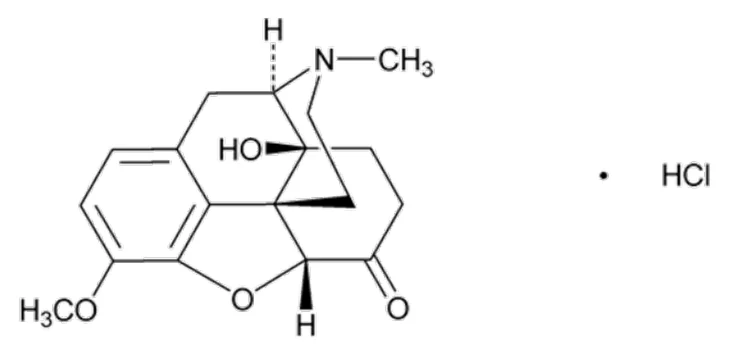
Physicochemical properties: Oxycodone is an opioid analgesic.
Appearance: White or off-white odourless, crystalline powder.
Solubility: Soluble in water, slightly soluble in alcohol.
Naloxone:
Proper name: Naloxone hydrochloride
Chemical name: 17-Allyl-4,5 α-epoxy-3,14-dihydroxymorphinan-6-one hydrochloride
Molecular formula and molecular mass: C19H21NO4•HCl / 363.84
Structural formula:
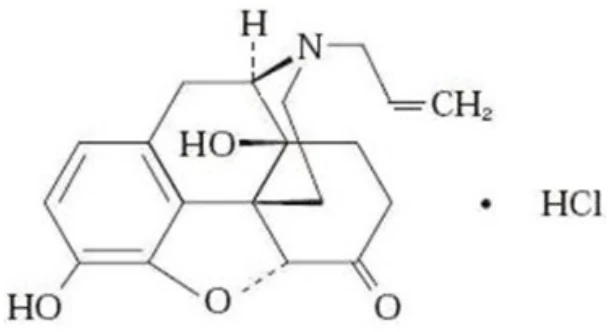
Physicochemical properties: Naloxone is an opioid antagonist.
Appearance: White to off-white powder.
Solubility: Soluble in water and alcohol, practically insoluble in ether.
14 CLINICAL TRIALS
14.1 Clinical Trials by Indication
Indication for Management of Pain
The safety and efficacy of TARGIN (oxycodone hydrochloride/naloxone hydrochloride controlled release tablets) has been evaluated in pivotal clinical trials for the management of various types of moderate to severe pain.
Table 4 – Summary of Patient Demographics for Pivotal Clinical Trials in Management of Pain
| Study # | Trial design | Dosage, route of administration and duration | Study subjects (n) | Mean age (Range) | Sex |
| PIVOTAL PAIN STUDIES | |||||
| OXN3401 | TARGIN 10/5, 20/10 mg (q12h) vs. Oxycodone CR 10 and 20 mg (q12h) vs. placebo tablets (q12h), oral Duration: 12 weeks Dose range: 20/10 to 40/20 mg/day | N = 463 | 56 (22-85) | M = 178 F = 285 | |
| 038-001 | TARGIN 10/5, 20/10 and 40/20 mg tablets vs. Placebo tablets (q12h), oral Duration: 4 weeks / phase Dose range: 40/20 to 80/40 mg/day | N = 83 | 51 (39-63) | M = 39 F = 44 | |
Pivotal Pain Studies
Study OXN3401: Four-hundred and sixty three patients with chronic back pain were randomly assigned to receive TARGIN (oxycodone hydrochloride/naloxone hydrochloride controlled release tablets), oxycodone controlled release (CR) or placebo twice daily in a 12 week randomized, double-blind, parallel study. Adult patients with chronic moderate to severe back pain requiring around-the-clock opioid therapy were enrolled. All patients were converted from an effective immediate release oxycodone dose (15 to 45 mg/day). Immediate release oxycodone (q4-6h) was given as needed.
The primary objective of this study was to demonstrate the superiority of TARGIN over placebo on the time from the initial dose of study medication to multiple (i.e., recurring) pain events (inadequate analgesia) during the Double-Blind Phase.
The primary efficacy results showed that the appearance of pain events was significantly reduced for TARGIN compared to placebo. The appearance of pain events was comparable for TARGIN compared to oxycodone CR.
The time from the initial dose of study medication to recurrent pain events during the 12 week period was evaluated. A pain event was demonstrated by unacceptable pain control for two consecutive days. Pain events in the TARGIN group occurred 12 to 15 days later than in the placebo group. Pain events in the controlled release oxycodone group occurred 14 to 16 days later than in placebo group. The time to pain events were significantly shorter in the placebo group compared to the TARGIN group (p < 0.0001 and 0.0003). No statistical significant differences were seen between TARGIN and the controlled release oxycodone group. Refer to Figure 1 below.
Secondary efficacy measures for pain were generally supportive of the primary efficacy outcome.
Bowel function was a secondary efficacy parameter. After 12 weeks of treatment, the results of the BFI scores and number of CSBMs showed improvement in bowel function (bowel function is measured by a combination of Bowel Function Index (BFI) and Complete Spontaneous Bowel Movements [CSBM]) with TARGIN treatment compared to oxycodone CR treatment.
Figure 1 – OXN3401 - Time to Recurrent Pain Events over Mean Number of Pain Events by Treatment Group
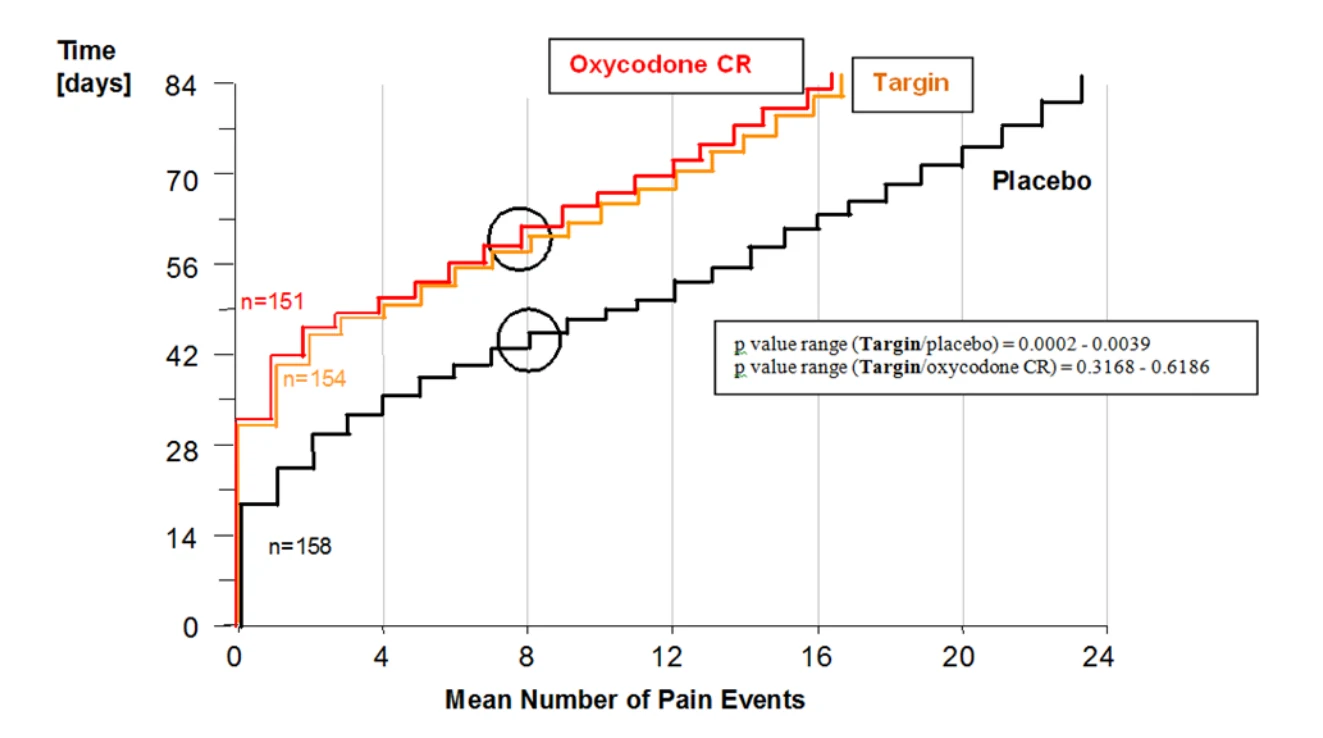
Study 038-001: Eighty three patients with chronic back pain were randomly assigned to receive TARGIN or placebo twice daily in a 8 week randomized, double-blind, cross-over study. Adult patients with chronic low back pain requiring around-the-clock opioid therapy were enrolled. All patients underwent a 2-7 day washout from all opioid analgesics before randomization to 10/5 mg TARGIN or placebo. Patients were titrated weekly according to efficacy and tolerability to 20/10, 30/15 and 40/20 mg or placebo twice daily. A codeine (30 mg)/ acetaminophen combination preparation was provided (q4-6h) as needed for rescue analgesia.
The primary efficacy outcome in this trial was for pain, measured by use of a Pain Intensity Scale (VAS and 5-point ordinal).
TARGIN demonstrated superiority to placebo in the treatment of chronic low back pain. Significant improvements in pain intensity were observed. The mean VAS scores and 5-point ordinal pain intensity score in the last week of treatment were significantly lower in the TARGIN group (48.6 and 2.1) than in the placebo group (55.9 and 2.4), respectively. Refer to Table 5 for a summary of the data.
Table 5 – Results of study 038-001
| Primary Endpoints | Associated value and statistical significance for TARGIN | Associated value and statistical significance for Placebo plus PRN codeine/acetaminophen |
Pain Intensity (100 mm VAS) 4 Weeks of Treatment | Baseline 61.4 TARGIN 48.6 | Baseline 61.4 Placebo and PRN codeine/acetaminophen 55.9 |
| TARGIN vs. Placebo plus PRN codeine/acetaminophen, p = 0.0296 | ||
Pain Intensity (Ordinal Scale – 0-4) 4 Weeks of Treatment | Baseline 2.5 TARGIN 2.1 | Baseline 2.5 Placebo and PRN codeine/acetaminophen 2.4 |
| TARGIN vs. Placebo plus PRN codeine/acetaminophen, p = 0.0415 | ||
Indication for Relief of Opioid-Induced Constipation
Table 6 – Summary of Patient Demographics for Pivotal Clinical Trials in Management of Opioid-Induced Constipation
| Study # | Trial design | Dosage, route of administration and duration | Study subjects (n) | Mean age (Range) | Sex |
| PIVOTAL BOWEL FUNCTION STUDIES | |||||
| OXN3001 | TARGIN 10/5, 20/10 mg (q12h) vs. Oxycodone CR 10 and 20 mg tablets (q12h), oral Duration: 12 weeks Dose range: 20 /10 to 50/25 mg /day | N = 322 | 59 (25-87) | M = 126 F = 196 | |
| OXN3006 | TARGIN 10/5, 20/10, 40/20 mg (q12h) vs. Oxycodone CR 10, 20 and 40 mg tablets (q12h), oral Duration: 12 weeks Dose range: 60/30 to 80/40 mg/day | N = 265 | 56 (32-84) | M = 84 F = 181 | |
| Pooled Analysis of Bowel Function Studies (OXN3001 and 3006) | |||||
OXN9001 (Pooled Analysis for OXN3001 and 3006) | TARGIN 10/5, 20/10 mg (q12h) vs. Oxycodone CR 10 and 20 mg tablets (q12h), oral Duration: 12 weeks Dose range: 20/10 to 80/40 mg/day | N = 587 | 58 (25-87) | M = 210 F = 377 | |
| PIVOTAL STUDY WITH PAIN AND BOWEL FUNCTION AS CO-PRIMARY ENDPOINTS | |||||
| OXN2001 | TARGIN 5/2.5, 10/5, 20/10 and 40/20 mg tablets vs. oxycodone CR 5, 10, 20 and 40 mg tablets (q12h) Oral Duration: 4 weeks Dose range: 20/10 to120/60 mg/day | N = 184 | 63 (36-84) | M = 94 F = 90 | |
Pivotal Bowel Function Studies
Study OXN3001: Three-hundred and twenty-two patients with chronic back pain were randomly assigned to receive TARGIN or oxycodone controlled release (CR) twice daily in a 12 week randomized, double-blind, parallel study. Adult patients with chronic moderate to severe pain requiring around-the-clock opioid therapy (oxycodone equivalent of 20 to 50 mg/day) who had constipation (less than 3 CSBM [complete spontaneous bowel movements] in the last 7 days) caused or aggravated by an opioid were enrolled. Dosing range was 20/10 mg to 50/25 mg TARGIN per day.
Rescue medication: Oxycodone immediate release (q4-6h) was given as needed; oral bisacodyl 10 mg/day 72 hours after their most recent bowel movement (BM) as rescue medication for constipation. Exception was allowed if the constipation was overwhelming.
The primary efficacy outcome measured in this trial was bowel function:
Bowel Function Index (BFI). BFI is a validated instrument based on the Rome criteria and has a three-item questionnaire measuring constipation on a NAS scale of 0-100 (ease of defecation, feeling of incomplete bowel evacuation, and judgement of constipation).
Secondary efficacy variables included:
- Complete Spontaneous Bowel Movements (CSBMs/week).
- Pain Intensity Score (0-10) “Average Pain over the last 24 hours” score.
TARGIN demonstrated a statistically significant difference in BFI after 4 weeks (primary end point) of treatment (-15.2) in comparison to oxycodone CR (Mixed-Model Repeated Measures analysis, p < 0.0001). The difference was comparable after 12 weeks of treatment (-13.5).
The reduction in mean BFI score in the TARGIN group continued until the end of the study (12 weeks) with a 12-week mean BFI of 27.5 and an overall BFI reduction of 30.5 points compared to baseline (see Figure 2).
Overall CSBMs/week improved after 4 weeks of treatment from a mean of 1.1 to 3.5 with an improvement of one extra bowel movement per week in the use of TARGIN compared to oxycodone CR. Similar improvement was found at 1, 2 and 3 weeks of treatment. Refer to Table 7 for a summary of the data.
Table 7 – Results of Study OXN3001
| Endpoints | Associated value and statistical significance for TARGIN | Associated value and statistical significance for Controlled Release Oxycodone | |||
Bowel Function Index (0-100) 4 Weeks of Treatment 12 Weeks of Treatment | Baseline 61.8 TARGIN 34.9 | Baseline 61.0 Controlled Release Oxycodone 51.6 | |||
| TARGIN vs. Controlled Release Oxycodone, p < 0.0001 | |||||
TARGIN 31.1 | Controlled Release Oxycodone 45.7 | ||||
| Endpoints | Associated value and statistical significance for TARGIN | Associated value and statistical significance for Controlled Release Oxycodone | |||
| TARGIN vs. Controlled Release Oxycodone, p < 0.0001 | |||||
Complete Spontaneous Bowel Movement (mean) – CSBM/week 4 Weeks of Treatment | Baseline 1.1 TARGIN 3.5 | Baseline 1.1 Controlled Release Oxycodone 2.4 | |||
| TARGIN vs. Controlled Release Oxycodone, p < 0.0001 | |||||
- The proportion of subjects in the TARGIN group (31%) that required laxative (bisacodyl tablets) was significantly less than in the oxycodone CR group (55%) after 4 weeks of treatment.
- The change from baseline in the proportion of subjects reaching ≥ 3 CSBM after 4 weeks of treatment was higher in the TARGIN (58%) group as compared to 40% in the oxycodone CR group. Changes in the proportion of subjects were detected at 1, 2 and 3 weeks of the study.
- The average pain over the last 24 hours over the 12-week study was comparable between TARGIN and oxycodone CR.
Figure 2 – OXN3001 – Bowel Function Index (BFI) Comparison between TARGIN and Controlled Release Oxycodone – 12 weeks
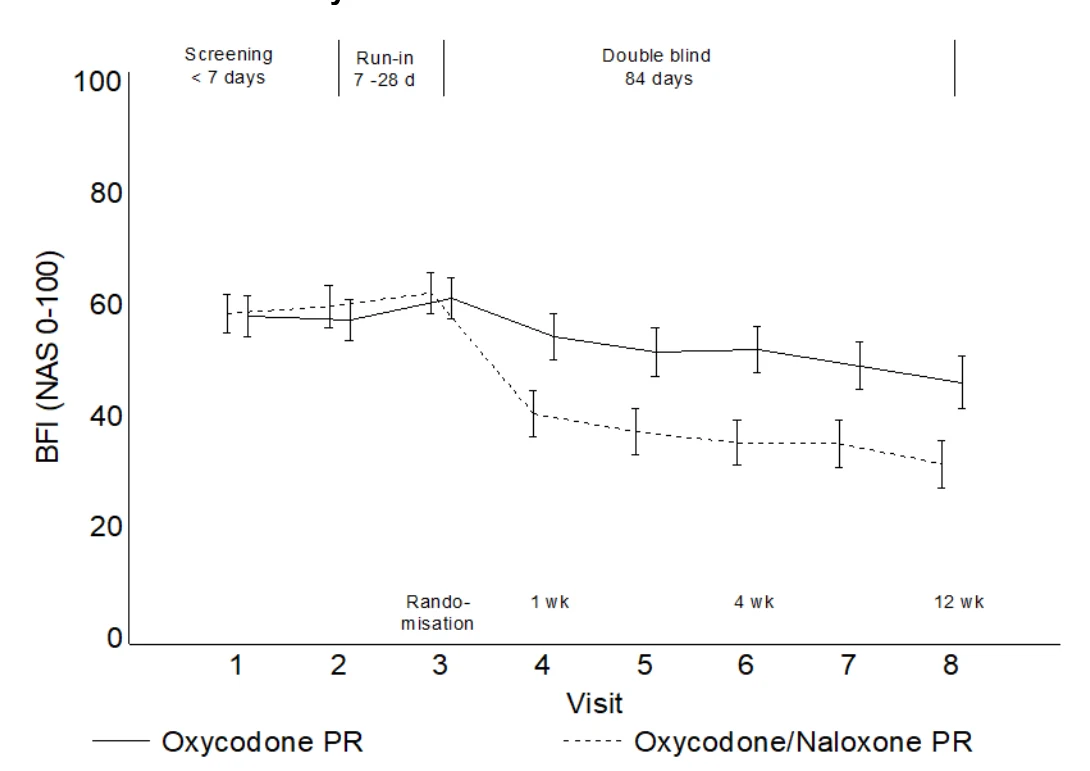
- Study OXN3006: Two-hundred and sixty-five patients with chronic back pain were randomly assigned to receive TARGIN or oxycodone controlled release (CR) twice daily in a 12 week randomized, double-blind, parallel study. Adult patients with chronic moderate to severe pain requiring around-the-clock opioid therapy (oxycodone equivalent of 60 to 80mg/day) who had constipation (less than 3 CSBM [complete spontaneous bowel movements] in the last 7 days) caused or aggravated by an opioid were enrolled. Patients were randomized to TARGIN or oxycodone CR in a 1:1 ratio. Dosing levels up to 80/40 mg of TARGIN per day were used. Immediate release oxycodone (q4-6h) was given as needed.
The primary efficacy outcome measured in this trial was bowel function:
- Bowel Function Index (BFI). BFI is a validated instrument based on the Rome criteria and has a three-item questionnaire measuring constipation on a NAS scale of 0-100 (ease of defecation, feeling of incomplete bowel evacuation, and judgement of constipation).
Secondary efficacy variables included:
- Complete Spontaneous Bowel Movements (CSBMs/week);
- Pain Intensity Score (0-10) “Average Pain over the last 24 hours” score.
TARGIN demonstrated a statistically significant difference in BFI after 4 weeks (primary end point) of treatment (-14.9) in comparison to controlled release oxycodone (Mixed-Model Repeated Measures Analysis, p < 0.0001). The difference was maintained after 12 weeks of treatment (-14.6).
The reduction in mean BFI score in the TARGIN group continued to the end of the study with a 12 week mean BFI of 34.0 and an overall BFI reduction of 33.4 points compared to baseline (see Figure 3 and Table 8).
Overall CSBMs/week improved after 4 weeks of treatment from a mean of 0.9 to 3.1, with an improvement of one extra bowel movement per week in the use of TARGIN compared to oxycodone CR. Similar improvements were found at 1, 2 and 3 weeks of treatment.
Table 8 – Results of Study OXN3006
| Endpoints | Associated value and statistical significance for TARGIN | Associated value and statistical significance for Controlled Release Oxycodone | |||
|---|---|---|---|---|---|
Bowel Function Index (0-100) 4 Weeks of Treatment 12 Weeks of Treatment | Baseline 67.4 TARGIN 40.9 | Baseline 64.1 Controlled Release Oxycodone 53.3 | |||
| TARGIN vs. Controlled Release Oxycodone, p < 0.0001 | |||||
TARGIN 34.0 | Controlled Release Oxycodone 48.6 | ||||
| TARGIN vs. Controlled Release Oxycodone, p < 0.0001 | |||||
Complete Spontaneous Bowel Movement (mean) – CSBM/week 4 Weeks of Treatment | Baseline 0.93 TARGIN 3.1 | Baseline 0.92 Controlled Release Oxycodone 1.8 | |||
| TARGIN vs. Controlled Release Oxycodone, p < 0.0001 | |||||
- The proportion of subjects in the TARGIN group (43%) that required laxative (bisacodyl tablets) was significantly less than in the oxycodone CR group (64%) after 4 weeks.
- The change from baseline in the proportion of subjects reaching ≥ 3 CSBM after 4 weeks of treatment was higher in the TARGIN (51%) group as compared to 25% in the oxycodone CR group. Changes in the proportion of subjects were detected at 1, 2 and 3 weeks of the study
- The average pain over the last 24 hours over the 12-week study was comparable between TARGIN and oxycodone CR.
Figure 3 – OXN3006 – Bowel Function Index (BFI) Comparison between TARGIN and Controlled Release Oxycodone – 12 weeks
- Study OXN9001: A pooled-analysis was conducted combining the two randomized, double-blind, parallel group studies 3001 and 3006 to demonstrate the non-inferiority of TARGIN to oxycodone controlled release (CR) in 12 week analgesic efficacy. A total of five-hundred and eighty seven subjects were included in this assessment. The results revealed that throughout the 12 weeks of the double-blind phase, no statistically significant difference was noted between the two groups in the mean pain intensity, and that non-inferiority of TARGIN to oxycodone CR was demonstrated (TARGIN vs oxycodone CR 0.08, non-inferiority: p < 0.0001). The actual observed difference of the means at 12 weeks was 0.1 on a VAS (0 to 10) scale (TARGIN 3.6, oxycodone CR 3.5) (see Table 9).
Oxycodone CR Oxycodone/Naloxone CR 0 20 40 60 80 100 Visit 1 2 3 4 5 6 7 8 | |
|---|---|
Screening < 7 days Run - in | - 28 d Double blind 84 days |
7
Randomisation
1
wk
4
wk
12
wk
BFI (N AS 0-100)
Table 9 – Results of Study OXN9001
| Endpoints | Associated value and statistical significance for TARGIN | Associated value and statistical significance for Controlled Release Oxycodone | |||
Average Pain Intensity (Scale – 0-10) 12 Weeks of Treatment | Baseline 3.4 TARGIN 3.6 | Baseline 3.3 Controlled Release Oxycodone 3.5 | |||
TARGIN vs. Controlled Release Oxycodone, non-inf: 0.08; 95% CI -0.07 to 0.23 | |||||
Pivotal Study with Pain and Bowel Function as Co-Primary Endpoints
Study OXN2001: One hundred and eighty-five patients, with moderate to severe chronic cancer pain, were randomly assigned to receive TARGIN or controlled-release oxycodone twice daily and evaluated in a 4-week randomized, double-blind, double-dummy, parallel group study. The study had three phases: a screening phase, a 4-week double-blind phase, and a 24-week extension phase. Following screening, subjects stopped their pre-study opioid and laxative medication and were randomised to receive either TARGIN or controlled-release oxycodone in the double-blind phase. Adult patients with a documented history of cancer pain requiring around-the-clock opioid therapy and who had constipation (less than 3 bowel evacuations in the last 7 days or the medical need for laxatives in order to have at least 3 bowel evacuations per week) caused or aggravated by an opioid were enrolled.
The co-primary endpoints of this study were the Brief Pain Inventory (BPI) and the Bowel Function Index (BFI).
Efficacy results showed:
Pain: At the end of the 4-week treatment phase the average pain scores were 3.52 and 3.50 for controlled-release oxycodone and TARGIN respectively, down from baseline values of 4.18 and 4.16 respectively. The Least Squares Mean difference (-0.011, 90% CI -0.474, 0.452, p < 0.001) confirmed the non-inferiority of TARGIN compared to controlled-release oxycodone.
Bowel function: For improvements in symptoms of constipation, after four weeks the Bowel Function Index (BFI) values decreased to a mean value of 39.47 in subjects receiving TARGIN and 49.68 in subjects receiving controlled-release oxycodone from mean baseline values of 63.97 and 62.40 respectively. A comparison of the change in BFI values at the end of the double-blind phase, demonstrated that the improvement was statistically significant (LS Mean Difference = 12.36, 95% CI -19.05, -5.670, p ≤ 0.001) and clinically relevant (Δ BFI > 12) in favour of subjects receiving TARGIN.
16 NON-CLINICAL TOXICOLOGY
There are no data from studies on reproductive toxicity of the combination of oxycodone and naloxone.
Carcinogenicity
For naloxone, a 24-months oral carcinogenicity study was performed in rats with naloxone doses up to 100 mg/kg/day. The results indicate that naloxone is not carcinogenic under these conditions. Long-term carcinogenicity studies with oxycodone/naloxone in combination or oxycodone as single entity have not been performed.
Mutagenicity
Oxycodone and naloxone as single entities show a clastogenic potential in in vitro assays. No similar effects were observed, however, under in vivo conditions, even at toxic doses. The results indicate that the mutagenic risk of TARGIN (oxycodone hydrochloride/naloxone hydrochloride controlled release tablets) to humans at therapeutic concentrations may be ruled out with adequate certainty.
Teratogenicity
Studies with the single components showed that oxycodone had no effect on fertility and early embryonic development in male and female rats in doses of up to 8 mg/kg body weight and induced no malformations in rats in doses of up to 8 mg/kg and in rabbits in doses of 125 mg/kg bodyweight. However, in rabbits, when individual fetuses were used in statistical evaluation, a dose related increase in developmental variations was observed (increased incidences of 27 presacral vertebrae, extra pairs of ribs). When these parameters were statistically evaluated using litters, only the incidence of 27 presacral vertebrae was increased and only in the 125 mg/kg group, a dose level that produced severe pharmacotoxic effects in the pregnant animals. In a study on pre- and postnatal development in rats F1 body weights were lower at 6 mg/kg/d when compared to body weights of the control group at doses which reduced maternal weight and food intake (NOAEL 2 mg/kg body weight). There were neither effects on physical, reflexological, and sensory developmental parameters nor on behavioural and reproductive indices. The standard oral reproduction toxicity studies with naloxone show that at high oral doses naloxone was not teratogenic and/or embryo/fetotoxic and does not affect perinatal/postnatal development. At very high doses (800 mg/kg/day) naloxone produced increased pup deaths in the immediate post-partum period at dosages that produced significant toxicity in maternal rats (e.g., body weight loss, convulsions). However, in surviving pups, no effects on development or behaviour were observed.