


Product Monograph - Vyalev
Recent Major Label Changes
| None | N/A |
|---|
Table of Contents
Recent Major Label Changes ................................................................................................... 2
Table of Contents ................................................................................................................... 2
Part 1: Healthcare Professional Information ........................................................................... 5
- 1.
Indications ....................................................................................................................... 5
1.1. Pediatrics .................................................................................................................. 5
1.2. Geriatrics .................................................................................................................. 5
- 2. Contraindications ............................................................................................................ 5
- 3. Serious Warnings and Precautions Box ............................................................................ 6
- 4.
Dosage and Administration ............................................................................................. 6
4.1. Dosing Considerations .............................................................................................. 6
4.2. Recommended Dose and Dosage Adjustment ......................................................... 7
4.3. Reconstitution ........................................................................................................ 11
4.4. Administration ........................................................................................................ 11
4.5. Missed Dose ........................................................................................................... 12
- 5. Overdose ....................................................................................................................... 12
- 6. Dosage Forms, Strengths, Composition, and Packaging ................................................. 12
- 7.
Warnings and Precautions ............................................................................................. 13
General ............................................................................................................................... 13
Carcinogenesis and Genotoxicity ........................................................................................ 13
Cardiovascular .................................................................................................................... 13
Driving and Operating Machinery ....................................................................................... 14
Monitoring and Laboratory Tests ....................................................................................... 14
Neurologic .......................................................................................................................... 14
Ophthalmologic .................................................................................................................. 15
Psychiatric ........................................................................................................................... 15
Skin ..................................................................................................................................... 16
7.1. Special Populations ................................................................................................ 16
7.1.1. Pregnancy ...................................................................................................... 16
7.1.2. Breastfeeding ................................................................................................ 16
7.1.3. Pediatrics ....................................................................................................... 17
7.1.4. Geriatrics ....................................................................................................... 17
- 8.
Adverse Reactions ......................................................................................................... 17
8.1. Adverse Reaction Overview .................................................................................... 17
8.2. Clinical Trial Adverse Reactions .............................................................................. 17
8.3. Less Common Clinical Trial Adverse Reactions ....................................................... 19
8.4. Abnormal Laboratory Findings: Hematologic, Clinical Chemistry, and Other Quantitative Data ............................................................................................................... 20
8.5. Post-Market Adverse Reactions ............................................................................. 20
- 9.
Drug Interactions ........................................................................................................... 20
9.1. Serious Drug Interactions ....................................................................................... 20
9.2. Drug Interactions Overview .................................................................................... 21
9.3. Drug-Behaviour Interactions .................................................................................. 21
9.4. Drug-Drug Interactions ........................................................................................... 21
9.5. Drug-Food Interactions........................................................................................... 23
9.6. Drug-Herb Interactions ........................................................................................... 24
9.7. Drug-Laboratory Test Interactions ......................................................................... 24
- 10.
Clinical Pharmacology ................................................................................................... 24
10.1. Mechanism of Action .............................................................................................. 24
10.2. Pharmacodynamics ................................................................................................ 24
10.3. Pharmacokinetics ................................................................................................... 24
- 11. Storage, Stability, and Disposal ...................................................................................... 27
Part 2: Scientific Information ................................................................................................ 28
- 13. Pharmaceutical Information .......................................................................................... 28
- 14.
Clinical Trials .................................................................................................................. 29
14.1. Clinical Trials by Indication ..................................................................................... 29
Parkinson’s Disease ............................................................................................................ 29
- 15. Microbiology ................................................................................................................. 32
- 16. Non-Clinical Toxicology .................................................................................................. 32
- 17. Supporting Product Monographs ................................................................................... 33
Patient Medication Information ........................................................................................... 34
INSTRUCTIONS FOR USE ....................................................................................................... 44
Part 1: Healthcare Professional Information
1. Indications
VYALEV (foslevodopa/foscarbidopa solution) is indicated for:
- the treatment of motor fluctuations in patients with advanced levodopa-responsive Parkinson’s disease who do not have satisfactory control of severe, debilitating motor fluctuations and hyper- /dyskinesia despite optimized treatment with available combinations of Parkinson’s medicinal products.
VYALEV should only be prescribed by neurologists who are experienced in the treatment of patients with Parkinson’s disease
1.1. Pediatrics
Pediatrics (< 18 years of age): No data are available to Health Canada; therefore, Health Canada has not authorized an indication for pediatric use.
1.2. Geriatrics
Geriatrics (≥ 65 years of age): No overall differences in safety or effectiveness were observed between these patients and younger patients (see 4.2 Recommended Dose and Dosage Adjustment and 14 Clinical Trials).
2. Contraindications
VYALEV is contraindicated in patients with:
- hypersensitivity to foslevodopa, levodopa, foscarbidopa, or carbidopa or to any ingredient in the formulation, including any non-medicinal ingredient, or component of the container. For a complete listing, see 6 Dosage Forms, Strengths, Composition, and Packaging.
- narrow-angle glaucoma.
- clinical or laboratory evidence of uncompensated cardiovascular, cerebrovascular, endocrine, renal, hepatic, hematologic or pulmonary disease (including bronchial asthma).
- concomitant use of non-selective monoamine oxidase (MAO) inhibitors and selective MAO type A inhibitors. These inhibitors must be discontinued at least two weeks prior to initiating therapy with VYALEV. VYALEV may be administered concomitantly with the manufacturer’s recommended dose of a MAO inhibitor with selectivity for MAO type B (e.g., selegiline hydrochloride) (see 9.1 Serious Drug Interactions; 9.4 Drug-Drug Interactions).
- undiagnosed skin lesions or a history of melanoma because levodopa may activate a malignant melanoma (see 7 Warnings and Precautions, Skin).
- concomitant administration of a sympathomimetic amine (e.g., epinephrine, norepinephrine, isoproterenol) (see 9.1 Serious Drug Interactions; 9.4 Drug-Drug Interactions).
- conditions in which medication with adrenergic activity are contraindicated, e.g., pheochromocytoma, hyperthyroidism and Cushing's syndrome.
3. Serious Warnings and Precautions Box
- Sudden Onset of Sleep
Patients receiving treatment with levodopa and other dopaminergic agents have reported suddenly falling asleep while engaged in activities of daily living, including driving a car, which has sometimes resulted in accidents. Although some of the patients reported somnolence while on levodopa, others perceived that they had no warning signs, such as excessive drowsiness, and believed that they were alert immediately prior to the event (see 7 Warnings and Precautions, Driving and Operating Machinery).
Physicians should alert patients of the reported cases of sudden onset of sleep, bearing in mind that these events were NOT limited to initiation of therapy. Patients should also be advised that sudden onset of sleep has occurred without warning signs and should be specifically asked about factors that may increase the risk with VYALEV such as concomitant medications or the presence of sleep disorders. Given the reported cases of somnolence and sudden onset of sleep (not necessarily preceded by somnolence) with levodopa, physicians should caution patients about the risk of operating hazardous machinery, including driving motor vehicles, while taking VYALEV. If drowsiness or sudden onset of sleep should occur, patients should be informed to immediately contact their physician.
Episodes of falling asleep while engaged in activities of daily living have also been reported in patients taking other dopaminergic agents, therefore, symptoms may not be alleviated by substituting these products.
While dose reduction clearly reduces the degree of somnolence, there is insufficient information to establish that dose reduction will eliminate episodes of falling asleep while engaged in activities of daily living.
Currently, the precise cause of this event is unknown. It is known that many Parkinson’s disease patients experience alterations in sleep architecture, which results in excessive daytime sleepiness or spontaneous dozing, and that dopaminergic agents can also induce sleepiness.
- Infusion Site Reactions and Infections
A high proportion of patients have developed infusion site reactions and infections during the clinical development and on multiple occasions for some of them. In a few patients, infusion site cellulitis or abscess led to sepsis which required hospitalization. Sepsis can potentially be life-threatening and must be recognized and treated in a timely manner (see 7 Warnings and Precautions, Skin and 8 Adverse Reactions). Refer to the Patient educational material (Patient Guide) for proper use of VYALEV. The guide can be accessed at abbviecare.ca.
4. Dosage and Administration
4.1. Dosing Considerations
VYALEV is administered as a continuous subcutaneous infusion, 24-hours per day, using the
- VYAFUSER™ infusion pump. Only the VYAFUSER pump should be used (refer to the pump instructions for use for details) using sterile, single-patient-use infusion components (syringe, infusion set, and vial adapter) that are qualified for use and provided separately. Refer to the Healthcare Professional Instructions for Use of the VYAFUSER Pump and Preparing VYALEV Solution Instructions for Use for additional information on ancillaries.
- Do not administer intravenously or intramuscularly.
- Periodic evaluation of hepatic, hematopoietic, cardiovascular, and renal function is recommended during dosage optimization and during extended therapy with VYALEV.
- In case of suspected or diagnosed dementia with a decreased confusion threshold, patient’s pump should be handled by the nursing staff or a caregiver and the benefit/risk of continued treatment with VYALEV should be re-assessed.
4.2. Recommended Dose and Dosage Adjustment
The recommended starting infusion rate of VYALEV is determined by calculating the levodopa equivalents (LE) from all levodopa-containing medications and catechol-O-methyl transferase (COMT)-inhibitors taken during daytime hours and then increasing it to account for a 24-hour administration (see Initiation of Treatment). The dose may be adjusted to reach a clinical response that maximizes the functional “On” time and minimizes the number and duration of “Off” episodes and “On” episodes with troublesome dyskinesia. The lowest efficacious dose should be used to minimize the risk of adverse events. The maximum recommended daily dose of foslevodopa is 6000 mg (or 25 mL of VYALEV per day equivalent to approximately 4260 mg levodopa per day). Note that a limited number of patients were exposed to daily doses higher than 4000 mg of foslevodopa.
VYALEV replaces levodopa-containing medications and COMT-inhibitors. If required, other classes of medicinal products for Parkinson’s disease can be taken concurrently.
Initiation of Treatment
Patients selected for treatment with VYALEV should be capable of understanding and using the delivery system themselves or with assistance from a caregiver.
Patients should be trained on the proper use of VYALEV and the delivery system (see 4.4 Administration) prior to initiating treatment with VYALEV and, as necessary, thereafter.
Three steps are required to initiate treatment with VYALEV (by the prescriber):
- Step 1: Calculate the LE based on the levodopa-containing medications and COMT-inhibitors taken during the patient’s awake time.
- Step 2: Determine the hourly infusion rate of VYALEV to be administered over the 24 hours.
- Step 3: Determine the volume of the loading dose.
Step 1: Calculate LE based on the levodopa-containing medications used during the patient’s awake time
The levodopa amount from all levodopa-containing formulations taken during the awake time of the day (typically 16-hour/day) should be converted to LE using the appropriate multiplication factor from Table 1 and then summed. For this calculation, only consider levodopa and COMT-inhibitors. Do not include rescue or as needed levodopa or any other anti-Parkinsonian medication or therapy, including medications taken outside of awake time (e.g., night-time dosing) in this calculation. If any
COMT-inhibitors are taken within a 24-hour period, regardless of the COMT-inhibitor dose, a correction factor should be applied to the sum of LE as presented in Table 1.
Table 1 - Calculating the Levodopa Equivalents (LE)
| Levodopa formulation | Dose multiplication factor | ||
|---|---|---|---|
| Immediate-release, including enteral suspension (DUODOPA) | 1 | ||
| Sustained-release, controlled-release or prolonged-release1 | 0.75 | ||
| If any COMT-inhibitor is used, multiply sum of calculated LE from above by 1.331 | |||
1 The levodopa contained in combined CD/LD/COMT-inhibitor formulations counts as immediate-release and needs to be added to the LE from all other sources of levodopa before the sum is multiplied for the COMT-inhibitors correction factor (i.e., do not apply COMT correction factor to single LE).
CD = carbidopa; LD = levodopa; COMT = catechol-O-methyltransferase; LE = levodopa equivalents.
Step 2: Determine the hourly infusion rate of VYALEV to be used over the 24 hours
Refer to Table 2 for suggested VYALEV starting infusion rates based on the LE calculated in Step 1.
The hourly infusion rate for VYALEV in Table 2 is based on a patient’s LE intake during a typical 16-hour awake time (LE16), and it is meant to be used over a 24-hour period.
If the LE determined in Step 1 were based on an awake time either longer or shorter than 16 hours, the LE should be adjusted to a 16-hour period. To adjust to a 16-hour period, take the LE calculated in Step 1, divide by the number of hours the patient is typically awake, and then multiply by 16. Then refer to Table 2 for VYALEV suggested starting infusion rates.
The hourly infusion rate determined in this step should be entered as Base continuous infusion rate when programming the pump (refer to the pump instructions for use for details) and administered over 24 hours.
Table 2 - Suggested VYALEV Starting Hourly Infusion Rate
| LE16 (LE from all oral LD-containing medications taken over 16-hour awake time [mg]) | Suggested VYALEV starting hourly infusion rate (mL/hr)1 administered over 24 hours |
|---|---|
| < 400 | 0.15 |
| 400-499 | 0.15-0.17 |
| 500-599 | 0.17-0.20 |
| 600-699 | 0.20-0.24 |
| 700-799 | 0.24-0.27 |
| 800-899 | 0.27-0.30 |
| 900-999 | 0.30-0.34 |
| 1000-1099 | 0.34-0.37 |
| 1100-1199 | 0.37-0.40 |
| 1200-1299 | 0.40-0.44 |
| 1300-1399 | 0.44-0.47 |
| 1400-1499 | 0.47-0.51 |
| 1500-1599 | 0.51-0.54 |
| 1600-1699 | 0.54-0.57 |
| 1700-1799 | 0.57-0.61 |
| 1800-1899 | 0.61-0.64 |
| 1900-1999 | 0.64-0.68 |
| 2000-2099 | 0.68-0.71 |
| 2100-2199 | 0.71-0.74 |
| 2200-2299 | 0.74-0.78 |
| 2300-2399 | 0.78-0.81 |
| 2400-2499 | 0.81-0.84 |
| 2500-2599 | 0.84-0.88 |
| 2600-2699 | 0.88-0.91 |
| 2700-2799 | 0.91-0.94 |
| 2800-2899 | 0.94-0.98 |
| 2900-2999 | 0.98-1.01 |
| 3000-3099 | 1.01-1.04 |
| >3100 | 1.04 |
1 The hourly infusion rate is calculated using the following formula, where X is the number of patient’s awake hours used to determine the LE (e.g.: X=16, in the table above).
Hourly infusion rate (mL/hr) = [(LE∙0.92 ∙1.41) ∕ 240] ∕ X
Assumptions used to generate the “Suggested VYALEV starting hourly infusion rate”:
- Total daily LE over 16 hours is increased by 50% to account for 24-hour dosing
- Subcutaneous foslevodopa is 8% more bioavailable than enterally absorbed levodopa
- The molecular weight ratio between foslevodopa and levodopa is 1.41:1
- One milliliter of VYALEV contains 240 mg of foslevodopa and 12 mg of foscarbidopa
- Most patients with PD are treated with oral PD medications during their waking time (typically 16-hour/day treatment period); once the amount of foslevodopa needed over the 16-hour period has been calculated, it is divided by 240 mg to determine the number of milliliters needed over the 16-hour period, and then divided over 16 hours to establish the hourly infusion rate
LE = levodopa equivalents; LD = levodopa; PD = Parkinson’s Disease.
Step 3: Determine the volume of the loading dose
A loading dose can be administered immediately prior to commencing the hourly infusion to quickly achieve symptomatic control when starting VYALEV therapy in an "Off" state (or if the pump has been off for more than three hours). If the loading dose is enabled, it should be as close as possible to the amount of LE from the first morning dose of PD therapy that the patient used to take before commencing VYALEV. Loading doses can be administered either via the pump or using oral immediate-release levodopa/carbidopa tablets.
Table 3 provides the recommended loading dose volume (mL) of VYALEV to be programmed into the pump (refer to the pump instructions for use for details) and the corresponding amount of immediate-release levodopa (mg), regardless of the peripheral inhibitor of the DOPA decarboxylase co-administered.
Table 3 - Determination of VYALEV Volume Recommended for the Loading Dose
| Recommended loading dose volume (mL) to be programmed into the pump1 | Approximate corresponding levodopa amount (mg) |
|---|---|
| 0.6 | 100 |
| 0.9-1.2 | 150-200 |
| 1.5-1.8 | 250-300 |
| 2.0 | 350 |
1 0.1 mL of VYALEV contains 24 mg of foslevodopa (equivalent to approximately 17 mg of levodopa).
The pump is capable of delivering a loading dose ranging from 0.1 mL to a maximum of 3.0 mL, in increments of 0.1 mL.
Optimization and Maintenance
The healthcare professional may adjust the hourly infusion rate to achieve the optimal clinical response for the patient. The hourly infusion rate should be delivered continuously over the 24-hour daily infusion period. If desired, the healthcare professional can program and enable two alternative hourly infusion rates (Low/High). All infusion rates may be adjusted in increments of 0.01 mL/hr (which is equivalent to approximately 1.7 mg of levodopa/hour) and should not exceed 1.04 mL/hr (which is equivalent to approximately 177 mg of levodopa/hour or approximately 4260 mg levodopa per day [6000 mg of foslevodopa per day]). The pump incorporates secure access to dose configuration to prevent patients from making changes to their pre-programmed flow rates or Extra Dose functionality.
VYALEV can be administered alone or, if necessary, with other concurrent medicinal products for Parkinson’s disease, based on the judgment of the healthcare professional. A reduction in other concomitant medications for Parkinson’s disease, followed by an adjustment in VYALEV dosage, may be considered during VYALEV infusion.
Alternative Flow Rate and Extra doses
Alternative Flow Rate
The pump also allows for two alternative infusion rate options to be programmed for patient use (Low/High). The alternative infusion rates must be enabled and pre-programmed by the healthcare professional and may be selected by patients to account for changes in functional demand, e.g., lowering the dosage at night-time or increasing the dose for prolonged intense activity (refer to the pump instructions for use for details).
Extra Doses
If enabled by their healthcare professional, patients may self-administer an Extra Dose to manage acute “Off” symptoms experienced during continuous infusion. The Extra Dose volume can be chosen from five options (see Table 4). The Extra Dose feature is limited to no more than one extra dose per hour. If five or more extra doses are used by the patient during the 24-hour/day treatment period, a revision of the Base continuous infusion rate should be considered. The ability to enable this function, as well as the minimum time required between extra doses, is determined by the healthcare professional and cannot be modified by the patient (refer to the pump instructions for use for details on programming the Extra Dose feature).
Table 4 - Extra Dose Options for VYALEV
VYALEV volume (mL) | Levodopa Equivalents (mg) |
|---|---|
| 0.10 | 17 |
| 0.15 | 25.5 |
| 0.20 | 34 |
| 0.25 | 42.5 |
| 0.30 | 51 |
Monitoring of Treatment
A sudden or unusual deterioration in treatment response may indicate an obstruction/blockage of the device (pump or infusion set) or other device-related problems and should be investigated.
Dose Adjustment for Renal and Hepatic Impairment
VYALEV is contraindicated in patients with clinical or laboratory evidence of uncompensated hepatic or renal disease (see 2 Contraindications). The pharmacokinetics of VYALEV in subjects with renal and/or hepatic impairment has not been established.
There are no studies on the pharmacokinetics of levodopa and carbidopa in patients with hepatic or renal impairment. Dosing with VYALEV is individualized by titration to optimal effect (which corresponds to individually optimized levodopa and carbidopa plasma exposures); therefore, potential effects of hepatic or renal impairment on levodopa and carbidopa exposure are indirectly accounted for in dose titration. Dose titration should be conducted with caution in patients with severe renal and hepatic impairment.
Pediatrics (< 18 years of age)
Health Canada has not authorized an indication for pediatric use.
Geriatric (> 65 years of age)
There is adequate experience in the use of VYALEV in elderly patients. The dosage recommendations set out above reflect the clinical data derived from this experience (see 14 Clinical Trials).
4.3. Reconstitution
No reconstitution required.
4.4. Administration
VYALEV is administered subcutaneously in the abdomen, avoiding a 5-cm radius area from the navel. Use aseptic technique when preparing and administering VYALEV (refer to Instructions for Use for how to prepare VYALEV Solution). The infusion set (cannula) can remain in place for up to three days when VYALEV is infused continuously. Rotate the infusion site and use a new infusion set at least every three days. It is recommended that new infusion sites be at least 2.5 cm from sites used within the previous 12 days. VYALEV should not be infused into areas where the site is tender, bruised, red or hard to the touch. For administration of VYALEV, only the VYAFUSER infusion pump should be used (refer to the pump Instructions for Use for details) using sterile, single-use infusion components (syringe, infusion set, and vial adapter) qualified for use. Patients should be trained on the proper use of VYALEV and the delivery system (pump, solution vial, vial adapter, syringe, infusion set, carrying accessory, rechargeable battery, and charger) prior to initiating treatment with VYALEV and, as necessary, thereafter. If any unusual signs appear (redness, pain, swelling) at the infusion site, or worsen, the patient should be advised to consult a healthcare professional.
The medication should be stored and handled as described in 11 Storage, Stability and Disposal and Instructions for Use for Preparing Solution.
4.5. Missed Dose
Sudden discontinuation or rapid dose reduction of VYALEV, without administration of alternative dopaminergic therapy, should be generally avoided (see 7 Warnings and Precautions, Neuroleptic Malignant Syndrome).
Do not swim, bathe, or shower with the pump. VYALEV can be interrupted without further actions for brief periods of time, such as when the patient is taking a shower. For interruptions of more than one hour, a new infusion set (tubing and cannula) should be used and rotated to a different infusion site. If the infusion has been interrupted for longer than three hours, the patient may self-administer a loading dose, if enabled by their healthcare professional, to quickly re-establish symptom control. The infusion set should be replaced and rotated if the adhesive becomes loose.
If treatment with VYALEV is interrupted for a prolonged period of time (> 24 hours) or permanently discontinued, the healthcare professional should determine appropriate alternative dopaminergic treatment (e.g., oral levodopa/carbidopa). Treatment with VYALEV may be resumed at any time following instructions as for initiation of VYALEV (see 4.2 Recommended Dose and Dosage Adjustment, Initiation of Treatment).
5. Overdose
In the event of an overdosage with VYALEV, the infusion should be stopped immediately.
The most prominent symptoms of an overdose with levodopa/carbidopa are dystonia and dyskinesia. Blepharospasm can be an early sign of overdose.
The treatment of an acute overdose of VYALEV is the same as that of an acute overdose of levodopa; however, pyridoxine has no effect on the reversal of the action of VYALEV. Electrocardiographic monitoring should be used, and the patient observed carefully for the development of cardiac arrhythmias; if necessary, an appropriate antiarrhythmic therapy should be given. Patients must also be monitored for hypotension. The possibility that the patient took other medicinal products together with VYALEV should be taken into consideration.
For the most recent information in the management of a suspected drug overdose, contact your regional poison control centre or Health Canada’s toll-free number, 1-844 POISON-X (1-844-764-7669).
- 6. Dosage Forms, Strengths, Composition, and Packaging
Table 5. – Dosage Forms, Strengths, and Composition
| Route of | Dosage Form/ | Non-Medicinal Ingredients |
Description
The VYALEV solution is supplied in a single-dose glass vial filled with approximately 10 mL of solution.
The rubber stopper on the vial does not contain natural rubber latex.
Sterile, single-use infusion components (syringe, infusion set, and vial adapter) qualified for use are provided separately.
7. Warnings and Precautions
Please see 3 Serious Warnings and Precautions Box.
General
VYALEV therapy should be administered with caution to patients with severe cardiovascular or pulmonary disease, bronchial asthma, renal, hepatic or endocrine disease, or history of peptic ulcer disease or of convulsions.
Periodic evaluation of hepatic, hematopoietic, cardiovascular and renal function is recommended during dosage optimization and extended therapy with VYALEV.
The dose of VYALEV may need to be adjusted downwards in order to avoid levodopa-induced dyskinesias and/or other adverse reactions.
VYALEV is high in sodium, it contains 42.4 mg (approximately 1.84 mmol) of sodium per mL, equivalent to 2.1% of the WHO recommended maximum daily dietary intake of sodium. The maximum daily dose of this medicine contains 54% of the WHO recommended maximum daily intake of sodium. This should be considered especially in patients on a low salt diet (see 10.3 Pharmacokinetics, Renal insufficiency).
Carcinogenesis and Genotoxicity
VYALEV contains hydrazine, a degradation product of carbidopa that can be genotoxic and possibly carcinogenic (see 16 Non-Clinical Toxicology). The median daily dose of VYALEV is approximately 2541 mg/day of foslevodopa and 127 mg/day of foscarbidopa. The maximum recommended daily dose is 6000 mg foslevodopa and 300 mg foscarbidopa. This includes hydrazine at up to a median exposure of 0.2 mg/day, with a maximum of 0.5 mg/day. The clinical significance of this hydrazine exposure is not known.
Cardiovascular
In patients with a history of myocardial infarction or who have atrial nodal or ventricular arrhythmias, cardiac function should be monitored with particular care during the period of initial dosage adjustments.
VYALEV may induce orthostatic hypotension and should be given cautiously to patients who are taking
| Administration | Strength/Composition | |
| subcutaneous | Solution / 240 mg foslevodopa and 12 mg foscarbidopa per mL | hydrochloric acid, sodium hydroxide, sterile water for injection |
other medicinal products which may cause orthostatic hypotension (see 7 Warnings And Precautions, Monitoring and Laboratory Tests; 9.4 Drug-Drug Interactions).
Driving and Operating Machinery
Levodopa and carbidopa may cause dizziness and orthostatic hypotension. Therefore, caution should be exercised when driving or using machines. Patients treated with levodopa and other dopaminergic agents have reported suddenly falling asleep while engaged in activities of daily living including the operation of motor vehicles, which sometimes resulted in accidents. Although some of the patients reported somnolence while on levodopa, others perceived that they had no warning signs, such as excessive drowsiness, and believed that they were alert immediately prior to the event.
Patients should be cautioned about the sudden onset of sleep and the risk of operating hazardous machinery, including driving motor vehicles, while taking VYALEV. Patients being treated with VYALEV and presenting with somnolence and/or sudden sleep episodes must be advised to refrain from driving or engaging in activities where impaired alertness may put them, or others, at risk of serious injury or death (e.g., operating machines) until such recurrent episodes and somnolence have resolved.
Monitoring and Laboratory Tests
Periodic evaluation of hepatic, hematopoietic, cardiovascular, and renal function is recommended during dosage optimization and during extended therapy with VYALEV.
Blood pressure should be monitored in patients receiving antihypertensive medication (see 7 Warnings and Precautions, Cardiovascular and 9.4 Drug-Drug Interactions).
Plasma concentrations of vitamin B12, vitamin B6, homocysteine, methylmalonic acid and folic acid should be obtained at baseline and at regular intervals during treatment with VYALEV (see 7 Warnings and Precautions, Polyneuropathy).
Neurologic
VYALEV should be administered with caution to patients who have a history of seizures, conditions associated with seizure or who have a lowered seizure threshold.
Polyneuropathy
Polyneuropathy has been reported in patients treated with levodopa/carbidopa combinations, including VYALEV. In patients treated with VYALEV polyneuropathy adverse events were generally consistent with neuropathy peripheral, decreased vibratory sense, neuralgia, sensory disturbance, and sensory loss. Reported symptoms can include numbness, tingling, decreased sensation, weakness, and pain in the legs, hands, feet, and extremities. Deficiencies in folic acid, vitamin B12 and vitamin B6 and elevated homocysteine can be associated with polyneuropathy.
Before starting VYALEV, physicians should evaluate patients for history or signs of polyneuropathy and known risk factors (e.g., vitamin B12 and/or vitamin B6 deficiencies, diabetes mellitus, hypothyroidism), and periodically thereafter. For patients with pre-existing polyneuropathy, the benefits of treatment with VYALEV should be carefully weighed against the potential risks, including the potential for impaired mobility. Patients who develop symptoms of peripheral neuropathy and low plasma concentrations of vitamin B6 and/or vitamin B12, or elevated homocysteine or methylmalonic acid concentrations may benefit from vitamin supplementation. Physicians should carefully evaluate if a dose adjustment is warranted and assess the benefit/risk of continued treatment (see 7 Warnings and Precautions, Monitoring and Laboratory Tests).
Neuroleptic Malignant Syndrome
VYALEV must not be withdrawn abruptly. A symptom complex resembling Neuroleptic Malignant Syndrome, including muscular rigidity, increased body temperature, mental changes (e.g., agitation, confusion, coma) and increased serum creatine phosphokinase, has been reported when anti-Parkinsonian medicinal products were withdrawn abruptly. Rhabdomyolysis secondary to Neuroleptic Malignant Syndrome or severe dyskinesias have been observed rarely in patients with Parkinson’s disease. Patients should be carefully observed when the dose of levodopa/carbidopa combinations are abruptly reduced or discontinued, especially if the patient is receiving antipsychotics. Should a combination of such symptoms occur, the patient should be kept under medical surveillance, hospitalized if necessary, and appropriate symptomatic treatment given. This may include resumption of therapy with VYALEV after appropriate evaluation.
Ophthalmologic
VYALEV is contraindicated in patients with narrow-angle glaucoma (see 2 Contraindications). Patients with chronic wide-angle glaucoma may be treated with VYALEV with caution, provided the intra-ocular pressure is well controlled and the patient is monitored carefully for changes in intra-ocular pressure during therapy.
Psychiatric
Patients with past or current psychosis should be treated with caution.
Concomitant administration of antipsychotics with dopamine receptor blocking properties, particularly D2 receptor antagonists, should be carried out with caution, and the patient should be carefully observed for loss of antiparkinsonian effect or worsening of parkinsonian symptoms (see 9.4 Drug-Drug Interactions).
Depression
All patients treated with VYALEV should be monitored carefully for the development of mental changes, depression with suicidal tendencies, and other serious mental changes.
Hallucinations
Hallucinations are known side effects of treatment with dopaminergic agents, including VYALEV. Higher frequency of hallucinations and psychosis were reported in subjects who received concomitant dopamine agonists and/or other dopaminergic treatments containing levodopa in both VYALEV treated subjects (14.9%) and subjects who received oral therapy (3.0%) (see 8.2 Clinical Trial Adverse Reactions). Review of treatment is recommended if such symptoms develop.
Impulse Control/Compulsive Behaviours/Dopamine Dysregulation Syndrome
Patients should be regularly monitored for the development of impulse control disorders. Patients and caregivers should be made aware that behavioral symptoms of impulse control disorders including pathological gambling, increased libido, hypersexuality, compulsive spending or buying, binge eating and compulsive eating have been reported in patients treated with dopamine agonists and/or other dopaminergic treatments for Parkinson’s disease, including VYALEV.
Safety data from various sources including literature, clinical trials, and post-market analysis have described an addictive pattern of dopamine replacement therapy (often referred as Dopamine Dysregulation Syndrome), in which patients use doses in excess of those required to control their motor symptoms. Patients and caregivers should be advised to adhere to dosage instructions given by the physician.
Because patients may not recognize these behaviors as abnormal, it is important for physicians to specifically ask patients and caregivers to identify new behavior patterns. Review of treatment, including dose reduction, is recommended if such symptoms develop.
Skin
Infusion Site Reactions and Infections
Infusion site reactions and infections have been reported in patients receiving VYALEV. In the clinical studies, infusion site events were the most common reported adverse events and also the most common event that led to study discontinuation (see 8.2 Clinical Trial Adverse Reactions). In a few subjects, serious infections led to systemic complications such as sepsis which required hospitalization. Therefore, careful monitoring of infusion site reactions and infections is recommended. If any unusual signs appear (redness, pain, swelling) at the infusion site, or worsen, the patient should be advised to consult a healthcare professional. Following aseptic techniques while using this medication and more frequent rotation (infusion set replacement every 3 days maximum) of the infusion site are recommended to reduce the risk. It is recommended that new infusion sites be at least 2.5 cm from the sites used within the previous 12 days (see 4.4 Administration and Patient Guide). In some patients, dose reduction contributed to reduce the occurrence of infusion site event.
Melanoma
Epidemiological studies have shown that patients with Parkinson’s disease have a higher risk (2- to approximately 6-fold higher) of developing melanoma than the general population. It is unclear whether the increased risk observed is due to Parkinson’s disease or other factors, such as drugs used to treat Parkinson’s disease. Therefore, patients and healthcare providers are advised to monitor for melanomas frequently and on a regular basis when using VYALEV for any indication. Ideally, periodic skin examinations should be performed by appropriately qualified individuals (e.g., dermatologists).
7.1. Special Populations
7.1.1. Pregnancy
There are no data evaluating the use of VYALEV in pregnant women. Studies of levodopa and carbidopa in animals have shown reproduction toxicity, including visceral and skeletal malformations in rabbits (see 16 Non-Clinical Toxicology, Reproductive and Developmental Toxicology). The potential risk for humans is not known.
VYALEV is not recommended during pregnancy and in women of childbearing potential not using contraception unless the benefits for the mother outweigh the possible risks to the fetus.
7.1.2. Breastfeeding
Levodopa and possibly levodopa metabolites are excreted in human milk. There is evidence that lactation is suppressed during treatment with levodopa.
It is unknown whether carbidopa or its metabolites are excreted in human milk. Animal studies have shown excretion of carbidopa in breast milk.
There is insufficient information on the effects of VYALEV or their metabolites in newborns/infants. VYALEV should not be used during breastfeeding.
7.1.3. Pediatrics
No data are available to Health Canada; therefore, Health Canada has not authorized an indication for pediatric use.
7.1.4. Geriatrics
Geriatrics (≥ 65 years of age): No overall differences in safety or effectiveness were observed between these patients and younger adults (see 1.2 Geriatrics, 4.2 Recommended Dose and Dosage Adjustment and 14 Clinical Trials).
8. Adverse Reactions
8.1. Adverse Reaction Overview
The most frequent adverse reactions (≥ 10%) observed in patients exposed to VYALEV in Phase 3 clinical trials were infusion site reactions and infections (erythema, cellulitis, nodule, pain, oedema, reaction, and infection), fall, hallucination, and anxiety (see 3 Serious Warnings and Precautions Box, Infusion Site Reactions and Infections; 7 Warnings and Precautions, Skin; 7 Warnings and Precautions, Hallucinations).
8.2. Clinical Trial Adverse Reactions
Clinical trials are conducted under very specific conditions. Therefore, the frequencies of adverse reactions observed in the clinical trials may not reflect frequencies observed in clinical practice and should not be compared to frequencies reported in clinical trials of another drug.
In a 12-week, randomized, double-blinded, double-dummy, active-controlled clinical trial (M15-736), a total of 141 patients with advanced Parkinson’s disease were enrolled. Of these, 74 patients received VYALEV in combination with oral placebo and 67 received oral immediate-release carbidopa-levodopa in combination with continuous subcutaneous infusion of placebo solution (see 14 Clinical Trials). Treatment-emergent adverse events (TEAEs) considered related to the drug were reported in 70.3% of the patients that received VYALEV and in 22.4% of the patients that received the oral immediate-release carbidopa-levodopa. TEAEs that led to study discontinuation were reported in 21.6% of the patients treated with VYALEV and 1.5% of the patients treated with oral immediate-release carbidopa-levodopa. The most frequent TEAEs that led to discontinuation were related to infusion site reactions and infections. The majority of treatment emergent adverse events leading to treatment discontinuation were non-serious and occurred in first 4 weeks of study treatment.
Error! Reference source not found. presents the adverse reactions that occurred in > 3% of patients who received VYALEV in study M15-736.
Table 6 – Adverse Reactions in M15-736 for VYALEV in Patients with Advanced Parkinson’s disease
VYALEV + Oral placebo n = 74 (%) | Oral immediate-release carbidopa-levodopa + placebo subcutaneous infusion n = 67 (%) | |
| Infusion site reaction1 | 62.2 | 7.5 |
| Infusion site infection2 | 28.4 | 3.0 |
| Hallucination3 | 12.2 | 1.5 |
| Dyskinesia | 10.8 | 6.0 |
| On and off phenomenon | 8.1 | 0 |
| Fall | 8.1 | 17.9 |
| Balance disorder | 5.4 | 0 |
| Constipation | 5.4 | 0 |
| Peripheral swelling | 5.4 | 0 |
| Dizziness | 4.1 | 4.5 |
| Anxiety | 4.1 | 4.5 |
| Nausea | 4.1 | 3.0 |
| Rash | 4.1 | 3.0 |
| Agitation | 4.1 | 1.5 |
| Insomnia | 4.1 | 1.5 |
| Psychotic disorder4 | 4.1 | 1.5 |
| Dyspnoea | 4.1 | 0 |
1 Infusion site reactions includes infusion site erythema, infusion site pain, infusion site edema, infusion site nodule, infusion site bruising, infusion site hemorrhage, infusion site induration, infusion site pruritus, infusion site papule, infusion site reaction, infusion site extravasation, infusion site inflammation, infusion site mass, infusion site warmth, infusion site hematoma, infusion site pallor, infusion site rash, and infusion site swelling.
2 Infusion site infections includes infusion site cellulitis, infusion site infection, and infusion site abscess.
3 Hallucination includes hallucination, hallucination visual, and hallucination olfactory.
4 Psychotic disorder includes psychotic disorder, delusion, and paranoia.
Long-Term Open-Label Studies
The long-term safety and tolerability of VYALEV have been evaluated in the completed 52-week study M15-741 (see 14 Clinical Trials) and ongoing 96-week extension studies M20-098 (extending M15-736 and M20-339) and M15-737 (extending M15-741).
TEAEs were reported in 94.3% of the patients included in one of the three open-label studies (completed study M15-741), the majority of which were nonserious (68.4%) and were mild or moderate (68.4%) in severity. Serious adverse events were reported in 25.8% patients and events reported in ≥ 2% included infusion site abscess, infusion site cellulitis, Parkinson’s disease, hallucination, and psychotic disorder. Adverse events that led to study drug discontinuation were reported in 26.2% of the patients. The types of adverse events were generally similar and consistent with the safety data from study M15-736 with the most frequent TEAEs being infusion site-related events (erythema, cellulitis, nodule, pain, oedema, reaction, abscess, infection), fall, hallucination and anxiety. Except for the infusion site-related TEAEs, the long-term safety profile of VYALEV, including reported adverse events, changes in laboratory values, vital signs and electrocardiograms, is generally similar to levodopa-carbidopa drug products.
Infusion site reactions and infections
Infusion site reactions and infections, commonly seen with subcutaneous infusions were observed with VYALEV in the clinical studies. The majority of these events were non-serious, mild or moderate in severity, and resolved with or without treatment with antibiotics and/or incision and drainage. For several patients, more than one infusion site adverse reactions/infections were reported. Three patients with infusion site infections had a complication of sepsis resulting in hospitalization. Monitor for any skin changes at the infusion site that could indicate a potential infection, such as redness associated with warmth, swelling, pain, and discoloration when pressure is applied to it. Aseptic techniques should be followed while using this medication and consider rotating the infusion site more frequently than every third day, using a new infusion set in case there are skin changes. It is recommended that new infusion sites be at least 2.5 cm from sites used within the previous 12 days (see 3 Serious Warnings and Precautions Box, Infusion Site Reactions and Infections, 4.4 Administration and 7 Warnings and Precautions, Skin).
8.3. Less Common Clinical Trial Adverse Reactions
Adverse events listed below were reported in less than or equal to 5% but in more than five patients from the pooled analysis of the four Phase 3 studies. Causality to VYALEV or levodopa/carbidopa has not been established in every case.
Cardiac Disorder:
Atrial fibrillation
Eye Disorders:
Cataract
Ear and Labyrinth Disorders:
Vertigo
Gastrointestinal Disorders:
Abdominal distension, Abdominal pain, Diarrhoea, Dry mouth, Vomiting
General Disorders and Administration Site Conditions:
Fatigue, Feeling abnormal, Oedema peripheral, Peripheral swelling, Pyrexia
Injury, Poisoning and Procedural complications:
Head injury, Skin abrasion
Investigations:
Blood homocysteine increase, Vitamin B12 decreased
Metabolism and Nutrition Disorders:
Decreased appetite, Hypokalemia, Vitamin B6 or B12 deficiency
Musculoskeletal and Connective Tissue Disorders:
Arthralgia, Bursitis, Muscle spasms, Muscular weakness, Osteoarthritis, Pain in extremity
Nervous System Disorders:
Balance disorder, Bradykinesia, Cognitive disorder, Dizziness postural, Dystonia, Freezing phenomenon, Hypoaesthesia, Paraesthesia, Parkinsonism, Syncope, Tremor
Psychiatric Disorders:
Confusional state, Delirium, Depression, Depressed mood, Hallucination (auditory), Impulse-control disorder, Panic attack, Sleep disorder, Suicidal ideation
Renal and Urinary Disorders:
Urinary incontinence
Respiratory, Thoracic and Mediastinal Disorders:
Cough, Dyspnea
Skin and Subcutaneous Tissue Disorders:
Erythema, Rash
Vascular Disorders:
Hypertension, Hypotension
8.4. Abnormal Laboratory Findings: Hematologic, Clinical Chemistry, and Other Quantitative Data
Clinical Trial Findings
The following laboratory abnormalities have been reported with levodopa/carbidopa treatment and should be considered when treating patients with VYALEV: elevated blood urea nitrogen, alkaline phosphatases, aspartate aminotransferase (AST)/serum glutamic oxaloacetic transaminase (SGOT), alanine aminotransferase (ALT)/serum glutamic pyruvic transaminase (SGPT), lactate dehydrogenase (LDH), bilirubin, blood sugar, creatinine, uric acid and Coomb's test, and lowered values of hemoglobin and hematocrit.
Leucocytes, bacteria, and blood in the urine have been reported.
8.5. Post-Market Adverse Reactions
The following additional adverse reactions have been observed with dopaminergic drugs and could occur with VYALEV.
- Dopamine dysregulation syndrome and anaphylactic reaction.
9. Drug Interactions
9.1. Serious Drug Interactions
- Do not use VYALEV with non-selective monoamine oxidase (MAO) inhibitors and selective MAO type A inhibitors. These inhibitors must be discontinued at least two weeks prior to initiating therapy with VYALEV (see 2 Contraindications; 9.4 Drug-Drug Interactions).
- Do not use VYALEV with concomitant administration of a sympathomimetic amine (e.g., epinephrine, norepinephrine, isoproterenol) (see 2 Contraindications; 9.4 Drug-Drug Interactions).
9.2. Drug Interactions Overview
No interaction studies have been performed with VYALEV. The following interactions are known from the combination of levodopa/carbidopa.
9.3. Drug-Behaviour Interactions
Not applicable.
9.4. Drug-Drug Interactions
The drugs listed in this table are based on either drug interaction case reports or studies, or potential interactions due to the expected magnitude or seriousness of the interaction (i.e., those identified as contraindicated).
Table 7 – Established or Potential Drug-Drug Interactions
| Concomitant Class or Drug | Source of evidence | Effect | Clinical comment |
| Concomitant Class or Drug | Source of evidence | Effect | Clinical comment |
| Concomitant Class or Drug | Source of evidence | Effect | Clinical comment |
| Antidepressants | C | Pharmacodyna mic interaction | There have been rare reports of adverse reactions, including hypertension and dyskinesia, resulting from the concomitant administration of tricyclic antidepressants and levodopa/carbidopa preparations. |
| Antihypertensives | C | Pharmacodyna mic interaction | Symptomatic postural hypotension has occurred when combinations of levodopa and a decarboxylase inhibitor are added to the treatment of patients already receiving anti-hypertensives. Dosage adjustment of the antihypertensive agent may be required. |
| Catechol-O-Methyl Transferase (COMT) Inhibitors | C, T | ↓ levodopa clearance | Concomitant use of COMT inhibitors and VYALEV can increase the bioavailability of levodopa. The dose of VYALEV may need adjustment. |
| Monoamine Oxidase (MAO) Inhibitors | C, T | Pharmacodyna mic interaction | MAO inhibitors are contraindicated in patients taking VYALEV with the exception of MAO-B selective inhibitors. Concomitant use of selegiline and levodopa/carbidopa has been associated with serious orthostatic hypotension. |
Other medicinal products: Dopamine receptor antagonists (some antipsychotics, e.g., phenothiazines, butyrophenones and risperidone and antiemetics, e.g., metoclopramide), Benzodiazepines, Isoniazid, Phenytoin, Papaverine | C, T | ↓ therapeutic effect of levodopa | Patients taking these medicinal products together with VYALEV should be observed carefully for loss of therapeutic response (see 7 Warnings and Precautions, Neurologic, Neuroleptic Malignant Syndrome and 7 Warnings and Precautions, Psychiatric) |
| Sympathomimetic agents (e.g., epinephrine, norepinephrine, isoproterenol, or amphetamine) | C, T | Pharmacodyna mic interaction | VYALEV should not be administered concomitantly with sympathomimetic agents, which stimulate the sympathetic nervous system as levodopa may potentiate cardiovascular effects (see 2 Contraindications). If concomitant administration is necessary, close surveillance of the cardiovascular system is essential, and the dose of the sympathomimetic agents may need to be reduced. |
| CYP1A2 substrates (e.g., fluvoxamine, clozapine, caffeine, theophylline, duloxetine, melatonin) | T | Foscarbidopa has been identified as a potential inducer of CYP1A2 in vitro. No clinical drug interaction studies have been conducted to assess the clinical relevance of this finding. | Caution should be taken when prescribing VYALEV in combination with sensitive CYP1A2 substrates. |
| Renal uptake transporter substrates | T | The potential for foslevodopa to inhibit transporter proteins MATE1 and MATE2K has not been fully evaluated in vitro and a potential for clinically relevant effect on the substrate exposure cannot be excluded. | Caution is recommended. |
Legend: C = Case Study; CT = Clinical Trial; T = Theoretical; PBPK = Physiologically based pharmacokinetic modeling; popPK = Population pharmacokinetic modeling
9.5. Drug-Food Interactions
VYALEV is administered subcutaneously and, therefore, bypasses both the stomach and intestine. Therefore, food is not expected to impact the absorption of VYALEV or change the systemic exposure of levodopa or carbidopa.
9.6. Drug-Herb Interactions
Interactions with herbal products have not been established.
9.7. Drug-Laboratory Test Interactions
Levodopa/carbidopa, and thus VYALEV, may cause a false positive result when a dipstick is used to test for urinary ketone; this reaction is not altered by boiling the urine sample. The use of glucose oxidase methods may give false negative results for glucosuria.
10. Clinical Pharmacology
10.1. Mechanism of Action
VYALEV is a prodrug combination of levodopa monophosphate and carbidopa monophosphate (foslevodopa and foscarbidopa). Foslevodopa and foscarbidopa are converted to levodopa and carbidopa by ubiquitous alkaline phosphatases. Levodopa, a metabolic precursor of dopamine, is transported across the blood-brain barrier and relieves motor symptoms of Parkinson’s disease following decarboxylation to dopamine in the brain. Carbidopa, which does not cross the blood-brain barrier, inhibits the extracerebral decarboxylation of levodopa to dopamine, resulting in a larger amount of levodopa being available for transportation to the brain and transformation into dopamine. Combined therapy of levodopa with carbidopa reduces the amount of levodopa required for optimum therapeutic benefit and the incidence of levodopa side effects such as nausea, vomiting and cardiac arrhythmias that are attributed to exposure to high levels of peripheral dopamine associated with large doses of levodopa.
10.2. Pharmacodynamics
In patients with advanced, levodopa-responsive Parkinson's disease who do not have satisfactory control of severe, debilitating motor fluctuations and hyper-/dyskinesia despite optimized treatment with available combinations of Parkinson’s medicinal products, continuous delivery of VYALEV enables plasma concentrations of levodopa to be kept at a more constant level within the individual’s optimal therapeutic window. Less variability in levodopa plasma concentrations is expected to provide continuous rather than intermittent stimulation of the dopaminergic receptors in the brain.
10.3. Pharmacokinetics
Table 8 – Summary of foslevodopa/foscarbidopa Pharmacokinetic Parameters in Healthy Participants Following Subcutaneous Bolus Administration
| foslevodopa/foscarbidopa1 | |||||||
|---|---|---|---|---|---|---|---|
| foslevodopa/foscarbidopa1 | |||||||
| Pharmacokinetic Parameters (units) | Levodopa | Carbidopa | |||||
| Pharmacokinetic Parameters (units) | Levodopa | Carbidopa | |||||
| Cmax2 (ng/mL) | 376 (393, 33) | 246 (253, 27) | |||||
| Tmax 3(h) | 1.3 (1.0 - 2.0) | 1.5 (1.0 - 2.0) | |||||
| AUCt2 (ng∙h/mL) | 1330 (1360, 22) | 918 (947, 25) | |||||
| AUC∞2 (ng∙h/mL) | 1370 (1400, 22) | 975 (1000, 23) | |||||
| T1/24 (h) | 1.78 (0.174) | 2.10 (0.408) | |||||
1 Foscarbidopa/foslevodopa bolus subcutaneous dose delivered via infusion pump in the abdomen as 25/100 mg CD4’/LD4’ over one minute.
2 Geometric Mean (Mean, % CV).
3 Median (minimum through maximum).
4 Harmonic mean (pseudo-standard deviation).
Absorption
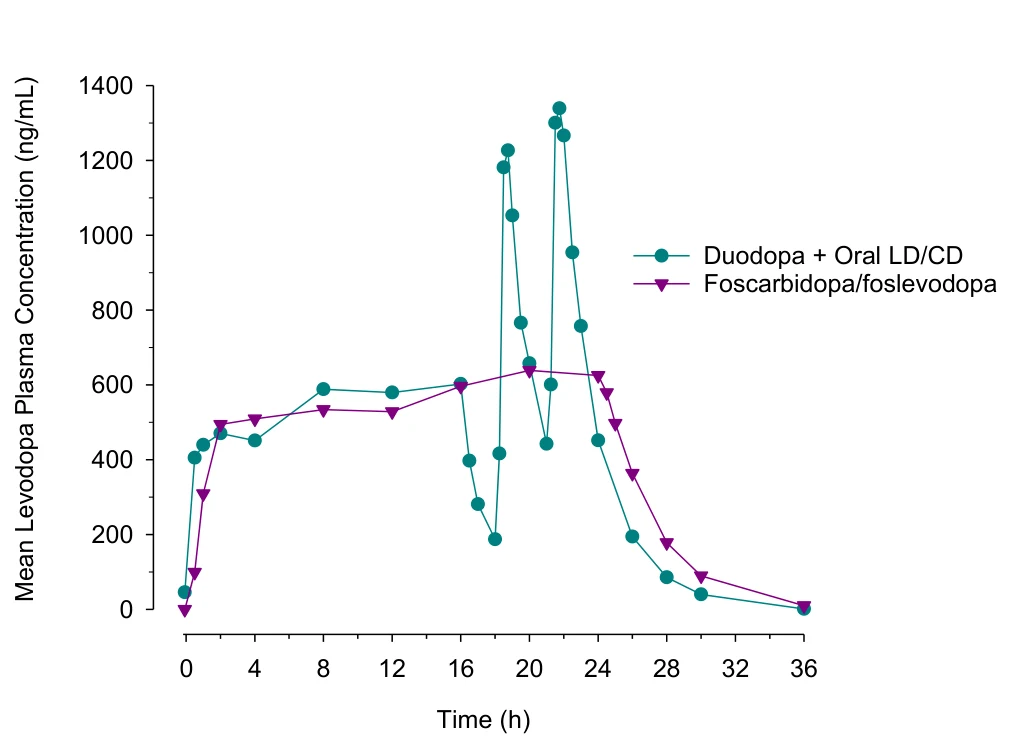
VYALEV is administered directly into the subcutaneous space and is quickly absorbed and converted to levodopa and carbidopa. VYALEV bypasses the gut, so food does not change absorption or exposure of levodopa/carbidopa. In a Phase 1 study conducted in healthy participants (Study M15-733), levodopa and carbidopa were detectable in plasma within 30 minutes. In most participants, the steady state was achieved within two hours when VYALEV dosing was delivered as loading dose followed by continuous infusion and was maintained during the infusion period. The bioavailability for levodopa from VYALEV was estimated as approximately 8% higher compared to levodopa from DUODOPA (M18-764).
Figure 1 below shows levodopa exposure in healthy participants following both 24-hour VYALEV subcutaneous administration and 16-hour DUODOPA intra-jejunal administration followed by night-time oral levodopa/carbidopa dosing (Study M17-220). Results from an additional Phase 1 PK comparability study demonstrated that levodopa exposure was comparable between VYALEV and DUODOPA when both were delivered over a 24-hour period in healthy participants (Study M20-141).
Figure 1 Levodopa Exposure (mean ± standard deviation) Following 24-hour Foscarbidopa/foslevodopa infusion and 16-hour DUODOPA followed by night-time oral doses
In order to determine absorption of VYALEV at different subcutaneous sites, healthy participants were administered VYALEV to the abdomen, arm and thigh using a 3-way crossover design (M15-733). Pharmacokinetic analysis from this study showed that the three sites have nearly identical levodopa and carbidopa exposure suggesting VYALEV absorption is similar at the different subcutaneous sites. Safety and efficacy of administration to the arm and thigh have not been evaluated.
Distribution
The volume of distribution of levodopa is moderately small. The partitioning ratio for levodopa between erythrocytes and plasma is approximately 1. Levodopa has negligible binding to plasma proteins (< 10%). Levodopa is transported into the brain by the carrier mechanism for large neutral amino acids.
Carbidopa is approximately 36% bound to plasma protein. Carbidopa does not cross the blood-brain barrier.
Both foslevodopa and foscarbidopa have low binding to plasma proteins (28% and 26%, respectively).
Metabolism and Elimination
Foslevodopa and foscarbidopa prodrugs are rapidly converted by ubiquitous phosphatases into levodopa and carbidopa and thus the prodrugs are removed quickly from circulation. Levodopa is mainly metabolized by the aromatic amino acid decarboxylase (AAAD) and the COMT enzymes. Other routes of metabolism are transamination and oxidation. The decarboxylation of levodopa to dopamine by AAAD is the major enzymatic pathway when no enzyme inhibitor is co-administered. O-methylation of levodopa by COMT forms 3-O-methyldopa. When administered with carbidopa, the elimination half-life of levodopa is approximately 1.5 hours. Carbidopa is metabolized to two main metabolites (α-methyl-3-methoxy-4-hydroxyphenylpropionic acid and α-methyl-3,4-dihydroxyphenylpropionic acid). These two metabolites are primarily eliminated in the urine unchanged or as glucuronide conjugates. Unchanged carbidopa accounts for 30% of the total urinary excretion. The elimination half-life of carbidopa is approximately 2 hours.
- Special populations and conditions
- Pediatrics: The pharmacokinetics of VYALEV in pediatrics have not been established.
- Geriatrics: The impact of age on the levodopa pharmacokinetics following VYALEV infusion was not specifically evaluated. Studies with levodopa suggest modest reduction of levodopa clearance with increasing age. VYALEV is intended for use in Parkinson’s disease patients who are already on a stable dose of oral levodopa and VYALEV dose is optimized once patients begin therapy. Therefore, age is not expected to impact clinical efficacy or safety.
- Sex: The impact of sex on the pharmacokinetics following VYALEV infusion was not specifically evaluated. The effect of sex on the pharmacokinetics of levodopa has been evaluated and studies suggested there is no clinically meaningful sex related difference in levodopa exposure. Following VYALEV dosing, levodopa exposure was higher in females once weight was considered by approximately 18% based on AUC. This difference in exposure is not clinically significant because VYALEV is intended for use in Parkinson’s disease patients who are already on a stable dose of oral levodopa and VYALEV is optimized once patients begin therapy. Therefore, covariate effects are not expected to impact clinical efficacy or safety.
Ethnic origin: Following VYALEV administration, carbidopa and levodopa exposures in both Japanese subjects and Han Chinese subjects were comparable to those in Caucasian subjects
- (Study M16-769).
Renal Insufficiency: The anticipated daily phosphorus load from the highest dose used in clinical trials of VYALEV (6000/300 mg/day of foslevodopa/foscarbidopa) is approximately 700 mg, which is considerably less than the National Academy of Sciences dietary reference intake upper limit of 3000 mg/day; however, there are no pharmacokinetic or safety data with VYALEV in patients with End Stage Renal Disease requiring dialysis. Therefore, caution should be exercised in patients with End Stage Renal Disease on dialysis requiring treatment with VYALEV because of diminished ability of the kidneys to eliminate phosphate.
VYALEV has a high sodium content, caution should be exercised in patients that are on a low salt diet (see 7 Warnings and Precautions, General).
- Body Weight: The impact of body weight on the levodopa pharmacokinetics following VYALEV infusion was not specifically evaluated. Previous studies of levodopa have shown that weight increases volume of distribution and can lower levodopa exposure. Any difference in exposure based on body weight is not clinically significant because VYALEV is intended for use in Parkinson’s disease patients who are already on a stable dose of oral levodopa and VYALEV is optimized once patients begin therapy. Therefore, covariate effects are not expected to impact clinical efficacy or safety.
- Storage, Stability, and Disposal
Store VYALEV refrigerated at 2 to 8°C. Do not freeze. Do not use any solution that has been frozen.
The medication vials are for single use only. Partially used vials should be discarded. Discard the vial after transfer of the product to the syringe.
Discard the syringe and any unused VYALEV in the syringe after the product has been in the syringe for 24 hours.
Discard all used administration supplies and any unused product immediately after each infusion in accordance with local requirements.
VYALEV may be stored at room temperature up to a maximum of (30°C) for a single period of up to 28 days. Once VYALEV has been stored at room temperature, do not return the product to the refrigerator. Discard VYALEV if not used within the 28-day room temperature period.
Other considerations:
- Do not use VYALEV beyond the expiration date on the vial/carton label.
- Do not shake.
- Do not dilute.
- Do not mix VYALEV with other products.
- Record the date when VYALEV is first removed from the refrigerator in the space provided on the carton.
- Use aseptic technique when preparing and administering this product.
The entire contents of a VYALEV vial should be transferred into a syringe for administration. Do not withdraw only a partial portion of the vial contents.
Part 2: Scientific Information
13. Pharmaceutical Information
Drug Substance
Non-proprietary name of the drug substance(s): Foslevodopa
Chemical name: (2S)-2-amino-3-[3-hydroxy-4-(phosphonooxy)phenyl] propanoic acid
Molecular formula and molecular mass: C9H12NO7P 277.17 g/mol
Structural formula:
Physicochemical properties: Levodopa-4´-monophosphate, an aromatic amino acid, is a white to off-white powder, freely soluble in aqueous media.
Drug Substance
Non-proprietary name of the drug substance(s): Foscarbidopa
Chemical name: (2S)-2-hydrazinyl-3-[3-hydroxy-4-(phosphonooxy)phenyl]-2-methylpropanoic acid
Molecular formula and molecular mass: C10H15N2O7P (anhydrous basis) 306.21 g/mol anhydrous
Structural formula:
Physicochemical properties: Carbidopa-4´-monophosphate, an inhibitor of aromatic amino acid decarboxylation, is a white to light yellow powder, freely soluble in aqueous media.
14. Clinical Trials
14.1. Clinical Trials by Indication
Parkinson’s Disease
Table 9. Summary of Patient Demographics for Clinical Trials in Parkinson’s Disease
| Study # | Study design | Dosage, route of administration and duration | Study subjects (n) | Age (range) | Sex (M/F) |
| M15-736 | Individualized dosing, CSCI of VYALEV for 24 hours daily + oral placebo compared with oral carbidopa-levodopa IR tablets + placebo CSCI, 12-week | 141 | 39 to 85 years (66.4) | 99/42 | |
| M15-7411,3 | Open-label, single arm, multicenter | Individualized dosing, 24-hour daily exposure of CSCI of VYALEV, 52-week | 244 | 34 to 86 years (63.9) | 146/98 |
| M20-0982,3 | Open-label, single arm, multicenter | Individualized dosing, 24-hour daily exposure of CSCI of VYALEV, 96-week | 103 | 39 to 85 years (67.0) | 76/27 |
| M15-7371,2,3 | Open-label, single arm, multicenter | Individualized dosing, 24-hour daily exposure of CSCI of VYALEV, 96-weeks | 105 | 33 to 86 years (62.4) | 68/37 |
1 The Crono PAR Series 3 Pump was used in the Open-label studies (M15-741 and M15-737), not the VYAFUSER.
2 Information for studies M20-098 and M15-737 is limited to the patient demographic table as insufficient data were collected as of the date of approval.
3 Study ongoing at the time of approval.
CSCI = Continuous subcutaneous infusion, IR = immediate release
The efficacy of VYALEV (foslevodopa/foscarbidopa solution) was established in a Phase 3, 12-week randomized, double-blind, double-dummy, active-controlled, multicenter study in patients with advanced Parkinson’s disease. A total of 141 patients were randomized in 1:1 ratio to receive either 24-hour/day continuous subcutaneous administration of VYALEV plus oral placebo capsules (N = 74) or 24-hour/day of subcutaneous administration of placebo solution plus oral encapsulated carbidopa-levodopa immediate-release (IR) tablets (N = 67) for 12 weeks. Treatment emergent adverse events led to discontinuation of VYALEV in 21.6% of patients and in 1.5% of the patients treated with oral IR carbidopa-levodopa. The majority of the treatment emergent adverse events leading to treatment discontinuation were related to infusion site reactions and infection, were mild or moderate in severity, non-serious and occurred in first four weeks of study treatment (see 8.2 Clinical Trial Adverse Reactions).
The study population was levodopa-responsive Parkinson’s disease patients whose motor symptoms were inadequately controlled by their current medications and experienced a minimum of 2.5 hours of "Off" time per day as assessed by Parkinson’s Disease diaries. Patients had a mean age of 66.4 years and a mean disease duration of 8.6 years. At baseline, 65.7% of patients in the oral IR carbidopa-levodopa group and 74.3% in the VYALEV group were taking at least one or more classes of Parkinson’s disease medications besides carbidopa-levodopa. During the double-blind treatment period, 32.8% of patients in the oral IR carbidopa-levodopa group and 25.7% of patients in the VYALEV group were not receiving any concomitant PD medication. The mean (SD) total daily dose of VYALEV was 1666.6 (740.91) mg LD with median of 1476.5 mg LD (range from 686.2 to 3887.5 mg LD) in the VYALEV group. The mean (SD) total daily dose of oral carbidopa-levodopa IR tablets was 1105.4 (582.50) mg LD with median of 582.50 mg LD (range from 236.8 to 2637.3 mg LD) in the oral IR carbidopa-levodopa group.
Study Results
The primary clinical outcome measure was the mean change from baseline to week 12 in the total daily mean “On” time without troublesome dyskinesia (defined as "On" time without dyskinesia plus "On" time with non-troublesome dyskinesia) based on Parkinson’s Disease diary. There were three key secondary endpoints tested in a hierarchical order: 1) mean change from baseline to Week 12 in the total daily mean “Off” time, 2) mean change from baseline to Week 12 in the Motor Aspects of Experiences of Daily Living (M-EDL) as assessed by the Movement Disorder Society-Unified Parkinson's Disease Rating Scale (MDS-UPDRS) Part II score, and 3) presence of morning akinesia at Week 12. The “On” and “Off” time were normalized to a 16-hour awake period based on a typical person’s waking day. VYALEV demonstrated statistically significant and clinically meaningful improvements from baseline to Week 12 in “On” time without troublesome dyskinesia compared with oral IR carbidopa-levodopa group (p = 0.0083; Error! Reference source not found.). VYALEV also demonstrated statistically significant and clinically meaningful improvements from baseline to Week 12 in “Off” time throughout the day compared with the oral IR carbidopa-levodopa group (p = 0.0054). The second key secondary endpoint (M-EDL of the MDS-UPDRS) failed to demonstrate a statistical difference, preventing the third (morning akinesia) to meet statistical significance, as per the hierarchical testing procedure.
Table 10 – Change from Baseline to Endpoint in Primary Measure and Key Secondary Endpoint
| Treatment Group | N | Baseline Mean (SD) | Endpoint Mean (SD) | LS Mean (SE) of Change | LS Mean (SE) of Difference | P value | |||||
|---|---|---|---|---|---|---|---|---|---|---|---|
| Primary Endpoint | |||||||||||
| “On” time without troublesome dyskinesia (hours)1 | |||||||||||
| Oral IR carbidopa-levodopa2 | 67 | 9.49 (2.62) | 0.85 (3.46) | 0.97 (0.50) | |||||||
| VYALEV | 73 | 9.20 (2.42) | 3.36 (3.62) | 2.72 (0.52) | 1.75 (0.65) | 0.00833 | |||||
| Key Secondary Endpoint | |||||||||||
| “Off” time (hours)1 | |||||||||||
| Oral IR carbidopa-levodopa2 | 67 | 5.91 (1.88) | -0.93 (3.31) | -0.96 (0.49) | |||||||
| VYALEV | 73 | 6.34 (2.27) | -3.41 (3.76) | -2.75 (0.50) | -1.79 (0.63) | 0.00543 | |||||
1 Derived from Parkinson’s Disease diary.
2 Oral immediate release levodopa-carbidopa tablets.
3 These endpoints were analysed with a mixed-effect model for repeat measures (MMRM)
SD = standard deviation; SE = standard error.
Phase 3, Open-Label, Single-Arm Study (M15-741)
A Phase 3, open-label, single-arm study was conducted to evaluate the safety and tolerability of 24-hour daily exposure of continuous subcutaneous infusion of VYALEV over 52 weeks in 244 patients. The study used the Crono PAR Series 3 pump, not the VYAFUSER for the drug delivery. The study population was levodopa-responsive Parkinson’s disease patients whose motor symptoms were inadequately controlled with current treatment who experienced a minimum of 2.5 hours of "Off" time per day as assessed by Parkinson’s disease diaries. The dose conversion from oral medications to VYALEV was achieved with one outpatient office visit. Patients had a mean age of 63.9 years and a mean disease duration of 10.7 years. The mean (SD) of total daily dose of VYALEV was 1736.2 (697.25) mg LD with median of 1657.8 mg LD (range from 304.9 to 3838.0 mg LD).
Study Results
The primary endpoints of the study were all related to safety and tolerability. The summary of the safety profile of VYALEV is provided in section 8.2 Clinical Trial Adverse Reactions and 8.3 Less Common Clinical Trial Adverse Reactions. 43.9% of the patients prematurely discontinued the study treatment. A total of 137 patients completed the study. Secondary efficacy endpoints included average normalised daily “Off” and “On” times as assessed by Parkinson’s disease Diary. The mean daily normalised “Off” time (Parkinson’s disease Diary) decreased from 5.98 hours at baseline to 2.47 hours at Week 52 (a mean improvement of 3.51 hours) as demonstrated by a reduction in the number of patients reporting morning "Off" (morning akinesia) in their PD Diaries from baseline to study end. The reduction in “Off” time was associated with a corresponding mean increase of 3.77 hours from baseline in “On” time without troublesome dyskinesia rather than “On” time with non-troublesome dyskinesia (decrease of 0.17 hours).
15. Microbiology
No microbiological information is required for this drug product.
16. Non-Clinical Toxicology
VYALEV contains hydrazine, a degradation product of foscarbidopa and carbidopa. Hydrazine is known to be genotoxic, as demonstrated in in vitro genotoxicity assays (Ames, chromosomal aberration in mammalian cells, and mouse lymphoma tk) and in the in vivo mouse micronucleus assay; however, it has also been shown to be negative in other mammalian in vitro (MutaTM Mouse lung epithelial cells) and in vivo (Big Blue® mouse) mutagenicity assays. In published studies, hydrazine has been demonstrated to be carcinogenic in multiple rodent species.
General Toxicology
Non-clinical data with foslevodopa, foscarbidopa, levodopa, and carbidopa revealed no special hazard for humans based on conventional studies of repeated dose toxicity.
Most of the toxicology studies have been performed with a formulation of 4:1 foslevodopa/foscarbidopa ratio, while the formulation intended for use in human has a ratio of 20:1. The definitive toxicology study (i.e., 13-weeks subcutaneous study in dogs) was performed with the foslevodopa/foscarbidopa formulation intended for use in humans, at an equivalent concentration slightly below the expected exposure at the maximum therapeutic dose (approximately 0.4-fold, based on the steady state concentration in dogs compared to maximal concentration at the highest daily dose in patients).
Genotoxicity
Foscarbidopa was positive in the in vitro Ames test, in the absence of metabolic activation. Chromosomal aberration in vitro testing using human lymphocytes did not show abnormalities. Foslevodopa/foscarbidopa were also negative in the in vivo mouse micronucleus assay.
Carcinogenicity
Ratios of 2:1, 5:1 and 10:1 levodopa/carbidopa, with a fixed dose of 10 mg/kg/day of carbidopa, given by gavage, were investigated in groups of 70 male and 70 female Sprague-Dawley rats for 106 weeks. The study was controlled with 70 male and 70 female rats receiving 0.5% methylcellulose. Interim sacrifices of 10 male and 10 female animals were made at 26 and 52 weeks. Sufficient animals survived the treatment period to allow for proper interpretation of the data. There was no alteration to the tumour profile associated with the administration of this combination product
Reproductive and developmental toxicology
When administered to pregnant rabbits throughout organogenesis, ratios of 125:62.5, 187:37.5 and 250:25 mg/kg/day levodopa/carbidopa by oral gavage caused both visceral and skeletal malformations in fetuses at all doses and ratios of levodopa/carbidopa tested. No teratogenic effects were observed when levodopa/carbidopa was administered to pregnant mice throughout organogenesis. There was a decrease in the number of live pups delivered by rats receiving by oral gavage a ratio of 125:12.5 mg/kg/day of levodopa/carbidopa during organogenesis (see 7.1.1 Pregnancy).
In reproduction studies, no effects on fertility were observed in rats receiving levodopa/carbidopa.
Local tolerance
Dog studies ranging from 2-day to 13-week duration did not demonstrate specific systemic toxicities related to continuous infusion of formulations of foslevodopa/foscarbidopa. In the 28-day study, foslevodopa/foscarbidopa exacerbated in a dose-related manner the background inflammation expected from chronic implantation of a catheter. Furthermore, a dose of 1200/300 mg/day of foslevodopa/foscarbidopa (i.e., ratio 4:1) during 28 days led to more severe inflammation processes, including neutrophilic infiltrations, abscesses and septic inflammation. However, in the 13-week study (with a lower dose 576/28.8 mg/day and clinically-relevant ratio 20:1) no differences were noted between foslevodopa/foscarbidopa treated dogs and those treated with the vehicle control.
17. Supporting Product Monographs
DUODOPA® levodopa and carbidopa monohydrate intestinal gel, 20 mg/mL and 5 mg/mL, Submission Control No. 252247, product monograph, AbbVie Corporation. (April 04, 2022).