


Product Monograph - Zolymbus
Recent Major Label Changes
Not applicable.
Table of Contents
Certain sections or subsections that are not applicable at the time of the preparation of the most recent authorized product monograph are not listed.
Recent Major Label Changes ................................................................................................... 2
Table of Contents ................................................................................................................... 2
Part 1: Healthcare Professional Information ........................................................................... 4
- 1.
Indications ....................................................................................................................... 4
1.1. Pediatrics .................................................................................................................. 4
1.2. Geriatrics .................................................................................................................. 4
- 2. Contraindications ............................................................................................................ 4
- 4.
Dosage and Administration ............................................................................................. 4
4.2. Recommended Dose and Dosage Adjustment ......................................................... 4
4.4. Administration .......................................................................................................... 4
4.5. Missed Dose ............................................................................................................. 5
- 5. Overdose ......................................................................................................................... 5
- 6. Dosage Forms, Strengths, Composition, and Packaging ................................................... 5
- 7.
Warnings and Precautions ............................................................................................... 5
General ................................................................................................................................. 5
Driving and Operating Machinery ......................................................................................... 6
Hepatic/Biliary/Pancreatic .................................................................................................... 6
Ophthalmologic .................................................................................................................... 6
Reproductive health ............................................................................................................. 7
Respiratory ........................................................................................................................... 7
Skin ....................................................................................................................................... 7
7.1. Special Populations .................................................................................................. 8
7.1.1. Pregnancy ........................................................................................................ 8
7.1.2. Breastfeeding .................................................................................................. 8
7.1.3. Pediatrics ......................................................................................................... 8
7.1.4. Geriatrics ......................................................................................................... 8
- 8.
Adverse Reactions ........................................................................................................... 8
8.1. Adverse Reaction Overview ...................................................................................... 8
8.2. Clinical Trial Adverse Reactions ................................................................................ 8
8.3. Less Common Clinical Trial Adverse Reactions ....................................................... 10
8.5. Post-Market Adverse Reactions ............................................................................. 11
- 9.
Drug Interactions ........................................................................................................... 12
9.2. Drug Interactions Overview .................................................................................... 12
9.4. Drug-Drug Interactions ........................................................................................... 12
9.5. Drug-Food Interactions........................................................................................... 12
9.6. Drug-Herb Interactions ........................................................................................... 12
9.7. Drug-Laboratory Test Interactions ......................................................................... 12
- 10.
Clinical Pharmacology ................................................................................................... 12
10.1. Mechanism of Action .............................................................................................. 12
10.2. Pharmacodynamics ................................................................................................ 12
10.3. Pharmacokinetics ................................................................................................... 13
- 11. Storage, Stability, and Disposal ...................................................................................... 14
Part 2: Scientific Information ................................................................................................ 15
- 13. Pharmaceutical Information .......................................................................................... 15
- 14.
Clinical Trials .................................................................................................................. 15
14.1. Clinical Trials by Indication ..................................................................................... 15
- 15. Microbiology ................................................................................................................. 19
- 16. Non-Clinical Toxicology .................................................................................................. 19
Patient Medication Information ........................................................................................... 22
Part 1: Healthcare Professional Information
1. Indications
ZOLYMBUS (bimatoprost ophthalmic gel) is indicated for:
- the reduction of elevated intraocular pressure (IOP) in patients with open angle glaucoma or ocular hypertension.
1.1. Pediatrics
Pediatrics (<18 years): No data are available to Health Canada; therefore, Health Canada has not authorized an indication for pediatric use.
1.2. Geriatrics
No overall differences in safety or effectiveness have been observed between elderly and other adult patients.
2. Contraindications
- ZOLYMBUS is contraindicated in patients who are hypersensitive to this drug or to any ingredient in the formulation, including any non-medicinal ingredient, or component of the container. For a complete listing, see 6 Dosage Forms, Strengths, Composition and Packaging.
4. Dosage and Administration
4.2. Recommended Dose and Dosage Adjustment
The recommended dosage is one drop in the affected eye(s) once daily in the evening. ZOLYMBUS should not be administered more than once daily since it has been shown that more frequent administration of prostamide analogues may lessen the IOP lowering effect and increase the frequency and severity of adverse events (see 7 Warnings and Precautions, General).
Health Canada has not authorized an indication for pediatric use.
4.4. Administration
The ophthalmic gel from one single-dose container is to be used immediately after opening for administration to one or both eyes. Since sterility cannot be maintained after the individual unit is opened, the remaining contents should be discarded immediately after administration.
Patients should be instructed to avoid allowing the tip of the single-dose container to contact the eye, surrounding structures, fingers, or any other surface to avoid eye injury and contamination of the ophthalmic gel.
ZOLYMBUS may be used concomitantly with other topical ophthalmic drug products to lower IOP. If more than one topical ophthalmic drug is being used, the drugs should be administered at least five minutes apart. ZOLYMBUS should be instilled last.
Contact lenses should be removed prior to the administration of ZOLYMBUS and may be reinserted 15 minutes after administration (see 7 Warnings and Precautions).
Apply ZOLYMBUS as instructed and avoid it running onto the cheek or other skin areas (see 7 Warnings and Precautions, Skin).
4.5. Missed Dose
Advise patients that if one dose is missed, treatment should continue with the next dose as normal. They should not take a double dose to make up for a missed dose (see 7 Warnings and Precautions, General).
5. Overdose
No information is available on overdosage in humans. If overdose with ZOLYMBUS occurs, treatment should be symptomatic.
In oral (by gavage) mouse and rat studies, doses up to 100 mg/kg/day did not produce any toxicity. This dose, expressed as mg/m2, is at least 90 times higher than the accidental dose of the entire content of a carton of ZOLYMBUS (30 x 0.3 g single-dose containers; 9 g) for a 10 kg child.
| For the most recent information in the management of a suspected drug overdose, contact your regional poison control centre or Health Canada’s toll-free number, 1-844 POISON-X (1-844-764-7669). |
|---|
- 6. Dosage Forms, Strengths, Composition, and Packaging
Table 1 - Dosage Forms, Strengths, and Composition
Description
ZOLYMBUS is a sterile, preservative-free, opalescent, colorless ophthalmic gel with an osmolality of approximately 300 mOsmol/kg.
ZOLYMBUS is supplied in clear low-density polyethylene (without additives) single-dose containers packaged in foil pouches (10 single-dose containers per pouch). ZOLYMBUS is available in the following package sizes: cartons containing 10 single-dose units or 30 single-dose units.
ZOLYMBUS does not contain a preservative.
7. Warnings and Precautions
General
Before treatment is initiated, patients should be informed of the possibility of prostaglandin analogue periorbitopathy (PAP) and increased iris pigmentation, since these adverse events have been observed during treatment with bimatoprost 0.01% ophthalmic solution. Some of these changes may be permanent and may lead to heterochromia between eyes.
| Route of Administration | Dosage Form/ Strength/Composition | Non-Medicinal Ingredients |
| Ocular | Ophthalmic gel, 0.01% w/w | Carbomer, polyethylene glycol, sodium acetate trihydrate, sodium hydroxide, sorbitol and water for injection. |
Pigmentation
Bimatoprost has been reported to cause changes to pigmented tissue. The changes include increased pigmentation of eyelashes, the iris and periorbital tissue (eyelid). The increased iris pigmentation may be permanent.
Bimatoprost may gradually change eye color, increasing the amount of brown pigment in the iris by increasing the number of melanosomes (pigment granules) in melanocytes. The long-term effects on the melanocytes and the consequences of potential injury to the melanocytes and/or deposition of pigment granules to other area of the eye are currently unknown. The change in iris color occurs slowly and may not be noticeable for several months to years. Pigmentation is expected to increase as long as bimatoprost ophthalmic solution is administered. In a 12-month clinical study, iris color change was reported in 0.5% of patients treated with bimatoprost ophthalmic solution 0.01%.
Patients should be informed of the possibility of iris color change. In addition, patients who are expected to receive treatment in only one eye should be informed about the potential for increased brown pigmentation of the iris, periorbital tissue, and eyelashes in the treated eye and thus, heterochromia between the eyes.
Typically, the brown pigmentation around the pupil is expected to spread concentrically towards the periphery in affected eyes, but the entire iris or parts of it may also become more brownish. Until more information about increased brown pigmentation is available, patients should be examined regularly and, depending on the clinical situation, treatment may be stopped if increased pigmentation ensues.
The increase in brown iris pigment is not expected to progress further upon discontinuation of treatment, but the resultant color change may be permanent. Neither nevi nor freckles of the iris are expected to be affected by treatment.
Eyelash Changes
ZOLYMBUS may gradually change eyelashes and vellus hair in the treated eye. These changes include increased length, thickness, and number of lashes. Eyelash changes are usually reversible upon discontinuation of treatment.
Driving and Operating Machinery
Based on the pharmacodynamic profile, bimatoprost is not expected to influence a patient’s ability to drive or operate machinery. As with any ocular medication, if transient blurred vision occurs at instillation, the patient should wait until the vision clears before driving or using machinery.
Hepatic/Biliary/Pancreatic
ZOLYMBUS has not been studied in patients with hepatic impairment and should therefore be used with caution in such patients.
Ophthalmologic
Bimatoprost has been reported to cause intraocular inflammation. In addition, because these products may exacerbate inflammation, caution should be used in patients with active intraocular inflammation (e.g., uveitis).
There have been rare spontaneous reports of reactivation of previous corneal infiltrates or ocular infections with bimatoprost. ZOLYMBUS should be used with caution in patients with a prior history of significant ocular viral infections (e.g., herpes simplex).
Macular edema, including cystoid macular edema, has been reported during treatment with bimatoprost ophthalmic products. ZOLYMBUS should be used with caution in aphakic patients, in pseudophakic patients with a torn posterior lens capsule, or in patients with known risk factors for macular edema.
ZOLYMBUS has not been studied in patients with inflammatory ocular conditions, neovascular, inflammatory, angle-closure glaucoma, congenital glaucoma or narrow-angle glaucoma.
There is a potential for the IOP-lowering effect of prostaglandin analogues to be reduced in patients with glaucoma or ocular hypertension when used with other prostaglandin analogues. More frequent exposure of the eye to bimatoprost, including administration of more than one daily dose, may decrease the IOP-lowering effect. Patients using ZOLYMBUS with other prostaglandin analogues should be monitored for changes in IOP.
Patients wearing contact lenses should be instructed to remove contact lenses prior to administration of ZOLYMBUS and wait at least 15 minutes following administration before reinserting contact lenses.
Renal
ZOLYMBUS has not been studied in patients with renal impairment and should therefore be used with caution in such patients.
Reproductive health
Fertility
There is no data on the effects of bimatoprost on human fertility. Bimatoprost did not impair fertility in male or female rats orally administered up to doses of 0.6 mg/kg/day (at least 103 times the recommended ocular human exposure to bimatoprost solution 0.03% dosed bilaterally once daily based on blood area under the curve [AUC] levels).
Respiratory
ZOLYMBUS has not been studied in patients with compromised respiratory function. While there is limited information available on patients with a history or asthma or Chronic Obstructive Pulmonary Disease (COPD), cases of asthma exacerbation, dyspnea and COPD as well as reports of asthma have been reported during post marketing use of bimatoprost ophthalmic products. Patients with asthma, COPD or other compromised respiratory function should be treated with caution (see 8.3 Less Common Clinical Trial Adverse Reactions).
Skin
There is the potential for hair growth and hyperpigmentation to occur in areas where ZOLYMBUS comes repeatedly in contact with the skin surface. Thus, it is important to apply ZOLYMBUS as instructed and to avoid it running onto the cheek or other skin areas.
7.1. Special Populations
7.1.1. Pregnancy
ZOLYMBUS was not studied in pregnant women. Because animal reproductive studies are not always predictive of human response, ZOLYMBUS should be administered during pregnancy only if the potential benefit justifies the potential risk to the fetus.
In embryofetal developmental studies in pregnant mice and rats, abortion was observed at oral doses of bimatoprost that were at least 33 or 97 times, respectively, the intended human exposure obtained in subjects administered bimatoprost ophthalmic solution 0.03%, one drop/day in both eyes for 14 days.
Maternal toxicity and reduced pup body weights were observed when female rats received oral doses that were at least 41 times the intended human exposure obtained in subjects administered bimatoprost ophthalmic solution 0.03%, one drop/day in both eyes for 14 days (see 16 Non-Clinical Toxicology).
7.1.2. Breastfeeding
It is not known whether topical ocular treatment with ZOLYMBUS could result in sufficient systemic absorption to produce detectable quantities in human milk. In animal studies, bimatoprost has been shown to be present in breast milk of lactating rats (see 16 Non-Clinical Toxicology).
The developmental and health benefits of breastfeeding should be considered along with the mother’s clinical need for ZOLYMBUS and any potential adverse effects on the breastfed child from ZOLYMBUS.
7.1.3. Pediatrics
Pediatrics (<18 years): No data are available to Health Canada; therefore, Health Canada has not authorized an indication for pediatric use.
7.1.4. Geriatrics
No overall differences in safety or effectiveness have been observed between elderly and other adult patients.
8. Adverse Reactions
8.1. Adverse Reaction Overview
ZOLYMBUS ophthalmic gel was studied in a total of 949 patients in two Phase 3 studies with a treatment duration of three months. In these studies, 467 patients were treated with preservative-free ZOLYMBUS 0.01% ophthalmic gel, and 482 patients were treated with bimatoprost 0.01% ophthalmic solution with preservative. The most common ocular adverse reactions in both treatment groups were conjunctival hyperemia, eye irritation, dry eye and eye pruritus. Most ocular adverse reactions were mild to moderate in severity. No serious ocular adverse events were reported.
8.2. Clinical Trial Adverse Reactions
Clinical trials are conducted under very specific conditions. Therefore, the frequencies of adverse reactions observed in the clinical trials may not reflect frequencies observed in clinical practice and should not be compared to frequencies reported in clinical trials of another drug.
The clinical safety of ZOLYMBUS has been evaluated in two Phase 3 studies (LT4032-301 and LT4032-302) performed in patients with open angle glaucoma or ocular hypertension who were previously well-controlled with an ocular hypotensive monotherapy treatment. ZOLYMBUS ophthalmic gel was administered once daily for 3 months and was compared to bimatoprost 0.01% ophthalmic solution with preservative administered once daily. Ocular adverse reactions are presented in Table 2.
At least one ocular adverse reaction was reported in 162 (34.7%) participants in the ZOLYMBUS group and 182 (37.8%) participants in the bimatoprost with preservative group.
Table 2 - Ocular Adverse Reactions Reported in ≥1% of Patients in Either Treatment Group (Study LT4032-301 and Study LT4032-302 combined)
| System organ class/preferred term | ZOLYMBUS N = 467 n (%) | Bimatoprost with Preservative N = 482 n (%) | |||||
| Eye Disorders | |||||||
| Conjunctival hyperemia a | 65 (13.9) | 83 (17.8) | |||||
| Eye irritation b | 62 (13.3) | 63 (13.5) | |||||
| Dry eye c | 59 (12.6) | 63 (13.5) | |||||
| Eye pruritus d | 48 (10.3) | 57 (12.2) | |||||
| Foreign body sensation in eyes e | 42 (9.0) | 32 (6.9) | |||||
| Lacrimation increased f | 28 (6.0) | 29 (6.2) | |||||
| Eye pain g | 19 (4.1) | 27 (5.8) | |||||
| Vision blurred h | 9 (1.9) | 5 (1.1) | |||||
| Blepharitis i | 7 (1.5) | 12 (2.6) | |||||
| Non infective conjunctivitis j | 4 (0.9) | 7 (1.5) | |||||
a Includes conjunctival hyperemia, instillation site erythema, and ocular hyperemia b Includes eye irritation, conjunctival irritation, instillation site paraesthesia, instillation site burn, instillation site discomfort, instillation site irritation c Includes abnormal sensation in eye, conjunctival staining, dry eye, instillation site dryness, punctate keratitis, tear break up time decreased, vital dye staining cornea present d Includes eye pruritus, instillation site pruritus e Includes abnormal sensation in eye, foreign body sensation in eyes, instillation site foreign body sensation f Includes instillation site lacrimation, lacrimation increased g Includes eye pain, instillation site pain h Includes instillation site complication, instillation site reaction, vision blurred, i Includes blepharitis, eyelid margin crusting, j Includes conjunctivitis allergic, non infective conjunctivitis | |||||||
A total of 7 (1.5%) patients in the ZOLYMBUS group and 6 (1.2%) patients in the bimatoprost with preservative group experienced at least one ocular adverse event leading to premature drug withdrawal. In the ZOLYMBUS group, these events were conjunctival hyperemia, eczema, eye irritation, intraocular pressure increased, madarosis, and vision blurred. In the bimatoprost with preservative group, these events were conjunctival hyperemia, eye irritation, eye pain, eye pruritus, intraocular pressure increased, and vision blurred.
A total of 4 (0.8%) patients in the ZOLYMBUS group and 2 (0.4%) patients in the bimatoprost with preservative group experienced at least one severe ocular adverse reaction. In the ZOLYMBUS group, severe ocular adverse reactions were eye pruritus, eczema, and lacrimation increased. In the bimatoprost with preservative treatment-group, severe ocular adverse reactions were dry eye and eye irritation.
8.3. Less Common Clinical Trial Adverse Reactions
Other ocular/systemic adverse reactions reported in less than 1.0% of patients in the ZOLYMBUS group include the following:
Eye disorders: asthenopia, blepharal pigmentation, eye discharge, eyelid oedema, growth of eyelashes, photophobia, prostaglandin analogue periorbitopathy, visual impairment
Investigations: intraocular pressure increased
Nervous system disorders: dizziness, headache
Skin and subcutaneous disorders: eczema, madarosis
Safety Data from Other Clinical Trials
- -related adverse events were reported in clinical studies conducted with bimatoprost ophthalmic solution.
- to <1%).
- aemia, eye pruritus, growth of eyelashes
- asthenopia, blepharal pigmentation, blepharitis, cataract, conjunctival oedema, conjunctivitis allergic, dry eye, erythema of eyelid, eye discharge, eyelash discoloration, eye irritation, eye pain, foreign body sensation, iris hyperpigmentation, lacrimation increased, photophobia, punctuate keratitis, visual acuity reduced, visual impairment
- blepharospasm, chalazion, conjunctival bleb, conjunctival disorder, conjunctivitis, corneal erosion, diplopia, eye oedema, eyelid disorders, eyelid margin crusting, eyelid oedema, eyelid pain, eyelids pruritus, hordeolum, iritis, keratitis, visual field defect, vitreous floaters
- dry mouth, dyspepsia
- hypercholesterolaemia, oedema peripheral
- anxiety, insomnia, nervousness
- cystitis, urine abnormality
- bronchitis, cough, dyspnea, pharyngitis, rhinitis, sinusitis
- dry skin, rash
Common: hypertension
8.5. Post-Market Adverse Reactions
The following adverse reactions have been identified during post-approval use of topical bimatoprost products. Because these reactions are reported voluntarily from a population of uncertain size, it is not always possible to reliably estimate their frequency or establish a causal relationship to drug exposure. These reactions, which have been chosen for inclusion due to either their seriousness, frequency of reporting, possible causal connection to ZOLYMBUS, or a combination of these factors.
Cardiac disorders: angina pectoris, chest discomfort
Eye disorders: choroidal effusion, conjunctival hemorrhage, enophthalmos and eyelid retraction, eyelid ptosis, macular edema, ocular discomfort, trichiasis, uveitis
Immune system disorders: hypersensitivity including signs and symptoms of eye allergy and allergic dermatitis
- : asthma-like symptoms or exacerbation of existing asthma
- : hypertrichosis, skin discolouration
9. Drug Interactions
9.2. Drug Interactions Overview
No specific drug interaction studies have been conducted. Due to low systemic drug concentrations of bimatoprost (mean Cmax 0.028 ng/mL) following ocular dosing, no systemic drug-drug interactions are anticipated.
9.4. Drug-Drug Interactions
No specific drug interaction studies have been performed with bimatoprost 0.01%. In clinical studies, bimatoprost 0.03% eye drops solution was used concomitantly with several different beta-blocking agents without evidence of interactions.
9.5. Drug-Food Interactions
Interactions with food have not been established.
9.6. Drug-Herb Interactions
Interactions with herbal products have not been established.
9.7. Drug-Laboratory Test Interactions
Interactions with laboratory tests have not been established.
10. Clinical Pharmacology
10.1. Mechanism of Action
Bimatoprost, a prostamide analogue, is a synthetic structural analogue of prostaglandin F2α (PGF2α) with ocular hypotensive activity. Bimatoprost is made by replacement of the carboxylic acid group of PGF2α by an electrochemically neutral substituent (part of amido group). Given this substitution, it selectively mimics the effects of naturally occurring substances, prostamides. As such, bimatoprost does not exhibit any significant pharmacological activity on PGF2α-sensitive receptors (FP receptors).
Bimatoprost is believed to lower IOP in humans by increasing outflow of aqueous humor through both the trabecular meshwork and uveoscleral routes with no significant effect on aqueous humor inflow. Elevated IOP presents a major risk factor for glaucomatous field loss. The higher the level of IOP, the greater the likelihood of optic nerve damage and visual field loss.
10.2. Pharmacodynamics
Reduction of the intraocular pressure starts approximately 4 hours after the first administration and maximum effect is reached within approximately 8 to 12 hours. The duration of effect is maintained for at least 24 hours.
10.3. Pharmacokinetics
Table 3 - Summary of ZOLYMBUS Pharmacokinetic Parameters in healthy participants*
| Cmax (ng/mL) Mean ± SD | Tmax (h) Median | Tlast (h) Median | AUC0-last (ng.h/mL) Mean ± SD | |
| Day 1 | 0.02 ± 0.01 | 0.17 | 0.50 | 0.0087 ± 0.0047 |
| Day 15 | 0.03 ± 0.02 | 0.17 | 0.50 | 0.0093 ± 0.0077 |
*Healthy participants were administered ZOLYMBUS once daily in the morning from Day 1 to Day 15
Absorption
After one drop of bimatoprost ophthalmic gel 0.1 mg/g was administered once daily to both eyes of 20 healthy participants for two weeks, blood concentrations peaked within 10 minutes after dosing and were below the lower limit of detection (5 pg/mL) in most subjects within 30 minutes after dosing. Mean Cmax values were similar on days 1 and 14 at 0.021 ng/mL and 0.028 ng/mL, respectively, indicating that a steady state was reached. There was no significant systemic drug accumulation over time.
Distribution
Bimatoprost is moderately distributed into body tissues with a steady-state volume of distribution of 0.67 L/kg. In human blood, bimatoprost resides mainly in the plasma. Approximately 12% of bimatoprost remains unbound in human plasma.
Metabolism
Bimatoprost is the major circulating species in the blood once it reaches the systemic circulation following ocular dosing. Bimatoprost then undergoes oxidation, N-deethylation and glucuronidation to form a diverse variety of metabolites. Studies using human liver microsomes and recombinant human P450 isozymes identified CYP 3A4 as one of the enzymes involved in the metabolism of bimatoprost in humans.
Bimatoprost is only minimally metabolized in ocular tissues in humans, and is active in its intact form, without metabolic modification.
Elimination
Following an intravenous dose of radiolabeled bimatoprost (3.12 mcg/kg) to six healthy subjects, the maximum blood concentration of unchanged drug was 12.2 ng/mL and decreased rapidly with an elimination half-life of approximately 45 minutes. The total blood clearance of bimatoprost was 1.5 L/hr/kg. Up to 67% of the administered dose was excreted in the urine while 25% of the dose was recovered in the feces. Both urinary and fecal routes are important pathways for elimination of the parent compound and its metabolites following intravenous administration.
Special populations and conditions
- Geriatrics: Elderly individuals (>65 years) exhibited higher systemic levels after twice daily dosing with 0.3 mg/mL bimatoprost (preserved formulation) but this was not considered to be clinically relevant since systemic exposure for both elderly and young subjects remained very low and no overall clinical differences in safety or effectiveness have been observed between elderly and other adult patients.
- Storage, Stability, and Disposal
ZOLYMBUS single-dose containers should be stored in the original foil pouch at 15°C to 30°C. Protect from light.
After the pouch is opened, keep the single-dose containers in the original opened foil pouch for up to 30 days at room temperature (15°C to 30°C) and protect from light. Discard any unopened containers 30 days after first opening the pouch.
After the single-dose container is opened, use immediately and discard the single-dose container after use.
Keep out of reach and sight of children.
Part 2: Scientific Information
13. Pharmaceutical Information
Drug Substance
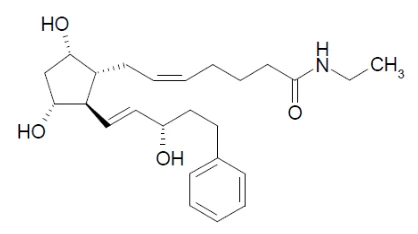
Non-proprietary name of the drug substance(s): bimatoprost
Chemical name: 5-Heptenamide, 7-[(1R,2R,3R,5S)-3,5-dihydroxy-2-[(1E,3S)-3-hydroxy-5-phenyl-1-penten-1-yl]cyclopentyl]-N-ethyl, (5Z)-
Molecular formula and molecular mass: C25H37NO4; ≈ 415.6 g/mol
Structural formula:
Physicochemical properties: Bimatoprost appears as white or off-white crystalline powder, which is freely soluble in ethanol and methanol and practically insoluble in water.
14. Clinical Trials
14.1. Clinical Trials by Indication
Reduction of Intraocular Pressure
The clinical safety and efficacy of ZOLYMBUS (bimatoprost 0.01% ophthalmic gel) in the reduction of IOP was studied in two Phase 3, randomized, parallel group, investigator-masked, noninferiority clinical trials where ZOLYMBUS was compared to bimatoprost 0.01% ophthalmic solution with preservative (Study LT4032-301 and Study LT4032-302).
Both trials enrolled patients (aged ≥18 years old) diagnosed with open angle glaucoma or ocular hypertension in both eyes who were well-controlled with an ocular hypotensive monotherapy treatment (≤ 18 mm Hg in study LT4032-301 and ≤ 21 mm Hg in study LT4032-302). Patients with advanced glaucoma, a history of non-responder to prostaglandin therapy, or previous glaucoma filtration surgery were excluded. Patients’ previous ocular antiglaucoma/hypotensive treatment was fully washed out before the study treatment was started. Patient demographics are summarized in Table 4.
Table 4 - Summary of Patient Demographics for Clinical Trials in the Reduction of Intraocular Pressure
| Study # | Study design | Dosage, route of administration and duration | Study patients (n) | Mean age (Range) | Sex (F/M) |
| LT4032-301 | Randomized, multicentre, parallel group, investigator masked | ZOLYMBUS 0.01% Bimatoprost 0.01% with preservative Ophthalmic; one drop into each eye once daily for 3 months | ZOLYMBUS: 236 Bimatoprost 0.01% with preservative: 249 | ZOLYMBUS: 63.0 (32-91) years Bimatoprost 0.01% with preservative: 63.7 (30-90) years | ZOLYMBUS: 141/95 Bimatoprost 0.01% with preservative: 153/96 |
| LT4032-302 | Randomized, multicenter, parallel group, investigator masked | ZOLYMBUS 0.01% Bimatoprost with preservative 0.01% Ophthalmic; one drop into each eye once daily for 3 months | ZOLYMBUS: 231 Bimatoprost 0.01% with preservative: 233 | ZOLYMBUS: 67.3 (28-88) years Bimatoprost 0.01% with preservative: 67.4 (23-90) years | ZOLYMBUS: 122/109 Bimatoprost 0.01% with preservative: 127/106 |
F = female; M = male
Study LT4032-301
Over 90% of the enrolled patients completed the 3-month study; 218 (92.4%) in the ZOLYMBUS group and 227 (91.2%) in the bimatoprost 0.01% ophthalmic solution with preservative group.
The primary efficacy endpoint was the change in IOP from baseline at three timepoints (8:00 AM, 10:00 AM, and 4:00 PM) at Week 12 in the worse eye, defined as the eye with the highest IOP at baseline (i.e., at 8:00 AM), or as the right eye in case there was no IOP difference between eyes. Noninferiority testing was performed based on the 95% confidence interval (CI) around the difference between the two treatment groups (ZOLYMBUS minus bimatoprost 0.01% ophthalmic solution with preservative) in the change from baseline in IOP and was tested using a mixed model for repeated measures (MMRM) approach. The MMRM analysis was performed on the modified intent-to-treat (mITT) population, defined as all randomized subjects with at least one eligible eye having received at least one dose of product, and for whom any baseline and follow-up IOP measurement was available on the worse eye. Noninferiority was achieved if the upper bound of the 95% CI around the difference between treatment groups was lower than the margin of +1.5 mmHg for each of the 3 timepoints.
The mean change in IOP from baseline at Week 12 in the worse eye is presented in Table 5. Observed changes in IOP at Week 12 are consistent with the expected efficacy of both study treatments in this patient population. Based on the MMRM analysis, noninferiority to bimatoprost 0.01% ophthalmic solution with preservative was demonstrated for the primary efficacy endpoint, as the upper limit of the 95% CI around the adjusted mean treatment difference did not exceed the prespecified noninferiority margin of +1.5 mmHg at any timepoint (Table 5).
The MMRM analysis also demonstrated noninferiority to bimatoprost 0.01% ophthalmic solution with preservative in the per protocol (PP) population, as the upper limit of the 95% CI around the adjusted mean treatment difference did not exceed the prespecified noninferiority margin of +1.5 mmHg at any time point.
Table 5 - Mean IOP (mmHg) and Change from Baseline in IOP at Week 12 (Study LT4032-301, mITT Set)
| IOP (mean ± SD) | IOP change from baseline (mean ± SD) | Adjusted Mean Difference±SE (95% CI)a | ||||||||
| ZOLYMBUS N=229 | Bimatoprost 0.01% with preservative N=240 | ZOLYMBUS N=229 | Bimatoprost 0.01% with preservative N=240 | |||||||
| Baseline | ||||||||||
| 8:00 AM | 24.66±2.18 | 24.59±2.05 | ̶ | ̶ | ||||||
| 10:00 AM | 24.21±2.43 | 24.13±2.36 | ̶ | ̶ | ||||||
| 4:00 PM | 23.81±2.66 | 23.50±2.84 | ̶ | ̶ | ||||||
| Week 12 | ||||||||||
| 8:00 AM | 14.98±2.60 | 15.15±2.46 | −9.72±2.97 | −9.47±3.06 | −0.17±0.23 (−0.62; 0.28) | |||||
| 10:00 AM | 14.82±2.50 | 14.93±2.37 | −9.41±3.03 | −9.19±3.12 | −0.15±0.22 (−0.58; 0.27) | |||||
| 4:00 PM | 14.82±2.44 | 14.95±2.30 | −8.99±3.36 | −8.54±3.44 | −0.19±0.22 (−0.61; 0.23) | |||||
IOP=intraocular pressure; mITT=modified intent-to-treat; N=number of patients in treatment group; SD=standard deviation; SE=standard error a Mixed effect model for repeated measures including as fixed factors, treatment, scheduled visit timepoint (Week 6 and Week 12), baseline IOP, washout duration, country as covariates, treatment by visit interaction, baseline IOP by visit interaction, and patient as random factor.
Number of patients in model: ZOLYMBUS (8:00 AM=229; 10:00 AM=229; 4:00 PM=229); bimatoprost 0.01% ophthalmic solution with preservative (8:00 AM=239; 10:00 AM=240; 4:00 PM=239).
Adjusted mean difference ± standard error (ZOLYMBUS minus bimatoprost 0.01% ophthalmic solution with preservative).
Mean diurnal IOP change from baseline to Week 6 and Week 12 was a secondary efficacy endpoint. In the mITT set, changes in mean diurnal IOP from baseline were similar between treatment groups at Week 6 and Week 12. At Week 12, the mean ± SD reduction in mean diurnal IOP in the worse eye was -9.38 ± 2.94 mmHg with ZOLYMBUS and -9.06 ± 3.02 mmHg with bimatoprost 0.01% ophthalmic solution with preservative, consistent with the primary efficacy results.
The adverse event profile observed with ZOLYMBUS was generally consistent with the established safety profile of bimatoprost ophthalmic solution, and no new safety concerns were identified.
Conjunctival hyperemia was reported less commonly with ZOLYMBUS (7.2% of patients) compared to bimatoprost 0.01% ophthalmic solution (12.0%). Worsening of conjunctival hyperemia was also less common with ZOLYMBUS compared to bimatoprost 0.01% ophthalmic solution at Week 6 (20.1% vs 29.3%, respectively) and Week 12 (18.3% vs 30.4%, respectively).
Study LT4032-302
The majority of enrolled patients completed the 3-month study; 226 (97.8%) in the ZOLYMBUS group and 224 (96.1%) in the bimatoprost 0.01% ophthalmic solution with preservative group.
In Study LT4032-302, the primary efficacy endpoint was the change in IOP from baseline at 8:00 AM, 10:00 AM, and 4:00 PM, at Week 2, Week 6, and Week 12 in the study eye, defined as the eye with the highest IOP at baseline (i.e., at 8:00 AM), or as the right eye in case there was no IOP difference between eyes. The primary efficacy analysis was performed on the Full Analysis Set (FAS), defined as all randomized patients who received at least one dose of study drug in the study eye. Noninferiority, tested using a MMRM, was established if the upper limit of the 95% CIs around the difference in mean change from baseline in IOP (ZOLYMBUS minus bimatoprost 0.01% ophthalmic solution with preservative) was within +1.5 mmHg at each of the three timepoints at each visit (9 timepoints in total) and within +1.0 mmHg at a majority of the timepoints (at least 5 of 9 timepoints).
The mean change in IOP from baseline was consistent at Week 2, Week 6, and Week 12 at 8:00 AM, 10:00 AM and 4:00 PM in the study eye, and was similar between the two treatment groups (Table 6). Based on the MMRM analysis, noninferiority of ZOLYMBUS was achieved, as the upper limit of the 95% CI around the adjusted mean treatment difference was below +1.5 mmHg at all timepoints (9/9) and below the noninferiority margin of +1.0 mmHg for the majority of timepoints (6/9).
The MMRM analysis also demonstrated noninferiority to bimatoprost 0.01% ophthalmic solution with preservative in the PP population, as the upper limit of the 95% CI around the adjusted mean treatment difference was below +1.5 mmHg at all timepoints (9/9) and below the noninferiority margin of +1.0 mmHg for the majority of timepoints (8/9).
Table 6 - Mean IOP (mmHg) and Change from Baseline in IOP at Week 2, Week 6 and Week 12 (Study LT4032-302, FAS)
| IOP (mean ± SD) | IOP change from baseline (mean ± SD) | Adjusted Mean Difference±SE (95% CI)a | |||||||||
| IOP (mean ± SD) | IOP change from baseline (mean ± SD) | Adjusted Mean Difference±SE (95% CI)a | |||||||||
| ZOLYMBUS N=231 | Bimatoprost 0.01% with preservative N=233 | ZOLYMBUS N=231 | Bimatoprost 0.01% with preservative N=233 | ||||||||
| ZOLYMBUS N=231 | Bimatoprost 0.01% with preservative N=233 | ZOLYMBUS N=231 | Bimatoprost 0.01% with preservative N=233 | ||||||||
| Baseline | |||||||||||
| 8:00 AM | 24.74±2.31 | 24.68±2.50 | ̶ | ̶ | |||||||
| 10:00 AM | 23.31±2.49 | 23.49±2.86 | ̶ | ̶ | |||||||
| 4:00 PM | 22.49±2.85 | 22.57±3.19 | ̶ | ̶ | |||||||
| Week 2 | |||||||||||
| 8:00 AM | 16.98±3.27 | 16.78±3.16 | −7.70±3.41 | −7.91±3.33 | 0.27±0.27 (−0.27; 0.81) | ||||||
| 10:00 AM | 16.35±3.08 | 16.12±3.00 | −6.90±3.47 | −7.38±3.83 | 0.37±0.26 (−0.14; 0.89) | ||||||
| 4:00 PM | 16.03±2.95 | 16.11±3.04 | −6.43±3.59 | −6.48±3.72 | 0.00±0.26 (−0.51; 0.52) | ||||||
| Week 6 | |||||||||||
| 8:00 AM | 16.52±2.96 | 16.32±2.84 | −8.16±3.25 | −8.41±3.08 | 0.32±0.25 (−0.17; 0.80) | ||||||
| 10:00 AM | 16.19±3.25 | 15.98±2.95 | −7.07±3.40 | −7.54±3.29 | 0.39±0.26 (−0.13; 0.91) | ||||||
| 4:00 PM | 16.16±3.30 | 15.85±2.83 | −6.29±3.82 | −6.76±3.55 | 0.42±0.27 (−0.11; 0.95) | ||||||
| Week 12 | |||||||||||
| 8:00 AM | 16.60±3.38 | 16.25±3.02 | −8.09±3.58 | −8.48±3.13 | 0.50±0.28 (−0.04; 1.04) | ||||||
| 10:00 AM | 16.19±3.13 | 15.85±2.98 | −7.05±3.45 | −7.67±3.39 | 0.52±0.27 (−0.01; 1.04) | ||||||
| 4:00 PM | 16.12±3.11 | 15.71±3.03 | −6.33±3.71 | −6.91±3.59 | 0.54±0.27 (0.01; 1.07) | ||||||
FAS=Full analysis set; IOP=intraocular pressure; SD=standard deviation; N=number of patients in treatment group a MMRM models include treatment (ZOLYMBUS and bimatoprost 0.01% ophthalmic solution with preservative), visit (Week 2, Week 6, and Week 12), previous treatment type, country, baseline IOP, treatment by visit interaction, baseline IOP by visit interaction as fixed effect and patient as random factor. Models used an unstructured correlation matrix and Kenward-Roger approximation for degrees of freedom. Number of patients in model: ZOLYMBUS (8:00 AM=229; 10:00 AM=227; 4:00 PM=227), bimatoprost 0.01% ophthalmic solution with preservative (8:00 AM=232; 10:00 AM=231; 4:00 PM=231). Adjusted mean difference ± standard error (ZOLYMBUS minus bimatoprost 0.01% ophthalmic solution with preservative).
Mean diurnal IOP change from baseline to Week 2, Week 6 and Week 12 was a secondary efficacy endpoint. In the FAS, reductions in mean diurnal IOP from baseline were similar between treatment groups throughout the study. Mean (±SD) reductions in diurnal IOP in the study eye were −7.03 ± 3.08 mmHg and −7.26 ± 3.06 mmHg at Week 2, −7.18 ± 3.09 mmHg and −7.57 ± 2.94 mmHg at Week 6, and −7.15 ± 3.14 mmHg and −7.69 ± 2.98 mmHg at Week 12 in the ZOLYMBUS and bimatoprost 0.01% ophthalmic solution with preservative groups, respectively.
The adverse event profile observed with ZOLYMBUS was generally consistent with the established safety profile of bimatoprost ophthalmic solution, and no new safety concerns were identified.
Conjunctival hyperemia was reported with similar frequency with ZOLYMBUS (20.8% of patients) compared to bimatoprost 0.01% ophthalmic solution (22.7%). Most patients had stable conjunctival hyperemia during the study (i.e., no change in conjunctival hyperemia score from baseline at any post-baseline study visit).
15. Microbiology
No microbiological information is required for this drug product.
16. Non-Clinical Toxicology
General toxicology
Effects in non-clinical studies with orally or intravenously administered bimatoprost were observed only at exposures considered sufficiently in excess of the maximum human exposure indicating little relevance to clinical use.
Genotoxicity
Bimatoprost was not mutagenic or clastogenic in the Ames test, mouse lymphoma test, or in vivo mouse micronucleus test.
Carcinogenicity
Bimatoprost was not carcinogenic in either mice or rats when administered by oral gavage for 104 weeks at doses up to 2 mg/kg/day and 1 mg/kg/day respectively (equivalent to 192 and 291 times the estimated human systemic exposure to bimatoprost solution 0.03% dosed bilaterally once daily, respectively, based on blood AUC levels).
Reproductive and developmental toxicology
In an embryofetal development rat study, abortion was observed in pregnant rats administered bimatoprost orally during organogenesis at 0.6 mg/kg/day (97 times the human systemic exposure to bimatoprost solution 0.03% dosed bilaterally once daily, based on AUC). The No Observed Adverse Effect Level (NOAEL) for abortion was 0.3 mg/kg/day (estimated at 47 times the human systemic exposure to bimatoprost solution 0.03% dosed bilaterally once daily, based on AUC). No abnormalities were observed in rat fetuses at doses up to 0.6 mg/kg/day.
In an embryofetal development mouse study, abortion and early delivery were observed in pregnant mice administered bimatoprost orally during organogenesis at doses greater than or equal to 0.3 mg/kg/day (33 times the human systemic exposure to bimatoprost solution 0.03% dosed bilaterally once daily, based on AUC). The NOAEL for abortion and early delivery was 0.1 mg/kg/day (2.6 times the human systemic exposure to bimatoprost solution 0.03% dosed bilaterally once daily, based on AUC). No abnormalities were observed in mouse fetuses at doses up to 0.6 mg/kg/day (72 times the human systemic exposure to bimatoprost solution 0.03% dosed bilaterally once daily based on AUC).
In a pre/postnatal development study, oral treatment of pregnant rats with bimatoprost from gestation day 7 to lactation day 20 resulted in reduced gestation length, increased late resorptions, fetal deaths, and postnatal pup mortality, and reduced pup body weight at doses greater than or equal to 0.3 mg/kg/day. These effects were observed at exposures at least 41 times the human systemic exposure to bimatoprost solution 0.03% dosed bilaterally once daily, based on AUC. The NOAEL for postnatal development and mating performance of the offspring was 0.1 mg/kg/day (estimated at 14 times the human systemic exposure to bimatoprost solution 0.03% dosed bilaterally once daily, based on AUC).
In animal studies, bimatoprost has been shown to be present in breast milk of lactating rats at an intravenous dose (i.e., 1 mg/kg) 970 times the recommended human ophthalmic dose (on a mg/m2 basis), however, no animal data is available at clinically relevant doses.
Local tolerance
ZOLYMBUS topically applied to the eye once daily over 28 days in albino rabbits was macroscopically and microscopically well tolerated (corresponding to an ocular dose of 0.005 mg/eye i.e. 1.5 times the recommended therapeutic dose in humans).
Monkeys administered ocular bimatoprost concentrations of ≥0.3 mg/mL daily for 1 year (this concentration is 3-times the recommended therapeutic concentration instilled in humans) had an increase in iris pigmentation and reversible dose-related periocular effects characterised by a prominent upper and/or lower sulcus and widening of the palpebral fissure. The increased iris pigmentation appears to be caused by increased stimulation of melanin production in melanocytes and not by an increase in melanocyte number. No functional or microscopic changes related to the periocular effects have been observed, and the mechanism of action for the periocular changes is unknown.